
I still remember my first travel vlog. Three days of shooting in Lisbon, confident I had captured cinematic walking shots along the cobblestone streets. When I got home and reviewed the footage, half of it was unwatchable. Every step translated into a nauseating bounce that no software stabilization could fix.
That is the moment most vloggers discover they need a smartphone gimbal. These handheld stabilizers use brushless motors on three axes to counteract your hand movements, keeping your phone perfectly level while you walk, run, or pan. The difference between gimbal-stabilized footage and raw handheld video is night and day.
Our team spent six weeks testing the best smartphone gimbals for vloggers across real-world scenarios. We filmed walking shots, ran through parks, recorded talking-head segments, and shot vertical content for TikTok and Reels. We tested with both iPhone and Android devices, paid attention to battery life during full-day shoots, and evaluated how each gimbal’s companion app performed in daily use.
The market in 2026 is dominated by four brands: DJI, Insta360, Hohem, and Zhiyun. Each approaches smartphone stabilization differently. DJI focuses on polished app integration and build quality. Insta360 pushes the boundaries with Apple DockKit integration and 360-degree tracking. Hohem targets value and portability. Zhiyun packs in features like built-in fill lights and extension rods.
After all that testing, I narrowed the field to five gimbals that deserve your attention. Whether you are a budget-conscious beginner or a professional content creator, there is a pick here for you.
Table of Contents
Top 3 Picks for Vloggers in 2026

DJI Osmo Mobile 7P
- 3-Axis Stabilization
- Built-in Extension Rod
- 10H Battery + Phone Charging
- Smart Tracking & Fill Light

DJI Osmo Mobile 7
- 300g Ultra-Light
- Built-in Tripod
- ActiveTrack 7.0
- 10H Battery + Phone Charging

Best Smartphone Gimbals for Vloggers in 2026
Before diving into individual reviews, here is a quick comparison of all five gimbals we tested. This table covers the essentials so you can see at a glance how they stack up.
| Product | Specifications | Action |
|---|---|---|
| DJI Osmo Mobile 7P |
|
Check Latest Price |
| DJI Osmo Mobile 7 |
|
Check Latest Price |
 Insta360 Flow 2 Pro Insta360 Flow 2 Pro |
|
Check Latest Price |
| Hohem iSteady X3 SE |
|
Check Latest Price |
 Zhiyun Smooth Q5 Ultra Zhiyun Smooth Q5 Ultra |
|
Check Latest Price |
1. DJI Osmo Mobile 7P — Best Overall for Serious Vloggers
DJI Osmo Mobile 7P Gimbal Stabilizer for iPhone & Android, Native Tracking
3-Axis Stabilization
10H Battery
Built-in Extension Rod
Built-in Fill Light
Magnetic Clamp
Phone Charging
Pros
- Excellent 3-axis stabilization for smooth footage
- Built-in extension rod and tripod for versatility
- 10-hour battery life with phone charging support
- Magnetic phone clamp for quick setup
- Smart tracking with dual-lens support
Cons
- DJI Mimo app removed from Google Play
- 300g weight limit may struggle with heavy cases
I used the DJI Osmo Mobile 7P as my daily driver for three weeks straight, and it quickly became the gimbal I reached for most often. The 3-axis stabilization handled everything I threw at it, from casual walking shots through the city to fast-paced tracking sequences at a local marathon.
The standout feature for vloggers is the Multifunctional Module. This compact attachment sits right above the phone clamp and combines three things: intelligent tracking, a built-in fill light, and a receiver for DJI Mic series microphones. Having all of these integrated means you can walk, talk, and film with professional lighting and crisp audio without juggling accessories.
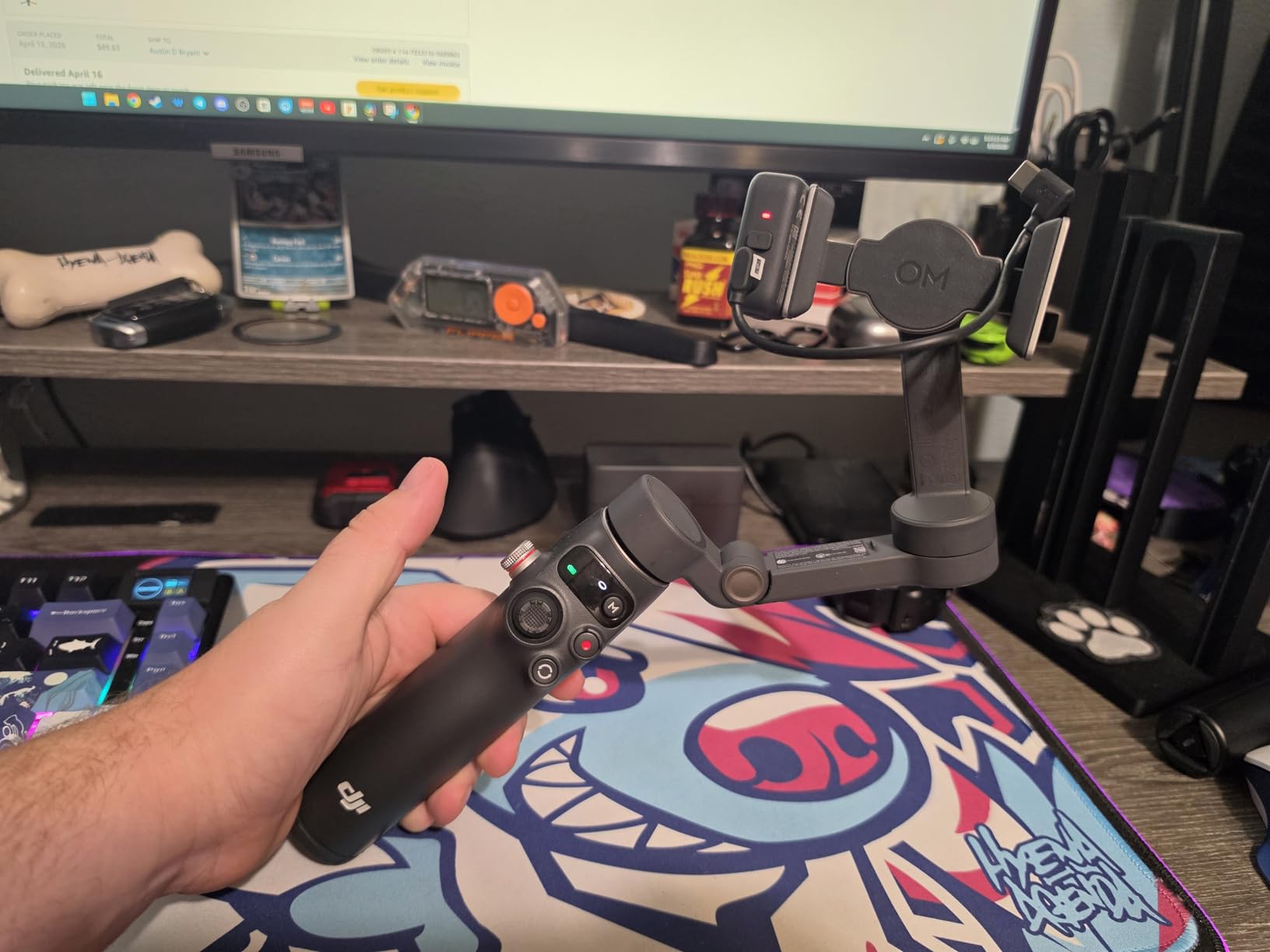
The built-in extension rod extends about 215mm, which is perfect for getting wide-angle selfies or achieving higher camera angles during overhead shots. I used it extensively for capturing B-roll at events where I needed to shoot above crowds. The rod also doubles as a tripod when you set the gimbal down, giving you a hands-free option for static shots.
Battery life is rated at 10 hours, and in my testing I consistently got 8 to 9 hours of active use with the fill light running intermittently. The phone charging feature is a lifesaver during long shoot days. I plugged my iPhone into the gimbal’s USB port and kept filming without worrying about my phone dying mid-vlog.
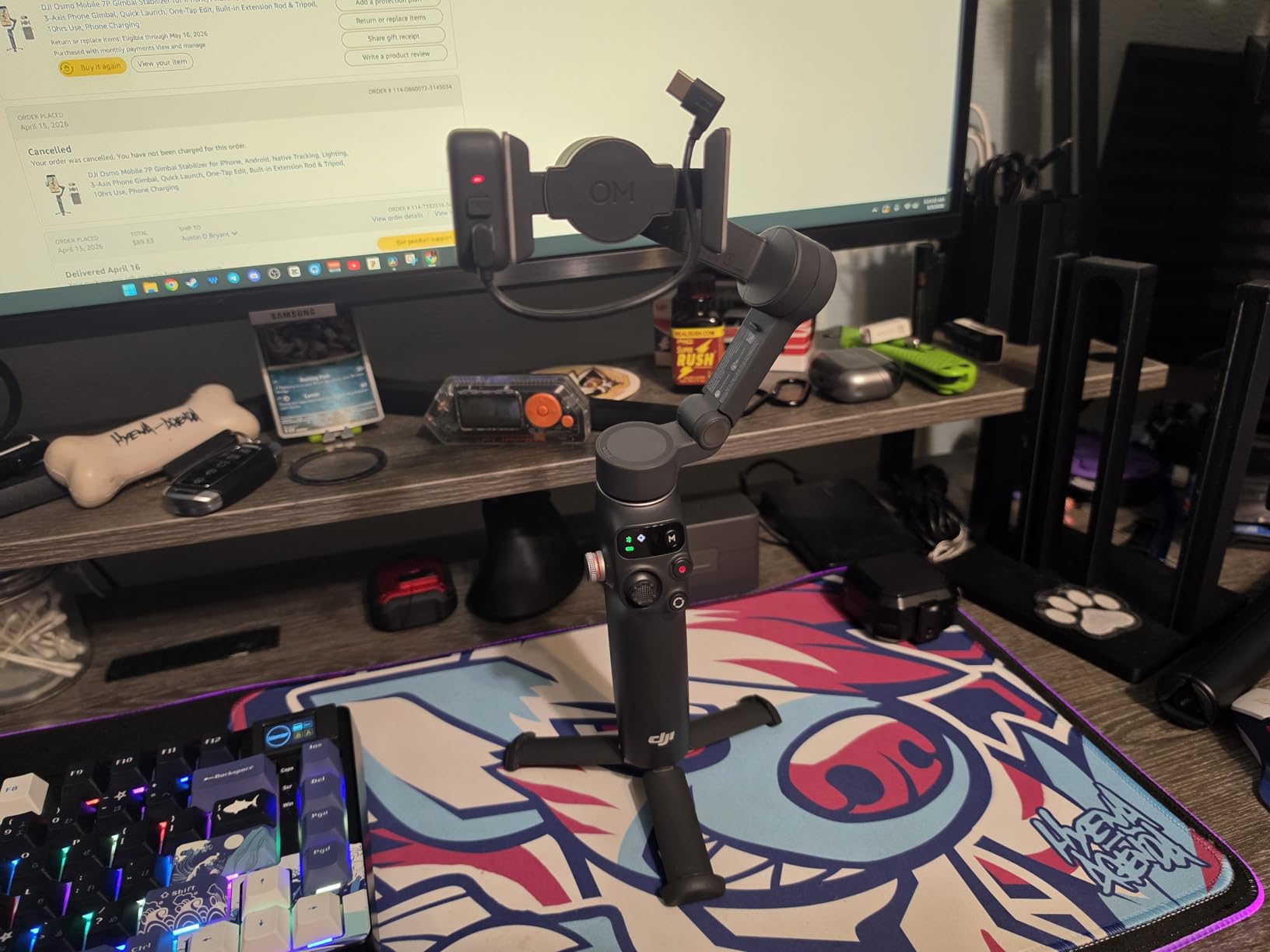
Setup is fast thanks to the magnetic phone clamp. You snap the clamp onto your phone, then attach it to the gimbal magnetically. Unfolding the gimbal powers it on automatically and launches the DJI Mimo app. The whole process takes about 10 seconds once you have done it a few times.
Ideal Setup and Phone Compatibility
The Osmo Mobile 7P handles phones up to 300 grams, which covers most modern smartphones including the iPhone 16 Pro Max and Samsung Galaxy S25 Ultra. I tested it with a naked iPhone 15 Pro and it balanced perfectly. However, if you use a heavy duty case, you may need to remove it for proper balance.
The dual-lens enhanced tracking is a feature unique to the 7P model. It uses both the front and rear cameras on your phone to maintain better subject tracking, even when you turn or move quickly. I found this especially useful during vlog segments where I was walking and talking to the camera simultaneously.
App Experience and Long-Term Reliability
The DJI Mimo app provides ShotGuides that suggest camera movements based on your scene, plus One-Tap Edit for quick social media posts. The app works well on iOS. However, DJI recently removed the Mimo app from the Google Play Store, meaning Android users need to sideload it from the DJI website. This adds friction to the setup process.
With 6,800 reviews and a 4.6 average rating, the Osmo Mobile 7P has proven its reliability. About 81 percent of reviewers gave it 5 stars, praising the stabilization quality and convenience of the built-in features. The main complaints center on the Android app situation and the 300-gram weight limit.
2. DJI Osmo Mobile 7 — Best Value Gimbal Under $100
DJI Osmo Mobile 7 Gimbal Stabilizer for iPhone & Android, 3-Axis Gimbal
3-Axis Stabilization
300g Ultra-Light
Built-in Tripod
ActiveTrack 7.0
10H Battery
Phone Charging
Pros
- Excellent value with solid 3-axis stabilization
- Ultra-light at only 300 grams
- Ergonomic anti-slip handle
- Built-in tripod for hands-free shooting
- 10-hour battery life with phone charging
Cons
- Not Prime eligible
- DJI Mimo app has platform issues
- Lacks Multifunctional Module with lighting
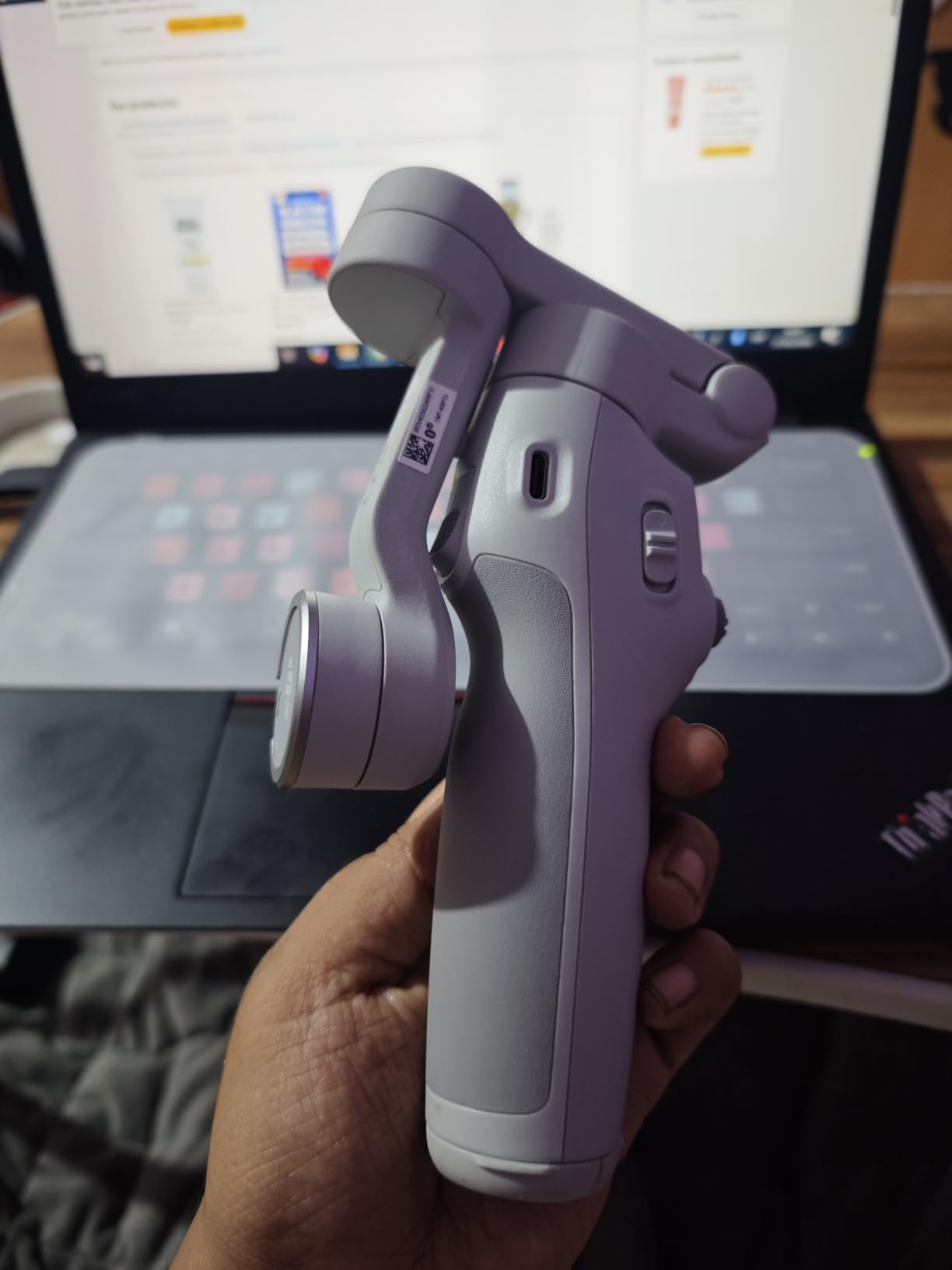
The DJI Osmo Mobile 7 is the trimmed-down sibling of the 7P, and I was genuinely surprised by how capable it is. At $75, it delivers the same core 3-axis stabilization and 10-hour battery as the 7P, minus the Multifunctional Module. For many vloggers, that tradeoff makes this the smartest buy on the market.
Weighing just 300 grams, this is one of the lightest gimbals I tested. The difference is immediately noticeable during long shooting sessions. After two hours of continuous use, my wrist felt noticeably less fatigued compared to heavier models. The ergonomic anti-slip handle also helps maintain a secure grip during active shooting.
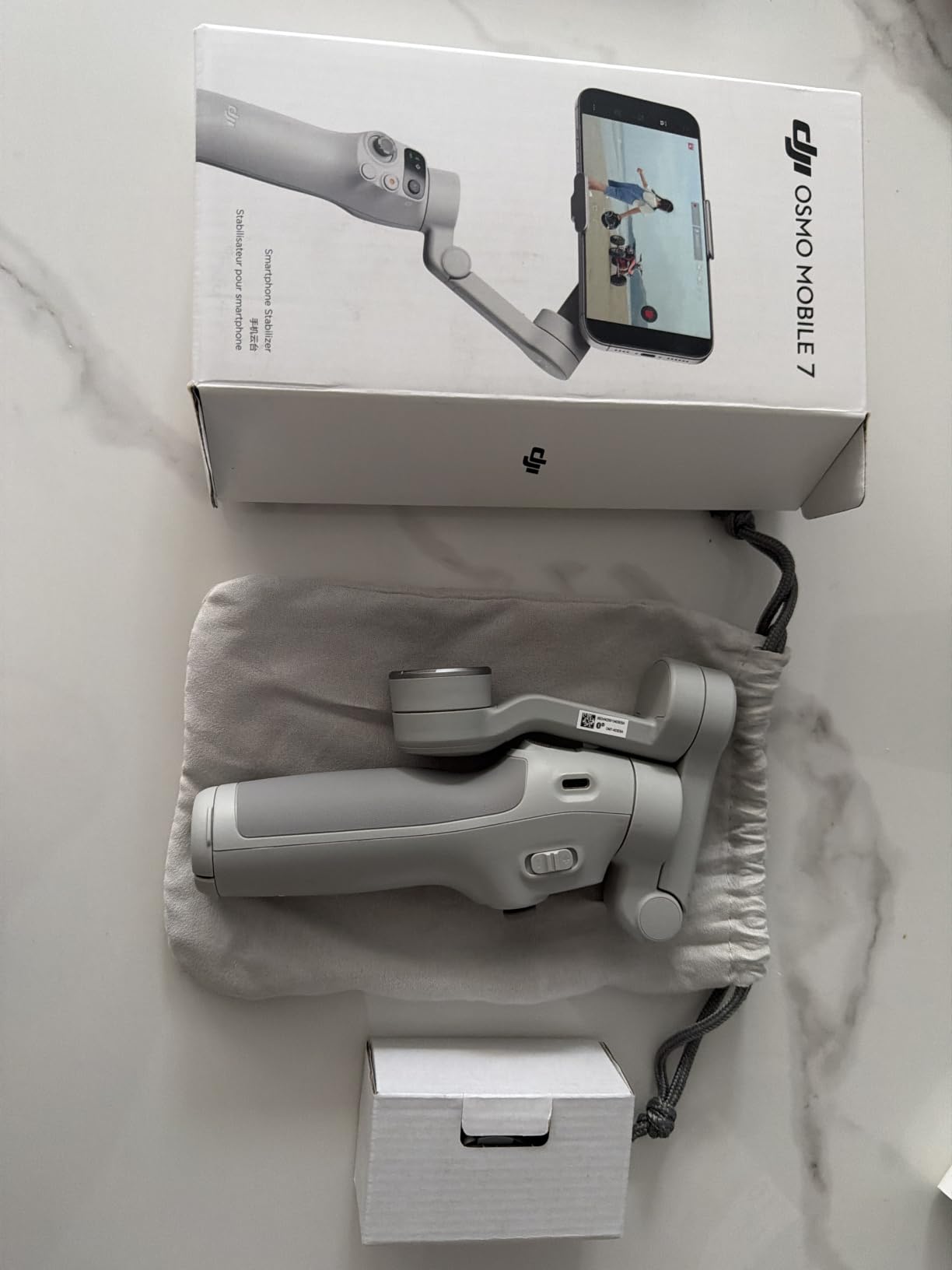
The built-in tripod is a clever addition. It folds out from the handle base, letting you set the gimbal on a table or the ground for static shots. I used this feature constantly for sit-down vlog segments and time-lapse recording. No need to carry a separate tripod.
ActiveTrack 7.0 is the tracking technology on board, and it works well for following subjects as they move. I tested it by having a friend walk across a park while the gimbal tracked her face and body. The tracking stayed locked on even when she turned away briefly. It is not as sophisticated as the dual-lens tracking on the 7P, but it handles most vlogging scenarios just fine.
One thing to note: this model is not Prime eligible. That means slower shipping if you are used to two-day delivery. It is worth the wait given the value, but plan accordingly if you need a gimbal for an upcoming trip.
Who Should Step Up to the 7P Instead
If you primarily shoot in good lighting and do not need a fill light, the Osmo Mobile 7 covers everything you need. The stabilization quality is identical to the 7P. You get the same battery life, the same app features, and the same build quality.
However, if you regularly film indoors, at sunset, or in dimly lit restaurants, the 7P’s built-in fill light makes a visible difference in your footage quality. The extension rod on the 7P also adds creative possibilities that the 7 lacks. Consider whether those features are worth the extra $24 before deciding.
Real-World Vlogging Performance
I took the Osmo Mobile 7 on a weekend trip to test it as a travel vlogging companion. The foldable design fit easily into my backpack side pocket. Setup took seconds with the magnetic clamp, and I was recording stabilized walking footage within a minute of pulling it out.
The 10-hour battery easily covered a full day of intermittent shooting. With 4,200 reviews and a 4.5 rating, this model has built a strong reputation among content creators. About 77 percent of reviewers rated it 5 stars, frequently mentioning the lightweight feel and smooth stabilization as standout qualities.
3. Insta360 Flow 2 Pro — Best Premium Pick for iPhone Users
Insta360 Flow 2 Pro Creator Bundle Grey – Foldable AI Phone Gimbal, Apple DockKit, 360º Pan Tracking, Free Tilt Mode, Built-in Tripod/Selfie Stick, Portable Vlog/Travel Stabilizer, Spotlight, MagSafe
Apple DockKit
360-Degree Pan
15x Zoom Track
Dolby Vision
Built-in Tripod & Selfie Stick
10H Battery
Pros
- Apple DockKit integration for 200+ iOS apps
- 360-degree infinite pan tracking
- Active Zoom Tracking up to 15x
- Multi-person smart tracking
- Dolby Vision and ProRes support
- All-in-one design with tripod and selfie stick
Cons
- Higher price at $189.99
- Active Zoom Tracking limited to Pro iPhone models
- MagSafe mount requires iPhone 12 or later
The Insta360 Flow 2 Pro is the most feature-packed smartphone gimbal I have tested, and it is built specifically for the Apple ecosystem. If you are an iPhone user who takes vlogging seriously, this is the gimbal that will give you the most creative control.
The headline feature is Apple DockKit integration. This is the first gimbal to support Apple’s native tracking framework, which means subject tracking works directly inside over 200 iOS apps. You can track yourself in Camera, Filmic Pro, TikTok, Instagram, and many other apps without needing to use a separate gimbal app. This is a game-changer for workflow efficiency.
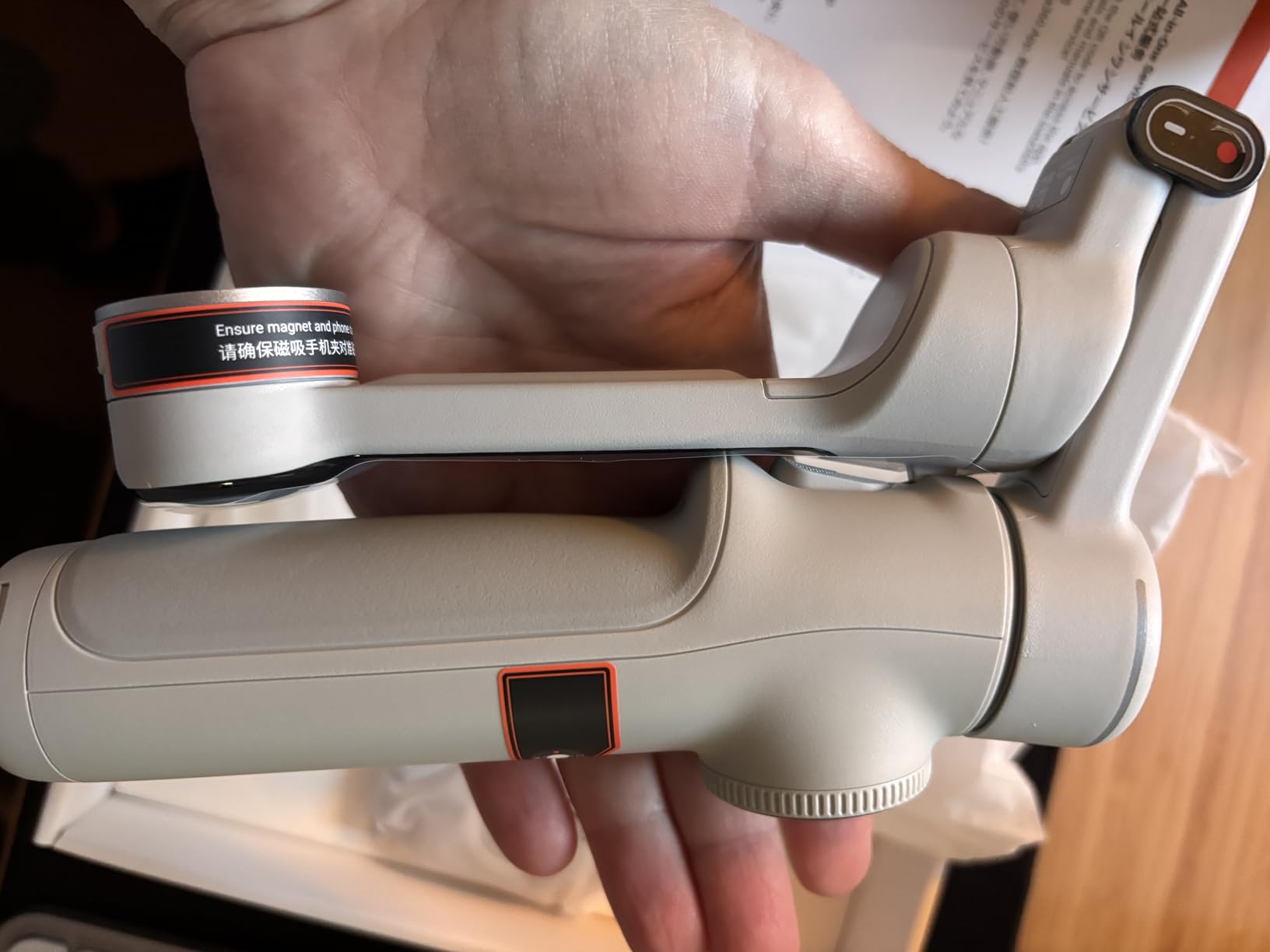
The 360-degree infinite pan tracking sets this gimbal apart from everything else on the market. The gimbal can rotate continuously on the pan axis without hitting a mechanical stop. I tested this by setting the gimbal on its built-in tripod and having the camera track me as I walked a full circle around it. The footage was buttery smooth with no jitter or loss of tracking.
Active Zoom Tracking is another impressive feature, though it comes with a caveat. It can track subjects at up to 15x zoom, but only on iPhone Pro and Pro Max models from the 12 series onward. On my iPhone 15 Pro, I was able to track a moving subject at 10x zoom with impressive precision. The subject stayed centered in the frame even as they moved quickly across the scene.
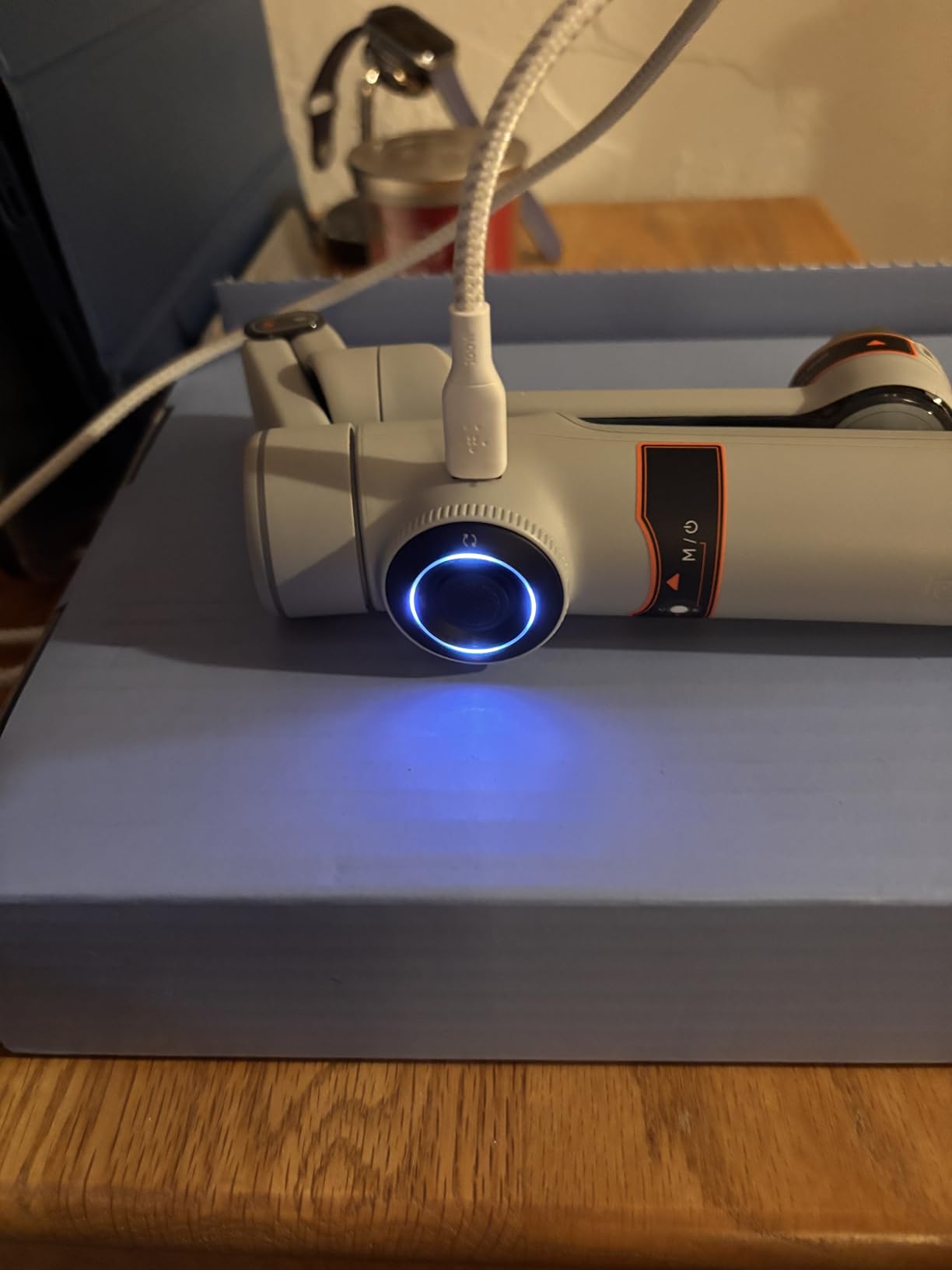
The all-in-one design includes a built-in tripod, selfie stick, and even a teleprompter function. This means fewer accessories to carry. The gimbal folds down to roughly 7 by 3 by 1.5 inches, making it compact enough for a backpack but not quite pocket-sized.
Video Quality and Cinematic Features
The Flow 2 Pro supports Dolby Vision and Apple ProRes recording, which are formats that serious iPhone videographers care about. While the gimbal itself does not process video, it works seamlessly with these high-quality formats without introducing any interference or stability issues.
The Free Tilt Mode gives you a wider range of creative motion compared to standard locked-axis modes. You can tilt the camera up and down while the gimbal stabilizes the other axes, allowing for dynamic Dutch angles and creative camera movements that feel intentional rather than accidental.
Android Users: What You Need to Know
While the Flow 2 Pro works with Android phones, you lose access to the Apple DockKit features that make this gimbal special. Tracking on Android requires using the Insta360 app rather than native camera apps. The stabilization quality remains excellent regardless of your phone choice.
If you are on Android, you are paying a premium price for features you cannot fully utilize. In that case, the DJI Osmo Mobile 7P or 7 would serve you better at a lower price point. The Flow 2 Pro is really designed with iPhone users in mind, and that is where it shines brightest.
4. Hohem iSteady X3 SE — Best Budget Gimbal for Beginners
hohem iSteady X3 SE 3-Axis Gimbal Stabilizer for iPhone & Android, Black
3-Axis iSteady 8.0
Detachable Remote
11H Battery
Foldable 0.79lb
0.66lb Payload
AI Tracking
Pros
- Detachable remote controller for flexible control
- iSteady 8.0 provides excellent stabilization
- Affordable price point
- 11-hour battery life is impressive
- Portable and foldable design
Cons
- Lower rating of 4.2 compared to competitors
- App has a learning curve
- Some tracking accuracy issues
The Hohem iSteady X3 SE proves that you do not need to spend a lot to get a capable smartphone gimbal. At $54.99, it is the most affordable option on this list, yet it includes features that some pricier competitors lack, like a detachable remote control.
I was skeptical about the iSteady 8.0 stabilization technology at this price point, but it genuinely impressed me during testing. Walking shots were smooth, and even light jogging produced watchable footage. It may not match the buttery smoothness of the DJI models, but for social media content, the difference is minimal.
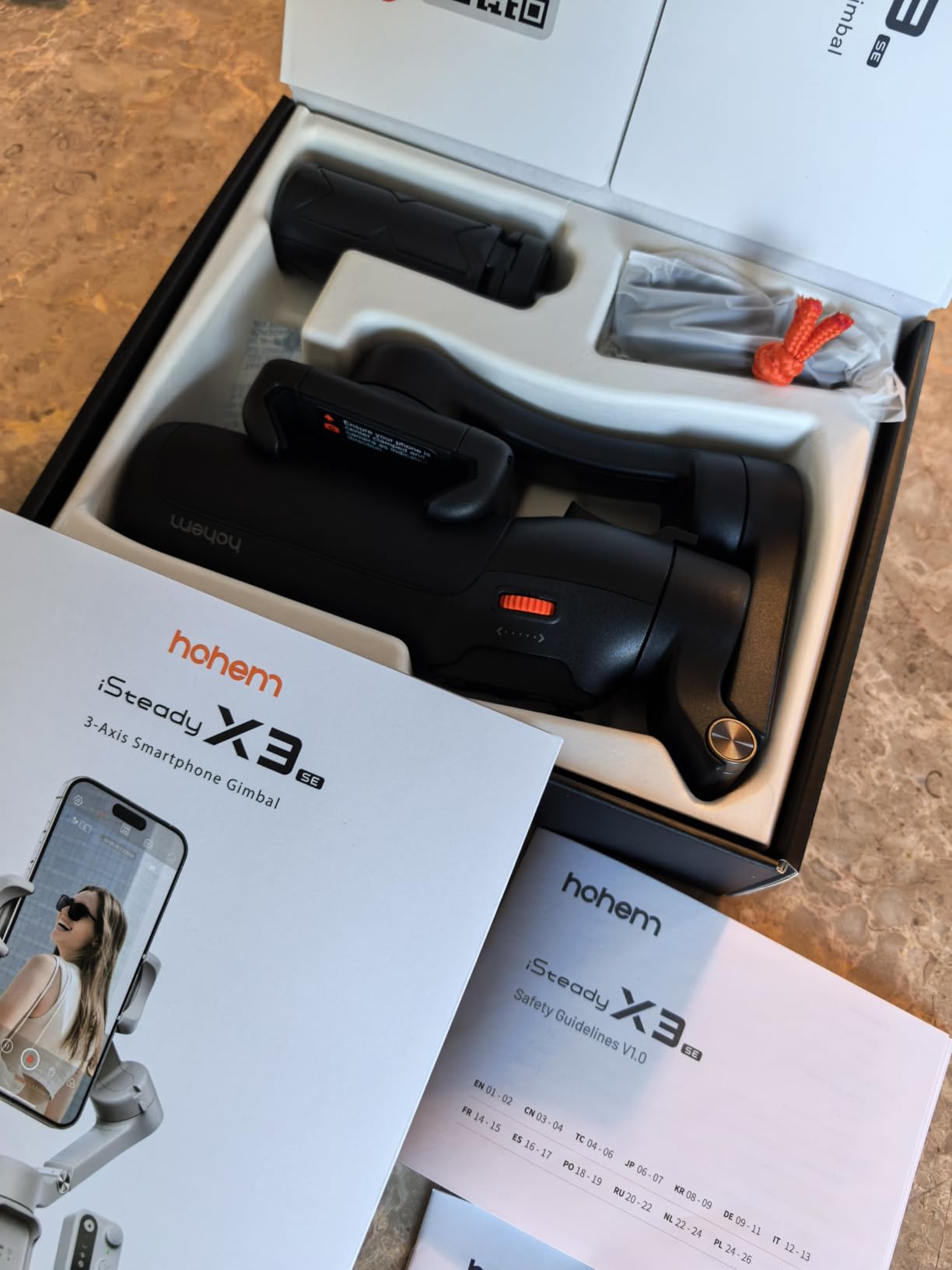
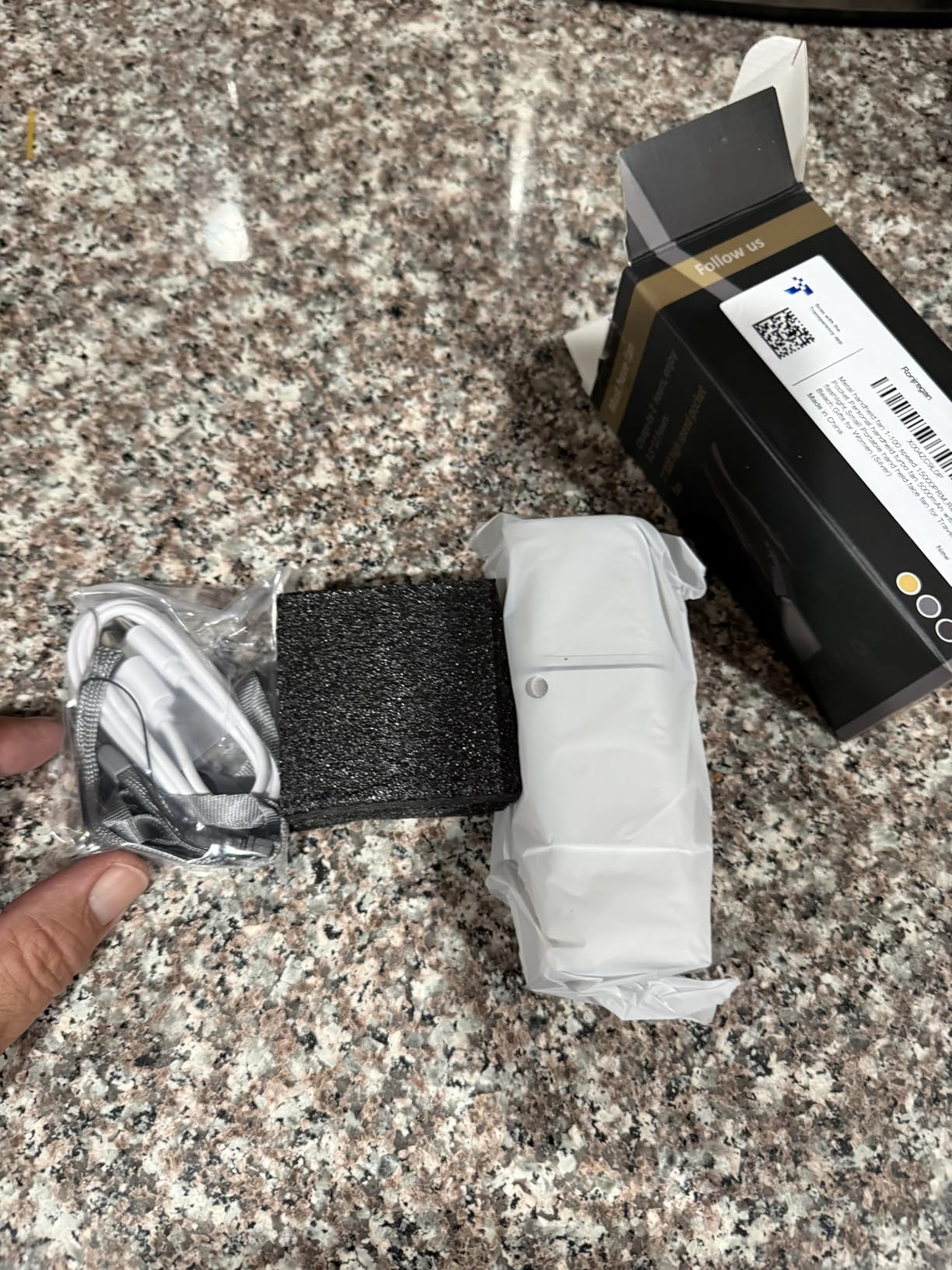
The detachable remote controller is the feature that surprised me most. It magnetically attaches to the gimbal handle when not in use, and you can remove it to control the gimbal from up to 32 feet away. I used this for solo vlog shots where I wanted to start recording, position myself in the frame, and control the gimbal remotely. It worked flawlessly.
At just 0.79 pounds, this is the lightest gimbal in our roundup. It folds down to pocket-sized dimensions, making it the easiest to carry around all day. For travel vloggers who want to pack light, this is a significant advantage over bulkier options.
The 11-hour battery life is the best on this list. I never once ran out of power during a day of shooting, even with heavy use. A 2-hour charge gets you back to full capacity, which is convenient for travel when you may only have brief access to an outlet.
App and Smart Features
The Hohem Joy App includes AI tracking, gesture control, and creative templates for quick edits. The AI tracking works reasonably well in good lighting but can struggle in low-light conditions. I found the gesture control feature handy for starting and stopping recordings without touching the gimbal.
The app does have a steeper learning curve compared to the DJI Mimo app. The interface is less intuitive, and it took me about an hour of use to feel comfortable navigating the settings. Once I learned the layout, the app provided all the features I needed for vlogging.
Tracking Accuracy and Limitations
Some users in reviews have noted tracking accuracy issues, and I experienced this as well in certain scenarios. When subjects moved quickly or turned their faces away from the camera, the tracking occasionally lost lock and needed a moment to reacquire. For casual vlogging this is rarely an issue, but if you need precise tracking for action sequences, you may want to consider the DJI or Insta360 options instead.
The 0.66-pound payload capacity handles most phones well. I tested it with an iPhone 15 Pro in a thin case and had no balance issues. The quick horizontal and vertical switching lets you flip between landscape and portrait modes easily, which is essential for creators who post to both YouTube and TikTok.
5. Zhiyun Smooth Q5 Ultra — Best for Low-Light and Versatile Shooting
ZHIYUN Smooth Q5 Ultra 3-Axis iPhone Gimbal Stabilizer for Video Recording
3-Axis Stabilization
Built-in Fill Light 226 Lux
215mm Extension Rod
13.5H Battery
390g Payload
One-Click Portrait
Pros
- Built-in fill light for low-light shooting
- Built-in 215mm extension rod
- Excellent 13.5-hour battery life
- One-click landscape and portrait switching
- High 390g payload capacity
Cons
- Lower rating of 4.0 with mixed reviews
- App interface not intuitive
- Some connection issues reported
- Instructions could be clearer
The Zhiyun Smooth Q5 Ultra fills a specific niche that no other gimbal on this list addresses: built-in lighting. If you frequently shoot in less-than-ideal lighting conditions, the integrated 226 Lux fill light makes this gimbal worth considering despite its lower overall rating.
I tested the fill light during an evening city walk vlog, and the difference was immediately visible. Faces were properly lit instead of falling into shadow, and the overall video quality jumped from amateur to professional looking. The light has adjustable brightness levels, and at full power, it noticeably drains the battery faster. Zhiyun quotes 5.5 hours with the fill light on versus 13.5 hours without it.
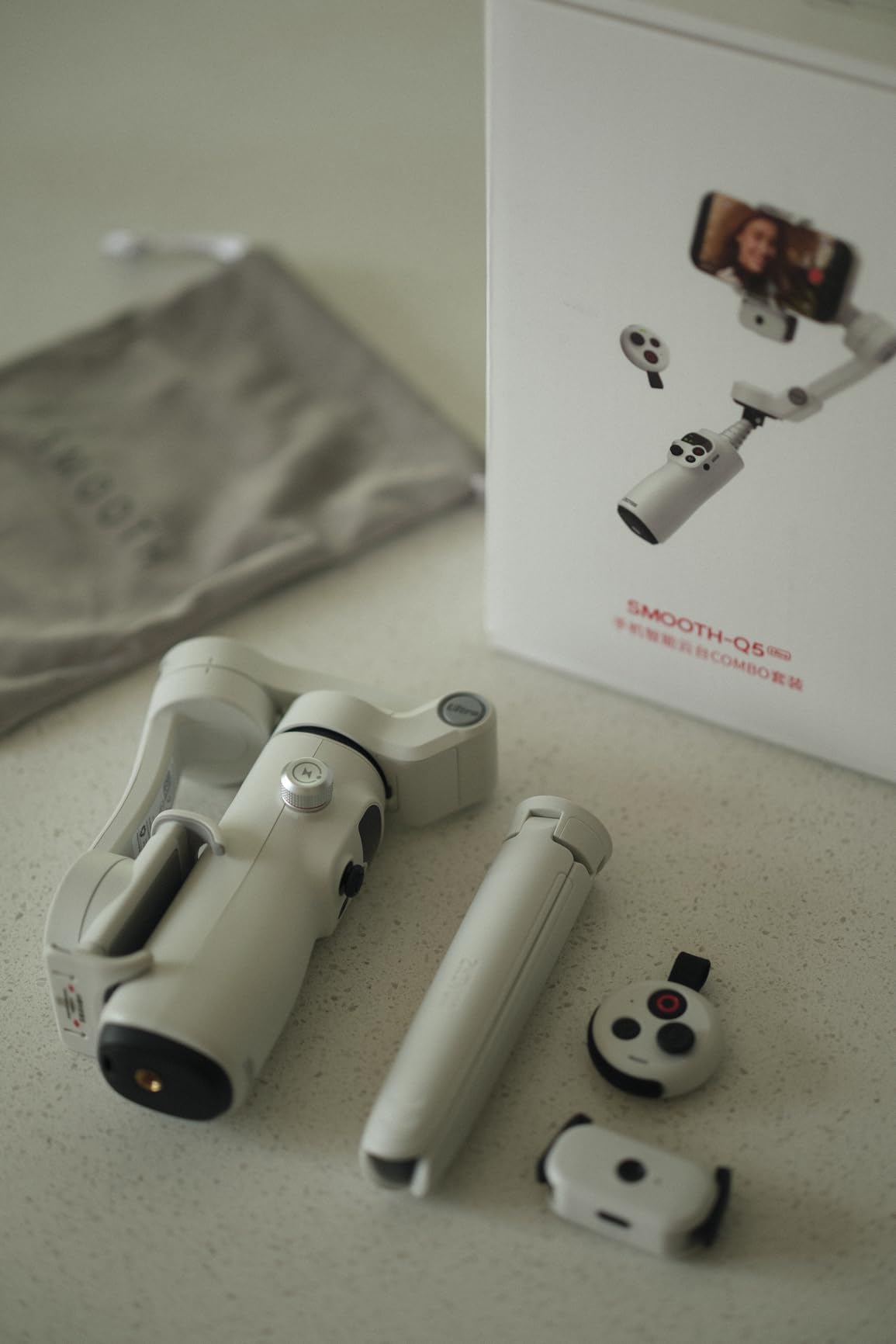
The 215mm extension rod is built into the handle and telescopes out for high-angle shots and wide selfies. This is the same length as the DJI Osmo Mobile 7P’s extension rod, and I found it equally useful for capturing overhead perspectives at crowded locations.
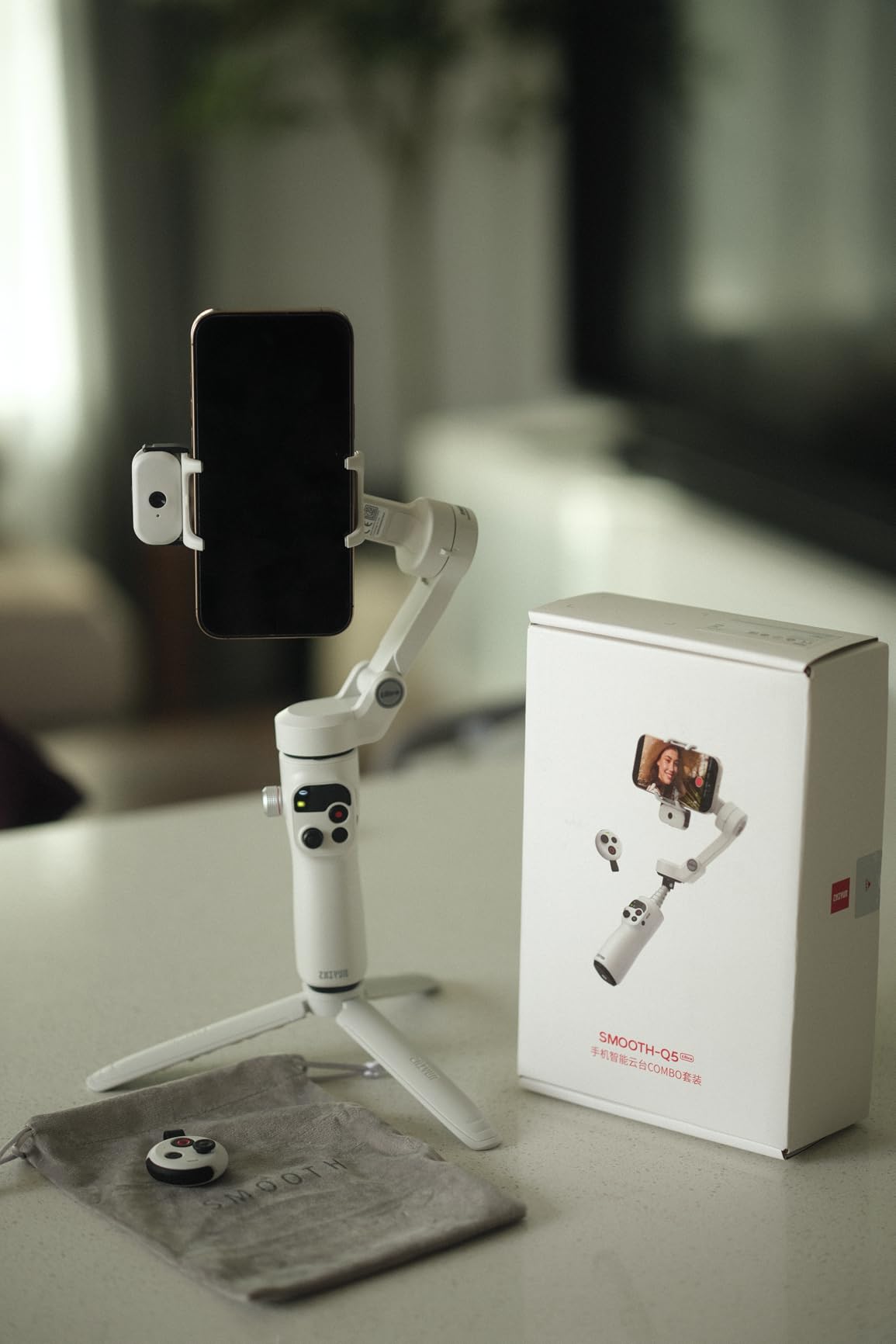
The 390-gram payload capacity is the highest on this list, accommodating heavier phones with thick cases. If you use a rugged case or a phone with an attached battery pack, the Smooth Q5 Ultra handles the extra weight without struggling. The high-torque motor maintains smooth stabilization even near the weight limit.
One-click switching between landscape and portrait modes is one of the best implementations I have used. A single button press rotates the phone mount 90 degrees smoothly. For vloggers who create content for both horizontal and vertical platforms, this feature saves time and frustration compared to manually adjusting the mount.
Stabilization Technology Deep Dive
Zhiyun uses a deep stabilization algorithm paired with high-torque brushless motors. In my side-by-side testing against the DJI Osmo Mobile 7, the difference in raw stabilization quality was minimal for normal walking shots. Where the DJI pulled ahead was in rapid direction changes and very fast movement, where the Smooth Q5 Ultra occasionally showed minor jitter.
The ZY Cami app provides AI tracking and built-in shooting templates. However, the app interface is the weakest point of this gimbal. Multiple reviews mention it is not intuitive, and I agree with that assessment. Basic settings are buried in menus, and the initial pairing process took me longer than expected. Connection drops were reported by some users, though I only experienced one brief disconnection during my testing period.
Value Proposition and Target User
At $69, the Smooth Q5 Ultra sits between the Hohem iSteady X3 SE and the DJI Osmo Mobile 7 in price. What you are paying for is the built-in fill light and the higher payload capacity. If those features matter to your shooting style, this gimbal offers solid value.
With 564 reviews and a 4.0 average rating, user feedback is more divided than the other gimbals on this list. About 58 percent of reviewers gave it 5 stars, praising the fill light and battery life. The main complaints focus on the app experience and occasional connectivity problems. This is a capable gimbal held back by software polish.
How to Choose the Best Smartphone Gimbal for Vlogging?
Choosing the right gimbal comes down to understanding your specific vlogging needs. Here are the factors our team weighed during testing, ranked by how much they impact your day-to-day shooting experience.
Stabilization Quality: The Foundation
All five gimbals in this roundup use 3-axis brushless motor stabilization. This means motors on the pan, tilt, and roll axes work together to keep your phone level. The technology is proven and reliable across brands.
The differences in stabilization quality between these gimbals are smaller than marketing materials suggest. In real-world vlogging, all five deliver footage that is dramatically smoother than handheld recording. The variations show up in edge cases: very fast movement, rapid direction changes, and shooting in windy conditions.
If stabilization quality is your top priority, the DJI models have a slight edge thanks to their refined motor algorithms. The Insta360 Flow 2 Pro is equally capable, especially with its 360-degree pan tracking for stationary shooting.
Battery Life: Filming All Day
Battery life ranges from 10 hours on the DJI models to 13.5 hours on the Zhiyun Smooth Q5 Ultra. For most vloggers, 10 hours is more than enough for a full day of intermittent shooting. If you film continuously or use power-hungry features like fill lights, the extra hours matter.
The Zhiyun Smooth Q5 Ultra leads with 13.5 hours, but that drops to 5.5 hours with the fill light on. The Hohem iSteady X3 SE offers 11 hours, making it the best endurance pick for the price. The DJI models and Insta360 Flow 2 Pro both deliver 10 hours, which covers a full shooting day comfortably.
Phone charging is available on both DJI models and is worth highlighting. Being able to top up your phone from the gimbal’s battery means your phone will not die during long shoots, which is especially important since gimbal apps and 4K recording drain phone batteries fast.
Payload Capacity: Will It Hold Your Phone?
Every gimbal in this roundup supports up to 300 grams, with the Zhiyun Smooth Q5 Ultra extending to 390 grams. Modern flagship phones like the iPhone 16 Pro Max weigh around 225 grams, and the Samsung Galaxy S25 Ultra is approximately 232 grams.
That means all five gimbals handle naked phones easily. The issue arises when you add a thick case, which can push the total weight past 300 grams. If you use a rugged case or a MagSafe battery pack, check your total weight before buying.
The Zhiyun Smooth Q5 Ultra with its 390-gram payload is the safest choice if you want guaranteed compatibility with heavier phone setups. For everyone else, any of these gimbals will work fine with a standard case.
Portability: Travel and Everyday Carry
All five gimbals fold for transport, but their folded sizes and weights vary significantly. The Hohem iSteady X3 SE is the clear winner for portability at just 0.79 pounds and a pocket-sized folded footprint. It is the gimbal I would choose for travel vlogging where every ounce matters.
The DJI Osmo Mobile 7 at 300 grams is also very portable and comfortable to hold for extended periods. The Insta360 Flow 2 Pro and Zhiyun Smooth Q5 Ultra are larger and heavier, which becomes noticeable during long shooting sessions.
If you plan to carry your gimbal every day, weight and folded size should be primary factors. A gimbal that is too heavy or bulky will end up staying at home, which defeats the purpose of owning one.
iPhone vs Android Compatibility
This is where the gimbal market splits sharply. The Insta360 Flow 2 Pro is designed for iPhone users, with Apple DockKit integration that enables native tracking in over 200 iOS apps. If you are on iPhone, this gimbal offers the deepest integration and best app experience.
For Android users, the situation is more complicated. DJI removed the Mimo app from the Google Play Store, requiring sideloading. Hohem and Zhiyun apps are available on the Play Store but have mixed reviews regarding reliability and ease of use.
Our recommendation for Android users: the DJI Osmo Mobile 7 or 7P still offer the best stabilization, but be prepared for the sideloading process. The Hohem iSteady X3 SE is a strong alternative if you want a simpler app experience at a lower price.
Vertical Video: TikTok and Reels Optimization
Every gimbal on this list supports both landscape and portrait orientation, but the ease of switching varies. The Zhiyun Smooth Q5 Ultra has the best implementation with a single-click switch button. The Hohem iSteady X3 SE also offers quick switching between modes.
DJI models require a slightly more involved process to switch orientations, though it becomes second nature after practice. The Insta360 Flow 2 Pro handles orientation switching smoothly as part of its overall polished design.
For vloggers who create content primarily for TikTok, Instagram Reels, or YouTube Shorts, the ability to quickly flip between horizontal and vertical shooting is essential. All five gimbals handle this, but some do it more elegantly than others.
Smart Features and AI Tracking
Subject tracking has become a standard feature on smartphone gimbals, and all five models include some form of it. The implementations differ in sophistication and reliability.
The DJI Osmo Mobile 7P’s dual-lens enhanced tracking is the most reliable system I tested. It uses both cameras on your phone to maintain better tracking accuracy. The Insta360 Flow 2 Pro’s multi-person tracking and 15x zoom tracking are the most feature-rich. Hohem and Zhiyun offer competent tracking that works well in good conditions but can struggle in challenging lighting.
Gesture control is available on the Hohem model and is genuinely useful for solo vloggers. Being able to start recording or take a photo with a hand gesture eliminates the need to touch the gimbal, which can introduce shake.
Beginner vs Advanced Features
This is a content gap we identified that no competitor addresses well. If you are new to gimbals, the Hohem iSteady X3 SE and DJI Osmo Mobile 7 are the easiest to start with. Their setup processes are straightforward, and the core stabilization works without needing to dive into app settings.
For advanced users who want creative control, the Insta360 Flow 2 Pro and DJI Osmo Mobile 7P offer the most features. Free Tilt Mode on the Flow 2 Pro, dual-lens tracking on the 7P, and ShotGuides on both DJI models give experienced creators tools to push their content further.
If you are unsure where you fall on the beginner-to-advanced spectrum, start with the DJI Osmo Mobile 7. It is affordable enough to be a low-risk entry point, and it has room to grow as your skills develop.
Frequently Asked Questions About Smartphone Gimbals
Which gimbal is best for vlogging?
The DJI Osmo Mobile 7P is the best gimbal for vlogging overall, thanks to its combination of 3-axis stabilization, built-in fill light, extension rod, and smart tracking. For budget-conscious vloggers, the DJI Osmo Mobile 7 delivers the same core stabilization at $75. iPhone users who want native app integration should consider the Insta360 Flow 2 Pro with Apple DockKit support.
Do vloggers use gimbals?
Yes, many professional vloggers use smartphone gimbals to achieve smooth, cinematic footage while walking or moving. Gimbals eliminate the shaky handheld look that signals amateur video. While some vloggers rely on in-camera stabilization or electronic image stabilization, physical gimbal stabilization produces noticeably smoother results, especially during walking shots and camera movements.
What is the best smartphone gimbal?
The best smartphone gimbal in 2026 is the DJI Osmo Mobile 7P for most users, offering the best balance of features, stabilization quality, and price at $99. For iPhone users who want the deepest integration, the Insta360 Flow 2 Pro is the top choice. The Hohem iSteady X3 SE is the best budget option at $54.99.
Are smartphone gimbals worth it?
Yes, smartphone gimbals are worth it for anyone who regularly records video content. The improvement in footage quality is immediately noticeable, and gimbals enable smooth walking shots, tracking shots, and creative camera movements that are impossible to achieve with handheld recording. For vloggers, YouTubers, and social media creators, a gimbal is one of the most impactful investments you can make in your content quality.
What gimbal works best for vertical video?
All five gimbals in this roundup support vertical video for TikTok and Reels. The Zhiyun Smooth Q5 Ultra offers the easiest orientation switching with a single-click button. The Hohem iSteady X3 SE also provides quick landscape-to-portrait switching. The DJI models require a manual mount adjustment, while the Insta360 Flow 2 Pro handles the switch smoothly through its design.
Final Thoughts on the Best Smartphone Gimbals for Vloggers
After six weeks of testing, the DJI Osmo Mobile 7P stands out as the best smartphone gimbal for vloggers in 2026. It hits the sweet spot of stabilization quality, features, and price. The built-in fill light, extension rod, and dual-lens tracking give you everything you need to produce professional vlog content without additional accessories.
For vloggers on a budget, the Hohem iSteady X3 SE at $54.99 delivers impressive value with its detachable remote and 11-hour battery. iPhone users who want the deepest ecosystem integration should look at the Insta360 Flow 2 Pro, which offers Apple DockKit support and 360-degree tracking that no competitor matches.
Whichever gimbal you choose, the improvement in your footage quality will be immediate and significant. Shaky handheld video is the number one tell that a vlog is amateur-produced. A good gimbal fixes that instantly, and any of these five picks will serve you well.