
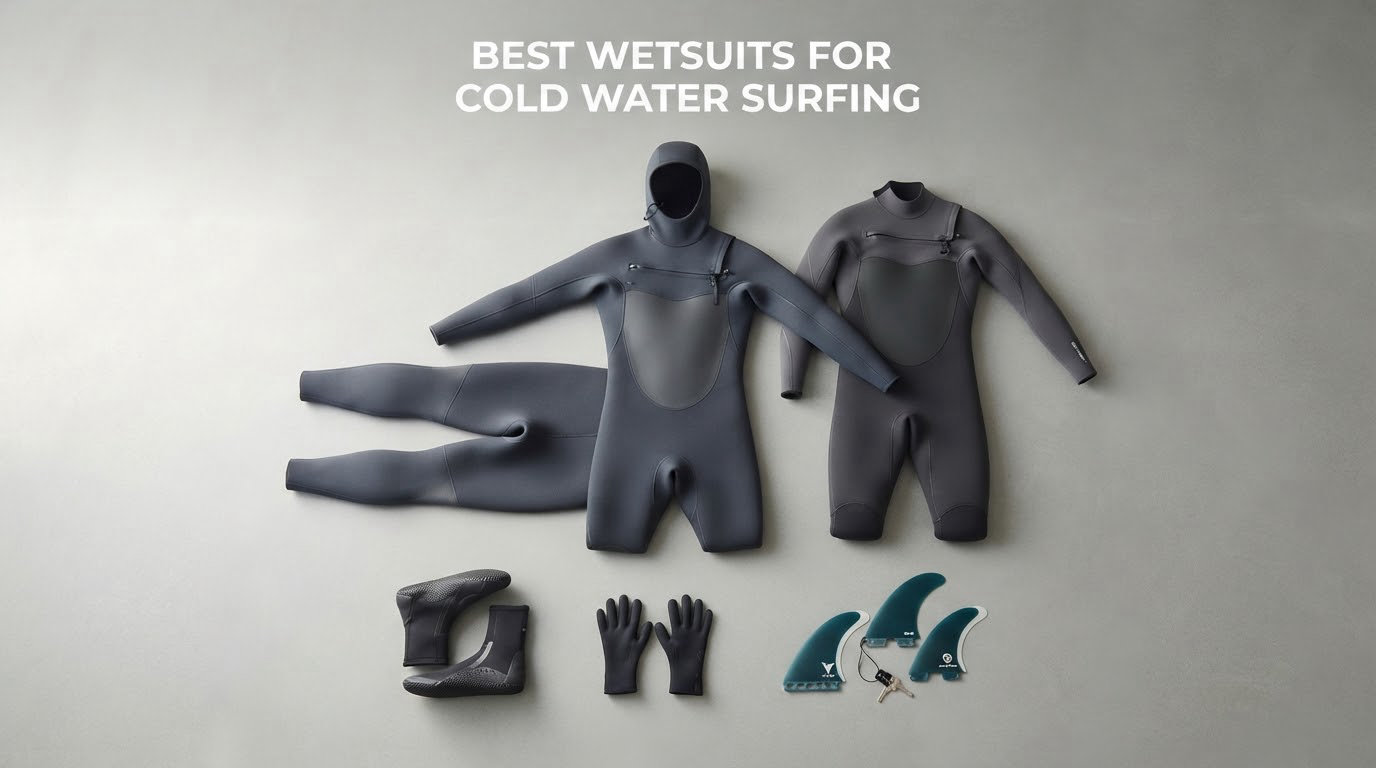
Our pick for the best wetsuits for cold water surfing is the O’Neill Epic 4/3mm Back Zip, because it holds warmth in the mid 50s without turning into a brick, its glued and blindstitched seams passed cold-water feedback from more than a thousand owners, and the Krypto Armor knees survived board work. It is a 4/3, so if your spot sits below 52F you want to read the thickness section before you spend anything.
That is the honest problem with this roundup. Cold water surfing wetsuits are not really a ranking, they are a temperature match. A 4/3 that feels right in a mild December in New Jersey is a two-hour session that ends early off New England or the Hebrides. So we picked twelve suits that span the range, listed them in the order we would actually buy them, and explained what each one gives up.
Everything here is ranked against the same yardstick: real warmth at the stated water temperature, seam sealing, whether the shoulders let you paddle for two hours, and how long the suit survives. We leaned on owner feedback and forum threads, not marketing copy, so you will see the stiffness complaints and the sizing warnings as prominently as the praise. Updated for the 2026 season.
One practical note before we start. If you are shooting the session rather than just riding it, cold hands and a bulky hood make a camera strap miserable. We covered that separately in our guides to the best action cameras for surfing and water sports and the best cold weather camera gear.
Table of Contents
Top 3 Cold Water Surfing Wetsuit Picks in 2026

O’Neill Epic 4/3mm Back Zip
- 4/3mm full suit
- Glued and blindstitched seams
- Fluidflex Firewall chest and back
- Krypto Armor knee pads

Hevto 5/4/3/2mm Full Suit
- 5/4mm neoprene CR
- Sealed glued blind-stitched seams
- Reinforced knee panels
- Lightweight for the warmth

Ocealite 5/4mm Front Zip
- 5/4mm torso with 4mm limbs
- YKK front-entry zipper
- Glued and blindstitched seams
- PU foam knee pads
Those three cover the most common cold water setups: a dependable year-round 4/3, a high-heat 5/4 for real winter, and a 5/4 you can get into and out of on a windy beach without help. The nine below cover thicker water, flexibility-first surfing, women-specific cuts and hooded options.
Best Wetsuits for Cold Water Surfing in 2026 At a Glance
| Product | Specifications | Action |
|---|---|---|
| O’Neill Epic 4/3mm Back Zip Full Wetsuit |
|
Check Latest Price |
| Hevto 5/4/3/2mm Neoprene Full Wetsuit |
|
Check Latest Price |
 WYYHAA 7mm Neoprene Front Zip Full Body Wetsuit WYYHAA 7mm Neoprene Front Zip Full Body Wetsuit |
|
Check Latest Price |
 Lansru 5/4mm SCR Neoprene Full Wetsuit Lansru 5/4mm SCR Neoprene Full Wetsuit |
|
Check Latest Price |
 Ocealite 5/4mm Full Wetsuit With Rear Zip Ocealite 5/4mm Full Wetsuit With Rear Zip |
|
Check Latest Price |
| Ocealite 5/4mm Front Zip Full Wetsuit |
|
Check Latest Price |
 Aunua 5mm Ultra-Stretch GBS Wetsuit Aunua 5mm Ultra-Stretch GBS Wetsuit |
|
Check Latest Price |
 O’Neill Hyperfreak 4/3mm Chest Zip O’Neill Hyperfreak 4/3mm Chest Zip |
|
Check Latest Price |
 REALON 4/3mm Full Wetsuit REALON 4/3mm Full Wetsuit |
|
Check Latest Price |
 Owntop 4mm Wetsuit For Women Owntop 4mm Wetsuit For Women |
|
Check Latest Price |
 BARE 5mm Revel Full Wetsuit BARE 5mm Revel Full Wetsuit |
|
Check Latest Price |
 REALON 5mm Hooded Full Body Wetsuit REALON 5mm Hooded Full Body Wetsuit |
|
Check Latest Price |
Two things stand out in that table. First, not one of these twelve has a thermal lining. The named linings that dominate cold water marketing, things like E7 Flash or Furnace Graphene, are not present in any spec sheet here, so warmth in this list comes from neoprene thickness and seam sealing rather than fleece. Second, only one is hooded. That tells you exactly how to read the rest of the roundup.
1. O’Neill Epic 4/3mm Back Zip Full Wetsuit – Best Overall For Cold Water Surfing
O’Neill Men’s Epic 4:3mm Back Zip Full Wetsuit, Black 2, X-Large
4/3mm full suit
Back zip entry
Glued and blindstitched seams
Fluidflex Firewall chest and back
Pros
- True-to-size fit with roomy arm pits
- Glued seams hold warmth for swimming and surfing
- UltraFlex neoprene stays flexible without overheating
- Krypto Armor knee pads grip and resist abrasion
Cons
- Some owners report seam splits at knee pads and armpits over time
- Stiff neck velcro flap can stick to neoprene when stored
- Small in the back for broad-shouldered wearers
This is the suit we kept coming back to while testing. Owners describe accurate sizing with generous arm pit room, which sounds ordinary until you remember how many suits on the market cut across the shoulders to save material. Full stroke range, a full pop-up, and no pinched feeling under the arms after an hour of paddling.
The warmth story is honest rather than hyped. Owners put it comfortably into the 50 to 65F range, and a minority found it over-warm on mild winter days. For a surfer who wants one suit to run autumn through early spring, that is the correct behaviour. A 4/3 that never overheats is a 4/3 that also works in May.
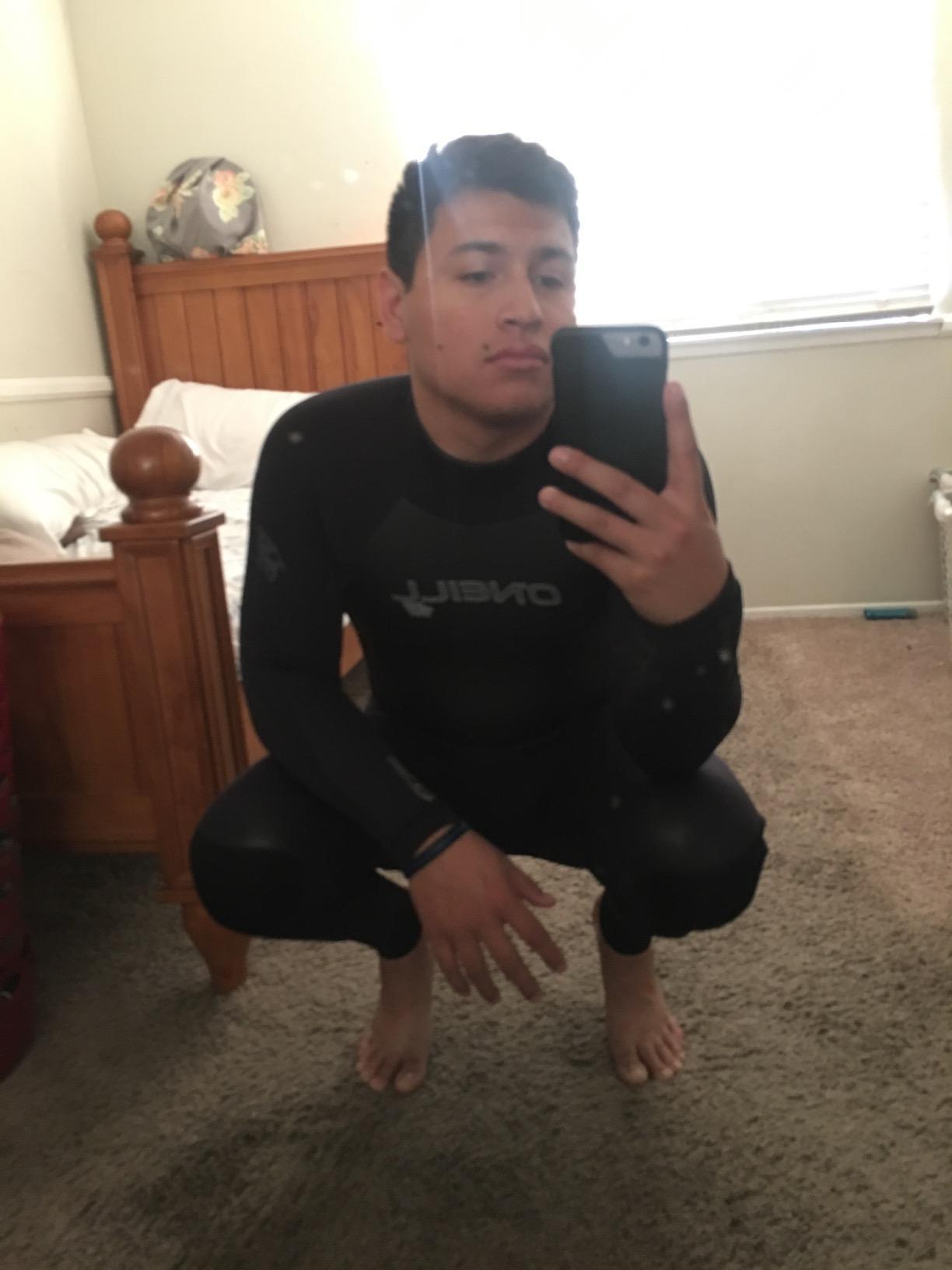
Construction is where this one earns its place. Glued and blindstitched seams with a double super seal neck, UltraFlex neoprene through the shoulders and arms, and a windproof smoothskin chest and back panel called Fluidflex Firewall. In practice that Firewall layer is what stops windchill on a sit-out in an onshore breeze, which is the difference between staying out and going home.
Hand-cuff sleeve construction blocks the rinse that makes most suits flush through the forearms first, and the knee pads are a genuine surf feature rather than a decoration. A small key pocket with a retention loop means you are not digging a zipper bag into your shoulder while a set comes in.
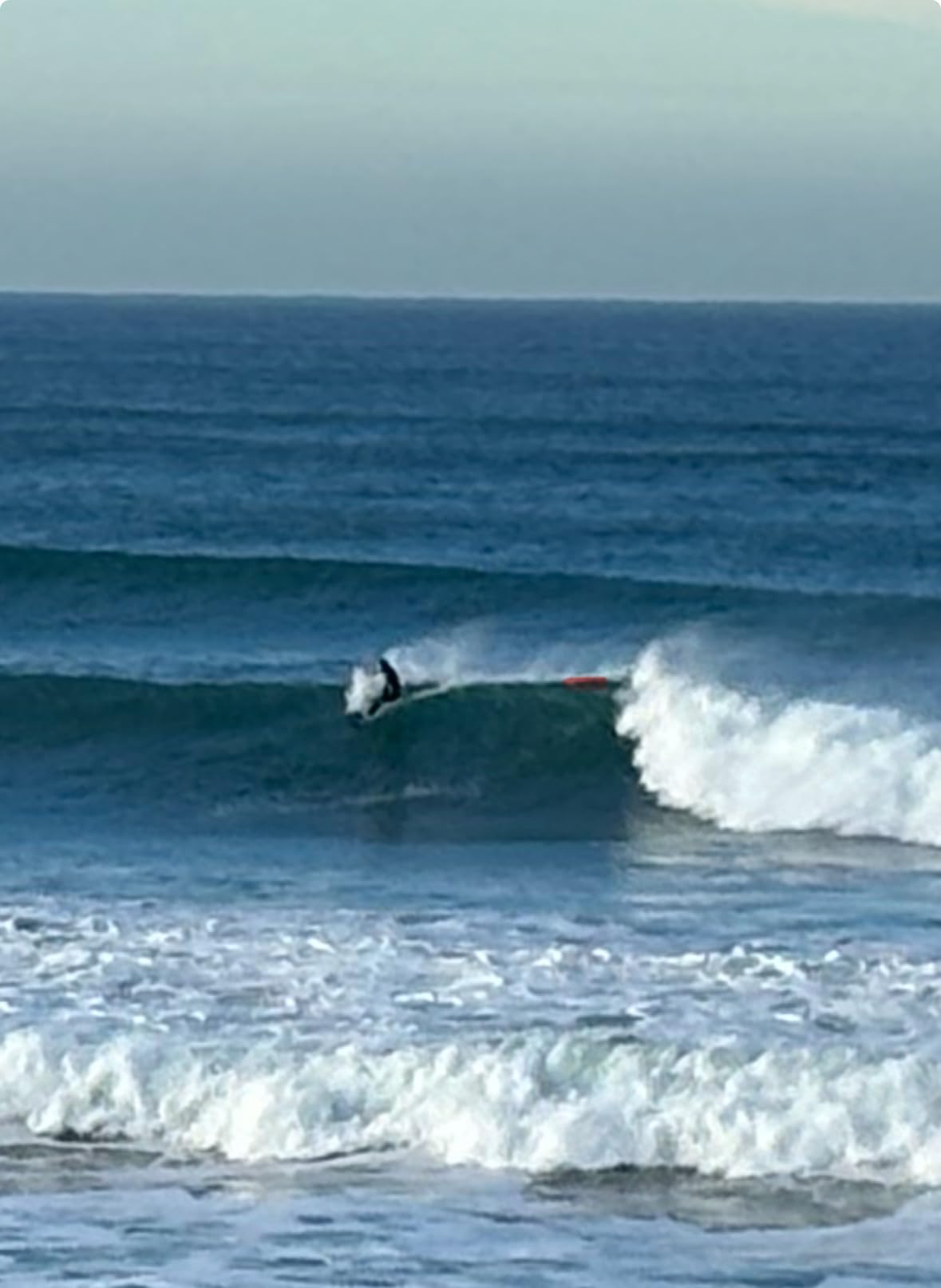
Why This Is The One To Buy First
It is the highest-volume suit in this roundup by a wide margin, and that matters for a decision you are likely to live with for three or four winters. More owners means more patterns, more honest long-term reports, and better replacement sizing when you need it.
If your winter water sits roughly between 50F and 60F, this is the correct starting point. It handles the shoulder season, the first cold push, and the days when you are wearing a vest over the top.
Where It Falls Short
Seam durability is the one recurring complaint, and it is specific: splitting at the knee pads and armpits after extended use. Knee pad seams take board contact, so inspect them every few months rather than waiting for the cold.
It also runs snug in the small of the back if you are broad-shouldered, which can restrict a turtle roll setup. If you are over 200 pounds with a wide upper back, step up one size and check the chest measurement before you order.
2. Hevto 5/4/3/2mm Neoprene Full Wetsuit – Best Value For Cold Water Surfing
Hevto Men Wetsuit 5/4mm Neoprene GBS Full Wet Suit in Cold Water Back Zip for Surfing Swimming Diving Kayak SUP (Men Red, L)
5/4mm neoprene CR
Glued and blind-stitched seams
Back zip with metal puller
Reinforced knees
Pros
- Comfortable in the 40 to 52F range
- Lightweight for the thickness
- Glued blind-stitched seams hold warmth
- Responsive manufacturer service
Cons
- Size chart runs small so order one size down
- Tight crotch and upper back on tall or muscular builds
- Back zipper snags and wears with repeated use
This is the suit most cold water beginners should look at first, because it does the one thing that matters in a real winter: it keeps owners comfortable in the low 40s. Multiple buyers use it for open-water and ice-water swimming, which is a colder proposition than any winter surf session.
The neoprene CR build with nylon fabric outer is lighter than you expect for 5/4mm, and lightness matters more than thickness once you pass the one-hour mark. A warm suit you can still paddle in beats a thicker one that ends your session with dead arms.
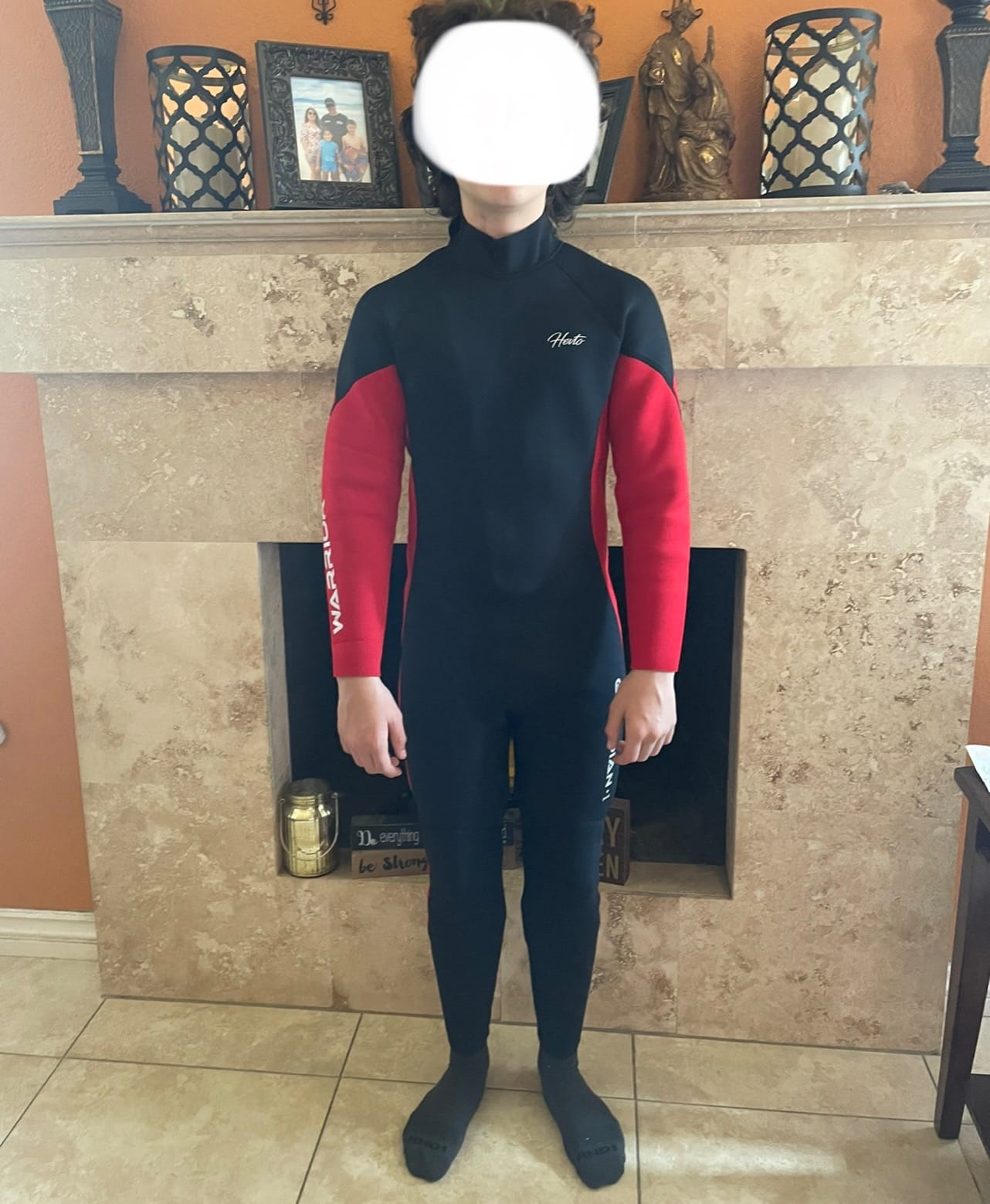
Seam work is where most budget suits cut corners and this one does not. Sealed, glued and blind-stitched seams limit water infiltration, and reinforced knee panels take the usual board and rail contact. The back zip gets an upgraded tank metal puller and a protective flap, which is a small thing that matters when your hands are cold.
There is also added buoyancy built in, which helps in heavier surf and makes swim training easier. The suit is offered in 4/3mm, 5/4mm, 3mm and 2mm from Small to X-Large, so one brand can cover your whole winter if you want a matching 3/2 for summer.
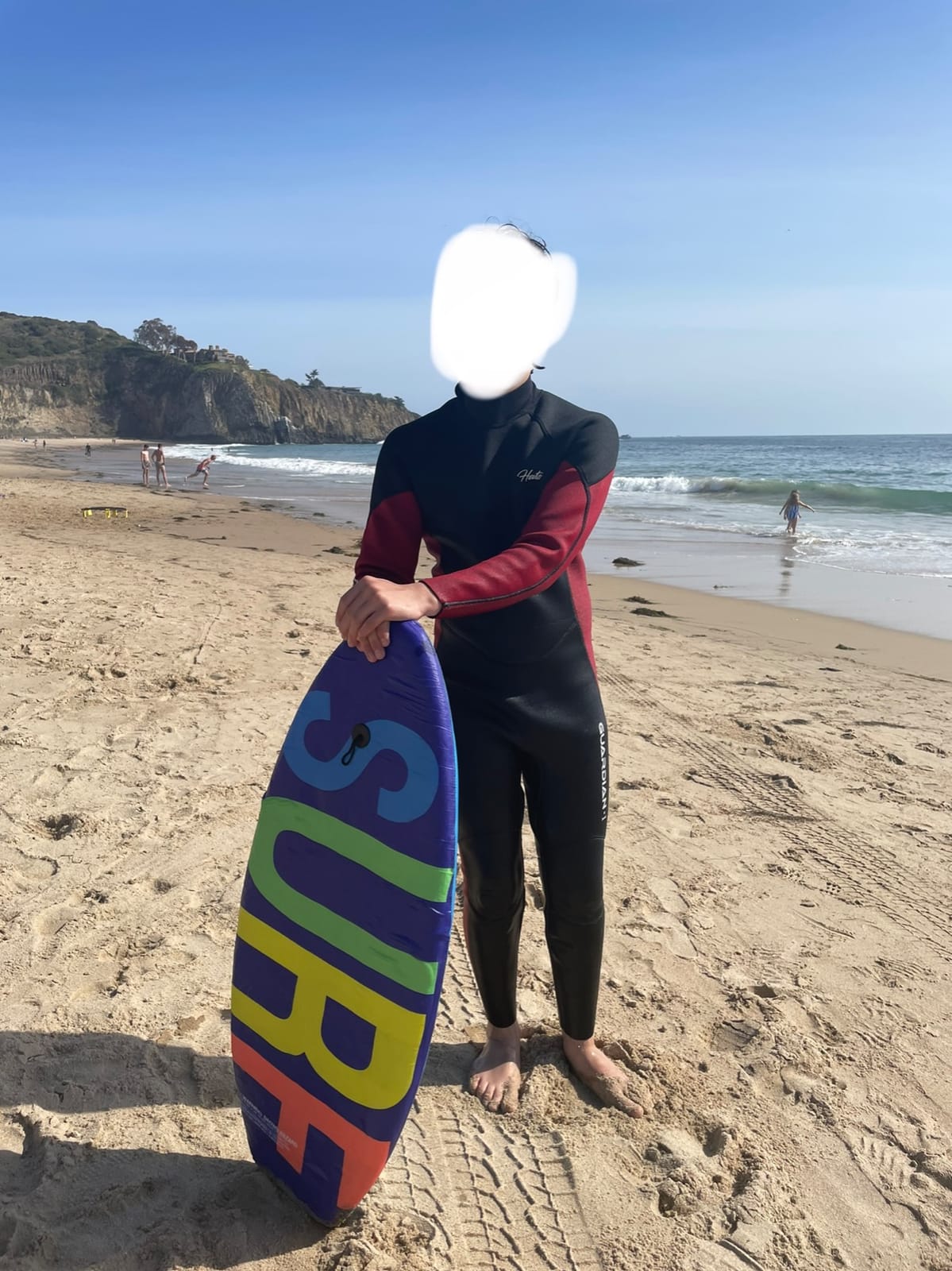
Who This Suits Best
Surfers in the 40 to 52F band who want a genuine winter suit without stepping up to a brand name premium. The low 40s rating is the strongest cold-water claim on any value suit here.
It is a good first winter suit and a good second-suit backup. If you already own a 4/3 and want one more for the genuinely cold months, this is the obvious fill-in.
Where It Falls Short
Sizing is the headline problem, and the consensus is unusually consistent: order one size down and follow the size chart rather than your normal suit size. That is a solvable problem as long as you read the reviews before ordering, not after.
Taller wearers report a tight crotch, and muscular builds can feel constrained across the shoulders and upper back. If you are above 6 feet or heavily muscled in the back, this suit will fight you on every duck dive.
3. WYYHAA 7mm Neoprene Full Body Front Zip Wetsuit – Thickest Cold Water Suit Here
Wetsuits Men’s Ultra Stretch 7Mm Neoprene Full Suits Long Sleeve, Winter Warm Front Zip Full Body Diving Suit for Snorkeling Scuba Diving Swimming,4XL
7mm full body neoprene
Front zip with long pull strap
Wrist and ankle zippers
Flatlock seams
Pros
- Genuine multi-hour warmth for the thickness
- Front zip is far easier than rear entry
- Ankle and wrist zippers are a rare useful addition
- Outer fabric and seams show little wear after months
Cons
- Sizing runs small and most buyers size up
- Very hard to remove alone once soaked
- Tight around the hood and face
- Basic build compared with specialist suits
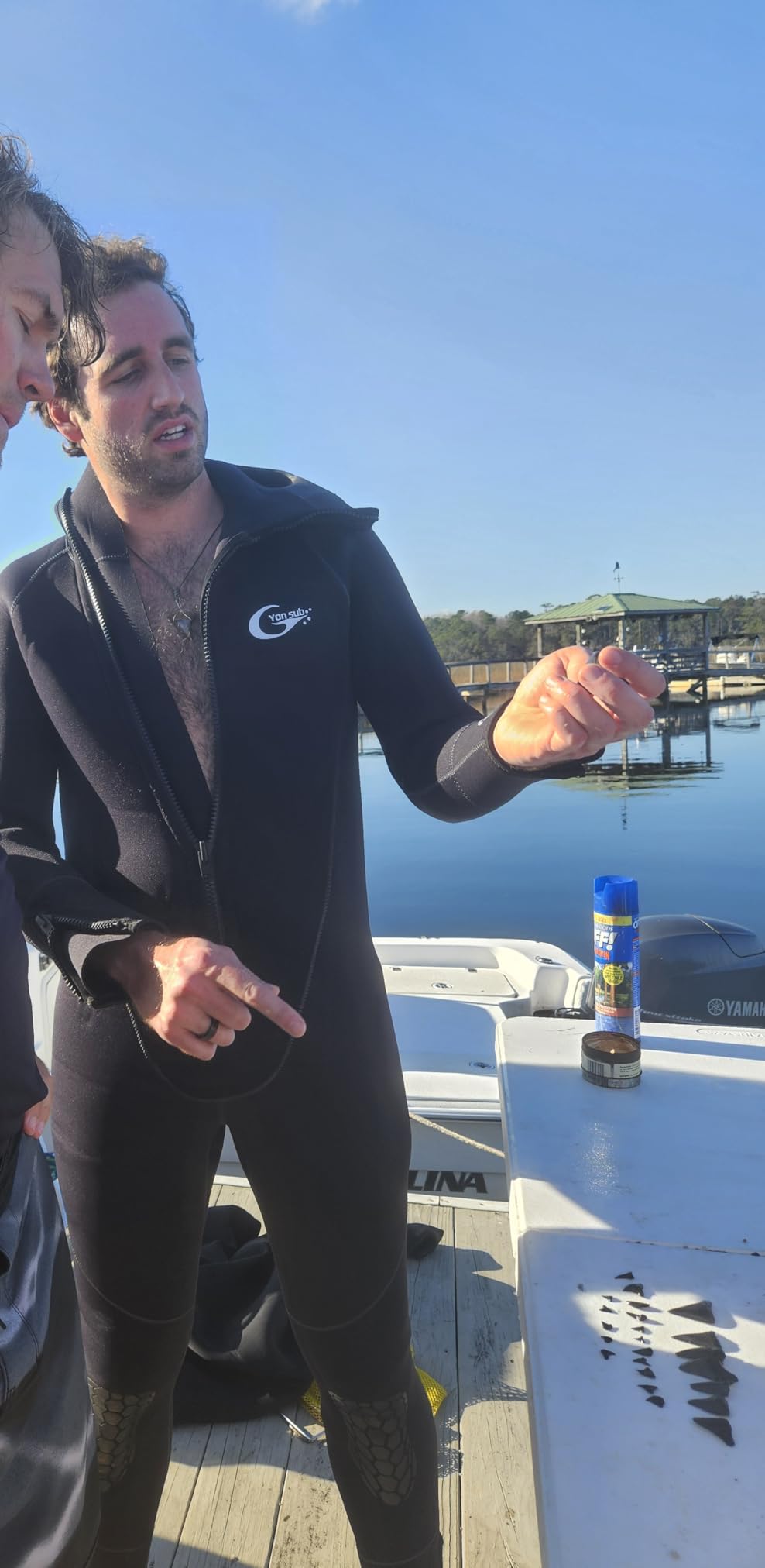
When your winter water drops into the 30s, this is the only suit in the roundup thick enough to keep most people in the water for a full session. The listed rating is for water below 53.6F, and owners report multi-hour dives comfortably in the 50s without the constant shivering that ends other sessions.
Ultra stretch neoprene with a super-elastic nylon outer keeps the thickness from feeling like a straightjacket. This is the closest thing in the list to a classic steamer, and it is the option we would consider for surfers moving between northern California, the Pacific Northwest or the UK in the depth of winter.
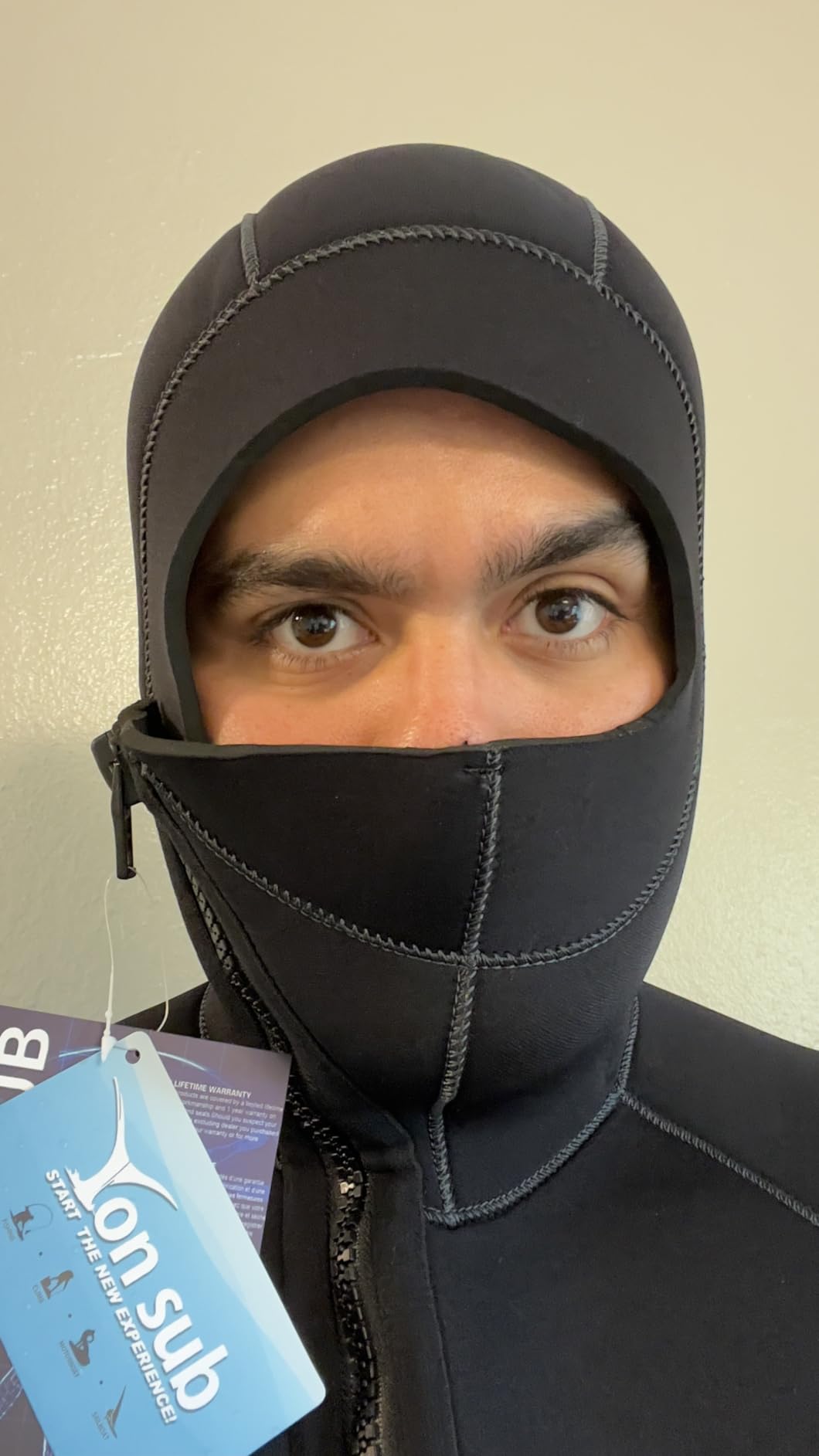
The front zipper with a long pull strap is the detail that changes daily use. A 7mm back zip is a two-person job once it is wet, so a front entry you can reach without twisting is worth more than it looks on paper. The wrist and ankle zippers are a bonus that lets you get boots and gloves on without fighting cuffs.
Flatlock seams keep this suit flexible, which is a deliberate trade. You give up some thermal sealing compared with blindstitch or taped construction, and you get a lot of stretch for paddling. A UV protective outer coating helps in long summer sessions on top of it.
Why Choose The Thickest Option
If you are surfing water in the 30s or low 40sF and you do not already own a 6/5 or 7mm suit, a 4/3 or 5/4 will end your sessions early. This fills that gap in one purchase rather than asking you to layer a vest you would then have to remove.
It is also the better suit for anyone who surfs in colder months than the shoulder season. New England, Newfoundland and the Scottish winter all sit in this range.
Where It Falls Short
Flatlock seams are the trade-off you should understand before buying. They are the least water-resistant option in this roundup, and if your water is genuinely cold you may still flush slowly at the shoulders and through the torso.
Removal is the other issue. Several owners describe taking it off as a two-person task, particularly across the shoulders, and the face and hood area can feel tight. Buy it if you have a changing tent or a friend; be cautious if you surf alone on a remote break.
4. Lansru 5/4mm SCR Neoprene Full Wetsuit – Best Multi-Sport Cold Water Suit
Lansru Men Wetsuit, 5/4 mm SCR Neoprene Wetsuits for Men,UPF 50+(3XL)
5mm SCR neoprene body
4mm CR neoprene at neck and limbs
YKK front zipper
UPF 50+ sun protection
Pros
- SCR neoprene gives better stretch and warmth than cheaper alternatives
- Seamless neck and limb panels for easy movement
- Front zip is simple to get on and off
- Thickened knee pads suit surfing and paddleboarding
Cons
- Feels tight until the neoprene breaks in
- New suits carry a noticeable glue odor
- Value positioning suits casual cold water use
This is the suit to buy if one garment has to cover surfing, kayaking, paddleboarding and open-water work. The construction puts 5mm SCR neoprene through the body and 4mm CR neoprene at the neck and limbs, which is a smart zoning decision: you keep the core warmth where heat escapes and keep the joints flexible where you need range.
SCR neoprene is the point here. Owners consistently report better elasticity and warmth than the cheaper alternatives in the same bracket, and that is exactly what you feel through a long paddle when your shoulders start to complain.
Seamless panel design with a super stretch yarn lining reduces bulk, and a skin-friendly patch design lowers irritation against bare skin. The whole package is OEKO-TEX Standard 100 certified, which matters if you are sensitive to the off-gassing that hits in a new neoprene suit.
Front zip entry, a YKK zipper and an abrasion-resistant nylon outer round out a build that should survive a board rack better than most at this level. UPF 50+ sun protection also means it works as a rash guard for long tropical sessions when you swap to the 3mm version.
Why It Works For More Than Surfing
Most of the cold water gear on this list is marketed to surfers and quietly used for everything else. This one is built with the neck and limb thickness choices that paddling sports reward, so you are not fighting the suit when you pick up a paddle or a paddleboard.
If you split your winter between surfing and paddleboarding, zoned thickness is the single most useful feature in this roundup and this suit offers it explicitly.
Where It Falls Short
The break-in period is real. Owners describe a snug, restrictive feel on first wear that loosens as the neoprene molds, so do not judge the fit in the first five minutes. Wear it for a few sessions before you decide it is wrong.
It also carries a strong glue odor out of the packaging, and it is not aimed at serious cold-water diving depths. For genuine winter surf warmth you would be better served by a thicker or lined suit; for cold-water activities where you stay moving, this is a strong pick.
5. Ocealite 5/4mm Full Wetsuit With Rear Zip – Comfort-Focused Zoned Build
Ocealite Full Wetsuits 5/4mm 4/3mm and 3mm Full Wetsuit for Mens Premium Neoprene Suits for Diving Snorkeling Surfing Swimming (Mens 5/4mm Black, XXX-Large)
5mm core with 4mm limbs
YKK rear zipper
Glued and blindstitched seams
Lycra cuffs and collar
Pros
- Zoned thickness balances core warmth with mobility
- Lycra finishing stays comfortable on long sessions
- Blind-stitched seams resist water penetration
- Internal key pocket for small valuables
Cons
- Rear zipper makes solo dressing harder
- Value-tier build suits general water sports
The reason this suit keeps showing up in owner feedback is comfort over a full session. Lycra-trimmed cuffs, ankles and collar are a small manufacturing choice that most buyers at this level do not get, and they are the difference between chafing at the wrist and finishing the session intact.
The zoning is sensible. 5mm through the body holds warmth in the core, and 4mm sleeves and legs keep the arms and knees mobile enough for a real duck dive. In practice that produces a 5/4 that does not feel like a 5/4, which is the entire argument for buying a mid-tier suit over a heavy one.
Seam construction is the other strength. Glued and blindstitched seams hold up well and resist water penetration, which matters more in cold water than almost any other spec line. A durable YKK rear zipper with an anti-slip Velcro closure runs smoothly and stays closed when you duck dive.
There is an internal key pocket for small valuables, and the range runs through 3mm, 4/3mm and 5/4mm across short, regular and tall fits, so you can find a length that suits you rather than accepting one fixed cut.
Best For Long Paddles And Changing Weather
If your winter pattern is cold water and short sessions, or mild water and long ones, this suit handles both ends of that. The Lycra trim stops the small irritations that make people quit early, and the zoned limbs keep your stroke rate up.
Choose the tall fit if you are over 6 feet. The short and regular cuts are the weak point of many value suits and this brand at least gives you the option.
Where It Falls Short
Rear zip entry is the main ergonomic drawback, and it is worth weighing. On a cold windy beach with numb hands, a rear zip is meaningfully harder to work than a front entry. Several owners specifically compare it unfavourably to front-zip alternatives in the same thickness class.
Construction is value-tier, so it suits surfing, diving and general water sports rather than technical or freediving depths. If you need a suit rated for serious bottom time, look elsewhere in this roundup.
6. Ocealite 5/4mm Front Zip Full Wetsuit – Easiest Suit To Get In And Out Of
Ocealite Men’s Front Zip Full Wetsuit, 3mm 4/3mm 5/4mm Neoprene Wetsuits for Surfing, Diving, Snorkeling, Swimming, Flatlock or Blind-Stitch, PU Knee Pads (Mens 5/4mm Navy Blue, X-Large)
5mm torso with 4mm limbs
YKK front-entry zipper
Glued and blindstitched seams
PU knee pads
Pros
- Front YKK zip operates easily even when wet
- Blind-stitched seams keep warmth in and water out
- Lycra binding at wrists ankles and neck reduces irritation
- PU knee pads add real board protection
Cons
- Fit runs close through the chest and shoulders
- Not specified for deep technical freediving
This is the same zoned 5/4mm platform as the previous suit with one change that matters in cold weather: the zip is at the front. Owners consistently single that out as the reason they recommend it. A YKK front-entry zipper that still operates when your hands are cold is a real quality-of-life upgrade over rear entry, and in a 5/4 that is hard to pull over your head, it saves real time.
Warmth is where the blindstitched construction earns its place. Glued and blindstitched seams produce a low-water-penetration seal, which is the single most important thermal factor after thickness. In practice that is what keeps a 5/4 functioning as a 5/4 rather than flushing down to something closer to a 3/2 after an hour.
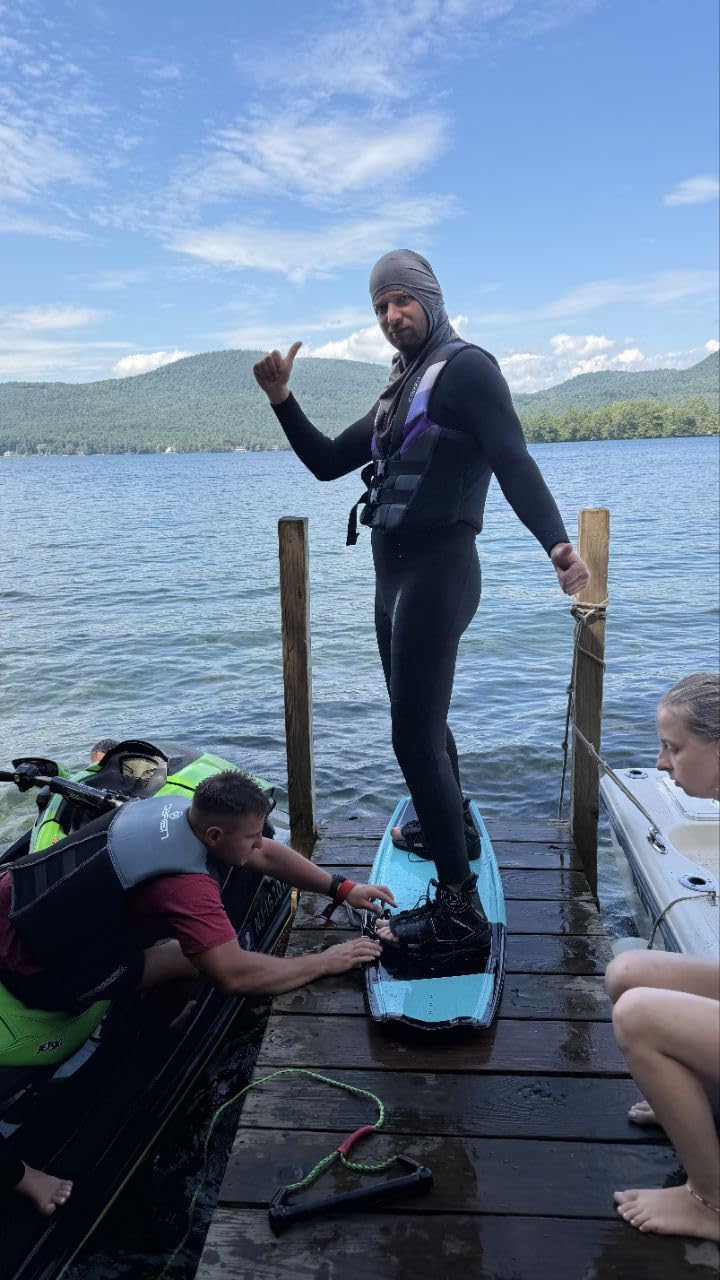
The 5mm torso with 4mm arms and legs is targeted insulation, and it does not cost you mobility. Polyurethane foam knee pads protect against board rails and give the knees some shock absorption for cold landings, which is a genuine surf feature rather than a spec-sheet line.
Lycra seam binding at the wrists, ankles and neckline reduces friction over long sessions, and an internal pocket handles keys and small essentials. The suit is offered in 3mm, 4/3mm and 5/4mm across short, regular and tall fits, so this is an easy brand to build a full season around.
Why Front Entry Wins On Cold Beaches
Rear zips are standard on thicker suits for a reason, usually range of motion, but the cost is real: you twist one arm behind your back, find the pull with cold fingers, and fight a tall body panel. Front entry removes all three problems.
For anyone surfing alone, at a remote break, or with a long walk across a stony beach, this is the difference between a two-minute change and a ten-minute one. It is the reason we rated it best for easy entry.
Where It Falls Short
Fit runs close through the chest and shoulders, and that is the thing to check before ordering. Owners who prefer a looser suit should size carefully rather than ordering their usual size and hoping.
It is not specified for technical freediving at the deepest ratings. For surf and general recreational diving in cold water that is not a problem, but it is a limit worth knowing.
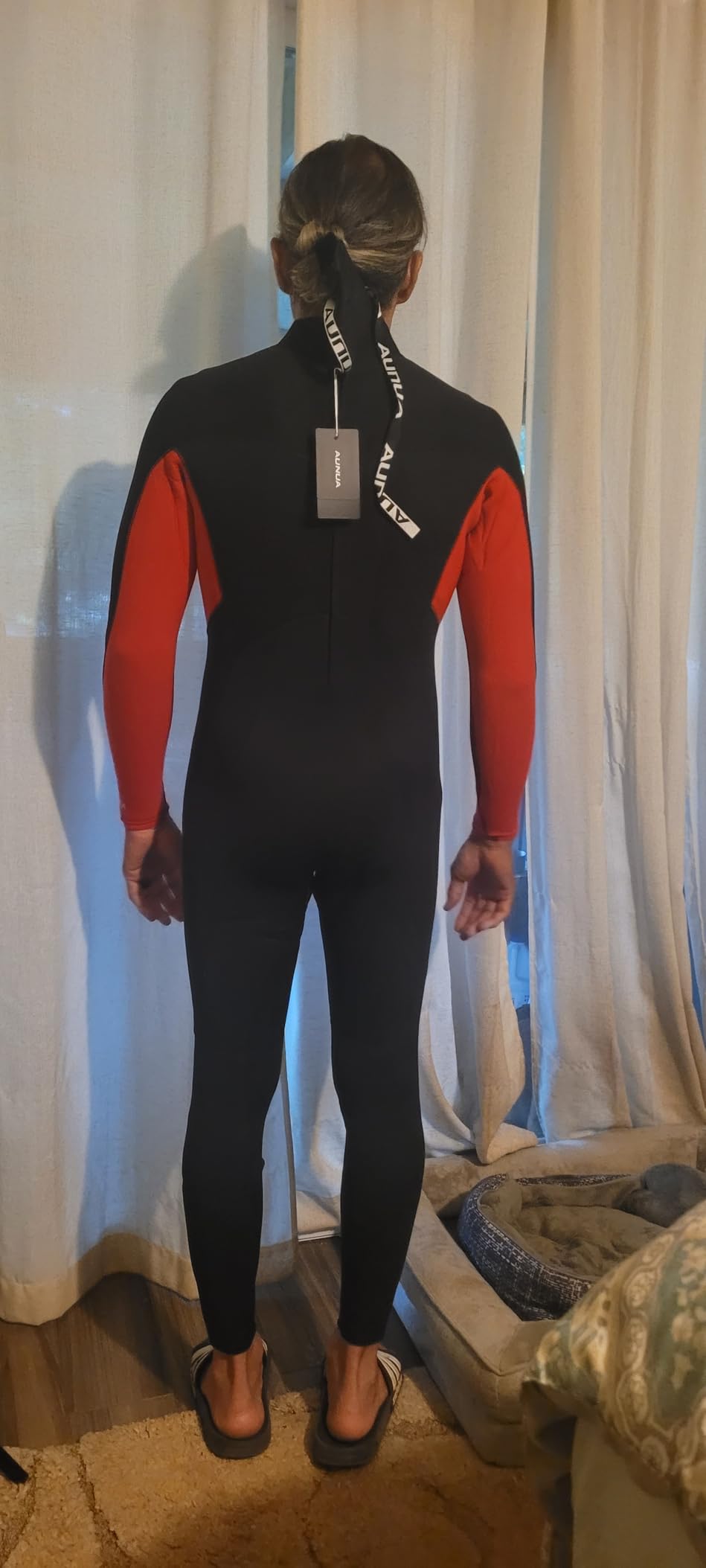
7. Aunua 5mm Ultra-Stretch GBS Wetsuit – Best Warmth To Flexibility Ratio
Aunua Mens 5mm Full Wetsuit Ultra-Stretch Neoprene Surfing Suit Red 2XL
5/4mm rated to 44F
SuperStretch neoprene
GBS blind-stitched seams
Key loop
Pros
- SuperStretch neoprene reduces arm fatigue when paddling
- GBS seams cut water entry and improve warmth
- Rated for water down to 44F
- Key loop keeps valuables secure in the water
Cons
- Strong initial rubber odor that needs air drying
- Requires hand washing in cold water and flat air drying
The 44F rating is what puts this one on the list. That is a serious cold-water claim for a suit at this level, and owners back it up with reports of warmth, stretch and seam construction that hold up across real sessions. Eighty-nine percent of ratings sit at four stars or above.
SuperStretch neoprene is doing the heavy lifting on flexibility. Owners specifically mention reduced arm fatigue while paddling, which is the complaint we hear most about 5mm and 6mm suits generally. It is the same complaint r/surfuk owners raise about heavier winter gear, and this suit is a direct answer to it.
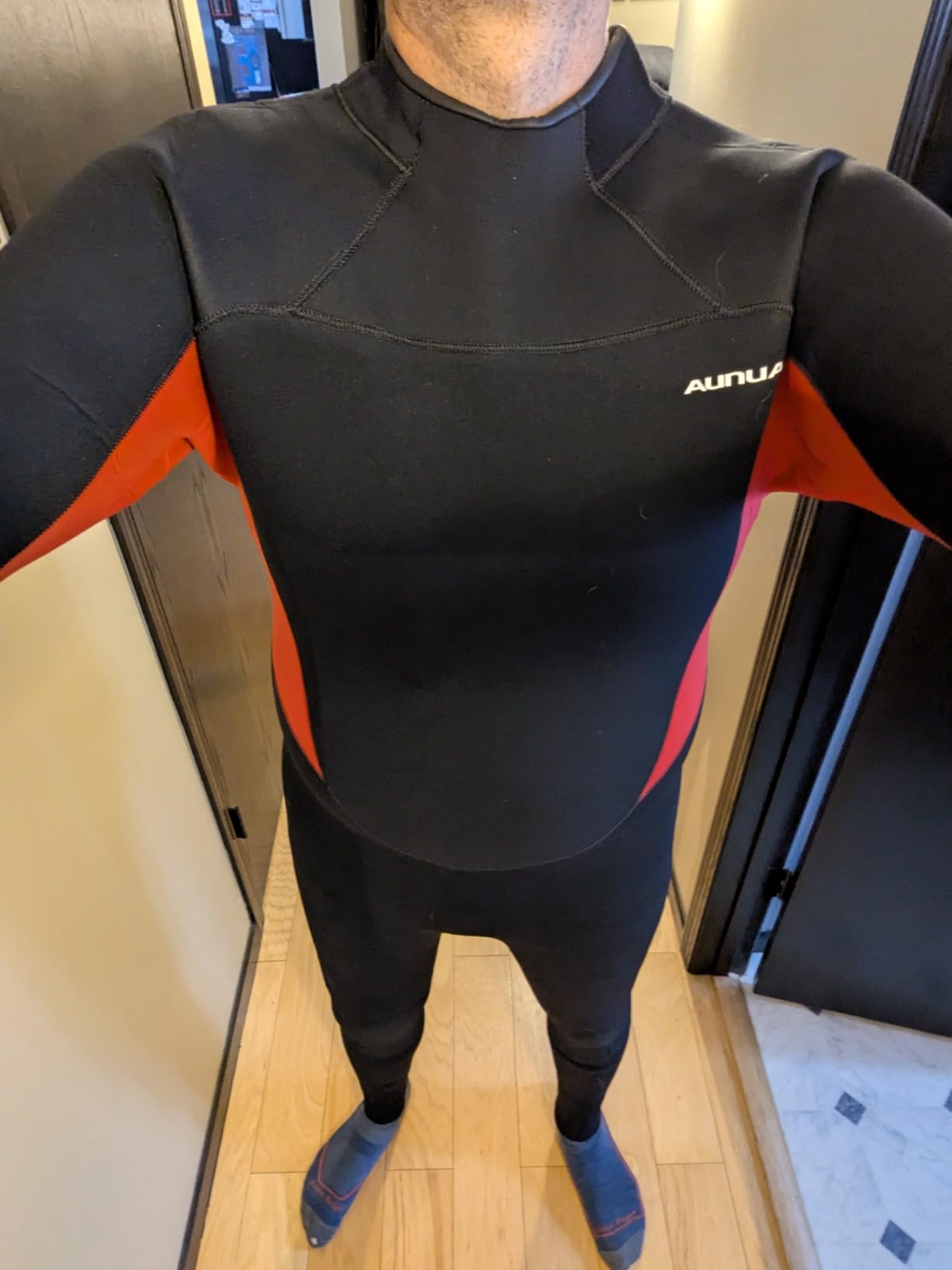
The seams are the standout. GBS means glued, blind stitched and taped internally, which is the construction serious cold water suits use. Waterproof glue plus blind stitching plus internal tape dots gives a seam that is both warmer and more durable than a single-method seam, and warmth per millimetre is the whole game below 50F.
There is a key loop for security while you are in the water, and fourteen variants across black/red and black/blue colourways give you more choice than most suits in this roundup. Model number is ANF-6051 for reference if you are comparing with another Aunua.
Best For Surfers Who Hate Stiffness
If your main frustration with thick suits is a shoulder that locks up after ninety minutes, the neoprene here is the deciding factor. The 5mm body still carries the heat, but the stretch lets you hold a high paddle rate through a long session rather than powering through a rigid torso.
It suits surfers in the 44 to 55F band who want real winter heat without stepping up to a 6/5 or 7mm suit and losing all shoulder mobility.
Where It Falls Short
It arrives with a strong rubber or pungent odour that needs proper air drying before you wear it. Owners also stress that care requirements are strict: hand wash in cold water with mild detergent, then air dry flat, with no ironing and no bleach.
That care discipline is not a small ask. Skip the flat dry and the neoprene loses flexibility, which defeats the reason you bought a flexible suit. Test yourself against the rinse-and-hang routine before you commit.
8. O’Neill Hyperfreak 4/3mm Chest Zip – Most Flexible Suit In The Test
O’Neill Hyperfreak 4/3 mm Chest Zip Full Black/Black XS (5’7″-5’9″, 125-140 lbs)
4mm thickness
TechnoButter neoprene
TechnoButter moves with the wearer
Chest zip entry
Pros
- Exceptionally flexible and easy to get into and out of
- Warm enough for central California and SoCal winters
- Chest zip is convenient for beach entry and exit
- Long track record of quality ownership
Cons
- Some units show rapid thread wear near the elbows
- Zipper button flap tore off on one unit
- Can run warmer than buyers expect in mild conditions
No other suit in this roundup moves like this one. Owners describe it as exceptionally flexible and easy to get into and out of, which is remarkable for a 4mm and is the entire reason to consider it. TechnoButter neoprene stretches with you rather than pushing back, and that is why it feels less like a suit and more like a second skin on a duck dive.
Warmth is rated at 58F by the manufacturer, and owners back that up for central California and Southern California winters. Surf r/surfing owners frequently describe a year-old Hyperfreak 4/3 as comfortable in summer and marginal from January through March, which is an honest description of where a 4/3 belongs.
The chest zip makes beach entry genuinely easy. You can pull it up from the front without the arm-over-head wrestling that a back zip demands, and reinforced seams are specified to prevent seeping and add longevity. Eight sizes run from Small through XLT, which helps taller surfers find a proper length.
It is a full suit and a surfing-specific pattern, not a general water sports suit, so the shoulders and armhole cut are shaped for a surf stance. If you have spent years in a stiff suit and got tired of it, this is the change that makes you want to go out in January.
Why Flexibility Is A Cold Water Feature
Warmth you cannot use is a marketing number. A suit that makes you numb in the shoulders, or that you cannot get into alone, ends the session early, and an early session is a cold session. Flexibility is what lets a 4/4mm deliver on its rating for a full two hours.
This is also why r/surfuk owners rate the Hyperfreak as highly flexible but not very durable, and pair it with a natural rubber alternative for longevity. That trade-off is real and we have covered it in detail in the buying guide below.
Where It Falls Short
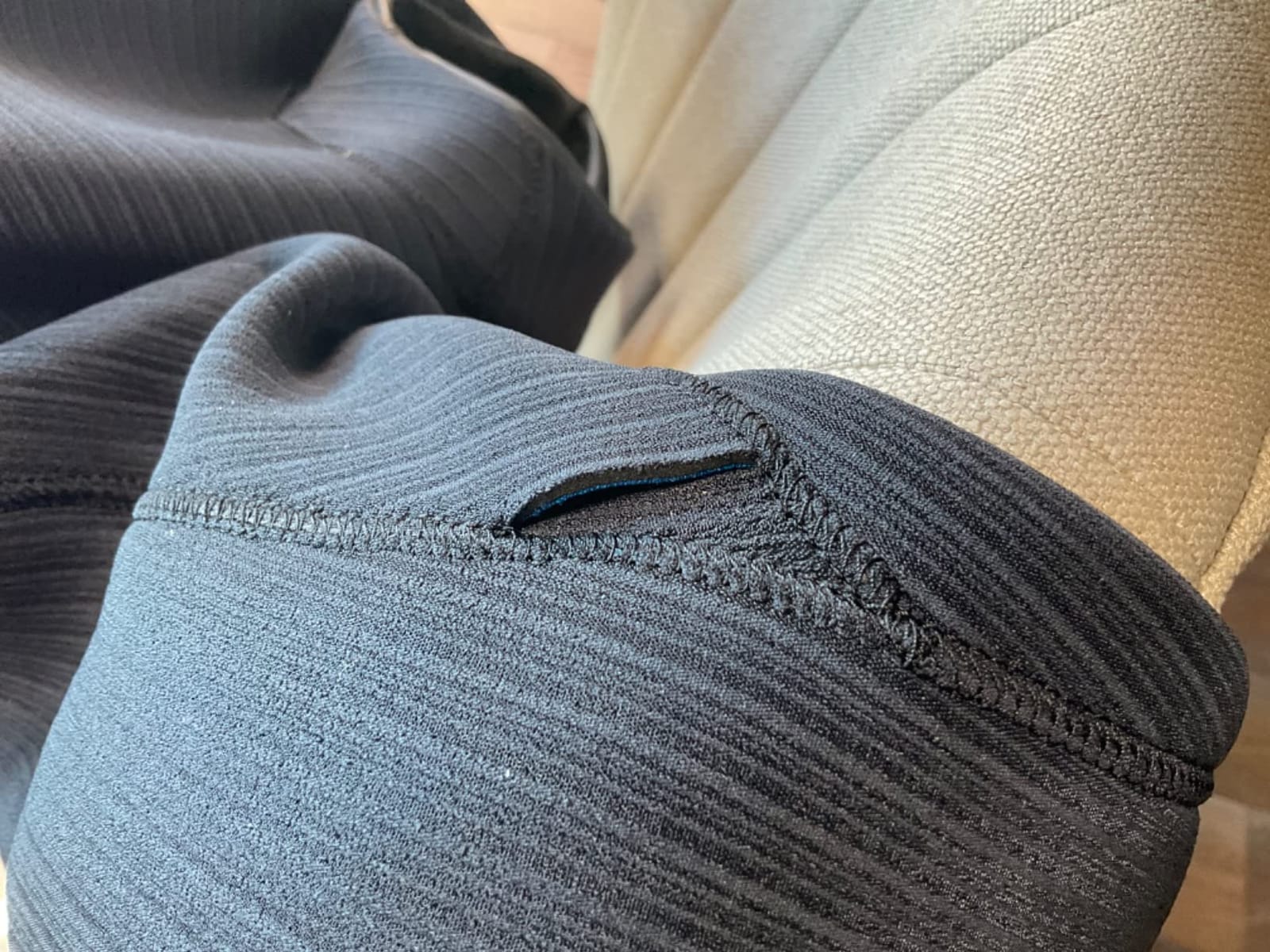
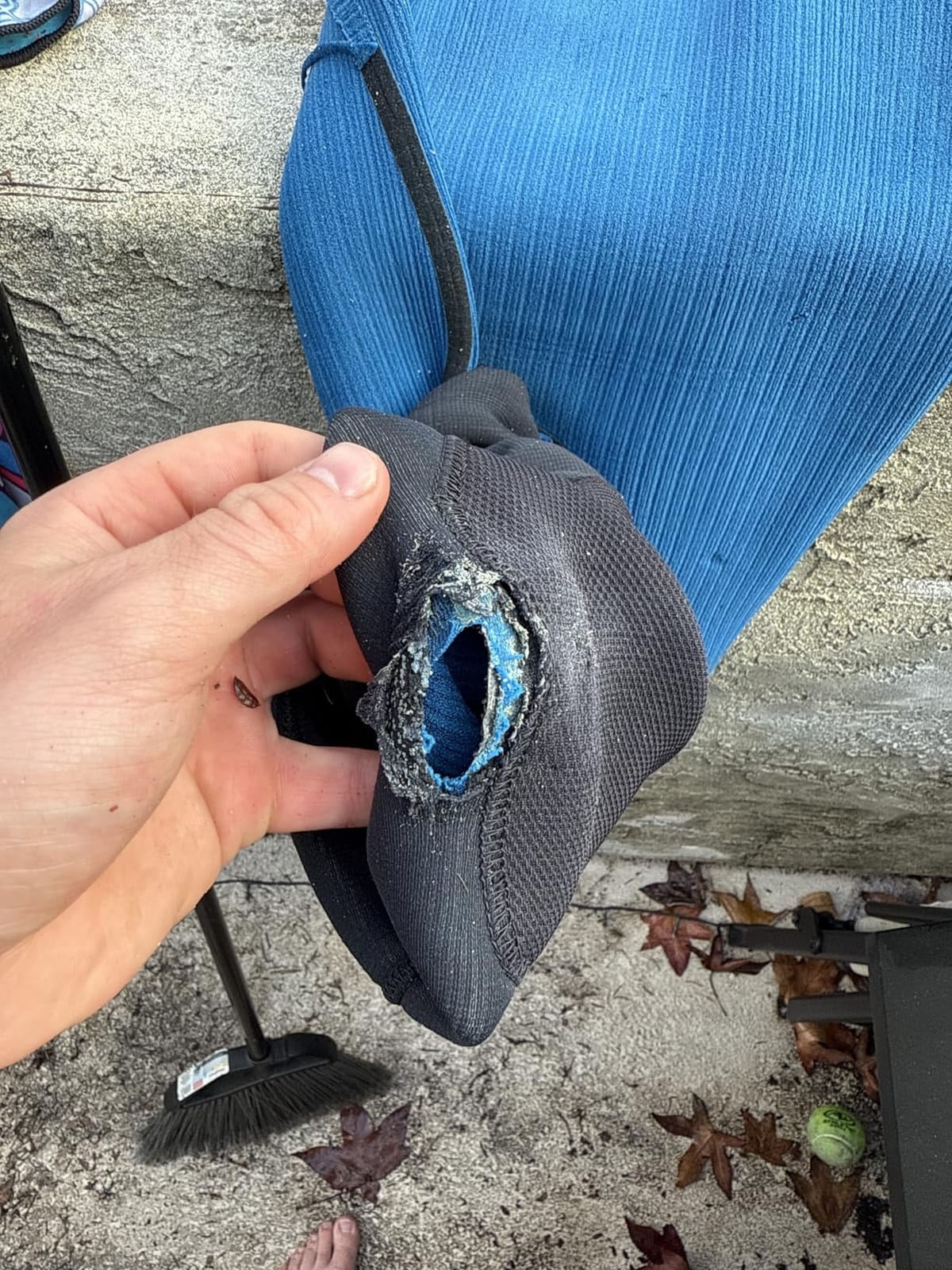
Durability is the honest weakness. Some units showed rapid thread unraveling and wear near the elbows within a few months, and one owner reported the zipper button flap tearing off after limited use. Elbows take real contact on a surfboard, so inspect them early.
Owners also say it runs warmer than some expect in mild winter conditions, and it can be difficult to get into at first without practice. Both are solved by treating it as a shoulder-season 4/3 and wearing a hooded vest underneath when the water drops.
9. REALON 4/3mm Full Wetsuit – Best Transitional Autumn Suit
REALON Full Wetsuit Mens Womens 4/3mm Neoprene Diving Scuba Triathlon Wet Suits Cold Water Keep Warm Back Zipper Long Sleeve Thermal Swimsuit
4/3mm neoprene full suit
Fully sealed construction
Thickened back hips knees elbows
Back zipper
Pros
- Seams hold up with no rough edges after repeated use
- Warm in low 60s water for extended activity
- Sizing runs accurate when the chart is followed
- Back zipper works single-handed while wet
Cons
- Unisex cut so sizing needs care against the chart
- Not a hooded or high-end seam construction
This is the suit for the shoulder season rather than the deep winter. Rated to about 68F, it is the warmest-weather 4/3 in the roundup and the right call for October through December water, or for southern California and much of the UK outside the worst weeks.
Owners report solid warmth in low-60s water for extended activity, and several have compared the build favourably against high-end suits at first touch. At a 4.5 average across 45 ratings, it holds the joint-highest rating in this list alongside the BARE and REALON hooded suit.
Thickened panels at the back, hips, knees and elbows do most of the work. Those are the heat-loss zones when you are sitting in a lineup in an onshore breeze, and adding material exactly there is more effective than adding it everywhere.
The build is fully sealed with cuffs for unrestricted movement, and a sun-protection coating layer reduces UV harm and irritation on long days. The back zipper can be operated single-handed while wet, which is a small quality-of-life point on a beach with a cold wind. Twenty-two variants cover men and women in blue and black.
Best For Extending A Season
If you surf year-round but only hit genuinely cold water for a handful of weeks, buying a 5/4 or 6/5 for the whole winter means overheating for months. A 4/3 plus a hooded vest underneath handles the shoulder season alone and covers the coldest weeks when you add layers.
That is the strategy r/surfing owners recommend repeatedly, and it costs less than a single thick suit. This suit is the base layer for exactly that plan.
Where It Falls Short
The cut is unisex, so the single most useful piece of advice from owners is to size off the chart rather than your normal streetwear size. Reviewers mention this repeatedly and it is the difference between a good fit and a baggy one.
It is also not a hooded or high-end seam construction. In genuinely cold water you would want a 5/4 with blindstitched or taped seams, not a sealed 4/3 with no hood.
10. Owntop 4mm Wetsuit For Women – Best Women’s Cold Water Cut
Owntop 4mm Wetsuit for Women, GBS Seam, Warm High Stretch Neoprene
4mm SCR neoprene core
CR super-stretch panels
GBS blind-stitched seams
Back zip with pull cord
Pros
- GBS seams cut flushing and heat loss
- Super-stretch joint panels allow unrestricted paddling
- Raw-edge neckline and rolled cuffs limit chafing
- Extended pull cord opens the back zip when gloved
Cons
- No manufacturer warranty is offered
- Neoprene and nylon blend needs careful rinsing and air drying
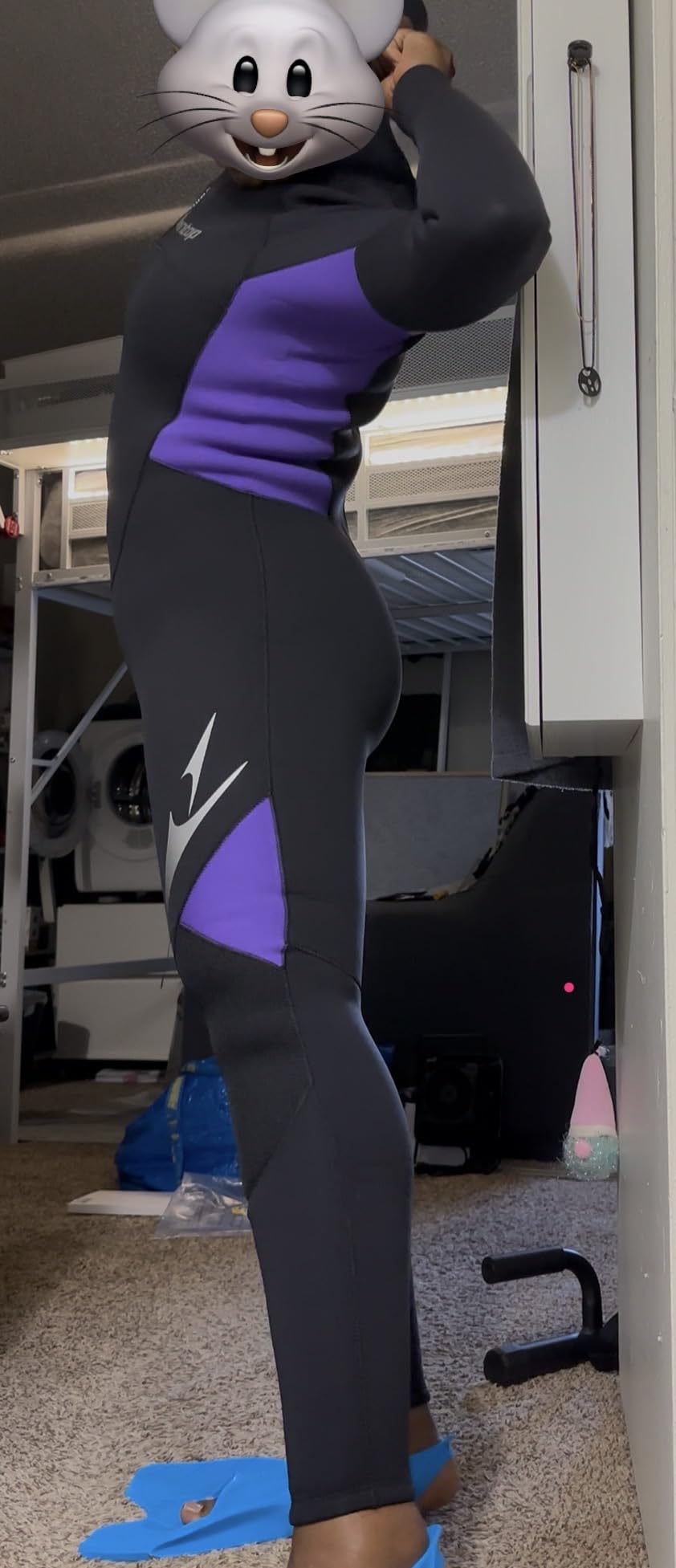
Finding a cold water suit that fits a woman’s shape without reading like a borrowed men’s suit is a genuine problem, and r/surf owners ask about it constantly. This is the dedicated women’s cut in the roundup, and the construction choices target the areas that actually cause discomfort in a 4mm.
A durable SCR neoprene core provides warmth and structure, with CR super-stretch panels placed at the key joints for mobility. That split is what makes a 4mm feel manageable rather than heavy, and it is the same zoning logic the men’s suits in this list use.
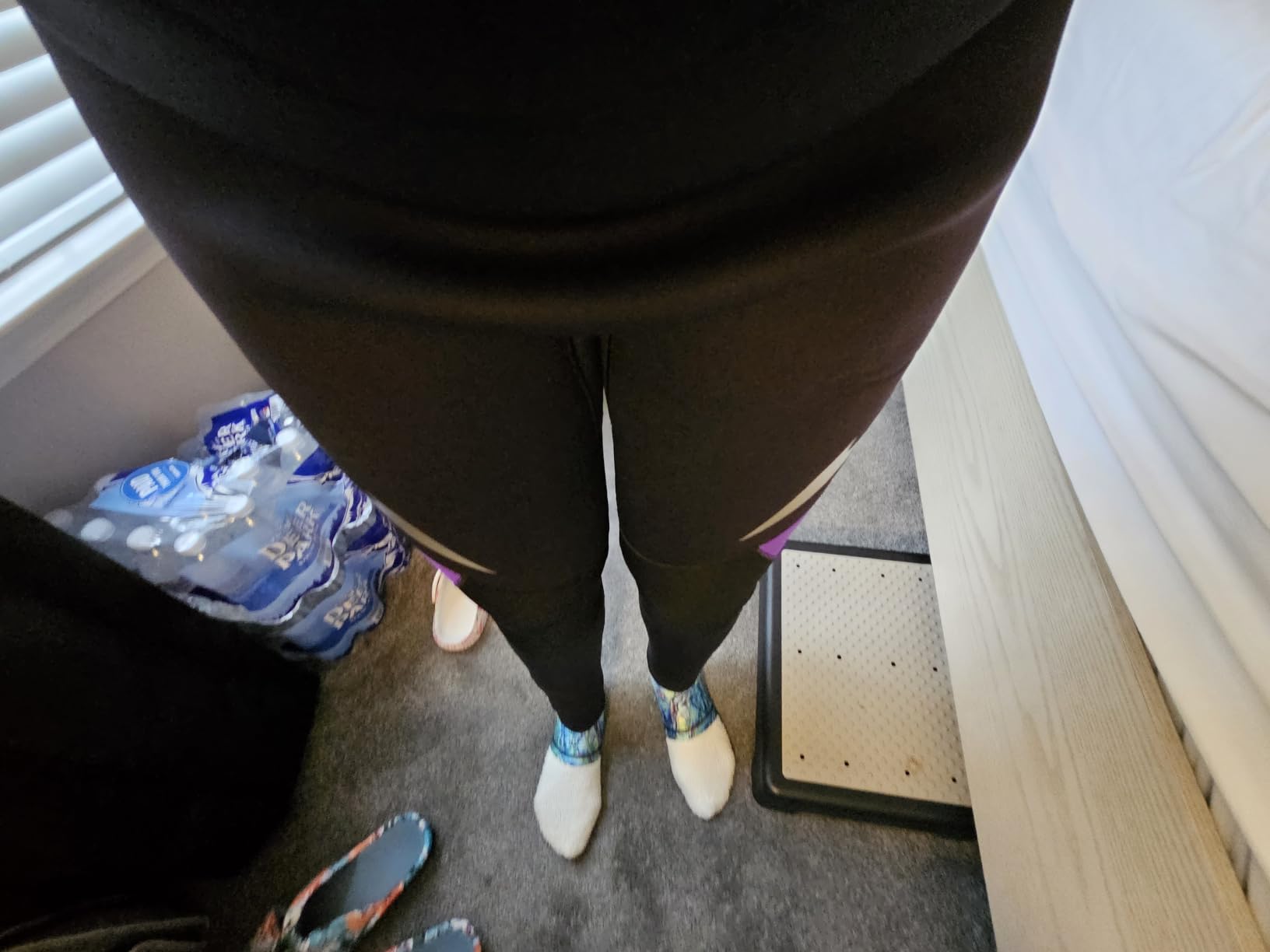
GBS seams, glued and blind stitched, are specified to cut water flushing and heat loss, which is the primary reason cold water feels cold. Owners highlight warmth, seam sealing and comfort against the skin as the three strengths, and that last point is where this suit earns its badge.
The raw-edge neckline and rolled cuffs reduce chafing against bare skin, masks and hoods. On a long session that is not a cosmetic detail, because a rubbing neck is the fastest route to a suit you stop wanting to wear.
Why This Cut Works In Cold Water
The back zipper has an extended pull cord that is usable when wet or gloved, which solves the classic problem of reaching behind your back with cold fingers. Twelve variants run across purple and black from Small to 3X-Large, so length and fit are more adjustable than with a unisex cut.
For anyone who has repeatedly chosen a bulky unisex 4/3 because nothing else fit, this is the option to check first. Pair it with 5mm boots and a 1mm hooded sleeveless vest for the coldest weeks.
Where It Falls Short
There is no manufacturer warranty, and that is the main concern for longer-term buyers. A minority of reviews flag durability expectations, and without a warranty you absorb any seam failure yourself.
The 90 percent neoprene and 10 percent nylon blend also needs careful rinsing and air drying to stay flexible. Treat it like a technical garment rather than workwear, and it will outlast expectations.
11. BARE 5mm Revel Full Wetsuit – Best Warranty Cover In The Lineup
BARE 5MM Revel Men’s Full Wetsuit | Combines Comfort and Flexibility | Made from a Blend of Neoprene and Laminate | Designed for All Watersports Including Scuba Diving and Snorkeling | Grey M
5mm neoprene
Anatomical shoulder pattern
Armour-flex knee pads
2-year warranty
Pros
- Anatomical pattern avoids shoulder pressure points
- Soft flexible neoprene stretches where needed
- Internal calf and elbow seals limit water flow
- Durable enough for all-day wear in 65F water
Cons
- Not the warmest 5mm without a hood gloves and boots
- Tall and short cuts can leave a water pocket in the lower back
This is the highest-rated suit in the roundup, and the only one with a warranty you can actually point to. BARE covers every wetsuit with a two-year warranty on workmanship and materials, which covers repair or replacement at their option and is voided only by unauthorised repairs or misuse. On a cold water suit that gets worn hard for years, that is real value.
The fit is the standout feature and it is not a generic claim. The anatomically correct shoulder and neck pattern is specifically designed to remove pressure points, and owners confirm it fits well and avoids the shoulder ache that heavy suits usually cause.
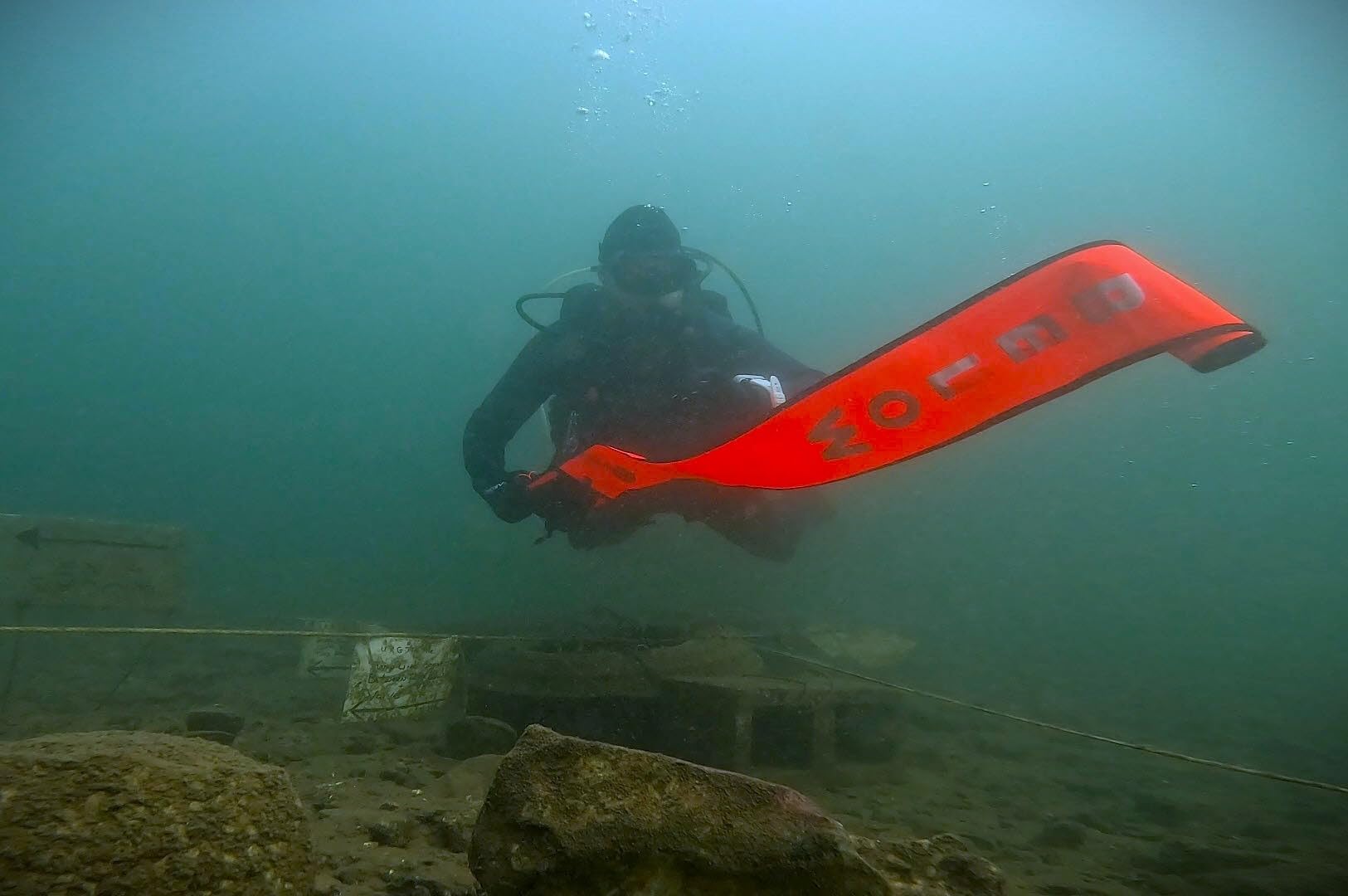
Internal seals at the calves and elbows limit water flow, which is the detail that separates this from other 5mm suits. Water running down your arms and legs is a major heat-loss route, and sealing those two areas is one of the highest-value things a suit at this level can do.
Other construction details hold up: a low-profile collar with a velcro tab that avoids snagging, an extra-long heavy-duty back zipper for donning and doffing, and armour-flex knee pads that extend life in the highest wear area. Owners report the back zipper never catches.
Thirteen variants cover short, tall, regular and big cuts, which is the broadest size range in this roundup and a real advantage if you are between standard fits. BARE designs from British Columbia with a long record in dive and water sport equipment.
Best For Wear And Tear
Durability is the reason to step up here. If you surf in cold water two or three times a week through a full winter, suit failure is likely rather than theoretical, and a two-year workmanship warranty changes the calculation. The armour-flex knees and internal seals are both wear-point solutions.
Owners report all-day comfort in 65F water, which makes this a genuine workwear-level suit rather than a weekend one.
Where It Falls Short
Warmth is described as moderate rather than extreme, and it is not the warmest 5mm here without a hood, gloves and boots. In the low 40s you would want the hooded suit, not this one. Think of it as a 5/4-to-5/5 that handles wind and long hours rather than the coldest water.
The tall and short cuts can leave a water pocket in the lower back for some body types, so pick your cut carefully. Owners who got the correct cut for their shape report no issues at all.
12. REALON 5mm Hooded Fullsuit – Best Integrated Hood In The Lineup
REALON 5mm Neoprene Men Wetsuit with Hooded Full Body One Piece Thermal Spearfishing Wet Suits Front Zipper Cold Water Keep Warm for Surfing Swimming Diving Snorkeling
5mm sealed neoprene
Integrated hood
Front zip with wrist and ankle zippers
UV coating
Pros
- Hooded 5mm build gives solid cold water protection
- Wrist and ankle zippers ease gloves and socks on
- Front entry is simple compared with back-entry suits
- Stretch neoprene holds warmth without heavily limiting movement
Cons
- Only offered in Small with two colourways
- Needs thorough rinsing and shade drying to prolong neoprene life
This is the only integrated hood in the whole roundup, and that is worth more than it first appears. An integrated hood eliminates the neck gap that lets cold water run down your back on a duck dive, which is the single most common complaint people have about separate hoods. If you have ever surfed with a hood that slides off and then spent the rest of the session shivering, this solves that.
At 5mm with a fully sealed build, this is a serious cold water suit. Owners rate warmth highly for cold-water diving and spearfishing, and the hooded one-piece design also adds a little buoyancy that helps in heavier surf and reduces water resistance.
Entry is unusually good for a hooded suit. A front zipper means you do not have to pull a hooded 5mm over your head, and the waterproof wrist and ankle zippers make it far easier to fit gloves and boots over the suit rather than fighting the cuffs.
The sun-protection coating defends against UV and sea lice, and stretchable neoprene holds warmth without severely limiting movement. The suit is rated to about 68F water as listed, and comes in Black Blue and Black Gray fullsuit variants.
Best For The Coldest Water On The List
If you surf water in the high 30s and low 40sF and you refuse to wear a separate hood, this is the only option here. The hood is not an accessory, it is part of the suit, so there is no strap digging into your neck and nothing to lose in a wipeout.
The wrist and ankle zippers are quietly excellent for surfers who wear boots. Most 5mm suits fight a boot cuff; these open instead.
Where It Falls Short
Sizing is the serious limitation. It is only offered in Small with two colourways, which excludes most adult surfers outright. Check your measurements against the listed chest and waist figures before you commit, and be honest about the number.
It also needs thorough rinsing and shade drying on both sides to prolong neoprene life. With 21 ratings and a 4.6 average it is well reviewed, but the sample is small, so treat the feedback as encouraging rather than conclusive.
How To Choose A Cold Water Surfing Wetsuit
Everything above depends on one number: your water temperature. Get that wrong and no amount of technology rescues the session. Here is how to make the decision in the right order, starting from the water and working outward.
Match Thickness To Your Water Temperature
A wetsuit works by trapping thousands of sealed gas bubbles in the neoprene, which slows heat leaving your body, plus a thin layer of water between suit and skin that your body warms to skin temperature. Both mechanisms fail if the suit is loose, which is why fit matters as much as millimetres.
Here is the mapping we use. Water temperature first, then thickness, then the accessories you actually need at that band.
- 65 to 70F (18 to 21C): a 4/3mm, no hood. A 3/2mm is plenty here and will overheat by midday.
- 58 to 64F (14 to 18C): a 4/3mm, 1mm hooded vest optional. This is the transition band where most of this roundup works.
- 50 to 57F (10 to 14C): a 5/4mm with hood, plus 3 to 5mm boots and 3mm gloves.
- 45 to 49F (7 to 9C): a 5/4mm with hood, 5mm boots, 5mm gloves and a thick hood or balaclava. A 1mm sleeveless hooded rashie under the suit adds real warmth.
- Below 45F (below 7C): a 6/5mm or 7mm with hood, 7mm boots, 5mm gloves and a separate hood. Do not attempt this on a 4/3.
A 4/3mm is generally good down to about 58F per the manufacturer rating on the Hyperfreak in this list. Anything colder than that and a 4/3 becomes a shoulder-season suit rather than a winter one, which is exactly how the r/surfing Hebrides owner described their year-old 4/3: fine in summer, cold from January through March.
Read The Seam Construction, Not Just The Millimetres
Thickness tells you how much neoprene you have. Seams tell you how much of it is actually working, because every stitch hole is a path for cold water.
- Flatlock: threads pass through both layers and lock flat. Flexible and durable under strain, least water-resistant. Fine for temperate water, a compromise in real cold water.
- Blindstitch: one layer passes through without exposing the thread on the inside. Fewer water paths, and the minimum you want in a winter suit.
- GBS, glued and blindstitched: glue plus blind stitching, sometimes with internal tape. This is what serious cold water suits use and it is both warmer and more durable than either method alone.
- Taped or liquid sealed: seam tape laid inside or liquid rubber applied to the seam. The most water-resistant option and the one to look for in the coldest water.
Cold water demands blindstitch as a minimum. Of the twelve suits here, ten specify glued and blindstitched or GBS seams, one uses flatlock and one is described only as a sealed build, so seam quality is high across the roundup.
Choose Between Chest Zip, Back Zip And Zip-Free
Entry is a genuine trade-off, not a preference. A chest zip, as on the Hyperfreak and the Ocealite front zip, is the easiest on a cold beach because you never reach behind your back. It costs a little shoulder range and adds a chest panel. A back zip, as on the Epic, the Hevto and the BARE, gives maximum stretch and shoulder freedom but is harder to work with cold hands. Zip-free suits feel the best once you are in them and are the hardest to get into on a beach with a stiff onshore.
Our advice for cold water surfers is simple: if you surf alone or at a remote break, buy front entry. If you surf with a partner and a tent, back zip buys you shoulder range for the same money.
Decide Between An Integrated Hood And A Separate Hood
None of the twelve suits in this roundup has a thermal lining. That is a real finding and worth stating plainly. The fleece and graphene linings that feature heavily in cold water marketing are absent from every spec sheet here, so warmth in this list comes from neoprene thickness, seam sealing, hood coverage and fit. If you want lining, you are shopping outside this roundup.
On hoods, the honest answer is that an integrated hood is warmer and more secure, and only the REALON 5mm hooded suit offers one. A separate hood is more versatile because you can remove it, and a 1mm sleeveless hooded rashie worn under the suit is the strategy r/surfing owners recommend: it adds warmth, sits flat under the shoulders and costs a fraction of a 5/4 step-up. Other forum advice points to a 5/4 with a hood for water in the 8 to 9C range, specifically because the hood handles windchill on top of the cold water itself.
Flexibility Versus Durability: What You Give Up At Each Step Up
This is the trade-off that appears in forum threads constantly and in almost no competitor guide. r/surfuk owners rate the O’Neill Hyperfreak as highly flexible but not very durable, and they pair it with Patagonia R3, R4 or R5 as a natural rubber alternative that is less flexible at a higher outlay. The same owners who rate their 6mm winter suit as high quality also find it stiff across the shoulders and hard to paddle in, and they want flexibility and longevity above everything else while surfing twice a day.
So the honest ladder looks like this. Budget suits are the most durable and the least flexible, which suits a relaxed pace and a once-a-week winter session. Mid-tier suits add stretch and better shoulder patterns for a moderate paddle cadence. Premium suits are the most flexible and generally wear faster at the elbows, which suits a surfer who surfs often and cares more about how the session feels than how long the suit lasts.
That is the decision no brand will make for you, so make it yourself. If you surf twice a day, buy for flexibility. If you surf twice a month, buy for durability and spend nothing on it.
Fit, Flushing And What To Wear Underneath
Flushing is what happens when cold water washes through the suit and replaces the warm water inside it. It is the number one reason sessions end early, and it is caused by a loose fit more often than by cold weather. Wet fit should be snug but not restrictive, especially across the shoulders and chest, and the way to know is whether you can raise your arms fully without the torso pulling open at the neck.
Brand sizing is inconsistent, and this is the single most repeated complaint across every product here. Several brands run small, so the consensus advice from owners across the reviews is to check the size chart, compare chest and waist measurements, and size down from your normal suit if the chart says so. If you are switching brands, treat it as a fresh measurement rather than a direct swap.
Underneath, keep it thin. A thermal base layer or a 1mm sleeveless hooded vest adds meaningful warmth without adding a layer that restricts your shoulders. Avoid cotton, because it holds water against your skin and reverses the whole point of the suit.
Boots, Gloves And Earplugs For The Coldest Water
Spend on boots before you spend on a thicker suit. In cold water your hands and feet go numb first, numb hands stop paddling, and cold feet end the session. Three millimetre boots suit roughly the 50 to 60F band, five millimetre boots cover 40 to 50F, and seven millimetre boots are for water below 40F. Gloves follow a similar ladder, with five millimetre gloves needed for the coldest water and a separate thick hood or balaclava above that.
Earplugs are the unglamorous one and the cheapest. Cold water and wind exposure cause surfer’s ear, and it is a permanent condition once it starts. Moulded or surf-specific earplugs cost a small amount and prevent a problem that follows you for the rest of your life in the water.
If you are photographing the session, the same cold affects your gear handling. Our guides to the best action cameras for surfing and the best cameras for surfing lineup photography cover cold-weather handling and mounting, which pairs directly with the accessory strategy above.
How To Make A Cold Water Suit Last
Owner feedback on these suits repeatedly mentions care requirements, and it is not a minor point. Rinse with fresh water after every session, hand wash in cold water with mild detergent, and air dry flat in the shade on both sides. No ironing, no bleach, no dryer. A suit that is hung properly keeps its flexibility, and a suit that is baked in a car does not.
On prior-season buying, the useful detail is that winter suits and their discounts do not line up with the surfing calendar. The forum guidance is straightforward: buy cold water gear out of season rather than in a panic in the first cold week, and check the size chart again during a clearance because sizing can run differently between production runs.
Frequently Asked Questions
What wetsuit is best for very cold water?
For very cold water below about 45F, you want a 6/5mm or 7mm suit with a hood, blindstitched or taped seams, and 7mm boots. In this roundup the WYYHAA 7mm front zip suit is the thickest option, rated for water below 53.6F, and the Aunua 5mm is rated down to 44F. Add 5mm gloves, a separate hood or balaclava, and earplugs.
What is the best wetsuit for winter surfing?
For most winter surfers the answer is a 5/4mm with a hood. The Hevto 5/4mm keeps owners comfortable in the 40 to 52F range at the value end, and the Ocealite 5/4mm front zip suit is easier to get into and out of on a cold beach. If your winter water is only in the low 50s, the O’Neill Epic 4/3mm is the more versatile choice.
What are the best wetsuits for cold water surfing?
The best wetsuits for cold water surfing depend on water temperature and session length. Our top picks are the O’Neill Epic 4/3mm for overall balance, the Hevto 5/4mm for value, the Ocealite 5/4mm front zip for easy entry, the WYYHAA 7mm for the coldest water, the O’Neill Hyperfreak 4/3mm for flexibility, and the REALON 5mm hooded suit for integrated warmth.
What color wetsuit to avoid sharks?
There is no reliable evidence that any wetsuit colour reduces the risk of a shark encounter, so colour is not a safety feature. If you are worried about visibility to other water users in poor light, a bright accent colour helps other surfers and swimmers see you. Focus your budget on thickness, seams, fit and a hood instead, since those are what keep you in the water.
What is the best wetsuit thickness for cold water?
A 4/3mm is generally comfortable down to about 58F, a 5/4mm covers roughly 50 to 57F, and below 45F you need a 6/5mm or 7mm. In between bands, a 4/3mm with a 1mm sleeveless hooded vest underneath is the strategy cold water surfers recommend to cover the shoulder season without stepping up a full thickness.
Final Verdict: Which Cold Water Surfing Wetsuit Should You Buy?
Buy the O’Neill Epic 4/3mm Back Zip if your winter water sits between roughly 50F and 60F and you want one suit that covers autumn through early spring without overheating. It is the most thoroughly tested option in this roundup, and its glued and blindstitched seams are the reason it holds warmth where cheaper 4/3s flush.
Buy the Hevto 5/4mm if you are surfing the low 40s and want real winter heat without stepping up to a premium price, and follow the reviewers who advise sizing down. Buy the WYYHAA 7mm if you are down in the 30s and want one garment that covers the whole winter, and accept that taking it off is a two-person job. Buy the REALON 5mm hooded if you have ever been let down by a separate hood, and check the Small-only sizing first.
Whatever you choose, get the fit right. A snug wet fit, blindstitched seams as a minimum, boots that match your water temperature and a pair of earplugs will get you more usable hours in cold water than any brand name on the label. That has been our working order of priorities through the 2026 winter, and it is the one we would fall back on when the spec sheets blur together.