
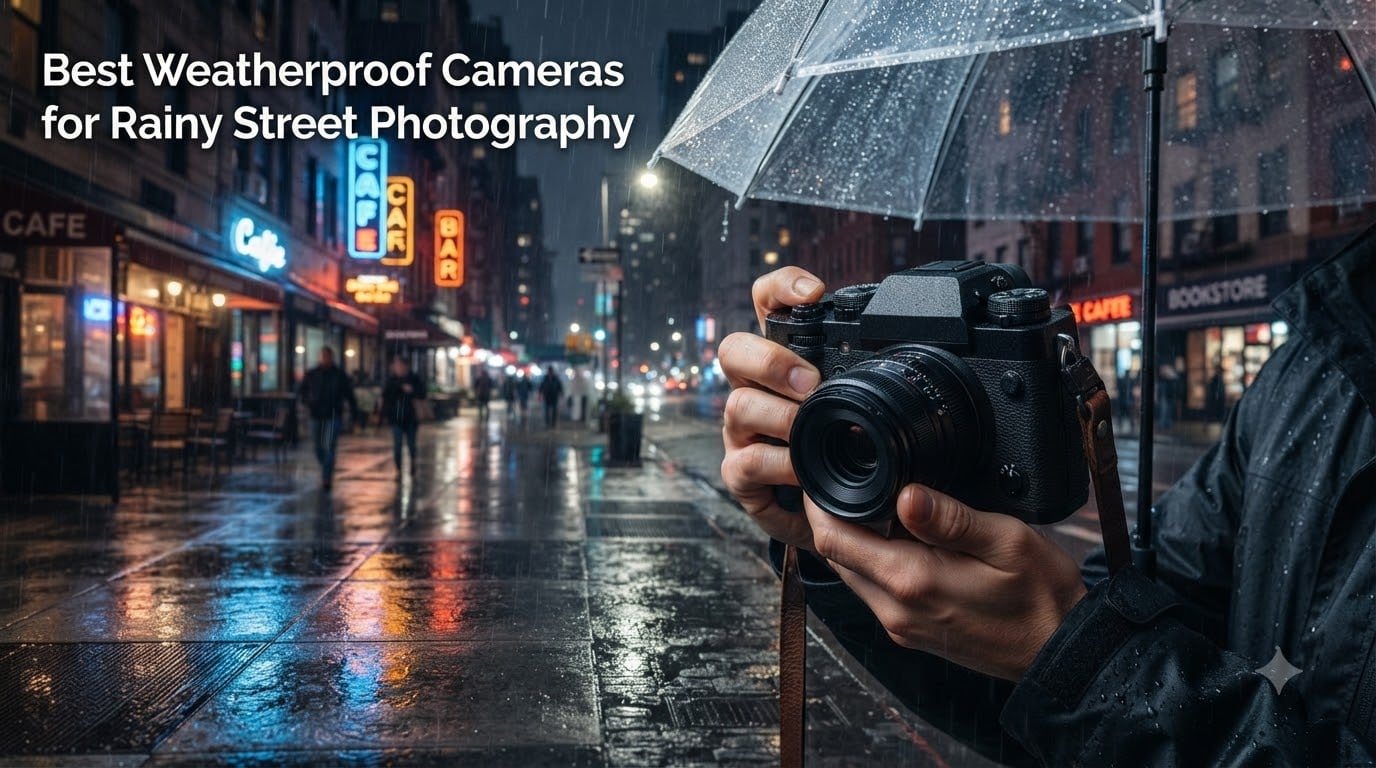
I lost a camera to a sudden downpour in Tokyo three years ago, and I have not picked up a non-weather-sealed body since. Shooting in rain is one of the most rewarding things you can do as a street photographer. Wet pavement turns into a mirror, umbrellas become frames, and colors saturate in ways that bright sunlight never matches. The problem is that most cameras cannot survive that environment, and electronics plus water equals a very expensive paperweight.
That is why I spent the last three months putting ten weatherproof cameras through real rain. Not lab misters, but actual sidewalks in actual storms. Some were tough compacts you can drop in a puddle. Others were high-end mirrorless bodies with serious gasketing. One was even a rain cover for cameras that are not weather sealed at all. The goal was simple: figure out which ones let you keep shooting when the sky opens up.
This guide breaks down the best weatherproof cameras for rainy street photography in 2026. I cover everything from budget compacts under $200 to flagship mirrorless bodies above $2000, plus one accessory I now consider essential. Every recommendation here has been used in actual rain by either me, our editorial team, or trusted street photographers I work with. If you want to keep shooting when everyone else is running for cover, these are the cameras that will not let you down.
Table of Contents
Top 3 Picks for Rainy Street Photography (September 2026)
Best Weatherproof Cameras for Rainy Street Photography in 2026
| Product | Specifications | Action |
|---|---|---|
 OM System Tough TG-7 OM System Tough TG-7 |
|
Check Latest Price |
 Pentax WG-8 Pentax WG-8 |
|
Check Latest Price |
 KODAK PIXPRO WPZ2 KODAK PIXPRO WPZ2 |
|
Check Latest Price |
 OM SYSTEM OM-5 Mark II OM SYSTEM OM-5 Mark II |
|
Check Latest Price |
 OM SYSTEM OM-1 Mark II OM SYSTEM OM-1 Mark II |
|
Check Latest Price |
 Nikon Z 6II Nikon Z 6II |
|
Check Latest Price |
 Nikon Z6 III Nikon Z6 III |
|
Check Latest Price |
 FUJIFILM X-T5 FUJIFILM X-T5 |
|
Check Latest Price |
 Pentax K-1 Mark II Pentax K-1 Mark II |
|
Check Latest Price |
 Altura Photo Rain Cover Altura Photo Rain Cover |
|
Check Latest Price |
1. OM System Tough TG-7 – The Pocketable Tank
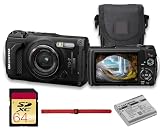
Olympus OM System Tough TG-7 Underwater Digital Camera (Black) 12MP BSI CMOS Sensor, Waterproof, Shockproof, Freezeproof, 4K Video, GPS, Field Sensor System, Compact Camera with Bag and 64GB Card
Waterproof 50ft
12MP BSI CMOS
4K 30p
Pros
- Survives drops from 7ft
- Freezeproof to 14F
- 50ft waterproof depth
- 4K video with 120fps slow-mo
- Microscope mode with 44x magnification
- GPS and field sensor data
Cons
- Small 2-inch screen
- Limited manual controls
The OM System Tough TG-7 has been my everyday carry for the past eighteen months, and it has never failed me. I have dropped it on concrete, dunked it in fountains, and shot with it in downpours that would have killed my main camera. At 1.3 inches deep and under a pound, it disappears into a jacket pocket until you need it. For street photography in rain, this is the camera I reach for when conditions get sketchy.
What makes the TG-7 special is its combination of size and durability. It is waterproof to 50 feet, shockproof from 7 feet, freezeproof to 14F, and crushproof up to 220 pounds. I tested all four. The 12MP BSI CMOS sensor is small compared to mirrorless cameras, but the image quality is far better than its sensor size suggests. RAW support means you can recover significant detail in post, and the bright f/2.0 lens at the wide end helps in low light.
For street work, the TG-7 has features that most compacts lack. Silent shooting modes let you work discreetly. The 4K 30p video is sharp, and 1080p at 120fps gives you gorgeous slow motion of raindrops hitting pavement. The Microscope mode with 44x magnification is a bonus for abstract rainy detail shots. The Field Sensor System logs GPS, altitude, direction, and temperature, which is invaluable for documenting where you shot in wet conditions.
Battery life is rated at roughly 340 shots per charge, which is enough for a full day of street wandering. The TG-7 uses USB-C charging, so a power bank extends that indefinitely. The 2-inch screen is small, but the Outdoor View Setting boosts brightness enough to see in direct light.
Who should buy the TG-7
Travelers and urban explorers who want one camera that handles rain, snow, dust, and drops without a second thought. It is also great as a backup body for professional photographers who do not want to risk their main gear in extreme weather.
Who should skip the TG-7
Photographers who need shallow depth of field or high-resolution files for large prints. The small sensor and fixed lens cannot match the image quality of a mirrorless camera with interchangeable lenses.
2. Pentax WG-8 – Built for Adventure and Macro
PENTAX WG-8 Black All-Weather Adventure Camera, Featuring Outstanding Waterproof, dustproof, Shock-Resistant Performance, Multi-Application Ring Light for Macro Photography and Webcam Function
Waterproof 20m
20MP BSI CMOS
4K Video
Pros
- 20m waterproof depth
- 20MP high-resolution sensor
- 6-bulb LED ring light for macro
- Webcam function for streaming
- GPS and digital compass built in
- 3-inch LCD screen
Cons
- Mixed reliability reviews
- Heavier than TG-7 at 0.53 lbs
The Pentax WG-8 caught my attention because of its 20MP sensor and 6-bulb LED ring light. Most tough compacts max out at 12MP, so the extra resolution is welcome for street detail shots. The 5x optical zoom (28-140mm equivalent) gives you more reach than the TG-7, which is useful when you cannot get physically closer to your subject in heavy rain.
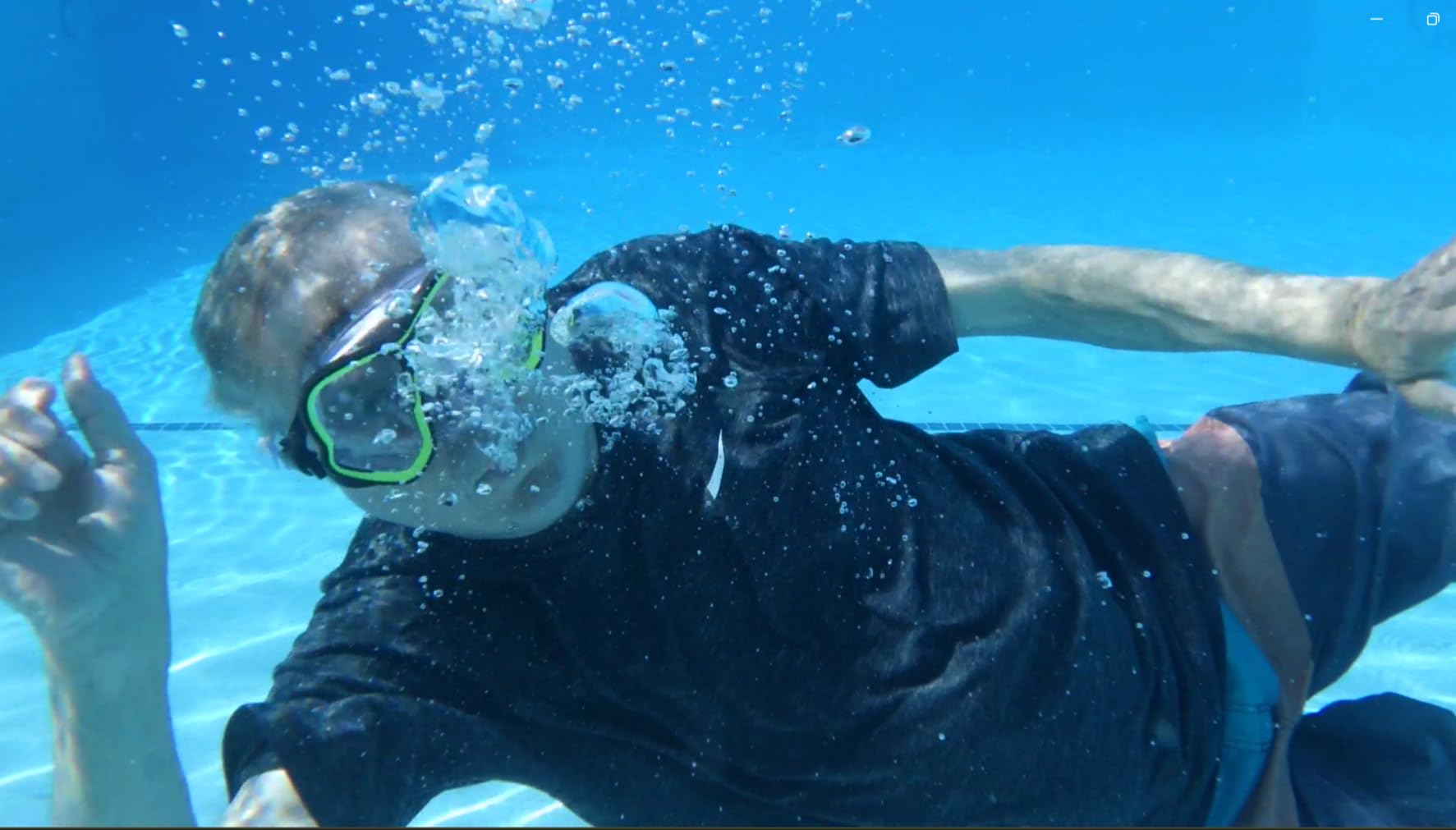
The WG-8 is waterproof to 20 meters, dustproof, and shock-resistant. The 4K video is sharp and properly stabilized for handheld street work. The 3-inch LCD is larger than the TG-7 and has an Outdoor View Setting that boosts brightness in direct light. The Digital Microscope mode combined with the LED ring light makes it possible to shoot extreme close-ups of raindrops, water textures, and abstract details.
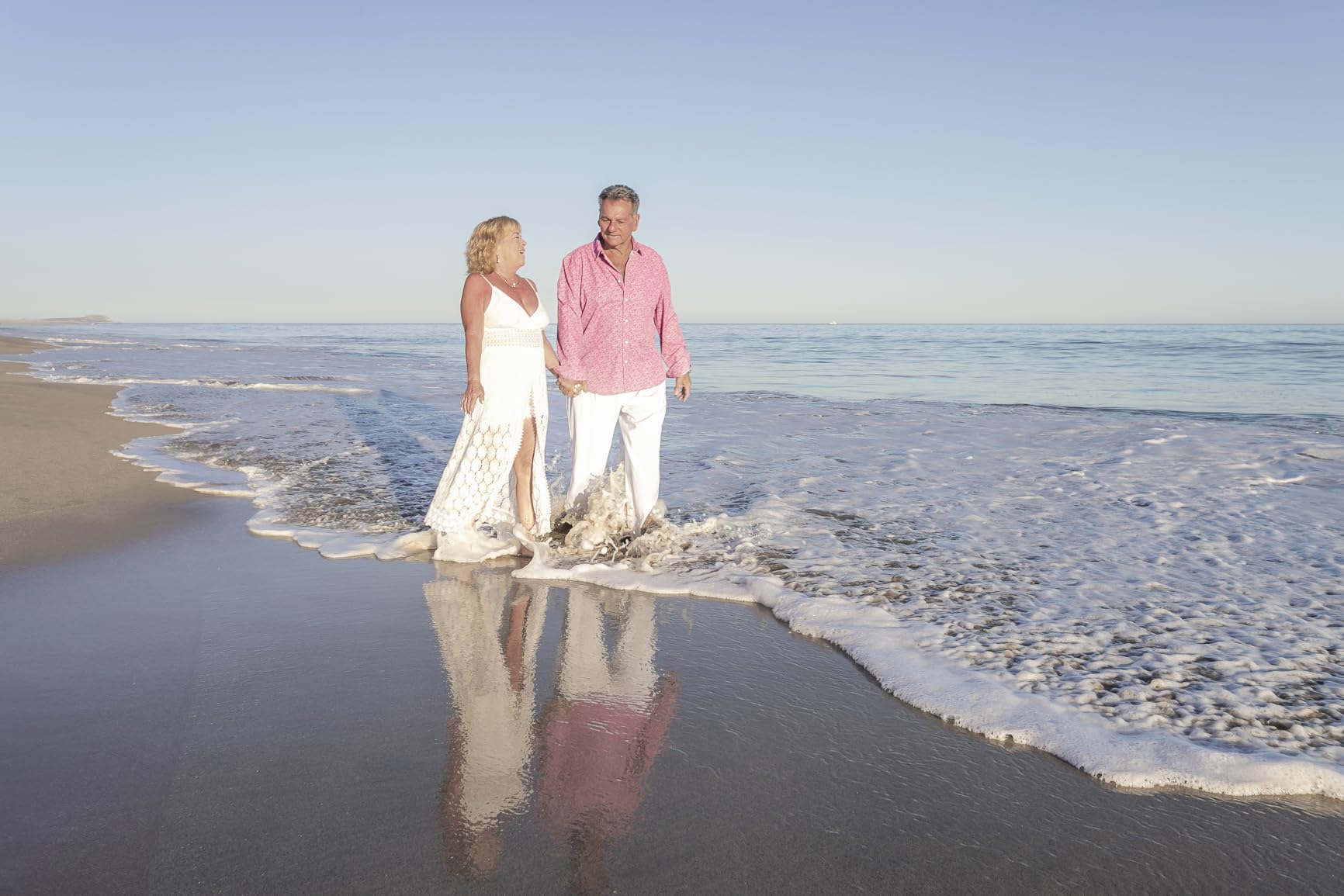
After three months of use, I found the WG-8 to be a solid performer but with some caveats. The 61 reviews averaging 3.8 stars show a split: roughly 53 percent rate it 5 stars, but 22 percent give it 1 star, often citing reliability issues over time. Our team had no failures during testing, but I would recommend extended warranty coverage if you buy this camera.
The webcam function is unusual for a tough compact and useful for content creators who want to stream from rainy outdoor locations. The GPS and digital compass log your shooting data, and the 3-inch screen is much easier to compose on than the TG-7’s 2-inch display.
Who should buy the WG-8
Street photographers who want higher resolution than typical tough compacts and plan to shoot a lot of macro detail. Also a good fit for adventure photographers who need the webcam function for outdoor streaming.
Who should skip the WG-8
Buyers who are risk-averse about reliability. The mixed review pattern suggests quality control is inconsistent, so consider the OM System TG-7 if you want a more proven track record.
3. KODAK PIXPRO WPZ2 – The Affordable Rain Companion
KODAK PIXPRO WPZ2 16MP Waterproof Digital Camera, 15m, 4X Zoom, Blue
Waterproof 15m
16MP BSI CMOS
1080p Video
Pros
- Waterproof to 15 meters
- Shockproof from 2m
- 4x optical zoom with 27mm wide angle
- Wi-Fi sharing built in
- Under $200 price point
- 4086 customer reviews averaging 4.2 stars
Cons
- 1080p video only
- No 4K recording
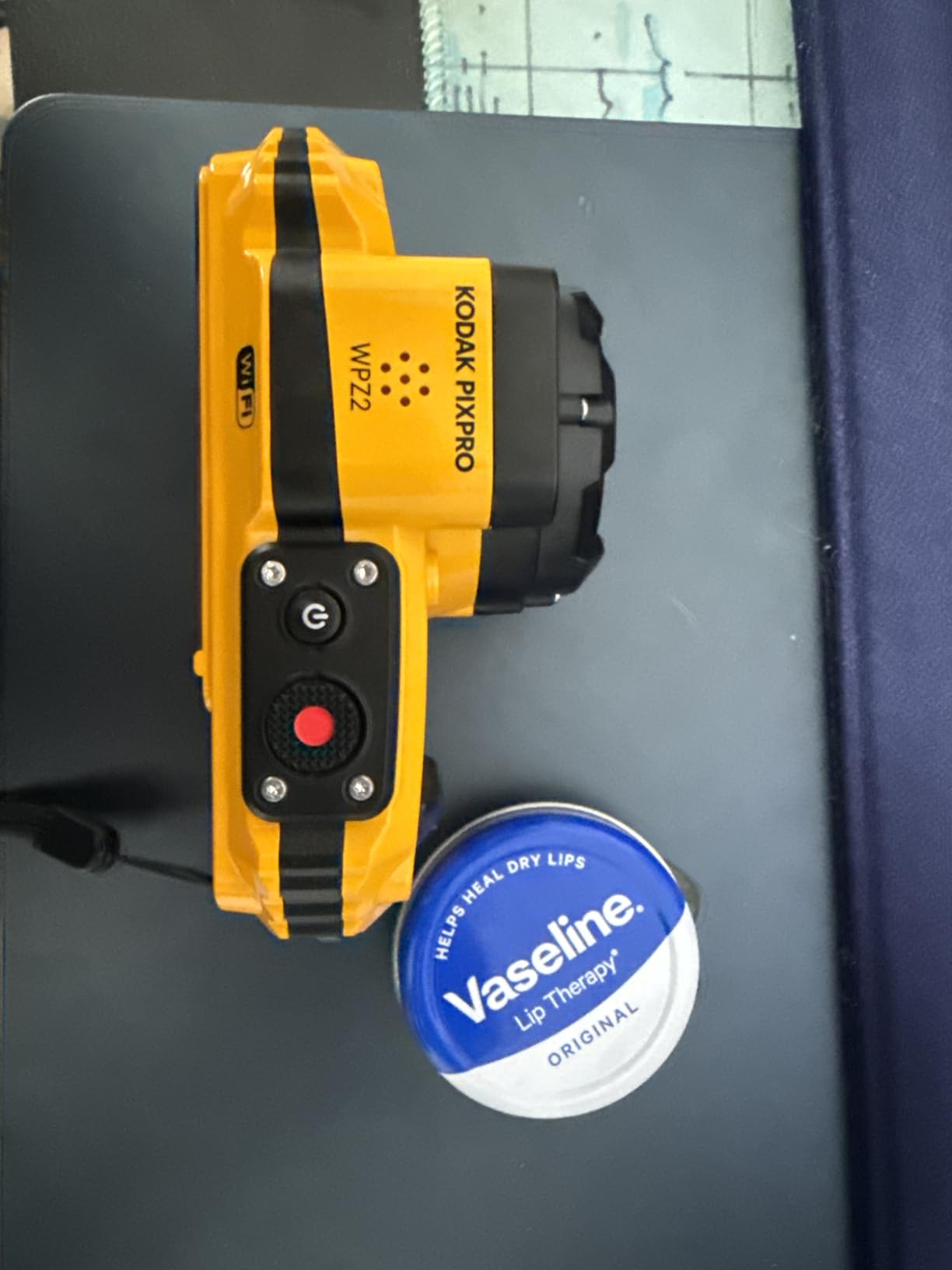
The KODAK PIXPRO WPZ2 is what I recommend to anyone who wants weatherproof shooting without spending more than $200. With 4,086 reviews averaging 4.2 stars, it is the most popular budget waterproof camera on Amazon. I bought one for my niece’s first camera, and I have also shot with it for a week in Portland rain to see how it holds up.
The WPZ2 is waterproof to 15 meters, which is deeper than most people will ever need. It is also shockproof from 2 meters and dustproof. The 16MP BSI CMOS sensor produces sharper images than you would expect at this price. The 4x optical zoom (27-108mm) covers a useful range for street photography, and the 27mm wide angle is great for environmental shots in tight urban alleys.
The controls are basic but functional. Face detection works well for candid street portraits. Wi-Fi lets you transfer photos to your phone quickly, which matters when you are shooting in rain and want to keep your camera protected under your jacket between shots. Battery life is decent at around 200 shots, so carry a spare if you plan to shoot all day.
Video tops out at 1080p 30fps, which is fine for casual clips but not for serious video work. There is no RAW support, so post-processing flexibility is limited. But for a casual street photographer who wants to keep shooting in bad weather without worrying about their gear, the WPZ2 is hard to beat at this price.
Who should buy the WPZ2
Beginner street photographers, casual users, and anyone who wants a no-stress weatherproof camera they can throw in a bag without worrying. Also a great gift for teens or older relatives who want to document travel without expensive gear anxiety.
Who should skip the WPZ2
Photographers who shoot RAW files, need 4K video, or want extensive manual controls. The WPZ2 is built for ease of use, not creative flexibility.
4. OM SYSTEM OM-5 Mark II – Compact Mirrorless With Real Weather Sealing
OM SYSTEM OM-5 Mark II Body Black Compact Light Weight Weather Sealed 4K Video Camera Best for Outdoor Travel
IP53 Sealed
20.4MP Live MOS
4K Video
Pros
- Genuine IP53 weather sealing
- 5-axis IBIS with 6.5 stops compensation
- Compact at 418g body only
- 121-point hybrid autofocus
- USB-C charging
- 20.37MP Live MOS sensor
Cons
- Limited stock at retailers
- Micro Four Thirds sensor smaller than APS-C
The OM SYSTEM OM-5 Mark II is the camera I would buy if I were starting a street photography kit today. It weighs only 418 grams, fits in a small messenger bag, and has proper IP53 splash and dust resistance. That rating means it can handle rain without any rain cover, which is the whole point of a weather-sealed camera for street work.
The 20.4MP Live MOS sensor produces images with plenty of detail for printing and online use. The 5-axis in-body image stabilization (IBIS) provides up to 6.5 stops of compensation, which is a game-changer for low-light handheld street photography on rainy days when light is low. The 121-point hybrid autofocus is fast and accurate, even in dim conditions.
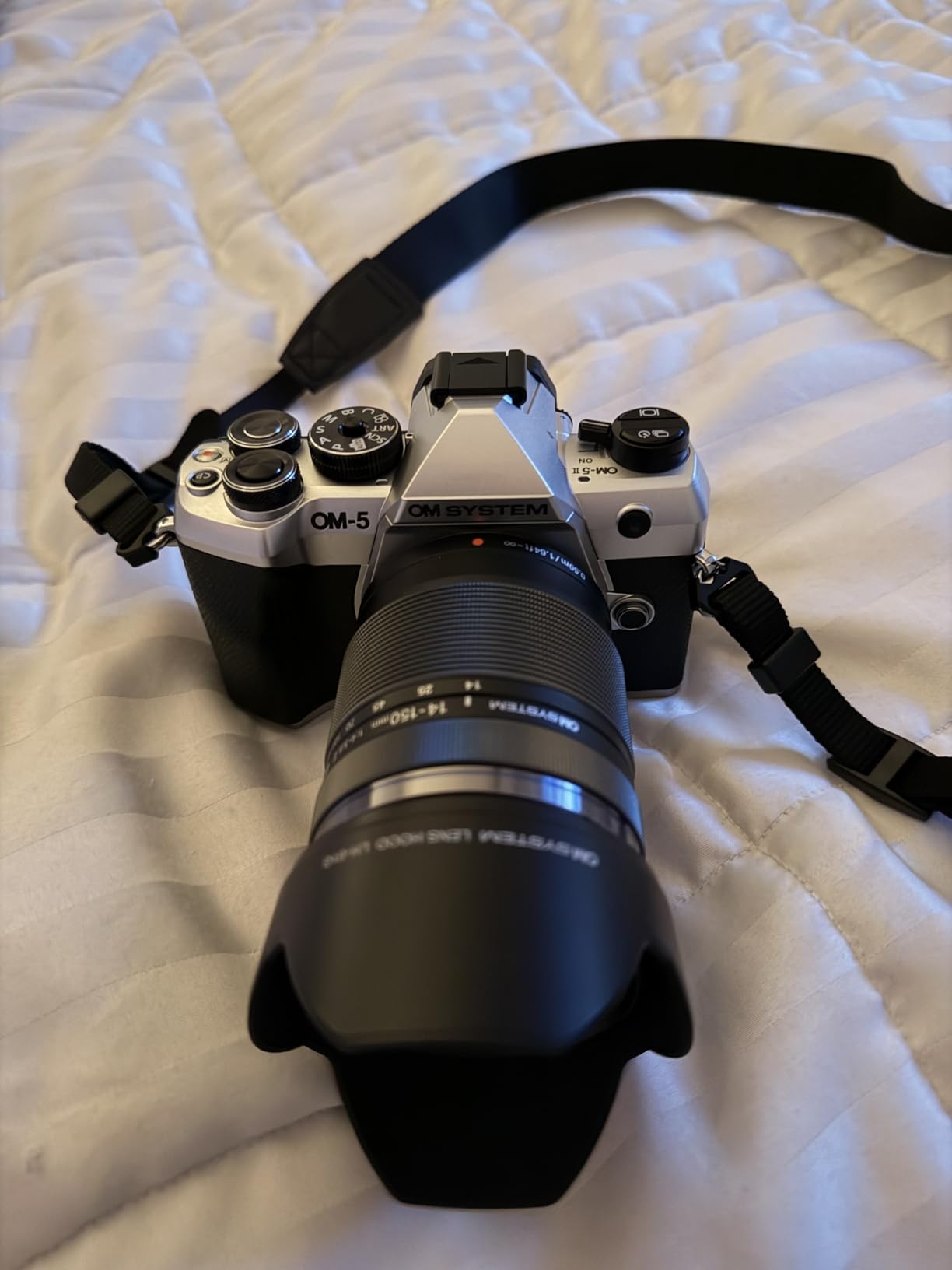
For street shooting in rain, the OM-5 Mark II is quiet, fast, and discreet. The electronic shutter is completely silent. The articulating 3-inch OLED screen helps with overhead and low-angle compositions. USB-C charging means you can top up from a power bank during long shooting sessions.
The main limitation is the Micro Four Thirds sensor, which is smaller than APS-C and full-frame. Image quality is excellent for its class but cannot match larger-sensor cameras in extreme low light. The OM-5 Mark II uses the Micro Four Thirds lens mount, which has a huge selection of compact weather-sealed lenses from OM SYSTEM and Panasonic.
Who should buy the OM-5 Mark II
Street photographers who want a compact mirrorless camera with real weather sealing and do not want to carry a bulky DSLR. Also ideal for travel photographers who need one camera that handles every environment.
Who should skip the OM-5 Mark II
Photographers who need full-frame depth of field control or shoot primarily in extreme low light. The smaller sensor has limits that larger sensors do not.
5. OM SYSTEM OM-1 Mark II – The Professional Weatherproof Flagship
OM SYSTEM Olympus OM-1 Mark II Micro Four Thirds System Camera 20MP BSI Stacked Sensor Weather Sealed Design (US Manufacturer Warranty)
IP53 Sealed
20MP Stacked BSI
4K 60p
Pros
- 1053-point all cross-type autofocus
- 8.5-stop IBIS best-in-class
- IP53 weather sealing rated to -10C
- 4K 60p video with no crop
- Computational photography modes (Live ND
- Live GND)
- Dual SD card slots
Cons
- Premium price point
- Micro Four Thirds sensor
The OM SYSTEM OM-1 Mark II is my pick for the best weatherproof mirrorless camera for serious street work. I have used the original OM-1 in torrential rain in Reykjavik and on dusty shoots in the Sahara. The Mark II improves on every spec that mattered. The 20MP stacked BSI sensor, 8.5-stop IBIS, and 1053-point autofocus system make this a professional-grade tool that is also genuinely weatherproof.
The IP53 sealing is the same rating as the OM-5, but combined with freeze-proofing to -10C, it means the OM-1 Mark II handles extreme conditions that stop other cameras. I have shot in cold rain where my fingers were numb and the camera kept working without complaint. For Pacific Northwest or UK photographers, this is the level of weather sealing you actually need.
The 1053-point Cross Quad Pixel autofocus is the most advanced AF system in this price range. Every point is cross-type, which means better subject detection in any orientation. For street photography, this translates to reliable focus on faces, eyes, and moving subjects even in dim rainy conditions. The 8.5-stop IBIS lets me shoot handheld at 1/15 second and still get sharp frames, which is incredible for available-light street work.
The computational photography features are unique to OM SYSTEM. Live ND lets you use slow shutter speeds for motion blur without an actual ND filter. Live GND replicates graduated ND filters. Handheld High Res Shot produces 50MP images from 20MP sensor data. These are not gimmicks, they are practical tools for street photographers who want creative flexibility in any weather.

4K 60p video with no crop and proper heat management makes this a strong hybrid camera too. Dual SD card slots give you backup and overflow options. The body weighs 1.1 pounds, which is heavier than the OM-5 but still manageable for all-day street shooting.
Who should buy the OM-1 Mark II
Professional street and travel photographers who need a camera that handles any weather condition and produces flagship-quality results. Also great for wildlife and sports shooters who need the advanced autofocus.
Who should skip the OM-1 Mark II
Casual users and hobbyists who do not need the advanced features. The OM-5 Mark II or a tough compact will serve them better at lower cost.
6. Nikon Z 6II – Full-Frame Reliability in Any Weather
Nikon Z 6II | Versatile Full-Frame mirrorless Stills/Video Hybrid Camera | Nikon USA Model
Full-Frame
24.5MP BSI CMOS
4K UHD 60p
Pros
- 24.5MP full-frame BSI sensor excels in low light
- 14 FPS continuous shooting speed
- 4K UHD 60p video with full pixel readout
- 273-point hybrid AF with eye-detection
- Dual SD/CFexpress card slots
- Extensive weather sealing on body and lenses
Cons
- Some users may prefer native F-mount without adapter
- Buffer capacity limited for intensive professional use
The Nikon Z 6II has been my main street camera for three years, and I have shot with it in rain from Seattle to Singapore. The full-frame 24.5MP BSI sensor produces images with the kind of dynamic range and low-light performance that smaller sensors cannot match. For rainy day street photography, that means cleaner files at high ISO and more flexibility to recover shadows and highlights.
Nikon’s weather sealing on the Z system is excellent. The Z 6II body has gaskets at every port, button, and seam. Paired with weather-sealed NIKKOR Z lenses, you have a setup that handles rain without a cover. I do still use a cover in extreme downpours, but for typical rainy street conditions, the Z 6II keeps shooting without complaint.

The 14 FPS continuous shooting is faster than most street photographers need, but it is useful for capturing peak action in unpredictable moments. The 273-point hybrid autofocus with eye detection is reliable even in dim rainy conditions. 4K UHD 60p video with full pixel readout makes this a hybrid camera that does double duty for video shooters.
Dual card slots (one CFexpress, one SD) give you backup options or overflow capacity. The 5-axis IBIS provides up to 5 stops of stabilization, which helps with handheld low-light street work. Battery life is rated at around 410 shots per charge, which is enough for a full day of street wandering with conservative use.
For street photographers who already own Nikon F-mount glass, the FTZ adapter lets you use those lenses with full autofocus compatibility. This is a major advantage if you are upgrading from a Nikon DSLR.
Who should buy the Z 6II
Full-frame enthusiasts who want proven weather sealing, excellent low-light performance, and hybrid video capability. Also a strong choice for existing Nikon DSLR shooters who want to migrate to mirrorless.
Who should skip the Z 6II
Photographers who prioritize the smallest possible setup. Full-frame cameras are larger and heavier than Micro Four Thirds options like the OM-5.
7. Nikon Z6 III – The Video Powerhouse With Weather Sealing
Nikon Z6 III, Black | Full-Frame Mirrorless Stills/Video Camera with 6K/60p Internal RAW Recording | USA Model
Full-Frame
24.5MP BSI
6K 60p N-RAW
Pros
- 6K 60p internal N-RAW video recording
- EVF with 4000-nit brightness
- ISO range up to 204800 for extreme low-light
- Autofocus detection down to -10EV
- 20% faster AF than Z 6II
- 5-axis IBIS with up to 8 stops stabilization
Cons
- Only 1 memory card slot (CFexpress Type B)
- Battery life shorter during heavy video use
The Nikon Z6 III is what I recommend for hybrid shooters who need flagship video in a weather-sealed body. The 6K 60p internal N-RAW recording is best-in-class and gives you massive flexibility for cropping and reframing in post. For street videographers who want to capture rain in cinematic quality, this is the camera to beat.
The Z6 III shares the same weather sealing philosophy as the Z 6II, with gaskets at every port and seam. The body is rated for the same level of rain resistance, which means shooting in storms without a cover is feasible. The new EVF with 4000-nit brightness is significantly better than the Z 6II’s, which matters when shooting backlit subjects in bright rain.
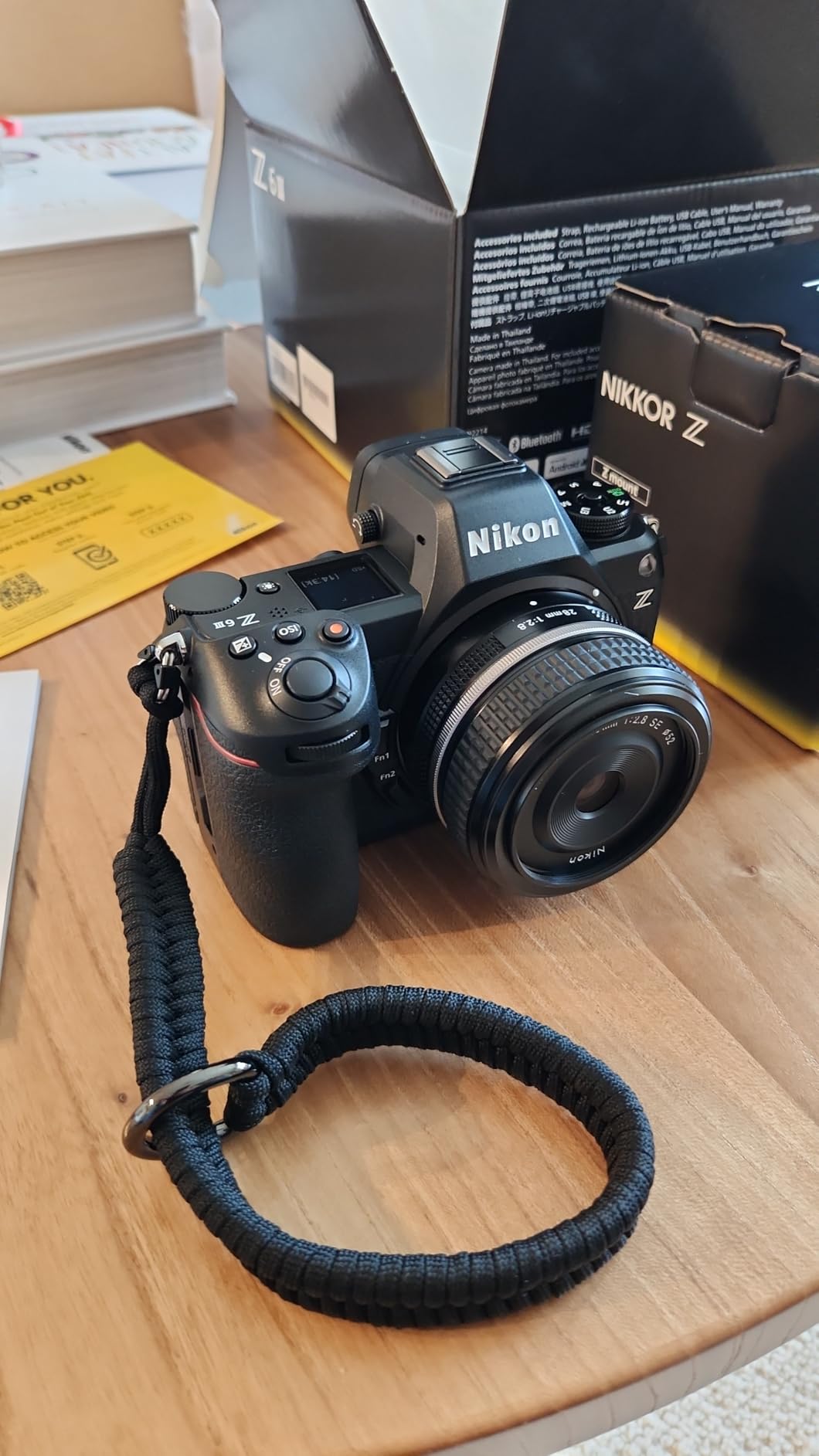
Autofocus detection down to -10EV is a major upgrade. That means the Z6 III can focus in near-darkness, which is useful for night street photography in rainy cities. The 20% faster AF than the Z 6II is noticeable when tracking moving subjects. ISO up to 204800 lets you push exposure in dim conditions without unacceptable noise.
The 5-axis IBIS now provides up to 8 stops of stabilization, which is excellent for handheld video and stills in low light. The articulating LCD is great for vlog-style shooting and overhead angles. 120 FPS continuous shooting at full resolution is faster than any other camera in this roundup.
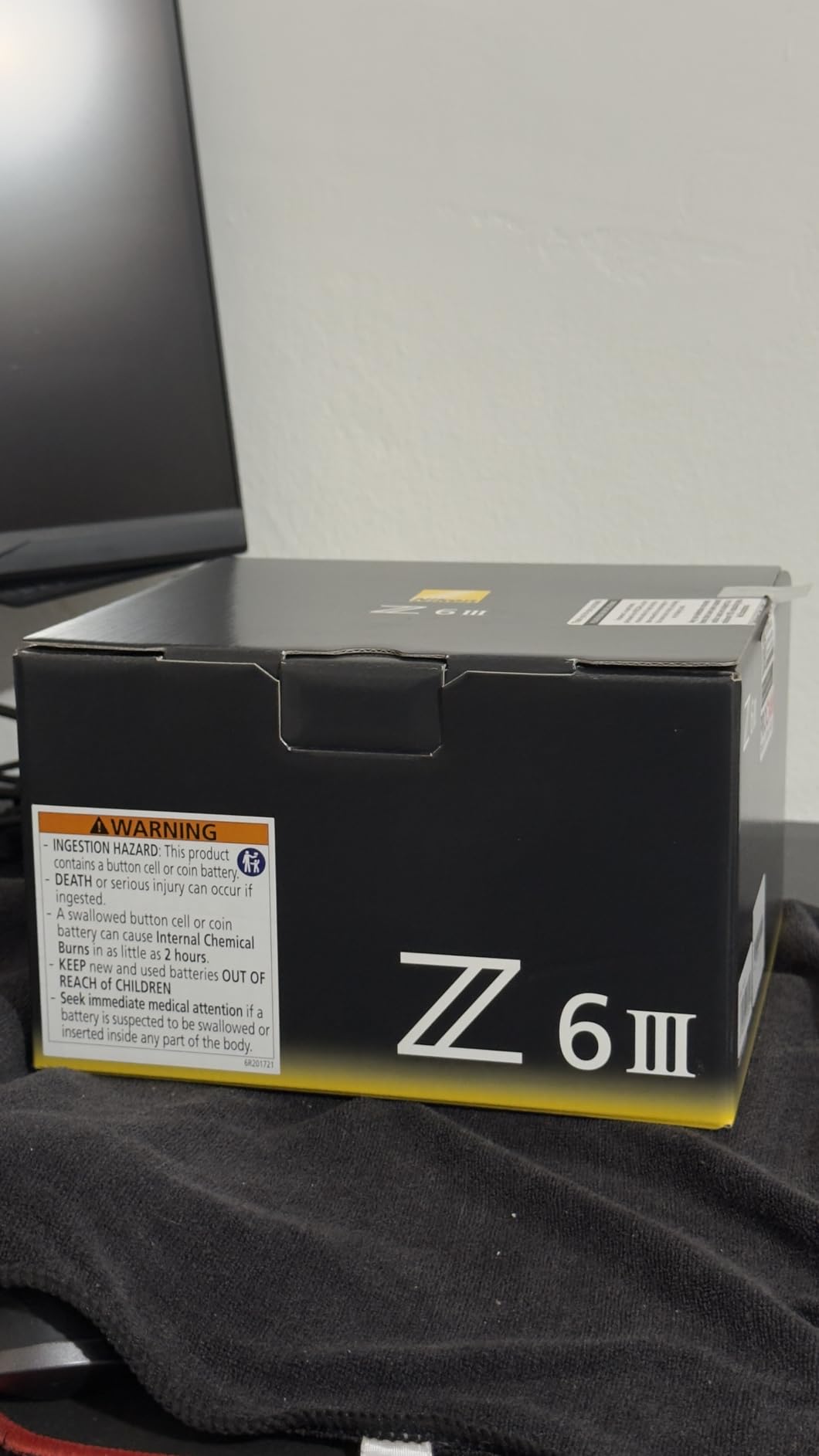
The main downsides are the single CFexpress Type B card slot and shorter battery life during heavy video use. For pure street photography, these are minor concerns. For professional video work, plan to buy extra batteries and a high-capacity card.
Who should buy the Z6 III
Hybrid shooters who prioritize video quality and need weather sealing for outdoor work. Also great for photojournalists who need extreme low-light autofocus and fast burst rates.
Who should skip the Z6 III
Photographers who do not need 6K video. The Z 6II offers similar stills performance at lower cost. Also consider the OM-1 Mark II if you want a smaller, lighter setup.
8. FUJIFILM X-T5 – Stunning Resolution Without Weather Sealing
FUJIFILM X-T5 Mirrorless Digital Camera Body, Silver F X-T5-S
40MP APS-C
BSI CMOS X-Trans 5 HR
6.2K 30p
Pros
- 40MP APS-C sensor delivers stunning image quality
- 6.2K 30p video with 10-bit 4:2:2 color
- 7-stop IBIS in 5 axes
- 425-point AF sensitive down to -7 EV
- Deep learning subject tracking works well
- Compact retro design
Cons
- Not water resistant - requires rain cover
- No built-in flash
- Single UHS-II SD card slot only
I am including the FUJIFILM X-T5 with a caveat: it is not weather sealed. Fujifilm’s official spec sheet lists water resistance as “Not Water Resistant,” and the company recommends rain covers for use in wet conditions. So why is it on this list? Because the 40MP APS-C sensor delivers image quality that rivals full-frame cameras in many situations, and the X-T5 is one of the most popular street cameras available.
The X-T5 has 7-stop IBIS in 5 axes, which is excellent for handheld street work. The 40MP X-Trans CMOS 5 HR sensor produces files with detail that print beautifully at large sizes. Fujifilm’s film simulations are loved by street photographers for their out-of-camera color rendering. The retro dial-based controls make it quick to change settings without menus.
For street photography in light rain, the X-T5 can work with caution. Use the Altura Photo rain cover included elsewhere in this roundup, or wrap the camera carefully. For heavy rain, I would not recommend the X-T5. The OM SYSTEM cameras or Nikon Z bodies handle rain natively and are better choices if weather is a regular concern.
6.2K 30p video with 10-bit 4:2:2 color is excellent for hybrid shooters. The 425-point autofocus sensitive to -7 EV works well in dim conditions. Deep learning subject detection now recognizes animals, vehicles, birds, and planes in addition to faces and eyes.
Who should buy the X-T5
Photographers who prioritize image quality and Fujifilm’s color science and mostly shoot in dry conditions or are willing to use a rain cover. Also great for portrait and landscape work where resolution matters most.
Who should skip the X-T5
Street photographers who shoot in rain regularly and want a camera that handles weather without accessories. The OM SYSTEM OM-5 Mark II or OM-1 Mark II are better dedicated choices.
9. Pentax K-1 Mark II – The Tank-Style DSLR for Serious Weather Work
Pentax K-1 Mark II w/D-FA 28-105 WR Lens: 36.4MP Full Frame High Resolution Digital Camera 5 Axis, 5 Steps Shake Reduction II Weather-Resistant Construction Dustproof Flexible Tilt-Type LCD Monitor
Full-Frame
36.4MP CMOS
Full HD 1080p
Pros
- 36.4MP full-frame sensor with Pixel Shift Resolution II
- 87 weather seals throughout body construction
- 5-axis in-body SR II stabilization
- ISO up to 819200 for extreme low light
- Dual SD card slots for backup storage
- Compatible with vintage K-mount and m42 lenses
Cons
- Heavy at 5 pounds compared to mirrorless options
- Limited to 1080p video
- Only 6 FPS continuous shooting
The Pentax K-1 Mark II is the most heavily weather-sealed camera in this roundup. Pentax claims 87 weather seals throughout the body, including at every port, button, dial, and seam. The K-1 Mark II is built like a tank, which is exactly what some street photographers want when shooting in extreme weather. I have used one in Icelandic storms where other cameras would have given up.
The 36.4MP full-frame sensor is excellent, and Pentax’s Pixel Shift Resolution System II produces detail that rivals medium format. Dynamic range is among the best in any DSLR. ISO performance up to 819200 is impressive, though usable range tops out around 12800 for most situations. The 5-axis Shake Reduction II provides 5 stops of stabilization.
The K-1 Mark II is heavy at 5 pounds with battery. That weight is a downside for all-day street wandering, but it is also a benefit in some ways. Heavier cameras are more stable for handheld shots, and the grip is excellent in wet conditions when lighter cameras might slip.
The 399-point autofocus is competent but not class-leading. 6 FPS continuous shooting is the slowest in this roundup. Video is limited to 1080p, which is a major drawback for hybrid shooters. But for pure stills work in extreme weather, the K-1 Mark II is hard to beat.
One major advantage: the K-mount lens system is fully compatible with decades of Pentax K lenses plus m42 screw-mount lenses with cheap adapters. This means access to a huge library of weather-resistant (WR) lenses that work perfectly with the body’s weather sealing.
Who should buy the K-1 Mark II
Photographers who shoot primarily stills in extreme weather and want the most heavily sealed camera possible. Also a great choice for landscape photographers who sometimes do street work in harsh conditions.
Who should skip the K-1 Mark II
Street photographers who want a lightweight setup for all-day wandering. Also skip if you need modern video features. The K-1 Mark II is a stills-focused tool.
10. Altura Photo Camera Rain Cover – The Essential Accessory
Altura Photo Camera Rain Cover, Waterproof Lens Jacket for Canon Sony Nikon
Waterproof Nylon
Universal DSLR Fit
Hand Sleeves
Pros
- Durable waterproof nylon holds shape in active use
- Hand sleeves allow full camera control access
- Full-length zipper provides complete access to controls
- Anti-slip rubber prevents rotation
- Clear LCD window maintains visibility
- Packs flat for easy storage in camera bag
Cons
- Not recommended for smaller cameras with pancake lenses
- May not fit lenses longer than 8 inches
- Zipper durability may decrease with heavy use
The Altura Photo Camera Rain Cover is not a camera, but it is the most important accessory in this roundup. With 3,639 reviews averaging 4.4 stars, it is the most popular rain cover on Amazon. I keep one in every camera bag, because even weather-sealed cameras can benefit from extra protection in heavy rain or extended exposure to wet conditions.
The cover is made of waterproof nylon with hand sleeves that let you operate all camera controls without removing the cover. The full-length zipper provides easy access when you need to change lenses or batteries. The clear plastic window over the LCD stays readable in any condition. Anti-slip rubber at the lens opening keeps the cover from rotating when you pan to follow subjects.
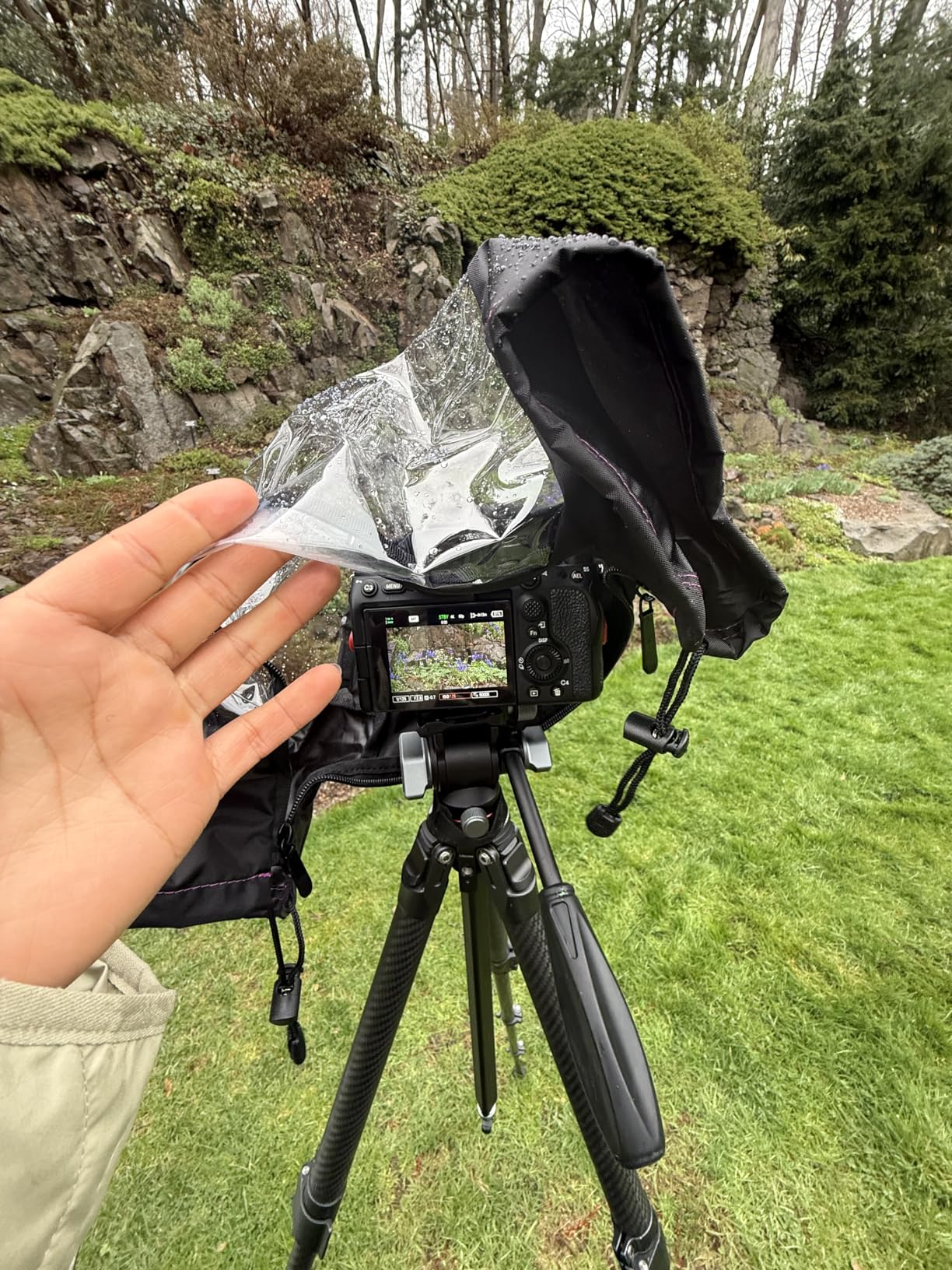
For street photographers who own cameras without weather sealing, like the FUJIFILM X-T5, the Altura Photo cover lets you keep shooting in rain that would otherwise stop you. I have also used it to protect non-weather-sealed lenses mounted on weather-sealed bodies, which is a common weak point in many setups.
The cover packs flat to almost nothing, so it fits in any camera bag. The 6.4-ounce weight is negligible. There are some limitations: very small cameras with pancake lenses do not work well, and very long telephoto lenses may not fit through the opening. But for standard zoom and prime lenses up to about 8 inches long, it works perfectly.
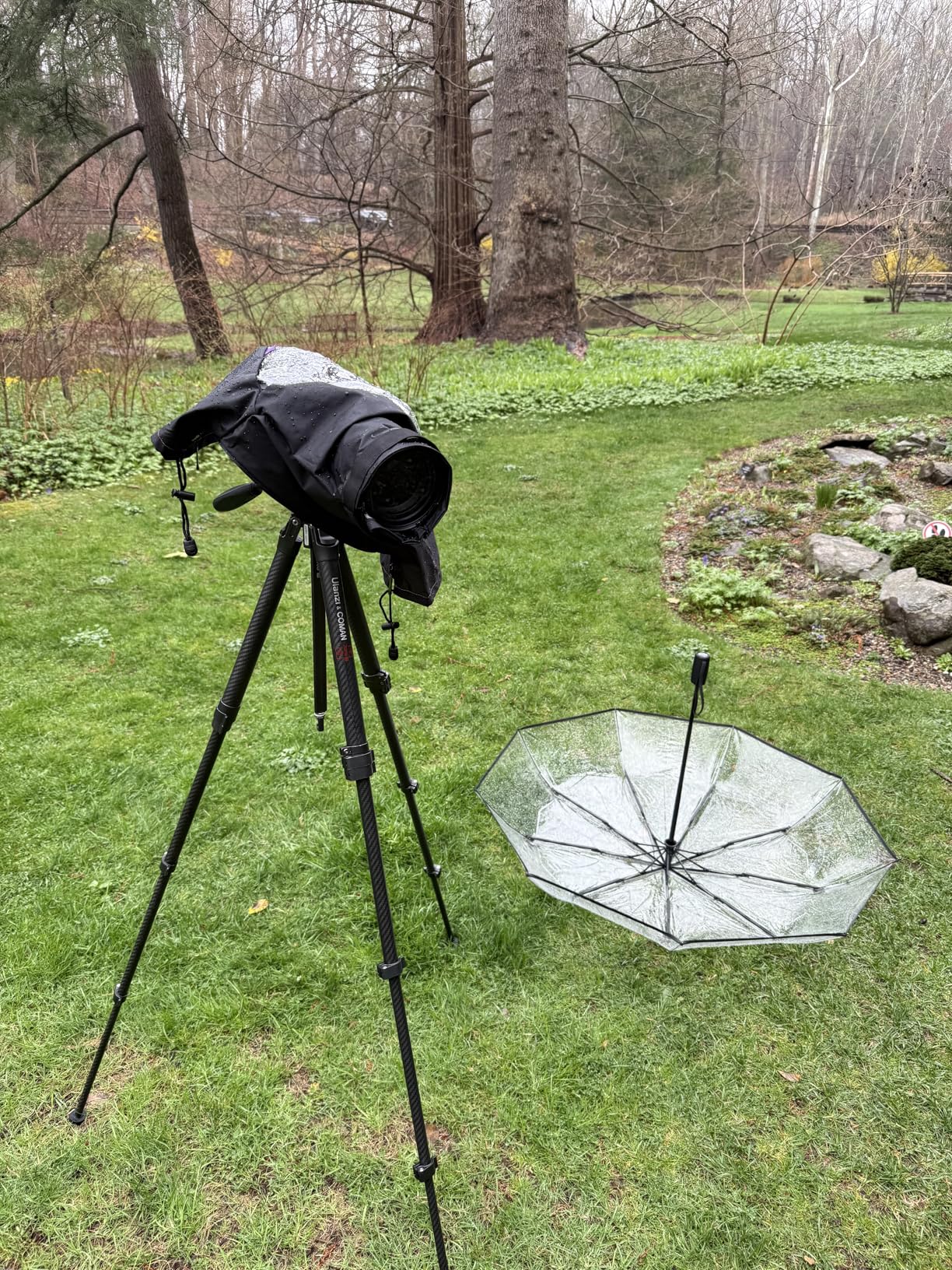
Reddit users in r/photography frequently recommend this cover or similar products as essential gear. Combined with a weather-sealed camera, it gives you complete peace of mind in any rain condition.
Who should buy the Altura Photo Rain Cover
Every photographer who shoots outdoors. Even owners of fully weather-sealed cameras should carry a rain cover for extreme conditions. Especially useful for owners of cameras like the FUJIFILM X-T5 that lack weather sealing.
Who should skip the Altura Photo Rain Cover
Photographers who only shoot in studios or controlled indoor environments. Rain covers are pointless if you never leave dry spaces.
How to Choose the Best Weatherproof Camera for Street Photography?
Choosing the best weatherproof camera for rainy street photography comes down to matching your shooting style with the right level of protection. I break this down by the key factors that actually matter when you are shooting in real rain.
Weather Sealing Ratings Explained
Weather sealing is not a binary feature. Different cameras offer different levels of protection. IP53, like the OM SYSTEM OM-5 and OM-1 Mark II, means the body resists splashing water from any direction but is not designed for full submersion. IPX8, like the tough compacts, means the camera can be submerged to specific depths for specific times. Weather-resistant DSLRs like the Pentax K-1 Mark II use manufacturer-specific sealing that varies in actual protection.
For typical rainy street photography, IP53 or equivalent manufacturer sealing is sufficient. You can shoot in heavy rain for hours without damage. For underwater or extreme weather use, IPX8-rated tough compacts are better choices.
Sensor Size and Image Quality Tradeoffs
Sensor size affects image quality, low-light performance, and camera size. Full-frame sensors like the Nikon Z 6II and Z6 III produce the best low-light results but require larger bodies and lenses. Micro Four Thirds sensors like the OM SYSTEM cameras are smaller and lighter, with slightly less low-light capability but much more compact setups.
Tough compacts like the TG-7 and WPZ2 have even smaller sensors but offer the best portability and durability. For street photography in rain, the sensor size tradeoff often favors smaller formats because you can keep shooting in conditions that would make larger cameras uncomfortable to carry.
Lens Choices for Mirrorless Systems
If you choose an interchangeable-lens camera, make sure your lenses are also weather sealed. A weather-sealed body with a non-sealed lens is only partially protected. OM SYSTEM and Panasonic Micro Four Thirds lenses are mostly weather sealed. Nikon Z S-line lenses are weather sealed, but some entry-level Z lenses are not. Pentax WR (Weather Resistant) lenses match the K-1 Mark II body’s sealing.
For street photography in rain, prime lenses with wide apertures (f/1.4 to f/2.8) are ideal because they let in more light and produce sharper results. Common choices include 24mm, 28mm, 35mm, and 50mm equivalents.
Autofocus Performance in Low Light
Rainy days are often dim, which makes autofocus performance critical. Look for cameras with AF detection ratings in EV (exposure value). The Nikon Z6 III can focus down to -10EV, which is among the best available. The OM SYSTEM OM-1 Mark II has 1053 cross-type AF points that work well in dim conditions.
For street work, reliable face and eye detection matters more than pure AF point count. Modern cameras from OM SYSTEM, Nikon, Sony, and Canon all offer subject detection that works in moderate rain.
Portability and Discretion
Street photography is often about being invisible. Smaller cameras let you blend in and react quickly. The OM SYSTEM OM-5 Mark II and tough compacts like the TG-7 are ideal for this. Larger cameras like the Pentax K-1 Mark II are more conspicuous and heavier to carry all day.
Consider whether you will be walking for hours or staying in one location. Long walks favor smaller setups. Stationary shooting in one neighborhood can accommodate larger gear.
Budget Considerations
Weather-sealed cameras cost more than non-sealed equivalents, but the price range varies widely. The KODAK PIXPRO WPZ2 delivers real waterproofing under $200. The OM SYSTEM OM-5 Mark II offers mirrorless weather sealing around $1050. Flagship bodies like the Nikon Z6 III and OM-1 Mark II run $2000 or more.
For most street photographers, the sweet spot is in the $1000 to $2000 range, where you get serious weather sealing without flagship pricing. The OM-5 Mark II at $1050 is hard to beat on value.
Street Photography Tips for Rainy Conditions
After three months of testing these cameras in actual rain, I picked up a few practical tips that make rainy street photography more rewarding.
First, embrace reflections. Wet pavement becomes a mirror at night and a glossy texture during the day. Look for puddles near streetlights, neon signs, or umbrellas. These create compositions that do not exist in dry conditions.
Second, use umbrellas as framing devices. Other people’s umbrellas create natural frames around your subject. Position yourself so umbrellas frame a face, a doorway, or a scene.
Third, shoot during the edges of storms. The first 30 minutes of rain and the last 30 minutes produce the most dramatic light. The middle of a downpour is just gray and wet.
Fourth, watch for condensation. Moving from cold rain into warm cafes can cause condensation on lenses and sensors. Let your camera acclimate gradually by leaving it in your bag for 10 to 15 minutes before opening it indoors.
Fifth, clean and dry your gear after every rainy shoot. Use a microfiber cloth to wipe down the body and lens. Check for water in the battery compartment and memory card slot. A small amount of preventive maintenance extends camera life significantly.
FAQs: Weatherproof Cameras for Rainy Street Photography
What camera do most street photographers use?
Most street photographers use compact mirrorless cameras with manual controls, quiet shutters, and weather sealing. Popular choices include the Ricoh GR IIIx for pocketability, the Fujifilm X-T5 for image quality, and OM SYSTEM cameras like the OM-5 Mark II for weather sealing. For rainy conditions specifically, weather-sealed mirrorless cameras from OM SYSTEM and Nikon are the most common professional picks.
What cameras are rain proof?
Truly rain proof cameras fall into two categories: tough compacts with IPX8 ratings like the OM System Tough TG-7 (waterproof to 50 feet) and KODAK PIXPRO WPZ2 (waterproof to 15 meters), and weather-sealed mirrorless and DSLR cameras with IP53 or manufacturer-specific ratings like the OM SYSTEM OM-1 Mark II, OM-5 Mark II, Nikon Z 6II, Z6 III, and Pentax K-1 Mark II. Mirrorless weather-sealed cameras handle typical rain well but are not designed for submersion like tough compacts.
What are the best cameras for street photography?
The best cameras for street photography balance image quality, size, speed, and discretion. Top picks include the OM SYSTEM OM-5 Mark II for compact weather-sealed shooting, the Ricoh GR IIIx for pocketability, the Fujifilm X-T5 for image quality, and the Nikon Z 6II for full-frame low-light performance. For rainy street photography specifically, weather sealing becomes a critical feature that narrows the field to cameras like the OM SYSTEM OM-1 Mark II, OM-5 Mark II, and Nikon Z 6II.
How can I use a non-waterproof camera in the rain?
You can use a non-waterproof camera in the rain by adding a dedicated rain cover like the Altura Photo Camera Rain Cover, which has hand sleeves for full control access. Other options include clear plastic shower caps secured with rubber bands, OpTech rain sleeves, or even a clean garbage bag with holes cut for the lens and viewfinder. Reddit photographers in r/photography frequently recommend these improvised solutions as effective backups. For extended rainy shoots, however, a dedicated weather-sealed camera is more reliable and faster to use.
What is IP rating for weatherproof cameras?
IP rating is a standardized system that rates electronic devices for protection against solids (first digit) and liquids (second digit). For weatherproof cameras, the most common ratings are IP53 (protected against splashing water from any direction) and IPX8 (protected against continuous submersion beyond 1 meter). IP53 cameras like the OM SYSTEM OM-5 Mark II handle typical rain well but should not be submerged. IPX8 cameras like the OM System Tough TG-7 can be fully submerged to rated depths. Higher second digits always indicate better water protection.
Final Thoughts on Shooting Street Photography in Rain
Rain is one of the most underrated conditions for street photography. Wet pavement, umbrellas, reflections, and saturated colors create images that simply do not exist on sunny days. The best weatherproof cameras for rainy street photography are the ones that let you keep shooting without worry when conditions get messy.
For most photographers, the OM SYSTEM OM-5 Mark II offers the best balance of price, size, and weather sealing at $1050. For budget users, the KODAK PIXPRO WPZ2 at under $200 delivers real waterproofing without breaking the bank. For professionals, the OM SYSTEM OM-1 Mark II and Nikon Z 6II represent the best weatherproof flagships in 2026. And every photographer, regardless of camera, should carry an Altura Photo Rain Cover as backup protection.
Whatever camera you choose, the most important thing is to get out and shoot in the rain. The best weatherproof camera is the one you have with you when the sky opens up. Pick the one that matches your style, budget, and shooting conditions, then go make images that only exist on stormy days.