
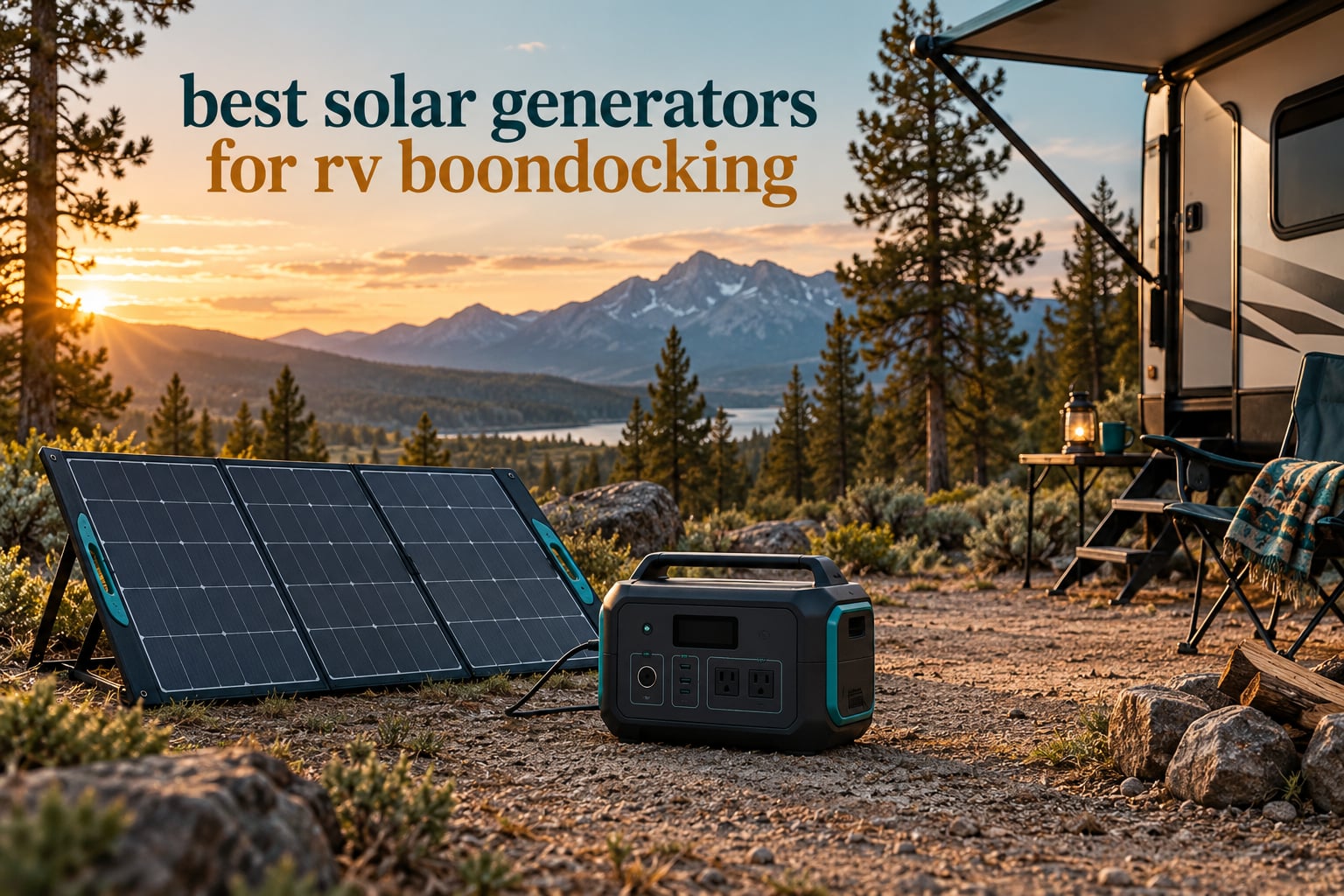
Most RVers searching for the best solar generators for RV boondocking are actually looking for two different products under one name. A solar panel is a collector that makes electricity from sunlight. A solar generator is a portable power station: a rechargeable battery with a built-in inverter that stores energy and delivers it as household power. This guide covers the second one, the battery box, plus how to size it.
That distinction matters more than it sounds. A panel alone cannot run a fridge. A power station can, silently, indoors, with no exhaust fumes and no fuel cost per kilowatt-hour once the panels are paid off. What it cannot do is make energy from nothing. It stores a finite amount and it has to be recharged, faster on a sunny day than on an overcast one in January.
I compared 12 units across the capacity range that matters for RV travel, from a 1,024Wh carry-it-one-hand model to a 3,600Wh unit that will carry a camper air conditioner. Below each pick I cover the specs that decide the purchase, the honest drawbacks, and who should buy it. Every rating and review count here comes from live customer feedback rather than manufacturer claims, and every weight, capacity and output figure comes from the product listing itself.
If you would rather start with panel sizing instead of the battery, our guide to the best solar generators tested and reviewed covers the fundamentals, and best portable generators makes sense if you are still weighing gas versus battery.
Table of Contents
Top 3 Solar Generators for RV Boondocking in 2026

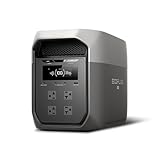
Those three cover the realistic range of RV demand. The AC200PL is the one I would buy for full-time boondocking because it carries RV-native ports and expansion headroom. The C1000 Gen 2 is the best answer for a weekend trailer where weight matters more than capacity. The DELTA 3 Max is the fastest-charging unit in the group, which matters most when your solar harvest is marginal.
12 Best Solar Generators for RV Boondocking (October 2026)
| Product | Specifications | Action |
|---|---|---|
 BLUETTI AC200PL BLUETTI AC200PL |
|
Check Latest Price |
| Anker SOLIX C1000 Gen 2 |
|
Check Latest Price |
 Jackery Solar Generator 1000 v2 Jackery Solar Generator 1000 v2 |
|
Check Latest Price |
 OUPES Mega 1 OUPES Mega 1 |
|
Check Latest Price |
 EcoFlow DELTA Pro EcoFlow DELTA Pro |
|
Check Latest Price |
| EcoFlow DELTA 3 Max |
|
Check Latest Price |
 EBL 2400W with 2x 200W Panels EBL 2400W with 2x 200W Panels |
|
Check Latest Price |
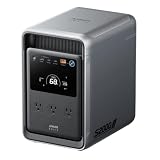 Anker SOLIX S2000 Anker SOLIX S2000 |
|
Check Latest Price |
 Jackery HomePower 3000 Jackery HomePower 3000 |
|
Check Latest Price |
 Jackery Explorer 2000 v2 Jackery Explorer 2000 v2 |
|
Check Latest Price |
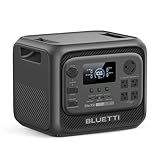 BLUETTI Elite 300 BLUETTI Elite 300 |
|
Check Latest Price |
 pecron F3000LFP pecron F3000LFP |
|
Check Latest Price |
The spread is instructive. The cheapest-to-carry and the highest-output options are not the same product, and the fastest solar input in this group belongs to a unit that is not the largest. Every row below is written in the order shown.
1. BLUETTI AC200PL: The Best Solar Generator for Full-Time Boondocking
BLUETTI AC200PL Portable Power Station 2304Wh 2400W LiFePO4 Solar Generator
2304Wh LiFePO4
2400W AC, 3600W lifting power
72 lb, 16.5 x 11 x 14.4 inch
Expandable to 8448Wh
Pros
- 48V RV port for direct RV battery charging
- 0-80% AC recharge in about 60 minutes
- LiFePO4 rated for 3000+ cycles
- 30A TT30 RV output
- Expandable to 8448Wh
Cons
- 72 lb is heavy to lift into a vehicle
- Extra capacity needs add-on batteries
The AC200PL is the most thoroughly RV-aware unit in this group, and that shows in the port layout rather than the headline numbers. It carries a 48V RV port for charging house batteries directly, plus a 30A TT30 outlet, which means it can feed RV accessories without an adapter pile.
Capacity is 2304Wh from LiFePO4 cells rated for 3000+ cycles, and the AC inverter delivers 2400W continuous with 3600W of lifting power for compressor startup. It reaches 80% charge in roughly 60 minutes from a wall outlet, and takes up to 1200W of solar input.
Owner feedback clusters around three things: fast recharge, long-lived cells, and the RV port set. The negative that repeats most is weight, at 72 lb it is a two-person lift for most people. The second recurring note is that reaching the full 8448Wh ceiling requires separate expansion batteries.
One r/RVLiving owner running a Bluetti stack of roughly 5.5 kWh reports running a single RV air conditioner overnight when ambient temperature stays below about 85F. That matches what the sheet numbers imply: a 13500 BTU air conditioner cycles roughly 1200-1500W, so a 2304Wh pack covers part of a night and the expansion battery covers the rest.
Why it suits full-time boondockers
Anyone living in the truck needs three things at once: enough capacity for overnight loads, RV-native outputs, and a path to grow. This is the only unit in the group that combines a 48V RV port, a TT30 outlet and a documented 8448Wh ceiling. A five-year warranty covers it, and the battery management system protection is built in.
If you already run one 13500 BTU air conditioner and want it to last the night on battery alone in moderate weather, this is the configuration I would build around.
Where it falls short
Weight is the practical limit. Carrying 72 lb from a storage bay to the picnic table is a real chore, and the add-on batteries that unlock the top capacity add considerably more of that. Reviewers also note the unit needs those extra batteries to reach its headline number, which is easy to overlook at purchase time.
If you are a solo traveller who moves the rig often, a lighter one to two kWh unit will suit you better. Our inverter generator guide covers the gas alternative if you need genuinely unlimited runtime.
2. Anker SOLIX C1000 Gen 2: The Best 1 kWh Carry-It-Yourself Solar Generator
Anker SOLIX C1000 Gen 2 Portable Power Station
1024Wh LiFePO4
2000W output, 3000W peak
11.3 kg, 15.1 x 8.2 x 9.6 inch
600W solar input
Pros
- Full recharge in about 49 minutes at 1600W
- Compact and light for a 1kWh unit
- 1.8 hour solar recharge with a 600W panel
- Under 10ms UPS switchover
- Anker app with time-of-use mode
Cons
- No battery expansion on the Gen 2 model
- Waveform distortion on heavy microwave loads
- No storage case included
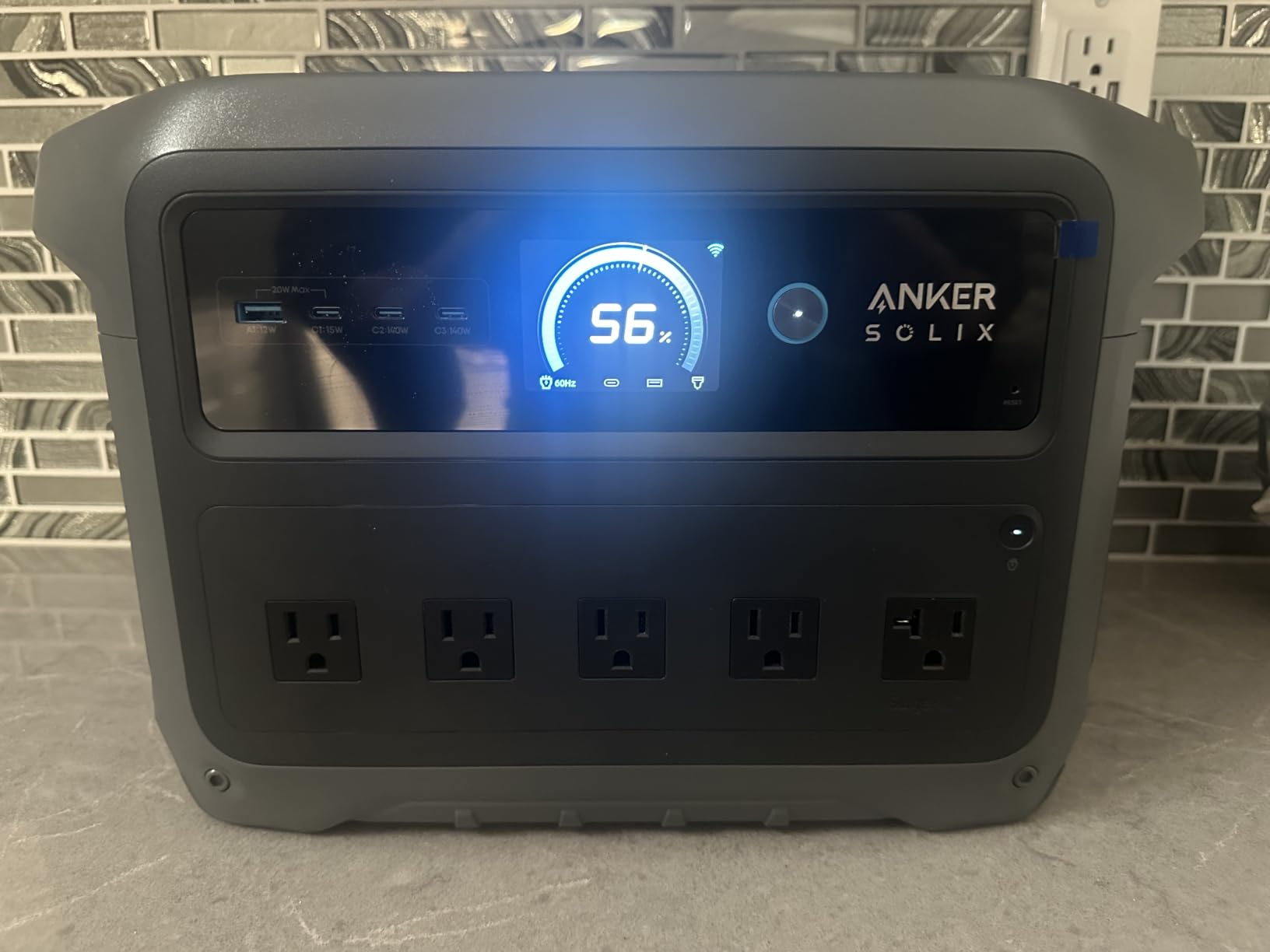
At 11.3 kg this is the unit I would hand to someone who has to move power from the vehicle to the campsite on their own. The 1024Wh pack and 2000W inverter give you a fridge, a laptop, a coffee maker and lights for a weekend, and it does not dominate your payload.
Charging speed is the headline. A full recharge takes about 49 minutes at 1600W from a wall outlet, and up to 600W of solar input brings it back in about 1.8 hours in good conditions. The LiFePO4 cells are rated for 4000 cycles while holding 80% capacity.
Buyers highlight the recharge speed, quiet operation and general RV and outage usability. Two negatives come up repeatedly: this Gen 2 model dropped the expansion option its predecessor had, and it shows waveform distortion when a microwave is a heavy share of the load. A case is not included either.
The missing expansion path is the one that matters for planning. You are buying a fixed 1024Wh, so your ceiling is your ceiling. For weekend use that is genuinely fine, since a fridge compressor cycling overnight rarely draws more than a fraction of the pack.
Why it suits weekend rigs and Class B vans
A Class B van or a small trailer owner needs a fridge, lights, a laptop and maybe a CPAP machine, and needs to lift the box out of the vehicle without a second pair of hands. This is the pick. Under 10ms UPS switchover also means a router or a desktop does not blink during a switchover.
The Anker app adds time-of-use scheduling, so you can set charge windows around when the panels are actually producing rather than charging blindly at midday.
Where it falls short
Do not plan on growing it. If your RV has a microwave, an induction cooktop, or you want to run an air conditioner for an hour, the 2000W ceiling and fixed capacity become the binding constraint. Reviewers also report slight waveform distortion under heavy microwave draw, which can bother sensitive audio or medical equipment.
If your load list includes anything above 1500W, step up to the 2 kWh class covered later in this guide.
3. Jackery Solar Generator 1000 v2: The Best Starter Bundle with a Panel Included
Jackery Solar Generator 1000 v2 and 200W Solar Panel,1070Wh,1500W AC
1070Wh LiFePO4
1500W AC, 3000W surge
23.8 lb, 12.87 x 8.82 x 9.72 inch
Bundled 200W SolarSaga panel
Pros
- Light at 23.8 lb with a foldable handle
- 1 hour emergency charge or 1.7 hour AC charge
- LiFePO4 rated for 4000 cycles
- Bundled 200W panel charges to 80% in about 6 hours
- Runs a full-size refrigerator overnight
Cons
- Bundled panel sags and blows over easily
- Short included solar cable
- 1500W output limits simultaneous large loads
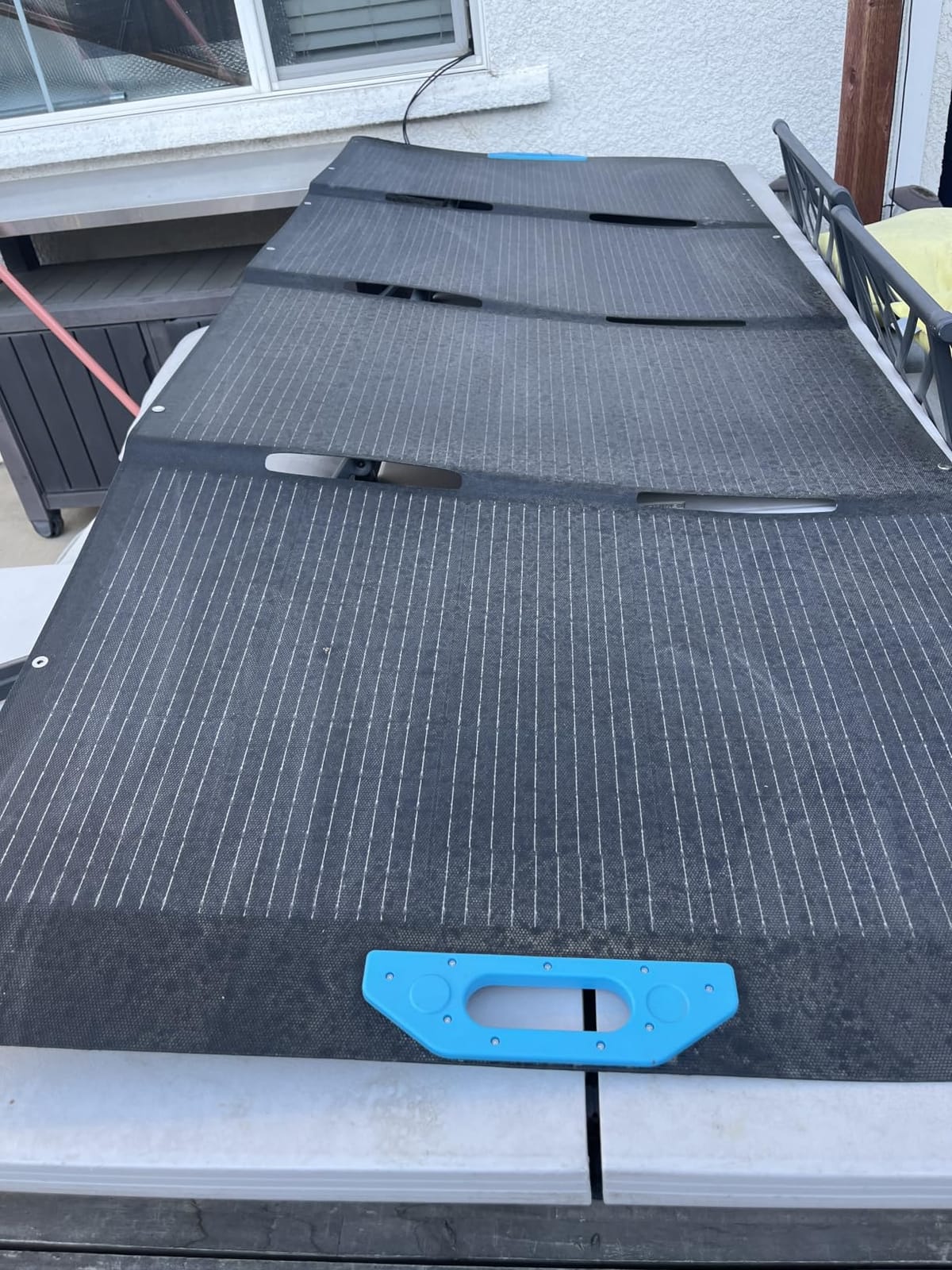
This bundle is the shortest path from an empty storage bay to a working off-grid setup, because the 200W SolarSaga panel is in the box. At 23.8 lb with a folding handle it moves easily, and 1070Wh is enough to carry a 12V compressor fridge through a night.
Charging options are broad for the class: roughly 1 hour on emergency charge through the app, or 1.7 hours from a normal wall outlet. Three pure sine wave AC outlets handle the sensitive loads, and the LiFePO4 battery is rated for 4000 cycles.
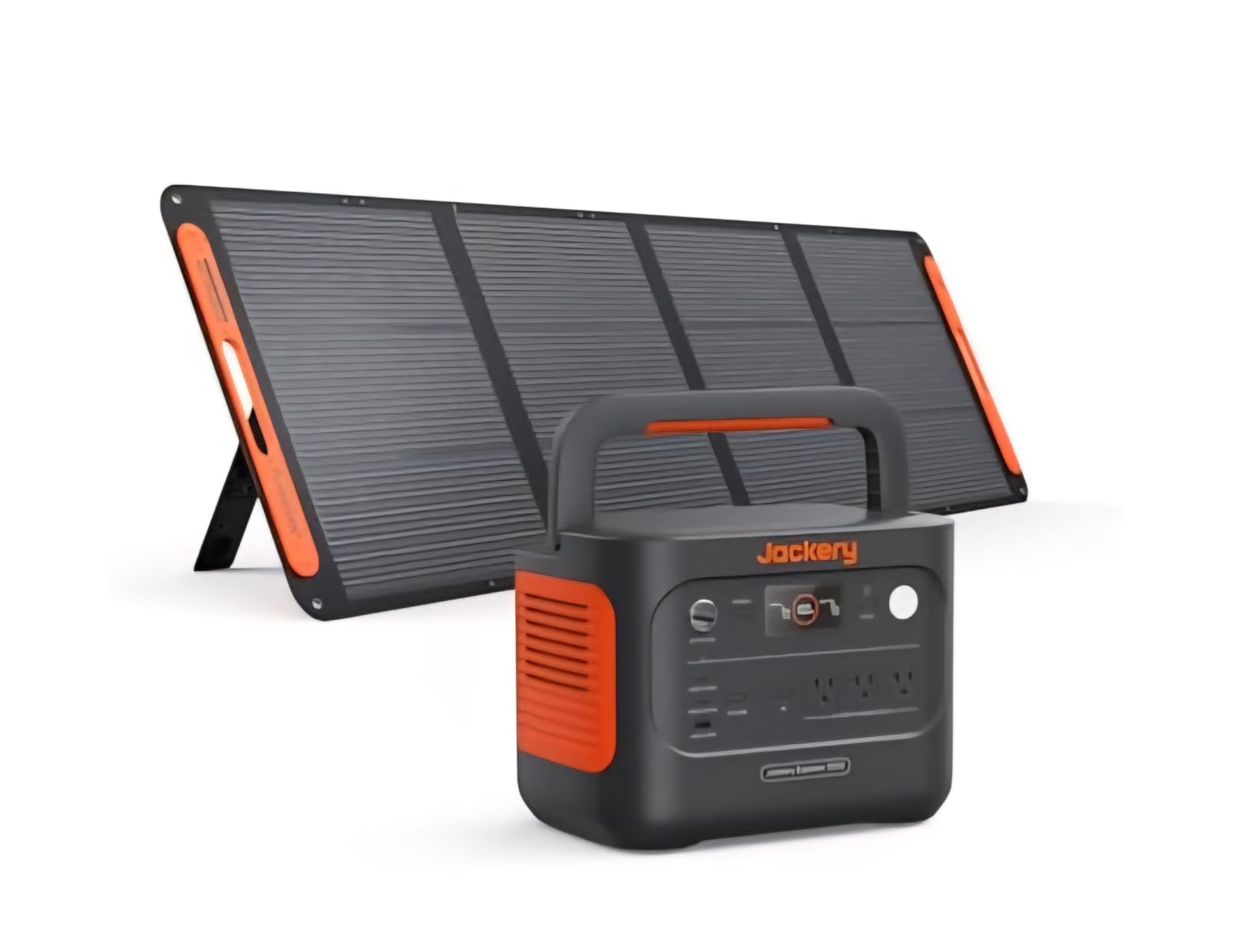
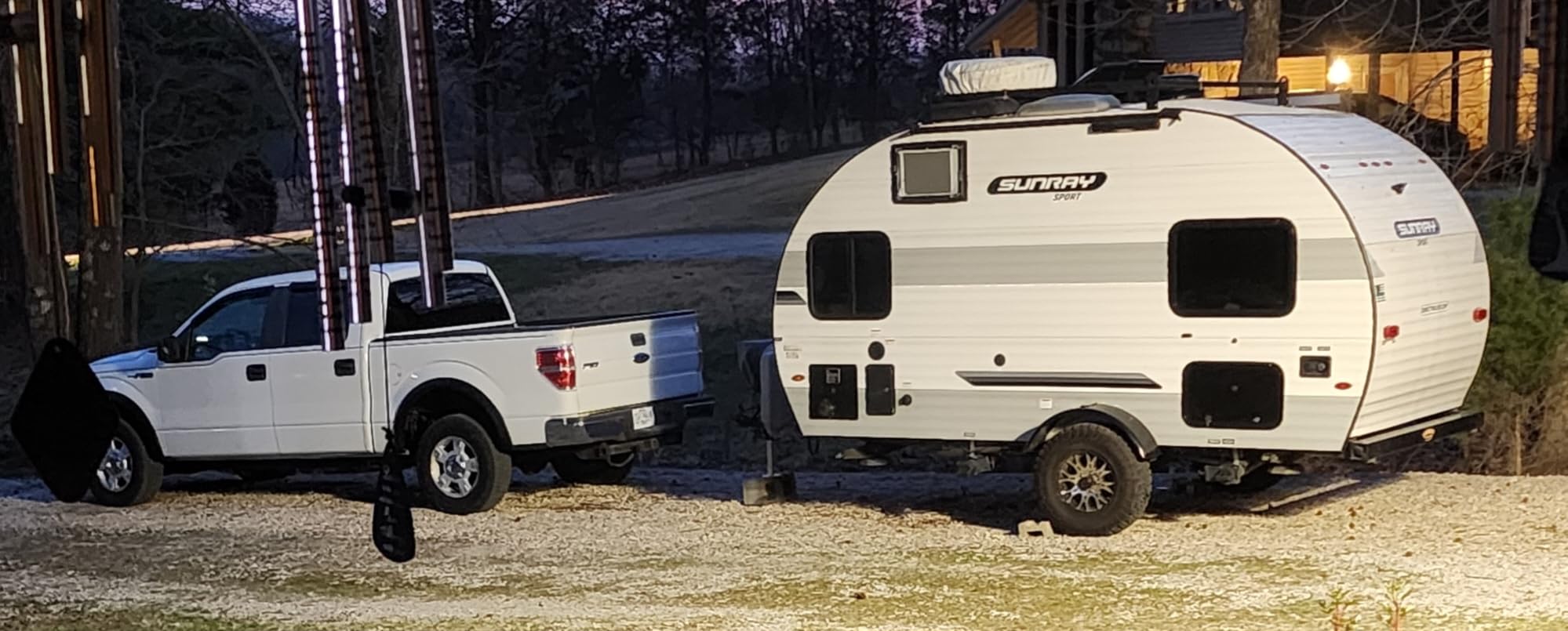
Users report strong fridge-running and outage performance with genuinely fast charging. The complaints cluster entirely on the panel rather than the station: it sags in the middle, tips over easily, and the included cable is short enough to restrict where you can position it in the sun.
The station also carries an app-controlled quiet overnight charging mode, which matters if the unit lives in the same space you sleep in.
Why it suits first-time boondockers
Buy this if your loads are a fridge, phones, a laptop, lights and fans, and if you would rather not buy a panel separately or figure out MC4 connectors. The three pure sine wave outlets are the reason I trust it with a CPAP or a router rather than only with lights.
The 3000W surge rating also gives compressor appliances room to start without the inverter browning out.
Where it falls short
The 1500W continuous ceiling means you cannot run a microwave and anything else substantial at the same time. Reviewers are also unkind about the bundled panel quality and the short cable, so budget for a better panel if you intend to rely on solar rather than occasional top-ups.
Our solar power setup guide for field work covers panel placement in more detail.
4. OUPES Mega 1: The Best Expandable 1 kWh Unit for Small Rigs
OUPES Mega 1 Portable Power Station 1024Wh 2000W (4500W Surge)
1024Wh LiFePO4
2000W continuous, 4500W surge
27.8 lb, 15.1 x 9.1 x 11.6 inch
Expandable to 5120Wh
Pros
- 0-80% AC charge in about 36 minutes
- 2000W continuous in a sub-30 lb package
- Expandable to 5120Wh with two B2 batteries
- 3500+ cycle LiFePO4 cells
- Well spaced front-mounted outlets
Cons
- 4500W surge rating is optimistic in practice
- Cooling fan runs loudly during high-draw charging
- App Wi-Fi connectivity is unreliable
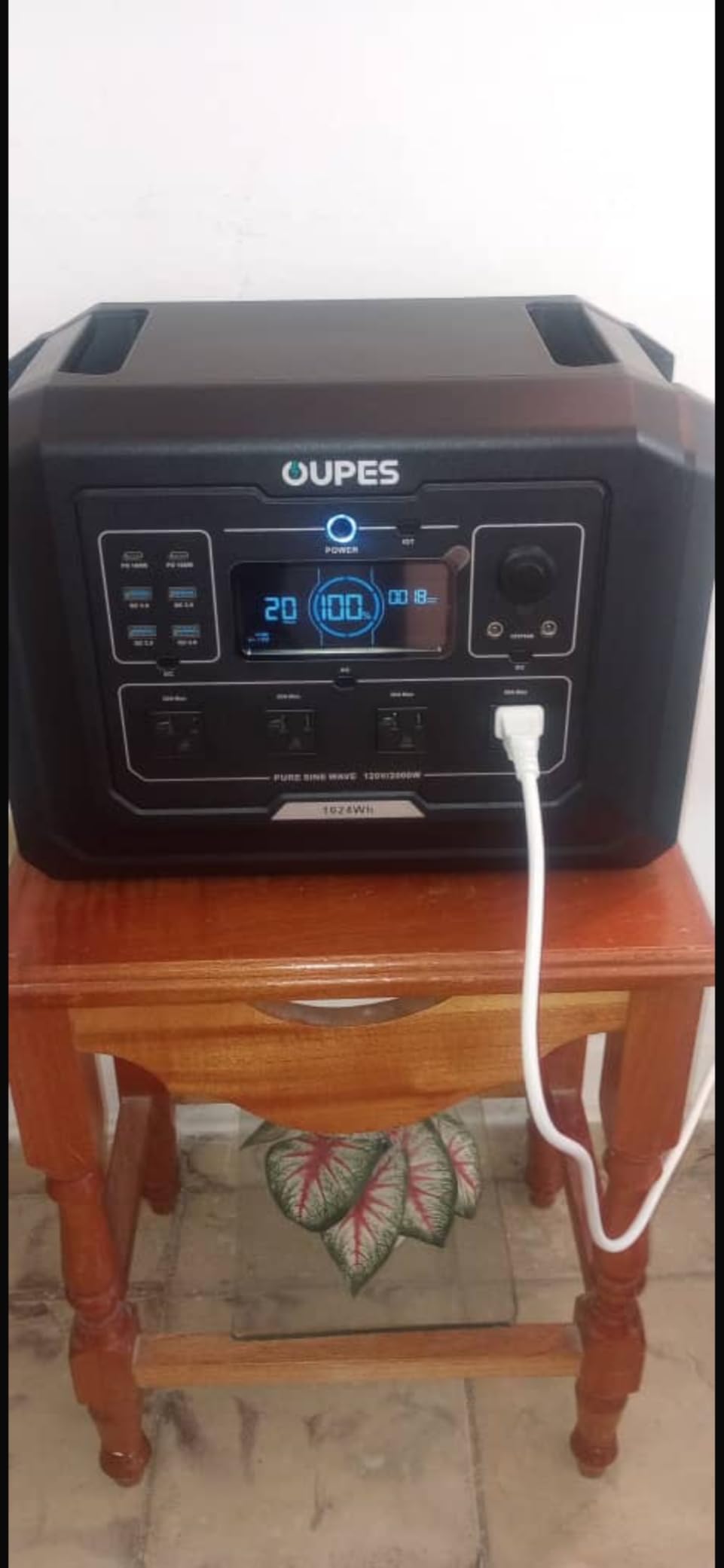
The Mega 1 does something none of its 1 kWh competitors do: it grows. Two B2 extra batteries take it to 5120Wh, so a small trailer can start at 1 kWh and expand later rather than being fixed at purchase. The box itself is 27.8 lb and holds 1024Wh of LiFePO4 rated for 3500+ cycles.
Charging is the fastest in the 1 kWh class, reaching 80% in about 36 minutes from AC, or 26 minutes with AC and solar together. The inverter is rated 2000W continuous with a stated 4500W surge, and UPS transfer is under 20ms.
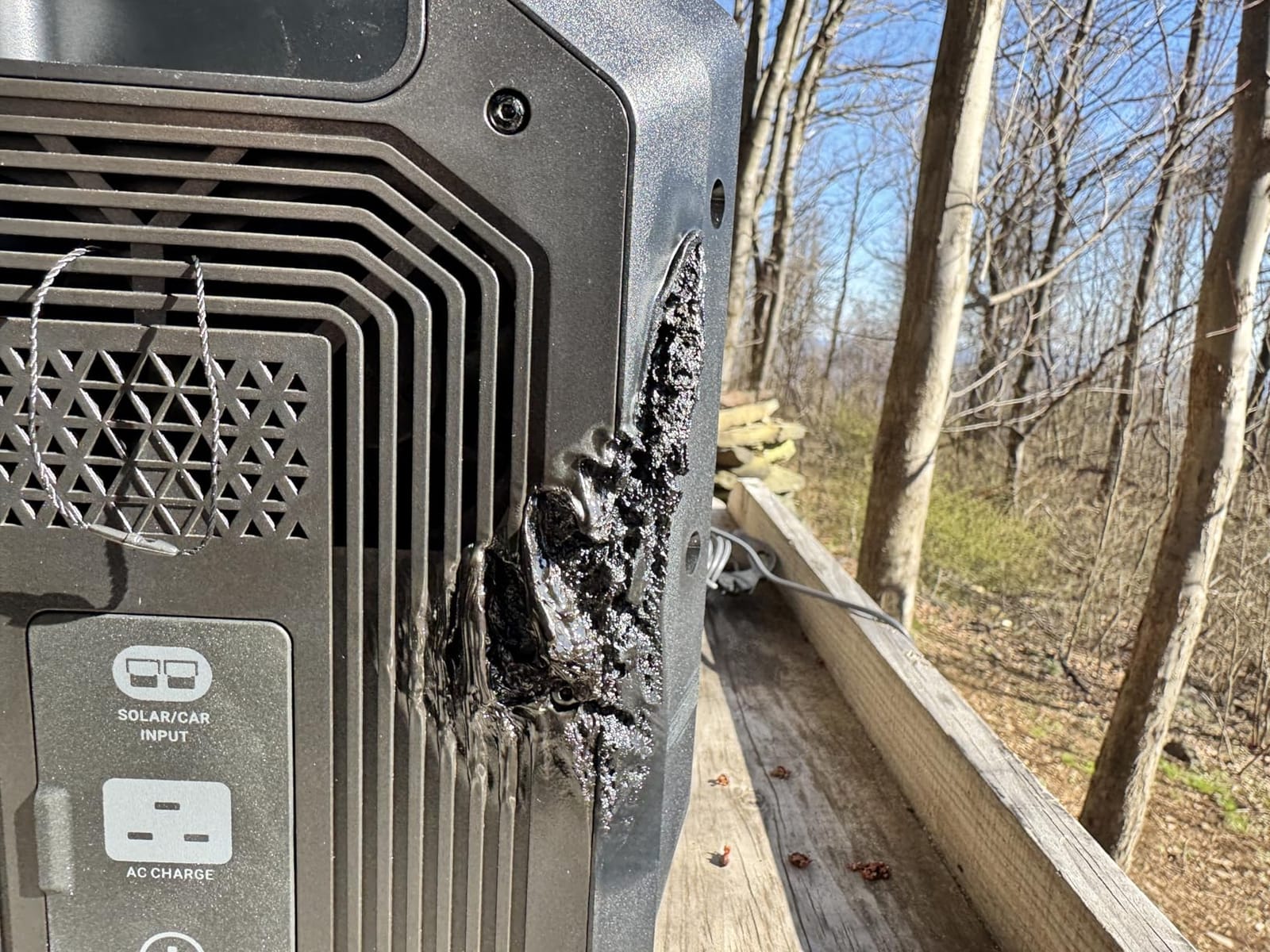
Owners consistently call it strong value with real-world output to match. The most cited negative is the surge figure. Reviewers report that the unit trips somewhere around 2050-2200W rather than the advertised 4500W, so treat the headline surge as a marketing number and size your compressor loads to the 2000W continuous rating.
Other recurring notes are cooling fan noise during high-draw charging, unreliable app Wi-Fi (Bluetooth is the more dependable path), and thin documentation.
Why it suits small rigs that will grow
The expansion path is the reason to pick this over the other 1 kWh units. If you are starting with a fridge and lights this season and want to add an air conditioner and Starlink later, you buy once and add batteries when the budget allows.
Front-mounted 120V outlets are a small quality-of-life win when the box sits under a table, and the included Anderson and MC4 cables cover the common charging paths.
Where it falls short
Do not buy this for motor startup loads based on the 4500W figure. Anything that spikes hard, like an air conditioner compressor, should be checked against the 2000W continuous number instead. The fan noise during charging is also worth knowing about if the unit lives near where you sleep.
If fast wall-outlet charging is your top priority over expandability, the Anker C1000 Gen 2 refills faster.
5. EcoFlow DELTA Pro: The Best Solar Generator for a Full-Time Coach
EF ECOFLOW Portable Power Station 3600Wh DELTA Pro, 120V 3600W AC Output
3600Wh LFP battery
3600W AC, up to 4500W with X-Boost
99 lb, 25 x 11.2 x 16.4 inch
Expandable to 25kWh
Pros
- 3600Wh capacity with 3600W continuous AC output
- 2.7 hour charge from an 1800W wall outlet
- 15 total output ports including 5 AC outlets
- Expands from 3.6kWh up to 25kWh
- Quiet enough for indoor backup
Cons
- 99 lb is very heavy
- Solar input limited to roughly 15 amps
- Can arrive depleted and trip a breaker on first charge
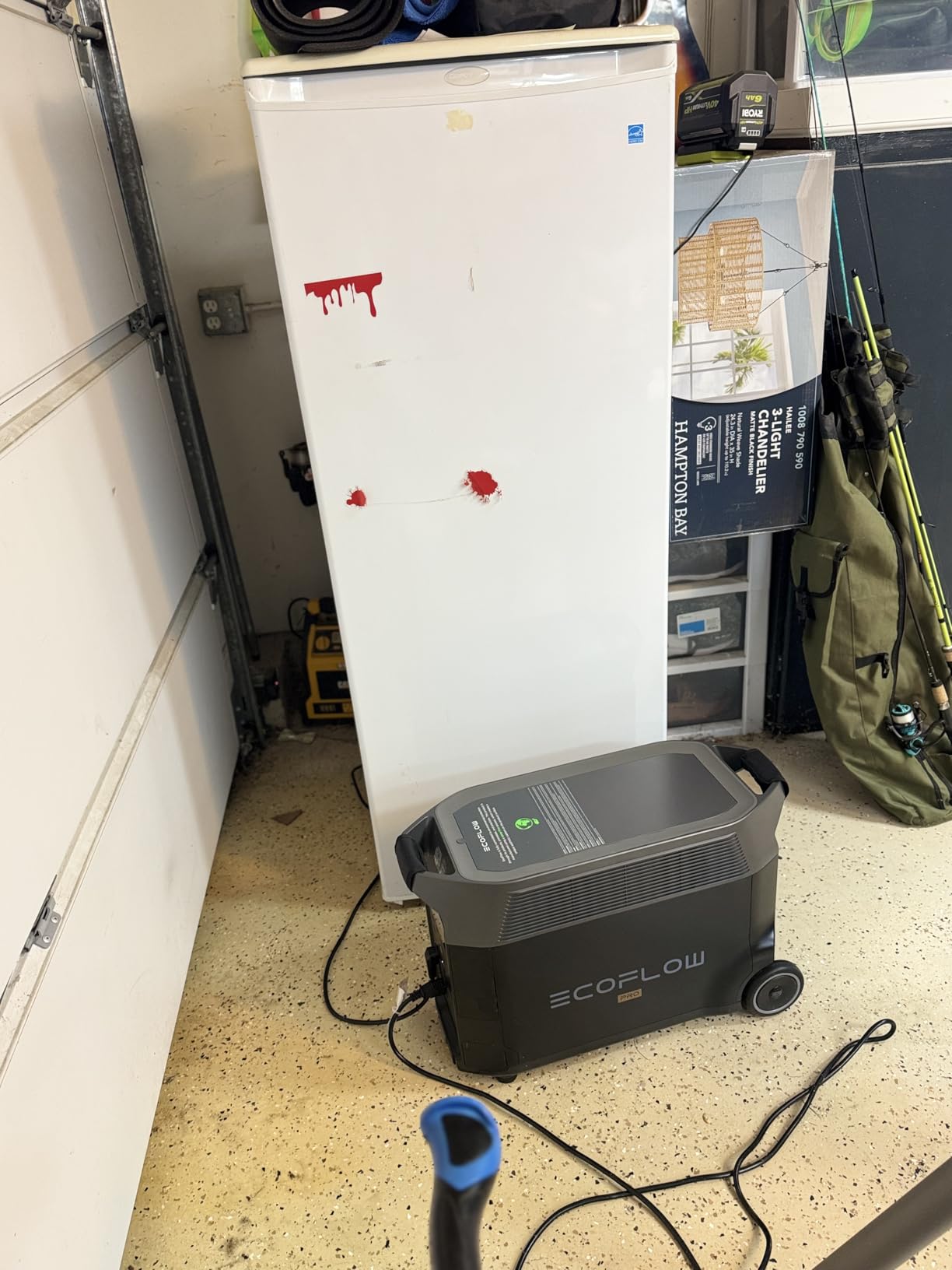
When capacity is the problem, this is the answer. The DELTA Pro carries 3600Wh and a 3600W continuous inverter, and it expands to 25kWh. Owners running household loads and real appliances off-grid cite that headroom as the reason they bought it, and the 15 output ports including 5 AC outlets cover a full household without hunting for an outlet.
It charges fast from a wall outlet at about 2.7 hours on 1800W, or 1.8 hours from 240V, and supports five charging methods including EV station charging. The app works over Wi-Fi or Bluetooth.
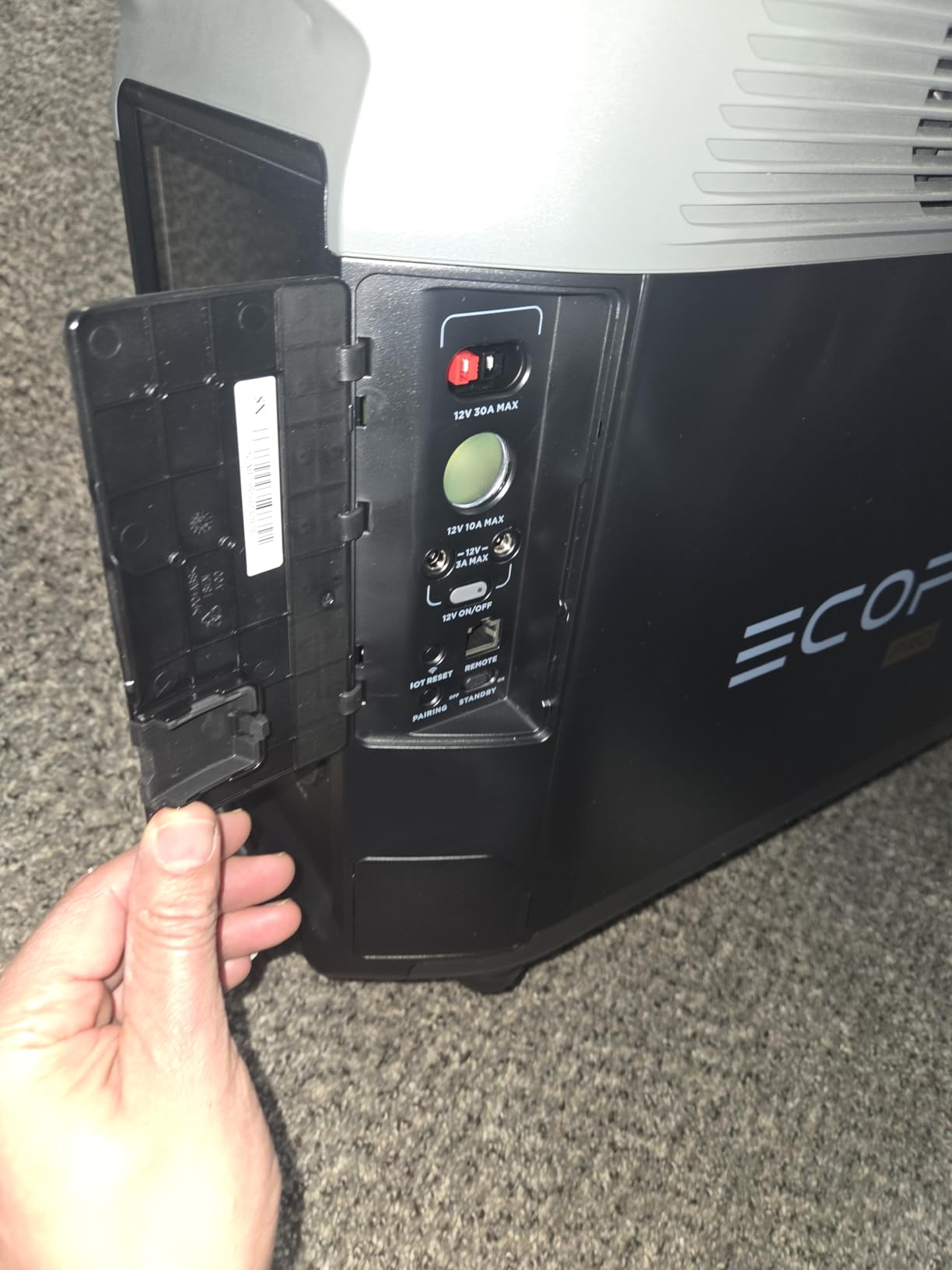
The drawbacks are physical and electrical. Ninety-nine pounds is a serious load, and reviewers cite the weight more than any other complaint. The solar input current is capped at roughly 15 amps, which is the real limiting factor for off-grid replenishment even though the battery is enormous.
A few owners also report that the unit arrived depleted and tripped a breaker on the first charge, so give it a full charge indoors before you rely on it in the field.
Why it suits full-time and large-class rigs
If you are running a 13500 BTU air conditioner, a microwave, a Starlink terminal, a laptop and a fridge simultaneously, this is the class where the math starts to work. The 25kWh expansion ceiling also means a coach can be configured once and grown over several seasons instead of replaced.
Quiet operation makes it usable inside the living space, not just in a storage bay, which matters when a blower runs at three in the morning.
Where it falls short
At 99 lb this is a two-person lift and a real problem for anyone with a lip or a step-well storage design. The 15-amp solar ceiling also means your recharge time is decided by your array and your shunt, not by the battery, so pair it with a well-wired roof array before you commit.
If weight rules it out, the Jackery HomePower 3000 later in this guide gives similar output at 59.5 lb.
6. EcoFlow DELTA 3 Max: The Best Fast-Recharging Solar Generator
EF ECOFLOW DELTA 3 Max Portable Power Station, 2048Wh LFP Battery, 2400W
2048Wh LFP battery
2400W AC, 3400W with X-Boost
0-80% recharge in about 1.13 hours
Under 10ms UPS transfer
Pros
- Highest average rating in this selection at 4.7
- 0-80% recharge in about 1.13 hours
- 3400W X-Boost handles high-demand appliances
- Under 10ms UPS transfer for sensitive electronics
- Five year service plan
Cons
- Limited review volume relative to older models
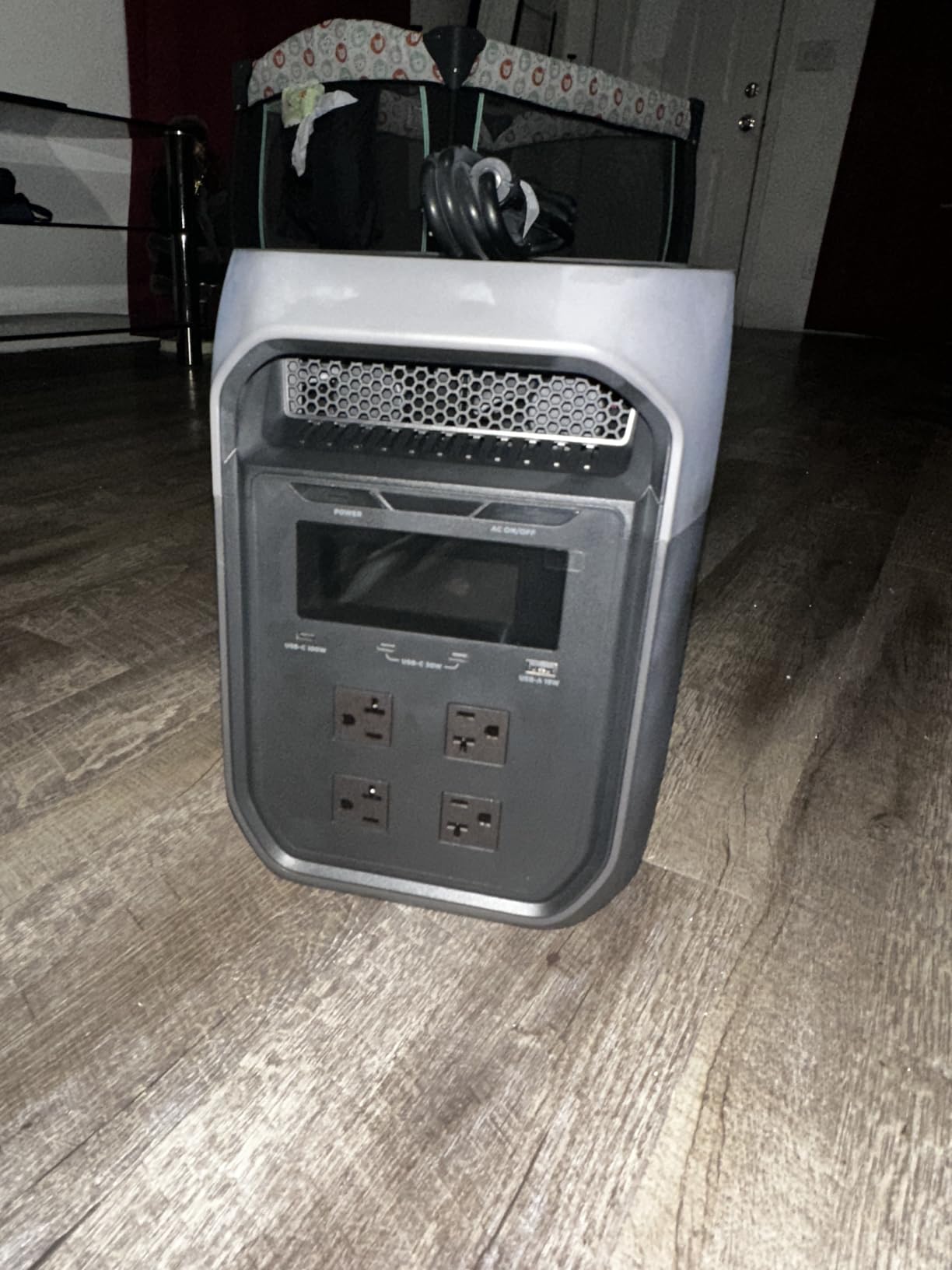
Recharge speed is the whole argument here. Going from 0 to 80% in about 1.13 hours means a missed sunny morning is recoverable, which is exactly the situation boondockers hit in winter or in heavy overcast. The 2048Wh pack and 2400W inverter sit in the popular 2 kWh sweet spot.
X-Boost mode pushes continuous output to 3400W, which is useful for appliances that draw more than their nameplate. UPS transfer is under 10ms, and operation is quiet enough for indoor use.
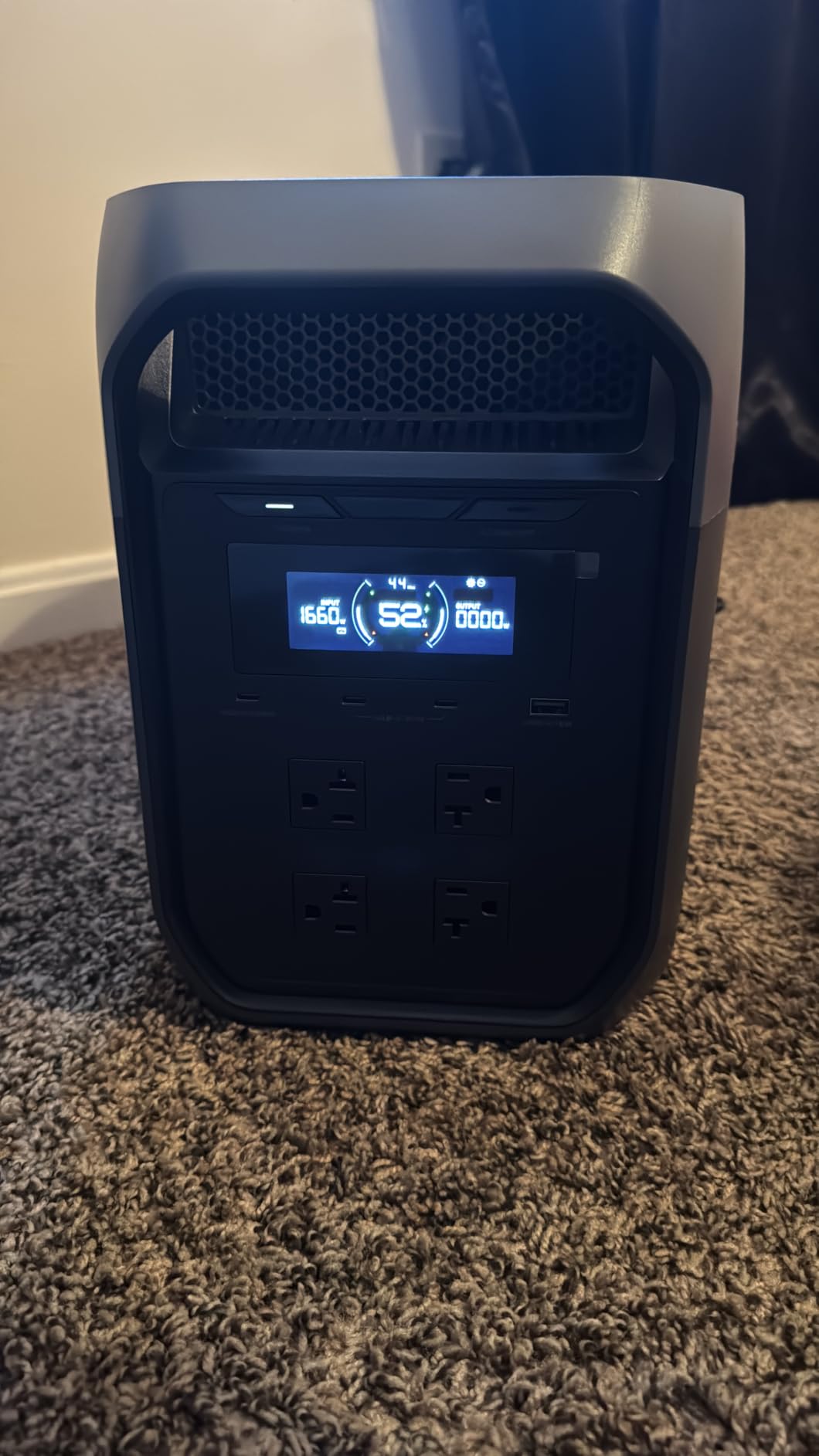
Reviewers praise the extremely fast charging, the 3400W X-Boost headroom, and quiet UPS performance for both home backup and RV camping. The one honest drawback is the shorter review history compared with the long-running models in this list, which simply means less field data exists.
The app handles scheduling and energy monitoring, so you can push charging into the peak solar window automatically.
Why it suits marginal-sun camping
Fast recharge changes the maths when your solar harvest is unreliable. Where a slower unit loses half a day after one cloudy morning, this one refills before you break camp. Combined with a 3400W boosted output, it handles an air conditioner or a microwave load that would stall a smaller inverter.
Under 10ms transfer keeps a router, a desktop or a CPAP machine running through a switchover without a reboot.
Where it falls short
The main risk is buying on a thin review base. Its 4.7 average comes from a smaller pool of ratings than the established models here, so treat it as promising rather than proven over a long field history. Two expansion batteries are not documented for this unit, so treat 2048Wh as the ceiling.
If you want proven longevity data instead, the BLUETTI AC200PL has a far larger review history.
7. EBL 2400W with Two 200W Panels: The Best Panel Bundle for New Buyers
EBL 2400W Portable Power Station + 2×200W Solar Panels
2400W AC output
1843.2Wh owner-measured capacity
54 lb reported, 9 x 6 x 6 inch listing
2x 200W panels included
Pros
- Bundle includes two 200W foldable monocrystalline panels
- 0-100% AC recharge in about 1.5 hours per owner testing
- Owner-measured conversion efficiency above 89-90 percent
- Holds 2400W full load with minimal voltage drop
- Built-in UPS switching
Cons
- No companion mobile app for remote monitoring
- Heavy at around 54 lbs per owner reports
- Multiple customer service complaints
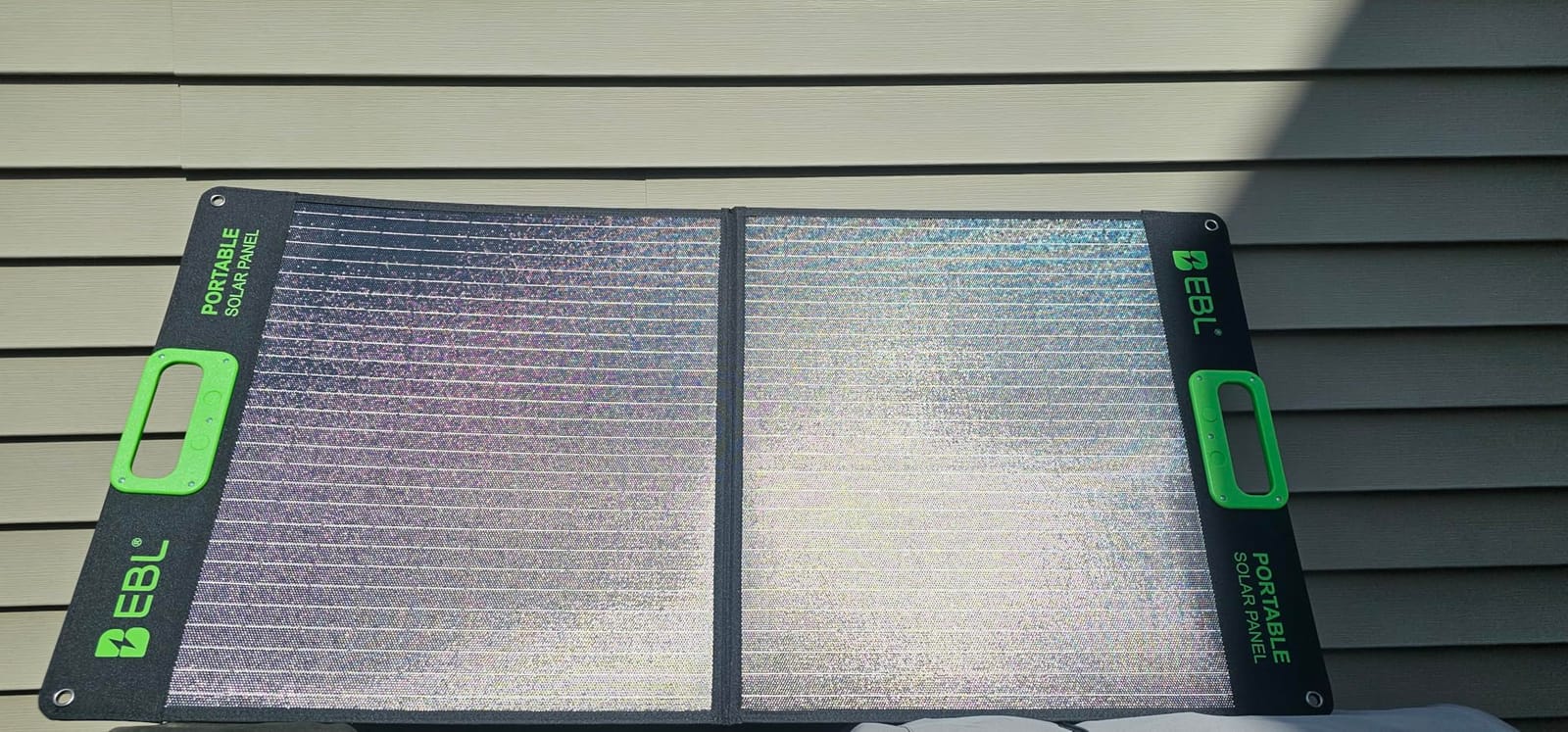
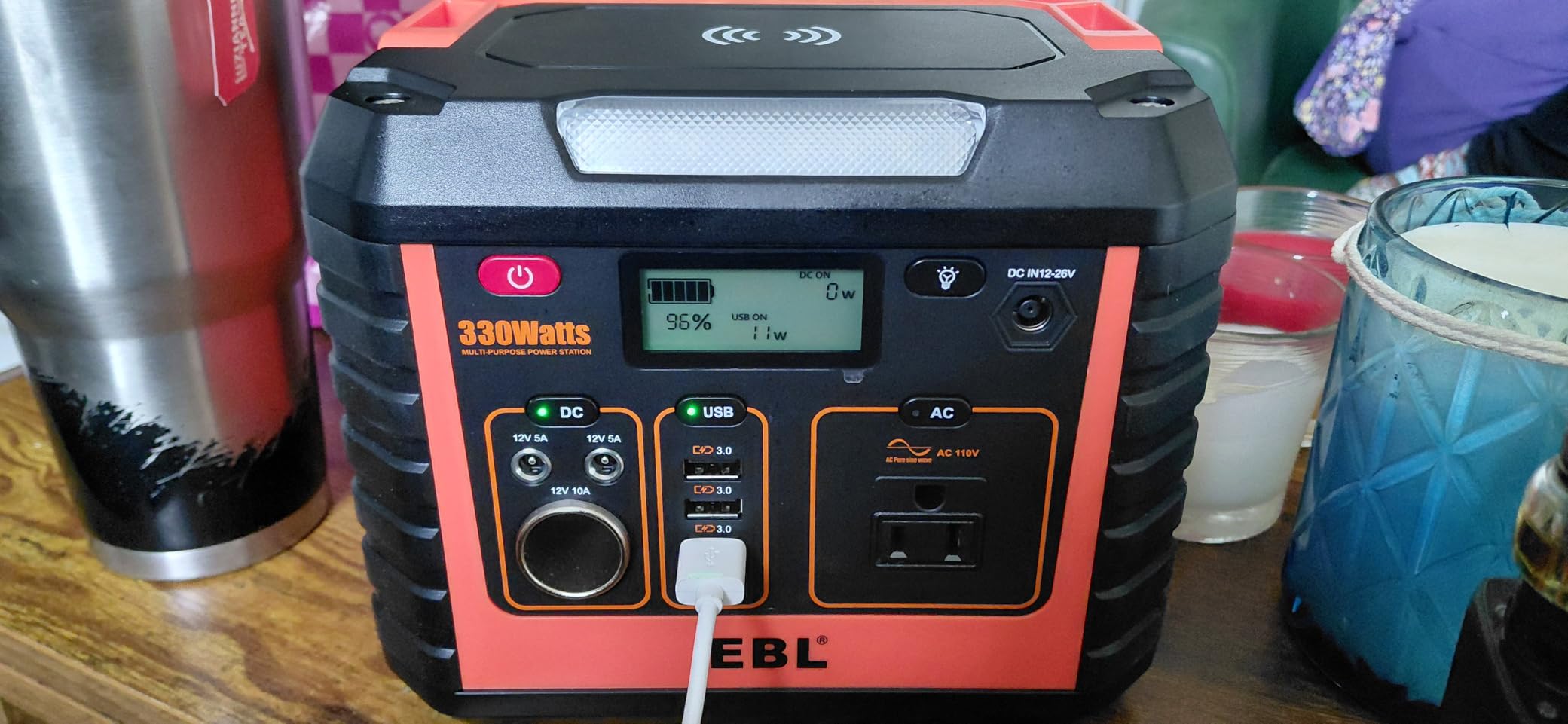
The EBL bundle is the most generous on the panel side: two 200W foldable monocrystalline panels rated at 23 percent efficiency ship in the box, with parallel wiring so you can push both into the unit at once. That removes the single most common early frustration, which is having no way to recharge away from a campground pedestal.
The station delivers 2400W AC and owners measuring the pack themselves report 1843.2Wh of usable capacity and conversion efficiency above 89 to 90 percent, with the unit holding a full 2400W load with minimal voltage drop. AC recharge at 1200W takes about 1.5 hours by owner testing.
This is also the lowest-rated product in the group at 4.3, and the reviews explain why. There is no companion app, so no remote monitoring and no scheduling. Weight is reported around 54 lbs, and multiple buyers across the EBL lineup describe customer service as difficult to reach, with a few reporting outright failures on units in the family.
Warranty length is the outlier too, at two years against the five years most competitors here carry.
Why it suits buyers who want panels included
If your plan is solar-first boondocking and you do not already own panels, the math on getting two 200W panels and a 2400W inverter in one purchase is hard to beat. Dual side carry handles and foldable panels make it a self-contained kit for a first season out.
The built-in UPS switching also makes it usable as a home backup unit between trips, which stretches the value across two use cases.
Where it falls short
Two years of warranty on lithium iron phosphate hardware is short, and the reported service experience makes a warranty nearly worthless if something goes wrong. Without an app you lose charge scheduling, which matters most for solar recovery.
If support and warranty length are priorities, every other unit in this roundup carries five years.
8. Anker SOLIX S2000: The Best 2 kWh Unit for Fridge-First Boondocking
Anker SOLIX S2000 Portable Power Station, 2,010Wh, 1,500W
2010Wh LiFePO4, 314Ah cells
1500W continuous, 3000W peak
35.7 lb, 8.19 x 11.1 x 12.7 inch
400W solar input
Pros
- Runs a full-size fridge for about 35 hours
- Low 6W idle draw improves standby efficiency
- Compact 2kWh footprint at 35.7 lb
- Under 10ms UPS switchover
- Detailed app with scheduling and per-day tracking
Cons
- Fan is noisy while charging at 1200W
- No 12V DC port on this model
- First charge produces a strong burn-off odor
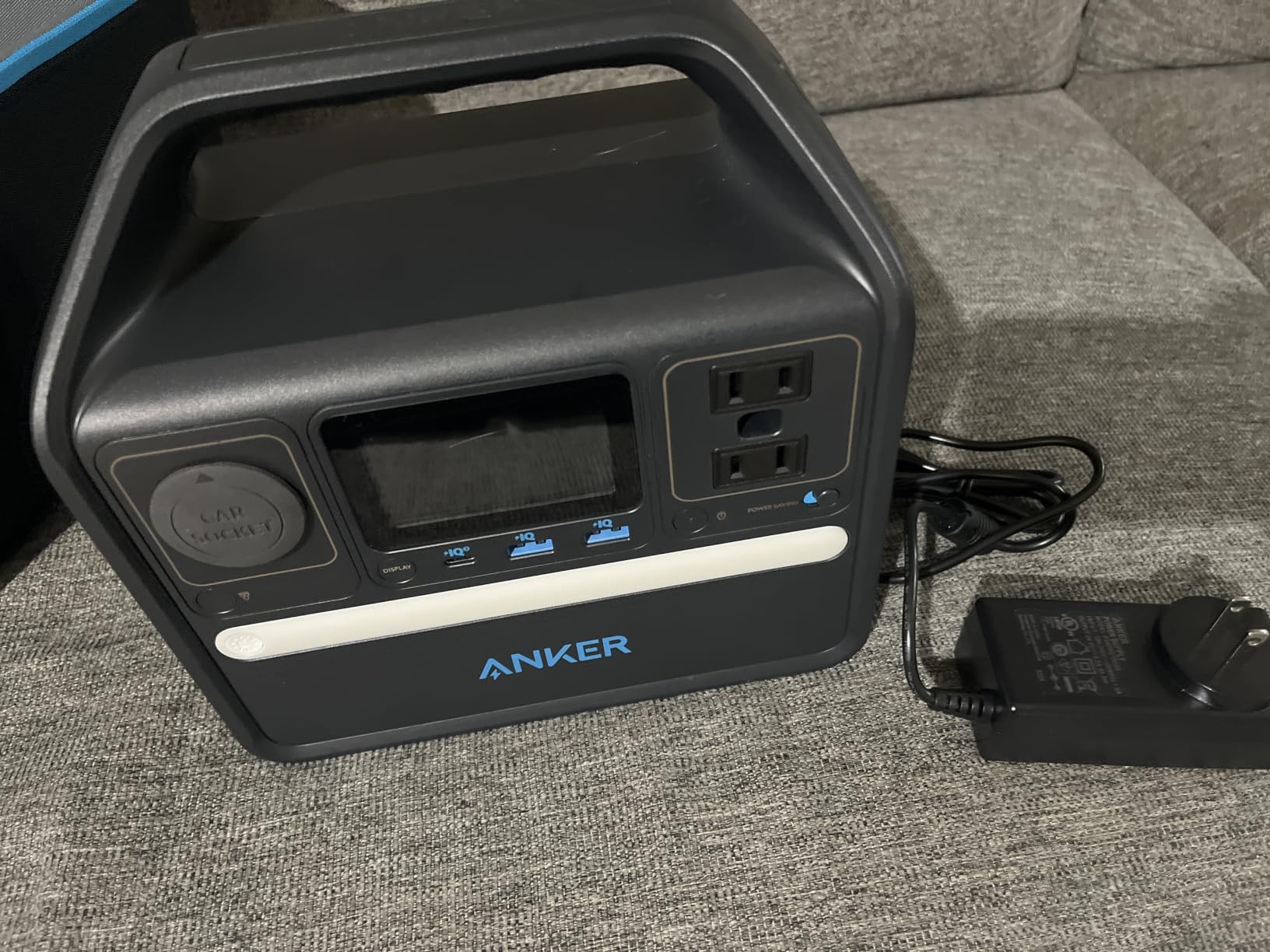
The S2000 sits exactly where most RV loads sit: big enough to run a full-size refrigerator, small enough at 35.7 lb to move solo, and refined for standby rather than peak. The 2010Wh pack uses 314Ah LiFePO4 cells rated for a 10000 cycle lifespan, which is the highest cycle figure in this roundup.
Owners report about 35 hours of fridge backup, helped by a 6W idle draw that costs very little overnight. Output is 1500W continuous with 3000W peak, UPS switchover is under 10ms, and six charging methods include up to 400W of solar input.
The app is unusually detailed for this class, with scheduling, charge limits and per-day energy tracking. The negatives are specific: the fan is noisy while charging at 1200W, there is no 12V DC port on this model, and the first charge produces a noticeable burn-off odor that new owners should expect.
Handles are built into the body rather than a folding type, which some buyers find less convenient to grip.
Why it suits steady low-draw loads
Fridges, routers, laptops, lights and a CPAP machine are the classic boondocking load list, and this unit is built for exactly that profile. A 6W idle draw means it can sit switched on in the background without eroding the pack, and 10000 rated cycles translate to a long service life at roughly one cycle a day.
It also charges from a wall outlet, a car port, solar and generator input, so it is flexible if your solar day goes wrong.
Where it falls short
The 1500W continuous output will not carry a camper air conditioner, and the missing 12V DC port removes the direct low-voltage path that makes some RV accessories simpler to run. Charging fan noise at 1200W is worth factoring in if the unit is beside your sleeping area.
For higher output at a similar footprint, the EcoFlow DELTA 3 Max runs 2400W continuous.
9. Jackery HomePower 3000: The Best Solar Generator for Running an RV Air Conditionator
Jackery HomePower 3000 and 2x200W Solar Panels, 3072Wh, 3600W AC Output
3072Wh LiFePO4, 30Ah
3600W AC output, 7200W surge
59.5 lb, 16 x 13 x 20 inch
TT-30 RV port, two 200W panels
Pros
- 3600W output runs a camper A/C and a microwave
- Very quiet operation suitable for sleeping off-grid
- UL-certified 20ms UPS switching
- 1.7 hr hybrid AC+DC recharge
- 47 percent smaller and 43 percent lighter than comparable 3kWh units
Cons
- Cannot add extra batteries to expand capacity
- 59.5 lb; several buyers recommend the wheel kit
- Support portal issues
This is the unit to look at if an air conditioner is on your list. 3072Wh of LiFePO4 behind a 3600W inverter with 7200W surge gives a camper A/C the headroom it needs to start its compressor, and owners confirm it runs both an A/C and a microwave. Quiet operation means it can sit inside while you sleep.
Recharge is quick: 1.7 hours on a hybrid AC plus DC path, or 2.2 hours on AC alone. Ports include AC, USB-C, USB-A, DC and a TT-30 RV outlet, with dual 100W PD ports for laptops. ChargeShield 2.0 covers the 4000 cycle battery.
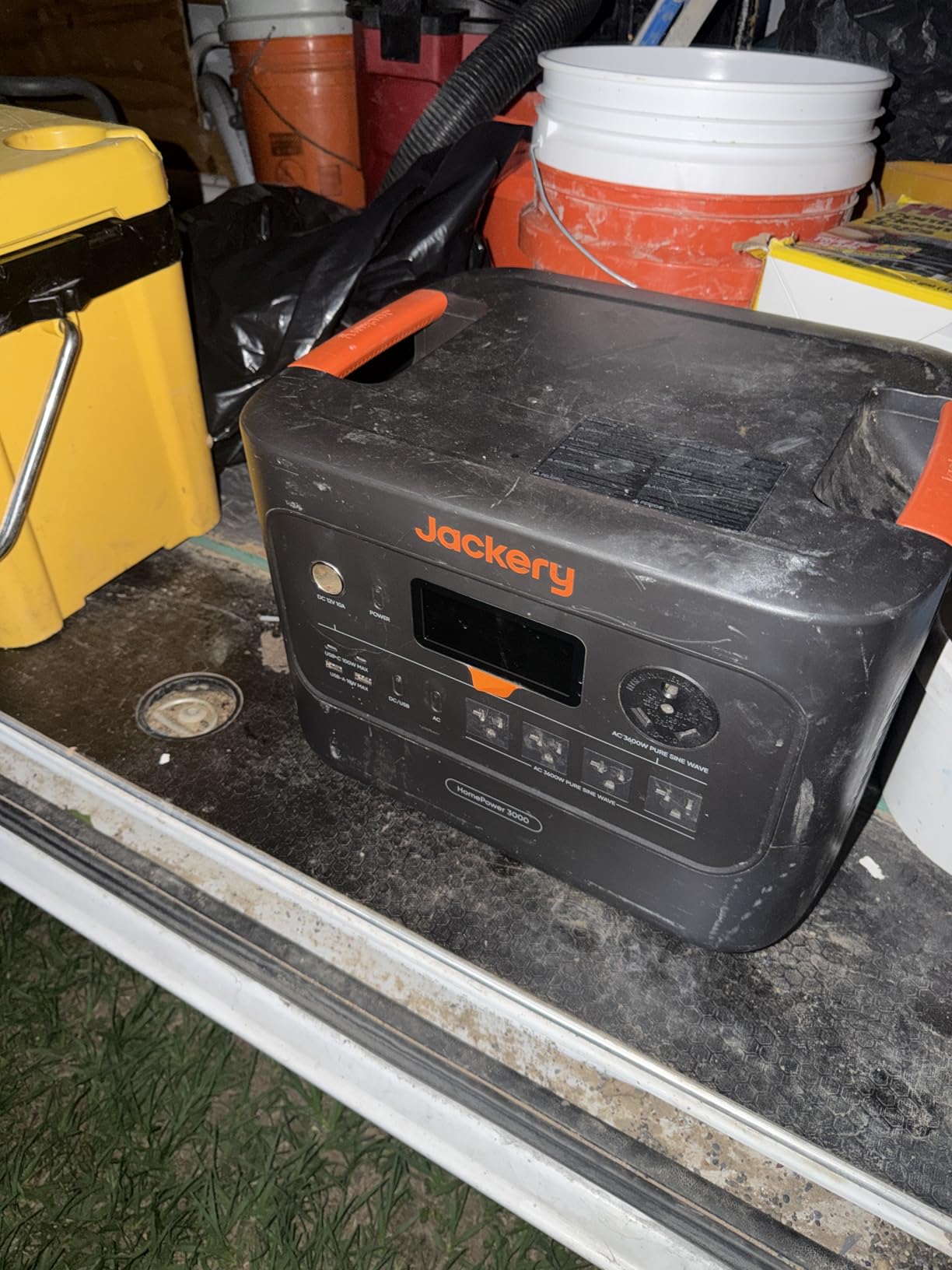
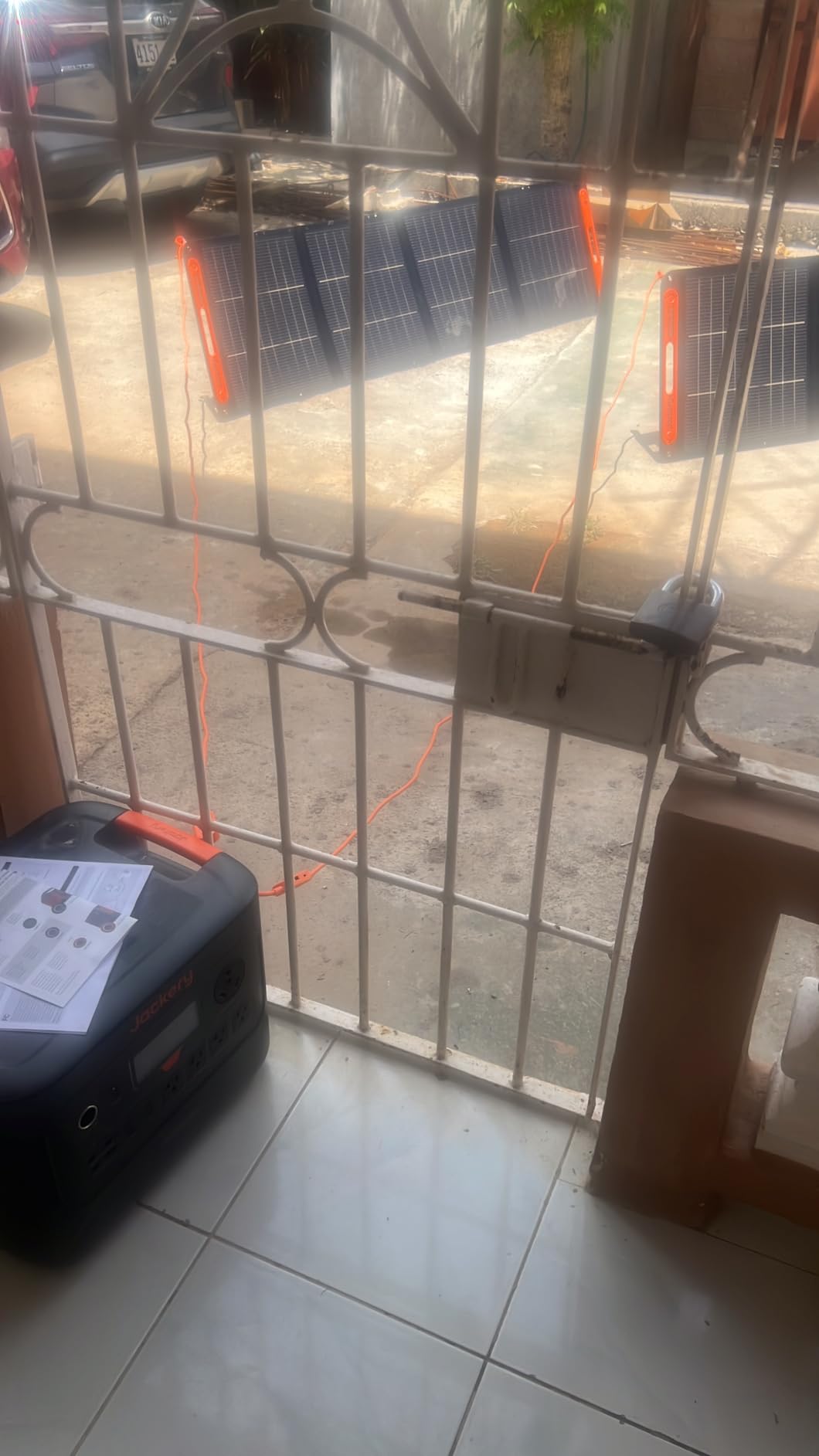
Owners like the quiet 3600W output for dry camping and report fridge runtimes of one to two days. Two 200W panels are bundled and reach 80% in about 9 hours, which is slow for emergency top-ups but fine for daily cycling.
The real limitation is that capacity cannot be expanded, and the unit arrives at 59.5 lb, heavy enough that several buyers recommend adding a wheel kit. Support portal issues are also reported.
Why it suits heat-pump living
An RV air conditioner is usually the single biggest reason people go beyond a 1 kWh unit. Running it from battery is realistic when ambient temperature stays moderate, and the 3600W inverter means the compressor starts without the inverter browning out. The TT-30 outlet means you can feed RV accessories directly rather than through a travel adapter.
Owners report a refrigerator running one to two days on a charge, which tells you the margin above basic needs is real.
Where it falls short
Fixed capacity means you cannot grow this setup, which matters if your loads rise next season. At 59.5 lb it is heavy, and the bundled panels take roughly nine hours for an 80% recharge, so keep the wall outlet reachable. Above roughly 85F ambient you should still expect an air conditioner to be the first thing to lose overnight.
If you want expandability at this output level, the BLUETTI AC200PL or the pecron F3000LFP both take add-on batteries.
10. Jackery Explorer 2000 v2: The Best Solar Generator for Remote Work and Starlink
Jackery Explorer 2000 v2 and 2x200W Solar Panels, 2042Wh, 2200W AC Output
2042Wh LiFePO4
2200W AC combined output
39.5 lb station, 13.2 x 10.4 x 11.5 inch
Bundled 2x 200W panels
Pros
- Compact and light for a 2kWh LiFePO4 unit
- AC charging to 80% in 66 minutes
- USB-C PD 100W output charges laptops and phones directly
- 20ms UL1778 certified UPS switching
- Bundle includes two 200W solar panels
Cons
- Power station and solar panels arrive in separate deliveries
- AC and solar cables are not included
A 4.6 average from 268 reviews with 84 percent five-star ratings makes this one of the most consistent products here. The 2042Wh pack delivers 2200W of combined AC output at 39.5 lb for the station itself, and Cell-to-Body packaging makes it smaller and lighter than conventional 2 kWh lithium iron phosphate designs.
Charging is fast: 80 percent from AC in 66 minutes, a full charge in 102 minutes with the app-activated emergency super charging mode, and solar charging in about 6 hours with 400W of panels. Silent charging mode reaches a full charge in 5 hours at 30dB, which matters in a sleeping passenger compartment.
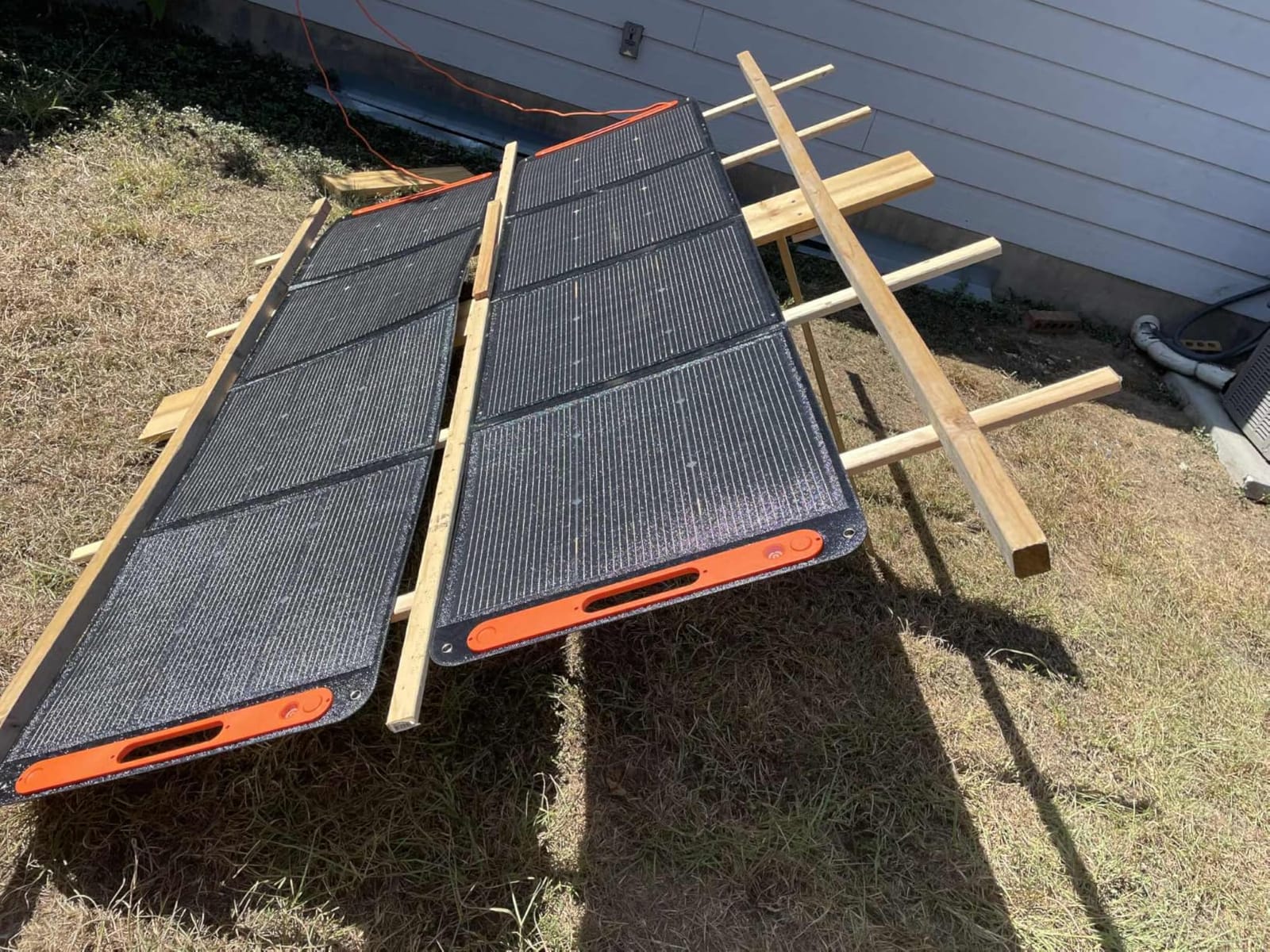
Reviewers highlight the small, light form factor, fast charging, quiet operation, and 20ms UPS switching that keeps critical devices alive during outages. The most common drawback is logistics rather than performance: the station and the two bundled 200W panels arrive in separate deliveries, and the AC and solar cables are not in the box.
Plan for two separate order arrivals, and buy the missing cables before your first trip rather than at the campground.
Why it suits remote workers
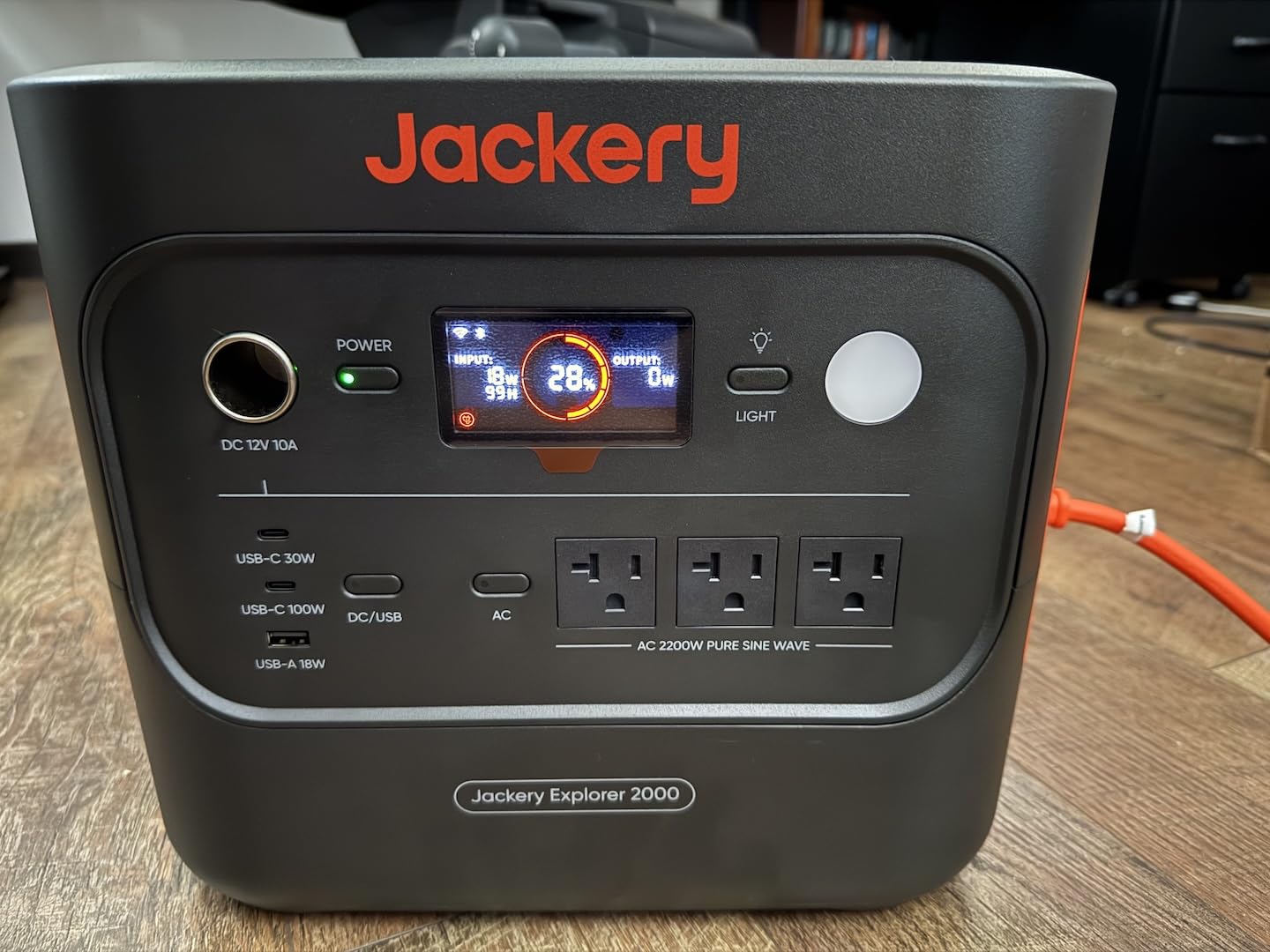
The USB-C PD 100W port charges a laptop straight from the unit with no adapter brick, which is the feature that makes a full mobile office possible. Three AC ports, a 2200W combined ceiling and a 20ms UL1778-certified UPS cover a Starlink terminal, router, monitor and laptop at the same time.
The battery is rated for up to 10 years of performance, and app control covers charging modes and monitoring.
Where it falls short
2200W shared across three AC outlets is the ceiling, and you will feel it if you add a microwave or coffee maker to the load. The bundled panels at 200W each will not refill 2042Wh quickly, so treat them as maintenance charging rather than your primary source.
Because the cables are not included, budget for MC4 and AC leads before heading out.
11. BLUETTI Elite 300: The Best Compact 3 kWh Footprint
BLUETTI Elite 300 Portable Power Station for RV & Home Backup 3014.4Wh
3014.4Wh LiFePO4, 314Ah
2400W AC, 4800W surge
58 lb, 14.4 x 12 x 11.7 inch
TT-30 RV port, 30A DC output
Pros
- Roughly 59 percent smaller than typical large 3kWh power stations
- TT-30 RV port and 30A DC output suit RV and camper use
- 10ms UPS verified to keep computers and routers running
- 2400W sustained load tested for about 30 minutes
- 0-80% recharge in as fast as 78 minutes
- 6000+ cycle LiFePO4 battery
Cons
- No battery expansion ports
- Solar input limited to 60V and 20A
- 58 lb is awkward for one person to reposition
The Elite 300 solves a problem the other 3 kWh units do not: where to put it. At 3014.4Wh it is roughly 59 percent smaller than typical large power stations of the same class, and it carries 2400W continuous AC with 4800W surge for resistive loads.
The port set is the RV argument. A TT-30 RV outlet plus 12V 30A high-current DC output means both AC and low-voltage RV accessories are covered natively, and 10ms UPS switchover has been verified to keep computers and routers running through a switchover. A 140W USB-C output handles laptops directly.
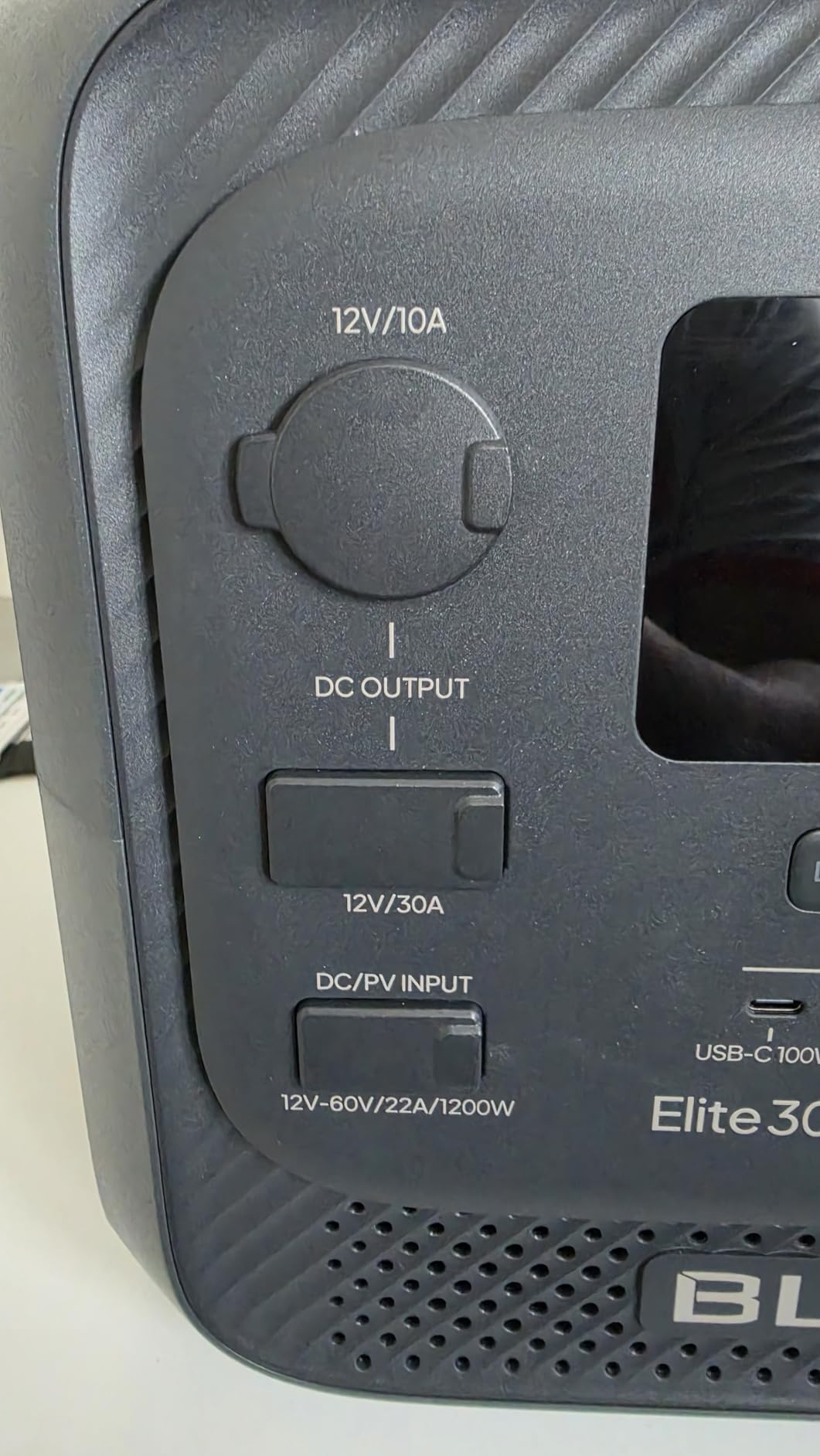
Owners rate it 4.7 across 118 reviews with 82 percent five-star, repeatedly praising the footprint, build quality, UPS reliability and app. Detailed testers measured about 77 percent round-trip efficiency and noted a soft-start voltage ramp that delayed a compressor start, which is worth knowing if you plan to run an air conditioner.
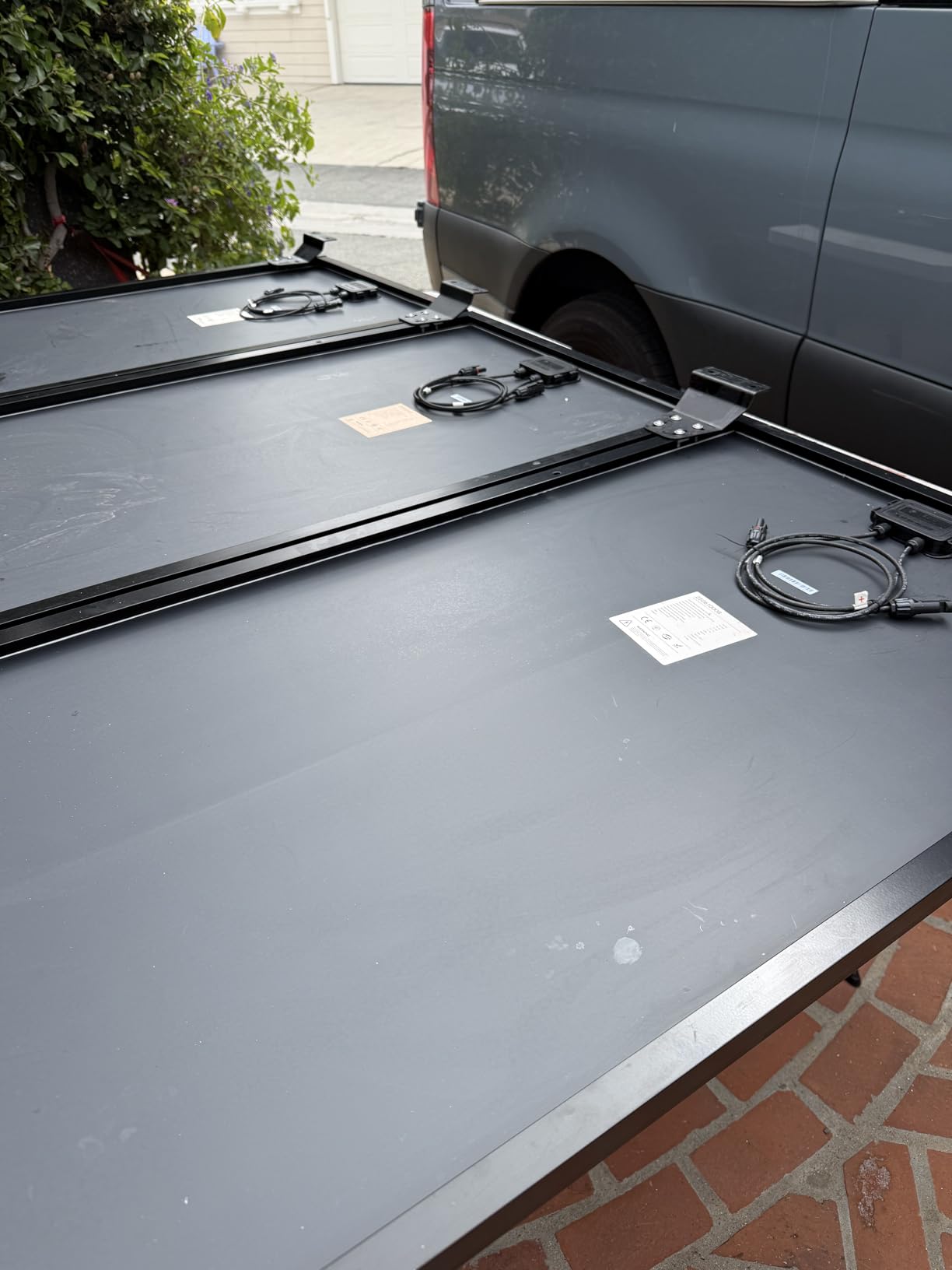
The two repeated limitations are the lack of any expansion port and a solar input capped at 60V and 20A. Several owners warn explicitly that exceeding the open-circuit voltage limit can damage the MPPT charger.
Why it suits space-constrained RVers
If your storage is a garage bay or a Class B under-bed compartment, volume matters more than anything else on this list. This unit packs 3 kWh into a footprint that other brands need twice the space for, and it still reaches 0 to 80 percent in as fast as 78 minutes.
With a 6000+ cycle battery and a five-year warranty, it is built for multi-season use, and BLUETTI support is reported as responsive with 24/7 coverage.
Where it falls short
No expansion ports means 3014.4Wh is the ceiling for good. The 60V and 20A solar limit constrains what array you can attach, and pushing past the open-circuit voltage limit risks the charger, so check your panel’s Voc before connecting anything.
At 58 lb it is also awkward for one person to reposition, and some functions require the app, with firmware updates needing Wi-Fi.
12. pecron F3000LFP: The Best Solar Input Headroom in the Roundup
PECRON Portable Power Station F3000LFP, 3072Wh Solar Generator, 3600W LiFePO4 Battery Home Backup, Fast Charging Power Station Expand Capacity to 10752Wh, Solar Generators for Home Use, Camping, RV
3072Wh LiFePO4
3600W pure sine wave output
63.3 lb, 19.3 x 11.6 x 11.1 inch
1600W solar input, 25-120V range
Pros
- 3600W pure sine wave output handles refrigerators and air conditioners
- Full recharge in about 2 hours via 1800W AC
- Expandable to 10752Wh with add-on batteries
- 13 output ports across AC
- USB-C and DC
- UPS mode protects computers and medical devices
Cons
- Expansion batteries need a separately sold XT120-M cascade cable
- Footprint is bulkier than competing 3kWh models
Most capacity on this list is limited by how fast you can refill it, not by how much it holds. The F3000LFP breaks that pattern with solar input up to 1600W across a 25-120V range, the highest PV ceiling in this roundup, paired with 3072Wh of LiFePO4 and a 3600W pure sine wave inverter.
That input headroom matters for boondockers specifically. When a 1200W ceiling cannot recover a day of cloudy output, the deficit compounds, and a unit that refuses more sun is a unit that will run out of reserve on a multi-day overcast.
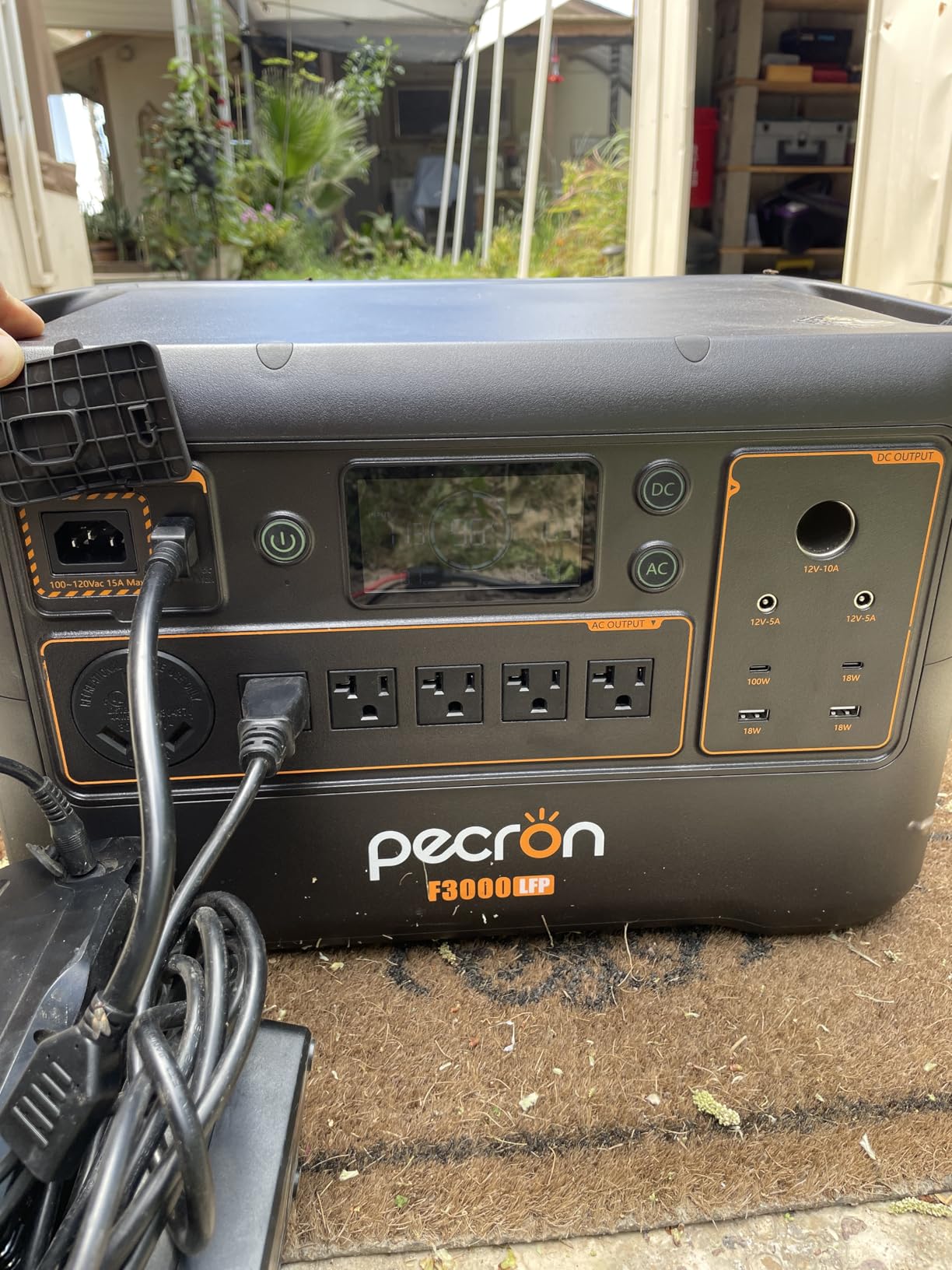
The 4.5 average comes with a 77 percent five-star share across 145 reviews. Buyers highlight the combination of 3600W output, a roughly two-hour AC recharge at 1800W max input, and expansion to 10752Wh, a capability several competing 3 kWh units lack. Thirteen ports cover six AC outlets, two 100W USB-C, two USB-A, a car port and two DC barrel outputs.
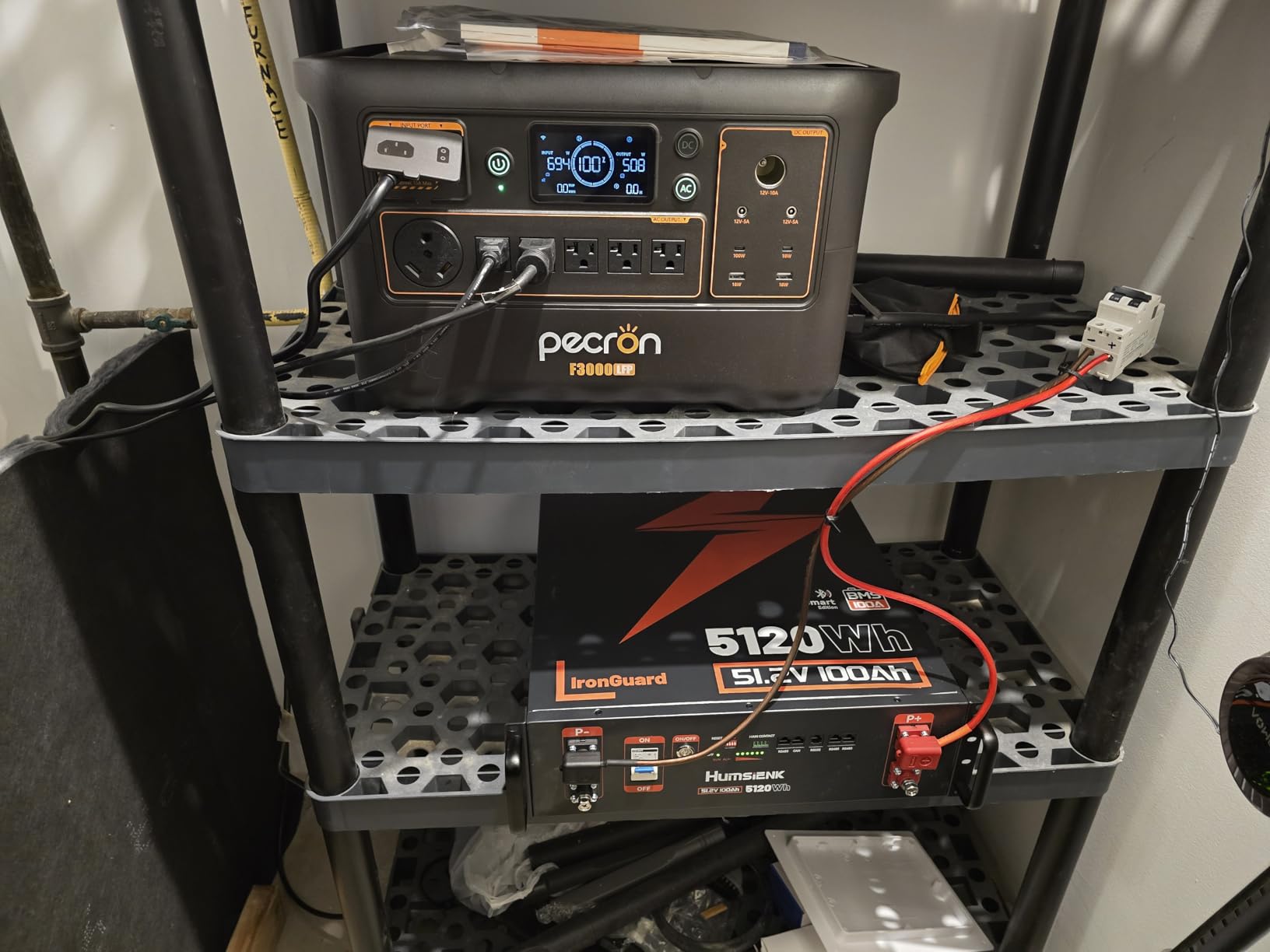
The friction point in feedback is the expansion path: adding EP3800-48V batteries requires an XT120-M cascade cable sold separately, and the 19.3 inch length makes the footprint bulkier than more compact 3 kWh rivals. Warranty is 2+3 years with 24/7 support.
Why it suits solar-first setups
If you have roof space, a large portable array, or a plan to add panels each season, the 1600W solar ceiling is the spec to buy against. UPS mode with 8-20ms switchover also covers CPAP machines and computers, and the pure sine wave output is the right waveform for sensitive electronics.
mygrandrv threads show owners moving to Pecron units for quieter, cleaner boondocking on fifth wheels, which matches the quiet-operation feedback here.
Where it falls short
The expansion ecosystem is not plug and play, since the cascade cable is not included, so factor that into the cost of going past 3 kWh. The unit is also the bulkiest 3 kWh option here at 19.3 inches long, which can be awkward in a narrow garage bay.
If you want a smaller 3 kWh box, the BLUETTI Elite 300 is roughly half the volume.
What Size Solar Generator Do I Need to Run My RV?
Most weekend RVers need about 1 kWh and 1500-2000W. Full-time boondockers running an air conditioner, microwave and Starlink need 2-3 kWh with 2400W or more continuous output. Class A coaches with heavy 120V loads belong in the 3-5 kWh range.
Sizing by RV type breaks down like this:
Weekend trailer, Class B van, small Class C: 500-1070Wh, 1500W continuous. Covers a 12V compressor fridge, lights, fans, phone charging and a laptop overnight.
Travel trailer or Class C with a microwave: 1024-2048Wh, 2000-2400W continuous. Enough for the microwave in short bursts plus a full night of fridge.
Full-time boondocking with a 13500 BTU air conditioner: 2304-3600Wh, 2400-3600W continuous with at least 3000W surge for compressor startup.
Class A or fifth wheel running two air conditioners: 3600Wh and above, 3600W continuous, with expansion or a second unit.
The forum consensus is consistent on one point: a 13500 BTU RV air conditioner needs roughly 3 kWh of capacity, 1.5-2 kW of continuous power and 3-4 kW of surge, and only above about 85F ambient do you lose the air conditioner overnight. That single rule explains most of the capacity math in this roundup.
Runtime by Appliance and Capacity Class
Runtime is simply capacity divided by draw, adjusted for inverter losses. One owner test on the BLUETTI Elite 300 measured 1.05 kWh out of 1.36 kWh in, or 77.2 percent round-trip efficiency, which is a realistic figure for a 500W load. Owner-measured efficiency on the EBL came in above 89 to 90 percent.
Runtime evidence reported by owners for specific products:
Anker SOLIX S2000: a full-size fridge runs about 35 hours, helped by a 6W idle draw.
Jackery HomePower 3000: a refrigerator runs one to two days per owner testing.
Jackery 1000 v2: runs a full-size refrigerator for a full night on 1070Wh.
Jackery Explorer 2000 v2: a manufacturer listing of 72 hours runtime applies to its low-draw rating, not a 2200W load.
pecron F3000LFP: buyers describe powering 13 devices for two to three days of home essentials on a mixed low-draw load.
The pattern to notice: fridge-class and electronics-class loads are where the hours are, and a single air conditioner or microwave session is where the capacity goes quickly. Plan on that split rather than a single blended number.
How to Pair Solar Panels With a Portable Power Station
Match your panel wattage to roughly a quarter to a third of your unit’s capacity in watt-hours, and stay under the unit’s stated solar input ceiling. A 1 kWh unit pairs well with 200-400W of portable panels. A 2 kWh unit wants 400-600W. A 3 kWh unit can absorb 1200-1600W if the manufacturer allows it.
Two units in this roundup accept 1200W of solar, the BLUETTI AC200PL and the pecron F3000LFP. The BLUETTI Elite 300 caps input at 60V and 20A, roughly 1200W, and several owners warn that exceeding the open-circuit voltage limit can damage the MPPT charger. The EcoFlow DELTA Pro accepts roughly 15 amps, which is the tightest ceiling here relative to its 3600Wh battery.
Check the open-circuit voltage of your panel array against the unit’s PV input window before connecting anything through MC4 connectors. A portable foldable panel is simpler and safer than a roof array for a first season.
For a 30A RV integration, a transfer switch is mandatory so you cannot backfeed the campground pedestal or the park’s power post. Neutral bonding has to match your RV’s bonding jumper, and expect GFCI behaviour when a power station feeds an RV panel through an inverter. If you are not confident with RV electrical wiring, have a mobile RV technician set it up.
You do not need a separate MPPT charge controller. Every unit in this roundup has an MPPT solar charge controller built in, and adding an external one in series would conflict with the internal one.
Solar Generator vs Gas Generator for Boondocking
A solar generator wins on quiet operation, zero exhaust, indoor placement and no fuel logistics. A gas generator wins on unlimited runtime and instant refuelling. The honest answer for boondockers is that a battery is the better primary source for steady low-draw loads, and a gas unit still makes sense as a backup for compressor-heavy loads when the weather turns.
That matches irv2 forum consensus, where a 2000W gas generator is widely described as the simplest, most reliable answer for heavy loads, while solar requires a larger and heavier setup. The complaint we hear most from battery buyers is the naming, not the hardware: people expect gas-generator-like unlimited runtime, then are disappointed by finite stored energy.
Once the panels are paid off, a battery costs nothing per kilowatt-hour after that, because it is recharged by sunlight. A gas unit needs fuel delivered, stored and burned, and it cannot run inside an RV because of exhaust.
The practical hybrid most full-time RVers land on is a 2-3 kWh station plus a roof array for the fridge, lights, Starlink, laptop and CPAP, with the gas generator started only when an air conditioner is needed and conditions allow.
Safety, Storage and Battery Care Inside an RV
Never charge a power station in a closed storage bay. Fans draw air in and push warm exhaust out, and forum buyers report noise and heat complaints in RV garage bays. Give the unit clearance on all sides and keep it out of direct sun, especially while charging.
Cycle life is where lithium iron phosphate chemistry earns its place. Ratings in this roundup run from 3000+ cycles on the AC200PL, through 4000 on the Jackery 1000 v2 and the Jackery HomePower 3000, to 6000+ on the BLUETTI Elite 300 and a 10000 cycle claim on the Anker S2000. One full cycle a day at 4000 cycles is roughly a decade of service.
For off-season storage, park the unit around 50 to 60 percent charge and recharge it every few months. Keep it away from standing moisture and dust, which are the two things that actually kill these units over a winter.
Two smaller stations instead of one large one is a reasonable strategy. You get redundancy, each unit is easier to lift, and losing one to a fault does not end the trip.
Frequently Asked Questions
What size solar generator do I need to run my RV?
Weekend trailers and small Class C motorhomes need about 1 kWh with 1500-2000W continuous output. Full-time boondockers running an air conditioner, microwave and Starlink need 2-3 kWh with at least 2400W continuous and 3000W or more surge. Class A coaches with heavy loads belong in the 3-5 kWh range.
How long will a 2000 watt solar generator run a refrigerator?
It depends on capacity rather than inverter wattage. A 1070Wh unit runs a full-size refrigerator for a full night, a 2010Wh pack is reported at about 35 hours with a low idle draw, and a 3072Wh pack is reported at one to two days. Inverter losses of roughly 20 to 30 percent apply across the range.
What is the best solar powered generator for an RV?
For most full-time boondockers the BLUETTI AC200PL is the strongest overall pick, with 2304Wh, a 2400W inverter, a 48V RV port, a TT30 outlet and expansion to 8448Wh. For weekend rigs on a weight budget, the Anker SOLIX C1000 Gen 2 covers the same loads at 11.3 kg.
What is the best portable power station for RV camping?
The Jackery Solar Generator 1000 v2 bundle is the most direct RV camping answer because it ships with a 200W SolarSaga panel. At 23.8 lb with 1070Wh and three pure sine wave outlets, it covers a fridge, lights and a laptop without a separate panel purchase.
Can a solar generator run an RV air conditioner?
Yes, with the right sizing. A 13500 BTU air conditioner needs roughly 3 kWh of capacity, 1.5-2 kW of continuous power and 3-4 kW of surge. Keep ambient temperature below about 85F or you should expect to lose it overnight. The Jackery HomePower 3000 and EcoFlow DELTA Pro both clear that bar.
Who is better, EcoFlow or Bluetti?
EcoFlow leads on charging speed, with the DELTA 3 Max reaching 80 percent in about 1.13 hours, and on solar input headroom through larger arrays. Bluetti leads on RV-native ports, the smallest 3 kWh footprint in the Elite 300, and longer published cycle life figures. For an RV specifically, Bluetti’s 48V and TT30 ports are the deciding factor.
Is Jackery or Anker better?
Anker SOLIX wins on recharge speed, with a 49 minute full cycle on the C1000 Gen 2, a detailed app with scheduling, and a longer published cycle life claim on the S2000. Jackery wins on bundled panels, since the 1000 v2, Explorer 2000 v2 and HomePower 3000 each ship with 200W panels in the box.
Do I need a separate MPPT solar charge controller?
No. Every power station in this roundup has an MPPT solar charge controller built in, and adding a second one in series would conflict with the internal charger. What you do need to check is the panel’s open-circuit voltage against the unit’s PV input window before connecting through MC4 connectors.
Can I charge an RV power station while driving?
Yes, every unit in this roundup accepts car charging from a 12V socket. Some also accept generator input, and the BLUETTI AC200PL adds a 48V RV port for charging RV house batteries directly. Route the cable so it cannot be pinched by a door or a slide, and never charge in a closed cargo bay.
Is LiFePO4 worth it for van life?
For boondocking yes, because every unit here uses LiFePO4 cells rated between 3000 and 10000 cycles. At one full cycle a day, a 4000 cycle battery is roughly a decade of service, and the chemistry tolerates the partial charges and heat of RV use far better than the older lithium polymer packs still listed in some sub-1000Wh units.
Which Solar Generator Should You Buy in 2026?
If you take one recommendation from this roundup, make it the BLUETTI AC200PL. Its 2304Wh, 2400W inverter, 48V RV port, TT30 outlet and 8448Wh expansion ceiling cover more RV configurations than anything else here, and its 4.6 rating comes from the largest review base in the group.
Buy the Anker SOLIX C1000 Gen 2 instead if you move it alone every day. Buy the pecron F3000LFP if your limiting factor is how fast you can refill from solar rather than how much it holds. Buy the Jackery 1000 v2 if you want panels in the box today.
Whichever one you pick, size the solar side to match the battery, keep it ventilated, and plan your loads around the continuous rating rather than the surge number. That single habit removes most of the disappointment we see in the forums.