
The best portable power stations for tailgating are the Jackery Explorer 1000 v2 (1070Wh, 1500W continuous, 23.8 lbs), the Anker SOLIX C1000 Gen 2 (1024Wh, 2000W continuous, about 25 lbs) and the BLUETTI Elite 100 V2 (1024Wh, 1800W continuous, 25 lbs) – all three rated 4.6 stars or better across more than 1600 owner reviews each.
A parking-lot tailgate has exactly three power problems: a TV and soundbar want about 150W of clean AC, a mini-fridge cycles on and off all afternoon, and a crockpot will eat a small station alive in an hour. A battery station solves all three without fuel, fumes or a noise complaint, which is why so many groups have moved off gas generators entirely.
I compared ten portable power stations for tailgating against a real game-day load profile: 55-inch TV, soundbar, LED string lights, a 12V cooler, phone charging and one warming dish. The short version is that anything under 300Wh is a phone-and-lights box, the 500Wh to 600Wh band is the sweet spot for a couple of people, and 1000Wh-plus is where a group with a crockpot becomes realistic.
If you also use power on assignment, our guide to portable power stations for photographers covers the same chemistry in a different context.
Table of Contents
Top 3 Picks for Portable Power Stations for Tailgating in 2026

Jackery Explorer 1000 v2
- 1070Wh LiFePO4 capacity
- 1500W AC output with 3000W surge
- 0-100% in 1 hour in app emergency mode
- 23.8 lbs
Anker SOLIX C1000 Gen 2
- 1024Wh LiFePO4
- 2000W continuous and 3000W peak
- 49-minute full recharge
- 10 ports

BLUETTI AC180
- 1152Wh LiFePO4
- 1800W continuous and 2700W peak
- 0-80% in 45 minutes
- 8 outlets with wireless pad
Our top three all deliver over 1000Wh, which is the threshold where a tailgate stops being a phone-charging exercise. The Jackery wins on the strength of its rating and review volume, the Anker wins on raw wattage, and the BLUETTI wins on how fast it refills the night before.
10 Best Portable Power Stations for Tailgating (October 2026)
| Product | Specifications | Action |
|---|---|---|
| Jackery Explorer 1000 v2 |
|
Check Latest Price |
| Anker SOLIX C1000 Gen 2 |
|
Check Latest Price |
| BLUETTI AC180 |
|
Check Latest Price |
 BLUETTI Elite 100 V2 BLUETTI Elite 100 V2 |
|
Check Latest Price |
 GRECELL 500W GRECELL 500W |
|
Check Latest Price |
 GRECELL 330W GRECELL 330W |
|
Check Latest Price |
 Jackery Explorer 300 Jackery Explorer 300 |
|
Check Latest Price |
 Anker SOLIX C300 DC Anker SOLIX C300 DC |
|
Check Latest Price |
 ALLWEI 300W ALLWEI 300W |
|
Check Latest Price |
 ALLWEI 500W ALLWEI 500W |
|
Check Latest Price |
1. Jackery Explorer 1000 v2 – Best Overall for Tailgating
Jackery Explorer 1000 v2 Portable Power Station,1070Wh,1500W
1070Wh LiFePO4
1500W continuous, 3000W surge
0-100% in 1 hour
23.8 lbs
Pros
- 1070Wh and 1500W handles a cooler plus cooking gear
- Full charge in about an hour with emergency mode on
- LiFePO4 holds over 70% after 4000 cycles
- 7 outlets including 2 USB-C and 3 pure sine wave AC
- 30dB quiet charging mode
Cons
- 23.8 lbs is a two-person or cart carry
- One-hour charge must be toggled in the app each time
- Solar input only works with Jackery panels
This is the unit I keep coming back to, because 1070Wh and 1500W of continuous output is the rare combination that covers a TV, a cooler and a warming dish at the same time. At 4.7 stars across 3623 reviews it also has the strongest rating-to-review-volume pairing in this group.
One r/tailgating regular describes the classic real-world setup as a Jackery 1000 v2 for the TV, Starlink and phones, with Sterno handling hot items because crockpots draw too much to combine with everything else. That is exactly the gap this unit closes: at 1500W continuous you can run the crockpot and the media stack simultaneously, which the sub-600Wh models cannot.
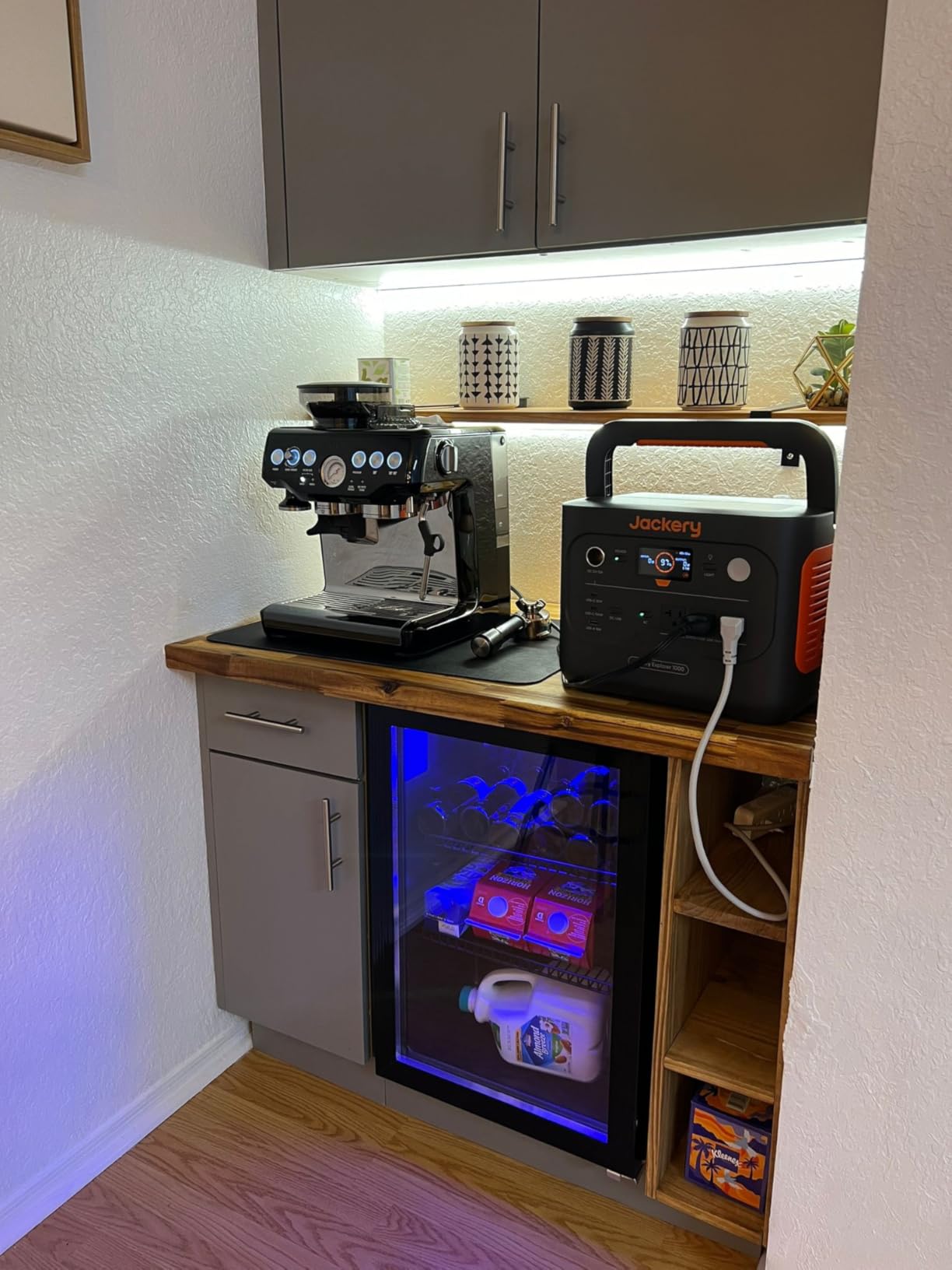
The recharge story is the part that catches people out. Owners report a full charge in about an hour, but only after enabling emergency charging inside the Jackery app. Without that toggle the same unit takes roughly 1.7 hours, which still works but eats your Friday night.
Battery chemistry is the quiet advantage here. The LiFePO4 pack is rated to hold over 70% of capacity after 4000 cycles, which for a once-a-week tailgate habit is effectively a decade of service before you start losing usable runtime.
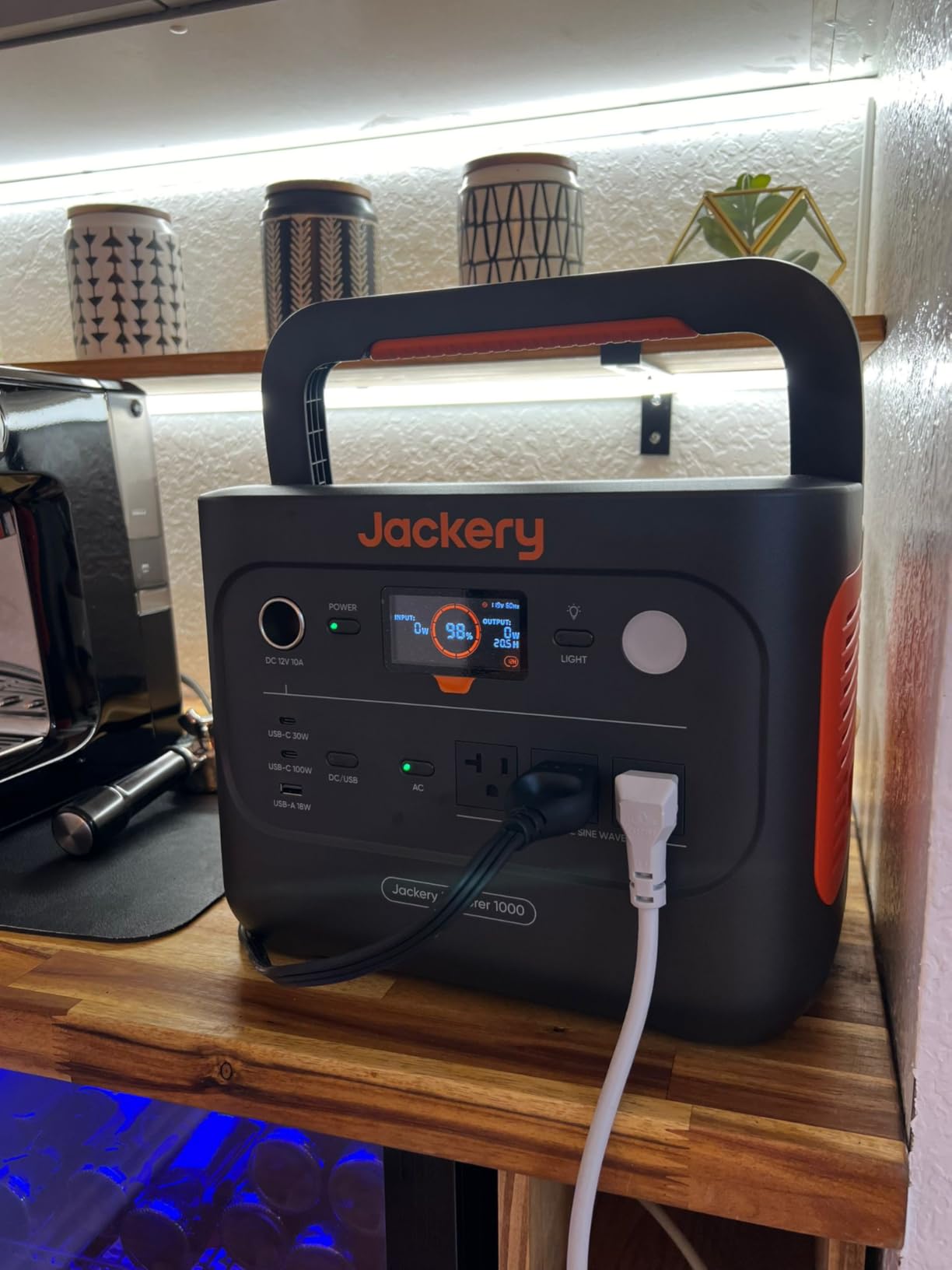
What game-day setup this handles best
A 55-inch TV and soundbar draw about 150W combined, so this station delivers roughly six hours of media at that rate once inverter losses are subtracted. Add a 12V cooler cycling at 40W to 60W and a phone charging here and there, and a full pre-game plus a couple of hours afterward sits comfortably inside one charge.
The 3000W surge rating is the number most tailgaters should care about quietly, because it is what lets a mini-fridge compressor kick on without tripping the inverter. A station with 500W continuous and only 1000W surge is fine until the compressor tries to restart mid-quarter.
Where it falls short
Twenty-three pounds is a real carry across an asphalt lot. If you are solo and the spot is more than about fifty feet from the vehicle, the lighter models below are a better answer than more capacity you refuse to move twice.
The app dependency is worth knowing about. Fast charging, quiet mode and charge scheduling all live in the Jackery app, so if you plan to charge in a hotel room or a friend’s driveway without a phone, you get the slower default behaviour.
2. Anker SOLIX C1000 Gen 2 – Best for Heavy Appliances
Anker SOLIX C1000 Gen 2 Portable Power Station
1024Wh LiFePO4
2000W continuous, 3000W peak
49-minute full recharge
about 25 lbs
Pros
- Highest continuous output in the group at 2000W
- 49-minute full recharge at 1600W input
- 10 ports can run 10 devices at once
- 10ms UPS switchover verified through a 5-hour outage
- 4-year-plus cell life to 80% capacity
Cons
- Gen 2 removed the expandable battery option
- Measurable waveform distortion on microwave loads
- No storage case included
- About 25 lbs limits comfortable carry distance
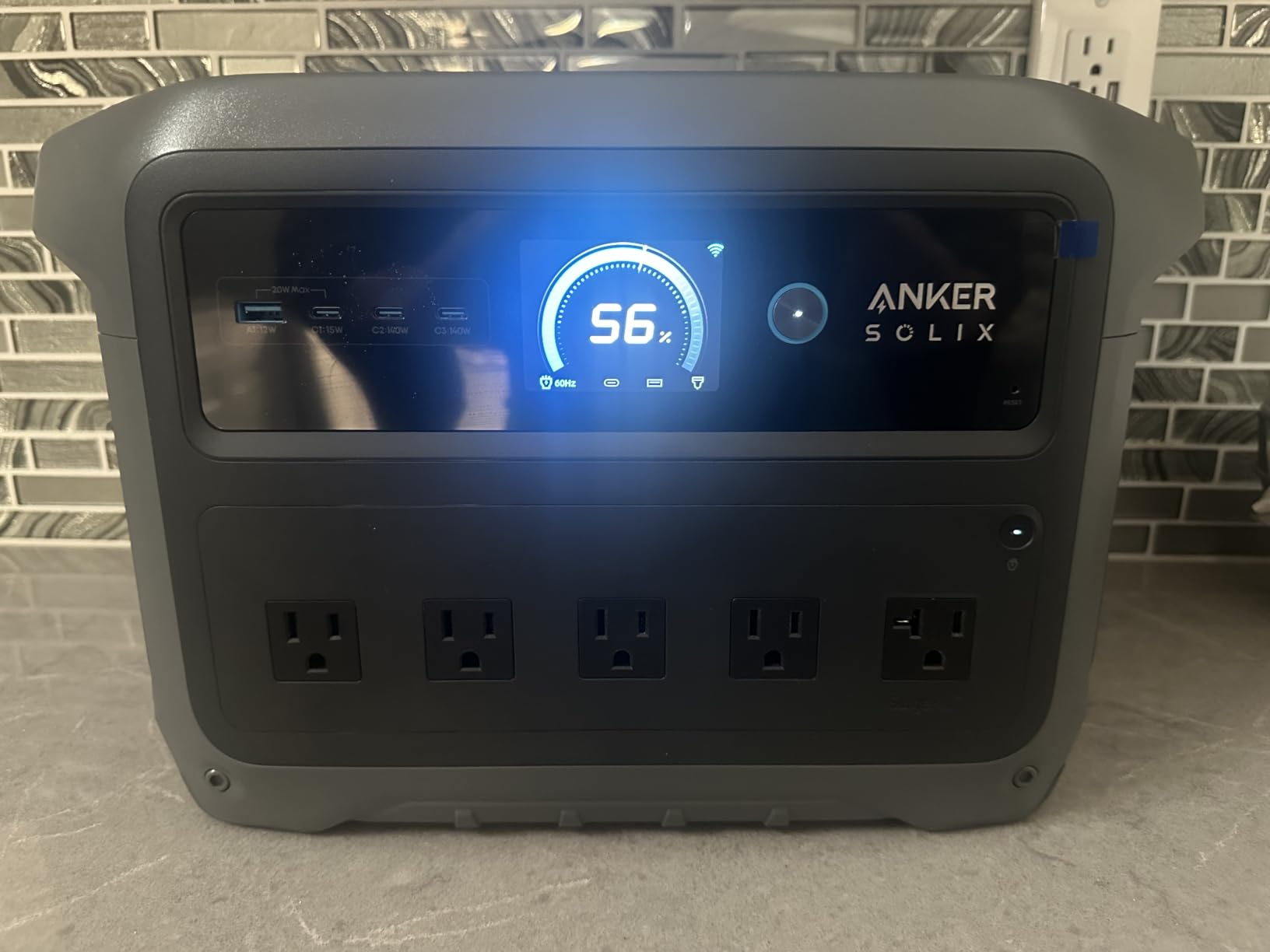
If your setup includes a blender, an electric griddle or two warming dishes running at once, wattage is the only spec that matters, and this is the highest-output station we reviewed at 2000W continuous and 3000W peak. That headroom is what separates a station that survives a cooking-heavy tailgate from one that resets when you plug in the second pot.
Recharge speed is the other headline. Owners report a full wall recharge in about 49 minutes using the 1600W HyperFlash input, and 1.8 hours from a 600W solar panel. For a Saturday afternoon game, that means a quick top-up during lunch rather than an overnight plug-in.
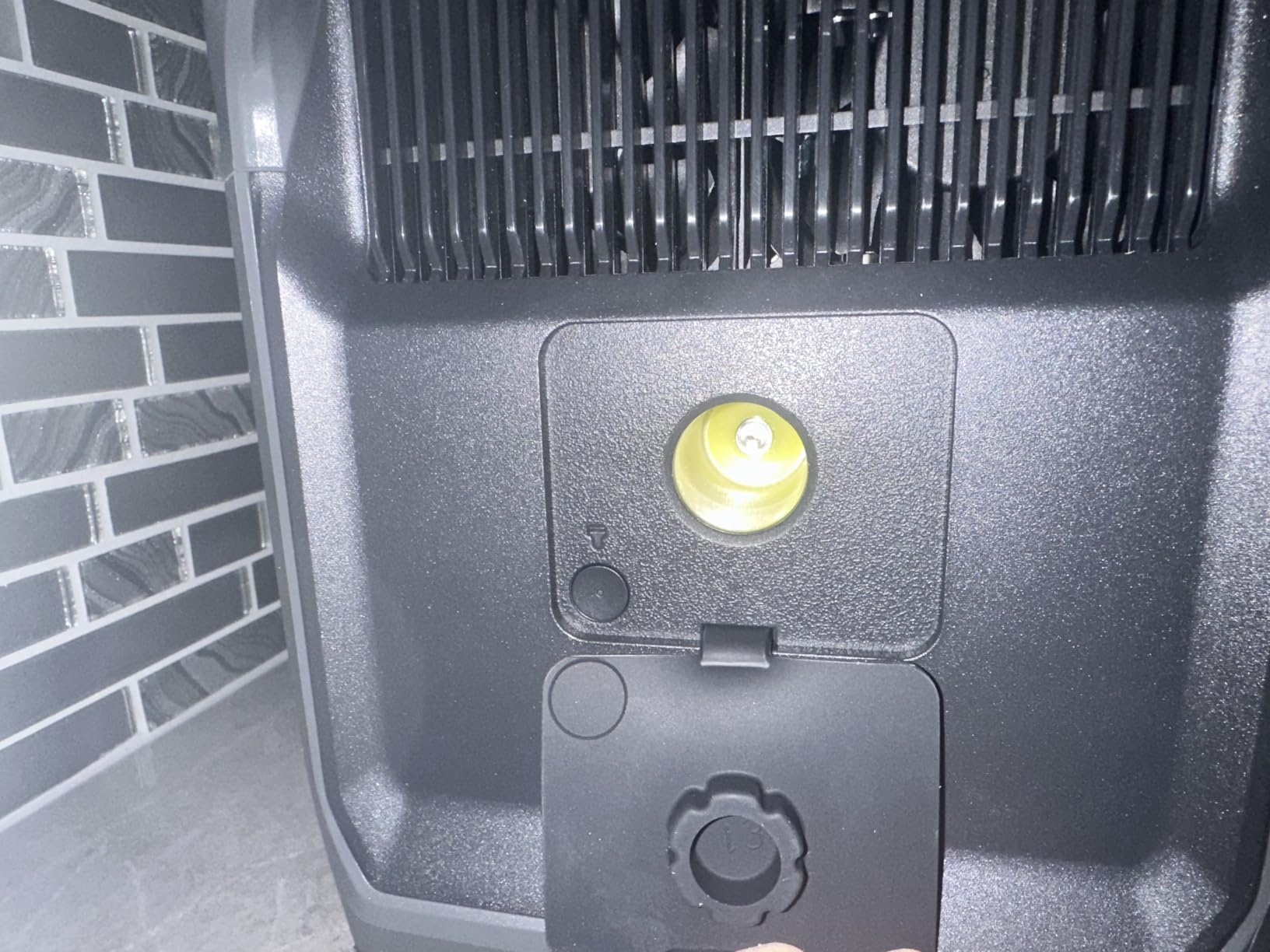
One owner documented a 10ms UPS switchover keeping a fridge and their networking gear alive through a five-hour outage, which tells you something about the inverter quality. The output is regulated cleanly enough for sensitive electronics, not just a TV and a fan.
Ten ports is generous for a tailgate. You can run the TV, a soundbar, LED lights, several phone charges and a cooler from one box without daisy-chaining a power strip, which also keeps the setup tidier and reduces cable runs across the tailgate surface.
What game-day setup this handles best
Media plus cooking. At 2000W you can run a 150W TV stack, a 60W cooler and a 300W crockpot with roughly 1500W of headroom left for a blender or a griddle. At 1024Wh that is not an all-day load, but it is a comfortable three to four hours, which covers most pre-game tailgates.
The 3,000W peak rating also gives the best margin in this group for compressor startup on an electric cooler, the single most common cause of an inverter tripping mid-tailgate.
Where it falls short
Generation two dropped the expandable battery feature that the first generation offered. If you are planning to grow beyond 1024Wh later, this is the unit that closes that door, and the 1152Wh BLUETTI AC180 below is the alternative if expansion or raw capacity matters more than peak wattage.
A technically-minded reviewer flagged measurable harmonic distortion of roughly 15% to 20% when powering a microwave. It did not prevent operation, but it is worth knowing if you plan to run a microwave rather than a crockpot.
3. BLUETTI AC180 – Best for Fast Recharge Before Kickoff
BLUETTI Portable Power Station AC180, 1152Wh LiFePO4 Battery Backup w/ 2 1800W (2700W peak) AC Outlets, 0-80% in 45Min, Solar Generator for Camping, Off-grid, Power Outage
1152Wh LiFePO4
1800W continuous, 2700W peak
0-80% in 45 minutes
37.4 lbs
Pros
- 45-minute 0-80% recharge at 1440W AC input
- 1152Wh is the largest capacity here
- 8 outlets including a top wireless charging pad
- 20ms UPS switchover for routers and laptops
- 500W solar input
- 5-year warranty
Cons
- 37.4 lbs is load-once-and-drive weight
- 15-20W idle draw reduces real usable capacity
- Firmware update needed for accurate runtime readings
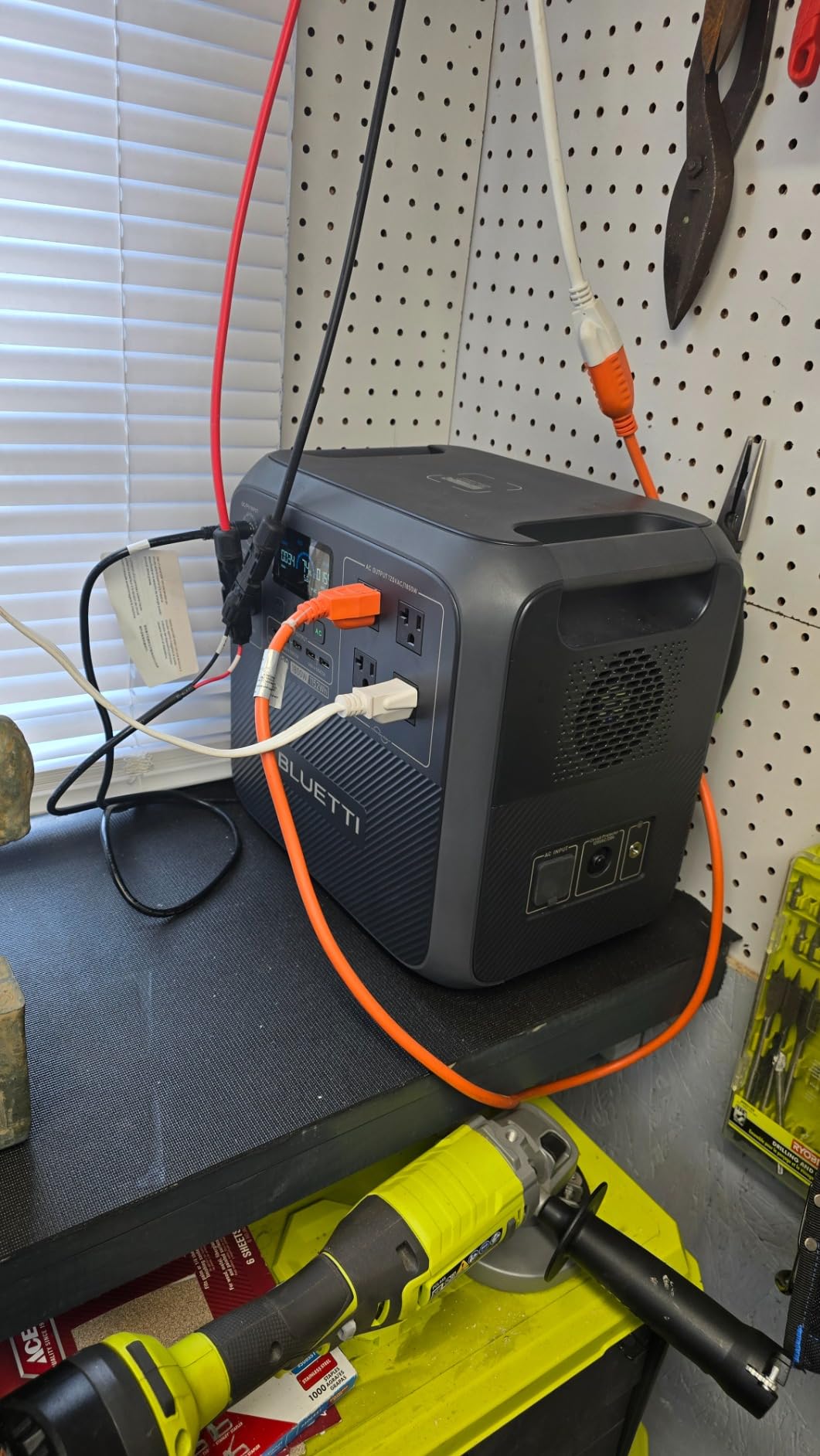
The AC180 is the one to buy if the charging window is the constraint, because 0% to 80% in about 45 minutes at 1444W AC input is the fastest refill in this group. Owners also report that BLUETTI customer support resolved a firmware and calibration issue, which is a small thing that matters when a device is a few miles from a stadium.
At 1152Wh it holds the largest battery here, and 1800W continuous with 2700W peak covers a full media plus cooking load. Eight outlets, including a wireless charging pad on the top panel, mean a lot can be plugged in at once without an extension strip.
The 20ms UPS switchover is the feature that justifies this purchase beyond game day. A router, a laptop and a TV will not blink during a momentary outage, so the same box that runs your tailgate can sit in a house or a garage as a backup unit, which is the argument r/Generator users make for justifying a second battery in the garage.
Real-world caveats are worth stating plainly. Idle self-consumption of 15W to 20W, plus the roughly 10% reserve manufacturers keep, means usable capacity is meaningfully below the headline 1152Wh. Plan around about 900Wh of real output, not 1152.
What game-day setup this handles best
Large-group lots with multiple tails and a shared media wall. The 8 ports mean three or four groups can hang off one station, and 1800W of continuous output covers several small loads plus one heating appliance without hunting for a second box.
It is also the natural choice for late-season games, because a 1152Wh pack losing 20% of capacity on a cold morning still leaves enough to run lights, a TV and a cooler for a full afternoon.
Where it falls short
Thirty-seven pounds is the heaviest here by a wide margin. This is a load-it-once-and-set-up-it product, not a carry-it-to-your-spot product, and users consistently describe it that way.
Firmware updates are needed out of the box for accurate runtime readings, and a few owners found that unexpected. Charge it, update it, and reset the runtime estimate the night before rather than trusting the display straight out of the box.
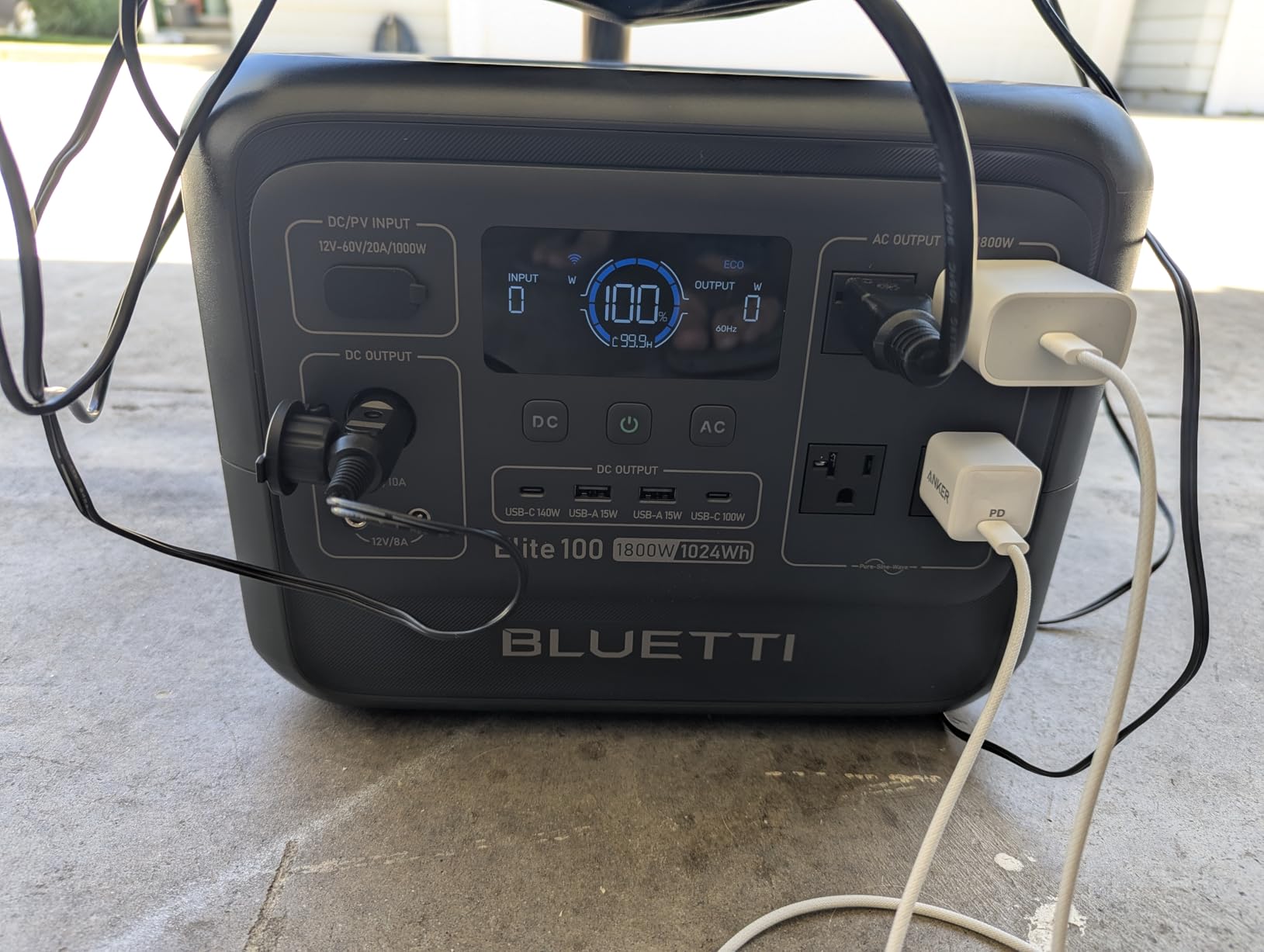
4. BLUETTI Elite 100 V2 – Best for a Compact 1kWh Setup
BLUETTI Elite 100 V2 Portable Power Station for Camping 1024Wh 1800W
1024Wh LiFePO4
1800W continuous, 3600W surge
0-80% in about 45 minutes
25 lbs in 17L
Pros
- 1024Wh in a 17L footprint
- 35% smaller than similar models
- 1800W continuous with Power Lifting for high-draw loads
- 0-80% in about 45 minutes at 1200W input
- 30dB silent mode and 10ms UPS backup
Cons
- 25 lbs still needs planning on a solo carry
- 12V car charging is slow without the optional charger
- Car outlet runs warm above about 12W
- Some settings still require the app
This is the one we recommend when capacity and carry weight have to coexist. 1024Wh in a 17L body at 25 pounds is denser than anything else here, and owners regularly report running a 12V fridge for close to a full day on a charge.
Output is 1800W continuous with a 3600W surge rating, and Power Lifting mode lets it handle resistive heating loads that would normally trip a lower-rated inverter. That is what makes a small space heater or a warming tray possible on a unit this size.
The 30dB silent mode matters more than it sounds. A cooling fan that cycles up during a drive is audible over a TV in a quiet lot, and this is one of the quieter boxes we looked at, which is a real quality-of-life difference for a four-hour setup.
Charging is 0% to 80% in roughly 45 minutes using the 1200W TurboBoost AC input, with solar and car inputs as backup. The 60-month warranty is the longest alongside the AC180, which is a reasonable proxy for manufacturer confidence.
What game-day setup this handles best
Two to four people with a TV, a cooler and lights, in a lot where trunk space or tailgate surface area is tight. At 1024Wh you get about 870Wh of real output after inverter losses, which is roughly 5.8 hours of a 150W media load or close to 3 hours with a crockpot running alongside it.
It is also the easiest 1kWh unit to move between two vehicles, which matters if you split a group between a lot and a nearby second row.
Where it falls short
Twenty-five pounds is lighter than most 1kWh boxes but still a two-hand carry with a real plan. Solo tailgaters over about a hundred feet from the vehicle should look at the 300W options instead.
12V car charging is slow through the standard socket unless you buy the optional charger, so topping up on the drive to the game is not the fast option here. Owners also report the car outlet running warm above about 12W of draw.
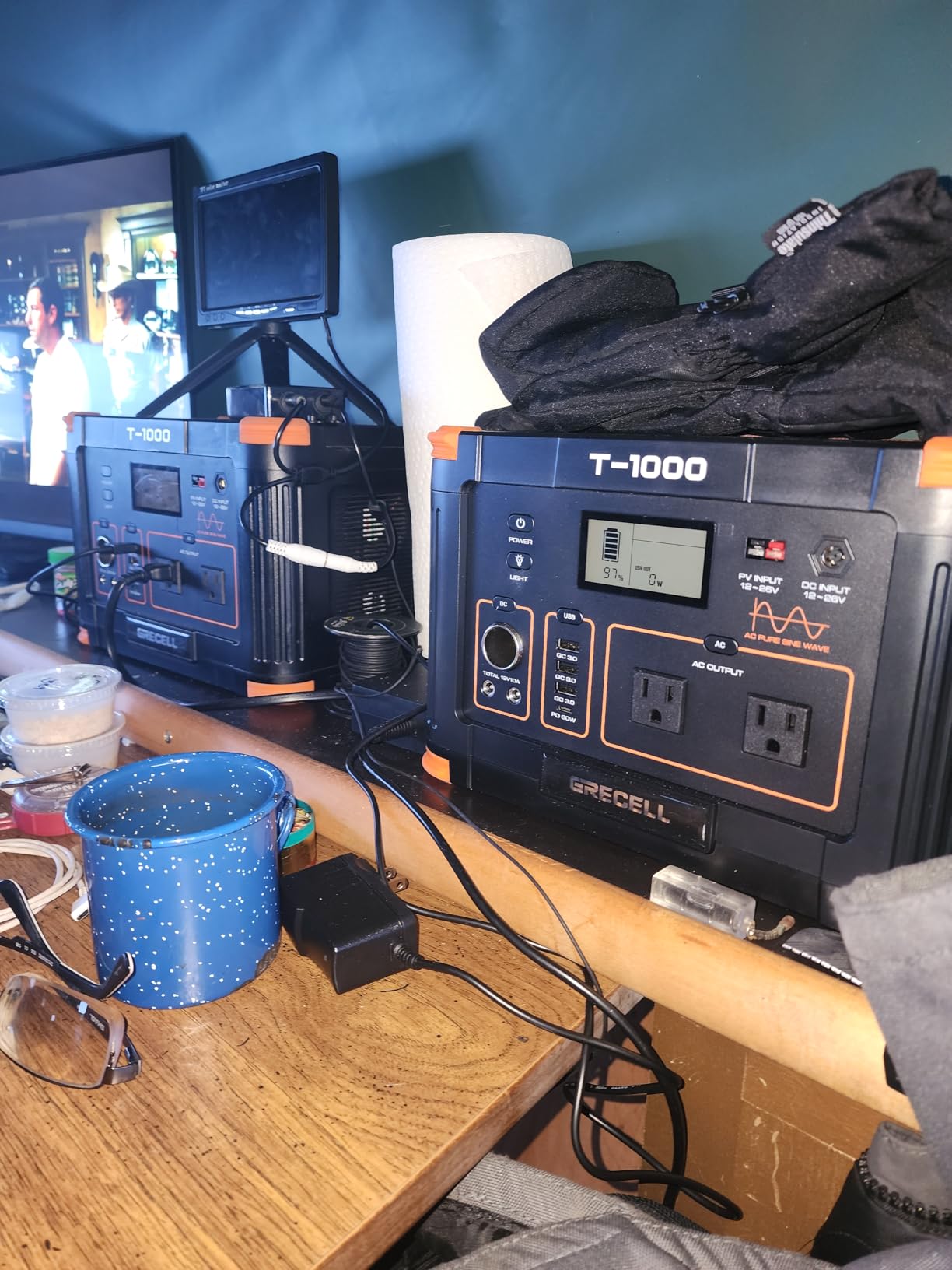
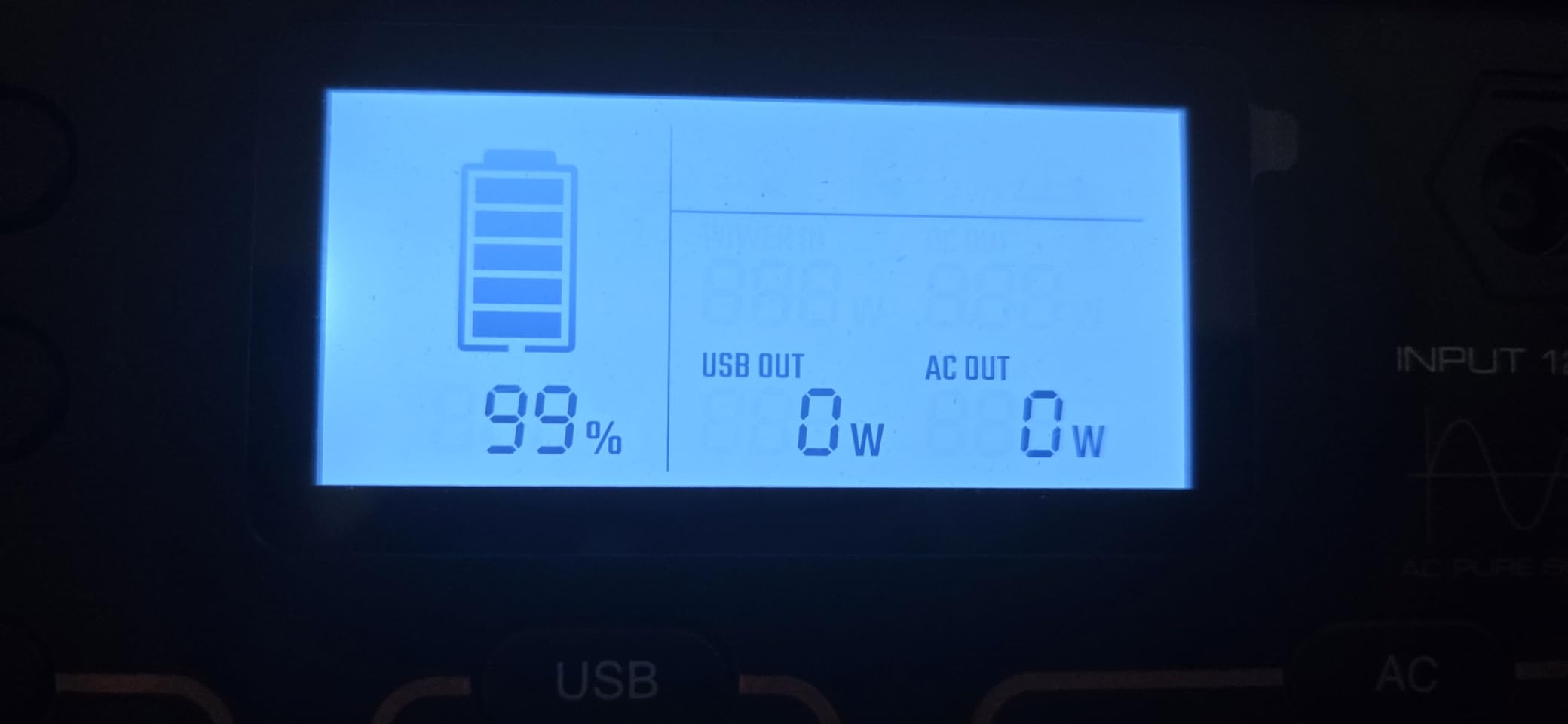
5. GRECELL 500W – Best Value 500W Unit
Grecell Portable Power Station 500W(Peak 1000W) 519Wh Outdoor Solar Generator Backup Battery Pack with 2 110V AC Outlets,10-Port Powerhouse for RV/Van Camping Fishing Climbing Road Trip Home Emergency
519Wh
500W continuous, 1000W peak
2 pure sine wave AC outlets
14.1 lbs
Pros
- 519Wh is 19% higher than comparable 500W models
- Two pure sine wave AC outlets at 500W each
- 10 outputs including a 10W wireless charging pad
- Cable storage bag included
- Works with 100W and 200W solar panels
Cons
- Lithium-ion rather than LiFePO4 cells
- 14.1 lbs is heavy for a 500W unit
- AC output must be switched off when idle
- 4.3-star average with the highest 1-star share here
If your tailgate is a TV, a soundbar, a cooler and lights with no cooking, this is the most capacity per dollar in the group. 519Wh with two pure sine wave AC outlets at 500W each means both the media stack and the cooler can run at the same time, which is the actual requirement for most groups.
Ten outputs cover more than most tailgates need: two AC outlets, three USB-A with QC3.0, a 60W USB-C PD port, two DC barrel outputs, a 12V car port and a wireless charging pad. A cable storage bag in the box is a small touch that matters when you are unpacking in the dark.
The honest caveat is the chemistry. This unit uses lithium-ion cells rather than LiFePO4, so cycle life is lower than the newer models in this roundup. For an occasional tailgater who charges it fully only a handful of times a year, that is a reasonable trade; for someone planning a multi-season purchase, a LiFePO4 station is the better ownership decision.
Recharging takes 6 to 7 hours by wall outlet, 7 to 8 hours by car and 6 to 9 hours from a 100W panel. That is slower than the fast-charging units, so this one wants to be plugged in the night before rather than topped up on game day.
What game-day setup this handles best
Media and cooling, no heat. Two pure sine wave outlets let you run a TV and a mini-fridge simultaneously, and about 440Wh of usable output after losses gives roughly 2.9 hours at a 150W media load or about 90 minutes with a cooler and TV together.
It is also a good first station for someone who wants to test whether tailgating with battery power is a habit before spending on a 1kWh box.
Where it falls short
Older lithium-ion chemistry is the main one. If you keep the unit in a hot car or expect a decade of use, the LiFePO4 options hold up better.
The AC output has to be switched off manually when idle or it will drain the battery with nothing plugged in. It is a small habit to build, and one of the more common complaints owners raise after a season of use.
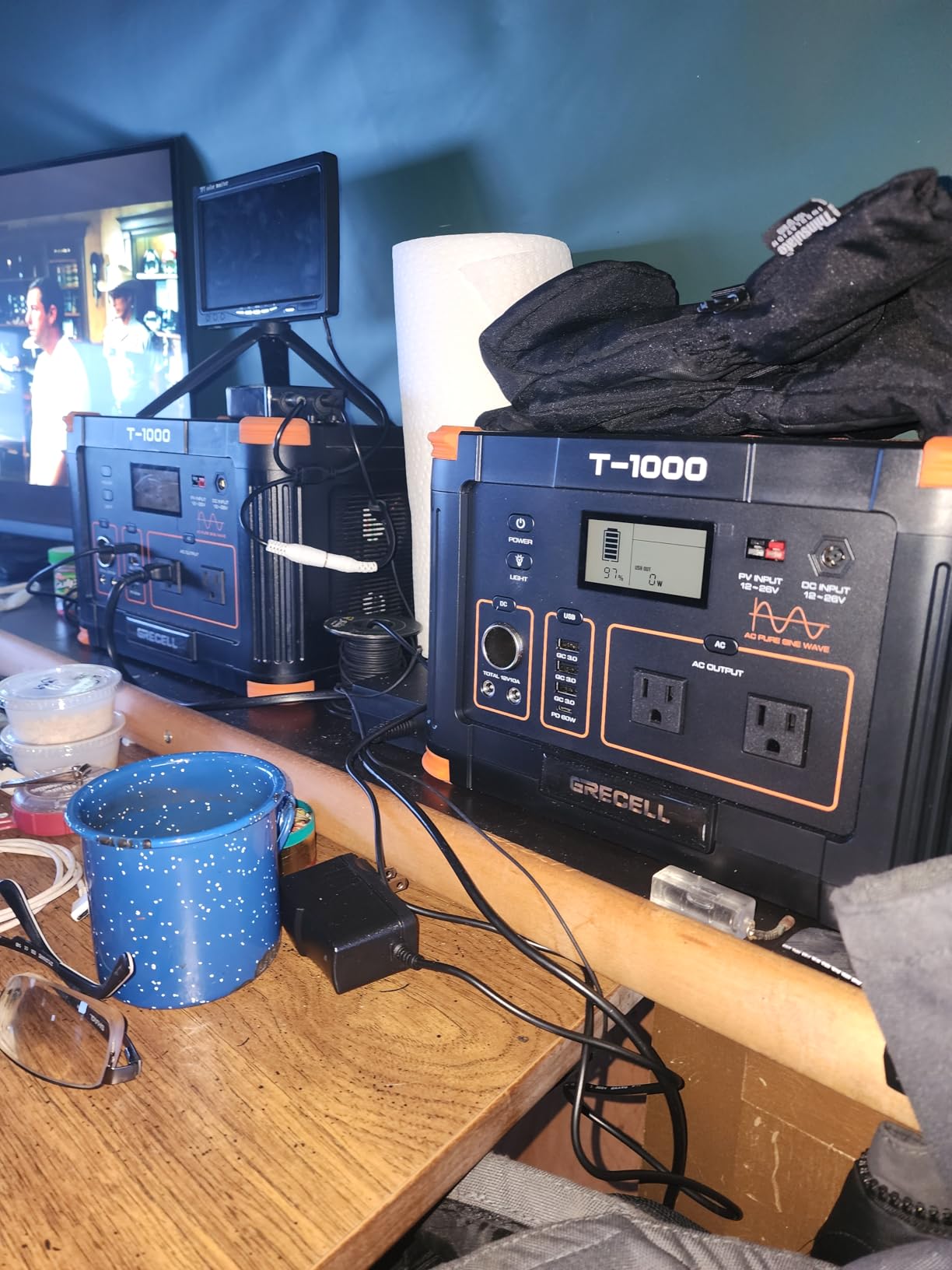
6. GRECELL 330W – Most Versatile for Media-Only Tailgates
Portable Power Station 330W, GRECELL 230.88Wh Solar Generator
231Wh
330W continuous, 600W surge
6 ports with 60W USB-C PD
7.3 lbs
Pros
- Six output ports for phones
- laptops
- lights and fans
- 60W USB-C PD charges modern devices quickly
- 7.3 lbs and compact enough to load easily
- Three recharge paths with built-in MPPT
- Works with CPAP machines and projectors
Cons
- Smallest capacity here at 231Wh
- 330W output limits it to light loads
- 4.3-star average with a higher share of 1-star ratings
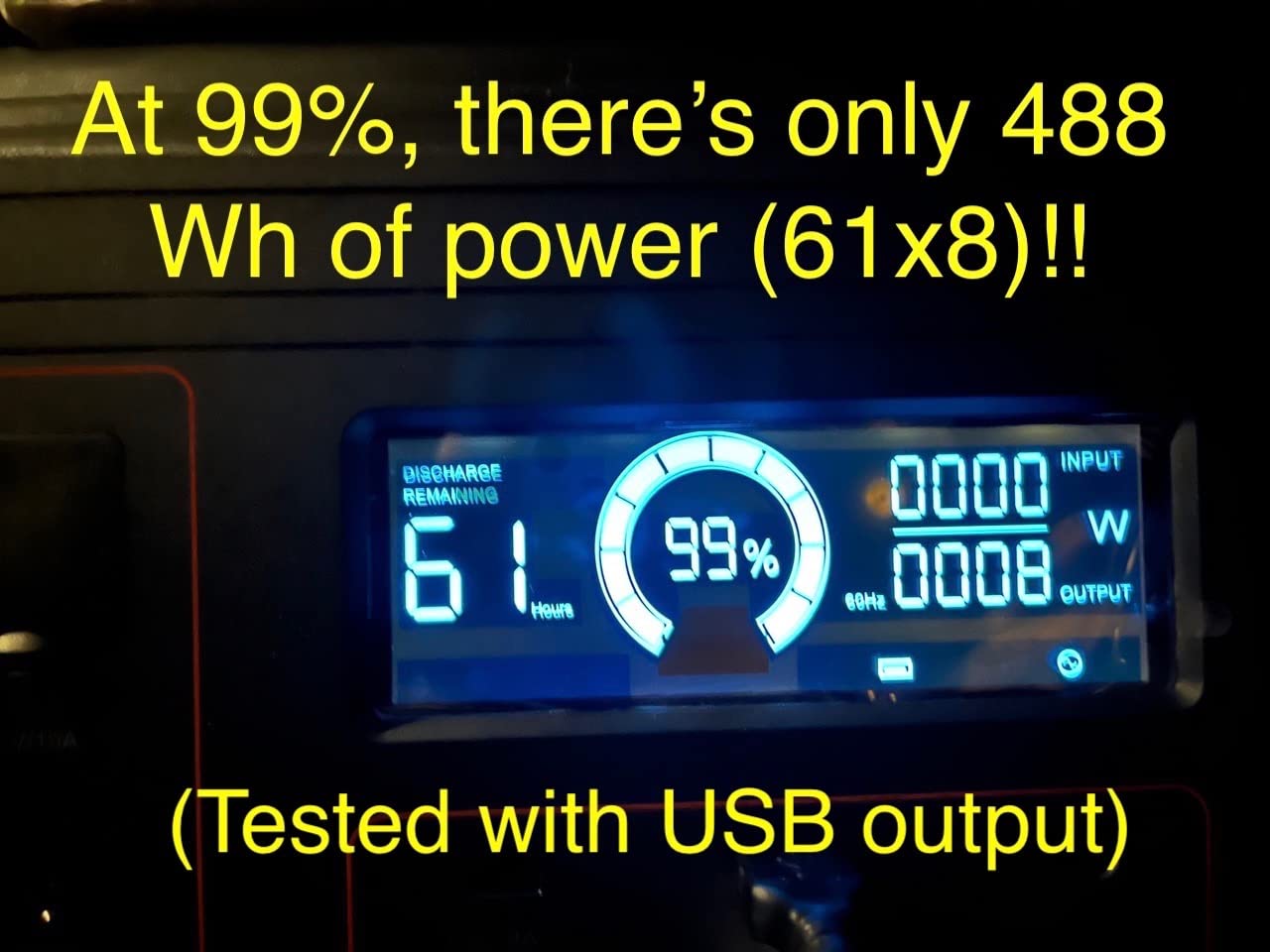
This is the budget tier done properly: a genuine six-port unit with a 60W USB-C PD port rather than a single AC outlet. If your tailgate is a TV, a projector, some LED string lights and a lot of phone charging, it does the job at a fraction of the cost of anything else here.
At 7.3 pounds it is one of the easiest to carry from the vehicle, which removes the single biggest objection people have to carrying a battery station across a parking lot. You can do it with one hand and a cooler in the other.
Recharging works three ways: AC wall, solar panel through the built-in MPPT controller, or the 12V car outlet. The 12V path is the one tailgaters use most, since you can top it up on the drive over without a generator anywhere in sight.
Dual cooling fans manage temperature with little audible noise, which reviewers consistently note. In a quiet lot with a TV running, a loud inverter fan is a genuine annoyance and this one stays understated.
What game-day setup this handles best
Two to three people with no cooler and no cooking. A projector, a small speaker, string lights and four phone charges is a realistic load. At 231Wh and about 196Wh usable after losses, expect roughly 80 minutes of a 150W media setup, or a much longer afternoon at a 40W lighting-only load.
It also works well as a secondary charging station sitting next to a bigger box, keeping phones off the main inverter.
Where it falls short
231Wh is the smallest capacity here, and it shows the moment you add a cooler or a crockpot. Know going in that this is a lights-and-screens box, not a kitchen box.
Its 4.3-star average carries a higher share of 1-star ratings than the larger models, which tends to reflect the capacity ceiling rather than build quality. The two-year warranty is also shorter than the five-year terms on the BLUETTI units.
7. Jackery Explorer 300 – Best for Solo Tailgaters
Jackery Explorer 300 Portable Power Station,292Wh
292Wh
300W continuous, 600W surge
100W USB-C PD
7.1 lbs
Pros
- Only 7.1 lbs with an integrated handle for one-hand carry
- Runs 6 devices across 2 AC
- USB-C
- USB-A and car port
- LiFePO4 rated for 4000+ cycles
- Pure sine wave output suits sensitive electronics
- Most-reviewed station in this group
Cons
- 292Wh cannot run a cooler or several appliances
- Only two AC outlets
- Solar panel sold separately
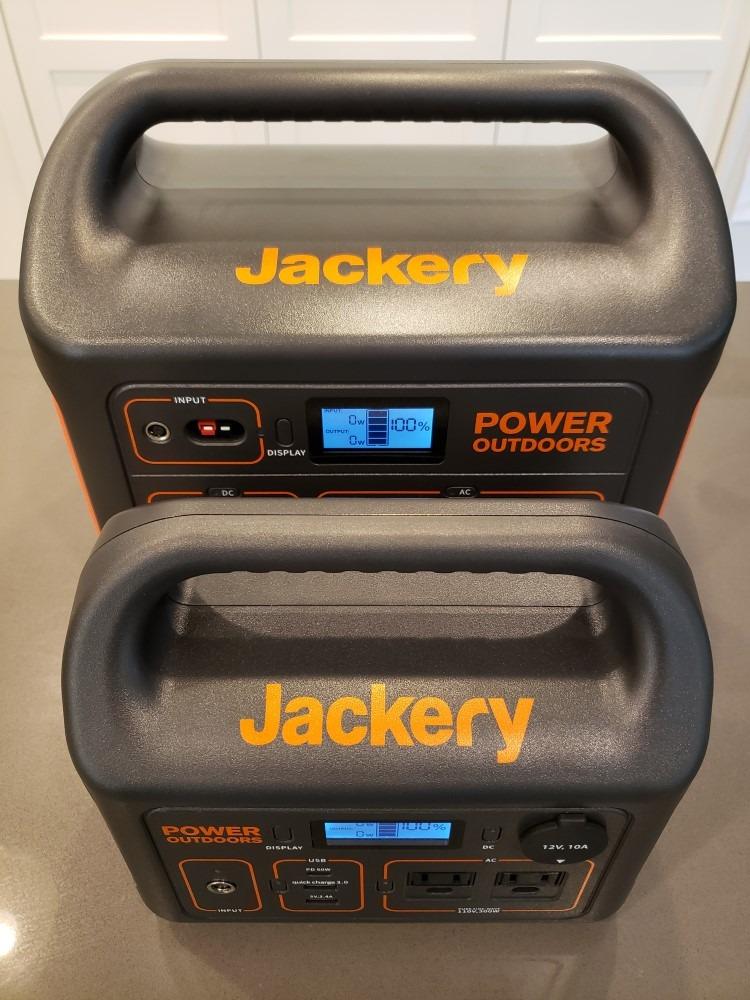
With 11273 reviews at 4.6 stars, this is the most thoroughly owner-tested station here, and the weight is the headline at about 7 pounds with an integrated handle. It is the easiest recommendation to make for a person tailgating alone who does not want to wrestle anything out of the trunk twice.
Six devices at once is genuinely useful: two AC outlets, 100W USB-C PD, two USB-A ports and a 120W car port. The car port is the underrated one, because an electric cooler plugs straight in without an inverter.
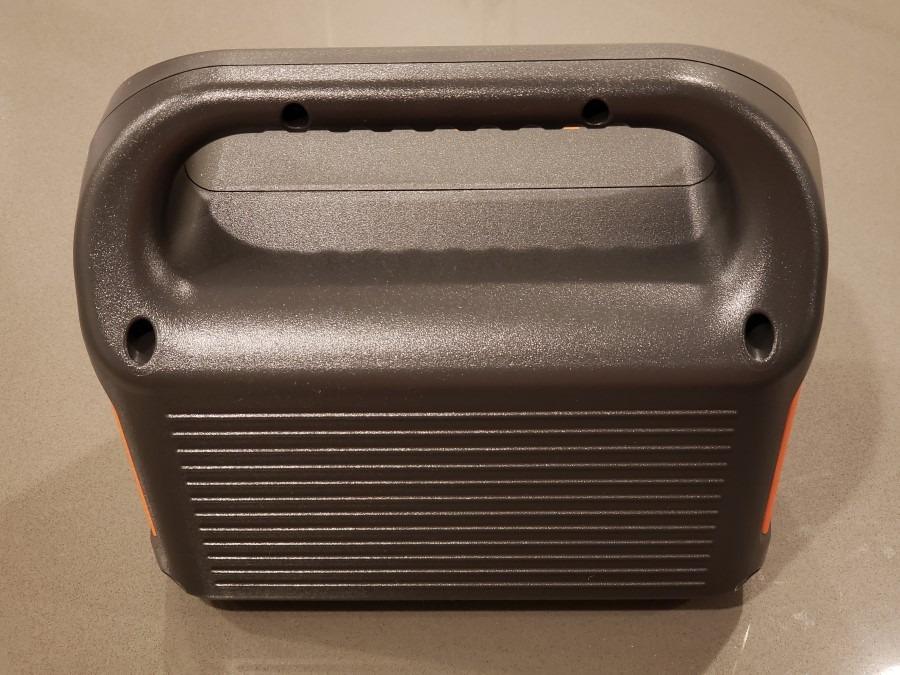
Pure sine wave output is what makes it safe for a TV, a sound system or a CPAP machine, and the LiFePO4 pack is rated for 4000+ cycles before dropping to 70% capacity. Owners also like that the display is easy to read in daylight, which is a small thing that gets mentioned constantly.
If you plan to add solar later, this reaches 80% in about 2.8 hours from a 100W panel. Just note the panel is not included, so budget for that separately rather than assuming the box has it.
What game-day setup this handles best
Phones, a laptop, cameras, string lights and maybe a small fan. It also handles a CPAP machine for an overnight in the car or a late game, which is a common use that never gets advertised.
For a two-person tailgate with a portable speaker, lights and charging, it is genuinely sufficient and you can carry it one-handed from the vehicle.
Where it falls short
292Wh is the limit. A cooler, a crockpot or a TV plus a coffee maker is out of reach, and two AC outlets is not many when you are trying to share a spot.
This is a carry-and-charge box rather than a run-your-tailgate box. If you want a cooler going, step up a tier.
8. Anker SOLIX C300 DC – Best Lightweight Carry
Anker SOLIX C300 DC Portable Power Station, 288Wh, 300W, Outdoor Camping
288Wh
300W total output
7 USB ports, no AC
100W solar input
about 6 lbs
Pros
- Two 140W two-way USB-C ports charge laptops at full speed
- About 5-6 lbs and 30% smaller than comparable models
- 80% recharge in about an hour with dual PD 3.1
- Adjustable three-level top lantern
- Pass-through charging confirmed in testing
Cons
- No AC outlets at all
- Wall charger not included
- Auto sleep mode must be disabled in the app
- Around 6 lbs is heavier than a power bank
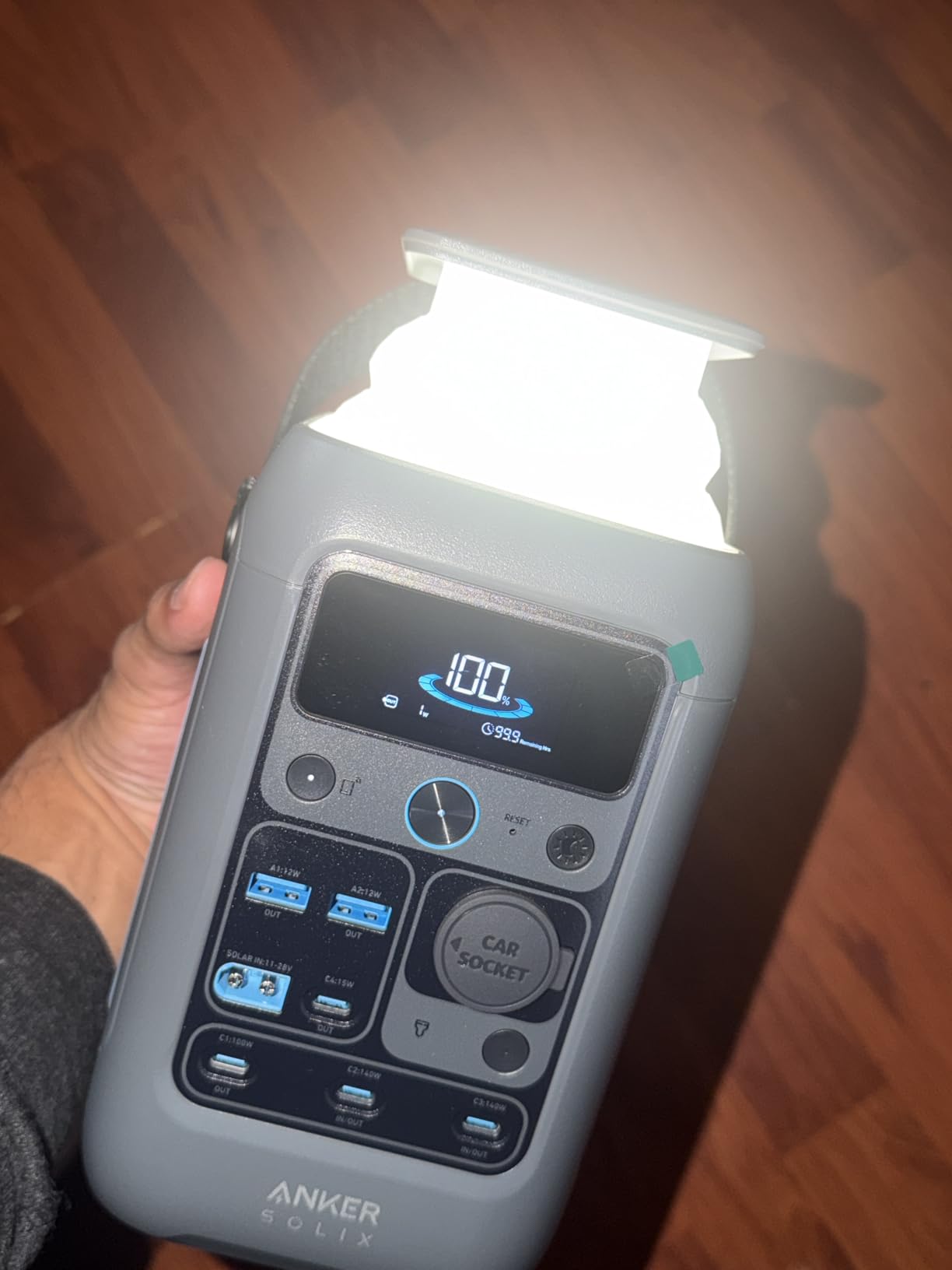
This is the lightest option in the roundup at about 6 pounds, and it takes a completely different approach: there is no AC inverter at all. Everything runs off USB and a 12V car socket, which is why it is so small and so quiet at roughly 25 dB.
Seven ports, including two 140W two-way USB-C ports, mean a laptop, a camera battery, a phone and a drone controller can all charge at full speed at the same time. The 120W car socket will run a 12V cooler for 13 to 24 hours depending on the mode.
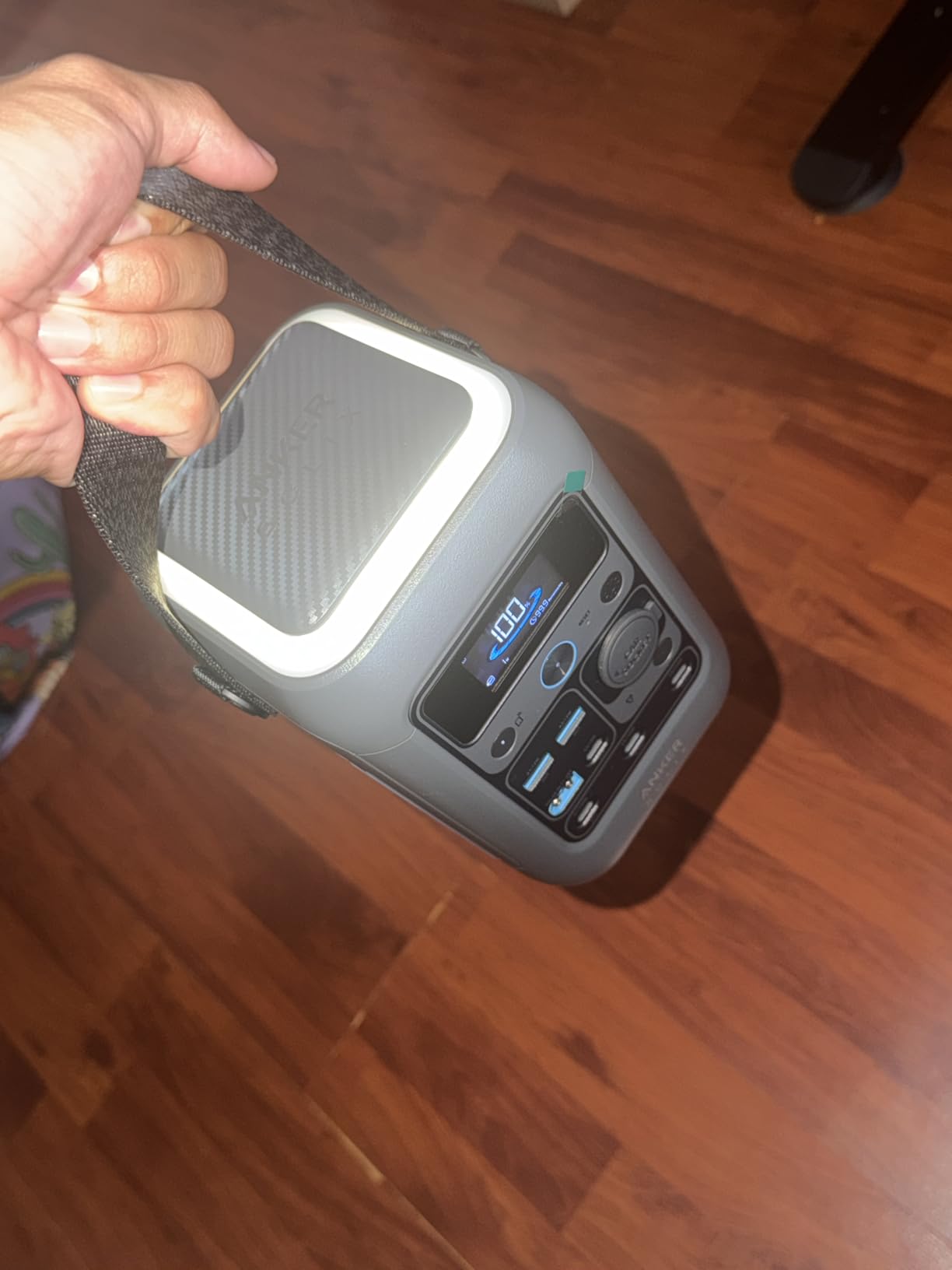
The adjustable three-level lantern on top is a tailgate-specific touch that most people do not expect. It gives you a light for setup and teardown without a separate headlamp, and the 30% smaller footprint means it disappears into a side pocket rather than taking up a tailgate surface.
Pass-through charging was confirmed in testing, meaning a cooler can run while the battery keeps filling from a USB-C charger. That is genuinely useful if your venue has a place to plug in near the lot.
What game-day setup this handles best
A media-light setup with no AC appliances: phones, laptops, camera gear, a Bluetooth speaker and LED string lights, all day without a recharge. The three-year guarantee and 3000+ cycle LiFePO4 pack make it a durable daily carry item.
It is also the tailgate companion to a larger station, taking the phone-charging load off the main inverter so the bigger box only handles what it needs to.
Where it falls short
No AC outlets means no TV, no soundbar, no coffee maker and no full-size fridge. If your tailgate has a screen in it, this is the wrong box no matter how good the USB ports are.
No wall charger is included, so you need a 100W USB-C charger of your own to get the one-hour recharge the spec sheet promises. The auto sleep mode can also blank the display and is confusing to exit unless you disable it in the app.
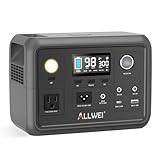
9. ALLWEI 300W – Best for CPAP and Camera Gear
ALLWEI Portable Power Station 300W, 256Wh Solar Generator LiFePO4 Battery
256Wh LiFePO4
300W continuous, 600W surge
6 outputs
6.4 lbs
Pros
- Only 6.4 lbs and small enough for a backpack
- Display shows remaining time and charge percentage
- USB-A ports deliver true 2.4A output
- 3-level LED light with SOS mode at the carry end
- 3000 cycles and pass-through charging
Cons
- Solar input capped at 120W so a 200W panel will not work
- No 24V output for RV or boat owners
- Fan can run loudly after extended use
- Support reportedly asks for extensive data first
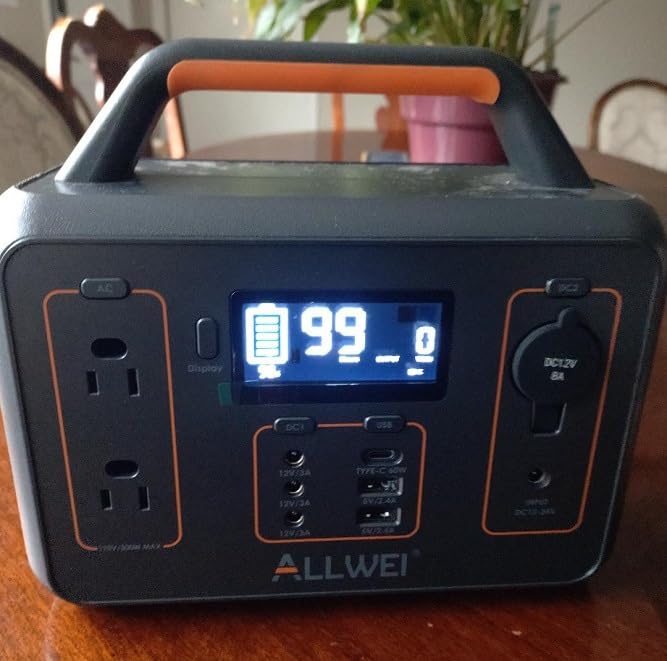
At 6.4 pounds this is the second-lightest unit here, and the display is the detail that separates it: it shows remaining runtime rather than just wattage in use. When you are packing up in a dark lot at the end of the night, knowing you have 40 minutes of output left is genuinely useful.
The USB-A ports deliver a true 2.4A, which owners using camera kit mention specifically – enough to run two lens warmers at once. Combined with a 60W USB-C PD port, that makes it a natural fit for a tailgate that doubles as a small camera bag station.
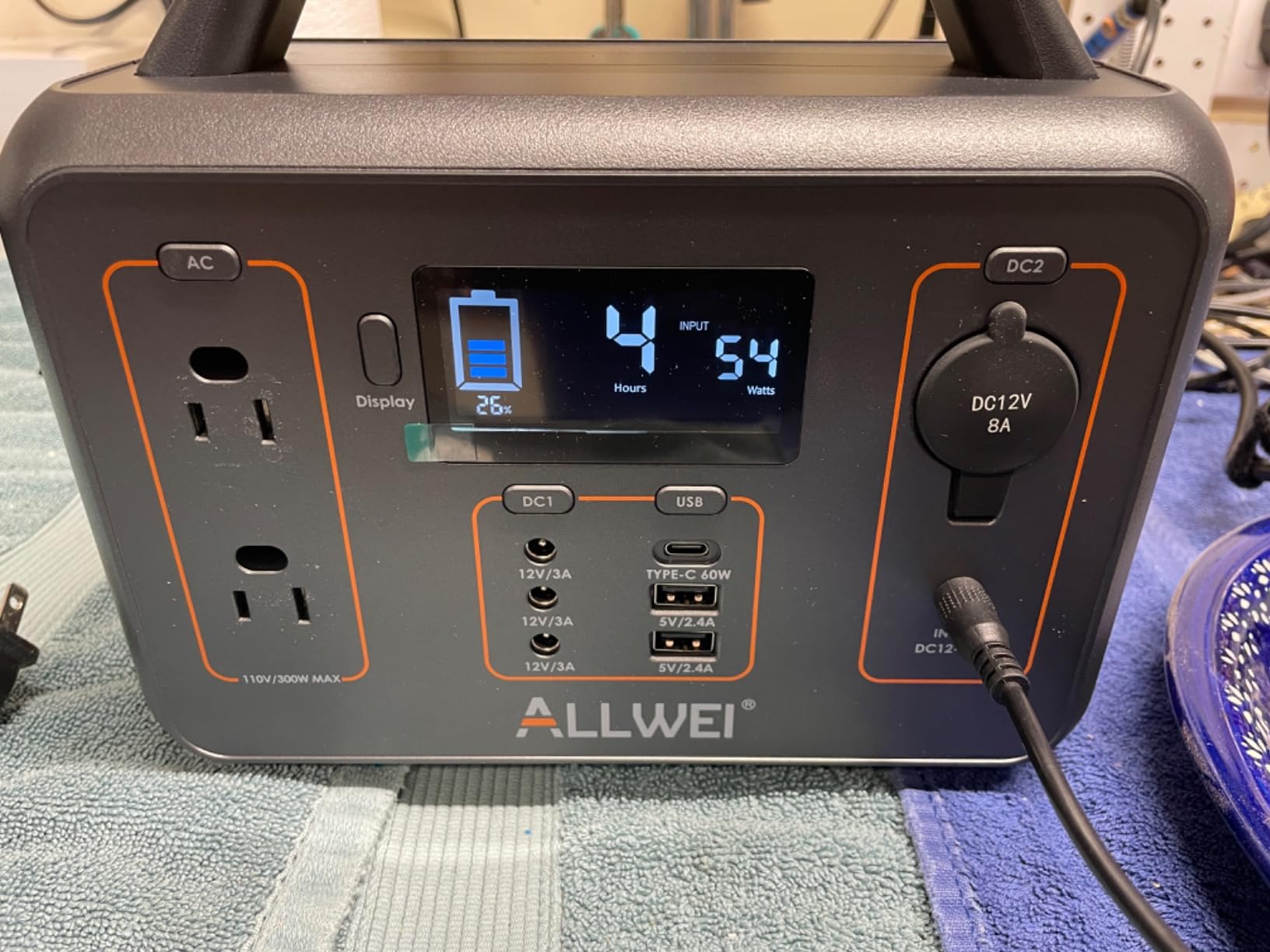
CPAP users report running machines for many hours overnight on this unit, which is the strongest use case in its weight class. The 3-level LED light with SOS mode sits at the end of the unit where it is easy to reach while carrying.
LiFePO4 chemistry with 3000 cycles and pass-through charging means devices can run while the station charges, and owners report it holding its charge well through months of storage without topping it up.
What game-day setup this handles best
Charging and low-draw loads: phones, cameras, laptops, a CPAP machine, string lights and a small fan. Six outputs cover one AC outlet, two DC barrel ports, a car socket, an 18W USB-A and a 60W USB-C.
It is the easiest unit here to slip into a backpack with the rest of your gear, which matters if you are already carrying a chair and a cooler.
Where it falls short
The 120W solar input ceiling means a 200W panel will not work. If you planned to build a solar top-up into your game-day routine, this is not the box for it.
A handful of owners report units that stopped holding charge within about a year, and the fan can run loudly and intermittently after extended use. If you are buying for a decade, favour a unit with a longer warranty.
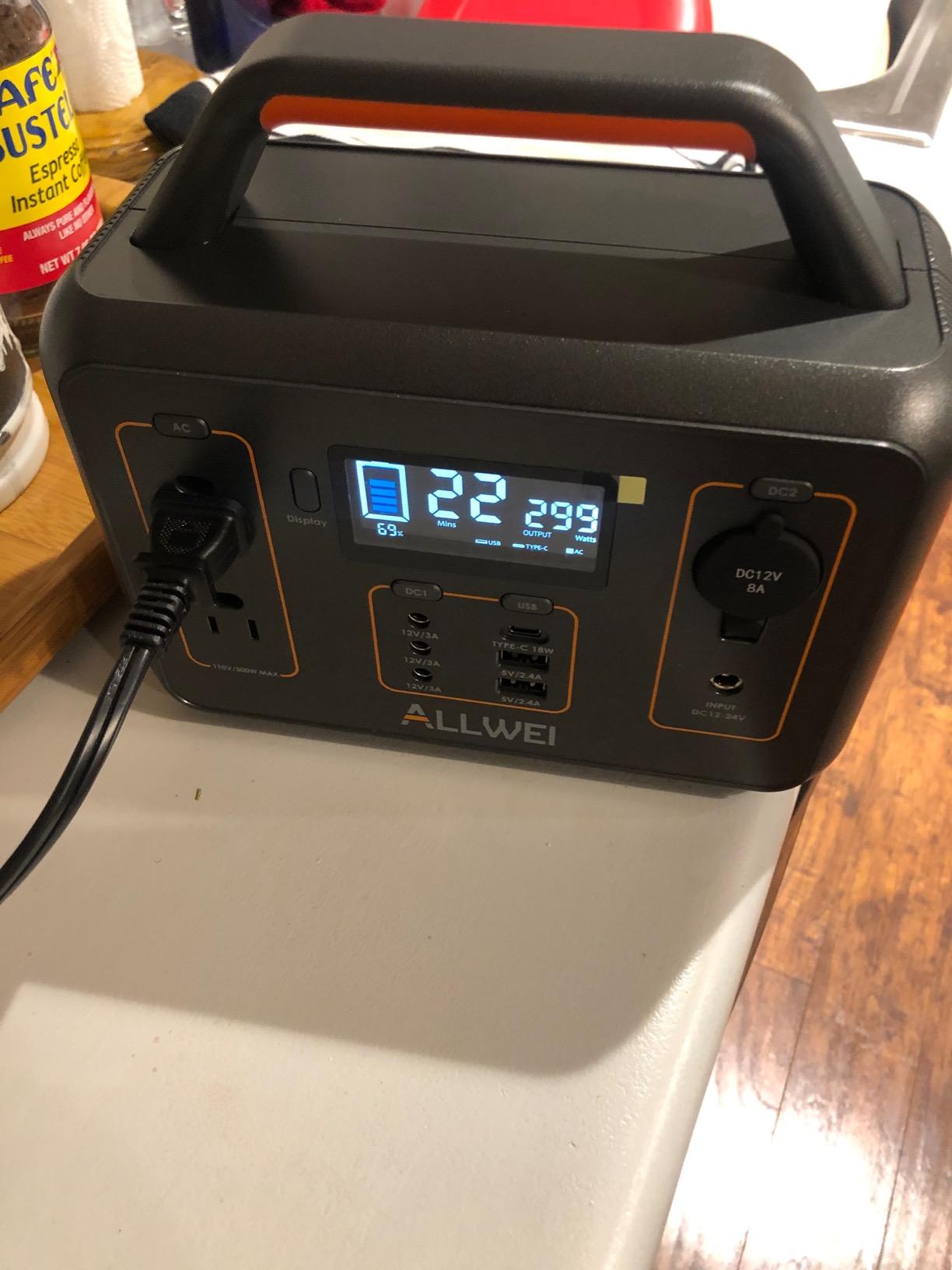
10. ALLWEI 500W – Best for UPS Backup
ALLWEI Portable Power Station 500W, 512Wh LiFePO4 Battery UPS Backup Power
512Wh LiFePO4
500W output, 1000W surge
9 outputs
UPS switchover
13 lbs
Pros
- 512Wh covers CPAP
- fan and phone charging together
- Full AC recharge in about 2.5 hours in Q mode
- 9 outputs including 100W and 36W USB-C
- Instant UPS switchover protects sensitive electronics
- Only 13 lbs for 500W of output
Cons
- Solar input limited to about 120W
- Centre button only turns off the display not the outputs
- USB outputs can glitch when USB-C devices are added
- Only two AC outlets for 500W
This is the value step-up from the smaller LiFePO4 boxes, and the number that matters is 13 pounds for 500W of continuous output and 512Wh of capacity. That is roughly double the capacity of the 300W model for a fraction more weight.
Nine outputs, including 100W and 36W USB-C ports, two AC outlets, two USB-A, two DC barrel ports and a car socket, is more port variety than anything else in the 500W class. The instant UPS switchover is what makes it double as a home backup unit rather than a game-day-only box.
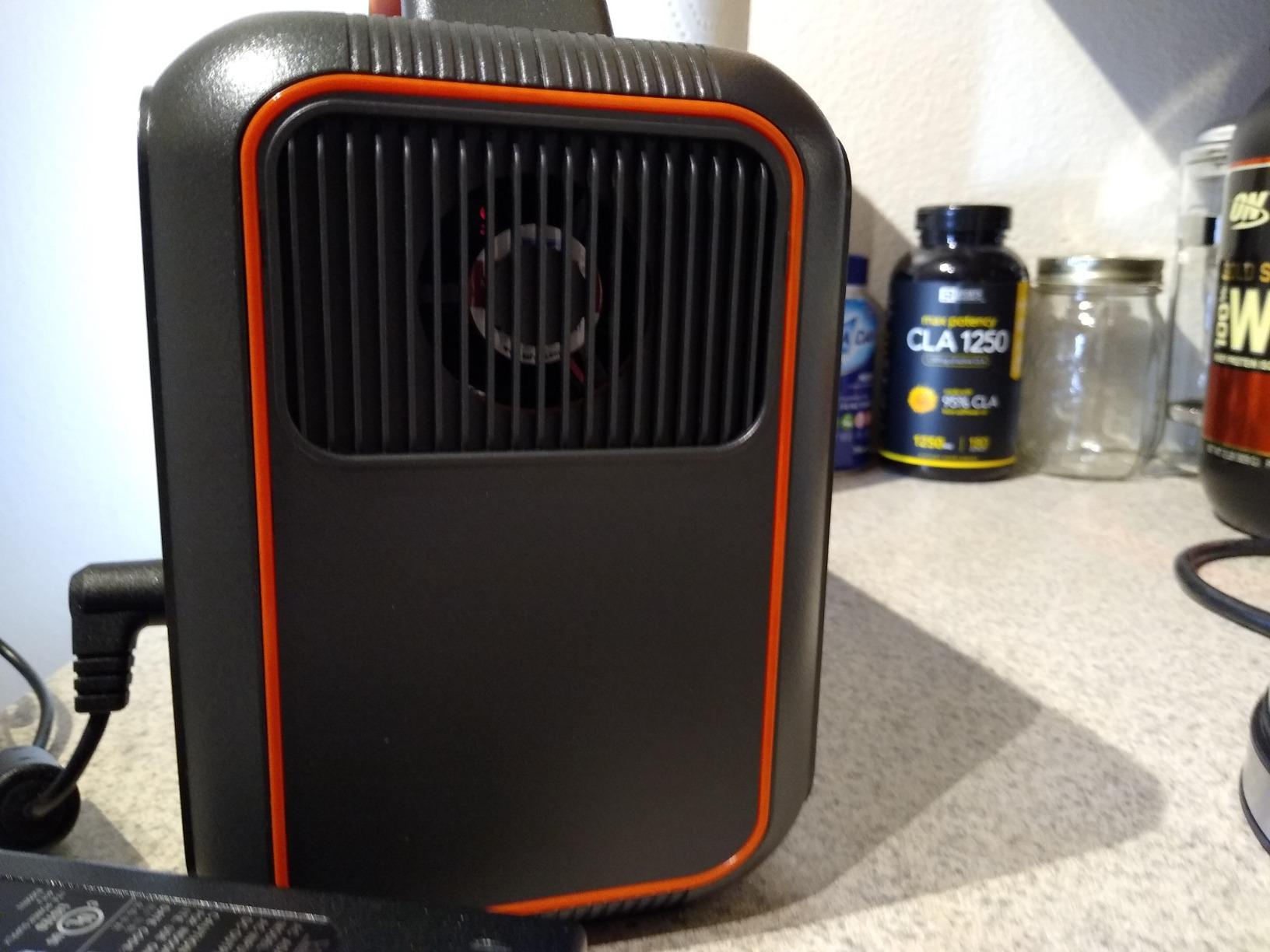
Full AC recharge in about 2.5 hours in Q mode is fast enough to top it up on a Saturday morning without breaking your routine, and 3000 LiFePO4 cycles puts a realistic life at roughly a decade to 70% capacity.
The same dual-use logic that shows up on r/Generator applies here: a station that backs up a desktop or a file server during an outage is a much easier purchase to justify than one that only powers a TV six times a year.
What game-day setup this handles best
Media plus one small appliance. At 512Wh and roughly 435Wh usable, you get about 2.9 hours of a 150W TV and soundbar, or two to three hours with a small fan, string lights and a CPAP machine running alongside.
It is a good middle tier for a group of four that wants a fridge but not a crockpot, at a weight you can still lift into a tailgate without a cart.
Where it falls short
The 120W solar input ceiling is the same limitation as the smaller ALLWEI. A 200W panel will not charge it, which narrows your options if you camp or tailgate overnight regularly.
Two AC outlets for 500W of total output is a thin margin, and the centre power button only turns off the display rather than the outputs, which confuses more than a few owners. Some also report USB outputs glitching and resetting when a USB-C device is added at the same time.
How to Size a Portable Power Station for Your Tailgate
Most people oversize their tailgate power station because they guess at appliance draw instead of adding it up. Work through these four steps and the right tier becomes obvious.
List every device and add the watts. A 55-inch LED TV runs about 110W, a soundbar about 40W, LED string lights about 20W, a phone charge about 10W, a small fan 40W to 60W, a 12V cooler 40W to 60W while cycling, and a crockpot 150W to 300W. A blender pulls around 1000W and an electric griddle around 1500W.
Multiply your total by the hours you will be out. A 150W media stack for six hours is 900Wh of demand before any losses.
Subtract roughly 15% for inverter losses, plus about 10% that manufacturers reserve, so a station needs to hold about 1.3 times your raw demand. A 150W load for six hours means looking at roughly 1000Wh and up.
Check continuous output before capacity. If your total draw sits near 1000W, a 1000Wh-capacity box with only 1000W of inverter will trip the moment a compressor or a heating element starts.
Then subtract the recharge time from your plan. Anything that needs 6 hours or more on a wall outlet wants to be plugged in the night before, not the morning of.
Working from the same arithmetic, here is roughly what a charge buys you once inverter losses are taken into account:
292Wh class at 150W: about 1.6 hours of media
231Wh class at 150W: about 1.3 hours of media
256Wh class at 150W: about 1.4 hours of media
512Wh class at 150W: about 2.9 hours; roughly 1.4 hours at 300W
519Wh class at 150W: about 2.9 hours; roughly 1.5 hours at 300W
1024Wh class at 150W: about 5.8 hours; roughly 2.9 hours at 300W; about 1.7 hours at 500W
1070Wh class at 150W: about 6 hours; about 3 hours at 300W
1152Wh class at 150W: about 6.5 hours before idle draw and reserve
On chemistry, LiFePO4 is now the sensible default for anything you plan to keep. It carries 3000 to 4000 cycles versus far fewer in older lithium-ion packs, and it tolerates being left in a hot vehicle better, which matters if your lot is sunlit asphalt. NMC and older lithium-ion units are not wrong buys, but they are harder buys to justify across multiple seasons.
On stadium rules, battery stations are generally not classified as fuel generators, so most venues that restrict combustion units still permit them. Policy is set venue by venue, so check your stadium’s list before you pack. Keep vents clear, verify the unit is UL or ETL listed, and store it in shade rather than on a hot tailgate surface.
On weight, the honest bands are these: under 8 pounds for solo carries, 12 to 15 pounds for a manageable two-person load, and anything over 25 pounds means you are loading it once and not moving it again. More people have abandoned a station over the carry than over a missing feature.
Our broader roundup of the best portable power stations goes deeper on battery chemistry and inverter quality, and the camping-focused guide covers multi-day runtime if your tailgate turns into a weekend.
Who Should Skip a Portable Power Station
Skip this category entirely if your tailgate is a few hours, four people, and phone charging. A 20,000mAh power bank does that job in your jacket pocket and costs a fraction of one of these units.
Skip it if you are running a full-size electric grill, a space heater or several high-draw appliances at once and you are unwilling to run a car battery or a fuel generator. The stations here are sized for TVs, coolers, lights and warming dishes, not for a full kitchen.
Skip it if cold-weather performance is the deciding factor and your games are all played outdoors below freezing. Expect a meaningful drop in available capacity in the cold, and confirm your unit’s low-temperature guidance before relying on it for a late-season game.
Also weigh the total cost honestly. If the same station would not earn its place as a home backup or camera power bank between game days, a used mid-tier model or a longer-maturing purchase is the smarter route.
Frequently Asked Questions
How much power do I need for a tailgate?
Plan on 300W for a media-only setup, about 500W for a TV with a mini-fridge, 800W for media plus a crockpot, and 1800W if you add a blender or an electric griddle. Add the individual draws, then multiply by your hours out. A 55-inch TV is roughly 110W, a soundbar 40W, string lights 20W, a cooler 40W to 60W and a crockpot 150W to 300W.
How long will a portable power station run a TV?
Divide the capacity in watt-hours by the average draw in watts, then subtract about 15% for inverter losses. A 1070Wh station running a 150W TV and soundbar gives roughly 6 hours, a 1024Wh unit about 5.8 hours, and a 512Wh unit about 2.9 hours. Manufacturers also hold back around 10% reserve, so plan on the lower figure.
Can you run a TV off a portable power station?
Yes, as long as the station delivers pure sine wave AC at 1000W or more continuous. A 55-inch LED TV with a soundbar pulls about 150W combined, which is well inside the range of every 1000Wh model we reviewed. Units with no AC outlets at all, such as the Anker SOLIX C300 DC, cannot run a screen.
Do crock pots take up a lot of electricity?
A crockpot typically draws 150W to 300W, and low settings draw less than high. That is roughly ten times the draw of a 55-inch TV, which is why warming dishes are the load that forces you past the sub-600Wh tier. Running one crockpot alongside a TV and cooler on a 1000Wh station still gives you about 2.9 hours.
Is a portable power station considered a generator?
Battery stations are generally not classified as fuel generators, so most venues that ban combustion units still allow them. Rules are set by each stadium, so check your venue’s policy before you pack. Keep vents clear, confirm the unit carries a UL or ETL listing, and store it out of direct sun on hot days.
The Best Portable Power Stations for Tailgating in 2026
After ten units and a realistic game-day load, the Jackery Explorer 1000 v2 is the pick we would buy: 1070Wh, 1500W continuous, 23.8 pounds and the highest rating-to-review pairing in the group. If wattage matters more than everything else, the Anker SOLIX C1000 Gen 2 gives you 2000W and a 49-minute recharge. If the charging window is tight, the BLUETTI AC180 refills to 80% in 45 minutes and holds the largest battery here.
For a couple of people with a TV and a cooler and no cooking, the GRECELL 500W or ALLWEI 500W is the sensible middle. For one person walking from the truck alone, the Jackery Explorer 300 at about 7 pounds is the one that actually gets carried.
Whatever you choose, size it by adding up your real loads, plug it in the night before, and check your venue’s rules. The best portable power stations for tailgating in 2026 are simply the ones whose capacity matches your appliances and whose weight matches your parking lot.