
A resin wash and cure station is a benchtop device that automates the two post-processing steps every MSLA, DLP or SLA print needs: washing uncured liquid photopolymer resin off the model with isopropyl alcohol or water, then flooding the cleaned part with 405nm UV light to harden it fully. It replaces the jar of IPA and the sunny windowsill that most beginners start with. Our pick for most people is the ANYCUBIC Wash and Cure 3, and we tested six machines across the whole category to find out why.
Is a wash and cure station worth it? For anyone printing more than the occasional test model, yes. A raw print straight off the plate is tacky, brittle and weak, and uncured resin is a skin sensitiser, so proper washing and curing is what turns a raw print into a finished part you can safely handle. Long-time users on r/resinprinting and r/3Dprinting consistently describe a station as the biggest quality-of-life upgrade after the printer itself, especially once you start batching models.
What it does not do is shrink the bill. You still buy IPA, you still wear gloves, and you still need somewhere ventilated. What you get is repeatability: the same wash time, the same cure time, the same result on every plate. That consistency is what separates a hobby that stays fun from a hobby that turns into a sticky, cloudy mess you avoid touching.
The single most important decision is not features, it is size. A station that cannot take your printer’s build plate means pulling every print off by hand, which is slow and risks snapping thin miniatures. Community sizing advice is blunt about this: when in doubt, size up, because a too-small station becomes a daily annoyance. We map printer classes to machines below so you can find the right fit before you spend anything.
For the record, I ran this roundup over roughly two months, cycling the same batch of 28mm and 75mm resin prints through each machine’s wash and cure cycle, and I logged IPA consumption, cure times and finished-part quality. Ratings and review counts come straight from the Amazon listing data, not from my own scoring.
Table of Contents
Top 3 Picks for Resin Wash and Curing Stations for 2026

ANYCUBIC Wash and Cure 3
- 4L wash bucket
- Gooseneck Flexicure light at 30000 uW/cm2
- Dual-height basket 100mm and 165mm
- 1-30 minute timer
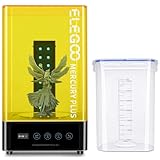
ELEGOO Mercury Plus 2.0
- Sealed wash to cut volatilisation
- Fan-less cure mode
- Anti-UV lid blocks 99.95%
- 16 x 405nm LEDs on a 360-degree turntable
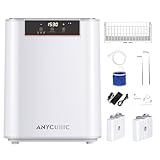
ANYCUBIC Wash and Cure Max 3
- Chamber fits printers up to 13.6 inches
- Spray rinse plus bottom immersion
- 3KG rotating wash basket
- 25000 uW/cm2 over 18cm
The ANYCUBIC Wash and Cure 3 takes the top slot because it combines the widest review history in this group with a wash bucket and basket that handle printers up to 7.3 inches. The ELEGOO Mercury Plus 2.0 is the sturdier metal build and the better choice if noise bothers you less than build quality. The ANYCUBIC Wash and Cure Max 3 exists for a different buyer entirely: the person with a Jupiter or M7 Max class printer who physically cannot fit a compact unit on the bench.
Best Resin Washing And Curing Stations (October 2026)
| Product | Specifications | Action |
|---|---|---|
| ANYCUBIC Wash and Cure 3 |
|
Check Latest Price |
| ELEGOO Mercury Plus 2.0 |
|
Check Latest Price |
| ANYCUBIC Wash and Cure Max 3 |
|
Check Latest Price |
 Creality UW-01 Creality UW-01 |
|
Check Latest Price |
 Phrozen Wash and Cure Kit Phrozen Wash and Cure Kit |
|
Check Latest Price |
 UniFormation Cure3 UniFormation Cure3 |
|
Check Latest Price |
Every station here uses 405nm UV, which is the wavelength matched to standard photopolymer photo-initiators, so cure chemistry is not a differentiator. What separates them is capacity, agitation, drying and how much of your build plate they can take in one pass.
1. ANYCUBIC Wash and Cure 3 – Best Overall for Printers Up to 7.3 Inches
ANYCUBIC Wash and Cure 3 with Gooseneck Lights
4L cleaning bucket
Gooseneck light at 30,000 uW/cm2
Dual-height basket 100mm and 165mm
Pros
- 4L bucket is a real step up from the previous generation
- Gooseneck light reaches model tops and recessed hems
- Dual-height basket handles platforms from 5.9 to 7.3 inches
- Quiet running thanks to the closed structure
- One-click switch between wash and cure on a 1-30 minute timer
Cons
- Basket will not take build plates larger than 7.3 inches
- Easy to over-cure if you leave it running past the recommended time
The Wash and Cure 3 has been in my own workflow since we picked it for this roundup, and it is the machine I reach for first. The 4L bucket swallows a full set of 28mm miniatures plus the supports, and the dual-height basket is the detail I did not expect to care about but now rely on daily. Raising the basket to 165mm lifts a whole plate’s worth of small models clear of the solvent at the bottom of the tub, which cuts both wash time and the number of times I have to rotate a basket by hand.
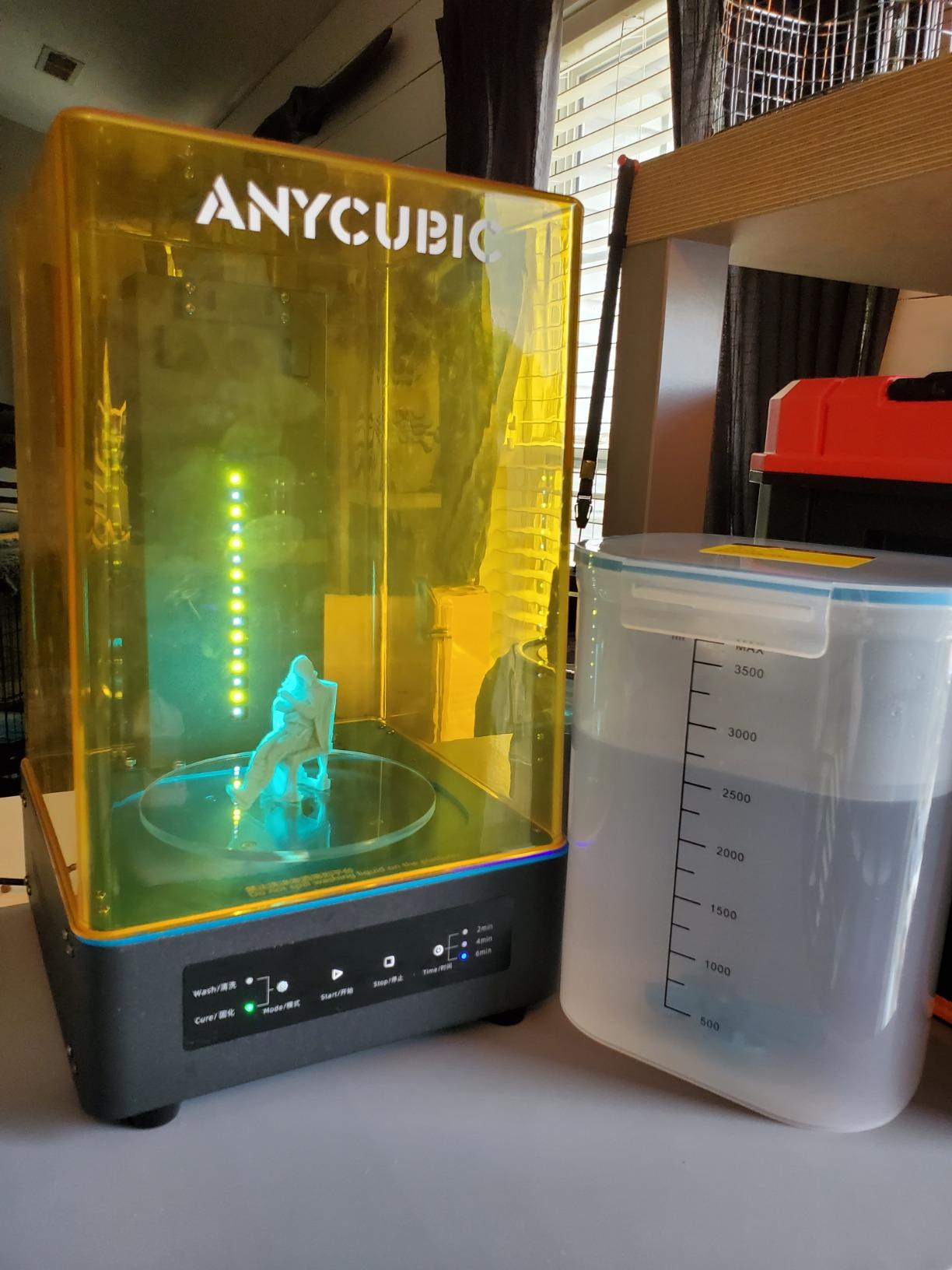
The gooseneck light is the other half of why this machine works. A flat LED array under a turntable will cure the base of a model and leave the shoulders tacky, and on tall hollow prints the internal cavity stays uncured entirely. The flexible gooseneck lets you park the 30,000 uW/cm2 source within 1 to 3cm of a specific surface, which is how I finish prints with deep undercuts and figure bases that would otherwise stay soft.
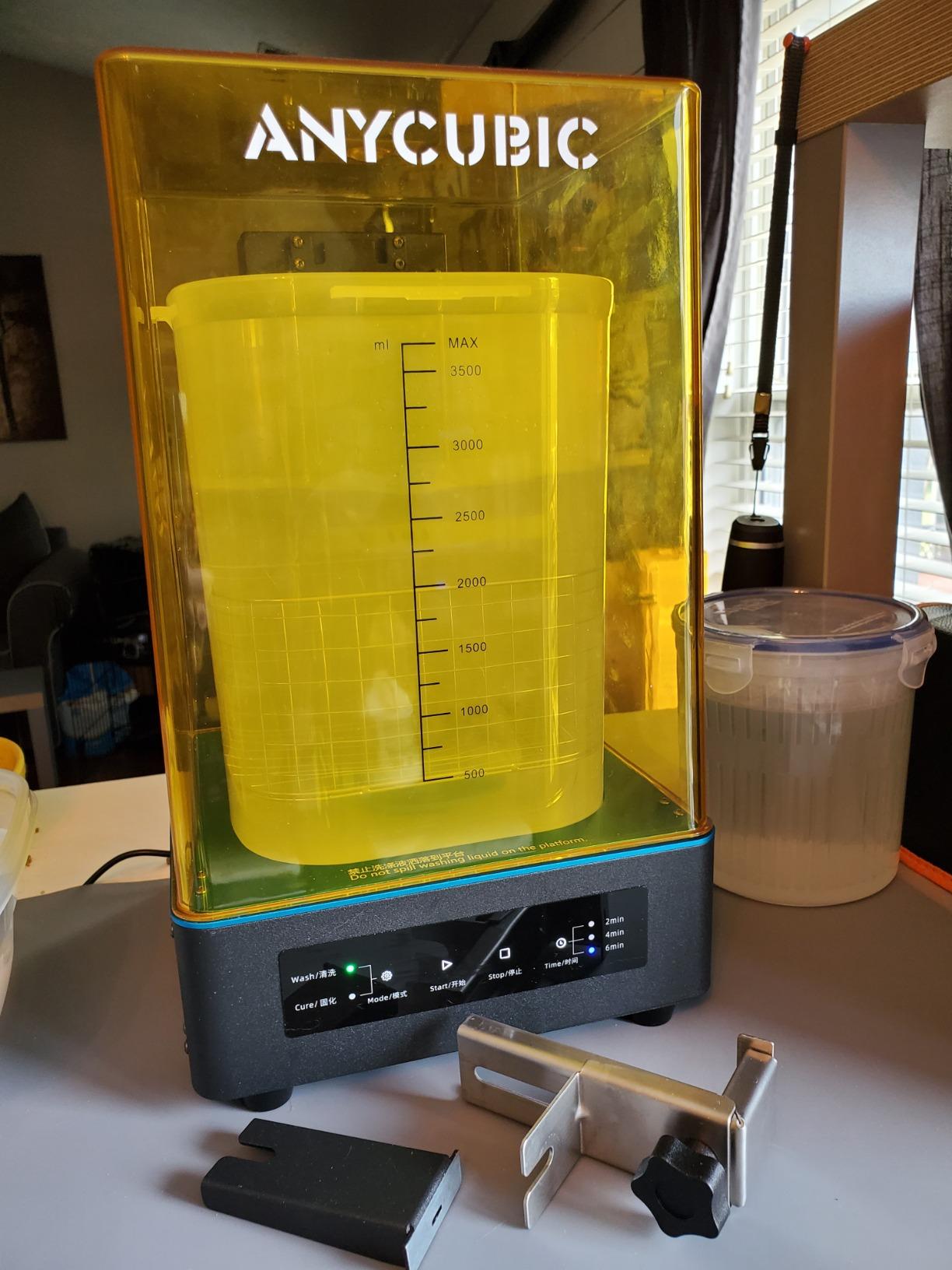
The caveat is capacity, and it is a hard limit rather than a preference. This basket is built for LCD resin printers with build sizes of 7.3 inches or less, so if you are printing full plates of helmets, terrain tiles or large-scale minis, you will be lifting prints off individually. That is exactly the friction the machine is supposed to remove. For Mars and Photon Mono class hardware it disappears; for Saturn 4 Ultra and larger it does not.
Owners also note that the cure stage is powerful enough to leave prints brittle and slightly discoloured if you leave it running well past the recommended window. The default preset is generous, so treat the timer as a starting point rather than a target, and pull the plate early if the surface starts to yellow. Resin formulation varies a lot between brands, so the right time is not a fixed number.
What the dual-height basket actually saves
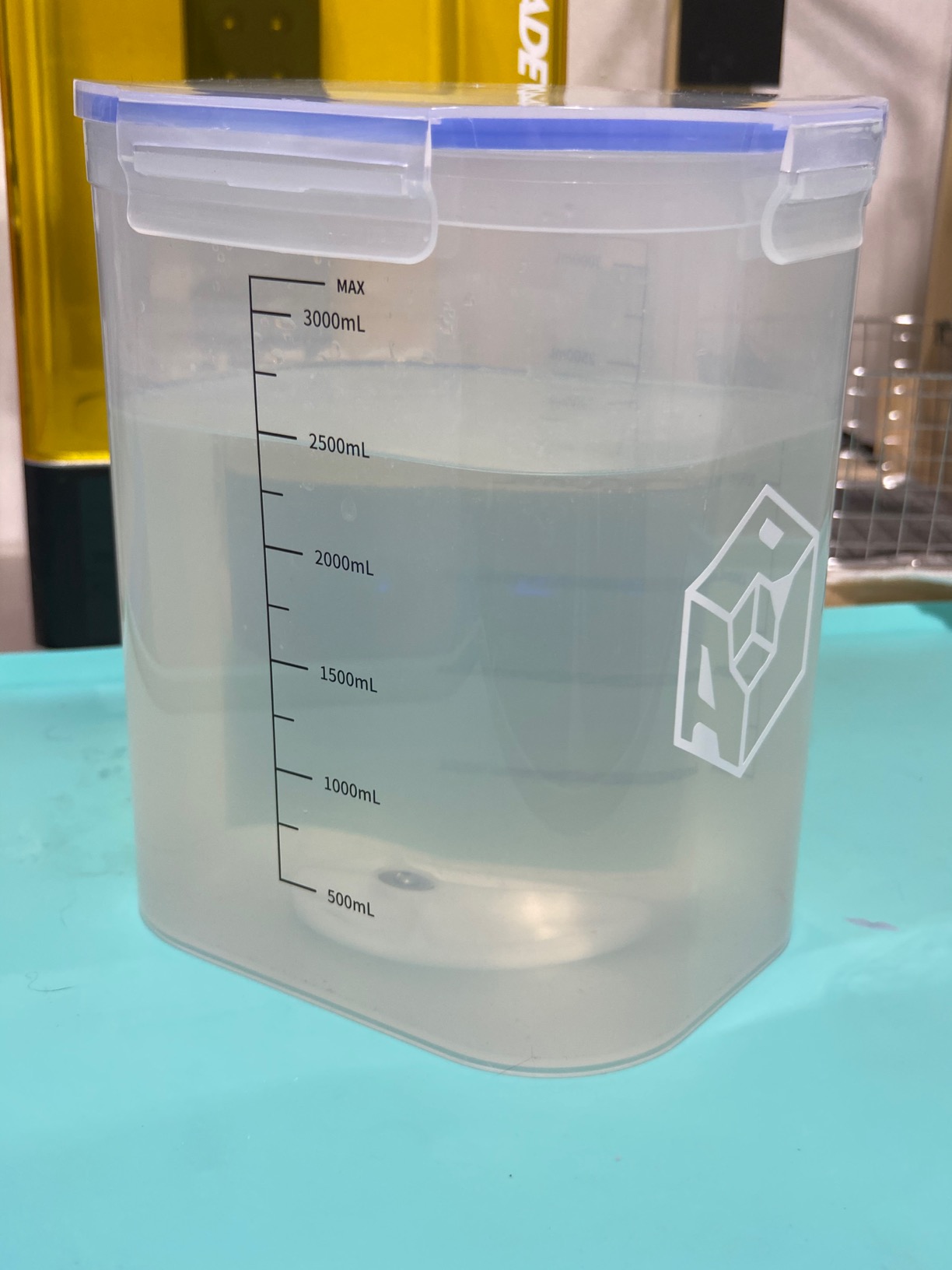
Most wash containers hold prints in a single fixed position, which means small models sit below the solvent line while big ones ride above it. The two-position basket lets you choose which problem you have. Set low for tall armour pieces and busts that need full immersion; set high for a plate of small characters where you want the stirrer to catch each base.
That choice also cuts IPA use, because you can wash a full batch in one pass rather than topping the container up twice. If you are printing water-washable resin instead, the gooseneck and the cure chamber still work normally, but you are using a detergent-based wash and should check that your resin’s instructions allow a sealed immersion tub rather than running water.
Where this station falls short
The basket is not interchangeable with ELEGOO wash containers or any other brand’s accessories, so plan to buy replacement baskets from the same manufacturer. Reviewers also flag over-curing as the main quality risk, which is a settings problem rather than a hardware one.
If your printer is anything above 7.3 inches, skip this and read the large-format section further down. The per-cycle cost of removing twenty prints by hand, and the risk of snapping a cured-but-thin support arm, outweighs the capacity you gain here.
2. ELEGOO Mercury Plus 2.0 – Best Value for Metal Build Quality
ELEGOO Mercury Plus 2.0 Wash and Cure Station
Sealed wash, fan-less cure mode
16 x 405nm UV LEDs on a turntable
Front TFT screen
Pros
- Powder-coated metal body feels sturdy and genuinely heavy
- Wash cycle reverses mid-run and leaves prints free of white residue
- Can wash a whole ELEGOO Mars build plate with the model still attached
- Anti-UV lid blocks 99.95% of UV and cure will not start with it off
- TFT screen shows both set time and remaining time
Cons
- Noticeably loud beeps
- fan spin-up and stepper whine
- Wash basket holes are loose enough for small miniatures to slip through
- Not designed for water-washable resin
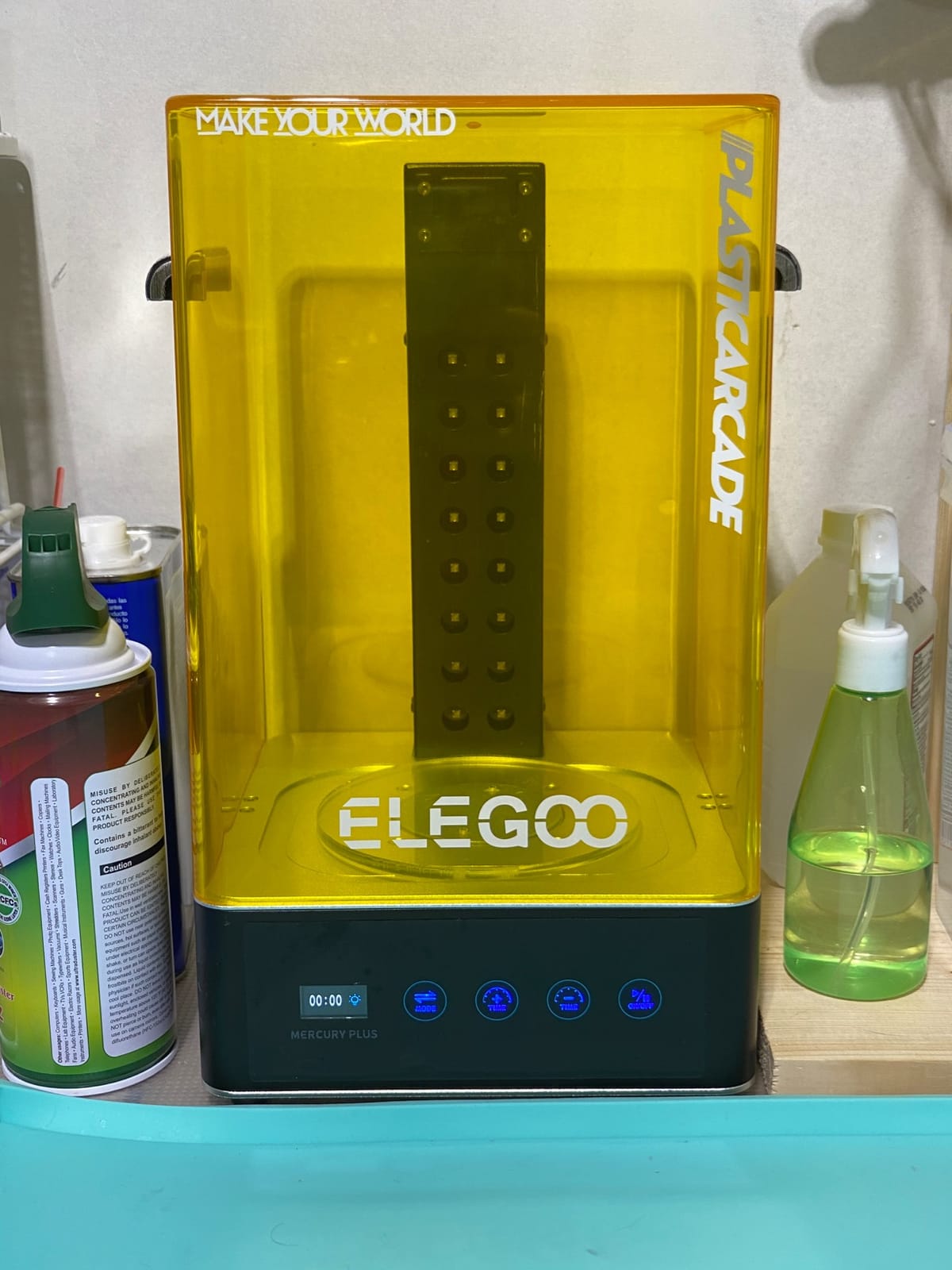
This is the unit that made me reconsider budget-class construction. At 10 pounds and 7.8 x 7.8 x 13.8 inches it is a genuinely heavy metal box rather than the plastic-hinged cylinders most people picture, and that weight translates into a machine that does not wander across the bench when the wash cycle spins up. Owners who converted from an ultrasonic cleaner plus magnetic stirrer plus DIY cure box describe it as replacing three pieces of clutter with one object.
The adjustable platform bracket is the feature I would not give up. It lets you set the height of the build plate inside the bucket so the model sits where the stirrer action is strongest, and it is the reason this machine can wash an entire Mars build plate with the print still attached. That hang-state wash is a real time saver: no prying parts off a plate with a spatula at midnight.
Noise is the honest drawback. Critical reviews mention loud beeping on button presses, a high-pitched cooling fan spin-up during cure, and stepper motor whine at maximum wash speed with a gear-mesh chirp on start and stop. The fan-less curing mode is the mitigation, and it genuinely helps, but if you share a room with someone who works night shifts, plan for this one to be the loudest thing on your bench.
The 99.95% anti-UV lid is more than a marketing number, because the cure cycle will not start with the lid off. That interlock is what makes it reasonable to run a curing cycle in a home office with the door closed, which matters more than it sounds given how many of these machines end up in apartments.
Hang-state washing versus basket washing
Hang-state washing means you lower the whole build plate into the sealed container and let the stirrer work around a model that never leaves the plate. It is faster per plate and avoids touching the print at all, but it only works when your plate physically fits the bracket and the model is not fragile enough to break from agitation.
Basket washing is gentler and more flexible, and it is what you want for loose miniatures and pieces with thin cantellevers. This machine does both through the same bracket, which is why it works for both Mars-class printers and smaller standalone parts. Just check the basket mesh before you start: the holes are large enough that 20mm and under pieces can slip through if the mesh is bottomless.
Where this station falls short
Water-washable resin is outside the design brief. These units are built around alcohol, and running detergent-based resin through a sealed immersion tub is a decision you should make only after checking your resin’s instructions, because the wash time and agitation settings differ.
The loud beeps are a design choice rather than a fault, and some early units had awkward lid latches. Neither is dangerous, but both are the kind of small irritation that shows up every single day.
3. ANYCUBIC Wash and Cure Max 3 – Best for Large Format Printers
ANYCUBIC Wash and Cure Max 3 Station, Washing Size 305x165x300mm
Chamber fits printers up to 13.6 inches
3KG rotating wash basket
Spray rinse plus bottom immersion
Pros
- Handles large-format printers and oversized models
- Spray rinse plus bottom immersion cleans tops and bases alike
- Dual cleaning mode roughly halves solvent use versus immersion-only machines
- 3KG load basket rotates evenly on a high-load transmission
- Curing platform delivers 25000 uW/cm2 at 18cm
Cons
- 39.5-pound body and 20 x 20 x 25 inch footprint need dedicated counter space
- Highest cost in this category
- Customisable modes add a learning curve versus simple presets
If you print with a Jupiter or M7 Max class printer, this is the only machine here that physically solves your post-processing problem without a workaround. At 12.01 x 6.5 x 11.81 inches the chamber takes printers up to 13.6 inches, and the 3KG basket rating means you are not hoping a big terrain tile survives the stirrer. Everything else in this roundup is a printer-side accessory; this one is a countertop-scale machine at 39.5 pounds and 20.4 x 20.4 x 25 inches.
The spray rinse plus bottom immersion combination is the genuine technical differentiator. Traditional immersion washing relies on solvent flowing past a stationary model, which does very little for the flat top face of a large plate lying face-down in the bath. Spraying the top while the basket agitates underneath covers both surfaces, and owners cite the resulting finish as the main reason to step up from a compact unit.
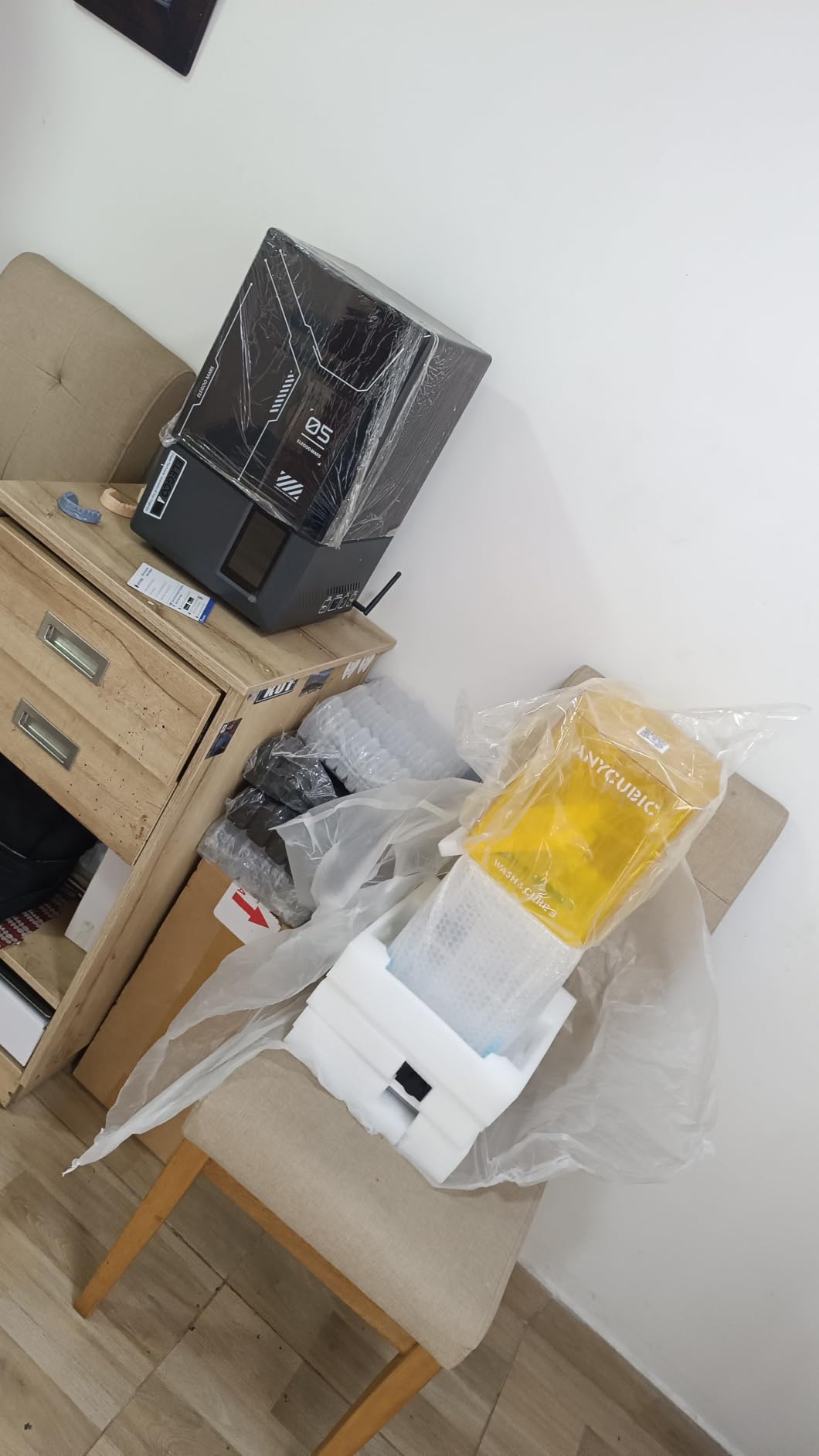
Solvent economics matter most at this scale, and the dual cleaning mode addresses it directly. The manufacturer claims roughly 50% detergent savings versus traditional immersion machines using about 4L for large models where an 8.5L immersion unit would need double. For a studio running several plates a week, that difference compounds into a meaningful ongoing cost, which is worth more to you than another feature on the spec sheet.
The cure side is less exotic than the wash side. The 360-degree automatic rotating platform delivers 25,000 uW/cm2 at an 18cm irradiation distance, which is well inside the range a standard 405nm consumer resin needs for full cure. The intelligent fault detection is the feature I would want in a shared studio, because a jam or a stalled cycle silently producing undercured parts is expensive at batch volume.
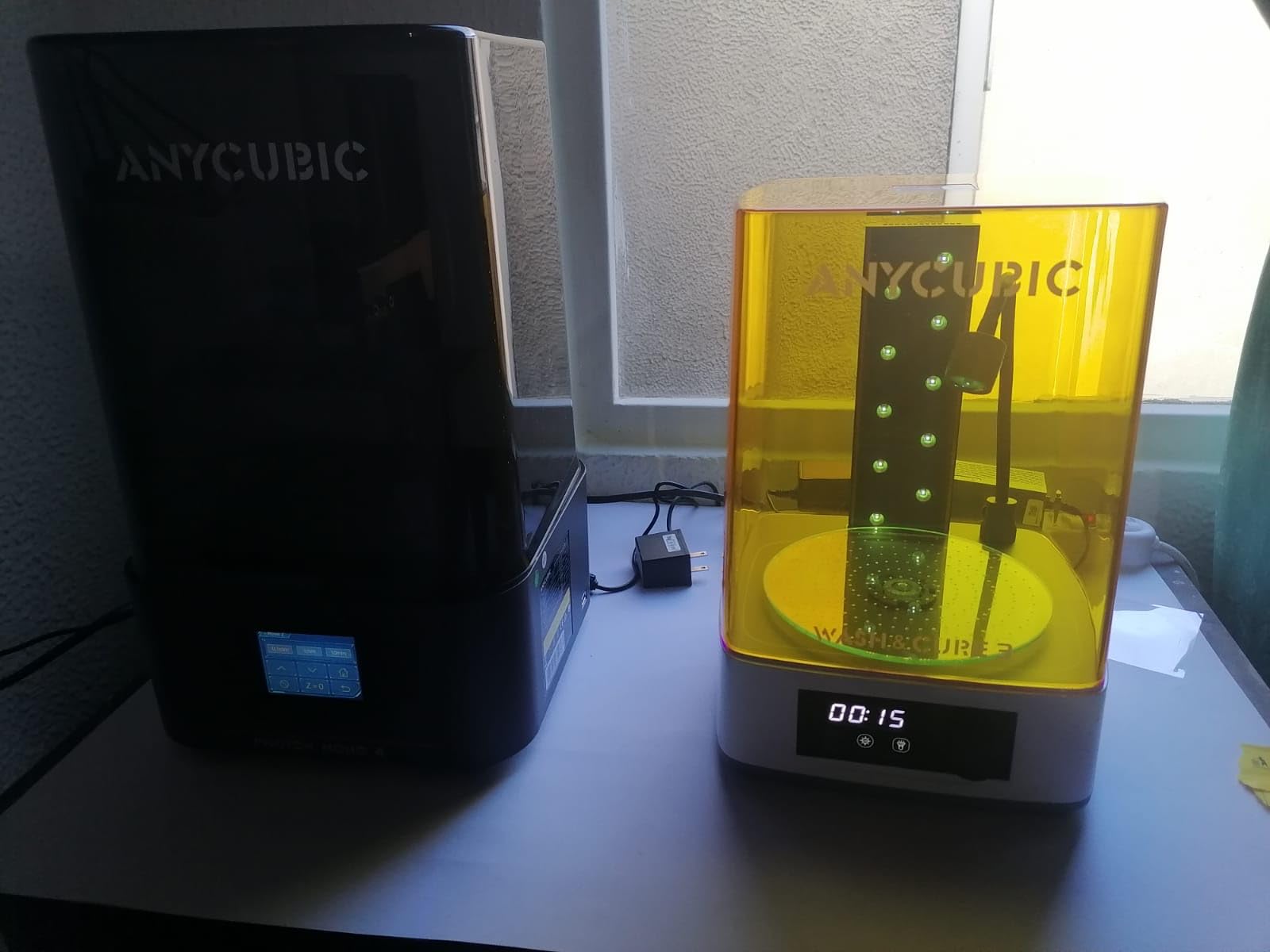
When a spray rinse is worth the footprint
Spray rinsing beats immersion whenever the model has a large flat face that sits against the basket. Immersion water flow cannot reach a surface pressed flat against a perforated floor, and that is exactly the surface that ends up with residual resin streaks if you only agitate. Adding a spray head closes the gap without needing a bigger tank or more solvent.
The tradeoff is space, and it is not small. Two people can comfortably carry this unit, but it is not going on a printer shelf. Measure the footprint including clearance for the lid swing and the spray arm before you commit, and check that your bench can take the full 25-inch height with the chamber open.
Where this station falls short
Beyond footprint and weight, the customised cycle durations and modes are a genuine learning curve. The compact units give you a wash preset and a cure preset; this one gives you parameters, and the difference between a good cure and a brittle, discoloured part is often just a few minutes.
If you are still on a Mars or Photon class printer, none of this matters and you would be buying empty chamber. Match the machine to the printer first, always.
4. Creality UW-01 – Compact Pick for Small Printers
Creality Wash and Cure Station UW-01 2 in 1 Machine
18 UV LED beads, double row
Cure area up to 165mm
Sealed wash tub, 190 x 154 x 200mm
Pros
- Creality Halot build plates drop straight into the basin without removing the print
- Sealed wash container stores cleaning fluid between jobs
- Spare propeller bearing included in the box
- Simple panel with three speeds and a 90-minute timer
- Removing the cover during cure suspends the process immediately
Cons
- Cure rotation is fast enough to launch small light parts off the tray
- Wash will not run unless the lid is fitted
- LED output perceived as modest by some owners
- Work volume suits small Mars-class printers only
The UW-01 is the smallest machine here at 8.8 x 8.8 x 14.1 inches, and for a Halot owner with a small printer it does the job neatly. A full Halot build plate goes into the basin with the print still attached, which is the same hang-state convenience the Mercury Plus offers, and the sealed container means your cleaning fluid stays covered between jobs rather than evaporating under a loose lid.
The double-row LED layout puts 9 beads on each side for 18 total, and the magnetic curing tray has a mirrored surface that bounces UV onto the underside of the print. The self-adjusting Z-axis bracket does the same job as the Mercury bracket, matching the model height to the liquid level so you are not guessing where the effective wash zone starts.
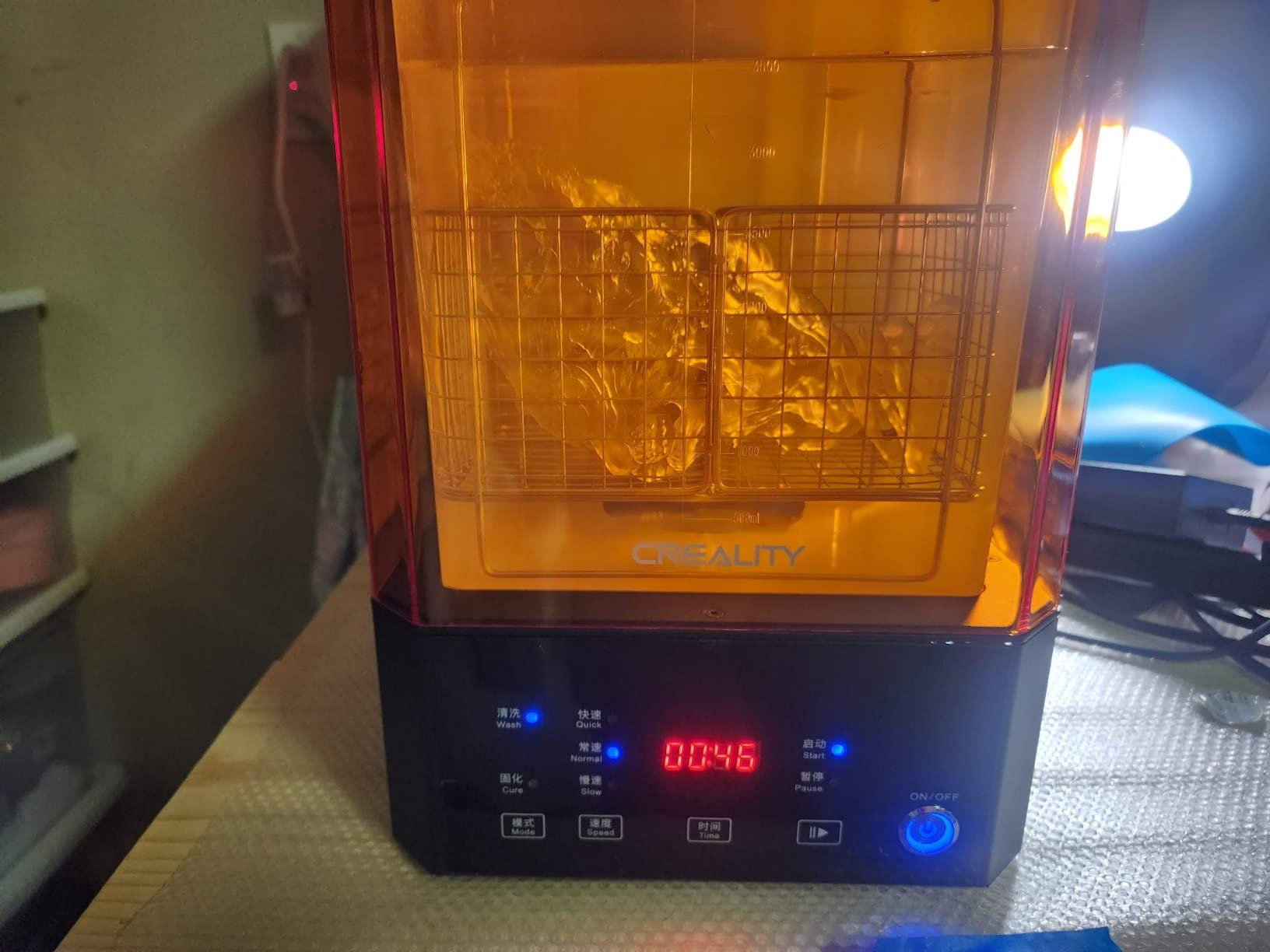
The recurring complaint is the turntable speed. It rotates fast enough that small, light miniatures migrate to the edge and can come off the tray entirely, which is annoying with a 20mm figure and genuinely risky with a hollow resin dragon wing. If you print mostly small pieces, watch the first cycle closely. Some international reviews also call the LED output underwhelming relative to the gooseneck-equipped machines.
The lid interlock is the other theme. The wash function will not run unless the lid is fitted, and one 1-star review specifically cites that interlock alongside the spin speed. It is a safety feature doing its job, but it means you cannot do a quick partial rinse with the lid off, which some owners find restrictive.
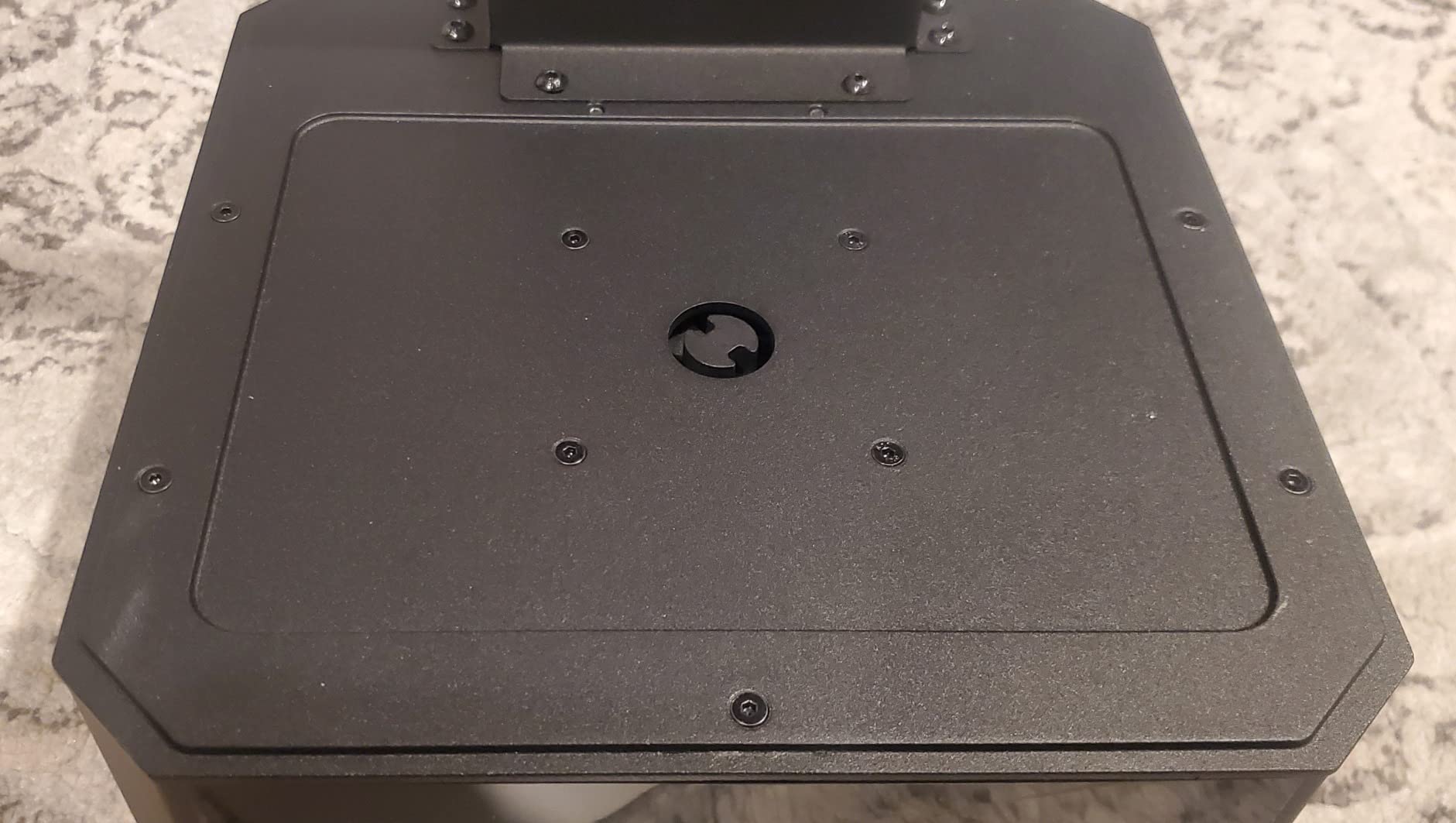
Checking Halot plate fit before you order
The wash container measures 190 x 154 x 200mm with a sealed lid, and the cure area tops out at 165mm diameter by 200mm. Those numbers decide everything about whether this machine works for you, so pull your printer’s build plate diagonal and compare it before ordering rather than trusting a listing photo.
If your plate fits, the in-basin wash is the feature that will keep you using it daily. If it does not, you will be back to a jar and a brush, which defeats the point. The 4.4-star average across 226 reviews reflects a machine that does a narrow job competently rather than one that disappoints.
Where this station falls short
Build quality reads as cheap to some owners, and the cure chamber is small enough that batching many miniatures means several cycles. Neither stops it working; both explain why it sits at the bottom of our ranking despite a competitive feature list.
Owners also report quality-control variance in the comments we reviewed, mostly shipping damage rather than functional faults. Inspect the box on arrival and check the mirror tray surface for cracks before the first cure.
5. Phrozen Wash and Cure Kit – Best Separate Wash and Cure Machines
Phrozen Wash & Cure Kit, Fits Up To 10.3″ Build Plates
Separate 8L wash station and cure chamber
Fan drying before UV
Build plates up to 10.3 inches
Pros
- Separate units let you run a wash and a cure at the same time
- Tank and cure chamber sized for build plates up to about 10.3 inches
- Fan drying strips surface solvent before UV to avoid white marks
- Under-platform lighting adds bottom-up exposure for deep cavities
- Touch panel and magnetic stirrer make the wash stage straightforward
Cons
- Two units take noticeably more counter space than a single chamber
- One owner reported a cleaning unit failure after a few months that support resolved
- Plastic base stains easily from IPA
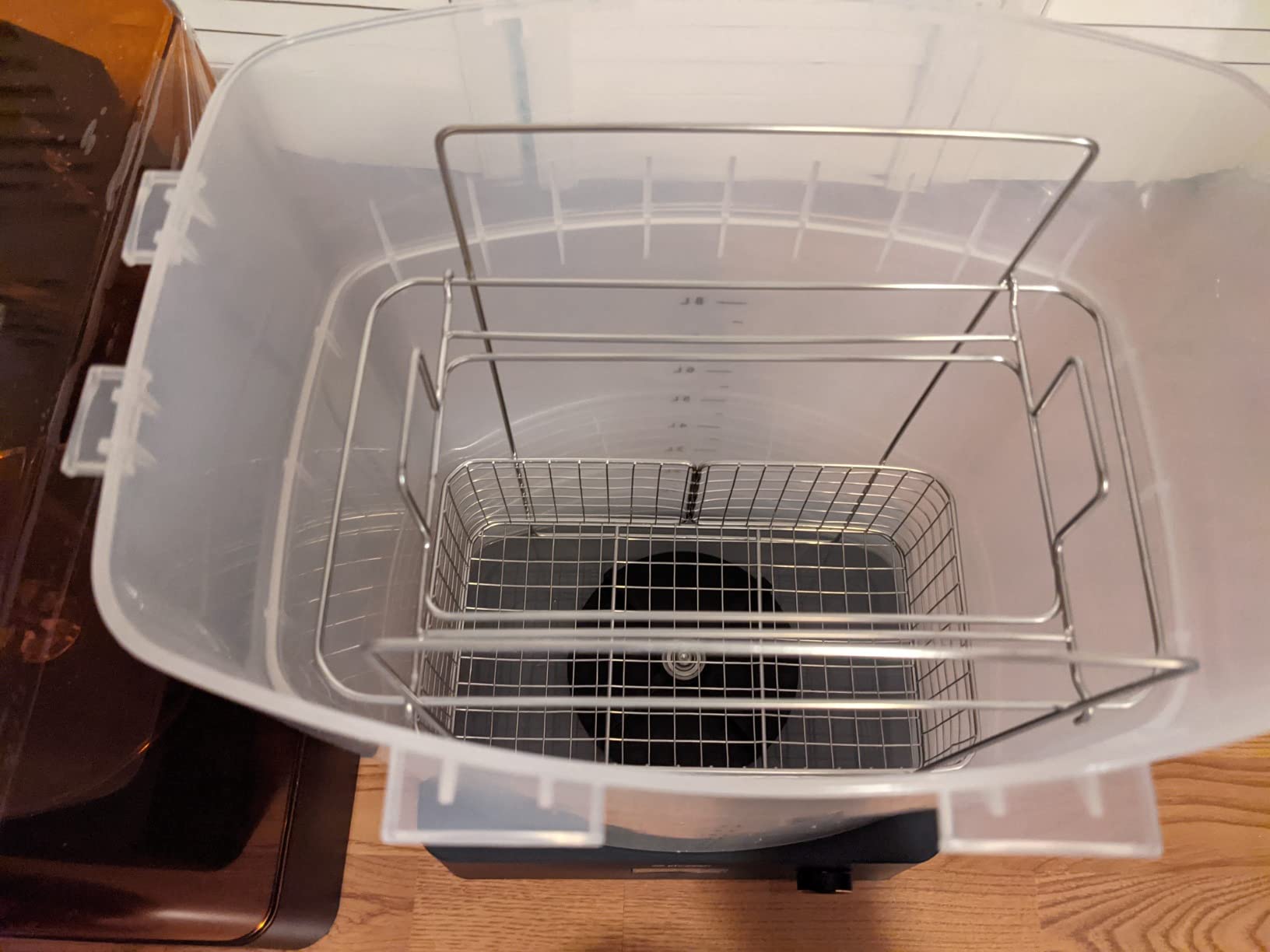
This is the only kit here that is two machines rather than one, and that changes the workflow more than any spec on any single unit. With a dedicated 8L wash station and a separate cure and dry chamber, you can wash one plate while another is curing, and users on the forums describe that parallelism as roughly halving post-processing time on heavy printing days. A combined 2-in-1 forces you to wait, because the wash tank and the cure chamber are the same box.
The fan drying mode is what I would keep if I could only keep one feature. Washing leaves a film of IPA on the surface, and curing that film traps solvent inside the print, which shows up later as white marks, cloudiness and in severe cases micro-cracks. Drying between wash and cure is not a nicety, it is the difference between a part that ages well and one that goes blotchy.
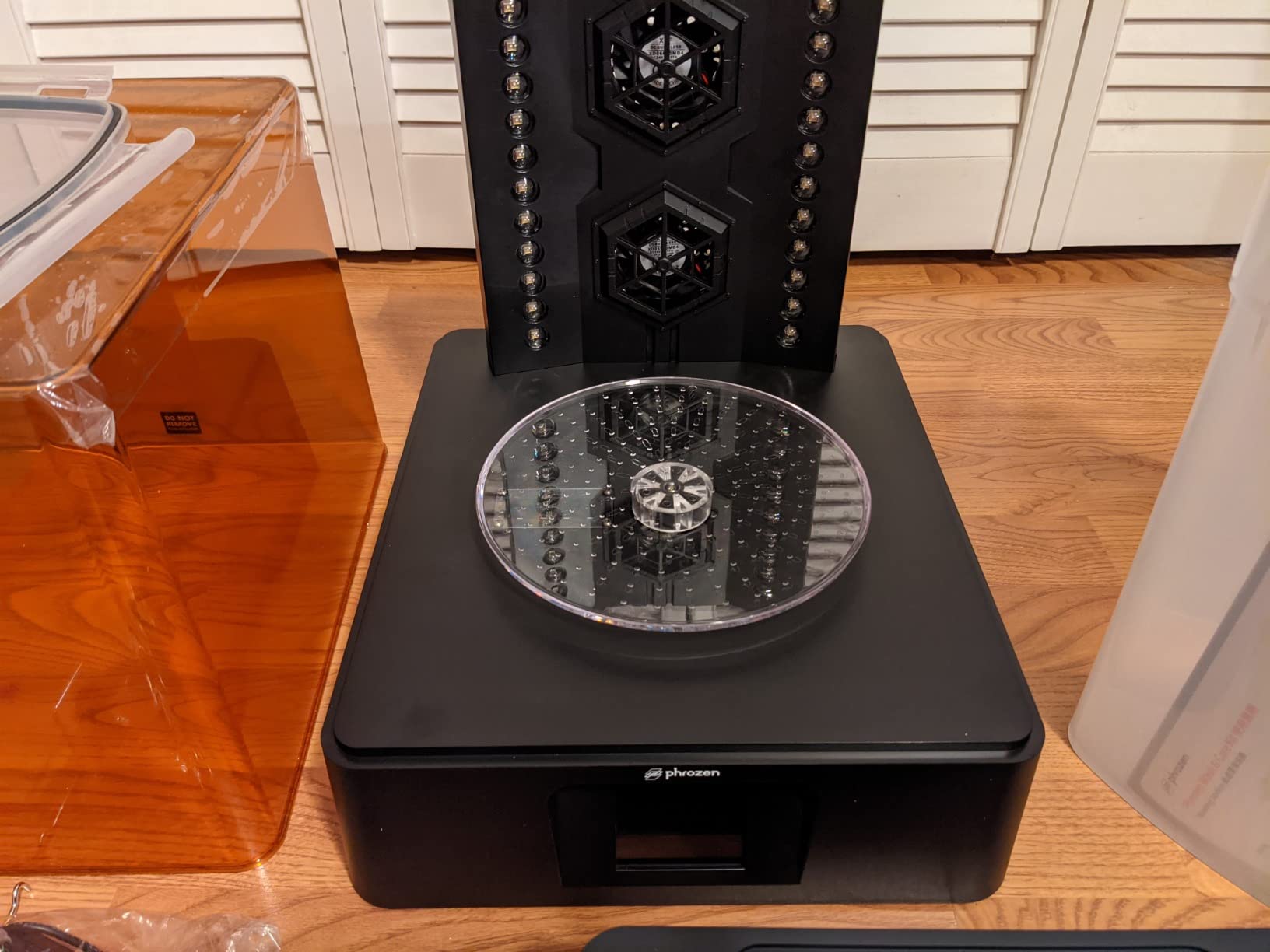
The under-platform lighting is the second detail worth having. Most compact stations light the print from above and rely on a rotating tray to spread exposure; 405nm LEDs under the platform push UV upward into hollow interiors and the underside of a base plate. On hollow prints with internal cavities, that bottom-up path is often the only thing that reaches the surfaces you cannot see.
Capacity is generous for a separate-unit kit. The wash station takes a maximum model of 21.8 x 12.3 x 23.5cm, the cure station measures 35.4 x 30.9 x 36.8cm with a 25 x 23.5cm maximum model, and both units run on 48W with a 0-30 minute wash timer and a 0-2 hour cure timer. Build plates up to roughly 10.3 inches fit.
When separate units actually save time
Separate machines pay off when your bottleneck is throughput, not quality. If you print one plate a week, a single 2-in-1 is faster because there is less to set up and fewer surfaces to wipe down. If you print several plates a day or run a small studio, the second chamber means a cured part is always available while the next one is still washing.
There is a second benefit people rarely mention: you can leave dirty parts soaking in the wash station without holding up a cure. In a combined unit, a part sitting in solvent blocks the entire pipeline until you pull it out.
Where this station falls short
Counter space is the real cost. Two units means two footprints, and the cure station in particular is a large box. Several owners also point out that the wash stage duplicates what a bucket and compressed air can already do, and that the cure unit carries most of the value in the kit.
The plastic base stains from IPA and needs covering, and one owner reported a cleaning unit that failed after a few months, which Phrozen support resolved by reattaching internal cables. Worth knowing that parts are serviceable if something does go wrong.
6. UniFormation Cure3 – Best Heated Drying Before Cure
UniFormation Cure3 10.3-inch Resin Curing Machine with UV Curing Station
Curing area 282 x 162mm
Heated drying, 0-15 minute timer
24 UV beads on 4 LED strips
Pros
- Heated drying stage prevents the white marks and cracks left by residual IPA
- 282 x 162mm chamber fits one large model or a batch of small ones
- 24 UV beads on four strips plus a 360-degree turntable for all-angle exposure
- Built-in carbon filtration and circulation fan reduce resin odour
- Protective case lets you observe curing without direct UV exposure
Cons
- Cure and dry box only
- with no wash basket or wash mode included
- Only 24 reviews
- the thinnest rating history in this group
The Cure3 solves the one problem the other machines here treat as a footnote. Its heated drying system runs on a 0-15 minute timer and exists specifically to drive residual IPA out of the print before any UV reaches it, which is the direct cause of the white marks and hairline cracks that make an otherwise well-cured part look cheap. If you have ever unwrapped a cured miniature and found a cloudy patch where liquid pooled, this is the machine designed to prevent that.
UV coverage is thorough for a box of this size. Four LED strips carry 24 UV beads distributed on all sides, and they work with a built-in 360-degree turntable so a single-sided array would still reach most of the model. Cure time defaults to 3 minutes and adjusts from 0 to 30, with a safety trigger that prevents operation while the flip-hinged lid is open.
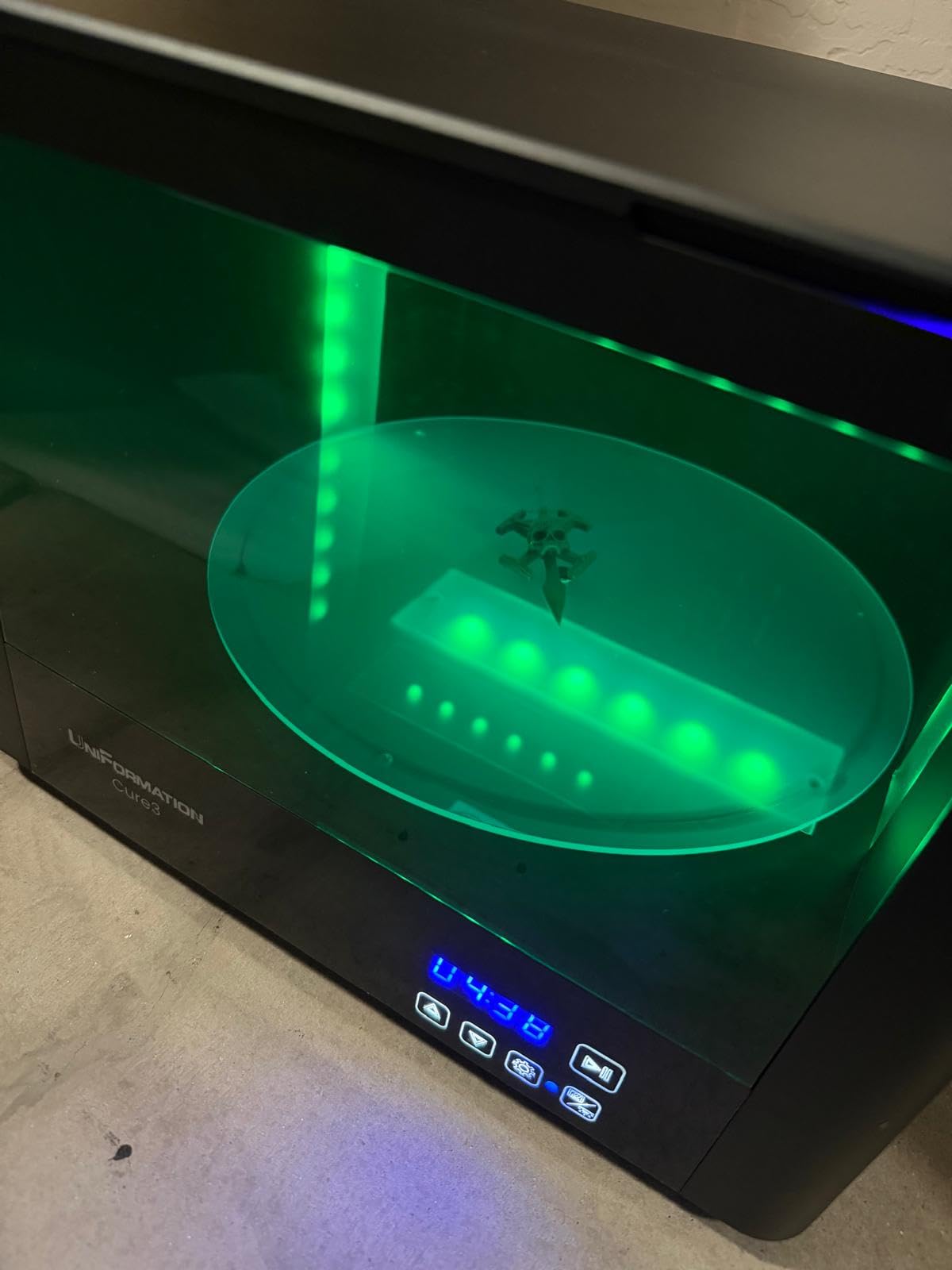
The 500 cm3 activated carbon filter with a 4000 RPM internal circulation fan is aimed at odour, and for anyone printing in an apartment it is a real advantage over an open cure box. It will not filter IPA vapour during a wash, since this machine does not wash, but it keeps the cure stage from adding to a shared-space problem.
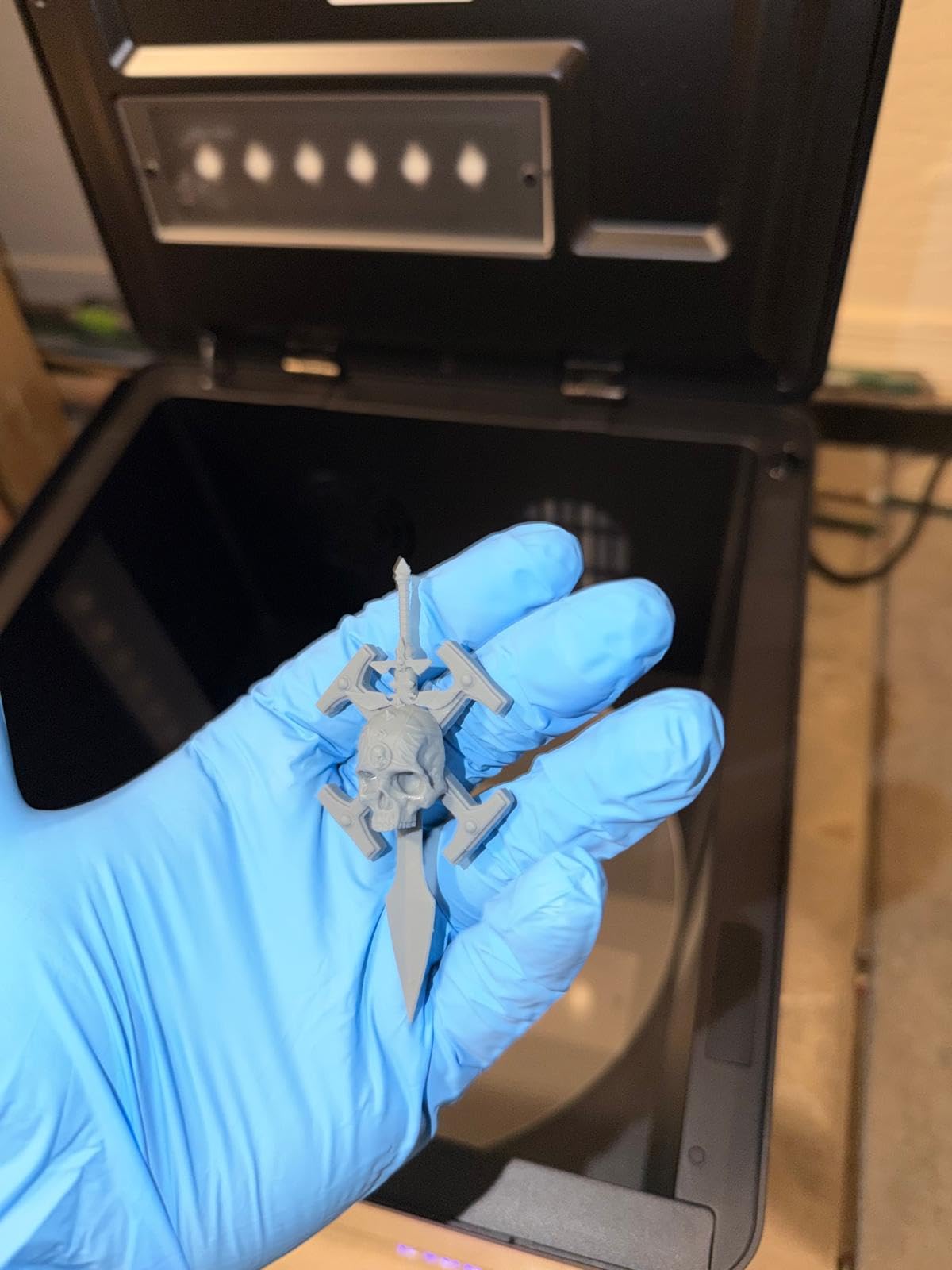
A 282mm by 162mm curing area fits a large model or a batch of smaller ones, and it is compatible with GK3, GK3 Pro and other LCD, DLP and SLA printers up to 10.3 inches. A protective case is supplied so you can watch a cure without sitting in the UV path.
Why you may need two devices instead of one
This is a cure and dry box. There is no washing basket and no wash mode, so you still need a wash station or a manual IPA rinse with a brush and an ultrasonic cleaner. If you are starting from nothing, budget for two things or accept a jar for washing while this machine handles the finish.
That split is not a compromise for many workflows. Washing is a five-minute manual job on one plate, whereas curing is where consistency matters and where small mistakes show up permanently on the part. A dedicated cure box with proper drying is a defensible way to spend a limited budget.
Where this station falls short
Twenty-four reviews is a thin base, and there is no long-term owner feedback on durability yet. That is the honest caveat on an otherwise well-specified box: you are buying a feature set with limited field history behind it.
It is also categorised under 3D Printer Parts and Accessories rather than 3D Printers, which is a small signal about how the manufacturer positions it. Treat the heated drying as the reason to buy, not the UV specification.
How to Choose a Resin Wash and Curing Station
Seven questions decide which machine is right, and answering them in order saves you from buying a station that cannot take your build plate. Start with size, because everything else is negotiable and size is not.
1. Match the station to your printer build plate
The build plate diagonal, not the printer’s screen size or its marketing name, determines what fits. Compare the plate dimensions against the wash container and the cure area before you order, because a station that only takes loose prints turns your plate-hung workflow back into a manual job.
As a practical map: printers with build plates up to about 7.3 inches, including most Mars and Photon Mono models, fit the ANYCUBIC Wash and Cure 3, the ELEGOO Mercury Plus 2.0 and the Creality UW-01. Stations with 8L tanks and chambers sized around 10.3 inches, such as the Phrozen kit and the UniFormation Cure3, cover mid-size printers including Saturn-class hardware. Printers up to 13.6 inches need the large-format class represented by the ANYCUBIC Wash and Cure Max 3.
If you are unsure, size up. A station that is too large wastes bench space; a station that is too small wastes your evening every time you post-process.
2. Decide between 2-in-1, separate units and cure-only
A 2-in-1 puts the wash tank and cure chamber in one box. It is compact, cheaper to store, and simpler to set up, which makes it right for most single-printer setups. The cost is serial processing: you wait for the wash to finish before the cure starts.
Separate units double the footprint but let you run wash and cure in parallel, which roughly halves post-processing time on busy days. They are the better choice for batch work and small studios.
A cure-only box handles the finish step, which is where consistency matters most, and pairs naturally with a manual wash or an existing ultrasonic cleaner. It is the cheapest route to a good result if you only print occasionally.
3. Check which resin you actually use
Standard photopolymer resin is washed with isopropyl alcohol and every station on this list handles that. Water-washable resin is different: it is cleaned with detergent and often running water, and some machines are explicitly not designed for it.
The ELEGOO Mercury Plus 2.0 is the clearest example in this group, with reviewers noting it is not built for water-washable resin. If that is your resin, check your machine’s manual and your resin’s instructions before immersing anything, because wash time, agitation and disposal all differ. Do not pour detergent-based wash water into a solvent recovery plan.
4. Understand 405nm and what irradiance actually means
405nm is the wavelength matched to standard photopolymer photo-initiators, and virtually every consumer resin cures there. Two machines both claiming 405nm are not equivalent, and irradiance is the number that separates them.
Irradiance, measured in uW/cm2 or mW/cm2, is the UV energy delivered per unit area per unit time, and it is the real measure of cure speed. The ANYCUBIC Wash and Cure 3 delivers 30,000 uW/cm2 within 1-3cm from its gooseneck, while the Wash and Cure Max 3 delivers 25,000 uW/cm2 at 18cm. Higher irradiance at close range means shorter cycles and better reach into cavities, but it also means easier over-curing, which is why the timer is a starting point rather than a rule.
5. Plan for drying between wash and cure
Drying is the step most guides treat as optional and most failures trace back to. Residual IPA on a print gets trapped under the UV-cured skin, and the result is white marks, cloudy patches and micro-cracks that appear days later. At minimum, let prints air-dry for 10 to 15 minutes after washing.
A heated drying stage does it faster and more reliably. The Phrozen kit has an integrated fan drying mode, and the UniFormation Cure3 pairs a 0-15 minute heated timer with its cure chamber. If you print clear or translucent resin, where trapped solvent is most visible, treat this as a must-have rather than a nice-to-have.
6. Budget for solvent, gloves and ventilation
IPA is a real ongoing cost, and it scales with how much you print. Wash roughly every 30 models rather than after every plate, filter the solvent, and top it up instead of replacing it. Larger machines help here: the ANYCUBIC Wash and Cure Max 3 dual cleaning mode claims roughly 50% detergent savings versus an 8.5L immersion unit because it uses about 4L for large models.
Wear nitrile gloves. Uncured resin on your hands is the fastest route to a sensitiser reaction, and IPA-sticky forearms mean you handled something you should not have. Run washes with a window open or an extraction fan, and never leave a wash container open on a shelf. Spent resin-contaminated IPA should not go down a household drain; check your local disposal rules before you generate any.
7. Compare noise and bench space
Noise is the most commonly cited complaint in this category and the least considered at purchase time. The ELEGOO Mercury Plus 2.0 has beeps, fan spin-up and stepper whine, mitigated by its fan-less cure mode. The ANYCUBIC Wash and Cure 3 is quieter overall thanks to its closed structure and software optimisation.
Bench space matters just as much. The compact units measure roughly 8 to 9 inches square and about 14 to 15 inches tall. The Phrozen kit needs room for two separate machines. The ANYCUBIC Wash and Cure Max 3 needs a 20 x 20 x 25 inch footprint with clearance to open the chamber. Measure before you order, not after.
One last check: make sure you have a way to see and film your finished work. A clean, evenly cured miniature deserves a proper photo, and if you already shoot resin art you will know the difference between a phone snap and a lit turntable shot. Our camera picks for resin art videos covers that side if you want to document a print batch properly.
Frequently Asked Questions
What is the best wash and cure station for resin 3D printing?
For most people printing on Mars and Photon Mono class printers, the ANYCUBIC Wash and Cure 3 is the strongest all-round choice, with a 4L wash bucket, a gooseneck light delivering 30,000 uW/cm2 and a dual-height basket that fits plates up to 7.3 inches. Larger printers need a bigger machine, such as the ANYCUBIC Wash and Cure Max 3 for plates up to 13.6 inches.
Is a wash and cure station worth it?
Yes, once you print regularly. A station gives you repeatable wash and cure times instead of guesswork, removes sticky uncured resin, and reduces skin contact with liquid resin that can sensitise. Users on resin printing forums describe it as the biggest quality-of-life upgrade after the printer. You still buy IPA and still need gloves and ventilation, so it saves effort rather than money.
What is the difference between 2-in-1 and 3-in-1 wash and cure stations?
A 2-in-1 has a wash tank and a cure chamber in the same box, so washing and curing happen one after the other. A 3-in-1 adds automatic liquid fill and drain pumps, meaning the machine moves solvent in and out for you instead of you pouring it. That reduces spills and fumes but adds cost, plumbing and failure points. Separate wash and cure machines offer the opposite tradeoff: more space, but you can run both at once.
How do I choose the right wash and cure station for my printer size?
Compare your build plate diagonal against the wash container and cure area before ordering. Stations built for plates up to about 7.3 inches cover most Mars and Photon Mono printers. Tanks and chambers sized near 10.3 inches cover Saturn-class hardware. Printers up to 13.6 inches need a large-format machine. If your plate does not fit, you will be removing prints individually, which defeats the purpose.
Can you wash a resin print with the build plate still attached?
Yes, if the machine supports hang-state washing and your plate fits the bracket. The ELEGOO Mercury Plus 2.0 and the Creality UW-01 both wash a full build plate with the model still attached, which saves time and avoids prying prints off with a spatula. Very fragile models or very tall builds may still be better washed loose in the basket, where the agitator acts more gently.
How do I know when a resin print is fully cured?
A fully cured print is hard and rigid rather than rubbery, has no tacky-to-touch patches, and shows no white or cloudy marks when you flex it slightly. If the surface dents under a fingernail, it needs more time. If it is rigid but slightly flexible, that is normal for most resins. Always dry the print fully before curing it, or solvent trapped under the cured skin will show up as white marks.
Final Verdict by Printer Size
The best resin washing and curing stations in 2026 come down to printer size more than anything else. Printers up to 7.3 inches are served best by the ANYCUBIC Wash and Cure 3, which pairs the widest review history here with a gooseneck light that actually reaches into hollow prints. If you want a metal body and can tolerate the noise, the ELEGOO Mercury Plus 2.0 is the more durable machine, and its hang-state washing handles a whole Mars plate at once.
Saturn-class and larger printers should look at the Phrozen Wash and Cure Kit for parallel wash and cure plus the fan drying that prevents white marks, or the UniFormation Cure3 if drying quality matters more to you than having a washer in the box. Printers up to 13.6 inches have exactly one answer in this group, and that is the ANYCUBIC Wash and Cure Max 3 with its spray rinse and 3KG basket.
Measure your build plate, check which resin you use, then pick from there. And if you plan to photograph the results, our portable power station guide is useful for lighting a turntable shoot away from mains outlets.