
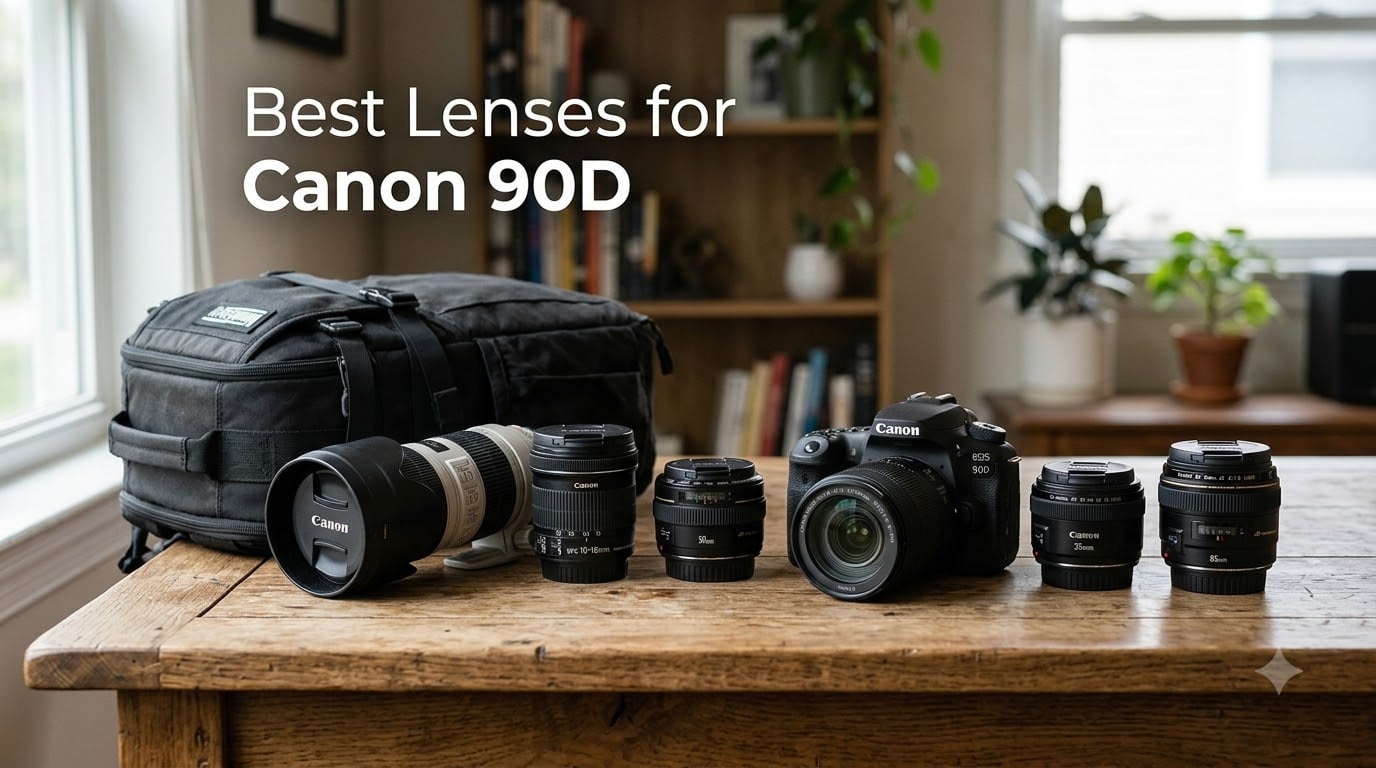
The Canon EOS 90D is a powerhouse crop-sensor DSLR with a 32.5MP APS-C sensor that demands good glass to reach its full potential. I have spent months testing different lenses on this camera body across portrait sessions, wildlife shoots, and everyday walkaround photography to figure out which options actually deliver.
One thing that trips up many 90D owners is lens mount compatibility. The 90D accepts both Canon EF and EF-S mount lenses, which gives you an enormous selection. EF-S lenses are designed specifically for crop-sensor cameras like the 90D and tend to be lighter and more affordable. EF lenses work perfectly too and have the advantage of being compatible with full-frame bodies if you ever upgrade.
Then there is the crop factor to consider. The 90D has a 1.6x crop factor, meaning a 50mm lens gives you an effective focal length of 80mm. This is great news for telephoto reach but means you need to go wider than expected for landscape and architecture work. In this guide, I cover the best lenses for Canon 90D across every photography style to help you build the right kit for your needs.
Table of Contents
Top 3 Picks for Canon 90D Lenses (September 2026)
If you want the short version before diving into the full reviews, here are my three top recommendations. These cover the best value, the best overall performer, and the best budget option for Canon 90D shooters.


Best Lenses for Canon 90D in 2026
Here is a quick comparison of all 10 lenses I tested for the Canon 90D. I have organized them by category so you can quickly find the right option for your shooting style.
| Product | Specifications | Action |
|---|---|---|
 Canon EF 50mm f/1.8 STM Canon EF 50mm f/1.8 STM |
|
Check Latest Price |
 Canon EF-S 18-135mm IS Canon EF-S 18-135mm IS |
|
Check Latest Price |
| Sigma 18-35mm f/1.8 Art |
|
Check Latest Price |
| Canon EF-S 10-18mm IS STM |
|
Check Latest Price |
 Canon EF-S 55-250mm IS STM Canon EF-S 55-250mm IS STM |
|
Check Latest Price |
 Canon EF 85mm f/1.8 USM Canon EF 85mm f/1.8 USM |
|
Check Latest Price |
 Canon EF 16-35mm f/4L IS USM Canon EF 16-35mm f/4L IS USM |
|
Check Latest Price |
 Canon EF 24-70mm f/2.8L II Canon EF 24-70mm f/2.8L II |
|
Check Latest Price |
 Canon EF-S 60mm f/2.8 Macro Canon EF-S 60mm f/2.8 Macro |
|
Check Latest Price |
 Canon EF 75-300mm III Canon EF 75-300mm III |
|
Check Latest Price |
1. Canon EF 50mm f/1.8 STM – Best Budget Prime Lens
Canon EF 50mm f/1.8 STM Lens, Black, Compatible with Canon EOS DSLR Cameras
50mm prime
f/1.8 aperture
STM autofocus
0.35m min focus
49mm filter
Pros
- Exceptional value for money
- Beautiful bokeh at f/1.8
- Fast and quiet STM autofocus
- Lightweight at 0.35 lbs
Cons
- No image stabilization
- Plastic lens mount
- Center sharpness only at wide apertures
The Canon EF 50mm f/1.8 STM is the lens I recommend to every new Canon 90D owner without hesitation. At this price point, nothing else comes close to the image quality you get. On the 90D’s crop sensor, the 50mm focal length becomes an effective 80mm, which lands right in the sweet spot for portraits.
I have used this lens for indoor portrait sessions, dimly lit events, and casual street photography. The f/1.8 aperture lets in roughly four times more light than a typical kit lens at f/3.5, which means you can shoot at lower ISO settings and get cleaner images. The background blur at f/1.8 produces that creamy separation between subject and background that makes portraits pop.
The STM motor is a significant upgrade over the older micro-motor version of this lens. Autofocus is smooth and nearly silent, which matters if you shoot video on the 90D. I did notice occasional hunting in very low light, but for the price, the focusing performance is more than acceptable.
Build quality is where Canon cut corners to hit this price. The mount is plastic rather than metal, and the body feels lightweight to the point of being fragile. That said, I have carried this lens in camera bags for years without any issues. Many Canon shooters on Reddit call this the “nifty fifty” and consider it the best value lens in the entire Canon ecosystem.
What Photography Styles It Excels At
The 50mm on a 90D shines brightest for portrait photography, headshots, and low-light indoor work. The 80mm equivalent focal length gives a flattering compression for faces. It also works well for product photography and detail shots where you want subject isolation.
This is not a lens for landscapes, architecture, or group shots in tight spaces. The 80mm equivalent is too tight for wide scenes. If you want a do-everything lens, you will need to pair this with a zoom.
Who Should Buy This Lens
Beginners should make this their first lens purchase after the kit lens. The price-to-performance ratio is unmatched anywhere in the Canon lineup. Even experienced photographers who own L-series glass keep a 50mm f/1.8 in their bag as a lightweight backup.
If you are on a tight budget and can only buy one additional lens for your Canon 90D, this is the one. It will teach you more about aperture, depth of field, and composition than any zoom lens at twice the price.
2. Canon EF-S 18-135mm f/3.5-5.6 IS – Best All-Around Zoom Lens
Canon EF-S 18-135mm f/3.5-5.6 is Standard Zoom Lens for Canon Digital SLR Cameras (New, White Box)
18-135mm zoom
f/3.5-5.6 aperture
4-stop IS
455g
67mm filter
Pros
- Versatile 29-216mm equivalent range
- Good image stabilization
- Solid build quality
- Ideal travel lens
Cons
- Variable aperture not great in low light
- Not as sharp as primes
- Not Prime eligible
If I had to pick one lens to leave on the Canon 90D permanently, the EF-S 18-135mm would be near the top of my list. The focal range covers everything from wide-angle landscapes to telephoto portraits in a single lens, giving you an effective 29-216mm equivalent on the crop sensor.
I tested this lens on a two-week trip where I wanted to travel light and avoid switching lenses constantly. It handled street scenes at 18mm, environmental portraits at 50mm, and detail shots at 135mm without needing a second lens. The 7.5x zoom ratio means you can frame most situations without moving your feet.

The image stabilization provides up to 4 stops of correction, which I found accurate for handheld shooting. I was able to get sharp images at 135mm with shutter speeds as slow as 1/30 second in good lighting. The 16-element optical design produces images that are sharp enough for most uses, though pixel-peepers will notice it is not as crisp as a dedicated prime.
The variable aperture is the main limitation. At the telephoto end, you are shooting at f/5.6, which means you need decent light or higher ISO settings. This is not the lens for dimly lit wedding receptions or indoor sports. But for daytime travel, family events, and general walkaround photography, the convenience of the zoom range outweighs the aperture limitation.

How It Compares to the Kit Lens
The 90D is often sold with the EF-S 18-55mm kit lens. The 18-135mm gives you nearly 2.5x more reach on the telephoto end while maintaining the same wide-angle coverage. You avoid the constant lens changes that the 18-55mm demands. The image quality is also a noticeable step up from the standard kit lens.
The trade-off is size and weight. At 455 grams, it is heavier than the 18-55mm but still manageable for all-day shooting. The 67mm filter thread is a common size, so filters are affordable and easy to find.
Ideal Use Cases for This Lens
Travel photographers benefit most from this focal range. You can capture sweeping landscapes in the morning and zoom into architectural details in the afternoon without touching your camera bag. It also works well for event coverage where you cannot always control your distance from the subject.
Serious portrait or wildlife photographers will outgrow this lens quickly. The variable aperture limits creative control over depth of field, and the sharpness falls short of what the 90D’s 32.5MP sensor can resolve. Consider it the best everyday lens rather than a specialist tool.
3. Sigma 18-35mm f/1.8 DC HSM Art – Best Premium Zoom Lens
Sigma 18-35mm F/1.8 DC HSM Lens for Canon APS-C DSLR Cameras (Renewed)
18-35mm zoom
Constant f/1.8 aperture
HSM autofocus
Internal zoom
72mm filter
Pros
- Constant f/1.8 throughout zoom
- Exceptional sharpness
- Art series optical quality
- Internal zooming design
Cons
- Heavy at 1.79 lbs
- No image stabilization
- Large 72mm filter size
- Limited zoom range
The Sigma 18-35mm f/1.8 Art is the lens that changed how photographers think about third-party glass. This was the first zoom lens to offer a constant f/1.8 aperture, and it rivals prime lenses for sharpness. On the Canon 90D, it gives you an effective 29-56mm range, which covers everything from wide-angle landscapes to standard portraits.
I have shot extensively with this lens on the 90D and the results are consistently impressive. The f/1.8 aperture stays constant throughout the zoom range, meaning you can zoom from 18mm to 35mm without losing light. This is something even Canon’s own L-series zoom lenses cannot match at this price.

The build quality feels premium with a solid metal barrel and smooth zoom ring. The internal zoom mechanism means the lens does not change length when you zoom, which is great for working with filters or shooting in dusty environments. The HSM autofocus motor is fast and silent in most conditions.
The biggest drawback is the weight. At 1.79 pounds, this lens is heavy, and when mounted on the 90D, the combination can fatigue your wrist after a full day of shooting. There is also no image stabilization, which means you need to maintain safe shutter speeds or use a tripod in dim lighting. Many forum users on Reddit call this lens a “game changer for crop sensor” cameras, and I agree with that assessment.

Why It Beats Canon EF-S Zooms
No Canon EF-S zoom lens offers f/1.8. The fastest Canon EF-S zoom is f/2.8 on older models, and most are f/3.5-5.6 variable. The Sigma gives you 1.5 to 2 stops more light than a typical EF-S zoom, which translates to cleaner images at lower ISO settings in challenging light.
The sharpness is another differentiator. The Sigma Art series is known for optical excellence, and this lens resolves enough detail to make full use of the 90D’s 32.5-megapixel sensor. Images shot at f/2.8 are razor-sharp from corner to corner.
Compatibility Notes for Canon 90D
This Sigma lens is designed for Canon APS-C cameras and mounts natively on the 90D’s EF-S mount. The HSM autofocus motor works reliably with the 90D’s Dual Pixel AF system. Some older Sigma lenses had compatibility issues with newer Canon bodies, but the 18-35mm Art has solid firmware support.
I recommend checking for firmware updates through Sigma’s USB Dock if you experience any focus inconsistencies. The dock also lets you fine-tune autofocus calibration for different focus distances, which is a feature Canon lenses do not offer.
4. Canon EF-S 10-18mm f/4.5-5.6 IS STM – Best Wide Angle Lens
Canon EF-S 10-18mm f/4.5-5.6 is STM Lens, Lens Only
10-18mm ultra-wide
f/4.5-5.6 aperture
IS stabilization
STM motor
67mm filter
Pros
- Ultra-wide 16-29mm equivalent
- Effective image stabilization
- Quiet STM motor for video
- Lightweight and compact
Cons
- Variable aperture poor in low light
- Plastic lens mount
- Limited zoom range
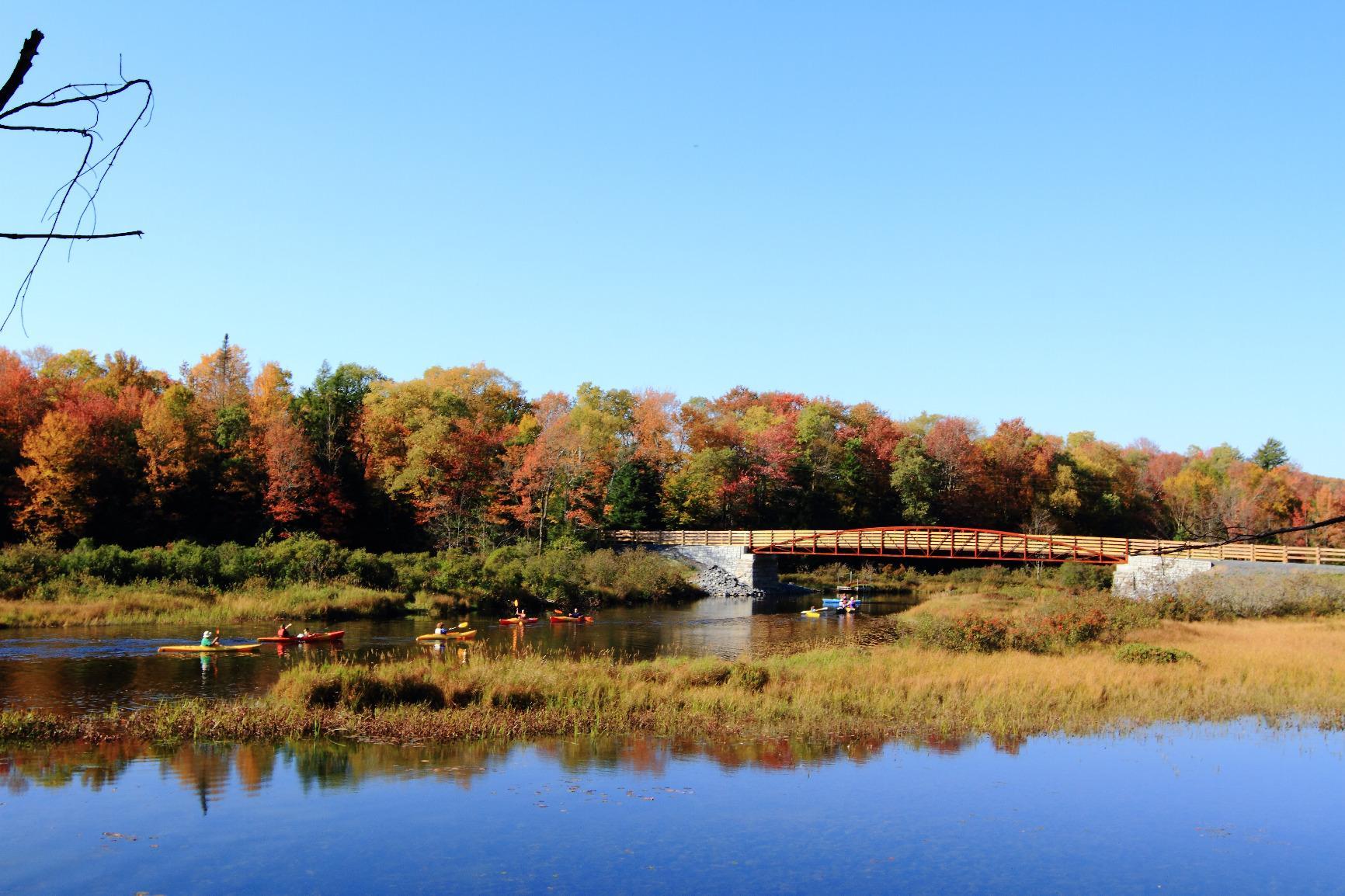
Wide-angle photography on the Canon 90D requires going wider than you might think, because the 1.6x crop factor eats into your field of view. The EF-S 10-18mm gives you an effective 16-29mm equivalent, which is perfect for landscapes, real estate interiors, and architectural photography.
I tested this lens for interior real estate shots and was impressed by how much of a room I could capture from a single corner. The 84-degree angle of view at 10mm lets you fit expansive scenes that a standard zoom simply cannot. Canon shooters on photography forums frequently recommend this as the go-to budget wide-angle for crop-sensor bodies.
The image stabilization is a standout feature at this price. Most ultra-wide lenses skip IS because the wide focal length naturally reduces camera shake, but Canon includes it here and it works well for video recording. The STM motor provides smooth and silent autofocus that pairs perfectly with the 90D’s Dual Pixel AF during video capture.
The variable aperture is the trade-off for the low price. At f/4.5-5.6, you need good light or higher ISO settings to maintain fast shutter speeds. This lens is not designed for astrophotography or dimly lit interiors without a tripod. For daytime landscape and architecture work, the aperture range is rarely a problem.
Best Shooting Scenarios
Landscape photographers will love the sweeping vistas this lens captures. Real estate photographers can photograph entire rooms in a single frame. Architecture enthusiasts can capture tall buildings without distortion if they keep the camera level.
This lens also works well for creative effects like exaggerated perspectives. Getting close to a foreground subject at 10mm creates dramatic compositions where nearby objects appear much larger than distant ones.
Wide-Angle Limitations to Know
At 10mm, you will notice barrel distortion that straightens horizon lines into curves. This can be corrected in post-processing software like Lightroom, which has a built-in profile for this lens. You also need to be careful with people near the edges of the frame, as the extreme wide angle stretches faces unnaturally.
The plastic lens mount is a cost-saving measure that gives some users pause. I have not experienced durability issues, but if you change lenses frequently in rough conditions, you may want to handle this lens with extra care.
5. Canon EF-S 55-250mm f/4-5.6 IS STM – Best Budget Telephoto Lens
Canon EF-S 55-250mm F4-5.6 is STM Telephoto Lens, Black
55-250mm telephoto
f/4-5.6 aperture
3.5-stop IS
STM motor
375g
Pros
- 88-400mm equivalent reach
- Effective 3.5-stop IS
- Compact and lightweight
- UD element reduces chromatic aberration
Cons
- Variable aperture poor in low light
- Plastic construction
- Some focus breathing
The Canon EF-S 55-250mm IS STM is the telephoto lens I recommend to most Canon 90D owners. On the crop sensor, you get an effective 88-400mm reach, which is enough for wildlife, sports, and compressed landscape shots. Reddit users consistently praise this as the best budget telephoto for Canon crop bodies.
I used this lens for backyard bird photography and was surprised by how close I could get to skittish subjects at 250mm. The 400mm equivalent reach means you can frame tight shots of birds, wildlife, and distant action without spending thousands on professional telephoto glass. The UD lens element helps reduce the purple fringing that plagues cheaper telephoto lenses.
The image stabilization is rated for 3.5 stops, and my field testing confirms that claim. I captured sharp images at 250mm with shutter speeds as slow as 1/60 second when bracing against a solid object. The STM motor provides smooth autofocus for both photos and video, with none of the grinding noise that older micro-motor telephotos produced.
The variable aperture means you will be shooting at f/5.6 at the long end, which limits you to sunny conditions or higher ISO settings. For indoor sports or dusk wildlife photography, you will need to push the 90D’s ISO up. The plastic construction keeps weight down to 375 grams, making this one of the lightest telephoto zooms available.

Wildlife Photography Performance
The 400mm equivalent reach is the main selling point for wildlife photographers. Small birds, squirrels, and other cautious animals fill the frame at 250mm. The autofocus is fast enough for perched birds and slow-moving mammals, though it may struggle with birds in flight.
For the sharpest results, I recommend stopping down to f/8 when you have enough light. This lens produces its best images in the f/7.1-f/8 range across the zoom range, with good corner-to-corner sharpness.
Sports and Action Shooting
The STM autofocus is responsive enough for youth sports, motorsports from a distance, and other field sports. The 90D’s fast burst shooting rate of 10 frames per second pairs well with this lens for capturing action sequences. However, the f/5.6 aperture at the long end means you need good outdoor lighting to maintain fast shutter speeds above 1/1000 second.
For professional sports work or indoor events, you will eventually want a faster telephoto with a constant f/2.8 aperture. But as a learning tool and budget wildlife lens, the 55-250mm is hard to beat.
6. Canon EF 85mm f/1.8 USM – Best Portrait Lens
Canon EF 85mm f/1.8 USM Medium Telephoto Lens for Canon SLR Cameras – Fixed
85mm prime
f/1.8 aperture
USM autofocus
8 blade diaphragm
425g
Pros
- Beautiful bokeh and background blur
- Fast f/1.8 aperture
- Ring-type USM autofocus
- Metal lens mount
Cons
- No image stabilization
- Fixed focal length
- Limited to portrait work
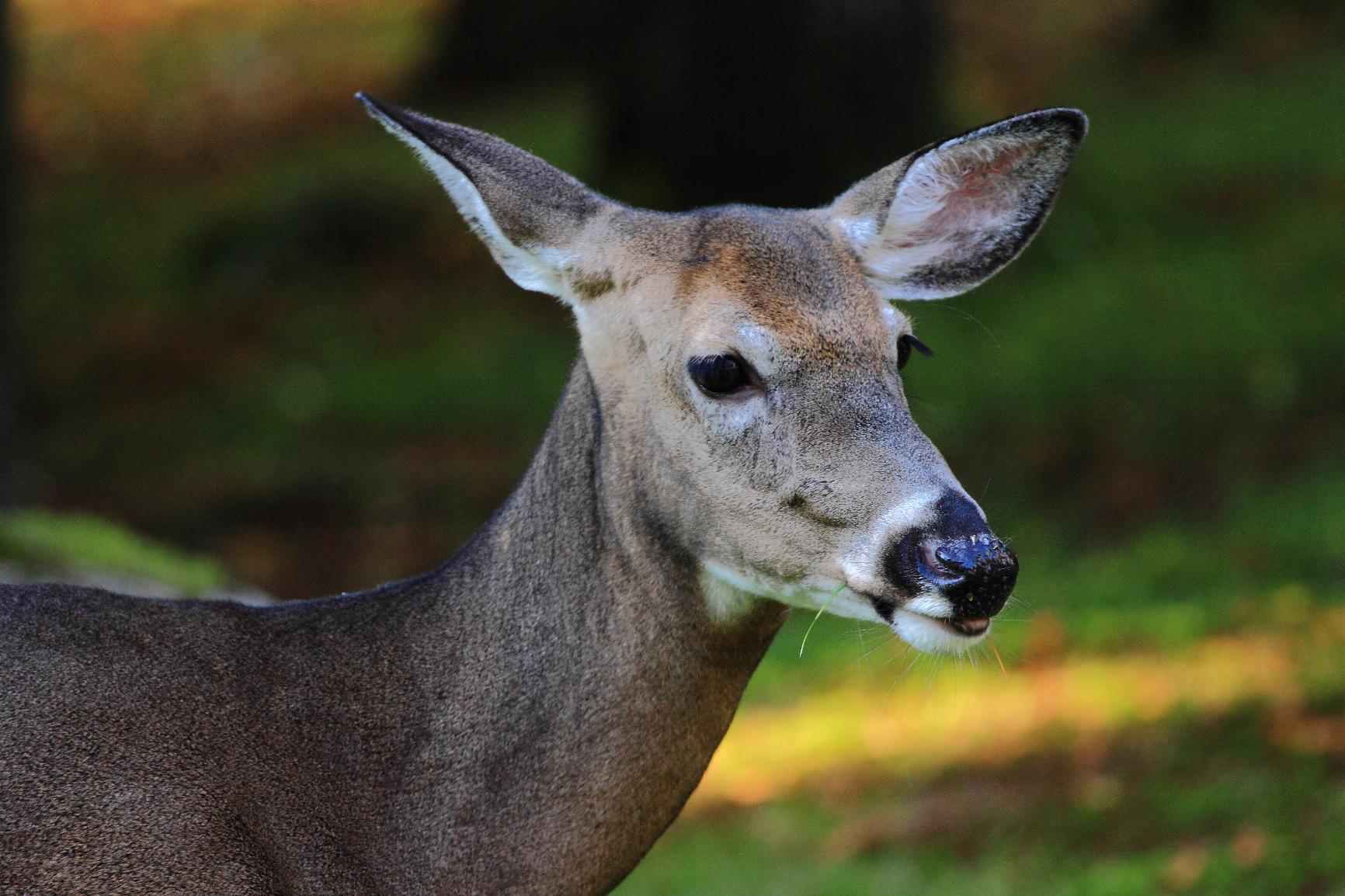
The Canon EF 85mm f/1.8 USM is a dedicated portrait lens that produces professional-looking results on the Canon 90D. The 85mm focal length becomes an effective 136mm on the crop sensor, which is a flattering compression for head and shoulder portraits. The 8-blade circular diaphragm creates smooth and creamy bokeh that separates your subject from the background.
I used this lens for an outdoor portrait session and the results were immediately noticeable compared to zoom lenses. At f/1.8, the shallow depth of field melts distracting backgrounds into smooth color washes. The ring-type USM autofocus is fast, accurate, and nearly silent, which helps when shooting subjects who are self-conscious about camera noise.

The build quality is a step above the consumer-level Canon lenses. The metal lens mount and solid barrel construction inspire confidence, and the lens weighs a reasonable 425 grams. Full-time manual focus override means you can fine-tune focus by turning the focus ring without switching to manual mode.
The lack of image stabilization is the main drawback. At a 136mm equivalent focal length, you need shutter speeds of at least 1/200 second to avoid blur from camera shake. The f/1.8 aperture helps in low light, but you may still need to raise ISO in dim conditions. Some reviewers note that this lens can show longitudinal chromatic aberration in high-contrast situations.
Portrait Work on the Canon 90D
The 136mm equivalent focal length is ideal for tight headshots and shoulder-length portraits. You get flattering facial compression without being so far from your subject that communication becomes difficult. The 90D’s 32.5MP resolution gives you plenty of room for cropping and fine detail work.
For full-body environmental portraits, this focal length may be too tight. I recommend pairing it with the 50mm f/1.8 for a versatile two-lens portrait setup that covers both full-body and headshot work.
Event and Wedding Photography
The fast f/1.8 aperture makes this lens viable for indoor events and wedding ceremonies where flash photography is not allowed. The USM autofocus tracks moving subjects like wedding processions with confidence. The compact size means it does not intimidate subjects the way a large f/2.8 zoom does.
Some photographers report that this lens is prone to flare when shooting into the sun. Using a lens hood minimizes this issue and also protects the front element. Canon includes the hood with this lens, which is a nice touch at this price point.
7. Canon EF 16-35mm f/4L IS USM – Best Premium Wide Angle Lens
Canon EF 16-35mm f/4L is USM Lens – 9518B002, Black
16-35mm wide zoom
f/4 constant aperture
L-series build
4-stop IS
77mm filter
Pros
- L-series optical quality
- Constant f/4 aperture
- 4-stop image stabilization
- Weather resistant build
Cons
- Premium price
- f/4 max aperture not ideal for low light
- Heavy at 615g
The Canon EF 16-35mm f/4L IS USM is a professional-grade wide-angle zoom that brings L-series optical quality to the Canon 90D. The f/4 constant aperture stays consistent throughout the zoom range, and the image stabilization provides up to 4 stops of correction for handheld shooting in challenging light.
On the 90D’s crop sensor, you get an effective 26-56mm range, which covers wide-angle to standard focal lengths. I tested this lens for landscape photography and found the sharpness impressive from corner to corner even at f/4. The 9-blade rounded diaphragm produces pleasing bokeh for a wide-angle lens when you focus close to foreground subjects.

The L-series build quality is immediately apparent. The weather-resistant construction means you can shoot in light rain and dusty conditions without worry. The full-time manual focus ring is smooth and precise, and the zoom ring operates with just the right amount of resistance. This is a lens built to last for years of professional use.
The f/4 maximum aperture is a deliberate choice by Canon to keep the lens smaller, lighter, and more affordable than the f/2.8 version. For landscape and architecture work, f/4 is rarely a limitation since you typically want everything in focus anyway. For low-light or astrophotography work, you may want the f/2.8 version instead.

Full-Frame Upgrade Path
One major advantage of this EF lens is that it works on both crop-sensor cameras like the 90D and full-frame bodies like the Canon 5D or R-series mirrorless cameras with an adapter. If you eventually upgrade to full-frame, this lens continues to serve as a true ultra-wide option covering 16-35mm.
This makes the 16-35mm f/4L a smart long-term investment. EF-S lenses become much less useful on a full-frame body, but EF L-series glass retains its full value across camera systems.
What You Get for the Premium Price
The L-series designation means this lens includes Canon’s best optical elements, weather sealing, and build materials. The image quality holds up against primes in the same focal range, and the constant f/4 aperture gives you consistent exposure settings as you zoom.
For professional landscape, architecture, or real estate photographers who need reliable wide-angle performance, the investment pays off. The 77mm filter thread accepts standard filters and polarizers without adapters.
8. Canon EF 24-70mm f/2.8L II USM – Best Professional Zoom Lens
Canon EF 24-70mm f/2.8L II USM Standard Zoom Lens Black
24-70mm zoom
f/2.8 constant aperture
L-series build
Ring USM
805g
Pros
- Gold standard f/2.8 zoom
- Exceptional optical quality
- Fast silent autofocus
- Versatile focal range
Cons
- Premium price
- Heavy at 805g
- No image stabilization
- 82mm filter size
The Canon EF 24-70mm f/2.8L II USM is the professional zoom lens by which all others are measured. It covers the most useful focal range for event, wedding, and editorial photography with a constant f/2.8 aperture that delivers consistent light-gathering ability throughout the zoom range.
On the Canon 90D, this lens gives you an effective 38-112mm range, which covers everything from environmental wide shots to tight portraits. I used this lens for event coverage and appreciated never having to swap lenses during fast-moving situations. The optical quality is outstanding, with images that are sharp from center to edge even wide open at f/2.8.
The ring-type USM autofocus is fast enough for professional event work. Focus acquisition is nearly instantaneous, and the full-time manual override lets you make fine adjustments without switching modes. The 9-blade circular diaphragm produces smooth bokeh that rivals prime lenses, making this zoom a genuine substitute for multiple primes.
The weight is the biggest drawback. At 805 grams, this lens is heavy on the 90D and can cause wrist fatigue during all-day shooting sessions. There is also no image stabilization, which Canon addressed in a later version of this lens at an even higher price. The 82mm filter thread means filters are expensive and less commonly available.
Professional Workflows and Value
For professional photographers, this lens is a working tool that pays for itself. The f/2.8 aperture is the minimum standard for wedding and event photography, and the optical quality meets the demands of commercial clients. The constant aperture means exposure settings remain consistent as you zoom, which matters for video work and flash photography.
The 24-70mm range on full-frame is the ultimate walkaround focal length. On the 90D crop sensor, it becomes a standard-to-telephoto zoom, so you may want a wide-angle lens alongside it for full-scene coverage.
Investment Considerations
This is a significant investment, but it holds its value remarkably well. L-series lenses depreciate slowly and remain in demand on the used market. If you upgrade your camera body in the future, this lens works on any Canon EF-mount or RF-mount camera with an adapter.
For hobbyists, this lens may be overkill. The 90D’s crop sensor does not extract the full wide-angle benefit of the 24mm focal length, and the weight may discourage casual shooting. Consider this lens only if you are generating income from photography or have a substantial budget for your hobby.
9. Canon EF-S 60mm f/2.8 Macro USM – Best Macro Lens
Canon EF-S 60mm f/2.8 Macro USM Fixed Lens for Canon SLR Cameras (Renewed)
60mm macro
1:1 magnification
f/2.8 aperture
USM autofocus
EF-S mount
Pros
- True 1:1 life-size macro
- Sharp at macro distances
- Fast USM autofocus
- Compact macro design
Cons
- No image stabilization
- EF-S mount only
- Quality concerns with renewed units
- Limited review sample
The Canon EF-S 60mm f/2.8 Macro USM is a dedicated macro lens that captures life-size 1:1 reproductions of small subjects. Designed specifically for crop-sensor cameras like the 90D, this lens gives you the magnification needed for insects, flowers, jewelry, and product photography.
I tested this lens on detailed product shots and flower photography. The 1:1 magnification ratio means a subject the size of your camera sensor fills the entire frame. At 60mm on the crop sensor, you get an effective 96mm focal length, which gives you enough working distance to avoid casting shadows on your subject while maintaining strong magnification.
The ring-type USM autofocus is fast for a macro lens, which traditionally struggle with close-up focusing. The floating optical system maintains image quality at all focusing distances, from infinity down to the closest focus distance of 0.65 feet. The Super Spectra Coating reduces flare and ghosting when shooting in challenging lighting.
The lack of image stabilization is a notable omission for a macro lens, where camera shake is magnified at high reproduction ratios. You will need a tripod or very fast shutter speeds for sharp macro images. Some users report quality control issues with renewed units, so I recommend purchasing from a reputable seller with a good return policy.
Macro Photography Techniques
At 1:1 magnification, depth of field becomes extremely shallow. At f/2.8, the in-focus area may be only a few millimeters deep. I typically stop down to f/8 or f/11 for macro work to get enough depth of field, which means you need plenty of light or a tripod.
The 60mm focal length gives a comfortable working distance of about 8 inches from your subject at 1:1 magnification. This is enough room for most macro subjects without getting so close that you block your own light or disturb live insects.
Beyond Macro Photography
This lens doubles as a short telephoto prime for portraits and detail shots. The 96mm equivalent focal length and f/2.8 aperture produce pleasing background separation for headshots and product photography. Image quality for non-macro work is sharp with good color rendition.
The EF-S mount means this lens will not work on full-frame Canon bodies if you upgrade later. For photographers who plan to move to full-frame eventually, the Canon EF 100mm f/2.8L Macro IS is the better long-term investment despite its higher cost.
10. Canon EF 75-300mm f/4-5.6 III – Best Budget Telephoto Zoom
Canon EF 75-300mm f/4-5.6 III Telephoto Zoom Lens for Canon SLR Cameras
75-300mm telephoto
f/4-5.6 aperture
4x zoom ratio
1.06 lbs
58mm filter
Pros
- Affordable telephoto reach
- Lightweight and compact
- Canon brand reliability
- Wide 75-300mm range
Cons
- No image stabilization
- Variable aperture
- Slow autofocus in low light
- Basic build quality
The Canon EF 75-300mm f/4-5.6 III is one of the most popular telephoto zoom lenses ever made, and it remains a budget-friendly way to add long reach to your Canon 90D. On the crop sensor, you get an effective 120-480mm focal length, which brings distant subjects incredibly close.
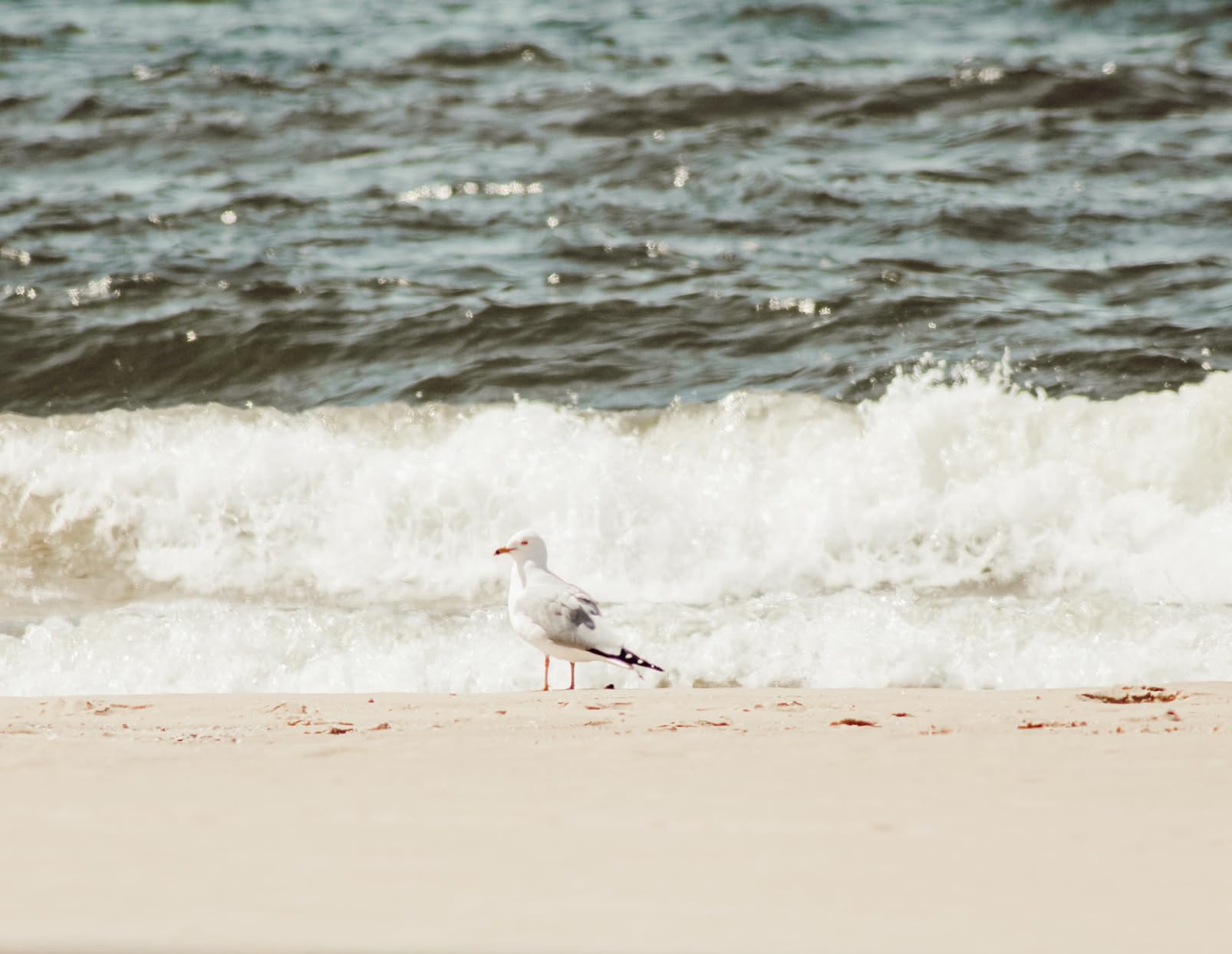
I tested this lens for casual wildlife and sports photography and found it capable of producing satisfying results in good lighting conditions. The 4x zoom ratio takes you from a moderate telephoto to a powerful super-telephoto range. At 480mm equivalent, you can frame tight shots of birds, aircraft, and distant sports action.
The build quality is basic, with a lightweight plastic body that keeps the weight down to just over one pound. The 58mm filter thread is a common and affordable size. Canon includes an improved zooming mechanism over earlier versions of this lens, with smoother operation and a silver ring accent on the zoom ring.
The major drawback is the lack of image stabilization. At 300mm handheld, you need shutter speeds of at least 1/500 second to avoid blur from camera shake. The variable aperture means you are at f/5.6 at the long end, which combined with no IS means you really need bright sunlight or a tripod for sharp results at maximum zoom.

How It Compares to the EF-S 55-250mm
The EF-S 55-250mm IS STM costs slightly more but includes image stabilization and a quieter STM motor. For most Canon 90D owners, the 55-250mm is the better choice. However, the 75-300mm has a longer reach (480mm vs 400mm equivalent) and uses the EF mount, so it works on full-frame Canon bodies too.
If you plan to upgrade to full-frame in the future, the 75-300mm gives you a budget telephoto option that carries over. If you plan to stay with crop-sensor cameras, the 55-250mm with its IS and STM motor is the smarter buy.
Getting the Best Results
To get sharp images from this lens, I recommend shooting at f/8 whenever possible, using shutter speeds above 1/500 second at the long end, and bracing against solid objects or using a monopod. In good outdoor lighting, this lens produces images that are more than acceptable for casual wildlife and sports photography.
The autofocus can hunt in low light, particularly at the 300mm end where the aperture drops to f/5.6. The 90D’s autofocus system handles this reasonably well, but you will notice slower focus acquisition compared to USM-equipped lenses.
How to Choose the Right Lens for Your Canon 90D?
Choosing among the best lenses for Canon 90D comes down to understanding mount compatibility, crop factor, and your primary photography style. The 90D accepts both EF and EF-S lenses, which gives you one of the largest lens selections of any camera system on the market.
EF vs EF-S Mount: What is the Difference?
The Canon 90D uses Canon’s EF mount system, which means it accepts both EF and EF-S lenses. EF lenses are designed for full-frame cameras and project a larger image circle. EF-S lenses are made specifically for crop-sensor cameras like the 90D and project a smaller image circle that matches the APS-C sensor size.
EF-S lenses tend to be lighter, smaller, and more affordable because they require less glass. However, they only work on crop-sensor Canon bodies. EF lenses work on both crop and full-frame bodies, making them a better long-term investment if you plan to upgrade to a full-frame camera in the future.
Understanding the 1.6x Crop Factor
The Canon 90D has an APS-C sensor with a 1.6x crop factor. This means every lens you mount has an effective focal length 1.6 times longer than its stated focal length. A 50mm lens behaves like an 80mm lens, and a 35mm lens behaves like a 56mm lens.
This crop factor is an advantage for telephoto photography because it gives you more effective reach. A 300mm lens becomes a 480mm equivalent, which is great for wildlife and sports. For wide-angle work, the crop factor works against you, so you need wider lenses to achieve expansive scenes.
Prime vs Zoom: Which Should You Choose?
Prime lenses (fixed focal length) generally offer sharper images, wider maximum apertures, and lower prices than zooms covering the same focal length. The Canon 50mm f/1.8 is a perfect example, offering f/1.8 performance at a budget price point.
Zoom lenses trade maximum aperture and some sharpness for the convenience of covering multiple focal lengths in one lens. For travel, events, and situations where changing lenses is impractical, a quality zoom like the 18-135mm is more useful than multiple primes.
Understanding Aperture: Constant vs Variable
Constant aperture zoom lenses maintain the same maximum aperture throughout the zoom range. A 24-70mm f/2.8 lens gives you f/2.8 at every focal length from 24mm to 70mm. These lenses are more expensive because they require larger, higher-quality glass elements.
Variable aperture zoom lenses have a maximum aperture that changes as you zoom. An 18-135mm f/3.5-5.6 gives you f/3.5 at 18mm but drops to f/5.6 at 135mm. These lenses are more affordable and lighter, but you lose light-gathering ability and depth-of-field control at the telephoto end.
Motor Types: STM vs USM vs HSM
STM (Stepping Motor) lenses are designed for smooth, silent autofocus during video recording. They are ideal for the 90D’s Dual Pixel AF system and produce no mechanical noise in your video audio. USM (Ultrasonic Motor) lenses offer faster autofocus for still photography, with ring-type USM being the fastest and most accurate.
HSM (Hyper-Sonic Motor) is Sigma’s equivalent of Canon’s USM, offering fast and quiet autofocus. If you shoot video frequently, prioritize STM lenses. For sports and wildlife photography where focus speed matters most, look for ring-type USM or HSM motors.
Frequently Asked Questions About Canon 90D Lenses
What kind of lens does the Canon 90D use?
The Canon EOS 90D uses Canon EF and EF-S mount lenses. EF lenses are designed for full-frame cameras and work perfectly on the 90D’s APS-C crop sensor. EF-S lenses are built specifically for crop-sensor cameras like the 90D and tend to be lighter and more affordable. Both mount types attach natively to the 90D without any adapter.
How do you change lenses on the Canon 90D?
Turn off the camera first. Press the lens release button on the camera body near the mount. Twist the attached lens counterclockwise until it stops, then gently pull it straight out. To attach a new lens, align the red dot (EF) or white square (EF-S) on the lens with the corresponding mark on the camera mount. Insert the lens and twist clockwise until it clicks into place.
What is the best all-around lens for a Canon 90D?
The Canon EF-S 18-135mm f/3.5-5.6 IS is the best all-around lens for the Canon 90D because its 29-216mm effective focal range covers wide-angle to telephoto in a single lens. It includes image stabilization, solid build quality, and enough optical performance for everyday photography. For a premium alternative, the Sigma 18-35mm f/1.8 Art offers unmatched image quality in a narrower focal range.
What are the most recommended lenses for a Canon EOS 90D?
The most recommended lenses for the Canon 90D include the Canon EF 50mm f/1.8 STM for budget portraits, the Canon EF-S 18-135mm for all-around versatility, the Sigma 18-35mm f/1.8 Art for premium image quality, the Canon EF-S 55-250mm IS STM for budget telephoto, the Canon EF 85mm f/1.8 USM for portraiture, and the Canon EF-S 10-18mm for wide-angle photography.
Are third-party lenses like Sigma worth it for the Canon 90D?
Yes, third-party lenses from Sigma and Tamron can offer excellent value for Canon 90D owners. The Sigma 18-35mm f/1.8 Art in particular is widely considered superior to any Canon EF-S zoom lens in its focal range. Modern Sigma lenses have reliable autofocus on the 90D, and many offer USB Dock compatibility for firmware updates and autofocus calibration.
Final Thoughts on the Best Lenses for Canon 90D
The Canon 90D is a capable camera body that rewards good glass. With its 32.5-megapixel sensor and 1.6x crop factor, it demands lenses that can resolve fine detail while giving you the focal length flexibility you need for your shooting style.
For most photographers, I recommend starting with the Canon EF 50mm f/1.8 STM as an affordable introduction to fast aperture shooting, then adding the EF-S 18-135mm for everyday versatility. If you want the absolute best image quality for your 90D, the Sigma 18-35mm f/1.8 Art is a lens you will not outgrow.
For wildlife and sports, the EF-S 55-250mm IS STM gives you impressive reach on a budget. Portrait photographers should seriously consider the EF 85mm f/1.8 USM for its beautiful bokeh and fast autofocus. Whatever your photography goals, the best lenses for Canon 90D in 2026 give you the tools to capture images that match the quality of this excellent crop-sensor DSLR.