
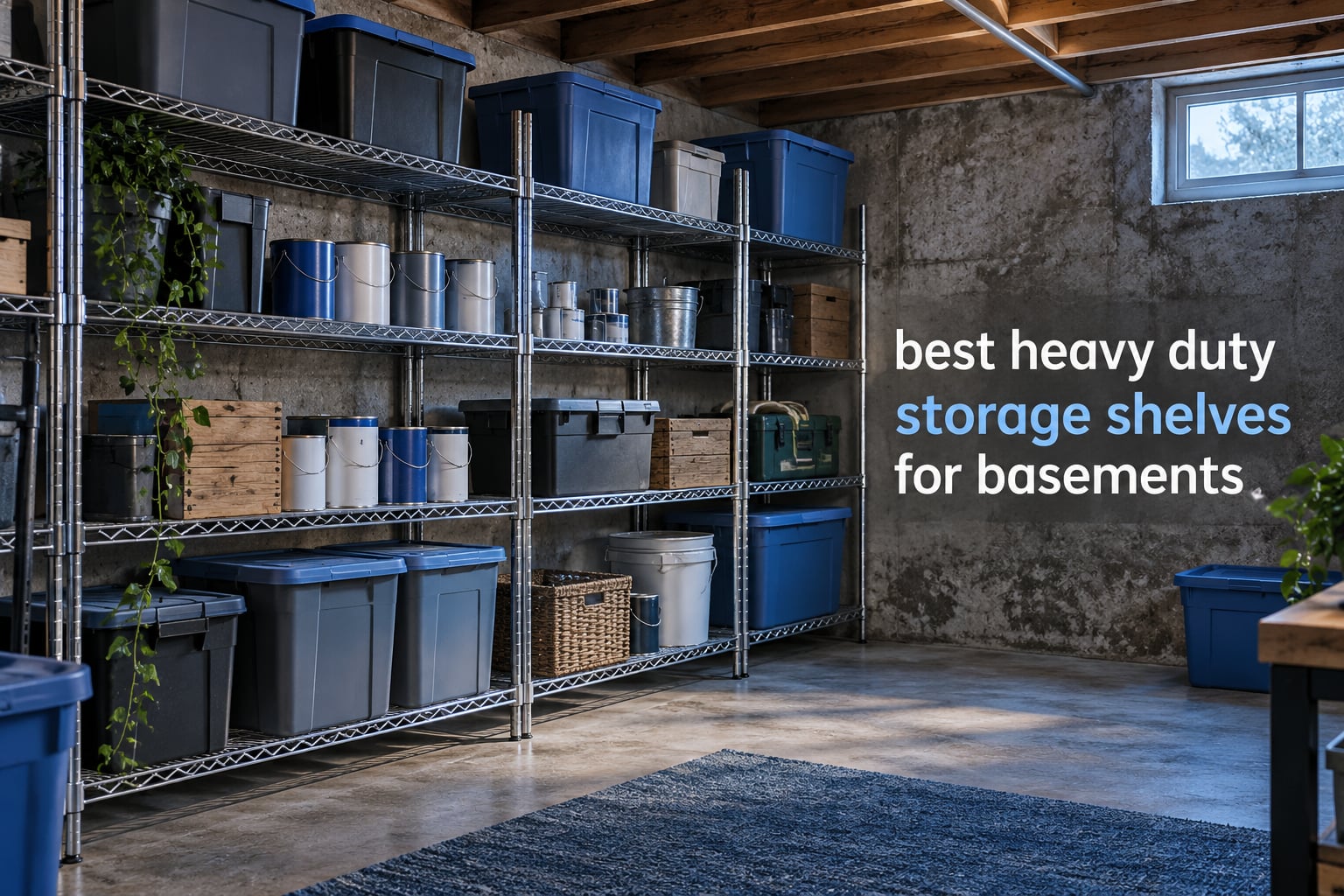
A basement is the worst-case room in most houses. It is damp, it is cold, its floor is uneven poured concrete, and its ceiling is usually a grid of joists hanging lower than the number on the plans. Retail shelving built for a closet or a bedroom warps, sags, and rusts there within a season. That is why picking the best heavy duty storage shelves for basements comes down to four things: weight per shelf, a finish that tolerates humidity, a height that clears your joists, and a deck that will not crumble when a spill happens.
Our team spent weeks putting ten of the highest-rated racks through their specs, cross-checking every capacity figure against the way it is actually built, and mapping each one to the basement problems that break shelving: condensation on bare concrete, 72 inch frames meeting 84 inch joists, and 18 gallon totes that overhang a 14 inch shelf. Every unit below is written for basements first, garages second.
Heavy duty storage shelves for basements are steel or composite racks rated to hold several hundred pounds on each shelf, chosen for three basement-specific traits: a moisture-resistant finish, a footprint that clears joists and walls, and a deck material that survives sustained load without sagging.
We also flag what each one is bad at. Half the units here ship with particle board or MDF decks that experienced owners replace with plywood in their first year, and two carry capacity claims that their own build cannot support. Knowing that before you buy saves a very heavy trip up the basement stairs.
Table of Contents
Top 3 Picks: Heavy Duty Basement Shelving (October 2026)
The Amazon Basics 5-shelf wire rack is the one we would put in most basements, because a wire deck lets airflow reach stored boxes and it sheds condensation instead of absorbing it. The FLEXIMOUNTS wall-mounted pair is the answer when your walls are unfinished block or you have no floor space to spare. The HOMEDANT deep rack wins on bin capacity, since a 24.1 inch deck swallows the deep totes that overhang everything else.

Amazon Basics 5-Shelf Wire Rack
- 350 lb per shelf
- 1750 lb total
- Wire deck sheds moisture
- 1-inch height adjustment

FLEXIMOUNTS 2-Pack Wall Shelves
- 350 lb per shelf
- 1400 lb per pair
- Mounts to studs block or brick
- 24 inch deep

HOMEDANT 47.7 Inch 5-Tier Rack
- 24.1 inch deep deck
- Boltless tool-free setup
- 257-771 lb capacity
- Made in Korea
Best Heavy Duty Storage Shelves for Basements in 2026
Ten racks, ranked for basement conditions rather than garage conditions. Per-shelf figures are what a single deck holds; totals assume every shelf is loaded to that same figure at the same time.
| Product | Specifications | Action |
|---|---|---|
| Amazon Basics 5-Shelf Wire Rack |
|
Check Latest Price |
| FLEXIMOUNTS 2-Pack Wall Mounted Shelves |
|
Check Latest Price |
| HOMEDANT 47.7 in Deep 5-Tier Rack |
|
Check Latest Price |
 Sakugi 5-Tier Metal Rack Sakugi 5-Tier Metal Rack |
|
Check Latest Price |
 CX 4-Tier Plastic Shelving CX 4-Tier Plastic Shelving |
|
Check Latest Price |
 VEVOR 5-Tier 2000 lb Rack VEVOR 5-Tier 2000 lb Rack |
|
Check Latest Price |
 REIBII 55.5 in Wire Rack REIBII 55.5 in Wire Rack |
|
Check Latest Price |
 SONGMICS 5-Tier Boltless Rack SONGMICS 5-Tier Boltless Rack |
|
Check Latest Price |
 RAVIGIN 5000 lb Heavy Duty Rack RAVIGIN 5000 lb Heavy Duty Rack |
|
Check Latest Price |
 REIBII 2400 lb Narrow Rack REIBII 2400 lb Narrow Rack |
|
Check Latest Price |
1. Amazon Basics 5-Shelf Adjustable Wire Rack – Best Overall for Basements
Amazon Basics 5-Shelf Adjustable Heavy Duty Steel Wire Storage Shelves for Garage, Kitchen, Easy Assembly, 36″ x 14″ x 72″, Black
350 lb per shelf
1750 lb total
14 in D x 36 in W x 72 in H
Black powder-coated steel wire
Pros
- 263661 reviews averaging 4.6 stars
- 1-inch shelf height adjustment
- Tool-free assembly
- Four leveling feet for uneven concrete
- Wire deck lets damp air circulate around stored boxes
Cons
- Wire deck needs bins for small parts
- Instructions call for two people
- Black finish scuffs visibly
This is the unit we keep coming back to. It has been built and sold for years, holds 350 pounds on any one of five wire decks, and the shelf positions move in one-inch steps so the same rack can carry tall holiday bins at the bottom and short paint cans near the top. That adjustability is the feature experienced owners value most, because a fixed five-shelf frame almost always ends up with wasted gaps.
The wire deck is the reason it works in a basement specifically. Water vapor moves through the gaps in the wire instead of soaking into a panel, so a condensation drip passes straight down to the floor rather than sitting in a particle board shelf and growing mold. Boxes sitting on wire also dry out after a wet winter instead of staying soggy.
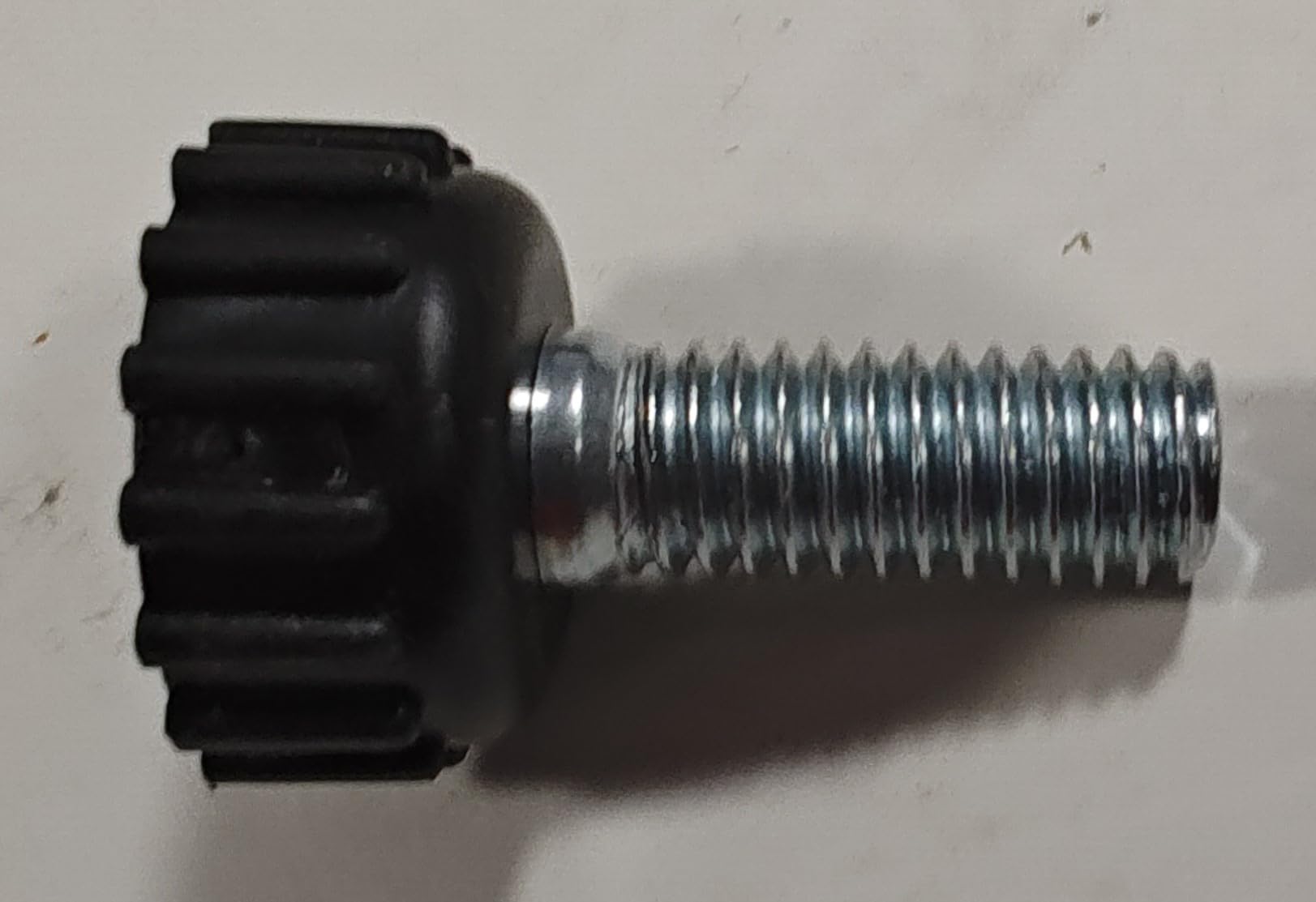
The math works out well too. At 14 inches deep and 36 inches wide, this is the narrowest footprint in the roundup, which makes it the easiest unit to walk past with a stack of bins in your arms and to slide into a tight spot between a furnace and a foundation wall. Four leveling feet take up the gentle slope that most poured basement floors have.
Where it falls short is the same thing that makes it good. Wire shelves will not hold a box of screws, a bag of fasteners, or anything smaller than about the width of the wire gaps. You will be putting those in totes on the shelves, which is the correct system but it is one more purchase if you do not already own bins. The black powder coat also shows scuffs where you drag things across it.
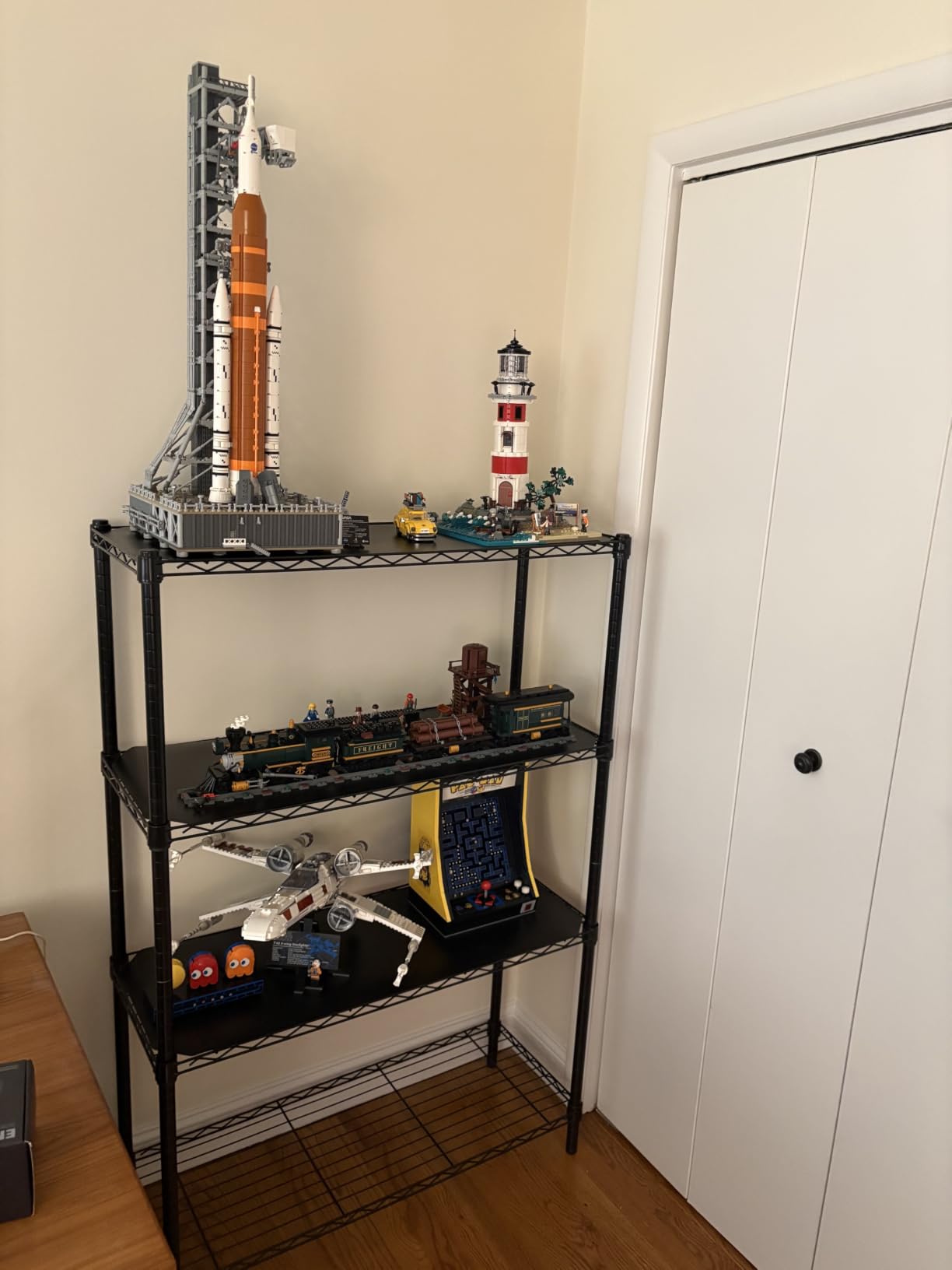
Why this rack suits a damp basement
A wire deck is the only shelf surface in this entire roundup that cannot absorb water. Every other unit here includes some form of wood panel or MDF that will take on moisture if the room is wet, and most basement rooms are wet at least part of the year. If your unit sits under a foundation wall with a known history of seepage, a wire deck is the safest bet you can buy without treating anything.
The 350 pound per-shelf rating also means you can put your genuinely heavy items on this one without worrying, which matters because people tend to overload the bottom shelf of a basement rack with tools, paint, and stacked lumber.
When to skip it for open bins
Skip this rack if your storage plan depends on small loose items sitting on open shelves, or if you want the strength of a wire rack but need wider shelves for 27 gallon containers. The 14 inch depth is comfortable for small totes and boxed holiday decor, but a 20 inch tote will overhang the front edge, which is the single most common complaint about this kind of shelf.
Assembly is tool-free but the instructions call for two people. Set the frame on a flat section of floor, use a rubber mallet on the corner connectors, and check for plumb before you tighten anything. If you build it alone, you will fight it.
2. FLEXIMOUNTS 2-Pack Wall Mounted Shelves – Best for Unfinished Basement Walls
FLEXIMOUNTS 2-Pack 2x6ft Garage Shelving 24-inch-by-72-inch Heavy Duty Wall Mounted Shelves Garage Storage Rack Floating Shelves, 1400lbs Load Capacity, Black, Classic Series
350 lb per shelf
1400 lb per pair
24 in D x 72 in W per shelf
Powder-coated steel
Pros
- Mounts to studs concrete or brick
- Hardware template and level included
- Velcro strap buckle stops bracket movement
- 24 inch deep deck fits deep totes
- Limited lifetime warranty
Cons
- Cannot mount on metal stud walls
- Velcro straps reported short
- Needs drilling and two people
Wall-mounted shelving solves a problem freestanding racks cannot: the floor. In a finished basement with carpet, in a utility room, or anywhere the floor is a finished surface you do not want to drill, running two long shelves off the wall gives you 72 inches of load-bearing surface per shelf without putting a single leg on the ground. Each shelf holds 350 pounds, so the pair carries 1400.
For basement walls specifically, this is the most forgiving option we found. The mounting holes are slotted to fit 16 inch, 18 inch, and 24 inch stud spacing, and the included template lets you mark every hole before you pick up a drill bit. It works on wood studs, poured concrete, brick, and block once you switch to the right anchors.
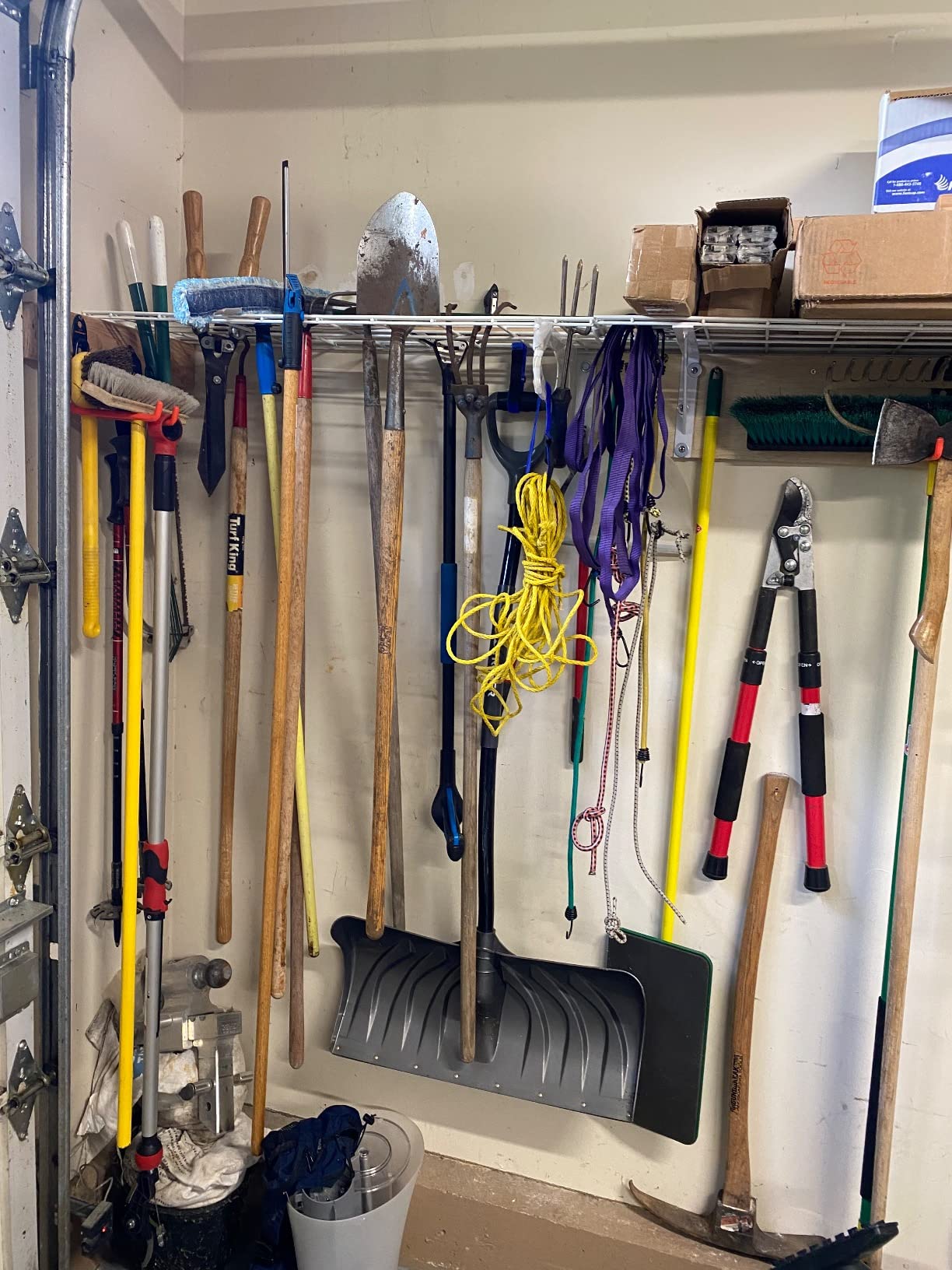
At 24 inches deep, these shelves hold the deeper totes that overhang narrow racks. If your basement storage is mostly 20 gallon and 27 gallon containers rather than cardboard boxes, depth matters more than width, and this is one of the few units here that genuinely solves it.
The caveat is the wall itself. Slotted mounting into metal studs is not supported, and block or concrete needs proper anchors rather than the included screws. The velcro buckle straps that stop the brackets swinging are the most-reported weak point, and they need a manual tug to fully tighten. Budget an extra set of straps if the shelves will be bumped by a doorway or a vacuum.
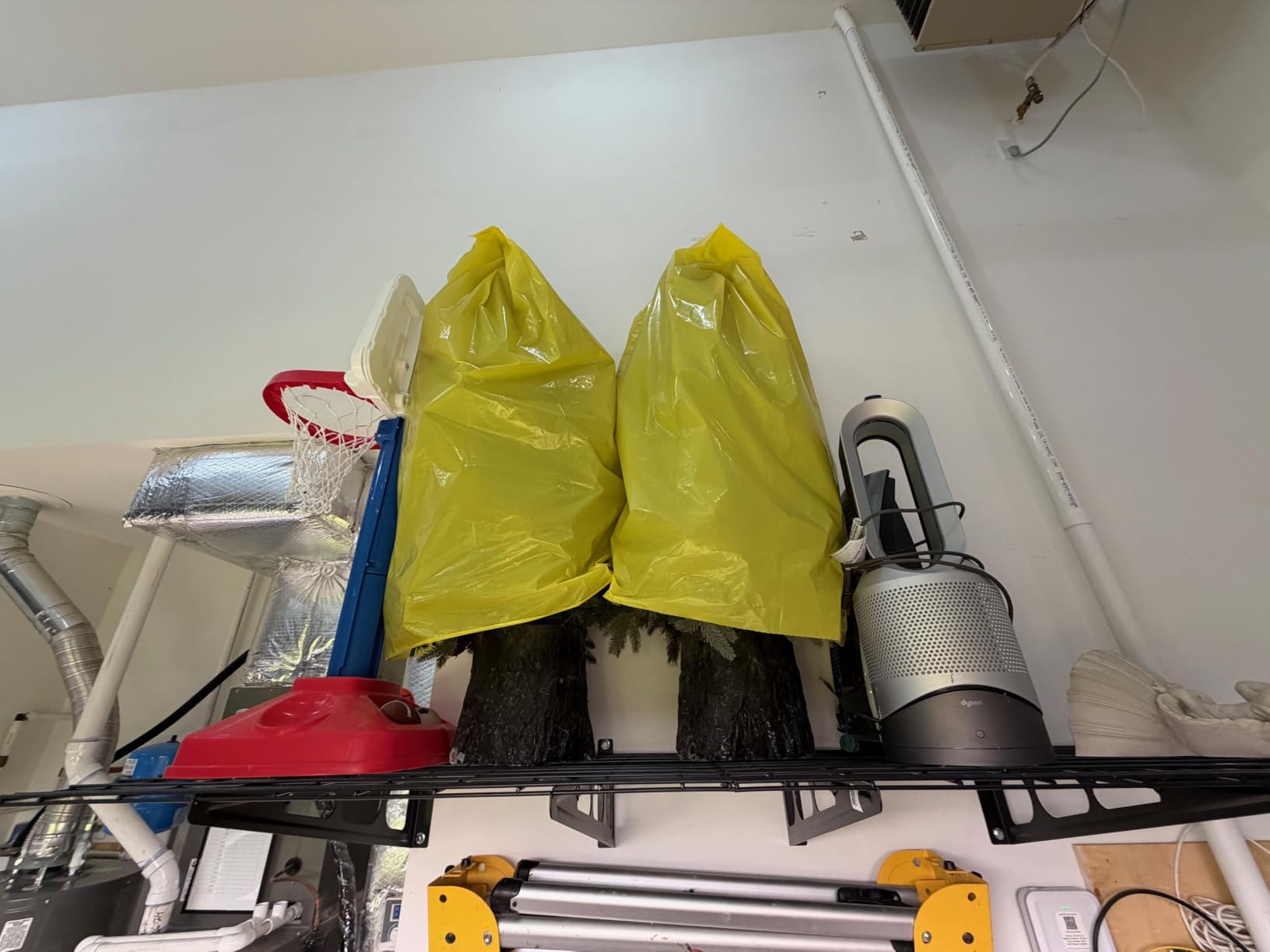
Why wall mounting beats a freestanding rack in a low room
Wall shelves convert unused vertical space into usable storage without a footprint. That matters enormously in a finished basement where carpet rules out anchors and in any low-ceilinged room where a 72 inch rack would meet the joists. Shallow shelves at 5 feet also keep the top of the load within reach of a normal step stool instead of above your head.
Because load goes straight into studs, there is no wobble and no leveling. That is the quiet quality-of-life advantage over every boltless rack in this roundup, all of which shift slightly as the floor shifts.
When the wall will not hold it
Do not mount these into a poured wall you have not tested, and do not attempt them on metal studs. If your basement walls are hollow concrete block, you need masonry anchors sized to the block, and it is worth driving a test fastener first. Two people make this job much cleaner because one holds the template while the other drills.
The second consideration is wall strength overall. Two loaded shelves on one wall in an older basement is a lot of leverage if the block or the studs are compromised, so check for cracks and damp patches before you commit.
3. HOMEDANT 47.7 Inch Deep 5-Tier Rack – Best for Deep Totes
HOMEDANT Black 47.7″ Deep 5 Tier Storage Shelves Garage Shelving Unit Metal
24.1 in D x 47.7 in W x 71.3 in H
257-771 lb per shelf
Powder-coated steel and engineered wood
Made in Korea
Pros
- Deepest deck in the roundup at 24.1 inches
- Boltless snap-together assembly
- Takes a 48 inch door opening
- Sold for garage basement pantry and closet
- Adjustable on all five tiers
Cons
- Lower capacity than steel-only rivals
- Engineered wood deck is moisture sensitive
- Needs a 48 inch door opening to get inside
Depth is the feature that separates this rack. At 24.1 inches it holds the large totes and boxes that overhang everything else on this list, and at 47.7 inches wide it takes two of them side by side with room to spare. If your basement storage plan is built around big containers rather than file boxes, this is the frame that stops you fighting overhanging lids.
Assembly is genuinely tool-free. The uprights and shelves snap together with no bolts and no mallet required, which makes it one of the few racks here that a single person can put together in a spare half hour. It is manufactured in Korea with a clean powder-coated finish that looks more at home in a finished basement than most utility racks.
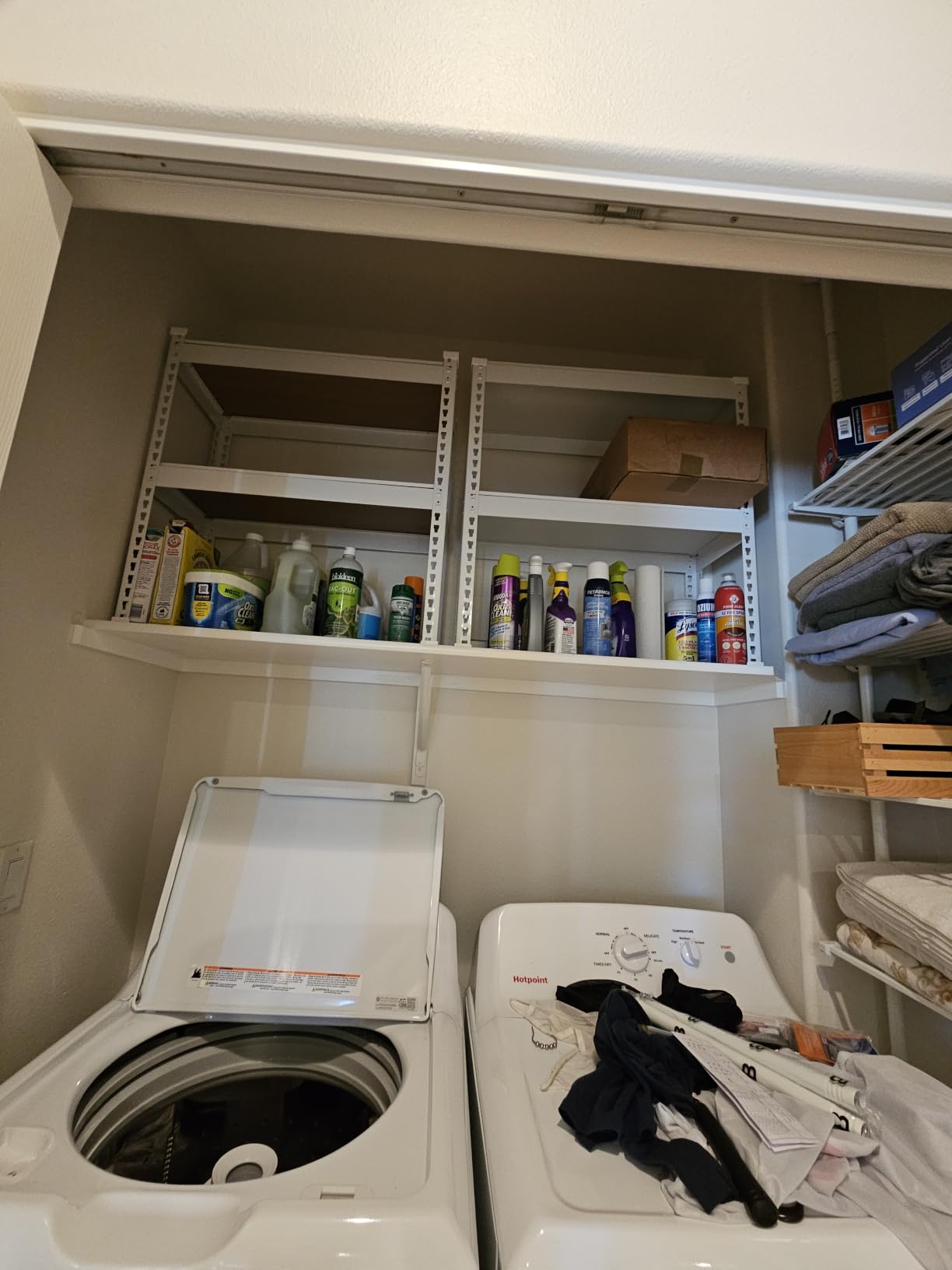
Capacity is the trade. The listed range of 257 to 771 pounds per shelf is lower than the pure steel racks here, and the deck is engineered wood rather than solid steel or wire. On a damp basement floor, an engineered wood panel is a liability over years unless it stays completely dry, so keep this rack off damp concrete and out of the path of any seepage.
It also needs a 48 inch door to enter the room. In many older basements that means a stairwell turn, so measure the narrowest opening on the path before you order, not just the basement doorway.
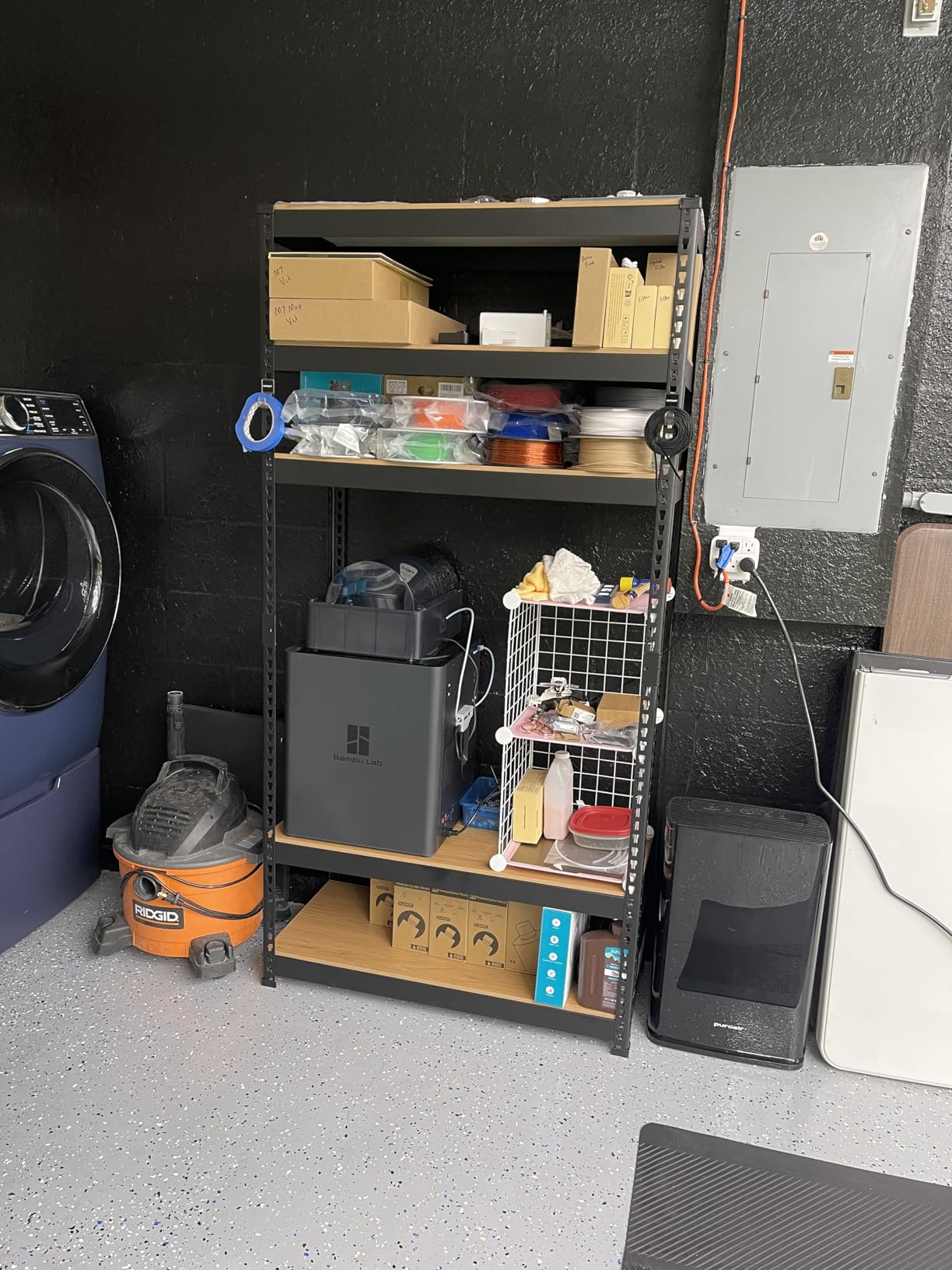
Why depth matters more than width for totes
A 24 inch deck gives a 20 gallon tote clearance at the front edge and leaves usable space behind it. On a 14 inch shelf the same tote hangs over and becomes unstable, which is the mistake that ends up on a basement floor. When you are shopping for basement storage shelves, measure the front-to-back footprint of your biggest bin first and let that number pick the rack.
The wide frame also reduces the number of separate racks you need. Two of these side by side give you the wall coverage of four narrow units with fewer posts in your way.
When the wood deck is the wrong call
Skip this rack if your basement has a history of water on the floor, if the unit will sit against an exterior foundation wall with condensation, or if you plan to store paint, oil, or solvents. Engineered wood panels absorb moisture at cut edges and the bolt holes, and once they swell they lose the flatness that makes a shelf level.
If your basement is genuinely dry and you want the depth, this is the pick. If you are unsure, choose a wire deck rack instead.
4. Sakugi 5-Tier Metal Rack – Best Value for Tight Basements
Sakugi Storage Shelves – 5 Tier Shelf Organizer, Heavy Duty Garage Shelving Unit with Leveling Feet, Stable Metal Shelves Organizer for Pantry, Kitchen and Closet, 33.0″ W x 12.6″ D x 72.0″ H, Black
200 lb per shelf
1000 lb total
12.6 in D x 33 in W x 72 in H
Matte black alloy steel
Pros
- Narrowest depth in the roundup
- Waterproof and rustproof finish
- Wall fixing kit included
- Four non-slip leveling feet
- Assembles without specialized tools
Cons
- 200 lb per shelf is modest
- 12.6 in depth fits small bins only
- Light frame at 17.6 lb
Sometimes the best basement shelf is the one that physically fits. At 33 inches wide and 12.6 inches deep, the Sakugi slides along a low wall, behind a door, or into the awkward gap beside a furnace where a full-width rack will not go. It carries 200 pounds per shelf and 1000 pounds across five tiers, which is plenty for seasonal decor, canned goods, and boxed household items.
The finish is described as waterproof and rustproof, which for a basement is the single most relevant spec on the box. It is also one of the few racks here that ships with a wall fixing kit, and pairing that with the four leveling feet gives you two separate defenses against the tipping and wobbling that make racks feel unsafe.
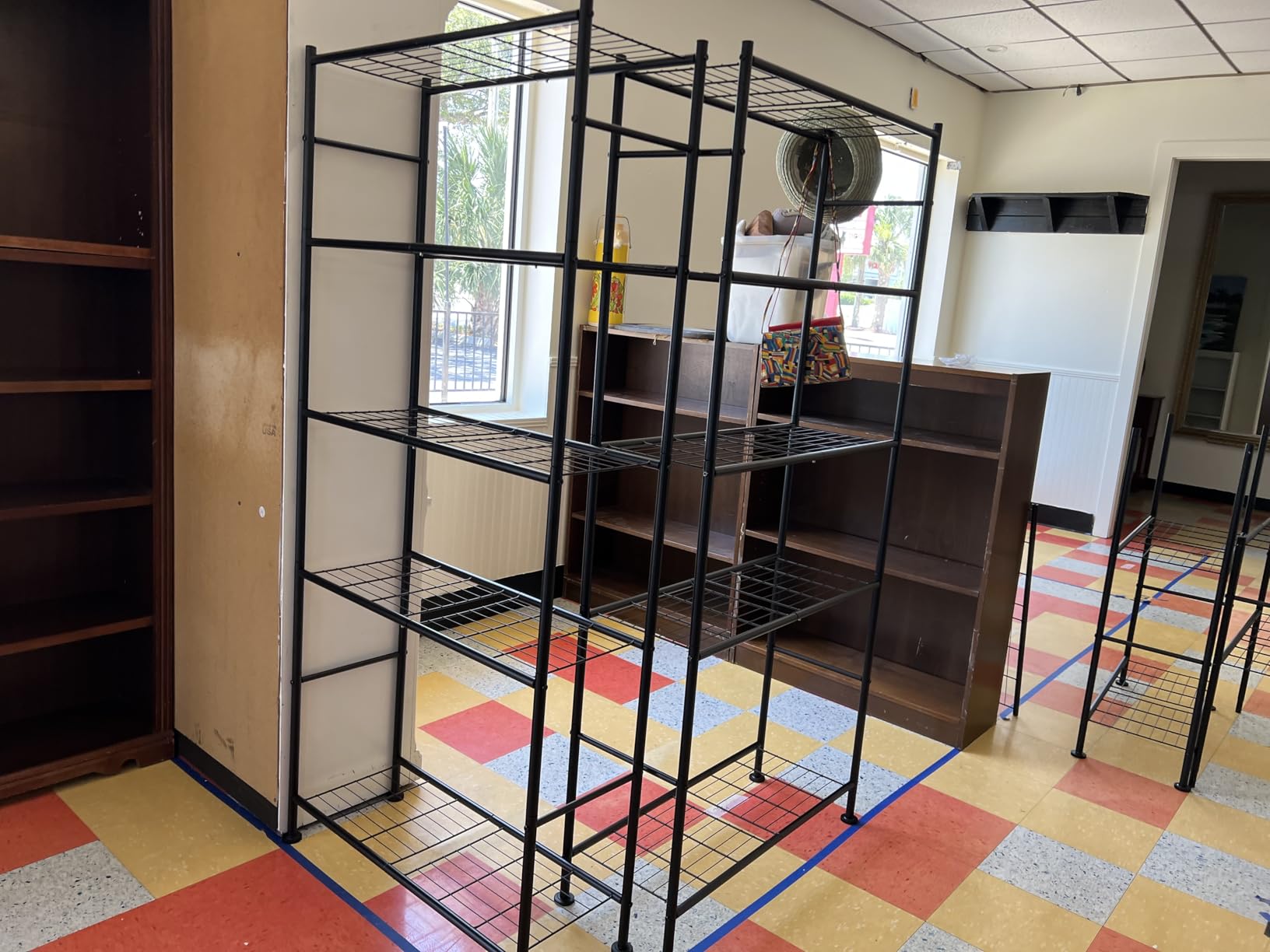
Owners consistently note that the frame feels light for its size at 17.6 pounds. That is not a defect on a rack meant for bins and boxes, but if you intend to load it with tools, paint, or lumber, step up to a heavier steel frame. The 0.9 inch tube diameter is also the thinnest in this roundup.
The narrow depth is the second limitation. At 12.6 inches it holds paperback boxes and small totes, not the large containers that motivated most people to build basement shelving in the first place.
Why narrow racks earn their place in a basement
Basements are full of spaces that are not usable rooms: the low wall under a beam, the far end past the last support column, the strip behind the finished wall where the ceiling drops. A 12.6 inch deep rack turns those leftovers into storage, and it can be carried by one person down basement stairs without the two-person wrestling that wider boltless frames require.
Because it is light, you can also reposition it as your storage changes, which is rarely true of the 60 pound racks in this roundup.
When it is not enough
Skip this rack for heavy items. At 200 pounds per shelf and with the thinnest tubing here, it is a storage rack rather than a tool rack. It is also the wrong choice if you need to park large totes on it, because the depth will not take them.
For a lightly loaded basement wall where space is the constraint, though, it is hard to argue with the fit.
5. CX 4-Tier Plastic Shelving – the Only Unit That Clears Low Joists
CX 4-Tier Heavy Duty Plastic Storage Shelves for Garage Organization
200 lb per shelf
800 lb total
20 in D x 48 in W x 55 in H
Recycled BPA-free plastic
Pros
- At 55 inches it fits under most basement joists
- Cannot rust stain or peel
- Wall mount brackets included
- Interlocking modules link side by side
- Ten minute tool-free assembly
Cons
- Fixed 14.68 in shelf gap limits tall bins
- Lowest capacity per shelf here
- Plastic dents under point loads
This is the unit to look at first if your basement has low ceilings. At 55 inches tall it is the shortest rack in the roundup by a wide margin, and it will clear joists that stop every 72 inch five-tier model cold. The 2 to 4 inch clearance rule people use for low basements is basically designed for a rack like this one.
The material is the second reason to buy it. Plastic cannot rust, cannot absorb a spill, and does not grow mold in the same way a particle board deck does, which makes it genuinely better suited to a wet room than most steel options. It is made in the USA from recycled plastic and it holds eight 27 gallon containers when configured correctly.
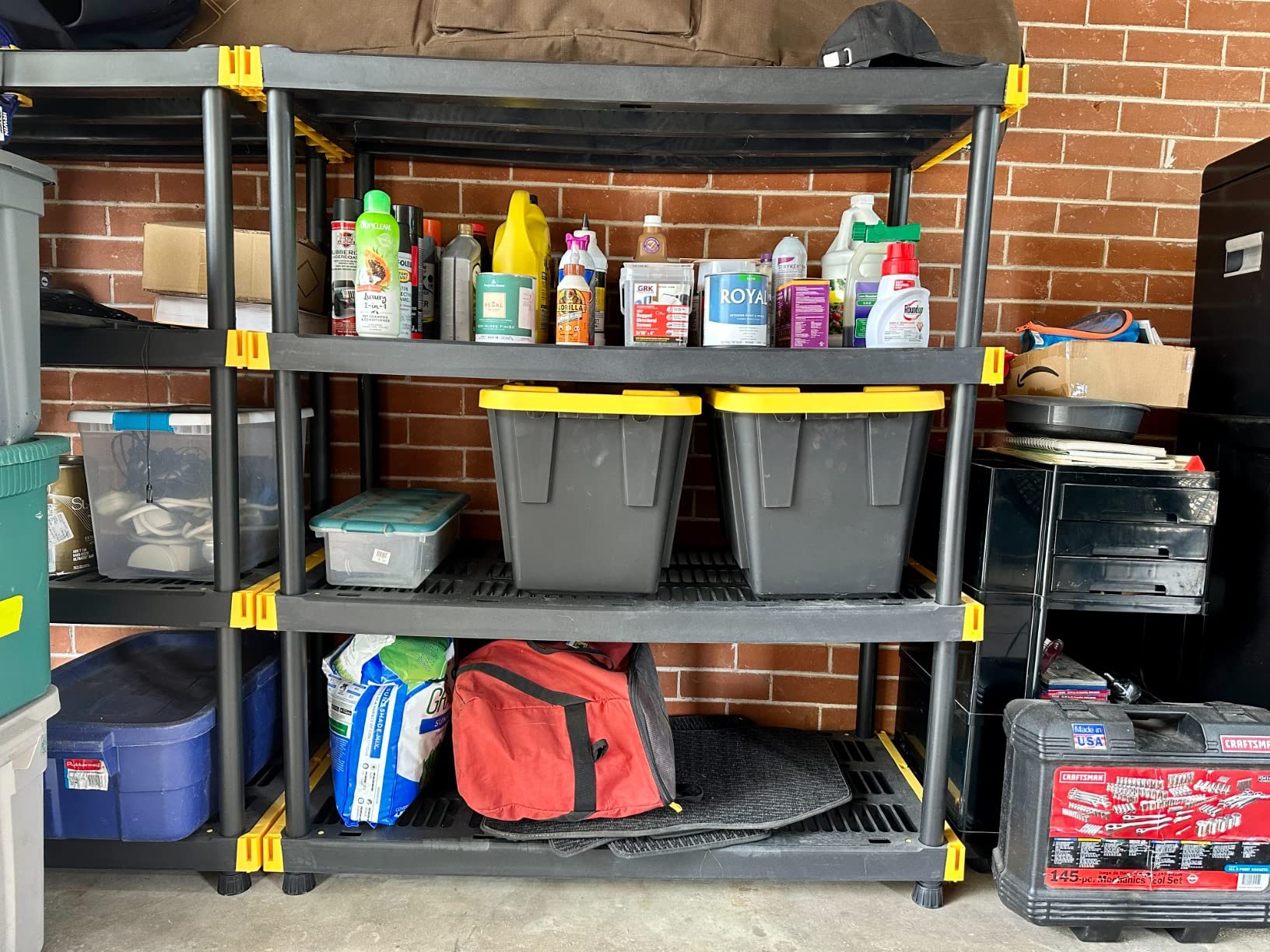
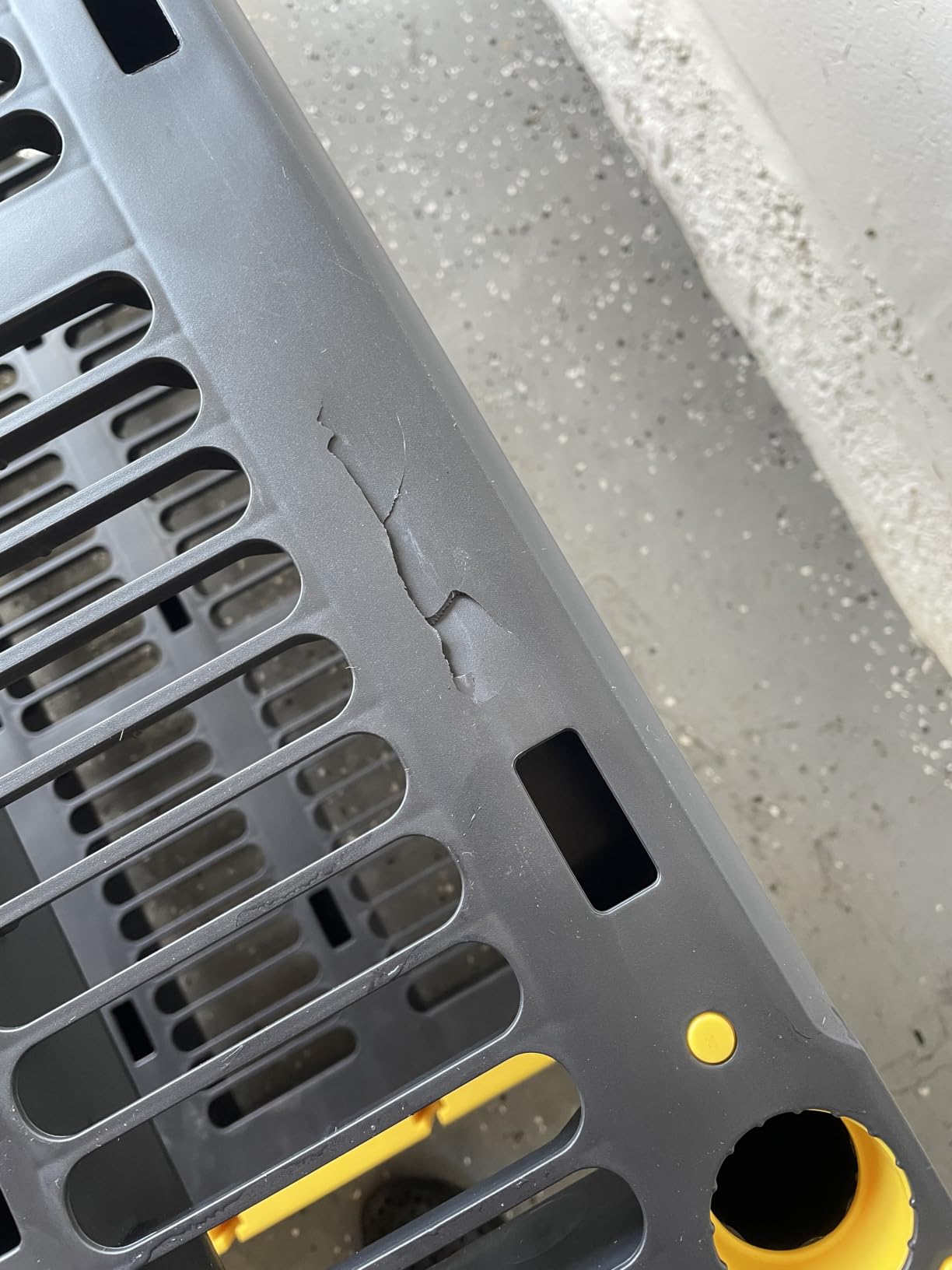
What you give up is real. At 200 pounds per shelf it sits at the bottom of this list, plastic deflects more under a concentrated point load than steel does, and the plastic deck dents if something is dragged across it. The 14.68 inch gap between shelves is fixed, which is the most common complaint because it blocks taller bins.
Because it ships with wall mount brackets as well as adjustable feet, you have two ways to stabilize it. In a basement we would use both.
Why height beats capacity under low joists
Most failed basement shelving plans fail on measurement, not on weight. A 72 inch rack is 6 feet, and a typical finished basement ceiling with joists is closer to 7 feet with the joists dropping 6 to 9 inches in places. That leaves barely enough room to slide the rack in without forcing it, and forcing it usually cracks a shelf.
A 55 inch rack leaves a working margin and still gives four usable levels. For holiday decor, canned goods, and boxed clothing, that height is a better trade than the two extra tiers a taller rack would provide.
When plastic is the wrong material
Do not load this with tools, paint cans, or anything you plan to drop on the floor later. Plastic has no repair path once a corner is crushed, and the shelves flex under a heavy concentrate load even when the total is within the rating. It also feels wrong under a tool bench, where oil and metal edges do damage over time.
Use it for bins, boxes, and light household storage, and keep it away from the sharp edge of a workbench top.
6. VEVOR 5-Tier 2000 lb Rack – Fastest Boltless Setup
VEVOR Storage Shelves 5-Tier Adjustable 2000 lbs 48″x24″x72″ Shelving Unit
400 lb per shelf
2000 lb total
24 in W x 24 in D x 72 in H
Powder-coated SPCC carbon steel
Pros
- Rubber mallet and gloves included
- Splits into two separate racks
- 16 rubber foot pads protect concrete
- Adjustable shelf clips on a fine grid
- Powder coating resists rust and scratches
Cons
- MDF shelves bow under heavy loads
- Frame gauge reported thin
- Instructions are vague
Assembly speed is the reason this one earns a place. It is a press-to-assemble design and the box includes a rubber mallet, gloves, and 16 foot pads, so the two things that normally trip people up are already solved. A rubber mallet matters more than it sounds, because boltless racks assembled by hand tend to sit slightly crooked and then wobble forever.
The square 24 by 24 inch footprint and the 72 inch height make it a straightforward five-cube grid, and at 24 inches deep it will take a decent sized tote. There is also a real advantage in the fact that it splits into two shorter racks, which lets you follow the shape of a basement wall instead of forcing one long rectangle into an L-shaped room.
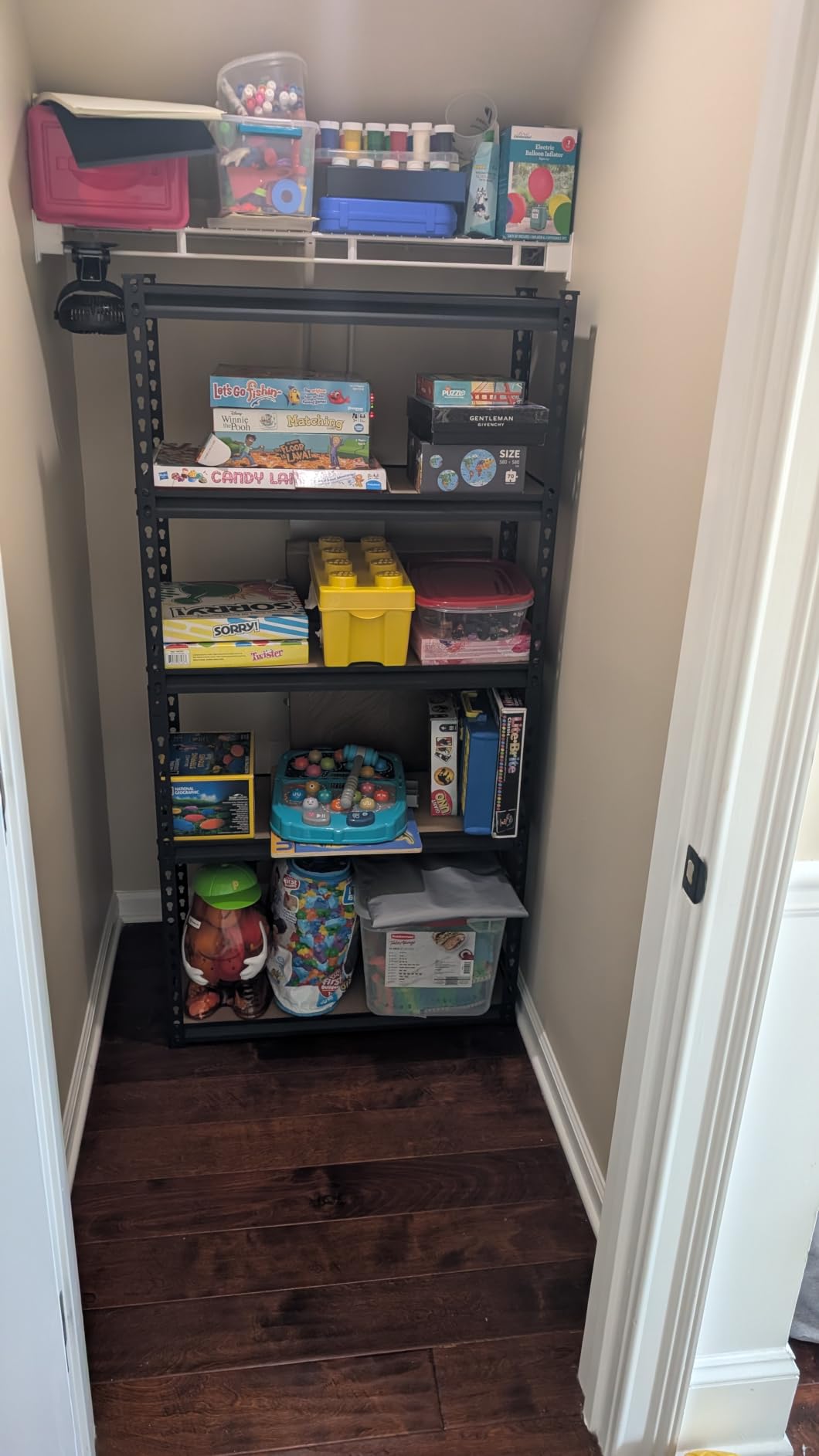
The capacity figure needs a caveat, and reviewers are the ones raising it. The listing states 400 pounds per shelf and 2000 pounds total, but the deck is MDF and the frame is described as thin by multiple owners. Treat the number as a ceiling, not a working load, and keep heavy items distributed across shelves rather than concentrated on one.
The MDF deck is also the part that reacts badly to basement humidity. If you buy this rack, the standard owner upgrade is to replace each deck with half-inch plywood cut to size and seal all six faces before loading anything.
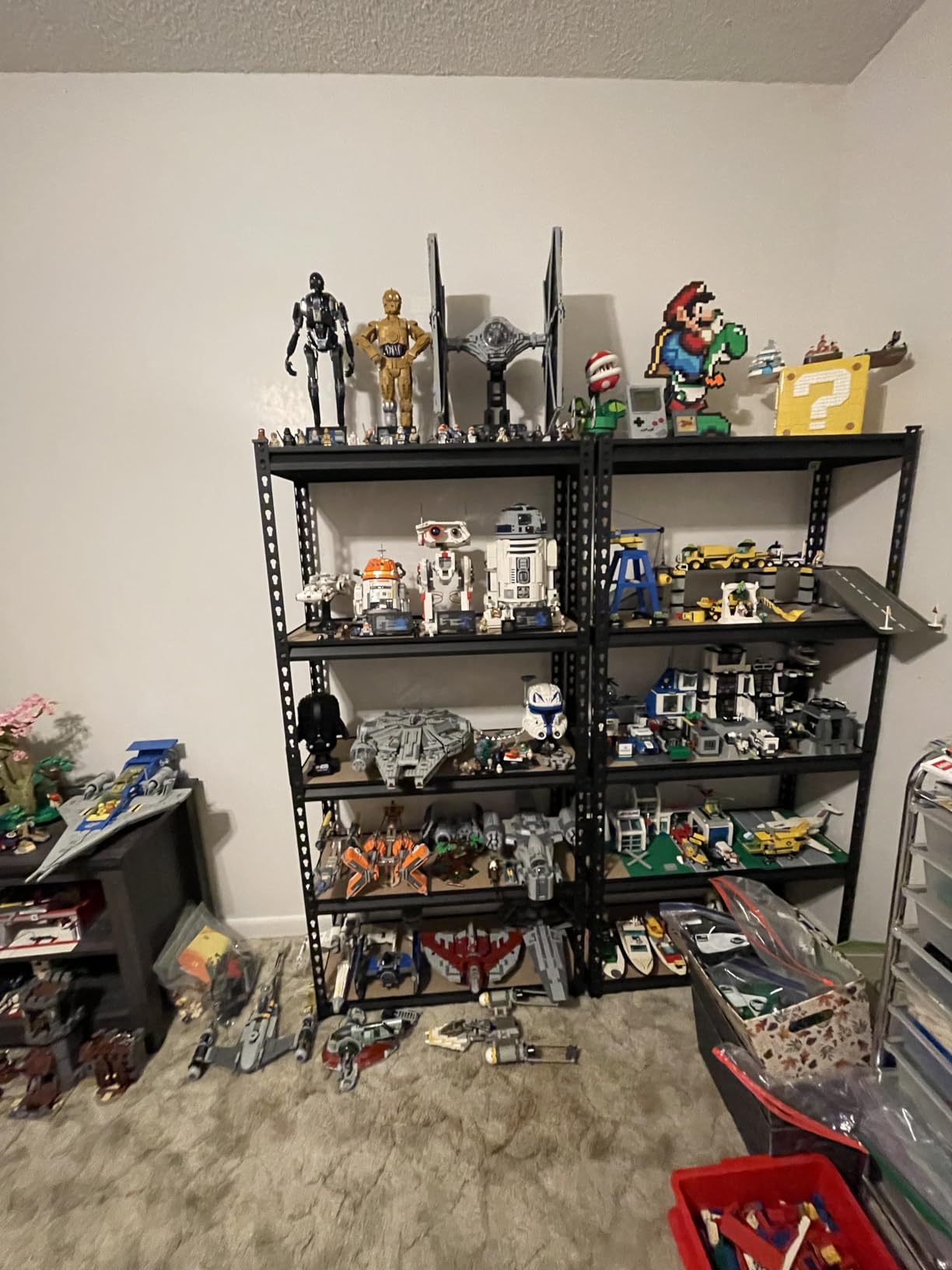
Why the included mallet changes the outcome
Almost every complaint we saw about boltless racks in the basement was the same: the unit wobbles, or it comes apart under load, because it was hand-assembled without a mallet and the corner connectors never fully seated. A rubber mallet seats those connectors. It is a five minute difference that decides whether the rack still feels solid two years later.
The foot pads matter in a basement too. They spread the load on poured concrete and keep steel corners from scratching and marking the floor.
When the MDF deck rules it out
Skip this rack in a basement with known damp, and skip it for concentrated heavy point loads like a row of paint cans or stacks of tile. MDF bows before it breaks, and a bowed shelf is unusable long before it fails. Replace the deck with plywood first, or buy a wire rack instead.
For light-to-medium duty storage where you want the rack up in an afternoon, it is genuinely good value.
7. REIBII 55.5 Inch Wire Rack – Best High-Capacity Wire Build
REIBII 3200LBS Storage Shelves 55.5″ W Garage Shelving Heavy Duty 5 Tier Adjustable Wire Shelving Unit Metal Shelving for Garage Pantry Commercial Basement,55.5″ W X 18”D X 71″ H
640 lb per shelf
3200 lb total
18 in D x 55.5 in W x 71 in H
Powder-coated alloy steel
Pros
- Highest wire shelf rating in the roundup
- Three V-type reinforced braces
- 25mm diameter rods
- Anti-tip hardware and leveling feet included
- Assembles in about ten minutes with no tools
Cons
- Fewer reviews than the established names
- 55.5 in width needs a wide wall and wide door
- Wire deck still needs bins for small parts
This is the strongest wire rack in the roundup on paper and in practice. Each of the five wire decks is rated at 640 pounds, three V-shaped braces tie the frame together, and the rods are 25mm diameter, which is a heavy gauge for a consumer rack. At 3200 pounds total it carries more than the Amazon Basics unit by a wide margin while still using a wire deck that dries out and breathes.
It also splits into two independent sections. A 55.5 inch rack is awkward in most basements because it needs both a 55.5 inch wall and a door you can get it through. Splitting it lets you put each half in a different room, or set them side by side as a workbench surface under the wall.
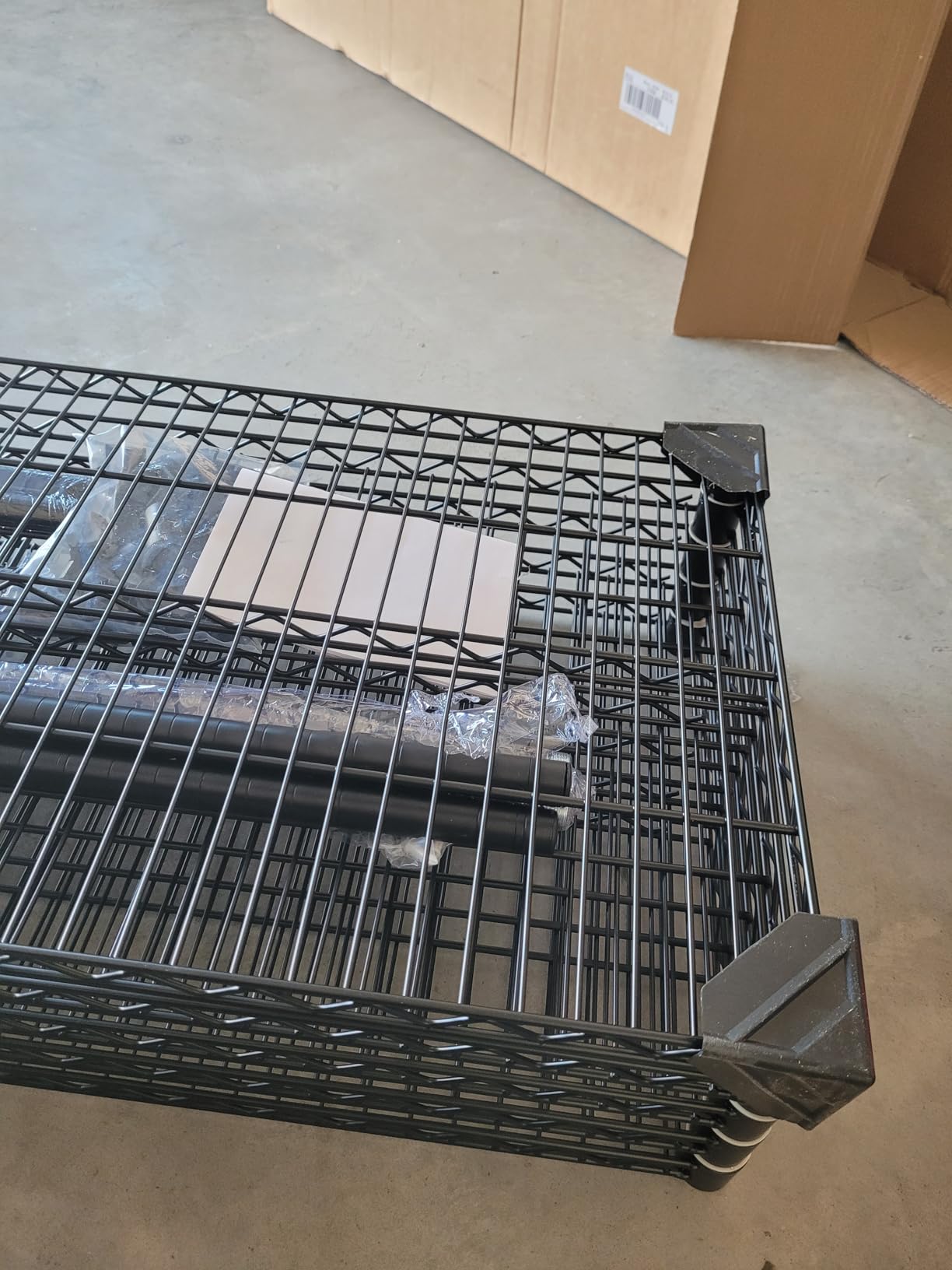
Be aware this is a newer product with 830 reviews rather than hundreds of thousands, so the long term ownership record is thinner than the ratings suggest. The 4.8 average is the highest in this group and the early reception is strongly positive, but a five year report does not exist yet.
The width is the other constraint. At 55.5 inches with a stated 55.55 inch minimum door width, it will not go up a typical narrow stairwell without disassembly or a window.
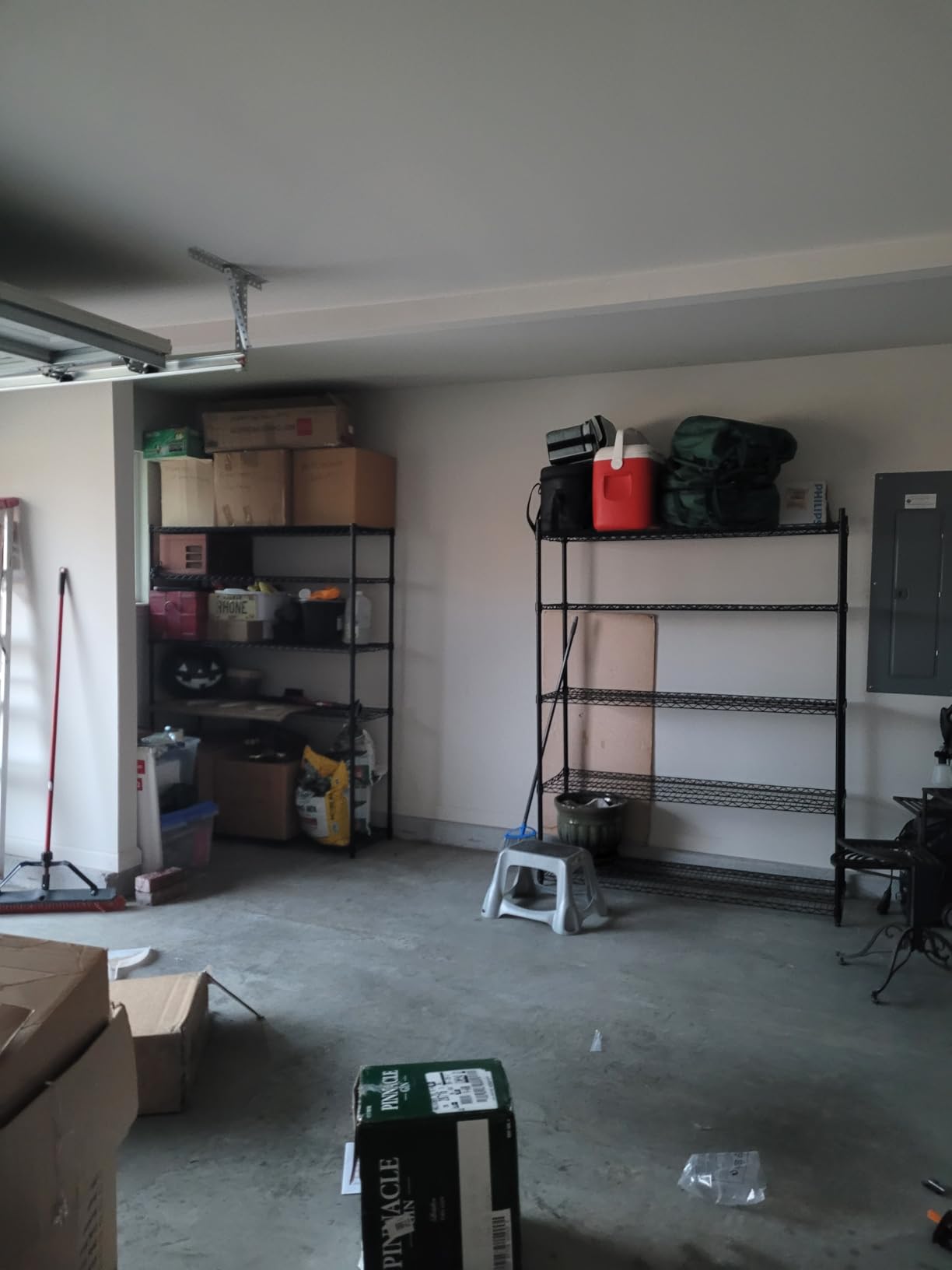
Why wire plus heavy gauge steel is the basement sweet spot
Wire solves the moisture problem and heavy gauge steel solves the strength problem, and most racks only offer one or the other. A solid steel deck is strong but collects condensation on its underside. A light wire rack drains but bows under real weight. This one is built heavy enough that the deck holds a serious load while still letting air move.
Anti-tip hardware is included, which matters more in a basement than in a garage because of the stairs. A rack that slides toward an open stairwell takes a whole shelf of contents with it.
When to pick a different rack
Skip it if your basement wall is not at least 56 inches of uninterrupted run, or if the stairwell is narrow. Also skip it if you plan to store small loose hardware, because wire gaps will swallow screws and washers whole.
If you have the wall space and the door width, it is the most capable wire option we found.
8. SONGMICS 5-Tier Boltless Rack – Best for Fine-Tuned Shelf Heights
SONGMICS 5-Tier Boltless Storage Shelves, Adjustable, Load 2310 lb
462 lb per shelf
2310 lb total
17.7 in D x 35.4 in W x 70.9 in H
Steel frame with MDF decks
Pros
- Shelf heights adjust in 1.4 inch increments
- Center support beams under every tier
- Splits into two shorter units
- Anti-tip kit and foot pads included
- Boltless setup with no tools
Cons
- Uncoated MDF decks are ruined by water
- Thin shelves leave many doubting the rating
- Plastic clips and corner caps reported loose
The 1.4 inch adjustment increment is the quiet advantage here. Most boltless racks move in one-inch steps, which sounds better until you try to fit a specific stack of book boxes or a set of tall bins at a height where nothing rattles. Smaller increments let you tune the gaps to your actual items rather than to the rack’s idea of them.
Center support beams run under each tier, which is the detail that separates a rack rated for heavy loads from one that is merely labelled that way. They cut the span of the deck and reduce the bow that owners complain about on thinner units. It also splits into two shorter racks, which is useful when one long run does not match the wall.
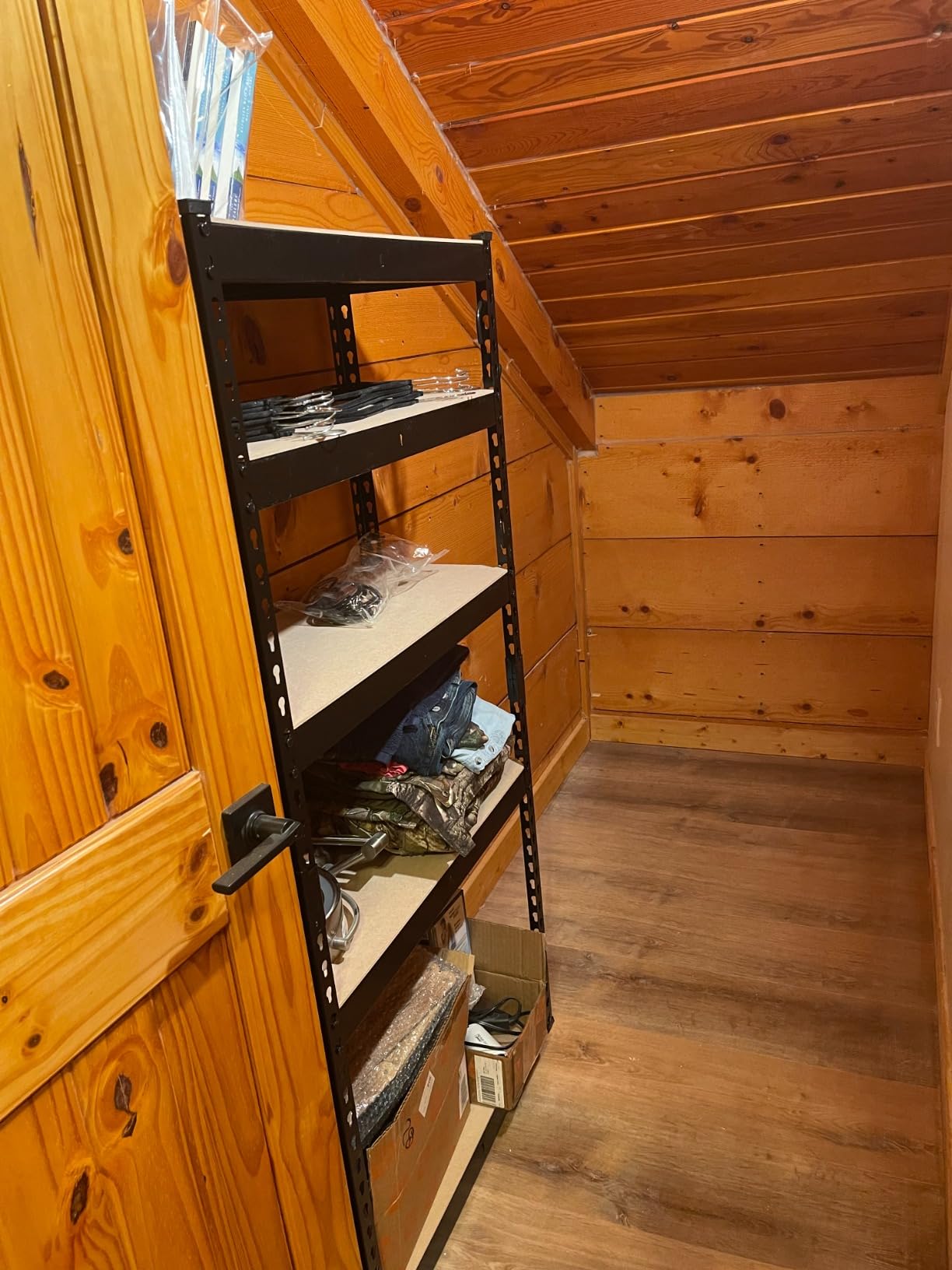
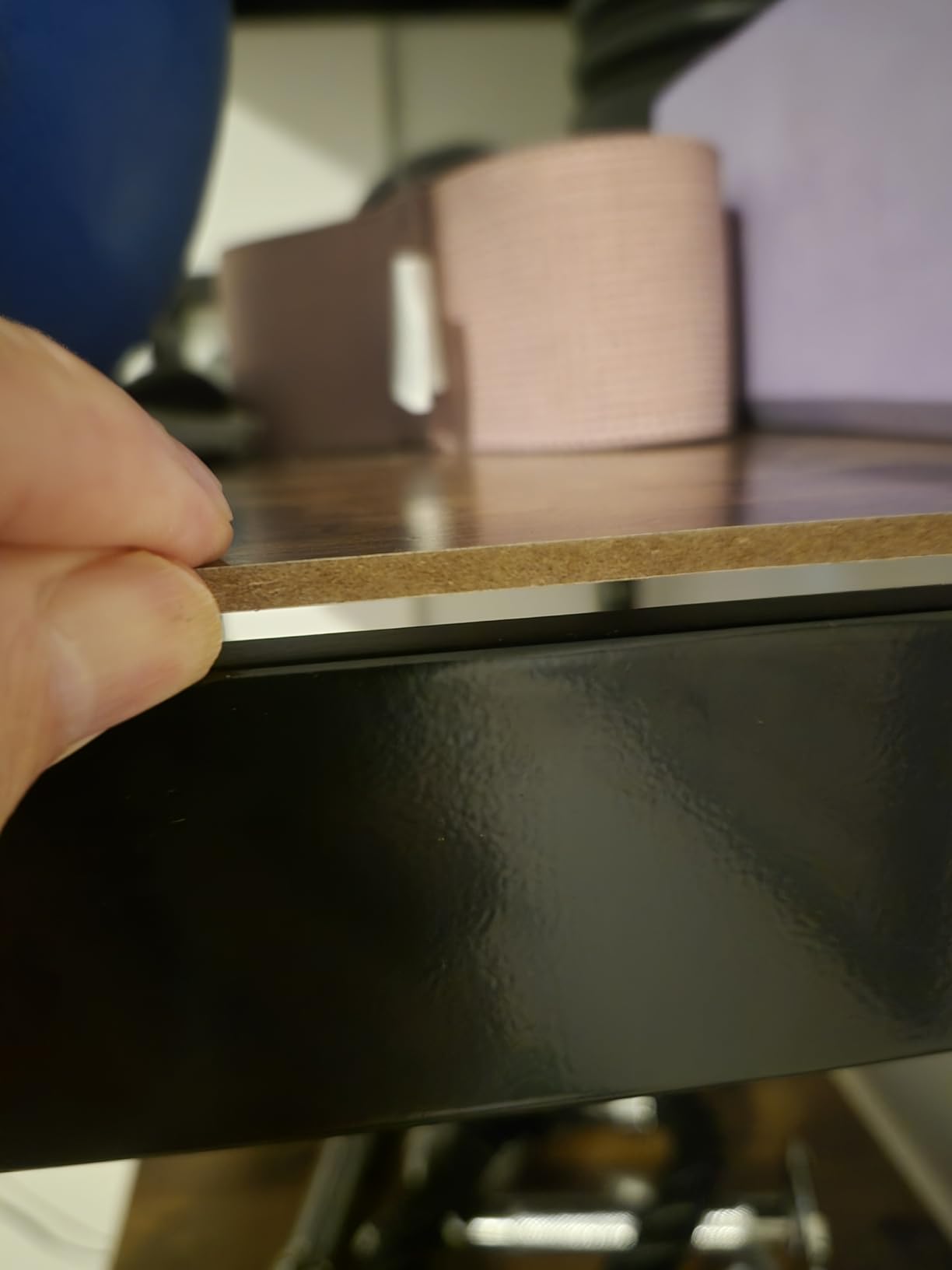
The MDF decks are uncoated, and that is the single line in this review we would underline. In a dry garage they are fine and most owners are happy. In a basement, reviewers specifically report swapping in plywood, and we would plan for that from day one rather than discovering it after a leak.
Quality control on the plastic clips and corner caps is also uneven, and missing or damaged parts are reported more than once. Check the bag of hardware against the manual before you start.
Why small adjustment increments matter for real basements
Basement storage is dominated by awkward sizes. A short stack of holiday bins, a tall tote, a wide flat box of holiday lights. Coarse adjustment means each of those sits either jammed against the shelf above or floating with dead air underneath. Fine increments let each shelf be set to the height the item actually needs, which is what makes a rack feel custom without being custom.
The anti-tip kit and foot pads are a nice pairing for a room with stairs. Use them together and the rack is meaningfully more stable than an unanchored frame.
When the MDF deck rules it out
Skip it if you want zero maintenance or if water is a known issue. Uncoated MDF is a sponge, and a single wet shelf in a basement can be replaced but not repaired. Also skip it if you cannot check the hardware on arrival, because loose plastic clips are what turn a straight build into a wobble.
Replace the decks with half-inch plywood and it becomes a very capable basement rack for the money.
9. RAVIGIN 5000 lb Heavy Duty Rack – Maximum Capacity, Widest Run
RAVIGIN 5000LBS Storage Shelves,71″ W Garage Shelving Heavy Duty Metal Adjustable Garage Shelves, Shelving Units Industrial Shelving for Warehouse,71″ W x 24″ D x 70″ H,Black
1250 lb per shelf
5000 lb total
24 in D x 71 in W x 70 in H
Powder-coated metal with anti-corrosion layer
Pros
- Largest capacity figure in the roundup at 5000 lb
- One-piece seamless columns
- Diagonal braces and shelf reinforcing ribs
- Four tiers over a 71 inch run
- Adjustable shelves with locking pins
Cons
- Multiple reports of aluminum rather than steel shelves
- Vague instructions and difficult J-pin system
- Shelves rest on lips without a positive lock
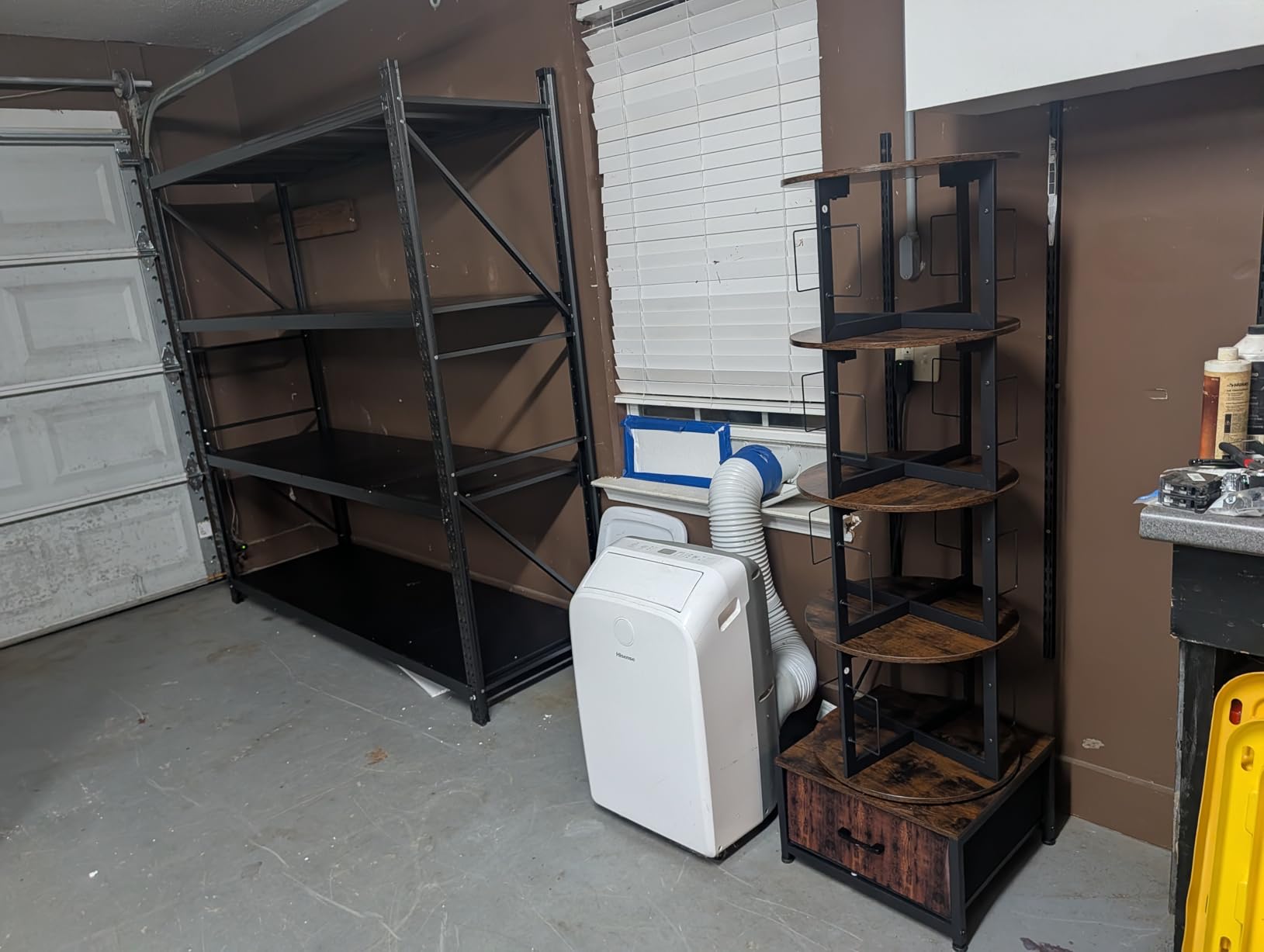
On raw numbers this is the biggest rack here. Four tiers rated at 1250 pounds each for a 5000 pound total, spread across a 71 inch wide, 24 inch deep frame. If you are storing lumber, tile, or stacked renovation material in a basement with a long clear wall, that width means one unit covers ground that would otherwise take three racks.
The structural approach is sound on paper too. One-piece seamless columns avoid the multi-piece joint that creeps, diagonal braces stiffen the bays against the racking that happens when you load one side more heavily than the other, and reinforcing ribs run along the shelves. The anti-corrosion coating is a sensible addition for a basement.
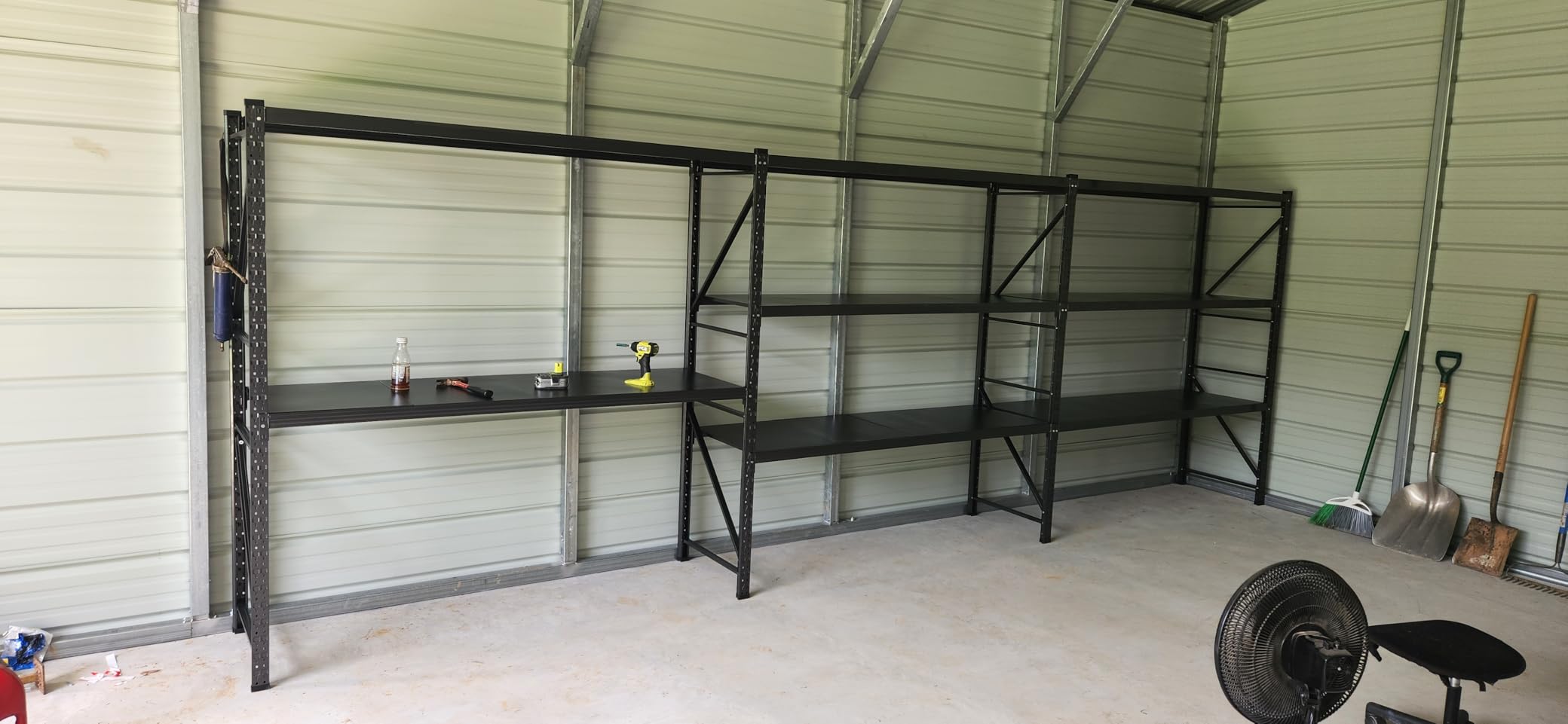
It is also the most polarizing unit in this roundup, with a 4.1 rating that sits well below the group. Owners report receiving aluminum shelves rather than the steel the listing describes, and several describe shelves that rest on lips without a positive lock rather than sitting in brackets. Instructions are vague, sharp corners are a real hazard during assembly, and some buyers reported missing shelves.
Its 4.1 rating with a noticeably higher share of one-star reviews tells you exactly what to expect. The capacity figure is real for people who got what they ordered, and disappointing for people who did not.
When enormous capacity is the actual requirement
There are basements where weight is the point: renovation staging, a workshop, a room holding inherited furniture and stacked building material. In that situation the 71 inch width and 1250 pound shelves are the reason to consider this rack, and nothing else in the roundup matches them. Just verify the material of what arrives before you load anything onto it.
Check the shelves for heft and edge hardness the moment the box is open. If they feel like aluminum, return the rack rather than trying to make it work.
When to skip it entirely
Skip it if you value predictable quality over headline capacity, and skip it if the 71 inch width does not match your wall or your stairwell. Missing parts, vague instructions, and reported gaps in support make it a poor first heavy duty rack for someone who just wants storage that works.
For most basements the reinforced wire or 24 inch steel racks are the safer buy, and they cost less attention to get right.
10. REIBII 2400 lb Rack – Best for a Narrow Basement Wall
REIBII 2400LBS Garage Shelving,36″ Wx16″ Dx72″ H Shelves for Basement
480 lb per shelf
2400 lb total
16 in D x 36 in W x 72 in H
Carbon steel frame with MDF decks
Pros
- Built specifically for basement storage
- Fast eight minute boltless rivet-lock setup
- Reinforced support bars under each tier
- Anti-tip hardware and foot pads included
- Rolled edge posts with no sharp corners
Cons
- MDF decks at 5mm are vulnerable to moisture
- 16 in depth is narrow for large totes
- Some buyers reported missing hardware
This is one of the few racks in the roundup listed with basement storage as its actual use case rather than as an afterthought, and the 36 inch width is a genuinely useful number in an awkward room. At 16 inches deep it is still narrower than a standard 20 inch tote, but it is wide enough to hold two of them side by side, which most 12 to 14 inch racks cannot do.
The rivet-lock assembly goes together in about eight minutes, single handed according to the manufacturer, and the rolled-edge posts are a nice detail when you are building a rack in a room with a low ceiling and a lot of exposed arms. Reinforced bars run under each tier, and anti-tip hardware plus foot pads are both included.
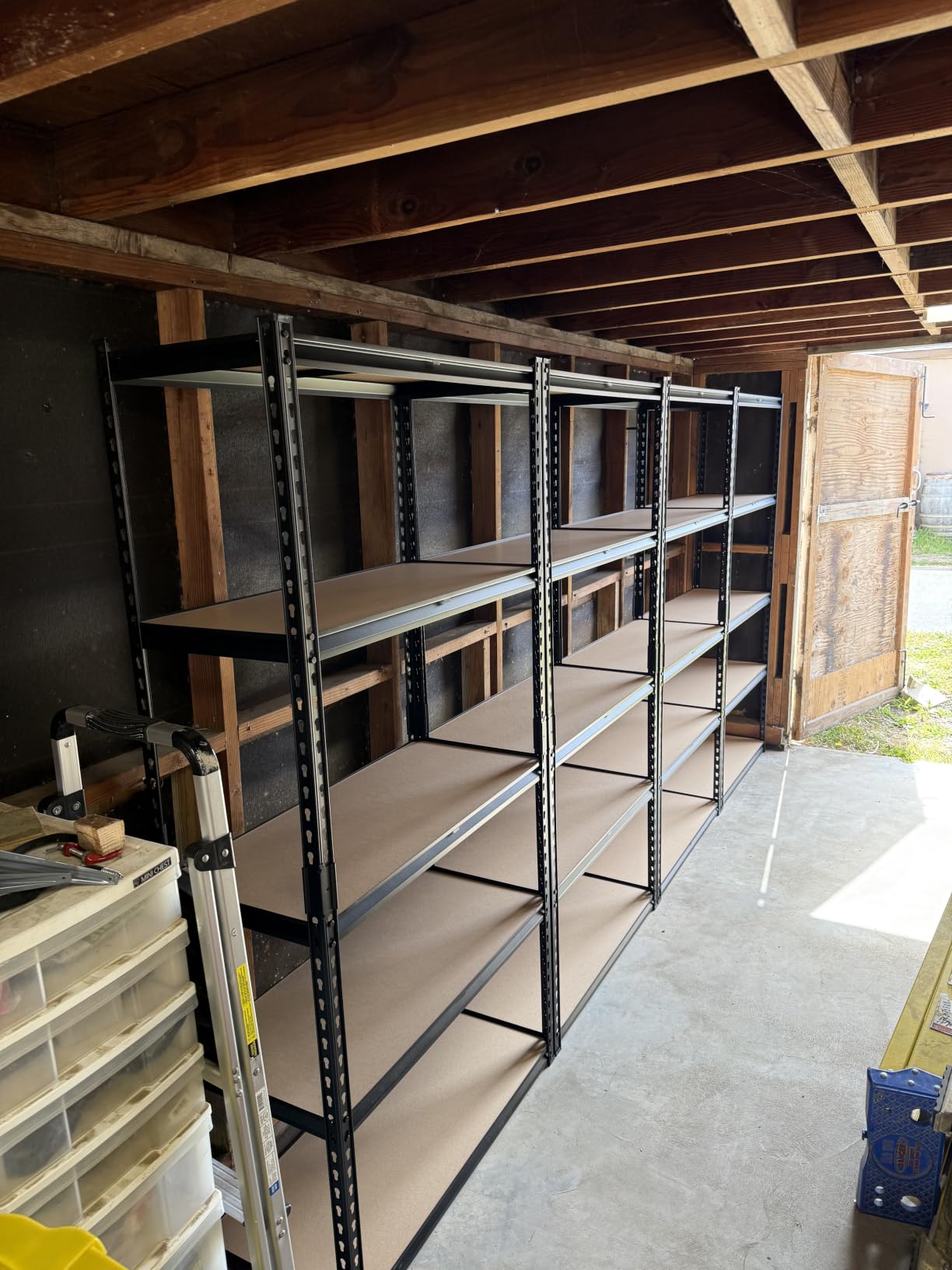
The MDF deck is the problem, and it is the same problem this product file states plainly: 5 millimeter panels are vulnerable to moisture and may sag under sustained heavy load. In a basement that is a real limitation rather than a footnote. Replace them with plywood before loading, or keep the rack somewhere genuinely dry.
A 16 inch depth is also narrower than most storage totes people actually buy, so plan your containers around it rather than after.
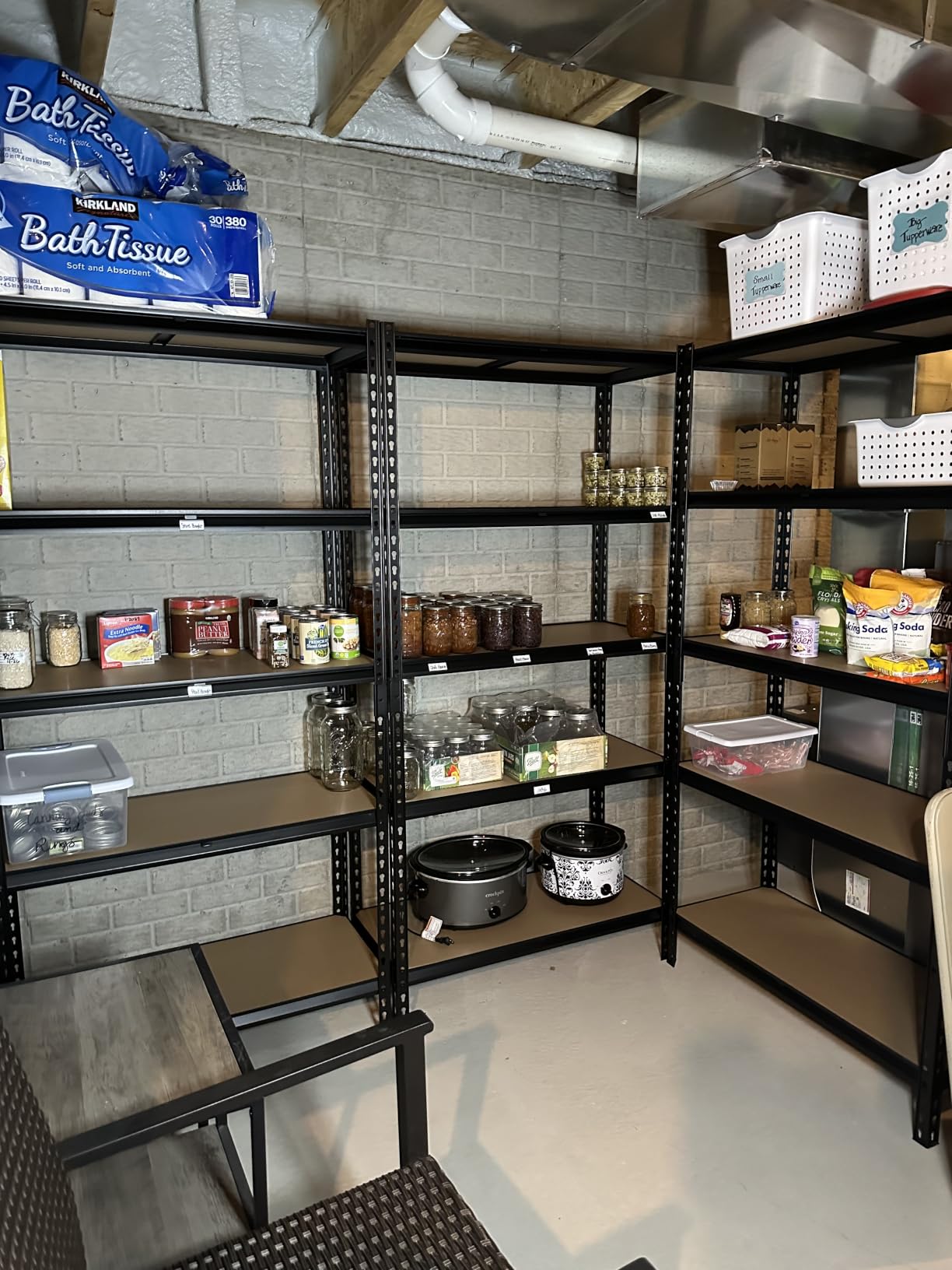
Why a 36 inch width is a basement advantage
Standard closet shelving is 36 inches wide, and that is a good number in a basement because it divides evenly against a 12 foot wall and slides through most doorways. Wide racks look impressive in a listing but force you to place them at the end of a room because a 55 or 71 inch frame only fits one specific wall.
Four of these in a row also give you a long continuous run of storage along a long basement wall, with the option of splitting the set up by room.
When it is the wrong choice
Skip it in a damp basement unless you are willing to swap the decks. Skip it if you plan to store large totes or paint, since MDF and a solvent both do damage. And check the hardware bag on arrival, because missing pieces are reported.
For dry basement storage where bins are medium sized, it is a solid, fast, compact option.
Why Basement Shelving Is Different From Garage Shelving?
Garage shelving is rated for load and basement shelving is rated for load plus three other things: moisture, clearance, and the floor. A rack that is perfect in a dry attached garage will disappoint you in a basement, usually in the first humid season.
Humidity is the first issue. Basement air sits against cool concrete and foundation walls, and warm humid room air condenses on those surfaces. That water lands on the bottom shelf, on the floor, and in the bolt holes of the frame, and bare steel begins to bloom at exactly those points. Powder-coated steel resists this far better than plain zinc, and a wire deck lets moisture pass through rather than absorb it. If you use any wood or MDF deck, treat the cut edges, because those are where water gets in first.
Two habits reduce the problem before you buy anything. Run a dehumidifier on the same circuit as the shelving rather than in the corner of the room, so air actually moves across the racks. And set units on feet or a raised platform rather than resting flat on bare concrete, because wicking moisture comes up through contact points. A simple concrete paver under each corner does the job.
Clearance is the second issue and it is the one that ends plans. Measure the lowest point of your joists, not the ceiling height listed in the listing for the house. Subtract 2 to 4 inches of working margin, then buy a unit under that number. A 72 inch rack is 6 feet; many finished basement joists hang at 6 feet 9 inches, which leaves a 72 inch frame with almost nothing to spare and no way to slide it in past a beam.
The floor is the third. Poured basement concrete is rarely level, and a rack that rocks will eventually walk. Look for adjustable leveling feet rather than fixed feet, and count them: four feet on a tall unit is a real feature. Uneven floor plus a loaded rack is also the leading cause of the wobble that makes people distrust their shelving in the first place.
Finally, unfinished basement walls change the mounting options. If the wall is framed, you have studs. If it is block or poured concrete, freestanding racks become the only realistic option, or you switch to wall-mounted shelves with masonry anchors. We cover both approaches below. Related heavy duty storage roundups, like our heavy duty crate guide, follow the same principle: match the product to the room’s real conditions rather than to a category label.
How to Choose Heavy Duty Shelving for a Basement
Read this section before you pick a model, because most disappointing shelves trace back to a spec that was misread or a measurement that was never taken.
Understand per-shelf versus total capacity
Per-shelf capacity is the number that matters. Total capacity is usually just per-shelf multiplied by the number of shelves, which means a 1750 pound total across five shelves sounds like 1750 pounds on one shelf when it is actually 350. The Amazon Basics rack here is rated at 350 pounds per shelf and 1750 pounds total, and that is a big difference in practice.
Also note that capacity figures assume even distribution. A 1250 pound per shelf rating assumes weight spread across the whole deck, not a stack of tile in the middle. When in doubt, halve the number and treat it as your safe working load.
Measure your bins before you measure the wall
The most common basement shelving mistake is buying a narrow rack and then discovering that the 27 gallon totes overhang the front edge. Measure the front-to-back depth of your largest container and the height of your tallest one, then buy the rack that clears both. A 24 inch deck accepts a 20 gallon tote cleanly; a 14 inch shelf does not.
For container-heavy storage, our other heavy duty picks guide follows the same measurement-first method, and you can see the format in our heavy duty equipment roundups if that approach suits you.
Choose a deck material that fits the room
Wire is the best deck for damp rooms because it drains and breathes, and it is the only option here that cannot absorb a spill. Solid steel is the strongest and the best surface for liquids, since a leak is wipeable instead of soaking in. Plastic will not rust but flexes under point loads and dents permanently. Particle board and MDF are the weakest option in a basement and the first thing experienced owners replace.
If you must use MDF in a basement, replace each deck with half-inch plywood cut to size and seal all six faces with polyurethane before you load anything. That single upgrade is the most commonly reported modification in shelving discussions, and it is genuinely transformative.
Check the ceiling with a 2 to 4 inch margin
Measure the lowest joist over the spot where the rack will stand, subtract 2 to 4 inches, and use that as your maximum unit height. Units at 70 to 72 inches fit many unfinished basements. Units at 78 inches frequently do not. If your ceiling is genuinely low, the 55 inch plastic rack in this roundup is the model designed for the problem.
Load heaviest items on the bottom
This is the rule experienced users repeat without exception. Weight low keeps the center of gravity down, keeps the rack from tipping toward a staircase, and means a lower shelf can take a hundred pounds of paint without the whole unit shifting. Distribute weight across the width of the deck too, rather than concentrating it on one corner.
Anchor everything, especially near stairs
Anchor to studs when the wall is framed, using the strap hardware most units include or a set of wall ties. On concrete or block, use appropriate masonry anchors and drill carefully. Two people make the job faster and cleaner. A loaded rack on a slope or near an open stairwell is the most common cause of shelving accidents in basements, and anchoring takes minutes.
Consider a DIY 2×4 and plywood build
For an irregular basement, a built shelf from 2x4s and plywood beats any retail unit, because you can fit it exactly. A ledger board screwed into studs or a masonry-anchored frame carries the deck, and 24 inch plywood on a 16 or 24 inch joist span is workable for light to moderate loads. The trade is time: a build takes a weekend, while a boltless rack takes an afternoon. Long-term owners also point out that paint alone does not protect a plywood deck from grease and oil, so seal the faces properly.
For bulky storage of a different kind, our heavy duty mobility roundup covers capacity testing in a similar way if that is what you are researching.
What Are the Disadvantages of Metal Shelves?
Metal shelves can rust in humid spaces, conduct cold and dent easily, and make noise when loaded. They catch on clothes or bags, offer no way to cut a custom size, and bolt holes can snag. They also cannot be repaired once a shelf is bent, and a coated surface that chips exposes raw steel that corrodes from there. None of these are deal breakers, but they are real trade-offs against plywood.
Frequently Asked Questions
Where can I find deals on heavy duty metal shelving?
The lowest prices are usually online marketplace listings and the highest are at big-box home improvement stores carrying the same boltless steel format. Warehouse club members get mid-tier industrial racks in bulk packs, and local listings for used rivet racks or office shelving units can be a fraction of new retail. Compare per-shelf capacity rather than total capacity, because listing prices often track the goods people load onto the rack rather than the rack itself.
How to build storage shelving in the basement?
Frame it with 2x4s and support the deck with a ledger board screwed into studs, or into block with masonry anchors. Use half-inch plywood decks cut to fit each bay, leave a few inches of clearance at the wall for airflow, and seal all six faces of each board with polyurethane before loading. Space joists on 16 or 24 inch centers and keep the deck span within what the framing supports. Anchor the whole unit to the wall before it is loaded.
What are the disadvantages of metal shelves?
Metal shelves can rust in humid spaces, conduct cold and dent easily, and make noise when loaded. They catch on clothes or bags, offer no way to cut a custom size, and bolt holes can snag. They also cannot be repaired once a shelf is bent, and a coated surface that chips exposes raw steel that corrodes from there. None of these are deal breakers, but they are real trade-offs against plywood.
What are some storage ideas for high shelves?
Use a step stool rather than a chair, and keep the top shelf for seasonal items you touch once a year. Store lightweight bins up high and heavy items low, label the front edge of every bin so you can read it from the floor, and choose bins with lift handles. Group items by when you use them so a full rotation takes one trip, and keep the top shelf clear of anything you need weekly.
Can you put garage shelving in a basement?
Yes, most boltless steel racks work fine in a basement, but check three things first. Confirm the unit height clears your lowest joist with a few inches of margin, confirm the deck material is wire or steel if the room is damp, and confirm the unit has leveling feet for an uneven concrete floor. Avoid particle board and uncoated MDF decks in a basement, and anchor the unit to studs or masonry before loading it.
Final Verdict: Which Basement Shelving Should You Buy?
For most basements in 2026, the Amazon Basics 5-shelf wire rack is the right default, because a wire deck survives damp air, 350 pounds per shelf handles real weight, and a 14 inch depth fits where wider racks will not. If your walls are unfinished block, switch to the FLEXIMOUNTS wall-mounted pair, which needs no floor space at all. If your containers are large and deep, the HOMEDANT 24 inch rack stops them from overhanging. For low joists, the 55 inch plastic rack is the only one here that fits.
Whatever you choose, measure your lowest joist and your biggest bin before you order, load the heaviest items on the bottom shelf, and anchor the rack to the wall. Those three steps solve more basement shelving problems than any brand name on this list.