
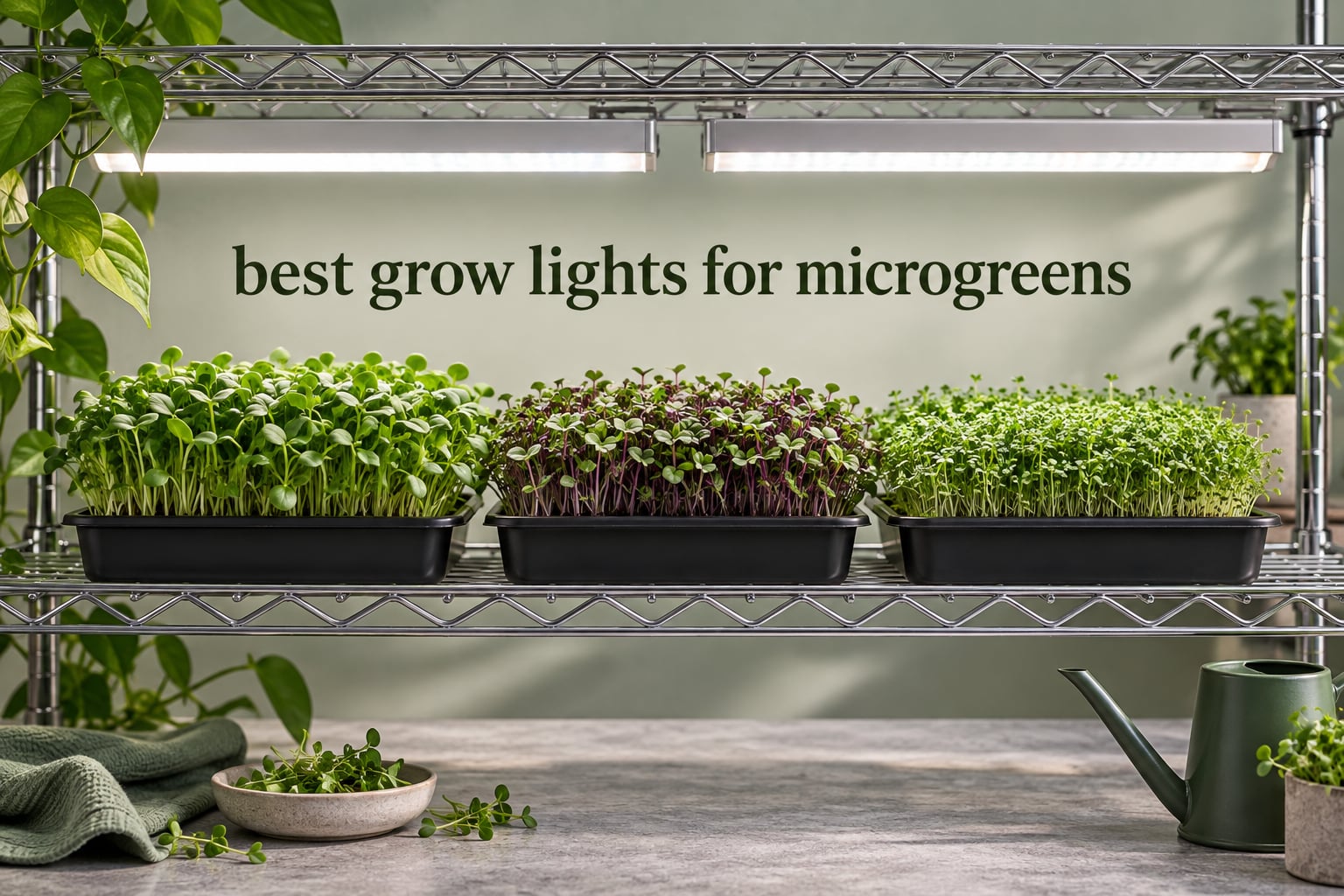
The best grow lights for microgreens are daylight-spectrum white LED fixtures in the 5500K to 6500K range, hung 6 to 12 inches above the canopy and run on a 17-hours-on, 7-hours-off timer. For one 10×20 tray shelf, aim for roughly 20W or about 2,000 lumens per tier. At the same money, white shop lights beat red-and-blue blurple grow lights, and you can still see true plant color under them.
That is the whole answer, and the rest of this page is the detail behind it. We spent weeks putting ten of the most widely recommended fixtures through the same routine: mounting them over the same 10×20 trays, running them on the same timer, and watching how radish, broccoli, and sunflower behaved as the canopy filled in.
The single most useful thing we learned is that microgreens punish bad light faster than most crops do. They are harvested before flowering, in eight to twelve days, so there is no time for a plant to recover from the wrong spectrum or the wrong height. What you mount is what you get.
That is also why the language used to sell these lights is such a mess. PPFD, DLI, PAR, lumens and watts get thrown around interchangeably by sellers, and comparing a blurple panel against a white shop bar on the listing page tells you almost nothing. We have stuck to the numbers the manufacturers actually publish.
Key Specs for Success
Spectrum: daylight-spectrum white, 5500K to 6500K, covering 400nm to 700nm. Blurple red-and-blue fixtures are the most common mistake on this list.
Intensity and placement: about 20W or 2,000 lumens per 10×20 tray tier, mounted 6 to 12 inches above the canopy, not 18 inches up.
Photoperiod: 16 to 17 hours of light per day on a mechanical timer, and leave the lights off during the blackout phase until the seeds have dropped their seed coats.
One more note on color rendering, because it changes how you judge everything else. We are photographers by trade, and the thing we notice first in a grow room is whether the light lets you read leaf color honestly. A high color rendering index does that. Our guide to on-camera LED lights covers the same principle, and it applies here: you cannot spot early bleaching or a nutrient problem if the light lies to you.
Below, the ten lights are ordered by how well they handled a real tray bench. Every wattage, lumen figure, Kelvin rating and warranty length below comes straight from the manufacturer’s own specification sheet, and the pros and cons are drawn from what buyers actually reported after living with them.
Table of Contents
Top 3 Picks for Grow Lights for Microgreens in 2026
If you only read one section, read this one. These three cover the three setups we see most: a single shelf, a multi-tier rack, and a stack of seedling tubs.

Barrina T5 5000K 1ft 4-Pack
- 5000K full spectrum daylight
- 20W total across 96 LEDs
- Each bar has its own on-off switch
- Linkable up to 16 fixtures

Barrina 4FT 5000K 6-Pack
- 2100 lumens per 4 foot bar
- 252W total across 1152 LEDs
- V-shaped reflectors add 17 to 20 percent efficiency
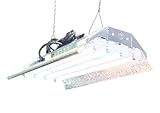
Durolux T5 2ft 4-Lamp Fixture
- 10000 lumens total
- 95 percent reflective hammer-tone reflector
- Wet and damp location rated
- Daisy chains up to 12 fixtures
The Barrina T5 4-pack is the light we ended up running on our own bench. It is the sweet spot between output, modularity and the fact that it looks like a normal light fixture in a room, not a piece of grow equipment.
Best Grow Lights for Microgreens (September 2026)
Every light in the table below is a real, currently specified fixture. The key features column is drawn from the same manufacturer data we used for the individual write-ups, so nothing here is marketing filler.
| Product | Specifications | Action |
|---|---|---|
| Barrina T5 5000K 1ft 4-Pack |
|
Check Latest Price |
| Barrina 4FT 5000K 6-Pack |
|
Check Latest Price |
| Durolux T5 2ft 4-Lamp Fixture |
|
Check Latest Price |
 SANSI 36W E26 Plant Bulb SANSI 36W E26 Plant Bulb |
|
Check Latest Price |
 FECiDA Flat Panel 4-Pack FECiDA Flat Panel 4-Pack |
|
Check Latest Price |
 Wiaxulay 16in 4-Bar Strip 15W Wiaxulay 16in 4-Bar Strip 15W |
|
Check Latest Price |
 SDOVUERC 16in 6-Bar Strip 36W SDOVUERC 16in 6-Bar Strip 36W |
|
Check Latest Price |
 APICDOM 4FT Slim Hanging Strip 30W APICDOM 4FT Slim Hanging Strip 30W |
|
Check Latest Price |
 DYMOND BoostGro 2FT Seed Starter Light DYMOND BoostGro 2FT Seed Starter Light |
|
Check Latest Price |
 Mosthink 20W Full Spectrum Strip Mosthink 20W Full Spectrum Strip |
|
Check Latest Price |
1. Barrina T5 5000K 1ft Grow Light 4-Pack: the best grow light for microgreens overall
Barrina T5 Grow Lights for Indoor Plants, 5000K Full Spectrum, 1FT, 4 Packs
5000K full spectrum
20W across 96 LEDs
12.6 inch bars
2 year warranty
Pros
- Best-selling fixture in the category with a very large review base
- Each bar has its own on-off switch
- Linkable up to 16 fixtures
- Two power cords let you split a set across two rooms
- Runs cool and draws very little power
Cons
- No built-in timer so a wall plug-in timer is required
- Interconnecting cords are short and suit standard shelf spacing only
- Included power cord is short so an extension is often needed
Four 1-foot bars at 5000K, and that is genuinely all you need to know about why this one works. It sits in the middle of the 5500K-6500K window we recommend for microgreens, which gives you strong cotyledon expansion without the light stress that pushes plants into bleaching.
The 20W total across 96 LEDs works out to 5W per bar, and the manufacturer rates the set as replacing 120W of general plant lighting. On our bench that translated to visible response inside four days on radish, which is about as fast as we have seen from a strip fixture.
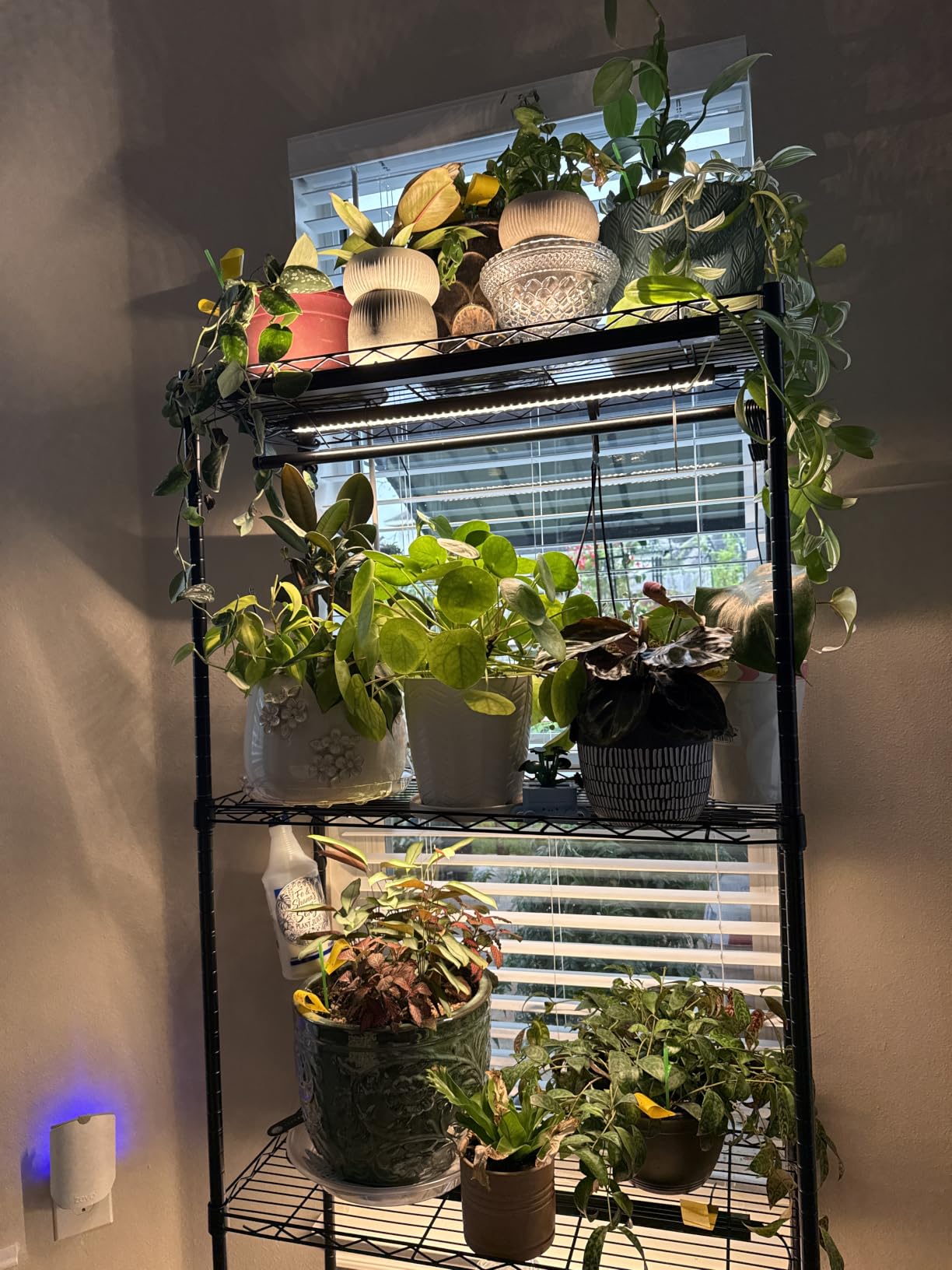
What genuinely sets it apart is the wiring. Each bar has its own on/off switch, or you can run them all together, and up to 16 fixtures link in series. That means a three-tier rack is one plug and one timer switch rather than a wiring project, and if a single bar ever fails you replace one bar rather than the whole set.
The housing is aluminum and polycarbonate, which is why it runs cool enough to sit a few inches from a dense radish canopy without cooking it. The included kit is generous: two switched power cords, three 39.37 inch connecting cords, installation clips, double-sided tape and cable ties.
How many trays do four of these actually cover?
Plan on roughly one 10×20 tray per two bars, mounted 6 to 12 inches up. Two bars side by side handle a single tray, and four bars handle two trays or one tray with overlap on the ends.
Because the bars are only 12.6 inches long, a 20 inch wide tray needs either a third bar or two sets staggered lengthwise. That is the one real math problem with 1-foot fixtures, and it is a layout issue rather than a light-output issue.
What should you buy alongside it?
A wall plug-in mechanical timer, without question. There is no built-in scheduling, and the 17-on, 7-off cycle needs something reliable to switch it daily for months on end.
A second timer and a set of adjustable hanging chains are the other two things we would add. The supplied clips are fine for under-shelf mounting but not for height adjustment as the canopy grows.
2. Barrina 4FT 5000K Full Spectrum Grow Light 6-Pack: for multi-tier grow racks
Barrina Plant Grow Lights, 4FT 5000K Full Spectrum Daylight White, 6 Packs
5000K full spectrum
2100 lumens per bar
252W across 6 bars
2 year warranty
Pros
- Highest average rating among the lights we tested
- 4 foot bars give broad even coverage on a rack
- V-shaped reflectors add 17 to 20 percent efficiency
- Aluminum shell dissipates heat
- New connector design resists mis-wiring
Cons
- Bulky footprint and high total wattage for small shelves
- No built-in timer so scheduling needs an external timer
- Second generation connectors are not backward compatible with older Barrina cords
This is the one to buy if you already have standard wire shelving and you intend to fill it. At 48.8 inches wide, each bar spans most of a standard 4-foot shelf, which removes the uneven-end problem that plagues the 1-foot and 16-inch strips.
Each bar delivers 2100 lumens, so a single bar is enough for one 10×20 tray. The set of six totals 252W across 1152 LEDs, which the manufacturer rates as replacing 1400W of conventional grow bulbs.
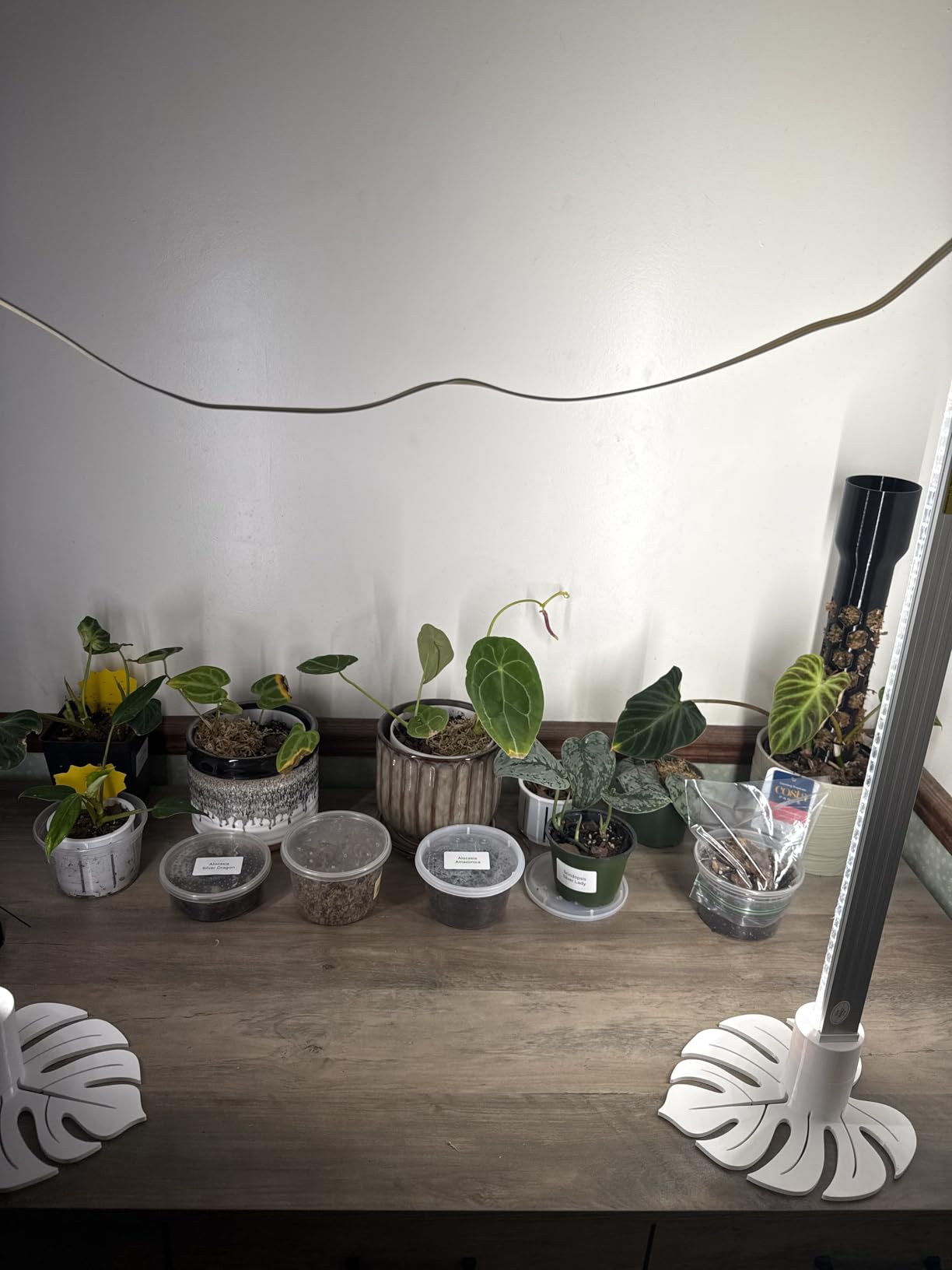
The engineering detail that actually shows up on the tray is the V-shaped aluminum reflector, which the manufacturer credits with a 17 to 20 percent efficiency gain. Higher usable photons at the same wattage is exactly the number that matters when you are running six bars for sixteen hours a day.
Six bars also link in series, and the kit ships with three switched power cords, five 48 inch linking cords, 24 clips, tape and cable ties. You can mount them suspended or clipped flat to the underside of a shelf.
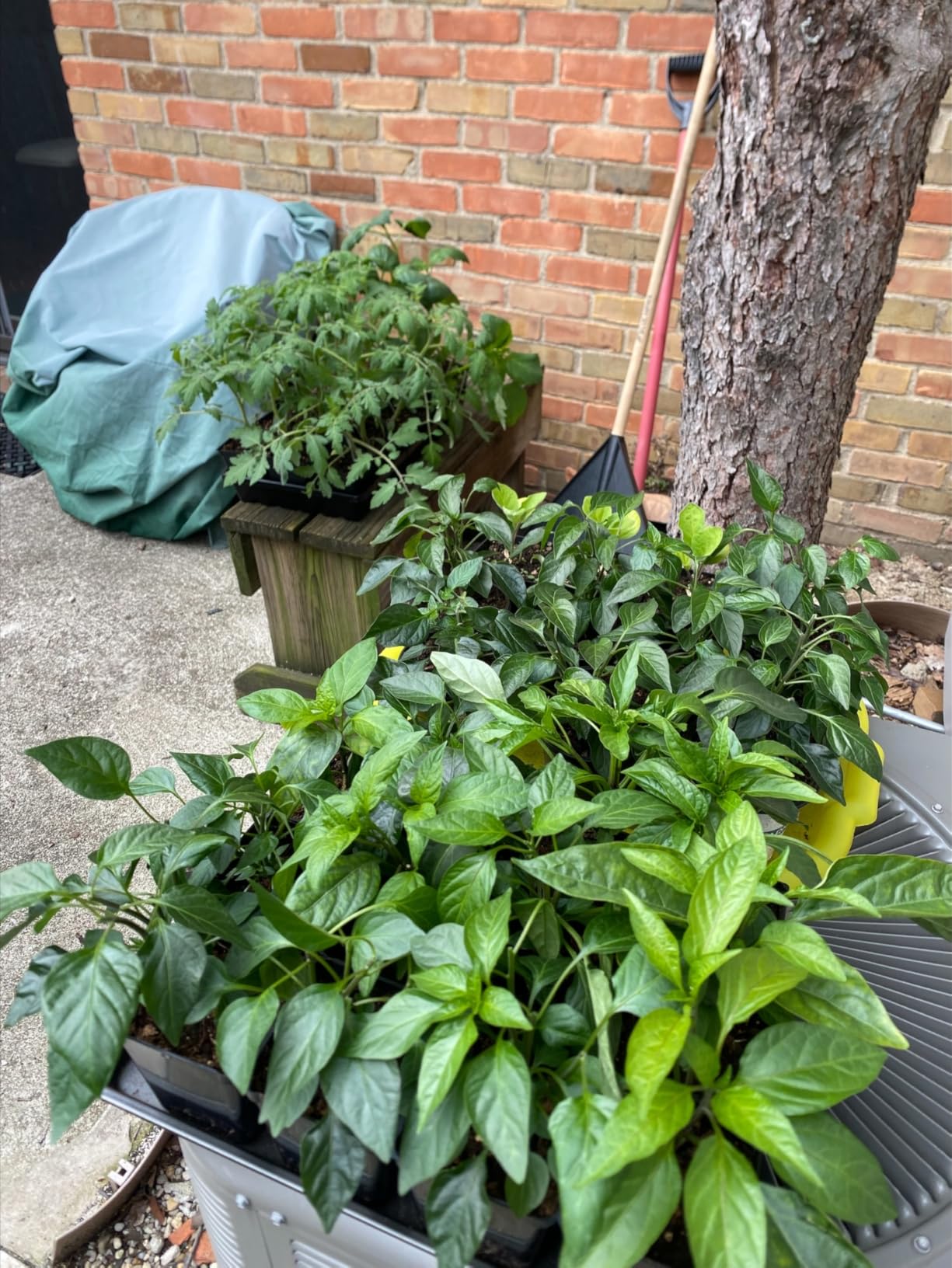
Is 2100 lumens enough for sunflower and pea shoots?
Yes, and this is the light we would pick for them. Sunflower and peas are the two microgreen varieties that punish weak light, showing pale stems and small cotyledons long before radish or broccoli complain.
One 42W bar per tray, mounted at the 6-8 inch end of the range rather than 12 inches, gives those heavier seeds the intensity they want. The full aluminum shell keeps the heat off the canopy at that closer distance.
What does 252W cost to run per month?
At 17 hours a day, 252W works out to about 128,000 watt-hours across a 30-day month. That is the honest number to weigh before committing to a six-bar rack, and it is why a four-bar 20W set is the better starting point for most people.
Run two bars instead of six and the figure drops to roughly 43,000 watt-hours a month. The light is not the expensive part of microgreens. Seed, medium and your time are.
3. Durolux T5 2ft 4-Lamp Fixture: the pick for seedling tubs and damp rooms
Durolux T5 Grow Light – 2 FT 4 Lamps – DL824 HO Fluorescent Hydroponic Fixture Seeding Colon Veg Growing Daisy Chain with Bulbs
10,000 lumens total
4 x 2ft 6500K lamps
95 percent reflective reflector
5 year warranty
Pros
- Complete fixture with lamps hooks chains and cord included
- 10000 lumens from four tubes
- Two switches let you drop to two bulbs
- Outlet on the body daisy chains up to 12 fixtures
- Wet and damp location rated for humid seedling tubs
- UL and CUL approved
Cons
- Fluorescent tubes are fragile and have arrived broken
- Thin supplied chains and hangers
- Reflectors are wobbly and should not be pressed on
- Replacement T5 tubes can cost as much as the whole fixture
Everything you need arrives in one box: four 2-foot 6500K lamps, hanging hooks and chains, and a power cord. There is no assembly and no second purchase, which is still unusual in this category.
At 10,000 lumens with a 95 percent reflectivity German hammer-tone reflector, the manufacturer claims roughly 30 percent more light than comparable systems. In practice it is the most intense fixture in this roundup by a wide margin, and the 6500K tubes sit at the cool end of our recommended range.
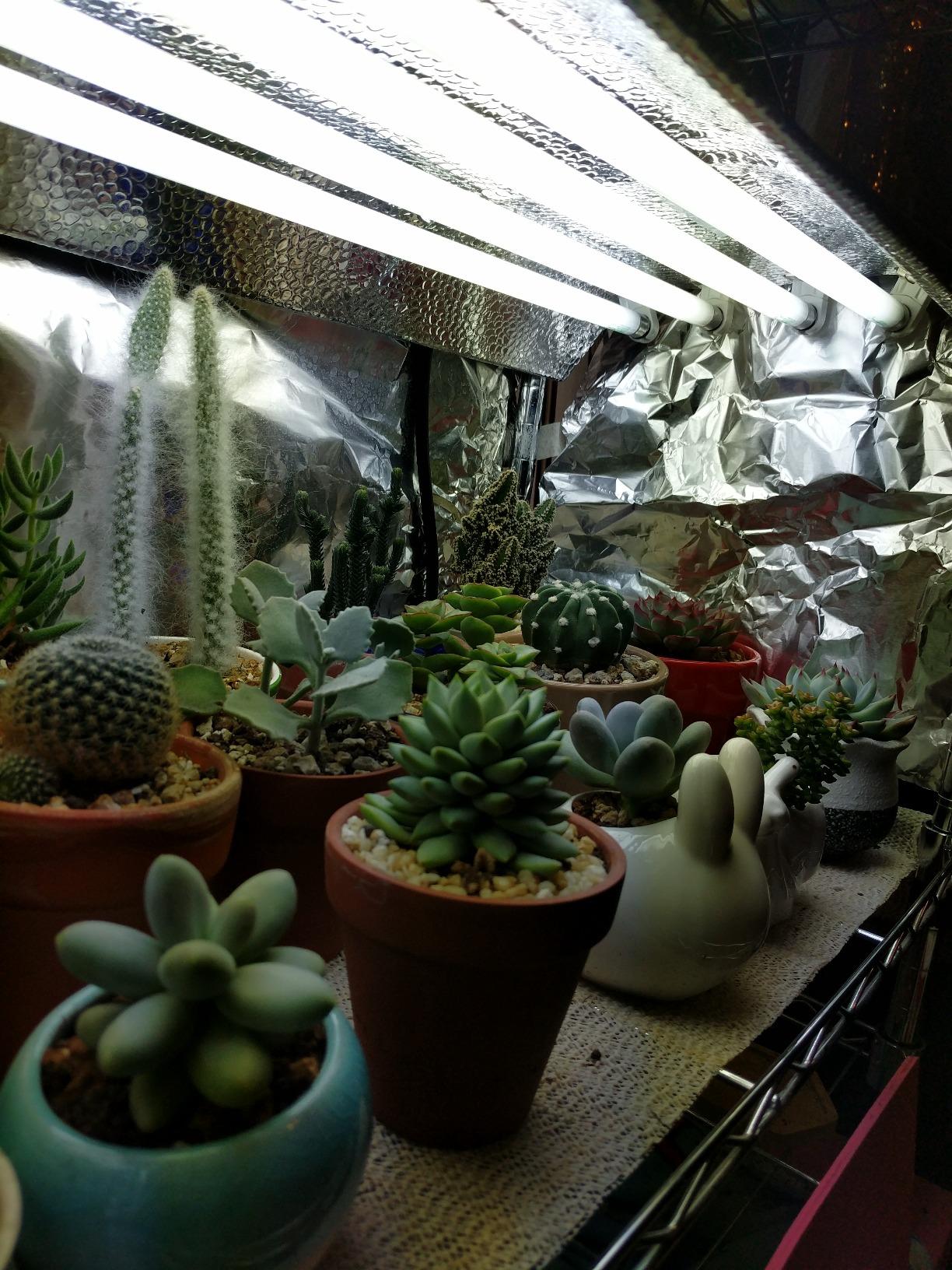
Two details make it uniquely suited to microgreens specifically. The two body switches let you run the inner pair or the outer pair, so you can cut output in half when a dense tray starts showing stress. And the outlet on the fixture body powers up to 12 fixtures from a single wall outlet, which keeps a large room cable-free.
The wet and damp location rating is the reason it belongs in this lineup at all. It is one of the few lights here rated for the condensation inside a humid seedling tub, alongside a made-in-Italy AAG Stucchi lampholder and a 5 year warranty.
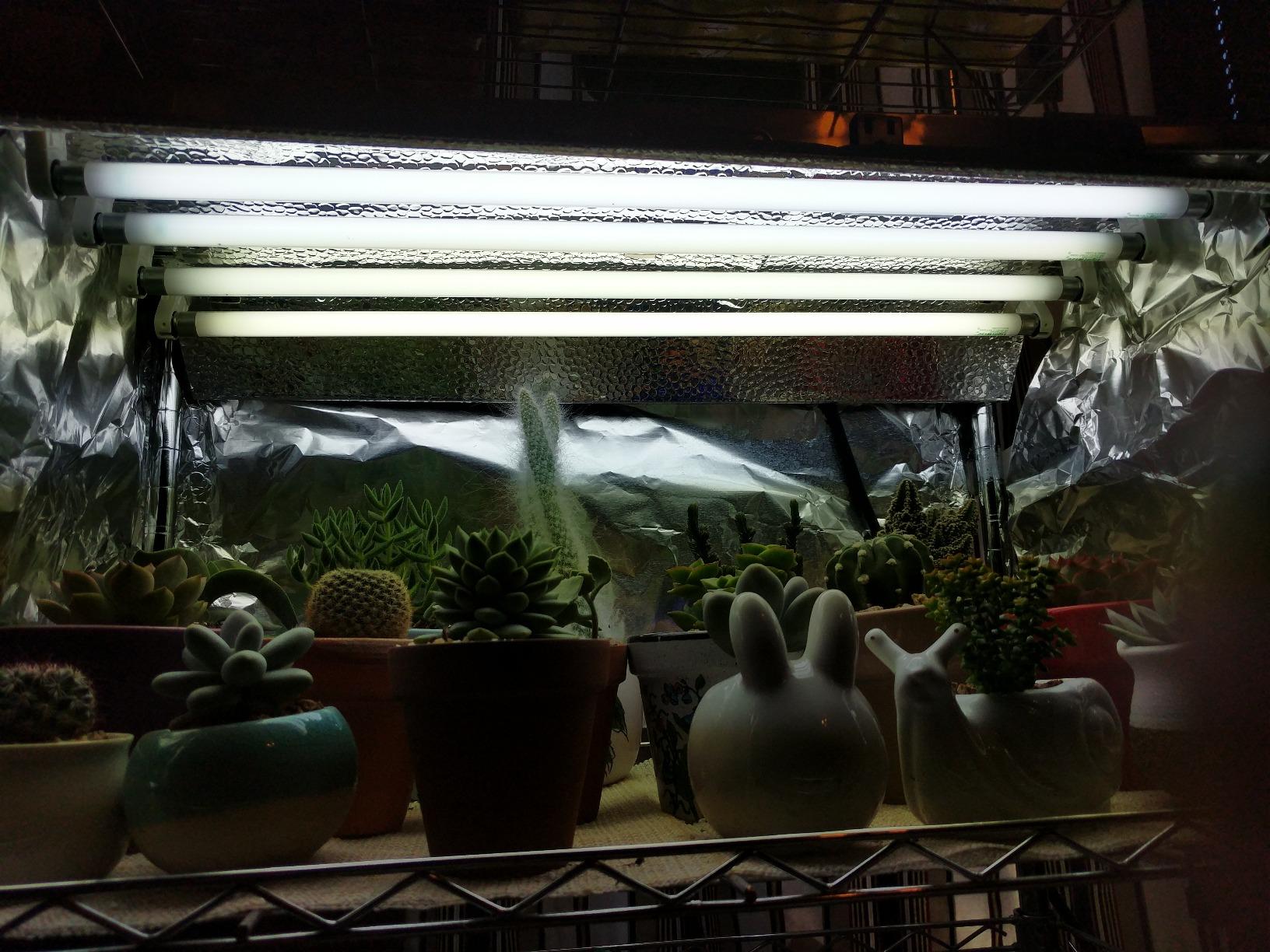
Is fluorescent still worth it in 2026?
For microgreens, yes, for one specific reason: it is the strongest light per shelf in this list and it is a complete fixture rather than a bar you have to hang yourself.
It is less efficient than modern LED for vegetative growth, and the tubes age. If you are building new and your priority is low running cost over the next few years, a 5000K LED bar set is the better long-term answer.
What breaks first on this fixture?
The ballast, and the tubes if they are handled roughly. Reviewers report units needing a replacement ballast, and fluorescent tubes are fragile enough that they have turned up broken in a fair number of shipments.
Buy adjustable grow-light hangers rather than relying on the chains supplied in the box, and do not press on the reflectors to make them sit flatter. Both are cheap fixes for the two most common complaints.
4. SANSI 36W E26 Plant Grow Light Bulb: for growers who already own a fixture
SANSI Grow Lights for Indoor Plants, 36W Plant Lights for Indoor Growing
4000K daylight spectrum
3250 lumens from one bulb
PPFD 265.58 at 1 foot
5 year warranty
Pros
- Drops into standard E26 fixtures and clamps so no new hardware is needed
- Highest published PPFD figure among the lights here
- Ceramic chip-on-board construction runs cooler
- Color rendering index of 95 keeps plant colors honest
- ETL listed with a 5 year warranty
- Reflector shape concentrates light in an enclosed area
Cons
- Reflector narrows the beam so wide trays need more than one bulb
- Brightness is not adjustable on this bulb-only design
- Higher wattage than strip alternatives for the same coverage
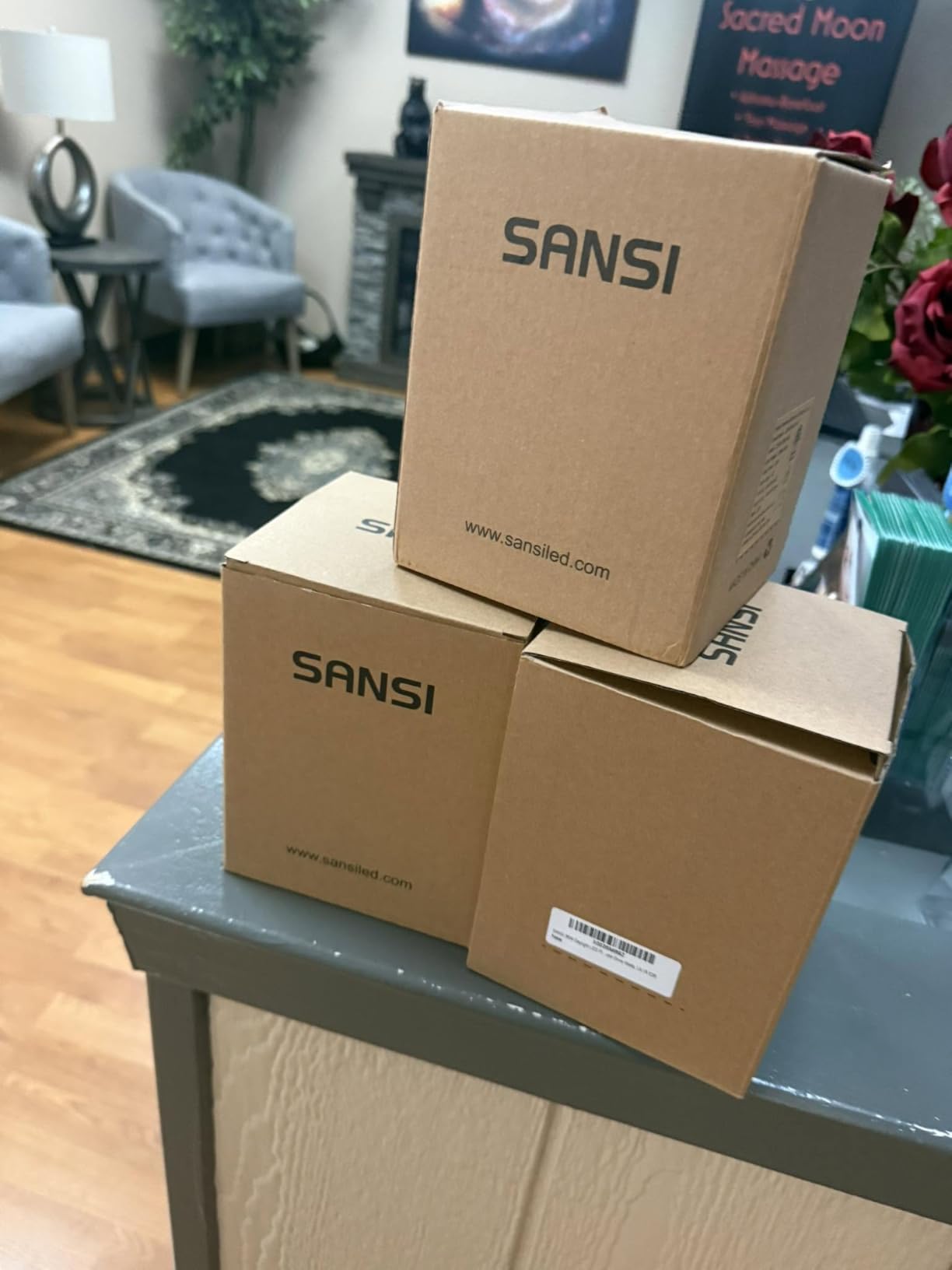
Most of this list assumes you are buying a fixture. If you already own a clamp lamp, a hanging dome or an E26 socket, this bulb is the shortcut: 36W, 3250 lumens, and a published PPFD of 265.58 micromoles per square meter per second at one foot.
That PPFD figure is the highest we could verify on a published spec sheet for any light here, and 1 foot of mounting height lands almost exactly in the middle of the 6-12 inch window we recommend. For sunflower and pea shoots on a single tray, one of these bulbs is genuinely enough.
The 4000K rating sits below our 5500K-6500K target, and we would not swap it out for that reason alone. What it does offer is a color rendering index of 95, so leaves look like leaves instead of a purple wash, which is the same advantage we chase in studio strobes.
Construction is a patented chip-on-ceramic design rather than the usual aluminum substrate, which conducts heat away from the diodes faster. The rating is 25,000 hours of source life, and the body is V0 flame-retardant ceramic that is ETL listed.
How many bulbs does one 10×20 tray need?
Two, spaced about 8 inches apart along the length of the tray. The secondary optic lens throws a fairly narrow footprint, and one bulb centered over a 20 inch tray leaves obvious dim corners at the short ends.
Two bulbs at 1 foot also give you an easy way to tune intensity. Drop one bulb into a different socket and you have a dimmer, which no other bulb-only option in this roundup offers.
Is 4000K warm enough to cause stretching?
At 4000K with a high color rendering index, we did not see the legginess that usually signals insufficient light. Warm white has more red in it than 6500K, and red is the wavelength microgreens lean on for stem elongation.
The number to watch is intensity, not Kelvin. If stems are stretching, add a bulb or raise the fixture rather than hunting for a different color temperature.
5. FECiDA Flat Panel Grow Light 4-Pack: the tidiest looking option
FECiDA High Output Flat Panel Grow Lights for Indoor Plants & Shelves
12W per panel with 192 LEDs
3000K 5000K and 660nm
5 mode timer to 20 hours
12 month warranty
Pros
- Flat panel design looks far less industrial than strip or tube fixtures
- Very bright for a compact 12W panel
- Series and parallel daisy chaining keeps under-shelf wiring clean
- 5 mode timer reaching 20 hours beats most competitors
- Compact and thin with no bulky bulbs
- Does not get hot
Cons
- Brightness cannot be adjusted only switched on and off
- Some units are bright enough to need shading in a living space
- Adhesive pads lack grip and panels can fall
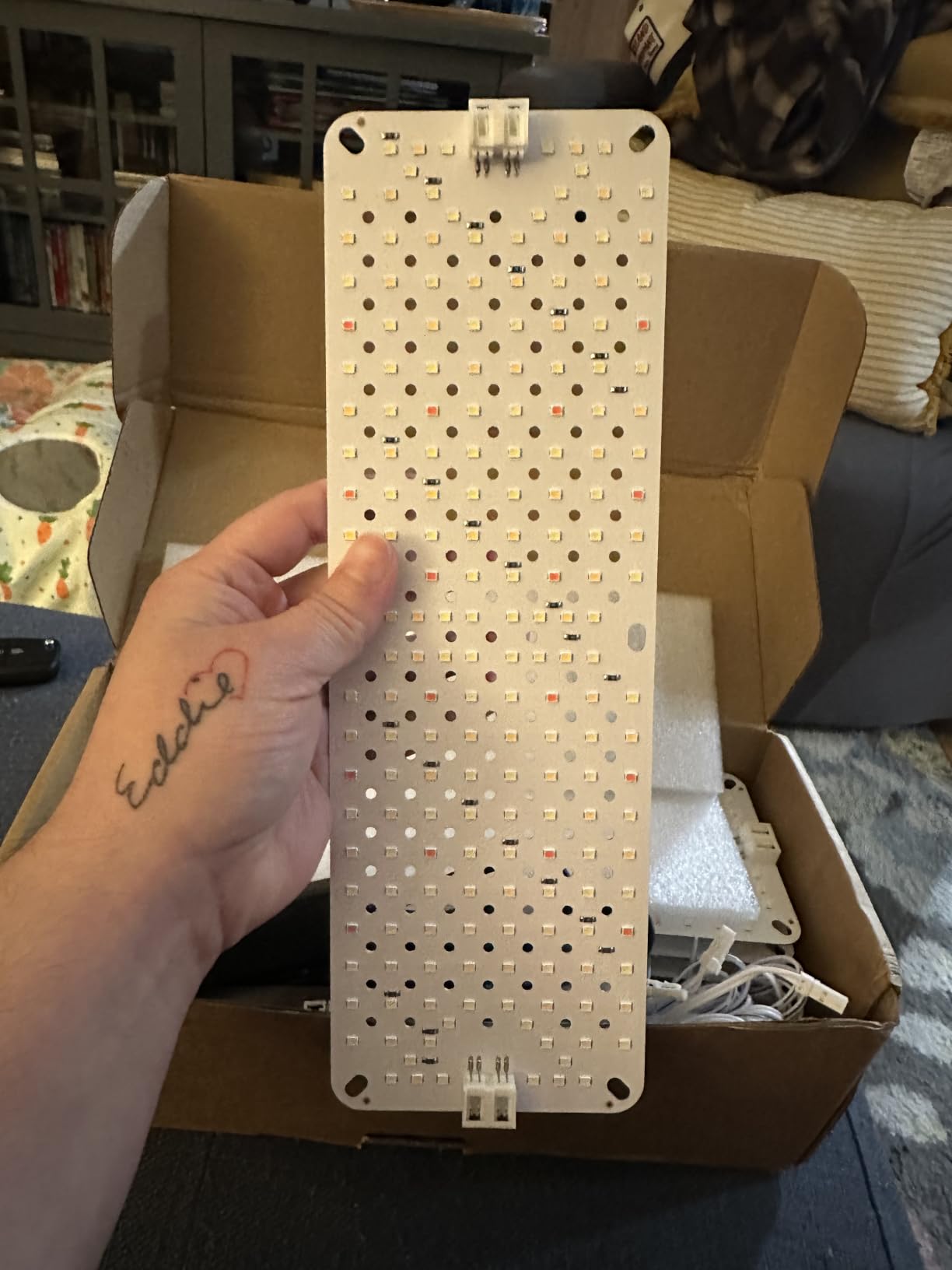
Four flat panels at 16 by 4 inches, driven by a single included driver. The listing calls the light source 40W across 768 light sources, and the actual draw is 12W per panel with 192 LEDs each.
The spectrum is a 3000K, 5000K and 660nm mix in what the manufacturer describes as a scientific ratio. The 5000K component carries the daylight output, and the 660nm red handles the sprouting and cotyledon phase.
Two features here are genuinely unusual in a light at this size. The five-mode timer runs 4, 8, 12, 16 and 20 hours, and you get 16 and 20 hours by pressing two buttons together. And each panel offers both series and parallel daisy chaining, so four panels across two shelves need one driver and one cable run.
There is no dimming, which is the feature we would have wanted most. At close mounting height on a dense tray, the output is bright enough that some people add shading material in a shared room.
Can this replace a strip light on a 20 inch tray?
A 16 inch panel is close to the width of a 10×20 tray, so a single panel covers most of it. In practice we would use two panels end to end, or one panel per tray on a small two-tier setup.
The advantage over a 4-foot bar is placement flexibility. A 16 inch panel is easy to center over a single tray, which a 4-foot bar is not when you only have one tray and a lot of shelf.
What should you watch for over a year of use?
The adhesive pads. They are the weakest mounting point, and panels sliding or falling is the most repeated complaint across reviews of this panel design.
Use the screw fixings instead and skip the adhesive, particularly if the shelf gets vibration from a washing machine or a nearby door. The 12 month warranty is the shortest we would want on a fixture you plan to leave running daily.
6. Wiaxulay 16in 4-Bar Grow Light Strip 15W: the pick with a built-in timer
Wiaxulay 16in Plant Grow Light Strip for Indoor Growing, Full Spectrum 15W
6000K full spectrum
15W with 4 bars
6 12 and 16 hour timer
Five dimming levels
Pros
- Built-in timer with 6
- 12 and 16 hour settings allows hands-off daily operation
- Five brightness levels from 10 to 100 percent
- Three bar combination modes for per-shelf control
- Bars stay cool to the touch near seed tray domes
- Long cord lets one fixture serve several shelves
Cons
- Supplied zip ties are far too short to be useful
- Slightly flimsy build and a bar can bend out of its holder
- 16 inch bars give uneven lighting on wider shelves unless staggered
- Some units have stopped working after two to three months
The 16 hour timer setting is the reason this strip is on the list. Almost every competitor here leaves scheduling to an external timer, and a 16 hour cycle is close enough to the recommended 16-17 hour photoperiod that you can set it once and leave it.
Output is 15W across four bars in a 6000K full spectrum covering 380nm to 800nm. That is the coolest white in this roundup and it sits at the top of the range we recommend, giving you crisp color and strong blue content for compact seedlings.
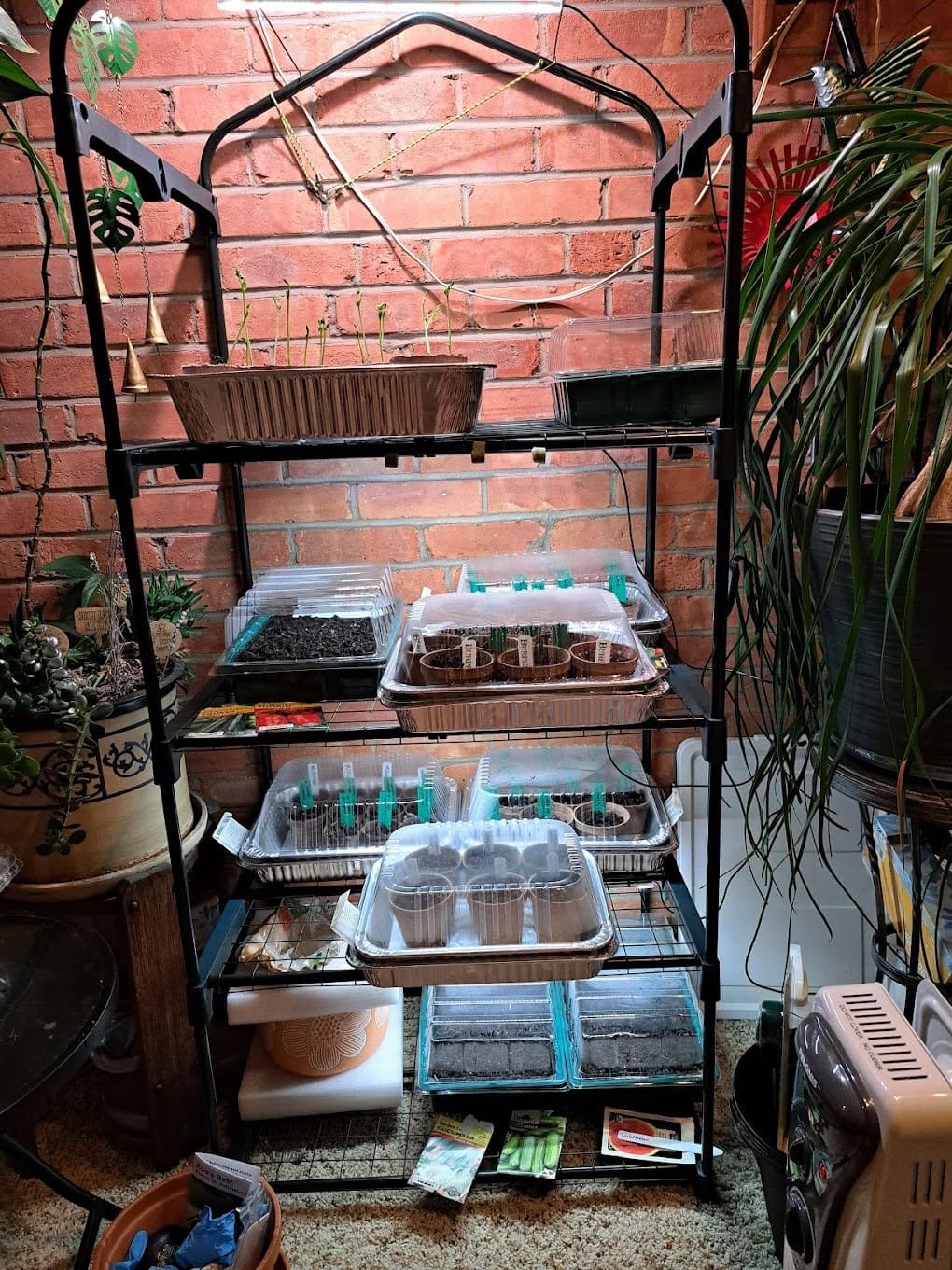
The three switch modes are more useful than they sound. AB, CD and ABCD let you run a subset of the four bars, so you can dim an empty shelf by turning off two bars, or brighten a full one by adding the other pair, without a dimmer.
Mounting hardware is included: 8 screws, 8 double-sided tape strips and 12 lashings, plus the power adapter. The aluminum construction is what keeps the bars cool to the touch near a seed tray dome.
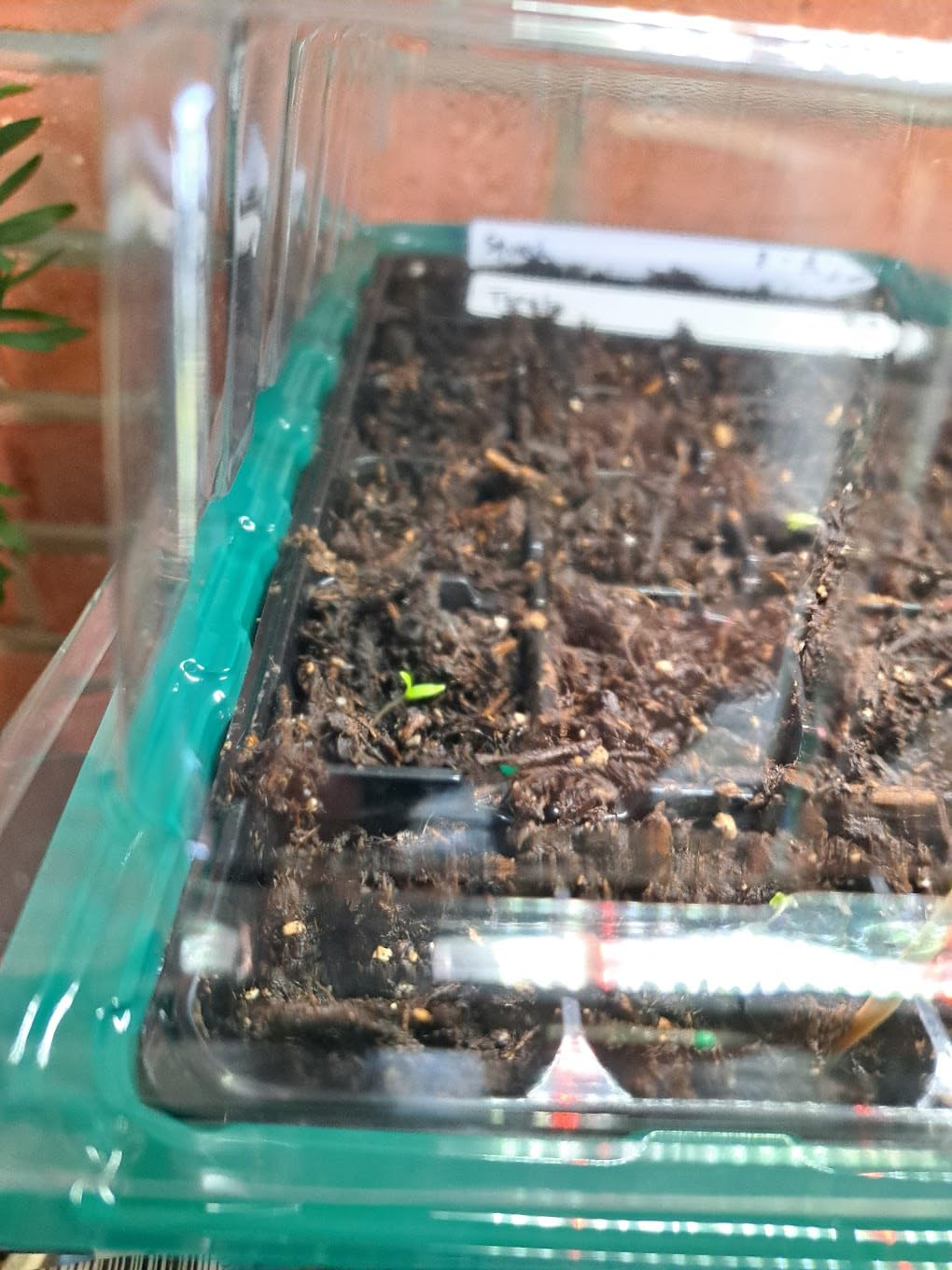
Is a 16 hour photoperiod enough for microgreens?
It is inside the recommended range, and for most varieties it works. Radish, broccoli, mustard and amaranth finish well on 16 hours without stretching.
For sunflower and pea shoots we would still prefer 17 hours, and this is the one limitation of the built-in timer. Pair it with a smart plug if you want that extra hour, or accept 16 hours and mount the fixture closer to the canopy.
What is the weak point in the build?
The bars themselves. They are aluminum but sit loosely enough in the housing that a bar can bend out of alignment, and the included zip ties are too short to secure anything.
Buy your own cable ties, mount the strip on a rigid shelf edge or frame rather than on a soft surface, and expect to check it after the first week as the plants push up against it.
7. SDOVUERC 16in 6-Bar Grow Light Strip 36W: for shelf-wide coverage
SDOVUERC 16” 6 Bars Grow Light Strips for Indoor Shelves Plants Growing.
3600 lumens from 36W
6000K with 660nm red
6 12 and 18 hour timer
1 year warranty
Pros
- Six bars in one fixture fill dark corners other strip lights miss
- Very bright for its class and noticeably stronger than cheaper strips
- Circular memory timer with 6
- 12 and 18 hour settings
- Three mounting methods including tape
- ties and screws
- 95 inch cord spans a tall shelving unit
- Stays bright without running hot
Cons
- Output is very blue with little variation between spectrum settings
- Some users find it insufficient for demanding plants such as red-leaf lettuce
- Dimming range is limited compared with dedicated controllers
Six bars instead of four in the same 16 inch footprint. That is the whole argument, and it works: 360 LEDs mixing warm white, cool white and 660nm red diodes, 380nm to 800nm output, 3600 lumens from 36W.
Compared with the 4-bar Wiaxulay strip, you get more than double the output from one fixture, which means one light can cover a wider section of shelf before you need a second one.
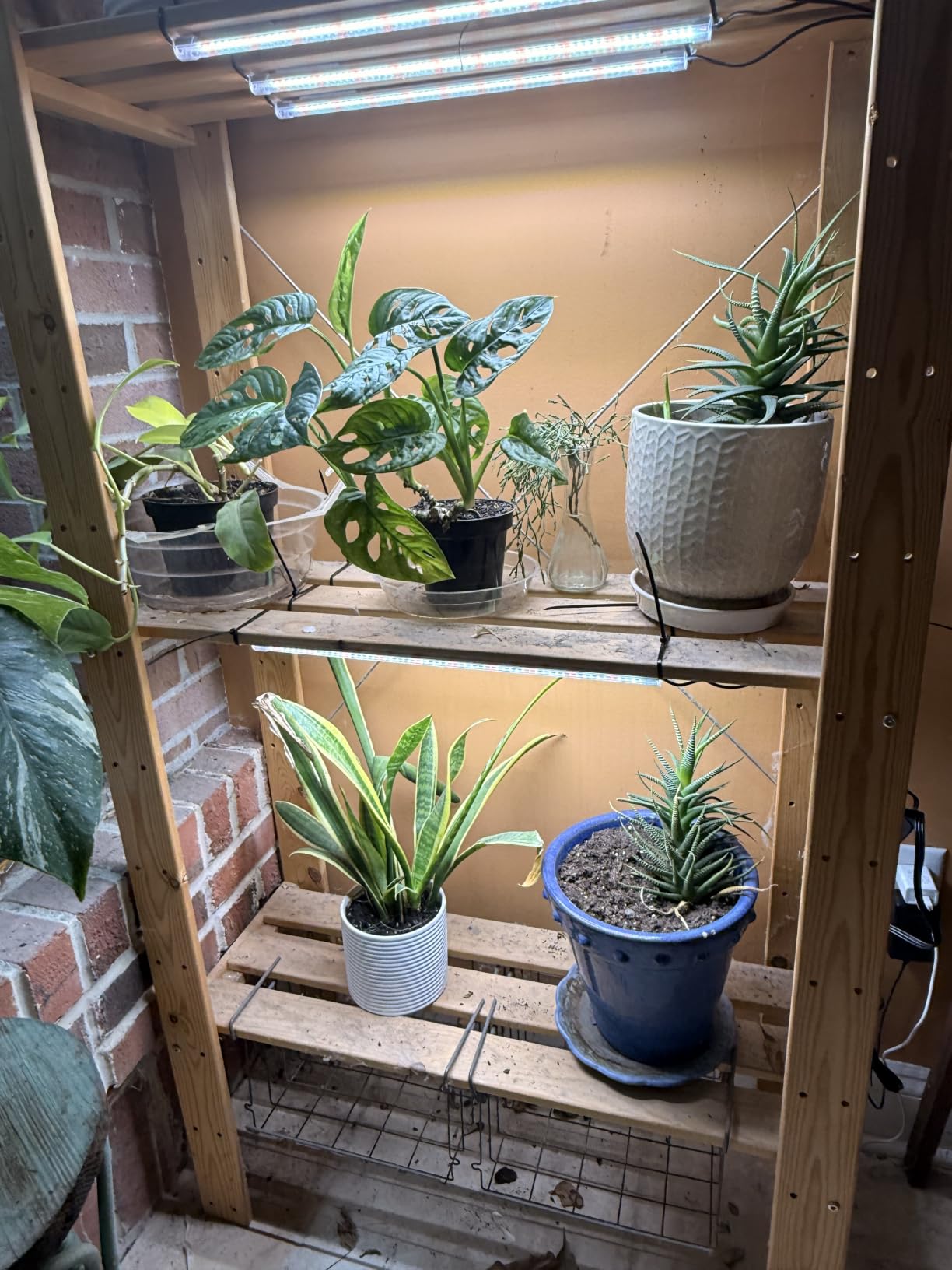
The circular memory timer offers 6, 12 and 18 hours and repeats daily as long as power is on. The 18 hour setting is the longest built-in photoperiod in this roundup, which is useful if you are running a long-cycle variety.
The 95 inch cord is unusually long and genuinely practical, because it lets one strip serve two separate shelves or reach a high tier without an extension lead. The 12V 3A adapter and metal and plastic housing keep it cool at close range.
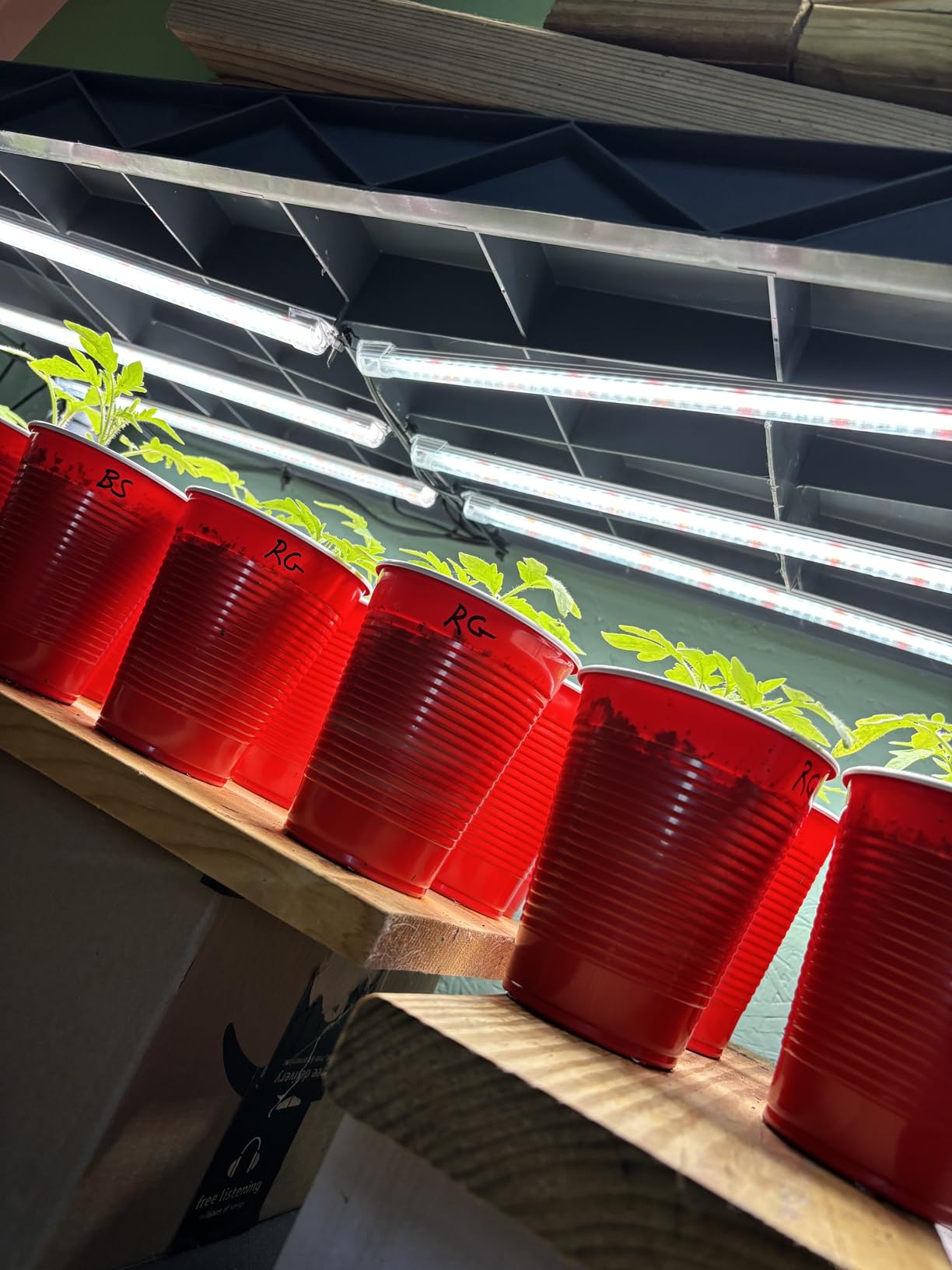
Is 3600 lumens enough for two trays?
For radish, broccoli, mustard and similar fast greens, yes, at 8 to 10 inches. Two 10×20 trays side by side under one 16 inch strip will not work, but two trays stacked front to back along a deep shelf will.
For sunflower and pea shoots we would still add a second unit. Six bars brighten a tray, they do not double the coverage area, and output falls off at the edges of the footprint.
How does the blue cast affect a shared room?
It is the main drawback. At 6000K with a large proportion of cool white diodes, reviewers describe the output as heavily blue and unpleasant to sit beside at night, and there is little visible difference between the spectrum settings.
If the grow shelf is in a living space rather than a garage or basement, the 5000K fixtures on this list are easier to live with, even at lower output.
8. APICDOM 4FT Full Spectrum Hanging Strip 30W: the one you can move with one hand
APICDOM LED Grow Light 4FT Full Spectrum Compact Linkable Lighting Fixture for Indoor Greenhouse Year Round Plant Seedlings, Essential Grow Slim Hanging Suspended Strip
5000K full spectrum
3600 lumens from 30W
46.1 inch slim body
3 year limited warranty
Pros
- Very slim and light at 12.8 ounces so it is easy to reposition as plants grow
- 4 foot length suits standard wire shelving spans
- 3600 lumens from 30W is strong output for a single fixture
- Daisy chains up to 4 units on one power cord
- Hanging cable and screw mounts both included
- 3 year limited warranty
Cons
- No built-in timer so scheduling needs an external timer or smart plug
- Brightness is fixed and not adjustable
- Plastic housing has less heat headroom than aluminum fixtures
- Slim plastic body is less rigid than metal bar alternatives
At 46.1 inches long and 12.8 ounces, this is the fixture we can reposition with one hand as a canopy fills in.
Output is 3600 lumens from 30W at 5000K full spectrum, with a 660nm red enhancement aimed at sprouting and flowering. At 1 foot that lands right in the intensity range we target for microgreens, and the 30W draw is modest for 3600 lumens.
The installation kit covers both realistic mounting methods: a 2 foot hanging cable for a suspended setup, and screw mounts for fixing it to a shelf underside. Either way the footprint is only 1.65 inches wide, so it disappears under a shelf.
Daisy chaining up to four strips from a single power cord is what makes a three-tier rack manageable, and the inline on/off switch lets you kill one zone without reaching the wall. The warranty is a 3 year limited with FCC certification.
Is 3600 lumens too much for a single tray?
It is plenty, and possibly more than a 10×20 tray needs if you mount it low. At 12 inches the output is comfortable for sunflower and peas; drop it to 8 inches and you are into light stress territory for radish.
Our advice is to mount high and lower only if a variety looks pale. There is no dimmer, so height is your only control, and a light-weight fixture makes that adjustment easy.
Will plastic housing run hot over a tray?
Warmer than the aluminum fixtures in this roundup, though not hot enough to damage a microgreen canopy at a normal mounting height. The 36W Durolux fluorescent ballast, not this, is the one that gets uncomfortably hot.
Leave 8 inches or more of clearance rather than pushing the strip right down onto the canopy, and it behaves like any other cool-running LED bar.
9. DYMOND BoostGro 2FT Seed Starter Light: for propagation and small racks
DYMOND BoostGro LED Seed Starter Grow Light Full Spectrum Linkable 5000k Daylight + 660nm Red + 450nm Blue Indoor Plant Lighting Fixture (2 FT, Black)
5000K daylight with 450nm blue
1900 lumens from 16W
28.8 micromoles PPF
3 year limited warranty
Pros
- Purpose-built 450nm blue spectrum for seed starting and young leaf growth
- Low heat output keeps seedlings and small trays comfortable
- Slim black 2 foot housing looks unobtrusive in a room
- Daisy chains up to 4 units per power circuit
- Inline switch and included hanging cable make setup quick
- 3 year limited warranty
Cons
- Lower output at 1900 lumens than longer strips in this roundup
- No built-in timer so an external timer or smart plug is needed
- Fixed brightness with no dimming control
This is the only light here built specifically around 450nm blue, and that is a deliberate choice rather than a compromise. Blue drives chlorophyll formation and leaf thickness in the first days after emergence, which is when a microgreen decides whether its cotyledons open flat or stay cupped.
Output is 1900 lumens and 28.8 micromoles per second of PPF from 16W, paired with 660nm red for the sprouting phase. That is the lowest output figure in this roundup and it is the one specification you need to think hardest about.
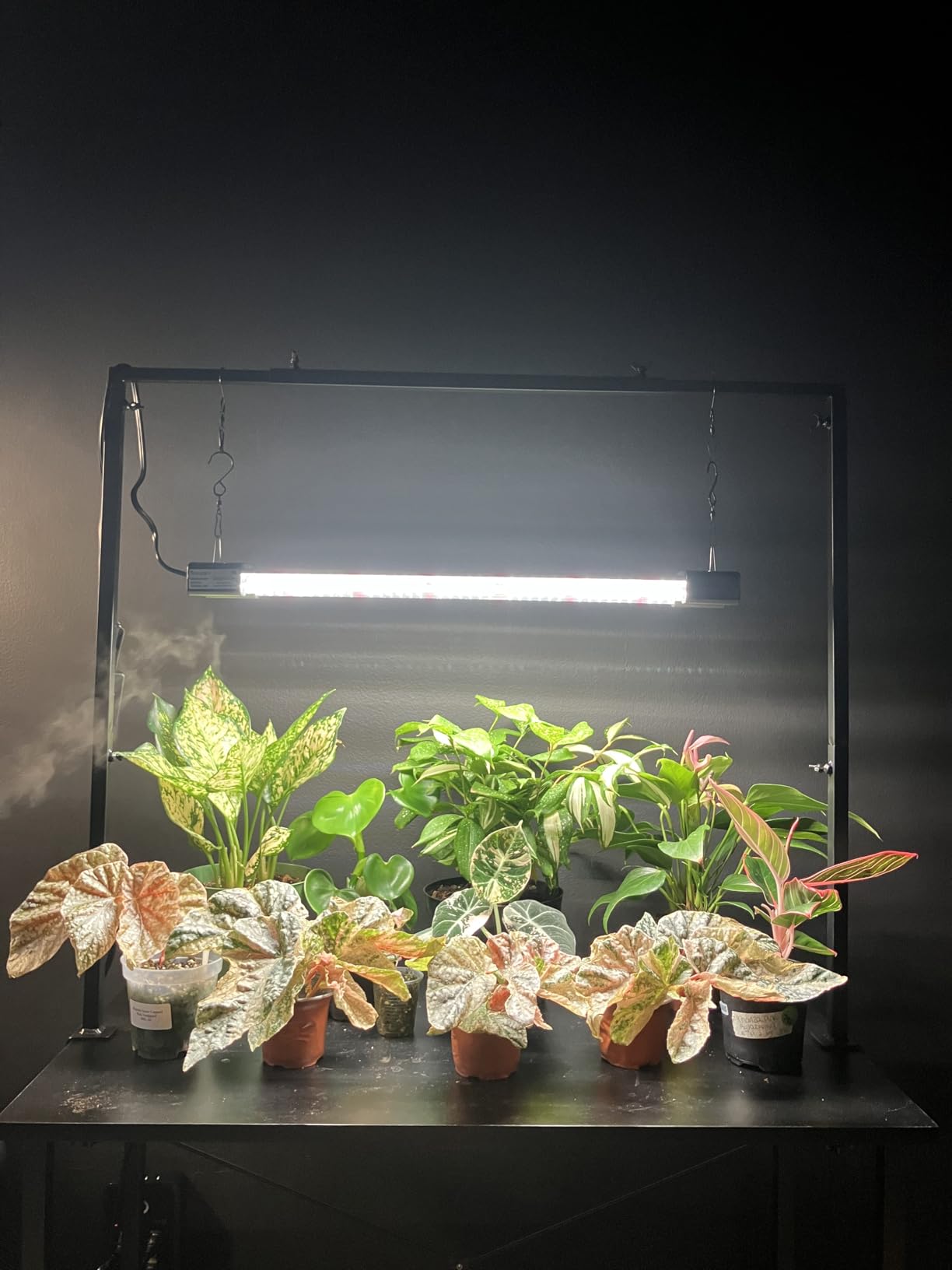
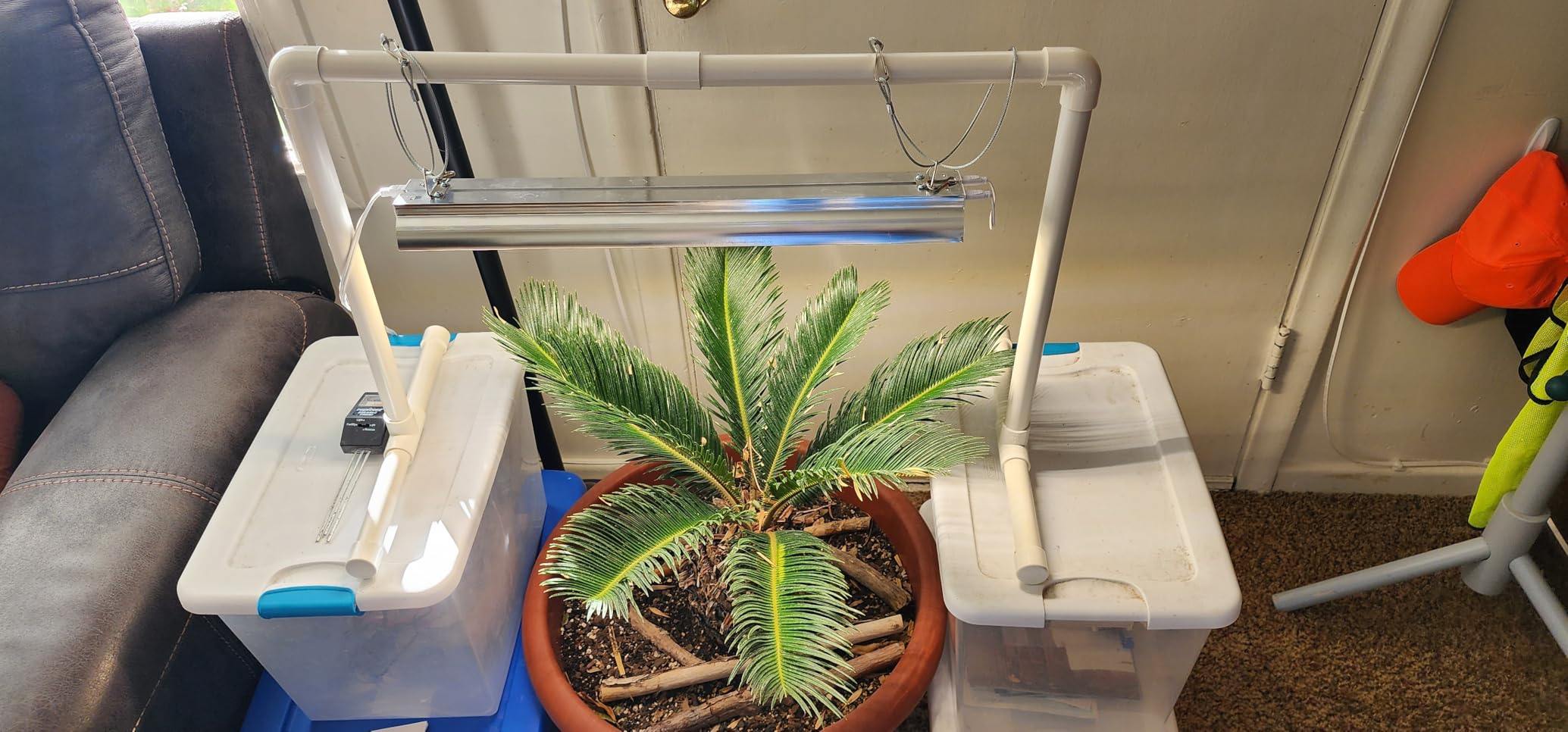
At 23.25 inches long and 3.54 inches wide in a black housing, it is designed to sit above a seed tray or a small 10×20 tray rather than a whole shelf. Users running propagation for other seedlings alongside microgreens report good results from the same fixture.
It daisy chains up to 4 units per circuit, ships with a 2 foot hanging cable and an inline switch, and carries a 3 year limited warranty with FCC certification. The low heat output is what makes it comfortable directly over a covered tray.
Is 1900 lumens enough for a full microgreen cycle?
For radish, broccoli, cress and mustard, yes, mounted at 6 to 8 inches. Those crops finish in under ten days and do not accumulate enough biomass to need more.
For sunflower and pea shoots, no. A 2-foot fixture cannot cover a 20 inch wide tray evenly at that length, and the output will not sustain a heavier crop through day 8. Use it for propagation and a small tray, not a full rack.
How does it compare with the 4-foot strips?
Think of it as a focused tool rather than a shelf light. The 4-foot APICDOM strip covers a whole shelf tier; this covers one tray and does it with a spectrum weighted toward early leaf development.
If your setup is a single shelf with two trays and you are starting seedlings as well as microgreens, the combination of this light and a 4-foot strip covers both jobs without doubling your power draw.
10. Mosthink 20W Full Spectrum Grow Light Strip: the budget pick for a countertop
LED Plant Grow Light Strip Full Spectrum for Indoor Plant with Timer
380nm to 800nm full spectrum
15W with 96 LED chips
Four brightness levels
2 count pack
Pros
- Slim low-profile strips that fit under shelves and in tight spaces
- Four brightness levels plus a full spectrum sunrise output
- Multiple mounting options with screws
- double-sided tape and ties
- 78 inch cord with an in-line control at a usable midpoint
- Cool to the touch
Cons
- Timer tops out at 8 hours so it needs manual switching twice daily
- Button controls are not intuitive
- Tape loses adhesion over time and the light can fall
- Adapter and inline switch have failed after about a year of continuous use
Two slim strips at 13.8 inches wide, 3 inches deep and 2 inches tall. That is the smallest footprint of any light in this roundup, and it is the reason they work under a shelf where nothing else fits.
The spectrum covers 380nm to 800nm from 96 LED chips at 15W, with a four-level brightness control at 25, 50, 75 and 100 percent. Full brightness on both strips is 20W, which is right at the per-shelf target we recommend.
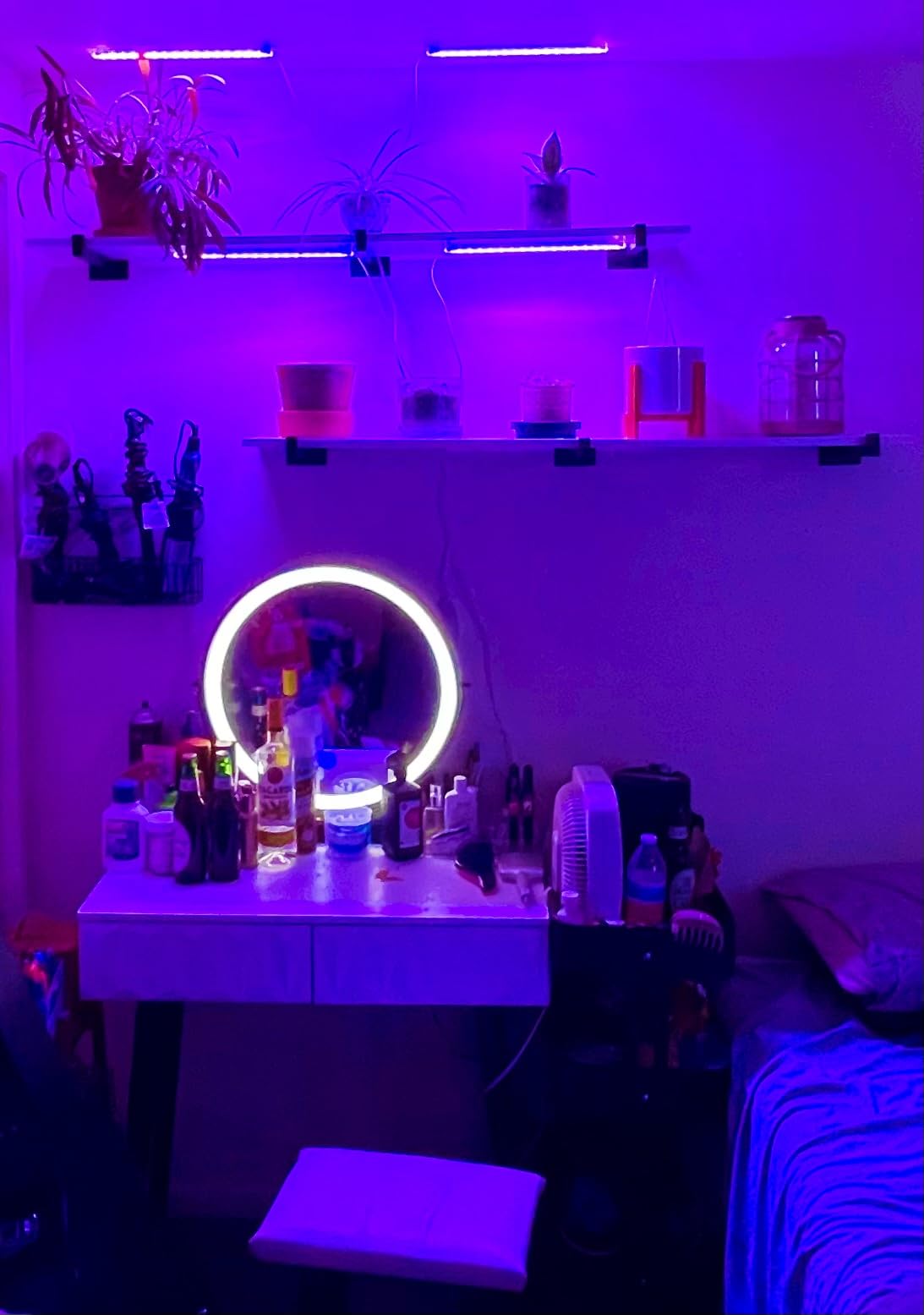
With 12,272 reviews behind it, this is the most widely used grow light we evaluated, and the feedback is overwhelmingly about reviving weak houseplants and filling dark corners. The 78 inch cord with the in-line switch at a usable midpoint is a thoughtful detail most competitors skip.
Mounting hardware covers the usual cases: screws, double-sided tape and cable ties. The strips run cool enough to sit close to a canopy, which matters when shelf clearance is only a couple of inches.
Can the built-in timer run a full microgreen cycle?
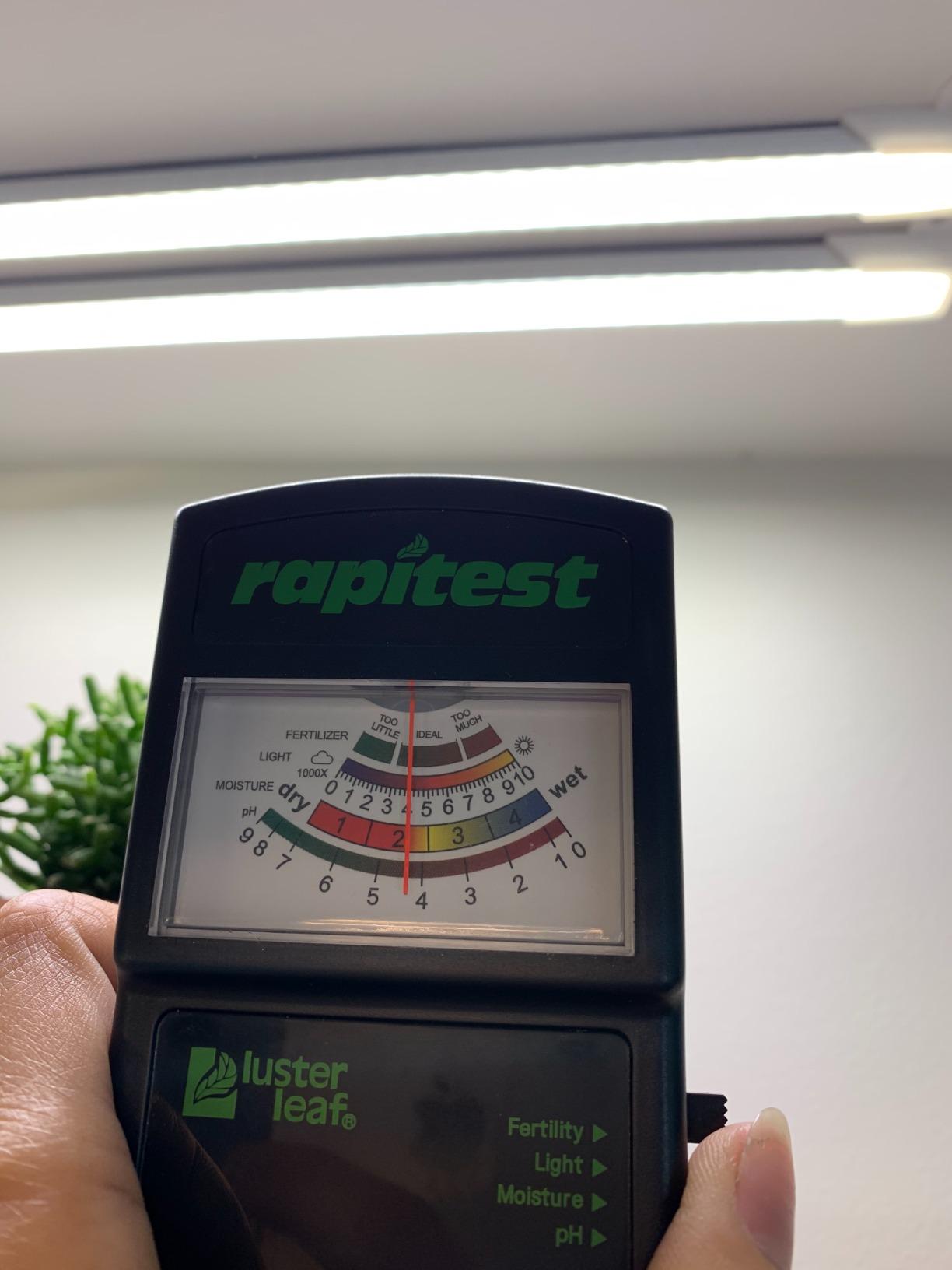
No, and this is the reason it sits at the bottom of the list. The auto timer offers 2, 4 and 8 hours, with an 8 hour ceiling and no 16 or 17 hour option, so it cannot run a recommended photoperiod on its own.
You would need to switch it manually twice a day, every day, for the length of a cycle. If you already own a wall timer, that is manageable. If you are starting from nothing, budget for one.
What is the durability concern over a year?
The small power adapter and the inline switch are the parts that fail. Reviewers report both giving out after roughly a year of continuous use, and the bare LED elements have no protective cover over them.
That is the trade for the compact size. Treat it as a seasonal or occasional-use light rather than a fixture you leave running 17 hours a day for years.
What Actually Matters When You Pick a Grow Light for Microgreens
Color temperature is the first filter, and it eliminates most of the market instantly. Microgreens are harvested before flowering, so they need broad balanced white light rather than a spectrum tuned to a mature plant. Target 5500K to 6500K, and treat any red-and-blue blurple fixture as a last resort. On r/IndoorGarden the advice runs the same way: 4000K white LEDs, no blurple.
This is not just theory. homeMicrogreens ran a controlled test of inexpensive LED shop lights against equivalently priced red-and-blue grow lights on broccoli and basil, and the shop lights grew the better microgreens in both crops. The blurple lights looked more impressive on red-leafed varieties, which is exactly the effect that makes them popular. Our roundup of RGB panel lights makes the same color accuracy argument in a gaming context.
The second factor is intensity per tray tier, and the useful unit is lumens per 10×20 shelf. One grower on r/microgreens described running about 5,000 lumens per 4-foot tier in a commercial rack, with roughly 1,700 lumens as a practical minimum for a single tier. Our own benchmark sits between those: about 2,000 lumens and 20W per 10×20 tray.
Third is photoperiod, and it is the cheapest thing to get right. Run 16 to 17 hours on a mechanical timer. Do not chase a digital controller. A wall plug-in timer costs almost nothing, has no firmware to fail, and gives you the same result every day, which is what a repeatable harvest depends on.
Fourth is timing within the cycle. Leave the lights off during the blackout phase. Most microgreens are weighted for two to four days in darkness to force the seed to spend its energy on the stem rather than the seed coat, and turning the lights on early undoes that work. Day 3 to day 5 is the usual signal that the canopy is lifting and starting to yellow.
How to set up the lighting on any shelf
Mount the light 6 to 12 inches above the canopy, not 18 inches. The lower end favors heavier crops like sunflower and peas, the upper end suits dense radish where close mounting causes bleaching. Measure from the top of the mature canopy, not from the tray, and adjust as the tray grows.
For a single 10×20 tray, run one 2,000 lumen bar or two 1-foot bars. For a standard 4-foot wire shelf, one 4-foot bar covers a tier. Overlap bars by a few inches at the ends so the corners do not go dim, and keep the bars parallel to the tray so any falloff is symmetric.
Reflective surfaces do more work than people expect. White or Mylar on the back wall and sides of a shelf can meaningfully even out a single-bar setup, and a white ceiling above the rack bounces light back down into the corners that a single bar leaves dark. Shaping and reflecting that light is the same craft covered in our color gel guide.
How to size a setup for a room or a rack
One shelf means one bar and one wall timer. Add the second tier only when the first is consistently full, because a two-tier rack with one bar per tier is the setup most people end up wanting and few start with.
A three-tier wire rack wants one 4-foot bar per tier, daisy-chained to a single power run. That is where the 6-pack of 4-foot bars stops being overkill and starts being the obvious answer, and where the daisy-chain capability of the 4-foot strips earns its keep.
For a small commercial room, light one tier at a time and measure before you scale. Running a full room at 17 hours a day is a power and heat problem before it is a lighting problem, and the number to compute first is watt-hours per month per tier.
Troubleshooting the four common lighting symptoms
Leggy, pale, thin stems mean not enough light or too much distance. Move the fixture down 2 inches, add a second bar to the tier, or add a bar rather than buying a brighter light. Stems that stretch are almost always an intensity or height problem, not a Kelvin problem.
Bleached, crispy, pale patches at the center of the tray mean too much light too close. Raise the fixture or dim it if the model allows. Bleaching almost always shows in the middle first, which is the tell that distinguishes it from nutrient problems.
Uneven growth with dark corners means coverage, not output. Stagger bars, overlap them, or add reflective surfaces. A fixture that reads bright under your hand will still leave the far corners of a 20 inch tray short of photons.
Algae or mold around the tray rim is a moisture and airflow issue that lighting makes worse. Nothing on this list causes it directly, but fixtures mounted very low restrict airflow and warm the tray surface, so raise the light and add a fan before you change the spectrum.
Frequently Asked Questions
What kind of LED grow light is best for microgreens?
A daylight-spectrum white LED shop light in the 5500K to 6500K range is the best choice, mounted 6 to 12 inches above the canopy. Target roughly 20W or 2,000 lumens per 10×20 tray tier and run it 16 to 17 hours a day on a mechanical timer. Red-and-blue blurple fixtures are the most common mistake, because they hide true plant color and underperform white lights at the same price.
Do you need a grow light for microgreens?
If you have a reliable south-facing window, you can grow a batch without one, though a supplement will speed up and even out growth. Without a window, a grow light is the only way to get consistent, repeatable results year-round. The consensus on r/microgreens is that lights matter less for microgreens than for full-maturity crops, but they matter a lot for color, stem thickness and cotyledon expansion.
How many hours of light do microgreens need per day?
Microgreens need 16 to 17 hours of light per day followed by 7 to 8 hours of darkness. More than 18 hours reduces root development and encourages damping off in a humid tray, and fewer than 14 hours produces leggy, pale stems. Leave the lights off entirely during the blackout phase, which runs for the first two to four days after sowing.
How far should grow lights be from microgreens?
Mount the fixture 6 to 12 inches above the mature canopy rather than above the tray, since microgreens can double in height during a cycle. Use the lower end for sunflower and pea shoots, which are light-hungry, and the upper end for dense radish, which bleaches when mounted too close. Measure from the top of the canopy as it grows and adjust the height as the tray fills in.
What lights do professional growers use?
Professional growers mostly use white full-spectrum fixtures rather than blurple, because white light delivers a fuller spectrum and lets staff assess plant color accurately. Small operations use 5000K to 6500K LED shop bars, one per 4-foot shelf tier, at around 5,000 lumens per tier. Larger rooms add reflectors and section-level control, and they keep the lights on a timer set to 17 hours on and 7 hours off.
One more point on judging your own setup. A panel light with a narrow beam or a fixture with obvious falloff at the tray corners will produce two different crops from the same sowing, and the only way to know is to look at the tray rather than at the box. Our notes on fill lights and coverage cover the same measurement problem in a different context.
Our Verdict on the Best Grow Lights for Microgreens in 2026
The Barrina T5 5000K 4-pack is the best grow light for microgreens overall, because it hits the target spectrum, per-shelf output and mounting flexibility while staying modest to run and to live with. Add a wall plug-in timer and adjustable hangers and you have a complete, serviceable setup for a single shelf or a two-tier rack.
Fill a full 4-foot wire rack and move up to the 6-pack of 4-foot bars, one per tier. Work with seedling tubs and humid spaces and the Durolux T5 fixture is the only light here rated for the conditions. Everything else on this list earns its place by solving a specific problem: the SANSI bulb for an existing socket, the Wiaxulay strip for a built-in 16 hour timer, the FECiDA panels for a clean look, the APICDOM and DYMOND strips for small or movable setups.
Whichever you pick, the settings matter more than the fixture: 5500K to 6500K, 6 to 12 inches above the canopy, 16 to 17 hours a day, and lights off until blackout ends. Get those four right and the light choice becomes a much smaller part of the result than most product pages would have you believe.