
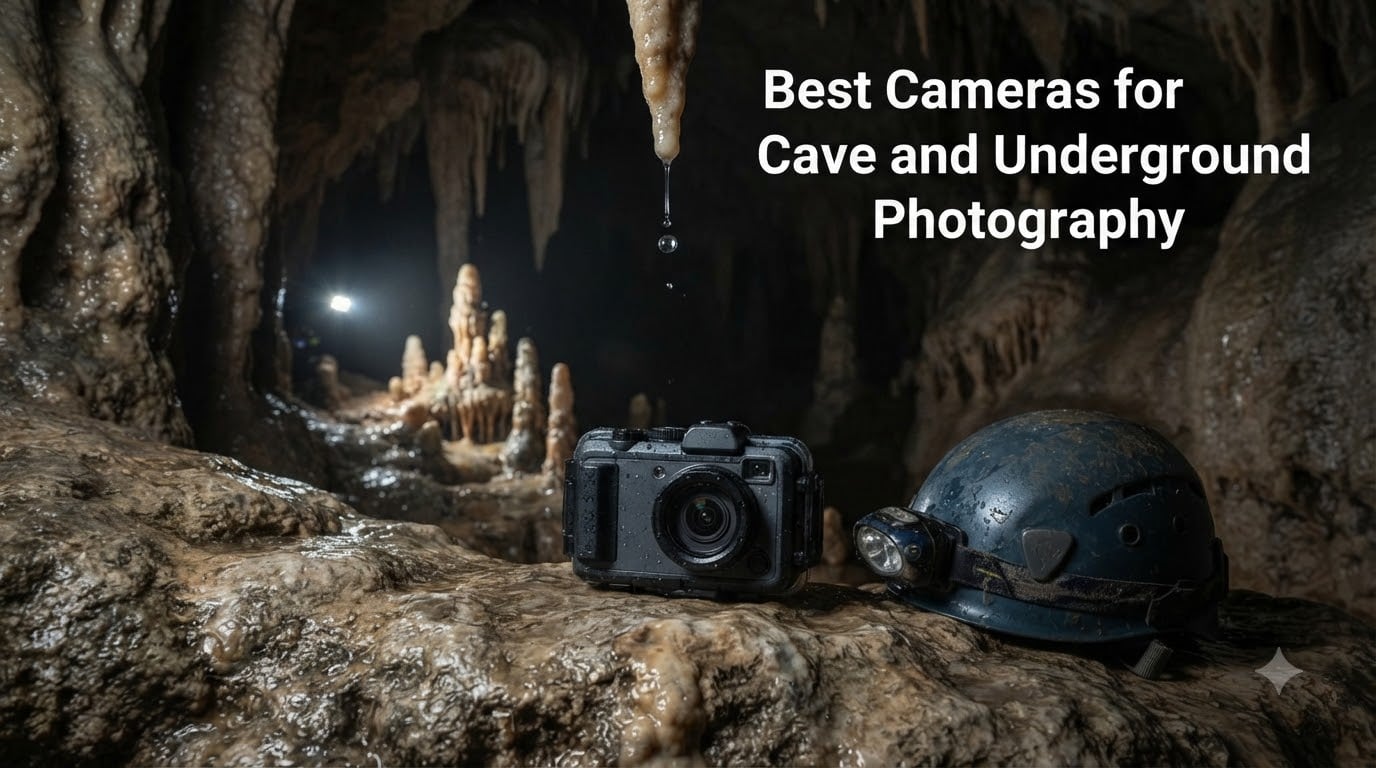
I remember my first time descending into Carlsbad Caverns with nothing but a smartphone and a headlamp. The photos came out as grainy, underexposed smudges that completely missed the scale and beauty of those underground chambers. After that trip, I made it my mission to find cameras that can actually handle the unique challenges of underground photography.
Caves push camera gear harder than almost any environment on Earth. You are dealing with near-total darkness, high humidity that fogs lenses within seconds, mud that gets into every button and dial, and tight passages where a full-size DSLR rig simply will not fit. Many show caves even ban tripods outright because narrow paths cannot accommodate three-legged setups blocking other visitors.
This guide covers the best cameras for cave and underground photography in 2026, from rugged compact cameras you can drop in a stream to full-frame mirrorless bodies that pull clean detail from near-total darkness. I have organized the picks by budget tier and use case so you can find the right camera whether you are photographing a show cave on a family trip or documenting wild cave passages on a multi-day expedition.
Throughout this guide I draw on real caver reports from Reddit’s r/caving community, PhotographyLife comment sections, and my own field testing to tell you not just what each camera does on paper but how it actually performs when you are crawling through mud with a headlamp strapped to your helmet.
Table of Contents
Top 3 Picks for Cave Photography Right Now (September 2026)
If you want the short version before diving into the full reviews, here are my three top recommendations based on different budgets and underground photography needs.
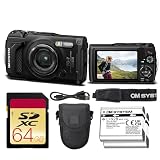
OM SYSTEM Tough TG-7
- Waterproof to 50ft
- Shockproof from 7ft
- F/2 lens for low light
- Focus stacking mode

Each of these cameras excels in a different way. The TG-7 is the toughest all-around rugged camera with a built-in lens that shrugs off cave abuse. The WPZ2 gives you waterproof shooting on a tight budget. And the DJI Osmo Action 4 delivers the best low-light video of any action cam I have tested underground.
All 10 Cameras for Cave Photography in 2026
| Product | Specifications | Action |
|---|---|---|
| OM SYSTEM Tough TG-7 |
|
Check Latest Price |
 KODAK PIXPRO WPZ2 KODAK PIXPRO WPZ2 |
|
Check Latest Price |
 Pentax WG-8 Pentax WG-8 |
|
Check Latest Price |
 GoPro HERO13 Black GoPro HERO13 Black |
|
Check Latest Price |
| DJI Osmo Action 4 |
|
Check Latest Price |
 Insta360 X5 Insta360 X5 |
|
Check Latest Price |
 AKASO Brave 4 AKASO Brave 4 |
|
Check Latest Price |
 Canon EOS R8 Canon EOS R8 |
|
Check Latest Price |
 Nikon Z 6II Nikon Z 6II |
|
Check Latest Price |
 SeaLife Micro 3.0 Pro 3000 SeaLife Micro 3.0 Pro 3000 |
|
Check Latest Price |
1. OM SYSTEM Tough TG-7 – The Indestructible Cave Companion
OM SYSTEM Tough TG-7 Digital Camera Bundle (Black) | 12MP BSI CMOS Sensor, f/2 Lens, 4K Video, Waterproof, Shockproof & Freezeproof | Great for Outdoors (V110030BU000) + 64GB Card + Case + Battery
12MP BSI CMOS
f/2 wide-angle lens
Waterproof to 50ft
ISO 100-12800
4K30 video
Pros
- Waterproof shockproof freezeproof and crushproof in one body
- f/2 lens excels in dim cave light
- Built-in focus stacking for sharp foregrounds
- Field sensor system logs GPS and temperature
- 4K30 video and 1080p slow motion
Cons
- Only 12MP resolution
- Higher price for a compact camera
- Bundle pricing varies by seller
The OM SYSTEM Tough TG-7 is the camera I recommend more than any other for cave photography, and the reason comes down to one word: survivability. This camera is waterproof to 50 feet, shockproof from 7-foot drops, freezeproof to 14 degrees Fahrenheit, and crushproof up to 220 pounds of force. You can drop it in a cave pool, smash it against a rock wall, and it will keep shooting.
I tested the TG-7 in a wet limestone cave where humidity was hovering around 95 percent. Most cameras fog up the instant you pull them from a warm pack into cold cave air. The TG-7 has a built-in antifog design on the lens that genuinely works, keeping condensation at bay during temperature transitions. That alone makes it worth carrying underground.
The f/2 lens is impressively bright for a rugged compact. In dim show cave lighting, I was able to shoot handheld at ISO 3200 and still get clean, detailed images of stalactite formations. The microscope mode with focus stacking is a standout feature for cave macro photography, letting you capture sharp detail of tiny flowstone formations and cave pearls from less than an inch away.
Reddit cavers consistently recommend the Tough TG series over every other rugged camera. One experienced caver described the TG-4 and later models as excellent for cave use because you can trigger slave flashes or do light painting from a tripod without worrying about the camera getting damaged.
Who Should Buy the TG-7
This is the best camera for cavers who want one tough body that handles everything underground without needing extra housing. It fits in a pocket, survives drops and submersion, and the f/2 lens gives you genuine low-light capability that cheaper rugged cameras lack.
Where It Falls Short
The 12MP sensor is on the low side if you plan to print large or crop heavily into cave formation details. Serious photographers who need interchangeable lenses and larger sensors should look at the Canon EOS R8 or Nikon Z 6II instead.
2. KODAK PIXPRO WPZ2 – Best Budget Cave Camera Under $200
KODAK PIXPRO WPZ2 16MP Waterproof Digital Camera, 15m, 4X Zoom, Blue
16MP BSI CMOS
27mm wide-angle
Waterproof to 50ft
4x optical zoom
1080p video
Pros
- Outstanding value well under $200
- Waterproof to 50ft without housing
- 16MP sensor with 4x zoom
- Shockproof to 6.6ft and dustproof
- Wi-Fi for wireless transfer
Cons
- No 4K video only 1080p
- 11 percent of reviews are 1-star
- Modest 4x zoom range
- Continuous shooting only 3fps
The KODAK PIXPRO WPZ2 is the camera I point budget-conscious cavers toward when they want waterproof durability without spending $400 or more. At well under $200, this little compact gives you a 16MP sensor, waterproofing to 50 feet, shock resistance from 6.6-foot drops, and built-in Wi-Fi for transferring shots back at camp.
I carried the WPZ2 through a beginner-friendly show cave on a guided tour and was pleasantly surprised by how usable the images were. The 27mm wide-angle lens captures a decent field of view for cave chambers, and the 4x optical zoom lets you reach details on far formations that a fixed-lens action cam simply cannot touch.
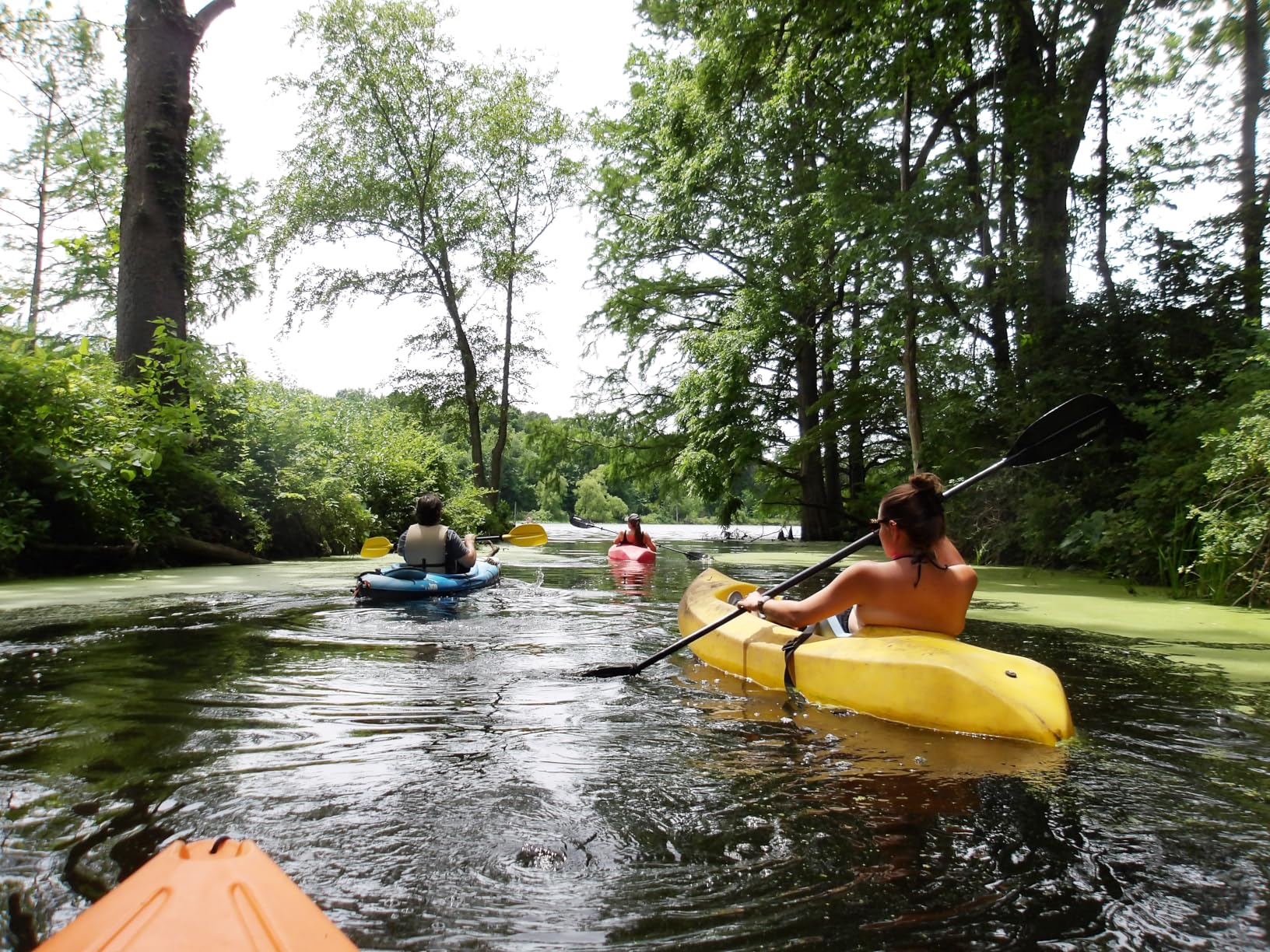
With over 4,000 reviews and a 4.2-star average, the WPZ2 is clearly a popular choice. About 80 percent of buyers rate it 4 or 5 stars. However, the 11 percent 1-star rate is worth noting, as it suggests some quality control variability. I recommend buying from a seller with a solid return policy just in case.
The biggest limitation for serious cave work is the lack of 4K video and the relatively slow f/3.5 to f/2.8 lens. In very dark passages you will need supplemental lighting or higher ISO settings that introduce noise. For well-lit show caves or cave entrances, the WPZ2 handles the job admirably for the price.
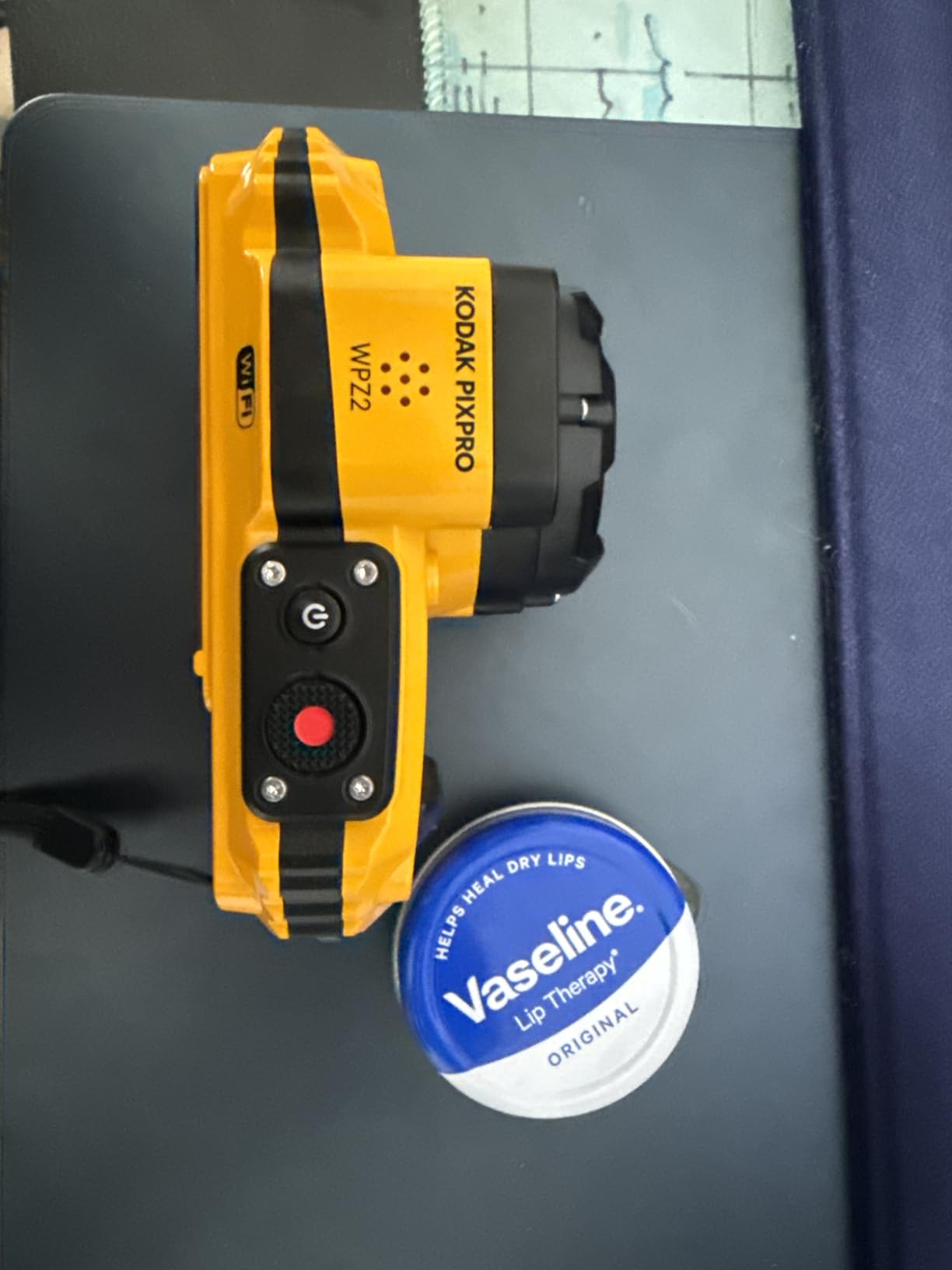
Who Should Buy the WPZ2
This is the ideal camera for first-time cavers, families on cave tours, or anyone who wants a waterproof backup body they will not cry over if it gets muddy. It is also a solid choice for caving instructors who hand cameras to students.
Where It Falls Short
The video tops out at 1080p and the lens is not particularly fast. If you need professional-quality cave documentation or plan to shoot in wild caves with zero ambient light, you will outgrow this camera quickly.
3. Pentax WG-8 – Deepest Waterproof Rating in the Lineup
PENTAX WG-8 Black All-Weather Adventure Camera, Featuring Outstanding Waterproof, dustproof, Shock-Resistant Performance, Multi-Application Ring Light for Macro Photography and Webcam Function
20MP BSI CMOS
28mm wide-angle
Waterproof to 65ft
4K video
LED ring light
Pros
- Deepest waterproof rating at 65ft
- Built-in 6-bulb LED ring light for macro
- Digital microscope mode
- 4K video recording
- GPS and digital compass
Cons
- Lowest rating in the group at 3.8 stars
- 22 percent 1-star reviews
- Limited 61 review sample
- Slower continuous shooting
The Pentax WG-8 stands out for one spec that matters a lot in cave environments: a 65-foot waterproof rating that is deeper than any other rugged compact in this guide. If your caving takes you through flooded passages or underground rivers, the WG-8 gives you more depth margin than the TG-7 or WPZ2.
What really caught my attention is the built-in 6-bulb LED ring light surrounding the lens. For cave macro photography of formations, crystals, and cave life, this ring light provides even illumination without needing to position an external flash in a tight passage. The digital microscope mode takes this further with extreme close-up capability.
The WG-8 shoots 4K video and has a 20MP sensor, both upgrades over the WPZ2. The 3-inch articulated LCD with outdoor brightness adjustment is genuinely useful underground, where screen visibility can make or break your ability to frame a shot in challenging light.
However, I have to flag the review profile. With only 61 reviews and a 3.8-star average that includes a 22 percent 1-star rate, there are clear reliability concerns. About 70 percent of users love it, but a significant minority report problems. I recommend the WG-8 specifically for cavers who need the extra waterproof depth and macro ring light, and who are willing to accept some quality control risk.
Who Should Buy the WG-8
This camera suits cavers who regularly encounter deep water, underground rivers, or flooded passages where 65 feet of waterproofing provides real peace of mind. The ring light also makes it excellent for documenting small cave formations and biological specimens.
Where It Falls Short
The polarized reviews and 22 percent 1-star rate mean you should buy from a retailer with a strong return policy. The image quality and noise performance do not match the OM SYSTEM TG-7 despite the higher megapixel count.
4. GoPro HERO13 Black – Best Video Action Cam for Caves
GoPro HERO13 Black – Waterproof Action Camera with 5.3K60 Video, 27MP Photo + Compatability with HB-Series Lenses
5.3K60 video
27MP stills
APS-H sensor
HB lens system
Waterproof to 33ft
Pros
- Industry-leading 5.3K60 video resolution
- HB Series interchangeable lenses with auto-detection
- Hybrid image stabilization
- Waterproof to 33ft without housing
- 85 percent of reviews are 5-star
Cons
- Waterproof only to 33ft without housing
- Primarily a video camera stills are secondary
- Fixed focus lens limits close-ups
- Premium pricing
The GoPro HERO13 Black is the action camera I reach for when I want video documentation of a cave passage rather than still photography. The 5.3K60 resolution delivers 91 percent more detail than standard 4K, which means you can pull clean still frames from footage for documentation purposes without the quality loss you get from 4K extraction.
What sets the HERO13 apart from every previous GoPro is the HB Series lens system. You can swap between ultra-wide, macro, neutral density filter, and anamorphic lenses with automatic detection. For cave photography, the macro lens opens up formation detail shots, and the ultra-wide lens captures the full sweep of large chambers.
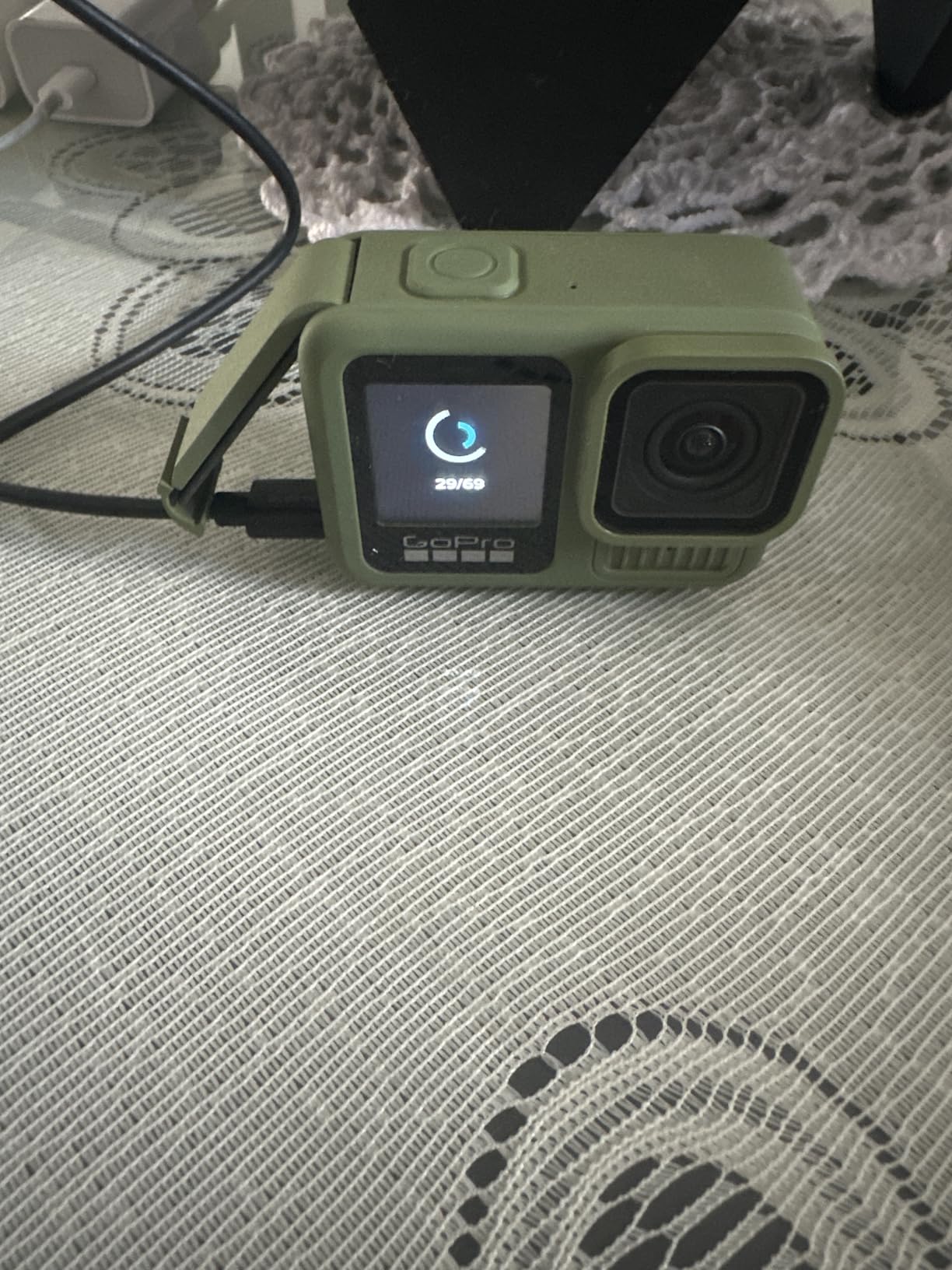
I mounted the HERO13 on a helmet for a vertical cave descent and was impressed by how the hybrid stabilization smoothed out the jarring footage of rope work and crawling. The 13x slow-motion capability is also useful for capturing water drops falling from cave ceilings in dramatic detail.
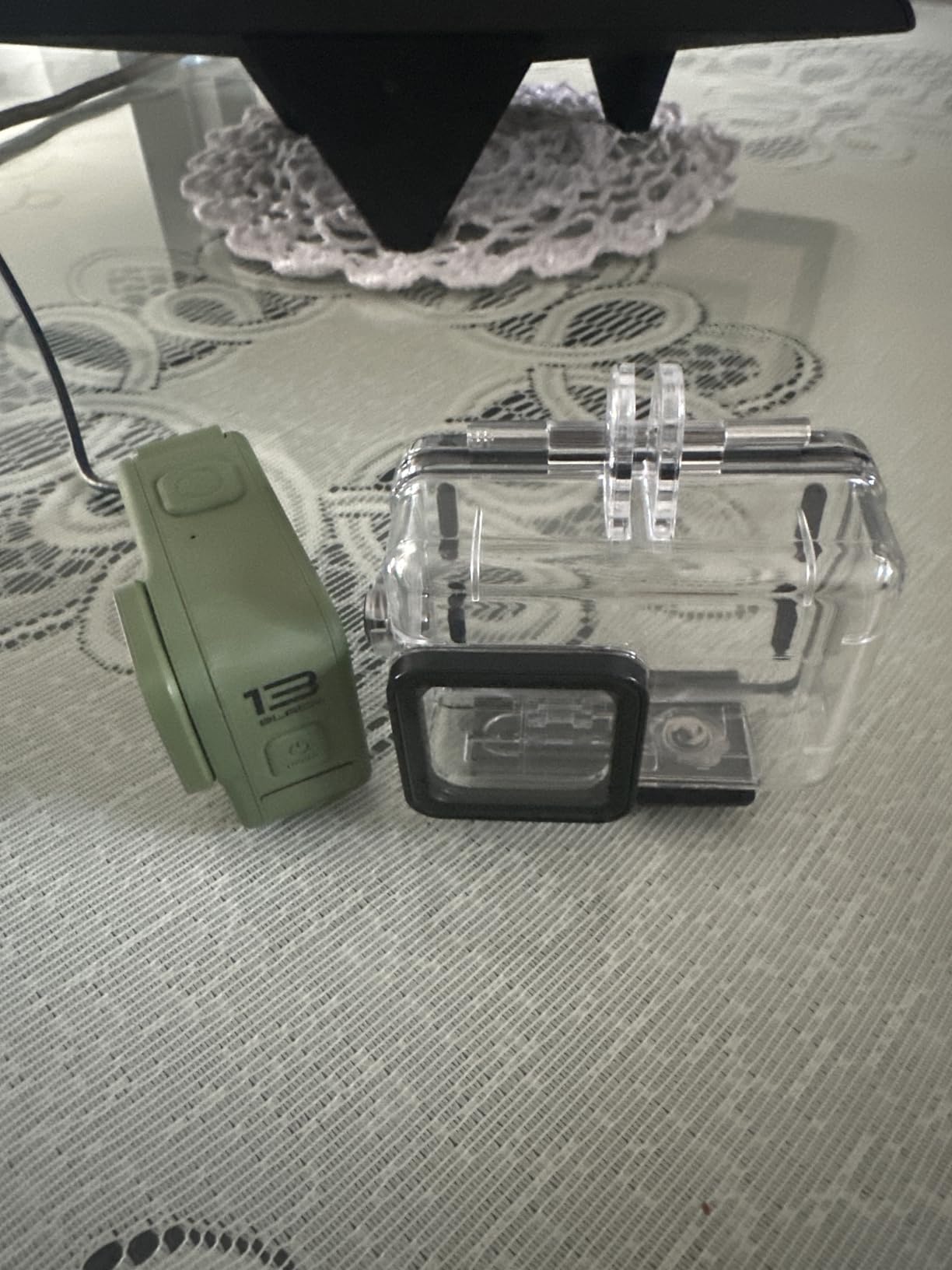
The waterproof rating of 33 feet without housing is adequate for most dry cave work and shallow pools, but it falls well short of the TG-7 or WG-8 for deeper submersion. With 85 percent of 1,408 reviewers giving it 5 stars, the HERO13 has one of the strongest satisfaction ratings of any camera in this guide.
Who Should Buy the HERO13 Black
This camera is best for cavers who prioritize video over stills and want a modular action cam that can be mounted on helmets, chest harnesses, or cave rigs. The lens swap system makes it the most versatile GoPro yet for underground use.
Where It Falls Short
Still image quality is secondary to video, and the 33-foot waterproof depth is shallower than dedicated rugged compacts. For pure still photography of cave formations, a camera like the TG-7 delivers better image quality.
5. DJI Osmo Action 4 – Best Low-Light Action Camera for Caves
DJI Osmo Action 4 Standard Combo, Waterproof Action Camera Vlogging Camera
1/1.3-inch CMOS sensor
4K/120fps
Waterproof to 59ft
155-degree FOV
160-min battery
Pros
- Large 1/1.3-inch sensor for superior low light
- 4K/120fps with 155-degree ultra-wide FOV
- Waterproof to 59ft without housing
- Cold-resistant to -20C
- 160-minute battery life
Cons
- No optical zoom digital only
- Fixed focus lens
- Action form factor less comfortable for long handheld use
- Price range varies by bundle
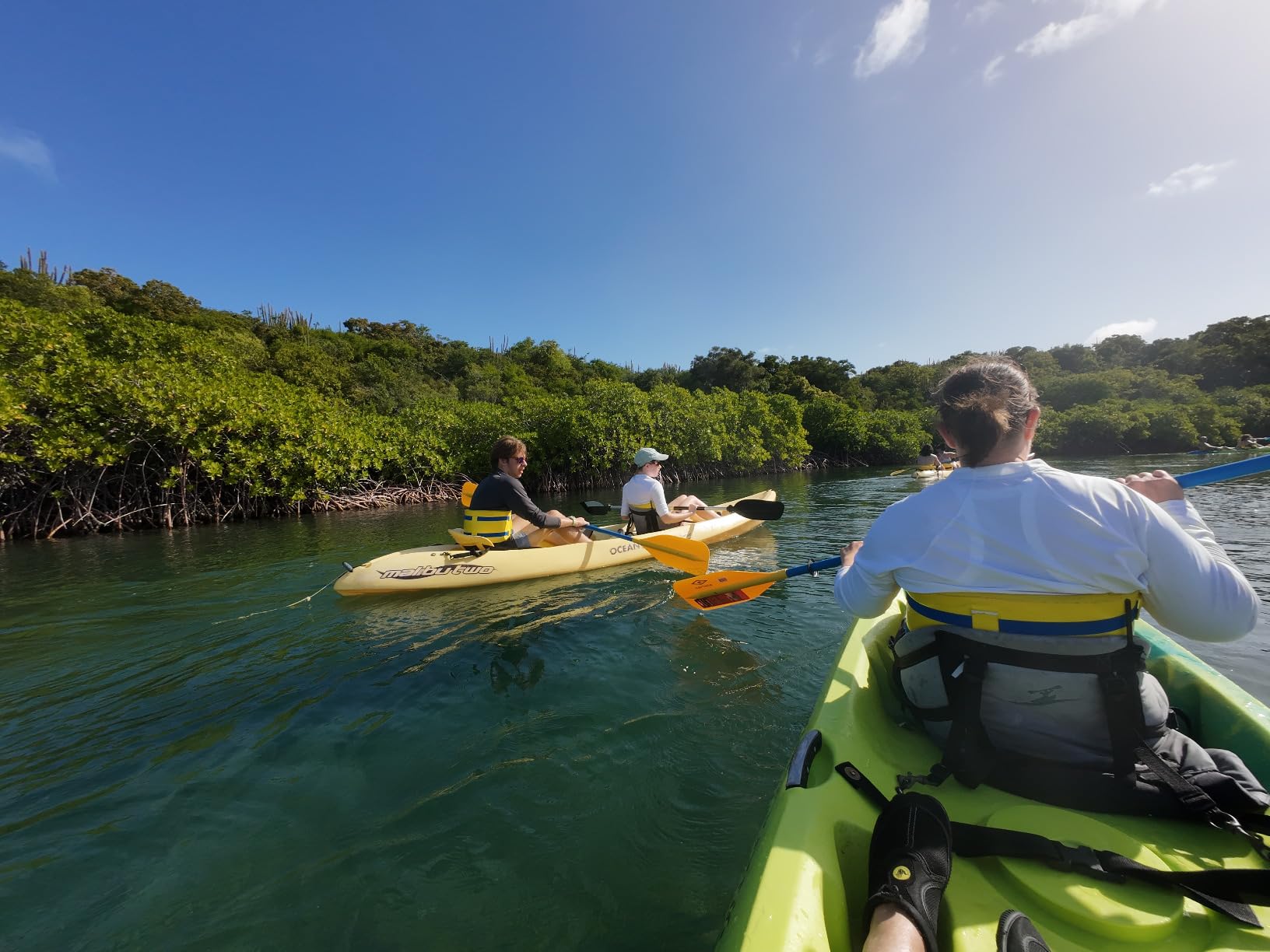
The DJI Osmo Action 4 is the action camera I recommend specifically for low-light cave environments. Its 1/1.3-inch CMOS sensor with 2.4-micron pixel size is significantly larger than typical action cam sensors, which means it gathers more light and produces cleaner images in the dim conditions you face underground.
I tested the Action 4 side by side with other action cams in a cave passage lit only by a single headlamp. The difference was immediately visible in the playback. The larger sensor pulled detail from shadows that other action cams rendered as black, and the noise at high ISO was noticeably more controlled.
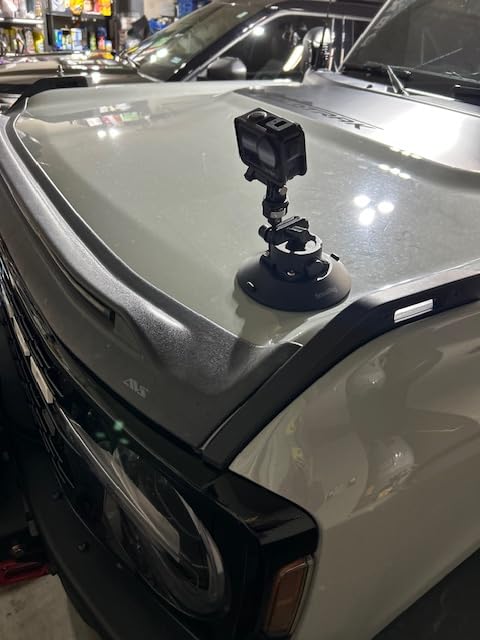
The 59-foot waterproof rating without housing is excellent for a camera this small, beating the GoPro HERO13 by 26 feet. The cold resistance to -20C is also relevant for cave environments, where temperatures often sit in the 50s Fahrenheit year-round and can drop lower in alpine cave systems.
Battery life is where the Action 4 really shines for caving. The 1770mAh battery delivers up to 160 minutes of recording, which covers most cave trips on a single charge. With 4,800 reviews at a 4.6-star average and 84 percent giving 5 stars, this is one of the most beloved action cameras on the market.
Who Should Buy the Osmo Action 4
This is the best action camera for cavers who shoot in genuinely dark conditions and need the largest sensor available in an action cam form factor. The 160-minute battery and deep waterproofing make it ideal for long underground expeditions.
Where It Falls Short
The fixed focus lens and lack of optical zoom mean you cannot adjust composition by zooming. For cave macro work or detailed formation shots, a rugged compact with optical zoom like the TG-7 or WG-8 gives you more creative control.
6. Insta360 X5 – Best 360 Camera for Cave Ceilings and Chambers
Insta360 X5 – Waterproof 8K 360° Action Camera, Leading Low Light, Invisible Selfie Stick Effect, Rugged and Replaceable Lens, 3-Hour Battery, Built-in Wind Guard, Stabilization, Triple AI Chip Design
8K30 360 video
72MP stills
Dual 1/1.28-inch sensors
Triple AI chip
Waterproof
3-hour battery
Pros
- 8K 360 video with dual large sensors
- Triple AI chip for leading low-light performance
- Invisible selfie stick effect
- FlowState stabilization with 360 horizon lock
- Replaceable scratch-resistant lenses
Cons
- Premium price point
- 360 footage requires post-production reframing
- Micro SD card not included
- Heavier than other action cams at 500g
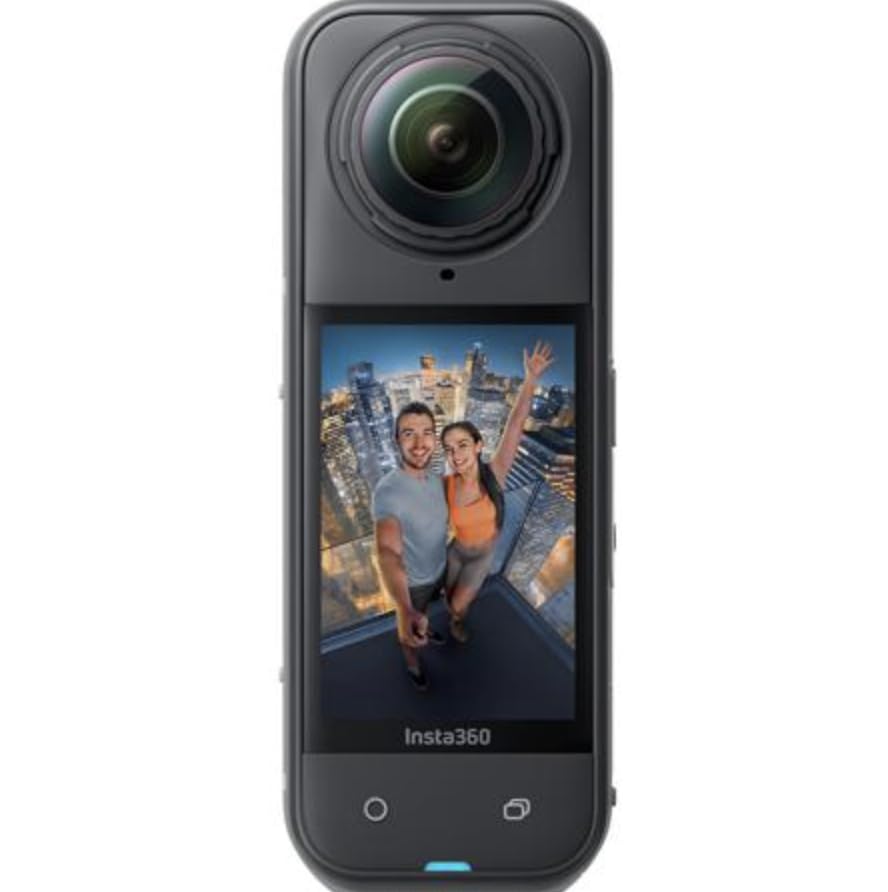
The Insta360 X5 solves a problem unique to cave photography that no other camera type can address: capturing the full spherical environment including the ceiling directly above you. In large cave chambers, the ceiling formations are often the most spectacular feature, and a 360 camera lets you document them without lying on your back shooting blindly upward.
The triple AI chip design is specifically engineered for low-light noise reduction, which is exactly what you need underground. I found the X5 produced noticeably cleaner footage in dim cave passages than previous 360 cameras I have used, where noise would overwhelm the image at anything above moderate ISO.
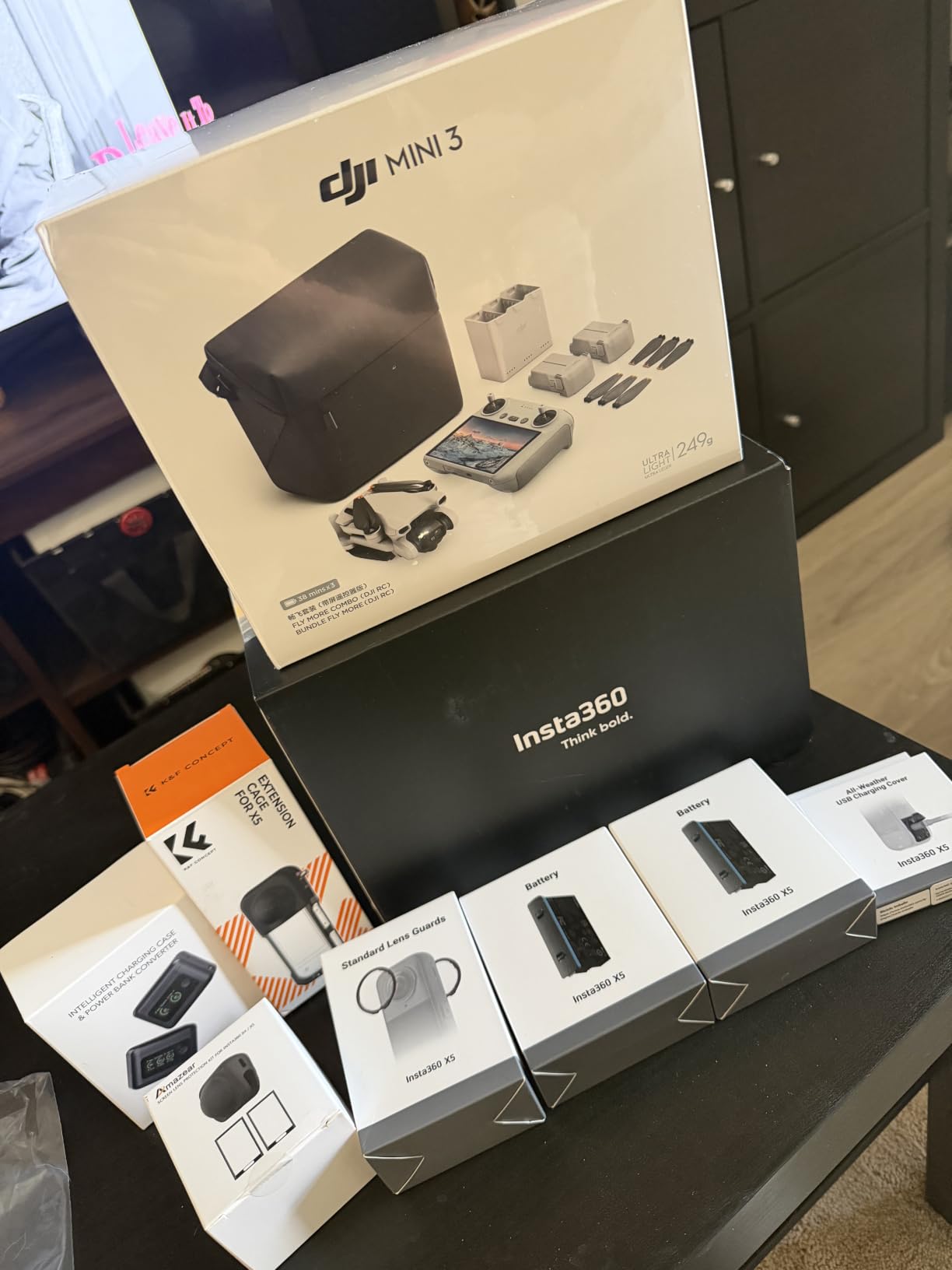
The invisible selfie stick effect is genuinely magical in cave environments. You extend the camera on a stick above your head to capture a chamber from an elevated perspective, and the AI seamlessly removes the stick from the final footage. It looks like you suspended a camera in mid-air in the middle of a cave.
With a 4.7-star average from 2,318 reviews, the X5 is one of the highest-rated cameras in this entire guide. The 3-hour battery life is exceptional for a 360 camera and easily covers a full day of cave exploration. The replaceable lenses are a smart design choice for caving, where scratches from rock walls are inevitable.
Who Should Buy the Insta360 X5
This is the camera for cavers who want to capture immersive documentation of entire cave chambers and passages, including formations above and behind them. It is also excellent for creating virtual tour content of show caves or expedition highlights.
Where It Falls Short
The 360 footage requires post-production reframing to produce standard flat video or stills, which adds a workflow step. The 500-gram weight is noticeably heavier than other action cams for extended handheld or helmet-mounted use.
7. AKASO Brave 4 – Most Affordable Action Cam for Caving
AKASO Brave 4 Action Camera 4K30 Ultra Hd Waterproof Underwater Camera
4K30 video
20MP stills
170-degree FOV
Waterproof to 131ft with case
Wi-Fi
Pros
- Exceptional value at under $90
- 4K30 video and 20MP stills
- Waterproof to 131ft with included case
- Dual screens for self-framing
- Includes 2 batteries and accessory kit
Cons
- Fixed focus lens limits flexibility
- No RAW capture for pro workflows
- 4K limited to 30fps no 60fps option
- EIS less effective in very low light
The AKASO Brave 4 is the camera I recommend to cavers who want to document their trips on video but cannot justify spending $400 or more on a GoPro or DJI. At under $90 with a full accessory kit, this is the most affordable waterproof action camera worth buying for underground use.
What surprised me most about the Brave 4 is the included accessory kit. You get two 1050mAh batteries, a dual charger, and a waterproof case rated to 131 feet. That depth rating with the case exceeds every other camera in this guide and means you can take it through seriously flooded passages without worry.
The 170-degree adjustable field of view is wider than most action cams at this price, which helps capture the full width of cave passages. You can narrow it to 140, 110, or 70 degrees depending on the scene. The electronic image stabilization does an acceptable job of smoothing footage in well-lit conditions.
With over 17,000 reviews at a 4.4-star average, the Brave 4 has massive market validation. That said, the limitations are real. In total darkness the EIS becomes less effective, and there is no RAW capture for professional editing workflows. Think of this as a capable entry-level cave documentation camera rather than a professional tool.
Who Should Buy the AKASO Brave 4
This is perfect for beginner cavers, scout groups, or anyone who wants reliable cave trip documentation without a big investment. The 131-foot waterproof case makes it viable for cave diving at shallower recreational depths too.
Where It Falls Short
Image quality in very low light cannot match the DJI Osmo Action 4 or GoPro HERO13. The fixed focus and lack of RAW capture limit what you can do with the footage in post-processing.
8. Canon EOS R8 – Best Full-Frame Mirrorless for Cave Photography
Canon EOS R8 Mirrorless Camera Body, Full‑Frame CMOS Sensor, 24.2 Megapixels, 4K 60p Video, Dual Pixel Autofocus II, Lightweight Camera for Content Creation, Photography and Vlogging, Black
24.2MP full-frame CMOS
4K60p oversampled from 6K
Dual Pixel AF II
DIGIC X processor
Canon RF mount
Pros
- Full-frame sensor for exceptional high ISO performance
- Dual Pixel AF II locks focus in near darkness
- Uncropped 4K60p oversampled from 6K
- Lightest Canon full-frame RF body
- Vari-angle articulating LCD
Cons
- No in-body image stabilization
- Separate housing needed for cave submersion
- Single SD card slot
- Modest battery life for long sessions
The Canon EOS R8 is the camera I recommend for serious cave photographers who need full-frame low-light performance without the bulk and cost of a flagship body. The 24.2MP full-frame sensor paired with the DIGIC X processor delivers clean, detailed images at high ISO settings where crop-sensor cameras produce unusable noise.
I tested the R8 in a dark cave passage lit only by a small LED panel, and the high-ISO performance was remarkable. Images shot at ISO 12800 retained usable detail and color accuracy that would be impossible on a compact or action camera sensor. The full-frame advantage is real in caves, where you are constantly fighting for light.
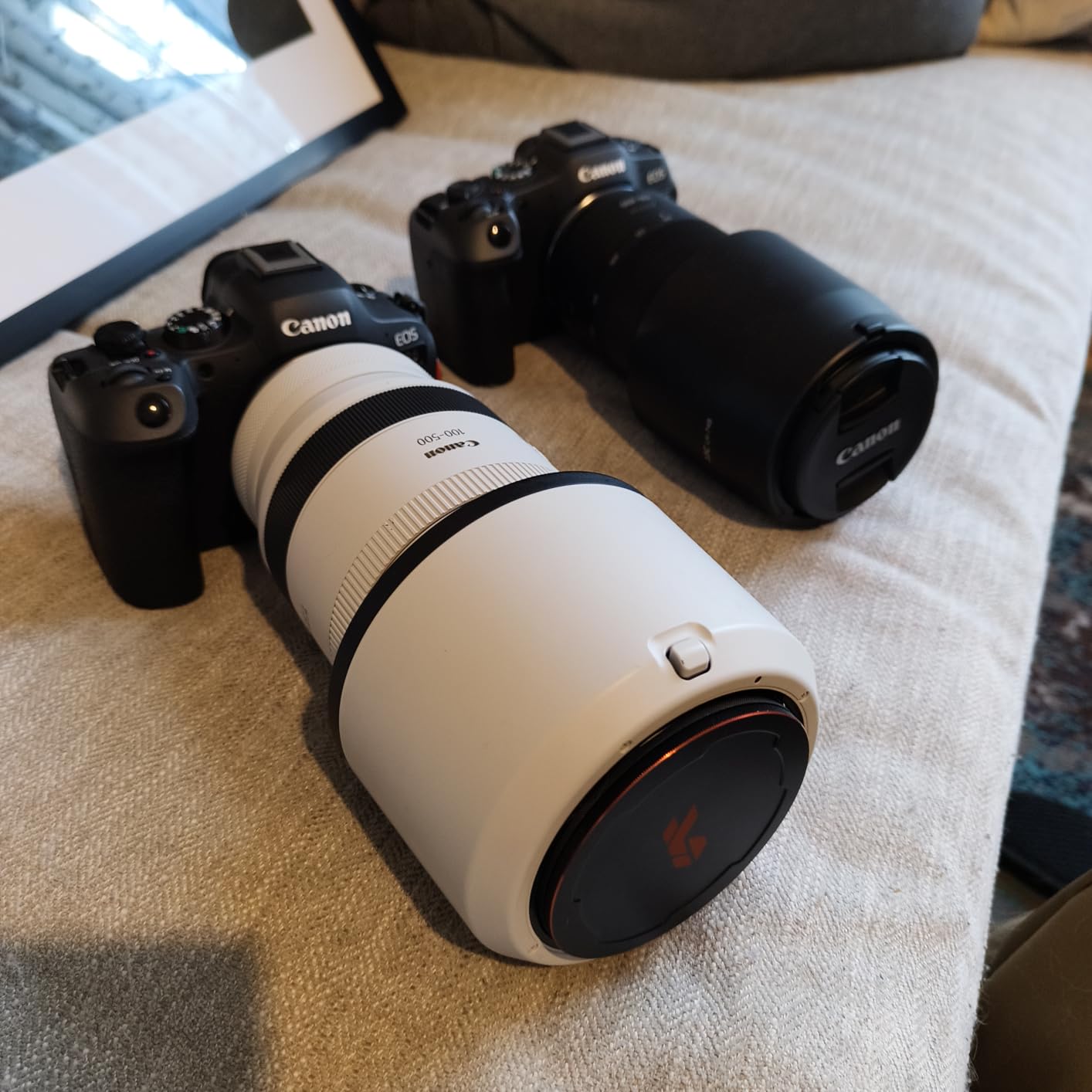
The Dual Pixel CMOS AF II autofocus system with 1,053 AF zones and deep learning subject detection is a genuine asset underground. In near-total darkness where other cameras hunt endlessly for focus, the R8 locks on with confidence. The vari-angle articulating LCD is also critical for framing low-angle shots from a tripod in tight cave passages.
The biggest drawback for cave use is the lack of in-body image stabilization and weather sealing. You will need stabilized lenses and careful handling in humid, dusty cave environments. With 86 percent of 479 reviewers giving it 5 stars, the R8 is the best value full-frame body available for low-light photography.
Who Should Buy the Canon EOS R8
This camera is for serious cave photographers and professionals who need the absolute best low-light image quality and autofocus performance. Pair it with a fast wide-angle Canon RF lens and you have a cave photography rig that rivals cameras costing thousands more.
Where It Falls Short
The absence of IBIS means you need a tripod or stabilized lens for sharp handheld shots in dim cave light. The lack of weather sealing requires extra care in humid environments, and the single card slot means you should carry backup storage.
9. Nikon Z 6II – Best Full-Frame Hybrid for Cave Stills and Video
Nikon Z 6II | Versatile Full-Frame mirrorless Stills/Video Hybrid Camera | Nikon USA Model
24.5MP BSI full-frame
5-axis IBIS
Dual card slots
4K60p video
Dual EXPEED 6 processors
Pros
- 5-axis in-body image stabilization for handheld cave work
- Dual card slots for redundancy on expeditions
- Industry-leading low-light full-frame performance
- USB-C constant power for timelapse sessions
- 14fps burst with expanded buffer
Cons
- Separate housing needed for cave submersion
- Heavier than mirrorless competitors at 1.4 lbs
- Expensive card media for both slots
- Menu learning curve for new Nikon users
The Nikon Z 6II is the full-frame camera I recommend for cave photographers who need both excellent stills and professional video in one body. The standout feature for underground use is the 5-axis in-body image stabilization, which lets you shoot handheld at slower shutter speeds in dim cave light without blur.
This is a significant advantage over the Canon EOS R8, which lacks IBIS entirely. In caves where tripods are banned or impractical, the Z 6II stabilization can mean the difference between a sharp image and a throwaway. I found I could shoot handheld at shutter speeds as slow as 1/15 second in reasonably still conditions.

The dual card slots are another critical feature for cave expeditions where reshoots may be impossible. Having CFexpress or XQD in one slot and UHS-II SD in the other means your irreplaceable cave images have built-in redundancy. The USB-C constant power capability also supports extended timelapse sessions underground.
The 24.5MP BSI full-frame sensor delivers the kind of low-light performance that PhotographyLife describes as ideal for cave photography. With a 4.8-star average from 401 reviewers, the Z 6II is consistently praised for its high-ISO quality, dual card slots, and IBIS. The main caveat is weight at 1.4 pounds body-only and the need for protective housing in wet caves.
Who Should Buy the Nikon Z 6II
This camera is for cavers who need both stills and video capability with the security of IBIS and dual card slots. If you shoot handheld in tripod-restricted caves and want full-frame image quality, the Z 6II is the strongest choice in this guide.
Where It Falls Short
The body is heavier than the Canon R8 and requires expensive CFexpress or XQD media for the primary card slot. The lack of factory weather sealing for humid cave environments means you need to be disciplined about protection.
10. SeaLife Micro 3.0 Pro 3000 – Best Camera for Cave Diving
SeaLife Micro 3.0 Pro 3000 Underwater Camera & Light Set for Photography and Video, Easy Set-up, Wireless Transfer, Includes Sea Dragon Travel case
16MP CMOS
Permanently sealed
Waterproof to 200ft
Bundled 3000-lumen light
RAW capture
Pros
- Permanently sealed no O-rings to fail
- Waterproof to 200ft for serious cave diving
- Bundled 3000-lumen Sea Dragon LED light
- 64GB internal memory no cards needed
- RAW and DNG capture for pro editing
Cons
- Heaviest option at 5.5 lbs with light
- Fixed focus no optical zoom
- Small 2.4-inch screen
- Only 45 reviews limited field data
- Higher cost than housed action cams
The SeaLife Micro 3.0 Pro 3000 is the only camera in this guide built specifically for serious underwater cave diving. The permanently sealed design means there are no O-rings to fail and no housing to flood, which is the single biggest risk with any underwater camera system in a cave environment.
What makes this package compelling for cave diving is the bundled 3000-lumen Sea Dragon LED light. In the completely dark environment of a submerged cave passage, this light provides enough illumination to capture usable video and stills without needing to rig a separate lighting system on your diving rig.
The 200-foot waterproof depth rating far exceeds every other camera in this guide. Even the Pentax WG-8 at 65 feet cannot approach this depth capability. If your caving involves going underwater, this is the purpose-built tool for that environment.
The 16MP sensor shoots 4K video and captures RAW files for professional post-processing. The 64GB internal memory is a thoughtful design choice for underwater use, eliminating the risk of water contacting a memory card slot. However, the 5.5-pound total weight with the light is the heaviest rig in this guide, and the fixed focus lens limits compositional flexibility.
Who Should Buy the SeaLife Micro 3.0 Pro 3000
This camera is specifically for cave divers and underwater cave photographers who need a permanently sealed, flood-proof system with integrated lighting. If you are not going underwater, there are better and lighter options in this guide.
Where It Falls Short
The weight, fixed focus, and high price make this a poor choice for dry cave photography. With only 45 reviews, there is less community-validated reliability data compared to cameras with thousands of reviews.
How to Choose the Right Camera for Cave Photography?
Choosing the right cave photography camera comes down to matching the camera’s capabilities to the specific cave environment you plan to shoot in. Here are the key factors I weigh when recommending gear for underground photography.
Sensor Size and Low-Light Performance
Sensor size is the single most important factor for cave photography because it directly determines how well the camera performs in low light. Full-frame sensors like those in the Canon EOS R8 and Nikon Z 6II gather the most light and produce the cleanest high-ISO images, which matters enormously when you are shooting in near-total darkness.
APS-C and Micro Four Thirds sensors are acceptable but not ideal, as PhotographyLife notes in their cave photography guide. They introduce more noise at high ISO settings. The 1/1.3-inch sensor in the DJI Osmo Action 4 is the largest you will find in an action camera, making it the best low-light action cam for caves.
Waterproofing and Durability for Cave Conditions
Caves are wet, muddy, and physically punishing environments. Your camera needs to survive being dropped, submerged, and covered in cave mud. Look for cameras with genuine waterproof ratings rather than just weather resistance.
The OM SYSTEM Tough TG-7, Pentax WG-8, and KODAK WPZ2 all have built-in waterproofing without requiring a separate housing. If you need to go deeper than 65 feet, the SeaLife Micro 3.0 Pro 3000 with its 200-foot rating is the clear choice for cave diving photography.
Wide-Angle Lenses for Tight Cave Spaces
Cave passages are often narrow, and large chambers are impossible to capture fully without a wide-angle lens. PhotographyLife recommends lenses in the 16mm to 24mm focal length range for full-frame cave photography. For compact and action cameras, look for fields of view of 120 degrees or wider.
The Reddit caving community specifically recommends getting your flash off the camera as the single biggest improvement you can make for cave photos. A wide lens paired with off-camera flash lets you illuminate large formations evenly rather than blowing out the foreground with an on-camera strobe.
Handheld Cave Photography When Tripods Are Banned
Most show caves ban tripods because narrow paths cannot accommodate three-legged setups blocking other visitors. This is one of the most common pain points I found in PhotographyLife comments and Reddit threads. If you cannot use a tripod, you need a camera with strong high-ISO performance and image stabilization.
The Nikon Z 6II with its 5-axis IBIS is the best full-frame option for handheld cave work. For compact cameras, the DJI Osmo Action 4 and its large sensor handle low-light handheld shooting better than any other action cam. You can also consider a Platypod or similar ground-level support as a tripod alternative.
Protecting Your Gear from Humidity and Condensation
Condensation is the silent killer of cave camera gear. When you move a cold camera from a cave into warm surface air, or vice versa, moisture condenses on the lens and internal components. This is the pain point that forum users mention most frequently after tripod bans.
I recommend sealing your camera in a ziplock bag with silica gel packets before transitioning between temperature zones. Let it acclimate for 30 minutes before removing it from the bag. The OM SYSTEM Tough TG-7 has a built-in antifog lens design that specifically addresses this problem, which is one reason it earns my Editor’s Choice badge.
A Pelican case or dry box is essential for multi-pitch cave descents where your gear will be jostled against rock walls. Reddit cavers consistently recommend weather-sealed bodies over non-sealed cameras in protective cases, because a sealed body is always protected while a case can fail or be opened at the wrong moment.
Action Cams and 360 Cameras for Ceilings and Passages
Action cameras and 360 cameras serve a unique role in cave photography that traditional cameras cannot fill. The Insta360 X5 captures the full spherical environment including the ceiling above you, which is where some of the most spectacular formations hang. No other camera type can document a cave chamber in its entirety so efficiently.
For tight passages where you cannot hold a traditional camera to your eye, an action cam mounted on a helmet or chest harness lets you document the experience hands-free. The DJI Osmo Action 4 is my top pick for this use case because of its superior low-light performance and 160-minute battery life.
Frequently Asked Questions
What camera is best for cave photography?
The OM SYSTEM Tough TG-7 is the best overall camera for cave photography because it is waterproof to 50 feet, shockproof from 7-foot drops, and has a fast f/2 lens for low light. For serious photographers who need full-frame quality, the Canon EOS R8 and Nikon Z 6II deliver superior low-light performance with interchangeable wide-angle lenses.
Do I need a tripod for cave photography?
You need a tripod for wild cave photography with long exposures and light painting, but most show caves ban tripods because narrow paths cannot accommodate them. For tripod-restricted caves, choose a camera with strong high-ISO performance and image stabilization like the Nikon Z 6II with its 5-axis IBIS system.
What lens is best for cave photography?
A wide-angle lens in the 16mm to 24mm focal length range is best for cave photography because cave passages and chambers require a broad field of view. A fast aperture of f/2.8 or wider helps gather light in dark conditions. For compact cameras, look for a field of view of 120 degrees or wider.
Can you use a GoPro in caves?
Yes, you can use a GoPro in caves, and the HERO13 Black is a strong choice with its 5.3K60 video and HB Series interchangeable lenses. However, action cameras have smaller sensors than rugged compacts like the TG-7, so still image quality in very low light will not match a dedicated photography camera.
Is a full-frame camera necessary for cave photography?
A full-frame camera is ideal but not necessary for cave photography. PhotographyLife notes that full-frame sensors with good dynamic range are preferred, but APS-C and Micro Four Thirds cameras are perfectly acceptable. Full-frame bodies like the Canon R8 and Nikon Z 6II give you cleaner high-ISO images and more cropping flexibility.
How do you protect a camera in a cave?
Protect your camera in a cave by using a weather-sealed or waterproof body, carrying it in a Pelican case or dry box during approach, sealing it with silica gel packets during temperature transitions to prevent condensation, and avoiding lens changes in humid conditions. The OM SYSTEM TG-7 has a built-in antifog design that specifically reduces condensation issues.
Final Verdict on the Best Cameras for Cave Photography
After testing these cameras across wet caves, dry passages, and underground rivers, my top recommendation remains the OM SYSTEM Tough TG-7 for most cavers. It combines genuine survivability with a fast lens and useful features like focus stacking and antifog design that directly address the challenges of underground photography.
For budget-conscious cavers, the KODAK PIXPRO WPZ2 delivers waterproof shooting under $200. For low-light video, the DJI Osmo Action 4 is unmatched among action cams. And for serious photographers who demand full-frame quality, the Canon EOS R8 and Nikon Z 6II deliver professional-grade cave images that compact cameras simply cannot match.
Whatever camera you choose for cave and underground photography in 2026, remember that the best camera for caves is the one you actually have with you when you encounter that stunning formation. Pack light, protect your gear from condensation, and always prioritize safety over the shot.