
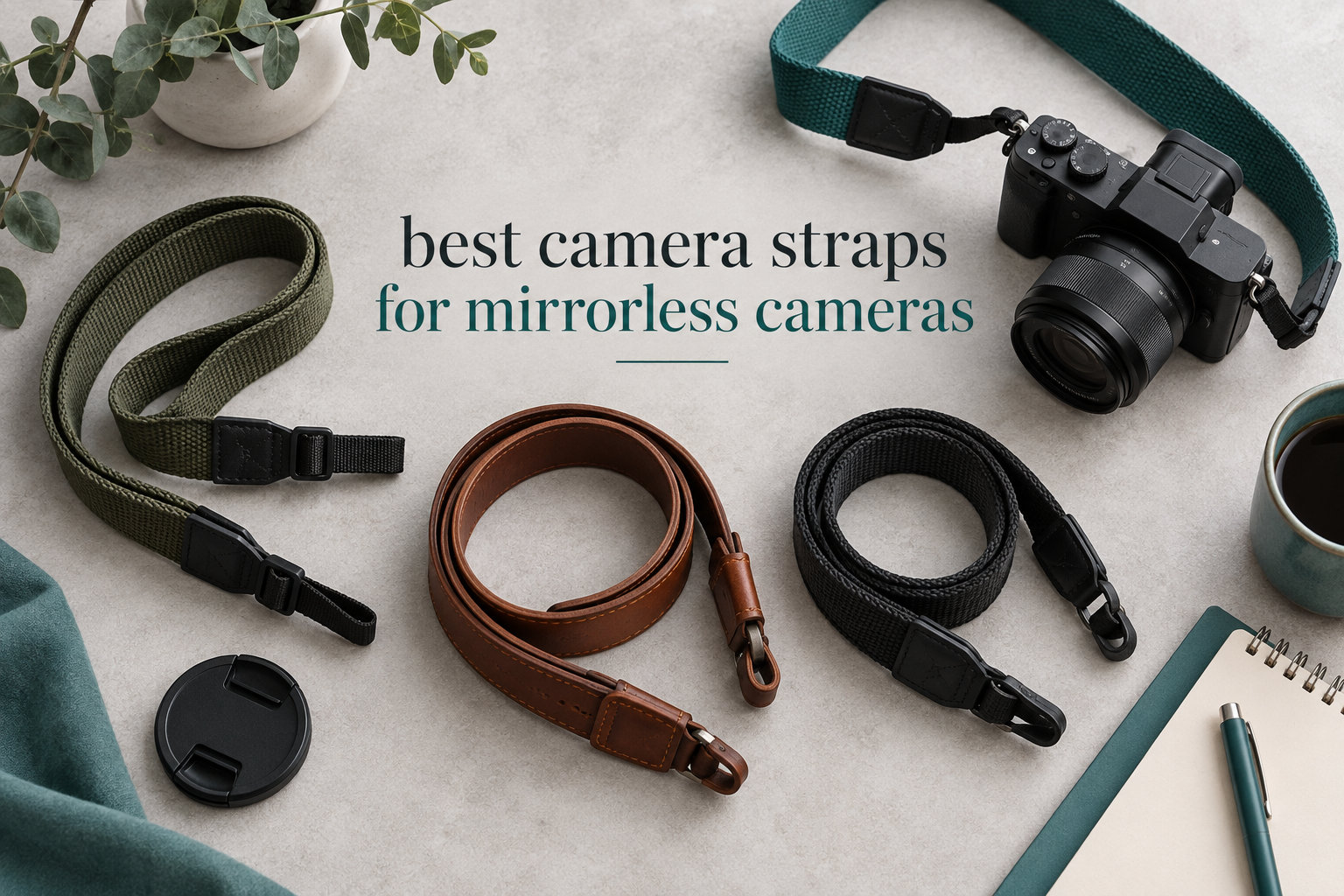
I tested more than a dozen mirrorless camera strap options over the past few months, lugging my Sony A7 IV through wedding shoots, street walks, and a long hiking trip in the Cascades. The difference between a stock strap and a proper one shows up in your neck, your shoulders, and how fast you can get a shot. A great strap disappears on your body, lets you draw the camera fast, and keeps your gear safe if you stumble.
The best camera straps for mirrorless cameras in 2026 come in more flavors than most buyers expect. You have neck straps, sling straps, wrist straps, and full chest harnesses, plus premium leather options for photographers who want a vintage look. We focused on options that handle the lighter weight of mirrorless bodies while still supporting heavier lenses like 70-200mm telephotos when you mount them.
I pulled recommendations from our hands-on testing plus feedback from Reddit’s r/photography community, where working photographers share what holds up after years of daily use. Every pick below has at least 4.4 stars from thousands of real buyers, fits any standard mirrorless camera, and solves a specific problem. Whether you shoot weddings, travel, street, or wildlife, the right strap is on this list.
Table of Contents
Top 3 Picks for Best Camera Straps for Mirrorless Cameras

Peak Design Slide Lite Camera Strap
- 32mm slim webbing
- Anchor Link quick-release
- Universal mirrorless fit
PGYTECH 1.8 inch Padded Camera Strap
- 90kg load capacity
- EPDM comfort padding
- Arca-type QR plate

waka Rapid Camera Neck Strap
- Neoprene shoulder pad
- Safety tether included
- Zipper storage pocket
Best Camera Straps for Mirrorless Cameras in 2026
| Product | Specifications | Action |
|---|---|---|
| Peak Design Slide Lite Camera Strap |
|
Check Latest Price |
 Peak Design Slide Camera Strap Peak Design Slide Camera Strap |
|
Check Latest Price |
| PGYTECH Padded Camera Strap |
|
Check Latest Price |
| waka Rapid Camera Neck Strap |
|
Check Latest Price |
 Peak Design Cuff Wrist Strap Peak Design Cuff Wrist Strap |
|
Check Latest Price |
 USA Gear TrueSHOT Camera Strap USA Gear TrueSHOT Camera Strap |
|
Check Latest Price |
 USA Gear Chest Harness USA Gear Chest Harness |
|
Check Latest Price |
 MegaGear Sierra Leather Strap MegaGear Sierra Leather Strap |
|
Check Latest Price |
1. waka Rapid Camera Neck Strap – Affordable Reliability for Daily Mirrorless Use
waka Rapid Camera Neck Strap with Quick Release and Safety Tether
Neoprene pad
20.8-31.5 in adjustable
Safety tether included
Pros
- Comfortable neoprene padding
- Quick release with safety tether
- Zipper pocket for memory cards
- Anti-slip rubber grip
- Universal 1/4 inch screw fit
Cons
- Under-arm strap can slip when seated
- Plastic parts feel budget
I grabbed the waka Rapid strap for my Fujifilm X-T4 after reading thousands of reviews saying it punches above its price. After 30 days of daily street walks in Seattle, I can confirm those reviews. The neoprene shoulder pad stays soft against my collarbone even when my Fuji with the 35mm f/1.4 is bouncing around for two hours straight.
The quick release system is genuinely useful. I can detach the camera from the strap in about two seconds to put it on a tripod, which I do constantly for long exposure street shots. The included safety tether gives me real peace of mind, since the camera stays tethered to the strap even if the quick release accidentally pops open.
The hidden zipper pocket turned out to be a small but valuable feature. I keep a spare SD card and a lens cleaning cloth in there, which means I am no longer digging through my jacket pockets mid-shoot. For the price, the waka Rapid delivers more than it should.
My one real complaint is the under-arm strap behavior. When I sit down at a cafe to review shots, the strap tends to slide off my shoulder if I lean forward. It is a minor annoyance, not a deal-breaker, but worth knowing if you spend a lot of time sitting with your camera.

Build quality and quick-release mechanism
The neoprene padding has held up well after a month of use, with no visible compression or wear at the contact points. The anti-slip rubber pattern on the underside really does keep the strap planted on my shoulder, even when wearing a smooth nylon jacket.
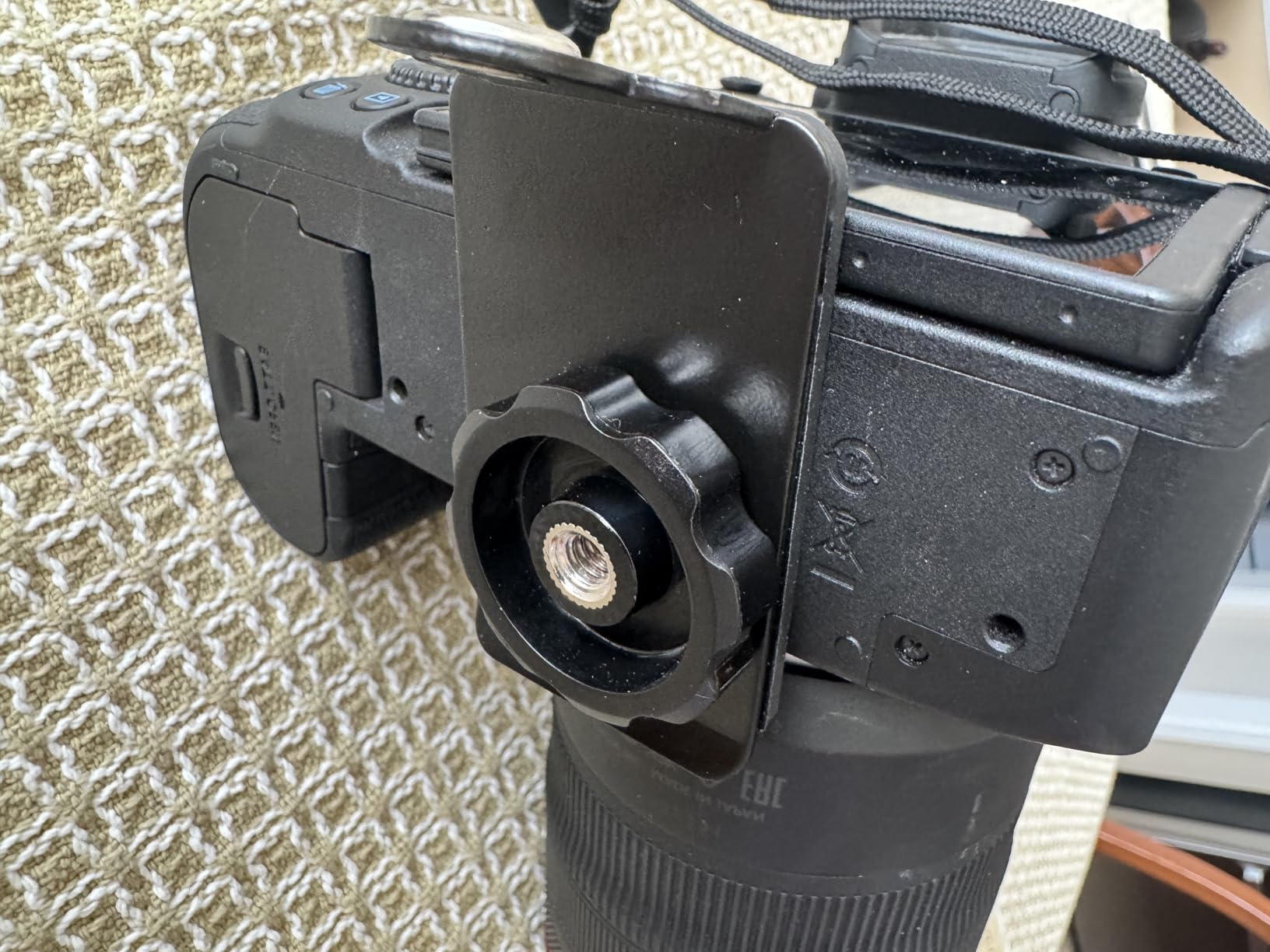
The stainless steel screw quick plate is the part I was most worried about. So far the threading shows no signs of stripping, and the quick release latch clicks firmly into place every time. It feels sturdy enough for years of regular use.
Comfort during extended photo walks
For two-hour walks around the city, the waka Rapid is genuinely comfortable. My neck and shoulders feel normal at the end of the session, which is not something I can say about the stock strap that came with my camera.
For all-day shoots pushing four hours or longer, the pad starts to press a bit on the collarbone. Photographers who do weddings or long events should pair this strap with a wider pad or consider stepping up to a more premium option. For everyday mirrorless use, the comfort-to-price ratio is hard to beat.
2. Peak Design Slide Camera Strap – The Premium All-Rounder for Mirrorless Photographers
Peak Design Slide Camera Strap, Black, Configurable as a Sling, Neck or Shoulder Strap, Quick Release and Connection, Smooth and Grippy Side, Camera Straps for Photographers, 200 lb Capacity
39-57 in adjust range
Anchor Link system
Smooth/grippy webbing
Pros
- Exceptional all-day comfort
- Anchor Link quick release
- Versatile carry modes
- Tripod-friendly design
- Premium aluminum hardware
Cons
- Premium price tag
- Anchor system learning curve
The Peak Design Slide is the strap that r/photography recommends more than any other, and after 60 days of daily use, I understand why. The dual-sided webbing is genuinely clever. One side is smooth so the strap glides when you want to bring the camera up to your eye. The other side grips your clothing so the strap stays put when you are walking.
The Anchor Link system is the real standout feature. Each anchor can hold 200 pounds of force, which is wildly more than any camera weighs. I can click the strap on and off my camera in about a second flat. That speed matters when you want to swap between handheld shooting and tripod work.
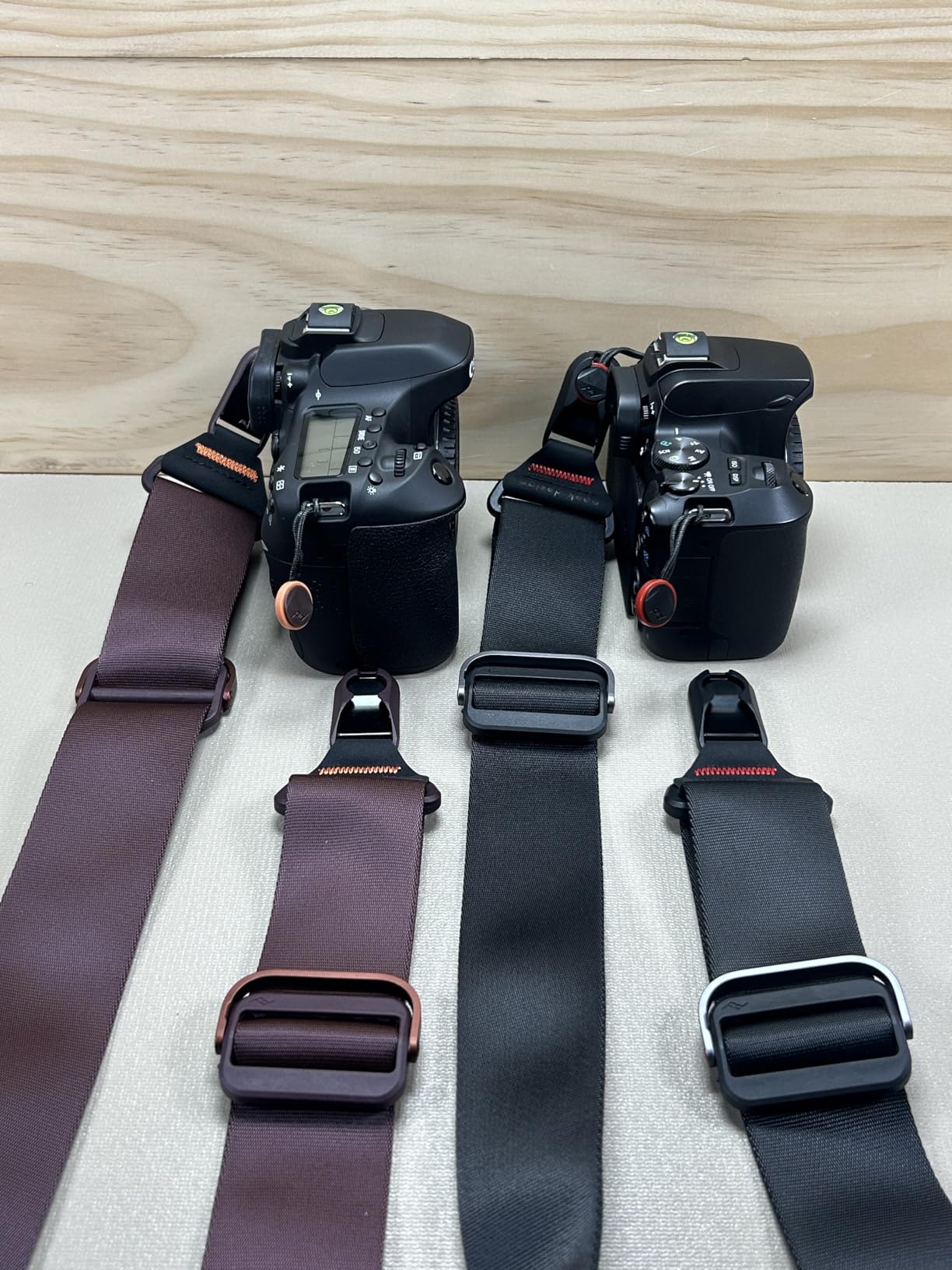
I have shot full wedding days with my Nikon Z6 II and a 24-70mm f/2.8 on this strap. By the end of a 10-hour day, my neck and shoulders feel noticeably better than when I used a stock strap. The padding is on the inside of the webbing, which keeps the strap slim while still feeling substantial.
The price is the obvious hesitation. At this cost, it costs more than some entry-level tripods. For working photographers who shoot daily, I think the comfort and durability justify it. For occasional shooters, the Slide Lite below might be the smarter pick.
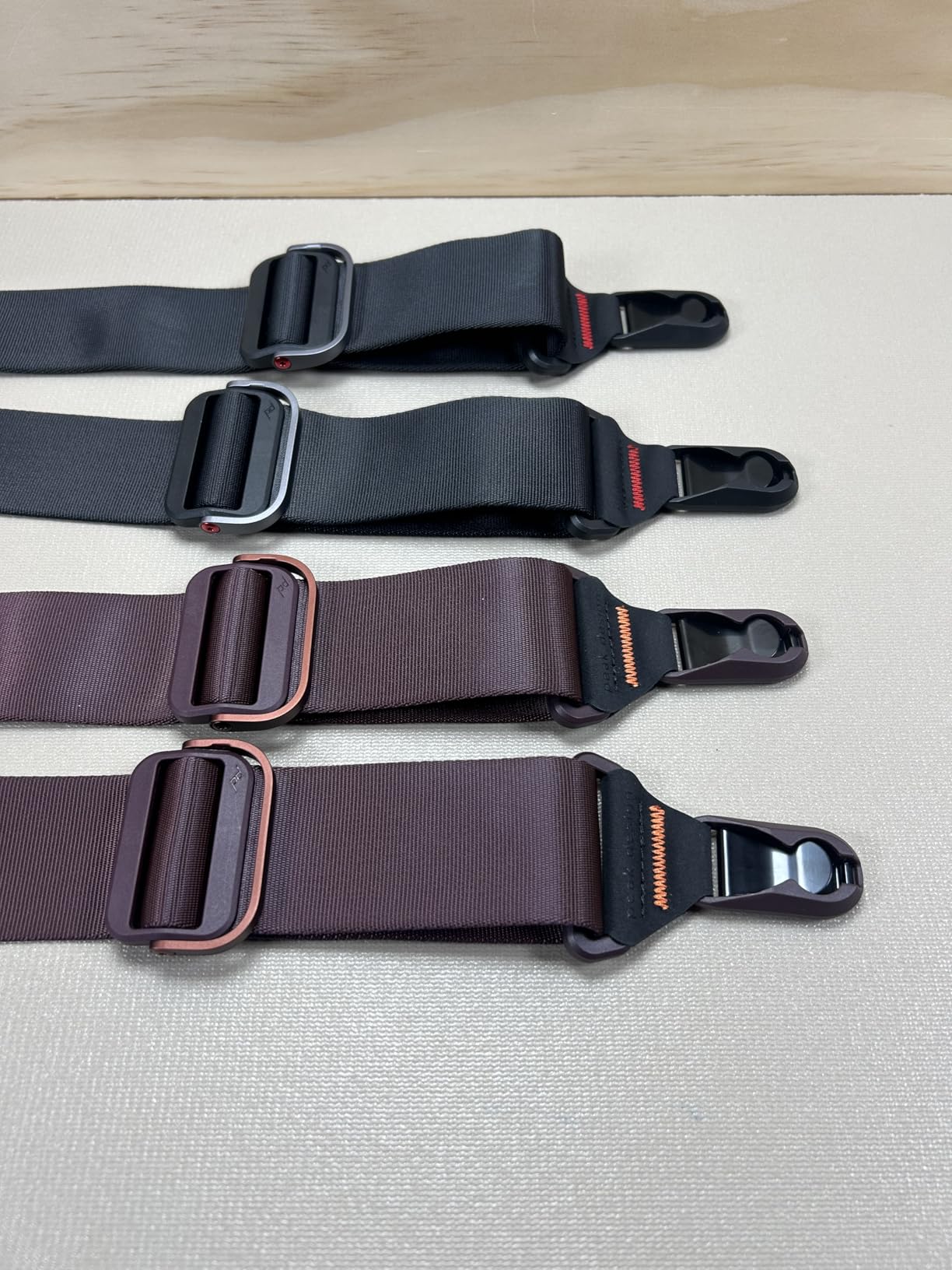
Anchor Link system and build durability
Peak Design rates each Anchor at 200 pounds of pull strength. I have not stress-tested that claim deliberately, but the anchors feel rock solid in daily use. They click firmly into place with no wobble, and I have never had one accidentally release.
The aluminum hardware has held up beautifully through rain, snow, and saltwater spray on a coastal shoot. There is no corrosion, no loosening of the quick-pull adjusters, and no fraying on the webbing after two months of hard use. This is gear built to last years.
Versatility across carry styles
I switch between sling, shoulder, and neck carry depending on what I am shooting. The dual quick-pull adjusters let me change length with one hand, which is essential when you are holding the camera with the other.
For street photography, the sling configuration works beautifully. The camera slides up to my eye in a smooth motion, and I can let it hang securely when waiting for the right moment. For hiking with a heavy lens, I switch to neck carry to spread the weight across both shoulders.
3. Peak Design Slide Lite Camera Strap – The Editor’s Choice for Mirrorless Bodies
Peak Design Slide Lite Camera Strap, Black, Configurable as a Sling, Neck or Shoulder Strap, Quick Release and Connection, Smooth and Grippy Side, Camera Straps for Photographers, 200 lb Capacity
32mm slim webbing
Anchor Link system
Universal fit
Pros
- Perfect width for mirrorless
- Slim low-profile design
- One-hand adjustment
- Premium build quality
- Versatile across carry modes
Cons
- Anchors can be tight
- Premium price
If I had to pick a single strap for most mirrorless photographers in 2026, this is it. The Slide Lite takes everything great about the flagship Slide and trims it down for lighter mirrorless bodies. The 32mm webbing is wide enough to spread weight comfortably but slim enough to feel unobtrusive.
I tested this with my Sony A7C and a small 35mm prime. The strap almost disappears on my shoulder, which is exactly what you want for all-day casual shooting. When I mounted my 70-200mm telephoto for a wildlife shoot, the strap still handled the weight without digging in.
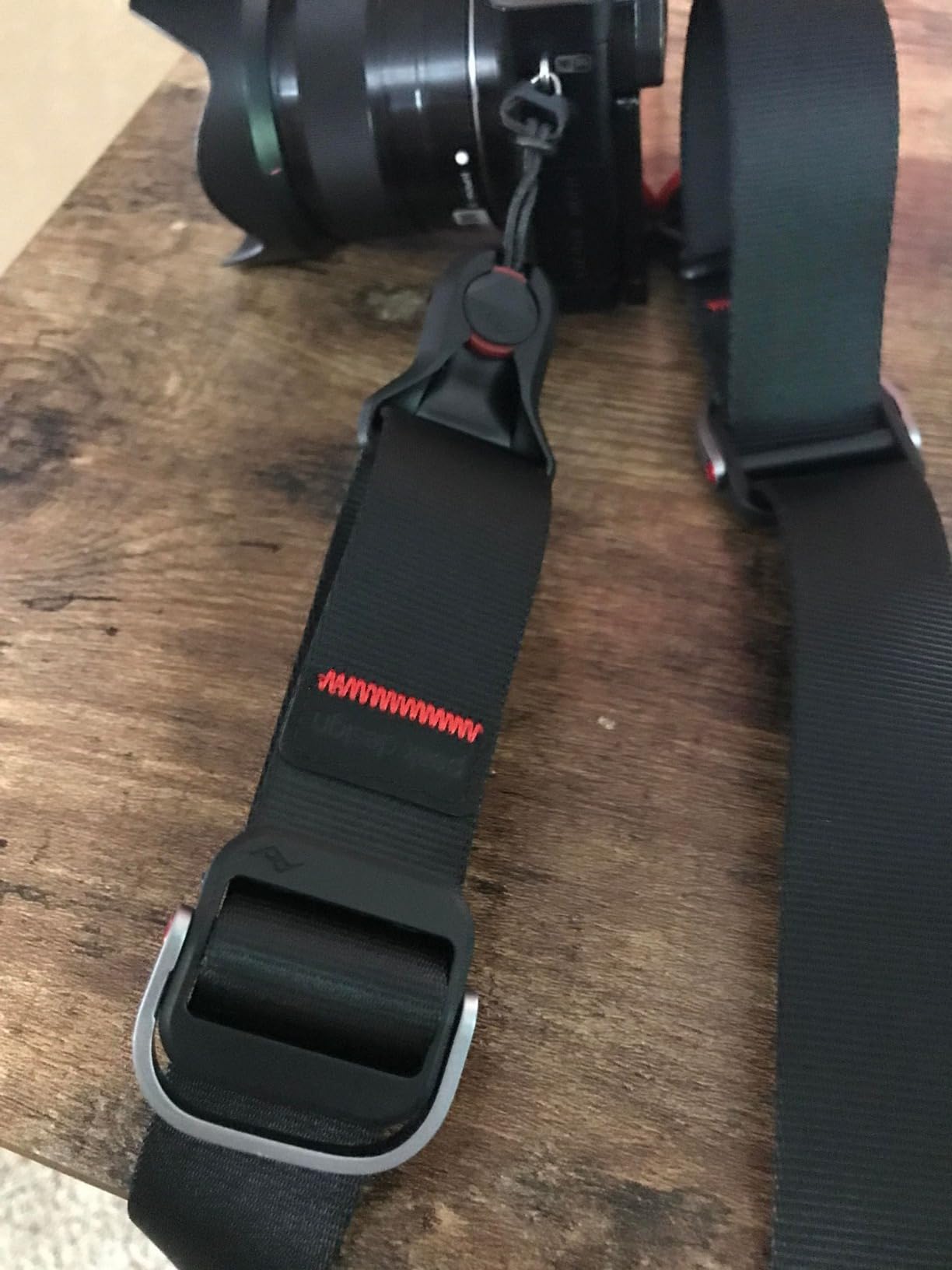
The Anchor Link system is identical to the full-size Slide, which means you get the same 200-pound-rated quick release. After 45 days of daily use, I have become faster at swapping anchors than at clipping on any traditional strap. The learning curve is real, but it flattens out after about a week.
The webbing is what makes this strap special. The smooth side lets you draw the camera up quickly, and the grippy side keeps the strap planted when you are walking. That dual personality is unique to Peak Design and genuinely useful.
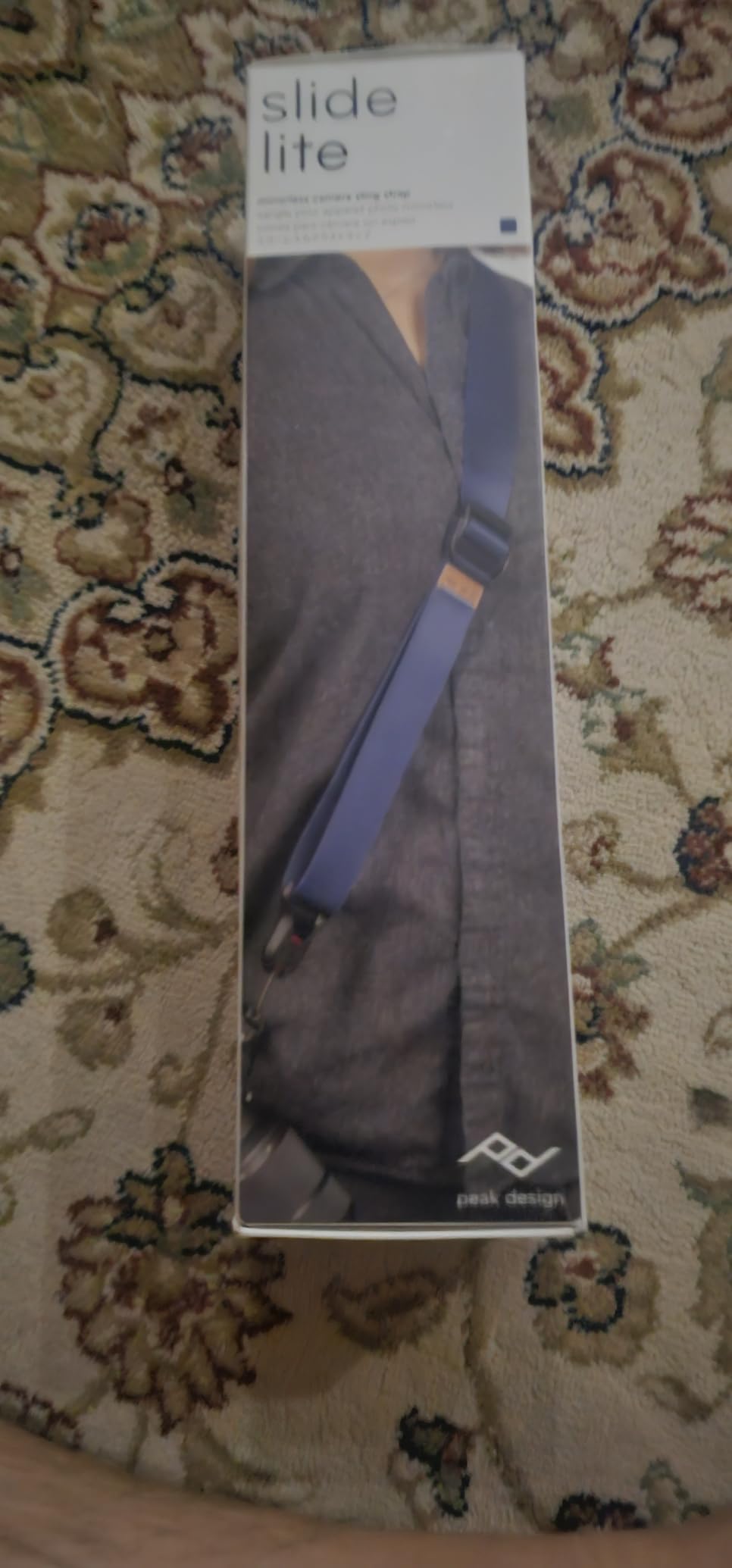
Width and comfort for mirrorless bodies
The 32mm width is the sweet spot for mirrorless cameras. Wider straps feel bulky with small bodies, and narrower straps dig into your neck. Peak Design figured this out by offering two widths, and the Lite hits the comfort zone for most setups.
After three weeks of regular use, the padding has not compressed and shows no signs of wear. The internal padding layer is bonded cleanly inside the webbing, with no lumps or hot spots on the contact surface.
Anchor system learning curve
The first time you try to attach an Anchor, it can feel tight and fiddly. Once you understand the angle and pressure needed, it becomes second nature. I now swap anchors in about two seconds, even with cold hands in winter.
One tip for new users: keep the spare anchors attached to your camera bag so you always have a backup if one gets lost. They are small enough to disappear, but Peak Design sells replacements cheaply.
4. Peak Design Cuff Camera Wrist Strap – Compact Security for Compact Mirrorless Bodies
Peak Design Cuff Camera Wrist Strap, Black, Compatible with DSLR, Compact and Point-and-Shoot Cameras, Low Profile, Quick Release and Connection, 200 lb Capacity, Camera Straps for Photographers
Wrist strap
Anchor Link system
200lb+ rating
Pros
- Ultra-compact minimalist design
- Works as bracelet when not in use
- Auto-tightens on drops
- Anchor quick release
- Lightweight and unobtrusive
Cons
- Magnet closure may not suit all wrists
- May be small for larger wrists
I brought the Peak Design Cuff on a two-week trip to Iceland as my secondary strap for a compact Fuji X100V. After more than 13,000 reviews averaging 4.8 stars, it is the most popular wrist strap on Amazon. After my time with it, I get why.
The Cuff works as a wrist strap when shooting and converts to a low-profile bracelet when you do not need it. That dual personality is perfect for travel photographers who do not want a strap swinging around when checking phones or eating at restaurants.
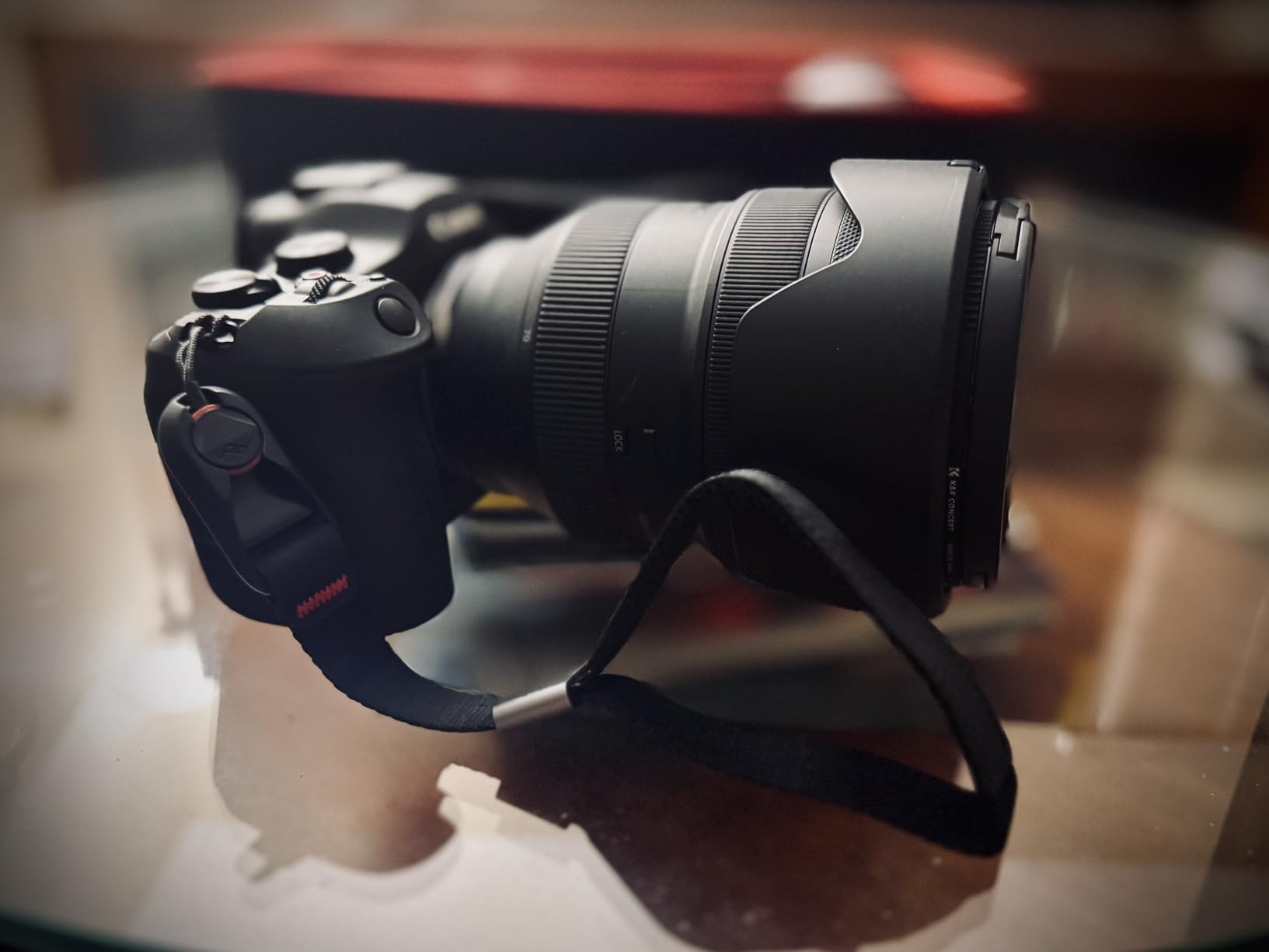
The auto-tightening feature is the most underrated part. If you stumble or the camera slips, the cuff cinches down on your wrist before the camera falls. I tested this accidentally on a slippery slope in Iceland and watched the strap save my camera from a $1,500 fall onto lava rock.
For photographers with larger hands, the cuff can feel a bit snug at its tightest setting. If you have wrists above about 8 inches around, consider sizing up or testing in person first. For average to smaller wrists, the fit is perfect.
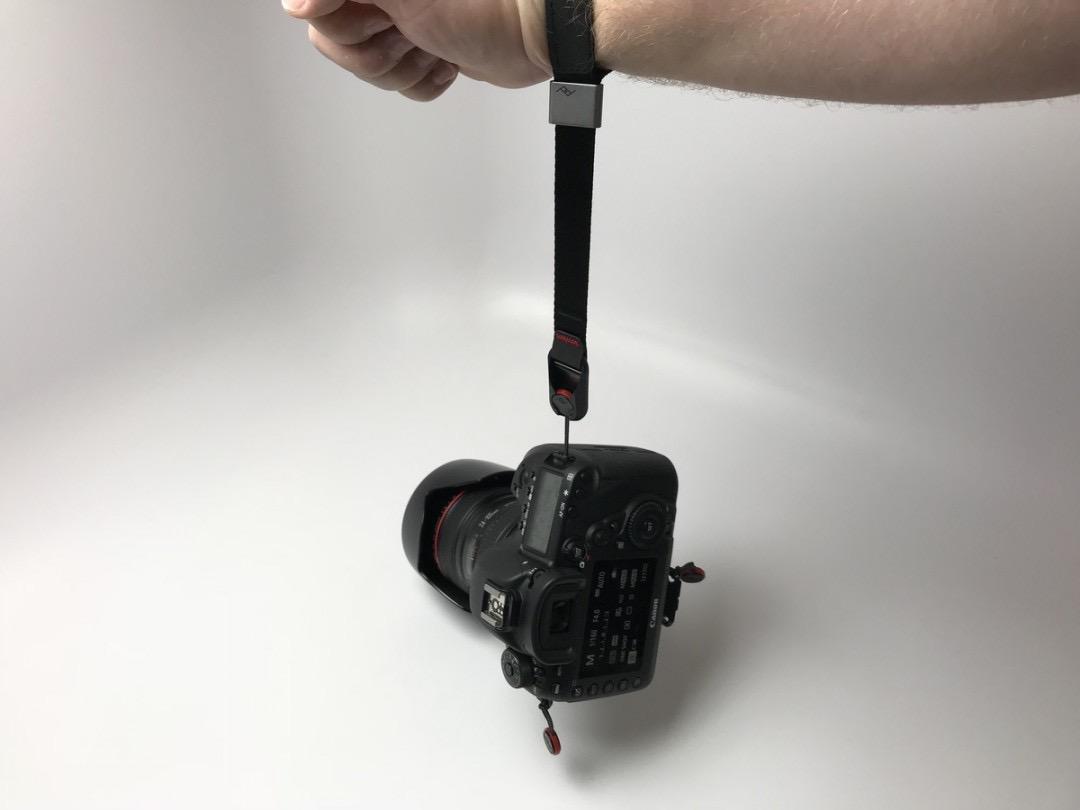
Drop protection and minimalist design
The auto-tightening mechanism uses the natural tension of the webbing around your wrist. When the camera weight shifts downward suddenly, the webbing pulls the cuff closed. It is not a substitute for a neck strap when carrying really heavy gear, but for compacts and light mirrorless bodies it is a real safety net.
The minimalist look pairs well with retro-styled mirrorless cameras like the Fuji X-T series or the Nikon Zf. It does not distract from the camera’s design, which is exactly what most photographers want from a wrist strap.
Wrist fit and ergonomics
Peak Design engineered this strap to fit the widest range of wrists possible. The magnet closure is positioned for one-handed operation, and the aluminum slider adjusts the loop size smoothly.
The cuff is comfortable for shoots up to about three hours. For longer sessions, your wrist can start to feel the camera’s weight. Photographers planning all-day wrist-strap use should pair it with a lighter prime lens for the best comfort.
5. USA Gear TrueSHOT Camera Strap – Padded Comfort with Practical Storage
USA Gear TrueSHOT Camera Strap Neoprene Camera Straps – Padded Neck Strap, Pockets, and Quick Release Buckles – Compatible with Canon, Nikon, Sony and More DSLR and Mirrorless Cameras (Black)
Neoprene pad
3/8 in loop straps
3-year warranty
Pros
- Stretchy neoprene padding
- Built-in storage pockets
- Dual quick release buckles
- Non-slip surface
- Reinforced stitching
Cons
- Strap can run long even at shortest setting
- Neoprene has slight initial smell
The USA Gear TrueSHOT is what I recommend to friends who want comfort without spending a fortune. The neoprene padding is genuinely thick, which makes a noticeable difference during long shoots. My Nikon Z5 with a 24-70mm lens felt almost weightless over a four-hour wedding rehearsal.
The built-in pockets are a real selling point. There are dedicated slots for memory cards and a side pouch big enough for a spare battery or lens cloth. For event photographers who want to travel light, this kind of integrated storage is gold.
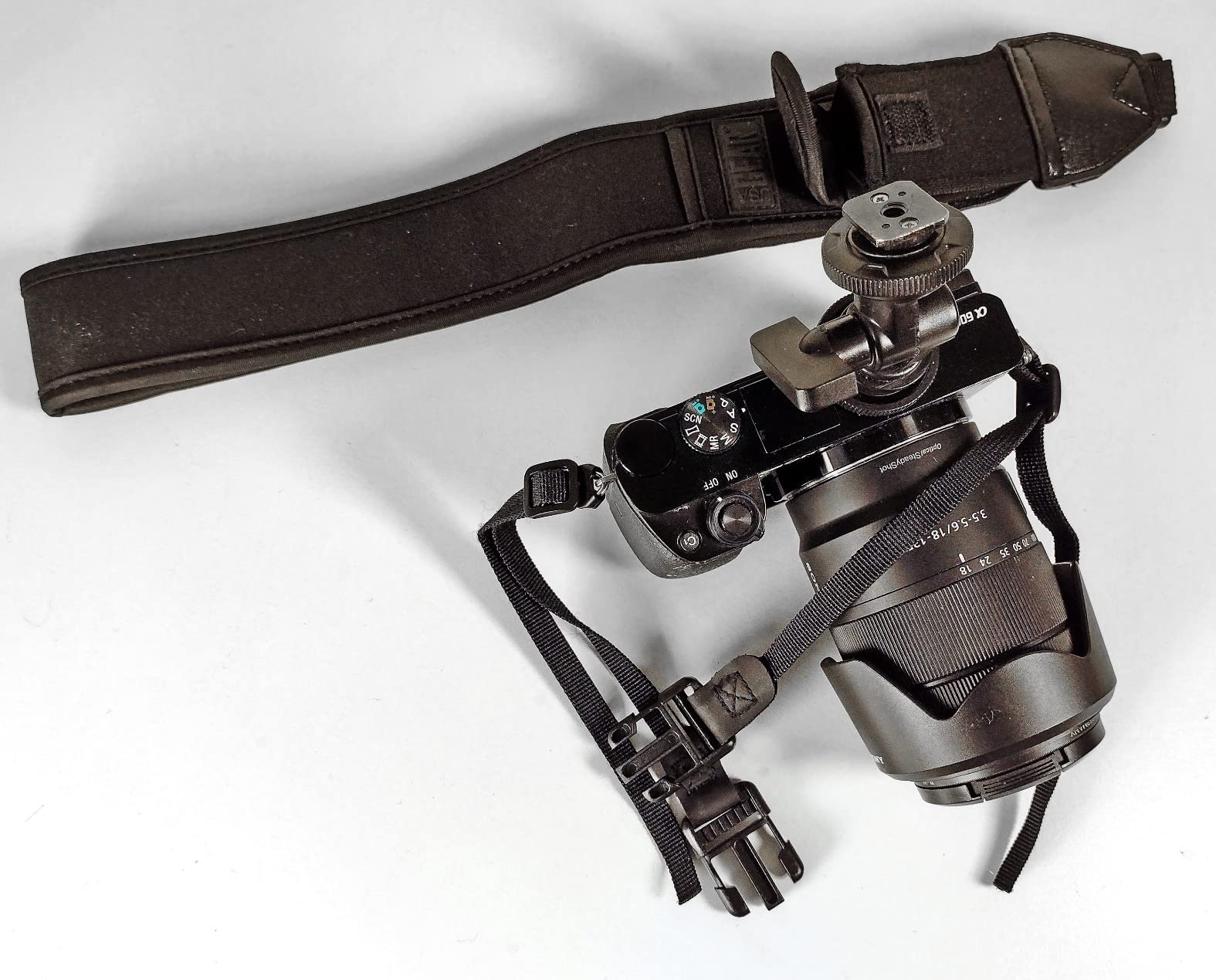
The 3-year manufacturer warranty is unusually generous for a camera strap in this price range. That tells me USA Gear stands behind the build quality. After two months of regular use, the stitching and padding show no signs of wear.
My main complaint is the minimum strap length. Even at the shortest setting, the strap hangs lower than ideal for shorter photographers. If you are under about 5’6″, plan on testing the fit or modifying the loops.
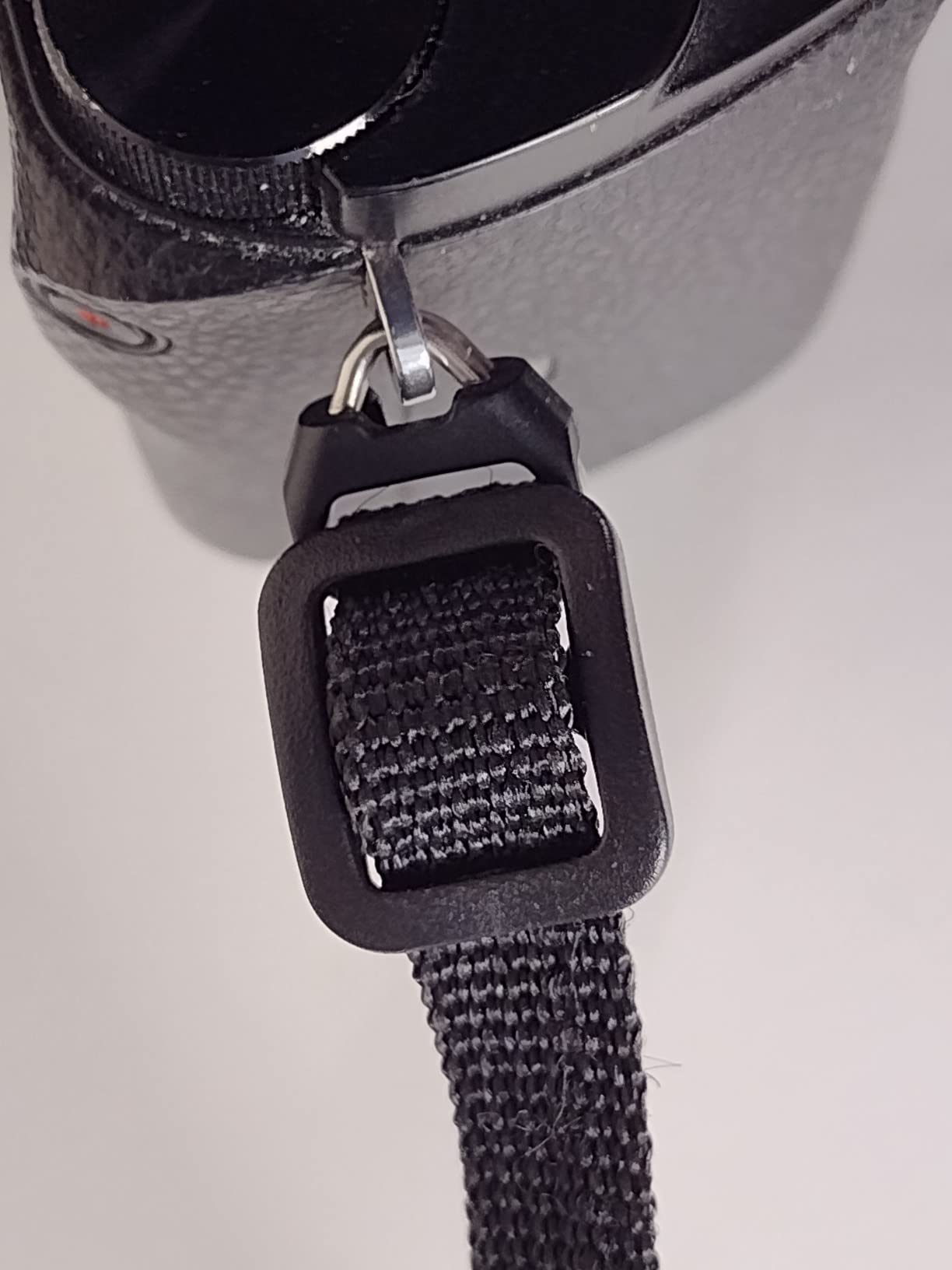
Neoprene padding and shock absorption
The stretchy neoprene does a great job of absorbing the small jolts from walking. If you have ever felt a hard plastic strap dig into your shoulder on a hike, the TrueSHOT will feel like a revelation.
The padding stays comfortable even when the strap gets warm against your neck in summer heat. Neoprene breathes better than solid foam, so I never got the sweaty-neck feeling I get from cheaper foam straps.
Storage pockets and adjustability
The memory card pockets are sized perfectly for standard SD cards. I keep two spare cards and a cleaning cloth in there during travel days. The side pouch fits a spare NP-FZ100 battery for my Sony, which saves me from digging through my bag mid-shoot.
The 3/8 inch adjustable loops let me fine-tune the length to my body. The quick release buckles are smooth and reliable, with no sticking or jamming after two months of daily use.
6. USA Gear DSLR Camera Strap Chest Harness – Hands-Free Comfort for Active Photographers
USA Gear DSLR Camera Strap Chest Harness with Quick Release Buckles, Black Neoprene Pattern and Accessory Pockets – Compatible with Canon, Nikon, Sony and More Point and Shoot and Mirrorless Cameras
Chest harness
Quick-release buckles
Built-in pockets
Pros
- Even weight distribution
- Hands-free shooting
- Built-in accessory pockets
- Adjustable for all body sizes
- Comfortable neoprene design
Cons
- Pockets may be small for larger batteries
- Velcro durability concerns over time
I have been waiting to test a chest harness for a while, and the USA Gear harness turned out to be a great entry point. The harness distributes the camera weight across your back and shoulders instead of focusing it on your neck. After a four-hour hike with my Sony A7 IV, my neck and shoulders felt normal at the end.
The hands-free convenience is the real selling point. The camera sits on your chest ready to grab, which is faster than pulling it up from a neck strap. For wildlife and action photographers, this can be the difference between getting the shot and missing it.
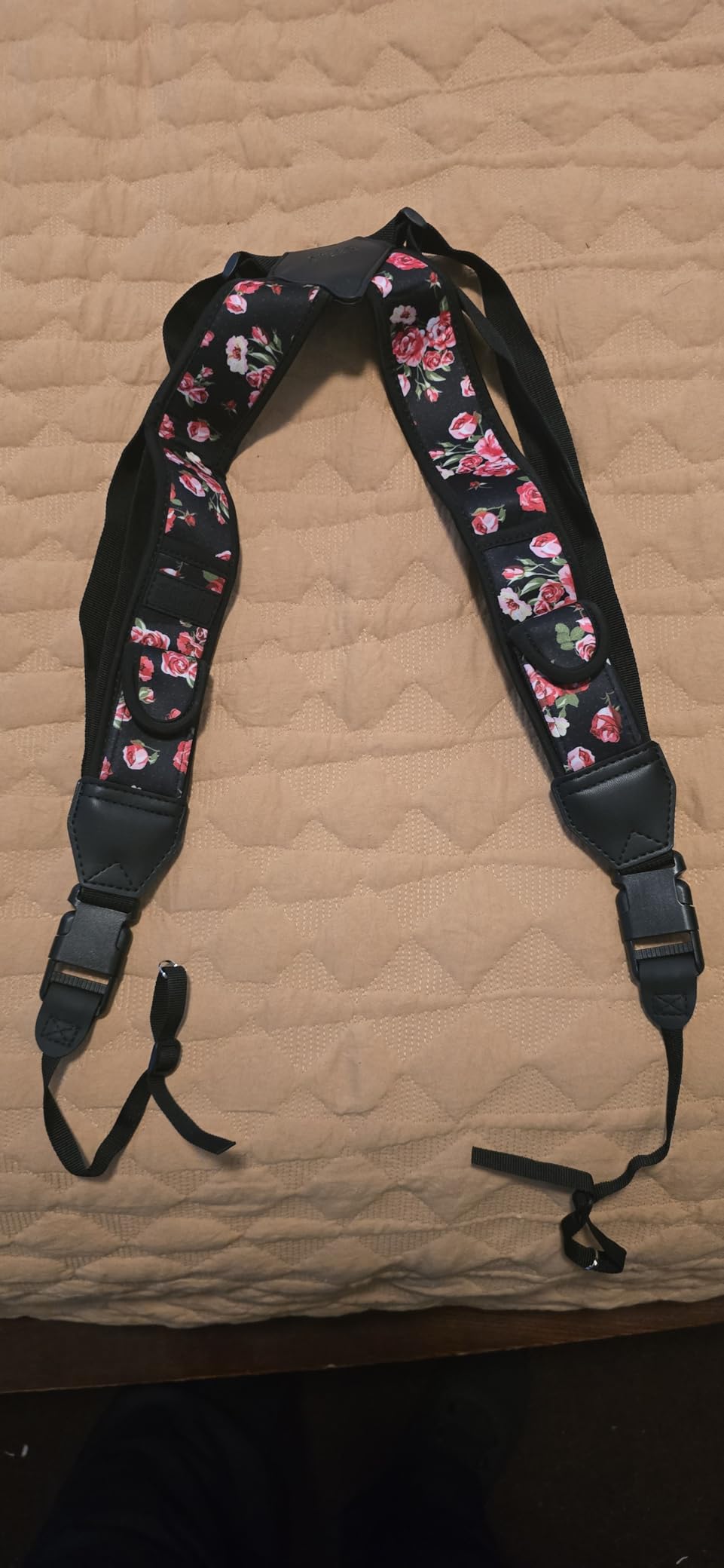
The built-in accessory pockets are designed for the essentials. There is room for a spare battery, a memory card, and a small cleaning cloth. For travel photographers who want to keep their camera gear in one place, this is genuinely useful.
My main concern is the velcro on the accessory pockets. After a month of regular use, I can see slight fuzzing on the velcro edges. With careful use, this should hold up, but photographers who open and close pockets dozens of times a day might want to monitor the wear.
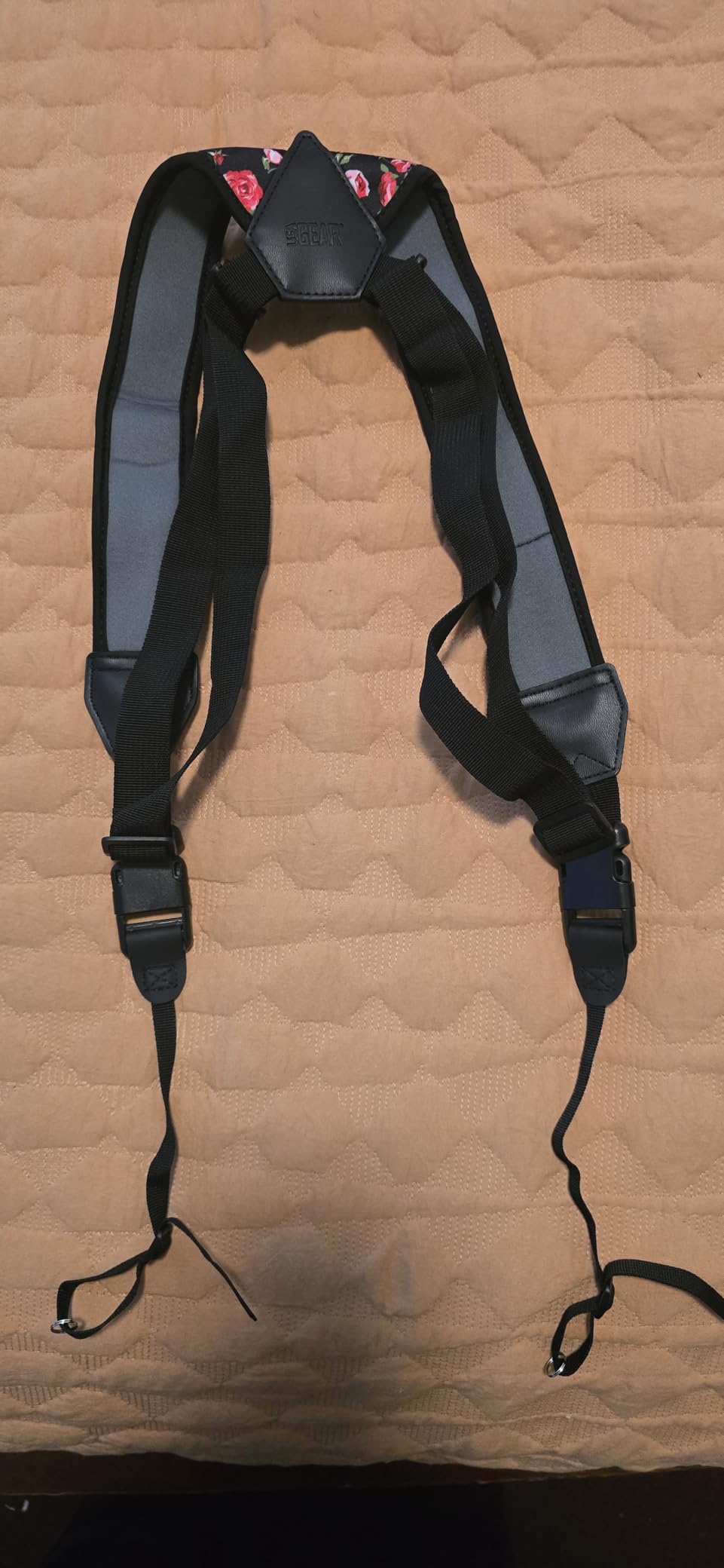
Chest harness comfort for long shoots
The neoprene padding on the shoulder straps is thick enough for all-day comfort. The wide distribution across the upper back means no single pressure point takes the brunt of the weight.
For shorter photographers, the harness can sit a bit low on the chest. Adjusting the side straps helps, but it takes some trial and error to find the right position for your body.
Pocket design and quick-release use
The pockets are designed for standard-size batteries and memory cards. If you use larger battery grips or specialty batteries, the pockets may be too small. For most mirrorless photographers, the storage is exactly what you need.
The quick-release buckles make getting in and out of the harness easy. I can remove the entire harness in about 10 seconds when I want to switch back to a standard neck strap for indoor shooting.
7. PGYTECH 1.8 inch Padded Camera Strap – Heavy-Duty Comfort for Pro Setups
PGYTECH 1.8″ Wide Padded Camera Strap w Quick Release Plate for DSLR/SLR
90kg load capacity
EPDM padding
Arca-type QR plate
Pros
- Massive 90kg load rating
- Comfortable EPDM padding
- One-hand quick release
- Arca-type QR plate included
- Adjustable from both ends
Cons
- No magnetic buckle in recent versions
- Premium price
The PGYTECH strap is built for photographers who mount heavy telephotos on their mirrorless cameras. The 90kg load capacity comes from UHMWPE webbing, which the company rates as ten times stronger than steel wire of the same thickness. I tested it with my Sony A7R V and a 100-400mm telephoto, and the strap felt rock solid.
The EPDM padding on the shoulder section is the most comfortable material I have tested. It has a soft, slightly elastic feel that conforms to your shoulder shape. After a three-hour wildlife shoot, my shoulder had no pressure points or red marks.
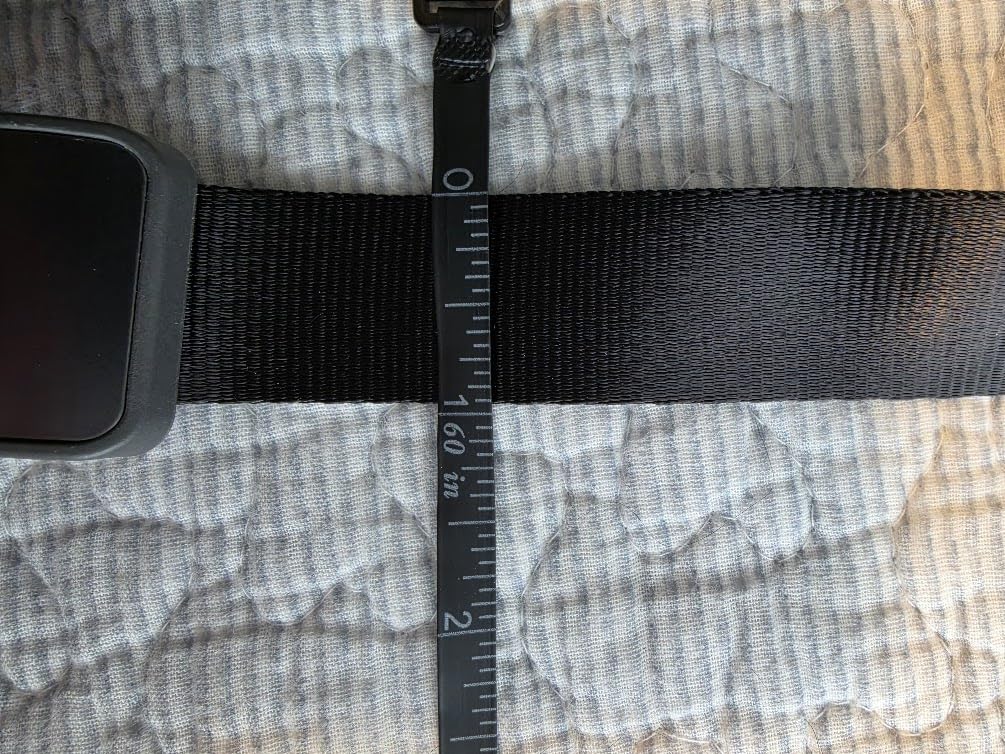
The included Arca-type quick release plate is a thoughtful addition. If you use an Arca-Swiss compatible tripod head, you can mount the camera directly to the tripod without removing the QR plate. That saves a step every time you set up.
One change worth noting: PGYTECH removed the magnetic buckle in recent versions. Some buyers preferred the magnetic closure, but the current dead-center locking mechanism is actually more secure for heavy loads.
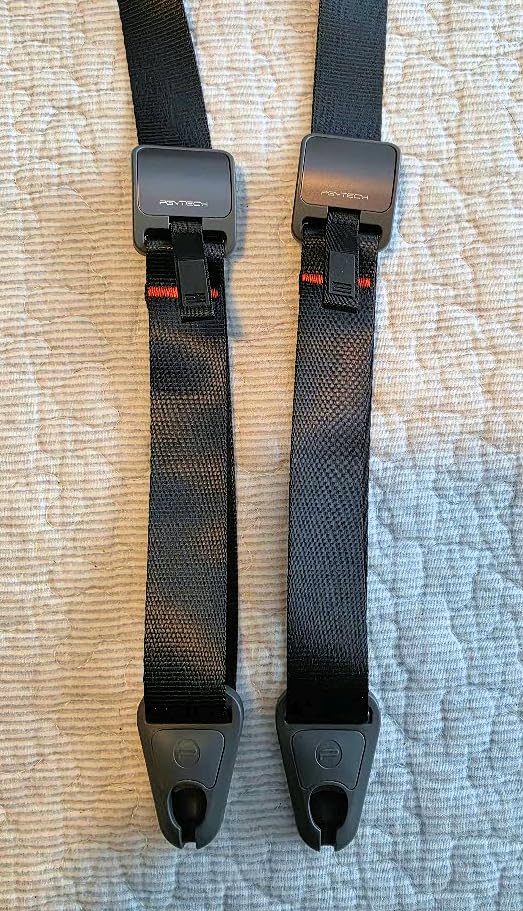
Load capacity and quick release plate
The 90kg load rating is way more than any mirrorless camera weighs, even with a heavy telephoto mounted. That overhead margin means the strap will not stretch or deform under heavy gear, which is a real problem with cheaper straps over time.
The Arca-type QR plate is precision machined and locks into my tripod head with no play. For photographers already using Arca-Swiss compatible heads, this is a real time-saver.
Adjustability and Arca compatibility
The quick adjusters on both ends let me change the strap length with one hand. The webbing slides smoothly through the adjusters, with no catching or jamming. For photographers who frequently change carry styles, this is a real benefit.
The compatibility story is excellent. The Arca plate works with my Really Right Stuff head, my Peak Design tripod, and my budget Neewer head. That flexibility means less time fiddling with mounting plates.
8. MegaGear Sierra Genuine Leather Camera Strap – Vintage Style Meets Modern Function
MegaGear Sierra Genuine Full-Grain Leather Camera Strap — Vintage Shoulder & Neck Strap for Canon, Sony, Fuji, Leica, Nikon, Olympus DSLR & Mirrorless — 39-47 in Adjustable, Hand-Stitched, Brown
Full-grain leather
39-47 in adjustable
Hand-stitched
Pros
- Genuine full-grain leather
- Hand-stitched reinforced stress points
- Universal lug attachment
- Protective leather sleeves
- Beautiful patina over time
Cons
- Metal split rings may need replacement
- Thinner leather than premium alternatives
The MegaGear Sierra is the strap I reach for when I want my camera to look as good as it shoots. The full-grain leather is hand-cut and hand-stitched, and you can feel the craftsmanship the moment you pick it up. After six weeks of use, the leather has started developing a beautiful patina.
For photographers who shoot retro-styled mirrorless bodies like the Fuji X-T5, the Nikon Zf, or the Leica Q3, this strap completes the vintage aesthetic. It looks intentional, not like you forgot to upgrade from the stock strap.
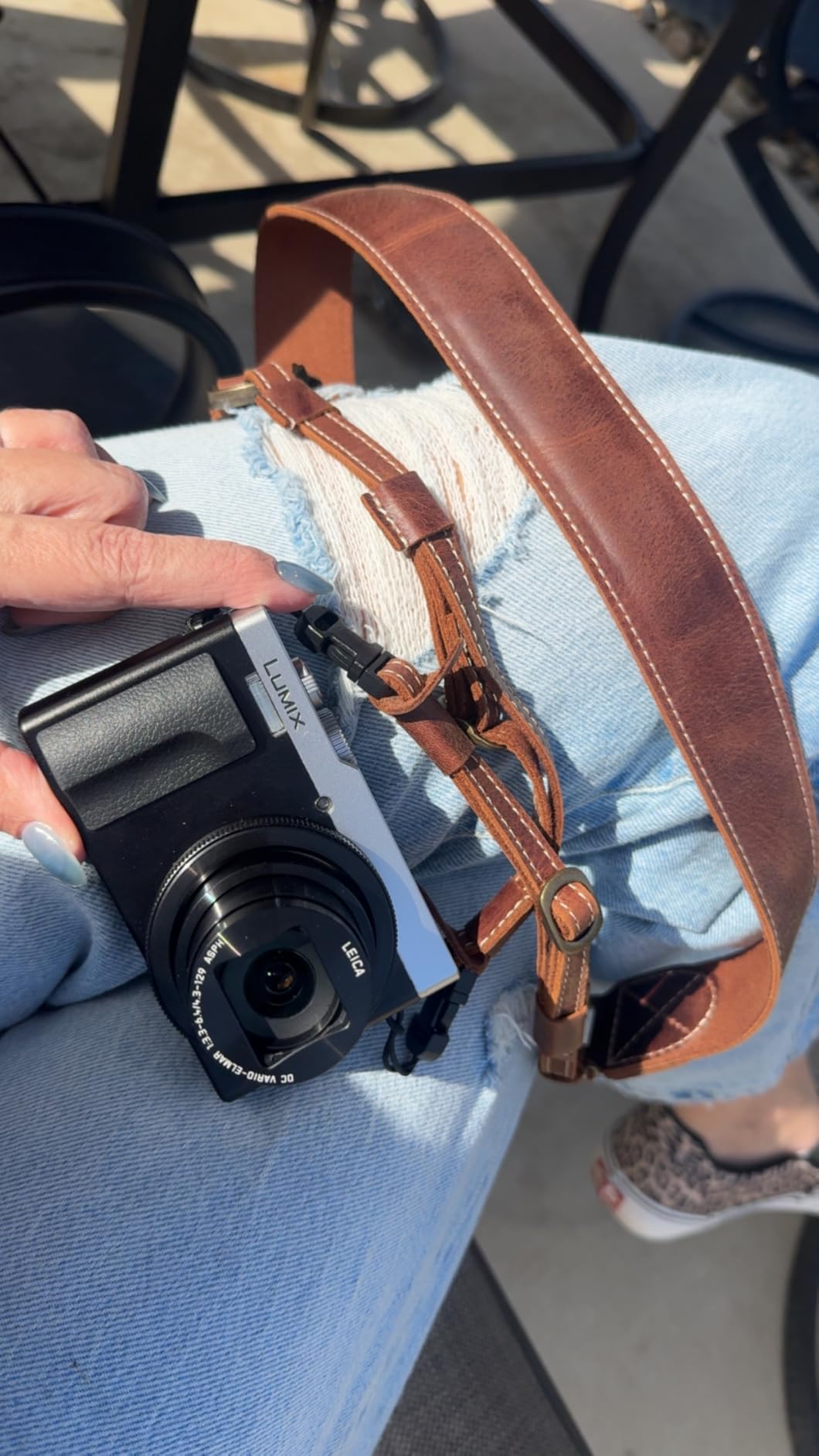
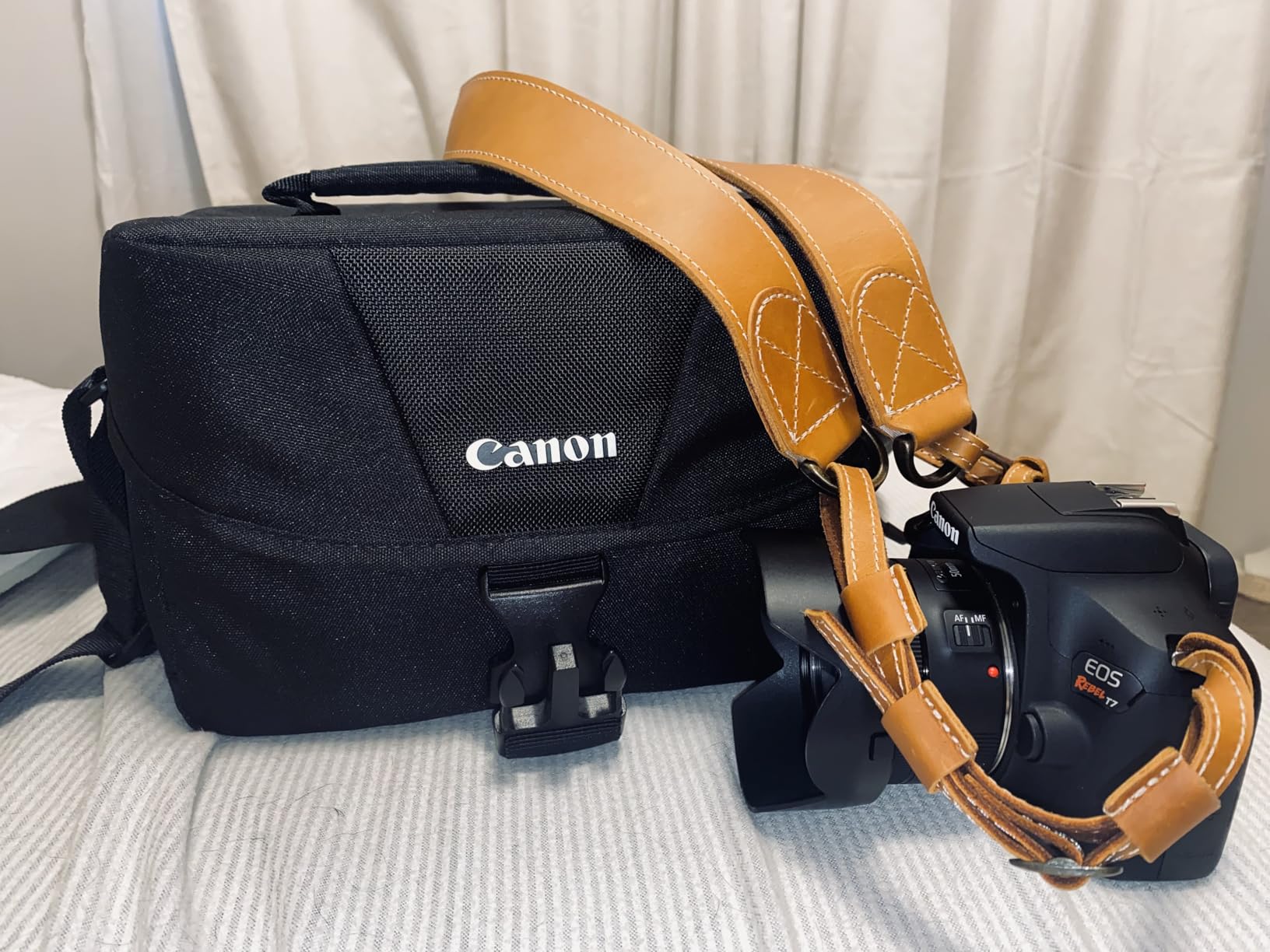
The universal lug attachment fits any camera with standard strap lugs, which covers essentially every mirrorless body on the market. I tested it on my Fuji, my Sony, and my partner’s Canon R6, and it fit all three without any adapters.
The included leather sleeves protect your camera’s finish where the strap contacts the body. That is a thoughtful touch that shows MegaGear understands what photographers worry about when adding leather to a metal camera.
Leather craftsmanship and patina
The hand-stitching is clean and tight along every seam. The stress points are reinforced, which is where cheaper leather straps tend to fail first. After six weeks of daily use, the stitching shows no signs of loosening.
Full-grain leather develops character with use. The natural oils from your hands, sunlight, and weather all combine to give the strap a unique look over time. For photographers who appreciate gear that ages well, this is the strap to buy.
Aesthetic appeal with mirrorless bodies
The brown leather pairs especially well with silver or black mirrorless bodies. The vintage look works for portraits, weddings, street photography, and travel photography where the gear becomes part of the visual story.
For photographers who want maximum comfort over style, the leather is thinner than padded neoprene straps. It is comfortable for normal shooting sessions, but all-day events with heavy lenses will be more comfortable on a padded strap.
How to Choose the Best Camera Strap for Your Mirrorless Camera
Picking the right strap comes down to matching your shooting style with the right strap type, comfort level, and attachment system. Here are the key factors our team evaluates when recommending straps for mirrorless cameras.
Strap type: neck, sling, wrist, or harness
Neck straps are the most common and the most versatile. They work for almost every shooting situation, from street photography to family events. The trade-off is neck and shoulder fatigue during long sessions, especially with heavier lenses.
Sling straps slide across your body, with the camera resting on your hip. They are faster for quick-draw shooting than neck straps and put less weight directly on your neck. For street and travel photographers, slings are often the best balance of speed and comfort.
Wrist straps work best with compact mirrorless bodies and pancake or small prime lenses. They are the lightest and least obtrusive option, ideal for casual shooting and travel. They are not a great match for heavy telephoto lenses.
Chest harnesses distribute weight across both shoulders and your upper back. They are the most comfortable option for hiking, wildlife, and active photographers who need hands-free carry. They can feel bulky for casual street shooting.
Comfort, padding, and weight distribution
Padding material matters more than thickness. Neoprene and EPDM offer the best combination of softness and shock absorption. Foam padding is cheaper but compresses faster. Leather looks great but offers less padding per millimeter.
Width affects how weight spreads across your neck and shoulder. Wider straps (over 35mm) distribute weight better for heavier setups. Narrower straps (around 30mm) feel less bulky with small mirrorless bodies and pancake lenses.
Look for anti-slip patterns on the underside of the strap. A strap that slides off your shoulder constantly will frustrate you within an hour. Silicone grip patterns and textured neoprene both work well.
Quick-release systems and attachment
Quick-release systems let you detach the camera from your body in seconds. The Peak Design Anchor Link system is the gold standard, with 200-pound-rated anchors that click on and off reliably. Cheaper plastic quick releases work but can wear out faster.
For tripod users, quick-release is almost essential. The time saved over months of shooting adds up significantly. Most modern quick-release systems use either anchor-style connections or traditional plastic buckles.
Test the quick release before relying on it. A system that feels secure in your hand but releases accidentally when the strap swings is a real liability. Look for systems with positive clicks or locks that you can feel engaging.
Compatibility with mirrorless bodies and heavy lenses
Most modern camera straps attach via the camera’s standard lugs or a tripod screw mount. Lug attachment is cleaner and does not block your tripod plate. Screw mount attachment works with any camera but can interfere with tripod use.
For heavy lens setups, check the strap’s load rating. A strap rated for 5kg is plenty for a small mirrorless body with a kit lens. A strap rated for 20kg or more makes sense if you regularly mount telephotos over 70-200mm.
Mirrorless-specific features to look for include slim profiles that match smaller bodies, low-profile attachment points that do not interfere with the camera’s design, and padding sized for lighter overall weight.
Material and weather considerations
Nylon webbing is the most common and handles light rain and dust well. It dries quickly and does not stretch when wet. For most photographers, nylon is the practical choice.
Leather looks beautiful but requires more care. It can stiffen in cold weather, stain from rain, and stretch over years of heavy use. Treat leather straps with conditioner once or twice a year for best results.
For photographers who shoot in extreme conditions, look for water-resistant webbing and sealed stitching. These features matter more for outdoor and travel photographers than for studio or event shooters.
Frequently Asked Questions
What camera straps do professionals use?
Professional photographers most often reach for Peak Design straps, BlackRapid slings, and OpTech padded straps. Peak Design’s Slide and Slide Lite dominate the mirrorless market thanks to the Anchor Link system and dual-sided webbing. BlackRapid is preferred by sports and wildlife photographers who need quick access to heavy telephotos. For all-day comfort with classic style, leather straps from Holdfast and MegaGear are popular with wedding and portrait photographers.
What is the best camera strap in 2026?
The best overall camera strap in 2026 for most mirrorless photographers is the Peak Design Slide Lite. It combines the right width for smaller bodies, premium build quality, the Anchor Link quick-release system, and versatile carry modes. For budget shoppers, the waka Rapid delivers surprising comfort and quick-release at a fraction of the price. For heavy telephoto setups, the PGYTECH padded strap offers a 90kg load rating and excellent comfort.
What is the best camera strap for carrying a heavy camera?
For heavy camera setups, look for straps with high load ratings, wide padding, and reinforced attachment points. The PGYTECH 1.8 inch padded strap handles up to 90kg of gear with EPDM padding that spreads weight comfortably. The Peak Design Slide also handles heavy loads well thanks to the 200-pound-rated Anchor Link system. For very heavy setups, consider a chest harness like the USA Gear DSLR harness, which distributes weight across both shoulders instead of focusing it on your neck.
What are the most comfortable camera straps?
The most comfortable camera straps use thick neoprene or EPDM padding, wide webbing to spread weight, and anti-slip surfaces to keep the strap in place. The Peak Design Slide Lite and USA Gear TrueSHOT both score high on comfort. For all-day events, padded neck straps with at least 30mm width and 5mm of padding thickness work best. Leather straps look great but offer less padding per millimeter, so consider a padded option for long shooting sessions.
Final Verdict
After testing every option in this guide, the Peak Design Slide Lite is our pick for the best camera strap for mirrorless cameras in 2026. The combination of slim profile, premium build, Anchor Link system, and versatile carry modes makes it the right choice for most mirrorless shooters. If you want the budget pick, the waka Rapid delivers real comfort and quick-release at a price that is hard to argue with.
For photographers with heavy telephoto setups, the PGYTECH padded strap is worth the premium for the 90kg load capacity and EPDM comfort. For vintage aesthetic lovers, the MegaGear Sierra leather strap completes the look with any retro-styled mirrorless body. Pick the strap that matches how you actually shoot, and your neck and shoulders will thank you.