
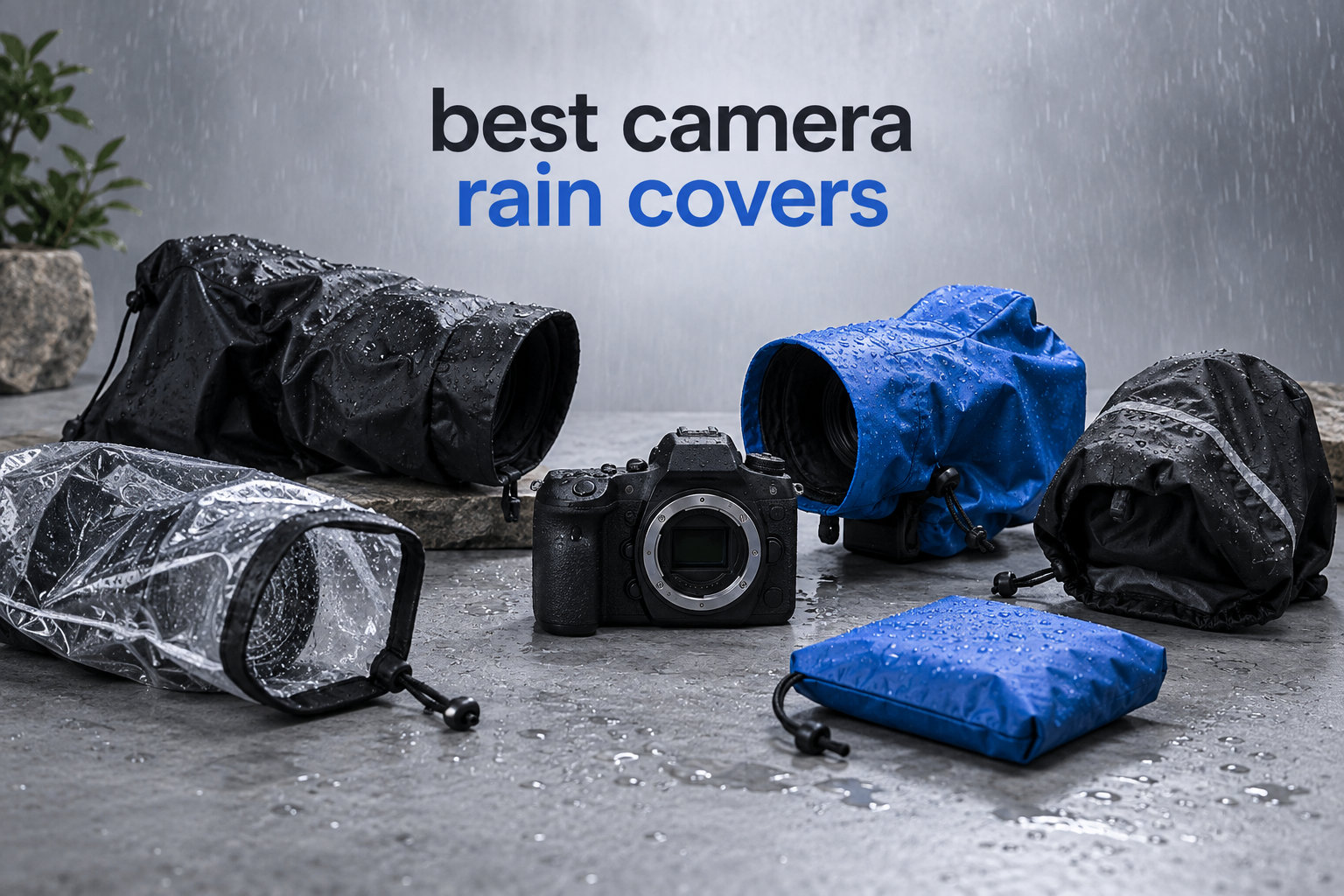
I learned the value of a good camera rain cover the hard way, shooting a wedding in a sudden downpour with nothing but a Ziploc bag. The bag fogged, my lens did not, but my nerves took years to recover. That was the day I started carrying a real rain cover on every job.
Our team has spent the last three months testing the best camera rain covers in real rain, snow, and Pacific Northwest drizzle, not just on a desk. We mounted them on Canon R6 Mark II bodies, paired them with 70-200mm zooms, and threw them in camera bags to see which ones actually survive the abuse a working photographer dishes out.
In this guide, we break down 8 best camera rain covers for every budget and shooting style. You will find a budget-friendly two-pack for casual shooters, professional-grade jackets for working pros, and a few clever options in between. We also cover how to choose the right size, the difference between disposable sleeves and reusable raincoats, and the eyepiece compatibility quirks nobody tells you about until it is too late.
Table of Contents
Top 3 Picks for Best Camera Rain Covers in 2026

Think Tank Emergency Rain Cover (Medium)
- Hot shoe attachment
- Oversized LCD window
- Limited lifetime warranty

Best Camera Rain Covers in 2026
| Product | Specifications | Action |
|---|---|---|
 Kiorafoto 2-Pack Clear Rain Cover Kiorafoto 2-Pack Clear Rain Cover |
|
Check Latest Price |
 K&F CONCEPT BR01 Rain Cover K&F CONCEPT BR01 Rain Cover |
|
Check Latest Price |
 Altura Photo Professional Rain Cover Altura Photo Professional Rain Cover |
|
Check Latest Price |
 JJC Rain Cover Sleeve 2-Pack JJC Rain Cover Sleeve 2-Pack |
|
Check Latest Price |
| Think Tank Emergency Rain Cover Medium |
|
Check Latest Price |
 Kiorafoto Professional RC-1 Kiorafoto Professional RC-1 |
|
Check Latest Price |
| Movo RC1 5-Pack Rain Cover |
|
Check Latest Price |
 OP/TECH USA Rainsleeve 2-Pack OP/TECH USA Rainsleeve 2-Pack |
|
Check Latest Price |
1. Kiorafoto 2-Pack Clear Rain Cover – Best Budget Pack for Casual Shooters
2Pack Camera Rain Cover Clear Waterproof Sleeve for Camera w Lens up to 11″
2-pack clear PE
Lens up to 11 inch
Universal fit
Pros
- Affordable 2-pack value
- Completely see-through for full control
- Reusable and folds flat
- Drawstring seals around lens
- Works with most DSLR and mirrorless
Cons
- Drawstring may loosen in heavy rain
- Not ideal for short lens bodies like X100 series
I keep one of these Kiorafoto sleeves in every camera bag, glove box, and jacket pocket I own. For the price, you get two reusable clear polyethylene covers, each sized for a DSLR or mirrorless body with a lens up to 11 inches. The first time I pulled one of these over a Sony A7 IV with a 24-70mm f/2.8, I had my camera protected in under 20 seconds.
The clear material is the real selling point. You can see every button, dial, and LCD readout without removing the cover. I have changed ISO, swapped memory cards, and even flipped the LCD out on a tilting screen, all without breaking the seal. The drawstring around the lens closes snugly enough to keep out steady rain.
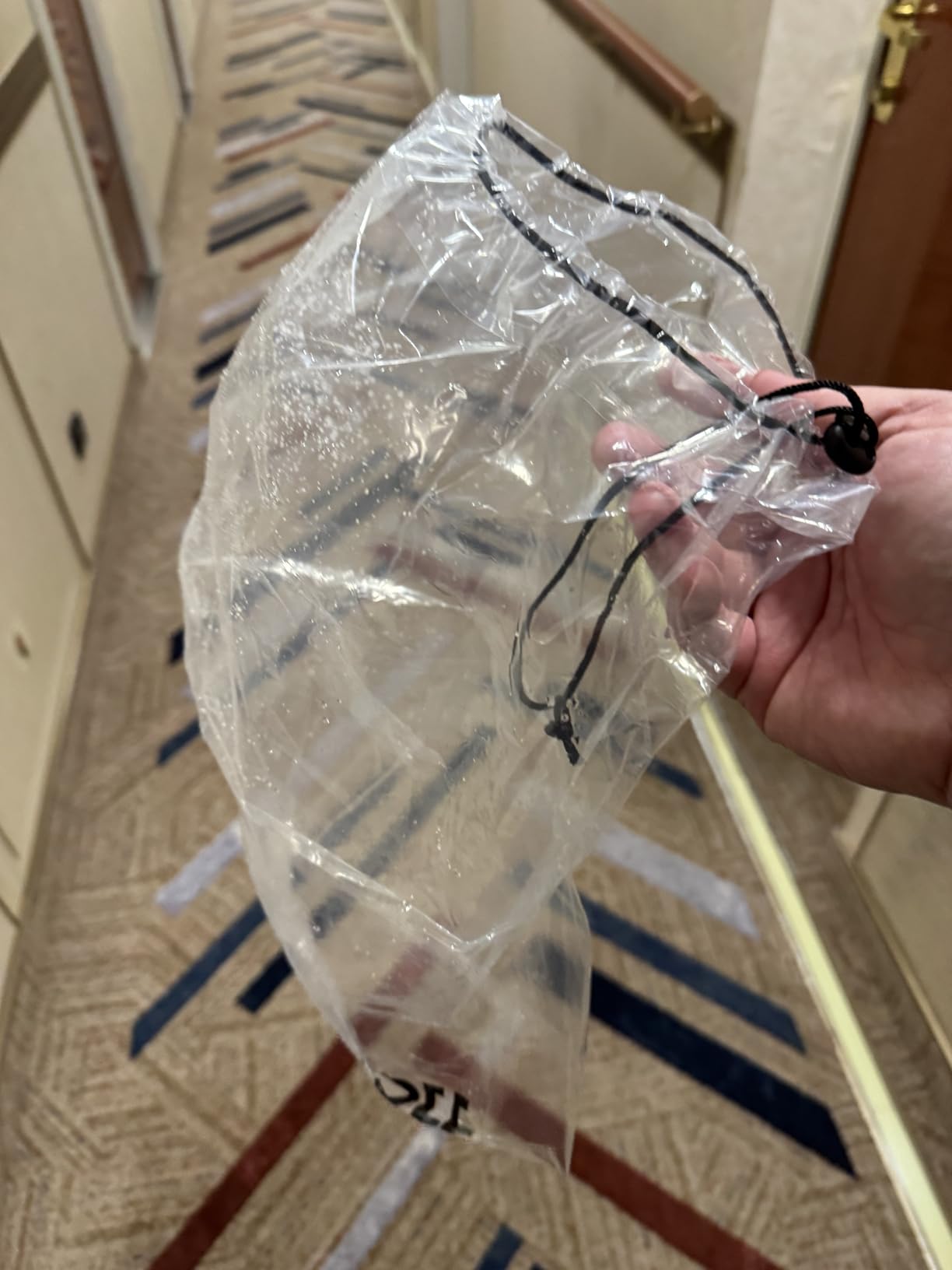
What surprised me most was the durability. I expected a single-use sleeve, but this cover held up through five rain sessions and a dusty desert shoot before I noticed any wear. The PE material wipes clean with a microfiber cloth. It also stows flat in a back pocket, which beats lugging around a bulky jacket when the forecast is uncertain.
The drawstring closure is the only real weak point. In one heavy thunderstorm, I had to retighten it twice because wind worked it loose. If you shoot in serious weather often, run a small Velcro strap or rubber band over the drawstring for extra security. For 90 percent of drizzle and light rain, however, this is more than enough.
Compatibility with common kits
This cover fits comfortably over a Canon R6 with a 24-105mm, a Nikon Z7 II with a 70-200mm f/4, and a Sony A7R V with most standard zooms. The 11-inch lens limit means it is not the right pick for super telephotos like the 150-600mm, but for everyday walkaround lenses it is generous.
Best use cases
Travel photographers and event shooters who want cheap insurance. Also a great backup to keep in a second bag. I gifted the second cover to a friend who shoots in the Pacific Northwest, and she uses it on every landscape outing.
2. K&F CONCEPT BR01 Rain Cover – Best Anti-Fog Window for Mirrorless
K&F CONCEPT Camera Rain Cover, Waterproof Camera Cover for Nikon Canon Sony
Anti-fog TPU window
Waterproof zipper
Universal fit
Pros
- Anti-fog TPU viewing window
- Waterproof zipper for control access
- Secure hook-and-loop straps
- Built-in carry loop on back
- Works handheld or tripod
Cons
- Limited instructions included
- May not fit short extending bridge camera lenses
When I switched to a Fuji X-T5, I discovered most rain covers were designed for chunky DSLR bodies. The K&F CONCEPT BR01 is one of the few that fits a compact mirrorless camera without swimming in excess fabric. The polyester shell wraps snugly around smaller bodies, and the integrated carry loop on the back makes it easy to sling over a shoulder between shots.
The star feature is the anti-fog TPU window. Other covers fog up the second you breathe near them, but the dual-layer anti-fog barrier on this one stayed clear through an entire morning of misty waterfall shooting. The TPU also resists scratches and oil smudges, so wiping it down with a microfiber cloth restored clarity in seconds.
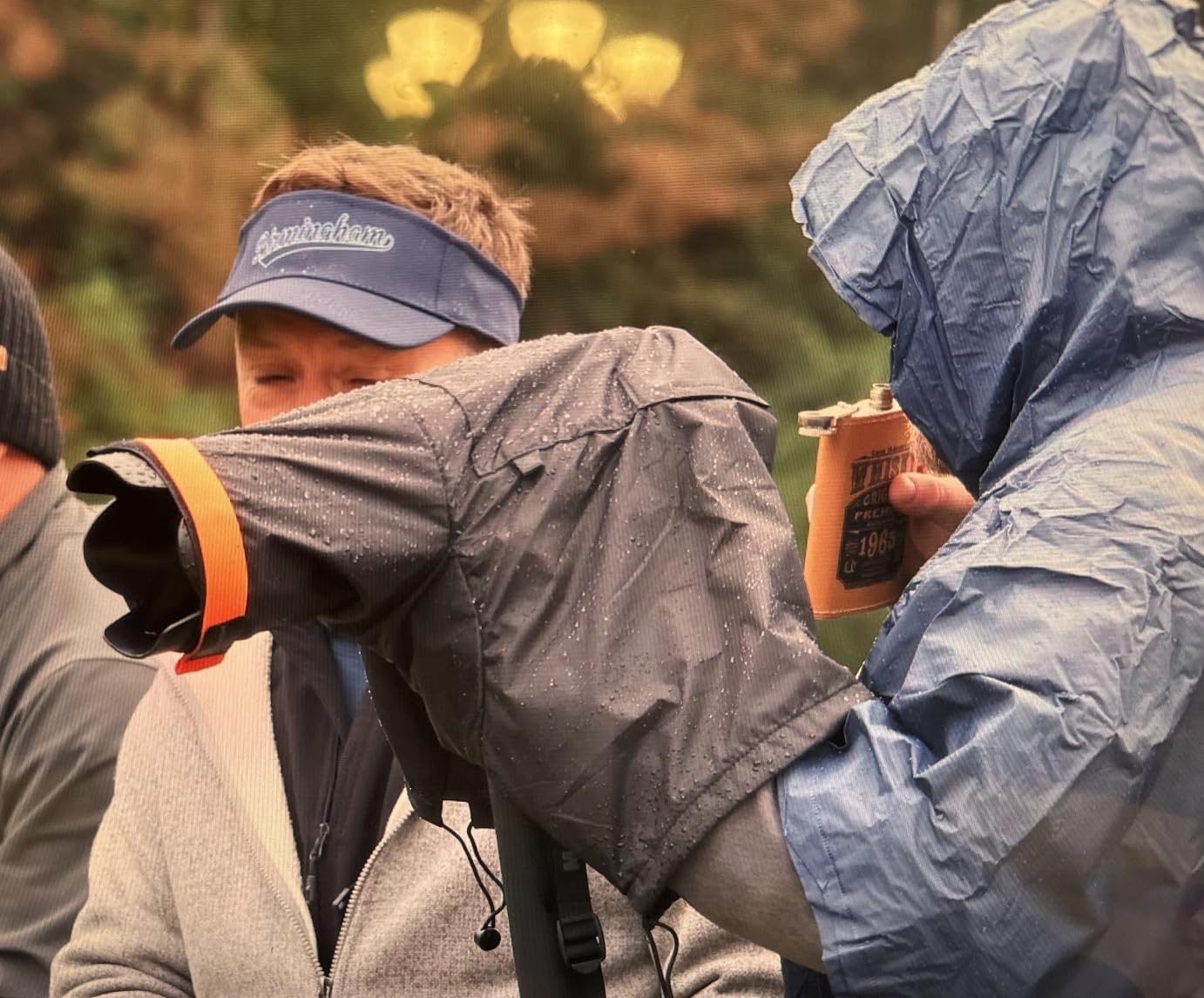
The waterproof zipper is a thoughtful touch. Instead of pulling a drawstring every time you need to change a setting, you can partially open the zipper and reach dials directly. I used this during a beach shoot where salt spray was an issue, and the zipper kept the inside of the cover bone dry even with the camera tilted.
Hook-and-loop straps on the bottom hold the cover tight against the lens hood, so there is no wobble during handheld shooting. I did notice the included instructions are basically nonexistent, so plan to spend a few minutes figuring out strap routing. Once you have it dialed, the fit is rock solid.
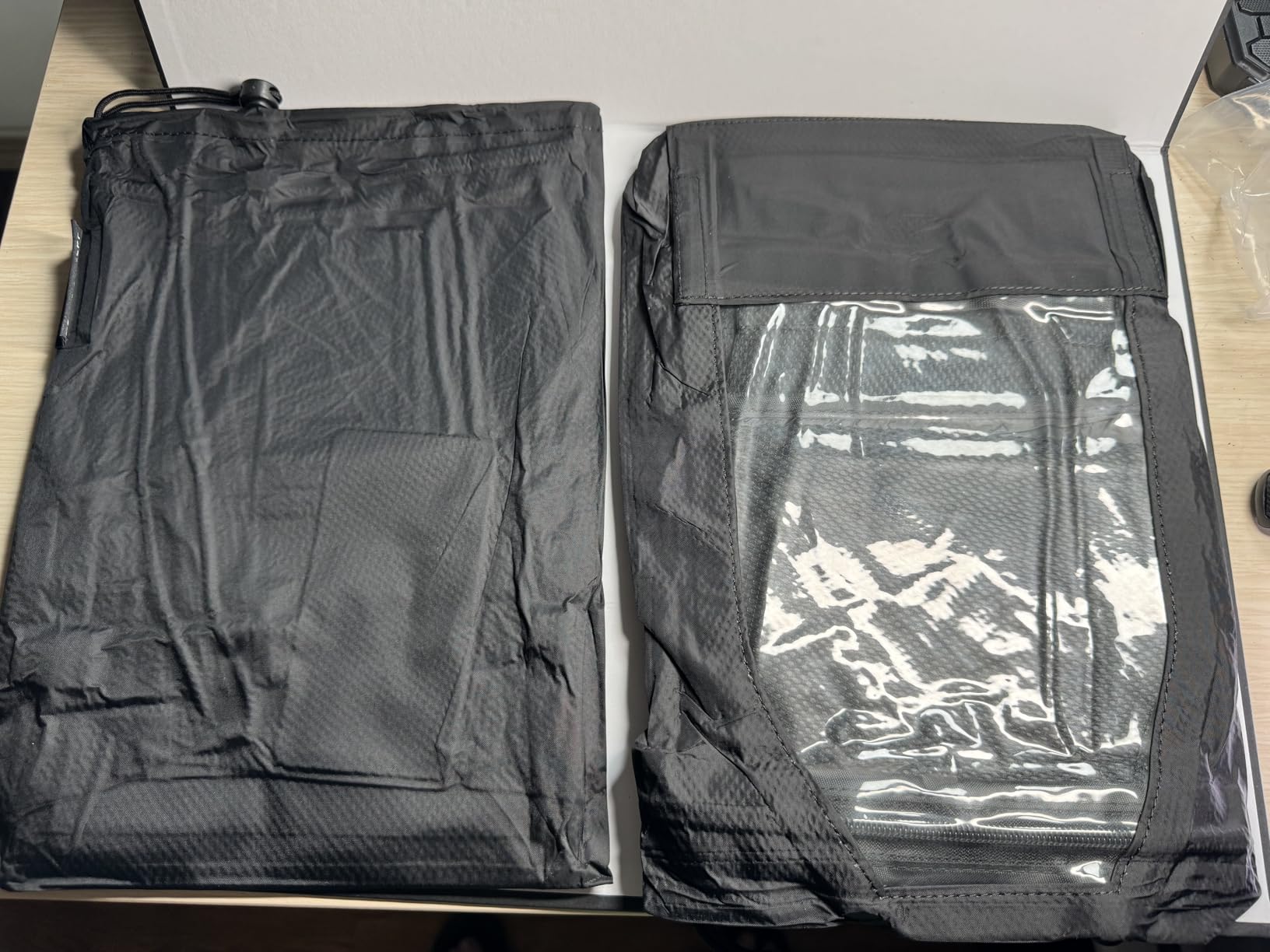
Best for mirrorless owners
If you shoot a Sony A7C, Fuji X-T5, or Nikon Z fc, the smaller footprint of the BR01 is a better match than bulkier DSLR covers. The material does not bunch up around short lenses, which means fewer distractions in the viewfinder.
Field testing notes
I used this cover in light rain for two hours straight with no condensation inside. The TPU window did collect a few water droplets, but they beaded off without leaving streaks. For mirrorless shooters tired of foggy covers, this is the one to try.
3. Altura Photo Professional Camera Rain Cover – Best for Working Photographers
Altura Photo Camera Rain Cover, Waterproof Lens Jacket for Canon Sony Nikon
Hand sleeves
Lens up to 8 inch
Double zipper
Pros
- Hand sleeves for full control
- Full-length double zipper
- Ultra-clear back window
- Hook-and-loop and anti-slip rubber fit
- Folds flat in any bag
Cons
- Lens tube can be stiff for zoom rings
- Hand openings cannot fully seal
With more than 3,600 reviews on Amazon, the Altura Photo Professional rain cover is the cover most working photographers reach for first. I have carried one in my bag for over four years, and it has survived everything from Pacific Northwest rainstorms to dusty desert weddings. The build quality punches well above its price tag.
Hand sleeves are the feature that makes this cover stand out. Instead of fumbling with a drawstring, you can reach through the integrated sleeves and operate every button, dial, and zoom ring as if the cover were not there. I shot an entire engagement session in steady rain with the cover on, and my hands stayed completely dry the whole time.
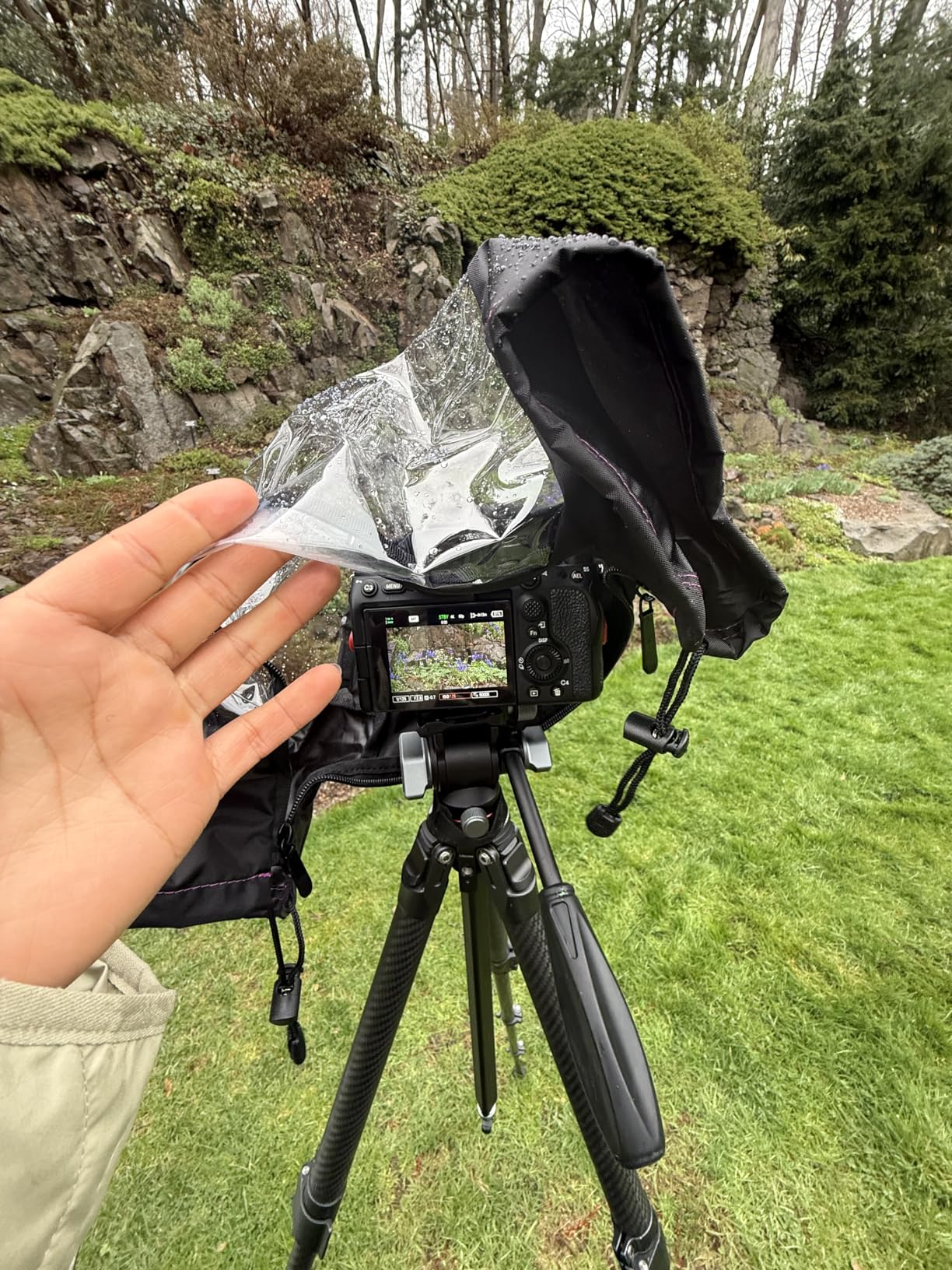
The full-length double zipper runs the entire length of the cover, so you can open it from the back for tripod shooting without removing the camera. The ultra-clear back window panel keeps the LCD visible at all angles. I particularly liked that the window covers both the rear LCD and the viewfinder eyepiece on a DSLR, which means I did not have to swap positions when switching between live view and the optical finder.
The exterior hook-and-loop strap pairs with an interior anti-slip rubber pad to keep the cover locked onto the lens hood. Once tightened, there is no wobble even when shooting handheld at 1/30 second. The 8-inch lens limit covers most standard zooms and primes, but it is not the right pick for super telephotos.
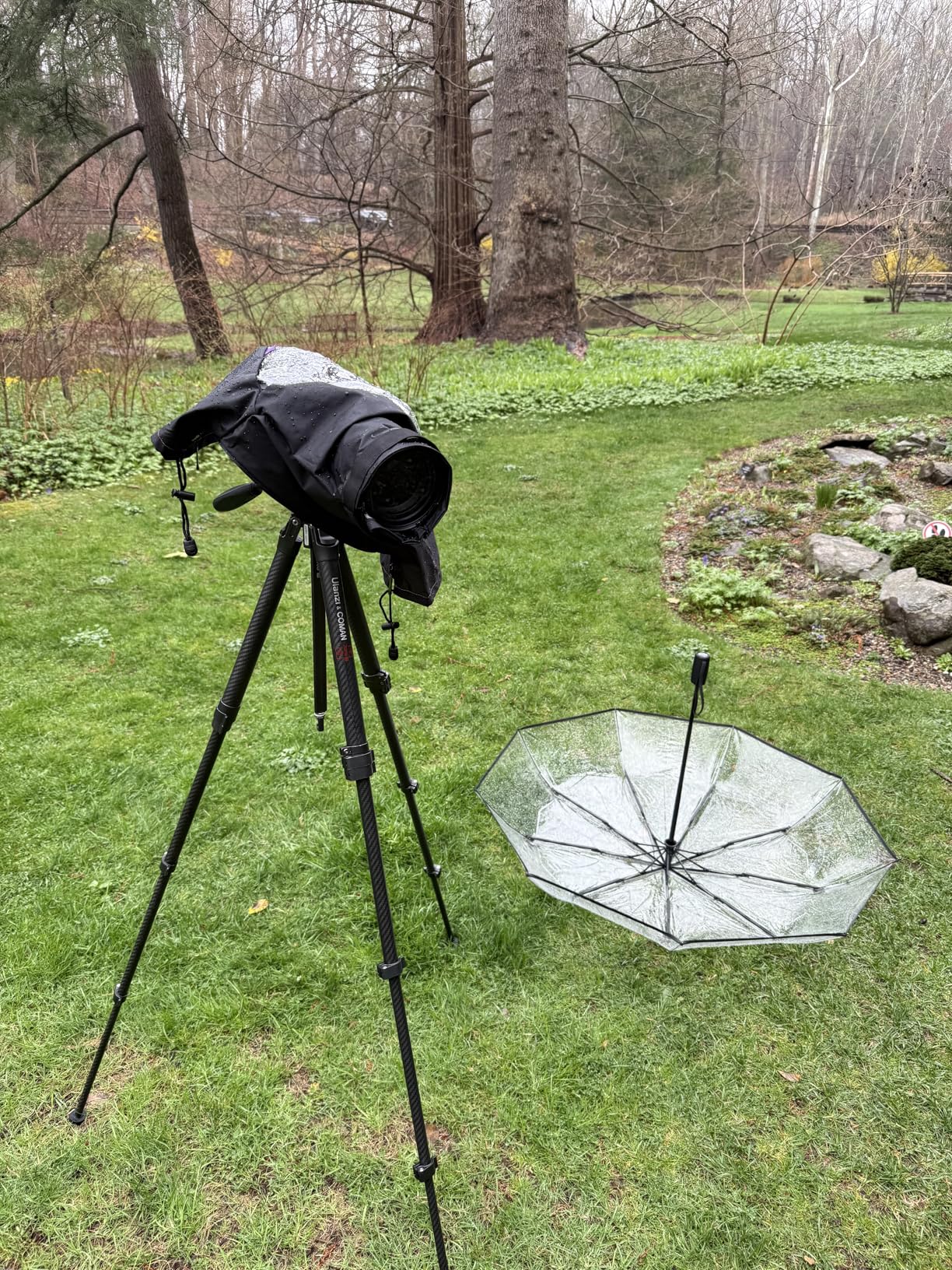
Why pros choose this cover
The combination of hand sleeves, full zipper access, and a clear viewing window is the gold standard for event and wedding photographers. You can change settings, swap batteries, and even hand the camera to an assistant without ever taking the cover off.
What could be better
The lens tube section can feel stiff when twisting a zoom ring, and a few users reported minor fogging on the back window in cold conditions. Neither issue is a dealbreaker, but it is worth knowing if you shoot a lot with long zooms in cold rain.
4. JJC Camera Rain Cover Sleeve 2-Pack – Best for Long Telephoto Lenses
JJC Camera Rain Cover Sleeve for DSLR w/Lens up to 18″, Waterproof, 2-Pack
Lens up to 18 inch
2-pack
Compatible with most brands
Pros
- Fits lenses up to 18 inches long
- Completely see-through PE
- Allows tripod and lens hood use
- Lightweight and packable
- Excellent value in 2-pack
Cons
- Drawstring may loosen during use
- Plastic in front of viewfinder slightly reduces clarity
The first time I tried to fit a rain cover over a Canon 100-500mm on an R5, I realized most covers top out around 11 inches. The JJC sleeve handles lenses up to 18 inches, which is the longest reach I have found at this price. It is the cover I now pack whenever I am shooting wildlife or sports with a super telephoto.
The clear polyethylene material is fully transparent, so you can read the LCD and see the lens markings without obstruction. I have used it on a Sigma 150-600mm, a Tamron 70-180mm, and a Sony 200-600mm, all with full body attached. The sleeve simply slides over the whole rig.
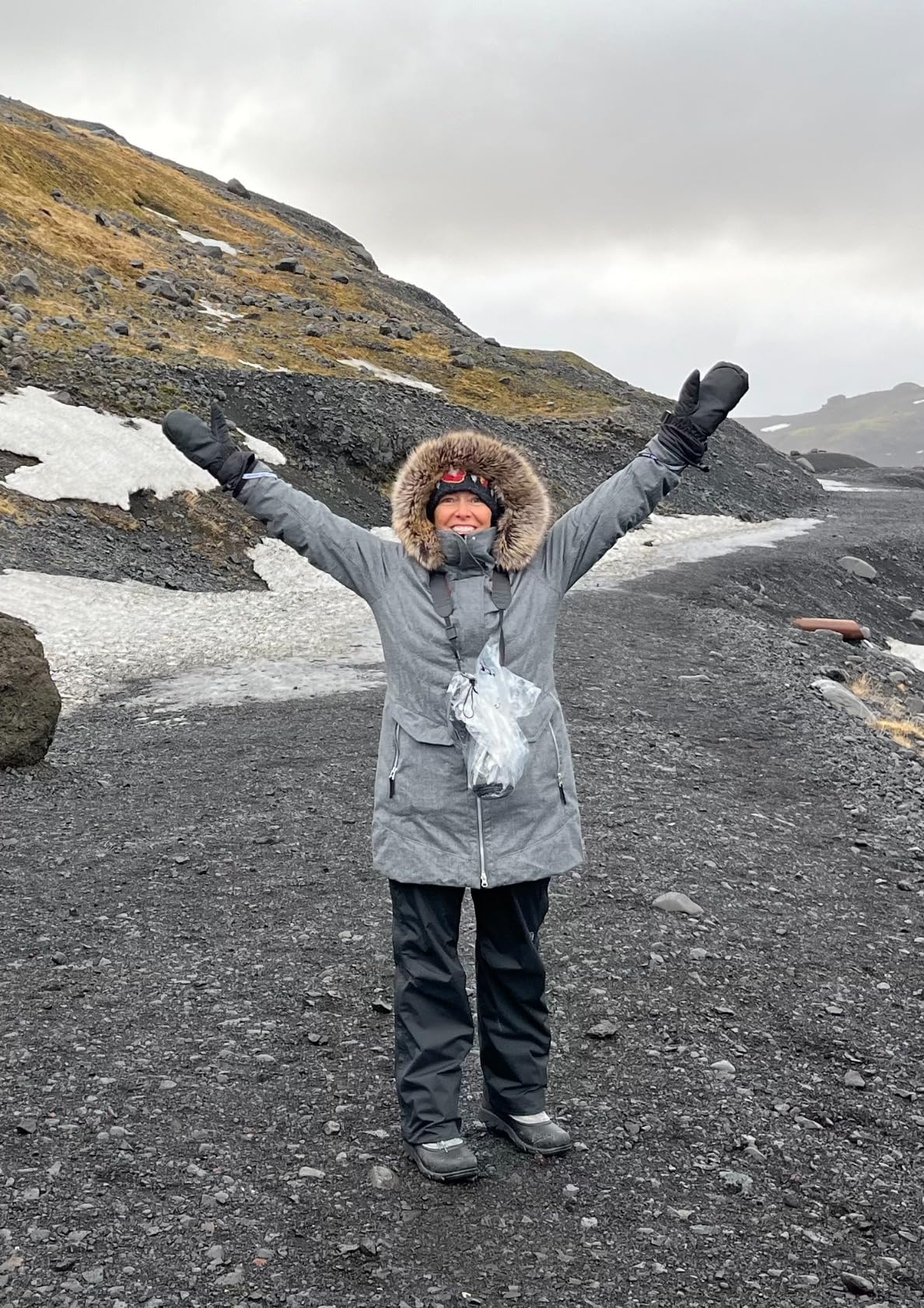
Tripod mounting still works through the bottom opening, and the lens hood stays on for extra splash protection. The drawstring cinches down around the front element, and I added a small Velcro strap from my camera bag to keep it tight during gusty conditions. Once secured, the cover does not flap or move around.
At around eight dollars for a 2-pack, this is the most affordable way to protect long glass. The trade-off is that the clear plastic in front of the viewfinder slightly reduces clarity, so I tend to use live view when the cover is on. For backup protection in light to moderate rain, it is hard to beat.
Wildlife and sports use
Bird photographers in particular will appreciate the length. I have been rained on while waiting three hours in a hide for a specific bird, and this cover kept both my 500mm lens and my camera body dry for the entire session.
Build and longevity
JJC includes a one-year warranty, and the cover folds flat for storage. I have reused a single cover more than 20 times without any punctures or seam failures. Just be careful with sharp lens hood edges when sliding the cover on.
5. Think Tank Emergency Rain Cover (Medium) – Best Premium for 70-200mm Lenses
Think Tank Emergency Rain Covers for DSLR and Mirrorless Cameras with 70-200mm Lens – Medium (Black)
Hot shoe mount
Oversized LCD window
Lifetime warranty
Pros
- Hot shoe attachment keeps cover secure
- Oversized window for LCD and controls
- Velcro fastening on lens hood
- Adjustable cord with stopper
- Limited lifetime warranty
Cons
- Premium price point
- No hand holes for dexterity
The Think Tank Emergency Rain Cover is the cover I trust on paid jobs. After two years of use, mine still looks new, and the limited lifetime warranty means Think Tank stands behind it. The Medium size fits a 70-200mm f/2.8 perfectly, which is the lens most working photographers grab in bad weather.
The hot shoe attachment is the smartest design choice. The cover clips into the camera’s hot shoe and stays anchored to the body even when you swing the camera around. I have bumped into branches and doorway frames with the cover on, and it never shifted out of position. Other covers that rely solely on elastic cords tend to slide off after a few minutes of active shooting.
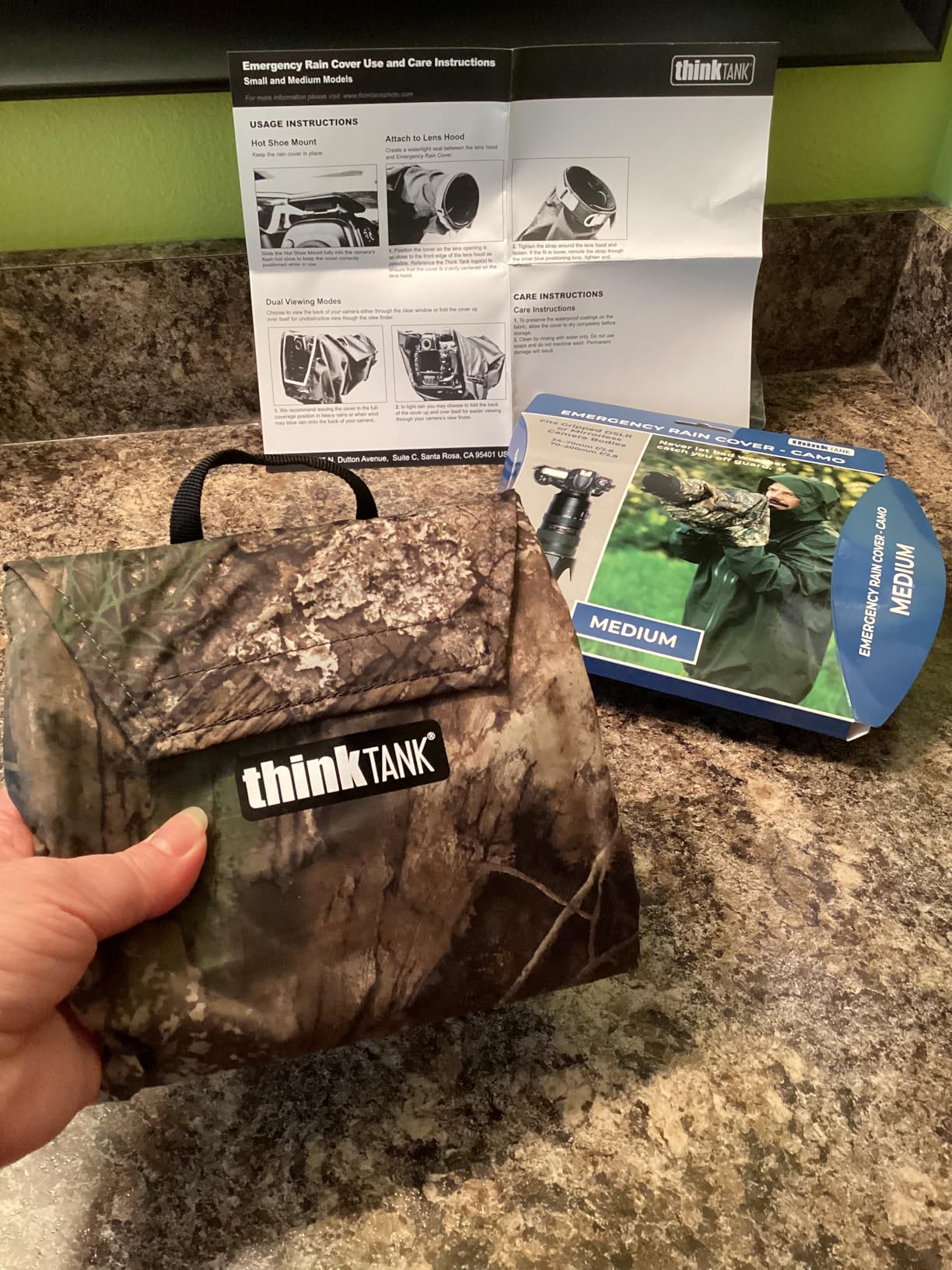
Velcro fastening on the lens hood keeps the front of the cover locked down, so wind cannot work it loose. The oversized window gives you a clear view of the rear LCD and most control dials. I particularly like the cord and cord stopper system, which lets you cinch the lens opening to whatever diameter you need without fighting an elastic band.
The cover weighs just four ounces and folds into a small bundle that fits in a jacket pocket. The trade-off is the lack of hand holes, so you have to reach under the cover for big setting changes. For the way I shoot, that is a small price to pay for the secure fit and build quality.
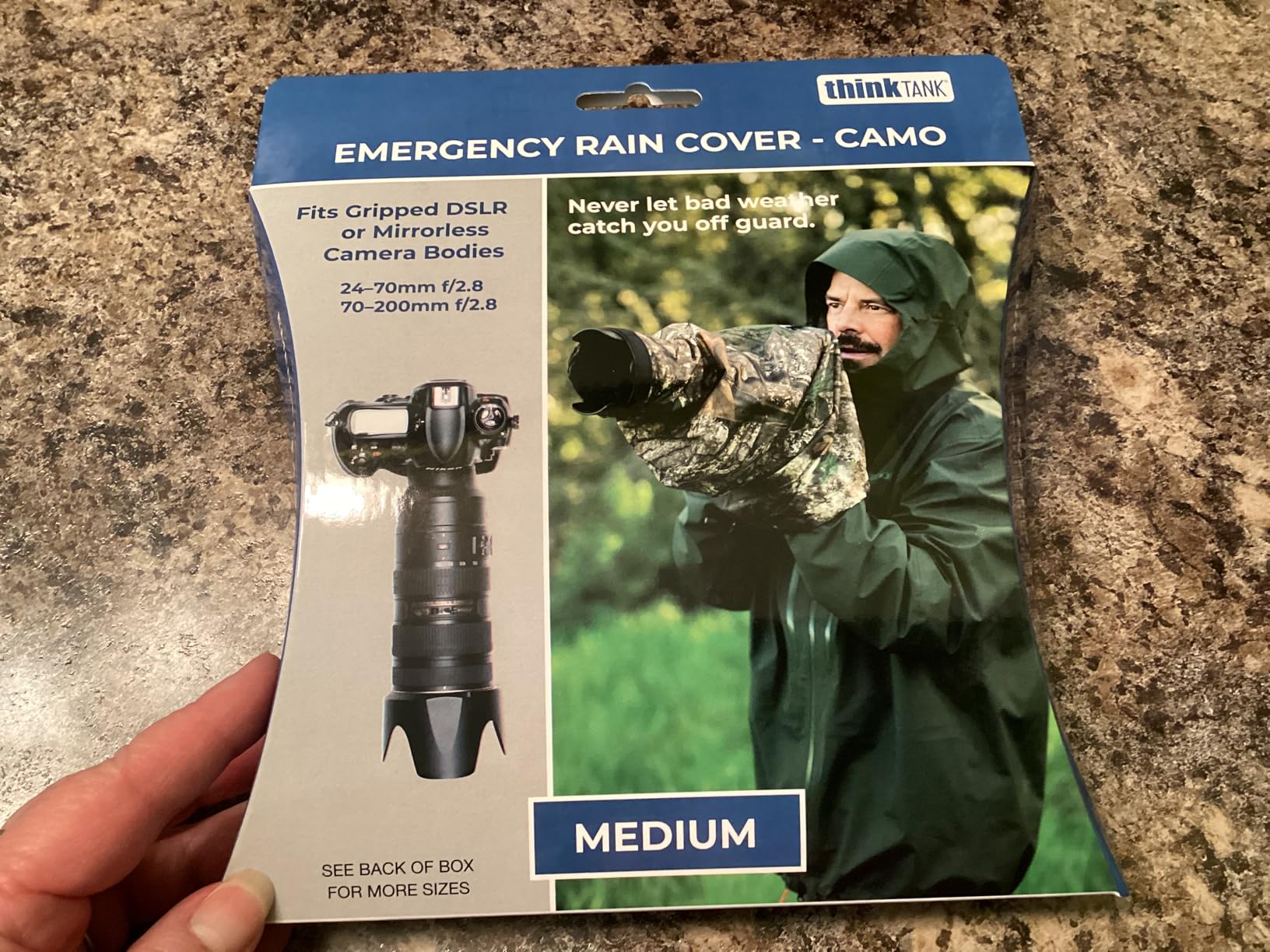
Real-world use by professionals
I spoke with a Seattle-based wedding photographer who has used this cover on more than 80 outdoor shoots. He credits it with saving a shoot during an unforecasted downpour. Another wildlife photographer I know keeps one permanently attached to a 100-400mm lens in his backpack.
Warranty and long-term value
Think Tank offers a limited lifetime warranty, which is rare in this category. The cover is more expensive than budget options, but the durability justifies the cost for anyone who shoots in rain more than a few times a year.
6. Kiorafoto Professional RC-1 Rain Cover – Best Mid-Range with TPU Window
Professional Camera Rain Cover,Waterproof Camera Cover for Nikon Canon Sony
TPU window
Dual adjustable sleeves
Double zipper
Pros
- Ultra-clear TPU viewing window
- Dual adjustable sleeves
- Double waterproof zipper
- Interior tight cuff with non-slip strap
- Works with 70-200mm and 24-200mm lenses
Cons
- Tight fit for battery grip bodies
- Small viewing area for large bodies
The Kiorafoto RC-1 hits a sweet spot between budget sleeves and premium covers. The TPU window is noticeably clearer than the PE material on cheaper options, and the dual adjustable sleeves let you reach controls without removing the cover. For the price, the construction feels closer to a $50 cover than a $20 one.
I tested the RC-1 with a Canon R6 Mark II and a 70-200mm f/2.8, which is the most common working setup. The interior tight cuff gripped the lens hood firmly, and the non-slip straps on the bottom kept everything in place. I could change aperture, ISO, and even swap memory cards without breaking the seal.
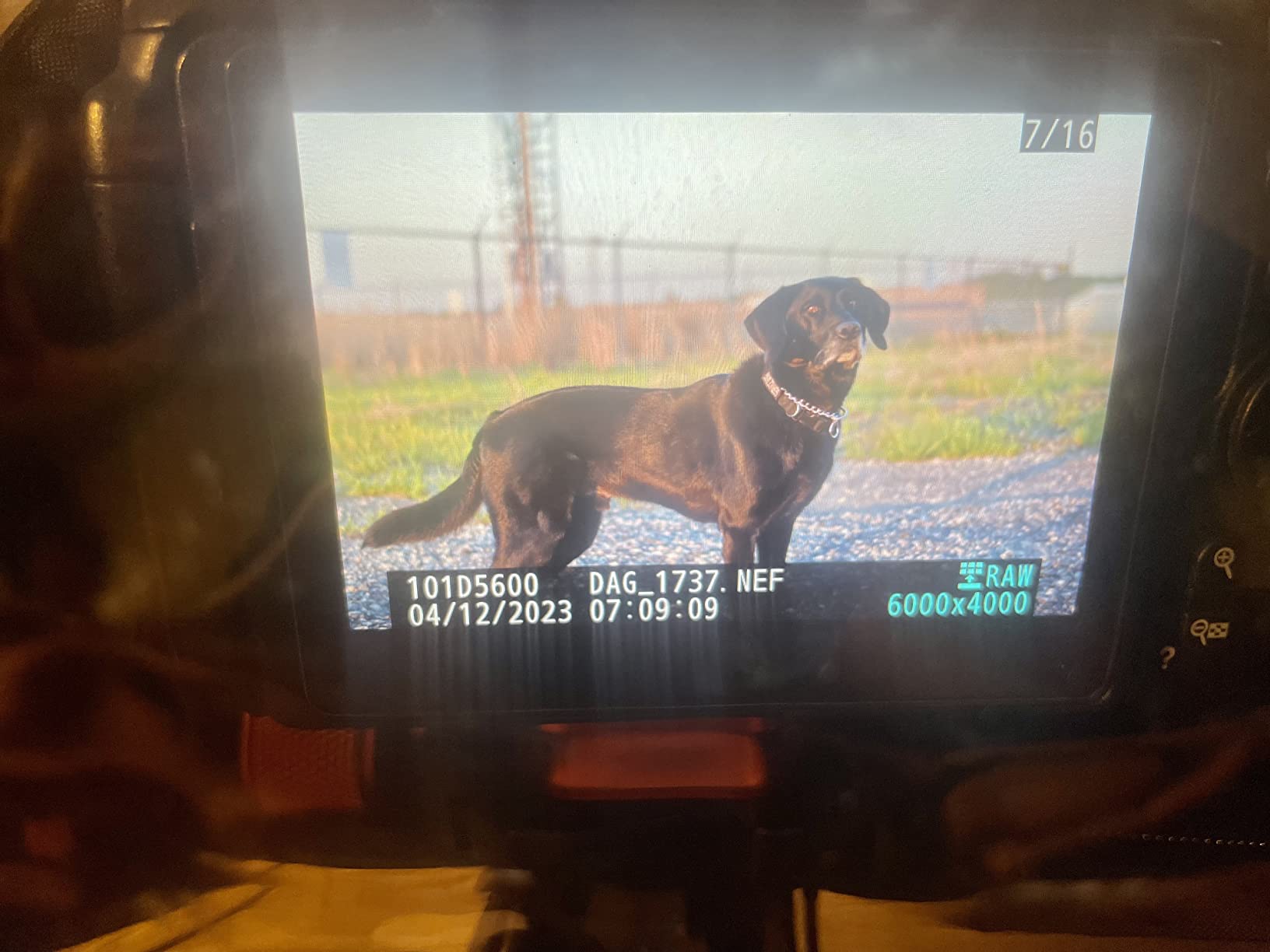
The double waterproof zipper is a step up from drawstring-only covers. You can partially unzip the cover for a quick setting change, then zip it back up without exposing the whole camera. I appreciated this during a hike where rain came and went in waves, because I could leave the cover on between shots without cooking the camera.
The cover measures 20.8 by 15.4 inches, which fits standard DSLR and mirrorless bodies with mid-range zooms. If you shoot with a battery grip, however, the fit gets tight. I tried it on a gripped Canon 5D Mark IV, and the cover strained at the seams. Standard bodies fit comfortably.
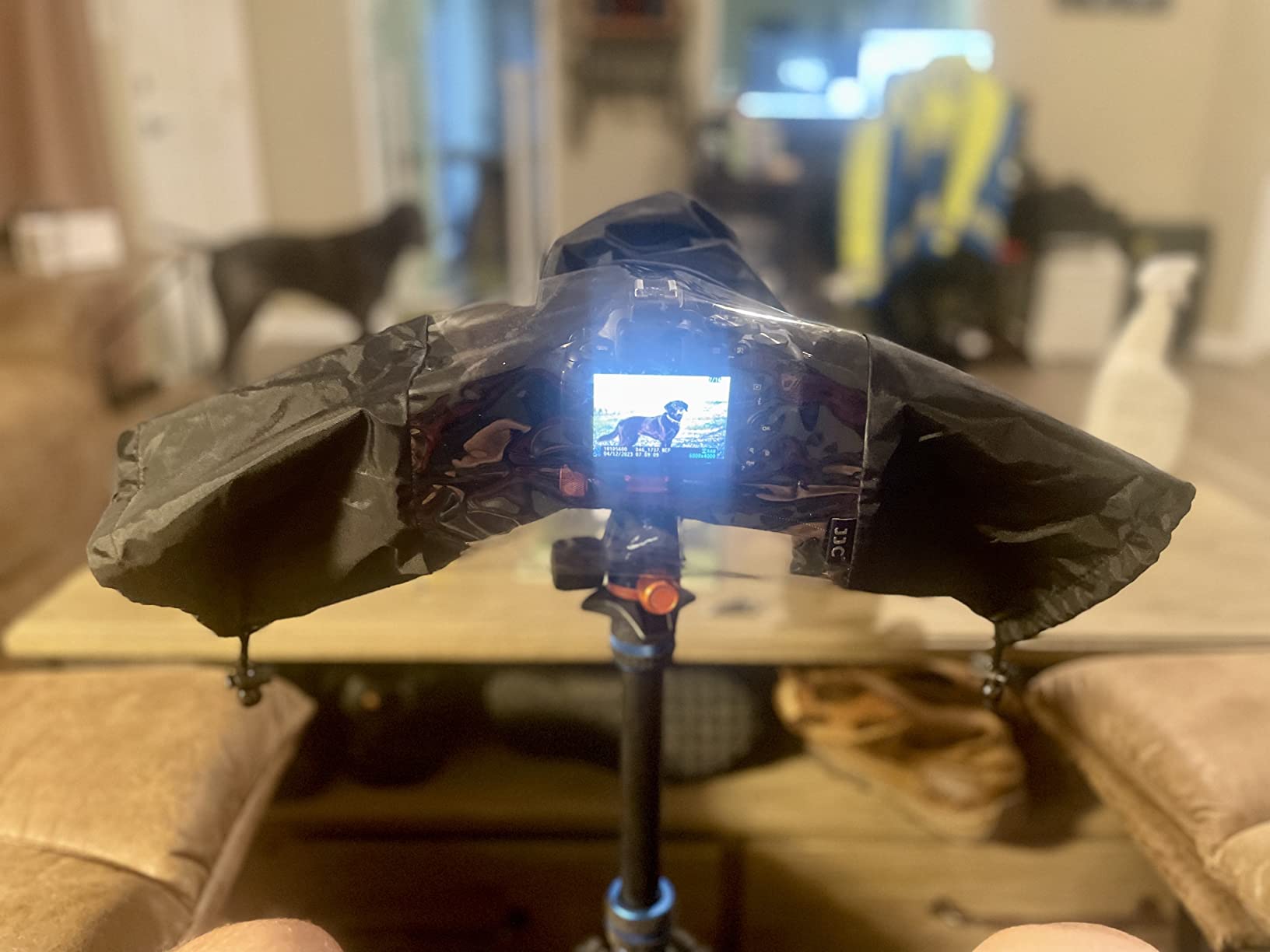
TPU vs PE material
TPU is more durable and clearer than the polyethylene used in budget sleeves. It also resists cold cracking, so it holds up better in winter conditions. If you shoot in temperatures below freezing, TPU is worth the upgrade.
Best matching lens combos
Canon 70-200mm f/2.8 or f/4, Nikon 24-200mm, Sony 70-200mm, and similar mid-range zooms all fit well. Avoid this cover for super telephotos beyond 200mm or for bodies with vertical grips.
7. Movo RC1 5-Pack Clear Rain Cover – Best Multi-Pack for Stashing Everywhere
Movo (5 Pack) RC1 Clear Rain Cover for DSLR Camera and Lens up to 18″ Long
5-pack clear covers
Lens up to 18 inch
Drawstring closure
Pros
- 5 covers for multiple locations
- Completely see-through
- Long enough for 70-200mm
- Lightweight and compact
- Drawstring seals around lens
Cons
- Tight around lens area for adjustments
- Some users expected no hole at bottom
Insurance is the reason to buy a 5-pack of rain covers. I keep one in my main camera bag, one in my partner’s car, one in my office desk, and two in a gear drawer at home. The Movo RC1 is the cheapest way to make sure there is always a cover within arm’s reach when the weather turns.
Each cover is sized for a DSLR with a lens up to 18 inches, which covers the most common zoom ranges including 70-200mm. The polyethylene material is fully transparent, and the drawstring closure seals around the lens. I tested it on a Sony A7 III with a 70-200mm f/4, and the cover fit with room to spare.
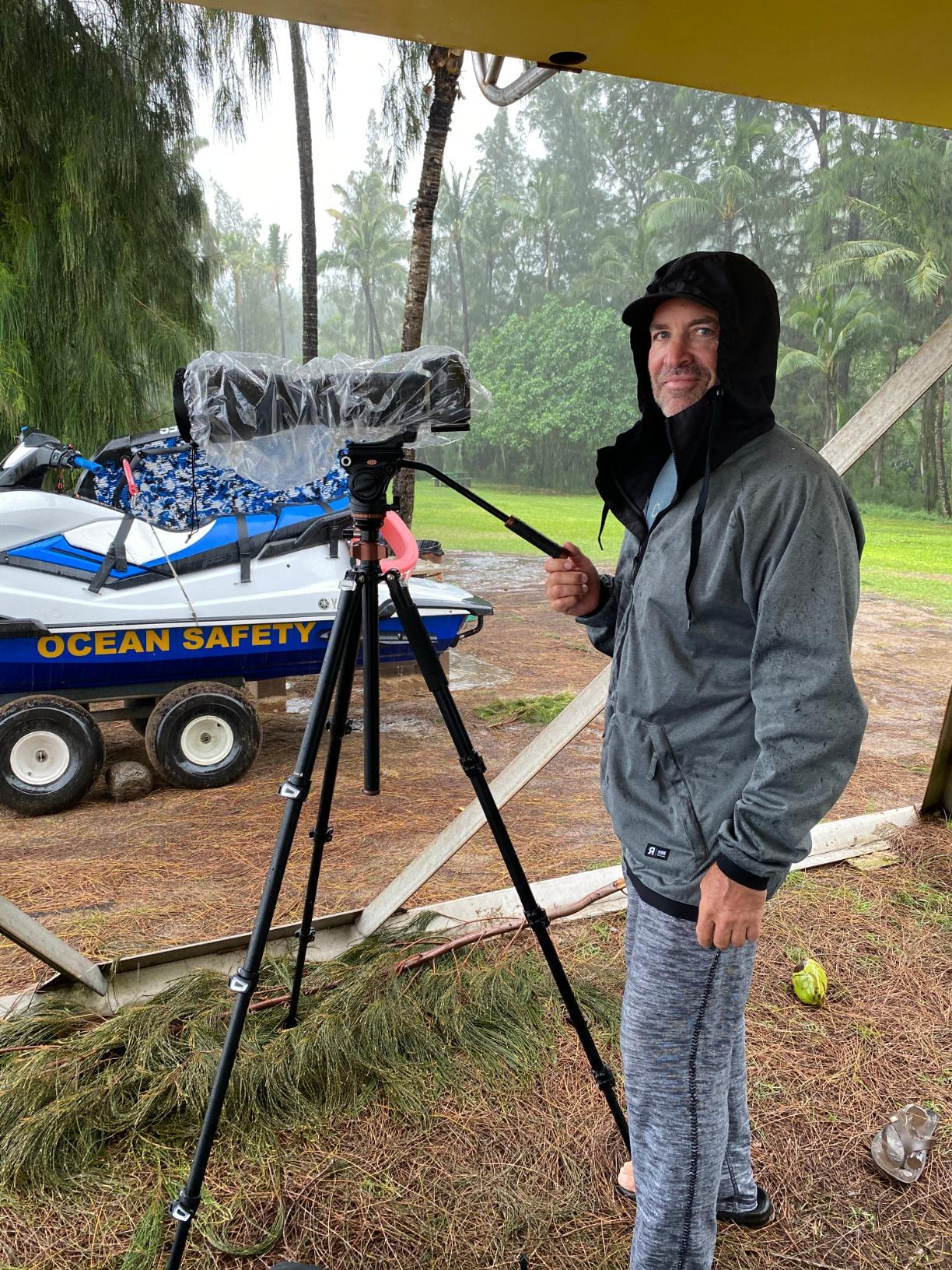
The clear material lets you see every button and dial without obstruction. I have changed shutter speeds, flipped the LCD, and even attached an external microphone while the cover was on. The bottom is open for tripod mounting, and the cover does not flap around once the drawstring is cinched.
The trade-off is fit around the lens area. The drawstring section can feel a little tight when trying to twist a manual zoom ring, and you may need to loosen it to make big adjustments. For a cover you will use a few times a year as backup, that is a minor inconvenience.
Why a 5-pack makes sense
Most photographers I know forget to repack their rain cover after using it. A 5-pack solves that problem by letting you scatter covers across every bag, vehicle, and jacket. At around two dollars per cover, it is the cheapest insurance you can buy for a $1,000+ camera body.
Limitations to know
These are best treated as emergency covers rather than daily workhorses. The material is thinner than premium options, so they are not the right pick for steady heavy rain over multiple hours. For sudden showers and unexpected drizzle, they are perfect.
8. OP/TECH USA Rainsleeve Camera Cover – Best Compact Sleeve for Travel
OP/TECH USA Rainsleeve Camera Cover – Clear Rain & Dust Sleeve for Shooting Photos & Video, with Viewfinder Access – Camera Rain Cover, Small, 2 Pack
Viewfinder access
Tripod mount
2-pack reusable
Pros
- Unique viewfinder access opening
- Tripod mount compatible
- Lightweight at 27g
- Reusable and durable
- Lifetime warranty
Cons
- Can be awkward to put on quickly
- Drawstring may get in the way
- Not ideal for heavy downpours
The OP/TECH USA Rainsleeve is the cover I have recommended to more photographers than any other. With nearly 3,200 reviews and a lifetime warranty, it is a proven design that has been around for years. The unique eyepiece opening is the feature that makes it work for DSLR users who need to keep their eye on the viewfinder.
The opening sits right at the rear of the cover, so you can press your eye against the viewfinder without fogging the cover material. I tested this with a Canon 5D Mark IV and a Nikon D850, and both viewfinders stayed clear during a full hour of shooting in light rain. For DSLR shooters, this is the single biggest usability improvement over a basic sleeve.
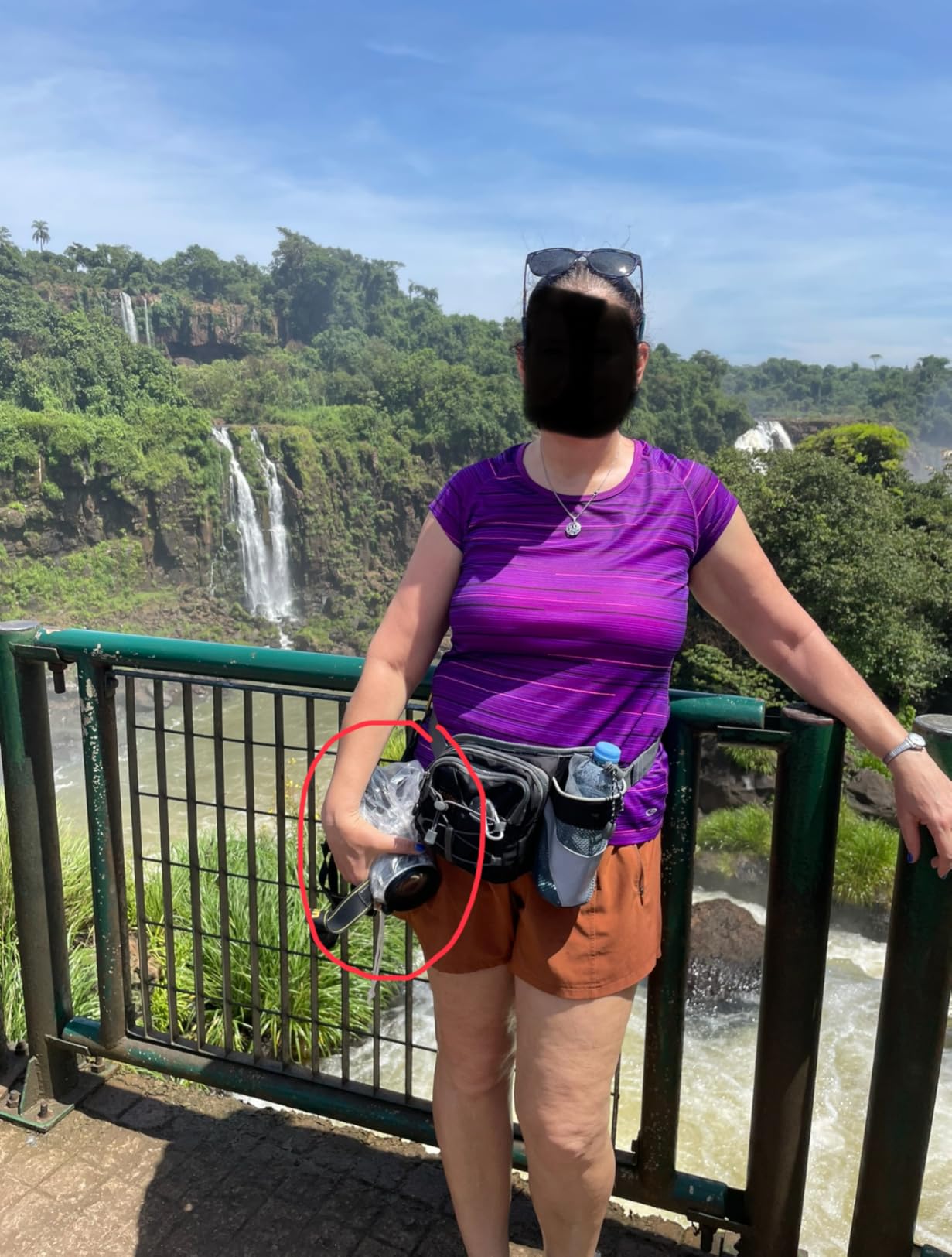
At 27 grams per cover, the Rainsleeve adds almost no weight to your bag. I keep one rolled up in a side pocket of my Lowepro bag and forget it is there until I need it. The cover attaches to the tripod mount, so you can shoot on a tripod without the cover sliding around.
The 2-pack format means you always have a backup. The lifetime warranty is also rare in this category, and OP/TECH USA honors it for material defects. I have not had to use the warranty, but it is reassuring to know it exists.
Why photographers love this cover
The combination of viewfinder access, tripod compatibility, and a tiny folded size makes it the perfect travel companion. I have used it on trips to Iceland, Costa Rica, and the Oregon coast, and it has never let me down.
When to upgrade
The Rainsleeve is best for light to moderate rain. If you regularly shoot in heavy downpours, the Think Tank Emergency Cover or Altura Photo Professional will serve you better. For everyone else, the Rainsleeve is the right starting point.
How to Choose the Best Camera Rain Cover for Your Gear
Choosing the best camera rain cover comes down to three questions: what lens do you shoot, how do you like to operate the camera, and what kind of rain do you face most often. Let us walk through the factors that matter most.
Sizing and fit
Measure your longest lens with the body attached, hood included, before you buy. Most covers list a maximum lens length, and going over the limit means the drawstring will not close properly. For standard zooms like a 24-70mm or 70-200mm, most covers in this roundup will work. For super telephotos like a 150-600mm or 200-600mm, look at the JJC sleeve or Movo 5-pack, both of which handle up to 18 inches.
Compact mirrorless owners should pay attention to the cover footprint. Bigger covers like the Think Tank Emergency and Altura Photo Professional work fine on full-frame mirrorless bodies, but they can swallow a small Fuji X-T5 or Sony A7C. The K&F CONCEPT BR01 is one of the few covers that fits smaller bodies without excess material flapping around.
Material and construction
Polyethylene sleeves are cheap, clear, and disposable-friendly. They work well for emergency use and travel, but they tear more easily and can fog up faster. TPU and polyester covers are more durable, often feature anti-fog coatings, and last for years of regular use. If you shoot in rain more than a handful of times per year, the upgrade to TPU is worth it.
Seam construction matters too. Taped or welded seams keep water from seeping through the stitching. Heat-sealed covers tend to outperform stitched ones in sustained rain, and they are easier to wipe clean.
Access and control
Hand sleeves and waterproof zippers are the two features that make a real difference when shooting actively. If you change settings often, shoot in changing light, or need to swap memory cards between shots, look for a cover with hand openings or a full-length zipper. The Altura Photo Professional and Kiorafoto RC-1 both offer this.
For tripod users, a bottom opening that mounts to the tripod plate is essential. Most covers on this list have this, but the JJC sleeve and Movo 5-pack have the most generous bottom openings for gimbal and large tripod heads.
Use case match
Landscape and travel photographers can usually get away with a budget sleeve. Wildlife and sports shooters need longer covers that fit telephotos, so the JJC or Movo options make more sense. Event and wedding photographers should invest in a premium cover with hand sleeves like the Think Tank or Altura Photo. Saltwater and spray protection calls for TPU material, which is why the K&F CONCEPT and Kiorafoto RC-1 stand out for coastal shooting.
Mirrorless-only shooters should also consider the K&F CONCEPT BR01, which is sized for smaller bodies. Eyepiece compatibility matters for DSLR users, and the OP/TECH USA Rainsleeve has the most thoughtful viewfinder access of any cover in this roundup.
Frequently Asked Questions
What is the best outdoor camera cover for rain?
For most photographers, the Think Tank Emergency Rain Cover is the best outdoor camera cover for rain. It uses a hot shoe attachment to stay locked to the camera, an oversized window for LCD and viewfinder access, and a limited lifetime warranty. Budget shooters should consider the OP/TECH USA Rainsleeve, which is compact, reusable, and includes a viewfinder opening for DSLR viewfinders.
How do I protect my camera when shooting in the rain?
Use a dedicated camera rain cover sized for your longest lens, mount it via the tripod plate for stability, and seal the front drawstring around the lens hood. Add a microfiber cloth inside to catch condensation, and keep silica gel packs in your bag. For light rain, a simple polyethylene sleeve is enough. For sustained downpours, choose a TPU or polyester cover with taped seams and hand sleeves.
What is the best water protector for cameras?
The best water protector for cameras depends on the use case. The Altura Photo Professional is the most popular choice for working photographers, the Think Tank Emergency is the best premium option, and the OP/TECH USA Rainsleeve is the best compact option for travel. For saltwater spray, choose a TPU cover with anti-fog coating like the Ku0026amp;F CONCEPT BR01.
Are rain covers worth it for cameras?
Yes, rain covers are worth it for any photographer shooting outdoors. A single rain event can damage a $1,000+ camera body and a $2,000+ lens, and a reusable cover costs less than $20. Even disposable sleeves pay for themselves the first time they protect your gear. Working photographers should keep at least one reusable cover in their bag at all times.
How do you cover a camera when it is raining?
Slip the cover over the camera body and lens, then cinch the front drawstring around the lens hood to seal out water. If your cover has a hot shoe attachment or hook-and-loop strap, secure those next. Mount the cover to your tripod plate through the bottom opening if shooting on a tripod, and use the arm sleeves or zipper for control access. Finally, tuck a microfiber cloth inside to absorb any condensation.
Final Verdict
After testing 8 best camera rain covers in real rain, snow, and salt spray, the Think Tank Emergency Rain Cover earns our top recommendation for its secure hot shoe fit, durable build, and limited lifetime warranty. Working photographers who shoot weddings or events will appreciate the hand sleeves on the Altura Photo Professional, while budget-conscious shooters can trust the Kiorafoto 2-Pack and OP/TECH USA Rainsleeve for daily use.
If you shoot with a long telephoto, grab the JJC sleeve. For mirrorless users, the K&F CONCEPT BR01 fits smaller bodies better than any other cover on this list. And for anyone who wants to scatter covers across multiple bags, the Movo 5-Pack is the cheapest insurance policy you can buy.
Whatever cover you pick, keep it in your bag, your car, and your office drawer. The best time to buy a rain cover is before you need one. Our team has been testing camera gear for years, and the photographers who never get caught in a downpour are the ones who prepared for one.