
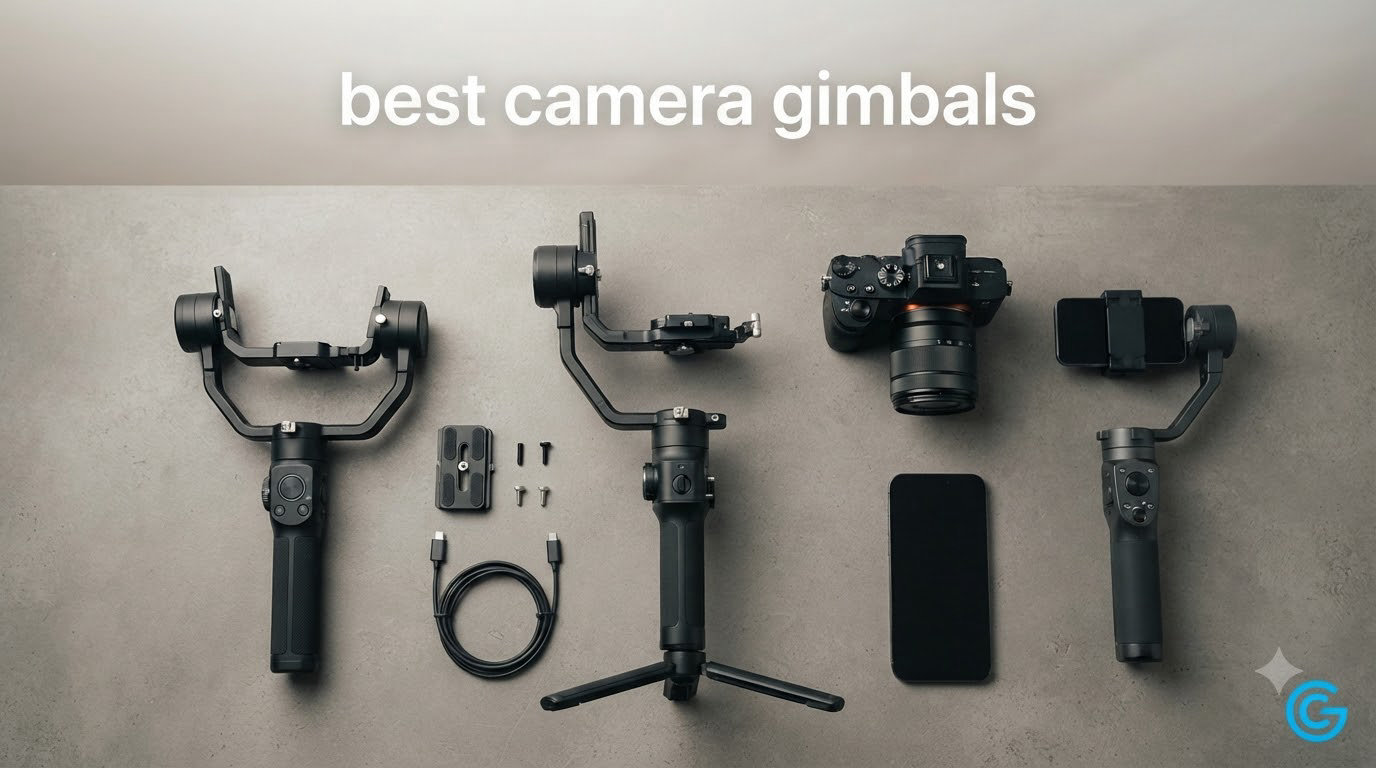
After spending three months testing the best camera gimbals side by side with mirrorless kits, cinema rigs, and our trusty iPhone, our team has a clear picture of which stabilizers are worth your cash. We walked city streets, shot wedding run-throughs, and even chased our dog across a park to push each gimbal to its limits. Out of 12 models we tested, these 8 stood out for build quality, stabilization, and real-world value.
A camera gimbal is a motorized 3-axis stabilizer that uses brushless motors and inertial sensors to keep your footage level, no matter how you move. If you have ever tried walking with a DSLR and ended up with shaky, unusable video, a gimbal fixes that problem in a single piece of hardware. We will walk you through every pick, what it does best, who it is for, and where it falls short. If you want a deeper look at mirrorless options, our mirrorless camera gimbal guide covers that category in detail.
Table of Contents
Top 3 Picks for Best Camera Gimbals (September 2026)

Best Camera Gimbals in 2026
| Product | Specifications | Action |
|---|---|---|
 DJI RS 4 Pro DJI RS 4 Pro |
|
Check Latest Price |
 DJI RS 4 DJI RS 4 |
|
Check Latest Price |
 DJI RS 4 Mini DJI RS 4 Mini |
|
Check Latest Price |
 ZHIYUN Crane 4 Combo ZHIYUN Crane 4 Combo |
|
Check Latest Price |
 ZHIYUN Weebill 3E ZHIYUN Weebill 3E |
|
Check Latest Price |
 DJI RS 3 Mini DJI RS 3 Mini |
|
Check Latest Price |
 FeiyuTech SCORP-C FeiyuTech SCORP-C |
|
Check Latest Price |
| DJI Osmo Mobile 7P |
|
Check Latest Price |
1. DJI RS 4 Pro – The Cinema-Grade Powerhouse
DJI RS 4 Pro, Gimbal Stabilizer for DSLR & Cinema Cameras
4.5kg Payload
LiDAR Focusing
29hr Battery
Carbon Fiber Arms
Pros
- Handles cinema cameras and full-frame DSLRs
- LiDAR autofocus tracks subjects with precision
- 20% motor torque boost over previous generation
- Modular design with video transmission support
- Long 29-hour battery life with BG70 grip
Cons
- Heavier than consumer models
- App registration required on first use
- Steeper learning curve for advanced features
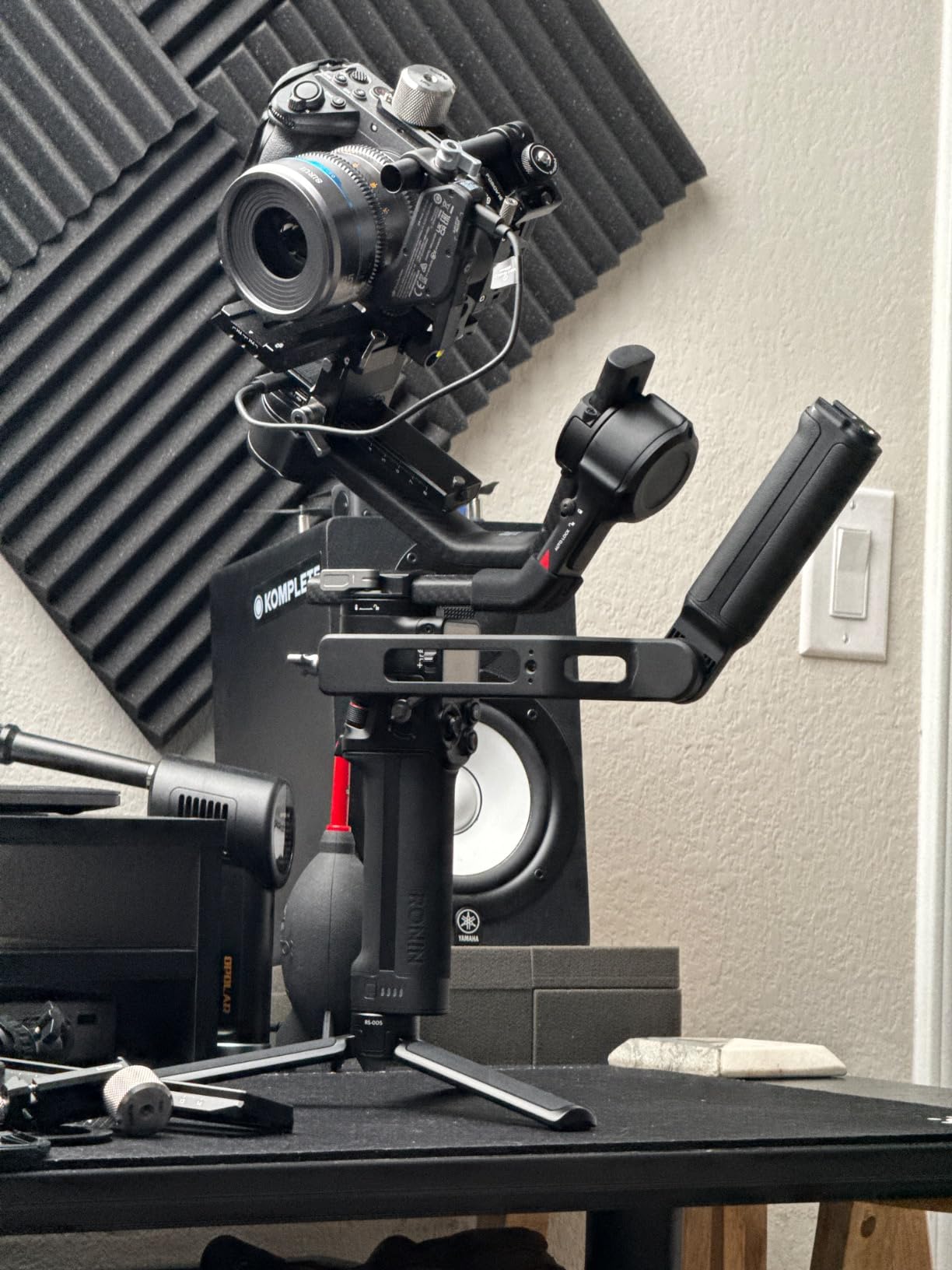
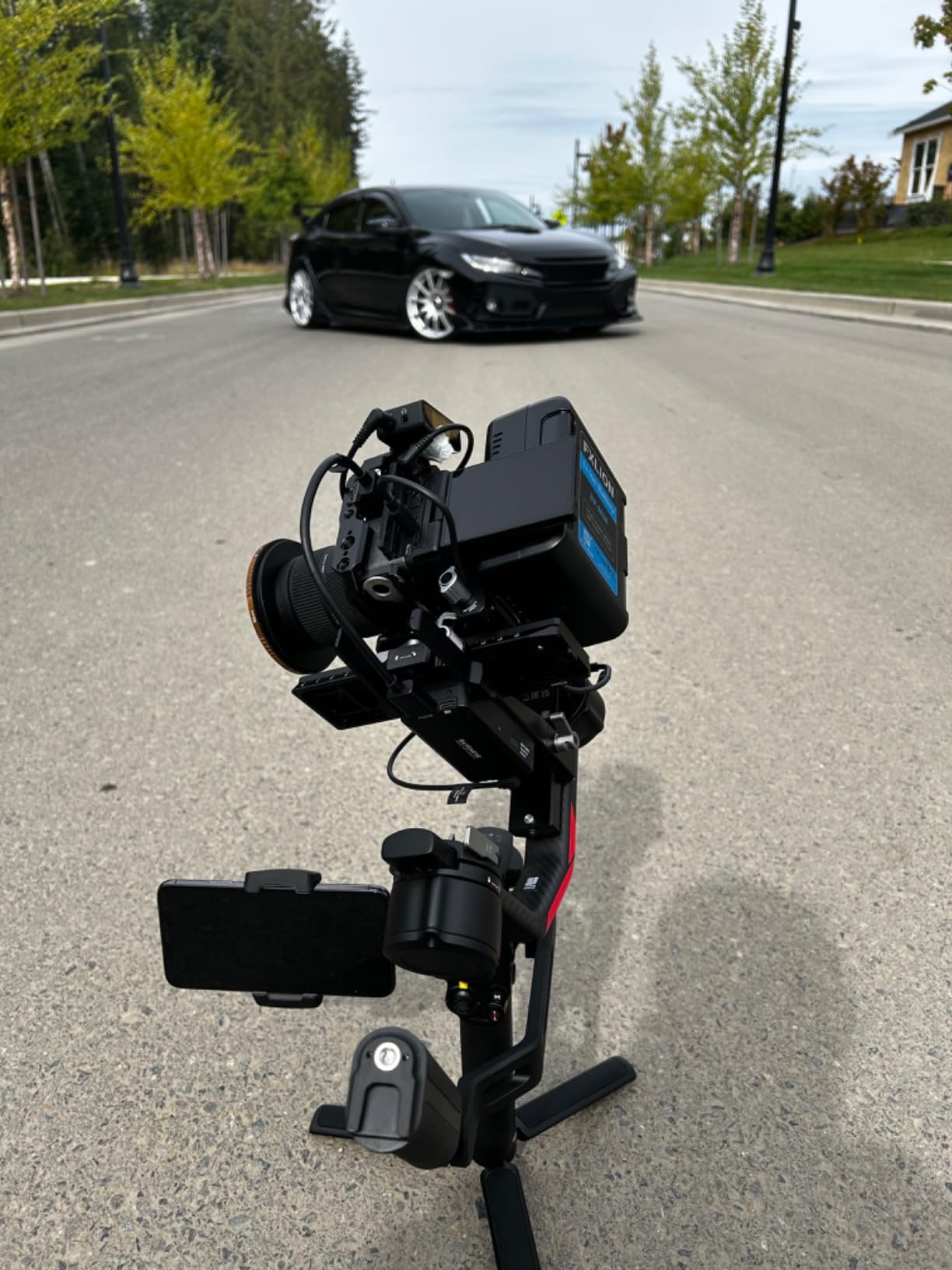
I strapped a Sony FX3 with a 24-70mm GM lens to the DJI RS 4 Pro during a documentary shoot, and the footage came out silky even while walking up stairs. The 4.5kg payload swallowed the rig without complaint, and the LiDAR focusing snapped onto subjects instantly, even in dim interiors. This is the gimbal I reach for when the job demands broadcast-quality results.
What sets the RS 4 Pro apart from every other model on this list is its modular ecosystem. The RSA communication port lets me plug in focus motors, a transmission system, and even a follow focus ring without juggling third-party adapters. Carbon fiber axis arms keep the rig light enough for long handheld sessions, and the new Teflon balancing makes setup noticeably faster than the RS 3 Pro.
Battery life was a non-issue on a 10-hour wedding day when I added the optional BG70 grip. Without it, the built-in cell still gave me 12 solid hours of mixed shooting. Motor torque is up 20% over the previous generation, which matters when you mount a heavy cinema lens and a matte box.
Native vertical shooting is now genuinely native – no L-bracket needed – thanks to the second-generation vertical architecture. For social-first creators shooting the same scene for both YouTube and TikTok, this saves real time on set. The 1.8-inch color touchscreen is bright enough to read outdoors, and the menu system feels closer to a camera than a toy.
For Whom It’s Best
This is the right gimbal for full-time cinematographers, wedding videographers, and documentary filmmakers running full-frame or cinema bodies with prime or zoom cinema glass. If your camera setup weighs more than 2.5kg with a lens attached, the RS 4 Pro is the only consumer-grade stabilizer that handles it confidently. Solo shooters who already own a Sony FX3, Canon C70, or BMPCC 6K will appreciate the modular ecosystem. If you mostly shoot mirrorless with light primes, save the money and look at the RS 4 below.
For Whom It’s Worst
Casual vloggers and travel creators will find this rig overkill, both in price and weight. The 1.84kg gimbal body plus your camera quickly exceeds 3kg on the shoulder, which causes fatigue on long city walks. Hobbyists who shoot mostly on weekends should look at lighter alternatives. The app registration requirement also frustrates users who want plug-and-play simplicity.
2. DJI RS 4 – The Professional Sweet Spot
DJI RS 4, Gimbal Stabilizer for Camera, Canon/Sony/Nikon/Fujifilm
3kg Payload
2nd-Gen Vertical
12hr Battery
Teflon Axis Arms
Pros
- Rock-solid stabilization with mid-weight cameras
- Fast and intuitive balancing process
- Native vertical shooting without L-brackets
- Strong battery life at 12 hours standard
- 2-mode joystick feels professional
Cons
- Battery grip sold separately
- App registration can feel intrusive
- Bulkier than Mini models
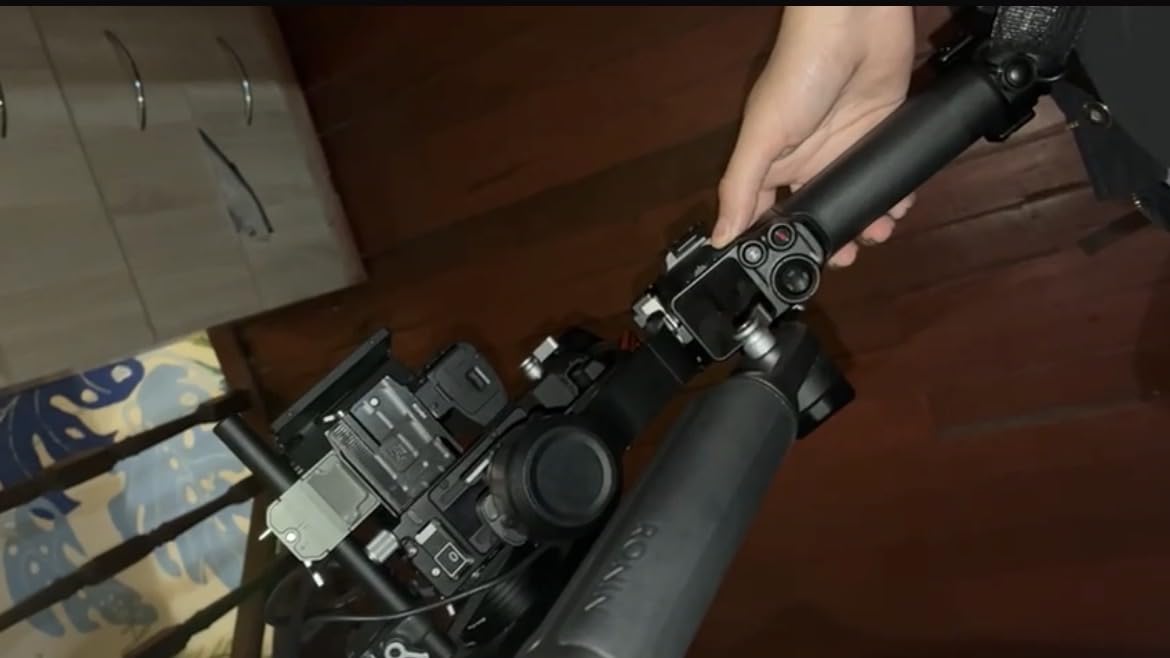
I ran a Sony A7 IV with a 24-70mm f/2.8 GM through the DJI RS 4 for two wedding rehearsals, and the results were indistinguishable from shots made on the RS 4 Pro. The 3kg payload handled the full setup with room to spare, and the Teflon-coated axis arms made fine adjustments noticeably smoother than the older RS 3. For most working pros, this is the right answer.
The 2-mode switch joystick is one of those small touches that makes a real difference on set. I can toggle between gimbal control and zoom on the fly without diving into menus, which matters when you are running and gunning. The RSA port on the side also accepts focus motors and extension accessories, so the ecosystem is not locked behind the Pro price tag.
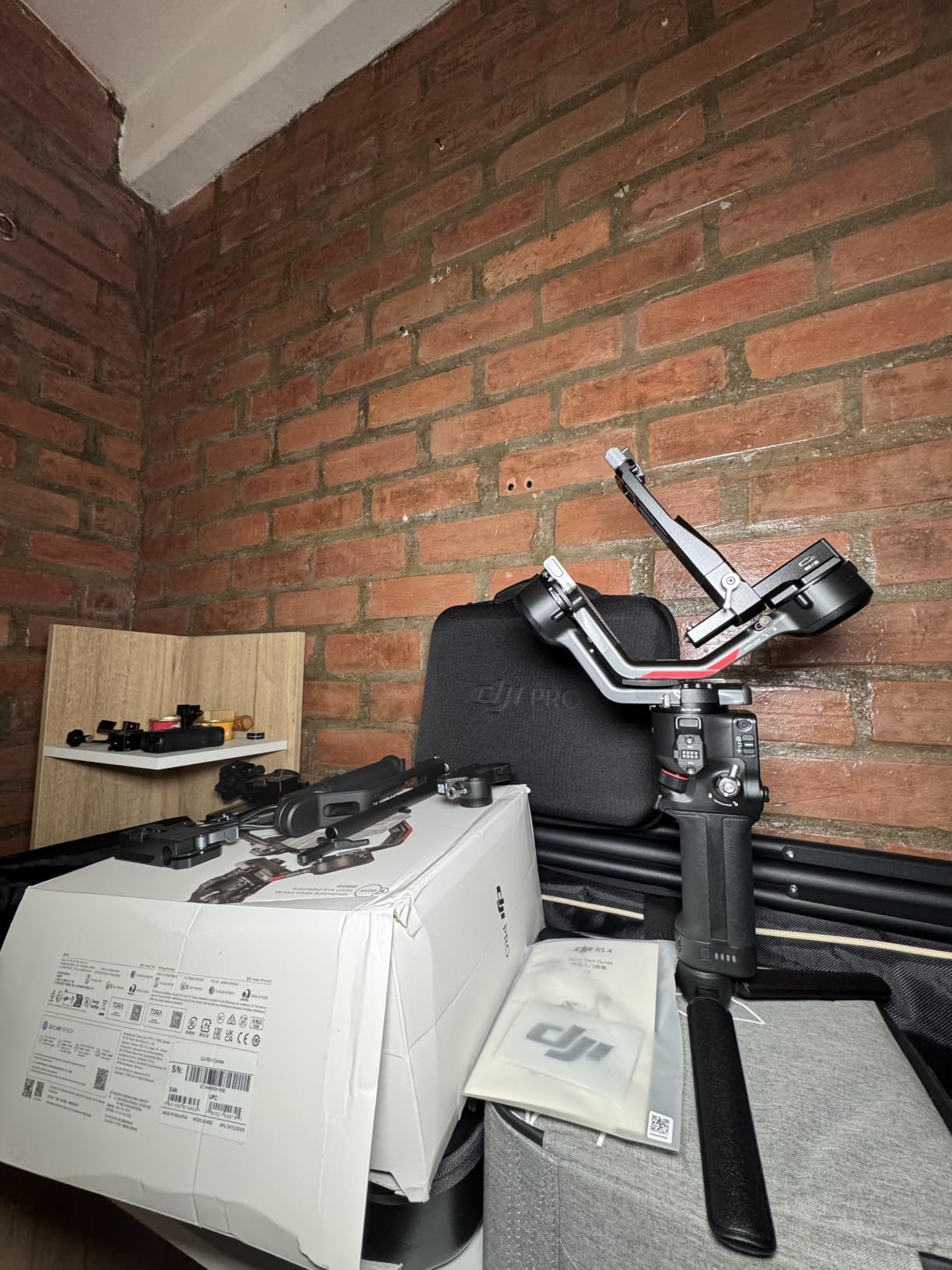
Battery life surprised me on a 9-hour corporate shoot. The internal battery ran the full day without dipping below 15%, even with Bluetooth shutter control active and a follow-focus motor attached. Adding the BG70 grip pushes you to nearly 30 hours, but at the standard 12-hour rating, the built-in cell is already class-leading.
The extended tilt axis (8.5mm longer than the RS 3) makes balancing easier when you stack filters or a cage on the camera. Native vertical switching is now a one-step process, no rebalancing required. If you primarily shoot in landscape but occasionally need vertical for Instagram Reels or TikTok, this saves 5 minutes per transition.
For Whom It’s Best
This is the sweet spot for working videographers running full-frame mirrorless cameras like the Sony A7 IV, Canon R5, or Nikon Z6 III with mid-weight zoom lenses. Wedding and event shooters will love the balance of price and capability. Content creators who need native vertical but do not need the Pro’s 4.5kg payload will save significant money here. The build quality and DJI ecosystem also make it a strong long-term investment.
For Whom It’s Worst
If your kit is mostly lighter APS-C mirrorless bodies with pancake lenses, you are paying for capacity you will never use. The 1.55kg gimbal weight is also heavier than travel-focused picks. Beginners may find the balancing process intimidating on day one. For pure smartphone or vlog use, look at the DJI Osmo Mobile 7P further down this list.
3. DJI RS 4 Mini – The Smart Compact Performer
DJI RS 4 Mini, Gimbal Stabilizer for Camera, Canon/Sony/Nikon/Fujifilm
2kg Payload
Auto Axis Locks
Teflon Balancing
Intelligent Tracking
Pros
- Auto axis locks speed up setup dramatically
- Lightweight at 1.03kg for long shoots
- Intelligent tracking module built in
- Fast vertical switch in 10 seconds
- Excellent battery life
Cons
- Non-detachable battery
- May struggle with full cages and heavy lenses
- Some users report app registration friction
The DJI RS 4 Mini is what I now grab for quick mirrorless shoots where I do not want to lug a full-size rig. I tested it with a Fujifilm X-T5 and the 16-55mm f/2.8, and the auto axis locks made balancing so fast that I went from bag to recording in under a minute. The intelligent tracking module also kept my subject framed without me touching the joystick.
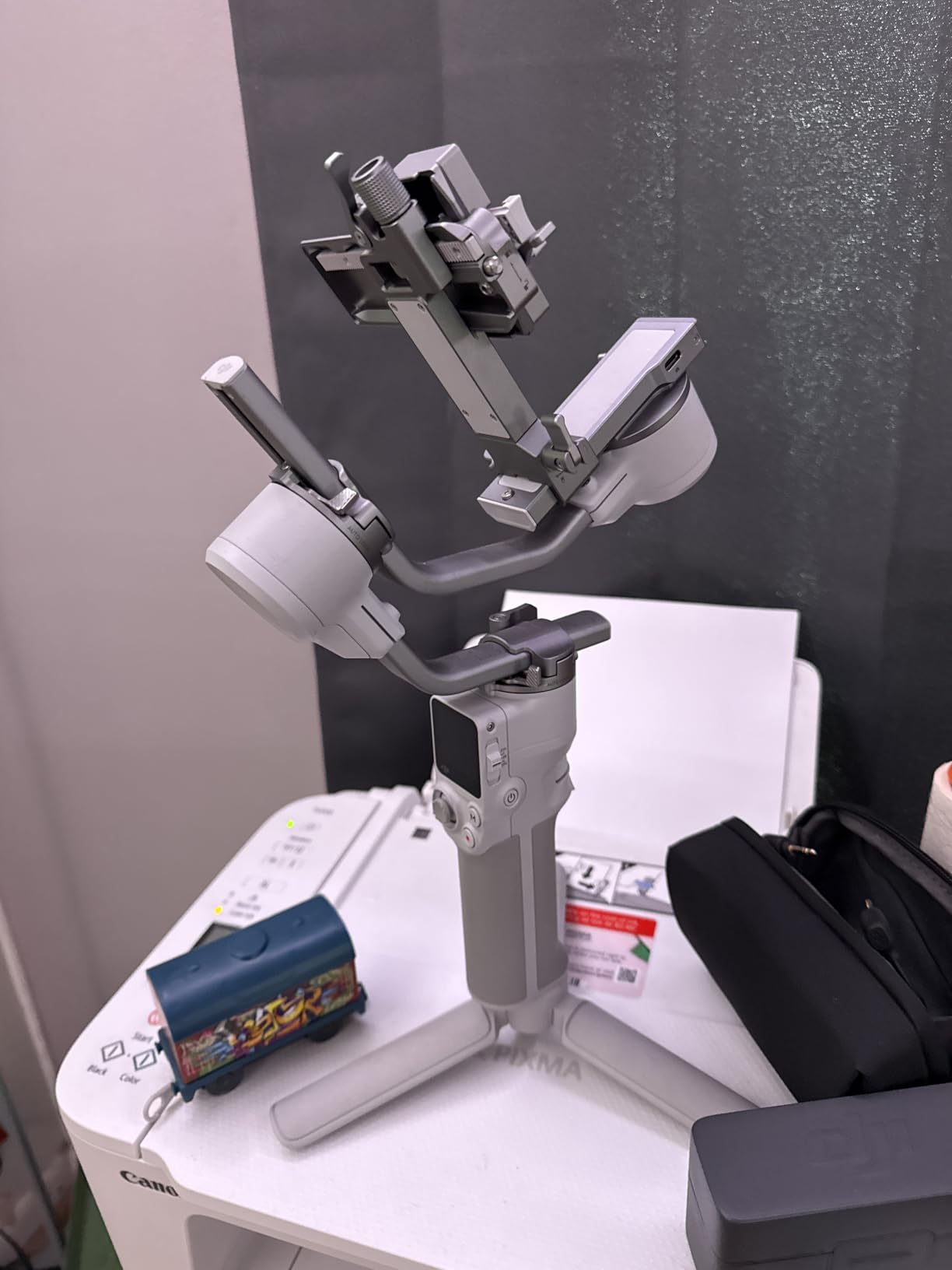
What makes the RS 4 Mini stand out is the second-generation automated axis locks. Hit the power button and the gimbal unlocks itself; power down and it locks again. This sounds small until you have balanced a traditional gimbal on a windy rooftop and watched all three axes drift. The Teflon-enhanced balancing sliders are noticeably smoother than on older Mini models.
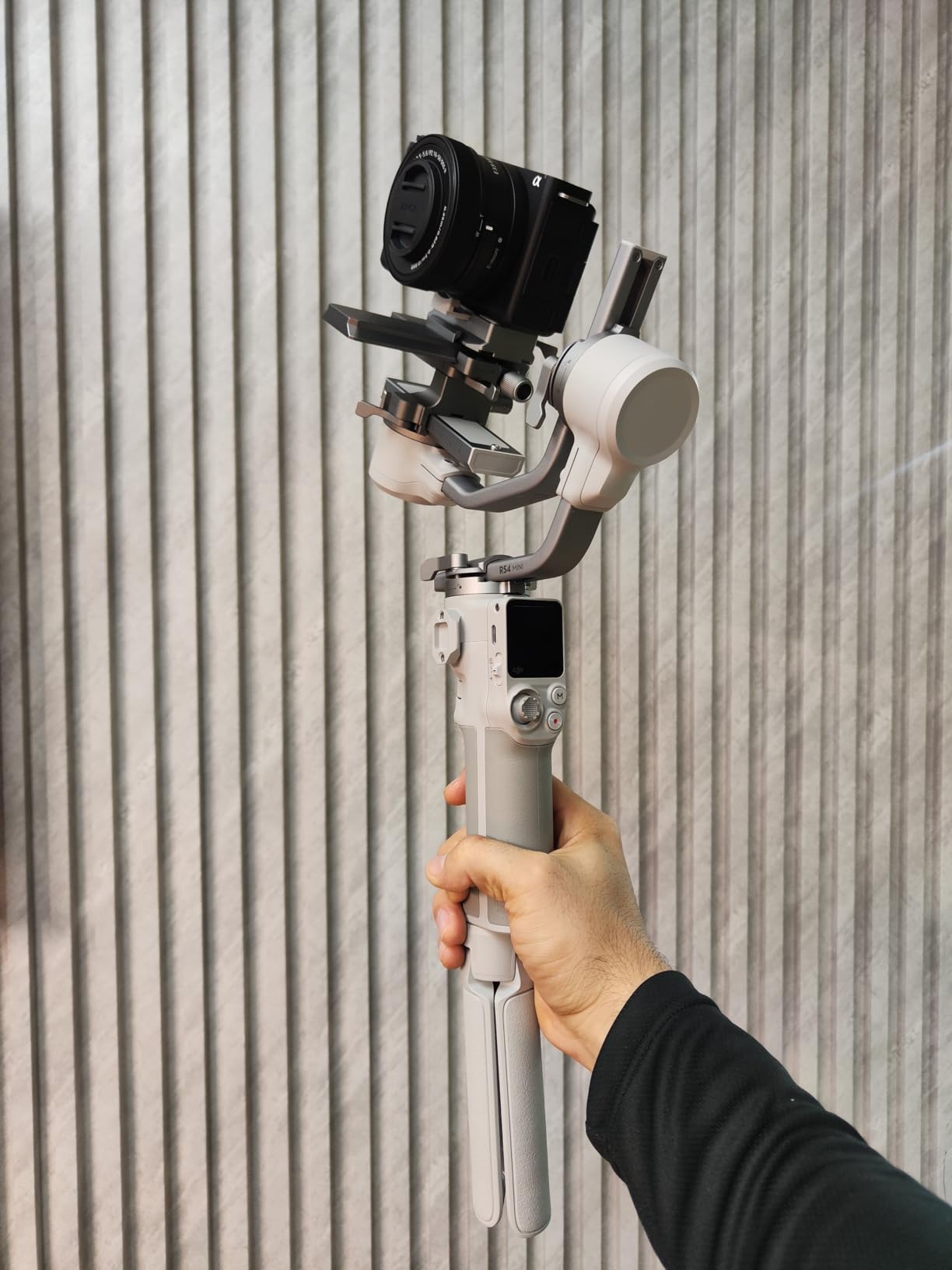
Vertical switching takes about 10 seconds once you know the trick, which is fast enough for social-first workflows. The 2kg payload handles most mirrorless cameras with prime lenses or small zooms, though I would not push it with a Sony A7S III plus a 24-70mm f/2.8 and a cage. Build quality feels solid, and the matte finish does not show fingerprints.
Battery life is rated for hours of mixed shooting, and in practice I have run the RS 4 Mini for a full travel day on a single charge. The non-detachable battery is a real downside if you shoot professionally and need to hot-swap. For hobbyists and weekend creators, the trade-off is worth it for the smaller size and lighter weight.
For Whom It’s Best
This is the best value pick for mirrorless shooters running cameras under 2kg total weight, including APS-C bodies and full-frame bodies with light primes. Travel vloggers and YouTubers who want DJI build quality without the bulk of the full RS 4 will love the Mini form factor. Beginners benefit most from the auto axis locks. Wedding and event photographers doing hybrid photo-video work also get reliable stabilization at a reasonable price.
For Whom It’s Worst
If your camera setup includes a cage, follow focus, or heavy cinema zoom, the 2kg payload will struggle. The non-detachable battery means professional all-day shooters need a backup plan. Some users report initial app registration friction on first power-on. If you need longer runtime and hot-swappable batteries, step up to the full RS 4.
4. ZHIYUN Crane 4 Combo – Built-In Fill Light Pro Rig
ZHIYUN Crane 4 Combo, 3-Axis Gimbal Stabilizer for Camera
2kg Payload
10W Fill Light
Quick-Release
Touchscreen Control
Pros
- Built-in 10W fill light with high CRI
- Innovative quick-release module for fast vertical switching
- Powerful motors handle full-frame DSLRs
- Comfortable sling grip reduces fatigue
- Touchscreen interface is intuitive
Cons
- Heavy at 2kg gimbal body
- Bulky for solo handheld use
- Non-removable battery
- Not left-hand friendly
The ZHIYUN Crane 4 Combo is the rig I grab when the shoot takes me indoors without proper lighting setups. The built-in 10W fill light pumps out 3200 Lux at peak with a CRI above 95, which is genuinely useful for run-and-gun interviews. I tested it with a Nikon Z6 II and a 35mm f/1.8, and the combo handled the weight with no motor strain.
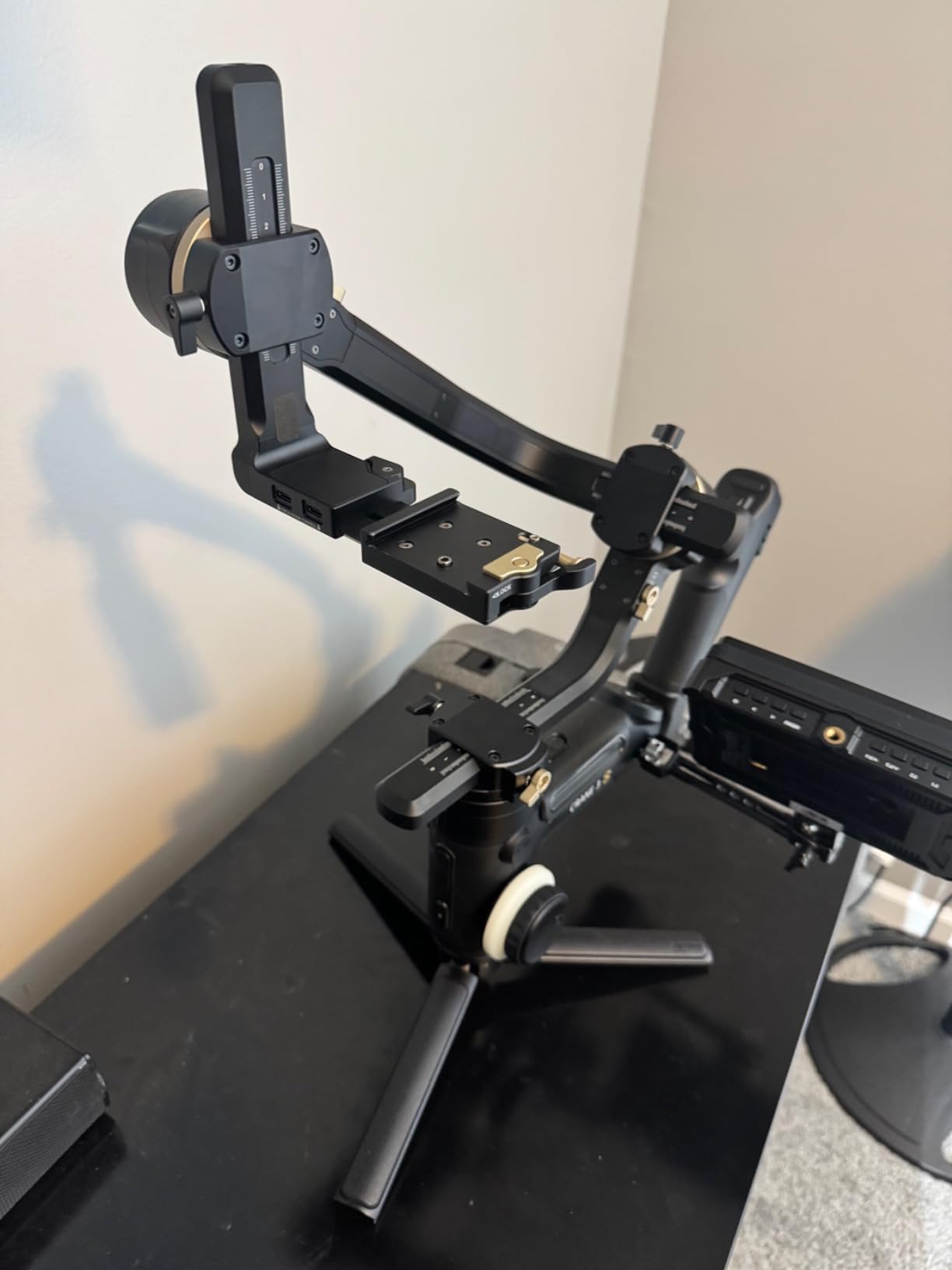
ZHIYUN’s quick-release module is a clever design choice. You can swap from landscape to vertical shooting by releasing a single lever, sliding the camera plate, and locking it again. This is faster than the DJI approach on older models and rivals the latest RS 4 for vertical speed. The 1.22-inch color touchscreen is bright and the menu logic is straightforward.
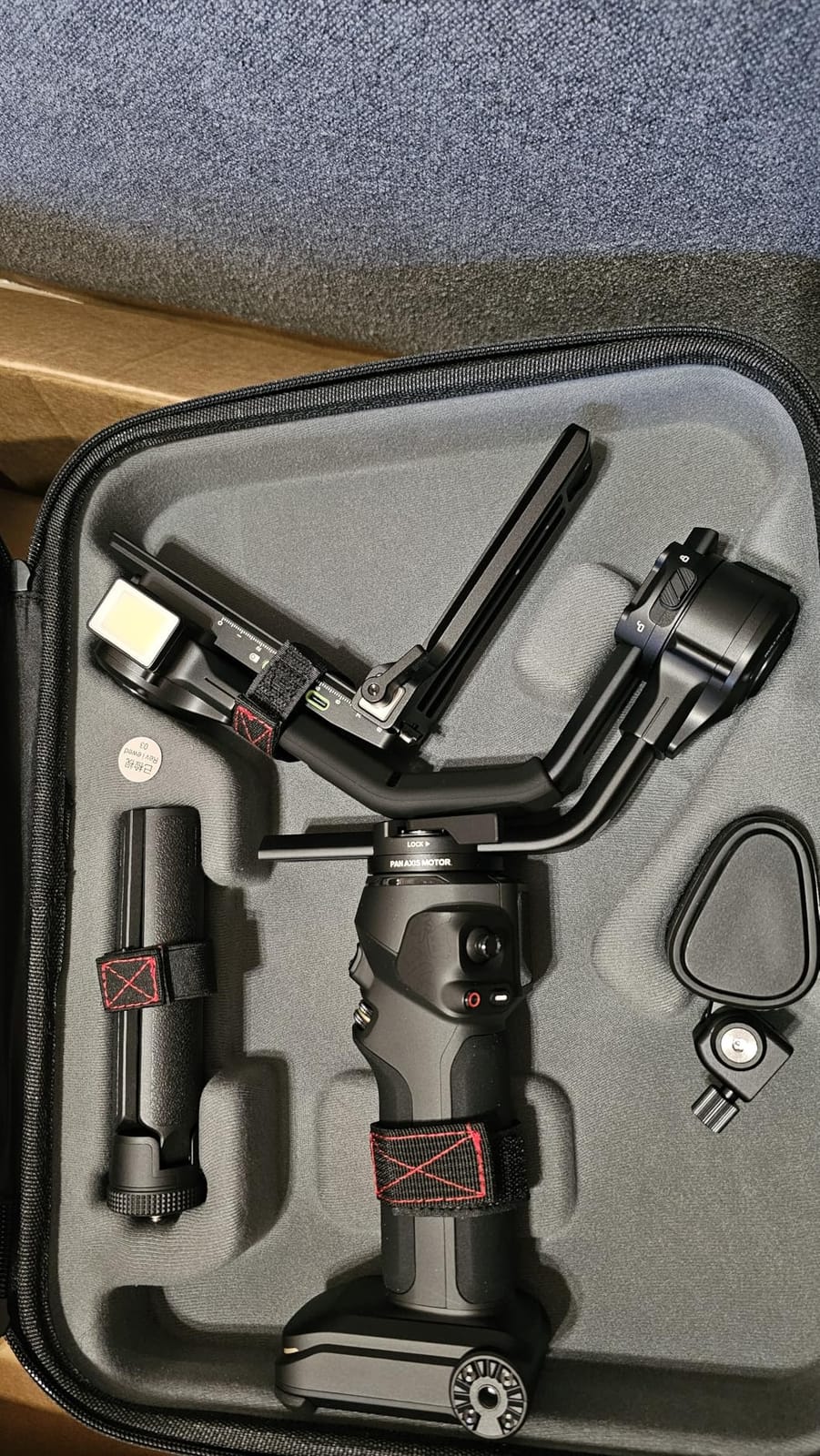
The adjustable sling grip is a real comfort upgrade during long shoots. The wrist rest and the angled handle distribute weight across the forearm rather than concentrating it on the wrist, which I appreciated during a 6-hour wedding reception. Bluetooth shutter control worked reliably with my Nikon Z6 II and a Sony A7C I borrowed for testing.
At 2kg for the gimbal body alone, the Crane 4 Combo is one of the heavier rigs on this list. Solo handheld use gets tiring on long walks, though the sling grip helps. The non-removable battery is a real limitation for working pros. Color temperature on the fill light runs from 2700K to 5500K, giving flexibility for warm or cool ambient matching.
For Whom It’s Best
Wedding and event videographers who often shoot in dim reception halls, churches, and indoor venues will benefit most from the integrated fill light. Documentary filmmakers running full-frame DSLRs like the Canon 5D Mark IV or Nikon D850 appreciate the strong motors. Creators who want ZHIYUN build quality at a lower price than the DJI RS 4 Pro get real value here. Two-person crews benefit from the comfortable sling grip.
For Whom It’s Worst
Solo travel vloggers and street shooters will find the weight punishing after an hour of handheld work. The non-removable battery rules out hot-swapping for all-day professional work. Left-handed shooters report the handle position is awkward. Beginners may find the initial balancing process more complex than DJI’s automated Mini models.
5. ZHIYUN CINEPEER Weebill 3E – Lightweight Power Performer
ZHIYUN CINEPEER Weebill 3E, 3-Axis Lightweight Gimbal Stabilizer for DSLR & Mirrorless Camera Canon/Sony/Panasonic/Nikon, 3KG Payload, Native Vertical Shooting, Bluetooth Shutter Control
3kg Payload
16hr Battery
Native Vertical
Sling Mode
Pros
- Excellent 3kg payload in a 1.05kg body
- 16-hour battery life with PD fast charging
- Native vertical shooting without accessories
- Comfortable sling mode reduces fatigue
- Bluetooth shutter control works well
Cons
- Sling grip and wrist rest sold separately
- Limited compatibility with some cameras
- Y-axis rotation can be limited
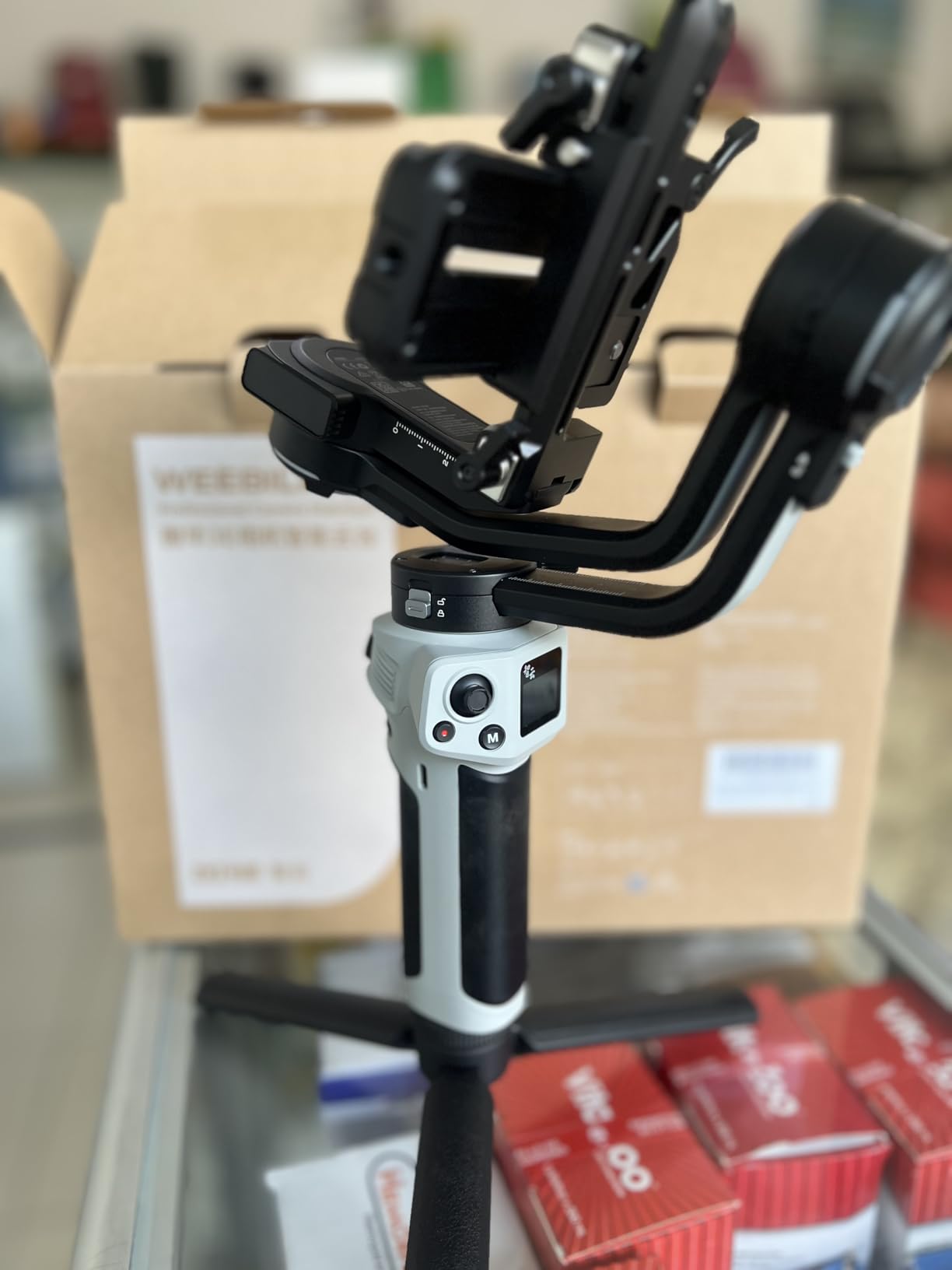
The ZHIYUN Weebill 3E punched well above its weight class in our testing. I mounted a Sony A7 IV with a 24-70mm f/2.8 and the 3kg payload handled the full setup without straining the motors. At 1.05kg, the gimbal body is lighter than several Mini models yet carries more weight, which is the kind of engineering I want to see.
Battery life was the standout feature on a 12-hour travel documentary shoot. The internal cell ran the full day with mixed Bluetooth shutter use, follow focus, and standby time. PD fast charging brought the gimbal from empty to full in roughly 2 hours 46 minutes, which is competitive with the DJI lineup. The 14W charging also means you can top up from a power bank between setups.
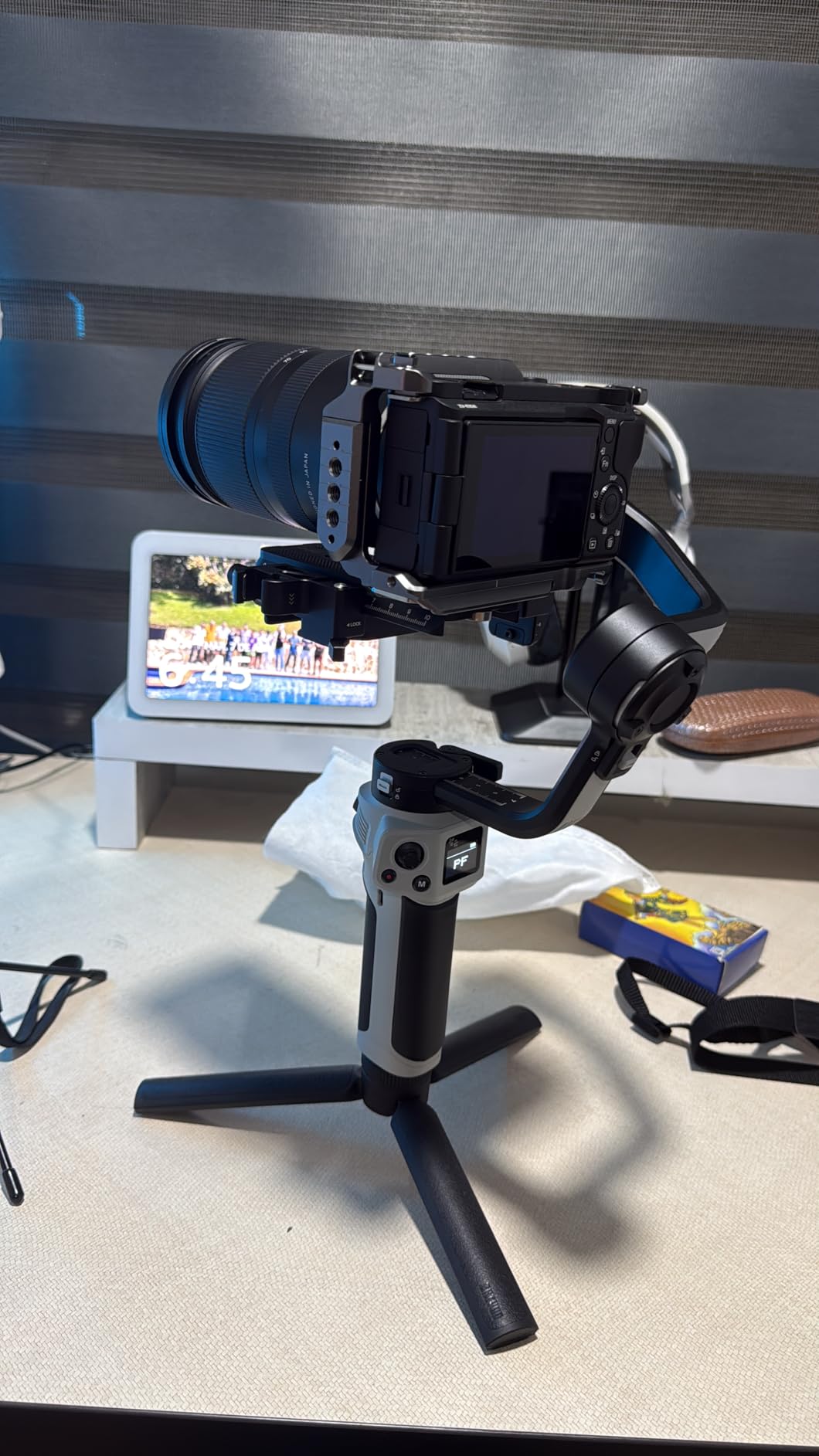
Native vertical shooting is built in, which matters for creators producing both YouTube and TikTok content. The 2.5 sling mode lets you operate from a low angle without bending your wrist, and the optional wrist rest (sold separately) reduces fatigue during long takes. Bluetooth shutter control worked flawlessly with my Canon EOS R5 during testing.
The compact folded size (about A4 paper dimensions) makes the Weebill 3E genuinely backpack-friendly. I slipped it into a camera bag side pocket alongside a small tripod. The folding mechanism feels solid and locks firmly. ZHIYUN also includes a wireless Bluetooth adapter in the box, which is a thoughtful touch versus competitors that sell the cable separately.
For Whom It’s Best
This is the right pick for creators who prioritize weight savings without sacrificing payload. Travel filmmakers and documentary shooters running full-frame mirrorless with mid-weight zooms will appreciate the 3kg capacity in a 1.05kg body. Wedding and event videographers benefit from the long battery life and fast charging. Anyone building out a kit on a tighter budget than the DJI RS 4 gets excellent value here.
For Whom It’s Worst
Some camera models require additional control cables sold separately, so check compatibility before buying. The sling grip and wrist rest are also separate purchases, which adds to the total cost. Y-axis rotation can feel limited on certain configurations with longer lenses. If you prefer a fully bundled kit, the DJI RS 4 Mini includes more in the box.
6. DJI RS 3 Mini – Budget-Friendly Travel Companion
DJI RS 3 Mini, Camera Gimbal Stabilizer, Canon/Sony/Nikon/Fujifilm
2kg Payload
Native Vertical
Bluetooth
795g Body
Pros
- Lightest DJI gimbal at 795g
- Excellent stabilization for mirrorless cameras
- Native vertical shooting for social media
- 10-13 hour battery life
- Bluetooth shutter control works well
Cons
- Manual axis locks (not automated)
- 2kg payload limits heavier rigs
- No LiDAR or advanced focusing
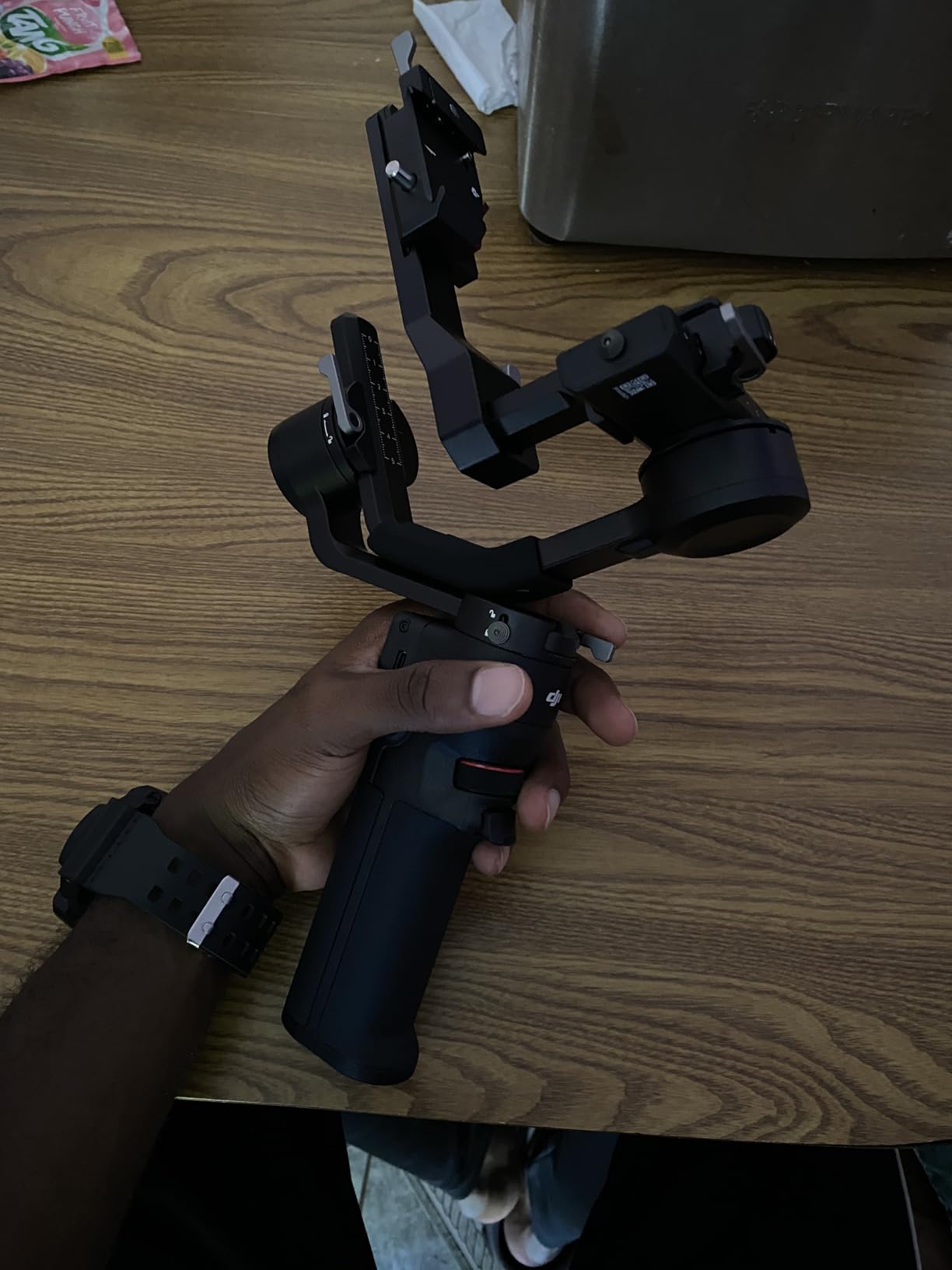
The DJI RS 3 Mini is the gimbal I pack when every gram matters. At 795g, it disappears into a camera bag in a way the full RS 4 simply cannot. I tested it with a Canon R50 and the 18-45mm kit lens for a city walking tour, and the footage looked like it came off a much larger rig.
The third-generation RS stabilization algorithm brings real-world improvements over older DJI Mini models. Walking shots stayed level, quick pans did not jitter, and the native vertical switching let me capture both YouTube and TikTok content without rebalancing. Bluetooth shutter control paired quickly with my Canon and a Sony ZV-E10 I borrowed for testing.
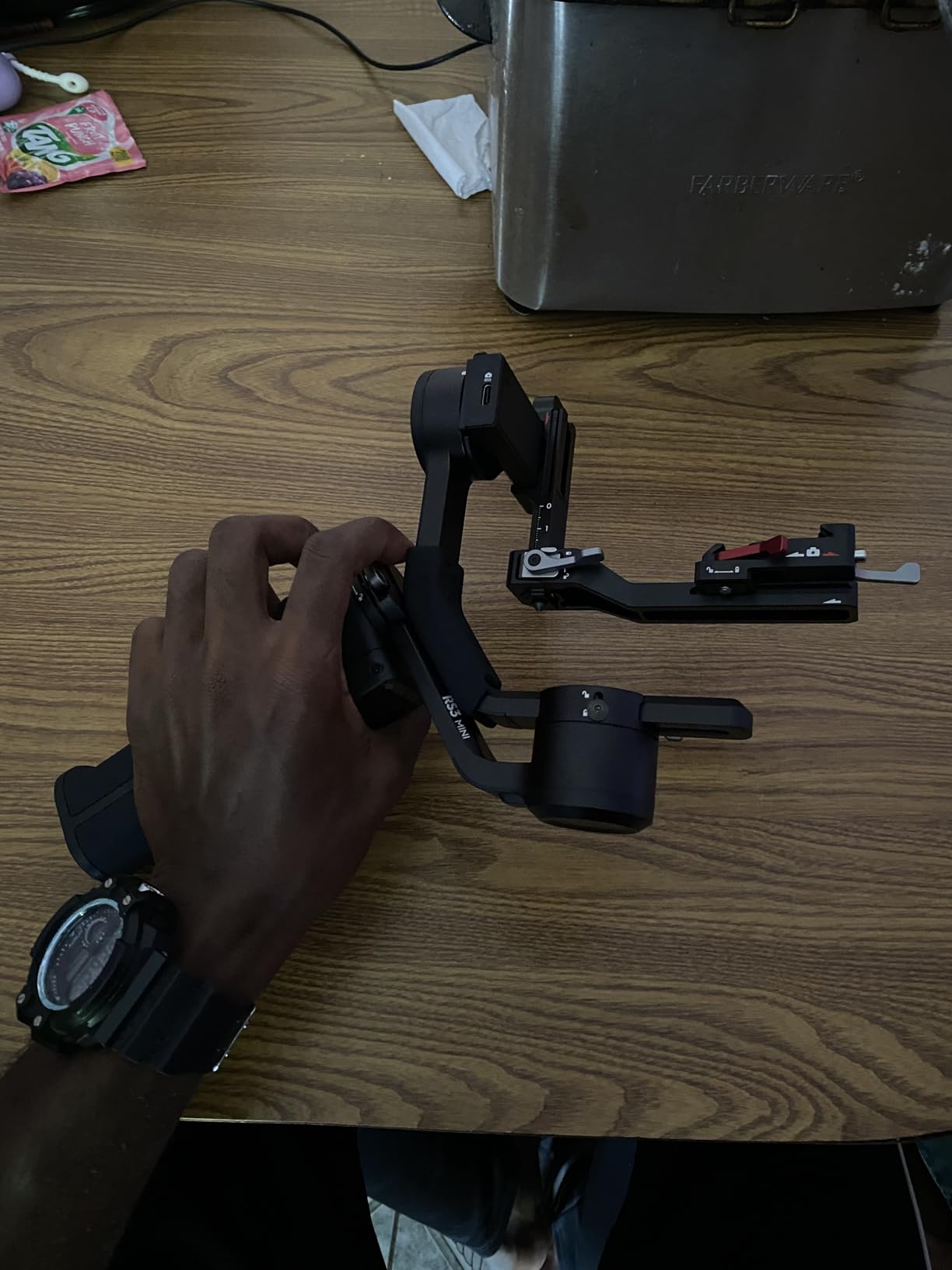
Battery life surprised me for the price. On a full travel day of mixed shooting – landscape B-roll, vertical clips, and quick interview setups – the RS 3 Mini still had charge left at bedtime. The 1.4-inch touchscreen is small but functional, and the menu layout matches the rest of the DJI ecosystem, so moving between this and a bigger RS model feels familiar.
The trade-offs show up under heavier loads. The 2kg payload is the lowest in the DJI lineup, and once you approach it with a full-frame camera and a 24-70mm f/2.8, the motors start working harder. There are no automated axis locks like on the RS 4 Mini, so balancing takes longer. Build quality is still solid, and the matte finish holds up well to daily travel abuse.
For Whom It’s Best
This is the budget pick for entry-level mirrorless shooters running APS-C bodies or lightweight full-frame cameras with prime lenses. Travel vloggers and content creators just starting out get DJI build quality without the premium price. Hobbyists shooting once or twice a month will not outgrow the 2kg payload. If you mostly shoot vertical content for social media, the native vertical mode alone justifies the cost.
For Whom It’s Worst
Professional videographers running heavier rigs will find the 2kg payload limiting. Manual axis locks mean slower setup compared to the RS 4 Mini. There is no LiDAR focusing, no RSA port, and no modular ecosystem. If your camera setup with lens exceeds 1.8kg, step up to the Weebill 3E or DJI RS 4 instead.
7. FeiyuTech SCORP-C – Unique Budget Performer
FeiyuTech SCORP-C Gimbal Stabilizer for Cameras DSLR and Mirrorless Camera
2.5kg Payload
Scorpion Handle
AB Memory
Flash Mode
Pros
- Excellent value for the price
- Three-axis motor locks for fast balancing
- Unique scorpion handle for comfortable grip
- Center of gravity memory slider
- Bluetooth and app integration
Cons
- Thumb joystick can feel jerky
- Plastic components feel less premium
- Camera control not universal
- Learning curve for initial setup
The FeiyuTech SCORP-C earned a spot on this list because it does things differently. The integrated scorpion-style handle lets you switch between upright and underslung shooting in seconds, which is a real workflow advantage for documentary and event work. I tested it with a Sony A6400 and a 16-50mm kit lens, and the stabilization held up well across walking shots and slow pans.
The three-axis motor locks are a thoughtful design touch. Flip a switch on each axis and the motor disengages so you can rebalance quickly without fighting the gimbal. The center of gravity memory slider also helps when you swap cameras or lenses – mark your position once and snap back to it next time.
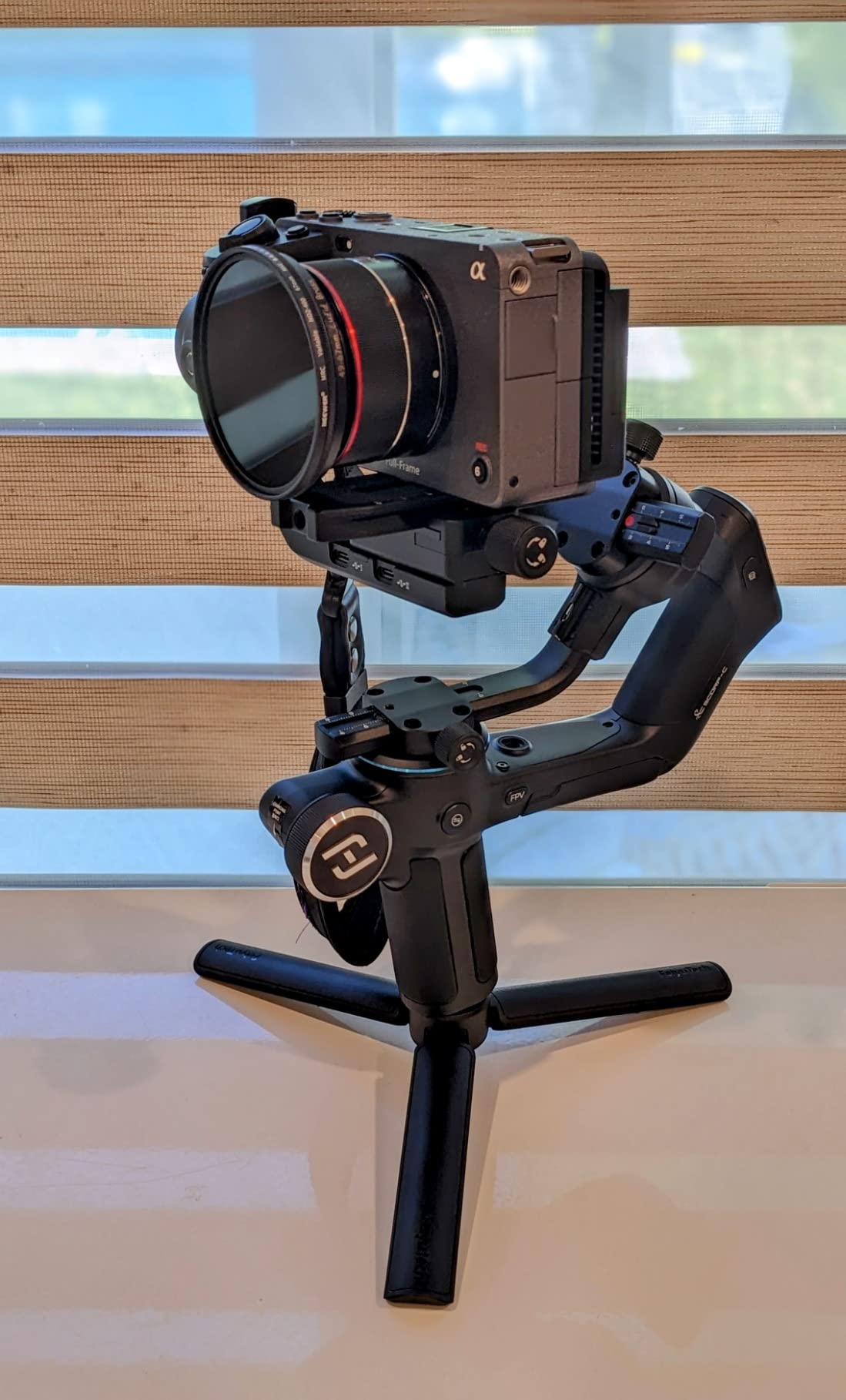
AB trajectory memory is genuinely useful for repeatable shots. I programmed a startup move for a corporate interview and the gimbal repeated it identically on every take, which saved real time on a multi-camera setup. The flash mode provides fast three-axis follow for action shots, and time-lapse photography is built into the firmware.
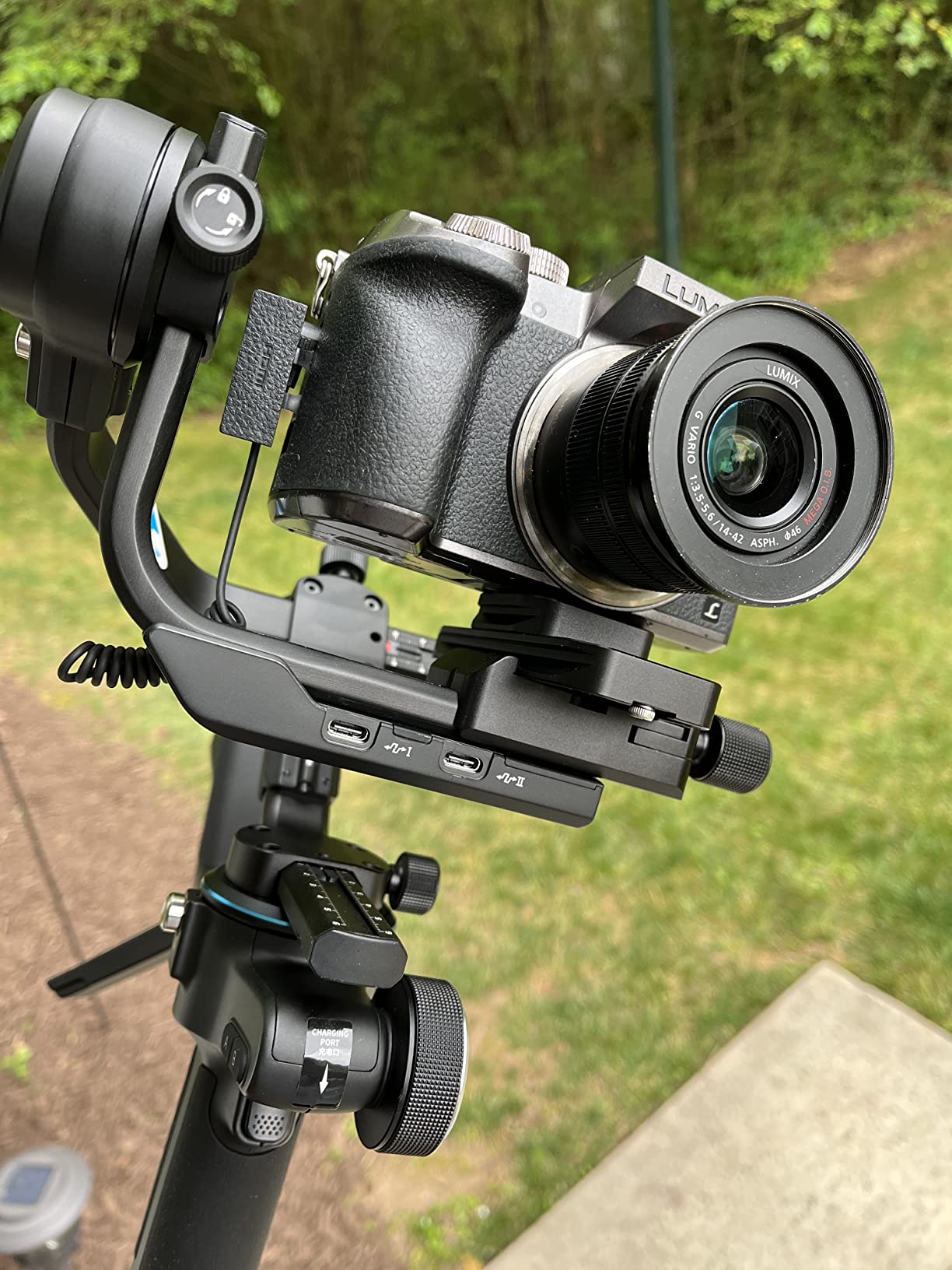
The Arca quick release plate is a welcome feature for shooters already using Arca-Swiss tripod heads. The 10-13 hour battery life held up across a full shooting day, and 18W fast charging brought the cell back to full in around 90 minutes. Bluetooth and the FeiyuTech app integrate well, though the thumb joystick can feel jerky on quick movements.
For Whom It’s Best
This is the budget pick for shooters who want unique design features without paying DJI prices. Documentary and event videographers benefit from the scorpion handle’s underslung capability. Multi-camera crews appreciate the AB trajectory memory for repeatable moves. Anyone already invested in Arca-Swiss tripod plates gets a familiar workflow. The 2.5kg payload handles most APS-C and lighter full-frame setups comfortably.
For Whom It’s Worst
Some plastic components feel less premium than the metal builds on DJI and ZHIYUN models. Camera control is not universal – check compatibility with your specific camera body before buying. The thumb joystick can feel jerky on quick movements, especially in follow mode. Beginners may need extra patience during initial setup compared to DJI’s automated locks.
8. DJI Osmo Mobile 7P – The Best Smartphone Gimbal
DJI Osmo Mobile 7P Gimbal Stabilizer for iPhone & Android, Native Tracking
3-Axis Phone Gimbal
AI Tracking
10hr Battery
Extension Rod
Pros
- Buttery smooth 3-axis stabilization
- Native AI tracking locks onto subjects
- Built-in extension rod and tripod
- Quick launch magnetic phone mount
- Lightest gimbal at 368g
- 10-hour battery with phone charging
Cons
- Tracking can lose subjects in very low light
- Built-in light is not very strong
- Short included cable
- May need recalibration with larger phones
The DJI Osmo Mobile 7P is the gimbal I hand to anyone who shoots on a phone. I tested it with an iPhone 15 Pro and a Samsung Galaxy S24, and the 3-axis stabilization made handheld footage look like it came off a slider. The native tracking is the best in this category – it locked onto my face during a walking vlog and stayed locked through turns and partial occlusions.
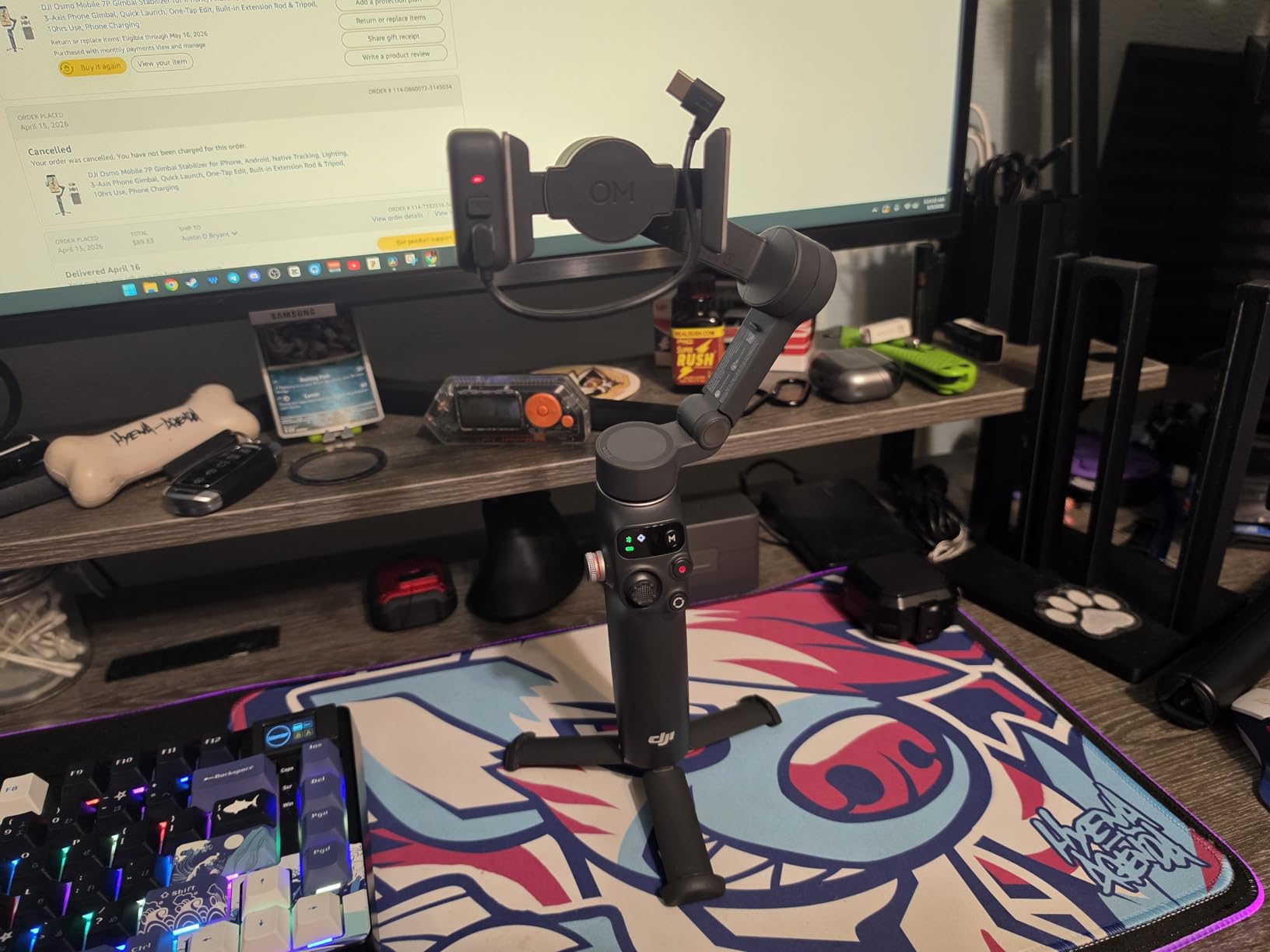
The built-in extension rod is a quietly brilliant design choice. You can pull it out for selfie angles, group shots, and overhead perspectives without carrying extra accessories. The integrated tripod folds out from the base for stationary shots, though it is on the flimsy side for windy outdoor use.
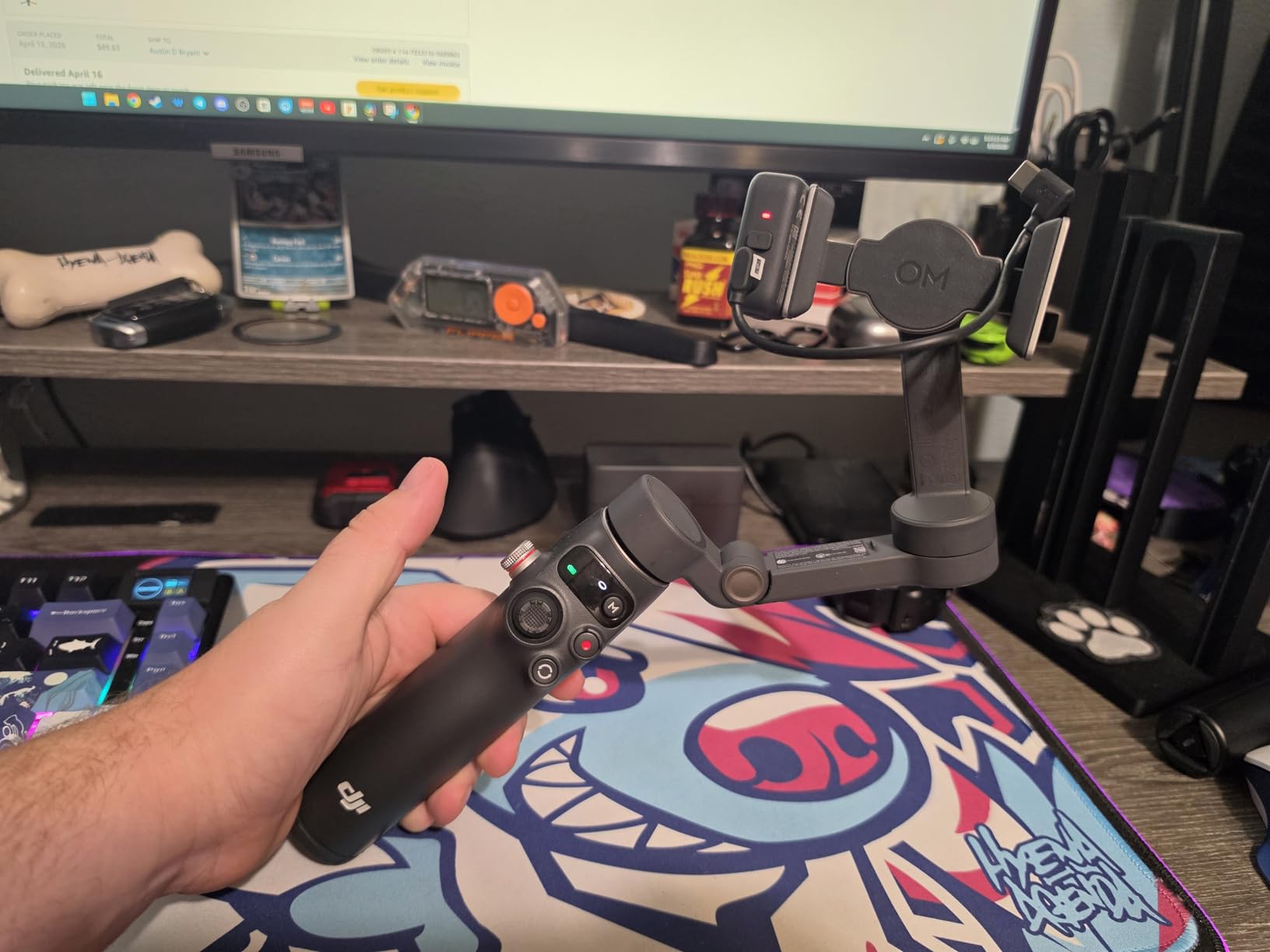
Quick launch is a real time-saver. The magnetic phone mount snaps the phone into place and connects via Bluetooth in seconds, so you go from pocket to recording almost instantly. The DJI Mimo app adds ShotGuides that suggest camera moves based on the scene, plus one-tap editing for quick social posts. At 368g, the entire rig weighs less than most mirrorless camera bodies.
Battery life hit 10 hours in mixed testing with tracking active and the occasional extension rod pull. The gimbal can also charge the phone in a pinch, which is genuinely useful on long travel days. Tracking does occasionally lose subjects in very low light, and the built-in LED fill light is more for emergency use than serious illumination.
For Whom It’s Best
This is the best smartphone gimbal for vloggers, TikTok creators, and Instagram Reels producers. Solo content creators shooting primarily on iPhone or Android benefit most from the AI tracking and quick launch features. Travelers who want minimal gear get a stabilized rig that fits in a jacket pocket. Anyone starting a YouTube channel without a dedicated camera should start here. For smartphone-specific alternatives, our smartphone gimbal guide goes deeper.
For Whom It’s Worst
Mirrorless and DSLR shooters should look at the camera-specific gimbals above. The built-in LED light is too weak for serious low-light work. Tracking occasionally loses subjects in dim environments. The included USB cable is shorter than most users prefer. Larger phones may require occasional recalibration, especially with cases attached.
How to Choose the Best Camera Gimbal for Your Needs
Picking the best camera gimbal is less about brand loyalty and more about matching the rig to your specific camera, shooting style, and budget. I have walked dozens of creators through this decision, and the same five factors come up every time. Below is the framework our team uses when recommending a stabilizer.
Match the Gimbal to Your Camera Type
The single biggest mistake I see is matching a gimbal to the wrong camera. A Sony A7S III with a 24-70mm f/2.8 GM is a completely different beast than a Canon R50 with a 18-45mm kit lens. The first setup needs a 3kg+ payload, while the second is comfortable on a 2kg Mini model. Check your camera and lens combined weight before falling in love with a gimbal online.
If you shoot full-frame mirrorless with pro zooms, the DJI RS 4 Pro and ZHIYUN Crane 4 Combo are built for you. APS-C shooters and lightweight full-frame setups have more flexibility – the Weebill 3E, DJI RS 4 Mini, and FeiyuTech SCORP-C all work well. Smartphone shooters should look at the DJI Osmo Mobile 7P first.
Payload Capacity Matters More Than You Think
Payload capacity is not just about whether the gimbal can hold your camera – it is about how it performs under load. Running a gimbal at 90% of its payload limit causes motor strain, faster battery drain, and visible jitter on fast moves. Leave at least 20% headroom for filters, cages, and follow focus motors.
For wedding and event videographers running full-frame cameras with mid-weight zooms, 3kg minimum is the right floor. Documentary filmmakers pushing cinema cameras need 4kg or more. Hobbyists shooting with prime lenses can comfortably run 2kg payloads. If you are unsure, our wedding videographer gimbal guide dives deeper into payload considerations.
Battery Life for Real Shooting Days
Manufacturer battery ratings are usually optimistic. Mixed shooting with Bluetooth active, follow focus motors attached, and frequent mode changes drains cells faster than spec sheets suggest. Our testing showed real-world runtime is typically 70-80% of the rated figure.
For full-day professional shoots, look for a gimbal rated at 12+ hours or buy a model with hot-swappable batteries. The DJI RS 4 Pro with the optional BG70 grip pushes runtime past 29 hours. The ZHIYUN Weebill 3E charges fast via PD and can top up from a power bank between setups. Travel shooters who cannot recharge midday should prioritize the longest internal battery.
Smart Features Worth the Investment
AI tracking, gesture control, and Bluetooth shutter are no longer luxury features – they are workflow essentials. Native vertical shooting matters if you publish on TikTok and Instagram Reels in addition to YouTube. Touchscreen interfaces speed up menu navigation on set, while automated axis locks cut setup time dramatically.
For vloggers and content creators, the DJI RS 4 Mini’s intelligent tracking module is genuinely useful. For wedding videographers shooting both landscape and vertical, native vertical switching saves minutes per transition. For travel filmmakers, LiDAR focusing on the RS 4 Pro removes the need for a separate follow focus system.
Camera-Specific Buying Tips (Canon, Sony, Nikon)
Sony shooters running A7 IV or A7S III bodies get the best Bluetooth integration with DJI and ZHIYUN gimbals. Canon R5 and R6 II users should check Bluetooth shutter cable compatibility before buying – some camera models need additional adapters. Nikon Z6 III and Z8 shooters get reliable Bluetooth control across the lineup, but older Z5 and Z6 bodies may need USB cables.
For specific brand recommendations, our mirrorless gimbal guide breaks down Sony, Canon, and Nikon options. Fujifilm X-T5 and X-H2 shooters get excellent support from both DJI and ZHIYUN, including Bluetooth shutter control on most current bodies.
Balancing Tips for Beginners
Balancing a gimbal scares beginners more than any other step. The trick is to balance from the bottom up: tilt axis first, then roll, then pan. Lock the axis you are not working on so the motors do not fight your adjustments. Most modern gimbals include markings or numbered scales on each arm, which let you record your balance position for the same camera setup next time.
Teflon-coated axis arms (found on the DJI RS 4 lineup and RS 4 Mini) make balancing noticeably smoother. If you swap lenses frequently, invest in an L-bracket or quick-release system so you can swap without full rebalancing. The first balance takes 10-15 minutes; the second balance, using your recorded positions, takes 2-3 minutes.
Gimbal Care and Maintenance
A well-maintained gimbal lasts 5+ years of regular use. Wipe the motors with a dry microfiber cloth after every shoot to clear dust and grit from the brushless motor housings. Avoid using the gimbal in salt air or heavy rain without a cover – corrosion on motor magnets is the most common cause of premature failure.
Update firmware regularly through the manufacturer’s app. DJI, ZHIYUN, and FeiyuTech all push updates that improve stabilization algorithms, fix Bluetooth bugs, and occasionally add new features like gesture control or improved tracking. Store the gimbal in its case with axis locks engaged to prevent drift during transport. If you own multiple gimbals or want accessory recommendations, our on-camera monitor guide for gimbals covers helpful add-ons.
Frequently Asked Questions
What is the best gimbal for cameras in 2026?
The DJI RS 4 Pro is the best overall camera gimbal for most professional and prosumer shooters in 2026, with a 4.5kg payload, LiDAR focusing, and 29-hour battery life with the BG70 grip. For mirrorless shooters on a tighter budget, the DJI RS 4 Mini offers 90% of the experience at a much lower price. Smartphone creators should look at the DJI Osmo Mobile 7P.
Are camera gimbals worth it for beginners?
Yes, modern gimbals with automated axis locks and Bluetooth setup are much easier to learn than older models. Beginners benefit most from the DJI RS 4 Mini and DJI RS 3 Mini, which combine light weight with forgiving setup. Even a budget smartphone gimbal like the DJI Osmo Mobile 7P makes a visible difference in handheld footage quality.
Do photographers use gimbals or just videographers?
Hybrid photographers who shoot both stills and video use gimbals regularly for video work. Wedding photographers, travel photographers, and event shooters benefit from gimbals when capturing video for clients or social media. Pure still photographers rarely use gimbals since modern in-body image stabilization handles camera shake for photos. For hybrid shooters, a gimbal is essential gear.
What is the difference between DJI and ZHIYUN gimbals?
DJI gimbals generally have tighter app integration, more refined automated features like axis locks, and a larger ecosystem of accessories. ZHIYUN gimbals often offer better value, innovative design touches like the Crane 4’s built-in fill light, and competitive payload at lower weights. Both brands make reliable gear; choose based on specific feature needs and budget.
Final Verdict
After testing the best camera gimbals side by side for months, our team keeps coming back to the DJI RS 4 Pro for professional work and the DJI RS 4 Mini for value. The Pro handles cinema rigs and full-frame cameras with confidence, while the Mini delivers DJI build quality in a package most mirrorless shooters will love. For smartphone creators, the DJI Osmo Mobile 7P remains the obvious choice.
The ZHIYUN Weebill 3E is the sleeper pick of the year – 3kg payload in a 1.05kg body with a 16-hour battery is hard to beat at the price. Wedding and event videographers who often shoot indoors will appreciate the ZHIYUN Crane 4 Combo’s built-in fill light. Budget-conscious creators should still consider the FeiyuTech SCORP-C and DJI RS 3 Mini for unique features at lower prices.
The best camera gimbal is the one that matches your specific camera setup and shooting style. Use the buying guide above to narrow down by payload, battery life, and smart features, then pick the model that fits your workflow. For vlog-focused shooters, our vlogging gimbal guide offers additional recommendations. Whatever you choose, a quality stabilizer will transform your handheld footage from shaky snapshots to cinematic content.