
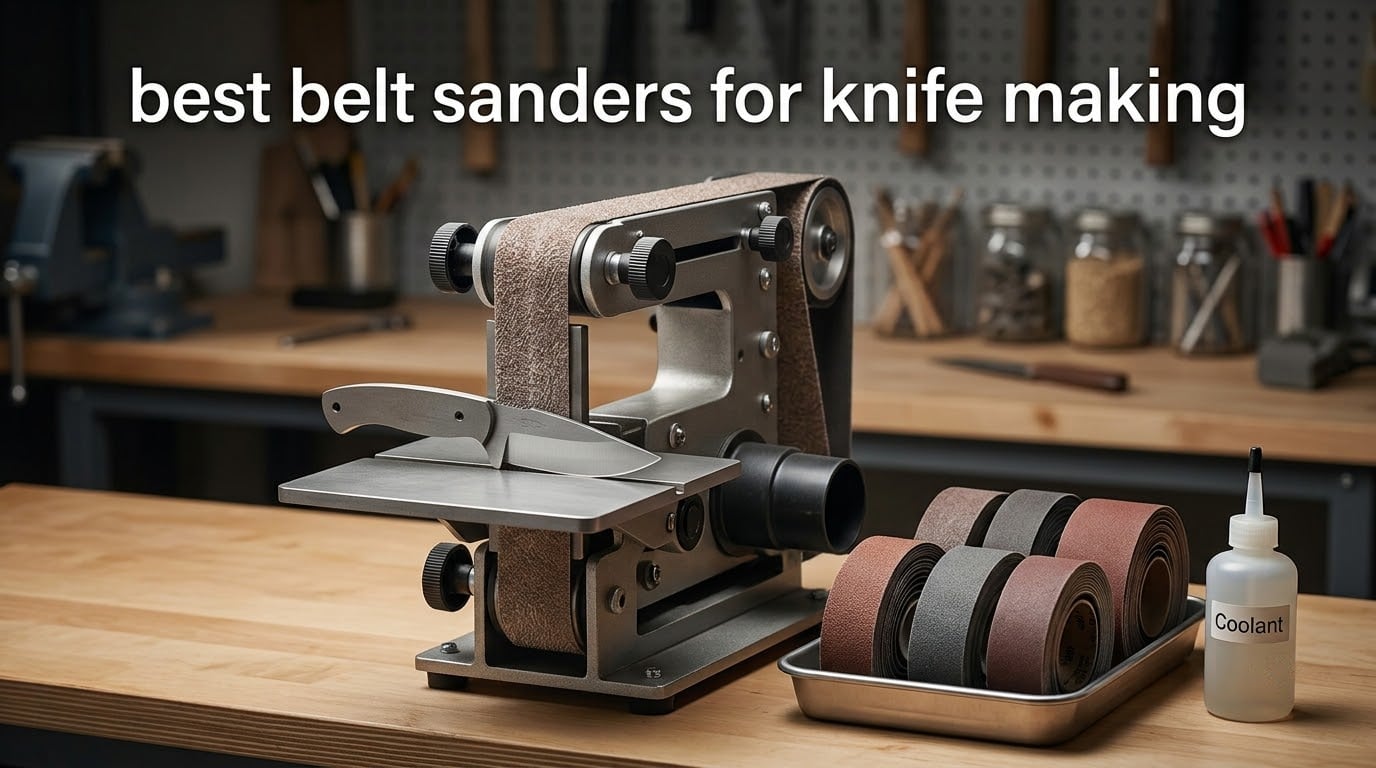
A belt sander for knife making is a benchtop or floor machine that runs a continuous abrasive belt over a rigid platen, so a maker can grind blade profiles, thin material, and refine bevels on hardened steel without spending hours on a file. The best belt sanders for knife making do three things well: they hold a steady belt speed, they keep the belt tracking under load, and they let you slow the machine down before the steel gets hot. That last point matters more than raw power, because heat is what ruins a heat-treated blade.
We spent weeks reading owner reviews, spec sheets, and the practitioner threads on BladeForums and BladesmithsForum to put this list together, and the picture that emerged is not the one most roundups paint. Almost nobody in these threads started with a big machine. They started small, learned what a coarse-grit pass does to a blade blank, and moved up only when the small machine stopped being the bottleneck.
We did not lab-test these machines in a temperature-controlled room, so treat the ratings below as owner consensus filtered through what the machines actually do on steel. Where a number matters, we quote it in surface feet per minute, watts, or amps rather than adjectives.
Table of Contents
Top 3 Picks for Belt Sanders for Knife Making (2026)
These three cover the range most people need: a proven all-rounder, a wider combo for stocky work, and a VFD machine that lets you control speed properly.

BUCKTOOL BG2600 2×42 Combo
- 2x42 belt plus 6 inch grinder
- 1/3 HP induction motor
- 0-90 degree tilt

Best Belt Sanders for Knife Making (October 2026)
| Product | Specifications | Action |
|---|---|---|
| WEN 6515T 1×30 Belt and Disc Sander |
|
Check Latest Price |
| BUCKTOOL BG2600 2×42 Combo |
|
Check Latest Price |
 SI FANG Mini Belt Sander SI FANG Mini Belt Sander |
|
Check Latest Price |
 VEVOR BG6 Belt and Disc Combo VEVOR BG6 Belt and Disc Combo |
|
Check Latest Price |
| VEVOR JLD10-8 VFD Belt Grinder |
|
Check Latest Price |
 RIKON 50-161VS Variable Speed RIKON 50-161VS Variable Speed |
|
Check Latest Price |
 Kongkee Mini Belt Sander Kongkee Mini Belt Sander |
|
Check Latest Price |
 JET J-41002 2×42 and 8 Inch Disc JET J-41002 2×42 and 8 Inch Disc |
|
Check Latest Price |
 KFMK KFBD6242 2×42 Combo KFMK KFBD6242 2×42 Combo |
|
Check Latest Price |
 Podoy Mini Belt Sander Podoy Mini Belt Sander |
|
Check Latest Price |
 KFMK RBGS130V 1×30 VFD KFMK RBGS130V 1×30 VFD |
|
Check Latest Price |
 Goldsand GD-SDJ-8 1×30 Grinder Goldsand GD-SDJ-8 1×30 Grinder |
|
Check Latest Price |
1. WEN 6515T – Best Belt Sander for Knife Making Overall
WEN Benchtop Belt and Disc Sander with 1 x 30 in. Belt and 5 in. Sanding Disc (6515T)
1x30 belt plus 5 inch disc
3160 FPM belt speed
16 pounds
2 year warranty
Pros
- Tracks belts without adjustment
- Quiet smooth 2.3A motor
- Heavy base resists walking
- Cheap and widely available 1x30 belts
- Two dust ports
Cons
- Plastic levers and shield feel cheap
- Disc table and miter gauge are not accurate
- Fixed speed with no variable control
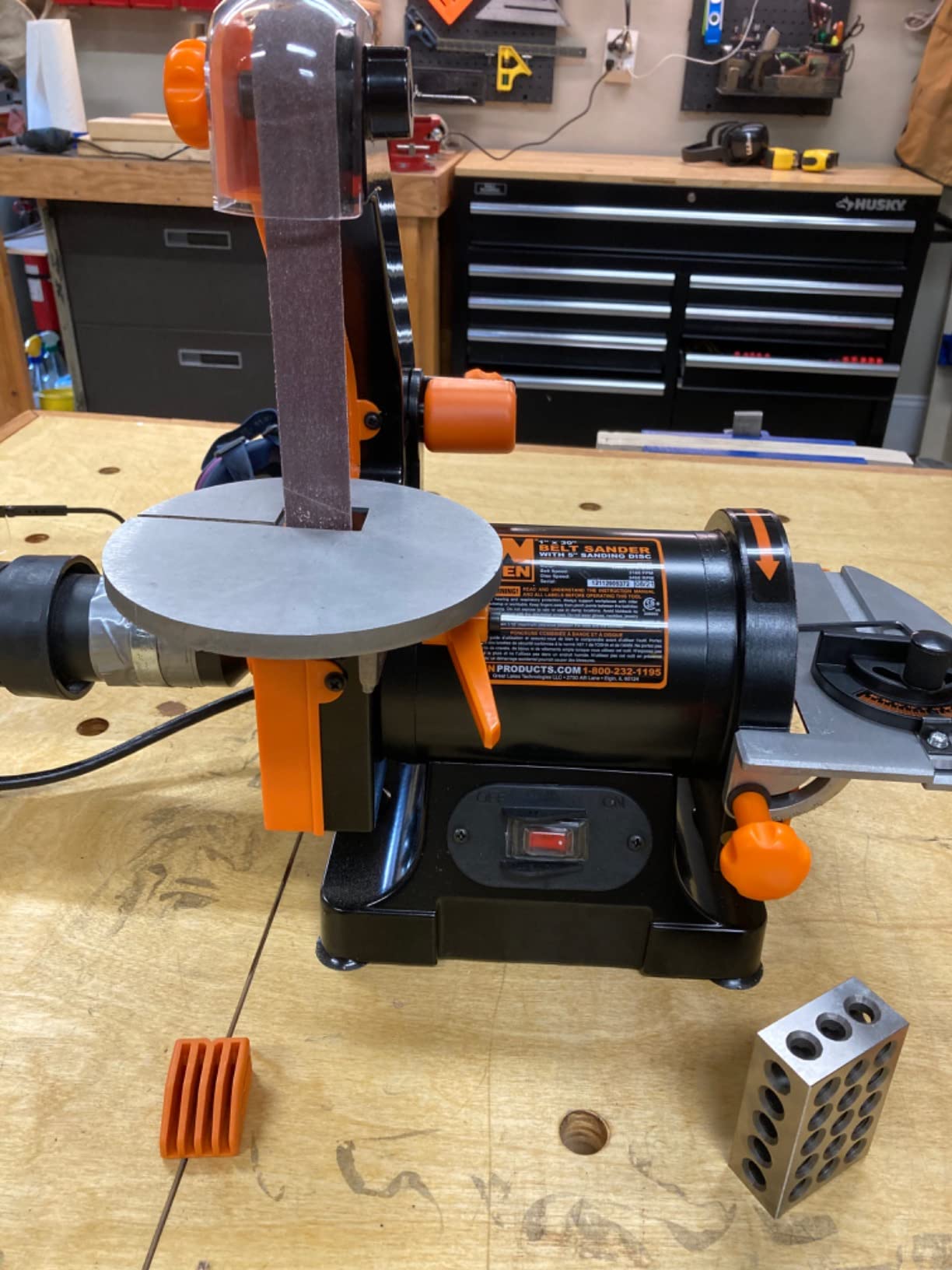
The WEN 6515T is the machine most people end up on and it earns the spot for a simple reason: the belt tracks, the base does not walk, and 1×30 belts cost almost nothing. Owners running kitchen knives, chisels, and small parts through it describe it as the value entry point, and 2706 reviews at 4.6 stars is a lot of settled history.
Its 2.3 amp motor puts out 3160 FPM on the belt and 3450 RPM on the 5 inch disc. That is fixed, not variable, so you control heat by changing pressure and pass length rather than by turning a dial.
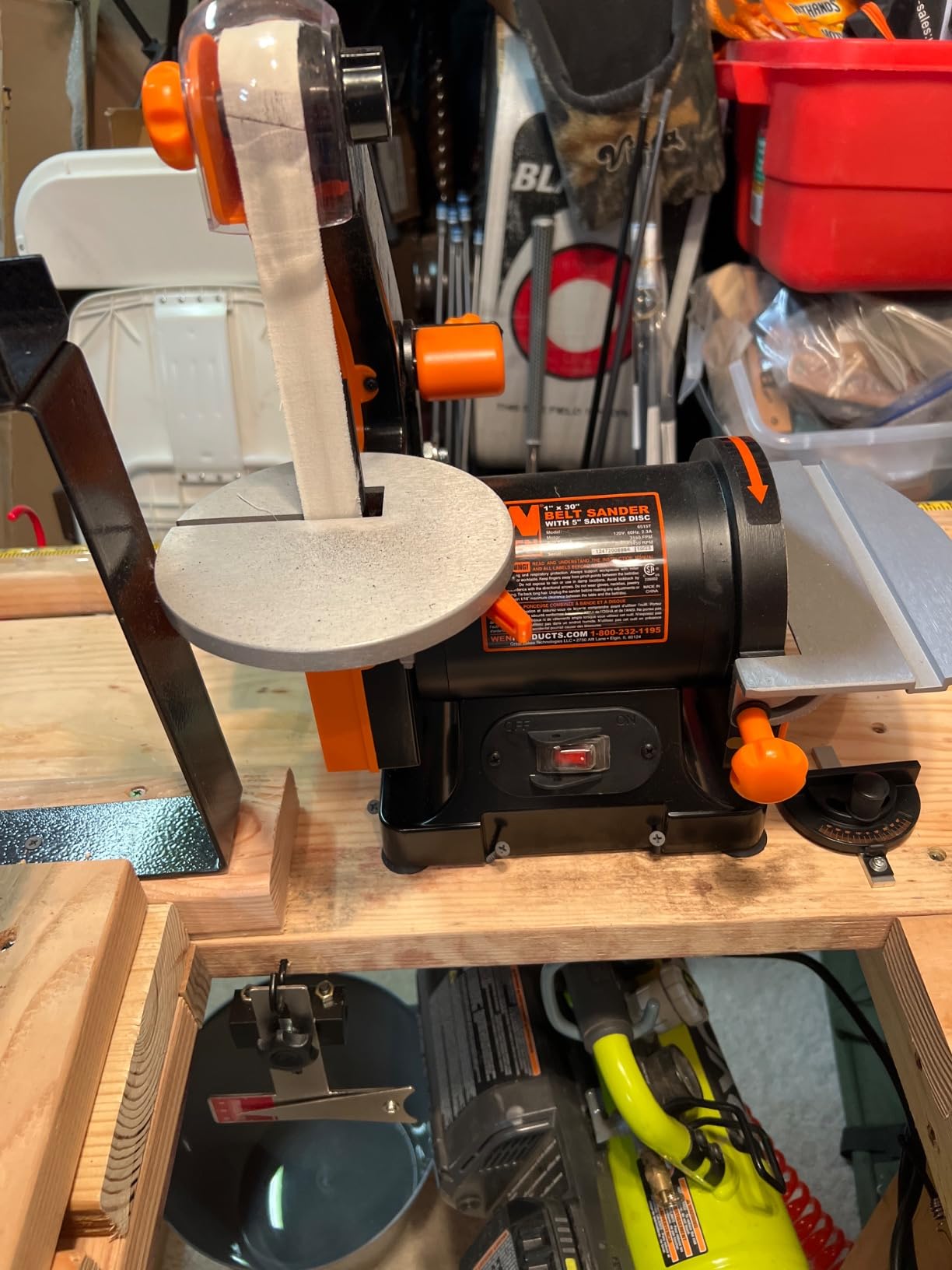
The two things reviewers complain about most are physical rather than electrical. The table levers, belt shield, and dust plate are moulded plastic, and the disc table and miter gauge are not accurate enough for precision bevel work, which means a jig or a guide is a must. The adhesive-backed disc is also stubborn to change.
Two separate dust ports are genuinely useful if you own a shop vacuum, and reviewers note that the port alone does nothing without a collection system. The rubber feet and heavy base handle the walking problem well on a normal bench.
What this belt sander does well on knives
Reprofiling, thinning near the tip, and simple single-bevel kitchen knives are all within reach. Owners regularly use it to bring a dull edge back to where hand finishing can take over.
Where it will frustrate you
Fixed speed and a short 1 inch belt limit it on larger chef knives and on any job that needs a long, flat, consistent bevel pass. If those are your knives, look at a 2 inch belt machine instead.
2. BUCKTOOL BG2600 2×42 – Best Value Belt and Grinder Combo
BUCKTOOL 2×42″ Belt Sander 6″ Bench Grinder Combo for Metalworking,3.5A
2x42 belt plus 6 inch grinder
1/3 HP induction motor
4480 FPM belt speed
CSA compliant
Pros
- Wide 2x42 belt for long flat passes
- Cast iron base cuts vibration
- Tilts 0-90 degrees and swivels
- Quick-release belt change
- LED work light
Cons
- Fixed speed with no variable control
- Minimal instructions for assembly
- Dust collection is limited
- Belt change can require moving the work table
The BG2600 is the machine to buy if a 1 inch belt feels cramped. A 2 by 42 inch belt gives you a long, stable work area for full-length bevel passes on a chef knife, and at 4.5 stars from 1257 owners it holds its value.
The 1/3 HP induction motor is the part to notice. Induction motors keep their speed under load instead of bogging, which reviewers single out as a reason this machine feels more solid on metal than cheaper universal-motor sanders of similar size.
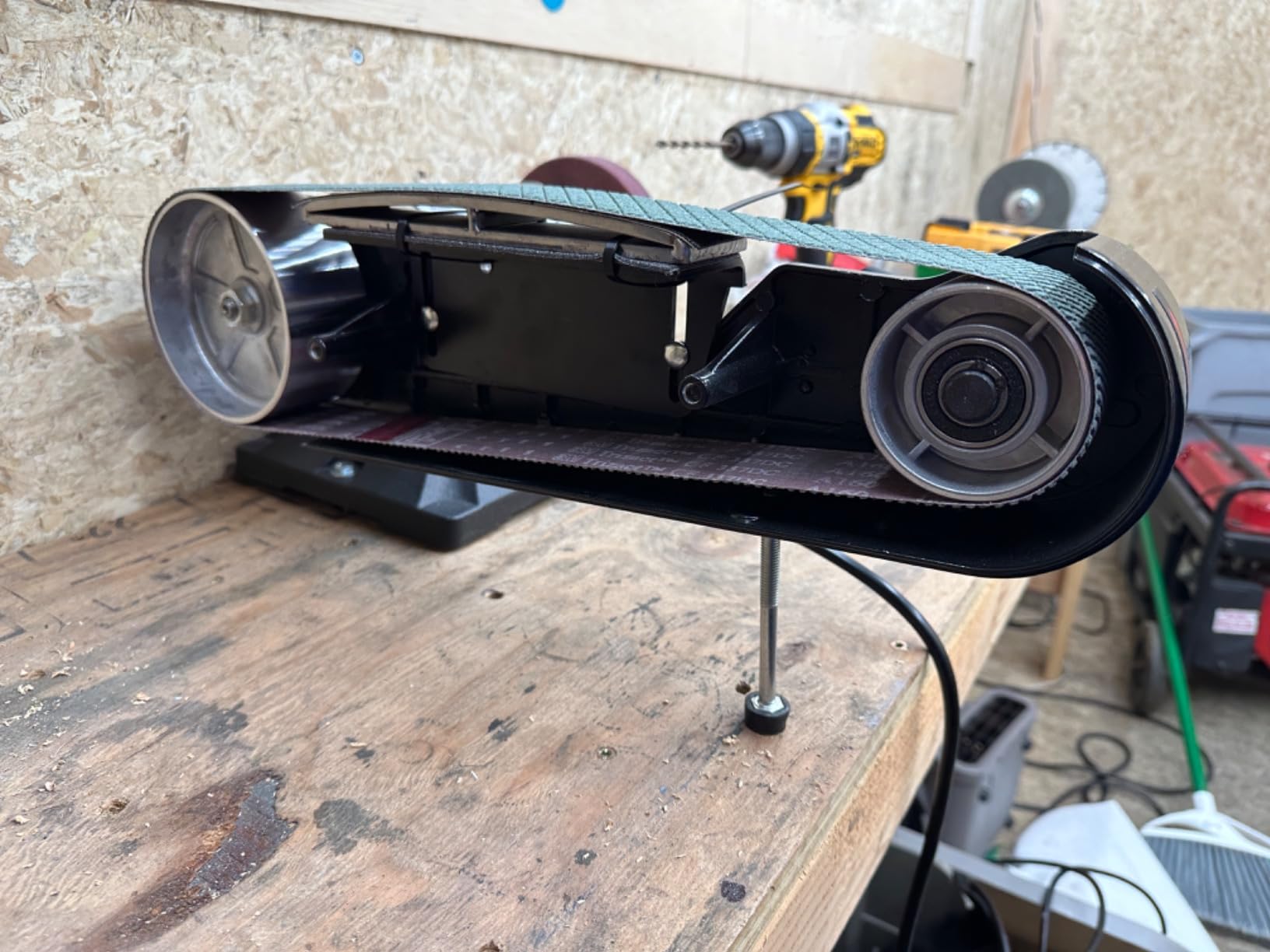
The belt tilts from 0 to 90 degrees and the whole housing swivels between horizontal and vertical positions, so you can grind a knife flat or stand the belt up for shaping. The quick-release tension and tracking mechanism is a real time saver when you are swapping grits.
The complaints cluster around finishing rather than function. There is no variable speed, the dust port layout does not match other brands, and on some variants the belt change means moving or removing the work table. The instructions are thin for first-time assembly.
Who this machine suits
Makers working on full-size kitchen knives who want a flat, straight, repeatable bevel pass rather than curves. The long belt and the LED work light make the grind line easy to follow at speed.
What you give up
Speed control. At 4480 FPM with no dial to turn, you have to manage heat purely with technique, so keep passes short and work on the slack belt section when the steel starts to discolour.
3. SI FANG Mini Belt Sander – Best for a Crowded Hobby Bench
SI FANG Mini Electric Belt Sander Knife-Sharpener Small Bench Grinder
1.2 inch belt
7 speed settings from 4000-9000 RPM
4.3 pounds
Stainless steel body
Pros
- Very small footprint on a crowded bench
- Seven speeds from polish to shaping
- Tool-free belt changes in about 15 seconds
- 20 belts across five grits included
- Converts to a mini bench grinder
Cons
- No safety guards anywhere on the machine
- Vibrates and walks unless clamped
- Belt only about 1.5 inches wide
- Included belts are entry grade
This is the desktop sander reviewers most often recommend in the group for small knives, jewellery work, and pencil-scale craft pieces. It weighs 4.3 pounds and measures under 5 inches on each side, so it disappears into a corner of the bench.
Seven speed settings from 4000 to 9000 RPM is unusual at this size and genuinely useful. Reviewers use the low end for polishing and the high end for taking steel off, all on the same belt.
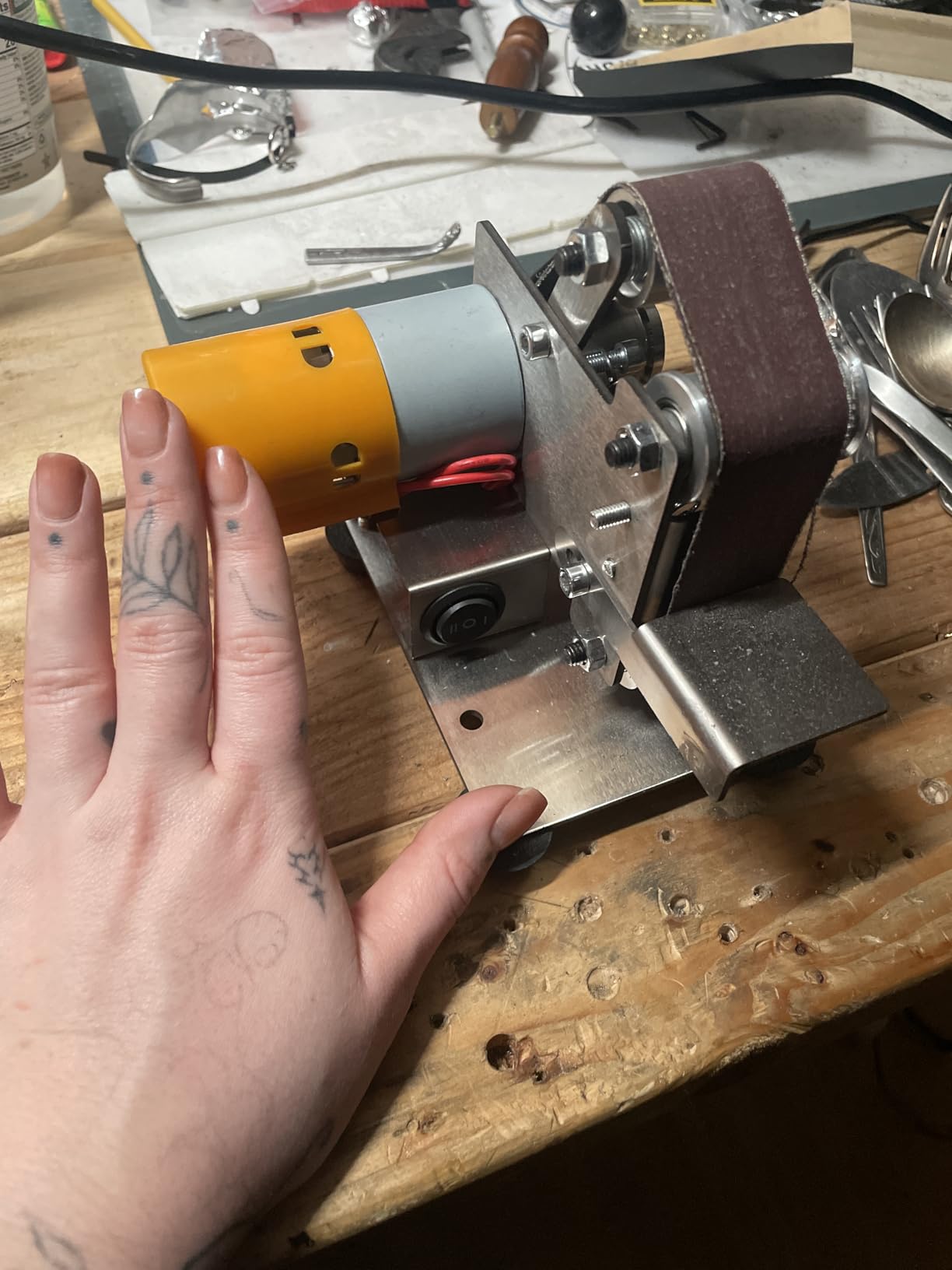
Twenty belts in 120, 320, 600, 800, and 1000 grit are in the box, and switching takes about 15 seconds with no tools. The adjustable worktable angle and the option to fit a grinding wheel or cotton cloth wheel make it more than a sharpener.
Now the warnings. There are no guards anywhere on the machine, it vibrates enough to walk across an unsecured bench, and some owners have reported exposed wiring at the side switch. The included grinding wheel and shaft are entry grade and drive real vibration.
Best use for this machine
Pocket knives, small utility blades, and edge touch-ups on already-ground steel. It is not a material removal machine and pretending otherwise wastes belt life.
Where it falls short
A belt roughly 1.5 inches wide will not follow the length of a 10 inch chef knife, and the absence of guards means eye protection is entirely on you. Mount it to a board before you switch it on.
4. VEVOR BG6 Belt and Disc Combo – Best for Grind-Line Visibility
VEVOR 2IN1 2″ Belt Grinder for Knife Making, 6″ Belt Sander, 3450RPM Belt and Disc Bench Sander 90° Belt Holder with Sturdy Base and LED Working Lamp
Belt and disc combo
250W pure copper motor
3450 RPM disc speed
27 pounds
Pros
- Rubber feet and heavy base stay put
- Angle-adjustable tables for bevel work
- LED lamp shows the grind line clearly
- Strong value for the feature set
Cons
- Included belts and discs wear quickly
- Motor spin-up is slow
- Small workplate forces a homemade upgrade
- Vibration is strong on some machines
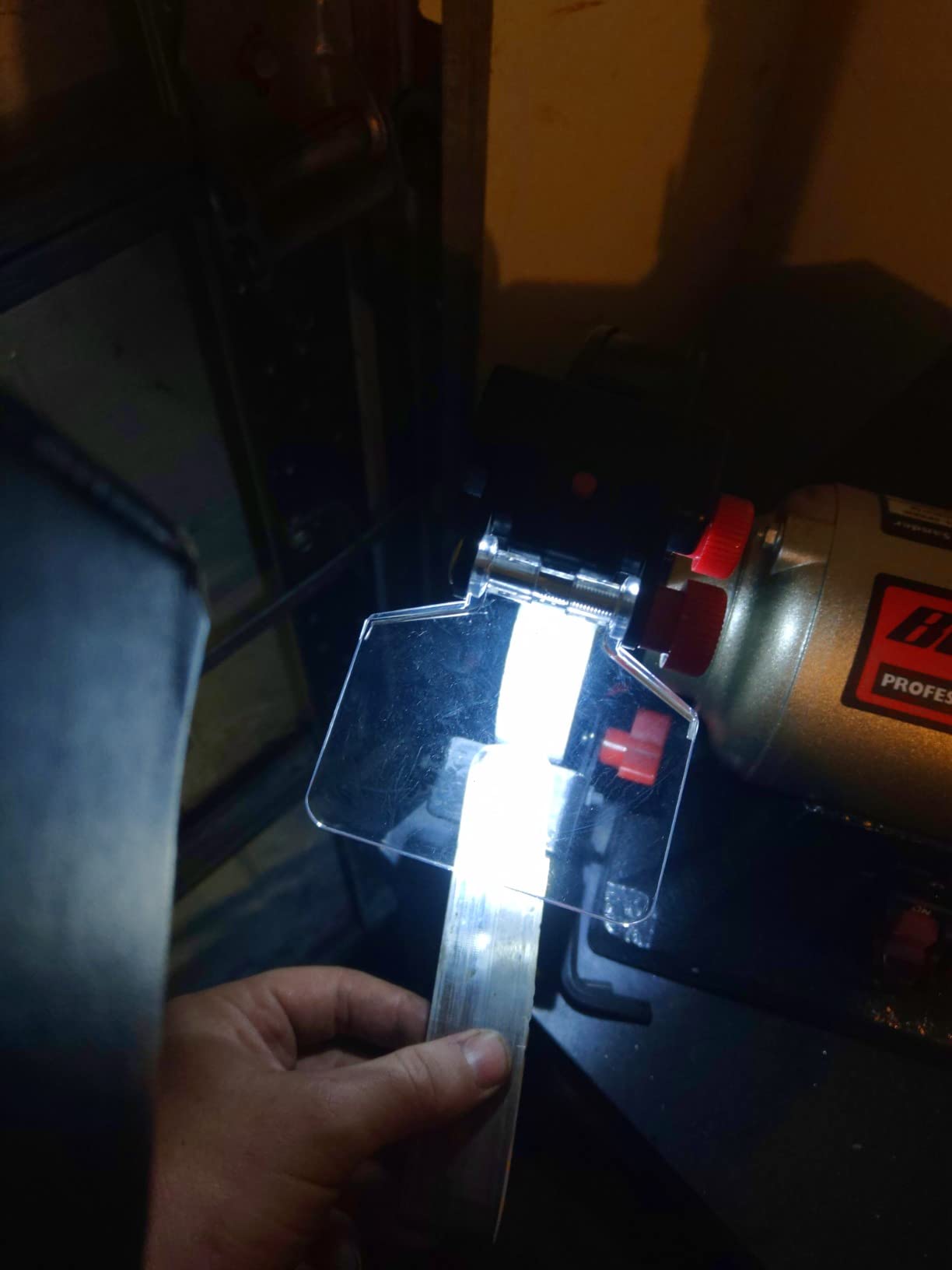
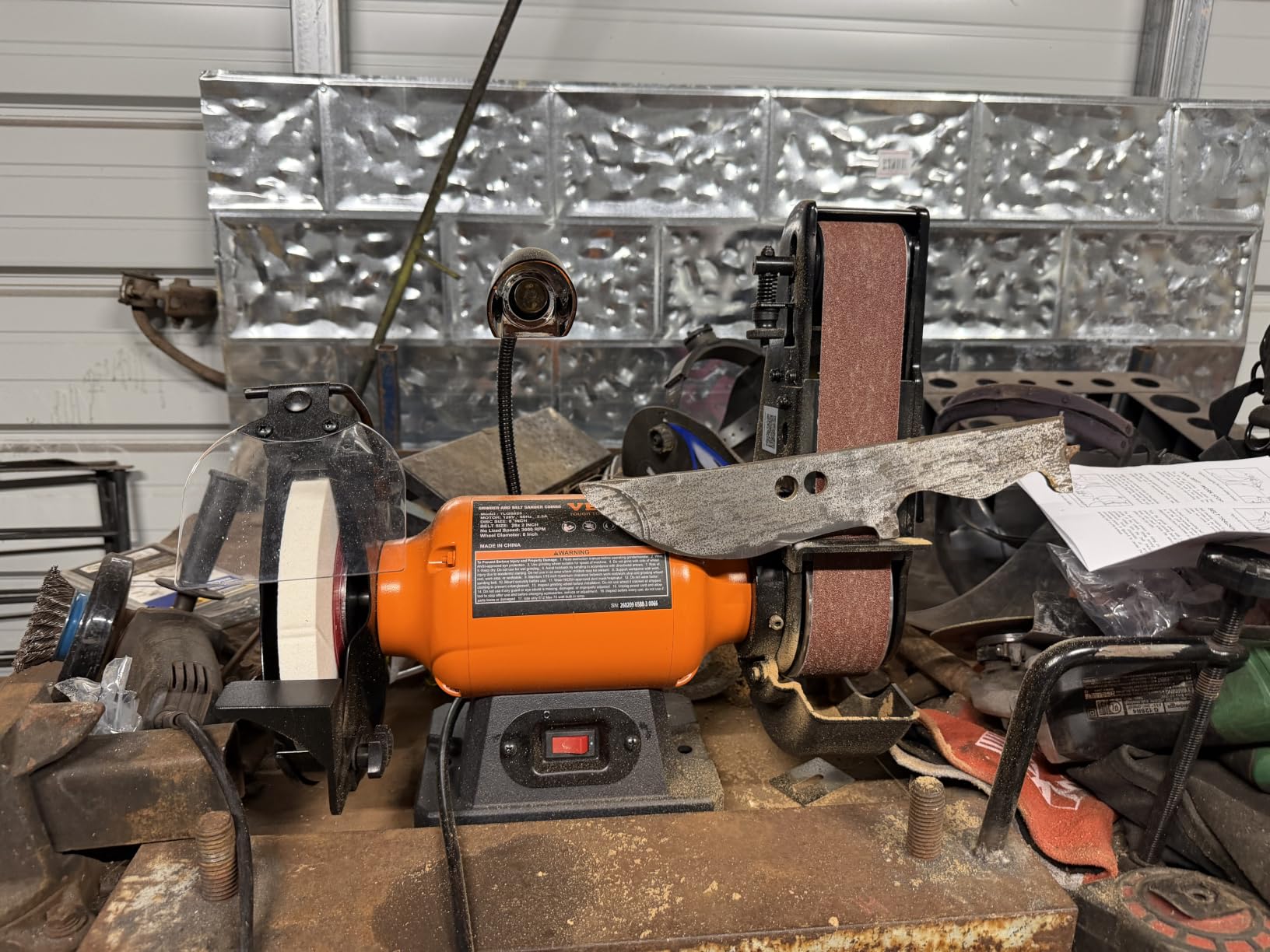
The BG6 is a steel-framed belt and disc combination built for both horizontal and vertical belt sanding, and the LED working lamp is the feature owners mention most. When you are trying to see whether a bevel is flat, light on the grind line is worth a lot.
Rubberized base pads and a 27 pound frame keep it from wandering, and the disc table tilts to 45 degrees with a miter gauge included. The detachable cooling sink tray is a thoughtful touch for wet grinding work.
Where it loses points is delivery quality and refinement. The 250W pure copper motor has a slow spin-up, the workplate is small enough that many owners fabricate a larger one, and the included consumables wear out fast.
Some reviewers report cold solder joints or loose switch connections out of the box, strong enough vibration to need a custom mount, and thin documentation. At 4.1 stars it sits near the bottom of the ratings in this lineup.
What this machine is good at
General sharpening, small shop work, and any job where you want a stable platform and a light on the work. The adjustable tables give you enough range for simple bevel work.
Why it is not the first choice
Slow spin-up and heavy vibration are a poor pairing with precision work. If you cannot bolt it down, the grind line will move more than you would like as you try to keep a steady angle.
5. VEVOR JLD10-8 VFD Belt Grinder – Best Variable Speed Control in the Lineup
VEVOR Belt Grinder Sander, 30 x 1-Inch Variable Speed Belt Polisher with VFD, 550W Polishing Grinding Machine with 2 Grinding Moulds & 3PCS Sanding Belts for Metalworking, Knife Making
550W pure copper motor
VFD stepless speed control
1x30 belt at 26 m/min
17.4 pounds
Pros
- Stepless VFD speed control
- 550W motor holds power under load
- Quick switch between platen and wheel
- Compact steel frame with low vibration
- Runs quietly for its power
Cons
- No dust collection built in
- Reverse tracking less reliable than forward
- Tricky belt tracking out of the box
- Limited instructions
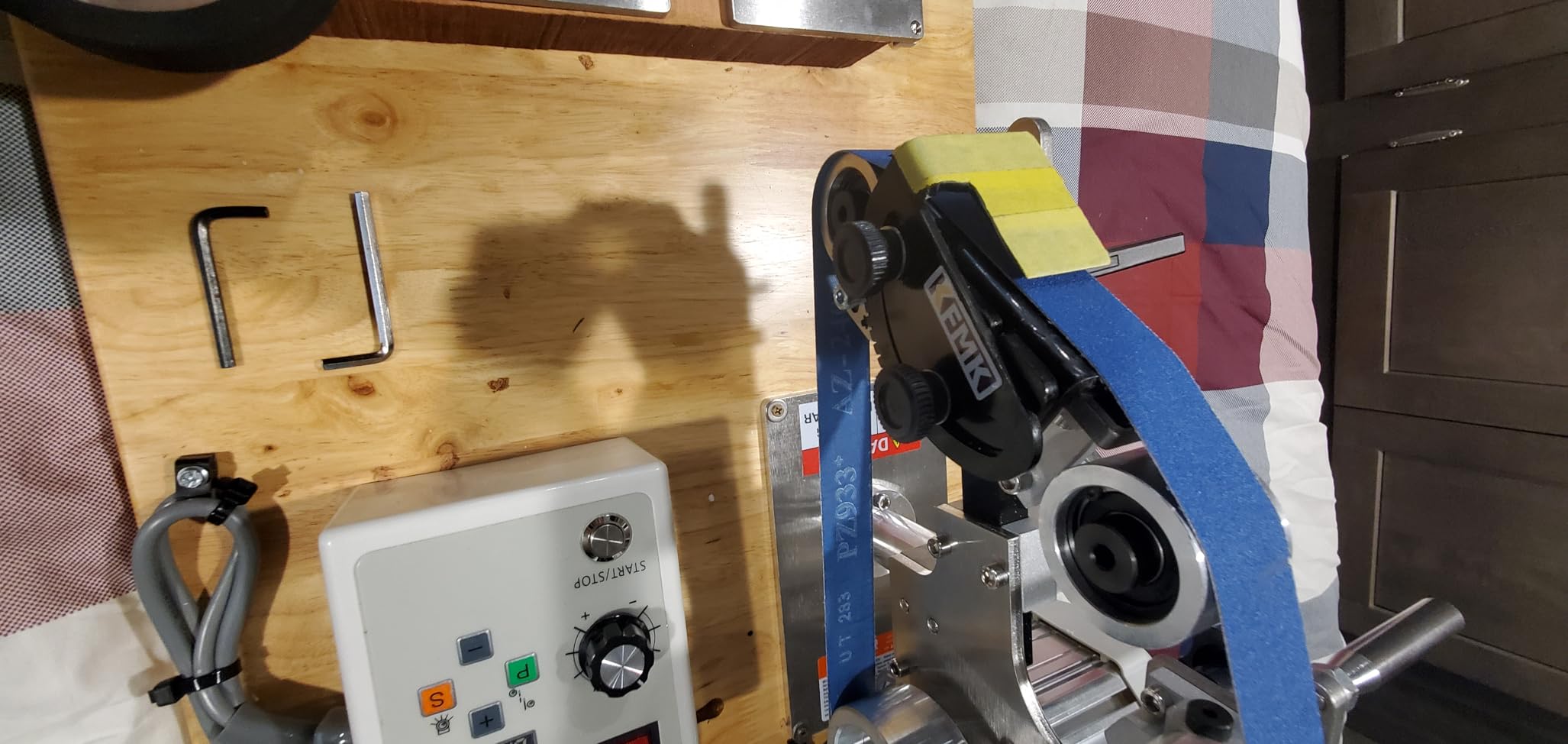
Variable speed is the feature that separates this from the pack, and reviewers describe it in practical terms: drop the RPM for a finishing pass after a fast grind, push it higher for shaping, all on the same 1×30 belt. That is exactly the control knife makers ask for.
The drive is a VFD, which gives stepless adjustment rather than stepped settings. The 550W pure copper motor runs at 5500 RPM and the belt line speed is 26 m/min, with a reinforced steel body that keeps tracking stable and vibration low.
Two grinding modes are supported, a circular wheel and a flat platen, and it runs vertically or horizontally with a detachable workbench. Three belts at 100, 180, and 240 grit come in the box, along with a flat grinding rack and an M6 key.
The gaps are consistent across reviews: no dust collection, less reliable tracking in reverse, and an initial tracking setup that needs patience. The instructions are limited, so configuration changes mean studying photos.
Why speed control matters on knife steel
Fine grits generate heat faster than coarse ones. A machine where you can drop the speed as the grit gets finer lets you finish without walking away from a blade that has turned blue.
What you need to plan for
Set aside time for tracking on day one and budget for a dust collection solution, since none is built in. After that, the compact footprint and full-size 1×30 belts suit a small shop well.
6. RIKON 50-161VS – Best 1×30 with Variable Speed and a Warranty
RIKON 50-161VS 1 x 30-Inch Belt / 6-Inch Disc Variable Speed Sander
1x30 belt and 6 inch disc
2000-3400 RPM
1909-3248 SFPM
5 year warranty
Pros
- True variable speed in the 1x30 class
- Heavy 30 pound base resists vibration
- Belt and disc tables tilt 0-45 degrees
- Separate dust ports
- Base mounting holes
- 5 year warranty
Cons
- Over 30 pounds so not portable
- Not a dedicated knife grinder
- 2 amp draw suits lighter removal work
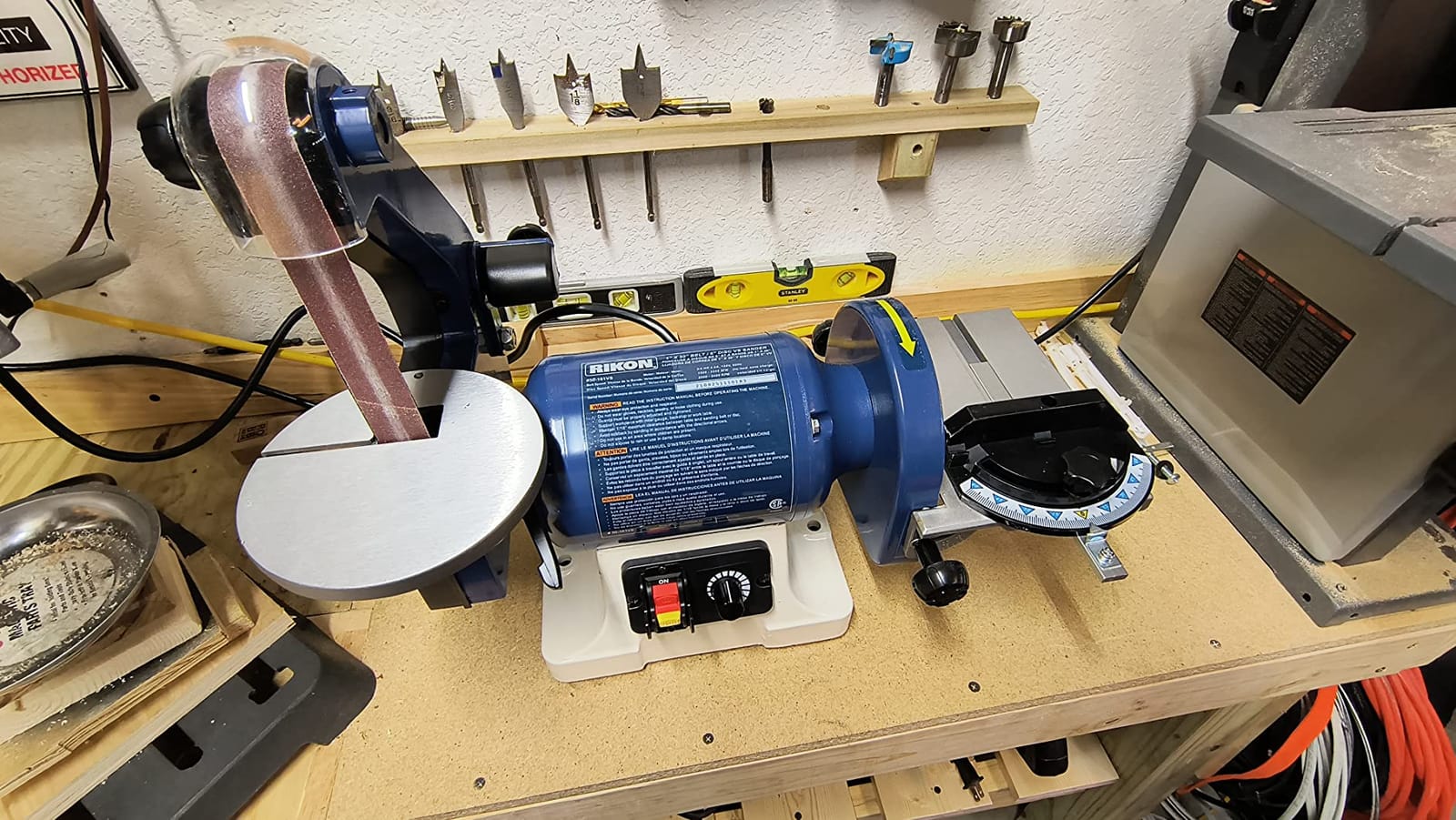
The RIKON 50-161VS is unusual because it combines a 3/4 HP motor with genuine variable speed from 2000 to 3400 RPM, a 30 pound cast base, and dual dust ports, then backs all of it with a 5 year warranty. Reviewers treat the weight as the trade-off rather than a flaw.
Both the belt table and the disc table tilt from 0 to 45 degrees, and a miter gauge is included for angled work. Belt speed runs from 1909 to 3248 SFPM, which is a low enough floor to finish on without a separate machine.
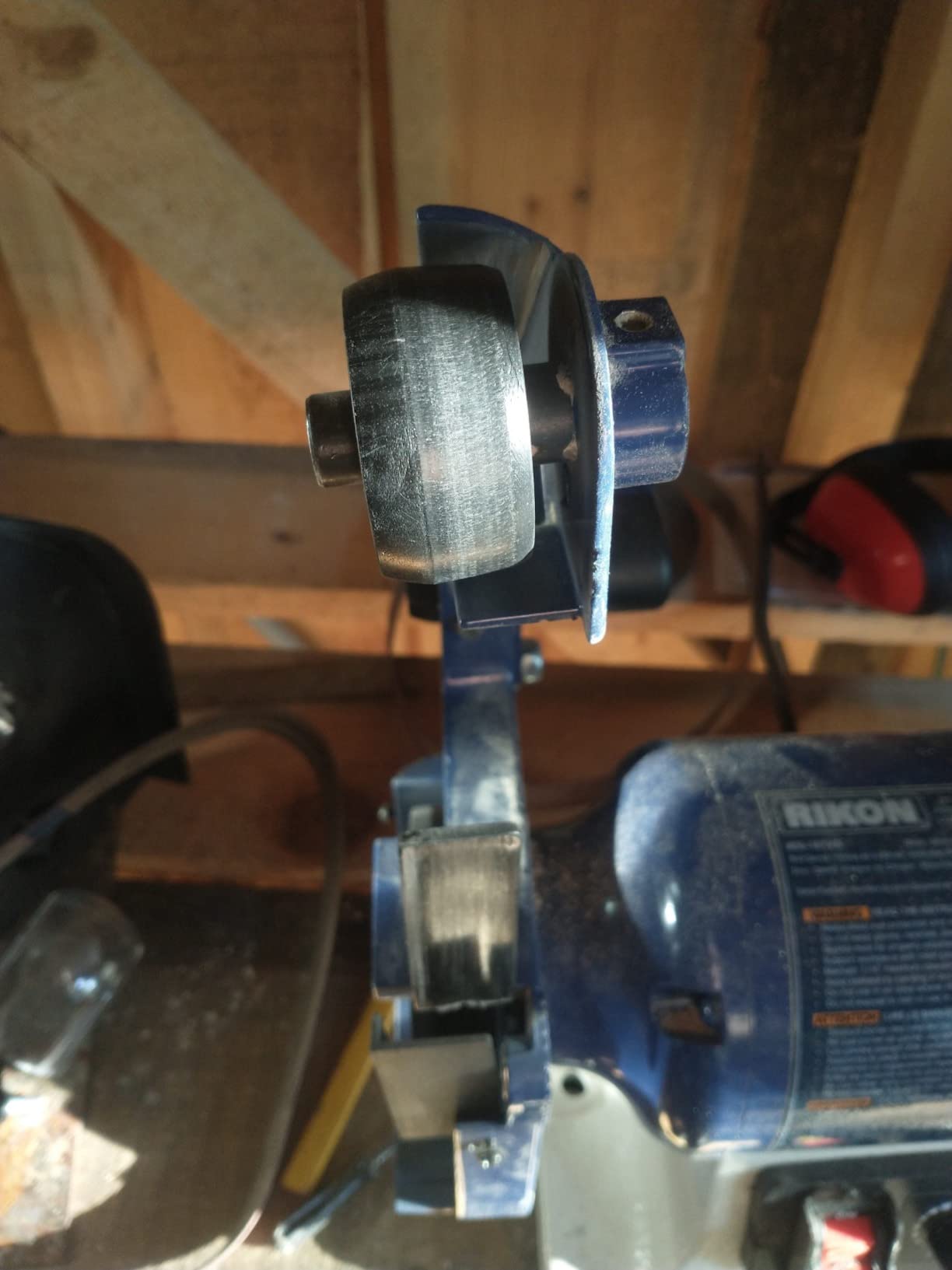
Base mounting holes let you secure it to a bench, which is what you should do with any machine in this class. The two Amp draw is the one spec to read carefully, since owners note it handles lighter removal work better than aggressive grinding.
It is not a dedicated knife grinder, so bevel work still needs a jig or guide. But for a maker who wants predictable angles and a slow finishing pass in the same machine, the combination is hard to find elsewhere.
Where this machine earns its place
Home shops that want one machine for sharpening, hand tool work, and light metal work, and who value a warranty from an established power tool maker.
What you should know before buying
It weighs more than 30 pounds and needs a permanent bench position. If your space is temporary or you want to move it between a garage and a kitchen, this is the wrong machine.
7. Kongkee Mini Belt Sander – Best for Set-Angle Set Work
Kongkee Mini Belt Sander, 7-Speed Knife Sharpener, 15-Degree Grinder
Fixed 15 degree belt angle
7 speeds with forward and reverse
Up to 9000 RPM
1.85 kg
Pros
- Fixed 15 degree angle for repeat bevels
- Forward and reverse for spark control
- Three-bearing layout for fast belt changes
- Small and light so it stores easily
- Quiet with good torque
Cons
- Wheels must be hand-started
- Low power bogs under pressure
- Specialty 1x14 inch belts are hard to source
- Accessory wheels will not stay on the shaft
The defining feature here is the fixed 15 degree belt angle. You cannot change it, and that is exactly why some makers like it: every bevel comes off the machine at the same angle without a guide, a jig, or a measuring check.
Seven speed settings with forward and reverse rotation give you real control over spark direction, which matters when you are working close to your body. It runs up to 9000 RPM and a three-bearing design makes belt changes quick.
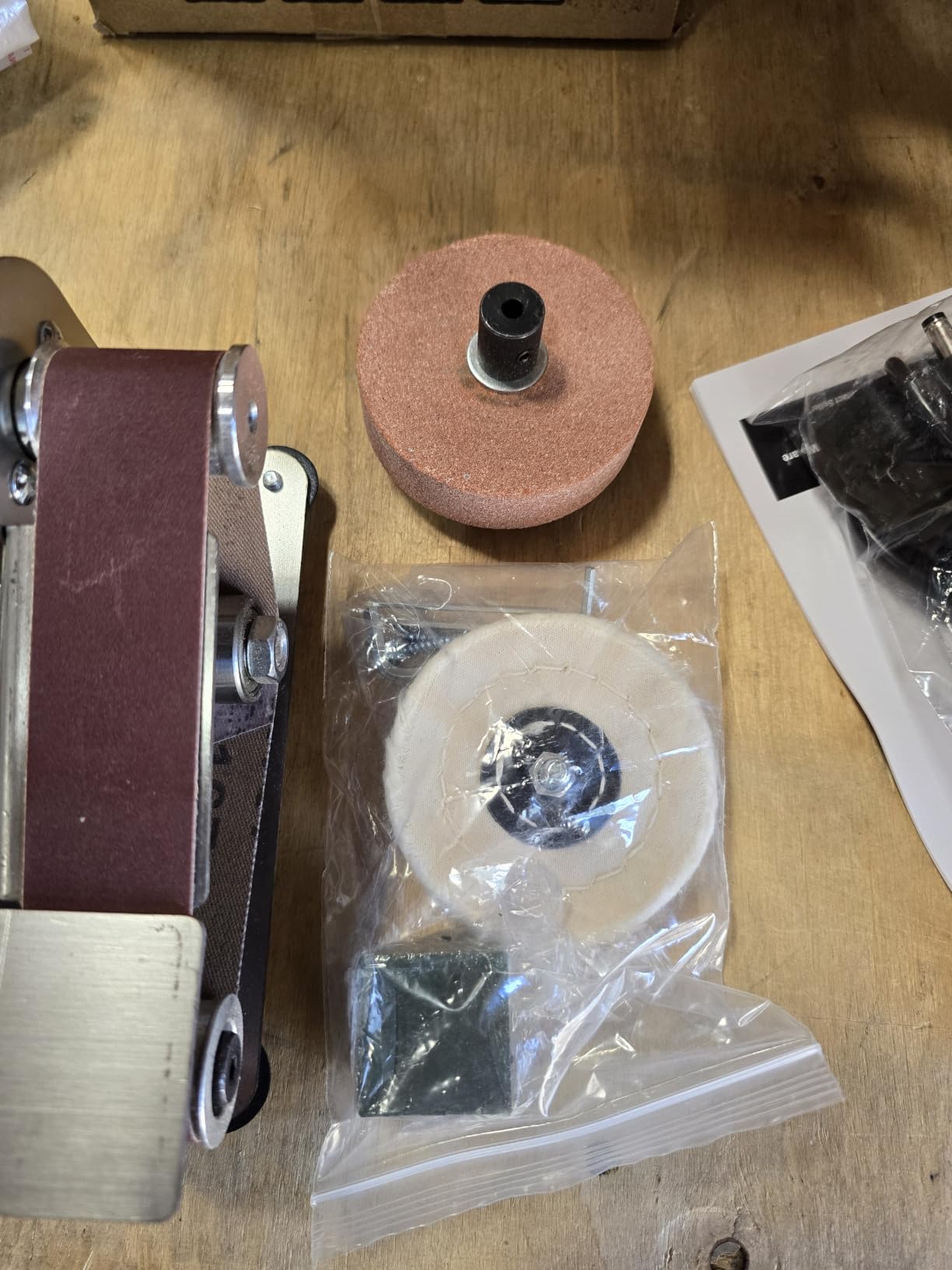
At 1.85 kg it stores between uses, and owners report low noise and surprisingly decent torque for a machine this small. It is also fine for metal, wood, and resin work, which broadens its use beyond knives.
The critical reviews are blunt. Low power bogs under real pressure, the wheels must be hand-started, and the accessory grinding and cloth wheels will not stay on the shaft. The 1×14 inch belt is a specialty size that is hard to source later.
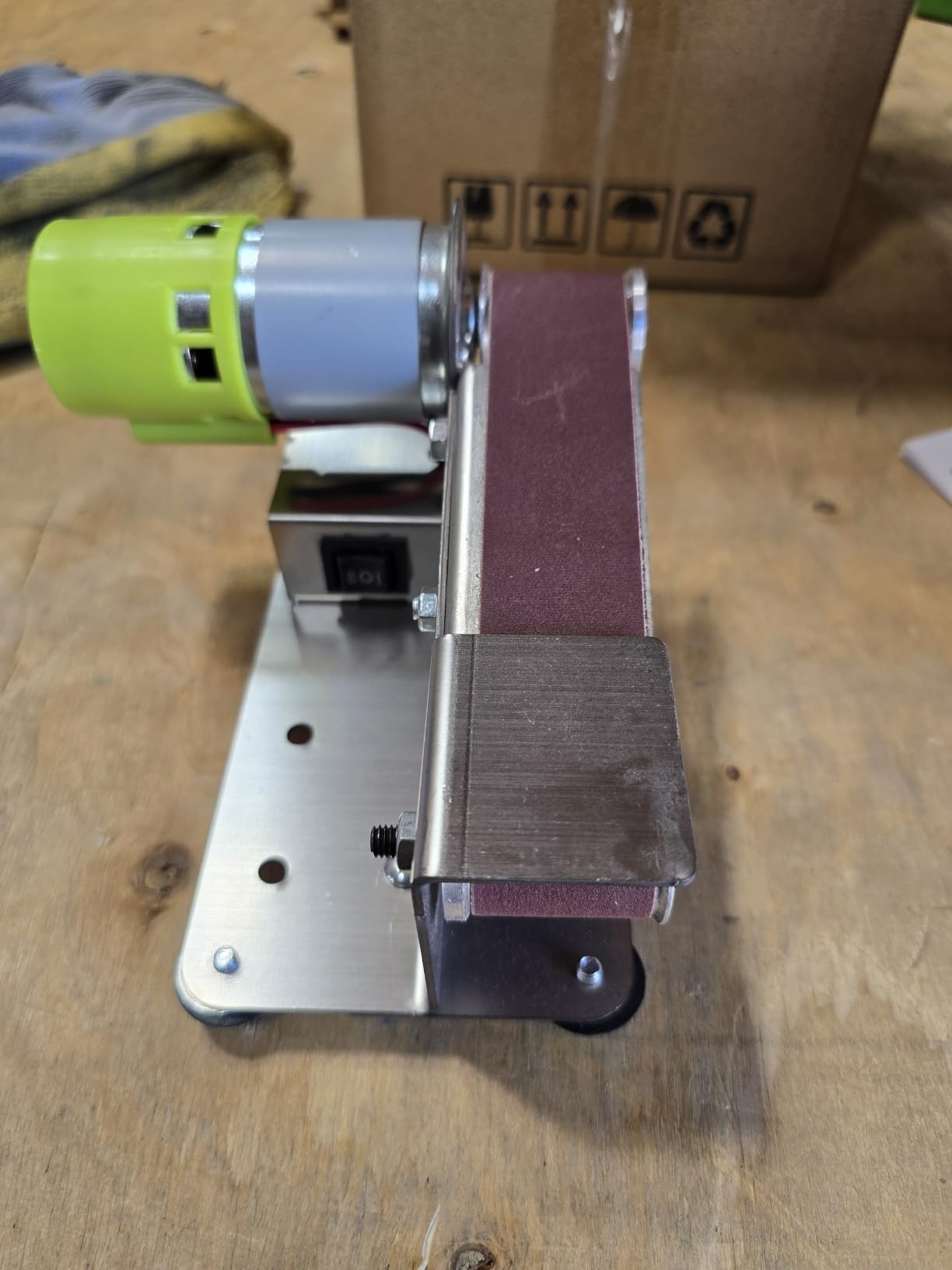
Why the fixed angle helps
Repeatability without accessories. If you are grinding 15 degree bevels on small blades, the machine enforces the angle for you, which removes the most common beginner error.
Why it stays a hobby tool
Hand-starting the wheels and the low power ceiling make it unsuitable for shaping or thinning. Several owners describe it as a fine hobby tool rather than a production grinder, and we would agree.
8. JET J-41002 – Best Cast Iron Platform for Heavy Removal
JET 2″ x 42″ Belt and 8″ Disc Sander, 3/4 HP, 1Ph 115V (Model J-41002)
2x42 belt and 8 inch disc
3/4 HP 115V motor
60 pounds
2 year warranty
Pros
- 60 pound cast iron build keeps the belt steady
- Removable platen for handle profiling
- Long 2x42 belt for large flat passes
- Locking miter gauge on both sides
- Adjustable dust chute
Cons
- Heavy and bulky at 60 pounds
- Fixed speed with no variable control
- Still needs a separate angle guide
- Premium price in its class
The JET J-41002 is the heaviest machine in this list and the one owners most often describe as shop-grade equipment. A 60 pound cast iron body on a steel base does not move when you push a blade into it, and that flatness is the whole point.
The removable platen is the feature knife makers care about most. Take it out and the belt follows a curve, which is what makes profiling knife handles and odd shapes possible. The long 2×42 belt handles the opposite job, large flat grinding passes.
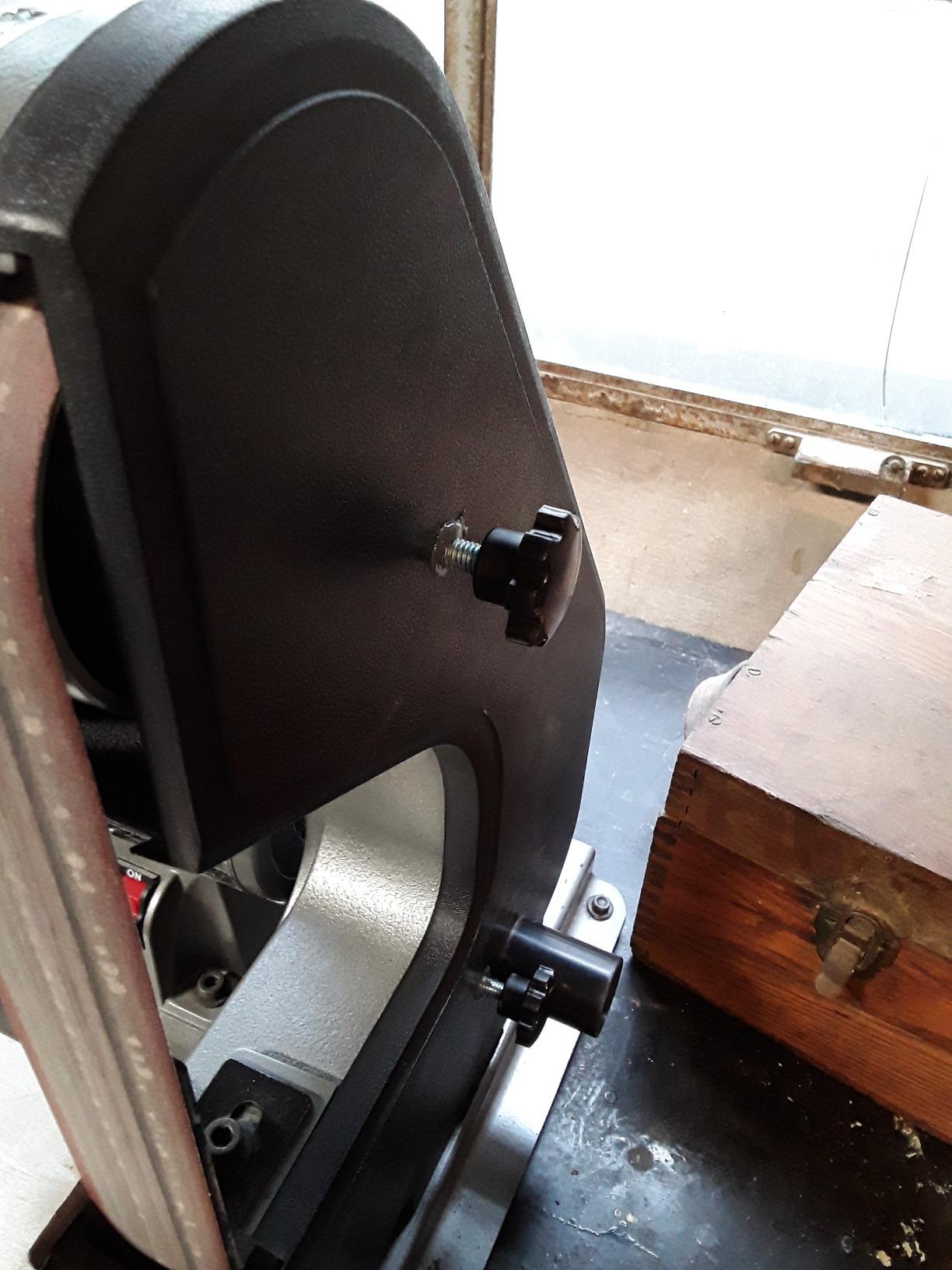
A deluxe miter gauge turns and locks at 45 degrees from either side, which matters more than it sounds when you are alternating between two mirrored halves. The dust deflector and chute are adjustable for proper shop collection.
The limitations are honest ones. It is heavy and bulky enough to need a dedicated bench position, it runs at a fixed speed, and it is not a purpose-built knife sharpener, so an angle guide is still required for bevel work.
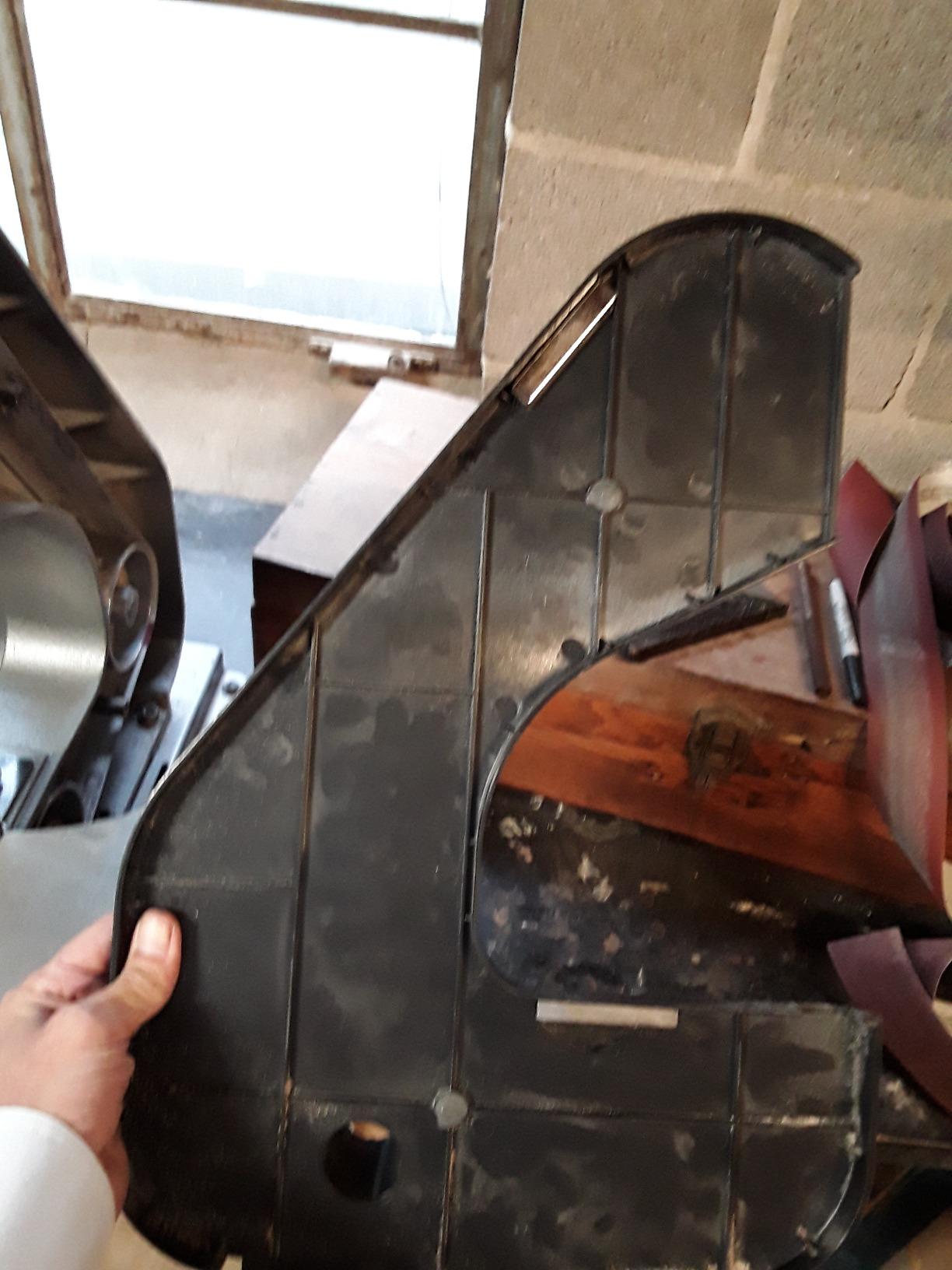
Where the rigidity pays off
Thick stock, high-carbon steel, and anyone chasing consistent bevel angles over many knives. When the machine does not move, the grind line does not wander, and the results are repeatable.
What to consider first
Fixed speed on a 2×42 belt running at this capacity means heat management is entirely on you. Work on the slack belt section, keep passes short, and finish by hand.
9. KFMK KFBD6242 – Best 2×42 with a Large Work Table
KFMK 2×42 in. Belt Sander & 6″ Disc Sander Combo, 3.5Amp Bench & 1/2HP Belt Sander for Woodworking, Metalworking & Knife Making, Sharpening
2x42 belt with 6-3/4 by 9 inch table
6 inch disc
3.5 amps
Pros
- Direct drive induction motor holds speed
- Generous 2x42 work table
- Vertical or horizontal belt operation
- Disc table to 45 degrees
- Full set of wrenches and hex keys included
Cons
- Fixed speed only
- Belt tracking needs setup on arrival
- Belt changes can mean moving the work table
- Limited dust collection
The KFMK KFBD6242 is the mid-point of this list: a genuine 2×42 belt, a direct drive induction motor, and a work table measuring 6-3/4 by 9 inches that reviewers call generously sized for knife work. That table size is the differentiator at this level.
The 1/2 HP direct drive induction motor runs at 3580 RPM and holds its speed under load rather than bogging. A 3.5 amp draw puts it on an ordinary workshop circuit without drama.
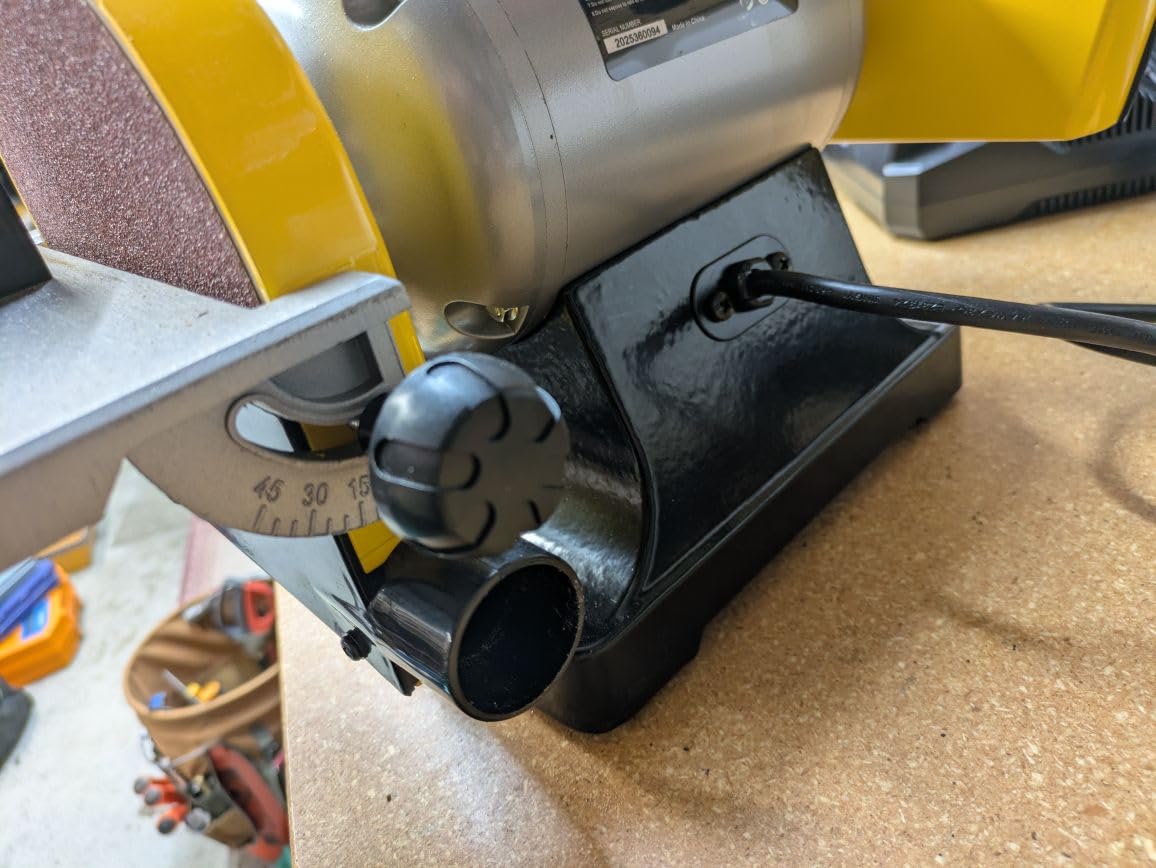
The belt runs vertically or horizontally depending on the workpiece, and the 6 inch disc table adjusts to 45 degrees. Included are a belt tool rest, a disc miter gauge, a combination flat wrench, and hex keys, so setup does not require a trip to the hardware store.
Buyers like the value in the 2×42 class. The listed drawbacks are consistent though: no variable speed, some tracking adjustment needed on arrival, belt changes that can involve moving the work table, and limited dust collection.
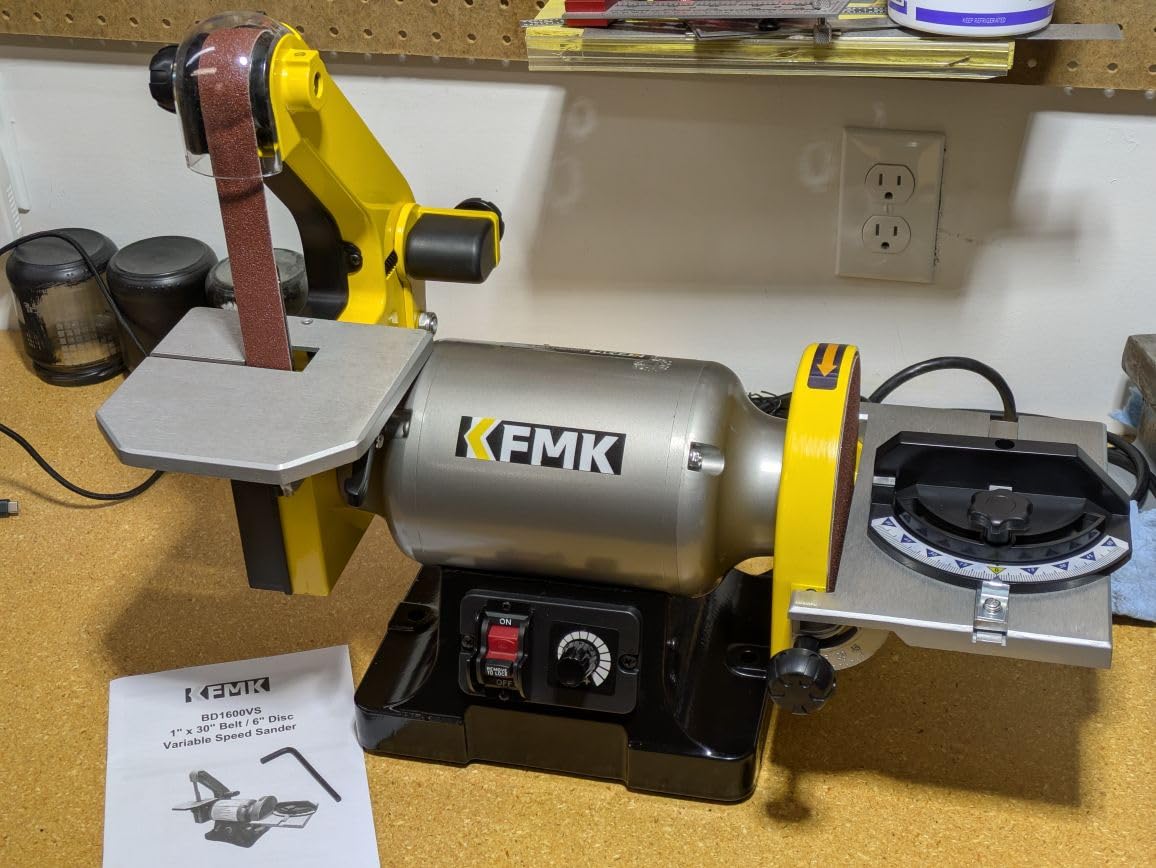
Who should buy this one
Hobbyists moving up from a 1×30 who want a bigger work area and an induction motor but do not need speed control. It handles both knife work and general metal and wood work.
Where the fixed speed bites
On finishing passes. Without a dial, your only lever is pressure, and pressure is the thing that generates heat. Plan on hand finishing the last few microns.
10. Podoy Mini Belt Sander – Best for Pocket Knives
Mini Belt Sander Knife Sharpener,110V Electric Grinder with 7 Speed Control
330mm by 15mm belt
7 speed control to 9000 RPM
3.4 pounds
Stainless steel body
Pros
- Small and light on bench space
- More power than the size suggests
- Belts install and remove very easily
- Seven speed control for finishing
- Removable footpad for bench mounting
- 10 belts and 2 dust covers included
Cons
- Must be bolted down for real work
- Entry level build quality
- Some units lack advertised adjustment
- Belt too small for larger blades
The Podoy is the one we would hand to someone whose kit is mostly pocket knives. Owners report more power than the size suggests on small blades, easy belt changes, and seven speed control that lets you slow right down for finishing.
It weighs 3.4 pounds, has stainless steel construction with a double bearing, and includes 10 abrasive belts at 330mm by 15mm plus two dust covers. A spring-loaded tension wheel keeps the belt tight without tools, and the worktable angle adjusts through a slotted wheel.
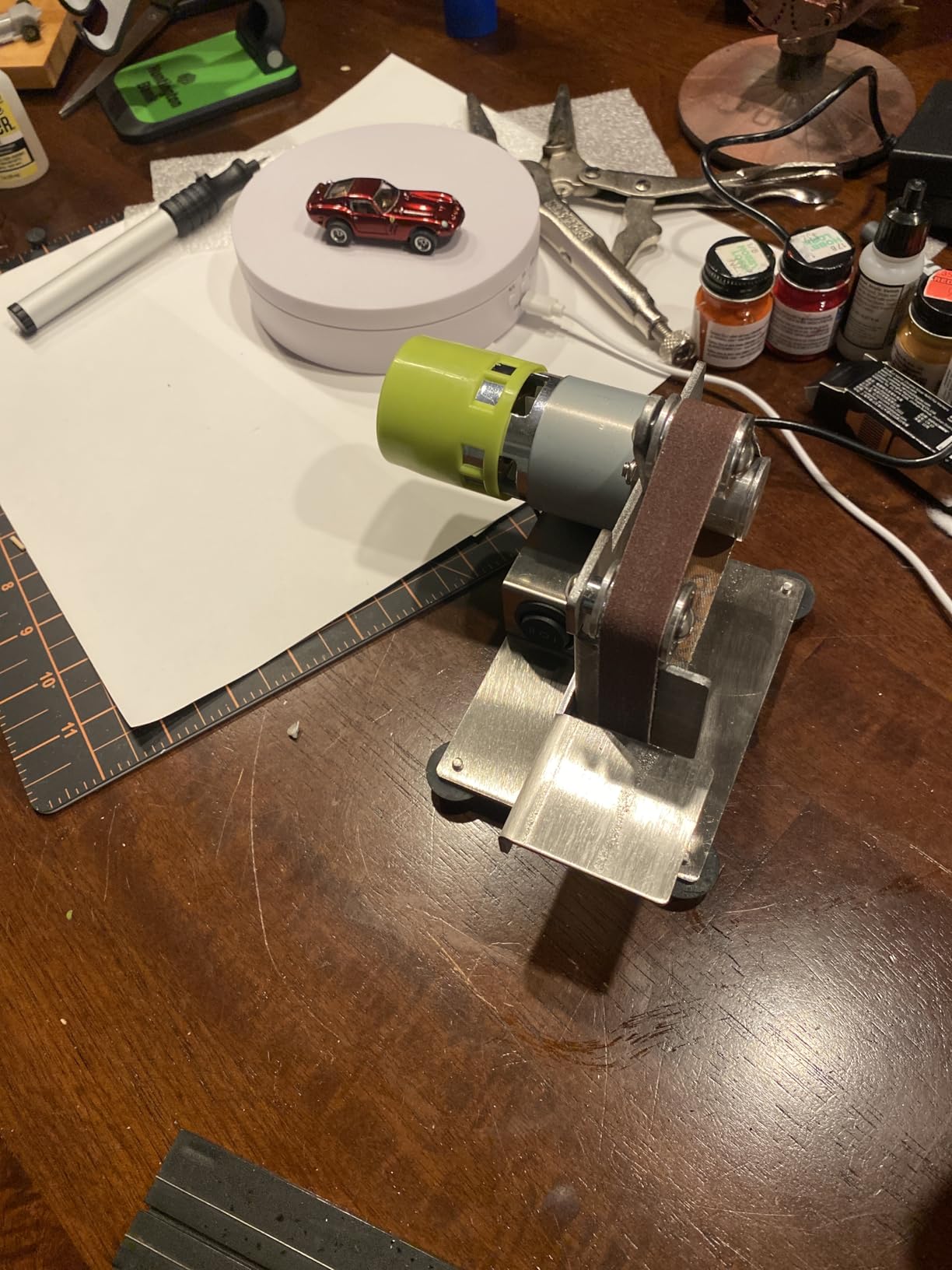
The most useful detail is the removable footpad. Take it off and screw the unit to a board or a bench, which is the near-universal owner recommendation because the machine will otherwise move under pressure.
There are real caveats. A minority of buyers report that the shipped unit lacks the adjustment features shown in promotional videos, the build is entry grade, and the belt is too small for anything larger than a folding knife.
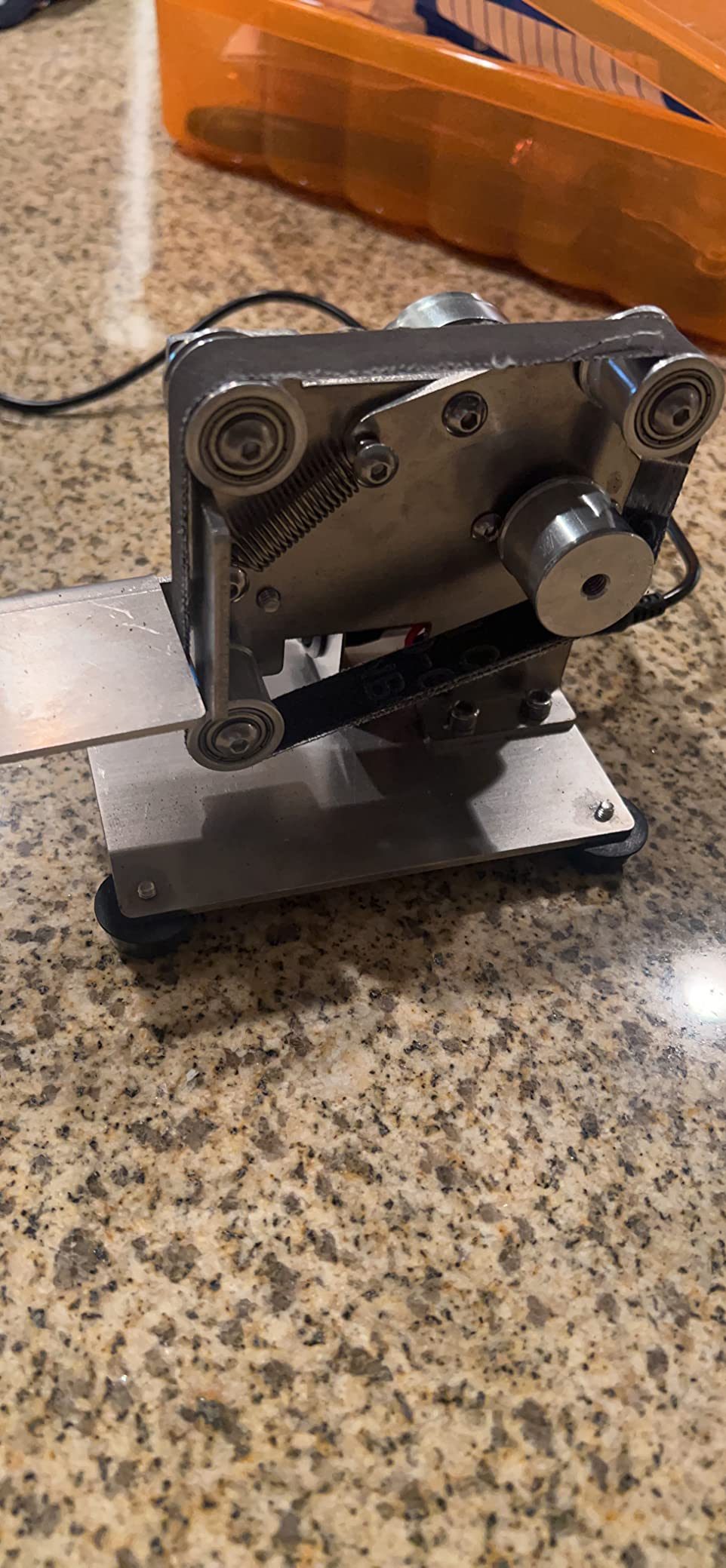
The case for it
It is a straightforward way to add a powered finishing step for folding knives, and mounting it to a board solves the only serious mechanical complaint.
The case against it
If your blades run past 4 inches, the belt will not cover them usefully. Read the specification carefully, because what arrives is not always what the demonstration video shows.
11. KFMK RBGS130V – Best Bundled Angle Guide Setup
1×30 Variable Speed Belt Sander with KSAG-5 & Forward/Reverse
VFD stepless speed
Push-button forward and reverse
KSAG-5 angle guide included
Welded steel frame
Pros
- Working forward and reverse switch
- VFD speed control to sharpening speeds
- KSAG-5 angle guide for repeat bevels
- Switches between platen and wheel quickly
- Rigid welded steel frame
Cons
- Tracking needs readjustment after reversing
- Some machines arrive with a mis-threaded platen hole
- Limited instructions
- Top speed higher than knife work needs
- No dust collection
This machine bundles the two things knife makers ask for most: a working forward and reverse switch and an angle guide. Owners describe the push-button reverse as better than machines where the feature exists but has been disabled in firmware.
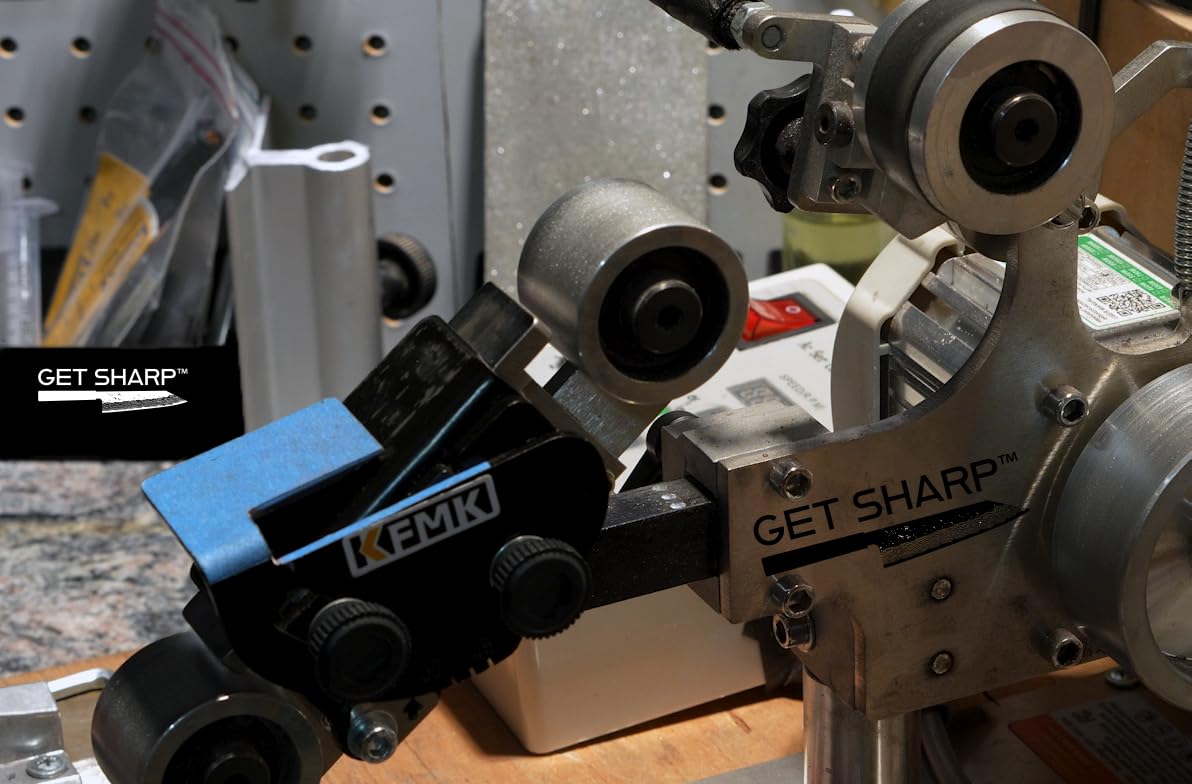
The welded all-steel frame is rigid enough to keep tracking stable, and the VFD gives stepless speed adjustment up to 5000 RPM. The KSAG-5 angle guide in the box is what makes bevel angles repeatable without buying a second accessory.
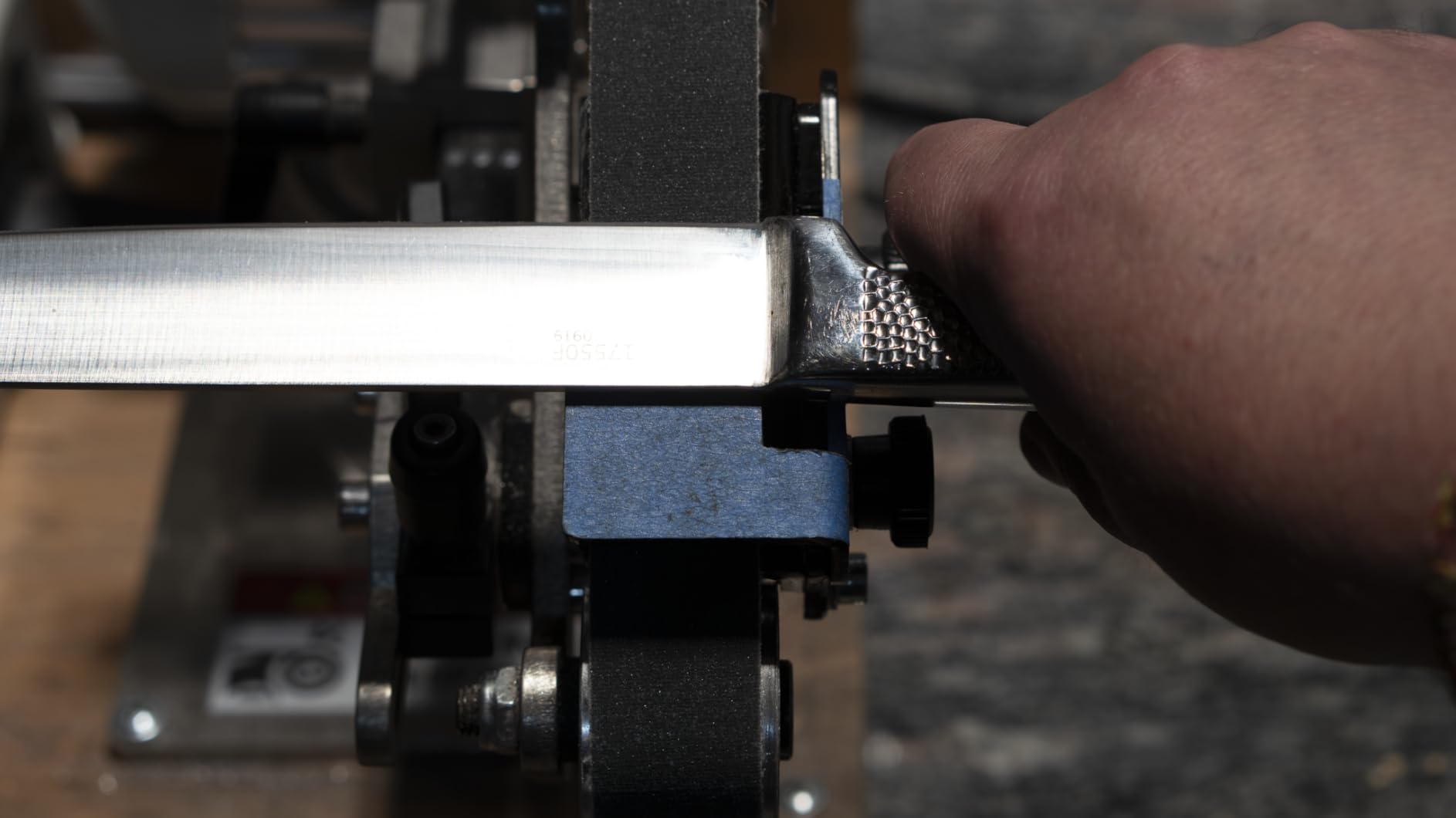
Contact wheel and flat platen are interchangeable, and dedicated work rests support horizontal and vertical operation. That covers flat grinding, hollow grinding, and contour shaping on one machine, which is rare in a 1×30 format.
The trade-offs show up in setup. Tracking needs readjustment after a direction change, particularly with the included belts, and some machines arrive with a platen mounting hole that needs tapping. Documentation is thin, and the included belts wear faster than quality aftermarket ones.
Why reverse direction matters
Running the belt edge-trailing on a forward pass and edge-leading on a reverse pass gives you two cutting directions. That helps with certain contours and keeps sparks pointed away from your hands on some setups.
What to set aside time for
Configuration changes take study, and the top speed is higher than most knife work needs, so plan on capping the dial. Budget for aftermarket belts, which most owners report lasting considerably longer.
12. Goldsand GD-SDJ-8 – Best for Quiet Running and Aftermarket Belts
Belt Sander Professional with Vertical and Horizontal Support, 30″ x 1″ Belt Size, 3 Grit Belts (100/180/240), Metal Wood Knife Sharpening, Adjustable Workbench
550W motor with VFD
Push-button belt reverse
1x30 zirconia belts
17.4 pounds
Pros
- 4.6 star owner rating
- Reverse works from a plain button press
- Speed control down to about 1700 RPM
- Very quiet with strong power
- Accepts Cubitron and Trizact belts
- Compact slack belt format
Cons
- Only 38 reviews so far
- No dust collection
- Tracking needs adjusting after reversing
- Rough edges and burrs on some parts
- Angle guides may not fit
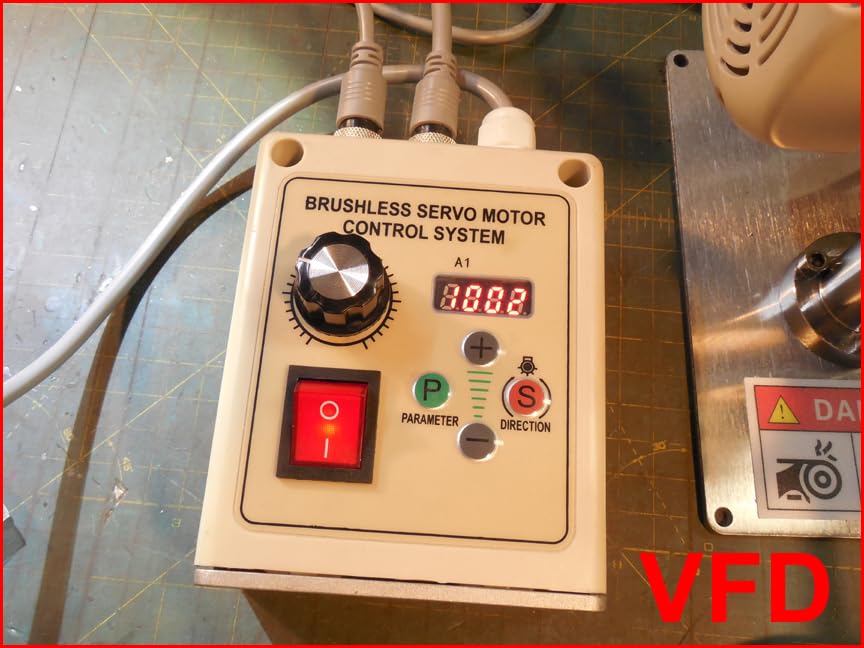
The Goldsand GD-SDJ-8 carries a 4.6 star owner rating, tied at the top of this group, and the reason is consistent. People who wanted a reverse function that actually works found it here, delivered by a plain button press rather than a disabled feature.
It shares a platform with the VEVOR JLD10-8, a 550W pure copper motor at 5500 RPM with VFD control and a belt line speed of 26 m/min, plus circular wheel and flat platen modes. Reviewers report running it down near 1700 RPM for sharpening.
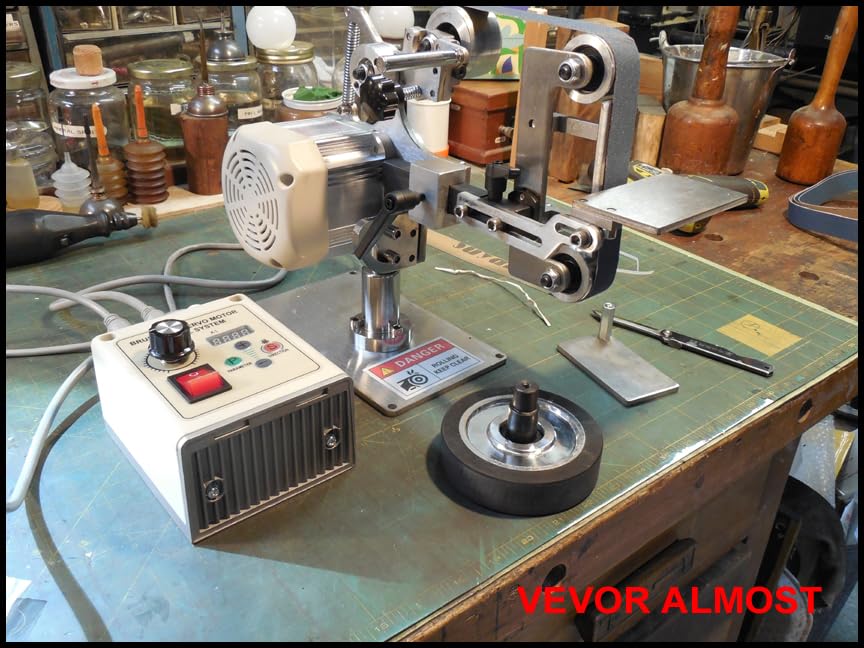
Three 1×30 zirconia corundum belts at 100, 180, and 240 grit are included, and owners report that quality aftermarket belts such as 3M Cubitron and Trizact fit without trouble. The compact slack-belt format reaches areas a full size 2×48 cannot.
Two caveats matter. The sample size is small at 38 reviews, so treat the rating as promising rather than proven. Tracking weakens when you reverse, there is no dust collection, and some metal parts arrive with rough edges and burrs.
Why this one is worth watching
Quiet running plus a working reverse plus aftermarket belt compatibility is a combination most machines in this class do not offer. Owners report a companion to a larger 2×48 grinder rather than a replacement for one.
What to watch
Angle guides from other brands may not fit because of a different platen bolt size, and the top speed of roughly 5000 RPM is more than knife work needs. Expect to spend time on tracking.
How to Choose a Belt Sander for Knife Making
Motor type, belt size, speed control, and tracking decide how a machine feels on steel. Here is what actually changes between them, and what does not matter as much as the marketing suggests.
Motor Type: Induction vs Universal
An induction motor keeps its speed under load. A universal motor is smaller and cheaper but bogges down when you press into steel. Two machines here list induction motors explicitly, the BUCKTOOL BG2600 and the KFMK KFBD6242, and both are rated for heavier removal work in owner reviews.
The small machines are not automatically bad, they are just built for light duty. The Kongkee and the Podoy minis handle pocket knives well, and owner reviews describe the Podoy as having more power than its size suggests. The difference shows up when you ask for real material removal.
Belt Size: 1×30 vs 2×42 vs 2×48 vs 2×72
A 1 inch by 30 inch belt is the learning size: cheap belts, wide availability, plenty of control. It is genuinely capable for kitchen knives, and it is the right first machine for most people.
A 2 by 42 inch belt is the step up for larger knives and long flat passes, and it is where combination belt and disc machines live. A 2 by 48 or 2 by 72 belt belongs to the shop and production end, where belt cost per unit starts to bite because those sizes are far harder to find.
The practical test is blade length. If your knives run past 8 inches, a 1×30 belt is short and you will be repositioning constantly. If they are folding knives, a 1×30 is more than enough and the mini machines are worth a look.
Variable Speed and Forward/Reverse
Variable speed is the control feature that matters most for knife steel, because it is the only way to reduce heat without reducing pressure. The RIKON 50-161VS, the VEVOR JLD10-8, the KFMK RBGS130V, and the Goldsand GD-SDJ-8 all give you a dial or a stepless drive.
Forward and reverse rotation is rarer and more contested. Owners of the KFMK RBGS130V and the Goldsand rate it highly for running the belt in the direction that suits the cut. But review patterns on both machines also note that tracking needs readjusting after a direction change, so it is a convenience rather than a set-and-forget feature.
One caution on the small machines: a 9000 RPM ceiling sounds impressive and is not what you want on a blade. High speed and fine grit is the fastest route to temper damage.
Belt Tracking, Belt Changes, and Worktables
Tracking is how the machine keeps the belt centred on the platen. Machines that need frequent readjustment will frustrate you every time you change grit. The WEN 6515T is praised for holding tracking without adjustment, while the KFMK and VEVOR units need a careful setup on day one.
Belt change speed matters more than buyers expect, because you will change belts constantly. Quick-release tension systems on the BUCKTOOL BG2600 and three-bearing layouts on the small machines cut this to seconds.
Worktable size determines how much of the blade you can control in one pass. A 6-3/4 by 9 inch table on the KFMK KFBD6242 is unusually generous for its class, while owners of the VEVOR BG6 fabricate a larger plate because the supplied one is small. Removable platens, as on the JET, take the table out of the picture entirely and let you work curves instead.
Choosing Belts and Grits for Knife Steel
The machine is half the decision. The abrasive is the other half, and it is the cheaper half to get right.
Aluminum oxide is the default belt and the cheapest. It is fine for shaping and general work, but it cuts slower than the alternatives and dulls quickly on hardened steel. Members on WeldingWeb recommend against it when you have a choice.
Zirconia is a middle step that lasts longer than aluminum oxide and holds its edge on tough steel. The Goldsand GD-SDJ-8 ships with 1×30 zirconia corundum belts at 100, 180, and 240 grit as a starting point.
Ceramic belts, including 3M Cubitron and Trizact, cut fastest and shed heat better than aluminum oxide on hardened steel. Coarse ceramic belts come strongly recommended by forum consensus, and owners of the Goldsand report producing sharp edges on Cubitron and Trizact.
Silicon carbide is the finishing choice. WeldingWeb members report using silicon carbide for fine work, and it is the abrasive to reach for when you are taking a bevel down past 400 grit.
A workable grit ladder runs 36 or 40 for shaping, then 80, then 120 or 180, then 220, and then hand finishing from 400 up. David Mary, a moderator on BladeForums, is direct about the end of that ladder: finer grits generate heat faster, so stop at coarser grits on the machine and finish by hand.
Grinding Without Ruining Your Steel
Heat is the most cited complaint across the knife making threads we read. A blade that turns blue or straw-coloured along the bevel has had its temper affected, and no machine feature prevents that on its own.
David Mary, a BladeForums moderator, documents a heat abatement protocol that has become community standard: use ceramic belts rather than aluminum oxide, work on the slack belt section rather than the platen-backed section, make quick light passes instead of slow hard ones, and stop at coarser grits because finer ones generate heat faster.
Two other pieces of forum advice are worth carrying into your shop. One is that beginners press too hard, and the consensus answer is simply to let the belt do the work. The other is that several experienced makers, including one who went back to manual stones after a powered system caused more problems than it solved, recommend learning consistent angles on stones before buying a machine at all.
One more material warning: high-speed machines will melt G10, micarta, and stabilised resin. Finish handle materials at low speed or by hand, never on a belt running near its maximum.
Safety and Workshop Setup
Eye protection is not optional on any of these machines, and the small ones with no guards make it more important, not less. Do not wear gloves near a moving belt, and unplug the machine before changing a belt or a disc.
Bolt down anything that vibrates. The SI FANG, the Kongkee, and the Podoy all walk across an unsecured bench, and the Podoy and RIKON are designed with mounting holes or a removable footpad for exactly this reason.
Check belt condition before every session and unplug before you thread a new one. For dust, expect fine abrasive particulate and, when working exotic steels, wear a respirator. Built-in collection varies across this group: the WEN 6515T and the RIKON have the most usable ports, while the two VEVOR grinders have none.
If you plan to document your work, our guide to cameras for knife-making documentation covers shooting the grind line and the finished bevel in a small shop.
Frequently Asked Questions
What is the best belt sander according to reviews?
The WEN 6515T leads this group on owner consensus, holding 4.6 stars across 2706 reviews. It tracks belts without adjustment, runs quietly, and has a base heavy enough not to walk. The BUCKTOOL BG2600 is the pick if you want a wider 2×42 belt, and the VEVOR JLD10-8 is the one to buy if variable speed matters most.
Is a 1×30 belt sander powerful enough for knife making?
Yes, for most knives. A 1 inch by 30 inch belt handles profiling, thinning near the tip, and single-bevel kitchen knives, and 1×30 belts are among the cheapest and most readily available abrasive in the hobby. The limit is blade length: past 8 inches you will spend more time repositioning than grinding.
Do I need a variable speed sander for knife making?
It helps more than most buyers expect. Speed control reduces heat without you having to reduce pressure, and heat is what damages temper on a hardened blade. The RIKON 50-161VS, VEVOR JLD10-8, KFMK RBGS130V, and Goldsand GD-SDJ-8 all offer it. Without a dial, heat has to be managed purely through technique.
What are the best sanding belts for knife sharpening?
Ceramic belts such as 3M Cubitron and Trizact cut fastest and shed heat best on hardened steel, and forum consensus favours coarse ceramic for shaping. Zirconia is a good longer-lasting middle step. Silicon carbide is the standard for fine finishing past 400 grit, and aluminum oxide is the cheapest option but dulls quickly on hard steel.
What grit belt should I use for knife sharpening?
Work up in stages rather than jumping to a fine grit. A workable ladder is 36 or 40 for shaping, then 80, then 120 or 180, then 220, and hand finishing from 400 upward. Finer machine grits generate heat faster, so stopping at 220 on the machine and finishing by hand protects the temper.
Can a belt sander be used to grind knife blades?
Yes, but only if it is built for metal. A woodworking belt sander lacks a metal platen, tracking that holds under heat load, and controllable speed, and it can ruin a heat-treated blade. Look for an induction motor, a rigid cast or welded steel frame, a flat metal platen, and ideally variable speed before you buy.
What size belt sander is best for knives, 2 inch or 4 inch?
It depends on blade length more than anything else. A 2 inch by 30 inch belt suits knives up to about 8 inches and gives excellent control, while a wider 2 by 42 or 2 by 48 belt is better for full-length flat grinding passes on chef knives. Wider sizes also cost more per belt and are harder to source.
What is the advantage of forward/reverse belt direction?
It lets you run the belt in whichever direction suits the cut, so you can follow a contour with the correct cutting orientation instead of forcing one. Owners of the KFMK RBGS130V and the Goldsand rate it highly for this reason. The trade-off is that tracking usually needs readjusting after each direction change.
Final Verdict: The Belt Sander for Knife Making You Should Buy
Start with the WEN 6515T if your knives are folding or standard kitchen knives, because it tracks well, costs little to run, and has the largest owner base in this group. Move to the BUCKTOOL BG2600 when you want long flat passes on full-size blades, and to the RIKON 50-161VS when you want variable speed and a five year warranty on a bench you can mount down.
Whichever of the best belt sanders for knife making you choose, the machine will not save a blade that spent too long on the belt. Work the slack section, keep passes quick, use ceramic abrasives, and finish by hand. For finishing work on shaped components, our random orbital sander guide covers the step that comes after shaping.