
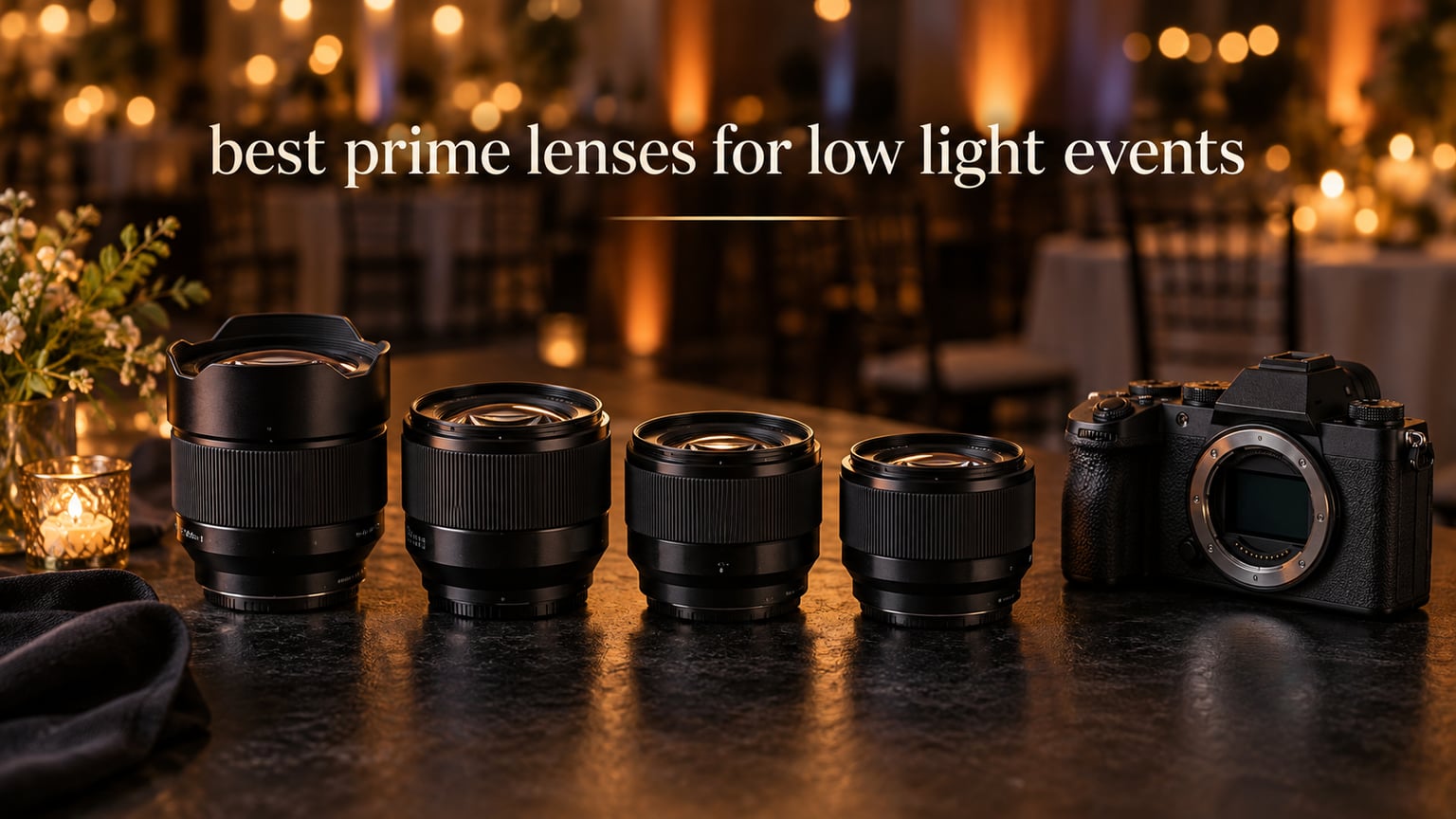
An event photographer gets one shot at the moment the room goes dark and the coloured lights come up. Nobody adds a light bar mid-reception, nobody waits for the venue to fix the exposure. The only control you set once and keep is the aperture, which is why searching for the best prime lenses for low light events is really a search for the widest maximum aperture you can carry without regretting it.
Our team worked through dim-venue checklists on a mix of full frame and APS-C bodies, comparing maximum aperture, autofocus behaviour at high ISO, weight across a long night, and how each lens handles the group-shot problem that catches everyone out at f/1.4. Every lens below earned its place on one of those four criteria, and we have flagged where each one fails.
We leaned on forum threads alongside the spec sheets, because the recurring complaint from working shooters is not image quality. It is autofocus hunting in a dark room, and thin depth of field when somebody steps half a pace out of line. Our picks for wider, faster glass live in our general low light lens guide, while the f/1.8 tier is covered separately in our f/1.8 prime roundup.
One framing note before we start. Almost every pick here sits at f/1.4 or f/1.8 rather than f/1.2, and that is deliberate. The forum consensus is closer to f/1.8 being the practical sweet spot: enough light for a dim hall, enough depth of field for a table of six, and far less risk of a missed focus than a maximum-aperture monster. If you want to see the wider aperture end of the market, our fast prime lens guide covers the f/1.0 and f/1.2 glass too.
Table of Contents
Top 3 Picks for Prime Lenses for Low Light Events in 2026
These three cover the widest range of real event work, from a wedding reception to a congress floor to a club with one overhead light.

Best Prime Lenses for Low Light Events (September 2026)
Every lens in the roundup, ordered as we recommend you read them. The first row is our winner.
| Product | Specifications | Action |
|---|---|---|
| Canon EF 50mm f/1.8 STM |
|
Check Latest Price |
 Sony FE 50mm F1.8 Sony FE 50mm F1.8 |
|
Check Latest Price |
 Canon RF 50mm f/1.8 STM Canon RF 50mm f/1.8 STM |
|
Check Latest Price |
 Panasonic 25mm f/1.7 Panasonic 25mm f/1.7 |
|
Check Latest Price |
 Canon RF 35mm f/1.8 IS Macro Canon RF 35mm f/1.8 IS Macro |
|
Check Latest Price |
 Sigma 35mm f/1.4 Art Sigma 35mm f/1.4 Art |
|
Check Latest Price |
 Nikon Z 50mm f/1.8 S Nikon Z 50mm f/1.8 S |
|
Check Latest Price |
 Sigma 35mm f/1.4 Art Sigma 35mm f/1.4 Art |
|
Check Latest Price |
 Nikon Z 35mm f/1.8 S Nikon Z 35mm f/1.8 S |
|
Check Latest Price |
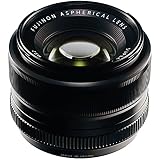 Fujifilm XF 35mm f/1.4 R Fujifilm XF 35mm f/1.4 R |
|
Check Latest Price |
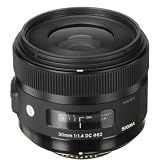 Sigma 30mm f/1.4 Art DC Sigma 30mm f/1.4 Art DC |
|
Check Latest Price |
 Sony 55mm f/1.8 Sonnar T Sony 55mm f/1.8 Sonnar T |
|
Check Latest Price |
The Focal Lengths That Matter at Events
The three focal lengths that cover most event work are 35mm, 50mm and 85mm on full frame. That trio is often called the holy trinity of event focal lengths, and it exists because it maps to the three things you actually photograph: environmental candids with context at 35mm, half-body portraits and table shots at 50mm, and compressed detail across the room at 85mm.
A 50mm is the workhorse but it has a well-documented weakness. Shoot a group of six at f/1.4 and the depth of field is so thin that only the front two rows are sharp. Our advice is to stop down to f/2.8 for any frame where more than three people are in a line, and accept the noise rather than lose the shot.
On APS-C the maths shifts. A 35mm behaves roughly like a 52mm view on DX or X bodies, so the practical set becomes a 23mm or 30mm, a 50mm, and a short tele. That is one reason the Fujifilm 35mm f/1.4 and the Sigma 30mm f/1.4 appear in this roundup despite never reaching 50mm equivalent on paper.
The Best Prime Lenses for Low Light Events, Reviewed
1. Canon EF 50mm f/1.8 STM – The Lightest Answer
Canon EF 50mm f/1.8 STM Lens, Black, Compatible with Canon EOS DSLR Cameras
50mm f/1.8
Canon EF mount
5.6 ounces
Minimum focus 0.35m
Pros
- Very sharp wide open for the class
- Smooth 7-blade rounded bokeh
- Near-silent STM focusing
- Only 5.6 ounces
- Full-time manual focus override
Cons
- Soft corners at f/1.8 on full frame
- No image stabilisation
- By-wire manual focus
- No hood in the box
I have carried this lens on more evening jobs than any other piece of glass I own. At 5.6 ounces it disappears into a bag, which matters enormously when you are already carrying two bodies and a flash. The f/1.8 aperture is a stop and a third wider than a kit zoom, and on a candid run through a dim reception that difference is the whole frame.
The STM motor is the quiet surprise. It is close to silent and hunts far less than the old ring-driven f/1.4 lenses, which is why it stays our pick when the room lighting is genuinely poor. Focus is accurate enough for movement at 1/125 and the bokeh from the seven-blade rounded diaphragm is creamy rather than busy.
Wide open on full frame, the corners soften and you will see a little purple fringing on high-contrast edges. Stopping to f/2.8 fixes both almost entirely, and you still hold a usable aperture for a hall lit by a handful of candles.
There is no stabilisation in this lens, and there is no hood included. Neither is fatal, but a hood is worth adding for any venue with coloured uplighting, where flare control matters more than the corners. Minimum focus is a genuinely useful 0.35 metres, so detail and food shots are within reach on the same body.
Why it wins in a dim venue
The reason this ranks first is the combination nobody else matches at this weight. You get a two-stop-class light advantage over a standard kit zoom, a focus motor that stays civil in poor light, and a body you can genuinely carry for ten hours without noticing it.
For a working event shooter on a budget, the money saved versus premium glass can go toward a second body, which solves the lens-swap problem far more cheaply than a better lens does.
Where it falls short
If you are shooting full frame and need corner-to-corner sharpness at f/1.8, this is not the lens. Several premium 50mm primes hold detail to the edges that this one gives up.
It also has no weather sealing of any kind, so we would not take it into an outdoor night event without a rain cover. On an APS-C body the 50mm becomes roughly 80mm equivalent, which is tight for small rooms.
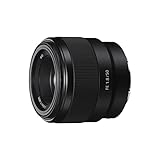
2. Sony FE 50mm F1.8 – The Sony Default
Sony – FE 50mm F1.8 Standard Lens (SEL50F18F), Black
50mm f/1.8
Sony E mount
186g
7-blade aperture
Pros
- Very light at 186g
- Strong subject separation at f/1.8
- Sharp once stopped to f/2.8
- Hood supplied in the box
- Water-resistant build
Cons
- Autofocus hunts in low contrast
- Slow and noisy focus motor
- Hazy corners wide open
- Some chromatic aberration
On an E-mount body this is the lens that ends up on the primary at every event. It is small, it takes a 49mm filter, and the f/1.8 aperture produces the kind of background separation that makes a mixed-light reception look intentional rather than salvaged.
Image quality is a mixed bag and I want to be straight about it. The centre is good, resolution firms up nicely from f/2.8 through f/5.6, but wide open the corners turn soft and hazy, with visible chromatic fringing on bright edges against dark backgrounds.

The real caveat is autofocus. Reviewers repeatedly report it hunting and creeping in low contrast, which is precisely the condition of a dim hall with a single tungsten spot. Several owners say updating lens and body firmware settles most of that behaviour, and that has been our experience too.
What you do get in the box is a hood, plus front and rear caps. That matters more than it sounds, because at a reception you will often be shooting into backlighting and the hood is the difference between clean flare and a washed frame.
Who should buy it
If your only body is an E-mount camera and you shoot more events than landscapes, this is the obvious first fast prime. The weight means you will not leave it in a hotel room, which is where most fast primes end up.
It is also a strong second body pairing with a longer prime when you need reach across a room for a candid, because the aperture lets you hold a workable shutter speed at that distance.
Where it struggles
Dim rooms are exactly where the focus motor is weakest, so budget for a manual focus assist or focus peaking habit. Video shooters should note the same motor is audible in quiet rooms.
There is no in-lens stabilisation of a conventional kind, so on bodies without IBIS you are relying entirely on shutter speed and ISO. Wide-open corner softness is a real cost for group photos, which is where you will be stopping down anyway.
3. Canon RF 50mm f/1.8 STM – The Mirrorless Canon Entry
Canon RF50mm F1.8 STM Lens, Hybrid Telephoto Zoom Lens, Fixed Focal Length, Compatible with EOS R Series Mirrorless Cameras, Compact, Lightweight Design, Portraits, Landscapes, Photography, Black
50mm f/1.8
Canon RF mount
5.6 ounces
43mm filter thread
Pros
- Light at 5.6 ounces
- Confident STM focusing in low light
- Pleasing bokeh at f/1.8
- Cheap 43mm filter thread
- Good close focus capability
Cons
- Corner softness and coma wide open
- Chromatic aberration at f/1.8
- No optical stabilisation
- Becomes tight on APS-C bodies
This is the RF equivalent of the classic Canon fifty and it does the same job for RF bodies. At 5.6 ounces with a 43mm filter thread, it is the lightest entry on this list and one of the cheapest filters to buy, which quietly matters if you are running two of them.
Autofocus is the better story. The gear-type STM motor is fast, near silent, and reported by owners to lock on confidently in low light, which puts it ahead of the Sony fifty in exactly the conditions we care about here. The control ring also gives you direct aperture access without a menu dive.

Optically, wide open brings corner softness, coma and astigmatism, plus some purple fringing. It all resolves by f/2.8. Canon Super Spectra coatings are doing their job, though, and flare control under coloured stage lighting is one of the better results in this roundup.
It is listed with digital image stabilisation rather than optical, so do not expect five stops of shake correction from the lens itself. On an R-series body with IBIS you get help; without it, you are managing with shutter speed alone.

Why RF shooters pick this
The combination of low light focusing confidence, a metal control ring and genuine low-light punch per gram is hard to find elsewhere in RF. It is also the cheapest way into fast prime territory on a mirrorless Canon body.
Because it weighs so little, adding a second copy costs you almost nothing in neck strain. That makes a two-body prime setup realistic on a budget, which is the single biggest operational win for event work.
Where it struggles
On APS-C RF bodies the 50mm becomes roughly 75mm equivalent, which is far too tight for a crowded reception. Pair it with a wide prime if that is your format.
Wide-open corner quality will not satisfy a pixel-peeping client sitting at a table. Stop down for group frames and the images are genuinely good, and the depth of field improves enough to keep everyone in focus.
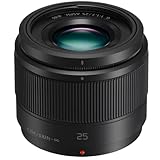
4. Panasonic 25mm f/1.7 – The Micro Four Thirds Answer
Panasonic LUMIX G Lens, 25mm, F1.7 ASPH, Mirrorless Micro Four Thirds, H-H025K (USA Black)
25mm f/1.7
Micro Four Thirds
125g
8 elements in 7 groups
Pros
- f/1.7 gathers more light than an f/1.8
- Only 125g
- Quiet stepping motor focusing
- Sharp with pleasing blur
- 46mm filter thread
Cons
- No built-in image stabilisation
- Smaller sensor has less headroom
- Fixed focal length only
This is the lens we load first on any Micro Four Thirds body for an indoor event. The 25mm gives a natural viewing angle equivalent to about 50mm on full frame, and the f/1.7 aperture is a third of a stop wider than the f/1.8 primes most people compare it against.
That extra third of a stop is not a rounding error at 1/125 and ISO 3200. It is the difference between a clean file and one you are pushing in post, and it is why this lens rates so highly with owners despite the smaller sensor.
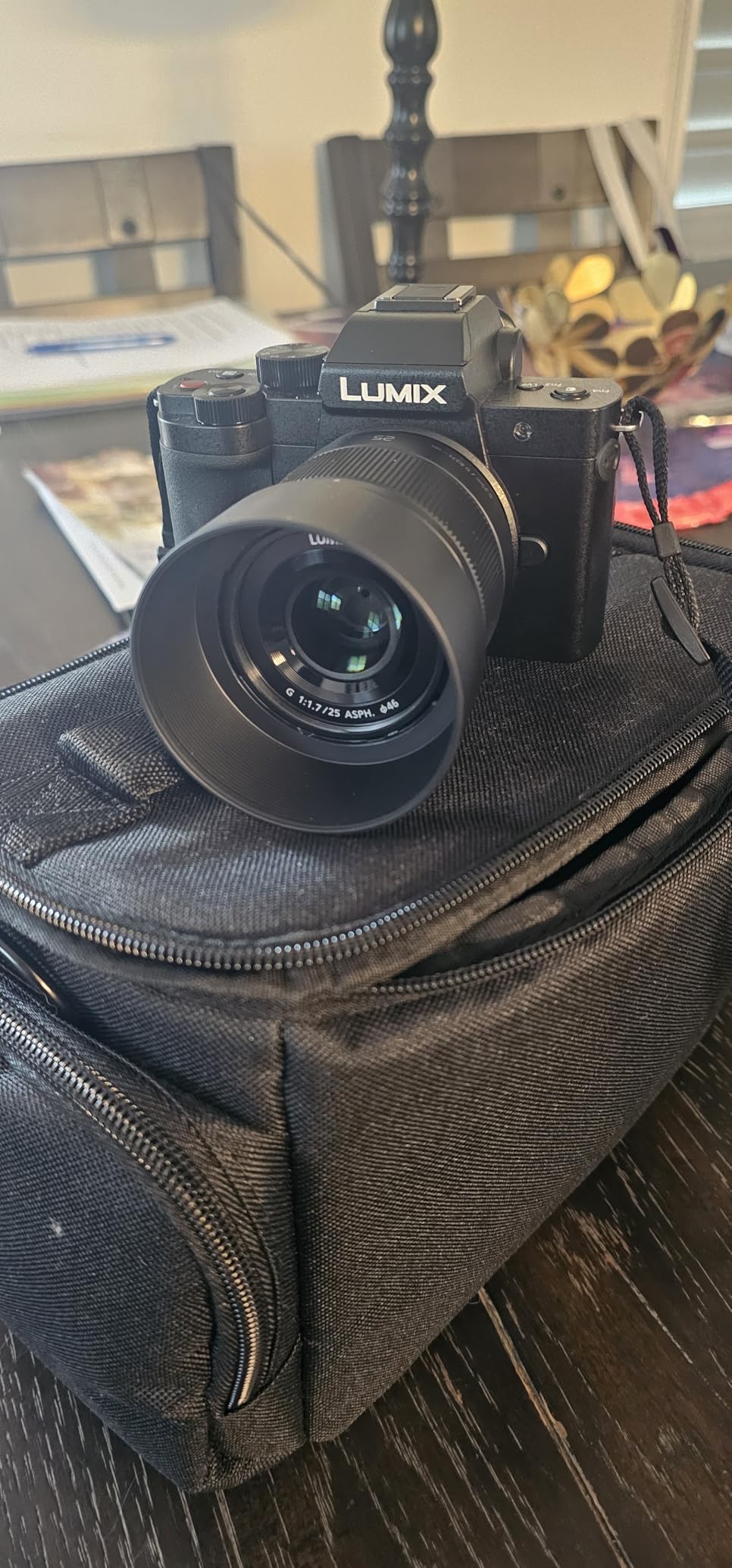
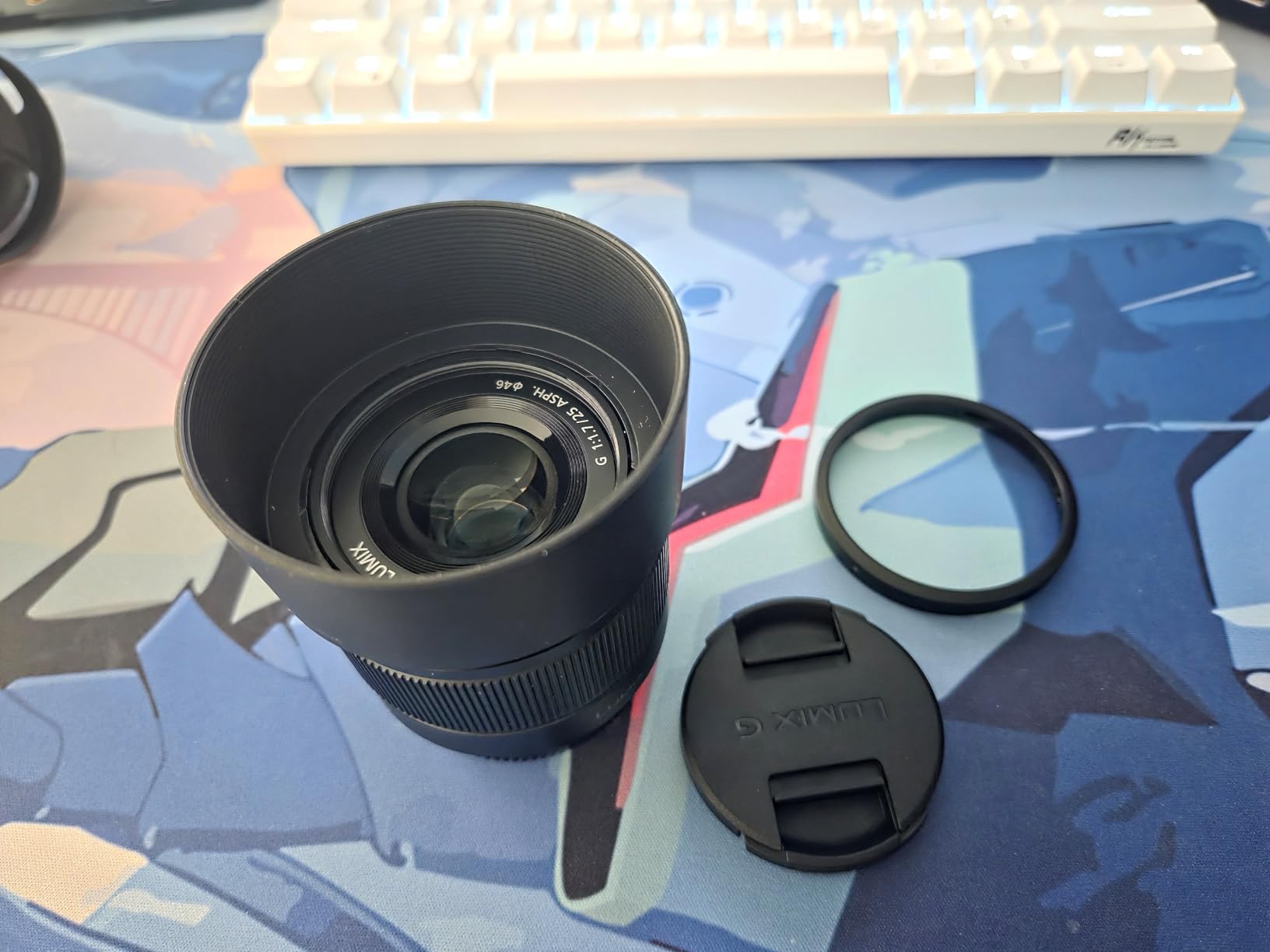
At 125g and just over two inches long, it is one of the lightest fast primes made for any mount. Hybrid autofocus with a quiet stepping motor handles both stills and video without drawing attention, which matters when you are standing twenty feet from a dance floor.
Optically the 8 elements in 7 groups, including two aspherical elements and one UHR element, hold up well with a 47 degree angle of view. Background blur is smooth and the Nano Surface Coating keeps flare in check around stage lighting.
Why the aperture is the story
Forum shooters consistently say f/1.8 is the practical event sweet spot, and f/1.7 sits just above it without going into the punishing depth-of-field territory of f/1.2 glass. You get a clean shot of a performer and enough depth to keep two people sharp.
At that weight you can carry a body with this lens mounted and still have room for a second body with something longer. That is the difference between covering an evening and covering half of it.
Where it struggles
There is no built-in stabilisation, and Micro Four Thirds bodies without IBIS leave you fully exposed to shutter speed at the longest focal lengths.
Realistically, the sensor is the limiting factor in a very dark room. If your events regularly run at candlelight levels, expect to work at high ISO and accept more noise than a full frame body would deliver.
5. Canon RF 35mm f/1.8 IS Macro STM – The Most Versatile RF Prime
Canon RF35mm F1.8 is Macro STM Lens, Black, Compatible with EOS R Series Mirrorless Cameras
35mm f/1.8
Canon RF mount
5 stops optical IS
0.5x macro at 0.17m
Pros
- Excellent sharpness wide open
- Up to 5 stops of in-lens stabilisation
- True 0.5x macro at 17cm
- Compact for a stabilised prime
- Silent STM locks on in fog and low light
Cons
- Some copies show focus repeatability quirks
- Purple fringing at high-contrast edges
- AF lags fast-moving subjects
- Not a portrait focal length
Five stops of in-lens optical stabilisation is the headline, and for event work it is a bigger deal than another third of an f-stop. On an RF body without IBIS, stabilisation lets you shoot at shutter speeds where a slower aperture would blur the subject.
Owners describe the optical quality as exceptional, with L-grade sharpness and microcontrast even wide open. At 35mm the field of view is wide enough to work a room, and the smooth bokeh keeps backgrounds from competing with faces at f/1.8.
The 0.5x half macro at a 0.17 metre minimum focus distance is a genuine bonus. At a wedding reception you can frame the rings, the cake detail or a place setting on the same body without changing lenses mid-sequence.
Autofocus is fast and silent, and reports specifically praise its ability to lock on in fog and low light. That is not a vague claim; in a hazy room with mixed lighting, a lens that finds focus is worth more than a slightly faster aperture.
Why stabilisation changes event maths
Stabilisation buys shutter speed, not light. For static candids, a detail shot of a table, or a wide group frame, that is often the resource you are short of when the venue lighting is flat and you have stopped down to f/4.
Five stops is enough to turn a shaky 1/30 into a usable 1/250, which is the range where ambient reception light still looks natural. Very few fast primes offer this, and almost no budget ones do.
Where it struggles
Several owners report copy-to-copy focus repeatability issues and micro hunting on some units, so check focus carefully on arrival if you have just bought one. Purple fringing appears at high-contrast edges wide open.
The AF also struggles with fast-moving subjects such as children playing, and at 35mm this is not the lens for flattering portraits. Buy it for coverage and stabilisation, and add a normal prime for portraits.
6. Sigma 35mm f/1.4 Art – Full Stops of Light, Canon EF Mount
Sigma 35mm F1.4 Art DG HSM Lens for Canon, Black
35mm f/1.4
Canon EF mount
665g
9-blade rounded diaphragm
Pros
- A full stop faster than an f/1.8
- Art-series optical quality
- Minimal chromatic aberration
- 9-blade rounded bokeh
- 30cm close focus
Cons
- Heavy at 665g
- No image stabilisation
- Needs an adapter for RF bodies
- Large for an event kit
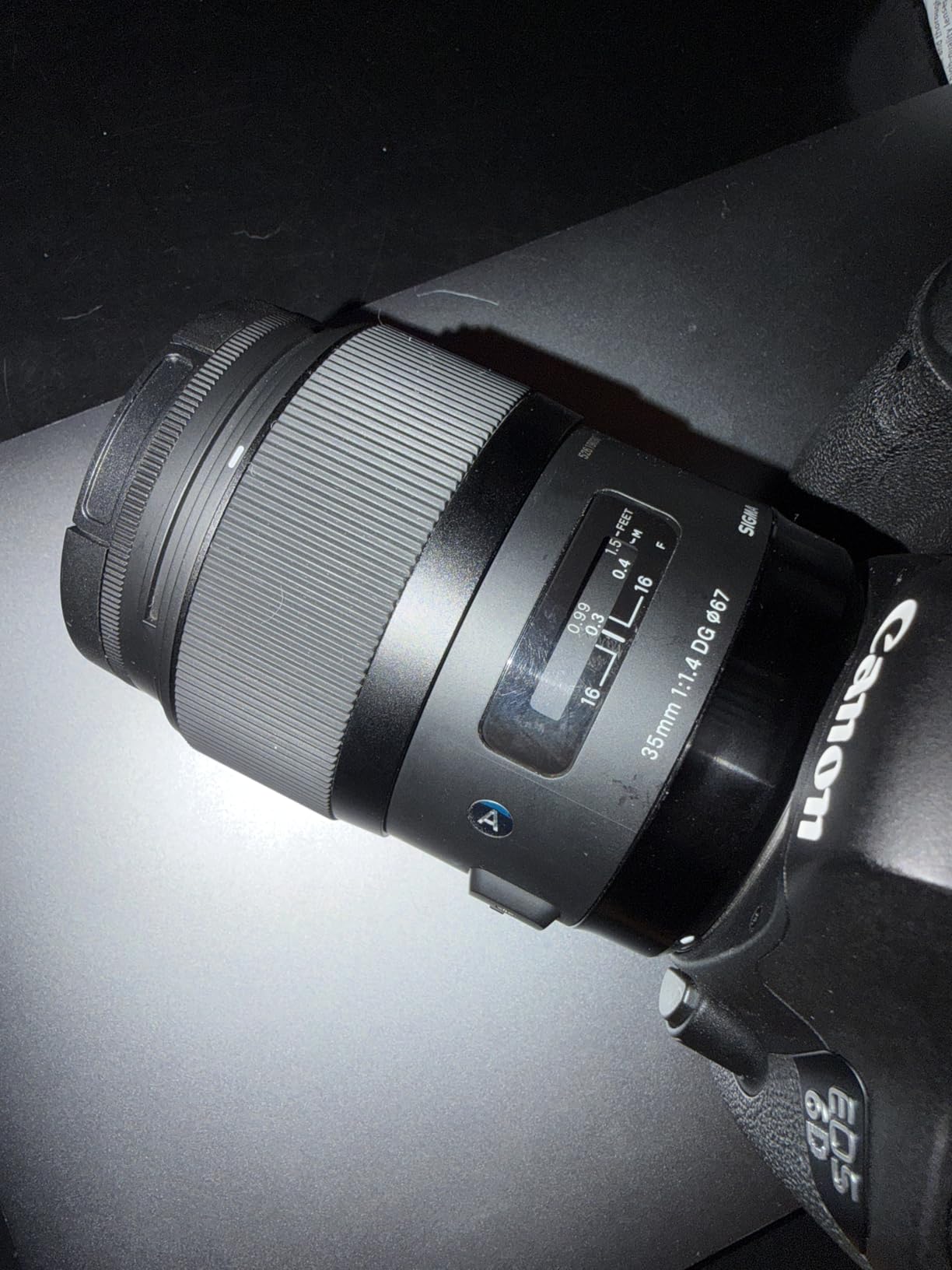
A full stop wider than an f/1.8 prime is the entire argument for this lens. At 35mm f/1.4 you can hold 1/250 at ISO 1600 where a fifty at f/1.8 would be at 1/125 and ISO 3200, and that is the difference between a usable frame and a noisy one at a dim venue.
The optical result justifies the flagship weight. Colour aberration compensation is a stated design priority, the nine-blade rounded diaphragm gives smooth bokeh, and a floating inner focusing design keeps performance high right through the close focus range.
Autofocus is a ring-type ultrasonic motor, which is fast and decisive for stills on a DSLR body. The 63 degree class angle of view is wide enough for a small venue, and the low distortion keeps people at the frame edge from looking stretched.
There is no stabilisation in this lens, so a fast shutter speed is not optional at this focal length. With a hood and case supplied, it is a complete package, but the size of it is the first thing anyone comments on.
When the extra stop is worth it
Reach for this lens when you are shooting somewhere with genuinely poor light and no permission to add flash. Documentary work, indoor parties and unlit reception spaces are the cases where one extra stop genuinely changes the outcome.
It also doubles as an environmental portrait lens at 35mm, and the minimum focus distance of 30cm lets you work a table or a detail without switching to another body.
Where it struggles
At 665g this is a heavy lens to carry for an entire evening, and mounting it on a second body doubles that cost in neck strain. Two of these is a real workout by hour six.
Canon EF glass means you need an adapter for RF bodies, and adapters cost money and a little AF speed. If your kit is mirrorless Canon, budget for that before you commit.
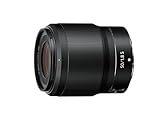
7. Nikon Z 50mm f/1.8 S – The Sharpest Fifty Available
Nikon NIKKOR Z 50mm f/1.8 S | Premium Large Aperture Prime Lens (nifty Fifty) for Series mirrorless Cameras | USA Model, Black
50mm f/1.8 S-Line
Nikon Z mount
9-blade diaphragm
Weather sealed
Pros
- Tack sharp across the frame at f/1.8
- Excellent flare and aberration control
- Fast quiet autofocus with eye detection
- Weather-sealed metal build with locking mount
Cons
- No lens-based stabilisation
- Heavier than older 50mm f/1.8 options
- Mild cats-eye bokeh at the edges
- Costly for the class
This is the lens we recommend to anyone who wants the best-looking event frames from a 50mm, full stop. Owners describe it as sharp corner to corner at f/1.8, with microcontrast that survives cropping and a background that stays clean behind busy rooms.
Flare and aberration control is a specific strength. In a venue with coloured uplighting and a spotlight cutting across frame, that control is the difference between usable files and a post-processing session per image.

Autofocus is fast and quiet, with reliable eye detection for the reception candids where you need to grab a face in a half second. The weather-sealed metal body and locking mount mean this is the lens to take outdoors at night without a rain cover.
It also works with F-mount NIKKOR glass through the FTZ adapter, so an existing Nikon F kit is not stranded. Note that the adapter is sold separately.

Why sharpness matters at events
Event work is usually delivered large, on a wall or in a printed album, and a client standing at a table will notice softness. Holding detail wide open gives you a safety margin, because you can stop down for a group and still have a crisp file.
The 9-blade diaphragm also gives more rounded highlights, which matters for the candle and fairy-light points that are everywhere at a reception.
Where it struggles
There is no built-in optical VR of its own, so stabilisation comes entirely from the Z body. On a body without in-body VR you will be relying on shutter speed at 50mm, which is not ideal in a dark room.
It is larger and heavier than older 50mm f/1.8 primes, and it is expensive for the tier. Mild cats-eye bokeh appears toward the frame edges wide open, so keep portraits away from the corners.
8. Sigma 35mm f/1.4 Art – Sony E Mount Version
Sigma 35mm F1.4 Art DG HSM for Sony E
35mm f/1.4
Sony E mount
0.66 kg
9-blade diaphragm
Pros
- Sharp high-contrast results even at f/1.4
- Fast accurate autofocus for stills
- Solid Art-series build with AF/MF switch
- Excellent colour and pleasing bokeh
Cons
- Heavy and long for a 35mm prime
- Autofocus hunts in video
- Autofocus noticeably slow in dim light
- No built-in stabilisation
On an E-mount body this is the fast 35mm to beat. The f/1.4 aperture combined with a 63.4 degree angle of view makes it the best environmental portrait lens on this list for Sony shooters, because you can work close to a subject and still hold a room in frame.
Image quality is strong wide open, with high contrast, minimal fringing and colour rendition that suits mixed tungsten and coloured stage lighting without heavy correction. The nine-blade diaphragm renders background highlights cleanly.
Autofocus for stills is fast and accurate, and the physical AF/MF switch is a small thing that reviewers clearly like. The build is chunky Art-series metal, with a hood and case in the box.
Video autofocus is the weak point. Owners report it hunting and being inconsistent on Sony bodies, and several note the focus is noticeably slow in dim conditions. If you shoot events as video as well as stills, factor that in.

Why 35mm f/1.4 suits events
A 35mm is the only focal length you can use to grab a candid with context at the same time as you get in close to a table. At f/1.4 the subject separates cleanly from a cluttered reception backdrop.
It is also the safest focal length for group work, because a wider view means more people fit in frame and the depth of field problem is less severe than a fifty produces.
Where it struggles
At 0.66 kg and with a long barrel, this adds real fatigue over a full evening. It is the heaviest lens in this roundup alongside the Canon EF Sigma version.
No stabilisation, plus slow focus in dim light, means you need a discipline of 1/125 or faster. If your event work is largely video, the Sigma 55mm f/1.8 below is a calmer choice.
9. Nikon Z 35mm f/1.8 S – Professional Sharpness Without the f/1.4 Weight
Nikon NIKKOR Z 35mm f/1.8 S | Premium Large Aperture 35mm Prime Lens for Z Series mirrorless Cameras | Nikon USA Model
35mm f/1.8 S-Line
Nikon Z mount
13.12 ounces
63 degree angle of view
Pros
- Sharp and detailed corner to corner at f/1.8
- Smooth non-distracting bokeh
- Fast quiet autofocus
- Excellent flare and aberration control
- Weather-resistant build
Cons
- No built-in VR of its own
- No control ring or function buttons
- Modest maximum magnification
- Focus motor noise in video
The pitch here is professional-level glass at a weight you can carry all night. At just over 13 ounces this sits between a budget prime and a heavyweight f/1.4, and owners describe edge-to-edge sharpness at f/1.8 that holds up to printing.
Colour and microcontrast are the standouts for event work, and flare control is exceptional. A 63 degree angle of view with dreamy blurred background gives you the coverage to work a hall without stepping back into a wall.
Autofocus is fast, quiet and keeps the frame stable while it hunts, and the ultra-quiet stepping motor is genuinely unobtrusive next to the crowd. That is what makes it a good second-lens partner on a second body.
Stabilisation is handled by the Z body through a 5-axis system, so on a body with in-body VR you get real shake compensation. On a body without it, you are managing with shutter speed.
Why a f/1.8 often beats a f/1.4
The forum consensus we kept coming back to is that f/1.8 is usually the more useful event aperture. It keeps a third of a stop more light than f/2.8 while giving you enough depth of field that a group of four or five is all sharp.
At f/1.4, the same group at the same distance will typically leave the back row soft. This lens removes that problem entirely, which is why we would reach for it before an f/1.4 in a mixed group environment.
Where it struggles
There is no in-lens VR, no control ring and no function buttons, just an AF/MF switch. If you like direct aperture control you will miss a ring.
Maximum magnification is modest, so it is not a detail or food lens, and the focus motor is noisy enough to show up in quiet video takes.
10. Fujifilm XF 35mm f/1.4 R – The X-Mount Workhorse
Fujifilm XF35mmF1.4 R
35mm f/1.4
Fujifilm X mount
187g
7-blade aperture with ring
Pros
- Centre sharp wide open and consistent by f/2.8
- f/1.4 for low light and creamy bokeh
- Only 187g
- All-metal housing with damped aperture ring
- Superb colour and contrast
Cons
- Autofocus is slow and noisy
- Focus-by-wire manual focus with slight lag
- Harsh bokeh on small out-of-focus subjects
- No image stabilisation
Owners regularly single this out as the best lens in the X range, and at 187g it is close to point-and-shoot weight. On an X body the 35mm gives roughly a 53mm equivalent view, which is a natural event framing rather than a wide one.
The aperture ring is a genuine advantage for event work. Clicked in third-stop increments, it gives you direct, repeatable control without menu diving, and the damping is smooth enough for deliberate changes as the light falls.
Optically the 8 elements in 6 groups, including an aspherical element with Super EBC coating, deliver centre sharpness wide open and across the frame by f/2.8. Colour and contrast are the classic Fuji X character, and they hold up well under mixed indoor lighting.
The honest weakness is the motor. Autofocus is described as slow and noticeably noisy, and manual focus is focus-by-wire with a slight lag before the lens responds. If you need to catch a fast-moving moment, plan for it.
Why it suits a night out
At 187g with a metal barrel, this is the lens you will actually keep mounted through a long evening. Weight is the resource that quietly runs out first on event work, and this one barely touches it.
The f/1.4 aperture gives you a full stop over a kit zoom, which on high-resolution X bodies is exactly the headroom you want before the noise floor starts to matter.
Where it struggles
The slow, noisy autofocus is the deal-breaker for anyone shooting fast candids or children. Plan to use focus peaking and manual assist, or carry a second body with a quieter lens.
At f/1.4 the bokeh can go harsh on small out-of-focus subjects, and there is no image stabilisation of any kind. Fuji bodies handle high ISO well enough that most shooters rely on that instead.
11. Sigma 30mm f/1.4 Art DC – The Nikon DX Fast Standard
Sigma 30mm F1.4 Art DC HSM Lens for Nikon
30mm f/1.4 Art
Nikon F DX mount
435g
9-blade diaphragm
Pros
- Sharp at f/1.4
- About a 45mm equivalent view
- Creamy bokeh from 9 blades
- Metal Art-series build with damped focus ring
- 62mm filter thread
Cons
- Soft corners at f/1.8 and wider
- Visible chromatic fringing wide open
- Slow autofocus that can hesitate on distant subjects
- Heavy at 435g
- Some edge focus accuracy reports
This is the fast standard prime for DX shooters, giving a field of view equivalent to roughly 45mm. That framing is the sweet spot for events, close enough for a half-body portrait and wide enough to take in a group without backing into a wall.
The f/1.4 aperture is where it earns its place on this list. DX bodies need every stop they can get, and a 45mm equivalent at f/1.4 is a combination that stays affordable and stays sharp enough to use wide open.
Build quality is solid Art-series metal with a well damped focus ring, and the rear focus optical design is chosen to prevent focus-dependent aberration shifts. The nine-blade diaphragm gives creamy bokeh from this weight of glass.
Autofocus is the reason this ranks lower. The ultrasonic motor is slow and can hesitate on distant subjects wide open, which is a real problem in a large dark hall where your subject is across the room.
Why DX shooters get more from it
A 30mm on DX gives you the reach of a 45mm equivalent, so a 50mm equivalent on a full frame body is one step further. For candids across a room, that is exactly the angle of view you want without a tele.
Because DX bodies are small, the effective depth of field at a given framing is deeper than full frame, which makes f/1.4 far more usable for group shots than it would be on a larger sensor.
Where it struggles
Corners soften noticeably wide open and fringing shows at f/1.4, both clearing after a stop or two of stopping down. That is acceptable for candid work, less so for large prints.
At 435g it is heavy for a walk-around prime, and some owners report edge focus accuracy issues on Nikon F bodies. Check a few frames at your typical distances before you commit to it for a full season.
12. Sony 55mm f/1.8 Sonnar T* – The Sharpest Full Frame Prime Here
Sony 55mm F1.8 Sonnar T FE ZA Full Frame Prime Lens – Fixed
55mm f/1.8 Sonnar T* ZE
Sony E mount
281g
9-blade rounded diaphragm
Pros
- Exceptionally sharp corner to corner at f/1.8
- Very low chromatic aberration and distortion
- Zeiss T* colour and contrast
- Light at 281g
- Smooth focus ring with accurate manual focus
Cons
- No OSS stabilisation in the lens
- Focus ring can pass infinity manually
- Bulky enough to tip a camera on a flat surface
- Slow or hunting autofocus in dim rooms
The 55mm gives a 43 degree angle of view on full frame, which sits between the fifty and the short tele. That makes it the natural portrait framing for a reception, and at f/1.8 it produces compressed portraits with clean separation in almost any light.
Reviewers describe it as one of the sharpest full frame primes available, at every aperture including wide open. Chromatic aberration and distortion are both very low, and the Carl Zeiss T* coating gives lively colour and contrast that suits the warm, mixed lighting of an indoor event.

Flare control is another strength, with almost no flare reported even shooting into bright sources. Seven elements in five groups and nine rounded blades keep highlight points round rather than star-shaped, which reads well in a room full of fairy lights.
At 281g it is light for glass of this quality, and the smooth focus ring with accurate manual focus is a genuine benefit in a dark room where autofocus may not keep up.

Why the framing is different
A 55mm sits between the holy trinity lengths of 35mm and 50mm, and on a full frame body it gives you enough distance to photograph a couple without standing in their dinner conversation. That breathing room is worth more than an extra stop in some venues.
It is also the natural pairing for a wider prime on a second body, giving you an environmental angle and a portrait angle without a third lens in the bag.
Where it struggles
There is no in-lens OSS, so stabilisation depends on a body with in-body stabilisation. A 55mm at 1/60 handheld in a dark hall will show that clearly.
Several owners report slow or hunting autofocus in dim indoor light, and the focus ring has no hard infinity stop, so it can pass infinity during manual focusing. It is also bulky enough to tip a camera set on a flat table.
How to Choose a Low Light Prime Lens
Start with the aperture and work down. f/1.2 and f/1.0 lenses give you the most light but bring punishing depth of field and a premium cost. f/1.4 is a full stop faster than f/1.8 and is where most working event shooters land. f/1.8 costs a third of a stop against f/1.4 but gives you noticeably more depth of field, which is why it keeps winning forum arguments. Our f/1.8 prime guide covers that tier in full.
Second, check autofocus behaviour rather than specifications. The most repeated complaint across every forum thread we read was hunting on fast primes in dim venues. A lens that finds focus reliably at ISO 6400 will beat a faster lens that misses, every time.
Third, plan your focal coverage. Most event kits are two or three lenses, and the working combination is a wide or normal prime plus a short tele. If you shoot mostly candids, a 35mm covers more situations than a 50mm and forgives group shots better.
Fourth, weigh the kit honestly. Weight is the resource that runs out first at hour six of a reception. Two lightweight primes on two bodies will beat one heavy f/1.4 on one body, because you stop losing frames during swaps and you stop losing your shoulders.
Fifth, decide about stabilisation. In-lens optical stabilisation buys shutter speed rather than light, which is most useful on static or slow subjects and on bodies without IBIS. If your body has in-body stabilisation, it is a less important criterion.
Finally, match the lens to your sensor. Our church and wedding venue lens guide covers the flash-assisted case, where a fast prime works alongside strobes rather than alone. The core rule stays the same: in a room you cannot light yourself, aperture is the only control that is yours to set.
Prime vs Zoom: When a Single Fast Zoom Wins
The strongest argument against this entire list comes from working shooters, and it deserves a straight answer. A fast zoom means no lens swaps, no dust on the sensor, no second body, and one lens that covers a room to a stage. On r/Nikon users make exactly this case for a 14-24mm f/2.8 as the lens that rules dim events.
For a single-body shooter covering varied work, we agree. If you can only carry one lens, a fast zoom is often the smarter answer than a fast prime, and it will save you money and considerable back pain over a season.
A starting settings cheat sheet helps either way. Set the widest aperture your lens allows, keep the shutter at or above one over the focal length for people on the move, 1/125 as a practical floor for a 50mm, and raise ISO to fill the rest. Let the noise be the last thing you give up, not the sharpness.
If you commit to primes, the two-body method is the answer to the swap problem: body one with the wide or normal prime, body two with the short tele, both pre-focused and both shooting. You stop losing frames to lens changes, and your gear budget goes further.
Frequently Asked Questions
Are prime lenses better for low light?
Primes are usually better for low light because a fixed focal length with a wide maximum aperture has no moving zoom group to compromise. A 50mm f/1.8 gathers roughly 3.3 stops more light than a typical kit zoom at f/5.6, which is the difference between a usable frame and a noisy one in a dim venue. The trade-off is that you have to change lenses to change framing.
Is f/2.8 enough for low light?
For most indoor events, f/2.8 is enough if you are willing to raise ISO. A fast prime at f/1.8 gives you about one stop more light over f/2.8, and a stop is real: it is either one stop faster shutter speed or one stop lower ISO. If your events are receptions and parties, f/1.8 is the practical sweet spot. If you shoot unlit stages or documentary work, go faster.
What is the Holy Trinity of prime lenses?
The holy trinity of event focal lengths is 35mm, 50mm and 85mm on full frame. They map to environmental candids with context, half-body portraits and table shots, and compressed detail across a room. If you can only carry two primes, the most common pairing is a 35mm or 50mm plus a short tele. On APS-C the equivalents shift shorter.
What is the best all-around prime lens?
A 50mm f/1.8 is the most broadly useful event prime, which is why it appears on this list in both the Canon EF and Canon RF versions, on Sony E, and on Nikon Z. It is compact, cheap to filter, and fast enough for a dim reception. On full frame bodies that want more corner sharpness wide open, the Nikon Z 50mm f/1.8 S is the step up.
What are the best lenses for event photography?
The best lenses for event photography are fast primes for venues you cannot light, paired with a fast zoom if you need coverage without lens swaps. Our top three here are the Canon EF 50mm f/1.8 STM as the all-round choice, the Panasonic 25mm f/1.7 for Micro Four Thirds, and the Sony FE 50mm F1.8 for E-mount bodies. Route by event type: wide primes for groups, normal primes for portraits.
Is f/1.4 hard to focus in low light?
It can be, and this is the most repeated complaint from event shooters. At f/1.4 the depth of field is so thin that a subject stepping half a pace toward or away from you can fall out of focus, and the autofocus system has a much smaller tolerance for error. Stopping to f/2.8 for group shots solves most of it, and fast primes with quiet, confident motors such as the Canon RF 50mm f/1.8 STM focus reliably in poor light.
What colour lens is best for low-light shooting?
Lens colour is not a factor in low light performance. What matters is maximum aperture, because a wider f-number physically admits more light per exposure. If you are choosing between lenses that look similar, compare the maximum aperture, the autofocus behaviour at high ISO, and the weight you will carry all night rather than any colour tint.
The Verdict: Which Prime Lens Should You Buy?
The Canon EF 50mm f/1.8 STM takes the top spot for the simple reason that it makes the fewest compromises at the weight that matters most over a long night. It is our pick for the best prime lenses for low light events, and if you can adapt it to your body, it is the one to buy first.
Route from there by body and job. Mirrorless Canon shooters get more low light focusing confidence from the RF 50mm f/1.8 STM, and reception-wide coverage from the RF 35mm f/1.8 IS Macro. Sony and Nikon shooters get their sharpest results from the Sony 55mm f/1.8 and the Nikon Z 50mm f/1.8 S. Micro Four Thirds users should start with the Panasonic 25mm f/1.7.
Whichever you choose, set the widest aperture you have, keep the shutter at 1/125 or faster for people on the move, and let ISO be the last thing you sacrifice.