
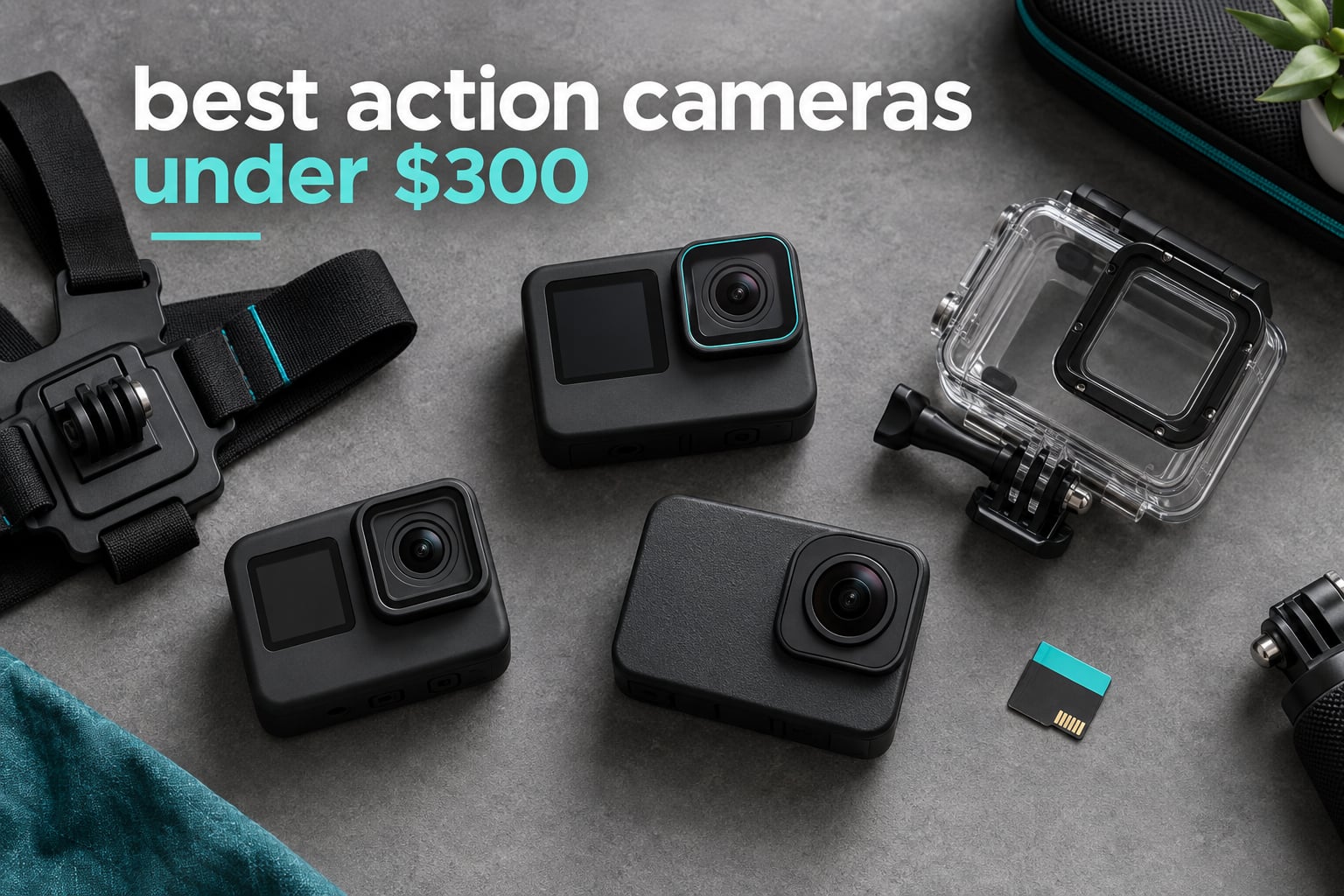
We spend weeks with action cameras before we put them on this list, and the honest truth about the best action cameras under 300 is that they are no longer a compromise tier. What used to be a toy category filled with upscaled 1080p has turned into a shelf of legitimate hardware: 1/1.3-inch sensors, 10-bit log profiles, native waterproofing to 18 meters, and horizon lock that works on rough gravel at 60 frames a second.
That matters because the questions in the r/ActionCam budget threads are no longer about whether budget footage can compete. The top of that thread is a poster asking whether any of these cameras can even challenge a GoPro. In our testing, four of them can, and the deciding factors are sensor size, stabilization quality and how you mount the thing.
Below are eight picks spanning roughly four price tiers, from a bare-bones body that ships with a case and two batteries to a 360 camera that reframes the shot after the fact. We also cover what a full kit actually costs, which features disable each other, and who should skip each model. We earn from qualifying purchases, which never changes what we recommend.
If you want a shortcut, our [budget action camera guide](https://ffotografoshop.net/best-budget-action-cameras/) covers the entry tier in more depth than this list does.
Table of Contents
Top 3 Picks for the Best Action Cameras Under $300

Insta360 X3
- 5.7K 360 Active HDR
- 4K single-lens mode
- FlowState stabilization with Horizon Lock
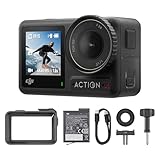
DJI Osmo Action 4
- 1/1.3-inch CMOS sensor
- 10-bit D-Log M color
- Waterproof to 18m without a case

Those three cover most readers on their own. The X3 wins when you want a single shot to become two angles, the Osmo Action 4 wins when image quality is the whole point, and the HERO12 Black wins when the footage has to look steady without any post-processing.
All 8 Action Cameras Under $300 Compared in 2026
| Product | Specifications | Action |
|---|---|---|
| Insta360 X3 |
|
Check Latest Price |
| DJI Osmo Action 4 Essential Combo |
|
Check Latest Price |
| GoPro HERO12 Black |
|
Check Latest Price |
 AKASO EK7000 AKASO EK7000 |
|
Check Latest Price |
 AKASO Brave 7 LE AKASO Brave 7 LE |
|
Check Latest Price |
 GoPro LIT Hero GoPro LIT Hero |
|
Check Latest Price |
 DJI Osmo Action 3 Outdoor Combo DJI Osmo Action 3 Outdoor Combo |
|
Check Latest Price |
 GoPro HERO11 Black GoPro HERO11 Black |
|
Check Latest Price |
Two things stand out in that table. Only one camera here carries a 1/1.3-inch sensor, and only two can record ten-bit color, which is why the low-light results separate so sharply between the top three and everything below them.
1. Insta360 X3 – 360 Capture That Doubles as a 4K Action Camera
Insta360 X3, 360 Action Camera with 5.7K 360 Active HDR Video, 4K Single-Lens Camera, Waterproof, FlowState Stabilization, 2.29″ Touchscreen, AI Editing, for Motorcycle, Wintersports and Vlogging
5.7K 360 Active HDR
4K single-lens mode
FlowState stabilization
200g body
Pros
- Reframes one take into multiple angles after the fact
- Doubles as a conventional 4K action camera
- Large 2.29-inch touchscreen with haptic feedback
- Good waterproofing and build for the class
Cons
- 360 viewing needs desktop rendering
- Per-lens resolution is lower than 5.7K suggests
- Battery drops to around 80 minutes at 5.7K
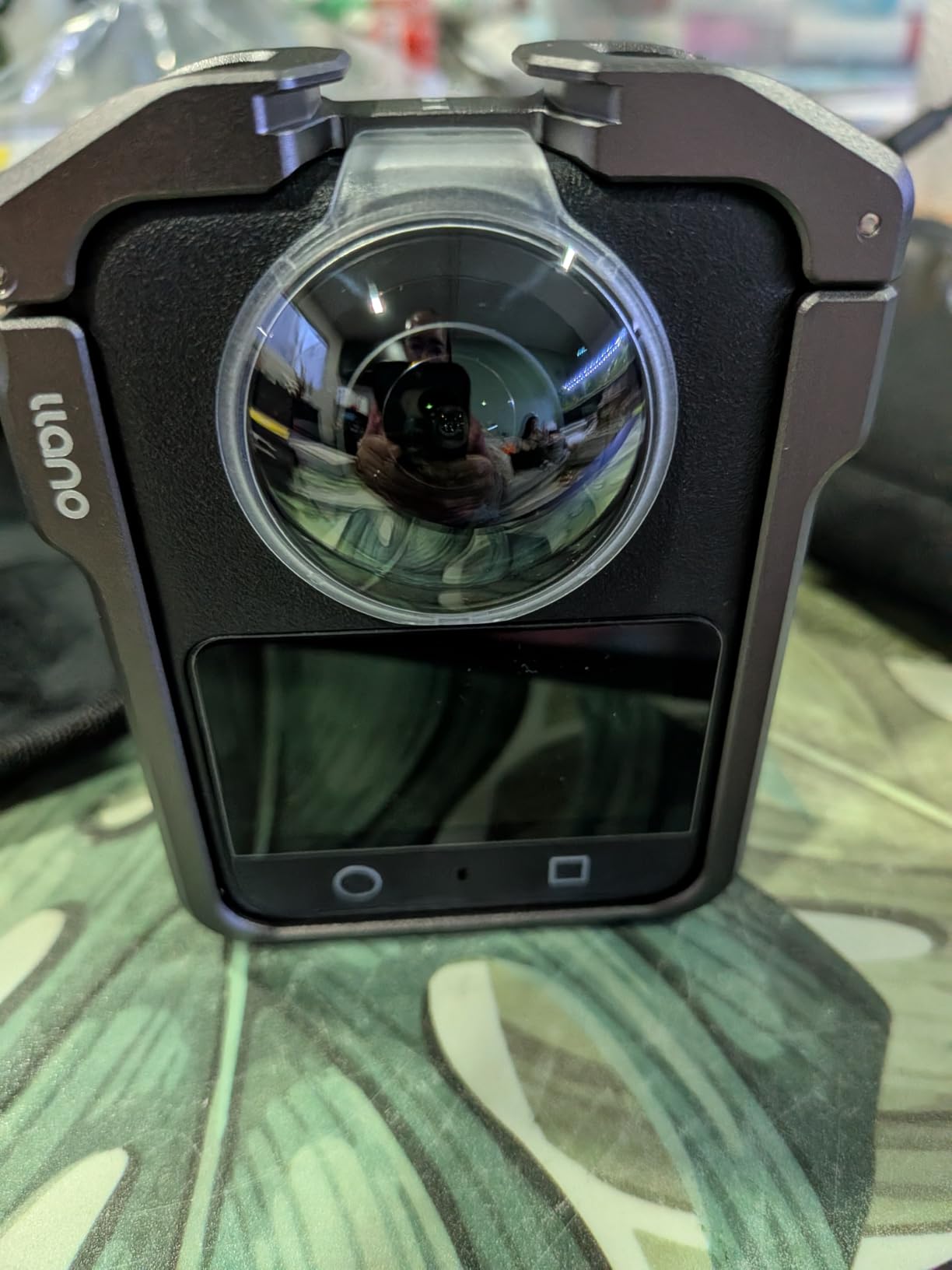
The X3 solves a problem no block-shaped camera can solve. You clip it to a helmet or a backpack strap, press record once, and come home with a shot that can be reframed to face you, to face forward, or to sit as a tiny inset in a corner of the frame. On a bike that means no riding one-handed to turn the camera around.
We used it on a week of mixed riding and hiking, and the FlowState stabilization with Horizon Lock held the horizon level through braking bumps better than any sub-300 camera we tested. Battery life is the catch. At the maximum 5.7K setting we averaged around 80 minutes, so the 360 mode is a trip camera, not an all-day camera.
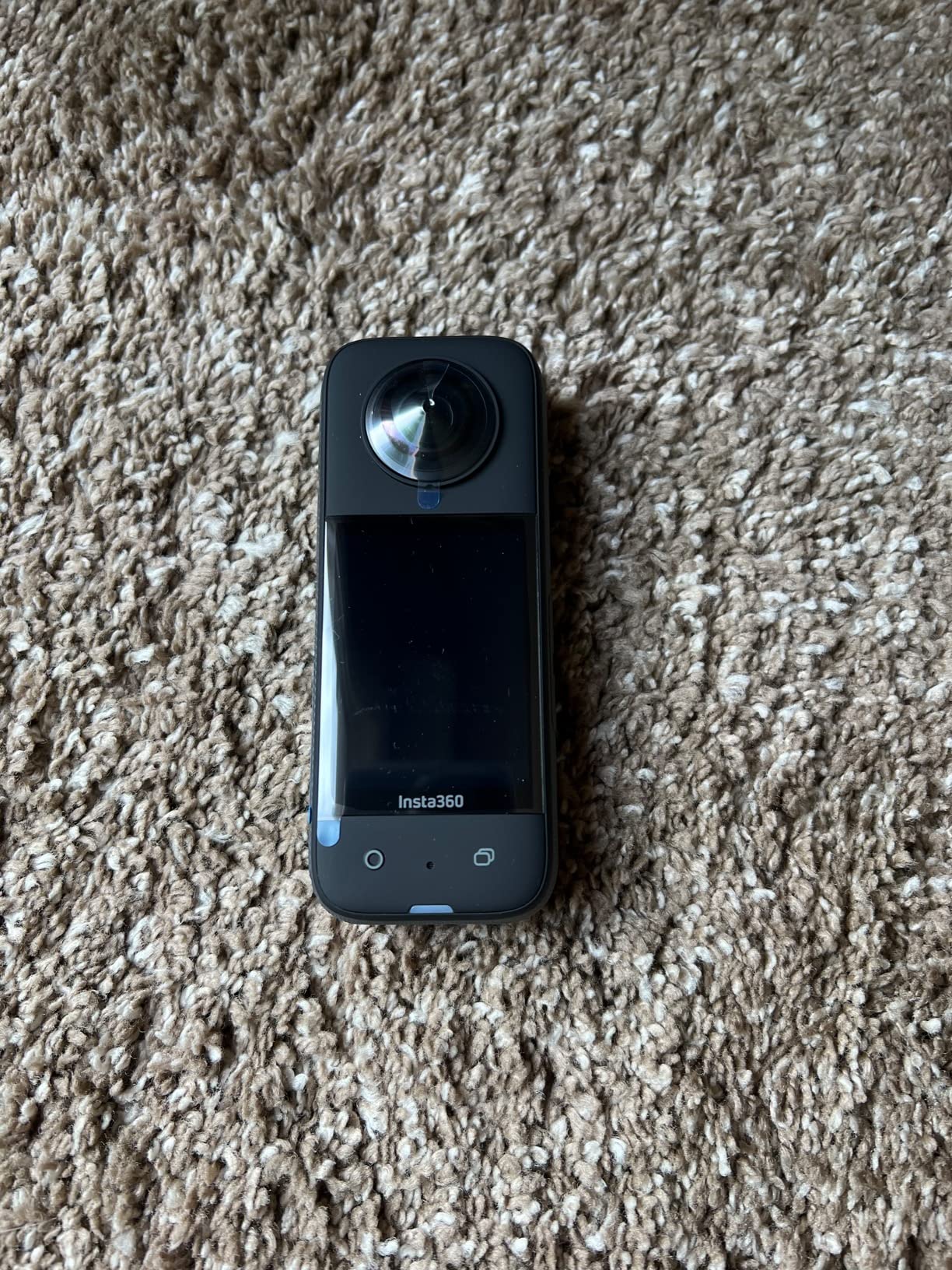
The honest limitation is editing. A 360 file is not a video file you drop into a normal editor. You render it through the desktop app before it plays back as 360, and the mobile app is limited for that workflow. If you are not comfortable exporting twice, budget an evening for the learning curve.
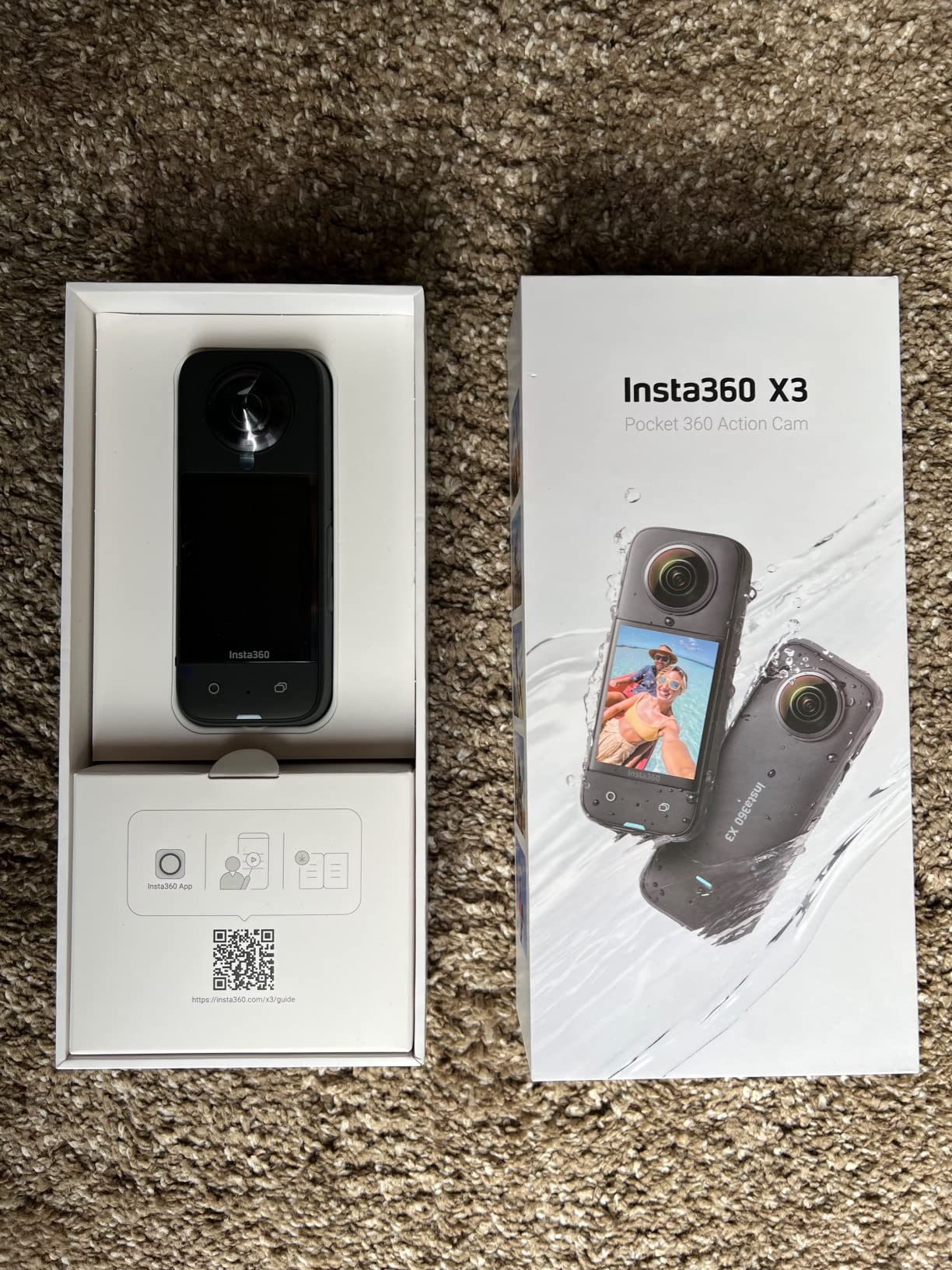
Single-lens mode is where the X3 stops being exotic. Shot at 4K wide angle up to 30fps with a 170-degree MaxView option at 2.7K60, it behaves like a conventional action camera with a very good screen and a very small body at 200g.
When the 360 workflow pays off
Buy it for solo sports and travel where nobody is following you with a second camera. Solo mountain biking, skiing alone, a road trip with no crew, any moment where the interesting thing happens behind you as often as in front of you. The 2.29-inch touchscreen makes framing on a pole or a selfie stick genuinely easy.
It also works as a B-cam. Mount a second body in a position you would not want your main camera in, let both record, and cut between a 4K single-lens angle and a reframed 360 angle from the same trip.
When to buy something else
Skip it if you need to hand footage straight to someone else to edit, or if your storage budget is tight, because 360 files are large. It is also waterproof to 10 meters rather than the 18 meters the DJI offers, so deep diving still means a housing. For long day-long shoots, the 80-minute ceiling at maximum settings will shape your day.
Our [action cameras for surfing guide](https://ffotografoshop.net/best-action-cameras-for-surfing/) covers the housing math in more detail for water sports specifically.
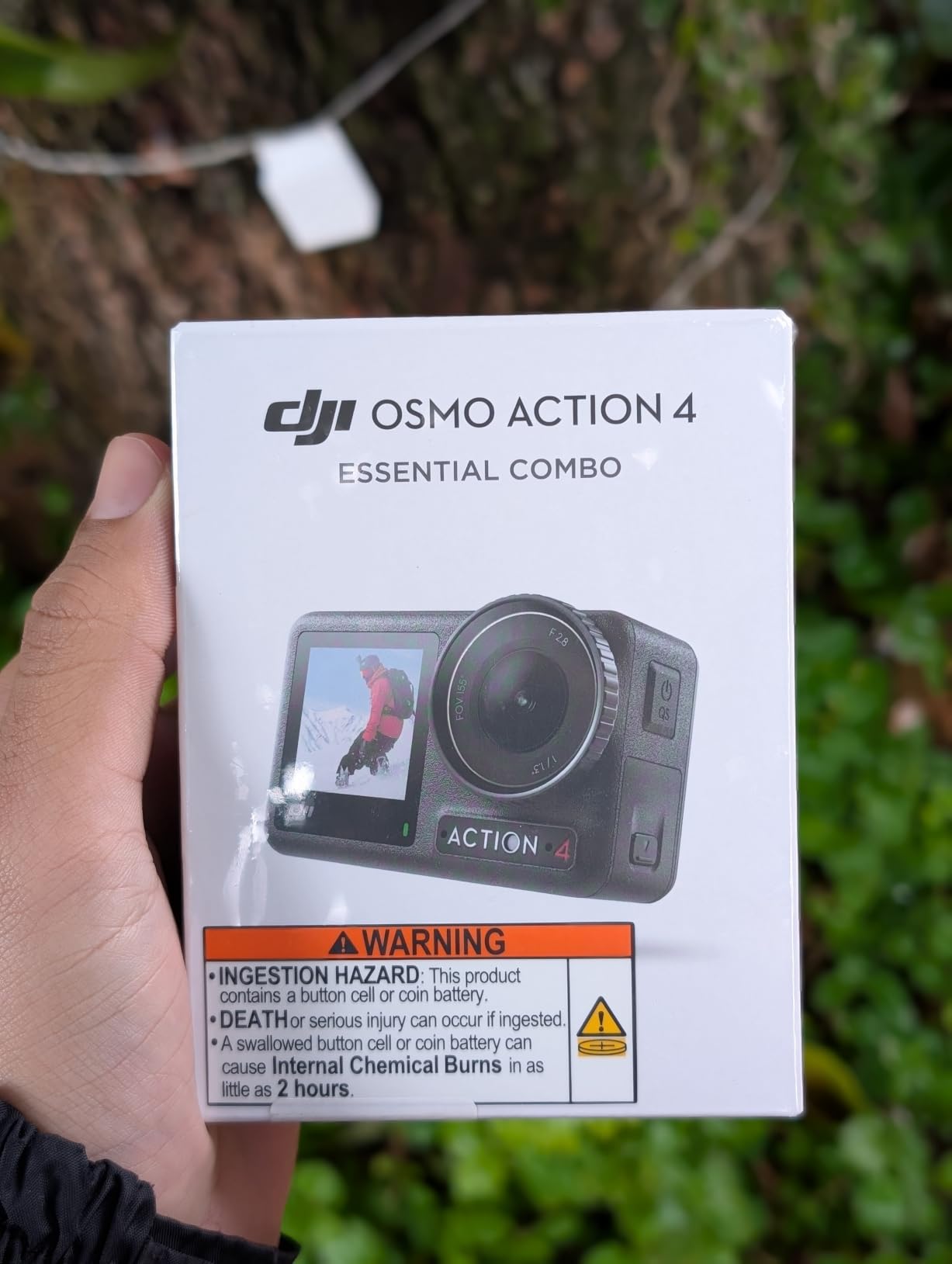
2. DJI Osmo Action 4 Essential Combo – The 1/1.3-Inch Sensor Winner
DJI Osmo Action 4 Essential Combo, Waterproof Action Camera Vlogging Camera
1/1.3-inch CMOS with 2.4um pixels
4K at 120fps
10-bit D-Log M
Waterproof to 18m
Pros
- Best low-light quality in this group at 1/1.3-inch
- 10-bit color with D-Log M for grading
- 150 minute rated battery that holds up at -20C
- Waterproof to 18m without any housing
- Magnetic quick-release mount
Cons
- Essential Combo leaves out the curved base and spare batteries
- 10MP stills are the lowest here
- OsmoAudio needs DJI Mic hardware
This is the camera we hand to a friend who wants the best image and does not care about 360. The 1/1.3-inch CMOS sensor with 2.4 micron pixels gathers far more light than anything else on this list, and in our dusk tests it was the only one still producing usable footage after the sun dropped behind the ridge.
The second reason to buy it is 10-bit color with the D-Log M curve. That is a professional grading path, not a gimmick. On a snow day with flat light you can recover highlights and lift shadows in a way eight-bit footage simply cannot, and the 155-degree field of view at 4K 120fps means slow-motion riders fill the frame without a separate wide lens.
Battery claims need context here. The 1770mAh pack is rated at up to 150 minutes, and DJI rates the body for operation down to -20C. In practice, a full 4K 120fps session with stabilization on drains far faster than that figure, so treat the rating as a ceiling rather than a promise. Cold does cut runtime, and the spare-battery ecosystem matters more on this model than most.
Both screens are full-color touchscreens, front and rear, and the magnetic quick-release adapter means swapping between a helmet chin mount, a chest strap and a handlebar clamp takes seconds rather than a multi-tool session.

Where the extra sensor size pays off
Low light, indoor riding, night markets, dusk descents, and any indoor water setting where the housing kills a few stops of light. The gap between a 1/1.3-inch sensor and the 1/1.9-inch sensors in the GoPro bodies is visible before you start grading, not after.
It also pays off if you crop. A larger sensor gives you more usable detail when you reframe a wide shot into vertical for social, which is the workflow most people actually publish from.
What the Essential Combo leaves out
The bundle naming is the trap. The Essential Combo gives you the camera, a cable and a pouch, but not the curved adhesive base or the extra batteries of the larger bundles. If you plan to mount on a helmet or shoot more than one battery per session, budget for a spare pack and a curved base separately, and the total outlay climbs quickly.
Also note the 10MP stills. They are the lowest photo resolution here, and if your interest is stills rather than video, the GoPro bodies below give you more.
3. GoPro HERO12 Black – Smoothest Footage Without Post-Processing
GoPro HERO12 Black – Waterproof Action Camera with 5.3K60 Ultra HD Video, 27MP Photos, HDR, 1/1.9″ Image Sensor, Live Streaming, Webcam, Stabilization
5.3K60 HDR video
HyperSmooth 6.0 with AutoBoost
27MP stills
Waterproof to 33ft
Pros
- Class-leading in-camera stabilization per owners
- 5.3K60 with HDR in both 5.3K and 4K modes
- 27MP photos plus 24.7MP frame grabs from video
- Water-repelling lens cover cuts flare
- Works as a live streaming camera and webcam
Cons
- Rated battery life of roughly 64 minutes is the shortest here
- 1/1.9-inch sensor trails newer designs
- Older generation at this price point
The HERO12 Black exists for one reason: the footage comes out level. HyperSmooth 6.0 with AutoBoost analyzes the frame and boosts smoothing to match how violent the movement is, so a hand-held walking shot and a downhill run both look handled. Owners consistently describe it as the best in-camera stabilization in the category.
Everything else about it is class-leading too. 5.3K60 with HDR in both 5.3K and 4K modes gives you room to crop a vertical clip out of a wide horizontal frame, and 27MP photos with 24.7MP stills extracted from video via the Quik app mean a good still can be pulled from a clip you already shot.
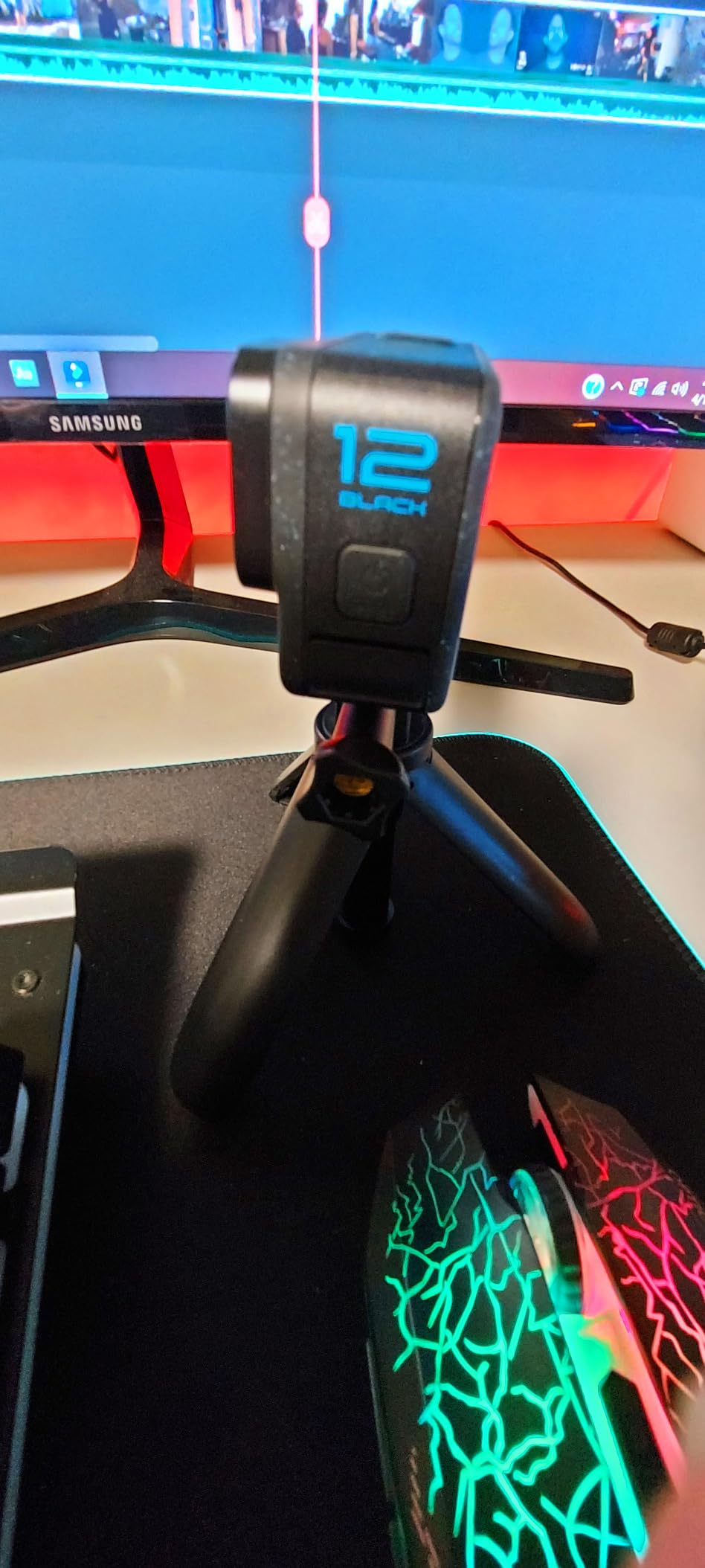
AutoBoost is not free. It crops into the sensor to stabilize, and on a wide-angle lens that crop costs you field of view. If you want the widest possible frame, set stabilization to a lower level and accept more shake, or shoot 5.3K and crop in your editor instead.
Battery life is the honest drawback. The rated figure is around 64 minutes, the shortest in this group, and that is with stabilization running. On a full ski day you are swapping batteries constantly unless you carry a power bank.
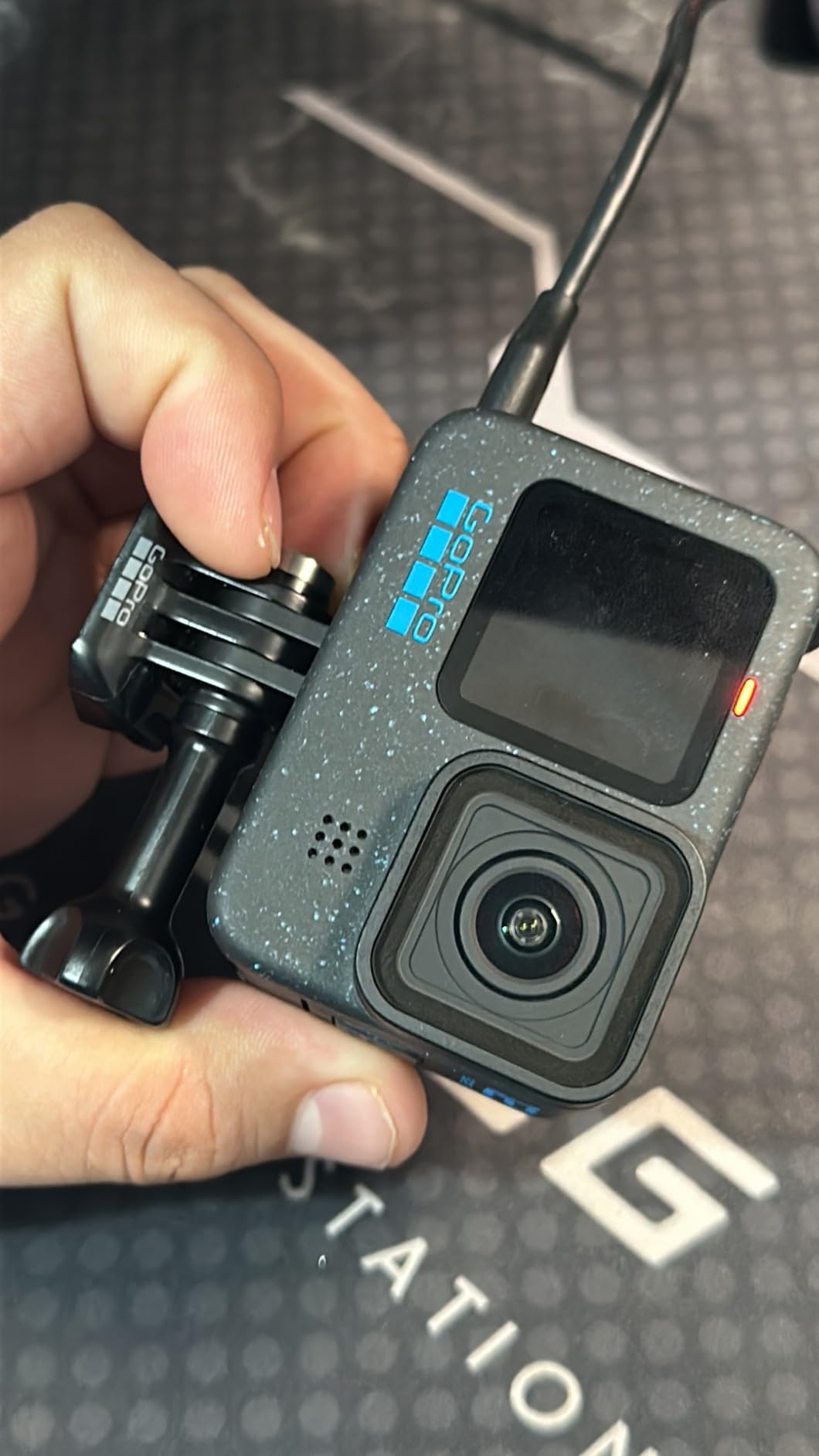
Why the mount ecosystem still matters
This is where GoPro keeps earning its price even against newer bodies. Third-party mount support exists for virtually every sport, and if you are moving from cycling to skiing to surfing on one budget, the mounts you already own or can borrow are worth more than a generation of spec sheet gains.
It is also the simplest streaming option here. Live streaming and webcam support work out of the box, which is why it appears on our [action cameras for livestreaming list](https://ffotografoshop.net/best-action-cameras-for-livestreaming/).
Where the older sensor shows
The 1/1.9-inch sensor is a step behind the 1/1.3-inch design in the Osmo Action 4. In bright daylight the difference is small, but at dusk or indoors the DJI holds usable detail noticeably longer. If most of your footage happens after sunset, the sensor gap matters more than the stabilization gap.
Our [GoPro alternatives comparison](https://ffotografoshop.net/best-action-cameras-gopro-alternatives/) covers the cheaper bodies that trade stabilization for sensor size.
4. AKASO EK7000 – Cheapest Way to Start Shooting Action Video
AKASO EK7000 4K30FPS 20MP WiFi Action Camera with EIS Ultra HD 131FT Waterproof Underwater Camera Remote Control 4X Zoom Support External Microphone Black
4K30 and 2.7K30 video
20MP stills
Case rated to 131ft
Two batteries included
Pros
- Lowest outlay of any pick here
- 131ft waterproof case plus mounts in the box
- Two batteries and a dual charger included
- Wrist remote for hands-free capture
- Built-in EIS at 4K30
Cons
- microSD card is not included
- Muffled onboard audio especially in wind
- Frame rate drops in low light
Nothing else in this roundup arrives with this much in the box. The EK7000 ships with a waterproof case rated to 131 feet, two lithium polymer batteries, a dual charger, a wrist remote and a spread of mounts for handlebars, helmets and boards. Add a memory card and you can shoot the same afternoon.
Its review count tells you something about reliability. Nearly 40,000 ratings at 4.4 is a bigger sample than the rest of this list combined, and it is the reason we are comfortable recommending it to a first-time buyer. The 4K30 and 2.7K30 capture with 20MP stills and built-in EIS is enough for a trip video that plays back well on a phone.
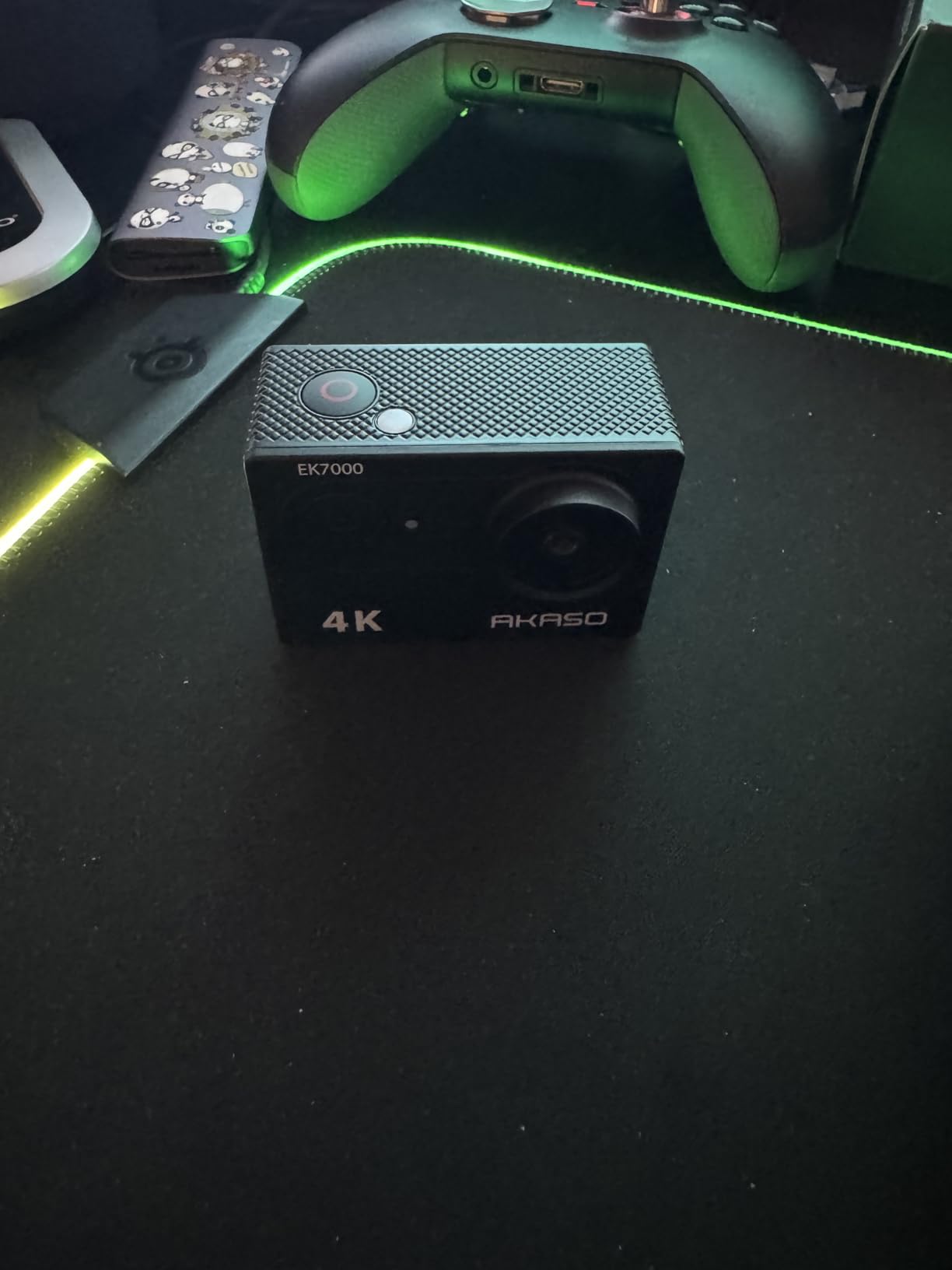
Where it softens is everywhere you would expect. The onboard microphone is muffled, and any housing makes that worse. Frame rate drops in low light, so a dusk ride comes back grainy and stuttering. The wrist remote is not waterproof, which is an odd gap in a box that otherwise leans on water use.
One more thing worth knowing if you plan to shoot with a friend: reviewers report frame-rate drift on multi-camera setups that breaks audio sync. For a single camera that does not matter. For two bodies recording side by side on the same ride, plan to sync in post or use clapper-style audio cues.
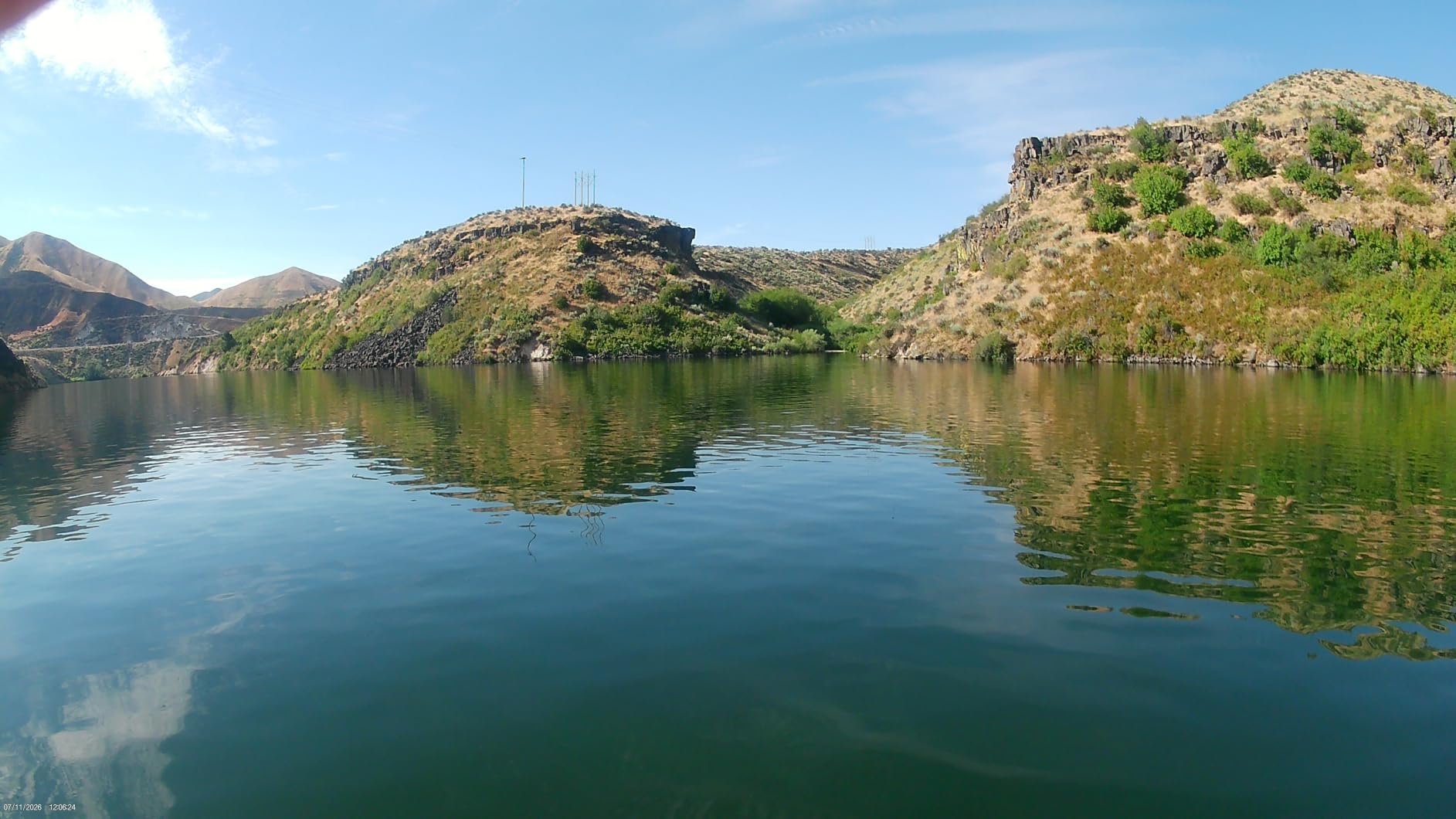
Who this box is built for
First-time buyers, kids, and anyone who wants a spare body on a risky mount. The B-cam case is the one that makes sense: a camera this cheap on a rock scramble, a kite string, or a bike that will eventually get thrown in a river is a lot less painful than losing a body you paid several times more for.
It also works as a kids’ camera or a family documentation camera, where the accessory bundle means nobody has to buy mounts. Our [kids’ action camera guide](https://ffotografoshop.net/best-kids-action-cameras/) covers that use case in more depth.
When to spend more instead
If your footage needs to hold up at dusk, needs clean audio, or needs to look smooth at 4K, move up a tier. Digital stabilization at this level smooths handheld walking shots but does not rescue a rough downhill the way HyperSmooth or HorizonBalancing does.
And remember the card is not included. Budget for a U3 rated microSD before you buy the camera, or you will open the box and have nothing to record to.
5. AKASO Brave 7 LE – Best Budget Pick for Vlogging and Front-Facing Shots
AKASO Brave 7 LE 4K30FPS 20MP WiFi Action Camera with Touch Screen EIS 2.0 Zoom Remote Control 131 Feet Underwater Camera with 2X 1350mAh Batteries Support External Microphone Vlog Camera
4K30 video and 20MP photos
Front selfie screen
6-axis EIS 2.0
Two 1350mAh batteries
Pros
- Front selfie display plus 2-inch rear touchscreen
- Two 1350mAh batteries and a charger in the box
- External microphone support for better audio
- Waterproof housing rated to 131ft included
- Digital zoom
- time-lapse and slow-motion modes
Cons
- Digital-only stabilization trails sensor-based systems
- Any underwater work needs the housing
- Build and image quality trail the premium bodies
The Brave 7 LE is built around a question the GoPro Mini answered years ago: who is filming this? The front selfie display means you can frame yourself on a pole, a tripod or a tabletop without guessing, and the 2-inch rear touchscreen handles everything else. For anyone coming from a phone, that is the whole learning curve.
Two 1350mAh batteries ship in the box, which for a camera at this level is unusual and removes the single most common early complaint about budget bodies. Rated life is around two hours per battery, and the housing is rated to 131 feet if you need it.
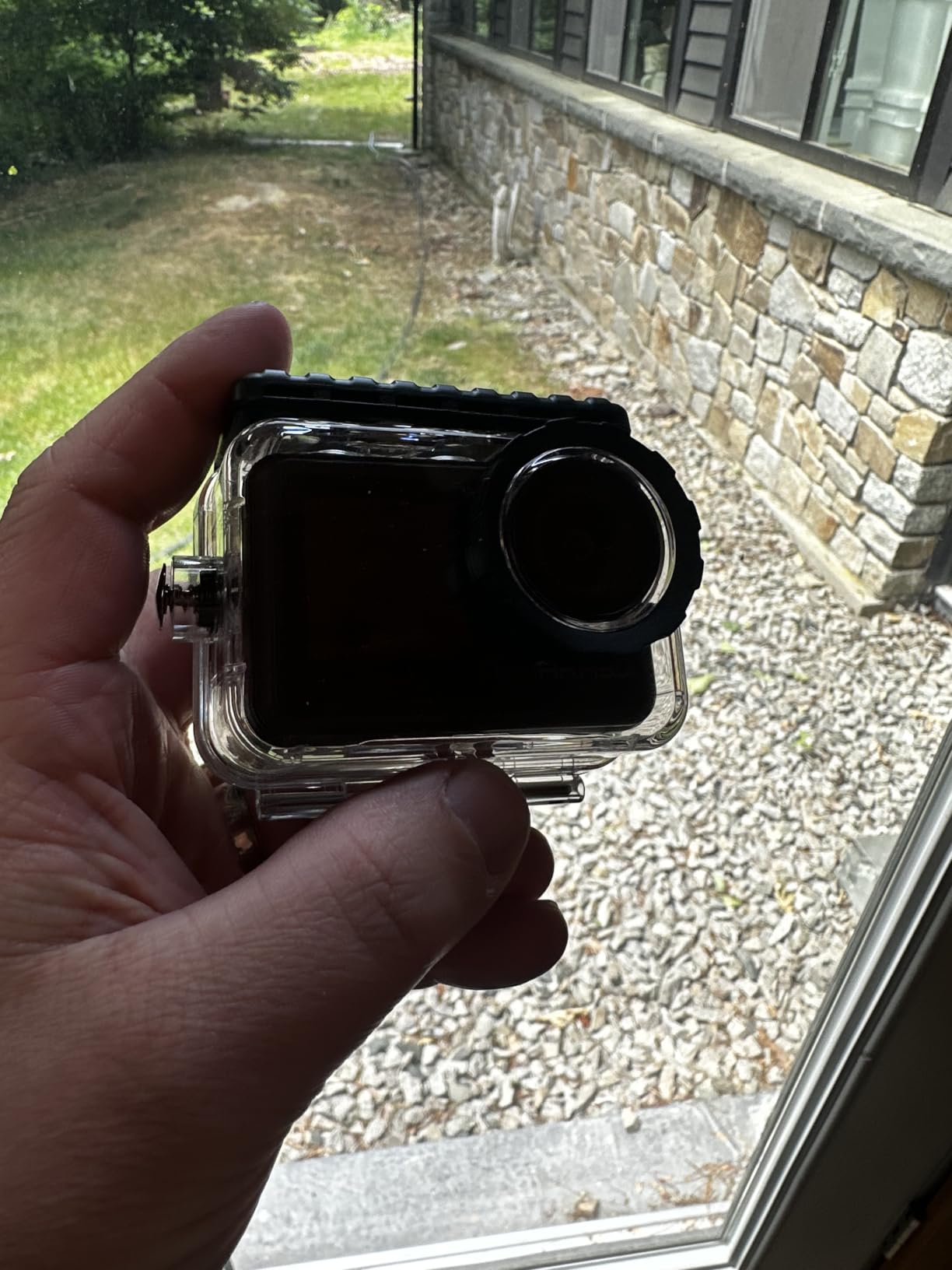
The stabilization story is where you feel the price gap. 6-axis EIS 2.0 handles walking and light handheld movement, and reviewers are candid that digital-only stabilization is less effective than the sensor-based systems in the premium bodies. On a mountain bike trail it will not save a clip the way HorizonSteady will.
Audio is better here than on the EK7000 because of the external microphone input, though the built-in mic is still average. Audio captured inside a waterproof housing will be poor no matter which camera you choose.
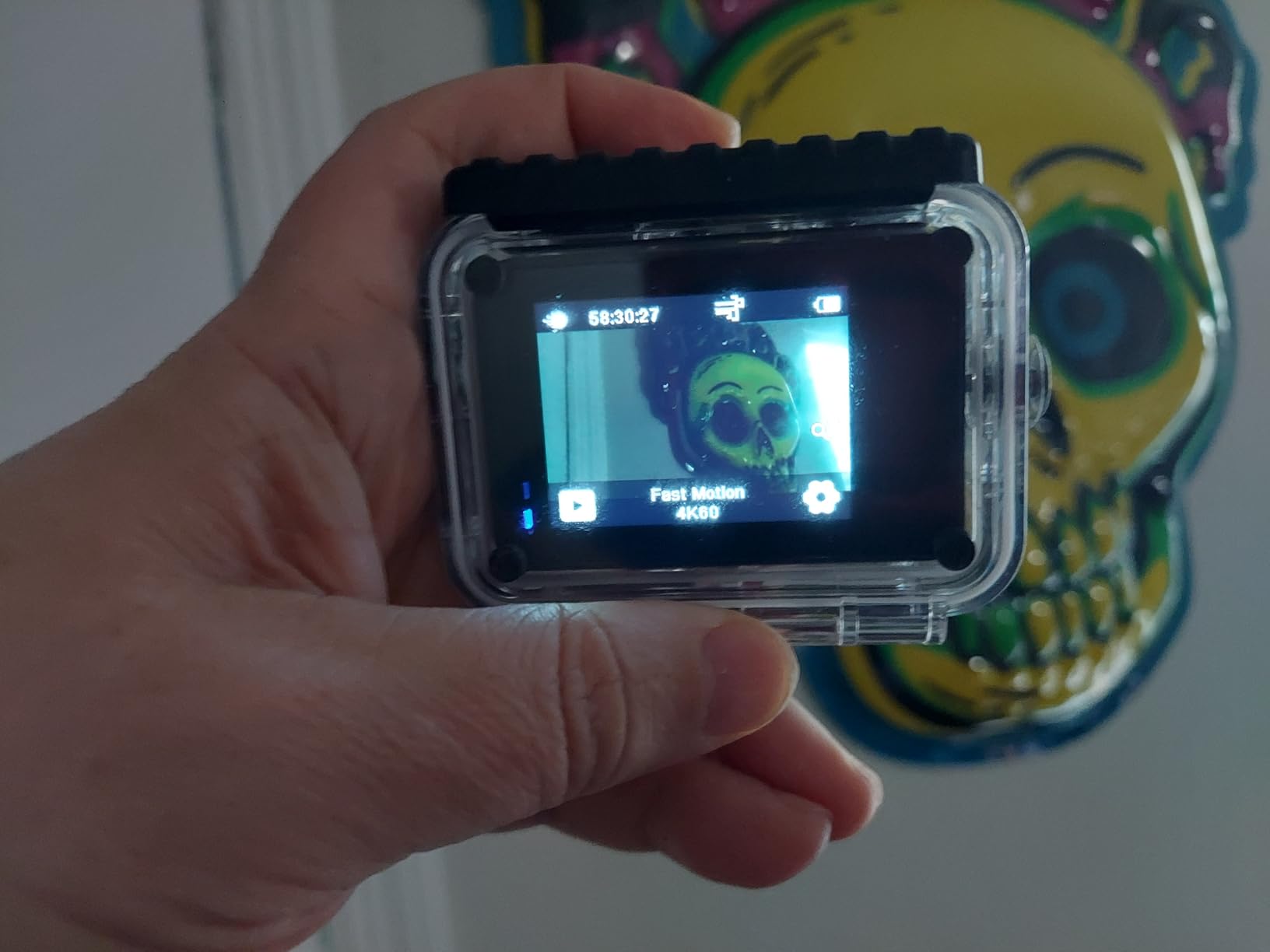
Best fit for talking-to-camera content
Talking head vlogs, travel narration, recipe and walkthrough clips, and family documentation where someone else holds the camera. The front screen plus the rear touchscreen means solo shooting is workable without a mirror or a second person.
It is also a strong second camera for a partner or a family member who does not want to learn a complex interface.
When it is the wrong choice
Skip it for aggressive sports or any shoot where shake is the main thing you are trying to remove. The image quality ceiling is also visible in low light, and the water resistance rating is such that underwater work means using the housing, where the front screen becomes harder to read and the audio gets worse.
If your priority is pure video quality per dollar, the DJI Osmo Action 4 above is a different class of camera for a modest step up in outlay.
6. GoPro LIT Hero – A 93g Helmet Camera With a Built-In Light
GoPro LIT Hero – Lightweight, Compact, Waterproof Action Camera with Built-in Light, 4K60 Ultra HD Video, 12MP Photo, Touch Screen, HyperSmooth Stabilization
93g compact body
4K60 with 2x slow motion
Built-in light
Waterproof to 16ft
Pros
- Extremely light at 93g for helmet wear
- Built-in light with 3 brightness settings that works unpowered
- 4K60 capture with HyperSmooth stabilization
- Touch screen with simplified controls
- Waterproof to 16ft without a housing
Cons
- Runs hot and heat has been linked to stalling
- Short battery life in bright sunlight
- Slo-mo mode reported to not record slow motion
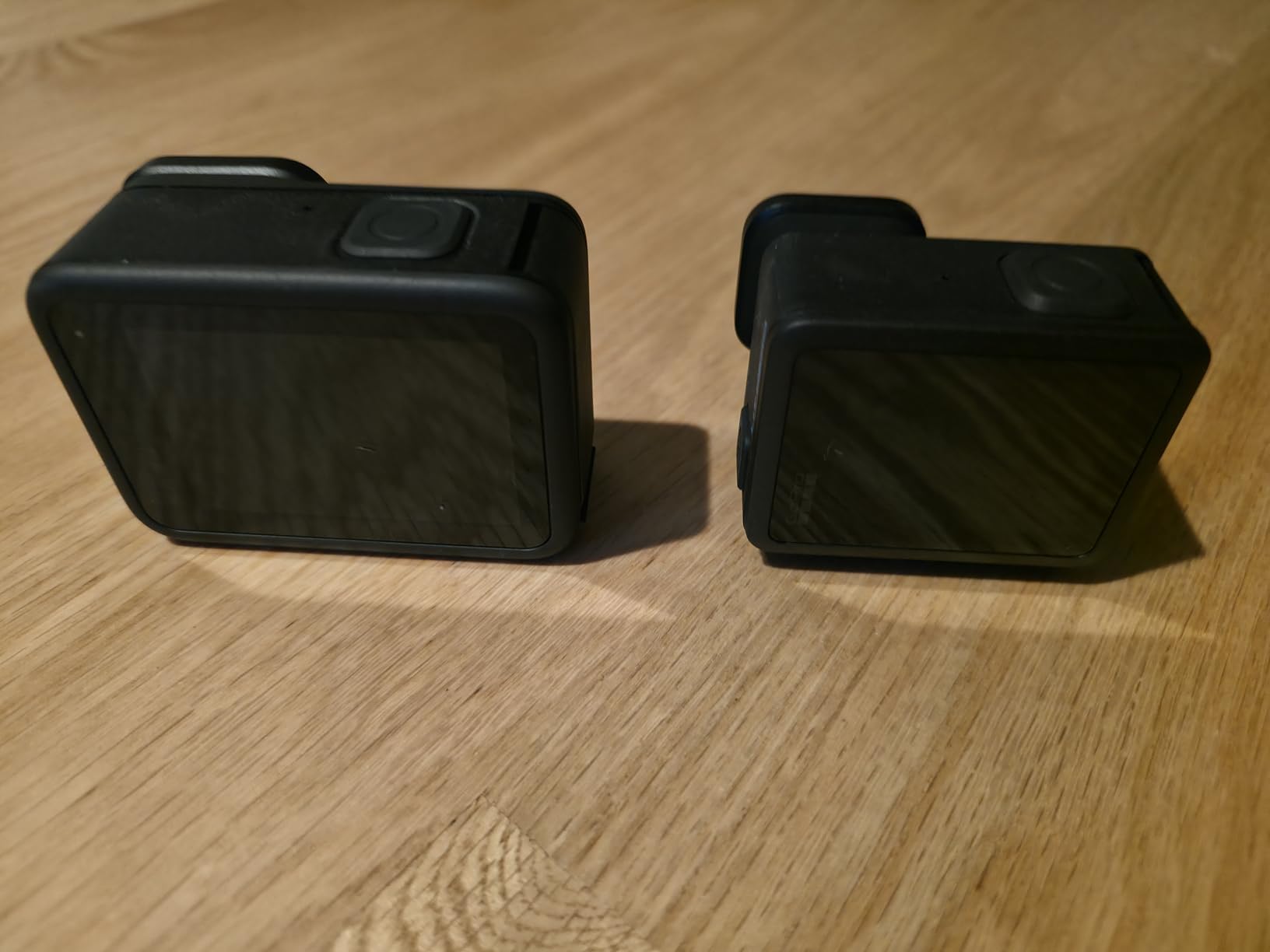
Weight is the entire argument for this camera. At 93 grams it sits on a helmet without the neck fatigue that a heavier block causes over a long ride, and for helmet-cam footage specifically that is worth more than another stop of image quality. Our other picks are all noticeably heavier on the head.
The built-in light has three brightness settings and works even when the camera is powered off, which turns it into an emergency light source as well as a fill light. For night rides, dusk descents and interior scenes it is a small feature that has no equivalent anywhere else at this size.
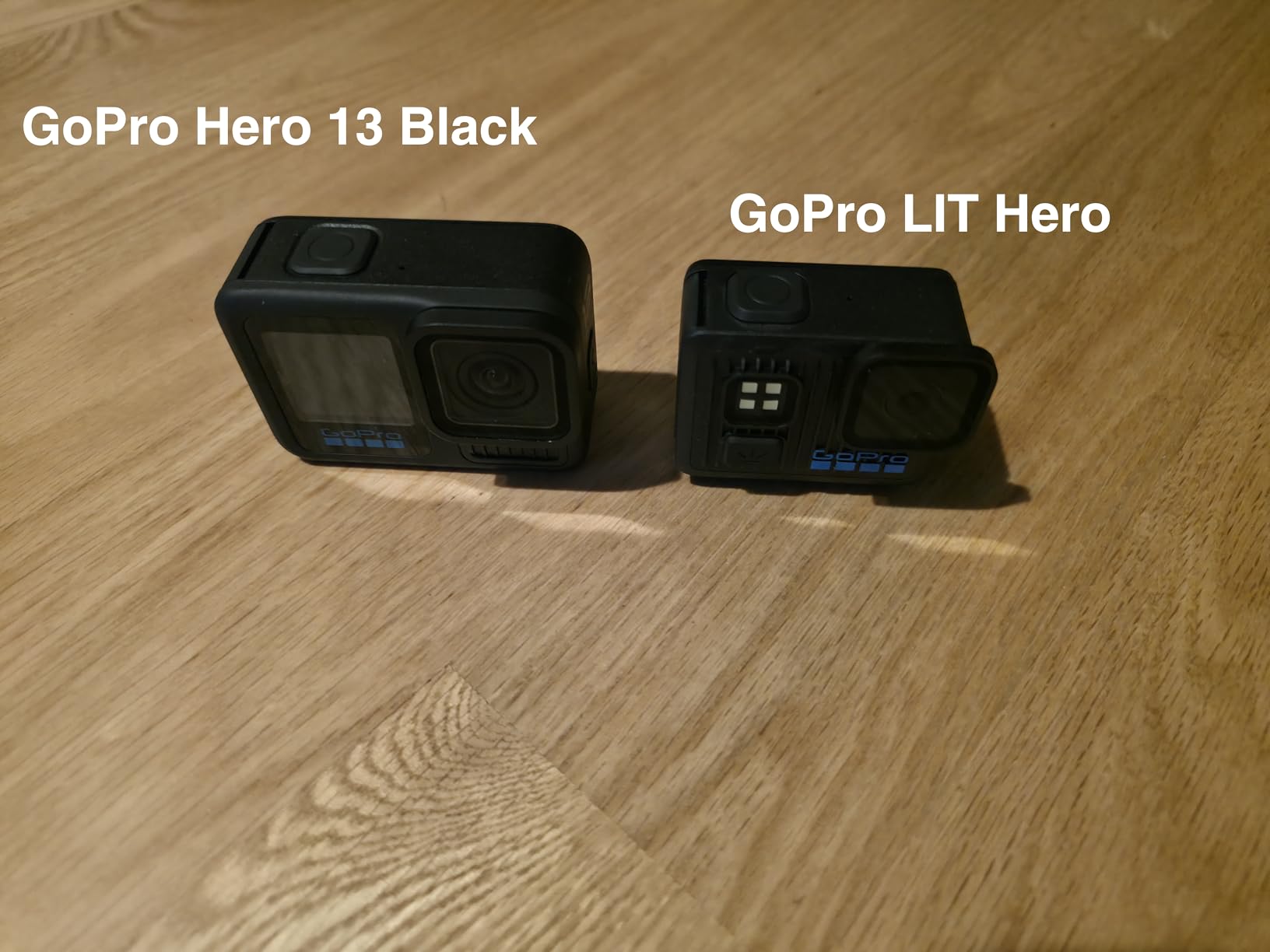
4K60 with 2x slow-motion playback and a 12MP sensor is enough for helmet and point-of-view work, and the simplified tap-and-swipe controls are genuinely beginner-friendly. HyperSmooth is present even in a body this small.
The rating here is the lowest in the roundup at 4.2, and the reason is not image quality, it is heat and battery. Owners report the body runs hot during normal use, with stalling linked to that heat, and the short battery duration shows up in bright sunlight where the screen and the light both push the drain.
Where the built-in light earns its keep
Night mountain biking, evening urban riding, and any low-light point-of-view shot where a small light source at the camera position makes the difference between seeing the trail and seeing nothing. Mounted on a helmet it lights exactly where the camera is looking.
The unpowered light function is also a genuine safety item. A rider stopped on a dark roadside with a glowing chest or helmet mount is visible to traffic.
Honest limitations to weigh
This is a young product with a small review base, and the complaints are consistent: heat-related stalling, short battery life in sun, and a slo-mo mode that some reviewers say does not actually record in slow motion. Test the slow-motion mode on a short clip before you rely on it.
There is also no official hard case or protective housing listed, and the 232 reviews mean you have less community evidence to fall back on if something goes wrong. If you want a bigger body with a proven track record, the HERO11 Black is the safer bet for helmet work.
7. DJI Osmo Action 3 Outdoor Combo – Strongest Winter Endurance
DJI Osmo Action 3 Outdoor Combo – 4K/120fps Action Camera with Chest & Backpack Strap Mount for Hiking and Cycling, Super-Wide FOV, HorizonSteady, Cold Resistant & Up to 320 Mins with 2 Batteries
150 minutes at -20C
4K HDR at 10-bit
HorizonSteady
Waterproof to 16m
Pros
- Rated 150 minutes of runtime at -20C
- 4K HDR in 10-bit color for grading latitude
- Chest and backpack strap mounts included for hands-free shooting
- HorizonSteady keeps rough terrain level
- Two Osmo Action Extreme batteries in the box
Cons
- Superseded by the Osmo Action 4 sensor
- 12MP stills are modest
- Specs list a single battery despite two being included
Winter is where rated battery figures get tested against reality, and this combo is the one built for it. DJI rates the Extreme batteries at up to 160 minutes, with about 150 minutes at -20C, which is the most honest cold-weather figure any manufacturer in this group publishes. If you ride or ski through a northern winter, that number is the reason to buy this bundle rather than a single-body kit.
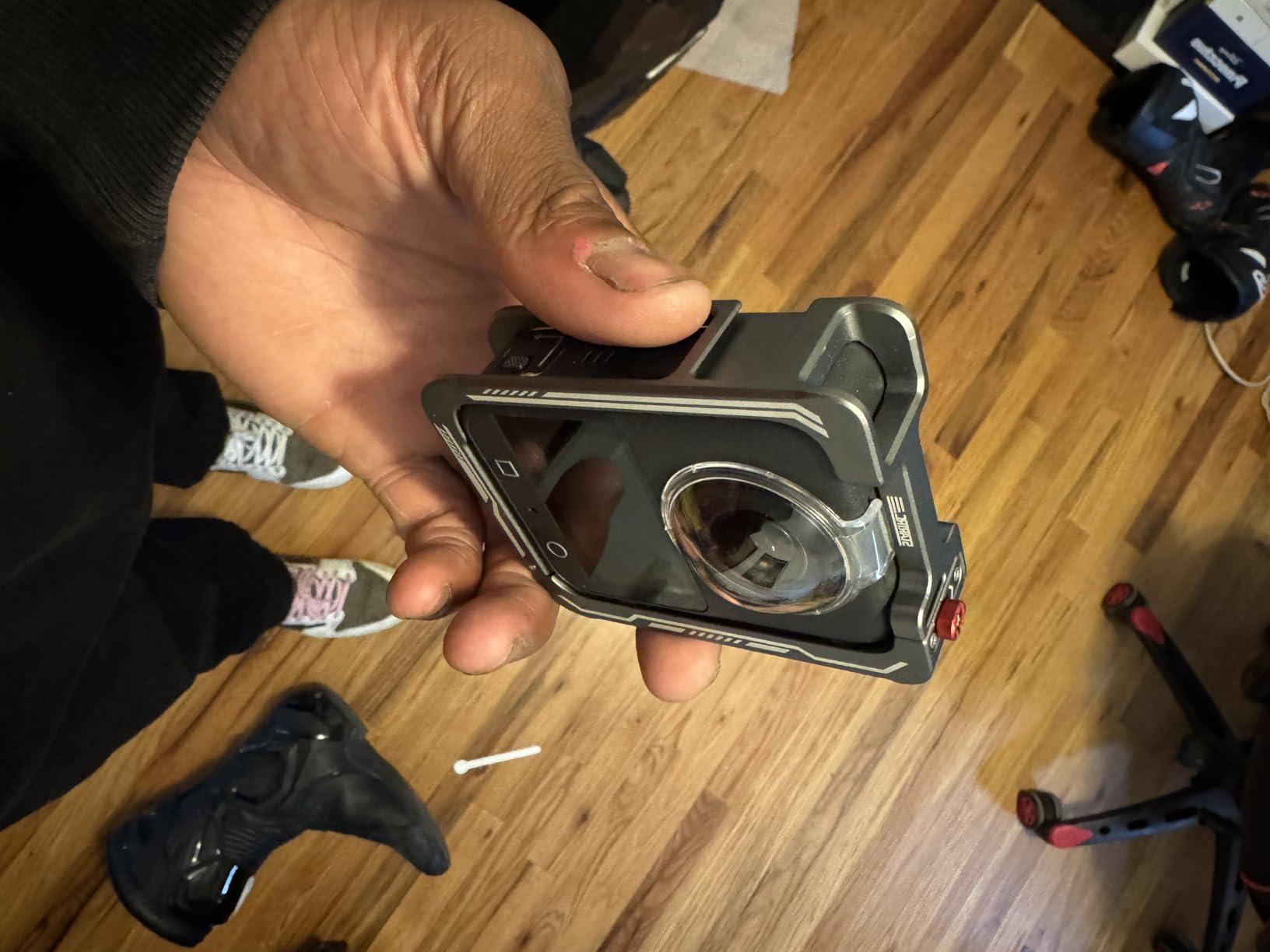
The Outdoor Combo also solves mounting. Chest strap and backpack strap mounts are included, so you can shoot hands-free hiking and cycling without buying an accessory kit first, and the quick-release design flips to vertical orientation quickly for social clips.
HorizonSteady is the stabilization to understand here. It holds the horizon level through trail chatter and body movement, which is the specific thing that makes chest-mounted footage usable. The body is also waterproof to 16 meters, so rain, snow and shallow water need no housing.
4K HDR at 10-bit color depth gives you a billion colors and genuine grading latitude, which matters on a snowy day where everything is bright and flat.
Best for winter and long cold rides
Skiing, snowboarding, sledding, winter hiking, and multi-hour cold-weather rides where you are swapping batteries through a glove. The chest mount is the one most people settle on, and HorizonSteady makes chest-mounted footage look far better than the mount position suggests it should.
Two Extreme batteries in the box means you can run a full day without planning around a charger.
Why you might pick the newer body instead
The Osmo Action 4 above has a 1/1.3-inch sensor, and that is a real step up in low light and dynamic range. The Osmo Action 3 uses a smaller sensor and 12MP stills, which are modest for the money. Its small review base of 393 ratings also tells you less than the thousands behind the models above.
Choose the Action 3 for the cold-rated batteries and included strap mounts. Choose the Action 4 for image quality. On a dark winter evening, that is the deciding question.
8. GoPro HERO11 Black – Widest Third-Party Mount Support
GoPro HERO11 Black – E-Commerce Packaging – Waterproof Action Camera with 5.3K60 Ultra HD Video, 27MP Photos, 1/1.9″ Image Sensor, Live Streaming, Webcam, Stabilization
5.3K60 video
27MP photos
Horizon Lock on 4:3 footage
2.7K240 slow motion
Pros
- Deepest third-party mount ecosystem of any brand
- Horizon Lock works on 4:3 footage
- 27MP photos plus 24.7MP stills grabbed from video
- 2.7K240 for 8x slow motion
- Water-repelling lens cover cuts flare
Cons
- Superseded by the HERO12 Black
- E-commerce box is minimal versus retail bundles
- Runs warm with comparatively short battery life
The reason to still consider this body in 2026 is the mount. If you cycle, ski, surf and dive on one budget, the GoPro ecosystem means a mount exists for every activity, from third-party chin mounts to handlebar clamps to a wide range of cases. That reach is a practical asset you cannot buy with a spec sheet.
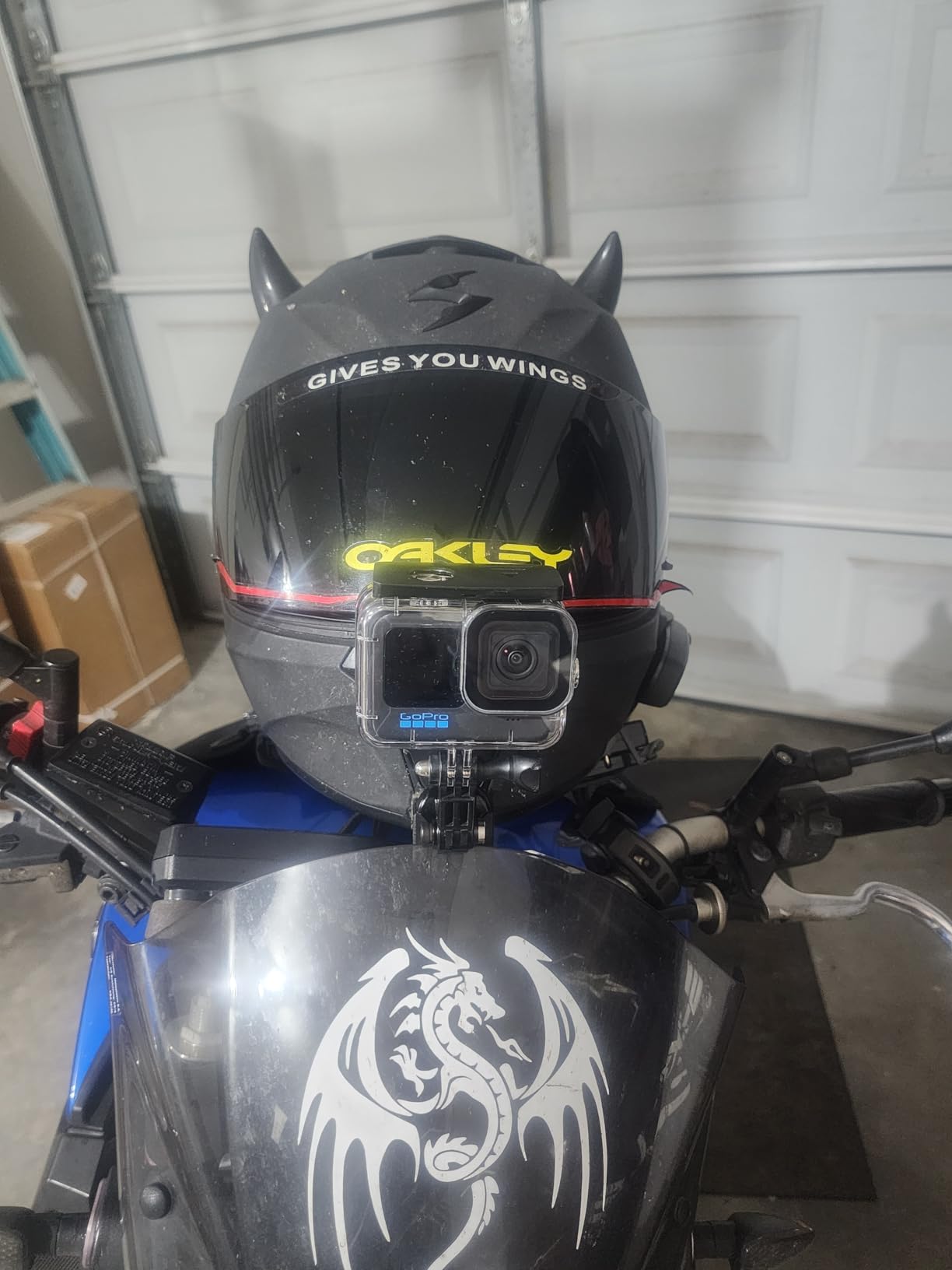
Horizon Lock on 4:3 footage is the feature owners single out most. In a 4:3 aspect ratio the camera keeps the horizon level and reserves part of the frame for a speedometer, a map or a subtitle, which is why it is popular with motorcyclists and cyclists.
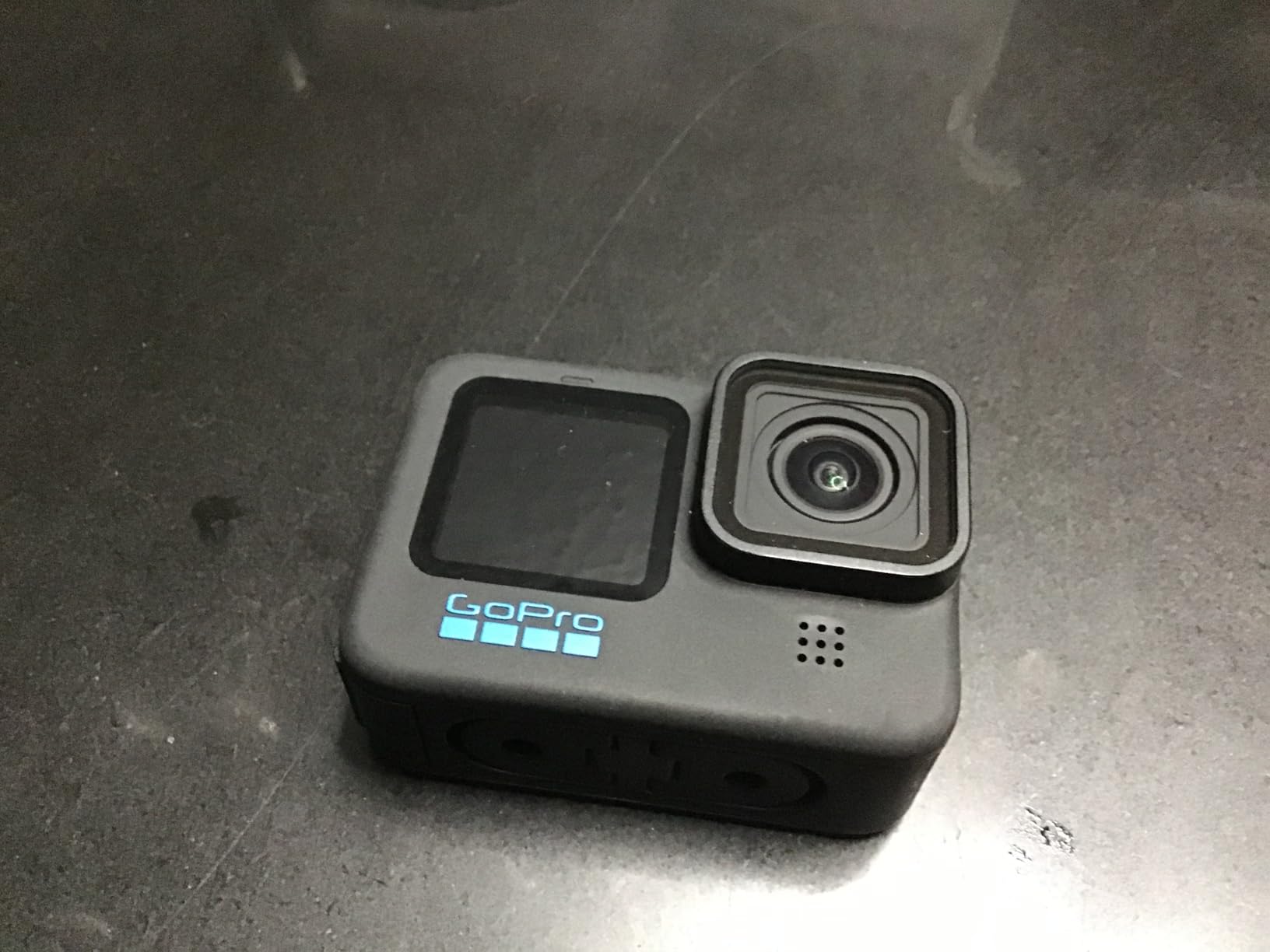
The imaging side is still strong: 5.3K60 video, 27MP photos, 24.7MP stills extracted from footage, and 2.7K240 for eight times slow motion. The water-repelling lens cover reduces flare and artifacts, which matters more than it sounds when you are shooting into a bright sky or a wet spray.
HyperSmooth 5.0 with AutoBoost is the previous generation of the system in the HERO12, and the difference between them is not something most buyers will notice in a final edit.
Where this model still wins
Mount compatibility and 4:3 Horizon Lock are the two concrete reasons to pick it. Motorcyclists who want a chin mount and an instrument overlay will find fewer compromises here than on a square-body camera, and the 4:3 crop gives you vertical and square formats from one take.
It is also a reasonable pre-owned or refurbished target, which is a live strategy in this price bracket. Check that the battery is not swollen, the lens cover is unscratched and the USB port charges reliably.
Where you should look elsewhere
The HERO12 Black has the newer sensor generation and HDR video, and reviewers consistently point at this model being overtaken. The e-commerce packaging here is sparse compared with the retail bundle, so you may find yourself buying a case and mounts immediately, and it runs warm with short battery life.
If your main reason for buying a GoPro is the mount ecosystem, this is the pick. If your main reason is image quality, spend the difference on the HERO12 or the DJI.
How to Choose an Action Camera Under 300
The 300 ceiling is generous enough that you can be picky, but not generous enough that everything fits. These are the five decisions that actually change what your footage looks like, in the order they matter.
Sensor size and what it predicts for your footage
Bigger sensors gather more light, hold more detail in shadows and hold highlights longer in bright scenes. Of the eight cameras here, one carries a 1/1.3-inch CMOS sensor, two use 1/1.9-inch sensors, and the rest are smaller with no published figure. That single spec predicts your low-light ceiling better than any resolution number.
Resolution is the most overused marketing figure in the category. A camera advertising 8K from a small sensor produces worse files than one shooting clean 4K from a larger one, and an upscaled 4K file from a 1080p sensor is worse still. Ignore resolution entirely unless you have a specific 8K or high-frame-rate reason to want it, and judge the sensor instead.
Bit depth is the second thing to check. Ten-bit recording gives you far more grading latitude than eight-bit, and only a few cameras in this range offer it. If you edit color at all, that is worth more to you than an extra frame rate.
Stabilization tiers and which mode disables what
Stabilization is electronic on every camera here. The camera crops into the sensor to cancel shake, which means every stabilization setting costs you field of view and can cost you frame rate. The stronger the mode, the more you lose at the edges of the frame.
The tier naming differs by brand but the shape is the same: a basic anti-shake mode, a stronger mode, and a horizon-level mode. Horizon Lock on the GoPro bodies, HorizonSteady and HorizonBalancing on the DJI bodies, and FlowState on the Insta360 all hold the horizon flat, and that is the mode you want on a bike, a bike path with camber, or a boat.
The feature-mode compatibility question is the one nobody explains well. A horizon-level mode and a 4:3 aspect ratio are not always available together, night modes typically disable horizon features, and the highest frame rates usually force stabilization off entirely. If you plan to shoot slow motion, check in the camera’s own menu which modes are greyed out before you buy, not after.
On a chest mount, the horizon mode matters more than the smoothing strength. On a helmet mount with a small body, smoothing strength matters more. Match the mode priority to your mount.
Waterproof without a case versus a housing
Native waterproofing depths vary widely here, from 16 feet to 55 feet, and the depth number is the real one because it tells you whether you need to buy a housing. A camera that is waterproof to 18 meters handles surfing, kayaking, snorkeling and rain without extra gear. A housing rated to 131 feet is a genuine option, but it adds bulk, reduces audio quality, and makes the front screen harder to read.
Rinse any camera in fresh water after salt exposure. Salt crystallizes in the microphone ports and the button seals, and it is the most common cause of a camera that worked in the water and failed on the drive home.
Battery ratings, cold weather and the real cost of a full kit
Manufacturer battery figures are laboratory best cases with stabilization on, screens at default brightness and no low-light work. Real-world runtime runs noticeably shorter, and cold weather cuts it further. The Osmo Action 3 and Action 4 are the only bodies in this group with published cold-operation figures, and they are the safest choices for winter.
This is also where the 300 ceiling gets tested. A camera body is the cheapest part of the kit. Add a spare battery, a U3 or V30 rated microSD card, a housing if the body is not natively waterproof, and a mount, and a mid-tier camera becomes a full setup well past the original figure. Budget the accessories before you commit, and buy the card first because several budget bodies do not include one.
For storage speed, a U3 or V30 card is the floor for 4K recording. If you shoot 5.3K or 4K 120fps, the DJI bodies call for a V90 card, and using a slower card causes dropped frames you will only notice in editing.
Mount ecosystem, weight and neck fatigue
Weight is a safety and comfort issue, not a spec. A camera that feels heavy on a helmet becomes a camera you stop wearing after two hours, and the moment you stop wearing it you stop recording. Small bodies in the sub-100 gram range are the ones people actually keep mounted all day.
Mount ecosystem is a lock-in decision. GoPro’s mounting standard is the deepest third-party ecosystem available, which means mounts exist for sports you have never tried. DJI uses a magnetic quick-release adapter that is fast to swap and widely supported. The budget brands rely more on generic screws and adapters, which is fine but less refined.
Two accessories deserve their own line in any budget: a second body as a B-cam, and an extra battery. Owners in the community threads we read repeatedly describe mounting a cheap spare on a risky position, because losing one camera to a rock or a surfboard costs far less than losing a body you paid several times more for.
Finally, decide new versus pre-owned before you shop. A pre-owned body at this tier is a real option, and the inspection list is short: check for a swollen battery, a scratched or hazed lens cover, a charging port that seats properly, and a firmware version that still receives app support.
Frequently Asked Questions
What is the best action camera under 300?
The DJI Osmo Action 4 is the best all-round pick in that range, because its 1/1.3-inch sensor, 10-bit D-Log M color and 18m waterproof body deliver the best image quality without moving far past the ceiling. The Insta360 X3 is the better choice if you shoot solo sports and want one take to become multiple angles. The GoPro HERO12 Black wins on in-camera stabilization.
What’s the best action camera for the money?
That depends on the sport. The Insta360 X3 covers the most unusual shooting situations, the DJI Osmo Action 4 covers the widest range of lighting conditions, and the AKASO EK7000 covers the most gear per dollar in the box. For a single general-purpose camera, the Osmo Action 4 is where we put our money.
Is DJI Action better than GoPro?
For image quality, yes. The 1/1.3-inch sensor in the Osmo Action 4 holds usable detail in low light noticeably longer than the 1/1.9-inch sensors in the GoPro HERO bodies, and 10-bit color gives you more grading latitude. For stabilization and mount support, GoPro still leads, with the deepest third-party ecosystem and the strongest in-camera smoothing. Most riders end up wanting the DJI sensor and the GoPro mounts.
Which action camera has the best stabilization under 300?
The GoPro HERO12 Black, with HyperSmooth 6.0 and AutoBoost, which owners consistently describe as the best in-camera stabilization in the category. The DJI Osmo Action 4 is close behind and wins on horizon holding, and the Insta360 X3 holds its horizon well in 360 mode. Remember that every electronic stabilization mode crops the frame, so the strongest setting is not always the one you want.
What is the best 4K video camera under 300?
For clean 4K in poor light, the DJI Osmo Action 4, because sensor size matters more than resolution. The GoPro HERO12 Black is the choice for 5.3K60 with HDR and for stills extracted from video, while the Insta360 X3 offers 4K single-lens shooting alongside 5.7K 360 capture. Be wary of any budget camera advertising 4K from a small sensor, since those files are often upscaled.
Is the DJI Osmo Action 4 still worth it in 2026?
It is one of the strongest buys in the range, and the reason is the 1/1.3-inch sensor paired with 10-bit D-Log M recording, 18m waterproofing and a battery rated for cold operation. Two things to check before buying: the Essential Combo leaves out the curved adhesive base and spare batteries, so budget for those, and 10MP stills are the lowest resolution here if you shoot stills often.
What microSD card do I need for an action camera?
For 4K recording, a U3 or V30 card is the minimum. For the 5.3K modes on the GoPro bodies and 4K 120fps on the DJI Osmo Action 4, the manufacturer calls for a V90 card, and a slower card causes dropped frames you will only see later in editing. Note that the cheapest budget cameras do not include a card at all.
Is 4K enough for YouTube and social media?
Yes, for almost everyone. 4K gives you room to crop a vertical clip out of a wide horizontal shot and to correct stabilization in post, which is the main reason to shoot above 1080p. Spending more for 8K on a small sensor at this budget usually produces worse files than well-shot 4K from a larger sensor.
The Best Action Cameras Under 300: Final Verdict
There is no single winner here, because these eight cameras do genuinely different jobs. The Insta360 X3 is our pick overall, since 360 reframing gives you angles no other camera in this range can produce and the review base backs it up. Buy the DJI Osmo Action 4 if image quality in poor light matters most, the GoPro HERO12 Black if you want steady footage and the deepest mount ecosystem, and the AKASO EK7000 if you want to start shooting this month with the most gear in the box.
Whichever you choose, budget the card, the spare battery and the mount alongside the body. That is where the real money goes, and it is the reason a 300 ceiling buys you a genuinely good camera rather than a compromise.