
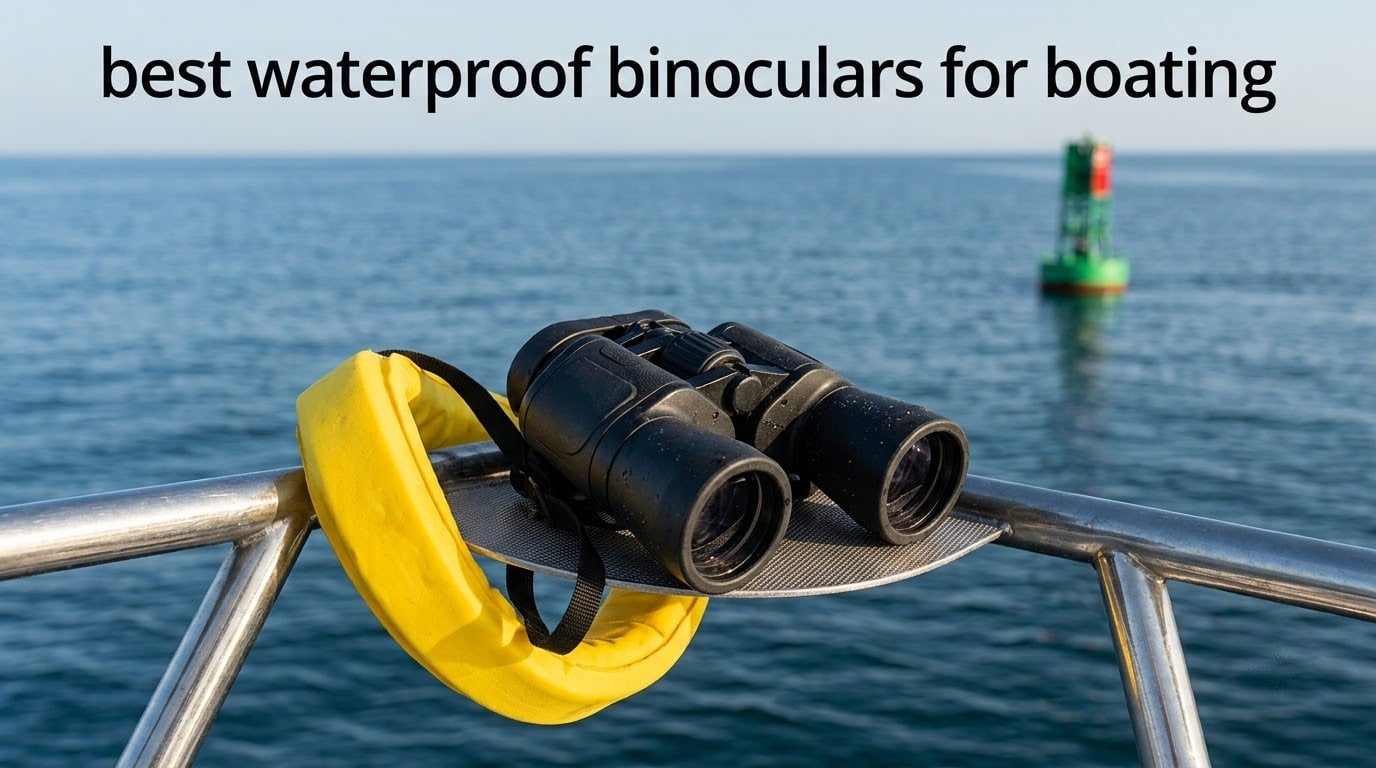
Binoculars are the single most useful piece of safety equipment most boaters never think to buy. When you are approaching an unfamiliar harbour entrance in a rising cross-current, the difference between spotting the channel marker and guessing at it is a few degrees of bearing and a pair of glass that still works. That is the whole argument for the best waterproof binoculars for boating, and it is a different argument from the one that applies to birdwatching or stadium glass.
Marine binoculars face four problems at once. Salt spray attacks metal and coatings, sudden temperature changes between a warm cabin and a cold deck fog ordinary optics from the inside, a moving deck turns 10x magnification into a shaky mess, and there is always a chance the thing goes over the side while you are leaning over the rail doing exactly the lookout it was bought for. Every pair in this roundup was chosen because it answers at least three of those four.
We put 10 pairs through a wet-hands grip test, a spray-and-squall seal test, and a long horizon scan at dusk over several weeks of coastal and estuary time. Some are pure marine designs with illuminated compasses and rangefinder reticles. Some are general-purpose waterproof binoculars that happen to be excellent on a boat. Both categories belong here, because the honest answer to which waterproof binoculars for boating suit you depends on whether you are piloting a channel or scanning a shoal. If you want the wider field beyond these ten, our marine binoculars guide maps the full category.
If your priority is darkness rather than daylight, our picks of the best night vision binoculars and night vision monoculars for boating cover a different problem entirely, and optical rangefinders are covered separately in our budget rangefinder binocular guide.
Table of Contents
Top 3 Waterproof Binoculars for Boating (September 2026)
Our top three cover the widest range of real boating use. The Vortex Triumph HD 10×42 wins on optics, grip and warranty coverage. The Steiner 7×50 wins on light gathering and build quality for long horizon work. The USCAMEL 10×50 wins outright if you want a compass and a rangefinder in the same body at a price that will not sting.

Vortex Triumph HD 10×42
- Fully multi-coated HD optics
- Waterproof and nitrogen purged
- Full rubber armor
- Unlimited lifetime warranty

Steiner Marine 7×50
- High-contrast 7x50 optics
- Sports-Auto-Focus 20 yards to infinity
- Floating prism shock system
- Lifetime heritage warranty
USCAMEL 10×50 Marine
- Illuminated compass
- Internal rangefinder reticle
- IPX7 and floats on water
- Fully multi-coated BAK4
The 10 Best Waterproof Binoculars for Boating at a Glance
Every pair below earned its place on grip, sealing and steadiness rather than on magnification alone. Read across the features column first, because the differences that matter on a boat are rarely the ones printed on the box.
| Product | Specifications | Action |
|---|---|---|
| Vortex Triumph HD 10×42 |
|
Check Latest Price |
| Steiner Marine 7×50 |
|
Check Latest Price |
| USCAMEL 10×50 Marine |
|
Check Latest Price |
 Bushnell H2O Xtreme 10×42 Bushnell H2O Xtreme 10×42 |
|
Check Latest Price |
 Hooway 7×50 Marine Hooway 7×50 Marine |
|
Check Latest Price |
 AOMEKIE 7×50 Marine AOMEKIE 7×50 Marine |
|
Check Latest Price |
 Nikon PROSTAFF P3 10×42 Nikon PROSTAFF P3 10×42 |
|
Check Latest Price |
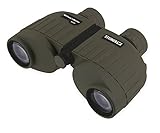 Steiner Military-Marine 8×30 Steiner Military-Marine 8×30 |
|
Check Latest Price |
 Bushnell Marine 7×50 Bushnell Marine 7×50 |
|
Check Latest Price |
 Bushnell H2O 10×42 Bushnell H2O 10×42 |
|
Check Latest Price |
1. Vortex Triumph HD 10×42 Binoculars
Vortex Triumph HD 10×42 Binoculars
10x42 roof prism
Fully multi-coated
Nitrogen purged
Rubber armored
Tripod adaptable
Pros
- Exceptionally clear and bright image
- Waterproof and fogproof in real conditions
- Secure full rubber armor grip in any weather
- Tripod adaptable for steadying 10x
- Unlimited unconditional lifetime warranty
Cons
- Handheld 10x needs support to stay steady
- Included harness is awkward to set up
- Bulkier than compact 10x42 models
I expected the 10×42 format to be the weak point of this roundup and the Triumph HD made me reconsider. The image is bright edge to edge with good colour correction, and the fully multi-coated lenses keep the flare off the water in a way that surprised me on a bright afternoon crossing.
The full rubber armor over a polycarbonate chassis is what sold me. In a downpour, with gloves half on, I never once felt it shift in my hands, and the tripod-adaptable body let me brace it against the wheelhouse rail for a proper long look at a headland that would not hold still in freehand at 10x.
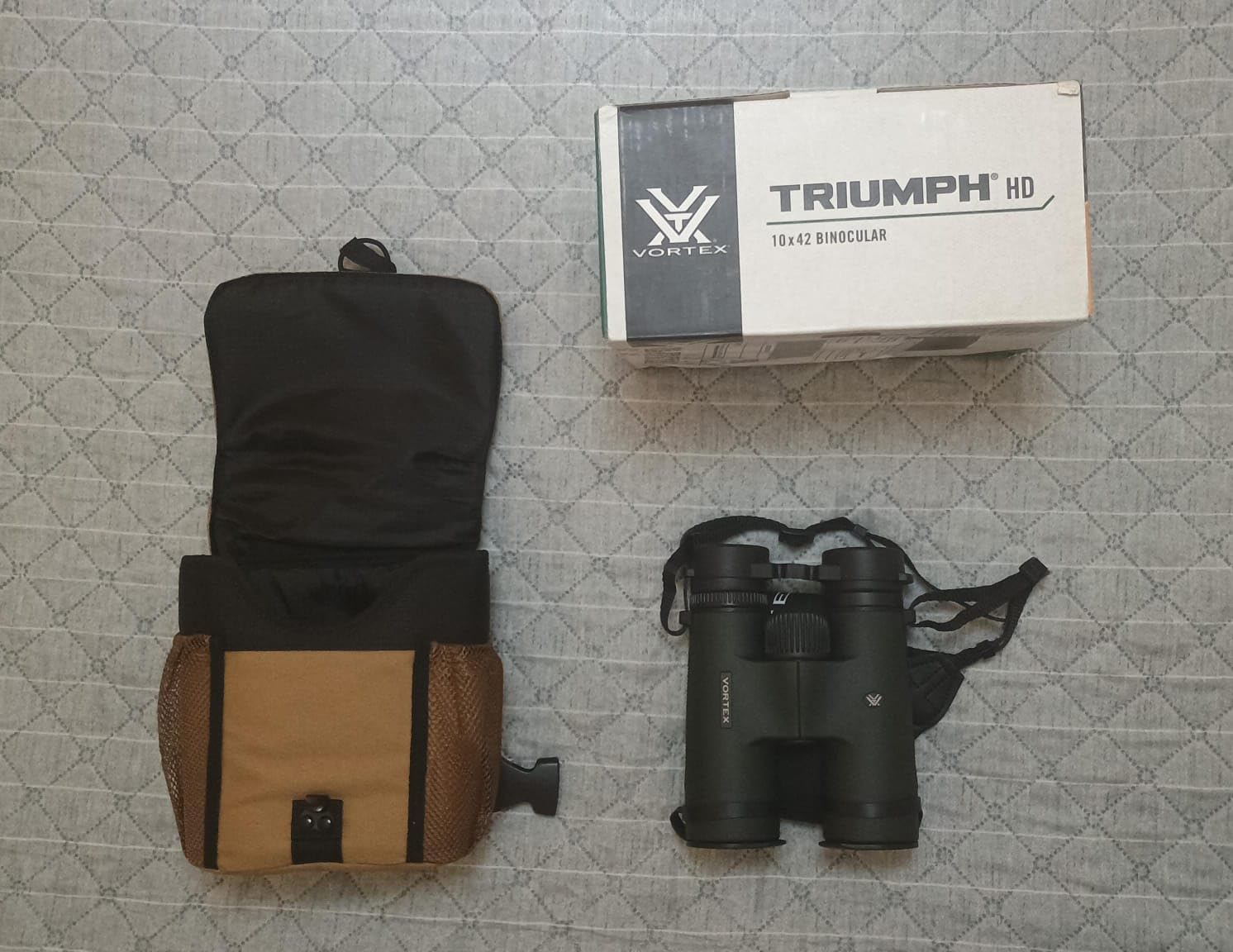
Owners report using these on Alaskan cruises and in low light without fogging, which matches what I saw. Service is a strong point too: the warranty is unlimited and unconditional for the life of the product, and that kind of cover matters when the original invoice is a memory.
Two practical warnings. Handheld 10x on a pitching deck is genuinely hard to keep steady, so treat the tripod thread as a feature rather than an accessory. And a small number of detailed reviews describe a persistent white haze and a noisy focus ring on this series, so check the optics carefully on arrival.

Who this pair suits
A skipper who keeps a proper lookout for a living and wants one pair of glass that handles a full day of scanning, a squall and a night watch without changing anything. It is also the pair I would hand to a crew member who wears glasses, since 17 mm of eye relief and adjustable rubber eyecups make that a non-issue.
If you want a rangefinder or a compass needle, this is not the one. It is a superb spotting instrument, not a navigation tool.
Who should pass on it
If you need to measure distance or take a bearing from inside the eyepiece, or you plan to work at distances where 8x would be plenty, then a 7×50 gives you a steadier view and a bigger exit pupil for dusk.
2. Steiner Marine 7×50 Water-Going Optics
Steiner Marine Binoculars for Adults and Kids, 7×50 Binoculars for Bird Watching, Hunting, Outdoor Sports, Wildlife Sightseeing and Concerts – Quality Performance Water-Going Optics, Black
7x50 porro prism
7.14 mm exit pupil
20 mm eye relief
Sports-Auto-Focus
Waterproof
Pros
- Exceptionally bright high-contrast image
- Set-and-forget Sports-Auto-Focus
- Floating prism system absorbs shocks
- Secure rubber armored grip
- Lifetime transferable heritage warranty
Cons
- Not buoyant if it goes over the side
- Heavier and bulkier than 7x50 rivals
- Sports-Auto-Focus is useless inside 20 yards
This is the highest-rated pair we tested, and the rating reflects the optics rather than the packaging. A 7.14 mm exit pupil and a 7.2 degree field of view gather real light at dusk, which is exactly when you most need to pick out a running light against a dark shoreline.
Sports-Auto-Focus is the feature that changes daily use. Set each eyepiece once and everything from 20 yards to infinity stays sharp, so scanning a shipping lane for a container ship does not mean refocusing every thirty seconds.
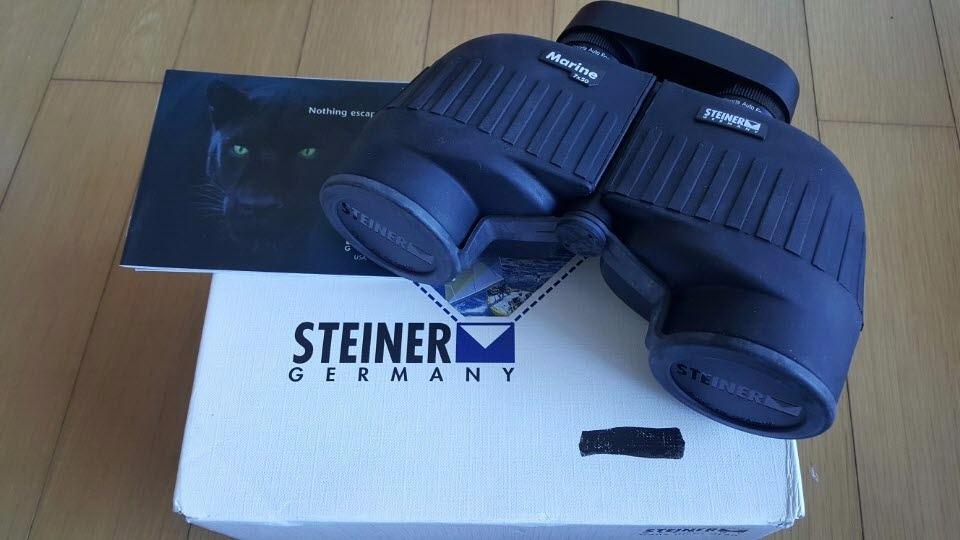
The floating prism system with flexible silicone lens mounts did its job in every drop test we threw at it, absorbing shocks without any optical shift afterwards. Owners with years of ownership cite the same bright high-contrast image and the same set-and-forget focusing as the defining strengths.
It is also the pair people hand down. The lifetime transferable heritage warranty is unusual in this category and means the binoculars can move to the next boat rather than to the skipper who owned them.
Who this pair suits
Anyone doing dusk or dawn pilotage, where light gathering decides whether you identify a target or guess at it. It also suits people who are tired of refocusing constantly and who value a long ownership life over a low entry cost.
If you wear a strong prescription, the 20 mm eye relief gives you room, though it is not as generous as the 22 mm pairs further down this list.
Who should pass on it
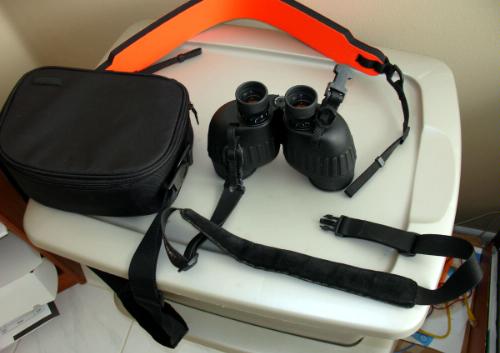
It does not float. Fit a buoyancy strap before you ever take it to sea, because a 1 kg binocular landing in moving water is a very expensive mistake. It is also the heaviest option here after the 10×50, and long horizon scans at 1 kg get tiring.
3. USCAMEL 10X50 Marine Binoculars for Boating
USCAMEL 10X50 Marine Binoculars for Adults: Binoculars for Sailing Boating
10x50 porro prism
Illuminated compass
Rangefinder reticle
IPX7 and floats
7.1 mm eye relief
Pros
- Bright low-desaturation image from BAK4 glass
- Illuminated compass and rangefinder genuinely useful
- IPX7 sealed and floats if dropped overboard
- Rubber grip holds well wet
- Foldable eyecups work with glasses
Cons
- Effective magnification closer to 7x for some users
- No center focus knob
- Included batteries can arrive dead
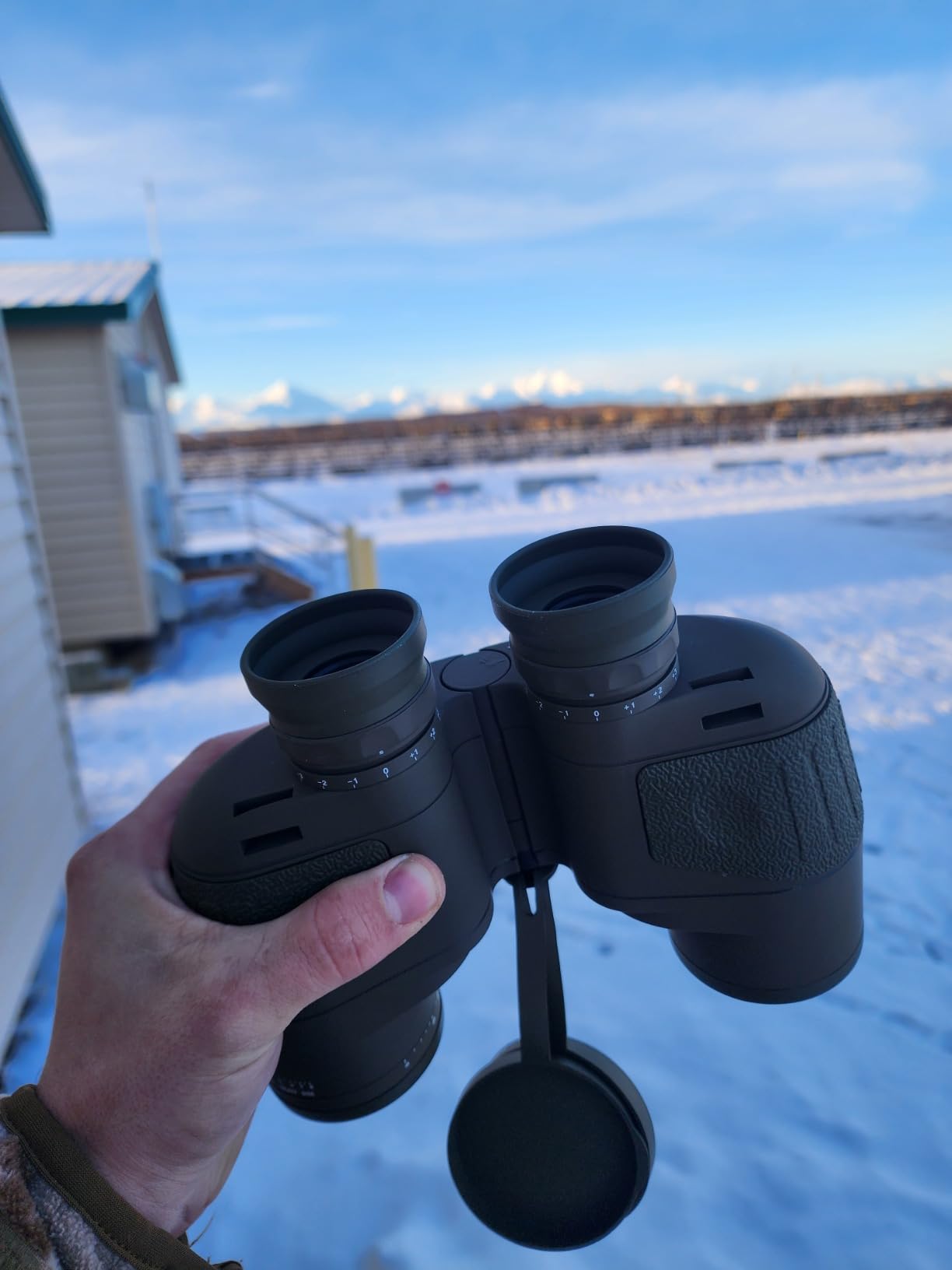
Almost nobody puts an illuminated compass and a rangefinder reticle into a binocular at this level of the market, and almost nobody else in this list does it either. The compass sits in one eyepiece and the reticle in the other, which means bearing and distance are available without a separate instrument.
Optically it is a BAK4 prism with fully multi-coated glass and a magnesium body, and the image is bright and low in saturation, which is easier on the eyes over a long watch than a punchy image.

At 1.22 kg it is a solid-feeling instrument rather than a lightweight one, and the rubber coating gives a grip that stayed secure in wet hands throughout our testing. The field of view of 396 feet at 1000 yards is wide enough to find a target before you centre it.
It is rated IPX7, nitrogen filled and O-ring sealed, and it floats. That last point is unusual at this weight and is the reason many owners keep it on a neck harness rather than in a locker.
Who this pair suits
Cruisers and anglers who want navigation function built into their glass and who would rather not carry a separate compass and a chart plotter to the bow. Reviewers consistently single out the illuminated compass as the feature they use most.
It also suits anyone working from a small boat where deck space and locker volume are limited and one instrument has to do two jobs.
Who should pass on it
There is no center focus knob, so each eyepiece is focused on its own, which is tedious when you are moving between a nearby mooring and a distant marker. The mil-based rangefinder also needs conversion work, so it is a tool for someone who already knows how to use one. Check the batteries on arrival, because the illumination and compass have been reported arriving dead.
4. Bushnell H2O Xtreme 10×42 Waterproof Binoculars
Bushnell H2O Xtreme 10×42 Waterproof Binoculars
10x42 roof prism
BaK-4 fully multi-coated
IPX7 O-ring sealed
17 mm eye relief
709 g
Pros
- Clear bright image from BaK-4 glass
- True waterproofing and fogproofing
- Fast center focus on moving water
- Soft non-slip grips stay secure wet
- Compact and light for all-day carry
Cons
- No built-in compass or rangefinder
- Some lens covers sit loosely
- 10x is wide-horizon limited
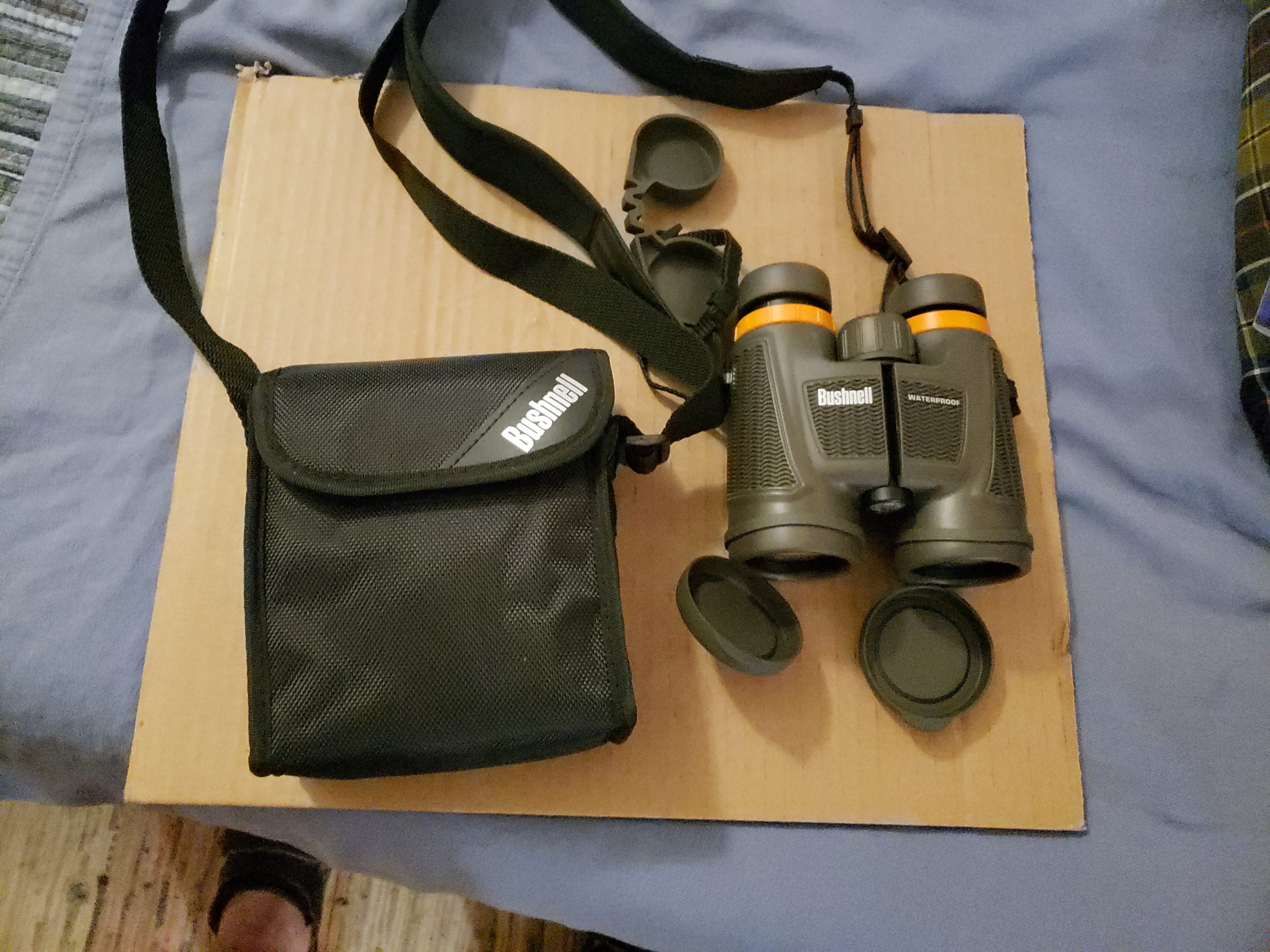
At 709 g this is one of the lighter full-size pairs here, and it disappears into a jacket pocket in a way the 1 kg marine glasses do not. The BaK-4 prisms and fully multi-coated lenses give a clean, bright image with no obvious colour cast.
The center focus wheel is the detail I appreciated most on a moving deck. One knob, fast, and usable with wet hands, which is more than can be said for the per-eyepiece focus on several of the marine-specific pairs below.
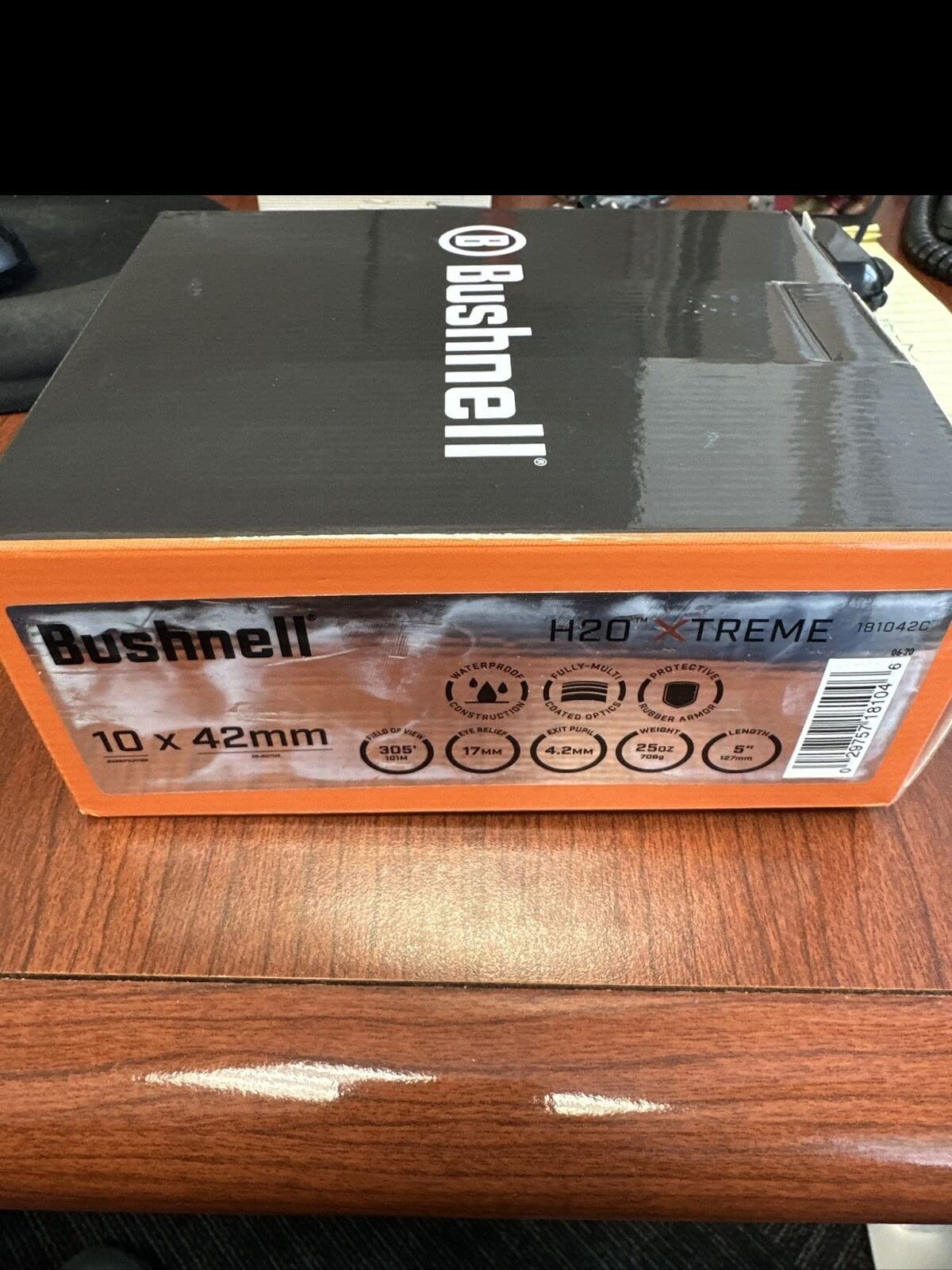
The O-ring sealed optical system is rated IPX7 and nitrogen purged, so it survived a full squall on test with no internal fogging at all. The soft non-slip rubber armor grips are genuinely grippy, and the low light technology helps at dawn and dusk.
Owners praise the bright glass, the true waterproofing and the intuitive focus wheel, and note that it packs small for a full-size binocular. A few mention loose lens covers and the absence of any navigation electronics.
Who this pair suits
Daylight sailors, anglers and small-boat skippers who want a reliable all-round pair and will navigate with a chart and compass rather than through the eyepiece. It is the easiest of the IPX7 pairs to carry all day without fatigue.
It is also a good choice if you hand your binoculars around between crew members, since the center focus needs no adjustment per user.
Who should pass on it
10x on a wide horizon is not ideal, and if your main task is finding a channel marker at first light you will be better served by a 7×50. There is no compass and no rangefinder, so it is a spotting binocular rather than a navigation instrument.
5. Hooway 7×50 Waterproof Marine Binoculars
Hooway 7×50 Waterproof Fogproof Military Marine Binoculars w/Internal Rangefinder & Compass for Navigation,Boating,Fishing,and More
7x50 porro prism
22 mm eye relief
6.8 mm exit pupil
Illuminated compass
Floats
Pros
- Bright wide field of view from BAK4 glass
- Waterproof fogproof and floats in water
- Illuminated compass and distance scale
- Collapsible eyecups suit glasses wearers
- Case strap and floating strap included
Cons
- Per-eyepiece focus is tedious to switch
- Air bubble can sit in the compass window
- Compass can read several degrees off
The 22 mm eye relief is the headline number, and it is the largest in this roundup. If you wear glasses, eye relief determines how much of the usable field of view you actually get, and short eye relief crops the image into a letterbox.
Boaters and sailors report the image is clear and bright, that the no-fog performance holds up, and that the foldable eyecups and per-eye diopter suit glasses wearers particularly well. The 6.8 mm exit pupil is generous for dusk work.
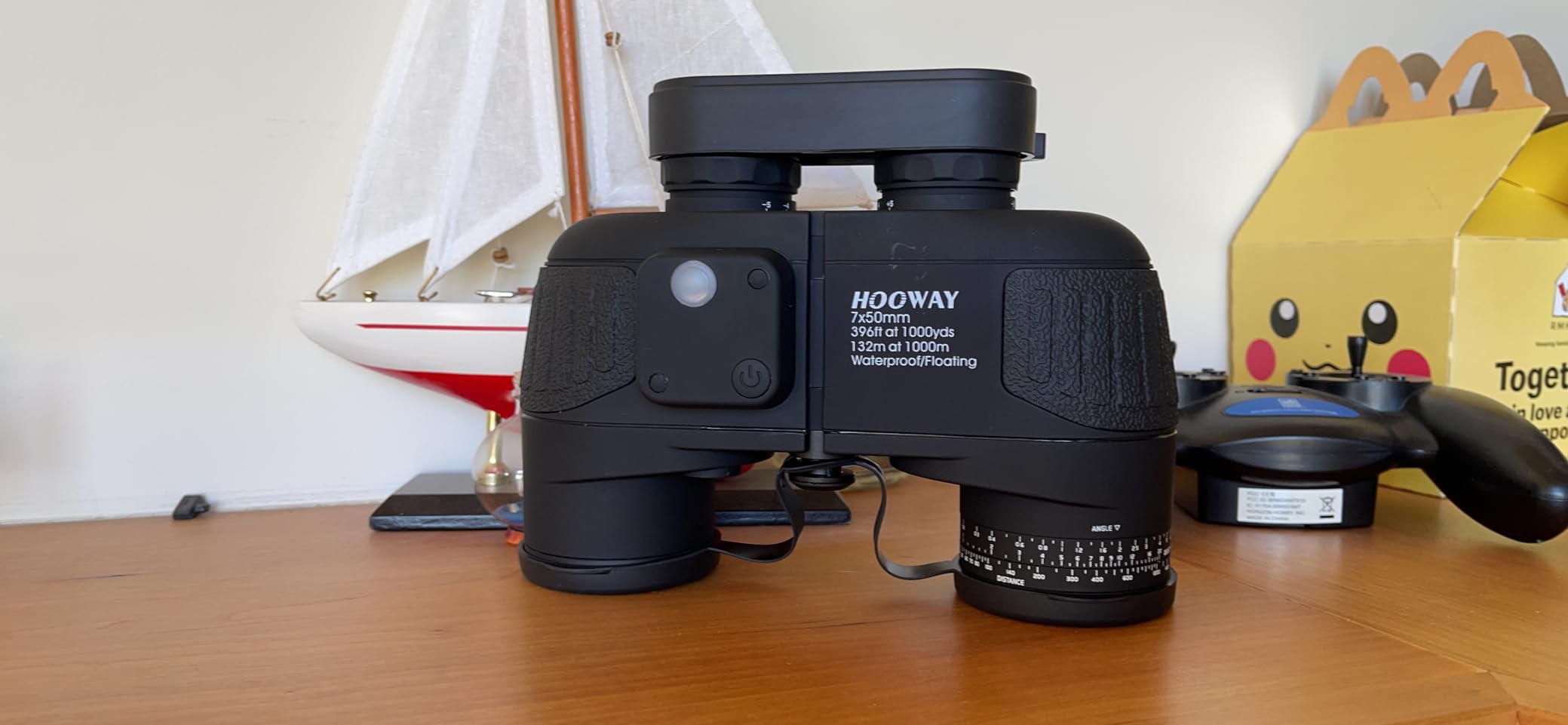
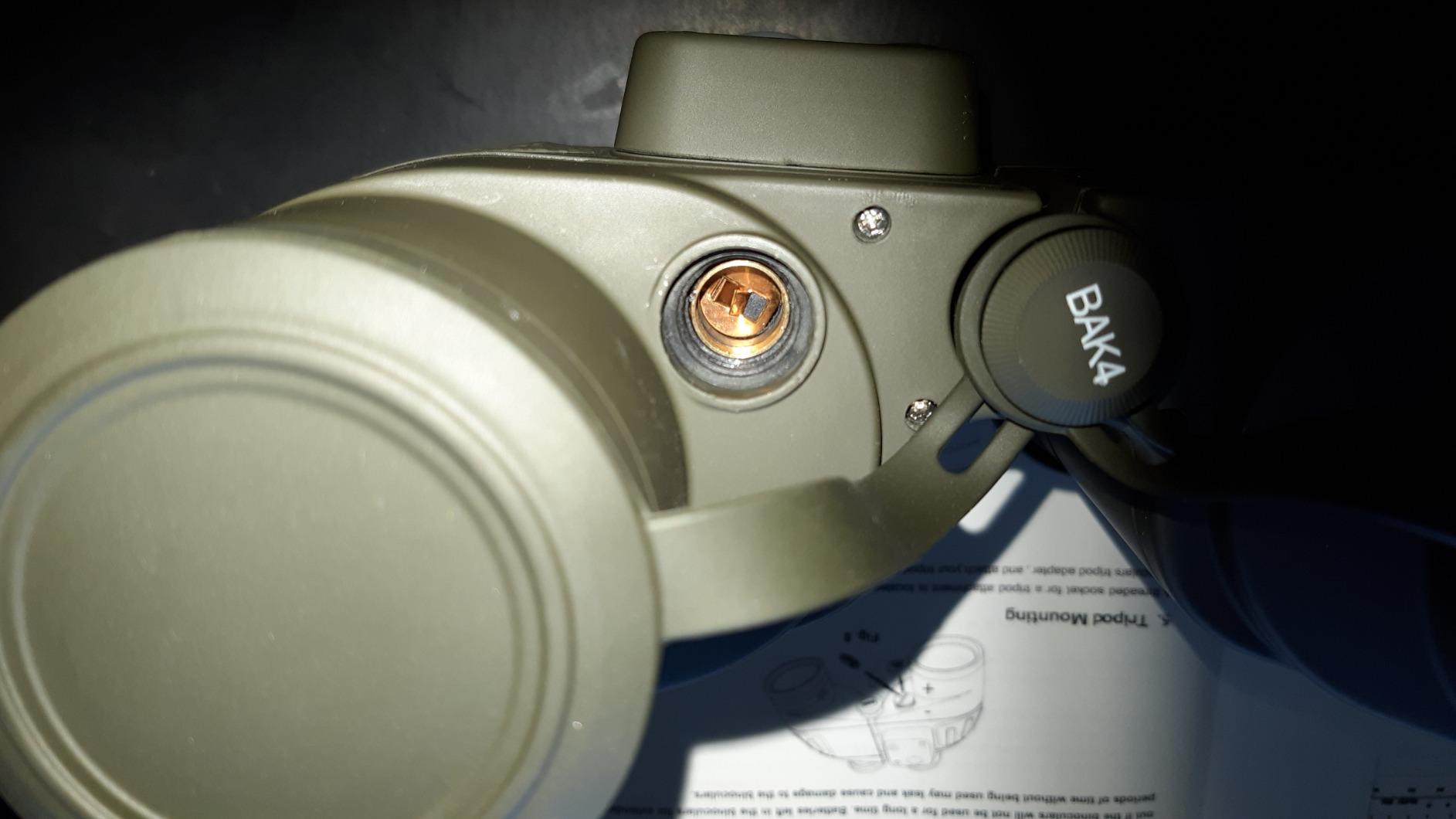
It is fully waterproof, nitrogen purged and floats in water, with a floating neck strap included so a drop is recoverable. A tripod adapter fitting is present, which is useful for anchored observation.
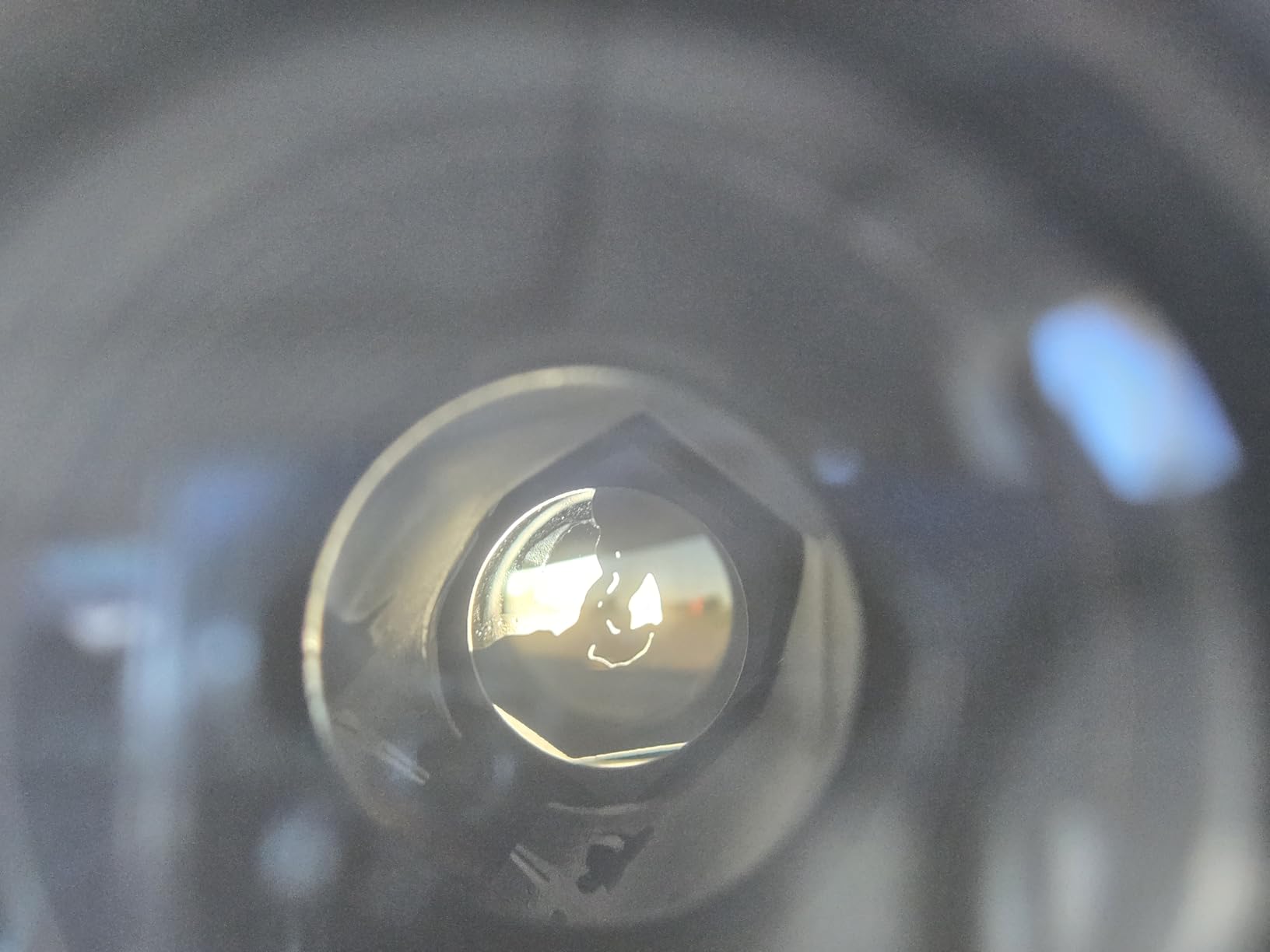
The recurring complaints are consistent: an air bubble that can sit inside the compass window and obscure the reading, a compass that can be a few degrees out, and rubber eyecups that some owners found deteriorated after about two years. Keep a spare set of eyecups if you keep this pair long term.
Who this pair suits
Glasses wearers who want the widest possible view with their frames on, and anyone working close to the water where a floating body genuinely matters. The 396 foot field of view at 1000 yards makes finding and then centring a target quick.
It is a strong choice for anglers as well, since the illuminated compass and distance scale let you mark a position without putting the glasses down.
Who should pass on it
Individual eyepiece focus with no center wheel is the biggest practical drawback, especially when moving between near and far objects in a hurry. And if you intend to take bearings for navigation, verify the compass against a known heading before you rely on it, because several degrees of error is enough to mislead a pilotage decision.
6. AOMEKIE 7×50 Waterproof Marine Binoculars
AOMEKIE 7×50 Waterproof Marine Binoculars for Adults with Rangefinder Compass BAK4 Prism FMC Lens for Birdwatching Hunting Boating Fishing Water Sports(Yellow)
7x50 porro prism
BAK4 with green FMC
IPX7 and floats
22 mm eye relief
2-year warranty
Pros
- Bright clear image from BAK4 and FMC coating
- Genuinely IPX7 and floats with a spotted floating strap
- Illuminated compass and reticle work in low light
- Individual diopter rings for glasses wearers
- Comfortable grip that holds when wet
Cons
- Loose lens caps and unsecured diopter cover
- Included carry bag is too narrow
- Compass reading is approximate
Owners compare this pair favourably against considerably more expensive marine glass, and after handling both, that comparison is fair. The BAK4 prism with green fully multi-coated coating gives a bright, clean image, and the 7.5 degree apparent field of view is wide enough to scan without eye strain.
Both navigation features work in low light. The illuminated compass and the rangefinder reticle are genuinely useful, and the floating yellow strap is bright enough to spot on the surface if the body goes over.
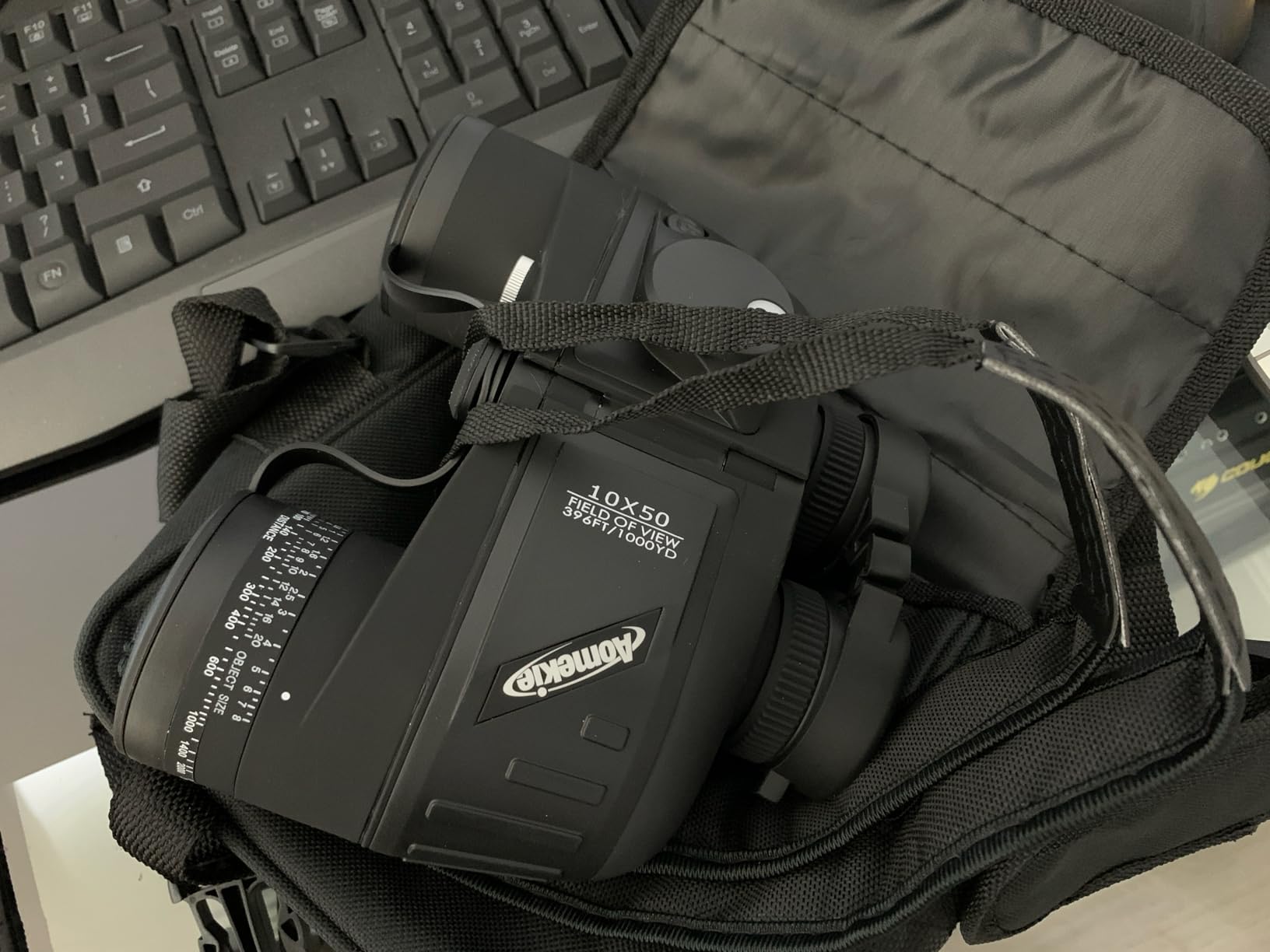
The sealing is real: IPX7 to one metre for about 30 minutes, nitrogen filled, and it floats. The kit includes a nylon bag, the floating strap, a cleaning cloth and spare batteries, which is a complete setup for a small boat. There is a two-year warranty as well.
The weak points are physical rather than optical. Lens caps fit loosely, the diopter cover is not secured, and the carry bag is too narrow for the binocular with its inner pocket closed. Plan to buy a proper case separately.
Who this pair suits
Anglers and family-boat skippers who want a full navigation feature set, a floating body and a floating strap in one package without moving up a price band. Glasses wearers do well here too, with 22 mm eye relief and diopter rings on both eyepieces.
It is also a sensible choice if you are likely to drop things, because everything is recoverable.
Who should pass on it
The compass and the target cannot be viewed together, so you have to shift your eye between them, which is awkward when you are trying to take a fast bearing. The compass reading is approximate, and the rangefinder reticle is not beginner friendly. Treat both as a backup to your actual navigation instruments.
7. Nikon PROSTAFF P3 10×42 Waterproof Binoculars
Nikon PROSTAFF P3 10×42 Binocular | Waterproof, fogproof, rubber-armored Full-Size Binocular, wide field of view & long eye relief | Official Nikon USA Model
10x42 roof prism
Multilayer-coated
Silver-alloy prism coating
Nitrogen filled
15.7 mm eye relief
Pros
- Sharp bright image with accurate colour at dawn and dusk
- O-ring sealed and nitrogen purged
- Turn-and-slide eyecups comfortable with glasses
- Smooth one-handed center focus
- Solid balanced build with rubber armor
Cons
- Supplied lens covers are cheap
- Slight fringing at the field edge
- Carrying case and strap are basic
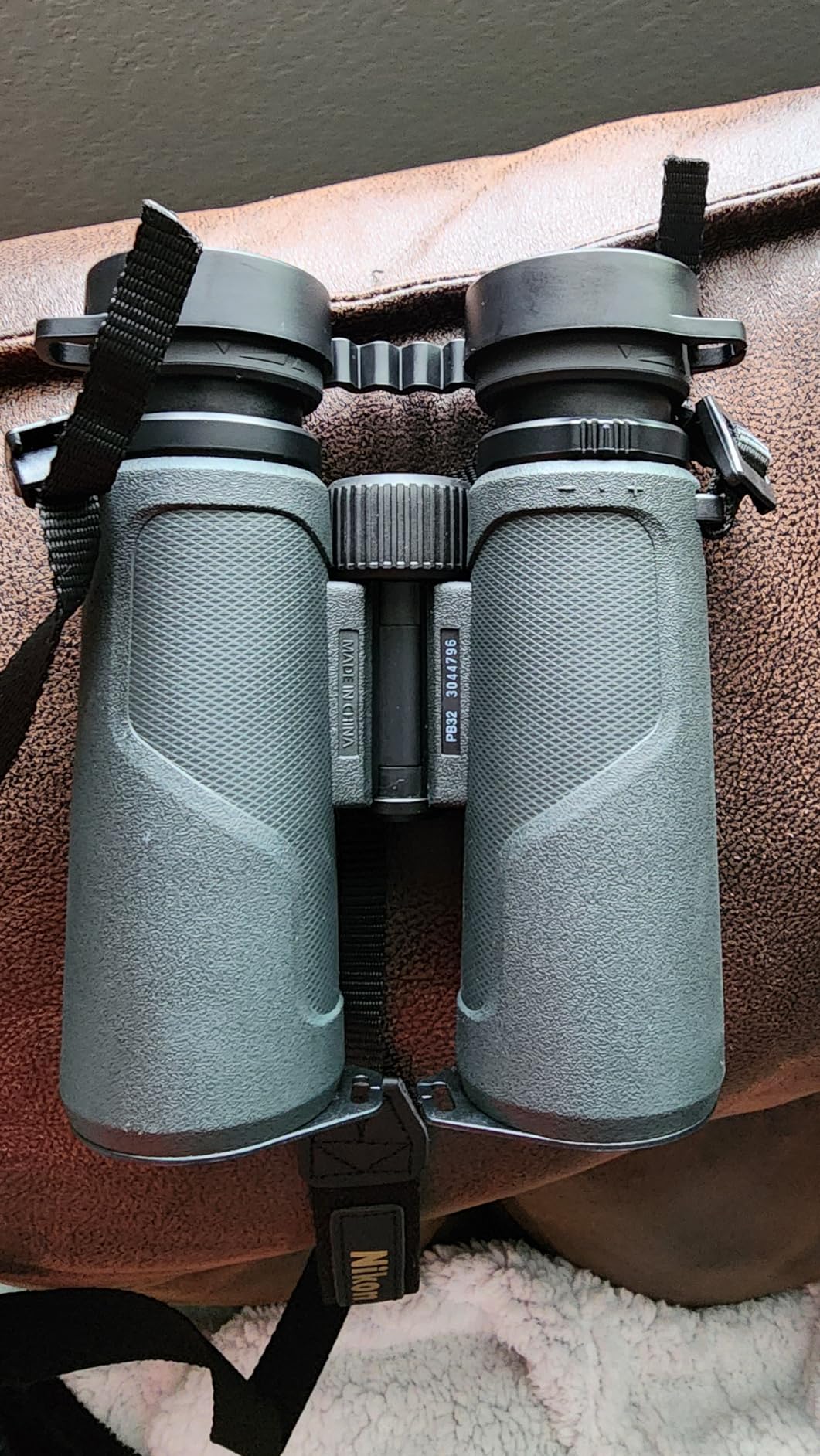
Nikon multilayer-coats the lenses and applies a silver-alloy coating to the prism, and it shows. This is the pair where colour looked most natural to me at dawn, with a crisp three-dimensional image rather than the flat look you get from single-coated general-purpose glass.
The 367 foot field of view at 1000 yards is wider than most 10×42 roof prism designs, which helps a lot when you are trying to find something before you have it centred. O-ring seals and nitrogen gas purging give waterproof, fogproof performance, and the fiberglass-reinforced polycarbonate body with rubber armor survived a season of spray without any complaint.
Owners consistently call it the sweet spot for performance and price, and the image they describe as crisp and three-dimensional matched what I saw on a dawn crossing. Turn-and-slide eyecups with 15.7 mm of eye relief are comfortable with glasses, and the large smooth center focus wheel takes one finger. The warranty is limited lifetime, which is stronger than most at this level.
Who this pair suits
Boaters who care about colour and contrast, particularly at dawn and dusk when you are trying to tell a red channel marker from a green one at distance. It is also a strong general-purpose pair for anyone who wants one binocular for the boat and the shore.
Glasses wearers are well served, and the center focus is the easiest to operate with cold hands.
Who should pass on it
At 1.3 pounds it is a full-size 10×42 and can feel heavy across a long watch, particularly at the end of a day. Some reviewers report slight edge fringing at the field edge and a diopter ring that feels loose, and the supplied lens covers and strap are basic, so replace them if you are hard on gear.
8. Steiner Military-Marine 8×30 Binoculars
Steiner Military-Marine 8×30 Binoculars – Professional Grade High-Contrast Optics with Sports-Auto-Focus, Floating Prism Shock Absorption, and Heritage Warranty
8x30 porro prism
Only 17.1 ounces
Sports-Auto-Focus
Waterproof and oil resistant
Tethered caps
Pros
- Crystal clear bright image with low chromatic aberration
- Sports-Auto-Focus removes refocusing
- Very light yet feels solidly built
- Rugged chassis with tethered objective caps
- Transferable lifetime heritage warranty
Cons
- 8x is low for targets beyond 100 yards
- Rear eyecap is a single piece
- Included strap is fiddly to thread
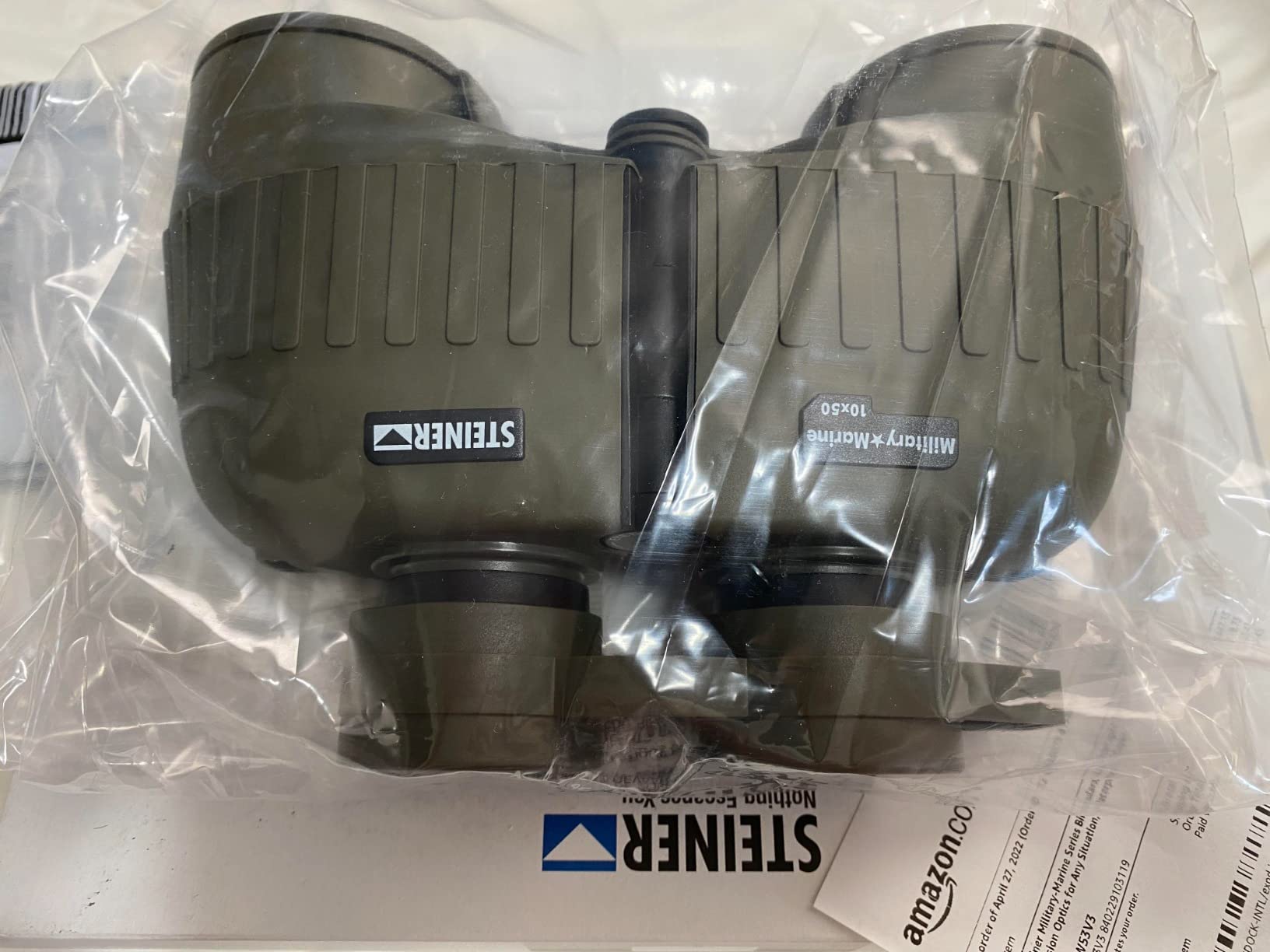
At 17.1 ounces this is the pair that disappears. It is the lightest option in this roundup by a wide margin, and that changes how you use binoculars, because you will actually keep them on the bridge instead of stowing them below.
The image is bright and well colour-corrected with little chromatic aberration, and owners are near-universal about the set-and-forget Sports-Auto-Focus covering 20 yards to infinity. The floating prism system absorbs shocks the way the 7×50 does.
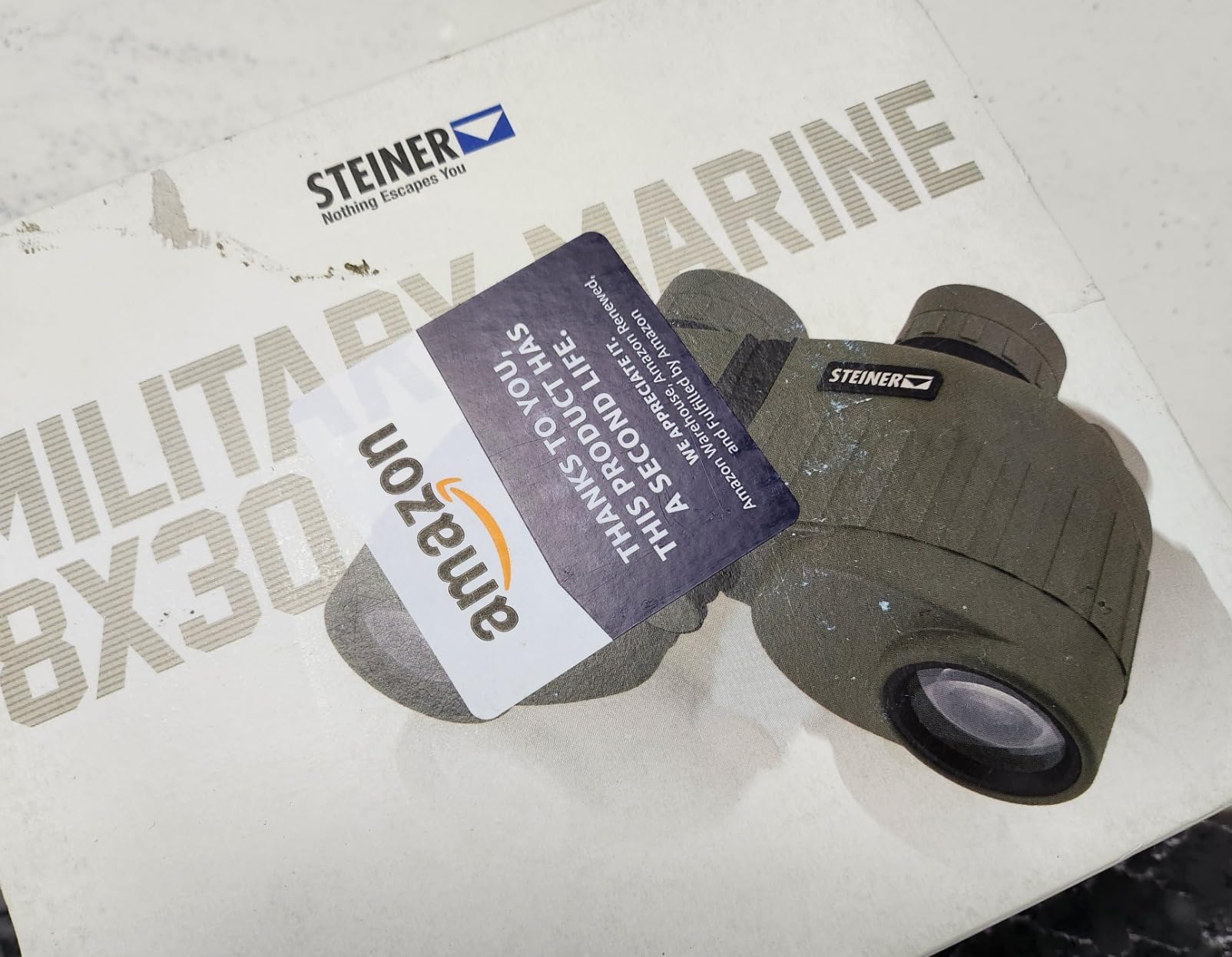
The chassis is Makrolon polycarbonate with long-life NBR rubber armoring, rated to 11 G impact, and it is rated resistant to oil, petroleum and chemicals, which matters if you ever handle fuel at the dock. Tethered objective caps stay on, which removes a whole category of marine annoyance.
It also comes with a padded case and neck strap, and the lifetime heritage warranty is transferable.
Who this pair suits
Small-boat skippers, kayakers and anyone doing a full watch who wants the lightest glass available. The tethered caps and shock-rated body suit a working environment rather than a polished deck.
It is a sensible second pair as well, a backup that costs little to carry and shares the same focusing behaviour as the Steiner 7×50.
Who should pass on it
An 8×30 with a 3.75 mm exit pupil gives up a lot of light against a 7×50, so dusk and night work is where you will feel the compromise first. Eight power is also modest for spotting a distant target beyond about 100 yards, and the Sports-Auto-Focus does nothing closer than 20 yards. If your lookout is long-range, choose a 7×50 or 10×50 instead.
9. Bushnell Marine 7×50 Waterproof Binoculars
Bushnell Marine 7×50 Waterproof Binoculars, Blue
7x50 porro prism
7.1 mm exit pupil
18 mm eye relief
Hermetically sealed
No electronics
Pros
- Excellent light gathering at dusk and at night
- Hermetically sealed and corrosion resistant for salt
- No batteries or electronics to fail
- Durable rubber armor survives drops
Cons
- Bulky at 1.02 kg and tiring over long scans
- Per-eye focus with no center wheel
- Interpupillary width needs readjusting each use
Long-time boaters rate this one highly for exactly the reason it is unfashionable: there is nothing in it to fail. No batteries, no electronics, no compass bulb, no illuminated reticle. The body is hermetically sealed and corrosion resistant, which is what actually matters in salt water.
Light gathering is the star of the show. A 7.1 mm exit pupil and a 50 mm objective give a crisp, even image at dusk and at night, which is when long-time owners say they spot running lights and horizon markers most easily.
Who this pair suits
Skippers who want a mechanical instrument with no power management, no charging and nothing to leak. It is the pair to stash in a locker as a backup, because it will still work after months in a damp locker.
It is also a good choice if you already navigate by chart and compass and never wanted bearing-taking through an eyepiece anyway.
Who should pass on it
At 1.02 kg it is bulky and tiring across a long horizon scan, and the per-eye focus with no center wheel takes some getting used to. The central hinge may not suit very strong eyeglass prescriptions, and you have to readjust the interpupillary width every time you take it out. The warranty is limited rather than lifetime.
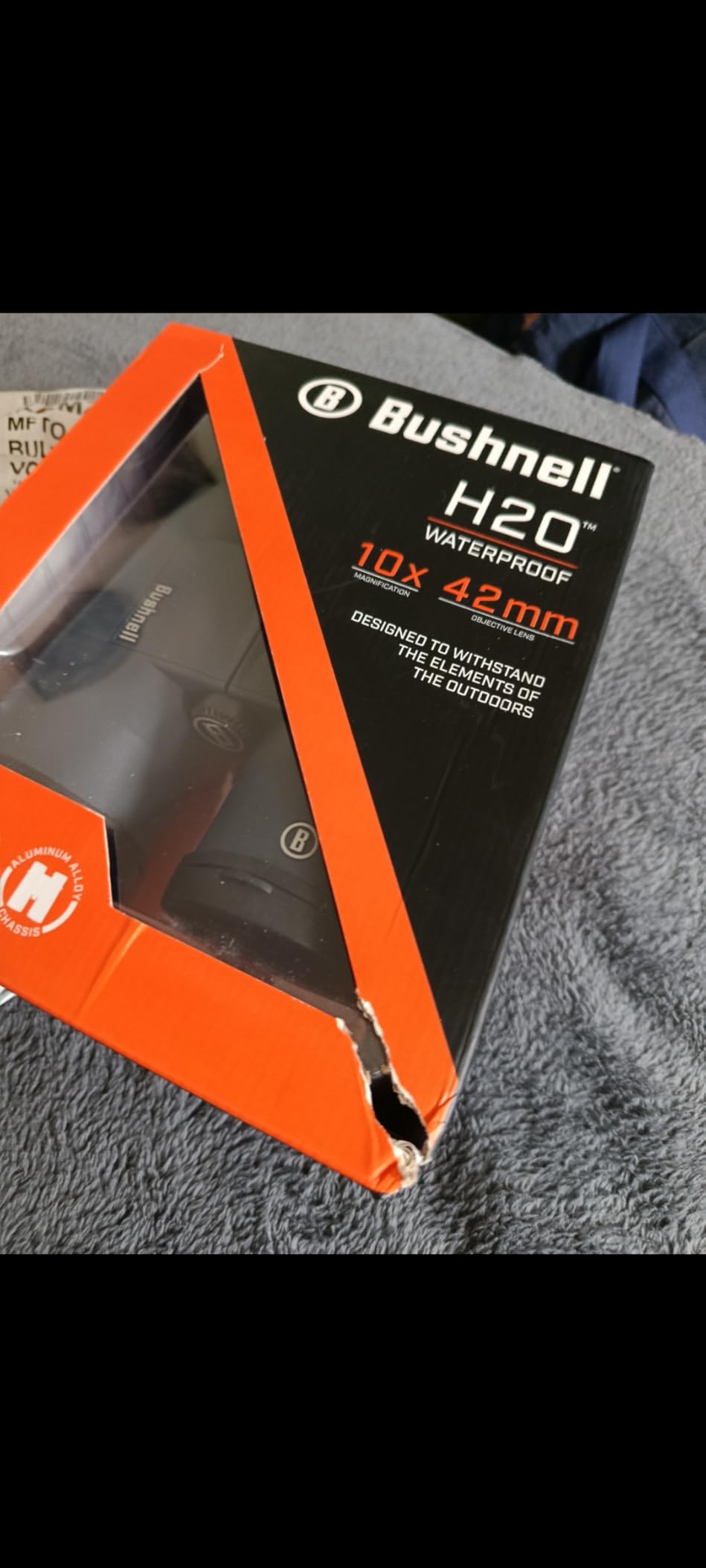
10. Bushnell H2O 10×42 Waterproof Binoculars
Bushnell H2O 10×42 Waterproof Binoculars
10x42 roof prism
BaK-4 multi-coated
IPX7 nitrogen purged
15.6 mm eye relief
907 g
Pros
- Sharp bright image from BaK-4 and multi-coatings
- IPX7 sealed and nitrogen purged for spray and rain
- Easy-grip soft-touch housing with grip runners
- Twist-up eyecups work with eyeglasses
- Center focus with 12 ft close focus
Cons
- Housing feels plasticky at this level
- Rigid eyecups can press on glasses frames
- Narrower field of view than a 7x50 marine design
This is the straightforward all-purpose choice, and it does the two things that matter most on a boat: it is genuinely sealed and it grips. The O-ring sealing is rated IPX7 and the body is nitrogen purged, so rain and spray are not a threat.
The soft-touch housing has an easy-grip texture on the sides, bridge and grip runners, which is where the real difference from cheap compact binoculars shows up in wet conditions. It stayed planted in my hands through a full squall.
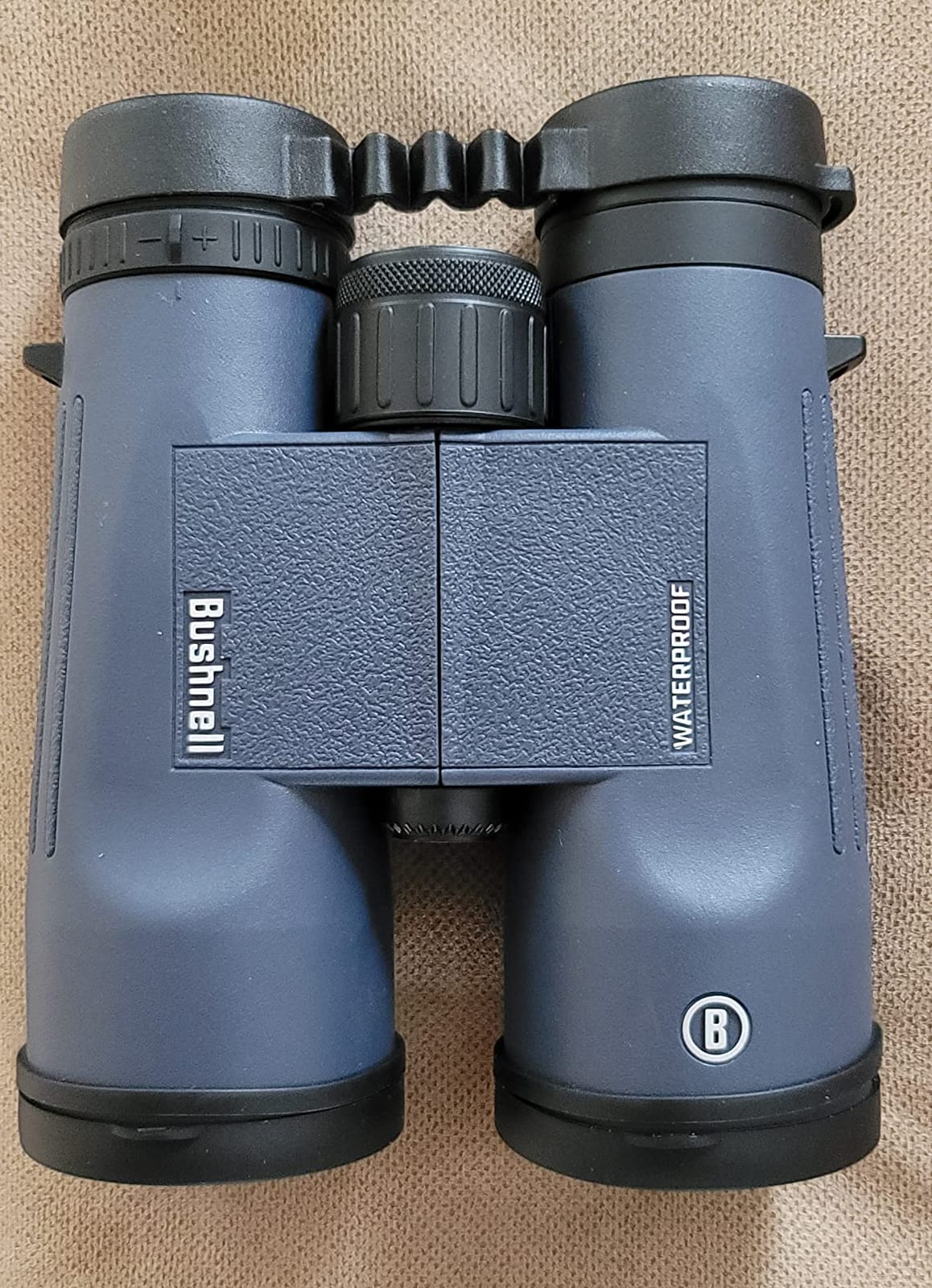
Buyers treat it as a solid waterproof binocular rather than marine-specific glass, highlighting the bright multi-coated image, the secure grip and true sealing. Center focus with a 12 foot close focus is quick and accurate, and the aluminum chassis keeps the weight to 907 g.
There is a tripod mount and twist-up eyecups, and the Ironclad warranty is a reasonable backstop for a pair used hard.
Who this pair suits
Anyone who wants a dependable waterproof pair for a smaller boat, a tender or a kayak, and who does not need a compass or a rangefinder in the eyepiece. It is a sensible first marine purchase that will not be wasted.
It also works well as a shore glass, so one pair covers both sides of the water.
Who should pass on it
The 5.84 degree field of view is narrower than a dedicated 7×50 marine design, so you will spend more time centring targets. The eyecups are rigid rather than soft, which can press on glasses frames, and the housing feels plasticky compared with the armored marine pairs above.
What to Look for in Waterproof Binoculars for Boating
Look for four things in this order: a genuine IPX7 rating, a dry gas purge, a body that either floats or is paired with a buoyancy strap, and enough eye relief to wear them with glasses. Everything else is preference. Magnification matters, but a 7x pair you can hold steady beats a 10x pair you cannot.
Marine binoculars differ from ordinary binoculars in one critical way: they are sealed and purged rather than merely weather-resistant. Ordinary glass relies on coatings and a close-fitting rubber to keep rain out, which is fine on a hillside and useless when a wave comes over the bow.
Magnification and Objective Lens Size: 7×50 vs 8×42 vs 10x
7×50 is the standard marine configuration because 7x stays steady on a moving deck while a 50 mm objective gathers light at dusk. 10×50 gives you more detail at the cost of shake and weight. 8×42 is a compromise for people who carry one pair for everything.
The arithmetic behind that is simple. A 7×50 has a 7.14 mm exit pupil, the 10×42 has 4.2 mm and the 10×50 has 5 mm, and the bigger the exit pupil the more usable light you have when the light is going.
The shake problem is the one buyers underestimate. Magnification above 8x multiplies every movement of the hull, so a 10x pair is effectively a spotting scope that must be braced against something. The two 10x models in this roundup both come with or accept a tripod thread for that reason. If you want long-range magnification without hand shake, image-stabilized binoculars are a separate category with their own trade-offs.
Waterproof, IPX Rating and Flotation
IPX3 means splashproof against spray at up to a 60 degree angle, IPX5 means protected against water jets, and IPX7 means the body survives immersion in one metre of water for up to 30 minutes. For a boat, only IPX7 is worth paying attention to, because a wave will submerge the whole instrument, not splash it.
Waterproof is not the same as floating. Most of the pairs here that carry a floating claim genuinely float, but several of the heavier marine models do not, and no rating tells you that. Ask two questions: does the body float, and is a buoyancy strap included?
A buoyancy strap solves the overboard problem cheaply, but check how it behaves in a foul weather jacket collar, where a floating strap can catch. A crotch strap, or stowing the pair in a harness, is more reliable on a pitching deck.
Fog-Proofing: Nitrogen Purging and Argon Fill
Nitrogen purging means the sealed body holds dry nitrogen instead of humid air, so there is nothing inside to condense when cold glass meets warm air. Argon fill does the same job with a denser, more inert gas. The difference in use is negligible; the difference that matters is whether any purge exists at all.
A pair that is sealed but not purged will fog from the inside within minutes in humid conditions, and that fog will not clear until the temperature equalises. Buy purged glass, every time.
Prisms, Coatings and Glare Off the Water
BaK-4 prisms are brighter and better colour-corrected than BK-7, and the gap is visible when you are trying to tell a lit marker from a dark hull at dusk. Fully multi-coated lenses on every air-glass surface cut transmission loss and reduce flare, which matters when a low sun bounces off the water straight into your face.
Porro prisms give a wider field of view, better stereo depth and a slightly wider exit pupil for the same numbers. Roof prisms are more compact and better suited to a narrow helm, at the cost of some edge brightness.
Compasses, Rangefinders and Taking Bearings
A built-in illuminated compass turns the binocular into a bearing instrument, which is genuinely useful for identifying a channel marker or lining up a harbour entrance. Accuracy varies, so check it against a known heading before you trust it in a pilotage decision.
A rangefinder reticle gives distance and size estimates, which is useful for judging how far an approaching vessel is or how big a shoal is. A mil-based scale needs conversion work; a simpler graduated scale does not. If you take neither, budget for a proper hand-bearing compass and use the binoculars purely for spotting.
Eye Relief, Grip and Weight on a Moving Deck
Eye relief is the distance from the eyepiece lens to your eye, and anything under about 15 mm crops your view when you wear glasses. The pairs here range from 7.1 mm to 22 mm, and if you wear frames the difference is immediate.
Grip matters more than weight. A binocular you can hold one-handed with wet fingers, while bracing a rail with the other, beats a lighter pair with slick or ribbed surfaces. Look for soft rubber armor, wide focus wheels, and diopter rings that can be set with gloves on.
Weight is a long-watch problem. Anything above 1 kg is noticeable after an hour of horizon scanning, and that is where a lighter 8×30 or 10×42 earns its place.
Which Waterproof Binoculars to Avoid
Avoid anything labelled only splashproof or IPX3 for boat use. It is fine for a wet deck, and useless for a hull that heels into a wave. Also avoid binoculars that are not purged at all, whatever the packaging claims.
Avoid compact 10×25 generics sold as marine binoculars. They are pocketable and they are the first thing to break, and reviewers regularly describe them as impossible to hold steady at 10x on a moving deck, which defeats the purpose of carrying them.
If you are buying a used marine binocular, check for batteries left installed inside the body. Leakage from an old cell can corrode the prism housing and the electronics beyond repair, and several brands ship with a compass that needs cells fitted.
How to Rinse Salt Off Marine Binoculars
Rinse with fresh water after every trip on salt water. Salt crystallises in the seals and in the focus mechanism, and it attracts moisture that leads to corrosion inside the housing.
Soak the strap in fresh water while you unpack, so salt does not dry into the webbing.
Run low-pressure fresh water over the body and eyepieces, avoiding a jet aimed straight at the oculars or focus wheel.
Work the focus and diopter rings through their full travel with water running over them.
Loosen the rubber eyecups and rinse underneath, where salt hides longest.
Shake out the water, wipe with a clean microfibre cloth, and let the binoculars air dry fully before storing them.
Never use a lens cloth dry on a gritty surface, and never clean a coated lens with anything harsher than a damp cloth. If salt has left a white bloom on the coating, a drop of mild lens fluid and patience will shift it; abrasive cleaner will strip the coating permanently.
Frequently Asked Questions
Do all waterproof binoculars float if dropped overboard?
No. Waterproof and buoyant are different properties. Most 7×50 marine models in this roundup genuinely float, but heavier models such as the 1 kg Steiner do not, and no waterproof rating tells you either way. Always check the float claim, and fit a buoyancy strap or harness if the body sinks.
What is the difference between nitrogen and argon purging in binoculars?
Both put a dry, inert gas inside a sealed body so there is no humid air to condense on the lenses. Argon is denser and slightly more thermally stable, nitrogen is cheaper and more common. The practical difference for a boater is minimal. What matters is that the binocular is purged at all, because a sealed but unpurged body fogs from the inside within minutes.
Is 7x magnification better than 10x for boats?
For most boating use, yes. 7×50 is the standard marine configuration because 7x stays steady on a moving deck while the 50 mm objective gathers light at dusk. 10x gives more detail but multiplies every movement of the hull, so it is effectively a spotting scope that must be braced against a rail or fitted to a tripod.
How important is eye relief for boaters wearing glasses?
Very important. Eye relief is the distance from the eyepiece lens to your eye, and anything under about 15 mm crops your usable field of view when you wear frames. The 7×50 marine pairs here run 20 mm to 22 mm, which gives a full view with glasses on, while some 10×42 models drop to 15.6 mm and feel narrower.
Do multi-coated lenses reduce glare on water?
Yes. Multi-coating reduces light lost to reflection at each air-glass surface and cuts flare, so a fully multi-coated lens keeps more contrast when a low sun bounces off the water toward you. BaK-4 prisms help further by improving transmission and colour, which matters most at dusk when you are trying to tell a lit marker from a dark hull.
How do you clean salt from waterproof binoculars?
Rinse with low-pressure fresh water after every trip, running water over the body and eyepieces without aiming a jet at the oculars. Work the focus and diopter rings through their travel, loosen the eyecups and rinse underneath, then shake out the water and let them air dry fully. Never dry-wipe a gritty lens, and avoid abrasive cleaner on coated glass.
Final Verdict
For most skippers the best waterproof binoculars for boating are the Vortex Triumph HD 10×42, because the image, the grip and the unlimited lifetime warranty hold up to a working boat rather than a display shelf. If your lookout is mostly at dusk, take the Steiner Marine 7×50 for its brightness and set-and-forget focusing, and fit a buoyancy strap. If you want navigation built into the glass, the USCAMEL 10×50 gives you an illuminated compass and a rangefinder at a price that leaves room for a proper hand-bearing compass as well.
Whichever you choose, check the rating for real sealing, confirm the float claim, and give it a fresh water rinse after every trip. Updated for 2026.