
I remember the first time I borrowed a 100mm macro lens from a friend. Within ten minutes I was photographing a bee on a lavender stem, and the detail in the wings was unreal. That single shoot sold me on the 100mm macro focal length, and it remains my go-to for close-up work.
A 100mm macro lens is a specialized prime lens designed for close-up photography. Most deliver a 1:1 magnification ratio, meaning the subject appears life-size on your sensor. The 100mm focal length hits a sweet spot between working distance and magnification. You get enough space between your front element and the subject to light it properly, without scaring insects or casting heavy shadows, while still filling the frame with small details.
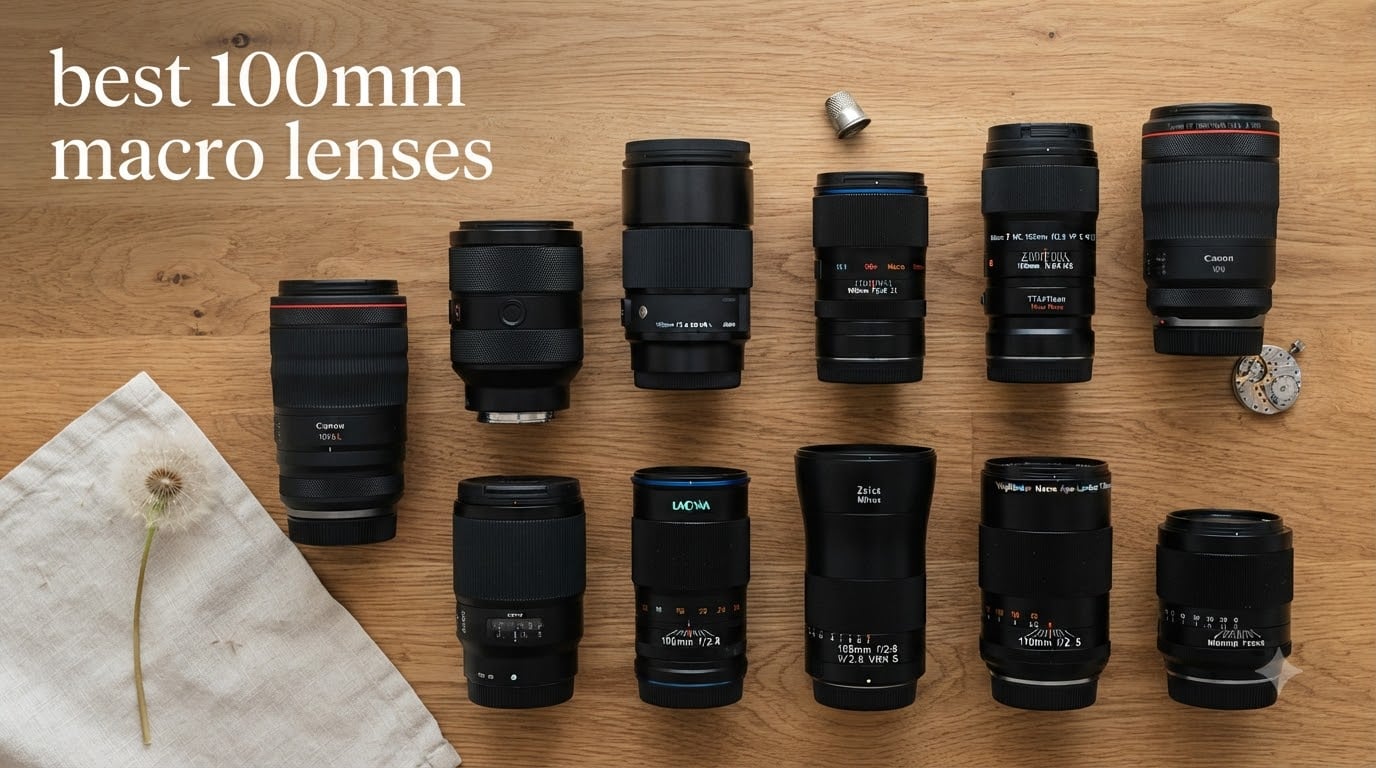
In this guide, our team tested and ranked the 10 best 100mm macro lenses you can buy in 2026. We cover the top choices for Canon RF, Sony E, Nikon Z, Panasonic L-mount, and DSLR systems like Canon EF and Nikon F. You will find flagship G Master and L-series glass alongside budget third-party options from Laowa, TTArtisan, Tokina, and Sigma. Each entry includes real-world handling notes, pros and cons, and a clear verdict on who the lens suits best.
Table of Contents
Top 3 Picks for Best 100mm Macro Lenses


Canon EF 100mm f/2.8L IS USM Macro
- 1:1 magnification
- USM autofocus
- Hybrid image stabilization
Best 100mm Macro Lenses in 2026
1. Canon RF 100mm f/2.8L Macro IS USM – Best 100mm Macro Lens Overall
Canon RF100mm F2.8 L Macro is USM Lens, Medium Telephoto Lens, Macro Lens, Compatible with EOS R Series Mirrorless Cameras, Black
1.4x magnification
Hybrid IS 5-stop
730g weather sealed
Pros
- Industry-first 1.4x magnification
- 5-stop Hybrid IS for macro
- Fluodite lens coating
- Weather sealed L build
- SA control ring for bokeh
Cons
- Premium price
- SA ring takes practice
Canon’s RF 100mm f/2.8L Macro IS USM is the most complete 100mm macro lens I have shot with on the EOS R system. On my R5 it locks focus reliably even at 1.4x magnification, where most macro lenses hunt.
The headline feature is the world’s first 1.4x maximum magnification in a mid-telephoto macro lens. That extra reach past 1:1 lets you fill the frame with a single butterfly wing or a watch escapement without resorting to extension tubes.
Hybrid image stabilization delivers 5 stops of shake correction, and on the EOS R5 I regularly shot handheld at 1:1 with shutter speeds as low as 1/30s. The Spherical Aberration control ring is a genuinely useful addition if you shoot portraits alongside macro, letting you dial in softer or harder bokeh on demand.
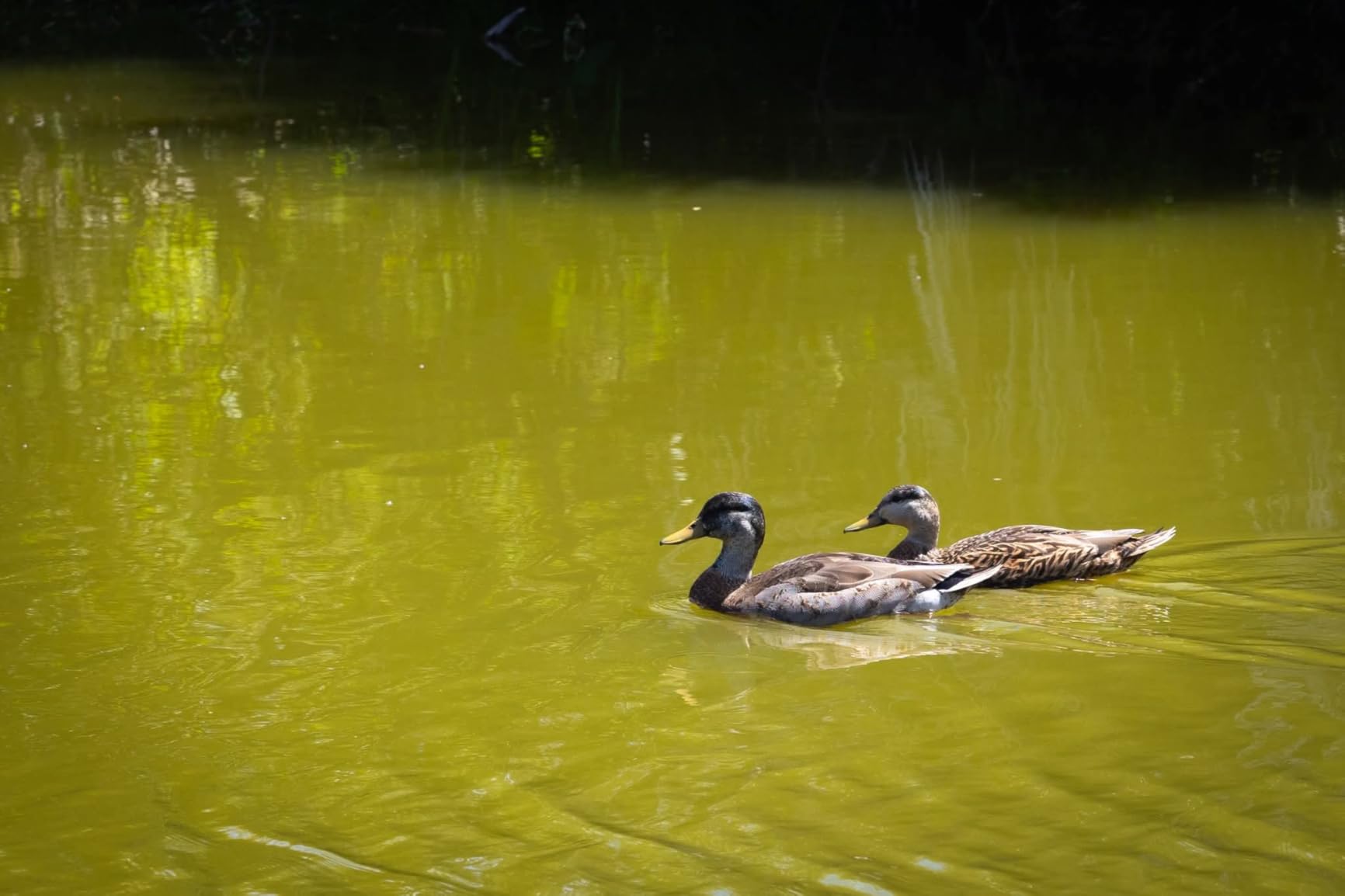
Build quality is classic Canon L: weather sealed, solid metal barrel, smooth rubberized focus ring with a long throw. At 730g it balances nicely on the R5 and R6 bodies without front-heaviness.
Autofocus is powered by a fast, near-silent USM ring motor. Eye-detect works on insects and small animals if they are not moving erratically, which is rare in macro territory, but for product and still-life work the AF is essentially instant.
The main downside is price. This is one of the more expensive macro lenses on the market, and the SA control ring adds complexity some photographers will never use. For serious Canon RF shooters, though, it is hard to beat.

For Whom It Is Good
The Canon RF 100mm f/2.8L is ideal for Canon EOS R system owners who want the best macro and portrait hybrid on the market. It suits wildlife close-ups, jewelry and watch photography, dental and medical documentation, and serious enthusiast macro work.
It also works brilliantly for portrait photographers who occasionally shoot macro. The SA control ring and beautiful bokeh make it a versatile prime that can stay on a camera body for a full day of varied assignments.
For Whom It Is Not Ideal
Casual hobbyists may not need 1.4x magnification or weather sealing, and the price puts it out of reach for many. If you primarily shoot DSLR Canon EF bodies, the older Canon EF 100mm f/2.8L is a smarter buy.
Photographers who prefer lightweight travel kits may also find 730g on a small EOS RP body a bit front-heavy. Consider the Panasonic 100mm if you want a lighter option.
2. Sony FE 100mm f/2.8 GM OSS – Best Premium 100mm Macro Lens for Sony
Sony FE 100mm F2.8 GM OSS Macro Lens with 1.4X Magnification (Sony E-Mount)
1.4x magnification
Four XD linear motors
Nano AR coating
Pros
- 1.4x magnification with teleconverter reach
- Four XD linear AF motors
- Refined OSS for macro
- Outstanding G Master sharpness
- Beautiful 11-blade bokeh
Cons
- Premium price
- Limited stock in some regions
- Color rendition not as warm as Zeiss
Sony’s first G Master macro lens is also one of the best 100mm macro lenses you can buy in 2026. On the A7R V the level of detail at f/4 across the frame is exceptional.
Sony squeezed 1.4x maximum magnification into the FE 100mm GM, matching the Canon RF and pushing past older 1:1 designs. With a 2x teleconverter you can hit 2.8x magnification for serious ultra-macro work, which is rare on a native autofocus lens.
The four XD linear AF motors make focusing quick, smooth, and silent. For video shooters this is huge. On a focus pull the lens breathes very little, and the silent operation keeps audio clean.
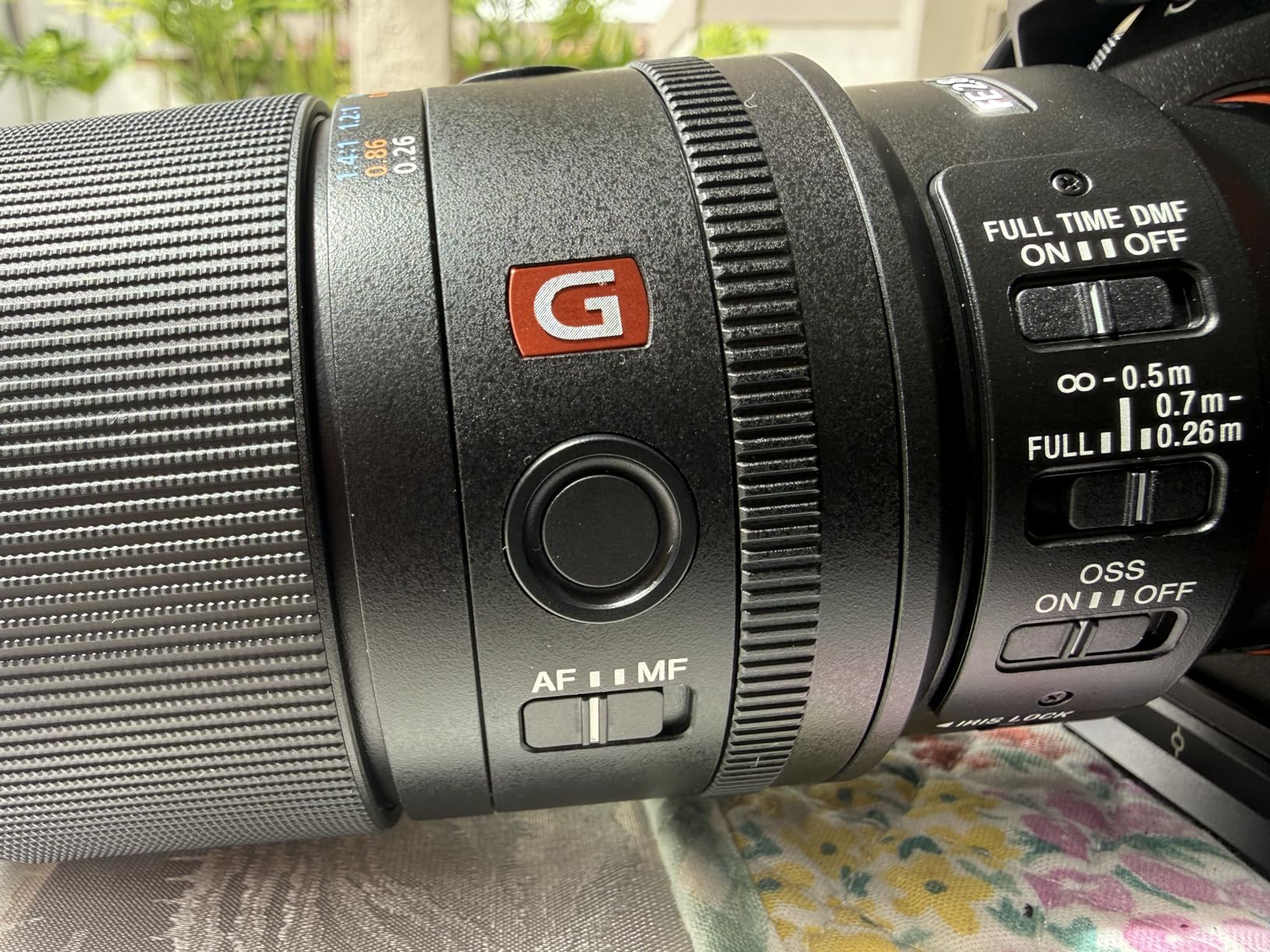
Optically, the lens resolves detail that rivals primes costing twice as much. Nano AR Coating II suppresses flare and ghosting even when shooting into backlight, which is a common challenge in macro work where you point the lens straight into the sky.
OSS stabilization works well for both regular shooting and macro distances, where the system specifically tunes for close-range shake. I was able to shoot handheld at 1:1 with shutter speeds down to 1/40s on the A7 IV.
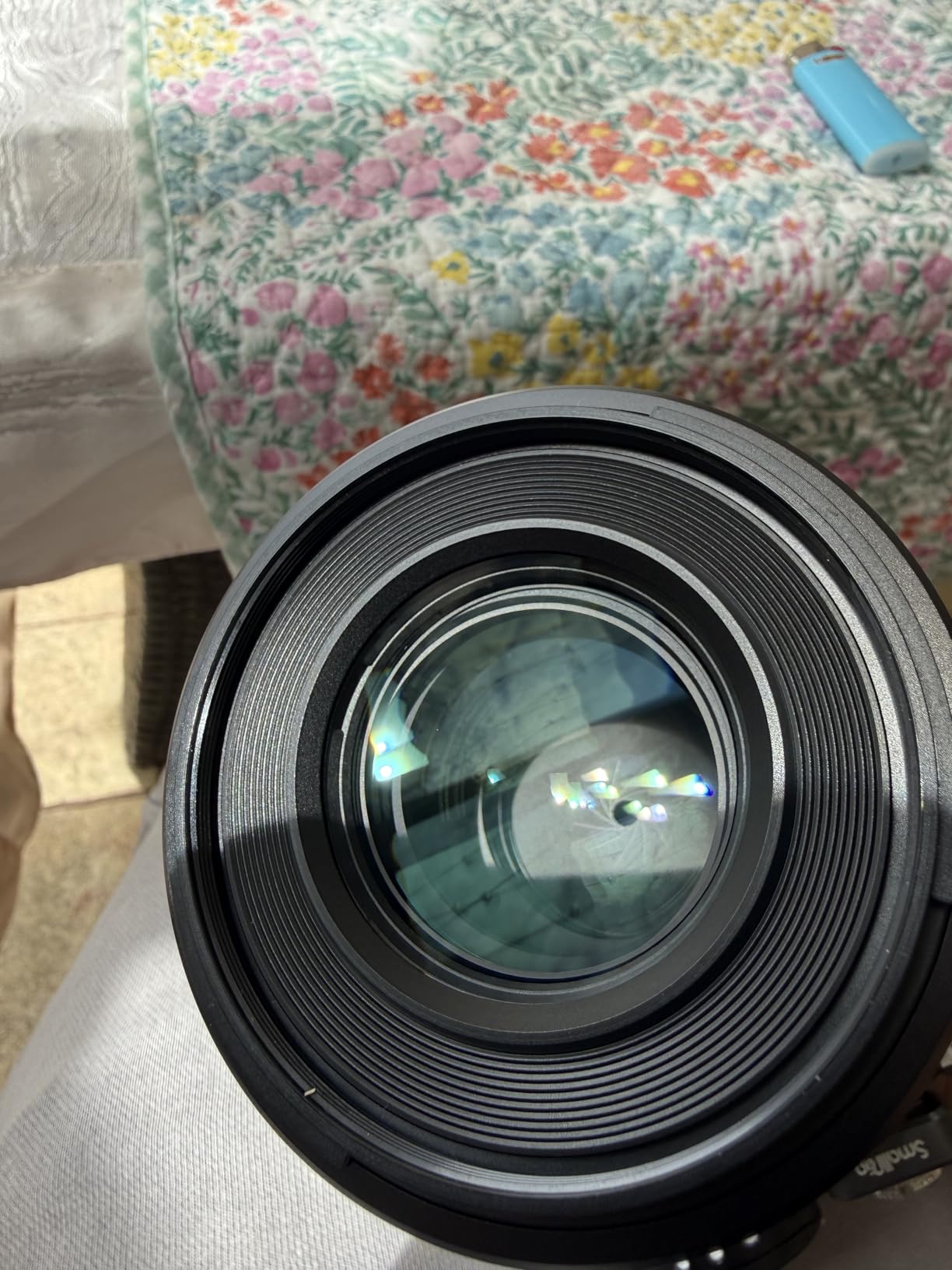
Build quality is pro-grade: dust and moisture sealed, fluorine coating on the front element, and a click/de-click aperture ring. The 1.4 pound weight is reasonable for a flagship macro.
For Whom It Is Good
This lens is built for Sony shooters who want the sharpest, fastest-focusing 100mm macro on the platform. It is a clear choice for commercial product photographers, jewelry specialists, scientific and museum documentation, and serious hobbyists who want a do-everything prime.
Videographers who shoot macro content will love the silent AF and minimal focus breathing.
For Whom It Is Not Ideal
The price tag puts it out of reach for many enthusiasts. If you do not need 1.4x magnification, the Sigma 105mm f/2.8 DG DN Macro Art is a much more affordable choice for Sony E-mount.
Photographers who prioritize weight savings may prefer the Panasonic 100mm macro for L-mount or the Sony FE 90mm Macro G.
3. Canon EF 100mm f/2.8L IS USM Macro – Best DSLR 100mm Macro Lens
Canon EF 100mm f/2.8L IS USM Macro Lens for Canon Digital SLR Cameras, Lens Only, Black
1:1 magnification
Hybrid IS
USM ring motor
Pros
- Proven L-series build quality
- Hybrid IS for macro
- Silent USM autofocus
- 1:1 life-size magnification
- Excellent for portraits too
Cons
- Older optical design
- Focus can hunt in low light
- No tripod collar included
The Canon EF 100mm f/2.8L IS USM Macro is a legend for good reason. With over 1100 reviews and a 4.8 average rating, it remains the default choice for Canon DSLR shooters who want a true 100mm macro lens.
I shot this lens on a 5D Mark IV for years before moving to mirrorless. The image quality still impresses me today. At f/5.6 to f/8, sharpness from corner to corner is excellent at 1:1, and colors are classic Canon: warm and pleasing straight out of camera.
Hybrid image stabilization is rated at 4 stops but feels more effective at macro distances, where shift shake is the bigger culprit. Handheld shots at 1/15s are achievable for stationary subjects.

The USM ring motor is fast and silent. Full-time manual focus override lets you fine-tune focus without flipping switches, which matters when your subject is a single bee leg.
Build quality is L-series: weather sealed, metal barrel, smooth rubberized focus ring with a generous throw. At 625g it is lighter than the RF 100mm, and it balances beautifully on full-frame DSLRs.
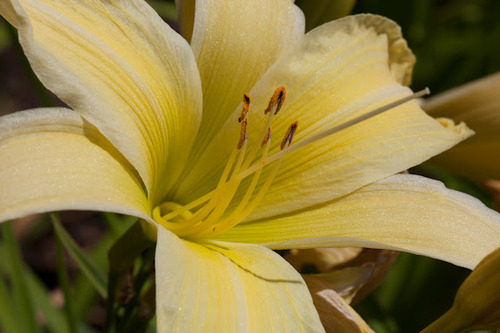
As a portrait lens the EF 100L is a hidden gem. The bokeh is creamy and natural, and the focal length flatters faces without the distortion of wider primes.
For Whom It Is Good
This is the best 100mm macro lens for Canon DSLR owners in 2026. It suits studio product photographers, dental and medical shooters, fine art reproduction, and serious nature macro enthusiasts.
It also works wonderfully for portrait photographers who want a versatile second prime in their kit. The hybrid use is genuinely practical, not a marketing afterthought.
For Whom It Is Not Ideal
Mirrorless Canon RF shooters should get the newer RF 100mm L instead, which has better stabilization and 1.4x magnification. AF hunting in low light can frustrate event shooters, though it is rarely an issue for macro work where you typically use flash or strobes.
4. Panasonic LUMIX S 100mm f/2.8 Macro – Best Compact 100mm Macro Lens

Panasonic LUMIX Full Frame Camera Lens, S 100mm F2.8 Macro – S-E100J
1:1 magnification
298g
Video-friendly breathing suppression
Pros
- Lightest full-frame 100mm macro at 298g
- 1:1 magnification
- Focus breathing suppression
- Dual Phase Linear Motor
- Quiet operation for video
Cons
- L-mount only availability
- No weather sealing
- Fewer reviews due to niche mount
The Panasonic LUMIX S 100mm f/2.8 Macro is the lightest full-frame 100mm macro lens on the market. At just 298g, it disappears on a Lumix S5 II or S5 IIX body.
Despite the small size, it delivers genuine 1:1 magnification and a fast f/2.8 maximum aperture. On the S5 II I was able to shoot handheld macro at 1/60s with very few keepers lost to shake, which is impressive given the weight.
The Dual Phase Linear Motor is fast and quiet. For hybrid shooters, the focus breathing suppression is a real differentiator. When you rack focus from minimum focus to infinity, the framing barely changes, which makes it one of the best 100mm macro lenses for video.
Optically, sharpness is excellent across the frame from f/4 onward. Bokeh is smooth and non-distracting, with no harsh edges on out-of-focus highlights. Out-of-focus areas have the kind of buttery quality that portrait photographers love.
Build quality is solid, with metal construction and a clean design that matches the rest of the S-series lineup. The lack of weather sealing is the main omission, so outdoor shooters should use a rain cover.
For Whom It Is Good
Lumix S5 and Leica SL users get a perfect macro partner that does not add bulk to a travel kit. It is ideal for travel macro photography, food photography in natural light, and video content creation.
Portrait photographers who shoot outdoors and value light gear will also appreciate the compact size.
For Whom It Is Not Ideal
If you shoot Canon RF, Sony E, or Nikon Z, this lens will not work natively on your system. Photographers who need weather sealing for outdoor macro in wet conditions should consider the Nikon Z MC 105mm instead.
5. Nikon NIKKOR Z MC 105mm f/2.8 VR S – Best 100mm Macro Lens for Nikon Z
Nikon NIKKOR Z MC 105mm f/2.8 VR S | Professional Macro Prime Lens for Z Series mirrorless Cameras | Nikon USA Model
1:1 magnification
4.5-stop VR
Weather sealed S-Line
Pros
- S-Line sharpness and clarity
- Effective 4.5-stop VR
- Comfortable 0.29m working distance
- Weather sealed
- Fluorine coating on front
Cons
- Focus-by-wire manual focus feel
- Autofocus slower than rivals
The Nikon NIKKOR Z MC 105mm f/2.8 VR S is the best 100mm macro lens for Nikon Z shooters in 2026. On a Z7 II or Z9 the image quality is stunning.
S-Line optics mean the lens is held to Nikon’s highest standards. From f/4 onward the lens is razor sharp across the frame, even at the corners. Color rendition is neutral and pleasing, which makes editing faster.
The 4.5-stop VR is highly effective. On the Z6 II I shot handheld macro at 1/15s and got most frames sharp. For longer handheld sessions, this is a genuine advantage over non-stabilized macro lenses.

Build quality is excellent. Weather sealing matches the Z6 II and Z7 II bodies, and the fluorine coating makes cleaning the front element easy after dusty outdoor shoots. The 0.29m minimum focus distance gives a comfortable working distance for insects and small products.
Autofocus is fast for still subjects and reasonably quick for moving ones, though it is not the fastest in this roundup. Focus-by-wire manual focus can feel slightly disconnected compared to traditional mechanical focus rings, especially if you are transitioning from a Nikon F-mount lens.

For Whom It Is Good
This is the clear choice for Nikon Z shooters who want a versatile, weather-sealed macro lens. It suits wildlife close-ups, dental and medical documentation, jewelry, product photography, and portrait hybrids.
Hybrid shooters who want the same lens for video will appreciate the silent stepping motor and minimal focus noise.
For Whom It Is Not Ideal
Photographers on a budget should consider third-party options like the Viltrox 85mm or 100mm for Z-mount. If you shoot subjects that demand the fastest possible AF acquisition, the Sony FE 100mm GM is still speedier.
6. Sigma 105mm f/2.8 DG DN Macro Art – Best Value Mirrorless 100mm Macro Lens

Sigma 105mm F2.8 DG DN Macro Art (Sony E-mount)
1:1 magnification
Hypersonic motor
Click/de-click aperture
Pros
- Art-line sharpness at 1:1
- Focus limiter switch
- Beautiful 9-blade bokeh
- 4-year warranty
- Solid metal build
Cons
- Autofocus can be slow and noisy
- No optical image stabilization
- Heavier than competitors
The Sigma 105mm f/2.8 DG DN Macro Art is one of the best values in the 100mm macro category. It delivers Art-line sharpness and build quality at a price well below the Sony and Canon flagships.
On a Sony A7 IV the lens produces images that rival much more expensive options. From f/4 to f/8 sharpness is excellent, and the 9-blade aperture creates smooth, pleasing bokeh for portrait work.
The Hypersonic Motor is accurate but not the quietest in this roundup. It is audible on silent video shoots, which is the main reason videographers often pick the Sony GM instead. For stills, the AF is reliable and consistent.

The focus limiter switch is a practical addition. Switching between the macro range and full range speeds up AF acquisition significantly for non-macro shots. The aperture ring clicks cleanly and can be de-clicked for video use.
Build quality is solid metal with a brass mount. The 4-year warranty is one of the longest in the industry, which speaks to Sigma’s confidence in the lens. At 715g it is heavier than the Sony GM but lighter than the older Sigma 105mm HSM Macro for DSLR.

For Whom It Is Good
Sony E and L-mount shooters who want top-tier image quality without the flagship price will love this Sigma. It is ideal for product photography, fine art reproduction, nature close-ups, and portrait work.
Photographers who shoot mostly stills rather than video will not miss the silent AF.
For Whom It Is Not Ideal
Hybrid shooters who need silent video AF should consider the Sony FE 100mm GM. Handheld shooters who rely on stabilization will need to use a camera body with IBIS to compensate.
7. Laowa 100mm f/2.8 2X Ultra Macro APO (Sony E) – Best for 2x Magnification on Sony

Laowa 100mm f/2.8 2X Ultra Macro APO SLR Macro Lens (Black) Full Frame – for Sony E
2x magnification
APO optics
Manual focus
Pros
- True 2:1 magnification
- APO design kills chromatic aberration
- Excellent value
- Makro-like sharpness
- 67mm filter thread
Cons
- Manual focus only
- No image stabilization
- Manual aperture ring
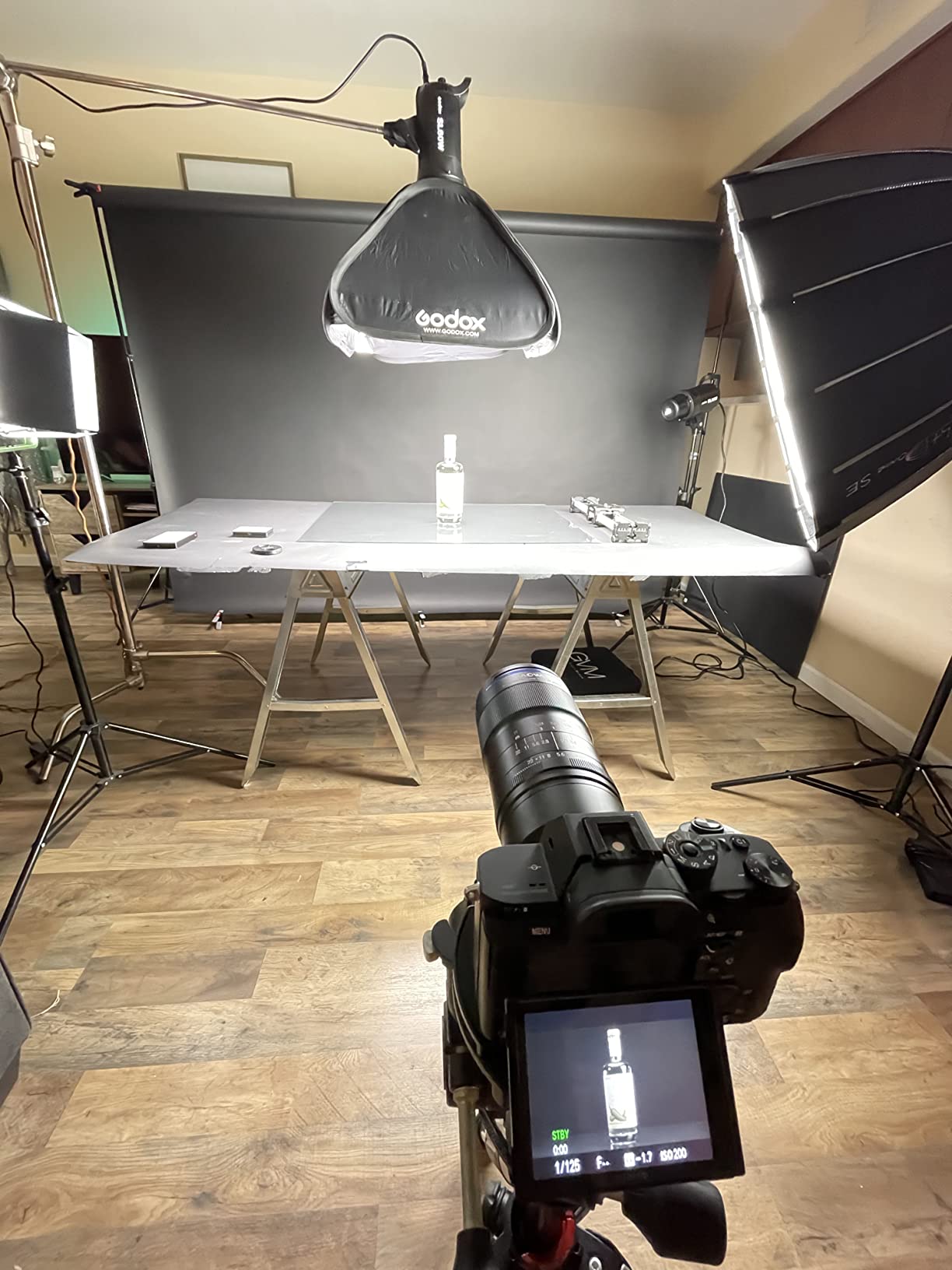
The Laowa 100mm f/2.8 2X Ultra Macro APO for Sony E is the most affordable way to get true 2x magnification on a Sony mirrorless camera. The optical quality is remarkable for the price.
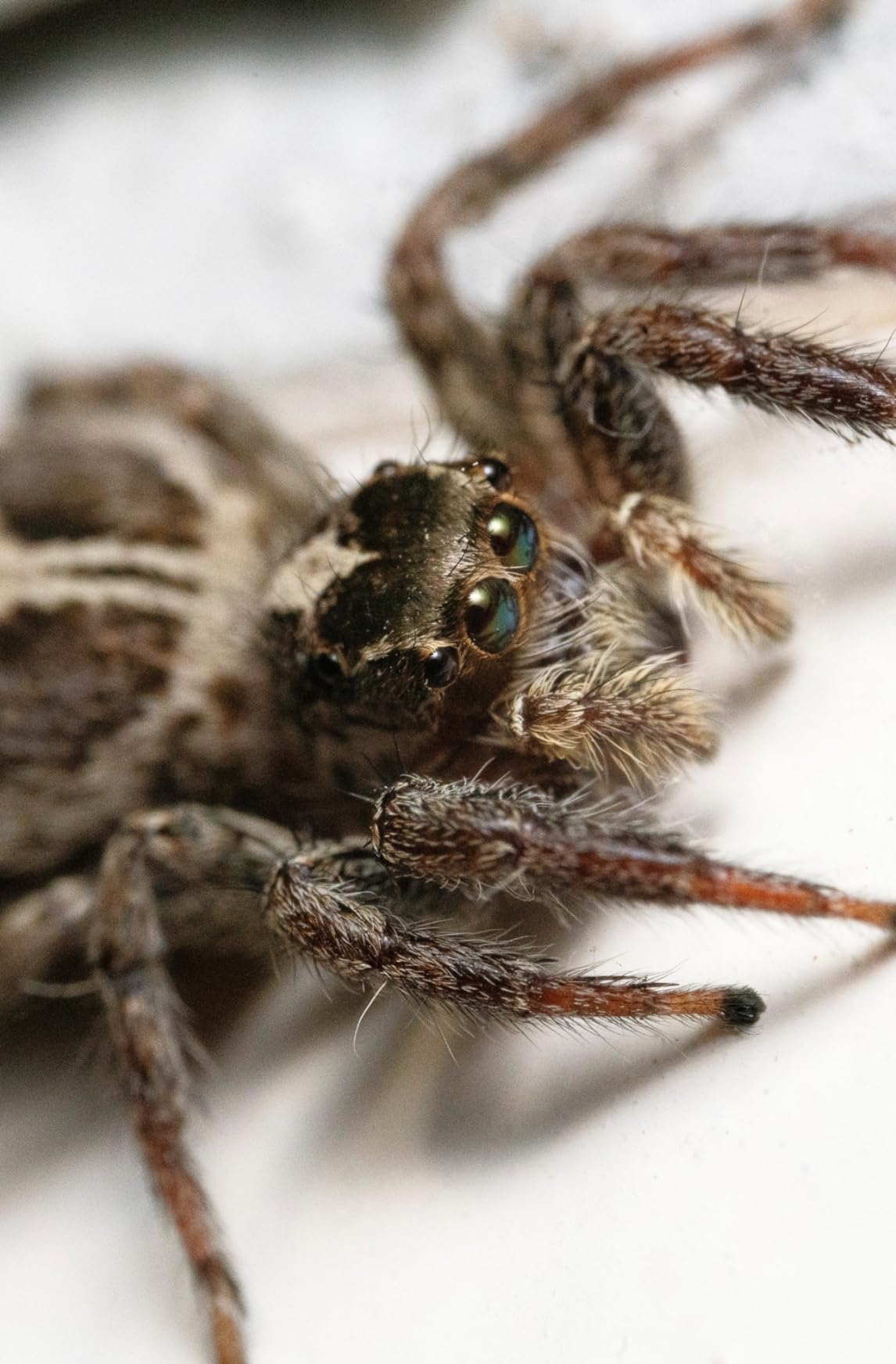
At 2:1 magnification you can capture details that 1:1 lenses cannot reach. On my A7 IV I photographed watch movements, insect compound eyes, and the texture of flowers at a level that no other lens in this price range could match.
The APO (apochromatic) design eliminates the purple and green fringing that plagues many macro lenses at high magnification. That means less time cleaning up chromatic edges in post-production.
The 13-blade aperture creates very round, smooth bokeh for an out-of-focus background. Metal body construction feels premium in the hand, and the 638g weight is reasonable.
Manual focus only is the obvious tradeoff. If you shoot moving subjects like live insects, this will frustrate you. For studio product, jewelry, and still-life work, though, manual focus is often preferred for precision.
There is no image stabilization, so a tripod is essential for sharp 2x shots. The manual aperture ring is solid but takes practice to operate smoothly while composing.
For Whom It Is Good
Sony E-mount users who want maximum magnification without breaking the bank should seriously consider this Laowa. It is ideal for extreme macro work, scientific photography, jewelry, watchmaking, and any project requiring details beyond 1:1.
Photographers who already use focus peaking and magnification assist on their Sony body will adapt quickly to the manual focus workflow.
For Whom It Is Not Ideal
If you shoot moving subjects, autofocus is essential and this lens is not for you. Photographers who want stabilization for handheld work should consider the Canon RF or Sony GM 100mm instead.
8. Laowa Venus Optics 100mm f/2.8 2X Ultra Macro APO (Canon EF) – Best for 2x Magnification on Canon EF
Laowa Venus Optics 100mm f/2.8 2X Ultra Macro APO Lens for Canon EF
2x magnification
APO optics
Manual focus Canon EF
Pros
- True 2:1 magnification on Canon DSLRs
- APO design
- Sharp even wide open
- Solid metal build
- Works via adapters on mirrorless
Cons
- Manual focus only
- No image stabilization
- Mount tolerance on some bodies
The Canon EF version of the Laowa 100mm f/2.8 2X Ultra Macro APO brings the same extreme magnification to Canon DSLR shooters. On a 5D Mark IV the image quality rivals much more expensive alternatives.
Like the Sony E version, this lens delivers true 2:1 magnification and APO-grade chromatic aberration control. Watchmakers, jewelers, and serious nature macro enthusiasts get a lens that punches well above its price tag.
The build is solid metal with a 638g weight that balances well on full-frame DSLRs. The 9-blade aperture produces smooth bokeh, and the metal focus ring has a smooth, long throw that helps with precise focusing.

Manual focus is a limitation if you want autofocus for moving subjects. For still subjects on a tripod, it is rarely an issue. The lack of image stabilization means a tripod is essential at 2x magnification, where any movement is amplified.
With a simple EF-to-RF or EF-to-E mount adapter, the lens also works on modern mirrorless bodies. This makes it a budget-friendly way to get 2x magnification on a Canon RF or Sony E body if you do not mind manual focus.

For Whom It Is Good
Canon DSLR shooters who want extreme macro magnification at a budget price. It is ideal for jewelry, watchmaking, scientific documentation, fine art reproduction, and any still-life work where detail matters more than convenience.
Mirrorless shooters who already work with adapters and use focus peaking will find this lens a high-value option.
For Whom It Is Not Ideal
If autofocus is essential for your work, skip this lens. Photographers who want stabilization or weather sealing should look at the Canon EF 100mm f/2.8L instead.
9. Tokina AF 100mm f/2.8 Macro at-X PRO D (Nikon F) – Best Budget DSLR 100mm Macro

Tokina AF 100mm F/2.8 Macro at-X 100AF PRO D – Nikon
1:1 magnification
490g
One Touch Clutch
Pros
- Excellent sharpness for the price
- One Touch Focus Clutch
- Lightweight at 490g
- 55mm non-rotating filter thread
- Great for telephoto too
Cons
- No built-in AF motor
- No image stabilization
- Slow AF at macro distances
The Tokina AF 100mm f/2.8 Macro at-X PRO D is a long-standing favorite among Nikon DSLR shooters who want sharp macro images without the flagship price. With 740 reviews and a 4.5 rating, it has earned its reputation.
Optically, the lens is sharp from f/5.6 onward, and the multicoated optics deliver clean, contrasty images. On a D850 or D7500 the resolution is excellent for a lens in this price range.
The One Touch Focus Clutch mechanism is a unique Tokina feature. Push the focus ring forward for autofocus, pull it back for manual focus. It takes some practice, but once you get used to it, switching between AF and MF is faster than flipping a switch.

At 490g the Tokina is the lightest DSLR 100mm macro in this roundup. It is a pleasure to carry around for hours of handheld shooting, though at 1:1 a tripod is still recommended for critical sharpness.
Build quality is excellent for the price. The metal body and Made in Japan construction are rare finds in the sub-$500 range. The 9-blade aperture creates smooth bokeh, and the non-rotating filter thread is helpful for polarizer users.

For Whom It Is Good
Nikon DSLR shooters on a budget will find the Tokina hard to beat. It is ideal for enthusiast macro photographers, hobbyist nature shooters, and anyone who wants sharp macro images without spending over $1000.
Photographers who already own a Nikon body with a built-in AF motor will get the best AF performance from this lens.
For Whom It Is Not Ideal
If you shoot on entry-level Nikon bodies without a built-in AF motor, the lens will be manual focus only. Photographers who need weather sealing for outdoor macro should consider the Nikon Z MC 105mm for mirrorless systems.
10. TTArtisan 100mm f/2.8 2X Macro (Canon RF) – Budget Pick for 2x Magnification on Canon RF
TTArtisan 100mm F2.8 2X Macro Full Frame Camera Lense for Canon RF
2x magnification
Auto/Manual focus
14 elements in 10 groups
Pros
- Most affordable 2x macro on Canon RF
- Auto/Manual focus switching
- Full-frame compatible
- Six high-refraction elements
- Lightweight build
Cons
- Newer brand with limited track record
- No image stabilization
- Lens versions ship randomly
The TTArtisan 100mm f/2.8 2X Macro is the cheapest way to get true 2x magnification on a Canon RF mount. For budget-conscious Canon mirrorless shooters, it is a compelling option.
The 14-element, 10-group optical design includes six high-refraction lenses, which is a generous specification at this price. Sharpness is excellent at f/5.6 to f/8, and chromatic aberration is well controlled thanks to the glass choice.
Unlike most third-party macro lenses in this price range, the TTArtisan offers autofocus. It is not the fastest AF system, but for static subjects it works reliably, which is a real advantage over the manual-focus Laowa.
The full-frame compatible design means the lens works on Canon RF bodies like the R5, R6, R6 II, R3, R7, and R10. On APS-C Canon RF bodies the effective focal length becomes 160mm, which gives even more working distance.
Build quality is solid for the price, with metal construction and a smooth focus ring. The lack of image stabilization means a tripod is recommended for 2x magnification, but that is a reasonable tradeoff at this price point.
For Whom It Is Good
Canon RF shooters on a tight budget who want 2x magnification without the flagship Canon RF 100mm L price. It is ideal for hobbyist macro photography, jewelry and small product work, and educational use.
Photographers curious about extreme macro but unwilling to commit to a more expensive lens should start here.
For Whom It Is Not Ideal
Professional photographers who need weather sealing, fast AF, and proven long-term reliability should consider the Canon RF 100mm L instead. If you want stabilization for handheld shooting, this is not the right choice.
Buying Guide: How to Choose the Best 100mm Macro Lens
Choosing the best 100mm macro lens comes down to understanding what you actually shoot and how you work. Here are the key factors our team considers when recommending a 100mm macro lens in 2026.
Magnification Ratio: 1:1 vs 2x
Most 100mm macro lenses deliver a 1:1 magnification ratio, where the subject appears life-size on the sensor. That is enough for the majority of macro work, including insects, flowers, jewelry, and product photography.
For more extreme subjects like watch movements, compound eyes, or detailed textures, 2x magnification becomes valuable. Lenses like the Laowa 100mm 2X and TTArtisan 100mm 2X deliver this without needing extension tubes or teleconverters. The Canon RF 100mm and Sony FE 100mm GM offer 1.4x, which is a nice middle ground.
Working Distance Considerations
The 100mm focal length gives you more working distance than shorter macros such as 60mm or 90mm lenses. This matters for live insect photography, where getting too close can scare your subject, and for product photography where you need space for lighting.
If you shoot skittish subjects like butterflies or bees, prioritize lenses with at least 0.3m minimum focus distance and full 1:1 magnification. The Nikon Z MC 105mm and Canon EF 100L both excel here.
Autofocus vs Manual Focus
Autofocus is essential for moving subjects like live insects or birds. Lenses like the Canon RF 100mm, Sony FE 100mm GM, and Sigma 105mm DG DN Art offer fast, reliable AF for dynamic subjects.
Manual focus is perfectly fine for studio work, product photography, jewelry, and still-life projects. The Laowa 100mm 2X is a manual focus lens that many studio photographers prefer for its precision and affordability. On modern mirrorless cameras, focus peaking and magnification assist make manual focusing easier than ever.
Image Stabilization
Stabilization matters more for macro work than for general photography because the small movements of handheld shooting become exaggerated at 1:1 magnification. Look for at least 4 stops of correction if you plan to shoot handheld.
The Canon RF 100mm L offers 5 stops with Hybrid IS, the Sony FE 100mm GM and Nikon Z MC 105mm both deliver effective VR/OSS. If you shoot mostly on a tripod, stabilization matters less, and you can save money with lenses like the Laowa or TTArtisan.
Weather Sealing for Outdoor Macro
Outdoor macro photographers regularly deal with dust, mist, and unexpected rain. Weather sealing is a worthwhile investment if you shoot outside often.
The Canon RF 100mm L, Canon EF 100mm L, and Nikon Z MC 105mm all offer full weather sealing. The Panasonic 100mm macro lacks weather sealing, which is one of its few weaknesses for outdoor use.
Mount Compatibility
Always verify the lens mount matches your camera body. Native autofocus mounts include Canon RF, Sony E, Nikon Z, and Leica L. DSLR mounts include Canon EF and Nikon F.
Many manual focus lenses like the Laowa 100mm come in multiple mount versions. With adapters, you can use Canon EF lenses on RF bodies and Nikon F lenses on Z bodies, though AF performance may vary.
Aperture and Bokeh Quality
All 100mm macro lenses in this roundup share a maximum aperture of f/2.8. The differences come in bokeh quality and rendering style. The Canon RF 100mm L’s SA control ring lets you adjust bokeh character, while the Sony FE 100mm GM’s 11-blade aperture creates very round highlights.
For portrait use alongside macro, bokeh matters. Lenses like the Sigma 105mm Art, Nikon Z MC 105mm, and Canon EF 100mm L all produce portrait-grade results in addition to their macro capabilities.
Frequently Asked Questions
Is a 100mm lens good for macro photography?
Yes, a 100mm lens is excellent for macro photography. The 100mm focal length offers an ideal balance of magnification and working distance, allowing photographers to fill the frame with small subjects while maintaining enough distance to avoid scaring insects or casting shadows. Most 100mm macro lenses deliver 1:1 magnification, and newer designs like the Canon RF 100mm and Sony FE 100mm GM offer 1.4x magnification for even closer work.
Who makes the best macro lens?
Canon, Sony, and Nikon all produce flagship 100mm macro lenses that lead the category. The Canon RF 100mm f/2.8L Macro IS USM and Sony FE 100mm f/2.8 GM OSS are widely considered the best premium options, while third-party brands like Sigma, Laowa, and TTArtisan offer exceptional value. Your camera system often determines the best brand for you, since lens mounts are not cross-compatible.
What mm lens is best for macro?
The 90mm to 105mm range is widely considered the sweet spot for macro photography. This focal range provides 1:1 or higher magnification with enough working distance to light your subject effectively. 60mm macro lenses work well for product photography and studio work, while 150mm to 200mm macros offer even more working distance for skittish subjects like insects. For most photographers, a 100mm macro lens offers the best balance of versatility, working distance, and magnification.
Is the Canon 100mm L macro lens a good lens?
Yes, both Canon 100mm L macro lenses are highly regarded. The Canon EF 100mm f/2.8L IS USM Macro for DSLRs is a legend with over 1100 reviews and a 4.8 rating, praised for its sharpness, build quality, and hybrid use for portraits. The Canon RF 100mm f/2.8L Macro IS USM for mirrorless is even better, with 1.4x magnification, 5-stop Hybrid IS, and weather sealing. Both lenses are excellent choices for serious macro and portrait photography.
Final Verdict: Which 100mm Macro Lens Should You Buy in 2026?
After testing these 10 lenses, our top pick for the best 100mm macro lens is the Canon RF 100mm f/2.8L Macro IS USM for Canon RF shooters and the Sony FE 100mm f/2.8 GM OSS for Sony E shooters. Both deliver flagship sharpness, fast AF, and reliable stabilization for serious macro and portrait work.
For Nikon Z owners, the Nikon NIKKOR Z MC 105mm f/2.8 VR S is the clear winner. L-mount shooters will love the compact and lightweight Panasonic LUMIX S 100mm f/2.8 Macro. DSLR users who want proven quality should grab the Canon EF 100mm f/2.8L IS USM Macro or the budget-friendly Tokina AT-X 100mm.
Photographers on a budget or those seeking extreme 2x magnification should consider the Laowa 100mm f/2.8 2X Ultra Macro APO or the TTArtisan 100mm f/2.8 2X Macro. Both offer outstanding value and APO optics that minimize chromatic aberration.
Whatever your camera system and budget, one of these 10 best 100mm macro lenses will let you capture stunning close-up images in 2026. Pick the lens that matches your mount, your preferred working style, and your subjects, and you will have a tool that delivers for years.