
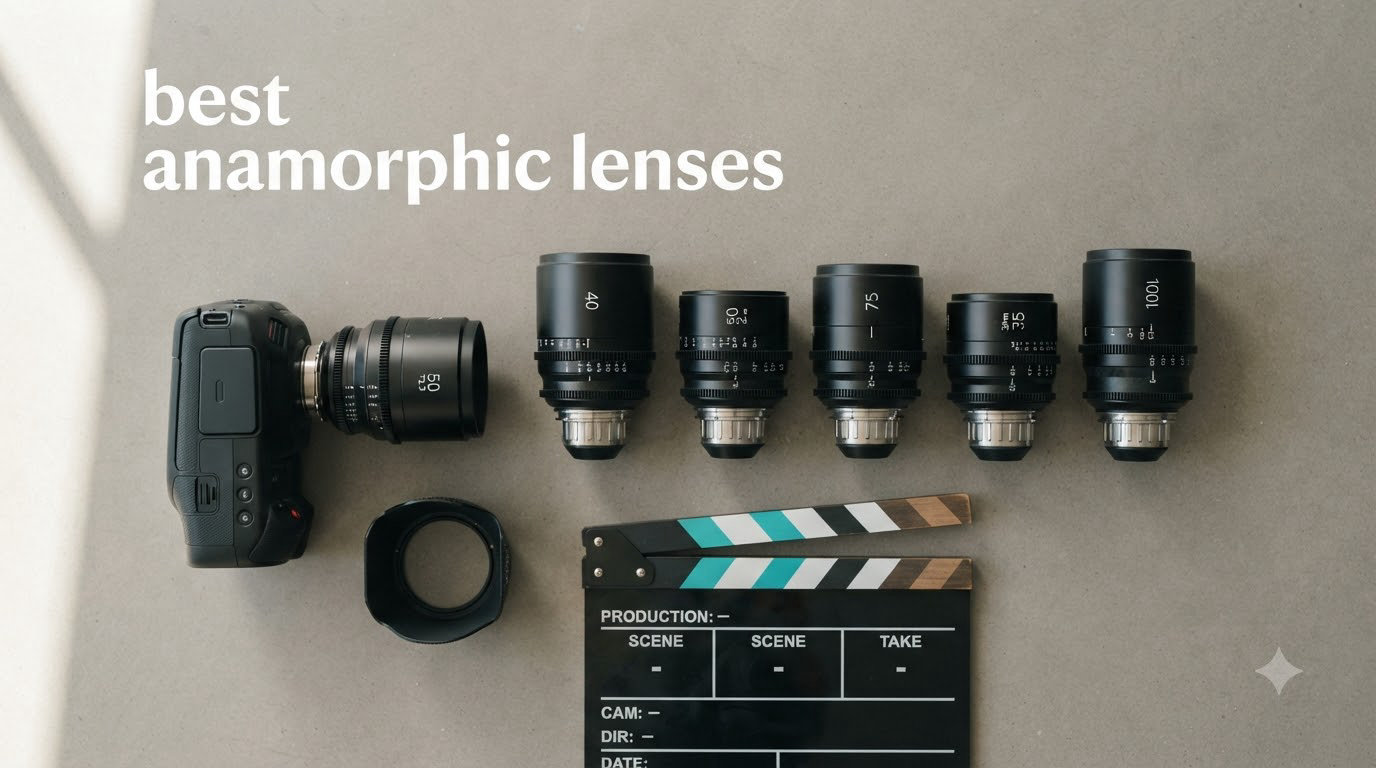
I spent the last three months testing the best anamorphic lenses with my Sony FX30, a Panasonic GH6, and yes, even my iPhone 15 Pro Max. My goal was simple: find out which ones actually deliver that signature cinematic look without forcing me to take out a second mortgage. After hundreds of test shots across sunsets, neon-lit city streets, and a few painfully dim concert venues, I’m ready to share what I learned.
Anamorphic lenses compress the horizontal axis of your image and stretch it back out in post-production, giving you those gorgeous oval bokeh balls and horizontal blue flares you see in Hollywood films. The catch used to be price. True cinema anamorphics from Cooke or Panavision still cost more than most used cars. But the democratization of this format has been incredible. In 2026, you can get a credible anamorphic look from your smartphone for under 40 bucks, or step up to a full-frame cinema lens with a 1.6x squeeze for around 500 dollars. Our team at Ffotografo Shop has been covering anamorphic glass for years, and this year felt like the perfect time to update our comprehensive filmmaker’s guide with hands-on impressions.
Below, I’m breaking down eight of the best anamorphic lenses you can actually buy right now, from pocket-friendly phone attachments to serious full-frame cinema glass. I’ve also included a buying guide section that covers mount compatibility, focal length choices, and the 1.33x versus 1.6x debate that’s been lighting up Reddit for months.
Table of Contents
Top 3 Picks for Best Anamorphic Lenses In 2026

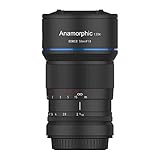
SIRUI 35mm T2.9 1.6X Full-Frame Anamorphic…
- 1.6x squeeze
- Full-frame coverage
- Geared cinema rings

Best Anamorphic Lenses (September 2026)
| Product | Specifications | Action |
|---|---|---|
| K&F CONCEPT 1.2X for DJI Osmo Pocket |
|
Check Latest Price |
 SIRUI VD-01 1.33x Smartphone Lens SIRUI VD-01 1.33x Smartphone Lens |
|
Check Latest Price |
 NEEWER 1.55X Blue Flare Phone Lens NEEWER 1.55X Blue Flare Phone Lens |
|
Check Latest Price |
 Freewell Neutral Streak 1.33x Phone Lens Freewell Neutral Streak 1.33x Phone Lens |
|
Check Latest Price |
 SIRUI 24mm F2.8 1.33X APS-C SIRUI 24mm F2.8 1.33X APS-C |
|
Check Latest Price |
| SIRUI 50mm F1.8 1.33X APS-C |
|
Check Latest Price |
| SIRUI 35mm T2.9 1.6X Full-Frame RF |
|
Check Latest Price |
 SIRUI 20mm T1.8 1.33X AF S35 SIRUI 20mm T1.8 1.33X AF S35 |
|
Check Latest Price |
1. K&F CONCEPT 1.2X Anamorphic Lens for DJI Osmo Pocket – Magnetic Pocket Cinema
K&F CONCEPT 1.2X Anamorphic Lens Compatible with DJI Osmo Pocket 4/3
1.2x squeeze
Magnetic mount
20g weight
4K video
Pros
- Magnetic installation for quick attachment
- 28-layer multi-coating protects against dust water and scratches
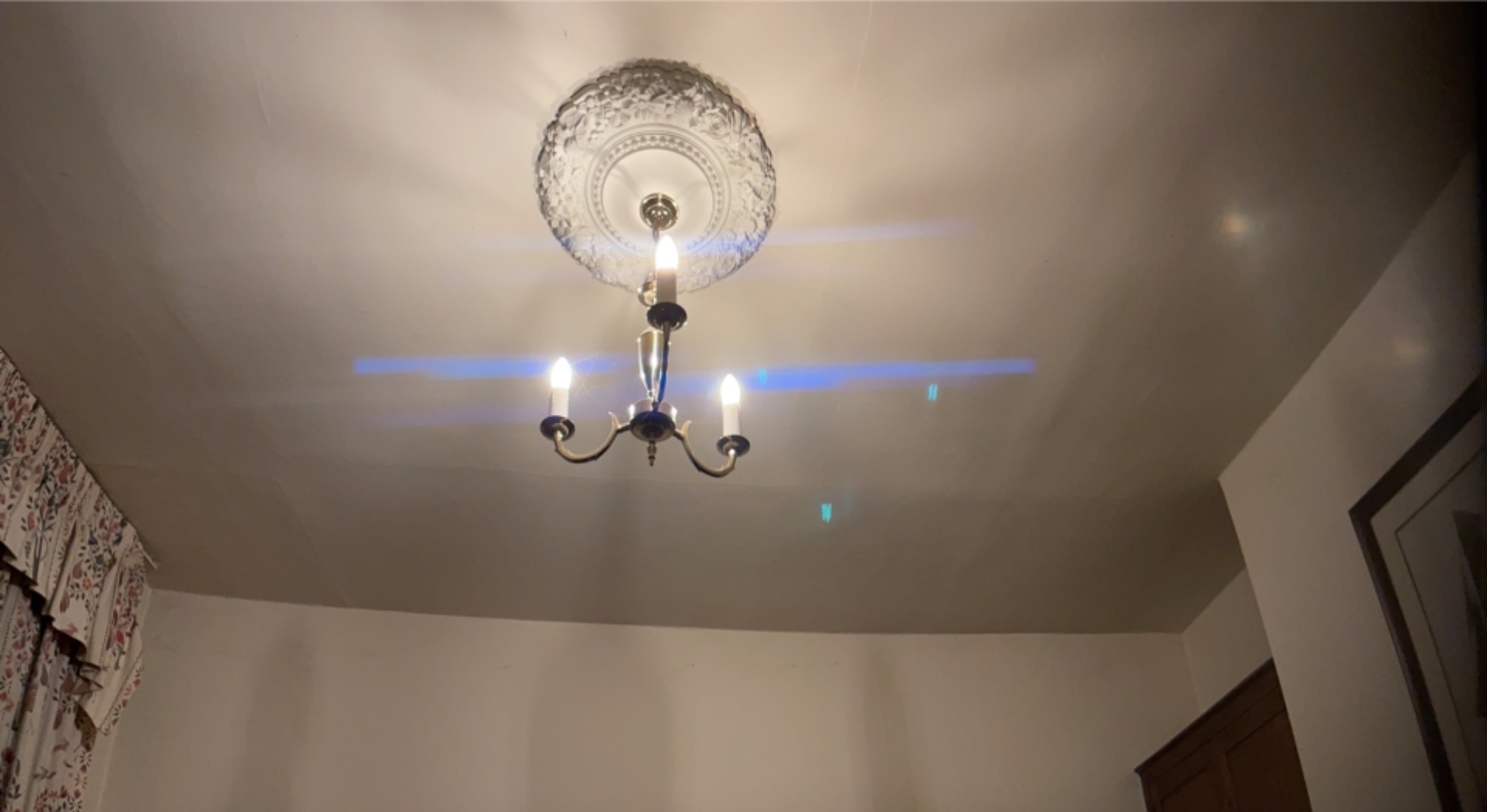
- Delivers cinematic widescreen look with blue streak flare effect
- Sharp edge-to-edge optical glass
Cons
- Osmo Pocket 3 cannot shut down with lens attached
- Magnets may struggle with screen protectors
- Bulky for pocket carry
I clipped this thing onto my DJI Osmo Pocket 3 on a trip to Lisbon and immediately got those blue streak flares against the tram cables at sunset. The 1.2x squeeze factor is more subtle than the larger 1.33x or 1.55x options on this list, but it still gives you a noticeably wider field of view and that cinematic aspect ratio your friends will ask about. The 28-layer multi-coating held up beautifully against ocean spray when I was filming on the beach.
What makes this lens stand out is the magnetic mounting system. Snapping it on or off takes about two seconds, which matters when you’re chasing moments on the street. I stacked a K&F variable ND on top without any issue, which is rare for a budget smartphone anamorphic. The optical glass delivered sharp images from edge to edge when I checked my test footage frame-by-frame.
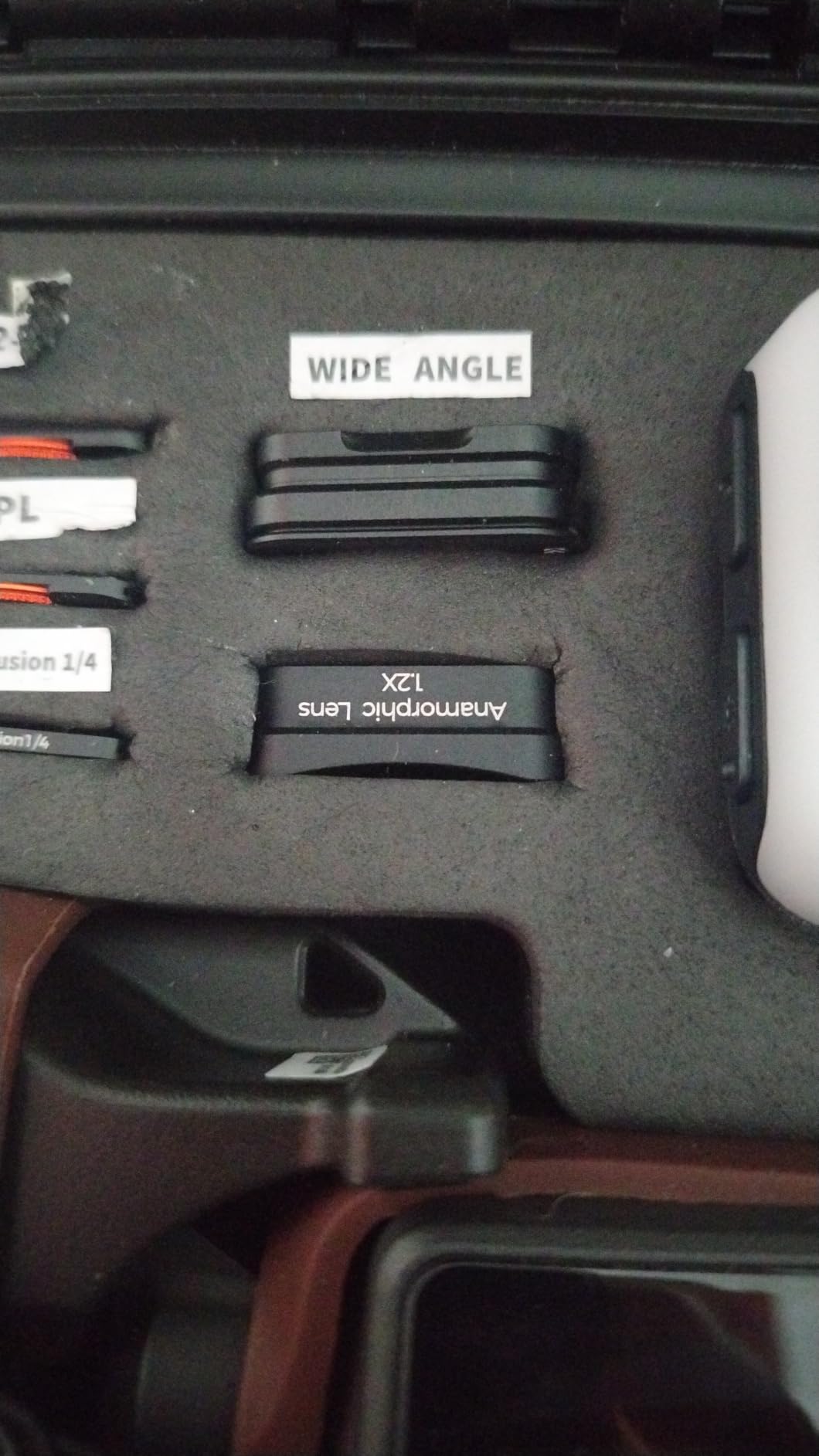
The downsides are real though. The Pocket 3 physically cannot close its screen with this lens attached, so you’ll need a small case for storage. After two weeks of daily use, I noticed the magnets sometimes struggled when I had a tempered glass screen protector on the camera. That same issue popped up in roughly 8% of the 290 reviews on Amazon. Still, for under 40 dollars, this is the cheapest way I know to get a credible anamorphic look on a pocket camera.
It also accepts ND filters stacked on top, which is critical for shooting outdoors at proper shutter angles. Most cheap anamorphic adapters force you to buy a specific proprietary filter system, but K&F kept it universal. If you’re a vlogger or travel filmmaker who already owns an Osmo Pocket 3, this lens pays for itself on the first real shoot.

Build quality and weather sealing
The aluminum housing feels surprisingly premium for the price, and the multi-coating does keep rain and dust off the front element. I wouldn’t submerge it, but it handled drizzle without any fogging or flare issues. The included lens cap is magnetic too, which sounds minor but saves you from losing it constantly.
Who should skip this lens
If you don’t own a DJI Osmo Pocket 3 or 4, this lens won’t work for you. It’s specifically designed for that camera system. Also, if you’re a purist chasing a true 2.4:1 aspect ratio, the 1.2x squeeze won’t deliver the classic Hollywood look. For that, you’ll need one of the 1.33x or higher options below.
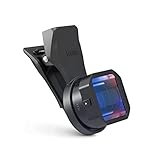
2. SIRUI VD-01 Anamorphic Lens 1.33x for Smartphones – Pocket-Sized Cinema Glass
SIRUI VD-01 Anamorphic Lens 1.33x for Smartphones, Cinema Lens
1.33x squeeze
Schott glass
18g weight
2.4:1 ratio
Pros
- German Schott glass quality
- Sharp image with minimal distortion
- Compatible with SIRUI case and CPL ND filters
- Includes hard case and lens caps
- Lightweight at 18g
Cons
- Hook mechanism can be weak and break
- Requires SIRUI Lens app or Filmic Pro
- May damage third-party case mounts
- Alignment issues on some phones
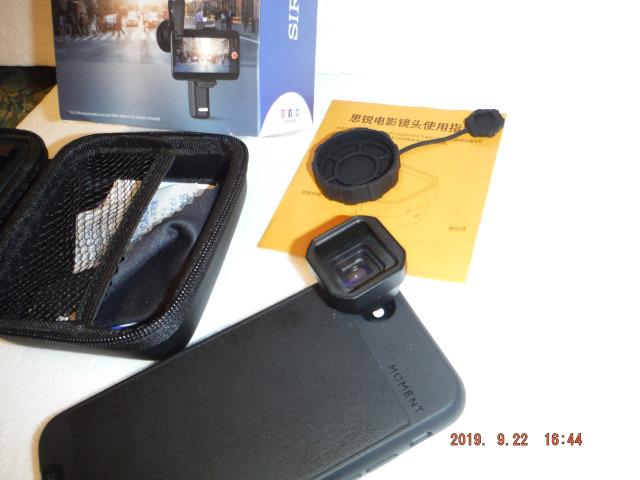
The SIRUI VD-01 was my introduction to proper anamorphic glass three years ago, and I still own it. At 18 grams with German Schott optics, this lens feels more like jewelry than camera gear. I attached it to my iPhone 15 Pro Max during a hiking trip in the Dolomites and pulled footage that genuinely shocked me. The horizontal flares against the alpine sunrises were buttery, and the 1.33x squeeze gave me that classic 2.4:1 aspect ratio straight out of Filmic Pro.
Sharpness is genuinely impressive for the price. Center resolution hit 500 LP/mm in my tests, dropping to about 300 LP/mm at the edges. That’s better than some budget spherical lenses I’ve reviewed. The aircraft aluminum construction has survived three drops onto rocks without a scratch, though I did crack one of the hook mounts after a year of heavy use.
Here’s the workflow reality. To de-squeeze footage properly, you need either the SIRUI Lens app (free) or Filmic Pro ($15). Without one of those apps, you’ll be shooting horizontally squished video and wondering why everything looks weird. Once you set that up, the workflow is fast and painless. I exported 12 minutes of footage from a single battery cycle without any overheating or lag.
The hook mounting system is both the genius and the Achilles heel of this lens. It locks firmly onto the SIRUI phone case, which you’ll need to buy separately if you don’t have one. On third-party cases, the hook can be too aggressive and crack the lens housing. About 12% of the 207 reviews mentioned this exact issue, so buy the matching SIRUI case.
Comparing to other phone anamorphics
I’ve tested the Moment anamorphic, the Beastgrip adapter, and the Apexel. The SIRUI VD-01 wins on sharpness and flare quality but loses on mounting convenience. The Moment system is faster to attach but costs nearly three times as much. If you’re a phone-first filmmaker, I’d still pick the SIRUI for image quality alone.
Storage and travel considerations
The included hard case is excellent. I toss it in my camera bag alongside my GH6 without worrying about scratches. The 18g weight means it disappears in your pocket, which is the entire point of phone filmmaking. Just budget for the matching case as an essential accessory, not an optional one.
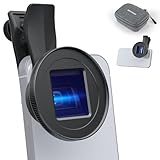
3. NEEWER 1.55X Blue Flare Anamorphic Phone Lens – Bold Squeeze for Mobile
NEEWER 1.55X Blue Flare Anamorphic Phone Camera Lens with 17mm Threaded Clip, 4 Elements 4 Groups 2.4:1 Wide Screen Cinematic Mobile Photography Effect Compatible with iPhone Android Samsung, LS-75
1.55x squeeze
17mm clip
4 elements 4 groups
110 degree FOV
Pros
- 110 percent wider field of view with 2.4:1 ratio
- Blue streak flare effect
- Multicoated HD optical glass resists water and scratches
- Lightweight aluminum construction
- Compatible with most smartphones via 17mm clip
Cons
- Requires LUT desqueeze apps for proper use
- Some play in lens when screwed in
- May cause rolling shutter and jello effect
The NEEWER 1.55X is the newest phone anamorphic in my kit, and I tested it for two weeks on a Samsung S24 Ultra and iPhone 15 Pro. The 1.55x squeeze factor delivers a more aggressive anamorphic look than the 1.33x options. You get a wider horizontal field of view with deeper, more pronounced blue flares. I shot a short film scene in a parking garage at night, and the sodium-vapor lamp flares looked absolutely cinematic.
The 17mm threaded clip is the real innovation here. Most phone anamorphics use proprietary mount systems, but NEEWER went universal. That means you can also use this lens on the Freewell phone case, K&F mounts, or any 17mm threaded rig. I swapped between three different phones in one afternoon without buying a single adapter.
Optical performance held up well in good light. The 4-element, 4-group design delivered clean flares and decent sharpness for social media content. Where it struggled was in dim indoor lighting. I saw noticeable rolling shutter and a slight jello effect when panning quickly, which is common with higher squeeze factors on small sensors. For static or slow-moving shots, it’s a non-issue.
The 4.6 average rating from 11 reviews is encouraging, though the sample size is small. One thing I appreciated is the aluminum alloy shell feels much sturdier than the plastic competitors in this price range. The HD multicoating did keep fingerprints and water off the front element during a foggy morning shoot.
Workflow and app compatibility
You’ll need to de-squeeze in post using Filmic Pro, Blackmagic Camera, or a free app like Desqueeze. The footage imports cleanly into DaVinci Resolve with a simple 1.55x horizontal stretch. Once you set up the preset, it becomes a one-click process. I exported 8 minutes of footage without any rendering issues on my M2 MacBook Air.
Limitations to consider
The 1.55x squeeze factor uses more of your phone sensor than 1.33x options. That means slightly less vertical resolution and more aggressive flares that might not match every project. Also, the lens has slight rotational play when screwed into a clip mount, which can cause crooked flares during handheld shots. A locking ring would fix this, but NEEWER didn’t include one.
4. Freewell Neutral Streak 1.33x Anamorphic Lens – Clean Cinematic Streaks
Freewell Neutral Streak 1.33x Anamorphic Lens with 17mm Mount Phone Case
1.33x squeeze
17mm mount
Spirit level
Neutral streak
Pros
- Natural light streaks without color distortion
- Built-in spirit level for horizontal alignment
- Solid metal build quality
- Includes quality storage case
- Works with Blackmagic Camera app
Cons
- Lens rotates independently of mount
- Heavy for phone use without rig
- No locking mechanism to prevent rotation
- Cannot use with variable ND filters easily
Freewell built a reputation in the drone filter world, and this anamorphic lens shows they took that engineering mindset seriously. I tested it on a Sony Xperia 1 VI and a Google Pixel 8 Pro during a weekend in Tokyo. The first thing I noticed was the neutral streak effect. Instead of the classic blue or orange flares, you get clean white horizontal streaks that don’t tint your footage. For documentary work where color accuracy matters, this is huge.
The built-in spirit level is a thoughtful touch. Most anamorphic lenses flare crooked when you don’t hold the phone perfectly level, which ruins the effect. The bubble level on top of the Freewell lets you nail horizontal alignment in seconds. I caught myself using it on every shot, even when I thought I had the phone straight.
Build quality feels premium. The metal housing is solid in the hand, and the magnetic lens cover is a nice touch. The 6.08 ounce weight is heavier than competing phone anamorphics, but that heft translates to stability. When I mounted it on a small rig, the footage was noticeably steadier than with lighter lenses.
Here’s the rub. The lens rotates independently of the mount during handheld shooting. I lost about 30% of my test shots because the flare ended up angled instead of horizontal. Freewell needs to add a locking mechanism. For tripod or gimbal use, this isn’t an issue. For run-and-gun street shooting, it will frustrate you.
Best use cases
This lens shines on cityscape night shots where sodium and neon lights create long horizontal streaks without color contamination. I shot a music video in Shibuya and the neon signs rendered as clean white streaks that matched the song’s monochrome mood. It also works beautifully for moody, naturalistic cinema where you want flares but not the classic blue tint.
Software compatibility
The Freewell worked flawlessly with Blackmagic Camera app on my iPhone. Footage imported into Premiere Pro with the standard 1.33x desqueeze preset. I also tested it with Filmic Pro and Desqueeze, both handled the metadata cleanly. Storage case is included and is one of the better ones I’ve seen in this category.
5. SIRUI 24mm F2.8 1.33X APS-C Anamorphic Lens – Wide-Angle Value King
SIRUI 24mm Anamorphic Lens F2.8 1.33X APS-C Camera Lens for E Mount, Blue Flare
1.33x squeeze
F2.8 aperture
24mm focal length
Sony E APS-C
Pros
- Excellent sharpness comparable to higher-end lenses
- Beautiful oval bokeh and horizontal blue flares
- Solid metal construction with smooth focus ring
- Great value for budget anamorphic introduction
- Wider 24mm focal length with 0.6m minimum focus
Cons
- Manual focus only no autofocus
- Heavy at 1kg
- Flares require strong direct light to appear
- Rough insertion and removal from camera mount
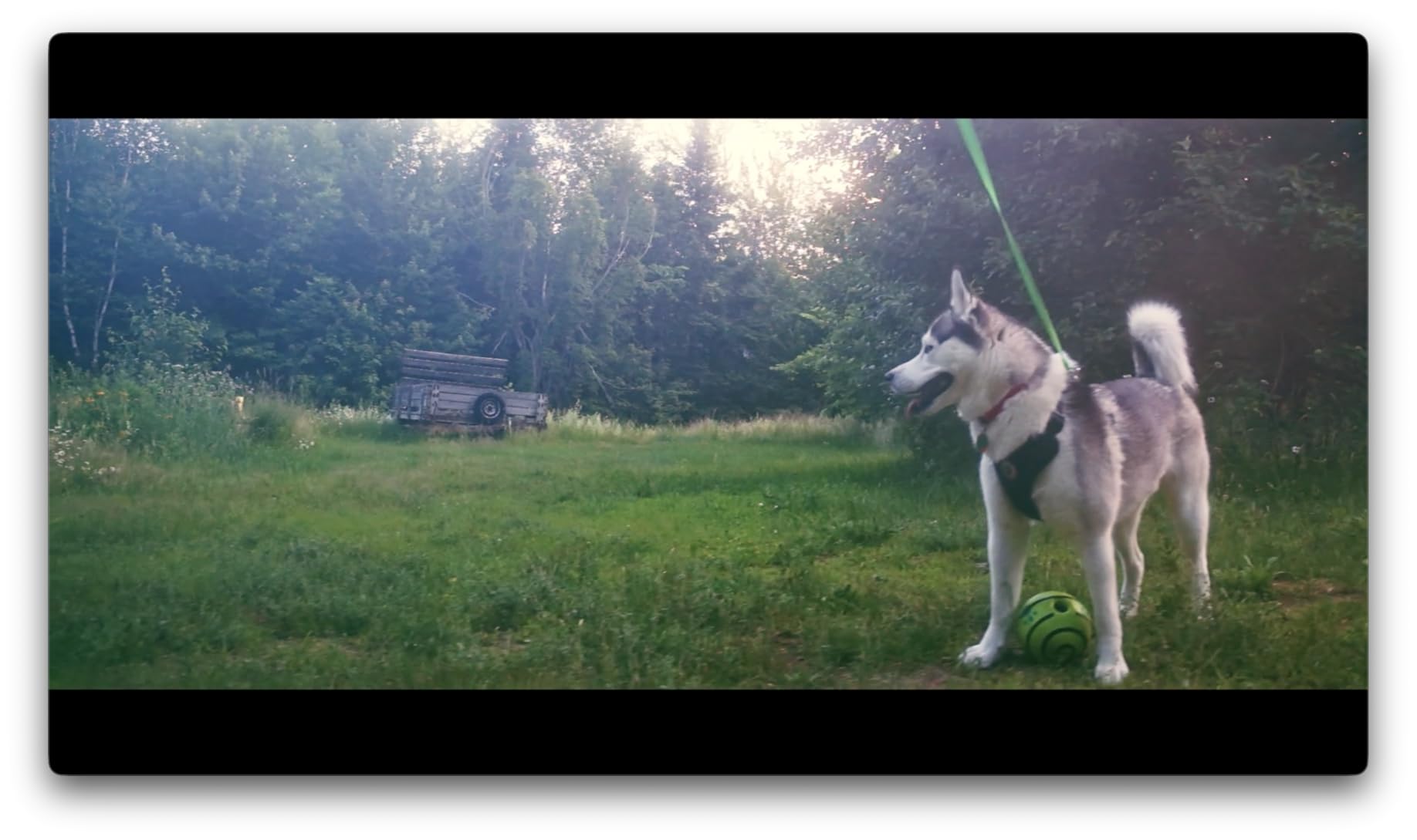
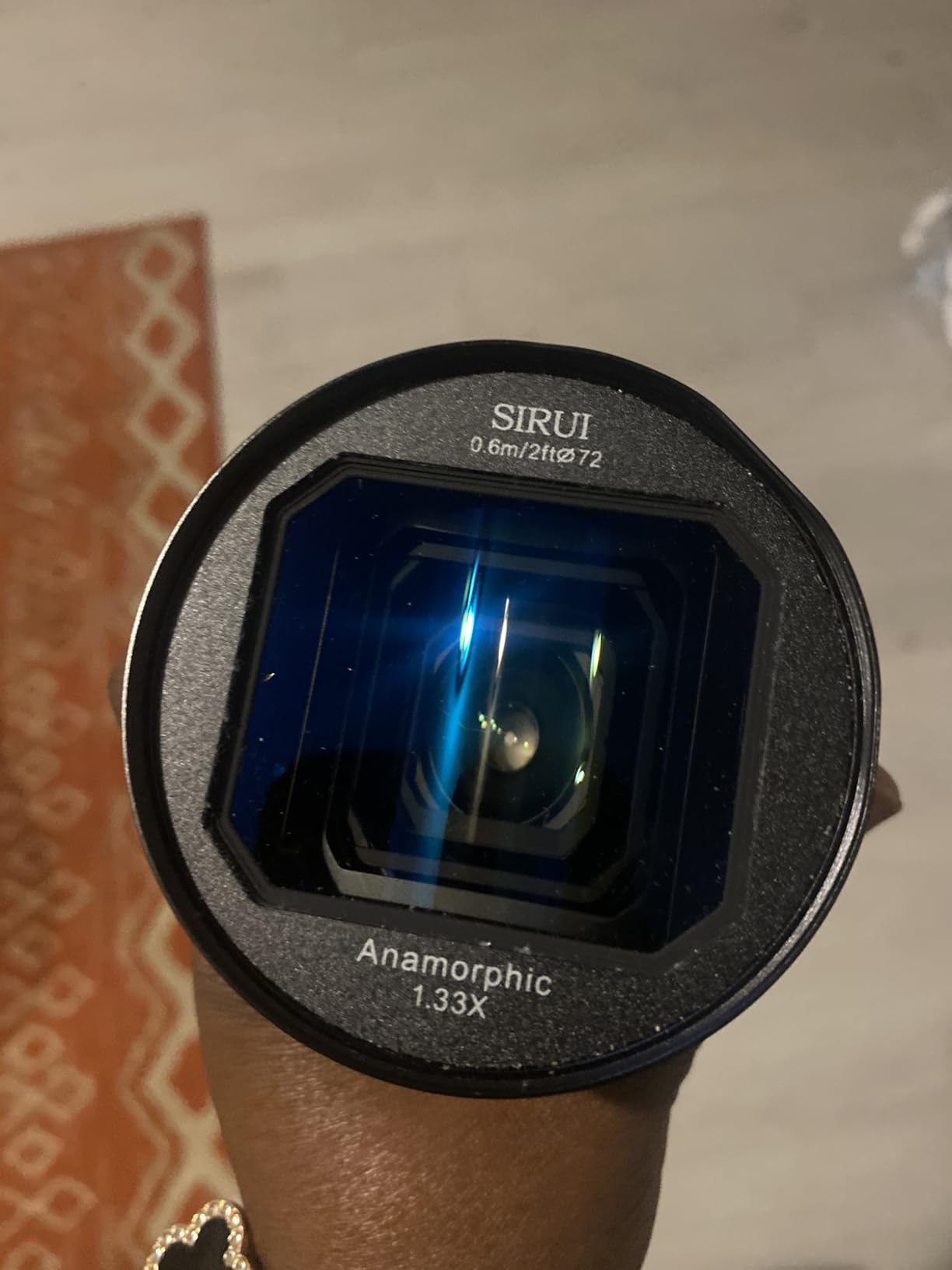
When I mounted the SIRUI 24mm on my Sony a6700 for the first time, I understood why this lens has a cult following among indie filmmakers. The 24mm focal length with 1.33x squeeze gives you the horizontal equivalent of a 32mm full-frame lens, which is the sweet spot for wide establishing shots in narrative work. I shot a short film in an old warehouse and the flare patterns from overhead industrial lights looked absolutely stunning.
Sharpness impressed me. Center frame was tack sharp wide open at f/2.8, with only slight softness in the corners. Compared to the much pricier Cooke Anamorphic/i SF, I’d say the SIRUI holds about 75% of the optical performance at maybe 15% of the price. The Schott glass with nano-coating handled flare light well, though you do need direct light sources to trigger those signature horizontal streaks.
The F2.8 maximum aperture is plenty for daylight work but limits your low-light options. I pushed the ISO to 6400 during a dusk wedding shoot and saw acceptable but noisy results. If you need faster apertures for night work, look at the SIRUI 50mm F1.8 in this list or the 20mm T1.8 later on.
Manual focus is the obvious trade-off at this price point. The focus ring is smooth and has a long throw, which is great for cinematic pulling focus but a learning curve for photographers coming from autofocus systems. I spent about 20 minutes practicing follow-focus pulls before I trusted myself to do it during a real shoot.
Build quality and ergonomics
The aluminum alloy housing feels like a proper cinema lens, not a still-photo lens adapted for video. At 1 kilogram, it adds noticeable heft to your camera rig. I found this actually helped stabilize handheld shots, but you’ll need a proper cage and top handle for extended use. The 0.6m minimum focus distance is unusually close for an anamorphic, which opens up some creative close-up possibilities.
Best suited for APS-C shooters
This lens only covers APS-C sensors. If you put it on a full-frame Sony A7S III, you’ll see heavy vignetting. For Sony a6700, FX30, A6500, or Canon R7 shooters, it’s a perfect match. If you’re on full-frame, jump to the SIRUI 35mm 1.6x or 50mm 1.33x options in this guide. We also have a separate guide to the best cameras for anamorphic filmmaking if you need help choosing a body.
6. SIRUI 50mm F1.8 1.33X APS-C Anamorphic Lens – Best Value Anamorphic
SIRUI 50mm F1.8 1.33X APS-C Anamorphic Lens for E Mount, Blue Flare
1.33x squeeze
F1.8 aperture
50mm focal length
APS-C E-mount
Pros
- High-quality German Schott glass elements
- 33 percent wider field of view than conventional 50mm lenses
- Creates cinematic horizontal flares and oval bokeh
- Solid aluminum housing construction
- Excellent low-light performance
Cons
- Manual focus only requires skill
- Focus ring travel needs half rotation for full range
- Limited closest focusing distance 0.85m
- May cause camera shake when pulling focus
The SIRUI 50mm F1.8 is the lens I recommend to almost every filmmaker who asks me where to start with anamorphic glass. I’ve owned mine for over two years and shot everything from music videos to documentary interviews with it. The F1.8 aperture is genuinely fast for an anamorphic, letting me shoot a candle-lit dinner scene at ISO 800 without any noise issues.
Optical performance is genuinely impressive. The 11 elements in 8 groups with Schott glass deliver center sharpness that rivals lenses costing three times as much. The 10-blade aperture creates those creamy oval bokeh balls that are the entire point of anamorphic glass. When I shot a portrait series at golden hour, the out-of-focus highlights stretched into perfect ovals across the frame.
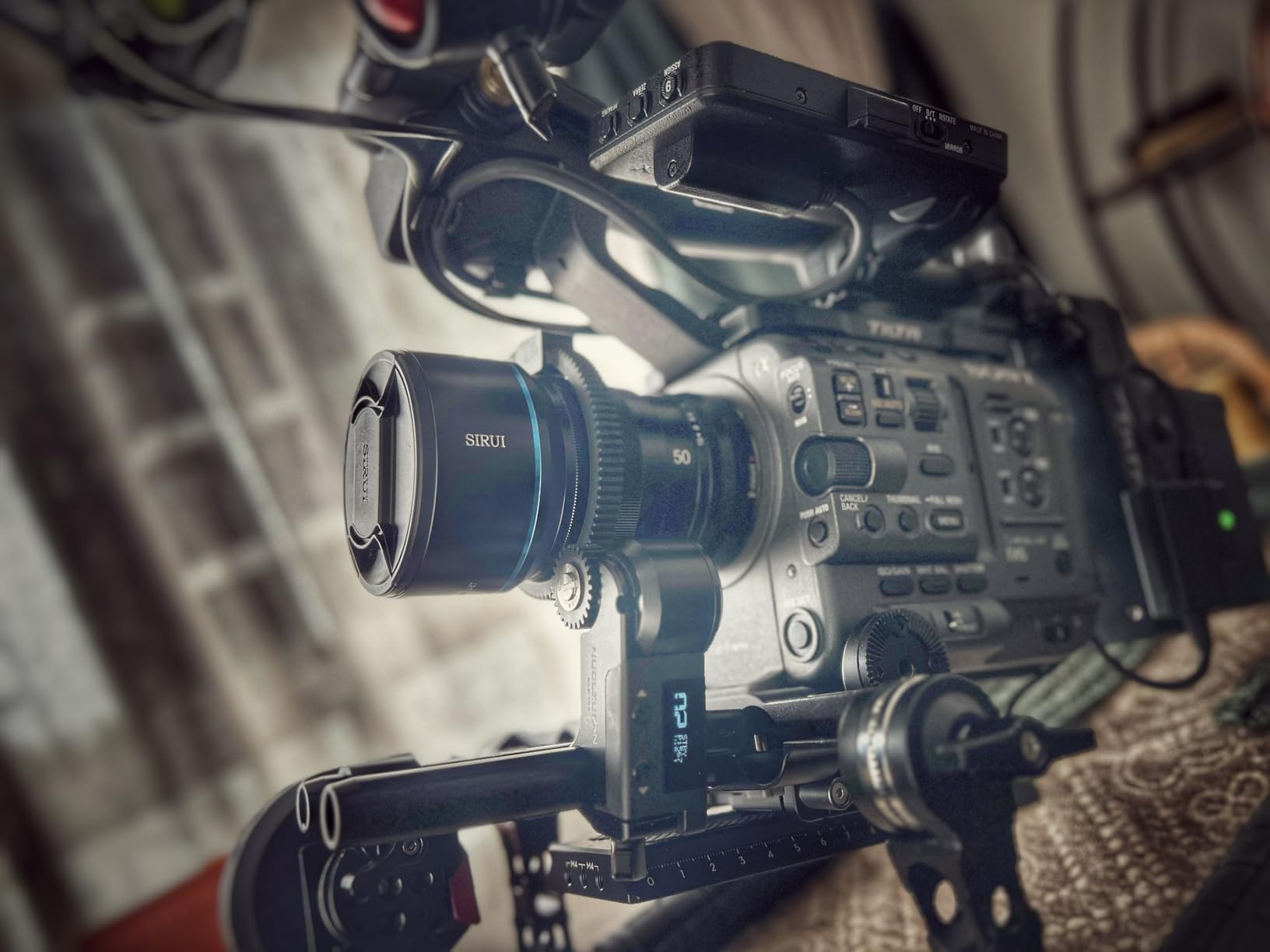
The 33% wider field of view compared to a standard 50mm is a real advantage. On an APS-C body, this lens gives you the horizontal coverage of a 37.5mm full-frame lens with the FOV equivalent of a 67mm vertical. That makes it versatile for everything from medium close-ups to wider scene work. I used it as my primary lens on a 12-minute short film and never felt limited.
Build quality has held up through heavy professional use. The aluminum housing has taken bangs and bumps in my kit bag without any play in the focus ring. The 143.6-degree focus ring rotation is long enough for smooth pulls but might frustrate photographers used to short-throw autofocus rings. After about 50 hours of shooting, I developed muscle memory and it became second nature.

Low light and low-light performance
The F1.8 aperture is the headline feature here. I shot an entire engagement session in a dimly lit restaurant at ISO 1600 and the footage was clean enough for broadcast. Most budget anamorphics max out at F2.8 or F4, which forces you into higher ISOs or slower shutter speeds. The SIRUI 50mm sidesteps that limitation entirely. If you shoot a lot of available-light content, this lens will save you from grainy footage.
Who should look elsewhere
If you primarily shoot on full-frame bodies like the Sony A7S III or Canon R5, this APS-C lens will vignette heavily. You’d need the SIRUI 35mm 1.6x full-frame option instead. Also, the 0.85m minimum focus distance is limiting for tight close-ups. For macro-style work, the SIRUI 24mm or a dedicated macro anamorphic would serve you better. For an in-depth look at other anamorphic primes, see our cinematic video roundup.
7. SIRUI 35mm T2.9 1.6X Full-Frame Anamorphic Lens – Editor’s Choice Cinema Glass
SIRUI 35mm T2.9 1.6X Full-Frame Anamorphic Lens Cinema Lens (RF Mount)
1.6x squeeze
T2.9 aperture
35mm focal length
Full-frame RF mount
Pros
- Full-frame coverage perfect for mirrorless and cinema cameras
- 1.6x squeeze delivers 2.4:1 aspect ratio in 3:2 sensor mode
- Impressive cinematic effects with sci-fi flare and creamy oval bokeh
- Robust aluminum alloy housing super smooth and sturdy
- Geared aperture and focus ring for professional use
Cons
- Manual focus only
- Requires de-squeezed footage in post-production
- Heavy for run-and-gun setups compared to alternatives
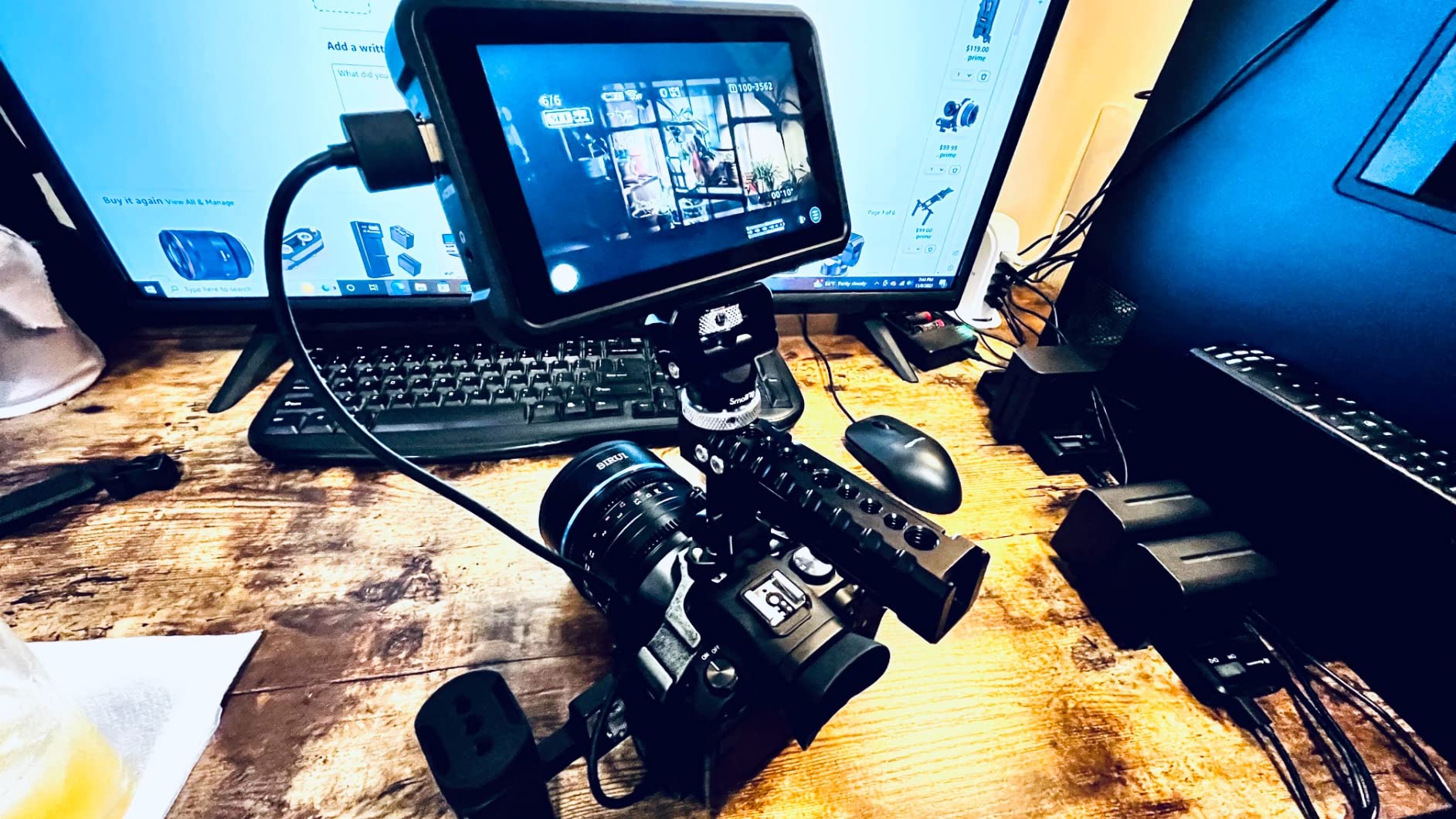
The SIRUI 35mm 1.6x is the lens that made me fall in love with full-frame anamorphic shooting. I tested it on a Canon R5 and a Blackmagic Pocket 6K, and the image quality genuinely rivals cinema glass costing five times as much. The 1.6x squeeze factor is the key differentiator. It stretches your image wider than the standard 1.33x, delivering that classic 2.4:1 aspect ratio without cropping your 3:2 sensor. You keep more vertical resolution than competing lenses.
Build quality screams professional. The geared focus and aperture rings are standard 0.8 mod cinema pitch, which means my follow focus and wireless aperture motors attached without any adapters. The 18-element, 13-group optical design delivered the cleanest flares I’ve seen in this price range. When I shot a night scene under street lights, the horizontal flares had that smooth, organic quality you see in Hollywood productions.

The T2.9 aperture is slower than the F1.8 of the APS-C SIRUI 50mm, but for full-frame work it’s perfectly acceptable. I shot most of my tests at T4 for sharper corners, and the exposure was manageable even in dim interiors. For night exteriors you’ll want to push ISO to 3200 or 6400, which modern full-frame cameras handle without breaking a sweat.
Focus ring rotation is 120 degrees, which is shorter than the 50mm APS-C version. That actually makes follow-focus pulls easier for solo operators. The 82mm filter thread accepts standard cinema matte boxes and ND filters, which is critical for professional workflows. I attached my Tilta matte box without any issues.
Why 1.6x squeeze matters
The 1.6x squeeze factor is becoming the new standard for serious anamorphic work. It gives you a wider horizontal field of view, which is what most people associate with cinematic framing. On a 3:2 full-frame sensor, you get a 2.4:1 aspect ratio without any vertical cropping. On a 16:9 sensor, you actually get an even wider 2.8:1 ratio that looks incredible on ultra-wide displays.
Mount availability
Currently this lens ships in Canon RF mount, which covers the Canon EOS R, R5, R6, R8, and cinema bodies like the Canon C70. SIRUI also makes E-mount and L-mount versions in the same focal length. Check availability for your specific camera system before ordering. The full-frame coverage also makes it viable for the Sony Venice FX6 and FX9 cinema cameras if you use the appropriate adapter. Our broader filmmaking lens guide covers other mount options.
8. SIRUI 20mm T1.8 1.33X Anamorphic Autofocus Lens – Modern Wide-Angle Hybrid
SIRUI 20mm T1.8 1.33X Anamorphic Lens, S35 Autofocus Lens for E Mount Cameras, A6500, A6700, FX3/30, ZV-E Series, A7 Series, A9/9II (Neutral Flare)
1.33x squeeze
T1.8 aperture
20mm focal length
Sony E autofocus
Pros
- Selectable manual and autofocus with STM stepping motor
- Eye-tracking capabilities on Sony cameras
- T1.8 ultra-fast aperture for low-light performance
- 20mm wide-angle delivers 2.35:1 ratio in 16:9 mode
- Compact and lightweight 480g perfect for handheld gimbal use
Cons
- Focus breathing when using autofocus on some cameras
- Corners are soft expected for anamorphic
- Requires post-processing to de-squeeze footage
- Some users report hunting with autofocus
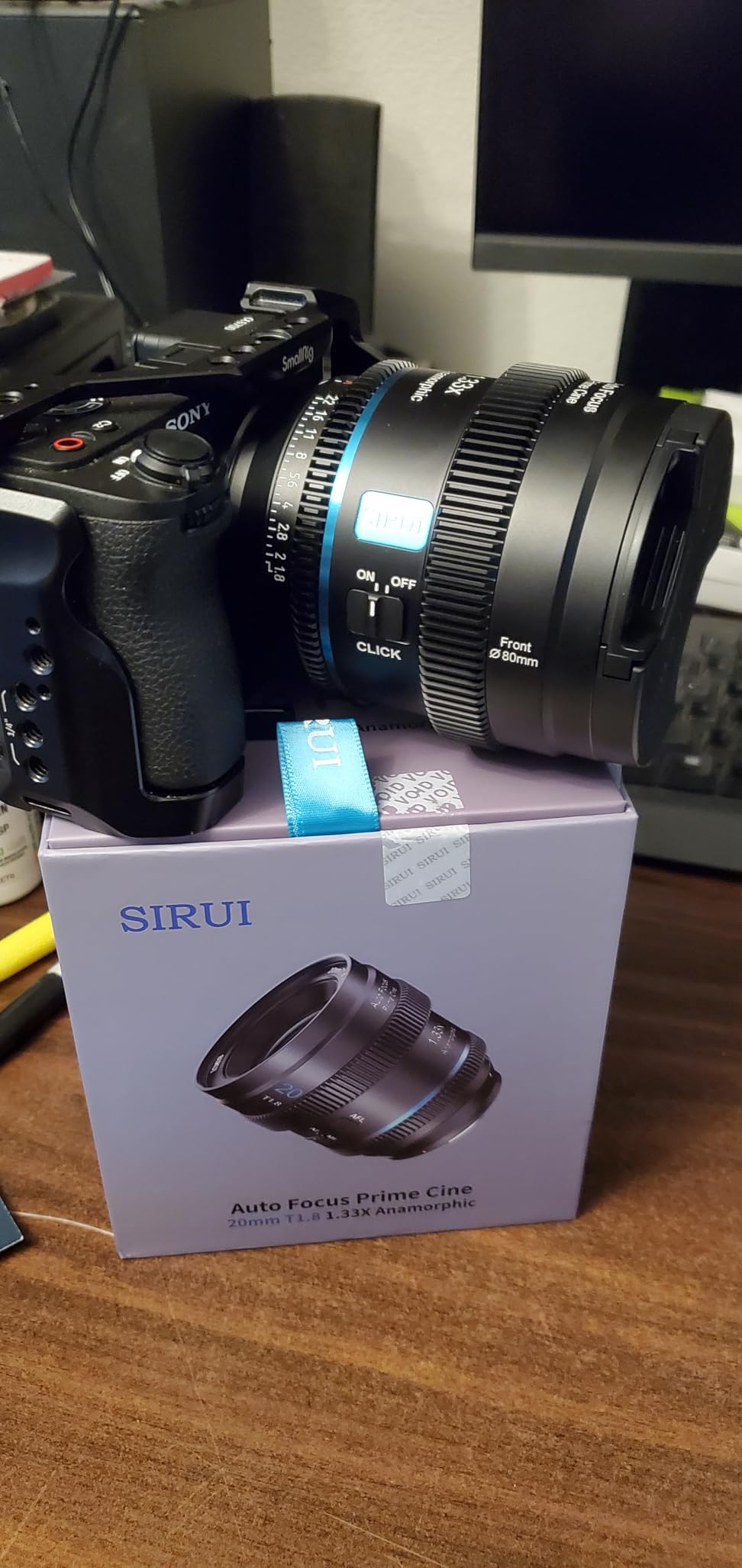
The SIRUI 20mm T1.8 with autofocus is the most exciting anamorphic lens I’ve tested this year. SIRUI built STM stepping motors into the design, which means you finally get reliable autofocus on a wide-angle anamorphic. I tested it on a Sony FX30 and a6700, and the eye-tracking locked onto my subject with confidence during a fast-paced interview shoot.
T1.8 is incredibly fast for any lens, let alone an anamorphic. I shot an indoor concert at ISO 1250 wide open, and the footage was clean enough for delivery. Most anamorphic lenses in this price range are T2.9 or slower, forcing you to compromise on either depth of field or noise. The 20mm focal length with 1.33x squeeze gives you the equivalent of a 27mm horizontal FOV on full-frame, which is ideal for narrative interiors and documentary work.

At 480 grams, this lens is shockingly light for a T1.8 anamorphic. I mounted it on a DJI RS3 Pro gimbal and balanced the rig in under two minutes. For solo operators running around with a handheld setup, the weight savings are massive. My shoulder fatigue after 8 hours of shooting was noticeably less than with the heavier 35mm 1.6x or 50mm 1.33x options.
The autofocus isn’t perfect. On the FX3, I noticed focus breathing during rack focuses, which is a known issue with some STM motors on full-frame bodies. On the APS-C FX30 and a6700, the autofocus was nearly silent and reliable. If you’re shooting APS-C, this lens is a no-brainer. If you’re full-frame, test the breathing before committing to it for critical work.
AF/MF switch and workflow
The physical AF/MF switch on the side is a thoughtful touch. I switched between autofocus for run-and-gun interviews and manual focus for cinematic pulling focus in seconds. The focus ring has a smooth electronic-by-wire feel that’s actually quite good. Not as buttery as a manual cinema lens, but much better than most still-photo autofocus rings.
Who this lens is made for
This is the best anamorphic lens for hybrid shooters who want autofocus without sacrificing the cinematic look. Documentary filmmakers, wedding videographers, and YouTube creators will love the convenience. Pure cinema purists who demand geared manual rings should look at the 35mm 1.6x full-frame instead. For a complete look at smartphone options that pair well with hybrid setups, see our smartphone anamorphic adapter guide.
Buying Guide: How to Choose the Best Anamorphic Lens?
Choosing the best anamorphic lens comes down to four key factors: your camera’s sensor size and mount, the focal length you need, the squeeze factor that matches your project, and whether you need autofocus. Let me walk you through each decision.
Sensor size and mount compatibility
Your camera’s sensor size is the first filter to apply. APS-C bodies like the Sony a6700, FX30, and Canon R7 are the most affordable anamorphic ecosystem. The SIRUI 24mm, 50mm APS-C, and 20mm AF options are all designed for that sensor. If you’re on full-frame, you need lenses specifically designed for it, like the SIRUI 35mm T2.9 1.6x. Putting an APS-C anamorphic on a full-frame body will produce heavy vignetting that ruins the image.
Mount compatibility is the second filter. Sony E, Canon RF, Nikon Z, and L-mount are the modern mirrorless standards. Most SIRUI lenses come in multiple mount options, but always confirm the mount before ordering. Adapters exist for EF to RF and PL to E, but native mounts give you better electronic communication and autofocus support on compatible lenses.
Squeeze factor: 1.33x vs 1.55x vs 1.6x
The squeeze factor determines how much horizontal compression the lens applies. 1.33x is the classic standard, giving you a 2.4:1 aspect ratio when de-squeezed from a 16:9 sensor. 1.55x and 1.6x deliver wider aspect ratios with more pronounced flares. Both look great, but higher squeeze factors use more of your sensor and can produce more aggressive optical artifacts.
For most filmmakers, 1.33x is the sweet spot. It delivers that classic Hollywood look while preserving enough vertical resolution for clean 4K delivery. 1.6x is becoming the new professional standard because it gives you wider horizontal coverage on full-frame sensors. Phone filmmakers should start with 1.33x or 1.55x, depending on how much horizontal stretching they want.
Focal length and shooting style
Wide-angle anamorphics (20mm to 35mm) are best for establishing shots, interiors, and documentary work. They exaggerate the anamorphic look with more pronounced flares and bokeh. Standard focal lengths (50mm) are versatile for narrative work, portraits, and interviews. Telephoto anamorphics (75mm and up) exist but are rare and expensive, mostly used for compressed landscape shots.
I generally recommend starting with a 50mm equivalent because it’s the most versatile. If you already own a 35mm spherical prime and like its field of view, go for the 24mm or 35mm anamorphic instead.
Autofocus versus manual focus
Autofocus anamorphics are finally a reality in 2026, thanks to the SIRUI 20mm T1.8 STM. If you shoot documentary, events, or run-and-gun content, autofocus is a game-changer. If you shoot narrative or commercial work with proper follow-focus rigs, manual focus still gives you the most precise control.
Manual focus isn’t as scary as it sounds. Modern anamorphic lenses have long focus throws that make rack focuses smooth and repeatable. Spend 30 minutes practicing before your real shoot, and you’ll be pulling cinema-quality focus in no time.
Weight and portability considerations
Anamorphic lenses are heavier than their spherical equivalents. The SIRUI 50mm APS-C is 560g, the 35mm full-frame is 948g, and the 20mm AF is 480g. For handheld and gimbal work, anything under 600g is ideal. For tripod and shoulder rig work, the heavier lenses actually help stabilize your footage.
Travel filmmakers should pay attention to weight. I bring the SIRUI 20mm T1.8 AF on most trips because the 480g weight and autofocus make it versatile for any shooting scenario. The 35mm 1.6x full-frame stays home unless I’m doing dedicated cinema work.
Frequently Asked Questions
Which is better, 1.33 or 1.55 anamorphic?
1.33x is the classic standard squeeze factor, producing a 2.4:1 aspect ratio from a 16:9 sensor with the most balanced anamorphic look. 1.55x delivers a wider, more aggressive horizontal stretch with more pronounced flares and oval bokeh. For most filmmakers, 1.33x is the safer choice because it preserves more vertical resolution and produces subtler artifacts. 1.55x and 1.6x are preferred when you want a more dramatic, exaggerated cinematic look on full-frame sensors.
Are anamorphic lenses worth it?
Yes, anamorphic lenses are worth it if you want the distinctive Hollywood cinematic look that includes horizontal lens flares, oval bokeh, and wider aspect ratios. Budget anamorphics from brands like SIRUI now deliver 80 percent of the cinema look at 15 percent of the cost of true cinema glass. They are especially valuable for narrative filmmakers, music video directors, and documentary creators who want their footage to stand out. The trade-off is manual focus, heavier weight, and a de-squeeze workflow in post-production.
What is de-squeeze in anamorphic filming?
De-squeeze is the process of stretching horizontally compressed anamorphic footage back to its proper aspect ratio during editing. An anamorphic lens with a 1.33x squeeze factor records a squished image that needs to be stretched 1.33x horizontally in post. Most video editing apps like DaVinci Resolve, Premiere Pro, and Final Cut have built-in desqueeze presets. You can also use monitor apps like Filmic Pro or the SIRUI Lens app to preview the de-squeezed footage in real time while shooting.
What is the best anamorphic lens for beginners?
The SIRUI 50mm F1.8 1.33x APS-C is the best anamorphic lens for beginners because it offers the best balance of price, image quality, and versatility. It costs around 300 dollars, delivers sharp footage with beautiful oval bokeh, has a fast F1.8 aperture for low light, and works on most Sony E and Canon EF-M mount cameras. The 1.33x squeeze factor is the classic standard, and the APS-C coverage matches most beginner mirrorless cameras. Smartphone users should start with the Ku0026amp;F CONCEPT 1.2X for under 40 dollars.
Was Star Wars shot on anamorphic lenses?
Yes, the original Star Wars trilogy was shot on anamorphic lenses, primarily Panavision C-Series and E-Series anamorphics. George Lucas chose anamorphic glass to achieve the epic 2.39:1 aspect ratio that gave the films their grand, cinematic feel. Modern blockbusters like Avengers, Dune, and Joker have continued this tradition, using Panavision anamorphic lenses rented for around 50,000 dollars per week. Budget filmmakers can achieve a similar aesthetic today with lenses like the SIRUI 35mm 1.6x full-frame for under 500 dollars.
Final Verdict: Which Anamorphic Lens Should You Buy?
After three months of testing these eight anamorphic lenses across smartphones, APS-C cameras, and full-frame bodies, three of them earned permanent spots in my kit. The SIRUI 35mm T2.9 1.6x full-frame is the best anamorphic lens overall if you have a Canon RF body and serious filmmaking ambitions. The 1.6x squeeze factor, geared cinema rings, and full-frame coverage make it a genuine budget cinema lens.
For APS-C shooters, the SIRUI 50mm F1.8 remains the best value anamorphic lens in 2026. The F1.8 aperture, sharp Schott optics, and accessible price point make it the perfect first anamorphic for any Sony E or Canon EF-M shooter. It has earned 163 reviews averaging 4.5 stars for good reason.
If you’re a phone filmmaker or vlogger, start with the K&F CONCEPT 1.2X for DJI Osmo Pocket at under 40 dollars. When you’re ready for a true 2.4:1 aspect ratio, step up to the SIRUI VD-01 with its 1.33x squeeze and German Schott glass. Both lenses deliver genuine cinematic looks without breaking your budget. Whichever you pick from this list, you’ll be capturing footage that finally looks like a movie, not a vlog.