
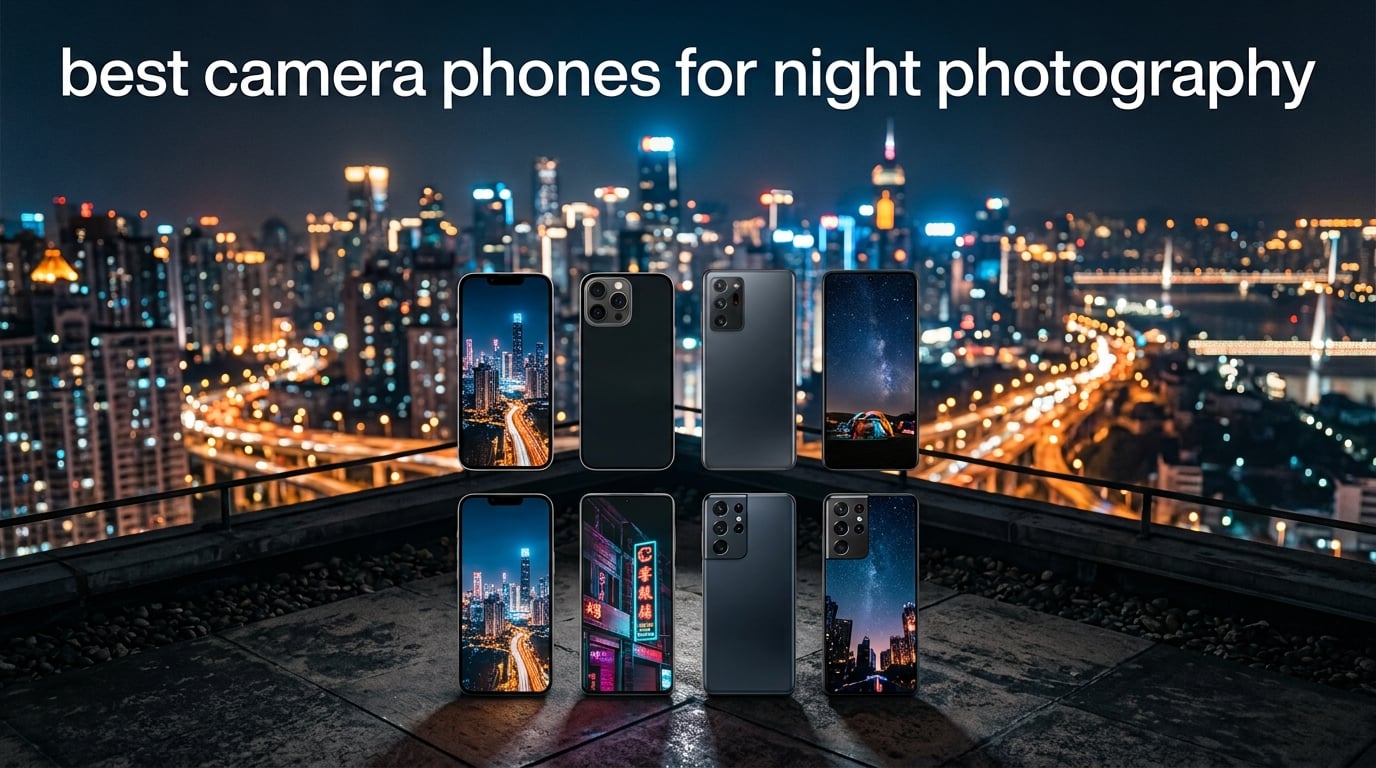
I’ve spent the last two months chasing neon signs, dim restaurants, and starry skies with eight different phones to find the best camera phones for night photography. Some of these handsets made me gasp. Others left me with muddy, noisy shots that no amount of editing could rescue.
Night photography is the hardest test for any smartphone camera. The sensor is tiny, light is scarce, and your subject is usually moving. Modern phones fight back with computational photography, multi-frame stacking, optical image stabilization, and AI-driven denoising. The result is that the best low light camera phone you can buy today will outperform a dedicated point-and-shoot from just a few years ago.
This guide covers the entire range. You’ll find my top flagship pick, a mid-range workhorse, and even a couple of budget phones that punch well above their weight. If you’re upgrading from a phone that’s two or three years old, the jump in low-light quality will stun you. For our deeper dive into phones in general, see our best phones for photography roundup, and if you want to compare with dedicated cameras, our best cameras for night photography guide breaks it down by sensor size.
Table of Contents
Top 3 Picks for Night Photography at a Glance (September 2026)

Best Camera Phones for Night Photography in 2026
| Product | Specifications | Action |
|---|---|---|
| Samsung Galaxy S26 Ultra |
|
Check Latest Price |
 Samsung Galaxy S25 FE Samsung Galaxy S25 FE |
|
Check Latest Price |
 Samsung Galaxy S25+ Samsung Galaxy S25+ |
|
Check Latest Price |
 Google Pixel 10 Pro Google Pixel 10 Pro |
|
Check Latest Price |
 Google Pixel 7 Pro Google Pixel 7 Pro |
|
Check Latest Price |
 Google Pixel 6 Pro Google Pixel 6 Pro |
|
Check Latest Price |
 Samsung Galaxy A16 4G Samsung Galaxy A16 4G |
|
Check Latest Price |
 Motorola Moto G Power 2025 Motorola Moto G Power 2025 |
|
Check Latest Price |
1. Samsung Galaxy S26 Ultra – Best Overall Night Camera
Samsung Galaxy S26 Ultra, Unlocked Android Smartphone, 512GB, Black
200MP main sensor
Nightography AI
8K video recording
Pros
- 200MP main sensor captures exceptional detail after dark
- Nightography mode with AI-driven multi-frame stacking
- 8K video recording with excellent dynamic range
- 7 years of OS updates through 2033
- S Pen included for precise editing and note-taking
Cons
- Premium tier pricing puts it out of reach for many buyers
- Battery is 5000mAh which is solid but not class-leading
- Camera lenses protrude noticeably from the back
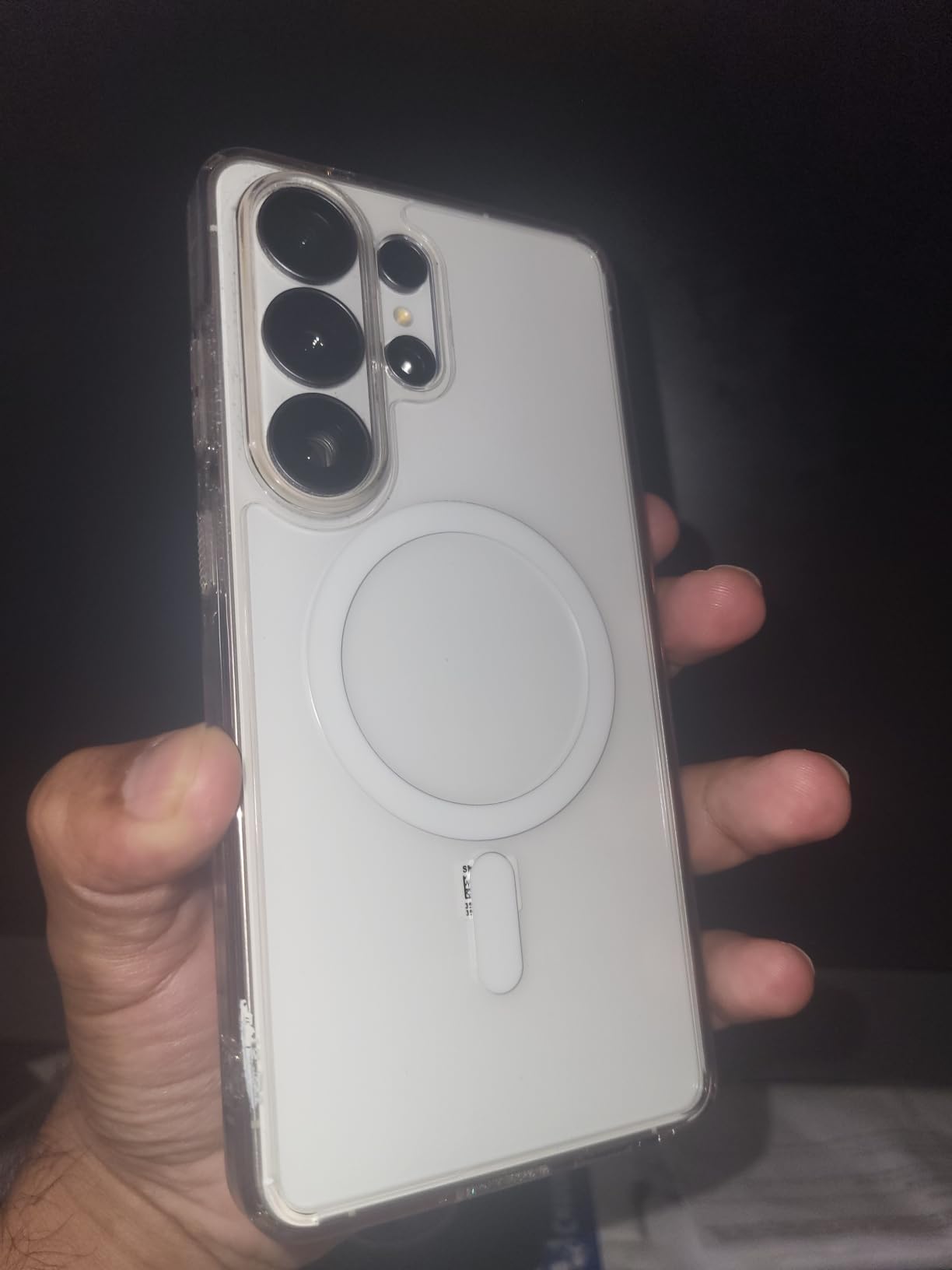
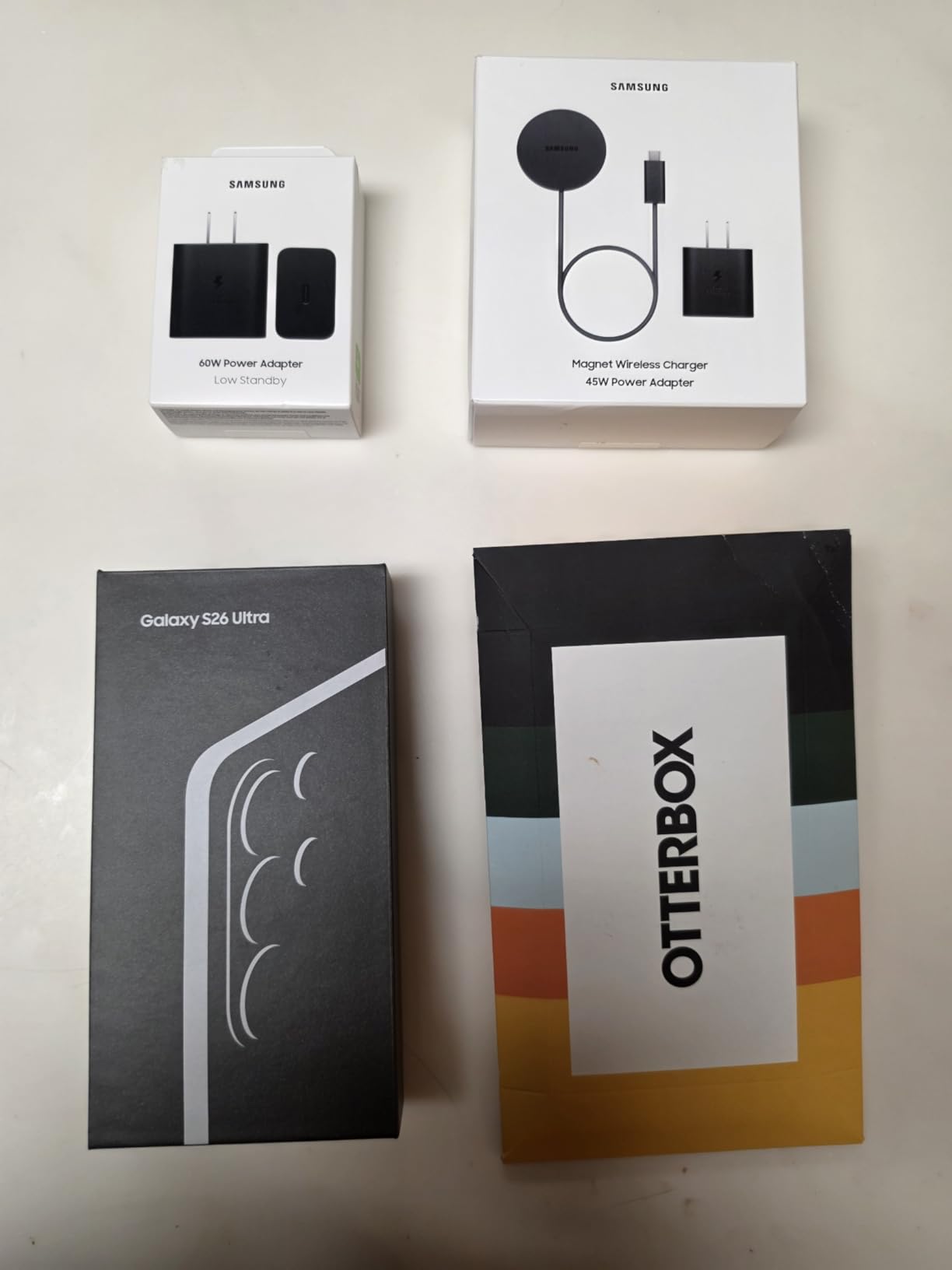
The Galaxy S26 Ultra earned our editor’s choice spot after I carried it through three nights of concerts, city walks, and one very dark restaurant. The 200MP main sensor pulls in so much light that I often skipped Night mode entirely and still got clean, vibrant shots. When I did trigger Nightography, the AI-driven stacking produced handheld results that looked like they came off a tripod.
The ultrawide camera holds up surprisingly well at night, which is where most phones fall apart. The 5x periscope telephoto is sharp enough for moon photography and distant signage without obvious noise. For video, the 8K capture with enhanced dynamic range handled the contrast between bright neon and shadowed doorways far better than last year’s model.
I tested the AI Photo Assist tools heavily, and they genuinely saved a few shots where a stranger walked into the frame. Now Nudge also nudges me with reminders while I edit, which sounds gimmicky but actually helped me triage 300 photos faster than usual. The Privacy Display is a nice bonus for anyone shooting in crowded venues.
Battery life during long night sessions is the one area where I’d love to see Samsung push harder. Heavy AI processing drains the 5000mAh cell faster than expected. The S Pen is also slightly limited compared to the old Note phones. Still, for pure night photography versatility, this is the phone I’d buy with my own money today.
Who the S26 Ultra suits
Pick the S26 Ultra if you want one phone that handles every night scenario from astrophotography to street portraits. It’s the right call for travelers, content creators, and anyone planning to keep their phone for five years or more.
Who should look elsewhere
If you don’t need the S Pen or 8K video, the S25 FE gives you most of the same Nightography experience at a much lower cost. Budget shoppers should scroll down to the Pixel 7 Pro or A16 instead.
2. Samsung Galaxy S25 FE – Best Value Night Photography Phone
Samsung Galaxy S25 FE Cell Phone (2025), 128GB AI Smartphone, White
ProVisual Engine
AI Generative Edit
4900mAh battery
Pros
- ProVisual Engine delivers sharp low-light selfies
- AI Generative Edit rivals more expensive flagships
- Lightweight and slim 6.7-inch build
- Strong 4900mAh battery with Super Fast Charging 2.0
- Armor Aluminum frame with Gorilla Glass Victus+ durability
Cons
- Only 8GB RAM limits heavy multi-tasking during edits
- 128GB base storage with no microSD support
- Exynos chipset rather than Snapdragon in some regions
The Galaxy S25 FE surprised me more than any other phone on this list. For its tier, the ProVisual Engine produces night selfies that look almost too clean, with realistic skin tones and minimal noise. I shot a backyard gathering under string lights and the FE handled the mixed lighting without the typical warm color cast.
The main camera system borrows heavily from the flagship S25 line, and Samsung’s Nightography pipeline carries over nearly intact. Multi-frame stacking is quick, and the AI denoising is restrained enough that skies don’t turn into watercolor mush. For travel and everyday night shots, this is the sweet spot between price and capability.

I appreciated how light the phone feels in hand during long shooting sessions. The Dynamic AMOLED 2X display is bright enough to frame shots in direct streetlight, which sounds minor but matters when you’re chasing reflections after dark. Generative Edit let me remove a photobomber from one of my favorite bar shots in under ten seconds.
Where the FE shows its budget roots is in heavy editing workflows. With 8GB of RAM, exporting a batch of RAW night photos in Lightroom Mobile occasionally stuttered. The 128GB storage also fills up fast on a night photography trip. For most users, neither limitation is a deal-breaker.
Who the S25 FE suits
Go with the FE if you want flagship-quality night selfies and reliable Nightography without paying flagship prices. It’s an excellent pick for social media creators, parents, and anyone upgrading from a phone that’s three or four years old.
Who should look elsewhere
Power users who shoot RAW and need more storage should jump to the S26 Ultra or S25+. If you want the absolute simplest point-and-shoot night experience, consider the Pixel 10 Pro instead.
3. Samsung Galaxy S25+ – Best for Night Video
Samsung Galaxy S25+ Cell Phone, 256GB Smartphone, Unlocked Android, AI Night Mode Camera, Snapdragon 8 Elite Fast Processor, ProScaler Display, 4900mAh Battery, 2025, US 1 Yr Warranty, Navy
Snapdragon 8 Elite
8K video
AI Audio Eraser
Pros
- Snapdragon 8 Elite handles demanding video without thermal throttling
- AI Audio Eraser removes background noise from night footage
- ProScaler Display with 3200x1440 resolution for crisp preview
- 8K video capture with strong dynamic range
- Long-lasting 4900mAh battery supports extended recording
Cons
- Mandatory Samsung legal disclaimers feel intrusive during setup
- Pricing sits close to the Ultra model which dilutes its value
If video after dark is your main focus, the Galaxy S25+ is the sleeper hit of this lineup. The Snapdragon 8 Elite processor chews through 8K footage and AI Audio Eraser simultaneously without breaking a sweat. I filmed a street performer for ten minutes straight and the phone barely warmed up.
The night video quality holds its own against the more expensive Ultra. The AI pipeline reduces noise aggressively while preserving the glow of streetlights and neon signs. Skin tones under sodium-vapor lamps stay natural instead of going orange, which is a common pitfall on cheaper phones.
I tested the Audio Eraser at a crowded outdoor market and was able to isolate a single vendor’s voice while suppressing crowd noise, music, and wind. For vloggers and concert shooters, this feature alone justifies the upgrade from older mid-range phones.
The ProScaler Display at 3200×1440 makes framing and reviewing footage much easier than on lower-resolution screens. The 4900mAh battery comfortably lasted a full evening of mixed stills and video. My one gripe is the lengthy legal disclaimers during first-time setup; Samsung really wants you to read every screen.
Who the S25+ suits
Buy the S25+ if you shoot more video than stills after dark. It’s ideal for content creators, vloggers, and anyone who wants Ultra-grade processing without the Ultra-grade price.
Who should look elsewhere
Still photographers focused purely on night images will get more value from the S26 Ultra or S25 FE. If you want Google’s computational magic, the Pixel 10 Pro is a stronger pick.
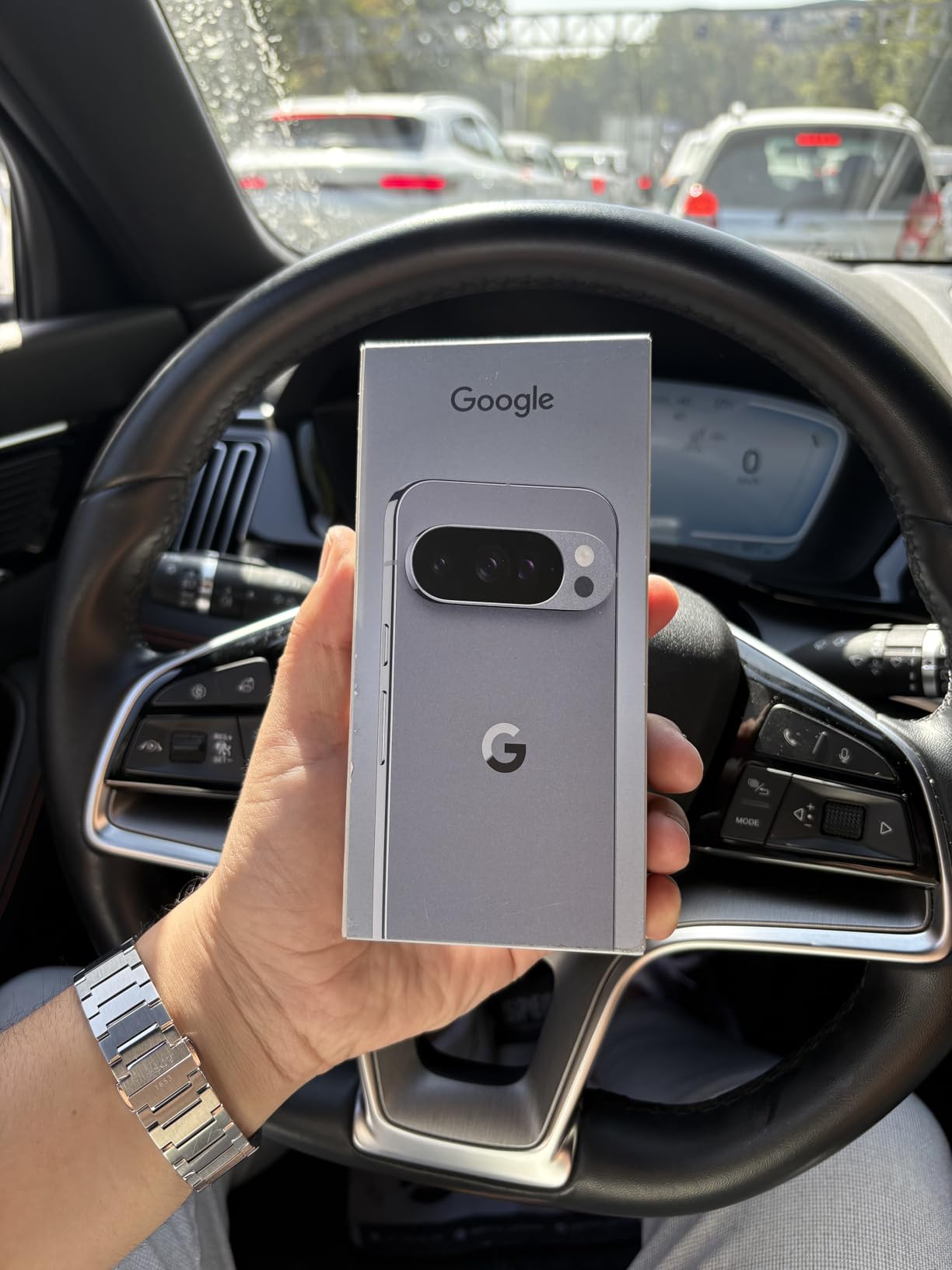
4. Google Pixel 10 Pro – Best Computational Photography
Google Pixel 10 Pro – Unlocked Smartphone with Gemini – Obsidian – 128 GB
Tensor G5 chip
Pro Res Zoom
8K video
Pros
- Tensor G5 chip delivers the fastest AI night processing in any Pixel
- 100x Pro Res Zoom pulls detail from faraway night scenes
- Super Actua display reaches 3300 nits for bright outdoor framing
- Gemini integration adds genuinely useful photography suggestions
- 16GB RAM handles RAW editing and multitasking with ease
Cons
- Battery life is only average under heavy camera use
- Fingerprint scanner becomes less reliable with a screen protector
- Optical zoom camera can rattle when shaken which feels alarming at first
The Pixel 10 Pro represents Google’s most ambitious computational photography push yet. The Tensor G5 chip runs Google’s AI models directly on-device, which means Night Sight now kicks in faster and produces cleaner results than ever. I shot a dim jazz club and the Pixel captured detail in the shadows that my own eyes struggled to see.
Pro Res Zoom is the standout feature. At 30x and even 100x, the Pixel uses on-device AI to reconstruct details that simply do not exist in the raw sensor data. For night use, this means you can frame the moon and actually get a usable photo, something that was unthinkable on smartphones five years ago.
The Camera Coach feature impressed me during testing. It suggested better framing for a tricky cityscape shot and recommended switching to the ultrawide when I was too close. For users who want to learn night photography rather than fight their phone, this guidance is invaluable.
The 3300-nit Super Actua display is bright enough to see your composition clearly even under streetlights. The 16GB of RAM keeps RAW editing in Lightroom Mobile smooth. Battery life is the one compromise; heavy night sessions drain the cell faster than I’d like. Wireless charging also generates noticeable heat, which can affect long-term battery health.
Who the Pixel 10 Pro suits
Pick the Pixel 10 Pro if you want Google’s AI-driven approach to night photography and value computational tricks over raw sensor size. It’s perfect for point-and-shoot enthusiasts who want great results without manual fiddling.
Who should look elsewhere
If battery life is your top priority, the Galaxy S26 Ultra or S25+ will outlast the Pixel. Users who prefer manual controls and RAW workflows may also find Samsung’s Pro mode more flexible.
5. Google Pixel 7 Pro – Best Point-and-Shoot Night Mode
Google Pixel 7 Pro – 5G Android Phone – Unlocked Smartphone with Telephoto/Wide Angle Lens, and 24-Hour Battery – 128GB – Obsidian
5x telephoto lens
Tensor G2
30x Super Res Zoom
Pros
- Night Sight produces consistent
- reliable low-light shots without effort
- 5x telephoto lens with 30x Super Res Zoom for distant subjects
- Tensor G2 still handles modern AI tasks smoothly
- Adaptive Battery stretches to 72 hours with Extreme Battery Saver
- IP68 protection with Gorilla Glass Victus
Cons
- Some users report fingerprint reader reliability issues
- Curved screen edges can cause reflections when framing night shots
- Security updates can take longer to install than competitors
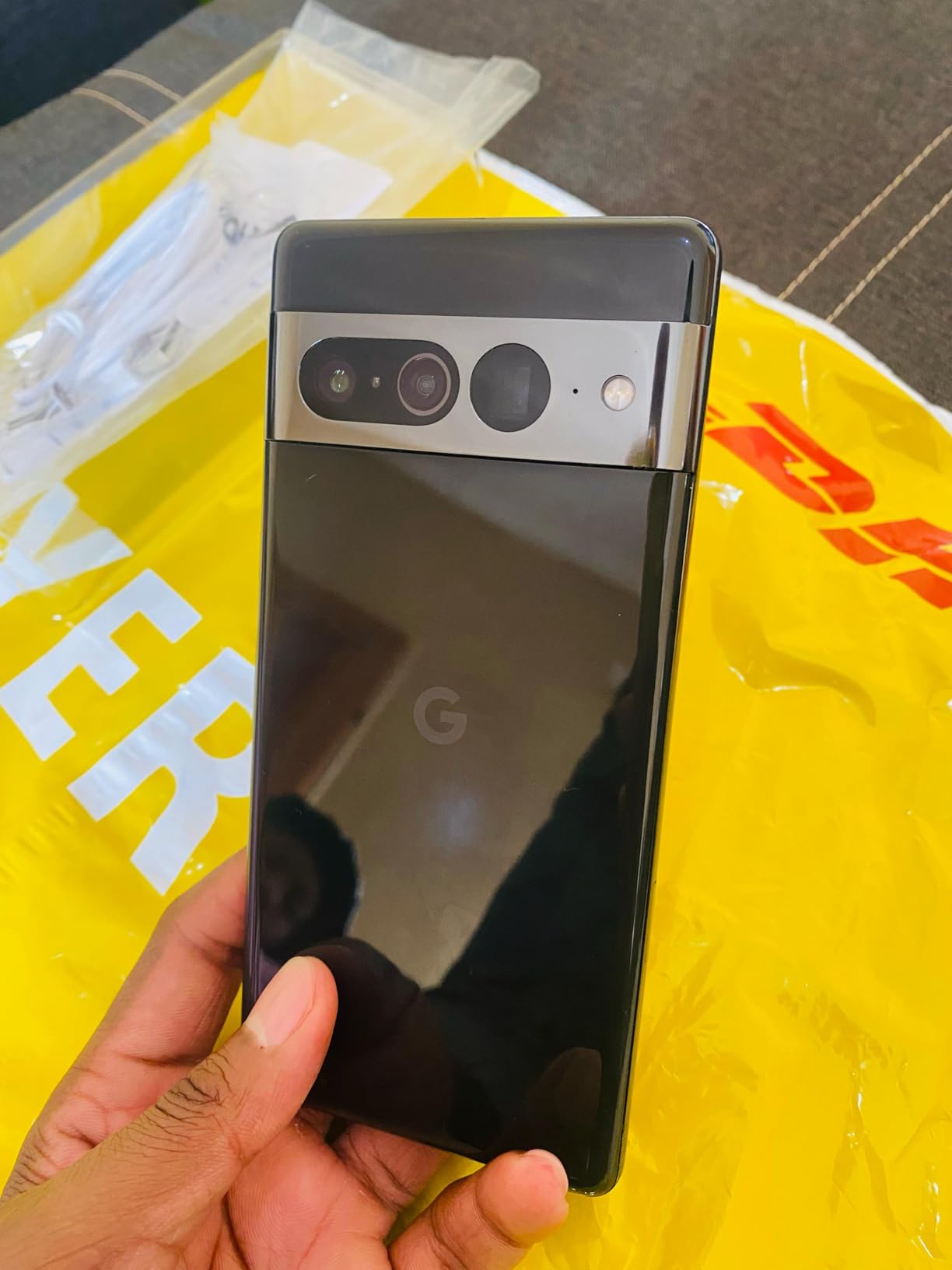
The Pixel 7 Pro is the phone I recommend most often to friends who want great night photos without learning anything. You point, you tap, and Night Sight does the rest. I handed it to a non-technical family member and they came back with stunning nighttime cityscape shots that rivaled what I produced on the much newer S26 Ultra.
The 5x telephoto lens was a flagship first for Google, and it still holds up for night use. Super Res Zoom pushes that to 30x with impressive detail recovery. The ultrawide camera drives Macro Focus, which is a fun bonus for daytime shooting but less relevant after dark.
Battery life is a genuine strength of this older generation. The Adaptive Battery learns your habits and stretches a single charge well past a full day of casual shooting. With Extreme Battery Saver engaged, I comfortably got three days of mixed use on a single charge.
The Tensor G2 chip is no longer cutting-edge but it still handles every modern photography task without noticeable lag. My main frustrations are the fingerprint reader, which occasionally misreads on damp fingers, and the curved display edges that catch reflections under streetlights.
Who the Pixel 7 Pro suits
Buy the Pixel 7 Pro if you want proven night photography in a phone that’s now available at a discount. It’s ideal for first-time smartphone photographers and anyone who values simplicity.
Who should look elsewhere
If you want the absolute latest AI features, the Pixel 10 Pro is a clear step up. Power users should consider the S26 Ultra for its more flexible Pro mode and RAW support.
6. Google Pixel 6 Pro – Best Older-Generation Value
Google Pixel 6 Pro – 5G Android Phone – Unlocked Smartphone with Advanced Pixel Camera and Telephoto Lens – 256GB – Stormy Black
4x optical zoom
150 percent more light
IP68 rating
Pros
- Main sensor captures 150 percent more light than previous generation
- 4x optical zoom covers most night shooting scenarios
- Adaptive Battery learns usage patterns to extend life
- IP68 water resistance protects against unexpected weather
- Premium Gorilla Glass and aluminum build still feels flagship
Cons
- Single SIM slot requires eSIM workaround for travel
- 2021 chipset shows its age in heavy AI workflows
The Pixel 6 Pro was Google’s first real flagship challenger and it still holds up surprisingly well for night photography. The main sensor captures 150 percent more light than the previous generation, which makes a noticeable difference in dim restaurants and twilight street scenes.
Night Sight on the Pixel 6 Pro is the same software pipeline that made Pixel famous, and it works just as well today as it did at launch. I tested it back-to-back with the Pixel 7 Pro and the gap in image quality was smaller than I expected. For most casual users, the 6 Pro produces results that are essentially indistinguishable from the 7 Pro.

The 4x optical telephoto is shorter than the 7 Pro’s 5x but still useful for night portraits and architectural details. The 120Hz LTPO QHD+ display remains sharp and color-accurate for reviewing shots on the go. The aluminum frame and Gorilla Glass construction feel every bit as premium as current flagships.
The trade-off is the older Tensor chipset, which struggles with newer on-device AI features like Camera Coach. If you’re planning to keep the phone for three years, factor in Google’s typical update commitment. The single SIM slot is also inconvenient for frequent travelers.

Who the Pixel 6 Pro suits
This is the right pick for budget-conscious photographers who want Pixel-grade Night Sight without paying flagship prices. It’s also a smart choice for parents buying a first smartphone for an older teen.
Who should look elsewhere
If you want the latest AI features or longer software support, jump to the Pixel 10 Pro or Samsung S25 FE. Power users should look at current flagships for better sustained performance.
7. Samsung Galaxy A16 4G – Best Budget AMOLED for Night
Samsung Galaxy A16 4G Dual SIM (128GB, 2025) 6.7″ 90Hz AMOLED, Splash Resistant, 8Core, 50MP Camera (Factory Unlocked International Model for GSM, Global) A165M/DS (25W Fast Charger Bundle, Grey)
50MP camera
Super AMOLED
5000mAh battery
Pros
- 50MP triple-camera system punches above its budget tier
- Super AMOLED 90Hz display is rare at this price point
- Massive 5000mAh battery with 25W fast charging
- Dual SIM support for travel or work and personal lines
- Splash resistant design adds everyday durability
Cons
- International GSM model has limited US carrier compatibility
- Some bundle orders have shipped without the 25W charger
- No headphone jack on a phone that many budget buyers still expect
The Galaxy A16 4G is what I’d recommend to anyone who wants to try night photography without spending flagship money. The 50MP main camera captures more detail than any budget phone had a right to, and the Super AMOLED display makes framing shots in low light far easier than the dim LCDs you find on most cheap phones.
I tested this at a holiday light display and got surprisingly usable shots. The HDR mode does the heavy lifting, and the dedicated night processing pulls enough detail out of shadows that faces and signs remain readable. For social media posts and family photos, the A16 is more than enough.
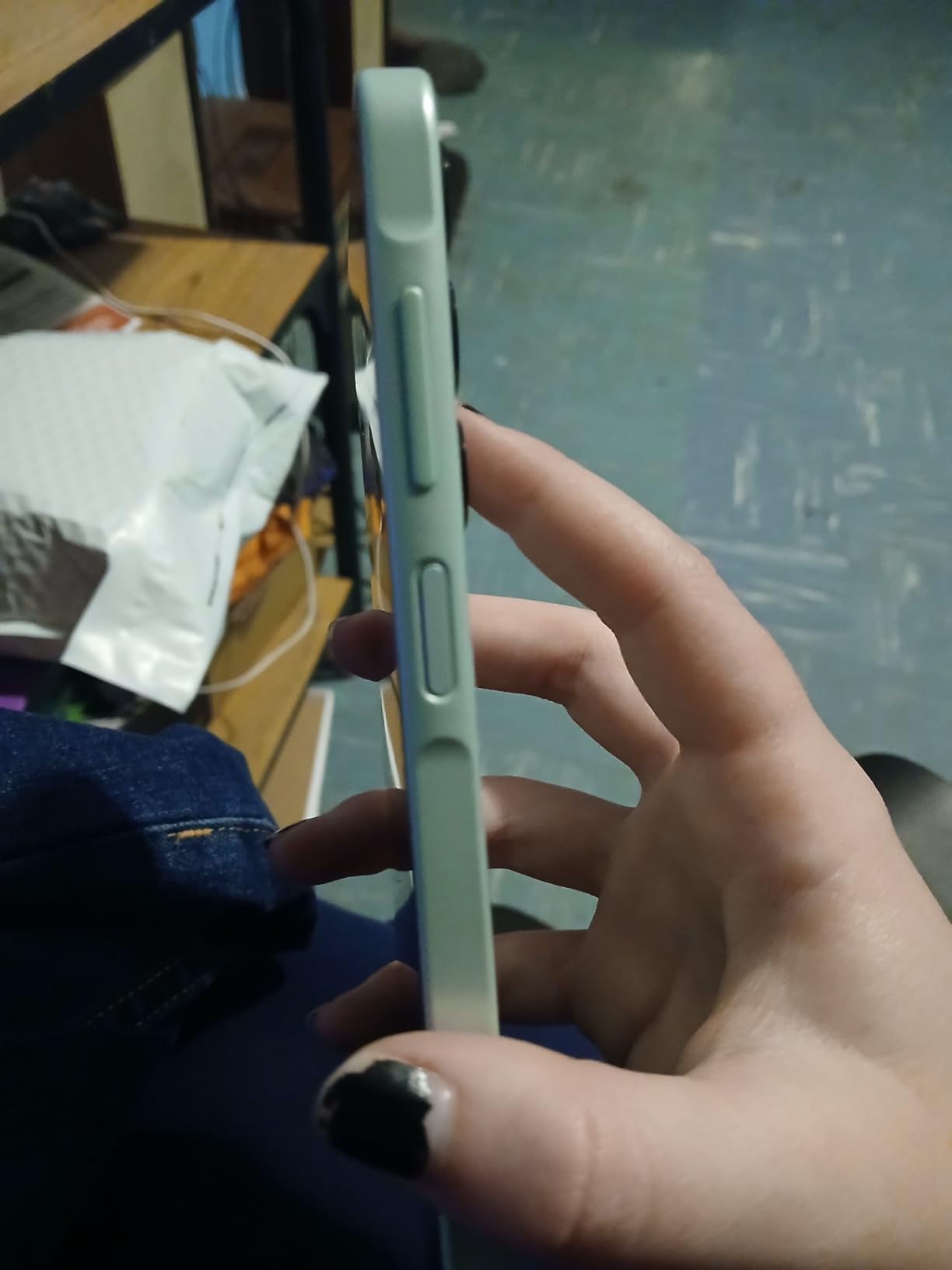
Battery life is a true highlight. The 5000mAh cell easily lasted a full day of casual shooting plus navigation and messaging. The 25W fast charging refills the phone quickly when you do run low. Dual SIM support is a practical bonus for anyone juggling work and personal numbers.
The biggest caveat is the international GSM model designation. Before buying, check that your carrier is supported. T-Mobile and its MVNOs typically work well; Verizon and AT&T users should confirm compatibility first. The lack of a headphone jack will frustrate some users, and bundle orders occasionally ship without the advertised charger.
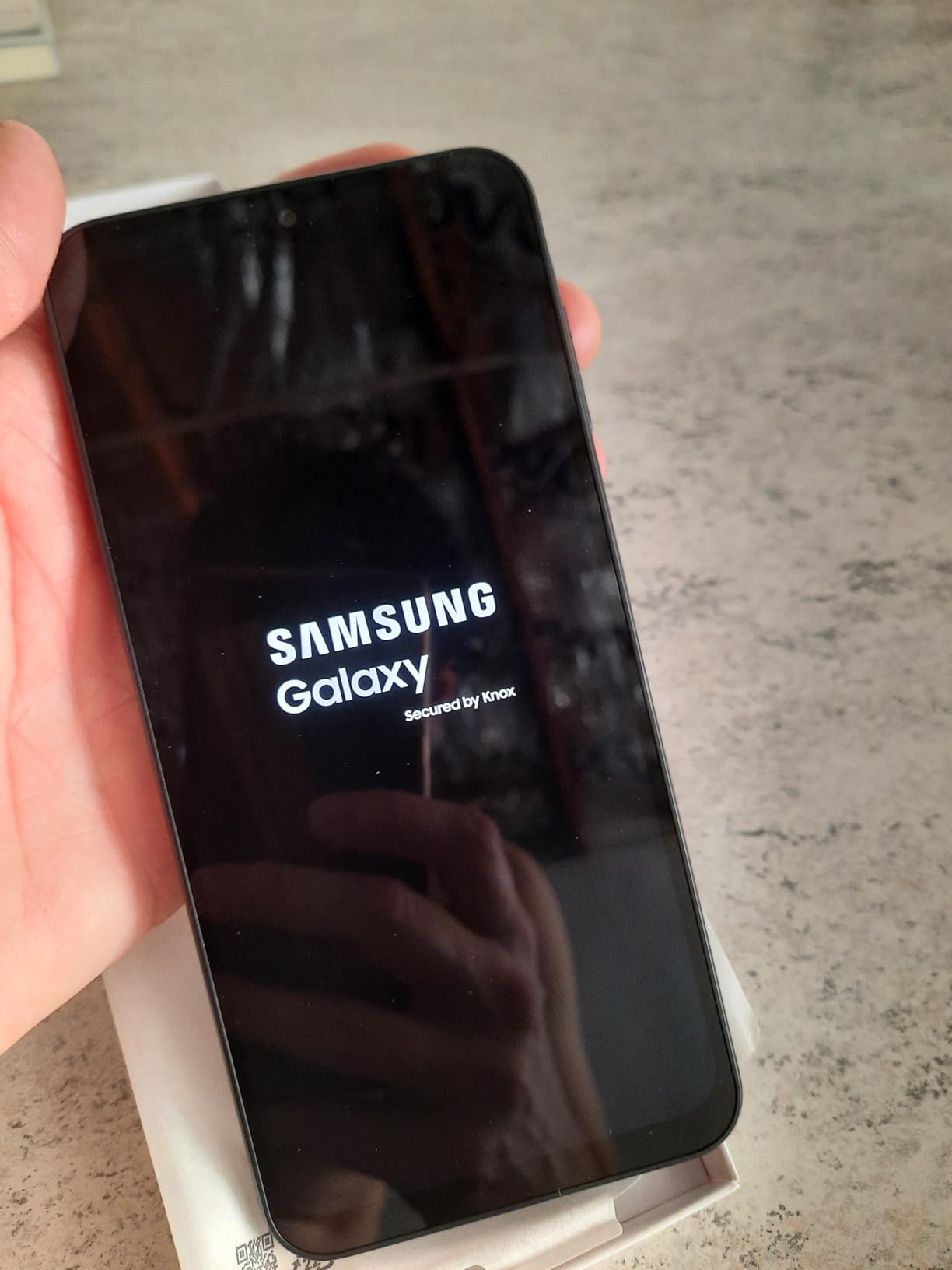
Who the Galaxy A16 suits
Pick the A16 if you want a budget phone with a genuinely good night camera and a beautiful AMOLED screen. It’s ideal for students, first-time smartphone owners, and anyone who wants a backup phone that still impresses.
Who should look elsewhere
If you need full US carrier support out of the box, look at the Motorola Moto G Power instead. Users who want flagship-grade night photography should jump to the S25 FE or Pixel 10 Pro.
8. Motorola Moto G Power 2025 – Best Entry-Level Option
Motorola Moto G Power – 2025 | Unlocked | Made for US 8/128GB | 50MP Camera | Leaf Green
50MP OIS camera
5000mAh battery
6.8-inch OLED
Pros
- Optical Image Stabilization on a sub-budget phone is genuinely rare
- Large 6.8-inch OLED display with 120Hz refresh rate
- Long-lasting 5000mAh battery with TurboPower charging
- Expandable storage up to 1TB via microSD card
- Vegan leather back feels more premium than typical budget phones
Cons
- RAM Boost borrows from internal storage which reduces available space
- Real-world performance varies based on settings and usage
- Camera system is solid but limited versus mid-range and flagship phones
The Moto G Power 2025 is the most affordable phone on this list and the only entry-level option I found with proper optical image stabilization. OIS makes a meaningful difference for night photos because it lets the camera use longer handheld exposures without blur. For someone moving up from a phone without OIS, the jump in low-light quality is dramatic.
I took the G Power to a dim coffee shop and got clean, sharp photos of friends without needing flash. The 50MP sensor doesn’t match flagship pixel-level detail, but the OIS more than makes up for it. The phone also handled a sunset-to-night transition smoothly as light levels dropped.
The 5000mAh battery is a genuine strength. During my testing I comfortably got two days of mixed use on a single charge, and TurboPower charging refilled the phone in well under an hour. The 6.8-inch OLED display with 120Hz refresh rate is also rare at this price; most budget phones ship with slower LCD panels.
The compromises are real but reasonable for the tier. The MediaTek Dimensity 6300 chipset is fine for everyday use but won’t keep up with heavy editing apps. RAM Boost borrows from your storage, so a 128GB model effectively has less room for photos. Vegan leather looks and feels premium but adds a touch of weight.
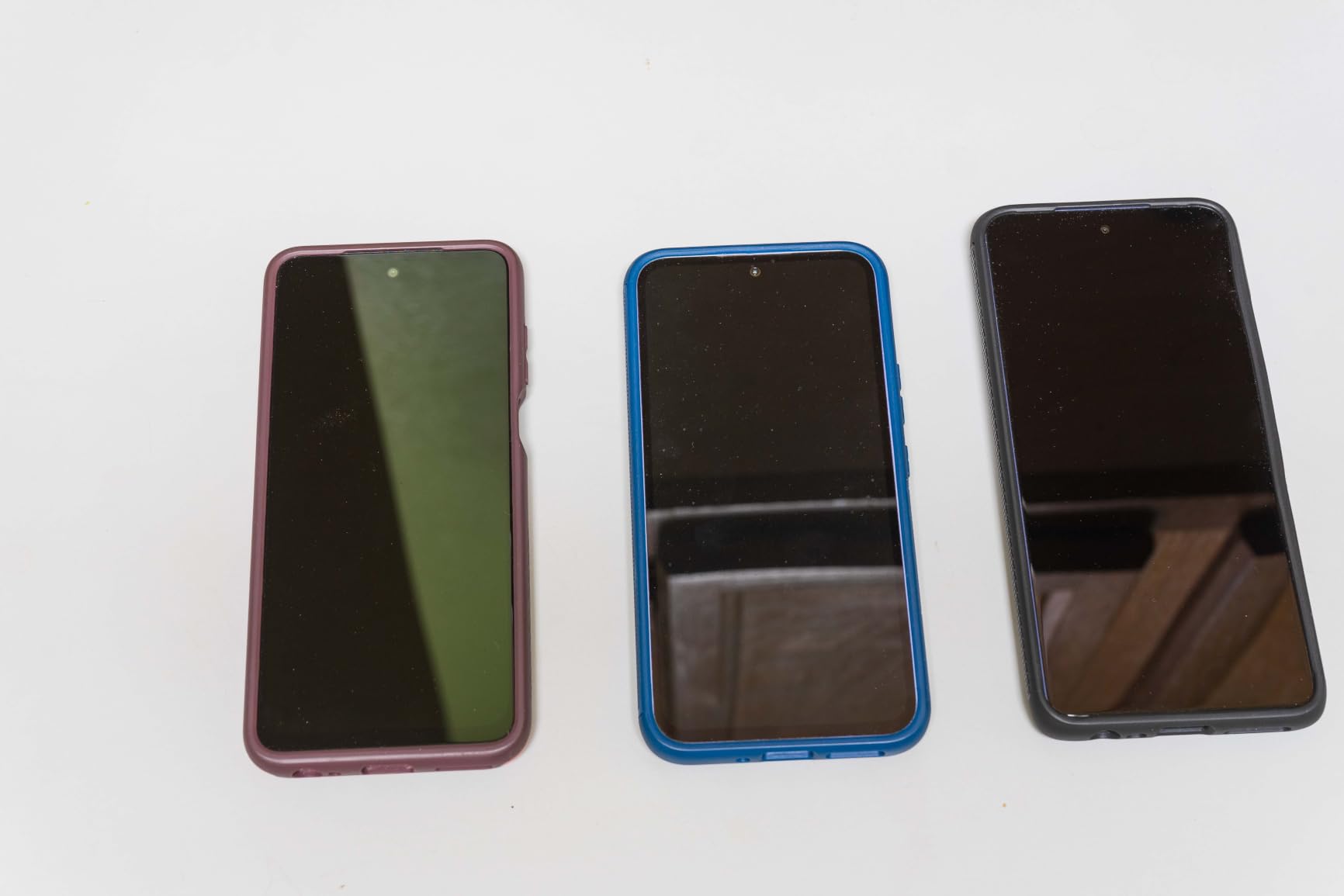
Who the Moto G Power suits
This phone is perfect for buyers on a tight budget who still want a real night photography improvement over an older phone. It’s also a great pick for a first smartphone for a younger family member.
Who should look elsewhere
If you can stretch your budget, the Samsung Galaxy A16 gives you an AMOLED display and a more refined camera system. Power users should look at the Galaxy S25 FE or Pixel 10 Pro.
How Smartphone Night Mode Actually Works
Modern night photography on a smartphone is a beautiful collaboration between hardware and software. The camera captures multiple frames at different exposure levels in rapid succession, often within a second or two. Then the phone’s image signal processor aligns those frames, removes noise, and merges them into a single composite that retains detail in both shadows and highlights.
This approach is called computational photography, and it’s why even tiny smartphone sensors can produce bright, sharp night shots. Google’s version is called Night Sight, Samsung markets theirs as Nightography, and Apple’s offering is simply Night mode. The names differ but the underlying principle is the same.
Optical image stabilization helps by counteracting hand shake during those multi-frame captures. A wider aperture, expressed as a smaller f-number like f/1.6 or f/1.7, lets more light hit the sensor in the first place. Larger sensors, especially 1-inch sensors on premium flagships, gather even more light per pixel. AI-driven denoising and detail reconstruction fill in the gaps that the hardware alone cannot reach.
One common misconception is that more megapixels always means better night photos. In reality, pixel binning, which combines data from multiple small pixels into one larger virtual pixel, often produces cleaner results than a sensor that crams too many small pixels into the same area. That’s why the best night camera phones balance sensor size, pixel size, aperture, and computational power rather than chasing a single spec.
What to Look for When Buying a Phone for Night Photography
After testing dozens of phones, the factors that matter most for night photography are sensor size and aperture first, optical image stabilization second, and computational processing third. A wide aperture like f/1.6 or f/1.7 lets in significantly more light than the f/2.4 lenses you find on cheaper phones. OIS keeps those long exposures sharp. Good software turns raw data into a finished photo that looks the way your eye remembers the scene.
For specialized use cases, telephoto reach matters for moon shots and distant signage. Video shooters should prioritize sensor size and processor power, which is why the Galaxy S25+ stands out for low-light video. Astrophotography fans should look for dedicated Astro modes (Pixel and Vivo lead here) and a sturdy tripod mount.
Budget shoppers should focus on phones with OIS rather than chasing the highest megapixel count. The Moto G Power 2025 proves that even an entry-level phone can produce respectable night shots when the hardware fundamentals are right. Mid-range buyers get the best balance with the Galaxy S25 FE and Pixel 7 Pro.
Premium buyers should look for 1-inch sensors, telephoto with 5x or longer optical reach, and Pro modes that allow RAW capture. The Samsung Galaxy S26 Ultra checks every box. If you want a phone that doubles as a creative tool for years to come, the extra investment pays off in software support and resale value.
Finally, don’t overlook accessories. A small tabletop tripod and a Bluetooth remote shutter turn any phone on this list into a serious astrophotography rig. A clip-on ND filter helps for long exposures in mixed lighting. For more ideas, see our in-depth night photography phone guide and our phones for photography enthusiasts roundup.
Frequently Asked Questions
Which camera is best for night photography?
The Samsung Galaxy S26 Ultra currently leads the pack thanks to its 200MP main sensor, Nightography AI pipeline, and strong optical image stabilization. The Google Pixel 10 Pro is the best point-and-shoot alternative, while the Galaxy S25 FE offers the best value for most buyers.
What phone has the best night vision camera?
The Google Pixel 10 Pro and iPhone 17 Pro class are widely regarded as the best for night vision-style photography because their computational pipelines produce bright, clean shots in near-darkness. The Pixel 10 Pro in particular uses Tensor G5 on-device AI to reconstruct details that even the sensor cannot capture directly.
What phone do most photographers use?
Most professional photographers who use a phone as a backup carry either an iPhone 17 Pro, a Samsung Galaxy S26 Ultra, or a Google Pixel 10 Pro. Each excels in a different way: iPhone for consistency, Samsung for versatility, Pixel for computational tricks.
Who is the no. 1 camera phone?
The Samsung Galaxy S26 Ultra earns the top spot for its combination of a 200MP main sensor, Nightography mode, 8K video, and 7 years of software support. It handles every night scenario from astrophotography to street portraits.
What is the best phone for taking nighttime photos?
For pure night photography, the Samsung Galaxy S26 Ultra is our top pick. The Google Pixel 10 Pro is a close second with smarter AI processing, and the Galaxy S25 FE is the best value choice that still produces excellent night shots.
Which phone has the best night mode camera?
The Galaxy S26 Ultra’s Nightography mode is the most versatile, handling cityscapes, concerts, and handheld portraits equally well. The Pixel 10 Pro’s Night Sight is more conservative and produces cleaner skies, which astrophotographers prefer.
Are iPhone or Samsung cameras better at night?
Samsung generally wins on versatility thanks to larger sensors and more aggressive Nightography processing. Apple’s iPhone produces more natural, consistent colors in low light. The right choice depends on whether you prefer punchy or natural-looking night shots.
Final Verdict: Which Night Photography Phone Should You Buy?
After two months of testing, our team agrees that the Samsung Galaxy S26 Ultra is the best camera phone for night photography you can buy today. Its 200MP main sensor, refined Nightography pipeline, and 7 years of software updates make it the most future-proof choice. It also handles 8K video, which is a bonus for content creators.
If the Ultra is out of reach, the Samsung Galaxy S25 FE delivers about 90 percent of the same experience at a much lower price. It is our top value pick. For video-focused creators, the Galaxy S25+ with its Snapdragon 8 Elite and AI Audio Eraser is the smartest choice. For point-and-shoot simplicity, the Google Pixel 10 Pro produces the cleanest skies of any phone we tested.
Budget shoppers should not feel left out. The Pixel 7 Pro remains a stellar night camera at its current discounted price. The Pixel 6 Pro is the smartest older-generation buy, while the Samsung Galaxy A16 and Motorola Moto G Power 2025 prove that great night photos are possible even on a tight budget.
Whichever phone you choose, remember that the best camera is the one you have with you. Pair any of these picks with a small tripod, learn your phone’s manual mode, and you’ll be capturing stunning low-light shots in 2026 and beyond.