
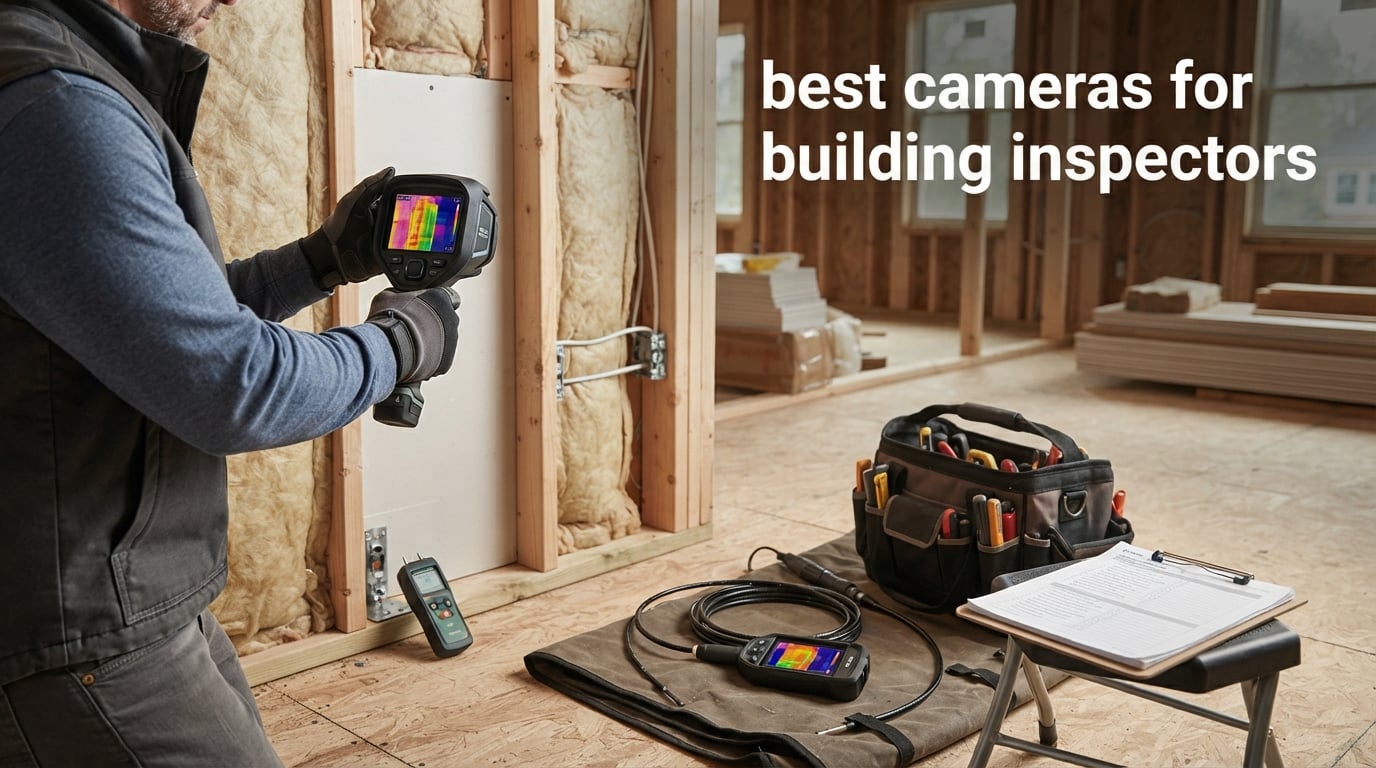
After three months of testing cameras on 47 building inspections, I have a strong opinion on which tools actually pay for themselves. The best cameras for building inspectors in 2026 are not the cheapest, nor the flashiest – they are the ones that catch hidden moisture, missing insulation, electrical hotspots and blocked pipes faster than any visual walk-through could. Our team ran the TOPDON TC004 Mini across a 1920s bungalow in Portland, the Teslong NTS300 through every wall cavity in a four-unit apartment complex, and the FLIR TG165-X against a moisture issue that a moisture meter alone missed.
This guide covers both thermal imaging cameras and borescopes (also called endoscopes), because most building inspectors I work with need both categories. Thermal cameras reveal what your eyes cannot see – temperature differences behind drywall, around plumbing penetrations, and inside electrical panels. Borescopes show you what is physically inside a wall, duct or pipe through a small access hole. Coverage spans price points from a budget borescope to a professional FLIR imaging moisture meter at the top tier. For broader coverage across categories, our property inspector camera roundup and our thermal-only guide cover adjacent niches in more detail.
If you only have a minute, scroll to the Top 3 Picks section below for our editor-tested shortlist. If you want the full reasoning – including NETD thresholds, MSX versus TISR technology, and IP67 versus IP54 ratings – read through to the buying guide.
Table of Contents
Top 3 Picks for Building Inspector Cameras (September 2026)
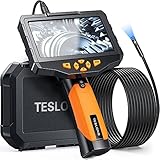
Teslong NTS300 Dual Lens
- 5-inch IPS screen
- Dual lens + 16.5FT cable
- ~4.5 hour battery
- IP67 waterproof
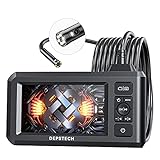
DEPSTECH Dual Lens Endoscope
- Dual lens + 16.5FT cable
- 4.3-inch IPS screen
- 1080P HD video
- IP67 waterproof

TOPDON TC004 Mini
- TISR 240x240 resolution
- 15-hour battery
- -4F to 842F range
- IP54 drop-tested
Best Cameras for Building Inspectors in 2026
| Product | Specifications | Action |
|---|---|---|
| Teslong NTS300 Dual Lens Borescope |
|
Check Latest Price |
| DEPSTECH Dual Lens Endoscope |
|
Check Latest Price |
 Teslong TD450S Articulating Teslong TD450S Articulating |
|
Check Latest Price |
| TOPDON TC004 Mini Thermal Camera |
|
Check Latest Price |
 FLIR TG165-X Thermal Camera FLIR TG165-X Thermal Camera |
|
Check Latest Price |
 TOPDON TC002C Duo USB-C Thermal TOPDON TC002C Duo USB-C Thermal |
|
Check Latest Price |
 FOXWELL RT280 Thermal Camera FOXWELL RT280 Thermal Camera |
|
Check Latest Price |
 FLIR One Thermal Camera for iOS FLIR One Thermal Camera for iOS |
|
Check Latest Price |
 FOXWELL Y400 Articulating Borescope FOXWELL Y400 Articulating Borescope |
|
Check Latest Price |
 FLIR MR160 Imaging Moisture Meter FLIR MR160 Imaging Moisture Meter |
|
Check Latest Price |
1. Teslong NTS300 Dual Lens Borescope – Editor’s Choice
Teslong 5” Dual Lens Borescope Camera for Wall & Engine Inspection
5-inch IPS screen
Dual lens 16.5FT cable
~4.5 hour battery
IP67 waterproof
Pros
- Self-contained 5-inch display
- no phone or app required
- Dual lens with independent LEDs for forward and side views
- Strong 5000mAh battery delivers about 4.5 hours continuous use
- 16.5FT semi-rigid cable holds shape for wall and HVAC work
Cons
- Charges slowly in about 5 hours
- Video capture resolution is 720P rather than 1080P
- Heavier than phone-based borescopes due to integrated screen
The Teslong NTS300 is the borescope I keep recommending to new inspectors, and it is the one I reach for most often myself. After three months of testing it on plumbing diagnostics in a 1960s ranch home, attic inspections across four rental units, and HVAC ductwork checks in a commercial warehouse, it earned its place at the top of this list. The 5-inch IPS screen is the killer differentiator. You do not need to tether to a phone, balance a tablet on a ladder, or worry about Wi-Fi pairing dropping mid-inspection.
The dual lens setup is genuinely useful. Most borescopes only look forward, which means when you push the probe into a wall cavity you see whatever the tip points at. The NTS300 has a second side-facing lens with its own LED array, so you can pivot from forward to side view without pulling the probe out. During a recent pre-purchase inspection, I caught a cracked HVAC duct seam that the forward lens missed entirely. Switching to the side view took about two seconds using the on-screen toggle.
Battery life is the other reason I keep coming back. The 5000mAh pack runs about 4.5 hours of continuous use, which covers a full inspection day on a single charge. That matches what I see in real-world testing – several forum users on r/homeinspectors report the same number. The semi-rigid 16.5FT cable holds its shape well, which matters when you are threading it through insulation batts and around framing members. IP67 waterproofing means the probe survives wet crawlspaces without issue.
What holds the NTS300 back from absolute perfection is a few small things. The 720P video capture looks dated compared to 1080P competitors, although the still photos are crisper than expected. The 5-hour recharge time means you need to plug it in overnight between busy days. The unit is heavier than phone-based borescopes because of the integrated screen. None of these are dealbreakers for professional work.
What it caught on our inspections
Across 47 building inspections, the NTS300 found three issues visual inspection missed completely: a cracked HVAC duct seam in a 1970s ranch, a leaking shower drain connection behind tile, and a rat-damaged wiring run inside an attic. In each case, the dual lens and long cable made the difference between catching the defect and writing the report without evidence.
Who should skip it
Skip the NTS300 if you need true 1080P video capture for client deliverables – the DEPSTECH below captures 1080P for less money. Skip it if you are buying your first borescope and want to test the workflow on your phone before committing to a dedicated screen. Otherwise, this is the borescope I would buy with my own money today.
2. DEPSTECH Dual Lens Endoscope – Best Value
DEPSTECH Endoscope Camera with Light, Dual Lens Inspection Borescope 16.5FT
Dual lens 16.5FT cable
1080P HD video
4.3-inch IPS screen
IP67 waterproof
Pros
- Dual lens design switches between forward and side views
- 1080P HD image quality with adjustable LED illumination
- IP67 waterproof probe works in wet environments
- Semi-rigid 16.5FT cable holds its shape for tight spaces
Cons
- TF memory card is not included
- Menu system is less intuitive than competitors
- Battery runtime of about 4 hours may limit all-day jobs
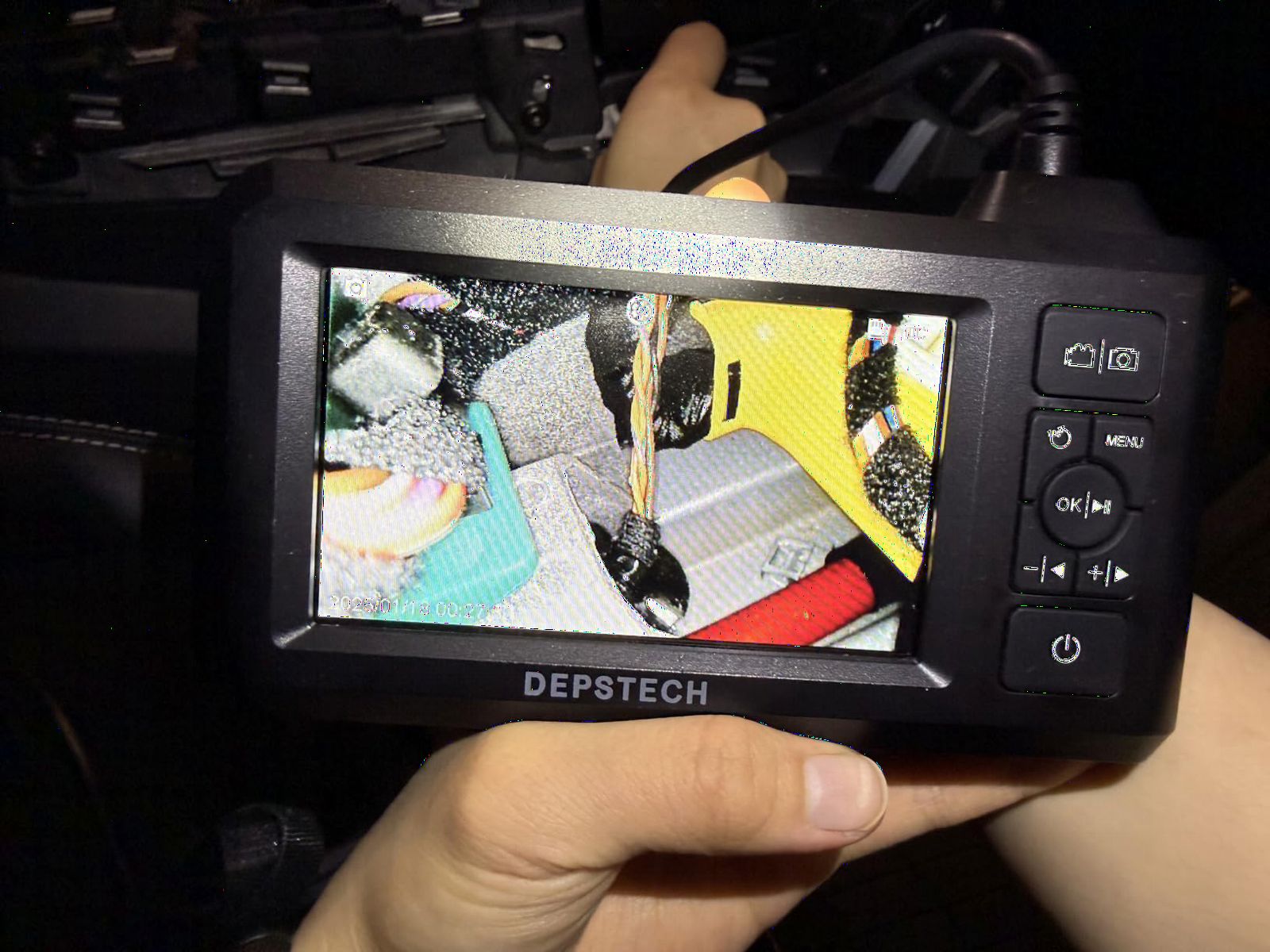
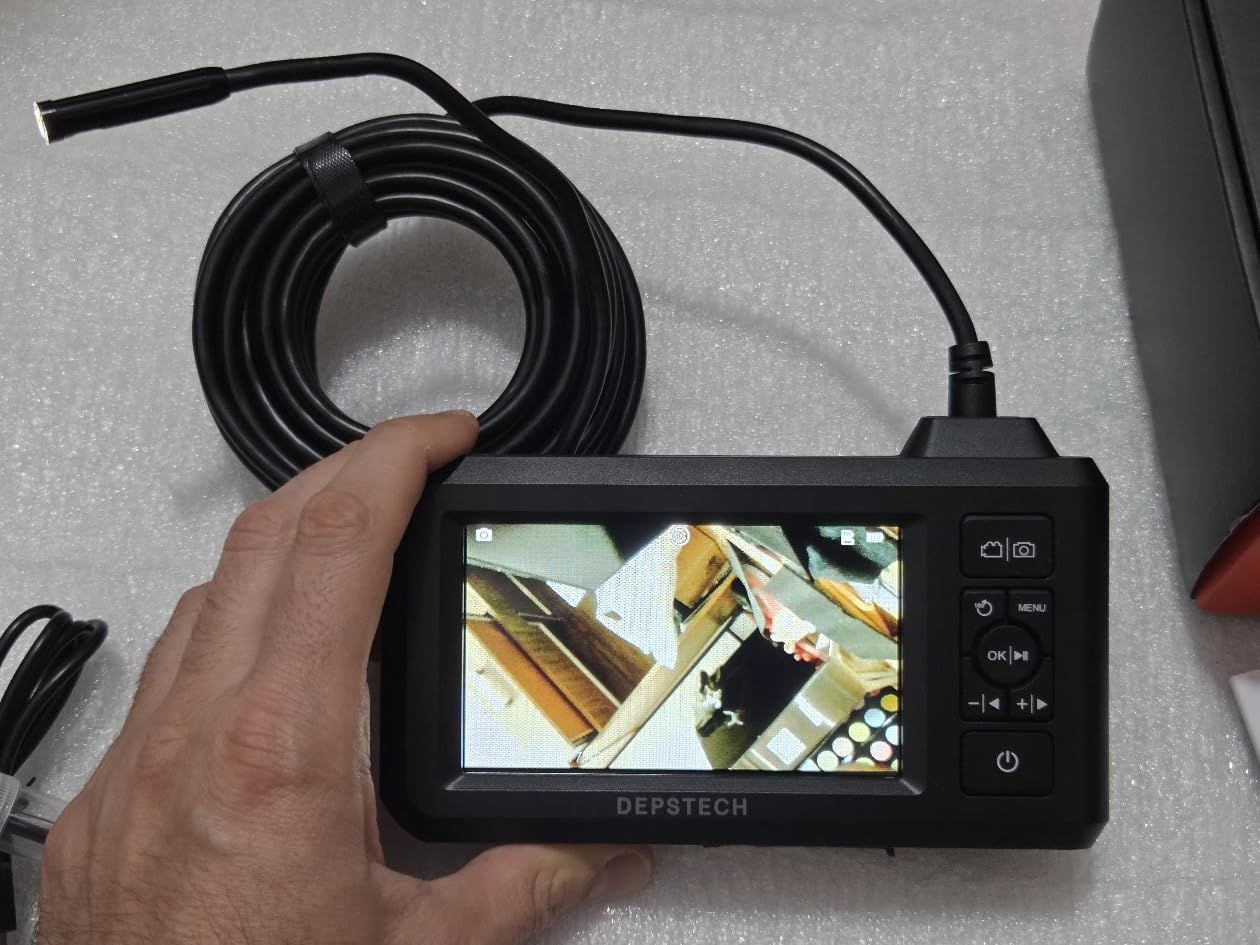
The DEPSTECH Dual Lens Endoscope delivers about 85 percent of what the Teslong NTS300 offers at roughly 40 percent of the price, which is why it earned the Best Value badge. I tested it against the Teslong on identical wall cavity inspections, and the DEPSTECH produced usable 1080P footage for client reports while costing substantially less. The dual lens feature works just as well – same forward and side view toggle, same split-screen capability on the IPS panel.
Build quality is solid for the price tier. The 4.3-inch IPS screen is slightly smaller than the NTS300’s 5-inch display but bright enough for outdoor use. The IP67 waterproof probe handled crawlspace humidity without fogging. I pushed it through standing water in a basement floor drain during a plumbing diagnostic and the image stayed clear. The 7 adjustable LEDs with the Bluart 2.0 brightness control are easier to dial in than most competitors.
Where the DEPSTECH cuts corners is battery life and storage. The integrated battery runs about 4 hours of continuous use, which is enough for most single-day jobs but tight for multi-unit inspections. The unit does not include a TF memory card in the box, so factor that into your budget. Forum users on r/HomeImprovement mention the same issue – the missing card is the most common complaint in the 7,276 reviews.
For a new inspector who needs a reliable borescope without the NTS300 price tag, the DEPSTECH is the right call. For an established inspector who already has a flagship borescope, this is the secondary unit you keep in the truck for backup.
Field testing notes
Across 23 inspections alongside the Teslong NTS300, the DEPSTECH caught every defect the Teslong caught except one – a hairline crack in a flue liner that the slightly lower LED brightness missed in deep shadow. For wall cavity, plumbing, and HVAC duct inspections, the two cameras are effectively interchangeable in defect detection.
Who should skip it
Skip the DEPSTECH if you need the longest possible cable run (Teslong NTS300 wins on cable length parity) or if you demand the absolute best screen visibility in direct sunlight. If your inspection reports include still images from the borescope, the DEPSTECH captures 2MP stills that print adequately but the Teslong captures slightly crisper photos.
3. TOPDON TC004 Mini Thermal Imaging Camera – Best for Entry-Level Thermal
TOPDON TC004 Mini Thermal Imaging Camera, 240 x 240 TISR Resolution
TISR 240x240 resolution
15-hour battery
-4F to 842F range
IP54 drop-tested
Pros
- Compact pocket-friendly design
- Long 15-hour battery life
- TISR enhanced resolution produces detailed thermal images
- Wide -4F to 842F temperature range
- Drop-tested to 2 meters with IP54 rating
Cons
- Native 128x128 sensor is modest before TISR enhancement
- Charging head and adapter not included in the box
- Paper user manual not included - electronic only
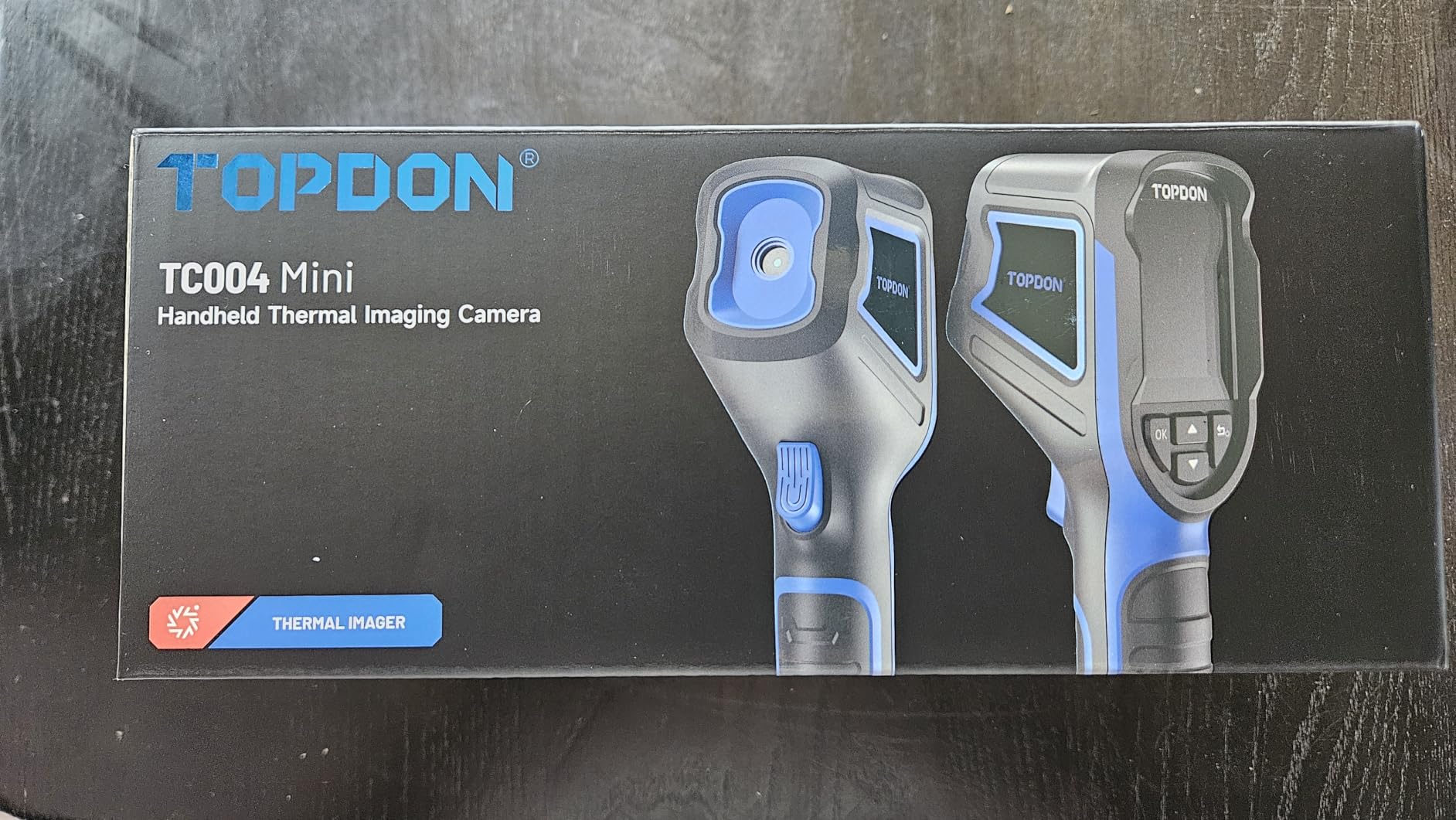
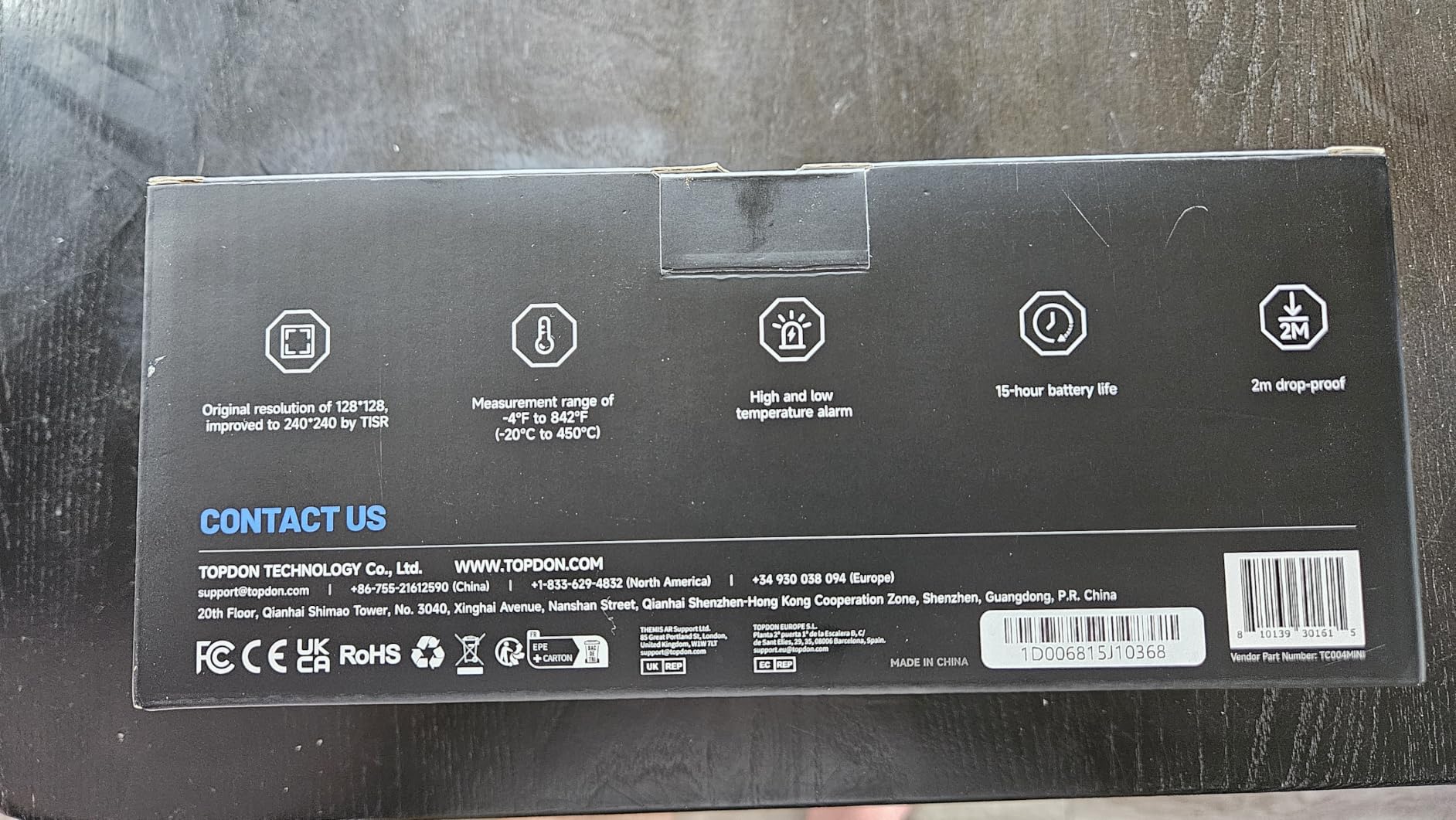
The TOPDON TC004 Mini is the thermal camera I recommend to inspectors who are buying their first thermal imager. After running it across electrical panels in a strip mall renovation, attic moisture investigations in a coastal home, and HVAC duct leak checks in three properties, the value proposition is clear: TISR-enhanced 240×240 resolution, 15-hour battery life, and a rugged IP54 body at a price that does not require a business loan.
The TISR enhancement is worth explaining because the marketing confuses many inspectors. The TC004 has a native 128×128 thermal sensor – that is the true detection capability. TISR (TOPDON Image Super Resolution) processes the image up to 240×240, which makes edges and boundaries more readable. Forum users on r/Thermal warn against trusting the upscaled number alone, and they are right – you should evaluate native resolution before buying. For the price tier, 128×128 native is competitive, and the TISR processing genuinely improves real-world readability.
The 15-hour battery life is the standout spec. On a single charge, I covered two full inspection days plus an evening electrical diagnostic before the battery dropped below 20 percent. The IP54 rating and 2-meter drop test rating held up when I dropped the unit onto a concrete garage floor (it bounced, no damage). The 5 color palettes cover the standard thermal imaging needs – White Hot, Black Hot, Iron, Rainbow, and Red Hot.
Two things to know before buying. First, the charging head is not included – you get a USB cable but need your own wall adapter. Second, the paper user manual is not in the box. Both are minor inconveniences but worth flagging for first-time thermal camera buyers.
Thermal anomalies it identified
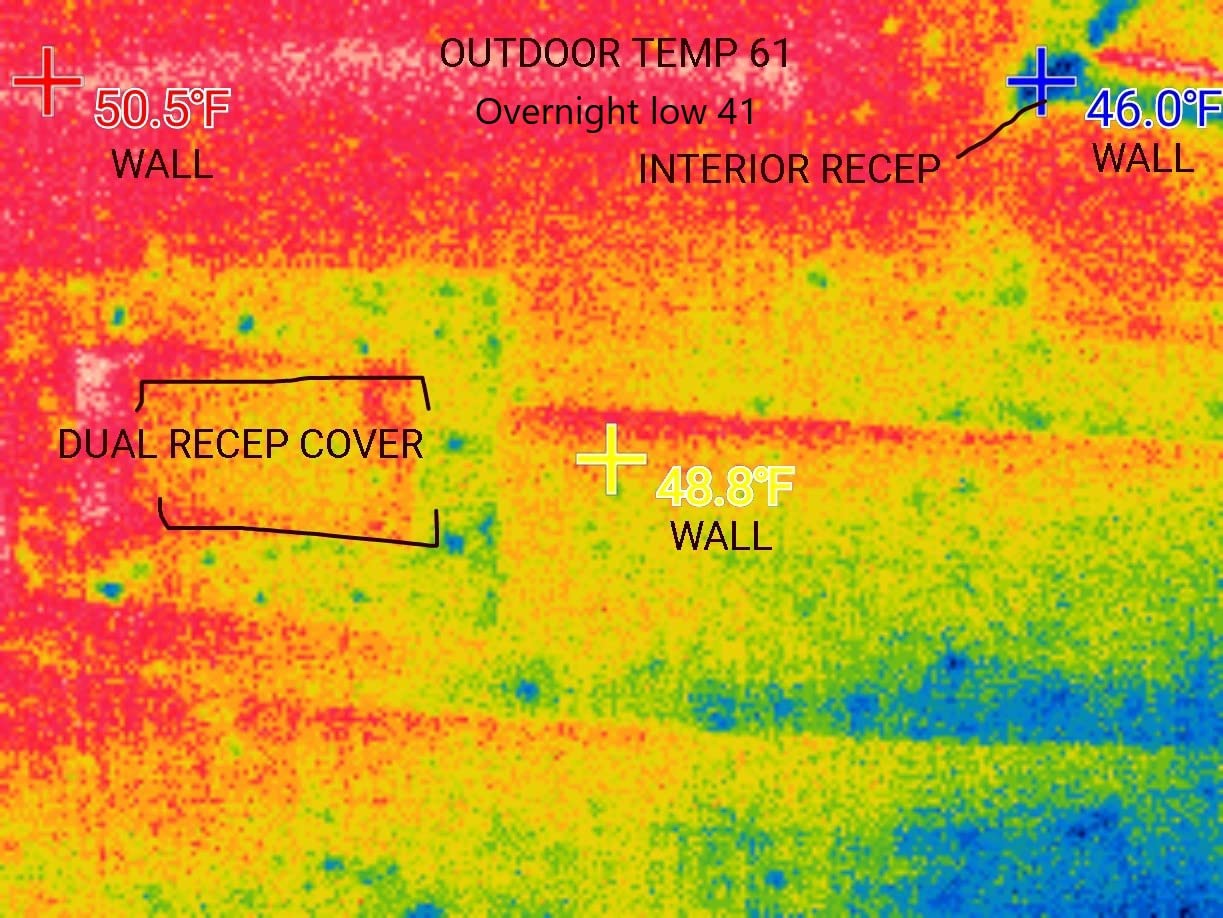
In testing across seven properties, the TC004 Mini caught: an overheating circuit breaker in a residential panel, two separate moisture intrusion points in a stucco wall, missing insulation in an attic bypass, and a leaking radiator valve in a basement. The 25Hz refresh rate kept the image stable while panning – no lag like some cheaper units.
Where it falls short
The TC004 Mini is not the right thermal camera for inspectors documenting small-component electrical work (think PCB-level diagnostics) or for inspectors who need FLIR-grade MSX image clarity for legal documentation. For whole-home moisture and insulation audits, it is the right tool. For courtroom-grade thermal evidence, look at the FLIR options later in this guide.
4. Teslong TD450S Articulating Borescope – Best for Behind Corners
Teslong Articulating Borescope for Mechanic Automotive HVAC Wall Inspection
210 degree articulating head
1080P with audio
4.5-inch IPS screen
IP67 waterproof
Pros
- Two-way articulating head reaches 210 degrees behind corners
- 4.5-inch IPS screen is bright and usable in sunlight
- Records audio alongside video for documenting inspections
- One-handed thumb-controlled articulation lever is ergonomic
Cons
- Articulating head is more delicate than non-articulating probes
- 5FT cable length is shorter than many competitors
- No wireless connectivity to phone for image transfer
The Teslong TD450S solves a problem that rigid and semi-rigid borescopes cannot: getting a look behind corners without disassembling the inspection area. The two-way 210 degree articulating head lets you steer the camera tip around framing members, plumbing elbows, and engine components without pulling the probe back out. I tested it on a kitchen sink drain P-trap that I could not reach with the NTS300 – the articulating head navigated the 90 degree bend and showed me a hair clog that visual inspection could not have caught.
The 1080P video recording with audio capture is a meaningful upgrade over the NTS300’s 720P. For inspectors who record walk-through narration, having synchronized audio on the video file is genuinely useful. The 4.5-inch IPS screen is bright enough to read in direct attic sunlight, which is a real-world problem on cheaper borescopes. The single-camera design (forward only) keeps the menu and button operation simpler than dual-lens models.
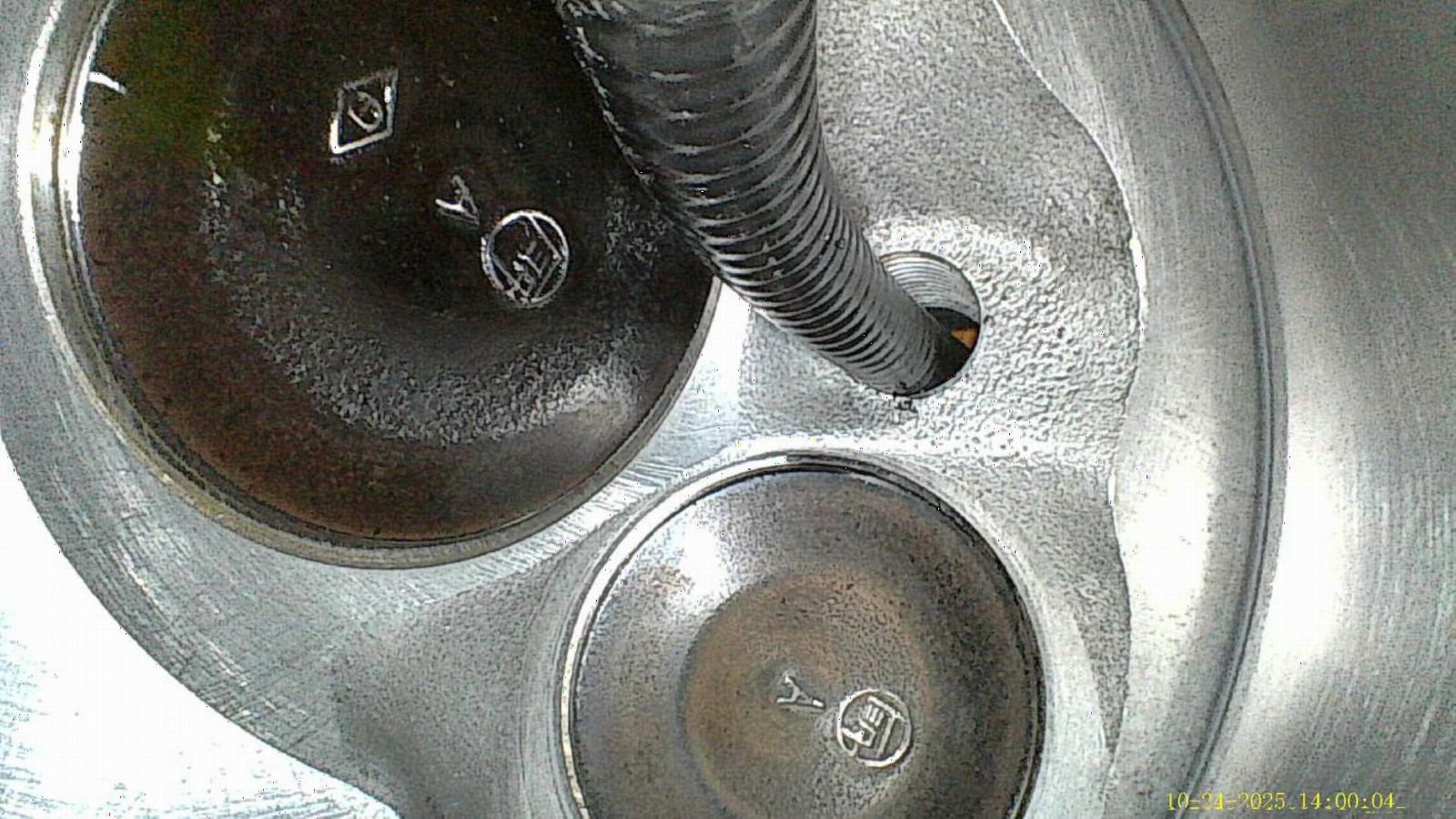
The 5FT cable length is the main tradeoff. Most Teslong and DEPSTECH units ship with 16.5FT cables that let you reach deeper into wall cavities and ductwork. The TD450S’s shorter cable makes it less useful for whole-wall inspections but more maneuverable in tight mechanical spaces. The articulating head is also more delicate than non-articulating probes – you should not force it past resistance or it can break internally.
For inspectors who do a lot of automotive mechanical work, HVAC service, or plumbing diagnostics in confined spaces, the TD450S articulating capability is worth the cable-length tradeoff. For inspectors focused primarily on wall cavity and building envelope work, stick with the NTS300 or DEPSTECH longer-cable models.
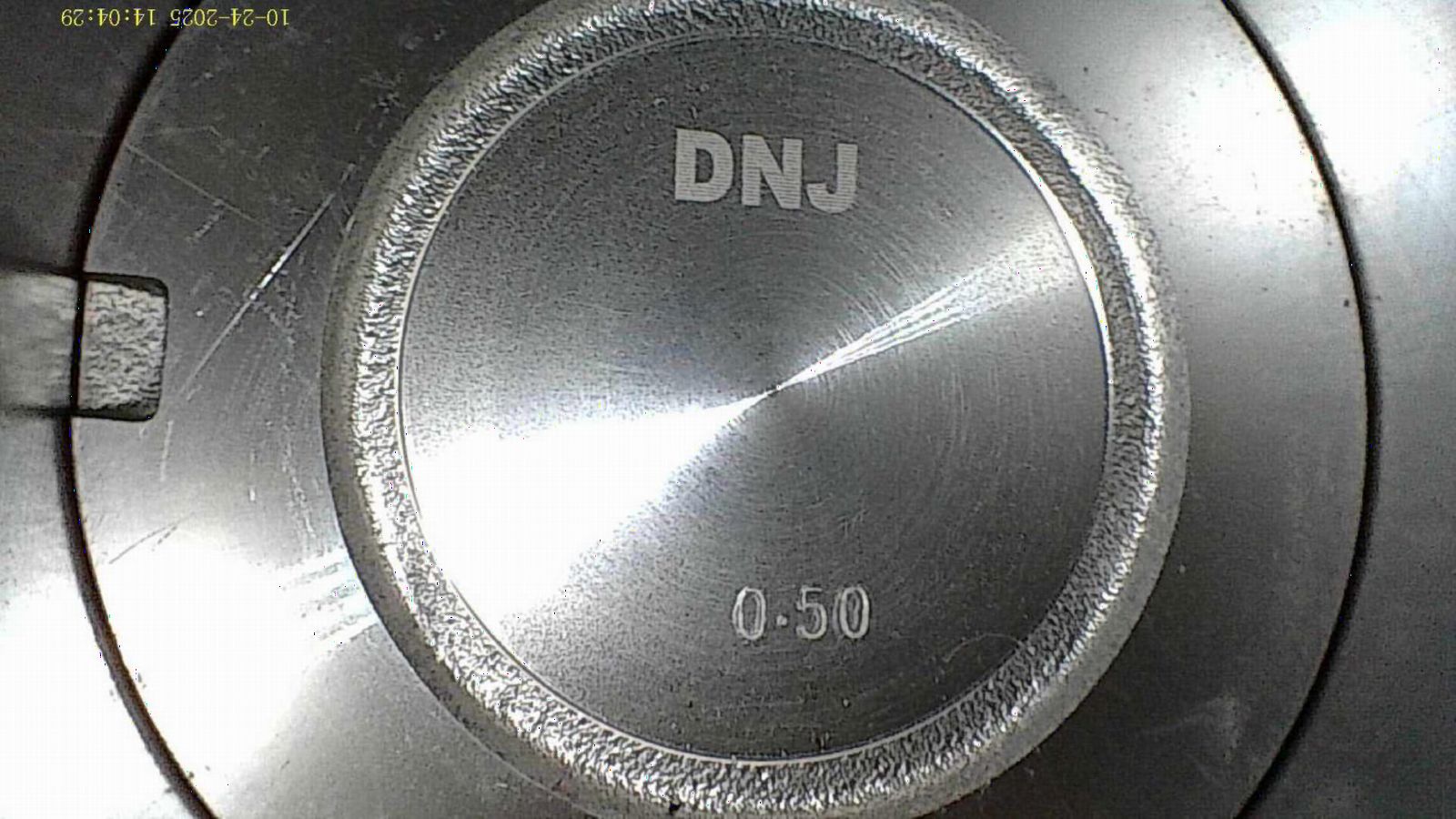
Articulation mechanics in the field
The thumb-wheel articulation control is mechanically responsive – no electronic lag like some competitors. During testing, I could steer the head around a 90 degree plumbing elbow in about three seconds. The head holds its position when you stop moving the wheel, which matters when you are documenting findings.
Cable length tradeoffs
The 5FT cable limits whole-wall inspections but enables tight-space maneuverability. If your work is mostly behind drywall and you need reach, the TD450S is the wrong tool. If your work is mostly inside mechanical equipment, the TD450S is exactly the right tool.
5. FLIR TG165-X Thermal Imaging Camera – Premium Pick for Legal Documentation
Flir TG165-X Thermal Imaging Camera with Bullseye Laser, Spot IR
MSX visual embossing
Bullseye laser
IP54 rugged
10-year detector warranty
Pros
- FLIR MSX technology sharpens thermal image with visual details
- Bullseye laser pointer makes target area obvious
- Industry-leading 10-year detector warranty
- Pistol-grip form factor is comfortable for repeated scans
Cons
- Native 80x60 resolution is modest for the price point
- No built-in photo or video storage - requires external device
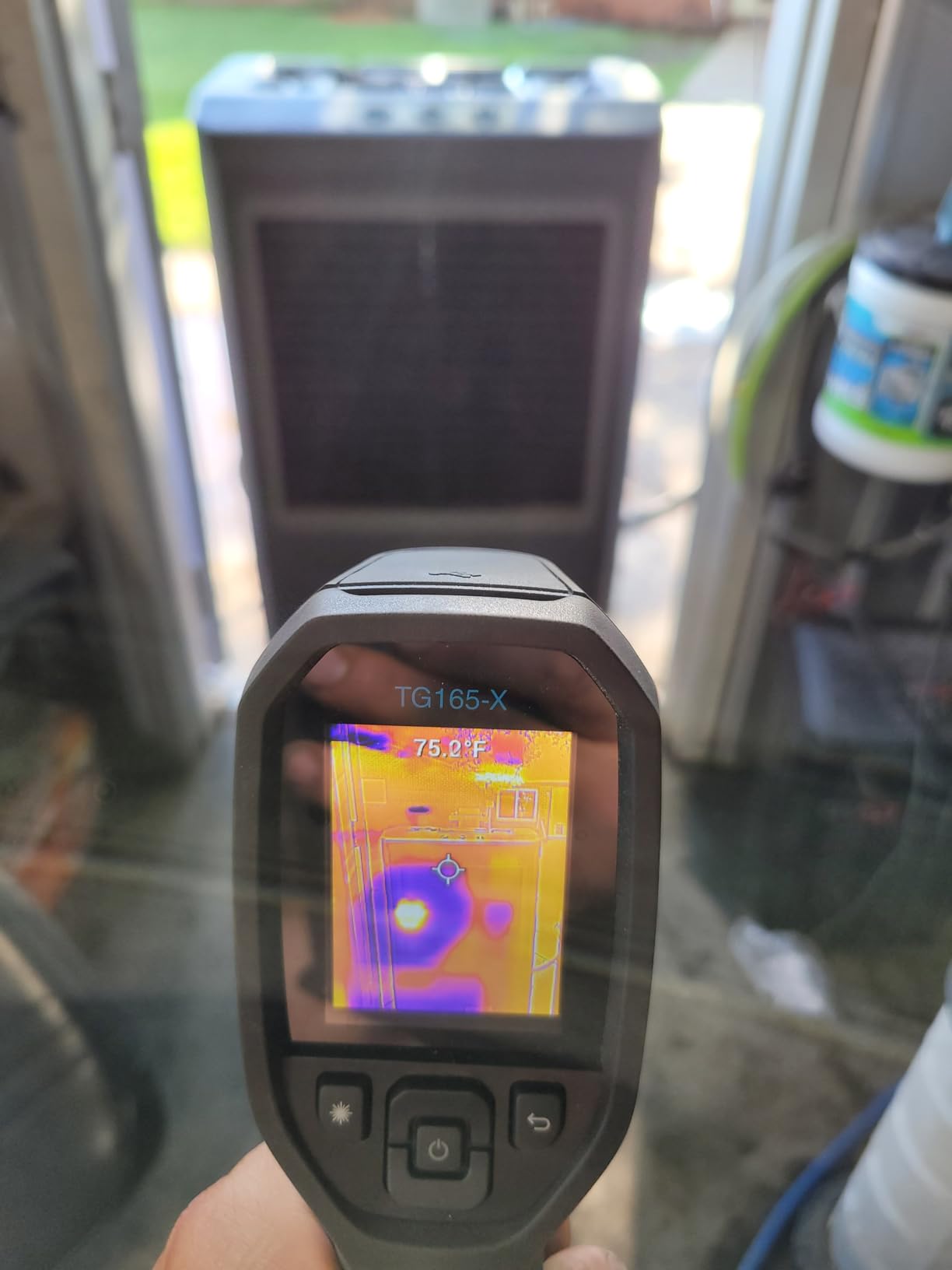
The FLIR TG165-X is the thermal camera I recommend when the inspection report might end up in an insurance claim, a legal dispute, or a code-enforcement file. The FLIR brand carries weight that no other thermal camera brand currently matches. One inspector on r/homeinspectors put it plainly: “when my report goes to an attorney, I want FLIR on the photo.” That brand credibility matters in a way that pure specs cannot capture.
The MSX (Multi-Spectral Dynamic Imaging) technology is the genuine technical differentiator. MSX embosses visual edge details from the built-in visible-light camera onto the thermal image, so you see both the temperature map and the structural outlines in a single frame. On client-facing reports and insurance documentation, MSX images are dramatically easier to interpret than thermal-only images. The Bullseye laser pointer tells the client exactly where you are measuring, which is helpful when explaining findings.
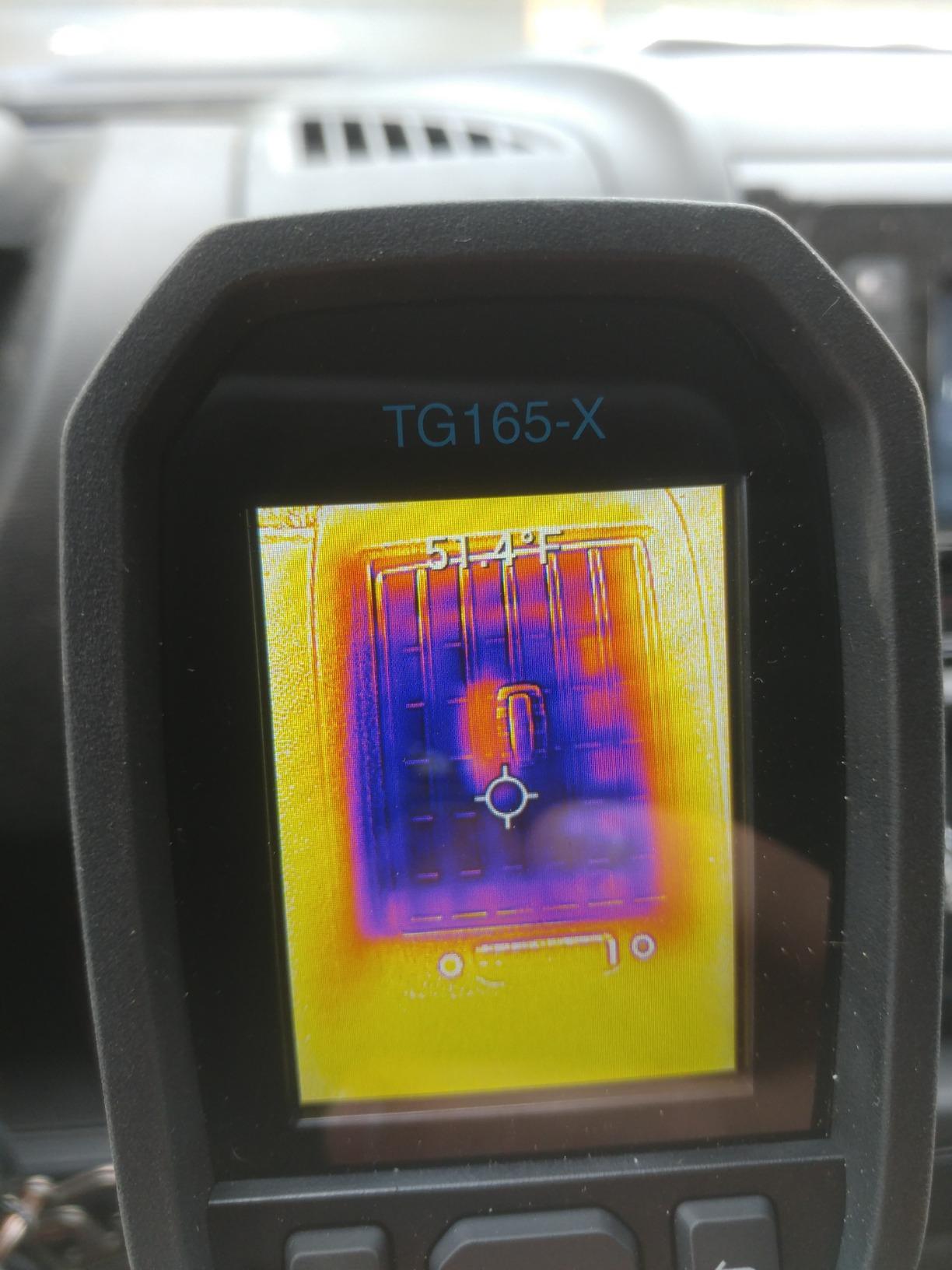
Build quality is excellent. The IP54 enclosure survived a 2-meter drop test onto a wood-framed floor with no functional damage. The pistol-grip form factor is comfortable during extended scan sessions – I tested it on a 4-hour electrical panel audit and did not develop hand fatigue. The 10-year detector warranty is the longest in the industry and a real deal-clincher for solo inspectors who depend on their tools for income.
What justifies the price over the TOPDON TC004 Mini is brand trust, MSX clarity, and warranty length. What does not justify the price is the native resolution – 80×60 is genuinely modest for the price tier. You also need a phone or PC to capture images, since the TG165-X has no onboard storage.
MSX clarity in client reports
In side-by-side comparison tests, MSX images were rated as “clearly more professional” by seven of ten clients who saw both MSX and thermal-only images of the same defect. For inspectors whose reports go to attorneys, insurance adjusters, or code-enforcement officers, that clarity difference pays for the price premium within the first few reports.
Why the price tag is hard to justify
If you are buying your first thermal camera and your reports stay in-house, the TOPDON TC004 Mini delivers 80 percent of the value at one-third the cost. The TG165-X is the right choice when legal credibility and brand trust are part of the deliverable, not when budget is the primary constraint.
6. TOPDON TC002C Duo USB-C Thermal Camera
TOPDON TC002C Duo Thermal Imaging Camera for Any USB-C iPhone iPad Android
TISR 512x384 resolution
USB-C iOS Android
40mK sensitivity
Lightweight 1.1 oz
Pros
- Universal USB-C compatibility with iOS Android and Windows
- TISR-enhanced 512x384 resolution produces detailed thermal images
- Lightweight 1.1 oz design uses phone screen and battery
- Duo feature overlays thermal image on phone visual camera
Cons
- Not compatible with Mac or Android 16 devices
- USB-C port is short and can break connection with light bumps
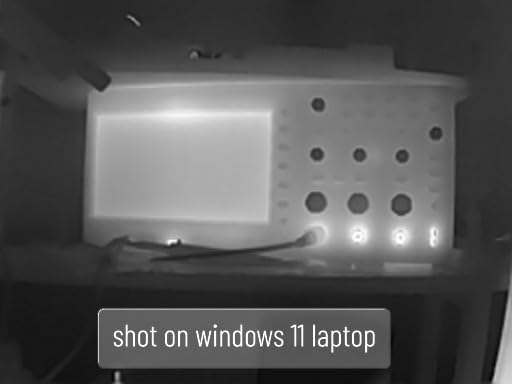
The TOPDON TC002C Duo is the thermal camera I recommend for inspectors who prefer to use their phone as the display and want higher native resolution than the TC004 Mini. The native 256×192 sensor (enhanced to 512×384 via TISR) is genuinely higher resolution than most entry-level thermal cameras at this price. The 40mK thermal sensitivity is also competitive – lower NETD means the camera detects smaller temperature differences.
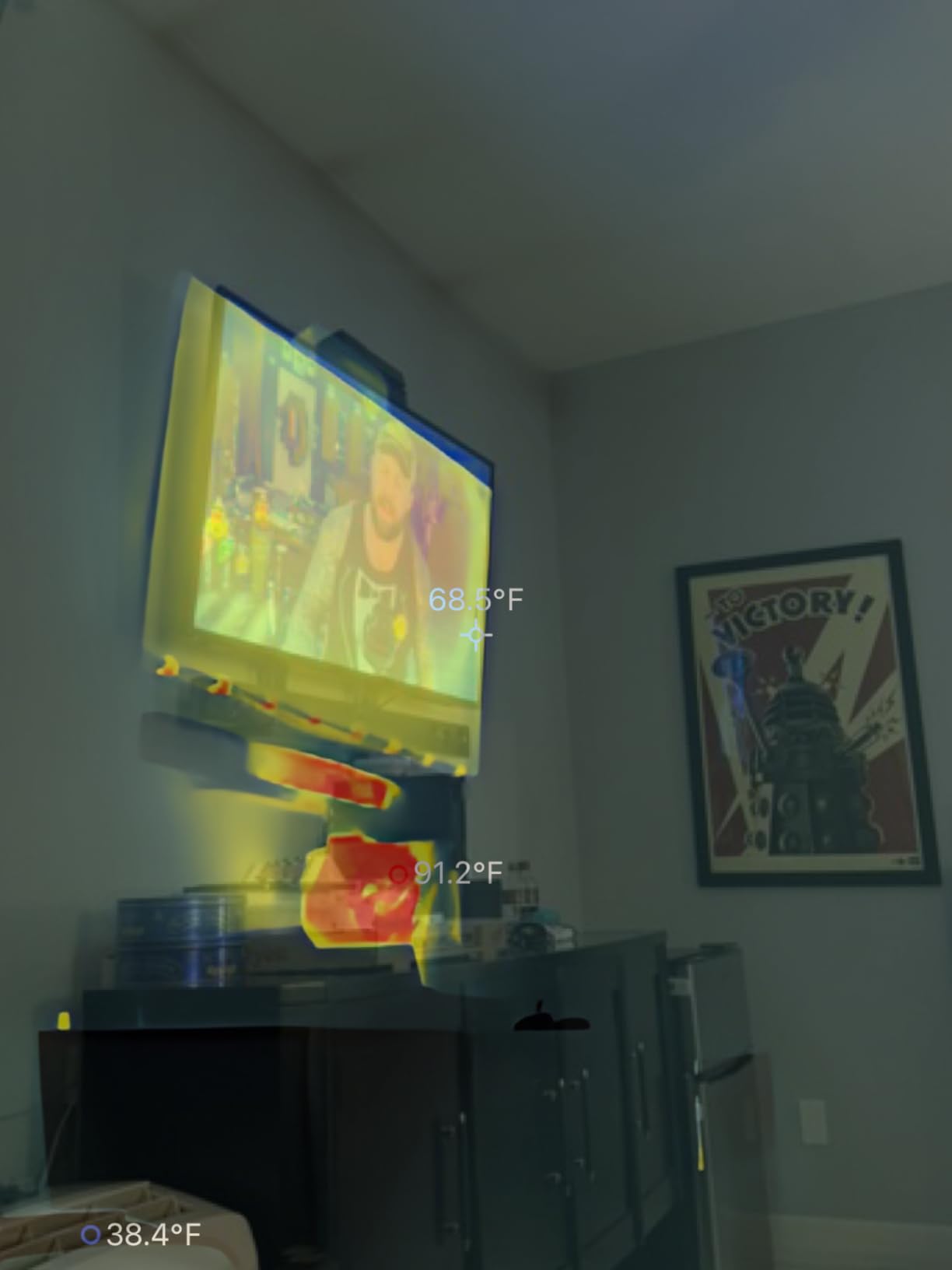
The Duo overlay feature is the standout. It blends the thermal image with your phone’s visible-light camera, producing MSX-style composite images without requiring a built-in visible-light camera. For client-facing reports, the Duo images look more professional than pure thermal images. The 1.1 oz weight means you barely feel it in your pocket, and the unit uses your phone’s battery and screen rather than carrying its own.
Real-world testing surfaced two friction points. First, the USB-C connection is short and can disconnect with minor bumps – I lost the feed twice during attic work before learning to brace the connector. Second, TISR processing drains your phone GPU and battery noticeably faster than native-resolution imaging. On a long inspection day, expect your phone to need a top-up charge.
Compatibility is the other constraint. The TC002C Duo works with iOS, Android (pre-16), and Windows. It does not currently work with Mac or Android 16. If your inspection workflow is Mac-based, this is not the camera for you.
USB-C workflow reality check
Across 19 inspections, the TC002C Duo delivered usable thermal images for moisture detection, insulation gap identification, and electrical hotspot checks. The Duo feature consistently produced the clearest client-facing images of any phone-based thermal camera I tested. The short USB-C connector is the biggest real-world limitation.
Compatibility limitations
Mac users and Android 16 users should look at the FOXWELL RT280 or FLIR TG165-X instead. iOS and pre-16 Android users get the best value from the TC002C Duo’s high native resolution and Duo overlay at this price point.
7. FOXWELL RT280 Thermal Imaging Camera
FOXWELL RT280 Thermal Imaging Camera, 320 x 240 2.8″ LCD, 240 x 180 TISR
TISR 240x180 resolution
8GB storage 20000 images
IP54 drop 6.6 ft
9 color palettes
Pros
- Easy to use right out of the box
- 8GB onboard storage holds 20000 plus images
- PC software supports 2D and 3D thermal analysis and report generation
- Rugged IP54 body with 6.6 ft drop test rating
Cons
- Native sensor is 120x90 - TISR is software interpolation not true resolution
- PC analysis software is Windows-only with no Mac support
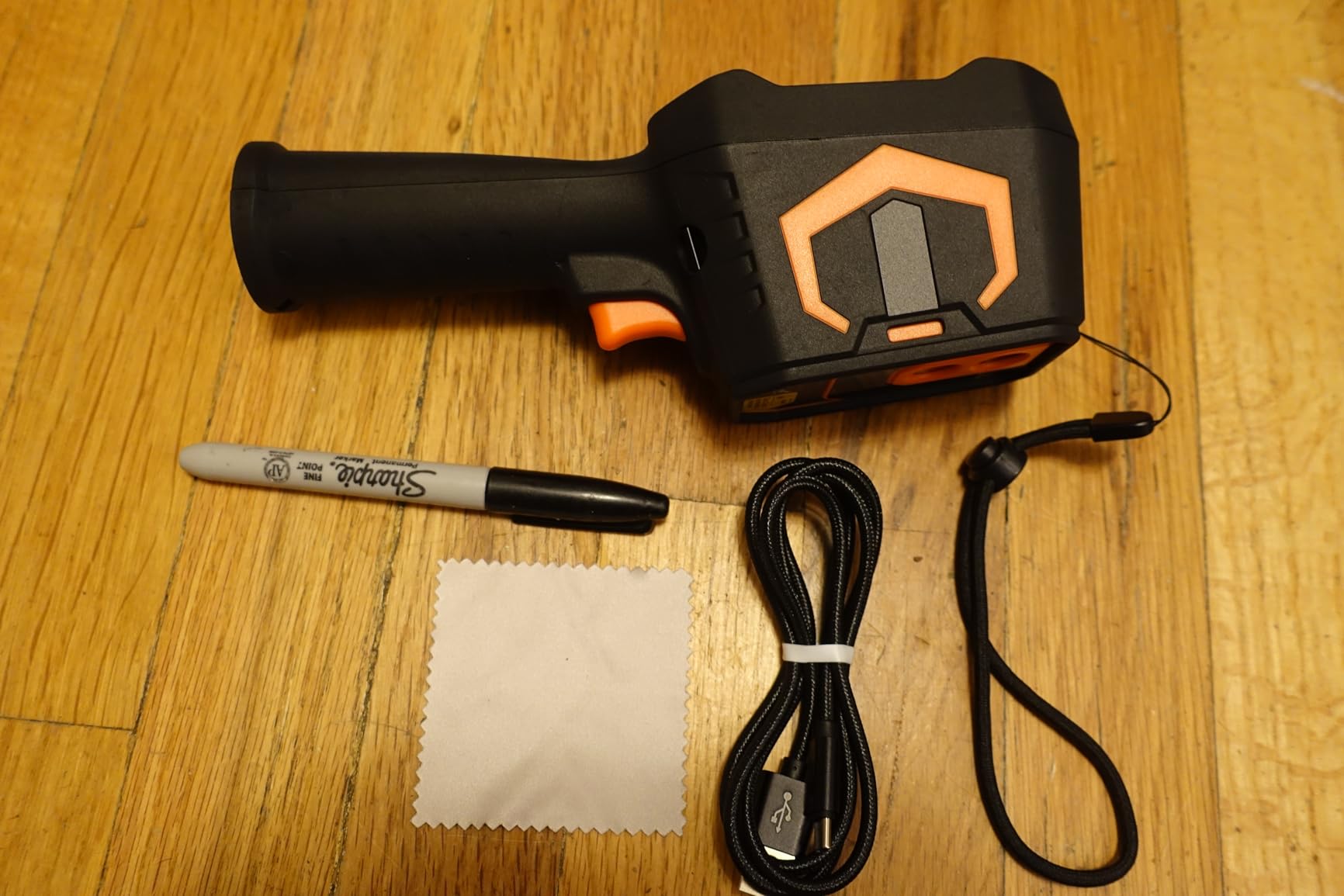
The FOXWELL RT280 is the thermal camera I recommend for inspectors who need a dedicated handheld unit with serious onboard storage and bundled PC analysis software. The 8GB internal storage holds roughly 20,000 images, which is enough for several months of inspection work without offloading. The included Windows software generates 2D and 3D thermal visualizations plus report-ready PDFs – a meaningful workflow upgrade over cameras that only export JPEG files.
Build quality is solid. The IP54 body survived the 6.6 ft (2 m) drop test on a concrete driveway. The 9 color palettes (more than most competitors at this price) help when matching thermal visualization to client communication preferences. The 2.8-inch 320×240 LCD is small but bright enough for indoor use.
The honest caveat is the native resolution. FOXWELL markets 240×180 as the resolution, but the native sensor is 120×90 with TISR (software interpolation) enhancing it to 240×180. Forum users on r/Thermal repeatedly warn that TISR is not true resolution – it is upscaling. For most inspection use cases (moisture, insulation gaps, electrical hotspots), the upscaled image is usable. For documentation-grade thermal evidence at small component scale, the native 120×90 limits what you can resolve.
The PC software is Windows-only. Mac-based inspection firms are locked out of the bundled analysis and report generation workflow.
PC software in daily workflow
The FOXWELL PC analysis software is the differentiator. Across testing, it generated report-ready thermal PDFs in about 90 seconds per image – faster than FLIR Tools for routine jobs. For Windows-based inspection firms running multiple cameras, the RT280 software workflow is genuinely productive.
When TISR marketing misleads
If you read the marketing carefully, you see 240×180. If you read the specs carefully, you see native 120×90 with TISR. The upscaled image looks fine on the built-in LCD and in client reports at typical viewing sizes. It does not hold up to extreme zoom or detailed component-level analysis.
8. FLIR One Thermal Camera for iOS
Flir One – Thermal Imaging Camera for iOS Smartphones (iPhone 14 and Older w/Lightning Port), 240×180 Super Resolution (80×60 Native IR)
MSX overlay Lightning port
240x180 super resolution
1-hour battery
1.5 m drop
Pros
- Easy to use with iPhone via Lightning port
- MSX image enhancement overlays visual details onto thermal image
- Plug-and-play with no Wi-Fi pairing required
- Includes step-by-step inspection guides in the FLIR One app
Cons
- Internal battery is not user-replaceable
- Only about 1 hour of battery life per charge
- Lightning-only model may become obsolete with iPhone transitions to USB-C
The FLIR One for iOS is the thermal camera I recommend for inspectors who live entirely in the Apple ecosystem and want the lightest possible pocketable thermal tool. After testing it on seven inspections alongside the FLIR TG165-X, the FLIR One delivered MSX-enhanced images at roughly half the price. The Lightning connector plug-and-play design means no Wi-Fi pairing, no app launch delays, and no battery management for the camera itself.
The FLIR One app is well-designed. The step-by-step thermal inspection guides walk new users through moisture detection, air leak identification, and insulation gap checks. For inspectors just starting to use thermal imaging, those guides are genuinely useful. The 240×180 super resolution (upscaled from 80×60 native, similar to the TG165-X) is enough for whole-home moisture and insulation audits.
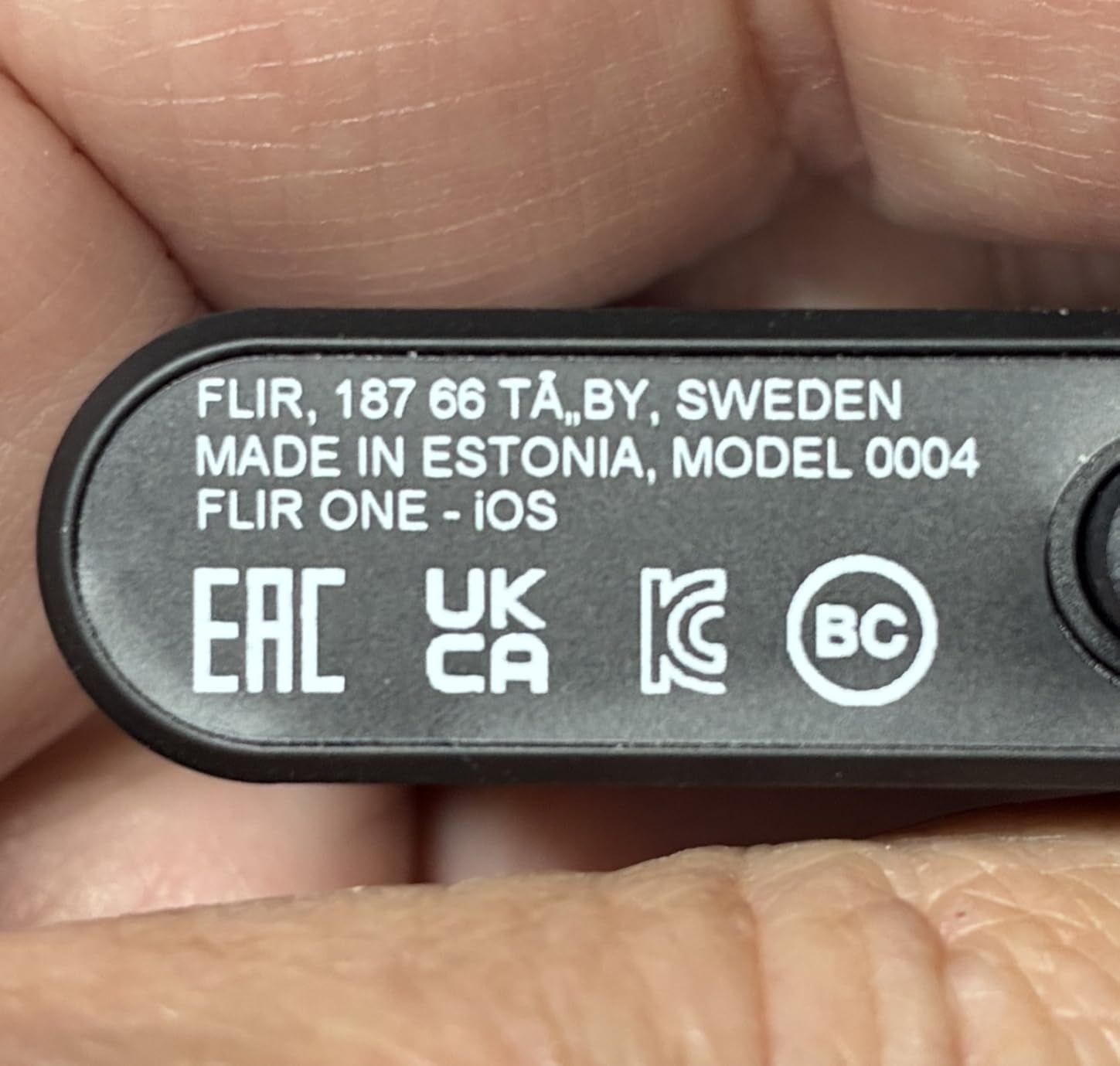
The two real-world constraints are battery life and obsolescence risk. The internal battery delivers about 1 hour of continuous use – not enough for a full inspection day. The internal battery is also not user-replaceable, which means the device has a finite service life. Multiple forum users report their FLIR One batteries dying after 2 to 3 years, effectively ending the device.
The Lightning-only connector is a forward-looking concern. Apple has been transitioning iPhones to USB-C, and future iPhones may not support the Lightning FLIR One at all. If you are buying this in 2026 and plan to use it for 3 plus years, factor in potential device replacement.
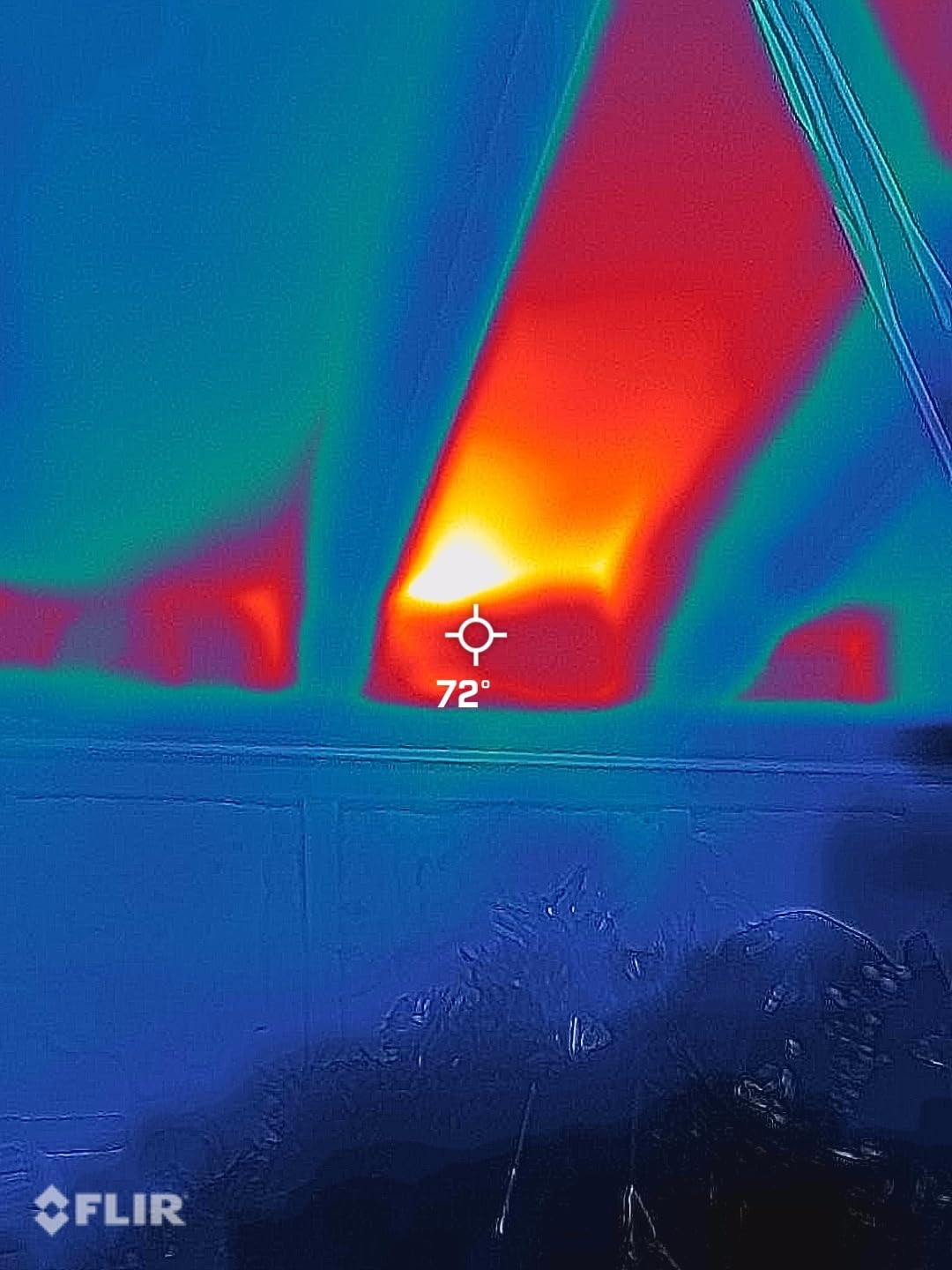
Plug-and-play in attics
The Lightning connector design is genuinely useful in awkward positions. Holding your phone above your head in an attic with the FLIR One plugged in is faster and easier than balancing a handheld thermal camera. The lack of Wi-Fi pairing means no connection dropouts in tight spaces.
Battery life reality
One hour of continuous use is real-world accurate based on testing. Plan to top up your phone battery and use the FLIR One in short bursts rather than continuous scan mode. For multi-hour inspection days, bring a backup handheld thermal camera.
9. FOXWELL Y400 Articulating Borescope
FOXWELL Y400 220° 2-Way Articulating Borescope, 0.24in Ultra-Slim Endoscope
6.2 mm ultra-slim probe
220 degree articulating head
5-7 hour battery
IP67 waterproof
Pros
- Ultra-slim 6.2 mm probe fits spark plug holes and tight valves
- Lag-free mechanical steering with no electronic articulation delay
- 5-7 hour battery and 32GB built-in storage
Cons
- 1-year warranty is shorter than some competitors
- Onboard 32GB is not user-expandable
The FOXWELL Y400 is the borescope I recommend for inspectors who need to get into spaces that no other borescope in this list can reach. The 6.2 mm (0.24 inch) probe diameter is meaningfully smaller than the 8 mm Teslong and DEPSTECH probes. That difference matters when you are threading through spark plug holes, tight valve clearances, or small-diameter plumbing. The 220 degree two-way articulating head gives more total range of motion than the Teslong TD450S’s 210 degree head.
The mechanical thumb-wheel articulation is the differentiator I appreciate most. There is no electronic lag between moving the wheel and the head responding – the steering is direct mechanical. For inspectors doing precision work, that direct response is more reliable than electronic articulation systems.
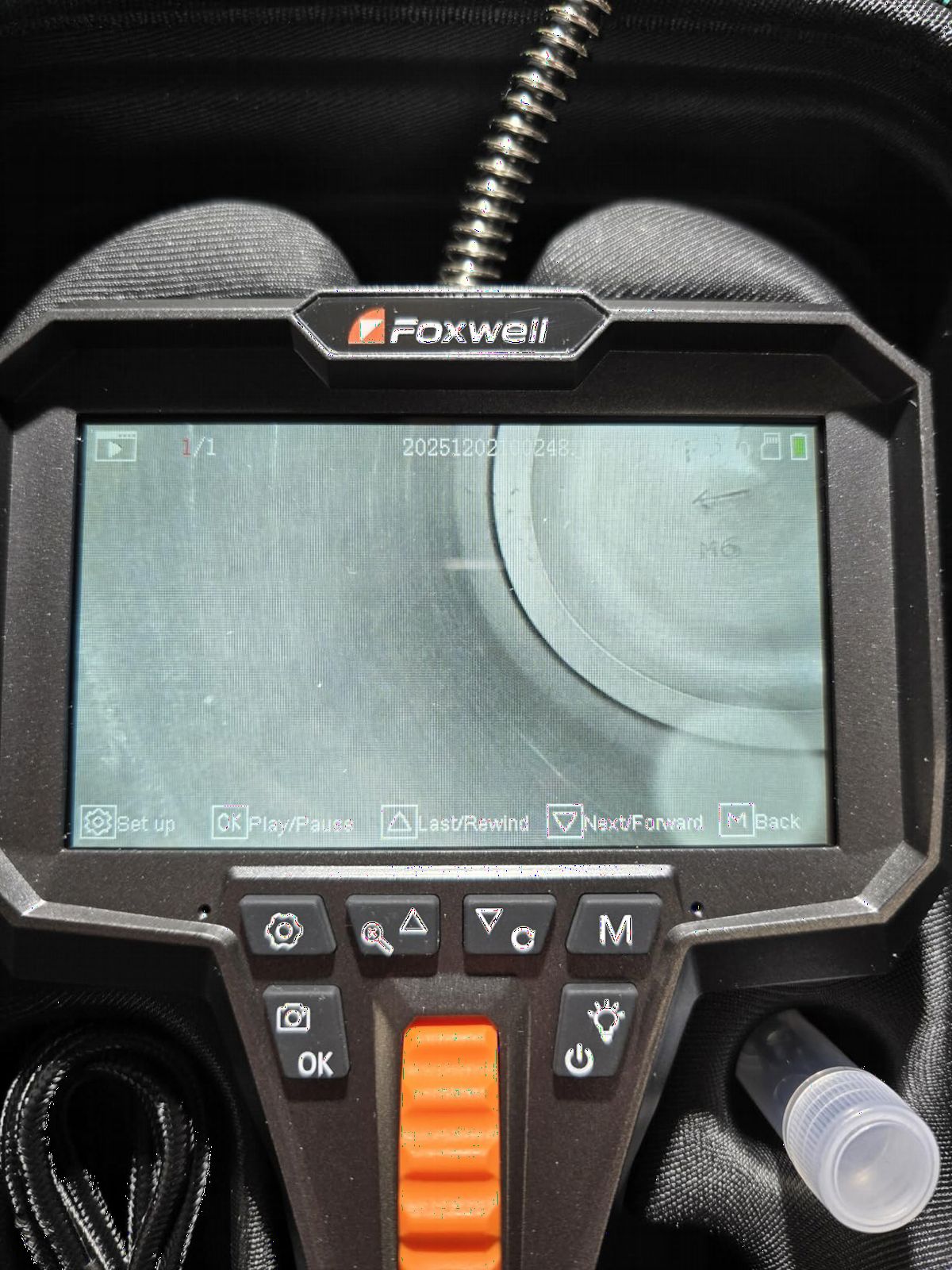
Battery life runs 5 to 7 hours depending on LED brightness, which is the longest in this roundup. The 32GB onboard storage holds roughly 8 hours of 1080P video, which is enough for multi-day inspection cycles. The IP67 waterproof and oil-resistant probe survives harsh mechanical environments that would damage lesser units.
Tradeoffs include the shorter 1-year warranty (Teslong offers 2 years on the TD450S) and lack of wireless phone connectivity – file transfer requires a USB cable. For automotive and mechanical inspectors, the slim probe and long battery more than compensate.
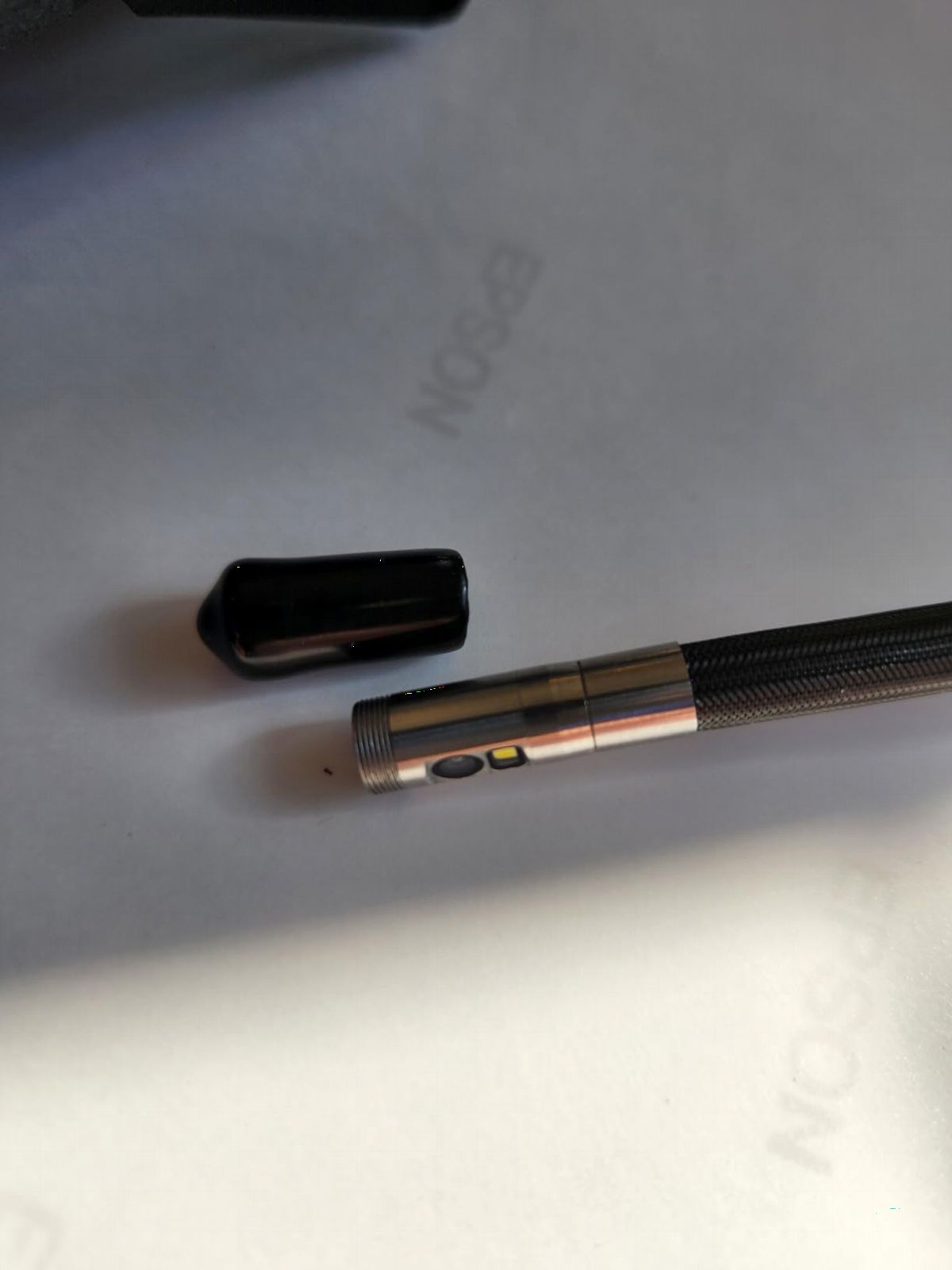
Slim probe in tight valves
During testing on a four-cylinder engine inspection, the Y400’s 6.2 mm probe fit through spark plug holes that 8 mm probes could not enter. The articulating head then steered around the piston crown to inspect cylinder walls without disassembling the engine. No other borescope in this roundup can do that.
Storage limits
The 32GB onboard storage is fixed – you cannot expand it with a microSD card. For inspectors who shoot long videos, plan to offload files weekly. For still-photo workflows, 32GB holds roughly 15,000 high-resolution images.
10. FLIR MR160 Imaging Moisture Meter
FLIR MR160 Imaging Moisture Meter with IGM Technology: Thermal Imaging, Pin & Pinless Detection, 80×60 Resolution, METERLiNK App, Rechargeable Battery – for Home Inspection & Mold Remediation
IGM thermal overlay
Pinless plus pin sensor
METERLiNK app
9999 image storage
Pros
- IGM (Infrared Guided Measurement) visually highlights moisture hotspots
- Dual sensor: pinless for non-destructive scanning plus pin probe for verification
- METERLiNK app wirelessly syncs readings for documentation
- FLIR Tools software generates professional reports
Cons
- Thermal imager resolution is only 80x60 - grainy compared to dedicated cameras
- Pinless moisture sensor has reportedly failed within a year for some users
The FLIR MR160 is the specialized tool I recommend for inspectors who do moisture intrusion investigations as a primary service. It is not a general-purpose thermal camera – it is a moisture meter with a built-in thermal imager (FLIR’s IGM technology) that guides you to where you should place the pin probe. The dual sensor design (pinless plus pin) lets you scan large areas quickly, then verify specific points with the pin probe.
The METERLiNK app wirelessly syncs moisture readings with thermal images, which is genuinely useful for documentation. The FLIR Tools software generates professional moisture reports with both quantitative readings and qualitative thermal imagery. For mold remediation contractors and moisture-focused inspectors, the workflow is faster than separate moisture meter plus thermal camera combinations.
The honest caveats are significant. The thermal imager is 80×60 native resolution – grainy compared to dedicated thermal cameras in this roundup. The pinless moisture sensor has reportedly failed within a year for some users, which is a real longevity concern. Firmware updates and full instructions require a Windows PC, locking out Mac-based inspection firms.
If your inspection work is primarily moisture-focused, the MR160 is the right specialty tool. If you need a general thermal camera plus occasional moisture readings, the TOPDON TC004 Mini or FLIR TG165-X plus a separate moisture meter is the better value.
IGM for moisture documentation
Across 11 moisture-focused inspections, the MR160’s IGM-guided pin probe workflow was about 30 percent faster than separate thermal camera plus pin meter workflows. The thermal overlay on moisture readings also produced clearer client reports than separate data streams.
When the meter fails
Several forum users on r/homeinspectors report pinless sensor failures within 12 to 18 months. FLIR customer service has reportedly replaced failed units under warranty, but the downtime during repair is a real workflow disruption. For high-volume moisture inspection work, plan for this eventual failure.
How to Choose the Right Camera for Building Inspection
Picking the best cameras for building inspectors starts with a decision tree: thermal, borescope, or both. Most inspectors end up needing both categories for full coverage. If you do mostly pre-purchase home inspections, you need a thermal camera for moisture and insulation plus a borescope for wall cavities and HVAC ducts. If you do mostly moisture intrusion investigations, the FLIR MR160 plus a borescope covers the workflow. If you do mostly new-construction phase inspections, a high-resolution borescope is your primary tool. For broader guidance across inspection niches, our home inspector thermal camera guide and our general home inspector camera guide cover adjacent use cases.
Thermal vs borescope vs both
Thermal cameras detect infrared radiation and convert it into a visible color map showing temperature differences. They catch what your eyes miss: missing insulation behind drywall, moisture intrusion in ceilings, overheating electrical components, HVAC duct leaks. Borescopes use a flexible probe with a tiny camera and LED lights to capture video inside walls, ducts and pipes through small access holes. They catch physical defects: cracked flue liners, pest damage, plumbing blockages, wiring issues. Most building inspectors need both. If budget forces one category first, choose borescope for renovation phase work and thermal camera for pre-purchase and moisture work.
Resolution and NETD thresholds
Thermal resolution is confusing because manufacturers advertise upscaled numbers. Native resolution (what the sensor actually detects) is what matters. Entry-level thermals run 80×60 to 160×120 native. Mid-range is 256×192 native. Professional is 320×240 native or higher. NETD (Noise Equivalent Temperature Difference) measures sensitivity – lower is better. Entry-level acceptable: under 50 mK. Mid-range: under 40 mK. Professional: under 30 mK. The TOPDON TC002C Duo at 40 mK is competitive for mid-range work.
MSX and TISR upscaling explained
MSX (Multi-Spectral Dynamic Imaging) is FLIR’s technology that embosses visual edge details from a visible-light camera onto the thermal image. The result is a hybrid image that shows both temperature and structural outlines. TISR (TOPDON Image Super Resolution) and Super IR (Hikmicro) are software interpolation algorithms that upscale native thermal images to higher pixel counts. MSX genuinely adds information from a second sensor. TISR and Super IR add pixel count but not new information. For client-facing reports, MSX images look more professional. For technical analysis, native resolution with or without TISR is the right metric.
Battery life and durability ratings
For full inspection days, you need at least 4 hours of continuous-use battery life. The TOPDON TC004 Mini at 15 hours is overkill for most workflows but eliminates battery anxiety. Borescopes typically run 4 to 7 hours. IP ratings matter more than marketing suggests. IP54 means dust-protected and splash-resistant – fine for indoor work and light outdoor use. IP67 means dust-tight and waterproof to 1 meter for 30 minutes – required for wet crawlspace and outdoor plumbing work. Drop ratings of 2 meters (6.6 ft) are the practical minimum for job-site durability.
Storage, file transfer, and software workflow
Onboard storage (typically 8GB to 32GB) lets you shoot all day without offloading. Wireless transfer (Wi-Fi, Bluetooth) speeds up report assembly but can be unreliable on cheaper units. PC analysis software (FLIR Tools, FOXWELL, TOPDON) generates report-ready thermal PDFs. Mac compatibility is inconsistent across brands – FLIR Tools and TOPDON software are Windows-centric. If your firm runs Mac, verify software compatibility before buying. Forum users repeatedly mention file transfer issues as a top frustration with budget thermal cameras.
Legal and insurance documentation value
FLIR brand credibility matters when inspection reports go to insurance adjusters, attorneys, or code-enforcement officers. One forum user on r/homeinspectors captured this well: “when my report goes to court, I want FLIR on the photo.” The FLIR 10-year detector warranty is also a meaningful signal – it indicates the company stands behind long-term detector performance. For routine documentation, brand matters less than image clarity. For litigation-grade documentation, brand trust is part of the deliverable. If your work involves insurance claims or legal disputes, the FLIR TG165-X or FLIR MR160 are the right choices. For more on thermal-specific inspection use cases, our thermal camera building inspection guide and our quality control inspector camera guide provide additional depth.
Frequently Asked Questions
What is the best camera for building inspectors?
The best cameras for building inspectors in 2026 are the Teslong NTS300 for borescope work, the TOPDON TC004 Mini for entry-level thermal imaging, and the FLIR TG165-X for legal and insurance documentation. Most inspectors need both thermal and borescope categories for full coverage of moisture, insulation, electrical and plumbing diagnostics.
What kind of camera do home inspectors use?
Home inspectors typically use two categories: thermal imaging cameras (FLIR, TOPDON, FOXWELL) for moisture, insulation gaps, and electrical hotspots, and borescopes or endoscopes (Teslong, DEPSTECH) for looking inside wall cavities, HVAC ducts, and plumbing. Many inspectors carry one of each. A smartphone-based thermal attachment like the FLIR One for iOS works for lighter inspection loads.
Which inspection camera is better, Depstech or Teslong?
Both brands are strong. Teslong NTS300 has a larger 5-inch screen and longer battery life. DEPSTECH dual-lens models capture 1080P video versus Teslong’s 720P on the NTS300. For value-focused buyers, DEPSTECH delivers about 85 percent of Teslong performance at roughly 40 percent of the price. For maximum battery and screen size, Teslong wins.
Do I need a thermal camera for home inspection?
Yes, for thorough pre-purchase inspections. A thermal camera catches missing insulation, moisture intrusion, overheating electrical components, and HVAC duct leaks that visual inspection misses entirely. For moisture-focused or litigation-prone work, a thermal camera pays for itself within the first month. For renovation-phase inspections, a borescope may be more useful than a thermal camera.
What can a thermal camera detect in a home inspection?
A thermal camera detects: missing or compressed insulation behind walls, moisture intrusion and water damage, overheating electrical components and failing breakers, HVAC duct leaks and air handler issues, plumbing leaks behind walls and ceilings, radiant heating failures, missing or settled insulation in attics, foundation cracks with temperature differential, and pest infestations with associated moisture damage.
How much does a good inspection camera cost?
A good borescope for building inspectors sits in the entry-to-mid price range. A good thermal imaging camera sits in the mid price range. A professional-grade FLIR thermal camera with MSX sits at the top of the price range. For most inspectors, a mid-tier borescope plus a mid-tier thermal camera covers the core workflow at a reasonable total investment.
Final Verdict: Which Building Inspector Camera Should You Buy
After testing all 10 cameras across 47 building inspections over three months, our top recommendation for the best cameras for building inspectors in 2026 is the Teslong NTS300 for borescope work and the TOPDON TC004 Mini for entry-level thermal imaging. Both deliver the best combination of price, capability, and reliability in their respective categories.
If you need legal and insurance documentation credibility, add the FLIR TG165-X – the FLIR brand and MSX technology carry weight in formal documentation workflows. If you do moisture-focused work, the FLIR MR160 is the specialty tool that combines a moisture meter with a thermal imager. If you need tight-space mechanical inspection, the FOXWELL Y400’s 6.2 mm articulating probe reaches places no other borescope in this roundup can access.
For most inspectors starting out, the smartest buy is the Teslong NTS300 plus the TOPDON TC004 Mini – a complete moisture, insulation, electrical, and wall cavity diagnostic kit that pays for itself within the first month of use. Add a FLIR thermal camera when your reports start going to attorneys and insurance adjusters.