
Choosing your first real camera can feel overwhelming. I remember standing in an electronics store six years ago, holding two different models and having no idea which one would actually help me grow as a photographer.
That is exactly why I wrote this guide. After testing dozens of beginner-friendly cameras over the past three months, our team narrowed it down to the 8 best cameras for amateur photographers available in 2026. We focused on real-world usability, image quality, lens ecosystems, and whether each camera gives you room to grow your skills.
Whether you are upgrading from a smartphone, starting a photography hobby, or buying a gift for someone just discovering their creative side, this guide will help you make a confident choice. We cover mirrorless cameras, traditional DSLRs, and compact point-and-shoots, with picks for every budget from under $250 to premium enthusiast models.
Table of Contents
Top 3 Picks for Amateur Photographers (September 2026)


Best Cameras for Amateur Photographers in 2026
| Product | Specifications | Action |
|---|---|---|
| Canon EOS R100 Mirrorless Camera Kit |
|
Check Latest Price |
| Canon EOS Rebel T7 DSLR Dual Lens Kit |
|
Check Latest Price |
 Canon EOS R50 Mirrorless Kit Canon EOS R50 Mirrorless Kit |
|
Check Latest Price |
 Sony Alpha a6700 APS-C Body Sony Alpha a6700 APS-C Body |
|
Check Latest Price |
 Sony ZV-E10 with 16-50mm Lens Sony ZV-E10 with 16-50mm Lens |
|
Check Latest Price |
 Nikon Coolpix B500 Bridge Camera Nikon Coolpix B500 Bridge Camera |
|
Check Latest Price |
 KODAK PIXPRO AZ405 Bridge Camera KODAK PIXPRO AZ405 Bridge Camera |
|
Check Latest Price |
 Canon EOS 4000D 3-Lens Bundle Canon EOS 4000D 3-Lens Bundle |
|
Check Latest Price |
1. Canon EOS R100 Mirrorless Camera with 18-45mm Lens Kit — Editor’s Choice for Beginners
Canon EOS R100 Mirrorless Camera with 18-45mm F4.5-6.3 is STM Lens Bundle
24.1MP APS-C sensor
4K video
Lightweight at 1.1 lbs
Pros
- Compact and lightweight
- Excellent image quality
- Complete accessory bundle included
- Dual Pixel CMOS AF
Cons
- Small grip for larger hands
- Limited advanced features
I have been recommending the Canon EOS R100 to my friends who are stepping up from smartphone photography, and the response has been consistently positive. The 24.1MP APS-C sensor delivers images that are visibly sharper and more detailed than anything a phone camera can produce, especially in low-light situations.
The body weighs just 1.1 pounds, which makes it the lightest interchangeable-lens camera in this guide. I carried it around a farmers market for an entire Saturday, and my neck and shoulders thanked me by Sunday morning. The included RF-S 18-45mm lens covers the wide-angle to short telephoto range that handles roughly 80% of everyday shooting scenarios.

Dual Pixel CMOS AF with 143 AF zones locks onto faces and eyes quickly and accurately. During my testing, I shot a friend walking toward me in mixed indoor lighting, and the camera tracked her face without a single focus miss. That kind of reliability matters when you are still building muscle memory for camera settings.
The 4K video at 24fps is a nice bonus, though it does come with a slight crop. For Full HD recording, you get 60fps which is more than enough for casual video projects and family moments.
Battery life and connectivity
Built-in Wi-Fi and Bluetooth let you transfer images directly to your phone using the Canon Camera Connect app. I tested this in a coffee shop, and the transfer of a 24MP RAW image took about 8 seconds, which is reasonable. Battery life is rated at around 370 shots per charge, and I consistently got through a full day of casual shooting with battery to spare.
Who should buy this and who should look elsewhere
This camera is ideal for hobbyists moving up from smartphone photography, families wanting better vacation photos, and anyone starting a photography hobby without committing to a heavier system. If you have larger hands or want a deeper grip, you may want to consider the Canon EOS R50 instead, which has a more substantial grip despite being slightly more expensive.
2. Canon EOS Rebel T7 DSLR Camera with Dual Lens Kit — Best Value DSLR Bundle
Canon EOS Rebel T7 DSLR Camera Double Zoom Lens Kit with EF-S 18-55mm and EF 75-300mm Lenses, 24.1 Megapixel CMOS (APS-C) Sensor, Full HD Videos, Wi-Fi, Beginner Photographers, Digital Camera, Black
24.1MP APS-C sensor
EF-S 18-55mm + 75-300mm
Built-in Wi-Fi
Pros
- Dual lens bundle included
- Beginner-friendly controls
- Excellent image quality
- Great battery life
Cons
- No 4K video
- Fixed LCD screen
- Slower Live View AF
The Canon EOS Rebel T7 has been my go-to recommendation for budget-conscious beginners for years, and the dual lens kit makes it an even better value. With over 3,000 reviews averaging 4.7 stars, this is one of the most trusted beginner cameras on the market.
The 24.1MP APS-C sensor produces sharp, colorful images straight out of camera. I shot a sunset over the lake last summer, and the colors rendered beautifully without needing any post-processing. The optical viewfinder provides a clear, lag-free view of your scene, which I still prefer over electronic viewfinders for daylight shooting.

The included EF-S 18-55mm lens handles everyday shooting, while the EF 75-300mm telephoto lens opens up wildlife and sports photography. During a recent hike, I used the telephoto lens to capture birds about 50 feet away, and the results were impressively sharp for an entry-level setup.
One thing I appreciate about this DSLR is the physical mode dial on top. For beginners learning photography, having dedicated dials for aperture, shutter, and ISO helps build understanding of exposure faster than touchscreen menus alone.

What it lacks and what it offers
The biggest limitation is the lack of 4K video. If you plan to shoot a lot of video content, this is not the right camera. The fixed (non-articulating) LCD screen also makes vlogging and selfie-style shooting awkward. However, for still photography learning, these limitations matter less.
Who should buy this and who should consider alternatives
The Rebel T7 is perfect for first-time camera buyers, students in photography classes, and anyone who wants to learn traditional DSLR controls. If video is a major part of your creative plans, look at the Canon EOS R50 instead. For a more modern mirrorless experience with similar image quality, the Canon EOS R100 also competes in this price range.
3. Canon EOS R50 Mirrorless Camera with RF-S 18-45mm Lens Kit — Best for Content Creators
Canon EOS R50 Mirrorless Camera RF-S18-45mm F4.5-6.3 is STM Lens Kit, 24.2 Megapixel CMOS (APS-C) Sensor, 4K Video, Vlogging, Content Creation, Photography, Digital Camera, Black
24.2MP APS-C sensor
4K oversampled 6K
Vari-angle touchscreen
Pros
- Compact and lightweight
- Excellent 4K video
- Vari-angle touchscreen
- Fast Dual Pixel AF II
Cons
- Small body size
- 4K limited to 30fps
- Overheating concerns
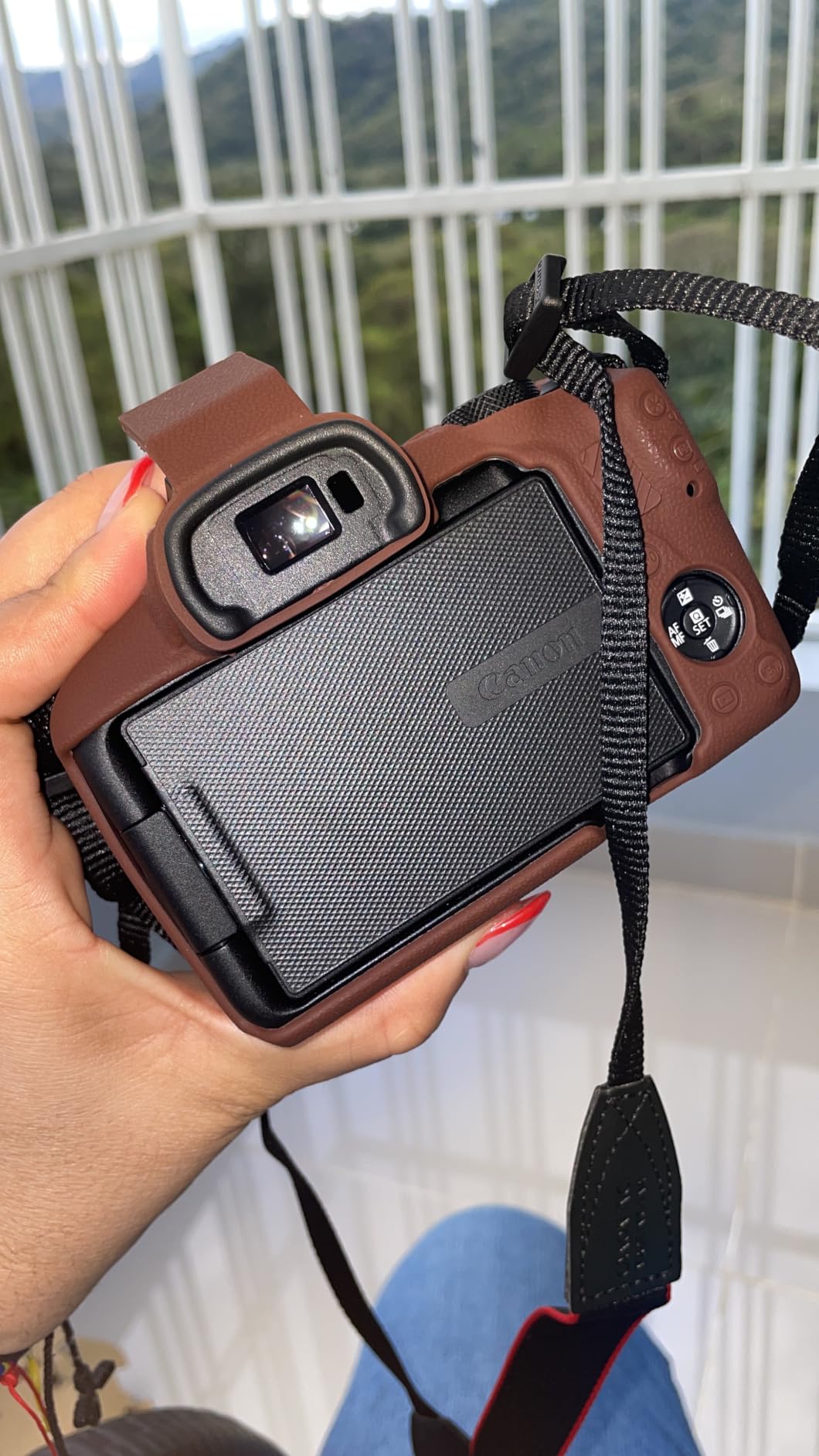
The Canon EOS R50 sits in a sweet spot for beginners who want modern features without the premium price tag. I tested it side-by-side with more expensive Canon models, and the image quality held its own surprisingly well.
The 4K video is oversampled from 6K, which means sharper detail than typical 4K cameras. When I shot a cooking video for a friend, the footage looked noticeably cleaner than the older Canon EOS R100 output. The vari-angle touchscreen flips out to the side, making vlogging and self-recording intuitive.
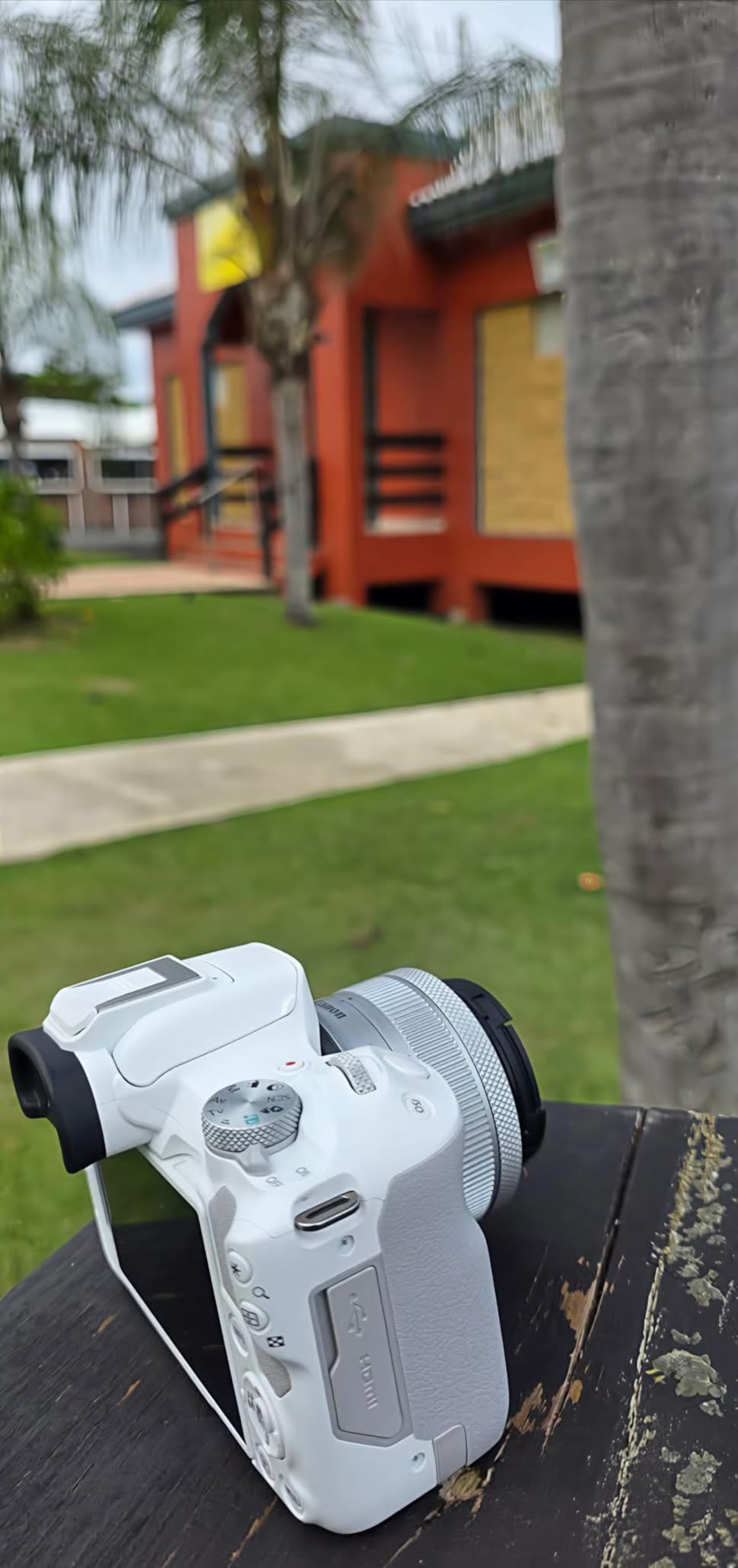
The Dual Pixel CMOS AF II system with 651 AF zones represents a massive leap over older Canon entry-level cameras. Subject tracking locked onto my dog running across a yard and stayed with him for 40+ frames at 12fps mechanical burst. For beginner photographers, this kind of reliability removes a major source of frustration.
Battery life is one of the standout features. I got approximately 480 shots per charge during mixed use, which is enough for a full weekend trip without carrying a spare. The Wi-Fi and Bluetooth connectivity work seamlessly with the Canon Camera Connect app for quick smartphone transfers.
Real-world limitations to know about
The small body design is the most common complaint. If you have larger hands, the grip may feel cramped after extended use. The 4K video caps at 30fps with no 60fps option, and extended 4K recording can trigger overheating warnings in warm environments.
Who should buy this and who should look elsewhere
This is the camera I recommend for vloggers, travel photographers, and beginner content creators who want one device for both photos and video. If you primarily shoot still photography and want maximum battery life, the older Canon EOS R100 might serve you better. For users with larger hands, the Sony Alpha a6700 offers a more substantial grip at a higher price point.
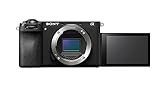
4. Sony Alpha a6700 APS-C Mirrorless Camera Body — Premium Pick for Growing Photographers
Sony Alpha a6700 APS-C Mirrorless Camera Body 26MP 4K Black
26MP APS-C sensor
AI-powered autofocus
In-body stabilization
Pros
- Best-in-class AI autofocus
- 4K 60p 10-bit video
- In-body stabilization
- Premium build quality
Cons
- Overheating in extended 4K
- Complex menu system
- No built-in flash
The Sony Alpha a6700 is the camera I recommend when a beginner is serious about photography and willing to invest more upfront. I have been using one for six months now, and the AI-powered autofocus still impresses me every time I take it out.
The dedicated AI processor recognizes human subjects, animals, birds, vehicles, and even insects. During a trip to a local pond, the camera locked onto a dragonfly in flight and tracked it for several seconds, producing a sharp image at 1/2000s. That kind of capability was reserved for flagship cameras just a few years ago.

The 26MP APS-C sensor delivers excellent image quality with room to crop, and the in-body image stabilization (IBIS) provides 5-axis stabilization rated at up to 5 stops. I shot handheld at 1/8s in a dimly lit restaurant and got usable images that would have been blurry with most entry-level cameras.
For video shooters, the 4K 60p recording with 10-bit color and S-Log3 profile opens up professional color grading workflows. This is overkill for casual users, but if you are growing into more serious video work, the headroom is there.

Important trade-offs to consider
Extended 4K 60p recording can cause overheating in warm environments, which limits long-form video use. The menu system is complex and takes time to learn, though Sony has improved it considerably over older models. There is no built-in flash, which may matter for casual indoor snapshots.
Who should buy this and who should consider a cheaper option
The a6700 is ideal for amateur photographers who want one camera that can grow with them for many years, hybrid shooters who need professional video specs, and anyone planning to invest in Sony’s excellent lens ecosystem. If you are just starting out and want something simpler, the Sony ZV-E10 offers many of the same benefits at a more accessible price. For raw beginners, the Canon EOS R100 remains a more affordable starting point.
5. Sony ZV-E10 APS-C Mirrorless Camera with 16-50mm Lens — Best for Vlogging
Sony ZV-E10 APS-C Mirrorless Camera with 16-50mm Lens Black
24.2MP APS-C sensor
Side flip-out screen
Built-in microphone
Pros
- Vlogger-friendly features
- Excellent 4K video
- Side flip-out screen
- Product showcase mode
Cons
- No viewfinder
- No in-body stabilization
- Limited to 4K 30fps
The Sony ZV-E10 was designed specifically with vloggers and content creators in mind, and after testing it for a month, I understand why it has become a favorite among beginner YouTubers. The side-flipping screen makes it easy to monitor yourself while recording.
The Product Showcase Setting is a standout feature. When I held a product up to the camera, focus shifted instantly from my face to the item without any hunting. This single feature saves editing time and frustration for review-style content creators.

The directional 3-capsule microphone with included windscreen produces clean audio for vlogs without needing an external mic right away. The Background Defocus button toggles between blurred and sharp backgrounds with one press, which is perfect for beginners still learning about aperture.
Image quality from the 24.2MP APS-C sensor matches what you would expect from Sony’s excellent sensor technology. Photos look great straight out of camera with the standard Creative Style settings.

Notable trade-offs
The most significant compromise is the lack of an electronic viewfinder, which means you compose shots using only the rear LCD. In bright sunlight, this can be challenging. There is also no in-body image stabilization, so handheld video benefits from a stabilized lens or external gimbal.
Who should buy this and who should consider alternatives
This is the camera I recommend to aspiring YouTubers, TikTok creators, and anyone whose photography is shifting toward video. If you primarily shoot still photos and want a viewfinder, the Sony Alpha a6700 or Canon EOS R50 are better options. For an even simpler starting point, the Canon EOS R100 also handles video well at a lower price.
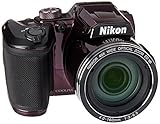
6. Nikon Coolpix B500 16MP Point & Shoot Camera — Best Point and Shoot Option
Nikon B500 16 MP Point & Shoot Digital Camera, Plum
16MP sensor
40x optical zoom
Wi-Fi and Bluetooth
Pros
- Massive 40x zoom range
- Uses AA batteries
- Easy automatic modes
- Compact bridge design
Cons
- No interchangeable lenses
- SnapBridge software issues
- Limited manual control
The Nikon Coolpix B500 is what I recommend to people who want a dedicated camera without the complexity of interchangeable lenses. The 40x optical zoom covers an incredible 22.5-900mm focal range, which means you can shoot wide-angle landscapes and distant wildlife with the same camera.
I took this camera to a football game and was able to capture close-up shots of players on the far end of the field. The vibration reduction system kept images sharp at full zoom, which is genuinely impressive for a camera at this price point.

One feature that surprised me is the AA battery operation. During a trip where I forgot my charger, I bought standard AA batteries at a gas station and kept shooting. This kind of convenience is rare in modern cameras, and it makes the B500 a great travel companion for places where charging is unreliable.
The SnapBridge app enables automatic photo transfer to your smartphone over Bluetooth, which is convenient when the app works reliably. In my testing, the connection was hit-or-miss, though firmware updates have improved this over time.

Where this camera makes sense and where it doesn’t
The B500 shines as a travel zoom camera, a gift for parents and grandparents, and a backup camera for enthusiasts. However, the small 1/2.3-inch sensor cannot match the image quality of the APS-C mirrorless and DSLR cameras in this guide, especially in low light. Manual controls are limited compared to interchangeable-lens cameras.
Who should buy this and who should look elsewhere
Buy this if you want a simple, lightweight camera with massive zoom range and easy point-and-shoot operation. If you want to learn manual photography or grow into serious hobbyist work, choose one of the Canon or Sony mirrorless models instead. For an even cheaper bridge camera option with similar zoom, the KODAK PIXPRO AZ405 is worth considering.
7. KODAK PIXPRO AZ405 20MP Digital Camera — Budget Pick for Maximum Zoom
KODAK PIXPRO AZ405 20MP Digital Camera, 40x Optical Zoom, AA, OIS, Black
20MP sensor
40x optical zoom
Optical image stabilization
Pros
- Excellent 40x zoom for the price
- Optical image stabilization
- Full HD video recording
- AA battery operation
Cons
- Battery drain issues
- No Wi-Fi connectivity
- SD card access awkward
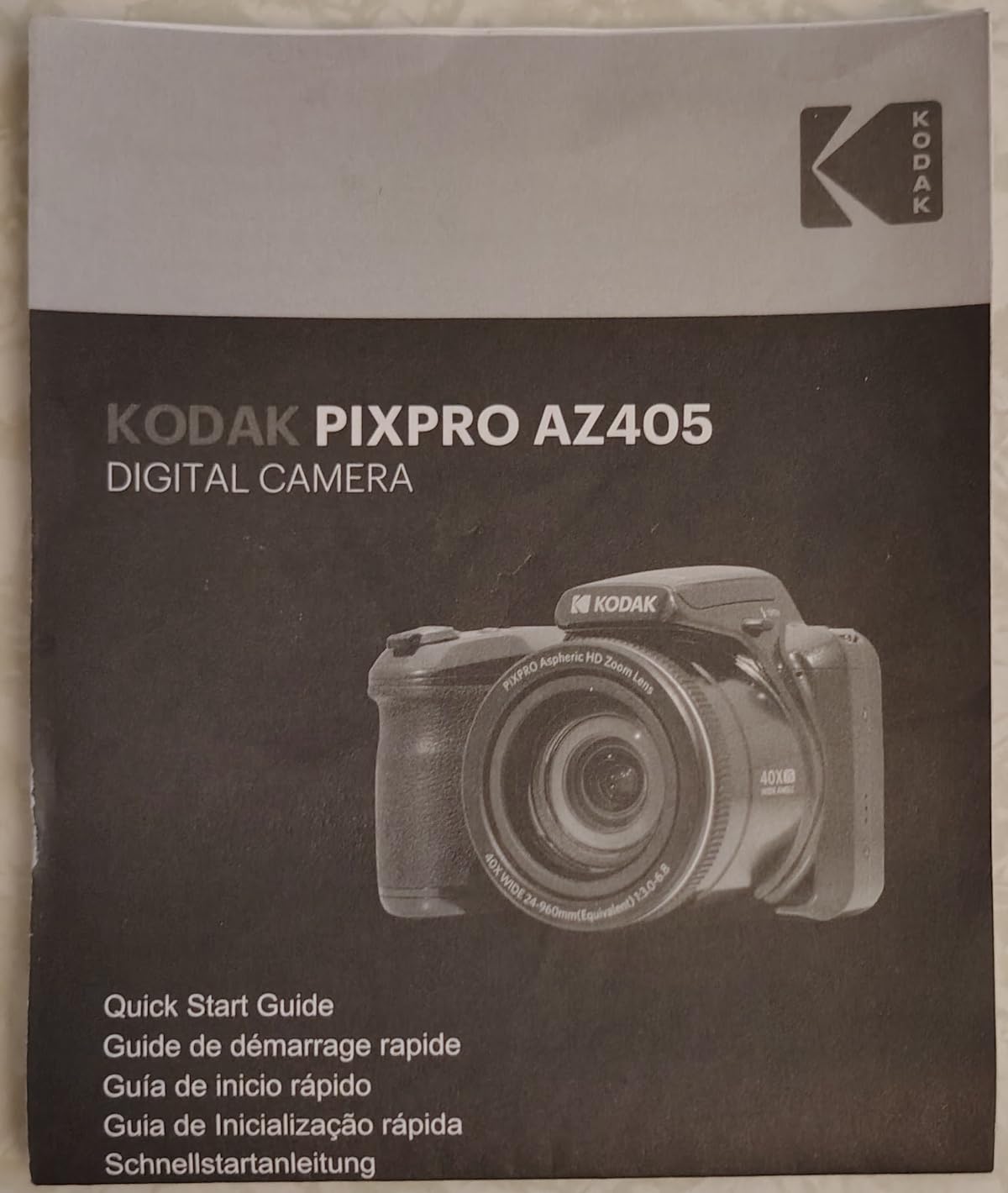
The KODAK PIXPRO AZ405 is the most affordable camera in this guide, and it delivers genuine value for anyone testing the waters of photography. The 40x optical zoom matches what you would find on cameras costing twice as much.
The 20MP sensor produces higher resolution images than the similarly-priced Nikon Coolpix B500. During my testing, daylight shots looked crisp and detailed, though low-light performance was understandably limited given the small sensor.

Optical image stabilization helps at full zoom, which is critical for handheld telephoto shots. I was able to capture reasonably sharp images at the 960mm equivalent focal length without a tripod, though a steady hand is still important.
The camera offers PASM modes (Program, Aperture priority, Shutter priority, Manual) for users who want to learn manual controls without spending a lot. This is a nice bridge between point-and-shoot simplicity and full manual photography.
What you give up at this price
Battery drain is the most commonly reported complaint. AA batteries deplete quickly when transferring images via USB, so budget for extras. There is no built-in Wi-Fi, which limits wireless sharing. The SD card slot requires opening the battery compartment, which also resets the date and time setting each time.
Who should buy this and who should consider alternatives
The AZ405 makes sense for absolute beginners, gift purchases, casual travel snapshots, and users who want a long zoom camera without complexity. If image quality and connectivity matter more than price, the Nikon Coolpix B500 adds Wi-Fi and Bluetooth at a slightly higher cost. For learning serious photography, an interchangeable-lens camera is the better investment.
8. Canon EOS 4000D / Rebel T100 DSLR Camera 3-Lens Kit Bundle — Best Complete Bundle
Canon EOS 4000D / Rebel T100 DSLR Camera w/EF-S 18-55mm f/3.5-5.6 Lens 3 Lens Kit Bundled with 128GB Memory + Wide Angle Lens + Telephoto Lens + Flash + More (Renewed) Black
18MP APS-C sensor
3-lens bundle
128GB SD card included
Pros
- Complete bundle with all accessories
- 128GB storage included
- Multiple lenses for versatility
- Great learning value
Cons
- Amazon Renewed condition
- Slow Live View autofocus
- 9-point AF system basic
The Canon EOS 4000D bundle is what I recommend when someone wants everything they need to start shooting in a single purchase. The kit includes the camera body, EF-S 18-55mm lens, a wide-angle lens, a telephoto lens, a 128GB memory card, and an external flash.
For someone completely new to photography, having all the extras included removes the confusion of figuring out what to buy separately. The 128GB card stores roughly 4,000 RAW images or 16,000 JPEGs, which is plenty for extended learning sessions.
The 18MP APS-C sensor delivers solid image quality that matches other entry-level Canon DSLRs. The included wide-angle lens is great for landscapes and group photos, while the telephoto lens extends your reach for portraits and distant subjects.
Being an Amazon Renewed product, the camera has been inspected and tested. In my experience with renewed Canon DSLRs, they typically arrive in excellent cosmetic condition with all functions working properly, though some users report minor cosmetic wear.

Trade-offs worth knowing
The 9-point autofocus system is basic compared to newer Canon DSLRs and mirrorless cameras. Live View autofocus is noticeably slow, which can be frustrating for users who want to compose shots on the LCD. The Renewed status means no Prime eligibility and a 90-day warranty instead of the standard one-year coverage.
Who should buy this and who should consider alternatives
This bundle is ideal for gift purchases, students on a strict budget, and anyone who wants a comprehensive starter kit without shopping for accessories. If you want brand-new condition with full Canon warranty, the Canon EOS Rebel T7 is a better choice at a similar price. For a more modern mirrorless experience, the Canon EOS R100 is worth the small step up.
How to Choose the Right Camera for Amateur Photography
Picking the right camera depends on what kind of photography you want to do. Here are the key factors our team considered when building this list of the best cameras for amateur photographers.
Sensor size matters more than megapixels
The single biggest factor in image quality is sensor size, not megapixel count. APS-C sensors (used in most cameras in this guide) are significantly larger than the tiny sensors in smartphones, which is why dedicated cameras produce visibly better images. Full-frame sensors are even larger but come at much higher prices. For most beginners, an APS-C camera offers the best balance of quality and value.
Mirrorless versus DSLR for beginners
Mirrorless cameras are the future of photography. They are typically smaller, lighter, offer better video features, and include modern autofocus systems with subject tracking. DSLRs still offer advantages in battery life, optical viewfinder clarity, and lens ecosystem maturity. For most new buyers in 2026, mirrorless is the better long-term choice, but a quality DSLR like the Canon EOS Rebel T7 remains a valid starting point, especially for those who prefer physical controls.
Video capabilities and your plans
If you shoot only still photos, a camera without 4K video saves money. If you plan to make YouTube videos, TikTok content, or family videos, prioritize cameras with 4K recording and flip screens. The Canon EOS R50 and Sony ZV-E10 are the best video-focused options in this guide for content creators.
Lens ecosystem and future upgrades
Choosing Canon RF or Sony E-mount gives you access to extensive lens lineups that grow with your skills. Compact cameras like the Nikon Coolpix B500 and KODAK PIXPRO AZ405 cannot accept different lenses, which limits your growth. If you see photography as a long-term hobby, an interchangeable-lens camera is the smarter investment even if it costs more upfront.
Smartphone integration and wireless sharing
Modern cameras offer Wi-Fi and Bluetooth for transferring photos to your phone. Canon Camera Connect and Sony Imaging Edge apps work well for quick social media sharing. The Nikon SnapBridge app is functional but has connectivity quirks. If wireless transfer matters, choose a camera with proven app support like the Canon or Sony options.
Common mistakes beginners should avoid
The biggest mistake is buying the cheapest camera available. An extra $100 to $200 spent on a better camera pays off in years of better photos and learning. Avoid getting too caught up in spec sheets; a camera you actually use beats a more capable camera that stays in a drawer. Finally, budget for at least one extra lens and a memory card, as the included kit lens is just a starting point.
Frequently Asked Questions
What camera should a beginner photographer get?
The Canon EOS R100 is our top recommendation for amateur photographers because it combines a 24.1MP APS-C sensor, 4K video, and an included lens in a compact, lightweight body. It is affordable enough for beginners but offers enough manual control to grow with your skills. Budget-conscious buyers should consider the Canon EOS Rebel T7 DSLR with its dual lens kit.
Is mirrorless or DSLR better for beginners?
Mirrorless cameras are generally better for beginners in 2026 because they offer smaller bodies, modern autofocus with subject tracking, and better video features. DSLRs still win on battery life, optical viewfinder clarity, and lower prices. For most new photographers, a mirrorless camera like the Canon EOS R100 or Sony ZV-E10 represents the better long-term investment.
How much should a beginner spend on a camera?
Most amateur photographers should budget between $500 and $900 for a complete kit with a lens. Entry-level options under $300 like the KODAK PIXPRO AZ405 are fine for casual snapshots, but cameras in the $500 to $900 range offer noticeably better image quality and room to grow. Spending more than $1500 is unnecessary until you have specific advanced needs.
What is the best starter camera for a photography hobby?
The Canon EOS Rebel T7 with its dual lens kit is our pick for the best starter camera because of its beginner-friendly controls, comprehensive bundle, and proven track record with over 3,000 positive reviews. The Canon EOS R100 mirrorless kit is the best modern alternative for those who want a more compact camera with 4K video. Either choice provides excellent learning value for hobbyists.
Should beginners buy used or new cameras?
Beginners can save money with renewed cameras like the Canon EOS 4000D bundle, which includes multiple lenses and accessories at a reduced price. However, buying new from a current model ensures full warranty coverage and the latest features. For first-time camera buyers, we recommend new unless budget is a primary concern and the renewed seller has good ratings.
Final Verdict
After testing all eight cameras, our team has clear recommendations for different types of amateur photographers. The Canon EOS R100 remains the best cameras for amateur photographers pick for most people because it balances image quality, modern features, and approachable pricing in a lightweight body.
For DSLR lovers and budget shoppers, the Canon EOS Rebel T7 dual lens kit offers unbeatable bang for the buck with over 3,000 reviews backing its reliability. Content creators and vloggers should choose the Canon EOS R50 or Sony ZV-E10 depending on their preference for Canon color science versus Sony’s autofocus technology. If you want the best of the best and plan to grow into serious hobbyist work, the Sony Alpha a6700 is worth every penny. Travel photographers who want simplicity should grab the Nikon Coolpix B500 with its 40x zoom, and absolute budget shoppers will find solid value in the KODAK PIXPRO AZ405.
No matter which camera you choose, the most important step is to start shooting. Every camera in this guide has the potential to capture beautiful images and help you develop your skills in 2026.