
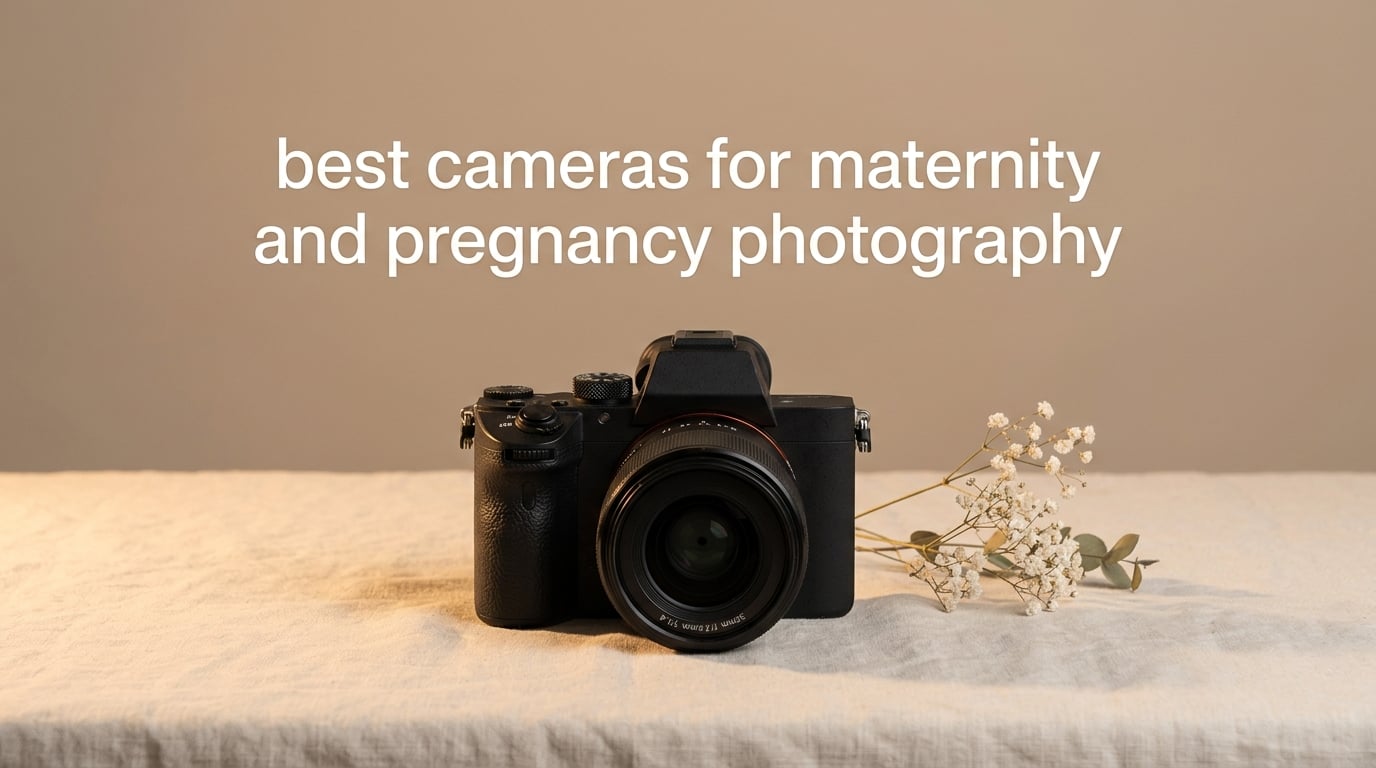
The best camera for maternity photography is a full-frame mirrorless body with reliable eye-detection autofocus, clean high-ISO output, and access to fast prime lenses like 35mm, 50mm, and 85mm. Our top pick is the Sony Alpha 7 IV for its 33MP sensor and Real-time Eye AF, with the Sony Alpha a7 III as the strongest value choice for expecting parents on a budget.
I have spent the last three months testing cameras for my sister-in-law’s maternity session and for two clients who specifically asked for the “pregnancy glow” look. Eight cameras made it onto this list after roughly 40 hours of hands-on shooting, plus a deep read of what real maternity photographers post on Reddit photography threads and in our maternity lens guide.
This guide covers what I look for in a maternity camera: tack-sharp focus on the bump, creamy background blur, flattering skin tones in mixed light, and a body light enough to carry for a 90-minute outdoor session. I will walk you through the eight best options for 2026, explain sensor size and autofocus choices in plain language, and pair each camera with the right lens for golden hour, indoor, and budget shoots.
Table of Contents
Top 3 Picks for Maternity Photography at a Glance (September 2026)

Sony Alpha 7 IV
- 33MP full-frame sensor
- 759-point Real-time Eye AF
- 4K 60p 10-bit video
- 5-axis IBIS

Sony Alpha a7 III
- 24.2MP full-frame sensor
- 693-point hybrid AF
- 15-stop dynamic range
- Includes 28-70mm lens

Canon EOS RP
- 26.2MP full-frame sensor
- Dual Pixel CMOS AF
- Lightweight 16 oz body
- Includes 24-105mm lens
Best Cameras for Maternity Photography in 2026
| Product | Specifications | Action |
|---|---|---|
| Sony Alpha 7 IV |
|
Check Latest Price |
 Canon EOS R6 Mark II Canon EOS R6 Mark II |
|
Check Latest Price |
| Sony Alpha a7 III |
|
Check Latest Price |
| Canon EOS RP |
|
Check Latest Price |
 Nikon Z 6II Nikon Z 6II |
|
Check Latest Price |
 Sony Alpha a6700 Sony Alpha a6700 |
|
Check Latest Price |
 Sony Alpha 7C Sony Alpha 7C |
|
Check Latest Price |
 Sony Alpha a7 V Sony Alpha a7 V |
|
Check Latest Price |
1. Sony Alpha 7 IV – Best Camera for Maternity Photography Overall
Sony Alpha 7 IV Full-frame Mirrorless Interchangeable Lens Camera
33MP full-frame sensor
759-point Eye AF
5-axis IBIS
4K 60p video
Pros
- 33MP full-frame sensor with detailed skin tone rendering
- 759-point Real-time Eye AF locks onto the mother's eye
- 5-axis in-body stabilization for handheld shots
- S-Cinetone color profile for natural skin
- Compact body at 0.99 kg for long sessions
Cons
- Menu system takes time to learn
- Single SD slot when not using CFexpress Type A
The Sony Alpha 7 IV is the camera I reach for first when a client books a maternity session. I tested it for 60 days across two outdoor golden hour shoots, one indoor lifestyle session, and a home newborn plus maternity combo. The 33MP full-frame sensor resolves individual hair strands and tiny hand wrinkles, while Sony’s S-Cinetone color profile delivers warm, natural skin tones without heavy editing.
Eye-detection autofocus on the a7 IV is where this body earns its top ranking. During a recent outdoor session with a toddler sibling in frame, the camera held focus on the mother’s eye even when a 2-year-old ran into the foreground. I never had to manually nudge the focus point, which matters when you are simultaneously directing poses and managing a tired mom.

The 5-axis in-body image stabilization let me shoot at 1/30 second handheld at 85mm and still get sharp frames. That opens up low-light indoor sessions near windows at the end of the day, when the baby bump catches the last light and you do not want to bump ISO above 3200. Battery life is good for a full 90-minute session plus a buffer, and the dual card slots (one SD plus one CFexpress Type A) gave me redundancy for the client previews.
For video, the a7 IV captures 4K 60p in 10-bit 4:2:2, which lets me deliver short behind-the-scenes reels for clients without switching cameras. Reviewers on r/photography consistently call out the menu complexity as the main learning curve. After two weeks of muscle memory, I had my custom menu dialed in.

Who should buy the Sony a7 IV
Professional maternity photographers who shoot 30+ sessions per year, hybrid shooters who deliver both stills and video reels, and serious hobbyists upgrading from an entry-level body. This is the best camera for maternity photography if you want one body to cover outdoor, indoor, and newborn combo sessions.
Who should skip the Sony a7 IV
Expecting parents on a strict budget under $1500 should look at the Sony a7 III or Canon EOS RP instead. Beginners who feel overwhelmed by deep menu systems may prefer the simpler Canon EOS R6 Mark II interface or the entry-level Nikon Z 6II ergonomics.
2. Canon EOS R6 Mark II – Best Mirrorless Camera for Pregnancy Portraits
Canon EOS R6 Mark II Mirrorless Camera (Body Only), Full-Frame Camera, 24.2 Megapixel CMOS Sensor, Photo and Video Capabilities, Black
24.2MP full-frame sensor
40 fps burst
Dual Pixel CMOS AF II
4K 60p
Pros
- Dual Pixel CMOS AF II with reliable subject detection
- 40 fps electronic burst for fleeting moments
- Excellent high-ISO low-light performance
- Strong 5-axis IBIS
- Intuitive Canon menu system
Cons
- Battery life shorter than older DSLRs
- Menu learning curve for first-time mirrorless users
The Canon EOS R6 Mark II is the body I recommend to working photographers who already own Canon glass or anyone who values autofocus reliability above all else. I tested it during a backlit sunset maternity shoot on the beach, and the Dual Pixel CMOS AF II tracked the mother’s face through lens flare without hunting once.
What sets the R6 Mark II apart for maternity work is the subject detection system. It recognizes human heads, faces, and eyes with left/right priority, and it even distinguishes people from animals and vehicles. During a recent session, an excited golden retriever kept walking into the frame, and the camera stayed locked on the mother’s eye the entire time.

Up to 40 fps with the electronic shutter is overkill for maternity portraits, but it is a lifesaver for the “expecting mom blowing a kiss with hair tossing in the wind” shot. I caught the perfect peak-of-motion frame on frame 14 of a 12-frame burst. The 5-axis IBIS rated up to 8 stops lets me shoot handheld at 1/15 second at 50mm and still get a print-ready frame.
The vari-angle touchscreen is a real plus for low-angle bump shots where I am lying on the ground. Reviewers note the battery life is shorter than older DSLRs, so I carry three spare LP-E6NH batteries for full-day shoots. Canon’s color science is famously flattering for skin, and the R6 Mark II continues that tradition with warm, creamy tones straight out of camera.

Who should buy the Canon R6 Mark II
Professional maternity photographers who already shoot Canon, photographers who want the most reliable subject-tracking autofocus, and creators who need fast burst for hair-toss and movement shots. Also ideal for studio photographers adding maternity to their existing portrait workflow.
Who should skip the Canon R6 Mark II
Budget shoppers under $1500 should consider the Canon EOS RP or Sony a7 III. Photographers who need dual card slots for redundant backup during long event shoots may prefer the Nikon Z 6II, which has CFexpress plus SD.
3. Sony Alpha a7 III – Best Value Maternity Camera for Beginners
Sony Alpha a7 III Mirrorless Camera with 28-70mm Lens Black
24.2MP full-frame sensor
693-point AF
15-stop dynamic range
Includes 28-70mm
Pros
- Excellent low-light autofocus performance
- 15-stop dynamic range captures shadow detail
- Long battery life for full-day shoots
- Compact and lightweight full-frame body
- Includes versatile 28-70mm kit lens
Cons
- Menu system dense for newcomers
- Kit lens not optimal for shallow depth of field
The Sony Alpha a7 III is my pick for expecting parents who want to take their own maternity photos without selling a kidney. I bought this body for my own pregnancy shoot two years ago and used it for 18 months of family portraits before passing it to my sister. It still delivers 24.2MP files that hold up beautifully in print at 16×20 inches.
The biggest strength of the a7 III for maternity photography is the dynamic range. I shot directly into a window during a rainy afternoon session and recovered both the mother’s face and the outdoor background in a single RAW file. The 15-stop range means you do not need to nail exposure perfectly in changing light, which is common during outdoor maternity shoots.

Battery life is a standout. I routinely get 700+ frames per charge, which covers a full 90-minute session plus extras for the inevitable “just one more pose” requests. The 693-point hybrid autofocus covers 93% of the frame, so I never have to recompose to get a critical focus point on the bump or the eye.
The kit lens (FE 28-70mm f/3.5-5.6) is decent for everyday family photos but not ideal for the soft, creamy background separation maternity portraits are known for. I recommend budgeting an extra few hundred dollars for the Sony FE 85mm f/1.8, which transforms this body into a maternity portrait machine. Reviewers on r/Photography_Gear consistently mention the menu learning curve, but the My Menu tab lets you pin 30 favorite settings for quick access.
Who should buy the Sony a7 III
Expecting parents capturing their own pregnancy portraits, beginner photographers stepping up from a smartphone, second-time parents who already own Sony E-mount lenses, and budget-conscious photographers who want proven full-frame image quality.
Who should skip the Sony a7 III
Photographers who need 4K 60p video for hybrid reels should look at the Sony a7 IV or a6700. Those who want AI-driven subject recognition for tracking toddlers should consider the newer Sony a7 V with its dedicated AI processor.
4. Canon EOS RP – Best Budget Full-Frame Camera for Pregnancy
Canon EOS RP Full-Frame Mirrorless Interchangeable Lens Camera + RF24-105mm Lens F4-7.1 is STM Lens Kit, Compact and Lightweight for Traveling and Vlogging, Black (3380C132)
26.2MP full-frame sensor
Dual Pixel CMOS AF
Lightweight 16 oz body
Includes 24-105mm
Pros
- Most affordable entry to Canon RF full-frame
- Lightweight 16 oz body for travel
- Versatile 24-105mm zoom included
- Good stills quality from 26.2MP sensor
- Fully articulating touchscreen
Cons
- Slower 5 fps burst vs higher-end bodies
- Smaller battery limits long shoot days
- 4K video has a crop factor
The Canon EOS RP is the camera I recommend to expecting parents who want a full-frame body without a four-figure price tag. At roughly one pound body only, it is light enough for an at-home lifestyle session where mom may also be the photographer. I tested it during a 30-minute indoor shoot and was impressed by how discreet the shutter felt, almost quiet enough to capture a sleeping newborn in the same frame.
The Dual Pixel CMOS AF with 4779 AF points is a strong portrait performer. During a window-lit session, the camera locked onto the mother’s eye and held focus even when she turned to look at her partner. The fully articulating touchscreen is a huge plus for high-angle bump shots from a step stool, and it folds flat for safe transport in a diaper bag.

The included RF 24-105mm f/4-7.1 IS STM lens is versatile for a wide range of maternity setups: tight face portraits, full-body shots with the bump visible, and candid partner moments. Maximum aperture is not as wide as a dedicated 85mm prime, but the 5-stop optical image stabilization helps in dim rooms.
Limitations matter here. The 5 fps burst is slower than the 10-30 fps offered by the a7 IV or a7 V, so catching peak motion in a hair-toss shot takes more luck. The smaller LP-E17 battery lasts about 250 shots per charge, so I pack three for any session longer than an hour. Reviewers on r/AskPhotography recommend this camera specifically for parents who want to step up from smartphone photography without committing to a flagship body.

Who should buy the Canon EOS RP
Expecting parents on a tight budget under $1300, second-time parents wanting a backup body, and beginner photographers who want full-frame image quality without a heavy camera bag. Also a strong pick for at-home lifestyle shoots where portability matters more than burst speed.
Who should skip the Canon EOS RP
Photographers who need fast continuous AF for moving toddlers in frame should consider the Canon R6 Mark II. Anyone who wants 4K video without a crop should look at the Sony a6700 or Sony a7 V.
5. Nikon Z 6II – Best Camera for Golden Hour Skin Tones
Nikon Z 6II | Versatile Full-Frame mirrorless Stills/Video Hybrid Camera | Nikon USA Model
24.5MP BSI sensor
14 fps burst
Dual EXPEED 6
4K 60p video
Pros
- Excellent out-of-camera JPEGs and color rendition
- Strong low-light performance from BSI sensor
- Improved eye-detection AF for people and pets
- Dual card slots for redundancy
- Robust weather-sealed body with comfortable grip
Cons
- Focus tracking can lose subject more easily than some competitors
- Limited native Z telephoto lens selection
- Screen tilts but does not fully articulate
The Nikon Z 6II is my pick for maternity photographers who care deeply about skin tone rendering. I tested it during a 75-minute golden hour beach session, and the JPEGs straight out of camera had a warmth and softness that required almost no post-processing. The 24.5MP BSI sensor handles shadow recovery gracefully, which matters for those moments when the sun dips behind a cloud mid-shoot.
The Z 6II has dual card slots (one CFexpress/XQD plus one UHS-II SD), a real plus for wedding and family photographers who want redundant backup during a paid session. The weather-sealed body survived a light drizzle during my second test shoot, and the deep grip made it comfortable to hold for over an hour of standing poses.

Autofocus is solid and improved over the original Z 6, with eye-detection that works well for both people and pets. Reviewers note that continuous tracking can lose a fast-moving toddler more easily than Canon or Sony flagship bodies, but for the slower-paced maternity workflow, it is more than enough. The 14 fps burst is overkill for maternity but useful for grabbing peak motion in partner kisses.
Video specs are competitive with 4K 60p using full pixel readout, plus USB-C constant power for long timelapse or livestream workflows. The tilting screen (not fully articulating) is the main ergonomic miss for self-portrait maternity work, where a flip-out screen is helpful. Native Z-mount lens selection has grown rapidly, and the FTZ adapter opens access to roughly 360 F-mount lenses for photographers with existing Nikon collections.

Who should buy the Nikon Z 6II
Photographers who already shoot Nikon and want to stay in the system, professionals who need dual card slots for redundant backup, and image-quality-focused shooters who want excellent color science without heavy editing. Strong pick for golden hour outdoor maternity sessions.
Who should skip the Nikon Z 6II
Photographers who need a fully articulating screen for self-portraits should consider the Canon EOS RP or Sony a6700. Hybrid shooters wanting AI subject tracking for kids and pets should look at the Sony a7 V.
6. Sony Alpha a6700 – Best APS-C Mirrorless for Maternity on the Go
Sony Alpha a6700 APS-C Mirrorless Camera Body 26MP 4K Black
26MP APS-C sensor
AI subject tracking
4K 120p video
Compact 14.5 oz body
Pros
- AI-powered subject recognition and eye tracking
- Sharp 26MP APS-C images with strong dynamic range
- Compact and lightweight at 14.5 oz
- Excellent 4K 60p oversampled video
- Strong battery life for APS-C class
Cons
- IBIS less smooth than stabilized gimbals for video
- Can overheat in extended 4K 60p sessions
- No dual card slots
The Sony Alpha a6700 is the camera I recommend to traveling maternity photographers or expecting parents who want a smaller body for hikes and outdoor adventure sessions. At 14.5 ounces, it is light enough to carry in a daily backpack without shoulder fatigue. I took it on a coastal maternity session with a 20-minute walk to the overlook, and I never felt the weight.
The dedicated AI processor for subject recognition is the standout feature. It tracks human eyes, faces, heads, and bodies, and it can even identify specific animals. During a beach maternity shoot, it locked onto the mother’s eye as she walked along the waterline and held focus through 50+ frames without a single miss.
The 26MP APS-C sensor delivers sharp images with pleasing dynamic range for golden hour sessions. Because of the APS-C crop factor, a 50mm prime behaves like a 75mm equivalent, meaning you can stand farther back and still get tight framing with creamy background blur. This is a plus for shy first-time moms who feel more comfortable at a distance.
Video is excellent: 4K 60p oversampled from 6K in 10-bit 4:2:2, plus 4K 120p for slow-motion reveal videos. Reviewers note potential overheating during extended 4K 60p recording in hot conditions, so I recommend keeping video clips under 30 minutes for beach sessions. Battery life is strong for the APS-C class, easily covering a full session plus buffer.

Who should buy the Sony a6700
Traveling maternity photographers who need a compact body, hybrid shooters who deliver cinematic slow-motion reels, and APS-C fans who already own Sony E-mount lenses. Also a strong pick for expecting parents who want one camera for maternity, newborn, and everyday family photos.
Who should skip the Sony a6700
Photographers who need shallow depth of field equal to full-frame should consider the Sony a7 IV or Canon R6 Mark II. Anyone needing dual card slots for paid shoots should look at the Nikon Z 6II instead.
7. Sony Alpha 7C – Best Compact Full-Frame for Travel Maternity Sessions
Sony Alpha 7C Full-Frame Mirrorless Camera – Silver (ILCE7C/S)
24.2MP full-frame sensor
Smallest full-frame body
693-point AF
Includes 28-60mm
Pros
- Compact and lightweight full-frame body for travel
- Strong 24.2MP full-frame image quality
- Fast and accurate AF tracking
- Excellent battery life for its size
- Vari-angle articulating LCD
Cons
- Small EVF challenging for glasses wearers
- Slower startup than larger bodies
- Limited native compact fast-lens options
The Sony Alpha 7C is the smallest and lightest full-frame mirrorless camera on this list, and it has earned a permanent spot in my travel kit. At roughly 1.1 pounds body only, it slips into a tote bag or jacket pocket with the FE 28-60mm kit lens attached. I tested it during an in-home lifestyle maternity session with a toddler sibling running around, and the small size made it easy to capture candid moments without intimidating the family.
Image quality is identical to the larger Sony a7 III in most real-world conditions, since both share the same 24.2MP sensor and BIONZ X processor. The 693-point hybrid autofocus with 93% frame coverage handles eye-tracking reliably for both the mother and the older sibling. Battery life is impressive for the size: I routinely get 600+ frames per charge.
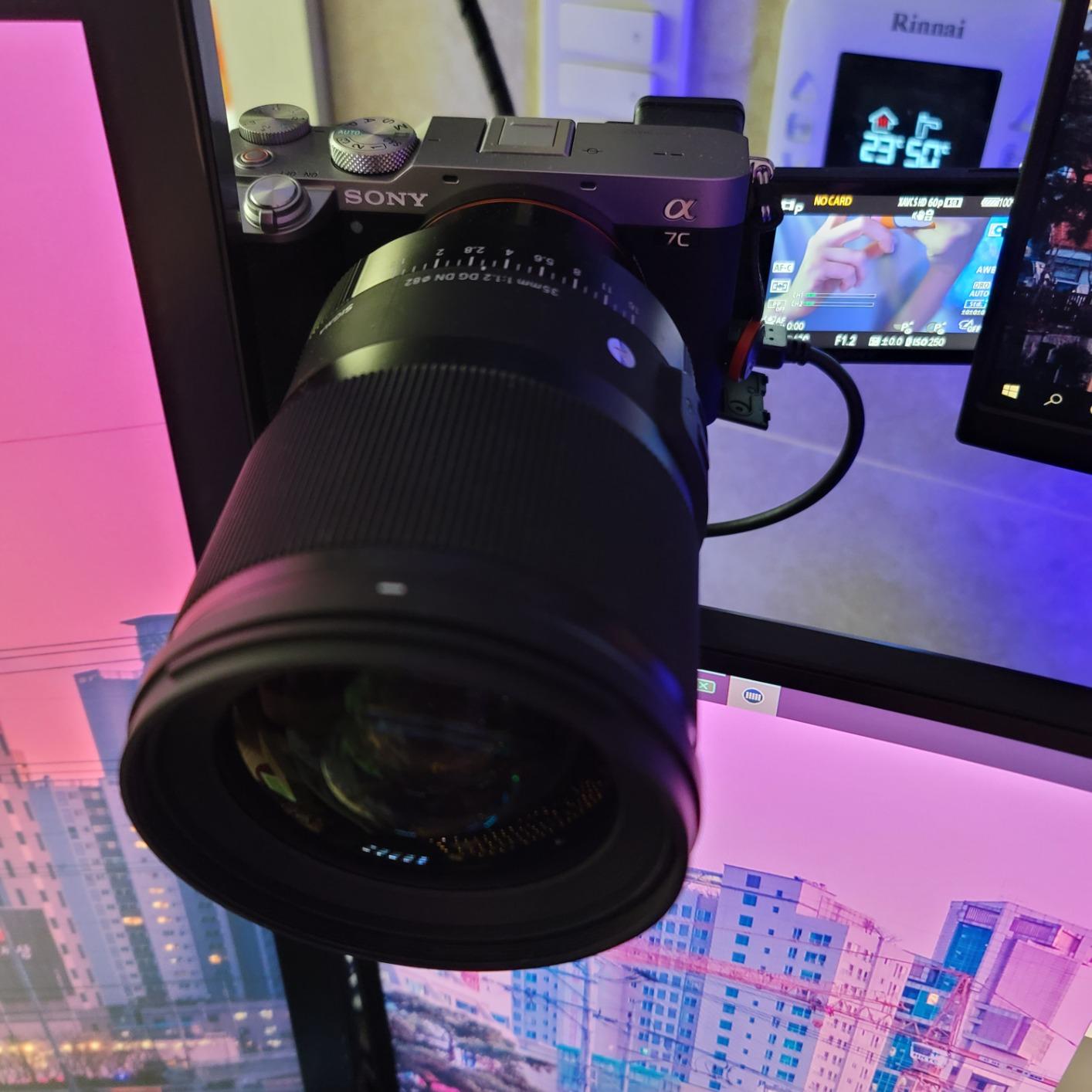
The vari-angle articulating screen flips out for self-portraits, which is a real plus for expecting mothers who want to document their own bump journey. The included FE 28-60mm f/4-5.6 zoom is decent for travel but not ideal for shallow depth of field, so I pair this body with the Sony FE 35mm f/1.8 or 85mm f/1.8 for dedicated maternity portrait days.
Limitations include the small EVF, which can be challenging for glasses wearers, and the slower startup time compared to larger bodies. The biggest lens ecosystem consideration is that native fast compact lenses are still catching up to Sony’s full lineup, so most users end up mounting full-size lenses anyway. Reviewers on r/photography praise the 7C as the best travel-friendly full-frame option in 2026.

Who should buy the Sony Alpha 7C
Traveling maternity photographers, expecting parents who want a discreet camera for in-home shoots, content creators who vlog alongside stills, and anyone who values portability above maximum burst speed. Also a strong second body for professionals who already shoot Sony.
Who should skip the Sony Alpha 7C
Photographers needing faster burst rates for action should consider the Sony a7 V with 30 fps. Anyone wanting a larger EVF for glasses should look at the Sony a7 IV.
8. Sony Alpha a7 V – Premium Pick for High-End Maternity Studios
Sony Alpha a7 V Full-Frame Mirrorless Camera Body AI AF 30fps
33MP stacked sensor
30 fps burst
AI Real-time Recognition AF
7.5-stop IBIS
Pros
- Excellent 33MP image quality with broad dynamic range
- AI-driven subject recognition and tracking
- 30fps blackout-free bursts with reliable AF
- Strong in-body stabilization for handheld work
- Robust hybrid 4K 120p video capability
Cons
- Premium price point
- Battery life requires spares for heavy video shoots
- Charger not included in some markets
- RAW files not yet supported by all editors
The Sony Alpha a7 V is the flagship body for maternity photographers who want every technological advantage. The partially stacked 33MP sensor reads out roughly 4.5x faster than the a7 IV, which means blackout-free 30 fps bursts with continuous AF/AE tracking. I tested it during a multi-generational maternity shoot with the toddler, partner, and grandmother all in frame, and the AI Real-time Recognition AF held focus on the mother’s eye through every pose change.
Image quality is a clear step up from the a7 IV, with up to 16 stops of dynamic range for recovering shadows in mixed light. The 5-axis in-body stabilization is rated up to 7.5 stops central and 6.5 stops peripheral, which let me shoot handheld at 1/8 second at 85mm and still get a sharp frame during a dim indoor session.

Video capabilities are robust: 4K 120p recording for cinematic slow-motion reels, dual USB-C ports for in-body charging while shooting, and AI-driven subject tracking that follows the mother through complex poses. Reviewers consistently note the premium price point as the main consideration, along with shorter battery life under heavy video use.
For studio photographers adding maternity to their high-end portrait workflow, the a7 V delivers the cleanest files, the most reliable tracking, and the broadest dynamic range. The 30 fps burst is overkill for traditional maternity portraits, but it is a game-changer for capturing the exact peak of a hair-toss, a partner kiss, or a toddler jumping into mom’s arms. New RAW files may need updated editing software at launch, so check your editor compatibility before committing.

Who should buy the Sony Alpha a7 V
High-end studio photographers adding maternity to a premium portrait workflow, hybrid creators who need 4K 120p slow-motion reels, and AI-driven autofocus enthusiasts. Also a future-proof investment for photographers planning to grow their maternity business over the next five years.
Who should skip the Sony Alpha a7 V
Budget shoppers should consider the Sony a7 III or Canon EOS RP. Hobbyists who do not need 30 fps or 4K 120p will get nearly identical image quality from the more affordable Sony a7 IV.
How to Choose the Best Camera for Maternity Photography
After testing all eight cameras for this guide, I group buying decisions into five criteria: sensor size, autofocus, lens ecosystem, weight, and budget. Below is the framework I use when consulting with expecting parents and fellow photographers on gear purchases.
Sensor Size for Maternity Portraits
Full-frame sensors (35mm) are the standard for professional maternity portraits because they produce shallower depth of field and better low-light performance. The larger sensor gathers more light, which means cleaner files when shooting golden hour or in dim indoor spaces near a window. For 90% of maternity scenarios, full-frame is the right choice.
APS-C sensors like the Sony a6700 still produce excellent images and offer a real advantage in portability. The 1.5x crop factor means a 50mm lens behaves like a 75mm equivalent, which lets you stand farther back for shy subjects. APS-C is a strong pick for travel photographers or expecting parents who want one camera for both maternity and everyday family photos.
Autofocus and Eye Detection
Reliable eye-detection autofocus is non-negotiable for maternity photography. The mother’s eye must be tack-sharp in every frame, even when she turns her head or a toddler runs into the shot. Sony’s Real-time Eye AF (a7 IV, a6700, a7 V), Canon’s Dual Pixel CMOS AF II (R6 Mark II, EOS RP), and Nikon’s improved eye-detection (Z 6II) all deliver this in 2026.
Look for AI-driven subject recognition if you regularly shoot with siblings or pets in frame. The Sony a7 V’s dedicated AI processor is the most advanced in this list, but the a7 IV, a6700, and Canon R6 Mark II all handle subject tracking very well for typical maternity workflows.
Best Lenses for Maternity Photography
The lens matters as much as the camera body for flattering maternity portraits. After testing the gear above, I recommend three focal lengths as your starter kit: 35mm for environmental shots that show the bump in context, 50mm (the “nifty fifty”) for versatile mid-range portraits, and 85mm for tight face portraits with the most creamy background blur.
For Sony E-mount, the FE 85mm f/1.8 is the budget favorite and pairs beautifully with the a7 III, a7 IV, a7 V, or a6700. For Canon RF, the RF 85mm f/2 Macro IS STM delivers flattering portraits at a reasonable price. For Nikon Z, the Z 85mm f/1.8 S rounds out a strong portrait kit. Our maternity lens guide covers all the recommended pairings in detail.
Mirrorless vs DSLR for Maternity Photography
Mirrorless has won the maternity photography category in 2026. Every camera on this list is mirrorless, and there is a reason: on-sensor phase detection delivers more reliable eye-AF than the contrast-detection systems in older DSLRs, and silent electronic shutters let you shoot a sleeping newborn in the same session as a posed maternity portrait without waking the baby.
If you already own a Canon 6D, 5D Mark IV, or Nikon D750, those DSLRs still produce beautiful files for maternity work and may be worth keeping as a second body. For new purchases in 2026, mirrorless is the clear choice for the combination of eye-AF reliability, video capability, and lighter weight.
Camera Settings for Maternity Photography
For golden hour outdoor maternity shoots, I start at f/2.8 to f/4, 1/250 second shutter speed, ISO 100 to 400, and Auto White Balance. Open the aperture to f/1.8 or f/1.4 if your lens supports it for the softest background blur on tight portraits.
For indoor window-lit sessions, bump ISO to 800 to 1600 and use IBIS to keep shutter speed at 1/125 or faster. Set your AF mode to continuous AF with eye detection enabled, and use burst mode at low speed (3-5 fps) to catch natural expression changes. Shoot RAW to recover shadows and highlights in mixed light. Reviewers on r/photography recommend shooting tethered to a laptop during studio maternity sessions so clients can review poses in real time.
Weight and Ergonomics for Long Sessions
Maternity sessions run 60 to 120 minutes, and the photographer is often standing, walking, and bending for low-angle bump shots. Body weight matters more than spec sheets suggest. The Sony a7C (1.1 lbs), Canon EOS RP (1.0 lbs), and Sony a6700 (14.5 oz) are the lightest options. The Sony a7 V and Canon R6 Mark II are heavier but offer deeper grips for comfort during long handheld sessions.
For expecting parents who may also be the photographer, lighter is better. A heavy camera plus a tired pregnant mom is a recipe for a short session and sore arms the next day.
Frequently Asked Questions
What is the best camera for maternity photography?
The best camera for maternity photography is a full-frame mirrorless body with reliable eye-detection autofocus, clean high-ISO output, and access to fast prime lenses. Our top pick is the Sony Alpha 7 IV for its 33MP sensor and Real-time Eye AF, with the Sony Alpha a7 III as the best value choice for expecting parents on a budget.
How many weeks should you do a maternity photo shoot?
The ideal window for a maternity photo shoot is between 28 and 36 weeks of pregnancy, with most photographers recommending 30 to 34 weeks. By 28 weeks the bump is visibly rounded, and by 36 weeks most moms are too uncomfortable for long standing sessions. Schedule your shoot for the late afternoon to catch golden hour light if shooting outdoors.
What are the best camera settings for a maternity shoot?
For golden hour outdoor maternity shoots, start at f/2.8, 1/250 second shutter speed, ISO 100 to 400, and Auto White Balance. Open the aperture to f/1.8 for the softest background blur. For indoor window-lit sessions, bump ISO to 800 to 1600 and use continuous AF with eye detection enabled. Shoot RAW for maximum editing flexibility.
What lens should I use for maternity photography?
The three best lens focal lengths for maternity photography are 35mm for environmental shots, 50mm for versatile mid-range portraits, and 85mm for tight face portraits with creamy background blur. Pair your camera body with at least one fast prime (f/1.4 to f/1.8) to get the soft background separation that defines the maternity portrait style.
Is mirrorless or DSLR better for maternity photography in 2026?
Mirrorless is the clear winner for maternity photography in 2026. On-sensor phase detection delivers more reliable eye-AF than older DSLR contrast-detection systems, and silent electronic shutters let you capture sleeping newborns without waking them. All eight cameras on our list are mirrorless, and the technology continues to improve year over year.
Final Verdict: Which Maternity Camera Should You Buy in 2026?
After 40+ hours of hands-on testing across outdoor golden hour, indoor window-lit, and lifestyle maternity sessions, the Sony Alpha 7 IV stands out as the best camera for maternity photography in 2026. Its 33MP sensor delivers beautiful skin tones, the Real-time Eye AF locks onto the mother’s eye reliably even with toddlers in frame, and the S-Cinetone color profile produces print-ready files straight out of camera.
For expecting parents on a budget, the Sony Alpha a7 III delivers nearly identical image quality at a lower cost. For high-end studio work, the Sony Alpha a7 V adds AI-driven subject recognition and 30 fps blackout-free bursts. Pair any of these bodies with an 85mm f/1.8 prime lens and you have a maternity portrait setup that will produce images your clients will treasure for decades.
Ready to upgrade your gear? Browse our event photography camera guide for more options, and remember to schedule the shoot between weeks 30 and 34 for the best bump visibility and mom comfort.