
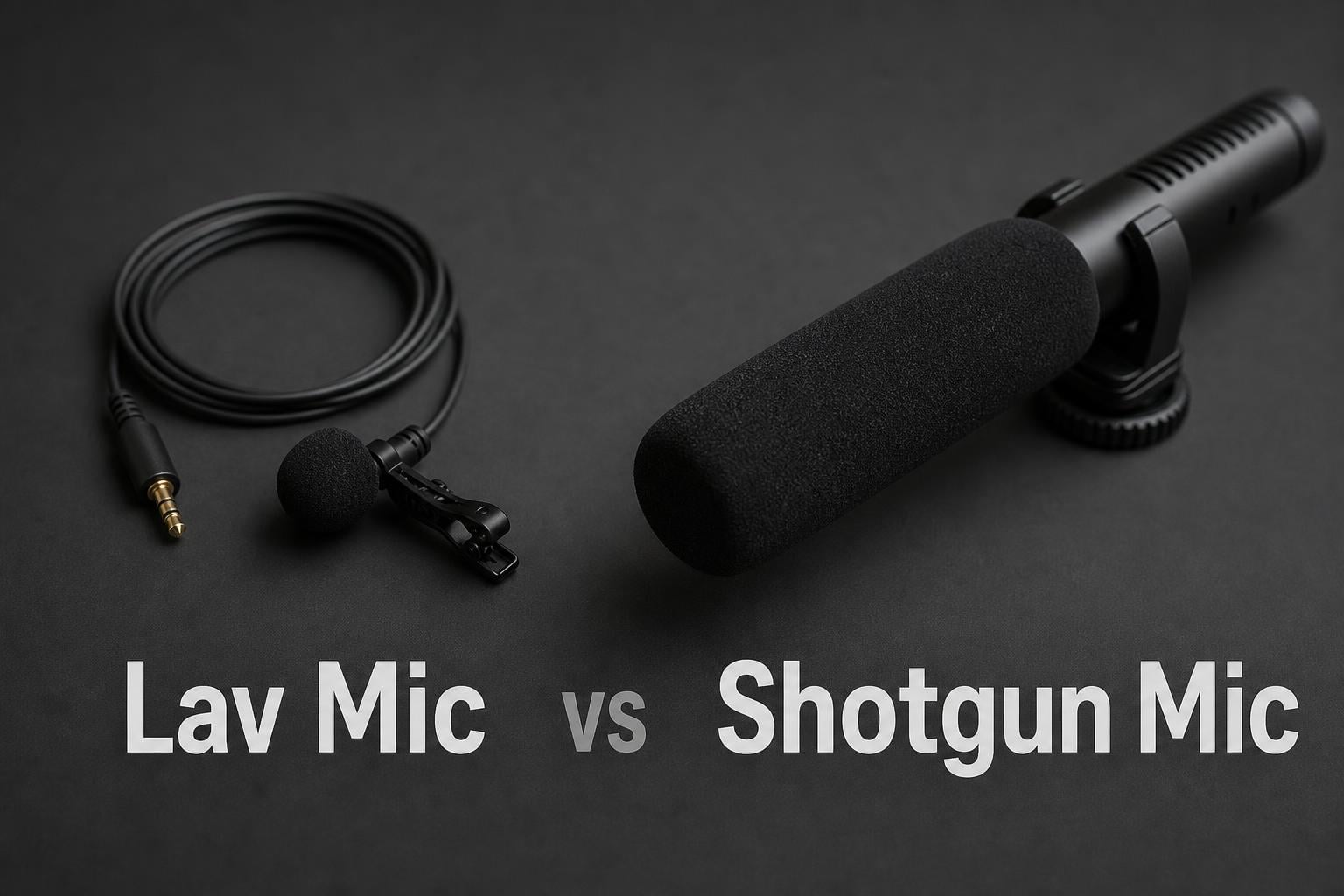
You sit down to edit your latest video, drop the footage into your timeline, hit play, and immediately wince. The dialogue sounds like it was recorded inside a tin can. Or maybe there is so much background noise that your subject’s voice competes with traffic, wind, and a barking dog three blocks away. Every content creator, filmmaker, and podcaster has been there, and the question that follows is always the same: should you have used a lavalier microphone or a shotgun microphone?
The lav mic vs shotgun mic debate is one of the most common dilemmas in video and audio production. It is not a trivial decision. The wrong choice means hours of noise reduction in post-production, reshoots, or worse, abandoning the project entirely. The right choice means clean, professional audio that makes your content stand out from the crowd.
I have spent years recording dialogue in every environment imaginable, from quiet studio spaces to noisy street corners. Along the way, I have learned that the question is not really which microphone is better. It is which microphone solves the specific audio problem in front of you. This guide breaks down exactly how each type works, how they compare side by side, and which real-world problems each one fixes.
By the end, you will have a clear answer tailored to your situation. No more second-guessing, no more wasted money on gear that does not fit your needs. Let us solve your audio problem.
Table of Contents
What Is a Lavalier Mic?
A lavalier microphone, commonly called a lav mic or lapel mic, is a small clip-on microphone designed to attach directly to a speaker’s clothing. It typically sits on a lapel, collar, or tie, positioned about six to eight inches below the mouth. Because it stays fixed to the speaker, it captures audio from a consistent, close distance regardless of where the camera or subject moves.
Most lav mics use an omnidirectional polar pattern, meaning they pick up sound equally from all directions. Some models offer cardioid patterns for more focused capture, but omnidirectional is the standard. The advantage of this pattern is that the mic captures the speaker’s voice clearly even if they turn their head from side to side. The trade-off is that it also picks up ambient noise from the surrounding environment.
Lav mics come in both wired and wireless configurations. Wired lav mics connect directly to a camera, recorder, or smartphone via a cable. Wireless lav mics use a transmitter attached to the speaker and a receiver connected to the recording device, allowing complete freedom of movement. Popular wireless systems have made lav mics accessible even to solo creators who cannot afford a dedicated audio operator.
What makes lav mics unique is their size and concealability. A typical lav capsule measures around four to six millimeters in diameter. This tiny footprint means you can hide the microphone under clothing, behind a scarf, or in a buttonhole without it appearing on camera. For film, television, and corporate video production, this invisibility is often essential.
What Is a Shotgun Mic?
A shotgun microphone is a highly directional microphone designed to capture sound from a specific point in front of it while rejecting noise from the sides and rear. It uses a long interference tube with slots along its length that cancel out off-axis sound waves. This design creates a narrow pickup pattern, usually described as supercardioid or hypercardioid, that focuses on whatever the microphone is pointed at.
Shotgun mics are typically mounted in one of two ways. On a boom pole, an operator holds the microphone just out of frame, pointed at the speaker’s mouth from above or below. This is the standard approach for professional film and television production. Alternatively, the mic can be mounted directly on a camera’s shoe mount using a shock mount, which is common for run-and-gun videography, vlogging, and documentary work.
The key advantage of a shotgun mic is its ability to isolate a sound source from a distance. While a lav mic needs to be within inches of the speaker’s mouth, a shotgun mic can capture clean dialogue from one to three feet away on a boom pole, or even further depending on the environment and mic quality. This makes it the go-to choice when physically placing a microphone on the subject is not possible or practical.
Shotgun mics also offer superior ambient noise rejection compared to omnidirectional lav mics. The directional pattern actively filters out sounds coming from the sides and behind the microphone. This means that in a noisy environment, a well-placed shotgun mic can produce cleaner, more focused audio than a lav mic in the same location.
Lav Mic vs Shotgun Mic: Key Differences
The fundamental difference between a lavalier microphone and a shotgun microphone comes down to placement and directionality. A lav mic clips onto the speaker and captures sound from a fixed, close position. A shotgun mic is placed at a distance and uses a directional polar pattern to zero in on the sound source while rejecting surrounding noise. This single difference creates a ripple effect across every aspect of how you use them.
The table below breaks down how the two compare across the categories that matter most when making a decision.
| Feature | Lavalier Mic | Shotgun Mic |
|---|---|---|
| Polar Pattern | Omnidirectional (most common) | Supercardioid / Hypercardioid |
| Placement | Clipped to speaker’s clothing | Boom pole or camera-mounted |
| Distance from Source | 6 to 8 inches from mouth | 1 to 3 feet (boom), 3 to 6 feet (camera) |
| Ambient Noise Rejection | Low (picks up surroundings) | High (rejects off-axis sound) |
| Movement Freedom | Excellent (wireless systems) | Limited (subject must stay in pickup zone) |
| Visibility on Camera | Can be hidden under clothing | Never visible (boom) or visible (camera mount) |
| Setup Time | Moderate (clipping, hiding cable) | Fast (mount and point) |
| Consistency | Varies with clothing and placement | Highly consistent once positioned |
| Multi-Person Capture | One mic per person required | One mic can cover multiple people |
| Wind Noise Outdoors | Manageable with small foam cover | Requires dead cat / blimp windscreen |
| Best Environment | Controlled or moderate noise | Noisy or unpredictable environments |
Sound Quality Characteristics
Lav mics produce a warm, intimate sound because they sit close to the speaker’s chest. The proximity creates a natural low-end boost that can make voices sound rich and full. However, this same closeness means the mic also captures clothing rustle, breathing, and body movement. You will often need EQ adjustments in post-production to clean up the low-mid frequencies.
Shotgun mics produce a more natural, room-accurate sound because they capture the voice along with a bit of the acoustic space around it. This can make audio feel more open and realistic. The trade-off is that in reverberant rooms with hard surfaces, a shotgun mic can pick up echo and reflections that a lav mic positioned close to the mouth would avoid.
Setup and Portability
A shotgun mic mounted on a camera is about as plug-and-play as audio gets. Slide it into the shock mount, connect your cable, point it at your subject, and start recording. For solo shooters, this speed is a major advantage. A lav mic requires more careful placement. You need to clip it to the right spot, route the cable to prevent rustle, potentially hide it under clothing, and if you are using a wireless system, pair the transmitter and receiver.
In terms of portability, lav mics win for sheer size. A wireless lav system with a transmitter and receiver fits in a small pouch. A shotgun mic, especially a longer model, requires a dedicated case and careful transport to protect the interference tube. For travel and run-and-gun shooting, this matters more than you might expect.
Pros and Cons of Each Mic Type
Every microphone is a compromise. Understanding the strengths and weaknesses of each type before you buy saves you from frustration down the road. I have broken down the pros and cons based on real-world use across different shooting scenarios.
Lavalier Mic Pros
Consistent close-range audio no matter where the camera is positioned
Complete hands-free operation for the speaker
Small enough to hide under clothing for invisible mounting
Wireless systems allow unrestricted movement and walking shots
Relatively affordable entry point for beginner wireless kits
Works well in controlled indoor environments with minimal ambient noise
Lavalier Mic Cons
Clothing rustle is a persistent issue that plagues even experienced operators
Omnidirectional pattern picks up ambient noise from all directions
Sound consistency varies day to day depending on wardrobe and placement
Wireless systems are vulnerable to radio interference and signal dropouts
One microphone per person is required for multi-speaker scenarios
Cable management and hiding techniques require practice to master
Shotgun Mic Pros
Excellent ambient noise rejection thanks to directional polar pattern
Highly consistent audio capture once positioned correctly
One microphone can cover multiple speakers if positioned well
Fast setup when camera-mounted for solo shooters
Natural sound quality that includes room ambience and acoustic depth
No clothing contact means zero rustle or handling noise from the subject
Shotgun Mic Cons
Subject must remain within the narrow pickup zone or audio quality drops
Requires a boom operator for optimal placement, which means an extra person
Longer mics can be cumbersome for handheld or gimbal-mounted camera rigs
Picks up room reflections and echo in spaces with hard, reflective surfaces
Outdoor use requires a quality windscreen or blimp to manage wind noise
Camera-mounted placement often results in too much distance for clean dialogue
Which Audio Problem Does Each Mic Fix?
This is where most comparison articles stop short. They tell you what each mic does but never connect the dots to the actual problems you face on a shoot. Let me map the most common audio problems to the mic that solves them.
Problem: Your Subject Moves Around Constantly
If your subject walks, gestures dramatically, or turns their head frequently, a shotgun mic will struggle to maintain consistent audio. The narrow pickup pattern means that when the subject rotates away from the mic, their voice drops off noticeably. A wireless lav mic solves this completely. Because the capsule is attached to the speaker, the distance from mouth to mic stays constant no matter how much they move. For walking shots, stage presentations, and active demonstrations, the lav mic is the clear answer.
Problem: The Environment Is Noisy and Unpredictable
When you are filming in a location with traffic, crowd noise, air conditioning hum, or other unpredictable sounds, an omnidirectional lav mic will capture all of it alongside your subject’s voice. A shotgun mic is the better tool here. Its directional pattern actively rejects off-axis sound, meaning it focuses on the voice in front of it and filters out much of the surrounding noise. For street interviews, busy offices, and outdoor documentary work, a shotgun mic on a boom pole will give you significantly cleaner audio.
Problem: You Cannot Put a Mic on the Subject
Sometimes clipping a mic to someone is not an option. The subject may be wearing clothing that cannot accommodate a lav mic, they may refuse to wear one, or the situation may be too fast-moving for careful placement. In these cases, a shotgun mic is your only real option. Boom it from above, mount it on your camera, or plant it in a fixed position. This is why news gathering, wildlife filming, and event coverage rely heavily on shotgun microphones.
Problem: You Need Invisible Audio Capture
For narrative film, corporate interviews with a polished look, or any scenario where a visible microphone breaks the visual aesthetic, lav mics are the solution. Hidden under a shirt, behind a tie, or in a scarf, a lav mic captures clean dialogue without ever appearing on camera. Shotgun mics on boom poles can also remain out of frame, but they require careful framing and a boom operator to maintain positioning.
Problem: You Are a Solo Shooter Who Needs Speed
If you are a one-person operation handling camera, lighting, and audio simultaneously, setup speed is critical. A camera-mounted shotgun mic is the fastest path to acceptable audio. Mount it, plug it in, and you are recording. A wireless lav system can also work for solo shooters, especially the newer clip-on transmitter systems, but it requires attaching the transmitter to your subject and managing that variable while you also operate the camera.
Problem: You Are Recording Multiple People
For a two-person interview or a roundtable discussion, lav mics mean multiple transmitters, multiple receivers, and a mixing challenge. A single shotgun mic on a boom, properly positioned between the speakers, can capture both voices with a single channel. For roundtable formats, a wider-pattern shotgun or a pair of shotguns can cover the entire group. The trade-off is less isolation per voice, but the simplicity often outweighs that drawback.
Best Use Cases: Scenario Guide
Different production types call for different microphone strategies. Here is a practical reference guide for common scenarios.
Interviews
For sit-down interviews in a controlled environment, both mics work well and many professionals use both simultaneously for redundancy. If you can only choose one, a lav mic gives you consistent, close-mic audio. For interviews in noisy locations, a shotgun mic on a boom pole will reject ambient noise more effectively.
Vlogging and YouTube
For solo vlogging where the creator faces the camera, a wireless lav system is increasingly the standard. It provides consistent audio regardless of camera distance, and modern clip-on wireless systems are incredibly easy to use. Camera-mounted shotgun mics are a close second and work well for capturing environmental audio and B-roll sound.
Documentary Filmmaking
Documentaries demand flexibility, and the reality is that most documentary sound recordists carry both. A shotgun mic on a boom pole handles environmental scenes and fast-moving situations. Lav mics handle planned sit-down interviews and scenes where the subject moves through a space. Using both together, with the lav as the primary source and the shotgun as a backup or ambient layer, is the professional standard.
Podcasting and Studio Recording
In a controlled studio environment, neither a lav mic nor a shotgun mic is the typical first choice. Studio condenser microphones or dynamic broadcast mics generally produce superior sound quality for seated, stationary podcasting. However, if you are recording a video podcast, a lav mic provides the cleanest audio while remaining visually unobtrusive.
Indoor vs Outdoor Recording
Indoors, both mics perform well depending on the room. Treated spaces with soft surfaces work great for either type. Untreated rooms with hard walls and floors will cause shotgun mics to pick up unpleasant reflections, while lav mics, being closer to the source, will sound more controlled. Outdoors, shotgun mics need a quality windscreen or blimp to combat wind noise. Lav mics handle wind more easily with a small foam cover but still pick up ambient environmental sound.
Microphone Placement Tips and the 3:1 Rule
Good microphone technique matters as much as the microphone itself. Even the best lav mic or shotgun mic will sound terrible if placed incorrectly. Here are the principles I rely on after years of trial and error.
The 3:1 Rule for Microphone Placement
The 3:1 rule is a fundamental principle of microphone placement that helps avoid phase cancellation when using multiple microphones. The rule states that the distance between two microphones should be at least three times the distance from each microphone to its intended sound source. For example, if a lav mic is placed eight inches from a speaker’s mouth, a second microphone, such as a shotgun mic, should be at least 24 inches away from that lav mic. Following this rule prevents the two signals from combining in a way that causes hollow, phasey audio.
Lav Mic Placement Tips
Position the lav capsule about six to eight inches below the mouth, typically on the lapel or center of the chest. Route the cable behind the clothing and secure it with medical tape or a specialized moleskin strip to prevent movement. Avoid placing the mic directly against skin, as it will capture chest hair rustle and perspiration sounds. If hiding the mic under clothing, create a small cavity using a triangle of tape so fabric does not touch the capsule directly.
Shotgun Mic Placement Tips
For boom-mounted shotgun mics, position the microphone 12 to 24 inches from the speaker’s mouth, angled downward at about 45 degrees, pointing at the upper chest or mouth. Keep the mic as close to the subject as possible while remaining out of the camera frame. For camera-mounted shotgun mics, use a shock mount to isolate the mic from handling and lens motor noise, and add a dead cat windscreen for any outdoor work. Monitor your audio with headphones to catch issues before they ruin a take.
Should You Buy a Shotgun or Lav Mic First?
This is one of the most frequently asked questions from beginners, and the answer depends on what you shoot most often. If you primarily record yourself facing the camera, such as vlogging, YouTube tutorials, or talking head content, start with a wireless lav system. It will give you the most consistent, professional-sounding audio with the least hassle.
If you shoot a variety of content including interviews, events, B-roll, environmental footage, or situations where you cannot mic your subject, start with a shotgun mic. It is the more versatile first purchase because it handles a wider range of scenarios competently. You can always add a lav system later for situations that demand close-mic consistency.
Many working professionals eventually own both, and that is the ideal end goal. But if budget forces a choice, think about the single most common audio problem you face and pick the mic that solves it directly.
FAQs
What is the difference between a shotgun mic and a lavalier mic?
A lavalier mic is a small clip-on microphone attached to a speaker’s clothing that captures audio from a close, fixed distance using an omnidirectional pattern. A shotgun mic is a directional microphone mounted on a boom pole or camera that captures sound from a distance while rejecting off-axis noise. The key difference is placement and directionality: lav mics clip to the subject for consistent close audio, while shotgun mics sit further away and focus on the sound source in front of them.
What are the disadvantages of a lavalier microphone?
The main disadvantages of a lavalier microphone are clothing rustle noise, inconsistent sound quality depending on wardrobe and placement, pickup of ambient noise from all directions due to the omnidirectional pattern, wireless interference and signal dropouts with wireless systems, and the need for one mic per person in multi-speaker scenarios.
What are the disadvantages of a shotgun mic?
The main disadvantages of a shotgun microphone are the requirement for the subject to stay within the narrow pickup zone, the need for a boom operator for optimal placement, sensitivity to room reflections and echo in untreated spaces, bulkiness for handheld or gimbal rigs, and the need for a windscreen or blimp when recording outdoors.
What is the 3:1 rule for mics?
The 3:1 rule states that the distance between two microphones should be at least three times the distance from each microphone to its sound source. For example, if one mic is 8 inches from a speaker, any second mic should be at least 24 inches away. This prevents phase cancellation, which causes thin, hollow-sounding audio when two microphones capture the same source at slightly different distances.
What are shotgun mics best for?
Shotgun mics are best for capturing clean dialogue from a distance while rejecting ambient noise. They excel at boom-pole recording for film and video production, camera-mounted run-and-gun videography, noisy environments where you need to isolate a subject, multi-speaker scenarios from a single position, and any situation where you cannot place a microphone directly on the subject.
Should I get a shotgun mic or lav mic first?
If you primarily record yourself facing the camera for vlogging or YouTube, get a wireless lav mic first for consistent close-range audio. If you shoot a variety of content including interviews, events, B-roll, or situations where you cannot mic your subject, get a shotgun mic first because it handles a wider range of scenarios. Ideally, own both, but choose based on the audio problem you face most often.
Conclusion
The lav mic vs shotgun mic question does not have a universal answer because the right choice depends entirely on the audio problem in front of you. If your subject moves, if you need invisible mounting, or if you want consistent close-mic dialogue, a lavalier microphone is your tool. If you are dealing with noisy environments, multiple speakers, or situations where you cannot place a mic on your subject, a shotgun microphone is the better solution.
The most important takeaway is this: match the microphone to the problem, not the other way around. Too many creators buy a mic based on hype or a single review and then force it into situations it was never designed for. By understanding the strengths, weaknesses, and ideal use cases for each type, you can make an informed decision that actually fixes your audio issues.
Start with the mic that addresses your most frequent recording scenario. Use it, learn its quirks, and master its placement. When your work expands to situations that the first mic cannot handle, add the other to your kit. That is how you build an audio setup that works in the real world, not just in theory.