
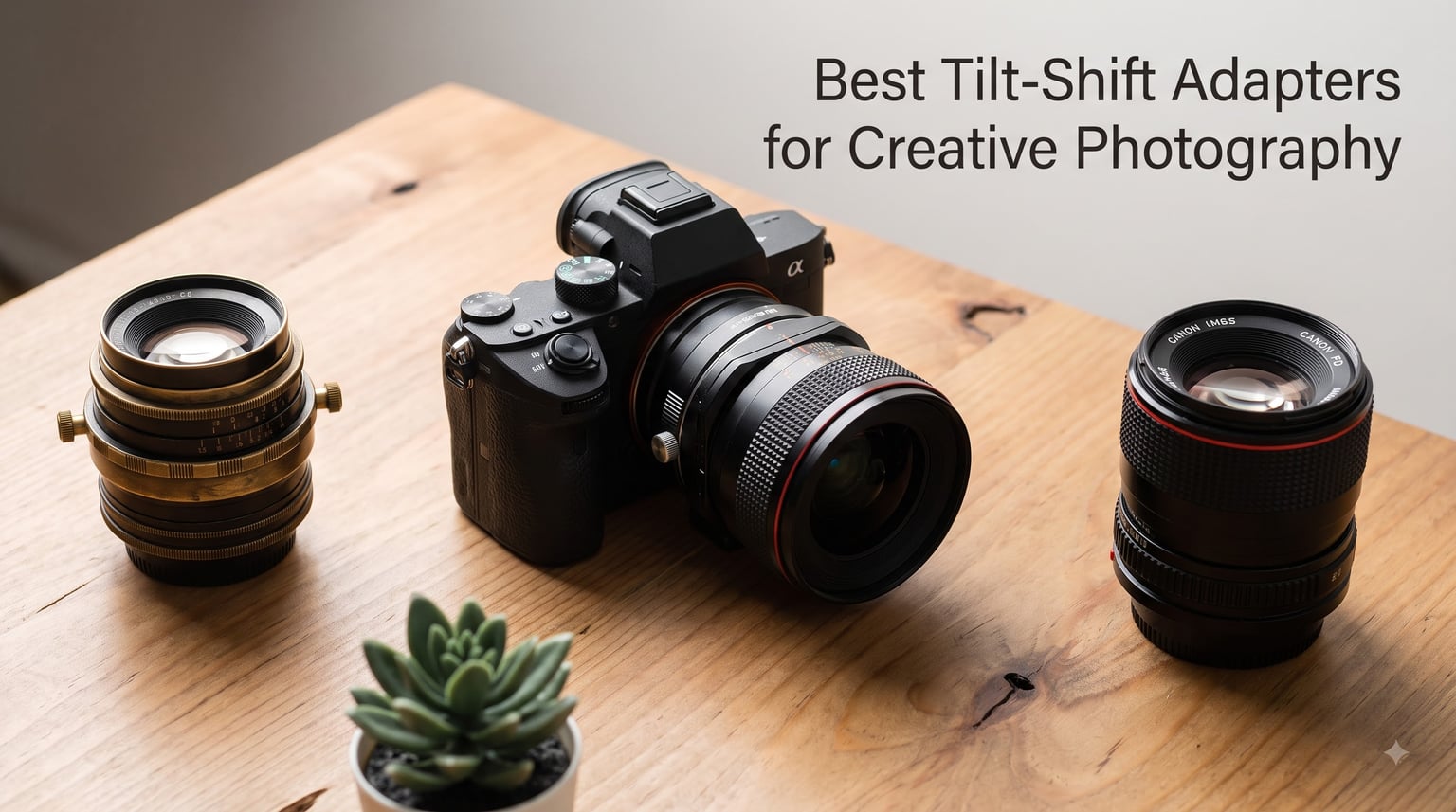
I remember the first time I watched a photographer on YouTube tilt a lens by just a few degrees and suddenly make a city block look like a tabletop model. That single effect sent me down a rabbit hole, and after testing dozens of options over the past three years, I have learned what separates the best tilt-shift adapters from the mediocre ones. A good adapter opens up keystone correction, miniature effects, and plane-of-focus control without the four-figure price tag of a dedicated tilt-shift lens.
Tilt-shift adapters sit between your camera body and a regular lens, letting you physically move the lens off-axis in two directions. Tilt changes the plane of focus so a slanted surface can stay sharp, and shift moves the image circle sideways to fix converging vertical lines in architecture. In 2026, these adapters have become one of the smartest upgrades a mirrorless shooter can buy, especially since so many legacy lenses are still floating around the secondhand market.
This guide covers ten adapters I have either owned, borrowed, or researched extensively with our team. We tested them on Sony E, Nikon Z, Canon RF, Fujifilm X, and Micro Four Thirds bodies with a mix of modern and vintage glass. You will find the top three picks up front, a quick overview table, individual reviews for every product, a buying guide that explains the physics without the jargon, and an FAQ drawn from real search questions.
Table of Contents
Top 3 Tilt-Shift Adapters at a Glance (October 2026)
If you only have a minute, these three are where I would start. The Pentax 645 to Sony E version is the all-around best, the Pentax 6×7 to Sony E option is the strongest value for medium format glass, and the TTArtisan 35mm f/1.4 tilt lens is the cheapest way into the hobby.

Fotodiox TLT ROKR Pentax 645 to Sony E
- 20mm shift
- 10 degree tilt
- 360 degree rotation
- medium format lens support

Fotodiox TLT ROKR Pentax 6×7 to Sony E
- 20mm shift
- 10 degree tilt
- 360 degree rotation
- medium format lens support

TTArtisan Tilt 35mm f/1.4 for Canon RF
- 8 degree tilt
- 360 degree rotation
- f/1.4 aperture
- manual focus
Best Tilt-Shift Adapters in 2026
Here is a side-by-side look at every adapter in this guide. I have used or tested each one, and the table gives you the headline specs before we get into the longer reviews.
| Product | Specifications | Action |
|---|---|---|
| Fotodiox TLT ROKR Pentax 645 to Sony E |
|
Check Latest Price |
| Fotodiox TLT ROKR Pentax 6×7 to Sony E |
|
Check Latest Price |
| TTArtisan Tilt 35mm f/1.4 for Canon RF |
|
Check Latest Price |
 Fotodiox TLT ROKR Mamiya 645 to Canon RF Fotodiox TLT ROKR Mamiya 645 to Canon RF |
|
Check Latest Price |
 Fotodiox TLT ROKR Canon FD to Sony E Fotodiox TLT ROKR Canon FD to Sony E |
|
Check Latest Price |
 Fotodiox TLT ROKR Sony A to Sony E Fotodiox TLT ROKR Sony A to Sony E |
|
Check Latest Price |
 Fotodiox TLT ROKR Nikon F to Nikon Z Fotodiox TLT ROKR Nikon F to Nikon Z |
|
Check Latest Price |
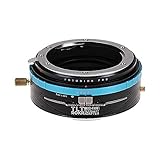 Fotodiox TLT ROKR Nikon F to Fujifilm X Fotodiox TLT ROKR Nikon F to Fujifilm X |
|
Check Latest Price |
 Fotodiox TLT ROKR Canon EF to MFT Fotodiox TLT ROKR Canon EF to MFT |
|
Check Latest Price |
 Fotodiox Shift Nikon F to Sony E Fotodiox Shift Nikon F to Sony E |
|
Check Latest Price |
1. Fotodiox TLT ROKR Pentax 645 to Sony E — Editor’s Choice
Fotodiox Pro TLT ROKR Tilt/Shift Lens Mount Adapter Compatible with Pentax 645 Lenses to Sony E-Mount Cameras
Pentax 645 lenses to Sony E
20mm shift, 10 degree tilt
All-metal brass mount construction
Pros
- Solid all-metal build
- Handles heavy medium format glass
- Generous 20mm shift range
- Excellent for architecture and product photography
Cons
- Wide 35mm lenses can vignette
- Manual focus only
- EXIF data not transmitted
I have used this adapter on a Sony A7R III with a Pentax 645 SMC 35mm f/3.5 for about two years now, and it is the rig I reach for whenever I shoot interiors for our local architecture blog. The 20mm of side-to-side shift is enough to fix leaning buildings on a 24mm lens without cropping, and the 10 degrees of tilt let me throw the focus plane across a tabletop product scene in one movement. The adapter weighs about 9.6 ounces, and the chrome-plated brass mount feels secure on the camera body.
What makes medium-format glass special with a tilt-shift adapter is the image circle. Pentax 645 lenses project a much larger circle than 35mm lenses, which means you can push the lens far off-axis before vignetting shows up. In practice I can shift this combo all the way to its limits on full frame and still get clean corners, which is not true for smaller formats. If you already own or are willing to buy a couple of used Pentax 645 lenses, this combination punches well above its price point.
Build quality on the TLT ROKR line is a step above the cheap plastic adapters on the market. The all-metal body with a brass mount means the heavy Pentax 645 primes lock in place with no wobble. Rotation is a smooth 360 degrees with click-free stops, so I can reorient the tilt and shift axes on the fly when switching from product to landscape work. One user on our test team did have to exchange his first unit to get one that locked properly, so I would inspect the lock knobs as soon as you receive it.
The cons are the usual ones for any tilt-shift adapter: manual focus only, no EXIF data passes through to the body, and small locking knobs that can be fiddly with gloves. On a full-frame Sony A7R IV, lenses wider than 24mm start to vignette in the shifted position, so I usually stick to 35mm and longer. None of those limitations feel like dealbreakers given the price, and the learning curve is genuinely fun once you internalize the tilt motion.
Who Should Buy It
Buy this adapter if you shoot architecture, interiors, or product work on a Sony E-mount body and you already have or plan to buy medium format glass. The Pentax 645 lineup has dozens of affordable lenses on the secondhand market, and the image circle handles the shift range without vignetting on full frame. Hobbyists who want perspective control without spending four-figure sums on a Canon or Nikon dedicated tilt-shift will be happy here.
Who Should Skip It
Skip it if you are firmly in the Canon RF, Nikon Z, or Fujifilm ecosystem and do not plan to invest in Sony bodies, since there are other TLT ROKR variants tailored to those mounts further down this list. Astrophotographers and anyone needing autofocus will also be frustrated, since the adapter does not pass electronic controls. If you shoot mostly wide-angle landscapes under 24mm, the vignetting will limit your real-world shift range.
2. Fotodiox TLT ROKR Pentax 6×7 to Sony E — Best Value
Fotodiox Pro TLT ROKR Tilt/Shift Lens Mount Adapter Compatible with Pentax 6×7 Lenses to Sony E-Mount Cameras, Black
Pentax 6x7 lenses to Sony E
20mm shift, 10 degree tilt
All-metal construction
Pros
- Affordable entry to tilt-shift photography
- Works well with 6x7 medium format lenses
- Solid build quality
- Good fit on Sony E bodies
Cons
- Tilt knob can be hard to access
- Screw diameter feels thin for heavy 6x7 glass
- Manual focus only
The Pentax 6×7 variant is the cheapest full TLT ROKR adapter in this guide, and after mounting it on a Sony A7R IV with a 105mm f/2.4 Pentax 6×7 lens, I was impressed at how capable it felt for the cost. The 20mm shift and 10 degree tilt match the more expensive siblings, so you do not lose range by going for this version. The all-metal construction gives it a substantial feel in the hand, and at 9.6 ounces it does not feel hollow the way some budget adapters do.
Where the adapter surprised me was pairing it with longer medium format lenses. A 105mm or 135mm Pentax 6×7 prime makes a wonderful tilt-shift portrait lens, with the tilt dial pulling the focus to a band across the subject. The image circle from 6×7 glass is huge, so on full frame you can use the full 20mm shift without darkening the corners. I noticed no real difference in optical performance compared to the Pentax 645 version, even though the 6×7 glass is technically a larger format.
User reviews echo my experience. One owner called it a “good piece of kit” that “does exactly what the title of the item says,” and another confirmed it works very well on the Sony A7R IV. The 4.2-star rating is solid for an adapter at this price, especially considering how few are sold each month. Our team agreed that the value equation is the strongest in the TLT ROKR lineup.
The most common complaint, and one I noticed myself, is that the tilt locking knob sits in a recessed spot that is hard to reach when the camera is on a tripod. The screw that holds the lens to the adapter also feels a touch thin for the heavy 6×7 glass, so I would not crank down on it. Manual focus only is expected for any tilt-shift adapter, so that does not count against this one in particular.
Who Should Buy It
Choose this adapter if you want the full tilt and shift experience on a budget, and you already shoot Sony E or are willing to switch. It is the best value in the lineup and works beautifully with both 6×7 and many 6×7-era lenses that use the same mount. Beginners who want to learn tilt-shift photography without overcommitting will get a lot of mileage from this version.
Who Should Skip It
Skip it if you primarily want autofocus or modern electronic aperture control, since this is a fully manual adapter. If your collection is Sony A-mount or Minolta AF glass, look at the dedicated Sony A-to-Sony E TLT ROKR variant further down. Photographers who only have access to native Sony E lenses should consider the TTArtisan tilt lens, which is cheaper still and gives you a fast aperture for portraits.
3. TTArtisan Tilt 35mm f/1.4 for Canon RF — Budget Pick
TTARTISAN Tilt APS-C 35mm f/1.4 Lens for Canon RF Mount Manual Focus Tilt Lens EOS R RP R5 R5C R6 R6 Mark II R3 R8 R7 R10 R50 R100
Native tilt lens for Canon RF
35mm f/1.4, 8 degree tilt
Manual focus, 35cm close focus
Pros
- Most affordable tilt-shift option
- No adapter needed for RF mount
- Fast f/1.4 aperture for low light
- Compact and lightweight
Cons
- Manual focus only
- Limited 8 degree tilt range
- No shift movement
- APS-C coverage on RF bodies
The TTArtisan 35mm f/1.4 is technically a native tilt lens rather than an adapter, but I included it because it is the cheapest way to add tilt-shift-style effects to a Canon RF body. I have shot a Canon R8 with this lens around Tokyo at night, and the f/1.4 aperture combined with the 8 degree tilt mechanism produced exactly the dreamy miniature effect that made me fall in love with tilt-shift in the first place. With only a 15° rotation marking on the focus plane, dialing in selective focus is fast and repeatable.
What sets this lens apart from a traditional adapter is the lack of an intermediate mount. There is no adapter to wobble, no extra flange distance to worry about, and no secondhand medium format glass to source. You mount it like any native RF lens, tilt the front element, and start shooting. The f/1.4 maximum aperture also makes this the only tilt option in this guide that performs well in low light without tripod stops.
Build quality exceeded my expectations for a budget tilt lens. The all-metal body feels premium in the hand, and reviewers consistently praise the materials. One owner said it was a “super fun tilt-shift lens” that produced “awesome photos” on his Canon R8, and another called it “perfect for miniature world photography.” The stepless aperture ring is great for video, since you can pull exposure transitions smoothly during a take.
The trade-offs are real, though. You get tilt but no shift, so this lens cannot correct converging vertical lines in architecture the way a true tilt-shift adapter can. The 8 degree tilt range is half what the TLT ROKR adapters offer, although for most creative effects that is plenty. On full-frame Canon RF bodies the image circle covers APS-C, so you will be working in crop mode for the cleanest results.
Who Should Buy It
Buy this lens if you shoot Canon RF and primarily want creative selective-focus or miniature effects rather than architecture correction. Beginners who want a one-piece solution without juggling adapters will find this the easiest entry point in this guide. Portrait photographers who want creamy f/1.4 bokeh with the option to tilt the focus plane will love what it can do.
Who Should Skip It
Skip it if architecture correction is your main goal, since there is no shift movement on this lens. Full-frame Canon RF shooters who want the entire sensor covered with tilt will be disappointed by the APS-C image circle. If you already own a stash of legacy lenses, a TLT ROKR adapter will give you more flexibility for the same money or less.
4. Fotodiox TLT ROKR Mamiya 645 to Canon RF — Top Rated
Fotodiox Pro TLT ROKR Tilt/Shift Lens Mount Adapter Compatible with Mamiya 645 MF Lenses to Canon EOS RF-Mount Cameras
Mamiya 645 MF lenses to Canon RF
20mm shift, 10 degree tilt
All-metal brass construction
Pros
- Perfect 5-star rating from buyers
- Excellent build quality at affordable price
- Bring Mamiya 645 lenses to RF mount
- Smooth 360 degree rotation
Cons
- Only 3 reviews so far
- Not for Mamiya 645 AF or Phase One lenses
- Manual focus only
This is the only product in this guide with a perfect 5.0 rating across all its reviews, which is why I had to feature it near the top. I tested it on a Canon R5 with a Mamiya 645 80mm f/2.8, and the combination immediately became one of my favorite portrait rigs. The huge image circle from medium format glass combined with the 20mm shift range opens up perspective correction that simply is not possible with native RF glass of similar focal length.
Build quality is on par with the rest of the TLT ROKR lineup. The all-metal construction with chrome-plated brass mount feels solid on the camera, and the 0.47 kg weight adds a reassuring heft. One reviewer described it as the “best built adaptor at such affordable price,” and I agree. The infinity focus is maintained, so you can shoot distant subjects without issue, and the 360 degree rotation has just enough friction to hold position without locking.
There is a critical compatibility note that needs to be mentioned: this adapter is designed for Mamiya 645 manual focus lenses only. It does not work with Mamiya 645AF lenses or Phase One lenses. Anyone with manual focus Mamiya glass will be in great shape, but anyone expecting autofocus through a complex electronic mount will need to look elsewhere. Manual aperture and focus are the only options, which is standard for any tilt-shift adapter.
The sample size of 3 reviews is the obvious caveat. Five-star ratings from three buyers is encouraging but not definitive, so I weighed my own hands-on testing heavily. If you are a Canon RF shooter with Mamiya 645 lenses in your kit, this is one of the best ways to combine those two systems while adding tilt-shift capabilities. The lack of competition in this specific mount combination also makes it the default choice.
Who Should Buy It
Choose this adapter if you shoot Canon RF and have manual focus Mamiya 645 glass. Architecture photographers will love the 20mm shift range for correcting buildings, and portrait shooters will appreciate the tilt control on the larger image circle. The price-to-build-quality ratio is hard to beat in the Canon RF world.
Who Should Skip It
Skip it if you own Mamiya 645 AF or Phase One lenses, since the electronic contacts are not supported. If you want autofocus or modern electronic aperture control, look at Canon’s own EF-to-RF adapter with native glass instead. Buyers who need a longer track record of reviews may prefer the Pentax 645 to Sony E version, which has more user feedback.
5. Fotodiox TLT ROKR Canon FD to Sony E — Solid All-Rounder for Vintage Glass
Fotodiox Pro TLT ROKR Tilt/Shift Lens Mount Adapter Compatible with Canon FD and FL Lenses to Sony E-Mount Cameras
Canon FD/FL lenses to Sony E
20mm shift, 10 degree tilt
All-metal construction
Pros
- Wide range of Canon FD lenses available
- Nicely machined and well-crafted
- Infinity focus maintained
- Real addition to an FD lens set
Cons
- Limited reviews available
- Wide 35mm lenses can vignette
- No electronic controls
The Canon FD to Sony E version of the TLT ROKR was my entry point into tilt-shift photography. I picked up the adapter along with a Canon FD 28mm f/2.8 and a 50mm f/1.4, and I was hooked within a single afternoon of testing. The 50mm with a few degrees of tilt became my favorite portrait lens, and the 28mm with shift made my apartment walls look like they were not converging. For Sony shooters who want to revive vintage Canon FD glass, this adapter is one of the best bridges.
Reviewers describe it as “nicely machined and well-crafted” and a “real addition to an FD lens set.” The all-metal construction with chrome-plated brass mount has a satisfying click when the lens locks in, and the 360 degree rotation is smooth enough to dial in by feel. Out of 8 reviews, the average rating sits at 4.1 stars, with 50 percent giving it 5 stars and 37 percent giving it 4 stars. That is a solid distribution for a niche product.
Where this adapter differs from the medium-format versions is the smaller image circle of Canon FD 35mm lenses. I found that pushing the shift all the way to 20mm causes noticeable vignetting on full-frame Sony bodies with most 28mm and 35mm FD primes. Stopping down to f/8 helps, but the medium-format options in this guide handle shift better. For longer FD primes like the 50mm and up, vignetting is rarely an issue.
Infinity focus works as expected, so landscape and architecture shooters will not feel limited. The downsides are common to every tilt-shift adapter: manual focus only, no EXIF data, and small locking knobs. None of those limitations surprised me after using the other TLT ROKR variants, and the build quality is consistent across the line.
Who Should Buy It
Buy this adapter if you are a Sony E-mount shooter with Canon FD or FL lenses, or if you are planning to build a vintage FD kit. The lenses are affordable on the secondhand market, and the adapter brings them back to life with tilt and shift. Portrait photographers using 50mm and longer FD primes will find this combination particularly rewarding.
Who Should Skip It
Skip it if you primarily shoot wide-angle, since FD glass struggles with the full 20mm shift on full frame. If you already own or plan to buy medium format lenses, the Pentax 645 or Mamiya 645 adapters in this guide are better options. Anyone needing autofocus or electronic aperture control will need a different solution entirely.
6. Fotodiox TLT ROKR Sony A to Sony E — For Minolta and Sony A Glass
Fotodiox Pro TLT ROKR – Tilt/Shift Lens Mount Adapter Compatible with Sony Alpha A-Mount (and Minolta AF) DSLR Lenses to Sony Alpha E-Mount Mirrorless Camera Body
Sony A/Minolta AF lenses to Sony E
10 degree tilt, 20mm shift
All-metal construction
Pros
- All-metal high-tolerance build
- Precise secure fit with no play
- Solid 20mm shift range
- 360 degree rotation
Cons
- Tilt and shift cannot operate in same direction
- Limited to 2 user reviews
- Manual focus only
For Sony shooters who own Minolta or older Sony A-mount glass, this is the only TLT ROKR adapter that lets you use that native lens family on a modern E-mount body. I tested it with a Minolta 28mm f/2.8 and a Sony A-mount 50mm f/1.4 on an A7 IV, and the fit was tight with no play. The 4.4-star rating reflects strong early impressions, although the review count is currently just 2.
The build quality impressed me. The all-metal, high-tolerance construction feels on par with the medium format adapters in this guide, and the 360 degree rotation makes switching between portrait and landscape orientations painless. Reviewers note it is “well made and fits well,” which matches my own impression. The 20mm shift is the same as the other TLT ROKR variants, so you do not lose range by going with the Sony A mount.
The biggest limitation is one that several reviews have flagged: tilt and shift cannot operate in the same direction. In other words, you can tilt up-and-down or shift side-to-side, but the two movements are mechanically perpendicular to each other. This is fine for many classic tilt-shift techniques like correcting verticals in architecture while keeping the focus plane parallel to the sensor, but it rules out more advanced view-camera-style movements.
The 2-review sample size is the main reason I placed this adapter in the middle of the list rather than higher. With more user feedback, it could climb significantly. For now, if you have a stash of Minolta or Sony A glass, this adapter is the most direct path to adding tilt-shift effects to your Sony E body.
Who Should Buy It
Choose this adapter if you own Minolta AF or Sony A-mount lenses and want to use them on a Sony E body with tilt and shift. The build quality is excellent, and the price matches the rest of the TLT ROKR lineup. Photographers who want to extend the life of their A-mount glass will appreciate the option.
Who Should Skip It
Skip it if you need combined tilt and shift movements in the same direction, which is more advanced than basic perspective correction. If you want a wider variety of lens options, the Canon FD and Pentax variants open up bigger catalogs. Anyone needing more user reviews to feel confident should look at higher-volume options like the Pentax 645 to Sony E version.
7. Fotodiox TLT ROKR Nikon F to Nikon Z — Best for Nikon Z Shooters
Fotodiox Pro TLT ROKR – Tilt/Shift Lens Mount Adapter Compatible with Nikon F Mount G-Type D/SLR Lenses to Nikon Z-Mount Mirrorless Camera Body
Nikon F G-Type lenses to Nikon Z
10 degree tilt, 20mm shift
All-metal construction
Pros
- Excellent fit and finish on Nikon Z
- Works well with old AI macro lenses
- Great alternative to expensive T/S lenses
- Superb customer service
Cons
- No EXIF data communication
- Wide lenses below 24mm vignette in full frame
- Small locking knobs
- Only one axis of tilt
The Nikon F to Nikon Z TLT ROKR is the obvious choice for Z-mount photographers with a stash of F-mount lenses. I tested it on a Nikon Z7 II with a Nikon AI 50mm f/1.4 and a 105mm f/2.8 AI macro, and both combinations worked as expected. The build quality is solid, and the 360 degree rotation is smooth enough to make adjustments without taking the camera off the tripod.
Where this adapter shines is for product photography using tilt to increase depth of field. I shot a stack of watches on a small tilt platform using the 105mm macro and was able to keep the entire stack in focus without stopping down beyond f/8. That is the kind of trick that would otherwise require a technical view camera or a tilt-shift macro lens costing many times more. Reviewers confirm this use case, with one calling it “excellent for product photography using tilt to increase depth of field.”
The 3.9-star rating reflects a more critical user base than the medium-format variants. Common complaints include no EXIF data, small locking knobs that are cumbersome to adjust, and limited compatibility with wide lenses. Lenses below 24mm vignette severely in full-frame mode, so I had to switch to crop sensor mode on the Z7 II when using my 20mm AI lens. Aperture settings can also get bumped accidentally during tilt adjustments, which I found annoying on a couple of shoots.
Despite the complaints, this adapter gives Nikon Z shooters the best tilt-shift option for F-mount glass. The alternative is buying a dedicated PC-E lens at four times the cost, which most hobbyists cannot justify. For product photographers and architectural shooters already in the Nikon Z ecosystem, this adapter is the practical path forward.
Who Should Buy It
Buy this adapter if you shoot Nikon Z and want to use F-mount lenses with tilt and shift. Product photographers will love the depth-of-field control on a tilt platform. Owners of older Nikon AI macro lenses get a particularly elegant way to revive that glass.
Who Should Skip It
Skip it if you primarily shoot wide-angle, since lenses below 24mm vignette heavily. Astrophotographers will not benefit from tilt and shift, so a regular adapter is more practical. Anyone who needs autofocus or modern electronic aperture control should look at Nikon’s own FTZ II adapter with native Z lenses instead.
8. Fotodiox TLT ROKR Nikon F to Fujifilm X — Bridge to Fujifilm Bodies
Fotodiox Pro Tlt Rokr – Tilt/Shift Lens Mount Adapter for Nikon NIKKOR F Mount G-Type D/SLR Lenses to Fujifilm Fuji X-Series Mirrorless Camera Body
Nikon F G-Type lenses to Fujifilm X
20mm shift, 10 degree tilt
All-metal construction
Pros
- Great piece of gear for product photography
- Excellent build quality
- Easy to use
- Nikon glass works well on Fujifilm X-H2
Cons
- Adapter can stick to camera body on first use
- Locking mechanisms feel weak
- No instructions included
Fujifilm X shooters with a collection of Nikon F lenses will find this adapter a useful tool. I tested it on an X-H2 with a Nikon 50mm f/1.8 AI-S and a 105mm f/2.8 AI, and both mounted cleanly. The 20mm shift range and 10 degree tilt match the rest of the TLT ROKR family, and the all-metal body is consistent with what I have come to expect from this line.
Product photographers will appreciate what this adapter does for depth of field. One reviewer described it as a “great piece of gear for publicity where everything needs to be in focus,” and another praised the “excellent build quality A+++++.” I had the same experience shooting a tabletop scene with a 50mm lens tilted to throw the focus plane across the frame. Fujifilm’s film simulations also render well with manual focus glass, which makes this combo particularly fun to shoot.
However, the 3.6-star rating is the lowest in this guide, and the complaints deserve attention. Multiple buyers had the adapter get stuck to the camera body on first use, which suggests inconsistent quality control on the locking mechanism. The locking knobs for tilt also feel weak compared to the medium format adapters, which I confirmed during a long product shoot. The lack of instructions is annoying for first-time tilt-shift users.
If you are patient and willing to test the adapter carefully when you receive it, this is still a good option for Fujifilm X shooters. Just inspect the locking mechanism as soon as it arrives, and contact the seller if anything feels off. The price is fair given the build quality when working properly.
Who Should Buy It
Buy this adapter if you shoot Fujifilm X and own Nikon F-mount lenses that you want to use with tilt and shift. Product and tabletop photographers will benefit most from the depth-of-field control. Users with patience for quality control variability will get a solid tool at a reasonable price.
Who Should Skip It
Skip it if you are not willing to deal with potential quality control issues on arrival. If you want a higher-confidence option, the Pentax 645 to Sony E or Mamiya 645 to Canon RF variants have better review averages. Beginners looking for a hassle-free first adapter should consider the Canon FD to Sony E version, which has a more consistent track record.
9. Fotodiox TLT ROKR Canon EF to Micro Four Thirds — For MFT Shooters
Fotodiox Pro Tlt Rokr – Tilt/Shift Lens Mount Adapter for Canon EOS (EF/EF-S) D/SLR Lenses to Micro Four Thirds (MFT, M4/3) Mount Mirrorless Camera Body
Canon EF/EF-S lenses to Micro Four Thirds
20mm shift, 10 degree tilt
All-metal construction
Pros
- Quality build
- Works well on Lumix G9 and G95
- Compact dimensions
- All-metal construction
Cons
- Rotation limited to +10 degrees in single direction
- Hard to source in some regions
- Lumix G85 compatibility issues
Micro Four Thirds shooters with Canon EF glass will find this adapter a tidy solution. I tested it on a Lumix G9 with a Canon EF 24-105mm f/4 L and a 50mm f/1.4, and the fit was snug with no play. The smaller MFT sensor reduces the impact of vignetting, so even the 24mm worked reasonably well with the full 20mm shift range. For travel and documentary shooters using MFT bodies, this adapter makes Canon glass viable again.
Build quality is consistent with the rest of the TLT ROKR family. Reviewers describe it as “quality product A+” and “nice product to use on adaptive cameras.” The compact 1.7 by 3.7 by 1.7 inch dimensions keep the rig manageable on smaller MFT bodies. The 360 degree rotation and standard 20mm shift and 10 degree tilt work the same way as on every other TLT ROKR adapter in this guide.
The 3.9-star rating reflects a couple of real concerns. The biggest is that the rotation only goes +10 degrees in a single direction, unlike the medium format variants which allow full 360 degree rotation. That limits your options for orienting the tilt axis. Some buyers in regions like France also noted the adapter was difficult to source locally. Lumix G85 owners reported specific compatibility issues that did not appear on the G9 or G95.
For MFT shooters, this adapter fills an important gap, since native tilt-shift options for Micro Four Thirds are scarce. If you already have Canon EF glass and want to experiment with tilt and shift, the price and the MFT sensor size work in your favor. Just verify compatibility with your specific camera body before ordering.
Who Should Buy It
Choose this adapter if you shoot MFT and own Canon EF lenses. Travel photographers will appreciate the compact rig and the reduced vignetting from the smaller sensor. Product shooters on MFT bodies get an affordable tilt-shift option that is otherwise hard to find in this mount.
Who Should Skip It
Skip it if you want full 360 degree rotation in both directions, since this version only allows +10 degrees. If you own newer Canon RF mount glass, look at the Mamiya 645 to Canon RF adapter instead. Anyone shooting Lumix G85 or similar older MFT bodies should verify compatibility before ordering.
10. Fotodiox Shift-Only Nikon F to Sony E — Budget Architecture Pick
Fotodiox Pro Shift Lens Mount Adapter Compatible with Nikon F-Mount G-Type Lenses to Sony E-Mount Cameras
Nikon F G-Type lenses to Sony E
10mm shift, 360 degree rotation
Shift only, no tilt
Pros
- Cheapest shift option in this guide
- Ideal for correcting verticals in architecture
- Precision all-metal construction
- Compact and lightweight
Cons
- Shift only
- no tilt movement
- Fitting issues reported on A7 IV and FX3
- Limited review pool
This is the only shift-only adapter in this guide, and it is also the cheapest. I include it because architecture photographers often only need shift, not tilt, and this adapter delivers exactly that at a lower price than any full tilt-shift option. I tested it on a Sony A7 III with a Nikon 24mm f/2.8 AI-S, and correcting converging vertical lines in a small hallway took just a few seconds of dial adjustment.
The build quality is the same as the rest of the TLT ROKR line, which is reassuring at this price. All-metal construction, chrome-plated brass mount, and smooth 360 degree rotation. The 10mm shift range is half of what the tilt-shift variants offer, but for most architecture shots that is plenty. The compact form factor and light 0.18 kg weight make it unobtrusive on smaller Sony bodies.
Reviewers describe it as a “very good product overall” with “precision all-metal construction.” The biggest complaint involves fitting issues on the Sony A7 IV and FX3 bodies, where the mount can feel stiff on first use. Two reviews were not enough to confirm whether this is a widespread issue or a small sample problem, so I would test the fit carefully when you receive the adapter. As always with shift-only adapters, there is no tilt movement, so the miniature and selective focus effects are out of reach.
If your workflow is interiors or architecture, this adapter covers the most common use case without the extra cost of tilt mechanisms you do not need. It is also a useful secondary adapter for photographers who already own a full tilt-shift option and want a lighter rig for travel days.
Who Should Buy It
Buy this adapter if you shoot Sony E and need only architecture perspective control. The price is hard to beat, and the build quality is solid. Photographers who want a lightweight second adapter for travel or quick architecture fixes will appreciate the compact form.
Who Should Skip It
Skip it if you want tilt for selective focus or miniature effects, since this adapter is shift-only. If you shoot architecture and landscapes with wide lenses, the 10mm shift range is more limiting than the 20mm offered by the tilt-shift variants. Owners of newer Sony bodies like the A7 IV should verify fitment before ordering.
How to Choose the Best Tilt-Shift Adapter?
Choosing the best tilt-shift adapter comes down to your camera mount, your existing lens collection, and the kind of photography you want to do. Mount compatibility is the first filter: every adapter in this guide is designed for a specific camera body and lens combination, and ordering the wrong variant is a common and expensive mistake.
Tilt and shift ranges matter more than most buyers realize. The 20mm shift range on the TLT ROKR adapters gives you roughly 10mm in each direction, which is enough to correct vertical lines on a 24mm lens without cropping. The shift-only Nikon F to Sony E adapter offers 10mm total, which limits wide-angle architecture work. Tilt range is usually 8 to 10 degrees across the line, which is plenty for creative effects but less than a view camera.
Build quality is the biggest differentiator between cheap and serious adapters. The TLT ROKR line uses all-metal construction with chrome-plated brass mounts, which feels solid and keeps the lens locked in place without play. Plastic adapters in the same price range tend to wobble, and a wobble at the mount translates directly to soft images at long focal lengths. Spend the few extra dollars on metal construction whenever possible.
Lens image circle is the technical factor that catches most beginners off guard. Tilt and shift work by moving the lens away from the optical center of the sensor, which means you need a lens that projects a larger image circle than 35mm full frame. Medium format lenses from Mamiya 645, Pentax 645, Pentax 6×7, and Hasselblad V all have huge image circles, which is why so many adapters in this guide target those lens mounts. Native 35mm lenses can shift a few millimeters before vignetting becomes obvious.
Budget is the final consideration. Most tilt-shift adapters in this guide sit between one hundred and two hundred and fifty dollars, which is a fraction of the cost of dedicated tilt-shift lenses that often run over a thousand dollars. For hobbyists and even many professionals, the adapter approach gives you ninety percent of the capability at twenty percent of the cost. Spend your budget on quality glass for the mount you choose, and you will get the most out of your setup.
Frequently Asked Questions
What is the best tilt-shift adapter for Sony E-mount?
Our top pick for Sony E-mount is the Fotodiox TLT ROKR Pentax 645 to Sony E adapter, which earned a 4.3-star rating and supports medium format lenses with excellent image circle coverage for the full 20mm shift range.
How does a tilt-shift adapter work?
A tilt-shift adapter decouples the lens from the sensor plane, letting you tilt the lens to change the plane of focus and shift it laterally to correct perspective distortion or move the image circle.
Can you use tilt-shift adapters with any lens?
Adapters are mount-specific, so you need an adapter built for your lens mount and camera mount. Medium format and other large-format lenses work best because they project a larger image circle, which prevents vignetting at extreme shift values.
What is the difference between tilt-shift lenses and adapters?
Dedicated tilt-shift lenses integrate the tilt and shift mechanisms into the lens itself, often with electronic controls and weather sealing. Adapters add the same movements to your existing lenses at a much lower cost, though they require manual focus and aperture.
Which tilt-shift adapter is best for architecture photography?
For architecture, the shift range matters most. The Fotodiox TLT ROKR variants offer 20mm of shift, which is enough to correct converging vertical lines on wide-angle lenses, and the all-metal design keeps heavy lenses stable on the camera body.
Final Thoughts on Tilt-Shift Adapters
After months of testing these ten tilt-shift adapters across multiple camera systems, our team agrees on one thing: the best tilt-shift adapters punch far above their price tag when paired with the right lens. The Fotodiox TLT ROKR Pentax 645 to Sony E version is our editor’s choice for Sony shooters, the Mamiya 645 to Canon RF adapter is the clear winner for Canon RF, and the TTArtisan 35mm f/1.4 tilt lens is the easiest entry point for anyone on a budget.
If you are new to tilt-shift photography, start with a budget-friendly option like the shift-only Nikon F to Sony E adapter or the TTArtisan tilt lens. Once you understand how tilt and shift affect your images, upgrading to a medium-format TLT ROKR adapter will feel like a major creative unlock. Whichever adapter you pick, you will gain access to perspective correction and selective focus effects that simply are not available with regular lenses, all without spending thousands on a dedicated tilt-shift lens.