
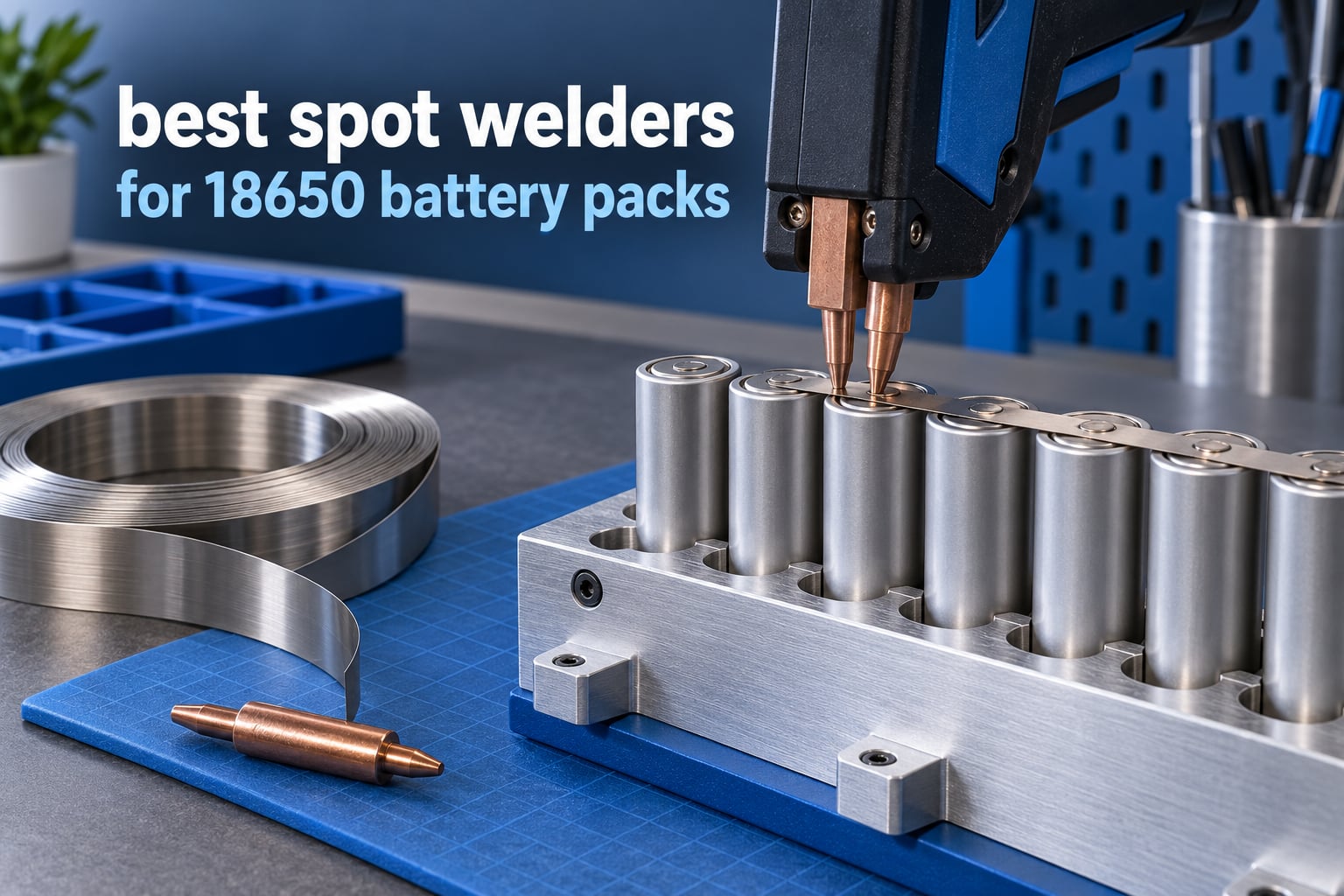
Building an 18650 battery pack means making dozens of connections that have to carry amps for years without adding resistance or generating heat. A soldering iron is the wrong tool for that job: the joint it leaves is high-resistance, and the heat it applies sits right on top of a cell that does not tolerate sustained warmth. A spot welder replaces that with a single 5-millisecond burst of current through copper electrodes, fusing nickel strip straight onto the cell terminal.
That is the short version of how the best spot welders for 18650 battery packs work. The longer version is that the machines in this category split into very different tiers, and most buyers misjudge which one they need. The cordless handhelds on this list are genuinely capable on 0.1mm to 0.15mm nickel strip and are the right answer for prototypes, small repairs and power tool packs. The supercapacitor unit at the end is a different class of machine entirely, and it is the one you want if you are building a large pack rather than a small one.
We reviewed eight machines and grouped them by what they can actually weld, not by the wattage printed on the box. The two numbers that decide everything are the thickness of strip the machine can hold, and whether its output stays consistent from weld number three to weld number three hundred.
Before we get into the machines, one note on what you will see in the specifications. The headline wattage figures on these machines range from 3360W to 11500W, and they do not tell you which one welds better. Those are peak marketing numbers, and we have used maximum current in amps, stated thickness range, gear resolution and reviewer consistency reports as the deciding factors instead.
The recurring complaint from builders in this category is that the most basic units burn a hole through the strip on the first try and never recover. That failure mode shapes most of what follows.
If you also work in thicker material and want a broader picture of joining metal, our MIG welder guide covers the other end of the spectrum.
Table of Contents
Top 3 Picks for Spot Welders for 18650 Battery Packs in 2026
Three machines carry the most weight in this roundup, and each wins for a different reason. The AWithZ UK1 is the most complete handheld we reviewed, the Docreate 8000W is the simplest machine to learn on, and the SEESII SE302 has the cleanest cordless layout of the three.
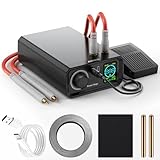
AWithZ UK1 11500W
- 1380A max current
- 100-level rotary knob with LCD
- Foot pedal and pen trigger
- 0.1-0.3mm stated range

Docreate 8000W
- 0-800A output
- 9-level knob adjustment
- Foot switch control
- 0.1-0.3mm nickel sheet
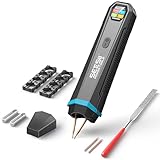
SEESII SE302
- Fully cordless pen design
- 99 gear levels
- 0.2mm nickel-plated and 0.15mm pure nickel
- 3360W output
All three of those sit in the handheld tier, which tells you where the bulk of this list sits. The step up to a bench-class machine is further down, at number eight.
Best Spot Welders for 18650 Battery Packs in 2026
All eight machines, with the specification that actually matters for each one. Read the maximum thickness and gear resolution columns together, because a machine that claims a wide range but offers nine settings will not hold a consistent weld across a full pack.
| Product | Specifications | Action |
|---|---|---|
| AWithZ UK1 11500W Battery Spot Welder |
|
Check Latest Price |
| Docreate 8000W Handheld Spot Welder |
|
Check Latest Price |
| SEESII SE302 Cordless Spot Welder |
|
Check Latest Price |
 WESTOBiG FNRSI SWM-10 Spot Welder WESTOBiG FNRSI SWM-10 Spot Welder |
|
Check Latest Price |
 AWithZ 11000mAh 99 Gear Spot Welder AWithZ 11000mAh 99 Gear Spot Welder |
|
Check Latest Price |
 Awgem SH2 Handheld Spot Welder Awgem SH2 Handheld Spot Welder |
|
Check Latest Price |
 AWithZ UK3 10000mAh Spot Welder AWithZ UK3 10000mAh Spot Welder |
|
Check Latest Price |
 SEESII SE-223 10KW Capacitive Spot Welder SEESII SE-223 10KW Capacitive Spot Welder |
|
Check Latest Price |
One entry in that table is worth flagging before the individual reviews. The SEESII SE-223 is the only machine here that stores energy in a supercapacitor bank rather than relying purely on an internal lithium pack, and it is the only one that welds 0.2mm pure nickel. Everything above it is a handheld built for thin strip and moderate duty cycles.
1. AWithZ UK1 11500W – Best Overall Spot Welder for 18650 Packs
AWithZ 11500W Battery Spot Welder, Rotary Knob Operation 100 Gears Adjustable Foot Pedal Operated, 0.1-0.3mm Spot Welder with Dual Pulse Output, Portable Spot Welder for Making DIY Battery Packs
1380A max current
100-level rotary control
0.1-0.3mm stated range
1.61 pounds
Pros
- Rotary knob makes fine power adjustment simple
- Foot pedal and pen trigger both included
- Handles 0.1mm nickel strip to cell reliably
- Two rechargeable batteries give several repairs per charge
Cons
- Short welding leads force the unit close to the work
- Reaches thermal shutdown after 20-25 continuous welds
- Will not handle 0.3mm plate in practice
- Thin documentation
This is the machine we keep coming back to, and the reason is the control resolution. One hundred levels through a rotary knob with an LCD readout gives you the fine adjustment that thin strip demands, and 387 recorded reviews at 4.3 is the deepest reviewer base in this group.
It is also one of the most complete kits out of the box. You get the welder, two spot welding pens, a foot switch, nickel-plated sheet metal, a charging cable and sandpaper, so nothing has to be sourced separately before your first weld.
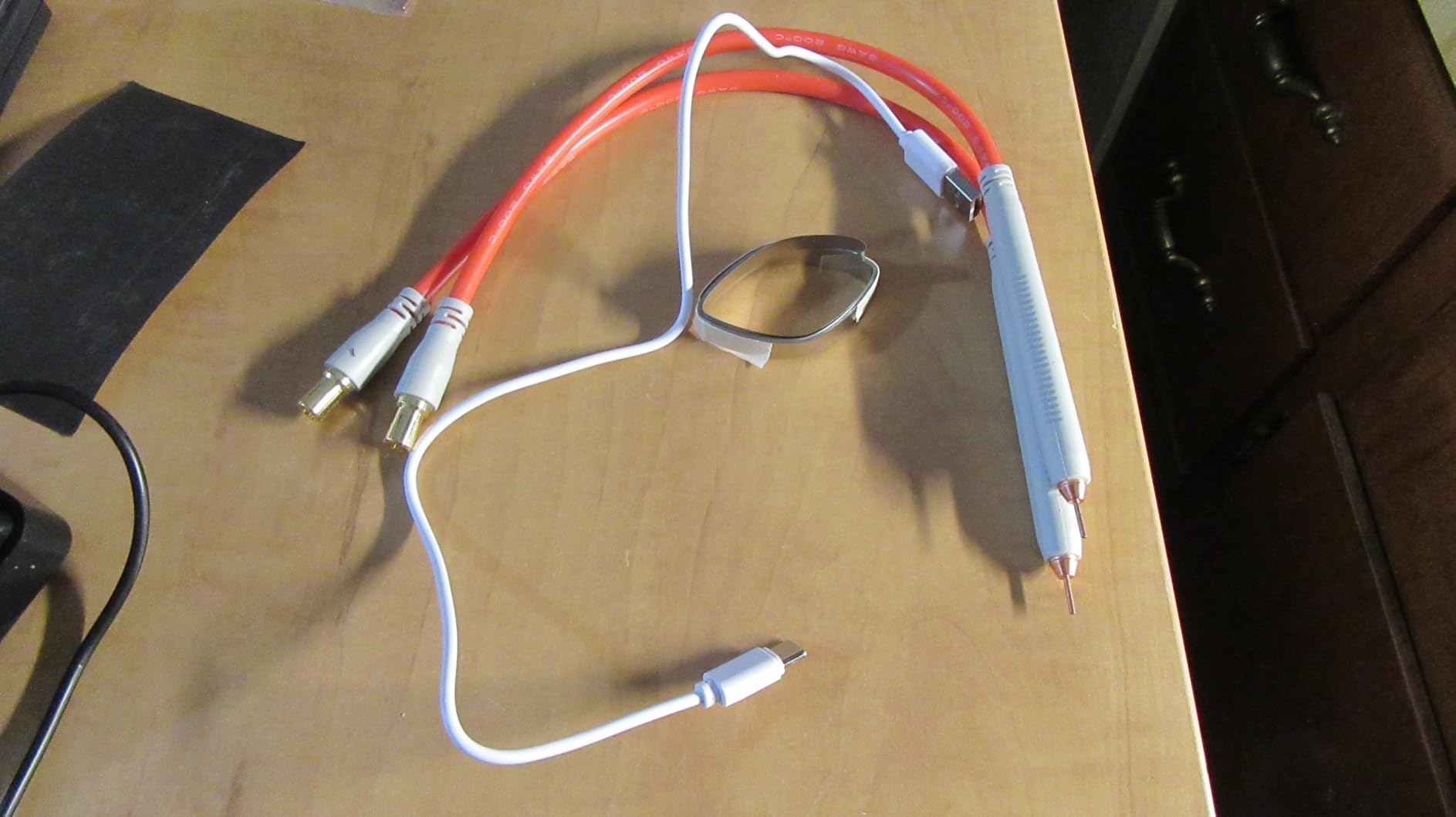
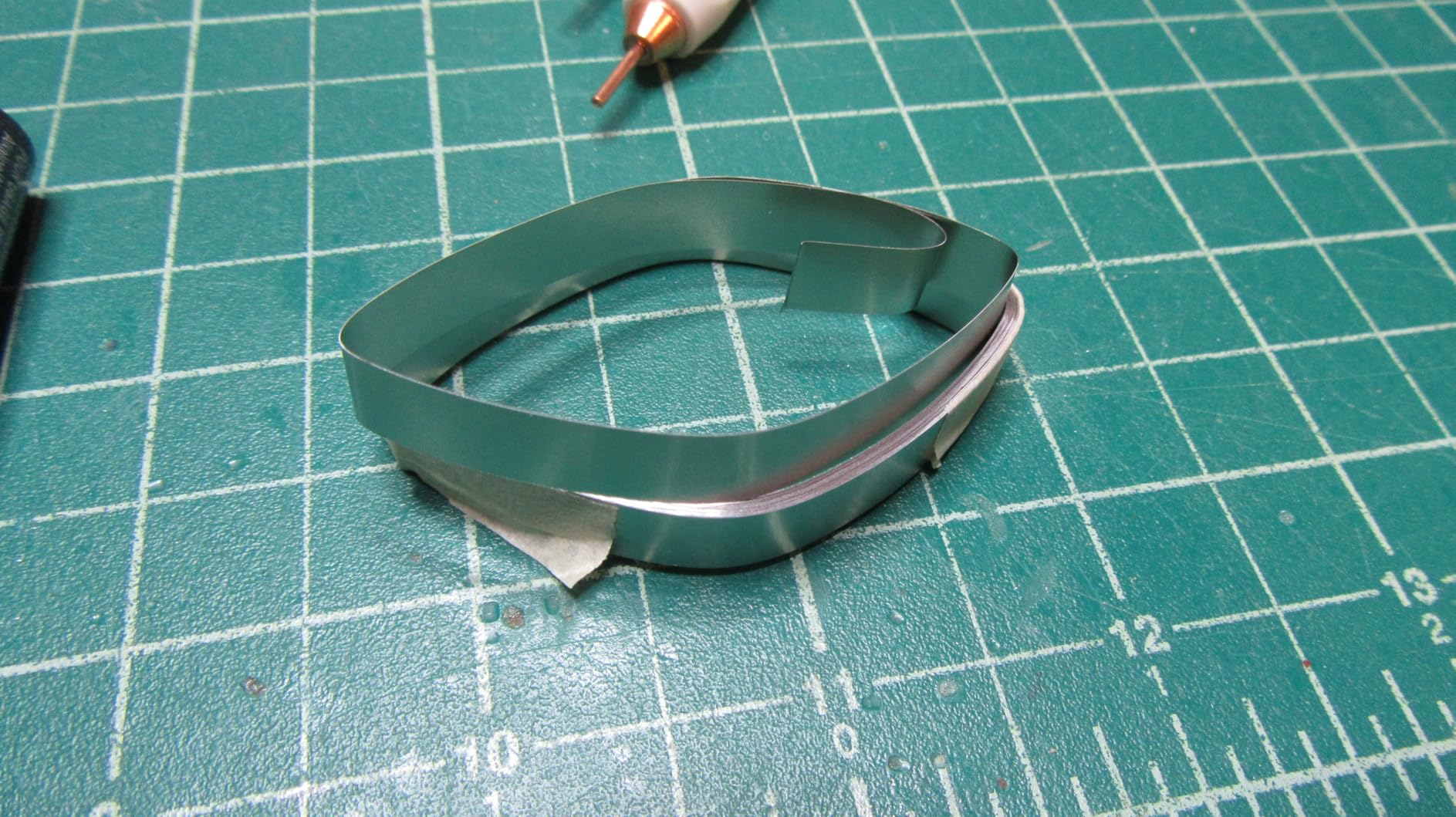
The stated range covers 0.1mm to 0.3mm material, but the reviews set a more honest ceiling. Owners report it handling 0.1mm nickel-plated sheet to a cell reliably at moderate gear settings, and describe the practical limit as closer to 0.15mm rather than the advertised 0.3mm. If you are building with 0.2mm pure nickel, move to the supercapacitor unit at number eight instead.
Thermal management is the other thing to plan around. The intelligent protection monitors battery temperature and disables the trigger, and the unit shuts down after eight idle minutes. Reviewers report reaching that shutdown after roughly 20 to 25 continuous welds, which is fine for pack repairs with pauses and frustrating for a long uninterrupted run.
Where the UK1 handles more than the alternatives
The 100-level adjustment is the differentiator at build time. When you are setting up a fresh pack and the first weld on a new cell size burns a mark into the strip, being able to step down one level instead of guessing between coarse steps is what stops you from discarding nickel.
The foot pedal and pen trigger combination also matters more than it sounds. The pedal suits long repetitive runs where your hands are busy holding the cell holder, and the pen trigger is better for first welds where you want to place the tip carefully and commit.
Where the UK1 falls short
Two practical limits come up repeatedly. The welding leads are short, so the unit has to sit close to where you are working rather than at the far end of a long bench.
There is also a documentation problem. The instructions are thin on what the parameters actually mean, so the first session is trial and error. Budget an afternoon for setup rather than assuming you will be running production packs in the first hour.
2. Docreate 8000W – Best Spot Welder for Foot Pedal Control
8000W Spot Welder,Handheld Spot Welder,Portable Spot Welder Machine DIY Kit,High Power Handheld Spot Welding Machine,with nickel strip and spot welding pen,for 18650 Battery Pack Welding Tools
0-800A output
9-level adjustment
0.1-0.3mm nickel sheet
1.9 pounds
Pros
- Foot pedal control makes precise deliberate welds
- Simple 9-level adjustment is easy to dial in
- Compact unit that fits on a small bench
- LCD displays battery voltage so charge state is visible
Cons
- Fewer adjustment levels than 99 or 100 gear rivals
- Coarse control resolution makes fine settings harder
- Small 2.5 x 1 cm screen is hard to read
This is the machine to buy if you are new to resistance spot welding and want the simplest possible relationship between your foot and the weld. The foot switch is the primary control, and 302 reviews at 4.1 confirm the pedal workflow is what people actually like about it.
Output runs from 0 to 800 amps across nine levels, with dual pulse output. The stated capability is 0.1 to 0.3mm nickel sheet and 0.1 to 0.15mm pure nickel, which covers the strip most first-time pack builders buy.
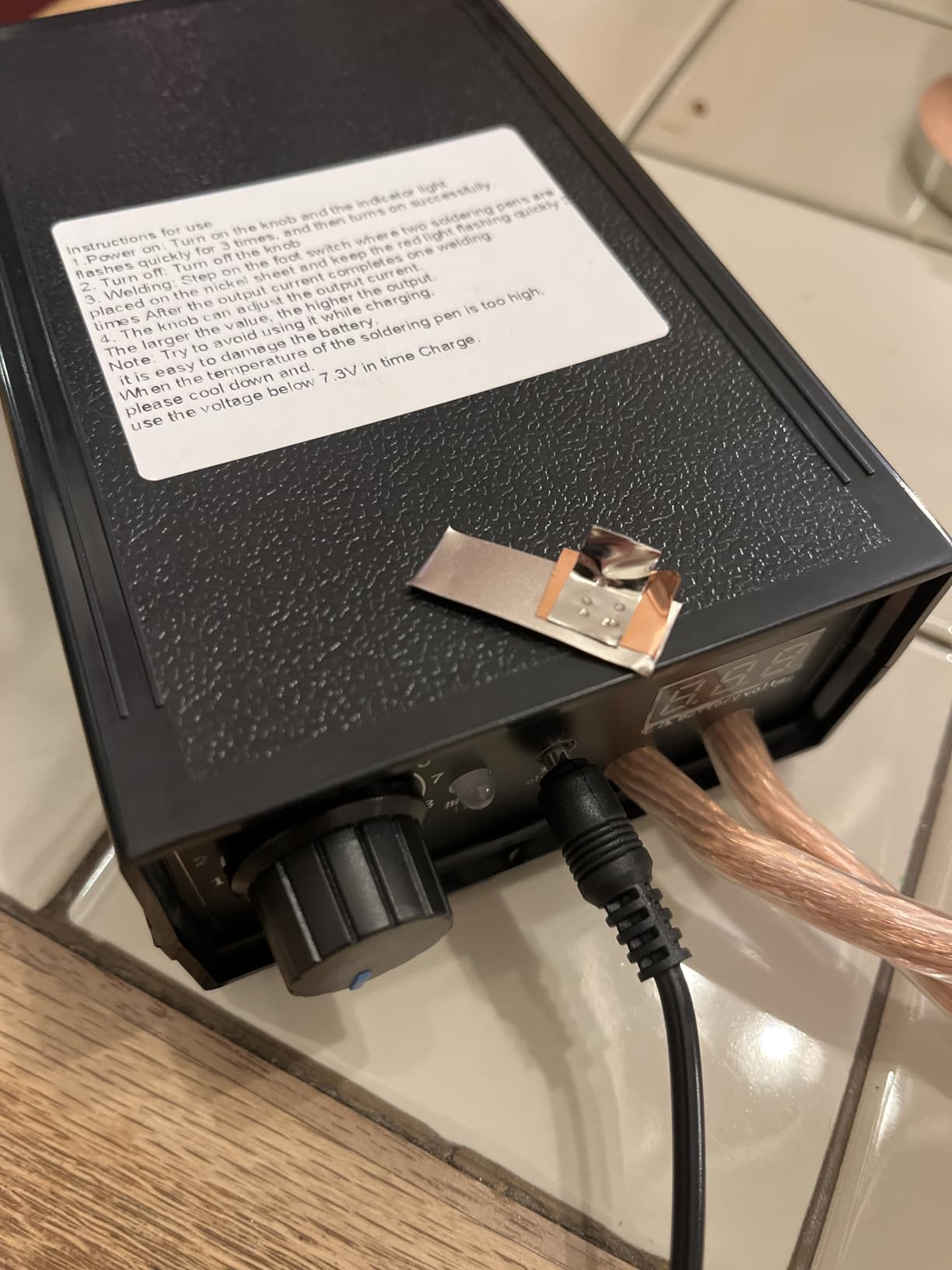
What the nine levels cost you is resolution. When you are dialing in a new cell size or a thicker strip, you are moving in relatively large jumps, and the 2.5 by 1 centimetre LCD showing internal battery voltage is the only readout you get. The soldering pen measures 350mm, and the body is 15 by 9.5 by 6 centimetres at 1.9 pounds, so it sits on a small bench without dominating it.
One detail from the review summaries worth acting on: owners note the unit should be fully charged before first use for the best results. A part-charged internal pack is the most likely explanation for a weak first attempt on this machine.
Why the pedal workflow suits a first pack
Foot control gives you a repeatable, unhurried trigger. You can seat the electrodes on the cell, take your hand off the work, and press once. For a builder placing their first twenty welds, that consistency is worth more than a fine adjustment range you cannot yet read.
The included spot welding pen and nickel strip mean the box is usable immediately. Pair it with the supplied strip for 18650 tab work, which is what most buyers do.
Where nine levels will frustrate you
Once you are past prototyping, the coarse steps start to matter. Thin nickel on a 21700 or a doubled strip is exactly the situation where a single level is too much or too little, and there is no middle setting to split the difference.
The small screen is the other irritation. Reading internal voltage from a 2.5 by 1 centimetre LCD at a bench is awkward, and it is the main thing separating this from machines with a proper status display.
3. SEESII SE302 – Best Value Cordless Spot Welder for Cell Work
SEESII Battery Spot Welder, Custom Welding Settings, Max 0.15mm Pure Nickel
3360W maximum output
99 gear levels
0.2mm nickel-plated and 0.15mm pure nickel
14.4 ounces
Pros
- Fully cordless with no cable between unit and pen
- 99 gear levels give fine control on thin strip
- Display shows weld process and remaining battery
- Box includes two 2m lengths of 0.1mm nickel strip
Cons
- Interface navigation is confusing and poorly documented
- Power button doubles as the menu control and can feel unresponsive
- Charge indicator icon never clears
- Electrodes can arrive finger-tight and loosen during use
The SEESII SE302 weighs 14.4 ounces, making it the second-lightest machine in this roundup, and it has a fully cable-free pen where the welding pen is built into the body rather than tethered to a separate unit. That makes it the easiest of the eight to use one-handed in a tight pack layout.
Ninety-nine fine adjustment levels and a stated capability of 0.2mm nickel-plated sheet or 0.15mm pure nickel put it comfortably in the range people need for 18650 tab work. 203 reviews at 4.3 back that up, with owners reporting successful welds on thin bronze and hard alloys as well as cell work.
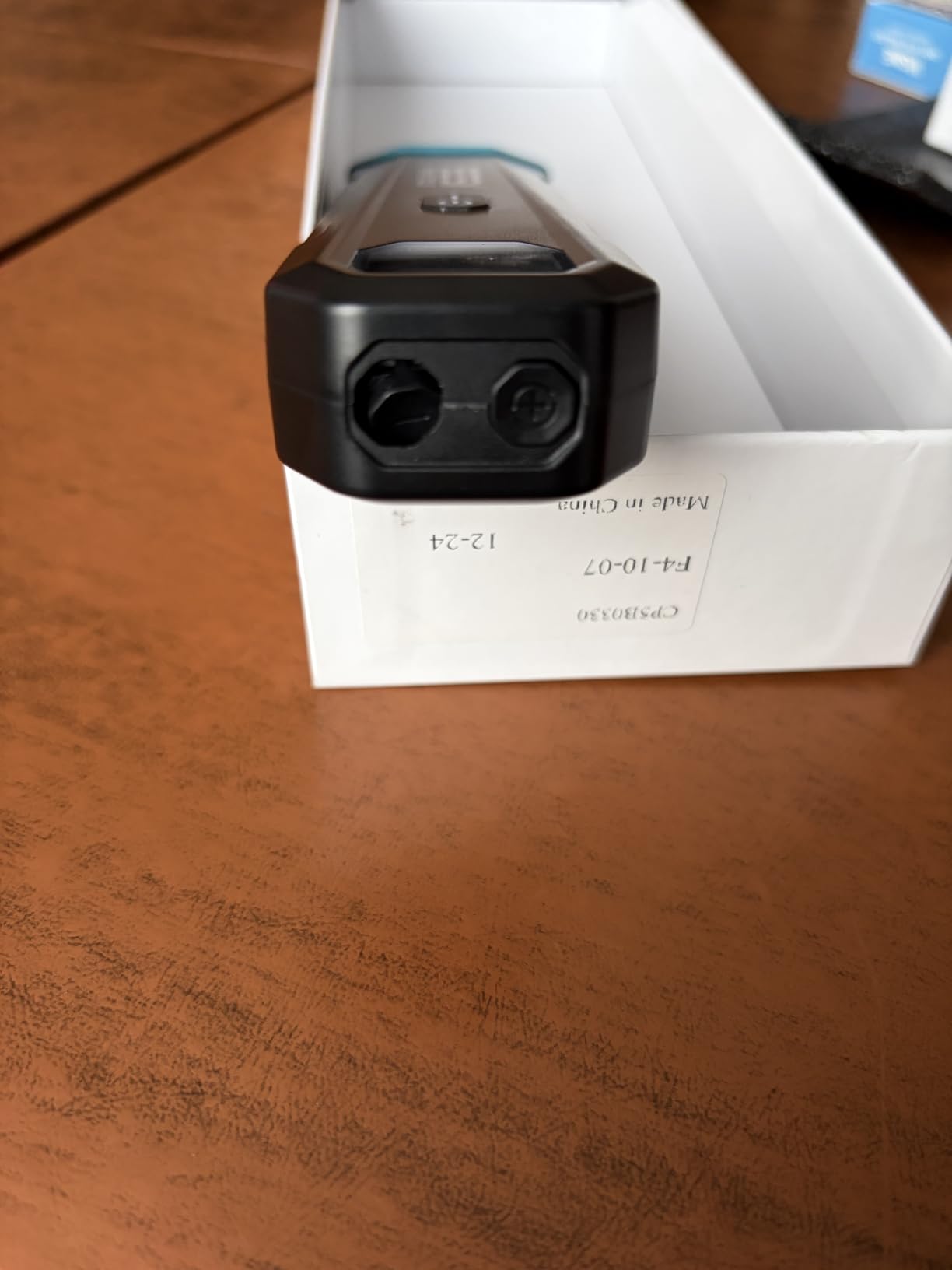
The box is unusually generous for a machine at this level. You get two battery holders, a file, sandpaper, insulating fiber paper, a Type-C charging cable, a user manual, two 2 metre lengths of 0.1 by 8mm nickel strip and two replacement copper styluses.
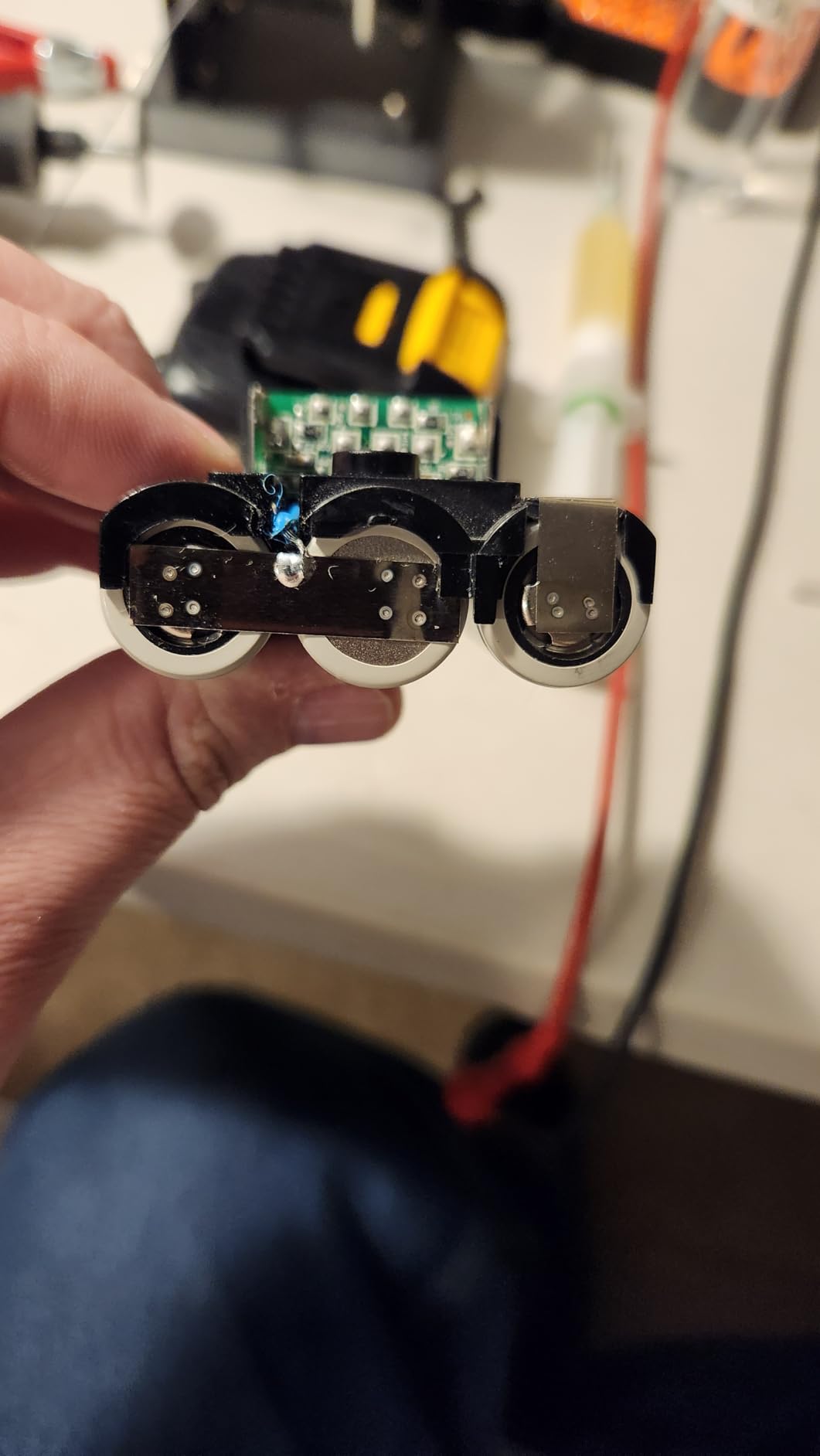
The unscrewable pens are a practical detail rather than a gimmick. When a tip wears out or a user reports a damaged internal cell arriving from the factory, the consumable is replaceable without replacing the machine.
Why cordless matters for a real pack build
A pack under construction has cells in a jig, strips cut to length, and a holder that does not move. A cable between the machine and the pen becomes a tether that dictates where the machine sits. Removing it means the pen can reach into a pack layout without you rearranging your bench.
The display also shows welding process, device temperature and remaining battery, which is enough information to notice a degrading internal pack before it starts producing inconsistent welds.
Where the interface holds it back
The complaints are consistent and specific: the power button doubles as the menu navigation key, the manual does not explain the menus, the charge indicator icon never clears so charge state stays ambiguous, and there is no audible beep on setting confirmation. None of these affect weld quality, and all of them slow you down.
Because the electrodes can arrive finger-tight, check them before your first weld. A tip loosening mid-session is the most common avoidable cause of a poor joint on this machine.
4. WESTOBiG FNRSI SWM-10 – Best Spot Welder for Double Pulse Welding
FNRSI Battery Spot Welder, 5000m Portable Handheld Spot Welder Double Pulse 4 Combination Gears Adjustable Spot Welding 0.1MM-0.25MM for Iron/Stainless Steel/Nickel Strip /18650 Battery Pack
Two 5000mAh batteries
0.1-0.25mm thickness range
1.8 inch color LCD
1.23 pounds
Pros
- Double pulse gives cleaner welds with less spatter
- Two 5000mAh batteries and doubles as a power bank
- Color LCD reports voltage and timing data
- Brass pen head is detachable so only the tip is replaced
Cons
- Struggles with 0.15mm nickel and stacked strips
- Only 4 gear combinations so settings are coarse
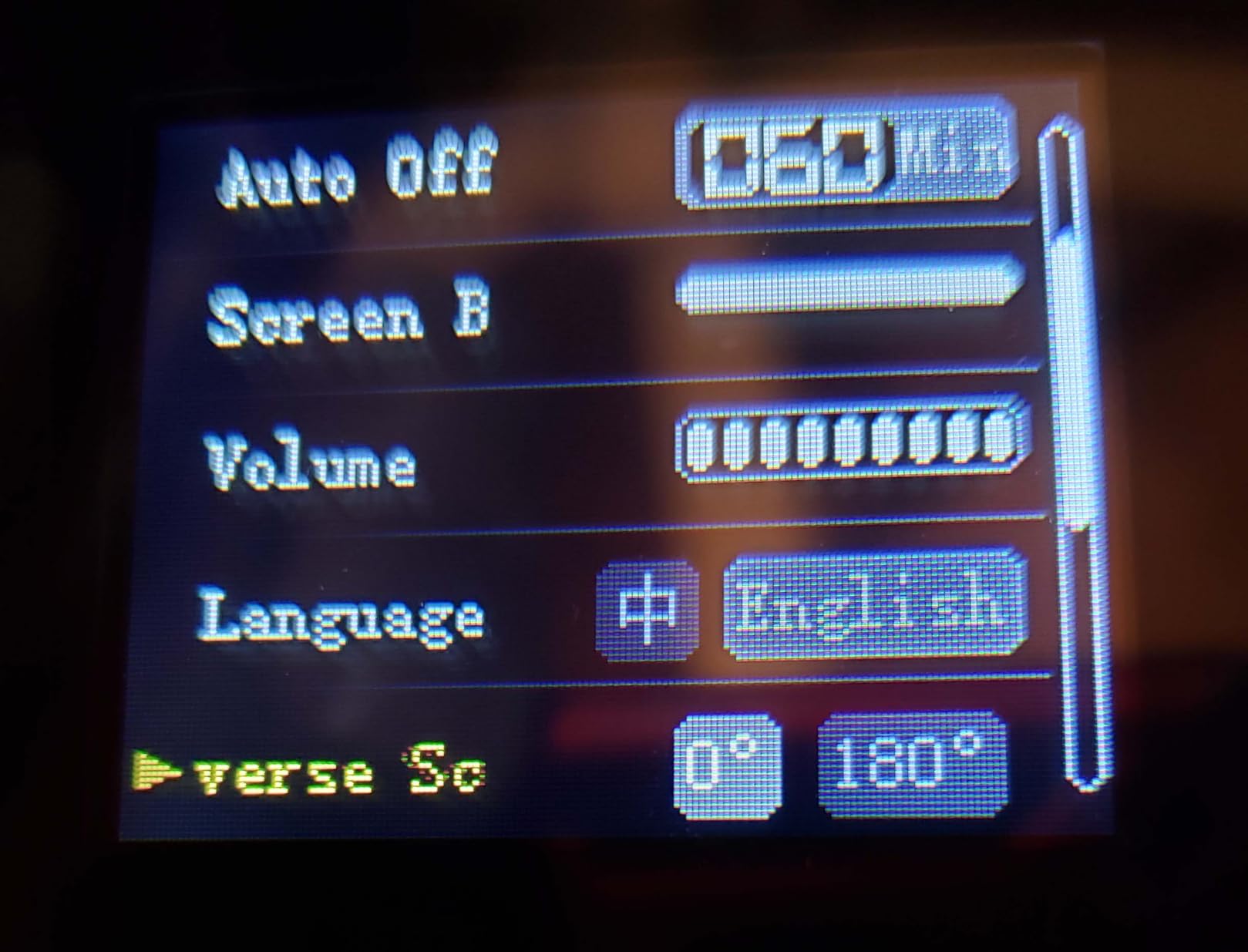
- Documentation is minimal and it may boot into Chinese
- Vendor support has gone unanswered in some cases
This machine’s argument is the double pulse. One pulse cleans the oxide layer off the cell terminal and the second stabilises the joint, which is the reason owners who already know spot welding rate it highly despite a modest 148 reviews at 4.3.
Two 5000mAh A-grade batteries come with it, and the unit doubles as a power bank for your phone. The detachable brass pen head means only the tip is a consumable.
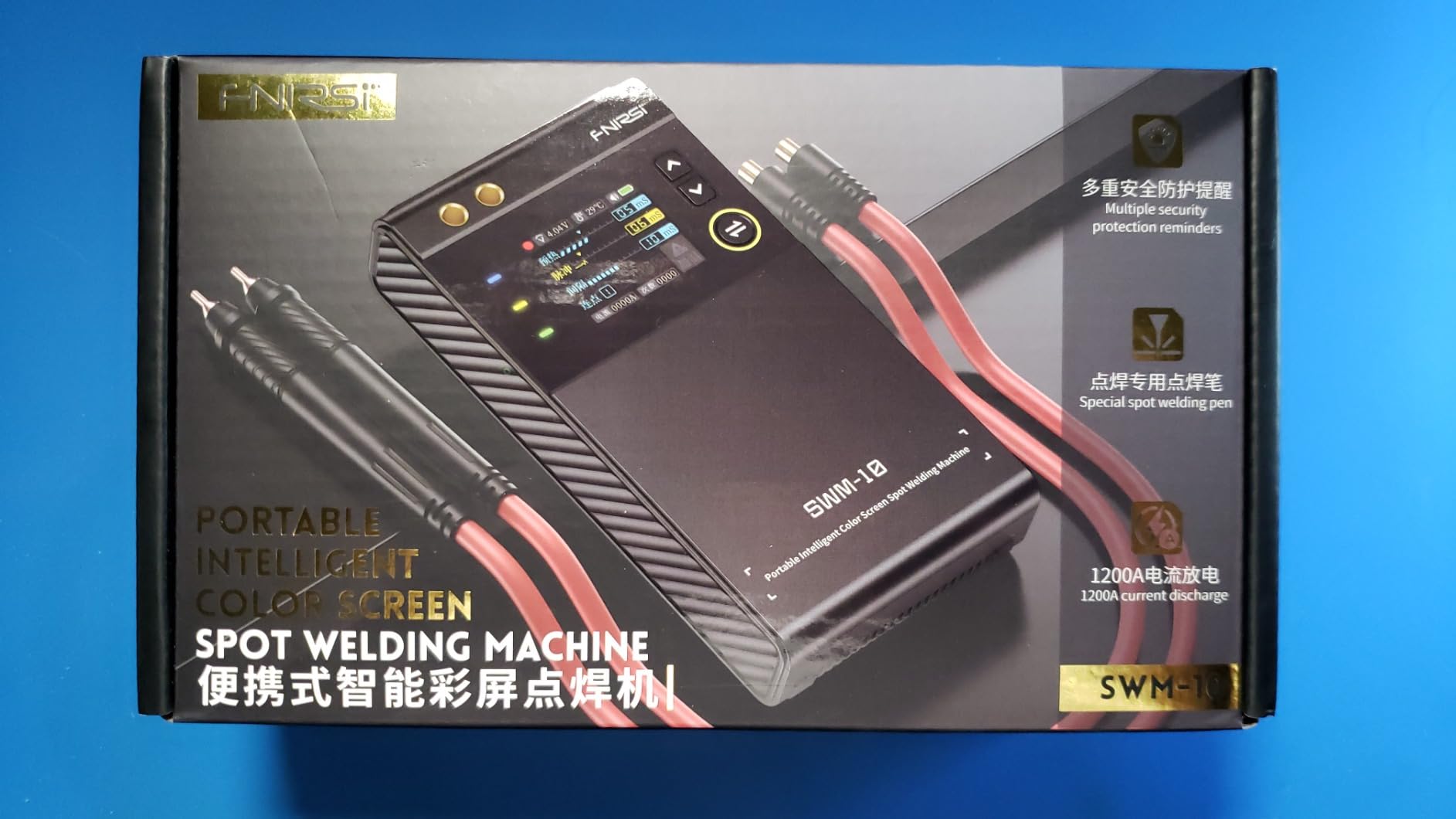
The 1.8 inch color LCD is the largest display on any handheld in this roundup. It reports voltage, temperature, preheat time, pulse time, interval time and charge data, so you can see the parameters the machine is actually using rather than guessing from a gear number.
The stated range is 0.1 to 0.25mm across nickel sheet, iron sheet, stainless steel sheet and aluminum sheet. Reviewers are clear that the upper half of that range is aspirational: the recurring complaint is struggling with 0.15mm nickel and with stacked strips on 18650 cells, and the four combination gear settings are coarse.
Why double pulse helps on oxidised terminals
A cell terminal that has been sitting in a holder picks up surface oxide, and that layer resists current in a way that wastes energy and produces spatter. Burning it off with a first pulse means the second pulse is delivering its energy into the joint rather than into cleaning.
For builders who are reworking existing cells rather than tabbing fresh ones, that is a real advantage and the reason this machine stands apart from the single-pulse handhelds at the same weight class.
Where the four gear combinations hurt
Four combinations is the coarsest control in the handheld group, and it interacts badly with the machine’s upper thickness claims. You cannot split the difference between two settings, so on 0.15mm nickel you are choosing between a cold joint and a burned mark.
Documentation is minimal and the unit may boot into Chinese language, and a minority of buyers report machines that would not weld at all. Test the machine on scrap strip before you commit to a pack.
5. AWithZ 11000mAh – Best Spot Welder for Battery Runtime
Battery Spot Welder, AWithZ 1.5″ LCD Screen Recyclable 11000mAh Spot Welder, 99 Gears Adjustable Battery Welder, Mini Spot Welder for 18650 Battery (11000mAh)
11000mAh capacity
99 gears with thickness bands
1.5 inch LCD
1.39 pounds
Pros
- Long run time between charges
- 99 gears with published thickness bands speed up setup
- Large 1.5 inch LCD is easy to read
- Double weld mode helps with thicker material
- Also works as a power bank
Cons
- Struggles with thicker nickel already bonded to cells
- Welding pen tips are not user-replaceable
- Isolated reports of weak internal batteries
- One review reported capacity far below the advertised figure
The defining spec here is 11000mAh across two lithium polymer batteries, with roughly a 3.5 hour charge time. At 133 reviews and 4.2, the reviewer base is mid-pack, but the runtime claim is the one that separates it from the rest of the handheld group.
What makes those gears genuinely useful is that they are documented. Gear 1.0 to 3.9 is for phone batteries, 4.0 to 7.0 covers 0.1 to 0.15mm, and 7.1 to 9.9 covers 0.15 to 0.25mm. That mapping is printed rather than guessed at, which saves a lot of trial and error.
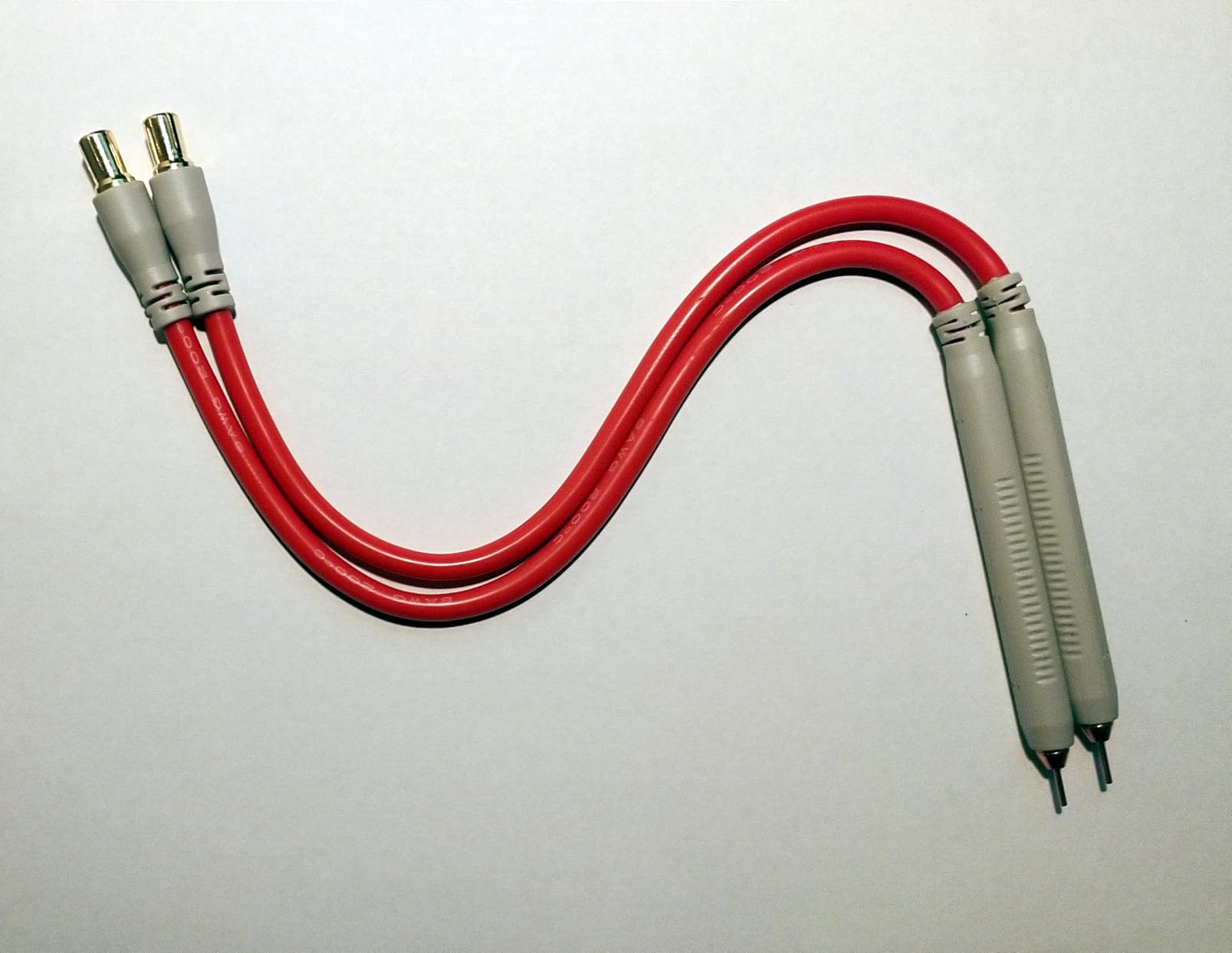
The 1.5 inch LCD is larger than most and shows battery level, temperature, gear, trigger time and continuous weld count. That last readout is the useful one: it tells you when you are approaching a thermal limit instead of letting the machine stop on you mid-pack.
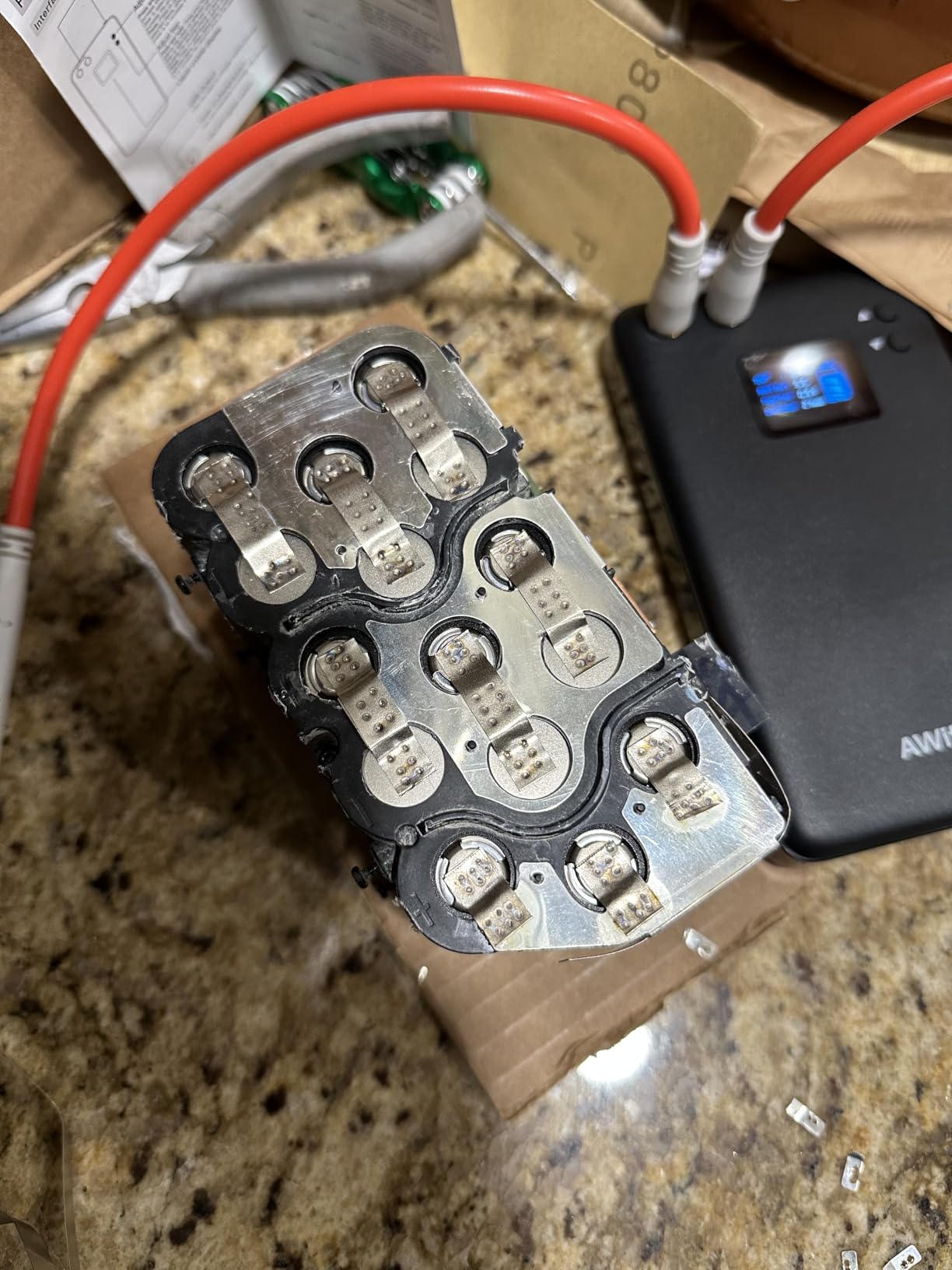
It also supports up to two consecutive spot welds for thicker material, and reviewers confirm clean single-shot welds on light nickel ribbon for pack repairs. The kit includes the welder, 2m of nickel-plated sheet, a 50cm Type-C cable, 40cm welding pens and grinding gauze.
Why published gear bands matter more than gear count
A machine with 99 gears and no documentation gives you 99 guesses. A machine with 99 gears and three documented thickness bands gives you a starting point. That difference shows up immediately on your first pack, because the first weld is where most beginners burn a hole in the strip.
The continuous weld count on screen pairs well with the capacity. On a long rebuild you can watch the budget rather than discovering a dead welder halfway through a pack.
Where capacity is not the constraint you need
Runtime is not the problem on heavier tab work. Reviews report it struggling with thicker nickel already bonded to 18650 cells, which is a power ceiling rather than an energy ceiling. If your cells arrive with factory tabs rather than bare ribbon, this is not the machine.
Two other limits to weigh: the welding pen tips are not user-replaceable, and a small number of reviews raise quality control concerns about the internal battery pack, including one report of a delivered capacity well below the advertised 11000mAh.
6. Awgem SH2 – Best Budget Spot Welder for First-Time Builders
Battery Spot Welder, Awgem Battery Welder 99 Gear Handheld Spot Welder with LCD Screen Auto/Humanized Manual Modes, Portable Spot Welding Machine for Welding Nickel Strips and Iron
99 gear adjustment
0.1-0.2mm nickel-plated sheet
8.4 ounces
Safety cutoffs at 3.2V and 65C
Pros
- Most affordable entry in this group while still offering 99 gears
- Cordless one-handed pen removes the cable entirely
- Can be used while charging so downtime is minimal
- Replaceable needles cut consumable cost
- Voltage and temperature cutoffs protect the cell
Cons
- Only strong enough for the 0.10-0.20mm nickel-plated strip supplied
- Will not weld through two layers or factory tabs directly
- Instructions give little guidance on technique
- Light duty only
The Awgem SH2 is the most affordable way into spot welding without giving up gear resolution, and at 8.4 ounces it is the lightest machine in this roundup by a distance. Its 4.3 rating comes from 81 reviews, so treat it as a well-liked tool rather than a proven one.
The integrated one-handed pen has no cable to the unit at all, and manual thumb-button mode lets you seat the tip before you fire. That is a genuinely better control scheme for beginners than a trigger you cannot release quickly.
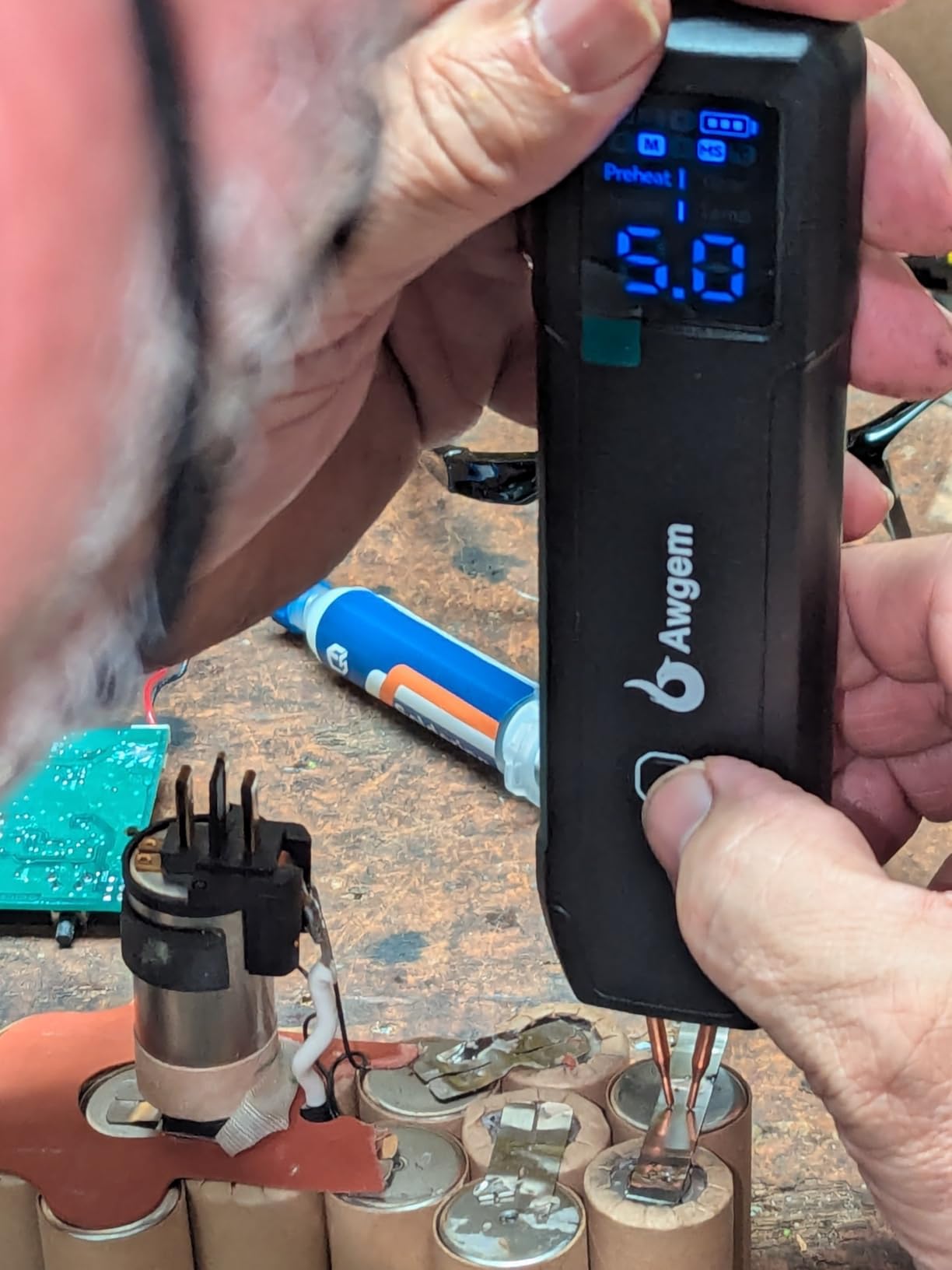
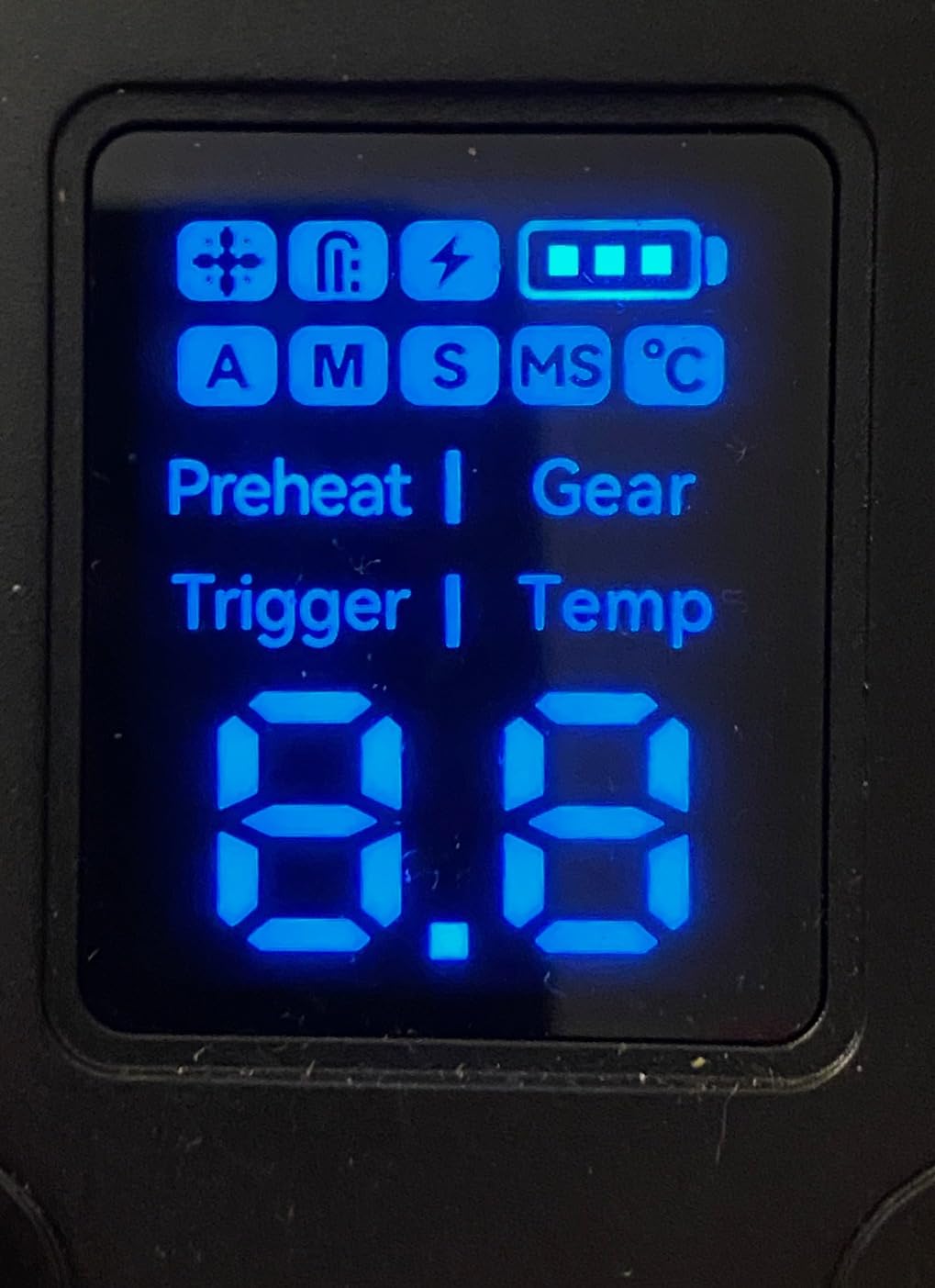
Automatic mode handles phone and Bluetooth battery sheets, and the LCD shows preheat time, trigger time and temperature in real time. The safety cutoffs are specific and sensible: a red alarm and forced weld cut-off below 3.2V cell voltage, and a blue warning at 65 degrees Celsius or above.
You can also use it while it is charging, which is unusual and genuinely useful when you are on your second battery. It applies to 18650, 26650 and 36650 cylindrical cells, and the box includes two pairs of spot welding needles, 2m of nickel-plated sheet, a charging cable, a manual and sandpaper.
Why this is a reasonable first machine
It is built for exactly the job most people arrive at: welding 0.1mm to 0.2mm nickel-plated strip onto 18650 cells, which is the supplied strip. The included 2m length is enough to tab a small pack without ordering anything.
Replaceable needles are the detail that keeps the ongoing cost low. On machines with fixed tips, a single worn tip ends the machine’s usefulness on cell work, and here you just unscrew it.
Where the ceiling shows up immediately
The limit is power, and reviewers describe the workaround rather than hiding it. It will not weld through two layers or a factory tab, so on thicker tabs people weld thin strip to the cell first and then weld the original tab onto that bridging strip. That is more steps and more joints to inspect.
Documentation gives little guidance on technique or settings, and some buyers question long-term durability on light duty. Treat it as a prototyping and repair tool.
7. AWithZ UK3 10000mAh – Best Spot Welder for Long Pack Builds
AWithZ 10000mAh Battery Spot Welder, Rotary Knob Operation 100 Gears Adjustable Foot Pedal Operated, 0.1-0.4mm Spot Welder with Dual Pulse Output, Portable Spot Welder for Making DIY Battery Packs
10000mAh, over 300 welds at top gear
100-level rotary knob
0.1-0.4mm stated range
1.9 pounds
Pros
- Pen trigger alongside the foot pedal makes precise work easier
- Single rotary encoder with press-to-select is intuitive
- Excellent battery life
- Clean first-try welds on 0.15mm pure nickel and 0.2mm nickel-plated steel
- Compact form factor
Cons
- Will not weld the thick plates found on 60Ah or 8Ah tool batteries
- Output can be inconsistent at equivalent settings between welds
- Runs hot after extended use
- Short leads reported by some
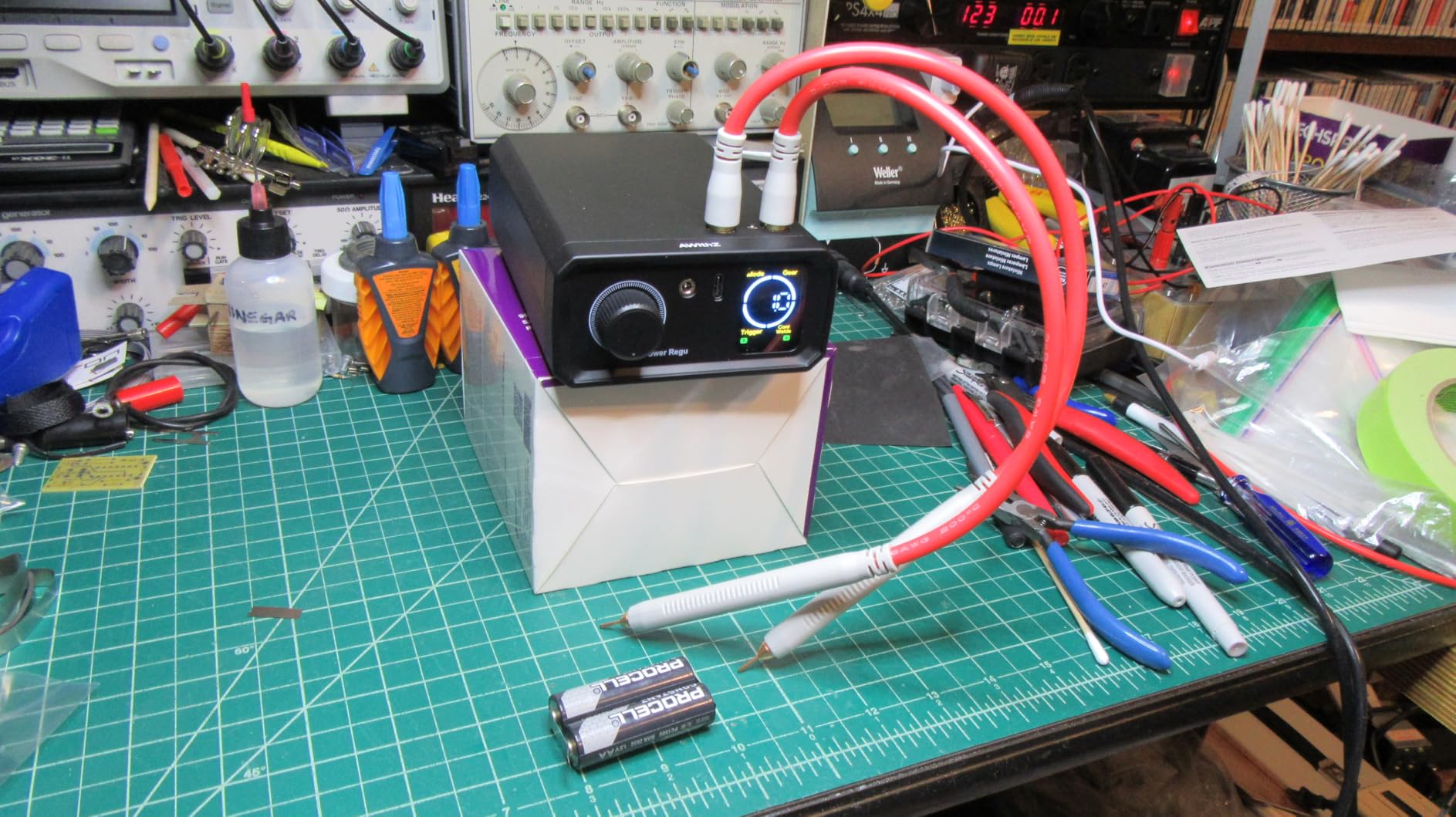
The UK3 is the machine we would call the strongest handheld in this group, and its 64 reviews at 4.3 are thin in number but consistent in substance: users are rebuilding 10S2P packs and repairing tool packs successfully on 0.15mm pure nickel and 0.2mm nickel-plated steel.
Capacity is 10000mAh, quoted at over 300 welds at the highest gear. One owner measured about 150 welds barely moving the charge indicator, which is a more useful real figure than the headline number.
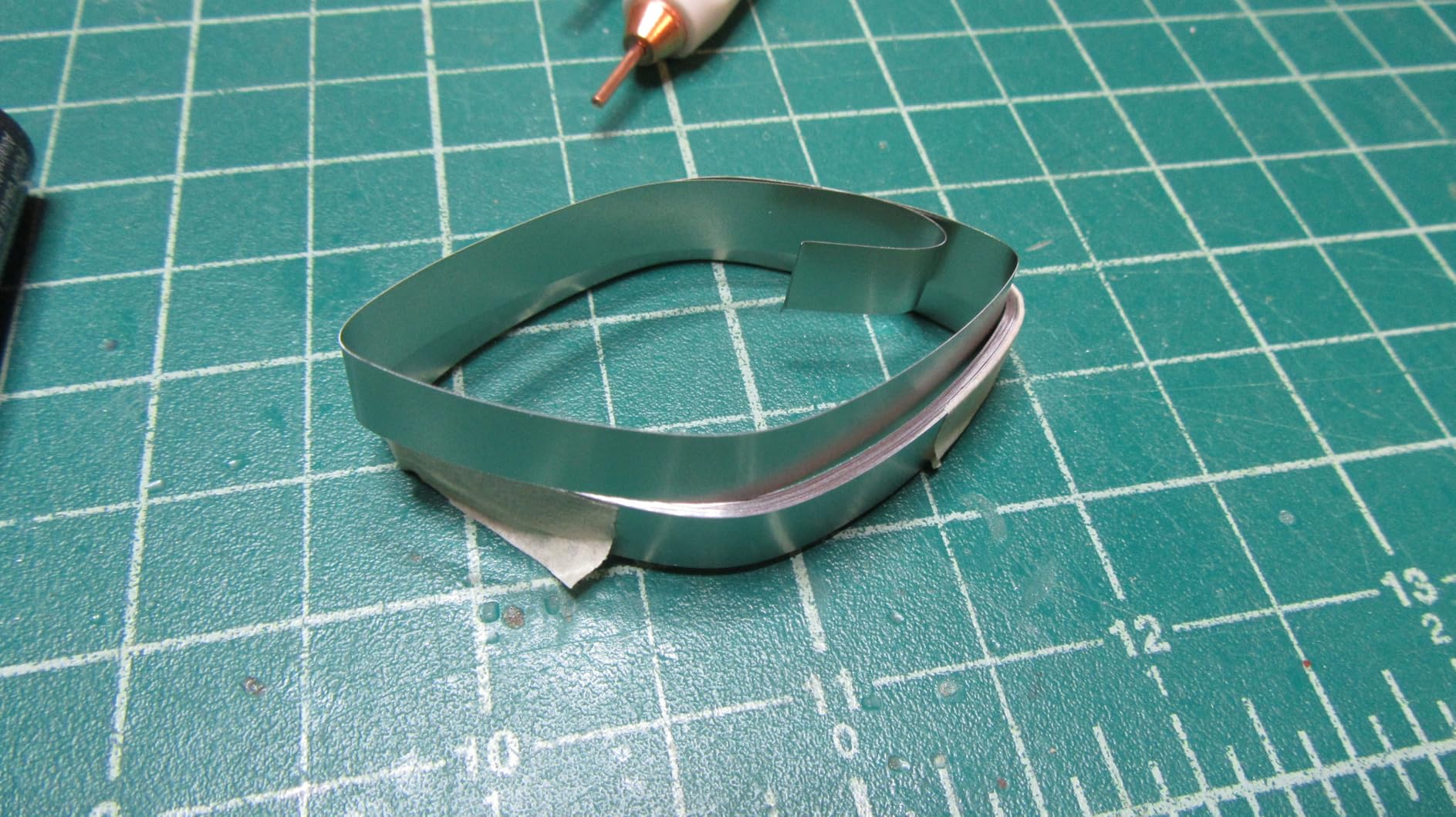
Three trigger options is the most flexible set here: automatic, foot pedal and pen trigger. One rotary encoder with press-to-select handles gear, trigger time, mode and continuous weld count, which reviewers consistently describe as intuitive to work through.
The stated range of 0.1 to 0.4mm is the widest on any handheld in this roundup, though the practical evidence is more modest. Confirmed work is 0.15mm pure nickel and 0.2mm nickel-plated steel, and it will not handle the thick plates found on 60Ah or 8Ah tool batteries.
Why three trigger modes matter on a long build
On a long pack build your workflow changes as you go. Setup welds want the pen trigger for control. Repetitive tab welds want the foot pedal so both hands are free. Finish welds on busbar joins want automatic. Having all three on one machine removes the reason to reach for a second tool halfway through.
Running 150 welds with barely a dent in the charge readout means one charge covers most working sessions, so the eight-minute auto shutdown and thermal protection only bite on genuinely continuous runs.
Where consistency is the concern
The most important criticism is that output can be inconsistent at equivalent settings between welds. On a short repair that barely registers. On a pack requiring dozens of identical joints, it means testing more of them than you would on a machine with smoother repeatability.
It also runs hot after extended use, and some owners report short leads. Check your first several welds with a peel test rather than assuming the first one represents the rest.
8. SEESII SE-223 10KW – Best Spot Welder for Heavy-Duty Cell Work
SEESII 10KW Capacitive Battery Spot Welder: 12V Power Supply Available, Spot Welding Machine with Low Internal Resistance, Overvoltage Protection, for Battery Packs DIY & Repair
10KW output, 0.3mm nickel-plated
250 gear levels
Super capacitor power
6.69 pounds
Pros
- Much higher output handling 0.3mm nickel-plated sheet
- Metal housing resists wear and impact
- 250 gear levels give very fine control
- Low-voltage super capacitor design removes shock hazards
- Runs from a 12V power source
Cons
- Heavier and bulkier than the cordless handhelds at 6.69 pounds
- Sits in a higher price tier than the handheld options
- A higher share of one-star reports pointing to early failure
This is the only machine in the roundup that stores its welding energy in a supercapacitor bank, and that single design choice changes what it can weld. It handles 0.3mm nickel-plated sheet, 0.2mm pure nickel and 0.2mm low-carbon steel, a thickness range none of the seven handhelds above it reaches.
With 250 fine-tuning gear levels, it offers by far the most granular control in this group. The 80 reviews at 4.2 describe a real jump in welding strength and control relative to the handhelds, not a marginal improvement.
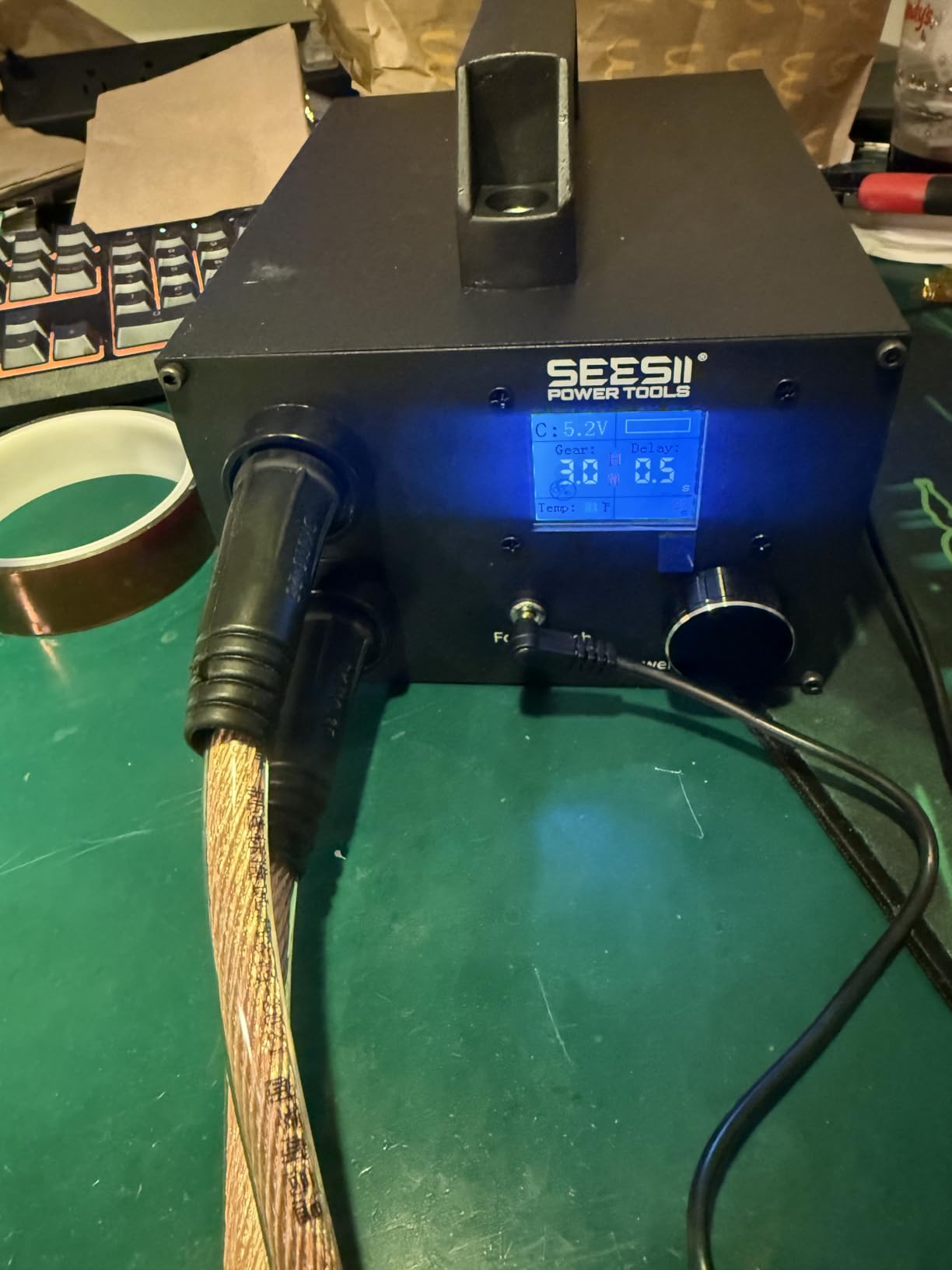
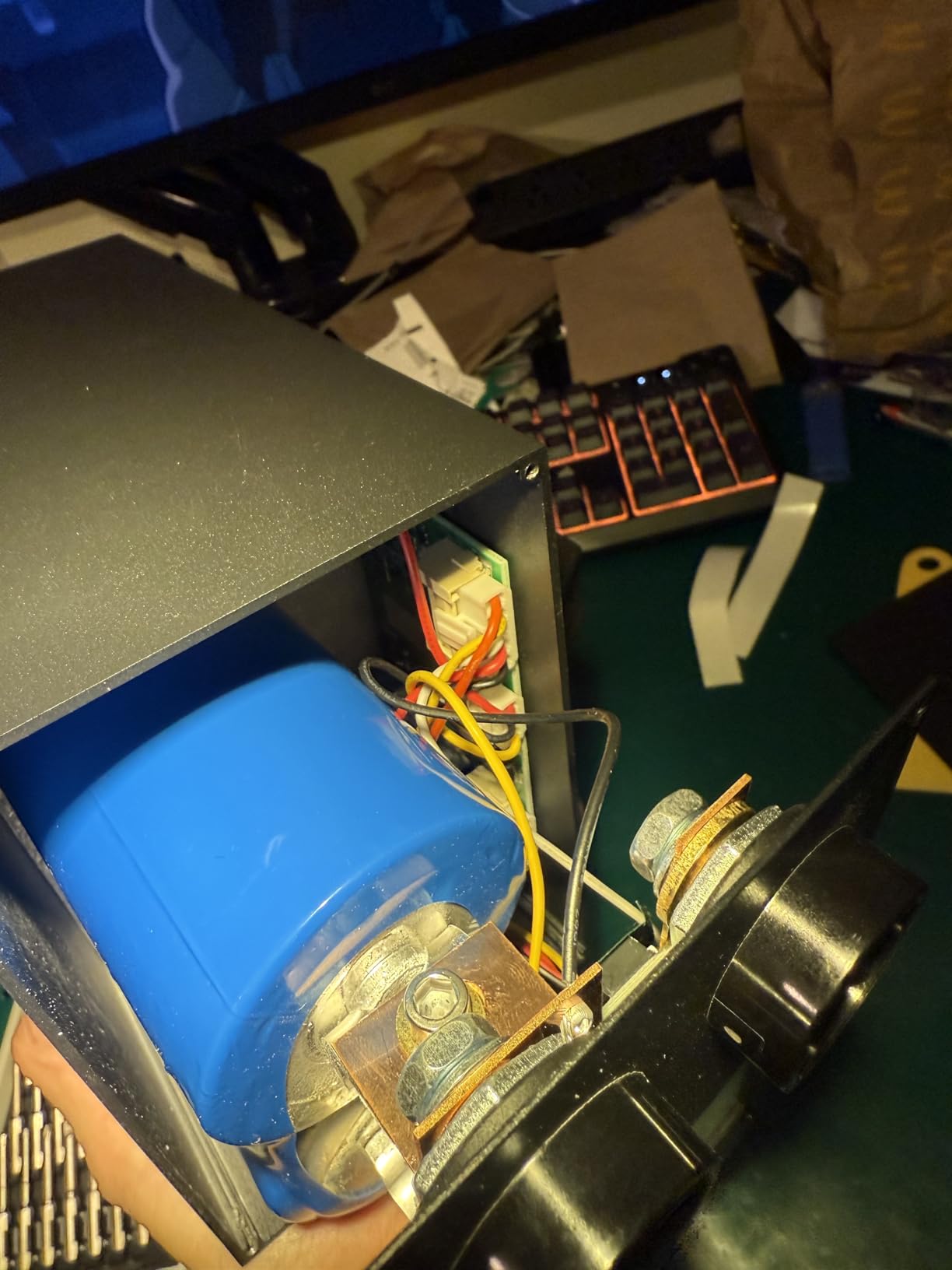
Because the capacitors charge from a 12V or higher source rather than from a small internal lithium pack, output stays high and repeatable. The integrated power balance circuit and low internal resistance are what make the difference between a machine that holds its setting and one that drifts.
Operation is at low voltage, which removes the electric shock hazard a mains welder carries, and you can run it from a 12V source for field work. Automatic continuous welding and foot pedal modes are both supported, and a smart cooling fan handles heat with overheat and overvoltage protection. The aerospace aluminium alloy body is built to survive a workshop, and the box includes four welding tips, a power adapter and a manual.
Why supercapacitor storage changes the ceiling
A handheld welder is limited by how much energy its small internal lithium pack can push through a contact in five milliseconds. A supercapacitor bank accepts a fast charge and releases it in a very short window, so peak current is a function of the bank rather than of the battery chemistry.
In practice that means thicker strip, doubled strips, and consistency across hundreds of welds rather than a few. It is the machine to buy for a large pack rather than a repair.
Where the step up costs you
At 6.69 pounds in a 7.87 inch cube, this is a bench machine rather than a tool-bag machine. If your welding is scattered across different jobs, you are carrying a machine you only need once.
Review summaries also flag a higher one-star share than most in this set, which points to a higher rate of early failure. Whatever you do with this machine, test it on scrap strip before you start a pack, and be prepared to troubleshoot a dead unit yourself.
How to Choose a Spot Welding Machine for 18650 Cells
Pick the tier before you pick the brand. The most common mistake in this category is buying a handheld for a bench job or a bench machine for a single repair, and no amount of feature count fixes that mismatch. The questions below are ordered the way you should actually work through them.
Match the machine to the strip, not the other way around
Strip thickness is the first decision because it eliminates options. Most pack builders use 0.1mm or 0.15mm pure nickel, or 0.1mm to 0.2mm nickel-plated steel. Pure nickel has higher electrical resistance than nickel-plated steel at the same thickness, so a machine rated for 0.2mm nickel-plated sheet may only manage 0.15mm pure nickel.
Read the pure nickel figure separately from the nickel-plated figure wherever a listing gives both. Several machines in this roundup state 0.2 to 0.3mm nickel-plated capability and considerably less for pure nickel, and reviewers confirm the lower pure nickel number is the honest one.
Thicker than 0.2mm is the point where the handheld tier runs out. If you are welding doubled strips, wide busbars, or factory tabs on high-capacity cells, you want the supercapacitor machine and you should stop comparing the handhelds.
Treat wattage claims as marketing, and read the amps instead
This roundup spans everything from a 3360W cordless pen to a 11500W handheld, and the two do not behave in proportion to those numbers. The wattage figures are peak output claims, not sustained delivered current, and they are close to useless for comparison.
The number that tells you something is maximum current in amps, when the manufacturer publishes it. The UK1 states 1380A, the Docreate specifies 0 to 800A. Current is what determines whether the joint fuses cleanly or whether the strip burns before the cell terminal does.
Second to current, look at whether the specification is honest about limits. A machine that states a narrow maximum thickness clearly is more trustworthy than one claiming a range reviewers cannot reproduce.
Single probe versus dual probe, and why it changes the joint
On a dual probe design, both electrodes move with the pen and clamp the strip onto the cell from both sides. On a single probe design, one fixed electrode holds the work and the pen supplies the moving contact. The single probe is cheaper and simpler, and it is why handheld machines can be this small at all.
The difference shows up in how easy the joint is to make. With a fixed head, you have to bring the cell to the machine rather than bringing the machine to the pack. With two moving probes, you bring the pack to the tool, which is far more natural once you are working on a jig.
There is a second effect: contact resistance. A single fixed electrode has to be kept clean and correctly positioned or the joint weakens, and there is no way to inspect the underside of the joint while you weld. Whatever design you buy, keep the electrode faces clean and re-dress them periodically.
For anyone who only ever welds with the machine held in one hand, the pen-style designs here work well. For production-style repetitive work, check whether the machine can reach a pack sitting in a jig.
One practical note that the specification sheets rarely mention: with a fixed head, you have to bring the cell to the machine on every single weld. That is the workflow detail that decides whether a pack build takes an afternoon or a weekend.
Understand the power source before you trust the runtime
Community advice on this topic converges on one point: buy fewer, higher-current units rather than several budget ones. That is about delivered energy per pulse, and it is the single most important thing to understand about portable spot welders.
A lithium polymer pack at 5000mAh or 11000mAh has a realistic continuous discharge limit, and that limit sets how much current reaches the electrodes. Capacitor-based designs sidestep it: a supercapacitor bank accepts a rapid charge and dumps it in a very short window, so output depends on the bank rather than on cell chemistry.
The practical guidance that comes out of the forum record: if your welds are consistently weak, the first fix to try is a higher-output power source rather than a different machine. Budget units that arrive without a battery, or that expect a car battery you do not own, have already limited you before the first weld.
Check how the safety cutoffs are specified
Two cutoffs matter on a lithium-powered welder. The first is a low cell voltage cut-off, which the Awgem specifies at 3.2V with a forced weld cut-off. The second is a temperature limit, which the same machine places at 65 degrees Celsius with a warning above it.
On the larger units, look for overheat and overvoltage protection plus a cooling fan. The UK1 and UK3 add automatic shutdown after eight idle minutes, which protects the internal batteries during a break in a long build.
None of these are optional extras. A spot welder that can push hard current into a lithium polymer pack needs to stop itself when the pack is depleted or hot.
How to test weld quality before you trust a pack
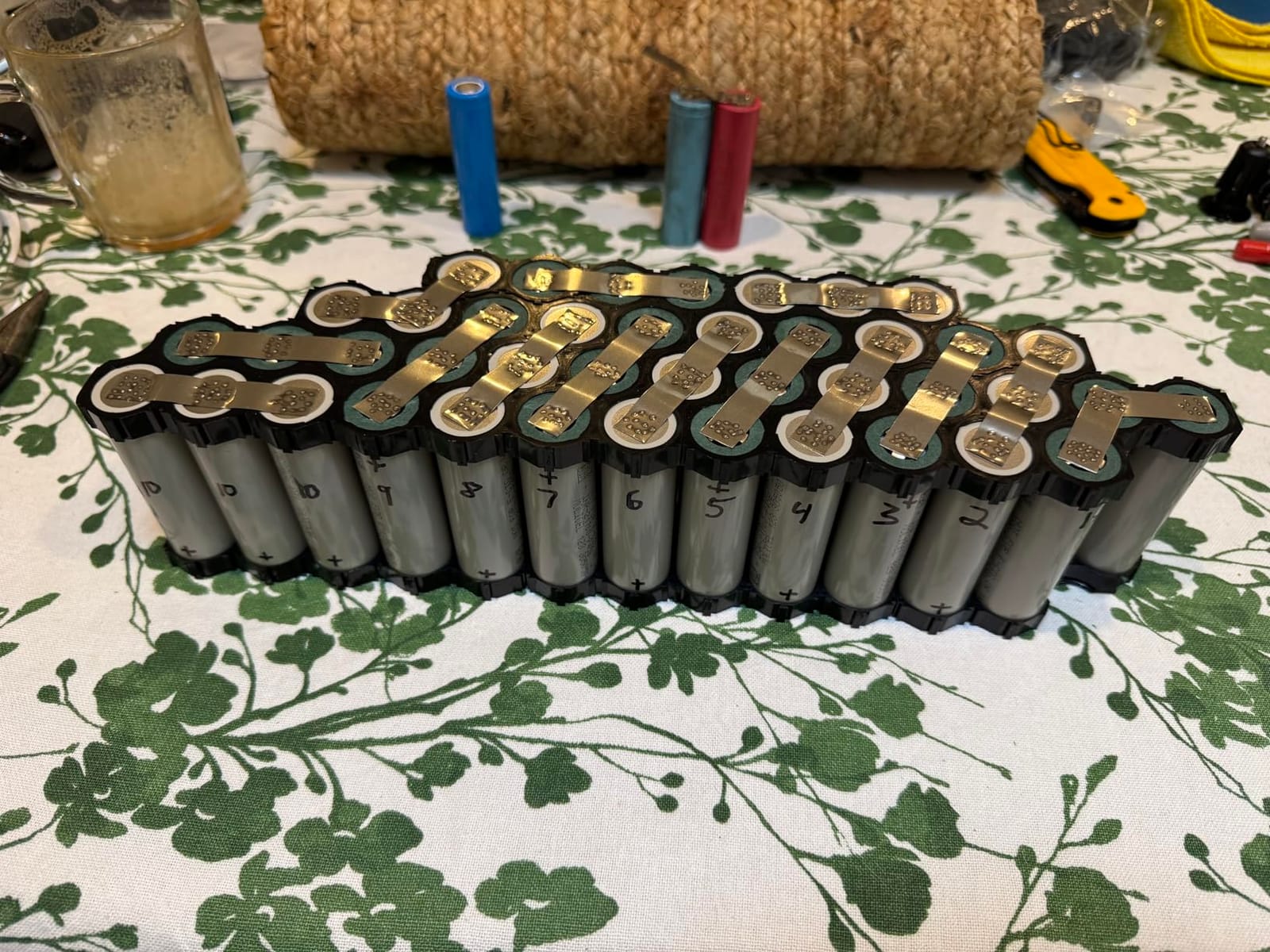
Do not judge a weld by whether it looks attached. A burned-through strip looks connected and is not, which is the specific failure mode forum users describe most often. Test in this order.
First, visual inspection under good light. A good weld shows a clean, slightly indented nugget where the electrode pressed, with the strip edges intact around it. Dark rings, craters or a raised lip mean the weld burned rather than fused.
Second, the peel test. Lift the strip edge and peel it back slowly at a shallow angle. A sound weld resists and then tears in the strip itself, leaving the joint intact. If the strip separates cleanly at the cell, the joint is not there.
Third, the pull test on a sample cell. Weld one strip to a scrap cell, then pull it with a firm hand. A weak joint lets go at the cell almost immediately; a good one holds and deforms the strip first.
Fourth, if you are building a pack that will be paralleled, check joint resistance with a four-wire meter if you have one. Inconsistent internal resistance across cells in a pack is a fire risk, and this is the check that catches a marginal weld before it goes into service.
Run these tests on your first cell, your fiftieth cell and your last cell of a session. Consistency across a pack matters more than one lucky weld, and heat build-up plus a thermal shutdown partway through a pack is usually the reason.
Nickel strip, pre-tinning and cell preparation
Prepare the cell terminal before you weld. A light pass with the included sandpaper or file removes the oxide layer so current goes into the joint instead of being spent breaking through the surface.
Strip selection matters more than most buyers expect. Pure nickel fuses cleanly and resists corrosion, and it is the safer choice for a pack that will be exposed to moisture. Nickel-plated steel is easier to weld at lower settings and less expensive, but the plating is the weakest layer in the joint. The Awgem and SEESII kits both include 0.1mm by 8mm nickel strip, which is a sensible default for a first pack.
Moisture is the other enemy of a nickel joint. The same absorbents we use in camera silica gel packs for keeping gear dry are worth having near the bench, and our guide to desiccant packs for humid conditions covers how to keep a sealed cell pack from breathing in damp storage.
Threaded or studded nickel strips are for cells that already have a threaded terminal. If your cells are bare cylindrical 18650, you are working with flat ribbon and none of that applies.
Wide strip drains current quickly, so if your pack design calls for a long busbar, check the machine’s output against the width of metal you are joining rather than only against its thickness.
Do not pre-tin nickel strip the way you would solder. Tin changes the joint from a fusion weld to a soldered connection with higher resistance, which defeats the reason you bought the machine.
Budget for the consumables, not just the machine
Electrode tips wear and tips are consumables. Machines with unscrewable or detachable pen heads, like the SEESII SE302 with its replacement copper styluses or the WESTOBiG with its detachable brass head, make this a small ongoing cost. A fixed tip is a single point of failure for cell work.
Nickel strip, spare cells for testing, and sandpaper for cell prep round out the real cost of getting into this. Buying one machine and one pack of consumables is a better outcome than buying two budget machines and discovering neither holds consistent current.
Finally, if you move from 18650 to 21700 or 26650, check that the machine’s stated thickness range covers what you are using rather than assuming compatibility. A machine advertised for cylindrical cells still has to move enough current for your strip.
One last piece of bench advice before you buy: the same habit of measuring before you trust a result that you would apply to spot meter selection applies here. Test on scrap strip, measure, and only then commit to the pack.
Frequently Asked Questions
What is the best spot welder for 18650 batteries?
The AWithZ UK1 is the best all-round spot welder for 18650 batteries, with 100-level rotary power control, a 1380A maximum current, both a foot pedal and a pen trigger, and a 4.3 rating across 387 reviews. For the most affordable way to start, the Awgem SH2 handles 0.1-0.2mm nickel-plated strip cordlessly. For thick strip and doubled tabs, the SEESII SE-223 supercapacitor machine welds 0.3mm nickel-plated sheet and 0.2mm pure nickel.
What is the best spot welding machine for 18650 batteries?
If you are building a full pack rather than making a repair, the machine class matters more than the brand. Choose a mains or supercapacitor-fed machine with 200 gear levels or more, a stated capability of at least 0.2mm pure nickel, and thermal and overvoltage protection. The supercapacitor machines hold their output across hundreds of welds, while handheld units are limited by their internal lithium pack discharge rate.
Are battery spot welders any good?
Yes, within limits set by delivered current rather than brand name. Handheld lithium-powered units are good for prototyping, cell tabbing and small pack repairs, and builders generally consider them unsuitable for production quantities. If welds are consistently weak, the fix is a higher-output power source before a different machine. A weld that looks attached may still be a burned-through strip, so run a peel test on your first cell and your last.
What is a good small spot welder for batteries?
The SEESII SE302 is the strongest small option, with a fully cordless integrated pen, 99 gear levels, and a stated capability of 0.2mm nickel-plated sheet or 0.15mm pure nickel at 14.4 ounces. The Awgem SH2 is the smallest and lightest option here, also with 99 gears and no cable, but it is limited to the 0.1-0.2mm nickel-plated strip supplied with it and will not weld factory tabs directly.
What nickel strip should I use for 18650 spot welding?
For most 18650 pack builds, 0.1mm or 0.15mm pure nickel is the safe choice, and 0.1mm to 0.2mm nickel-plated steel is easier to weld at lower settings. Pure nickel has higher electrical resistance, so check the pure nickel rating separately from the nickel-plated rating on any welder. Weld kits here commonly include 0.1mm by 8mm nickel strip, which is a sensible starting width. Do not pre-tin the strip, because that turns a low-resistance fusion weld into a soldered joint.
Conclusion: Which Spot Welder Should You Buy?
If you want one answer to which of the best spot welders for 18650 battery packs to buy, take the AWithZ UK1. The 100-level control, the foot pedal plus pen trigger, and 387 reviews at 4.3 make it a strong all-round choice, and it handles 0.1mm nickel-plated strip to a cell reliably.
Start with the more basic machines if you are experimenting. The Awgem SH2 is the lightest and lowest cost entry, and it does exactly the 0.1 to 0.2mm strip its kit includes. Step up to the SEESII SE302 if you want a cable-free pen, a readable display and a wider pure nickel ceiling without changing form factor.
Move up a class entirely when you are building a real pack or working with 0.2mm pure nickel and doubled strips. The SEESII SE-223 stores energy in a supercapacitor bank, offers 250 gear levels, welds 0.3mm nickel-plated sheet, and runs from a 12V source at low voltage. It is heavier and sits in a higher price tier, and it is still the right answer.
Whichever you choose, set up on scrap strip first, run a peel test on the first cell and the last, and treat consistency across the pack as the thing that decides whether the welder was worth buying. That is the check most skipped, and it is the one that catches a burned-through joint before it becomes a problem.