
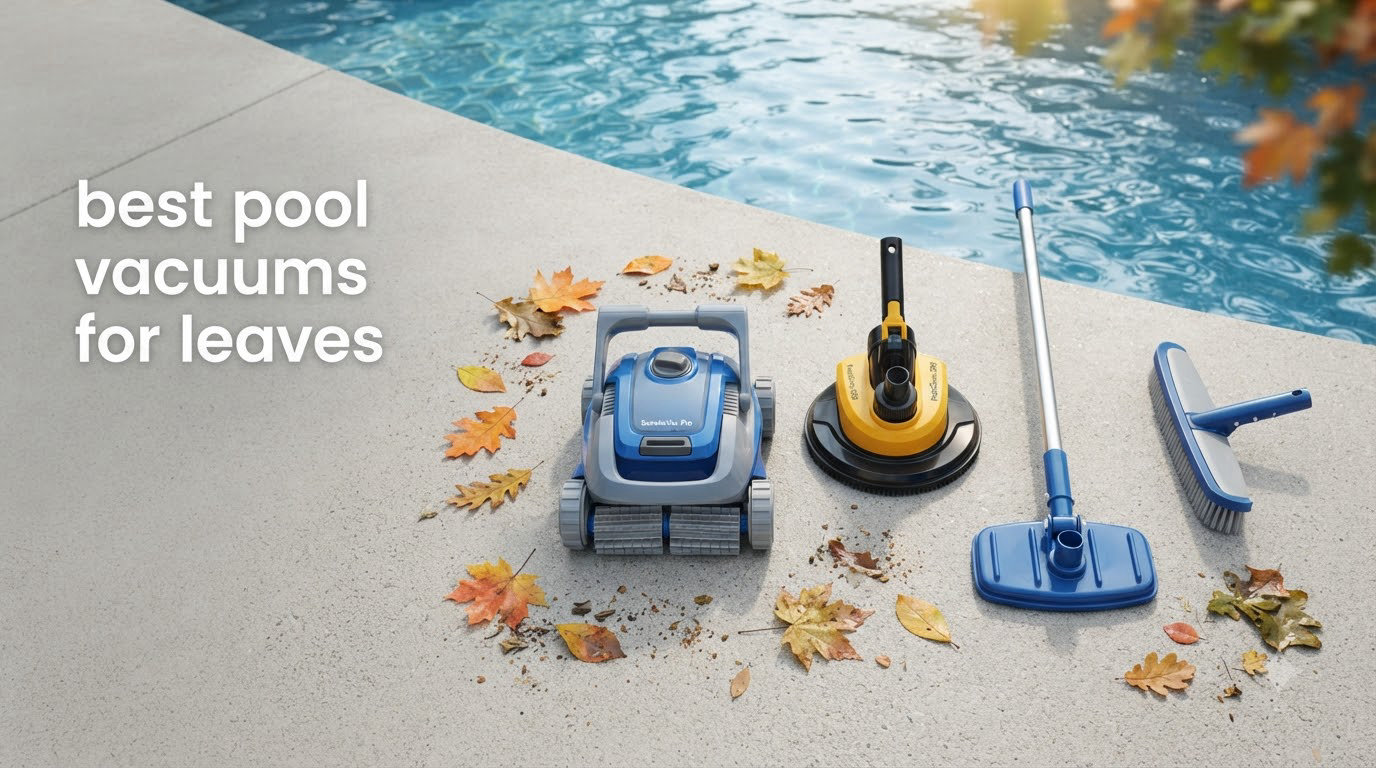
A pool leaf vacuum lifts fallen leaves off the pool floor and into a collection bag, using either garden hose water pressure or a battery-powered motor, so the debris never reaches and clogs your pool filter. If you have trees near the water, this is the one tool that decides whether fall cleanup takes an afternoon or a whole weekend.
Most people buy the wrong one. They grab a cordless handheld built for sand, and it wanders around the floor pushing maple leaves around like a dustbuster. Or they run a robot all week and still end up scooping clumps out of the deep end by hand. Neither is a failure of effort; it is a mismatch between the intake and the debris.
We spent 2026‘s leaf season comparing 12 pool leaf vacuums across three power classes: hose-fed venturi heads, cordless handheld catchers, and a robotic cleaner. We weighed intake width against leaf size, bag capacity against emptying trips, runtime against pool volume, and liner protection against vinyl damage. This guide covers the best pool vacuums for leaves for every pool type and every leaf load, with the honest limits of each tool stated up front.
Three things break when leaves are left in a pool. They clog the pump basket and filter, which starves circulation and turns a clean pool cloudy. They stain the waterline and can leave a mark on a vinyl liner that takes weeks to fade. And as they decompose they shift pH and alkalinity, so you are also fighting water chemistry after every storm. Daily skimming during peak fall, followed by a floor pass every one to two days, prevents all three. We cover the exact routine in the maintenance section later.
Table of Contents
Top 3 Picks for Best Pool Vacuums for Leaves (October 2026)

Poolmaster 28300 Big Sucker
- 8 high-pressure jets
- 15 inch head
- 4 rotating wheels
- reusable mesh bag

POOL BLASTER Cordless Leaf Vac
- Cordless and hoseless
- wide-mouth chamber
- extra-large mesh bag
- works as skimmer
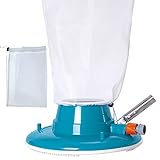
U.S. Pool Supply Leaf Terminator
- 8 pressure jets
- vortex suction
- 15 inch ABS body
- mar-proof bumper
The Poolmaster 28300 Big Sucker takes the top slot because it does the one job leaf season actually demands: moving a large volume of whole leaves in a single pass, with no battery to die and no motor to clog. The POOL BLASTER cordless unit is the pick if you refuse to run a hose across the yard. The U.S. Pool Supply Leaf Terminator delivers the same venturi formula for less money, with the trade-off that it needs a pole you buy separately.
Best Pool Vacuums for Leaves (October 2026)
| Product | Specifications | Action |
|---|---|---|
| Poolmaster 28300 Big Sucker |
|
Check Latest Price |
| POOL BLASTER Cordless Leaf Vac |
|
Check Latest Price |
| U.S. Pool Supply Leaf Terminator |
|
Check Latest Price |
 KOKIDO XV910 KOKIDO XV910 |
|
Check Latest Price |
 Enhulk PC10 Enhulk PC10 |
|
Check Latest Price |
 POOL BLASTER Centennial POOL BLASTER Centennial |
|
Check Latest Price |
 WYBOT C1 Robotic WYBOT C1 Robotic |
|
Check Latest Price |
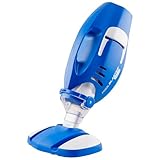 POOL BLASTER Max Cordless POOL BLASTER Max Cordless |
|
Check Latest Price |
 INTEX 28620EP INTEX 28620EP |
|
Check Latest Price |
 KOKIDO XTROVAC 110 KOKIDO XTROVAC 110 |
|
Check Latest Price |
 PoolMr Handheld PoolMr Handheld |
|
Check Latest Price |
 Sepetrel Deluxe Kit Sepetrel Deluxe Kit |
|
Check Latest Price |
1. Poolmaster 28300 Big Sucker – Best Overall Hose-Powered Leaf Vac
Poolmaster 28300 Big Sucker Manual Swimming Pool Leaf Vacuum Head, Blue
Hose powered
8 high-pressure jets
15 inch head
Under 2 pounds
Mesh bag included
Pros
- Clears large loads of leaves
- sticks and pine needles fast
- 8 jets create strong suction into the mesh bag
- Under 2 pounds with 4 multi-direction rotating wheels
- No motor and no battery to fail
Cons
- Empty brush slots molded into the base can scrape the pool surface
- Bag ring can release when lifting the head out
- Requires a 1-1/4 inch pool pole that is not included
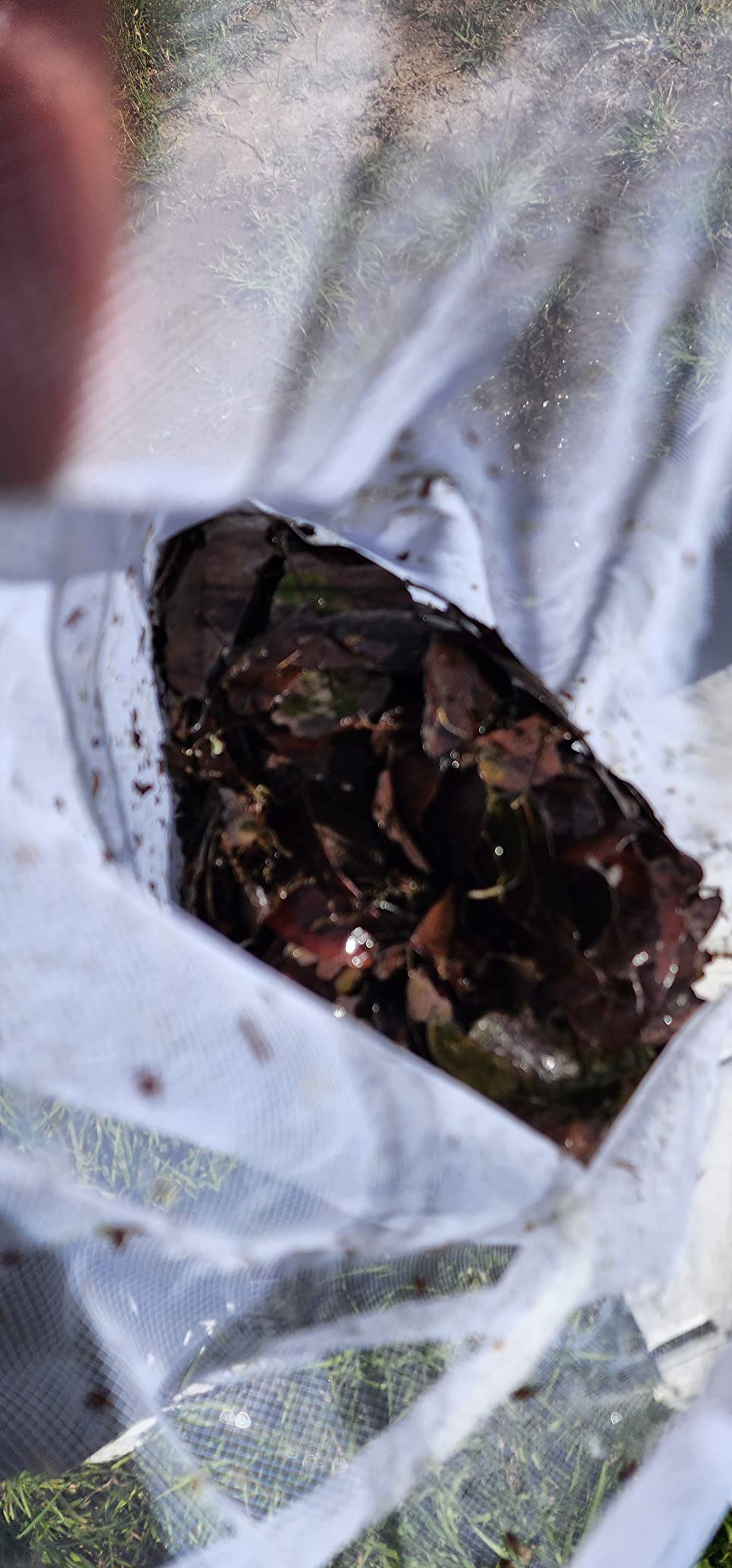
This is the head we reach for first, and after a full season of use it is the one we recommend to anyone who asks for a single tool. A garden hose feeds water to eight jets arranged around a 15 inch body, and the venturi effect they create pulls water and leaves up off the floor into the mesh bag underneath.
What sets it apart for leaf work is volume. Reviewers consistently describe emptying a heavy bag in a few passes and finishing a leaf-heavy pool far faster than with any handheld we tested, and the wide intake takes whole leaves rather than shredding them. Nothing about it is delicate, and there is no battery to run down halfway across a 16 foot pool.
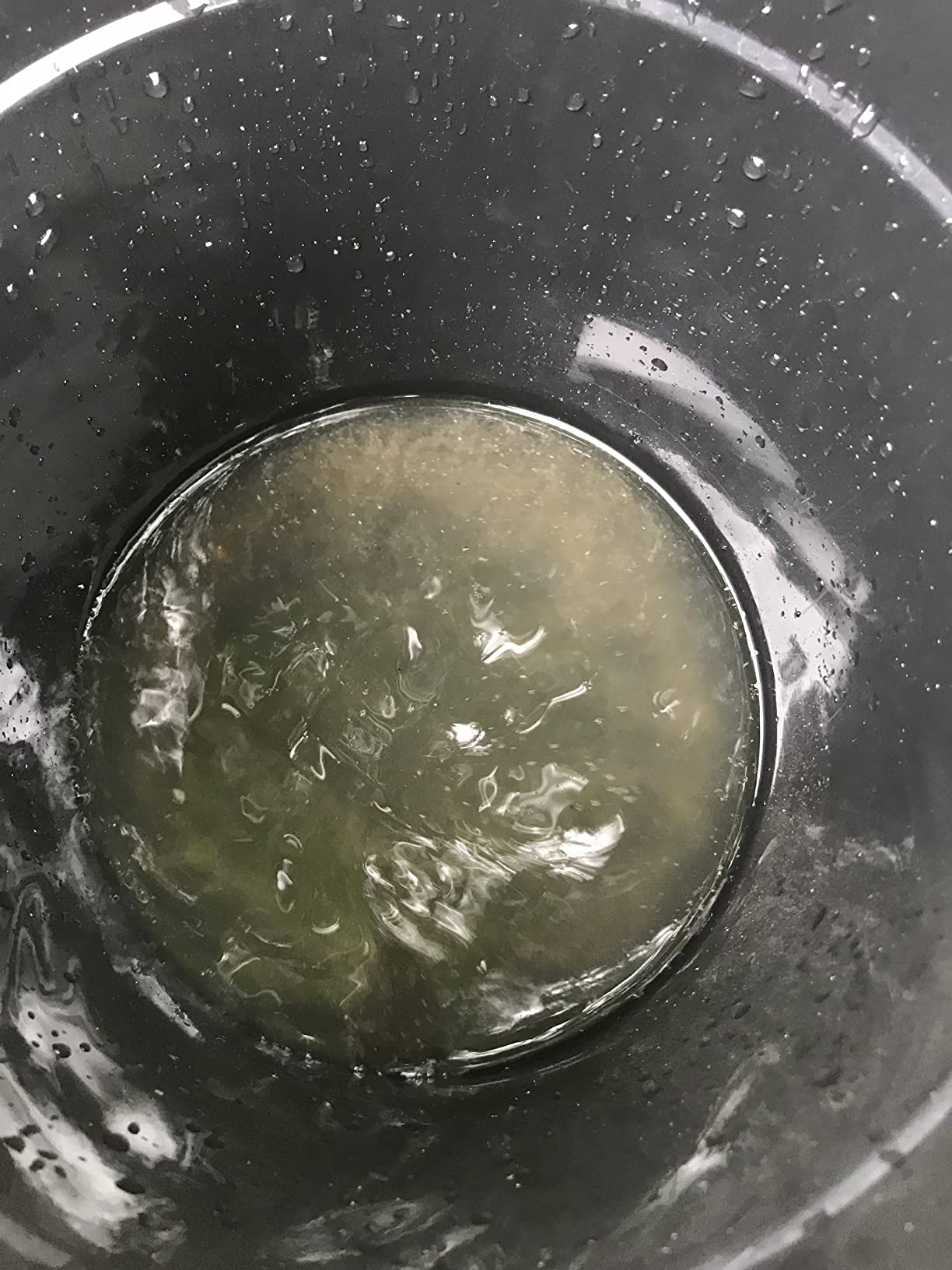
The failure mode worth knowing about is mechanical, not performance. The bag retaining ring can pop loose while you are lifting the head out of the water, and owners consistently tip it slightly to the side as a workaround so debris stays in the bag. Nobody describes suction as a problem.
The one upgrade we would make: add bottom brushes. The body has empty brush slots molded along the bottom edge, and leaving them empty narrows the gap between the head and the floor, which is how a few owners report scuffing a plaster floor. The included all-purpose mesh bag also lets fine silt through. If you have a sand or pebble finish, run a fine mesh bag or a pantyhose liner over the existing one.
Check the pole length before you buy
The Big Sucker needs a standard 1-1/4 inch threaded pool pole, and it is not in the box. That is the single most common surprise for first-time buyers, and it is why so many “cheap” leaf vacs cost more than the sticker suggests. Measure your reach before ordering: you need enough pole to cross the pool diagonally plus enough to lift the head out without scraping the coping.
Owners with above-ground pools and inflatable liners report it working well on both, which is unusual for a head this size. The four rotating wheels handle a flat vinyl floor without catching seams. Just keep the head moving slowly; at full jet power the head can tilt and pop up when the hose is short.
Where it will disappoint you
This tool does nothing for fine sediment, and it has no opinion about algae. Reviewers are consistent that the standard mesh bag lets silt and dust straight through to the pool, so if your pool collects dust in summer you will still want a handheld for that job. Think of this as the leaf tool and something else as the sand tool.
It also needs a water source at the pool. If your hose bib is on the opposite side of the yard, you are dragging hose across a patio every session. And with a short pole or a low-pressure household supply, the head lifts off the floor more than it cleans, so strong water pressure matters more than any spec sheet suggests.
2. KOKIDO XV910 – Best Cordless Pick for Large Gum and Magnolia Leaves
KOKIDO Rechargeable Heavy Duty Pool Leaf Vacuum Cleaner, Commercial Power Suction for Pool Opening, Standard and Fine Filter Bags, for Larger Leaves and Debris, Inground and Above Ground Pools XV910
Cordless rechargeable
5 inch inlet
1.72 gallon mesh bag
62 GPM flow
75 minute runtime
Pros
- XL 5 inch inlet built for large leaves up to 7 inches
- 1.72 gallon bag means far fewer emptying trips
- 62 GPM flow and 75 minute runtime
- Switchable 250 micron and 75 micron mesh bags
Cons
- 5-hour charge time is the longest in the category
- Clogs on debris longer than 7 inches
- Pole not included
- Fine mode is not for algae or silt
If your problem is wide gum, magnolia, or sycamore leaves jamming the intake, this is the cordless unit built to take them. The 5 inch inlet is by a wide margin the largest we found in a handheld, and the manufacturer states the ceiling plainly: soft debris up to 7 inches, nothing longer.
The 1.72 gallon mesh bag is the number that changes your cleanup day. On a pool that took three emptying trips with a small-chamber handheld, this is a one-bag job. Reviewers buying it for pool opening and closing, when the leaf load is heaviest, credit the 62 GPM flow and 75 minute runtime for clearing a dirty pool quickly.
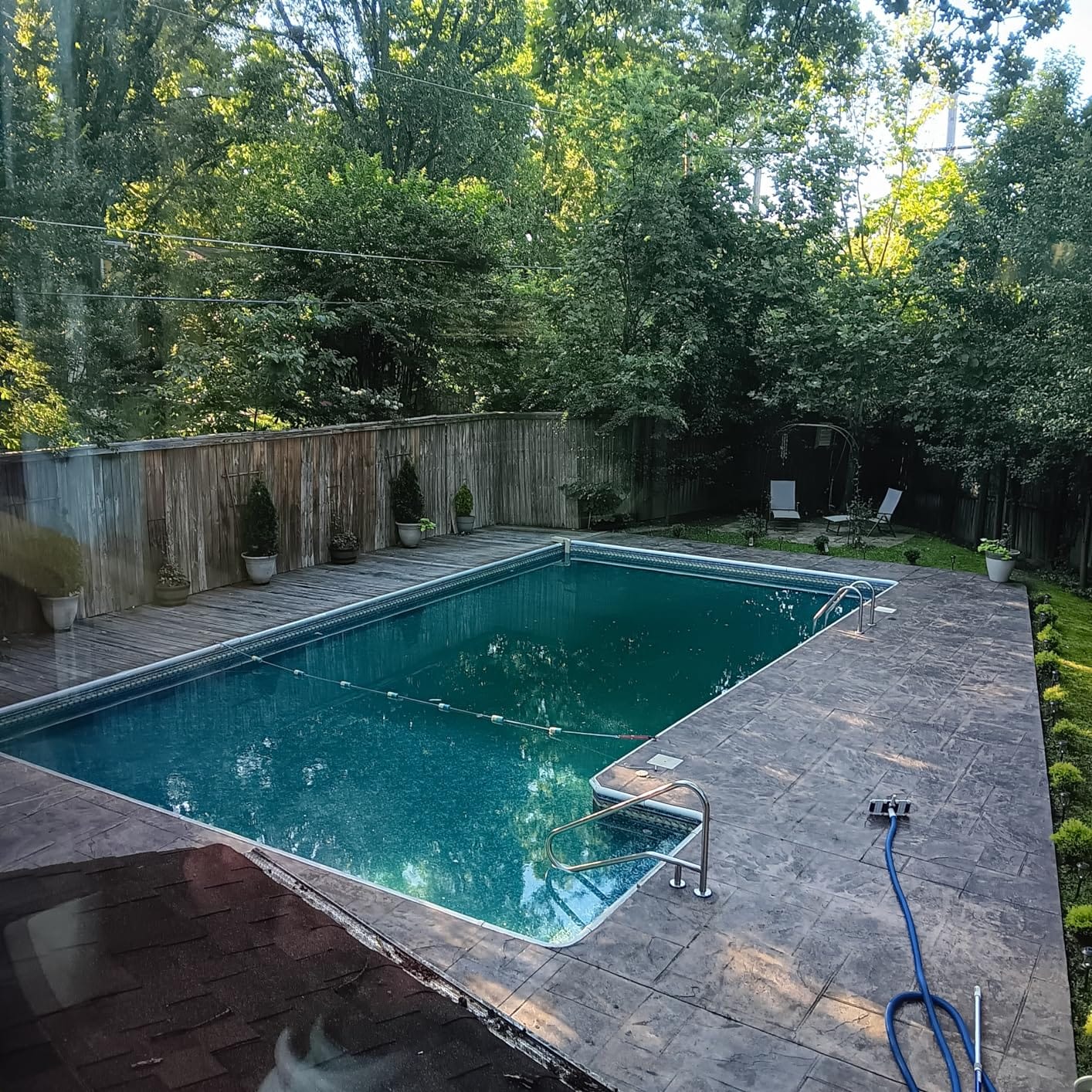
Two practical notes. First, rotate the unit 90 degrees as you lift it out of the water, which keeps collected debris in the bag instead of letting it fall back onto the floor. Owners who learned that habit stopped reporting spills almost entirely. Second, the 5 hour charge is genuinely long, so plan your sessions around it rather than expecting a mid-pool top-up.
The switchable filtration is a nice touch with a caveat most listings blur. The 250 micron bag handles coarse debris, the 75 micron bag handles sand, and neither is intended for algae or silt. If you are chasing fine particles, this is not the tool, and the same goes for anything longer than a 7 inch stick.
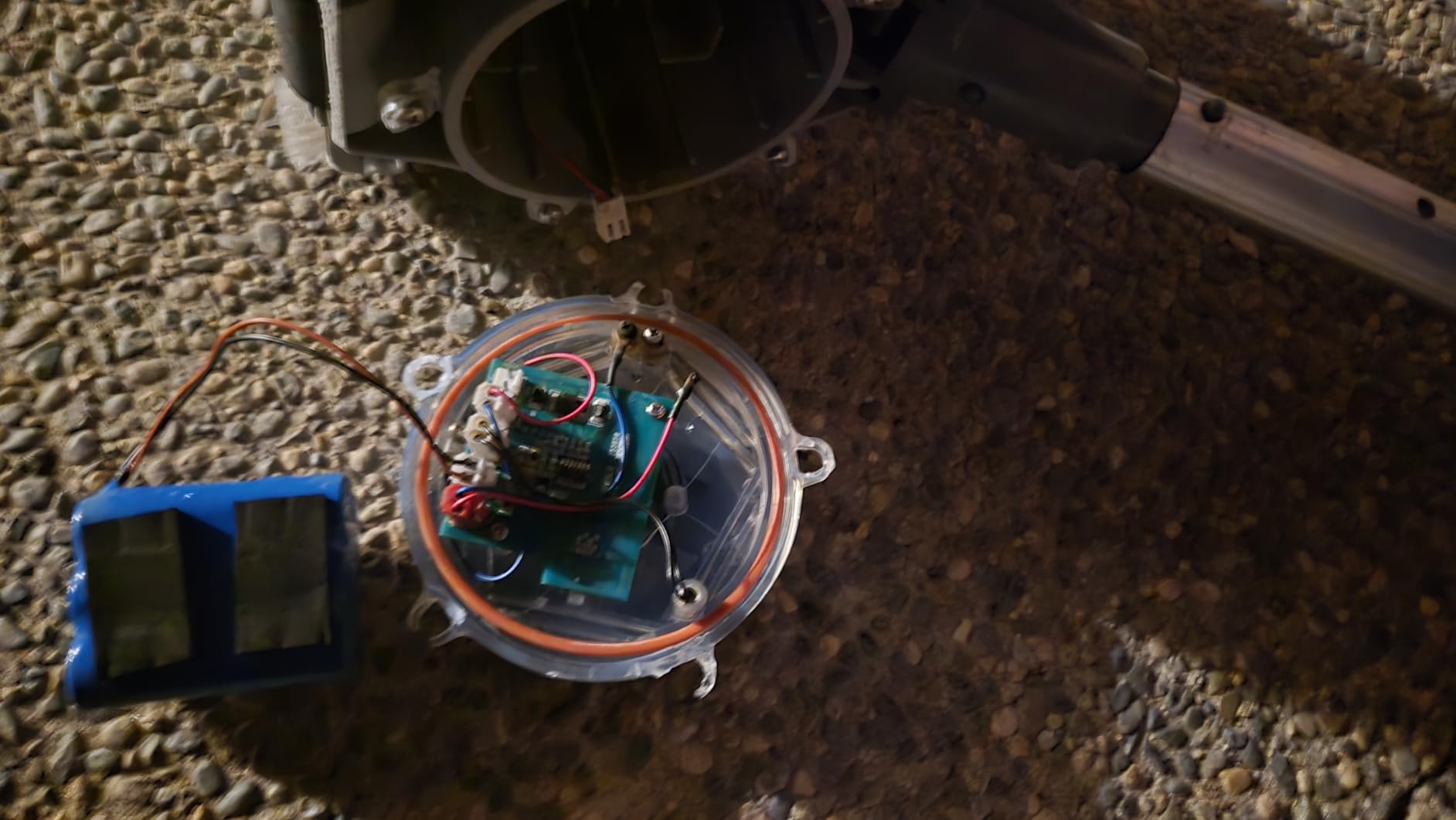
Why intake width beats suction for leaves
Suction figures get quoted constantly, but for leaves the binding constraint is the width of the opening. A narrow intake on a powerful motor will still stall on a folded magnolia leaf, because there is nowhere for the leaf to go. A wide intake on a moderate motor will swallow the same leaf whole. When comparing any two leaf vacs, look at the inlet diameter first and the flow rate second.
This unit is also the only cordless model here that states a hard debris limit in writing. That kind of honesty is useful, because it tells you exactly where it stops working. Just over 7 inches and the inlet clogs, full stop. For most residential leaf loads that limit is never reached.
Where it will disappoint you
The charge time is the dealbreaker for some. Five hours means one long session per day at most, and there is no way to top it up between passes. If your pool collects leaves daily and you want to work in the evening after a long day, a 90 minute unit with a 4 hour charge, or a hose-fed head with no charge at all, fits the rhythm better.
At 690 reviews, the long-term reliability picture is thinner than for the high-volume models in this list. Treat the durability record as less proven and keep expectations accordingly. The pole is also not included, which is standard for this category but worth budgeting for.
3. POOL BLASTER Cordless Leaf Vac – Best Value Cordless Catcher
POOL BLASTER Leaf Vac Cordless Hoseless Pool Leaf Vacuum & Skimmer, Battery-Powered Swimming Pool Leaf Catcher with Heavy Duty Mesh Bag, for Inground and Above Ground Pools, by Water Tech
Cordless and hoseless
Wide-mouth spiral eddy chamber
Extra-large mesh bag
Runs on 8 AA batteries
Pros
- Wide intake and spiral eddy design pull in roughly 95 percent of leaves in one pass
- Extra-large all-purpose mesh bag
- Works on the bottom and as a surface skimmer
- No hose means no added water to upset pH
Cons
- Battery compartment is not reliably watertight and corrodes
- Large oak leaves snag on the fixed stabilizers
- Runs on 8 AA batteries
- Not strong enough for acorns
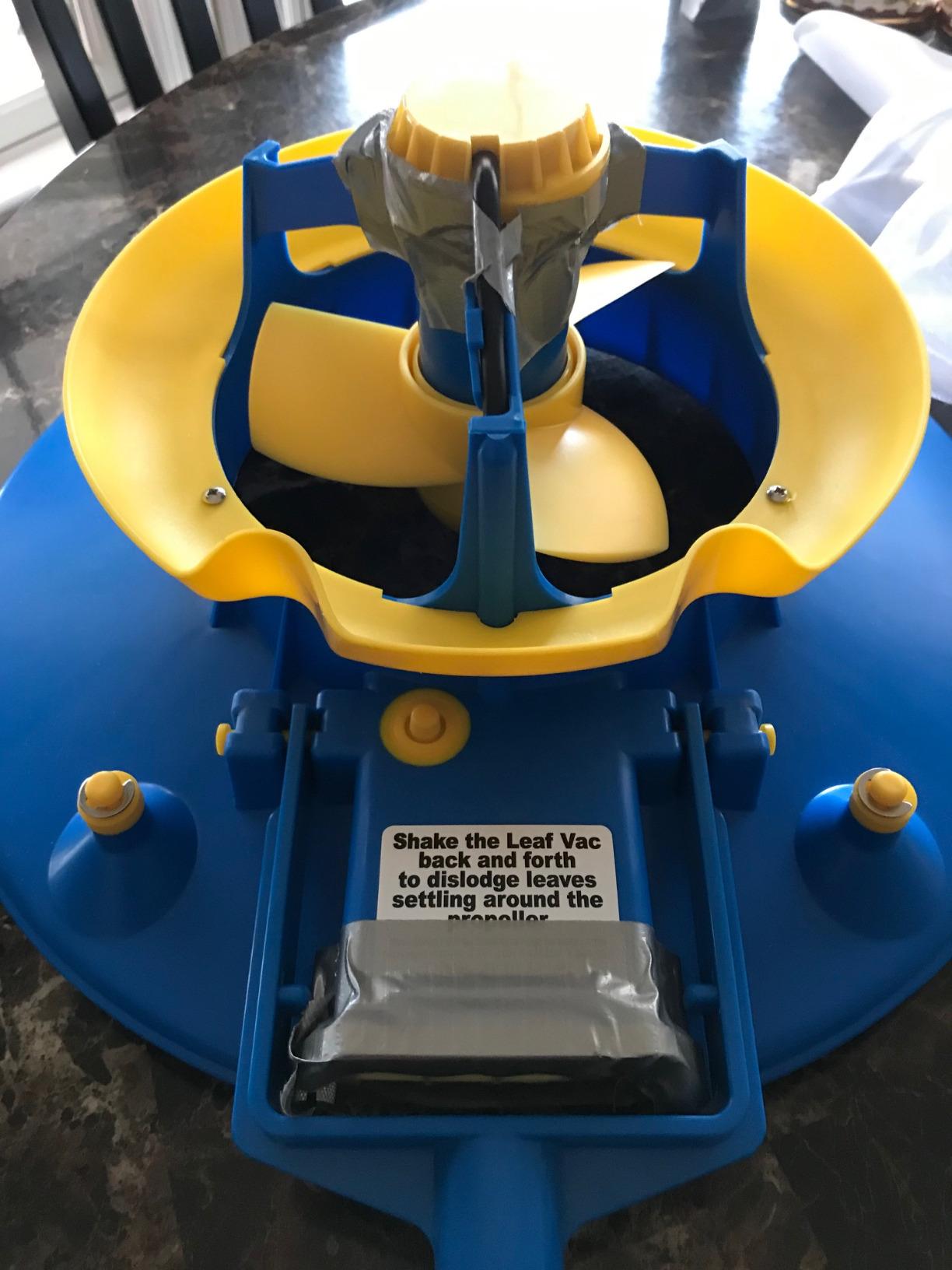
This is the cordless answer most people should buy. The wide-mouth chamber and spiral eddy design are the reason reviewers report pulling in the large majority of leaves in a single pass, and several describe finishing a full leaf-heavy pool in about 30 minutes. Water Tech engineered this one around leaves specifically, rather than around sand.
The versatility is what makes it a keeper. Flip it to the surface and it works as a skimmer for floating debris, drop it on the bottom and it catches what sinks. It is light enough to hold in one hand, and it attaches to any standard telescopic pole if you want reach. Because it is fully cordless, it never adds water to the pool, so it will not shift your pH while you work.
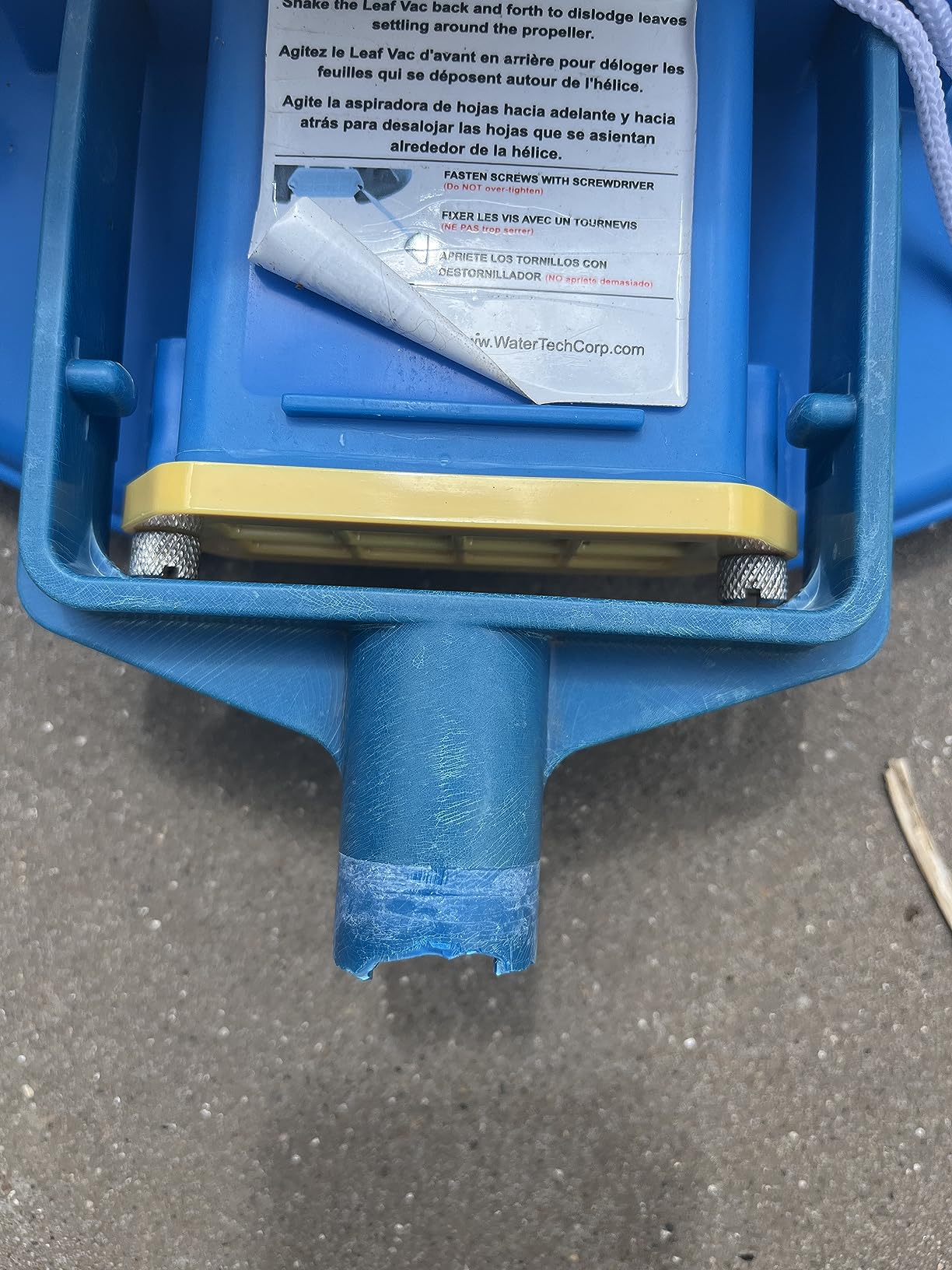
The battery compartment is the flaw you must plan around. Owners report corrosion inside the compartment that can short out the motor within a season, and the consistent fix in the reviews is to open the unit, rinse it, and blow it dry after every single use. That is a real maintenance commitment, and if you skip it you will be troubleshooting a dead motor in a month.
It also uses 8 AA batteries rather than a rechargeable pack. That is cheap and convenient, and it means no charging downtime, but it is also ongoing cost and it is a downgrade against a lithium unit. Budget for a spare set.
What the 95 percent pickup claim actually means
It is close to accurate, and the reason is geometric rather than marketing. The spiral eddy design pulls debris inward from a wide mouth rather than funnelling it down a narrow throat, so a leaf hits moving water instead of a dead end. The failures are specific and predictable: large oak leaves and long stems snag on the fixed blue stabilizers that hold the motor, and acorns and acorn caps simply do not have enough suction behind them.
So for a pool under deciduous trees with mostly small and medium leaves, this hits its number. Under heavy oaks, expect to pick up stragglers by hand or with a net afterward. The bag is generous enough that the emptying cadence is what limits you, not the pickup.
Where it will disappoint you
The plastic construction feels light next to a hose-fed ABS head, and on a large in-ground pool with a deep end, you will feel every one of those 3 pounds at the end of a long pole. Two more limits worth knowing: it will not pick up acorns, and the bag, while large, is a mesh bag that will pass fine grit back into the pool.
Most importantly, do not buy it and expect to skip the drying ritual. The watertightness complaints cluster around owners who rinsed the unit and put it away wet. Treat drying as non-negotiable and the durability concern largely goes away.
4. Enhulk PC10 – Best Flow Rate and Fastest Recharge
Pool Vacuum for Above Ground Pool with a Telescopic Pole, Running time up to 1H, Handheld Rechargeable Pool Cleaner with Powerful Suction up to 18.5 gallons/min, Ideal for Leaves & Debris, PC10
20V 40W motor
4200 L/h flow
60 minute runtime
1.5 hour recharge
1.5 liter capacity
Pros
- High flow of 4200 L/h pulls leaves
- twigs and sand
- Five 2000mAh cells give up to 60 minutes of runtime
- Fully recharges in 1.5 hours
- Four reusable bags including 180 and 500 mesh
Cons
- Heavy at 6.4 pounds
- 60 minutes may not cover a large pool
- Filter bags need washing and drying between uses
The Enhulk PC10 wins on paper where it counts most for mixed debris. A 20V 40W motor moving up to 4,200 L/h, rated at 18.5 gallons per minute, is the highest published flow in this group, and reviewers credit it for handling leaves, twigs, and sand in the same pass rather than switching tools.
The other spec that changes daily use is recharge time. A full recharge in 1.5 hours means you can run it in the morning and again in the afternoon, which is exactly the rhythm of a heavy leaf drop. Combined with roughly 60 minutes of runtime from five 2000mAh cells, it is the most flexible cordless schedule here.
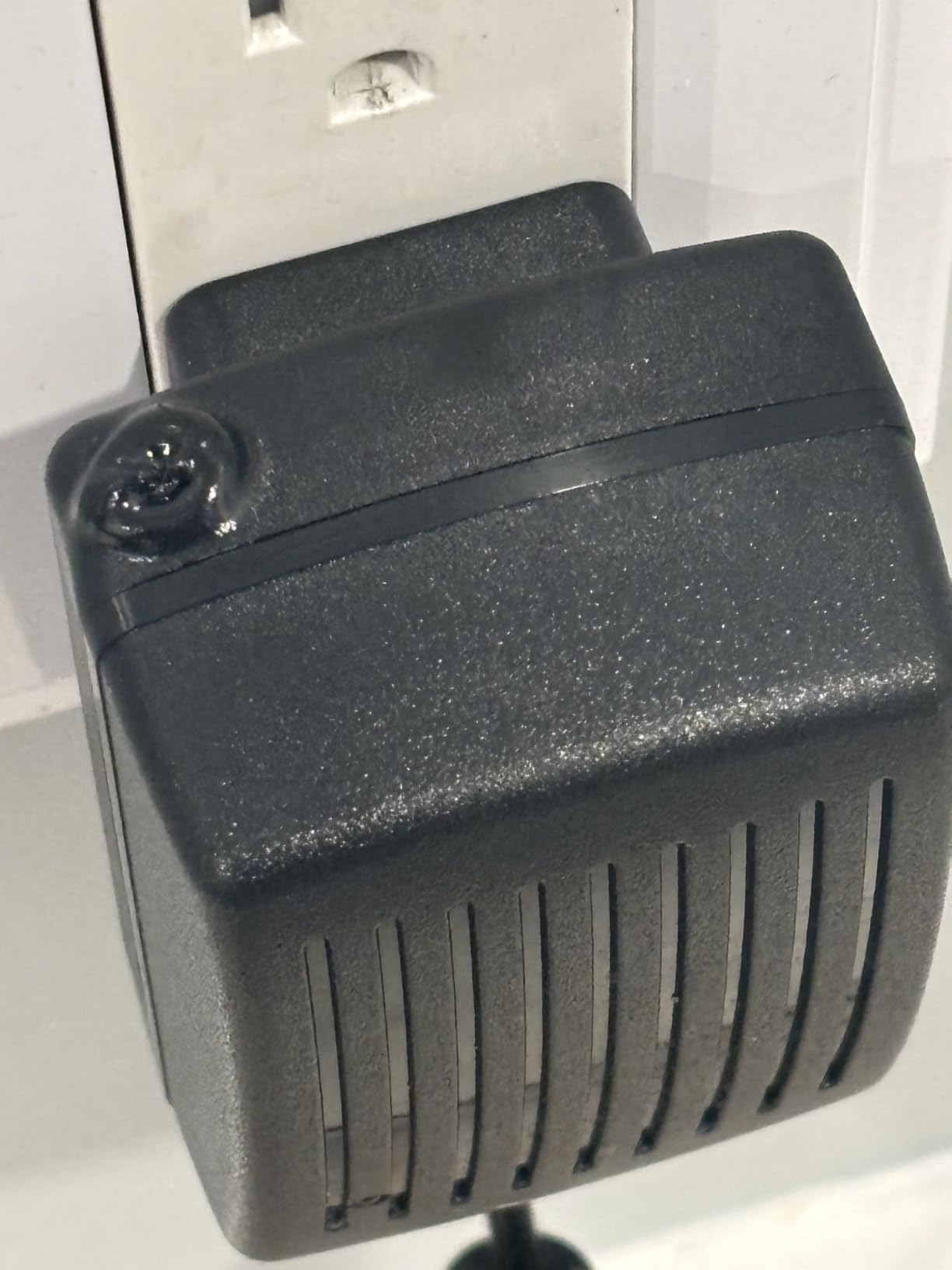
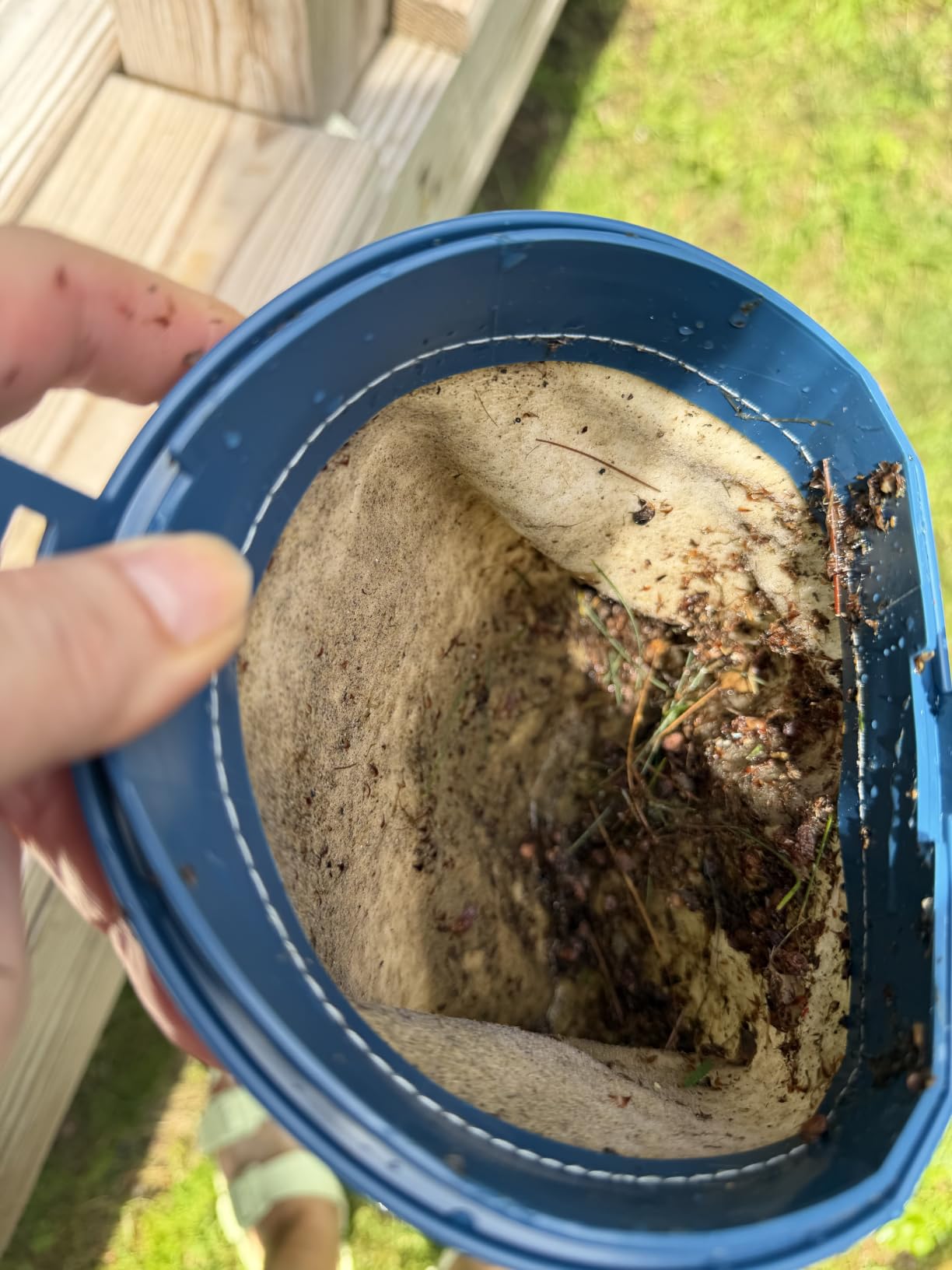
It ships with two handles: a short one and a 3 to 7.3 foot telescopic pole, so unlike most cordless handhelds in this roundup you are not immediately hunting for a compatible pole. It also includes four reusable filter bags, two 180 mesh and two 500 mesh, which lets you match bag to debris and keep a spare while the other dries.
That flexibility has a physical cost. At 6.4 pounds this is the second-heaviest handheld here, and the weight is concentrated in the head, so retrieving it from the deep end of an in-ground pool is a two-hand operation. Lining protection is not the strength of this design; treat it as a tool for concrete and plaster rather than a delicate vinyl liner.
Runtime math for a real pool
Sixty minutes sounds generous until you size it against a pool. For a 16 foot round above-ground pool, it comfortably finishes a leaf pass with time to spare. For a 20 by 40 foot in-ground pool, 60 minutes of running is roughly half the floor, and you will be recharging mid-job. The rule that works: estimate your pool’s surface area, and expect a cordless handheld to cover something in the range of 1,000 square feet per charge before bag emptying interruptions.
Where it beats every hose-fed option is that it adds no water to the pool, so vacuuming 2,000 gallons of debris does not dilute your salt level or shift your chemistry. If you run a salt system, that is a genuine argument for cordless on a large pool.
Where it will disappoint you
The weight is the first thing reviewers mention and the thing most likely to end your use of it. Lifting a 6.4 pound head out of a deep end while holding a pole is awkward, and a few owners simply stopped using it on their deep end and used a skimmer there instead.
The filter bags need washing and fully drying between uses to hold suction, which is the same maintenance commitment as every cordless unit here. And while the flow figure is impressive, it is a lab number; what actually determines how fast you finish is how often you stop to empty the 1.5 liter chamber.
5. U.S. Pool Supply Leaf Terminator – Budget Hose-Fed Head
U.S. Pool Supply Professional Swimming Pool Leaf Terminator Vacuum – 15″
Hose powered
8 pressure jets
Vortex suction path
15 inch ABS body
Two reusable bags
Pros
- Delivers the full venturi formula at the lowest cost
- 8 jets create a vortex that lifts leaves off the floor
- Mar-proof perimeter bumper protects pool surfaces
- 4 rotating 360 degree wheels
- Two reusable leaf bags included
Cons
- Pool pole is not included
- Garden hose has to be run to the pool
- Suction drops with low household water pressure
- Three perimeter brushes are fixed and wear
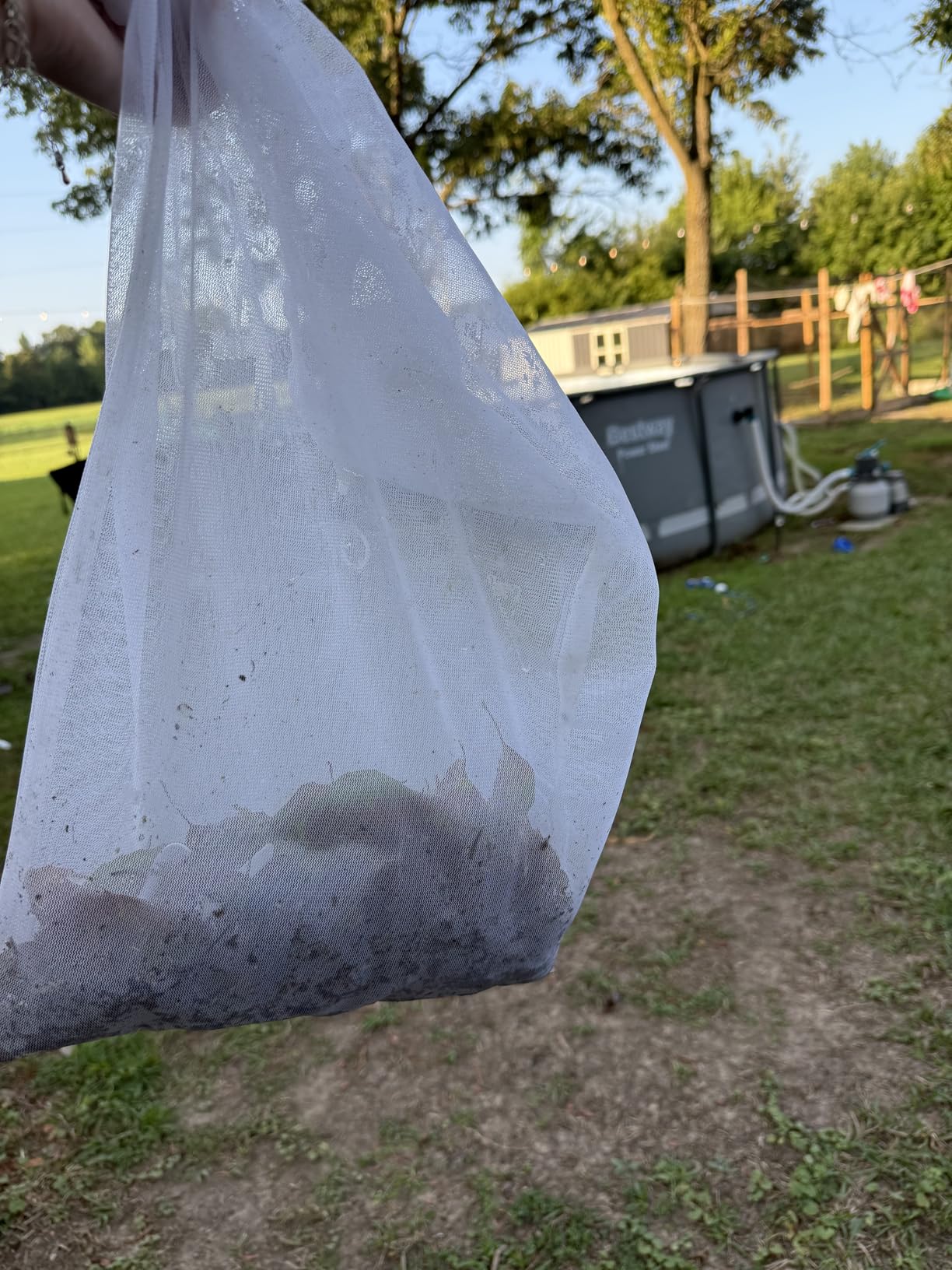
The Leaf Terminator is the same engineering idea as the Big Sucker, in a body that costs less money. Eight integrated pressure jets create a vortex that pulls leaves and debris into the attached bag, and reviewers report it pulling a good volume of leaves off the bottom for the money.
Two details make it better than a bare-bones hose head. The 15 inch ABS body carries a mar-proof perimeter bumper, which matters if you have a vinyl liner, and the 4 rotating 360 degree wheels make it far easier to steer along walls and into corners than a head without them. Two reusable large all-purpose leaf bags ship in the box, so you have a spare while the first dries.
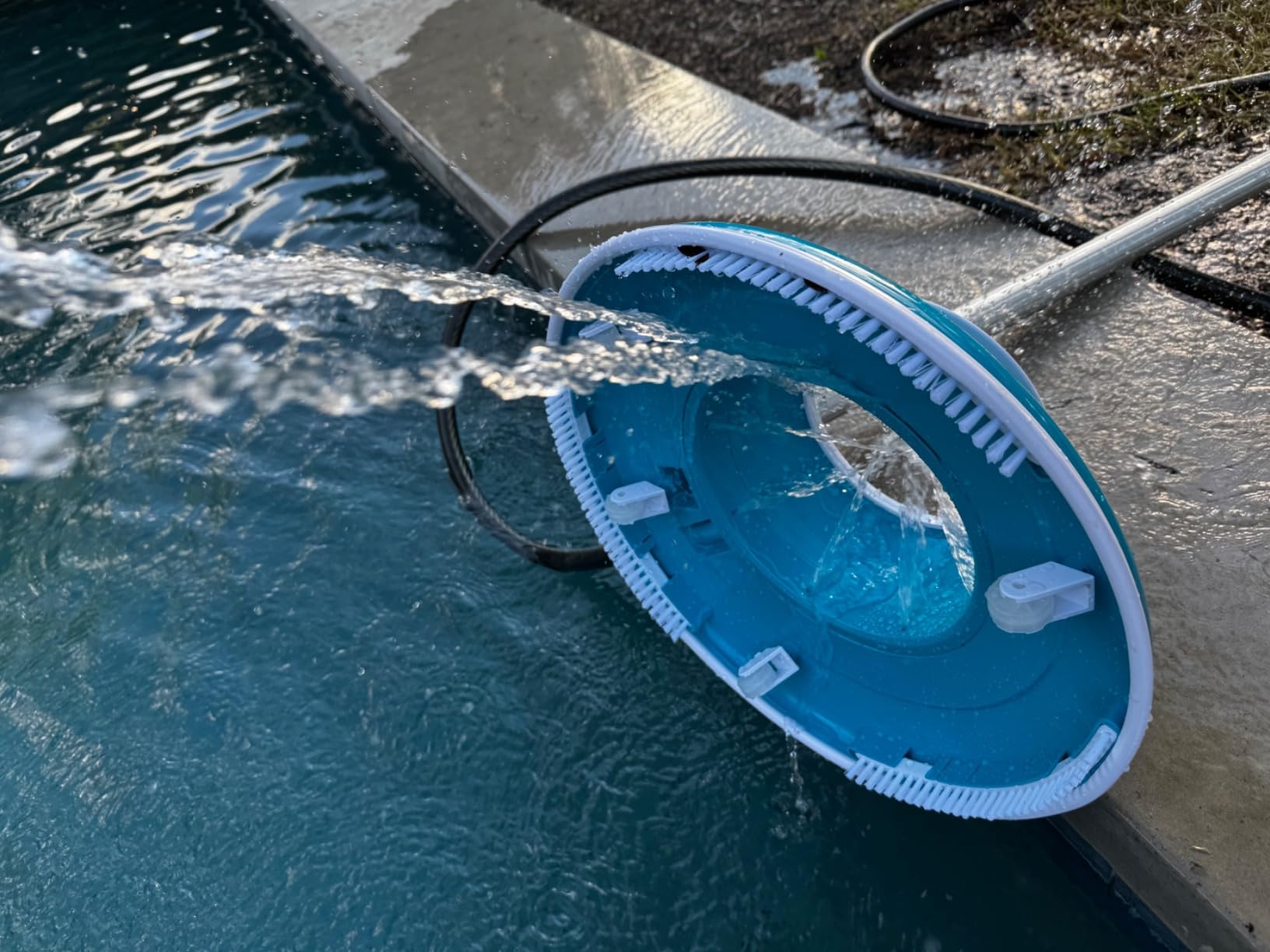
The trade-offs are the ones every hose-fed head carries. You run a garden hose to the pool, which may mean moving patio furniture, and you need a pool pole, which is not included. Suction is entirely a function of your household water pressure, so on a low-pressure line it will feel noticeably weaker than the spec suggests.
The three perimeter brushes are fixed rather than removable, and they wear down over time. Once the bristles shorten, they do less to loosen caked debris from the floor, though for loose leaves that is a minor loss since the vortex does most of the work.
What you actually pay once the pole is added
This is the section where the hidden cost of leaf vacs shows up. The head is inexpensive, but you need a 1-1/4 inch threaded pole, and a decent aluminum pole can cost more than the head does. Add a fine mesh bag if your pool collects silt, and you are at roughly twice the head-only outlay before you have cleaned anything.
Even so, the total lands well below any cordless unit, and there is nothing to charge and nothing to corrode. If your pool is a fixed in-ground with a nearby hose bib, this is the lowest-cost reliable option in this roundup by a wide margin.
Where it will disappoint you
Do not buy it without a pressure test. Stick the hose to the head on your patio, run it full blast, and see whether the head holds down and pulls. Low household pressure is the most common reason owners rate this as average, and no amount of adjustment fixes it.
It also does nothing for fine debris. The all-purpose mesh bag passes sand and silt through, and with no bottom brushes on the underside to sweep, caked-on dirt on a plaster floor stays put. For leaf work it is genuinely capable; for a full pool clean it is not, and you will want a handheld for the fine stuff.
6. POOL BLASTER Centennial – Best Cordless Canister for Sand and Silt
POOL BLASTER Centennial Cordless Pool Vacuum w/Pole Set – XL Debris Capacity & Advanced Filtration, Handheld Rechargeable Pool Cleaner for Sand, Silt & Leaves in Inground & Above Ground Pool
Cordless lithium
45 minute runtime
Quick-release canister
45 inch pole set included
10.5 inch head
Pros
- XL debris canister allows longer runs between empties
- Quick-release dual-cam lever makes emptying easy
- Good suction for sand
- silt and small debris
- 45 inch four-piece pole set included
Cons
- Canister can slip its retaining lip and spill debris
- Unit is buoyant and needs steady pole pressure
- Head shape can blow light debris away
- Motor or battery failure reported within a season for some
The Centennial is the highest-rated handheld unit in this group, and the reason is the canister. It holds substantially more than the palm-sized chambers on competing handhelds, which means fewer emptying stops, and the quick-release dual-cam lever empties it in one motion without disassembling anything.
Reviewers credit it with replacing a vacuum-to-waste routine entirely. That is the real value story: if you were previously draining water to clean out sand, a cordless unit that keeps debris out of the pool pays for itself in saved water and saved chemicals. The 10.5 inch head removes to expose an angled head for tight areas, which handles steps, corners, and the transition at the deep end.
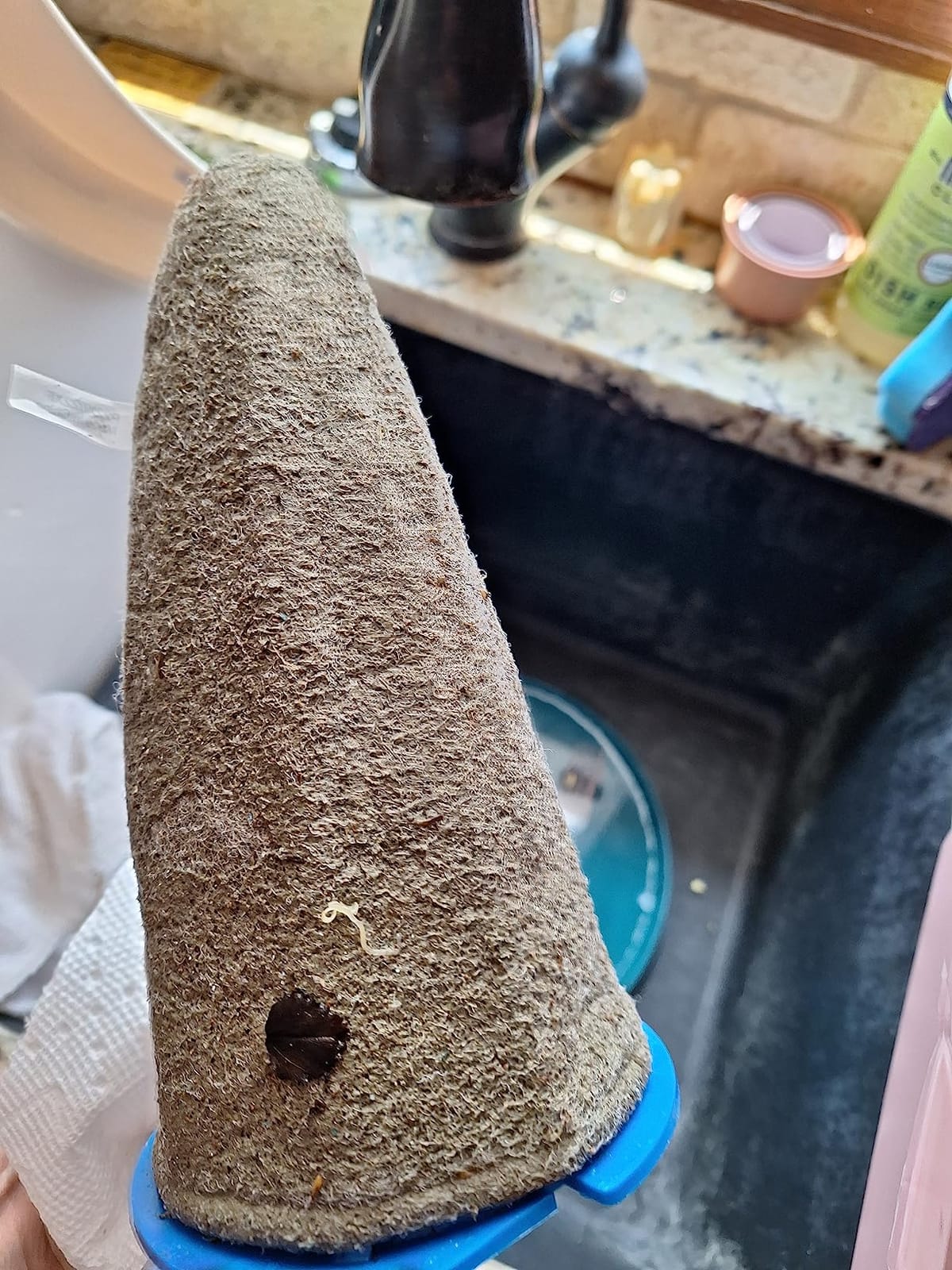
It is one of the few cordless units here that includes a pole, a 45 inch four-piece set, so it is usable out of the box. The rechargeable lithium-ion battery runs up to 45 minutes, which is shorter than most competitors but adequate for spot work and for a top-to-bottom pass on a mid-sized pool.
The most repeated mechanical complaint is the canister seal. Owners report the debris chamber slipping out of its retaining lip when it bumps a wall or step, which spills everything you just collected back into the pool. The head is also buoyant, so it needs steady downward pole pressure to stay engaged. Both are real, and both are annoying enough that you will want to lift the unit clear of walls rather than pushing along them.

Sand and leaves are different jobs
This distinction is worth internalizing because most buyers expect one tool to do both well. Sand is heavy, dense, and needs sustained suction to lift, then a bag fine enough to hold it. Leaves are large, light, and voluminous, and need a wide intake and a big chamber. A canister that is great for sand can still be too small for a weekend of leaf collection.
The Centennial is optimized for the first job. It is a fine-debris and sand tool that also handles small leaf litter, and if your season is defined by a few big drops rather than constant leaf fall, it may be all you need. For continuous leaf accumulation, compare its canister volume against the 1.72 gallon bag on the KOKIDO XV910 before you decide.
Where it will disappoint you
Durability is the open question. A number of owners report motor or battery failure within three to six months, which is a shorter window than the category average. Water Tech’s replacement parts service is repeatedly credited for turning those experiences positive, so the failure is a service call rather than a write-off, but it is still an interruption.
For pure leaf volume, the head shape works against you. Owners note it can blow light debris away rather than drawing it in, and there is no wide-mouth intake to compensate. Buy it for sand and silt, and keep a wide-intake unit on hand for the leaf piles.
7. WYBOT C1 – Best Robotic Option for Ongoing Leaf Maintenance
WYBOT C1 Cordless Robotic Pool Vacuum for Inground Pools
Robotic cleaner
Floor wall and stair coverage
180 micron top-load basket
120-150 minute runtime
App control
Pros
- Triple motors climb 45 degree slopes to reach walls
- waterlines and stairs
- Upgraded pump motor gives strong suction for leaves and sand
- Top-load 180 micron basket rinses clean in seconds
- App control with S-path and N-path route planning
Cons
- Heavy at 10.32 kg to lift out by hand
- 3-hour recharge and about 2 hours of real runtime
- Needs a full floor cycle to clear heavy leaf loads
The WYBOT C1 is the only true robot in this roundup, and it changes the question. Owners with high leaf loads report it removing large volumes of debris and climbing walls reliably, with app mapping that makes it genuinely hands-off once it is in the pool.
Mechanically it is well specified: triple motors handle 45 degree slopes, an independent water pump motor provides the suction, and the top-load 180 micron basket rinses clean in seconds without tools. Runtime of 120 to 150 minutes covers pools up to 1,614 square feet, with a 3 hour recharge between cycles.
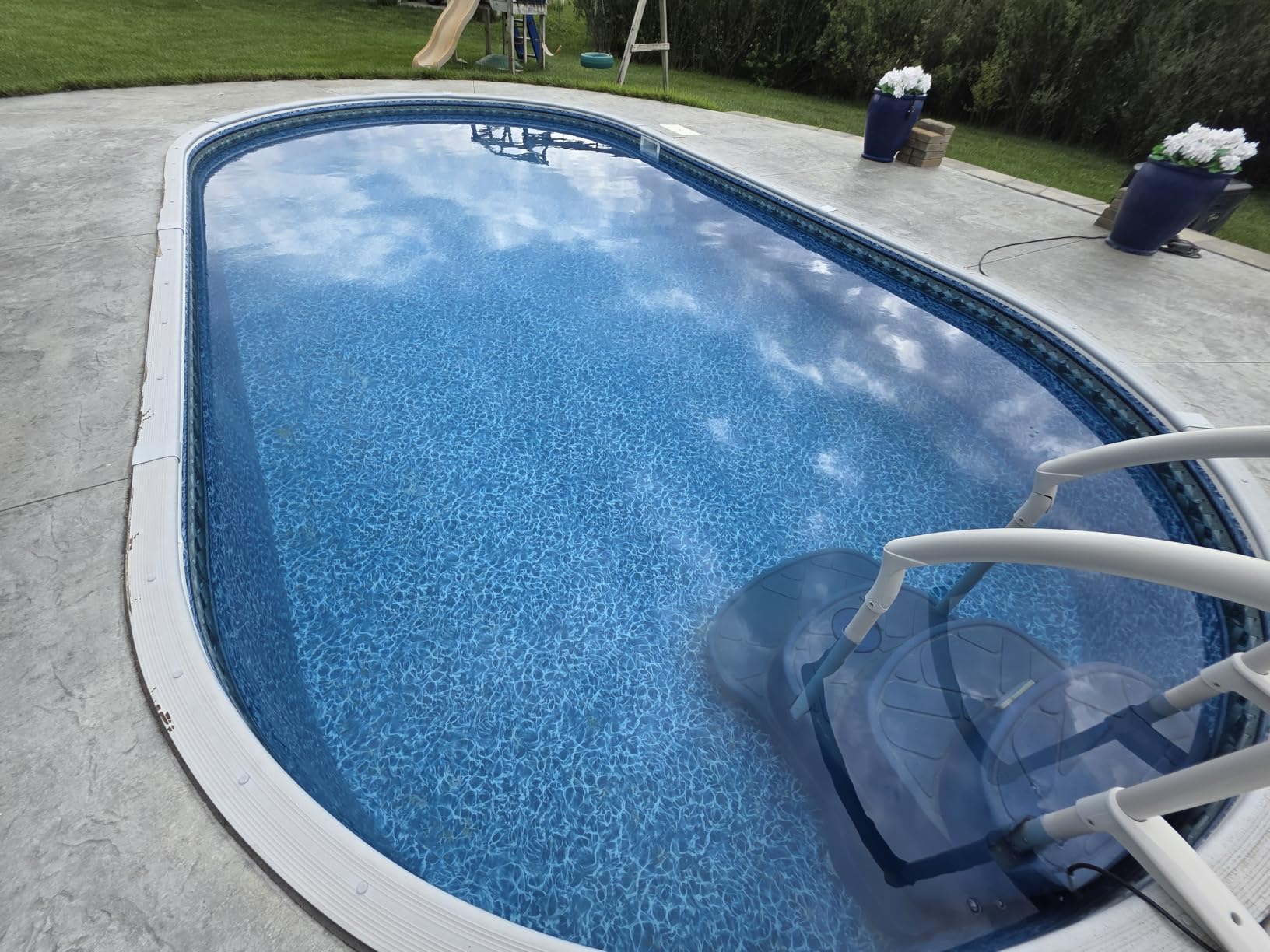
Be honest about what a robot does with leaves. Owners report it climbing out of piles or stalling rather than collecting them, and the practical fix is to run a full floor-only cycle rather than a one-hour timed mode if you want the leaf load gone. Even then, corners, steps, and the deep end routinely keep clumps, which is the most common complaint in pool forums about robotic cleaners generally.
At 10.32 kg, it is heavy to lift out and drain by hand, and the proprietary power plug is a small annoyance that will matter when the charging port eventually fails. Customer support responsiveness during warranty exchanges is the most criticized theme, with owners describing long waits for replacements.
Why your robot always leaves the same clumps
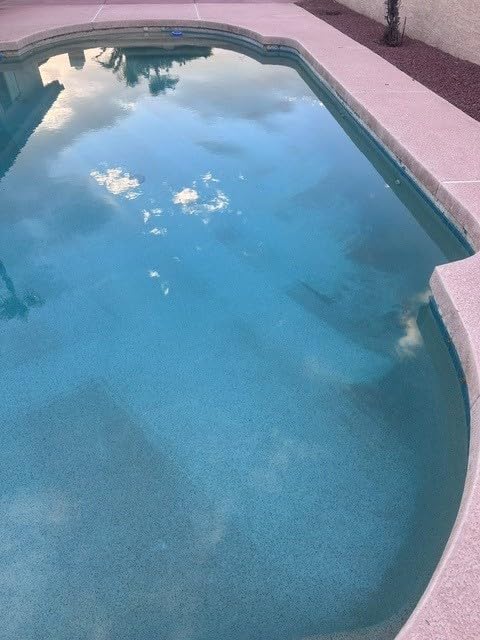
Robots are designed to clean what is already loose. A leaf that is sitting on a flat floor is easy; a leaf that is part of a mat of overlapping debris is not, because the robot’s intake is designed for particles and its wheels are designed to roll, not to plow. The clumps it leaves are almost always in the three places it cannot maneuver well: the deep end wall junction, the inside corners of steps, and the transition where the floor slopes.
The practical routine that works is a two-tool system. Run the robot on a schedule for the fine debris it excels at, and keep a wide-intake manual head for the clumps. The hose-fed Big Sucker is built for exactly this: it has the intake width and bag volume to pick up what the robot left behind, and it handles the awkward geometry of corners without needing to be programmed.
Where it will disappoint you
If your goal is to never touch the pool again, this will not deliver that during leaf season. The recharge math is the issue: about two hours of real runtime from a 3 hour charge means daily charging for the length of a leaf drop, and the battery is reported failing after about a year in some cases.
Cost of ownership is also the highest here by a wide margin, both up front and for replacement parts. For a pool that sees moderate leaf fall and has a reliable skimming routine, that is poor value. For a large in-ground pool where manual vacuuming is genuinely difficult, the robot earns its place by handling coverage you would otherwise skip.
8. POOL BLASTER Max Cordless – Best Fine Sediment Vacuum
POOL BLASTER Max Cordless Pool Vacuum for Inground & Above Ground Pools
Cordless lithium
60 minute runtime
10.5 inch pivot head
0.227 gallon chamber
Reusable filter bag
Pros
- Strong suction for sand
- silt
- pollen and fine particles without clouding the water
- Omni Pivot 10.5 inch head reaches corners
- steps and shelves
- Cordless and hoseless with up to 60 minutes of power
- Keeps debris out of the pool filter and cuts backwashing
Cons
- 0.227 gallon chamber fills quickly with leaves and stones
- Narrow intake clogs on small leaves and can wedge the return flap open
- Buoyant so it needs constant downward pole pressure
- Not intended for large leaves and twigs
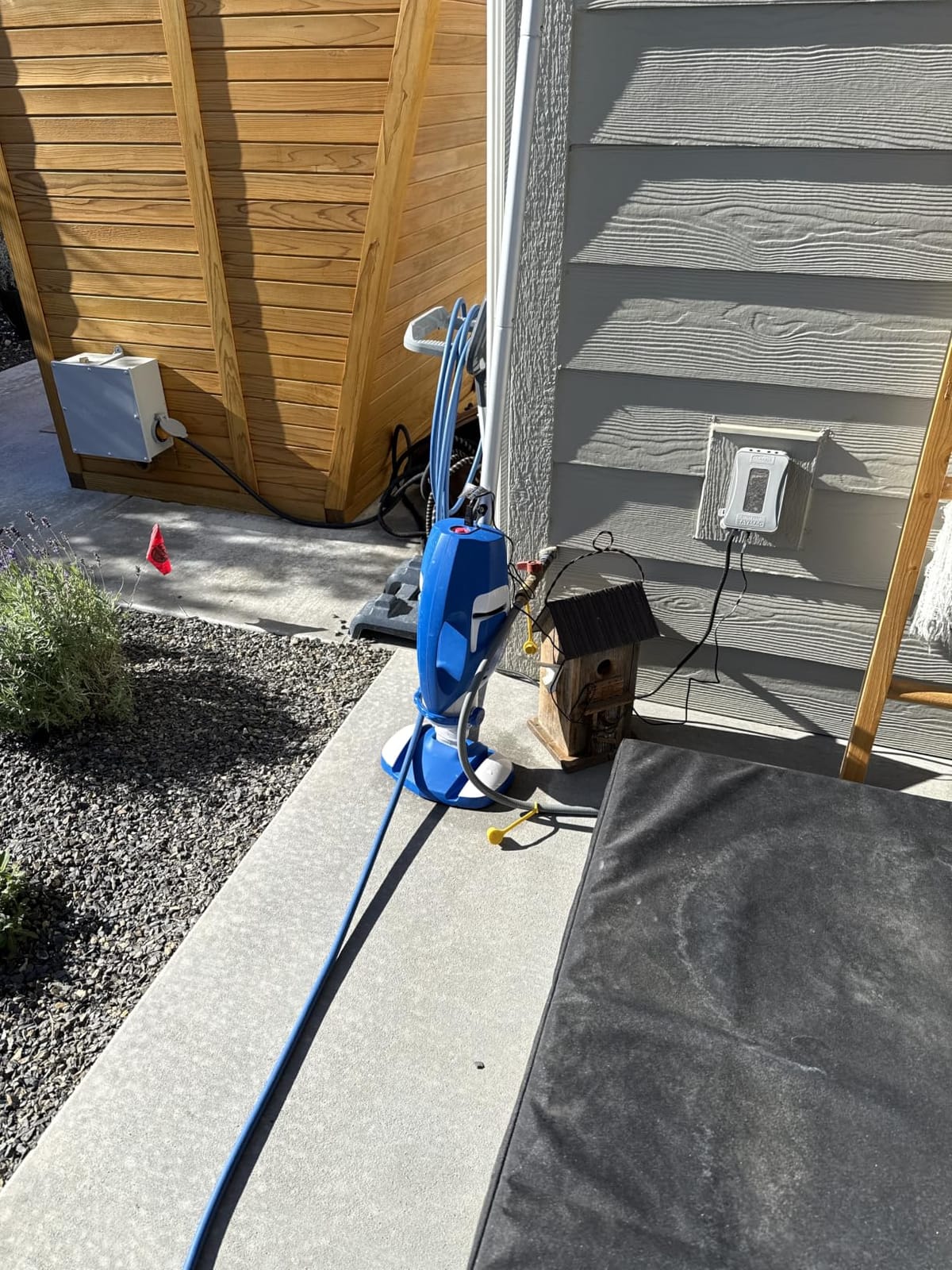
The Max is the best fine-sediment vacuum we tested, and the margin over hose-fed heads is dramatic. Reviewers describe dramatically outperforming hose vacs on pollen, dust storm silt, and caked debris while leaving the water clear, because everything is captured in a reusable filter bag instead of being pushed to waste.
The Omni Pivot 10.5 inch head is well designed for geometry. It reaches corners, steps, shelves, and spas without a lot of repositioning, and the 60 minute lithium-ion runtime covers a full pass on most residential pools. Certified for underwater use up to 16 feet with a 1-year warranty and USA support.

The scale mismatch is the whole story, and it is stated in the product’s own feature list. A 0.227 gallon chamber is roughly one eighth the capacity of the KOKIDO XV910’s bag, and the narrow intake clogs on small leaves and can wedge the return flap open, spilling what you collected.
It is also buoyant. Because the head wants to rise, you have to hold steady downward pole pressure the entire pass, which is tiring over a large floor and is the second most common complaint in the reviews. For a spot clean in the shallow end, that is trivial. For a whole pool, it adds up.
Why one tool is never enough in fall
Leaf season has two distinct jobs and they pull in opposite directions. Removing whole leaves needs intake width, bag volume, and endurance. Removing the fine sediment that leaves behind as they break down needs suction strength and a fine filter. It is entirely possible, and common, to own a unit that does one of these well and the other badly.
The pairing that covers both, based on what we saw, is a wide-intake cordless or hose head for the leaf passes and a fine-suction handheld like this one for the dust and silt cleanup. Running the fine vac after the leaves are out also means you are not chasing silt that a leaf bag cannot hold in the first place.
Where it will disappoint you
It will not pick up large leaves and twigs, and owners are blunt about that. If you buy this expecting a leaf vacuum for a maple-shaded pool, you will be disappointed within a week, because the chamber fills with a few handfuls of leaf litter and you will be emptying it constantly.
Two smaller frictions: the proprietary charging connector and a water-tight on/off dial that reviewers describe as finicky to operate with wet hands. And while Water Tech’s service is repeatedly praised for free warranty repairs, that is a service relationship you are relying on, not a durability record.
9. INTEX 28620EP – Best for Spas and Hot Tubs
INTEX Rechargeable Handheld Pool Vacuum Cleaner for Pools & Spas
Cordless Ni-MH
50 minute runtime
94 inch telescoping shaft
Two interchangeable brush heads
IPX8 switch
Pros
- Lightweight and cordless for small pools
- spas and hot tubs
- Adjustable 94 inch telescoping aluminum shaft with two brush heads
- About 50 minutes of run time per charge
- Automatic shutoff when not submerged with an IPX8 switch
Cons
- Suction inlet too small for whole leaves
- Small debris bag clogs quickly
- Some units fail to hold a charge after about a year
With more than 14,000 reviews, this is the most widely used handheld pool vacuum we could find, and for spas, hot tubs, and PureSpas it earns that. The telescoping aluminum shaft adjusts to 94 inches, which in a small pool means you rarely need to submerge your arm, and the two interchangeable brush heads handle both a floor pass and a narrow gap.
Owners report noticeably strong suction for fine dirt when it is moved slowly in overlapping sections, and the automatic shutoff with an IPX8 waterproof switch makes it forgiving around a hot tub where you are frequently pulling the unit out mid-pass.
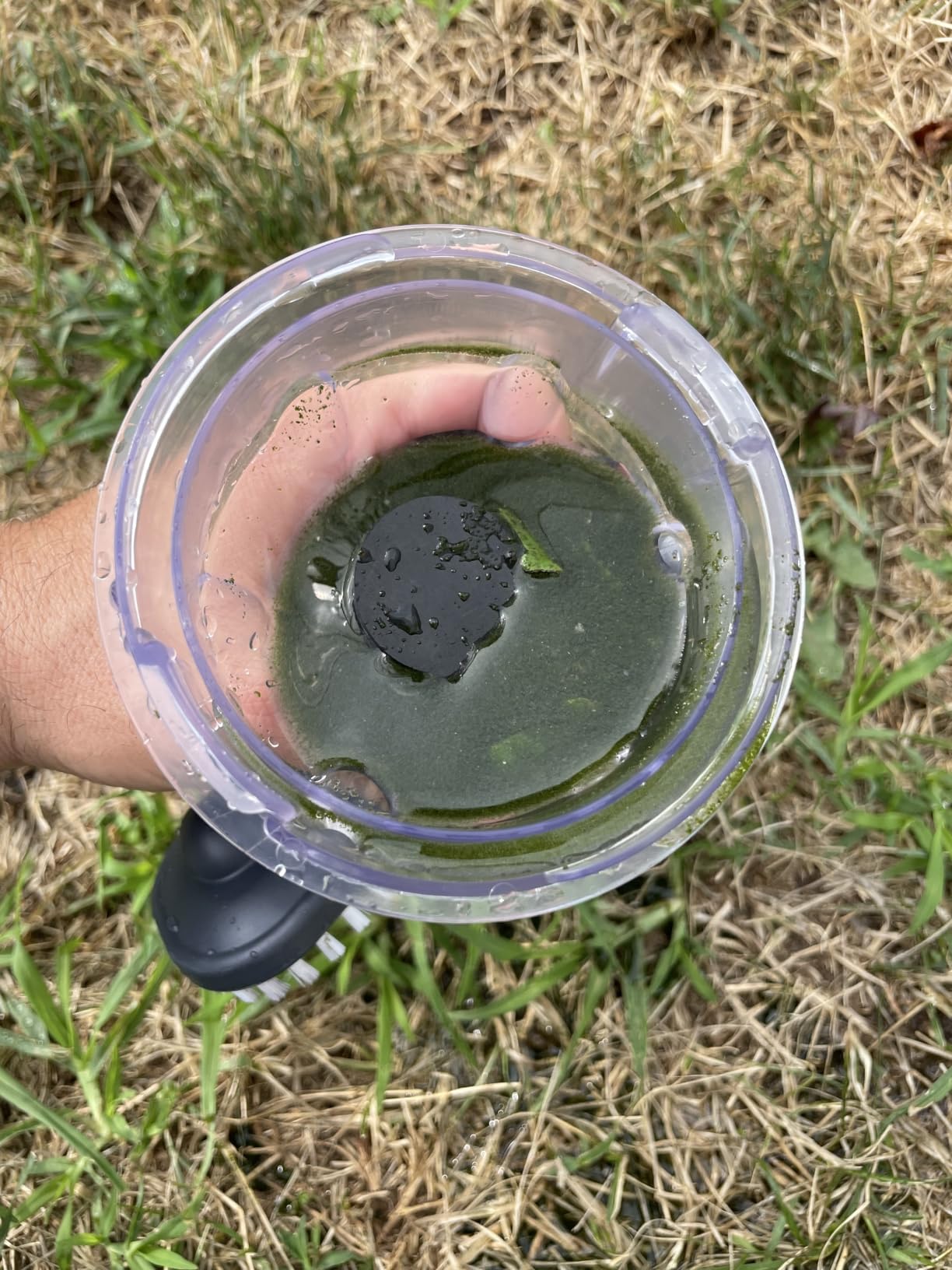
It is not a leaf vacuum, and the reviews are consistent on that point. The bottom intake is too narrow to swallow whole leaves, so the unit tends to push them around rather than collect them, and the small debris bag clogs quickly enough that a pool clean means several emptying and cleaning stops.
Durability is mixed. A recurring thread in the reviews is a battery or motor failure at roughly the one-year mark, offset by what owners describe as very responsive replacement service from Intex and the seller. The charging time discrepancy is worth knowing too: the listed charge time is around 50 minutes, while owners report closer to 8 hours for a full recharge.

Why small water features need different tools
A spa or hot tub is a different cleaning problem than a pool, and the usual pool leaf vac is wrong for it. The volume of water is small, so a big head and a large bag are awkward, and the water is warm, so a long session with your arm in it is unpleasant. A light handheld you can dip and lift repeatedly is the right shape for the job.
What a spa needs most is frequent, small passes. Warm water accelerates the breakdown of organic debris, and a spa has no dilution to speak of, so sand and body oils concentrate quickly. Owners who use this tool on a short pass every few days report far less accumulated grit than those who clean once a week.
Where it will disappoint you
If you have a pool under trees, this will not solve your problem. Pushing leaves around the floor is arguably worse than not cleaning at all, because you can chase them into a corner and create a heavier mat. Pair it with a skimmer net and a wide-intake head if leaves are the issue.
For anything larger than a compact pool, the 50 minute runtime and the small chamber make it a slow tool. The manual recommends it for pools up to 18 feet in diameter, and at the top of that range the emptying stops start to dominate your time.
10. KOKIDO XTROVAC 110 – Best Quiet Spot Cleaner for Small Pools
KOKIDO Cordless Handheld Pool Vacuum for Above Ground Pool, with 6ft Pole and 2 Vac Brush Heads, Ideal for Spot Cleaning Small Inground Pool Spa up to 20ft, Rechargeable, 60min, Sand and Light Debris
Cordless lithium
60 minute runtime
60dB operation
72 inch pole included
Two interchangeable heads
Pros
- Quiet 60dB operation with automatic power-off when not submerged
- 60 minute runtime on a rechargeable lithium battery
- 72 inch aluminum pole and two heads included in the box
- IPX8 waterproof for depths from 12 inches to 9.8 feet
Cons
- 0.1 gallon capacity needs frequent emptying
- Not designed for debris larger than 3 inches
- Battery pack is modest relative to comparable units
The XTROVAC 110 is a spot cleaner first and a pool vacuum second, and the reason is quietness. At 60dB it is the quietest unit in this roundup, which sounds trivial until you realize that most of what you are doing with a pool vacuum is holding still in the water listening to it.
The box contents matter for a small pool. You get a 72 inch aluminum pole, two interchangeable cleaner heads for corners and narrow spaces, and a rechargeable lithium battery good for 60 minutes. Assembly takes about two minutes, and the unit is under 3 pounds and 17 inches long before the pole.
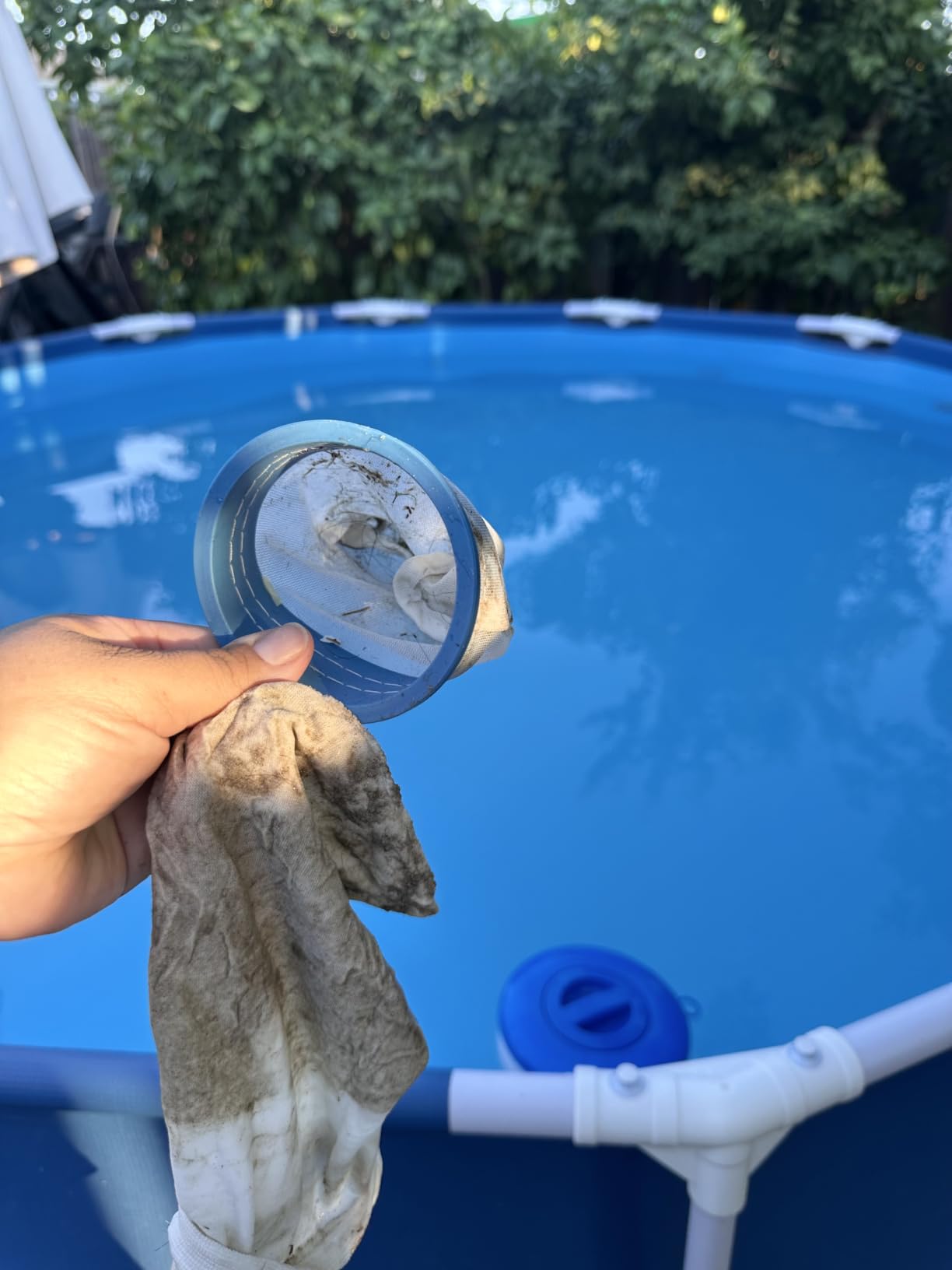
The 3 inch debris ceiling is the spec that defines it. The listing states plainly that it is not for items larger than 3 inches, and reviewers echo that limit, which means a whole maple leaf is already at the edge of what it can take. Sand, pollen, and small particles are its strength.
It is also rated for pools up to 20 feet, so a larger pool means multiple sessions. The 0.1 gallon capacity is the smallest chamber in this group, and the emptying cadence is what will limit you before suction does.
Water temperature and depth limits worth reading
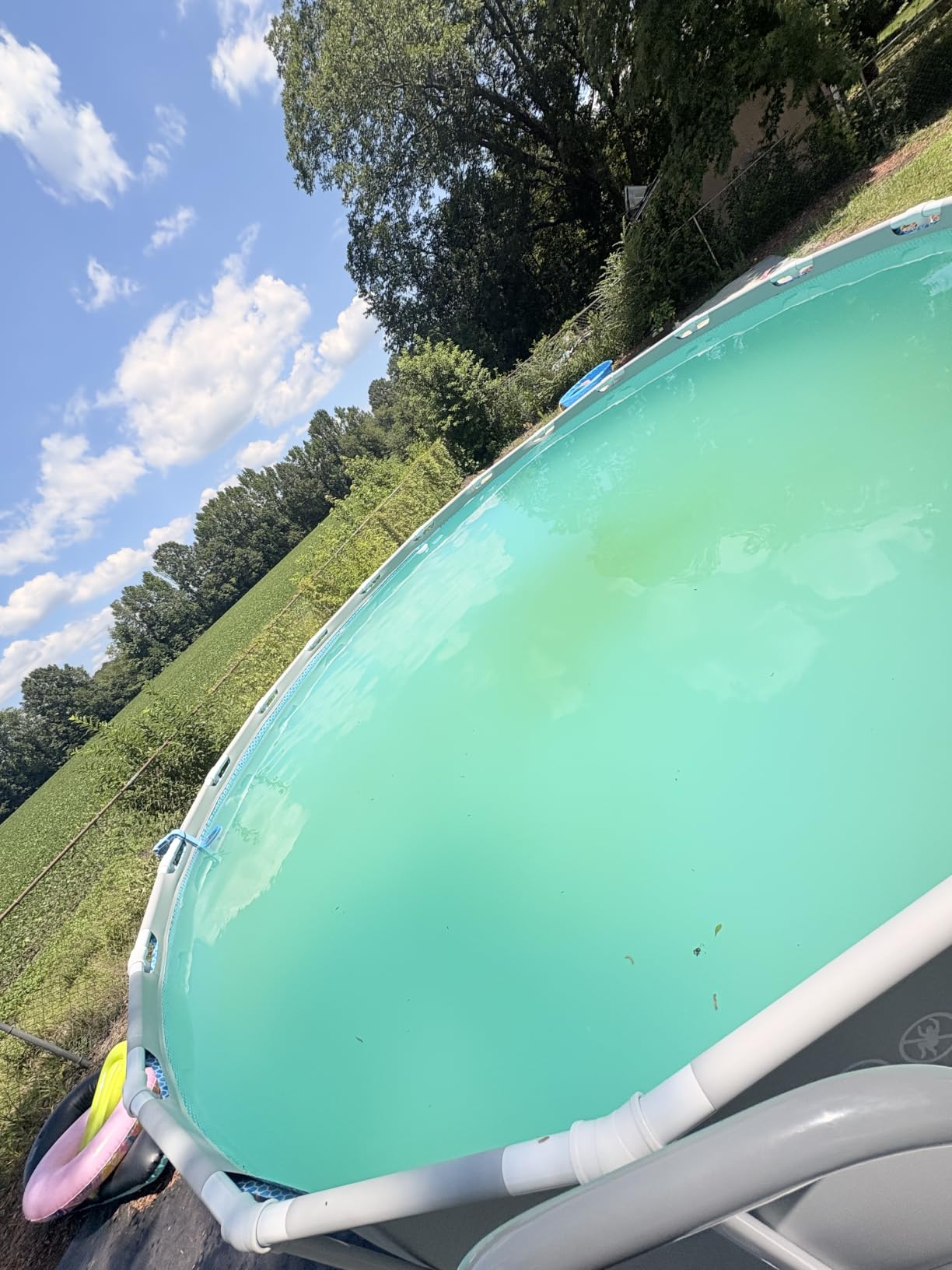
Most handheld vacuums publish a shallow operating range and most buyers ignore it. This one is specified for water from 41 to 108F at depths from 12 inches to 9.8 feet, with IPX8 waterproofing. That range is a real constraint in two directions: a shallow above-ground kiddie pool is below the minimum depth, and a cold early-season or late-season pool may be below the minimum temperature.
The automatic power-off when not submerged matters more than it sounds. On a shallow pool you are constantly lifting the unit to empty it, and a unit that shuts itself off rather than running dry protects the motor. You do need to submerge it promptly after switching on, though, which is the same strictness that frustrates owners of other handhelds in this roundup.
Where it will disappoint you
Leaves, plainly. A 3 inch ceiling on a category where the common debate is about 7 inch gum leaves means this is not a leaf tool by any reasonable reading. If leaves are your primary problem, this will frustrate you within the first week of leaf season.
The rating sitting in the high 3s rather than the 4s reflects capacity and intake limits rather than build quality. If you own a small above-ground pool, a spa, or a hot tub and your problem is sand rather than foliage, that is exactly the right target and the limits will not matter.
11. PoolMr Handheld – Best for Longest Cordless Runtime
PoolMr Handheld Pool Vacuum for Above Ground Pool & Hot Tub Vacuum, with 2 Brush Heads, 90 Mins Running Time, 13.2 Gallons/Min Powerful Suction, Ideal for Cleaning Debris and Sand Underwater, Black
Cordless lithium
90 minute runtime
13.2 GPM flow
120 micron filter
Dual brush heads
Pros
- Up to 90 minutes of runtime on a 2.5Ah lithium battery
- 20W motor with 13.2 gallons per minute flow
- Two interchangeable brush heads including a triangular corner head
- 6.3 foot three-section aluminum extension tubes included
Cons
- 4 hour charge is long relative to 90 minutes of runtime
- Automatic shutoff requires submersion within 60 seconds
- Battery is only 27 watt-hours
- Sized for small pools
- spas and hot tubs
The PoolMr is the endurance pick. Ninety minutes of runtime from a single charge is the longest continuous run of any cordless handheld here, and for a large pool that single fact often decides whether you finish in one session or two.
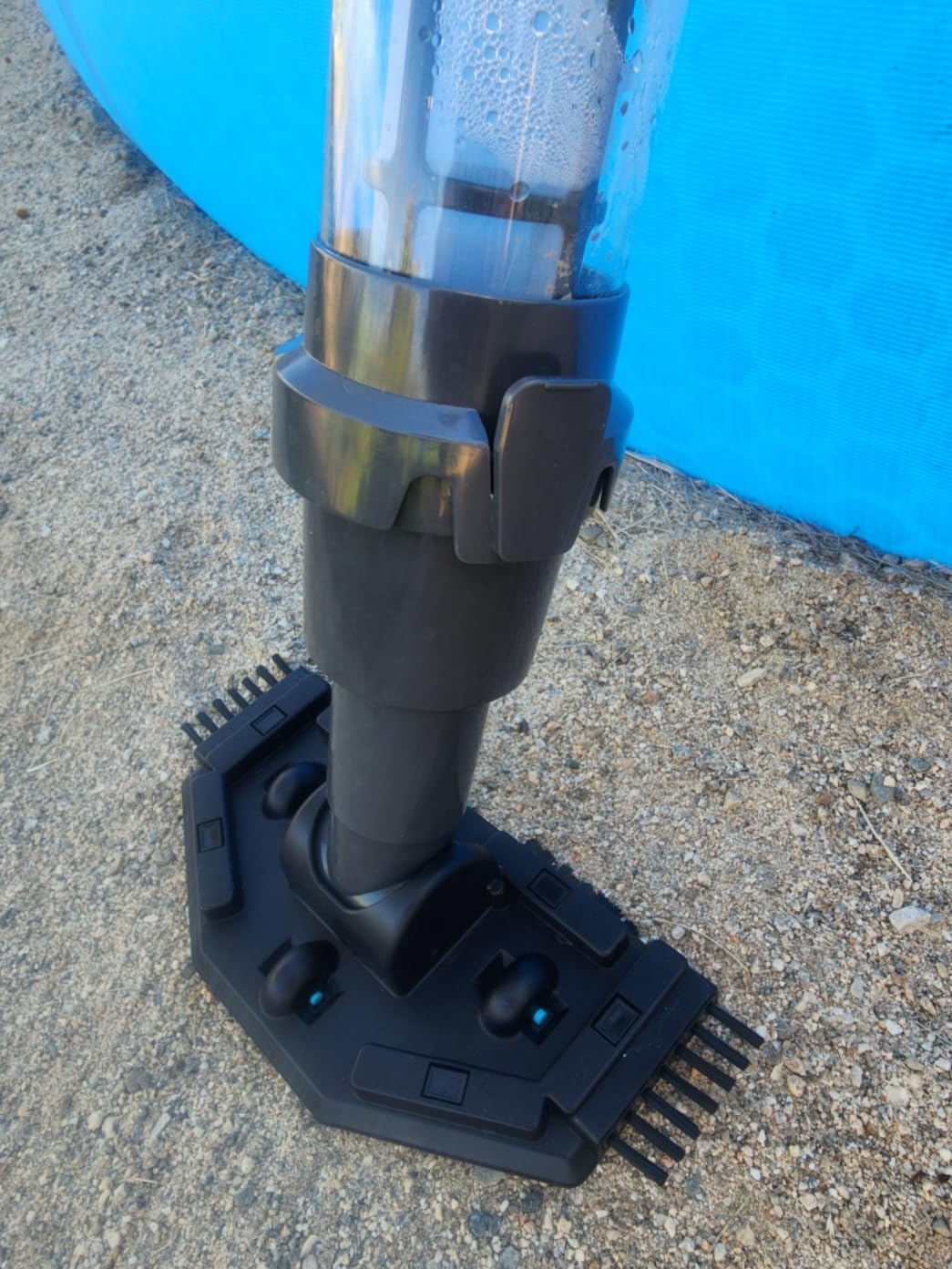
The other details are sensible rather than flashy. A 20W motor moving up to 13.2 gallons per minute, a 120 micron high-density filter, and two interchangeable brush heads including a triangular head shaped for corners. The 6.3 foot three-section aluminum extension tubes support the unit when it is out of the water, which is genuinely useful for draining it.
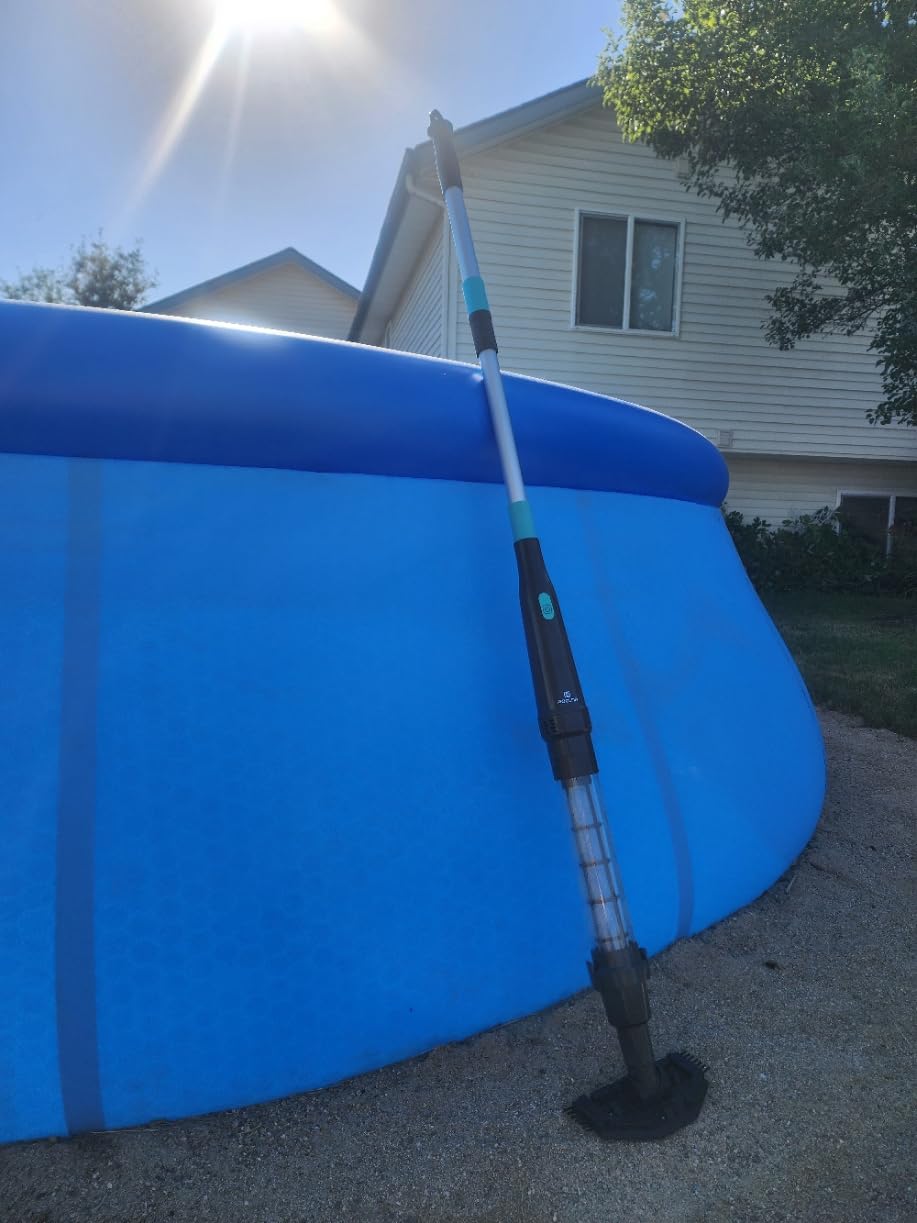
Where reviewers place it is alongside a robot rather than instead of one. On stairs, walls, corners, ponds, kiddie pools, and hot tubs, it handles the geometry a robot cannot, and the head swap makes the transition quick. Quiet operation and a 3 minute assembly are both frequently mentioned positives.
The strictness of the safety rules is the most repeated complaint. The unit requires submersion within 60 seconds of startup and switching off within 60 seconds of leaving the water, and owners describe that rule interrupting a cleaning pass in progress. It works from 32F to 104F with automatic shutoff if left out of the water.
Runtime and battery size are not the same thing
This unit is a useful illustration of why watt-hours matter. It runs 90 minutes from a 27 watt-hour battery, which is a smaller pack than the 44.4 watt-hour pack in the KOKIDO XV910 that runs 75 minutes. Runtime depends on both the capacity and how hard you make the motor work, so a figure quoted without a watt-hour number tells you very little.
The practical sizing rule: a handheld that runs 60 to 90 minutes covers roughly 800 to 1,200 square feet of pool floor in a single charge under normal leaf conditions, assuming you are not constantly stopping to empty the chamber. Beyond that, plan a second session or choose a hose-fed head that does not stop at all.
Where it will disappoint you
The 4 hour charge against a 90 minute runtime is a poor ratio, and it means one substantial session a day at most. For a pool owner who wants to vacuum in the evening after the leaves fall, that is limiting.
It is also a small-pool tool by design. Reviewers consistently position it for spas, hot tubs, pet pools, and small above-ground pools, and it is not a whole-pool solution for a large in-ground installation. Buying it expecting to handle a heavy autumn leaf load in a deep pool is a mismatch of purpose, not quality.
12. Sepetrel Deluxe Kit – Best All-in-One Above-Ground Maintenance Set
Sepetrel Deluxe Swimming Pool Cleaning Kit with Spa Jet Vacuum Cleaner,Brush, Semi-deep Skimmer Net & Adjustable 57.5-inch Pole,Ideal for Cleaning Above Ground,Inflatable Pools
Water powered venturi
57.5 inch adjustable pole
Skimmer net and brush included
Four piece set
Pros
- Complete set covers vacuum
- brush
- skimmer net and pole in one purchase
- Garden hose venturi pulls leaves into the bag with no electricity
- Half-depth skimmer net captures more per sweep than a flat net
- Curved edge brush reaches hard corners
Cons
- Garden hose not included
- Short light duty pole may not reach the center of larger pools
- Will not lift sand or heavy sediment
- Some components described as small and cheaply made
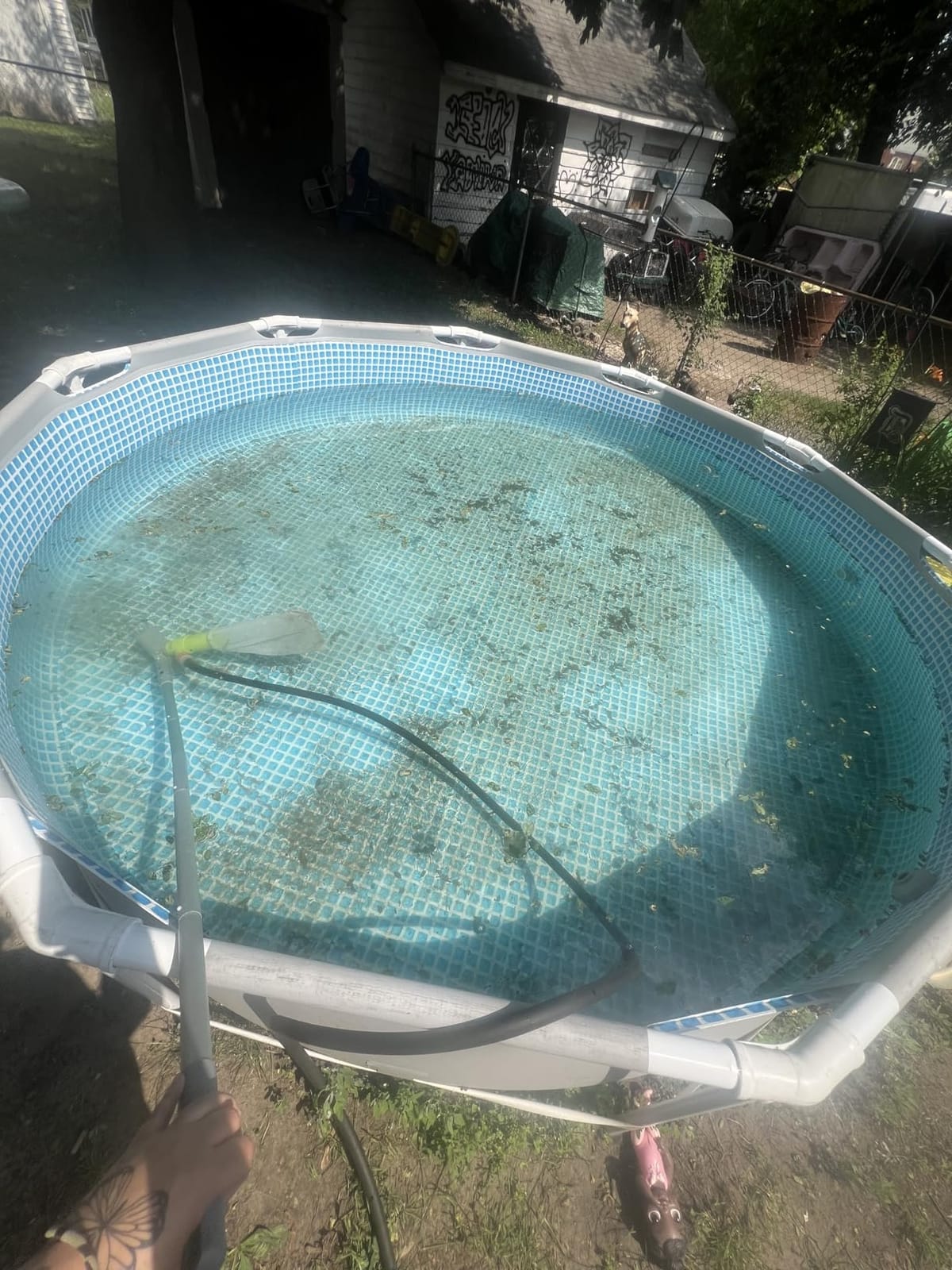
The Sepetrel kit is the one to buy if you own an above-ground or inflatable pool and have never bought pool equipment before. It contains four things: a spa jet vacuum, a 13.5 inch pool brush, a semi-deep skimmer net, and a 57.5 inch adjustable pole that fits all three. That is your entire daily maintenance kit in a single purchase.
The vacuum works on the same garden hose venturi principle as the larger hose-fed heads, with an upgraded hose adapter for a better connection. Water pressure draws leaves and debris into the collection bag with no electricity at all, so there is no battery, no motor, and no charging.
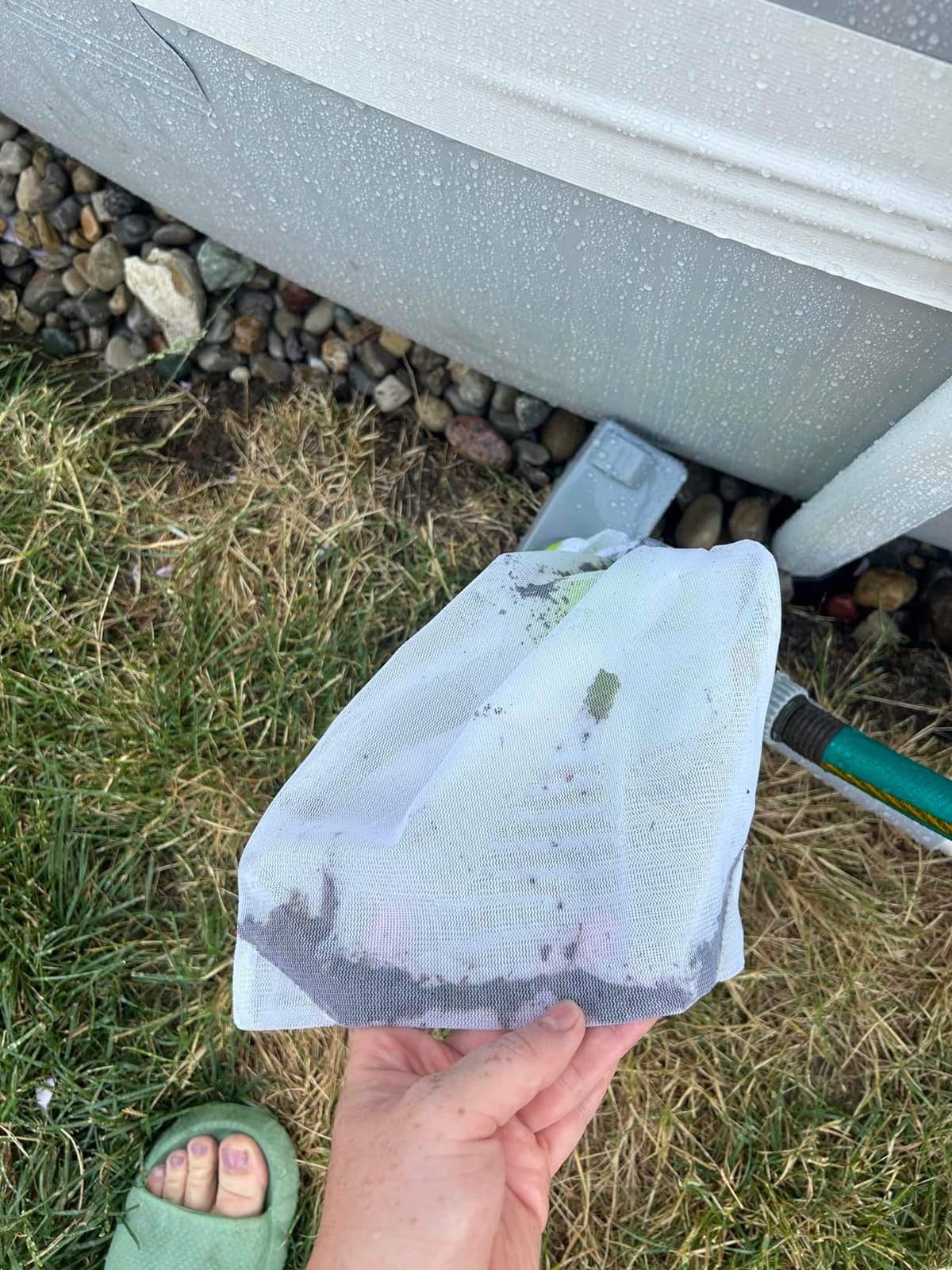
The half-depth skimmer net is the sleeper feature. A deeper pocket captures noticeably more per sweep than a flat net, and on a surface-loading above-ground pool where the skimmer is the primary debris remover, that difference shows up every single day you use it.
Two limits are clear from the reviews. The vacuum does not lift sand or heavy sediment, only leaves and light debris, so a grit problem needs a different tool. And the 57.5 inch pole is short and light duty, which owners say may not reach the center of larger pools.
Above-ground pools need a different shopping list
Owners of above-ground and inflatable pools are routinely overlooked in pool roundups, and the reason is that most products assume a deep in-ground pool with a skimmer and a filtration system. An above-ground pool is shallower, has a different wall structure, and often has a liner seam you do not want a hard head dragging across.
A kit like this covers the realistic needs: a skimmer net for the surface, a brush for the walls and steps, and a hose-fed vacuum for the floor. Add a soft-bristle head or a bumper-equipped vacuum if you want to be careful with a vinyl or inflatable liner, and check the pool’s wall material before using any brush with stiff bristles.
Where it will disappoint you
The pole is the most likely disappointment, particularly if your pool is wider than about 12 feet. A 57.5 inch pole reaches the perimeter comfortably and the center of a compact pool, but it is not a solution for a wide above-ground frame, and you would be left holding a pole with a heavy head on the end.
Build quality is the other honest note: several owners describe the mesh bag and components as small and cheaply made. That is consistent with the kit format, where the value is in what you get for the money rather than in durability. Treat it as seasonal equipment, and expect to replace the net or the bag rather than pass it down.
What Is a Pool Leaf Vacuum and How Does It Work?
A pool leaf vacuum is a cleaning device that lifts fallen leaves and debris off the pool floor and into a collection bag, using either garden hose water pressure or a battery-powered motor, so the debris never reaches and clogs your pool filter. That last clause is the reason the tool exists: a skimmer basket and a filter are designed for fine particles, and pushing whole leaves through them clogs the pump and starves circulation.
There are five types you will run into, and the right one depends far more on your leaf size than on your budget.
Hose-powered venturi heads attach to a garden hose. Jets at the base create a venturi effect, using fast water flow to generate low pressure that pulls pool water and leaves up into a mesh bag underneath, then returns the cleaned water to the pool. These are the workhorses for leaf season, with the widest intakes and the largest bags, and they have no moving parts to wear out. They are always the cheapest way into the category.
Battery-powered cordless handhelds run a small motor that creates suction directly, with debris stored in an attached canister or mesh bag. They add no water to the pool, which matters on salt systems, and they are far easier to move around a patio. Their weak point is chamber volume: most handheld chambers are measured in fractions of a gallon, which is why they sit well above the hose-fed heads in cost.
Telescopic pole manual heads are the simplest category: a vacuum head on a pole you push across the floor, with a skimmer net or rake for the surface. The pole is the tool, and a standard 1-1/4 inch thread is the universal fit across manufacturers. Many leaf vacs in this roundup are sold without one.
Skimmer nets and rakes handle floating and partially submerged debris, including the clumps a robotic cleaner leaves behind. A half-depth net captures more per sweep than a flat one. This is the cheapest and most-used tool in the category, and the right first line of defense.
Robotic pool cleaners navigate the pool on a schedule and collect fine debris, and some handle light leaf loads well. They are not a leaf replacement on a leaf-heavy pool, for the reasons covered in the WYBOT section. They are also the most expensive option in the category by a wide margin.
Will a pool vacuum pick up leaves? Yes, with one condition: the intake has to be wide enough for the leaf, and the bag has to be big enough that you are not emptying it every twenty feet. That is the entire difference between the tools that work and the tools that frustrate people.
Leaf Size Guide: Which Intake Handles Which Debris
Match the intake to the leaf, not the other way around. The most repeated complaint in pool forums is a narrow intake jamming on wide leaves, and the fix is almost never more suction; it is more opening.
Pine needles and small debris are the easiest case. They are thin, light, and small enough for almost any intake, including handheld chambers. Most cordless handhelds handle pine needles without trouble, and a fine mesh bag catches them cleanly. If your trees are pine, a handheld is genuinely sufficient and a hose-fed head is optional.
Maple and sycamore leaves are wide and star-shaped, and they fold over an intake rather than feeding into it. These are where a mid-size wide-mouth chamber starts to matter. The POOL BLASTER cordless unit is the practical example here, with reviewers reporting the majority of leaves collected in a single pass. Expect some stragglers with long stems.
Oak and gum leaves are the hard case. They are thick, leathery, and hold their shape, so they jam rather than conform. Large oak leaves specifically are reported snagging on the fixed stabilizers inside some cordless units. The reliable answer is a hose-fed head with a wide mouth and a large bag, or a cordless model with a 5 inch inlet like the KOKIDO XV910.
Magnolia leaves are large and leathery in the same way, and they are the specific example raised most often in above-ground pool forums. Anything rated with a stated debris ceiling under 7 inches is at its limit with these; check the published intake size before buying.
Acorns and seed pods are a separate problem from leaves. They are dense, small, and round, so they need suction force rather than intake width, and they frequently jam or pass straight through. Several units in this roundup explicitly do not pick them up. If acorns are your main problem, you are looking at a fine-suction handheld and a skimmer net, not a leaf vac.
Twigs and stems are longer than any intake is designed for. Every model here has a length limit, and the KOKIDO XV910 states it most clearly at 7 inches. Long material needs to be broken up or picked up by hand, and trying to force it into an inlet is how heads get damaged.
Hose-Powered vs Cordless vs Robotic: Which Should You Buy?
Buy a hose-powered head if you have a fixed in-ground pool with a nearby hose bib and heavy leaf fall. It has the widest intake, the largest bag, unlimited runtime, and nothing that can fail. This is the answer pool owners in r/pools give most often when asked what actually works on a heavy leaf pile.
Buy a cordless handheld if you cannot run a hose to the pool, if your pool is salt-treated and you do not want added water, or if your leaf load is light and intermittent. Choose it on intake width and chamber volume, and buy the largest you can find within your budget, because those two numbers decide everything.
Buy a robotic cleaner as a complement, not a replacement, if you already have a manual routine. Run it for the fine debris it is good at on a schedule, and keep a wide-intake head for the clumps. The only pools where a robot replaces manual leaf vacuuming are large ones where manual work is genuinely difficult to reach.
For an above-ground or inflatable pool, the calculus changes. There is usually no skimmer-based filtration, the walls are liner, and the floor is flat and shallow. A kit with a skimmer net, a brush, and a hose-fed vacuum covers the realistic needs better than any single large machine.
Buying Guide: How to Choose a Pool Vacuum for Leaves
Check intake width before anything else. For leaves, the opening matters more than the suction figure. Look for a stated inlet diameter or head size, and compare it against the largest leaf your trees drop. A 15 inch hose-fed head and a 5 inch cordless inlet are both adequate; a 3 inch intake is a spot-cleaning tool, not a leaf vacuum.
Size the bag against your pool, not against your patience. A fraction-of-a-gallon handheld chamber means emptying every few passes on a large pool. A 1.5 to 1.72 gallon bag is a genuine upgrade. The practical comparison: a 0.227 gallon chamber is roughly one eighth the volume of a 1.72 gallon bag, which is the difference between a full cleanup session and eight extra trips to the trash.
Match mesh gauge to what you are collecting. Fine mesh in the 75 to 180 micron range holds sand and silt; standard all-purpose mesh holds leaves and twigs but passes fine grit. Units with switchable bags, like the KOKIDO XV910 with 250 and 75 micron options or the Enhulk with 180 and 500 mesh, let you match the bag to the job. A hose-fed head with a fine mesh bag or a pantyhose liner is the equivalent trick for the non-powered units.
Protect the liner. If you have a vinyl liner, a mar-proof perimeter bumper and soft wheels are not optional extras. The U.S. Pool Supply Leaf Terminator and the Poolmaster Big Sucker both have bumpers, and that is the difference between a decade of use and a scraped floor. On inflatable liners, keep the vacuum head moving and avoid resting it against the wall.
Account for the pole. Nearly every leaf vacuum head requires a standard 1-1/4 inch threaded pole, and most do not include one. Kits and a few cordless units do. Budget for a pole, and check the included length against your pool’s diagonal, not its width, because you also need reach to lift the head out without touching the coping.
Check the power source against your habits. Hose-fed means dragging a hose across the yard and depending on household water pressure. Cordless means charging, and sometimes strict submersion and shutoff rules. Robots mean a heavy unit to lift and a multi-hour recharge. None is universally best; the wrong one for your patio layout is worse than a more expensive model that fits.
Factor in what the tool cannot do. No leaf vacuum removes algae. Most do not lift sand. Almost none pick up acorns. And every bag, pole, and battery is a separate purchase. Total cost is the sum of the head, the pole, spare bags, and batteries over the years you will use it, and for high-volume leaf work a hose-fed head usually wins that calculation.
One more thing about water chemistry. Vacuuming a large volume of debris with a hose-fed head adds water to the pool, and decomposing leaves on the pool floor shift pH and alkalinity. Test your water after a heavy leaf load rather than assuming the pool is still balanced, especially on a salt system where dilution changes the salt reading.
Leaf Season Maintenance and Off-Season Storage
During peak leaf fall, skim the surface daily before you do anything else. Floating leaves are the easiest to remove and the ones that sink fastest, and a ten-minute skimmer pass prevents most of the floor work. Then vacuum the floor every one to two days, and empty the bag every pass, because a full bag stops picking up and starts re-scattering debris.
After a storm, work the perimeter first, since wind pushes leaves to the walls and into the steps where they mat together. Break up mats with the brush head before vacuuming, or the intake will ride over the pile instead of collecting it.
Off-season storage matters more than most buyers expect, and the reviews are blunt about it. Drain the hose and let it dry completely before coiling. Rinse the mesh bag, wash it inside out, and let it dry fully, because trapped moisture in mesh goes mildewy and degrades the fabric within a season. Open cordless units and dry the battery compartment thoroughly, which is the specific fix owners recommend for the corrosion problem.
For battery units, store them at a partial charge rather than full or empty, and keep them in a climate-controlled space rather than a hot shed. Wash the head, check the wheels for debris that has packed into the bearings, and note which bags and filters you need before the season starts so you are not ordering them in week one.
Finally, test your water after a heavy leaf load. Decomposing leaves shift pH and alkalinity, and organic material can lower sanitizer demand in ways that let algae take hold in a warm pool. If leaves sat for more than a few days, test before you adjust anything, and correct toward measured numbers rather than adding shock on a hunch.
Frequently Asked Questions
What is the best pool vacuum for picking up leaves?
For most pools with heavy leaf fall, the best pool vacuum for picking up leaves is a hose-powered venturi head with a 15 inch body and a large mesh bag, such as the Poolmaster 28300 Big Sucker. The wide intake swallows whole leaves in a single pass, the bag holds a large volume, and there is no battery to charge. Cordless units work well for lighter leaf loads or when a hose cannot reach the pool.
Will a pool vacuum pick up leaves?
Yes, provided the intake is wide enough for the leaf size and the bag is emptied before it fills. Narrow-intake handheld vacuums often push whole leaves around rather than collecting them, and units with small chambers need frequent emptying. Large gum, magnolia, and oak leaves need either a wide hose-fed head or a cordless model with a 5 inch inlet.
What is the easiest way to remove leaves from a pool?
The easiest method is a three-step routine. First, skim the surface daily so floating leaves are removed before they sink. Second, vacuum the pool floor every one to two days during peak leaf fall, working the perimeter and steps first. Third, empty the bag after every pass so a full bag does not re-scatter debris. Skim first, vacuum second, empty third.
Do leaf vacuums really work?
They do, within clear limits. A leaf vacuum is designed to move whole leaves into a bag before they reach the pump basket and filter, which is exactly what a skimmer and filter cannot do. They do not remove algae, most do not lift sand, and few pick up acorns. Robots in particular still leave clumps in corners, steps, and the deep end that need a manual pass.
What is the best pool cleaner for picking up large leaves?
For large leaves such as gum, magnolia, and oak, the deciding factor is intake width rather than suction. A hose-powered head with a 15 inch body handles them best. Among cordless options, a model with a 5 inch inlet rated for debris up to 7 inches is the practical choice. Anything with a 3 inch intake ceiling is a spot cleaner, not a large-leaf tool.
Which pool cleaner is best for cleaning leaves?
It depends on your pool and leaf load. Hose-powered heads win for fixed in-ground pools with heavy leaf fall because they have the widest intake and largest bag. Cordless handhelds win when you cannot run a hose or your pool is salt-treated. Robotic cleaners handle fine debris on a schedule but still need a manual pass for clumps. Above-ground pools are best served by a kit with a skimmer net, brush, and hose vac.
What is a good battery-powered leaf vacuum for a pool?
A good battery-powered leaf vacuum needs a wide intake and a large bag. A cordless unit with a wide-mouth chamber and an extra-large mesh bag collects most leaves in a single pass and doubles as a surface skimmer. Look for a large-capacity bag rather than a small debris chamber, since chamber volume is what determines how often you stop to empty it.
Which battery-powered leaf vacuum is the best?
The best battery-powered leaf vacuum depends on leaf size rather than price. For wide gum and magnolia leaves, choose the largest published inlet you can find. For mixed debris including sand and twigs, prioritize a high published flow rate and a quick recharge. For large pools, prioritize runtime and bag capacity over suction, since you will empty the bag more often than you expect.
What is the best battery-powered pool vacuum cleaner?
The best battery-powered pool vacuum cleaner for a large pool is one with at least 60 minutes of runtime and a 1.5 liter or larger capacity bag. A 60 to 90 minute runtime covers roughly 800 to 1,200 square feet of floor in a single charge. For fine sand and silt rather than leaves, prioritize suction strength and a fine filter in the 75 to 180 micron range.
What is the best vacuum for swimming pool leaves?
The best vacuum for swimming pool leaves is a hose-powered venturi head for heavy leaf fall, or a wide-intake cordless handheld when a hose cannot reach the pool. Match the intake to your leaf size, empty the bag after every pass, and skim the surface daily so leaves are removed before they sink. Most tools need a 1-1/4 inch pool pole that is sold separately.
Final Verdict: Which Pool Vacuum for Leaves Should You Buy?
Buy the Poolmaster 28300 Big Sucker if you want one tool that handles the leaf season properly. The 15 inch body, eight jets, four rotating wheels, and no battery to fail make it the most reliable way to move a large volume of whole leaves out of a pool, and it works on both in-ground and above-ground installations. Add a bottom brush and a fine mesh bag, and plan on buying a pole.
Buy cordless if your hose cannot reach the pool or your pool is salt-treated. The POOL BLASTER cordless unit is the best value for general leaf work, the KOKIDO XV910 is the answer for wide gum and magnolia leaves, and the Enhulk PC10 wins on flow rate and recharge speed. Whatever you choose, dry the battery compartment after every use, or you will shorten its life.
Buy a robot only as a complement, and only if manual vacuuming is genuinely difficult in your pool. Run it for the fine debris it is good at, and keep a wide-intake manual head for the clumps it leaves in corners and steps. If you would rather read about a different kind of vacuum entirely, our guides to shop vacs, canister vacs, stick vacs, and car vacs cover those in detail.
The one habit that matters more than the model: skim daily, vacuum every one to two days, and empty the bag after every pass. Our picks for the best pool vacuums for leaves in 2026 will clear the debris, but only a consistent routine keeps it out of your filter and off your waterline.