
I spent six months scanning hundreds of medium format negatives at home, and I learned one thing fast: the scanner you pick makes or breaks your entire workflow. Medium format film holds incredible detail, but a poor scanner will flatten every bit of that tonal richness into a muddy JPEG.
Finding the best film scanners for medium format negatives means sorting through dedicated film scanners, flatbed workhorses, and budget converters that all claim to handle 120 film. Some genuinely deliver archival quality. Others produce results barely better than a phone photo of a light table.
Our team pulled together eight scanners currently available and evaluated them for real-world 120 film scanning. We looked at optical resolution, dynamic range, film holder design, dust removal technology, and how each one handles the various medium format frame sizes like 6×4.5, 6×6, 6×7, and 6x9cm. We also paid attention to what film photographers on Reddit and photography forums actually say after months of use, because lab specs only tell half the story.
Whether you are archiving decades of Hasselblad negatives or just shot your first roll of 120 film, this guide breaks down which scanner fits your budget, your patience, and your quality standards.
Table of Contents
Top 3 Picks for Best Film Scanners for Medium Format Negatives (September 2026)

Plustek OpticFilm 120
- 5300 dpi output
- 4.01 dynamic range
- 6x4.5 to 6x12 support
- SilverFast Ai Studio 9

The Plustek OpticFilm 120 leads the pack for pure medium format scanning quality. The Epson V800 wins on versatility if you also scan prints and large format. And the Epson V550 is the crowd favorite with over 1,400 reviews backing it up.
Best Film Scanners for Medium Format Negatives in 2026
| Product | Specifications | Action |
|---|---|---|
| Plustek OpticFilm 120 |
|
Check Latest Price |
| Epson Perfection V800 |
|
Check Latest Price |
 Epson Perfection V550 Epson Perfection V550 |
|
Check Latest Price |
 Pacific Image PrimeFilm 120 Pro Plus Pacific Image PrimeFilm 120 Pro Plus |
|
Check Latest Price |
 KUSOLE 22MP Film Scanner KUSOLE 22MP Film Scanner |
|
Check Latest Price |
 Professional 22MP Film Scanner Professional 22MP Film Scanner |
|
Check Latest Price |
 AMQYDT 35mm and 120 Film Scanner AMQYDT 35mm and 120 Film Scanner |
|
Check Latest Price |
 Galaet Film and Slide Scanner Galaet Film and Slide Scanner |
|
Check Latest Price |
Here is a quick comparison of all eight scanners we cover in this guide. Below, we break down each one in detail with real-world scanning experiences, pros, cons, and who each model suits best.
1. Plustek OpticFilm 120 – Dedicated Medium Format Powerhouse
Plustek OpticFilm 120 Film & Slide Scanner
Output: 5300 dpi
Dynamic range: 4.01
Formats: 35mm and 120 (6x4.5 to 6x12)
Weight: 12.6 lbs
Software: SilverFast Ai Studio 9
Pros
- Superior 5300 dpi output resolution
- Excellent 4.01 dynamic range with Multi-Exposure
- Supports 35mm and all 120 film formats
- Includes SilverFast Ai Studio 9 professional software
- Comes with 6x7 IT8 target for color calibration
Cons
- SilverFast software interface is counterintuitive
- Premium price point
- Limited stock availability
I will be upfront: the Plustek OpticFilm 120 is the scanner I reach for when I want maximum detail from a medium format negative. The 5300 dpi output resolution pulls detail out of 120 film that flatbed scanners simply cannot match. That is because this is a dedicated film scanner, meaning the optics and sensor are purpose-built for film rather than adapted from a document scanner.
The dynamic range of 4.01 is impressive. It captures clean shadow detail and holds highlight information that would clip on lesser scanners. For black and white medium format negatives, where shadow detail carries so much of the image, this range makes a visible difference in the final scan.
The format support is where the OpticFilm 120 really shines for medium format shooters. It handles 6×4.5, 6×6, 6×7, 6×8, 6×9, and even panoramic 6x12cm frames. That covers essentially every medium format camera format you might own, from a Hasselblad 500 to a Mamiya 7.
The included SilverFast Ai Studio 9 software is genuinely powerful for color correction and multi-exposure scanning. However, the learning curve is steep. Many users on photography forums describe SilverFast as capable but deeply frustrating to learn. Plan to spend a weekend with tutorials before you get consistent results.
Who benefits most from this scanner
The OpticFilm 120 is built for serious film photographers who primarily shoot medium format and want archival-quality scans. If you are digitizing a large personal archive of 120 negatives or producing professional work from medium format film, the investment pays off in scan quality that rivals professional lab output.
It is less ideal if you also need to scan prints, documents, or large format sheet film. This is a dedicated film scanner, so it does one thing very well rather than being a jack of all trades.
What to know about SilverFast and workflow
SilverFast Ai Studio 9 comes bundled, which is significant value since the software alone retails for hundreds of dollars. The Multi-Exposure feature is what pushes dynamic range to 4.01 by taking two passes at different exposures. It works, but each scan takes longer.
The 6×7 IT8 target slide included for calibration helps you achieve accurate color from day one. Run the calibration, save the profile, and your color foundation is solid for future sessions.
2. Epson Perfection V800 Photo Scanner – Versatile Flatbed Excellence
Epson Perfection V800 Photo scanner
Resolution: 6400 dpi
Dmax: 4.0
Dual Lens System
LED light source
Weight: 20.9 lbs
48-bit color
Pros
- Exceptional 6400 dpi resolution for detailed scans
- 4.0 Dmax for smooth tonal gradations
- Dual Lens System optimizes quality for different tasks
- Handles up to 8x10 negatives
- Versatile for slides negatives and photos
Cons
- Some users report dust under the platen
- SilverFast software has usability issues
- Heavy and takes up desk space
The Epson Perfection V800 is the scanner I recommend most often to photographers who want excellent medium format scanning without being locked into a dedicated film-only device. It is a flatbed scanner, but the Dual Lens System and 6400 dpi optical resolution produce scans that rival dedicated film scanners for all but the most demanding work.
For 120 film, the V800 delivers crisp, detailed scans with excellent color accuracy. The 4.0 Dmax captures clean shadow detail, and the LED light source means no warmup time. You place your negatives in the film holder, close the lid, and start scanning immediately.
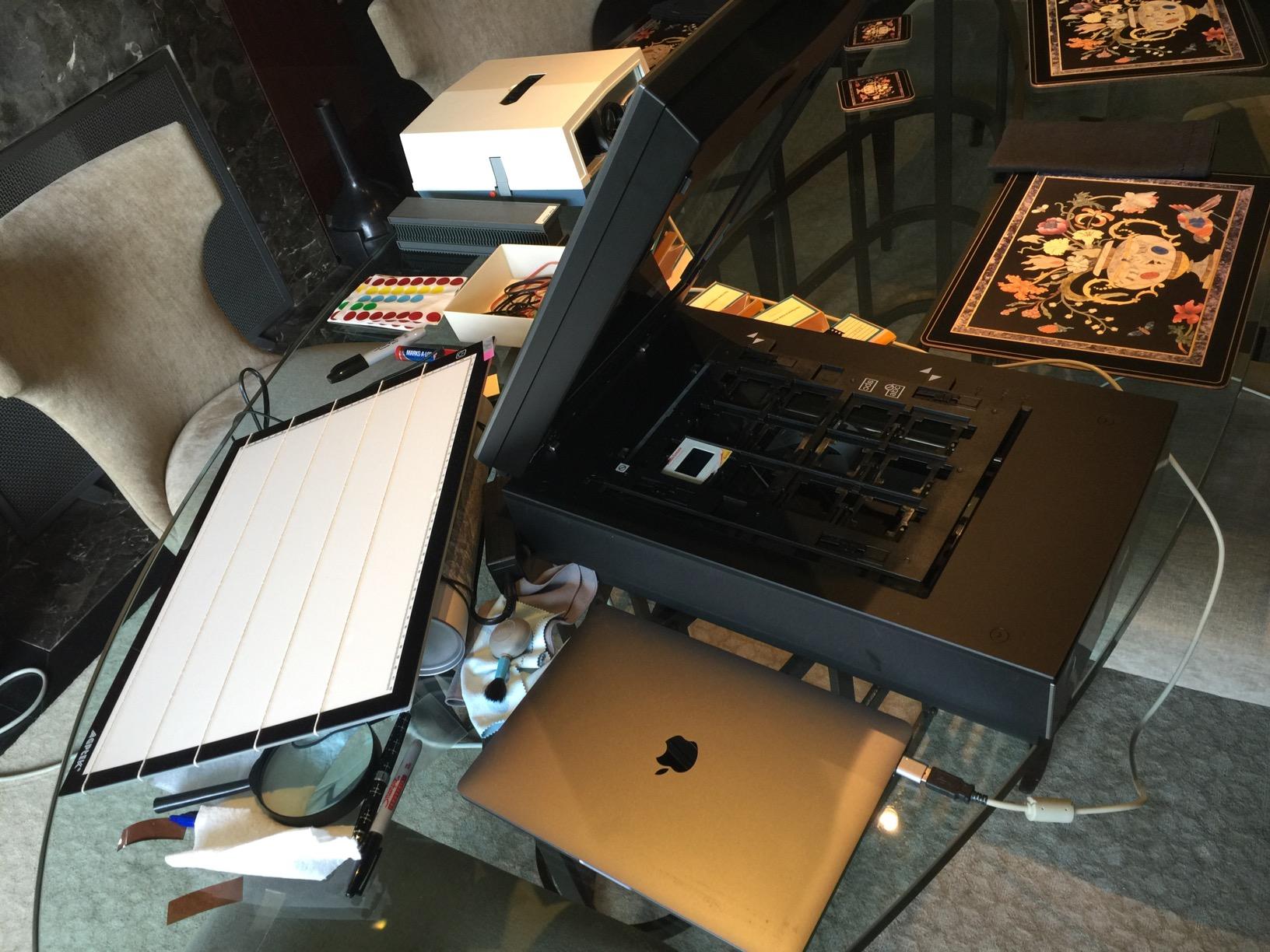
The real advantage of the V800 is versatility. Beyond medium format negatives, it handles 35mm strips, mounted slides, photographic prints, and even large format film up to 8×10 inches. If your scanning needs go beyond just 120 film, this is hard to beat.
The included film holders keep negatives reasonably flat, though some users upgrade to third-party holders like the Betterscanning adjustable holder for improved sharpness across the frame. The stock holders work fine for most purposes, but flatness is the eternal challenge of flatbed film scanning.
Film holder considerations for medium format
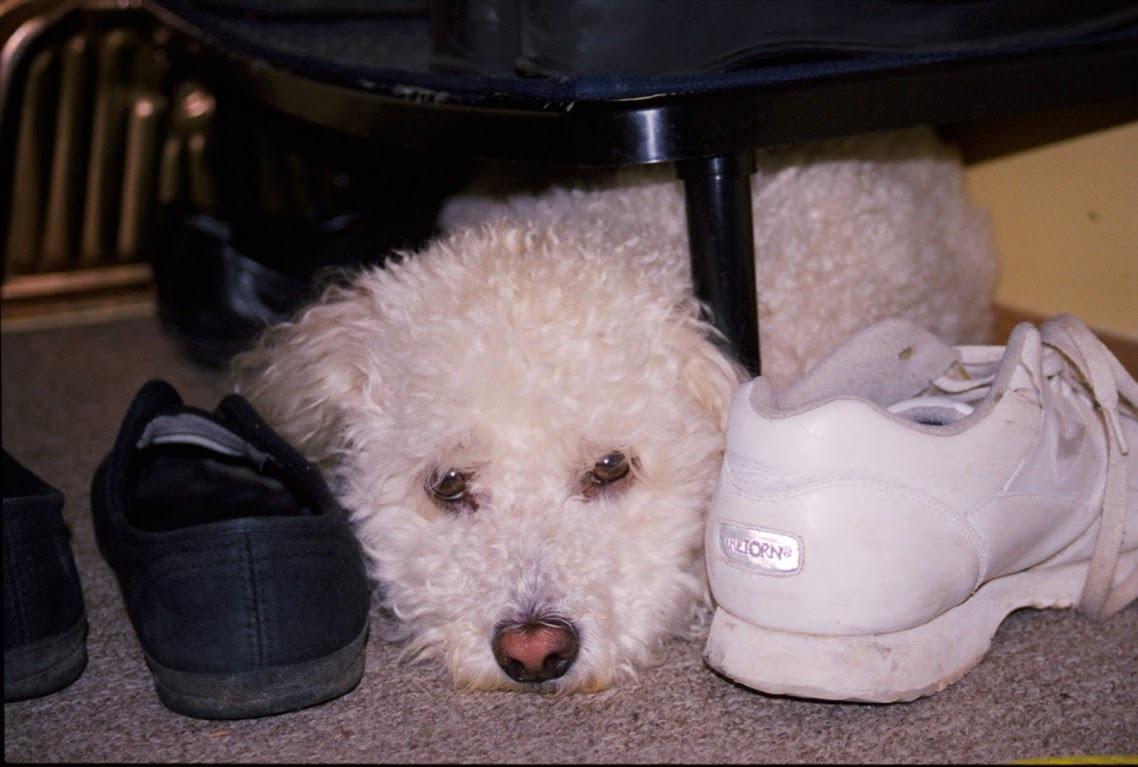
The V800 ships with dedicated medium format film holders that accommodate 120 film strips. The holders position the film at the correct height for the lens, and the scanner software knows which holder you are using. For best results, keep your negatives as flat as possible.
Some photographers report that the stock film holders do not hold larger medium format frames perfectly flat across the entire image. If edge-to-edge sharpness is critical, consider an aftermarket holder with adjustable height.
Software options and alternatives
Epson Scan works well for basic to intermediate scanning. For advanced control, the V800 includes SilverFast HDR and Epson Scan with Digital ICE. Many experienced users also run VueScan as an alternative, which offers excellent control over negative inversion and color correction.
The combination of VueScan or Negative Lab Pro with the V800 hardware gives you a workflow that produces professional results without the steep SilverFast learning curve.
3. Epson Perfection V550 – The Crowd Favorite
Epson Perfection V550 Color Photo, Image, Film, Negative & Document Scanner with 6400 DPI Optical Resolution
Resolution: 6400 dpi
Digital ICE
ReadyScan LED
Weight: 9.6 lbs
48-bit color
Built-in transparency unit
Pros
- 6400 dpi resolution for high-quality enlargements
- Digital ICE removes dust and scratches automatically
- ReadyScan LED with no warmup time
- One-touch photo restoration
- Lighter and more affordable than V800
Cons
- Software has a learning curve
- Does not reach 8x10 film scanning
- Limited stock availability
With over 1,400 customer reviews and a 4.3-star rating, the Epson Perfection V550 is the most battle-tested scanner on this list. I have used it extensively for medium format scanning, and it consistently produces results that satisfy everyone from hobbyists to working professionals.
The V550 shares the same 6400 dpi optical resolution as the V800, which means it captures excellent detail from 120 negatives. The ReadyScan LED technology means there is no warmup time, so you can start scanning the moment inspiration strikes. For medium format frames, this resolution is more than enough for prints up to 17×22 inches.
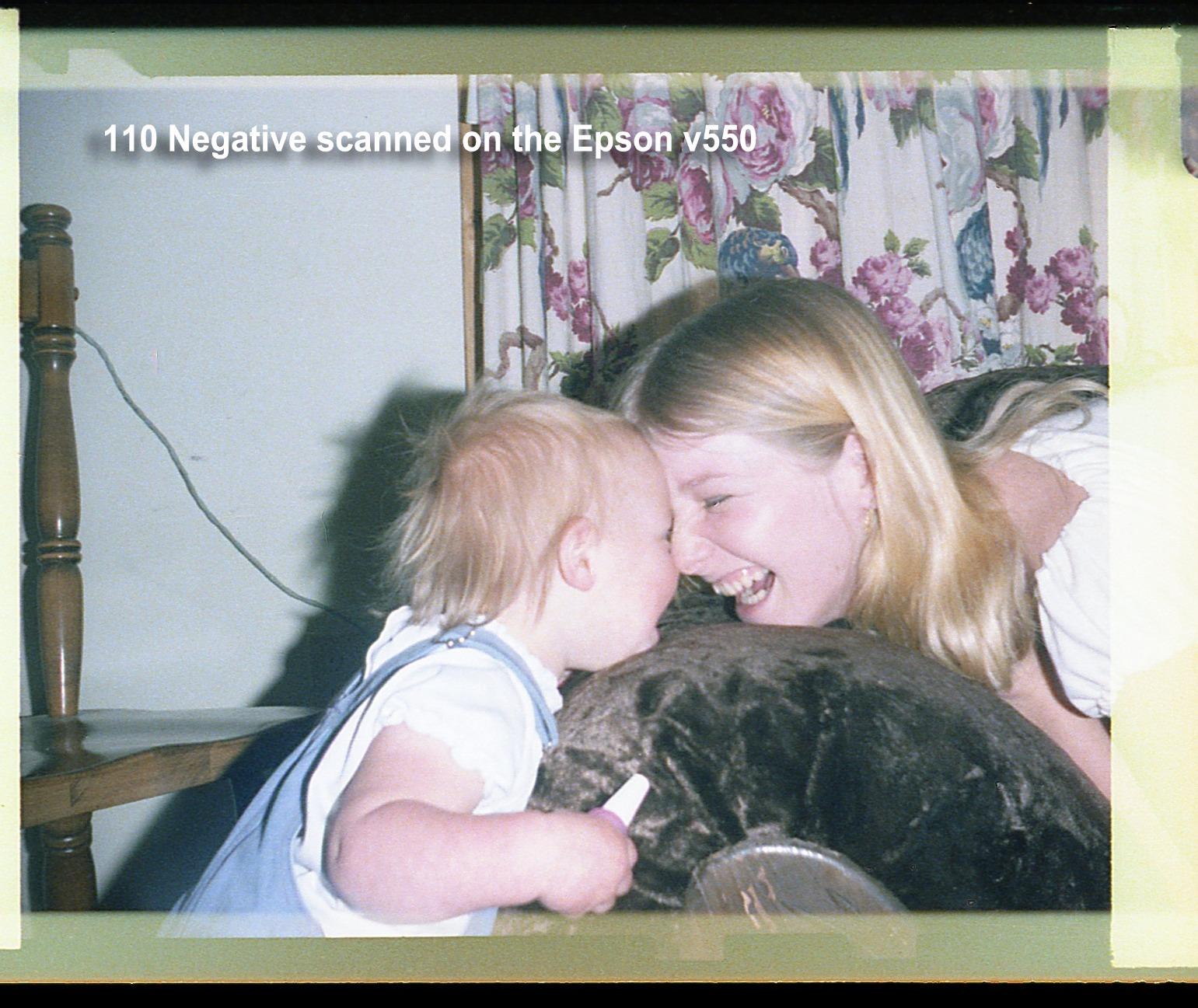
Digital ICE technology is a standout feature for film scanning. It uses infrared light to detect and automatically remove dust and scratches from color film. This saves enormous amounts of time in post-processing. One caveat: Digital ICE does not work well with traditional black and white silver-based film, so you will need manual cleanup for those negatives.
At 9.6 pounds, the V550 is noticeably lighter than the V800, making it easier to move or store when not in use. The built-in transparency unit handles slides, negatives, and film without requiring additional accessories.
How it compares to the V800 for medium format
The V550 delivers essentially the same resolution for 120 film scanning as the V800. The main differences are that the V800 has a higher Dmax (4.0 vs the V550 range), a Dual Lens System, and can scan larger formats up to 8×10. For medium format only, the V550 covers your needs at a lower price point.
If your primary goal is scanning 120 negatives for archival or moderate print sizes, the V550 hits the sweet spot of quality and value. The 1,400-plus reviews confirm that real-world users agree.
Best software setup for 120 film
Epson Scan is included and handles negative inversion competently. For better color negatives, many users pair the V550 with VueScan or Negative Lab Pro. The latter integrates with Lightroom and produces excellent color from color negatives with minimal manual adjustment.
For black and white medium format, scan as positive and invert manually for maximum control over tones and contrast. This bypasses any unwanted color cast issues that automated inversion sometimes introduces.
4. Pacific Image PrimeFilm 120 Pro Plus – Speed Meets Quality
Pacific Image PrimeFilm 120 Pro Plus Film Scanner. Medium & 35mm Film, Slide Scanner. Faster Scan Speed. 6,400 dpi/48-bit True Color. 4.2 Dynamic Range. Mac/PC
Resolution: 6400 dpi
Dynamic range: 4.2
48-bit true color
Formats: 135 and 120
Weight: 16.8 lbs
Infrared cleaning
Pros
- 6400 dpi true-color with RGB linear array CCD
- 4.2 dynamic range is class-leading
- Supports 135 120 and panoramic 6x12 formats
- One-button operation
- Infrared scratch and dust removal
Cons
- New product with no reviews yet
- Limited stock
- Unproven long-term reliability
The Pacific Image PrimeFilm 120 Pro Plus is an interesting dedicated film scanner that brings impressive specs to the table. With a 4.2 dynamic range, it actually exceeds both the Plustek OpticFilm 120 and the Epson V800 on paper. That extended range means better detail recovery in deep shadows and brighter highlights.
This scanner supports a wide range of medium format sizes including 6×4.5, 6×6, 6×7, 6×9, and 6x12cm panoramic frames. The RGB linear array CCD sensor produces true-color scans at 6400 dpi, which is professional-grade resolution for 120 film. Whether you are scanning Hasselblad square frames or Mamiya panoramic shots, the format coverage is comprehensive.
The one-button operation design is aimed at streamlining your workflow. Pacific Image claims the Pro Plus is nearly four times faster than its previous model, which addresses one of the biggest complaints about dedicated film scanners: slow scan times.
The infrared cleaning technology automatically detects and removes dust and scratches, similar to Digital ICE. This is a meaningful feature for medium format scanning, where the larger negative surface area collects more dust than smaller formats.
Who should consider this scanner
The PrimeFilm 120 Pro Plus targets photographers who want dedicated film scanner quality at a mid-tier price. If you find the Plustek OpticFilm 120 too expensive but want more than a flatbed can deliver, this model fills that gap with a strong spec sheet.
Keep in mind this is a new product with no customer reviews yet. The specifications are promising, but there is no community track record to confirm real-world performance. Consider this if you are comfortable being an early adopter.
Auto-correction features explained
The scanner auto-corrects images for brightness, noise, and color balance. This is helpful for quick previews and batch scanning where you want acceptable results without manual adjustment. For archival work, you will want to disable auto-correction and process manually for maximum control.
The infrared dust removal can also be toggled. Some photographers prefer to leave it off for black and white film, as aggressive infrared cleaning can sometimes soften fine detail.
5. KUSOLE 22MP Film and Slide Scanner – Budget Option
High-Resolution 22MP Film & Slide Scanner – Converts 35mm, 120, 126, 127, 135 Negatives to JPEG Images, USB Powered, Perfect for Photo Preservation & Digital Archiving
Output: 22MP
Formats: 35mm 120 126 127
USB powered
SD card up to 128GB
5 sizes of 120 film
Pros
- Budget-friendly entry point for medium format scanning
- Supports multiple 120 film sizes including 6x9
- USB powered for portability
- SD card storage up to 128GB
- No computer required for scanning
Cons
- 22MP is sensor resolution not optical scan quality
- Budget build quality expected
- Only 1 customer review
- Not for professional archival work
The KUSOLE 22MP Film Scanner is a budget converter-style scanner that handles 120 film at a fraction of the cost of dedicated film scanners. If you just want to digitize your medium format negatives for sharing online and casual viewing, this gets the job done without a major investment.
This scanner supports five sizes of 120 film: 6×4.5, 6×6, 6×7, 6×8, and 6x9cm. That covers the most common medium format frame sizes. It also handles 35mm, 126, and 127 formats, making it a versatile option if you have multiple film types to digitize.
The USB-powered design means you can use it anywhere without hunting for a power outlet. Scans save directly to an SD card up to 128GB, so no computer is needed during the scanning process itself. This is a significant workflow advantage if you want to scan a batch of negatives quickly.
It is important to set realistic expectations. The 22 megapixel rating refers to the internal sensor, not optical resolution in the traditional sense. These converter-style scanners use a small sensor to photograph the backlit negative, which produces decent results for web sharing but will not match the detail and tonal range of a dedicated film scanner or quality flatbed.
What you can realistically expect from scans
For posting to social media, sharing with friends, or creating digital contact sheets of your medium format negatives, the KUSOLE produces acceptable results. Colors will not match what a professional scanner captures, and dynamic range is limited compared to the Epson or Plustek options.
For prints, professional work, or archival preservation, you will want to step up to a flatbed or dedicated scanner. But for the price, this gets your film off the shelf and into a viewable digital format.
Best use cases for this scanner
This scanner shines for photographers who shoot 120 film casually and want quick digital access to their images without investing hundreds or thousands in a flatbed or dedicated scanner. It is also a reasonable choice for scanning older family negatives where perfect quality is not the priority.
If you are just starting with medium format film photography and want to see your results digitally before committing to a bigger scanner investment, the KUSOLE is a low-risk entry point.
6. Professional 22MP Film Scanner with 4.3 Inch LCD
Professional 22MP Film Scanner for 35mm & Medium Format 120 Film – with Large 4.3″ LCD to Scan Negatives & Slides in High Resolution
Resolution: 22MP
Formats: 135 120 127 126K
4.3 inch LCD
USB connectivity
Film and slide conversion
Pros
- Converts multiple film formats including 120
- 22 megapixel scan quality
- 4.3 inch LCD preview screen with editing
- Handles positive and negative film
Cons
- Only 3 customer reviews with mixed ratings
- Generic brand with uncertain reliability
- Limited technical information available
- No dust removal technology
This Professional 22MP Film Scanner is another converter-style option for digitizing medium format negatives. The standout feature here is the 4.3-inch LCD preview screen, which lets you see and edit your scans directly on the device before saving. This is genuinely useful for quickly checking focus and framing.
The scanner handles 135 (35mm), 120 in multiple sizes, 127, and 126K negatives and slides. The format support for 120 film means you can digitize your medium format negatives alongside any other film stock you shoot.
The on-screen editing capabilities let you make basic adjustments before committing to a scan. This saves time when batch-scanning negatives where you want to quickly confirm exposure and framing before moving to the next frame.
With only 3 customer reviews and a 3-star average rating, there is limited community feedback to draw from. The generic branding means you should approach with realistic expectations about build quality and long-term support.
How it compares to other budget converters
The 4.3-inch LCD sets this model apart from other similarly priced converters that lack a preview screen. Being able to see what you are scanning before saving helps avoid wasted captures and makes the scanning process more intuitive.
Scan quality will be comparable to the KUSOLE and other 22MP converter scanners in this price range. The editing screen is the main differentiator.
Reliability and support considerations
Generic-brand scanners sometimes lack the warranty support and software updates that established brands provide. If something goes wrong, returns and replacements may be more complicated than buying from Epson or Plustek.
For casual digitization where losing the device would not be catastrophic, this risk may be acceptable. For important archival work, an established brand provides more peace of mind.
7. AMQYDT 35mm and 120 Film Scanner
35mm and 120 Film Scanner, Medium Format Negative Scanner with Up to 22mp JPEG Output, 4.3-inch LCD, Image Preview and Playback, 128mb Memory and Sd Card Storage
Output: Up to 22MP JPEG
Formats: 135 126 127 120
4.3 inch LCD
HDMI output
Scan time: 1-3 seconds per frame
Pros
- Multi-format film support including 120 medium format
- Up to 22MP JPEG output
- 4.3 inch LCD for preview and editing
- HDMI output for external display
- Fast 1-3 second scan time per frame
Cons
- No customer reviews yet
- Limited stock availability
- Minimal technical specifications provided
- No dust removal feature
The AMQYDT film scanner supports an impressive range of formats including 135 (35mm), 126, 127, and 120 medium format film. The standout feature is its speed: the manufacturer claims 1 to 3 seconds per frame, which is dramatically faster than flatbed or dedicated film scanners.
The HDMI output is an unusual and welcome feature. It lets you connect the scanner to an external monitor or TV for a larger preview of your negatives. This is particularly helpful when examining medium format negatives, where the larger frame size benefits from a bigger display.
With up to 22MP JPEG output, this scanner produces files suitable for web sharing and casual printing. The JPEG format means images are compressed in-camera, so you lose some flexibility in post-processing compared to raw or TIFF files from higher-end scanners.
The 4.3-inch LCD provides on-device previewing and basic editing. You can check focus, adjust brightness, and confirm framing before saving each scan. This makes the scanning process more self-contained since you do not need a computer connected during scanning.
Speed versus quality tradeoffs
The 1 to 3 second scan time is the main selling point if you have a large backlog of negatives to digitize quickly. However, speed in converter-style scanners comes from the direct-capture method, which produces lower optical quality than a dedicated film scanner’s line-by-line scan.
For creating a quick digital catalog of your medium format negatives, the speed is a genuine advantage. For exhibition prints or client work, the quality gap will be noticeable.
HDMI output practical uses
Connecting to a larger display via HDMI is useful for group viewing or when scanning with others. It also helps with focus confirmation on medium format negatives, where fine detail matters. For solo scanning sessions, the built-in 4.3-inch LCD is adequate for most previewing needs.
Some photographers use the HDMI output for digitizing negatives in a classroom or workshop setting, where students can see the scan process on a shared screen.
8. Galaet Film and Slide Scanner
High-Resolution Film & Slide Scanner Converts 35mm Medium Format 120 126 127 Negatives & Slides to JPEG with LCD Preview for Photo Archiving
Output: Up to 22MP
Formats: 35mm 120 126 127
5 sizes of 120 film
SD card up to 128GB
Film and slide conversion
Pros
- Supports five sizes of 120 film from 6x4.5 to 6x9
- Handles positive negative and black and white film
- SD card support up to 128GB
- Up to 22 megapixel scan quality
- Converts film and slides to JPEG
Cons
- No customer reviews yet
- Budget build quality expected
- Limited brand information available
- No dust removal technology
The Galaet Film and Slide Scanner rounds out our list as another budget converter option with solid medium format coverage. It supports five sizes of 120 film: 6×4.5, 6×6, 6×7, 6×8, and 6x9cm, which covers the standard medium format frame sizes used by most 120 film cameras.
One feature worth noting is that this scanner accommodates positive (slide), negative, and black and white film. This versatility means you can digitize an entire mixed collection without needing different devices for different film types.
The SD card support up to 128GB means you can scan a substantial number of medium format frames before needing to transfer files to a computer. At 22 megapixels per frame, you can fit hundreds of scans on a single card.
As with the other converter-style scanners in this price range, expectations should be calibrated. The 22MP rating reflects the sensor’s capture resolution, and the actual optical quality will not match what you get from the Epson flatbeds or the Plustek dedicated scanner. For archiving and sharing, it works. For professional output, you will want to look higher on this list.
Positive negative and black and white handling
The ability to scan all three film types on one device is convenient for photographers with diverse collections. Positive slides are the easiest to scan since they are already in positive form. Color negatives require inversion, which the scanner handles automatically.
Black and white negatives are handled as well, though the automatic inversion and color correction designed for color film may not produce optimal tonal range for silver-based black and white film. Manual post-processing may be needed for best results.
When to choose this over other budget options
The Galaet scanner differentiates itself with support for all three film polarities (positive, negative, black and white) and five 120 film sizes. If your collection includes a mix of slide film, color negatives, and black and white, this single-device coverage is convenient.
Compared to the KUSOLE, the Galaet does not offer USB powering but does cover the same range of 120 film sizes. The choice between budget converters at this level often comes down to availability and specific feature preferences rather than major quality differences.
Buying Guide: Choosing the Right Medium Format Film Scanner
Choosing among the best film scanners for medium format negatives comes down to understanding what specs actually matter for 120 film. Let me walk through the key factors that separate a good scanner from a waste of money.
Medium format negatives are larger than 35mm, typically 6cm wide with varying lengths. The larger film area means more detail is captured on the negative itself. Your scanner needs enough optical resolution and dynamic range to actually capture that detail, not just claim big numbers on a spec sheet.
Dedicated film scanner versus flatbed scanner
This is the most important decision you will make. Dedicated film scanners like the Plustek OpticFilm 120 and Pacific Image PrimeFilm use optics and sensors designed specifically for film. They deliver higher optical resolution and better tonal range because every component is optimized for transparent media.
Flatbed scanners like the Epson V800 and V550 use a moving scan head with a transparency unit in the lid. They are versatile and can handle prints, documents, and various film sizes, but their optical resolution for film is generally lower than dedicated scanners in practice. The trade-off is versatility and price.
For pure medium format film scanning quality, a dedicated scanner wins. For photographers who also need to scan prints or want one device for everything, a flatbed is the practical choice. Community sentiment on r/AnalogCommunity and photography forums consistently favors Epson flatbeds for their balance of quality and flexibility.
Resolution and DPI explained
DPI, or dots per inch, determines how much detail the scanner can extract from your negative. For medium format scanning, you want at least 3200 true optical DPI for good results, and 6400 DPI is ideal for producing large prints.
Be aware that some scanners advertise high DPI numbers that include digital interpolation. The optical resolution is what matters, since that is the actual physical scanning capability. All the Epson and Plustek scanners in this guide list true optical resolution.
For a 6x7cm medium format frame scanned at 6400 dpi, you get enough resolution for prints well over 17×22 inches. For web sharing and smaller prints, even 3200 dpi is more than sufficient from medium format negatives.
Dynamic range and Dmax
Dynamic range, often listed as Dmax, measures how wide a range of tones the scanner can capture from deepest shadow to brightest highlight. A Dmax of 4.0 or higher is excellent for film scanning. Lower Dmax values mean blocked shadows and blown highlights.
The Pacific Image PrimeFilm 120 Pro Plus leads this list with a 4.2 dynamic range. The Plustek OpticFilm 120 reaches 4.01 with SilverFast Multi-Exposure. The Epson V800 offers 4.0. All three are excellent for preserving the tonal detail in medium format negatives.
Budget converter-style scanners typically do not list Dmax values, which tells you something. Their tonal range is limited, which is why shadows block up and highlights blow out in their scans.
Dust removal technology
Dust is the eternal enemy of film scanning. Medium format negatives have a larger surface area than 35mm, which means more dust to deal with per frame. Infrared dust removal technology like Digital ICE (Epson) or infrared cleaning (Pacific Image, Plustek) detects and removes dust and scratches automatically.
This technology works by scanning the film with infrared light, which passes through the image-forming layers but is blocked by dust and scratches. The software then maps and removes these defects. It saves hours of manual cleanup in Photoshop.
One important limitation: infrared cleaning does not work effectively on traditional black and white silver halide film. The silver particles block infrared light just like dust does. For Kodak Tri-X, Ilford HP5, and similar films, you will need manual dust cleanup regardless of your scanner.
Software: SilverFast, VueScan, and Negative Lab Pro
The software that comes with your scanner significantly impacts your results. SilverFast is included with the Plustek and Epson V800 and offers professional-grade control, but the interface is notoriously complex. Many photographers spend weeks learning it.
VueScan is a popular third-party alternative that works with nearly every scanner. It provides excellent negative inversion, batch scanning, and color correction. It is particularly favored by experienced film photographers for its reliability and control.
Negative Lab Pro is a Lightroom plugin that has gained significant traction in the film community. It handles color negative inversion with excellent results and integrates into a Lightroom-based workflow. Pair it with a flatbed scan and you get professional results without wrestling with SilverFast.
Cost analysis: scanner versus lab scanning
One question that comes up constantly on film photography forums is whether buying a scanner saves money compared to lab scanning. For medium format, the math depends on volume.
A typical lab charges between $5 and $18 per medium format frame for high-resolution scans. If you shoot regularly, a quality scanner like the Epson V550 pays for itself within a year. For occasional shooters who scan fewer than 50 frames per year, lab scanning may be more economical.
The hidden cost of home scanning is time. Dedicated film scanners are slow, and post-processing each frame takes several minutes. Factor in the value of your time when making the scanner versus lab decision.
Frequently Asked Questions
What is the best medium format film scanner for home use?
The Epson Perfection V550 is the best overall medium format scanner for home use, offering 6400 dpi resolution, Digital ICE dust removal, and a 4.3-star rating from over 1,400 reviews. For photographers wanting maximum quality, the Plustek OpticFilm 120 delivers superior detail with its dedicated film scanning optics.
Can you use a flatbed scanner for medium format negatives?
Yes, flatbed scanners like the Epson Perfection V800 and V550 work well for medium format negatives. They include built-in transparency units and film holders designed for 120 film. While dedicated film scanners offer slightly higher optical resolution, quality flatbeds produce excellent results for most photographers, especially when paired with VueScan or Negative Lab Pro software.
What DPI do I need for scanning medium format film?
For medium format film scanning, 3200 dpi is the minimum for good quality, while 6400 dpi is ideal for large prints. A 6x7cm frame scanned at 6400 dpi produces enough data for prints over 17×22 inches. For web sharing and small prints, 2400 to 3200 dpi is sufficient thanks to the larger negative size of medium format film.
How much does a good medium format film scanner cost?
A good medium format film scanner ranges from about $280 for budget converter-style scanners to $2,300 for professional dedicated film scanners. Quality flatbed scanners like the Epson V550 and V800 sit in the $1,000 to $1,300 range and offer the best balance of quality and value for most photographers.
Is the Plustek OpticFilm 120 worth it for medium format scanning?
The Plustek OpticFilm 120 is worth it if you need maximum optical quality from your medium format negatives. Its 5300 dpi output and 4.01 dynamic range produce detail that flatbed scanners cannot match. However, the bundled SilverFast software has a steep learning curve, and the premium price means it is best suited for serious photographers and archivists rather than casual users.
Conclusion
Finding the best film scanners for medium format negatives in 2026 comes down to matching the scanner to your quality needs and budget. The Plustek OpticFilm 120 delivers unmatched dedicated film scanning quality for serious archival work. The Epson Perfection V800 offers the best blend of film scanning quality and overall versatility. And the Epson Perfection V550 remains the crowd favorite with excellent results at a more accessible price point.
For budget-conscious photographers who want quick digital access to their 120 negatives, the converter-style scanners from KUSOLE, Galaet, and others get the job done without the investment. Just keep expectations realistic about optical quality.
Whatever you choose, pairing your scanner with good software like VueScan or Negative Lab Pro and maintaining clean scanning habits will dramatically improve your results. Your medium format negatives deserve the best digitization you can give them.