
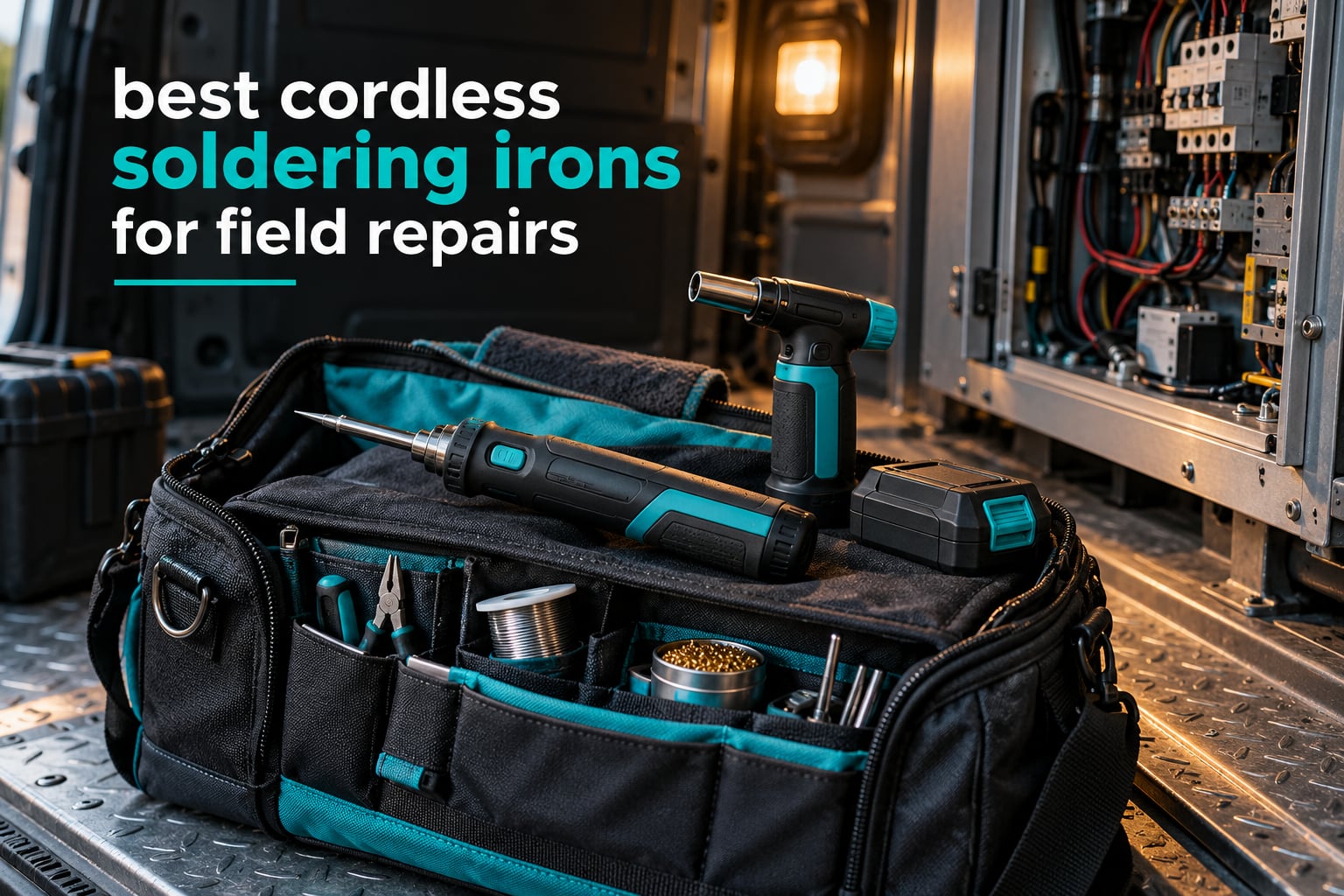
The best cordless soldering irons for field repairs fall into three groups. Pick the LEXIVON LX-770 butane kit when there is no outlet and no time to charge, the Beizkna 14-in-1 rechargeable kit for general service calls, and the PINE64 Pinecil for drone and board work in tight spaces. Electric models with built-in batteries suit technicians who want a single tool that works on AC or battery.
A cordless soldering iron is a soldering tool powered by a rechargeable battery, a USB-C supply, or butane gas instead of a mains cord. Most run 15W to 65W on battery and jump to a higher output when plugged in. That jump matters: wireless output is limited by what the pack can deliver, so a 30W cordless figure and a 75W wired figure can describe the same iron.
Two numbers decide whether a cordless iron is any good for your work. Heat-up time tells you how fast you can start a job, and thermal reserve tells you how much heat comes back after the joint steals it. Raw wattage on the box means very little without the second number, which is why every pick below lists both where the data supports it.
We built this list from ten irons that ship with real field credentials: butane torches, USB-C pen irons, and adapters that run on tool batteries you probably own already. Specs come from manufacturer listings and the aggregated review data attached to each product, not from lab measurements we made ourselves. Where reviewers consistently flag a weakness, we say so plainly.
If your work also involves monitoring a camera rig or a panel while you are up in a ceiling void, our best camera field monitors guide covers the display side of the same van.
Table of Contents
Top 3 Cordless Soldering Irons for Field Repairs in 2026

LEXIVON LX-770 Butane Kit
- Up to 75 minutes per fill
- Refills in 10 seconds
- 13-piece accessory set
- Adjustable flame control

Beizkna 14-in-1 Cordless Kit
- 3200mAh battery up to 60 minutes
- 5-second heat-up
- 392F to 932F LED control
- USB-C pass-through charging

ANBES 3-Second Cordless Kit
- 18000mAh battery for long days
- 30W cordless or 75W on PD
- 3-second heat-up
- 180C to 480C LCD
The three above cover the most field situations. The LEXIVON wins on runtime and accessories, the Beizkna wins on everything arriving in one box, and the ANBES wins when a full day of joints is the expectation rather than one emergency repair.
Best Cordless Soldering Irons for Field Repairs (October 2026)
| Product | Specifications | Action |
|---|---|---|
| LEXIVON LX-770 Butane Kit |
|
Check Latest Price |
| Beizkna 14-in-1 Cordless Kit |
|
Check Latest Price |
| ANBES Cordless Kit 3s Fast Heat |
|
Check Latest Price |
 PINE64 Pinecil Smart Mini Iron PINE64 Pinecil Smart Mini Iron |
|
Check Latest Price |
 Fanttik T1 Max Cordless Kit Fanttik T1 Max Cordless Kit |
|
Check Latest Price |
 Berkling BSG-568 Butane Iron Berkling BSG-568 Butane Iron |
|
Check Latest Price |
 ELMCONFIG Rechargeable Soldering Pen ELMCONFIG Rechargeable Soldering Pen |
|
Check Latest Price |
 Hakko FX-901/P Battery Iron Hakko FX-901/P Battery Iron |
|
Check Latest Price |
 QSDXNYDC Dewalt 20V MAX Iron QSDXNYDC Dewalt 20V MAX Iron |
|
Check Latest Price |
 Milwaukee M12 REDLINK Soldering Kit Milwaukee M12 REDLINK Soldering Kit |
|
Check Latest Price |
1. LEXIVON LX-770 Butane Kit for Off-Grid Field Repairs
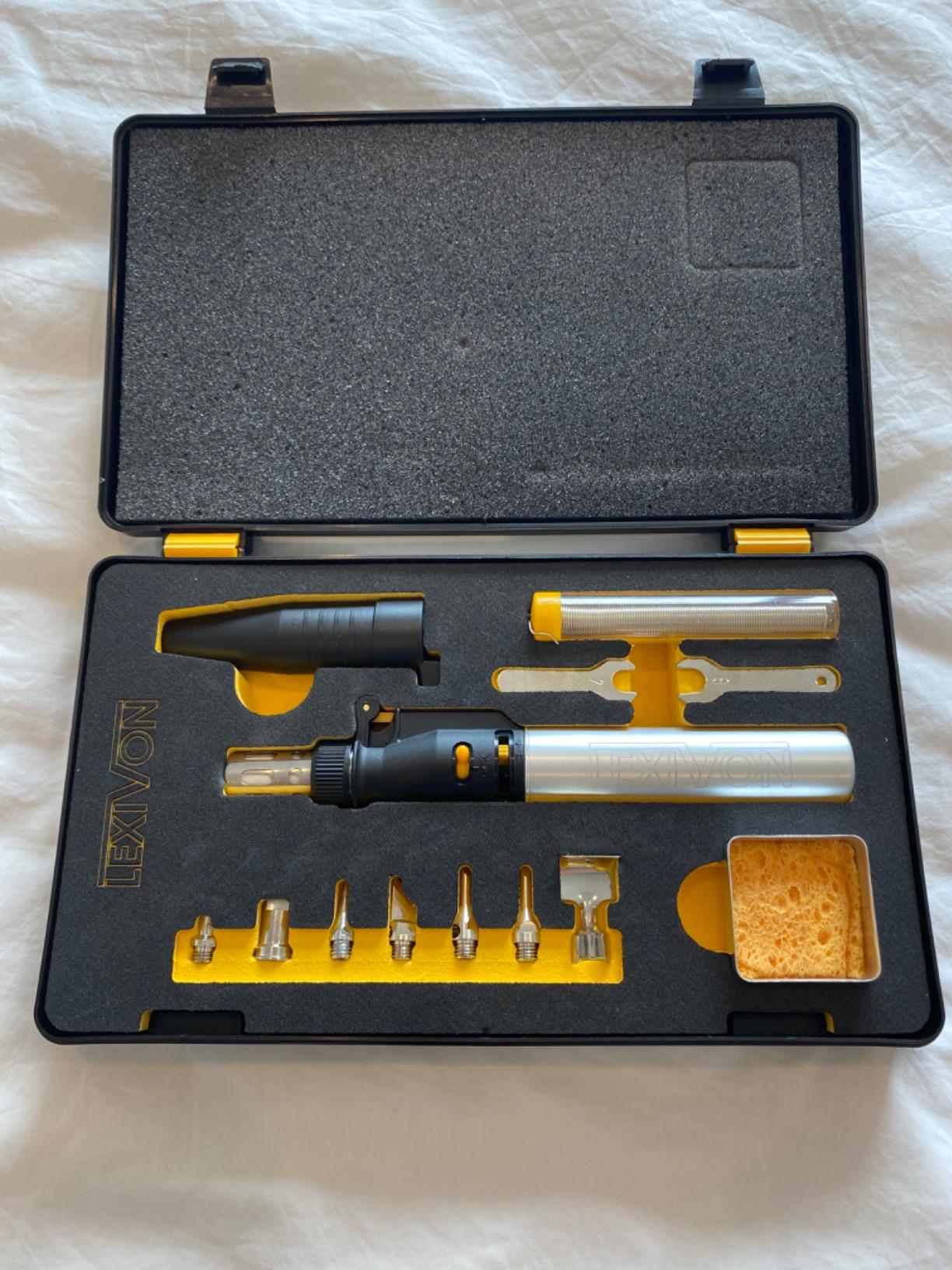
LEXIVON Butane Soldering Iron Multi-Purpose Kit | Cordless Self-Igniting Adjustable Flame 7-Tip Set | Pro Grade 125-Watt Equivalent (LX-770)
Butane fuel
Adjustable flame
Up to 75 minutes per fill
7 tips and 13-piece accessory set
Pros
- Up to 75 minutes of runtime on one fill
- Refills in 10 seconds with standard butane
- 13-piece accessory set covers seven tip jobs
- Flame lock allows hands-free continuous work
- Carrying case and all-metal tank
Cons
- Needs 3X-refined or better butane to run clean
- Fill tube is awkward and wastes fuel
- A few reports of flame cutting out
This is the iron I would hand a technician who works a full day without an outlet. The fuel tank holds enough for up to 75 minutes of work and refills in about 10 seconds, so a refill between calls takes less time than finding the van charger. That single detail is why it takes the top spot in this roundup.
The flame adjusts from half an inch to two and a half inches, which lets you heat a large terminal slowly and a small signal joint fast. The accessory set includes seven tips plus soldering stand and a mini torch head, so the kit covers heat shrink, connectors and general wiring rather than just fine electronics.
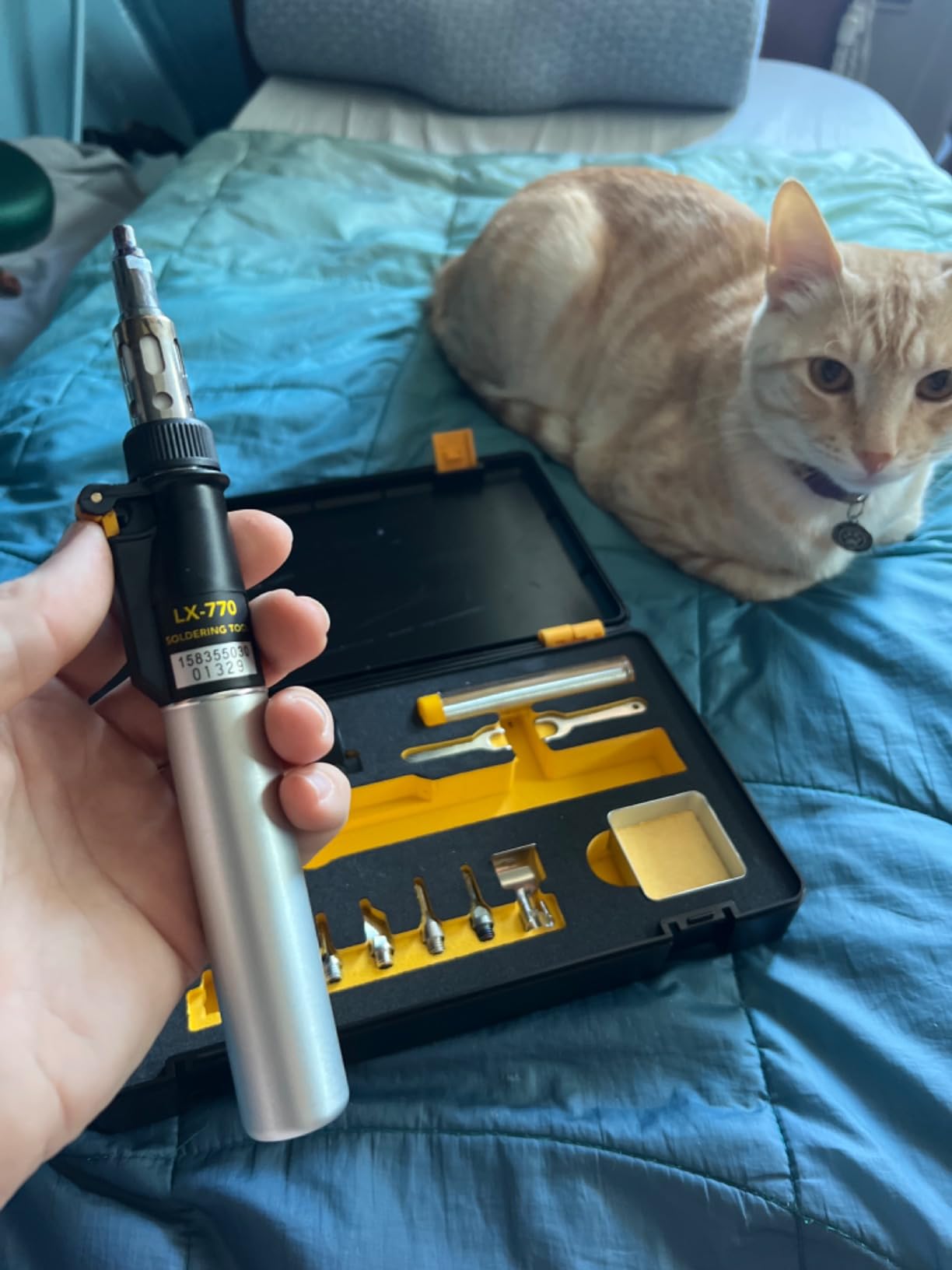
Buyers consistently describe it as a dependable go-to field iron for motorcycle wiring and electronics work, with fast heat-up and strong durability. The metal tank and the case handle shop use without complaint, and one review notes the manufacturer replaced a defective unit rather than arguing about it.
Fuel quality is the one thing you control. Multiple reviews make the same point: cheap butane performs badly and can damage the unit, while refined butane ignites cleanly. Buy the good cylinders and keep them in a warm van, because cold fuel is the most common cause of a flame that will not hold.
Where the LX-770 beats a battery iron
Runtime. Seventy-five minutes from one fill beats every battery model here, and the ten-second refill means you never plan a job around a charge. On a roof, in an attic, or at a remote site with no power, that difference is the whole argument.
The flame lock is genuinely useful for long joints and heat shrink, where holding a trigger for minutes would tire your hand. Buyers who work on vehicle wiring use it for exactly that.
Where the LX-770 falls short
There is no temperature readout, so you are judging heat by flame position and by the solder itself. On delicate electronics that is a real disadvantage against a digital iron.
You also carry fuel you cannot refuel from a wall, and the fill tube wastes more butane than it should. Butane cannot travel by air, so if you fly between jobs, plan ahead.
2. Beizkna 14-in-1 Cordless Kit for Everyday Service Calls
Soldering Iron Kit Cordless Portable 3200mAh Battery USB Rechargeable
16W wired
3200mAh battery up to 60 min
5-second heat-up
392F to 932F LED control
Pros
- 5-second heat-up and quick cooldown
- USB-C pass-through lets you solder while charging
- Stand has upright and lay-down spots plus tip storage
- 14-piece kit covers tips pump solder and tweezers
- LED display with 5C temperature steps
Cons
- 30-second sleep timer drops heat mid-task
- Small tips have low thermal mass
- All-plastic body is thin for daily pro use
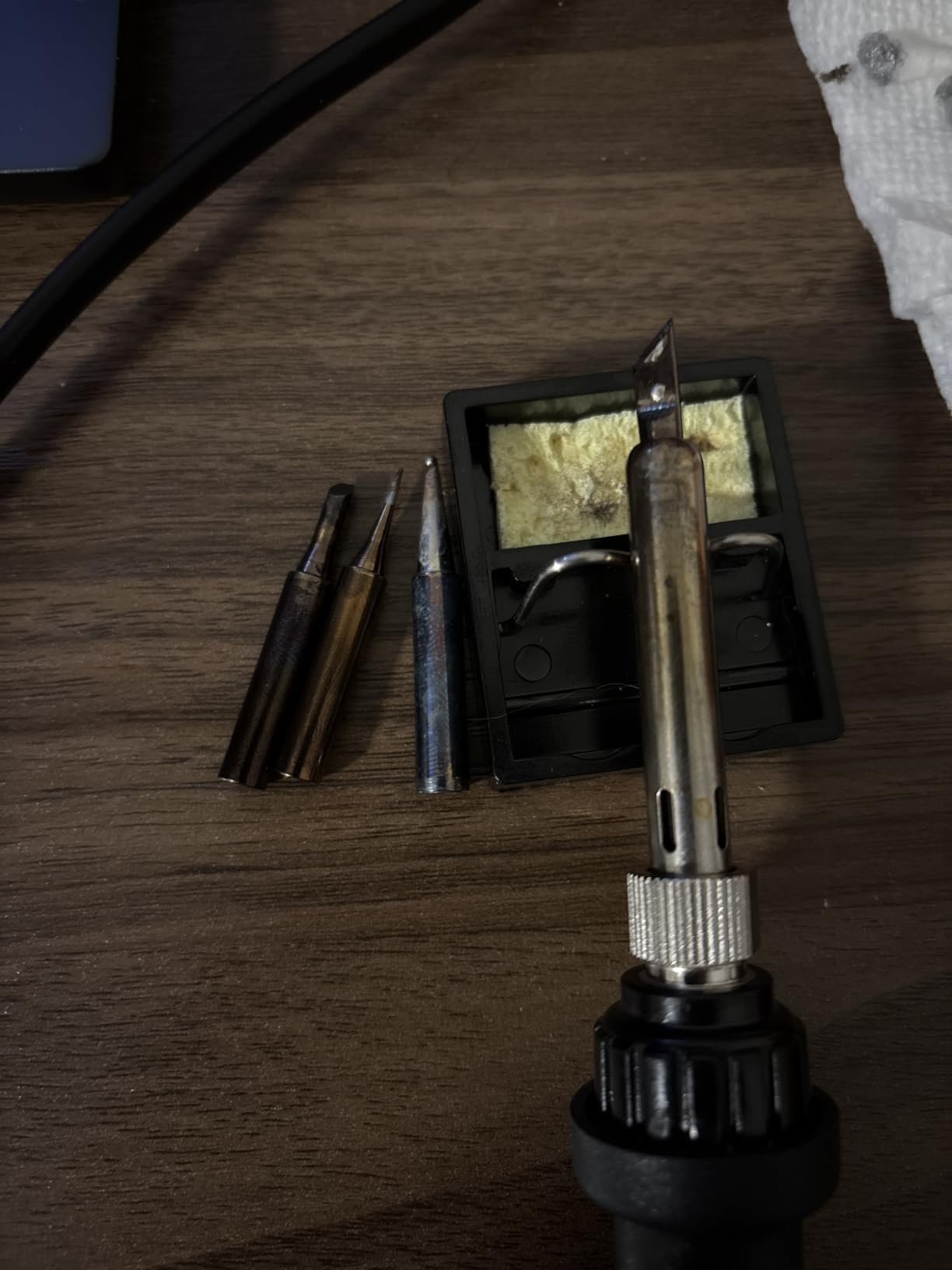
This is the kit you buy when you do not yet own a soldering iron and want a full set in one box. The included desoldering pump, tweezers, solder wire, tips, stand and toolbox cover almost everything a first field kit needs, and the price sits well below a premium iron.
Heat-up in about 5 seconds means you are not standing in a customer attic waiting. Temperature control runs from 392F to 932F in 5-degree steps with a large LED display, which is wide enough for lead-free work and hot enough for most mechanical jobs.
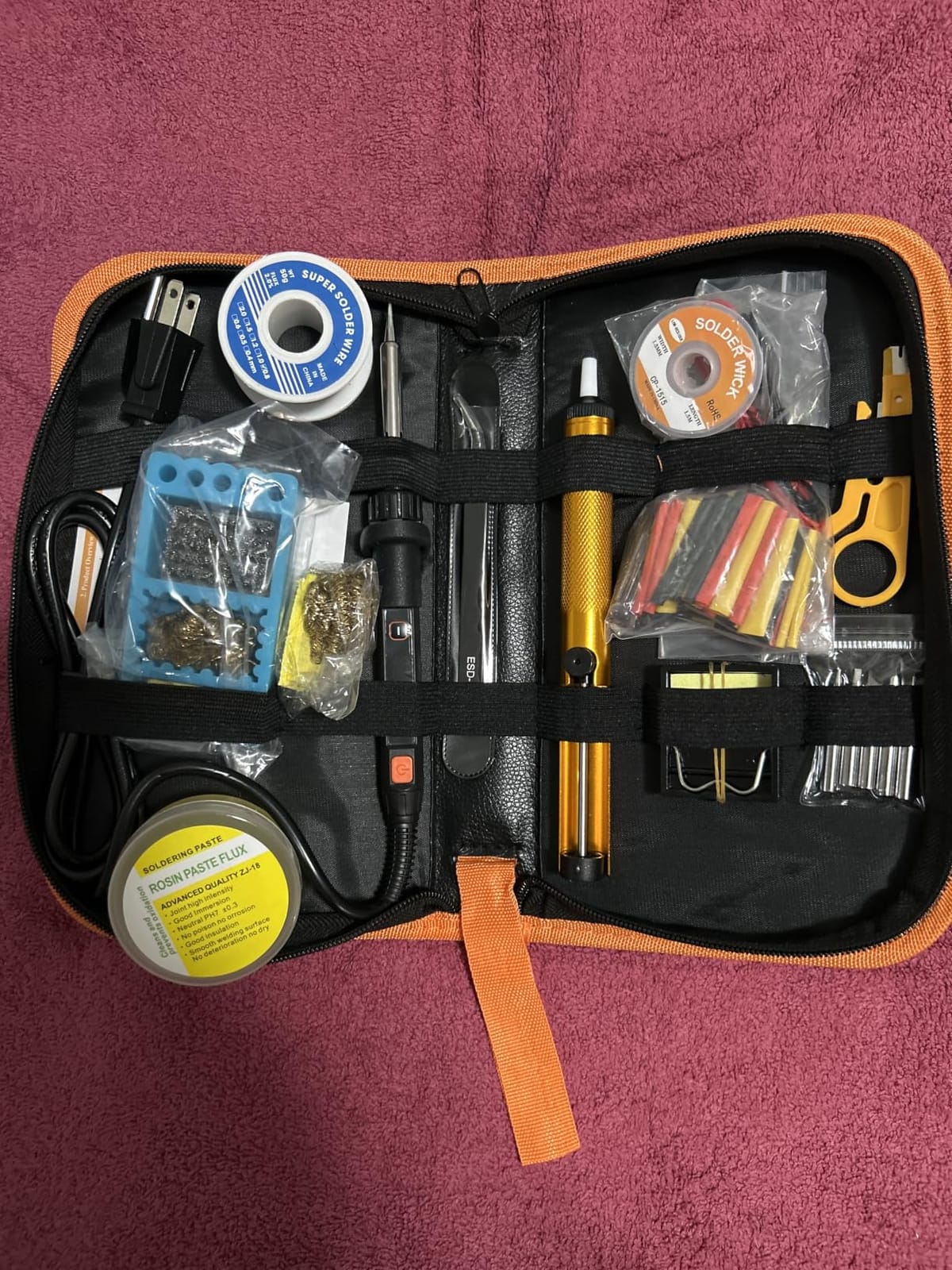
The USB-C charging setup is the detail that makes it field-friendly. Run it from a pack while working and the wired mode gives you 16W instead of the 12W wireless output, and the stand doubles as the charger so the iron is never far from a socket.
Owners praise fast heat-up and cool-down, accurate temperature control for small electronics, and a stand that is genuinely well designed. The most repeated complaint is the 30-second sleep timer, which can drop heat while you hold still between joints.
Whether the sleep timer will annoy you
If your work means thirty seconds of setup between every connection, this timer will frustrate you and the temperature readout will not change colour instantly to warn you. If you solder in runs, it barely registers.
The auto-off at ten minutes with automatic reheat on pickup is the safety net that matters more, since a tool left heating in a van is the failure nobody wants.
Where the small tips bite
The three included C210-series precision tips are small and low in thermal mass, so sustained soldering on a larger joint makes you wait for recovery. Long stretches on 12 AWG wire are outside what this tip set wants to do.
The all-plastic handle is the other caution. A few reviewers worry about durability for professional daily use, so if the iron lives in a van full-time, expect to replace it sooner than a metal-bodied gas tool.
3. ANBES Cordless Kit for Battery-Heavy Field Days
ANBES Cordless Soldering Iron Kit, 3s Fast Heat 75W-PD/30W-Battery
30W cordless or 75W PD
18000mAh battery
3-second heat-up
180C to 480C LCD
Pros
- 3-second heat-up with 7-second tinning
- 18000mAh battery outlasts most cordless rivals
- Snap-lock tip retention survives thermal cycling
- LCD shows temperature and battery level
- LED work light and magnetic stand
Cons
- Needs a matching voltage supply to avoid damage
- 40-second sleep interrupts quick joint runs
- Earlier kit stands were flimsier
The 18000mAh battery is the reason this kit shows up on a field shortlist. Buyers who switched from a premium alternative report it outlasts the tools it replaced, and the LCD tracks both temperature and charge so you can plan the next job before the last one ends.
Power output is unusually honest here. On battery you get 30W, and connected to a USB-C supply the same iron reaches 75W, so a mains-powered pause in the day quietly gives you bench-class output without changing tools.
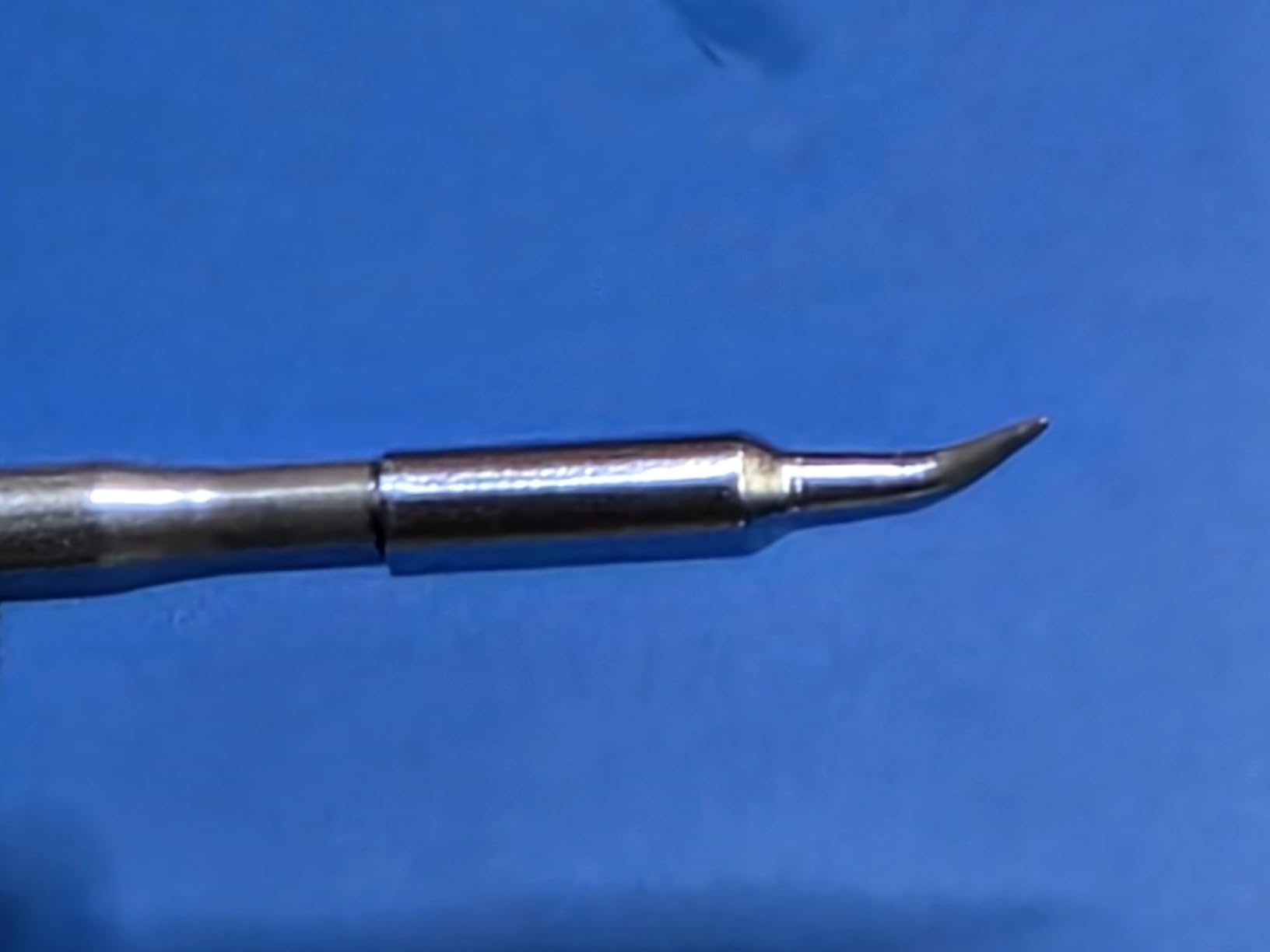
Heat-up in about 3 seconds and tinning in roughly 7 seconds is the fastest figure on this list, and the snap-lock tip retention is a real improvement over friction-fit tips that walk loose after a few thermal cycles. Temperature spans 180C to 480C with a silicone sleeve for grip.
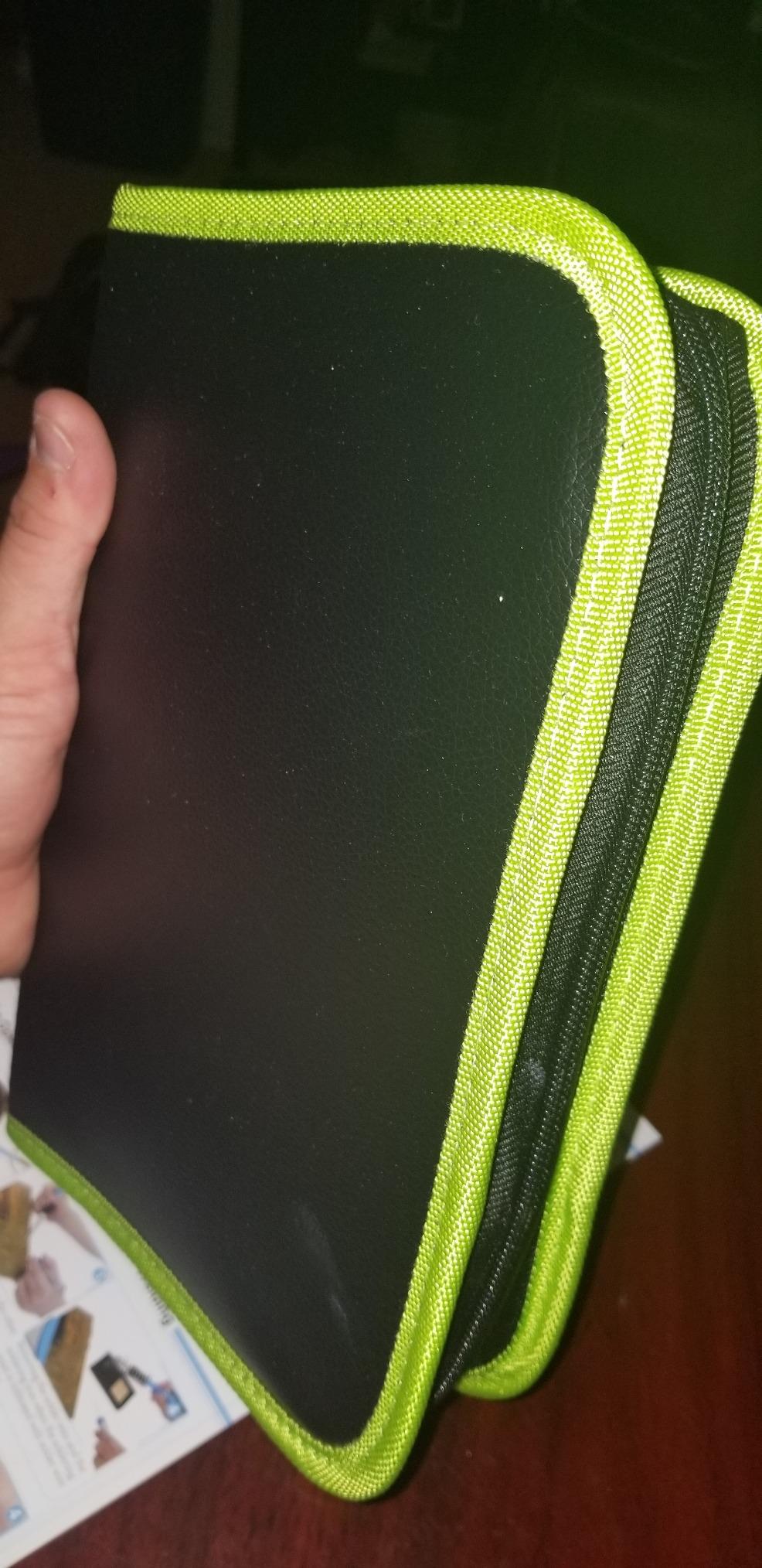
The LED work light gets mentioned often and matters more than it sounds when you are behind an access panel. The magnetic stand is stable enough that the iron stays where you put it.
What the battery size actually buys you
Runtime scales with the cell, so the practical benefit is fewer mid-job swaps rather than a headline number. Reviewers describe it as beating comparable cordless irons rather than as a full day of continuous soldering.
The 40-second gravity sensor sleep is more forgiving than the 30-second timers on smaller kits, but it can still interrupt a run of quick joints. Keep the tip moving or wake it before you return to the joint.
The voltage trap worth knowing
The most common complaint is not performance but power supply matching. Supplying the wrong voltage or current can damage internal components, so read the manual and use a supply that meets the stated input.
Some buyers also reported that the stand and bundled accessories in earlier kits were flimsier than the current iron. Judge the accessory quality separately from the tool itself.
4. PINE64 Pinecil for Drone and Board Field Repairs
PINECIL – Smart Mini Portable Soldering Iron, Small
65W on USB-C PD or barrel jack
60 g stainless body
12-second heat-up
Motion sensor sleep with wake on pickup
Pros
- 60 g body fits tight enclosures
- 12-second heat-up with rapid boost mode
- Runs off PD bricks power banks or battery packs
- Open-source IronOS firmware with motion sleep
- Replacement tips are cheap and easy to source
Cons
- 65W-class PD supply not included
- Limited reach on big ground planes and thick boards
- No stand or case in the box
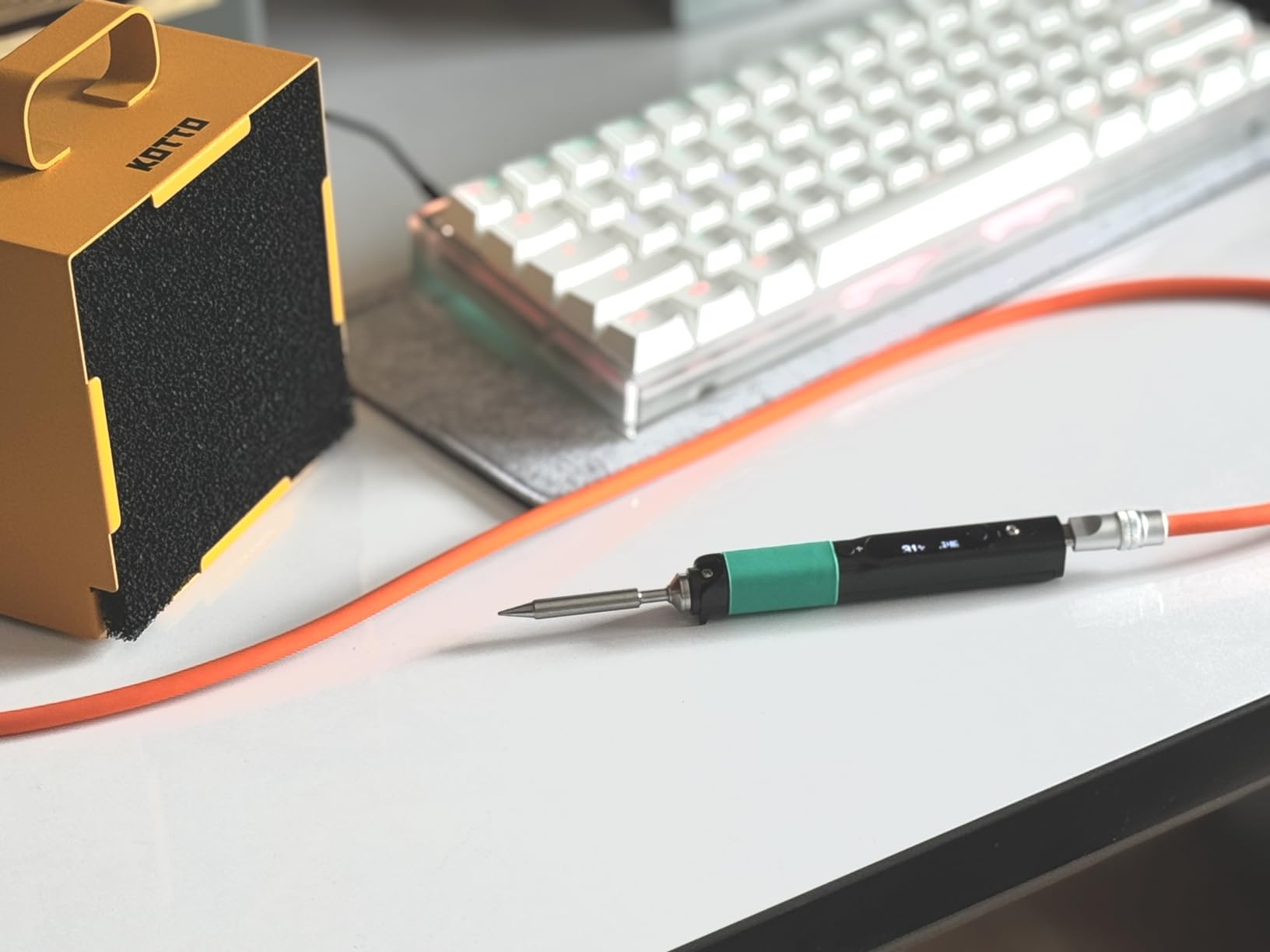
At 60 grams and 6.1 inches long, this is the iron that fits where nothing else does. Drone frames, camera gimbals and phone internals all reward a tool that can reach a joint from an angle without your knuckles touching the board, and that is exactly what the slim body buys.
Power input is unusually flexible for the category. It takes USB-C with Power Delivery and Quick Charge 3.0 plus a DC barrel jack, which means a PD brick, a wall adapter, a power bank, or a bare battery pack with the right connector can all run it.
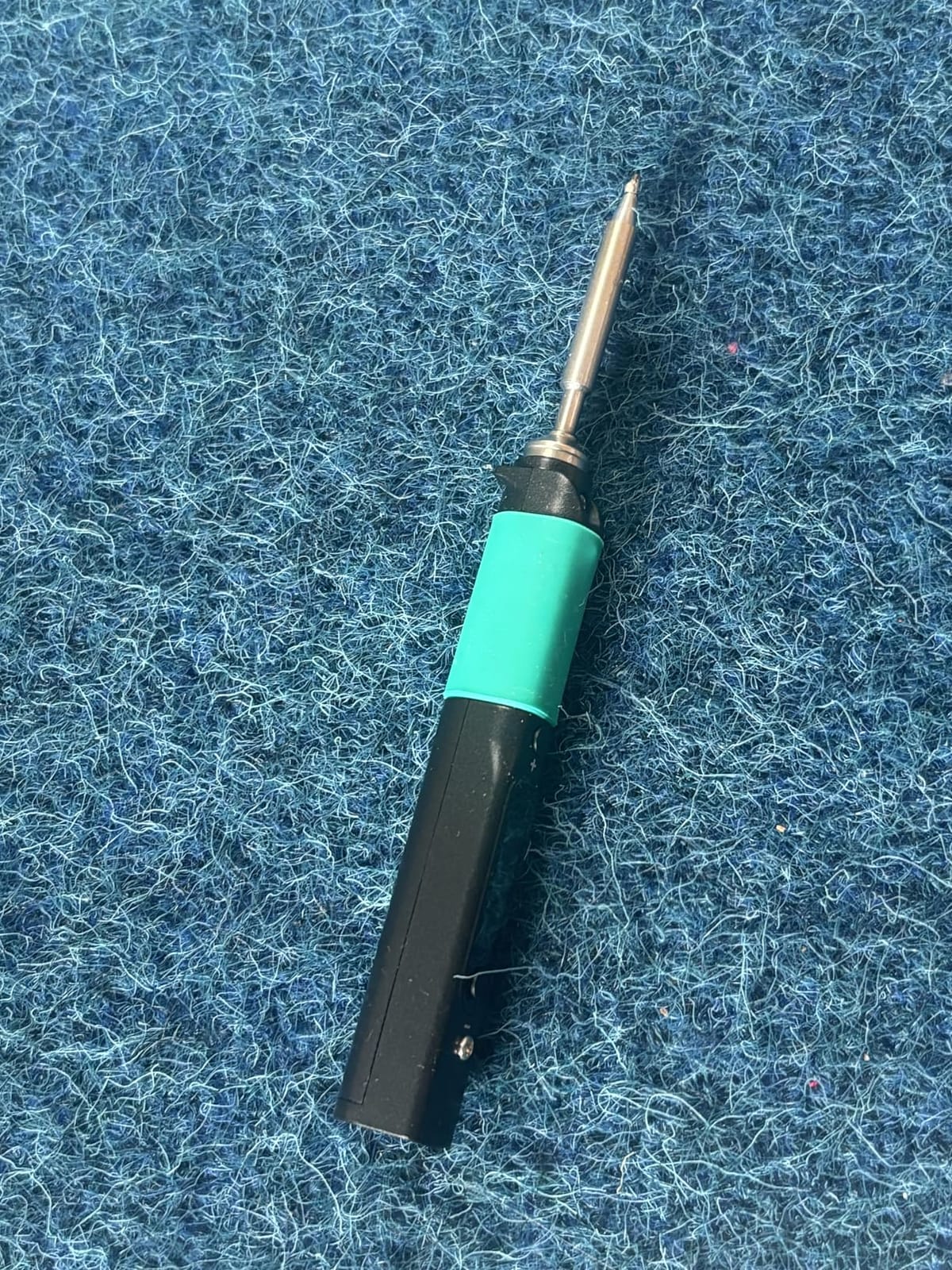
Temperature holds very steadily and changes appear instantly on the display, which is the behaviour you want on small pads where overshoot ruins the joint. Motion-sensor sleep puts the iron to standby and wakes it when you pick it up, so it does not burn a tip while you are sourcing a part.
FPV and RC communities reach for pen-style USB-C irons for the same reason: the repair happens away from a bench, and a cable is one more thing to snag on a frame.
What you need to buy before the first job
A proper 65W-class USB-C PD supply is not in the box, and it is not optional. Underpowering the iron is the most common reason a Pinecil disappoints someone who expected the enthusiast reputation to carry over.
You also need a stand and a case, neither of which is included. In a van that matters, because an unsecured hot tip is how you melt a liner or burn a hole in a tool bag.
Where the thermal limits show up
Reviewers are clear that this iron struggles on large ground planes and thick multi-layer boards, and that is a physical limit of a 60 g stainless core. Chassis joints and power wiring are outside its range.
One reviewer also reported a tip failing after about a month. Tips are inexpensive and easy to replace, but treat the iron as a precision instrument rather than a heavy-duty one.
5. Fanttik T1 Max for Fine Electronics Work
Fanttik T1 Max Soldering Iron Kit, Cordless Soldering Iron
16W wired or 12W cordless
2600mAh up to 60 min
7-second heat-up
200C to 450C on six-level knob
Pros
- Cordless freedom with no cord to snag
- Aluminum stand has a swivel arm and tip drawer
- Front LED light for dark panels
- Comfortable body over long sessions
- Six-level tail knob adjusts temperature fast
Cons
- 30-second gravity sleep interrupts rapid runs
- Wide handle limits reach inside panels
- Plastic collet can warp and lose heat
The stand is what separates this from a generic cordless iron. The weighted aluminum base has a 360-degree swivel arm, a press-to-pop tip drawer and sponge storage underneath, so the iron, the tips and the wick all live in one object you can set on a roof panel or a ladder step.
Heat-up takes about 7 seconds across four C210 rapid-heating tips, and the tail knob steps temperature through six levels from 200C to 450C. The front LED work light is aimed at the tip, which is where you are already looking.
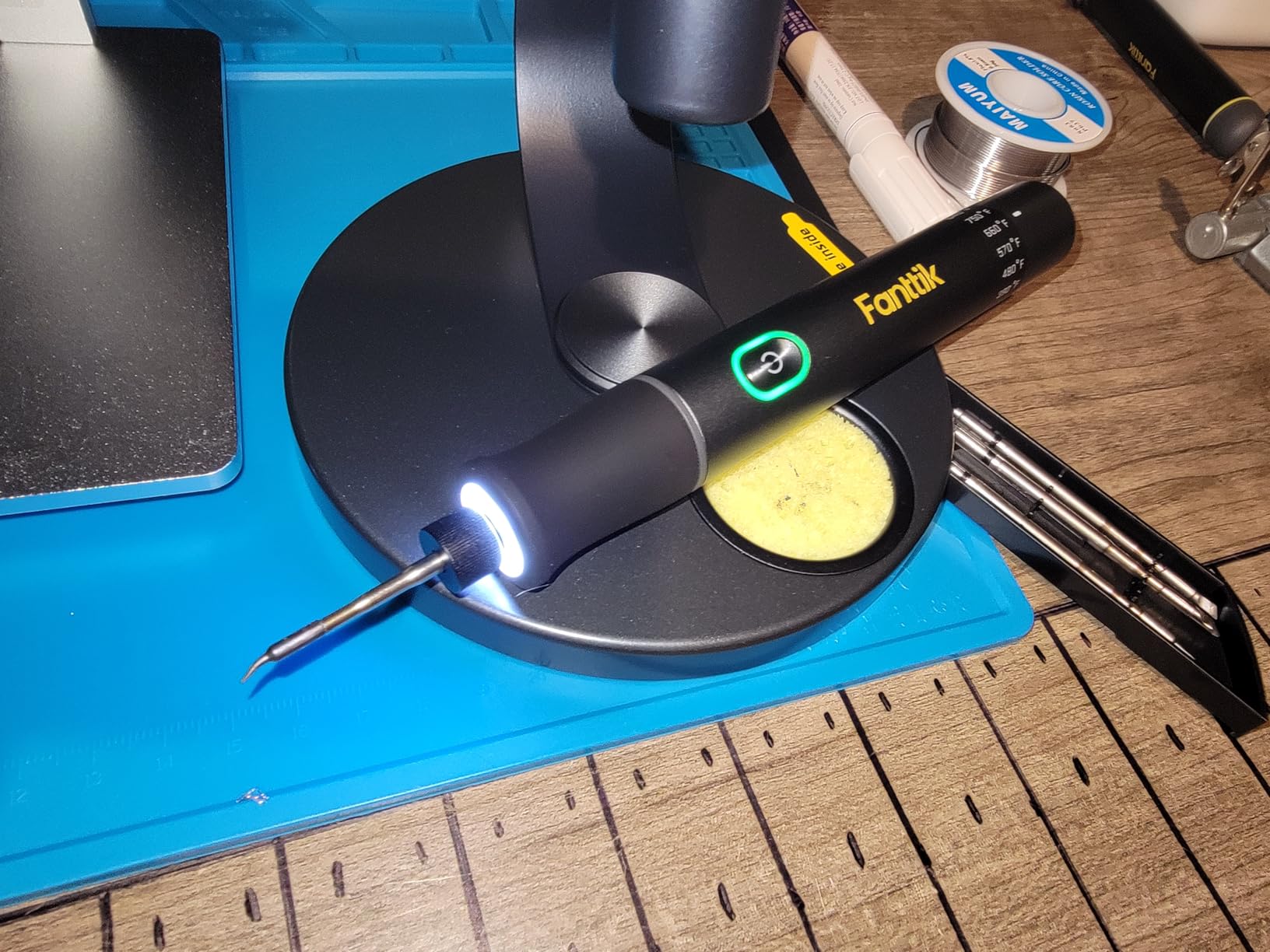
Reviewers value the cordless freedom most in awkward positions and tight enclosures where a cable would foul the job. Several owners report hours of continuous use and the ability to solder while plugged in when a wall outlet finally appears.
The main gripes cluster around three things: the 30-second gravity sleep, the short bundled USB-C cable with no charging block, and the wide handle blocking reach on boards that cannot be removed.
Collet wear is the thing to watch
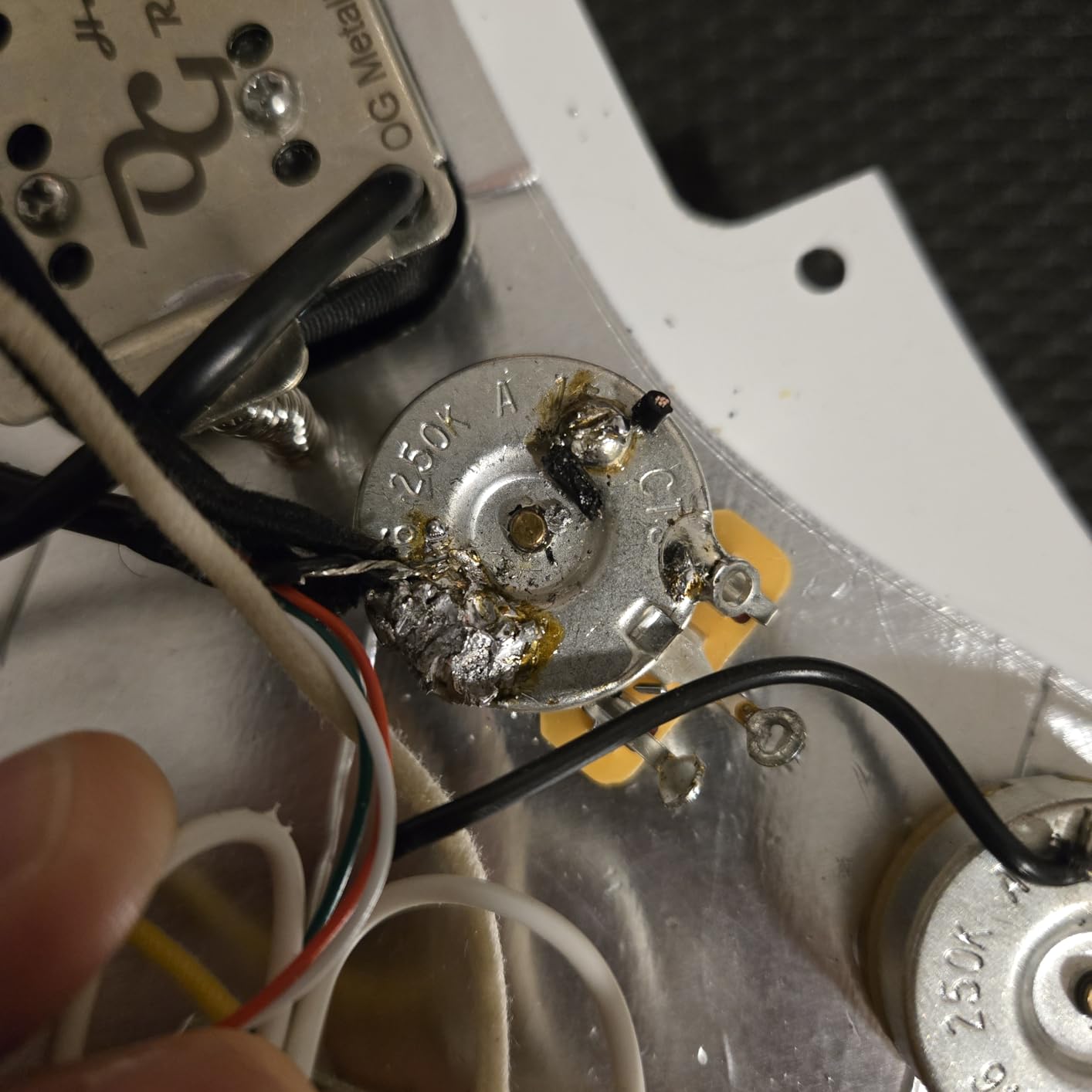
Several reviewers report the plastic tip collet warping over time and letting the tip loosen, which shows up as heat loss rather than as an obvious break. If temperature starts sagging, the collet is the first part to suspect.
Because the tips are standard C210 format, replacements are easy to source. Budget for a spare tip and a proper cable rather than relying on the short one in the box.
Who this suits and who should pass
It suits technicians doing small components and harness work in confined spaces where cord management is the deciding factor. Experienced users describe it as a good companion for small work rather than a heavy-duty wire tool.
Pass if your joints are large or long-running. The small tips here shine on fine traces and lose ground on bigger surface areas, and a few reviewers report tinning issues and readings that drift from the real tip temperature.
6. Berkling BSG-568 Butane Iron for No-Outlet Repairs
Berkling BSG-568 Cordless Butane Soldering Iron, Heat Gun & Micro Torch
Butane fuel
125W rated
Up to 90 minutes runtime
Refuels in about 20 seconds
Pros
- Self-ignites on the first click
- Pencil shape is easier to hold than a torch
- Side vent aims heat away from wiring
- Doubles as a heat gun and micro torch
- Light enough to live in a toolbox
Cons
- Included conical tip is hard to tin
- No spare tips and no carrying case
- Some examples lost reliable ignition
This one is about ergonomics. Most gas irons are torches with a soldering tip screwed on, and the heat ends up in your hand. The pencil shape here sits like a corded iron, and the single-side exhaust vent lets you point the hot exhaust away from the wires you are working next to.
It covers three jobs in one body: soldering iron, mini heat gun for shrinking tubing, and a micro torch for light heat work. Refuelling takes about 20 seconds and the tank runs up to 90 minutes, the longest continuous figure in this roundup.
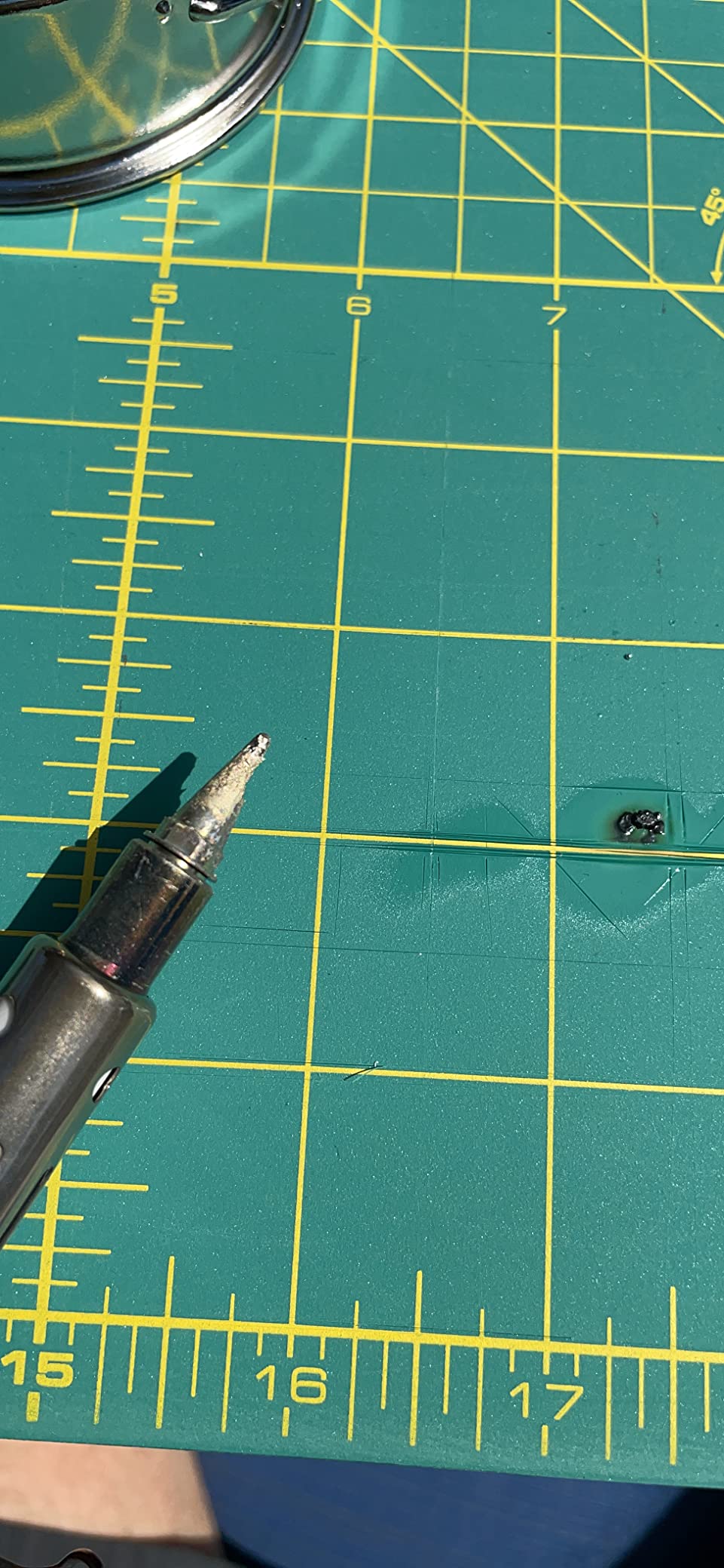
Reviewers who have used other gas irons single this one out for dependable one-handed ignition and comfortable handling. It is repeatedly described as an inexpensive alternative to premium gas tools for attic, automotive and shop work, where the value matters more than the brand.
The exhaust venting gets specific praise for protecting nearby wiring and heat shrink from burn damage, which is a real failure mode on crowded cable runs.
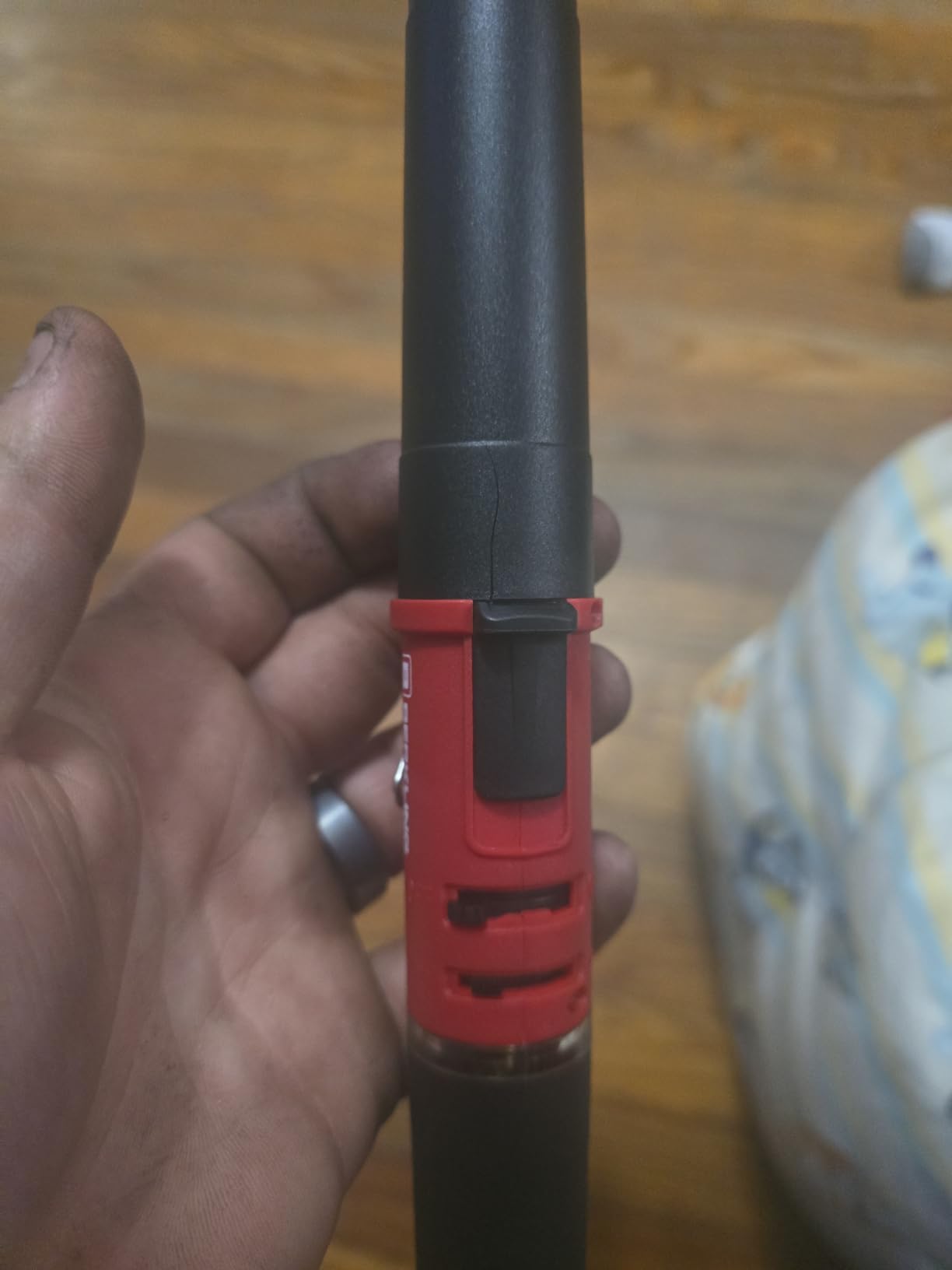
Preparing the tip matters here
The included conical tip has a chrome coating that needs to be worn or scuffed before it tins properly, and several reviewers hit that wall on day one. Clean and roughen it slightly before your first job and the problem disappears.
Only two tips are included and alternate sizes are not widely listed, so this is not the iron to buy if obscure tip shapes are part of your work.
Switching modes has a catch
You cannot move from soldering to heat-gun mode without removing the tip, so plan for a tip change rather than a quick toggle. The mini wrench for hot tip removal is in the box, which prevents burnt fingers during the change.
A handful of examples failed to ignite reliably after a few days of use. That fault is the minority, but buy from a seller with straightforward returns.
7. ELMCONFIG Rechargeable Pen as a Budget Backup Iron
Cordless Soldering Iron Kit, ELMCONFIG 1100mAh USB Wireless Electric Soldering Gun Pen, Portable and Rechargeable for Home Appliance Repair, Electronic Components, DIY
15W USB rechargeable
788F maximum
About 30 minutes per charge
Cools in about 1 minute on kickstand
Pros
- Cheapest route to a cordless iron
- Small body fits tight wiring spaces
- About 30 minutes of runtime for light jobs
- Cools fast on the built-in kickstand
Cons
- Poor thermal recovery makes cold joints
- No temperature control at all
- Threaded tip connection wobbles
Buy this as a backup for a van, a student bench or occasional hobby work, not as a primary tool. Feedback is sharply polarised: some buyers find it surprisingly capable on tiny wire, while a substantial group calls it a toy.
It reaches 788F after about ten seconds of holding the power button and runs roughly 30 minutes on its 1100mAh cell. The body cools in about a minute when rested on the kickstand, which is genuinely useful for handling between jobs.
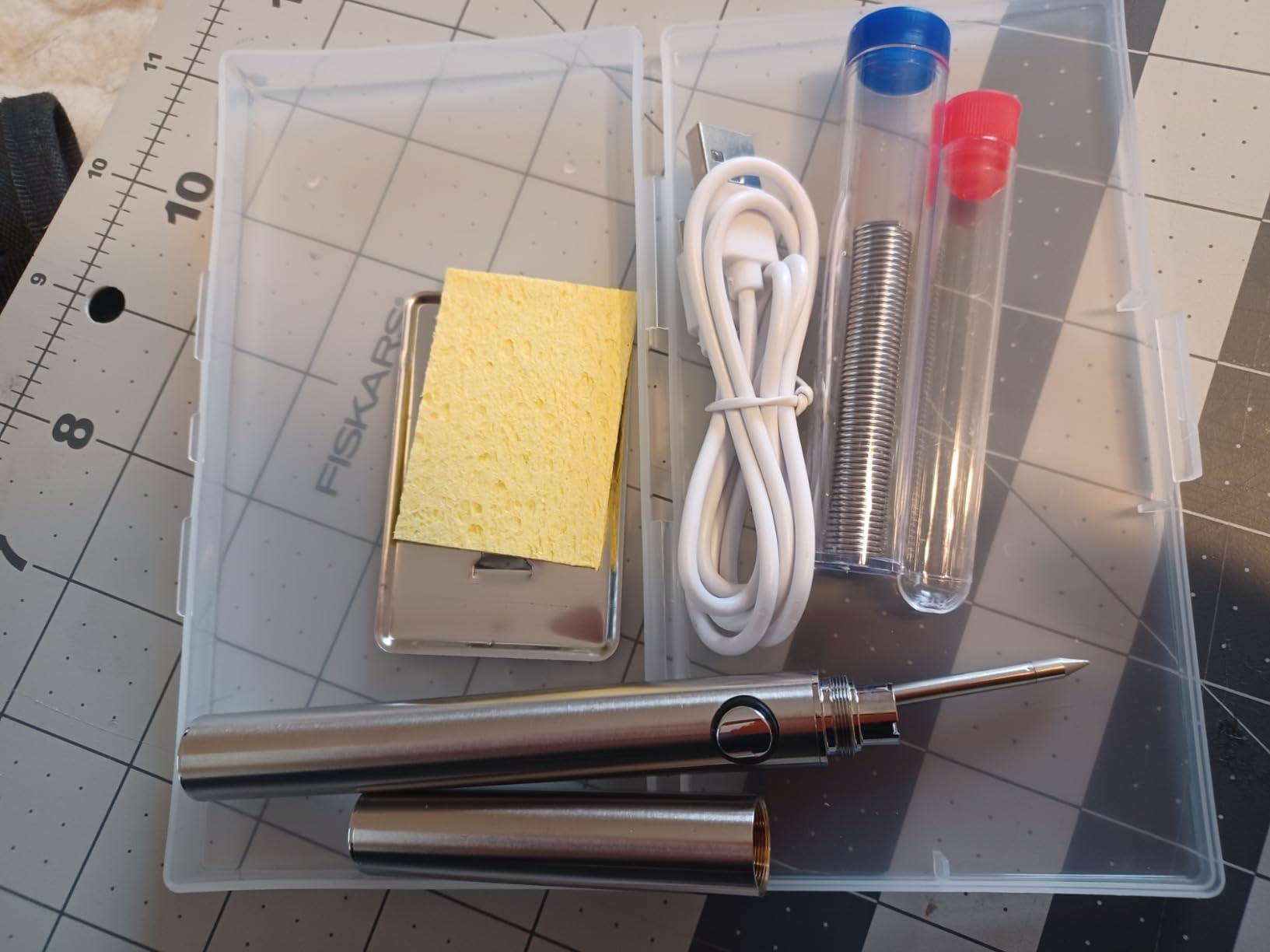
The charging indicator uses colour rather than numbers: purple-white for full, blue for half, red for low. Operation is button-based, with five presses to power on, holding to keep heating and five presses again to shut down.
Thermally, it is the weak point. Reviewers report the tip temperature dropping sharply on contact and solder that will not melt reliably, which is thermal recovery failing rather than temperature failing.
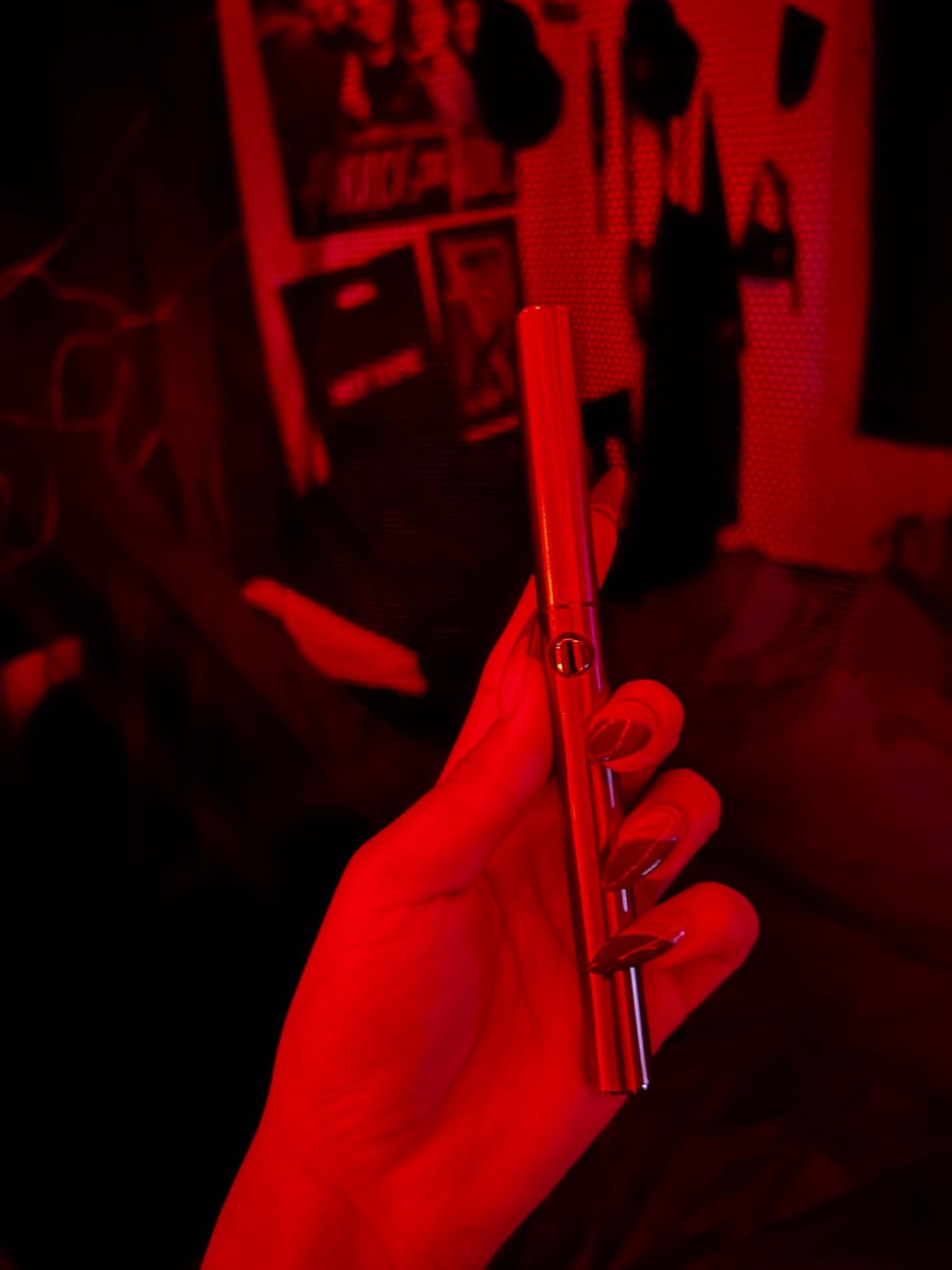
Where it earns its place
Tiny wire, hobby electronics and quick checks where you only need to make one or two joints. The compact 6.7-inch body reaches places a full-size iron will not, and the low entry cost means you can keep one in every tool bag.
Charging over plain USB also means no proprietary brick to lose, which is a genuine convenience for someone working from a laptop bag.
What you give up for that price
There is no temperature control at all, so you cannot protect heat-sensitive parts or work to a spec. The threaded tip connection feels loose and produces tip wobble, and the metal body gets hot during extended use.
Only one pointed tip is included with no slim or flat option. Some buyers also report erratic battery behaviour and an inaccurate charge indicator, which makes runtime a guess rather than a plan.
8. Hakko FX-901/P for Light-Duty Wire Terminations
Hakko Soldering Iron,Battery,Cordless,6W FX-901/P – 1 Each
4 AA battery power
6W pencil
About 30 second heat-up
Fine cone point tip included
Pros
- Made in Japan with a simple proven design
- About two hours on good Ni-MH cells
- Stands upright and will not roll off a bench
- Cover doubles as tip guard and power lock
- Weighs 179 g with cells fitted
Cons
- Low heat mass sags on larger joints
- No temperature control and no battery gauge
- T11 replacement tips are hard to find
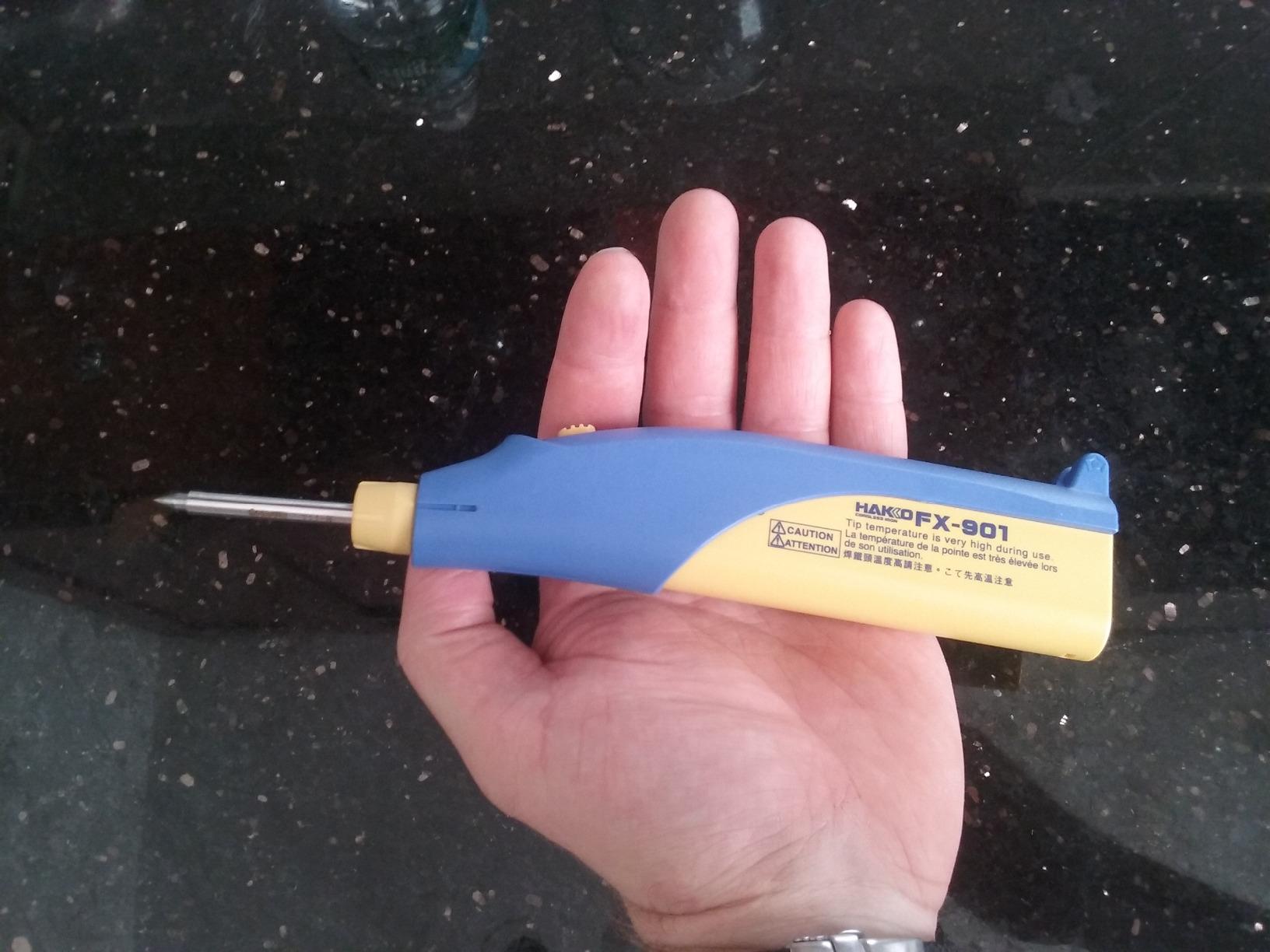
The FX-901 is the simplest thing on this list and that is the appeal. Four AA cells, a fine cone point tip and no settings to learn. For light signal and low-voltage terminations, the older design still works and costs almost nothing.
Heat-up takes about 30 seconds, which sounds slow until you compare it with the fuel and battery logistics of everything else. It stands upright on its flat end and will not roll off a van seat, which sounds trivial until an iron rolls off one.
Long-time hobbyists credit it as a genuinely good cordless option for small-gauge work, with about two hours of runtime on good Ni-MH rechargeable cells against roughly 75 minutes on alkaline. Use rechargeables, because alkaline cells drain and the cold joints follow.
The safety cover does two jobs at once: it protects the tip in transit and prevents the iron switching on in your bag. That is the kind of detail tool-battery platforms usually handle with software instead.
Choosing cells changes the tool
The biggest decision with this iron is the battery chemistry. Good Ni-MH cells roughly double the runtime and hold temperature better, while cheap alkaline drains fast and makes joints go cold as it fades.
There is no battery gauge, so the practical habit is to start a shift with fresh cells and keep a spare set in the case.
Where it runs out of heat
Six watts is a small heat budget, and the dominant criticism is limited thermal mass that lets the tip sag on larger joints, needing recovery time between connections. Thick power cable and big connectors are out.
T11-series replacement tips are hard to find and only standard shapes exist, and the shipped tip is larger and shorter-tapered than ideal for very fine work. For anyone doing dense board work, look at a C210-style pen instead.
9. QSDXNYDC Dewalt 20V MAX Adapter for Platform Owners
Cordless Soldering Iron Station Tool for Dewalt 20V Max Battery,PortableElectric Fast Heating Up Soldering Iron with USB&Type C for Dewalt DCB203 for DIY,Appliance Repair,Wire Welding(NO Battery)
Runs on 20V MAX packs
60W heating
350C in 8 seconds
180C to 480C with memory
Pros
- Reuses 20V MAX packs you already own
- 8-second heat-up to 350C
- USB and Type-C ports charge two devices
- Temperature memory and unit toggle
- Overvoltage short circuit and overcurrent protection
Cons
- Battery and charger sold separately
- 480C ceiling is modest for heavy work
- Reportedly bulky in tight enclosures
The logic here is simple and it wins on total cost. If you already own DeWalt 20V MAX packs, this adapter needs no battery purchase at all, and the packs you own are the same ones you carry on every other call.
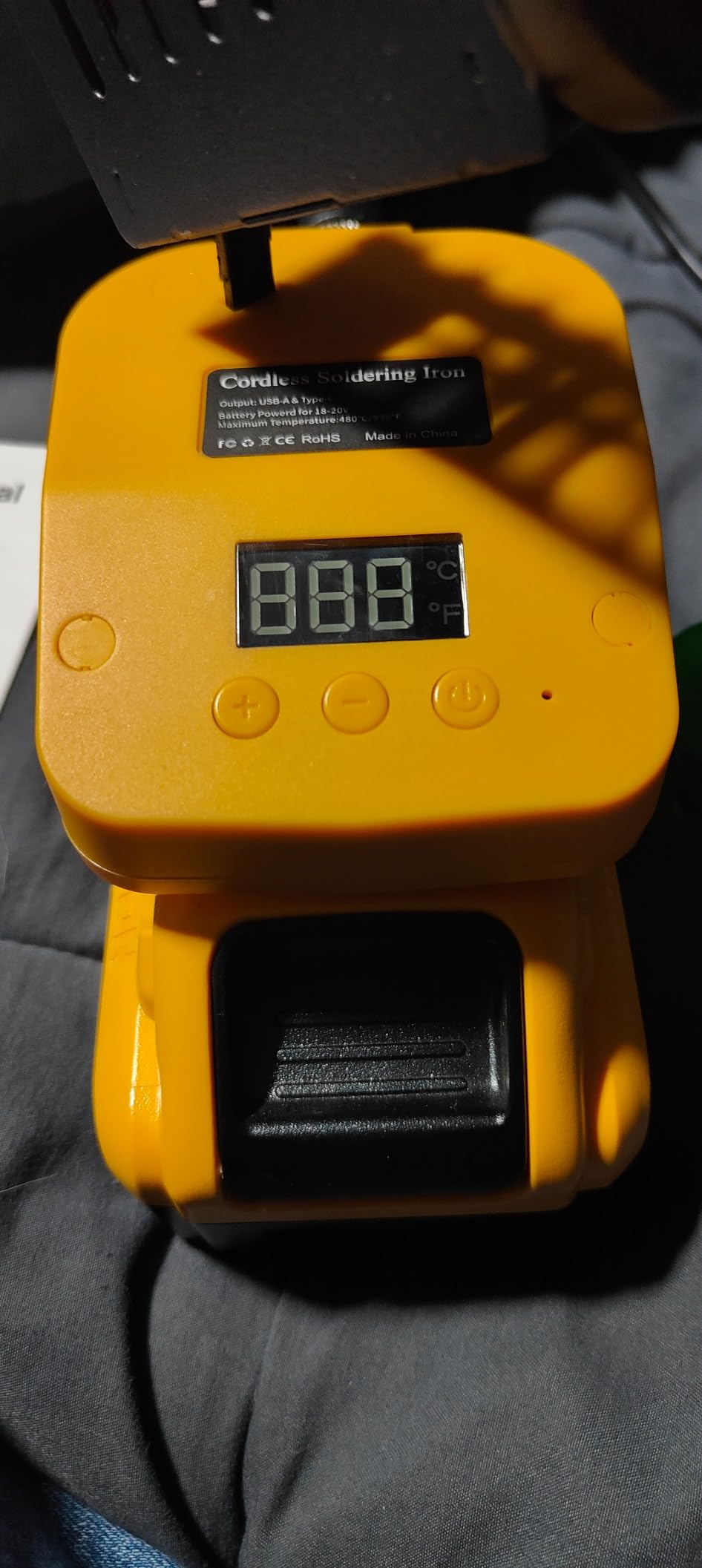
It works with DCB203, DCB204, DCB205 and DCB206 packs. Sixty watts of heating reaches 350C in 8 seconds, and temperature adjusts from 180C to 480C with a memory function that recalls your last setting between jobs.
One of the highest-rated irons in the group at 4.7 stars, and the enthusiasm comes mostly from owners of compatible packs. The dual USB and Type-C ports on the station charge two devices at 5V 2A simultaneously, so your meter or phone can top up while the iron sits on its base.
Protection features go beyond the usual: input overvoltage, output short circuit and output overcurrent with a low battery reminder. Auto shutoff at 100C and a 30-minute power-off cover the forgetful moments.
Who this is built for
Technicians already carrying 20V MAX tools get the cheapest path to a field iron, and the memory function means your preferred temperature is there before you finish climbing the ladder.
If you do not own that platform, the true entry cost includes a battery and charger, and that changes the comparison completely against a self-contained rechargeable iron.
Where the ceiling bites
The 480C maximum is modest for heavy-gauge work, and anyone regularly soldering thick wire should choose an iron with more headroom. Some reviewers also find the body bulky inside tight enclosures.
Budget for a proper stand as well. The listing includes a side handle rather than a full base, so safe hot-tip storage between calls needs solving separately.
10. Milwaukee M12 REDLINK Kit for Pro Electricians
M12 REDLINK Soldering Iron Kit W/LED Light
Runs on M12 packs
45W heating
18-second heat-up
3-stop pivoting head with LED
Pros
- 18-second heat-up with steady temperature
- Works in cold weather where butane will not light
- 3-stop pivoting head for confined access
- LED light for dark panels
- Tool-free tip change and a stand in the kit
Cons
- Only 20 to 30 minutes per pack
- Limited heat mass for big connectors and coax
- Any breeze outdoors gives cold joints
The pivoting head is the feature trade electricians mention first. Three locked positions let you set the tip angle for a ceiling box or a panel without twisting your wrist, which matters when both hands are holding wire and a connector.
Heat-up is 18 seconds with temperature held steady once there, and the tool-free tip change swaps between chisel and pointed tips without tools. The kit includes a stand and both tips, and it stands on its end with the tip clear of the surface.
Cold-weather reliability is the underrated advantage here. Reviewers report the battery performance holding up in conditions where butane irons fail to ignite, which on a winter call in an unheated space is the difference between finishing and going back tomorrow.
The built-in LED lights the work area, which earns its place in dark enclosures, and trade professionals rank this as the best cordless iron they have used for exactly that combination of reasons.
Planning around pack changes
Runtime is the trade-off: roughly 20 to 30 minutes of continuous use per pack. That is enough for most service joints but not a full afternoon of production work, so budget spare packs if the iron is your only heat source.
The M12 platform is the reason many technicians buy it, since the packs are already in the van. Running it continuously has also been reported to melt plastic around the heating element, so respect the sleep behaviour.
Outdoor limits worth planning for
Any breeze carries heat away from the tip and produces cold joints, so outdoor work needs a wind break or a sheltered position. This is a genuine constraint for rooftop and roadside jobs.
Reviewers also note it lacks the heat mass for large connectors, heavy wire and coax shield work, and the body is somewhat bulky for very tight spaces. Keep a corded station for those jobs.
How to Choose a Cordless Soldering Iron for Field Repairs
Start with the power source, because it decides everything else. Three options exist in this roundup: built-in rechargeable batteries, tool-battery adapters, and butane. There is no universally best answer, only the one that matches your outlets and your jobs.
Built-in rechargeable batteries are the most flexible. Run them on battery when the work is awkward, plug into USB-C when a socket appears, and keep the whole thing self-contained. Tool-battery adapters cost less over time if you already own the packs, but do nothing for you otherwise. Butane wins where there is no power at all and where you want heat above 500C for heavy connectors or heat shrink.
Second, decide your heaviest joint and work backwards. A 12 AWG wire termination or a large ring terminal drains heat faster than any phone board joint, and the tools that handle it are the gas irons or a mains station. Cold joints come from asking a small tool to heat a big copper mass, not from asking it to heat the solder.
Third, treat thermal recovery as the real spec. Wattage is how much heat the heater can push; recovery is how fast it puts that heat back into the tip once the joint cools it. Two irons with the same wattage can behave very differently on a cold 10 AWG terminal.
Fourth, count the solder joints in a typical call. If you make fifty joints in a morning, an 18-second heat-up and a fast tip change matter more than a temperature readout. If you make three joints and spend the rest of the time tracing a fault, tip quality and control matter more.
Fifth, check the tip system before anything else. C210-series tips are widely available and cheap. T11-series tips, used by the Hakko, are harder to source. An iron you cannot re-tip in a rural town is a single point of failure.
Sixth, look at the sleep timer honestly. Most cordless irons sleep between 30 and 60 seconds, and the setting should match your rhythm. If you pause to cut and strip wire, choose the longer timer or expect to wake the iron.
Seventh, check the physical details. A wide handle blocks access to boards you cannot remove, an unsecured iron rolls across a van seat, and a metal body that heats up will end your call early. Weigh each tool against the bag it has to live in.
What to Pack in Your Field Soldering Kit
The iron is a small part of the kit. Solder wire and a decent flux make a bigger difference to joint quality than the difference between two irons, and both are cheap.
Bring a desoldering pump, extra tips in the two shapes you actually use, a sponge or brass wool, heat shrink tubing for finished joints, and a small cutting strip. A brass tip cleaner works when a sponge is not practical.
Storage is where field kits usually fail. An iron that rolls in a trunk will melt its own tip and burn a hole in the liner, so a stand with a tip guard, or a case with a tip pocket, is not optional. The Hakko cover and the Fanttik stand both solve this well.
For safety, work with lead-free solder in unventilated spaces only with a fan, keep a metal tray for hot tips, and expect the tip to stay dangerous long after the light goes out. If you also carry camera or test gear up in the same voids, our field monitor picks cover the display side of the job.
Frequently Asked Questions
What is the best cordless soldering iron?
For most field technicians the best cordless soldering iron is the LEXIVON LX-770 when there is no outlet, the Beizkna 14-in-1 kit when you want one box with everything in it, and the PINE64 Pinecil for drone and board work in tight spaces. The right choice depends on whether your bottleneck is power, runtime or reach.
Are cordless soldering irons any good?
Yes for joining wires, terminals, connectors and small boards. Reviewers of these ten irons report cold joints far more often than they report failure to reach temperature, and the complaints about heavy-gauge work all point to the same limit: thermal mass. Cordless irons are join-only tools and cannot desolder components.
Can I use a cordless soldering iron on 12 gauge wire?
Only if you choose a heat source with real headroom. Forum discussion of these tools centres on the fact that most pen-style cordless irons lack the thermal mass for 12 AWG, while butane irons and tool-platform models are the ones quoted for heavier wire. If thick power cable is routine work, keep a corded station in the van.
How long does a cordless soldering iron battery last?
Expect 20 to 60 minutes of continuous work on a full charge depending on the model and the temperature setting. The Milwaukee M12 kit is quoted at roughly 20 to 30 minutes per pack, while the Fanttik T1 Max and Beizkna kit run up to 60 minutes at their top temperature. The butane alternatives quote up to 75 to 90 minutes per fill and refill in 10 to 20 seconds.
Do I need an ESD safe soldering iron?
Only for live electronics where static damage matters, such as uncapped boards, CMOS parts and microcontrollers. For wiring, terminals and mechanical joins the risk is low. If you work on bare boards, ground the tip and the work surface, and choose an iron with a low tip-to-ground resistance rather than any cordless model.
Which is better, Hakko or Weller?
Both are long-established makers with strong repair support, and the honest answer depends on the model rather than the badge. In this roundup the Hakko FX-901/P is a simple 6W battery pencil with no temperature control, so it suits light terminations only. No Weller model was in our test set, so judge any Weller cordless option on thermal reserve, tip availability and warranty rather than on brand.
Conclusion: The Best Cordless Soldering Iron for Field Repairs
The best cordless soldering irons for field repairs come down to your weakest link. Without an outlet, the LEXIVON LX-770 butane kit wins on runtime and accessories. With an outlet but a full kit requirement, the Beizkna 14-in-1 covers everything in one box. For drone and board work, the PINE64 Pinecil reaches where nothing else fits, and for electricians on a tool platform, the Milwaukee M12 kit or the DeWalt adapter uses packs already in the van.
Whatever you choose, pack flux, spare tips and a tip guard, and keep a corded station for desoldering and heavy gauge. Re-check the specs on the current listing page before you order, since iron specifications change between revisions.