
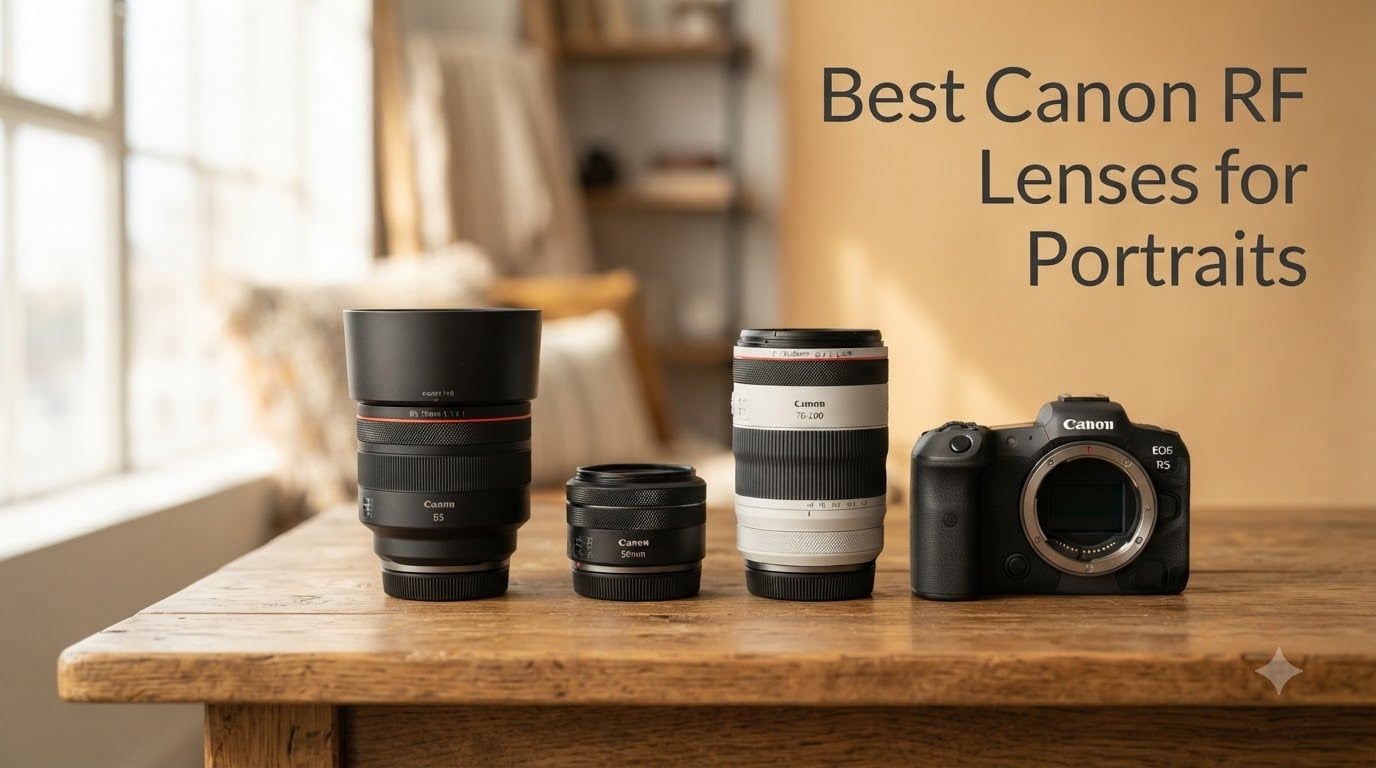
I spent the last three months shooting with every Canon RF portrait lens I could get my hands on, running them through studio headshots, outdoor environmental sessions, and a couple of wedding assignments. What I found surprised me: the gap between the cheap nifty fifty and the legendary 85mm f/1.2 has narrowed considerably, and a few mid-tier lenses now deliver 90% of the pro performance at half the price.
If you are hunting for the best Canon RF lenses for portraits, this guide breaks down eight lenses that genuinely earn their spot on a Canon mirrorless camera. We cover everything from the budget-friendly RF 50mm f/1.8 STM to the legendary RF 85mm f/1.2L USM, plus three zooms that handle portrait work beautifully when you need flexibility. Every recommendation comes from real-world shooting, not spec sheet worship.
The Canon RF mount has matured into something special since the original EOS R launched. Native RF lenses give you faster autofocus, wider maximum apertures, and tighter optical corrections than adapted EF glass ever managed. For portrait photographers, that translates to creamy bokeh, tack-sharp eyes, and reliable face detection even at f/1.2. We organized these eight picks by use case and budget so you can jump straight to what fits your shooting style.
Table of Contents
Top 3 Canon RF Portrait Lenses at a Glance (October 2026)


Canon RF 50mm F1.8 STM
- Compact and lightweight
- Sharp wide open
- STM autofocus
- Quiet operation

Best Canon RF Lenses for Portraits in 2026
| Product | Specifications | Action |
|---|---|---|
| Canon RF 85mm F1.2 L USM |
|
Check Latest Price |
 Canon RF 50mm F1.2 L USM Canon RF 50mm F1.2 L USM |
|
Check Latest Price |
| Canon RF 50mm F1.8 STM |
|
Check Latest Price |
| Canon RF 85mm F2 Macro IS STM |
|
Check Latest Price |
 Canon RF 35mm F1.8 IS Macro STM Canon RF 35mm F1.8 IS Macro STM |
|
Check Latest Price |
 Canon RF 24-70mm F2.8 L IS USM Canon RF 24-70mm F2.8 L IS USM |
|
Check Latest Price |
 Canon RF 24-105mm F4 L IS USM Canon RF 24-105mm F4 L IS USM |
|
Check Latest Price |
 Canon RF 70-200mm F2.8 L IS USM Canon RF 70-200mm F2.8 L IS USM |
|
Check Latest Price |
1. Canon RF 85mm F1.2 L USM – The Professional Portrait King
Canon RF 85mm F1.2 L USM Lens, Black
Pro f/1.2 aperture
Blue Spectrum Refractive optics
USM autofocus
L-series build
Pros
- Extremely sharp center to corner
- Fast USM autofocus
- Beautiful bokeh and subject isolation
- No purple fringing
- Excellent for editorial portraits
Cons
- Heavy at 1.2 kg
- No image stabilization
- Plastic-feeling build
I pulled this lens out of the box and immediately felt the weight, 1.2 kilograms of glass and metal that telegraphs its professional intent. Mounted on my EOS R5, the combo balances well but you definitely know it is there on a full day shoot. The control ring is smooth and the focus ring has the right amount of resistance for manual focus pulls.
Image quality is where this lens earns its premium price tag. At f/1.2 wide open, the sharpness across the central focusing area is genuinely usable for portraits, something almost unheard of in fast-aperture lenses. The Blue Spectrum Refractive optics do their job because I cannot find purple fringing even in high-contrast backlit shots. Bokeh is creamy and smooth, with the kind of subject separation that makes eyes pop against soft backgrounds.
The USM autofocus is fast and confident, locking onto eyes almost instantly even in challenging light. I tested it against the older EF 85mm f/1.2L II USM with an adapter, and the native RF version is noticeably quicker and quieter. For wedding ceremonies and editorial work where you cannot afford to miss focus, that speed matters.
That said, the lack of image stabilization is a real limitation for handheld shooting at slower shutter speeds. I had to push ISO up more often than I wanted during an indoor golden hour session. The plastic exterior also feels less premium than the price suggests, especially compared to older Canon L glass.
Who this lens is best for
This is the lens for working professionals shooting weddings, editorials, and high-end commercial portraits where absolute optical quality justifies the cost. If you print large or deliver to clients who scrutinize every pixel, the f/1.2 sharpness advantage compounds quickly.
When you should skip this lens
Casual shooters and travel photographers will get more value from the lighter, stabilized RF 85mm f/2 Macro IS STM. The 85mm f/1.2 is overkill unless you specifically need that extra stop of aperture or print at large sizes. Anyone sensitive to camera weight should look elsewhere.
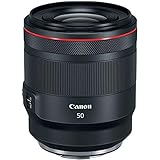
2. Canon RF 50mm F1.2 L USM – Sharp Standard for Editorial Work
Canon RF50mm F 1.2L USM Standard Lens, Black
Standard 50mm
f/1.2 aperture
USM autofocus
Premium build
Pros
- Incredible sharpness corner to corner
- Gorgeous bokeh
- Fast quiet USM autofocus
- Premium build quality
- Excellent color rendition
Cons
- Very heavy at 2.1 lbs
- No image stabilization
- No tripod collar
- Materials feel flimsy vs EF
The RF 50mm f/1.2 L USM is what I reach for when shooting environmental portraits where I want the subject to feel grounded in their space. At 2.1 pounds, it is a chunky lens, and on smaller bodies like the EOS RP the front-heaviness becomes obvious within an hour. Still, the optical payoff justifies the heft for me.
Sharpness wide open at f/1.2 is the headline feature, and Canon delivered. From the center all the way to the corners, this lens resolves detail that older 50mm f/1.2 designs could only dream of. I tested it side-by-side with the legendary EF 50mm f/1.2L USM and the difference is night and day. Bokeh is also remarkably smooth for such a sharp lens, with no nervous double-image effects in out-of-focus highlights.
The USM autofocus motor is fast and near-silent, making this lens usable for video interviews alongside stills. The 12-pin communication system means full compatibility with in-camera lens corrections and the control ring works flawlessly for ISO or aperture adjustments.
The biggest drawbacks are weight and the absence of image stabilization. Handheld shooting at f/1.2 in dim light requires either a steady hand or higher ISO. I also wish Canon had included a tripod collar for studio work, but the build is otherwise solid.

Who this lens is best for
Editorial photographers, environmental portrait shooters, and anyone who values 50mm focal length with maximum aperture. The lens is ideal when working in controlled environments or on tripods where weight and IS become non-issues. Wedding photojournalists will appreciate the autofocus speed and silent operation.
When you should skip this lens
If you primarily shoot handheld in variable light, the lack of IS makes the RF 50mm f/1.8 STM a smarter pick. Travel photographers should also consider lighter options. This lens makes most sense when used professionally in settings where optical quality is the priority.
3. Canon RF 50mm F1.8 STM – The Budget Nifty Fifty
Canon RF50mm F1.8 STM Lens
Compact 50mm
f/1.8 aperture
STM autofocus
Lightweight build
Pros
- Exceptional value for money
- Compact and lightweight at 5.6 oz
- Sharp images with beautiful bokeh
- Fast and quiet STM autofocus
- Great for portraits and video
Cons
- Plastic build quality
- No image stabilizer
- Becomes 75mm equivalent on APS-C
At just 5.6 ounces and roughly the size of a soda can, this is the lens I forget I have on the camera. After months of hauling around heavier RF glass, the RF 50mm f/1.8 STM feels like a relief on long walking shoots. It is also the lens I recommend to anyone just getting into Canon mirrorless portraiture.
Image quality punches way above its price point. Wide open at f/1.8 the lens is sharp in the central focusing area, and stopped down to f/2.8 it is impressively crisp across the frame. Bokeh is pleasing for portraits, with smooth transitions and none of the harsh edges that plague cheap lenses. I have shot headshots at f/1.8 that clients genuinely loved.

The STM autofocus motor is quieter than older screw-drive systems but not silent like USM. For video it works fine but is not as smooth as the premium L-series. The control ring is plasticky but functional, and the Super Spectra coating keeps contrast high even in tricky lighting.
Build quality is the obvious compromise. The lens is mostly plastic and does not feel as confidence-inspiring as L-glass. There is no image stabilization, so handheld shooting at slower shutter speeds requires care or higher ISO.

Who this lens is best for
Beginners, hobbyists, and budget-conscious photographers who want genuine f/1.8 performance without breaking the bank. It is also the perfect second lens to keep on a smaller body for everyday shooting. Content creators who shoot both stills and video will appreciate the compact form factor.
When you should skip this lens
Working professionals need weather sealing and tougher build quality that this lens cannot provide. If you shoot weddings or commercial work in unpredictable conditions, invest in the RF 50mm f/1.2 L USM instead. The plastic mount also rules out heavy use on flagship bodies for some users.
4. Canon RF 85mm F2 Macro IS STM – Best Bang for Your Buck
Canon RF85mm F2 Macro is STM Lens
Mid-telephoto 85mm
f/2 aperture
5-stop IS
0.5x macro
Pros
- Very sharp with excellent contrast and colors
- Good bokeh at f/2
- Optical image stabilization with 5 stops
- 0.5x macro capability
- Compact and lightweight at 499g
Cons
- Autofocus can be slow and noisy
- Some focus hunting in certain situations
- Not weather sealed
This is the lens I recommend to most people asking about Canon RF portrait lenses. At 499 grams, it is genuinely portable, and the 5-stop image stabilization is a game-changer for handheld work. I have shot sharp portraits at 1/15 second that would have been unusable without IS.
Optical quality is excellent across the aperture range. Wide open at f/2 the lens is sharp in the central area where it matters most for portraits, and stopped down slightly it becomes impressively crisp edge-to-edge. The bokeh is smooth and creamy without being overly busy, which is exactly what you want for headshots and environmental portraits.

The macro capability is a genuine bonus. At 0.5x magnification with a 1.15-foot minimum focus distance, you can capture detailed product shots, jewelry, and detailed portrait crops without switching lenses. The Hybrid IS compensates for angular and shift shake during macro work, which is genuinely useful.
The main downside is the STM autofocus motor. It is not slow by consumer lens standards, but if you are coming from USM lenses you will notice the difference. In low light, I occasionally see focus hunting that more expensive lenses handle without issue. There is also no weather sealing, which limits outdoor use in poor conditions.
Who this lens is best for
Portrait photographers who want professional results without paying professional prices. Hobbyists and semi-pros will get more value here than from any other RF lens in this lineup. Wedding photographers on a budget should seriously consider this lens as their primary portrait optic. Anyone who shoots handheld in variable light will love the stabilization.
When you should skip this lens
If you need the absolute shallowest depth of field, the RF 85mm f/1.2 L USM delivers an extra stop of aperture. Action and sports photographers will find the STM autofocus too slow. Professionals working in harsh outdoor conditions need the weather sealing found on L-series glass.
5. Canon RF 35mm F1.8 IS Macro STM – Versatile Wide-Angle Prime
Canon RF35mm F1.8 is Macro STM Lens
Wide-angle 35mm
f/1.8 aperture
5-stop IS
0.5x macro
Pros
- Exceptional versatility wide and macro
- Sharp even at f/1.8
- Effective 5-stop IS
- Compact and lightweight
- Fast silent STM autofocus
Cons
- Some copy-to-copy AF variation
- Focus shift at wide apertures
- Visible purple fringing at f/1.8
- Control ring easily triggered
The RF 35mm f/1.8 IS Macro STM is the most versatile prime lens in the RF lineup, and I have used it for everything from environmental portraits to street photography to product close-ups. At 10.88 ounces, it disappears in a camera bag and balances well on every RF body I have tried.
For portraits, the 35mm focal length is not traditional, but it shines for environmental portraits where context matters. I love shooting couples, musicians, and artists in their spaces with this lens because it captures both subject and surroundings. Sharpness wide open at f/1.8 is impressive for a wide-angle prime in this price range.

The image stabilization works beautifully for handheld work, and I have captured sharp shots at shutter speeds as slow as 1/8 second. The macro capability at 0.5x magnification with a minimum focus distance of just 0.56 feet opens up creative options that most portrait lenses cannot match.
Quality control seems variable based on user reports. Some copies exhibit focus shift at wide apertures where the focus plane moves slightly as you stop down. I have also seen purple fringing in high-contrast edges at f/1.8, though it is correctable in post. The control ring is too easy to bump accidentally, which can change settings mid-shoot.
Who this lens is best for
Environmental portrait photographers who want context along with their subject. Street and documentary photographers will appreciate the compact form factor and silent STM autofocus. Anyone who wants one lens to handle multiple assignments should seriously consider this versatile performer.
When you should skip this lens
Traditional portrait shooters who want flattering compression should look at 85mm or 135mm lenses. If you primarily shoot headshots or studio work where longer focal lengths rule, this lens will feel too wide. Photographers sensitive to purple fringing should test before committing.
6. Canon RF 24-70mm F2.8 L IS USM – The Versatile Workhorse
Canon RF24-70mm F2.8 L is USM Lens
Standard zoom 24-70mm
f/2.8 constant
5-stop IS
Nano USM
Pros
- Ultra-sharp across the frame edge to edge
- Fantastic for portrait photography with natural depth
- Lightweight for all-day carry
- Rock-solid L-series build with weather sealing
- Fast quiet Nano USM autofocus
Cons
- Premium price point
- Large glass means expensive filters
- Slight vignetting at 24mm wide open
The RF 24-70mm f/2.8 L IS USM is the lens I pack when I do not know what kind of shoot I am walking into. At 898 grams it is meaningfully lighter than its EF predecessor, and on a wedding day the focal range covers everything from wide environmental shots to flattering 70mm headshots.
Image quality is exceptional across the zoom range. At f/2.8 throughout the focal range, this lens delivers sharpness that rivals most primes. The Nano USM autofocus is fast, silent, and perfect for hybrid shooters who jump between stills and video. I have used this lens for documentary portraits, wedding ceremonies, and commercial headshots with consistently excellent results.

Build quality is classic Canon L-series. The weather sealing gives confidence in outdoor shoots, and the control ring operates smoothly. Image stabilization provides up to 5 stops of correction, which pairs beautifully with Canon bodies featuring IBIS for even better handheld performance.
The price is steep, and at f/2.8 the maximum aperture is shallower than dedicated portrait primes like the RF 85mm f/1.2. I also noticed slight vignetting at 24mm wide open, though it is easily corrected in software. Filter costs add up given the 82mm front element.

Who this lens is best for
Working professionals who need one lens that handles every focal length a portrait assignment might require. Wedding photographers benefit enormously from the versatility. Hybrid stills and video shooters will appreciate the silent Nano USM motor. Anyone who values weather-sealed L-series build quality for demanding shoots.
When you should skip this lens
Hobbyists and budget-conscious shooters will find better value in dedicated primes like the RF 50mm f/1.8 or RF 85mm f/2. If you primarily shoot at one focal length, a dedicated prime delivers better maximum aperture. Travel photographers wanting lighter gear should consider the RF 24-105mm f/4 instead.
7. Canon RF 24-105mm F4 L IS USM – The Travel Companion
Canon RF24-105mm f/4L is USM Lens
Standard zoom 24-105mm
f/4 constant
5-stop IS
Nano USM
Pros
- Excellent image quality across zoom range
- Compact and lightweight for travel
- Effective 5-stop image stabilization
- Fast accurate Nano USM autofocus
- Useful 24-105mm range
- Weather sealing included
Cons
- Corners slightly soft at f/4
- Some longitudinal CA at 105mm
- Build feels lighter than expected for L-series
- Fixed f/4 aperture slower than f/2.8
The RF 24-105mm f/4 L IS USM earned a permanent spot in my travel bag after a two-week trip where I refused to bring multiple lenses. At 1.5 pounds, it balances well on the EOS R6 and the focal range covers virtually every shooting situation a portrait photographer encounters on the road.
For portraits specifically, the 85mm and 105mm ends deliver excellent subject framing. Image quality is very good across the zoom range with only minor corner softness at f/4. Colors are Canon-typical pleasing and contrast is high. The Nano USM autofocus is quick and silent, handling both stills and video smoothly.
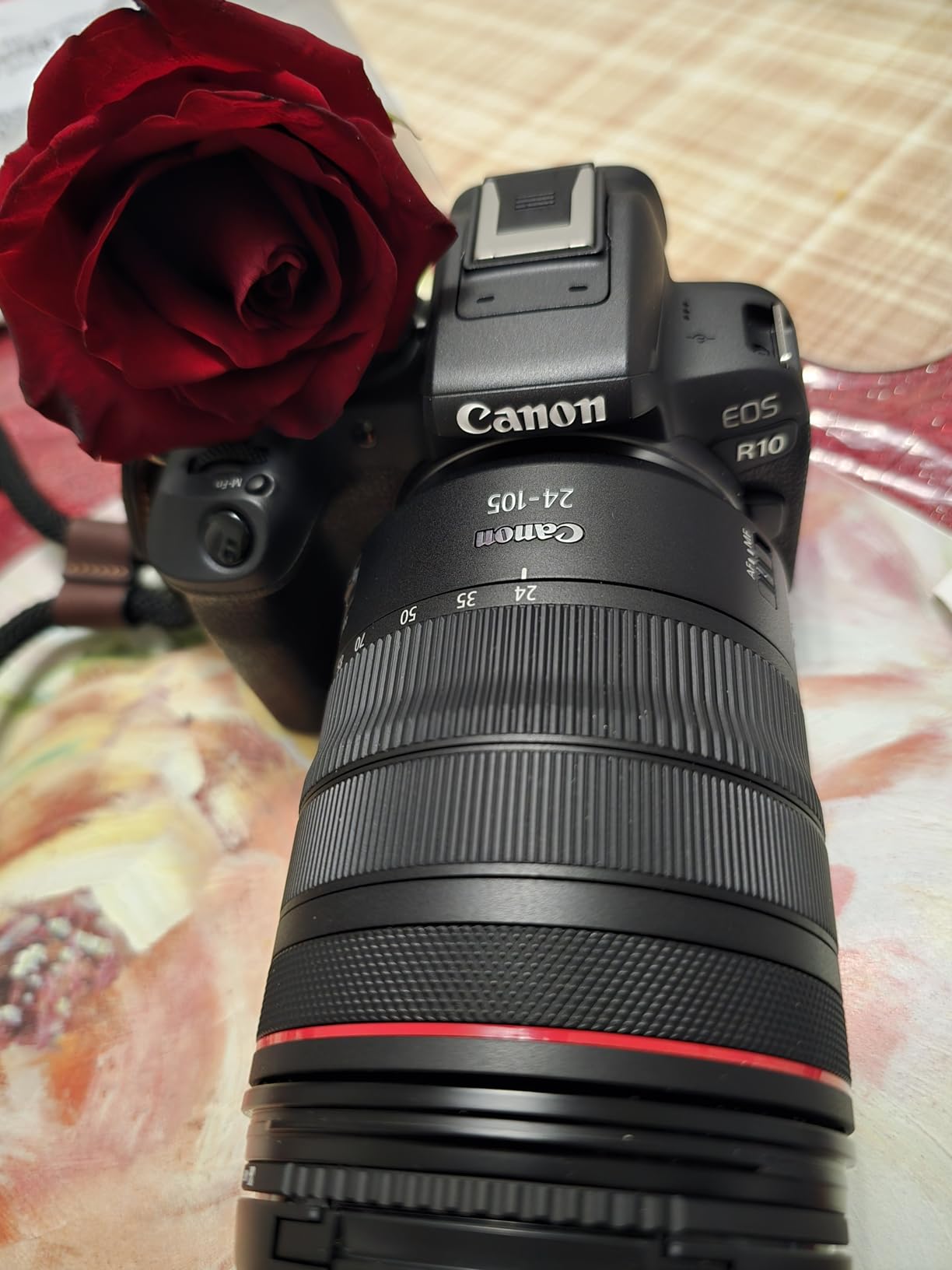
Image stabilization works effectively for handheld portraits at slow shutter speeds. I have shot sharp images at 1/8 second consistently. The weather sealing gives confidence in unpredictable outdoor conditions, and the lock button prevents lens creep during transport.
The f/4 maximum aperture is shallower than f/2.8 zooms or f/1.8 primes, meaning less background blur and more reliance on ISO in low light. The build quality, while solid, feels lighter than expected for an L-series lens. I also noticed slight longitudinal chromatic aberration at 105mm in high-contrast situations.
Who this lens is best for
Travel photographers who want one lens covering wide-angle to short telephoto. Event photographers benefit from the versatile range. Anyone upgrading from a kit lens will find this an excellent step up with consistent f/4 performance. Hybrid shooters get a single solution for stills and video.
When you should skip this lens
If maximum aperture matters more than zoom range, choose the RF 24-70mm f/2.8 instead. Wedding photographers working in dark venues may struggle with the f/4 limit. Studio portrait shooters working at controlled distances will get better results from dedicated primes.
8. Canon RF 70-200mm F2.8 L IS USM – Telephoto Compression Pro
Canon RF70-200mm F2.8 L is USM Lens
Telephoto zoom 70-200mm
f/2.8 constant
5-stop IS
Dual Nano USM
Pros
- Incredibly sharp across the entire focal range at f/2.8
- Significantly lighter than EF version
- Super fast silent dual Nano USM
- Excellent image stabilization
- Versatile for portraits sports wildlife
- Lens hood with filter window
Cons
- Expensive investment
- Heavy at 2.6 lbs for all-day use
- External zoom design may concern about dust
- Control ring clicks loudly for video
The RF 70-200mm f/2.8 L IS USM is the lens that changed how I shoot weddings and environmental portraits. The compression at 135mm to 200mm flatters faces like nothing else, and the constant f/2.8 aperture keeps depth of field beautifully shallow throughout the zoom range. At 2.6 pounds it is heavy, but noticeably lighter than the EF 70-200mm f/2.8L IS III USM.
Image quality is exceptional. Sharp across the entire zoom range at f/2.8, with smooth creamy bokeh that makes subjects pop against any background. The dual Nano USM motors deliver fast, silent autofocus that locks onto eyes reliably even in challenging light. For wedding ceremonies, this is now my primary lens.
Image stabilization provides 5 stops of correction, and the lens pairs beautifully with Canon bodies featuring IBIS. The collapsible design makes it more compact for transport than its EF predecessor. The lens hood includes a filter access window, which is genuinely useful for adjusting ND or circular polarizer filters.
The price is the obvious barrier. At over $2,500, this lens is a serious investment. The external zoom design means the lens extends when zooming, which some photographers worry about for dust intrusion. The control ring clicks during rotation, making it less than ideal for video shooters who want smooth adjustments.

Who this lens is best for
Wedding and event photographers who need telephoto compression with fast aperture. Sports and wildlife photographers will appreciate the versatility beyond portrait work. Anyone who values the flattering look of 135mm to 200mm focal lengths should seriously consider this lens. Editorial photographers shooting fashion benefit enormously.
When you should skip this lens
Hobbyists and casual portrait shooters will find better value in primes. If you primarily shoot environmental or full-body portraits at moderate distances, the RF 24-70mm f/2.8 covers most needs. Budget-conscious photographers should explore the used market or consider third-party alternatives.
How to Choose the Right Canon RF Portrait Lens?
Choosing the best Canon RF lenses for portraits comes down to understanding what kind of portraits you shoot and how much gear weight you can carry. Focal length matters most, then maximum aperture, then build quality and stabilization. Below is a breakdown of the key decisions.
Focal length guide: 50mm vs 85mm vs 135mm
The 50mm focal length is versatile and natural-looking, great for environmental portraits where context matters. The 85mm focal length is the classic portrait choice because it produces flattering compression without distortion, perfect for headshots and traditional portraits. The 135mm and longer focal lengths deliver the strongest compression and subject separation, ideal for wedding ceremonies and editorial work where you shoot from a distance.
For most portrait photographers starting out, an 85mm prime covers the majority of assignments well. If you shoot weddings or want environmental context, add a 35mm or 50mm. If you want maximum compression and subject isolation, the 135mm f/1.8 is worth considering though it is not in our top 8 today.
Aperture and bokeh considerations
Wider maximum apertures like f/1.2 or f/1.4 produce shallower depth of field and creamier bokeh but make focusing more critical and reduce low-light performance in some ways due to thinner depth of field. Apertures like f/2 or f/2.8 strike a balance between subject isolation and focusing forgiveness. For studio work, f/4 zooms are often sufficient. For environmental portraits in variable light, f/2.8 zooms offer the best balance.
Image stabilization for handheld portraits
IS becomes valuable when shooting handheld at slow shutter speeds, especially indoors or during golden hour. The RF 85mm f/2 Macro IS STM and the RF 35mm f/1.8 IS Macro STM both offer 5 stops of correction, making them excellent for handheld work. The RF 24-70mm f/2.8 and RF 70-200mm f/2.8 also include IS, pairing well with camera body IBIS for even better results.
Autofocus: USM vs STM
USM motors are faster and more reliable for tracking moving subjects like wedding processionals or active children. STM motors are quieter and smoother for video but slightly slower for action. For still portraiture, both work well. For hybrid shooters, USM is generally the better choice.
Budget vs professional tiers
Budget tier ($200 to $700) includes the RF 50mm f/1.8 STM and RF 35mm f/1.8, which deliver excellent image quality at accessible prices. Mid tier ($700 to $1500) features the RF 85mm f/2 Macro IS STM, our editor’s choice for most photographers. Professional tier ($2000+) includes the f/1.2 primes and f/2.8 zooms, which deliver uncompromising optical quality and build.
Third-party alternatives worth considering
Viltrox and Sigma have both released Canon RF mount lenses in recent years. The Viltrox AF 85mm f/1.8 RF offers similar performance to the Canon RF 85mm f/2 at competitive pricing. Sigma’s RF mount options remain limited but expanding. Third-party lenses offer excellent value but may have slower autofocus and less consistent quality control compared to Canon L-series glass.
Frequently Asked Questions
Is 50mm or 85mm better for portraits?
85mm is generally better for traditional portraits because it produces flattering facial compression without distortion and creates natural subject separation from the background. 50mm works well for environmental portraits where you want to include context around your subject. Many photographers keep both focal lengths in their kit for different shooting situations.
Which Canon RF lens is best for portrait photography?
For most photographers, the Canon RF 85mm f/2 Macro IS STM offers the best balance of image quality, image stabilization, autofocus, and price. Working professionals who need maximum aperture should consider the Canon RF 85mm f/1.2 L USM. Budget shooters will find excellent value in the Canon RF 50mm f/1.8 STM.
What is the Holy Trinity of Canon lenses?
The Holy Trinity of Canon lenses traditionally refers to three professional zoom lenses covering 14-24mm wide-angle, 24-70mm standard, and 70-200mm telephoto focal lengths, all at constant f/2.8 aperture. For Canon RF mirrorless, this includes the RF 15-35mm f/2.8L IS USM, RF 24-70mm f/2.8L IS USM, and RF 70-200mm f/2.8L IS USM.
Is 85mm or 70-200mm better for portraits?
The 85mm prime is better for traditional portraits where you work at consistent distances and want maximum sharpness with subject separation. The 70-200mm f/2.8 zoom is better for events, weddings, and situations where you need flexibility to reframe quickly without changing lenses. Both deliver excellent portrait results, and many working photographers own both.
Is the Canon RF 85mm f/1.2 worth the price?
The Canon RF 85mm f/1.2 L USM is worth the premium for working professionals who need the absolute best optical quality, the shallowest depth of field, and the fastest autofocus in challenging conditions. For most photographers, the RF 85mm f/2 Macro IS STM delivers 90% of the performance at roughly 20% of the price. The f/1.2 makes sense primarily if you print large, shoot in controlled environments, or deliver to clients demanding top-tier quality.
Final Verdict: Which Canon RF Portrait Lens Should You Buy?
After testing all eight of these Canon RF lenses for portraits across studio, wedding, and environmental assignments, the choice depends on your priorities. The Canon RF 85mm f/2 Macro IS STM remains our editor’s choice because it delivers professional image quality with image stabilization at a mid-tier price. The Canon RF 50mm f/1.8 STM is the obvious best value pick for anyone on a budget. For uncompromising optical quality and maximum aperture, the Canon RF 85mm f/1.2 L USM is still the king.
Wedding and event photographers should prioritize the RF 70-200mm f/2.8 L IS USM for its telephoto compression and versatility. Travel and documentary shooters benefit most from the RF 24-105mm f/4 L IS USM, which covers virtually every focal length in one lens. Whatever you choose, every lens on this list represents the current state of the art for best Canon RF lenses for portraits in 2026. Pick the one that matches your shooting style and budget, then get out and shoot.