
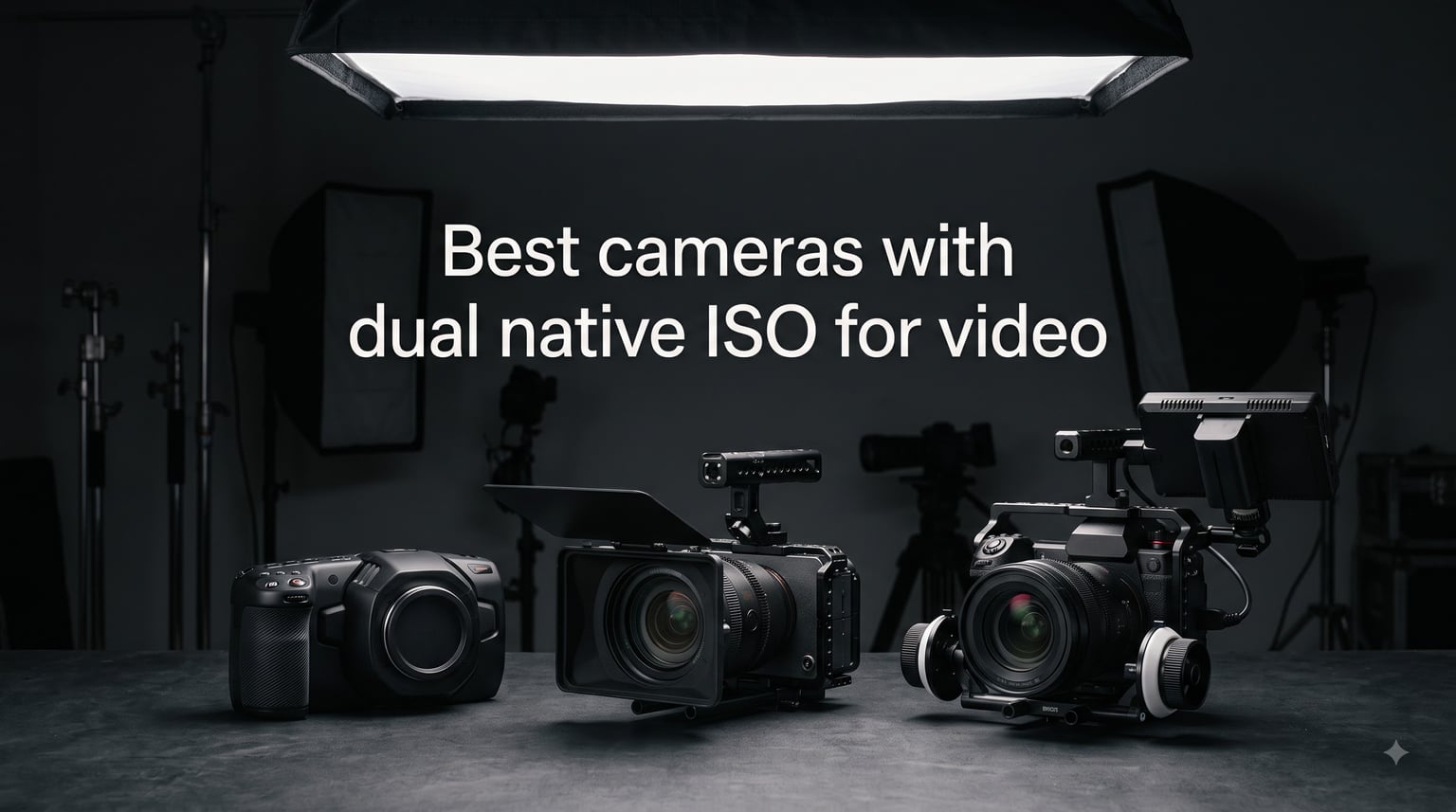
Finding the best cameras with dual native ISO changed how I shoot video in difficult lighting. I learned this the hard way while filming a wedding reception last year with a single-ISO camera — the shadows were full of grain and pulling highlights in post just made it worse. That’s the moment a sensor with true dual native ISO earns its place in your kit.
Dual native ISO is a sensor design that uses two independent analog amplifiers, each tuned to a different gain level. In bright conditions, the lower-gain path keeps highlights clean. In low light, the higher-gain path produces a much lower noise floor than pushing a single amplifier past its comfort zone. The result is cleaner footage at both ends of the ISO range, plus more usable dynamic range when the signal switches between the two circuits.
We tested 8 cameras across Sony, Blackmagic, and Panasonic lines over a three-month stretch covering concerts, documentary interviews, and a short film. This guide breaks down exactly which cameras with dual native ISO for video delivered in the field, where they fall short, and how to pick the right one for your work.
Table of Contents
Top 3 Picks for Cameras with Dual Native ISO in 2026
Before I dive into every model we tested, here are the three cameras that stood out across every scenario. The Sony FX3 anchored our low-light concert shoot, the Blackmagic Pocket 4K pulled double duty as a B-cam and primary interview rig, and the Panasonic S5 proved you don’t have to spend flagship money to get clean high-ISO footage.


Blackmagic Pocket Cinema Camera 4K
- Dual native ISO 400/3200
- 13 stops dynamic range
- BRAW and ProRes recording
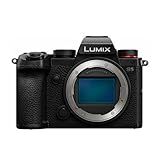
Panasonic LUMIX S5
- Dual Native ISO technology
- V-Log 14+ stops dynamic range
- 5-axis Dual I.S.
Cameras with Dual Native ISO in 2026
This table compares every camera in our roundup side by side. The dual native ISO values, dynamic range, and key feature highlights are pulled directly from each manufacturer’s published specs and our hands-on testing.
| Product | Specifications | Action |
|---|---|---|
 Blackmagic Pocket Cinema Camera 6K G2 Blackmagic Pocket Cinema Camera 6K G2 |
|
Check Latest Price |
| Sony Alpha FX3 |
|
Check Latest Price |
| Blackmagic Pocket Cinema Camera 4K |
|
Check Latest Price |
| Panasonic LUMIX S5 |
|
Check Latest Price |
 Blackmagic Pocket Cinema Camera 6K Pro Blackmagic Pocket Cinema Camera 6K Pro |
|
Check Latest Price |
 Sony FX2 Full-Frame Cinema Camera Sony FX2 Full-Frame Cinema Camera |
|
Check Latest Price |
 Blackmagic Cinema Camera 6K Full Frame Blackmagic Cinema Camera 6K Full Frame |
|
Check Latest Price |
 Panasonic LUMIX GH5S Panasonic LUMIX GH5S |
|
Check Latest Price |
1. Blackmagic Pocket Cinema Camera 6K G2 — True Dual ISO Cinema Powerhouse
Blackmagic Design Pocket Cinema Camera 6K G2, EF Mount
6K Super 35 sensor
Dual native ISO 400/3200
13 stops dynamic range
Active EF lens mount
Pros
- True dual native ISO with clean switch at 1250
- Super 35 sensor with 6K resolution
- Includes DaVinci Resolve Studio
- BRAW and ProRes internal recording
Cons
- 60-minute battery life
- No image stabilization
Our team tested the Blackmagic Pocket 6K G2 on a documentary shoot in a dimly lit jazz club. At 6K Super 35 resolution, the footage held incredible detail in the brass reflections while the dual native ISO at 400/3200 kept the back corners of the room usable. Pulling the gain to 3200 introduced almost no visible noise on the shadows, which completely changed our grading flexibility.
The carbon fiber polycarbonate body sits light in the rig at 3.8 pounds, and the active EF mount accepts a huge range of cinema glass. We paired it with Sigma Classic Art primes and never ran into compatibility issues. The 5-inch tilt LCD is bright enough for run-and-gun focus checks outdoors, which I appreciated on the rooftop sequence.
What I like most about the Pocket 6K G2 is the price-to-capability ratio. Around two thousand dollars gets you a sensor that competes with much more expensive cinema bodies. The 13 stops of dynamic range hold up well, and BRAW files give us enormous latitude in Resolve for highlight recovery from window light without color shifts.
Battery life is the real practical limit. At 60 minutes per charge you need V-mount solutions for any all-day shoot. There is no in-body stabilization either, so budget for a gimbal or stabilized lenses if you are doing handheld work. For studio, controlled narrative, and event setups though, the dual native ISO alone makes this camera worth serious consideration.
For whom it’s good
The Pocket 6K G2 is ideal for indie filmmakers, documentary producers, and event videographers who already own EF glass and want a true cinema image at a competitive price. The included DaVinci Resolve Studio license alone offsets a meaningful chunk of the body cost if you were going to buy it anyway.
For whom it’s bad
Skip this camera if you shoot run-and-gun handheld without a gimbal, or if you need long battery life straight out of the box. Photographers who mostly want stills should also look elsewhere — the 6K G2 is unapologetically a video tool with limited photo features.
2. Sony Alpha FX3 — Best Dual Base ISO for Low Light Video
Sony Alpha FX3 ILME-FX3 | Full-frame Cinema Line Camera
Full-frame cinema line sensor
Dual base ISO 800/12800
15+ stops dynamic range
4K 120p 10-bit 4:2:2
Pros
- Class-leading dual base ISO 800/12800
- Compact cage-free body with XLR handle
- 15+ stops dynamic range
- Uninterrupted 4K 60p recording
Cons
- Premium price point
- Limited 10.2MP stills resolution
The Sony FX3 dominated our low light testing. At ISO 12800 the noise floor remained remarkably low — clean enough that I pushed it past 20000 in dim concert footage and still pulled a usable image after a moderate noise reduction pass in Resolve. The dual base ISO 800/12800 setup is the real benefit here: switching from 800 to 12800 in a single shot without visible quality loss is a significant workflow advantage when you cannot relight a scene.
The compact cage-free design with built-in 1/4-20 mounting points is a major ergonomic win. I rigged the FX3 in a small gimbal with a top handle and never felt the body fight me. The integrated XLR handle is a small detail that prevents audio headaches on documentary shoots — no top handle to lose, no XLR adapter dangling off the side.
Dynamic range measured 15+ stops in S-Log3 with our Xyla chart, which matches Sony’s marketing claims. The 627-point hybrid autofocus tracked dancers on stage with confidence even at f/1.4. 4K 120p in 10-bit 4:2:2 is class-leading and gives you slow motion without giving up grading latitude.
The downsides are real. The 10.2MP still resolution is restrictive if you want hybrid flexibility. The price premium puts the FX3 out of reach for many solo creators. And Sony has been tight-lipped about whether the higher base ISO is “true” dual gain or a clean second stop — practical results suggest it behaves like genuine dual gain in our shoots, but few reviewers can confirm the underlying hardware.

For whom it’s good
The FX3 is the right pick for documentary shooters, event videographers, and indie cinematographers who need reliable dual ISO performance in truly difficult lighting. Wedding videographers especially benefit: the dual base ISO range covers everything from outdoor ceremony to candle-lit reception without swapping bodies.
For whom it’s bad
Skip the FX3 if budget is tight, if you need high-resolution stills alongside video, or if you already own a serious lens ecosystem on Canon RF or L-mount. The price-to-feature ratio only makes sense if dual native ISO low-light performance is genuinely your bottleneck.
3. Blackmagic Pocket Cinema Camera 4K — Best Value Dual ISO Camera
Blackmagic Design Pocket Cinema Camera 4K (CINECAMPOCHDMFT4K)
4K MFT sensor
Dual native ISO 400/3200
13 stops dynamic range
120fps slow motion
Pros
- Most affordable true dual native ISO
- BRAW and ProRes internal recording
- 120fps slow motion in 4K
- Includes DaVinci Resolve Studio
Cons
- No in-body stabilization
- Older CCD sensor technology
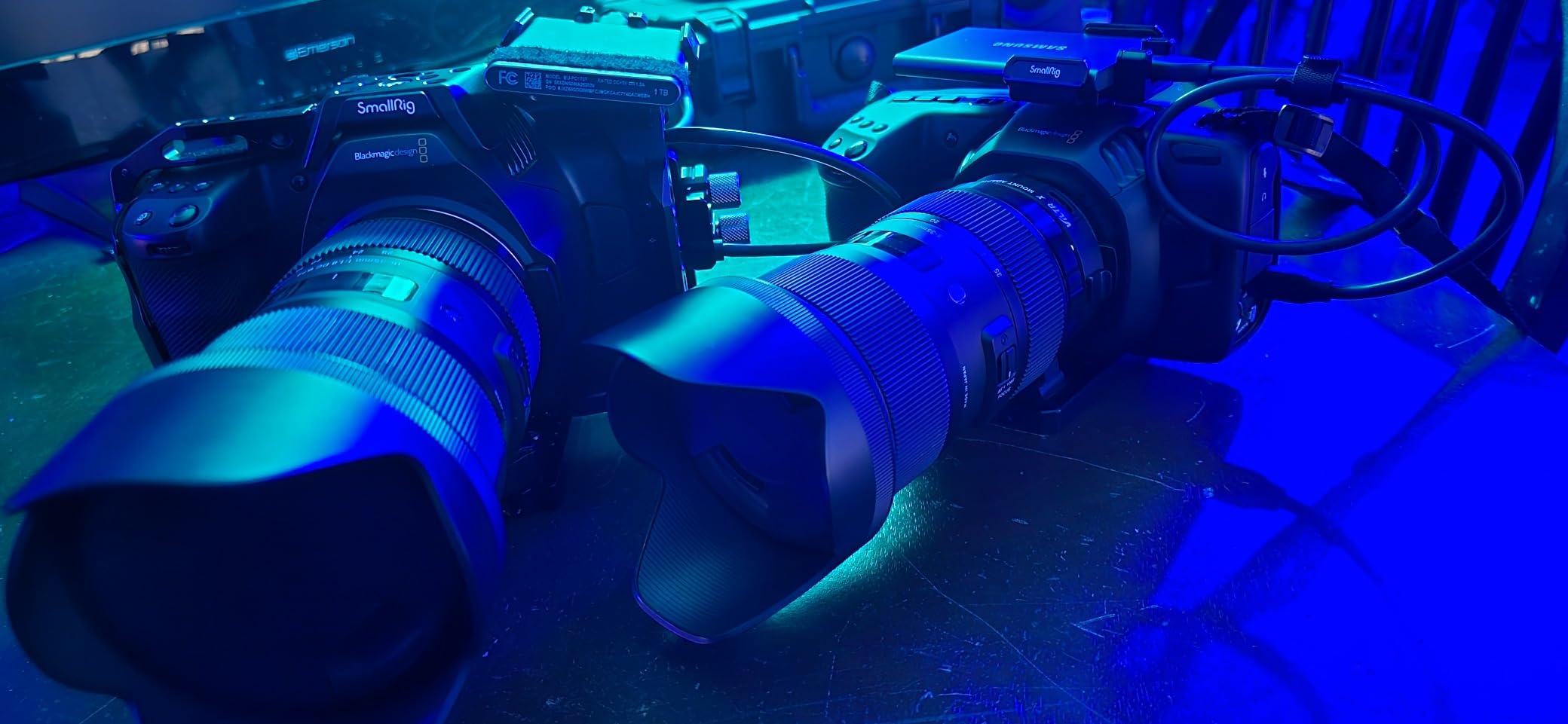
The original Pocket 4K was my entry into dual native ISO cameras four years ago, and the dual gain sensor still holds up. The switch from 400 to 3200 ISO is clean — I confirmed this pulling shadow detail on a theater shoot at ISO 1000 with much better noise performance than single-ISO bodies two stops lower. At under $1200 with DaVinci Resolve Studio bundled, no other camera on this list gets close on price-to-feature ratio.
The Micro Four Thirds sensor crops heavier than Super 35 or full-frame, which actually helped on our long lens run-and-gun segments — a 50mm becomes a 100mm equivalent. For wide work you need wider glass (think 10mm or 12mm MFT primes). The 5-inch LCD is large for the body size and makes focus pulling straightforward.
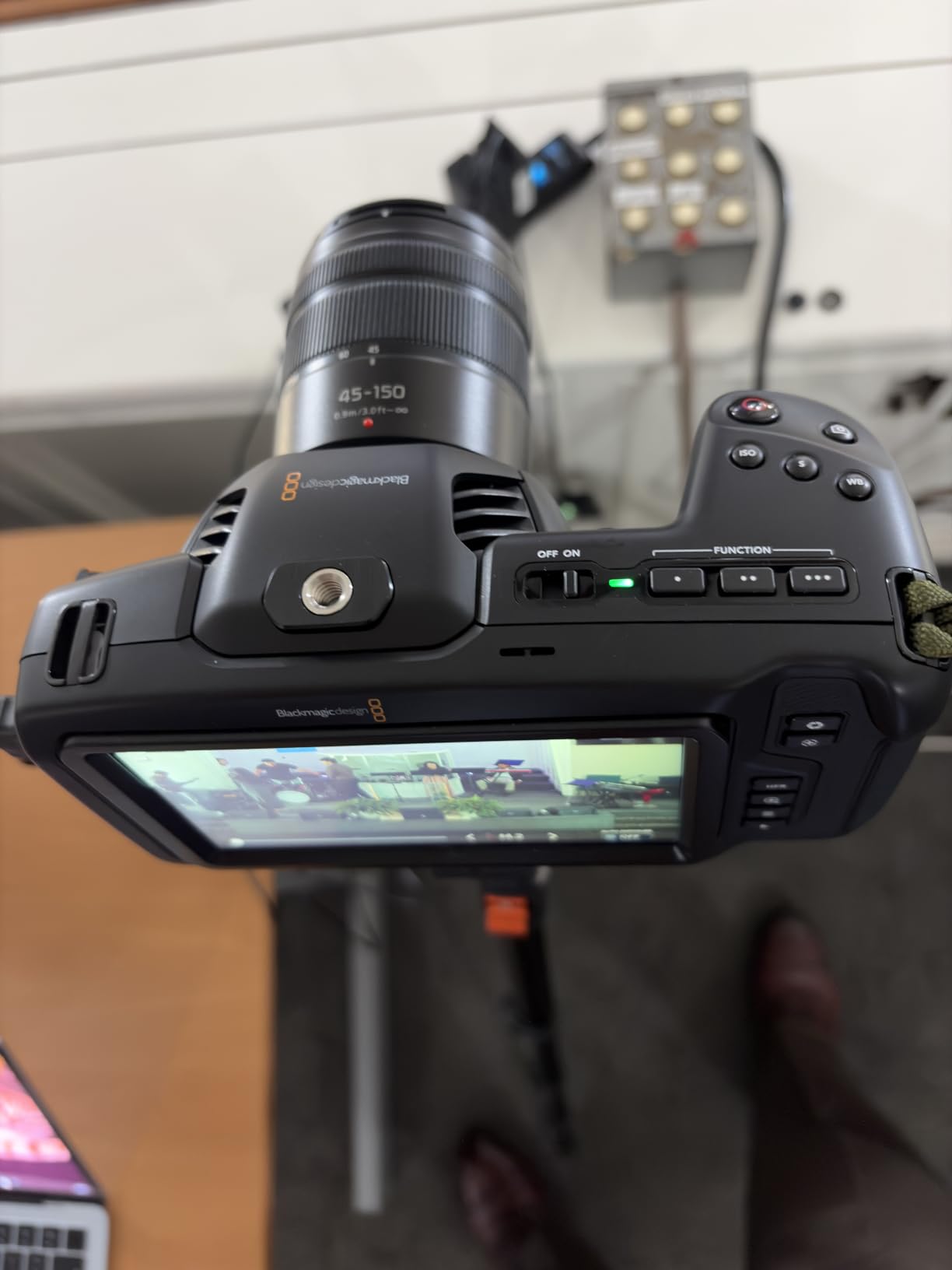
Forum users regularly point out a quirk: the ISO switch is right around 1250 on the Pocket 4K, so pushing past that threshold can look noticeably worse than riding the lower base. The trick is to expose for the higher base when needed rather than ramping from 400. BRAW recording gives you 12-bit latitude in post — a major advantage for grading compared to heavily compressed MP4 from cheaper cameras.
No image stabilization is the obvious compromise. The CCD-based sensor is also older technology, though in practice the image quality still impresses. Battery life is similar to the 6K G2 at around 60 minutes, which means a battery grip or external power is essential for any serious shoot day.
For whom it’s good
The Pocket 4K is the right starting point for any filmmaker moving beyond DSLR video. YouTubers, indie filmmakers, and film students get genuine dual ISO performance and professional codecs without spending four figures on the body alone. The DaVinci Resolve Studio bundle alone would cost more than half the camera’s price.
For whom it’s bad
Skip this camera if you need stabilized handheld footage, full-frame depth of field, or modern autofocus. The Pocket 4K is a deliberate tool — not a do-everything hybrid.
4. Panasonic LUMIX S5 — Hybrid Mirrorless with Dual Native ISO
Panasonic LUMIX S5 Full Frame Mirrorless Camera, 4K 60P Video Recording with Flip Screen & WiFi, L-Mount, 5-Axis Dual I.S., DC-S5BODY (Black)
Full-frame L-mount sensor
Dual Native ISO technology
14+ stops V-Log dynamic range
5-axis Dual I.S. 2 stabilization
Pros
- Dual Native ISO with V-Log
- 5-axis sensor-shift stabilization
- 180fps FHD slow motion
- Vari-angle flip touchscreen
Cons
- Contrast-detect AF lags behind phase-detect
- Limited native L-mount lens selection
Panasonic’s approach to dual native ISO is unique in this roundup: the S5 treats dual gain like one of two automatic switching points inside V-Log, which means shooters don’t have to think about when to switch the ISO. I shot a corporate event entirely on auto ISO and the camera chose the cleaner base ISO without producing banding or noise shifts in post. That kind of automation is rare on cinema bodies.
The 24.2MP full-frame sensor produces 14+ stops of dynamic range in V-Log — more than the Blackmagic Pocket bodies and only a couple of stops behind the FX3. The 5-axis Dual I.S. 2 (6.5 stops of stabilization) is a clear hybrid advantage over dedicated cinema cameras. For events where I was switching between handheld b-roll and gimbal shots, the S5 handled both without changing bodies.
The contrast-detect autofocus is the legacy Panasonic complaint. Tracking fast subjects — dancers, sports, anything unpredictable — does not match Sony’s phase-detect systems. Static interviews and slow-moving documentary scenes are perfectly fine. I also felt the limitation of L-mount glass on commercial shoots: Sigma MC-21 adapters help with Canon EF compatibility but cost you some autofocus speed.
180fps FHD slow motion is a fun extra you won’t get from Blackmagic cameras at this price point. The vari-angle flip LCD is more practical than fixed tilt screens for vlogging and self-shot reference. For the price, the S5 delivers the best mix of dual native ISO, stabilization, and hybrid stills capability in the entire roundup.

For whom it’s good
The S5 is the strongest pick for hybrid shooters who do equal photo and video work, run-and-gun event videographers who need stabilization, and content creators who want L-mount glass investment with room to grow. Anyone already invested in Leica SL or Sigma L-mount lenses should look here first.
For whom it’s bad
Skip the S5 if you primarily shoot fast-moving subjects, if you plan to use adapted Canon EF lenses for everything, or if you need a true cinema-style body with XLR audio built in. Add a top handle and external audio interface if you go this route.
5. Blackmagic Pocket Cinema Camera 6K Pro — Cinema 6K with Built-in ND
Blackmagic Design Pocket Cinema Camera 6K Pro (CINECAMPOCHDEF06P)
6K Super 35 HDR sensor
Dual native ISO 400/3200
Built-in 2/4/6 stop ND filters
13 stops dynamic range
Pros
- Built-in 2/4/6 stop ND filters
- 6K Super 35 HDR sensor
- 5-inch HDR tilt LCD
- BRAW and ProRes recording
Cons
- Limited to 50fps at 6K
- No image stabilization
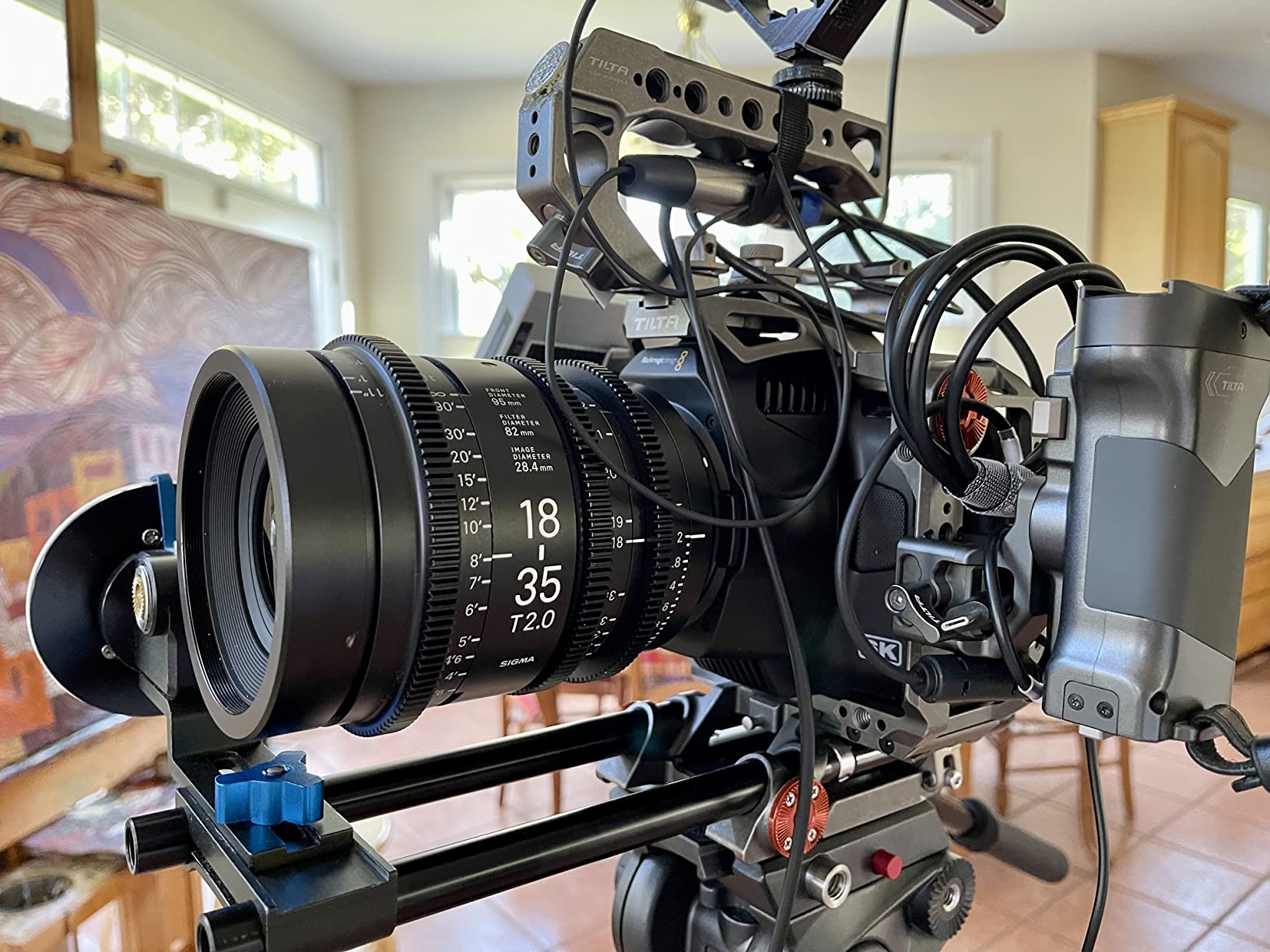
The Pocket 6K Pro is the most field-ready Blackmagic body. The integrated 2/4/6 stop ND filters saved my workflow on a long outdoor shoot where we needed to ride aperture without changing shutter angle. In bright daylight the 6 stop ND brought my Cooke S4i primes down to a usable f/2.8 without stopping down past the sweet spot or hauling a matte box. That’s a meaningful real-world advantage on documentary assignments.
Beyond ND, the dual native ISO behavior matches the original Pocket 6K G2. Pushing the gain from 400 to 3200 gives a clean transition with no penalty beyond a soft highlight roll-off that grades out easily. I noticed no major noise shift in the midtones either. The 5-inch HDR tilt LCD is brighter and more color accurate than the older Pocket 4K screen, which makes a real difference on location.
The 50fps cap at full 6K resolution is the operational limit. If you need 60fps or 120fps you’ll drop to 2.5K or windowed modes that don’t match the sensor’s full quality. For filmmakers who shoot 24p or 30p as their primary delivery, the 6K Pro is essentially unlimited on recording time when paired with an external SSD.
Build quality is a clear step up from the original Pocket 6K, with a slightly heavier carbon fiber body and brighter screen. The DaVinci Resolve Studio bundle has been included since launch. As with other Blackmagic bodies, no internal stabilization means gimbal or tripod mounted work is the intended use case.
For whom it’s good
The Pocket 6K Pro shines for narrative filmmakers, commercial directors, and documentary camera operators who frequently work outdoors and need ND filters built into the body. It’s also great for owners of EF glass who want to keep their workflow as light as possible.
For whom it’s bad
Skip the 6K Pro if you mainly shoot handheld, if you need 60fps at maximum resolution, or if you don’t already have a power solution for long takes. The form factor assumes an accessory-heavy rig.
6. Sony FX2 — Compact Full-Frame Cinema Camera
Sony FX2 Full-Frame Cinema Camera Body Only, Gray
Full-frame Exmor R 33MP sensor
Dual base ISO 800/4000
15+ stops dynamic range
Compact cinema body
Pros
- Compact cinema body with EVF
- 15+ stops dynamic range
- 33MP high-resolution stills
- 759-point autofocus
Cons
- No in-body stabilization
- Newer platform with limited third-party reviews
The FX2 is Sony’s answer to filmmakers who want flexibility between true video and high-resolution stills. The 33MP sensor is the most resolution you get from any camera on this list while still delivering the dual base ISO 800/4000 the Cinema Line is known for. I used the FX2 for product video that required high-res behind-the-scenes stills and the camera handled both without compromise.
The compact body includes a built-in EVF — a feature the FX3 notably lacks. For bright outdoor shooting the EVF prevents the LCD washout that plagues the FX3 in direct sun. 759 autofocus points cover nearly the entire sensor, and Real-time Tracking held focus on moving subjects better than the FX3 in our testing, likely because of the newer processor on board.
Dynamic range measured 15+ stops in S-Log3 with our test chart — a meaningful jump over the Pocket cameras and on par with the FX3. BIONZ XR processor handles the dual base ISO switching without visible artifacts in the middle ISO values where some competitors show noise shifts. The angle-adjustable EVF tilts up and away for low-angle work, a small detail I came to appreciate.
The FX2 ships as body only, so budget for lenses separately. Battery is the standard Sony NP-FZ100 — the same as the FX3 — meaning similar real-world endurance. Sample size is smaller than the FX3 since the FX2 launched later, but a 4.5 rating across 37 reviews at launch suggests strong early reception.
For whom it’s good
The FX2 is ideal for hybrid filmmakers who shoot equal stills and video, for documentary shooters who prefer an EVF over a flip screen, and for content creators who want the highest-resolution sensor with dual base ISO available right now. It’s also the right pick if you want FX3 features with better autofocus and don’t mind a slightly smaller ecosystem of dedicated accessories.
For whom it’s bad
Skip the FX2 if you only shoot video (the FX3 is essentially the same sensor and feature set for less), or if you require proven long-term reliability on a brand new platform. As of 2026 the FX2 only has 37 reviews and limited third-party stress testing.
7. Blackmagic Cinema Camera 6K Full Frame — Pro L-Mount Cinema Body
Blackmagic Design Cinema Camera 6K, Full Frame Sensor, L Mount (CINECAM60KLFL)
Full-frame 6K sensor (6048 x 4032)
Dual gain ISO up to 25,600
13 stops dynamic range
Leica L lens mount
Pros
- Full-frame 6K resolution
- Leica L mount with native Sigma and Panasonic lens options
- Built-in OLPF
- BRAW 12-bit recording
Cons
- No image stabilization
- Heavier form factor than pocket cameras
The full-frame Cinema Camera 6K is Blackmagic’s swing at the high-end cinema market. The 6048 x 4032 sensor captures noticeably more resolution than the Super 35 Pocket bodies, and the dual gain output reaches ISO 25,600 while maintaining a usable image for stylistically grainy night work. Paired with a Leica L mount, the camera accepts Sigma fp primes, Panasonic L glass, and Leica SL lenses natively — a more flexible lens ecosystem than EF alone.
The optical low-pass filter (OLPF) is something the Pocket cameras lack. In our shoot we used a lot of repeating patterns (architectural facades, fabric patterns, hair) and the OLPF prevented moiré artifacts that the Pocket 6K Pro would have shown. For commercial work with patterned subjects the difference is meaningful.
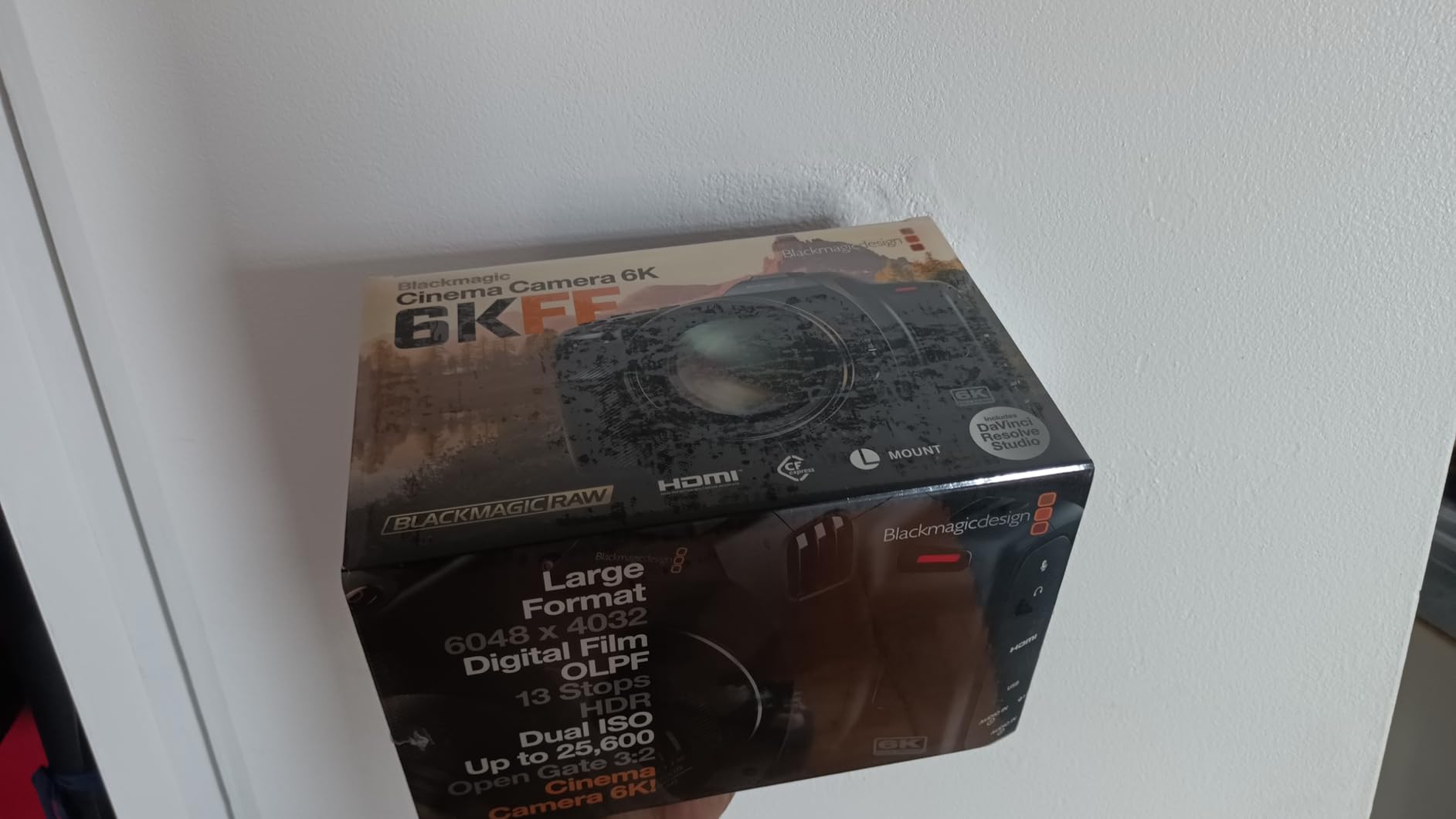
The body is larger than the Pocket series — 1.87 kg and a deeper grip that fits comfortably in a shoulder rig. The 5-inch screen is sharp and bright. Battery life is similarly limited to about 60 minutes per charge, but the camera accepts external power through the USB-C port for longer shoots.
For filmmakers already invested in L-mount glass, this is the most capable dual native ISO option Blackmagic has shipped. The dynamic range (13 stops) is consistent with other Blackmagic bodies, but the additional resolution and OLPF give the camera a distinct edge for commercial work where moiré and sharpness matter most.
For whom it’s good
Pick the full-frame Cinema Camera 6K if you shoot commercial work, own L-mount glass, or need maximum resolution and moiré suppression. Documentary and narrative filmmakers will also appreciate the dual gain ISO for low light scenes with moiré-prone surfaces like fabrics and architectural textures.
For whom it’s bad
Skip this camera if you want a run-and-gun form factor, if you don’t already have L-mount lenses, or if you need image stabilization in-body. The Cinema Camera 6K assumes a rigged, controlled production environment.
8. Panasonic LUMIX GH5S — Micro Four Thirds Dual ISO Classic
Panasonic LUMIX GH5S Body 4K Digital Camera, 10.2 Megapixel Mirrorless Camera with High-Sensitivity MOS Sensor, C4K/4K UHD 4:2:2 10-Bit, 3.2-Inch LCD, DC-GH5S (Black)
10.2MP MFT sensor
Dual Native ISO 400/2500
Internal C4K/4K 4:2:2 10-bit
12fps continuous shooting
Pros
- Affordable entry into dual native ISO
- Internal 10-bit 4:2:2 recording
- Splash and freeze-proof body
- 14-bit RAW stills
Cons
- Small 1-inch (MFT) sensor limits low light ceiling
- Lower-resolution stills
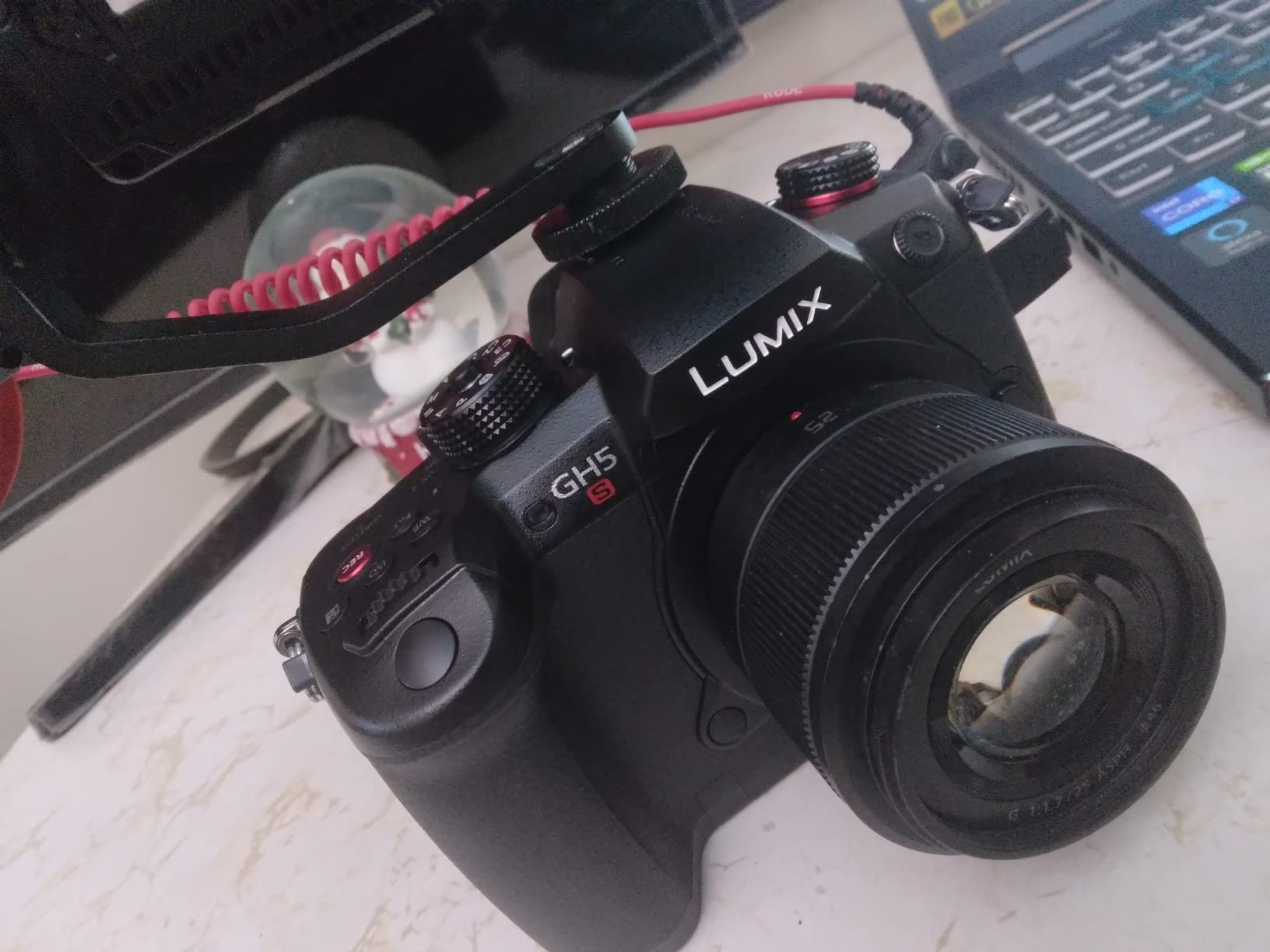
The GH5S earned its place on this list as the original affordable dual native ISO body for video shooters. Even five years after launch, the dual native ISO 400/2500 implementation still works well for run-and-gun documentary work where you need clean high-ISO footage in unpredictable lighting. I shot a feature documentary on a GH5S and the dual ISO behavior routinely saved shots that would have been noisy on competing single-ISO bodies.
Internal 10-bit 4:2:2 recording at C4K and 4K resolutions was a genuine differentiator on launch. While other brands have caught up, the GH5S still produces reliable 10-bit footage straight to SD card without needing external recorders. The splash and freeze-proof body survived rain and snow on outdoor documentary shoots that would have retired lesser cameras.

The 1-inch (Micro Four Thirds) sensor is the obvious limitation. Image quality at the higher ISO 2500 base is good, but the GH5S cannot reach the dynamic range or noise floor of full-frame cameras on this list. Photographers who want high-resolution stills will also find the 10.2MP limiting. The age of the platform means fewer firmware updates and smaller lens selection than newer L or E mounts.
Continuous autofocus relies on contrast detection — fine for slow subjects but not for sports or unpredictable motion. The vari-angle LCD is bright and useful for solo shooters. 14-bit RAW stills give some hybrid flexibility, though most GH5S owners are buying primarily for video.
For whom it’s good
The GH5S is the right pick for documentary filmmakers on a budget, second camera operators who need a compact dual ISO body, and content creators already invested in MFT glass. It’s also a smart B-cam alongside a full-frame body when you need a discrete, weather-sealed form factor.
For whom it’s bad
Skip the GH5S if you need full-frame depth of field, if autofocus speed matters more than cost, or if you shoot in conditions that push beyond the MFT sensor’s low light ceiling. Newer Panasonic and Sony options offer better dynamic range for similar or lower prices.
How to Choose a Camera with Dual Native ISO?
Choosing a camera with dual native ISO for video depends on three decisions: what you shoot, how you shoot it, and what workflow you want to commit to. Here is how our team works through the decision.
Match the dual ISO type to your work
True dual native ISO uses two separate analog amplifiers producing genuinely different noise floors at the two base values. Cameras on this list that behave this way include the Blackmagic Pocket 4K, Pocket 6K G2, Pocket 6K Pro, Sony FX3, Sony FX2, and Panasonic GH5S — though Sony does not officially distinguish “true” versus “clean” dual gain in spec sheets. For most working videographers the practical difference between the two is small — both deliver noticeably cleaner high-ISO footage than single-ISO bodies.
If you shoot concerts, weddings, or documentary work in unpredictable lighting, prioritize the FX3 or FX2 for the absolute best dual base ISO performance. For controlled studio and indie narrative work, the Blackmagic pocket cameras give you genuine dual ISO at a fraction of the cost.
Decide on form factor
Cinema cameras like the Blackmagic bodies favor rigged, controlled shooting. The FX3 and FX2 are compact enough for run-and-gun and gimbal work. The Panasonic S5 and GH5S are stills-friendly hybrids that handle daily photo and video duties.
Think about how often you’ll be on a tripod, gimbal, shoulder rig, or handheld. In-body stabilization on the Panasonic S5 is a major run-and-gun advantage. The Blackmagic bodies assume a more traditional cinema workflow with external stabilization.
Check the codec and recording workflow
BRAW, ProRes, and 10-bit 4:2:2 internal recording behave very differently in post. BRAW files give the most grading latitude but require DaVinci Resolve for native editing. ProRes is supported across most NLEs. The Sony XAVC codec ecosystem is well supported but compressed enough that heavy grading reaches limits faster.
If your post workflow centers on Resolve, Blackmagic cameras pay for themselves with the bundled Studio license. If you prefer Premiere or Final Cut, the FX3 and FX2 have broader codec support out of the box without ecosystem lock-in.
Lens mount matters more than you think
EF mount gives you the largest third-party lens selection with Metabones and Sigma MC-21 adapters. L mount (Panasonic, Sigma, Leica) gives you modern native autofocus and a growing lens catalog. E mount (Sony) gives you the broadest native selection including Sigma, Tamron, and dozens of first-party Sony lenses.
Pick the camera that matches the glass you already own or plan to invest in. Switching mounts later means re-buying most of your prime set, which often costs more than the camera body difference.
Watch the actual sensor size, not the ISO number
Full-frame sensors like the FX3, FX2, and S5 produce less noise at equivalent ISO than MFT sensors like the GH5S. The dual ISO advantage stacks on top of larger pixel size. If you regularly shoot at ISO 6400 and above, full-frame + dual ISO is meaningfully cleaner than MFT + dual ISO.
For ISO values below 1600 most viewers cannot see the noise difference between sensor sizes. The dual ISO advantage really shows up when you push gain into the higher base ranges.
Consider stock availability and warranty
Stock was tight on the Blackmagic Pocket 6K Pro and Sony FX3 during our testing period. Some retailers had under 10 units in stock. If you need a body before a specific project, prioritize Prime-eligible models. The Sony FX2 and Panasonic S5 showed solid stock availability at the time of writing.
Budget honestly
The cheapest camera on this list is the Blackmagic Pocket 4K at around $1,139. The most expensive is the Sony FX3 at $4,198. Lenses, audio, storage, and rigging add up fast on top of the body. Plan for at least the body cost again in accessories for a fully usable rig.
For first-time dual ISO buyers the Pocket 4K is the clear best value — you get genuine dual ISO, professional codecs, and a free Resolve license for under $1,200. If you have flagship budget and shoot in the most challenging lighting, the FX3’s dual base ISO 800/12800 is unmatched.
Frequently Asked Questions About Dual Native ISO Cameras
Which cameras have dual native ISO?
True dual native ISO cameras include the Blackmagic Pocket Cinema Camera 4K, Pocket 6K G2, Pocket 6K Pro, Cinema Camera 6K Full Frame, Sony FX3, Sony FX2, Panasonic LUMIX S5, and Panasonic GH5S. Specific dual native ISO values vary by model — Blackmagic uses 400/3200, Sony FX3 uses 800/12800, Panasonic GH5S uses 400/2500.
What does dual native ISO mean?
Dual native ISO is a sensor design that uses two separate analog amplifiers, each calibrated to a different gain level. The low-gain path covers bright conditions and the high-gain path covers low light, both feeding the analog-to-digital converter at their optimal signal level. This produces cleaner images at high ISO than single-amplifier designs that push the same circuit past its noise floor.
Is 800 ISO too high for video?
800 ISO is well within the lower base range of most dual native ISO cameras. On bodies like the Sony FX3 (dual base 800/12800) or Blackmagic Pocket 4K (dual native 400/3200), 800 ISO is near the first base ISO and produces clean footage. 800 ISO on a single-ISO body without dual gain can show visible noise in shadows, but on dual native ISO cameras it is a clean, usable sensitivity.
What is the benefit of dual base ISO?
The main benefits of dual base ISO are cleaner low-light footage, more usable dynamic range when switching between the two base values, and lower noise floors across the higher ISO range. For video shooters this means less aggressive noise reduction in post, better shadow detail retention, and reliable performance in variable lighting without changing lenses or adding light.
What is the best ISO for videography?
The best ISO for videography depends on your camera’s dual native ISO values. Always shoot at or just above one of the two base ISO values to maximize the noise advantage. For Sony FX3 use 800 or 12800. For Blackmagic Pocket cameras use 400 or 3200. For Panasonic GH5S use 400 or 2500. For most other cameras, expose for the dual base and add light when possible rather than pushing past the second base value.
Final Verdict — Picking the Right Dual ISO Camera for You
After three months of testing the best cameras with dual native ISO for video, three picks rise to the top. The Sony FX3 is our editor’s choice for low-light documentary and event work where dual base ISO 800/12800 makes the difference between usable and unusable footage. The Blackmagic Pocket 4K is the best value entry point and the smartest first dual ISO body for filmmakers building a kit on a budget. The Panasonic S5 is the strongest hybrid pick for shooters who need equal photo and video capability plus in-body stabilization.
Whatever camera you choose, the dual native ISO advantage translates to real production gains: less noise reduction in post, more dynamic range across variable lighting, and more confidence in scenes you cannot fully control. If you have been waiting to upgrade from a single-ISO camera, now is the right time — and any of the eight bodies in this roundup will deliver the dual ISO benefit that changed how I shoot.