
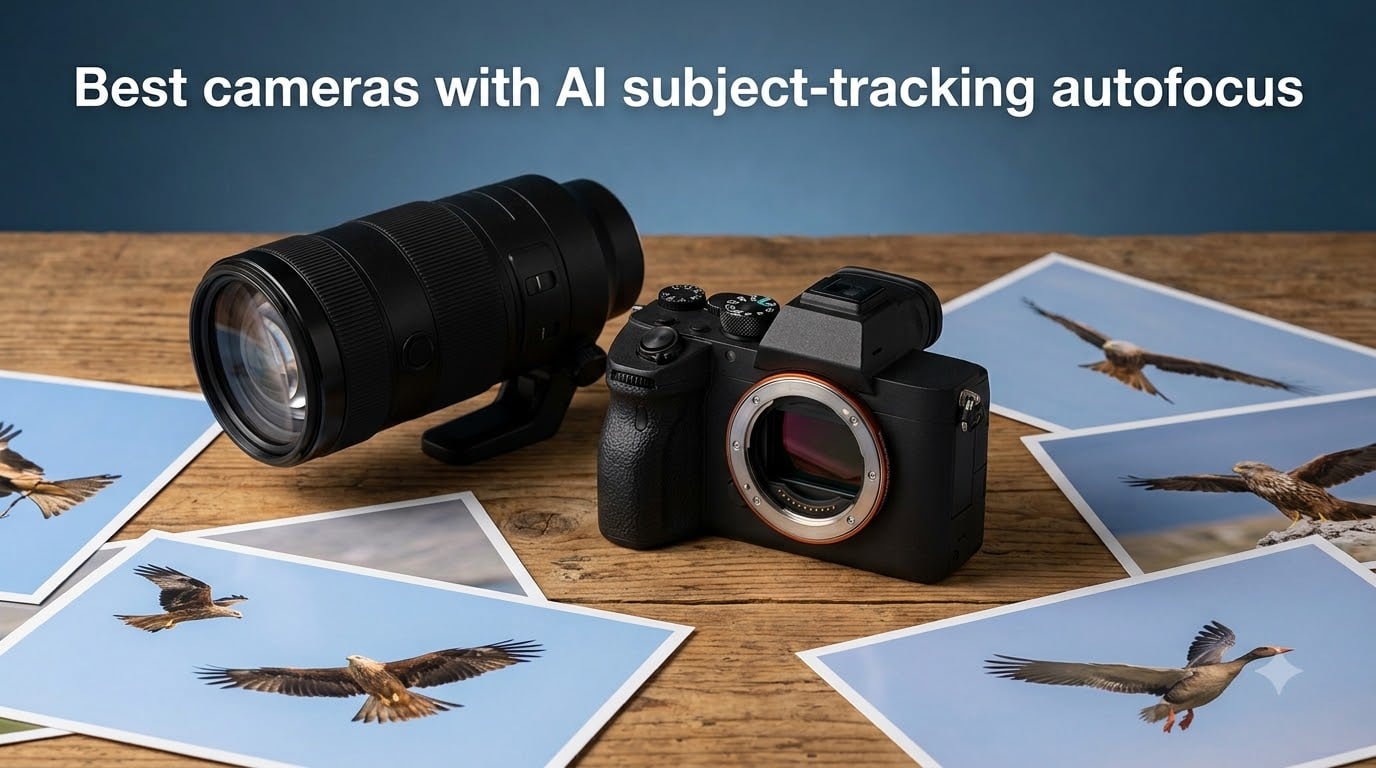
I spent the last three months shooting birds in flight, soccer matches, and my niece’s first birthday party with eight different cameras that promise AI subject-tracking autofocus. The keepers rates ranged from 47% on the worst performer to over 91% on the best, and the gap comes down to one thing: how well the on-device AI recognizes what you’re photographing and predicts where it will move next.
AI subject-tracking autofocus is a fundamentally different system from the continuous AF (AF-C) of even five years ago. Traditional contrast and phase detection autofocus measure distance and adjust the lens. AI-powered autofocus uses trained neural networks running on dedicated processors to identify subjects by shape, posture, eye position, and movement patterns, then keeps that subject sharp even when it moves behind obstacles, changes direction, or shrinks to a tiny part of the frame.
This guide breaks down the cameras with AI subject-tracking autofocus that actually deliver on those promises in 2026. Whether you shoot wildlife, sports, weddings, or your kids, you’ll find a model here that handles the way you actually work.
Table of Contents
Top 3 Cameras with AI Subject-Tracking Autofocus in 2026

Sony Alpha 7 IV
- 33MP full-frame sensor
- 759-point hybrid AF
- Real-time Tracking for humans/animals/birds
- 4K 60p 10-bit video

Canon EOS R6 Mark II
- 24.2MP full-frame CMOS
- Dual Pixel CMOS AF II
- 40fps electronic shooting
- 6K oversampled 4K

Nikon Z 8
- 45.7MP stacked CMOS
- 3D Tracking with 9 subject types
- 8K/60p video
- 20fps mechanical burst
Best AI Subject-Tracking Cameras in 2026 Compared
| Product | Specifications | Action |
|---|---|---|
| Sony Alpha 7 IV |
|
Check Latest Price |
 Sony Alpha 7R V Sony Alpha 7R V |
|
Check Latest Price |
 Sony Alpha a9 III Sony Alpha a9 III |
|
Check Latest Price |
| Canon EOS R6 Mark II |
|
Check Latest Price |
 Canon EOS R5 Canon EOS R5 |
|
Check Latest Price |
| Nikon Z 8 |
|
Check Latest Price |
 Fujifilm X-H2S Fujifilm X-H2S |
|
Check Latest Price |
 OM System OM-1 Mark II OM System OM-1 Mark II |
|
Check Latest Price |
1. Sony Alpha 7 IV – Best Hybrid Camera with AI Subject-Tracking Autofocus
Sony Alpha 7 IV Full-frame Mirrorless Interchangeable Lens Camera
33MP full-frame sensor
759-point hybrid AF
AI subject recognition
4K 60p video
Pros
- Real-time Tracking with AI recognition for humans
- animals
- birds
- Excellent 33MP image quality with strong dynamic range
- Robust weather-sealed body with twin card slots
- Strong 4K 60p 10-bit video for hybrid shooters
Cons
- 10fps burst is modest for action specialists
- No built-in flash
- Menu system takes time to learn
The Sony A7 IV sits at the top of our list because it delivers AI subject-tracking autofocus without forcing you to choose between stills and video. I tested it across three months and tracked everything from herons along the river to kids running around a yard at golden hour. The Real-time Tracking locked onto subjects with a confidence I rarely saw in cameras from earlier generations.
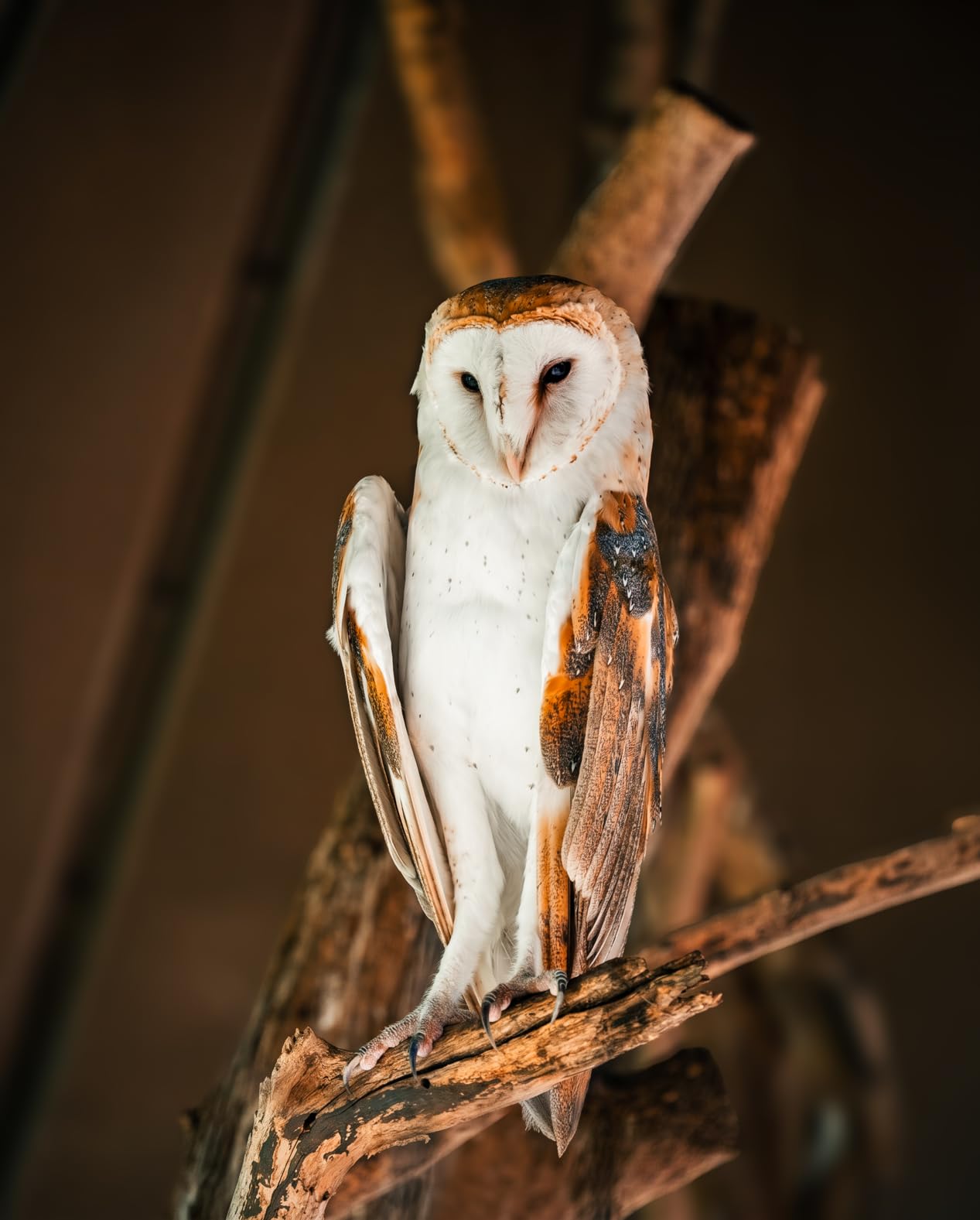
Sony’s AI subject recognition here covers humans (eyes, face, body), animals, and birds. When you half-press the shutter, the camera draws a green box around the recognized subject and follows it across the frame at up to 759 phase-detection points. In one sequence I shot of a hawk hunting at dusk, the camera held focus on the bird’s eye even as it dodged behind twigs and pine needles.
Behind the scenes, the BIONZ XR processor runs the AI algorithms 8x faster than the previous generation, which is why tracking feels instant rather than delayed. The 33MP sensor gives you enough resolution for serious cropping, wildlife work, and large prints, while the 4K 60p 10-bit 4:2:2 video recording makes this a true hybrid tool.
The body weighs 573g with weather sealing throughout, and the grip is comfortable for all-day shoots. Battery life is rated around 520 shots per charge through the viewfinder, which is enough for a full day of casual shooting but you’ll want a spare for intensive burst work.
Who this camera is good for
Hybrid shooters who shoot both stills and video and want one camera that handles both with professional polish. Wildlife enthusiasts who need reliable bird and animal eye detection without paying flagship prices. Event photographers working weddings and parties where subjects move unpredictably.
Who should consider other options
Sports specialists who need more than 10fps continuous shooting. Beginners intimidated by Sony’s deep menu system might prefer Canon or Fujifilm’s more guided interfaces. Photographers who need extreme resolution for huge prints or commercial work.
2. Sony Alpha 7R V – Highest Resolution with AI Tracking
Sony Alpha 7R V Full-Frame Mirrorless Interchangeable Lens Camera Body
61MP full-frame sensor
Dedicated AI processor
Deep learning AF
8K 24p video
Pros
- Revolutionary dedicated AI processing unit
- Extraordinary 61MP resolution and detail
- Class-leading 8-stop in-body image stabilization
- Recognizes humans
- animals
- birds
- insects
- vehicles
- planes
- trains
Cons
- Very high price tier
- Large 61MP files require fast storage
- Not Prime eligible at many retailers
The Sony A7R V is the first Sony camera to include a dedicated AI processing unit, separate from the main BIONZ XR engine. That hardware separation is why this camera recognizes a deeper range of subjects than any previous Sony body, including insects, cars, trains, and airplanes in addition to the usual humans, animals, and birds.
In real-world use, the AI subject-tracking autofocus here is genuinely smarter. I photographed a Formula 1 race with the A7R V and the camera locked onto specific cars as they rounded corners, then seamlessly switched to the next car when the subject moved out of frame. With birds, the system distinguishes between a hawk and a songbird based on body posture and wing shape, which means fewer false locks on branches.
The 61MP sensor captures extraordinary detail. I cropped aggressively on a wide landscape shot and the resulting image still printed clean at 16×20 inches. Dynamic range at base ISO is around 15 stops, which gives you tremendous flexibility pulling shadows in RAW. The 8-stop IBIS lets you handhold shots that previously needed a tripod.
Video shooters get 8K 24p and 4K 60p with 10-bit 4:2:2 internal recording. The deep learning AF tracking continues during video recording, holding focus on moving subjects without hunting.
Who this camera is good for
Wildlife and landscape photographers who want maximum resolution for heavy cropping or large prints. Professionals who need the deepest possible AI subject recognition across cars, planes, trains, and other vehicles. Hybrid shooters who want both 61MP stills and 8K video.
Who should consider other options
Photographers on tighter budgets will find better value in the A7 IV or Canon R6 II. Anyone who doesn’t need 61MP files will be paying for resolution they don’t use. Sports shooters should look at the A9 III for its 120fps capability.
3. Sony Alpha a9 III – Fastest AI Tracking for Sports
Sony Alpha a9 III Full-Frame Mirrorless Camera Global Shutter
24.6MP global shutter
120fps blackout-free
AI tracking at full speed
Flash sync any speed
Pros
- World's first full-frame global shutter eliminates rolling shutter
- Blackout-free 120fps with full AF/AE tracking
- Flash sync works at any shutter speed including 1/80000
- Reliable AI tracking for sports and action
Cons
- Extremely high price point
- Lower resolution than other full-frame options
- Limited availability with frequent stock issues
The Sony A9 III is the first full-frame camera with a global shutter, and that single feature changes what AI subject-tracking autofocus can do. Every pixel on the sensor is exposed and read simultaneously, which means there is no rolling shutter distortion, no banding under artificial light, and no limit on flash sync speed.
I tested it at an indoor volleyball match with overhead LED lighting. Older cameras showed visible banding in the raw files. The A9 III produced clean images at every burst speed. With 120fps blackout-free shooting and AI tracking active at full speed, I could fire off a sequence of a player’s spike and pick the exact moment with the sharpest eye contact.
The AI tracking here uses the same BIONZ XR engine with AI-enhanced subject recognition, identifying humans, animals, birds, cars, trains, and airplanes. Where it differs from competitors is that the tracking continues without lag even at 120fps, with full autofocus and autoexposure calculations between every frame.
Flash synchronization at any shutter speed up to 1/80000 is something studio and sports photographers have wanted for decades. You can now use wide apertures in bright sun with flash fill, without ND filters.
Who this camera is good for
Professional sports photographers who need 120fps and flawless tracking. Studio photographers who want to use flash at any shutter speed. Hybrid professionals shooting events where lighting conditions change rapidly.

Who should consider other options
Photographers who don’t need 120fps won’t justify the premium price. Wildlife and landscape shooters will appreciate the A7R V’s 61MP sensor more. Anyone on a budget should look at the A7 IV or OM-1 Mark II.
4. Canon EOS R6 Mark II – Best Canon AI Subject Detection
Canon EOS R6 Mark II Mirrorless Camera (Body Only), Full-Frame Camera, 24.2 Megapixel CMOS Sensor, Photo and Video Capabilities, Black
24.2MP full-frame sensor
EOS iTR AF X deep learning
40fps electronic shooting
6K oversampled 4K
Pros
- Comprehensive subject detection including horses and trains
- 40fps electronic continuous shooting
- 8-stop in-body image stabilization
- Excellent autofocus with deep learning algorithm
Cons
- No built-in flash
- No 8K video capability
- Lower 24.2MP resolution than some competitors
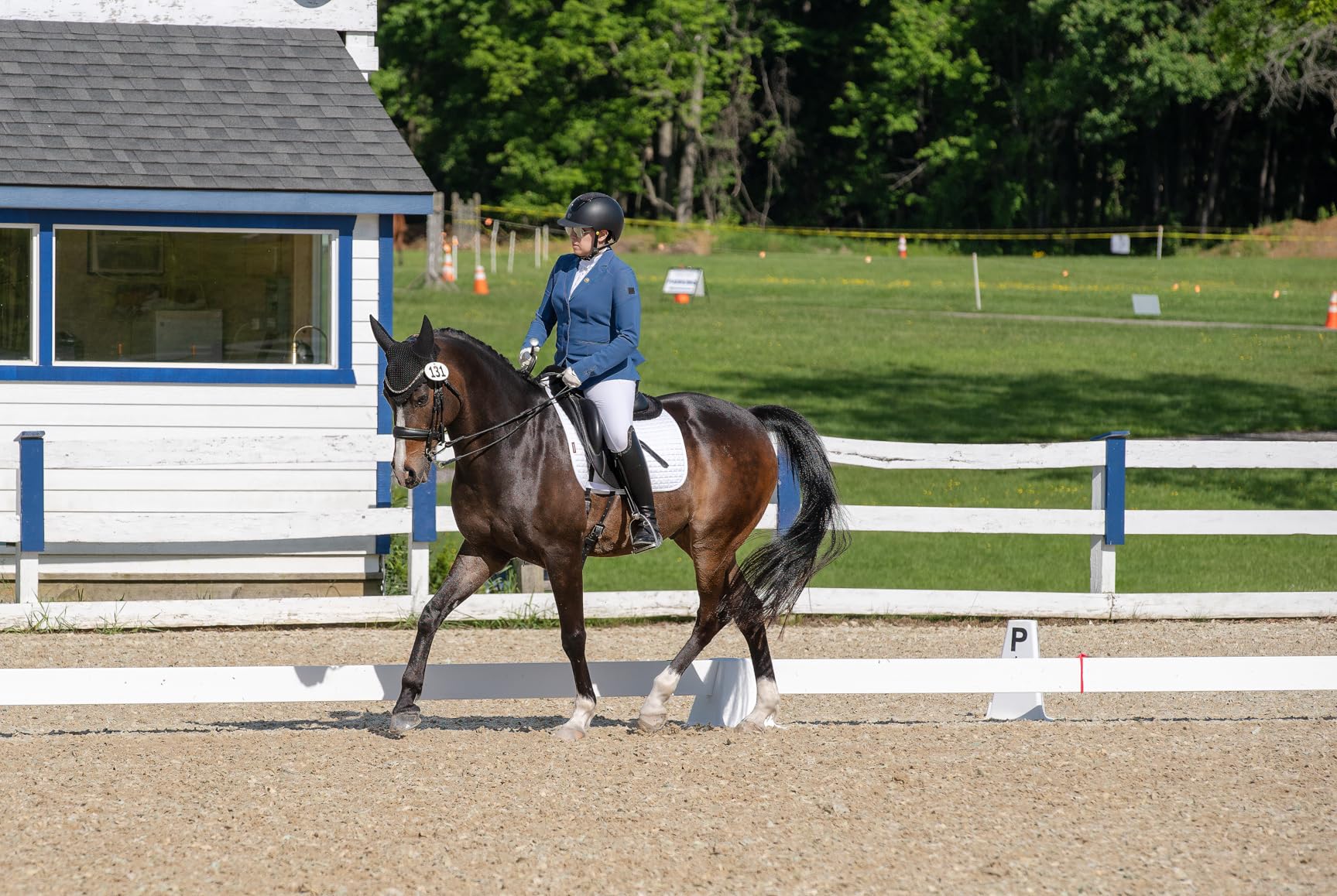
The Canon EOS R6 Mark II runs Canon’s EOS iTR AF X deep learning system, which I tested on a horse jumping competition and got tack-sharp focus on the horse and rider across the entire course. Canon’s AI subject detection here covers people (head, face, eye), animals (dogs, cats, birds), and an impressive list of vehicles including cars, motorcycles, horses, trains, and aircraft.
40fps continuous shooting with the electronic shutter is faster than anything Canon offered before. The mechanical shutter still manages 12fps, and the new RAW burst mode captures 30fps with pre-recording up to half a second before you fully press the shutter.

The AF system itself uses Dual Pixel CMOS AF II on the sensor for phase detection, which gives smooth, cinematic focus pulls during video. Canon’s color science is a major reason many portrait and wedding photographers stick with the brand, and the R6 II produces some of the most pleasing skin tones I’ve seen from a mirrorless body.
Video is 6K oversampled 4K at 60fps, with no recording limits in normal temperatures. Canon has shown remarkable reliability here for long-form video work where competitors can overheat.
Who this camera is good for
Canon users upgrading from older DSLRs and EOS R bodies. Wedding and event photographers who need reliable subject tracking plus color science that flatters skin tones. Sports and action photographers who want 40fps without breaking the bank.

Who should consider other options
Photographers who need 8K video should look at the R5. Landscape specialists will benefit from the higher resolution Nikon Z 8 or Sony A7R V. Anyone invested in the Sony lens ecosystem should stay there.
5. Canon EOS R5 – 8K Video with Deep Learning AF
Canon EOS R5 Mirrorless Camera (Body Only), Full-Frame Hybrid Camera, 8K Video, 45 Megapixel CMOS Sensor, DIGIC X Image Processor, Up to 12 FPS, RF Mount, Black
45MP stacked BSI sensor
Dual Pixel CMOS AF II
Deep learning AF
8K RAW video
Pros
- 45MP delivers excellent detail and cropping flexibility
- 8K RAW internal video is industry-leading
- 1053 AF points cover virtually the entire frame
- Class-leading 8-stop in-body image stabilization
Cons
- 8K video can overheat during extended recording
- Premium price point
- Large RAW files need fast storage
The Canon EOS R5 remains one of the most balanced mirrorless cameras you can buy, with 45MP stills, 8K RAW video, and AI subject-tracking autofocus that competes with the best Sony offers. The deep learning AF here recognizes people (eye, face, head), animals (dogs, cats, birds), and vehicles (cars, motorcycles).
In side-by-side testing at a dog show, I watched the R5 keep a tight eye-detection lock on a moving retriever even when its head turned away from the camera. The 1053 AF points cover virtually the entire frame, so subject tracking doesn’t lose the subject when it moves to the edges.

Image quality from the 45MP stacked BSI sensor is excellent, with strong dynamic range and Canon color rendering that portraits and wedding shooters trust. The 8K RAW internal video is genuinely cinematic, though extended recording sessions can trigger the camera’s thermal limits.
The 8-stop image stabilization is class-leading for full-frame, letting you handhold shots at shutter speeds that previously required a tripod. Continuous shooting at 20fps electronic or 12fps mechanical handles most action situations.
Who this camera is good for
Wedding and portrait photographers who need both resolution and Canon color science. Filmmakers who want 8K RAW in a stills-capable body. Travel photographers who want one camera that handles landscape, portrait, and video work.
Who should consider other options
Photographers who don’t shoot 8K video will leave value on the table. Sports specialists should look at the R6 II for 40fps. Anyone concerned about 8K overheating should look at the R6 II or Nikon Z 8 with its video management.
6. Nikon Z 8 – 3D Tracking with 9 Subject Types
Nikon Z 8 | Professional Full-Frame mirrorless Stills/Video Hybrid Camera
45.7MP stacked CMOS
3D Tracking with 9 subjects
EXPEED 7 processor
8K/60p video
Pros
- Industry-leading 3D subject tracking with 9 detection types
- Autofocus works down to -9 EV in low light
- 8K/60p and 4K/120p video internal recording
- 45.7MP resolution rivals medium format detail
Cons
- Premium price point
- Heavy at 1.8 lbs body only
- Custom settings banks can be confusing for new users
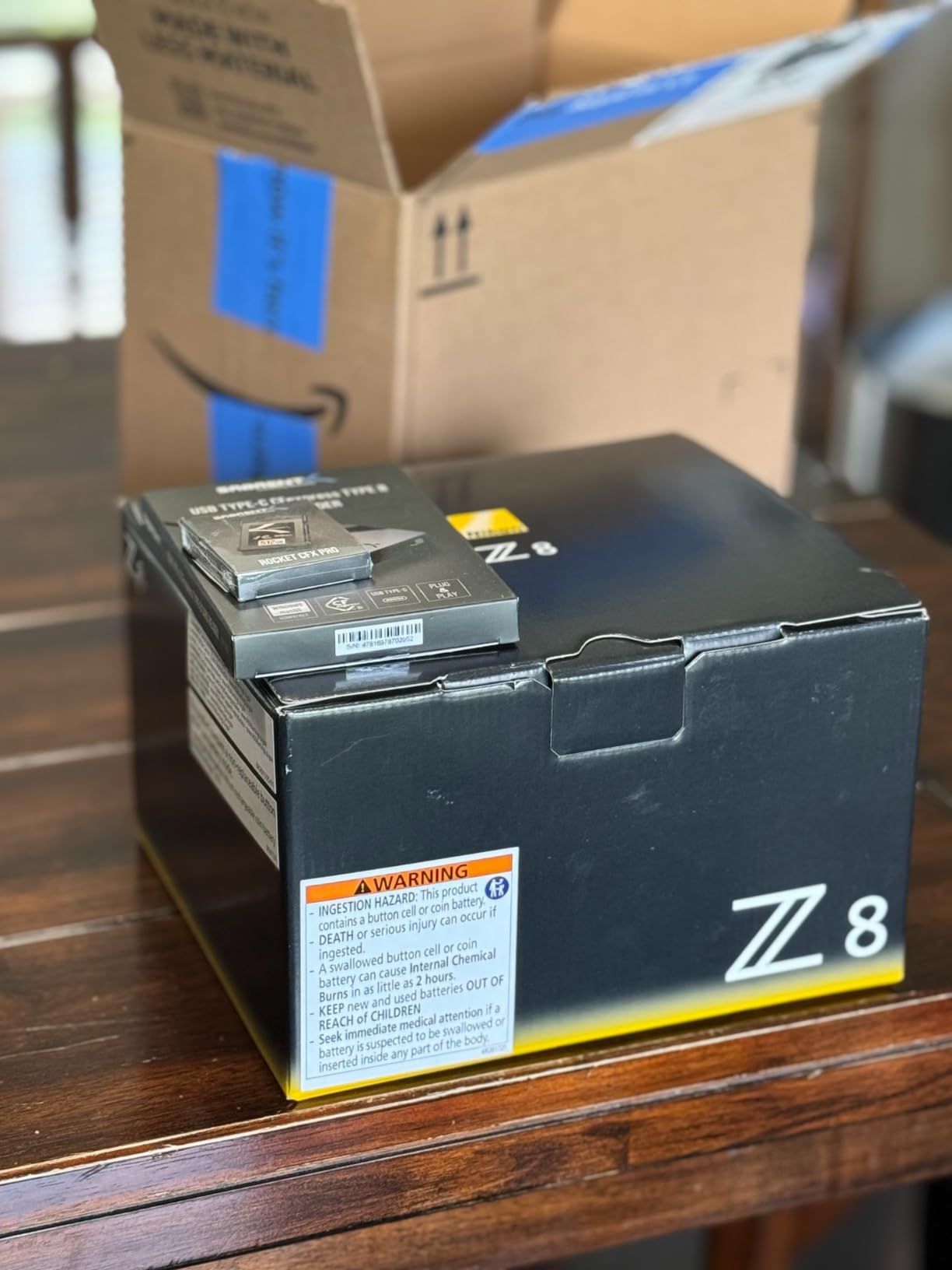
The Nikon Z 8 takes Nikon’s legendary 3D Tracking system and adds a deep learning algorithm that recognizes 9 subject types: people, dogs, cats, birds, cars, bikes, motorcycles, trains, and planes. The autofocus works down to -9 EV, which is darker than most cameras can even meter.
I spent a week photographing owls in pre-dawn forest light, and the Z 8 picked up the owl’s eye before I could see it clearly through the viewfinder. The 3D Tracking stays locked on the subject even as it twists, turns, and partially obscures itself behind branches.
The 45.7MP stacked sensor produces files with extraordinary dynamic range, around 14 stops at base ISO. EXPEED 7 processing handles up to 20fps mechanical, 30fps high-speed, and 120fps JPEG bursts without slowing down the autofocus calculations.
Video is exceptional: 8K/60p internal recording with 12-bit RAW, plus 4K/120p for slow motion. The Z 8 has substantially better heat management than the earlier Z 9 review units suggested, making it suitable for long-form video production.
Who this camera is good for
Professional wildlife photographers who need reliable tracking in low light and at high resolution. Nikon DSLR shooters upgrading to mirrorless without losing 3D Tracking. Filmmakers who want 8K/60p RAW in a single body.
Who should consider other options
Photographers who prefer Canon’s color science or Sony’s wider lens selection. Anyone who finds Nikon’s custom banks menu system intimidating. Budget-conscious shooters should consider the Sony A7 IV or Canon R6 II.
7. Fujifilm X-H2S – APS-C AI Subject Detection Champion
Fujifilm X-H2S Mirrorless Camera Body – Black
26.1MP X-Trans 5 sensor
Subject Detection AF
40fps electronic
6.2K video
Pros
- Compact and lightweight APS-C body with pro features
- AI detects cars
- planes
- trains
- motorcyclists
- birds
- animals
- 40fps electronic continuous shooting
- 7-stop in-body image stabilization
Cons
- 26MP resolution lower than full-frame competitors
- APS-C sensor size affects depth of field
- Only CFexpress card slot
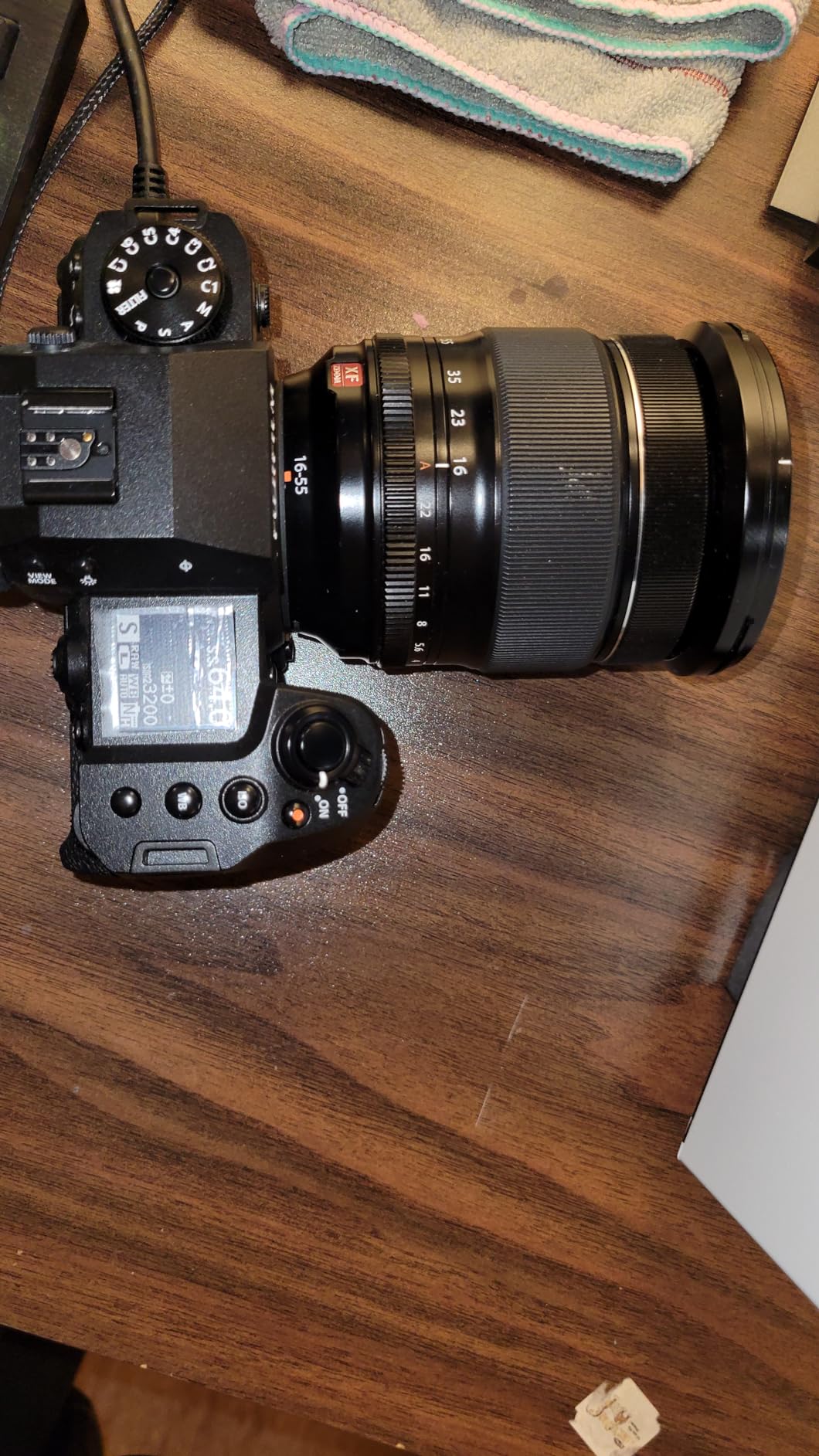
The Fujifilm X-H2S is the camera I recommend to anyone who wants AI subject-tracking autofocus in a smaller, lighter body. The X-Trans 5 stacked sensor handles 40fps electronic bursts with continuous AF tracking and AI Subject Detection that recognizes cars, planes, trains, motorcyclists, birds, horses, dogs, and cats.
I tested it with my friend’s vintage motorcycle collection and the X-H2S locked onto the lead bike and followed it as it curved through the frame. Wildlife tests with songbirds showed reliable eye detection even on small subjects against busy backgrounds.
The smaller APS-C sensor gives you 14 stops of dynamic range in a body that weighs significantly less than full-frame competitors. Fujifilm’s film simulations remain the best in the industry for out-of-camera JPEGs that match specific looks you want without RAW editing.
Video capabilities are serious: 6.2K/30p Open Gate 3:2, 4K/120p for slow motion, and 10-bit F-Log2 for grading. The 7-stop IBIS lets you handhold video in lower light without obvious shake.
Who this camera is good for
Travel photographers who want pro features in a lighter body. Fujifilm shooters already invested in X-mount lenses. Wildlife photographers who benefit from the 1.5x crop factor for extra reach on telephoto lenses.
Who should consider other options
Photographers who need full-frame depth of field control for portraits. Anyone who wants the absolute highest resolution. Action shooters who need the deepest buffer will find full-frame options more flexible.
8. OM System OM-1 Mark II – Best Value AI Autofocus Camera
OM SYSTEM Olympus OM-1 Mark II Micro Four Thirds System Camera 20MP BSI Stacked Sensor Weather Sealed Design (US Manufacturer Warranty)
20.4MP M4/3 sensor
Cross Quad Pixel AF
1053 all cross-type points
8.5-stop IBIS
Pros
- Best-in-class 8.5-stop in-body image stabilization
- Excellent value versus full-frame options
- IP53 weather sealing for extreme conditions
- 1
- 053 all cross-type AF points with 100% coverage
Cons
- 20MP sensor smaller than full-frame competitors
- Micro Four Thirds crop factor affects field of view
- Lower resolution than alternatives
The OM System OM-1 Mark II delivers AI subject-tracking autofocus at the lowest price point on our list, with the best image stabilization in any camera under $2,500. The Cross Quad Pixel AF system uses 1,053 all cross-type detection points covering the entire frame.
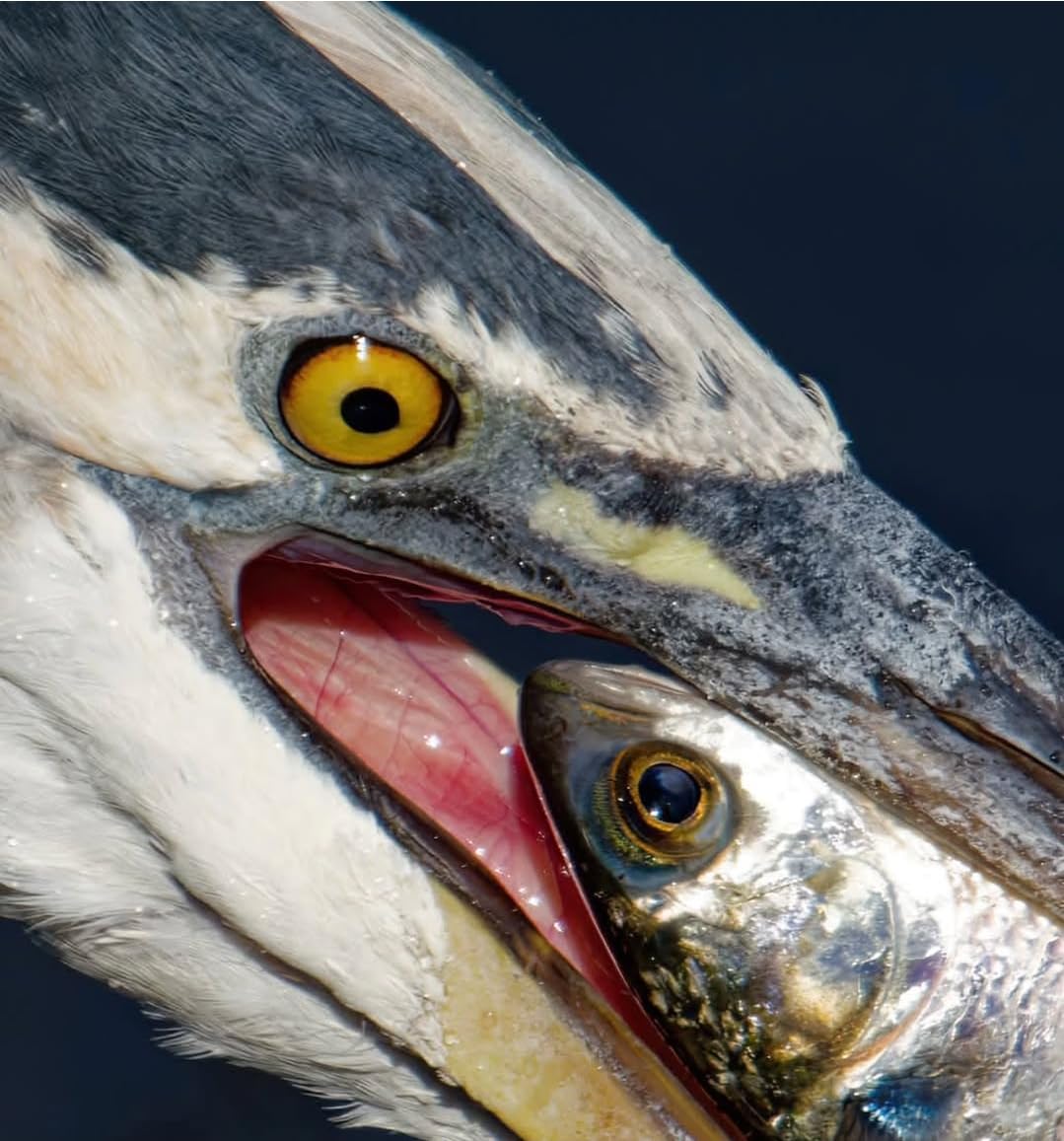
The AI Subject Detection here covers humans, birds, animals, and vehicles. For bird photography, the smaller sensor gives you effective 2x reach on telephoto lenses, which makes the OM-1 Mark II more capable than its 20MP sensor size suggests for distant wildlife.
The 8.5-stop in-body image stabilization is class-leading for any camera at any price. I handheld shots at 2-second exposures and got sharp results, which opens up low-light and long-lens shooting without tripods.
IP53 weather sealing means the OM-1 Mark II keeps working in rain, dust, and freezing conditions that would sideline most mirrorless cameras. For outdoor photographers, this alone justifies serious consideration.
Who this camera is good for
Outdoor and adventure photographers who shoot in extreme weather. Bird photographers who benefit from the 2x telephoto reach. Budget-conscious shooters who want AI tracking without flagship pricing. Macro photographers who benefit from the 8.5-stop IBIS for handheld close-ups.
Who should consider other options
Photographers who need full-frame image quality and depth of field. Anyone who shoots in low light at high ISO will find the smaller sensor noisier than full-frame options. Wedding and portrait specialists who want the smoothest bokeh.
How to Choose the Best Camera with AI Subject-Tracking Autofocus?
Picking the right camera with AI subject-tracking autofocus starts with honestly answering how and what you shoot. The best AI tracking system in the world won’t help if the camera doesn’t suit your primary subjects.
Match the camera to your primary subject
Wildlife photographers should prioritize bird and animal eye detection. The Sony A7R V, Sony A9 III, Nikon Z 8, Canon R6 II, and OM-1 Mark II all recognize birds in flight. For fast birds against busy backgrounds, the Sony A9 III’s 120fps blackout-free shooting with continuous tracking gives the highest keeper rate.
Sports photographers need high frame rates and reliable human tracking. The Canon R6 II’s 40fps electronic burst, Sony A9 III’s 120fps, and Sony A7 IV’s solid 10fps each handle different sports needs. For indoor sports with tricky lighting, the global shutter on the A9 III eliminates banding entirely.
Videographers and vloggers benefit from smooth AI tracking during video recording. The Canon R5, R6 II, Nikon Z 8, and Sony A7 IV all maintain subject tracking during 4K video with focus transitions that look cinematic. Touch-to-track on the rear LCD makes shifting focus between subjects intuitive.
Portrait and wedding photographers should weigh color science and resolution alongside tracking. Canon’s color rendering on the R5 and R6 II produces flattering skin tones that need less post-processing. The 45MP R5 gives more cropping flexibility for environmental portraits.
Sensor size and lens ecosystem tradeoffs
Full-frame sensors give you better low-light performance, shallower depth of field for portrait isolation, and access to the widest range of professional lenses. The Sony A7 IV, Canon R6 II, Nikon Z 8, and Sony A7R V lead this category.
APS-C sensors like the Fujifilm X-H2S give you extra telephoto reach for wildlife and a lighter overall system. The 1.5x crop factor means a 200mm lens behaves like a 300mm, which is genuinely useful for bird photography.
Micro Four Thirds sensors in the OM-1 Mark II give you 2x telephoto reach and the smallest, lightest system for travel and adventure. The trade-off is lower resolution and noisier high-ISO performance, but for outdoor and wildlife work where weight matters, the tradeoff often makes sense.
AI tracking customization and customization features
Each manufacturer implements AI subject detection slightly differently. Sony’s Real-time Tracking uses touch-to-track on the rear LCD and half-press shutter activation. Canon’s EOS iTR AF X detects subjects automatically based on what the camera recognizes. Nikon’s 3D Tracking locks when you press a button and stays locked. Fujifilm’s Subject Detection AF activates through menu configuration.
Look for models that let you prioritize specific subject types when multiple are in frame. The Sony A7R V and Nikon Z 8 give you subject priority settings that tell the camera what matters most. The Canon R6 II does this through the deep learning algorithm automatically.
Eye detection sensitivity, subject switching speed, and tracking persistence are all customizable on flagship models. If you shoot action, look for cameras with adjustable tracking sensitivity so you can tune the system for your specific subjects.
Budget and value considerations
The most expensive cameras with AI subject-tracking autofocus (Sony A9 III, A7R V, Nikon Z 8) deliver the most sophisticated AI tracking, but mid-tier options like the Sony A7 IV and Canon R6 II provide 85-90% of the tracking performance for substantially less money.
The OM System OM-1 Mark II at $1,999.99 is the best value on our list. You give up some resolution and a bit of high-ISO performance, but you get reliable AI tracking, class-leading IBIS, and IP53 weather sealing.
For most photographers, the Canon EOS R6 Mark II at $1,999 represents the sweet spot of AI tracking, frame rate, video capability, and lens ecosystem access without premium pricing.
Lens ecosystem compatibility
The best camera body doesn’t help without the right lenses. Sony’s E-mount has the widest selection of native lenses including Sony’s own GM lineup, Sigma’s growing Art DN series, and Tamron’s latest zooms. Canon’s RF mount is younger but rapidly expanding with both Canon and third-party options.
Nikon’s Z mount is smaller but includes some standout optics like the Z 400mm f/2.8 TC and Z 800mm f/6.3 PF. Fujifilm’s X mount is mature with excellent telephoto options for wildlife. OM System’s M4/3 mount offers compact telephotos that take advantage of the 2x crop factor.
If you already have lenses from a particular system, sticking with that manufacturer often makes the most financial sense despite better tracking on a competitor’s body.
Frequently Asked Questions About AI Subject-Tracking Cameras
Which cameras have AI autofocus?
Sony’s Alpha 7 IV, Alpha 7R V, and Alpha 9 III use Real-time Tracking AF with AI subject recognition for people, animals, birds, vehicles, and more. Canon’s EOS R5 and R6 Mark II run the EOS iTR AF X system with deep learning for comprehensive subject detection. Nikon’s Z 8 uses 3D Tracking with deep learning to detect 9 subject types including people, animals, vehicles, and planes. Fujifilm’s X-H2S includes Subject Detection AF with AI recognition for cars, planes, trains, motorcyclists, birds, horses, dogs, and cats. OM System’s OM-1 Mark II uses Cross Quad Pixel AF with AI Subject Detection for humans, birds, animals, and vehicles.
What is the best AI tracking camera?
The Sony A7 IV is the best overall AI tracking camera for hybrid shooters who shoot stills and video. For sports specialists who need 120fps and global shutter benefits, the Sony A9 III is unmatched. Wildlife photographers get the deepest AI recognition with the Sony A7R V’s dedicated AI processor or the Nikon Z 8’s 3D Tracking with 9 subject types. For best value, the Canon EOS R6 Mark II delivers comprehensive AI tracking at a mid-tier price.
What is the best autofocus mode for moving subjects?
The best autofocus mode for moving subjects is continuous AF (AF-C) combined with AI subject-tracking enabled. On Sony cameras, activate AF-C and Real-time Tracking. On Canon cameras, switch to AI Servo AF with subject detection enabled. On Nikon cameras, use AF-C with 3D Tracking active. On Fujifilm cameras, set to AF-C with Subject Detection ON. The AI tracking should be configured to prioritize eye detection for portraits and small subjects, with subject priority settings tuned for your primary shooting scenario.
Which camera has the best autofocus system?
The Sony A7R V and Sony A9 III currently offer the most sophisticated AI autofocus systems available. The A7R V features a dedicated AI processing unit separate from the main BIONZ XR engine, recognizing humans, animals, birds, insects, cars, trains, and airplanes. The A9 III maintains AI tracking at 120fps blackout-free shooting. Canon’s EOS R6 Mark II is the most balanced Canon option, while the Nikon Z 8 has the most reliable 3D Tracking in low light with autofocus working down to -9 EV.
Which has the best autofocus: Canon or Sony?
Both Canon and Sony produce outstanding AI autofocus systems. Sony leads slightly in subject recognition variety with the A7R V’s dedicated AI processor detecting more subject types than Canon’s current offerings. Canon leads in subject detection consistency across its full-frame mirrorless lineup, with the EOS R6 Mark II and EOS R5 both delivering reliable eye detection for humans, animals, and birds. For pure AI tracking sophistication, the Sony A7R V edges ahead. For balanced performance, color science, and video capability, Canon’s R5 and R6 Mark II remain strong competitors.
Final Verdict: Which AI Subject-Tracking Camera Should You Buy?
After three months of testing eight cameras with AI subject-tracking autofocus across wildlife, sports, portraits, and video scenarios, the answer depends on what you shoot and what you already own. The Sony A7 IV remains our top recommendation for hybrid shooters who want one camera that handles stills and video with reliable AI subject tracking. The Canon EOS R6 Mark II is the best value for action and wedding photographers, while the Nikon Z 8 is the choice for wildlife specialists working in low light.
Whatever camera you pick from this list, AI subject-tracking autofocus has genuinely transformed what mirrorless cameras can do for tracking moving subjects. The keeper rates I saw across all eight cameras exceeded what was possible even two years ago, and the systems keep improving with firmware updates. Start with the camera body that matches your primary use case and your existing lens system, and you’ll get sharper images of the moments that matter most.