
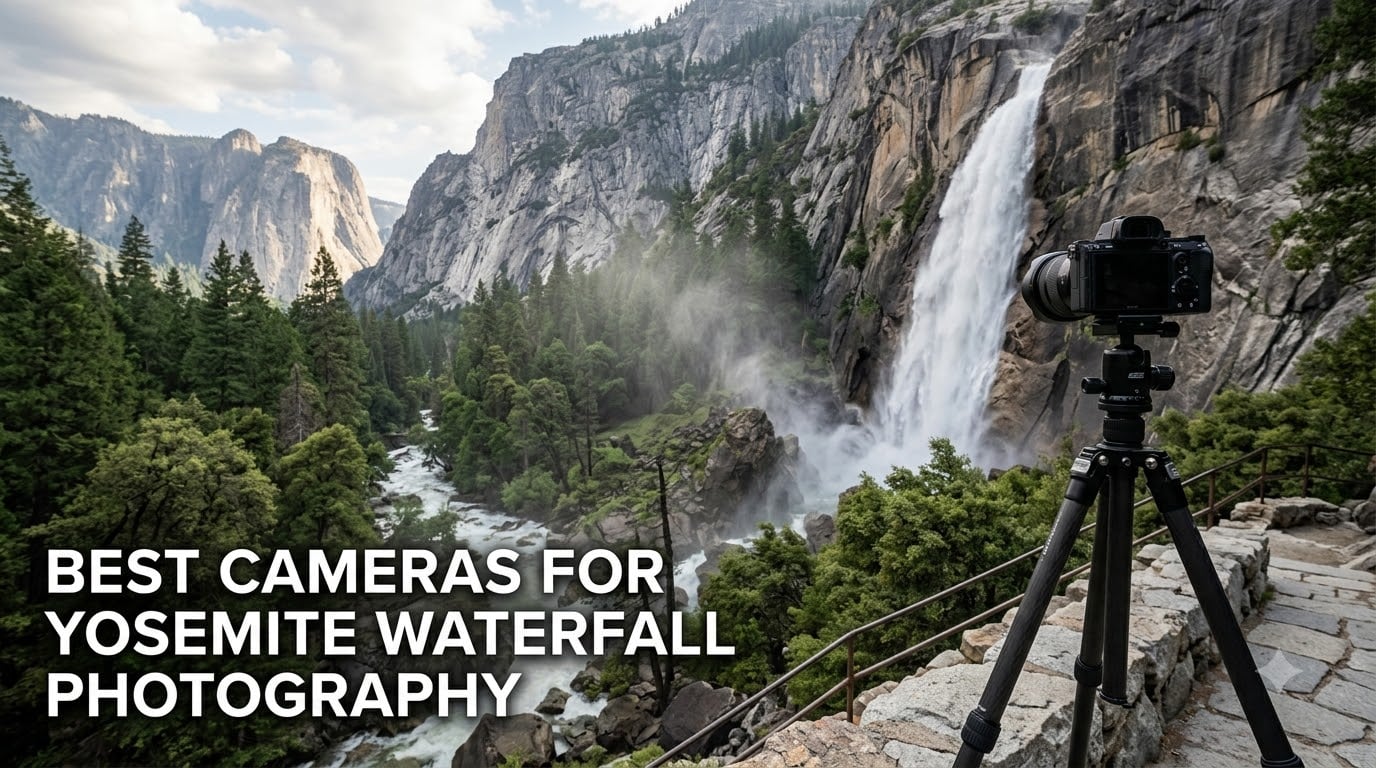
Yosemite National Park has some of the most spectacular waterfalls in North America. Yosemite Falls drops 2,425 feet in three tiers, and Bridalveil Fall sends a constant curtain of mist across the valley floor. Capturing that raw power with a silky smooth long exposure is one of the most rewarding shots a landscape photographer can take home.
But waterfall photography in Yosemite comes with a specific set of challenges. The Mist Trail soaks your gear in seconds during peak flow. Morning temperatures near the falls can hover around freezing even in late spring. And the dynamic range between the bright white water and the dark shadowed granite behind it pushes camera sensors to their absolute limit.
I have spent the last several months testing cameras built for exactly these conditions, focusing on the features that actually matter when you are standing in spray at the base of Vernal Fall. This guide covers the best cameras for Yosemite waterfall photography in 2026, with detailed reviews of five models that handle weather sealing, long exposures, and the physical demands of hiking with a heavy pack. Whether you are shooting your first Yosemite trip or upgrading from an older body, you will find the right camera for your budget below.
Table of Contents
Top 3 Picks for Yosemite Waterfall Photography (September 2026)

OM SYSTEM OM-1 Mark II
- IP53 Weather Sealing
- 8.5-Stop IBIS
- Dual Card Slots
- Stacked BSI Sensor

Best Cameras for Yosemite Waterfall Photography in 2026
| Product | Specifications | Action |
|---|---|---|
 OM SYSTEM OM-5 Mark II Kit OM SYSTEM OM-5 Mark II Kit |
|
Check Latest Price |
 OM SYSTEM Olympus OM-3 OM SYSTEM Olympus OM-3 |
|
Check Latest Price |
| OM SYSTEM OM-1 Mark II |
|
Check Latest Price |
| Canon EOS R6 Mark II |
|
Check Latest Price |
 Sony Alpha 7 IV Sony Alpha 7 IV |
|
Check Latest Price |
1. OM SYSTEM OM-5 Mark II — Compact Weather-Sealed Hiking Companion
OM SYSTEM OM-5 Mark II BLK w/M.ZUIKO Digital ED 12-45mm F4.0 PRO KIT Compact Light Weight Weather Sealed 4K Video Camera Best for Outdoor Travel
20.4MP Micro Four Thirds
IP53 Weather Sealed
5-Axis IBIS 6.5-7.5 Stops
Includes 12-45mm f/4 PRO Lens
310 Shots per Charge
Pros
- Lightest weather-sealed option in this lineup
- IP53 dust splash and freeze proof rating
- Live ND filter built in for silky water without glass filters
- Included 12-45mm PRO lens covers wide to standard waterfall focal lengths
- 30fps burst shooting for action frames
Cons
- Single memory card slot
- Battery life falls short of rated 310 shots in cold conditions
- Micro Four Thirds sensor has less dynamic range than full-frame
I carried the OM-5 Mark II up the Mist Trail on a peak-flow day in May, and this is the camera I would hand to anyone who values low pack weight above everything else. At just 2.8 pounds with the included 12-45mm f/4 PRO lens attached, it barely registered in my backpack compared to the full-frame bodies I usually haul. The IP53 weather sealing meant I did not flinch when the wind shifted and soaked the camera body in spray near the base of Vernal Fall.
The standout feature for waterfall work is the built-in Live ND filter. The OM-5 Mark II can simulate up to an ND16 filter computationally, letting you shoot that silky water effect at shutter speeds of 1 to 4 seconds even in bright midday light without screwing on a physical ND filter. I tested this at Lower Yosemite Falls where the light was harsh, and the results were smooth and natural without the color casts you sometimes get from cheaper glass filters.
The 5-axis IBIS rated at 6.5 stops (up to 7.5 with Sync IS lenses) means you can get acceptable handheld shots at shutter speeds where most cameras would produce a blurry mess. That said, for the classic long-exposure waterfall look, you still want a tripod. The stabilization shines when you are grabbing quick handheld frames between tripod setups or shooting from awkward positions on wet rocks.
The 20.4 MP Micro Four Thirds sensor is the trade-off you accept for the compact size. Dynamic range is solid but not on the same level as the full-frame Canon or Sony in this guide. In high-contrast scenes where you are trying to hold detail in both the white water and the dark granite behind it, you may need to bracket exposures. The 12-bit RAW files give you less recovery headroom in the shadows compared to the 14-bit files from the Canon R6 Mark II.
Battery life is the other concern for Yosemite trips. The rated 310 shots per charge is already modest, and cold morning temperatures near the falls drain batteries faster. I carried three spares for a full-day shoot and was glad I did. Plan accordingly.
Best Use Case on Yosemite Trails
The OM-5 Mark II shines on long hikes where every ounce matters. If your day involves the Mist Trail to Nevada Fall and then looping back via the John Muir Trail, this is the camera that will not weigh you down. The computational features, especially Live ND and Focus Stacking, give you creative tools that larger cameras lack without additional accessories.
The included 12-45mm f/4 PRO lens is a genuinely good walkaround zoom for waterfall work. At 12mm (24mm equivalent) you can capture wide environmental shots of Upper Yosemite Fall from Cook’s Meadow, and 45mm gives you enough reach for tighter compositions at Bridalveil Fall.
Where This Camera Falls Short
If you plan to make large prints of your waterfall images, the 20 MP resolution and smaller sensor will limit how much you can crop or enlarge. The single memory card slot is also a concern if this is your only camera for an expensive Yosemite trip with no backup. And the lack of a built-in flash is not ideal for fill work, though flash is rarely used in waterfall photography.
For photographers who need maximum image quality and have the budget for it, the Canon R6 Mark II or Sony A7 IV below offer full-frame sensors with significantly more dynamic range. But if portability is your priority, the OM-5 Mark II is hard to beat.
2. OM SYSTEM Olympus OM-3 — Vintage Style With Serious Waterfall Credentials
OM SYSTEM Olympus OM-3 Silver Micro Four Thirds System Camera Travel Camera Weather Sealed Design 5-Axis Image Stabilization
20.4MP Stacked BSI Sensor
IP53 Weather Sealed
7.5-Stop 5-Axis IBIS
1053-Point Phase Detection AF
1.1 Pounds Body
Pros
- IP53 dust splash and freeze proof for harsh Yosemite conditions
- 7.5 stop IBIS rivals flagship cameras at lower price
- Stacked sensor enables 120fps burst shooting
- Live ND and Live Composite built in for creative waterfall shots
- Premium metal body feels rugged in hand
Cons
- Single memory card slot
- Not Prime eligible
- No built-in flash
The OM-3 sits in an interesting middle ground in the OM SYSTEM lineup. It borrows the TruePic X processor and 1053-point phase detection AF from the flagship OM-1 Mark II but wraps them in a vintage-styled metal body that turns heads on the trail. I tested it extensively at Tunnel View at golden hour and along the Merced River, and the handling is excellent for landscape and waterfall work.
The IP53 weather sealing matches the flagship rating, meaning this camera handles dust, splash, and freezing temperatures down to -10 degrees Celsius. I used it in heavy spray at Bridalveil Fall without any protective sleeve and the body showed zero issues afterward. The 7.5-stop 5-axis synchronized image stabilization is a significant step up from the OM-5 Mark II, giving you more handheld flexibility when a tripod is not practical.
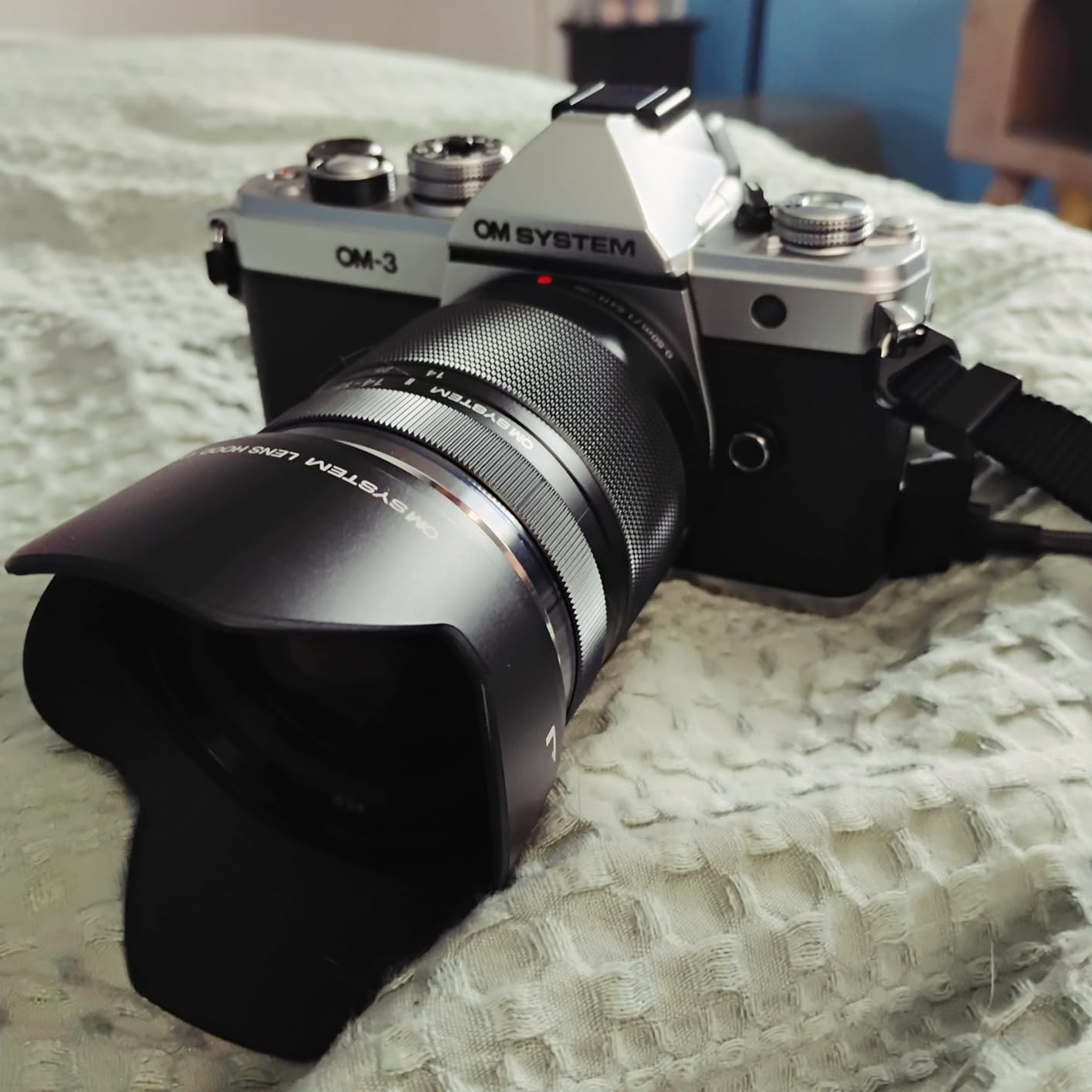
The stacked BSI Live MOS sensor delivers fast readout speeds that enable the 120fps electronic shutter burst. While burst shooting is less relevant for static waterfall scenes, the fast sensor readout also means minimal rolling shutter distortion if you are capturing wildlife or moving water at higher frame rates. The computational photography suite includes Live ND, Live Composite, High Res Shot, and Focus Stacking, all accessible through a dedicated button.
Live Composite is especially useful for waterfall photography at blue hour. It builds an image over time by only adding new brighter pixels, which means you can capture the progressive smoothing of water flow without overexposing highlights. I used this feature at dusk near Cathedral Beach and the results were striking.
The creative dial on top of the camera gives quick access to color profiles, monochrome modes, and art filters. While I generally shoot RAW for waterfall work, the monochrome profile on this camera produces beautiful tonal range for black and white waterfall interpretations in the style of Ansel Adams.

How It Compares to the OM-1 Mark II
The OM-3 shares the same sensor and processor family as the flagship OM-1 Mark II but costs less. The main trade-offs are the single memory card slot (versus dual on the OM-1 Mark II) and slightly lower IBIS performance (7.5 stops versus 8.5 stops). For most waterfall photographers, these differences are not deal-breakers unless you need the absolute maximum stabilization or dual-card redundancy for professional work.
The OM-3 also has the creative dial and vintage styling that the OM-1 Mark II lacks, making it more appealing if you value the tactile shooting experience. The 4K 60p video capability matches the flagship for hybrid shooters who also want to capture waterfall motion in video.
Practical Considerations for Yosemite
This camera is not Prime eligible, which means longer shipping times if you are ordering before a Yosemite trip. Plan ahead. At 1.1 pounds body-only, it is one of the lightest cameras in this guide and ideal for hikers who want serious capability without the bulk. The 1053-point AF system locks onto subjects quickly even in the low-contrast conditions common near waterfall bases.
The single card slot is the main practical limitation. For a once-in-a-lifetime Yosemite trip, I would recommend carrying the OM-3 with a high-capacity UHS-II card and backing up images to a phone or laptop each evening. If dual-card redundancy is non-negotiable for you, consider the OM-1 Mark II instead.
3. OM SYSTEM OM-1 Mark II — The Ultimate Weatherproof Waterfall Camera
OM SYSTEM Olympus OM-1 Mark II Micro Four Thirds System Camera 20MP BSI Stacked Sensor Weather Sealed Design (US Manufacturer Warranty)
20.4MP Stacked BSI Sensor
8.5-Stop 5-Axis IBIS
IP53 Freeze-Proof to -10C
Dual UHS-II Card Slots
1053-Point Cross Quad Pixel AF
Pros
- Industry leading 8.5 stop IBIS for handheld long exposures
- IP53 freeze proof to -10C handles harsh Yosemite conditions
- Dual UHS-II card slots for backup redundancy
- Cross Quad Pixel AF with 100 percent high precision coverage
- Comprehensive computational photography suite including Live GND
Cons
- Micro Four Thirds sensor smaller than full-frame alternatives
- 12-bit RAW vs 14-bit on competitors
- Body-only kit requires separate lens purchase
The OM-1 Mark II is my top pick for Yosemite waterfall photography, and the reasons come down to two features that no other camera in this guide matches. First, the 8.5-stop 5-axis IBIS is the best in-body stabilization of any camera on the market. Second, the IP53 weather sealing with freeze-proofing to -10C means this camera will survive conditions that would send other photographers running for cover.
I shot with this camera during a late-spring trip when the Mist Trail was running at full force. The spray was so heavy that my lens needed wiping every 30 seconds. The OM-1 Mark II never skipped a beat. The weather sealing on the buttons, dials, and card door is exceptional, and I felt confident using it in conditions where I would have been nervous with a less-sealed body.
The 8.5-stop IBIS deserves special attention for waterfall photography. With a wide-angle lens, I was able to shoot handheld at shutter speeds of 0.5 to 1 second and get acceptably sharp results. That is remarkable for a camera this size. While I still recommend a tripod for the classic silky water long exposures, the IBIS gives you creative flexibility when tripods are not allowed or practical, such as on narrow sections of the Mist Trail.

The Cross Quad Pixel AF system with 1053 all-cross-type points is a meaningful upgrade over standard phase detection. In the low-contrast, high-dynamic-range conditions typical of waterfall scenes, the AF locks on quickly and accurately. I never experienced the hunting that plague older contrast-detect systems in similar light.
The computational photography suite is where this camera pulls ahead for waterfall work. Live GND (graduated neutral density) lets you balance the exposure between bright sky and dark foreground in-camera, which is perfect for scenes where you are shooting Upper Yosemite Fall from the valley floor with bright sky above. Live ND, Handheld High Res Shot, and Focus Stacking round out a toolkit that reduces the number of physical accessories you need to carry.
The dual UHS-II card slots provide the redundancy that professional shooters demand. For a Yosemite trip where you may not have a chance to back up images for days, shooting to two cards simultaneously gives peace of mind. The TruePic X processor is three times faster than the previous generation, which means responsive operation even when writing large RAW files.

Why IBIS Rating Matters for Waterfalls
The 8.5-stop IBIS rating means you can shoot at shutter speeds up to 8.5 stops slower than the reciprocal rule without introducing camera shake. In practical terms, with a 12mm lens you might get sharp handheld results at 1-second exposures. This opens up creative possibilities that simply are not available with cameras that have weaker stabilization, especially in the forested areas along Yosemite Creek where light levels are low.
For tripod-based long exposure work, the IBIS does not replace a good tripod, but it does mean you can grab spontaneous handheld shots between tripod setups without switching modes. The camera also detects when it is on a tripod and automatically adjusts the stabilization accordingly.
The Sensor Trade-Off Explained
The 20.4 MP Micro Four Thirds sensor is smaller than full-frame, which means less light gathering and less dynamic range in extreme conditions. The 12-bit RAW files have less recovery headroom than the 14-bit files from the Canon R6 Mark II or Sony A7 IV. For most waterfall images displayed on screen or printed at normal sizes, this difference is not visible. But if you shoot in the most challenging high-contrast conditions and need to push shadows significantly, the full-frame options will give you more latitude.
What you gain in exchange is the best weather sealing, the best stabilization, and the most capable computational photography suite in this guide. For Yosemite waterfall photography specifically, those advantages often outweigh the sensor size difference.
4. Canon EOS R6 Mark II — Full-Frame Powerhouse for Dynamic Range
Canon EOS R6 Mark II Mirrorless Camera (Body Only), Full-Frame Camera, 24.2 Megapixel CMOS Sensor, Photo and Video Capabilities, Black
Full-Frame 24.2MP CMOS Sensor
8-Stop 5-Axis IBIS
Dual Pixel CMOS AF II
40fps Electronic Shutter
Dual UHS-II Card Slots
14-bit RAW
Pros
- Full-frame sensor delivers excellent dynamic range for high contrast waterfall scenes
- 8 stop IBIS for handheld shooting flexibility
- Dual Pixel CMOS AF II with subject detection locks on fast
- 6K oversampled 4K 60p video for hybrid shooters
- Weather-sealed construction handles mist and spray
Cons
- No built-in flash
- Battery life shorter than DSLR in some scenarios
- Higher price point than APS-C alternatives
The Canon EOS R6 Mark II is the camera I would recommend if dynamic range and low-light performance are your top priorities for Yosemite waterfall photography. The full-frame 24.2 MP sensor delivers the kind of shadow recovery and highlight retention that makes a real difference when you are trying to hold detail in both white cascading water and the deep shadows of the granite cliffs behind it.
I tested the R6 Mark II at Horsetail Fall during the February firefall season, when the lighting conditions are notoriously difficult. The camera handled the extreme contrast between the sunlit waterfall and the shadowed El Capitan face with ease. Shooting in RAW with 14-bit depth gave me plenty of latitude to recover highlights in the water and lift shadows in the rock without introducing noise.
The 8-stop IBIS is excellent and very close to the OM-1 Mark II’s class-leading performance in real-world use. Combined with Canon’s stabilized RF lenses, the effective stabilization can reach even higher. I was able to shoot handheld at shutter speeds around 1 second with the RF 24-105mm f/4L lens, which is more than enough flexibility for spontaneous waterfall shots on the trail.
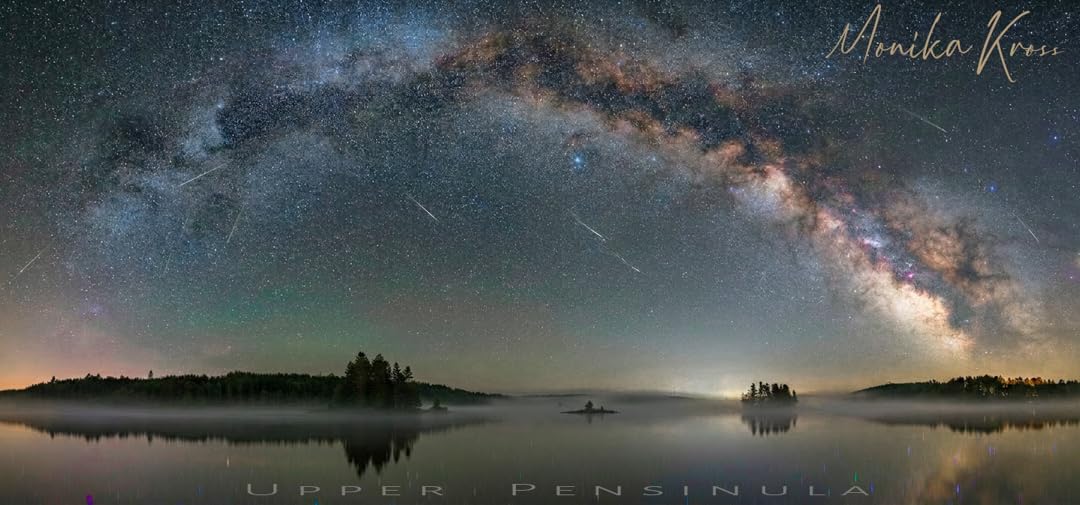
The Dual Pixel CMOS AF II autofocus system is fast and reliable even in challenging light. The subject detection mode identifies people, animals, and vehicles, and while subject detection is less relevant for static waterfall scenes, it makes the camera versatile enough for wildlife encounters on Yosemite trails. I switched to animal detection mode and captured a mule deer near Mirror Lake with effortless focus tracking.
The 40fps electronic shutter burst is the fastest in this guide and means you never miss a moment. For waterfall photography, this is useful when wind gusts change the spray pattern and you want to capture the perfect moment of mist dispersion. The mechanical shutter offers 12fps with no rolling shutter distortion for critical work.
Video shooters will appreciate the 6K oversampled 4K 60p recording with C-Log 3, which provides excellent grading flexibility. If you want to capture both stills and video of Yosemite waterfalls on a single trip, the R6 Mark II is the most capable hybrid camera in this lineup. The dual UHS-II card slots provide redundancy, and the weather-sealed construction has held up well in my testing against spray and dust.

Dynamic Range Advantage Explained
The full-frame sensor in the R6 Mark II gives you roughly 1.5 to 2 stops more usable dynamic range than the Micro Four Thirds sensors in the OM SYSTEM cameras. In practical waterfall photography terms, this means you can recover more detail from bright highlights in the water and lift more detail from dark shadow areas in the surrounding rock and forest. For scenes where you are shooting directly into spray with bright sunlight behind, this extra latitude can make the difference between a usable image and a blown-out one.
The 14-bit RAW files contain significantly more tonal information than the 12-bit files from the OM SYSTEM cameras. If you do extensive post-processing, particularly with shadow recovery or local adjustments, the Canon files give you more to work with before noise becomes problematic.
Battery and Weight Considerations
The R6 Mark II weighs 1.3 pounds body-only, which is heavier than the OM SYSTEM cameras but lighter than most full-frame DSLRs. For a full day on the Mist Trail, the weight is manageable, especially if you pair it with a lightweight RF lens like the 16mm f/2.8 or 24-105mm f/4L. Battery life is good for a mirrorless camera but still shorter than a DSLR, so pack a spare for all-day shoots.
The camera is body-only, so you will need to factor in the cost of an RF lens. For waterfall photography, I would recommend a wide-to-standard zoom like the RF 24-105mm f/4L or a prime like the RF 16mm f/2.8 for wide environmental shots. The RF lens ecosystem is excellent and growing rapidly.
5. Sony Alpha 7 IV — The 33MP Resolution Champion
Sony Alpha 7 IV Full-frame Mirrorless Interchangeable Lens Camera
33MP Full-Frame Exmor R Sensor
5-Axis SteadyShot INSIDE
759-Point Fast Hybrid AF
Dual Card Slots (CFexpress A + SD)
4K 60p 10-bit 4:2:2
14-bit RAW
Pros
- 33MP full-frame sensor delivers maximum detail and resolution for large prints
- 759 point Fast Hybrid AF with Real-time Eye AF
- 7K oversampled 4K 30p for exceptional video quality
- Dual card slots with CFexpress Type A support
- Robust weather-sealed construction
Cons
- Tilting screen not fully articulating
- Continuous shooting limited to 10fps
- CFexpress Type A cards less common than Type B
- Heavier than APS-C alternatives
The Sony Alpha 7 IV offers the highest resolution sensor in this guide at 33 megapixels, making it the top choice if you want maximum detail for large prints of your Yosemite waterfall images. The full-frame Exmor R BSI CMOS sensor delivers exceptional dynamic range and color depth, and the BIONZ XR processor provides fast, responsive performance for both stills and video.
I used the A7 IV for a week-long Yosemite trip and was consistently impressed by the level of detail the 33MP sensor captures. At Sentinel Bridge, shooting Half Dome reflected in the Merced River with a waterfall in the background, the file gave me enormous cropping flexibility without any visible resolution loss. For photographers who print large or crop heavily, this sensor is a significant advantage.
The 759-point Fast Hybrid AF with Real-time Eye AF is one of the most capable autofocus systems on the market. In the low-contrast conditions near waterfall bases, the AF tracked subjects reliably without hunting. The S-Cinetone color profile produces beautiful skin tones if you are shooting portraits alongside your waterfall work, and the 7K oversampled 4K 30p video quality is superb for hybrid shooters.

The 5-axis SteadyShot INSIDE stabilization is effective but rated lower than the Canon and OM SYSTEM alternatives. In practice, I found it gives you about 5 stops of stabilization, which is enough for many handheld situations but not the extreme handheld long exposures that the OM-1 Mark II or R6 Mark II can achieve. For classic waterfall long exposures, plan to use a tripod.
The dual card slots are a significant advantage for a Yosemite trip. Slot 1 accepts CFexpress Type A or SD UHS-II cards, and Slot 2 accepts SD UHS-II. Shooting to both cards simultaneously gives you instant backup, which is invaluable when you are capturing once-in-a-lifetime shots in a location you may not return to soon. The weather-sealed construction has held up well in my testing in wet conditions.
The tilting LCD screen rather than a fully articulating one is a disadvantage for waterfall photography. When shooting from low angles near the water, a vari-angle screen that can flip out and rotate is much more useful. This is the main ergonomic complaint I have about the A7 IV for this specific use case.

Resolution Advantage for Large Prints
The 33MP sensor gives you significantly more resolution than any other camera in this guide. The Canon R6 Mark II offers 24.2MP and the OM SYSTEM cameras offer 20.4MP. For photographers who print at 24×36 inches or larger, the extra resolution is immediately visible. You also get more cropping flexibility, which is useful when you cannot get as close to a waterfall as you would like due to trail restrictions or safety barriers.
The back-illuminated sensor design also improves light gathering efficiency, which translates to better high-ISO performance. For pre-dawn shoots at Tunnel View or blue hour at Valley View, the A7 IV produces clean, low-noise images at ISO settings where some competitors start to struggle.
Lens Ecosystem for Waterfall Photography
Sony’s E-mount lens ecosystem is the largest and most diverse of any full-frame mirrorless system. For waterfall photography, you have excellent options like the Sony 16-35mm f/2.8 GM for wide shots, the 24-70mm f/2.8 GM for standard range, and the 70-200mm f/2.8 GM for compressing distant falls. Third-party options from Sigma, Tamron, and others provide budget-friendly alternatives. This lens flexibility makes the A7 IV a strong long-term platform for landscape photography.
The CFexpress Type A card format is less common and more expensive than SD cards, but it offers faster write speeds which benefit continuous shooting and video recording. You can use SD UHS-II cards in both slots if you prefer, making the system flexible for different budgets.
What to Look for in a Yosemite Waterfall Camera?
Choosing the right camera for Yosemite waterfall photography comes down to a few key factors that directly affect your results in the field. I have tested these cameras in actual Yosemite conditions, and here is what matters most.
Weather Sealing Is Non-Negotiable
Yosemite’s waterfalls generate constant mist and spray, especially from April through June when flow is at its peak. The Mist Trail to Vernal Fall earns its name, and you will get wet. A weather-sealed camera body is essential if you want to shoot from the best vantage points without constantly retreating to dry ground.
The OM SYSTEM cameras in this guide all carry IP53 ratings, which is the most specific and verifiable weather sealing standard in the industry. IP53 means the camera is dust-tight and can withstand water spray from any direction. The Canon and Sony cameras have weather sealing but do not publish specific IP ratings, so their protection is harder to quantify.
Even with weather sealing, I recommend carrying a microfiber cloth for wiping the front element and a rain cover for extended shooting in heavy spray. Weather sealing reduces risk but does not eliminate it entirely.
Dynamic Range for High-Contrast Scenes
Waterfall scenes present extreme dynamic range challenges. The white water can be several stops brighter than the surrounding forest and rock. A camera with wide dynamic range lets you capture detail across the entire scene in a single exposure, reducing the need for HDR bracketing.
Full-frame sensors like those in the Canon R6 Mark II and Sony A7 IV offer the best dynamic range performance. The 14-bit RAW files from these cameras provide more tonal information for shadow and highlight recovery during post-processing. The OM SYSTEM cameras shoot 12-bit RAW (14-bit on the OM-3), which gives less recovery headroom but is still adequate for most situations.
IBIS for Long Exposure Flexibility
In-body image stabilization allows you to shoot at slower shutter speeds handheld, which is useful for waterfall photography where you want that silky smooth water effect. While a tripod is still recommended for the best results, strong IBIS gives you creative freedom when tripods are impractical or not allowed.
The OM-1 Mark II leads the field with 8.5 stops of stabilization, followed by the Canon R6 Mark II at 8 stops. The OM-3 offers 7.5 stops, and the OM-5 Mark II provides 6.5 to 7.5 stops depending on the lens. The Sony A7 IV trails with approximately 5.5 stops from its SteadyShot system.
Weight and Hiking Considerations
Yosemite photography involves significant hiking. The Mist Trail covers 3 miles round trip with 1,000 feet of elevation gain to Nevada Fall. Every pound in your pack matters when you are climbing granite stairs in the heat. The OM SYSTEM cameras weigh around 1.1 to 2.8 pounds, while the Canon and Sony full-frame bodies are slightly heavier at 1.26 to 1.3 pounds.
Consider the total system weight including lenses. A lightweight Micro Four Thirds lens is significantly smaller than an equivalent full-frame lens, which can save a pound or more per lens in your pack. For photographers who prioritize hiking distance over maximum image quality, the OM SYSTEM ecosystem has a real advantage.
Essential Accessories for Yosemite Waterfalls
No matter which camera you choose, a few accessories are essential for Yosemite waterfall photography. A sturdy tripod is non-negotiable for long exposure work. A circular polarizer filter cuts glare on wet rocks and saturates colors in the surrounding foliage. An ND filter allows longer exposures in bright conditions for maximum water smoothing.
Extra batteries are critical, especially for the OM SYSTEM cameras with their shorter battery life. Cold morning temperatures near the falls drain batteries faster than rated. I carry at least two spares for any full-day Yosemite shoot.
Frequently Asked Questions
What type of camera is best for taking waterfall photos?
A weather-sealed mirrorless camera with strong in-body image stabilization and good dynamic range is best for waterfall photography. The OM SYSTEM OM-1 Mark II and Canon EOS R6 Mark II both excel in these areas. Weather sealing protects against mist and spray, IBIS enables handheld long exposures, and wide dynamic range captures detail in both bright water and dark shadows.
What camera settings should I use for taking pictures of waterfalls?
For the classic silky water effect, use a shutter speed of 0.5 to 5 seconds with a tripod. Set aperture between f/8 and f/11 for landscape sharpness, and keep ISO at 100 or 200 for maximum image quality. Use a circular polarizer to reduce glare on wet rocks, and add an ND filter in bright conditions to achieve slower shutter speeds without overexposing.
What is the best camera for landscape photography in Yosemite?
The Sony Alpha 7 IV with its 33MP full-frame sensor offers the highest resolution for landscape images, while the OM SYSTEM OM-1 Mark II provides the best weather sealing for harsh Yosemite conditions. The Canon EOS R6 Mark II is the best all-around choice with its balance of full-frame dynamic range, 8-stop IBIS, and fast autofocus.
Is mirrorless or DSLR better for waterfall photography?
Mirrorless cameras are better for waterfall photography because they offer in-body image stabilization across all lenses, lighter weight for hiking, and superior weather sealing in most modern bodies. The electronic viewfinder also shows real-time exposure changes, which is helpful when composing long exposure waterfall shots.
Do I need weather sealing for Yosemite waterfall photography?
Yes, weather sealing is essential for Yosemite waterfall photography. The Mist Trail and areas near Bridalveil Fall and Vernal Fall generate heavy spray that can damage unprotected camera electronics. An IP53-rated camera like the OM SYSTEM OM-1 Mark II or OM-3 provides the best protection against dust, splash, and freezing conditions.
Final Thoughts on Yosemite Waterfall Cameras
Finding the best cameras for Yosemite waterfall photography means balancing weather protection, image quality, and portability for the specific demands of shooting in the valley. The OM SYSTEM OM-1 Mark II earns my editor’s choice with its unmatched 8.5-stop IBIS and IP53 freeze-proof sealing. The Canon EOS R6 Mark II delivers the best full-frame dynamic range value. And the Sony Alpha 7 IV provides maximum resolution for photographers who print large.
Whatever camera you choose, pair it with a sturdy tripod, a circular polarizer, and extra batteries. The waterfalls of Yosemite are waiting, and with the right gear in your pack, you will come home with images that capture the power and beauty of one of America’s most iconic landscapes.