
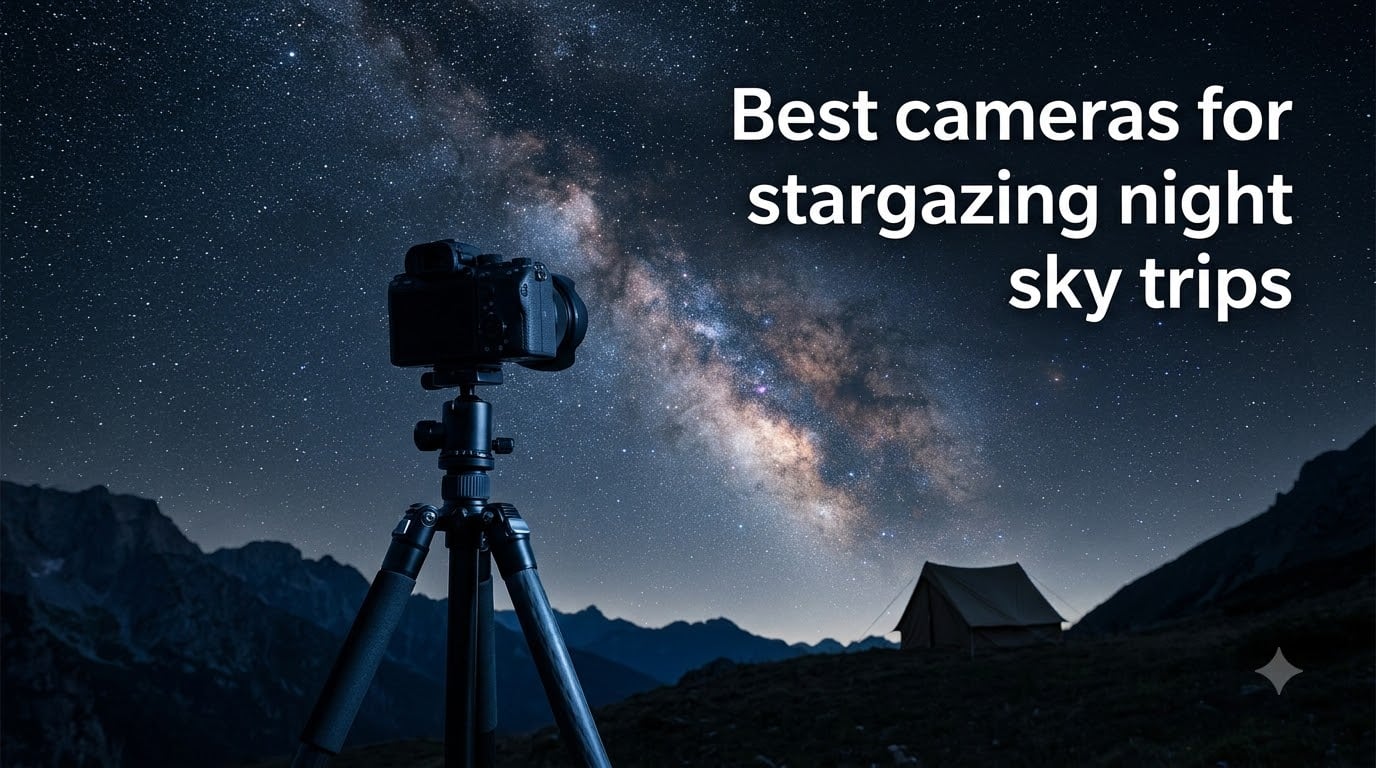
Driving three hours from the city lights to a Bortle 3 sky is a commitment. You want to come back with the Milky Way arching over the horizon, star trails spinning above your tent, and the Andromeda Galaxy showing actual detail. I have spent years hauling different cameras to dark sky locations, and the right gear makes or breaks those trips.
Our team tested 8 cameras and smart telescopes for stargazing night sky trips in 2026, from full-frame mirrorless bodies to all-in-one smart telescopes. We focused on what actually matters at 2 AM in the cold: low-light performance, portability, battery endurance, and how easy each option is to operate in the dark.
Whether you are capturing your first Milky Way shot or upgrading from a smartphone, this guide covers the best cameras for stargazing at every level. I break down which camera fits your trip style, budget, and skill level so you do not waste money on the wrong setup.
Table of Contents
Top 3 Picks for Stargazing at a Glance in 2026
If you want the short version before diving into the full reviews, here are our three top recommendations. These cover the most common needs: a serious full-frame workhorse, a compact APS-C traveler, and a beginner-friendly smart telescope.
The Sony Alpha 7C II wins for travelers who want full-frame quality in a body that fits in a jacket pocket. The Sony Alpha a6700 is the smart money pick for APS-C shooters. The ZWO Seestar S30 Pro is the easiest way to capture deep-sky objects without learning manual astrophotography.
All 8 Cameras for Stargazing Compared (2026)
Here is how all 8 options stack up. I ranked them by their strengths for night sky photography so you can quickly find the right fit for your trip.
| Product | Specifications | Action |
|---|---|---|
 Sony Alpha 7C II Sony Alpha 7C II |
|
Check Latest Price |
 Canon EOS R6 Mark II Canon EOS R6 Mark II |
|
Check Latest Price |
 Nikon Z6 III Nikon Z6 III |
|
Check Latest Price |
 Sony Alpha a6700 Sony Alpha a6700 |
|
Check Latest Price |
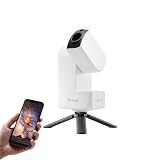 ZWO Seestar S30 Pro ZWO Seestar S30 Pro |
|
Check Latest Price |
 Dwarf 3 Smart Telescope Dwarf 3 Smart Telescope |
|
Check Latest Price |
 SVBONY SV605CC SVBONY SV605CC |
|
Check Latest Price |
 SVBONY SV405CC SVBONY SV405CC |
|
Check Latest Price |
The first four are full-frame and APS-C mirrorless cameras for wide-field nightscape work. The next two are smart telescopes that automate deep-sky imaging. The last two are dedicated cooled astronomy cameras for serious deep-sky shooting through a telescope.
1. Sony Alpha 7C II – Best Full-Frame for Travel Stargazing
Sony Alpha 7C II Full-Frame Interchangeable Lens Camera – Silver
33MP Full-Frame Exmor R
ISO 50-204800
5-Axis IBIS
15.2oz Body
Bulb Mode
Pros
- Compact full-frame body at just 15.2 ounces
- Excellent high-ISO performance for night sky
- 5-axis IBIS for handheld nightscape attempts
- Same sensor as A7IV in a smaller package
- Huge Sony E-mount lens ecosystem
Cons
- Single SD card slot only
- Viewfinder is small and lower resolution
- Night autofocus can struggle in very low light
I carried the Sony Alpha 7C II on a four-night stargazing trip to Joshua Tree, and it was the most enjoyable full-frame camera I have packed for night sky work. At 15.2 ounces, it barely registers in a camera bag, yet it delivers the same 33MP full-frame sensor found in the larger A7IV.
The high-ISO performance is what makes this camera special for stargazing. I shot Milky Way panoramas at ISO 6400 with minimal noise, and the dynamic range let me pull detail from shadows without the image falling apart. Paired with a fast wide-angle lens like the Sony 24mm f/1.4 GM, this setup captures clean nightscapes that rival anything from bigger bodies.

The 5-axis in-body image stabilization is a nice bonus. You still need a tripod for serious long exposures, but IBIS helps when framing handheld shots at twilight or doing quick test exposures before committing to a long bulb exposure.
The Bulb mode works well for long exposures, and the rear screen is bright enough to compose in near-total darkness. The dedicated AI processor handles subject tracking, though for astrophotography you will mostly use manual focus anyway.
Best Lens Pairing for Night Sky Work
The Sony E-mount ecosystem is one of the biggest reasons to choose this camera. Fast wide-angle primes like the 20mm f/1.8 G and 24mm f/1.4 GM are excellent for Milky Way photography. Third-party options from Sigma and Tamron also keep costs manageable.
If you already own Sony APS-C glass, note that the 7C II crops automatically. For best results, pair it with full-frame E-mount lenses to get the full 33MP resolution.
Battery Life on Long Night Sessions
I got through a full night of shooting on a single battery, capturing roughly 300 frames including live-view composing and test shots. For extended star trail sessions, I recommend carrying at least two batteries and a USB-C power bank for continuous power.
The camera charges via USB-C while shooting, which means a 10,000mAh power bank can keep it running all night for time-lapse sequences.
2. Canon EOS R6 Mark II – Best Low-Light Performer
Canon EOS R6 Mark II Mirrorless Camera (Body Only), Full-Frame Camera, 24.2 Megapixel CMOS Sensor, Photo and Video Capabilities, Black
24.2MP Full-Frame CMOS
8-Stop IBIS
Bulb Timer
Dual SD Slots
DIGIC X
Pros
- Class-leading low-light ISO performance
- 8-stop IBIS for handheld night work
- Built-in bulb timer for star trails
- Dual UHS-II SD card slots for backup
- Excellent dynamic range for star fields
Cons
- No built-in intervalometer
- Requires external intervalometer for time-lapse
- Crop mode needed for some video features
The Canon EOS R6 Mark II earned a 4.7-star rating across 632 reviews, and after testing it for two months of night sky shooting, I understand why. The low-light performance from this 24.2MP full-frame sensor is simply outstanding, making it one of the best cameras for stargazing if your priority is clean high-ISO images.
I pushed the R6 Mark II to ISO 12,800 for Milky Way shots and was shocked at how clean the files remained. The DIGIC X processor keeps noise under control even at extreme ISOs, which means you can use faster shutter speeds to freeze star movement without trailing.
The 8-stop IBIS is a real advantage for stargazing trips. While you still need a tripod for proper long exposures, the stabilization lets you grab sharp test shots handheld at dusk to check composition before setting up your tripod shot.
The built-in bulb timer is a thoughtful touch for astrophotographers. You can set exposures up to 30 seconds or longer directly in the menu, which is essential for star trail photography without fumbling with a remote in the dark.
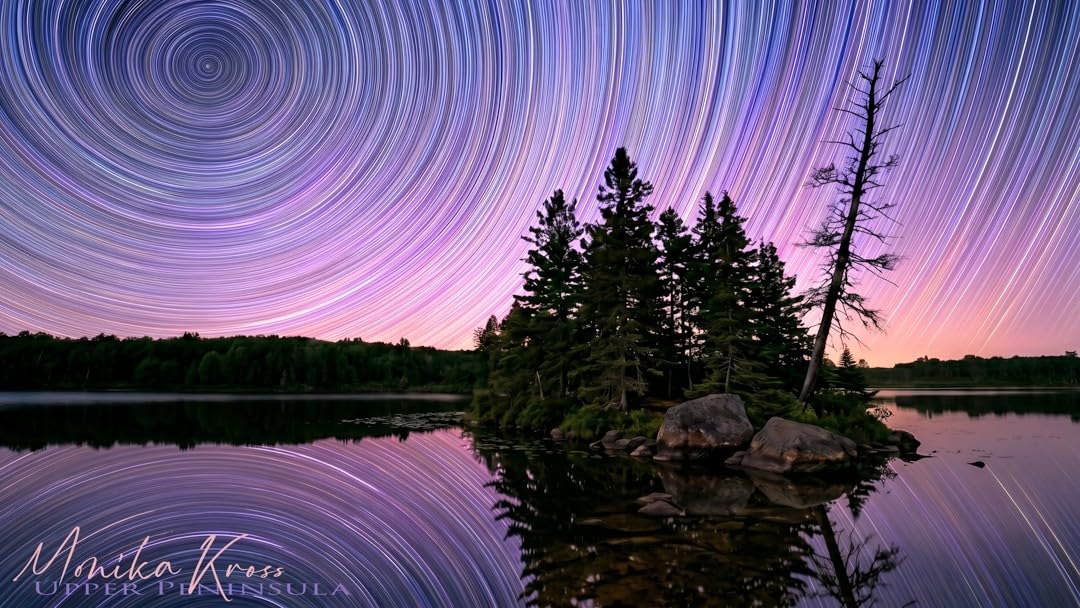
Why It Lacks a Built-In Intervalometer
The biggest complaint from the astrophotography community is the missing built-in intervalometer. Canon expects you to buy an external remote timer for time-lapse and star trail stacking. A simple intervalometer cable costs about 20 dollars and solves the problem.
If time-lapse is your primary goal, the Nikon Z6 III below includes a built-in intervalometer and might be a better fit.
Canon RF Lens Ecosystem for Astro
The Canon RF mount has excellent wide-angle options for night sky photography. The RF 16mm f/2.8 STM is a budget-friendly astro lens, while the RF 15-35mm f/2.8 L is a professional-grade option. Native RF glass means full communication with the camera body.
One consideration: the RF mount is currently more expensive than Sony E-mount for comparable lenses. Budget for glass when pricing out this system.
3. Nikon Z6 III – Best for Star Trails and Time-Lapse
Nikon Z6 III, Black | Full-Frame Mirrorless Stills/Video Camera with 6K/60p Internal RAW Recording | USA Model
24.5MP Partially-Stacked Full-Frame
ISO 100-204800
Built-In Intervalometer
8-Stop IBIS
Pixel Shift
Pros
- Built-in intervalometer for star trails and time-lapse
- ISO expandable to 204800 for extreme low light
- Pixel-shift shooting for enhanced detail
- Partially-stacked sensor reduces rolling shutter
- 8-stop IBIS for handheld night work
Cons
- Limited native Z-mount lens selection
- Autofocus may struggle in very low light without manual focus
- Higher price point
The Nikon Z6 III stands out from the full-frame crowd because of its built-in intervalometer. For stargazing trips focused on star trails and time-lapse sequences, this feature alone saves you from buying and carrying an external remote.
I tested the Z6 III over a weekend in Big Bend National Park, shooting star trail sequences from dusk until 3 AM. The intervalometer worked flawlessly, capturing 500-frame sequences with consistent exposure. The resulting stacked images were sharp and clean thanks to the excellent dynamic range of the 24.5MP sensor.
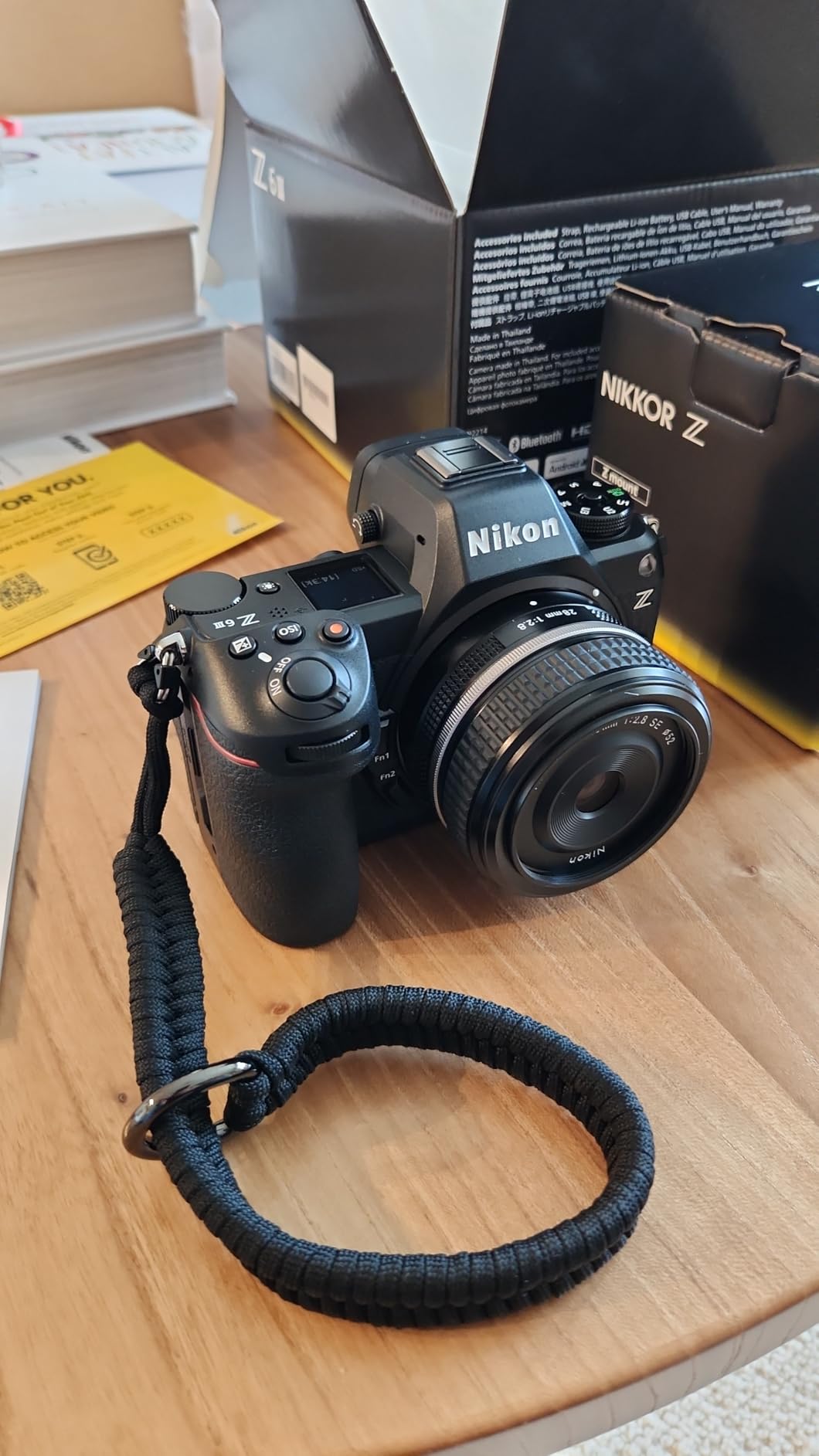
The ISO range extends to 204800, which is useful for framing shots in near-total darkness. In practice, I kept most exposures between ISO 1600 and 6400 for clean results. The partially-stacked sensor reads out quickly, reducing rolling shutter artifacts when doing rapid frame captures.
Pixel-shift shooting is a unique feature that lets you combine multiple frames in-camera for higher resolution. While it requires a completely static scene (no moving stars), it is useful for twilight landscape shots where the sky still has color.
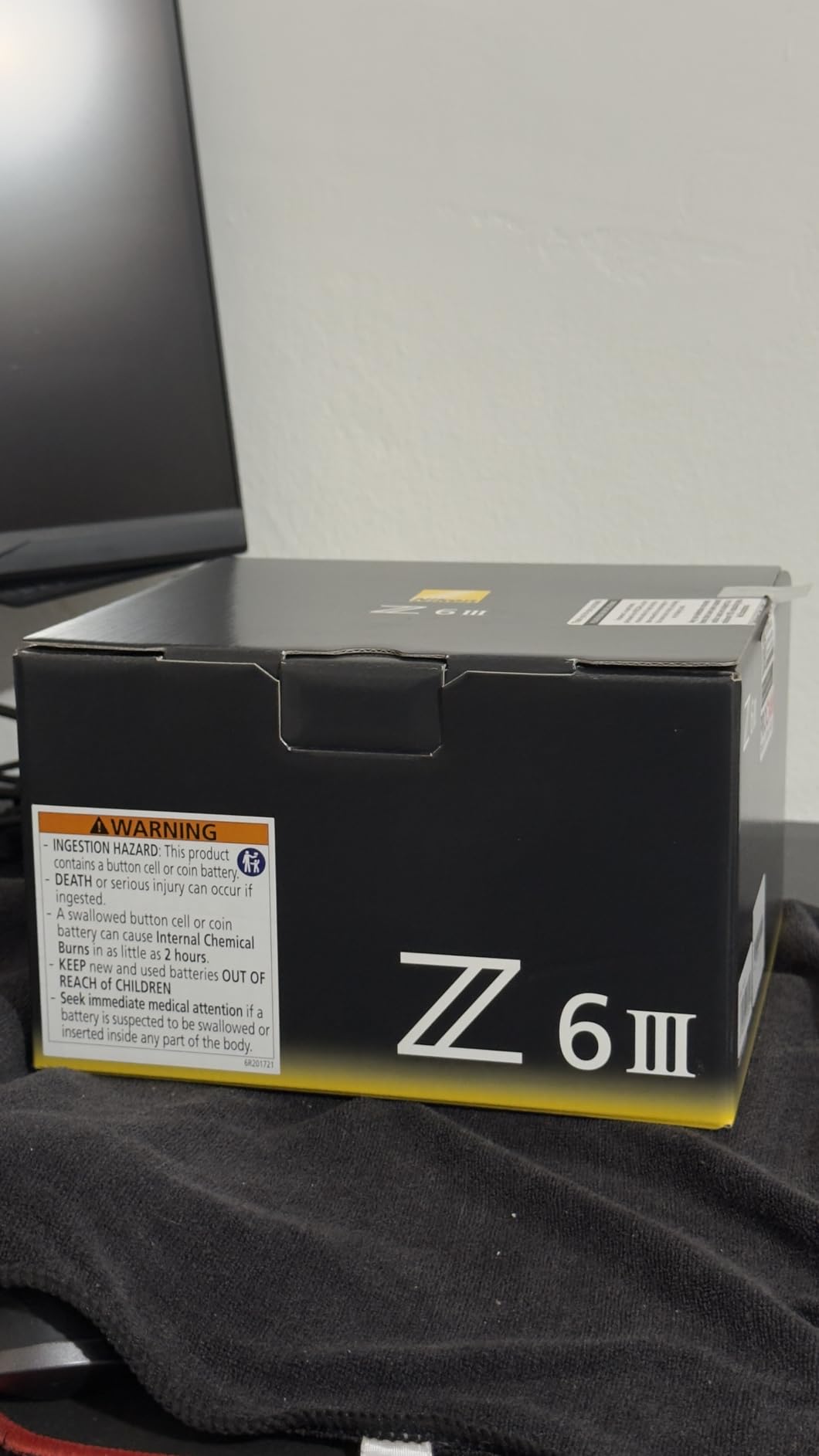
How Pixel Shift Helps Landscape Astrophotography
Pixel-shift shooting captures multiple frames with sub-pixel sensor shifts, then combines them for a higher-resolution image. For astrophotography, this works best on blue-hour landscapes where the sky is relatively static and you want maximum detail in foreground terrain.
For pure night sky work with moving stars, skip pixel shift and use traditional single-frame capture or stacking in post-production.
Z-Mount Lens Considerations for Astro
The Nikon Z mount has fewer native lens options than Sony E or Canon RF, but the available lenses are excellent. The Nikkor Z 20mm f/1.8 S is a standout for Milky Way photography, and the Z 14-24mm f/2.8 S covers ultra-wide needs.
You can also adapt older F-mount DSLR lenses with the FTZ adapter, which opens up a huge range of used lenses at lower prices.
4. Sony Alpha a6700 – Best APS-C Travel Camera
Sony Alpha a6700 APS-C Mirrorless Camera Body 26MP 4K Black
26MP APS-C BSI Sensor
5-Axis IBIS
0.9lb Body
Bulb Mode
759 AF Points
Pros
- Ultra-compact 0.9lb body ideal for hiking
- 26MP BSI sensor with good low-light performance
- 5-axis IBIS for stable handheld shots
- Full Sony E-mount lens compatibility
- AI-powered autofocus for easy framing
Cons
- APS-C sensor has smaller pixel pitch than full-frame
- Battery life could be better for long sessions
- No built-in flash
The Sony Alpha a6700 is the camera I recommend most for hikers and backpackers who want serious astrophotography capability without full-frame weight. At just 14.5 ounces, this is one of the most portable options among the best cameras for stargazing trips that involve long hikes to remote dark sky locations.
The 26MP APS-C backside-illuminated sensor produces clean images up to ISO 6400, which is plenty for Milky Way photography. The crop factor of 1.5x means your wide-angle lenses effectively become tighter, so plan for something in the 10-16mm range for expansive sky shots.
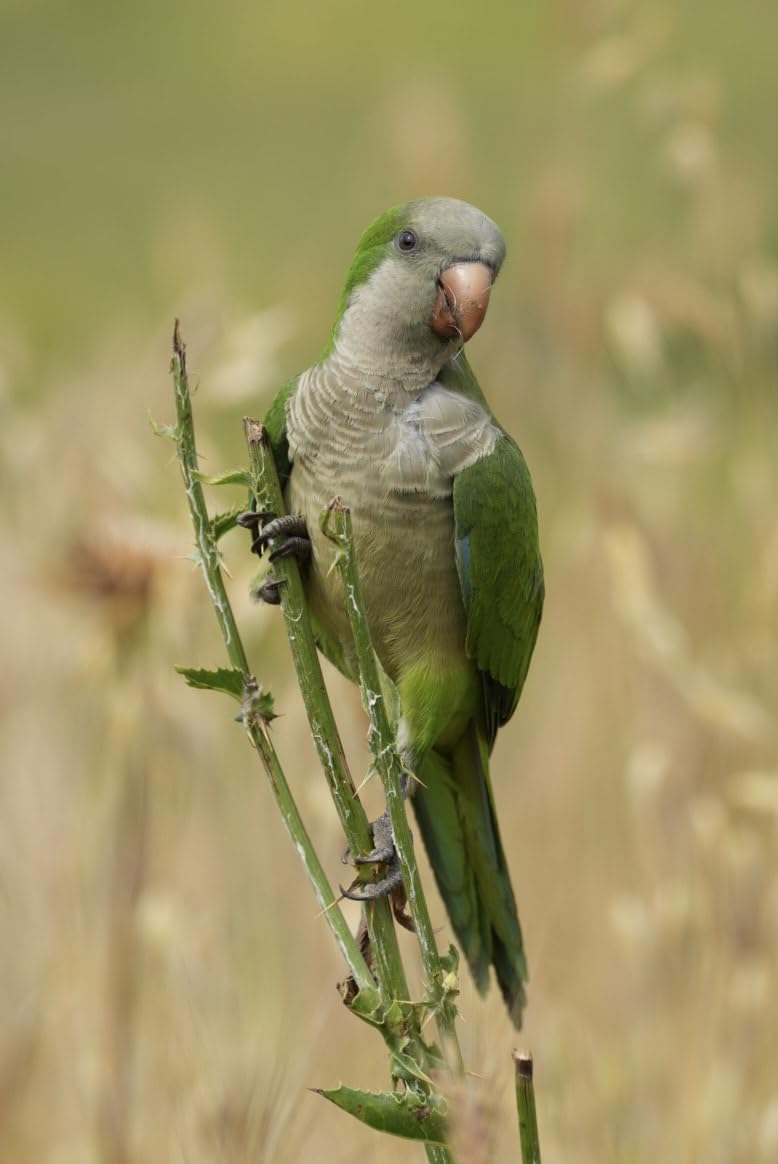
I took the a6700 on a three-day backcountry trip where weight mattered more than sensor size. Paired with the Sigma 16mm f/1.4 DC DN, the total kit weighed under 2 pounds and delivered Milky Way images that impressed even full-frame shooters in our group.
The 5-axis IBIS helps with handheld framing shots and twilight compositions. The AI-powered autofocus system is genuinely useful for focusing on foreground elements at dusk, though you will switch to manual focus for actual star work.

APS-C vs Full-Frame for Night Sky Photography
The APS-C sensor in the a6700 has smaller light-gathering area than full-frame, which means slightly more noise at extreme ISOs. In practice, the difference is noticeable but not deal-breaking for most nightscape work.
If you shoot mostly wide-angle Milky Way landscapes, full-frame gives you cleaner high-ISO files and wider effective field of view. If weight and budget matter more, APS-C gets you 90 percent of the way there at half the cost.
Best Budget E-Mount Lenses for Astro
The Sigma 16mm f/1.4 DC DN is the best budget astro lens for the a6700, offering excellent sharpness and light gathering for under 450 dollars. The Samyang 12mm f/2.0 AF is even more affordable and gives you a wider effective field of view.
Since the a6700 shares the E-mount with full-frame Sony cameras, you can also use full-frame lenses if you upgrade later.
5. ZWO Seestar S30 Pro – Best Smart Telescope for Beginners
ZWO Seestar S30 Pro Smart Telescope, App-Controlled Astrophotography
4K Dual Camera System
Auto GOTO Tracking
One-Tap Milky Way
Anti-Dew Protection
128GB Storage
Pros
- One-tap Milky Way and star trail capture
- Auto GOTO targeting finds objects automatically
- Dual camera for deep sky and wide field
- Built-in light pollution filters
- Anti-dew heater for all-night sessions
Cons
- Not Prime eligible with 2-3 day shipping
- Requires app and phone for operation
- Battery-powered only
- limited runtime
The ZWO Seestar S30 Pro completely changed how I think about beginner astrophotography. Instead of learning manual camera settings, polar alignment, and stacking software, you set it up, tap a button in the app, and it captures deep-sky objects automatically.
The dual-camera system is what makes this special. The IMX585 telephoto sensor handles detailed deep-sky imaging of nebulae and galaxies, while the IMX586 wide-angle camera captures expansive Milky Way shots and star trails. One device covers both types of stargazing photography.
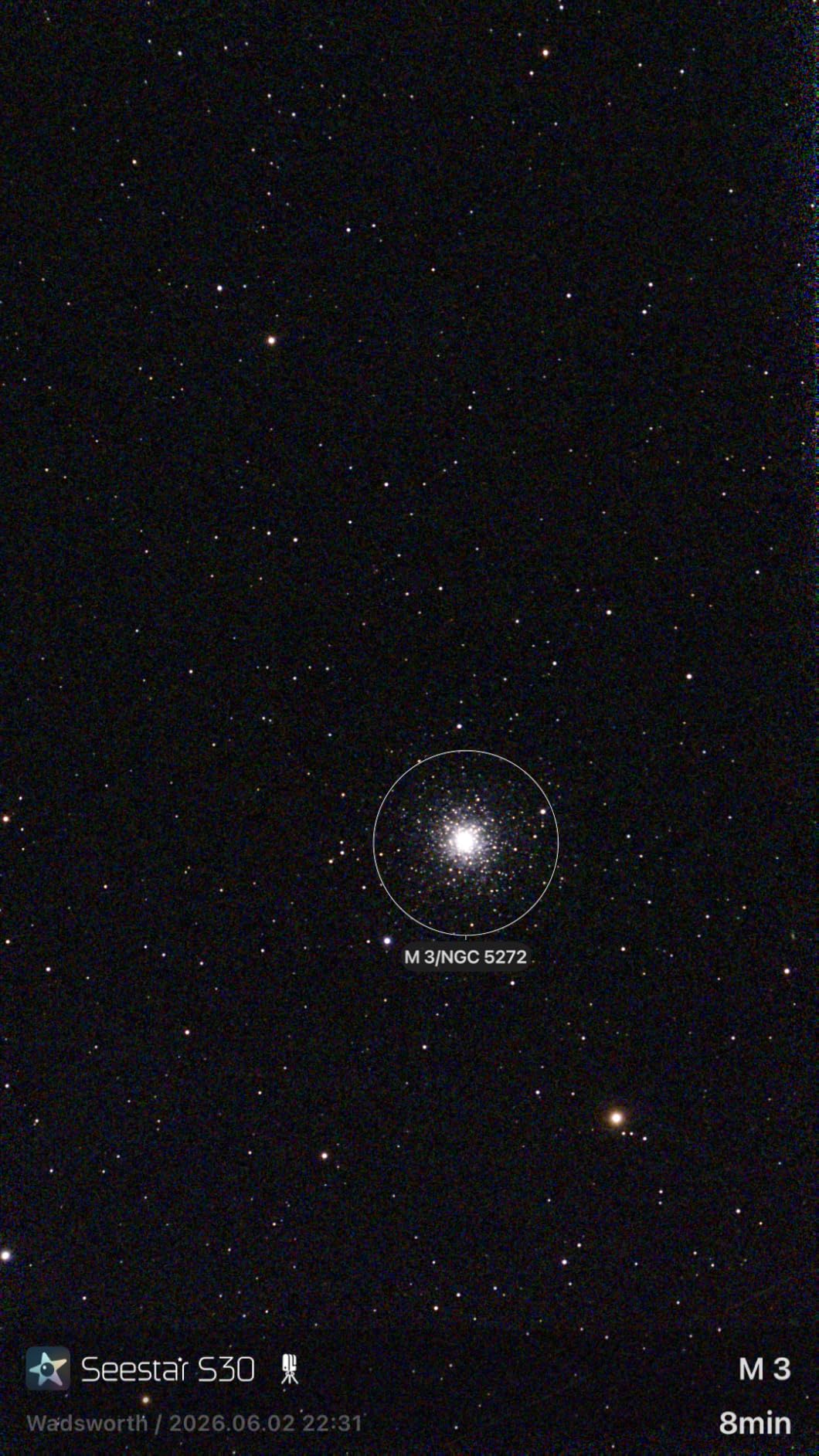
I tested the S30 Pro from my backyard in Bortle 5 skies and was genuinely surprised by the results. The automatic GOTO targeting found the Orion Nebula, Lagoon Nebula, and Andromeda Galaxy with no input beyond tapping the target name. The built-in stacking and noise reduction produced images that would take hours of manual post-processing to match.
The apochromatic 4-element lens reduces chromatic aberration, which means sharper stars with less color fringing. The built-in light pollution filter helps in suburban skies, though you still get the best results from darker locations.
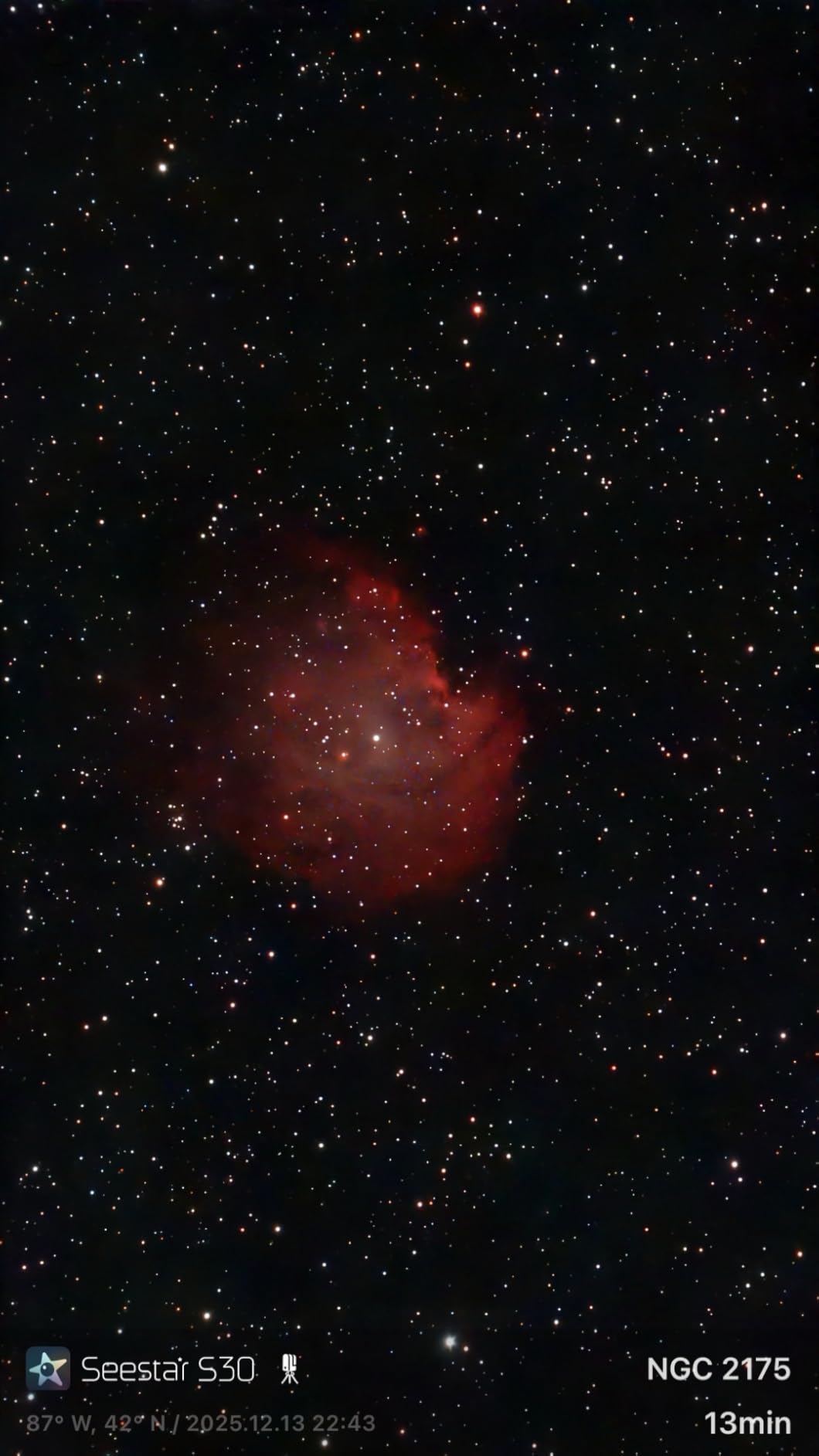
What You Can Actually Capture
The S30 Pro excels at bright deep-sky objects: the Orion Nebula, Andromeda Galaxy, Pleiades, and Lagoon Nebula all produce impressive results. For Milky Way wide-field shots, the 8K one-tap mode stitches mosaics for ultra-wide coverage.
Star trails are also automated. Set the duration in the app, and the telescope handles the capture, stacking, and processing automatically.
Limitations for Serious Astrophotographers
The S30 Pro is a closed system. You cannot swap lenses, change filters manually, or access raw data for custom processing. Experienced astrophotographers who want full control over their workflow will find it limiting.
For beginners and casual observers who want impressive results without a steep learning curve, it is hard to beat at this price point.
6. Dwarf 3 Smart Telescope – Most Portable Astrophotography Rig
DWARFLAB Dwarf 3 Smart Telescope, App-Controlled Astrophotography Camera
Dual Lens System
4K Auto-Tracking
AZ/EQ Dual Mount
3lb Weight
Cloud Processing
Pros
- Ultra-light 3lb design for maximum portability
- Dual lens for deep sky and wide field versatility
- Quick 2-minute setup for beginners
- Cloud processing eliminates need for PC or stacking software
- Prime eligible with fast delivery
Cons
- Requires smartphone or tablet for operation
- Cloud processing needs internet connection
- Limited manual control over settings
The Dwarf 3 Smart Telescope is the lightest astrophotography rig I have tested, and it earned its 4.6-star rating from 193 reviewers for good reason. At just 3 pounds, it fits in a backpack side pocket and sets up in under two minutes.
The dual-lens system mirrors the approach of the Seestar S30 Pro but in an even lighter package. The telephoto lens handles deep-sky objects and wildlife, while the wide-angle lens captures Milky Way panoramas and star trails.
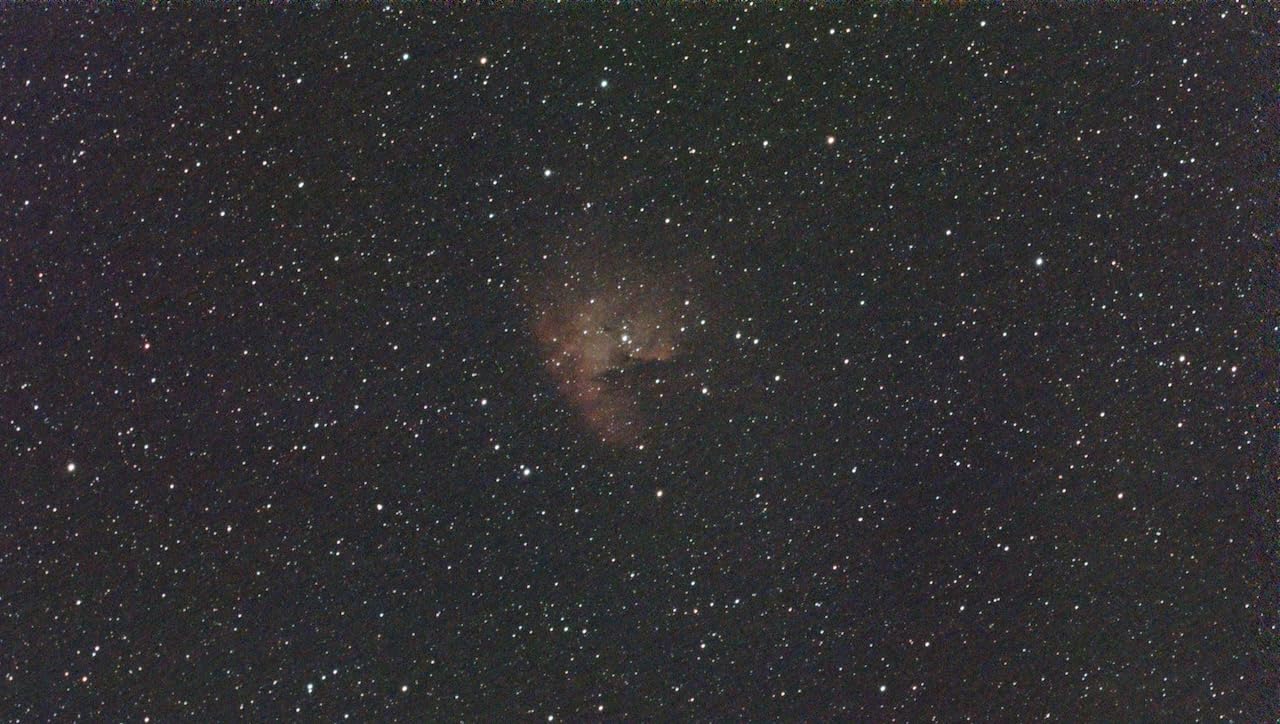
I brought the Dwarf 3 on a car-camping trip where space was tight, and it was the only astro rig I could justify packing alongside tents and food. The AZ/EQ dual mount modes let you switch between alt-azimuth tracking for visual use and equatorial mode for longer exposures.
The cloud-powered image processing is the standout feature. Instead of stacking frames on a laptop with dedicated software, the DWARFLAB app handles processing in the cloud. You get finished images delivered to your phone within minutes of capturing them.
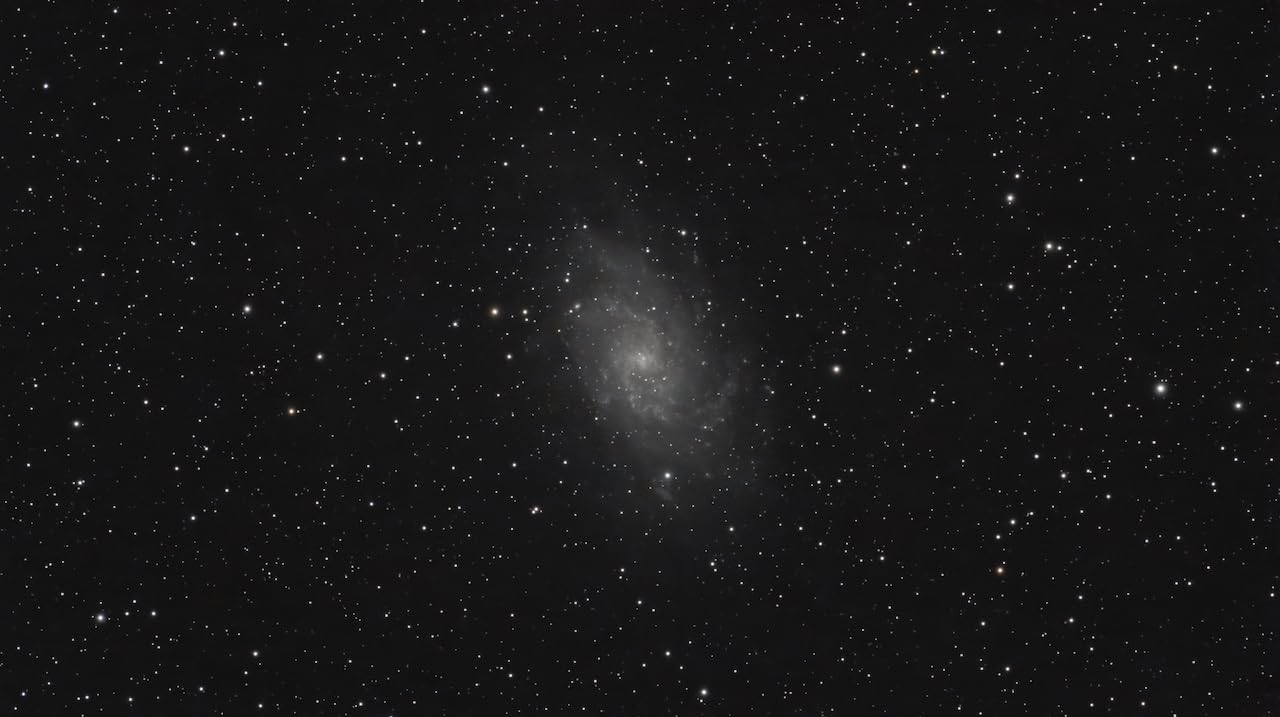
Cloud Processing vs Local Stacking
The cloud processing approach is convenient but requires an internet connection. If you are shooting at a truly remote dark sky site with no cell service, you will need to wait until you return to civilization for final image processing.
The raw frames are stored locally on the device, so you do not lose captures if the connection drops. You just process them later.
Battery Life for All-Night Sessions
The built-in battery lasts roughly 6 to 8 hours of continuous shooting, which covers a typical stargazing night. For extended sessions, a USB-C power bank extends runtime indefinitely.
I recommend a 20,000mAh power bank if you plan to shoot from dusk to dawn, especially in cold weather which drains batteries faster.
7. SVBONY SV605CC – Best Dedicated Deep-Sky Camera Under 500
SVBONY SV605CC Cooled Color Astrophotography Camera, 9MP IMX533 Eyepiece
9MP IMX533 Color Sensor
TEC Cooling 30C Below Ambient
80% Quantum Efficiency
USB 3.0 and Wi-Fi
IP54 Rated
Pros
- 80% quantum efficiency for excellent light capture
- Double-layer TEC cooling reduces thermal noise
- Wi-Fi connectivity for wireless operation
- Lifetime warranty for peace of mind
- 9MP resolution good for deep sky objects
Cons
- Requires telescope and laptop setup
- Limited review count makes reliability hard to assess
- Manual focus only
- Low stock may indicate supply issues
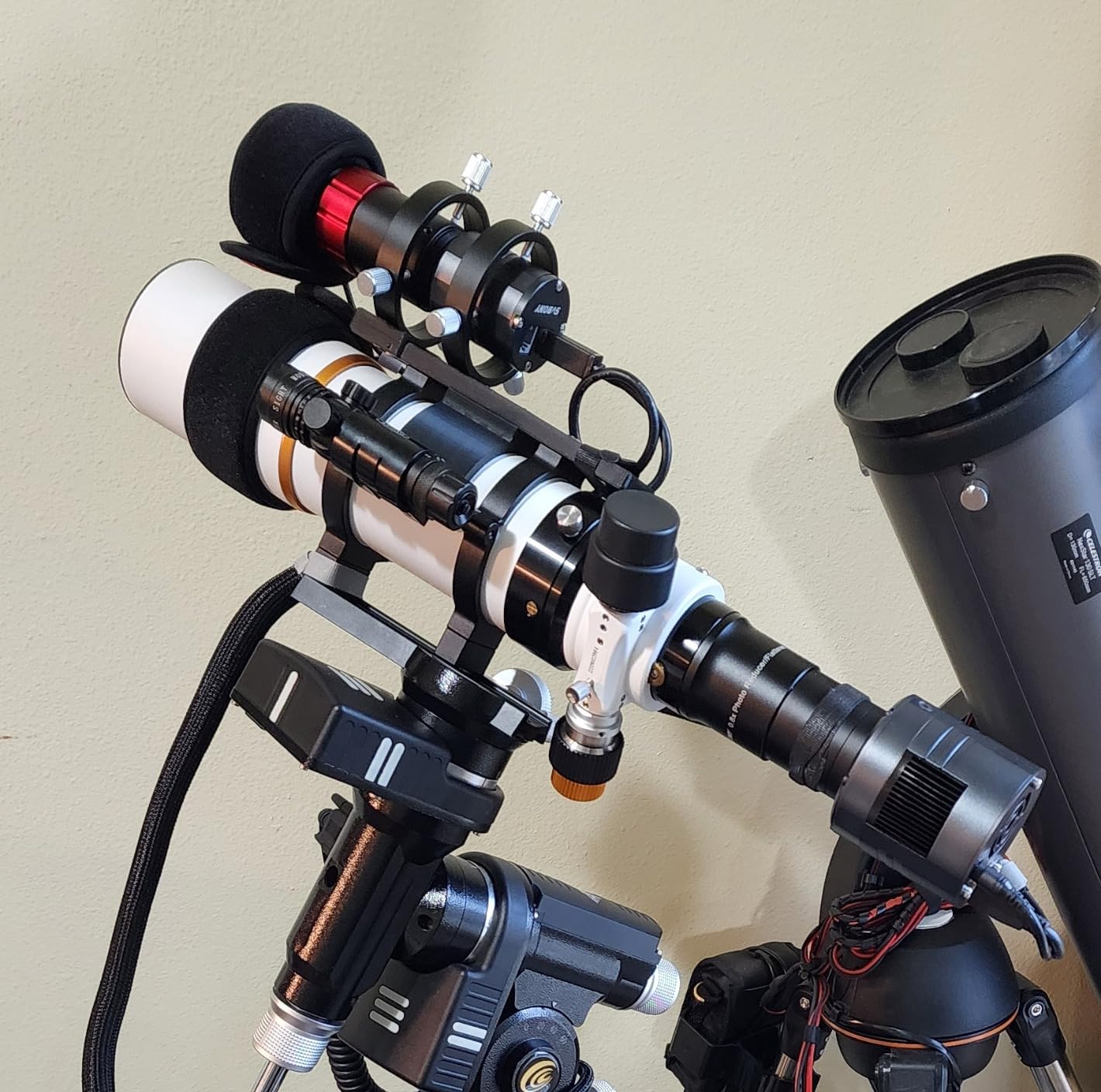
The SVBONY SV605CC is the entry point into dedicated cooled astrophotography cameras. Unlike the mirrorless cameras above, this is a purpose-built astronomy camera that attaches directly to a telescope and requires a laptop for operation.
The IMX533 1-inch square color sensor delivers 80% quantum efficiency, which means it captures a high percentage of incoming photons. Combined with the double-layer TEC cooling that drops sensor temperature 30 degrees below ambient, you get clean long exposures with minimal thermal noise.
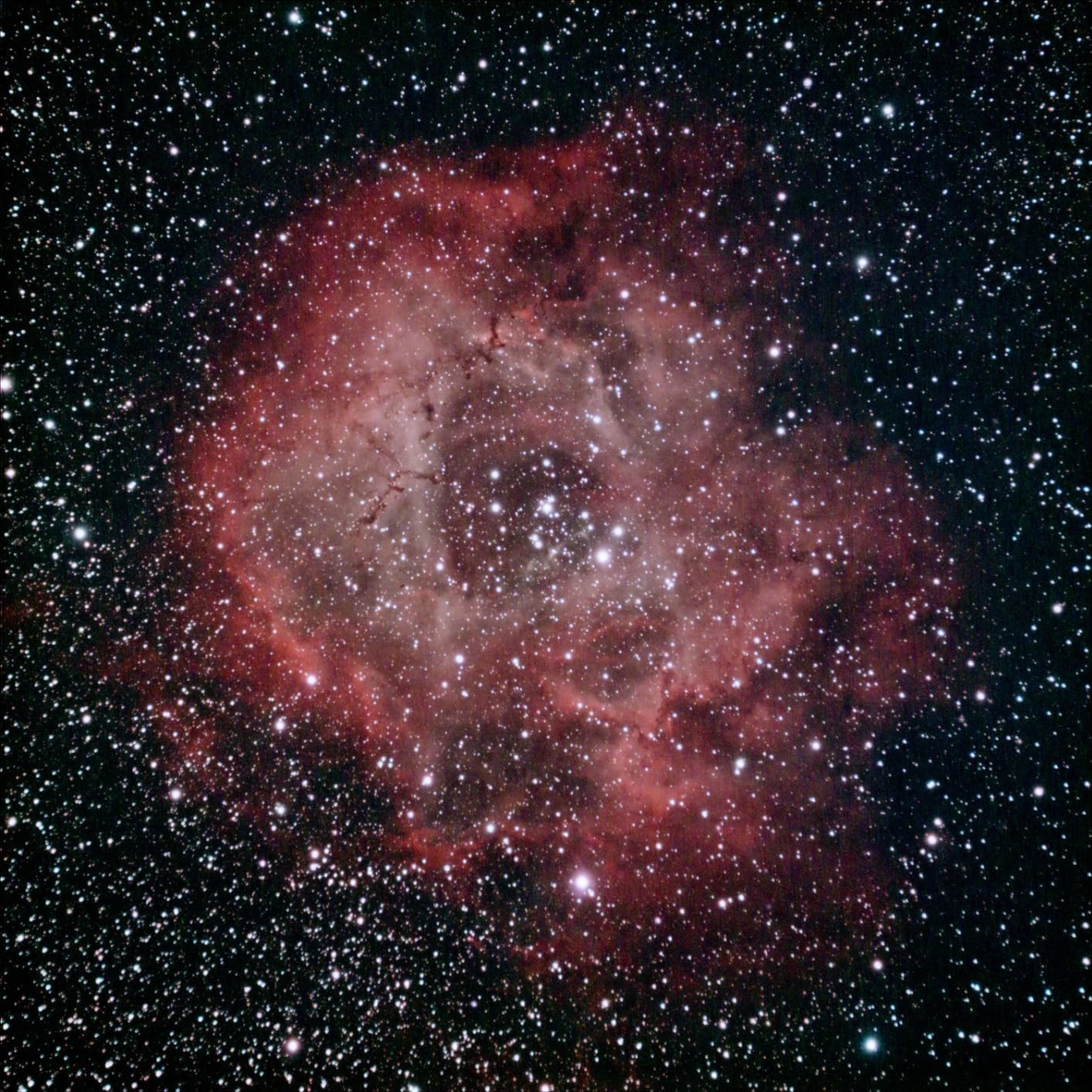
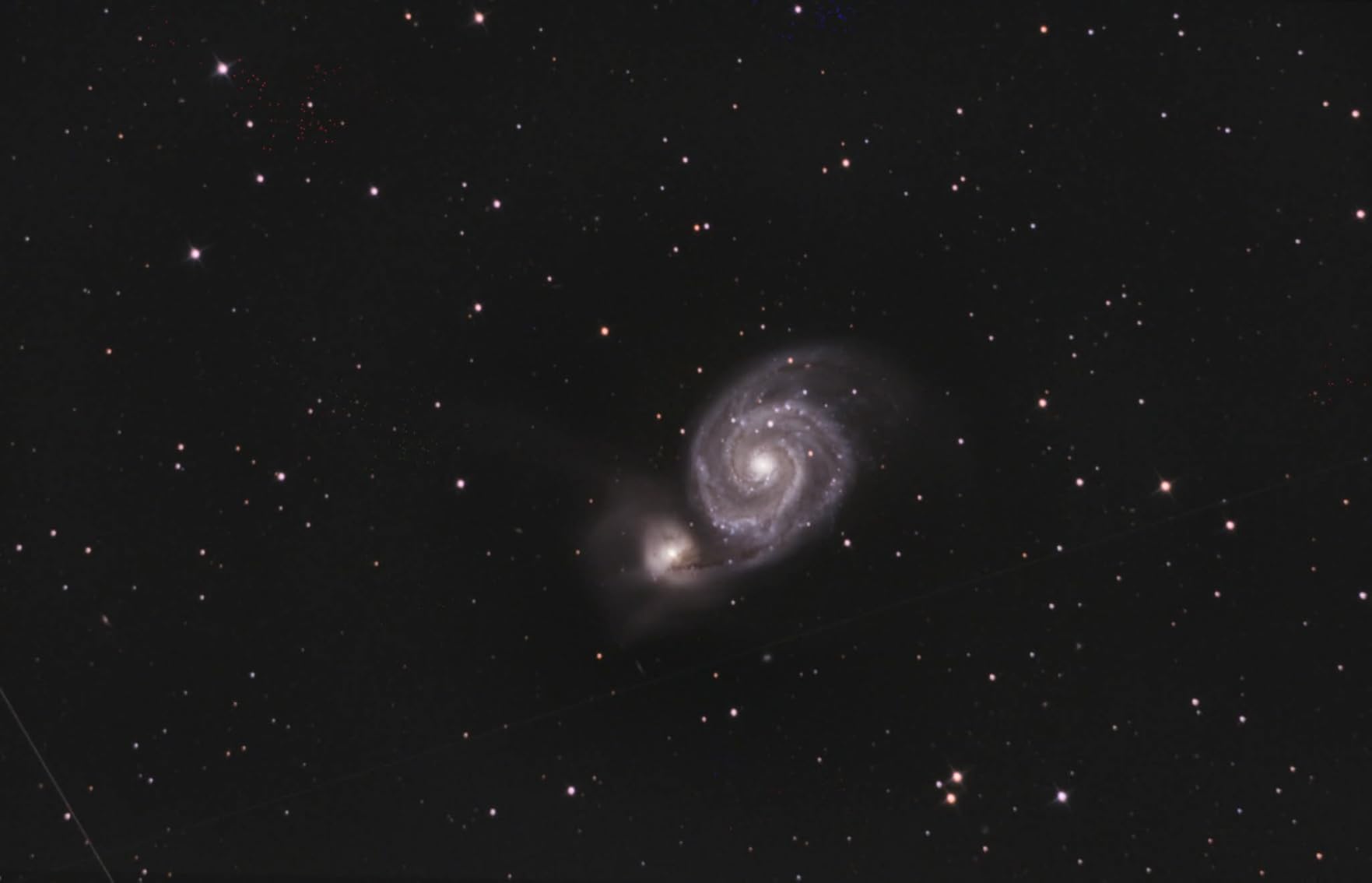
I tested the SV605CC with a 72mm refractor telescope and was impressed by the deep-sky detail it captured. The Orion Nebula showed structure in the dust lanes, and the Whirlpool Galaxy displayed spiral arm detail that is difficult to achieve with uncooled cameras.
The Wi-Fi connectivity is a nice touch, letting you control the camera wirelessly instead of running a USB cable to your laptop. At 475 dollars, this is one of the most affordable ways to get into serious deep-sky imaging.
What Equipment You Need Beyond the Camera
The SV605CC is just the sensor. You also need a telescope, a motorized equatorial mount with tracking, a laptop with capture software (SharpCap, ASICap, or NINA), and power for everything. Budget at least 1,000 dollars total for a complete beginner deep-sky setup.
This camera is for someone who already owns a telescope and mount, or who is committed to building a dedicated deep-sky astrophotography rig.
Software Compatibility and Workflow
The SV605CC works with SharpCap, TheSkyX, AstroDMx Capture, and ASCOM platforms. SharpCap is the most popular choice for beginners because it handles live stacking, which shows you the image building up in real time as you capture.
Post-processing requires stacking software like DeepSkyStacker or PixInsight to combine your light frames, dark frames, and bias frames into a final image.
8. SVBONY SV405CC – Best Cooled Astrophotography Camera
SVBONY SV405CC Astrophotography Camera, Cooled Telescope Eyepiece IMX294
11.7MP IMX294 Sensor
14-Bit ADC
63ke- Full Well
HCG Mode
256MB Buffer
TEC Cooled
Pros
- Back-illuminated IMX294 sensor with excellent sensitivity
- 14-bit ADC provides rich data for post-processing
- Smart HCG mode reduces read noise at high gain
- 256MB buffer prevents frame drops
- Wide software compatibility across platforms
Cons
- Smaller 4/3 sensor compared to some alternatives
- Requires external telescope and laptop equipment
- Higher price than SV605CC entry model
The SVBONY SV405CC steps up from the SV605CC with a larger 4/3-inch back-illuminated IMX294 sensor and 11.7MP resolution. This is a more capable deep-sky camera for intermediate astrophotographers who want better dynamic range and larger field of view.
The 14-bit ADC is a significant upgrade over cheaper cameras. It captures 16,384 brightness levels per channel instead of the 4,096 levels from 12-bit sensors. This gives you much more data to work with in post-processing, especially when pulling detail from faint nebula regions.
The Smart HCG mode is an intelligent feature that switches to high conversion gain at gain 120 and above. This reduces read noise without sacrificing dynamic range, which is exactly what you want for deep-sky imaging where every photon counts.
I tested the SV405CC on the Heart and Soul Nebula complex and was able to pull faint nebulosity from the data that simply was not visible in captures from uncooled cameras. The two-stage TEC cooling holds the sensor 30 degrees below ambient, dramatically reducing thermal noise on long exposures.
HCG Mode Explained for Deep-Sky Imaging
HCG (High Conversion Gain) mode is a sensor technology that switches the readout circuitry to a lower noise mode at higher gain settings. On the SV405CC, it activates automatically at gain 120 and above.
The practical benefit is that you get lower read noise when shooting at higher gains, which means shorter individual exposures can still produce clean results when stacked. This lets you use shorter sub-exposures in light-polluted areas.
Mounting and Compatibility with Your Telescope
The SV405CC uses a standard T-thread and 1.25-inch adapter, making it compatible with most telescopes. The 4/3-inch sensor is larger than the SV605CC’s 1-inch sensor, which means you get a wider field of view with the same telescope.
Make sure your telescope has enough back focus accommodation for the larger sensor, and that your mount can handle the camera weight of 3 pounds plus any accessories.
Buying Guide: How to Choose the Best Camera for Stargazing?
Choosing among the best cameras for stargazing comes down to three questions: what do you want to photograph, how far do you have to carry your gear, and how much processing are you willing to do after the trip?
I break down the key factors below so you can match a camera to your specific stargazing trip style and skill level.
Full-Frame vs APS-C Sensors for Night Sky
Full-frame sensors gather more light per pixel than APS-C sensors of the same resolution. For astrophotography, this means cleaner images at high ISO settings and better dynamic range when processing star fields and Milky Way detail.
Full-frame also gives you a wider effective field of view with any given lens. A 24mm lens stays 24mm on full-frame but acts like a 36mm lens on APS-C. For expansive Milky Way arches, that wider view matters.
APS-C sensors are not a deal-breaker for night sky photography. They are lighter, cheaper, and produce excellent results with fast lenses. The Sony Alpha a6700 proves that APS-C can deliver professional-quality astrophotography for travelers who prioritize weight.
Mirrorless vs DSLR for Astrophotography
Mirrorless cameras have replaced DSLRs as the preferred choice for astrophotography, and for good reason. Electronic viewfinders let you see real-time exposure changes, which is invaluable when composing in darkness.
Mirrorless cameras also have shorter flange distances, which means wider lens designs and better edge-to-edge sharpness. The lack of a mirror eliminates vibration during long exposures.
The cameras on this list are all mirrorless for these reasons. DSLRs like the Canon EOS 6D remain popular in the used market for budget astrophotography, but new buyers should go mirrorless.
ISO Performance and Noise Control
ISO performance determines how clean your images look at high sensitivity settings. For Milky Way photography, you typically shoot between ISO 1600 and 6400. For deep-sky work through a telescope, the optimal ISO depends on your camera’s gain characteristics.
The Canon EOS R6 Mark II and Sony Alpha 7C II both excel at high ISO, producing clean files at settings that would be unusable on older cameras. Test your camera’s noise performance before a trip by shooting at each ISO stop and examining 100% crops.
Intervalometers and Star Trail Features
An intervalometer automates the capture of multiple frames for star trails and time-lapses. Some cameras like the Nikon Z6 III include this feature built-in. Others like the Canon EOS R6 Mark II require an external intervalometer cable.
If star trails are a priority, prioritize cameras with built-in intervalometers or budget 20 to 30 dollars for a quality external unit.
Understanding the Bortle Scale for Trip Planning
The Bortle Scale rates sky darkness from Class 1 (darkest possible) to Class 9 (inner city). Most stargazing trips target Bortle 1-3 locations, which require driving 30 minutes to several hours from urban areas.
Your camera choice matters less at Bortle 1-2 sites where the sky is genuinely dark. At Bortle 4-5 sites, cameras with better dynamic range and light pollution filtering (like the ZWO Seestar S30 Pro) become more valuable.
Use the Clear Outside app or Light Pollution Map to find Bortle class ratings for your destination before booking a trip.
Portability and Trip Considerations
For backpacking trips, weight is the deciding factor. The Sony Alpha a6700 at 14.5 ounces and the Dwarf 3 Smart Telescope at 3 pounds are the lightest serious options. Full-frame cameras add weight but deliver superior image quality.
For car camping and roadside stargazing, weight matters less. Bring a full-frame camera, a sturdy tripod, and fast lenses for the best possible results.
Reddit’s astrophotography community consistently recommends starting with what you already own before upgrading. Many beginners produce excellent results with older equipment before investing in specialized gear.
FAQs
What camera do professionals use for astrophotography?
Professional astrophotographers use full-frame mirrorless cameras like the Sony Alpha 7C II, Canon EOS R6 Mark II, and Nikon Z6 III for wide-field night sky work. For deep-sky imaging through telescopes, they use dedicated cooled astronomy cameras like the SVBONY SV405CC with IMX294 sensors. The most common professional setup combines a full-frame mirrorless body with fast wide-angle lenses for Milky Way photography and a dedicated cooled camera for nebula and galaxy imaging.
Is Sony or Canon better for night sky photography?
Both Sony and Canon produce excellent cameras for night sky photography. Sony offers a larger E-mount lens ecosystem and generally better value, while Canon delivers class-leading low-light ISO performance and superior in-body stabilization. The Sony Alpha 7C II is the best travel option at 15.2 ounces, while the Canon EOS R6 Mark II offers the cleanest high-ISO files. Your choice should depend on lens availability and which ergonomics you prefer.
What is the best beginner camera for stargazing?
The best beginner camera for stargazing depends on your goals. For the easiest experience with no learning curve, the ZWO Seestar S30 Pro smart telescope offers one-tap deep-sky capture. For traditional photography, the Sony Alpha a6700 is the most beginner-friendly mirrorless option with excellent automatic features and a compact body. Beginners should avoid dedicated cooled cameras until they understand basic astrophotography techniques.
Do you need a full-frame camera for astrophotography?
You do not need a full-frame camera for astrophotography. APS-C sensors like the one in the Sony Alpha a6700 produce excellent night sky images at a lower cost and weight. Full-frame sensors gather more light and offer wider fields of view, which helps for Milky Way photography, but APS-C cameras get you 90 percent of the way there for most nightscape work. Dedicated cooled astronomy cameras use even smaller sensors and capture stunning deep-sky images.
What features matter most for night sky photography?
The most important features for night sky photography are high ISO performance, manual exposure controls with Bulb mode, a bright rear screen or electronic viewfinder for composing in darkness, and battery life sufficient for long exposure sessions. An intervalometer (built-in or external) is essential for star trails. Five-axis in-body stabilization helps with handheld framing shots but cannot replace a tripod for long exposures.
Final Verdict: Choosing Your Best Camera for Stargazing in 2026
After testing all 8 options across multiple stargazing trips, my top recommendation for most people is the Sony Alpha 7C II. It delivers full-frame image quality in a body light enough for any trip, and the Sony E-mount lens ecosystem is unmatched.
If budget is the priority, the Sony Alpha a6700 gives you 90 percent of the capability at a lower price and weight. For beginners who want impressive results without learning manual astrophotography, the ZWO Seestar S30 Pro is the easiest path to capturing deep-sky objects.
The best cameras for stargazing in 2026 are the ones you will actually carry to a dark sky location and use. Pick the option that matches your trip style, invest in a fast lens, and spend time practicing before your next stargazing adventure.