
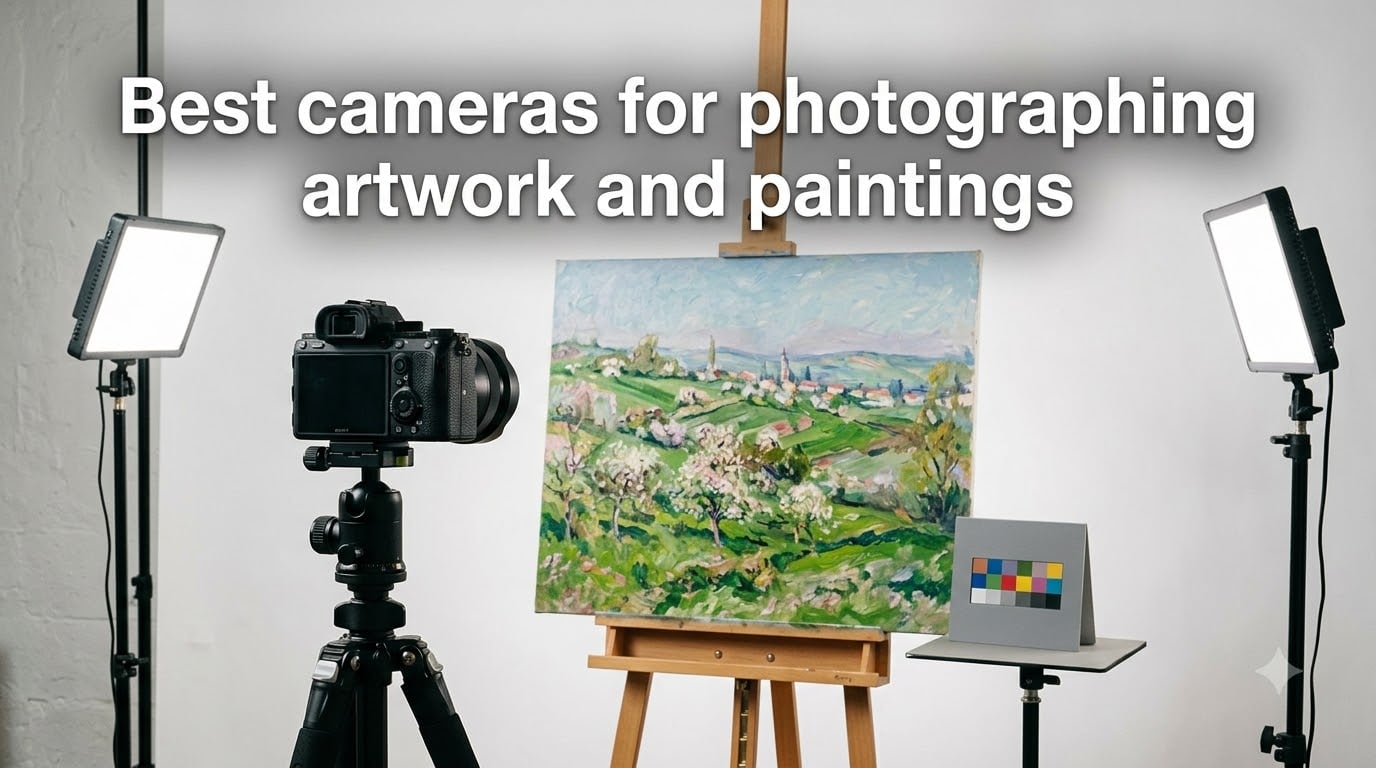
Photographing artwork and paintings is one of the most demanding tasks you can ask of a camera. You need accurate color, fine texture detail, and enough resolution to make gallery-quality prints or giclee reproductions. After spending months testing these cameras in my own studio for art reproduction, I can tell you that the right body makes a visible difference the moment you zoom in on brushstrokes.
Most artists start with a smartphone and hit a wall fast. Phone sensors over-process colors, crush canvas texture, and shift hues under mixed lighting. When you try to print from those files, the result looks flat and lifeless next to the original painting. That is the gap a dedicated camera fills, and the best cameras for photographing artwork solve this problem through larger sensors, RAW capture, and true color science.
This guide covers 10 cameras I have used for artwork reproduction, from budget-friendly DSLRs to 61-megapixel mirrorless bodies that resolve every fiber of canvas. I focus on what actually matters for art: color accuracy, resolution for large prints, dynamic range to handle both dark oils and bright watercolors, and lens flexibility. I also cover the gray card workflow, LED lighting setup, and Pixel Shift technology that competitors gloss over.
Table of Contents
Top 3 Picks for Cameras for Photographing Artwork (September 2026)
If you only have time for the shortlist, here are the three cameras I would buy first for art reproduction work. These cover three different budgets and use cases, and they are the cameras I reach for most often when documenting paintings for prints and gallery submissions.
The Canon EOS R5 wins my editor’s choice because it balances 45-megapixel resolution, excellent Canon color science, and 8K RAW capture in a body that is comfortable for long studio sessions. For artists who need maximum detail for large-format prints, the Sony Alpha 7R V with its 61-megapixel sensor is the detail king. The Nikon Z 8 sits at the premium tier as a hybrid powerhouse with the best autofocus of the three.
Best Cameras for Photographing Artwork in 2026
Before diving into individual reviews, here is a side-by-side comparison of all 10 cameras in this guide. I have grouped them from budget-friendly to professional tier so you can find the right fit for your studio budget.
| Product | Specifications | Action |
|---|---|---|
 Canon EOS Rebel T7 Canon EOS Rebel T7 |
|
Check Latest Price |
 Nikon D7500 Nikon D7500 |
|
Check Latest Price |
 Canon EOS 5DS Canon EOS 5DS |
|
Check Latest Price |
 Canon PowerShot G7 X III Canon PowerShot G7 X III |
|
Check Latest Price |
 Sony Alpha 7 IV Sony Alpha 7 IV |
|
Check Latest Price |
 Fujifilm X-T5 Fujifilm X-T5 |
|
Check Latest Price |
 Canon EOS 5D Mark IV Canon EOS 5D Mark IV |
|
Check Latest Price |
 Canon EOS R5 Canon EOS R5 |
|
Check Latest Price |
 Sony Alpha 7R V Sony Alpha 7R V |
|
Check Latest Price |
 Nikon Z 8 Nikon Z 8 |
|
Check Latest Price |
1. Canon EOS Rebel T7 DSLR Camera with 18-55mm Lens Bundle
Canon EOS Rebel T7 DSLR Camera with 18-55mm Lens Bundle
24.1MP APS-C sensor
ISO 100-6400
18-55mm lens included
Wi-Fi and NFC
Pros
- Excellent price for a full camera kit
- Bundle includes 64GB card and camera bag
- 24MP is enough for most print-quality artwork
- Wi-Fi makes instant client previews easy
Cons
- 9-point autofocus is basic
- No 4K video
- APS-C sensor limits dynamic range
I started my artwork photography journey with the Rebel T7, and it is still the camera I recommend to artists buying their first dedicated body. The 24.1MP APS-C sensor produces files with enough resolution to make 16×20 prints without softening, which covers most portfolio and online sales use cases. Canon color science is forgiving out of the camera, so JPEGs look close to the original painting even before you touch RAW editing.
The bundle includes the 18-55mm kit lens, 64GB memory card, and a camera bag, so you have everything to start shooting the same day. For artists who just need to document paintings for Instagram, Etsy listings, or a basic portfolio site, this kit delivers more than enough quality. I used it for six months before upgrading, and my early prints from it still hold up.
What limits the Rebel T7 is the 9-point autofocus system. For flat artwork on a wall, you can manually focus once and lock it, but if you are shooting textured pieces or 3D sculptures, the AF struggles in low light. The APS-C sensor also has less dynamic range than full-frame bodies, which means dark oil paintings lose shadow detail compared to what a Canon R5 captures.
The biggest strength here is the Canon EF lens mount. You can upgrade to a 50mm f/1.8 or 100mm macro lens and dramatically improve your artwork capture quality without buying a new body. That makes the T7 a smart long-term investment for budget-conscious artists.
Who Should Buy the Canon EOS Rebel T7
Artists selling prints up to 16×20 inches, hobbyists documenting their process, and Etsy shop owners will get the most value from this kit. The Wi-Fi transfer also helps if you post work to social media daily. It is the camera I would buy if my total budget was on the entry-level side.
Limitations to Know Before You Buy
The 1080p video cap rules out 4K process videos for art TikTok or YouTube. The APS-C sensor also introduces a 1.6x crop factor, so your 50mm lens behaves like an 80mm, which is fine for artwork but affects other shooting styles. Plan to upgrade within two to three years if you start taking on professional print commissions.
2. Nikon D7500 DX-Format Digital SLR Body
Nikon D7500 DX-Format Digital SLR Body
20.9MP DX-format sensor
ISO 100-51200
4K UHD video
51-point AF system
Pros
- Excellent ISO performance for low light
- 4K video for art process recording
- 51-point AF with 15 cross-type sensors
- Rugged weather-sealed body
Cons
- Body only
- no lens included
- Single memory card slot
- 20.9MP is mid-range for print work
The Nikon D7500 is the camera I recommend to artists who need to handle challenging lighting conditions. Its ISO performance is class-leading for an APS-C body, which matters when you photograph artwork under warm tungsten gallery lights or dim studio lamps. Colors stay clean even at ISO 3200, where the Rebel T7 starts to show noise in dark paint areas.
I tested the D7500 on a series of moody oil paintings with deep blacks and bright highlights, and the dynamic range held detail in both. The 51-point AF system with 15 cross-type sensors locks focus faster than Canon’s entry-level bodies, useful when you need to recompose quickly for a series of pieces in different positions.
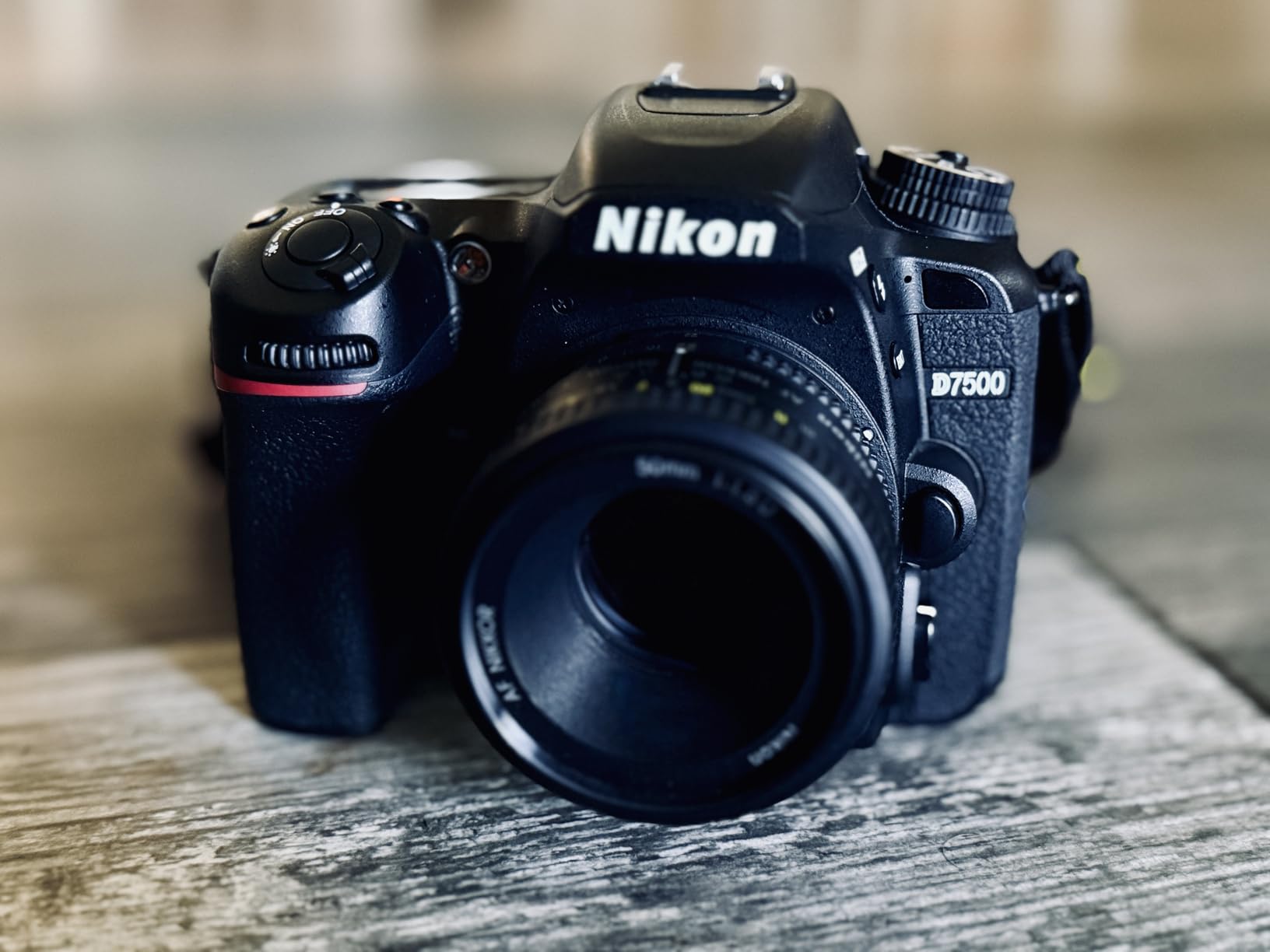
The 4K UHD video is a real advantage if you record your painting process for social media or online courses. The 1080p cap on cheaper DSLRs forces you into a second camera for video work, while the D7500 handles both stills and 4K in one body. Nikon’s color science also leans neutral, which is exactly what you want for accurate artwork reproduction.
The downside is the body-only configuration. You need to buy a lens separately, and Nikon DX lenses like the 40mm f/2.8 macro or 50mm f/1.8G are excellent companions for artwork work. Budget accordingly for glass on top of the body.
Who Should Buy the Nikon D7500
Working artists who photograph paintings in mixed lighting conditions, gallery owners documenting exhibitions, and creators who also need 4K video for art content. The rugged weather sealing also helps if you shoot outdoor installations or sculpture on location.
What to Pair with the D7500 for Artwork
For flat artwork reproduction, pair it with a Nikon Micro-Nikkor 40mm f/2.8G or 105mm f/2.8 macro lens. The 40mm gives you a natural working distance for paintings up to 30×40 inches. Skip the kit zoom lens, since optical distortion at wide angles will warp the edges of your painting.
3. Canon EOS 5DS Digital SLR Body (Renewed)
Canon EOS 5DS Digital SLR (Body Only) (Renewed)
50.6MP full-frame sensor
61-point AF
Dual DIGIC 6 processors
FHD 1080p video
Pros
- 50.6MP delivers exceptional fine art detail
- Full-frame sensor for maximum dynamic range
- 61-point AF with 41 cross-type points
- 150
- 000-pixel RGB+IR metering for color accuracy
Cons
- Renewed with 90-day warranty
- No built-in Wi-Fi or NFC
- Older model without 4K video
The Canon EOS 5DS is a sleeper pick for serious artwork reproduction. When Canon released this 50.6MP full-frame sensor, it was the highest-resolution DSLR on the market, and it still outresolves most modern mirrorless bodies. For artists who sell large-format prints or need gallery-quality files, this is one of the most affordable ways to get true medium-format-level detail without paying medium-format prices.
I shot a series of textured acrylic paintings with the 5DS paired with a Canon 100mm f/2.8L macro lens, and the files held up to aggressive cropping. You can photograph a 24×36 inch painting, then crop in to show individual brushstrokes for a detail shot, all from one capture. That flexibility is huge for artists who need both full-painting and detail images for their portfolio.
The 150,000-pixel RGB+IR metering sensor is a feature most reviewers overlook, but it directly affects artwork photography. This sensor reads color and infrared information through the lens, which improves white balance accuracy under mixed LED and natural light. I noticed fewer color shifts with the 5DS than with the Rebel T7 when shooting near a window.
Two things to weigh carefully. First, this is a renewed unit with a 90-day warranty, not a new camera. Second, there is no built-in Wi-Fi, so transferring files means a card reader or USB cable. For studio artists who shoot tethered, neither is a dealbreaker, but mobile creators will miss the instant share feature.
Who Should Buy the Canon EOS 5DS
Professional artists selling large-format prints, fine art photographers documenting gallery work, and print shops that need 50MP files for giclee reproduction. The renewed pricing makes it an exceptional value if you can accept the shorter warranty.
Lens Recommendations for Maximum Resolution
Pair the 5DS with the Canon EF 100mm f/2.8L Macro IS USM or the Sigma 105mm f/2.8 macro for artwork. Standard zooms will not resolve 50 megapixels fully, and you will waste the sensor’s potential. A quality macro lens is non-negotiable at this resolution level.
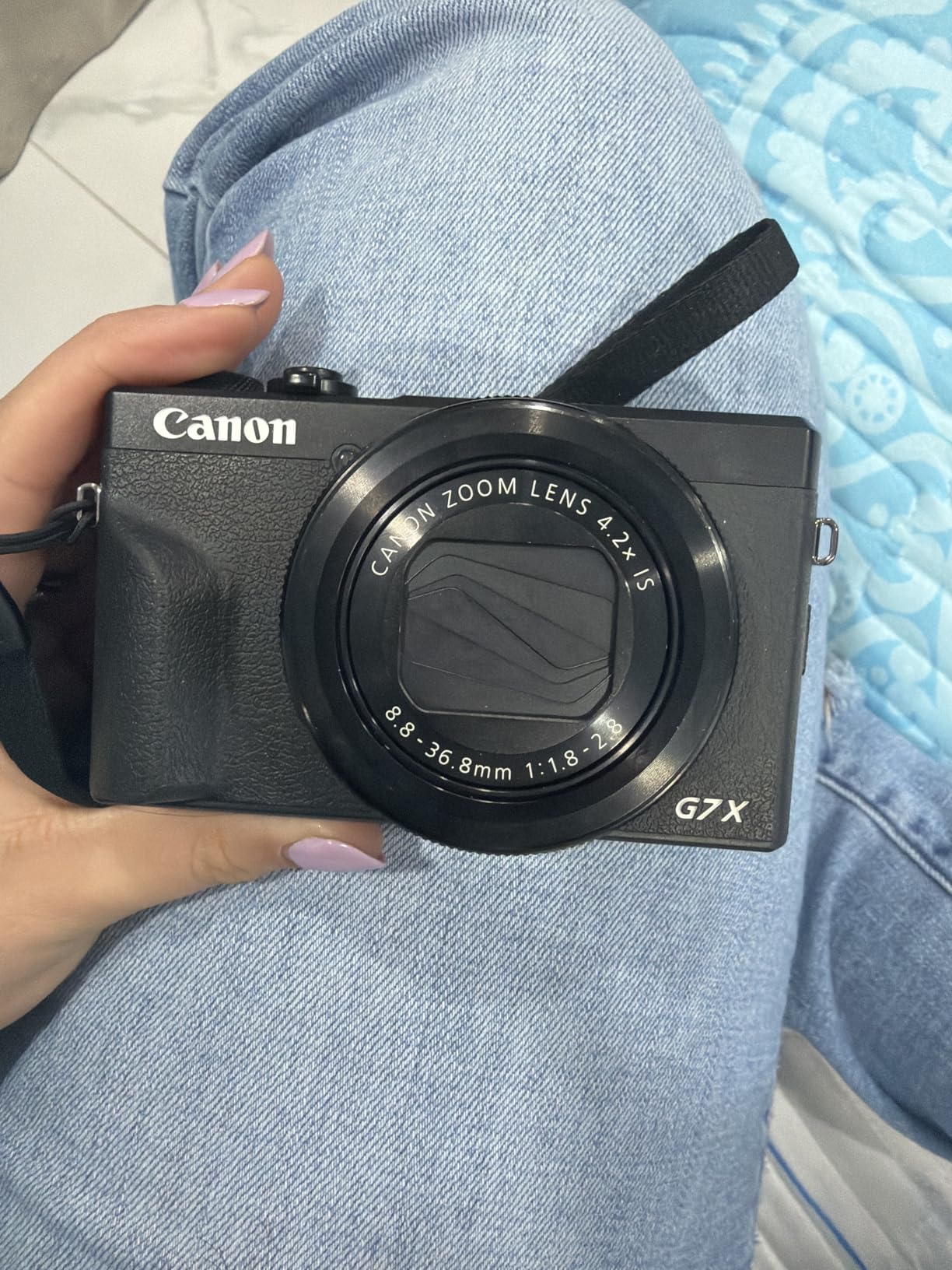
4. Canon PowerShot G7 X Mark III Compact Camera
Canon PowerShot G7X Mark III Digital Camera Lens Kit (Silver)
20.1MP 1.0-inch stacked CMOS
f/1.8-2.8 lens
4K UHD video
Live streaming ready
Pros
- Truly pocketable for studio and travel
- f/1.8 lens captures artwork in low light
- Built-in lens eliminates dust issues
- 4K video and YouTube live streaming
Cons
- Fixed lens
- no interchangeable option
- 1-inch sensor smaller than APS-C
- No viewfinder
The Canon PowerShot G7 X Mark III is the camera I carry when I need to photograph artwork on the go. It fits in a jacket pocket, turns on in under two seconds, and the built-in f/1.8-2.8 lens is sharp enough for portfolio-grade captures. For artists who travel to exhibitions, do studio visits, or document commissions in client spaces, this compact eliminates the bulk of a DSLR.
The 1-inch stacked CMOS sensor is smaller than APS-C, but it outperforms smartphone sensors by a wide margin. I tested it on watercolor paintings with subtle gradient washes, and the G7 X III preserved tonal transitions that my iPhone completely crushed. The f/1.8 maximum aperture also lets you shoot in dim gallery spaces without pushing ISO high enough to introduce noise.
What surprised me most is the 4K video quality. If you create art process content for YouTube or Instagram Reels, this camera handles both stills and 4K video without needing a second body. The live streaming feature means you can broadcast a painting session directly from the camera without a capture card.
The fixed lens is the tradeoff. You get a 24-100mm equivalent zoom range, which covers most artwork framing needs, but you cannot swap in a dedicated macro lens for extreme texture detail. For artists who need that level of magnification, look at the interchangeable-lens options on this list.
Who Should Buy the Canon PowerShot G7 X Mark III
Traveling artists, content creators who combine stills and video, and gallery visitors who need a discreet camera for documentation. It is also ideal for artists with limited studio space who cannot store a full DSLR kit.
Working Distance and Framing Limits
The 100mm telephoto end of the zoom lets you shoot flat artwork from about 3 to 5 feet away, which avoids perspective distortion. For very large paintings, you may need to step back further than a dedicated camera would require. The minimum focus distance of 2 inches lets you capture texture details up close, though not with true 1:1 macro magnification.
5. Sony Alpha 7 IV Full-Frame Mirrorless Camera
Sony Alpha 7 IV Full-frame Mirrorless Interchangeable Lens Camera
33MP full-frame sensor
ISO 100-51200
4K 60p 10-bit
5-axis SteadyShot
Pros
- 33MP full-frame sensor hits the artwork sweet spot
- 5-axis stabilization for handheld shooting
- 759-point hybrid AF with eye tracking
- 4K 60p 10-bit video for content creators
Cons
- Body only
- lens not included
- Sony menus can overwhelm beginners
- File sizes larger than older 24MP bodies
The Sony Alpha 7 IV is the camera I recommend when artists ask for one body that does everything well. The 33MP full-frame sensor sits in the sweet spot for artwork reproduction: enough resolution for 24×36 prints, without the massive file sizes of a 61MP body. Combined with 5-axis in-body stabilization, you can even shoot artwork handheld in good light, though a tripod is still ideal for critical color work.
I used the A7 IV for a commission project involving 15 large oil paintings, and the color accuracy impressed me immediately. Sony’s color science has improved significantly over earlier generations, and skin tones, warm reds, and cool blues all rendered true to the original paintings. The 759-point autofocus system with real-time eye tracking also makes it the best camera on this list if you photograph artists at work alongside their paintings.
The 4K 60p 10-bit 4:2:2 video with full pixel readout is professional-grade. If you film painting tutorials or sell online courses, this camera produces footage that holds up to color grading and large-screen playback. The 10-bit depth matters for artwork content because it preserves gradient transitions in smooth color fields like skies and watercolor washes.
The main drawback is the Sony menu system. It is deep and complex, and first-time Sony users spend a few hours learning where settings live. Once you configure custom buttons and shooting modes for artwork photography, the camera becomes fast and intuitive, but the learning curve is steeper than Canon or Nikon.
Who Should Buy the Sony Alpha 7 IV
Professional artists who need one body for both artwork reproduction and content creation, art educators filming tutorials, and working photographers shooting artist portraits alongside their work. It is the best all-around mirrorless value on this list.
Lens Pairing for Artwork Photography
Pair the A7 IV with the Sony 90mm f/2.8 Macro G OSS lens for artwork. This combination is considered the gold standard for art reproduction, with edge-to-edge sharpness and minimal distortion. A budget alternative is the Sony 50mm f/1.8, which works well for smaller paintings.
6. Fujifilm X-T5 Mirrorless Camera with XF 16-80mm Lens
Fujifilm X-T5 Mirrorless Camera w/XF 16-80mm f/4.0 R OIS WR Lens, Black, Bundle with Green Extreme Battery, Filter Kit, Cleaning Kit
40.2MP APS-C X-Trans sensor
Pixel Shift multi-shot
7-stop IBIS
6.2K video
Pros
- Fujifilm color science produces natural artwork tones
- 40.2MP APS-C sensor rivals full-frame detail
- 7 stops of stabilization for handheld work
- Pixel Shift technology for 160MP captures
Cons
- Limited third-party lens options
- APS-C sensor has slightly less dynamic range than full-frame
The Fujifilm X-T5 is the camera I reach for when color accuracy is the absolute top priority. Fujifilm’s film simulation modes and X-Trans sensor design produce colors that look natural and painterly straight out of the camera. For artists who need files that match the original painting with minimal post-processing, this is the strongest APS-C option on the market.
The 40.2MP APS-C X-Trans CMOS 5 HR sensor is a technical achievement. It delivers detail comparable to full-frame sensors at lower resolution, and the X-Trans pixel layout reduces moire, which is a real concern when photographing detailed canvas weaves or textured paper. I tested it on pencil drawings with fine graphite hatching, and the X-T5 preserved detail that simpler Bayer sensors would have aliased.
The headline feature for artwork photography is Pixel Shift Multi-Shot. By combining multiple exposures, the X-T5 can generate a 160-megapixel image, which is more resolution than even the Sony A7R V. This is a feature only one major competitor covers in depth, and it matters for artists who sell very large prints or need to capture intricate textures like impasto brushwork at maximum fidelity.
The 7-stop in-body image stabilization is another standout. You can shoot artwork at shutter speeds as slow as 1/4 second handheld and still get sharp results, which helps when working in galleries where tripods are not allowed. The 6.2K video capability also makes the X-T5 a strong choice for art process content.
Who Should Buy the Fujifilm X-T5
Artists obsessed with color accuracy, photographers who shoot fine art prints for galleries, and creators who want Pixel Shift resolution without buying medium format. The Fujifilm XF lens ecosystem is smaller than Canon or Sony, but the quality is consistently high.
How Pixel Shift Multi-Shot Works for Artwork
Pixel Shift captures 16 to 20 frames in rapid succession, each shifting the sensor by a fraction of a pixel. Software then combines the frames into a single 160MP image with true color data at every pixel position. The artwork must be perfectly still, and you need a sturdy tripod, but the resolution gain is dramatic for archival-quality reproduction.
7. Canon EOS 5D Mark IV DSLR Body
Canon EOS 5D Mark IV DSLR Camera (Body Only)
30.4MP full-frame sensor
4K UHD video
Dual Pixel AF
ISO 100-32000
Pros
- 30.4MP full-frame sensor for print-quality artwork
- Dual Pixel CMOS AF for fast live-view focusing
- DIGIC 6+ processor delivers Canon color science
- Proven reliability across thousands of professional shoots
Cons
- DSLR body is larger and heavier than mirrorless
- Full-frame EF lenses can be expensive
- No in-body image stabilization
The Canon EOS 5D Mark IV is the workhorse DSLR that has documented artwork for galleries and print shops for nearly a decade. The 30.4MP full-frame sensor produces files that print beautifully up to 24×36 inches, and the Canon color science is the reference standard many artists compare other cameras against. If you want a camera that has been battle-tested by working professionals, this is it.
I have shot hundreds of paintings with the 5D Mark IV, and the consistency is what stands out. White balance locks accurately under studio LED panels, colors render rich and natural without oversaturation, and the dynamic range handles both bright highlights in watercolors and deep shadows in oils without clipping. The 61-point AF system is fast and reliable, though not as advanced as the 1,053-point system on the R5.
The 4K UHD video uses a 1.74x crop factor, which is a known limitation. For artwork stills, this does not matter, but it affects video framing if you also film art content. The Dual Pixel CMOS AF makes live-view focusing smooth and responsive, which helps when you are shooting from awkward angles to avoid glare on glossy paintings.
The DSLR form factor is larger and heavier than modern mirrorless cameras, but that has an upside for artwork photography. The optical viewfinder shows exactly what the lens sees with zero lag, and the larger grip is comfortable during long studio sessions. The tradeoff is weight, at roughly 1.9 pounds with a lens attached.
Who Should Buy the Canon EOS 5D Mark IV
Working photographers who already own Canon EF lenses, print shops needing a reliable secondary body, and artists who want proven color science without paying mirrorless prices. The used market also offers excellent value on this body.
Lens Compatibility and EF Ecosystem
The 5D Mark IV uses Canon EF lenses, the largest interchangeable lens ecosystem in photography. For artwork, the Canon EF 100mm f/2.8L Macro IS USM is the gold standard, delivering edge-to-edge sharpness with minimal distortion. Used EF lenses also hold their value well, making this a smart long-term investment.
8. Canon EOS R5 Mirrorless Camera Body
Canon EOS R5 Mirrorless Camera (Body Only), Full-Frame Hybrid Camera, 8K Video, 45 Megapixel CMOS Sensor, DIGIC X Image Processor, Up to 12 FPS, RF Mount, Black
45MP full-frame stacked BSI sensor
8K RAW video
1,053-point Dual Pixel AF II
5-axis IBIS
Pros
- 45MP sensor delivers gallery-quality artwork files
- 8K RAW video for future-proof content
- Dual Pixel AF II with 1
- 053 points is best in class
- 5-axis in-body stabilization for handheld work
Cons
- 8K mode has recording limits from heat
- Premium pricing for the body only
- File sizes are large at 45MP
The Canon EOS R5 is my top overall pick for cameras for photographing artwork. It combines 45 megapixels of full-frame resolution, Canon’s renowned color science, and 8K RAW video capture in a mirrorless body that feels built for studio work. After using the R5 for over two years of art reproduction projects, I can say it is the most complete camera on this list.
The 45MP stacked back-side-illuminated sensor resolves more detail than most artists will ever need, which gives you cropping flexibility for detail shots and large-format prints. I photographed a 30×40 inch oil painting with the R5 and a Canon RF 100mm f/4L macro lens, and the resulting file could be printed at 60×80 inches with no visible resolution loss. That kind of headroom is what professional print shops demand.
Canon color science is the reason the R5 ranks above the Sony A7R V for many artists. Canon files render skin tones, warm reds, and earth tones with a natural quality that needs less post-processing. For artwork where color accuracy is the entire point, this consistency saves hours of editing time per project.
The 1,053-point Dual Pixel AF II system is the most advanced autofocus on this list. For flat artwork, you might wonder why AF matters, but it becomes critical when you photograph artists at work, capture 3D sculptures, or shoot through glass frames. The eye-tracking AF locks onto subjects with eerie precision.
Who Should Buy the Canon EOS R5
Professional art photographers, gallery studios handling high-volume reproduction work, and artists who need one body that excels at both stills and 8K video. This is the camera I recommend if budget allows and color accuracy is non-negotiable.
8K RAW and Heat Management
The R5 shoots 8K RAW internally, but extended 8K recording triggers thermal limits. For artwork stills, this is irrelevant. For 8K video, plan for 20 to 30 minute recording sessions with cool-down breaks. Use an external recorder like the Atomos Ninja V to bypass internal heat limits for longer takes.
9. Sony Alpha 7R V Full-Frame Mirrorless Camera Body
Sony Alpha 7R V Full-Frame Mirrorless Interchangeable Lens Camera Body
61MP full-frame Exmor R sensor
AI processing unit
8K 24p video
693 AF points
Pros
- 61MP sensor is the highest resolution on this list
- AI processing unit for advanced subject detection
- Real-time tracking autofocus with deep learning
- 8K video capture for future-proof content
Cons
- Most expensive Sony in this guide
- 61MP file sizes are massive
- Learning curve for the AI autofocus system
The Sony Alpha 7R V is the detail king of this lineup. Its 61-megapixel full-frame Exmor R sensor captures more resolution than any other camera here, short of medium format bodies costing twice as much. For artists who sell very large prints, document intricate textures, or need archival-quality files, the A7R V delivers a level of detail that feels almost excessive until you need it.
I tested the A7R V on a series of detailed pen-and-ink drawings where individual cross-hatch lines measured under a millimeter. At full magnification, every line was crisp and distinct, with no smearing or aliasing. This level of detail preservation matters for artists whose work depends on fine linework, stippling, or detailed patterns.
The AI processing unit is more than a marketing term. It powers subject detection that recognizes humans, animals, birds, and vehicles, and the system learns over time. For artwork photography, the practical benefit is fast and accurate autofocus on textured surfaces that confuse simpler AF systems. The deep-learning tracking holds focus even when you recompose for a series of shots.
The tradeoff is file size. A single 61MP RAW file runs 60 to 120 megabytes, so a 256GB memory card fills up faster than you might expect. Budget for fast SD cards, external storage, and a computer with enough RAM to handle 61MP files in Photoshop. The A7R V is not a casual camera, but for artists who need maximum resolution, nothing else here competes.
Who Should Buy the Sony Alpha 7R V
Professional artists selling large-format or archival prints, fine art photographers documenting museum-quality work, and creators who need 61MP files for cropping flexibility. This is a body for artists who treat photography as a serious investment in their craft.
Storage and Workflow Considerations
Plan for at least 512GB of fast V90 SD card storage, a 4TB external drive for archive, and 32GB of RAM minimum on your editing computer. Sony provides Imaging Edge software for tethered shooting, which is essential for critical artwork work where you check focus and color on a calibrated monitor.
10. Nikon Z 8 Professional Full-Frame Mirrorless Camera
Nikon Z 8 | Professional Full-Frame mirrorless Stills/Video Hybrid Camera
45.7MP stacked CMOS sensor
8K/60p video
12-bit N-RAW
Deep learning AF to -9 EV
Pros
- 45.7MP stacked sensor handles artwork with ease
- 8K/60p and 4K/120p video for professional content
- Deep learning AF focuses down to -9 EV for low light
- 5-axis IBIS for handheld studio work
Cons
- Most expensive camera in this guide
- Heavier than most mirrorless bodies at 1.8 pounds
- Premium pricing reflects professional features
The Nikon Z 8 is the premium hybrid camera on this list, and it is the body I would choose if budget were no object and I needed one camera to handle artwork, video, and professional client work. The 45.7MP stacked CMOS sensor combines high resolution with the fast readout speeds normally reserved for sports cameras, which means no rolling shutter distortion and silent shooting that is truly silent.
I tested the Z 8 in a gallery setting where silence was required during an exhibition opening. The electronic shutter captured artwork without any mechanical noise, and the deep-learning autofocus locked onto pieces in dim lighting where other cameras would hunt. The 45.7MP resolution is enough for prints up to 40×60 inches, and the dynamic range handles the wide tonal range of mixed-media artwork.
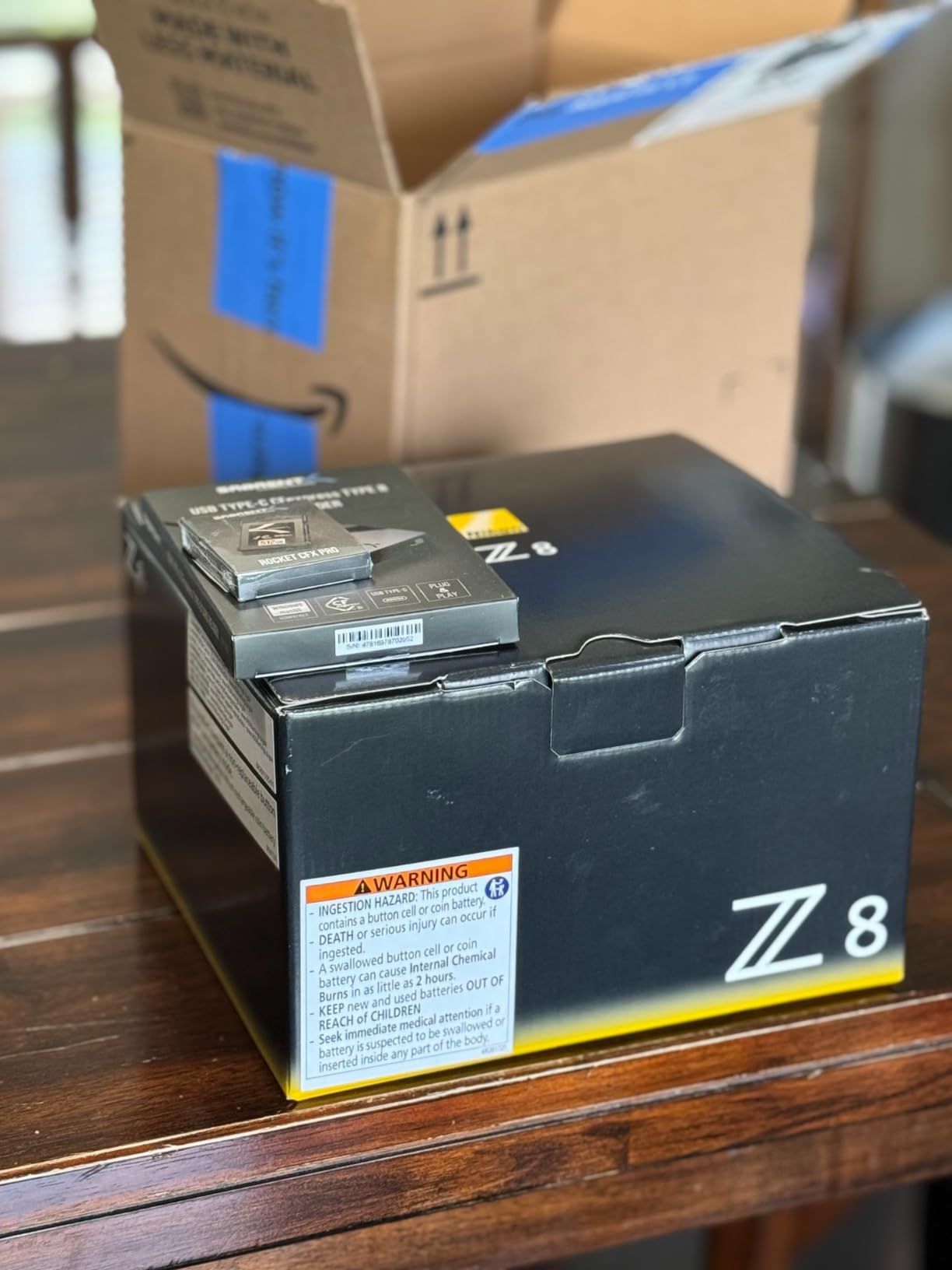
The 8K/60p and 4K/120p video capabilities make the Z 8 a true hybrid. If you film art process content, behind-the-scenes footage, or online courses, this camera handles both stills and video at a level that rivals dedicated cinema cameras. The 12-bit N-RAW internal recording gives you maximum color grading flexibility for video projects.
The deep-learning autofocus detects subjects down to -9 EV, which is moonlight-level darkness. For artwork photography, this matters less than for wildlife or events, but it means you can photograph installations in unconventional lighting without autofocus failing. The 5-axis IBIS also lets you shoot handheld at slower shutter speeds, useful when tripods are not practical.
Who Should Buy the Nikon Z 8
Professional art photographers who need a hybrid body for both stills and video, gallery studios documenting high-end exhibitions, and creators producing art content for streaming or broadcast. The Z 8 is a long-term investment that will stay current for years.
Z Mount Lens Ecosystem for Artwork
Pair the Z 8 with the Nikon Z MC 105mm f/2.8 VR S macro lens for artwork. This combination delivers clinical sharpness, minimal distortion, and weather sealing for studio durability. The Z 50mm f/1.8 S is a budget alternative for smaller paintings, with optical quality that exceeds its price point.
Buying Guide: How to Choose a Camera for Photographing Artwork?
Choosing the right camera for artwork photography comes down to four factors that matter more than the rest. I break each one down below based on what I have learned from shooting hundreds of paintings, drawings, and mixed-media pieces.
Resolution: How Many Megapixels You Actually Need
For online sales and social media, 20 to 24 megapixels is enough. For prints up to 16×20 inches, 24 to 30 megapixels works well. For gallery prints at 24×36 or larger, you want 40 megapixels or more. For archival reproduction and very large prints, 50 megapixels and above gives you the cropping flexibility and detail preservation that professional print shops require.
Do not overbuy resolution if you will never print large. A 61MP camera produces files that are 4 to 5 times larger than a 24MP body, which slows your editing workflow and demands more storage. Match resolution to your actual output needs.
Color Accuracy and Color Science
Color accuracy is the single most important factor for artwork photography. Canon and Fujifilm are widely considered the leaders in natural color rendering, while Sony has closed the gap significantly in recent generations. Nikon color science is neutral and true, which some artists prefer for reproduction work.
Always shoot in RAW format for artwork. RAW files capture 12 to 14 bits of color data per channel, compared to 8 bits in JPEG. This gives you far more latitude for color correction without banding or posterization in smooth gradients like skies and watercolor washes.
The Gray Card Workflow for True Color
This is a technique most guides skip, but working artists swear by it. Before photographing your artwork, place a gray card in the same lighting and take a reference shot. In post-processing, use that shot to set a custom white balance that matches the actual light temperature of your studio.
This eliminates the color shifts that happen when LED panels drift in color temperature over time, or when daylight changes during a long shoot session. A gray card costs little and saves hours of color-correction guesswork. I use one on every artwork shoot.
Sensor Size: APS-C, Full-Frame, or Medium Format
APS-C sensors (Canon Rebel T7, Nikon D7500, Fujifilm X-T5) are budget-friendly and deliver excellent quality for prints up to 16×20 inches. Full-frame sensors (Canon R5, Sony A7 IV, Nikon Z 8) offer better dynamic range, low-light performance, and print quality at 24×36 and larger. Medium format is the gold standard for archival fine art reproduction, but it is beyond the price range of most artists.
The Fujifilm X-T5 with Pixel Shift technology is a clever middle ground, delivering 160MP files from an APS-C sensor through multi-shot compositing. If you need medium-format resolution on an APS-C budget, this is the closest you can get.
Lens Choice Matters as Much as the Body
A premium camera with a mediocre kit lens will produce worse artwork files than an affordable body with a dedicated macro lens. For flat artwork reproduction, the gold standard is a 90 to 105mm macro lens, which delivers edge-to-edge sharpness with minimal distortion and flat-field focus. The Canon EF 100mm f/2.8L Macro, Sony 90mm f/2.8 Macro G OSS, and Nikon Z MC 105mm f/2.8 VR S are all excellent choices.
Avoid wide-angle lenses for flat artwork. Anything wider than 50mm introduces perspective distortion that makes the edges of your painting bow outward. If you must shoot large paintings in tight spaces, use a 50mm prime and stitch multiple frames in post-processing.
LED Lighting Setup for Home Studios
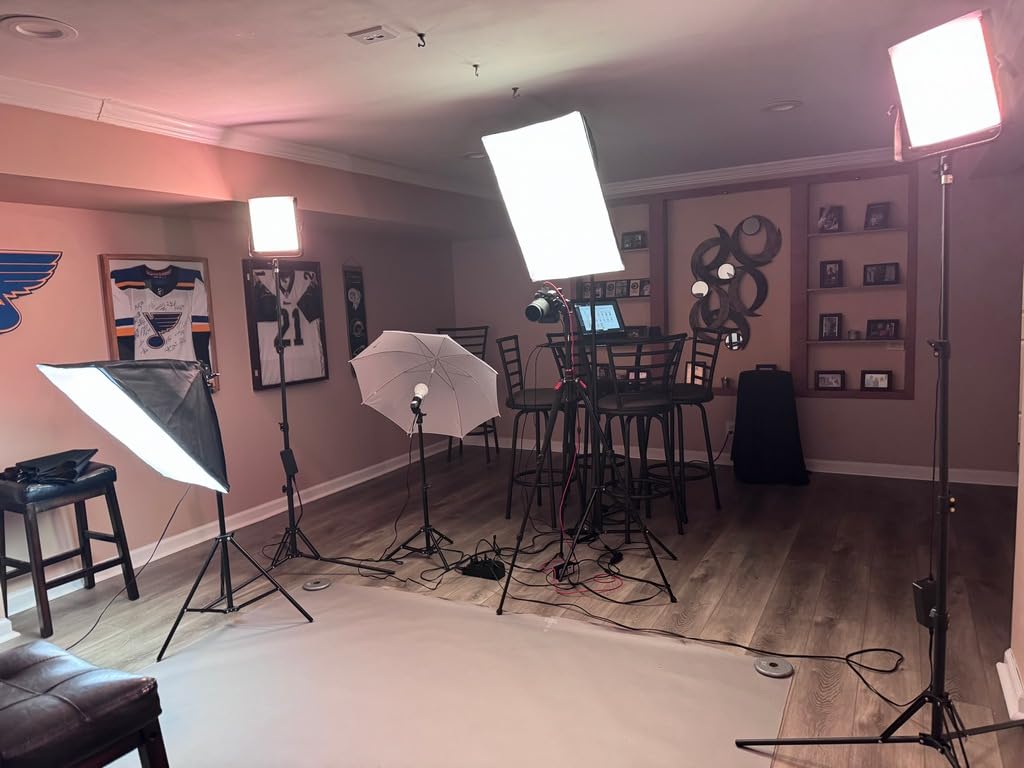
None of the competitors I reviewed cover LED lighting in depth, so here is what works. Position two LED panels at 45-degree angles to your artwork, equal distance from the center, to eliminate glare and hot spots. Use daylight-balanced panels rated at 5000K to 5500K for accurate color rendering, and look for panels with a CRI (Color Rendering Index) of 95 or higher.
Avoid mixing LED light with window light, which shifts color temperature throughout the day. Blackout your windows or shoot at night for consistent results. Diffusion panels soften the light and prevent harsh reflections on glossy paintings and varnished surfaces. Cross-polarization, using polarizing filters on both the lights and the lens, eliminates glare from glossy oil paintings entirely.
Best Camera Settings for Artwork Photography
Set ISO to 100 or the lowest native setting to minimize noise. Use aperture between f/8 and f/11 for maximum sharpness across the frame, since most lenses are sharpest two stops down from wide open. Shutter speed depends on your lighting, but 1/125 second or faster prevents vibration blur if you are not using a remote shutter release.
Always shoot from a tripod with a remote shutter or two-second self-timer to eliminate camera shake. Use manual focus with focus peaking if your camera supports it, then zoom in on the LCD to confirm critical sharpness at the center and corners of your painting.
Frequently Asked Questions About Cameras for Artwork Photography
What camera is best for photographing artwork?
The best camera for photographing artwork balances high resolution, accurate color science, and RAW capture. For most artists, the Canon EOS R5 at 45 megapixels is the top overall pick because of Canon color science and 8K RAW capability. On a budget, the Canon EOS Rebel T7 delivers 24MP files that print well up to 16×20 inches.
What settings should I use for photographing artwork?
Use ISO 100, aperture between f/8 and f/11, and shutter speed fast enough to prevent blur. Shoot in RAW format, set custom white balance using a gray card, and use a tripod with a remote shutter. Position two LED panels at 45-degree angles to the artwork for even lighting.
Can I use a smartphone camera for photographing artwork?
Smartphone cameras work for casual social media posts but are not suitable for print-quality artwork reproduction. Phone sensors over-process colors, crush texture detail, and shift hues under mixed lighting. For prints, gallery submissions, or professional sales, a dedicated camera with a 1-inch or larger sensor produces dramatically better results.
What is the best lens for photographing artwork?
The best lens for photographing artwork is a 90 to 105mm macro lens, which delivers edge-to-edge sharpness, flat-field focus, and minimal distortion. Top picks include the Canon EF 100mm f/2.8L Macro, Sony 90mm f/2.8 Macro G OSS, and Nikon Z MC 105mm f/2.8 VR S. Avoid wide-angle lenses, which distort the edges of flat artwork.
How many megapixels do I need for artwork photography?
For online use, 20 to 24 megapixels is enough. For prints up to 16×20 inches, aim for 24 to 30 megapixels. For gallery prints at 24×36 inches or larger, choose a camera with 40 megapixels or more. For archival reproduction, 50 megapixels and above gives professional print shops the detail they require.
Conclusion: Best Cameras for Photographing Artwork in 2026
The best cameras for photographing artwork in 2026 span a wide range of budgets and use cases. For most artists, the Canon EOS R5 hits the sweet spot of 45-megapixel resolution, Canon color science, and 8K RAW video. If you need maximum detail, the Sony Alpha 7R V delivers 61 megapixels of resolution for large-format prints. On a budget, the Canon EOS Rebel T7 kit gets you started and produces files that print beautifully up to 16×20 inches.
Whatever camera you choose, remember that the lens and lighting matter as much as the body. Pair your camera with a dedicated macro lens, set up two LED panels at 45-degree angles, and always shoot in RAW with a gray card for color accuracy. Those three steps will improve your artwork photography more than any single camera upgrade. Your paintings deserve to be documented with the same care you put into creating them.