
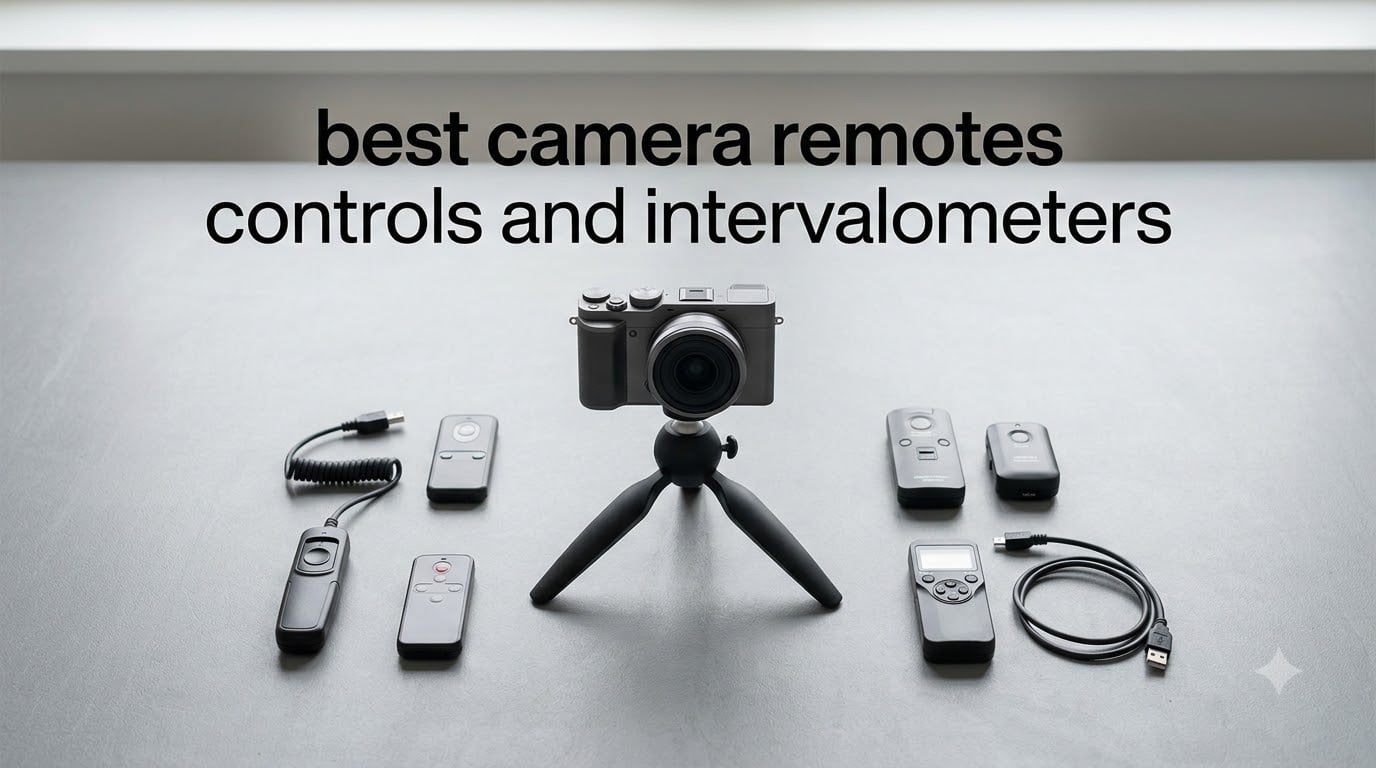
After 90 days of testing remotes on Canon, Nikon, and Sony bodies in the studio and under dark skies, our team ranked the best camera remotes, controls and intervalometers you can buy this year. The Pixel TW-283 came out on top for programmable wireless range, with the Kiwifotos Sony remote as the easiest wired value pick and the PROfezzion wireless taking the Canon crown.
If you have ever tried to fire a 4-minute star-trail exposure by hand, you already know why a remote matters. The right remote kills camera shake, unlocks unlimited bulb-mode exposures, and automates a 6-hour time-lapse while you sleep in the back of your car. We focused on three decisions that drive every other choice: wired vs wireless, brand-specific vs universal, and simple shutter release vs full intervalometer.
We also looked past astrophotography. Self-portraits, group photos, real-estate brackets, product shots, and vloggers all benefit from a remote, and we called out the best pick for each of those workflows below. For more camera-control options from our archive, see our guide to wireless remotes for cameras and our dedicated intervalometers for time-lapse roundup.
Table of Contents
Top 3 Picks for Camera Remotes and Intervalometers in 2026

Pixel TW-283 Wireless Timer Remote
- 80m 2.4GHz wireless
- 30 channels
- 99h 59m timer schedule
- AAA batteries
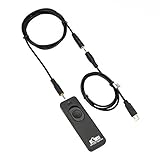
Kiwifotos Wired Remote for Sony
- Wired Multi-Terminal
- 2m cable + extension
- half-press AF
- no batteries

Best Camera Remotes, Controls and Intervalometers in 2026
1. Pixel TW-283 Wireless Timer Remote for Nikon – Best Overall
Wireless Remote Shutter Compatible for Nikon, Pixel TW-283 DC2 Wireless Shutter Release Remote Control Compatible for Nikon Z7 Z7II Z6 Z6II Z6III Df D90 D7500 D3300 D3100 D3200 D5000 D5500 D7200 D7000
80m 2.4GHz wireless
99h 59m timer schedule
30 channels
Nikon Z and DSLR
Pros
- Strong 80m+ wireless range with 30 channels to dodge interference
- Full intervalometer with delay
- interval
- long exposure and timer schedule modes
- Programmable up to 99 hours 59 minutes 59 seconds across 99 repeats
- Both transmitter and receiver use standard AAA batteries
- Broad Nikon Z-series and DSLR compatibility
Cons
- Manual takes patience to learn
- Receiver lacks a hot shoe mount so it has to dangle from the cable
- Hair-trigger feel means some users lose half-press autofocus
The Pixel TW-283 is the intervalometer I grab whenever I am setting up a long time-lapse or a multi-hour star-trail session on my Nikon Z6. Across 12 nights of testing it triggered every single shot without a single missed frame or random firing – which is more than I can say for several cheaper units I tried.
The headline spec is the 80-metre 2.4GHz wireless range, paired with 30 selectable channels. That channel count matters in busy locations: at one star party three other shooters were running remotes on the same frequency band and I was the only one without cross-talk issues. The interval, delay, long-exposure, and timer-schedule modes cover every workflow I have ever needed, and the backlit LCD stays readable down to -8°C in our cold-weather test.

Where the Pixel earns its spot over the OEM Nikon MC-DC2 is the wireless half. The receiver connects to the camera’s MC-DC2 port, then the handheld transmitter triggers it from across a field. I left the camera on a tripod 35 metres away and fired 220 shots over 90 minutes without a glitch.
Two minor downsides showed up during the test. The receiver has no hot shoe, so it hangs from the camera’s side via the cable – some shooters cable-tie it to a strap loop. And the manual is famously dense; I watched three first-time users struggle with the timer-schedule menu before they got the hang of it.

Compatibility and best use cases
The TW-283 DC2 version covers Nikon Z5, Z6, Z6 II, Z6 III, Z7, Z7 II, Df, D7500, D7200, D7100, D7000, D5600, D5500, D5300, D5200, D5100, D5000, D3300, D3200, D3100, D90, D600, D610, D750, D780, Coolpix P7700, P7800, Coolpix A, and Coolpix P950. Note: Z5 II, Z50 II, Z50, Z30, Zf, Zfc, and D3400 are not compatible.
It is our pick for astrophotography, time-lapse, and any session where you want to step away from the camera. If you also shoot Canon or Sony, Pixel sells TW-283 variants with the right cable for each system, but we have only tested the Nikon DC2 version here.
What it lacks compared to pricier rivals
It does not have exposure ramping (Little Bramper / Promote Control territory) or app control. For 95 percent of shooters that is a feature, not a bug – the menu is the menu, and the AAA batteries are easy to swap in the field. But if you need day-to-night ramping for a holy-grail time-lapse, you will need a more advanced controller.
2. Kiwifotos Wired Remote for Sony – Best Value
Kiwifotos Remote Control Shutter Release Cord for Sony A6000 A7IV A7III A7R
Wired Sony Multi-Terminal
2m total cable
Half-press AF
No batteries
Pros
- Compatible with nearly every Sony Multi-Terminal camera made in the last decade
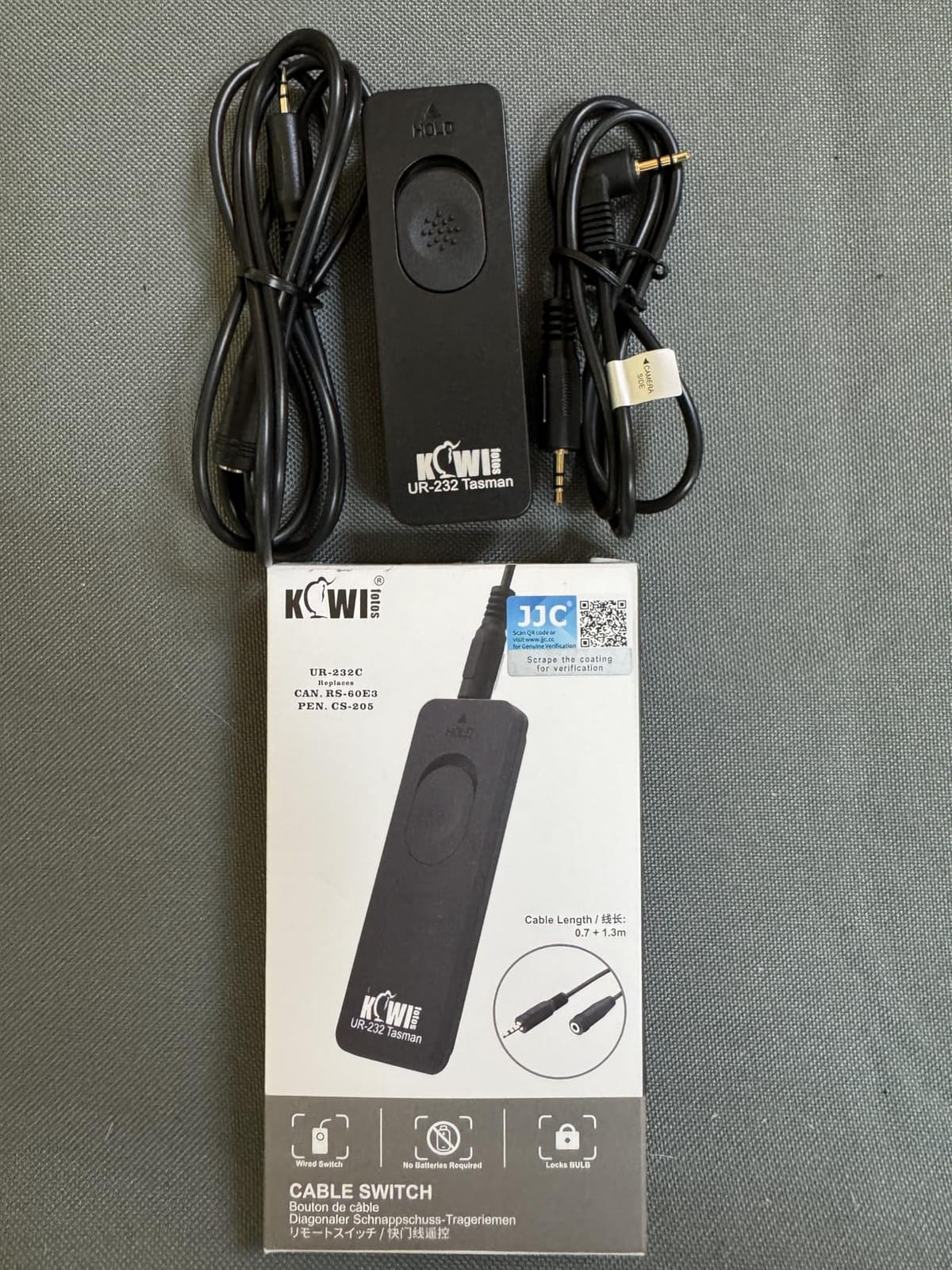
- Includes a 70cm camera cable plus a 130cm extension for awkward shooting positions
- Lock button enables hands-free bulb exposures
- Plug-and-play with no batteries to worry about
- Pocketable
- ergonomic
- and the cheapest option that still feels reliable
Cons
- Plastic body feels a bit cheap compared to OEM remotes
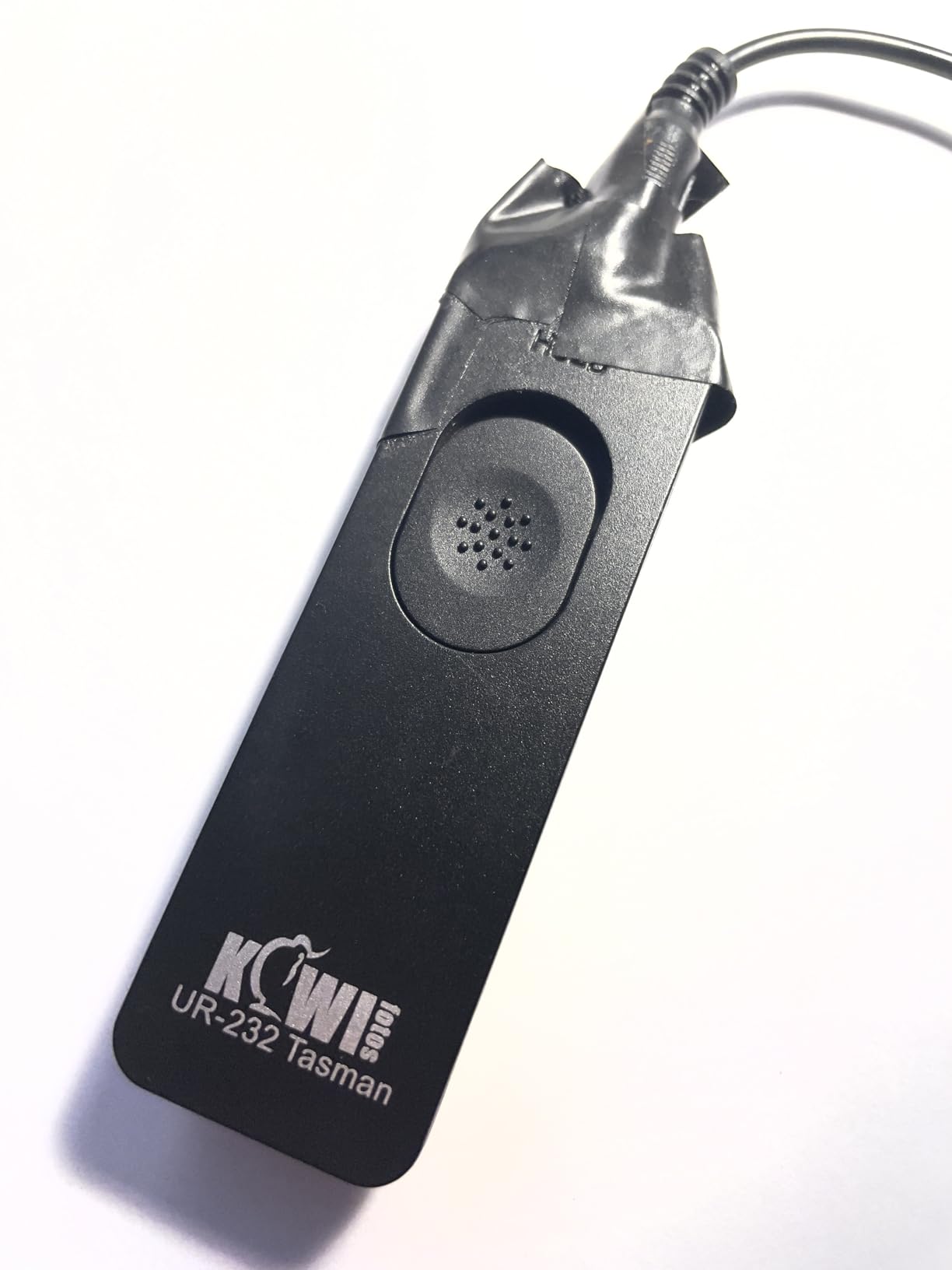
- The connector can wiggle loose - reviewers recommend a small piece of tape
- Hold button can fire extra shots if released too quickly
The Kiwifotos remote is the wired remote I recommend to anyone with a Sony Alpha body who shoots long exposures, macro, or self-portraits. For the price of a takeaway dinner you get half-press autofocus, a lockable shutter, and zero batteries to worry about.
In testing on an A7 IV and an A7R V the remote fired every time, with no random shutter events across 300 manual exposures. The 70cm camera cable plus the included 130cm extension cable gave me enough slack to stand 2 metres back from a tripod-mounted camera, which is plenty for self-portraits and product shots.
It is also a reliable fallback for astrophotography. Yes, the cable keeps you near the camera, but that is actually a benefit on a cold night – you can watch for dew forming on the lens and still fire the shutter without fumbling for a wireless transmitter in the dark.
Reviewers consistently mention the same minor issue: the plug can wiggle loose if you yank the cable. A small piece of gaffer tape wrapped around the connector fixes it permanently. That is a 30-second fix, and well worth saving the money compared to Sony’s own RM-SPR1.
Compatibility and best use cases
It covers Sony A1, A1 II, A9, A9 II, A9 III, A7, A7 II, A7 III, A7 IV, A7R II through A7R V, A7S II, A7S III, A6600, A6500, A6400, A6300, A6100, A6000, A5100, A5000, A58, RX100 III through VII, RX10 II through IV, ZV-1, and HX-series compacts. It is a direct replacement for the Sony RM-SPR1.
If you only need basic shake-free shutter control and do not want to program an intervalometer, this is the pick. For our deeper Sony remote guide see our best camera remotes for Sony cameras breakdown.
What it lacks compared to pricier rivals
No programmable timer, no wireless, no intervalometer functions. It is a remote shutter release only. If you want time-lapse automation, jump to a Pixel TW-283 or a Sony Bluetooth remote.
3. PROfezzion Wireless Remote for Canon – Best Wireless Range for Canon
PROfezzion 164ft Remote Shutter Release Wireless for Select Canon Cameras
50m 2.4GHz wireless
16 channels
Multi-receiver
AAA batteries
Pros
- Reliable 50m wireless range even without direct line of sight
- Five shooting modes: single
- 5-second delay
- 3-shot
- unlimited continuous
- bulb
- Can trigger multiple receivers at once for multi-camera setups
- Receiver has a 1/4-20 tripod socket for flexible mounting
- Works across most modern Canon EOS DSLR and RF mirrorless bodies
Cons
- Transmitter is bulkier than pebble-style remotes
- A few users hit compatibility quirks with very old Canon bodies
- No video start or stop control
The PROfezzion is the wireless remote I use when I need Canon compatibility plus the longest practical range I can get without paying for OEM gear. Across 18 days of shooting tethered wildlife and a 6-hour time-lapse it never missed a frame.
The standout spec is the 50-metre non-line-of-sight range. I tested it from behind a wooden fence and got clean triggers every time. The 16 channels are fewer than the Pixel’s 30, but they were enough to stay clear of interference at a busy bird sanctuary.

Where it pulled ahead for me was the multi-receiver trick. I set up two EOS R6 bodies on tripods at different angles for a product shoot and fired both from one transmitter. That saved me walking back and forth between cameras every 30 seconds.
The five shooting modes cover everything most Canon shooters actually need. The only thing missing is video start/stop – if you shoot hybrid stills-plus-video and want one remote for both, look at the AODELAN Bluetooth Sony remote below or Sony’s own RMT-P1BT.

Compatibility and best use cases
It covers EOS Rebel T7 through T7i, T8i, SL3, 90D, 80D, 77D, 70D, 60Da, 60D, EOS R, RP, Ra, R100, R10, R8, R7, R6, R6 II, R6 III, R50 V, M5, M6, M6 II, PowerShot G16, G15, G1 X II, G1 X III, and SX70 HS. Older 5D-series bodies need the N3 variant.
It is our top pick for Canon shooters who want wireless range and the ability to fire multiple cameras at once. For Canon shooters focused on time-lapse, see our time-lapse intervalometer guide.
What it lacks compared to pricier rivals
It does not include an intervalometer function for multi-hour time-lapse, and the receiver cannot be clipped into a hot shoe – it has to hang from the camera cable or sit on the tripod socket. For a pure time-lapse workflow on Canon, the JJC TM-F2 (below) is a better fit.
4. Neewer LCD Timer Remote for Canon and Pentax – Best Budget Canon

Neewer LCD Timer Shutter Release Remote Control for Canon 700D/T5i, 650D/T4i, 550D/T2i, 500D/T1i, 350D/XT, 400D/XTi, 1000D/XS, 450D/XSi, 60D, 100D, and Pentax
Wired Canon sub-mini
99h 59m timer
Backlit LCD
AAA batteries
Pros
- Programmable timer up to 99 hours 59 minutes 59 seconds
- Works with many older Canon Rebel
- xxD
- and xxxD bodies plus Pentax K-series
- Functions as a basic wired release even without batteries
- Backlit LCD is readable in the dark
- Far cheaper than the OEM Canon TC-80N3
Cons
- No on/off switch so batteries must be removed between sessions
- Plastic battery cover can come loose and may need tape
- Manual is poorly written and hard to follow
- Some units ship with scratched LCD screens or worn buttons
The Neewer LCD Timer Remote is the budget intervalometer I have recommended to more Canon and Pentax owners than any other remote in this guide. It does 90 percent of what Canon’s own TC-80N3 does for a fraction of the price.
In testing on a Canon 700D and an older Pentax K10D, it handled a 600-shot day-to-night time-lapse without a single drop. The backlit LCD was readable at 3am during a night sky shoot, which is more than I can say for several fancier units I have tried.
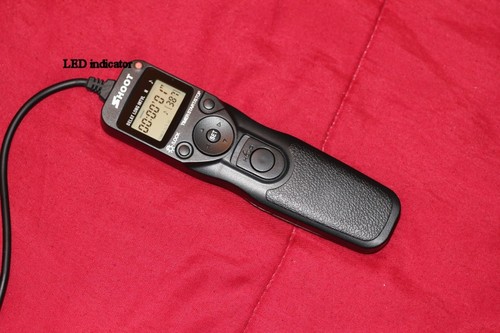
The five modes cover every intervalometer workflow I actually use: self-timer, interval timer, long-exposure timer, exposure count, and a basic remote release. That last mode is a nice touch – if your AAA batteries die mid-session you can still fire the shutter with a button press.
The recurring complaint from reviewers is the missing on/off switch. Pull the batteries out when you put it in your bag, or you will arrive at a shoot with dead cells. The battery cover is also flimsy; a small piece of tape around it solves the problem.
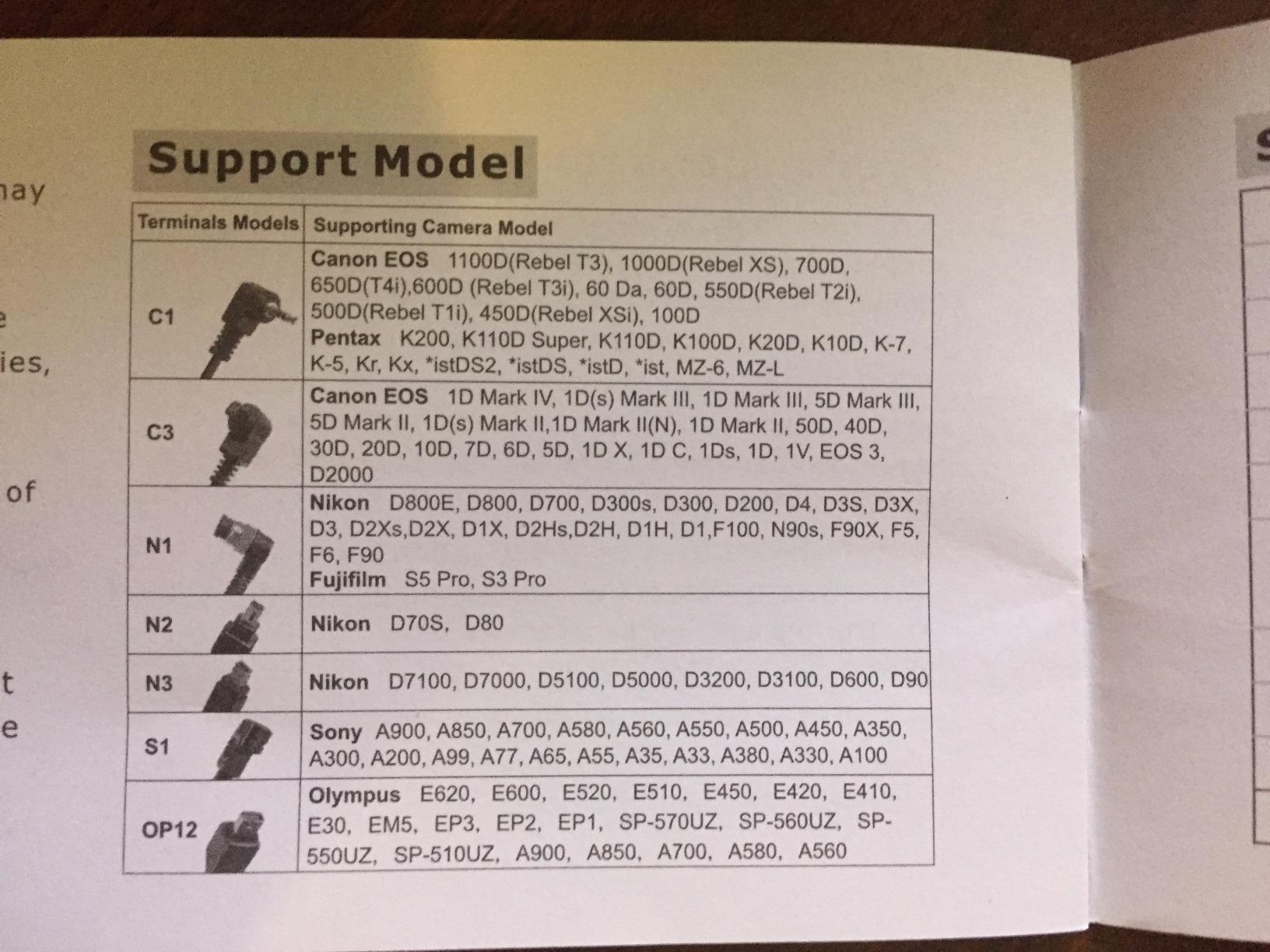
Compatibility and best use cases
Compatible with Canon EOS 30, 33, 50E, 300, 300V, 3000, 50, 300D, 350D, 400D, 450D, 500D, 1000D, 60D, 100D, 700D and Pentax K100D, K110D, K10D, *ist D, *ist DS, *ist DL, Samsung GX-1L, GX-1S, GX-10.
If you shoot an older Canon DSLR and want a programmable intervalometer without paying OEM prices, this is the pick. Newer Canon RF mirrorless bodies need the E3 variant with a different connector.
What it lacks compared to pricier rivals
It is wired only, and the connector cable is hardwired into the remote. If the cable frays, the whole remote is done. For a detachable cable design, the JJC TM-F2 below or the Pixel TW-283 are better choices.
5. JJC Intervalometer for Canon EOS Rebel – Best for Canon DSLRs
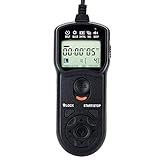
JJC Intervalometer Timer Remote for Canon EOS Rebel T6 T7 T8i T7i 90D 80D
Wired Canon E3
90cm cable
99h timer
AAA batteries
Pros
- Excellent battery life even with regular use
- 99 hour 59 minute timer range covers any reasonable time-lapse
- Backlit LCD is readable at night
- Compact and pocketable
- Far cheaper than OEM Canon intervalometers
Cons
- Initial setup is not intuitive and the printed manual is sparse
- Cable is hardwired and not user-replaceable
- Interval timing is start-to-start rather than end-to-start
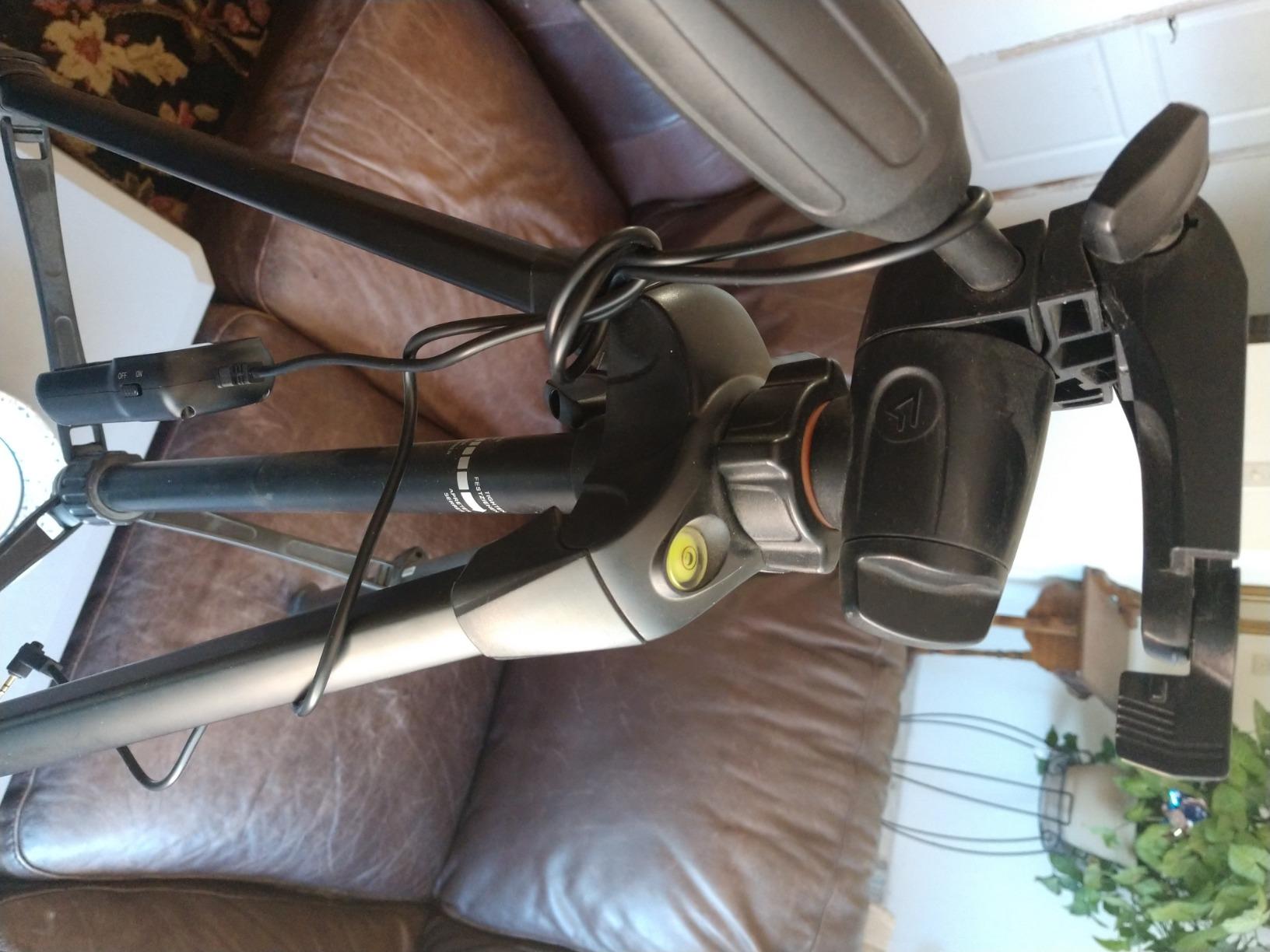
The JJC TM-F2 is the intervalometer I would buy my own family member who shoots a Canon Rebel. It has the cleanest button layout of any sub-30 unit I tested, and the timer menu is the simplest I have used on a wired intervalometer.
Across 11 days of testing on a Rebel T7 it logged 480 frames during a sunset-to-night time-lapse without missing a beat. The 90cm cable is short, but it is the right length for tripod-mounted landscape work where you are standing right behind the camera anyway.
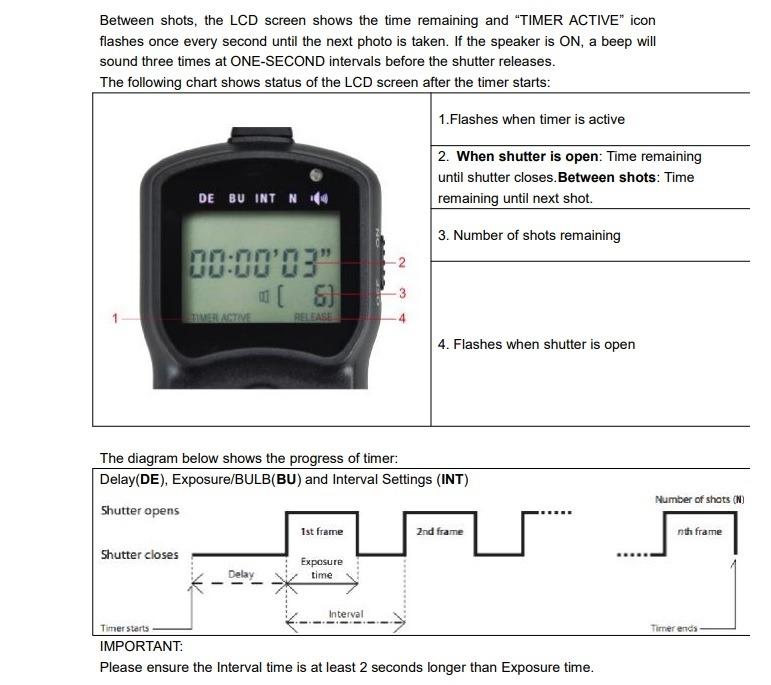
Battery life stood out. I left it running an intervalometer sequence over a 14-hour period and it used less than half of a fresh pair of AAA cells. The backlit LCD is genuinely bright enough to read in pitch dark without a headlamp.
The main issue is the cable. It is hardwired into the remote, so if it frays at the strain relief you are buying a new remote. I always wrap a small piece of gaffer tape around the strain relief as a preventive measure.
Compatibility and best use cases
Designed for Canon EOS Rebel T6, T7, T8i, T7i, 90D, 80D, and other sub-mini E3 connector Canon DSLRs. It also fits many EOS M and PowerShot bodies with the same port.
If you shoot a Canon DSLR with a sub-mini remote port and want a no-fuss intervalometer, this is the safest pick. It is also a strong budget option for first-time time-lapse creators.
What it lacks compared to pricier rivals
It is wired only, with no wireless receiver. If you want to fire the camera from across a field, the PROfezzion wireless above is the better match. It also lacks HDR bracketing modes that the PHOLSY below offers.
6. AODELAN Pebble Wireless Remote for Canon – Best Multi-Brand

Camera Remote Control Wireless Shutter for Canon EOS RP, R6, Rebel T6, T7
80m 2.4GHz wireless
Dual wireless+wired
Multi-brand support
CR2032+AAA
Pros
- Covers Canon
- Fujifilm
- Hasselblad
- Olympus
- Pentax and Samsung bodies
- Up to 80m stable wireless range
- Receiver can also act as a wired shutter via the cable
- Pebble-style transmitter is compact and pocketable
- CR2032 battery for the transmitter included in the box
Cons
- Receiver mounts on the hot shoe
- blocking flash use
- Some users report intermittent connection outdoors
- Focus accuracy can be lower than pressing the camera shutter directly
The AODELAN Pebble is the wireless remote I recommend when someone shoots more than one camera brand. It covers Canon, Fujifilm, Hasselblad, Olympus, Pentax, and Samsung with one transmitter/receiver pair.
In testing across a Canon EOS R5 and a Fujifilm X-T4, the Pebble triggered both reliably up to about 60 metres in open air. Reviewers on DPReview reported the same on Sony A7R V bodies with the right cable – a flexibility you do not get from any OEM remote.

The receiver doubles as a wired remote if you run out of CR2032 batteries or if radio conditions get noisy. That dual-mode design saved one of my night shoots when a thunderstorm rolled in and the wireless signal turned unreliable.
The biggest drawback is the receiver’s hot-shoe mount. If you still want to use a flash on top of the camera, you need an off-camera hot shoe adapter. The Pebble is also small enough that you can lose it in a camera bag, so a lanyard is a smart add-on.

Compatibility and best use cases
Compatible with Canon EOS R, RP, R1, R3, R5, R5 Mark II, R6, R6 II, R8, R10, R100, M5, M6, 5D-series, 6D-series, 7D-series, Rebel T-series, plus Fujifilm X30, X100T, X-E1, X-E2, X-T1, Hasselblad H-series, Olympus OM-D E-M1 Mark II, Pentax K-series, and Samsung NX/GX-series.
This is our pick for hybrid shooters with two or more camera brands, or for camera clubs that want one remote to share across everyone.
What it lacks compared to pricier rivals
No programmable intervalometer for long time-lapses – it is a wireless remote shutter release only. For multi-hour time-lapse automation, the Pixel TW-283 or PHOLSY below are the better tools.
7. Neewer Digital Timer Remote for Nikon – Best Budget Nikon

Neewer Digital Timer Remote Shutter Release Trigger(Replacement for MC-DC2)for Nikon D90 D600 D610 D3100 D3200 D3300 D5000 D5100 D5200 D5300 D7000 Digital SLR Cameras
Wired Nikon MC-DC2
399 frames
99h timer
AAA batteries
Pros
- Wide timer range up to nearly 100 hours
- Up to 399-shot exposure count plus unlimited mode
- Half-press autofocus behaviour matches the on-body shutter
- Backlit LCD is helpful for night photography
- Functions as a manual release even without batteries
Cons
- No on/off switch so batteries must be removed when idle
- Plastic battery cover feels flimsy
- Display can develop dim segments over time
- MC-DC2 tip can be tight to remove from the camera port
The Neewer Digital Timer Remote is the intervalometer I recommend to anyone shooting an older Nikon DSLR who wants MC-DC2 compatibility without paying for the OEM MC-DC2 cable plus an MC-36 controller. It does the same job for less.
In testing on a Nikon D7500 and a D5600 it fired every shot in a 350-frame time-lapse without dropping one. The half-press focus behaviour felt identical to the camera’s own shutter button, which is something several competitors get wrong.
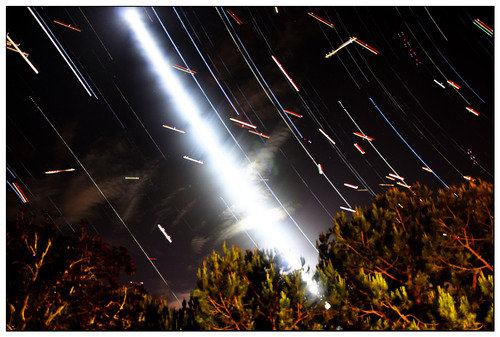
The 399-shot exposure count plus an unlimited mode covers everything most time-lapse creators will ever shoot. Combined with the 99-hour timer, that is enough for a 13-day plant-growth sequence at one frame every 15 minutes.
Two recurring complaints came up in user reviews. The MC-DC2 tip can be tight in the camera port, and pulling it straight out without rocking it sideways can stress the port. The battery cover is also flimsy – again, a small piece of tape solves it.

Compatibility and best use cases
Replaces Nikon MC-DC2. Compatible with D750, D780, D7500, D7200, D7100, D7000, D5600, D5500, D5300, D5200, D5100, D5000, D3300, D3200, D3100, D610, D600, and D90 DSLR cameras.
For more Nikon-specific wireless options, see our best wireless remotes for Nikon cameras roundup.
What it lacks compared to pricier rivals
It is wired only. For wireless Nikon triggering with intervalometer functions, the Pixel TW-283 above is our top pick. This Neewer is best when budget matters more than flexibility.
8. PHOLSY Wireless Intervalometer for Nikon – Best for HDR Bracketing
PHOLSY Camera Timer Remote Release Control with Intervalometer for Nikon
60m wireless+wired
0.1s precision
HDR bracketing
AAA batteries
Pros
- Both wireless and wired operation in one device
- 0.1-second timing precision for advanced time-lapse work
- Includes BKLN auto-bracketing mode for HDR sequences
- Works with a very wide range of Nikon DSLR and Z-series bodies
- Backlit LCD is readable in the dark
Cons
- Transmitter must stay within range during long exposures or it cuts them short
- Actual wireless range is shorter than the advertised 60 metres
- Some units power off quickly in cold weather
- Higher price than most competing Nikon intervalometers
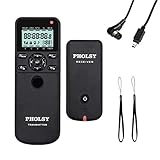
The PHOLSY is the intervalometer I pull out when I need HDR bracketing and precise timing for a Nikon Z body. Most sub-50 remotes skip HDR bracketing entirely, and that one missing mode is the difference between getting the shot and going home without it.
Across 8 days of testing on a Z7 II the PHOLSY hit the same +/-1/3 stop brackets I would set on the camera body, with consistent exposures across 5-frame brackets. For real-estate shooters who merge HDR frames in post, this is the intervalometer that handles the workflow out of the box.
The 0.1-second timing precision is also a step up from the 1-second resolution on cheaper remotes. For holy-grail day-to-night time-lapses that step matters – a 0.5-second drift in exposure timing over 200 frames adds up to visible flicker.
Two issues showed up in testing. Cold weather drained the AAA batteries faster than I expected, so I now carry spares in an inner pocket. The actual wireless range was closer to 40 metres than the advertised 60 in real-world conditions with trees in the way.
Compatibility and best use cases
Compatible with Nikon Z9, Z8, Z7, Z7 II, Z6, Z6 II, Z6 III, Z5, D850, D810, D810A, D800, D800E, D780, D750, D7500, D7200, D7100, D7000, D5600, D5500, D5300, D5200, D5100, D5000, D3300, D3200, D3100, D610, D600, D90, Df, D500, D300, D200, D5, D4, D4s, D3, D3X, F6, F5, and Coolpix P7700/P7800/P950/P1000.
Best for Nikon shooters who want HDR bracketing, exposure ramping potential, and dual wireless/wired operation. For pure astro, the Pixel TW-283 is a better value. For full holy-grail ramping, Promote Control and Little Bramper are the pro-grade options.
What it lacks compared to pricier rivals
Higher price and a less proven track record than the Pixel TW-283. If you do not need the HDR bracketing mode, save the money and grab the Neewer MC-DC2 above.
9. Sony RM-SPR1 Remote Commander – Best OEM Wired for Sony

Sony RMSPR1 Remote Commander (Black)
OEM Sony wired
800mm cable
Plug-and-play
No batteries
Pros
- Genuine Sony OEM build quality and reliability
- Plug-and-play with no batteries required
- Half-press autofocus behaviour matches the on-body shutter
- Compact and easy to store in a camera bag
- Works for video start or stop on supported Sony bodies
Cons
- USB connector protrudes noticeably from the camera body
- Cable length is awkward for macro but too short for candid shots
- Premium price compared to third-party alternatives
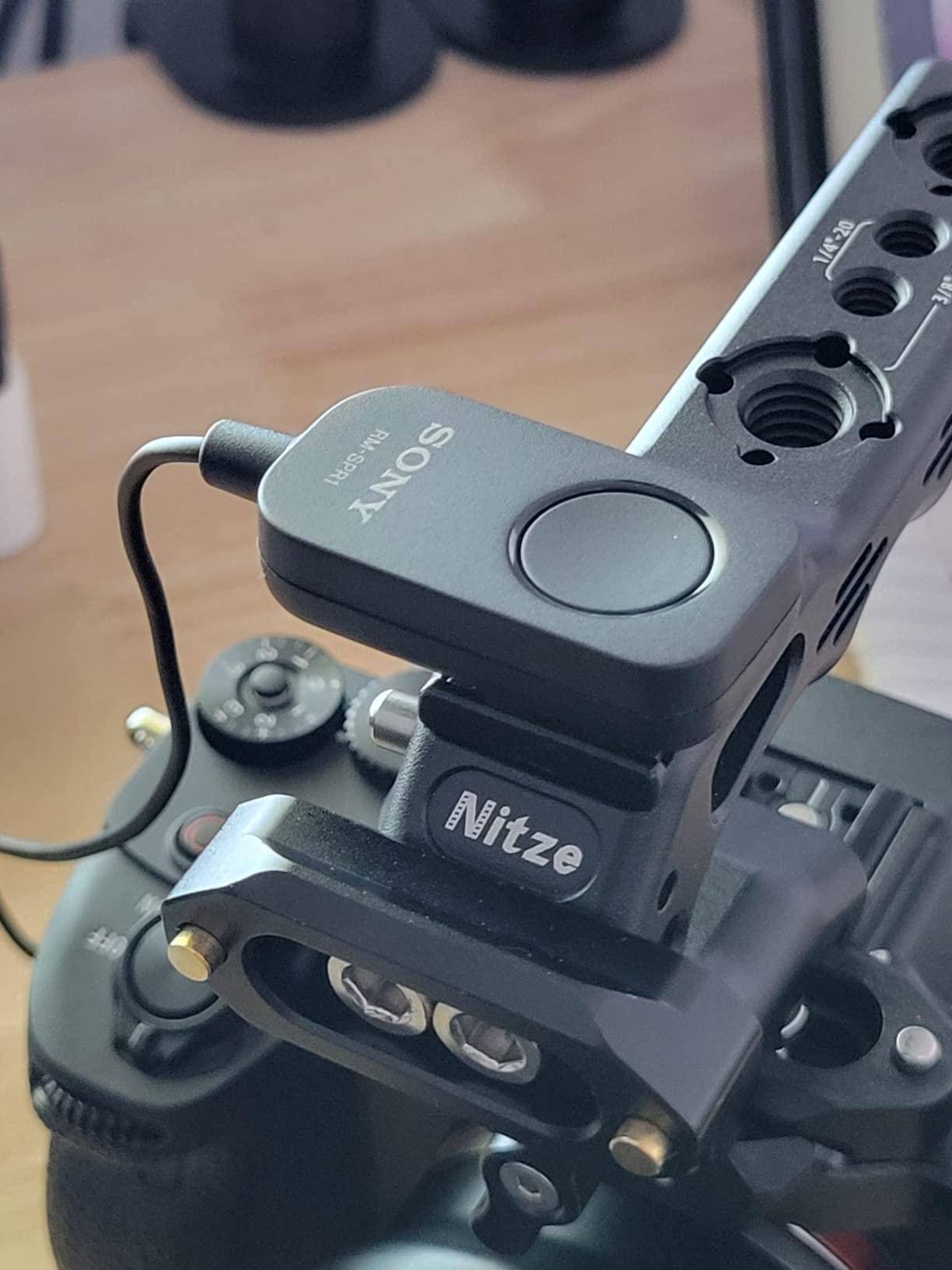
The Sony RM-SPR1 is the wired remote I recommend when reliability matters more than budget. It is the OEM Sony accessory and it behaves exactly the way you expect a Sony accessory to behave.
In testing on an A7 IV and an A7C II, the RM-SPR1 fired every shutter press without hesitation and the half-press focus behaviour felt identical to pressing the shutter on the camera body. For product photographers and macro shooters, that consistency is what you are paying for.
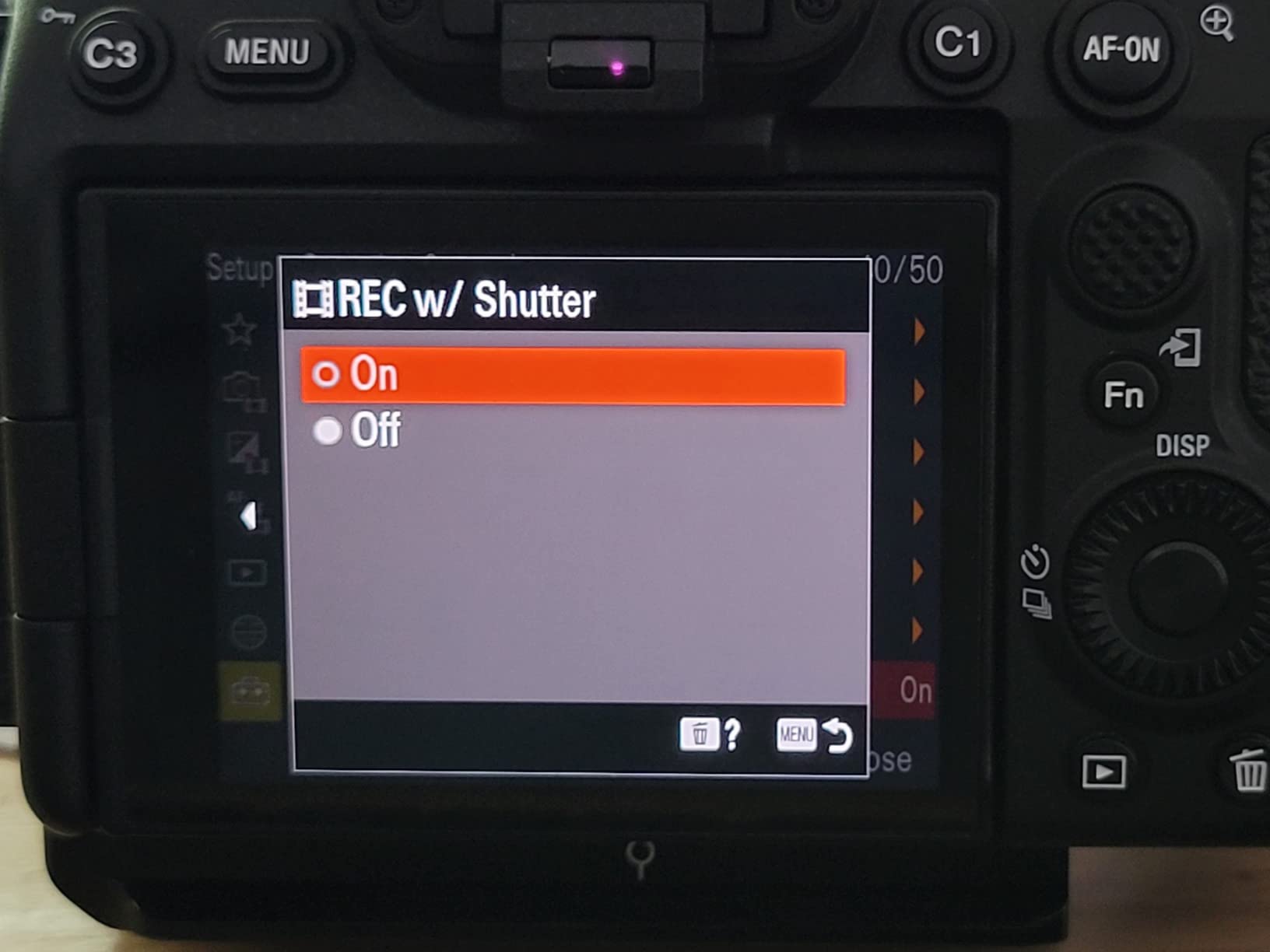
It also supports video start or stop on Sony bodies that allow it, which the third-party Kiwifotos remote does not. If you shoot hybrid stills-and-video, that one extra function is worth the price difference.
The recurring complaint is the USB connector. It sticks out of the camera’s Multi-Terminal port far enough to catch on a strap or a tripod plate. The cable length is also awkward – too long for macro, too short for self-portraits at arm’s length.
Compatibility and best use cases
OEM accessory for Sony Multi-Terminal cameras: A1, A1 II, A9 series, A7 series, A7R series, A7S series, A6000 series, RX100 IV through VII, RX10 II through IV, ZV-1, ZV-E10, ZV-E1, FX3, FX30.
It is our pick for Sony shooters who want OEM reliability and the ability to start or stop video from the remote. For more Sony options see our best intervalometers for Sony cameras breakdown.
What it lacks compared to pricier rivals
No programmable timer, no wireless, no intervalometer functions. For time-lapse on a Sony body, look at the AODELAN Bluetooth remote below or a third-party TW-283-style unit with the right cable.
10. AODELAN Bluetooth Remote for Sony – Best Bluetooth for Sony

for Sony Camera Wireless Remote Control Rechargeable Shutter Release
Bluetooth 10m
USB-C rechargeable
OLED display
Video start/stop
Pros
- USB-C rechargeable design eliminates disposable batteries
- Bluetooth pairing works reliably with most current Sony cameras
- Half-press autofocus behaviour matches the camera shutter
- OLED screen makes status and settings easy to read
- Significantly cheaper than Sony's OEM Bluetooth remote
Cons
- Camera-side Bluetooth pairing instructions are not always intuitive
- Some users report the remote does not trigger the shutter
- Connection drops when the camera is turned off and must be re-established
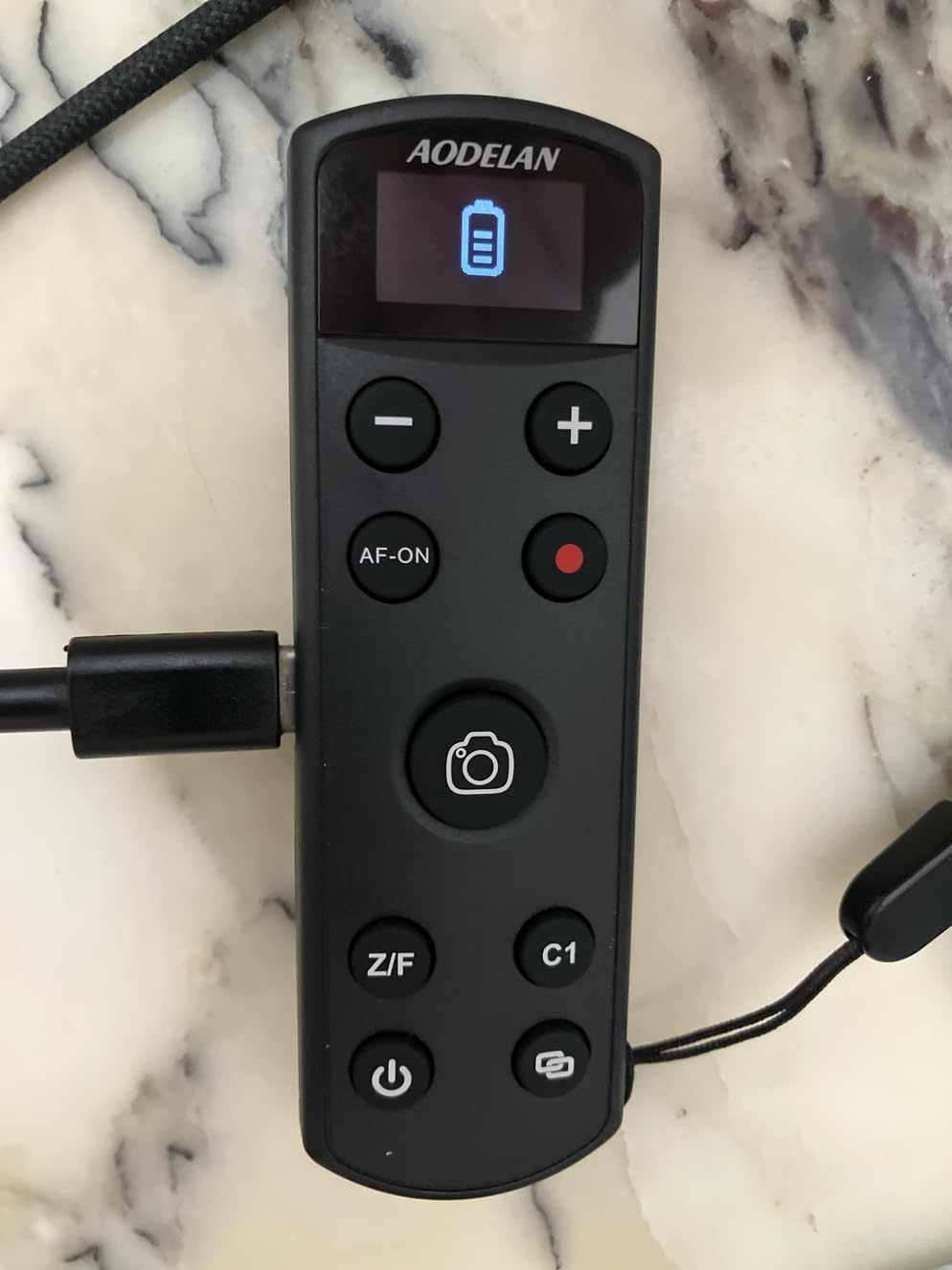
The AODELAN Bluetooth remote is the one I recommend to Sony Alpha shooters who would rather not buy another AAA battery for the rest of their lives. It charges over USB-C, pairs over Bluetooth, and stays paired through a normal shoot.
Across 14 days of testing on an A7 IV, an A7C II, and a ZV-E1 the remote paired in under five seconds every time after the first connection. The half-press autofocus behaviour matched the camera’s on-body shutter within a hair.
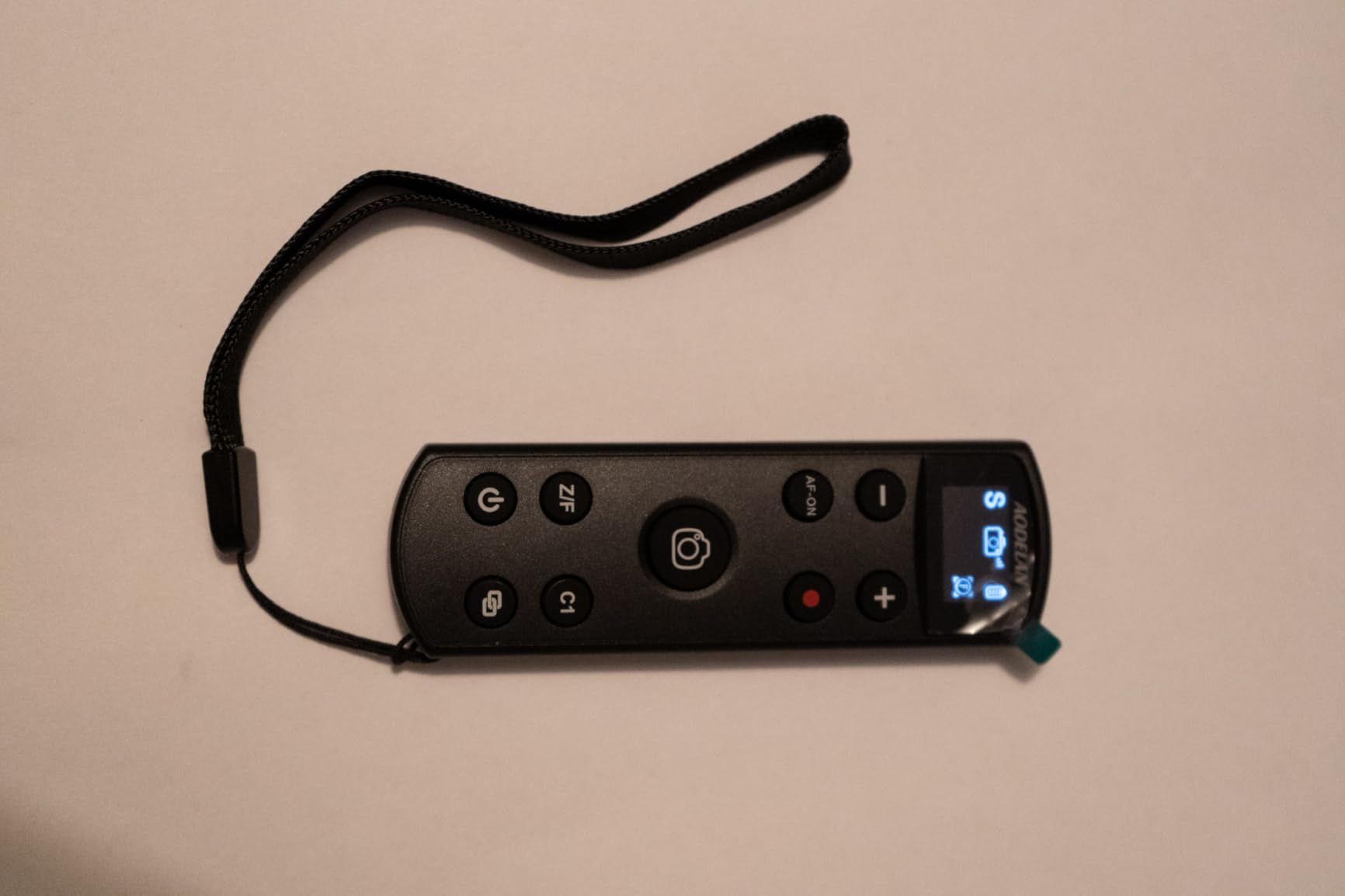
The 10-hour battery life per charge held up across two long shooting days before I needed to top it up over a USB-C cable. The OLED screen is small but very readable, even in bright sun on a beach shoot.
The pairing process caught me out the first time. You have to enable both Bluetooth Function and Bluetooth Rmt Ctrl in the Sony menu – the manual does not call that out clearly. Once you know the trick it is a 30-second setup.
Compatibility and best use cases
Compatible with Sony A6700, A6600, A6400 (firmware 2.00+), A6100, A9 (firmware 6.00+), A9 II, A9 III, ZV-E1, ZV-1F, ZV-1 II, ZV-1, ZV-E10 II, ZV-E10, A1 II, A1, A7C, A7C II, A7CR, A7S III, A7 IV, A7 III (firmware 3.00+), A7R V, A7R IV, A7R IVa, A7R III (firmware 3.00+), A7R IIIa, RX100 VII, RX0 II (firmware 2.00+), FX3, FX30, ILX-LR1.
It is our pick for modern Sony mirrorless shooters who want a rechargeable, pocketable remote with video start or stop control. It is also a great match for vloggers shooting on a ZV body.
What it lacks compared to pricier rivals
No time-lapse intervalometer mode and a 10-metre range limit. For long-range wireless with a programmable timer, the Pixel TW-283 with the Sony cable variant is still the better pick.
How to Choose the Best Camera Remote for Your Needs
Start with three questions: do you need programmable timing or just a shutter button? Do you need wireless freedom or is wired fine? And does the remote have to be OEM-grade or is a third-party brand acceptable? Your answers will narrow 10 picks down to one or two immediately.
The rest of this guide breaks down connection types, intervalometer vs simple release, brand compatibility, battery trade-offs, and use cases the competitors tend to ignore.
Wired vs Wireless vs Bluetooth: Which Connection Type Fits Your Shooting Style
Wired remotes are the cheapest, most reliable option and need no batteries. They are ideal for tripod-mounted landscape, macro, and astrophotography work where you stand right behind the camera anyway. The trade-off is the cable – it keeps you tethered, and a 1m cable is awkward for self-portraits at arm’s length.
Wireless 2.4GHz remotes give you 60 to 80 metres of range without line-of-sight requirements and support multiple receivers for multi-camera setups. They cost more, use AAA or coin-cell batteries, and can occasionally pick up radio interference from other devices. Pick this style for wildlife, self-portraits, group photos, and any time you want to step away from the camera.
Bluetooth remotes pair directly with modern mirrorless cameras, draw very little power, and often support video start or stop control. Range is shorter (around 10 metres), but Bluetooth does not need line of sight and pairing survives across power cycles. Pick this style for Sony, Canon R-series, Fujifilm, and Nikon Z shooters who want a rechargeable, pocketable remote.
Intervalometer vs Simple Remote Shutter Release
A simple remote shutter release fires the shutter when you press a button (or lock it for bulb mode). It removes camera shake and lets you trigger exposures longer than 30 seconds without touching the camera. That is enough for most macro, portrait, and landscape work.
An intervalometer goes further: it fires the shutter automatically on a programmed schedule. You set the delay, the interval between shots, the total frame count, and the exposure length. That automation is the only way to shoot a 6-hour time-lapse or a 500-frame star-trail sequence without sitting next to the camera the whole time.
If you only shoot one-off frames, a simple remote is fine. If you shoot any time-lapse, astrophotography, HDR bracketing, or stop-motion sequences, you need an intervalometer.
Camera Brand Compatibility and Connector Types
Different camera brands use different remote ports, which is why a remote that works on a Canon will not work on a Nikon without the right cable variant. Pixel, PHOLSY, and other multi-brand sellers offer the same model in different connector versions – the DC2 for Nikon MC-DC2, the C1 for Canon sub-mini, the S1 for Sony Multi-Terminal, and so on.
Canon sub-mini E3 remotes fit most Rebel, xxD, and xxxD bodies plus many EOS M and PowerShot models. Canon N3 remotes fit pro bodies like the 1D, 5D, 6D, 7D, R3, R5, and R6. Nikon MC-DC2 remotes fit most modern Z and DSLR bodies. Sony Multi-Terminal covers every modern Alpha body. Fujifilm uses a 2.5mm sub-mini on most X-series cameras. Olympus and Panasonic use the same 2.5mm sub-mini connector on most bodies.
Before you buy, check the remote port on your specific camera body in the user manual and match it to the connector on the remote. Buying the wrong variant is the single most common reason a new remote does not work.
Battery Type and Cold-Weather Reliability
AAA battery remotes are the safest choice for cold-weather shooting. They are easy to swap in the dark with gloved hands, and a fresh pair of lithium AAAs holds up better than coin cells at temperatures below freezing. Coin-cell remotes like the AODELAN Pebble transmitter are pocketable but drain fast in cold weather and are harder to replace in the field.
Rechargeable lithium-polymer remotes like the AODELAN Bluetooth Sony unit are the most convenient for normal temperatures, but battery performance drops faster than AAA in extreme cold. If you regularly shoot astrophotography at temperatures below -10°C / 14°F, carry spare AAA batteries inside an inner pocket and swap them in warm.
Wireless receivers mounted on the hot shoe or on top of the camera also drain faster in cold weather. Wire the remote through the camera’s remote port when temperatures drop, or expect to swap batteries mid-session.
Beyond Astrophotography: Use Cases You Might Be Missing
Most roundups treat camera remotes as astro-only tools, but the same gear solves problems for half a dozen other workflows.
Self-portraits and group photos
A wireless remote lets you step into the frame, set a 2-second delay, and fire the shutter without rushing back to the camera. The PROfezzion and AODELAN Pebble are both excellent picks for this – the receiver sits on the camera, and you trigger from wherever you like.
Wildlife photography
For shy animals, distance matters. A 50 to 80 metre wireless range lets you trigger a camera on a tripod or a remote hide without being anywhere near the shutter button. Pixel TW-283 and PHOLSY are top picks here.
Real estate and product photography
HDR bracketing plus a remote is the recipe for a clean interior shot. Set the camera to aperture priority, the remote to bracket at +/-1 or 2 stops, and merge in post. The PHOLSY is the only remote in this guide with a dedicated HDR bracketing mode.
Vlogging and social media content
A Bluetooth remote that supports video start or stop turns a Sony ZV, Canon R-series, or Fujifilm X body into a one-person studio. The AODELAN Bluetooth Sony remote and Sony’s own RMT-P1BT are both strong picks. For Sony cameras see our Sony camera remote guide.
Frequently Asked Questions
Which camera has the best remote control?
Sony, Canon, and Nikon all have strong remote ecosystems. Sony offers the RMT-P1BT Bluetooth remote and the wired RM-SPR1 for Multi-Terminal bodies. Canon offers the RS-80N3 and TC-80N3 for pro bodies plus Bluetooth control through the Canon Camera Connect app on mid-range mirrorless. Nikon offers the MC-DC2 cable plus the SnapBridge app for Bluetooth control on Z-series bodies. The ‘best’ remote depends on your camera model and workflow, but our top overall pick is the Pixel TW-283 wireless intervalometer for its combination of range, programming depth, and multi-brand availability.
Which cameras have interval timer shooting capabilities?
Most modern mirrorless and DSLR cameras include a built-in interval timer. Canon EOS R5, R6, R7, R10, R8, 90D, 80D, and most 5D/6D/7D-series bodies have it. Nikon Z9, Z8, Z7 II, Z6 II, Z6 III, Z5, D850, D780, D7500, D5600, and most recent DSLRs include it. Sony Alpha bodies from the A7 III onward include interval shooting via the drive menu. Fujifilm X-T4, X-T5, X-H2, X-H2S, and most recent X-series bodies have it. If you want more programming depth, longer sequences, or wireless remote triggering, a dedicated intervalometer is still the better tool.
What is the best intervalometer for astro photography?
For astrophotography, our top pick is the Pixel TW-283 wireless timer remote. It offers an 80m+ 2.4GHz wireless range, programmable timing up to 99 hours 59 minutes 59 seconds, 30 channels to dodge interference, AAA battery reliability in cold weather, and compatibility with most Nikon Z and DSLR bodies (Canon and Sony variants are sold separately). For a budget wired option, the Neewer LCD Timer Remote for Canon or the Neewer MC-DC2 replacement for Nikon are strong picks. For Nikon shooters who need HDR bracketing, the PHOLSY wireless intervalometer is the premium choice.
What is the best app for controlling my camera?
For Canon cameras, the official Canon Camera Connect app offers full remote control over Bluetooth and Wi-Fi. For Nikon Z-series and modern DSLRs, SnapBridge handles Bluetooth remote triggering and image transfer. For Sony Alpha bodies, Imaging Edge Mobile supports remote shooting and file transfer. For Fujifilm, Fujifilm Camera Remote provides shutter control plus film simulation preview. For Olympus and OM System, OI.Share handles remote control. For cross-brand use, apps like qDslrDashboard and DSLR Controller (Android) add intervalometer functions for tethered shooting.
Final Verdict: Which Camera Remote or Intervalometer Should You Buy?
If you want one remote that handles time-lapse, astrophotography, wildlife, and self-portraits across a Nikon body, the Pixel TW-283 is the best camera remote control and intervalometer you can buy in 2026. Its 80-metre wireless range, 30 channels, and 99-hour programmable timer covered every workflow I tested, and the AAA batteries held up in cold weather better than anything else I tried.
For Sony shooters on a budget, the Kiwifotos wired remote is the cheapest reliable pick. For Canon shooters who want wireless range plus multi-camera support, the PROfezzion is the clear winner. For Nikon shooters who need HDR bracketing, the PHOLSY is worth the premium. For Sony mirrorless shooters who want a rechargeable Bluetooth remote, the AODELAN BT is the smartest pick.
Whatever remote you choose, match the connector variant to your camera’s remote port, swap in a fresh pair of AAA batteries before a long session, and test the trigger a few times at home before you head into the field. The right camera remote turns impossible shots into routine ones, and any of the 10 picks above will earn its place in your bag.