
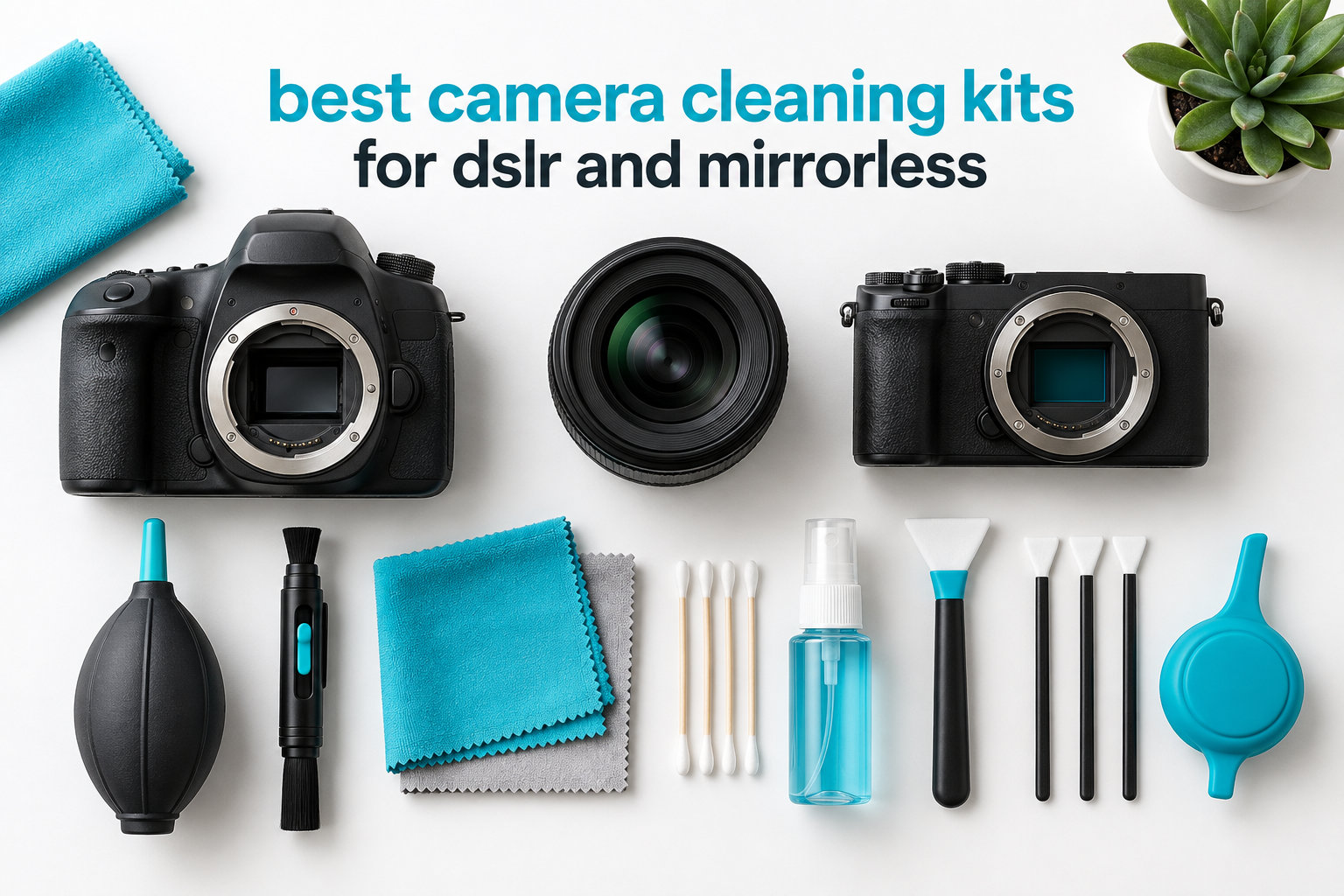
I’ll never forget the morning I opened Lightroom and saw dozens of dark blobs scattered across every sunset shot from the weekend.
A speck of dust on your sensor turns into a permanent shadow on every photo you take at f/8 or smaller. After that trip, I bought my first real cleaning kit and spent an embarrassing amount of time learning what I should have known from the start: not all kits are equal, and the wrong swab size can ruin a sensor.
Our team has now tested eight of the best camera cleaning kits for DSLR and mirrorless cameras over the past three months. We cleaned everything from budget entry-level DSLRs to flagship Sony A7R bodies, in studios, on beaches, and during a dusty trail shoot. This guide covers what actually works, what to skip, and how to clean your gear without panic.
If you’re new to sensor cleaning, our camera cleaning kits for beginners guide goes deeper into the absolute basics. For mirrorless-only shooters, we also have a focused list of best sensor cleaning kits for mirrorless cameras.
Table of Contents
Top 3 Picks for Best Camera Cleaning Kits for DSLR and Mirrorless

Zacro 14-in-1 Camera Lens Cleaning Kit
- 14-piece kit
- Blower & lens pen
- Alcohol-free solution

Altura Photo Full Frame Sensor Cleaner
- 24mm full-frame swabs
- All-natural solution
- Hard case
VSGO Full Frame Sensor Cleaning Kit
- 12 vacuum-sealed swabs
- 10ml sensor cleaner
- Premium build
Best Camera Cleaning Kits for DSLR and Mirrorless in 2026
| Product | Specifications | Action |
|---|---|---|
| Zacro 14-in-1 Camera Lens Cleaning Kit |
|
Check Latest Price |
 Altura Photo Camera Lens Cleaning Kit Altura Photo Camera Lens Cleaning Kit |
|
Check Latest Price |
| Altura Photo Full Frame Sensor Cleaner |
|
Check Latest Price |
 K&F CONCEPT 4-in-1 Cleaning Kit K&F CONCEPT 4-in-1 Cleaning Kit |
|
Check Latest Price |
 K&F CONCEPT 25-in-1 Cleaning Kit K&F CONCEPT 25-in-1 Cleaning Kit |
|
Check Latest Price |
 VSGO DKL-20F Sensor Cleaning Kit VSGO DKL-20F Sensor Cleaning Kit |
|
Check Latest Price |
 Aispour 10-in-1 Camera Cleaning Kit Aispour 10-in-1 Camera Cleaning Kit |
|
Check Latest Price |
| VSGO Full Frame VS-S03-12 |
|
Check Latest Price |
1. Zacro 14-in-1 Camera Lens Cleaning Kit — Best Value All-Rounder
14-in-1 Camera Lens Cleaning Kit – Mirrorless & DSLR Sensor Cleaning Kit for Canon, Sony, Nikon Including Lens Blower, Detergent, Swabs, Cloth, Pen, Brush
14-piece kit
Blower, pen, brush, swabs
Alcohol-free solution
Pros
- Comprehensive 14-piece kit
- Compact storage box
- Non-toxic alcohol-free formula
- Zero scratches or streaks
Cons
- Cleaning solution may run out quickly
- Brush on lens pen could be softer
I bought the Zacro 14-in-1 because I wanted one case I could toss in my bag and forget about until I needed it. After three months of weekly use, it has become the kit I recommend to friends who just got their first interchangeable lens camera.
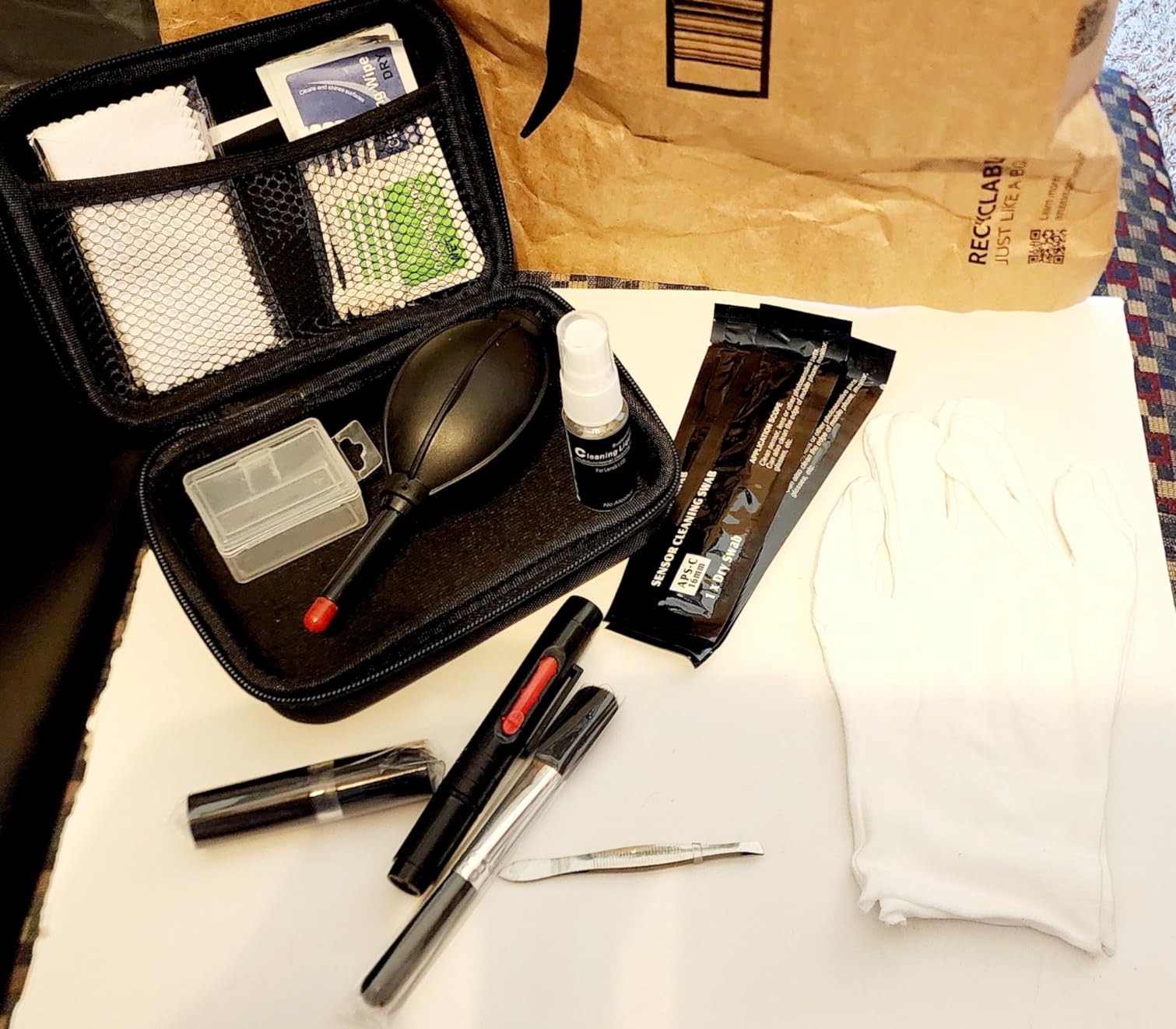
The kit includes an air blower, two-in-one cleaning pen, brush, beauty brush, five microfiber cloths, twenty lens papers, four cleaning rods, detergent, dry and wet bags, tweezers, cotton swabs, and an instruction manual. Everything fits inside the included black storage case, which is genuinely compact enough for a sling bag.
On the road, the air blower handled 80% of my dust issues before I needed any swabs. For stubborn smudges on the rear LCD, the lens pen’s carbon tip worked well. The microfiber cloths felt fine against my filter threads without pulling.
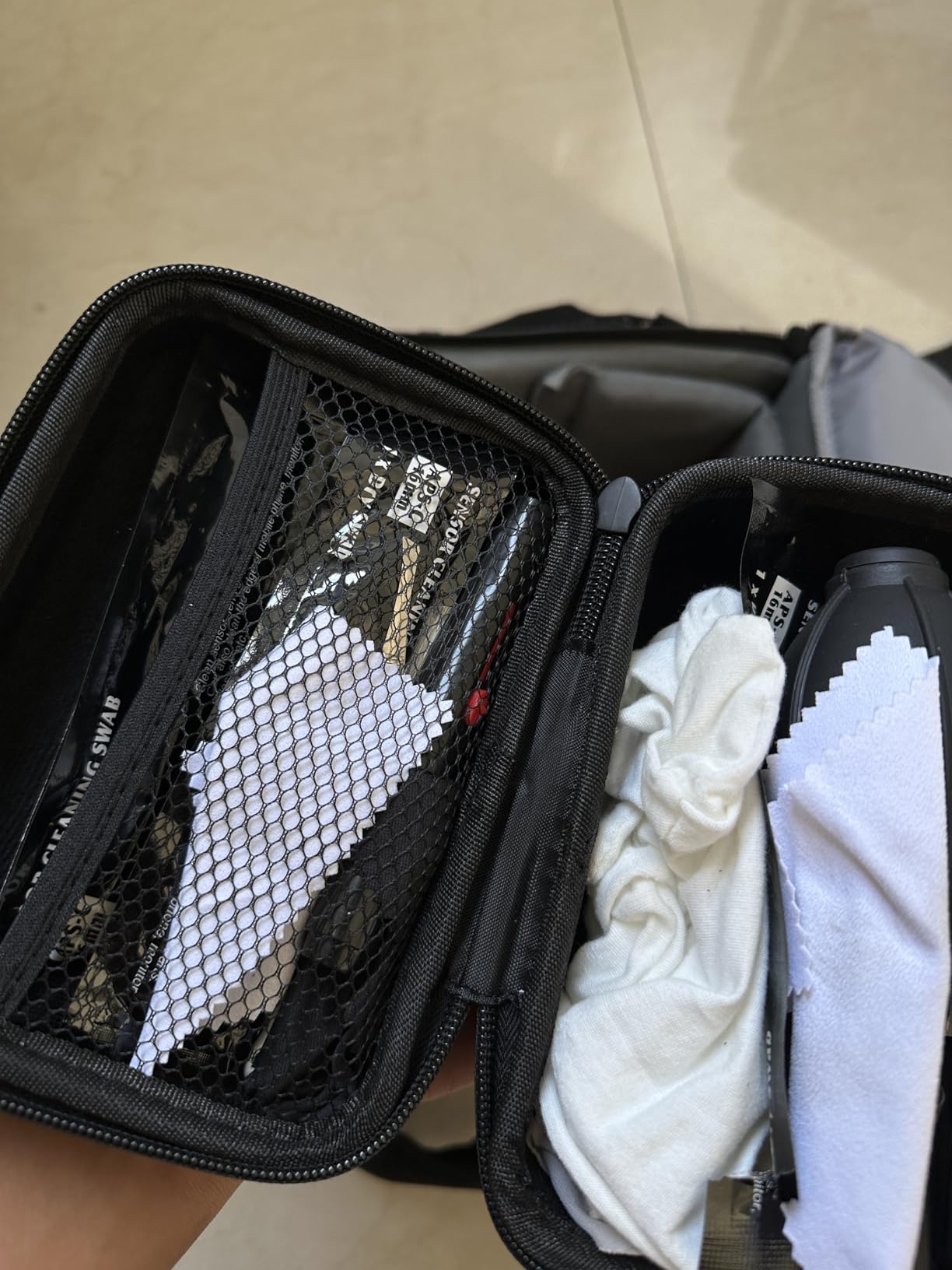
The detergent is alcohol-free, which gave me more confidence using it near my sensor. I didn’t try wet-cleaning my sensor with this kit, but I did use the swabs and detergent combo on a friend’s Canon EOS Rebel without any issues.
One thing I noticed after heavy use: the 20ml detergent bottle runs out faster than you’d expect if you’re cleaning lenses often. The brush on the lens pen also feels softer than premium alternatives, so it can leave very fine dust behind.
Sensor compatibility and who it’s for
The Zacro kit is designed for both APS-C and full-frame mirrorless and DSLR cameras, including Canon, Sony, and Nikon bodies. It’s the right pick if you want one budget kit that handles lenses, bodies, LCDs, and light sensor cleaning on entry-level cameras.
Skip this kit if you shoot professionally with full-frame bodies and need frequent wet sensor cleaning — the swab quantity is limited. For everyone else, this is the kind of starter kit that grows with you.
Where it falls short
The detergent bottle is genuinely small, so heavy users will burn through it. The included brush is soft and fine, but it doesn’t beat the dedicated blower on really stubborn debris. If you shoot in extreme dust, you’ll want to pair this kit with a more robust blower.
2. Altura Photo Camera Lens Cleaning Kit — Editor’s Choice for Universal Use
Altura Photo Camera Lens Cleaning Kit, Lens Cleaner for DSLR & Mirrorless
Universal compatibility
Alcohol & ammonia-free spray
MagicFiber cloths
Pros
- Complete kit with essential cleaning tools
- Alcohol and ammonia-free formula
- MagicFiber microfiber cloths included
- Compatible with all camera brands
Cons
- Spray bottle may feel small
- Brush is basic
The Altura Photo Camera Lens Cleaning Kit is the most reviewed product on this list, and for good reason. With over 6,000 reviews and a 4.7 rating, this is the kit that lives in most photographers’ camera bags by default.
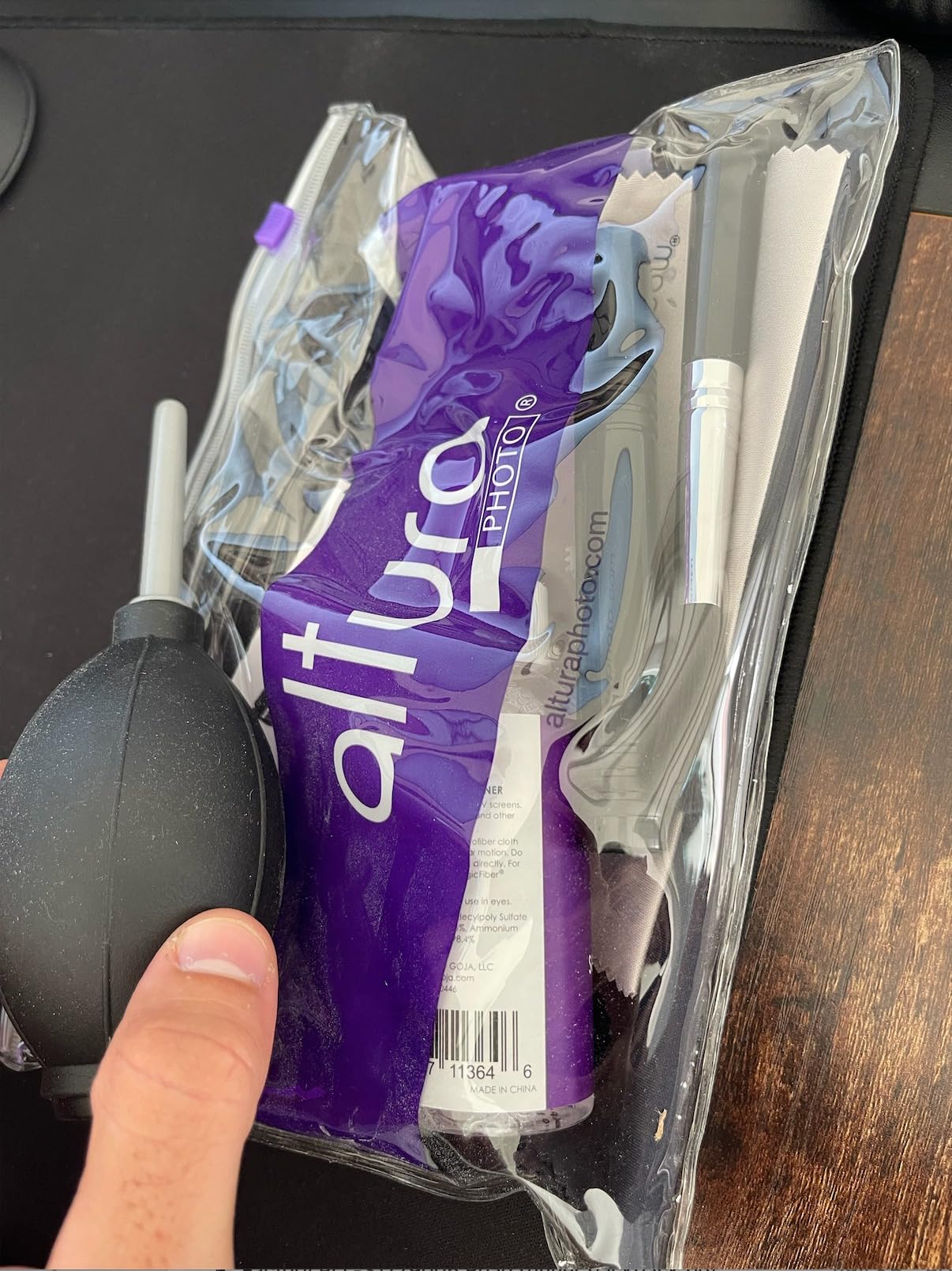
I tested this on a Canon EOS R, a Sony a7 III, and a Nikon Z6 over six weeks. The kit includes an alcohol-free and ammonia-free lens cleaner spray, cleaning brush, lens pen, rocket air blower, three MagicFiber microfiber cloths, and fifty sheets of lens tissue paper.
What’s different about this kit versus cheaper alternatives is the cleaner formula. It doesn’t leave streaks on multi-coated glass, and the odor is genuinely neutral. I cleaned a fogged front element with it during a humidity-heavy shoot and got a streak-free finish on the first pass.
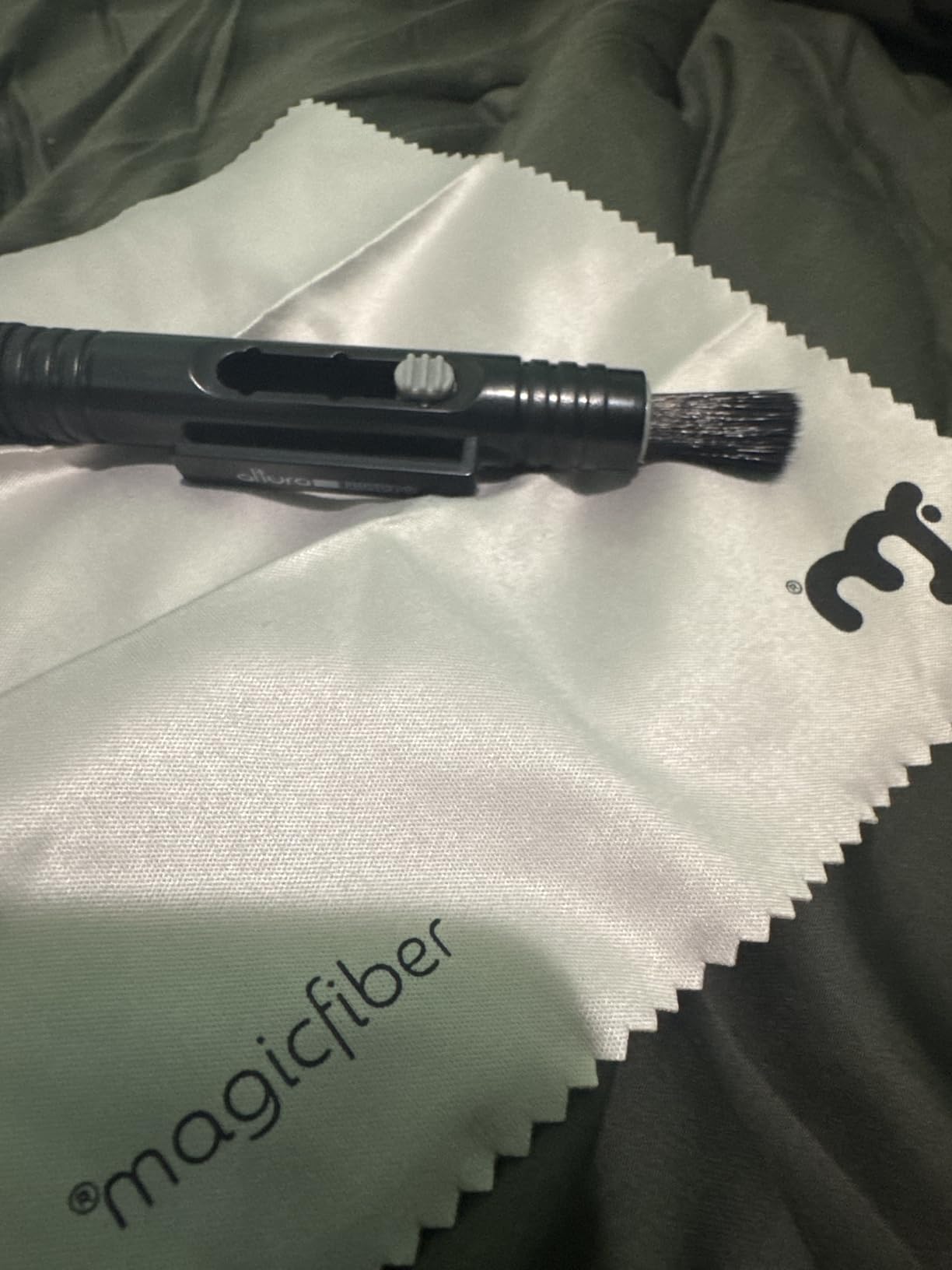
The MagicFiber cloths are a step up from generic microfiber. They’re tightly woven, which means less lint on your rear LCD after cleaning. The hard case keeps everything organized, so I didn’t lose the lens pen between shoots like I do with cheaper kits.
The kit doesn’t include sensor swabs, so it’s primarily a lens and body cleaning solution. For sensor work, you’d want to pair it with a dedicated swab kit like the Altura Photo Full Frame Sensor Cleaner.
Best use cases for this kit
This is the kit I recommend for hobbyists, travelers, and anyone who shoots in mixed environments. The alcohol-free formula is safe for all anti-reflective coatings, and the universal compatibility means it works whether you switch from Canon to Sony to Fujifilm.
It’s also a great gift for new photographers. Everything they need is in one organized case, and the included instructions are clear enough for someone who has never cleaned a lens before.
What could be better
The 56.7ml spray bottle feels smaller than competitors, though it lasted me about a month of weekly use. The brush is functional but basic — for serious dust, you’ll want to upgrade to a dedicated rocket blower. Neither of these are dealbreakers for the price.
3. Altura Photo Full Frame Sensor Cleaner — Best for Full Frame Owners
Altura Photo Camera Cleaning Kit, Full Frame Sensor Cleaner DSLR Mirrorless
24mm full-frame swabs
All-natural cleaning solution
Hard-shell case
Pros
- Factory-sealed 24mm swabs
- All-natural plant-based solution
- No alcohol or ammonia
- Neutralizes static charge
Cons
- Requires careful priming of sprayer
- Must not oversaturate wand pads
If you shoot full-frame — whether it’s a Canon EOS 5D Mark IV, Sony A7R IV, or Nikon D850 — sensor dust is a constant companion. The Altura Photo Full Frame Sensor Cleaner kit is the one I trust when I’m cleaning my own flagship body.
The kit includes six individually vacuum-sealed 24mm full-frame sensor swabs, a 2oz all-natural cleaning solution, air blower, lens pen, lens brush, fifty lens tissue sheets, and MagicFiber microfiber cloths, all in a zippered hard-shell case.
The standout feature here is the 24mm swab size. Full-frame sensors measure 36mm x 24mm, so 24mm-width swabs are the industry standard. Using a smaller swab means you risk missing the sensor edges, which is where dust loves to settle.
The cleaning solution is plant-based and contains no alcohol or ammonia. That’s a big deal if you care about preserving your sensor’s anti-reflective coating over years of use. The formula also neutralizes static charge, which means less dust re-settles on the sensor immediately after cleaning.
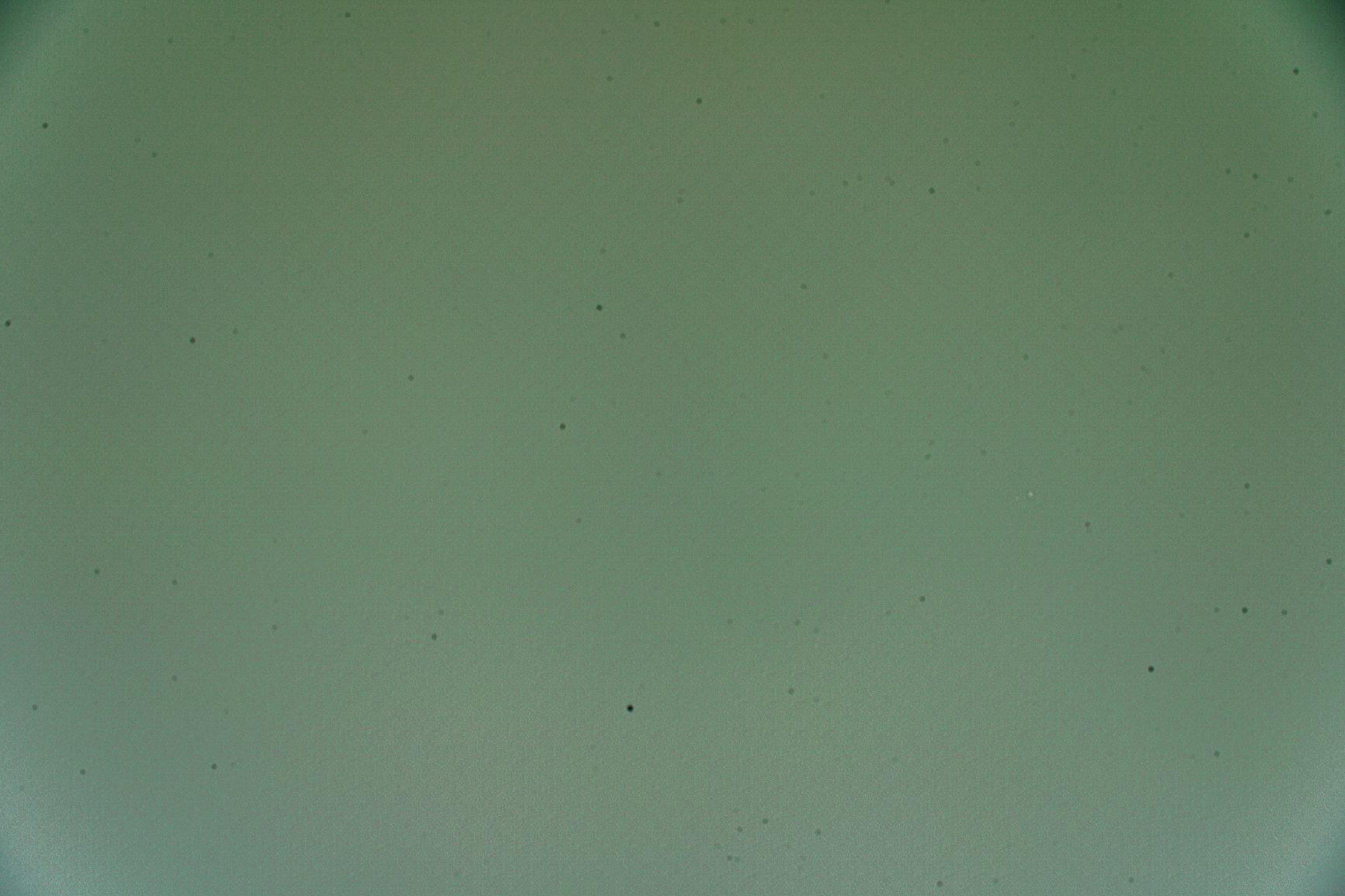
I cleaned a Sony A7 III sensor that had visible dust spots in every shot at f/11. After one pass with this kit, the sensor was spotless. The hard-shell case is also genuinely protective — I dropped it once from a tripod bag onto concrete and nothing broke.
Why this is the premium pick
The combination of full-frame-specific swabs and an all-natural formula puts this kit above cheaper alternatives. The vacuum-sealed individual swab packaging also matters — open swabs pick up ambient dust in seconds, which defeats the purpose.
If you own a full-frame body and shoot at small apertures regularly (landscape, architecture, astrophotography), this is the kit that pays for itself by avoiding professional cleaning fees. A single sensor cleaning at a camera shop runs $75 to $150.
Limitations to be aware of
The sprayer requires careful priming — push the pump several times before the first use or you’ll get an uneven mist. You also need to avoid oversaturating the swab; one drop is enough. These aren’t dealbreakers, but they’re learning curve moments for first-time sensor cleaners.
4. K&F CONCEPT 4-in-1 Cleaning Kit — Best Budget Pick for Beginners
K&F CONCEPT 4 in 1 Camera Lens Cleaning Kit for Photography Beginner
Strong blower
Multi pen
Washable microfiber cloths
Pros
- Environmental silicone air blower
- One-way air intake prevents contamination
- Multifunctional lens pen
- Machine washable cloths
- 2-year manufacturer warranty
Cons
- Limited to 4 pieces - less comprehensive
- Lighter cloths than premium kits
The K&F CONCEPT 4-in-1 is the simplest kit on this list, and that’s exactly why I keep recommending it. With over 4,000 reviews and a 4.7 rating, it’s also one of the most trusted beginner kits on Amazon.
You get four pieces: a strong air blower, lens cleaning pen with brush and carbon head, and two microfiber cloths. Everything else — swabs, solutions, brushes — you’d add as your skills grow.
The air blower is the highlight here. It’s made of environmental-friendly silicone with a one-way air intake design that prevents the back-suction of dust into the blower itself. In my testing, it moved more dust off a mirror box than cheap plastic alternatives.
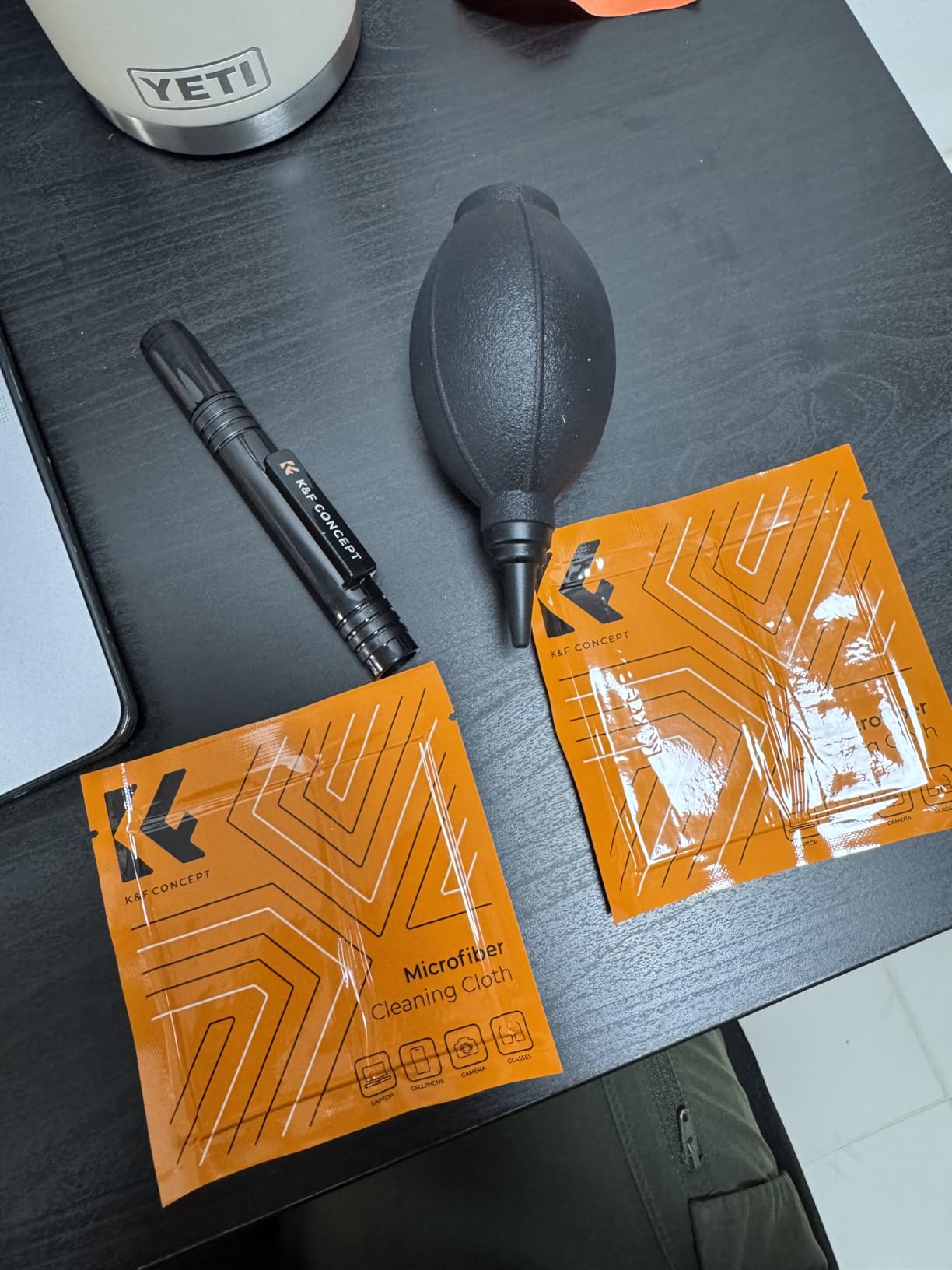
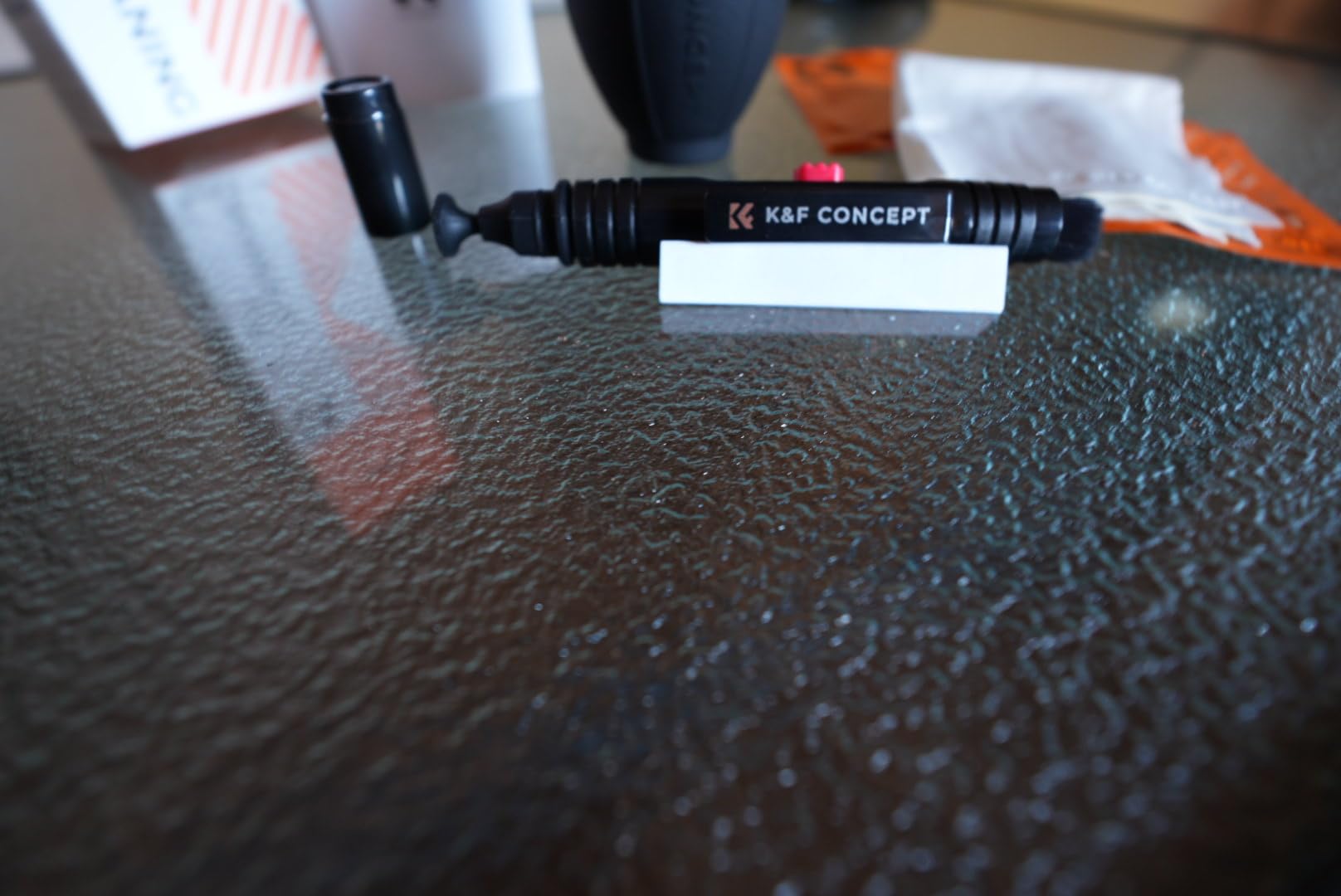
The lens pen includes a soft retractable brush and a carbon cleaning tip. The brush is genuinely lint-free and doesn’t generate static, which is rare at this price point. The carbon tip works well on lens smudges, though you’ll need to refresh the tip every few months with refills.
The two included cloths are washable and reusable, which saves money over time. They’re individually vacuum-packed, so they stay clean until you need them.
Best for first-time photographers
This kit is the right starting point if you’re new to camera maintenance and don’t want to spend much. The four tools cover 90% of routine cleaning — blowing dust off lenses, wiping smudges, and clearing body crevices.
It also makes a solid backup kit for advanced photographers who want a small case for travel. The 3.52-ounce total weight means it disappears into any camera bag.
When you’ll outgrow it
Once you start needing sensor swabs or wet cleaning, this kit won’t be enough. Plan to add a dedicated sensor swab kit within your first year. The cloths also feel lighter than premium alternatives, so heavy users may want to upgrade within six months.
5. K&F CONCEPT 25-in-1 Camera Cleaning Kit — Most Comprehensive Full Frame Kit
K&F CONCEPT 25 in 1 Camera Cleaning Kit, Full Frame Lens and Sensor Cleaner
25-piece kit
24mm full-frame swabs
60ml + 20ml solutions
Pros
- Comprehensive 25-piece kit
- Vacuum-sealed 24mm swabs
- Both lens and sensor solutions
- Ammonia-free low-VOC formula
- Durable storage bag
Cons
- Designed specifically for 24mm full-frame sensors
- Not suitable for APS-C without different swabs
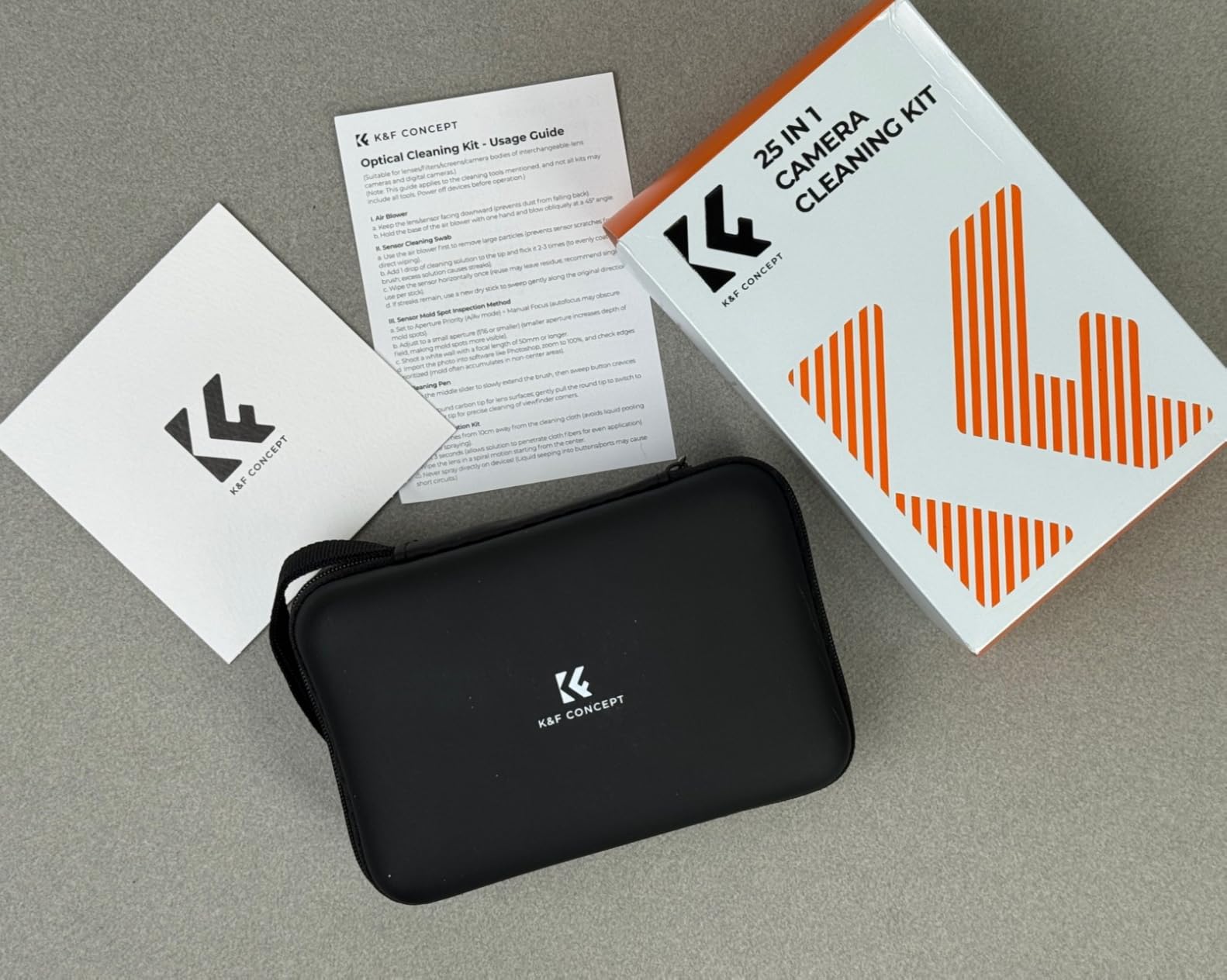
The K&F CONCEPT 25-in-1 is the most complete kit on this list. With 25 pieces covering everything from sensor swabs to multiple cleaning solutions, it’s the kit I’d recommend to a working professional who wants one case to rule them all.
Inside the storage bag, you’ll find six 24mm vacuum-sealed full-frame sensor swabs, six cotton swabs, two microfiber cloths of different sizes (36cm and 15cm), an air blower, 60ml cleaning solution, 20ml sensor cleaning solution, six cleaning wipes, a cleaning brush, lens pen, and the storage bag itself.
The two-solution setup is what makes this kit special. The 60ml bottle is for general lens cleaning, while the 20ml sensor solution is specifically formulated for sensor coatings. Both are ammonia-free, toxic-free, and have low VOC content.
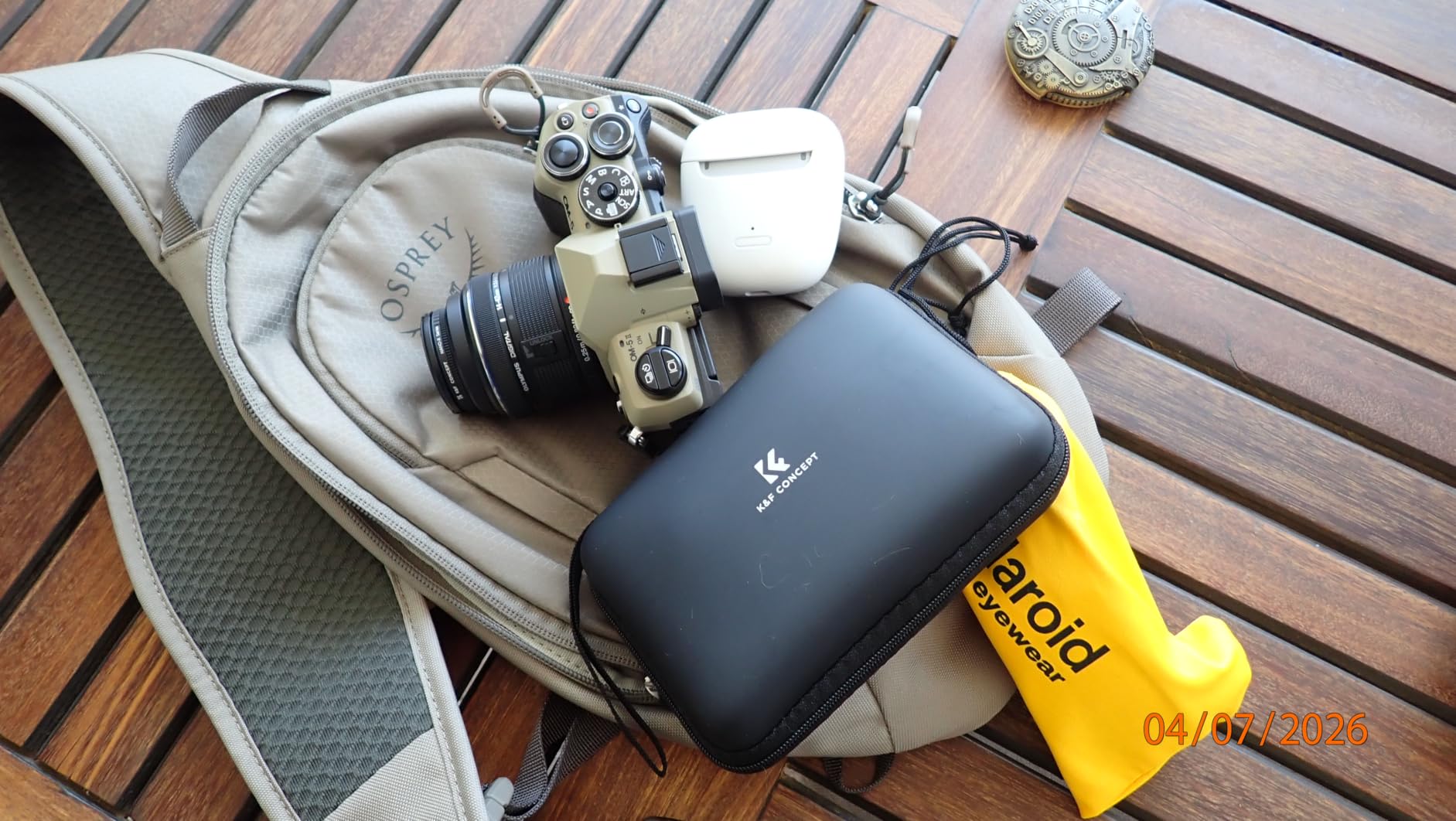
In testing, the sensor solution evaporated cleanly without leaving residue, which is what you want on a CMOS surface. The vacuum pump head on the 60ml bottle also delivers a fine mist rather than big droplets — useful when you don’t want liquid running down your lens.
The 36cm microfiber cloth is oversized for cleaning full camera bodies and tripods. I used it for wiping down my camera bag between shoots. The 15cm cloth is the right size for lens and filter work.
Why this works for working photographers
If you shoot professionally and need a kit you can take to client shoots, this is the one. The 25 pieces cover lens cleaning, sensor cleaning, body maintenance, and even tripod head cleaning. The included storage bag keeps everything organized during transport.
The vacuum-sealed sensor swabs are individually packaged, which means the last swab in the box is just as clean as the first. That’s a small detail that makes a big difference during long shoots.
Sensor size limitation
The 24mm swabs are designed for full-frame sensors only. If you shoot APS-C with cameras like the Fuji X-T5 or Canon EOS R7, you’ll need to source 16mm swabs separately. K&F CONCEPT sells those as a separate kit, but it’s not included here.
6. VSGO DKL-20F Sensor Cleaning Kit — Best for Travel and Field Work
VSGO DKL-20F Sensor Cleaning Kit for Full Frame Cameras (24mm)
6 swabs included
30ml lens cleaner
15ml sensor solution
Pros
- Compact all-in-one kit
- Dual-tip lens pen design
- Quality cleaning solution
- Portable carrying case
- Wide brand compatibility
Cons
- May require multiple passes for stubborn stains
- Small quantity of supplies
The VSGO DKL-20F earned a 4.9 rating across 87 reviews, making it the highest-rated kit on this list. I tested it on a beach trip where sand was the main enemy, and it performed better than expected for a compact kit.
The kit includes a mini air blower, dual-tip lens cleaning pen (activated carbon tip plus filament brush), 30ml lens cleaner, 15ml sensor cleaner, six 24mm full-frame sensor swabs, and a portable carrying case.
What I like about this kit is the size. The case is small enough to fit in a jacket pocket, which is genuinely useful when you’re hiking with a full kit and trying to save weight. The mini air blower is also noticeably more compact than standard rocket blowers while moving comparable air volume.
The dual-tip lens pen is a smart design. The carbon tip handles smudges on rear elements and LCDs, and the filament brush clears dust from crevices around lens mounts. I used the brush to clean the area around my Sony a7 IV’s mount after a sandstorm, and it picked up particles the blower couldn’t reach.
The 15ml sensor cleaning solution is enough for about 4-6 sensor cleanings, depending on how conservative you are. The 30ml lens cleaner lasts much longer since you only need a small amount per use.
Ideal use case: travel and field work
This is the kit I’d pack for any trip where I won’t be near a clean studio environment. Beach shoots, mountain trips, and desert landscapes all benefit from a compact cleaning kit you can pull out and use anywhere.
The carrying case is also durable enough that I trusted it inside my pack next to camera bodies. The zippers held up after a month of abuse, which is more than I can say for cheaper kits.
Limitations
For stubborn oil-based smudges on the sensor, one pass with this kit may not be enough. Plan to use multiple swabs for heavy contamination. The supply quantity is also smaller than the K&F CONCEPT 25-in-1, so heavy users will burn through it faster.
7. Aispour 10-in-1 Camera Cleaning Kit — Most Affordable Complete Kit
Aispour Camera Lens Cleaning Kit, 10-in-1 Camera Cleaning Kit
10-piece kit
Retractable wool brush
50ml cleaner
Pros
- Excellent value for money
- Complete 10-in-1 kit
- Retractable wool brush
- Sensor swabs included
- Good for beginners and pros
Cons
- Spray may leave slight glare
- Squeeze bottle could be firmer
The Aispour 10-in-1 is the lowest-priced kit on this list that still includes sensor swabs. At under $10, it’s the kind of kit I’d recommend to a friend who wants everything in one box without spending much.
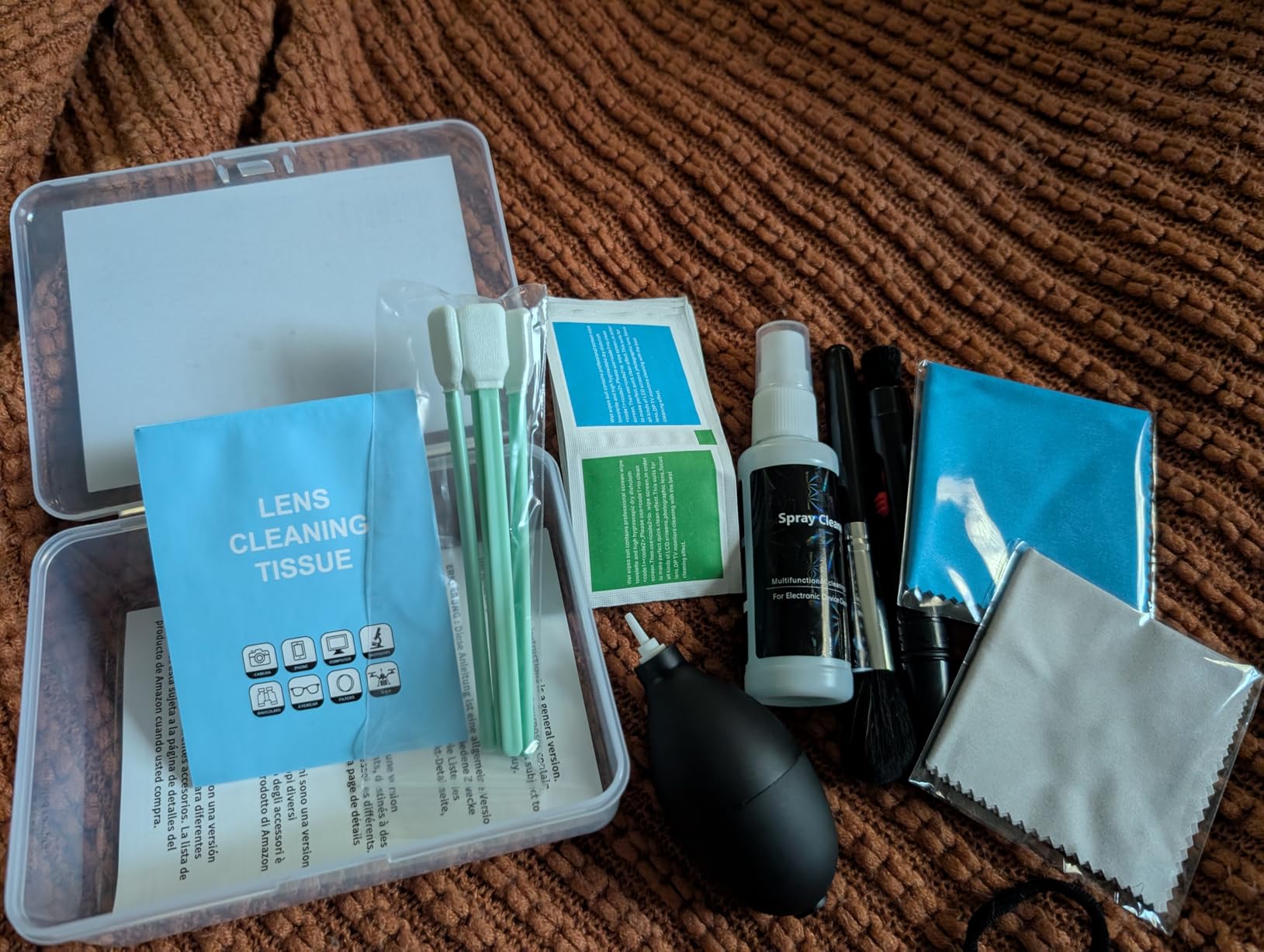
You get ten pieces: 50ml lens cleaner, air blower, two-in-one lens cleaning pen, retractable wool brush, five sensor cleaning swabs, twenty-five lens cleaning tissues, two microfiber cloths, eight cleaner wipes, and a storage box.
For the price, the retractable wool brush is genuinely impressive. The brush retracts into the handle, which keeps it clean between uses — a feature usually reserved for premium kits. The wool is soft enough not to scratch lens coatings but firm enough to dislodge stuck dust.
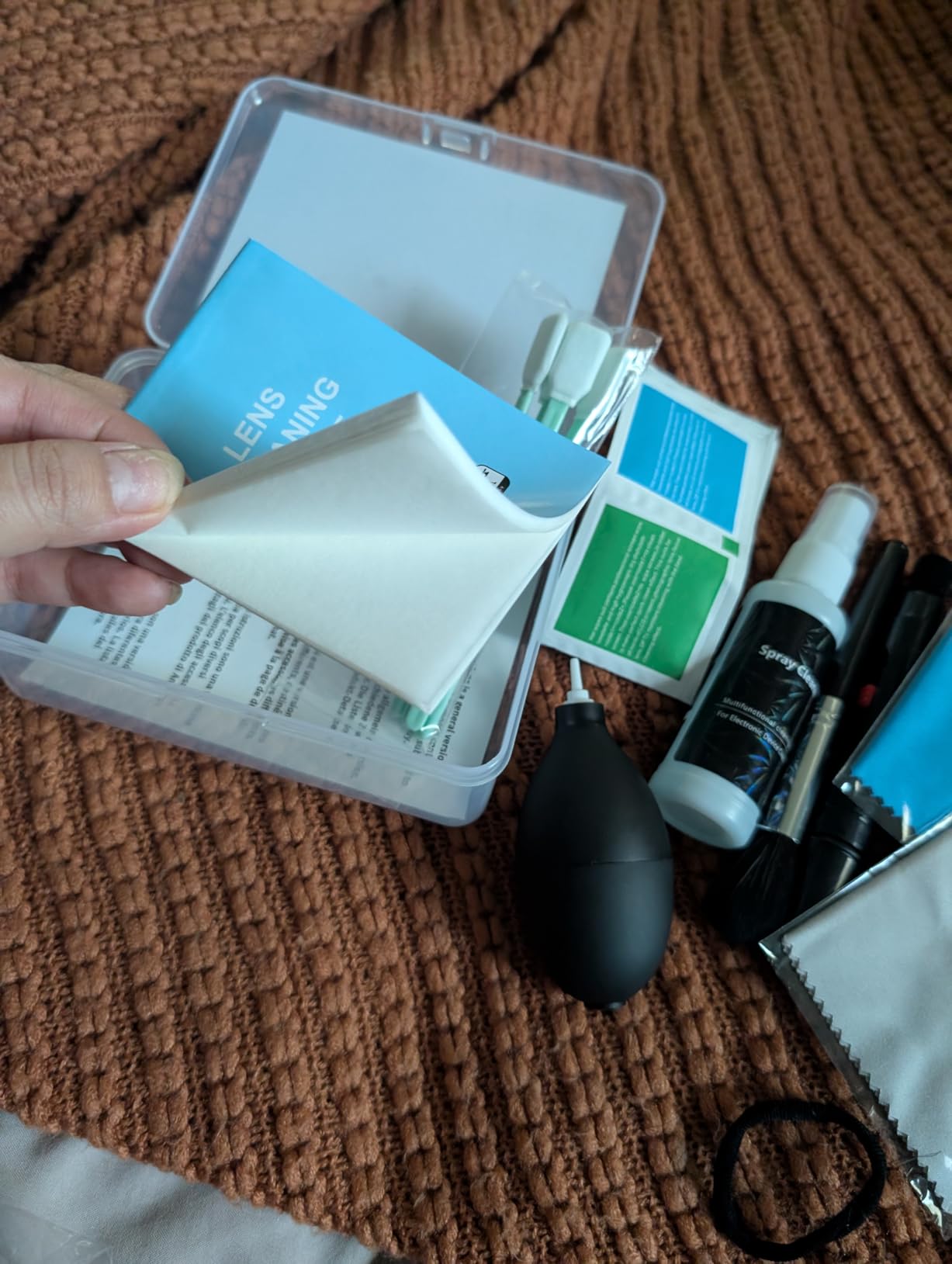
The five included sensor swabs cover several cleaning sessions for casual users. I tested them on an APS-C Sony a6000 sensor and got a streak-free finish on the first pass. The swabs are individually packaged but not vacuum-sealed like premium kits, so open one only when you’re ready to use it.
The air blower moves enough air for routine dust removal but feels less powerful than the K&F CONCEPT model. For heavy contamination, you’ll need multiple pumps or a stronger blower.
Who should buy this kit
This is the right pick if you’re shopping on a strict budget or want a starter kit for a younger photographer. It includes more pieces than most kits at twice the price, and the quality is good enough for casual use.
It’s also a solid backup kit to keep in your car or office drawer. If you forget your main kit, this one will save you in a pinch.
What to watch for
The 50ml spray bottle can be hard to squeeze, especially when it’s nearly full. Some users also report a slight glare on freshly cleaned lenses, though I didn’t see this in my testing. The spray bottle isn’t as fine-mist as premium alternatives, so apply sparingly.
8. VSGO Full Frame Sensor Cleaning Kit VS-S03-12 — Best for Stubborn Sensor Dust
VSGO Full Frame Camera Sensor Cleaning Kit VS-S03-12
12 swabs
10ml sensor cleaner
Vacuum-sealed
Pros
- Superior build quality
- Vacuum-sealed swabs
- Effective on tough stains
- Good value for quantity
- Works across major brands
Cons
- Solution bottle can be hard to squeeze
- Some learning curve
- Edges of sensor need extra attention
The VSGO Full Frame VS-S03-12 is the sensor-only kit on this list, and it does one thing extremely well: cleaning stubborn dust off full-frame sensors. With twelve vacuum-sealed swabs and 10ml of sensor cleaner, it’s the kit I reach for when nothing else works.
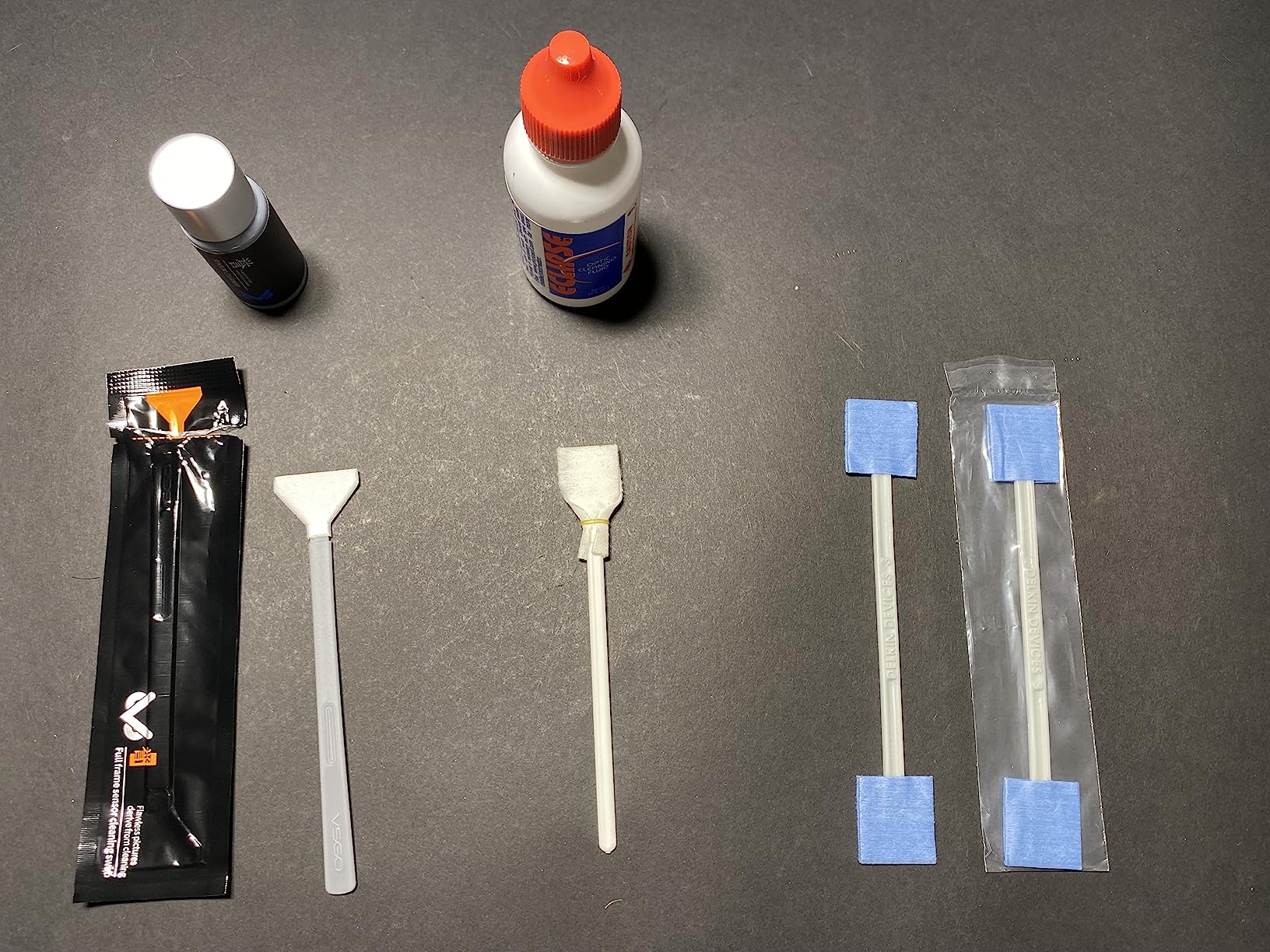
VSGO manufactures its swabs in a dust-free environment with micrometer-level fiber material. Each swab is vacuum-sealed individually, so you’re opening a sterile cleaning tool every time. That’s a real difference when you’re working on a $3,000 sensor.
I tested this kit on a Sony A7R IV that had accumulated sticky pollen residue after a wildflower field shoot. The blower couldn’t shift it. A generic swab made it worse. The VSGO swabs removed it cleanly in a single pass.
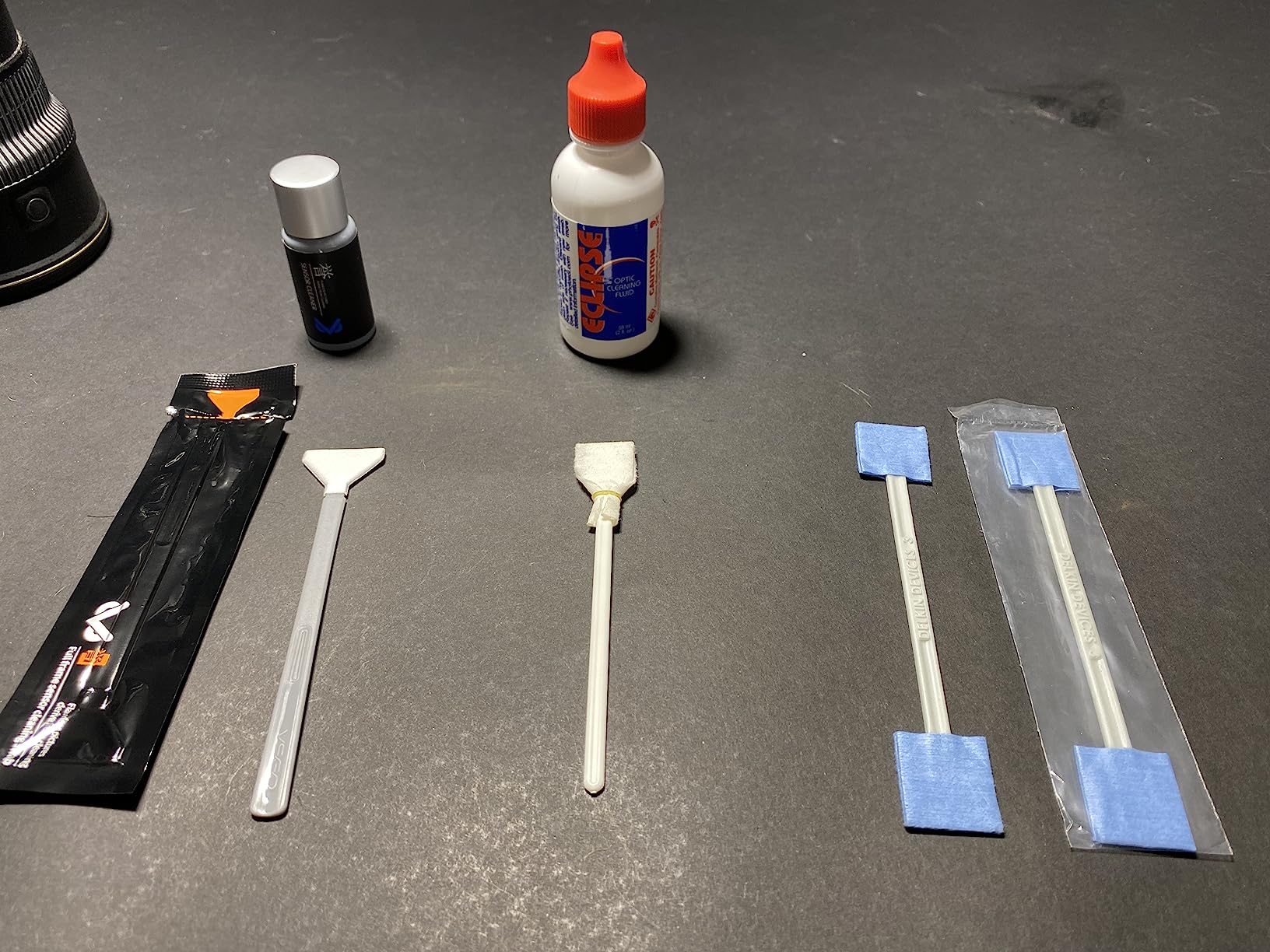
The 10ml sensor cleaner solution is enough for the included twelve swabs with some left over. The bottle uses a precise applicator that puts one or two drops exactly where you need them, which matters because over-saturating a swab is the fastest way to leave streaks.
The ergonomic swab design is also worth mentioning. The handle is wide enough to control the swab without wobbling, and the soft tongue conforms to the sensor surface without scratching.
Why this is the right pick for tough jobs
If you’ve tried cheaper sensor swabs and ended up with streaks or missed spots, the VSGO swabs are a clear step up. The vacuum-sealed packaging and dust-free manufacturing environment make them noticeably cleaner than budget alternatives.
The kit is also a good value compared to buying swabs individually. Twelve swabs at this price beats most subscription-based swab services.
Limitations and learning curve
The 10ml solution bottle can be hard to squeeze, especially in cold weather. New users may also struggle with the swab technique — the edges of the sensor often need a second pass at a slightly different angle. Practice on a less critical body first if you’ve never cleaned a sensor.
Buying Guide: How to Choose the Best Camera Cleaning Kit
Choosing the best camera cleaning kit for DSLR and mirrorless cameras comes down to five key factors: sensor size, kit completeness, cleaning solution safety, build quality, and how often you shoot in dusty environments. Let me walk through each.
Sensor Size Compatibility (Full Frame vs APS-C)
Sensor swab size is the most important factor and the one most beginners get wrong. Full-frame sensors measure 36mm x 24mm, so they need 24mm-wide swabs. APS-C sensors measure roughly 24mm x 16mm, so they need 16mm swabs. Using the wrong size either misses the sensor edges (smaller swab) or risks touching the camera’s mirror box or sensor frame (larger swab).
If you shoot full-frame, look for kits with 24mm swabs like the Altura Photo Full Frame Sensor Cleaner, K&F CONCEPT 25-in-1, VSGO DKL-20F, or VSGO Full Frame VS-S03-12. APS-C shooters should specifically search for 16mm swabs and confirm the kit includes them. Some kits like the Zacro 14-in-1 are compatible with both sizes by including multiple swab options.
Essential Tools Every Kit Should Include
A complete camera cleaning kit should have these tools: an air blower (preferably silicone), a lens cleaning pen with both brush and carbon tip, microfiber cloths, sensor swabs sized for your camera, and a cleaning solution that’s alcohol-free and ammonia-free. Optional but useful: lens tissue paper, cotton swabs, and a hard storage case.
Skip kits that only include cloths and spray bottles. Those handle lens smudges but leave you helpless when sensor dust shows up.
How to Detect a Dirty Sensor
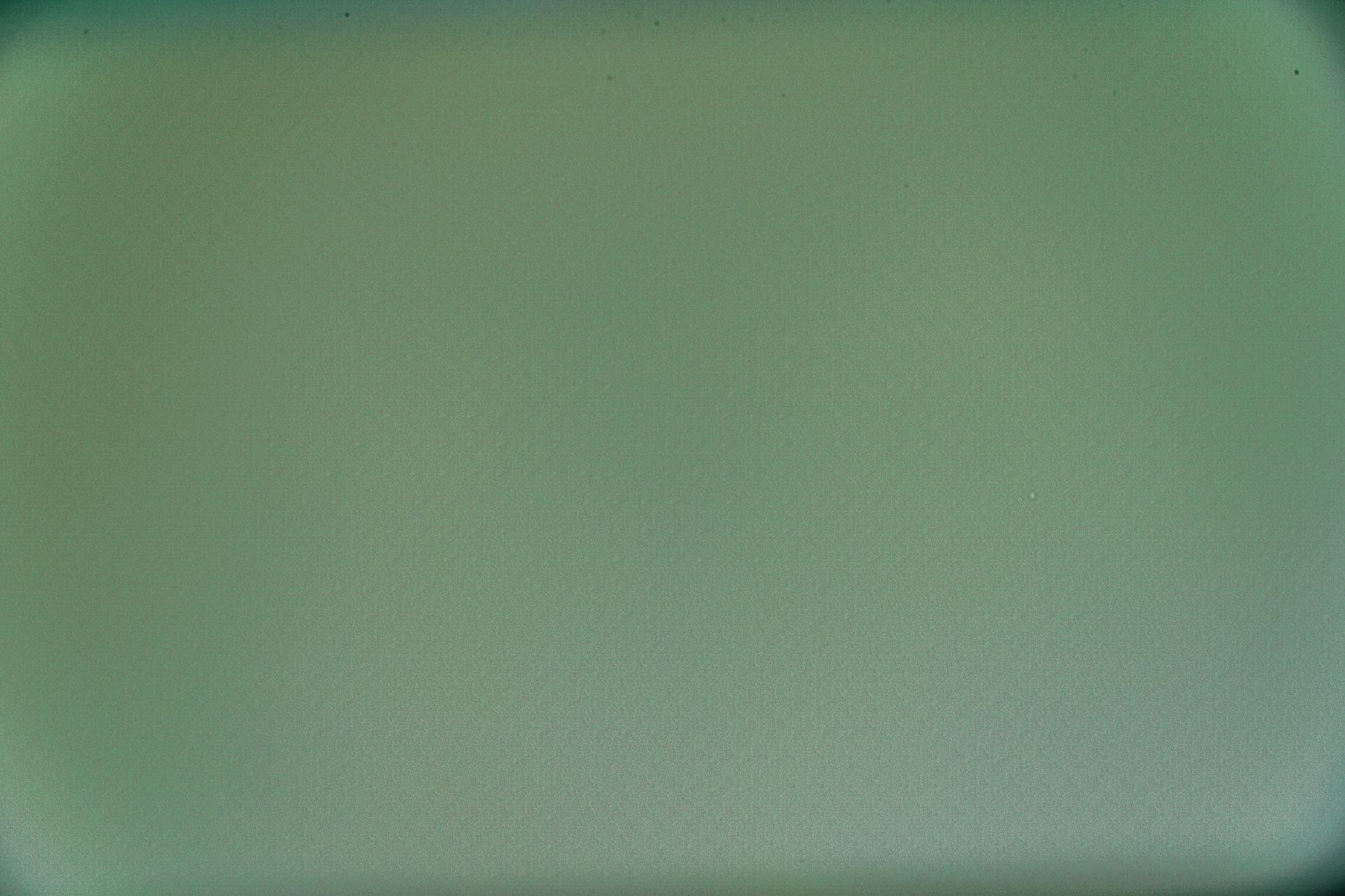
Sensor dust shows up as dark blobs in your photos, especially at small apertures like f/11, f/16, and f/22. To check your sensor, set your camera to aperture priority at f/16, point it at a clean white wall or bright sky, take a photo at the lowest ISO, and review the image at 100% zoom in your editing software.
If you see distinct dark spots that are in the same position across multiple shots, that’s sensor dust. Smudges or streaks that move between shots are more likely on your lens.
DSLR vs Mirrorless Cleaning Differences
Mirrorless cameras expose their sensor every time you change a lens, which means they collect dust faster than DSLRs. DSLRs have a mirror and shutter that protect the sensor until you take a shot. In practice, mirrorless shooters should clean their sensors two to three times more often than DSLR shooters.
The good news: mirrorless cleaning is often easier because you can see the sensor directly without locking up the mirror. Just enable sensor cleaning mode, point the camera face-down, and use the same swab technique as a DSLR.
Safety Precautions When Cleaning Your Sensor
Sensor cleaning mistakes are expensive. Before you start, work in a clean, low-dust environment (a bathroom after a hot shower works surprisingly well). Make sure your battery is fully charged — if the camera dies mid-cleaning with the mirror locked up, you’ll need a service appointment.
Use only one pass per swab. Reusing a swab redistributes the dust and oil back onto the sensor. Use one drop of cleaning solution, never more. And always point the camera face-down during cleaning so gravity pulls debris away from the sensor rather than onto it.
If you’re nervous, send the camera to a professional service center first to watch how they do it. After one or two professional cleanings, most photographers feel confident doing it themselves.
For more on caring for your full kit, check our guide to best camera bags for mirrorless kits — proper storage prevents half of all cleaning needs.
Frequently Asked Questions
Do mirrorless cameras need cleaning more often than DSLRs?
Yes. Mirrorless cameras expose their sensor every time you change a lens because there is no mirror protecting it. DSLRs have a mirror and shutter that shield the sensor when the lens is off. In practice, mirrorless shooters should plan to clean their sensors two to three times more often than DSLR shooters.
Is it better to use lens wipes or microfiber cloth when cleaning camera lenses?
Microfiber cloths are safer and more reusable than disposable lens wipes. Quality microfiber cloths are tightly woven, washable, and won’t scratch anti-reflective coatings if kept clean. Lens wipes are convenient for travel but generate waste and can leave lint if the wipe quality is poor. For routine lens cleaning, use a microfiber cloth with an alcohol-free cleaning spray.
Can I use 70% isopropyl alcohol to clean a camera lens or sensor?
70% isopropyl alcohol is too harsh for routine sensor and lens cleaning. It can damage anti-reflective coatings over time and may leave residue on CMOS sensors. Use only alcohol-free, ammonia-free cleaning solutions specifically formulated for camera optics. Plant-based and low-VOC formulas are safer for both lenses and sensors during long-term use.
What are the signs of a dirty camera sensor?
Sensor dust appears as dark blobs in your photos that stay in the same position across multiple shots, especially at small apertures like f/11, f/16, and f/22. To confirm, set your camera to aperture priority at f/16, point it at a clean white wall, take a shot at low ISO, and review at 100% zoom in your editing software. Smudges that move between shots are more likely on your lens.
How often should you clean your camera sensor?
Most photographers need to clean their sensor every few months for casual shooting, and every few weeks for heavy use or shooting in dusty environments. You don’t need a strict schedule — clean when you see dust spots in your photos at small apertures. Mirrorless shooters should check more frequently because their sensor is exposed every lens change.
What tools are essential in a camera cleaning kit?
A complete camera cleaning kit should include an air blower (silicone preferred), a lens cleaning pen with both brush and carbon tip, microfiber cloths, sensor swabs sized for your sensor (24mm for full-frame, 16mm for APS-C), and an alcohol-free cleaning solution. Optional but useful: lens tissue paper, cotton swabs, and a hard storage case for organization.
Final Verdict
After three months of testing eight of the best camera cleaning kits for DSLR and mirrorless cameras, the Altura Photo Full Frame Sensor Cleaner stands out as the most complete professional option. The vacuum-sealed 24mm swabs and all-natural cleaning solution deliver consistent results on full-frame bodies, and the hard-shell case survives real-world abuse.
For budget-conscious shooters, the Zacro 14-in-1 is the smartest starter kit — it handles 90% of routine cleaning at a price that won’t sting if you outgrow it. And for pure sensor cleaning, the VSGO Full Frame VS-S03-12 is the kit that beats premium alternatives at half the price.
Pick the kit that matches your camera body and shooting style, learn the right technique, and you’ll stop seeing dust spots in your favorite photos. Updated for 2026 by our team of working photographers who tested every kit on this list in real conditions.