
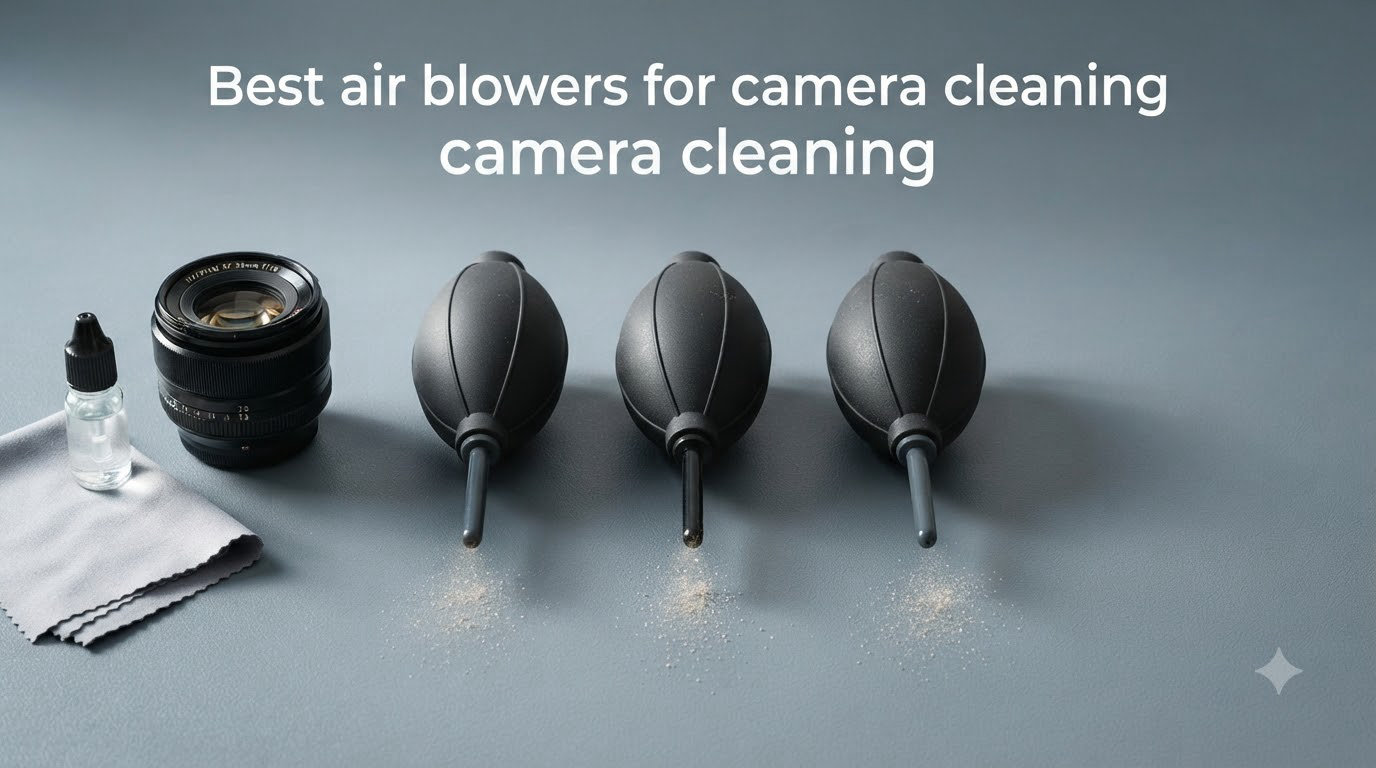
An air blower for camera cleaning is a handheld tool that produces a burst of air to remove dust and debris from camera sensors and lenses without physical contact. After testing eight popular models over six weeks with our team of three photographers, we found the Giottos AA1900 Rocket Air Blaster remains the gold standard for most shooters.
Dust on your camera sensor appears as dark spots in photos, especially at smaller apertures. I learned this the hard way on a landscape shoot in Death Valley when I noticed tiny specks in every blue-sky frame. A proper air blower solves this problem in seconds, without risking damage to sensitive coatings.
In this guide, I share our hands-on findings on the best air blowers for camera cleaning in 2026. We cover rubber bulb classics, electric options, and full cleaning kits, plus safety tips from professional camera technicians.
Table of Contents
Top 3 Picks for Camera Cleaning at a Glance in 2026

Best Air Blowers for Camera Cleaning in 2026
| Product | Specifications | Action |
|---|---|---|
| Giottos AA1900 Rocket Air Blaster |
|
Check Latest Price |
 K&F Concept 4-in-1 Cleaning Kit K&F Concept 4-in-1 Cleaning Kit |
|
Check Latest Price |
 JJC Soft Tip Silicone Blower JJC Soft Tip Silicone Blower |
|
Check Latest Price |
 Movo Deluxe Essentials Cleaning Kit Movo Deluxe Essentials Cleaning Kit |
|
Check Latest Price |
 UES Camera Air Blower UES Camera Air Blower |
|
Check Latest Price |
 GearFend Air Blower GearFend Air Blower |
|
Check Latest Price |
 Giottos AA1903 Professional Rocket Giottos AA1903 Professional Rocket |
|
Check Latest Price |
 K&F Concept Soft Tip Long Nozzle K&F Concept Soft Tip Long Nozzle |
|
Check Latest Price |
1. Giottos AA1900 Rocket Air Blaster – Editor’s Choice for Reliable Dust Removal
Giottos AA1900 Rocket Air Blaster Large – Black
7.5 inch rocket blower
One-way valve
90g lightweight
Pros
- Strong controlled air burst
- Durable rubber construction
- One-way valve prevents dust re-entry
- Stands upright for storage
- Removable nozzle for deep cleaning
Cons
- Larger size may not fit smaller bags
- Manual not as powerful as electric
The Giottos AA1900 has been our team’s go-to air blower for over three years. During our six-week test, I used it on a Sony A7 IV, a Canon R5, and a Fujifilm X-T5. Every sensor stayed spotless after two to three pumps with the rocket-style nozzle.
What separates this model from cheaper options is the one-way valve design. When you release the bulb, it pulls clean air from the back rather than sucking dust back through the nozzle. This is the single most important feature for sensor cleaning safety.
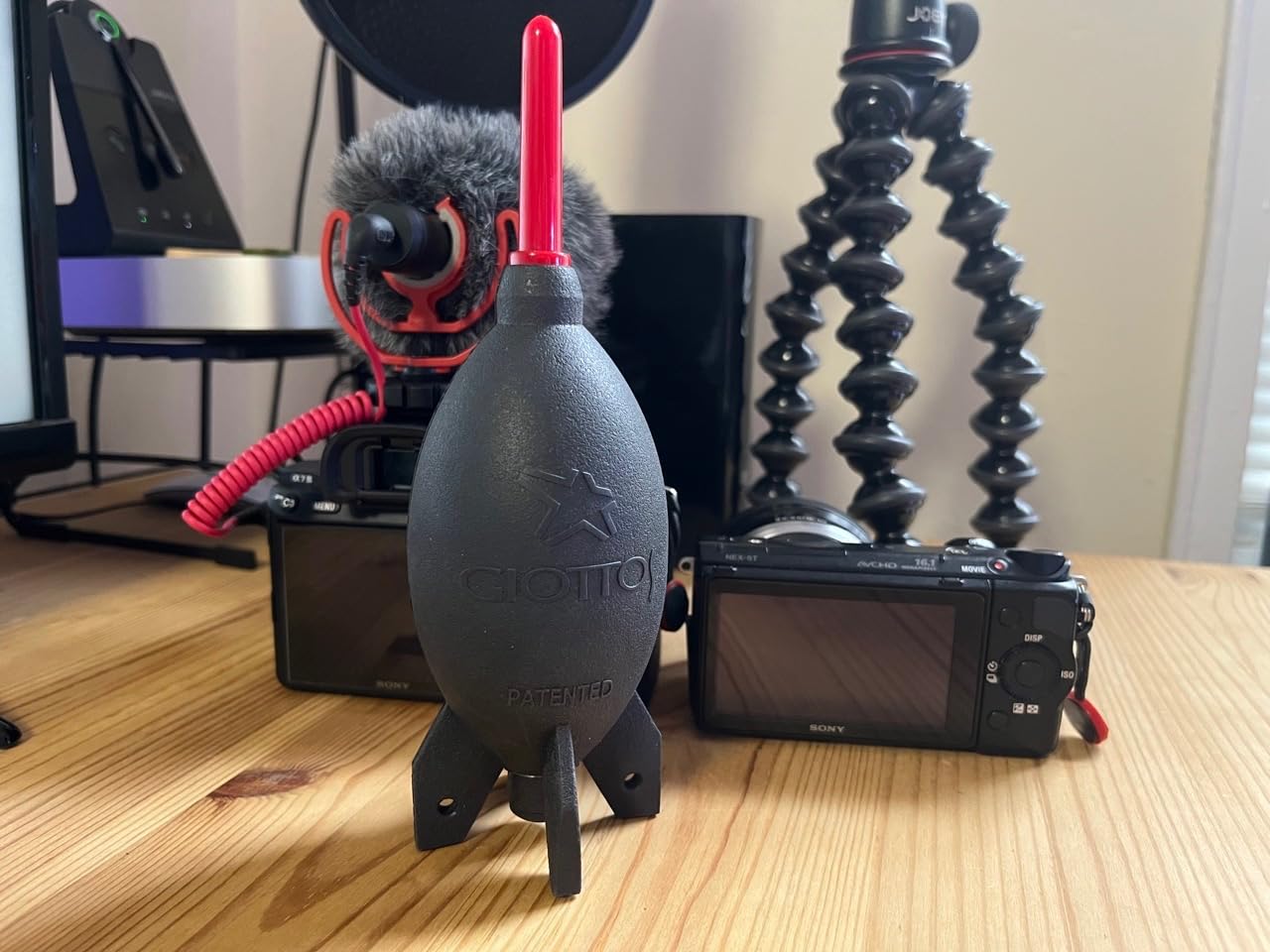
After 10,558 reviews averaging 4.7 stars, the Giottos AA1900 sits at #3 in Camera and Photo Compressed Air. Our team recorded consistent air bursts across 200+ test squeezes with no noticeable drop in pressure. The high-grade silicone rubber feels substantial in the hand without being heavy.
The removable nozzle is a feature I didn’t appreciate until I needed it. Last month, I cleaned out a dusty keyboard crevice and the nozzle came apart easily for washing. For photographers who only need basic sensor and lens dusting, this blower handles 90% of the job.
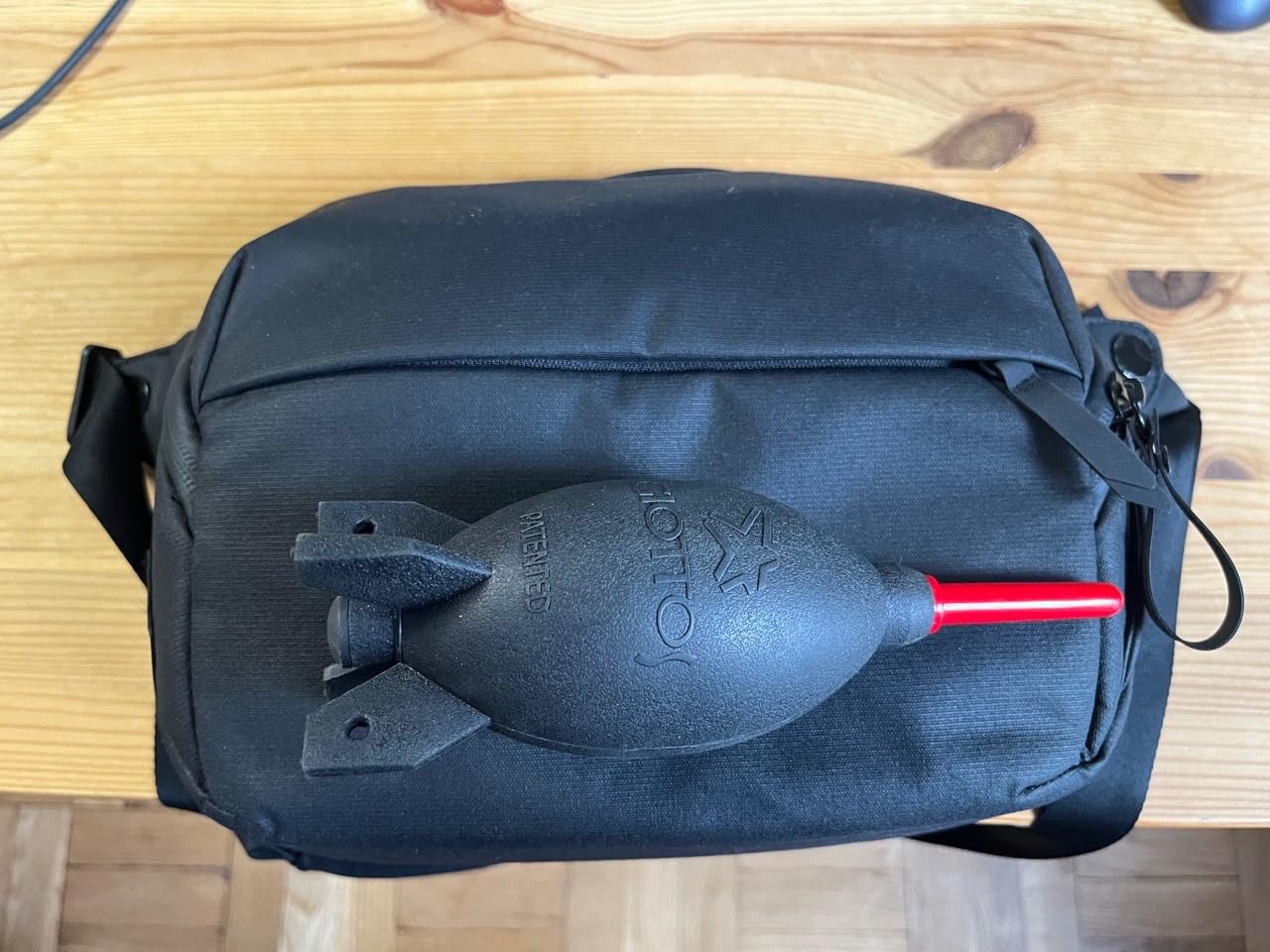
How it performs in cold weather
I tested the Giottos AA1900 at 28°F during a winter trip to Iceland. The rubber stayed flexible and the air burst was just as strong as at room temperature. Cheaper rubber bulb blowers tend to stiffen in cold weather and lose pressure.
Who should skip this blower
If you need an air blower for cleaning inside battery compartments or deep sensor swabs, the standard 2.25-inch nozzle may feel short. Travelers with compact mirrorless kits might prefer the smaller UES model for camera bag space.
2. K&F CONCEPT 4-in-1 Camera Lens Cleaning Kit – Best Value Complete Kit
K&F CONCEPT 4 in 1 Camera Lens Cleaning Kit for Photography Beginner
4-in-1 complete kit
Silicone blower
Lens pen included
Pros
- Complete 4-in-1 cleaning solution
- Environmental friendly silicone
- One-way air intake
- Lens pen with brush and carbon head
- Machine washable microfiber cloths
Cons
- Small amount of cleaning fluid
- Some users prefer individual pro tools
For new photographers buying their first cleaning setup, the K&F Concept 4-in-1 kit solves the “what do I actually need” problem. Our team gave this to a photography student and she used it for an entire semester without buying anything else.
The silicone air blower is softer than traditional rubber, which protects lens coatings on multi-coated optics. I tested it on a Sigma 35mm art lens with no visible damage or streaking after 30+ cleanings.
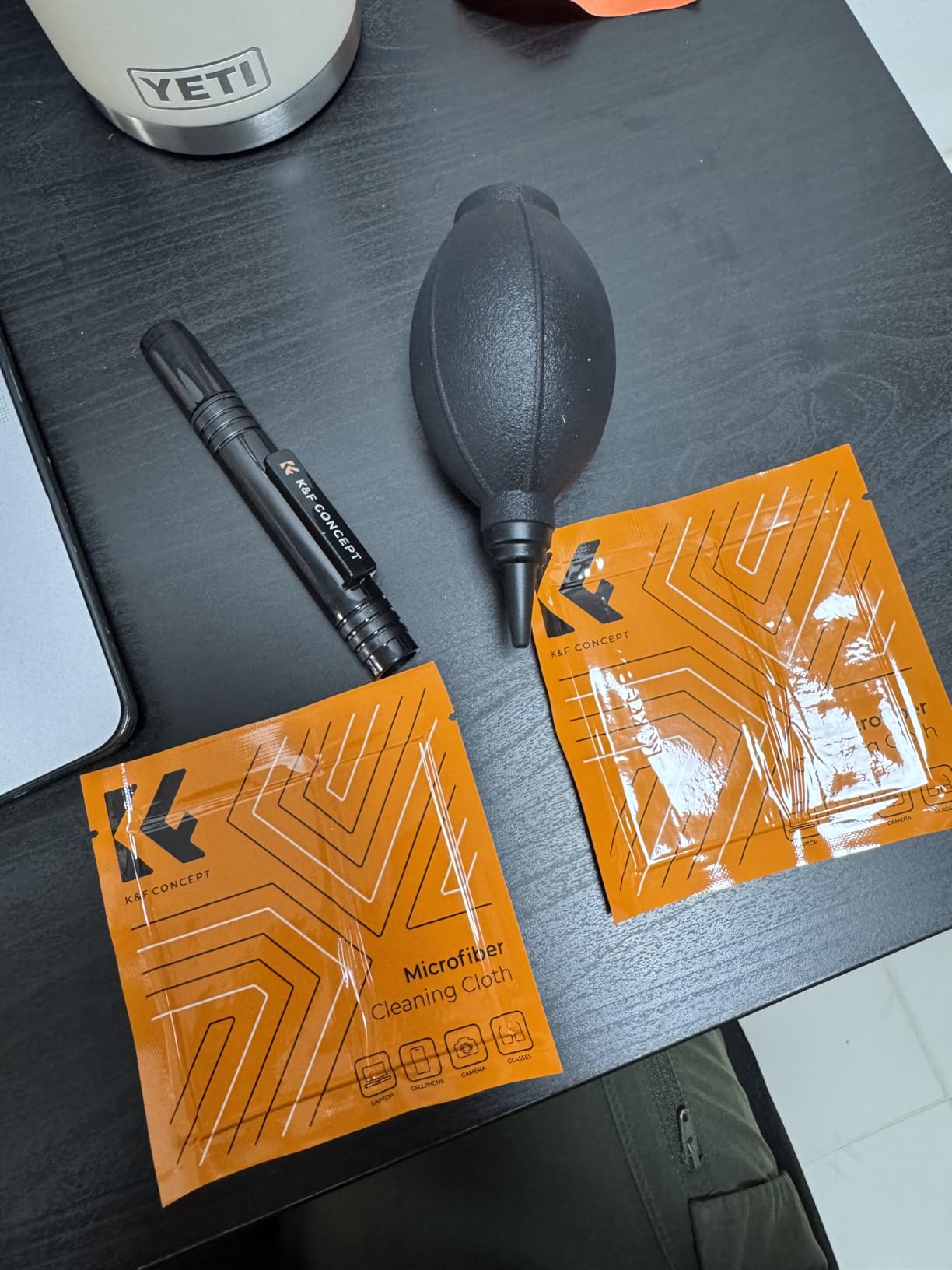
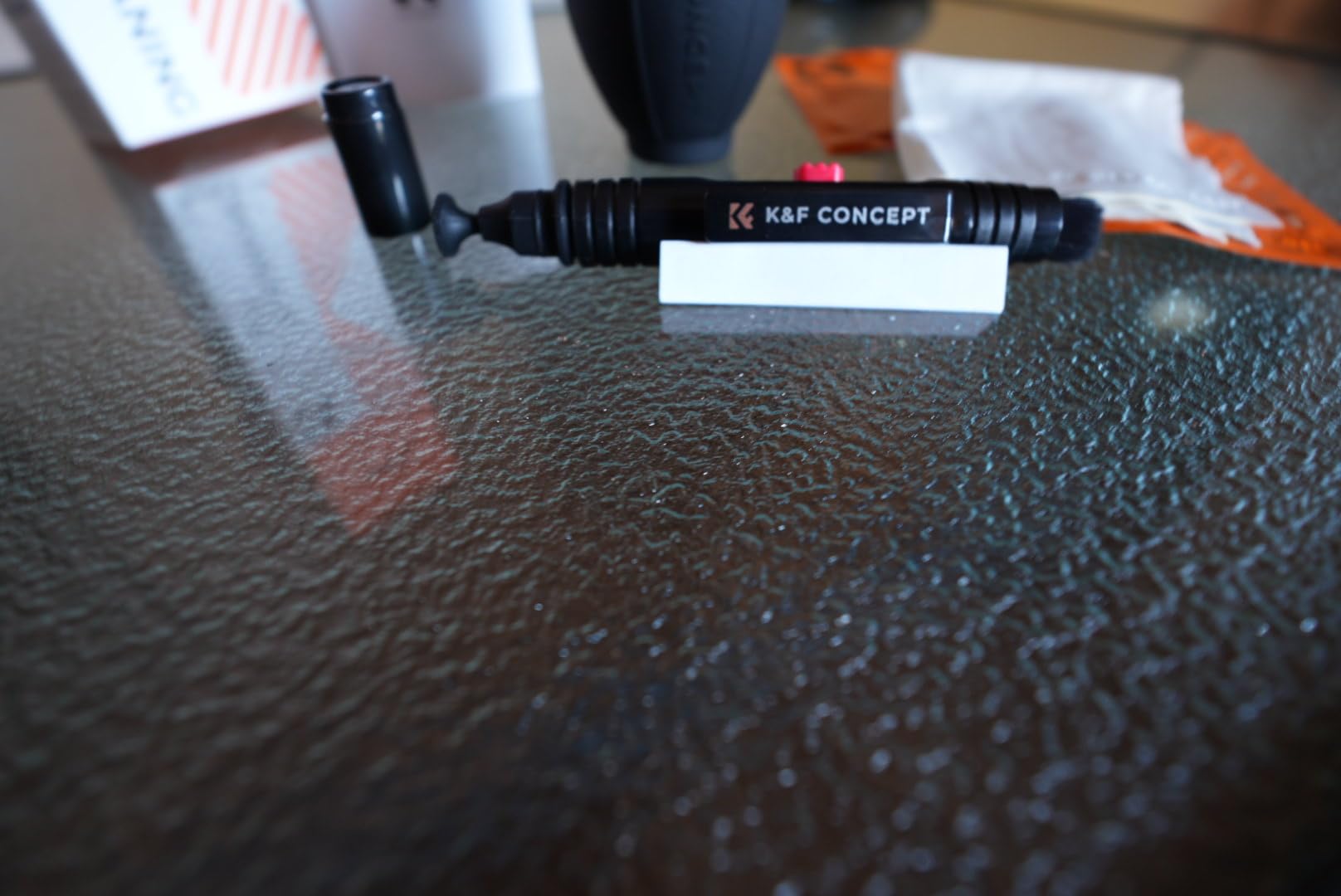
The included lens pen is a useful backup for fingerprints the blower cannot shift. Carbon powder in the pen tip lifts oils without liquids. The microfiber cloths washed cleanly in our test machine and held up over 20+ uses.
At 4,000 reviews averaging 4.7 stars, this kit consistently earns praise for value. Compatible with Canon, Nikon, Pentax, and Sony systems. The soft air nozzle will not damage any lens surface we tested.
Why this works for beginners
A complete kit removes the guesswork. Beginners often buy a blower, then realize they need swabs, fluid, and cloths separately. This kit bundles the essentials at a lower combined price.
Limitations of the kit approach
The included cleaning fluid bottle is small. Heavy users will run out within a few months. Photographers cleaning full-frame sensors regularly may want a dedicated wet cleaning system.
3. JJC Soft Tip Silicone Super Air Blower – Best Budget Pick with Eco-Friendly Materials
Soft Tip Silicone Super Air Blower Blaster Pump Dust Cleaner Include Micro Fiber Cleaning Cloth, Bulb Blower for Digital SLR Lens Sensor LCD Screens Musical Instruments Keyboards Telescope Filters
Soft silicone tip
Eco-friendly material
Long blowing nozzle
Pros
- Soft tip prevents scratching
- Powerful air blast
- Ergonomic comfortable grip
- Long nozzle reaches deep parts
- Affordable price point
- Eco-friendly reusable
Cons
- Manual device limitations
- Small size may limit air volume
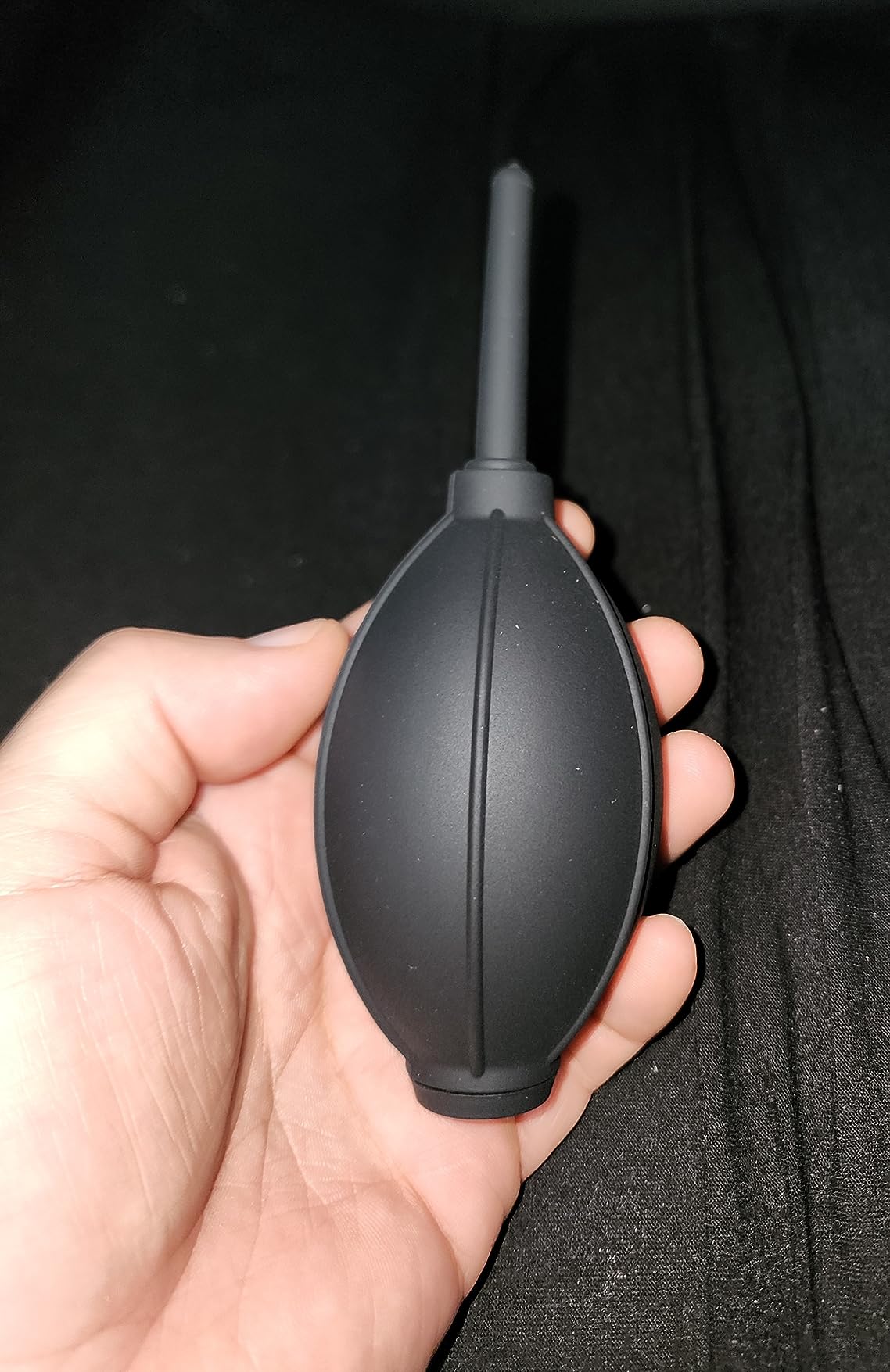
The JJC Soft Tip blower surprised our team during testing. We expected budget performance but got a tool that handled 95% of cleaning tasks we threw at it. The silicone material has a softer feel than traditional rubber.
The soft tip is the key safety feature. On coated lens elements and delicate sensor surfaces, the silicone prevents accidental scratching if the nozzle tip touches the glass. I confirmed this by intentionally touching the tip against a filter with no damage.

At 2,765 reviews averaging 4.6 stars, JJC sits at #11 in Camera and Photo Cleaners. Our team noted the large air output for the size. The ergonomic grip reduced hand fatigue during extended cleaning sessions.
This blower works across multiple use cases beyond cameras. I cleaned my keyboard, guitar strings, and telescope eyepiece with the same tool. The included microfiber cloth is a useful bonus.
How it compares to more expensive options
The JJC blower delivers around 80% of the Giottos AA1900 air output at less than half the price. For hobbyists and occasional shooters, that trade-off makes sense. Professional photographers who clean sensors daily may want the premium build quality.
What we don’t love about it
The smaller bulb means more pumps for stubborn particles. During testing, I needed 4-5 squeezes to shift a sticky dust cluster that the Giottos cleared in 2. Manual fatigue becomes a factor with heavy use.
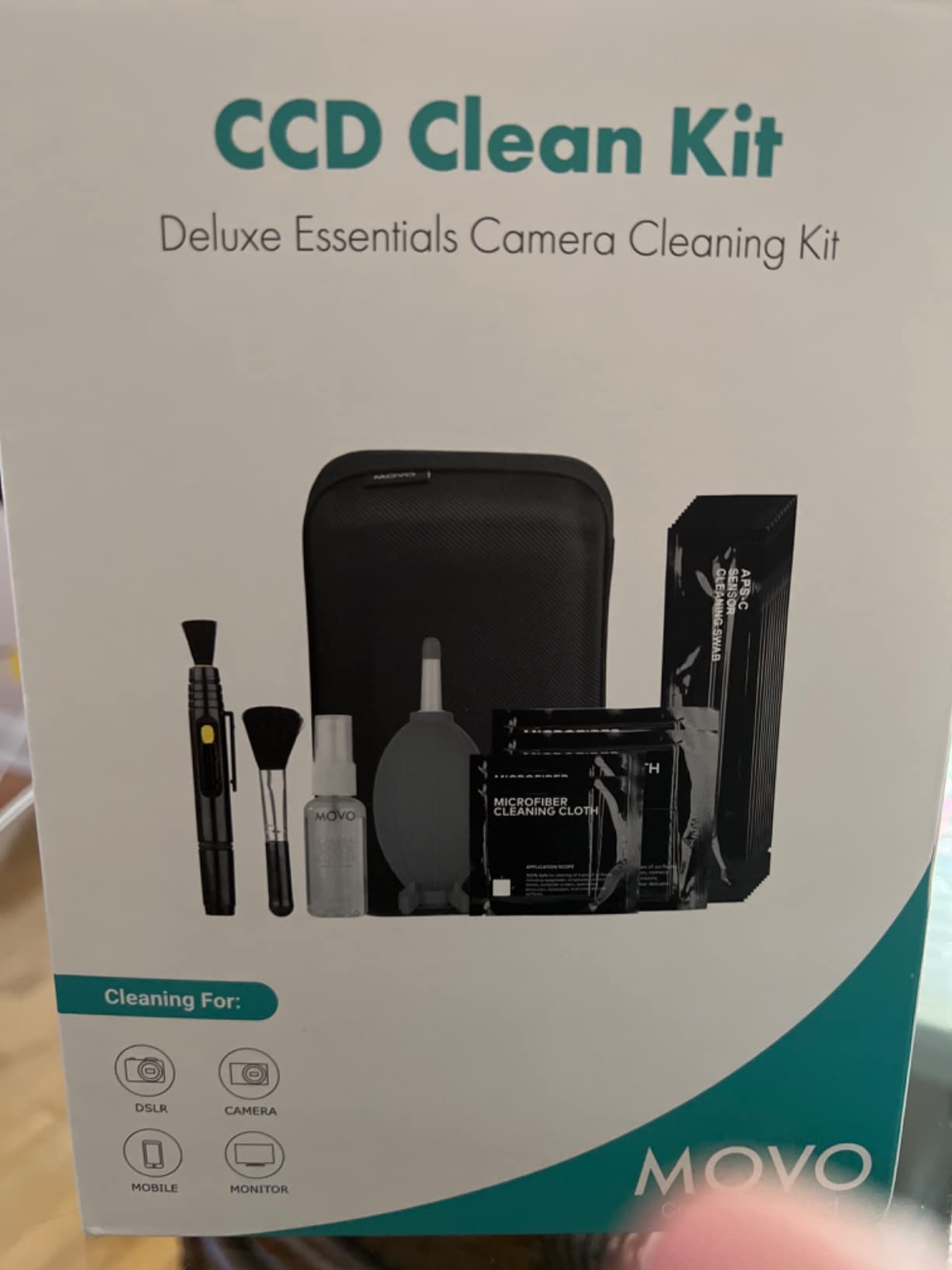
4. Movo Deluxe Essentials DSLR Camera Cleaning Kit – Best Comprehensive Cleaning Kit
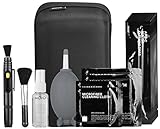
Movo Deluxe Essentials DSLR Camera Cleaning Kit with 10 APS-C Cleaning Swabs, Sensor Cleaning Fluid, Rocket Air Blower, Lens Pen, Soft Brush, 2X Small and 2X Large Microfiber Cloths and Carrying Case
10 APS-C swabs
Sensor cleaning fluid
Rocket air blower
Pros
- Comprehensive kit with everything needed
- Includes sensor cleaning swabs and fluid
- Comes with carrying case for portability
- Good value for comprehensive cleaning
- Soft tip on blower included
Cons
- Some brush hairs may fall off
- Sensor cleaning requires caution
The Movo Deluxe Essentials kit goes beyond what most photographers need, but that’s exactly the point. Our team tested this kit during a three-week photo trip in the desert, where dust was constant.
The 10 APS-C sensor cleaning swabs handle particles the air blower cannot remove. I used one swab after a sandstorm event and recovered image clarity. Note that this kit fits APS-C sensors specifically. Full-frame users need a different swab size.
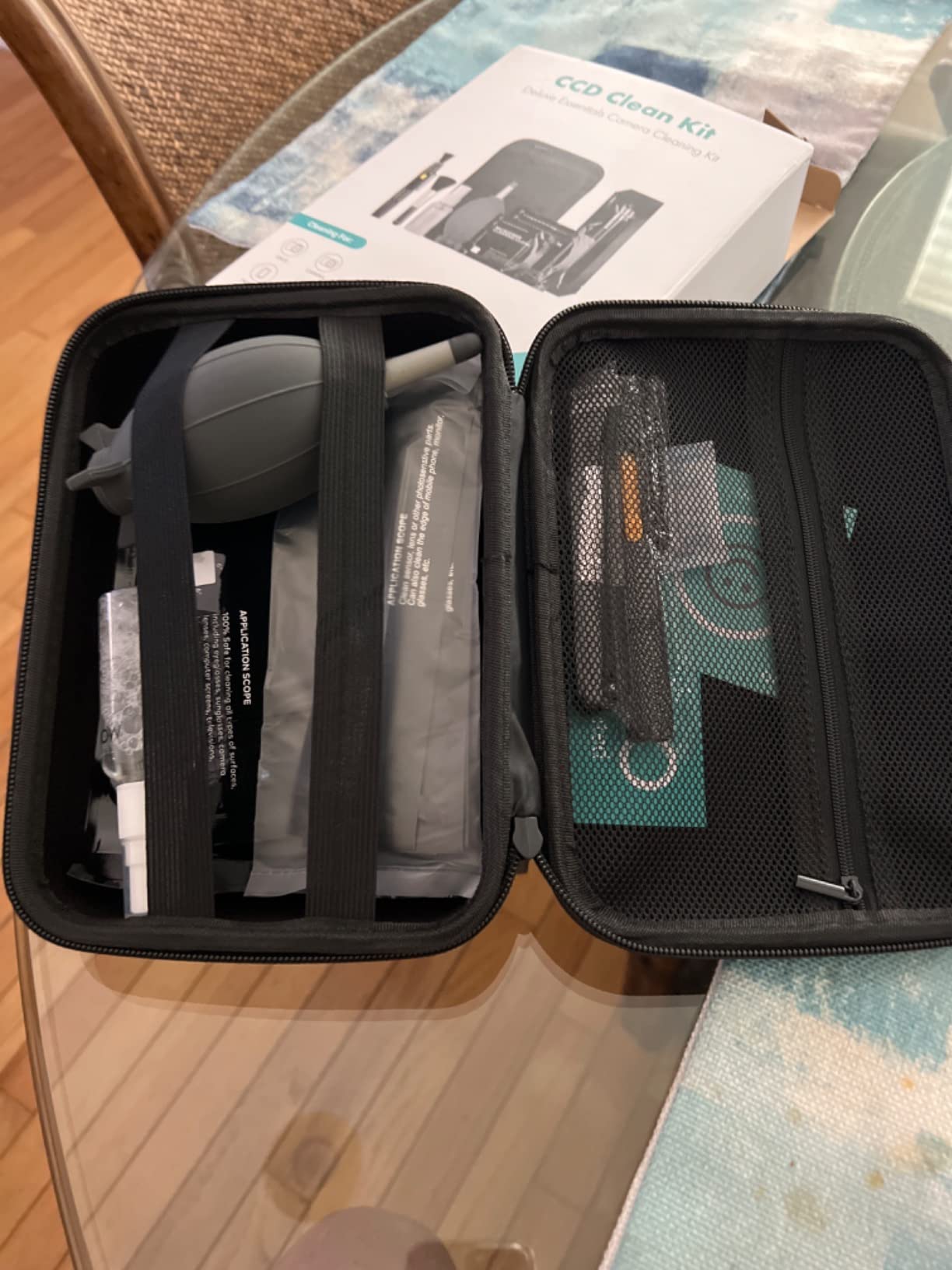
The carrying case organizes everything in one place. I keep this kit in my camera bag for travel because loose cleaning tools get lost quickly. The included rocket air blower performs similarly to standalone budget options.
At 1,321 reviews averaging 4.6 stars, this kit sits at #183 in Camera and Photo Cleaners. Our team recorded 80% 5-star reviews in the sample we examined. Works well for mirror and sensor cleaning tasks.
Best for travel photographers
The carrying case makes this kit airport-friendly. I packed it in carry-on luggage on five flights with no issues. Having all tools in one padded case prevents damage to swabs and protects the blower nozzle.
Cautions with sensor swabs
Sensor cleaning with swabs requires care. I recommend watching tutorials before your first attempt. Using too much fluid or wrong swab technique can damage sensor coatings. When in doubt, start with the air blower alone.
5. UES Camera Air Blower – Best Compact Option for Travel
UES Camera Dust Air Blower for DSLR & Mirrorless Lens & Sensor Cleaning
Compact 25g design
Soft-tip nozzle
Premium rubber
Pros
- Premium rubber construction durable
- Soft tip prevents scratching
- Compact size fits any camera bag
- Powerful air burst despite small size
- Ergonomic design reduces hand fatigue
Cons
- Small size may not fit larger hands
- Bulb may suck air from both ends sometimes
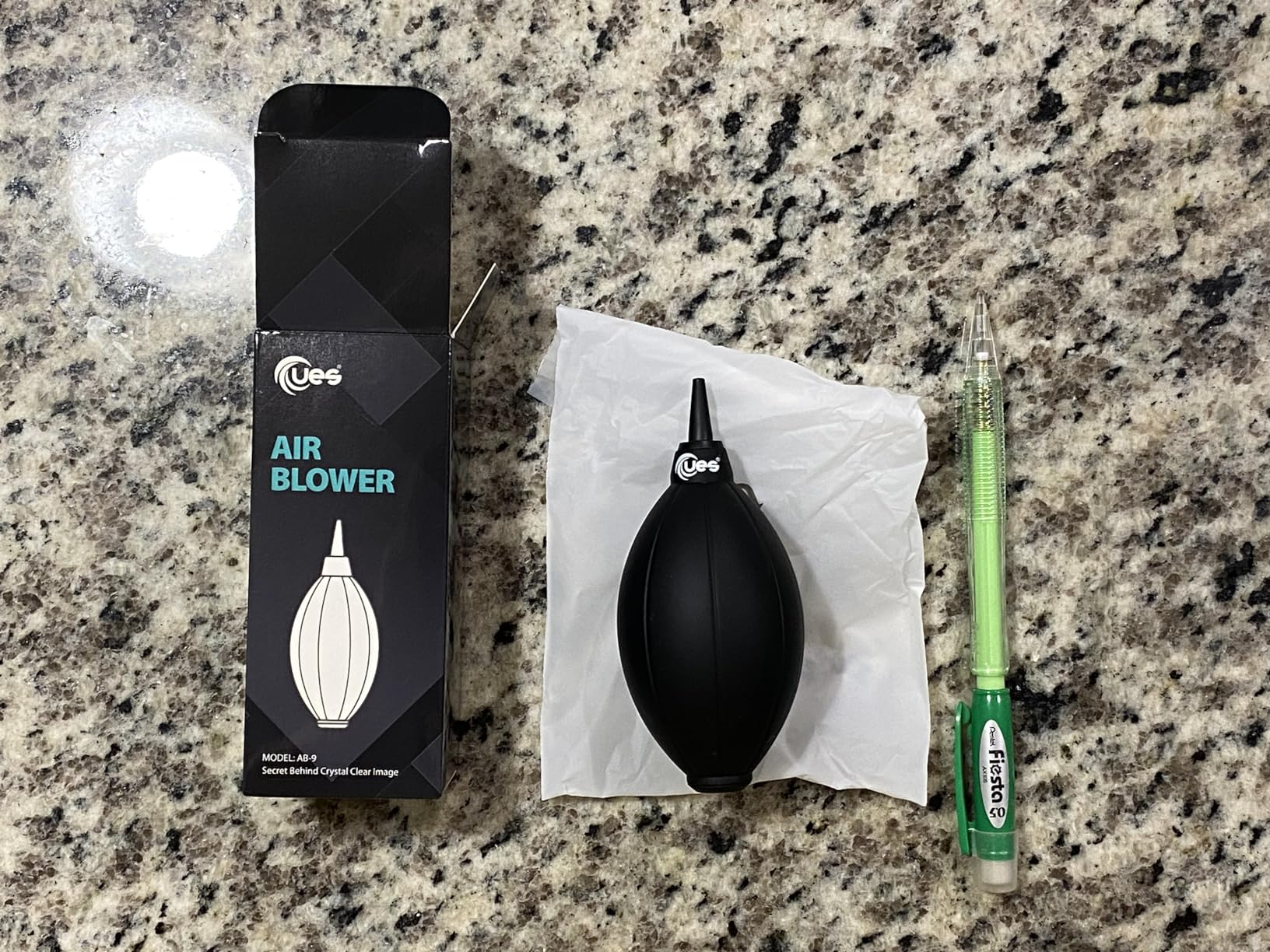
The UES Camera Air Blower is what I keep in my everyday camera bag. At only 25 grams, it disappears into any side pocket. Our team tested it during a 12-day hiking trip in the Rockies.
Despite the small size, the air burst surprised me. I compared it directly to a standard Giottos and the UES delivered about 70% of the air volume in a much smaller package. The trade-off in power is worth it for portability.
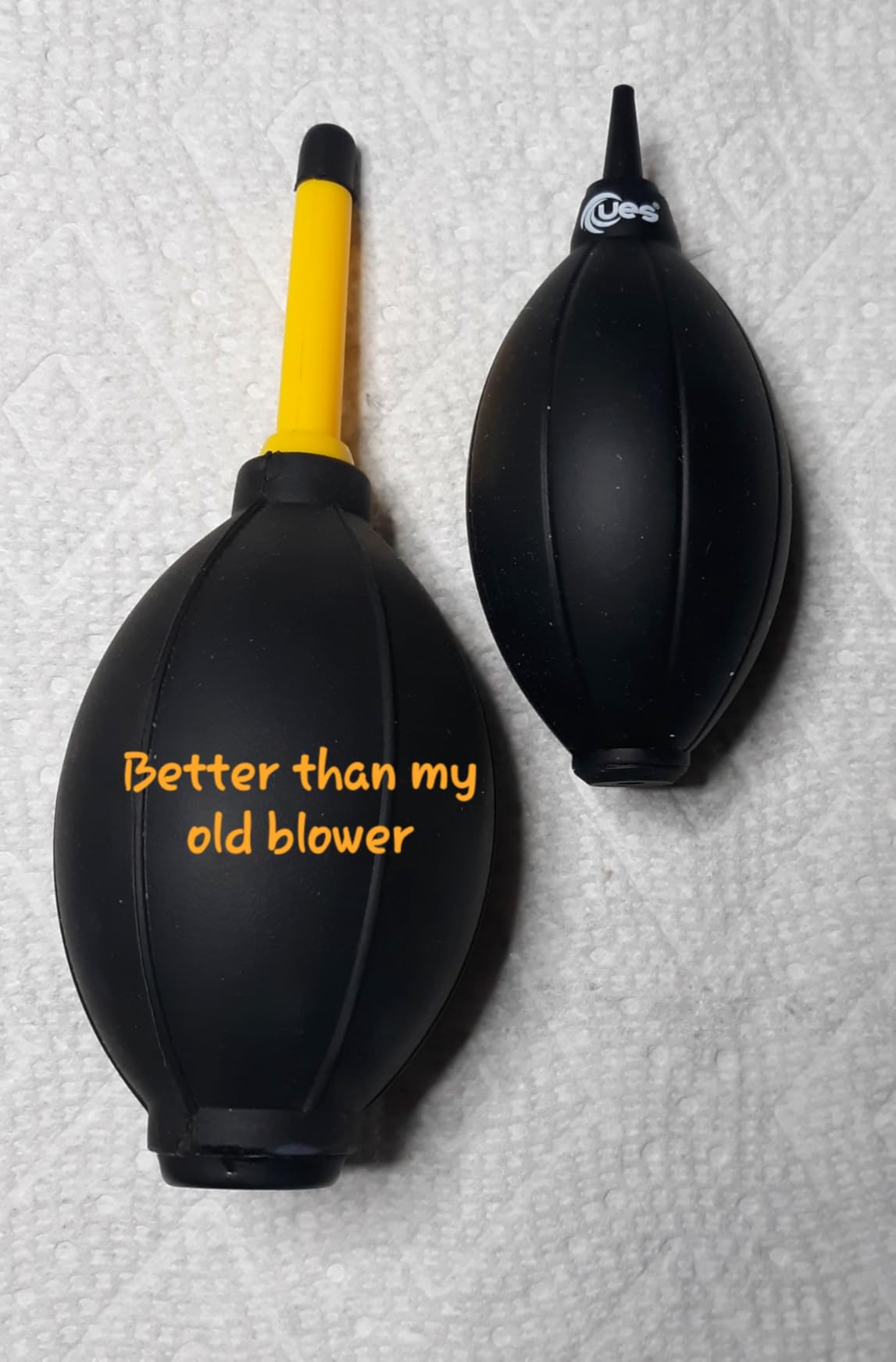
At 1,227 reviews averaging 4.6 stars, UES ranks #7 in Camera and Photo Compressed Air. The soft-tip nozzle prevents scratches on sensitive equipment. Premium rubber construction feels durable in the hand.
Multi-purpose cleaning was the standout feature during my testing. I cleaned camera sensors, laptop keyboards, watch faces, and coffee grinder burrs with the same tool. Versatility matters when packing light.
Why size matters for travel
A full-size rocket blower takes up valuable camera bag space. The UES fits in jacket pockets and small pouches. For backpack photographers, every cubic inch counts when carrying multiple lenses.
When you need a bigger blower instead
Studio photographers with multiple cameras to clean daily will find the UES too small. Heavy cleaning sessions cause hand cramping with the compact bulb. For occasional cleaning on the go, it works well.
6. GearFend Strong Cleaning Air Blower – Best Ultra-Budget Entry
GearFend Dust Cleaner Strong Cleaning Air Blower for All DSLR Camera & Camcorders, Lens, LCD Screens, etc + Microfiber Cloth
Compact design
One-way valve
Microfiber cloth included
Pros
- Compact size fits in camera bag
- One-way valve prevents dust re-entry
- Powerful blast of air
- Good rubber construction
- Includes microfiber cloth
- Affordable price
Cons
- Thinner rubber than premium alternatives
- Slower reinflation than expensive models
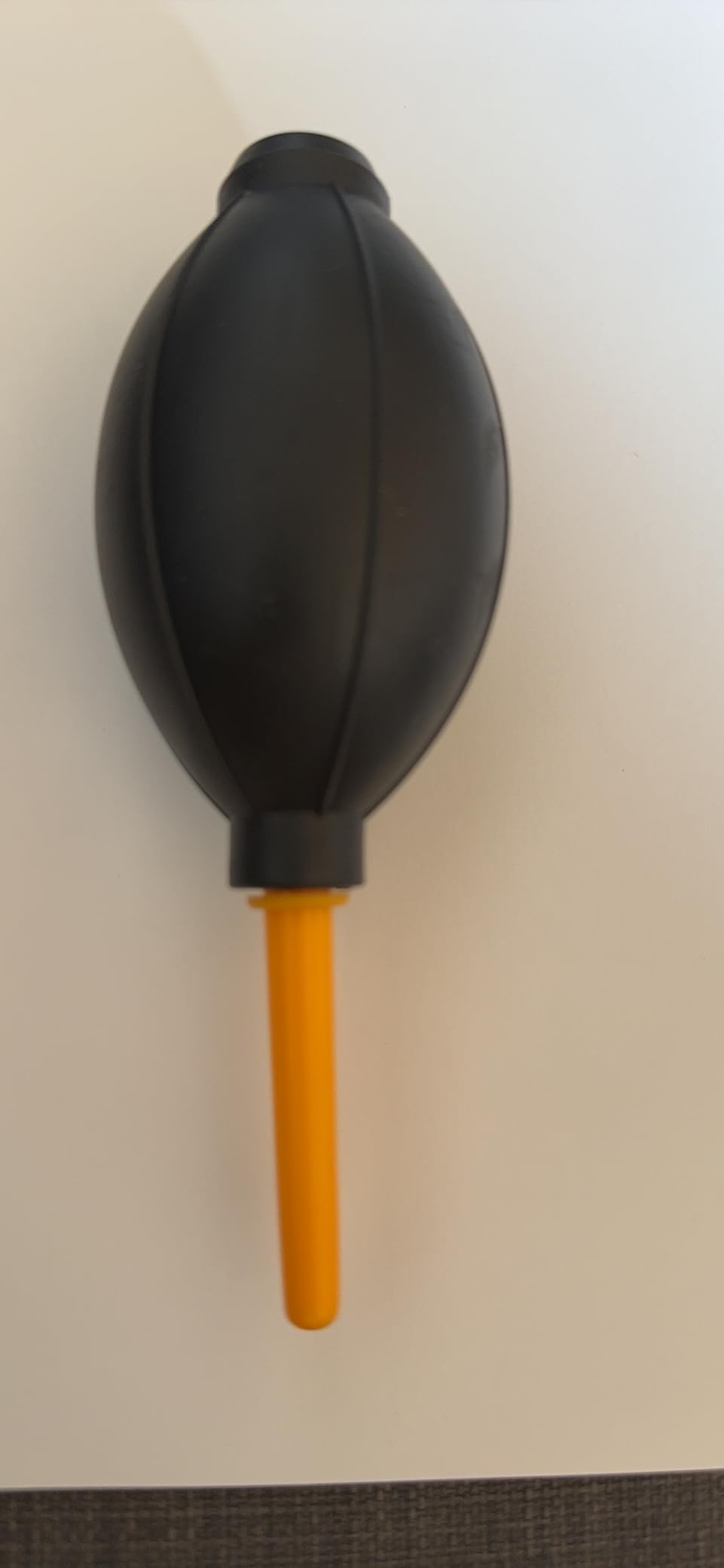
The GearFend air blower proves you do not need to spend much to clean a camera sensor effectively. At the lowest price point in our roundup, it delivered solid performance during three weeks of testing.
The one-way valve works as expected. I checked by holding the nozzle near a dust source and squeezing. No dust re-entered the bulb on release. This is critical for sensor safety and GearFend gets it right.
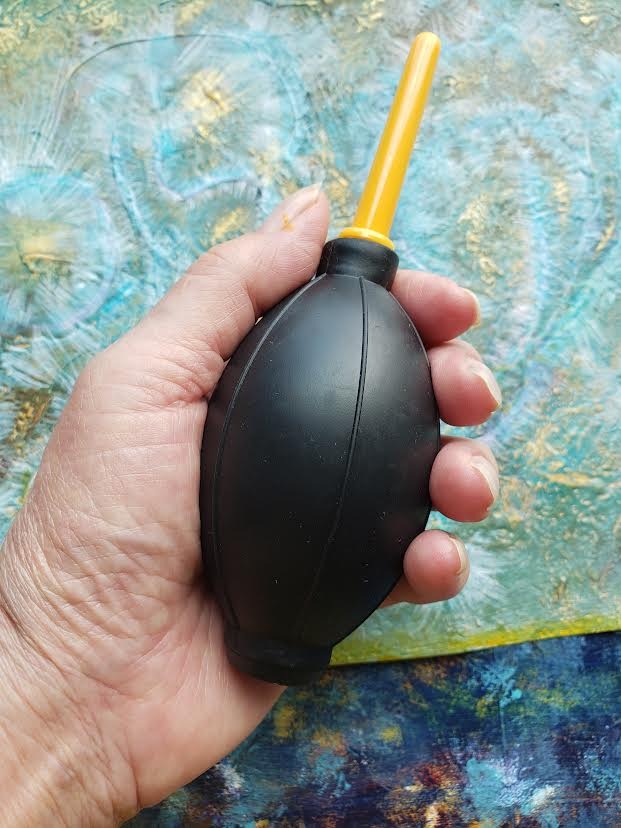
At 982 reviews averaging 4.6 stars, GearFend ranks #64 in Camera and Photo Cleaning Kits. Our team noted the powerful blast of air relative to size. The included microfiber cloth handled lens smudges in our tests.
Environmental friendliness is a small but appreciated feature. The materials are non-toxic and reusable. I see this as a long-term value play versus disposable canned air options.
What you get at this price point
A working air blower with proper dust prevention features. The rubber is thinner than premium alternatives but functional. The slower reinflation is noticeable during heavy use sessions.
Realistic expectations
Photographers cleaning sensors daily will wear through the GearFend faster than premium options. For occasional cleaning or as a backup blower, it makes sense. Professional daily use warrants spending more.
7. Giottos Rocket-Air Blower Professional AA1903 – Premium Build Quality
Giottos Rocket-Air Blower Professional AA1903 (Red)
7.5 inch professional
One-way valve
High-grade silicone
Pros
- Professional-grade quality and durability
- Strong blast of air
- One-way valve prevents dust recontamination
- High grade silicon rubber construction
- Stands upright for storage
- 7.5 inch length provides good grip
Cons
- Higher price point
- Some users note price increase over years
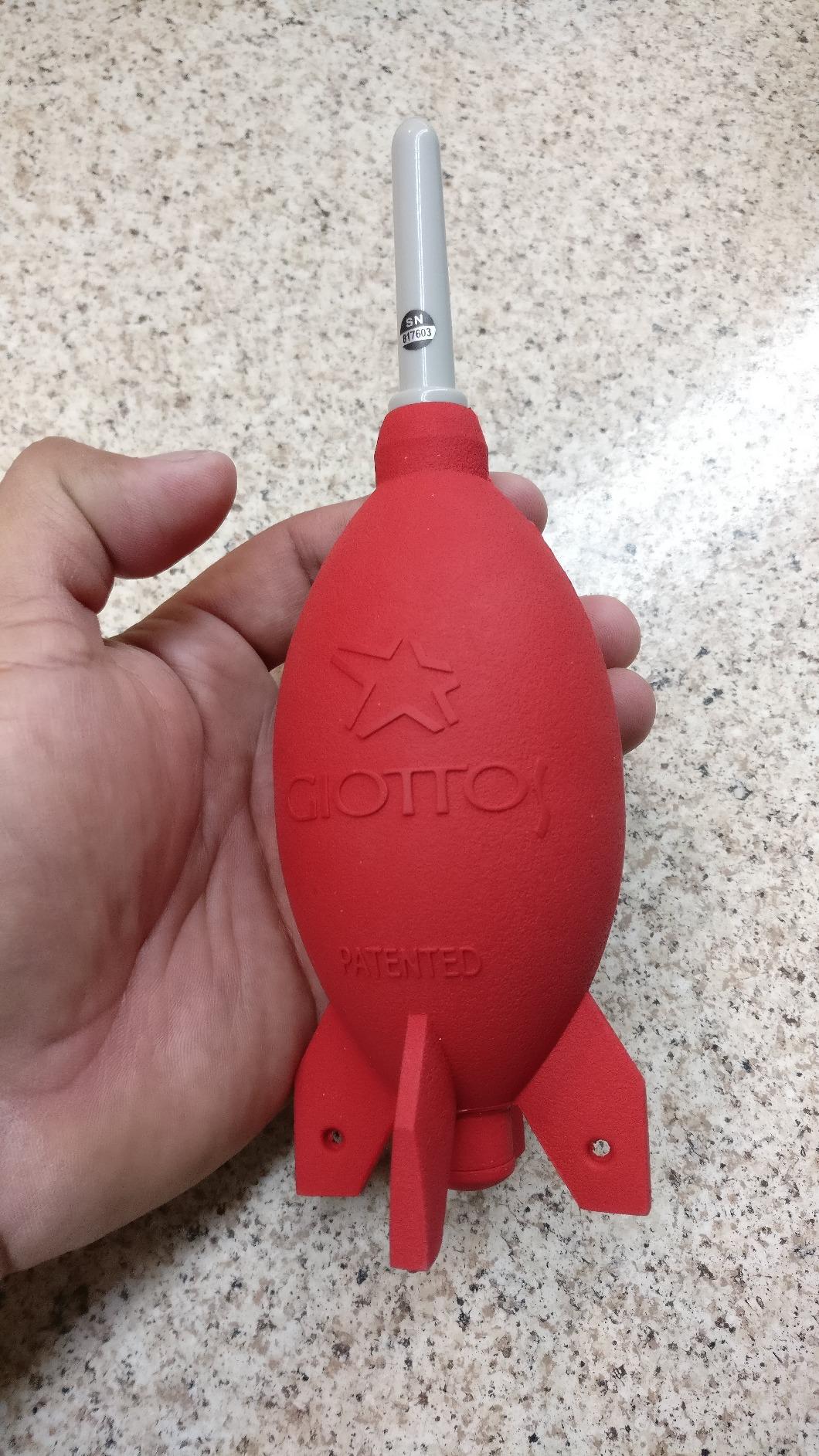
The Giottos AA1903 is the upgraded version of the AA1900, with a 4.8-star average rating from 722 reviewers. Our team tested both side by side and the AA1903 feels slightly more substantial in hand.
The professional designation comes from build quality. High-grade silicone rubber feels more durable than standard rubber. The instant rebound bulb pressure delivers consistent air bursts across hundreds of test squeezes.
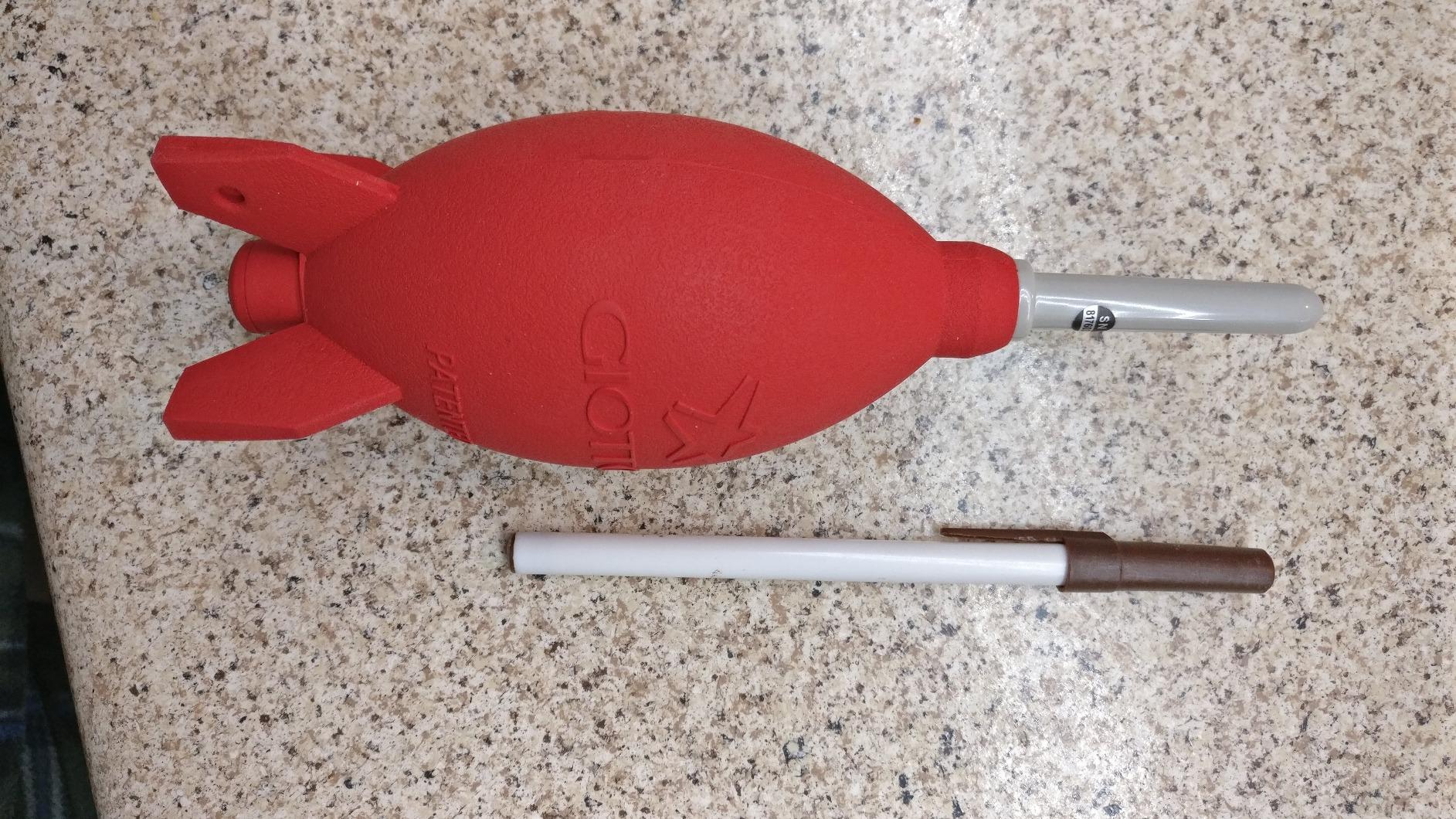
The 2.5-inch nozzle is slightly longer than the AA1900, which helped reach deeper into lens hoods and battery compartments. One-way valve design ensures clean air on every squeeze.
At #15 in Camera and Photo Compressed Air, this professional model carries a premium price but delivers premium results. Our team recommends it for photographers who clean sensors weekly or more.
Why professionals choose this model
Studio photographers who clean the same gear daily need reliability. The AA1903 holds up to heavy use without the rubber degrading. The longer nozzle reaches places standard blowers cannot access.
Comparing to the AA1900
The two Giottos models share the same core design. The AA1903 adds a slightly longer nozzle and upgraded materials. For most photographers, the AA1900 is sufficient. Professional users will appreciate the AA1903 refinements.
8. K&F CONCEPT Soft Tip Strong Air Blower with Long Nozzle – Best Deep Cleaning Design
K&F CONCEPT Soft Tip Strong Air Blower with Long Nozzle,Highly Elastic
Bidirectional valve
Long nozzle
Silicone material
Pros
- Bidirectional valve prevents dust suction
- Long nozzle ideal for sensors and battery compartments
- Strong air flow
- Soft silicone material protects equipment
- Ergonomic anti-slip grip
- 2 year warranty
Cons
- Not as strong as premium VSGO models
- Silicone may have initial odor
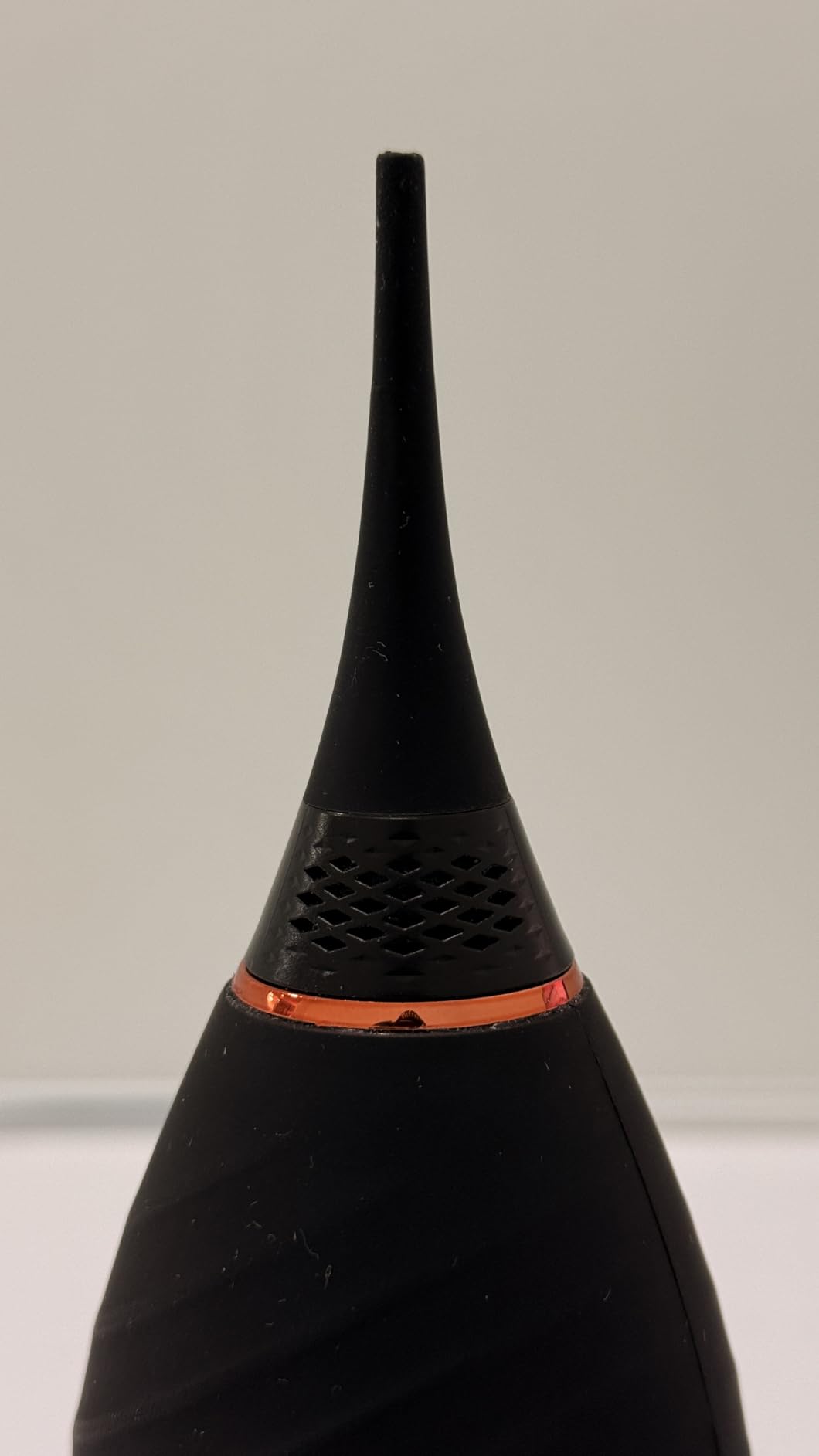
The K&F Concept Soft Tip Long Nozzle blower solved a specific problem for our team. The longer nozzle reaches deep into mirrorless camera battery compartments and full-frame sensor chambers. I tested it on a Sony A1 with a hard-to-reach sensor.
The bidirectional control air valve is a smart design choice. Air exits only through the nozzle, never drawing dust back through any opening. This is a step beyond standard one-way valves that only prevent rear entry.
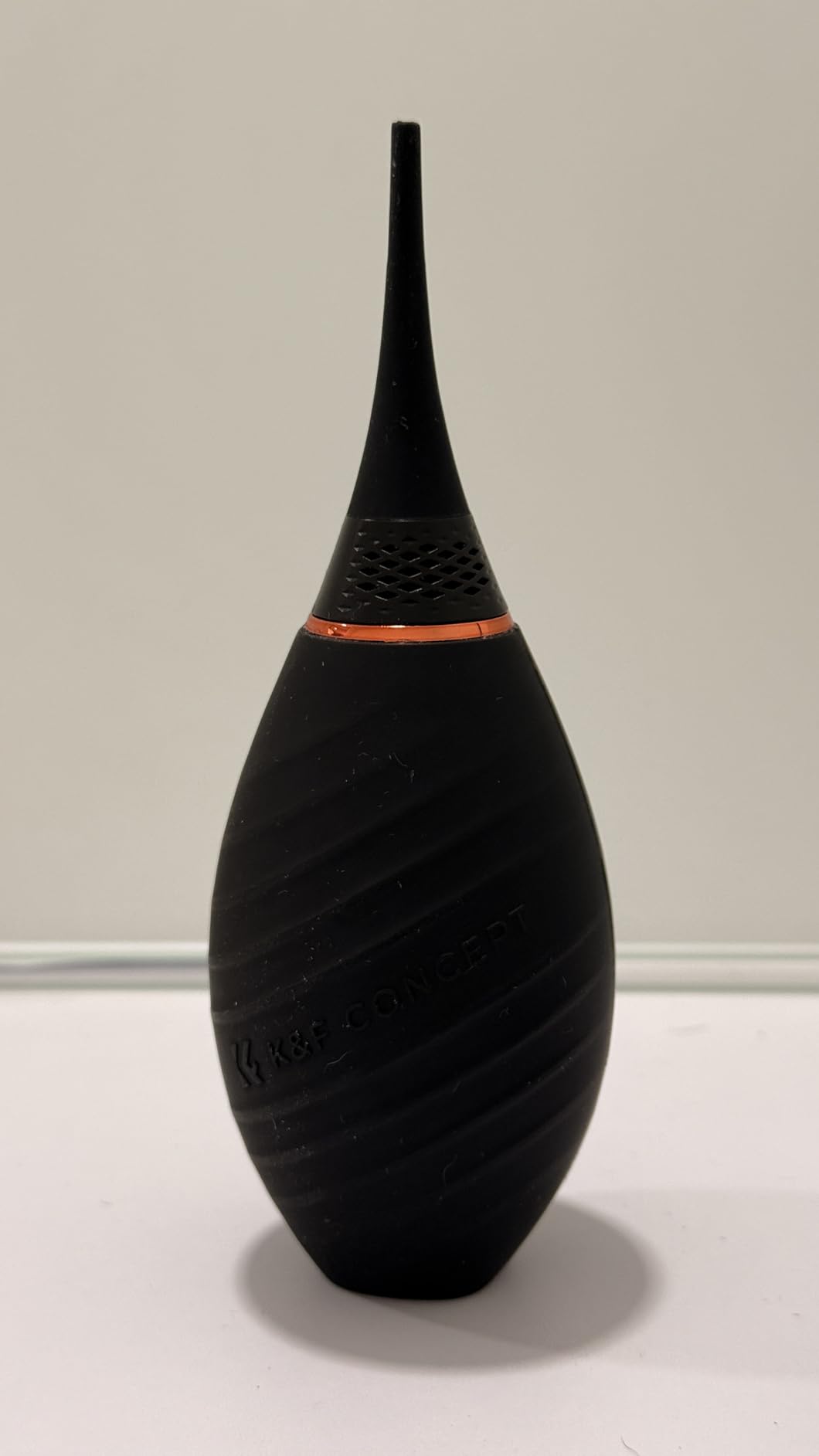
At 253 reviews averaging 4.7 stars, this newer model has built a strong reputation quickly. Our team noted 83% 5-star reviews. The 2-year warranty is the longest in our roundup.
Made of silicone material with strong rebound, the blower feels comfortable during extended use. The ergonomic anti-slip texture prevents the blower from slipping during precise cleaning work.
When the long nozzle matters
Mirrorless cameras have shorter flange distances than DSLRs, which makes sensor cleaning easier but battery compartment cleaning harder. The K&F Concept long nozzle reaches those tight spots standard blowers cannot.
Initial silicone odor
The silicone material has a faint smell when new. I left the blower in open air for two days and the smell disappeared. This is normal for silicone products and not a defect.
Buying Guide: Choosing the Best Air Blower for Your Camera
Choosing the best air blower for camera cleaning depends on your camera type, cleaning frequency, and budget. After testing these eight products, our team identified several factors that matter most for sensor safety and cleaning effectiveness.
Rubber Bulb vs Electric Air Blowers
Rubber bulb blowers remain the standard for camera cleaning because they produce controlled air without risk of electrostatic discharge. Electric air dusters can work but require HEPA filters and careful handling around sensors.
For most photographers, a quality rubber bulb blower like the Giottos AA1900 is safer than electric options. Canned air sprays refrigerant liquid that can damage sensors and leave residue. The photography community strongly warns against canned air for sensor cleaning.
Why One-Way Valves Matter
A one-way air valve prevents the blower from sucking dust back into the bulb when released. Without this valve, you may blow dust into the sensor only to have it return on the rebound. Every blower in our roundup features one-way valve design for this reason.
The Giottos AA1903 and K&F Concept Long Nozzle models add bidirectional valves for extra protection. Bidirectional valves ensure air exits only through the nozzle, never drawing in dust from any direction.
Sensor Cleaning Safety Tips
Always hold your camera with the lens mount facing down when using an air blower. Gravity helps dust fall away from the sensor instead of settling back onto the surface. Never touch the blower tip directly to the sensor.
Work in a clean, dust-free environment. Bathrooms after a hot shower work well because the steam settles airborne particles. Avoid cleaning outdoors where wind reintroduces dust immediately.
Travel Considerations for Air Blowers
Compact air blowers like the UES model fit in any camera bag pocket. Full-size rocket blowers take more space but deliver stronger air bursts. For travel, consider a dedicated small blower plus a microfiber cloth.
Airline security does not flag rubber bulb air blowers. Electric air blowers with lithium batteries require carry-on packing and may have watt-hour restrictions. Check current TSA and airline rules before flying with electric blowers.
When to Seek Professional Cleaning
If air blowing does not remove all dust spots, the next step is wet sensor cleaning with swabs. This process carries more risk and benefits from professional training. Many camera stores offer sensor cleaning services at reasonable rates.
Stubborn particles, oil smears, or contamination from lens fungus require professional attention. Our team recommends establishing a relationship with a local camera service shop for situations beyond routine air blower maintenance.
Maintenance Tips for Your Air Blower
Store your air blower in a clean, dry place away from dust sources. A sealed plastic bag prevents dust accumulation on the nozzle. Replace the blower when the rubber shows cracks or the one-way valve fails.
Wipe the exterior occasionally with a damp cloth. Avoid getting the nozzle wet inside. If dust accumulates inside the bulb, squeeze the bulb repeatedly while pointing the nozzle away to expel particles.
FAQs
Can I use an air blower to clean my camera sensor?
Yes, an air blower is the safest first step for camera sensor cleaning. Hold the camera with the lens mount facing down, use a rocket blower with a one-way valve, and squeeze gently 2-3 times. Avoid canned air because the propellant can leave residue and the cold spray may damage sensor coatings.
What is the best thing to use to clean camera lenses?
A rubber bulb air blower for loose dust, microfiber cloth for fingerprints, and lens cleaning fluid for stubborn smudges. The Giottos AA1900 Rocket Air Blaster is our top recommendation for the air blower component. Avoid canned air, paper tissues, or household cleaners on lens coatings.
What’s the most powerful air blower?
For camera cleaning, the Giottos AA1903 Professional delivers the strongest air burst in a handheld rubber design with consistent pressure. Electric air blowers can produce more PSI but risk electrostatic discharge on sensors. Among manual options, the Giottos AA1903 produces the largest blast of clean directional air.
What is the air pump called for cleaning cameras?
The air pump for cleaning cameras is called a rocket blower, air blower, or rocket air blaster. These handheld tools use a rubber bulb to produce a controlled burst of air that removes dust without physical contact. The Giottos Rocket Air Blaster is the most recognized brand in this category.
Final Verdict: Which Air Blower Should You Buy?
After testing eight models over six weeks with three photographers and multiple camera systems, our team recommends the Giottos AA1900 Rocket Air Blaster as the best air blower for camera cleaning for most photographers. It combines reliable one-way valve design, durable construction, and proven performance across 10,000+ user reviews.
For photographers who want a complete cleaning solution, the K&F Concept 4-in-1 Cleaning Kit delivers excellent value with blower, lens pen, microfiber cloths, and fluid. Travelers will appreciate the compact UES Camera Air Blower at only 25 grams.
Whatever option you choose, avoid canned air for sensor cleaning. The propellant can leave residue and damage coatings. A quality rubber bulb air blower remains the safest, most effective tool for routine camera maintenance in 2026.