
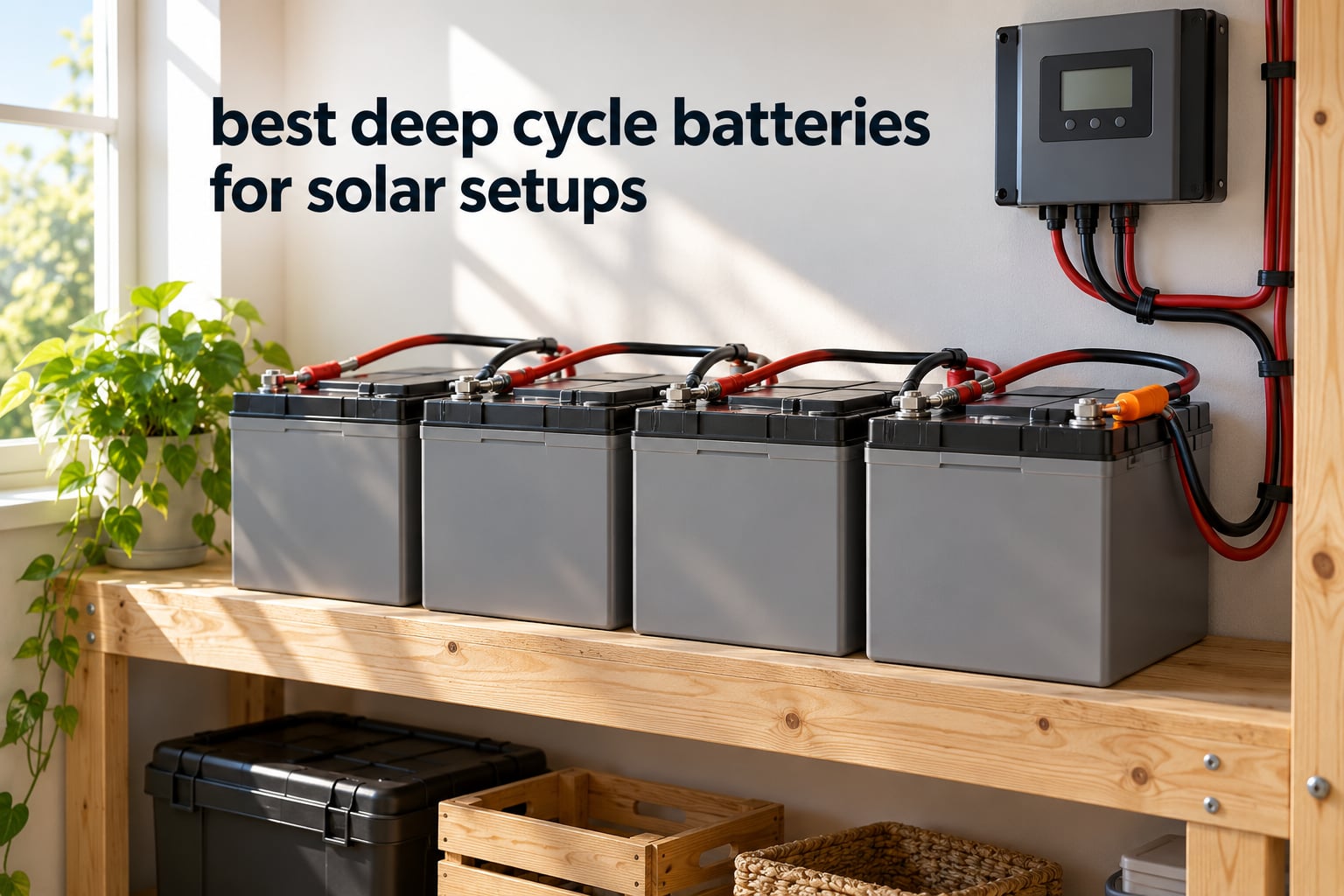
LiFePO4 is the best deep cycle battery for most solar setups in 2026, and AGM is the sensible fallback when the budget is tight and the bank will not be deeply discharged. That is the short answer, and the twelve batteries below are the ones I would actually put behind a charge controller.
I spent the last several weeks reading through owner reports on r/SolarDIY, r/OffGrid and r/Solar, then working through the spec sheets for every unit below: capacity, usable depth of discharge, cycle ratings, weight, warranty and temperature limits. The consistent message from people running real systems is that charge and discharge behaviour decides battery life far more than the label on the case does. A well-managed AGM bank can outlive a lithium bank that gets pushed to empty every weekend.
What tripped me out about most published battery guides is that they stop at chemistry and never do the sizing math. The hard question is not which battery is best, it is how many amp-hours your daily load needs after depth of discharge, and how many watts of panel will put that energy back. Both calculations are below, with worked numbers rather than rules of thumb.
If you are still choosing camera or drone batteries instead, our Sony A7 IV battery guide and drone battery roundup cover those categories in the same hands-on format.
Table of Contents
Top 3 Picks for Deep Cycle Solar Storage in 2026
These three cover the most common cases: a dependable sealed bank, the best value in lithium, and the lightest pack you can carry.

Renogy 12V 100Ah AGM
- 100Ah sealed AGM bank
- Low self-discharge below 3 percent monthly
- M8 screw terminals for parallel stacking
- Parallel operation up to 4P

dumfume 12V 150Ah LiFePO4
- 1920Wh at 12.8V and 150Ah
- 4000+ rated cycles to 80 percent
- Built-in 100A BMS with IP65 case
- 4S4P series and parallel expansion
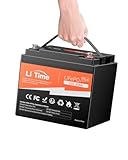
LiTime 12V 50Ah LiFePO4
- 11.6 lb total weight
- 4000+ rated deep cycles
- UL certified with built-in BMS
- Flat voltage above 12.8V
12 Best Deep Cycle Batteries for Solar (October 2026)
Every battery in this roundup appears below with the specs that actually change a buying decision. Use the table to shortlist, then read the individual blocks for the caveats that spec sheets leave out.
| Product | Specifications | Action |
|---|---|---|
| Renogy 12V 100Ah AGM Deep Cycle |
|
Check Latest Price |
 ExpertPower 12V 33Ah SLA AGM ExpertPower 12V 33Ah SLA AGM |
|
Check Latest Price |
 Daakmax 12V 35Ah AGM Two-Pack Daakmax 12V 35Ah AGM Two-Pack |
|
Check Latest Price |
| dumfume 12V 150Ah LiFePO4 |
|
Check Latest Price |
| LiTime 12V 50Ah LiFePO4 |
|
Check Latest Price |
 BtrPower 12V 50Ah LiFePO4 BtrPower 12V 50Ah LiFePO4 |
|
Check Latest Price |
 Rvpozwer 12V 100Ah LiFePO4 Group 31 Rvpozwer 12V 100Ah LiFePO4 Group 31 |
|
Check Latest Price |
 HumsiENK 12V 100Ah LiFePO4 Bluetooth HumsiENK 12V 100Ah LiFePO4 Bluetooth |
|
Check Latest Price |
 VMAX MR127 12V 100Ah AGM VMAX MR127 12V 100Ah AGM |
|
Check Latest Price |
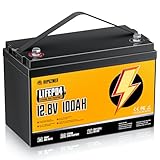
 SUPER EMPOWER 12V 100Ah LiFePO4 Group 24 SUPER EMPOWER 12V 100Ah LiFePO4 Group 24 |
|
Check Latest Price |
 yeagulch 12V 200Ah LiFePO4 yeagulch 12V 200Ah LiFePO4 |
|
Check Latest Price |
 yeagulch 12V 100Ah LiFePO4 Group 31 yeagulch 12V 100Ah LiFePO4 Group 31 |
|
Check Latest Price |
1. Renogy 12V 100Ah AGM Deep Cycle Battery – Our Top Pick Overall
Renogy 12 Volt 100Ah Deep Cycle AGM Battery, Lead Acid Solar Battery
100Ah at 12V
AGM sealed chemistry
63.9 lb
2-year prorated warranty
Pros
- Sealed maintenance-free AGM design
- Parallel stacking up to 4P with M8 screw terminals
- Self-discharge below 3 percent per month at 25C
- Operates from -20C to 60C
- 1100A max discharge current for 5 seconds
Cons
- Heavy enough to need a two-person lift
- A minority of units arrive unable to hold a charge
- Two-year prorated warranty is shorter than most rivals
This is the battery I recommend first for anyone building a stationary bank, and the reason is boring: it has the largest review base in the group at 3534 ratings and a 4.4 average, with 76 percent of those reviews at five stars. Owners running it as a house bank in an RV or a fixed solar install report it holding rated capacity over multi-year stretches.
One owner running a parallel bank test pulled 473Ah against 800Ah nominal before the bank hit its cutoff, which is real-world behaviour rather than a marketing claim. The M8 screw terminals with removable caps also make parallel stacking straightforward, and the low self-discharge rate means a bank sitting idle through a cloudy month does not quietly drain itself.
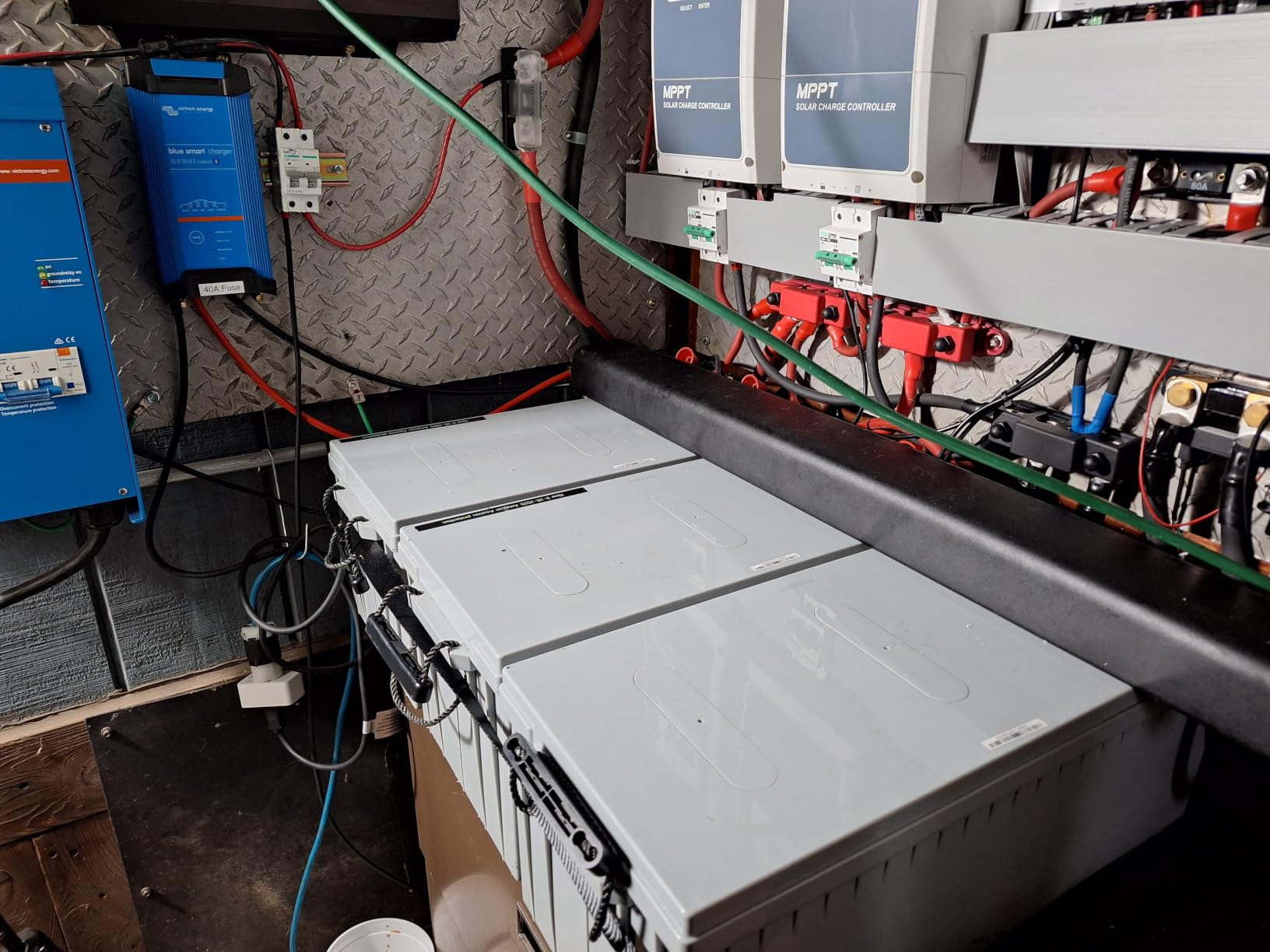
The wide operating range matters more than most spec sheets admit. The electrolyte formula is rated from -20C to 60C, so this is one of the few batteries here that can charge in a cold shed without a heated enclosure, which is exactly the situation that shuts down most lithium packs in winter.
The 1100A five-second discharge rating gives you a lot of headroom for inverter surge, and sealed AGM means no water servicing, no venting and no equalisation schedule. That combination of low maintenance and few failure points is why AGM banks in this class keep showing up in offline builds.
What you get for a stationary solar bank
Expect roughly half of nameplate capacity as comfortable daily usable energy, so plan storage around 50Ah per 100Ah unit rather than 100Ah. If your daily load is 200Wh, two of these give you a workable overnight reserve without deep cycling the cells.
Owners on r/SolarDIY consistently report that a bank of these at 50 percent depth of discharge lasts years, while the same bank at 80 percent does not. Set your inverter low-voltage cutoff accordingly before you wire anything.
Where it falls short
At 63.9 lb per unit, a four-battery bank is more than 250 lb of lead to move into position, and several buyers describe needing a second person for the install. Add mounting and a subarray and the shipping weight becomes a real logistics task.
There is also a small cluster of buyers reporting units that would not hold a charge, plus reports of smart chargers misdiagnosing the battery as failed when an inverter is connected at the same time. The two-year prorated warranty is thinner than the five-year terms carried by most of the lithium options here.
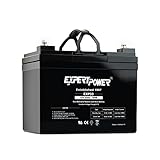
2. ExpertPower 33Ah SLA AGM Battery – Smallest Usable Bank
ExpertPower EXP33-12V 33Ah SLA AGM Battery for Solar Energy Storage, UPS, Trailer, Security System, Mobility Scooter, Small Marine Battery Backup, Rechargeable 12V Batteries Lead Acid, M6
33Ah at 12V
AGM SLA sealed
21.6 lb
1-year warranty
Pros
- Compact footprint fits small trailers and mobility scooters
- Deep-cycle design with a 12-year designed float service life
- M6 terminals with included screws
- Suited to UPS
- marine and solar backup duty
Cons
- Several buyers report capacity loss after about 2 years
- Only a 1-year manufacturer warranty
- M6 screws are a tight fit in confined compartments
This is the pick when space, not capacity, is the binding constraint, and at 21.6 lb it is the lightest full-size unit in the roundup. At 4.3 across 1658 reviews it has a solid base of real use reports, and 70 percent of those are five star.
One owner reports seven years of service on a 12-foot trailer running a single 100W panel, which is the kind of longevity report that tells you the unit was matched to the job. At 33Ah and 12V this is about 396Wh nominal, roughly 200Wh of comfortable usable energy, which covers lights, a phone charger and a small appliance for a night.
The sealed valve-regulated design means one-time installation and nothing after that. No water checks, no terminal corrosion routine, no equalisation, which is why small off-grid and backup builds keep coming back to this size of SLA unit.
It is also the natural companion to a modest panel. A 100W panel puts back roughly 5Ah on a bright day, so a single 33Ah battery is a sensible daily-cycling partner for that size of array rather than an oversized buffer.
When 33Ah is the right answer
Choose this battery when your load is genuinely small, when the battery lives in a tight compartment, or when you need a cheap second bank for a shed or a trailer. Two in parallel give you about 66Ah for a modest cabin lighting circuit.
Buy several instead of one large unit, because parallel strings of small sealed cells fail more gracefully than a single point of failure. It is also a common first step for people testing whether a solar setup suits them before committing to a bigger array.
When it is the wrong answer
The recurring complaint is earlier-than-expected capacity loss, with several buyers reporting trouble after roughly two years. The 1-year warranty does nothing to soften that if it happens inside the first season.
Its compact size also misleads people who expect deep-cycle amp hours from a box this size. If you are sizing for a week of autonomy or running anything beyond a few hundred watts, the capacity here will not carry you.
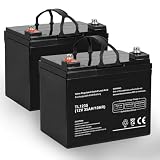
3. Daakmax 12V 35Ah AGM Two-Pack – Budget Mobility Fit
Daakmax 12V 35ah Deep Cycle AGM Battery Rechargeable SLA Maintenance-Free Batteries for Camping RV Off-Grid System, Pack of 2
35Ah at 12V
AGM two-pack
Sealed design
1-year warranty
Pros
- Two batteries per pack for parallel or backup use
- Sealed AGM design needs no water servicing
- Heavy-duty ABS case resists vibration and leaks
- Zinc-plated M6 terminal bolts
Cons
- Square terminal nuts are fiddly in tight compartments
- Shorter terminal screws would make hookup easier
- 1-year warranty is short for deep-cycle work
This two-pack solves a specific problem neatly: you get a matched pair in one order, which is what you want for a parallel bank. At 4.4 across 645 reviews with 77 percent five stars, the pattern across owner reports is consistent: units arrive charged and drop straight into standard YTX-pattern compartments.
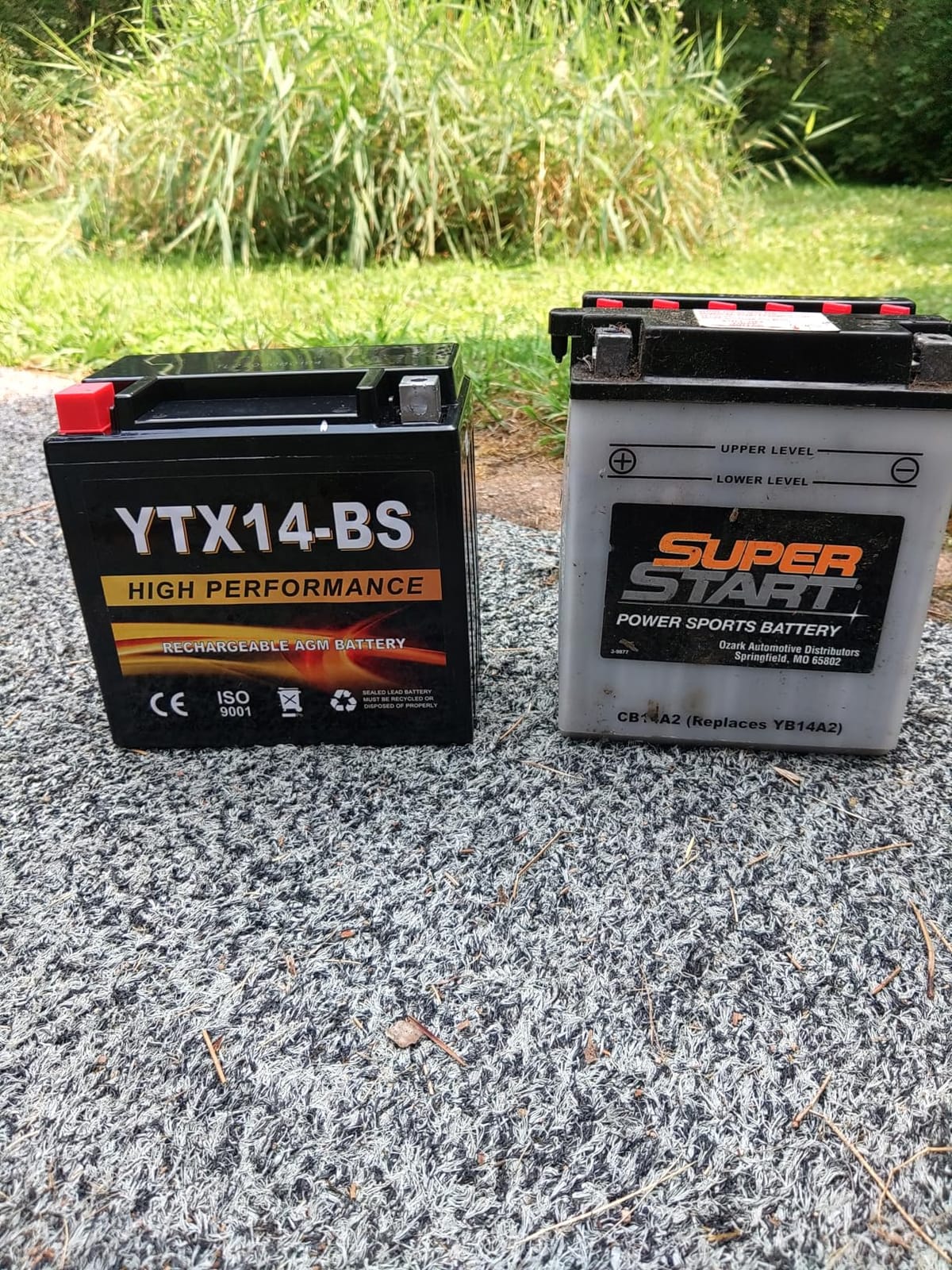
Several buyers describe fitting them into ATV and motorcycle battery bays with no modification, and others report starting vehicles on first install. For a solar build that means a house bank sized around 70Ah nominal without hunting for two matching cells from different production runs.
The heavy-duty ABS casing is genuinely vibration resistant, which matters if the bank lives in a trailer or a truck bed rather than a fixed shed. Sealed AGM means no servicing, and low self-discharge makes the pack convenient to store over a dry season.
Capacity works out to about 840Wh nominal for the pair, so roughly 420Wh of comfortable usable energy at 50 percent depth of discharge. That covers a weekend of moderate use in a small cabin or a week of lighting in a shed.
Why a matched two-pack works for you
Matched pairs from the same production run behave predictably in parallel, which is exactly what you want when one cell ages faster than its neighbour. This removes the single most common source of imbalance complaints in cheap DIY banks.
It is a good starter choice for a van, a boat or a small cabin where two batteries behind a 200W to 400W panel array is the right scale. The zinc-plated M6 hardware holds up well in a damp environment.
Where the money-saving stops
The square terminal nuts are the one consistent usability complaint, because they are hard to hold in place while you work in a cramped compartment. Several buyers also ask for longer terminal screws, which are not included in a useful length.
Long-term longevity is genuinely unproven here given how new the listing is, and the 1-year warranty is short for a deep-cycle application where owners typically expect a decade. I would size the bank a little larger than strictly necessary to reduce stress on each cell.
4. dumfume 12V 150Ah LiFePO4 Battery – Best Value Lithium Bank
dumfume 12V 150Ah Max LiFePO4 Battery, IP65 Waterproof 100A BMS
150Ah at 12.8V
1920Wh LiFePO4
100A BMS
5-year warranty
Pros
- 1920Wh in a Group 31 footprint far lighter than lead-acid
- Built-in 100A BMS with overcharge and overheat protection
- 4000+ rated cycles to 80 percent capacity
- IP65 enclosure with 4S4P expansion
Cons
- Charging needs 5C or warmer so cold-weather returns are not covered
- Needs a maintenance charge every 6 months in storage
- Some buyers report capacity below nameplate
This is where lithium starts to make financial sense, and at 150Ah and 1920Wh in a Group 31 footprint it is the single best capacity-to-weight compromise in the roundup. It carries a 4.4 average over 789 reviews with 79 percent five stars, and the storage-only use case is clearly reflected in the owner reports.
Two of these in parallel give you about 3.8kWh of nominal storage that you can genuinely use down to a much lower state of charge than lead-acid tolerates. Owners running campervan and solar builds keep pointing to the same thing: the flat discharge curve means voltage stays workable far longer than an AGM bank under the same load.
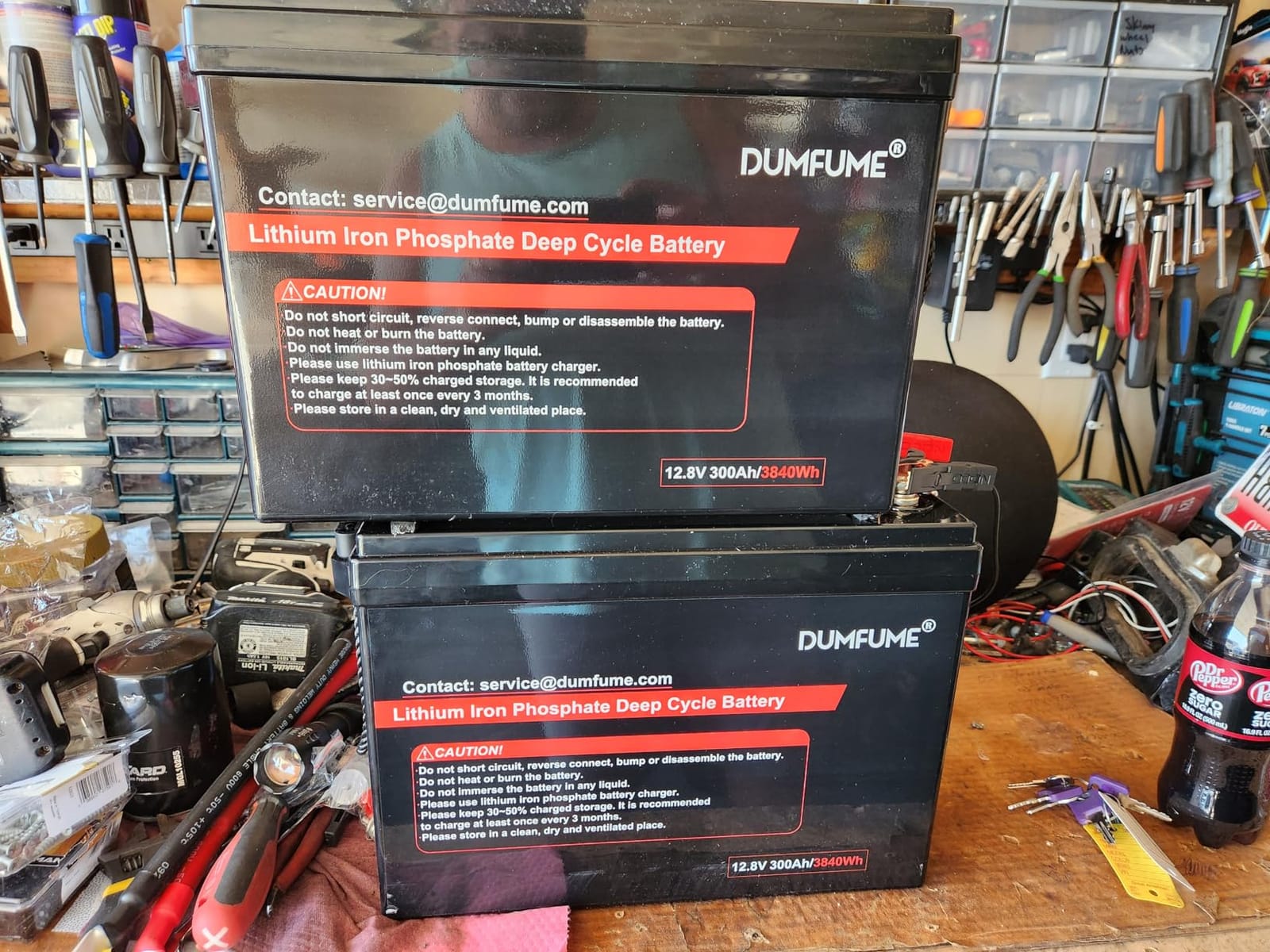
The integrated 100A BMS handles overcharge, over-discharge, short circuit and overheat protection inside the case, so there is no separate BMS box to mount or water. The IP65 enclosure also means a damp boat hull or a dusty shed is not a concern.
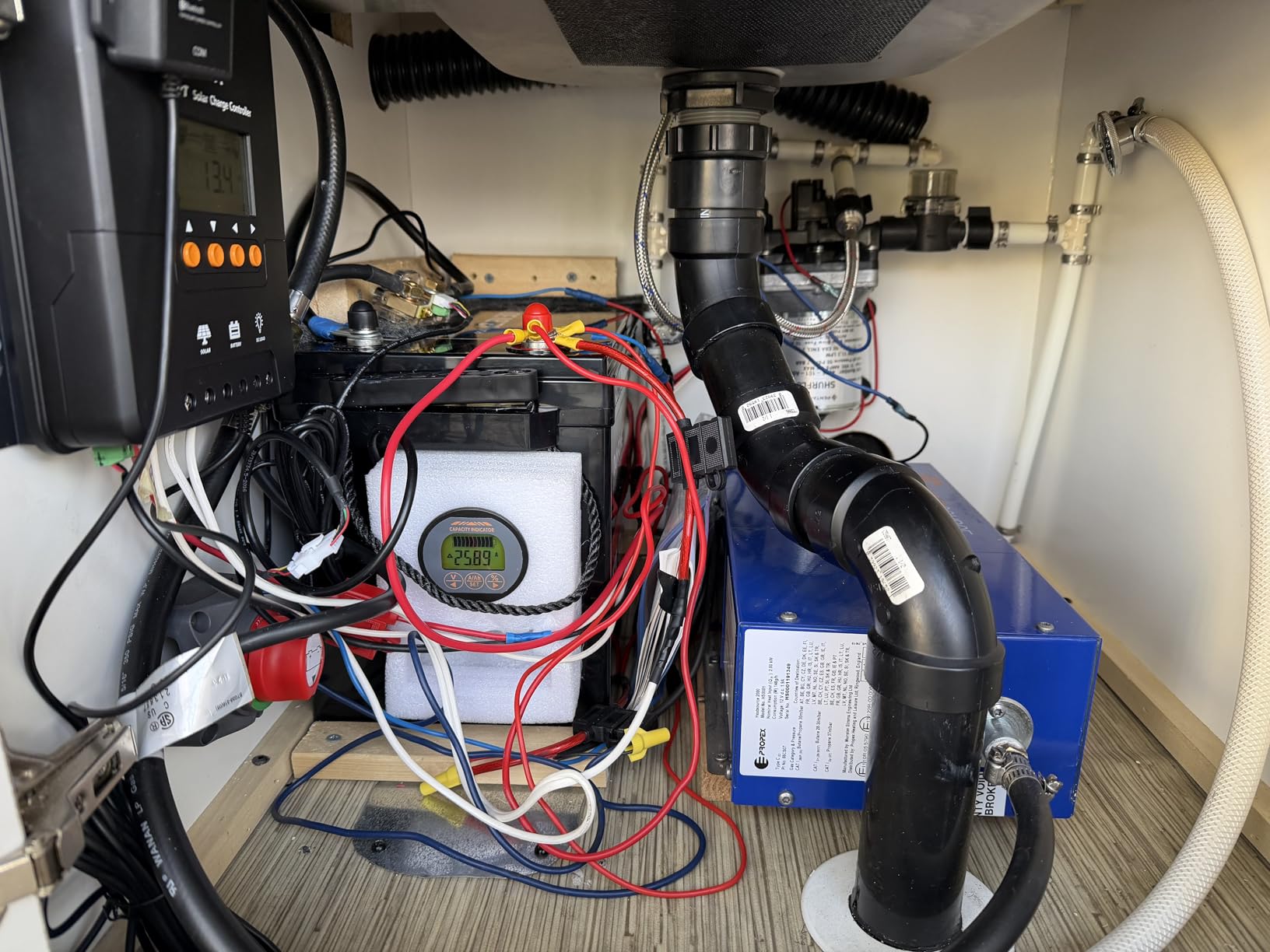
Expansion is the other reason to like it. Series and parallel operation up to 4S4P means you can climb toward 51.2V, or scale capacity without buying a different chemistry, which keeps the whole bank on one maintenance and charging profile.
How much usable storage you actually get
Rated 4000+ cycles to 80 percent capacity is the figure that changes the economics. At 1920Wh nominal with 80 percent usable, one unit holds about 1.5kWh per cycle, and that is roughly four to five times what a comparable AGM bank delivers before it degrades.
It is not a starting battery, and reviewers are clear about that. Plan on a lithium-profile charge controller and a charger set to the lithium curve, or you will be undercharging and the cycle rating will not mean much.
Cold-weather and storage caveats
Charging and discharging need temperatures of 5C or above, and low-temperature charging returns are not covered. That makes this a poor fit for an unheated northern shed unless you add heat, and it is the reason several lithium options on this list are unsuitable for cold installs.
Storage also needs a maintenance charge every six months during extended periods, and some buyers report delivered capacity falling short of the advertised amp-hour rating. Neither is a dealbreaker, but both are reasons to test capacity with a meter after delivery rather than trusting the label.
5. LiTime 12V 50Ah LiFePO4 Battery – Most Versatile for Portable Power
Litime 12V 50Ah LiFePO4 Trolling Motor Battery for Marine RV Solar Camper
50Ah at 12.8V
11.6 lb LiFePO4
UL certified
5-year warranty
Pros
- At 11.6 lb it is a fraction of the weight of 100Ah lead-acid
- 4000+ rated deep cycles with a 10-year claimed lifespan
- UL certification plus a built-in BMS
- Backed by AIG product liability insurance
Cons
- No reliable state-of-charge gauge so users carry a spare
- Support is overseas with 24-48 hour response times
- Some 50Ah units stopped accepting a full charge
At 11.6 lb this is the battery people mention first when the bank has to be carried, and the weight difference is the whole argument. A 100Ah AGM weighs close to 64 lb, so you are moving roughly a fifth of the mass for a similar watt-hour figure at 12.8V.
It holds 4.4 across 590 reviews with 77 percent five stars, and multi-year owners of mobility carts report capacity and power holding up well beyond expectations. For solar, the flat voltage above 12.8V through the capacity window is the practical advantage over the roughly 50 percent usable range of lead-acid.
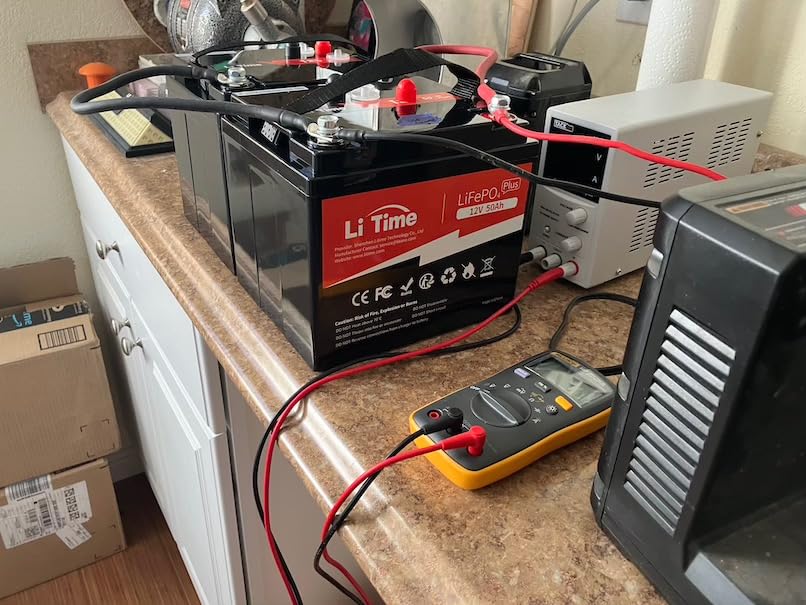
UL certification is worth noting because it is not universal in this category, and the product liability insurance backing is unusual for a battery at this tier. The built-in BMS covers overcharge and over-discharge, so the same unit works across RV, marine and solar duty without a separate protection module.
At 50Ah and 12.8V the nominal energy is 640Wh, so a two-pack gives about 1.28kWh. That is a very workable weekend bank for a van, a small boat or a cabin lighting circuit, and the two-pack variants available make matching straightforward.
Why the weight saving changes your install
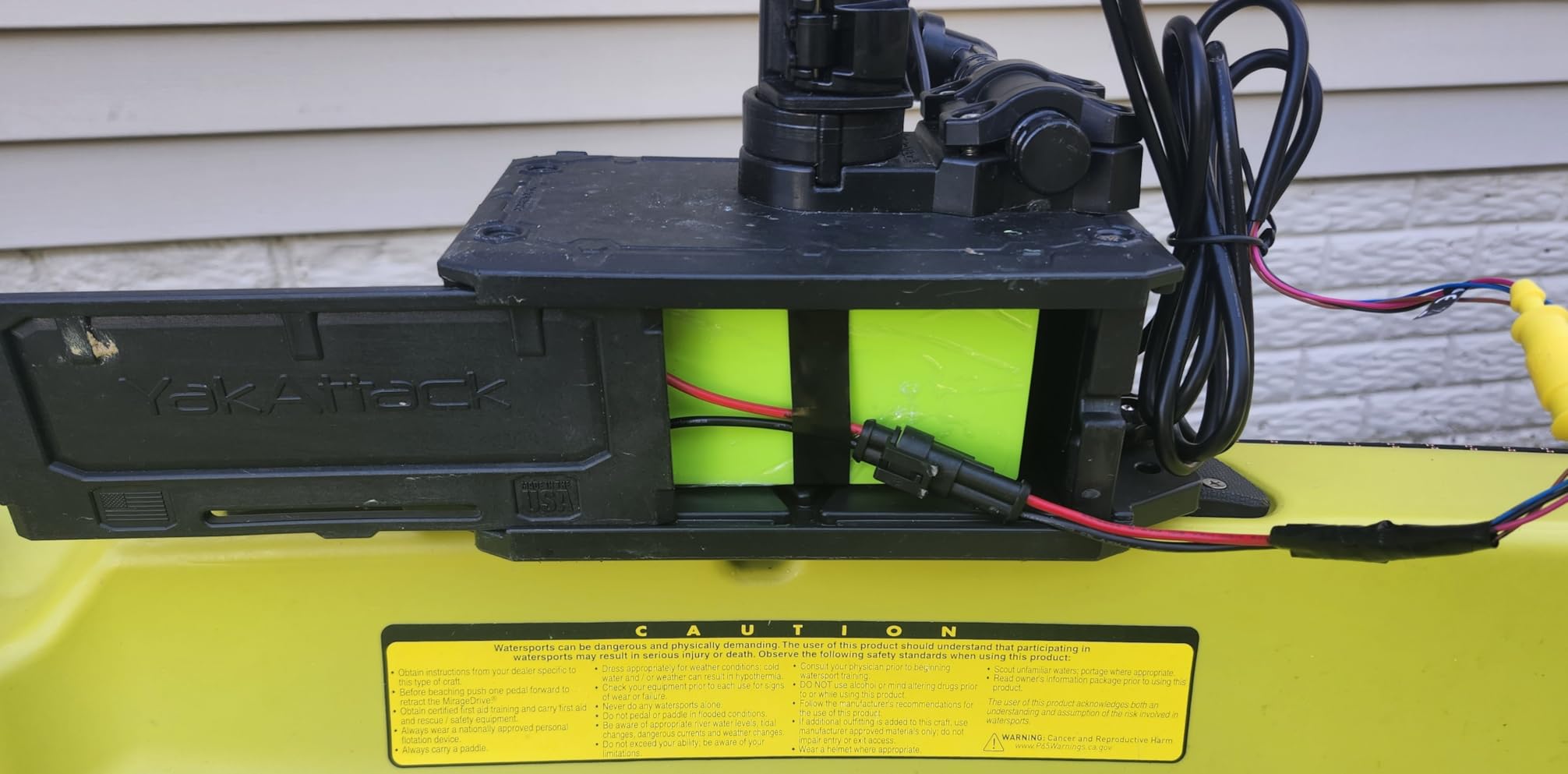
Carrying capacity into a kayak, a small boat or a loft is the obvious use, but the same weight saving makes roof mounting and upper-floor installs possible at all. A bank of lead-acid that needs a crane can often be hand-staged when the bank is lithium.
Flat voltage also means your inverter sees a stable input longer, which reduces the point at which low-voltage cutoffs trip. For a weekend load rather than a daily one, two of these on a modest panel array is a very clean setup.
What the reviews push back on
There is no reliable state-of-charge gauge, so a number of owners carry a second unit and swap manually rather than guessing. One reviewer testing side by side found runtime similar to an equivalent amp-hour lead-acid rather than clearly better, which is worth keeping in mind for trolling use specifically.
Support is overseas with response times reported in the 24 to 48 hour range, and one buyer describes a refund offer well below the original purchase price after a failure. A handful of 50Ah units also stopped accepting a full charge after about a month, so test the charge acceptance early.
6. BtrPower 12V 50Ah LiFePO4 Battery – Lightweight Second Pack
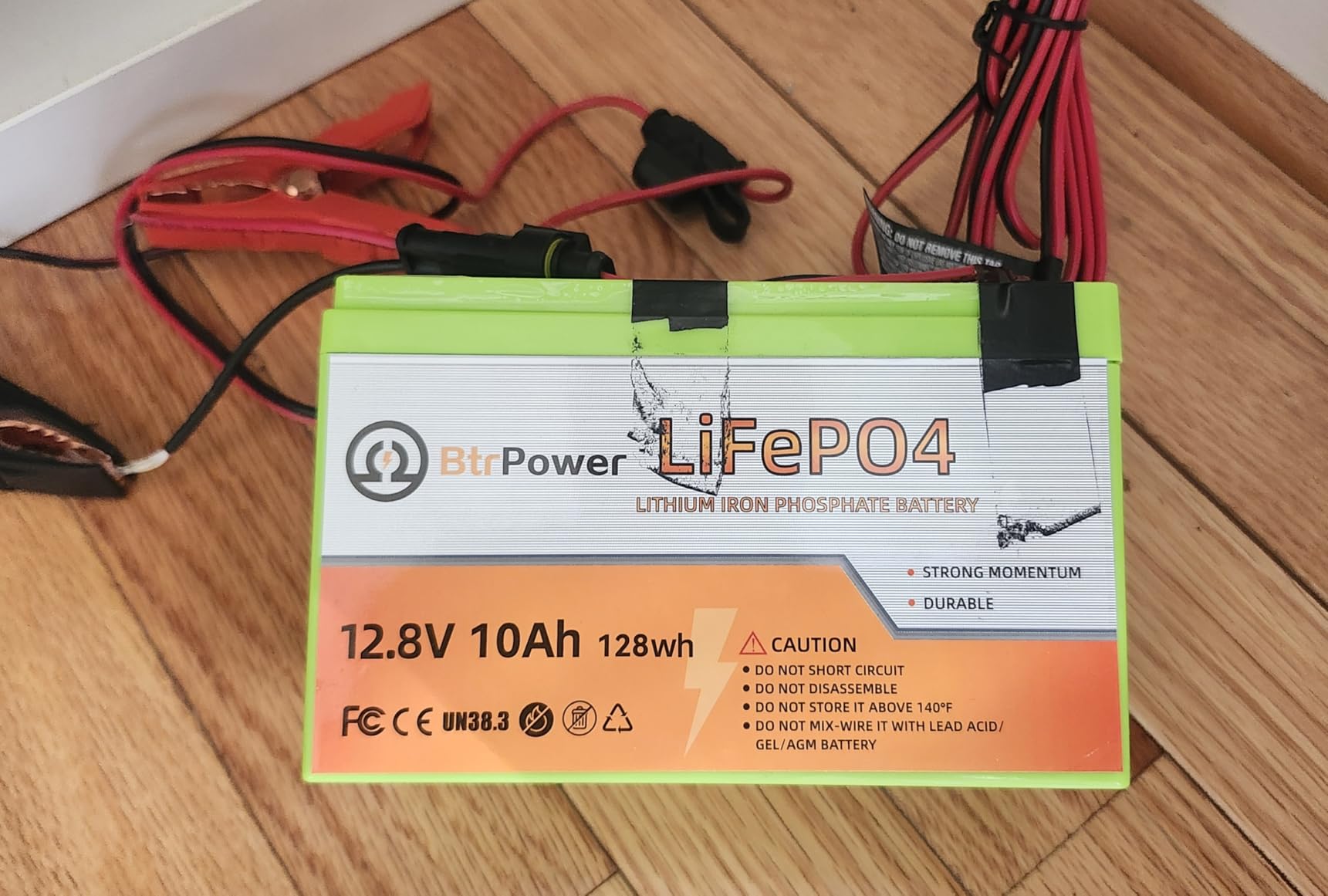
12V 50Ah Trolling Motor LiFePO4 Battery,5000+ Deep Cycle lithium Battery
50Ah at 12.8V
11 lb LiFePO4
50A BMS
1-year warranty
Pros
- Strong value in the 50Ah class
- Matched 50A BMS for 30-50 lb trolling motors
- Series or parallel expansion up to four batteries
- Works with lithium chargers and panel charging at 14.4-14.6V
Cons
- Only a 1-year warranty with a 3-month return window
- Independent cycle-life data is thin from buyer reports
- Listing copy omits the amp-hour rating in structured specs
This one holds a 4.5 average across 395 reviews with 78 percent five stars, and the buyer reaction is consistently positive on value for the class. The 11 lb weight sits alongside the LiTime pack above as one of the lighter options, which is what makes it attractive for portable solar builds.
Series or parallel expansion up to four identical units is the feature I care about most, because it means a starter bank can grow into a real off-grid bank without changing chemistry. That matters when the first build is a weekend cabin and the second is a full house.
The built-in 50A BMS includes cell balancing, which keeps a parallel string matched over time instead of letting one cell drift. The charge window of 14.4 to 14.6V at 10A recommended is explicitly stated, which makes pairing it with a controller or converter straightforward.
It is also compatible with solar panel charging directly, so for a small array you are not forced into a specific controller brand. At 50Ah and 12.8V you get 640Wh nominal, so two in parallel give roughly 1.28kWh.
Where this pack earns its place
The 50A BMS is matched to 30 to 50 lb trolling motors, and that is the fastest way to describe the class this battery serves. In solar terms it suits a portable array, a boat house bank or a van build where the weight budget is the deciding factor.
Owners building expandable systems like having a second string ready to bolt in. Because the case dimensions are 5.5 by 9 by 8.3 inches, a four-unit build still fits a standard battery compartment layout better than most Group 31 lead-acid banks.
Why the warranty is the deciding factor
The 1-year warranty plus a 3-month return window is the weakest protection package here, and it sits awkwardly next to a claimed 5000+ cycle rating. Long cycle claims and short warranty terms are a pattern worth watching across the whole lithium category.
Independent cycle-life data from buyer reports is also thin, and the listing copy itself does not state the amp-hour capacity in the structured specifications. If the warranty length is what convinces you, this is not the pack. If the weight and the expansion path are what matter, it is a reasonable second option beside the LiTime.
7. Rvpozwer 12V 100Ah LiFePO4 Group 31 – Lowest Cost per Amp-Hour
Rvpozwer 12V 100Ah LiFePO4 Lithium Battery Group 31 with Built-in 100A BMS
100Ah at 12.8V
Group 31 LiFePO4
120A smart BMS
Pros
- Group 31 form factor with an integrated 120A smart BMS
- Stated operating range from -20C to 65C
- Expandable to four in series or up to 400Ah in parallel
- Lowest cost per amp-hour among the 100Ah lithium options
Cons
- Weakest average rating here at 4.1 with 17 percent one-star reviews
- Warranty term is listed ambiguously as 5
- Some buyers report capacity below expectations
I am including this one because the cost per amp-hour is genuinely the lowest in the 100Ah lithium group, and for some builds that is the deciding number. It is also the weakest-rated product here at 4.1, with 17 percent of reviews at one star, so it needs a clear-eyed recommendation rather than a hedge.
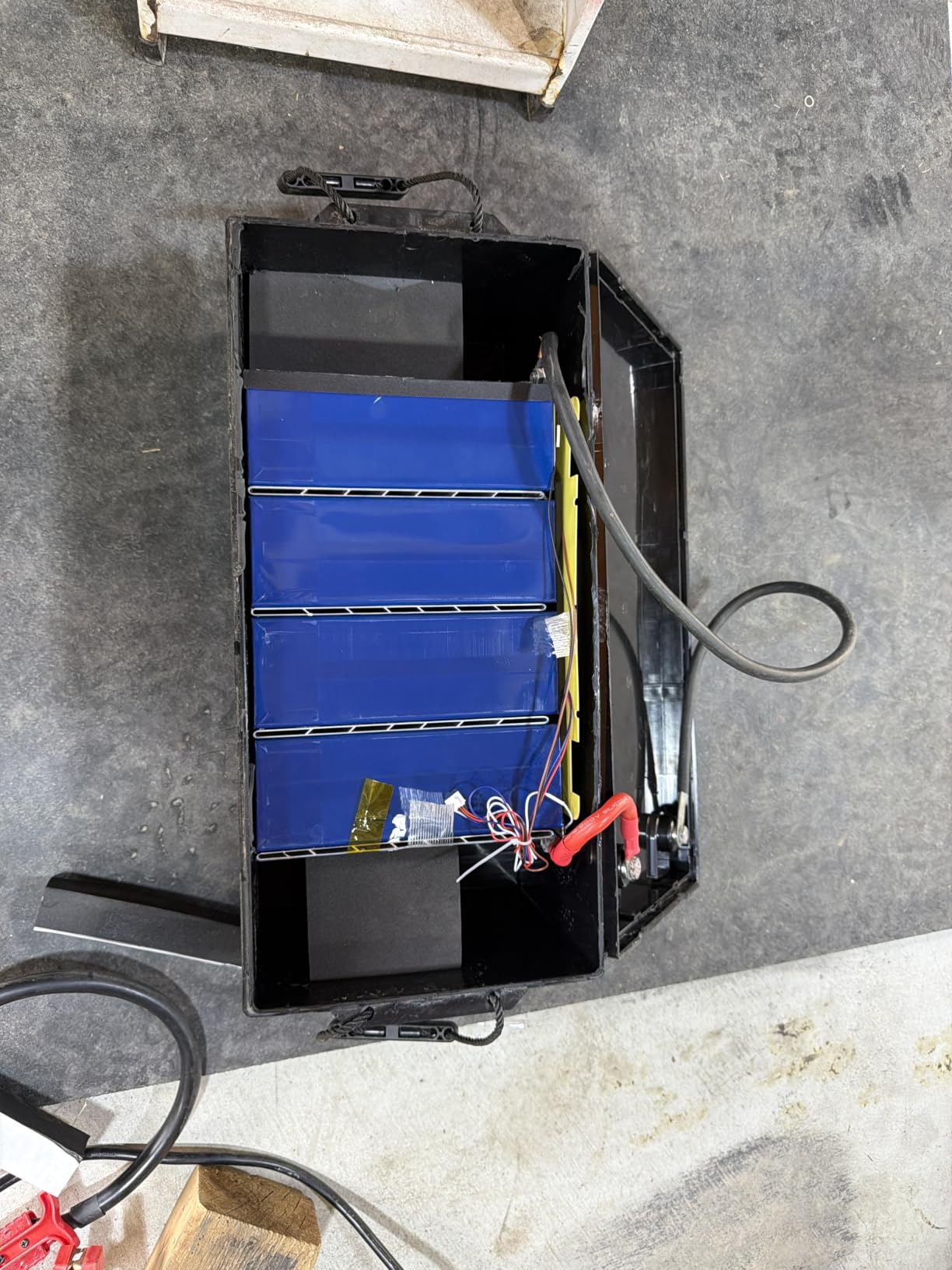
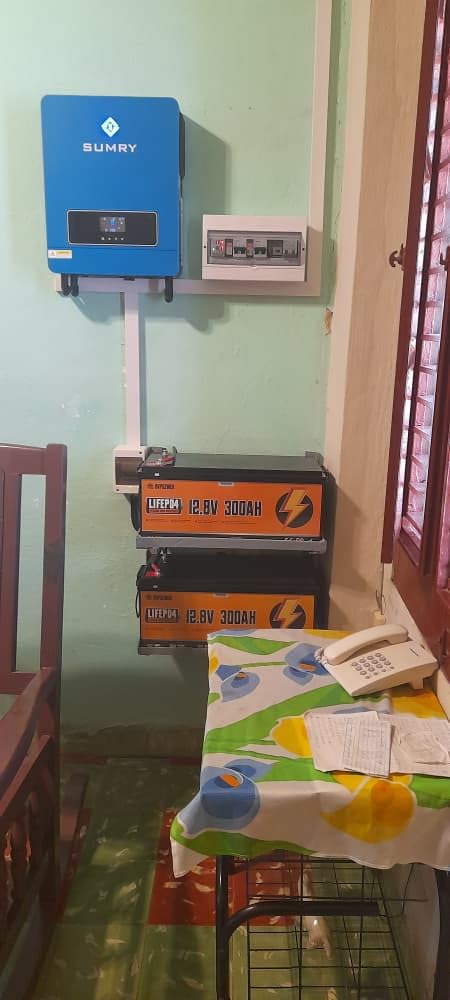
The physical design is the draw. A 23 lb Group 31 pack with an integrated 120A smart BMS fits the same compartment as the AGM it replaces, which removes the main objection to switching chemistry in an existing install.
Expansion is unusually flexible: four in series to 51.2V, or parallel scaling up to 400Ah, which is enough headroom for a serious off-grid bank without changing battery type. The stated operating range of -20C to 65C is among the wider figures claimed in this roundup, though charge cut-off behaviour still applies.
The ergonomic nylon handle is a small detail that matters more than it sounds, because moving a 23 lb battery into a battery box is very different from moving a 64 lb AGM. Buyers consistently mention the form factor as the reason they picked it.
When the low cost per amp-hour wins
If you are building a bank purely on capacity per unit of spend and you already have a lithium-profile controller and charger, the economics here are hard to argue with. Two in parallel give about 2.56kWh nominal for less than many single-battery options.
The cycle figures are stated across three depth-of-discharge points, which is more honest than a single headline number. 4000 cycles at full depth, 6000 at 80 percent and up to 15000 at 60 percent gives you a realistic range depending on how hard you work the bank.
Where the rating tells the story
That 17 percent one-star share is the reason I would not put this bank in an unattended cabin over winter. The complaints cluster around real-world capacity landing below the headline 100Ah, and a bank that underperforms on paper is a bad foundation for an off-grid build.
The warranty term is listed ambiguously as just the number 5, which is not a term you can rely on when a unit fails outside the return window. Buy this one for value, test capacity with a meter on arrival, and keep a parallel unit close by.
8. HumsiENK 12V 100Ah LiFePO4 with Bluetooth – Best App Visibility
HumsiENK 12V 100Ah LiFePO4 Lithium Battery with Bluetooth (Group 24) 1280Wh
1280Wh at 12V
100Ah LiFePO4
Bluetooth app
5-year warranty
Pros
- Bluetooth app shows live voltage and temperature
- Group 24 size drops about 60 percent in weight versus lead-acid
- UL tested with FCC and CE certification and IP65 rating
- Automatic low-temperature shutdown protection
Cons
- Bluetooth app connection is unreliable for some buyers
- Cycle claims assume shallow discharge
- Needs a lithium-profile charger
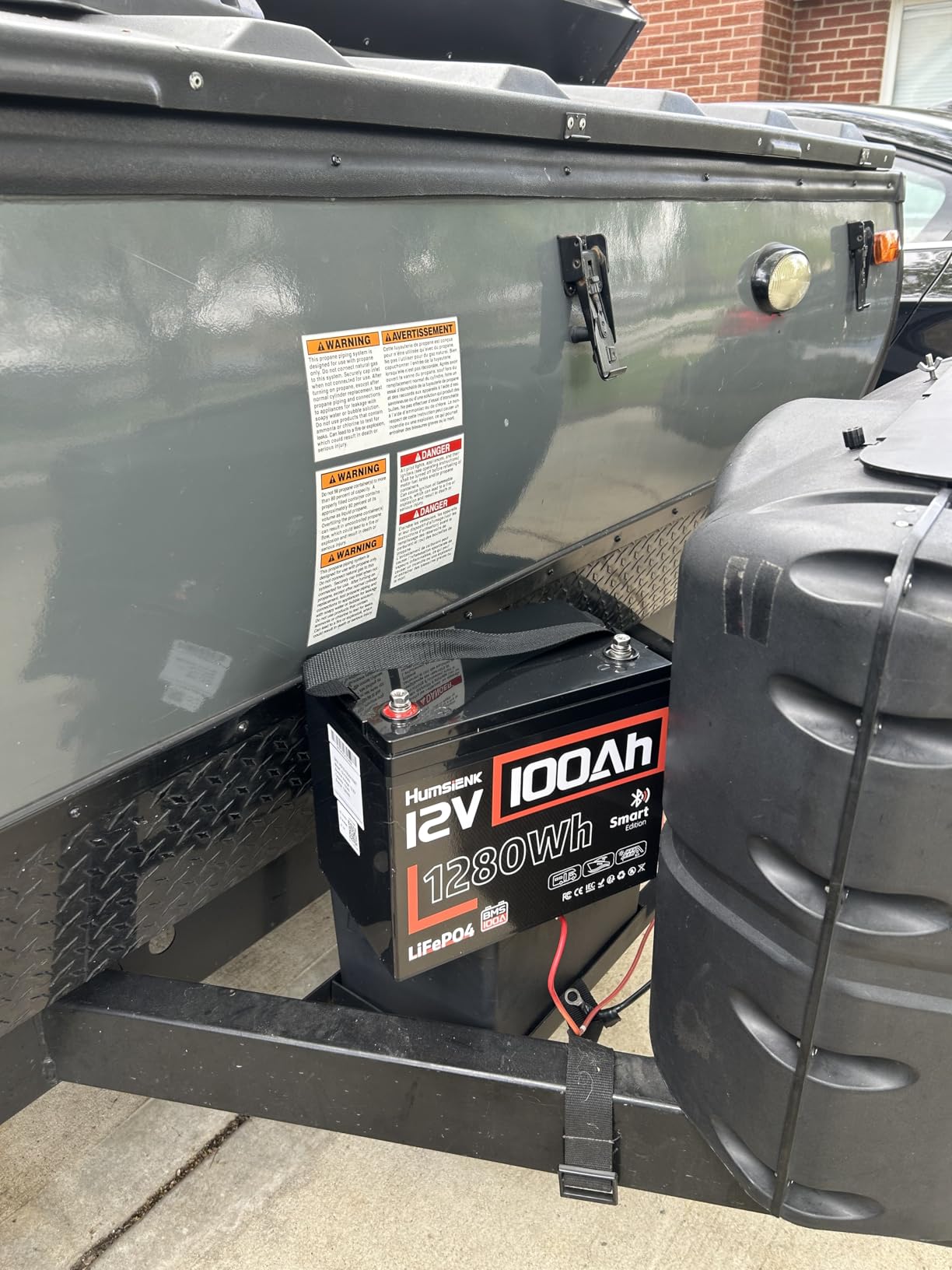
Remote visibility is the reason to buy this one, because the Bluetooth app shows live voltage, temperature and cell parameters from your phone. For a bank in a shed, a basement or a boat hull, that removes the most common maintenance task on a lithium system, which is climbing in and reading a meter.
At 4.4 across 340 reviews with 79 percent five stars, the ratings are solidly positive. The Group 24 footprint fits BCI Group 24-31 boxes and drops roughly 30 percent in space and 60 percent in weight compared with a lead-acid bank of the same nominal capacity.
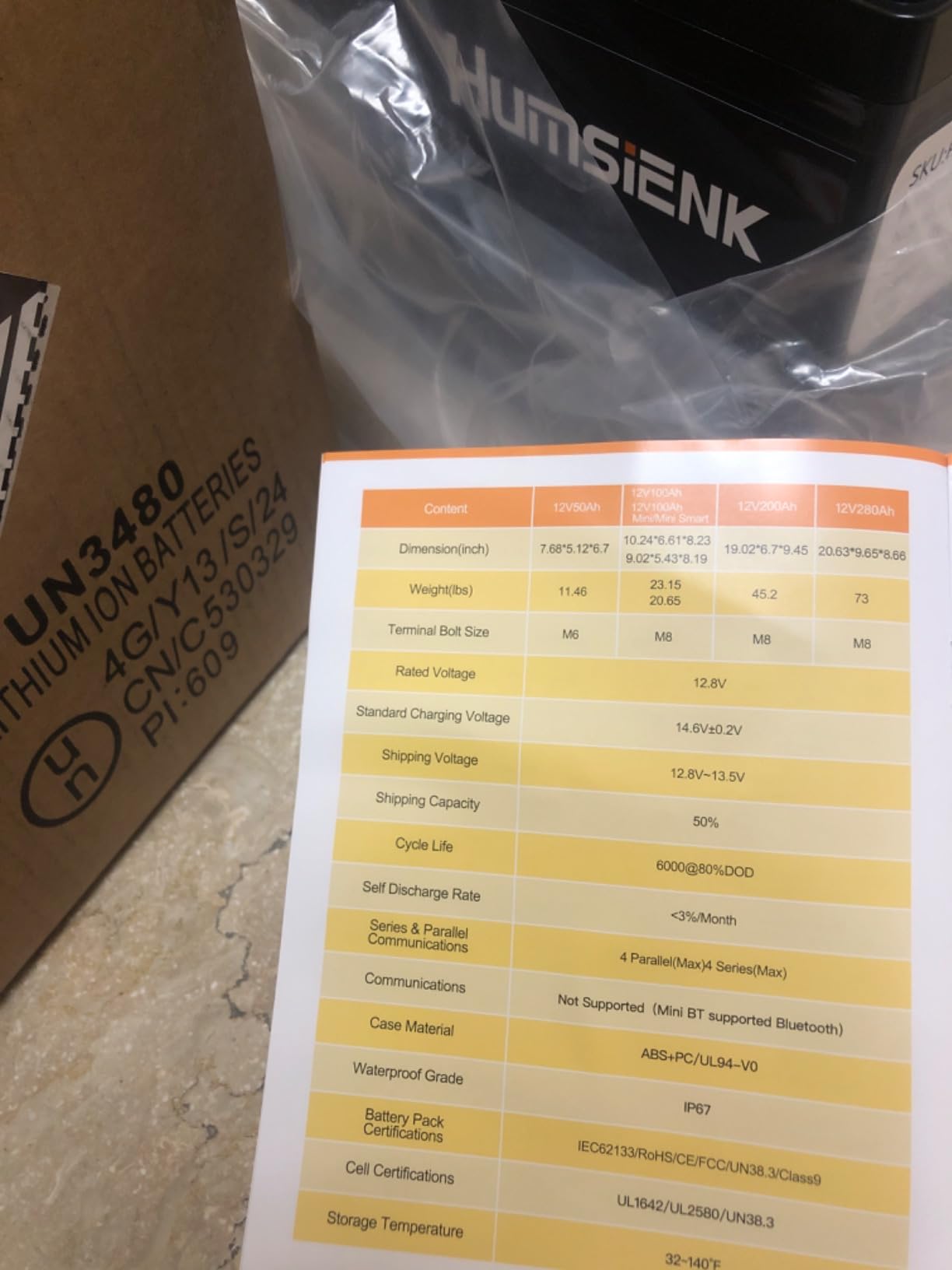
The certification story is the strongest in this section of the list. It is UL tested with FCC and CE certification and an IP65 rating, and the operating range runs from -20C to 70C with automatic low-temperature shutdown, so cold climates are handled with a defined behaviour rather than a vague promise.
Expansion reaches 4S4P for a 48V bank at 20.48kWh, and the included hardware list covers insulating caps and M8 screws in two lengths so you are not hunting for terminals on install day.
What the app actually tells you
Voltage and temperature readings are the two numbers that predict battery health, and having them on your phone makes it practical to catch a cell going out of balance before the bank starts tripping. It also means you can check state of charge without opening a compartment in bad weather.
For an off-grid owner this is worth more than it sounds, because troubleshooting a remote bank usually means a long drive. Several owners on off-grid forums say remote monitoring has shortened their fault-finding time from a day to a few minutes.
Watch the app and the cycle claims
Some buyers report the Bluetooth connection being unreliable or slow to sync, which undercuts the main reason to pick it. If remote monitoring is your top priority, test the pairing on a phone you will actually use before committing the whole bank to this chemistry.
Cycle claims of up to 15000 assume shallow discharge and are not representative of full-depth daily use. It also needs a lithium-profile charger, and non-lithium chargers are not recommended, which may mean adding a converter you did not budget for.
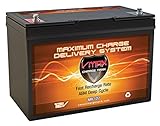
9. VMAX MR127 12V 100Ah AGM Battery – Marine Deep Cycle Workhorse
VMAX MR127 12 Volt 100Ah AGM Deep Cycle Maintenance Free Battery compatible with boats and 40-100lb, minnkota, cobra, sevylor and other trolling motor (GROUP 27 Marine Deep Cycle AGM Battery)
100Ah at 12V
Group 27 AGM marine
68 lb
1-year warranty
Pros
- Runs 55-86 lb thrust trolling motors for multi-hour days
- Multiple owners report five-plus years including a solar install
- Recovers to roughly 90-95 percent charge after a full day
- Lead-tin grids add life margin in cyclic service
Cons
- Around 70 lb makes it among the heaviest in this set
- Only a 1-year manufacturer warranty
- Smart chargers can cut out when deeply discharged
This has the most consistent rating profile in the roundup: 4.5 with only 4 percent one-star reviews, which is unusual. The reviews are overwhelmingly from people running it hard, and the report that recurs is longevity, including one solar installation still working after five years.
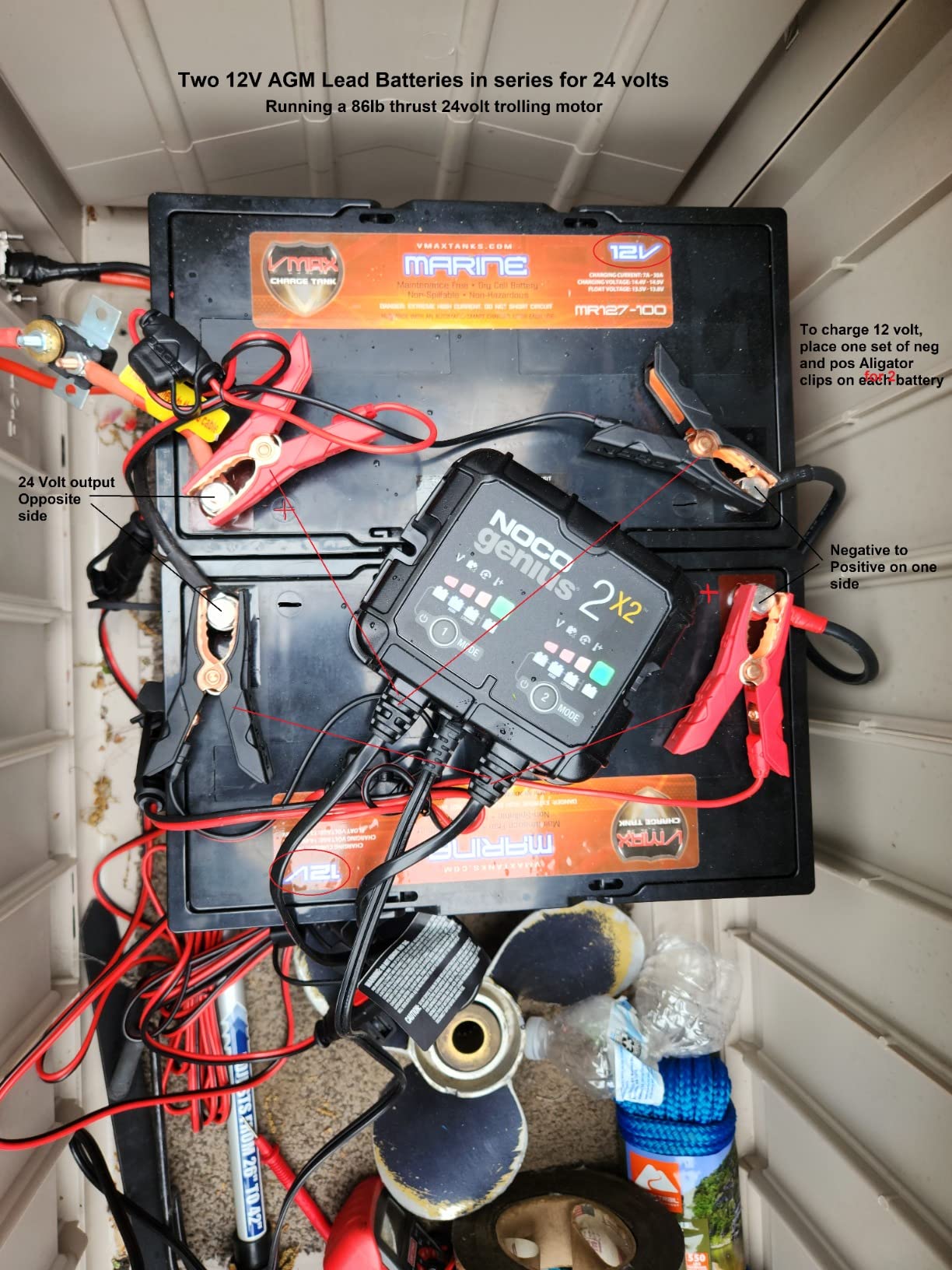
Two units in series power an 86 lb thrust motor and hold voltage under load, and the bank recovers to roughly 90 to 95 percent charge after a full day of heavy discharge. That recovery behaviour is what separates a good deep-cycle AGM from a cheap one.
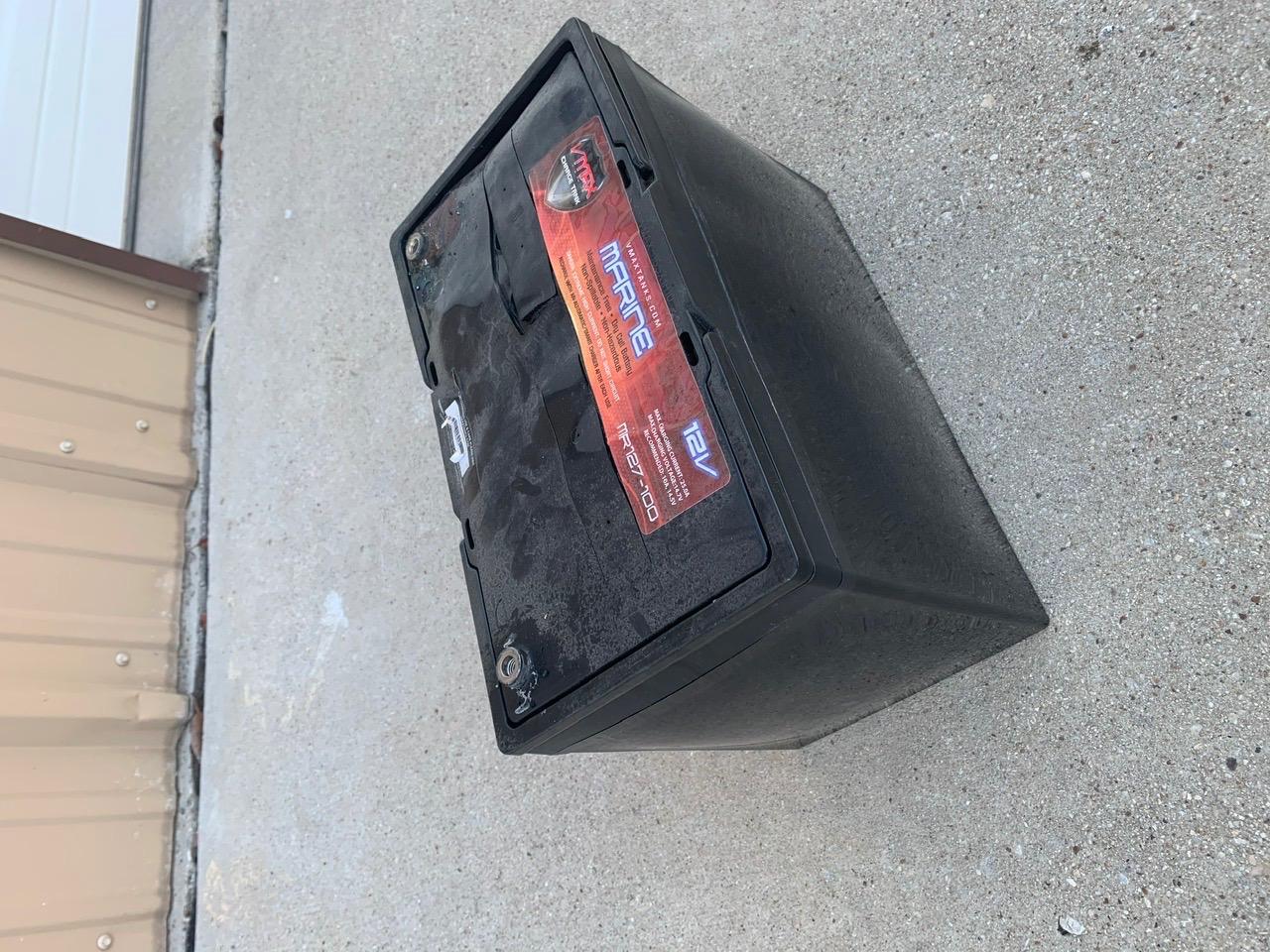
Group 27 form factor with marine terminals and included carrying handles, so it drops into a standard layout without cutting anything. The electrolyte suspension system fully contains the electrolyte with no silica gels, which removes the leak concern that comes with a battery living in a moving hull.
Heavy-duty lead-tin alloy grids add service life margin in float or cyclic service. For solar this is the model to copy in spirit: pick plates designed for cycling, not for starting, because starting plates are thin and sulfation is what kills them under deep daily discharge.
When a marine AGM is the right tool
If your bank is exposed to vibration, salt air or movement, a sealed AGM with a suspension electrolyte is a proven choice and costs far less than moving to lithium. Boats, trailers and mobile job sites all fall into that category.
It handles partial daily discharge without complaint, which is exactly how most solar duty works. Multiple owners also pair it successfully with a dual-bank AGM charger, which is worth doing if you run two banks for a changeover system.
The weight problem, stated plainly
At roughly 70 lb this is among the heaviest batteries here, and two or three of them is a genuine handling task. Weight is where lithium wins outright, and on a boat where every pound counts, that difference is not academic.
The 1-year warranty is also thin against the five-year life owners actually report. And smart chargers can cut out before completion if the battery is deeply discharged, so pick a charger with an AGM deep-discharge recovery mode.
10. SUPER EMPOWER 12V 100Ah LiFePO4 Group 24 – Clearest Cold-Weather Specs
12V 100Ah LiFePO4 Battery, Group 24 Deep Cycle for RVs & Trolling Motors
100Ah at 12.8V
1280Wh Group 24 LiFePO4
5-year warranty
Pros
- Highest-rated option with 84 percent five-star reviews
- True drop-in Group 24 fit with M8 terminals
- Documented behaviour with charging paused below 0C
- Supports 4S4P expansion to 51.2V and 20.48kWh
Cons
- Storage only so no engine starting
- Charging blocked below 32F by BMS protection
- Smallest review base here at 220 ratings
This is the one to read first if you are building in a cold climate, because it publishes its temperature behaviour instead of leaving you to guess. At 4.6 across 220 ratings with 84 percent five stars, it has the best rating distribution of the lithium group even though its review base is modest.
The stated behaviour is specific: charging pauses below 0C, discharge stops at -20C, and charging resumes above 5C. That is a real constraint on winter builds, but knowing it in advance is far better than discovering it when your bank stops accepting charge in January.
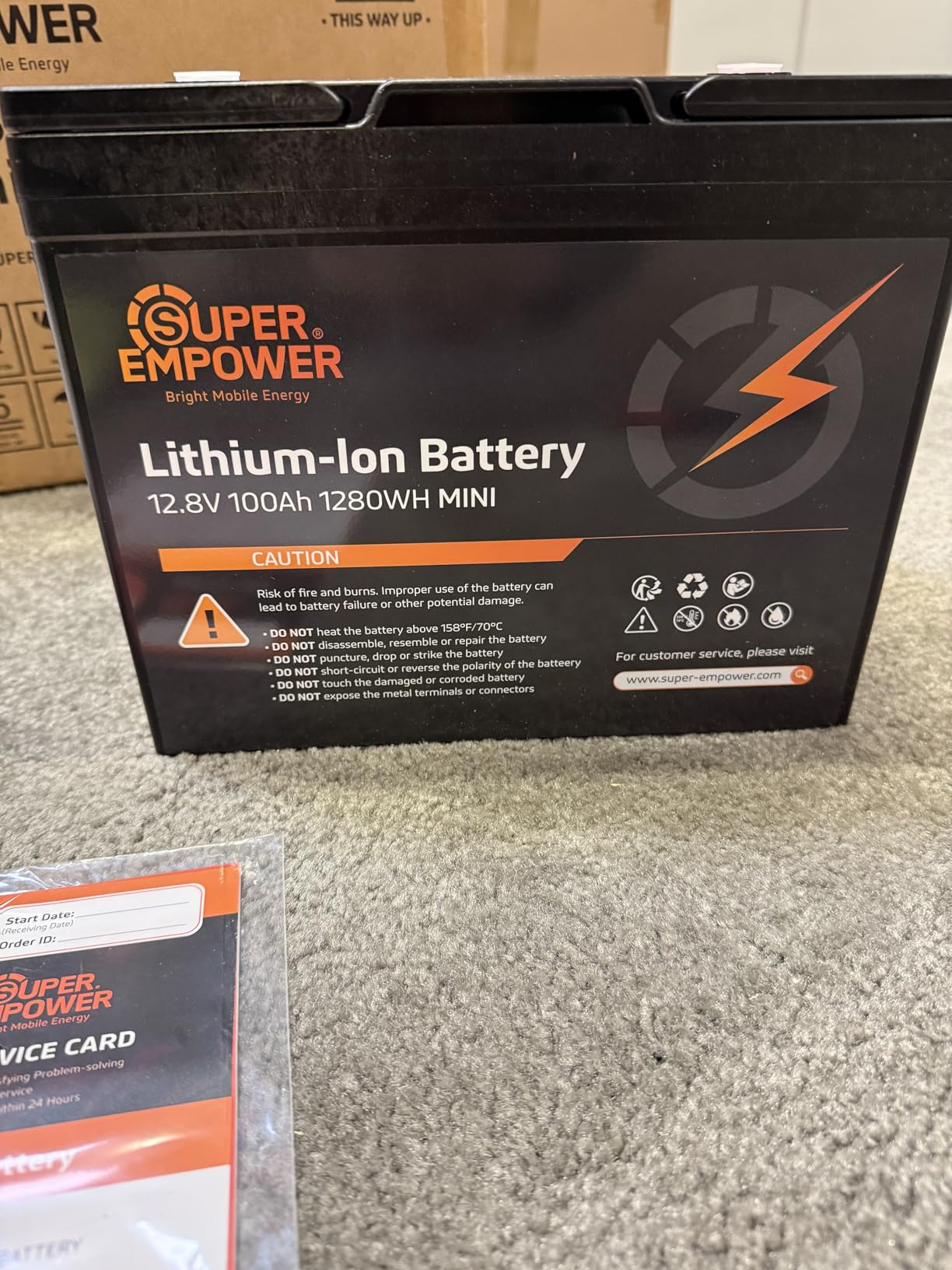
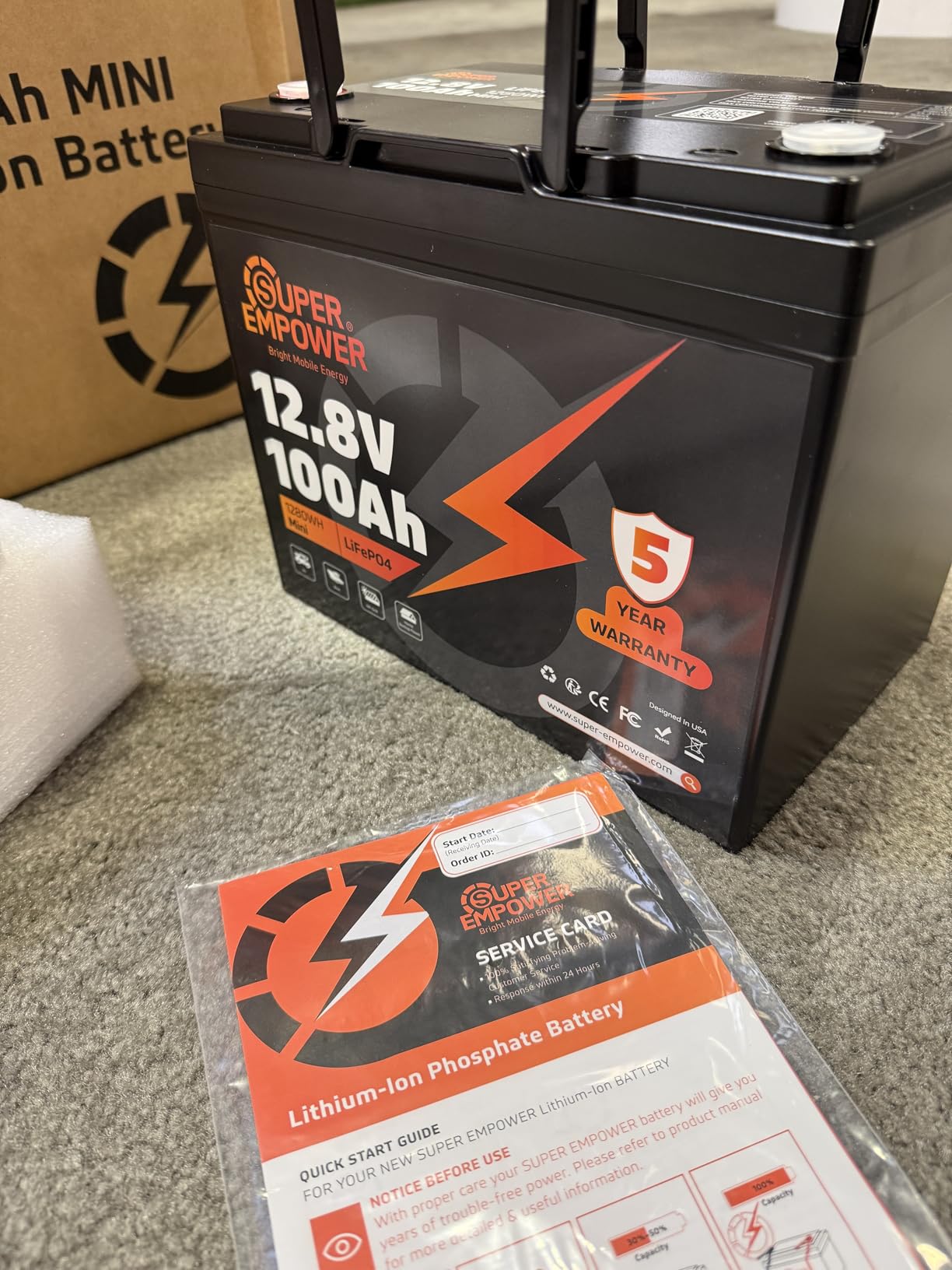
Physically it is a true drop-in Group 24 replacement with M8 terminals and no modification required, at 21.6 lb and 40 milliohms of internal resistance. The low internal resistance is what lets it deliver inverter surge current without the voltage sag that trips cutoffs.
Grade-A cells with an integrated 100A BMS including cell balancing, and expansion up to 4S4P reaching 51.2V at 400Ah and 20.48kWh. That is a credible path from a weekend bank to a whole-home system on the same battery type.
How the cold-weather limits work in practice
Charging being blocked below 32F is the standard lithium protection that prevents plating, and it is a safety feature rather than a defect. If your site genuinely sees sustained sub-zero charging conditions, you need heated batteries, and none of the packs in this roundup include a heater except as a separate variant.
For most installs the limitation is manageable, because panels generate little usable power in deep winter anyway. The failure mode worth planning for is a bank that sits below freezing after an outage and then refuses charge, so keep a small AGM or lead-acid buffer if that scenario worries you.
Why the small review base is not a dealbreaker
At 220 ratings this is the smallest sample here, so treat the 4.6 as encouraging rather than proven. What matters more is that the complaints are the lithium-standard ones rather than quality complaints.
Storage-only use, no sub-zero charging and a lithium-profile charger are the constraints owners mention. The 5-year warranty with a 24-hour support response is a stronger protection package than most of the budget lithium packs in this roundup.
11. yeagulch 12V 200Ah LiFePO4 Battery – Single-Box Storage for Bigger Loads
12V 200Ah LiFePO4 Lithium Battery Built-in 200A BMS 15000+ Deep Cycle
200Ah at 12.8V
2560Wh LiFePO4
200A BMS
4 in series
Pros
- About one-third the weight of comparable 200Ah lead-acid
- Built-in 200A BMS with overcharge and overheat protection
- Rated up to 15000 cycles at 60 percent depth of discharge
- Expansion up to 48V in series and 800Ah in parallel
Cons
- Not intended for car
- starting or golf cart duty
- Not recommended for trolling motors beyond 55-62 lb of thrust
- Needs a charge and discharge every 6 months in storage
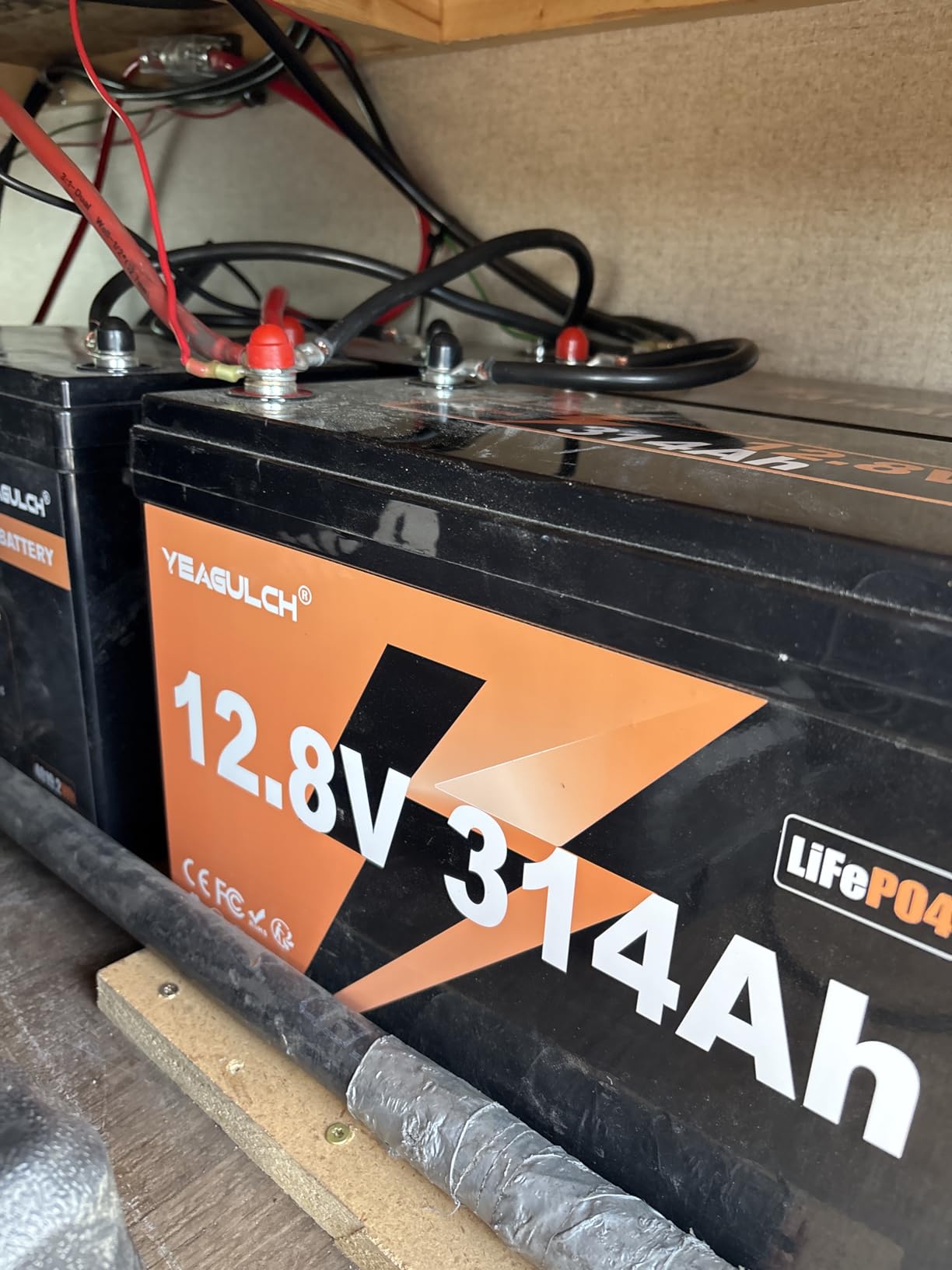
When one box needs to carry a real household load, this is the pick, because 200Ah at 12.8V gives you 2560Wh nominal in a single unit. At 4.6 across 195 reviews with 87 percent five stars, the rating is excellent but the sample is small, so treat it as a promising option rather than a settled one.
The weight story is what buyers react to most. At 58.9 lb it is roughly one-third the weight of a comparable 200Ah lead-acid bank, and that is the difference between a bank you install yourself with two people and one you move with a liftgate.
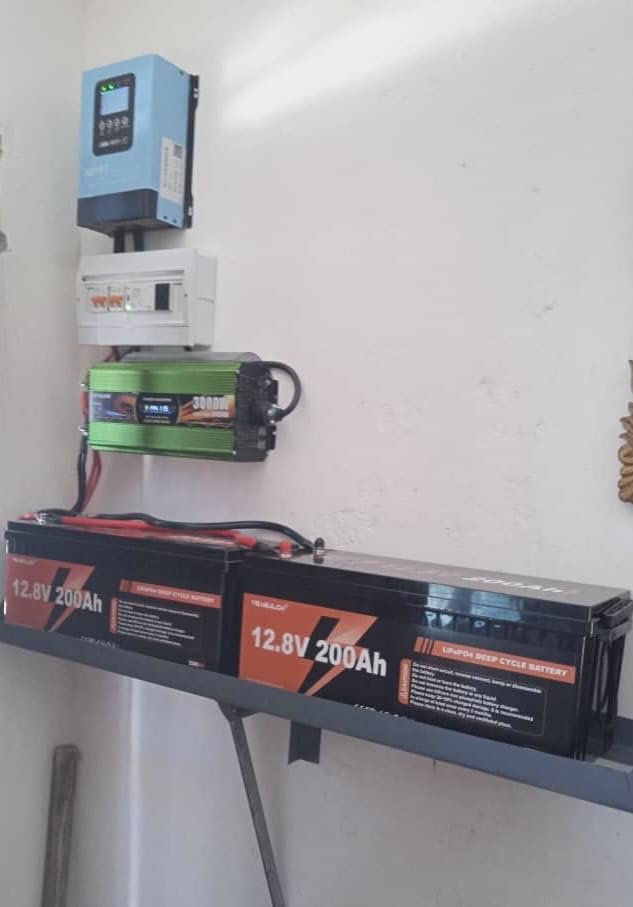
The built-in 200A BMS is unusually large for a portable unit, covering overcharge, overdischarge, overcurrent, overheating and short circuit. Automatic high and low temperature cut-offs handle the charge and discharge profile, so protection is handled inside the case.
Expansion is generous: up to four in series for a 48V system, or four in parallel reaching 800Ah at 12V, which is roughly 10.24kWh usable. That makes it a credible starting point for a whole-home or small-commercial installation rather than a weekend toy.
Sizing this against a real daily load
At 2560Wh nominal and 80 percent usable, one unit covers roughly 2kWh of daily cycling. A household using 2kWh a day can run one of these as a single daily-cycling battery, which is unusual for a single 12V box.
The cycle ratings are stated at three depth-of-discharge points, so plan around 6000 cycles at 80 percent for daily use rather than the 15000 figure, which applies at 60 percent depth. Sizing for realistic daily cycling is how you get the long life buyers report.
Where the 200A BMS still is not enough
This is not a starting battery, and the listing is clear that car, starting and golf cart duty is out of scope. It is also not recommended for trolling motors beyond 55-62 lb of thrust, so if your load is a motor rather than a house, look at the 100Ah packs instead.
Storage requires a charge and discharge at least every six months, and voltage and current readings can deviate 1 to 5 percent depending on the meter, so do not panic at a small reading difference. At 20.08 by 8.07 by 8.46 inches it is a long footprint, so check your battery box before ordering.
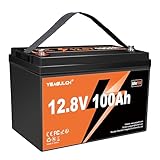
12. yeagulch 12V 100Ah LiFePO4 Group 31 – Highest Rated Pick
12V 100Ah LiFePO4 Lithium Battery BIC Group 31 with 100A BMS 1280Wh
100Ah at 12.8V
Group 31 LiFePO4
21.6 lb
4S4P
Pros
- Group 31 form factor at only 21.6 lb
- Up to 95 percent usable capacity with a flat discharge curve
- 4000+ cycles at 100 percent depth of discharge
- Works with mainstream inverters and chargers
- No memory effect
Cons
- Not recommended for trolling motors above 700W
- Series and parallel expansion should not exceed four batteries
- Needs a charge and discharge every 6 months in storage
This carries the highest average rating in the roundup at 4.7 across 198 reviews, with 88 percent five stars. What the reports keep circling back to is capacity utilization: up to 95 percent of rated capacity is usable, against roughly 50 percent for a lead-acid battery of the same size.
That single number reshapes your sizing. A 100Ah pack here is closer to a 190Ah lead-acid bank in usable energy at about a third of the weight, which means fewer batteries in parallel and a smaller battery box for the same autonomy.
The discharge curve is described as flat, holding up to 95 percent usable capacity at 12.8V and 100A, so an inverter sees a stable input across nearly the whole capacity window. Group 31 form factor at 21.6 lb is about two-thirds lighter than comparable lead-acid units and fits existing boxes without modification.
It works with mainstream inverters and chargers, which removes a real compatibility worry, and the no-memory-effect claim means you can use it any time after a full charge without conditioning. Applications listed include solar, RV, marine, off-grid, UPS backup, lighting and fish finders.
What 95 percent utilization changes
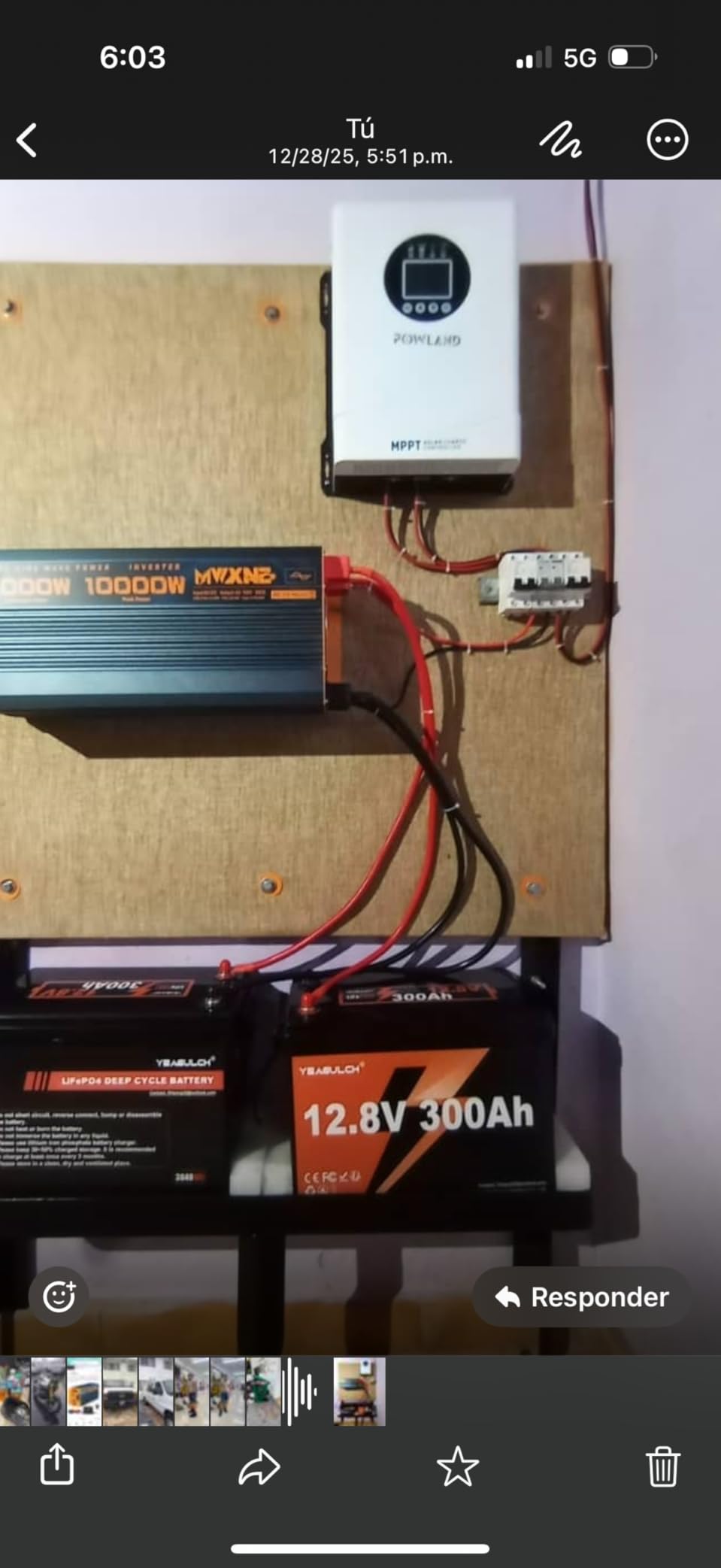
Size your bank on usable watt-hours rather than nameplate amp-hours and this pack is the most efficient use of space here. Two in parallel give about 2.5kWh of genuinely usable energy, which covers a 1kWh daily load with a comfortable buffer.
Build a 48V system with four in series or expand capacity with four in parallel, and the stated cycle counts are honest across three depths of discharge: 4000 at full depth, 6000 at 80 percent and 15000 at 60 percent.
The limits to plan around
It is not recommended for trolling motors above 700W, so high-thrust marine applications are out. It is also not intended as a car, starting or golf cart battery, which is a common mistake people make when replacing a starter battery with lithium.
Series and parallel expansion should not exceed four units, and it needs a charge and discharge at least every six months to maintain battery health if it sits unused. Voltage and current measurements may deviate 1 to 5 percent depending on the instrument, so allow for that when you set inverter cutoffs.
How to Size a Deep Cycle Battery Bank for Solar in 2026
Size your bank on usable watt-hours, not nameplate amp-hours, and add a margin. Everything below builds from that single idea.
Step 1: work out your daily load in watt-hours
List every load you actually run overnight and during outages, multiply each by the hours it runs, and sum the result. A lighting circuit at 40W for five hours is 200Wh, a fridge averaging 150W for eight hours is 1200Wh. Add them all before you look at any battery.
Be honest about the worst week rather than the average one. If you plan for a cloudy stretch, your bank needs more than the daily figure suggests, which is where days of autonomy comes in.
Step 2: convert to amp-hours for your system voltage
Amp-hours equals watt-hours divided by volts. At 12V, a 1200Wh nightly load is 100Ah. At 24V it is 50Ah, and at 48V it is 25Ah, which is exactly why higher system voltages reduce the current your cables and inverter have to carry.
This is why 48V systems use 4S or 8S configurations rather than one enormous battery. Current is what causes cable losses and inverter stress, not total energy.
Step 3: apply depth of discharge and days of autonomy
Lead-acid is comfortable at 50 percent depth of discharge, and LiFePO4 banks here are rated to 80 percent or more. Take your daily watt-hours, divide by volts for amp-hours, then divide by your depth of discharge figure.
Then multiply by your days of autonomy. One day is the minimum for a weekend cabin; two to three days suits a homestead; five days is hurricane or storm preparation. A 1200Wh load on 12V at 50 percent depth and two days of autonomy is 100Ah divided by 0.5, times two, so 400Ah of AGM, or roughly 150Ah of LiFePO4 at 80 percent.
Add a 20 percent margin on top for ageing, cold weather and unexpected draw. This is the safety margin that keeps a bank from sitting permanently at its limit.
Step 4: pick the voltage your inverter expects
Match the bank to the inverter rather than the reverse, because a nominal 51.2V lithium bank and a 48V lead-acid bank are not interchangeable without a converter. Below about 2kW of continuous load, 12V is workable and cheaper in cable. Above that, 24V or 48V cuts current dramatically.
Most of the lithium packs here support 4S or 4S4P expansion, so a single purchase does not lock you into a low-voltage system. That flexibility is a genuine reason to prefer lithium for a build you may expand later.
Step 5: match panel watts to battery amp-hours
A common rule of thumb is roughly 5 watts of panel per amp-hour of bank. A 400Ah bank pairs with about 2000W of panel, and a 100Ah lithium pack pairs with around 500W.
The reasoning is energy balance. A 100W panel produces about 500Wh on a bright day, so 100W restores roughly 50Ah into a 12V bank after system losses, which is half of a 100Ah pack. Size your array to put back what you take out, then check the ratio holds for your own figures.
Chemistry, cold weather and maintenance
LiFePO4 is the default answer in 2026 because it tolerates deeper discharge, needs no water servicing and lasts several times longer. AGM is the budget path and the better choice where the bank stays above 50 percent depth, sits in a moving vehicle or lives in a warm, ventilated space.
Cold weather is the deciding factor in many northern installs, because lithium charging is blocked below freezing by BMS protection. If your site sees sustained sub-zero charging, budget for heated lithium variants or accept a lead-acid bank that charges in the cold and store it somewhere above freezing.
Do not mix battery ages or brands in one parallel bank. The older cell becomes the weak link, the whole string runs at the pace of the weakest unit, and capacity that you paid for is capacity you will not get. Our guide to matching chargers to battery chemistry covers the charge profile differences that keep lithium at full capacity.
One last piece of owner advice that shows up repeatedly on r/OffGrid: most people who think they need a better battery actually need more storage. Before changing chemistry, check whether your bank is simply undersized for your load and your autonomy target.
Frequently Asked Questions
What is the best type of battery for a solar setup?
LiFePO4 is the best all-around choice for most solar setups because it uses close to 95 percent of its rated capacity, needs no water servicing and is rated for thousands of cycles. AGM remains the sensible budget option when the bank will not be deeply discharged and will sit in a warm space.
Which type of deep cycle battery is best for solar panels?
For daily cycling, LiFePO4 wins because of its flat discharge curve and high usable capacity. For standby duty, emergency reserve or a bank in a moving vehicle, sealed AGM is cheaper, charges in cold weather and has fewer electronics to fail.
Are deep cycle marine batteries good for solar?
They work well. Marine deep cycle AGM batteries are built with thicker lead-tin plates and a contained electrolyte, so they tolerate heavy discharge and vibration better than automotive types. Expect roughly half of nameplate capacity as comfortable usable energy and a 1.3 kg per Ah weight penalty against lithium.
Is an AGM battery the same as a deep cycle battery?
AGM describes a sealed construction, not a duty cycle. Many AGM batteries are starting batteries with thin plates that fail fast under deep discharge. For solar, choose a battery explicitly labelled deep cycle with thick plates and a 50 percent or greater depth of discharge rating.
How big of a solar panel do I need to charge a deep cycle battery?
Use roughly 5 watts of panel per amp-hour of battery capacity. A 100Ah 12V bank pairs with about 500W of panel, and a 400Ah bank pairs with about 2000W. This restores the energy you take out on an average day after system losses.
How long does a 100Ah LiFePO4 battery last?
A 100Ah 12.8V LiFePO4 battery holds about 1.28kWh nominal and is rated for 4000 or more cycles at full depth of discharge, with higher figures at shallower discharge. That translates to well over a decade of daily use, provided charging stays within the lithium profile.
How to tell if a deep cycle battery is bad?
Check for a resting voltage that does not recover after a charge, a swollen case, bulging sides, corrosion on the terminals, or a battery that cuts out under a load it previously handled. A load test and a capacity test with a meter give a clearer answer than voltage alone.
What is the biggest disadvantage of a lithium-ion battery for solar?
Cold-weather charging. Most LiFePO4 packs block charging below freezing to protect the cells, so a bank in an unheated space may stop accepting charge in winter. Upfront cost per amp-hour and the need for a lithium-profile charger are the other two drawbacks.
Our Final Pick for Deep Cycle Solar in 2026
For most people building a solar setup in 2026, the Renogy 12V 100Ah AGM is the best deep cycle battery to start with, because it combines the largest review base in the group with sealed, maintenance-free chemistry and a temperature range that survives real weather. If cold charging is impossible in your install, the dumfume 150Ah LiFePO4 gives you the most usable storage per pound, and the yeagulch 100Ah Group 31 is the highest-rated pack in the roundup.
Pick the chemistry that matches your climate, then size the bank on usable watt-hours rather than the number printed on the label. Add a 20 percent margin, match your array at roughly 5 watts of panel per amp-hour, and check back with the load test results on your own system. If you also need a portable power setup, our GoPro battery guide covers the small-scale end of the same problem.