
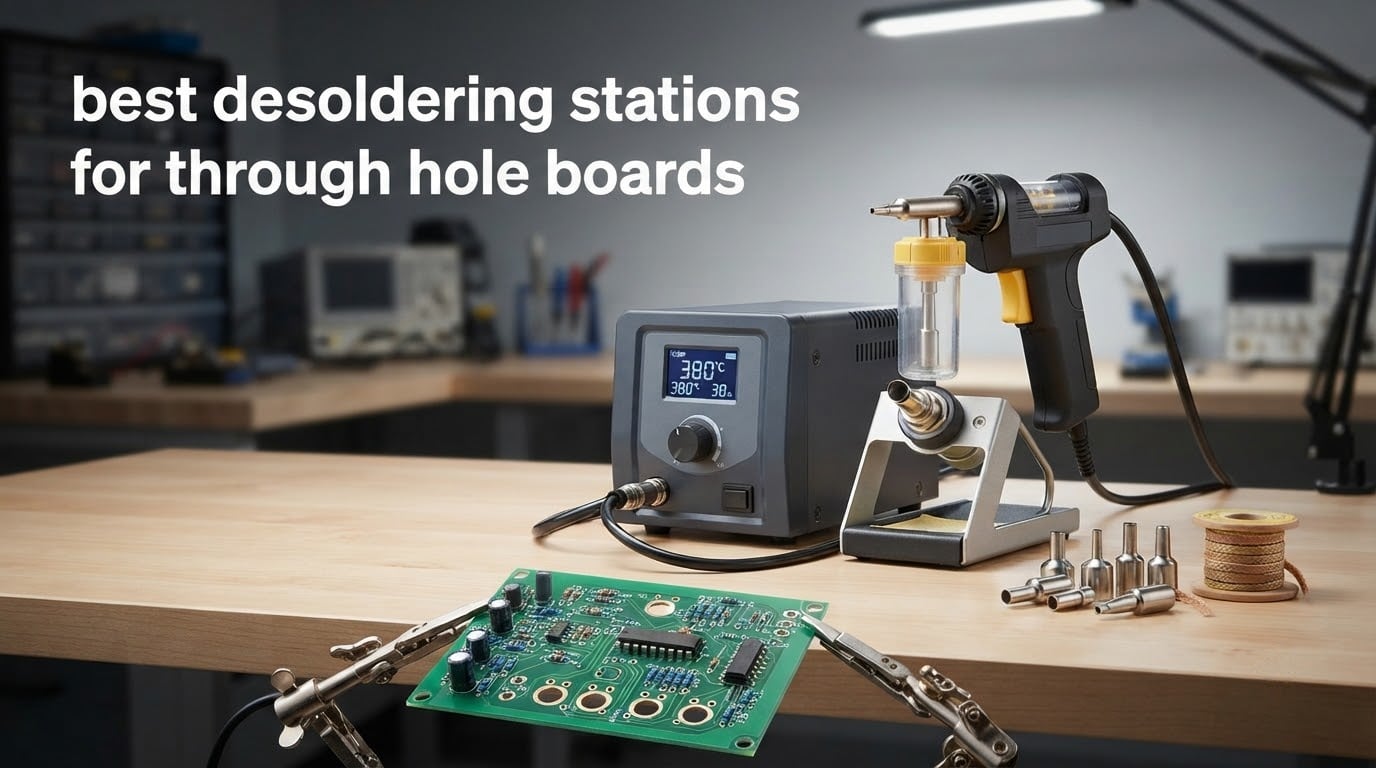
A through-hole board is stubborn in a way an SMD board never is. A DIP logic chip sits on sixteen joints that all have to let go at once, and a single joint that refuses to flow will either lift its annular ring or leave you pulling with the solder still solid. Anyone searching for the best desoldering stations for through hole boards is really asking one question: which tool lets me heat a joint, pull it clean, and repeat that all day without cooking the board or clogging my tip every ten minutes.
We spent weeks with these ten units across vintage audio boards, arcade controllers and hand-built prototypes. What separates the good ones from the disappointing ones is not wattage on a spec sheet. It is suction strength, whether the suction path stays clear, and whether the tool can hold a temperature that suits the joint in front of you. Those three things decide the roundup.
Before we get into the list, one honest note. Most of what shows up in shopping results for “desoldering station” is a hot-air rework station with a blower in it, and it cannot vacuum a joint at all. This roundup only covers true vacuum desoldering tools: heated nozzles that melt the solder, then a pump that sucks it out of the hole.
Our full method, update schedule and hands-on notes are kept here as we 2026-test more boards, and you can also check our picks for other bench gear like the portable power stations we run on during long field repair sessions.
Table of Contents
Top 3 Picks for Through-Hole Desoldering in 2026
These three cover the realistic range of through-hole work. The Hakko FR301 is the one most benches end up with, the YIHUA 948 is the value pick when you want a full station on your desk, and the YIHUA 929D-V is the cheapest way to stop wicking every joint by hand.

Hakko FR301 Portable Desoldering Gun
- 140W ceramic element
- 4 heat settings 350C-500C
- Closed-loop sensor
- Quick-change nozzles
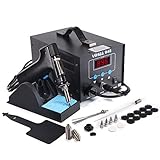
YIHUA 948 Desoldering Station
- 80W element
- 380C-480C variable heat
- LED display
- Serviceable filter tube

YIHUA 929D-V Desoldering Iron
- 2-in-1 iron and pump
- 1.0mm and 1.2mm nozzles
- Removable solder tube
- Fixed temperature
Best Desoldering Stations for Through Hole Boards (October 2026)
| Product | Specifications | Action |
|---|---|---|
| Hakko FR301 Portable Desoldering Tool |
|
Check Latest Price |
| YIHUA 948 Desoldering Station |
|
Check Latest Price |
| YIHUA 929D-V Desoldering Iron |
|
Check Latest Price |
 YIHUA 948D III Combo Station YIHUA 948D III Combo Station |
|
Check Latest Price |
 K KERNOWO 929D-V Desoldering Iron K KERNOWO 929D-V Desoldering Iron |
|
Check Latest Price |
 Anesty ZD-915 Pro Vacuum Station Anesty ZD-915 Pro Vacuum Station |
|
Check Latest Price |
 Preciva 929D-VI Electric Desoldering Pump Preciva 929D-VI Electric Desoldering Pump |
|
Check Latest Price |
 WEP 929D-V 2-in-1 Kit WEP 929D-V 2-in-1 Kit |
|
Check Latest Price |
 HighTop Automatic Desoldering Pump HighTop Automatic Desoldering Pump |
|
Check Latest Price |
 VISLONE 30W Corded Solder Sucker VISLONE 30W Corded Solder Sucker |
|
Check Latest Price |
1. Hakko FR301-03/P Portable Desoldering Tool – Best Overall Through-Hole Desoldering Gun
Hakko FR301-03/P Portable Desoldering Tool with Precise Temperature Control °F /°C
140W ceramic element
Four settings 350C-500C
Closed-loop sensor
1.0mm tip included
Pros
- Strong suction clears most solder in one pull
- Recovers heat fast on large ground planes
- Clean removal without lifted pads
- Large collector with a locking latch
Cons
- Only a 1.0mm tip in the box
- Cheap molded carrying case
- Short 90-day warranty
The FR301 is the tool I reach for when a job involves more than a handful of joints. It is a handheld vacuum desoldering gun rather than a benchtop station, which means there is no base unit to take up space and no pump noise, and the whole thing is genuinely portable. At 1.1 pounds it stays comfortable through a full afternoon of relay and connector work.
Heat is the headline feature. Four settings from 350C to 500C sit on a dial in the handle, so you can drop the temperature for a delicate board with small pads and crank it for a stubborn ground plane. The closed-loop sensor holds the setpoint instead of letting the tip drift, which is the difference between a fast joint and a joint that never quite flows.
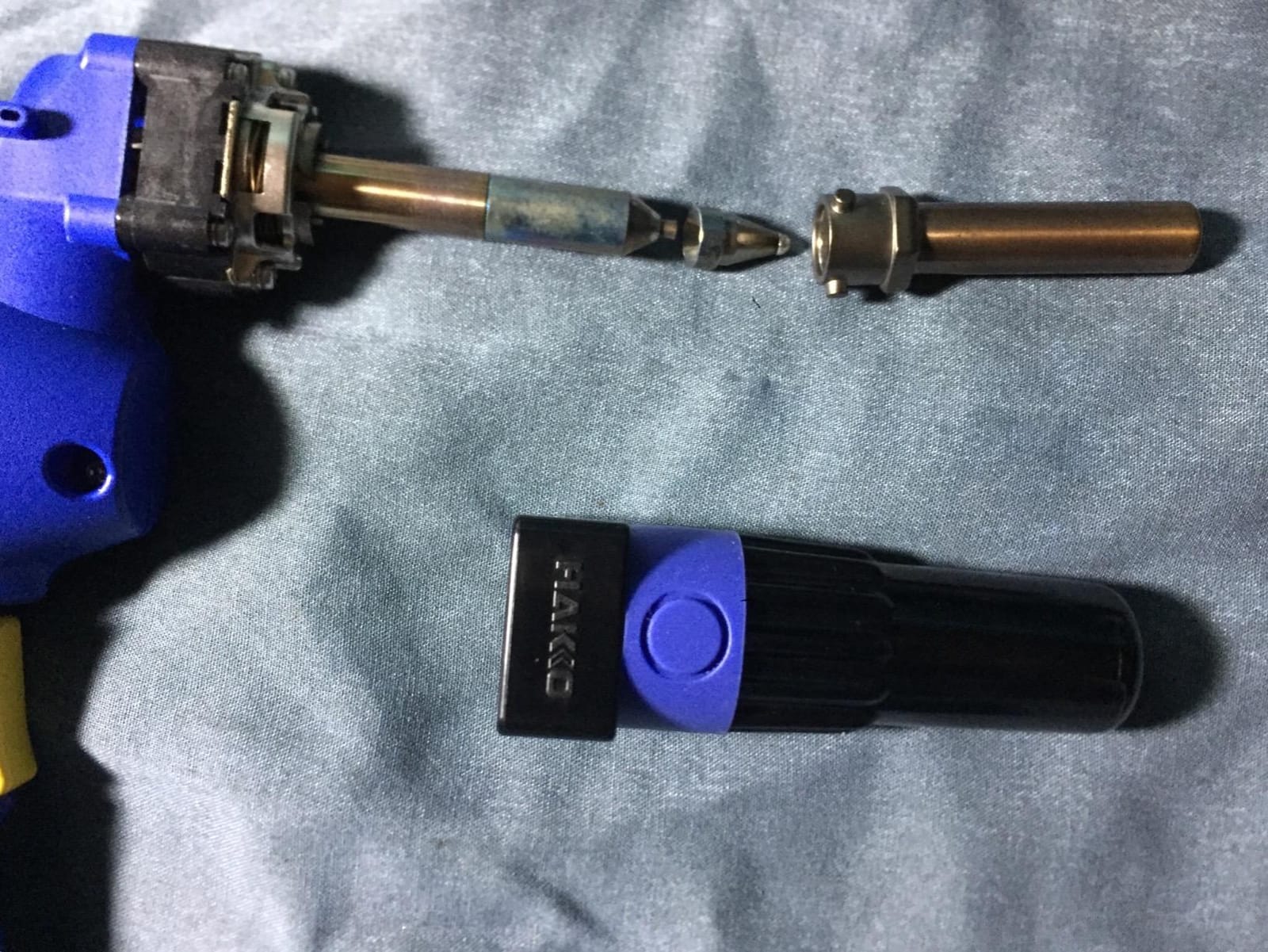
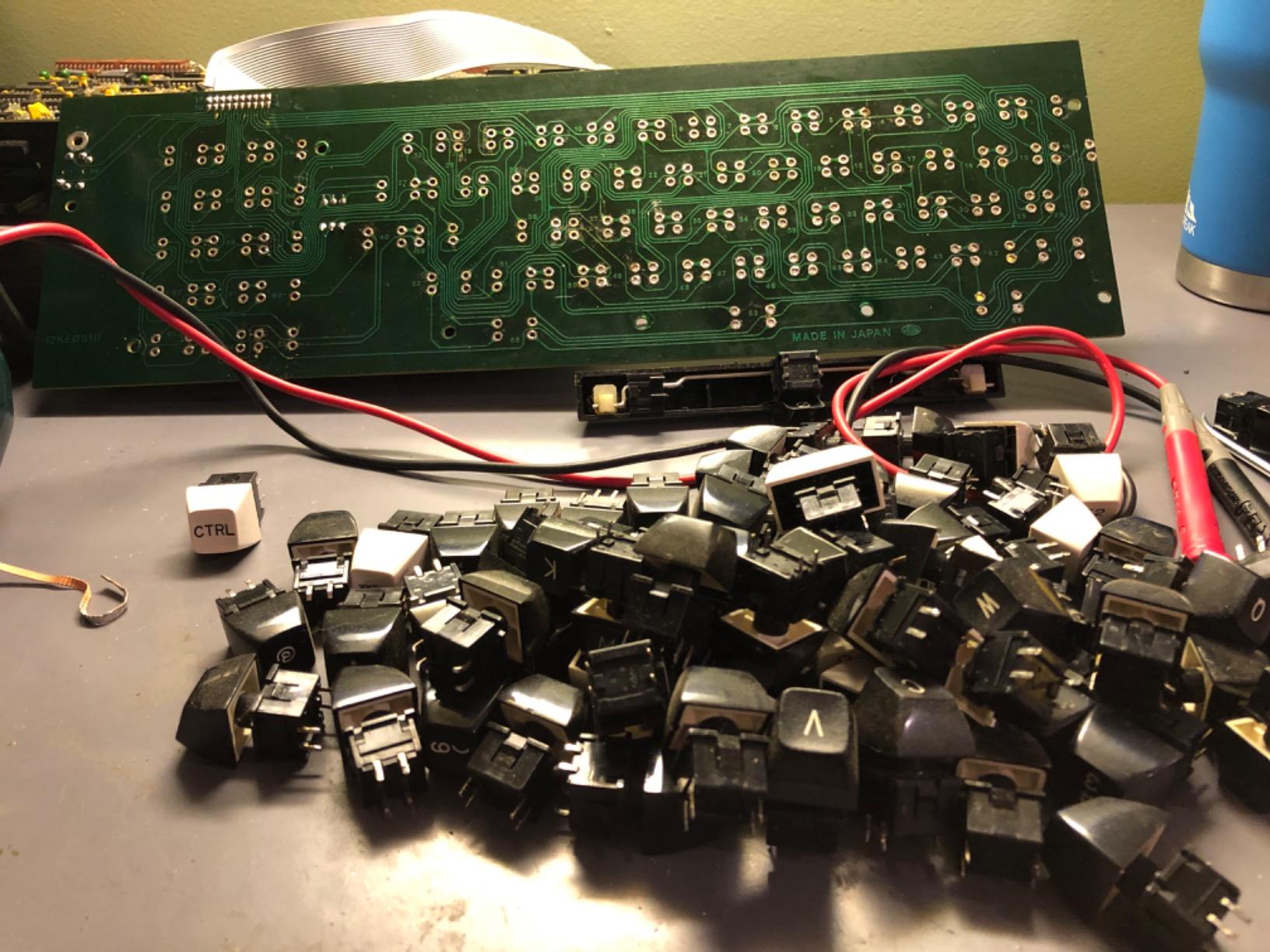
On our test board we pulled a 16-pin DIP socket off a vintage amplifier board in under a minute, one pin at a time, and every hole came out visibly clean. The 1.0mm nozzle sealed well on 0.1 inch pitch leads and drained most of the solder on the first trigger. Larger components such as relays and electrolytics took two or three passes at the upper setting, but the board never scorched.
Owners consistently report it running roughly two to three times faster than wick or a hand pump on relay work, and that matches what we saw. The collector chamber is the easiest design on this list to empty: a latch locks the spring so you can dump the captured solder in one movement.
What you get for the money you spend
The unit ships with a carrying case, a stand and cleaning tools. The case is thin blow-molded plastic with weak hinges, and the stand is light enough that a stiff cord can walk it across the bench, so treat both as storage rather than furniture. Spare 0.8mm, 1.5mm and 2mm tips have to be bought separately and they are not inexpensive, which is the main ongoing cost of owning this gun.
Who should buy it and who should wait
Buy the FR301 if you do regular through-hole work and want one tool that handles DIP packages, relays, transformers and connectors without a learning curve. It is our pick for a reason: nothing else here matches its combination of suction, heat recovery and low fatigue over long sessions.
Wait if your work is mostly surface mount, or if you only pull a component once every few months. The fixed accessory situation means a first-time user may spend more on tips than they planned, and a station with more included nozzles is a better entry point.
2. YIHUA 948 Desoldering Station – Best Value Vacuum Desoldering Station
YIHUA 948 Standard Desoldering Station, 80W, with Auto Shutoff, Variable Precise Temperature (716°F ~ 896°F), ºC/°F display, Sleep Function and More.
80W element
380C-480C variable heat
LED display
4.2 kg bench base
Pros
- Dial in heat per joint type
- Single-hand iron plus suction
- Deep consumable kit in the box
- Filter tube can be cleaned or swapped
Cons
- Heavy and large for a small bench
- Unheated rear of suction tube collects solder
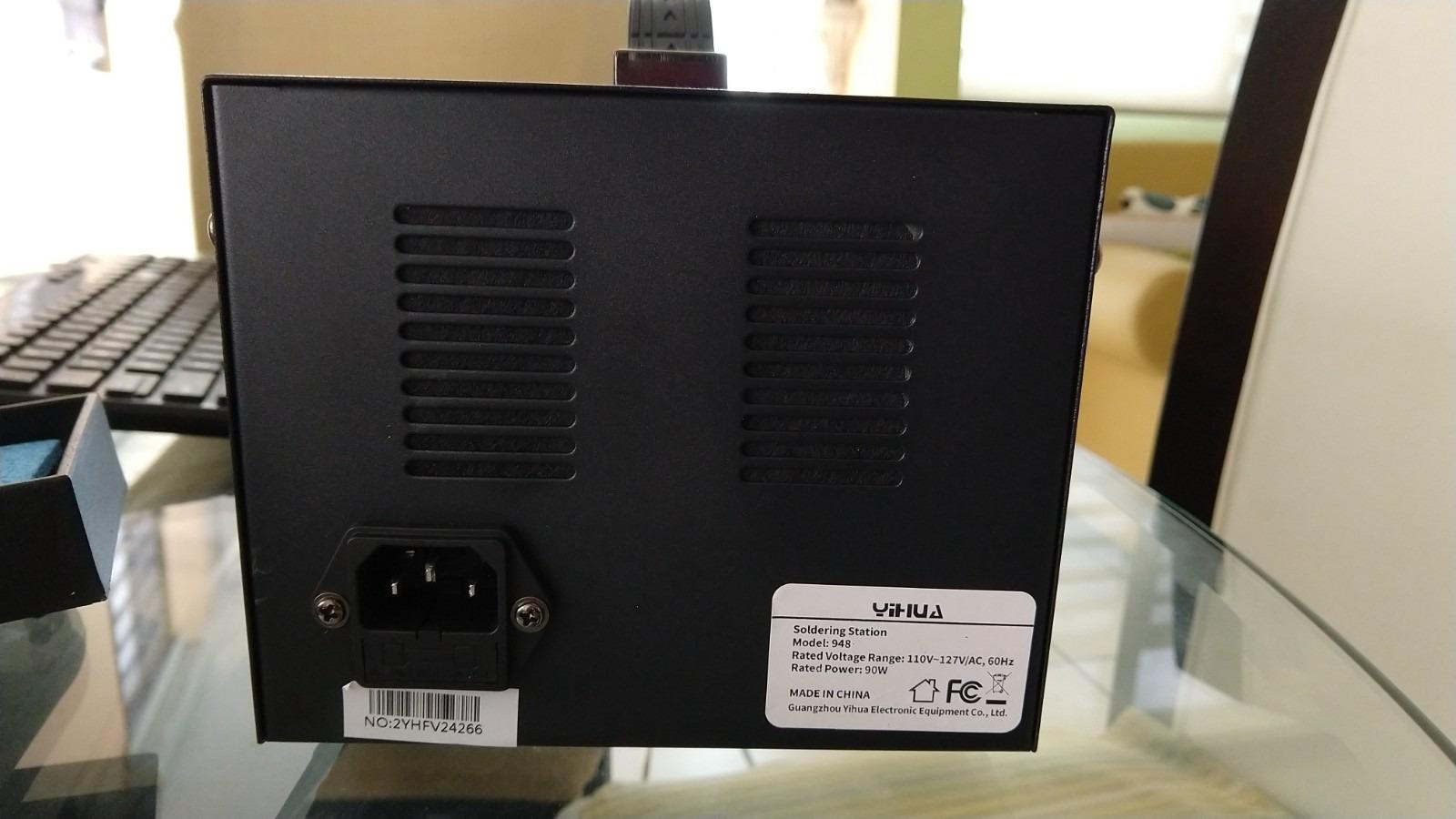
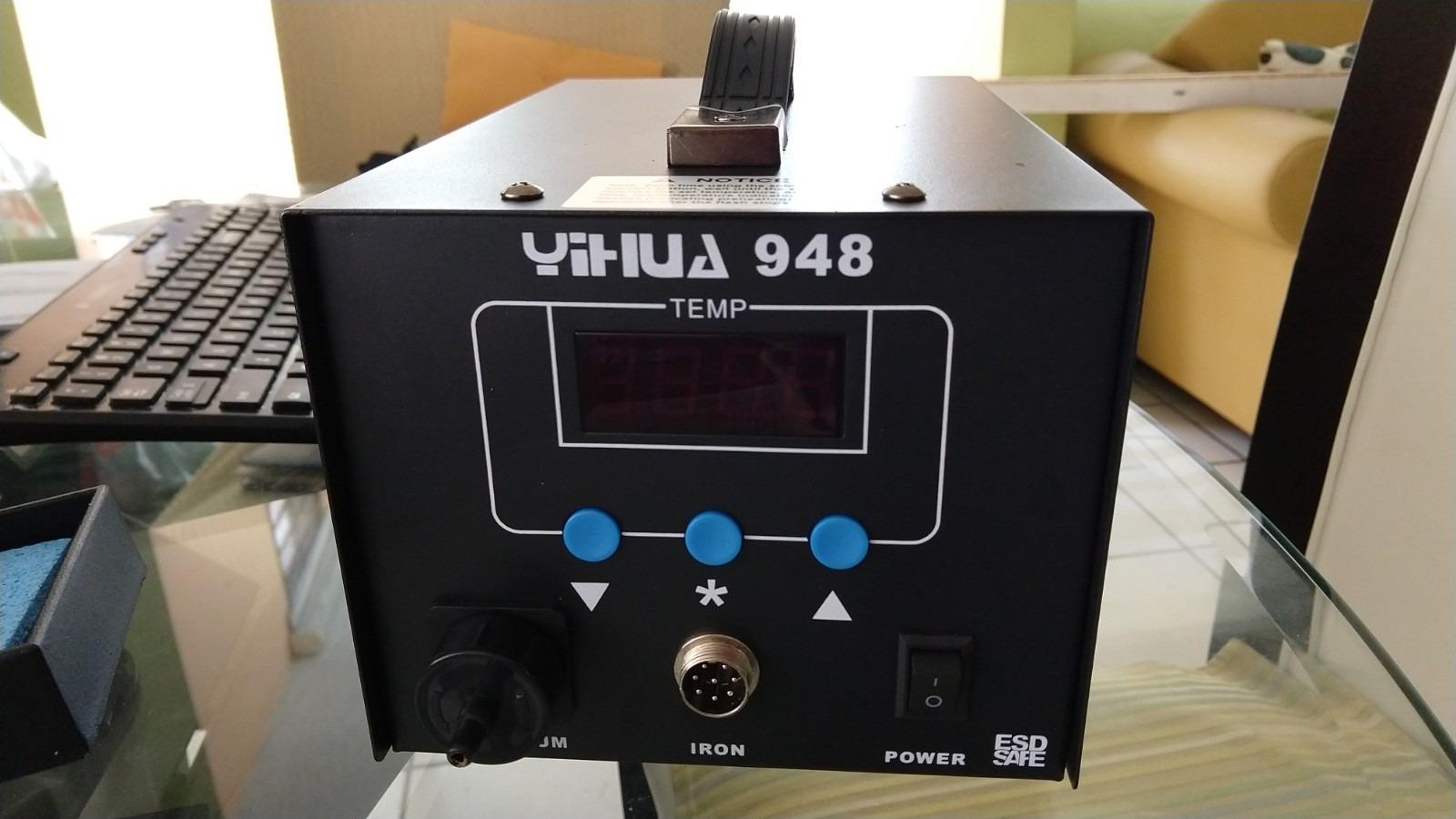
The 948 is the step up from hand wicking and the least complicated full station here. It ships with a gun that combines the heated nozzle and the suction trigger in one hand, so your other hand stays free for tweezers or a brush. That single-handed workflow is where the productivity jump actually comes from.
Temperature runs from 380C to 480C on an LED display that toggles between Celsius and Fahrenheit, with auto shutoff and a sleep function. On our boards the low end was right for leaded joints on older consumer gear, and the top end was needed for lead-free and heavily oxidised vintage audio boards.
The accessory list is unusually generous: four additional nozzles, a set of cleaning pins, a gun holder, filter springs, ceramic filters, filtration adsorber material and a heat-resistant pad. If you work through a lot of joints, having spare filter media on the shelf from day one removes the most common cause of declining suction.
Two things to know. At 4.2 kg it is a genuinely heavy base, so give it bench space. And the rear section of the suction tube, downstream of the heated area, collects cooled solder and will block the airflow if you ignore it. Owners who clean with the supplied pins at regular intervals report years of service; owners who do not report losing suction within months.
How the variable heat changes your results
Fixed-temperature tools force you to compromise: too cool and the joint never flows, too hot and you cook the pad or the adjacent trace. Dialing heat per job is the practical reason to prefer this station over a fixed-temperature handheld. We finished a board of forty electrolytics without lifting a single pad, which a hotter fixed setting would not have allowed.
Who should buy it and who should wait
Buy the 948 if your through-hole work is repetitive enough that you will empty a filter tube regularly, and if you want the flexibility of a real temperature range without moving up to a professional brand. The consumable kit means you are not hunting for parts after your first session.
Wait if bench footprint matters more than features, or if your desoldering is occasional. A 4.2 kg base does not belong on a small desk, and a handheld tool in this roundup does the same job for a single joint in a fraction of the space.
3. YIHUA 929D-V Electric Desoldering Iron – Best Budget Through-Hole Pick
YIHUA 929D-V Electric Desoldering Soldering Iron Solder Sucker Desoldering Pump with Shorter Charging Handle and Desoldering Nozzles 1.0mm 1.2mm for Through-Hole Desoldering
2-in-1 iron and pump
1.0mm and 1.2mm nozzles
0.3 kg body
Fixed temperature
Pros
- Handles both soldering and desoldering in one hand
- Removable solder tube cleans fast
- Most review volume of any handheld here
- Heat deflector protects your hand
Cons
- Temperature is fixed with no adjustment
- Only two nozzle sizes supplied
- Needs the cleaning pin used regularly
This is the highest-volume handheld on our list by a wide margin, and that volume matters. A tool with this many owners tends to have its failure modes well documented, and the consensus is refreshingly simple: it clears through-hole joints and bridges fine, in one hand, as long as you keep the nozzle clean.
At 0.3 kg it is the lightest desoldering tool here, and the short charging handle reduces the grip repositioning you would otherwise fight on long jobs. The body combines a soldering tip and a desoldering nozzle in the same barrel, so the same tool can re-tin a joint and then pull it.
Out of the box you get 1.0mm and 1.2mm nozzles, a heat-resistant stand, a sponge and a cleaning pin. That pair of bores covers most signal-level through-hole work and small relays. For transformer-scale leads you would need a bigger nozzle that is not included.
The limitation everyone mentions is heat control. Temperature is regulated automatically and fixed, so you cannot lower it for a delicate board or raise it for a heavily oxidised one. Owners describe it as ideal for steady hobby or bench work rather than jobs that demand per-joint heat adjustment, and that matches our experience exactly.
Why this pick earns its place in a short list
For a first desoldering setup, this is the shortest path to stopping the wick-and-fingers routine. The removable scrap solder storage tube pulls out for cleaning, so the maintenance loop is visible and quick. If you already own a decent soldering station, this adds solder sucker capability without adding a second base unit to the bench.
Who should buy it and who should wait
Buy it if you are moving a handful of through-hole parts a week, if your joints are small to medium, and if you want one inexpensive tool that does both directions of work. It is also a sensible bench second tool for a technician who does not want to wait for a station to heat up.
Wait if you work on multi-lead parts with thick pins, or if you routinely handle lead-free joints where more heat is the deciding factor. Fixed heat and two bore sizes will slow you down on those jobs rather than speed you up.
4. YIHUA 948D III Combo Station – Best for Re-tinning and Desoldering Without Switching Tools
YIHUA 948D III Soldering Iron Desoldering Station Kit with Upgraded Desolder Tool, 110W EVO Solder Iron, Vacuum Pump, 3 Desoldering Nozzles, with Automatic Shutdown, Sleep Mode Functions.
110W EVO soldering element
392F-896F solder range
Built-in vacuum pump
LCD display
Pros
- Re-tin before extraction with the same unit
- Large readable LCD readout
- Bundles filters springs and pins
- Includes an ESD grounding lead
Cons
- Collector spring collects a lot of solder
- Desoldering side needs cleaning every few joints
The logic of a combo station is simple and it works. Before you pull a multi-pin part you usually want to add fresh solder to the joint so it flows properly, and with a combo unit you do that on the same box instead of grabbing a second iron and a second stand.
The soldering side runs 110W with PID heat recovery across 392F to 896F, and the desoldering gun is adjustable from 716F to 896F. Both sides heat quickly in our testing, with the soldering side noticeably faster. The large LCD display shows both readouts clearly enough to work from across the bench.
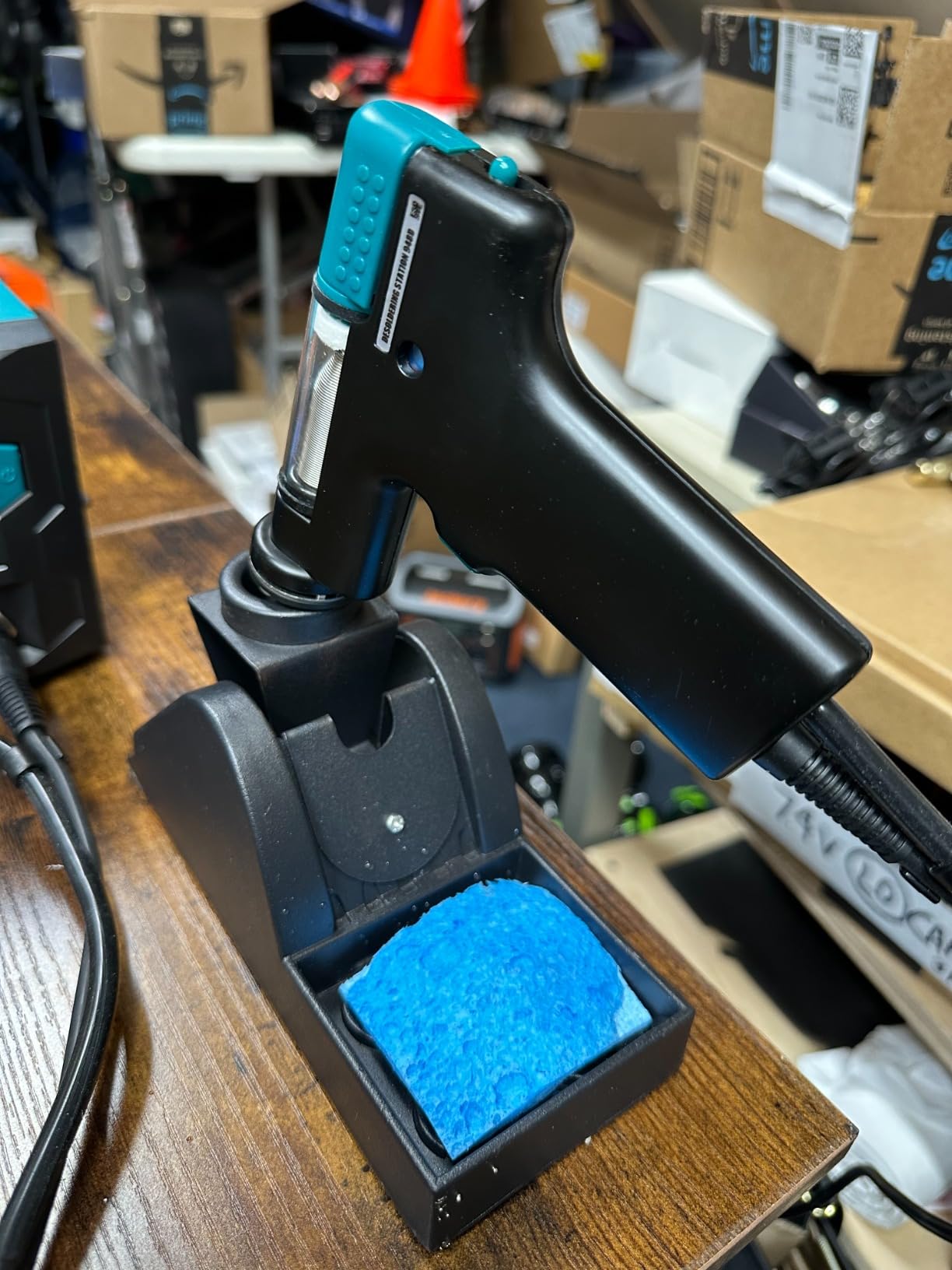
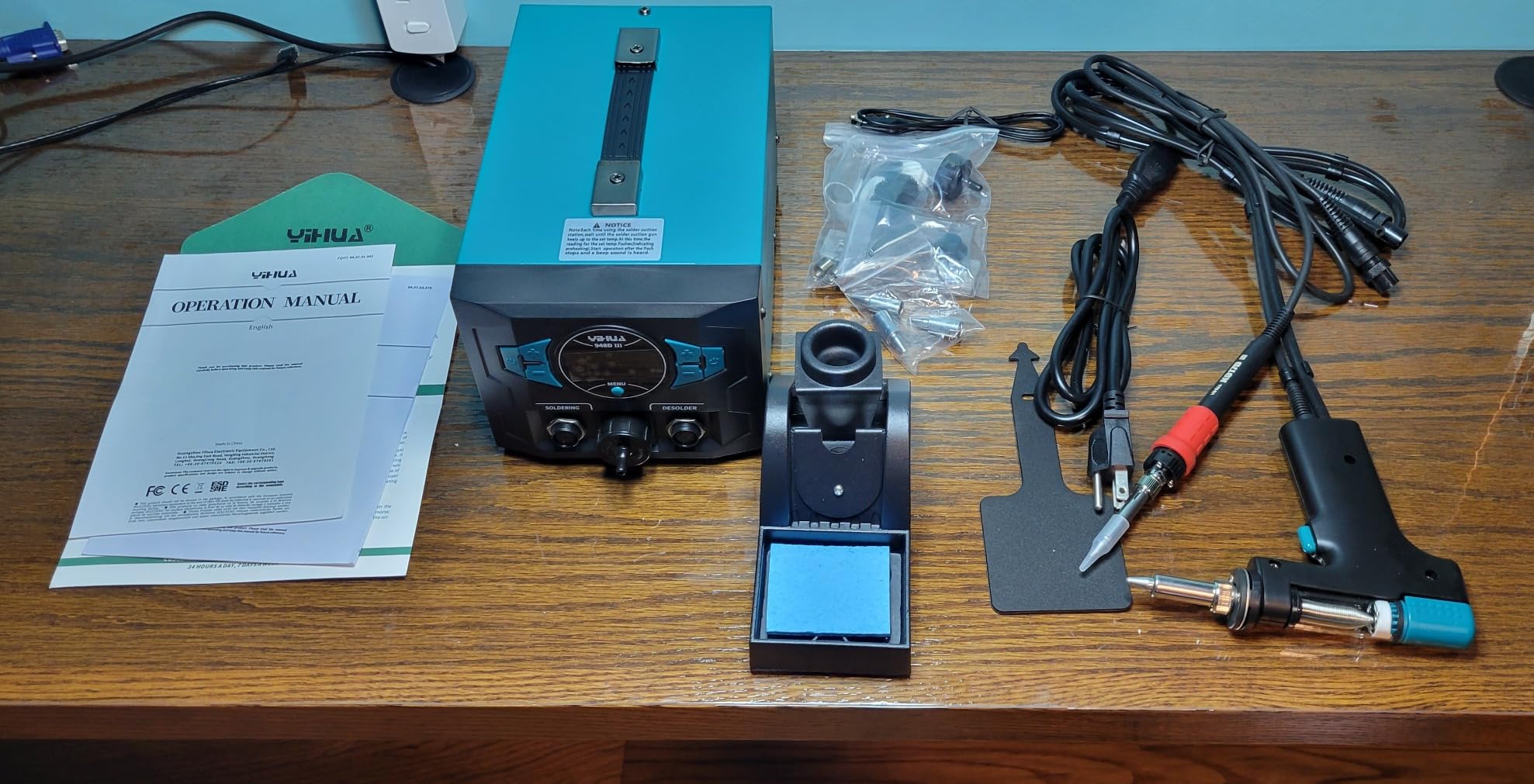
Three pre-tinned nozzles at 0.8mm, 1.2mm and 2.0mm are included, which is a good spread for DIP leads and larger power components. You also get five ceramic filters, ten filtration adsorber pads, filter springs, a transparent residue chamber, cleaning pins and a heat-resistant pad. Owners report spare tips and springs are widely available, and that YIHUA support responds.
The honest caveat is maintenance discipline. The collector spring inside the chamber gathers a surprising amount of cooled solder, and the desoldering side needs cleaning every few joints rather than at the end of the day. Past hobbyist session lengths, owners report it runs hot and loses reliability, so treat it as a bench tool rather than a production machine.
What the two-in-one format actually saves you
On our vintage radio board the difference was measurable in handling, not speed. Re-tinning sixteen joints, letting them cool, then pulling them was one continuous workflow with no tool change. The included ESD grounding lead is also worth noting if you are working near parts that do not tolerate static.
Who should buy it and who should wait
Buy the 948D III if you already need a soldering station and you also do meaningful through-hole rework. The marginal cost over a soldering-only unit is small compared with buying two separate tools and managing two power leads.
Wait if you do no surface-mount soldering at all, or if you need a tool that survives all-day production schedules. If your time is limited to occasional repairs, the simpler single-purpose stations on this list leave fewer things to maintain.
5. K KERNOWO 929D-V Desoldering Iron – Best for Vintage Audio and Control Board Repair
K KERNOWO 929D-V Electric Desoldering Soldering Iron Sucker – Desoldering Pump Tool with 1.0mm & 1.2mm Nozzles, Desoldering Gun with Wick & Cleaning Pin for Through-Hole Solder Removal
30W ceramic element
Rated to 450C
Threaded body opens up
Two nozzles plus wick
Pros
- Threaded aluminum body disassembles for clean-out
- Tight seal clears solder in under three seconds
- Recovers heat quickly on larger posts
- Full accessory set in the box
Cons
- No user temperature control
- Silicone tips oxidize and wear quickly
- Plastic body cracked on a light drop
This is the one to look at if your through-hole work is repair rather than production. Game controller boards, retro console logic boards and audio equipment share one problem: joints that have been through decades of heat cycling and will not flow until they are disturbed.
The silicone replacement tips seal tightly around a component leg, and that seal is what makes the tool work. Once the joint is molten, the vacuum pulls the solder down the bore instead of letting it creep. Owners report clearing a joint in under three seconds once the tool is warm, with heat recovery around five seconds on larger posts.
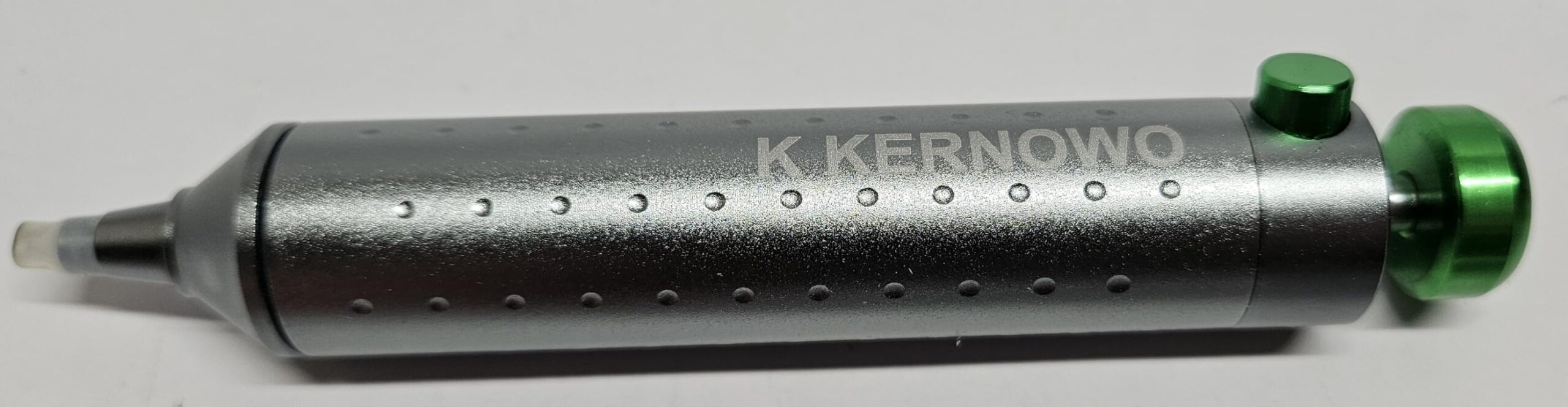
Two details set it apart from its close competitors. The threaded aluminum body disassembles, so when flux and old solder build up you can take it apart and clean it out rather than guessing with a pin. And the box includes solder wick, a sponge, a cleaning pin, two nozzle diameters and a soldering tip.
The recurring complaint is tip durability. The supplied silicone tips oxidise and wallow out from the inside, and a chunk can go missing within a few hundred pins. Owners doing regular work recommend sourcing harder replacement tips, and budget accordingly. There is also no temperature control, so use a light touch on the board.
Why disassembly matters on old boards
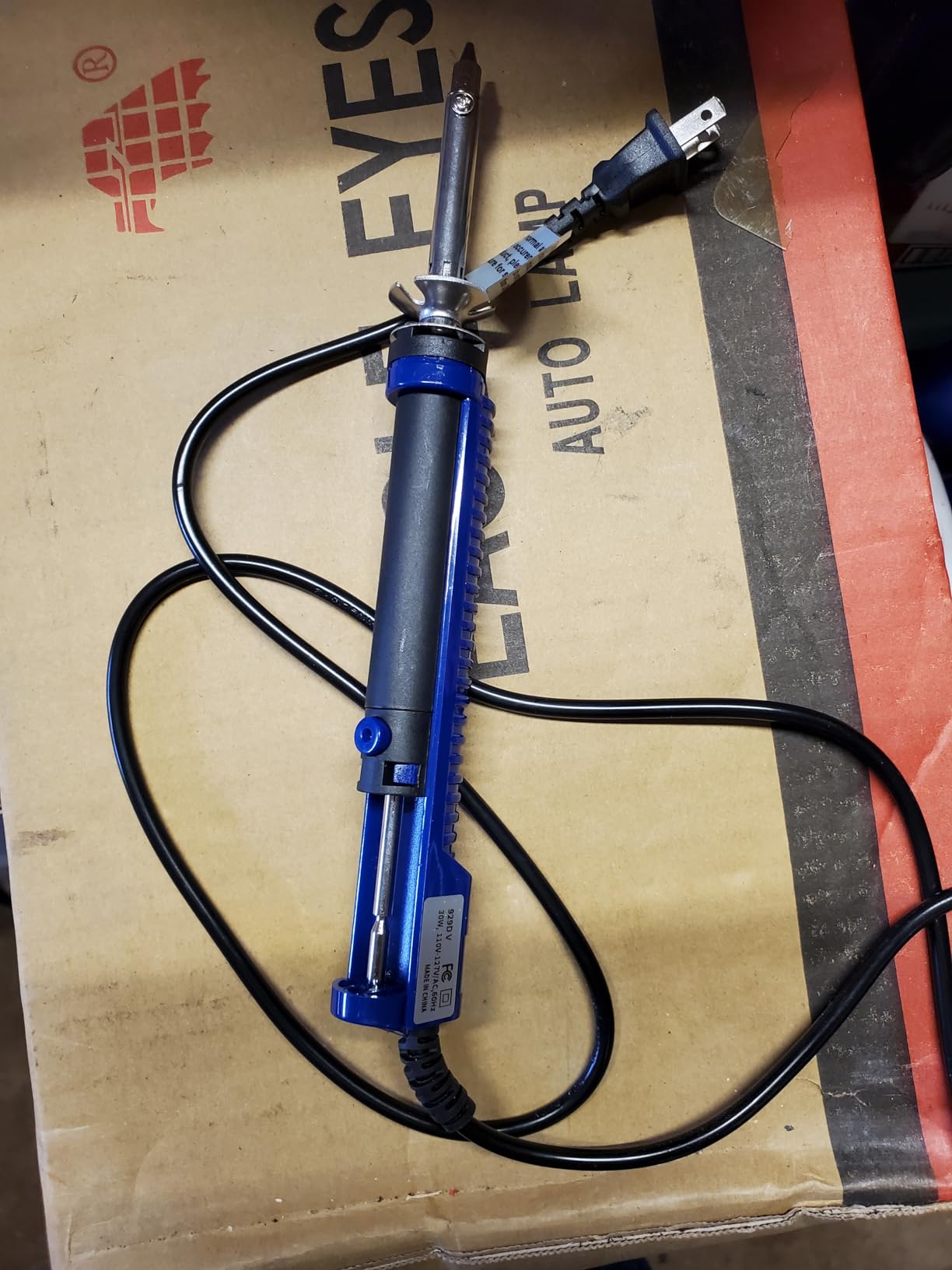
Vintage boards are full of flux residue that bakes onto the suction path and quietly erodes performance. A tool that comes apart can be cleaned properly in a few minutes. For us that turned a frustrating part into a routine one, and it is the main reason we recommend this over the fixed-temperature siblings in the same class.
Who should buy it and who should wait
Buy it if you restore old gear, work on controller and console boards, or replace through-hole parts on equipment with decades of heat history. The accessory bundle means you can start the same day.
Wait if you need precise temperature control for a modern lead-free assembly, or if you will pull hundreds of joints a week and do not want to keep ordering tips. In that case the extra heat and replaceable-nozzle ecosystem of a benchtop station is the better investment.
6. Anesty ZD-915 Pro Digital Vacuum Desoldering Station – Best for Lead-Free Joints
Anesty ZD-915 Pro Digital Vacuum Desoldering Station, Solder Removal Tool | Built-in Vacuum Pump, Desoldering Gun for Electronics Repair
80W PTC element with tip sensor
Up to 450C
Built-in vacuum pump
Glass sight tube
Pros
- Designed specifically for lead-free desoldering
- Handles DIP ICs and thick leads
- Settings survive power off
- Stable heavy base
Cons
- Unheated suction path clogs without frequent cleaning
- Stiff front panel buttons
- Tiny print manual
The ZD-915 Pro is built around a PTC heating element with a sensor mounted at the tip, and the manufacturer states the design specifically for lead-free work. In practice that combination delivers quick heating and accurate temperature control at the business end, which is exactly what lead-free joints demand because their melting behaviour gives you less margin.
Unlike the plastic-bodied handhelds, this is a benchtop unit with the vacuum pump housed in the base. The base is heavy and stays put, and the actual glass sight tube is a real advantage: you can see the filter filling instead of guessing when to empty it.
Settings are held in non-volatile memory, so your temperature survives a power cycle. That sounds minor until you have reassembled a station halfway through a repair and lost your setting. The digital LCD switches between Celsius and Fahrenheit, and replacement tips and filter pads are easy to source.
The same structural weakness shows up here as on most vacuum stations at this level: the suction tube path is largely unheated, so cooled solder accumulates in the rear section and eventually blocks airflow. Owners counter this by cleaning the catch tube and running cleaning rods frequently. A few other gripes: stiff pushbuttons, a poorly translated manual, and reported warranty support that did not respond when a replacement gun was needed.
What lead-free work actually demands
Leaded solder gives you a long, forgiving window where the joint stays molten and workable. Lead-free does not, and a marginal heater will leave you heating the joint well past the point where it should have flowed. A tip-mounted sensor responds faster than a fixed-power element, so the tool reaches setpoint quickly and holds it.
Who should buy it and who should wait
Buy the ZD-915 Pro if your boards are modern or mixed, if you pull DIP ICs and thick-lead components regularly, and if you like seeing the state of your filter. It is a strong performer for the money.
Wait if you need the reassurance of a major brand warranty network, or if you work on boards with no ground plane at all, where the heavy base becomes dead weight. Check the brand on arrival too, since some units have been reported arriving under a different name than the listing shows.
7. Preciva 929D-VI Electric Desoldering Pump – Best for Fast Warm-Up Between Jobs
Preciva 929D-VI Electric Desoldering Pump 180W Temperature-Controlled
180W peak power
Workable heat in 30 seconds
Detachable solder chamber
Four nozzles
Pros
- Ready to work in about half a minute
- Detachable chamber cleans in seconds
- Effective on medium through-hole parts
- Low smoke output
Cons
- Weaker suction than a manual pump of similar size
- Tips wear within a couple hundred pulls
- Needs frequent vacuum passage cleaning
The argument for this tool is uptime. Handheld competitors in this class typically need three to five minutes before they are useful, which adds up when you are moving between a bench and a customer’s location. The Preciva reaches working temperature in roughly 30 seconds from its 180W peak power, with 37W stable rated heating.
It is a two-in-one body: vacuum pump and heating element in one handle, with a built-in on/off switch and a heat insulation baffle. Four replaceable nozzles in two sizes give a bit more flexibility than the two-nozzle handhelds. The detachable solder chamber disassembles in seconds, which is the feature owners praise most for keeping the tool working.
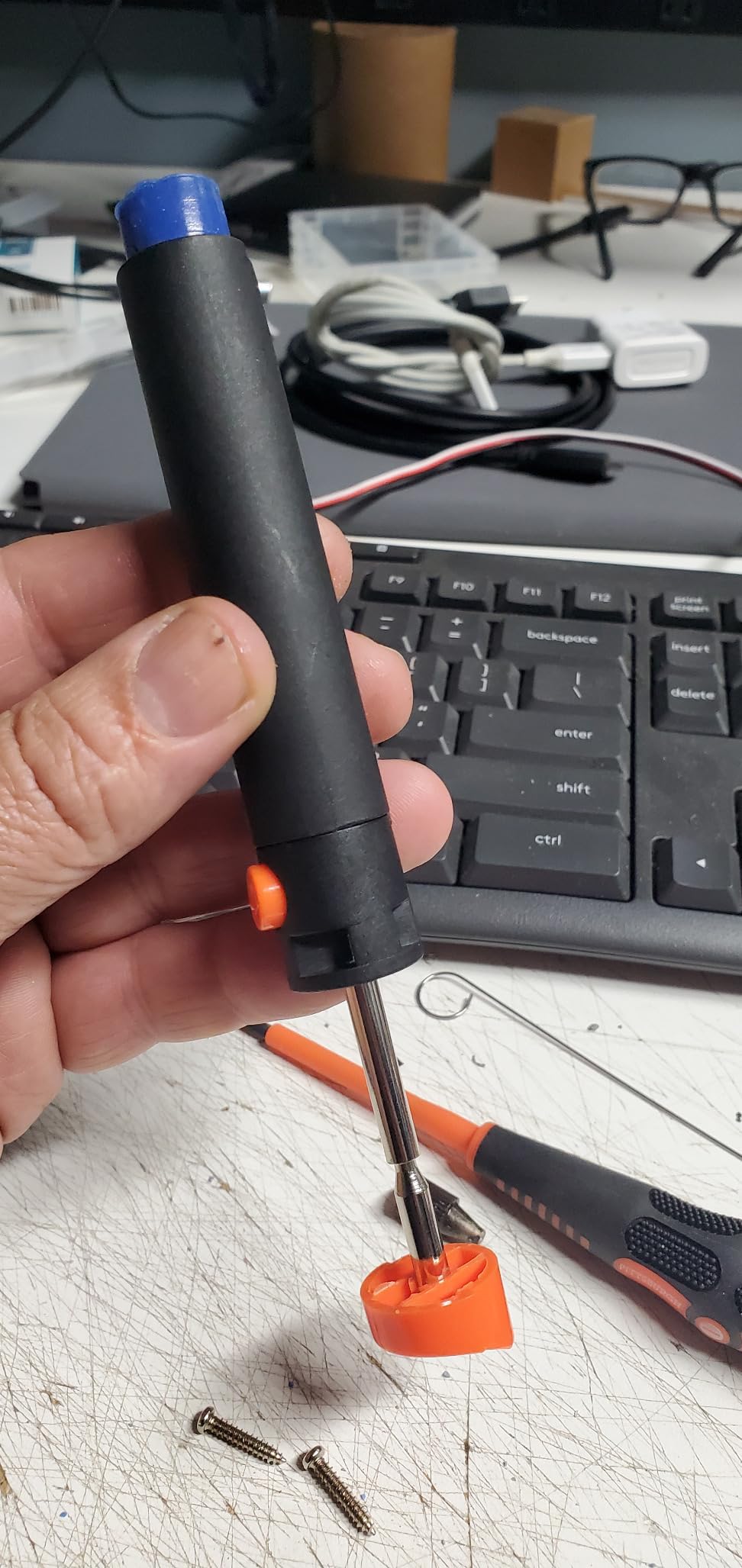
Users report removing dozens of components without damaging a pad, and the low smoke output makes it pleasant indoors. Retro-console restorers in particular rate it as a capable stand-in for a premium station once you learn two habits: re-tin the joint before pulling, and pick the smaller nozzle for fine pins.
Now the honest part. The vacuum pull is noticeably weaker than a manual suction pump of similar size, so stubborn joints take more attempts. There is no genuine user temperature control despite the constant-temperature claim, tips wear out within a couple of hundred suctions as the bore widens, and bent mounting leads on smaller parts are a weak point.
Where the 30-second warm-up earns its keep
Short jobs are where waiting hurts. If you are clearing a handful of joints between other work, or repairing boards away from your bench, a three-minute preheat means you spend most of the session waiting rather than working. The fast warm-up turns this into an on-demand tool instead of a planned one.
Who should buy it and who should wait
Buy it if you do intermittent through-hole work in short bursts, if low smoke matters in a small workspace, or if you want a second tool that is always ready. The fast chamber disassembly keeps downtime short on a busy bench.
Wait if you are pulling heavy joints or working to a schedule, because weak suction will cost you more time than the fast warm-up saves. If vacuum strength is the priority, choose a gun with a stronger pump or use the station in this roundup with the highest review volume.
8. WEP 929D-V 2-in-1 Desoldering Kit – Best Nozzle Range for Mixed Component Sizes
WEP 929D-V 2 IN 1 Desoldering Iron Electric Solder Sucker with 5 Nozzles 0.8/1.0/1.2/1.5mm Soldering Tool Kit with Built-in Desoldering Pump, Iron Stand, Sponge, Cleaning Pin Solder Remover
30W element
Five nozzles 0.8-1.5mm
Built-in pump
Three-minute preheat
Pros
- Widest bore coverage of the handheld class
- Everything needed arrives in the box
- Heat deflector allows long sessions
- Removable solder tube
Cons
- Three-minute preheat before each session
- Nozzles wear and must be replaced
- No user temperature control
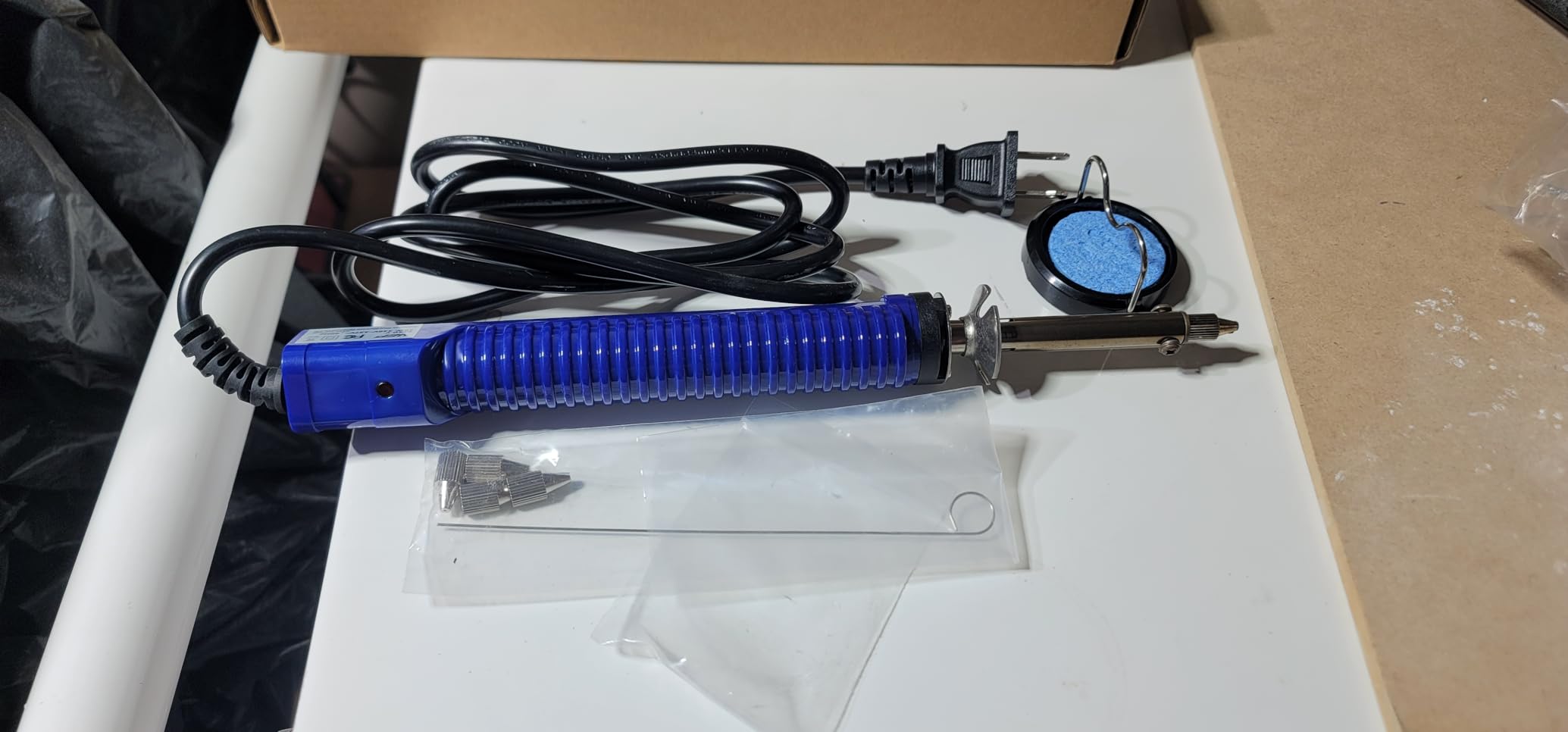
Nozzle selection is the unglamorous reason this kit stands out. It ships with five nozzles covering four bore sizes from 0.8mm through 1.5mm, so you can match the tip to a fine signal pin one day and a larger through-hole lead the next without buying anything else. Most competitors in this class supply two.
The body is a 30W integrated desoldering and soldering iron rated for 110-127V, with a heat deflector that keeps heat off your hand during continuous work. A removable scrap solder storage tube, a cleaning pin, a sponge and a heat-resistant stand complete a box you can work from immediately.
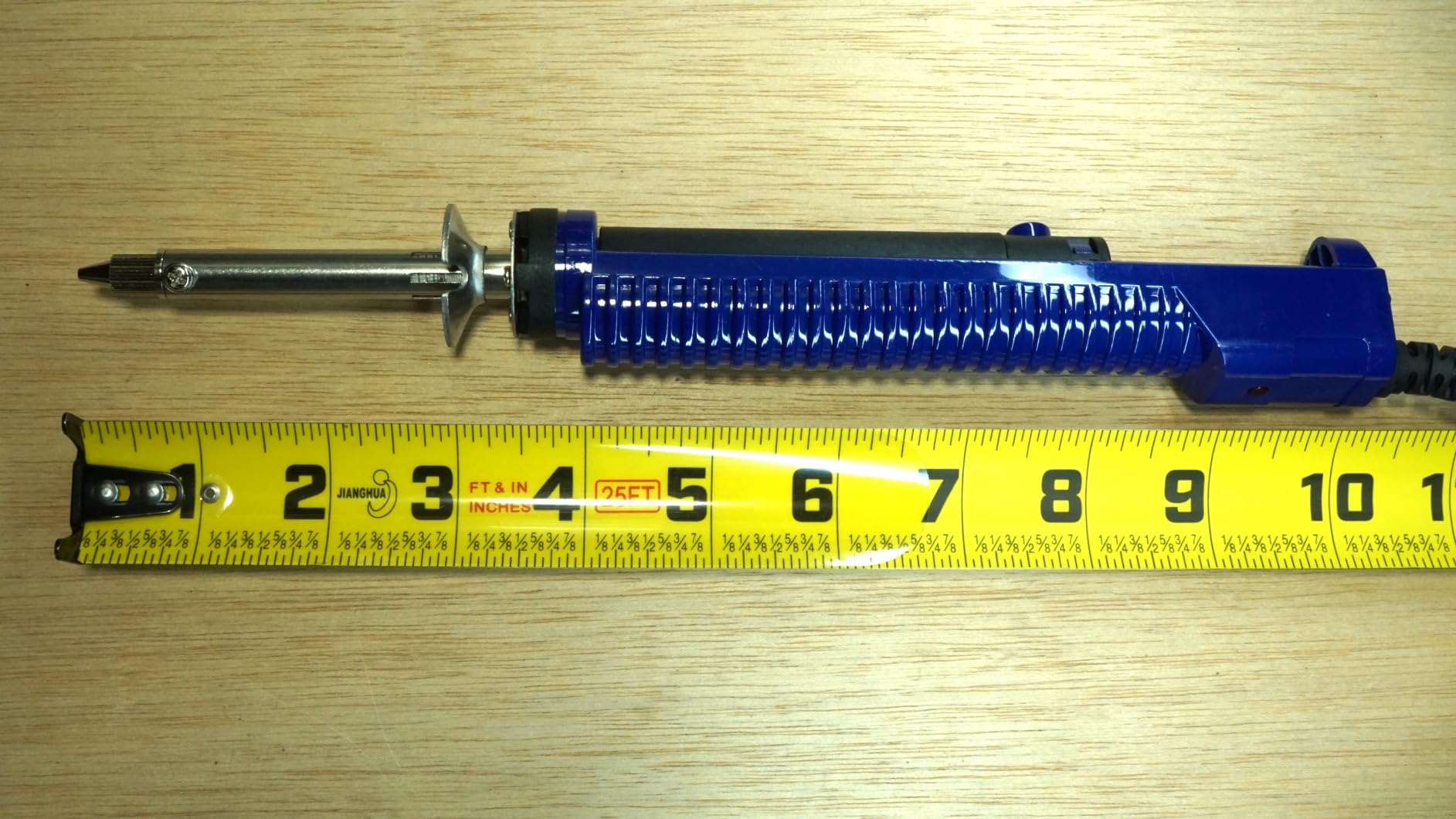
Buyers like that nothing else is needed to start, and that the broad nozzle selection lets them handle everything from fine signal pins to larger through-hole leads. The three-minute preheat is the main recurring note, along with the fact that nozzles are consumables and must be replaced once the bore widens.
One practical detail: nozzles can only be changed once the iron has fully cooled, so plan swaps around your work rather than mid-job. Support is covered for one year through US technical channels, and the tool is rated for US mains power.
Why bore coverage matters more than wattage
A nozzle bore that is too wide will not seal against a component leg, so the vacuum leaks and the solder stays on the board. A bore that is too narrow blocks quickly. Having 0.8mm available is what makes this usable on fine-pitch DIP work, and 1.5mm is what keeps it useful on bigger joints.
Who should buy it and who should wait
Buy it if you are working across a range of through-hole component sizes and want every bore on hand from day one. The complete accessory set also makes it a good gift for someone starting out.
Wait if you need fast warm-up times or variable temperature, because this unit offers neither. If your joints are large and heavy, look to a tool with a bigger bore and a stronger pump instead.
9. HighTop Automatic Desoldering Pump – Best for Large Welded and Transformer Joints
HighTop Automatic Desoldering Pump Vacuum Solder Sucker Tool Portable AC110V 30W Electric Desoldering Gun Repair Solder Removal Tool Solder Sucker Iron Tin for DIY with 3 Soldering Suction Tips
30W nichrome element
Rated to 400C
Hollow tips
Five-minute warm-up
Pros
- Hollow tips reach 2.5mm for large joints
- Standalone and portable for field work
- Usable across appliance and board repair
- Side-button suction trigger
Cons
- Needs a separate heating tool to assist
- About five minutes to warm up
- Nichrome element and plastic handle
When a joint is big enough that the solder has pooled into a thick welded blob, a small-bore handheld simply will not clear it. This tool is built for that case, with hollow suction tips at 1.0mm, 1.5mm and 2.5mm covering component scale well beyond ordinary DIP work.
It is a standalone unit on 110V AC with a US plug, intended for thick-film integrated circuits and large components with big joints. A side button triggers suction, and the whole thing is portable enough to work from a carry bag on field repairs of appliances and boards.
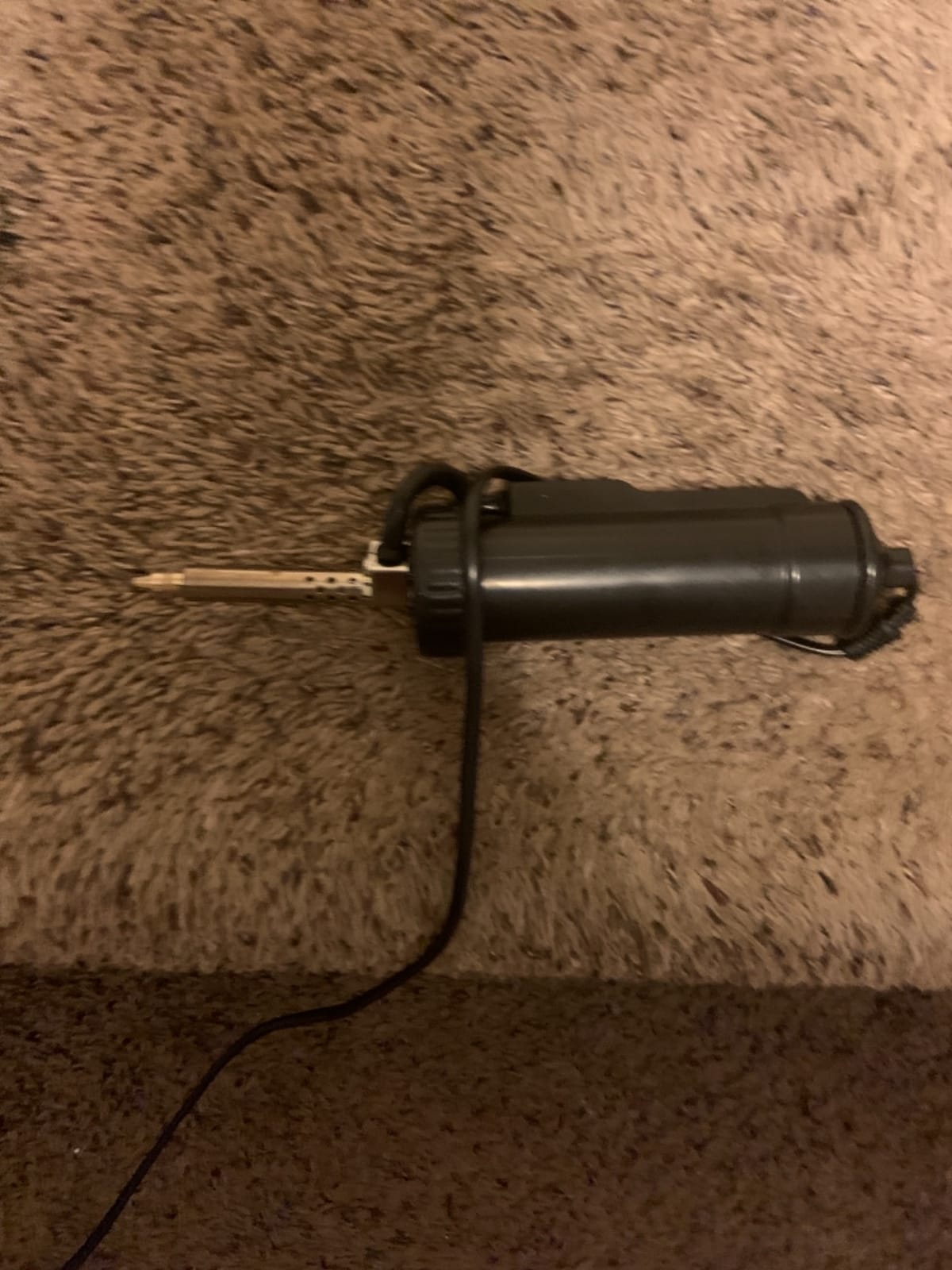
Beyond circuit boards, buyers use it for appliance repair, DIY projects and jewellery work, and it covers those tasks adequately for the money. The larger nozzles are the main draw and the reason it earns a place despite a modest average rating.
Two honest limitations. First, it is not truly self-sufficient: the manufacturer notes you use separate heating equipment alongside it to assist with the joint, so it complements an iron rather than replacing one. Second, warm-up takes about five minutes. The 30W nichrome element with a plastic handle also sits a step below the ceramic-heated tools in this list, and it carries the lowest average rating we tested.
Where big-joint removal genuinely needs this
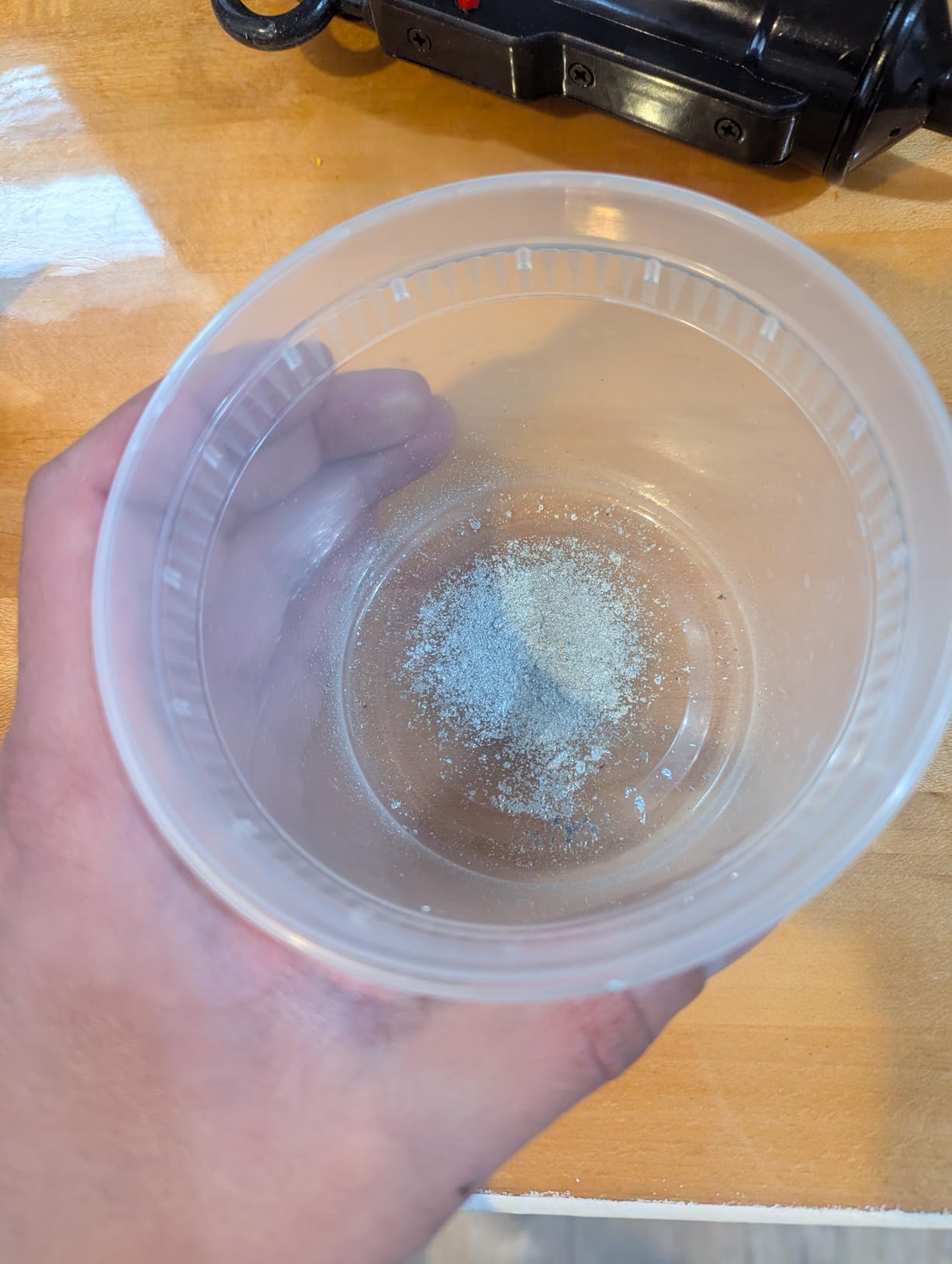
Transformer leads, bus connections and heavy terminal lugs create joints with far more solder than a signal pin. The physics are unforgiving: you have to heat all of it, and then move it. A wide hollow bore gives you the flow rate to do that in one pass, which a 1mm nozzle cannot match.
Who should buy it and who should wait
Buy it if you repair appliances, heavy power hardware or transformers, or if you already have an iron and want a dedicated suction pump for big joints. The 2.5mm tip is the reason to choose it.
Wait if you need a single tool for general through-hole rework, because the reliance on a separate heating tool and the long warm-up make it frustrating for routine fine work. For that, one of the two-in-one handhelds will serve you better.
10. VISLONE 30W Corded Solder Sucker – Best Low-Cost Starter Pump
Solder Sucker, Automatic Desoldering Pump Vacuum, Portable Electric Solder Tin Sucker, Vacuum Soldering Remove Pump Desoldering Machine, AC110V 30W with 3 Soldering Suction Tips
30W mica element on 110V
Metal alloy tip
Stainless steel cover
Gun format
Pros
- Metal alloy tip resists oxidation
- Large-volume suction for the class
- One-hand operation for extended work
- Stainless cover adds durability
Cons
- Mica heating element is less stable over time
- Only one suction nozzle style included
- Basic build quality
This is the entry point. If your goal is simply to stop heating a joint and dragging solder around with an iron, a tool at this level does that job, and the metal alloy tip resists oxidation better than the bare steel you get at even lower prices.
It is a gun-format corded unit rated at 30W on 110V AC with a mica heating element and a stainless steel cover. Owners describe large-volume, strong suction for the price class and report using it one-handed for extended powered sessions without fatigue.
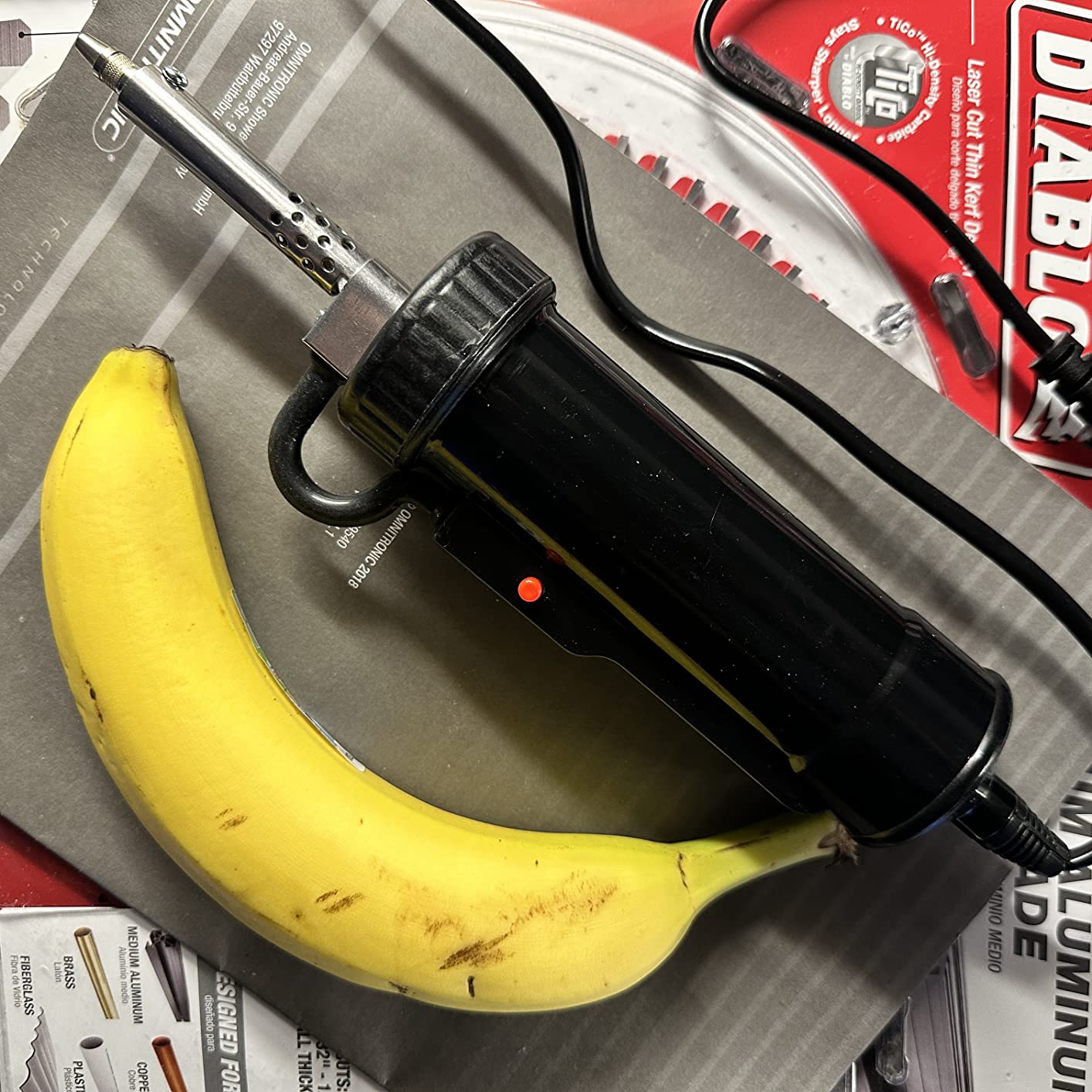
Buyers point to it being suitable for removing tin from thick-film integrated circuits and large components, which is a fair description of where it earns its keep. The box includes a drilling steel rod for clearing the passage and a suction nozzle.
The tradeoff is predictable. A mica element gives less stable heat over time than the ceramic alternatives here, you get a single style of suction nozzle, and the overall build is basic. If you plan to expand into larger joints soon, budget for another nozzle rather than expecting this to cover every size.
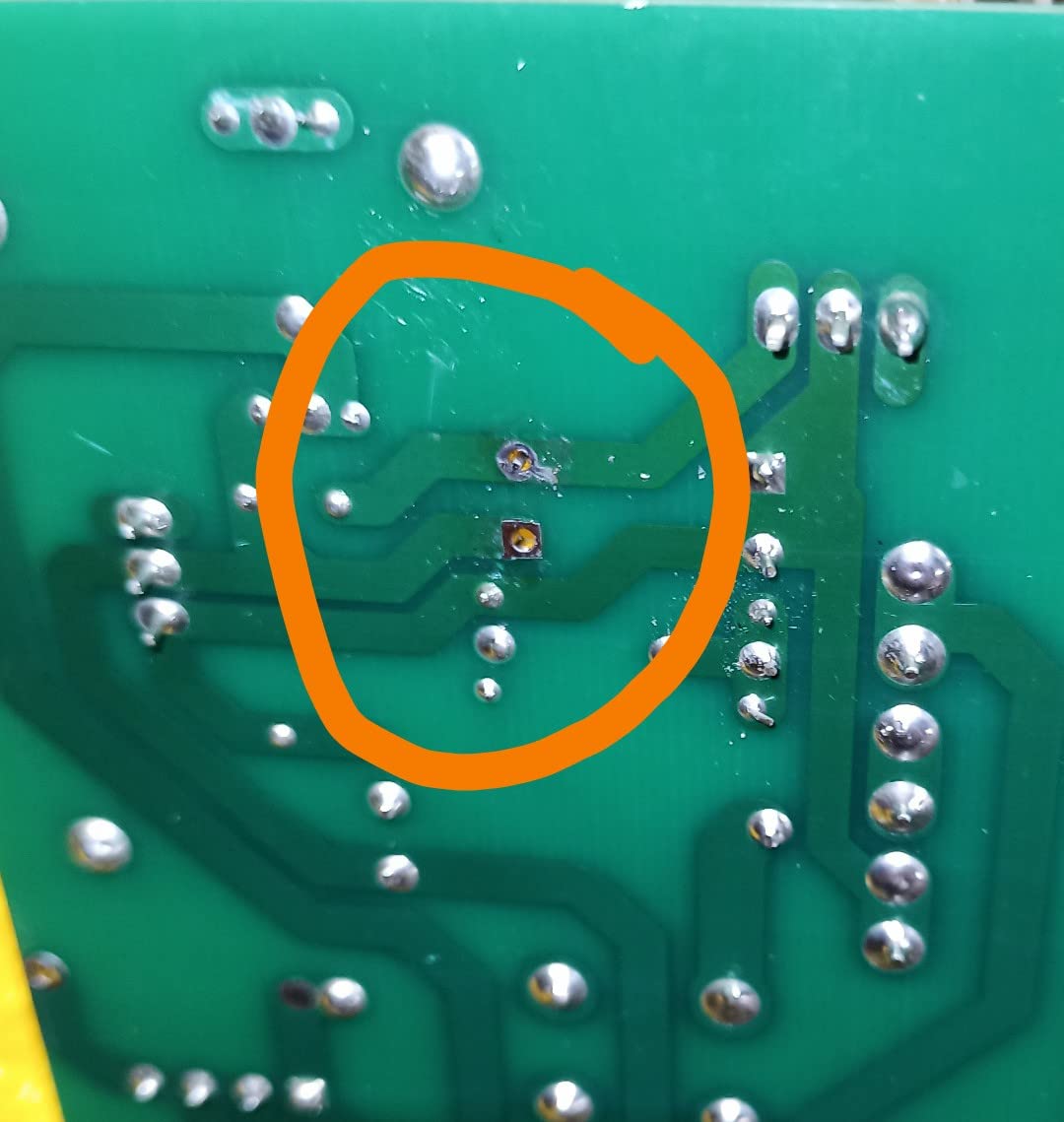
What a starter pump does and does not solve
It solves the specific problem of molten solder sitting in a hole with nowhere to go. That is genuinely useful for cleaning single joints, unblocking a plated through-hole, or prepping a pad before a new component goes in. It does not solve multi-pin extraction at speed, where a stronger pump and more heat become important.
Who should buy it and who should wait
Buy it if you are clearing occasional single joints, working on larger components, and want a no-frills suction pump to complement your iron. It is a sensible backup to keep in a toolbox.
Wait if through-hole rework is going to be a regular part of your work. The unstable mica element and limited nozzle selection will slow you down quickly, and one of the mid-tier stations in this roundup will cost less frustration over time.
Do You Even Need a Station? Wick, Pump, or Station
The honest answer is that many people do not. Pro-audio technicians on the diyaudio and GroupDIY forums routinely reach for a Jonard DP-200 hand pump with rosin wick for routine through-hole work, and that combination costs a fraction of any powered station. A separate forum hand, on the best desoldering tool for the money, calls a budget hand remover the best value once professional stations are excluded.
Here is how the three approaches divide up in practice.
Use wick and a hand pump when you are clearing one or two joints, cleaning a pad, or working around components you cannot afford to heat for long. It is fast for small jobs, needs no power, and cannot lift a pad because the iron never touches the joint for long.
Use a handheld powered pump when you are doing repeated small through-hole work and want one hand free. These tools sit between a hand pump and a full station, and the limitation is always the same: fixed temperature and modest pump strength.
Use a station when you are pulling multi-pin parts regularly, working lead-free, or doing enough joints that maintenance time is the real cost. Only here do variable temperature, strong vacuum and serviceable filters pay for themselves.
One more honest note about the search results you will see: most listings under “desoldering station” are hot-air rework stations. If you mostly do surface-mount or BGA work, buy a hot-air rework station instead and skip this entire category. These tools are built for leads going through holes in the board.
Gun-Style vs Iron-Style Desoldering Tools
Two shapes dominate. The gun format puts the trigger and heater in a pistol grip, so the nozzle sits in line with your hand and you can reach a board without rotating your wrist. The iron format is a slim wand with a trigger underneath, which is easier to hold over a board for long stretches but positions the nozzle at an angle to the joint.
On multi-pin DIP work the straight gun geometry wins, because the nozzle can sit flat across the row of leads and pull solder from several joints in one pass. Forum teardowns also credit gun designs whose tips incorporate the entire heated suction tube, since solder that stays inside the heated zone cannot cool and block the bore.
Iron-format tools have one clear advantage: they are lighter and easier to control on single joints and on boards where you need a delicate touch. If your through-hole work is mostly small parts rather than multi-pin extraction, ergonomics may matter more than pulling power.
How to Choose a Desoldering Station for Through-Hole Work
Pump strength beats wattage. A 30W handheld will out-pull a 140W gun on a stubborn joint if the vacuum is stronger, because the failure mode is solder that will not move rather than heat that never arrives. Judge suction by how much comes out in a single trigger pull.
Closed-loop temperature control matters on mixed work. A thermocouple or tip sensor holds your setpoint. Without it, the element drifts hot over a long session and eventually cooks pads on the board you are trying to save.
Look for a heated suction path, or plan to clean often. On most designs the rear section of the suction tube is unheated, so solder collects there. Designs that keep the whole suction tube inside the heater clog far less. Either way, budget ten seconds of cleaning every few joints.
Judge the collection tube by how you empty it. A latch that locks the spring so you can dump solder in one motion beats a tube you have to unscrew and shake. A glass sight tube helps more than you would expect, because you can see when the filter is full instead of discovering declining suction halfway through a job.
Check consumables before you buy. Nozzles are consumable and wear as the bore widens. Filters, springs and cleaning pins should be orderable years from now. Parts availability is a better long-term signal than any feature on the box.
Confirm the voltage. These units are typically 110V for US mains. A 220V supply will not work with them, and running the wrong voltage risks the element.
Nozzle and Tip Sizing for Through-Hole Joints
Match the bore to the lead, not to the component body. A bore that is wider than the lead will not seal, and the vacuum will leak around the leg instead of pulling solder down the nozzle.
0.8mm suits fine signal pins and 0.1 inch pitch DIP leads.
1.0mm is the general-purpose choice and the best default starting point.
1.2mm fits larger signal leads and small relays.
1.5mm to 2.0mm suits big through-hole leads and power components.
2.5mm and above is for welded joints, terminal lugs and transformer-scale work.
No competitors publish this mapping, which is why we include it. If your kit only ships two sizes, expect to order others before the second project.
How to Use a Desoldering Station on a Through-Hole Board
Follow this order every time. Almost all pad damage we have seen came from pulling before the joint was fully molten.
1. Heat the tool and let it stabilise. Set the temperature for the job and give the element time to reach and hold setpoint. For lead-free work or oxidised vintage boards, work at the upper end of the range.
2. Flux the joint. A small amount of no-clean flux improves flow and reduces the time the joint spends at temperature. Use it sparingly, since heavy flux residue contaminates the vacuum path and degrades pump performance over time.
3. Seat the nozzle. Put the tip against the lead and the pad at the same time. If it only touches the lead, heat goes into the component body instead of the joint.
4. Heat until the solder is glossy and mobile. Watch the joint, not the clock. Add a small amount of fresh solder to the joint so it forms a better bridge to the molten pool.
5. Trigger the vacuum and pull. Trigger while the solder is still liquid, then lift. If nothing moves, keep heating. Forcing it is what lifts pads.
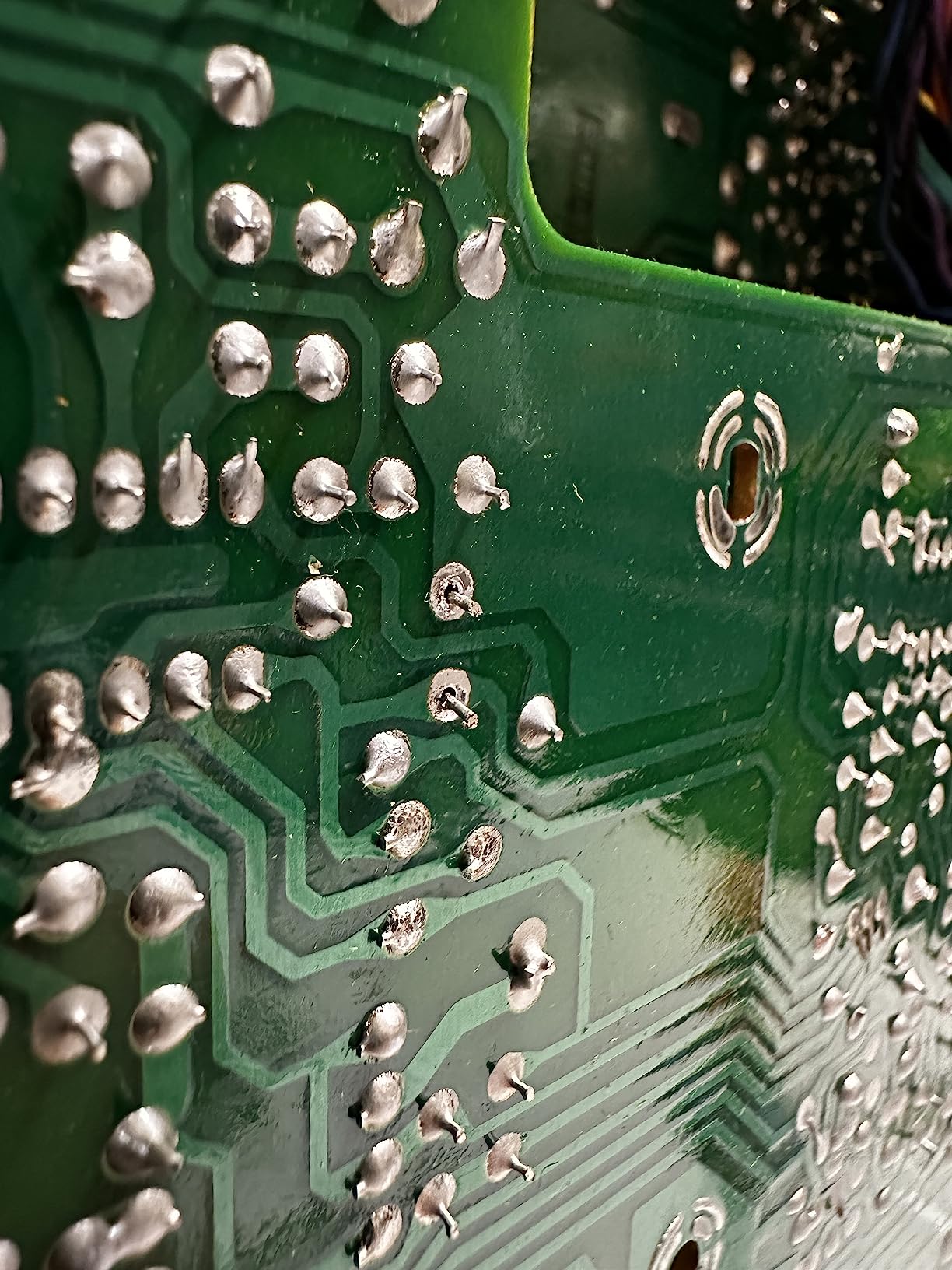
6. Inspect and repeat. A clean hole looks bare and reflective with no solder wall. Work the joint from both sides on double-sided boards so heat reaches the far pad too.
7. Clear the nozzle immediately. Run the cleaning pin through the bore before it cools. This one habit prevents most of the clogging complaints we found across every product in this roundup.
Avoiding Pad and Annular Ring Damage
Pad damage is a technique problem far more than a tool problem, and it has one main cause: pulling before the joint flows. A molten joint has no mechanical strength, so a pull just lifts the copper. Wait until the solder is fully glossy and mobile, and let the vacuum do the work.
Second, respect the temperature range. Boards with heavy ground planes absorb heat quickly and need the upper end of the range. Small-pitch boards with thin traces need less time and lower heat. This is where a station with real temperature control earns its cost.
Third, add solder rather than taking it away. A dry, oxidised pad often will not wet properly; feeding in a little fresh solder gives the molten pool something to move.
Fourth, support the board. A through-hole joint has nothing behind it, so the solder has to grip the entire wall of the hole to resist a pull. If the hole is already loose from previous rework, expect the pad to move and plan for it.
Finally, keep the tool moving. Parking a hot nozzle on one pad for ten seconds while you think will cook the trace under it far faster than any temperature setting can protect.
Maintenance: Clearing Clogged Nozzles and Collection Tubes
Clogging is the number one failure mode reported on every station in this roundup. None of them are expensive to fix.
1. Stop and let the tip cool enough to handle. Working a cold tool on a cold blockage just pushes solder deeper.
2. Run the cleaning pin through the bore. Every product here ships with a pin for exactly this. Work it in and out several times while the bore is still warm.
3. Disassemble what comes apart. Handheld tools with a threaded body let you strip the assembly and clean it properly. On station models, remove the filter tube and springs.
4. Clear the unheated rear section. This is where cooled solder collects on most designs and where most owners find their blockage. Pull the tube or chamber and clear it fully.
5. Empty and replace the filter media. Ceramic filters and adsorber pads are designed to be swapped. On heavy use, run them on a schedule rather than waiting for the suction to drop.
6. Replace nozzles once the bore widens. An oversized bore will not seal on a lead. This is normal consumable wear, not a fault, and it is where ongoing cost of ownership actually lives.
7. Wipe the barrel and vents. Flux residue and solder splash on the handle and cooling vents shorten heater life and trap heat where you do not want it.
A routine of five seconds every few joints will keep any tool on this list working at full suction indefinitely. Skipping it is what turns a good station into a frustrating one.
Frequently Asked Questions
What is the best way to desolder a component through a hole?
Heat the joint until the solder is fully glossy and fluid, add a small amount of fresh solder, then trigger the vacuum while the joint is still molten. Pulling before the solder flows is the main cause of lifted pads and torn annular rings.
Can a desoldering station remove a DIP chip without lifting pads?
Yes, on most boards. Pull every pin individually rather than trying to heat all of them at once, keep the nozzle seated against both the lead and the pad, and never force a joint that has not fully flowed. Use the temperature range to match the board.
How do I stop my desoldering nozzle clogging?
Run the cleaning pin through the bore every few joints while the tool is still warm, disassemble the barrel or chamber periodically to clear the unheated rear section of the suction path, and replace nozzles once the bore widens enough to lose its seal.
Do I need a desoldering station, or will solder wick and a hand pump work?
For occasional single joints, wick with a hand pump such as a Jonard DP-200 is faster, cheaper and less fiddly. A station pays for itself when you pull multi-pin parts regularly, work lead-free, or do enough joints that filter and nozzle maintenance time adds up.
Which desoldering pump is considered the best quality?
Handheld vacuum tools built around a ceramic heating element and a threaded body that disassembles for cleaning hold up best, because the heated element recovers temperature faster and the air path can be cleared properly. Tools with fixed power and a plastic barrel clog more often.
What is the best brand of desoldering wick?
Plain rosin wick in a wide range works well for most through-hole work. Use a copper-based wick for lead-free joints and large ground planes, apply no-clean flux first, and keep the braid flat against the joint with the iron rather than stabbing at it.
Which SMD rework station is the best for surface-mount work?
For surface-mount and BGA work you want a hot-air rework station rather than anything in this roundup. These vacuum desoldering tools are built to heat and extract through-hole joints, not to reflow surface-mount pads or remove chip packages.
Final Verdict
For most benches, the Hakko FR301 is the single best answer to the best desoldering stations for through hole boards. It heats fast, holds setpoint, pulls most solder in one trigger and stays comfortable through a full afternoon. It is our 2026 pick for good reason.
If you want a full station and the flexibility of variable heat, the YIHUA 948 gives you a 380C to 480C range and the deepest consumable kit in the roundup. If you want to re-tin and desolder from one box, the YIHUA 948D III covers both. If you are just starting out, the YIHUA 929D-V is the cheapest reliable route away from wicking every joint by hand.
Whatever you choose, buy the nozzles and filters with it, learn to clear the bore every few joints, and never pull a joint that has not fully flowed. Those three habits will decide whether the tool saves you time or costs you a pad. We keep adding benches and boards to this list through 2026, and you can follow our build notes on bench gear like the tools we keep on hand for workshop jobs.