
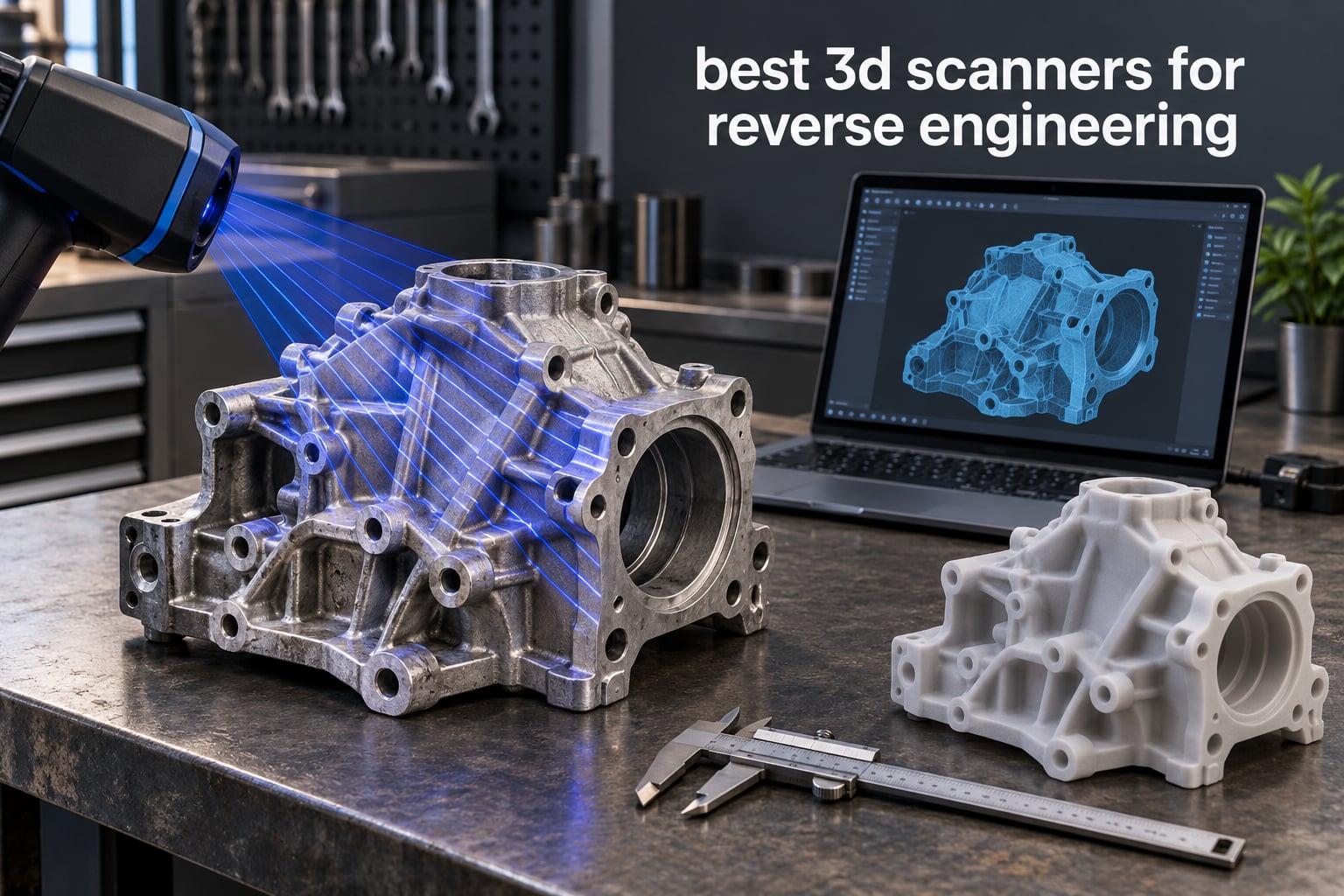
A 3D scanner helps with reverse engineering by measuring a real part without touching it and turning it into a point cloud and mesh you can convert into CAD geometry, so you can reproduce, repair or modify a component without the original drawings. The scanners that do it best now reach 0.02 mm volumetric accuracy and pick up two million points per second. We compared ten of them for this roundup, and the deciding factors were accuracy, whether you can work marker-free, and what the software does after the scan.
The bottleneck is rarely the hardware. Owners on the FreeCAD forum describe reverse engineering as confusing because you reference solid features in CAD, but a scan only ever gives you a point cloud or a mesh. That gap between a noisy mesh and a parametric part you can machine is where most people get stuck, and no competitor roundup explains it.
So we mapped scanners to the work you actually do with them: small electronics housings, thin automotive panels, engine bays, and full assemblies. All accuracy figures below come from manufacturer specifications and user review data, and everything is current as of 2026. If you also need to scan whole rooms or buildings rather than parts, our LiDAR scanner guide covers a different class of tool.
Table of Contents
Top 3 Picks for Reverse Engineering in 2026

Revopoint MetroX Pro
- 0.01 mm single-frame precision
- 0.02 mm volumetric accuracy
- 2M points per second

Best 3D Scanners for Reverse Engineering (October 2026)
| Product | Specifications | Action |
|---|---|---|
| Revopoint MetroX Pro |
|
Check Latest Price |
 EINSTAR Rockit EINSTAR Rockit |
|
Check Latest Price |
| Revopoint POP3 Plus |
|
Check Latest Price |
 Revopoint MetroY Ultra Revopoint MetroY Ultra |
|
Check Latest Price |
 Creality Ferret Pro Creality Ferret Pro |
|
Check Latest Price |
 Shining 3D Einstar Vega Shining 3D Einstar Vega |
|
Check Latest Price |
 EINSTAR 2 EINSTAR 2 |
|
Check Latest Price |
 Creality Sermoon S1 Creality Sermoon S1 |
|
Check Latest Price |
 3DMakerpro Mole 3DMakerpro Mole |
|
Check Latest Price |
 Creality Raptor Pro Creality Raptor Pro |
|
Check Latest Price |
1. Revopoint MetroX Pro: The Most Complete All-Rounder
Revopoint MetroX Pro 3D Scanner, Blue Laser Scan, for 3D Printing, Advanced
0.01 mm precision
0.02 mm + 0.04 mm/m volumetric
2M points/sec
20 x 14.6 x 6.5 in
Pros
- Scans shiny and dark metal without spray
- 2 million points per second in cross-line mode
- Auto turntable with HD RGB color
- Large object range in practice
Cons
- Tethered USB-C only
- Tracking can drop on feature-poor surfaces
- Full-color results need work
This is the scanner I would put on a bench for general reverse-engineering work, because it removes the three compromises you normally accept. You get blue laser detail at 0.01 mm single-frame precision, cross-line modes that hold up on dark and glossy metal without matte spray, and an auto turntable that produces a usable full-color scan without manual stitching.
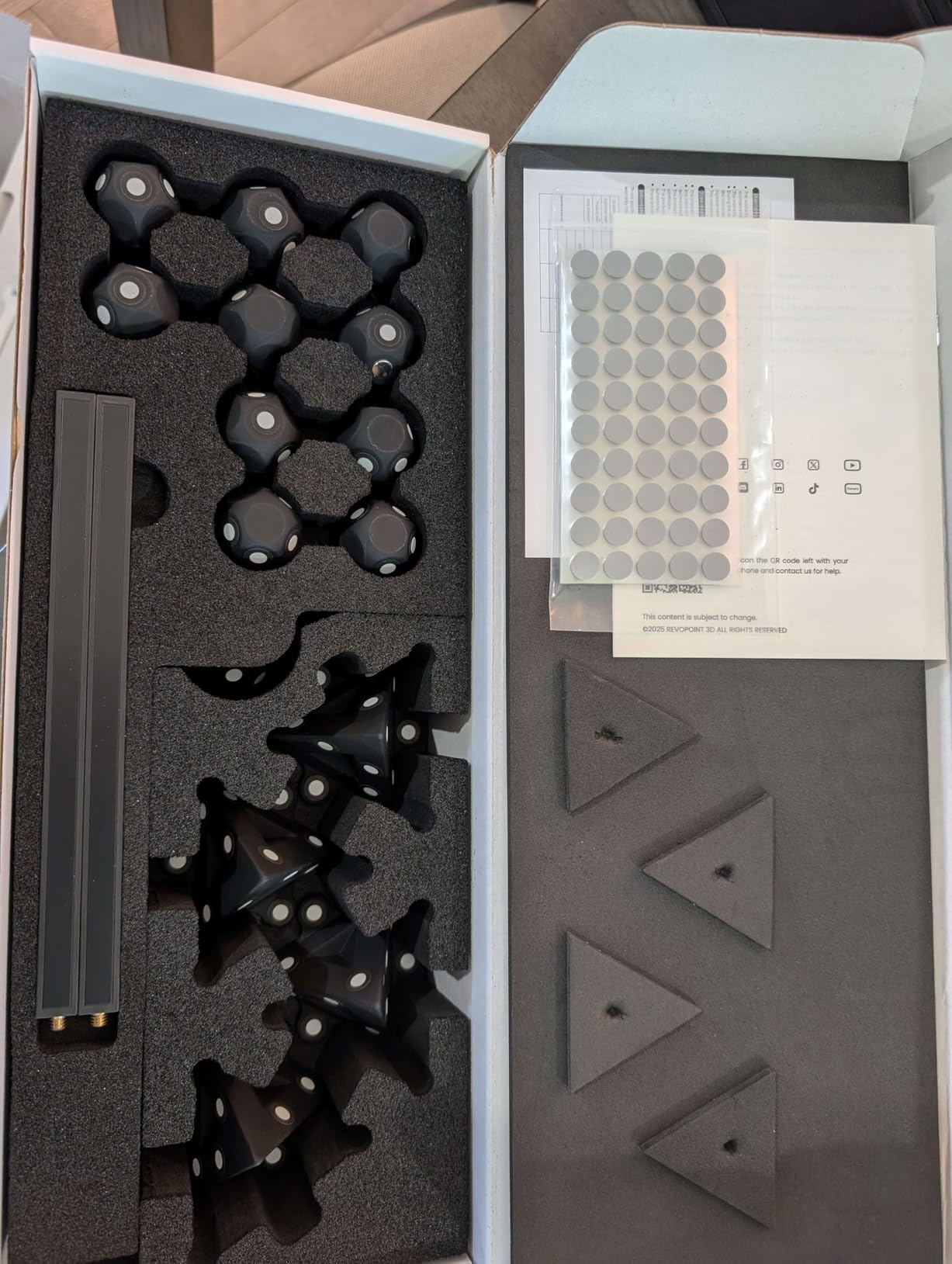
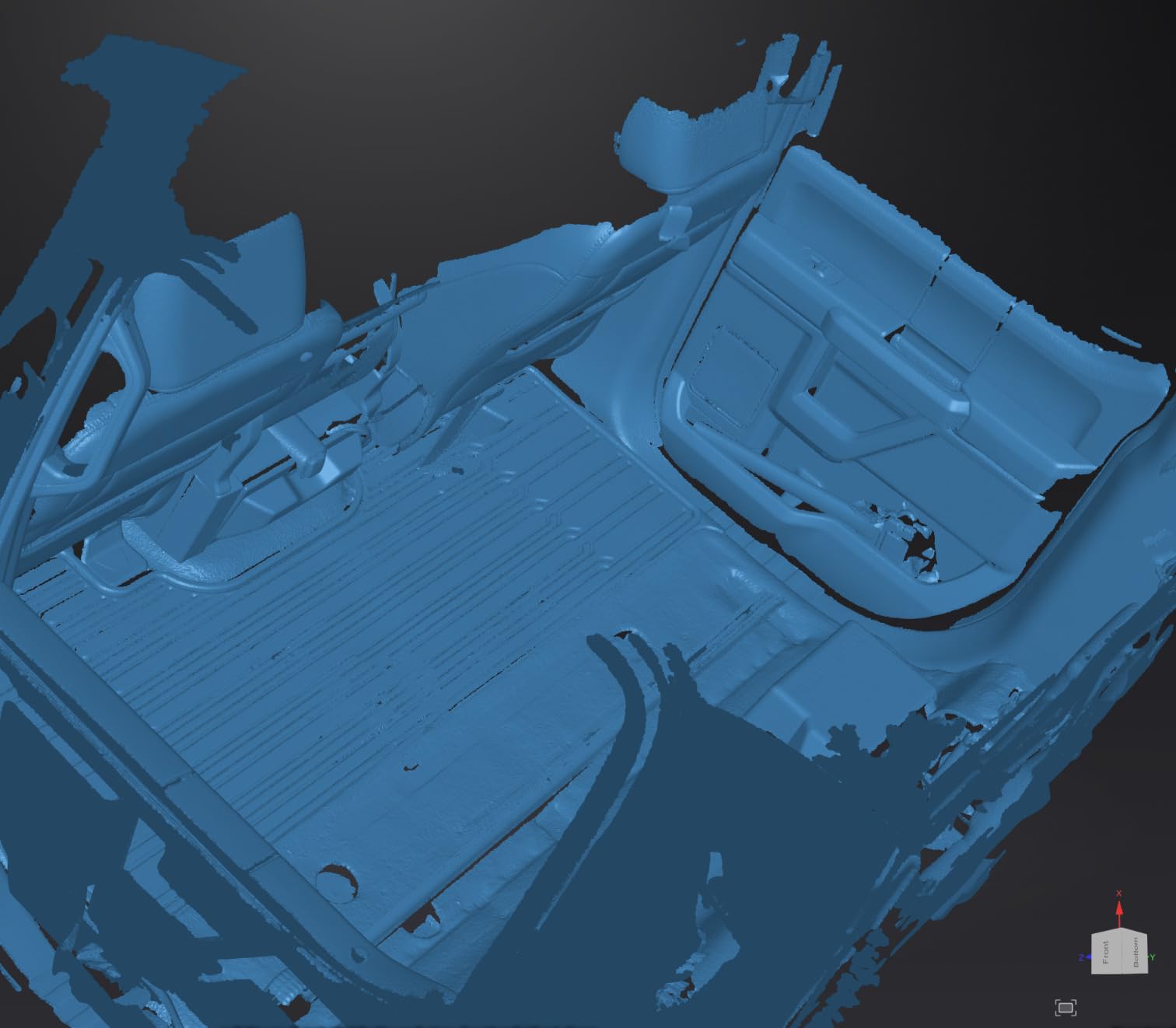
Four scanning modes cover the range: 30 cross-line lasers, 15 parallel lines, 62-line full-field structured light, and the turntable. Cross-line and parallel-line modes push up to 2,000,000 points per second, which is what makes a full engine bay or a car interior practical rather than a weekend project.
The spec that matters most is volumetric accuracy of 0.02 mm plus 0.04 mm times length in meters. That single number predicts how far your measured points drift from the true surface as the object grows, and it is the difference between a scan you can machine from and a scan you can only look at.
An owner on r/3DScanning described the actual workflow: using the MetroX in blue laser mode with no spray and no markers to scan a damaged piece, clean up the mesh, then rebuild the geometry. That is exactly the sequence we recommend, and it is why this unit sits at the top of our list. It is not cordless, though. It runs on a tethered USB-C connection, so plan your cable routing before you start.
How it handles the surfaces that normally ruin a scan
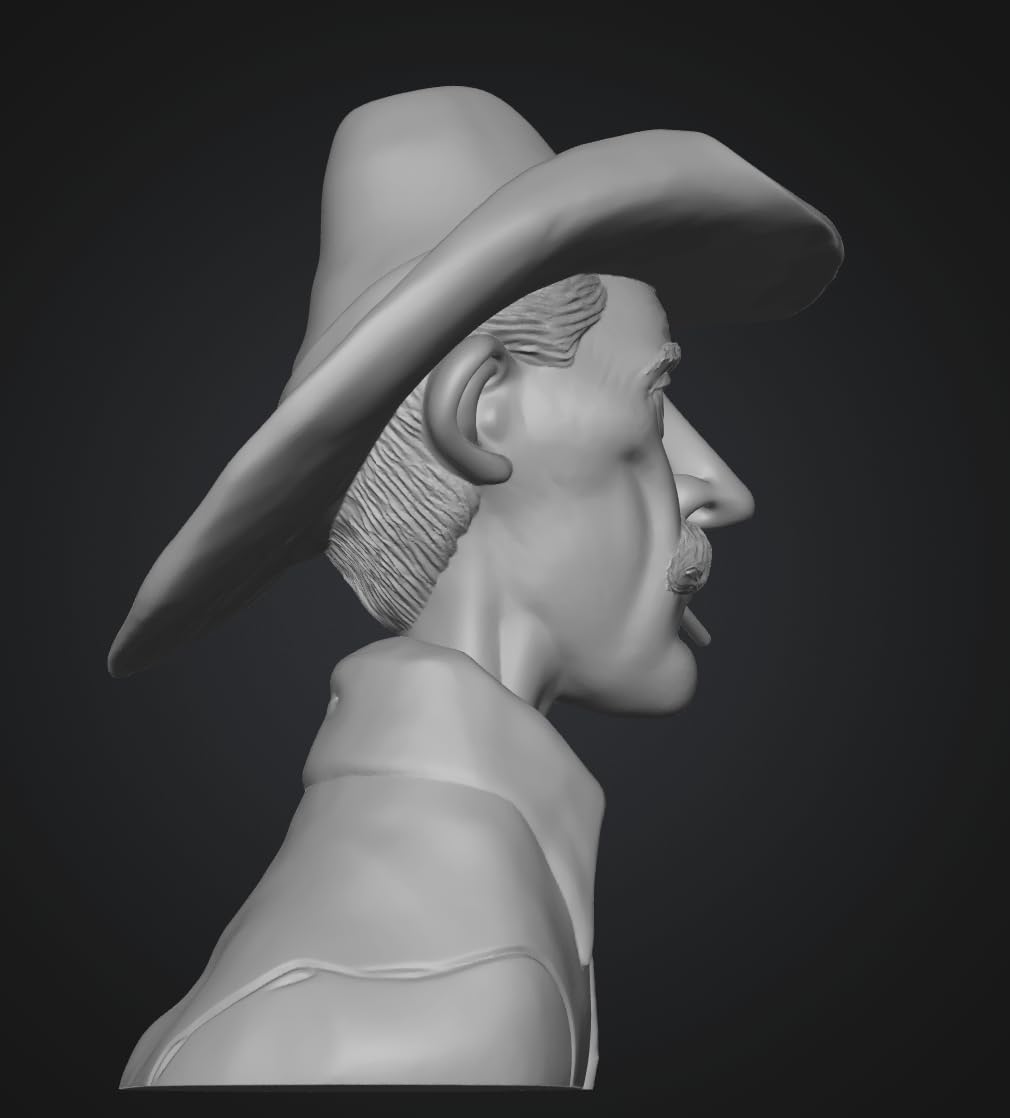
Cross-line and parallel-line modes are the answer to chrome and black plastic. Laser triangulation measures the deformation of the projected line, so a reflective surface still returns usable points as long as the angle is reasonable. The catch is angle: reviewers report that glossy or black objects need to be approached nearly perpendicular.
Color is captured through the HD RGB camera, but only in auto turntable mode. Reviewers are candid that full-color output takes real tinkering, so treat color as a documentation bonus rather than a primary reason to buy.
When this is the wrong tool
If you need to move around a vehicle, a boat, or anything else at a distance, the cable is a genuine constraint. Wi-Fi handhelds like the entry-level color scanners we cover for reference modeling trade accuracy for that freedom, and for engine bays the compromise is often worth it.
Revo Design and Revo Measure are paid software sold separately and run on Windows only. Budget for them if you plan to do real CAD work rather than printing a fit-check model.
2. EINSTAR Rockit: Best Value Hybrid Blue Laser Handheld
EINSTAR Rockit Wireless Handheld 3D Scanner for Full Color 3D Design
Hybrid blue laser and VCSEL
3 hours cordless
1.1 pounds
STL OBJ PLY 3MF ASC
Pros
- Cordless with built-in battery
- Hybrid laser and infrared modes
- Built-in color imaging
- Light at 1.1 pounds
Cons
- Learning curve for alignment
- Not a metrology instrument
- Software needs patience for clean meshes
The Rockit is the pick if you want the two things most buyers argue about: cordless operation and the ability to handle dark and reflective metal. Shining 3D put a blue laser and a VCSEL infrared projector in the same body, so you can shoot detail with lasers and reach for infrared when a surface will not behave.
At 1.1 pounds it is by far the lightest scanner here, and the built-in rechargeable battery gives roughly three hours of cordless work. That combination matters more than the raw spec sheet suggests when you are crawling over an engine bay or balancing a part in one hand.
It also captures full-color texture on device, which matters when the point of the scan is documentation of an original part rather than just geometry. Exports cover STL, OBJ, PLY, 3MF and ASC, and the package includes a marker helper set for automating small objects.
Owners on r/3DScanning repeatedly name the Einstar family as a real recommendation for this kind of work, and the Rockit is the more modern of the two. The reservation in our data is about the workflow rather than the hardware: alignment and post-processing take practice before your meshes come out consistently clean.
Why hybrid light sources earn their keep
Blue laser lines give you tight point spacing on small features, which is what you want on PCB housings and machined bosses. VCSEL infrared floods a wider area with a texture the camera can track, which is what survives on a black rubber seal or a dirty engine cover.
Having both means you rarely stop to apply matte scanning spray. That saves a step on every part and avoids the dimensional risk of overspray near a sealing surface.
Where it falls short for metrology work
Reviewers are clear that this is not an absolute metrology or CMM instrument. If you need traceable GD&T reporting or verified volumetric accuracy against a calibrated artifact, look at a CMM package instead.
It also carries the highest share of one-star reviews in our data at 16 percent, mostly around software onboarding. Give yourself a weekend with a practice part before committing to a production job.
3. Revopoint POP3 Plus: Best Full-Color Scanner Under the Pro Tier
Revopoint POP3 Plus 3D Scanner, Full-Color Scan, for 3D Printing, Advanced
20 micron accuracy
20 mm to 2 m range
18 fps
0.19 kg
Pros
- Optical zoom adds 30 percent point detail
- Free Revo Scan software
- Wi-Fi 6 plus USB-C
- Light at 190 g
Cons
- Loses detail on very small objects
- Often needs tracking stickers
- Revo Design is paid and Windows-only
The POP3 Plus sits where most reverse engineers actually start: one step below the professional units, with 20 micron accuracy and a stated object range from a 20 mm cube all the way to a 2 m cube. That spread means you can move from a small bracket to a full-size panel without new equipment.
The feature we like most is the 1.5x and 2x optical zoom, which adds roughly 30 percent more point cloud detail when you push in on a small feature. At 18 fps with a 9-axis IMU for stabilization, it stays reasonably quick for a consumer-grade body.
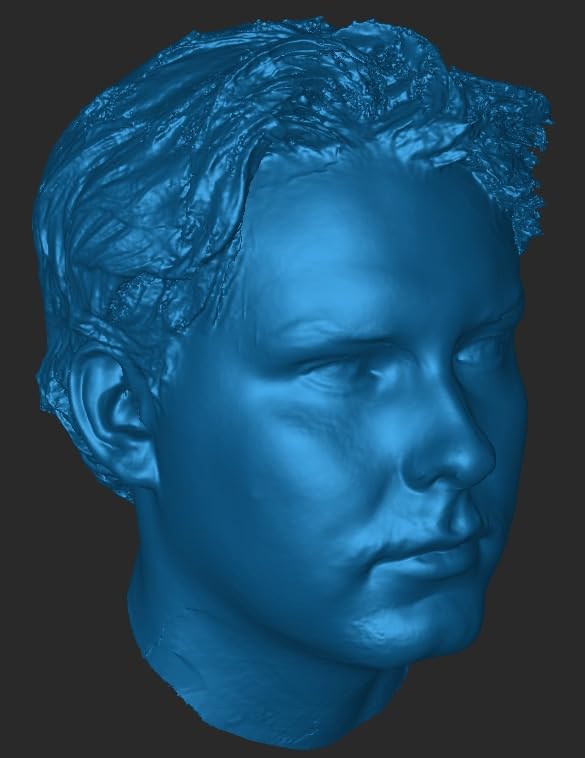
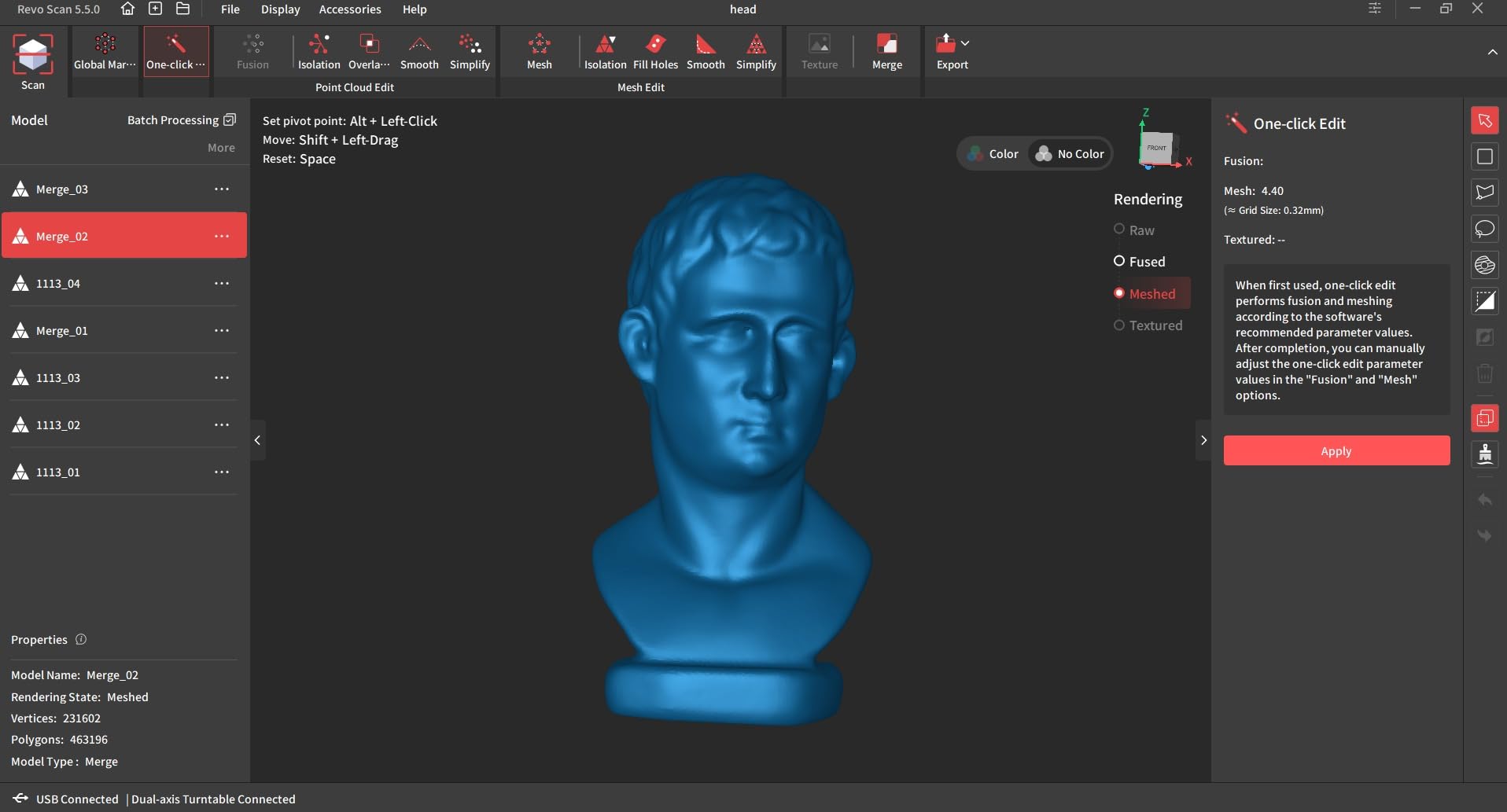
Revo Scan is included at no cost, and it is the best free scanner software in this group by a wide margin. That matters more than it sounds, because mesh cleanup is the step that eats your afternoon. It is also the only consumer-grade tool here that works on macOS alongside Windows, iOS and Android through Wi-Fi 6 or USB-C.
Buyers like the completeness of the Advanced kit, which includes tracking stickers, handles, chargers and both turntables. Some reviewers use it mainly for head and body scans, and report the fast mode handling hair well, which is a harder problem than most mechanical parts.
When the optical zoom earns its place
Zoom is the difference between a scan that looks right and a scan you can measure. Threads, keyways and small draft angles are where a fixed-focus scanner produces points that are simply absent, and doubling the magnification recovers geometry you would otherwise model by eye.
For small electronics enclosures, a bracket, or a damaged connector housing, this is one practical way to get detail you can actually surface in CAD.
Where it falls short on mechanical work
Tracking stickers are frequently needed unless the surface texture is rough enough for feature alignment, which adds setup time per part. On smooth painted or low-contrast surfaces, reviewers report needing many retries.
Medium-to-large dull surfaces are also where software struggles. If your work is large panels rather than small objects, jump to a blue laser unit. And Revo Design, the surfacing tool, is separate paid software for Windows.
4. Revopoint MetroY Ultra: The Metrology-Grade Choice
Revopoint MetroY Ultra 3D Scanner, Up to 90 FPS, for 3D Printing, CMM
0.01 mm precision
0.015 mm + 0.04 mm/m volumetric
90 fps
450 g
Pros
- PTB-certified Revo Measure with 11 GD&T types
- 90 fps cross-line capture
- Works outdoors up to 100000 lux
- 2.5 hour battery grip
Cons
- Software can lag and crash
- Mesh alignment unreliable
- Needs a powerful workstation
This is the only unit in our list that arrives as a genuine measurement system rather than a modeling tool. The CMM Edition includes a metrology-grade, CMM-certified carbon fiber ball plate and a one-year Revo Measure license, so you can verify accuracy on your own bench instead of trusting a spec sheet.
Volumetric accuracy is 0.015 mm plus 0.04 mm per meter, with 0.01 mm single-frame precision. Five scanning modes cover 34 laser cross-lines, 15 parallel lines, a single-line deep hole mode, full-field structured light and a one-click auto turntable.
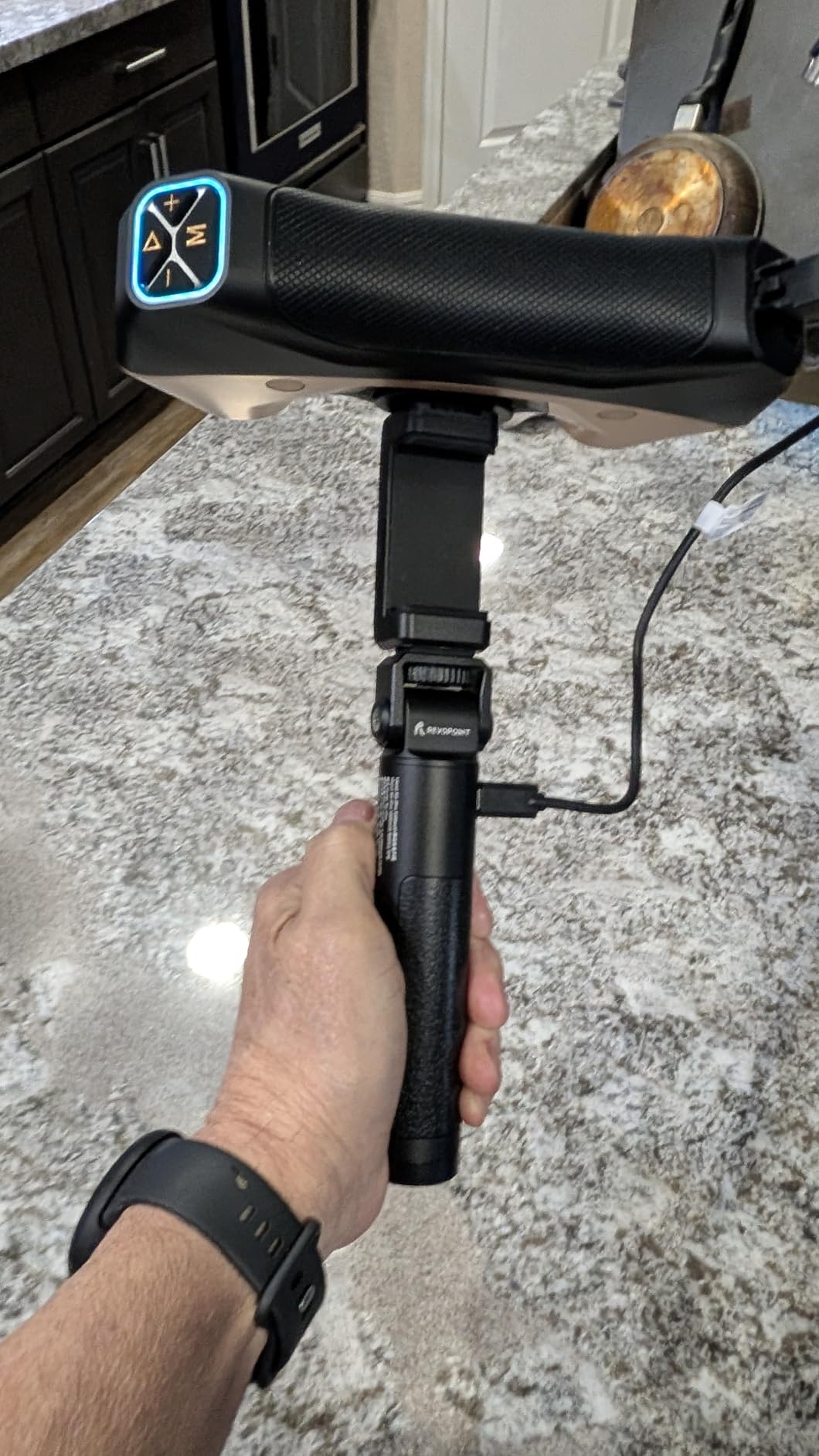
Speed is the headline: up to 90 fps with an NVIDIA GPU, or 60 fps on CPU alone. Outdoor scanning works in sunlight up to 100,000 lux, and the 5600 mAh grip gives about 2.5 hours of untethered power for jobs away from a bench.
Reviewers working in reverse engineering and CAD describe it as a credible step toward metrology without five-figure pricing, and praise that it captures dark, high-gloss and metallic components without scanning spray, plus fine detail such as layer lines.
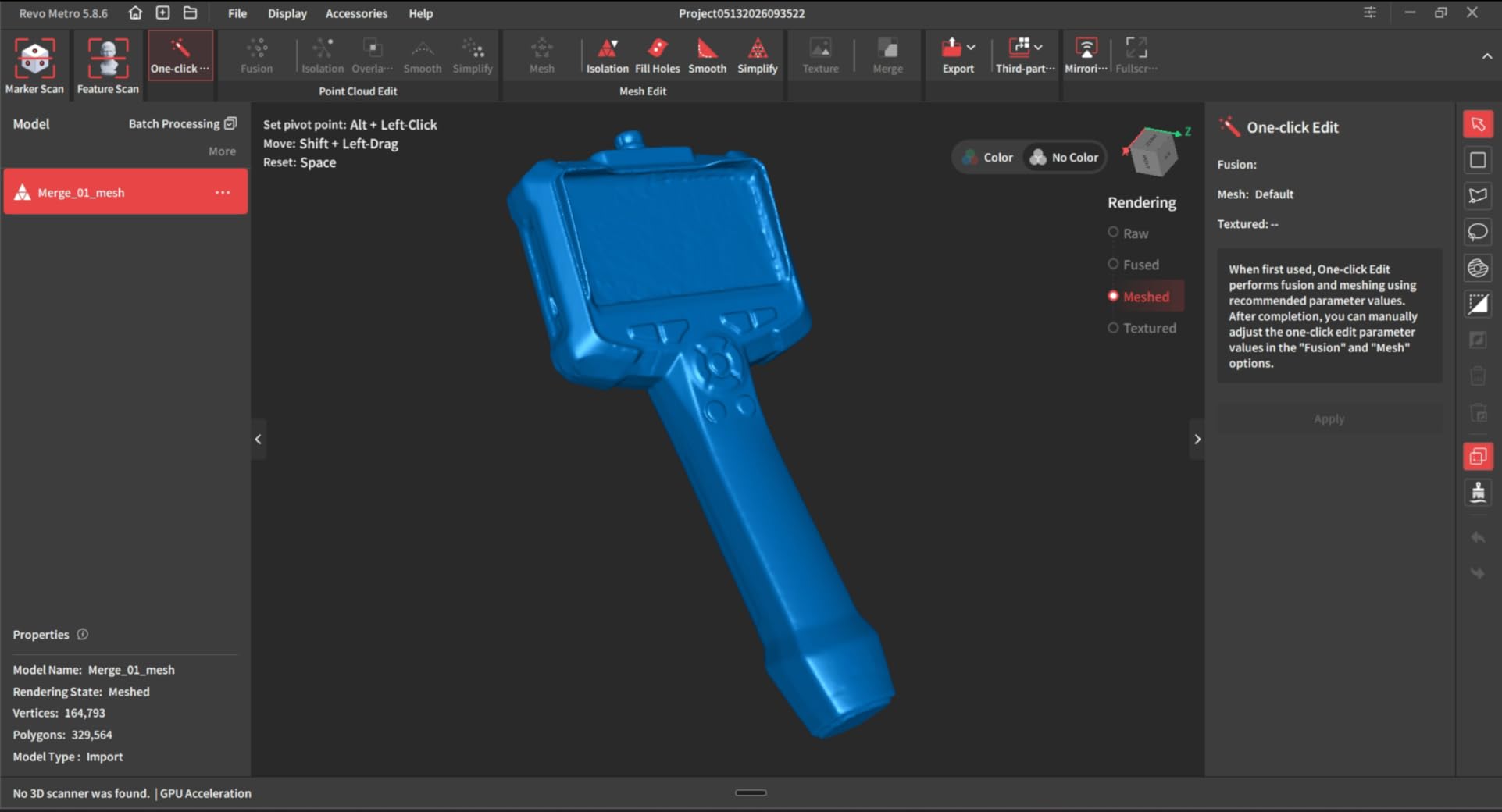
What PTB-certified measurement software changes
Revo Measure is certified and supports 11 types of GD&T measurement plus CAD deviation analysis. That turns a scan from a shape reference into a report you can hand to a quality engineer, which is the difference between modeling and inspection.
The ball plate matters too. Run it before and after a session and you have documented evidence that your results held during the scan, which is what most quality systems ask for.
Where the friction actually is
The complaints are about software, not hardware. Reviewers report laggy optimization, crashes, and mesh alignment between multiple scans that is inconsistent enough to make auto alignment unreliable. You also cannot align a mesh to a coordinate system inside Revo software, so an external tool is needed for that step.
It needs a serious workstation, and Revo Measure and Revo Design are Windows-only. If you are on a Mac, this is a non-starter.
5. Creality Ferret Pro: The Budget Starting Point
Creality CR-Scan Ferret Pro 3D Scanner for Printing, 0.1mm Accuracy & 60FPS Wireless Scanning with WiFi6/Anti-Shake, Full-Color Handheld Scanner Compatible with Win/Mac/iOS/Android
0.1 mm accuracy
60 fps
24-bit color
Wi-Fi 6
Pros
- Lowest cost in the roundup
- Anti-shake One-Shot imaging
- Works on Windows Mac iOS Android
- Bundled tripod and power bank
Cons
- 0.1 mm accuracy is not metrology grade
- Limited face and body detail
- Software maturity trails Revopoint
If you want to learn scan-to-CAD without spending serious money, the Ferret Pro is the honest entry point. Accuracy is up to 0.1 mm, which is fine for fit-check prints and visual reference models, and not fine enough for a machined replacement part with a real tolerance.
One-Shot 3D imaging with anti-shake tracking and fast backtracking is a clever approach: it grabs a complete frame rather than building the model from a rolling scan, which reduces tracking loss on a handheld pass. Capture runs at 60 fps with 24-bit color from a 2MP camera.
Connectivity is unusually good for the money. Wi-Fi 6 connects across Windows, macOS, iOS and Android, and the package includes a wifi box, an integrated power bank tripod, a phone holder, cables and a carrying case. Outdoor scanning works up to 30,000 lux, and output is OBJ, STL or PLY straight into Blender, Rhino, Fusion 360 or similar tools.
What 0.1 mm accuracy means in practice
On a 100 mm part, 0.1 mm of error is roughly the thickness of a sheet of paper. That is invisible on a decorative print and unacceptable on a bearing seat or a shaft. Know which side of that line your project sits on before you buy.
For measuring and photographing existing parts, our guide to scanners built for reference modeling is a better fit if your goal is visual accuracy rather than dimensional.
Where the budget shows
Face and body capture detail is well behind structured-light scanners, and the software has less maturity than Revo Scan. Reviewers also point out that 0.1 mm accuracy sits below the metrology claims of higher-tier units, which is the main reason to upgrade later.
Treat this one as training wheels with a real workflow attached. It will teach you the prep, scan, cleanup and surfacing loop at a fraction of the cost.
6. Shining 3D Einstar Vega: Scan Away From Your Computer
Shining 3D Einstar Vega Wireless 3D Scanner All-in-one Handheld 3D Scanner Two Scanning Technology Support Small to Large Objects, Stable Outdoor Scanning, 8-core 2.4GHz CPU, 512G SSD and 32G RAM
8-core CPU and 512GB SSD
48MP texture camera
6.4 inch 2K AMOLED
6.45 pounds
Pros
- Built-in computing and storage
- 48MP on-device texture camera
- Dual VCSEL and MEMS projectors
- Infrared light for sunlight and dark surfaces
Cons
- Lowest rating in the group at 3.4 stars
- Software polish trails Revopoint
- Bulkier than comparable handhelds
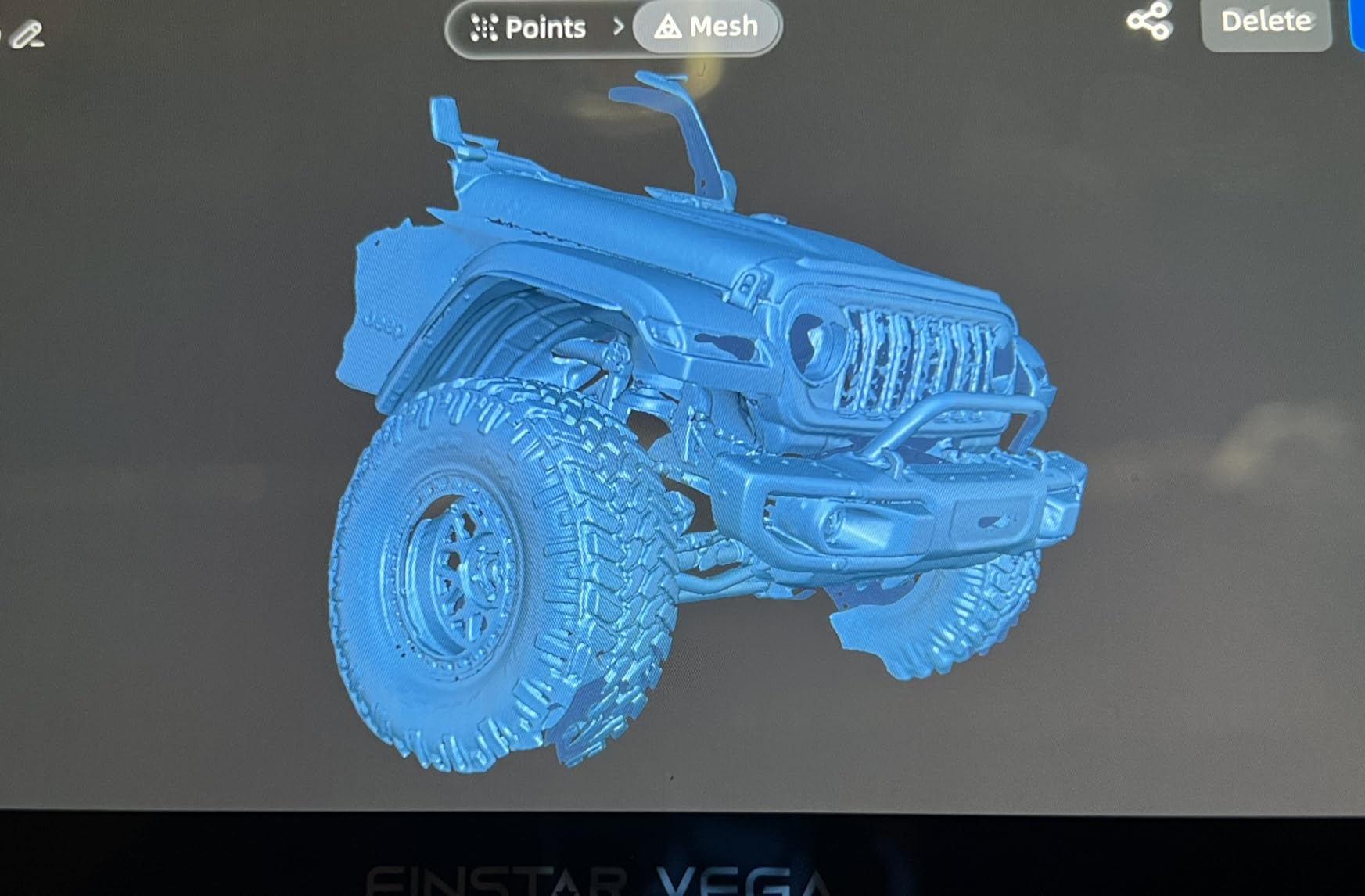
The Vega is the only scanner here that does not need a host computer at all. It carries an 8-core 2.4 GHz CPU, 32 GB of RAM, a 512 GB SSD and its own battery, plus a 6.4 inch 2K AMOLED screen and a 48MP RGB texture camera. You scan, review and process on the device, then transfer when you are back at a desk.
Two projector technologies cover different work. Fast Mode reaches 20 fps at a 270 to 1500 mm working distance using VCSEL for long-range scanning, while HD Mode runs at 15 fps between 100 and 350 mm using MEMS for short-range detail. Infrared illumination means sunlight and dark surfaces both behave.
Software touches include 12 mm marker alignment to cut marker count on large objects, hybrid alignment, scanning rewind, auto base plane detection, coordinate system adjustment and model measurement. SHINING 3D Cloud provides 5 GB of free storage and wireless screen casting to a second display. Owners on r/3DScanning still recommend the Einstar name for this class of work.
When all-in-one genuinely wins
Field work, remote job sites and anything where you cannot carry a laptop. The Vega is also usable as a tether-free review station: shoot the part, inspect the mesh on the built-in display, and confirm you have coverage before packing up.
The 48MP texture camera also produces better documentation images than most rivals, which is useful when the scan supports a repair article or an insurance claim.
Where the software holds it back
This is the lowest-rated product in our roundup at 3.4 stars, with 21 percent one-star reviews, and the complaints concentrate on software maturity rather than the hardware concept. Feature set and workflow polish trail the Revopoint ecosystem.
It is also bulkier and heavier than comparable wireless handhelds at 6.45 pounds. If your scans all happen on a bench, a tethered unit will serve you better for the money.
7. EINSTAR 2: Fast Wireless Scanning With a Swappable Battery
EINSTAR 2 Wireless 3D Scanner, 17 Parallel Lines Blue Laser and VCSEL Infared Light Support 3D Scanning Small to Large Objects, Up to 90 FPS High Speed Scanning, Support 3mm, 6mm, 12mm Markers.
17 parallel blue laser lines
VCSEL infrared
Up to 90 fps
3 hour swappable battery
Pros
- 17 parallel laser lines for small detail
- Swappable battery mid-scan
- Works up to 110000 lux in Laser HD
- Scans black and reflective parts without spray
Cons
- Requires a powerful PC
- Poor documentation and tutorials
- Some units failed to track out of the box
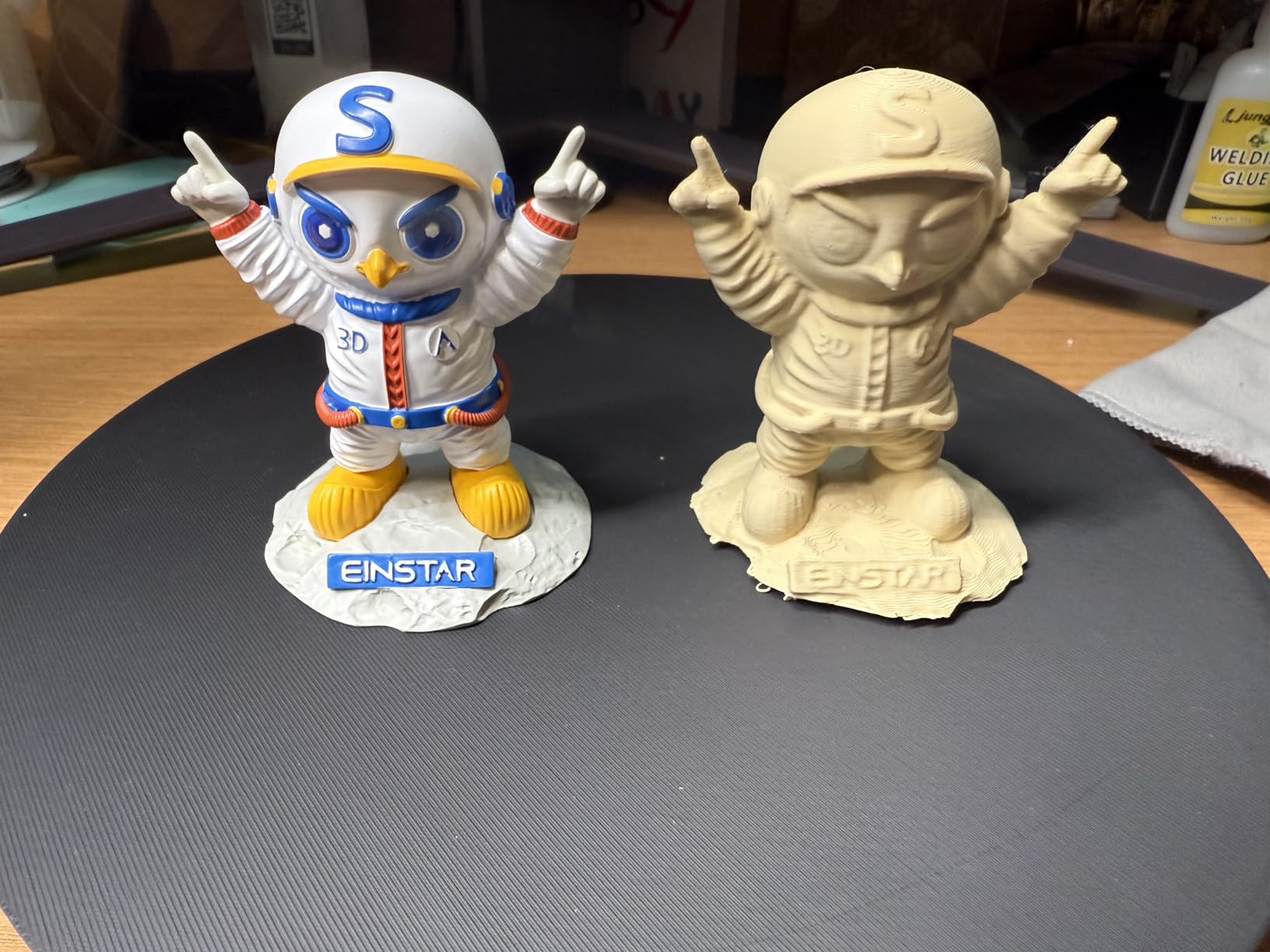
The EINSTAR 2 is built around seventeen parallel blue laser lines and a frame rate up to 90 fps, which makes it the quickest scanning motion in this group for parts small enough to fill that field. VCSEL infrared mode drops to 20 fps but reaches much larger objects and copes with black surfaces.
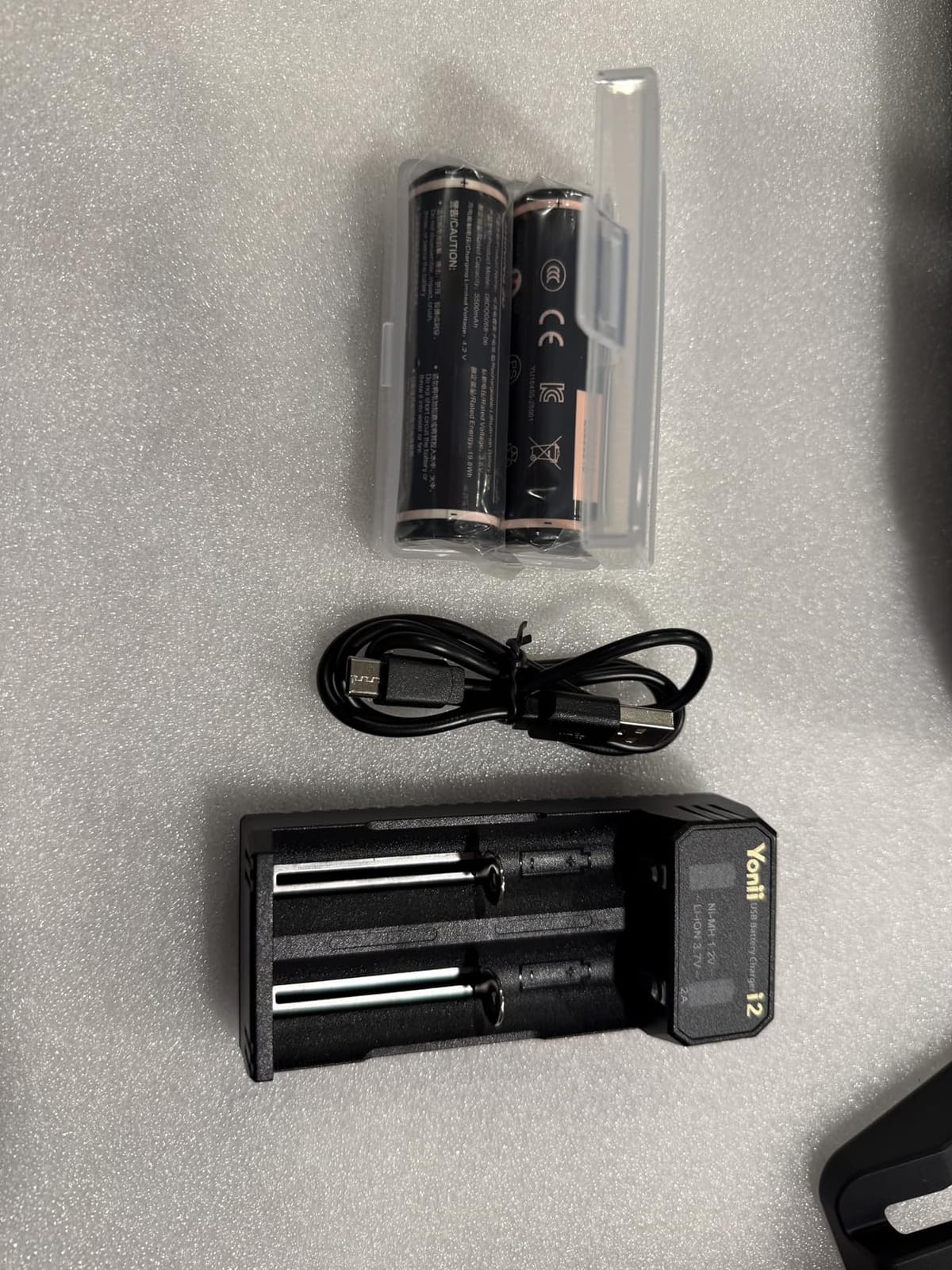
The battery design is the practical standout. It is swappable, so you can exchange a pack mid-scan instead of waiting for a charge, giving up to three hours of uninterrupted scanning. Wireless range is generous enough that reviewers report successful capture through a house window.
It supports 3 mm, 6 mm and 12 mm markers for difficult alignment situations, with a USB-C fallback if Wi-Fi interference becomes a problem. Laser HD mode works in 110,000 lux and IR Rapid mode up to 70,000 lux, so outdoor and shop-floor lighting are rarely a blocker.
What parallel laser lines buy you
More laser lines means more points per frame, which means a smaller point-to-point distance on the same part. That is how you recover thread profiles, snap-fit lips and small ribs on injection-moulded housings, where a 15-line unit leaves gaps you end up modelling by hand.
Because the lines are parallel rather than crossed, this configuration is for detail work on small and medium parts rather than for rapidly changing your position around a large assembly.
Where new buyers get stuck
Documentation is the biggest complaint, including reports that the included instructions were incorrect, and EXStar Hub tutorials are hard to find. The host PC requirement is also real: scans larger than roughly 0.1 to 0.2 need considerably more memory to process.
A few buyers report units that would not track correctly out of the box, and forced manufacturer activation annoys some. Test the unit on a known part during the return window. An engineering workstation matters here more than with almost any other scanner on this list.
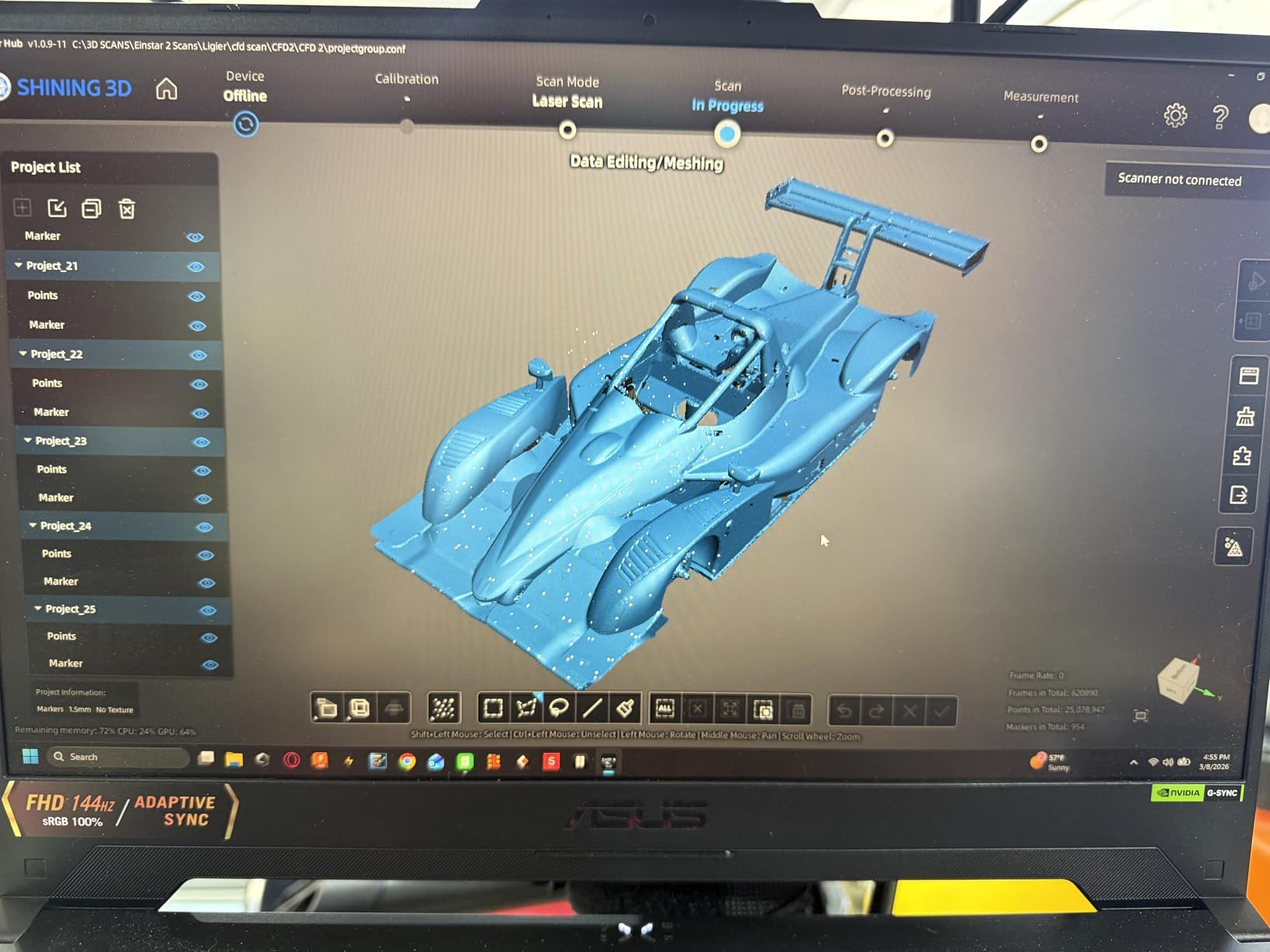
8. Creality Sermoon S1: Widest Working Range in the Roundup
Creality 3D Scanner Sermoon S1 for Engineering Printing, 1+7+34 Blue Laser Handheld Scanner with 90FPS Scan Range (5mm-4m) & 0.02mm Accuracy, Deep Hole Detection 0.1mm, Compatible with Windows/macOS
5 mm to 4000 mm range
0.02 mm accuracy
90 fps
Deep hole detection 0.1 mm
Pros
- One device covers jewelry to architecture
- 0.02 mm accuracy at 0.08 mm/m volumetric
- 4-lens stereo marker-free scanning
- AI-assisted mesh generation
Cons
- Highest cost in the roundup
- Only 29 reviews so far
- Demanding recommended PC spec
The Sermoon S1 covers a 5 mm to 4000 mm scanning range in one device, and no other product here comes close. That span covers jewelry and dental models at the bottom and architectural-scale work at the top, with a single piece of hardware in between.
Three blue laser configurations handle it: 34 crossed lines for fast large-object capture, 7 parallel lines for fine detail, and a single-line mode for deep holes and grooves. Accuracy is up to 0.02 mm with 0.08 mm per meter volumetric precision, and the frame rate reaches 90 fps.
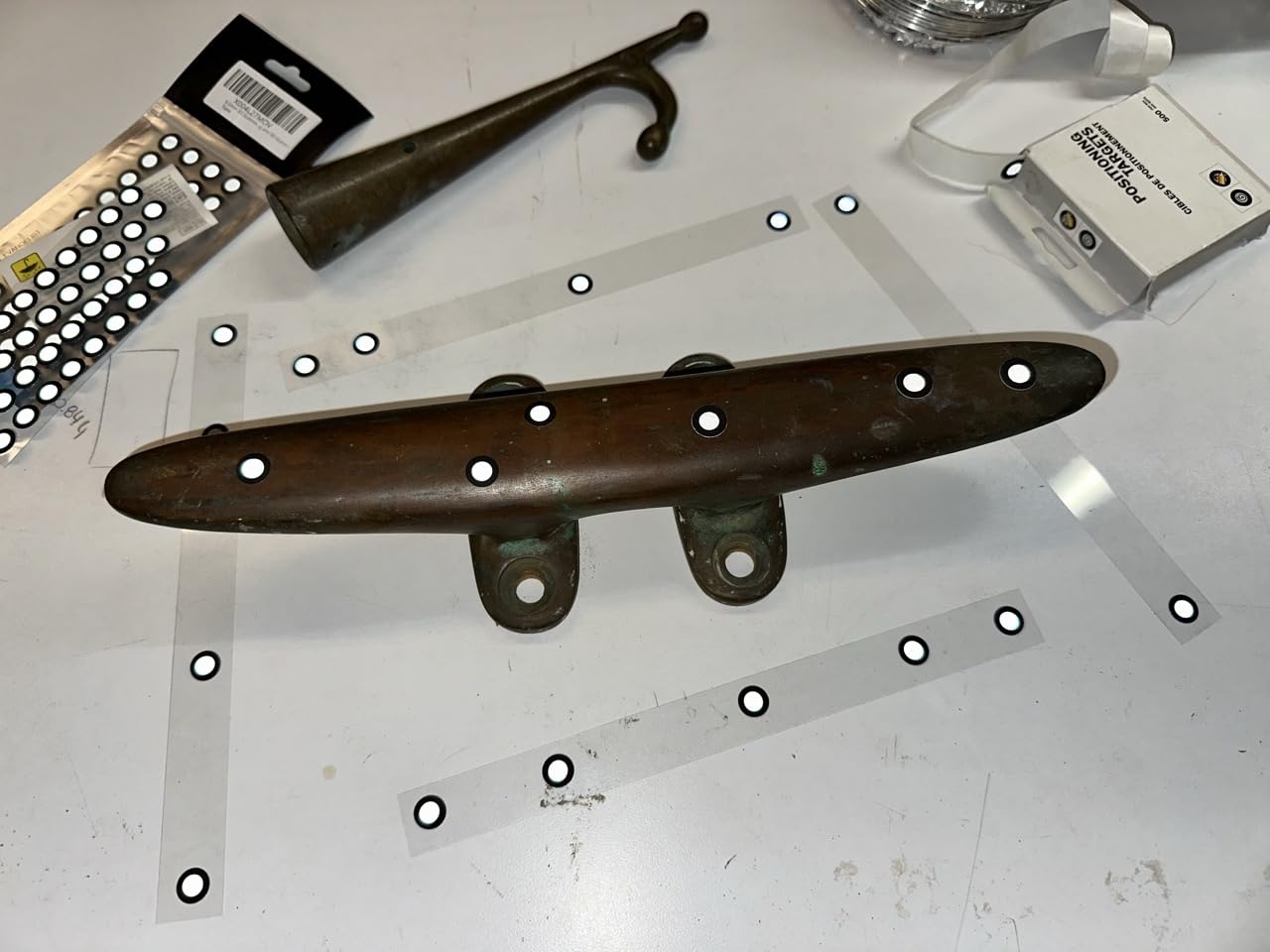
Four-lens stereo vision drives marker-free scanning, which removes the setup step that usually costs you most on a confined part. AI-assisted processing handles alignment, mesh generation and data cleanup, and it exports directly into CAD, CAM, printing, reverse-engineering and inspection software.
An owner on r/3DScanning framed the choice well when discussing engine bays: if you need absolute precision on an assembly that size, look at blue laser units rather than the infrared handhelds. That advice points here.
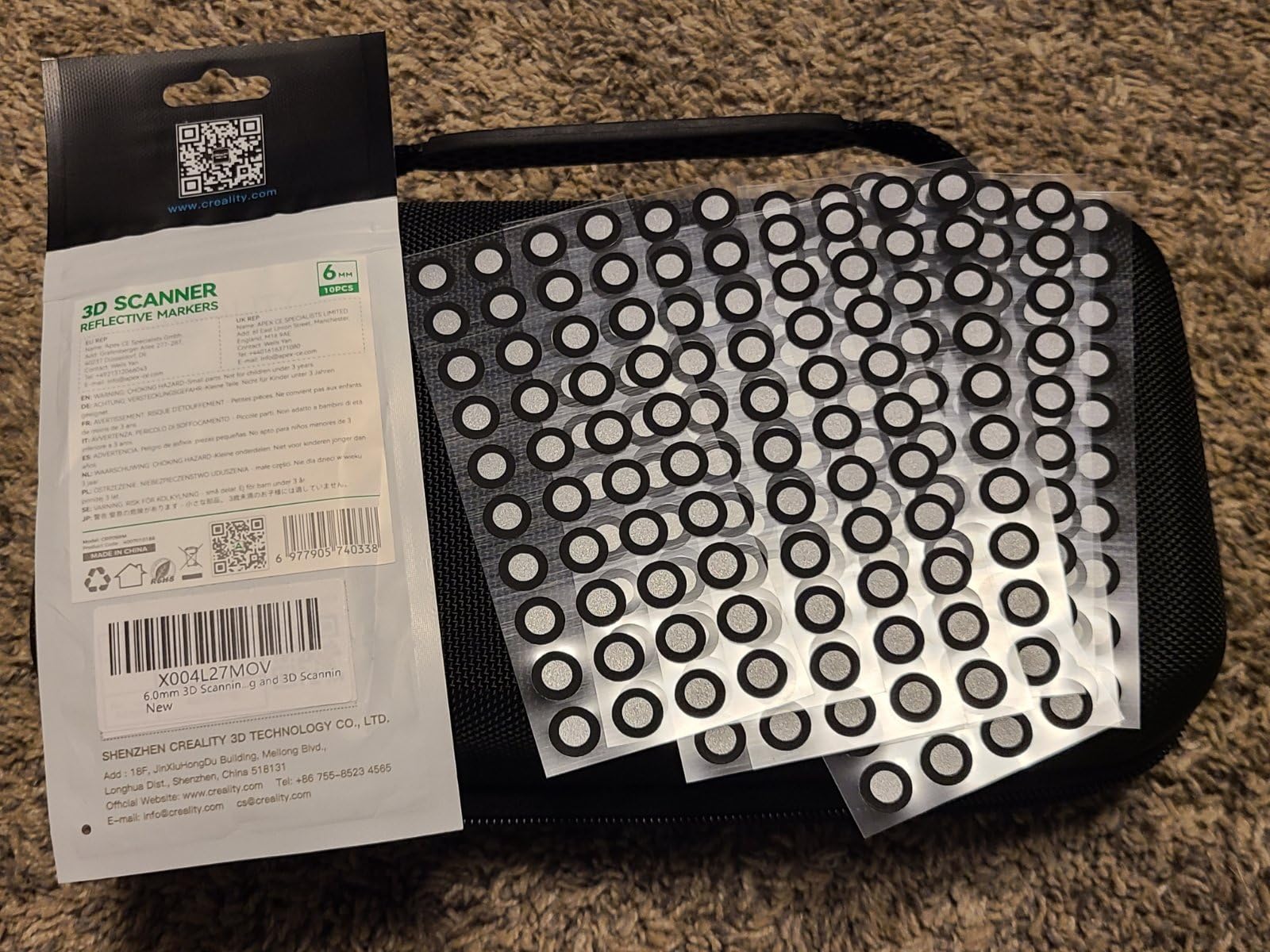
Why the 5 mm lower bound matters
Most handhelds cannot hold a part in focus at 5 mm, which is why small mechanical features usually get scanned on a turntable with a desktop unit. Holding that range in a handheld removes a whole category of second purchase.
Deep hole detection down to 0.1 mm is the other underrated number. Engine blocks, castings and gearbox housings are full of blind bores, and a single-line mode is the only practical way to get data inside them.
Where the caution belongs
With 29 reviews and a 5.0 average, the sentiment is uniformly positive with no ratings below four stars, but the sample is small. Long-term durability and firmware maturity are simply not yet documented for a unit this new.
It is also among the higher-cost scanners we cover, and the recommended specification of a 10th-generation i7 with 32 GB of RAM raises the entry bar. macOS support works but is narrower than the Windows path.
9. 3DMakerpro Mole: Pocket-Sized Scanning for Large Panels
3DMakerpro Mole Handheld 3D Scanner for 3D Printer, 0.05mm Accuracy & 0.1mm Resolution, 10FPS Scanning Lightning-Fast Speed with Anti-Shake Lenses, Portable 3D Scanners for Win10/MacOS
0.05 mm accuracy
0.1 mm resolution
10 fps
13.7 ounces
Pros
- Only 13.7 ounces
- Marker-free scanning of large panels
- Near-infrared captures black objects
- JMStudio handles cleanup in one step
Cons
- 10 fps is slow against laser units
- Near-infrared struggles on mirror surfaces
- Small installed base for troubleshooting
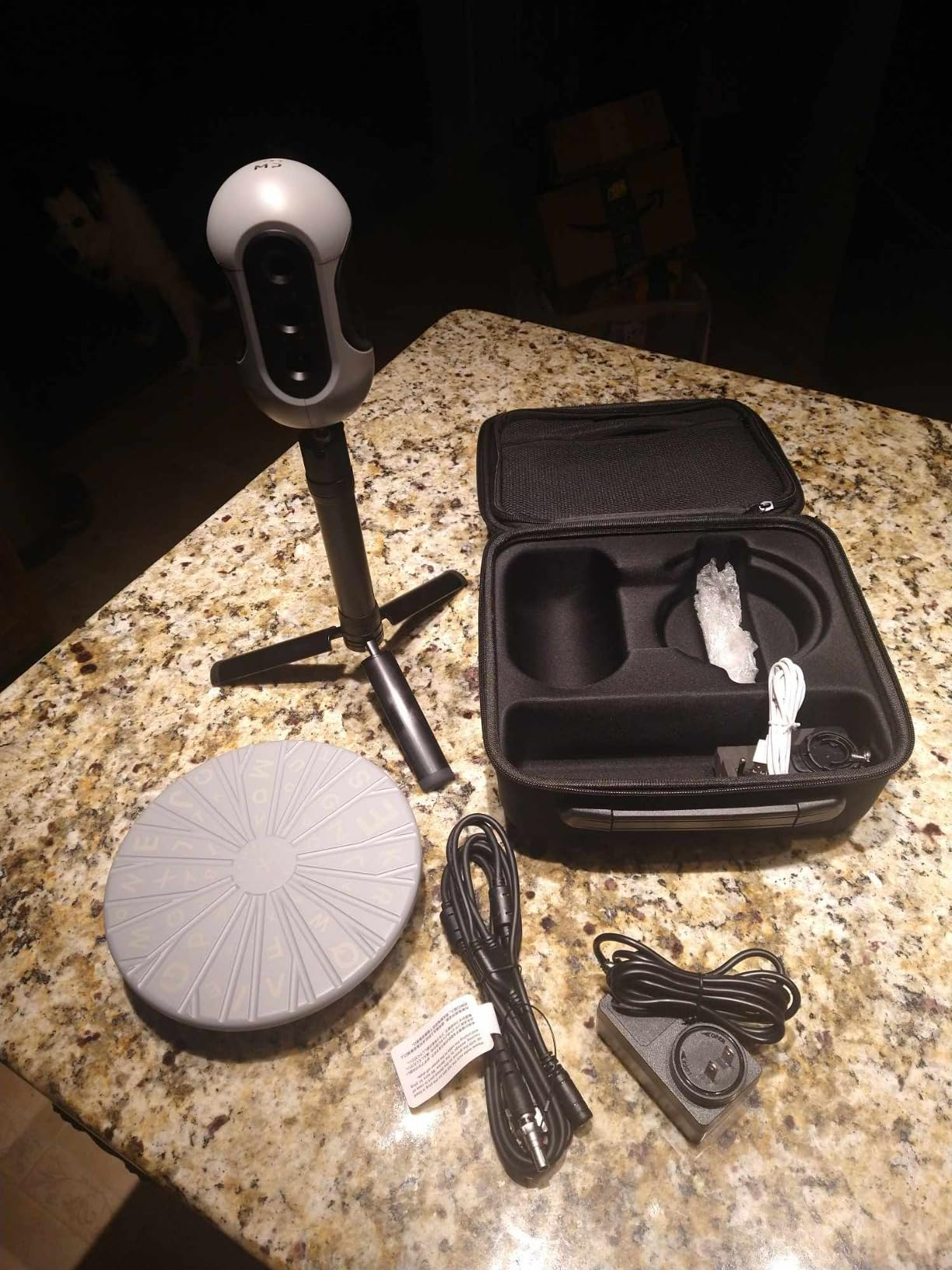
At 13.7 ounces and 3.15 by 3.15 by 5.51 inches, the Mole disappears into a tool bag. If your reverse engineering happens on a car in a driveway rather than at a bench, that weight is the feature you will notice most.
Accuracy is up to 0.05 mm with 0.1 mm resolution, which is a genuinely useful figure for reference modeling and printed replacement parts. Near-infrared illumination is eye protective and captures black objects clearly without matte spray, which is exactly the case that stops many scans.
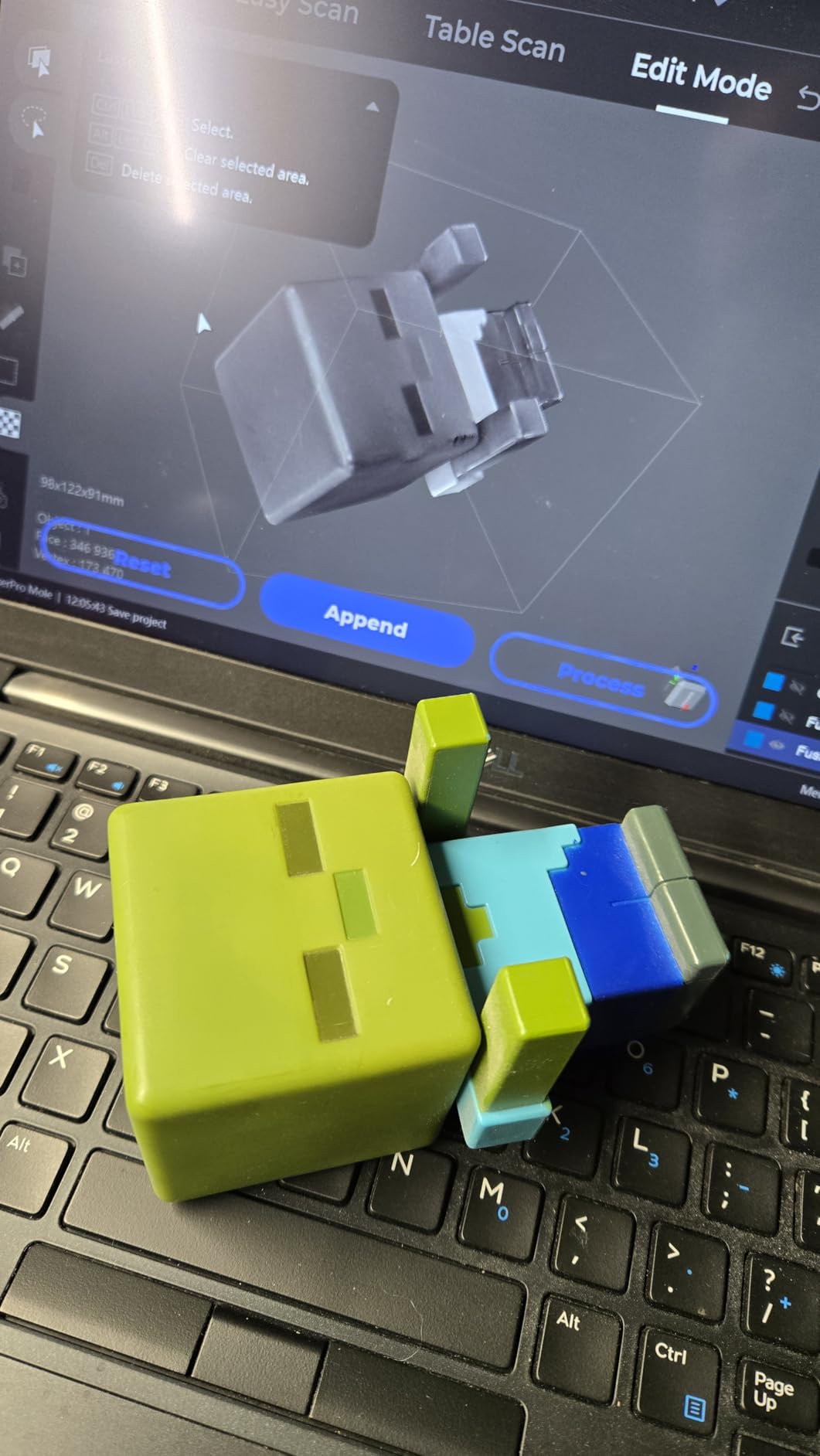
Marker-free scanning works on large parts such as engine hoods, doors and bumpers, and optical anti-shake modules keep handheld capture stable at 10 fps. JMStudio bundles automatic multi-posture alignment, denoising, simplifying, repair and texture mapping into a single pipeline. It runs on Windows 10/11 and macOS.
Owners on r/3DScanning point to the 3DMakerpro Seal as a good pick for parts at that size, which is the same reasoning here. The Mole fills the same role at a fraction of the cost of a pro blue laser unit.
Why near-infrared works where visible light fails
Black plastic and dark rubber absorb visible light, so visible scanners return noise or nothing at all. Near-infrared sits just outside visible range and gives a much stronger return from those same surfaces, so your scan survives parts that would otherwise need spray.
That is also why an owner scanning a damaged engine component could work without a coating step. The trade-off is that highly reflective and transparent surfaces remain difficult, since they bounce infrared away from the sensor instead of absorbing it.
Where speed and support cost you
Ten frames per second is the real limitation. Modern blue laser handhelds run 60 to 90 fps, so a large panel takes noticeably longer here, and any movement during a slow frame becomes noise you clean up later.
The installed base is also small, so troubleshooting help is thinner than with Revopoint or Creality. For hobby-grade panel capture that is an acceptable trade, but check your part size against a faster unit first.
10. Creality Raptor Pro: The Automotive Panel Specialist
Creality 3D Scanner Raptor Pro for Automotive & Engineering Projects with Metrology-Grade 0.02mm Accuracy,22+7 Blue Laser, Up to 60FPS Scanning Speed
22 cross plus 7 parallel blue lines
0.02 mm accuracy
660,000 points/sec
405 g
Pros
- 0.02 mm accuracy in 7-line mode
- 60 fps blue laser at 660000 points per second
- Only 405 g
- Integrates with Geomagic Design X and Control X
Cons
- Only 21 reviews
- Demanding recommended PC specification
- Still struggles with transparent or mirror surfaces
The Raptor Pro is built for the job people on the Pelican Parts forum describe: thin, complex Porsche body panels where repeatability matters more than headline price. Twenty-two crossed blue laser lines cover medium and large objects, while 7 parallel blue laser lines cover small ones.
Each laser line is 0.1 mm thick, and the 7-line configuration reaches 0.02 mm accuracy. In blue laser line mode it processes 660,000 points per second at up to 60 fps, with an NIR mode at 30 fps when you want a balance of speed and detail. One-Shot 3D imaging adds anti-shake tracking and fast backtracking.
At 405 g with a metal lens barrel, a 2.3 megapixel camera and a low-distortion lens system, it is lighter than most blue laser units its size. The dual lighting system uses blue light for supplementary laser lines and white light for texture brightness.
Why Geomagic integration is the decisive detail
This scanner feeds directly into Geomagic Control X, Geomagic Design X and Verisurf Inspect. That is the industry-standard surfacing and inspection path, and it saves you the manual cleanup that dominates your day when software does not interoperate.
If your end goal is a parametric CAD body rather than a printed reference model, having the scanner feed Design X directly is worth more than a higher frame rate.
Where the evidence runs thin
There are only 21 reviews, and a 17 percent share of one-star and three-star reviews each suggests some inconsistency in build or results. Our data also shows the visible customer reviews on this listing largely discuss Creality tracking marker stickers rather than the scanner itself, so treat scanner-specific sentiment as limited.
Blue laser systems also still struggle with fully transparent or mirror-finish surfaces, and the recommended PC spec is demanding. If you need GD&T reporting rather than a model, the CMM package on the MetroY Ultra is the more defensible choice.
How to Choose: Six Criteria That Decide the Buy
Accuracy, precision and volumetric accuracy are three different numbers and buyers mix them up constantly. Accuracy is how close a single measurement is to true. Precision, or repeatability, is how close repeated measurements are to each other. Volumetric accuracy is the one that bites you on real parts, because it says how error grows as the object gets bigger.
A quoted 0.02 mm accuracy on a small field of view can degrade badly across a car door. Always read the volumetric figure: something like 0.02 mm plus 0.04 mm per meter is the number to compare between scanners. Point-to-point resolution is a separate measure of how tightly the points are packed, which determines whether you see a thread profile or a smudge.
Object size matters next. Small electronics and small mechanical parts are where the 20 mm minimum on the POP3 Plus and the 5 mm floor on the Sermoon S1 pay off. Large assemblies, engine bays and full vehicles need cross-line or photogrammetry capture, and for whole buildings or rooms a handheld is simply the wrong instrument. Our LiDAR and photogrammetry scanner guide covers that scale properly.
Dark and shiny surfaces decide whether you will use scanning spray. Blue laser cross-line and parallel-line modes, plus near-infrared units, handle black plastic, chrome and raw metal without a coating. Pure visible-light structured light almost always needs matte developer, which is an extra step and an extra risk on sealing surfaces.
Markers are the other real workflow question. Marker-free scanning using feature, texture or stereo vision is far faster per part, but on feature-poor surfaces you will still place coded targets. Marker-based alignment is slower, more repeatable and the honest choice for repeat inspection runs.
Finally, budget for the software and the computer. Revo Design, Revo Measure and Design X-class tools are commonly sold separately, and some vendor software is Windows-only. Several scanners here also specify a host machine with 32 GB of RAM and an NVIDIA GPU, and one model explicitly flags that larger scans need much more memory. Total cost of ownership is the hardware plus those add-ons plus a capable workstation.
One practical note on job mapping: small electronics enclosures point to the POP3 Plus or 3DMakerpro Mole; thin automotive panels point to the Raptor Pro or Mole; engine bays and drivetrain assemblies point to the MetroX Pro, MetroY Ultra or Sermoon S1; measurement and QA reporting point to the MetroY Ultra CMM package.
On the legal side, reproducing a part for your own repair, restoration or personal project is generally straightforward, but manufacturing parts for sale from someone else’s design can raise copyright, patent and contract issues. Check before you commercialise anything.
Frequently Asked Questions
Can a 3D scanner help with reverse engineering?
Yes. A 3D scanner measures a real part non-contact and produces a point cloud or polygon mesh, which you convert into CAD geometry so you can reproduce, repair or modify a component without the original drawings. Modern scanners reach 0.02 mm volumetric accuracy, which is tight enough to machine a replacement part from.
What is the best 3D scanner for reverse engineering?
For general mechanical work the Revopoint MetroX Pro leads our roundup: 0.01 mm single-frame precision, 0.02 mm plus 0.04 mm per meter volumetric accuracy, cross-line modes that handle dark and shiny metal without spray, and an auto turntable. For measurement-grade reporting, the Revopoint MetroY Ultra CMM package is the better answer.
How much does a 3D scanner cost for reverse engineering?
Entry-level colour scanners for reference modeling start in the low hundreds, mid-tier infrared handhelds with 0.05 mm accuracy sit in the mid hundreds to low thousands, professional blue laser units with 0.02 mm accuracy run into the low thousands, and metrology packages with certified measurement software reach the mid thousands. Add licensed CAD surfacing tools and a capable host PC to any of those figures.
What accuracy is needed for reverse engineering?
0.1 mm is fine for fit-check prints and visual reference models. 0.05 mm suits most printed replacement parts and reference geometry. 0.02 mm volumetric accuracy is where you can machine a working part from the scan. For inspection reporting with GDu0026amp;T you want a certified measurement package and a verified ball plate.
Do I need a laser or structured light scanner?
Structured light is cheaper and works well on small, matte, stationary parts on a turntable. Blue laser handheld units capture large objects, reach into confined spaces and handle dark and reflective surfaces without matte spray, which is why they dominate professional reverse-engineering work. Infrared units are the middle ground: cordless, good on black plastic, weaker on mirror finishes.
The Best 3D Scanner for Reverse Engineering Is a Workflow Decision
After working through ten scanners, the Revopoint MetroX Pro is still our pick for the best 3D scanners for reverse engineering in 2026. It hits 0.01 mm precision, holds up on dark and shiny metal without spray, and turns large objects around fast enough that you will actually finish the job.
Pick the MetroY Ultra if you need certified GD&T reporting, the Sermoon S1 if you want one device to cover 5 mm to 4 m, and the EINSTAR Rockit if cordless freedom matters more than raw numbers. Whatever you choose, budget for the surfacing software and a capable host machine. That is where most reverse-engineering projects stall, not at the scan.