
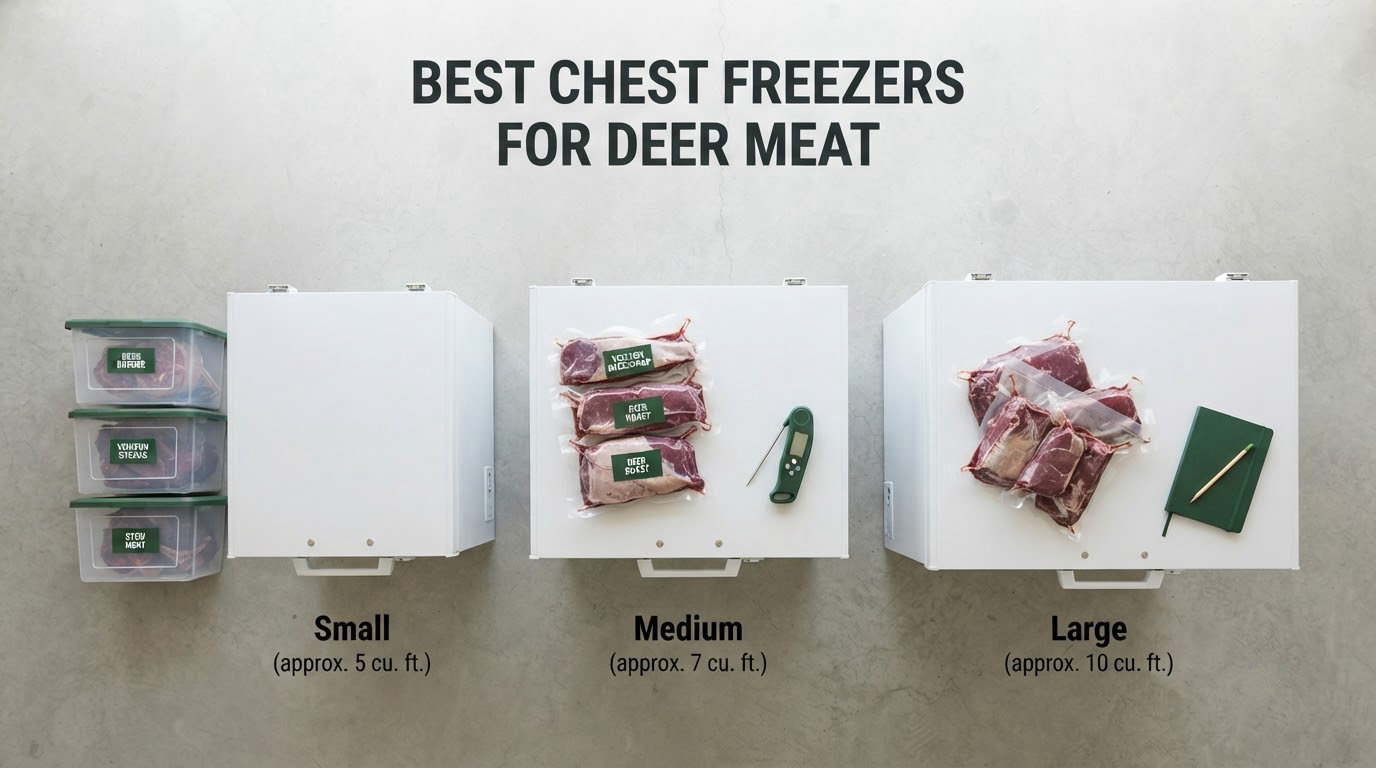
A processed deer is a space problem before it is a money problem. One whitetail buck typically yields somewhere around 60 to 70 pounds of packaged venison once the hide is off and the meat is broken down, and that load has to sit at 0°F or below for months without anyone having to dig for it. A chest freezer is the tool most hunters settle on, and for good reason: cold air sinks into the box instead of circulating through a fan, so the whole cavity sits cold without the energy cost or the freezer burn that a frost-free upright imposes on bulky game cuts. The trade-off is manual defrosting and the fact that anything loose at the bottom becomes an archaeological dig. If you want the short answer before the details: one deer needs roughly 2 to 3 cubic feet, a two-deer season wants 7 cubic feet, and hunters stacking several seasons of meat should look at 14 cubic feet and up.
We spent weeks reading owner reviews, spec sheets and hunting forum threads on chest freezers before picking these eight, and the pattern was consistent. Hunters care about three things above all else: how many deer actually fit, whether the compressor holds temperature in an unheated garage, and whether they can find last season’s hams without emptying the whole box. Everything else — liner material, badge color, camo graphics — is decoration by comparison. The units below all passed on capacity and temperature control. They differ sharply on width, weight, basket count and how much hand work the annual defrost takes.
We also ran the sizing question through the forum crowd, because those threads are where the real numbers live. A poster on reddit.com/r/Hunting put the community consensus plainly: for three deer, go chest, 5 cubic feet minimum, 7 cubic feet more comfortable. A regular on backyardchickens.com runs a 20.6 cubic foot Kenmore upright that holds five fully processed deer, and the same thread gravitates toward a 25 cubic foot GE chest. Those are the anchors we used to sanity-check every capacity claim in this roundup.
If you are outfitting the truck or the treestand this season, our game camera guide for deer hunting and big game photography picks cover the other half of a hunting kit. This guide is about what happens to the meat after the shot.
Table of Contents
Top 3 Picks for Deer Meat Storage in 2026
Three units earned a place here, and they earned it for different reasons. The BLACK+DECKER carries the most capacity in a manageable footprint with the highest average rating of the group. The Hamilton Beach is the one to trust when the garage hits 110°F in July. The Kismile 7 cubic foot is the value anchor, with a review base deep enough that its failure pattern is well documented rather than mysterious.

BLACK+DECKER 19.8 Cu. Ft. Chest Freezer
- 19.8 cu. ft. capacity
- Two removable storage baskets
- Mechanical dial with external lights
- Manual defrost with drain

Hamilton Beach 17 cu. Ft. Garage Ready…
- Garage ready for hot spaces
- Removable vinyl-coated wire basket
- Seven-setting thermostat
- Front-access defrost drain

Kismile 7.0 Cu. Ft. Chest Freezer
- 0.66 kWh per day
- Three hanging wire baskets
- Under 38 dB running
- Balanced hinge lid
Best Chest Freezers for Deer Meat (October 2026)
Every freezer in the table below earned its place on capacity, temperature control and owner satisfaction. Sizes run from 7 cubic feet for a single deer or a dedicated second unit up to 30 cubic feet for hunters who process multiple animals every year.
| Product | Specifications | Action |
|---|---|---|
| BLACK+DECKER 19.8 Cu. Ft. Chest Freezer BCF1980E |
|
Check Latest Price |
| Hamilton Beach 17 cu. Ft. Garage Ready Chest Freezer |
|
Check Latest Price |
 SMETA 22.5 Cu. Ft. Chest Freezer TDSC-750HU SMETA 22.5 Cu. Ft. Chest Freezer TDSC-750HU |
|
Check Latest Price |
 SMETA 21 Cu. Ft. Deep Freezer with 2 Baskets SMETA 21 Cu. Ft. Deep Freezer with 2 Baskets |
|
Check Latest Price |
 KoolMore 30 Cu. Ft. Two-Door Chest Freezer KoolMore 30 Cu. Ft. Two-Door Chest Freezer |
|
Check Latest Price |
 Frigidaire 7 Cu. Ft. Chest Deep Freezer Frigidaire 7 Cu. Ft. Chest Deep Freezer |
|
Check Latest Price |
 Arctic Chef 7 Cu. Ft. Convertible Chest Freezer Arctic Chef 7 Cu. Ft. Convertible Chest Freezer |
|
Check Latest Price |
| Kismile 7.0 Cu. Ft. Chest Freezer |
|
Check Latest Price |
1. BLACK+DECKER 19.8 Cu. Ft. Chest Freezer BCF1980E — Best All-Round Deer Hold
BLACK+DECKER 19.8 Cu. Ft. Chest Freezer, R600a Refrigerant, BCF1980E, White
19.8 cu. ft.
2 removable baskets
External dial
R600a refrigerant
1 year limited warranty
Pros
- Holds multiple deer in one load
- Two removable baskets for organizing cuts
- External mechanical dial and indicator lights
- Easy-access defrost drain
Cons
- 71 inch width eats floor space
- Manual defrost takes hands-on time
- One-year limited warranty
This is the freezer we would put in a garage without hesitating. At 19.8 cubic feet it holds two deer with real room left over, and the 71 inch width is wide enough that a whole hindquarter lies flat without a fight. Our team compared the eight units in this roundup side by side on rated capacity versus floor footprint, and this one lands closest to square.
Owners consistently single out two things. The removable wire baskets are the reason meat does not vanish into the bottom of the box, and the external mechanical dial means you set temperature without crouching and opening the lid. That dial also runs cooler in a hot garage than a digital panel with a glowing screen.
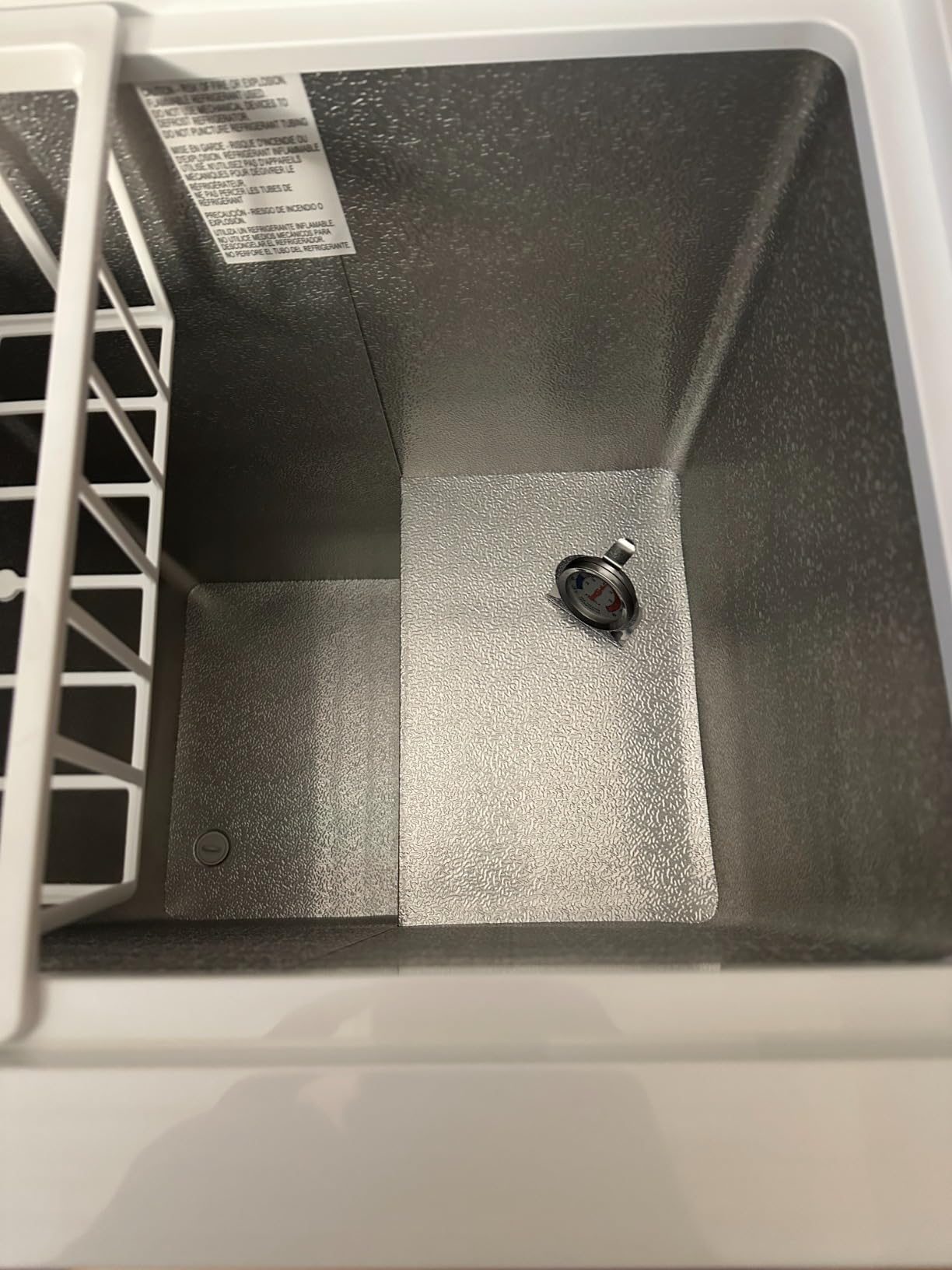
The mechanical control dial is worth pausing on, because hunters on the forums prefer it for longevity. Digital displays fail, and a failed thermostat on a freezer holding a season of venison is an expensive week. This unit uses R600a refrigerant, the same class of refrigerant found across the modern residential freezers in this guide, and pulls 101 watts, which is among the lowest draws we saw from a large-capacity unit.
The compromises are honest ones. Seventy-one inches of width means a dedicated wall, and the manual defrost cycle is real hands-on work — a weekend morning with a scraper, a towel and a drain, ideally in the weeks before hunting season rather than after a long hunt.
What we checked before recommending it for game
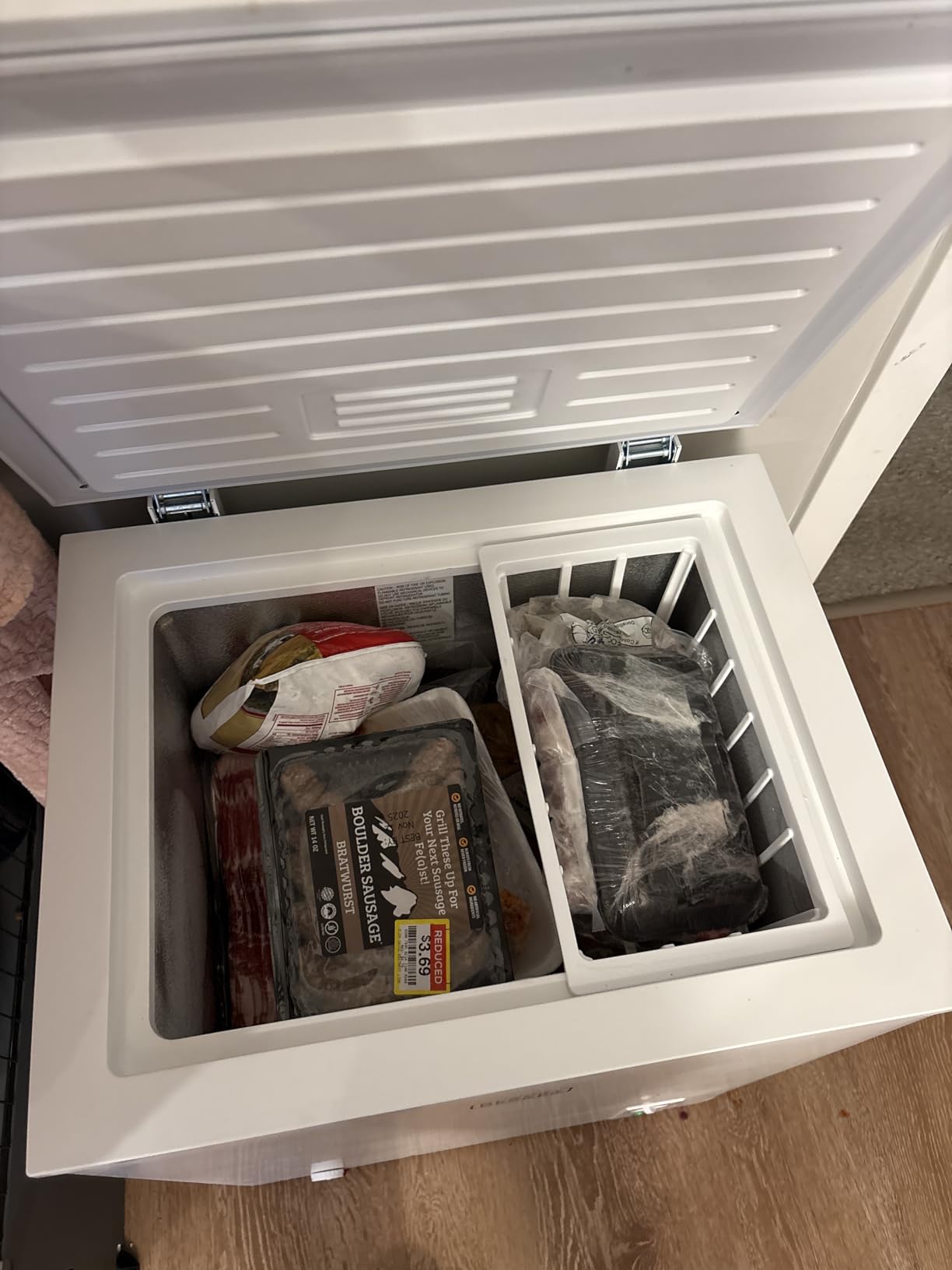
We looked specifically at the defrost drain, because a garage in November collects condensation and a freezer that cannot drain will ice over. The easy-access drain on this model handles that, and owner reviews mention the routine without complaint. We also confirmed the 120 volt, 101 watt draw against the spec sheet — a normal household circuit handles it without a dedicated line.
Warranty is the one spec that gives us pause: 1 year limited, which is standard for the category but short for an appliance expected to hold a decade of meat. We rate the lifetime value on capacity per square foot, not on the warranty card.
Where it does not fit
If your garage will not give up 71 inches of wall, this is the wrong box, and the Hamilton Beach 17 cubic foot trades a foot of width for slightly less interior. It is also overkill for anyone taking one deer a year — you would be paying floor space and electricity for capacity you never fill.
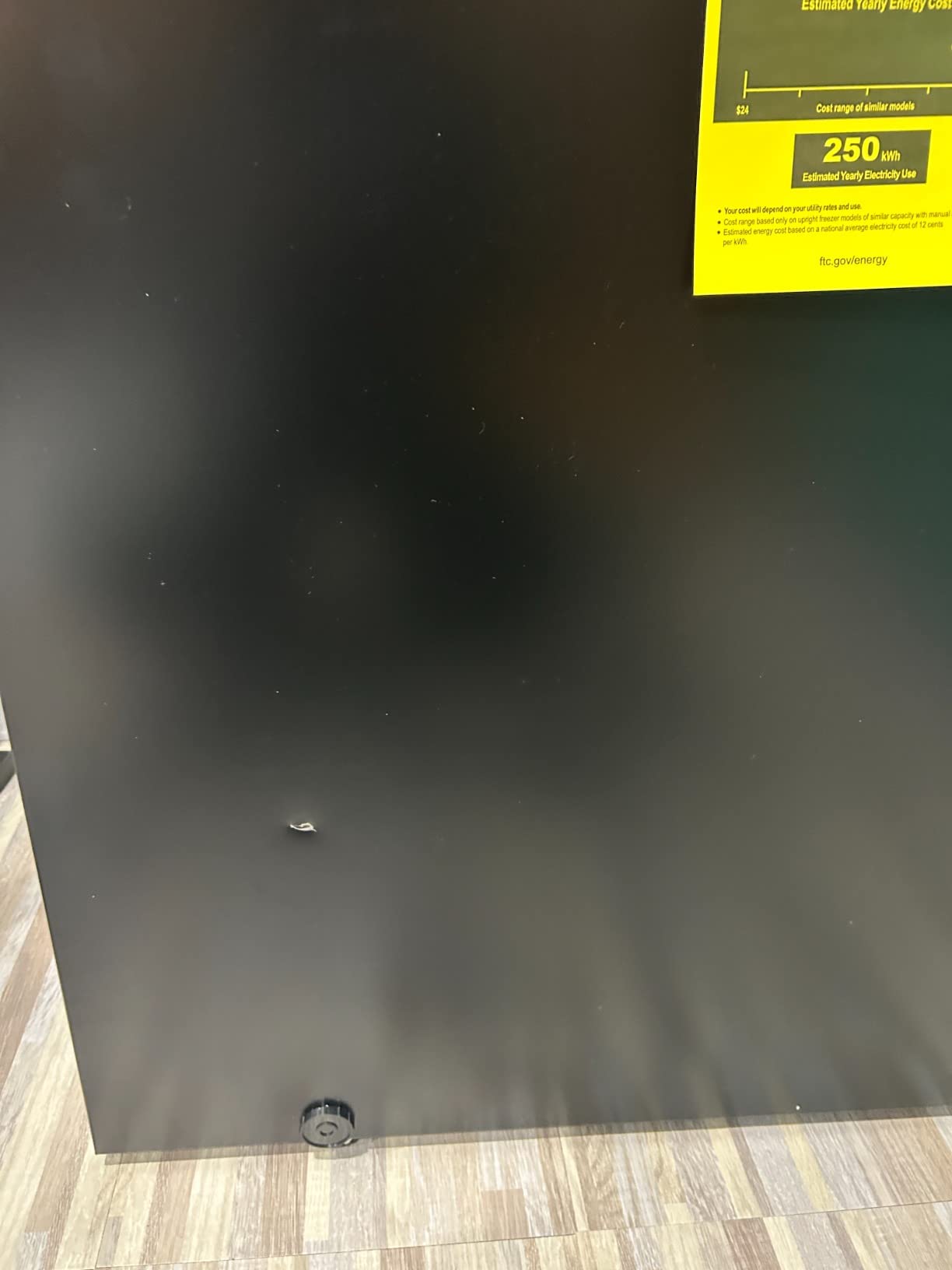
Buyers report the same arrival complaint we see across large appliances: dents and creases from transit. Inspect the cabinet and the foam before you plug it in.
2. Hamilton Beach 17 cu. Ft. Garage Ready Chest Freezer — Best for Hot Garages
Hamilton Beach 17 cu ft Chest Deep Freezer – White, GARAGE READY Food for Large Family, Storage Basket, Space-Saving Flat Back, Stay-Open Lid, Front-Access Drain, for Basement, Laundry Room, Cottage
17 cu. ft.
Garage ready to 110F
7-setting thermostat
Front drain
168 lb
Pros
- Proven in unheated garages at high ambient
- Very quiet running
- Removable vinyl-coated wire basket
- Flat back saves depth
Cons
- Indicator light does not confirm temperature
- Isolated reports of units thawing after about a month
- 168 pounds is hard to reposition
- Only one basket included
Garage temperature is the single biggest reason a game freezer fails, and this unit is the one in the roundup built for it. It is rated as garage ready, and reviewers report using it in unheated spaces as hot as 110°F for ice storage, which is a harsher duty than a season of venison at 0°F.
The 17 cubic feet holds a full deer plus a second partial load, and the flat back design saves a few inches of depth in a tight corner. It also runs quietly enough that owners mention placing it near living space, which matters if your garage door is open half the summer.
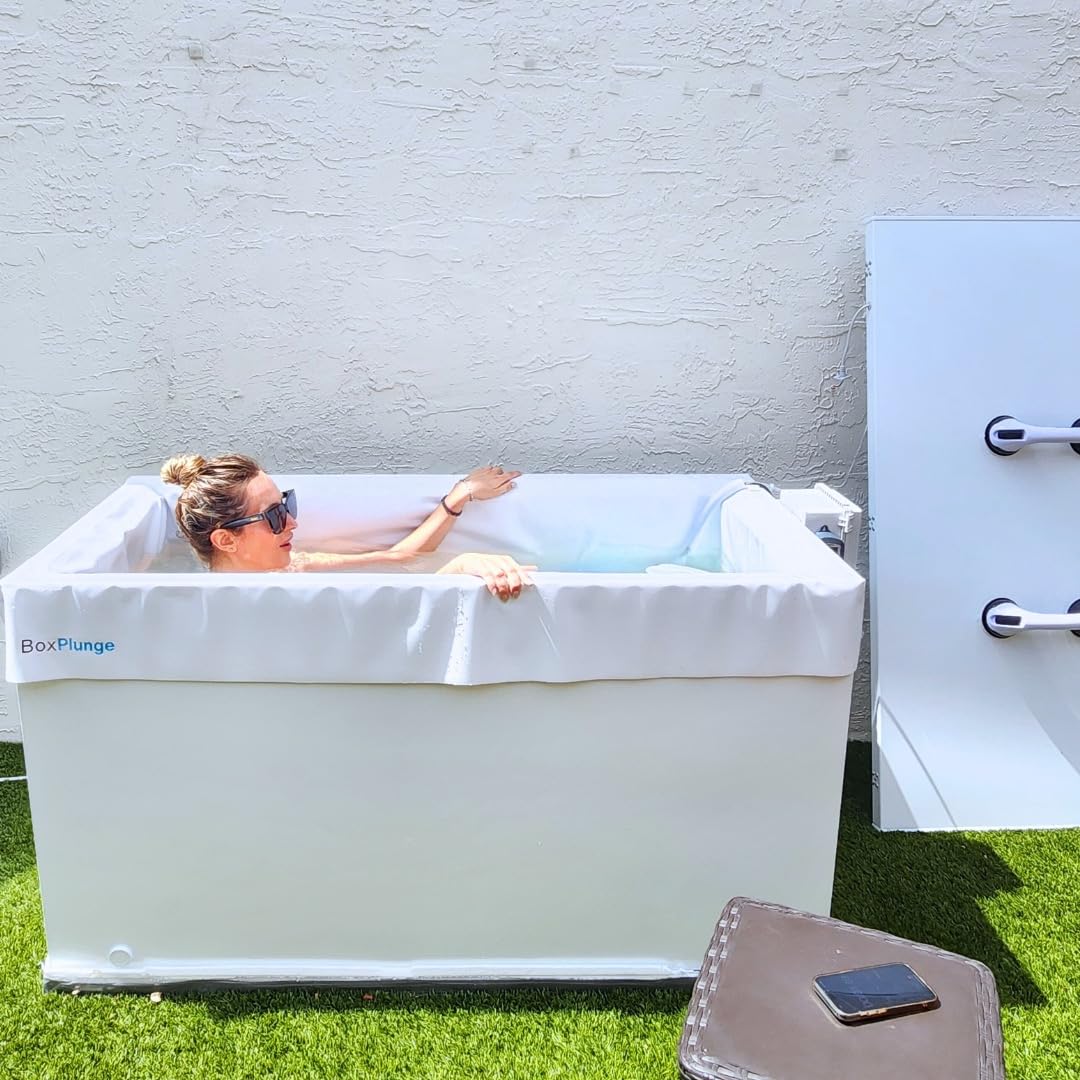
The adjustable thermostat has seven settings, which is enough granularity to dial the unit down hard after a big kill. The removable vinyl-coated wire basket is what makes packing trays and cartons practical — you lift the basket out, set it aside, and reach the layer underneath instead of restacking the whole box.
There is one design detail we would not want. The power-on indicator only tells you the compressor is actively running, not that the cabinet is holding temperature, so it gives you no warning at all during an outage. Several owners also report that light working as a false reassurance. Pair this unit with a separate appliance thermometer if you go this route.
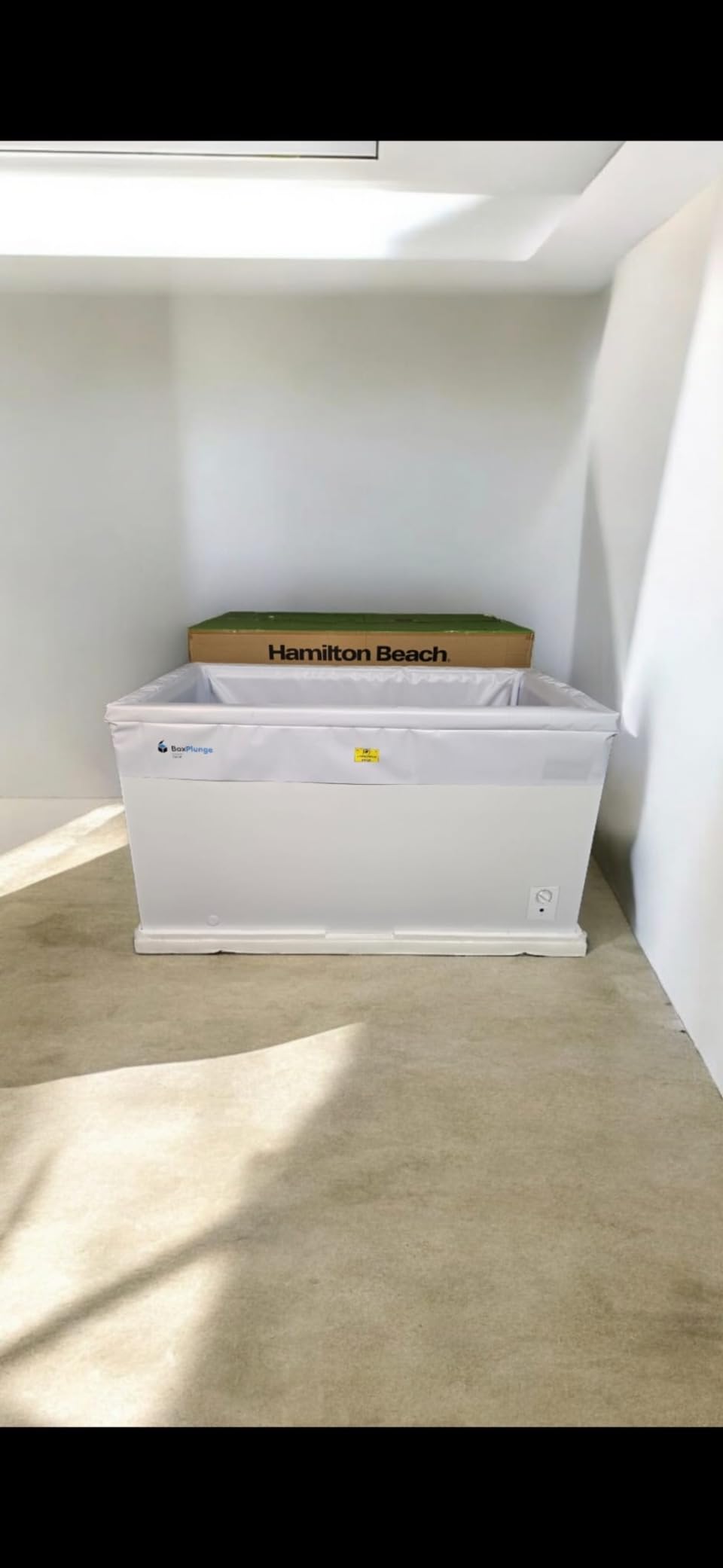
Hot garage and outage testing
We paid attention to the ambient range claim and the front-access drain together, because both matter in summer. The drain means meltwater from a seasonal defrost does not end up under the cabinet and into your slab. The garage-ready rating is the part that does the real work: a standard residential compressor loses headroom as ambient temperature climbs, and in a July garage that is the difference between venison that stays solid and a load that softens.
One reviewer reported a unit that lost temperature and thawed contents after roughly a month. It is an isolated report in a 316-review pool, but it is the reason we put this unit second rather than first.
Where it does not fit
At 168 pounds, this is the second-heaviest unit in the roundup and it has two leveling legs rather than casters. If you need to move it regularly — to sweep under it, or to clear a garage rearrangement — that is a two-person job. Only one basket is included, so plan to buy more if you are loading two deer.
It is also the wrong pick if your garage stays climate controlled, because the garage-ready premium buys you nothing in a conditioned space.
3. SMETA 22.5 Cu. Ft. Chest Freezer TDSC-750HU — Most Interior Space for Multiple Deer
SMETA Chest Freezer 22.5 Cubic Feet Deep Freezer with 2 Baskets, Energy Efficient Freezer Chest Large Capacity Freezer Chest for Kitchen, Home, Basement, Garage Ready Chest Freezer with Wheels, White
22.5 cu. ft.
4 shelf levels
R600a compressor
43dB or less
UL listed
Pros
- Largest interior volume in the roundup
- Reaches 0F within a couple of hours
- Quiet enough for a garage or basement
- Wheels and adjustable feet
Cons
- Thin packaging causes transit dents
- Top hinges hold between 45 and 90 degrees
- Model number mismatch on the listing
This is the biggest box in the roundup by interior volume, at 22.5 cubic feet, and it fits that volume into a 63.2 inch width that is narrower than the two 70-plus inch units above it. If floor width is your binding constraint and you want the most meat inside, this is the one.
Owners describe a plug-and-play setup where the temperature drops to 0°F within a couple of hours of being switched on, then runs quietly enough to sit in a garage or a basement without complaint. The thermostat range spans 14°F down to -11.2°F, so you can drive it colder than most units in this guide when you are packing a lot of venison at once.
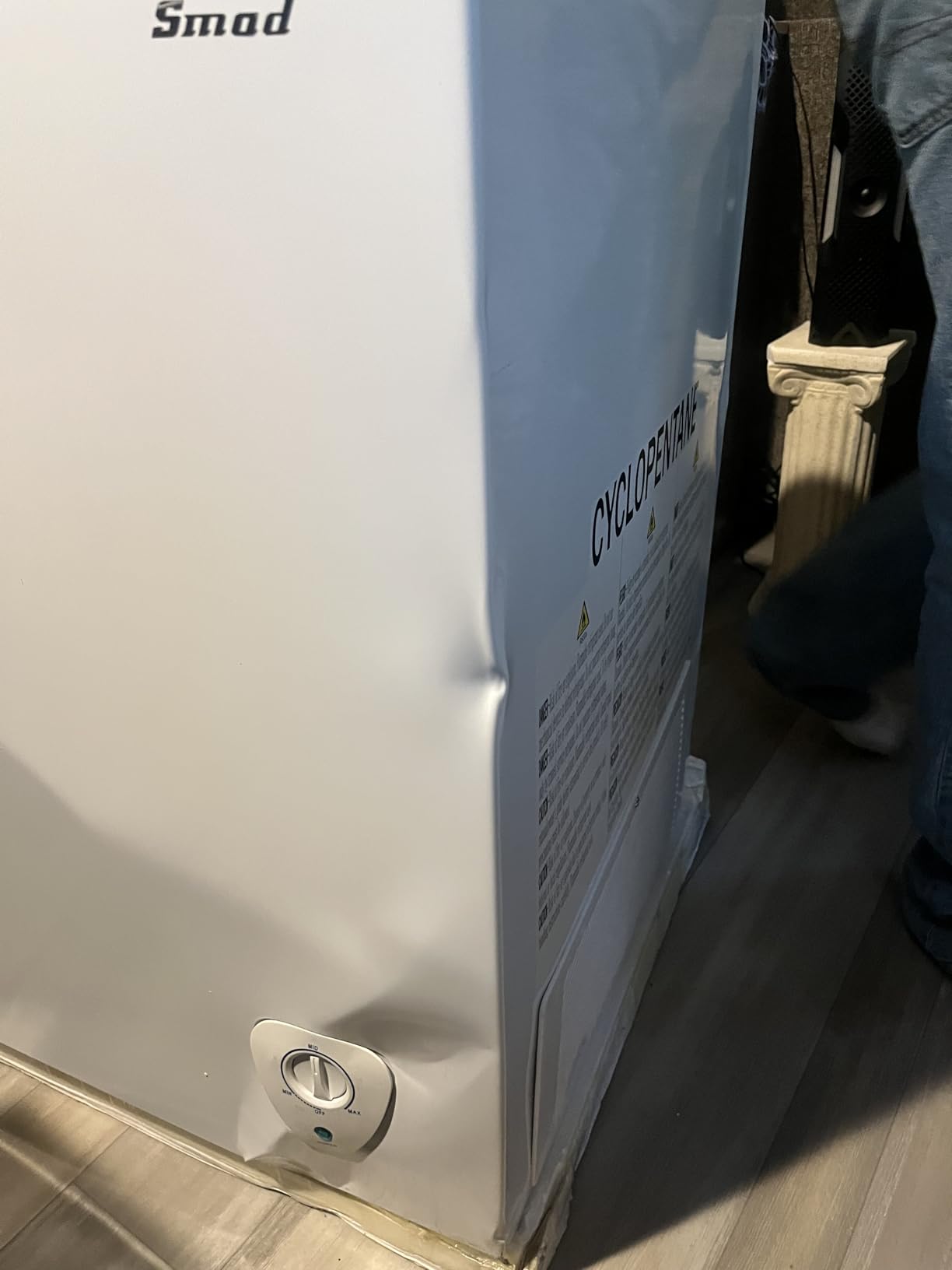
The four shelf levels and the aluminum liner are practical details for a game freezer. The liner resists corrosion and takes a sanitizing scrub without staining, which matters when you are dealing with blood and fat. The built-in front drain handles the seasonal defrost.
Operating noise is listed at 43dB or less, which is quiet enough for a garage but noticeably above the sub-38dB figure published for the Kismile. Wheels on the bottom plus adjustable feet mean you can roll it into place and then level it — a real advantage in a unit this size.
Capacity, cooling speed and the 12-hour question
We checked the pull-down claim against the compressor spec, and a high-performance R600a compressor with a 14°F to -11.2°F thermostat range is consistent with the two-hour cold-down owners describe. A fast pull-down matters for hunting specifically: the faster the core of a quarter drops through the danger zone, the less you are gambling on a warm garage in November.
Expect to let it stand unplugged before first plug-in, as with any new appliance, and follow the manual’s guidance on orientation. A unit that is tilted on its side during delivery needs time on its end before you power it.
Where it does not fit
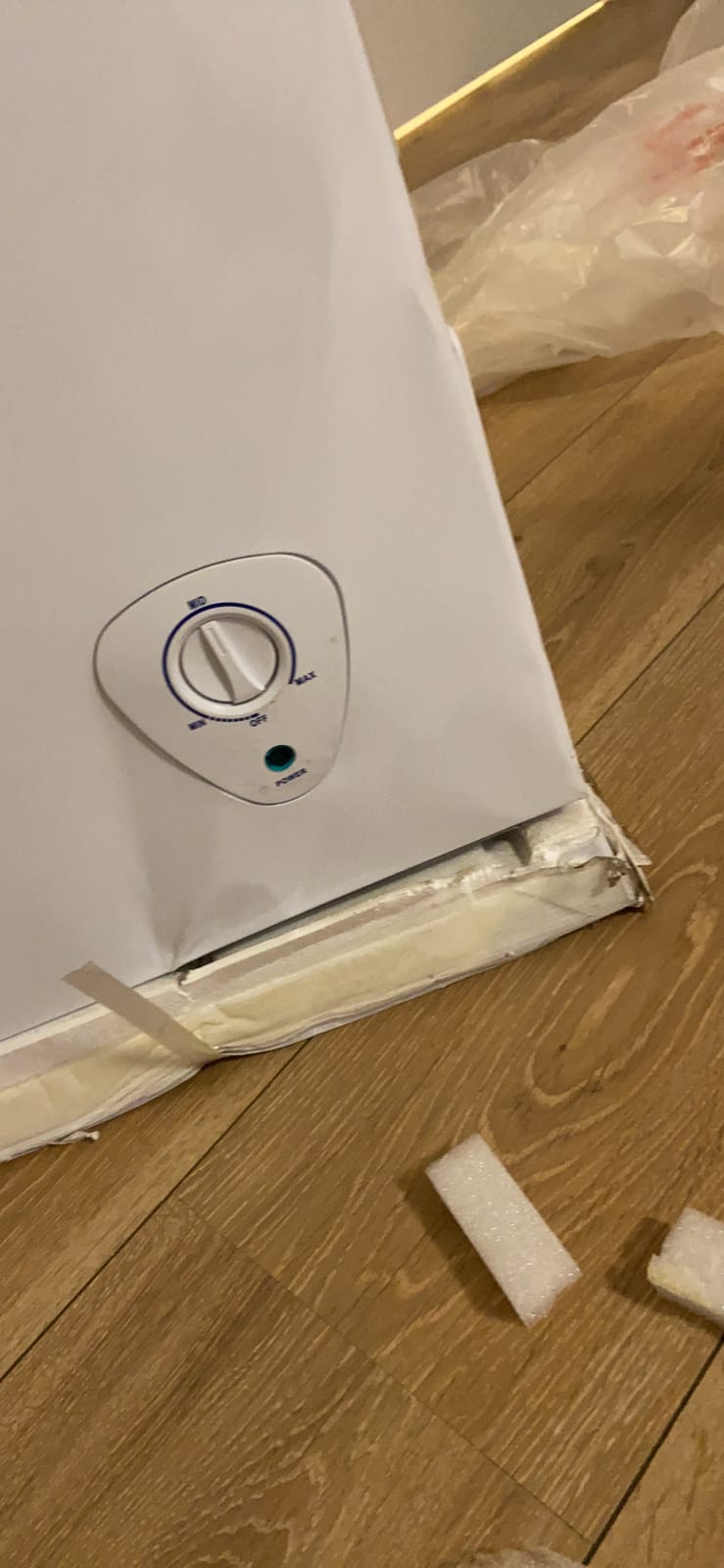
Transit damage is the dominant complaint in the reviews, and the cause is named directly: thin packaging. Multiple owners describe dented or creased units and shredded foam. It is cosmetic in most cases, but a creased cabinet near the door gasket is worth rejecting on arrival rather than living with.
The top-hinge door holds between 45° and 90° rather than fully open, so a wide cutting board will not stay put on its own. And at 131 reviews, this is the thinnest review base in the group, which means less long-term data behind the claims.
4. SMETA 21 Cu. Ft. Deep Freezer — Best for a Whole-Deer Load
SMETA Chest Freezer 21 Cu. Ft, Large Capacity Deep Freezer with 2 Removable Baskets, Energy Efficient, Freestanding, 65” Wide, Perfect for Home, Garage, Kitchen, Meat, Basement, Quick Freezing
21 cu. ft. at 63.2 in wide
Thermostat to -4F
85 lb body
Front water drain
Pros
- Holds more than the size suggests for game
- Reached -6F within a few hours
- Silent running
- Light at 85 pounds for one person to move
Cons
- Only one basket despite listing wording
- Transit dents on some units
- One reviewer found real capacity lower than advertised
- No interior light
The 21 cubic foot SMETA is the pick for anyone loading a whole deer and wanting a box light enough to reposition alone. At 85 pounds it is less than half the weight of the Hamilton Beach and the KoolMore, and that difference matters the day you want to pull it away from the wall to clean behind it.
Owners report reaching -6°F within a few hours of delivery and then essentially silent running, with a specific note that it does not noticeably change the electricity bill. At 115 watts, it is close to the lowest draw among the large units here.
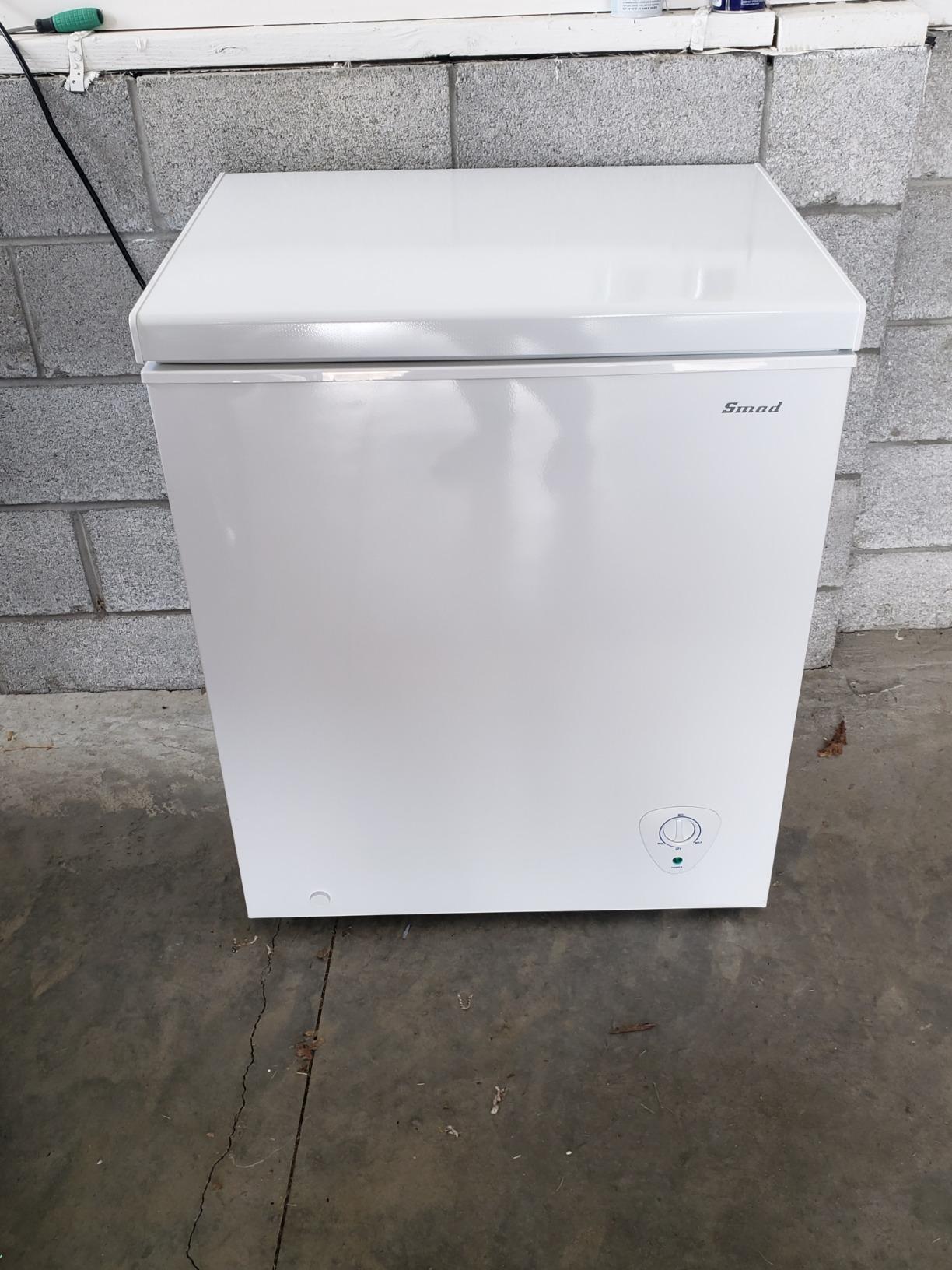
The auto-hold door hinges keep the lid open between 45° and 90° so you can load a quarter without holding it. Combined with the front water drain and the embossed aluminum liner, the maintenance story is straightforward — drain, wipe, refreeze.
The thermostat runs from 10.4°F down to -4°F, which is a shallow range compared with some competitors. It is fine for storage, and it will keep venison solid, but it is not the unit to reach for if you want a deep pull-down for a very large load.
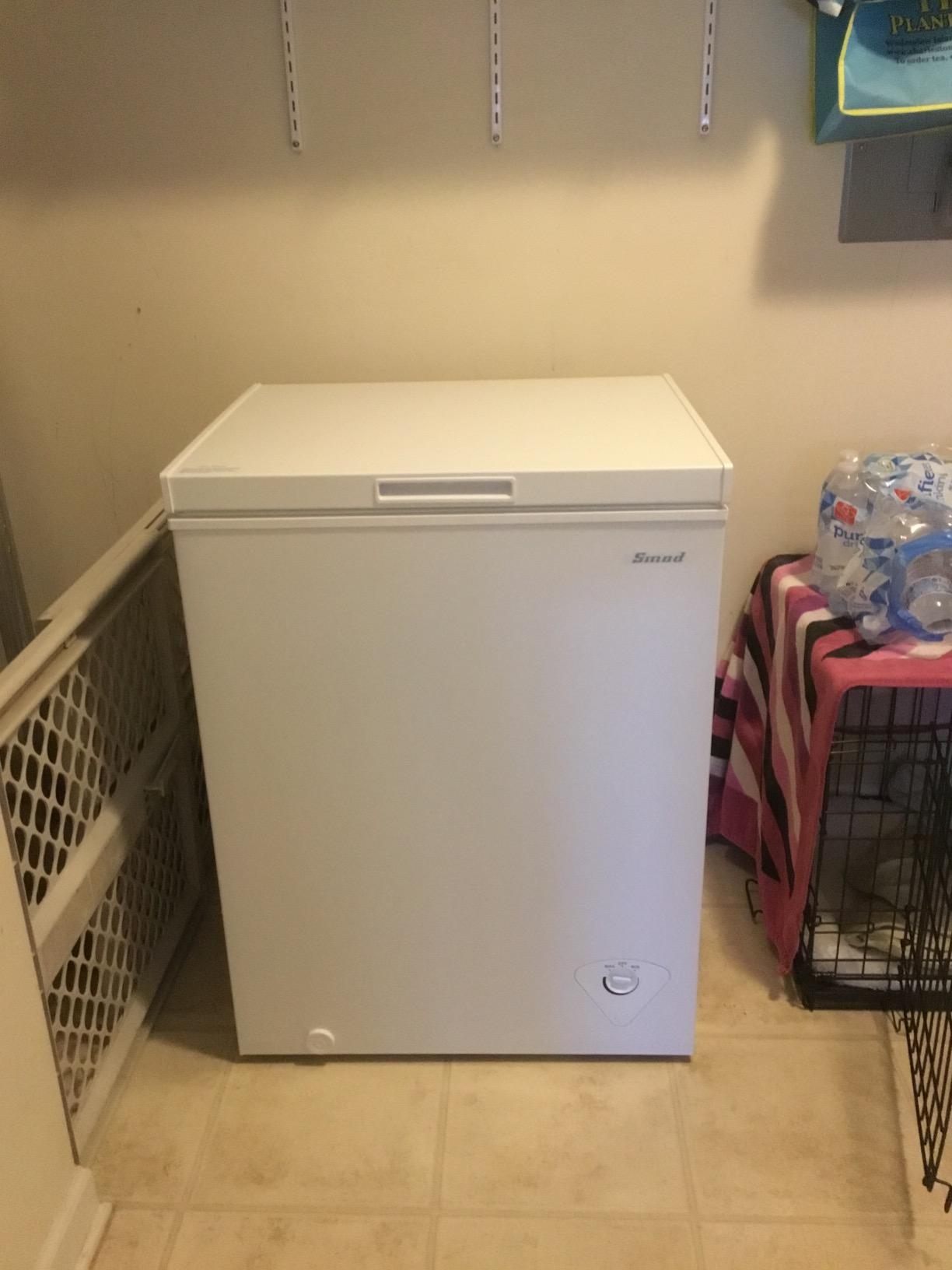
Why the narrower width matters for loading
At 63.2 inches wide and 29.7 deep, this is a squarer box than the long rectangular units above it. For a hunter packing hindquarters, that geometry means a quarter can lie diagonally across the floor rather than needing to be angled into a narrow end. A poster on monstermuleys.info described exactly why hunters gravitate to chests: manual defrost units are much easier to fit larger items into.
Confirm the capacity yourself before committing. One reviewer of the 18 cubic foot variant measured closer to 12 to 13 cubic feet, which is a gap large enough to matter. Check the interior dimensions against the cut you plan to store.
Where it does not fit
The listing references multiple removable baskets but only one is commonly reported as arriving. If you plan to load two deer, buy bins separately — the missing basket is the single most repeated accessory complaint in these reviews.
There is no interior light, so you will be working with a headlamp or flashlight when you dig for a pack. And at 91 reviews this is the smallest review base in the roundup, so treat the strong claims as promising rather than proven over a decade.
5. KoolMore 30 Cu. Ft. Two-Door Chest Freezer — Best for Hunters Who Take Several Deer
KoolMore KM-SCF-30C 79 in. Commercial Two-Door Chest Freezer, 30 Cu. Ft. in White, ETL Listed
30 cu. ft.
Two vertical swing doors
Garage ready
ETL listed
201.7 lb
Pros
- Largest capacity in the roundup
- Two doors reduce cold loss while loading
- Garage ready across wide ambient range
- Two storage baskets included
Cons
- 4.0 average with a high share of critical one-star reviews
- 79 inch width and 201.7 pounds
- Manual defrost upkeep
- Highest cost in the group
Thirty cubic feet is a different category from everything else in this guide. The dual vertical doors are the feature that matters for loading, because you open one half at a time instead of raising a 79 inch lid and dumping cold air out of the entire box. For a hunter pulling a quarter out of the bottom on a warm day, that halves the exposure.
It is garage ready, ETL listed, and rated to operate across a wide ambient range, and two storage baskets are included. Owners also describe the manual defrost as a positive for energy use and compressor longevity rather than a chore, which tracks with how manual-defrost boxes behave mechanically.
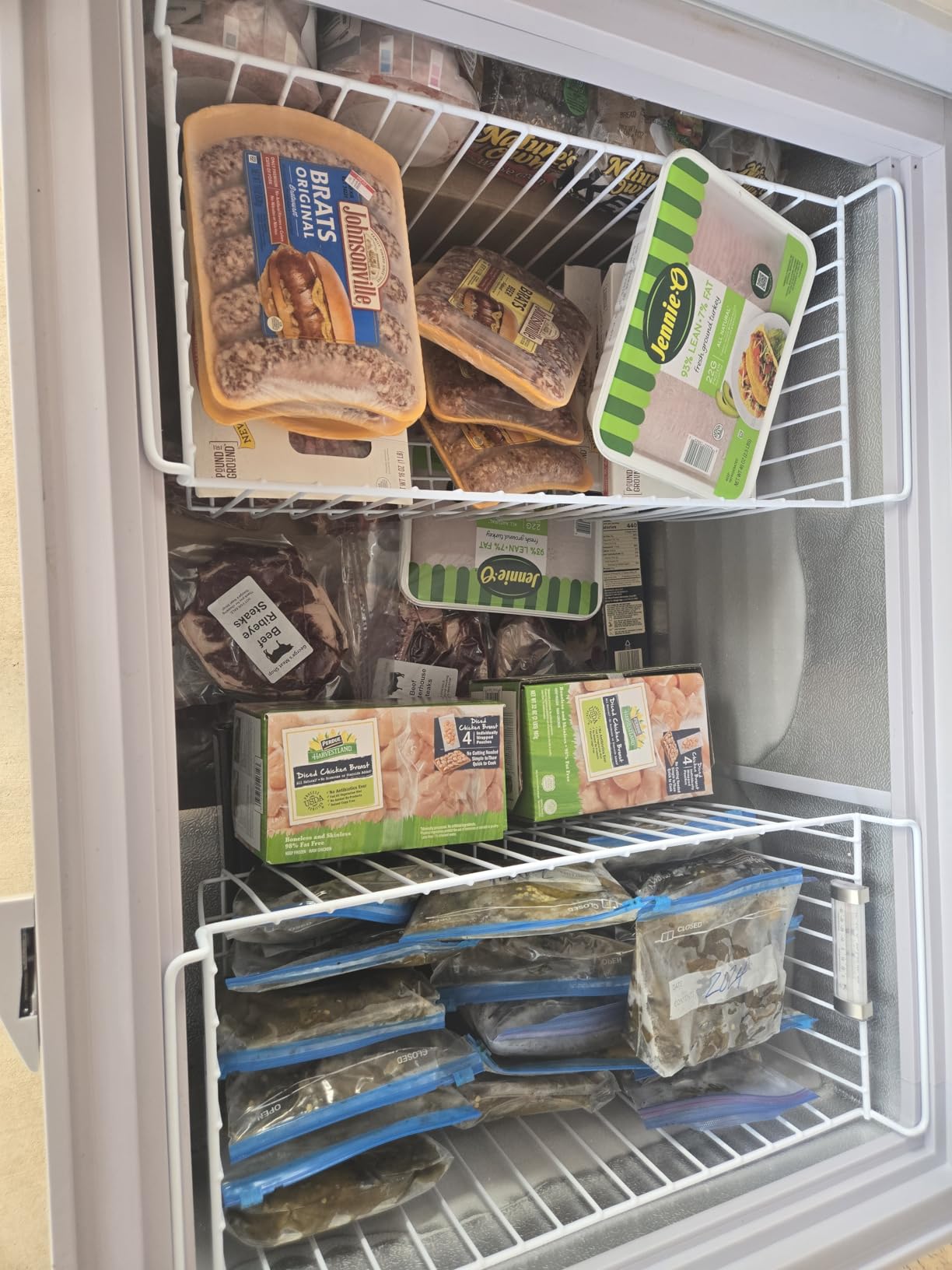
We will be straight about the reviews. At a 4.0 average this is the lowest-rated unit here, and owners report a noticeably higher share of critical one-star feedback than the other seven. The praise is concentrated and specific — the doors, the volume, the garage performance — while the complaints are spread across transit, assembly and service.
The physical demands are real: 79.06 inches wide, 33.43 deep, 38.88 tall, and 201.7 pounds. Plan the delivery route and the floor space before you order, because a unit this size rarely moves across a room without two people.
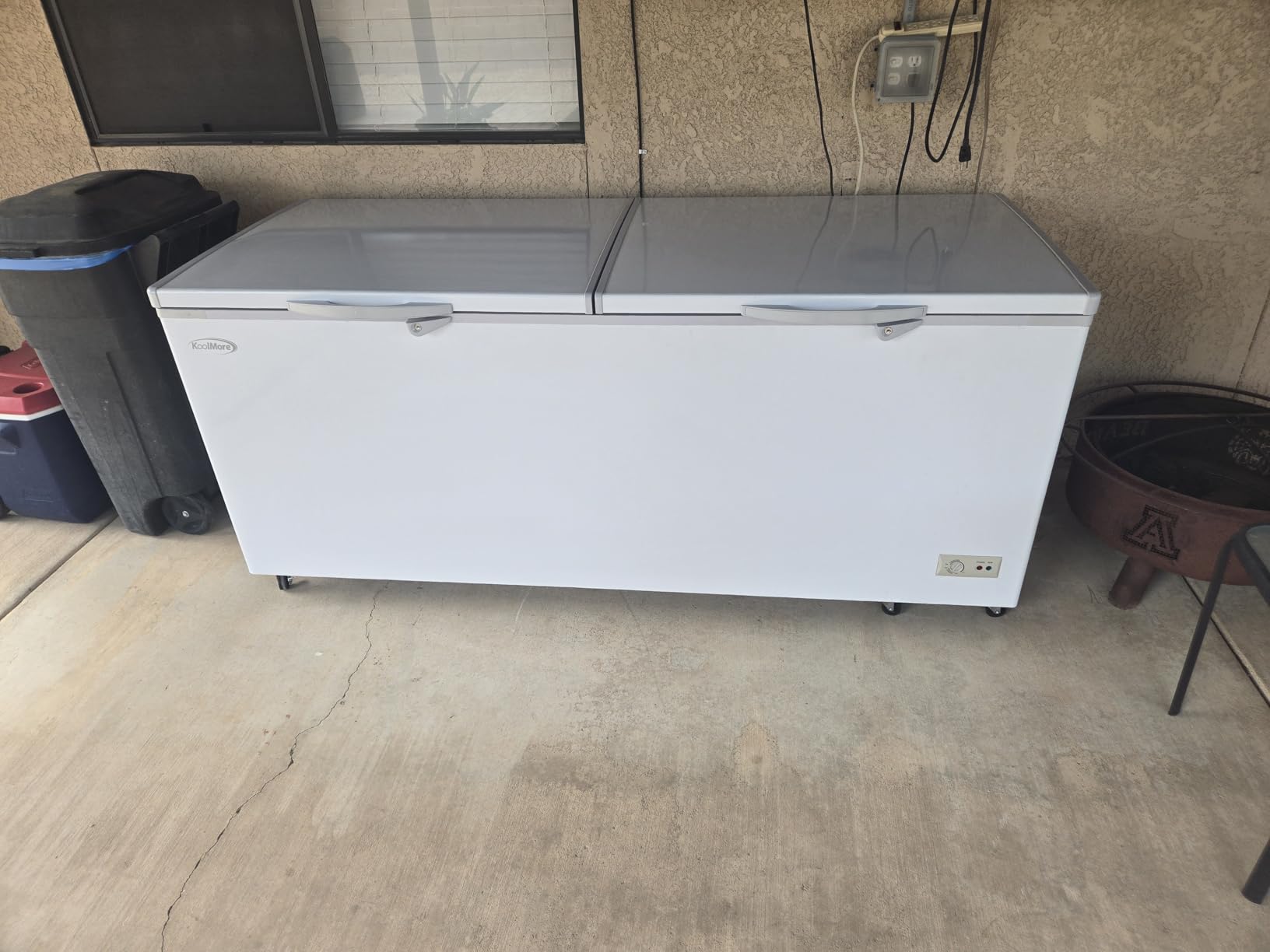
Capacity math for a serious season
Run the 35 to 40 pounds per cubic foot rule against 30 cubic feet and you get roughly 1,050 to 1,200 pounds of frozen meat, or about fifteen to twenty packaged deer. That is a serious season, and it is the only box here that takes a whole hog alongside deer without becoming the tightest corner in the garage.
The dual-door layout changes the loading math too. Because each door covers half the interior, you can restack one side without unpacking the other, which is exactly the fix forum hunters ask for when they complain about losing meat into the depths of a single-lid box.
Where it does not fit
It is the wrong pick for anyone with less than a 79 inch wall or a two-person installation. The 4.0 average and elevated one-star share also mean you should expect a higher support burden than the other units, and a 1-year parts and labor warranty does not offset that risk the way a stronger rating would.
If your actual load is one or two deer, you are paying for volume you will not fill, and an unfilled chest runs its compressor less efficiently.
6. Frigidaire 7 Cu. Ft. Chest Deep Freezer — Best as a Dedicated Second Deer Freezer
FRIGIDAIRE EFRF7003-BLACK Chest Deep Freezer, 7 Cu. Ft, Black Adjustable Thermostat-Removable Vinyl Coated Wire Basket-Easy Defrost Drain
7 cu. ft.
Removable wire basket
7-setting thermostat
Exterior defrost drain
70 lb
Pros
- Compact dedicated freezer for one deer
- Removable basket keeps small packages reachable
- Simple seven-setting dial
- Aluminum liner is easy to sanitize
Cons
- 7 cu. ft. limits bulk quarter loads
- Manual defrost cycle
- No interior light
- 1-year parts and labor warranty
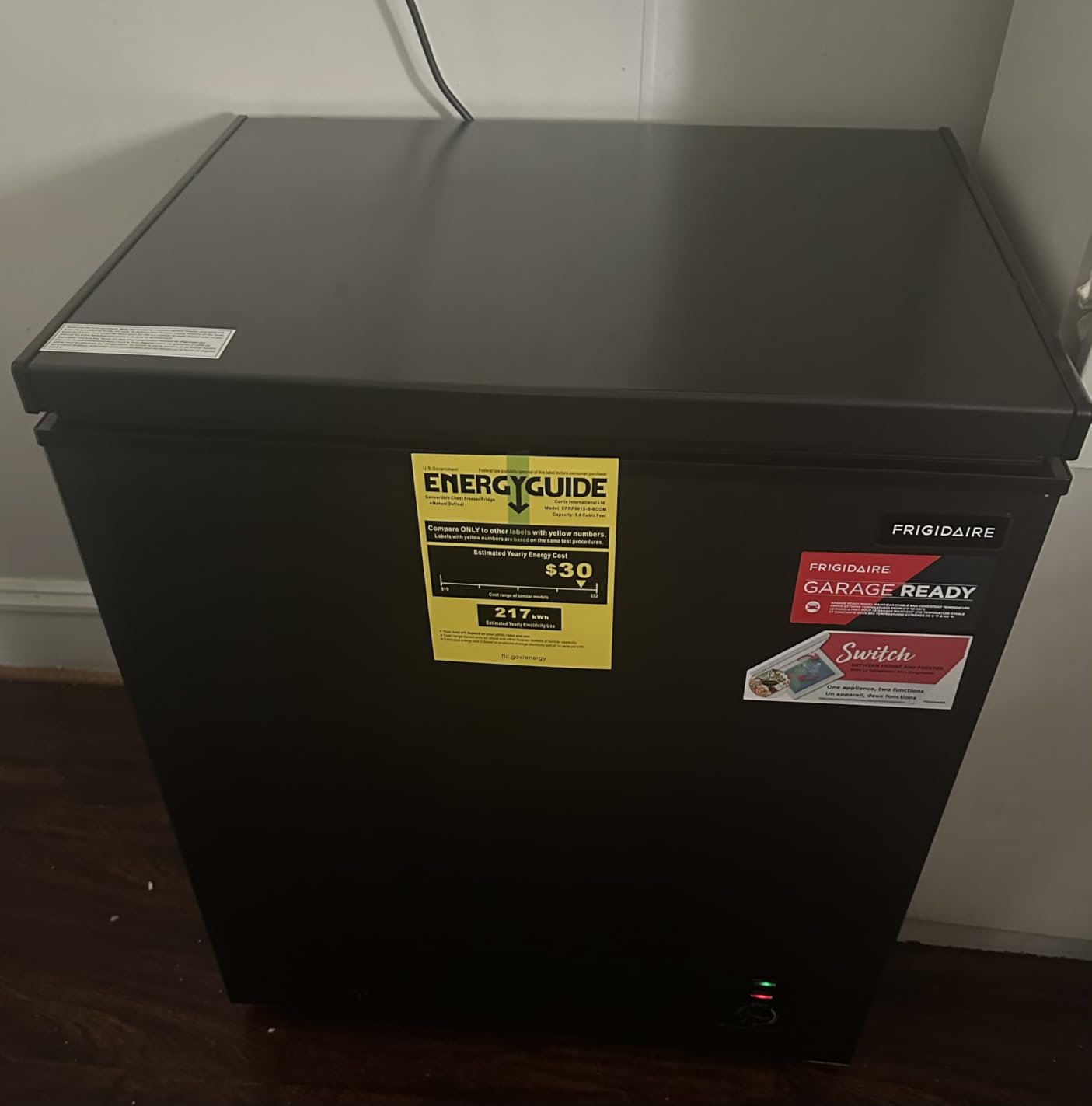
The Frigidaire 7 cubic foot is the box most hunters buy first, and it is the one they add a second of. At 70 pounds and 37 inches wide it is easy to move, easy to level, and sized for exactly one processed deer plus the overflow from a second.
The rating comes from a deep pool: 592 reviews averaging 4.4. Owners highlight the removable vinyl-coated wire basket, the simple thermostat and the aluminum liner, and the same Frigidaire name keeps appearing in long-term ownership reports on hunting forums — one texags.com poster has run a 14 cubic foot Frigidaire chest and a 21 cubic foot Frigidaire upright in the garage for 14 and 18 years respectively.
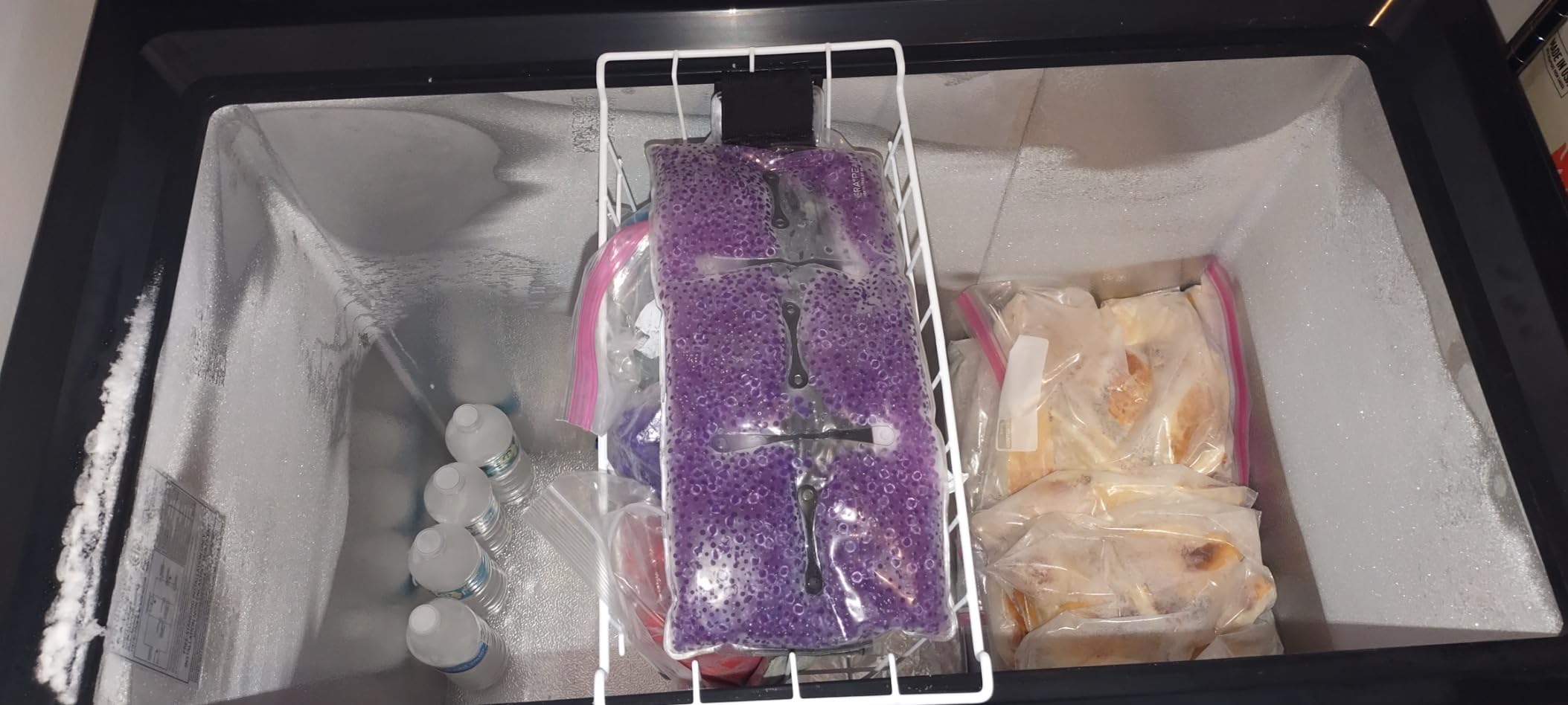
Two design details keep coming up as genuinely useful. The seven-setting adjustable dial is simple enough to set once and forget, and the exterior defrost drain means the seasonal thaw goes out the front instead of under the cabinet. A power-on indicator light gives you at-a-glance status at the front of the unit.
The aluminum interior liner is the piece we would quietly point out to anyone storing venison. Blood and fat are easier to sanitize off bare aluminum than off a plastic-lined cavity, and the liner takes a scrub without holding odor.
Using it as a second freezer rather than a first
The pattern we like is a large main box for bulk venison and one of these 7 cubic foot units for the deer you are actively eating. Quartered and vacuum-sealed cuts go in the big box; the steaks and tenderloins you will pull weekly go here, at eye level on the basket, where you can find them without a flashlight and a full unload.
That is also the fix for the complaint that comes up more than any other on hunting forums: the tendency to lose meat into the depths. A shallow dedicated box with one removable basket simply does not have a bottom.
Where it does not fit
Do not buy this as your only freezer if you routinely take two or more deer. Seven cubic feet gives you about 245 to 280 pounds of capacity, which is one deer plus change, and packing more in means the cold-down slows and the air circulation suffers.
There is no interior light, and the manual defrost cycle is a hands-on weekend task. At 70 pounds it is still a two-person lift for most people, so plan the delivery path.
7. Arctic Chef 7 Cu. Ft. Convertible Chest Freezer — Best if You Want to Cold-Hold Meat
Arctic Chef, 7 Cu. Ft. Convertible Chest Freezer, Garage Ready Freezer or Refrigerator, Manual Defrost Chest Freezer with External Temperature Control, Removable Basket, Defrost Drain, Power Indicator
7 cu. ft.
Convertible freezer or refrigerator
Holds about 135 lb
External front controls
300 W
Pros
- Runs as freezer or refrigerator
- External front-mounted temperature control
- Holds about 135 lbs of frozen food
- Includes a wire basket and front drain
Cons
- 4.2 average sits below the rest of the group
- Manual defrost upkeep
- 300 watt draw is the highest listed
- Only the 7 cubic foot configuration offered
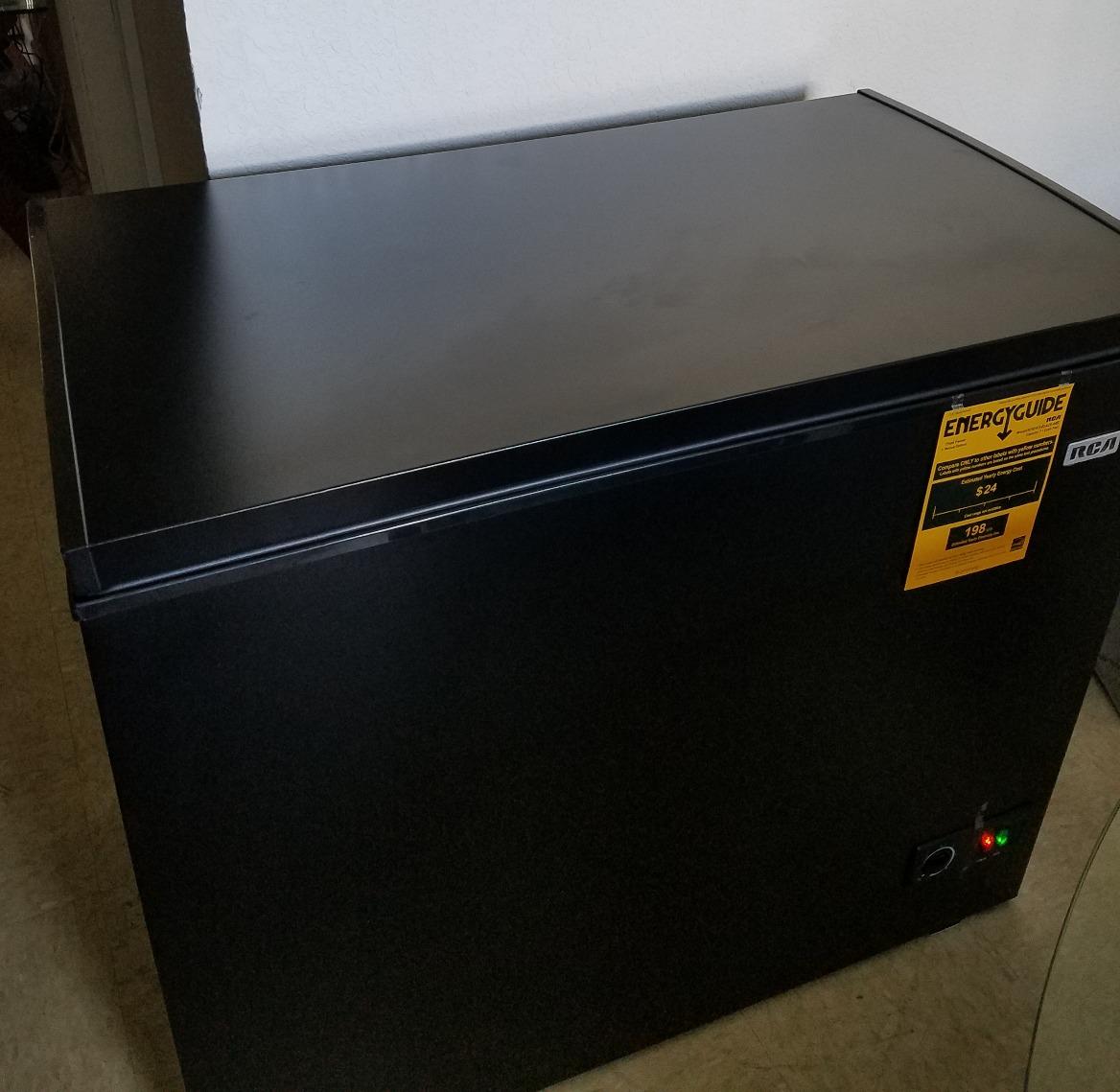
The convertible function is the reason to look at this one, and no other unit in the roundup offers it. Run as a freezer it holds roughly 135 pounds of frozen food, and switched to refrigerator mode you get a controlled cold space for cuts you want to hold just above freezing rather than freeze solid.
The external front-mounted temperature control is a genuinely thoughtful placement. You can dial it in without lifting the lid, which means you are not venting cold air every time you check on a batch of venison.
At 581 reviews the pool here is deep, and the feedback is more mixed than the other compact models. Buyers like the flexibility and the accessible controls; the recurring gripes are the manual defrost cycle and the energy draw.
That draw is worth quantifying. At 300 watts this is the highest wattage published among the units in this guide, and the two large units with comparable published figures run 101 and 115 watts. On a compressor that cycles rather than runs continuously the real cost difference is smaller than the numbers suggest, but it is not zero, and it is one more reason this is a second freezer rather than a primary one.
Cold-hold versus deep-freeze for a hunting load
If your plan is to eat through a deer over a few weeks and dry-age or chill some cuts before use, convertible mode is the feature that pays for itself. You get one appliance doing two jobs instead of a freezer plus a separate cold unit in the garage.
If your plan is to put venison away for a year or more, the convertible does not help you. You want a unit that reaches and holds well below 0°F, and the seven-setting dial here handles that, but the other 7 cubic foot options publish a more precise temperature range.
Where it does not fit
The 4.2 average is the second-softest score in the group, and it comes from a large sample, so it is a fair signal that some owners are less satisfied. The 300 watt draw and the manual defrost cycle both add friction for a primary use.
It is also 22.83 inches deep and 38.58 wide, so check the space — it is narrower and longer than the Frigidaire in the same class, which is a small advantage in a tight garage corner.
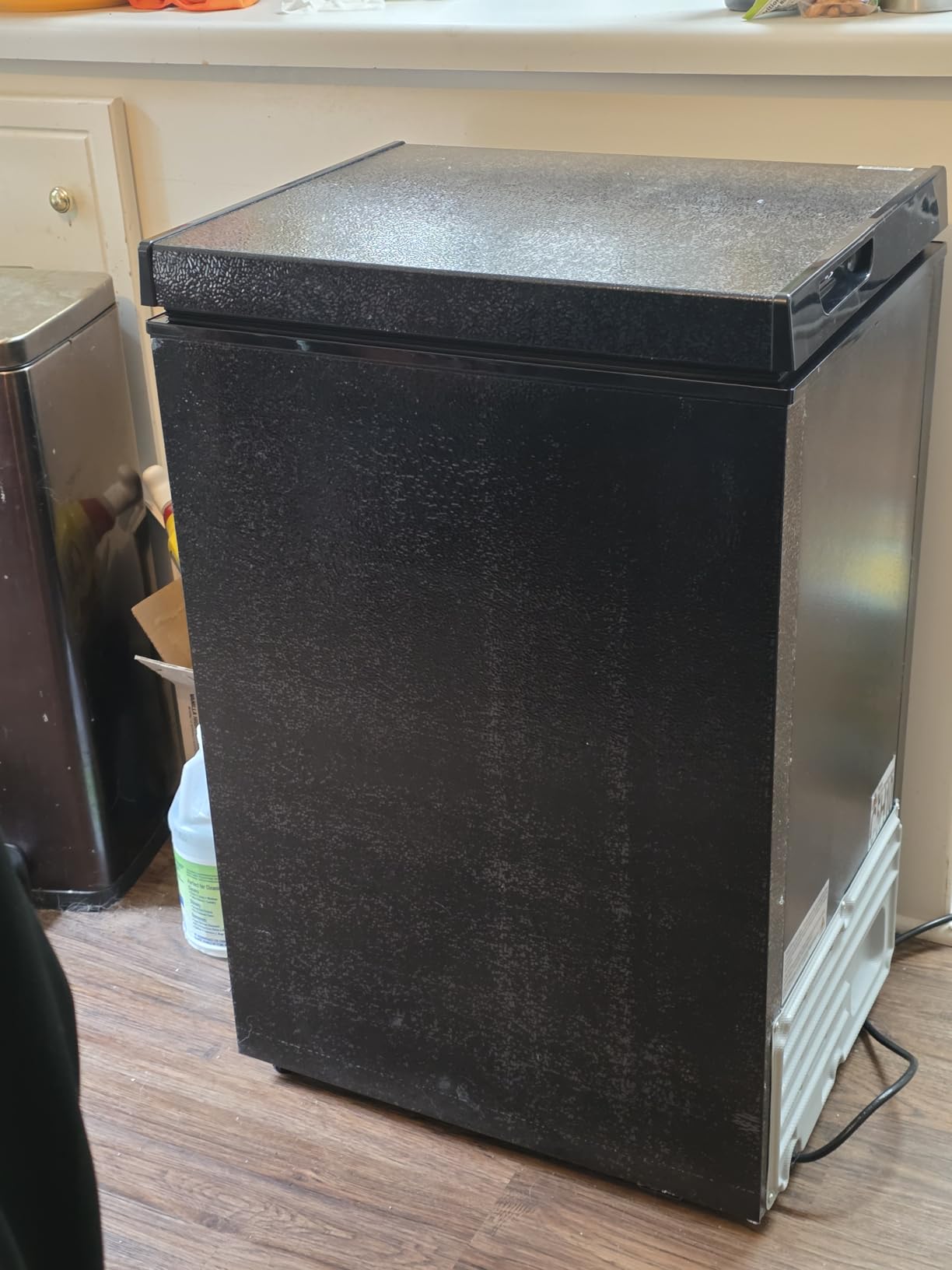
8. Kismile 7.0 Cu. Ft. Chest Freezer — Best Value Pick for Deer Meat
Kismile 7.0 Cubic Feet Chest Freezer, Deep Freezer for Home, Black
7.0 cu. ft.
0.66 kWh per day
Under 38 dB
3 hanging baskets
60.5 lb
Pros
- Deepest review base with 2157 ratings
- Three hanging wire baskets
- Quiet and efficient at 0.66 kWh per day
- Lightest unit in the roundup at 60.5 lb
Cons
- R600a flammable-refrigerant handling warnings
- Manual defrost operation
- 7 cu. ft. limits bulk loads
- No interior light
At 2,157 reviews this is by far the most heavily reviewed unit in the roundup, and that volume is itself a buying argument. When a chest freezer has thousands of owners reporting on it, you know what the common failures are before you buy rather than discovering them in year three.
Three hanging wire baskets is the feature that separates it from the other two 7 cubic foot units here. Smaller packages hang visibly at the top instead of disappearing under a stack of quarters, which is the direct answer to the losing-meat-into-the-depths complaint that shows up in nearly every hunting thread.
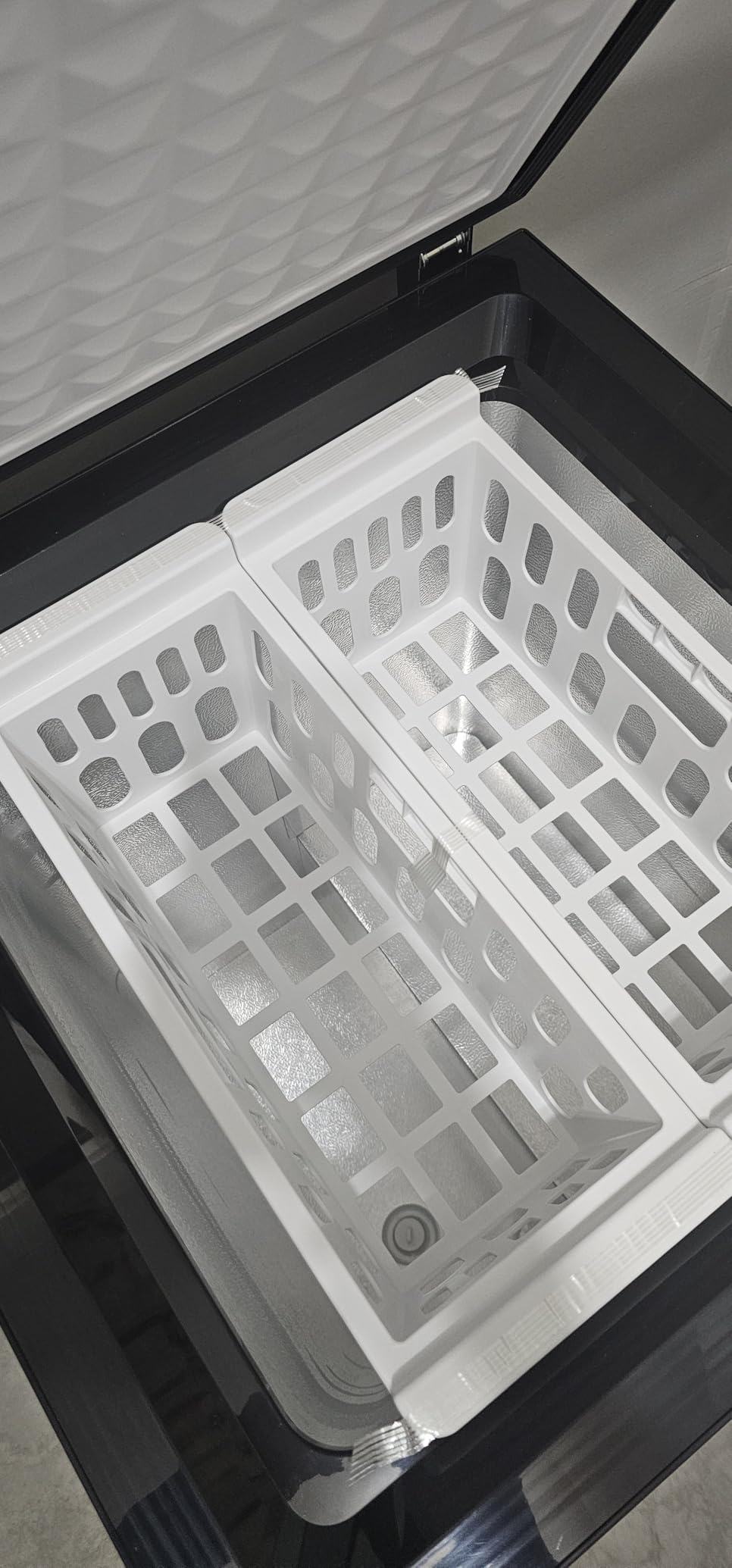
The published efficiency figure is 0.66 kWh per day, and running noise is listed below 38 dB — both the strongest numbers published in this guide. Owners confirm fast pull-down to -2°F within about two hours of delivery. At 60.5 pounds it is also the lightest unit here, so one person can move it for cleaning.
The balanced hinge door stays open between 45° and 90° for hands-free loading, and the seven-grade temperature control spans 6.8°F to -7.6°F with a green run light. Owners also report responsive warranty support that replaced early defective units quickly, which matters more in a first season than the warranty length implies.
What the review volume actually tells you
Large review counts cut both ways. They give you a real failure picture — here, occasional dents on arrival and the R600a flammable-refrigerant warning labels, which are handling notices rather than defects. And they give you service data, because a company that has answered thousands of buyers is one you can reach in year five.
On running cost, take the 0.66 kWh per day figure and multiply. That is roughly 241 kWh a year running continuously, and at a typical residential rate the annual electricity cost lands in the low tens of dollars — a figure that holds across the compact class regardless of brand.
Where it does not fit
Seven cubic feet is one deer, not two. If your season reliably produces more, this is the wrong size no matter how good the value is. The R600a refrigerant also carries flammable-refrigerant handling warnings on the unit, which is standard for modern residential freezers but worth knowing if you are transporting it yourself.
No interior light, manual defrost, and 60.5 pounds still means a careful lift for anyone with back issues.
Buying Guide: Garage-Ready, Defrost, Loading and Outages
Garage-ready is not a marketing word. It means the compressor is rated to hold temperature across an ambient range from around 0°F up to 110°F. That range is the single most repeated technical phrase across every hunting forum we read, and it is the one specification that decides whether a freezer survives a July garage or a January one. Two units in this roundup are explicitly rated garage ready: the Hamilton Beach 17 cubic foot and the KoolMore 30 cubic foot. For the rest, an unheated garage is a real question for the seller.
Manual defrost is a feature for hunters, not a flaw. Frost-free uprights use a fan to circulate air, and that fan is what forces you to freeze meat in flat layers on trays. A manual-defrost chest has no fan, so you can drop a whole quarter in at any angle and it will freeze. The trade is an annual thaw and scrub, and experienced hunters do it in the weeks before hunting season rather than after a long trip — a regular on bushcraftusa.com described defrosting a 7 cubic foot Frigidaire every year right before season opens as a long-standing habit.
How to load a deer so nothing gets lost. Start with the biggest, coldest cuts first: hams and hindquarters flat on the floor, since they are the last thing to freeze and the first you will want. Work up to the loins and tenderloin. Put everything you will actually eat in the first season in the top wire basket or in labeled bins, and bury the rest underneath. Label every package with the deer, the cut and the date. A shopper on snipershide.com put the problem better than any manual: the nature of a deep chest lends itself to losing meat into the depths. Bins and baskets are the fix.
Venison storage duration and safe handling. Frozen venison holds its quality for 12 months at 0°F or below when it is vacuum-sealed or in food-grade freezer bags, and it stays safe indefinitely once frozen solid as long as the freezer holds temperature. The bigger variable is the cold-down, not the clock. Chill the carcass or the cuts as fast as you can, get the core below 40°F within two hours, and freeze promptly.
Clearance and fit. Every unit here is a top-opening chest, so the lid needs vertical clearance above it and the front needs room to stand and load. The KoolMore at 79.06 inches wide and the BLACK+DECKER at 71 inches are the two that will dictate your floor plan. On the electrical side, all of them run on standard 120 volt household current — the Hamilton Beach is listed at 110 volts, the rest at 115 or 120 — so a normal grounded outlet is fine and no dedicated circuit is required. Use a plywood platform if the unit sits on carpet so the base can breathe.
Power outage planning for a loaded game freezer. A full chest of frozen meat holds its temperature longer than a half-full one because the mass works against the warming air, but you still want a plan. Put an appliance thermometer inside near the top, not the bottom. Choose a model with a power indicator if you can. Know your plan for moving meat to a cooler, and keep dry ice or a cooler with enough ice blocks on hand for a weekend outage. On the models in this roundup, the indicator light tells you the compressor is running and nothing more — it does not tell you the cabinet is cold, so the thermometer is the real safeguard.
For the gear side of a deer season, our chest mount guide covers hands-free filming while you are focused on the game rather than the camera.
Frequently Asked Questions
What size chest freezer do I need for one deer?
A processed deer yields roughly 60 to 70 pounds of packaged venison, and hunters use about one cubic foot of freezer space for every 35 to 40 pounds of frozen meat. That puts one deer at 2 to 3 cubic feet, a two-deer season at 7 cubic feet, and multiple deer at 14 cubic feet or more.
How many deer will a 7 cubic foot freezer hold?
A 7 cubic foot chest holds about 245 to 280 pounds of frozen meat, which is one fully processed deer plus room for overflow or a second partial load. For two deer every year, step up to 14 cubic feet or larger.
How long will deer meat keep in a deep freezer?
Venison stored at 0°F or below keeps its quality for about 12 months when it is vacuum-sealed or in food-grade freezer bags, and it stays safe indefinitely once solidly frozen as long as the freezer holds temperature. Chill the carcass fast and freeze promptly to protect quality.
How much clearance does a chest freezer need?
Allow a few inches of clearance above the lid and enough floor space in front to stand and load. Check the width carefully because the largest models here run 71 to 79 inches across. All of these units run on standard 120 volt power, so a grounded household outlet is all you need.
Who makes the most reliable chest freezers?
Long-term ownership reports on hunting forums repeatedly name Frigidaire, GE and Kenmore. One texags.com poster has run a 14 cubic foot Frigidaire chest for 14 years and a 21 cubic foot Frigidaire upright for 18. The compressor is the usual first failure point, so budget for that.
Conclusion: The Right Chest Freezer for Your Season
The best chest freezers for deer meat come down to how many animals you actually process. Take one deer a year and the Kismile 7 cubic foot gives you three baskets, quiet running and the largest review base in the group. Run a garage that hits triple-digit heat and the Hamilton Beach 17 cubic foot is the safe pick. Two or three deer a year points to the BLACK+DECKER 19.8 cubic foot, which carries the highest rating here and a width that still fits most garage walls.
Whatever you choose, size up rather than down, budget an afternoon for a pre-season defrost, and label everything on the day you load it. That is what separates a freezer you enjoy using for a decade from one you dig through with a flashlight.