
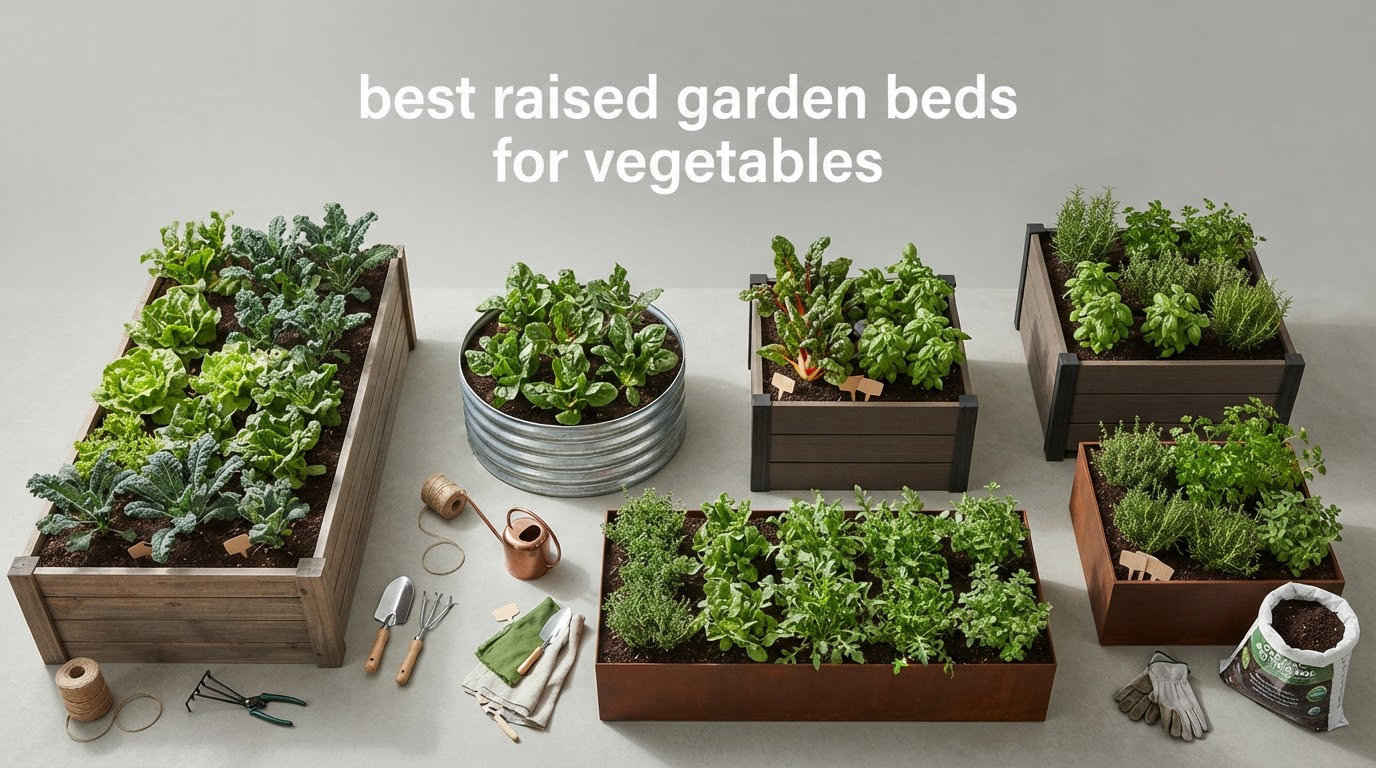
A raised garden bed is a framed box of soil held above ground level, and it is the single easiest way to grow vegetables successfully on a patio, a balcony, a rooftop or a patch of stubborn clay. The frame gives roots a loose, compost-rich mix that drains well and warms faster than native ground, and it lifts the whole growing surface to a height where you can reach it without kneeling in the dirt. If you want the best raised garden beds for vegetables this season, the choice comes down to three things: how deep the soil column is, how tall the working height sits, and what the frame is made of.
We spent weeks with these twelve beds, comparing spec sheets, digging through owner reviews and looking hard at the details that actually matter once soil is in the frame. Three themes came out of it. Deep beds win for tomatoes, peppers and root crops. Elevated beds win for anyone whose knees or back cannot take ground-level digging. And material choice is a genuine trade-off between lifespan and assembly effort, not a simple quality ladder.
Along the way we also worked out how much soil and compost each bed needs, which vegetables are a poor fit for a raised bed, and whether the metal-overheating story is worth worrying about. If you are photographing your plot as it comes in, our guide to the best cameras for flower and garden photography is worth a read too.
Table of Contents
Top 3 Picks for the Best Raised Garden Beds for Vegetables (October 2026)
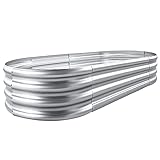
Land Guard Galvanized Bed 4x2x1ft
- 7.14 cu ft
- Double-layer galvanizing
- Open base
- 5 minute assembly

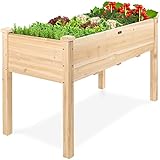
The Land Guard oval is our overall pick because it holds 7.14 cubic feet, goes together in about five minutes, and has the deepest owner-review base in this group at more than 12,900 ratings. The Vego Garden is the better answer when root depth is the deciding factor, with 17-inch walls and a coating rated for 20-plus years. The Best Choice Products elevated fir bed takes the ergonomics slot at a 30-inch working height.
What Is the Best Type of Raised Bed for Vegetables?
For most vegetable gardens, the best type of raised bed is a galvanized steel or untreated rot-resistant wood frame at least 12 inches deep, filled with a loose compost-and-topsoil mix, open at the bottom for drainage, and sized so you can reach the middle without stepping into it. Metal lasts longest and assembles fastest; wood looks better and stays cooler; resin and fabric suit small spaces and renters.
That is the short answer, but material is only one axis. Here is how the twelve beds in this guide break down by the job they do best, matching the category format the search engines currently favour:
Best galvanized steel overall: the Land Guard 4x2x1ft oval, 7.14 cubic feet, double-layer coating, open base, roughly a five-minute build.
Best metal for deep roots: the Vego Garden 17-inch-tall 9-in-1 kit, 23 cubic feet across an 8ft by 2ft footprint, with a zinc-magnesium-aluminum coating rated beyond two decades.
Best cedar: the SoliWood elevated cedar box, 6 cubic feet, 30-inch working height, 2.4-inch legs, and a rating of 4.7 from owners.
Best budget two-bed set: the Meberam pair of 6x3x1ft galvanized beds, 18 cubic feet combined, angular panels that resist twisting.
Best for an existing patio and pets: the Best Choice Products elevated fir planter, 30 inches tall, 5 cubic feet, with padded handling and a fitted liner.
Best for moving a planted bed: the FOYUEE wheeled unit, 31.5-inch standing height, 400-pound capacity, 6-inch all-terrain wheels and a lower shelf.
Best for a long fence line: the GADI 67-inch bed, 7 cubic feet in a narrow 10-inch-tall profile with side ventilation slots for root respiration.
Best for balcony and rooftop weight limits: the Land Guard and Rakukiri beds, both at 5 pounds empty, which matters far more than the frame weight once the soil goes in.
Best for wheelchair or seated access: the DIIYIV two-pack of 48x18x30in elevated beds, 300-pound capacity per unit, with padded corner protectors.
Best deepest soil column: the Anleolife 8x4x2ft oval, 24 inches tall, holding up to 478 gallons with rounded curled safety edges.
Best three-bed starter plot: the SnugNiture 3-pack of 46×23.6x17in beds, 17-inch walls, rubber safety edging, open bases.
Best small-space balcony garden: the LEETOLLA 32-inch wheeled raised bed, 2.5 cubic feet, detachable shelf, two all-terrain wheels.
Depth is the thread running through all of it. Anything under 10 inches limits you to leafy greens, herbs and shallow salad crops. Twelve inches covers most summer vegetables. Fifteen to seventeen inches opens up tomatoes, peppers and starchy crops. Twenty-four inches is where deep-rooted and long-season planting becomes realistic.
All 12 Raised Garden Beds Compared in 2026
| Product | Specifications | Action |
|---|---|---|
| Land Guard Galvanized Raised Garden Bed Kit 4x2x1ft |
|
Check Latest Price |
| Best Choice Products Elevated Fir Raised Garden Bed |
|
Check Latest Price |
 FOYUEE 31.5 Inch Mobile Raised Garden Bed with Wheels FOYUEE 31.5 Inch Mobile Raised Garden Bed with Wheels |
|
Check Latest Price |
 GADI 67 Inch Galvanized Raised Garden Bed GADI 67 Inch Galvanized Raised Garden Bed |
|
Check Latest Price |
 Rakukiri 5ft Oval Galvanized Planter Box Rakukiri 5ft Oval Galvanized Planter Box |
|
Check Latest Price |
 LEETOLLA 32 Inch Elevated Raised Garden Bed with Wheels LEETOLLA 32 Inch Elevated Raised Garden Bed with Wheels |
|
Check Latest Price |
 Meberam 2 Pack 6x3x1FT Galvanized Raised Garden Beds Meberam 2 Pack 6x3x1FT Galvanized Raised Garden Beds |
|
Check Latest Price |
 DIIYIV 2PCS Elevated Galvanized Raised Garden Bed with Legs DIIYIV 2PCS Elevated Galvanized Raised Garden Bed with Legs |
|
Check Latest Price |
 SoliWood Cedar Raised Garden Bed with Legs SoliWood Cedar Raised Garden Bed with Legs |
|
Check Latest Price |
| Vego Garden 9-in-1 Metal Raised Garden Bed 17 Inch Tall |
|
Check Latest Price |
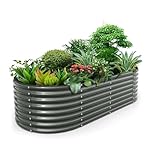 Anleolife 8x4x2ft Oval Deep Root Galvanized Bed Anleolife 8x4x2ft Oval Deep Root Galvanized Bed |
|
Check Latest Price |
 SnugNiture 3 Pack 17 Inch Tall Galvanized Raised Garden Beds SnugNiture 3 Pack 17 Inch Tall Galvanized Raised Garden Beds |
|
Check Latest Price |
Capacity figures in that table come from the manufacturers and are not directly comparable across the list. Some brands quote cubic feet of soil volume, some quote gallons, and one quotes a weight limit. We have kept each maker’s own wording and cross-checked it against the dimensions wherever the numbers allow.
1. Land Guard Galvanized Raised Garden Bed Kit – Best Overall Metal Bed
Land Guard Galvanized Raised Garden Bed Kit, Galvanized Planter Garden Boxes Outdoor, Oval Large Metal Raised Garden Beds for Vegetables…………
7.14 cu ft capacity
48 x 24 x 12 inches
Q195 double-layer galvanized steel
Open base, 5 minute build
Pros
- Double-layer galvanizing resists rust and corrosion
- Thicker sheet than comparable beds
- Assembles in about five minutes
- Open base promotes drainage and healthy roots
Cons
- 12-inch depth suits shallow-rooted crops
- Corrugated panels can flex if filled unevenly
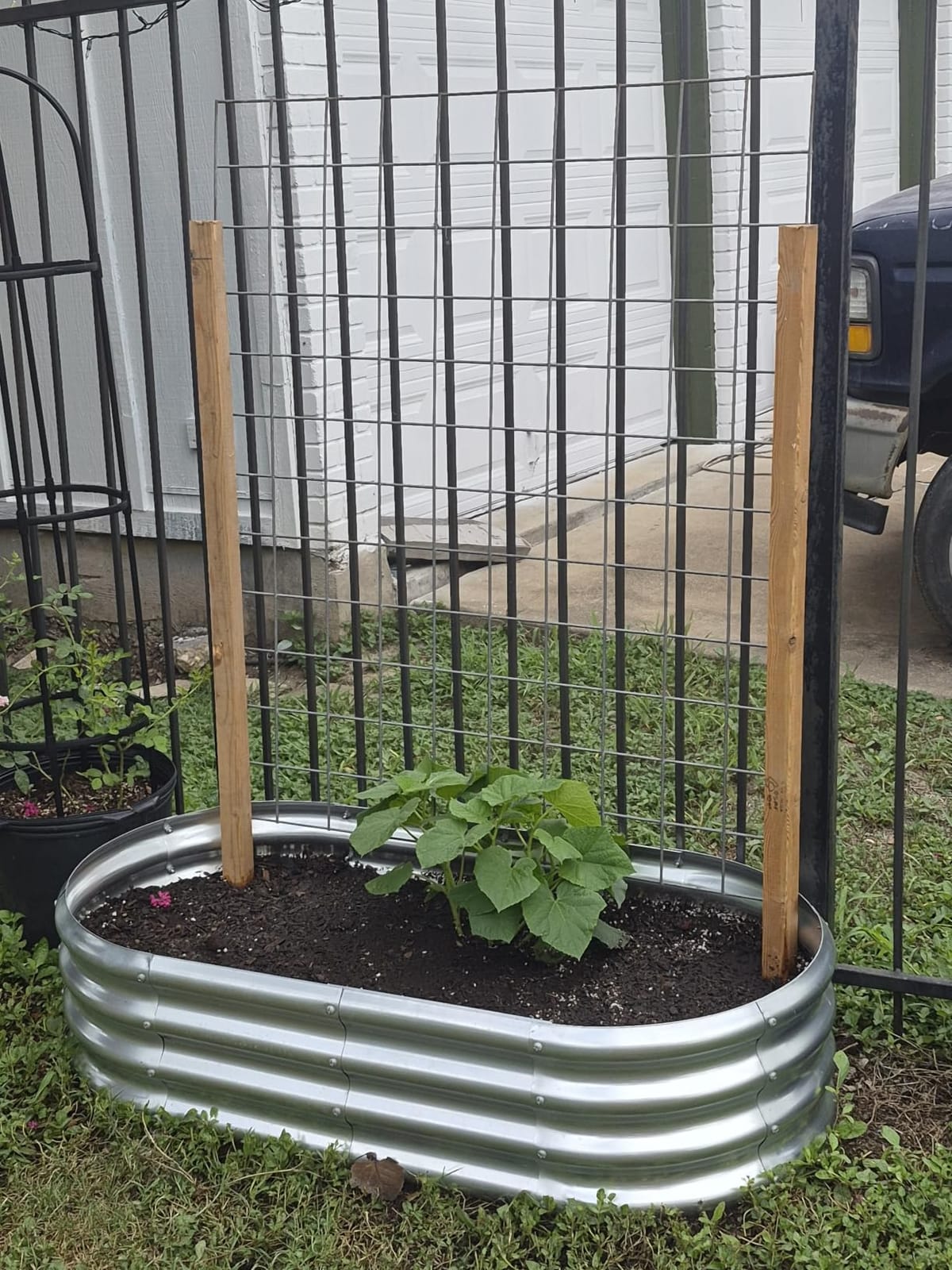
This is the bed we kept coming back to. It holds 7.14 cubic feet in a 4x2x1ft footprint, and at 12 inches deep it is the shallower end of what we would call a genuine vegetable bed rather than a herb box. Owners overwhelmingly describe it as sturdy once filled, with the oval profile doing real work: the curved panels resist the outward pressure that bows flat-corrugated beds.
Assembly is genuinely fast. The sheet averages 0.78mm and thickens to 1.56mm at the stress points, and the whole thing comes together in about five minutes with a driver. That speed matters more than it sounds like it should, because a bed you will not tolerate building is a bed that stays in the garage.
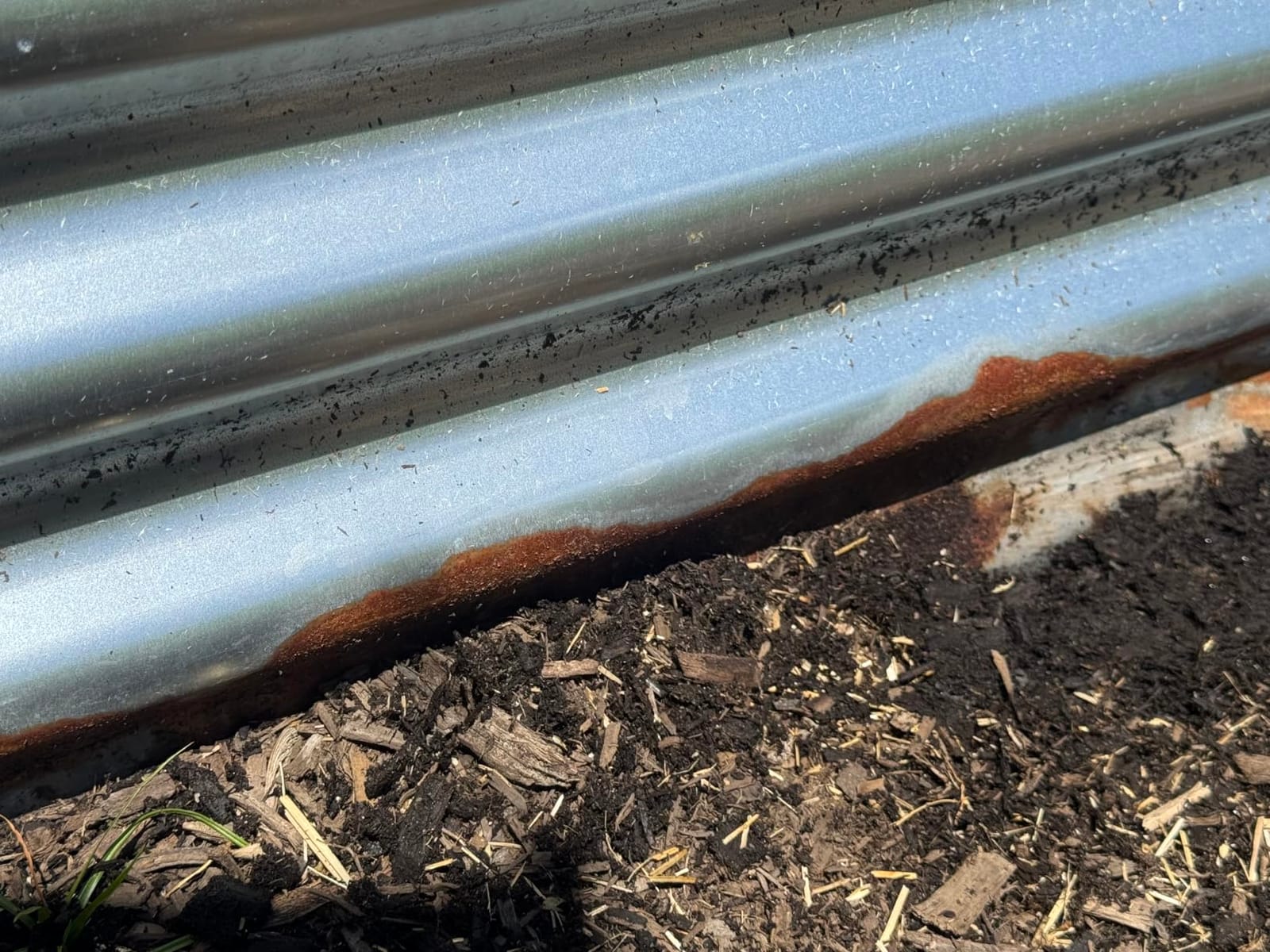
The open base is the design choice we like most. It lets excess water drain straight into the ground rather than sitting in a tray, and it lets soil microbiology spread upward into your mix. The oval shape also has no hard corner brackets to catch a knee or a sleeve when you are working in it.
It weighs 5 pounds, which means one person can move it before filling. Once filled, treat it as a fixed object and anchor the corners if children or pets are around.
How much soil does this bed need?
Roughly 7 cubic feet of mixed soil and compost, which works out to about 55 gallons by volume once you account for the mix settling. Buy in bags and plan on filling it in two or three passes rather than trying to carry it all at once.
What can you actually grow in 12 inches of depth?
Leafy greens, radishes, bush beans, strawberries, most herbs, compact tomatoes and short-season peppers all do well. Carrots, parsnips and potatoes want more depth than you have here, so put those in a deeper bed or an in-ground row.
2. Best Choice Products Elevated Fir Raised Garden Bed – Best for Back-Friendly Planting
Best Choice Products 48 x 24 x 30 Inches Raised Garden Bed, Elevated Wood Planter Box Stand for Backyard, Patio, Balcony with Bed Liner, 200 Pound Capacity – Natural
5 cubic feet
48 x 24 x 30 inches
Chinese fir construction
Fitted liner, 200 lb capacity
Pros
- 30-inch height saves your back and knees
- Fitted seamed liner instead of loose fabric
- Smooth beveled boards with tight joints
- Screwed construction makes it movable
Cons
- Chinese fir is a soft wood that weathers faster than cedar
- Directions underestimate build time for one person
- Unfinished wood will gray without sealing
This is the one to buy if bending is the problem. A 30-inch standing height means you can sow, weed and harvest a whole bed of salad greens standing up, and the 5 cubic feet of volume is enough for a serious salad and herb rotation. With more than 11,200 ratings behind it, it is also one of the most proven elevated boxes on the market.
The construction detail that stands out is the liner. It is a fitted, seamed piece rather than a loose sheet of landscape fabric stapled to the inside, so it does not slump into the corners or let soil wash past it. Drainage holes in the base handle the overflow.
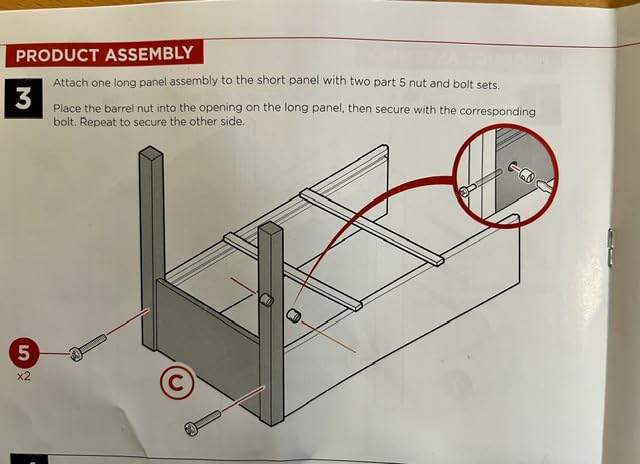
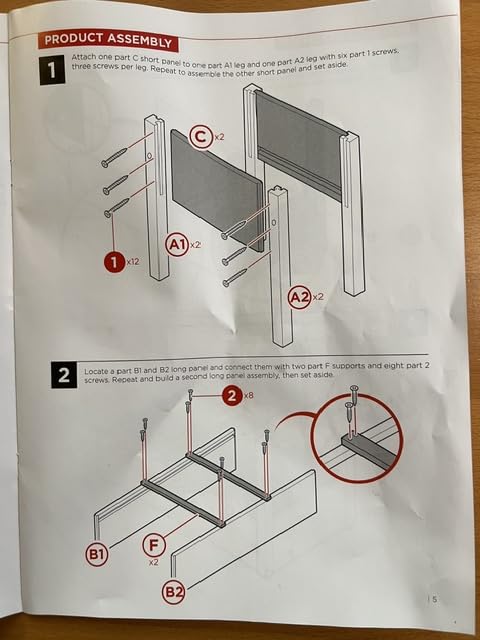
Boards are screwed rather than nailed, which means the box can be taken apart and moved, and the joints are tight enough that reviewers repeatedly mention needing a rubber mallet to seat the panels. Our advice: build it on a flat surface, read the whole instruction sheet first, and have a second person if the panels fight you.
At 34 pounds empty, it is heavy. Plan where it will live before you fill it, because a filled 5-cubic-foot bed is not going anywhere.
Does the fir need sealing before planting?
Yes. Owners say the fir weathers faster than cedar and should be sealed with an exterior oil or coating before you put soil in it, and that the finish will gray over time regardless. It is not a structural problem, just a cosmetic one you can postpone by a season.
How close can you stand to this bed?
At 24 inches wide you can reach the centre of the box from one side, so working one long edge covers the whole planting area. That is the main ergonomic win over wider ground-level beds, where you end up standing on the soil.
3. FOYUEE 31.5 Inch Mobile Raised Garden Bed with Wheels – Best for Moving a Planted Bed
FOYUEE 31.5″ Tall Elevated Mobile Raised Garden Bed with Wheels and Shelf
2.5 cubic feet
40.5 x 15.7 x 31.5 inches
400 lb capacity, powder coated steel
6 inch all-terrain wheels
Pros
- Wheels and handle move a fully planted bed
- 31.5 inch height means no kneeling
- Thick powder coat resists rust
- Lower shelf keeps tools within reach
- Central drain handles heavy rain
Cons
- 15.7 inch width limits what you can plant per row
- Mobility depends on even ground and it tips on slopes
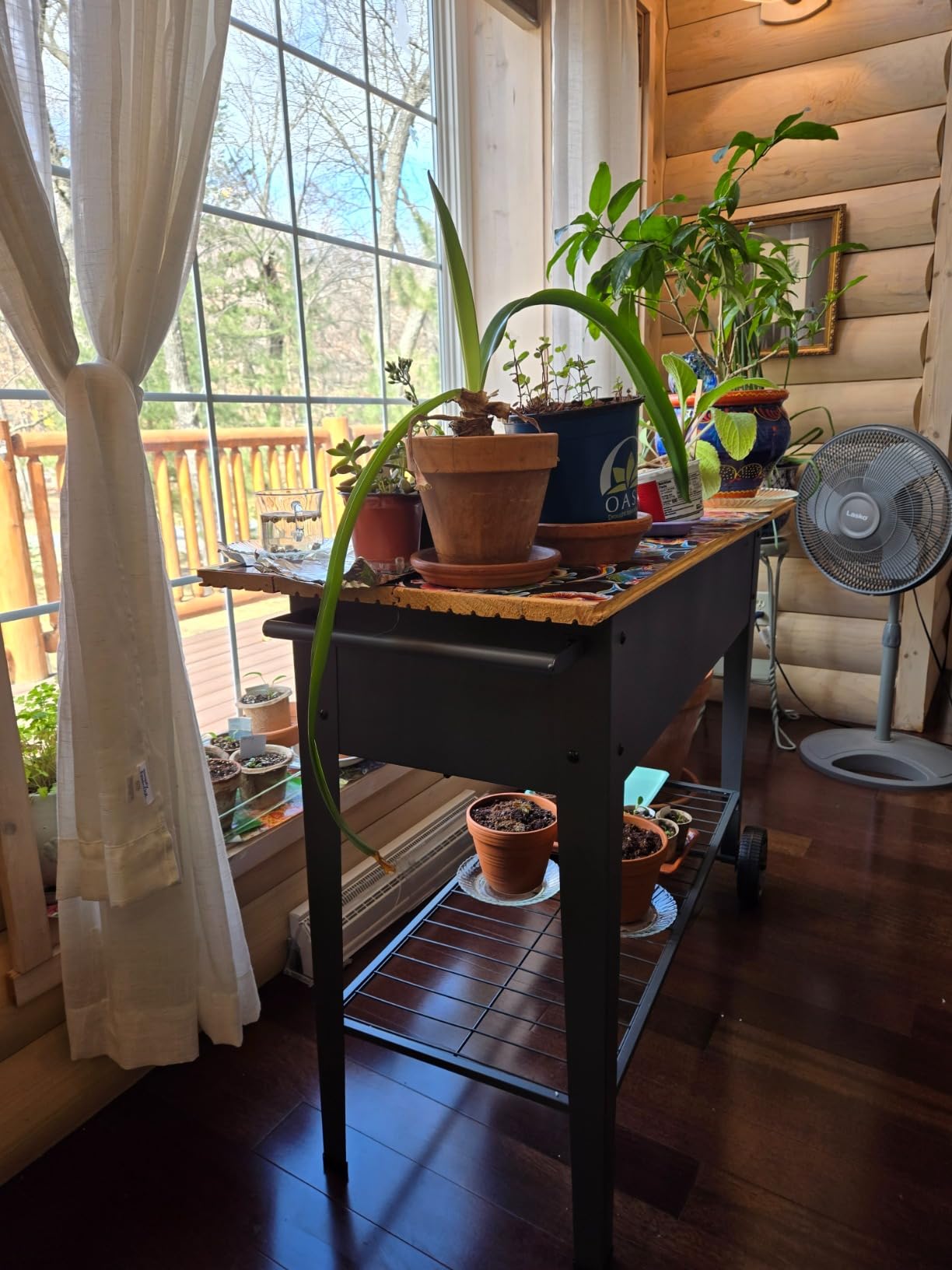
This is the bed for anyone chasing sunlight across a patio. The 6-inch all-terrain wheels and the integrated handle are rated to shift a planted bed, which is the feature that no fixed bed in this list can offer. Urban growers describe moving planters to follow the sun as the difference between a good crop and a scorched one.
The frame carries a 400-pound soil capacity in heavy-duty galvanized steel with a triple-thickness outdoor powder coat, and the planting box itself measures 37.4 by 15.7 by 8.27 inches. Four integrated drainage channels feed a central drain, which is the detail that convinced us: a narrow box this long will otherwise trap water at the low end.
The working height of 31.5 inches is genuinely comfortable. It also means the planting depth is only 8.27 inches, so this is a greens, herbs, strawberry and compact-pepper unit rather than a tomato or potato bed.
The lower shelf is the sleeper feature. It holds pots, tools and a bag of compost at a height you can actually reach, which keeps the top surface clear.
Can it really move a full bed of soil?
The 400-pound capacity rating is for the soil load, and owners move planted units routinely on flat surfaces. Over uneven ground or a threshold, expect it to be awkward and never do it alone when it is loaded.
What is the catch with the narrow width?
At 15.7 inches you are planting a single row, not a block. That is a real constraint on what fits, and it is why we would run this alongside a deeper fixed bed rather than instead of one.
4. GADI 67 Inch Galvanized Raised Garden Bed – Best for Long Fence-Line Rows
GADI 67-Inch Galvanized Raised Garden Bed, Metal Planter Box for Vegetables and Flowers, Large Outdoor Gardening Kit, Easy DIY Assembly, Weather-Resistant & Rust-Proof
7 cubic feet
67 x 20 x 10 inches
Wave-profile galvanized panels
Side ventilation slots, open bottom
Pros
- Long 67 inch footprint fits a deck or fence line
- Side ventilation improves root respiration
- Pre-punched panels assemble fast with wing nuts
- Light enough to reposition before filling
Cons
- 10 inch depth is shallow for deep roots
- Panel edges and struts can be sharp
- Sheet is lighter gauge than premium beds and may flex
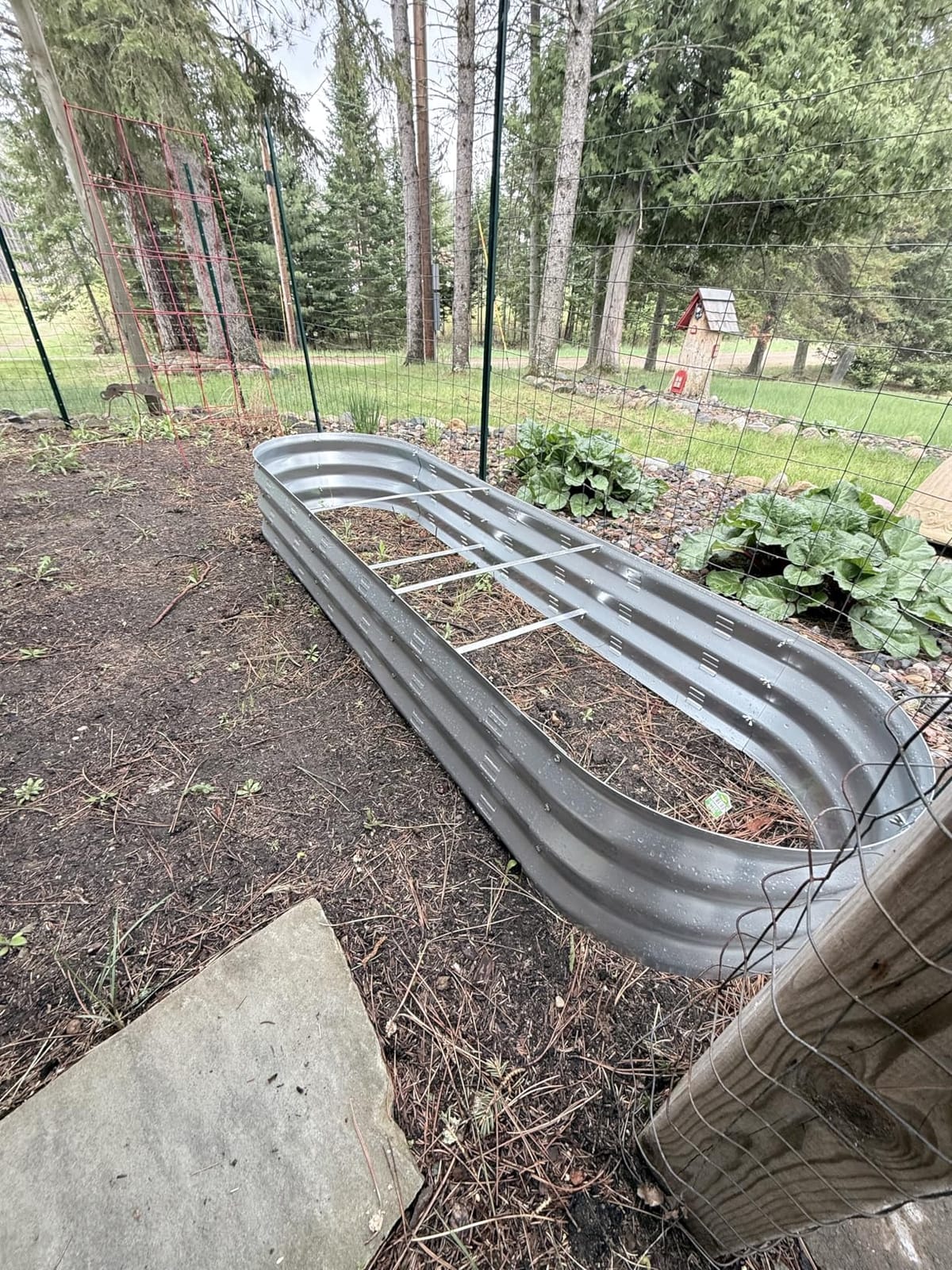
Most raised beds are squares. This one is a 67-inch run, which is the shape you actually want along a fence, against a shed wall or down the side of a deck, because it gives a continuous planting strip without joining two boxes together. Seven cubic feet is a genuinely useful volume for row crops and vining plants trained upward.
The wave-shaped profile panels are stiffer than flat corrugated sheet and the whole thing goes together on pre-punched holes with wing nuts, so tool-light assembly is realistic. It is rated 4.6 from more than 3,600 owners, which is among the strongest scores in this group.
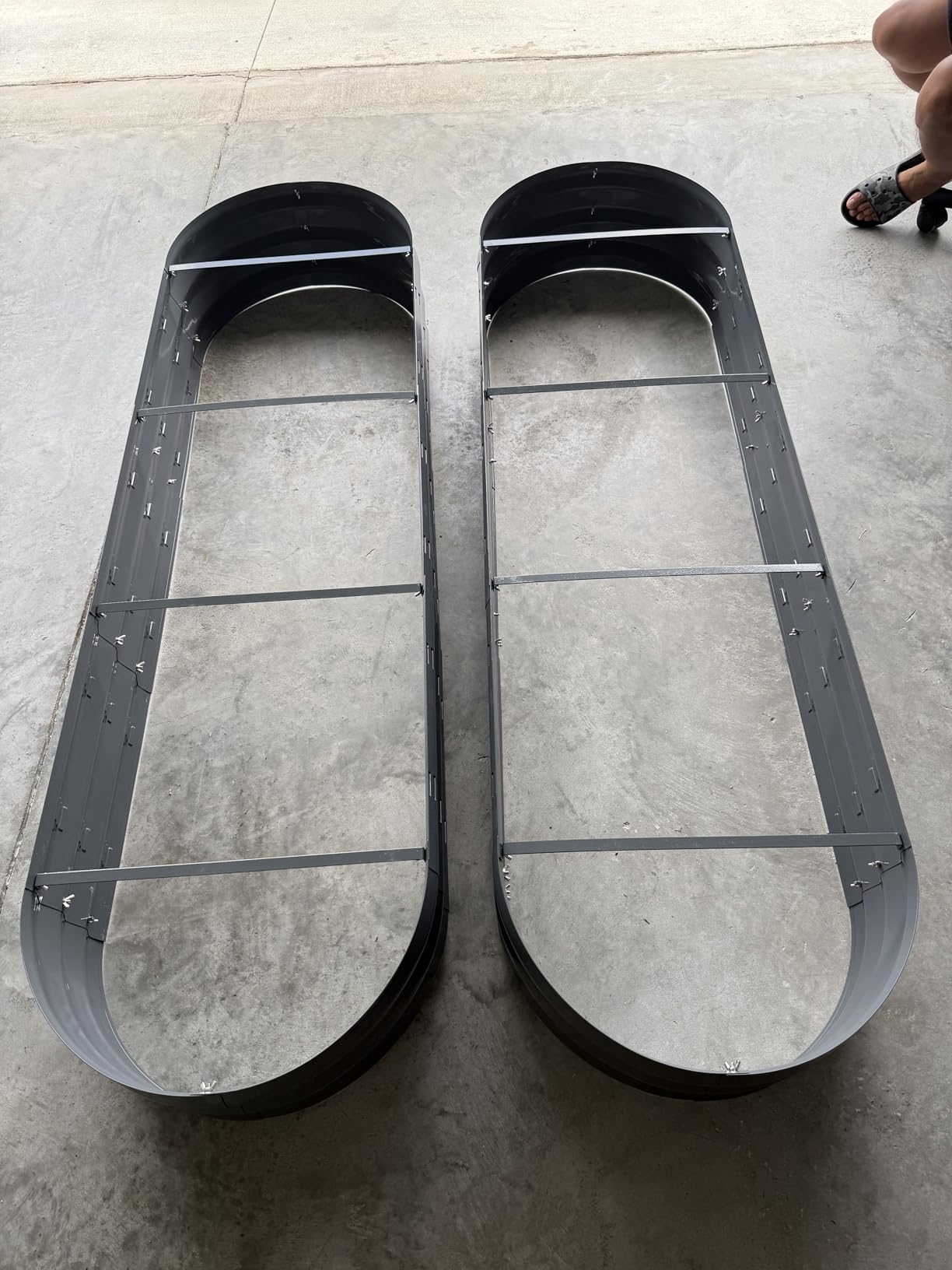
Side ventilation slots set it apart from solid-sided competitors. They improve root respiration and let water escape the profile, and owners specifically call out the open-bottom construction for letting roots reach native soil for nutrients while excess water drains rather than sitting against the frame.
Two layers of anti-corrosion paint over galvanized steel give it a good outdoor finish, and the light weight means one person can move it before filling.
Is 10 inches deep enough for vegetables?
Enough for lettuce, herbs, bush beans, strawberries and peppers, and enough for vining crops that climb out of the bed. Not enough for long carrots, parsnips or potatoes, so plan a second, deeper container for those.
Are the edges safe to work around?
Owners do flag that panel edges and support struts can be sharp, and that gloves are worth wearing during assembly. Once filled and planted, the working surface is well clear of the metal.
5. Rakukiri 5ft Oval Galvanized Planter Box – Best Large Single-Plot Value
Rakukiri Raised Garden Bed GRS Certified Galvanized Planter Box Outdoor, 5ft Oval Rot-Resistant Metal Garden Bed Planter, Recycled Material Planter for Vegetables Flowers Herbs (Silver)
60 x 29 x 11 inches
68 gallons of soil
0.8mm double-layer galvanized sheet
Open bottom, wing-nut build
Pros
- Spacious 5ft bed fits tomatoes peppers and cabbage
- Quick wing-nut assembly needing one driver
- Adjustable panels allow a different footprint
- Clean modern farmhouse look that weathers well
Cons
- Top panel edges can be rough and need filing
- Instructions are unclear for first-time builders
- Some units finish at slightly different sizes
At 5 feet long and 68 gallons of soil, this is the biggest single bed in the group short of the very large oval kits, and it is the one we would pick for a first serious vegetable plot. You can fit a run of tomatoes on one trellis, a block of peppers, and a short row of cabbage in a single box without any seams between them.
Construction is 0.8mm galvanized sheet with double-layer anti-corrosion galvanizing, and the oval profile gives the panels rigidity without internal bracing. The maker backs it with a one-year warranty and a 30-day return window, which is thinner than some competitors but better than none.
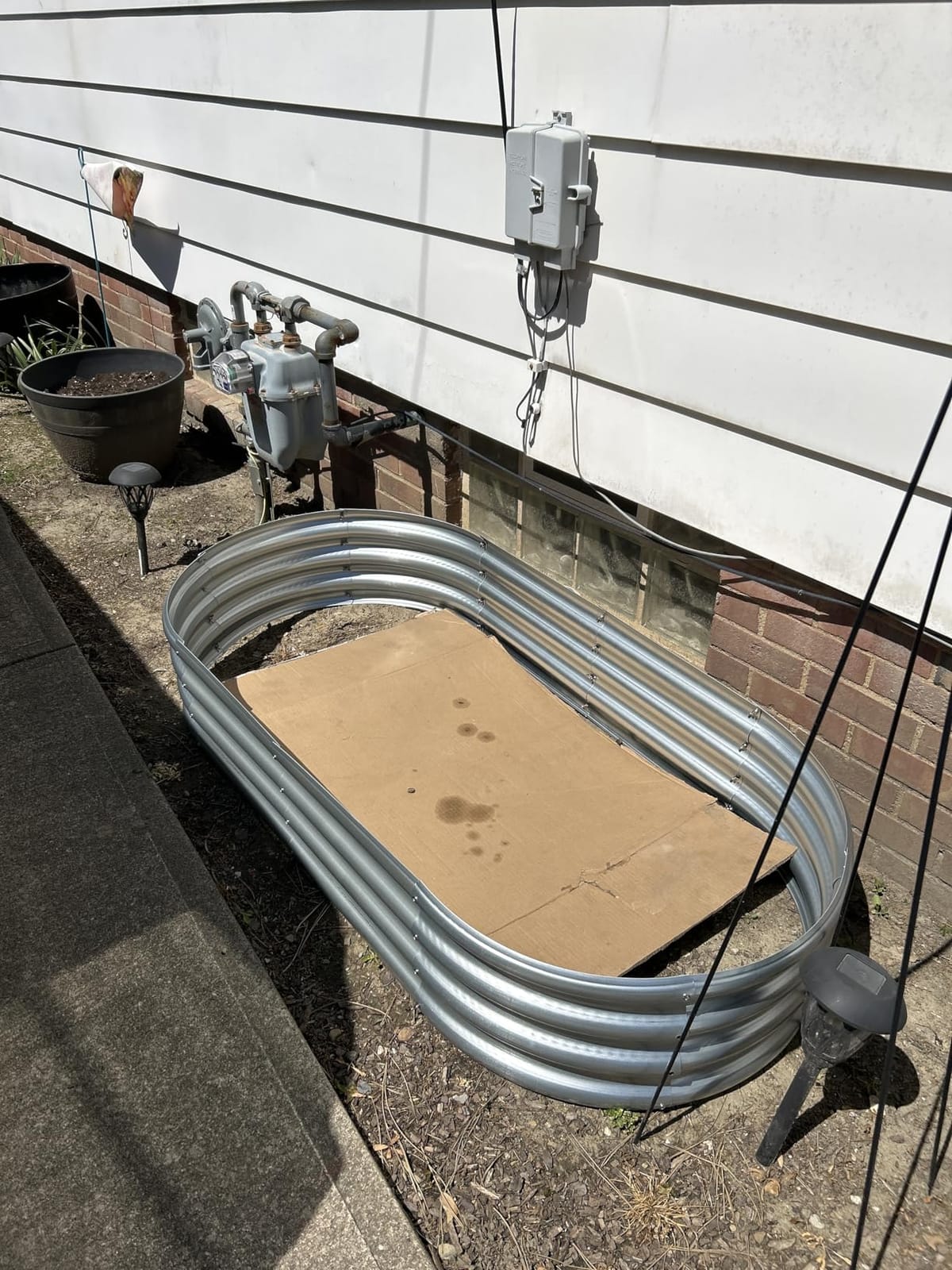
The open bottom is standard across quality beds and it matters here more than usual. With a bed this wide, trapped water at the base is the fastest route to root rot, and an open base lets it drain into the ground and lets worms move in.
Owners like the finished look enough to plant it as a feature rather than hide it against a wall, and the powder-coated finish has held up through heat and rain in owner reports.
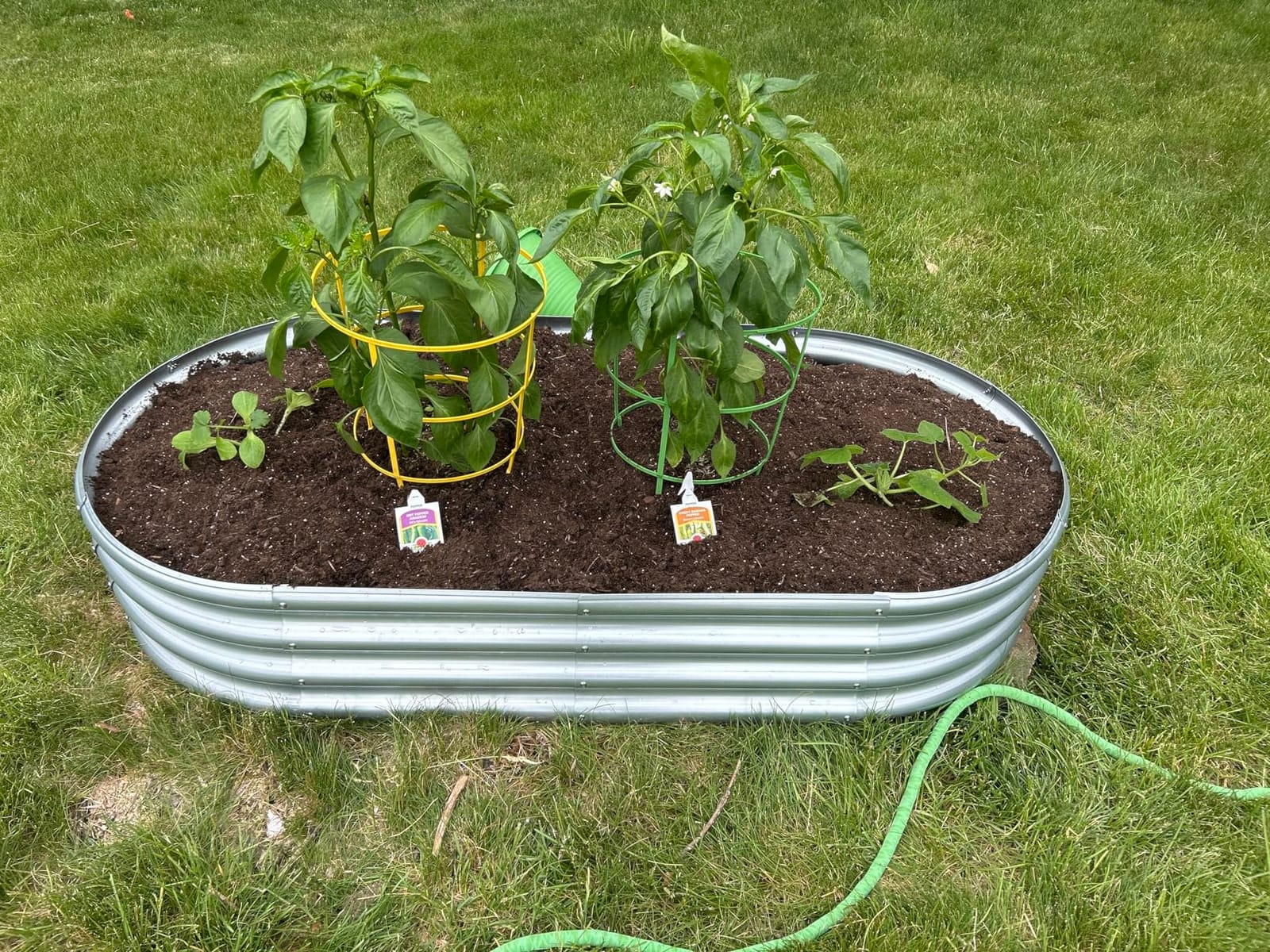
Is 11 inches deep for tomatoes?
Yes, for determinate and compact varieties staked or caged, plus peppers, eggplants, greens and herbs. Indeterminate tomatoes want deeper soil and a longer run, which is where the 8-foot kits earn their extra cost.
How difficult is assembly for a first-timer?
Moderate. It is wing nuts and one driver, but reviewers report the instructions as the weakest part. Read them fully, mark the panels, and use a file on the top edges before you plant anything.
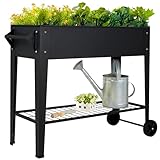
6. LEETOLLA 32 Inch Elevated Raised Garden Bed with Wheels – Best for Small Balconies
LEETOLLA 32-Inch Elevated Raised Garden Bed with Wheels and Storage Shelf
2.5 cubic feet
37.4 x 14.6 x 31.6 inches
32 inch standing height
Two all-terrain wheels, detachable shelf
Pros
- Wheeled frame relocates a planted bed to follow light
- 32 inch height cuts kneeling and back strain
- Five drainage holes and bottom cross-channels handle rain
- Detachable shelf keeps supplies off the ground
Cons
- Slim planting box limits plants per unit
- Painted iron finish needs touch-up to limit corrosion
When balcony and rooftop load is the constraint, this is the pick. Two all-terrain wheels and an ergonomic handle move a planted bed, the 32-inch working height means you garden standing up, and the whole unit is narrow enough to sit against a railing without blocking the walkway.
Drainage is handled properly: five holes plus dual cross-channels in the bottom, which matters more in a small box than in a large one because the ratio of wall to soil volume is much higher. The frame is rated to shift a planted bed weighing more than 200 pounds.
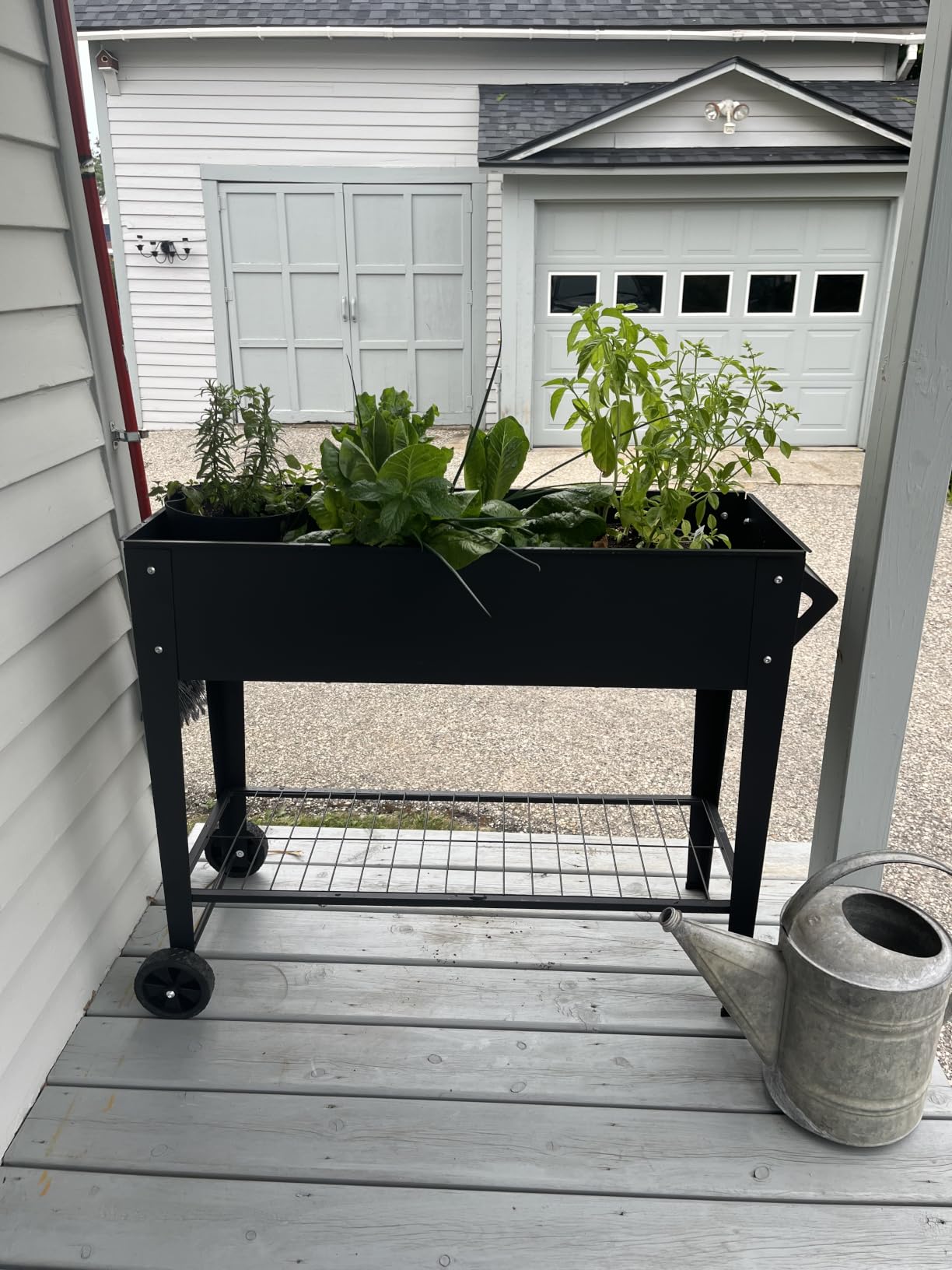
Hardware, non-slip mats, a wrench and a hex wrench are all included in the box, which is more than most competitors of this size supply, and the detachable bottom shelf takes pots, seed trays and a bag of compost.
Two and a half cubic feet is a small soil volume, so it dries faster than a ground bed. That is the trade for the small footprint: expect to water more often in hot weather and to refill from a reservoir on wheels rather than carrying buckets.
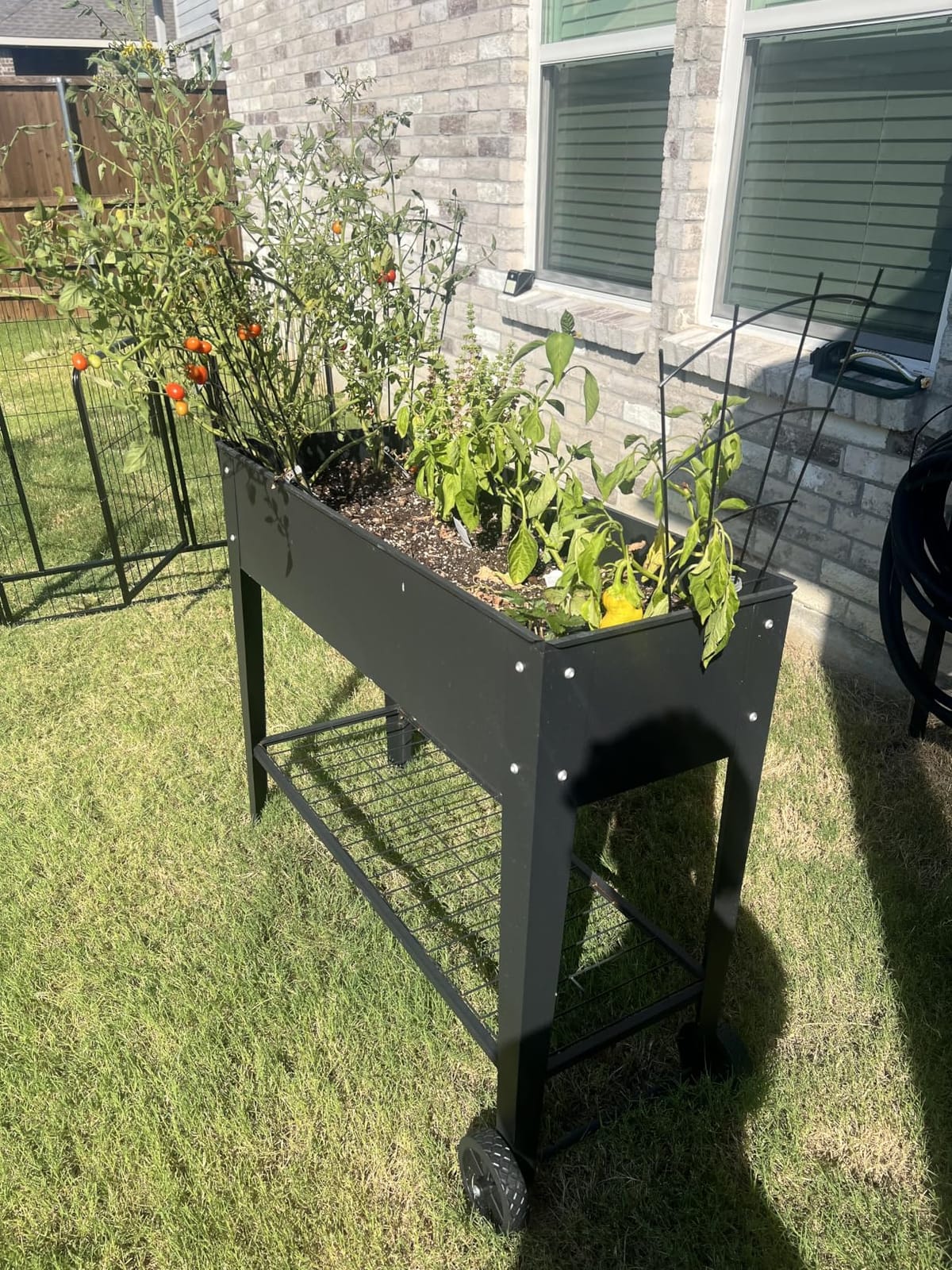
Is painted iron a problem outdoors?
It is workable but not permanent. The finish needs occasional touch-up to keep surface corrosion at bay, and a bed that lives on a wet patio will want more attention than one on a sunny deck. Galvanized or coated steel ages more passively.
Can it carry a full load across a balcony?
The frame is rated for 200-plus pounds and the wheels are all-terrain, but weight on a rooftop or balcony is a structural question before it is a product question. Check the surface limit and the route to the door before you fill it.
7. Meberam 2 Pack 6x3x1FT Galvanized Raised Garden Beds – Best Two-Bed Set
Meberam 2 Pack 6x3x1FT Galvanized Raised Garden Beds Kit Outdoor Metal Gardening Planter Box for Vegetable Elevated Flower Herbs,Silver
18 cubic feet total
Two beds at 72 x 36 x 12 inches
Thick galvanized steel, three support rods
Open bottom, tool-free build
Pros
- Two beds in one box give 18 cubic feet of space
- Angular panel profile resists twisting
- One-piece round support rods attach flat to the walls
- Corner slots accept garden staples to hold beds in place
Cons
- Unfinished connecting edges can be sharp
- Thinner sheet than premium beds and can rust over years
- Galvanized surface is glaring in full sun
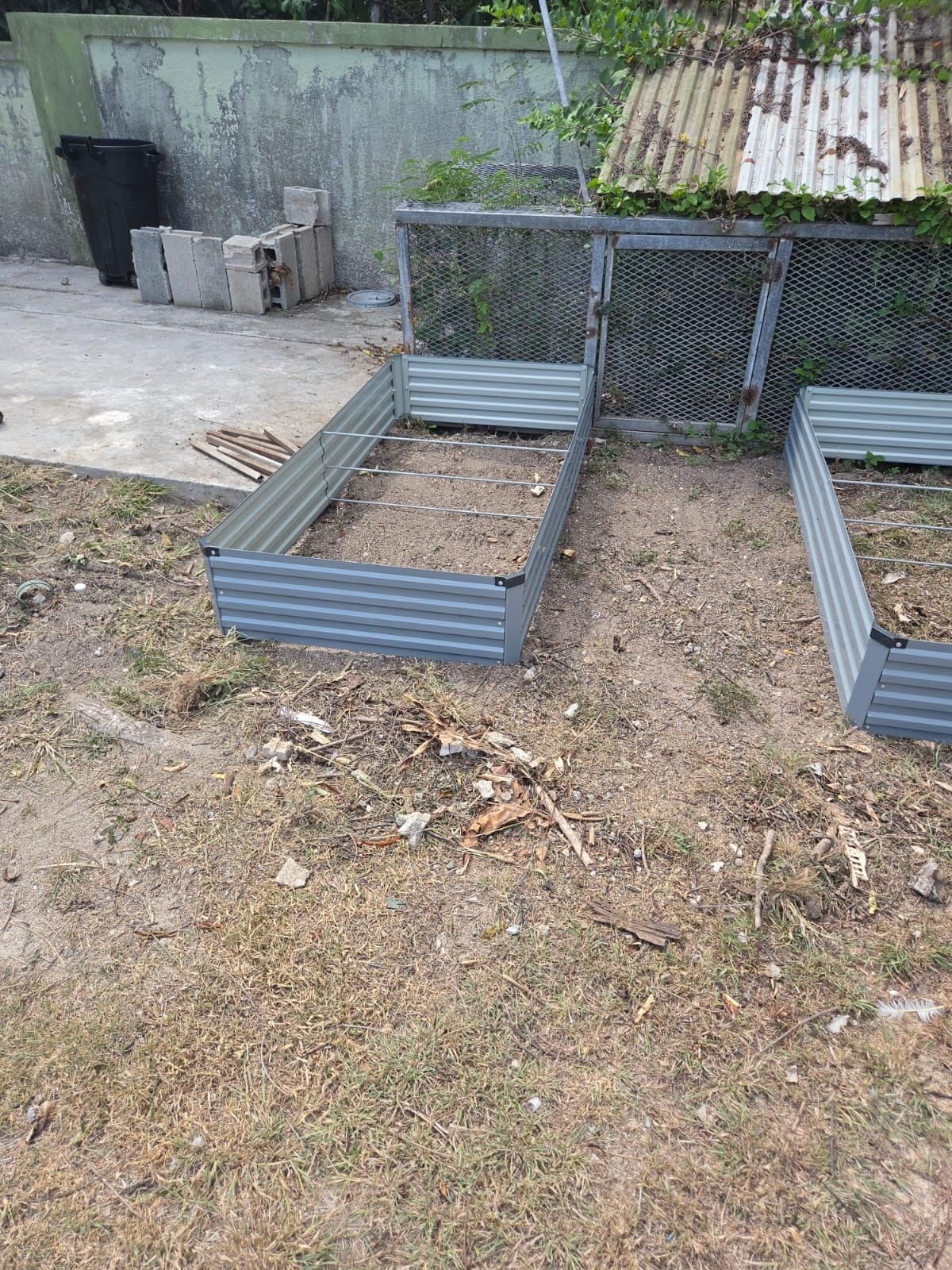
Experienced gardeners comparing many brands consistently name this pair as a favourite budget setup, and the reason is the angular panel profile. Flat-corrugated beds flex; angular panels twist less, and three horizontal connecting rods per bed keep the walls from bowing outward once the soil is loaded.
Two beds at 72 by 36 by 12 inches give 18 cubic feet between them, which is enough for a genuine two-family plot or a rotation of salad greens, brassicas and root crops across separate soil types.
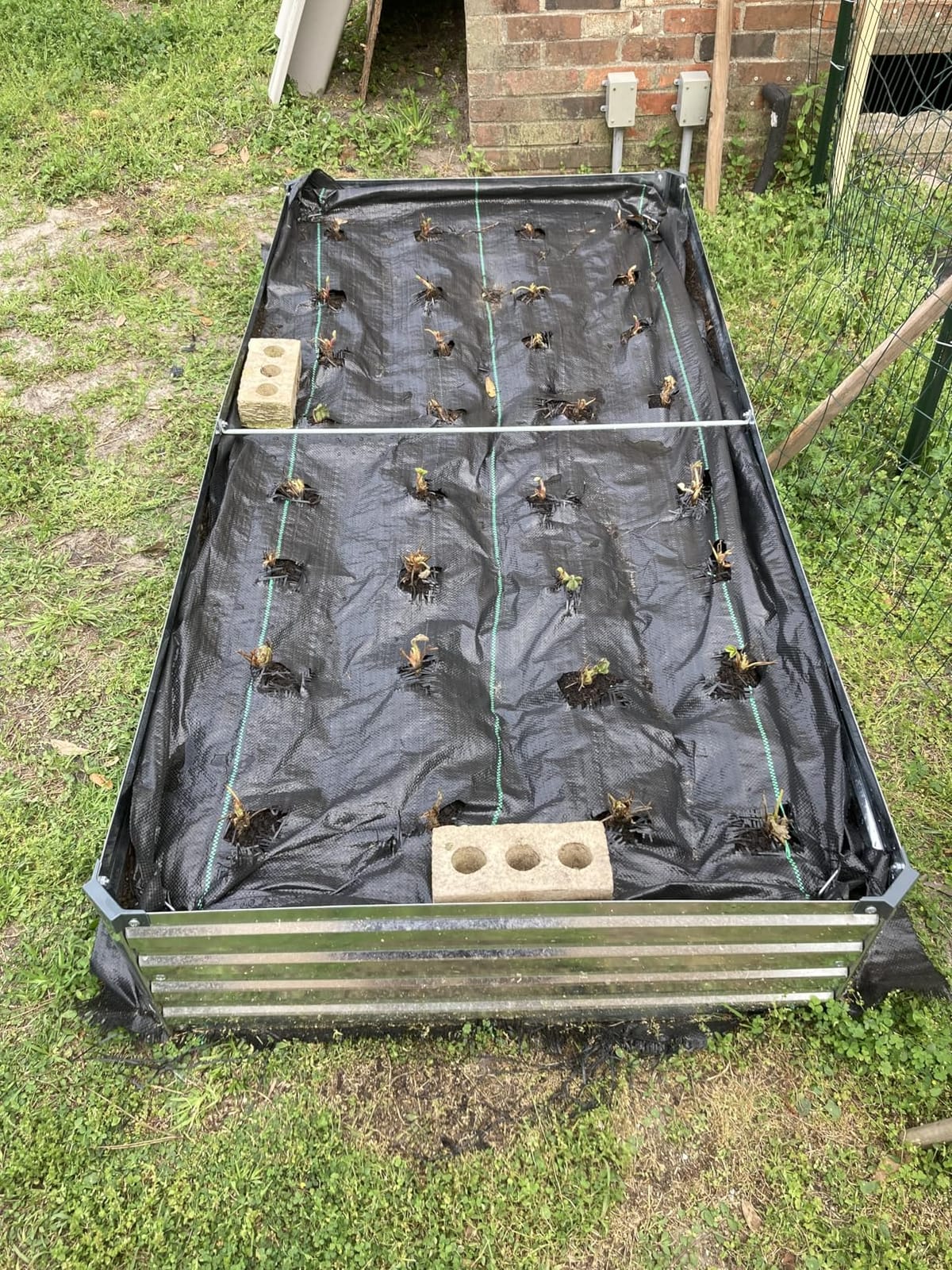
The one-piece round support rods with bent ends attach flat to the walls, a small design decision that removes the fiddly bracket alignment that trips people up on other kits. Tool-free assembly comes down to about 30 screws per bed, and a non-toxic coating is specified for edible plants.
Corner slots accept anchor pegs, and that matters more than it sounds. An unanchored bed full of wet soil will walk across a lawn over a season, and the staples hold it where you put it.
Will these rust if buried in soil?
The galvanized sheet is thinner than premium beds, and owners of budget models report interior surface rust developing over several seasons of continuous soil contact. It does not usually compromise the frame, but expect cosmetic change over years rather than decades.
Is 12 inches enough for root vegetables?
Enough for radishes, short carrots, beets and turnips. Potatoes and long-rooted parsnips want 15 inches or more, so pair this set with a deeper bed if those are your targets.
8. DIIYIV 2PCS Elevated Galvanized Raised Garden Beds with Legs – Best Two-Bed Elevated Set
DIIYIV 2PCS Galvanized Raised Garden Bed with Legs,2PCS 48×18×30in Elevated Planter Box for Backyard,Outdoor Garden, Patio, Balcony, 300lb Capacity,Grey
300 lb capacity per bed
48 x 18 x 30 inches each
All surfaces galvanized
Padded corners, tool-free assembly
Pros
- 30 inch elevated design keeps soil off the ground
- Padded corner protectors reduce snagging
- Two-bed pack covers a decent patio footprint
- Polished galvanized edges and corrosion resistant surface
Cons
- 18 inch width is narrow for vegetable rows
- Lowest star share of the metal beds here
- Can feel tippy when fully loaded on uneven ground
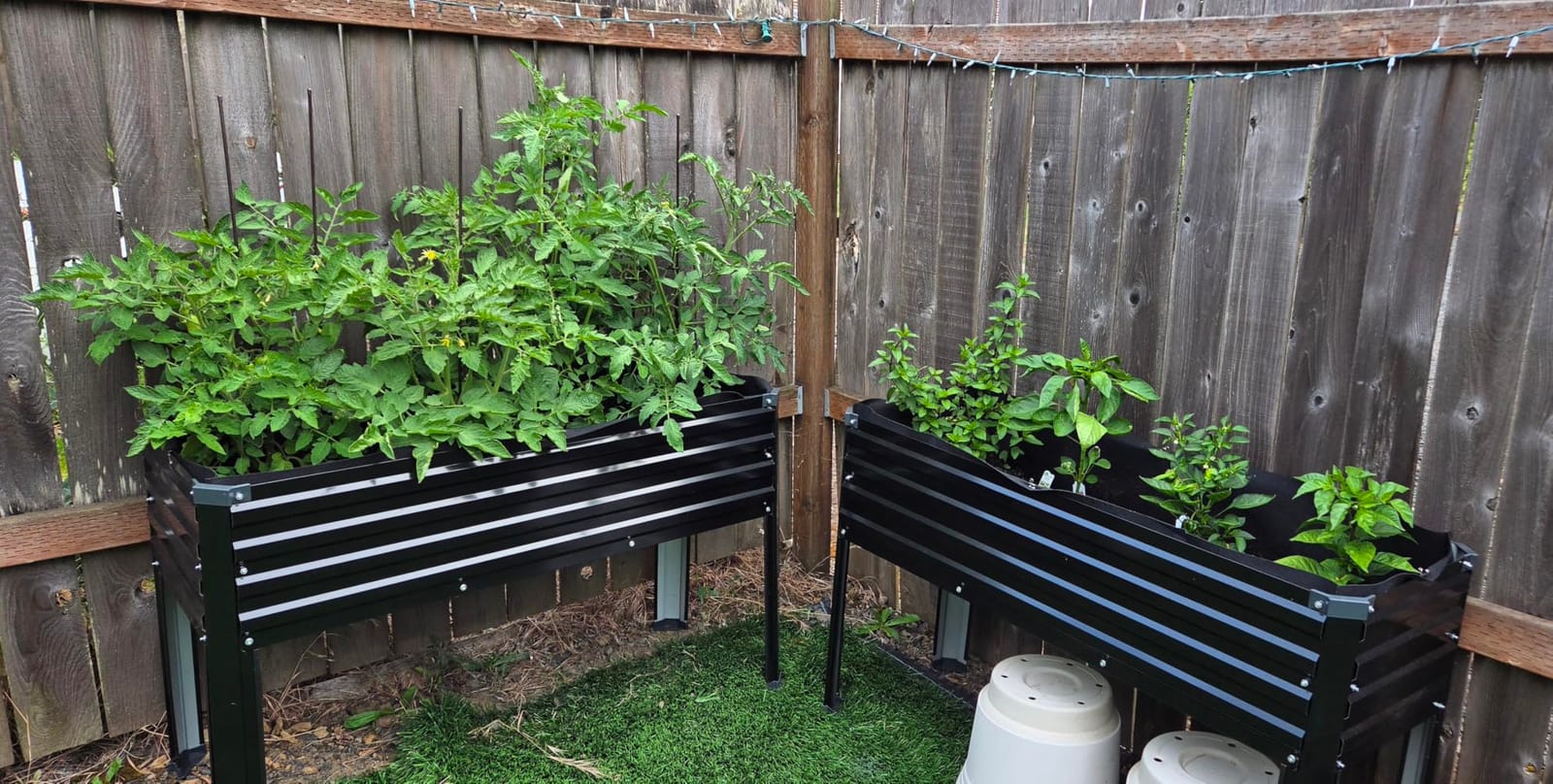
This pair is built around a specific situation: a hard patio, a balcony, or anyone who needs two separate growing zones at standing height. Each bed is 48 by 18 by 30 inches, rated to 300 pounds, and the two arrive in one box with tool-free assembly.
The padded protective corners are the detail we notice. On an elevated box, the legs and top frame are exactly where clothing, skin and hose fittings catch, and padded corners plus polished plate edges take the sharpest edges off that equation.
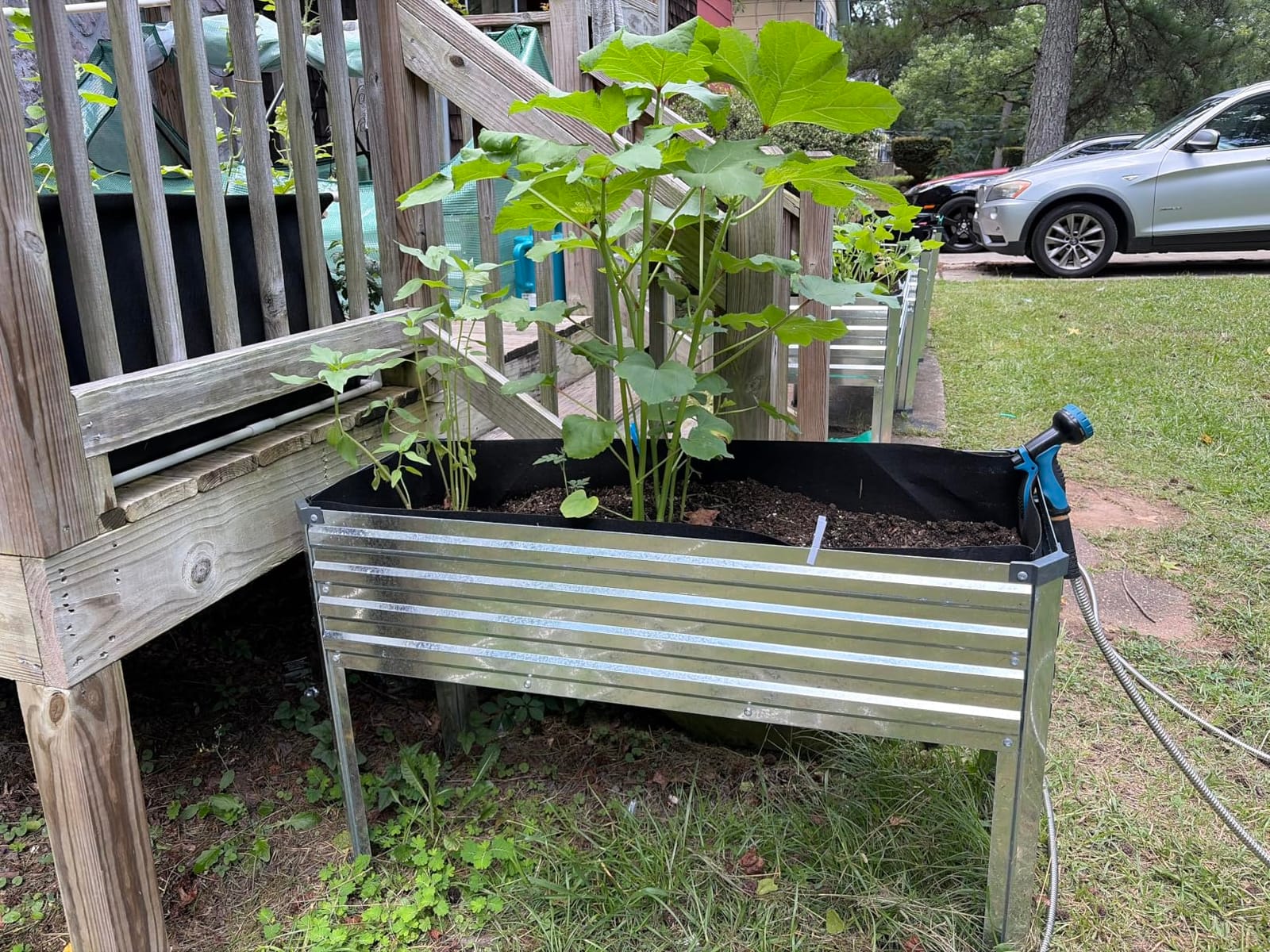
All surfaces are galvanized against corrosion, and the stainless steel frame means nothing rusts at the joints. For a bed that lives on a wet surface or gets hosed down every week, that is the right construction choice.
The honest drawback is the 18-inch width. That is a single row, and on a long 48-inch bed it limits you to a narrow line of plants. Owners also note it can feel tippy on uneven ground when fully loaded, so level the spot first.
Is 18 inches wide enough for a full vegetable row?
For one row of greens, herbs, strawberry or a line of compact peppers, yes. For square-foot spacing of mixed crops it is cramped. Treat it as a long narrow herb and salad bed rather than a mixed plot.
How does it rate on build quality?
It carries a 4.4 with roughly 71 percent five-star ratings, the lowest star share among the metal beds in this guide, with a small group reporting assembly or durability issues. The construction is sound, but it is not in the same tier as the coated steel kits in finish consistency.
9. SoliWood Cedar Raised Garden Bed with Legs – Best Cedar Pick
Raised Garden Bed with Legs, 48×24×30 Cedar Wood Elevated Planter Box
6 cubic feet
48 x 24 x 30 inches
Premium cedar, water-based finish
2.4 inch legs, 300 lb capacity
Pros
- Real cedar with natural aroma and rich colour
- 2.4 inch legs give a sturdy stable build
- Pre-drilled holes line up for easy assembly
- 30 inch height means no bending when planting
Cons
- Wood can split if screws are driven carelessly
- Liner is included without fasteners and needs stapling
- Heavy at 38.9 pounds empty so fill it in place
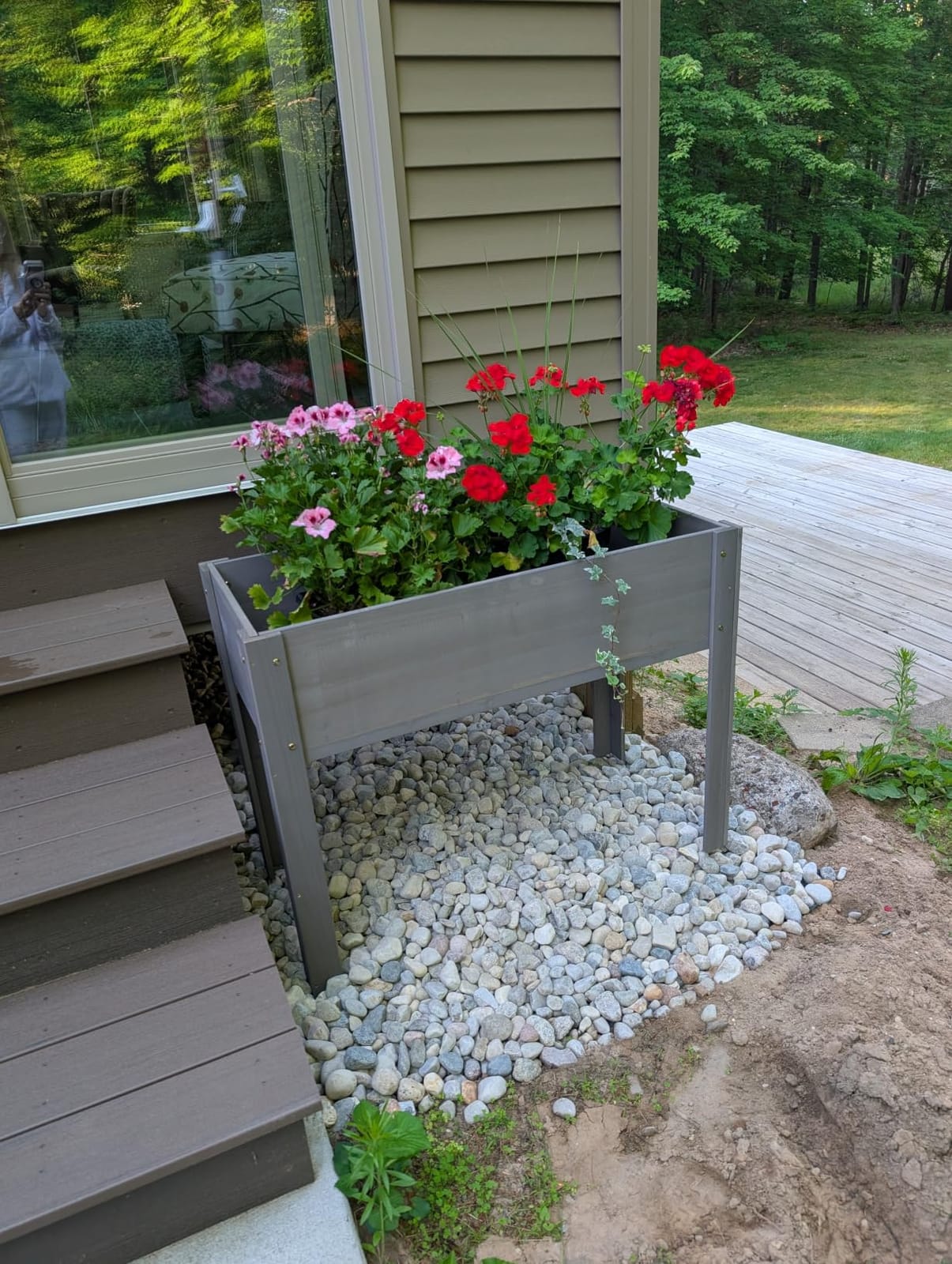
Among cedar options, this is the one owners rate highest, at 4.7 from more than 900 reviews. Real cedar has a natural resistance to rot that soft fir simply does not have, and the colour and aroma mean the bed doubles as a garden feature rather than something you hide at the back of the plot.
Six cubic feet at a 30-inch working height is a good vegetable volume, and the 2.4-inch-thick legs are the beefiest in this guide. Cedar on legs is the weak point of most wooden elevated beds, because the leg joints take all the load, and these are noticeably heavier than the usual 1.5-inch stock.
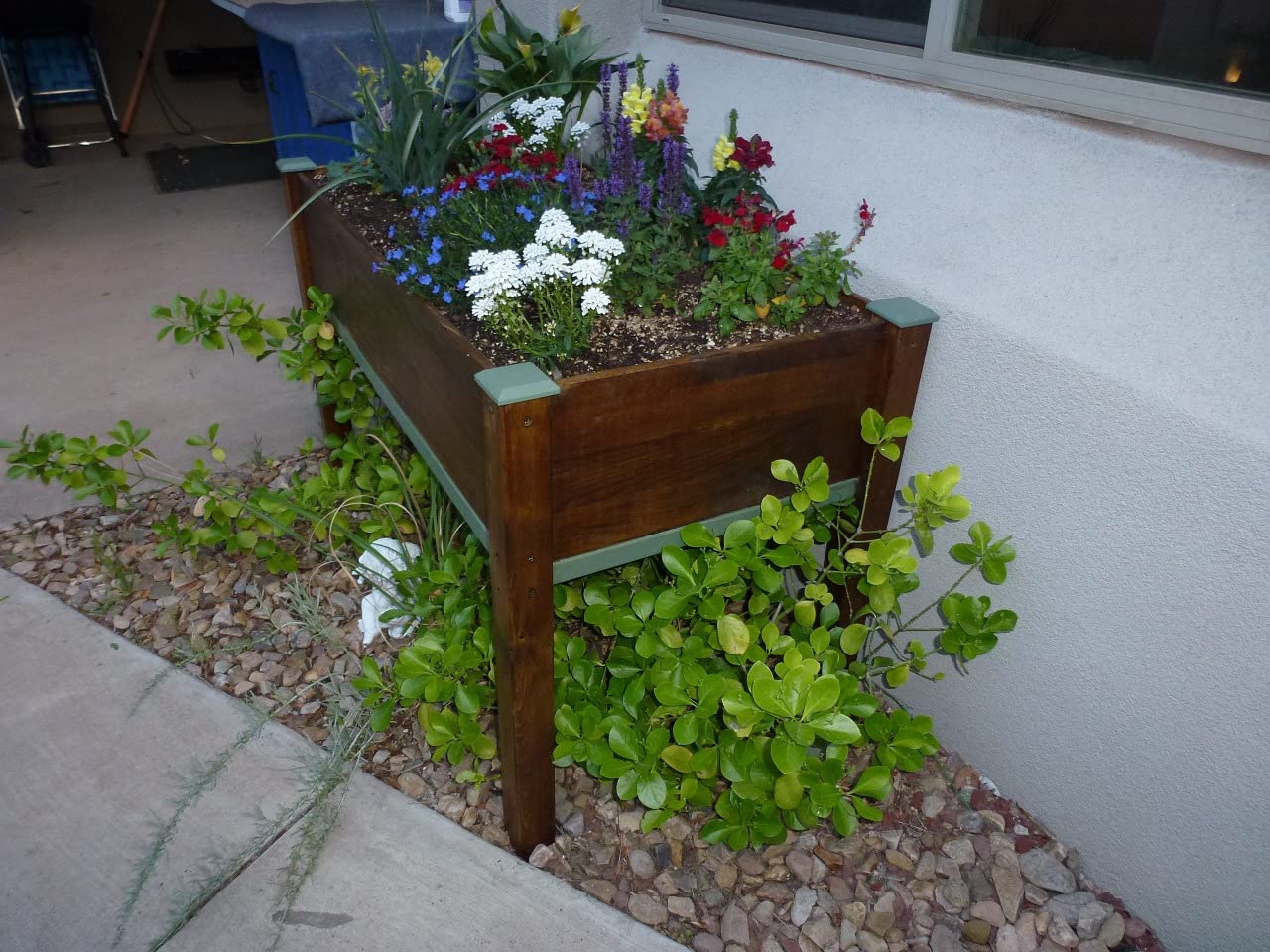
Pre-drilled holes line up, which is where a lot of wooden beds fail and where owners of this one say even older builders managed it unassisted. Built-in drainage holes plus an included liner cover the water question from both directions.
The grey water-based finish protects the cedar without sealing it shut the way an oil-based coating can, and it will fade to a silver-grey over time, which is normal and not a defect.
How long does cedar last in contact with soil?
Ground-level cedar beds commonly outlast pine by years because cedar’s natural oils resist rot. Elevated cedar on legs is the exception: the leg joints where wood meets hardware wear first, and long-term owners report frames sagging in roughly three years. Expect a shorter life than a metal kit.
Why does the liner need extra work?
It is included with the bed but without fasteners, so it needs stapling to the frame yourself. A staple gun and five minutes handle it, and it stops soil washing out through the gaps between boards.
10. Vego Garden 9-in-1 Metal Raised Garden Bed, 17 Inch Tall – Best for Deep Roots
Vego garden Raised Garden Bed Kits, 17″ Tall 9 in 1 8ft X 2ft Metal Raised Planter Bed for Vegetables Flowers Ground Planter Box-Olive Green
23 cubic feet
24 x 96 x 17 inches
VZ 2.0 coated steel, AkzoNobel paint
9-in-1 modular, rubber edging
Pros
- VZ 2.0 coated steel rated for 20-plus years outdoors
- Oval shape with rubber edging eliminates sharp corners
- 17 inch depth suits deep root systems
- Modular panels reconfigure into nine layouts
Cons
- Assembly is tedious with many bolts and nuts
- Heaviest and most expensive bed here
- Not every configuration uses every supplied bar
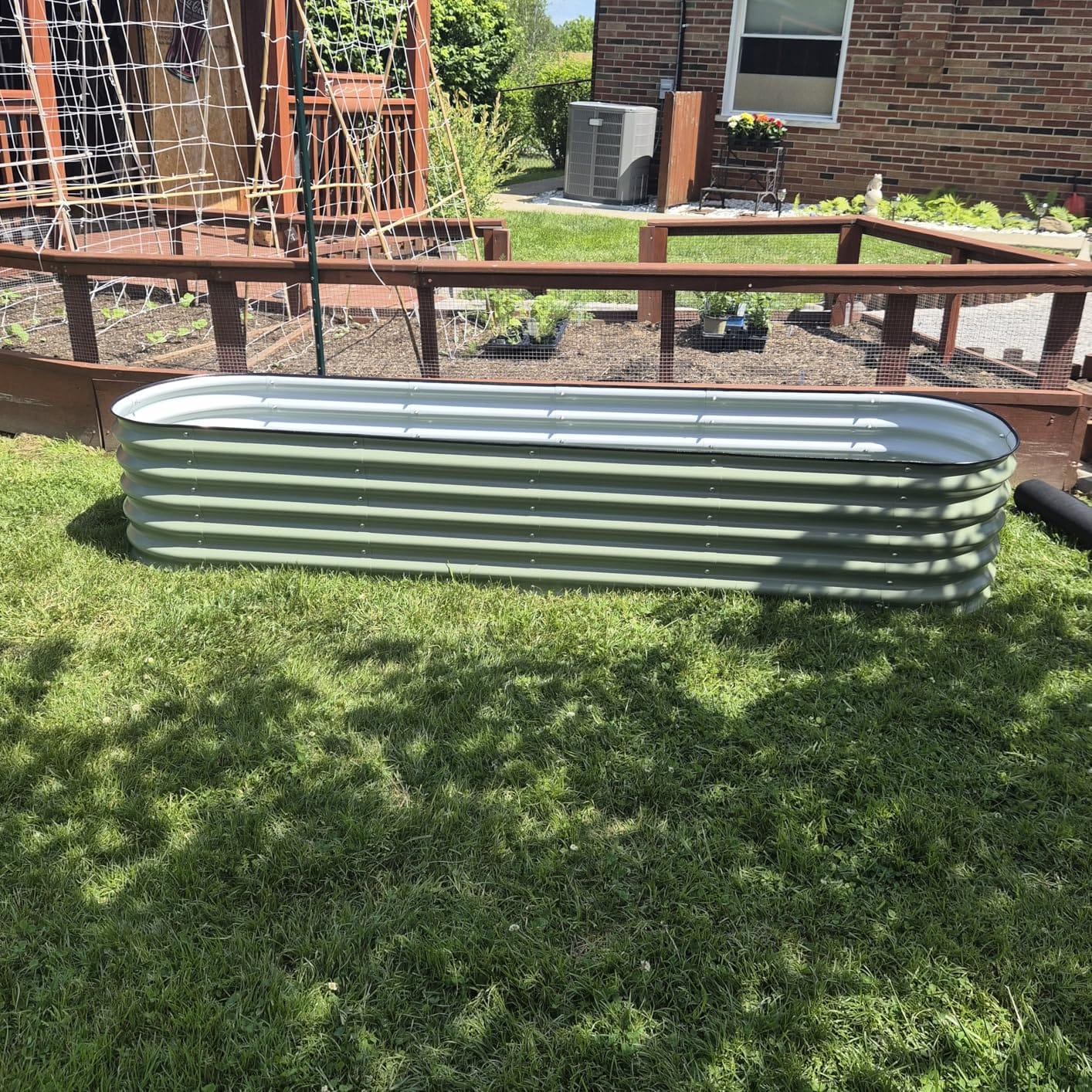
This is the best-built bed in the guide, and at 4.8 from 1,676 reviews it is also the highest-rated. The steel is VZ 2.0, a zinc-magnesium-aluminum coating under USDA-approved AkzoNobel paint, which is the reason owner reports describe beds bought years ago as still looking new after mowing and weed-whacking around them.
Seventeen inches of depth is the number that matters here. It is enough for staked indeterminate tomatoes, peppers, potatoes and long-rooted crops without the roots hitting the bottom, and the 23 cubic feet across an 8ft by 2ft footprint gives real row-planting runway in a single box.

The 9-in-1 modular design means the same panels reconfigure into nine layouts, so if your patio dimensions change or you want an L-shape against a corner, the panels follow. The oval profile has no sharp corners and heavy-duty rubber edging, which is a genuine safety difference in a bed you will lean into.
Stainless steel hardware and panels that screw together on predrilled holes mean nothing rusts at the joints. Experienced gardeners on gardening forums repeatedly name this brand as the one they own in multiple configurations, and that consistency is exactly why it is our top pick for anyone buying once.
Is the assembly really that bad?
It is the most labor-intensive build in this list. Owners report over an hour of tightening bolts and nuts, with several tightened twice, and some configurations leaving a supplied bar unused so the bracing has to be improvised. Budget a full evening and assemble before you need the bed in season.
How long will it last outdoors?
The coating is rated for 20-plus years of outdoor exposure, and long-term owners report no visible aging. That is roughly double what a softwood bed gives you and several times a thin-gauge budget model.
11. Anleolife 8x4x2ft Oval Deep Root Galvanized Bed – Best for the Deepest Soil Column
Anleolife 8x4x2ft Oval Deep Root Galvanized Raised Garden Bed, Quartz Grey
478 gallons of soil
96 x 48 x 24 inches
22-gauge 0.8mm eco powder coated steel
Bottomless base, gloves included
Pros
- 24 inch depth is the tallest in this guide and deters rabbits
- Rolled folded top edges remove the need for an edge liner
- Folded steel edges are smooth and safe around
- Extra hardware a screwdriver and gloves are included in the box
Cons
- Largest and heaviest unit and assembly often needs two or three people
- Over-torqued bolts can dent the corrugated wall
- Braces bend easily in the largest configurations
Twenty-four inches of wall height makes this the deepest soil column in the guide, holding up to 478 gallons. That depth is what changes what you can grow: with two feet of loose root zone, deep-rooted crops, long-season fruiting plants and layered plantings stop being aspirational.
The second benefit is physical. A 24-inch wall keeps rabbits out almost entirely, and the tall profile also raises the planting surface enough to reduce bending even at ground level.
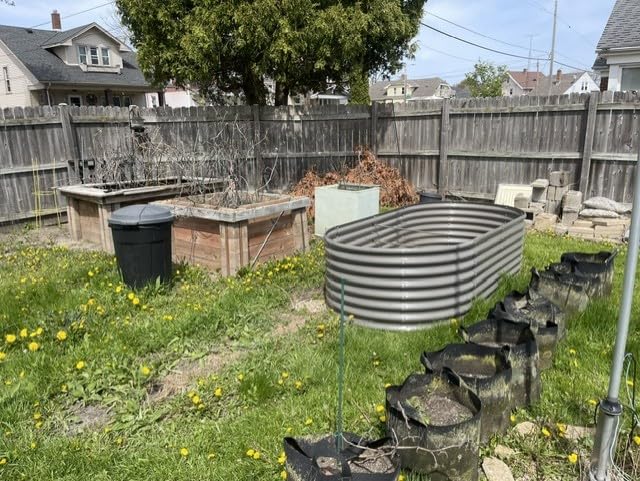
Safety edges are handled properly with rounded, curled, folded steel, and garden gloves are included in the box. Support braces are included, though the middle brace count varies by size, so check the parts list against your configuration before you start.
The bottomless open base is a genuine advantage: less compaction and better soil structure, and roots can extend into the ground below over multiple seasons, which is how the bed builds up fertility for free.
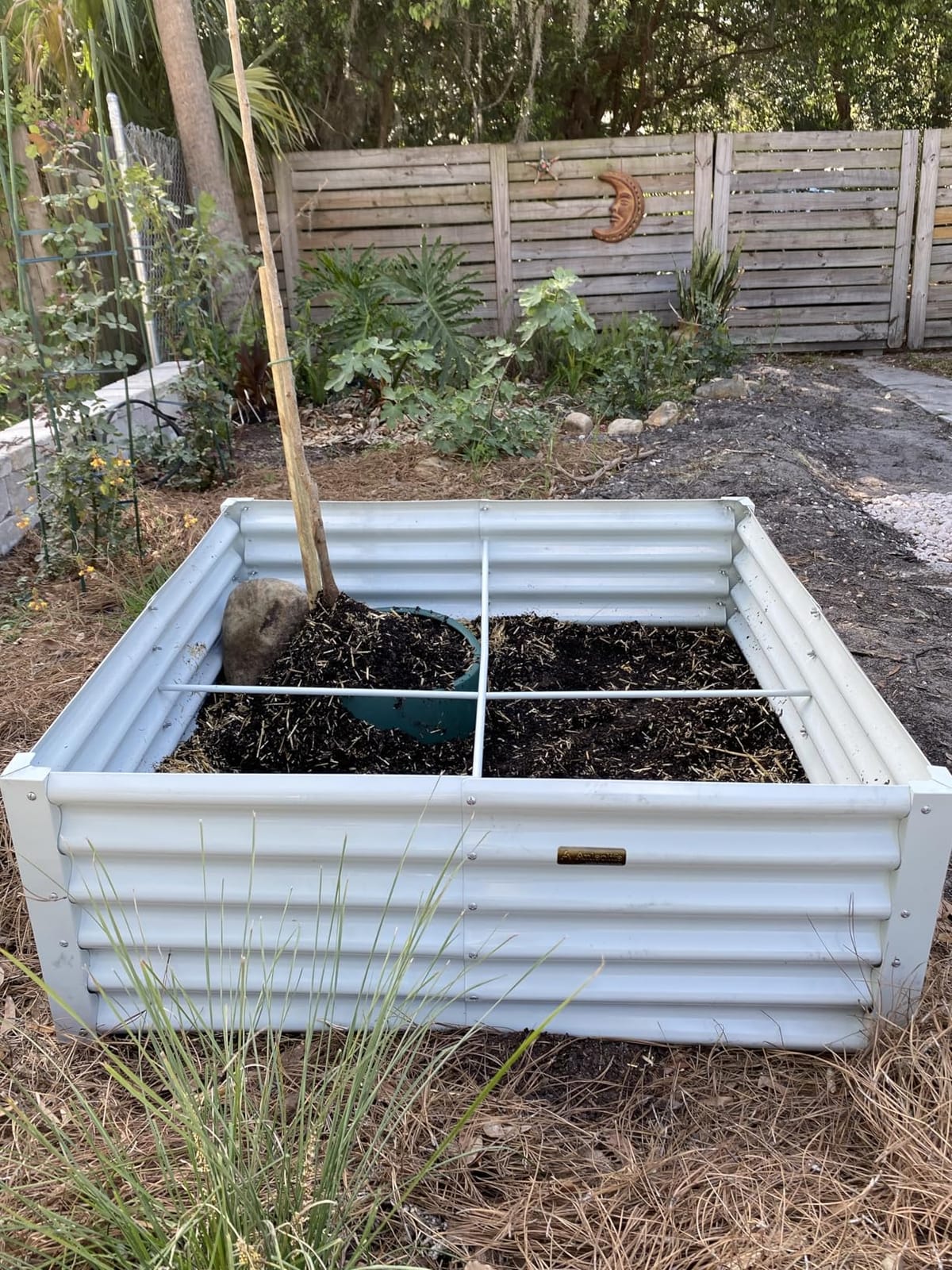
How many people does this need to assemble?
Owners consistently report two or three people for the 8x4x2 sizes. It is the largest unit here, at nearly 22 kilograms empty, and the braces have to be fitted while the panels are still square. Do not attempt it alone in a confined space.
Is 24 inches overkill for most vegetables?
For salad greens and herbs, yes, and the soil volume is the bigger cost than the bed. If your target crops are tomatoes, potatoes, long carrots or anything you want to leave in the ground for a second year, two feet is the right column and cheaper than adding another bed later.
12. SnugNiture 3 Pack 17 Inch Tall Galvanized Raised Garden Beds – Best Three-Bed Starter Plot
SnugNiture 3 Pcs 4x2x1.5ft Raised Garden Bed Outdoor, 17″ Tall Galvanized Metal Planter Box, Oval Raised Garden Bed Kit for Planting Vegetables Plants Fruits, Brown
Three beds at 46 x 23.6 x 17 inches
17 inch wall height
Thickened oval galvanized panels
Rubber safety edging, open base
Pros
- Three beds in one pack gives a ready-made multi-row plot
- 17 inch height keeps many pests out while staying reachable
- Rubber-edged rims are comfortable to work around
- Oval panels are stiffer and less prone to flexing
Cons
- Lighter-gauge sheet than heavy-gauge premium beds
- Assembly spans several panels and hardware pieces
Three beds at 46 by 23.6 by 17 inches is a ready-made plot rather than a single box, and that is the right shape for anyone starting out. One bed for leafy greens and herbs, one for fruiting crops on a trellis, one for root vegetables, each with its own soil and its own planting calendar.
Seventeen inches is the sweet spot in this list for reach versus protection. It is high enough to deter many pests and keep animals out of the soil surface, but low enough that you can reach the middle of a 23.6-inch-wide bed from one side without leaning over it.
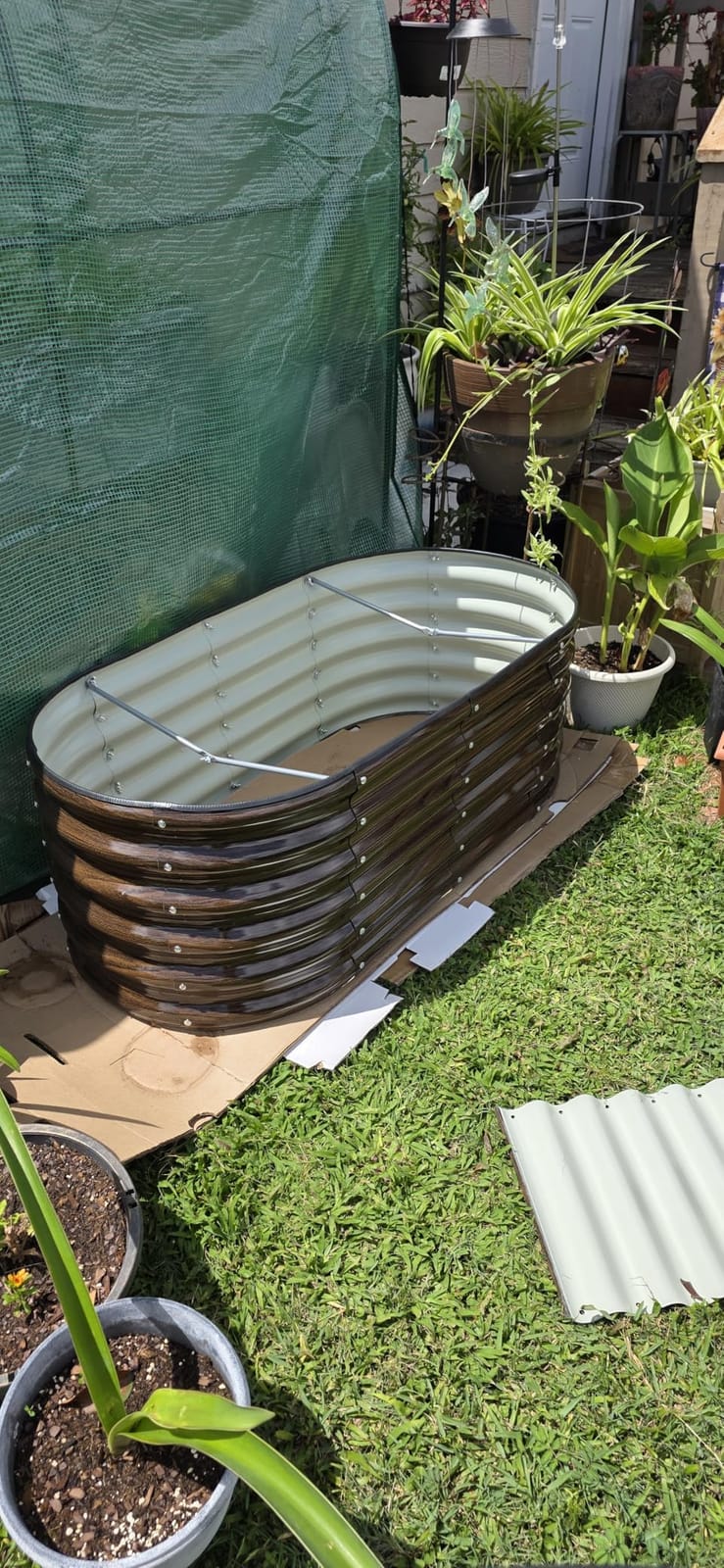
Rubber safety edging on the rims is a nice touch: comfortable to kneel against and it adds reinforcement to the top edge, which is the part that takes the most abuse from tools and hose fittings. The thickened oval structure resists deformation better than flat panels.
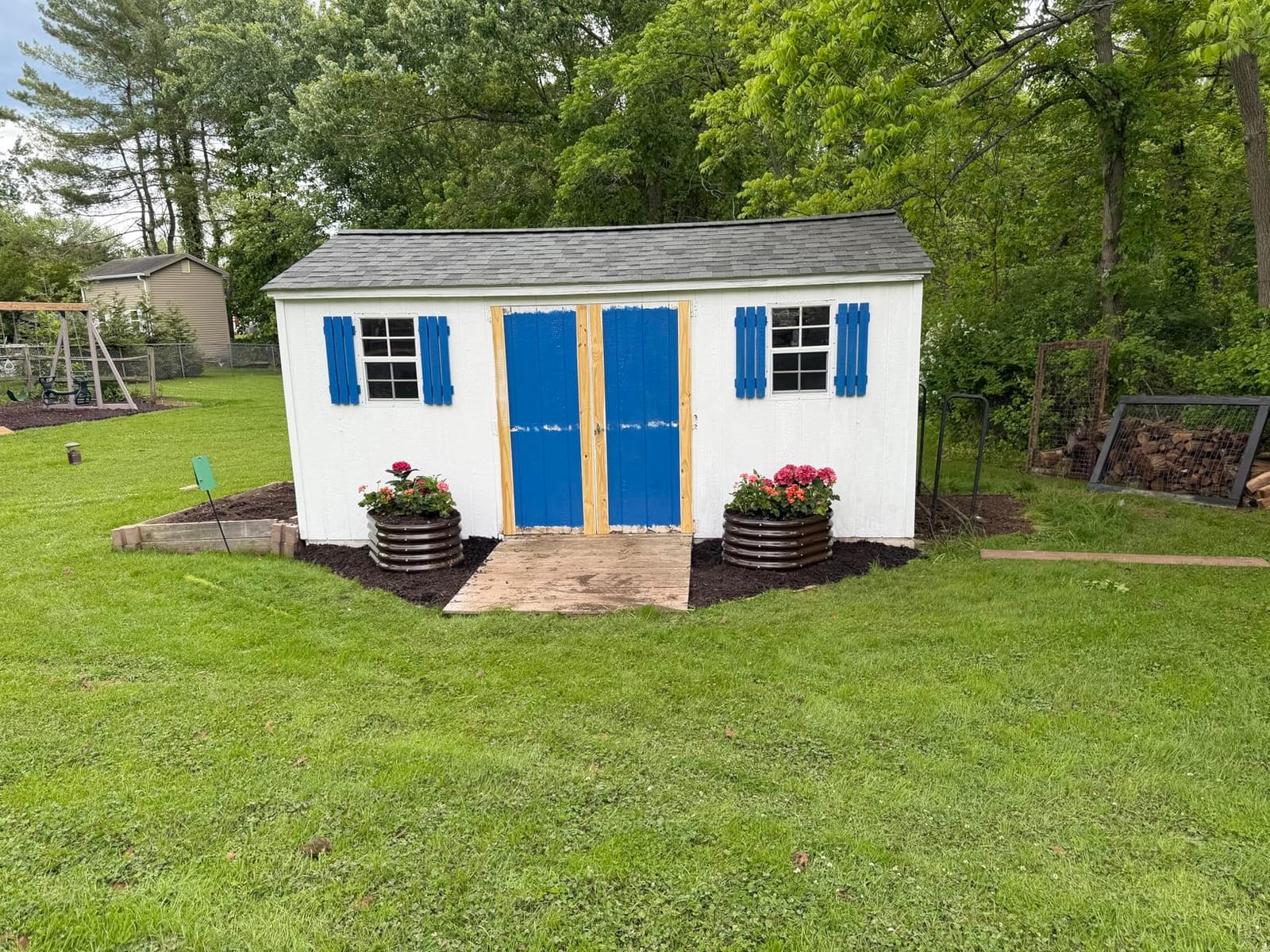
Open bases on all three prevent water accumulation and rot, and improved anti-corrosion treatment is specified. Detailed assembly instructions and an accessory package are included.
How does the gauge compare to premium beds?
It is lighter gauge than the heavy-gauge coated steel in the top picks, which is the honest trade for a three-pack. Most owners report it holds up well once filled, because the fill braces the panels, but expect cosmetic surface change sooner on a thin sheet.
Is 17 inches enough for root vegetables?
Yes, for potatoes, beets, turnips and full-length carrots, which is the main reason to prefer this over a 10 or 12 inch set. It is shallower than the 24-inch Anleolife and deeper than most of the budget beds here.
How to Choose a Raised Garden Bed for Vegetables
Material decides how long the frame lasts, depth decides what you can grow, and height decides whether you can keep gardening in five years. Get those three right and the rest is finish and price.
Material: galvanized steel, cedar, fir, resin and fabric
Galvanized and coated steel outlasts wood by a wide margin. Budget thin-gauge beds develop surface rust at the soil line within a few seasons, mid-range powder-coated steel lasts many more, and the premium zinc-magnesium-aluminum coated kits are specified at 20-plus years. Steel also assembles fastest, has no insects and holds a crisp edge.
Cedar is the wood to choose if appearance and natural rot resistance matter, and the 4.7-rated elevated cedar bed here is the best of that category. It is more expensive and the legs wear faster than the box, but the box itself outlasts softwood by years. Fir and Chinese fir are the budget wood option, and they need sealing before planting and will gray without it.
Resin and fabric suit renters and small spaces rather than vegetable volume. Fabric grow bags drain superbly and can be moved constantly, but they dry out fast in hot weather and need daily watering. Resin is light, safe and quiet, and generally holds less soil volume than a framed bed of the same footprint.
Depth: match the bed to the vegetable family
Match depth to the crop family and you will not fight the bed all season. Leafy greens and herbs need the least, fruiting crops need the most, and root vegetables fall in between.
Leafy greens and herbs, 6 inches minimum: lettuce, spinach, kale, chard, radish, most basil, parsley, mint and chives. Anything above 8 inches is wasted soil here, so a cheap 10-inch bed is genuinely enough.
Fruiting crops, 12 to 18 inches: determinate and staked indeterminate tomatoes, peppers, eggplants, cucumbers and squash all want at least 12 inches, and 17 to 18 inches is better for indeterminate varieties and for anything you plan to overwinter in the bed.
Root vegetables, 12 inches minimum, 18 to 24 inches better: radishes and short carrots at 6 to 10 inches, full-length carrots, beets and turnips at 12 inches, and potatoes, parsnips and long beets at 18 to 24 inches. Root crops are the clearest case where a shallower bed fails.
Drainage: open bottom or liner
Leave the bottom open wherever the bed sits on soil. An open base lets excess water drain into the ground instead of pooling against the frame, lets soil organisms move up into your mix, and lets roots extend into native soil over time, which builds fertility without extra compost.
Liners make sense on a hard surface such as a patio, deck or rooftop where there is no native soil beneath, and on elevated beds where the box floor would otherwise leak. They also stop soil washing out through gaps between boards. But a liner on a ground bed traps water at the base and can turn the frame into a bathtub, which is the single most common drainage mistake we see.
On hard surfaces, drilled drainage holes in the box floor are the better answer. Several beds here already have them, including the elevated fir box and both wheeled units, with cross-channels feeding a central drain.
Height and working position
Anything at 24 to 32 inches takes the bending and kneeling out of the job entirely, which is the deciding factor for anyone with back or knee problems, and for gardeners who plan to keep growing into their seventies. The trade is soil volume, because an elevated bed concentrates the same footprint at a height and most of these run 2.5 to 6 cubic feet.
Ground-level beds at 10 to 17 inches give more soil per square foot of patio and are easier to reach from both sides. The 17-inch wall on the Vego and SnugNiture beds is a good middle point: enough to deter pests, still low enough to lean over.
If you want mobility, wheels are the deciding feature rather than an accessory. Wheeled beds let you follow the sun across a patio, which on a balcony or rooftop is often the difference between a crop and a burnt crop. Plan the route to the door before filling it.
Size, layout and plant spacing
Reachability sets the maximum useful width. At four feet wide you can reach the middle from one side; beyond that, you end up standing on the soil, which compacts it and defeats the point.
Keep beds narrow enough to walk between, roughly two feet of path, so you can get in with a wheelbarrow and a kneeling pad. For a first vegetable garden, two or three beds in the 4 by 2ft range give you more than one crop family and a rotation you can actually manage.
On layout, run tall crops on the north or west side so they do not shade shorter plants, put vining crops where they can climb a fence or trellis rather than sprawling, and group by water need so thirsty tomatoes are not next to herbs that prefer drier soil. Orient long beds along the accessible axis and stagger plant positions so neighbours do not shade each other at maturity.
How much soil and compost to buy
This is where first-time gardeners get surprised, because the soil is often more than the bed. Multiply your bed’s internal dimensions in feet and treat that number as cubic feet, then plan on filling roughly 70 percent of it so the mix settles without spilling over the rim.
4 x 2 x 1ft, about 7 cubic feet: about 5 cubic feet of mix, roughly 37 gallons, filling a 7.14 cubic foot frame to a sensible working level.
6 x 3 x 1ft, 18 cubic feet per bed: about 13 cubic feet of mix per bed, close to 95 gallons, before it settles. Fill these in stages rather than all at once.
8 x 2 x 1.4ft, 23 cubic feet: about 16 cubic feet of mix, roughly 120 gallons, in a bed that must be assembled and filled in place.
8 x 4 x 2ft, 64 cubic feet gross: the 24-inch Anleolife is specified at 478 gallons, so budget close to 400 gallons of delivered mix and have it dumped near the site. This is a two-person job at minimum.
Mix roughly half quality topsoil with half compost by volume, then add a slow-release organic fertiliser at label rate. Filling a bed in layers with a few inches of coarse material at the bottom is optional and only worth it on a very deep frame; the open bottom already does that job.
What not to grow in a raised bed
Not every vegetable is a good fit, and picking the wrong one is the most common way a raised bed disappoints.
Deep-rooted perennial crops are the main exclusion. Rhubarb, horseradish and asparagus send roots far past eighteen inches and will exhaust a bed’s soil and cannot be moved out again. Plant them in a dedicated in-ground patch.
Tall corn and sprawling squash are poor fits in a shallow frame because of root volume and top weight, though vining squash grows happily out of a deep bed if you give it a trellis. Oversized brassicas such as giant kohlrabi and long-growing brassicas also suffer in less than twelve inches.
Anything that needs a long frost-free run in a very short season is a poor fit if your bed is narrow and shallow, because root zone temperature swings more than in-ground soil. Perennial herbs such as mint, which is better contained in a raised bed than in open ground, are the exception to the exclusion rule.
Safety: coatings, treated lumber and sharp edges
Galvanized steel is fine for edible crops. The zinc coating is stable in soil and the beds specified here are either double-layer galvanized, powder coated or, in the Vego case, finished with USDA-approved paint, and the Meberam set is specified with a non-toxic coating safe for edible plants.
Avoid lumber treated with chromated copper arsenate, and avoid creosote-coated railroad ties and methyl bromide treated pallets, for food gardens. If you want a treated frame, keep the treated wood as structure and use an uncontaminated soil mix with a barrier liner between wood and crop roots.
Avoid concrete or cinder block for vegetables. Much of it uses fly ash with heavy metals that are not appropriate for food crops. If you want masonry, use food-safe concrete or line the interior completely.
On edges, budget models frequently have unfinished or folded-but-uncapped steel. Several beds here solve it with rubber or curled edging and one includes gloves. Wear gloves during assembly and file or cap any edge before you start working in the bed, particularly where children are around. If you also have pets, our washable dog bed guide covers the other end of the household routine, and a raised dog bed is the easiest way to keep soil out of the fibres in the first place.
Frequently Asked Questions
What is the best type of raised bed for vegetables?
The best type is a galvanized steel or untreated rot-resistant wood frame at least 12 inches deep, filled with a loose compost and topsoil mix, open at the bottom for drainage, and no wider than four feet so you can reach the middle from one side. Metal lasts longest and assembles fastest. Wood looks better and runs cooler. Depth matters more than material: 12 inches covers most summer vegetables, 17 to 18 inches opens up tomatoes and potatoes.
How deep should a raised garden bed be for growing vegetables?
Twelve inches is the practical minimum for most vegetables and covers leafy greens, herbs, peppers and determinate tomatoes. Fifteen to seventeen inches suits staked indeterminate tomatoes, cucumbers and full-length carrots. Eighteen to twenty-four inches is where potatoes, parsnips and long-rooted crops become realistic. Six inches is enough for salad greens and quick crops only. Match depth to the crop family rather than to the price tier.
What vegetables should not be grown in a raised bed?
Deep-rooted perennials are the main exclusion, because rhubarb, horseradish and asparagus send roots far past eighteen inches and cannot be removed once established. Tall corn and heavy sprawling squash need more root volume and top weight than a shallow frame allows. Deep-rooted perennials and long-season brassicas belong in an in-ground patch instead.
Is a cedar raised bed better than a metal raised bed?
Neither is better overall; they win on different things. Cedar resists rot naturally, looks better in a garden and runs cooler, but it costs more, the legs on elevated models wear faster than the box, and lifespan is shorter than a coated steel kit. Metal lasts longer, assembles faster, holds a crisp edge and has no insect risk, but needs checking for sharp or unfinished edges and has no aesthetic warmth.
Do galvanized steel garden beds get too hot for vegetables?
Rarely, and the fear is overstated. Thin steel walls have low heat capacity, so they warm quickly and shed heat just as fast, and they conduct that heat away from the root zone rather than storing it in the soil the way a thick mass would. In extremely hot climates, shade cloth over the bed for the worst afternoon hours and keep a mulch layer on the soil surface. Roots cook from dry soil and blocked drainage far more often than from wall temperature.
Will galvanized steel rust in soil?
Well-made beds resist it for decades. The zinc coating is stable in soil, and coated steel models are specified at 20-plus years of outdoor exposure with owner reports of no visible aging. Thin-gauge budget beds are the exception, where interior surface rust appears over several seasons where soil sits continuously against the metal. Cosmetic surface change does not usually compromise the frame, but it is worth checking the gauge before you buy.
Final Verdict: Which Raised Garden Bed Should You Buy?
The Land Guard galvanized 4x2x1ft oval is our pick for the best raised garden beds for vegetables, because 7.14 cubic feet, double-layer galvanizing, an open base and a five-minute build add up to the most proven design in this group. For deep-rooted crops and a longer lifespan, the Vego Garden 9-in-1 at 17 inches tall is the stronger buy despite the assembly evening it demands.
Back and knee problems point to the 30-inch elevated beds, either the fir box or the cedar one. Small balconies point to a wheeled unit. Whatever you choose, match the depth to the crop family, leave the bottom open where there is soil beneath, and budget the compost and soil on top of the frame itself. As of 2026, those three decisions matter more than any other detail in the spec sheet.