
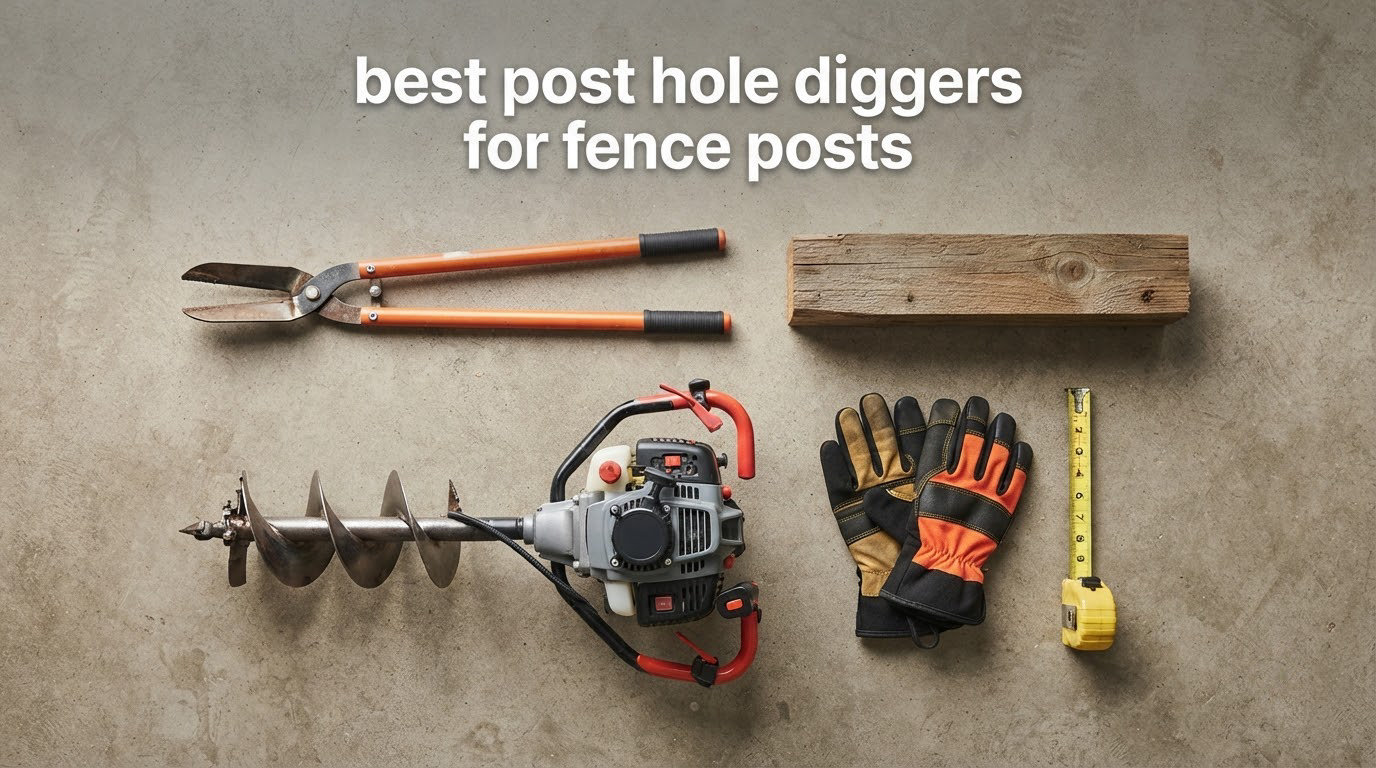
The best tool for digging holes for fence posts is a powered auger if you are setting more than six posts or working in clay, caliche or hardpan, and a manual clamshell digger if the job is small and the soil is soft. A 150 foot fence run means 50 to 75 holes, and that is where hand digging stops being a weekend project and starts being a back problem.
That is the short version. The rest of this guide breaks down the best post hole diggers for fence posts across three classes: manual clamshell diggers, one-person gas augers, and electric augers that either plug in or strap onto a drill you already own. Ten tools made the cut, and every one of them has drawbacks we name out loud.
Our team dug into owner reviews across all ten products, focusing on what reviewers say after the first project rather than the first impression. Soil type, post diameter, hole depth and whether one person can safely run the machine turned out to matter far more than horsepower. The most common question in fence forums is not which model to buy but whether you should own a digger at all, so we answered that too.
Last updated in 2026. We may earn a commission when you buy through links on this page, at no extra cost to you.
Table of Contents
Our Top 3 Best Post Hole Digger Picks for 2026


DC HOUSE 52cc Gas Auger
- EPA-certified 52cc two-stroke
- 6 inch and 10 inch bits included
- 2.6 ft depth

Two of the three picks above are gas, which tells you something about where the volume is. But the winner is corded electric, and the reason is simple: it is the only one of the ten that needs no fuel mixing, no pull cord, and no carburetor.
All 10 Post Hole Diggers at a Glance (October 2026)
| Product | Specifications | Action |
|---|---|---|
| XtremepowerUS 1500W Electric Post Hole Digger |
|
Check Latest Price |
| DC HOUSE 52cc Gas Post Hole Digger |
|
Check Latest Price |
| Earthquake E43 43cc One-Person Earth Auger |
|
Check Latest Price |
 True Temper 48 inch Hardwood Post Hole Digger True Temper 48 inch Hardwood Post Hole Digger |
|
Check Latest Price |
 VEVOR 43cc 1250W Gas Auger VEVOR 43cc 1250W Gas Auger |
|
Check Latest Price |
 VNIMTI 58 inch Fiberglass Post Hole Digger VNIMTI 58 inch Fiberglass Post Hole Digger |
|
Check Latest Price |
 Prowoo 72cc Two-Stroke Auger Prowoo 72cc Two-Stroke Auger |
|
Check Latest Price |
 Earthquake Dually 52cc One or Two-Person Powerhead Earthquake Dually 52cc One or Two-Person Powerhead |
|
Check Latest Price |
 Union Tools 58 inch Carbon Steel Post Hole Digger Union Tools 58 inch Carbon Steel Post Hole Digger |
|
Check Latest Price |
 MightyPhine 6 inch x 32 inch Drill Auger MightyPhine 6 inch x 32 inch Drill Auger |
|
Check Latest Price |
Row eight is a powerhead with no auger bit in the box, so budget for a separate bit before you start. Every other model on this list is ready to dig out of the packaging.
1. XtremepowerUS 1500W Electric Post Hole Digger: Best Overall
XtremepowerUS 1500W Electric Post Hole Digger Earth Auger Dig Hole Fence Post Hole Digging, Tree Planting with 6″ Digging Auger Bit Set, 3/4″ Shaft
1500W motor, 90 ft-lb torque at 270 RPM
6 inch manganese steel bit, 3/4 inch shaft
17 x 33 x 13 inches
Pros
- No gas
- oil or engine maintenance
- Plug-in power works anywhere there is an outlet
- 6 inch bit suits 4x4 posts
- Built-in slip clutch protects internals when it hits a rock
- Safety lock stops accidental triggering
Cons
- No reverse gear for freeing a stuck bit
- High low-speed torque can kick back hard
- Will not cut roots or rocks
This is the most reviewed post hole digger in our group, with 2846 ratings averaging 4.5 stars, and the reason is that it removes the single most annoying part of gas ownership. There is no premix to measure wrong, no pull cord to yank, and no carburetor to gum up over winter. You plug in a heavy-gauge extension cord and start digging.
The motor is rated at 1500W and 10.9 amps, turning the auger at 270 RPM with 90 ft-lb of torque. That is a deliberate low-RPM, high-torque setup, and it is why the 6 inch bit cuts cleanly rather than grinding. Owners consistently pair it with a manual clamshell for cleaning the bottom of each hole, which is the way we would use it too.
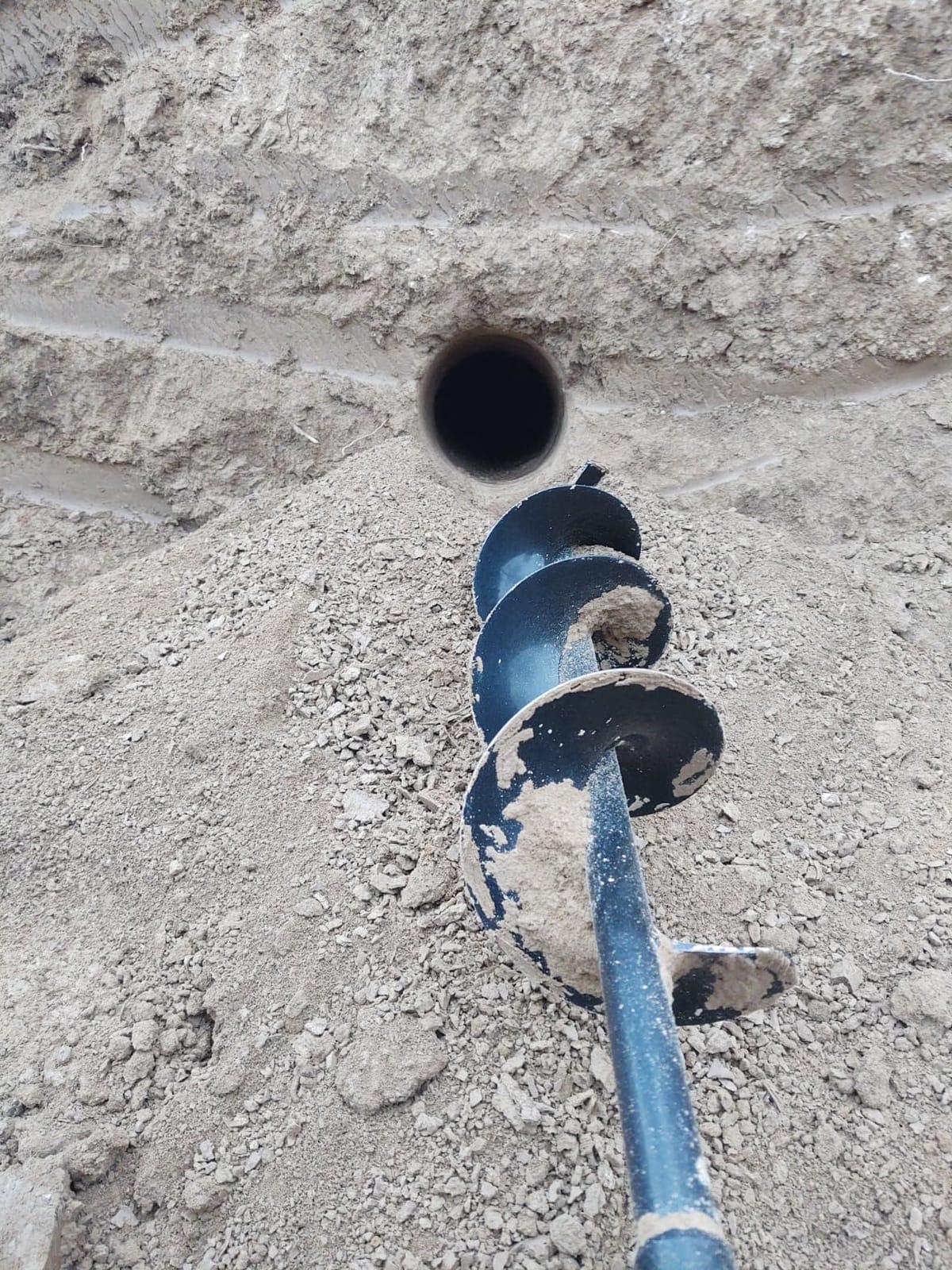
Two things catch people out. First, there is no reverse, so if the bit binds on a stone you physically pull the tool back out by hand. Second, that same high torque means the machine can jump sideways when the bit snags, so keep both hands on the grips and your body out of the swing path.
Is it strong enough for clay and rocky ground?
For ordinary loam, sandy ground and firm clay, yes. Owners report dozens of holes with no measurable wear, and the slip clutch is designed to slip rather than shear when the bit meets an obstruction. For root-filled ground or caliche, it is the wrong tool, and no amount of torque substitutes for a different bit or a different method.
What do you need to run it properly?
A 14 gauge or heavier extension cord, which is called out repeatedly in owner reviews. A lighter cord starves the motor and the bit stalls at depth. This is the one accessory you should not cheap out on, and it is the reason the tool is less portable than a cordless unit despite having no battery.
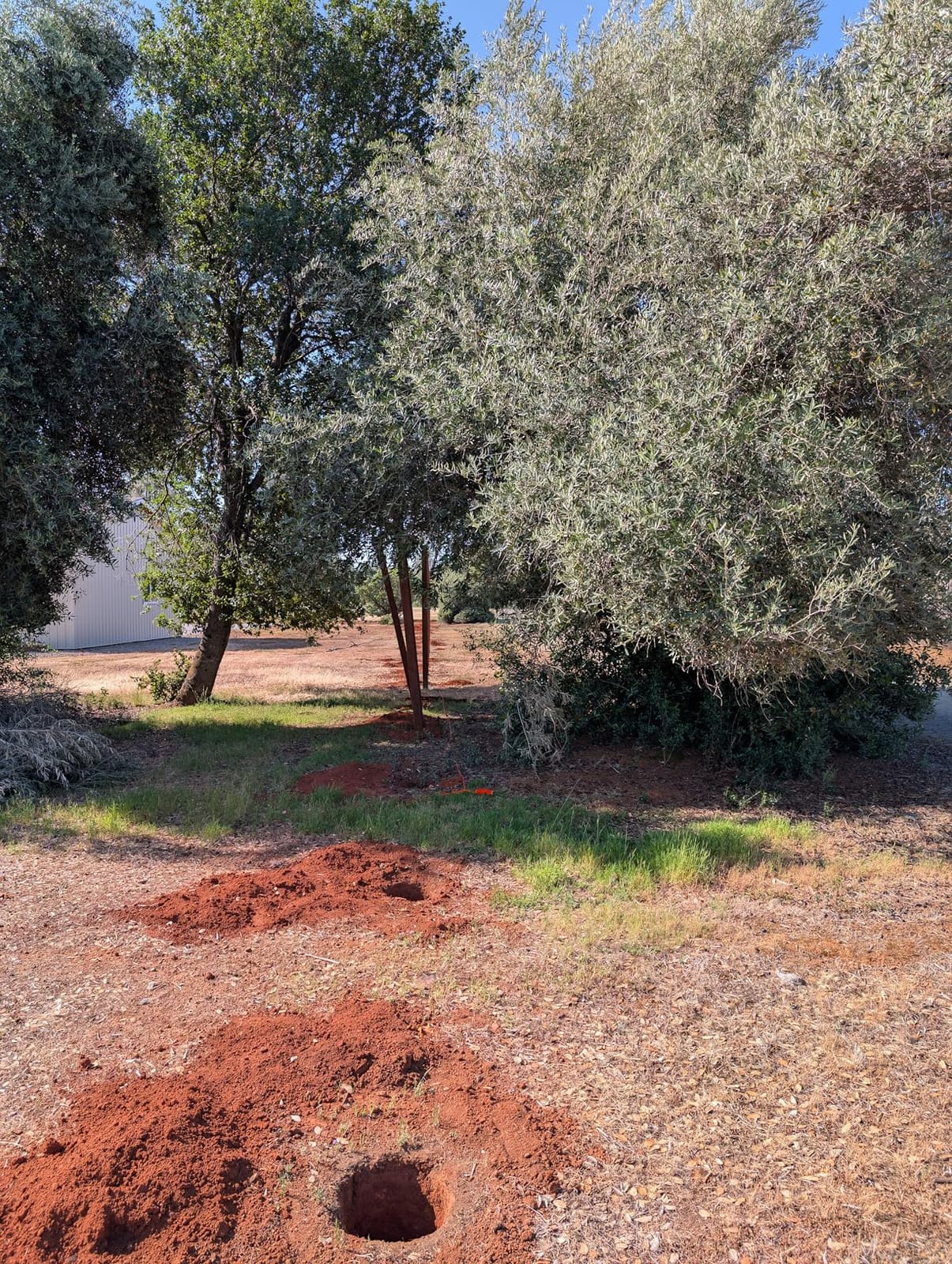
2. DC HOUSE 52cc Gas Post Hole Digger: Best for Two Bit Sizes
DC HOUSE 52cc 1800W Gas Powered Earth Auger EPA Certified Post Hole Digger, with 2 Drill Bits 6″ 10″, Mixing Ratio 30:1, for Fence, Farmland and Garden
52cc two-stroke air-cooled, EPA certified
1:25 oil to fuel mix, 1.8kW at 8000 rpm
6 inch and 10 inch bits, 2.6 ft max depth
Pros
- EPA-certified 52cc engine
- 6 inch and 10 inch bits included
- Fuel mixing bottle included
- Butterfly handles work solo or two-person
- Centrifugal clutch and bit lock
Cons
- Two-stroke fuel mixing and carburetor upkeep
- Single-flute bit leaves rougher holes
- Struggles in very hard or rocky soil
Bit diameter is the decision that actually matters when you set posts, and this is one of only two picks in our group that ships with both a 6 inch and a 10 inch auger. That means you can set 4×4 line posts and 6×6 structural posts on the same powerhead without buying anything else. The bits run on a standard 3/4 inch shaft and swap in seconds.
The engine is a 52cc single-cylinder two-stroke, air-cooled, rated at 1.8kW and 8000 rpm, and it is EPA certified. Maximum depth with a single bit is 2.6 feet, which covers the 24 to 30 inch holes most fence lines need with room to spare. For anything deeper you would need an extension this unit does not list.
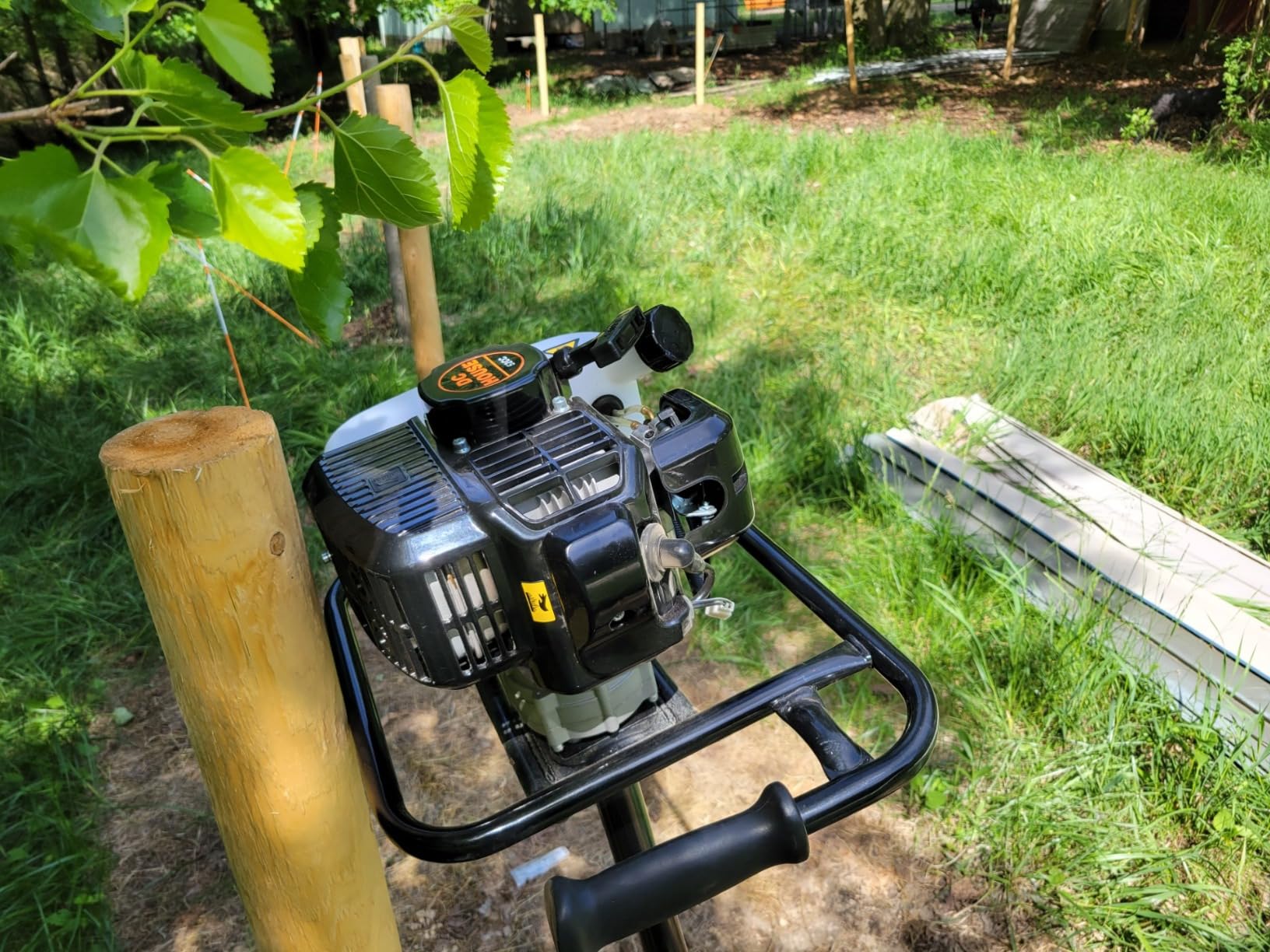
Owners like the butterfly handles, which can be gripped by one person or two, and reviewers frequently mention complete fencing or planting runs of dozens of holes. The single most common friction point is the 1:25 premix ratio, which is richer than the 40:1 and 50:1 ratios most two-strokes use, so measure the bottle rather than eyeballing it.
How does it handle hard soil?
Honestly, it is at its limit. Reviewers report it working well in farm soil and ordinary yard ground, and report it bogging in deeply compacted fill or when it meets rock. If you know you are digging through clay or old fill, the 72cc pick further down this list has more headroom.
What does a two-stroke actually cost you in upkeep?
More than a four-stroke, and that is the honest trade. You mix fuel, you keep premix on hand, and the carburetor wants attention if the unit sits unused between seasons. In exchange you get lower purchase cost, lower weight and a simpler engine with fewer parts to fail. Run premix through it once a season and the difference stays manageable.
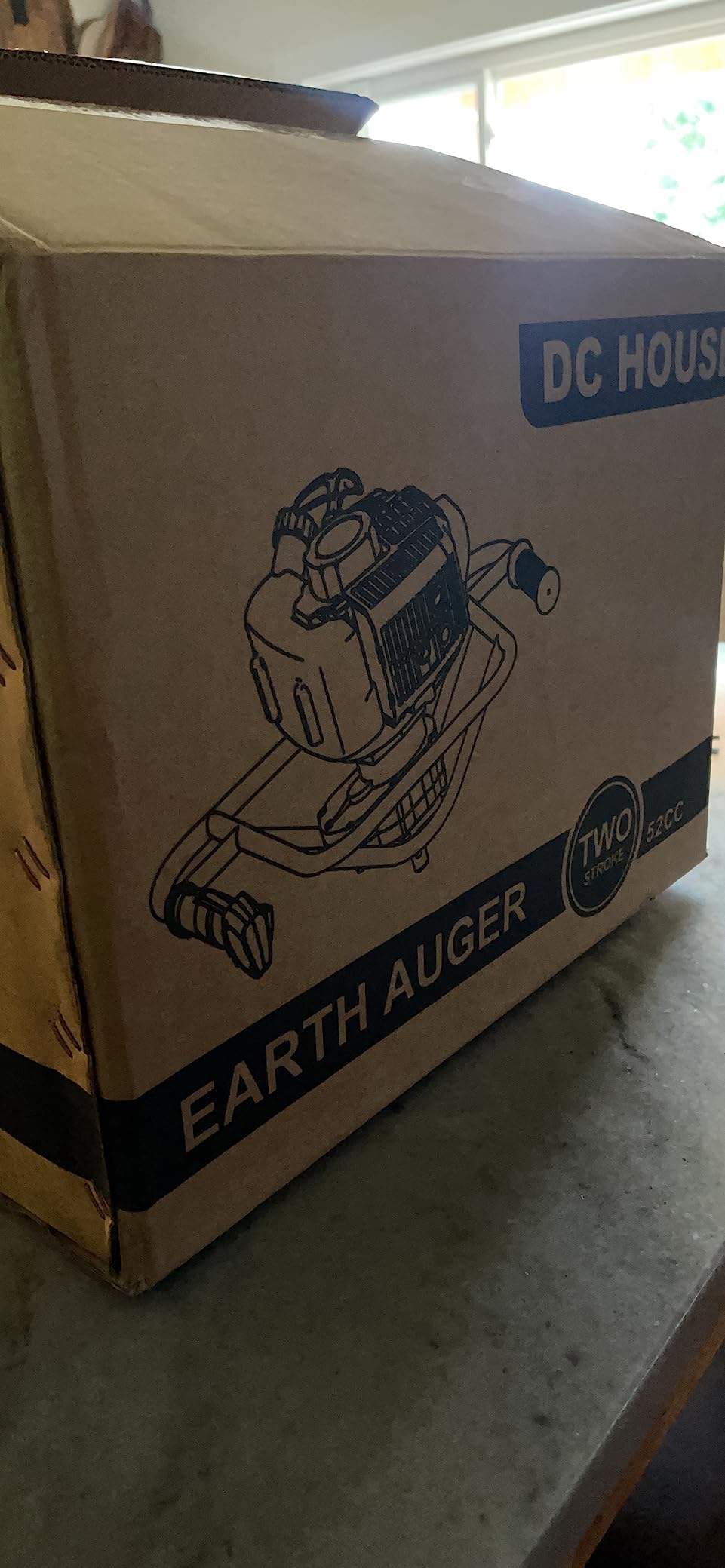
3. Earthquake E43 43cc One-Person Earth Auger: Best Warranty
Earthquake E43 1-Person Earth Auger Powerhead, 43cc 2-Cycle Viper Engine, 30:1 Transmission, 5 Year Limited Warranty, Red or Black Auger Bit
43cc 2-cycle Viper engine, 30:1 transmission
36 inch steel auger with fishtail point
34 pounds, 5-year limited warranty
Pros
- 5-year limited warranty
- Made in the USA
- Flex Coil shock absorber absorbs impacts
- 36 inch bit lets you work upright
- Alloy gears and ball bearings
Cons
- 34 pounds tires smaller operators on long runs
- Raw power can flip you on a large root
- Needs small plunging increments in heavy clay
- No built-in level on the powerhead
This is the one to buy if you want a gearbox that is still covered years from now. The 5-year limited warranty is the longest in this roundup by a wide margin, and owners repeatedly compare this machine favorably to budget marketplace augers whose gearboxes failed inside a season. Transmission is a 30:1 ball-bearing and alloy-gear unit, not a plastic gear case.
The bit is the part that sells it for fence work. At 36 inches long with a fishtail point, it lets you stand upright instead of bending over the hole, and the Flex Coil shock absorber takes the hit when you meet a root or small rock instead of transferring it straight into your arms. Blades are replaceable, so the tool outlasts the bit.
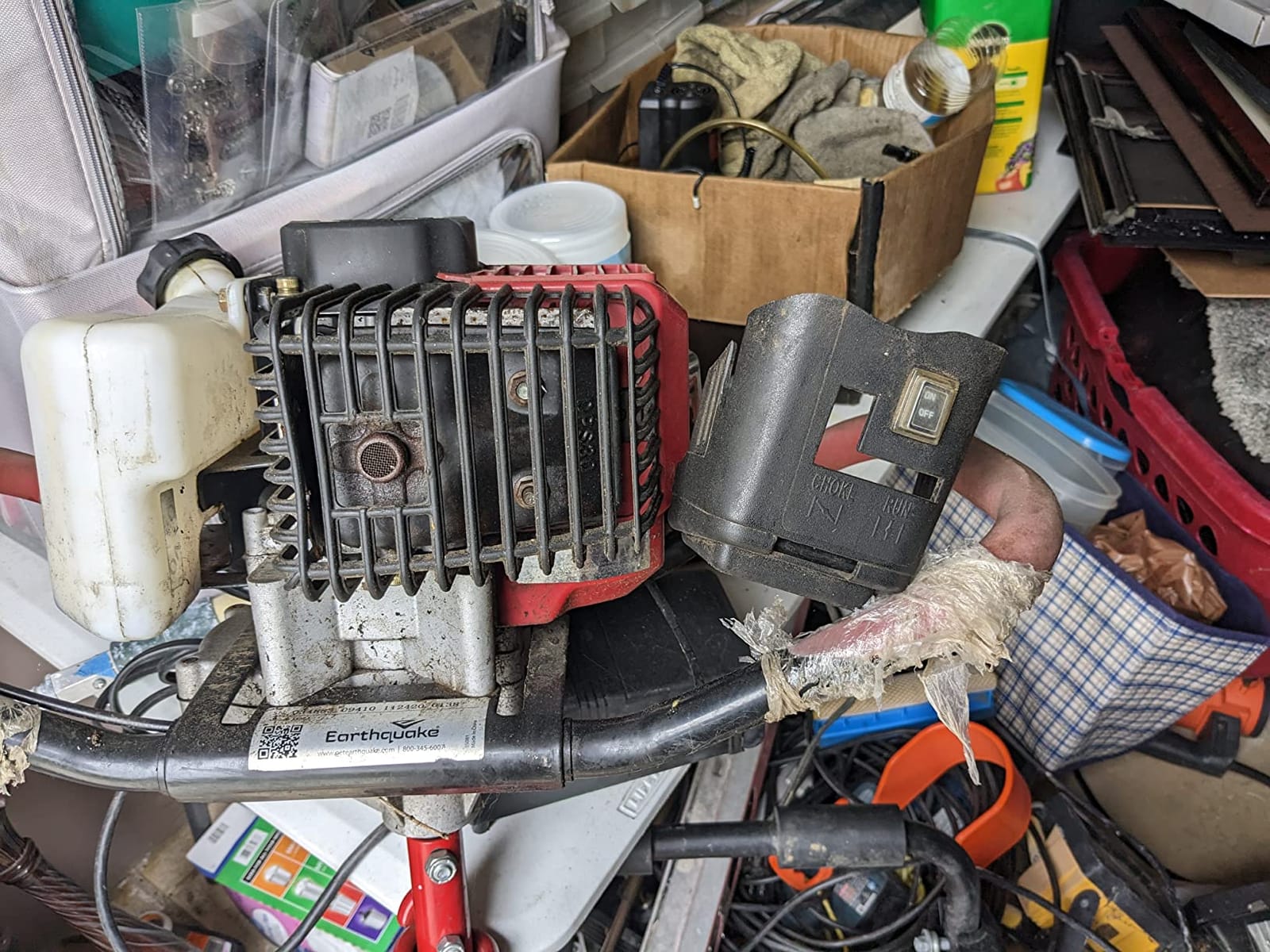
Reviewers report digging 24 to 30 inch post holes in well under a minute each under good conditions, and note that it starts easily and runs 50:1 premix without overheating. The recurring caution is the weight: at 34 pounds, this is a real load, and a long run of holes will show up in your shoulders. There is also no bubble level on the powerhead, so plumb posts with a separate level.
Is it safe to run alone?
It is rated as a one-person unit and thousands of fence jobs have been done with it solo, but it is not gentle. Owners consistently warn that a large root or rock can throw the machine and strain the operator. If you are new to augers, or if you suspect buried debris in the run, plan to have a second person steady the handles.
How does it compare to a budget marketplace auger?
The comparison that comes up most in reviews is against entry-level gas augers in the 40 to 50cc range that share the same silhouette. Owners say the difference shows up in starting ease, in how the transmission holds up, and in having a warranty when something goes wrong. The price gap is real; the early failure rate difference is what convinces most of them.
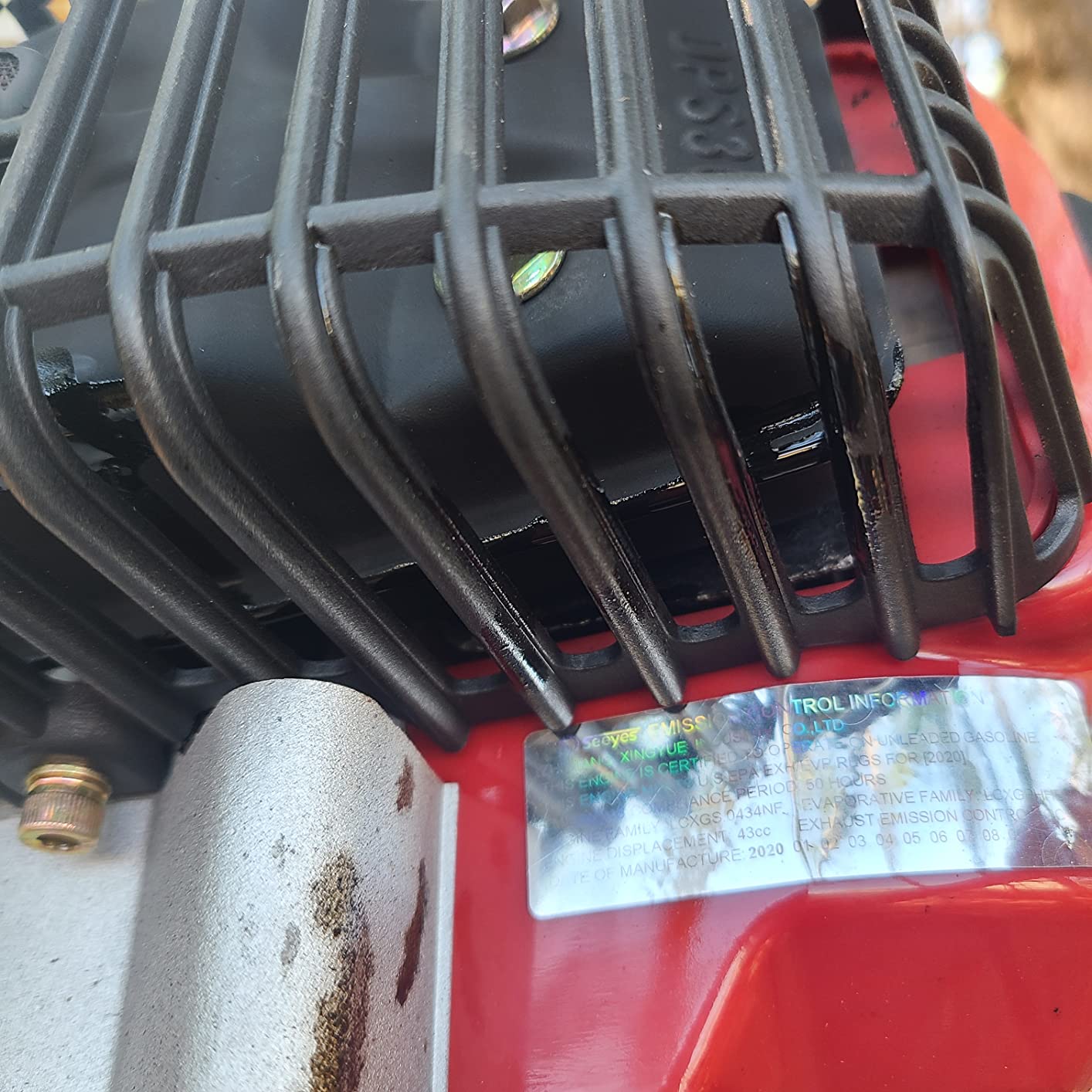
4. True Temper 48 inch Hardwood Post Hole Digger: Best for Measured Depth
True Temper 2717900 48 in. Hardwood Handle Post Hole Digger with Ruler and Cushion Grips, 40 Inch
Dual round steel blades on 48 inch hardwood handles
Measurement guide printed along the handle
Cushion end grips, 8.9 pounds
Pros
- Depth ruler printed on the handle
- Steel blades cut a precise round hole
- Cushioned grips reduce hand fatigue
- Light for a full-length manual digger
Cons
- 48 inch length is awkward for shorter operators
- Hardwood handles sometimes ship with rough knots
- Occasional dried glue at the grip joints
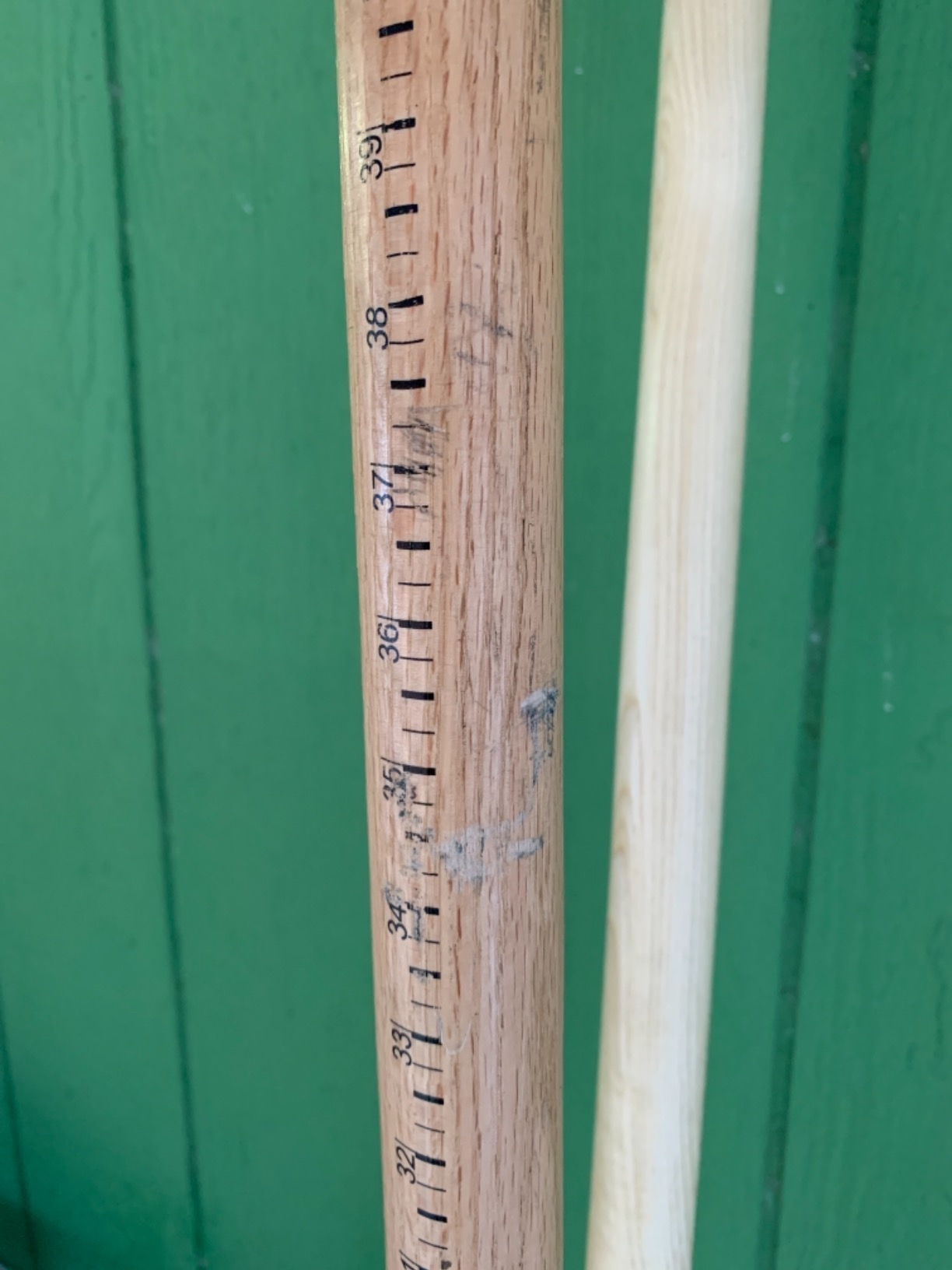
The reason this digger is worth a dedicated pick is printed on the handle. A measurement guide runs along the hardwood shaft so you can read depth without a tape measure, which removes the single most common fencing mistake: line posts that end up a different depth than corner posts.
The blades are dual round alloy steel, which produce a clean cylindrical hole rather than a slotted one, and cushion end grips take pressure off your palms. It weighs 8.9 pounds, so it is a genuinely light full-length digger. Reviewers use it for small-batch work: replacing a mailbox post, swapping a few rotted boards, planting.
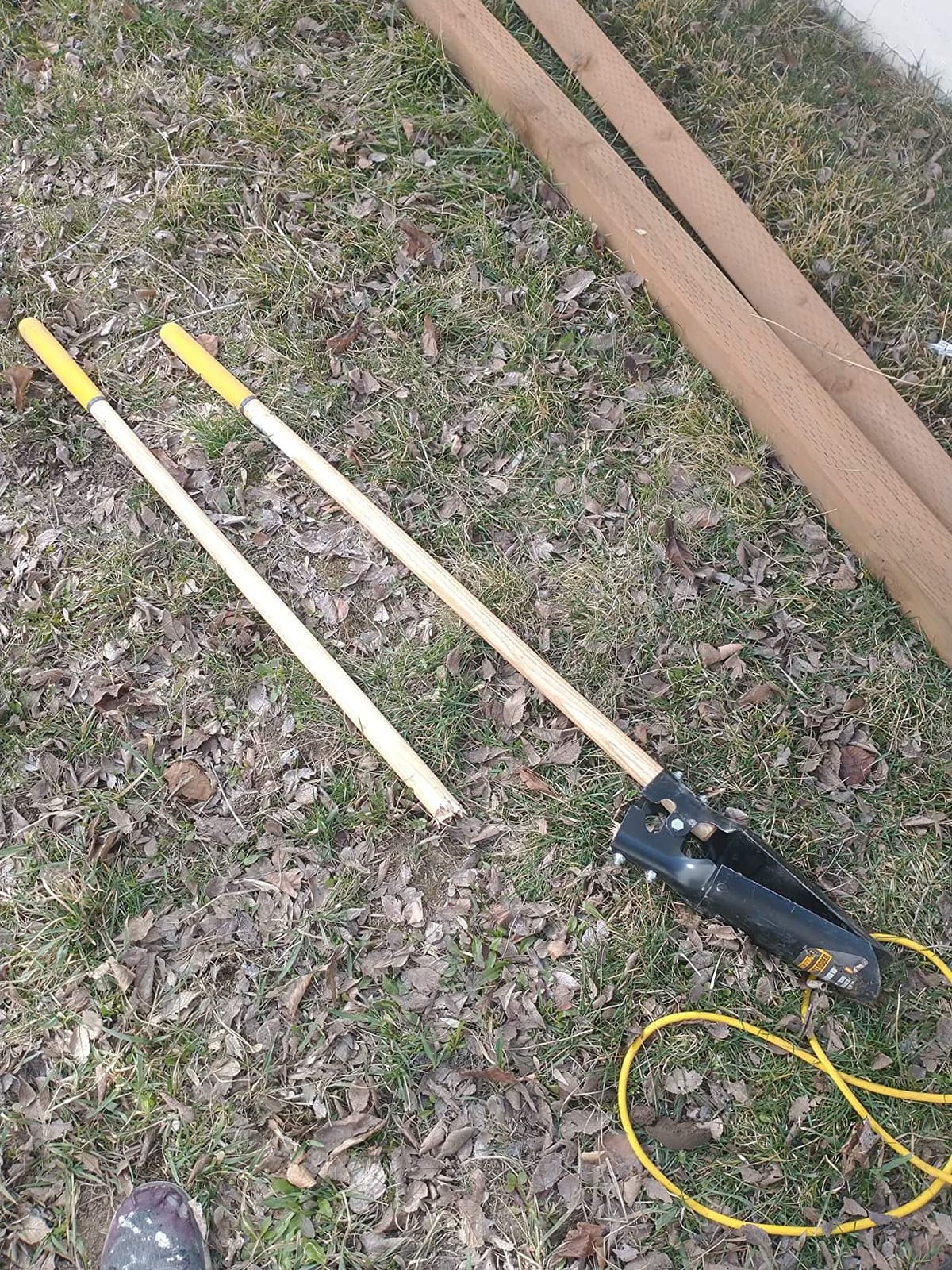
The fit is the recurring complaint. At 48 inches, this digger suits taller users and frustrates shorter ones, and a minority of owners report handles arriving with rough knots or dried glue at the grip joints that need sanding before the first hole. Check the handles before you start rather than after you have dug six holes.
How many holes is a manual digger good for?
Forum experience across fence groups puts the threshold somewhere around 15 to 20 holes, or the first time you hit clay, whichever comes first. Six or eight holes in soft loam is a completely reasonable manual job. Past that, or the moment the blades start to skid across compacted ground, you are spending effort rather than making progress.
Is it worth having alongside a powered auger?
More than most people expect. A manual digger is the right tool for knocking out loose soil from the bottom of an auger hole, cleaning out spillage, and setting a post in an awkward corner where a powered machine will not fit. Owners with gas augers frequently keep one in the truck for exactly that.
5. VEVOR 43cc 1250W Gas Auger: Best Starter Kit
VEVOR Post Hole Digger, 43cc 1250W Auger Earth Digger, Gas-Powered (Fuel)
43cc gas engine, 9350 RPM, 40:1 fuel mix
Powder-coated alloy steel 8 inch bit, 30 inches long
1.2L fuel tank, 1.2m pull cord
Pros
- Bit
- spark plug
- oil can and tool kit all included
- Ball-bearing shaft and alloy-gear gearbox
- 1.2L tank and large cooling holes for long sessions
- On-handle emergency stop switch
- Easy recoil start
Cons
- Requires 40:1 premix
- Limited headroom in deeply compacted soil
- No reverse for a bound bit
VEVOR is the most frequently listed brand we found while researching this topic, and this particular model ranks second in its category for sales. Owners generally describe the same thing: the box arrives complete. You get the 8 inch auger, a spare spark plug, an oil can, a tool kit and a mixing bottle, which removes the most common first-project complaint about entry-level augers.
Under the hood it is a 43cc gas engine rated at 9350 RPM maximum rotational speed with a 40:1 premix ratio, driving a ball-bearing shaft through an alloy-gear gearbox. The bit is powder-coated alloy steel, 8 inches wide and 30 inches long, and the 1.2L fuel tank plus generous cooling holes are what let it run a full property line without cooking itself.
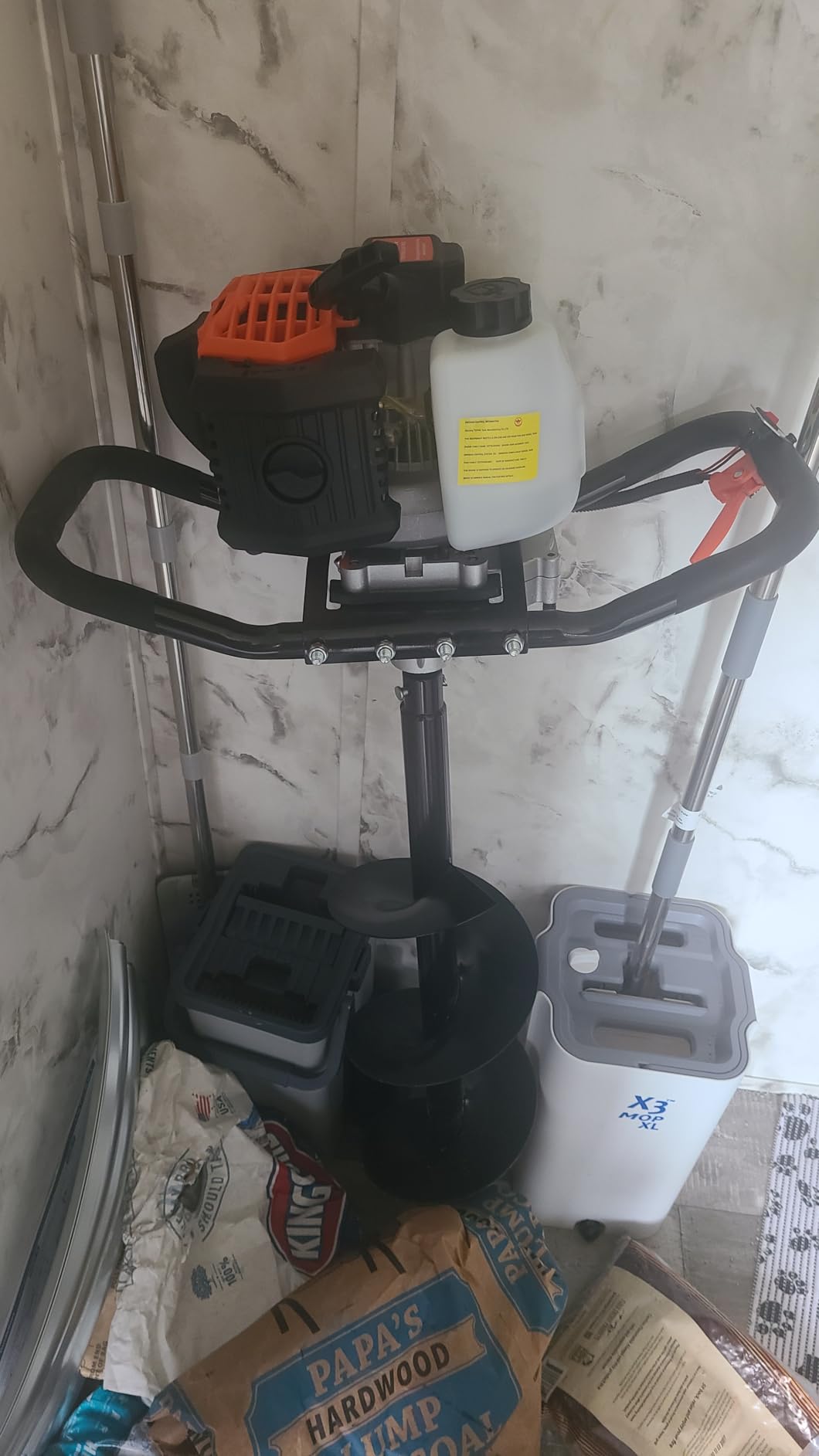
Owners also single out the 1.2 metre thickened pull cord and the shock-absorbing foam handle, and report using it for fence posts, planting and light farm work. The criticisms are the standard ones for the class: premixing fuel, no reverse to back a stuck bit out, and not much surplus torque in very hard packed soil.
What do owners actually use it for?
Almost always the same three jobs: setting line posts, planting shrubs and young trees, and digging small footings. That is a good sign for a homeowner tool, because it means the engine is sized for the work rather than for farm acreage. A 150 foot run at typical post spacing is comfortably within its range.
How does VEVOR compare to a dedicated 43cc unit?
The honest answer is that this one competes on package value rather than refinement. Buyers who compared it against entry-level gas augers credit the gearbox construction and the included accessories. Buyers comparing it against the branded one-person pick above credit a warranty and heavier drivetrain. Choose based on how much digging you expect to do after this project.
6. VNIMTI 58 inch Fiberglass Post Hole Digger: Top Rated
VNIMTI Post Hole Digger Tool, Heavy Duty Post Hole Digger with Fiberglass Handle, 58 Inches
58 inch overall length, high-strength steel blades
Thickened fiberglass handle with non-slip top grip
9.6 pounds, double-reinforced head joints
Pros
- Highest rating in this roundup at 4.7 stars
- Steel blades cut tough clay-like and rooted soil
- Weight helps drive the blades into compact ground
- Fiberglass handles survive twisting without cracking
- Metal end protectors protect knuckles
Cons
- Handles spread when lifting loose soil
- Curved blades are shorter than some competing designs
- A bit heavy for smaller users
At 4.7 stars across 220 ratings with 87 percent five-star, this is the best-rated tool we included, and the reviews explain why owners keep it. They use it to replace cheap diggers they have owned for decades, and they specifically mention that it cuts clay-like soil that older tools could not touch. The blades are high-strength heavy-duty steel with a screw point, not stamped plate.
The 58 inch length puts the top grip at a working height that lets you work nearly upright, and the thickened fiberglass handle keeps the tool lighter than its 9.6 pounds suggests. Long-term owners report the fiberglass handles and nylon-lock bolts staying tight after months in sandy and palm-root soil, which is where hardwood handles typically split.
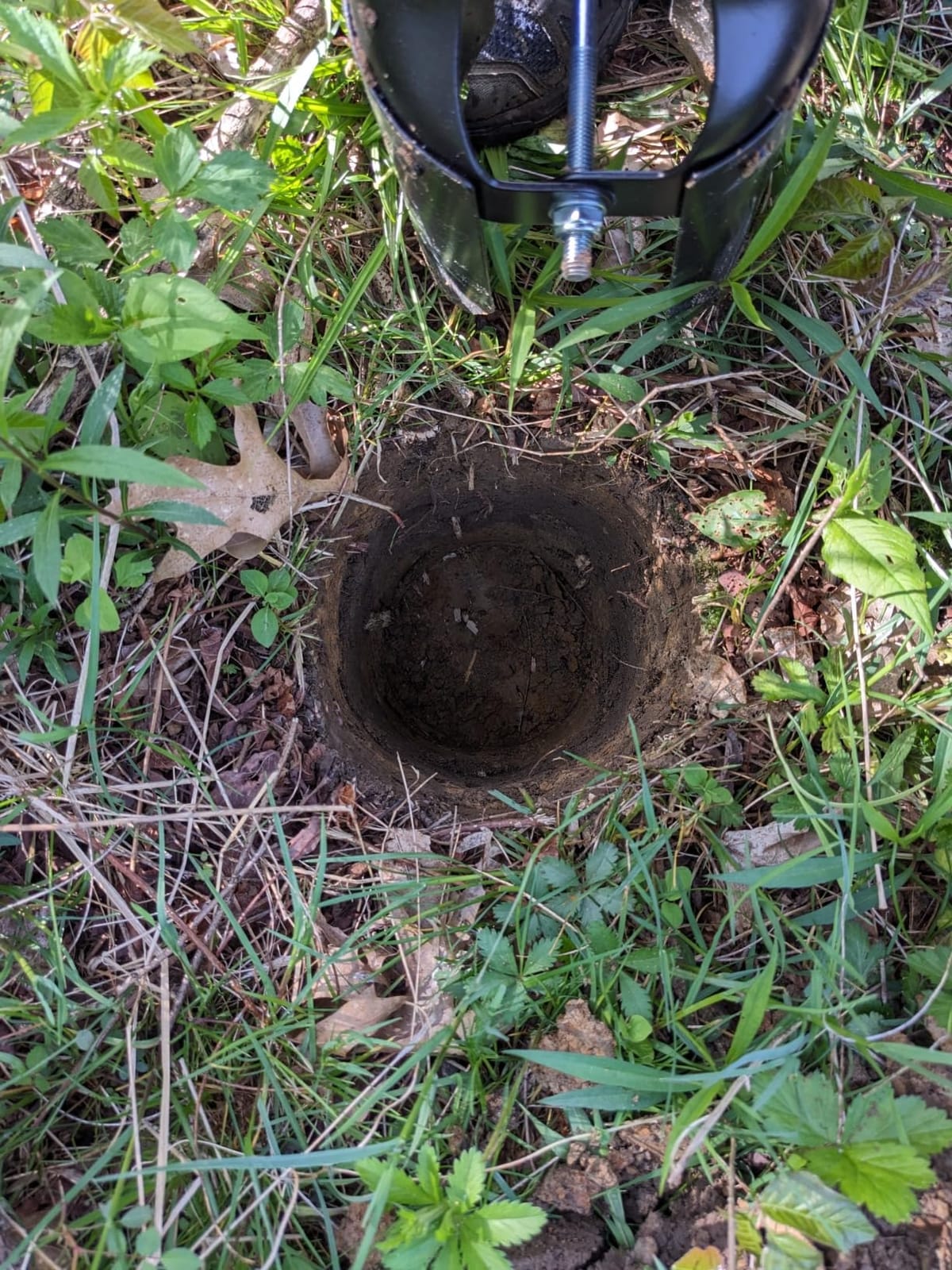
There is one design critique that repeats across reviews, and it is worth knowing before you buy. When the handles spread during a lift of loose sand or dry soil, the hole mouth widens at depth, so you may end up fighting a bell-shaped hole in sandy ground. In cohesive soil the blades close cleanly and this does not happen.
Why is the weight described as an asset?
Because manual digging is momentum work. A digger that is too light skates off the surface of compacted ground and you spend effort restarting the stroke every time. A heavier head drives the blades into the soil on the first plunge, and owners working clay say the difference is immediate.
Is it good for rocky ground?
Better than most manual diggers, and the double-reinforced head joints are what survive it. Forum wisdom from fence groups is consistent on this point: a clamshell digger paired with a digging bar beats a standard auger in rocky or root-filled ground, because you can feel the obstruction and work around it. A spinning bit just stalls when it hits the same thing.
7. Prowoo 72cc Two-Stroke Auger: Best for Hard Ground
72CC Post Hole Digger Gas Powered, 2 Stroke Auger with 6″ & 8″ Bits
72cc two-stroke gasoline engine, one or two person use
Includes 1 metre 6 inch and 8 inch bits plus 60cm extension rod
Ultra blade system, finger throttle on handlebar
Pros
- Digged 50+ holes at 8 inch diameter and 31 inch deep
- Handles heavy clay and small roots without stalling
- Starts on the first or second pull often
- Complete kit with both bits and extension rod
- Compatible with most standard auger bits
Cons
- Torque high enough to be unsafe solo for smaller users
- Reports of a bent handle and a failed kill switch
- Quality control varies: loose shaft bolt and reversed choke label reported on arrival
This is the biggest engine in the roundup and the one to reach for when the ground is genuinely hard. Reviewers report runs of 50 to 90 holes, including 8 inch wide and 31 inch deep, and note that it starts on the first or second pull in most cases. The included kit is unusually complete: 1 metre long 6 inch and 8 inch double-sheet bits, a 60cm extension rod, a mixing bottle and a tool kit.
It ships with a 60cm extension, which matters because a 1 metre bit reaches roughly 30 inches and most structural post holes go deeper than that. Combined, you can get to the 42 to 48 inch depth that corner and gate posts typically need. The ultra blade system also means the bits can be sharpened or swapped rather than discarded.

Now the part that matters most. This machine has enough torque to throw you, and reviewers say so directly, with many owners recommending a two-person setup rather than solo operation. There are also isolated reports of a kill switch that stopped working, a handle that bent, and quality control that arrived with a loose bottom-shaft bolt and a reversed choke label, so check those before the first hole.
Is 72cc overkill for a residential fence?
For soft ground, yes, and you will feel the extra weight and the harder pull cord for no gain. For clay, caliche, hardpan or a long property run, it is the difference between a productive afternoon and a frustrating one. Forum consensus among fence owners lines up: 43 to 54cc covers typical homeowner work, while the larger engines earn their place on hard soil or farm-scale runs.
How do you keep a two-stroke running between projects?
Drain the fuel tank if it will sit more than a few weeks, and run the engine briefly with fresh premix before you store it. Two-strokes do not tolerate old fuel, and carburetor complaints on this class of machine almost always trace back to a machine that was put away with a stale tank. Wipe the bit and oil the shaft before it goes into the shed.
8. Earthquake Dually 52cc Powerhead: Best for Two-Person Teams
EARTHQUAKE 10310 Dually 1 or 2-Person Earth Auger Powerhead, 52cc 2-Cycle Viper Engine, Fits All Auger Bits 2”-10” Wide
52cc 2-cycle Viper engine, 62 ft-lb torque at 285 RPM
Fits all auger bits from 2 inch to 10 inch wide
Powerhead only, no auger bit included
Pros
- Runs solo or with a second person
- Throttle control on both handlebar positions
- Centrifugal clutch slips on sudden impact
- Five-bearing steel gear transmission
- 5-year limited warranty
Cons
- Auger bit sold separately
- Weakens on rock and gravel and in thick clay
- Shock-absorbing spring can unwind suddenly
- Carburetor failure reported inside the warranty window
Read the specs on this one carefully: it is a powerhead only, and no auger bit is included. What you get is a 52cc two-cycle Viper engine with 62 ft-lb of torque at 285 RPM, driving a five-bearing steel gear transmission, and it fits any auger bit from 2 inch to 10 inch wide. That flexibility is the appeal if you already own bits or plan to run different diameters across a project.
The handlebar layout is genuinely the reason to choose it. There are two throttle controls mounted on the handlebars so the operator can choose a working position, and it runs as a one-person or two-person unit. Owners report drilling 18 holes for a 4×4 pole fence in under 20 minutes in clay and silt, and a long-term contractor owner describes 1000+ holes with routine maintenance and one carburetor replacement.
Three cautions are consistent in the reviews. It bogs down in thick clay and gets noticeably weaker on rock and gravel, so it takes two people in many conditions. The shock-absorbing spring can wind up a quarter to half a turn on impact and unwind suddenly if your hands come off, which is a real kickback hazard. And several owners report carburetor failure and hard starting inside the first year despite the warranty.
When is a two-person setup worth it?
When the job is 30 or more posts, or when the ground is deep clay and the run is long. Two operators share the weight and the reaction force, which is exactly the situation the dual-handle layout is built for. For a dozen line posts in loam it is more machine than the job needs.
What bit should you pair with it?
An 8 inch bit is the all-round answer for fence work, and this powerhead accepts the full 2 inch to 10 inch range so you can switch to 10 inch for pergola footings or 6 inch for line posts. A two-flute bit with a center point cleans the hole better than a single-flute design, which makes setting posts easier.
9. Union Tools 58 inch Carbon Steel Post Hole Digger: Best for Small Jobs
Union Tools 78002 Carbon Steel Post Hole Digger with Hardwood Handles, 58-Inch
5.5 inch point spread, one-piece high carbon steel blades
Hardwood handles, 58 inch overall length
9.06 pounds
Pros
- Inexpensive entry point for a handful of holes
- Blades stayed straight after repeated use in sandy loam
- Hardwood handles with tight straight grain
- Useful for cleaning out auger holes
Cons
- Does not open wide so soil volume per pull is low
- Pivot and blade hardware described as cheap and flimsy
- One reviewer found handles shorter than listed
- Blades can arrive blunt
This is the budget manual option, and it does one specific job well: a handful of holes in sandy or loamy soil. Owners report that the one-piece high carbon steel blades stayed straight and the bolts stayed tight after multiple holes, and that the hardwood handles have tight, straight grain. The 5.5 inch point spread cuts a hole sized for standard 4×4 posts.
At 4.0 stars across 211 ratings, it is the lowest-rated tool we included, and we would rather explain why than skip it. The one-star share is 10 percent, and the complaints cluster on build quality: a pivot and blade hardware described as cheap and flimsy, handles that can bend, and blades that arrive blunt or pick up tip damage after only a few holes.
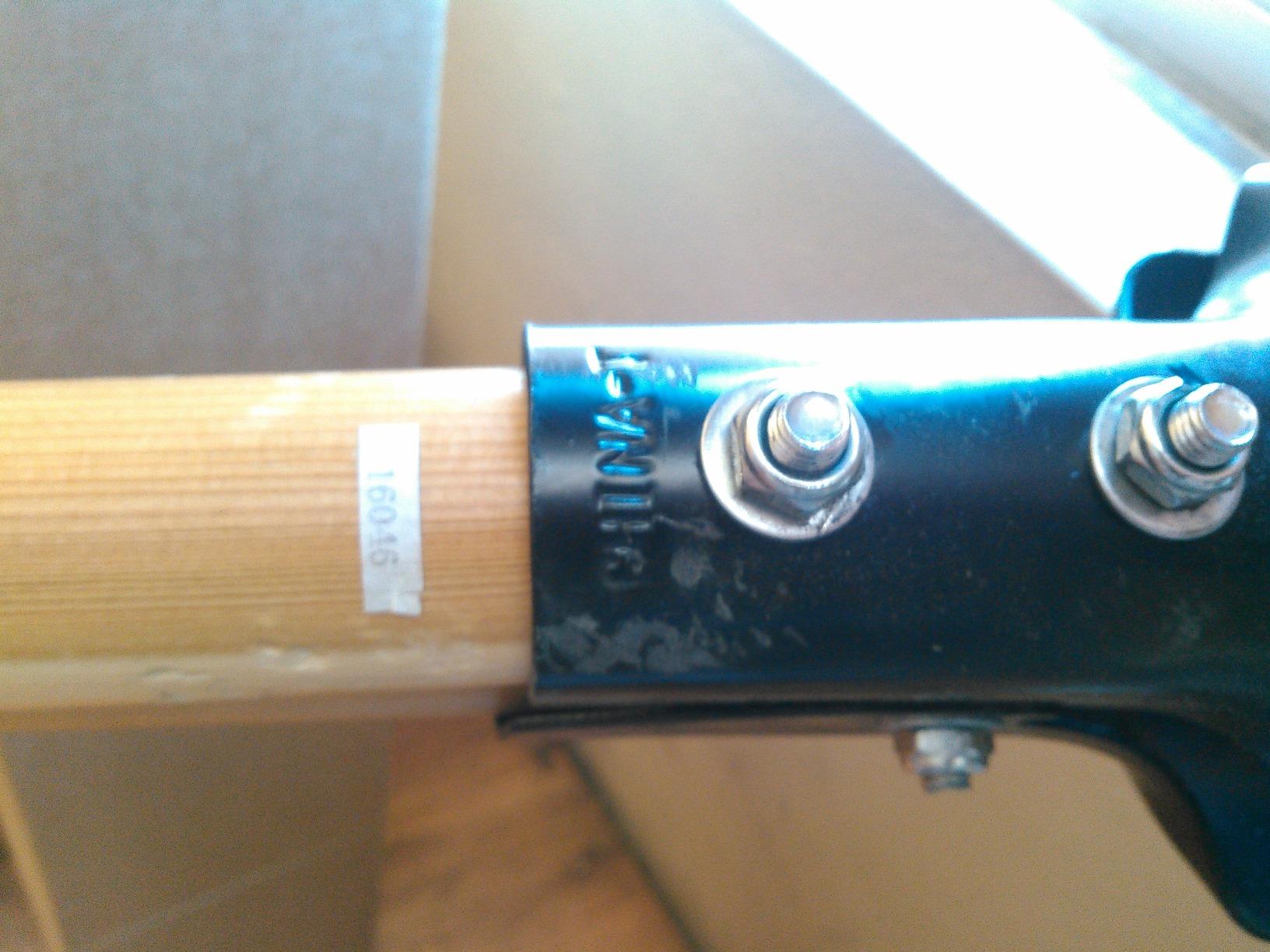
One reviewer also reported handles shorter than the listed length and a smaller point spread than expected, so measure before you commit to a whole run. If you already own a digging bar, a well-built clamshell digger plus a bar will outperform this in anything but soft sand, and it is the technique fence groups recommend for rocky ground.
Should you buy the cheapest manual digger or spend more?
If you are digging four holes for a gate post, buy the cheap one. If you are replacing a whole rotted line of 20 posts, the price difference between this and a heavier fiberglass-handled model is small compared with the cost of replacing bent handles mid-project. Match the tool to the hole count, not to the shopping cart.
What job is it actually good at?
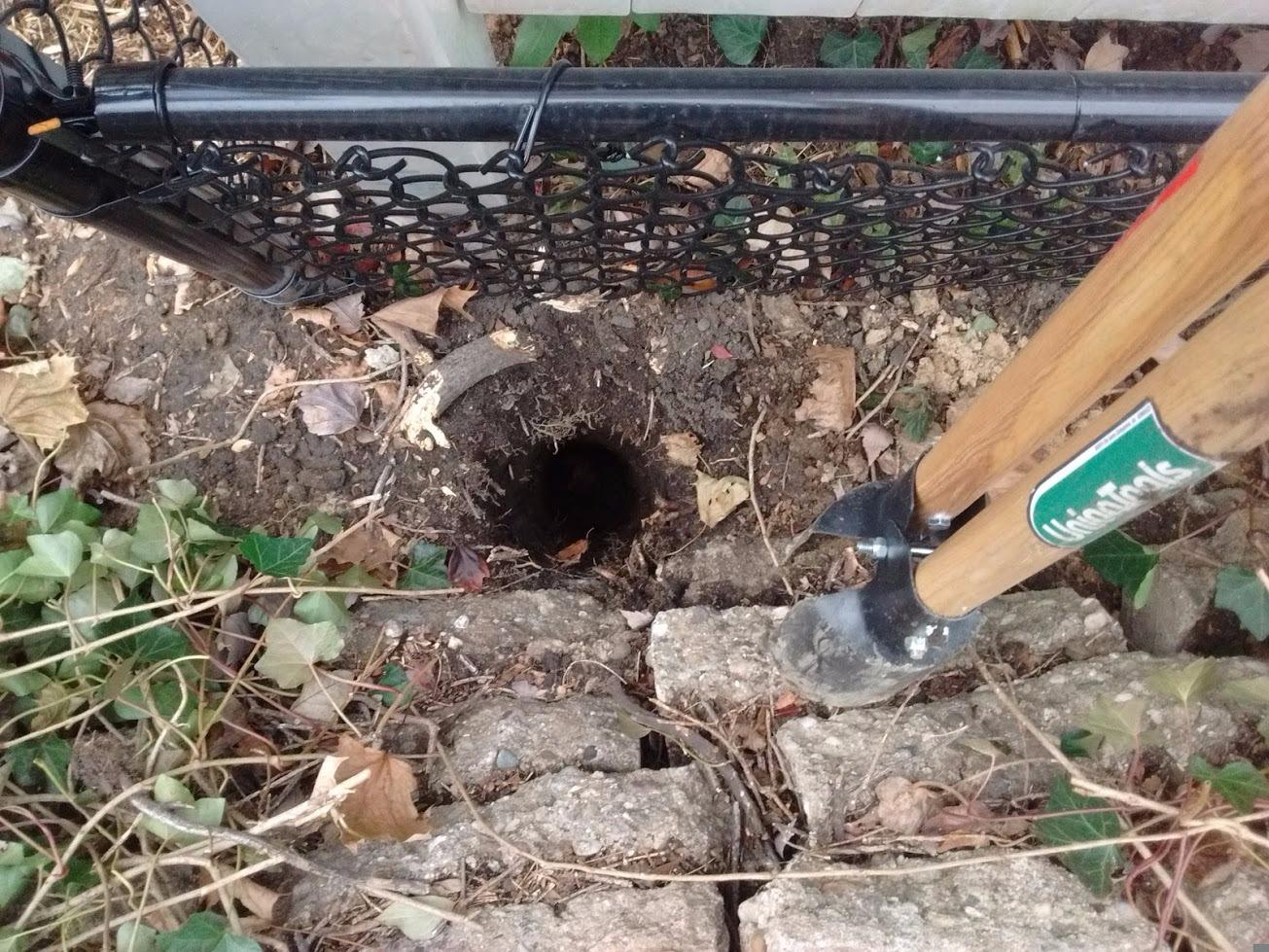
Cleaning out the bottom of holes that an auger already drilled, clearing spillage from the day, and setting posts in spots a powered machine cannot reach. Many owners buy it as a companion to a gas auger rather than instead of one, and that is how we would frame it.
10. MightyPhine 6 inch by 32 inch Drill Auger: Best for Drill Owners
Earth Auger – 6″ Wide x 32″ Deep – Electric Post Hole Digger – Handles – Hole Digger for Fence Posts
6 inch wide by 32 inch long auger with screw point
Adjustable strap handle for common corded and cordless drills
6 x 6 x 32 inches, three-flute spiral
Pros
- Strap handle makes it usable without much upper-body strength
- Much lighter and easier to handle than a gas auger
- Cuts small roots and drills ordinary soil quickly
- Compatible with most common corded and cordless drills
- Strong responsive customer support
Cons
- Can strip the gearbox of a cordless drill
- One owner sheared the shaft past 30 inches
- Cordless drills can stall at depth
- Supplied hex piece is weak in root-filled ground
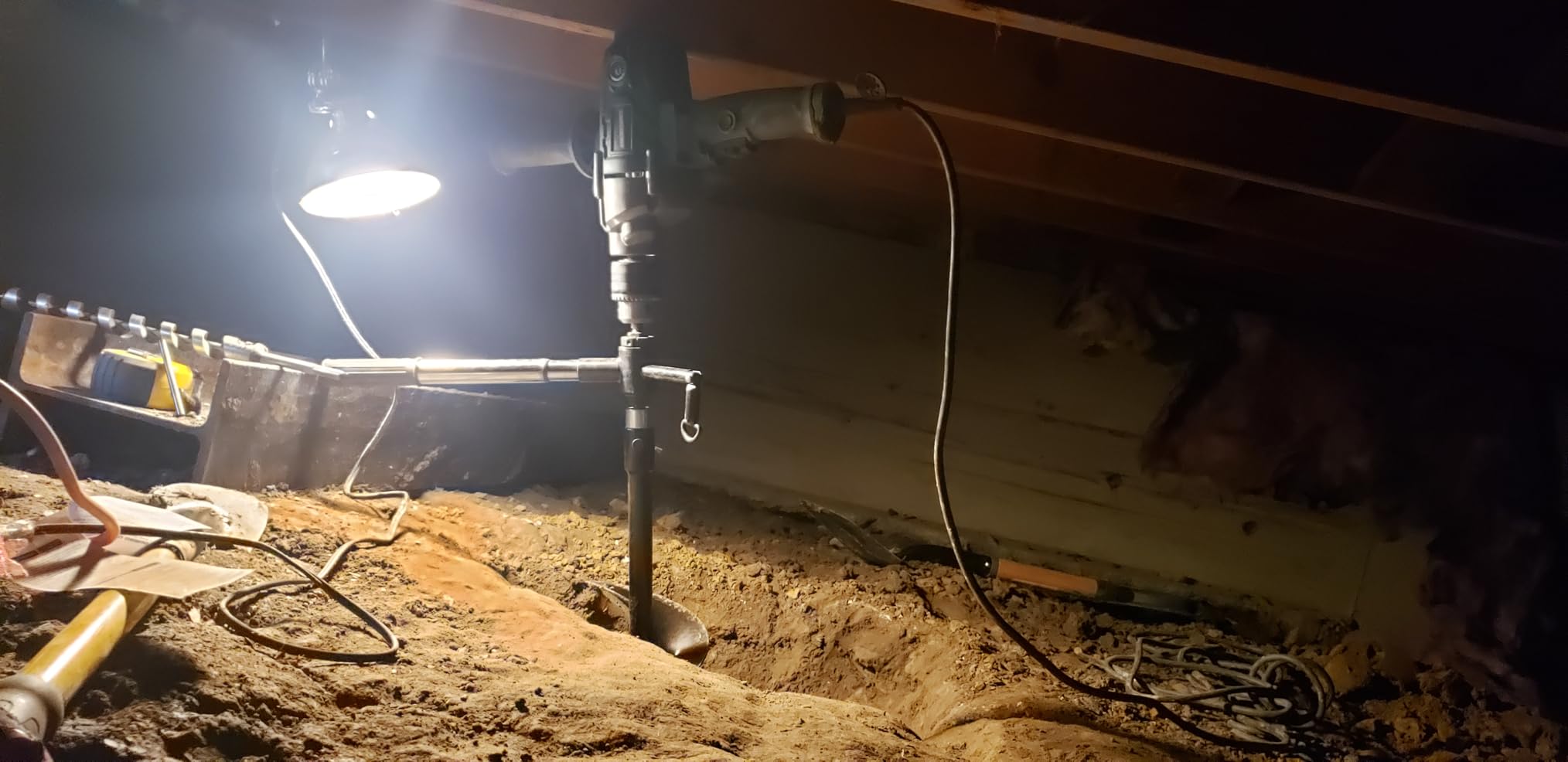
If you already own a decent drill, this is a fraction of the cost of any powered auger and it does something none of the gas units here can. The adjustable strap handle lets you brace the auger with your body weight instead of your arms, and reviewers with limited upper-body strength describe that handle as the reason they can do post hole work at all.
The auger itself is 6 inches wide by 32 inches long with a three-flute spiral and a screw point, and the handle is designed to fit DeWalt, Milwaukee, Ryobi, Craftsman and Black and Decker drills among others. Owners report drilling 25 to 50 post holes per session in ordinary soil, including dry clay and moist ground, and one owner drilled 50 holes with ease.
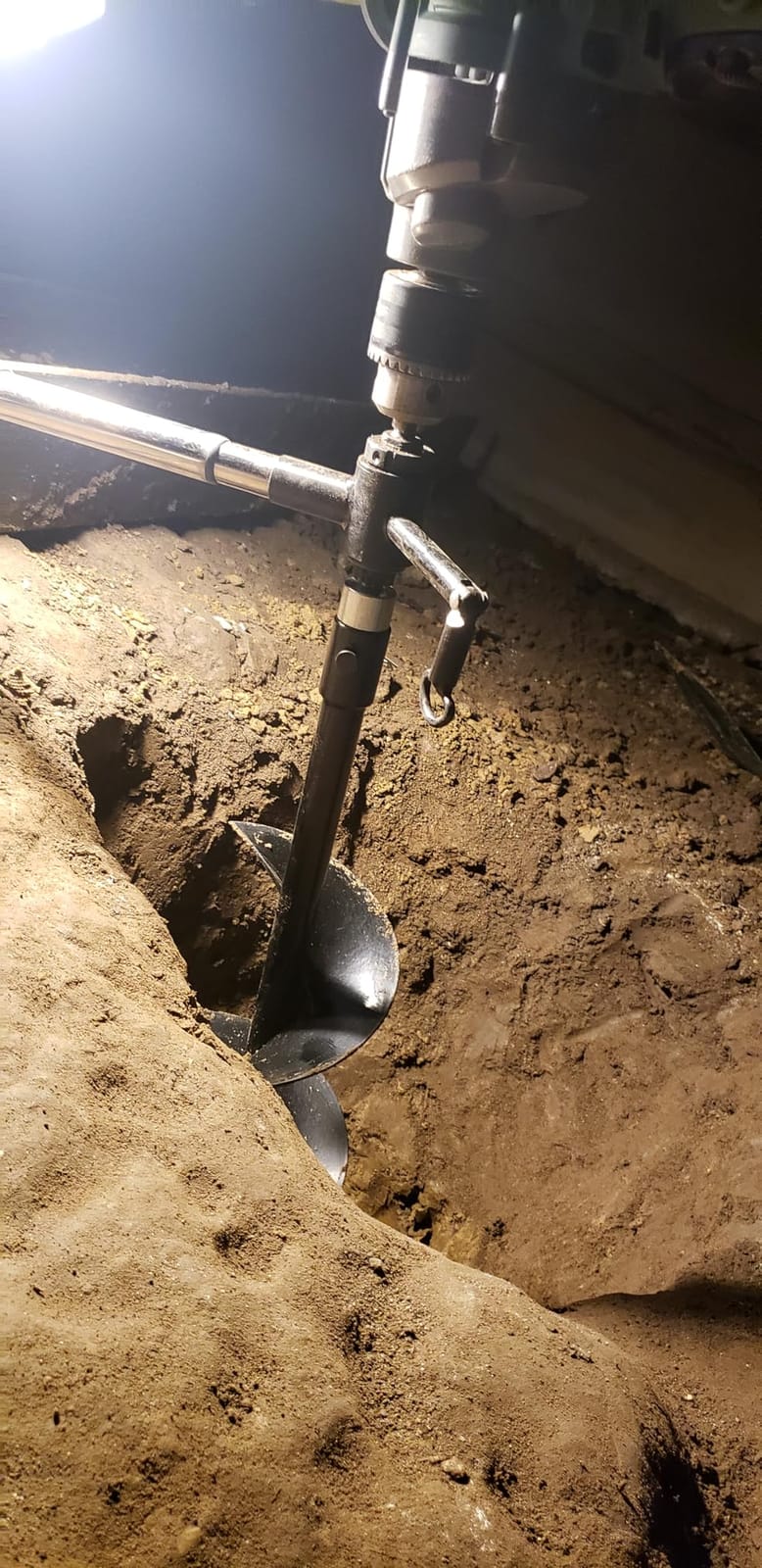
The 15 percent one-star share on this product is almost entirely about drill compatibility, and it is worth reading carefully. A cordless drill can strip its gearbox if the auger catches a root or a rock, and one owner sheared the shaft by pushing too hard past 30 inches. For deeper holes, owners point out that a corded drill is the better partner.
Is it safe with a cordless drill?
Only with the right drill and a light touch. Use a corded drill rated high enough for the load, tighten the hex connection fully, and use a 1/2 inch ratchet setup instead of the supplied hex piece if you are in root-filled ground. The ergonomic handle is designed to reduce the rapid wrist movements that cause injury, but that only helps if you feed the auger slowly.
Where does the handle foul?
Reviewers report that past roughly 800mm of depth, the handle begins to collide with the hole wall unless you dig a small channel beside the hole to give it clearance. Plan for that before you set the drill, and keep the auger turning slowly as it descends rather than pressing down on it.
Manual vs Gas vs Electric: Which Post Hole Digger Do You Need?
The right class of post hole digger comes down to two variables: how many posts you are setting, and what you are digging through. Here is the framework we use.
1 to 6 posts in soft, loamy or sandy soil: a manual clamshell digger. No fuel, no cord, no maintenance, and a five-year-old tool will do the job.
7 to 30 posts in ordinary yard ground: a corded electric auger. It has the lowest running cost and no starting problems, and it handles clay better than most people expect.
30 or more posts, or any clay, caliche or hardpan: a one-person gas auger in the 52 to 72cc range. Torque matters more than features once the ground fights back.
You already own a good corded drill: a strap-on auger. It is the cheapest path to 25 or more holes with no engine at all.
Rocky or root-filled ground: a clamshell digger plus a digging bar, not an auger. You can feel an obstruction and work around it; a spinning bit just stalls.
A professional run, or repeated farm and landscape work: a two-person or tow-behind auger. This is where owning beats renting by a wide margin.
One caution about all of it: digging out old fence posts is a different job from setting new ones. Removal usually means a rotten post that snaps mid-pull, and a digging bar or a clamp-and-lever setup handles that better than any auger on this list.
What Size Auger Bit Do You Need for Your Fence Posts?
Use a 6 inch bit for standard 4×4 fence posts, an 8 or 10 inch bit for 6×6 posts and pergola footings, and a 12 inch bit for large structural posts and tree planting. Leave about an inch of clearance on each side of the post so you have backfill to pack around it.
Most fence line posts are 4×4, so a 6 inch hole is the default and the most common size across the picks in this roundup. Users debate 10 inch versus 12 inch holes for 5×5 PVC privacy posts, which usually comes down to local frost depth and how much you want to backfill. A wider hole is easier to plumb and easier to pack, at the cost of more backfill material.
Diameter is not the only thing that matters. Two-flute spiral bits with a center point leave a cleaner hole than single-flute designs, and that matters when you are trying to hold a post plumb while the concrete or gravel sets. Check that the bit uses a standard 3/4 inch shaft if you ever want to move it between machines.
How Deep to Dig for an 8 Foot Fence Post
Bury an 8 foot fence post 36 to 42 inches deep. The working rule is that the hole should be one-third to one-half of the above-ground height of the post, with 24 inches as an absolute minimum and the bottom of the hole never above your local frost line.
For an 8 foot post with 6 feet showing, that rule lands in the 36 to 42 inch range, which matches what fence owners report using. Corner, gate and end posts take more depth than line posts because they carry load, and forum experience puts main structural posts at 42 to 48 inches. Check your local building code before you settle on a number, because it overrides any rule of thumb.
Digging straight is worth more than digging deep. A hole that leans 5 degrees will produce a fence that leans 5 degrees. A level on the post, a brace while the backfill compacts, and a plumb check from two directions will save you more time than any extra inch of depth.
Should You Rent a Post Hole Digger or Buy One?
Rent when the job is under 15 holes, and buy when it is over 30. That crossover is where the forum conversation keeps landing, and it has almost nothing to do with the sticker on the tool. A two-person auger you rent for a day will beat anything you own for a weekend of occasional small repairs, and the reverse is true for a full property run.
A rented two-man or tow-behind rig is also the cheapest way to find out whether you like powered digging before committing. If you rent one and dread the weight, a manual clamshell digger may genuinely be the right answer for your property. If you finish the run thinking about the next one, that is your buy signal.
One more option that sometimes wins: hiring the digging out. For a partial run on a tight timeline, a crew with their own auger can be cheaper than buying a tool you will use once, and they will not injure your back.
Digging Safely: Kickback, PPE and Calling 811
Call 811 before you dig, every time, regardless of how short the run is. Buried gas, electric, irrigation and communication lines are exactly the size of a post hole, and most fence lines run along property edges where service lines follow. It is free and it takes a few days of notice, so make the call before you buy fuel.
Augers store a lot of energy in a spinning bit, and the failure mode is well documented by owners on these machines: the bit grabs a root or stone, the clutch or gear train holds, and the tool tries to rotate out of your hands. Keep both hands on the grips, keep your body out of the swing path, and release the throttle rather than trying to muscle it if the bit binds.
Wear eye protection, gloves, eye and hearing protection for gas models, and steel-toe boots. When running a gas auger solo, check that the emergency stop switch on the handle works before you start, because a small number of owners on the larger engines in this roundup report switches that failed. And on the 72cc class in particular, treat the two-person setup as the default rather than the exception.
Finally, never reach into a hole while the bit is turning, and never lift a spinning auger to clear it. Stop the engine, then use a digging bar or a manual digger to clear clay packed into the flights.
Frequently Asked Questions
What is the best tool for digging holes for fence posts?
A manual clamshell digger is best for 1 to 6 posts in soft or loamy soil. Use a corded electric auger for 7 to 30 posts in ordinary ground, and a one-person gas auger in the 52 to 72cc range for 30 or more posts or for clay, caliche and hardpan. In rocky or root-filled soil, a clamshell digger paired with a digging bar beats any auger, because you can feel and work around obstructions.
What size auger do I need for fence posts?
Use a 6 inch auger bit for standard 4×4 fence posts, an 8 or 10 inch bit for 6×6 posts and pergola footings, and a 12 inch bit for large structural posts and tree planting. Leave roughly an inch of clearance on each side of the post for backfill. Two-flute spiral bits with a center point leave cleaner holes and make it easier to plumb a post while the backfill sets.
How deep should an 8 ft fence post be buried?
Bury an 8 foot fence post 36 to 42 inches deep. The working rule is one-third to one-half of the above-ground height of the post, with 24 inches as an absolute minimum and the bottom of the hole never above your local frost line. Corner, gate and end posts usually go deeper, and fence owners commonly report 42 to 48 inches for main structural posts. Check your local building code, which overrides any rule of thumb.
Do gas-powered post hole diggers work well?
Yes for 7 or more holes and for compacted soil, where they cut digging time from several minutes per hole to under one. They are the wrong choice for 1 to 6 posts, for frozen ground without letting the soil warm, and for rocky or root-filled ground where the bit stalls instead of cutting. Remember that gas models need premixed fuel and carburetor upkeep, and that the gearbox is usually the first component to fail on entry-level units.
Should I rent a post hole digger or buy one?
Rent when the job is under 15 holes and buy when it is over 30. A rented two-person or tow-behind auger is the fastest way to find out whether you want to own a powered digger at all, and it handles a weekend job a manual clamshell digger would not. For a partial run on a tight timeline, hiring out the digging is sometimes cheaper than either. Weigh the decision on hole count, not on the sticker price.
Do I have to call 811 before digging post holes?
Yes, in the United States you should call 811 before any excavation, including post holes, and allow several business days for marking. Buried gas, electric, irrigation and communication lines are often the same diameter as the hole you are digging, and fence lines frequently run along property edges where service lines follow. A private locator only covers privately owned lines, so the public call is still required.
The Bottom Line
The XtremepowerUS 1500W electric post hole digger is the best overall choice in 2026 for most fence jobs, because 2846 ratings averaging 4.5 stars reflect a tool that removes fuel mixing, pull cords and carburetor care from the equation while still cutting 6 inch holes quickly. Plug in a heavy-gauge cord and start digging.
If your ground is clay or you are running 30 or more posts, move up to a gas auger: the DC HOUSE 52cc covers two bit sizes, and the Prowoo 72cc has the headroom for hardpan. If the job is a handful of posts in soft soil, the VNIMTI 58 inch fiberglass digger is the best-rated manual option we found. And if you already own a corded drill, the MightyPhine auger is the cheapest way into powered digging.
Whichever one you pick, decide your bit diameter before you buy, check your local depth requirement, and call 811 before the first hole. Those three steps prevent more fence problems than any tool on this list.