
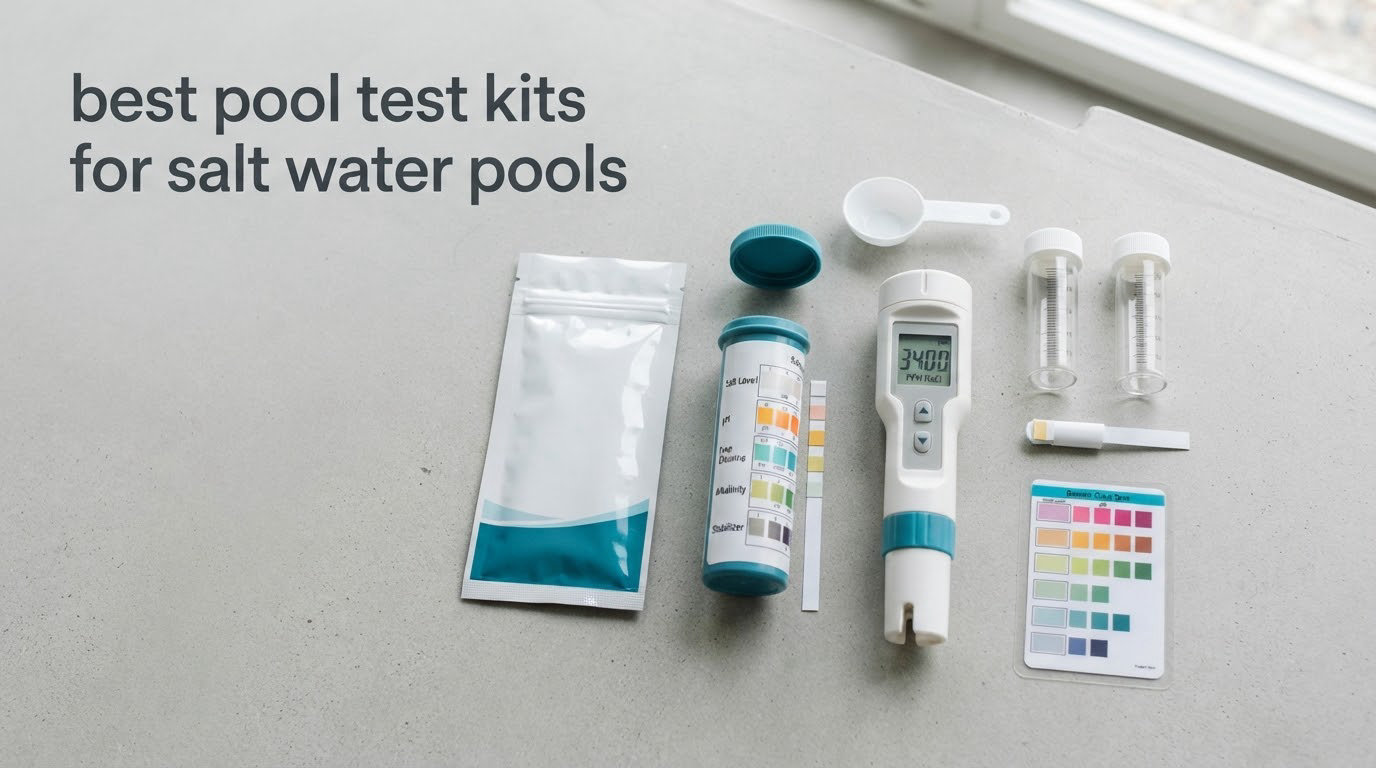
Yes, you need one extra test. A salt chlorine generator does not change how you measure pH, alkalinity, calcium hardness or stabilizer. What it adds is a sodium chloride test, and most residential kits sold as “complete” leave it out. That is the mistake behind nearly every “my salt cell stopped working” thread I have read, and it is why the best pool test kits for salt water pools are not simply the most popular general-purpose kits.
We spent weeks comparing the ten kits below, checking what each one actually measures, whether the salt pad or probe covers the operating band your generator needs, and whether owners report that readings match a reference test. All ten measure sodium chloride, but they do it in three very different ways, and that difference matters more to a salt chlorine generator than any other spec on this page.
One note before we start. Everything below is a pool water testing product, not a pool product in general. If you also want to photograph the results or the water itself, we have covered waterproof cameras for pool use and cameras for pool installation portfolios separately.
Table of Contents
Top 3 Picks for Salt Water Pool Test Kits in 2026
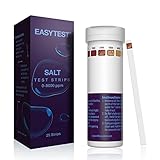
EASYTEST Saltwater Pool Test Strips
- Salt range 0-8000 ppm
- Several parameters per strip
- 25 strips per bottle
- 3200 ppm ideal level on chart

Joyzakzak 8-in-1 Pool Test Strips
- Eight parameters on one strip
- 150 strips per bottle
- Non-bleeding color pads
- 1500-5000 ppm salt range
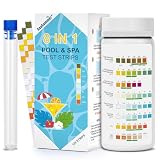
SaySummer 8-in-1 Salt Pool Strips
- Salt plus seven standard parameters
- 125 strips per bottle
- 2700-3400 ppm band highlighted
- Works in spas and hot tubs
Best Pool Test Kits for Salt Water Pools (October 2026)
The table below is the fastest way to see what each kit covers. The single most important column is the salt one, because a kit that cannot tell you your sodium chloride level is only half a solution for a salt chlorine generator.
| Product | Specifications | Action |
|---|---|---|
| EASYTEST Saltwater Pool Test Strips 0-8000 ppm |
|
Check Latest Price |
| SaySummer 8-in-1 Salt Pool Test Strips |
|
Check Latest Price |
| Joyzakzak 8-in-1 Pool Test Strips |
|
Check Latest Price |
 Taylor K-2006-SALT FAS-DPD 9-in-1 Kit Taylor K-2006-SALT FAS-DPD 9-in-1 Kit |
|
Check Latest Price |
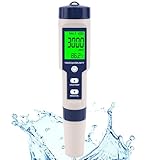 Hofun 5-in-1 Digital Salinity and pH Meter Hofun 5-in-1 Digital Salinity and pH Meter |
|
Check Latest Price |
 eSeasonGear SALT-3050 Digital Salt Meter eSeasonGear SALT-3050 Digital Salt Meter |
|
Check Latest Price |
 AquaChek Salt System Test Kit 542228A AquaChek Salt System Test Kit 542228A |
|
Check Latest Price |
 AKSBTEC 8-in-1 Salt Water Pool Test Strips AKSBTEC 8-in-1 Salt Water Pool Test Strips |
|
Check Latest Price |
 CLOROX Pool and Spa Saltwater Test Strips CLOROX Pool and Spa Saltwater Test Strips |
|
Check Latest Price |
 T TESTRUST 5-in-1 Digital Pool Salt Tester T TESTRUST 5-in-1 Digital Pool Salt Tester |
|
Check Latest Price |
1. EASYTEST Saltwater Pool Test Strips – Best All-Round Salt Strip
EASYTEST Saltwater Pool Test Strips, 0-8000 ppm, 25 Count
Salt 0-8000 ppm
25 strips per bottle
Dip 1 second, read at 5 seconds
Chlorine and pH pads
Pros
- Salt range of 0-8000 ppm covers the whole generator band
- Over 26k ratings so long-term behaviour is well documented
- Low cost per test for routine monitoring
- Ideal salt level of 3200 ppm printed on the chart
Cons
- CYA pad reads 0 when a drop kit shows 40-50 ppm
- pH pad runs about 0.5 low versus a liquid test
- Humidity degrades the pads in heat
This is the strip bottle I hand to anyone who asks me where to start. The salt pad runs 0 to 8000 ppm, which is far wider than the band any generator needs, so you are never guessing at the top of the scale. The chart also prints 3200 ppm as the ideal level, which is the single most useful number on the whole bottle.
In practice the routine is simple. Dip one second, hold horizontally about five seconds, and read against the color chart in daylight. Owners report that the chlorine and pH pads line up well enough for weekly monitoring, and the bottle is the best seller in the swimming pool test strip category, which means a lot of people have compared it against something else.
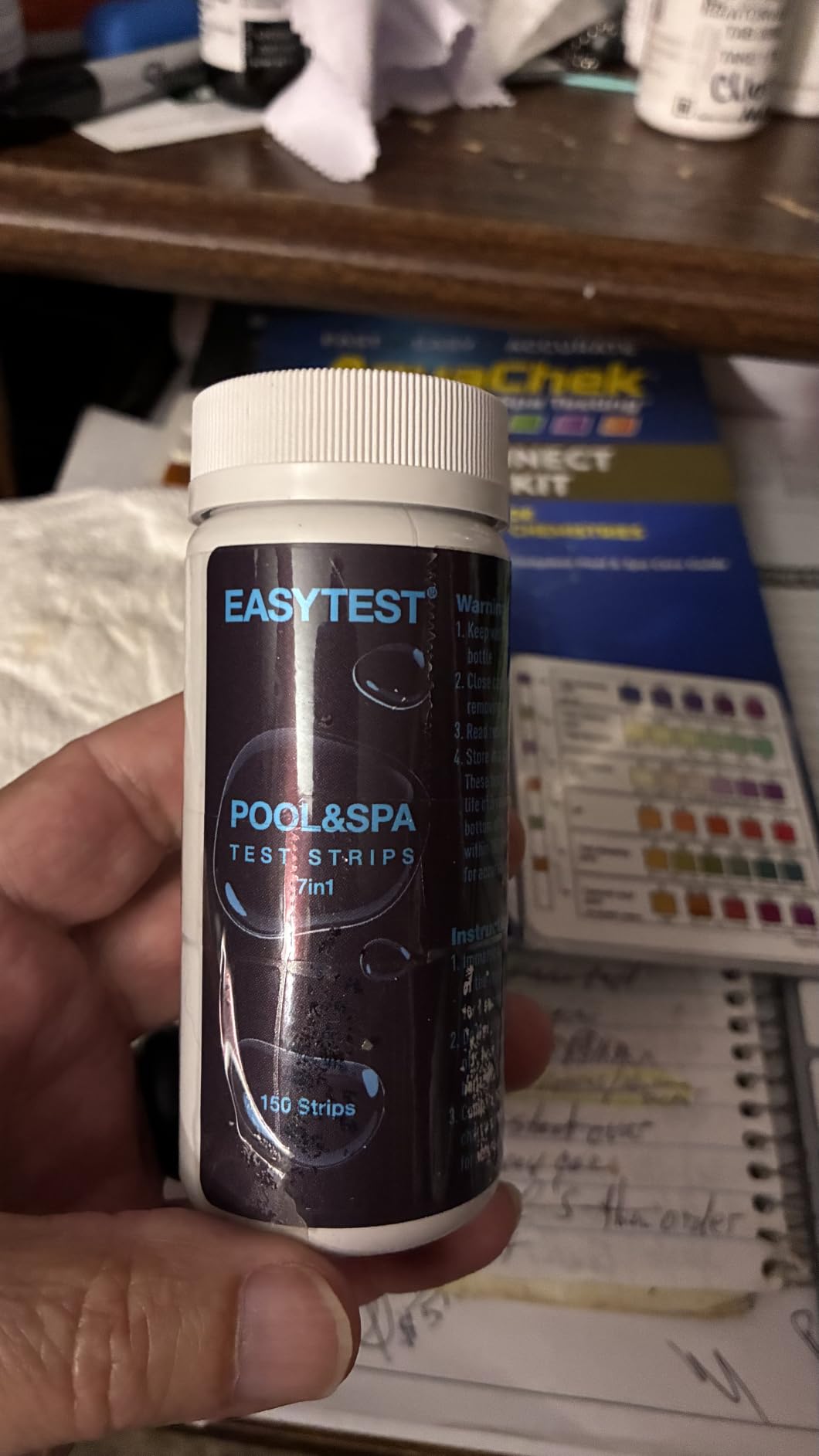
Where it slips is the stabilizer pad. A common complaint is that CYA reads zero on a pool where a Taylor drop test confidently shows 40 to 50 ppm. That gap matters in a salt pool, where the target CYA is higher than in a standard chlorine pool. Treat the CYA reading from these strips as a prompt to check properly, not as a number to act on.
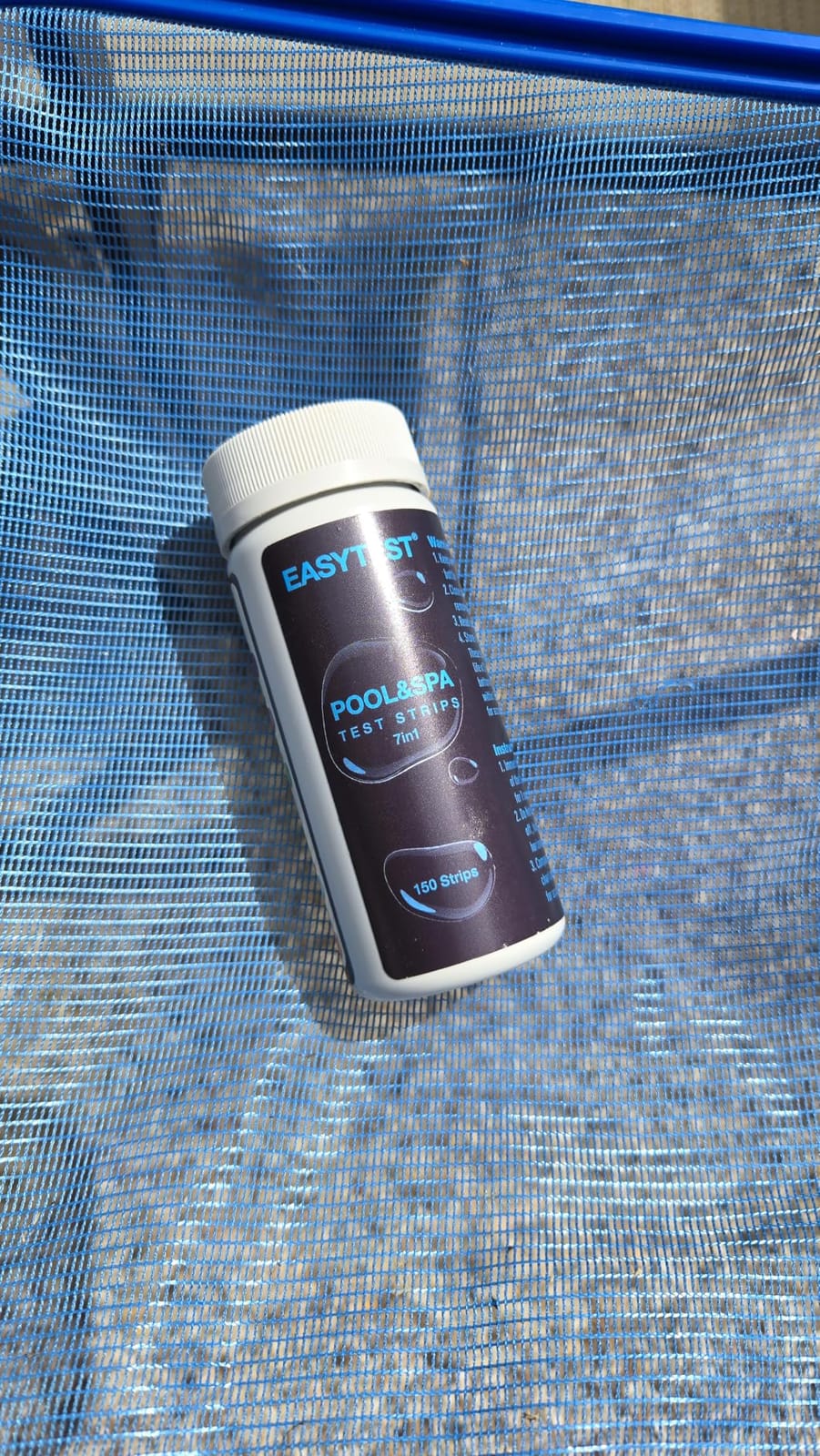
Storage is the other real issue. Keep the bottle indoors with the lid tight, because reviewers repeatedly mention pads discoloring and drifting once they take on moisture in hot weather. A strip bottle that lives on the poolside table in July is not measuring anything by August.
When this strip is enough
For a settled pool running normally, one strip a day gives you a trend line for chlorine, pH, alkalinity and salt at almost no cost per test. That is the whole use case. Many owners who were driving to a pool store weekly for free testing switched to this bottle and stopped making the trip entirely.
It is also the right first purchase if your generator has a built-in salt readout and you mainly want a cheap sanity check that the number on the display is not drifting.
When you need something more precise
The half-point low pH bias will make you add acid you did not need if you trust it blindly, and the CYA pad will not tell you when you are low on stabilizer. If your water is cloudy, your pool is new this season, or you are chasing an algae or chlorine problem, this strip cannot carry the load on its own.
Pair it with a proper drop kit for CYA, calcium and alkalinity, and you have covered routine monitoring for the cost of a takeout meal.
2. SaySummer 8-in-1 Salt Pool Test Strips – Most Parameters Per Dip
Salt-Water Pool Test Strips Kit: 125 Counts 8-in-1 for Salt Water Pool Testing Kit, Salt Pool Test Strips for Hot Tub Spa Testing Salt Chlorine pH and More
Salt plus seven standard parameters
125 strips per bottle
Salt range 0-6000 ppm
2700-3400 ppm band
Pros
- One strip covers salt and seven standard parameters
- 125-count bottle covers a full season
- Chart highlights the 2700-3400 ppm target band
- Works for pools spas and hot tubs
Cons
- Salt pad can under-read against a drop test
- Bottle label colors are less reliable than the outer box
- Some owners report pH reading high
Eight parameters on a single strip is the most complete reading you can get from a dip, and this bottle prints the 2700 to 3400 ppm ideal band directly on the chart. That printed band matters more than it sounds, because it removes the interpretation step where most salt strip disagreements start.
At 125 strips you are not rationing tests. Two per week covers the whole season with plenty of margin, and the same strip works in an inground pool, an above-ground pool or a spa.
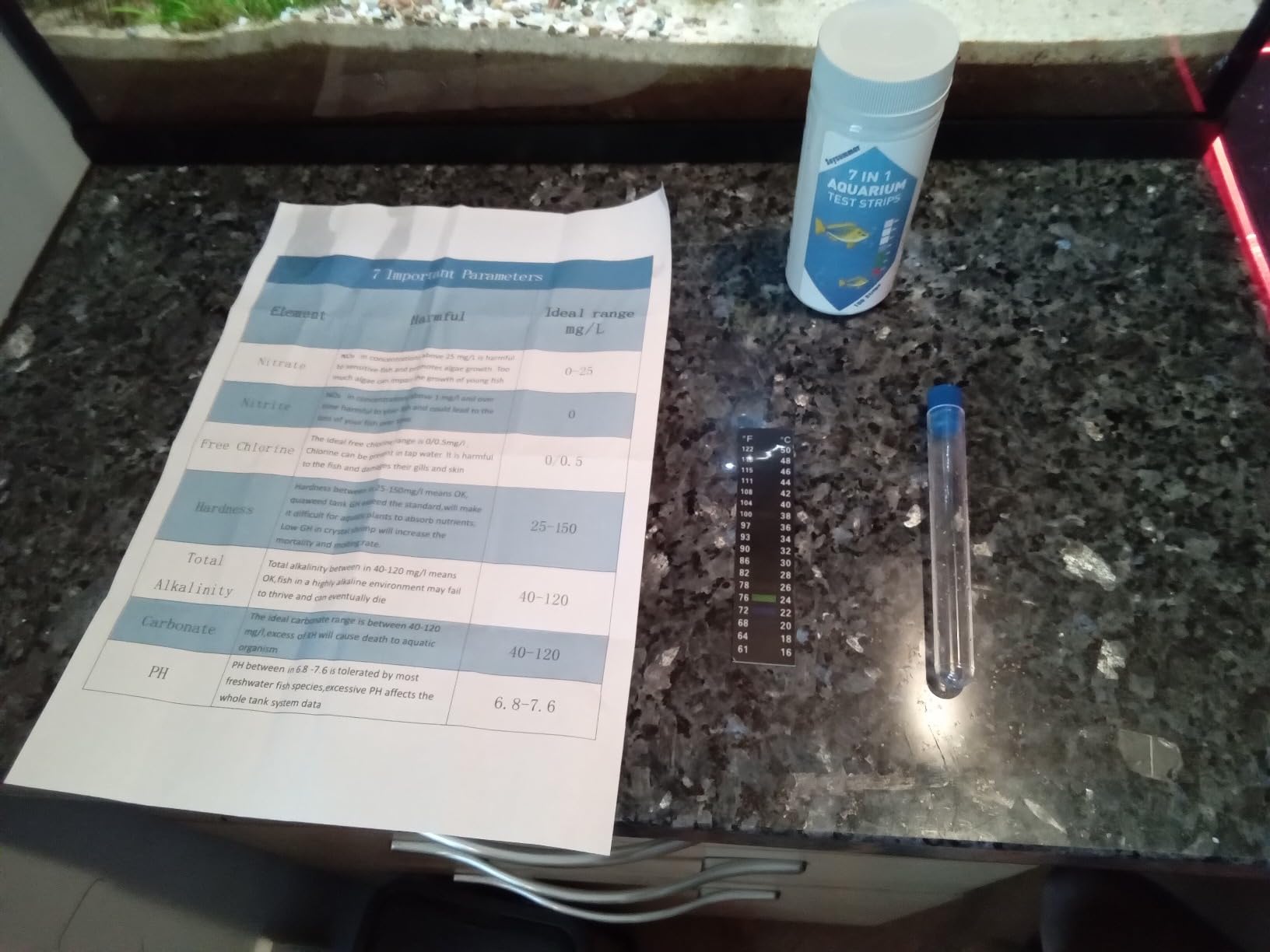
The recurring complaint is the salt pad. A number of owners report it staying dark brown and reading well below what a reference test shows. If the salt level is your only reason for buying a strip, that is a problem. If the salt reading is a weekly check alongside six other numbers, a consistent low bias is a smaller issue than it appears.
A second detail worth knowing: the colors printed on the outer box are reported as more trustworthy than the ones on the bottle label, which can shift in printing. Compare against the box chart and you will avoid a whole class of self-inflicted errors.
Who this suits
Owners of hot tubs and spas get real value here, because those need more frequent testing on fewer parameters and the 8-in-1 layout means one dip instead of three. It is also a strong choice for anyone who wants to stop guessing at all seven standard numbers at once.
If you test three times a week, the 125-count bottle is the sweet spot between strip brands that run out in a month and the 150-count bottles that sit open and go stale.
Where it falls down
Do not use the salt pad to make a decision about adding salt or about your cell warranty. A strip that reads 2500 when the pool is at 3000 is fine for a trend and useless for a claim. Confirm any salt decision with a titration test or a calibrated digital meter.
The pH channel also draws a minority of reports of reading high, which can lead to adding base product to an already alkaline pool.
3. Joyzakzak 8-in-1 Pool Test Strips – Clearest Color Pads
All-New 2026 8-in-1 Pool Test Strips -150 CT Pool Salt Test Strips | Salt Water Pool Testing Kit for Salt Water Pools, in & Above-Ground Pools, Hot Tubs&Spas| Quick&Accurate Testing Chlorine,pH,Salt
Eight parameters including salt
150 strips per bottle
Nordic fiber paper
Read at 15 seconds
Pros
- Highest rated strip in the group at 4.6 stars
- Pads do not bleed into each other
- 1500-5000 ppm salt range with ideal band marked
- Closest owner-reported match to a drop kit
Cons
- Salt color block is the least confident reading
- Colors bleed after about a minute
- Not precise enough for serious chemistry work
The deciding feature here is the paper. Nordic fiber pads are claimed not to let color bleed between reagent zones, and owners consistently single that out as the reason results are easier to read than on cheaper strips. When eight pads sit on one strip, bleed is what turns a clean reading into an argument.
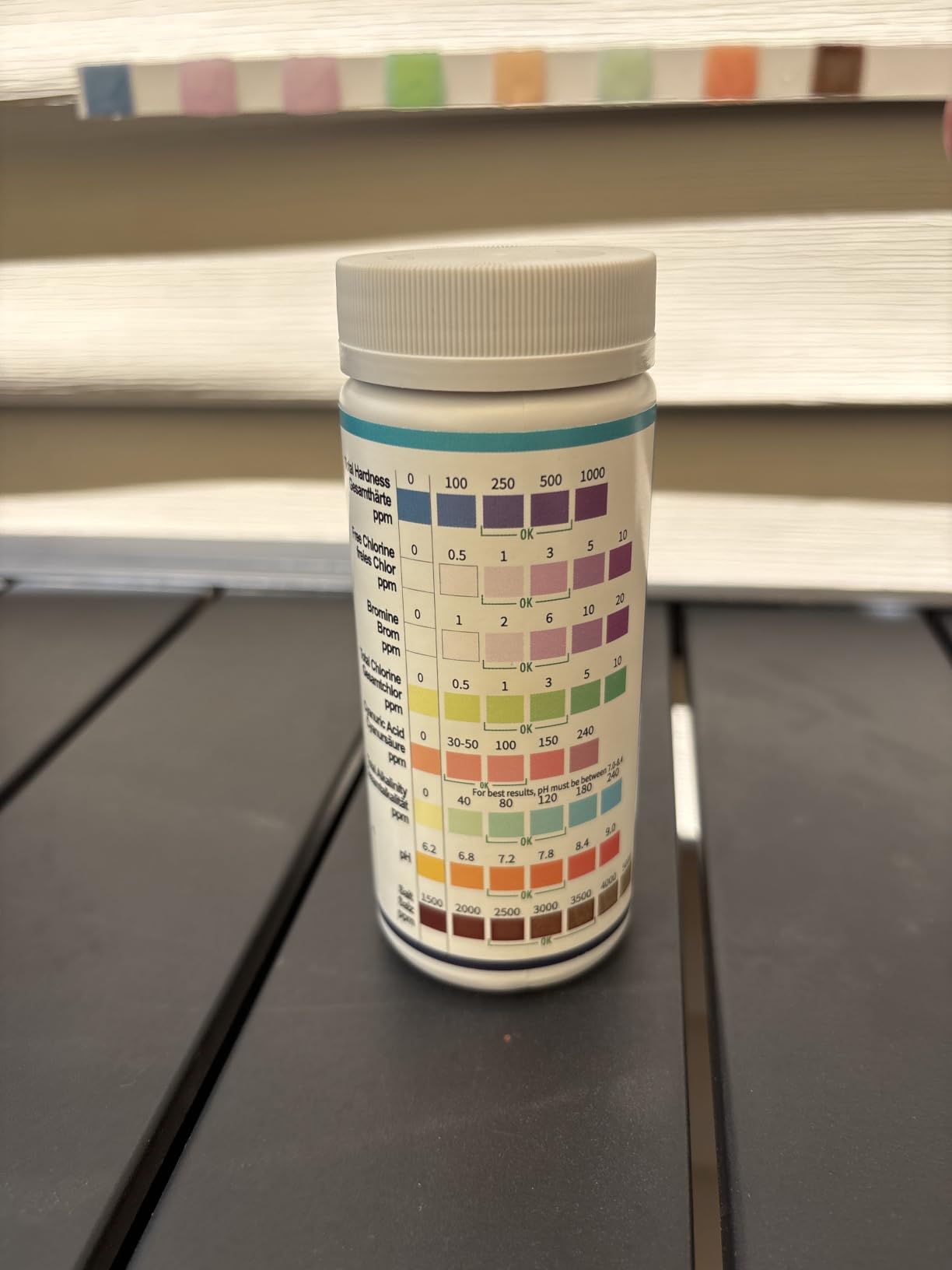
The salt range of 1500 to 5000 ppm brackets the operating band your generator needs, and the chart marks the 2700 to 3400 ppm ideal window. One dip, 15 seconds, compare against the bottle chart.
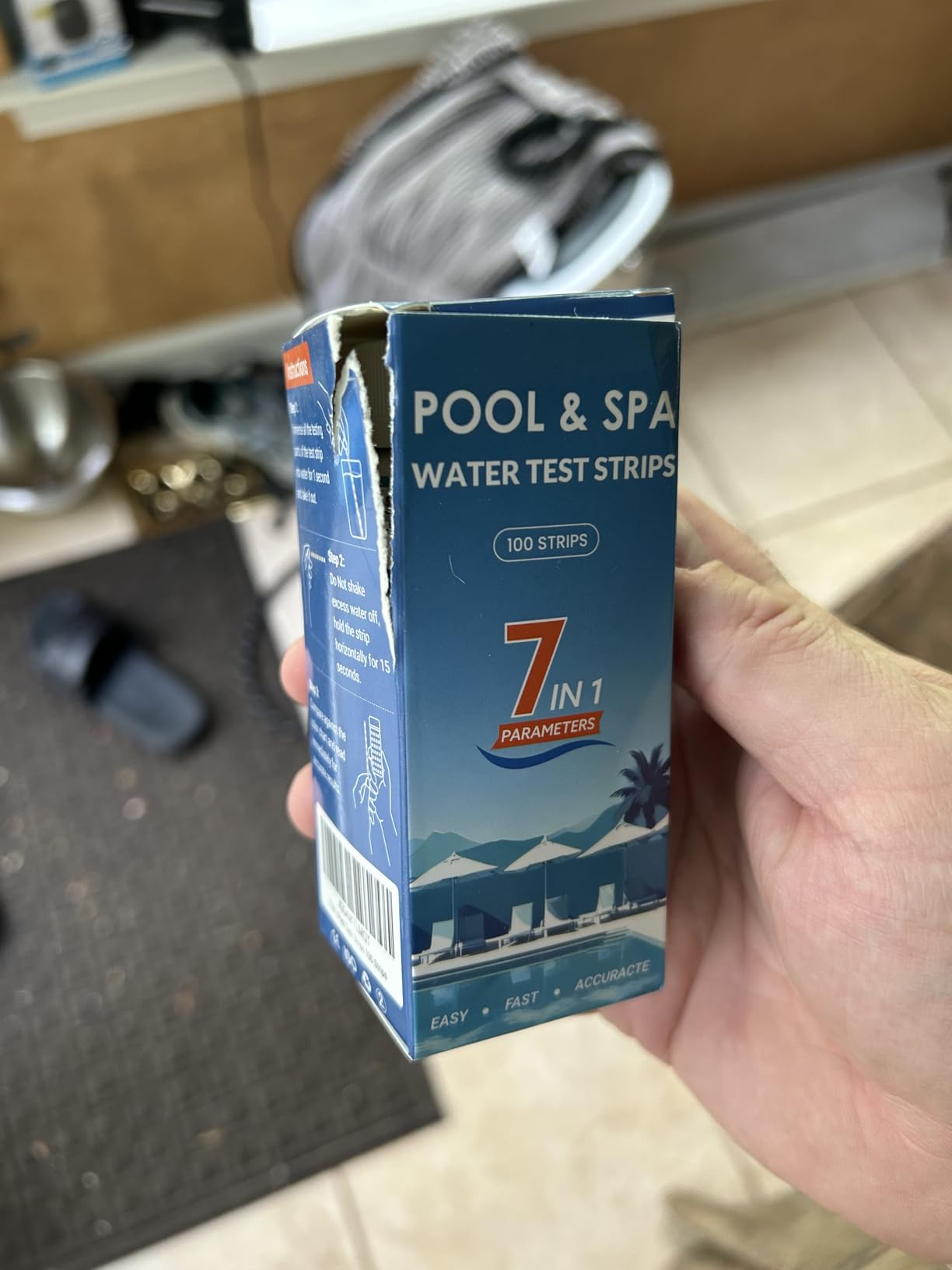
Owners comparing it against a Taylor kit report that routine readings land broadly in agreement, which is the highest praise a strip can earn. The caveat is timing. Colors start to run together after roughly a minute, so reading late turns a good strip into a poor one.
At 150 strips per bottle the season is covered several times over, and the price per test works out lower than the smaller bottles from brands you have heard of.
Why it outrated the field
Readability is a skill, and this bottle removes the hardest part of it. Owners with no chemistry background say the non-bleeding pads are what made them confident enough to stop using a pool store. That is the actual decision criterion here, not raw precision.
It also holds up for larger pools and busy summer weeks, because the 150-count bottle is not going to run out when you decide to test every day for a month.
Where it stops
The salt color block is still the reading owners trust least, and many of them pair it with a dedicated salt tester. That is a reasonable division of labor: strips for everything, a real test for the one number that decides cell life and warranty coverage.
For a pool with active scaling, a new liner, or a chemistry problem you are trying to solve, this is not precise enough. Use a drop kit or photometer for diagnosis.
4. Taylor K-2006-SALT FAS-DPD – The Accuracy Benchmark
Taylor Technologies K-2006-SALT FAS-DPD, 9-in-1 Saltwater Pool Test Kit
FAS-DPD nine-parameter kit
Chloride titration test
15 reagents
Comparator block and case
Pros
- Accuracy benchmark for home pool testing
- Nine parameters including acid and base demand
- Reagents widely available for refill
- Pictogram instructions written in plain language
Cons
- Reagent volumes are small and run out sooner than expected
- Multi-step tests have a real learning curve
- Some bottles arrive close to printed expiration
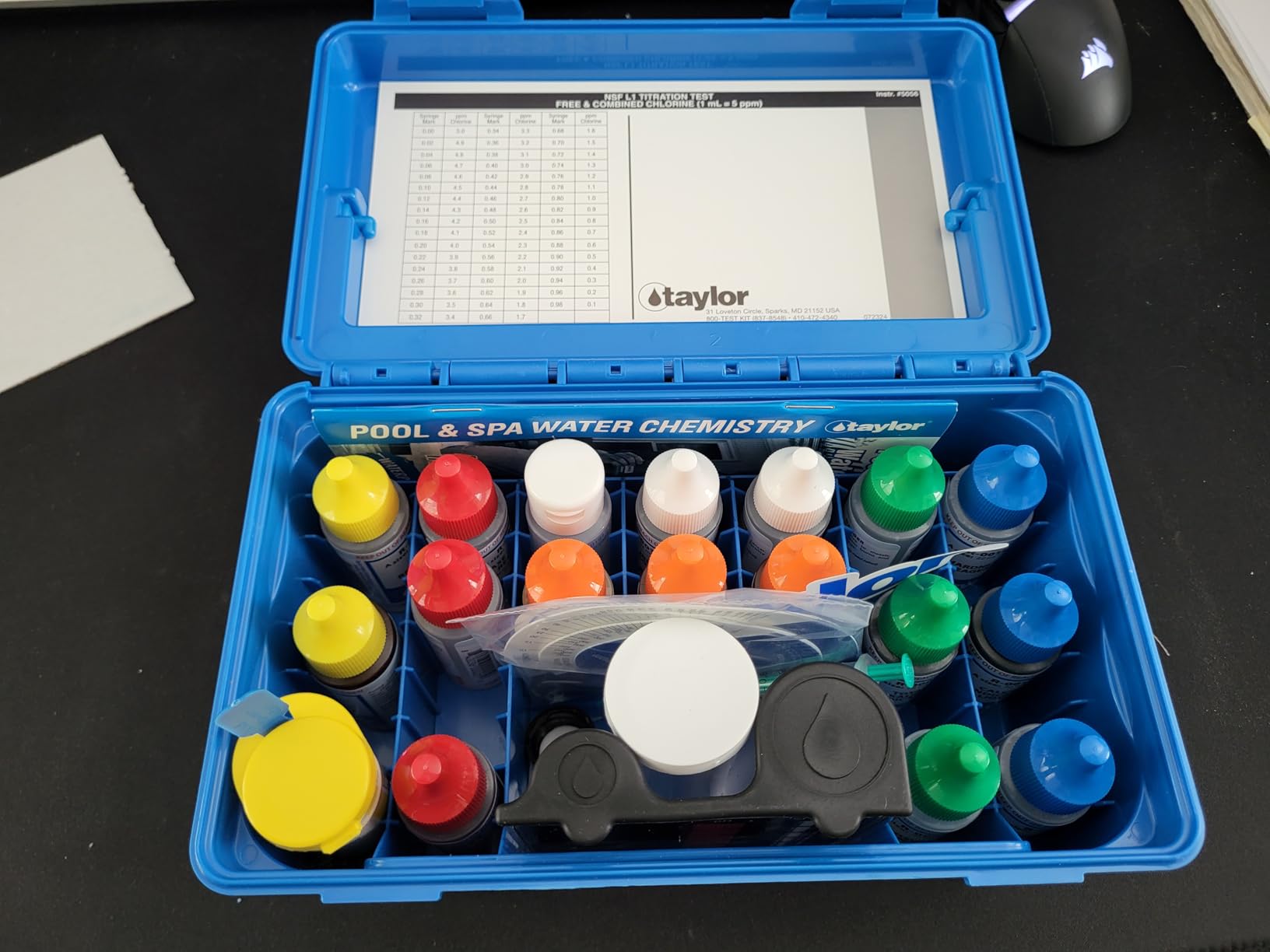
This is the only kit on the list that tests sodium chloride as a titration rather than a color pad, and that single difference is the reason it exists on a salt pool list. You add a sample, drop in silver nitrate reagent, swirl, and count drops until the sample turns milky. Each drop corresponds to a fixed increment of salt, so you get a number instead of a color impression.
The FAS-DPD chlorine test matters just as much here. It separates free chlorine from combined chlorine, which is exactly what you need when a generator spikes output after heavy rain or a weekend of swimming and the residual climbs for no obvious reason.
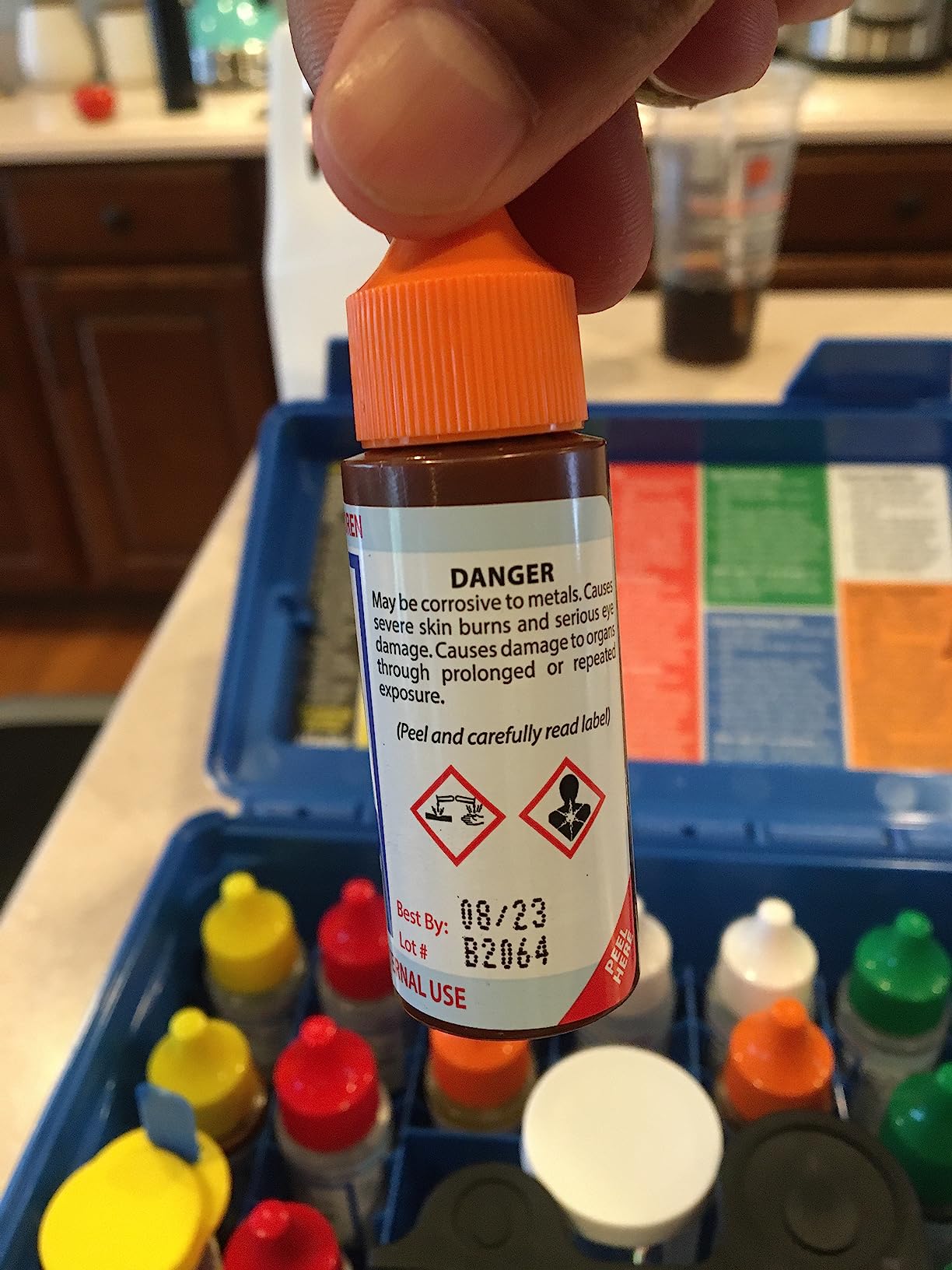
Acid and base demand sit alongside the usual parameters, which lets you see the whole buffer picture instead of a single alkalinity number. Fifteen reagents arrive in 0.75oz bottles with a comparator block and a case that keeps them upright and organized.
Owners consistently describe it as accurate enough that they stopped making weekly pool store trips entirely. The instructions use pictograms and non-technical wording, which helps more than the marketing suggests.
What it unlocks
This kit answers the question a strip cannot: is my salinity genuinely inside the band, or does it just look like it is. That is the difference between adjusting your water and guessing at it, and it is the answer you want before making a salt cell warranty claim.
It also gives you combined chlorine, which is the number that explains chloramine smell, eye irritation and sanitizer demand that never seems to level off.
What it costs you
The learning curve is real. Several tests take multiple steps and some readings need a calculation, and the instructions for the more complex procedures draw fair criticism. Budget a weekend with the first full test.
Reagent quantities also run smaller than owners expect, particularly the cyanuric acid bottle, and a few buyers received product close to the printed date. Check the expiration before you start, and keep refills on hand rather than treating the kit as a one-time purchase.
5. Hofun 5-in-1 Digital Meter – Most Readings From One Dip
Pool Salt Tester & PH Meter, Hofun Digital Salinity Meter and PH Tester for Aquarium and Pool Saltwater Water, 5 in 1 Salinity PH Temp EC and TDS Meter, Aquarium Swimming Pool Hot Tub, Multiparameter
Salinity pH TDS EC temperature
Five functions, one meter
Three salinity display modes
Titanium probe
Pros
- Five measurements from a single dip
- Salt shown in ppm ppt and percent automatically
- Titanium alloy probe measures quickly
- One device covers pools aquariums and ponds
Cons
- pH readings drift and need periodic calibration
- Results should still be cross-checked against a reference
- Some 1-star reviews cite build and display issues
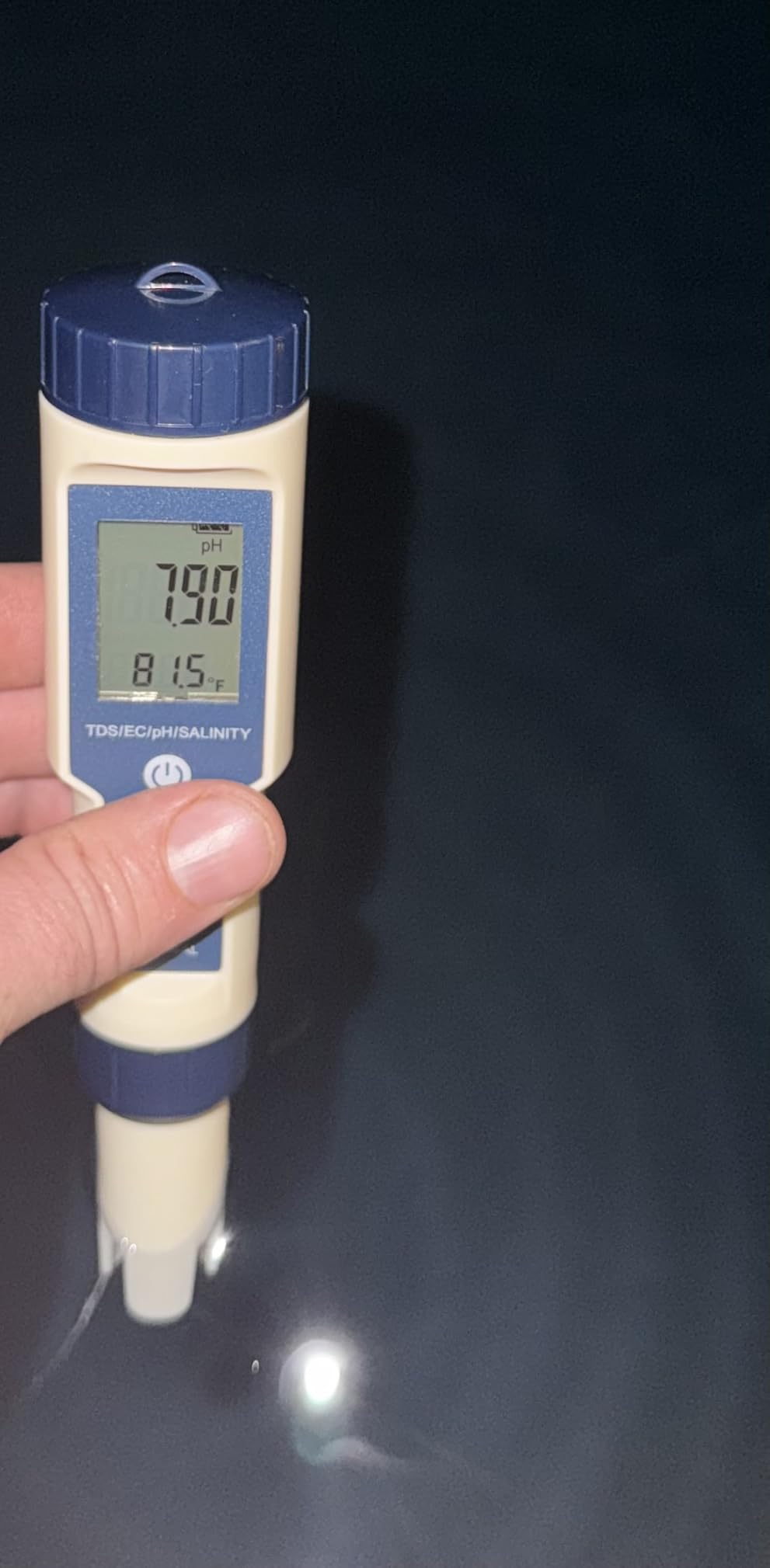
A digital meter changes the routine. You dip a probe, press MODE, and a number appears. No drop counting, no swirling a vial, no color matching under questionable lighting, and the salinity readout switches between ppm, ppt and percent on its own so there is nothing to convert.
For a salt pool that is a meaningful upgrade, because salinity is the reading you will take most often and the one most likely to be misread by eye.
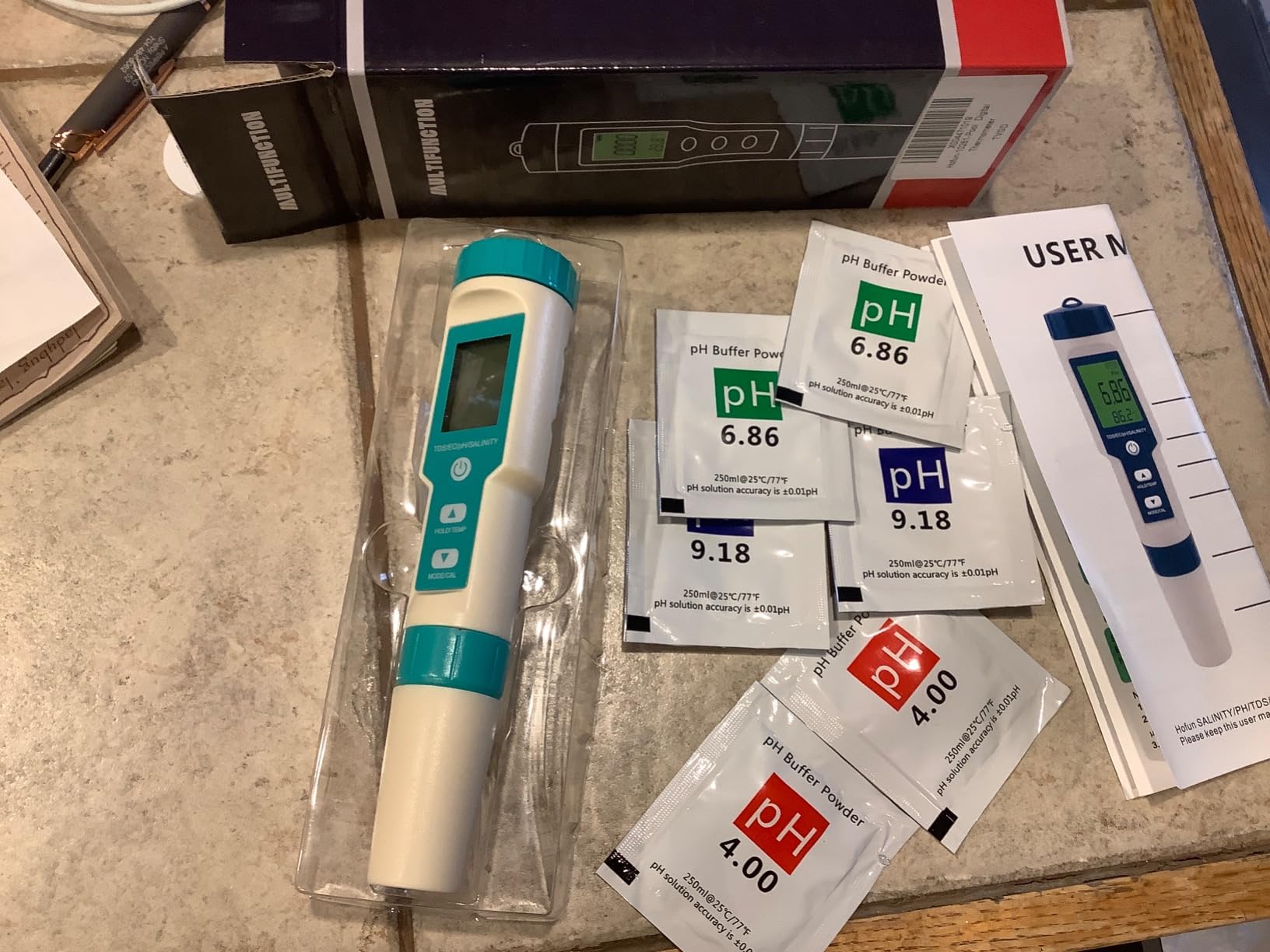
The titanium alloy probe responds quickly, and one device covers pools, spas, hot tubs, aquariums and koi ponds. Owners who also maintain a fish tank or a pond report that the second use justifies the purchase on its own.
At just over 5 ounces with a compact profile, it is the meter you will actually leave out rather than hide in a drawer.
What a digital readout fixes
Two of the three numbers that matter most in a salt pool are salt and pH, and this meter covers both. The pH channel in particular gives you a repeatable reading you can log and compare week to week, which strips cannot reliably do.
TDS and EC channels are useful for spotting a problem early. A rising dissolved solids figure in a salt pool often shows up before anything looks wrong in the water itself.
Where the accuracy falls
Reviewers repeatedly flag pH drift and the need for periodic calibration, and a selection of one-star reviews cite build quality and display problems. That means you still want a reference method on hand rather than treating the screen as gospel.
Also keep the probe rinsed and stored in the cap fluid between uses, and take the reading at a consistent time of day. A meter used carelessly will still drift; a meter maintained properly will not.
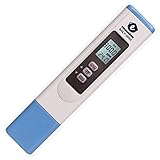
6. eSeasonGear SALT-3050 – Best Dedicated Salt Meter
eSeasonGear SALT-3050 Waterproof IP65 Meter, Digital Salinity PPM Temperature Tester for Salt Water Pool and Koi Fish Pond
Pre-calibrated at 3000 ppm
0-9999 ppm range with temperature
IP65 waterproof housing
Pros
- Pre-calibrated at 3000 ppm so it works out of the box
- Clear digital ppm reading replaces color blocks
- Waterproof housing built for poolside use
- Sub-250 ppm deviation reported against strips
Cons
- Calibration fluid is sold separately
- It is TDS-based rather than a true NaCl meter
- A minority report readings off by several hundred ppm
This meter does one job: salt. It is pre-calibrated at 3000 ppm NaCl, which is conveniently close to the middle of a typical operating band, so out of the box it is reading the right part of the scale. The range runs 0 to 9999 ppm and it also shows temperature, which matters more than most buyers expect.
Pool professionals report using it for daily salinity checks, and owners note that its readings track a generator’s own display closely. For most people, a dedicated meter like this is faster and more consistent than any strip.
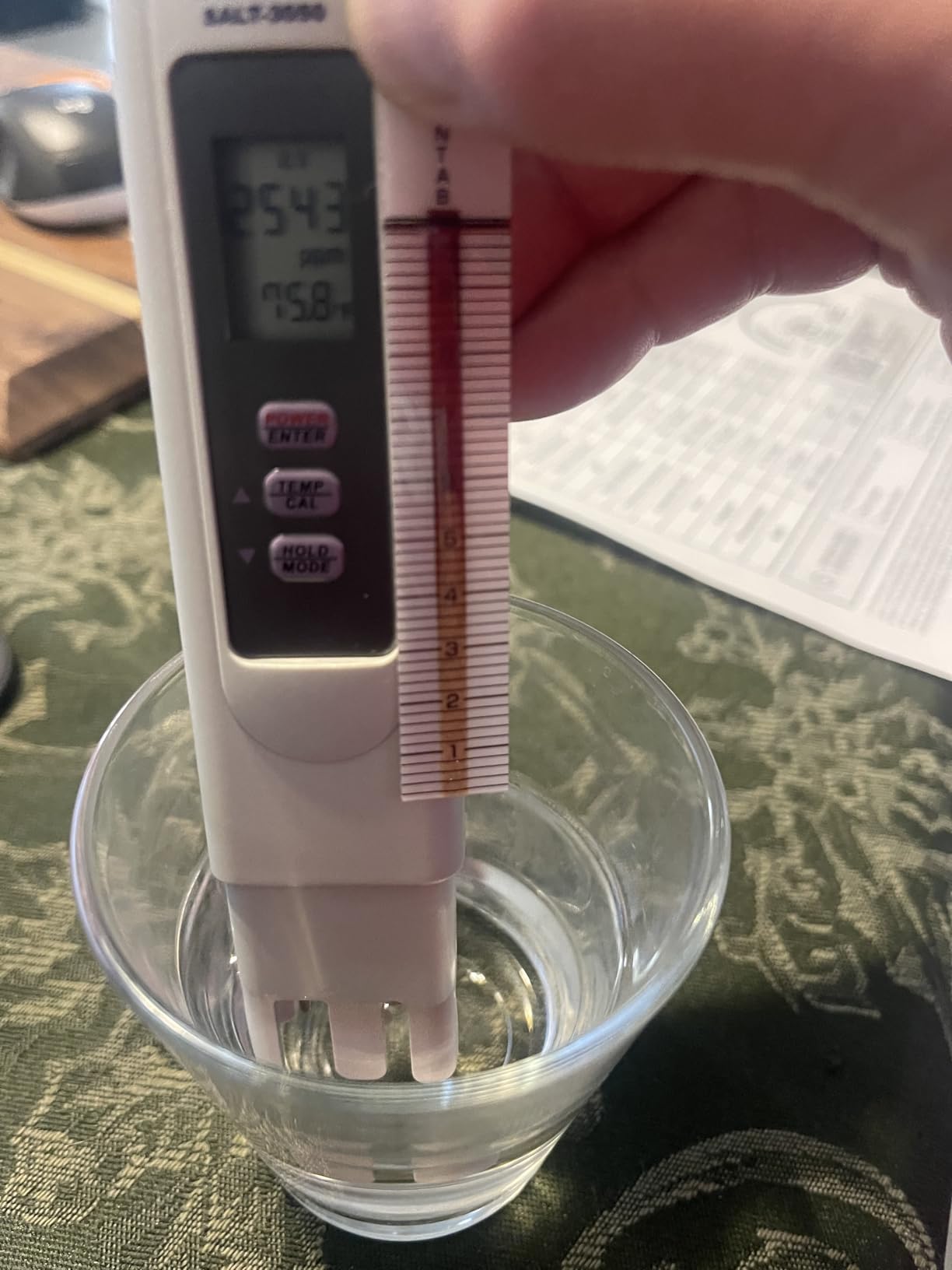
The IP65 housing means you can rinse it under a hose without worrying, and the sealed battery compartment keeps out poolside splashes. It also exists as a combo with test strips if you want a backup method in the same purchase.
One important scoping note from the manufacturer: this is a saltwater pool and koi pond tool, not a marine or food testing instrument.
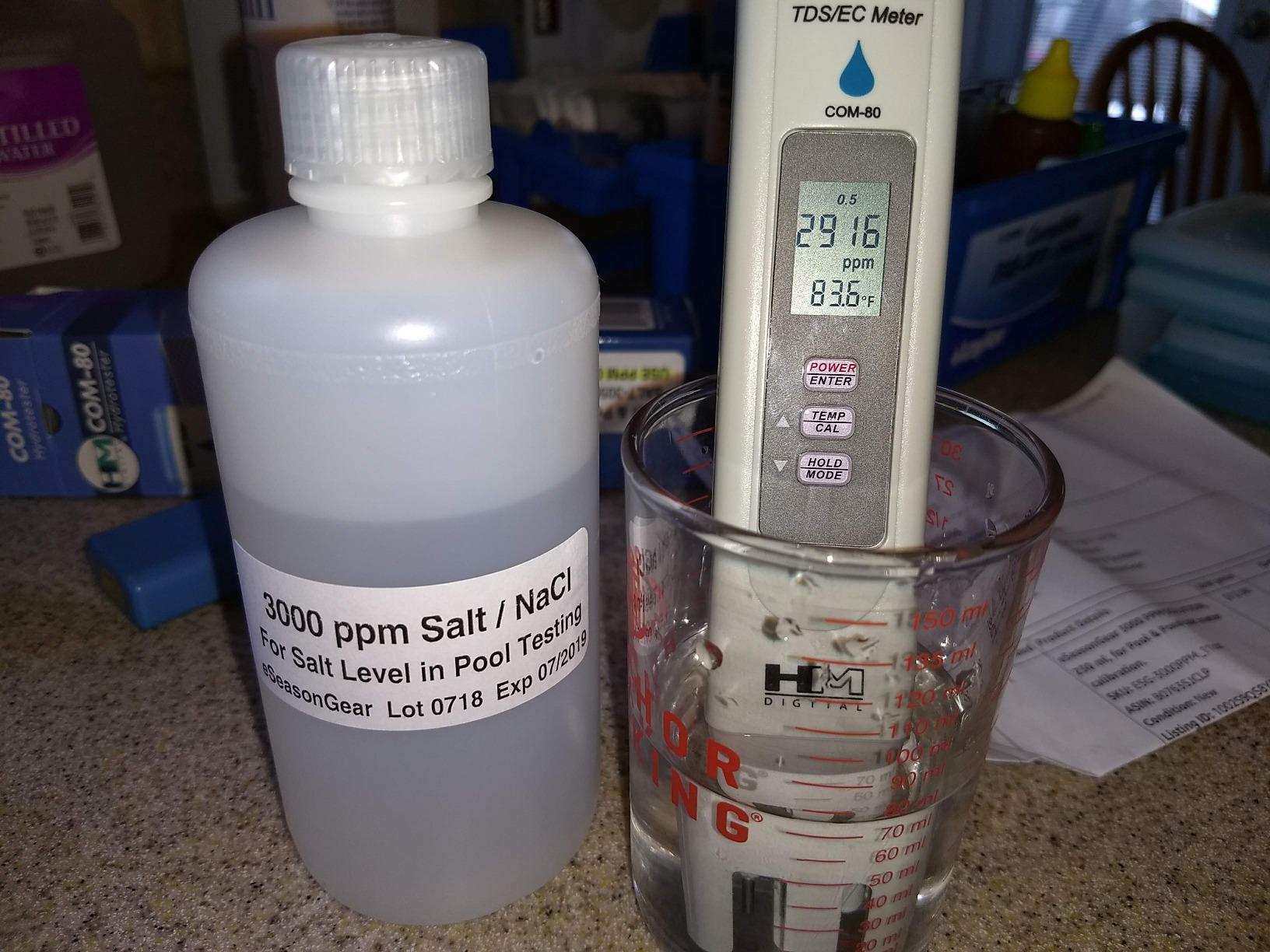
The reading you will use most
Salt is the number a salt chlorine generator cares about most, and this is the simplest way to check it daily without counting drops or squinting at a color block. Owners comparing it against strips frequently report agreement within a couple hundred parts per million.
That closeness to your generator’s own readout makes it a genuinely useful check. If the meter and the generator agree, the water is in band. If they disagree, one of them is drifting and you know to investigate.
What to watch out for
Calibration solution is not included, and a few owners skip it and later wonder why the number is off. Buy the fluid and check the meter against a known reference a couple of times a season.
It is also worth being clear with yourself that this is a TDS-based meter reporting a salt scale. That is entirely adequate for pool management, but it is not a laboratory sodium chloride determination, and a minority of owners report drift of several hundred ppm or display issues on individual units.
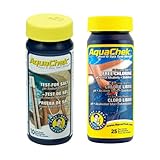
7. AquaChek Salt System Test Kit – Best Two-Bottle System
AquaChek Salt System Test Kit – for Pools and Spas – Salt Water Pool Test Strips for Sodium Chloride – Test Kit Includes Yellow 4-Way (25 Strips Each) and White Salt Test Strips (10 Strips Each)
Yellow 4-way strips plus white salt strips
Salt titrators 400-7000 ppm
App logging
Pros
- Dedicated salt strips plus standard chemistry in one purchase
- 400-7000 ppm salt range covers operating levels
- No drop counting so fewer user errors
- Free app logs results and suggests a plan
Cons
- Only 10 salt strips per pack limits testing frequency
- Chemistry instructions are a separate insert
- Omits calcium hardness and free chlorine separately
Most owners do not need one product, they need two. The logic here is that salt deserves its own dedicated test while chlorine, pH, alkalinity and stabilizer can share a standard 4-way strip. This pack ships both bottles, which is the sensible default configuration for a salt pool.
The white salt titrators cover 400 to 7000 ppm of sodium chloride, a range that brackets the operating band comfortably. The yellow 4-way strips handle free chlorine, pH, total alkalinity and cyanuric acid.
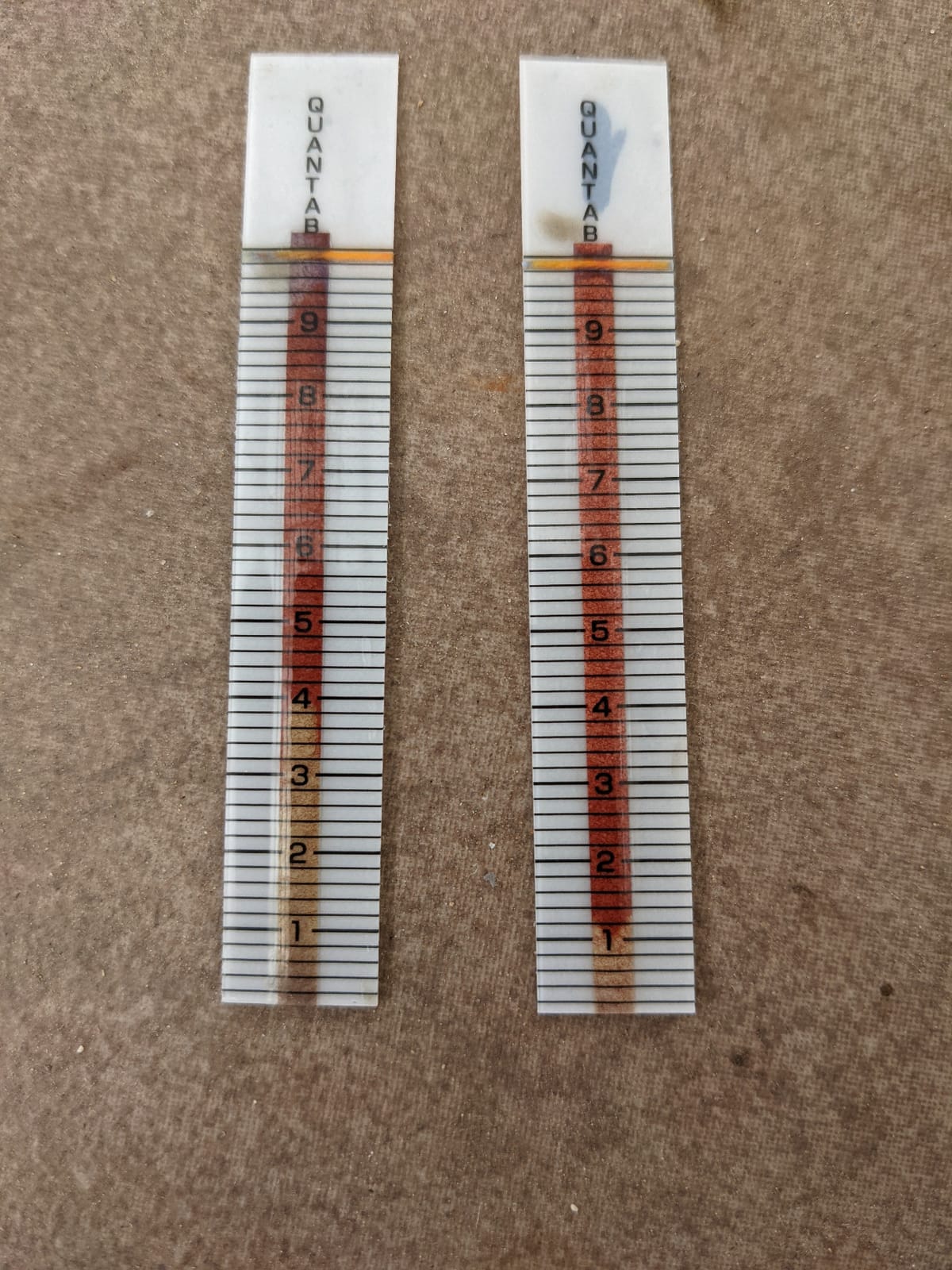
Because there is no drop counting, the user-error rate is much lower than with a liquid kit. Owners report cross-checking against a reference kit and finding the results accurate enough to act on before a pool store visit.
The AquaChek Connect app logs results and suggests a treatment plan, which matters if you want a history rather than a number on a scrap of paper.
Why separate bottles win
A combined strip forces one pad to do several jobs, and salt pads are the least reliable of the bunch. Splitting the salt test onto its own strip means the reading you most depend on is not being dragged down by six other reagent zones competing for the same square of paper.
For a first-time salt pool owner, this is the configuration most people actually want, and it is easier to learn than a nine-test drop kit.
The limitation to plan for
Ten salt strips per pack is not many. At twice weekly, that is five weeks of salt testing, so you will be buying refills. The chemistry directions also come as a separate insert rather than a laminated card in the bottle.
Note also what the 4-way strip leaves out. Calcium hardness is absent, and free chlorine is not separated from combined, so you will still need something else for a full balance read or for diagnosing a sanitizer problem.
8. AKSBTEC 8-in-1 Salt Water Strips – Budget Pick
AKSBTEC 2026 Salt Water 8-in-1 Pool Test Strips Kit | 150 Strips Pool Salt Test Strips | Salt Water Pool Testing Kit for Pools, Hot Tubs & Spas Quick Accurate Tests Salt, Chlorine, pH, Cyanuric Acid
Eight parameters including salt
150 strips per bottle
Salt range 1500-5000 ppm
Read at 15 seconds
Pros
- Eight parameters including salt at a low price
- 150-count bottle is generous for routine testing
- Pads do not bleed so readings stay distinct
- Chart highlights the 2700-3400 ppm target
Cons
- Fewer than 200 ratings so long-term accuracy is less documented
- Entry-level alternative when precision matters
This is the one to buy if cost per test is the deciding factor and you want salt on the strip. The parameter set matches the more expensive 8-in-1 bottles exactly: salt, pH, free chlorine, total chlorine, bromine, cyanuric acid, total alkalinity and hardness.
The 1500 to 5000 ppm salt range and the highlighted 2700 to 3400 ppm band are useful touches for a budget product, and the pads are reported not to bleed, which is where cheaper strips usually fall down.
Timing is the same as the higher-rated strips: dip one second, lay flat 15 seconds, read against the bottle chart.
What you get for the money
Coverage per strip is the same as bottles costing more, and the 150-count bottle means you can test daily for months. For a pool that is running normally and just needs a consistent weekly check, that is genuinely enough.
It is also a sensible second bottle to keep as a backup, or a spare to leave in a poolside locker.
Where to be careful
With fewer than 200 ratings, the long-term accuracy record is thinner than the other strips here, and that is the reason it sits below them rather than a known defect. The salt reading in particular is worth confirming against something more precise before you make a salt cell decision.
Owners who need CYA or calcium accuracy, or who are troubleshooting, should treat this as a monitoring tool rather than a diagnostic one.
9. CLOROX Pool and Spa Saltwater Test Strips – App Logging
Clorox Pool&Spa 81000CLX Saltwater Test Strips
25 six-way strips plus 10 salt strips
Covers salt and stabilizer
Photo and app logging
Pros
- Recognizable brand many owners already trust
- Six-way strips plus separate salt strips in one pack
- Results can be photographed and logged in the app
- Simple dip and read operation
Cons
- Lowest rated in the group at 4.1 stars
- Some buyers received bottles near or past expiration
- Strips stored outdoors over winter absorb moisture and degrade
The familiar brand name does real work in a pool aisle, and this pack covers total hardness, total chlorine, free chlorine, pH, total alkalinity, stabilizer and salt. Twenty-five six-way strips plus 10 salt strips ship in the same pack, which keeps the two-bottle logic in a single purchase.
The app angle is the distinguishing feature. You photograph the strip and upload the result, so you build a log without writing anything down. For owners who already track their pool in an app, that continuity is the reason to pick this over a generic bottle.
Where it works
Routine users find it easy to read and accurate for alkalinity and chlorine, and the pad layout is straightforward once you have done it a few times. Dip, wait, compare, and the colors are clear enough for a beginner.
For a pool that is stable and simply needs a weekly glance, the brand familiarity is a reasonable tiebreaker.
Where it does not
This is the lowest rated product in the group, with 15% one-star reviews, and the complaints are consistent: near-expiry bottles and moisture damage from poor storage. Strips left outdoors through winter absorb water and stop giving reliable readings, so store the bottle indoors and check the date when you buy.
It is also the least precise salt option here, and there is no calibration step or reference to fall back on.
10. T TESTRUST 5-in-1 Digital Tester – Best for First-Time Owners
T TESTRUST Pool Salt Tester – Multifunctional 5 in 1 Salinity, PH, TDS, EC, and Temperature Meter, Pool Salinity Testing Kit, Digital Salinity Tester for Swimming Pool,Saltwater, Sea Water, Aquarium
Salinity pH TDS EC and temperature
ppm ppt or percent display
Clear instant LCD readout
Pros
- No complicated setup for basic use
- Readings agree with generators and pool store lab results
- One dip returns five measurements
- Simple dip-and-read operation
Cons
- pH readings drift and need periodic recalibration
- Temperature channel reported as slightly off
- Salt accuracy depends on calibration solution
This is the meter to hand someone who says they have no chemistry background. Five measurements from one dip, an LCD readout, and no complicated setup for basic use. You put the probe in, read the number, and move on.
Owners report that readings line up with their salt chlorine generator and with a pool store lab result, and several mention using it to identify a salt cell that was reading roughly 200 ppm off from reality.
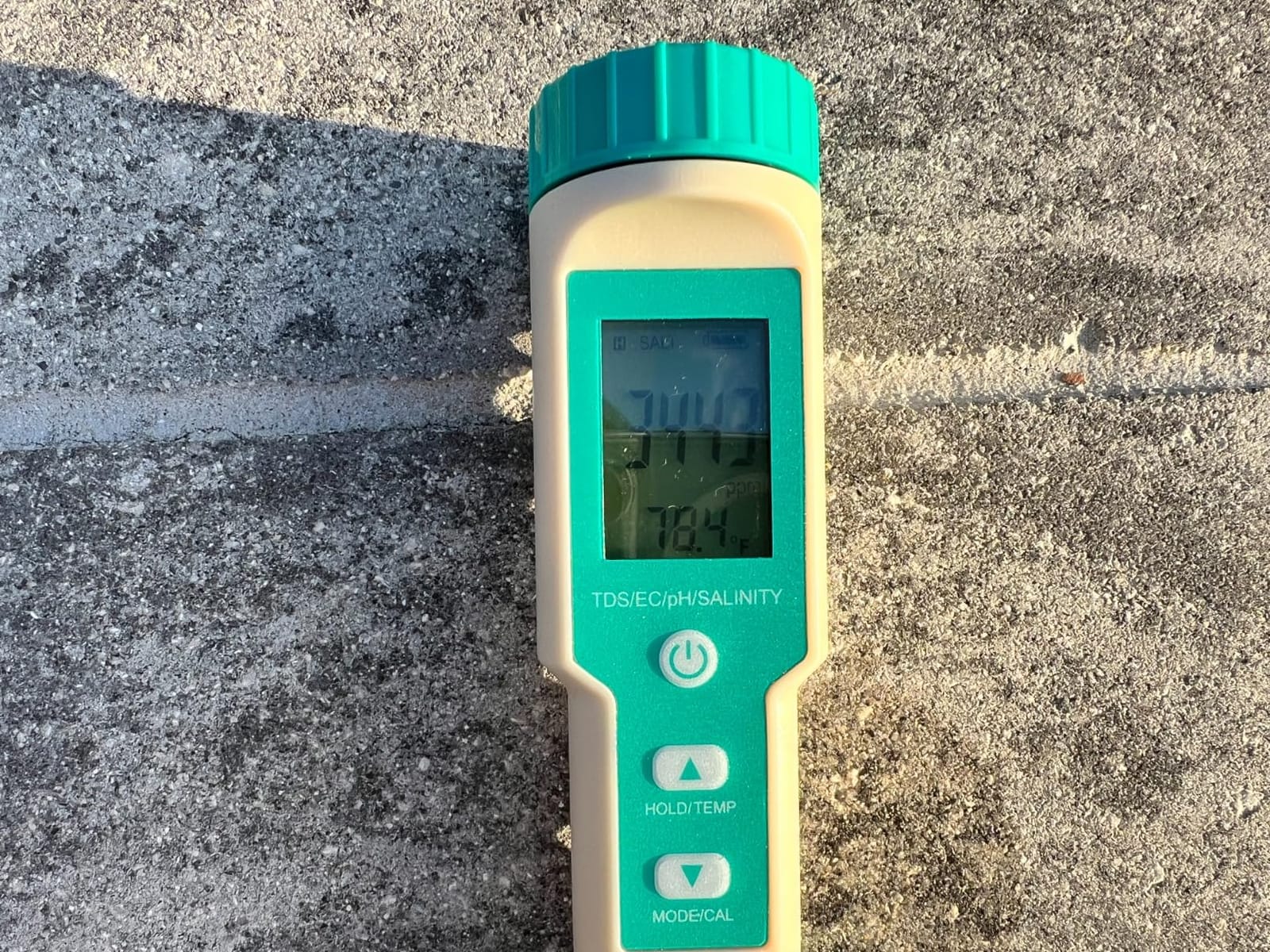
One detail worth checking at checkout: some units in this category ship without the salt calibration solution, and a meter without it needs one to be accurate. Salinity displays in ppm, ppt or percent, and it works in pools, hot tubs, spas and aquariums.
Why it suits a beginner
There is no color chart to interpret and no drop count to get wrong, so a misreading is far less likely. That matters enormously for someone who has just inherited a salt pool and does not yet know what a normal reading looks like.
Salinity, pH, TDS, EC and temperature in one number each gives a complete picture of the two parameters a generator cares about, plus the dissolved solids trend that hints at scaling or water replacement.
The calibration caveat
The pH channel drifts and needs periodic recalibration, and the temperature reading is reported as slightly off by some owners. Use the temperature display as a rough guide rather than a reference.
Recheck the salt channel against a known reference a couple of times a season so you know how much you trust it, and treat the meter as a strong daily tool rather than the final word on a warranty claim.
What Makes a Test Kit Saltwater-Ready?
A kit is saltwater-ready if it measures sodium chloride, and that is the entire test. Everything else about your water behaves like a normal pool, which is why a good general kit plus a salt test is a complete answer rather than a compromise.
Look for four things before you buy. Does the kit or bottle include a sodium chloride measurement at all? Many kits advertised as complete stop at chlorine, pH, alkalinity, calcium and stabilizer, which leaves the one number a salt chlorine generator depends on unmeasured.
Second, check what range the salt measurement covers, since a narrow range can leave you unable to read a pool that is badly over-salted. Third, confirm the result is expressed in the same units as your generator’s display. Fourth, ask whether the reading can be logged over time, because a trend is worth more than a single number.
One more practical check: what does a refill cost and how easy is it to buy. A kit you cannot refill is a kit you will eventually stop using, and that is where most abandoned chemistry routines begin.
Strips vs Drop-Test Kits vs Digital Meters
Strips are fast, cheap and good for trend watching. They are the right default for daily or near-daily checks, and the limitation is precision, not validity. Owners who argue about whether a strip is accurate are usually comparing it against a different test on a different day, which is not a fair contest.
Drop-test kits are the accuracy benchmark for home use. A titration salt test gives you a number derived from counting drops rather than matching a color, and FAS-DPD chlorine tests separate free from combined, which is the only way to diagnose a sanitizer problem in a salt pool. The cost is technique, learning curve and reagent refills.
Digital meters sit in between. A dedicated salinity meter gives a repeatable digital reading of the one number a generator depends on, without drop counting. Multi-function meters add pH, TDS and EC, which is useful for spotting trends. Their weakness is calibration drift, and the fix is regular recalibration plus an occasional cross-check.
The practical answer is to use two tools rather than hunt for one that does everything. Daily strips for the full parameter set, plus a real salt test monthly, covers the same ground as a much more expensive single instrument.
Saltwater Pool Parameters and Their Target Ranges
Salt pools run different targets for sanitizer and stabilizer than standard chlorine pools, and generic pool charts are the source of a lot of unnecessary chemical use. Keep these numbers in front of you and test against them rather than against a chlorine pool reference.
Free chlorine for a salt chlorine generator generally sits between 5 and 7 ppm, which is higher than a typical chlorine pool because the sun strips chlorine faster in a salt pool. pH belongs between 7.4 and 7.6, and it is the parameter that quietly wrecks everything else when it drifts. Total alkalinity sits between 70 and 90 ppm, and calcium hardness usually between 200 and 400 ppm depending on your surface material.
Cyanuric acid is the one that surprises people. Salt pools generally target 60 to 80 ppm rather than the 30 to 50 ppm used for chlorine pools, because the extra stabilizer protects the chlorine from sun exposure. Reading CYA accurately is the main reason not to rely on a strip pad for that parameter.
For salt itself, most manufacturers rate their generators across roughly 2500 to 4500 ppm, with many pointing to a narrower band around 2700 to 3400 ppm. Staying inside the band your generator’s manual specifies is what keeps the cell inside its warranty terms.
How to Test Saltwater Pool Water Correctly
Timing matters more than most guides admit. Test at a consistent time of day, and note that early morning readings and evening readings can differ significantly because the sun burns off chlorine through the afternoon. Pick one window and use it, so your numbers are comparable week to week.
Rinse the sample container with pool water before you fill it, and never touch the pads or the inside of the vial. Skin oils on your hands are enough to move a pH reading enough to make you chase a problem that is not there.
For strips, dip for the stated time, hold horizontally rather than letting extra water run across the pads, and read against the chart within the window the instructions give. Read too late and the colors bleed together, which is exactly what the non-bleeding paper in the Joyzakzak bottle is designed to prevent.
For a titration salt test, fill the vial to the marked line with pool water, add the silver nitrate reagent, cap and swirl, then add drops one at a time while swirling until the sample turns milky white. Count the drops and multiply by the increment printed on the bottle. Invert the bottle and count air bubbles the same way if that is the method your kit uses.
Finally, record what you read and when. A log is what turns a stack of numbers into a trend, and trends are what tell you whether a reading was a fluke or a real shift in your water.
If you are documenting the build or the water itself while you are at it, we have a guide to cameras for indoor swimming pool meets that covers shooting in low light and water-heavy conditions.
How to Choose the Right Kit for Your Pool
Start by identifying your generator’s rated salt band and taking the manual’s number seriously. Any kit whose salt range comfortably covers that band will work; the kits that fail are the ones that cannot reach the ends of it.
Next, match the tool to the job. A pool that is running normally needs strips for routine monitoring. A new pool, a pool with cloudy water, or a generator that is underperforming needs a titration drop test to establish ground truth. A pool where you want to avoid liquid reagents entirely should look for a digital meter that reports sodium chloride rather than only TDS.
Then budget for the ongoing cost, not the sticker price. Strips are the cheapest per test, a drop kit needs reagents, and the cyanuric acid bottle is usually the first to run out. A digital meter needs calibration fluid. Add it up over three seasons and the cheapest option often is not the cheapest one.
Finally, do a sanity check against a free pool store reading when you first start. Take your own sample the same day, compare the numbers, and you will know within one round which of your methods is drifting before it ever costs you a chemical adjustment.
Frequently Asked Questions
Do you need a special test kit for a salt water pool?
You need one extra test, not a different kit. A salt pool uses the same pH, alkalinity, calcium hardness and cyanuric acid tests as a standard pool, plus a sodium chloride measurement that most general-purpose residential kits omit. So the practical setup is a normal chemistry kit for the standard parameters plus a salt test, either a titration drop test or a digital salinity meter.
Which Taylor test kit is best for a saltwater pool?
For a single all-in-one answer, the K-2006-SALT is the saltwater-specific FAS-DPD kit, covering nine parameters including a chloride titration test and separate free and combined chlorine. If you already have a full chemistry kit and only need the salt number, the K-1766 is the salt-only option and costs far less. If you also want a salt-only instrument, the eSeasonGear SALT-3050 on this list covers the same ground digitally.
What is the ideal free chlorine level for a saltwater pool?
Most salt chlorine generator manufacturers target 5 to 7 ppm free chlorine, which runs higher than a standard chlorine pool because sunlight strips the sanitizer faster in a salt pool. Test consistently, because the same pool can read very differently in the morning and in the evening after a day of sun exposure.
What is the ideal pH range for a saltwater pool?
Keep pH between 7.4 and 7.6. Salt water is naturally more alkaline than fresh water, so salt pools drift upward faster and need more frequent pH correction than a chlorine pool. Because pH drives every other reading, correct it first before adjusting alkalinity, calcium or sanitizer.
Is 4000 ppm salt too high for a pool?
It depends on your generator. Most manufacturers rate their cells across roughly 2500 to 4500 ppm, so 4000 ppm can sit comfortably inside the band, though many also publish a narrower recommended window around 2700 to 3400 ppm. Check the manual for your specific cell, and stay inside the stated range if you want the warranty to apply.
Which pool testing kit is the most accurate?
A colorimetric drop-test kit such as the Taylor K-2006-SALT is the accuracy benchmark for home use, because it derives a number by counting reagent drops rather than matching a color. A photometer is more precise still but costs far more. Strips are for trends and meters for quick repeat readings, and neither is wrong, they simply answer different questions.
What is the best way to test the salt level in a saltwater pool?
Use a silver nitrate titration drop test for accuracy, or a dedicated digital salinity meter for speed and repeatability. Both beat salt test strips for anything involving a decision about adding salt or about your cell warranty. Cross-check any digital meter against a drop test a couple of times a season, and against your generator’s own display.
Do salt test strips read differently from a drop test?
Yes, and that is expected. A salt pad is a colorimetric approximation with an error commonly cited in the region of 200 to 300 ppm, while a titration test counts drops for a tighter result. Treat a strip as a trend indicator and a drop test as the number you act on, particularly before changing salt levels or making a warranty claim.
Conclusion
If you want one purchase that handles the whole job, the EASYTEST saltwater strips are our pick for daily monitoring, with the widest salt range here and the most review history behind them. When you need the salt number to be exact, the Taylor K-2006-SALT is the accuracy benchmark and the only kit on this list that separates free from combined chlorine.
For repeat salt readings without any liquid reagents, the eSeasonGear SALT-3050 is the simplest daily tool, and the T TESTRUST is the gentlest introduction for a first-time owner. Whatever you choose, test consistently, log the results, and keep the bottle indoors. The best pool test kits for salt water pools are simply the ones you will still be using in 2026.