
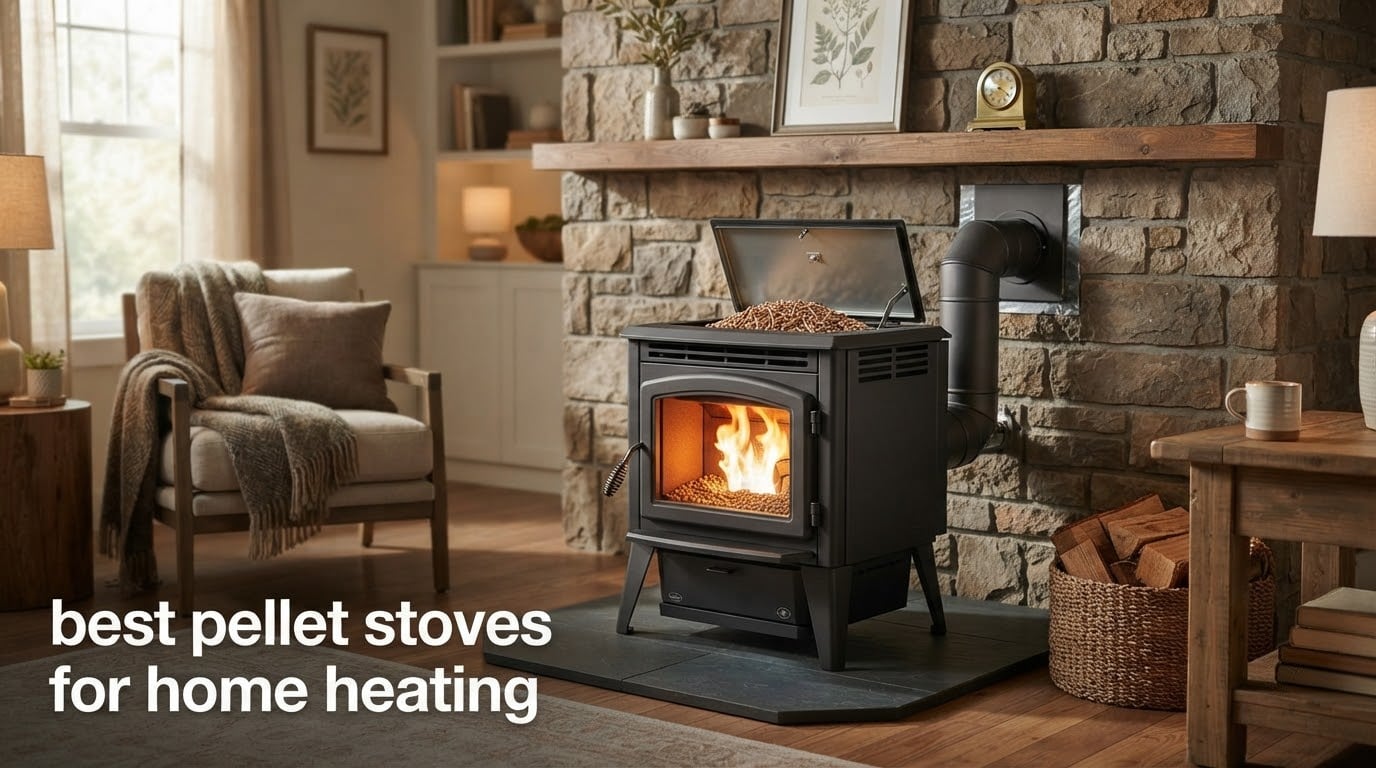
Short answer: the ComfortBilt HP22 is the best pellet stove for home heating overall, because it pairs a 55 lb. hopper with a 4.4 owner rating across 291 reviews, the largest verified review base we could find. The ComfortBilt HP50S is the best-rated model at 4.5, the US Stove Wiseway GW1949 is the pick if you need heat that keeps running through a power outage, and the ComfortBilt HP22i is the one to buy if you have an existing fireplace opening to fill.
Pellet stoves sit in an awkward spot between a wood stove and a furnace. They burn compressed sawdust pellets, feed themselves through an electric auger, and are regulated by a thermostat, so you get wood-burning efficiency without building a fire twice a day. Most of our picks run unattended for 18 to 30 hours on a full hopper, and the two largest hoppers in this group hold roughly two days of fuel.
We spent the last few weeks reading owner reviews, comparing burn pots and hopper sizes, and cross-checking the failure reports that dominate forum threads on this category. Nothing here is a lab test in a controlled room. These are the models with the most verifiable owner feedback, the clearest spec sheets, and the least overlap between them. We also weighed the things ranking pages usually skip: warranty length on electrical parts, how often the auger and blower actually fail, and what a stove costs to run rather than what it costs to buy.
A note before we get into the list: almost nobody in our research bought a pellet stove as a first heating choice. Owners on Reddit’s r/PelletStoveTalk and on Hearth.com consistently describe the purchase as a reaction to running out of heating oil or propane. That framing matters, because it changes what you optimize for. You are not buying a decorative appliance, you are buying a system that has to start itself at 5 a.m. on the coldest day of the year and keep running for a week. If you are also mapping out the rest of your home setup, our guides to camping stoves and home security systems cover the adjacent decisions.
Table of Contents
Top 3 Picks for Pellet Stove Picks for Home Heating in 2026


Best Pellet Stoves for Home Heating in 2026
All eleven stoves below are freestanding units except the HP22i, which is a zero-clearance insert. We list the heat output, coverage claim, hopper capacity, and the warranty exactly as each manufacturer states them, because these numbers vary widely between listings and it pays to know which claim you are reading.
| Product | Specifications | Action |
|---|---|---|
| ComfortBilt HP22 |
|
Check Latest Price |
 US Stove Wiseway GW1949 US Stove Wiseway GW1949 |
|
Check Latest Price |
 Cleveland Iron Works Bayfront Cleveland Iron Works Bayfront |
|
Check Latest Price |
| Pellethead PS21 |
|
Check Latest Price |
| ComfortBilt HP50S |
|
Check Latest Price |
 Cleveland Iron Works 130 lb Hopper Cleveland Iron Works 130 lb Hopper |
|
Check Latest Price |
 ComfortBilt HP22i Insert ComfortBilt HP22i Insert |
|
Check Latest Price |
 Castle 41278 Serenity Castle 41278 Serenity |
|
Check Latest Price |
 ComfortBilt HP40 Alpine ComfortBilt HP40 Alpine |
|
Check Latest Price |
 PelPro PP70 PelPro PP70 |
|
Check Latest Price |
 Canyon Lodge Large Pellet Stove Canyon Lodge Large Pellet Stove |
|
Check Latest Price |
1. ComfortBilt HP22 – Best Overall Pellet Stove for Home Heating
ComfortBilt HP22 Pellet Stove, 2,800 sq. ft., 55 lb. Hopper, Black
50,000 BTU
2,800 sq. ft.
55 lb. hopper
20 hr burn time
EPA and CSA certified
Pros
- Largest verified review base in the group at 291 reviews
- 55 lb. hopper cuts refills to roughly once a day
- Remote plus programmable thermostat and auto ignition
- At 273 lb. the install needs two people
- Removable ash pan and bay-view window
Cons
- Owners are split on whether the 2800 sq. ft. claim translates to real room gains
- Hopper and firebox need regular cleaning on a fixed schedule
The HP22 is the default answer to this question, and the reason is unglamorous: volume of evidence. It carries a 4.4 average across 291 reviews, roughly three times the review count of most competing listings. When a category is this new to online buyers, a large review base is worth more than a clever spec sheet.
In practice the 55 lb. hopper is the feature owners mention first. At up to 20 hours of stated burn time, you fill it in the evening and it carries the house overnight and into the next day. Five power settings with a programmable thermostat and an included remote mean the stove throttles itself down instead of cycling on full blast.
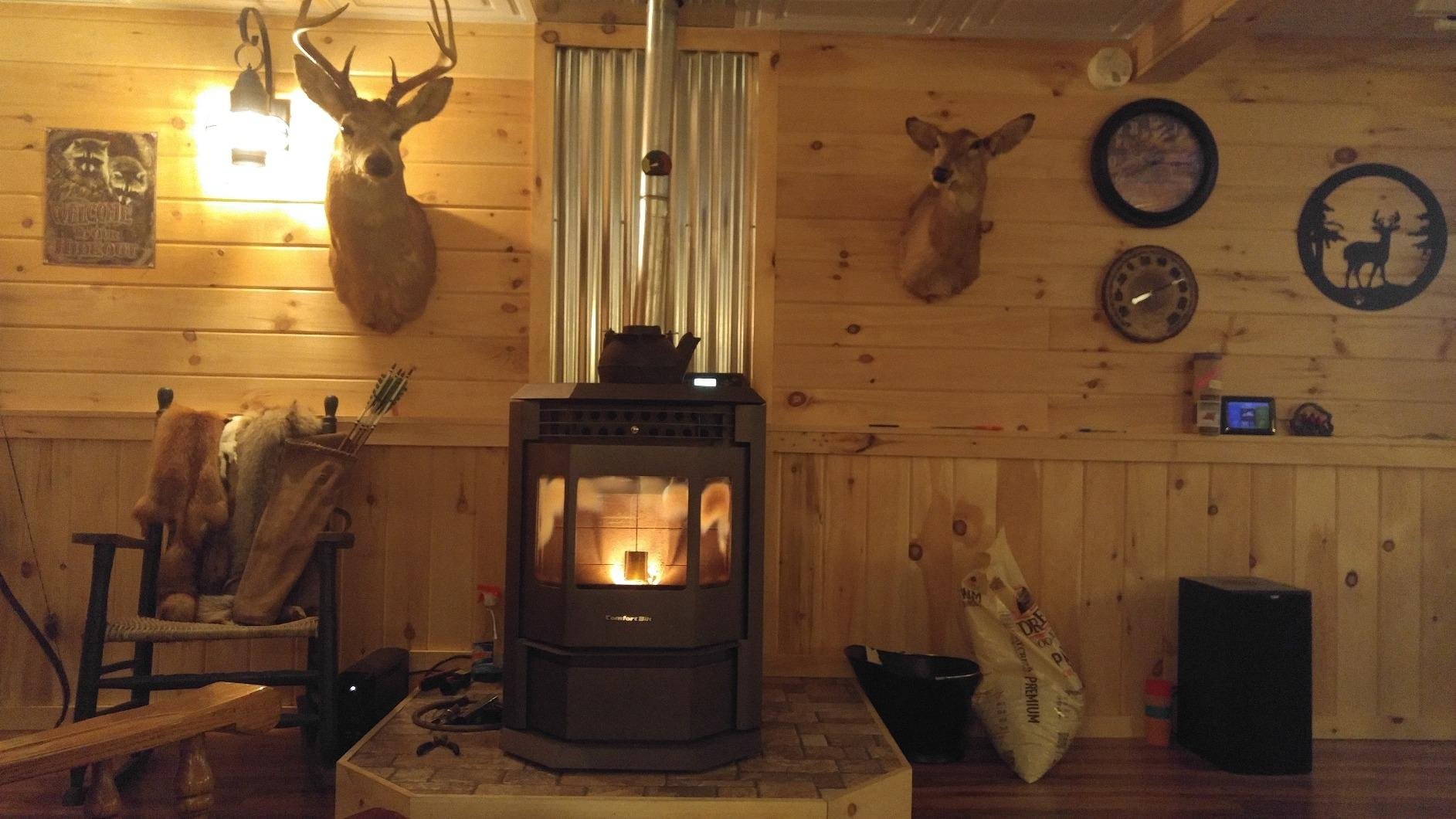
What you give up is some honesty in the specs. The listing states 50,000 BTU, and the feature list quotes up to 41,000 BTU per hour with the 2,800 sq. ft. coverage figure qualified as applying under mild temperature conditions. That caveat is doing a lot of work. In a genuinely cold climate, owners routinely report that the stove will hold a room warm but will not keep a large open floor plan at set point through a deep cold snap.
The unit itself is heavy at 273 pounds, measuring 25 inches deep by 24 inches wide by 32.5 inches tall, and it vents directly rather than through a chimney. That means you still need a proper pellet vent run through an exterior wall, but no masonry flue. Owners who came from a wood stove frequently mention the ash pan as the biggest routine adjustment.
What to check before you buy the HP22
Measure your vent path before anything else. A freestanding unit like this needs a clear run to an exterior wall, and the clearance to combustibles on the sides and behind is fixed by the listing rather than by your room. If the stove has to go in a tight interior corner, the slimmer HP50S in this roundup is a better fit.
Where the HP22 disappoints
If your home is larger than about 2,000 sq. ft. and you are in a cold climate, the coverage claim is optimistic. Several owners in the review set describe pairing it with a blower or a secondary heat source for the coldest weeks, and a few report only moderate gains in open-plan spaces far from the stove.
There is also no efficiency figure published for this model, which makes it harder to compare against the PelPro or the Alpine on fuel cost. The trade is simplicity and proven reliability against specs you cannot inspect in advance.
2. US Stove Wiseway GW1949 – Best Non-Electric Pellet Stove
US Stove GW1949 Wiseway Non-Electric Pellet Stove
40,000 BTU
2,000 sq. ft.
60 lb. hopper
Non-electric gravity feed
30 hr burn time
Pros
- Keeps burning through a power outage with no electrical feed
- 60 lb. hopper for up to 30 hours of burn time
- Silent operation with no blower motor in the firebox
- At 131 lb. the easiest of the group to move into place
Cons
- Lowest owner satisfaction of the well-reviewed models at 3.5
- No remote
- no thermostat
- no WiFi
- Manual controls only
This is the stove to consider if you live somewhere the grid fails. The Wiseway uses a natural gravity feed instead of an electric auger and has no powered blower, so nothing about its combustion depends on your outlet working. It will sit in a rural cabin, a garage, or a manufactured home and keep producing heat with the power off.
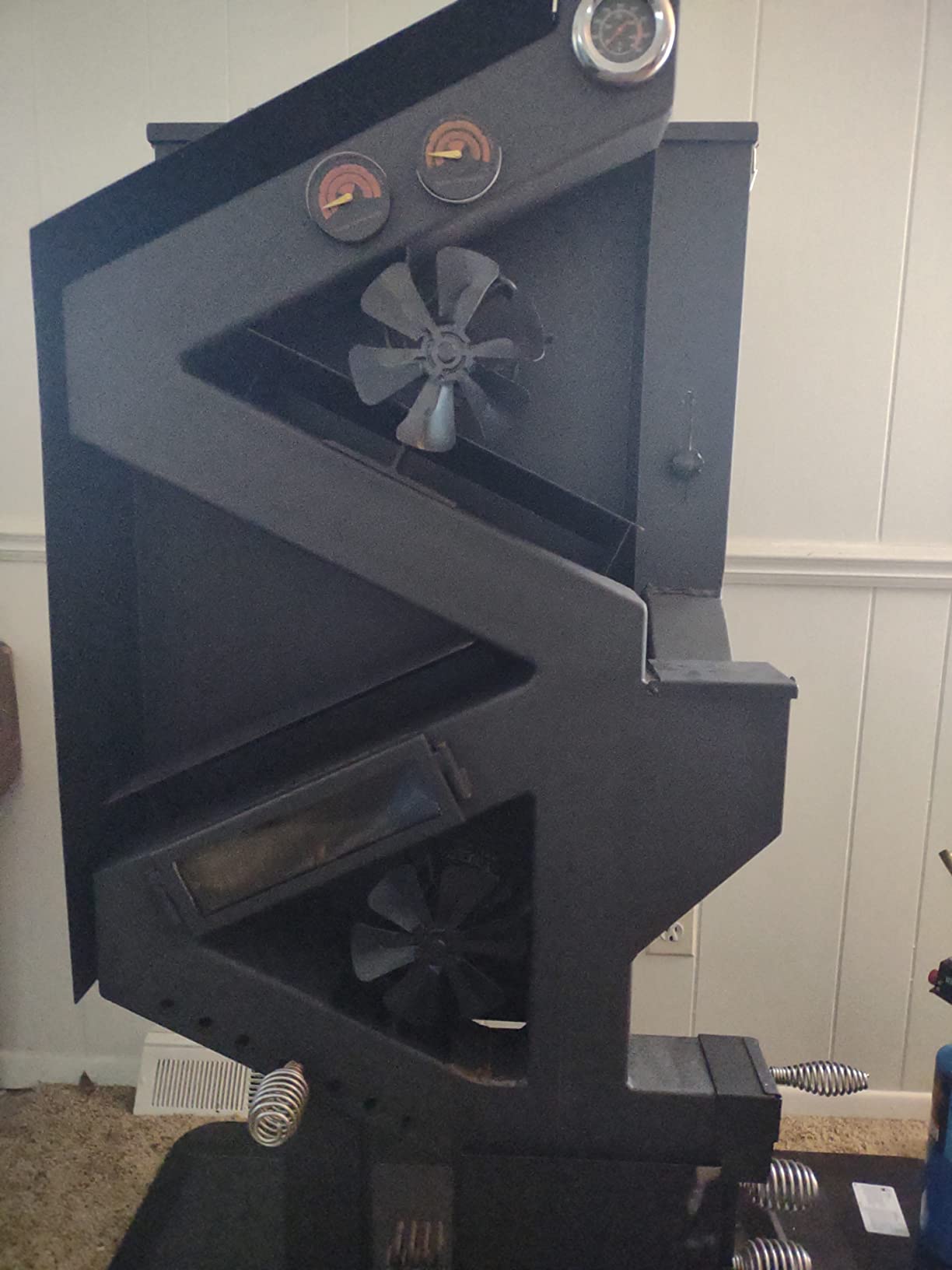
The reason it does not rank higher is convenience, and the 3.5 average across 137 reviews makes that plain. Owners split hard: those who wanted simple, quiet, off-grid heat rate it highly, and those who wanted app control or a thermostat rate it poorly. At 19% one-star reviews, it has the widest negative share of any model here with more than 100 reviews.
What to check before you buy the Wiseway
Be honest about whether you can live without automation. There is no thermostat, so the stove burns at the rate you set and you set it. If you want the feed rate to track the room temperature automatically, this is the wrong stove no matter how good the outage math is.
Where the Wiseway disappoints
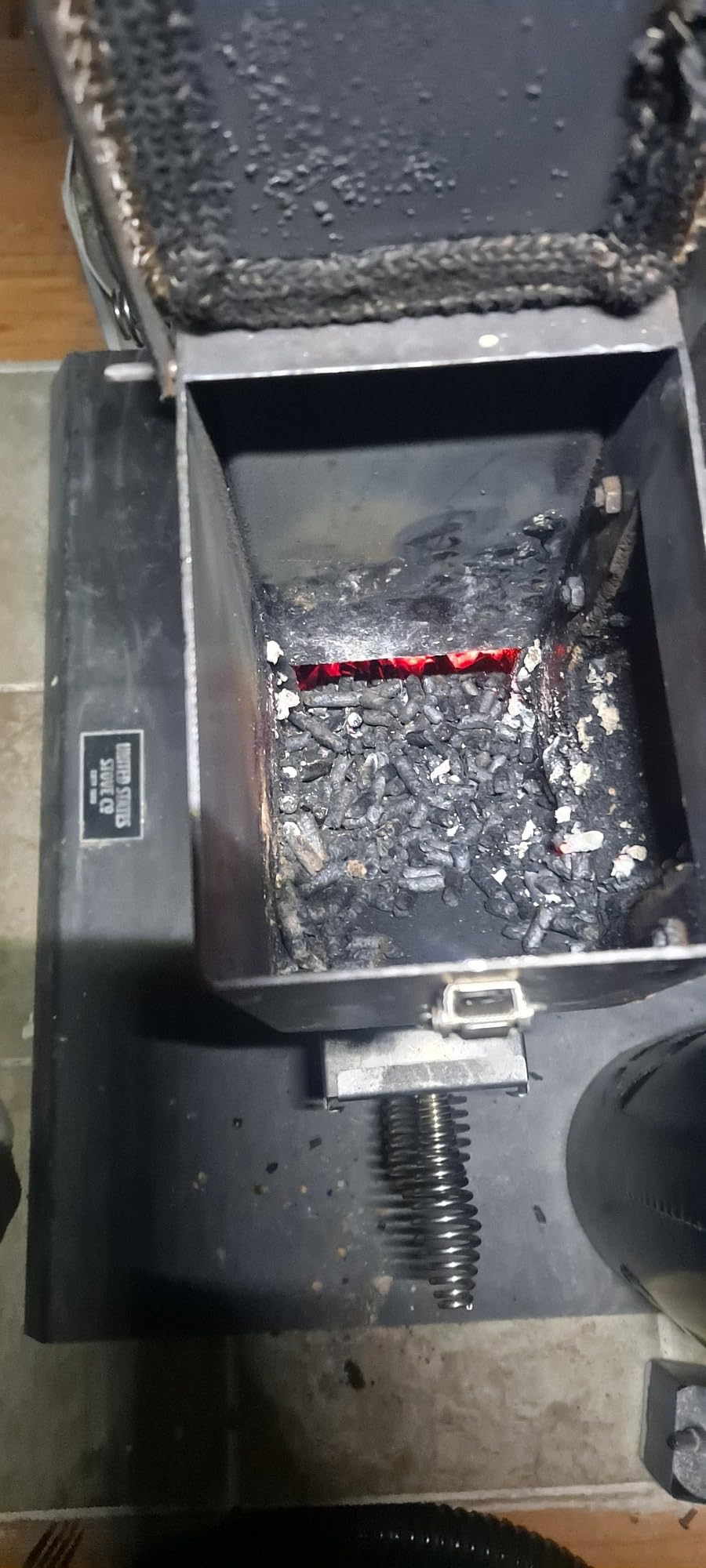
The manufacturer itself describes the gravity feed as less convenient to maintain, and owners echo that. There is no ash pan in the conventional sense; you open the door and clean the box. That is a weekly task whether you like it or not.
It is also the least attractive option for a main living space. There is no remote, no WiFi, and the tall narrow cabinet gives you a small viewing window for a fire that people often buy a pellet stove to watch.
3. Cleveland Iron Works Bayfront – Best Wi-Fi Pellet Stove for 1,800-2,500 Sq. Ft.
Cleveland Iron Works Bayfront Pellet Stove – 66lb Hopper
30,173 BTU
1,800-2,500 sq. ft.
66 lb. hopper
Cast iron body
WiFi
Pros
- 66 lb. hopper is large for a stove in the 30000 BTU class
- Cast iron body with an 8-year steel parts warranty
- Built-in WiFi for phone-based control
- Heats 1800 to 2500 sq. ft.
Cons
- 21% one-star reviews point to early electrical and blower faults
- Reported difficulty with the app controls and thermostat modes
- Warranty covers electrical for only 1 year
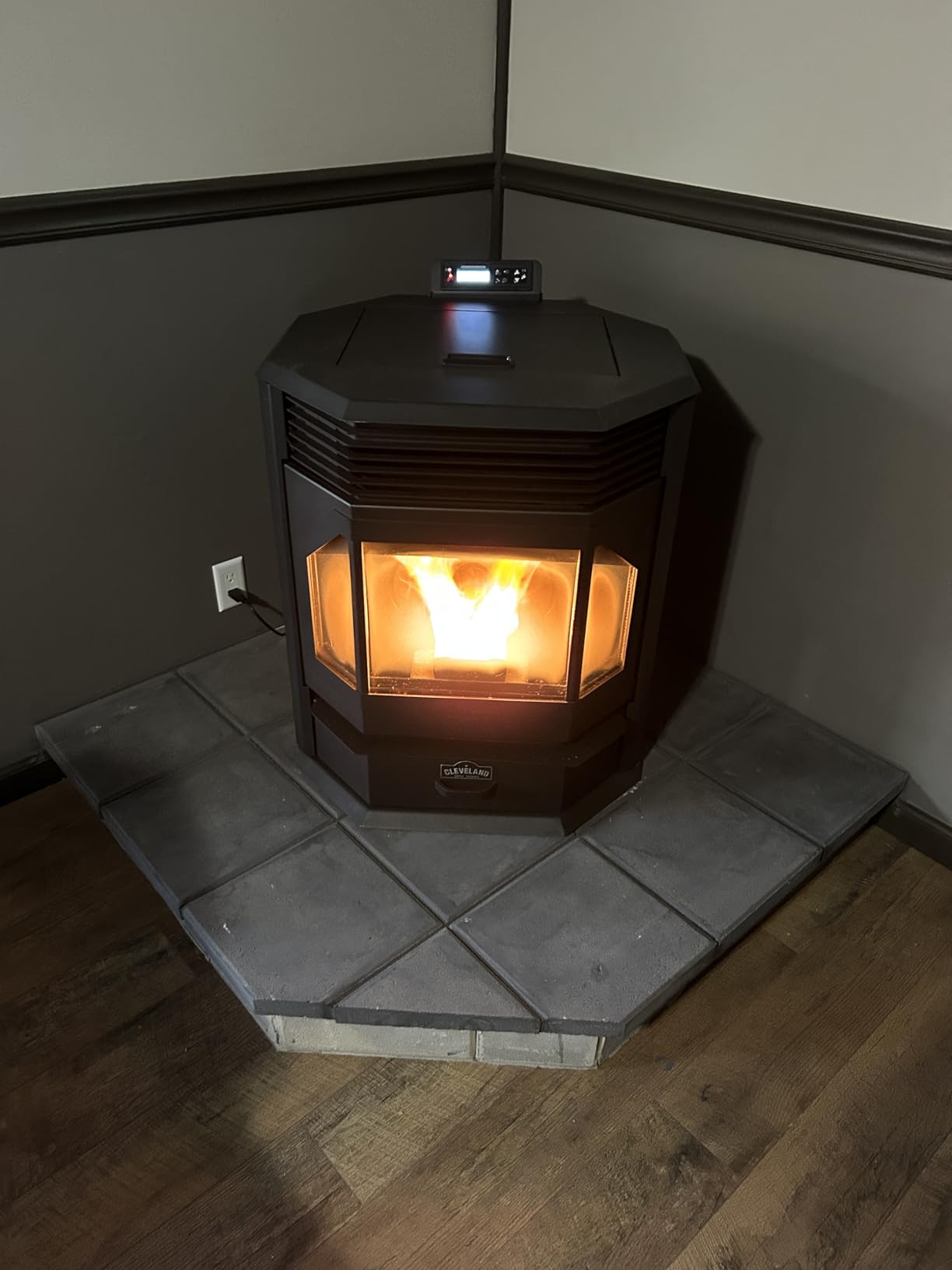
The cast iron construction is the part that should matter most to you over ten years. It holds heat after the fire dies down, which softens the temperature swings you get with a thin steel box, and the warranty runs 8 years on steel parts with the fire pot excluded, against just 1 year on electrical.
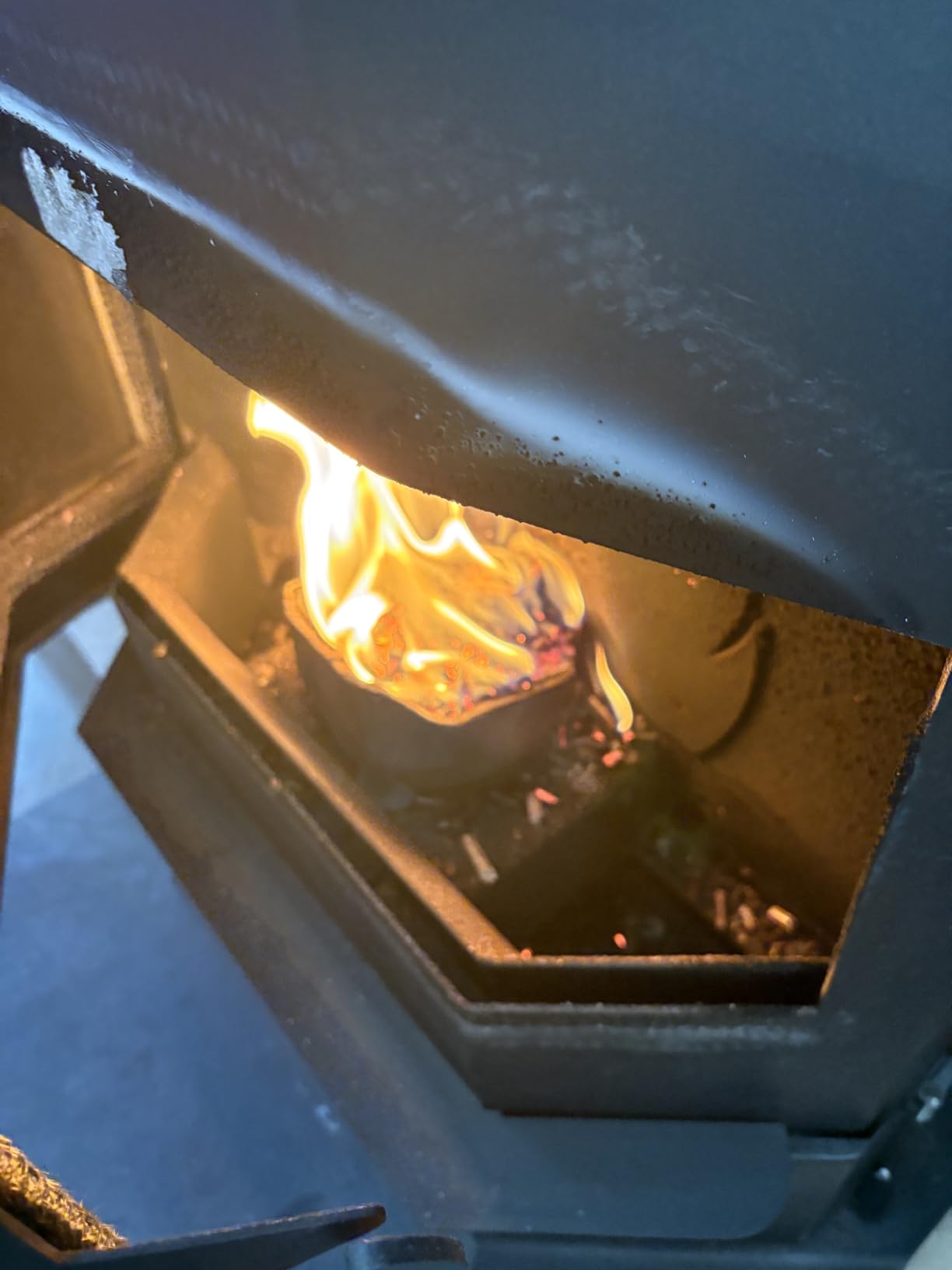
What drags the rating to 3.8 across 97 reviews is the electronics. Owners frequently report control board, auger, and blower problems surfacing after the first season, and the app-based thermostat modes are a recurring source of frustration. A one-year electrical warranty is thin ground for a stove whose convenience features depend entirely on that board.
What to check before you buy the Bayfront
Decide how much the WiFi actually earns you. A programmable thermostat does the important work, and on this model the app is an add-on rather than the control centre. Buyers who set a schedule once and stopped opening the app report far better experiences than those who manage the stove from their phone daily.
Where the Bayfront disappoints
At 30,173 BTU it will not carry a large, drafty, open-plan home on its own in a severe winter. It is a room-and-main-floor heater with a generous hopper, and the 66 lb. capacity does not add heat output.
The bottom-heavy rating distribution is the real caution. Twenty-one percent one-star reviews is a meaningful share of owners who had a failure in the first year, and the mix of WiFi praise and electronics complaints is exactly the pattern that makes a listing hard to judge from the outside.
4. Pellethead PS21 – Best Pellet Stove With Battery Backup
Freedom Stove PS21 Pellet Stove – Marble White | 24V Battery-Ready Backup, Stacked Heat Exchange Tubes, Ultra-Quiet Brushless DC Motors, Touch/Remote/WiFi Control, 5-Year Warranty, DIY-Friendly Design
34,700 BTU
1,800 sq. ft.
24V battery backup
Stacked tube exchanger
Marble White
Pros
- 24V DC battery backup gives over 40 hours of runtime in an outage
- Remote
- touchscreen panel and phone app control
- Stacked tube heat exchanger with a high-efficiency rating
- Very quiet brushless DC motors
- 5-year limited warranty with U.S.-based support
Cons
- Touchscreen interface is awkward next to the included remote
- Hopper holds closer to 30 lb. than the advertised 40 lb.
- WiFi pairing has been unreliable for some owners
- Startup feeds slightly rich and soils the glass on first burn
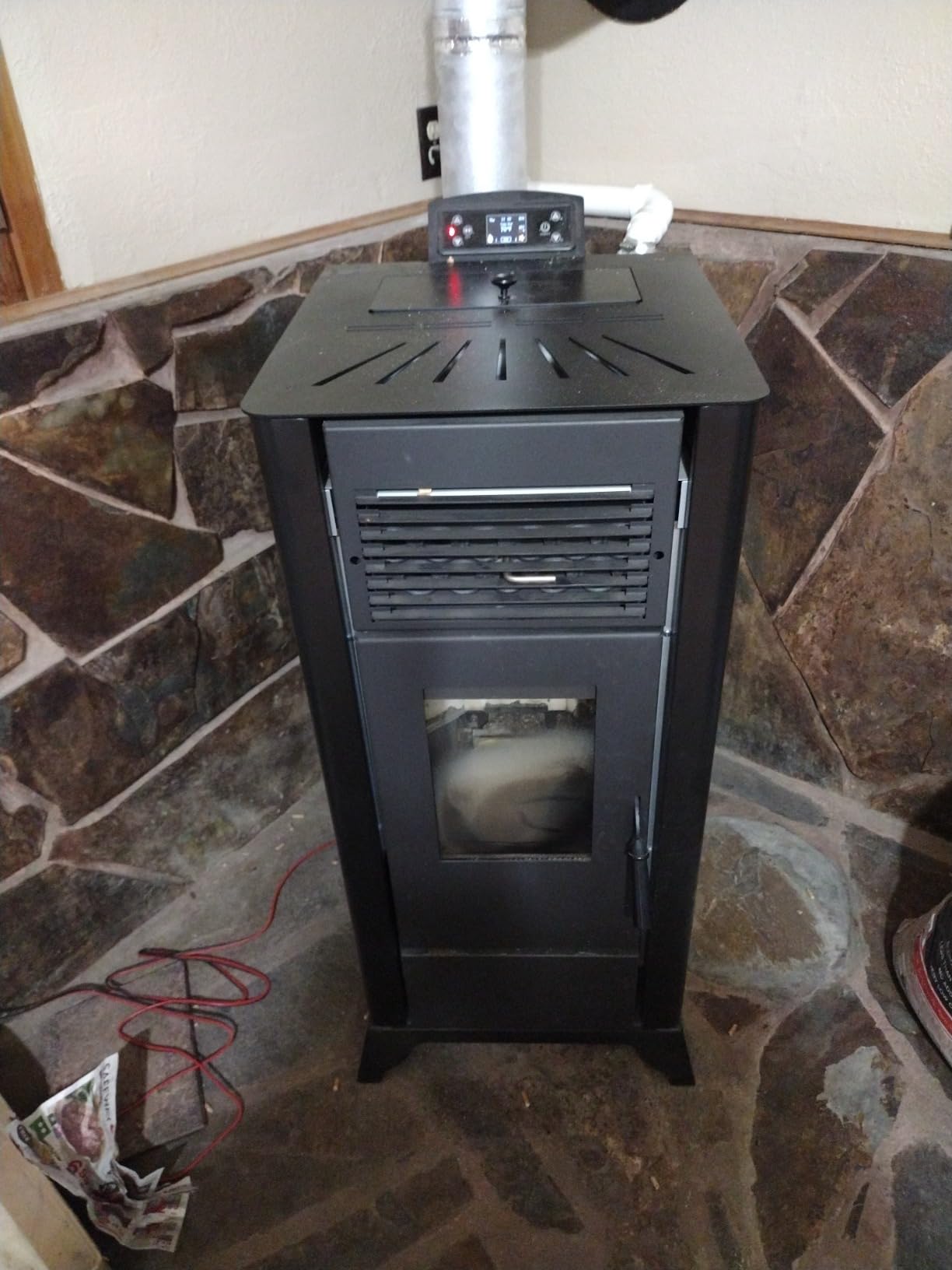
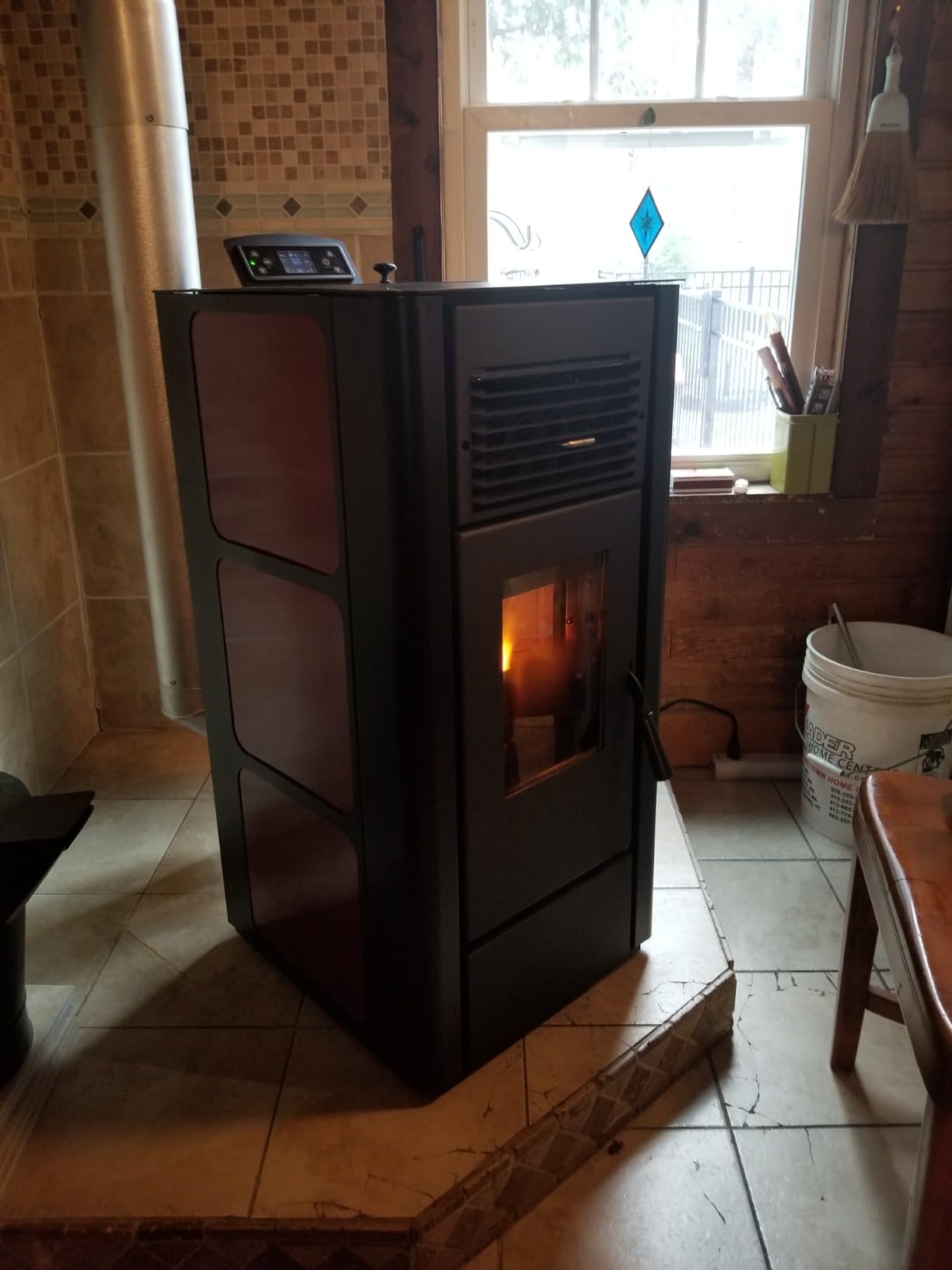
The PS21 is the only stove here that solves the outage problem without giving up automation. It runs on standard electricity like any other pellet stove, but a 24V DC battery backup carries the motors, igniter, and blower for over 40 hours on a pair of 12V batteries. You supply the batteries, which are sold separately.
At 34,700 BTU it covers up to 1,800 sq. ft., and owners running it in larger homes report holding a 2,500 sq. ft. space at around 70°F on level 2. The stacked tube heat exchanger is the efficiency-focused design, and it is paired with ultra-quiet brushless DC motors that several reviewers single out as the quietest in this group.
Two details reward attention. The auger does not sit in the burn pot, which eliminates the carbon build-up that clogs augers on other models. The cabinet also stays cool to the touch, which matters if you have children or pets in the same room.
What to check before you buy the PS21
Budget for the batteries separately. Forty-plus hours of runtime assumes two 12V batteries, and the stove does not include them. If your outage risk is real, add the battery cost to your total before deciding this is the cheaper path than a gravity-feed stove.
Where the PS21 disappoints
The hopper capacity is the main disappointment. Owners measure closer to 30 lb. rather than the advertised 40 lb., so plan on more frequent refills than the spec sheet implies, particularly in cold weather when the thermostat opens the feed rate.
The touchscreen is also the weak point of an otherwise polished control setup. Several reviewers find the panel awkward and use the remote instead, and WiFi pairing has proven unreliable for some owners, so do not build your heating schedule around the app until you have confirmed it connects.
5. ComfortBilt HP50S – Best-Rated Pellet Stove in a Slim Cabinet
ComfortBilt HP50S Pellet Stove, 2,200 sq. ft., 47 lb. Hopper, Arctic White
42,000 BTU
2,200 sq. ft.
47 lb. hopper
23 hr burn time
20.5 inch wide
Pros
- Highest owner rating in the group at 4.5 with 74% five-star ratings
- 20.5 inch wide cabinet fits tight rooms
- basements and workshops
- 47 lb. hopper with up to 23 hours of burn time
- Remote
- programmable thermostat and auto ignition included
- EPA and CSA certified
Cons
- Requires daily burn pot and ash pan cleaning to hold efficiency
- Arctic White finish shows wear and the paint needs curing on first fire
On pure owner satisfaction the HP50S leads this group. Its 4.5 average comes with 74% five-star ratings and only 3% one-star, the cleanest rating distribution of the eleven models we reviewed. The 55-review base is smaller than the HP22’s, so treat it as encouraging rather than settled.
What makes it distinct is the cabinet. At 20.5 inches wide, 24 inches deep, and 36 inches tall, it is narrow enough for a basement, a workshop, or a cabin where a 24-inch-wide stove will not go. Output is 42,000 BTU with coverage stated at 2,200 sq. ft. under mild conditions, and the 47 lb. hopper gives up to 23 hours of burn time.
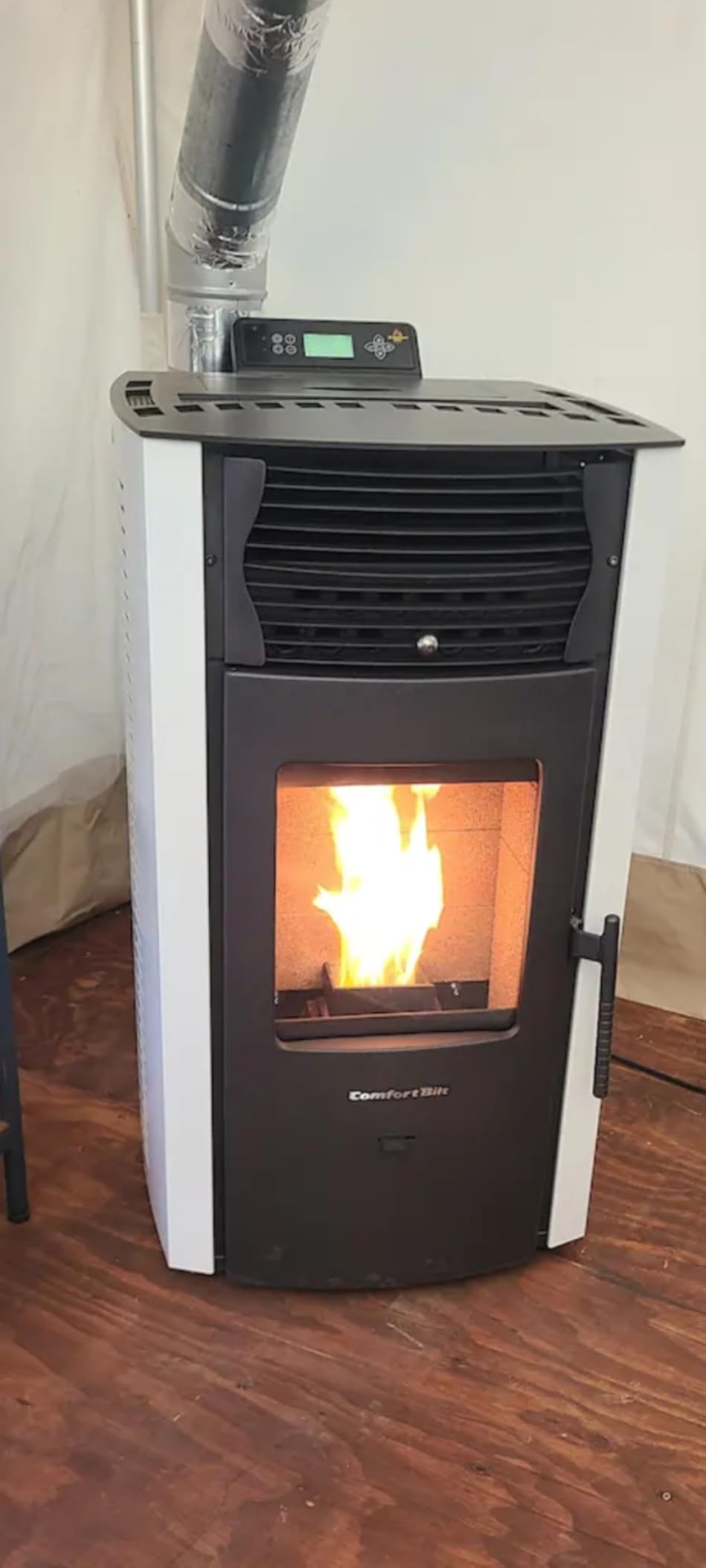
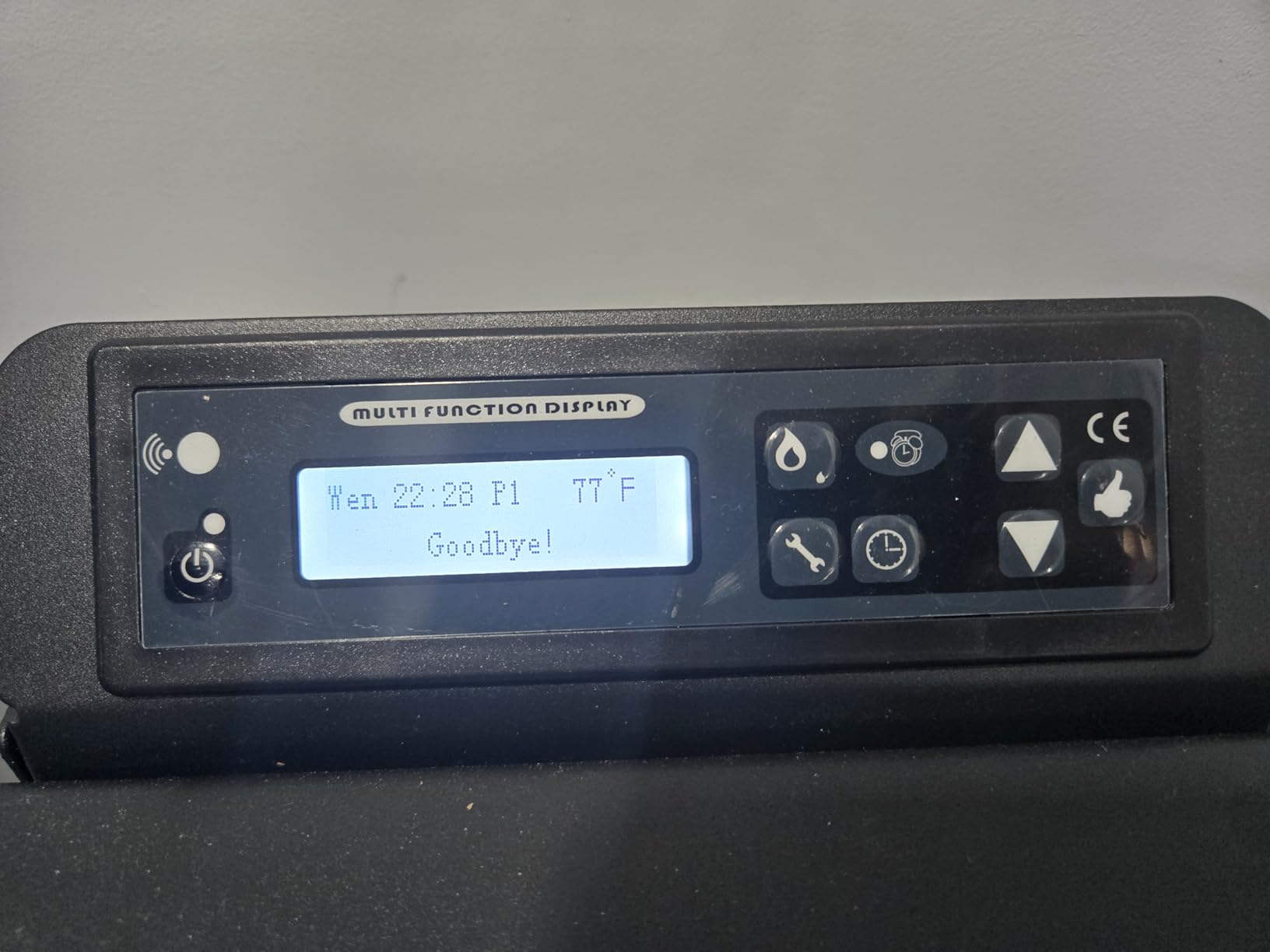
The control package is worth the price on its own. Five heat settings, a programmable thermostat, automatic ignition and a handheld remote are all included, and the unit is EPA and CSA certified, which matters if your state or insurance provider asks for a listed appliance. The bay-view window and ash pan make the daily routine less fiddly than the bare-bones models in this group.
What to check before you buy the HP50S
Read the burn pot maintenance schedule in the manual before you commit. This stove asks more of you than the feature list implies, and the reviews are honest about that. Owners who built the daily habit into their routine rate it 4.5; owners who did not describe the same stove differently.
Where the HP50S disappoints
It will not heat a large home in a cold climate on its own. The 2,200 sq. ft. figure is qualified for mild temperature conditions, and 42,000 BTU is a mid-range output that suits a main floor or a well-insulated space rather than a whole house in a northern winter.
There is no published efficiency figure or warranty term on the listing, which makes it harder to project fuel costs over a decade. You are buying on rating and fit rather than on disclosed specs.
6. Cleveland Iron Works 130 lb Hopper – Best for Multi-Day Burn Time
Cleveland Iron Works Large Pellet Stove – 130lb Hopper
29,501 BTU
2,000-3,000 sq. ft.
130 lb. hopper
Cast iron
WiFi
Pros
- Hopper capacity ties for the largest in the group
- close to two full 40 lb. bags
- Built-in WiFi with app-based scheduling and remote control
- Cast iron construction holds heat after the fire dies
- Owners cite fast heating and even temperatures
Cons
- Rated hopper capacity overstates what fits
- Owners report the app eco and scheduling modes behave inconsistently
- One-year limited warranty is the shortest in this group
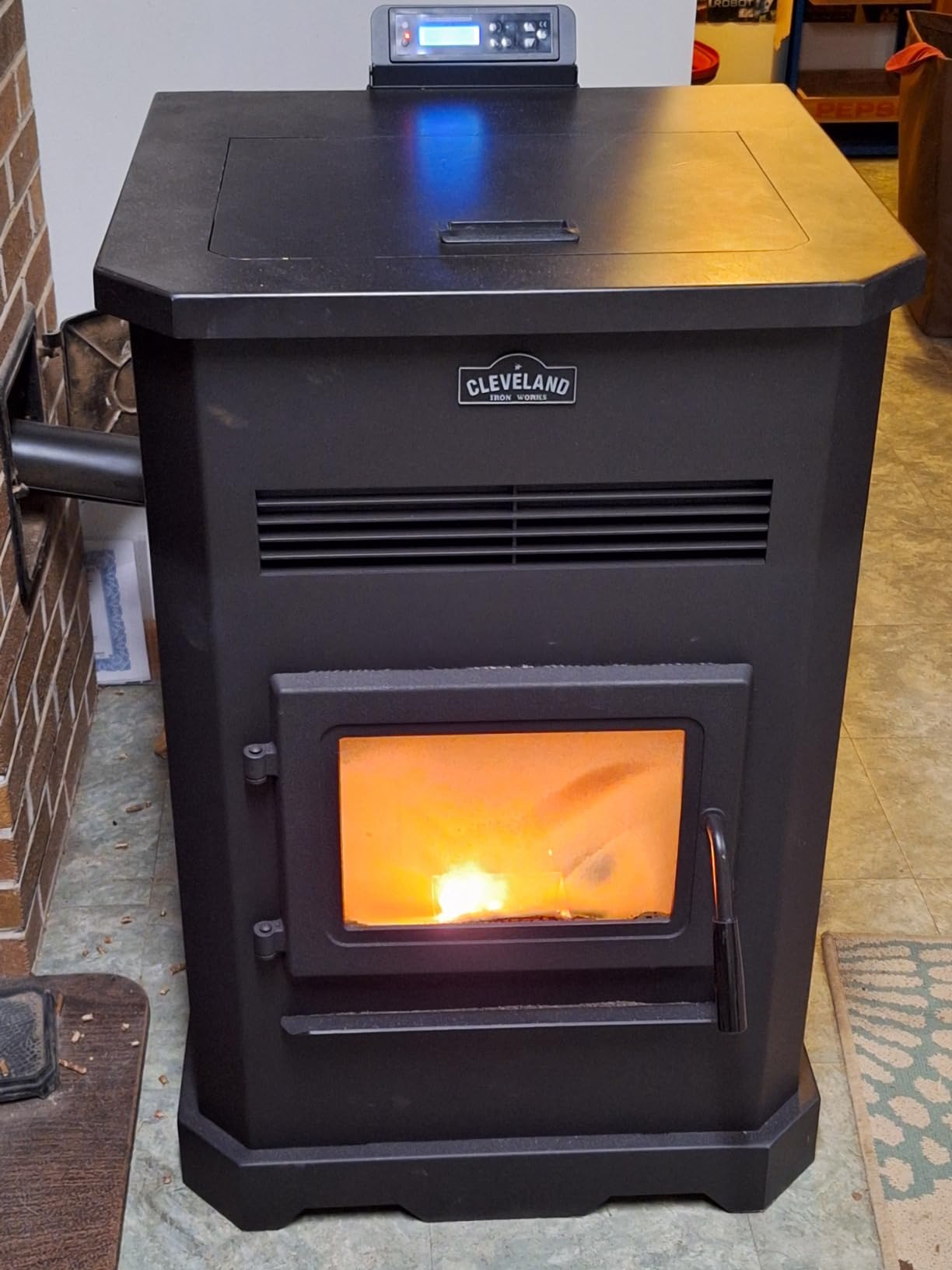
If your priority is refilling twice a year rather than twice a week, this is the stove. On owner measurements it holds roughly 115 lb. of pellets, close to three 40 lb. bags. In a cold-climate home that is the difference between topping up and not thinking about fuel for days.
It rates 4.2 across 55 reviews with 66% five-star, and the praise is concentrated on heating speed and even temperatures. Cast iron construction, 209.4 pounds, 27.6 inches deep by 24.49 inches wide by 36.75 inches tall, direct vent, floor mount.
The catch is that a big hopper does not make a big stove. Output is 29,501 BTU against a stated 2,000 to 3,000 sq. ft. coverage claim, so this unit relies on a low and steady feed rate rather than a high one. Owners report fast house heating on start-up, but the stove is described as even rather than powerful.
What to check before you buy the 130 lb. Hopper Stove
Verify the real hopper depth yourself. Owners measure closer to 115 lb. than the 130 lb. name implies, so if you are sizing your pellet storage around that number, plan the storage on the lower figure.
Check whether WiFi is a deal-breaker. The app is useful for scheduling, but owners report its eco and scheduling modes behaving inconsistently, so treat the remote as your primary control.
Where the 130 lb. Hopper Stove disappoints
The 1-year limited warranty is the shortest we found among the models with meaningful review volume. Several buyers report electronics or mechanical parts failing and being responsible for the repair or the part, and a one-year term gives you almost no protection on a stove you expect to run for a decade.
It is also 209 pounds of cast iron across a fairly large footprint, so it needs a real hearth pad and a clear path during installation. If your space is tight, the slimmer HP50S gives you more placement options.
7. ComfortBilt HP22i – Best Pellet Stove Insert for an Existing Fireplace
ComfortBilt HP22i Pellet Stove Fireplace Insert, 2,800 sq. ft., 47 lb. Hopper, Black
41,000 BTU
2,800 sq. ft.
47 lb. hopper
Zero-clearance insert
Pellet and wood
Pros
- Zero-clearance insert format fits an existing fireplace opening
- Highest five-star share of any model here at 77%
- Finishing shroud
- ash vacuum and remote all included
- 47 lb. hopper with up to 18 hours of burn time
- EPA and CSA certified with auto ignition
Cons
- Shortest burn time of the ComfortBilt models in this roundup
- Requires an existing fireplace cavity and a correctly sized flue
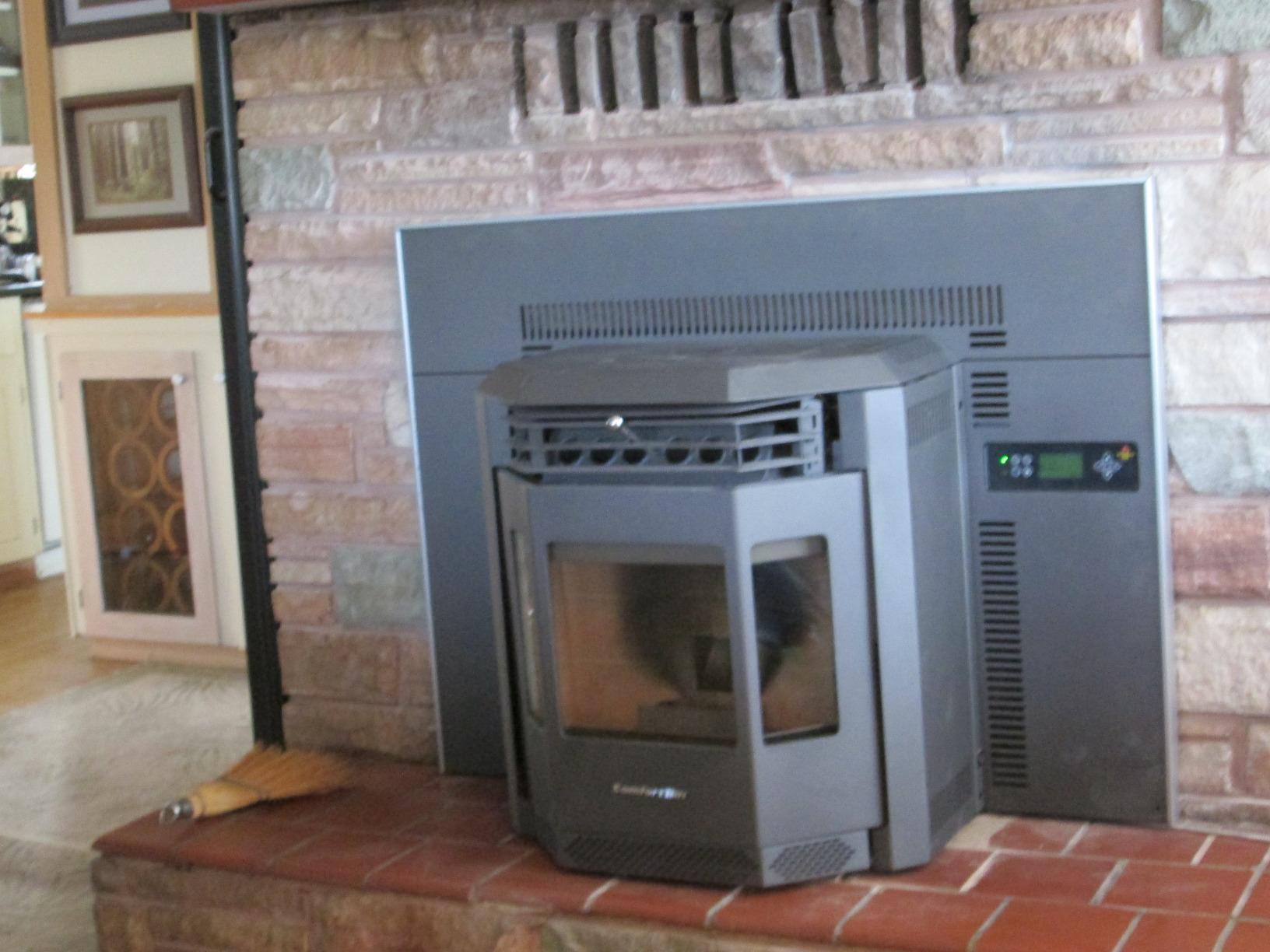
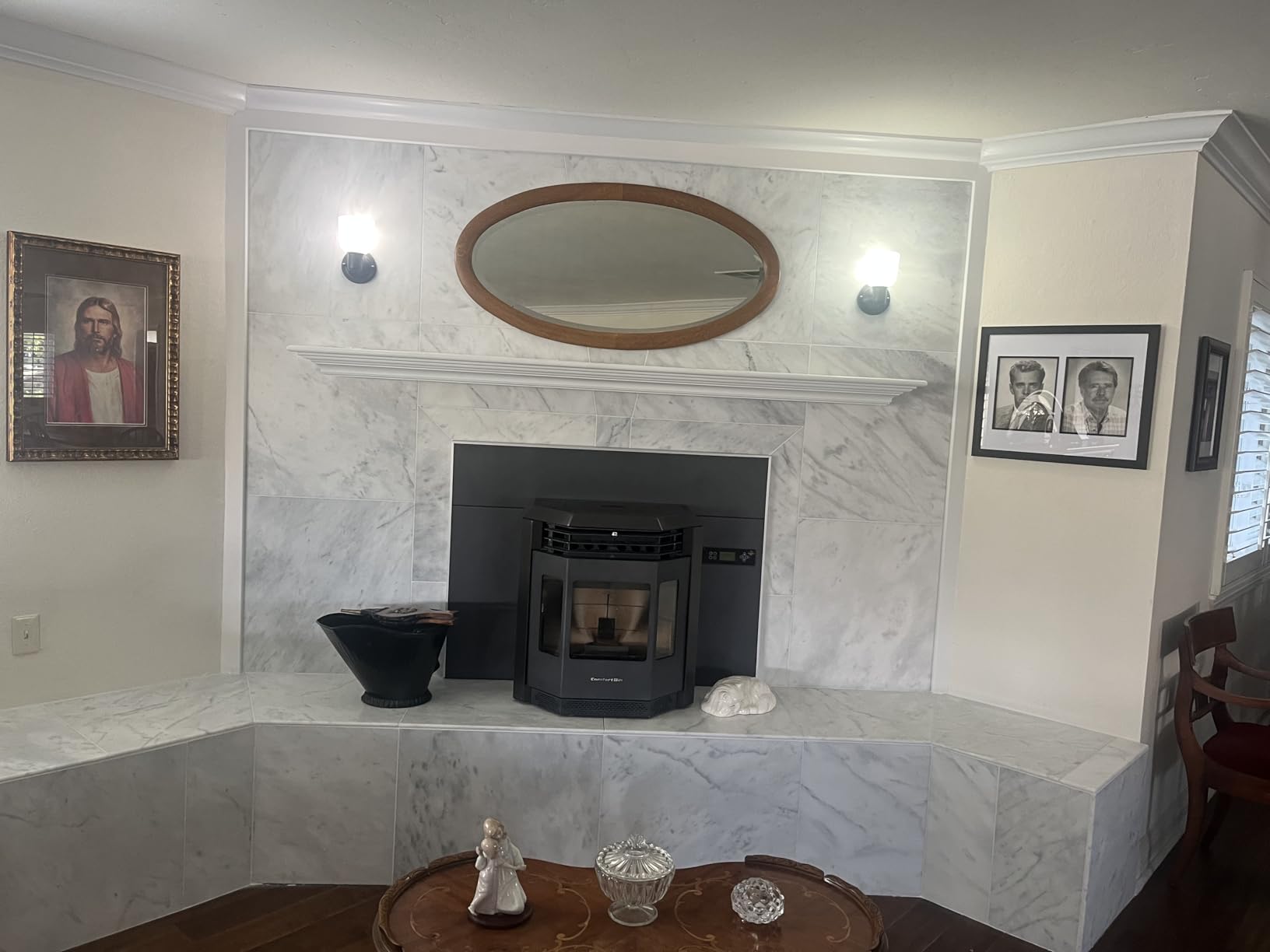
If you already have a masonry fireplace, the HP22i is a different proposition from every other stove on this list. It is a zero-clearance insert, so it drops into the existing opening instead of standing in front of it, which keeps the finished look of the room intact and moves the heat source to the centre of the house where it works harder.
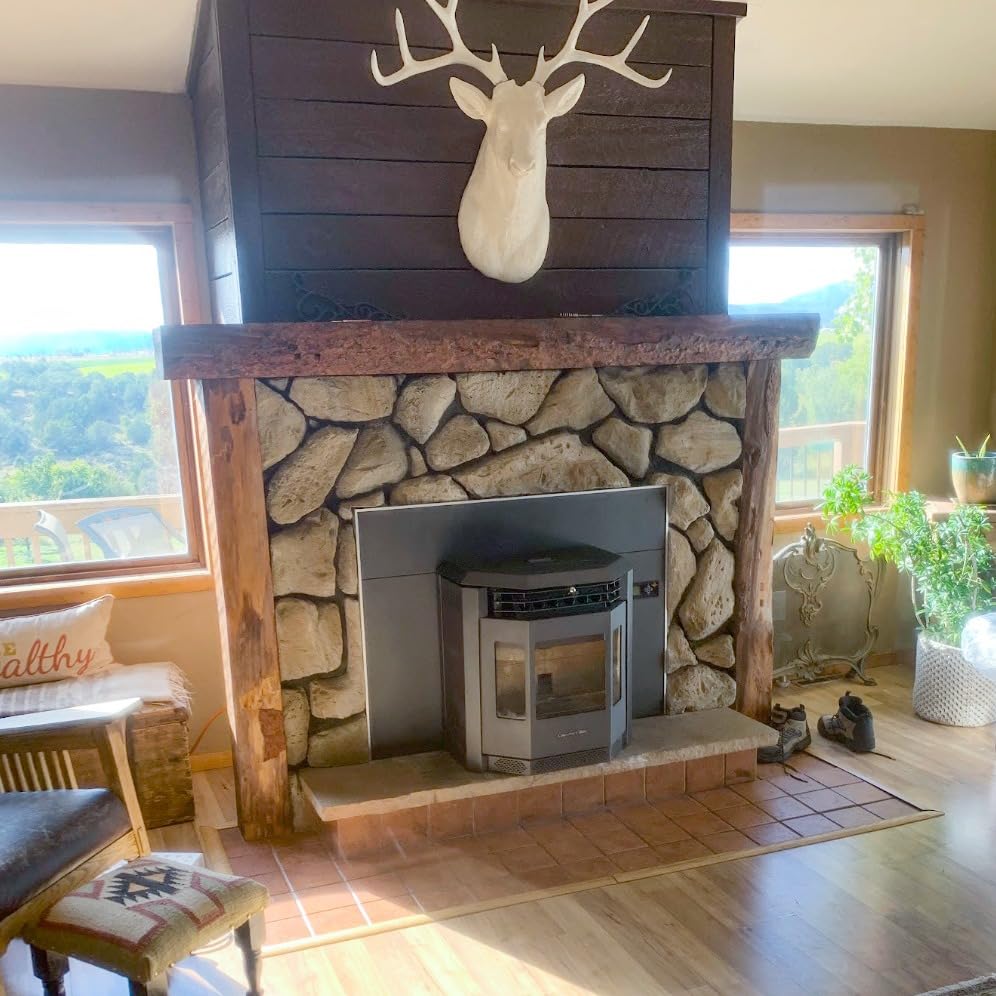
The 77% five-star share is the highest of the eleven models, with 9% one-star, across 52 reviews. Buyers consistently name the included finishing shroud, which handles the gap between the insert and the fireplace surround, along with the ash vacuum, which is a genuinely useful inclusion rather than a gimmick.
Output is 41,000 BTU with coverage up to 2,800 sq. ft., a 47 lb. hopper for up to 18 hours of burn time, five power settings, a programmable thermostat, auto ignition, a bay-view window, and a room blower. It weighs 273 pounds and measures 18 inches deep by 19 inches wide by 25 inches tall.
What to check before you buy the HP22i
Have the fireplace opening and the flue measured before ordering. The insert needs a cavity that fits its 19-inch width and a flue sized for a pellet appliance. Retrofitting a fireplace with a small or non-standard opening is the single most common reason insert purchases go wrong.
Check the mantel and trim clearances. Zero-clearance means the unit can sit closer to combustibles than a freestanding stove, but it does not mean it can be installed with no regard to the surround, and your local inspector will want to see the listing’s stated clearances honoured.
Where the HP22i disappoints
Eighteen hours of burn time is the shortest of the ComfortBilt models here, and the 47 lb. hopper is modest against the 55 lb. one on the HP22. In a cold climate you will be refilling more often than the large-hopper stoves, and the insert position in the middle of the house means a higher pellet consumption rate.
It is also the least flexible purchase on the list. Once it is in the fireplace, moving it means redoing the surround, so be certain the opening suits it before the stove arrives.
8. Castle 41278 Serenity – Best Pellet Stove for Easy Cleaning
Castle 41278 Serenity Pellet Stove, 1,500 square ft. Heating Capability, Smart Controller Features Manual, Weekly, Thermostat and Eco Operating Modes, 40lb Hopper Capacity, Easy Clean Design, Black
32,000 BTU
1,500 sq. ft.
40 lb. hopper
Open-tube exchanger
Vent-free at 77 W
Pros
- Open-tube heat exchanger with no hidden chambers to scrub
- Manual
- weekly
- thermostat and eco modes all programmable by remote
- Large viewing window with owners reporting lower winter bills
- Self-diagnostic mode on the control panel
Cons
- A one-star review reports a control board fault within the first season
- Some customers hit dead exhaust motors and slow parts support
- 40 lb. hopper is small next to the 66 and 130 lb. models
- Requires a truck delivery appointment and a separate vent install
The Serenity solves one specific problem better than anything else here: cleaning. Its open-tube heat exchanger has no corrugations and no hidden chambers, so there is nowhere for ash to sit and cook onto the steel. Owners who bought it for that reason report vacuuming it every other day and nothing more.
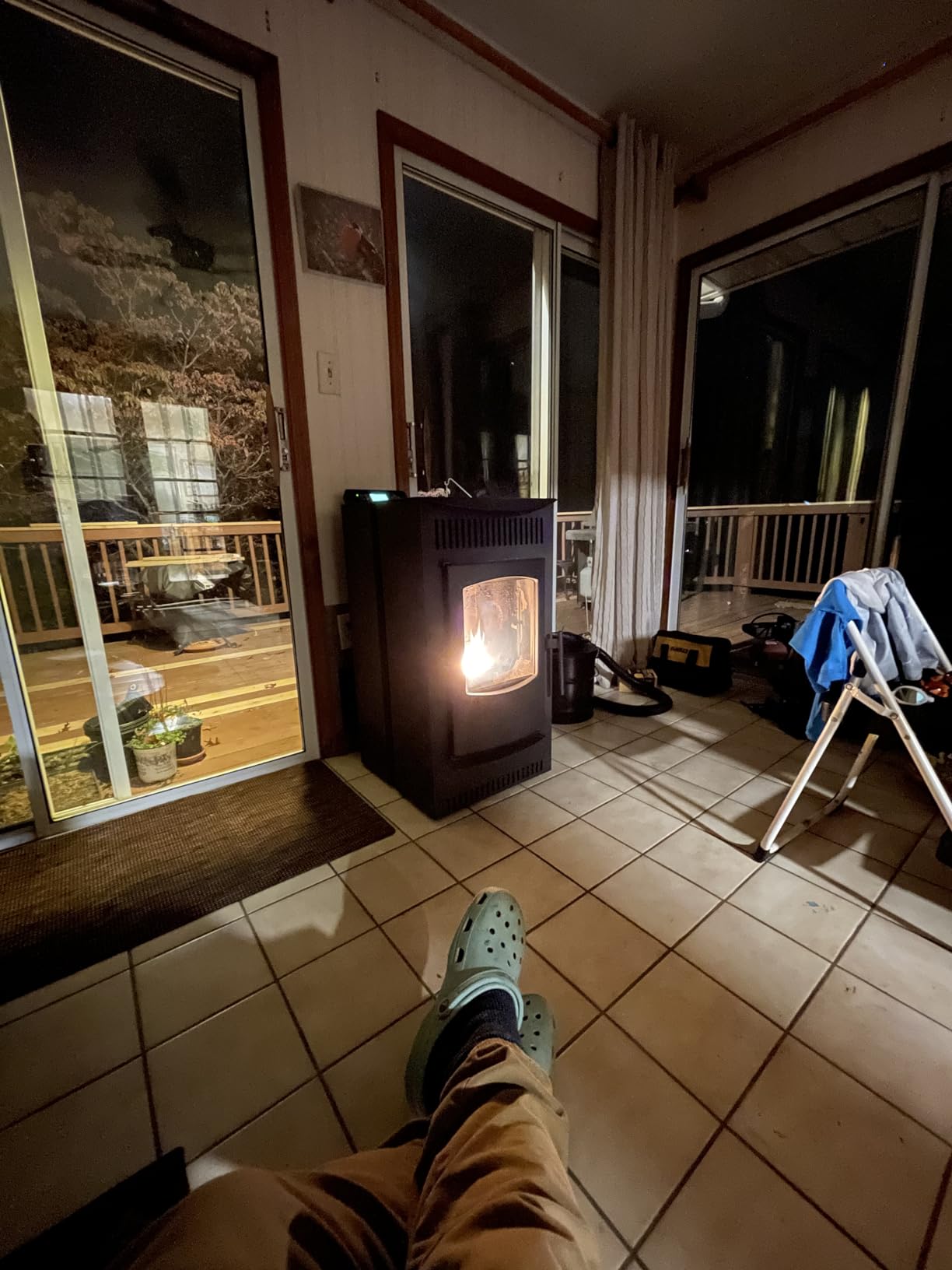
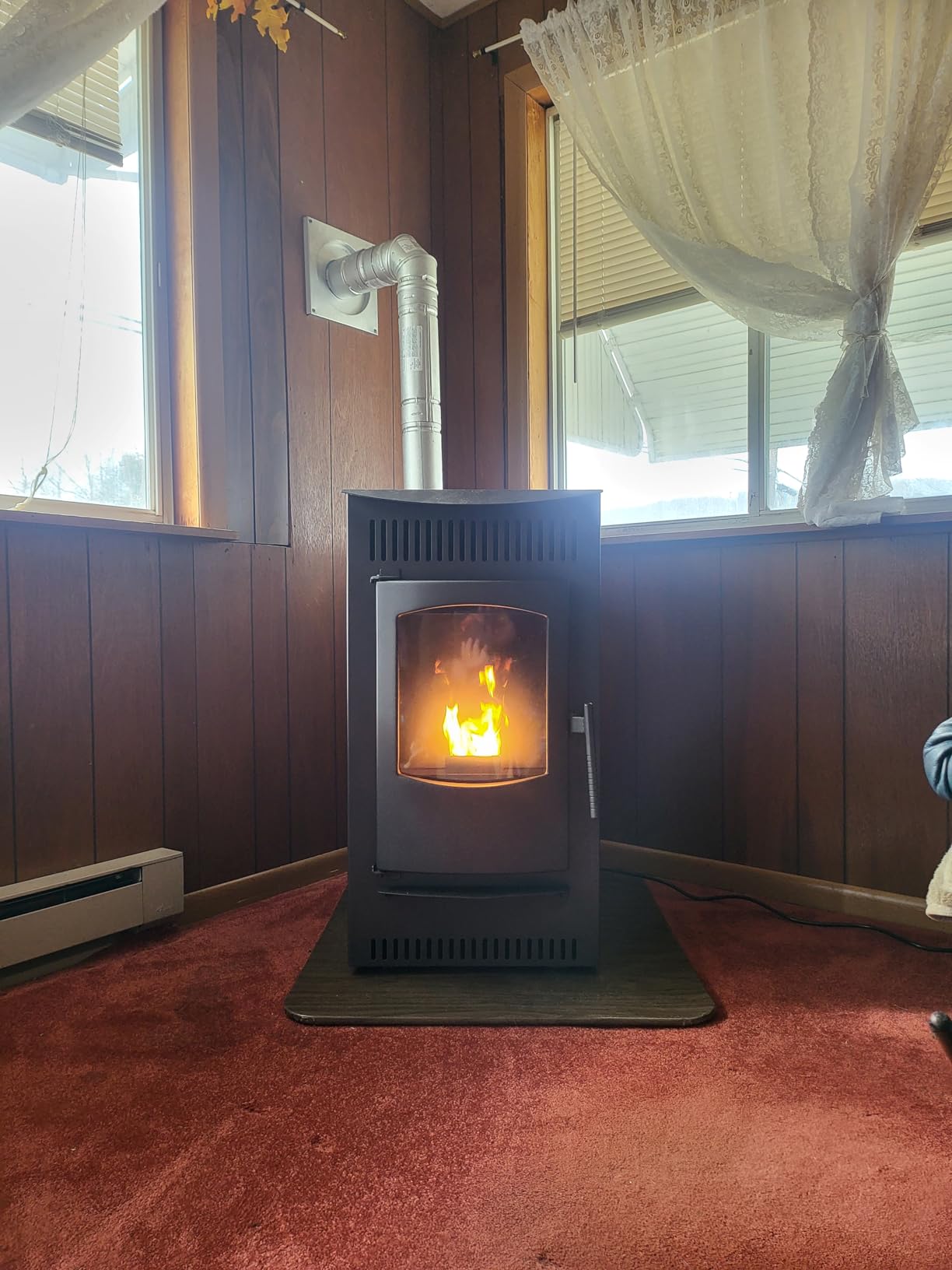
At 32,000 BTU it covers 1,500 sq. ft. from a 40 lb. hopper, and it is vent-free, drawing only 77 W at 120 V. That means no pellet flue run at all, which removes one of the two most expensive parts of a typical installation. Alloy steel body, 186 pounds, 23.84 inches deep by 18.23 inches wide by 36.35 inches tall.
The 3.9 average across 46 reviews has the widest gap between enthusiasm and complaint of any model here, at 63% five-star against 17% one-star. Long-term owners are emphatic in both directions, which tells you the outcome depends heavily on your own tolerance for maintenance and electronics.
What to check before you buy the Serenity
Confirm the vent-free claim is legal where you live and fits your space. Vent-free operation depends on room size and air exchange as much as the stove, and code requirements vary. A vent-free unit in a small, well-insulated room needs deliberate thought about fresh air.
Where the Serenity disappoints
Parts support is the recurring complaint. Several owners report dead exhaust motors and describe reaching support as slow, against a 1-year limited warranty. If the exhaust motor is a single point of failure in your plan, ask a dealer to source the part before you commit.
You will also refill more often. A 40 lb. hopper is mid-sized in this group and small next to the 66 lb. and 130 lb. models, and in a cold climate that difference shows up every week.
9. ComfortBilt HP40 Alpine – Best Small Pellet Stove for Workshops and Cabins
ComfortBilt HP40 Alpine Pellet Stove, 1,500 sq. ft., 25 lb. Hopper, Black
26,224 BTU
1,500 sq. ft.
25 lb. hopper
81% efficiency
21 inch footprint
Pros
- Smallest footprint in the group at 21 by 17 by 30 inches
- 81% published efficiency figure
- Compact burn pot is easy to clean and runs about 50-66 W
- Five heat settings with manual
- thermostat and eco modes
Cons
- 25 lb. hopper means more frequent refills and handling 40 lb. bags
- Owners report the fan and feed system is noticeably loud
- No adjustment for the feeder screw or blower speed out of the box
- The eco mode cycles the igniter and many owners run manual only
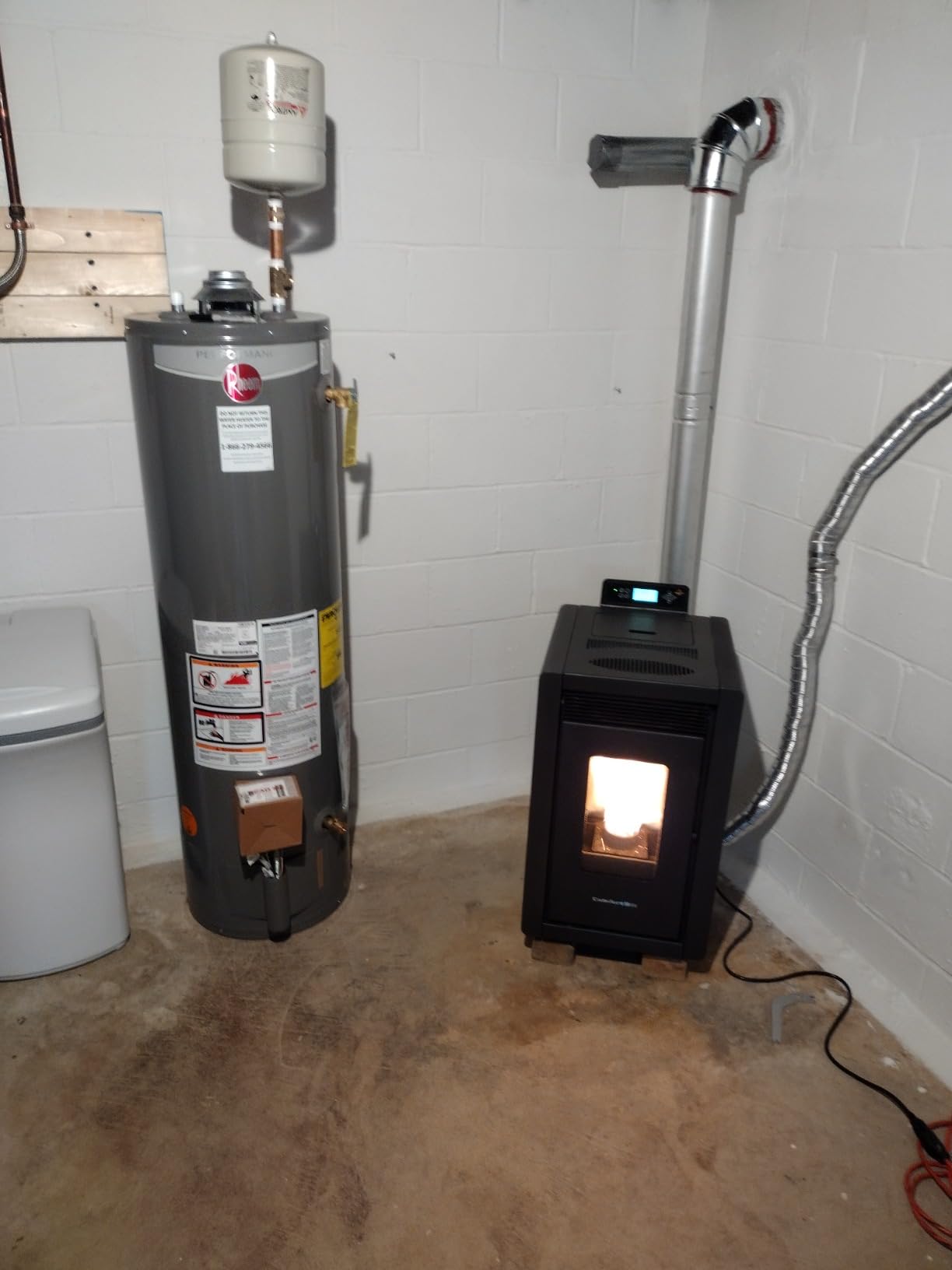
The Alpine is the smallest stove we reviewed, which makes it the practical choice for a 1,000 sq. ft. basement home, a garage, a workshop, or a sunroom. It measures 21 inches deep by 17 inches wide by 30 inches tall, weighs 167 pounds, and at 26,224 BTU it is comfortably oversized for spaces of that size. It is also one of only two models here with a published efficiency figure, at 81%, which makes it possible to project fuel cost rather than guess.
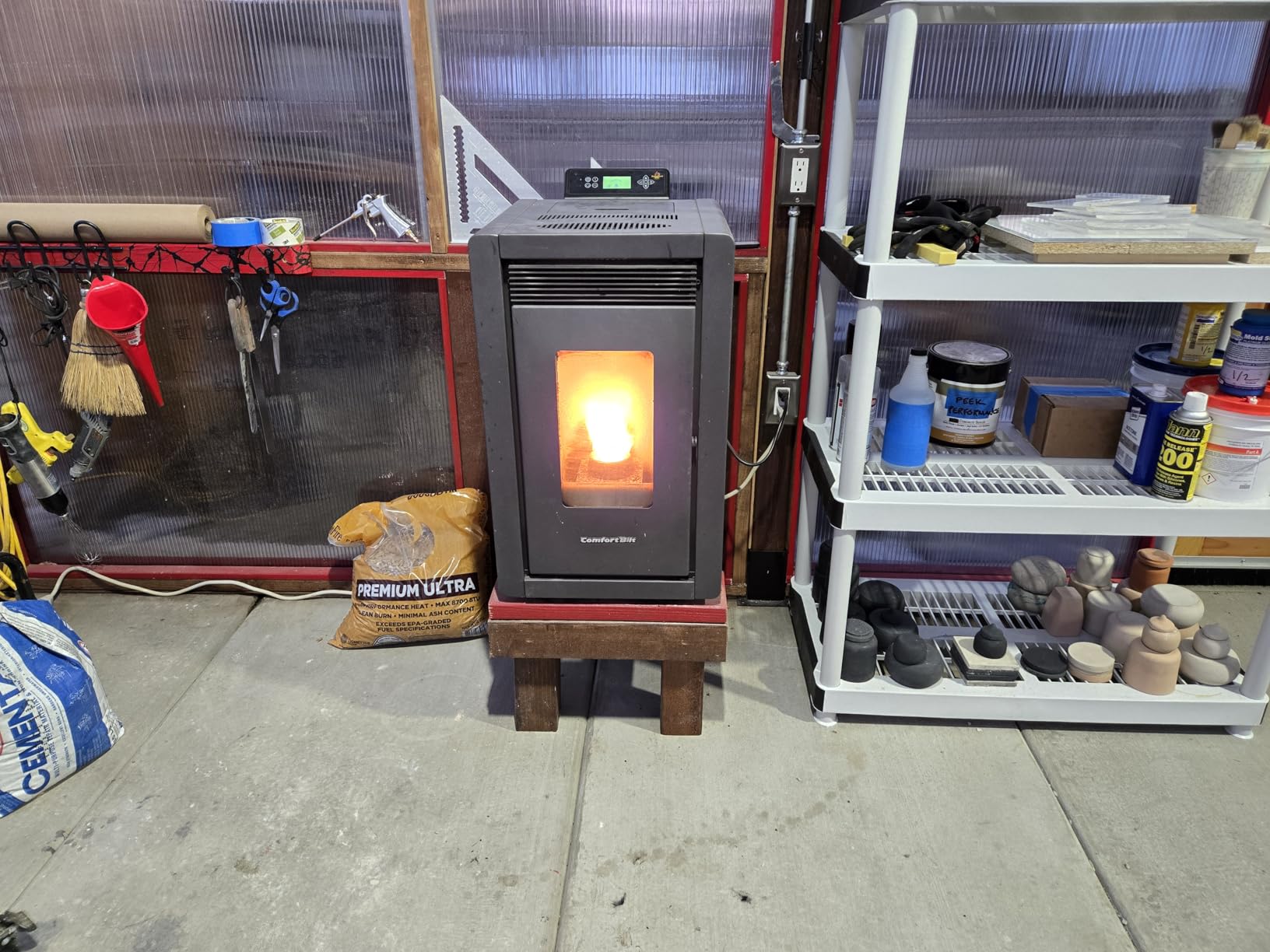
Owners appreciate the control set for a stove this small: five heat settings with manual, thermostat, and eco modes, plus remote and auto ignition, on an EPA and CSA certified direct vent unit. Draw is modest, around 50 to 66 W once running.
Two things temper the recommendation. The 24-review base is thin, and the rating distribution is unusually flat at 51% five-star with 19% three-star, which reads as a model people are comfortable with rather than one they recommend enthusiastically.
What to check before you buy the Alpine
Plan your pellet storage around the 25 lb. hopper. It is the smallest in the group, and every refill means handling 40 lb. bags in whatever space the stove occupies. For a garage or workshop that is an annoyance; for a main-floor installation it is a weekly chore.
Where the Alpine disappoints
It is loud. Several owners describe the fan and feed system as noticeably noisy, and that is a real problem if the stove sits in a workshop where you are trying to hear a saw or in a room where you want to talk.
The eco mode cycles the igniter, which shortens its life, and enough owners have made that observation that many run manual mode only. If you were counting on eco mode to cut fuel use, you will probably end up not using it.
10. PelPro PP70 – Most Efficient Pellet Stove We Reviewed
PelPro PP70 Pellet Stove for Home Heating – 70 lb Hopper, 42,500 BTU Heats up to 2,000 Sq. Ft., Easy-Dial Temp Control, Built-in Thermostat with Auto-Ignition, Variable Speed Blower
42,500 BTU
2,000 sq. ft.
70 lb. hopper
EPA-certified 88.5% efficiency
Vent-free
Pros
- Highest published efficiency in the group at EPA-certified 88.5%
- 70 lb. hopper holds roughly two days of fuel
- Made in the USA with a 5-year steel parts warranty
- Vent-free with a fresh air kit included for shops
- cabins and mobile homes
- 10 variable heat settings with a simple dial control
Cons
- Lowest owner rating in the group at 3.4 with 37% one-star reviews
- No ash tray
- so ash builds around the igniter and can trigger shutdowns
- Auger jamming reported and the thermostat holds temperature only low or high
- Feeder motor and other parts reported failing within the first season
The PP70 wins on paper. At 42,500 BTU with an EPA-certified 88.5% efficiency, it is the most efficient stove we reviewed and the only one combining that figure with a 70 lb. hopper that holds up to two days of fuel. It is made in the USA, vent-free, and includes a fresh air kit for shops, cabins, garages, and mobile homes.
It is also the model we are least comfortable recommending without qualification. At 3.4 across 19 reviews it has the lowest average in the group and 37% one-star reviews, which is a serious signal on a stove you would be relying on as your primary heat source.
The complaints cluster in three places. Owners report auger jamming, early failures of the feeder motor and other components, and ash-related shutdowns that trace back to a single design decision: there is no ash tray or drawer, so ash collects around the igniter until the stove stops.
The thermostat is also reported as bimodal in practice, holding temperature at either low or high rather than anything in between, which makes the dial control less useful than 10 settings would suggest.
What to check before you buy the PP70
Find out how parts support works before you buy, and how much it costs. Owners report self-repair being expected, and the warranty is 1 year on electrical, 5 years on steel parts with the fire pot excluded, and only 90 days on replacement parts. That 90-day term is the shortest in this roundup and covers the components most likely to fail.
Where the PP70 disappoints
At 19 reviews this is one of the least corroborated listings in the group, and the 37% one-star share is the highest by a wide margin. Forum owners on r/PelletStoveTalk have reported auger failures on PelPro units specifically, and that pattern matches what appears in the review set.
The efficiency advantage is real but partly theoretical. An 88.5% rating only translates into savings if the stove keeps running reliably, and this is the one model here where the reliability question is genuinely open.
11. Canyon Lodge Large Pellet Stove – Best Mobile-Home-Approved Model
Canyon Lodge Large Pellet Stove
29,501 BTU
2,000-3,000 sq. ft.
130 lb. hopper
Vent-free
Mobile home approved
Pros
- Mobile home approved with a fresh air kit included
- 130 lb. hopper for long intervals between refills
- Whisper Quiet Blower Technology for low noise in living spaces
- Large viewing glass with an air wash system
- Vent-free and EPA approved
Cons
- Thinnest review base in the group at only 17 reviews
- Warranty terms are listed only as Other with no detail
If you are in a manufactured home, this is the one to shortlist. It is mobile home approved, vent-free, and comes with a fresh air kit in the box, which removes the two most common installation blockers for pellet stoves in mobile housing. Stove feet, power cord, screen and literature are also included.
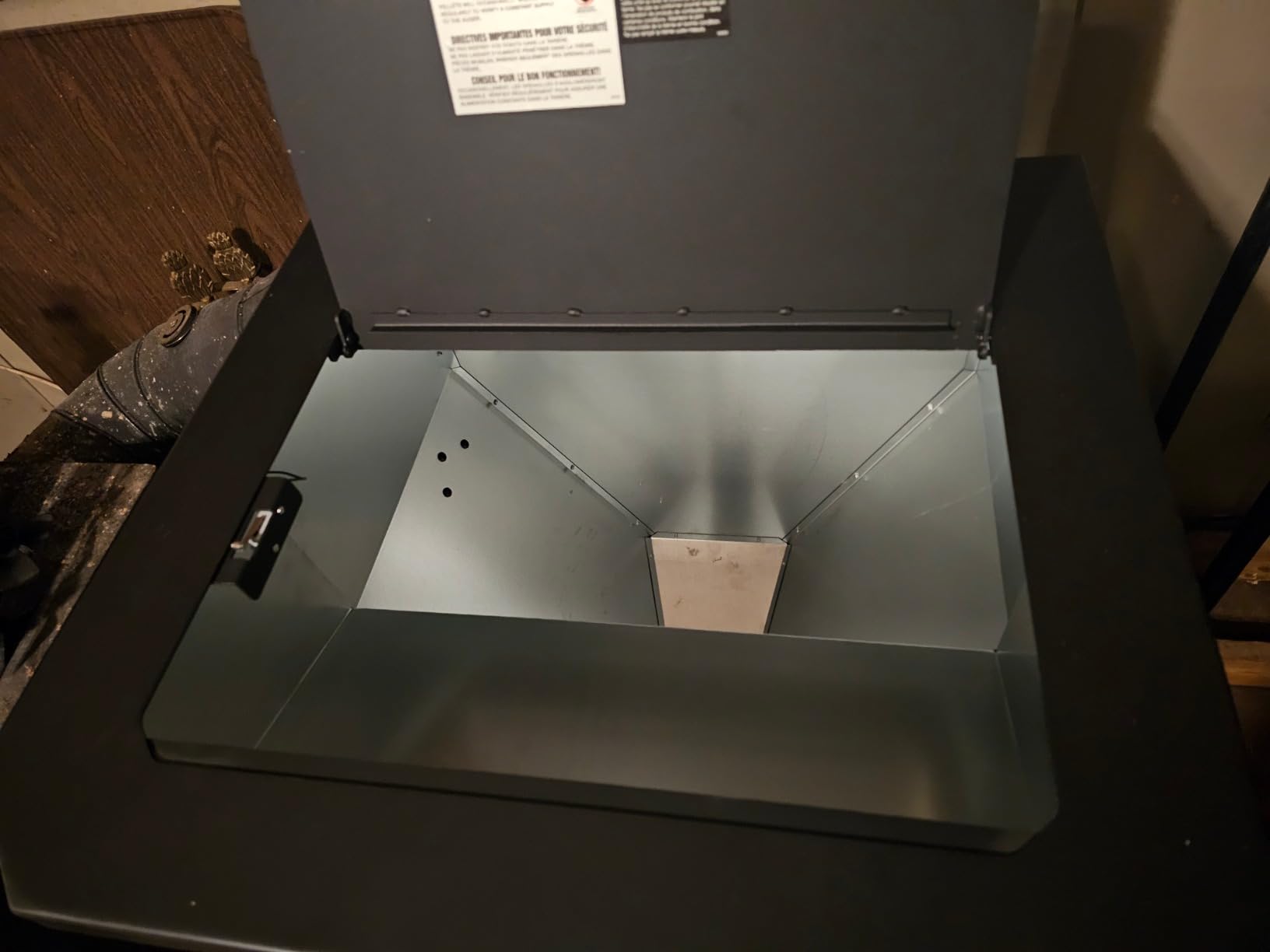
The 130 lb. hopper is the headline number and owners confirm the practical benefit. With a Whisper Quiet Blower and a large viewing glass with an air wash system, it is built for a space where noise and a sooty window are both complaints.
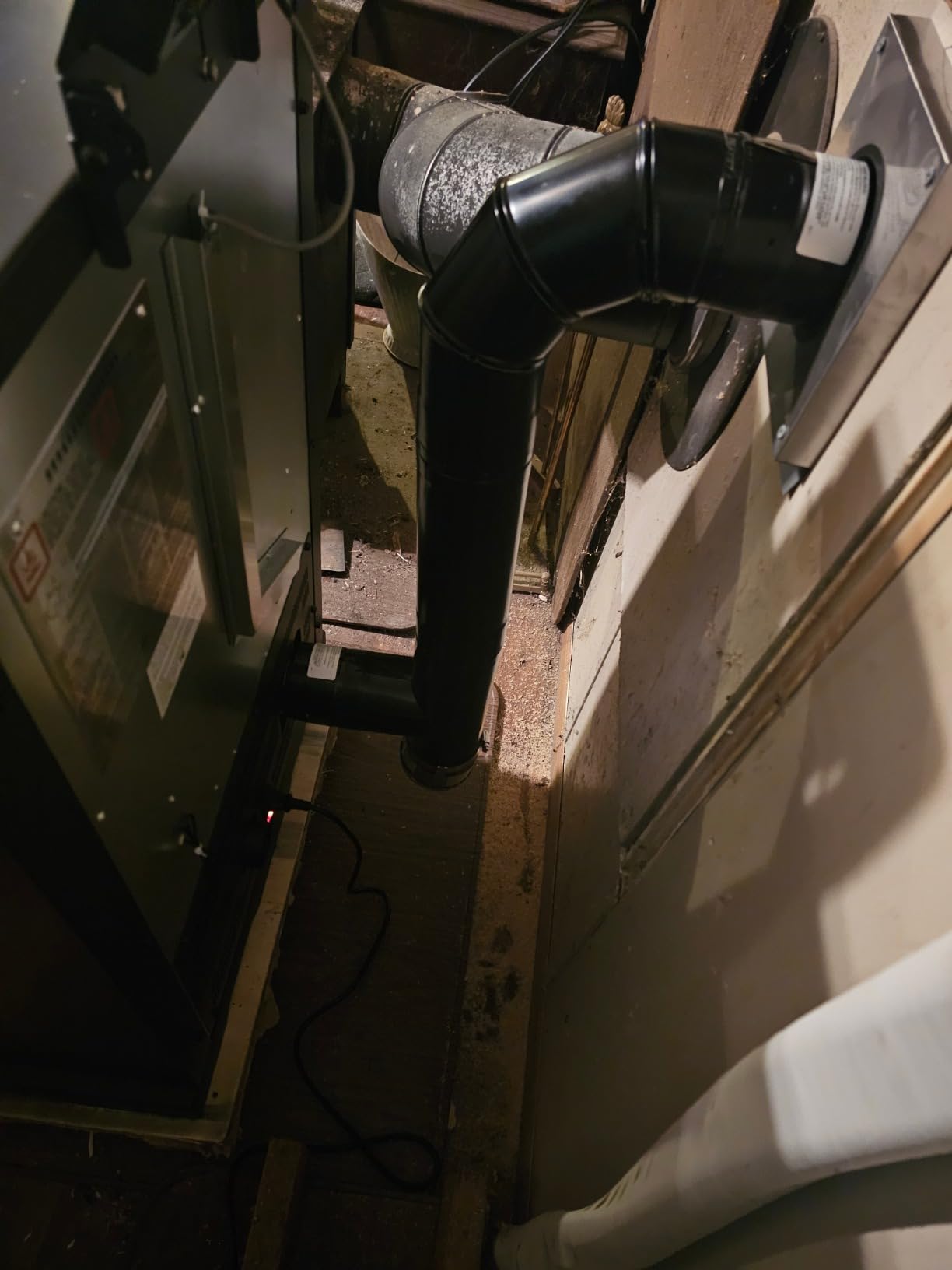
Output is 29,501 BTU for 2,000 to 3,000 sq. ft. coverage, with automatic ignition, smart home technology, and a steel fire pot. It weighs 209.4 pounds and measures 27.6 inches deep by 25.75 inches wide by 36.73 inches tall.
The honest caveat is evidence. At 17 reviews with a 3.9 average, this is the least corroborated listing in the roundup, and the warranty is listed only as Other with no detail at all. Ask for the written warranty terms in full before you commit.
What to check before you buy the Canyon Lodge
Get the warranty in writing. A listing that says only Other leaves you with no enforceable expectation on parts, and a stove you intend to run as primary heat for a manufactured home needs at least a defined parts term.
Confirm the mobile home approval applies to your specific unit, not just the model family, and check whether your state or park requires a fresh air kit and a specific hearth pad configuration.
Where the Canyon Lodge disappoints
Vent-free operation in a small manufactured home is a genuine design question rather than a feature. Without a flue, the stove depends on room air exchange, and tight mobile-home construction is exactly the condition where that needs careful thought.
With 17 reviews you are buying on spec sheet rather than on owner history. If the mobile home approval is your deciding factor and warranty terms satisfy you, the feature set is competitive; otherwise one of the better-reviewed models is the safer bet.
Pellet Stove Buying Guide: How to Choose the Right Model
How many BTUs do you need?
Most guides use a simple rule of thumb, and it is a good one: 40 BTU per sq. ft. in a mild climate and 60 BTU per sq. ft. in a cold one. A 2,000 sq. ft. house in a moderate region wants roughly 80,000 BTU of nominal capacity, but you will rarely find that in a single freestanding unit, which is why large homes often pair a pellet stove with a heat pump or a blower rather than relying on one appliance.
Hopper size and honest burn time
Hopper capacity is the number that controls how often you touch the stove, and it ranges from 25 lb. on the Alpine to a nominal 130 lb. on two units here. A 55 to 70 lb. hopper is the sweet spot for most homes: a day and a half of unattended burn, and a load you can still lift into position.
Treat the stated burn time as a laboratory figure. Forum owners repeatedly report real burn times running shorter than spec in cold weather, partly because a thermostat driving a bigger fire opens the auger more often. Owners measuring the Cleveland Iron Works 130 lb. unit also found the real capacity closer to 115 lb. than the name implies.
Top-fed versus bottom-fed hoppers
A top-fed hopper drops pellets straight down into the burn pot, so any piece that fails to ignite falls back into the auger and can jam it. A bottom-fed hopper feeds upward through a tube, so unburned pellets cannot drop back and the auger stays clear. The PS21 in this roundup uses an auger that is not exposed to the burn pot for the same reason.
Venting, hearth pads and installation
Every competitor on this topic quotes the stove price and stops. That undersells the largest cost in the project. A direct-vent freestanding unit needs a pellet vent run through an exterior wall, which on a second-floor or rear-wall installation can require a certified installer and more work than the appliance itself. A vent-free unit removes that line item entirely but moves the burden to room size and air exchange.
Do pellet stoves work in a power outage?
Most do not, which surprises people. The auger, the igniter, the combustion blower, and the room blower all run on 120V electricity, so a standard stove stops within minutes of an outage. The exception is the Wiseway, which uses a natural gravity feed and no powered blower and keeps running with the power off.
The middle option is battery backup. The PS21 runs its motors from a 24V DC system that gives over 40 hours of runtime on a pair of 12V batteries you supply. If you are in an area with frequent outages and cannot change your stove, a small uninterruptible power supply sized for the stove’s draw is a cheaper fix than most people expect.
Which pellet stove brands are most reliable?
Reliability in this category tracks the parts warranty far more than the body warranty. A lifetime body warranty means nothing if the auger motor, control board, or blower is covered for one year, and the units in this roundup with the shortest electrical terms are also the ones with the heaviest failure complaints. Look for five years or more on steel parts, and treat one-year electrical coverage as a real cost.
Brand structure is worth understanding too. Several of the brands here share manufacturing and parent ownership, which means a failure on one model tells you something about the others, and it also means parts support may be shared. That concentration is why a 3.4 rating on one model in a group is worth reading carefully before you assume a neighbouring model is safer. If your heating budget is being planned alongside other seasonal purchases, our home gym equipment guide and camping stove reviews cover the other decisions people make in the same stretch of the year.
First fire, break-in and the maintenance routine
Every manual opens with the same instruction and most people skip it. Burn your first load slowly with the door cracked and the thermostat off high, following the manufacturer’s break-in procedure, so the paint cures and the gasket seats without a hard fire. The PS21’s first burn is specifically noted by owners as feeding slightly rich, which is the same phenomenon showing up as sooty glass.
After break-in the routine is regular rather than complicated. Check the ash pan weekly. Clean the burn pot and impeller monthly, and more often in cold weather when you are running the stove hard. Have the flue and venting inspected annually, and treat a chimney fire risk as the one maintenance item you never skip. Owners who stay happy with these stoves are the ones who built the weekly ash check into the same evening as the trash.
Frequently Asked Questions
Which brand of pellet stove is the most reliable?
Reliability tracks the parts warranty more than the brand badge. Cast iron bodies from Cleveland Iron Works carry the longest steel parts terms in our group at 8 years, and the models with the most owner history here are the ComfortBilt HP22 and HP50S. Avoid any stove whose electrical coverage is one year if it will be your primary heat source, because the control board, auger motor and blower are the parts that actually fail.
What is the most reliable pellet stove on the market?
Among the eleven models we reviewed, the ComfortBilt HP22 has the strongest evidence behind it: a 4.4 average across 291 reviews, the largest verified review base in the category, with 20 hours of stated burn time on a 55 lb. hopper and both a thermostat and a remote. The HP50S scores higher at 4.5 but on 55 reviews, so we weight the volume of HP22 reviews over the HP50S average.
Why are people getting rid of their pellet stoves?
The recurring reasons are ash and clinker maintenance becoming a chore, pellet prices rising in regions with limited suppliers, auger and igniter failures on bottom-fed hoppers, and venting costs discovered after purchase. A smaller number of owners move to heat pumps for lower maintenance. The stoves that generate the fewest complaints are the ones with top-fed or burn-pot-isolated augers and large hoppers that reduce how often anyone touches them.
Do pellet stoves need electricity?
Almost all of them do. The auger, igniter, combustion blower and room blower run on 120V, so a standard stove stops heating within minutes of a power cut. Two exceptions in our group are the US Stove Wiseway, which uses a natural gravity feed and no powered blower and keeps running with the power off, and the Pellethead PS21, which carries its motors on a 24V battery backup for over 40 hours.
What is the best time to buy a pellet stove?
Buy in late spring or summer. Installation is the bottleneck rather than the appliance, and a vent run through an exterior wall often needs a certified installer who is booked out in January. Delivering in summer also lets you complete the break-in burn in warm weather before the first cold snap, and dealers carry their best selection outside peak heating season.
How much does it cost to install a pellet stove?
The stove is only part of it. Expect separate costs for a hearth pad, a pellet vent run through an exterior wall, and installation labour, and on a second-floor or rear-wall location the vent work can approach the price of the appliance. Vent-free models such as the Castle Serenity, PelPro PP70 and Canyon Lodge remove the vent line item but require adequate room air exchange and code compliance.
Final Verdict: The Best Pellet Stoves for Home Heating in 2026
The ComfortBilt HP22 is the best pellet stove for home heating overall, and it earns that on evidence rather than specification. A 4.4 average across 291 reviews, a 55 lb. hopper, a thermostat and remote, and an EPA and CSA certified direct vent design give you the most proven package in the category.
Choose around it based on one constraint. If you want the best rating rather than the best evidence, the HP50S scores 4.5 and fits in a 20.5-inch cabinet. If power fails regularly, the US Stove Wiseway GW1949 keeps burning without electricity, and the Pellethead PS21 does the same on batteries while keeping its app controls. If you have a fireplace to fill, the HP22i is the only insert here. If you barely want to touch the stove, the 130 lb. hopper models cut refills to once or twice a week.
What we would not do is buy a vent-free unit for a tight, well-insulated room without checking the air exchange, and we would not make any stove with a one-year electrical warranty the only heat source for the house. Everything else in the 2026 market is a preference call once those two boxes are ticked. When you are setting up the rest of the house, our home theater projector guide covers the room these stoves heat.