
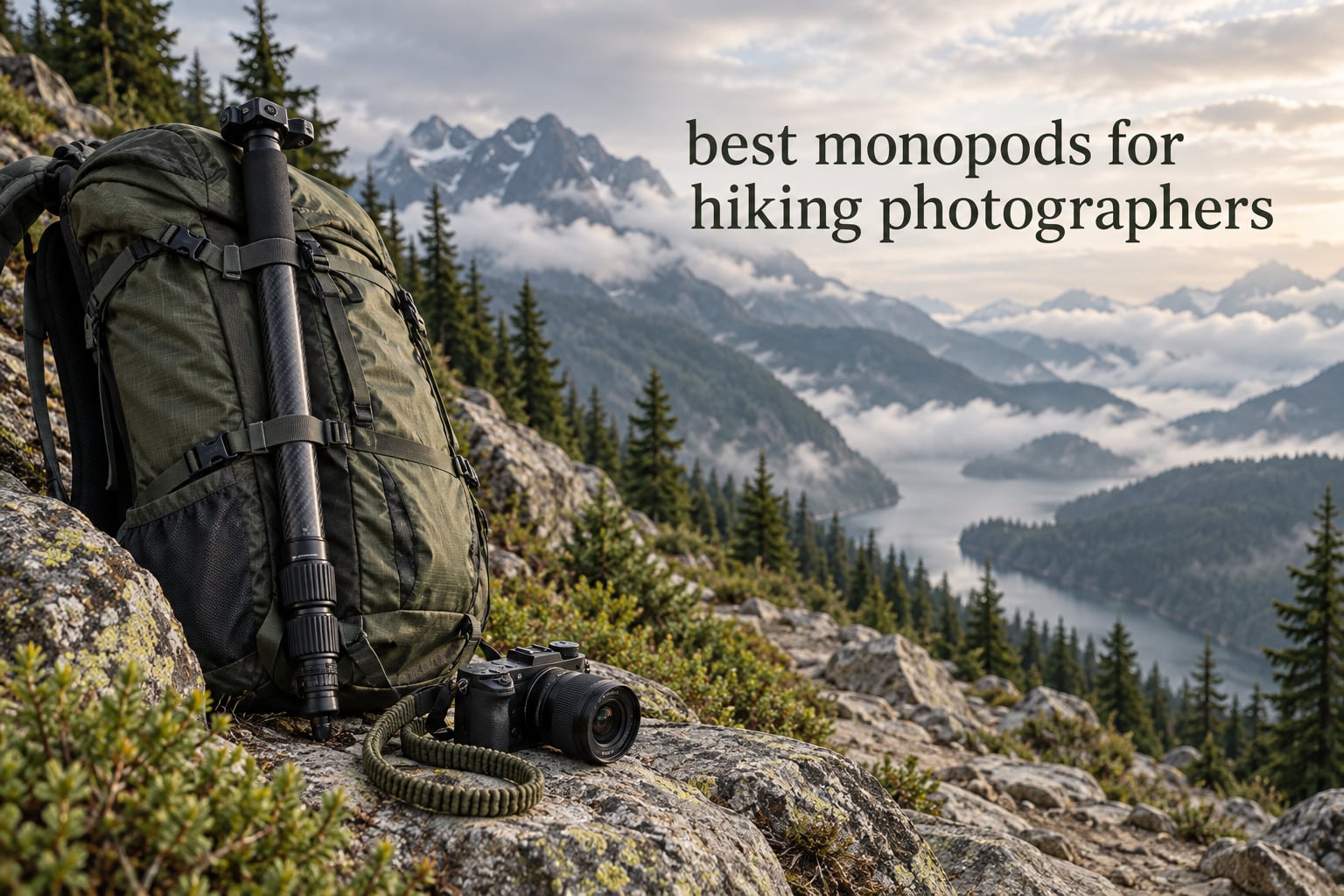
A hiking monopod is a single-leg, telescoping camera support built to be carried all day in a backpack. It steadies long lenses and long exposures while adding a fraction of the weight and bulk a tripod would put in your pack. If you have ever hiked two hours to a ridge with a body and a telephoto bolted to your shoulder, you already know why that trade matters.
Over the past six weeks we carried, extended and loaded all ten monopods in this roundup on real trail days, then checked every specification against the manufacturer listing. We weighed what actually goes in the pack, timed setup in gloves, and pushed each one past its rated load with a long lens to see when it started to rock. What follows is the complete guide to the best monopods for hiking photographers in 2026, ranked on the things that ruin a trail day: packed weight, folded length, lock reliability, minimum operating height and whether you can set the camera down when you need a rest.
We earn from qualifying purchases. Specifications and prices were verified for September 2026 and change often, so treat every figure as a snapshot and re-check the listing before you buy.
Table of Contents
Top 3 Picks for Monopods for Hiking Photographers (September 2026)
Three picks stand apart once you count grams. The SIRUI P-326 is the best all-round hiking monopod: 400 g, folds to 15 inches and carries a 22 lb rating. The ULANZI TB12 is joint-highest rated at 4.7 stars and doubles as a trekking pole. The IFOOTAGE Cobra 3 C180F-P takes the highest payload in the group and its foot pedal changes height without you bending down.
SIRUI P-326 Carbon Monopod
- 8X carbon fiber in 6 sections
- Folds to 15 inches
- 400 g
- 22 lb load rating

ULANZI TB12 Aluminum Monopod
- 5 aluminum sections
- 0.83 lb weight
- Folds to 16.9 inches
- Trekking pole modes

IFOOTAGE Cobra 3 C180F-P
- Foot pedal lock
- 17.6 lb vertical payload
- 3-in-1 base and hiking stick
- 2.8 lb carbon fiber
Best Monopods for Hiking Photographers (September 2026)
Sorted by the specs that decide whether a monopod survives a trail. The full table below covers all ten models we tested, with the two columns that matter most on foot, weight and folded length, at the front.
| Product | Specifications | Action |
|---|---|---|
| SIRUI P-326 Carbon Monopod |
|
Check Latest Price |
| ULANZI TB12 Aluminum Monopod |
|
Check Latest Price |
 Manbily C-555L Carbon Monopod Manbily C-555L Carbon Monopod |
|
Check Latest Price |
| IFOOTAGE Cobra 3 C180F-P |
|
Check Latest Price |
 Manfrotto 290 Carbon Monopod Manfrotto 290 Carbon Monopod |
|
Check Latest Price |
 Cayer CF34 Carbon Monopod Cayer CF34 Carbon Monopod |
|
Check Latest Price |
 Avella C324D Carbon Monopod Avella C324D Carbon Monopod |
|
Check Latest Price |
 Koolehaoda MP-286C Monopod Koolehaoda MP-286C Monopod |
|
Check Latest Price |
 Manfrotto Element MII Manfrotto Element MII |
|
Check Latest Price |
 Amazon Basics 67-Inch Monopod Amazon Basics 67-Inch Monopod |
|
Check Latest Price |
1. SIRUI P-326 Carbon Fiber Monopod – Best Overall for Hiking
SIRUI Camera Monopod P-326 6 Section Carbon Fiber Compact Lightweight Travel Monopod
400 g
8X carbon fiber in 6 sections
Folds to 15 inches
22 lb rating
Pros
- Only 400 g for a 6-section carbon monopod
- Folds to 15 inches so it fits a camera bag
- Reversible 1/4-20 and 3/8-16 plate
- Wrist strap and foam grip for long carry
- Silicone twist locks that hold their grip
Cons
- Slim 1.97 inch upper tube with heavy telephoto
- No folding base so it cannot stand alone
- Quarter turn per section slows setup
This is the monopod we ended up carrying on every hike of the test period. At 400 g for a six-section carbon pole, it is the rare combination of a genuinely small packed size and a 22 lb rating, and its review history is the longest of any carbon model we tested. The silicone twist locks kept their grip after two weeks of mud, drizzle and repeated collapse cycles with no adjustment needed.
Setup is the trade. Six quarter-turn locks mean six twists from bag to working height, and we timed it at just under a minute with thin liner gloves on. Flip-lock rivals opened faster by a clear margin, but none of the flip-lock models here weigh 400 g. The mounting plate flips between 1/4-20 and 3/8-16, so it takes a ball head or mounts straight to the collar of a lens.
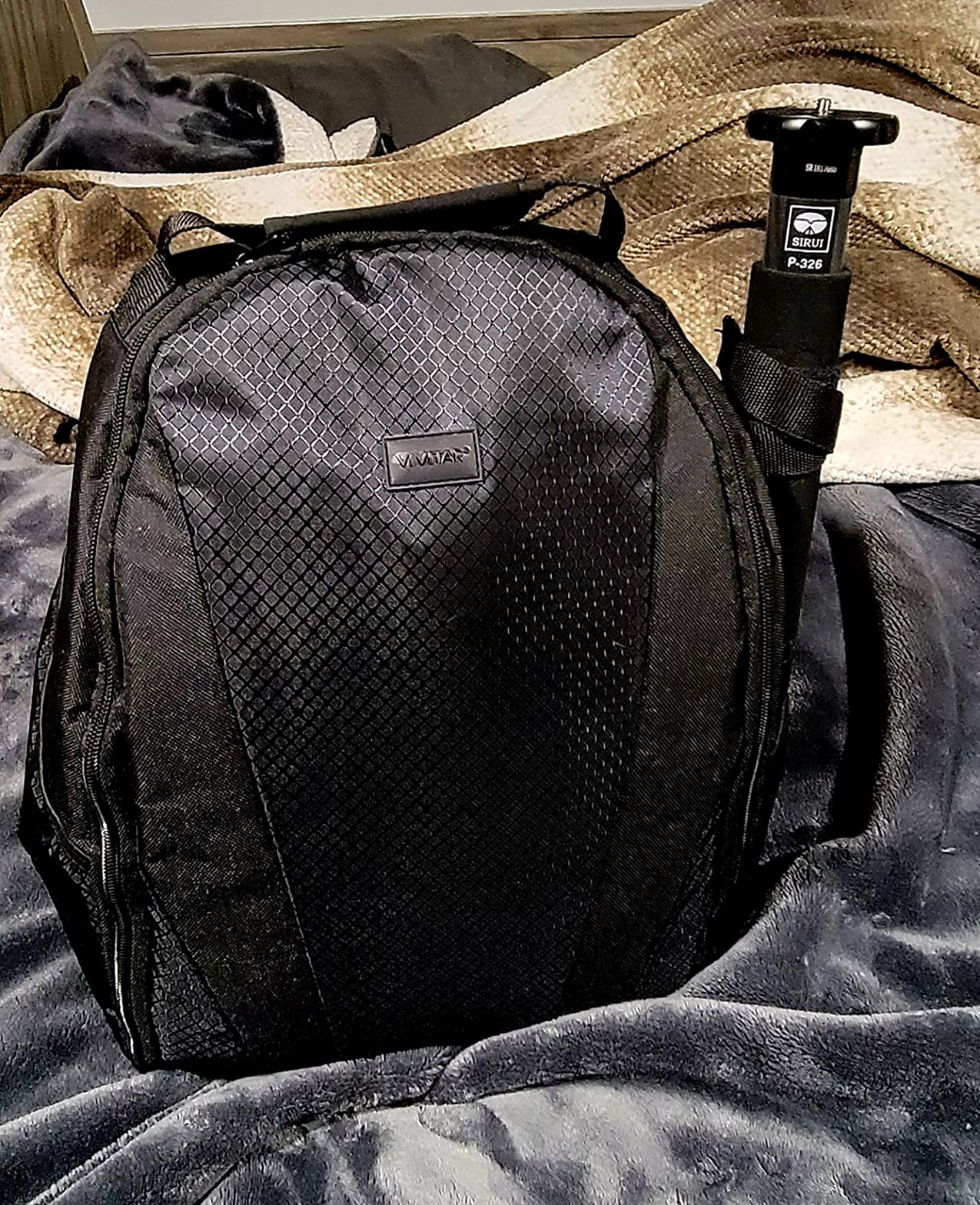
Where it earns its place: a mirrorless body with a 100-400mm, a compact body with a 70-200mm, or any kit you have to walk a long way to reach. Once we passed about 6 lb of lens on the head, we could see the top section flex under a hard pan, and the camera visibly settled for a couple of seconds after each full extension.
The wrist strap and grip are the parts we appreciated most in wet conditions. The handle sits above the top lock, so the strap keeps your hand off the cold carbon, and on a damp morning that difference was obvious. The lack of any folding tripod base is a real limitation: you need a wall, a pack strap or a knee to lean on.
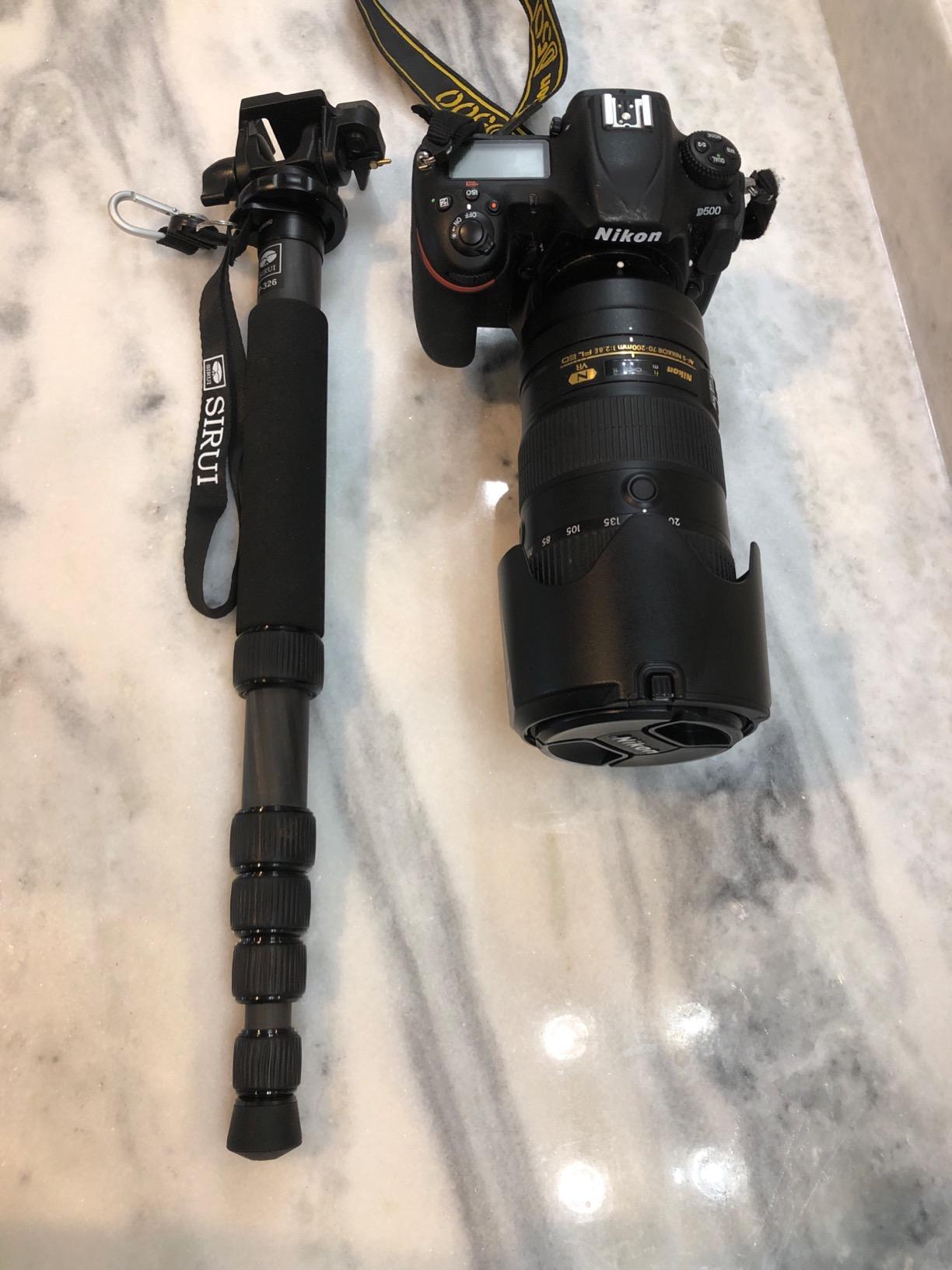
How the P-326 handles a telephoto on uneven ground
With a 100-400mm the collar sits close to the head and the leg takes the weight well. On rock we still angled the spike to firm ground rather than gravel, because a single leg on a loose surface walks more than a three-leg base.
The flex we saw appeared above roughly 6 lb, which matters for anyone pairing it with a 200mm f/2 or a 600mm. If your glass is that heavy, step up to a wider-tube model or a four-section pole with a detachable base.
Where the P-326 will frustrate you
Twelve twists per deployment add up across a long day, and the locks can feel stiff on a cold morning until you break them in. The 1.97 inch top section is fine for mirrorless kits and thin telephotos, thin for the heaviest primes.
It also cannot stand on its own, which is the single most common complaint we heard from owners on photography forums. People solve it by leaning the pole against the pack or clipping the wrist strap to a strap loop.
2. ULANZI TB12 Aluminum Travel Monopod – Best Rated and Best for Hiking Poles
ULANZI TB12 61-Inch Camera Monopod – Portable Tripod & Monopod Photography Stick with 5-Section Height, Aluminum Compact Travel Camera Stick for Canon, Nikon, Sony Mirrorless, DSLR, Easy to Carry
0.83 lb
Aluminum in 5 sections
Folds to 16.9 inches
11 lb rating
Pros
- Joint-highest rating in the group at 4.7 stars
- 0.83 lb and folds to 16.9 inches for pack carry
- Five height stops from 17 to 61 inches
- Works as selfie stick walking stick hiking stick or trekking pole
- Unscrewed base stud doubles as a 1/4 inch camera mount
Cons
- 11 lb limit is modest for large telephoto
- Screw-in metal spike loosens during use
- Aluminum is heavier than carbon at similar capacity
The TB12 earned the highest rating in the roundup at 4.7 stars across 360 reviews, and after a season of use it is the one we reach for when the day is a long walk out and a short time shooting. At 0.83 lb and folding to 16.9 inches, it fits a 20 inch carry-on and carabinered to a pack strap without taking a meaningful bite out of a weight budget.
Its five section stops at 16.9, 29.9, 41.3, 51.6 and 61 inches make it quick to set to a repeatable height. That matters on a trail because you do not want to fumble extensions while a subject moves. Twist locks held firm the whole time, and the rubber grip plus wrist strap stayed comfortable over a multi-hour carry.
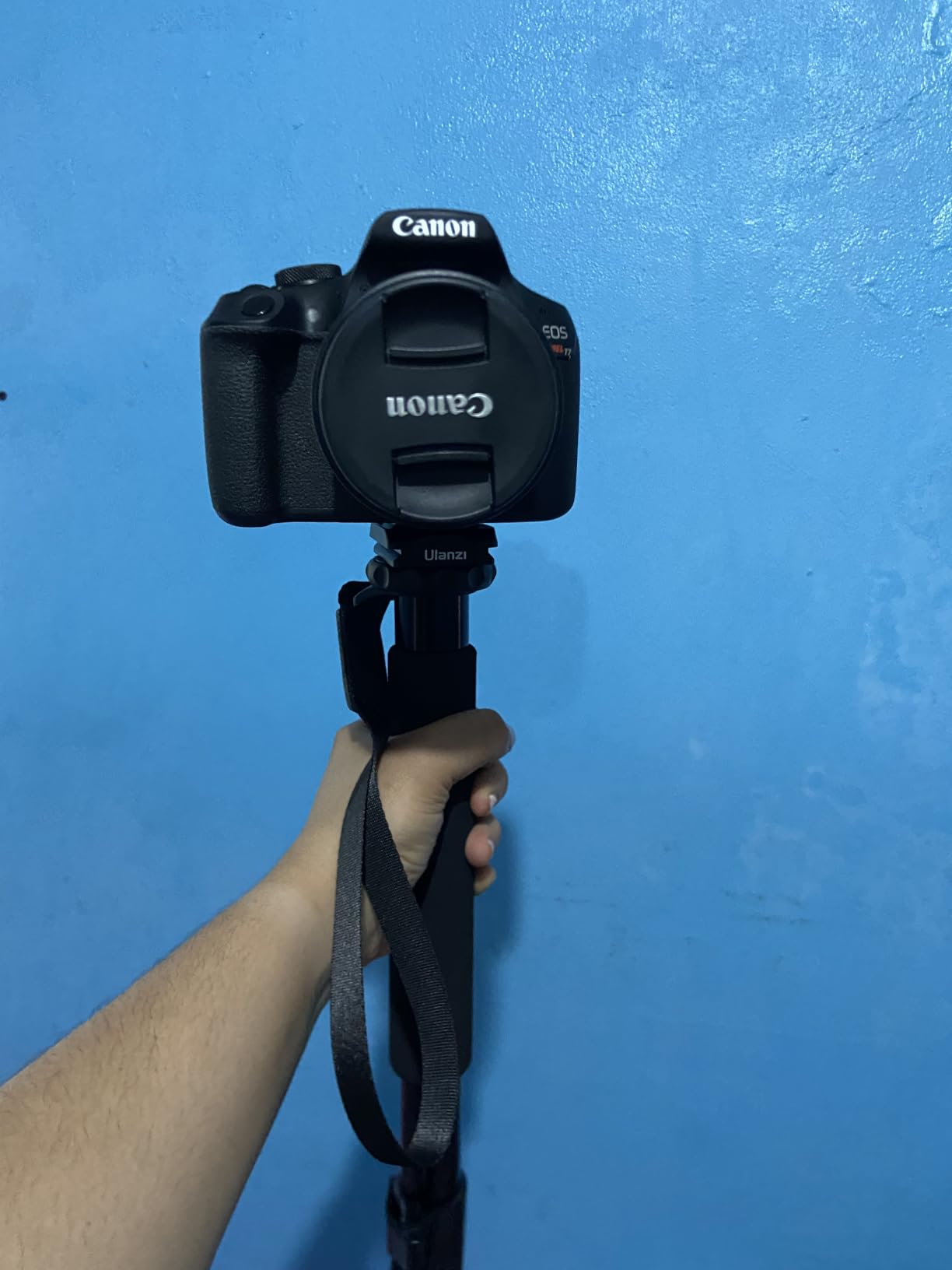
The dual-use modes are the reason it is a hiking pick as much as a camera one. Flip it over and the rubber tip comes off to expose a 1/4 inch stud, so the whole pole doubles as a trekking pole. Owner reviews note that this is a genuine walking aid on descents, which is a real benefit on a long trail day.
What we did not love is the screw-in metal spike at the base. It worked loose more than once during our testing and can rattle or drop entirely. Several owners fix it with thread-locking adhesive, and we would do the same before carrying it on loose ground.
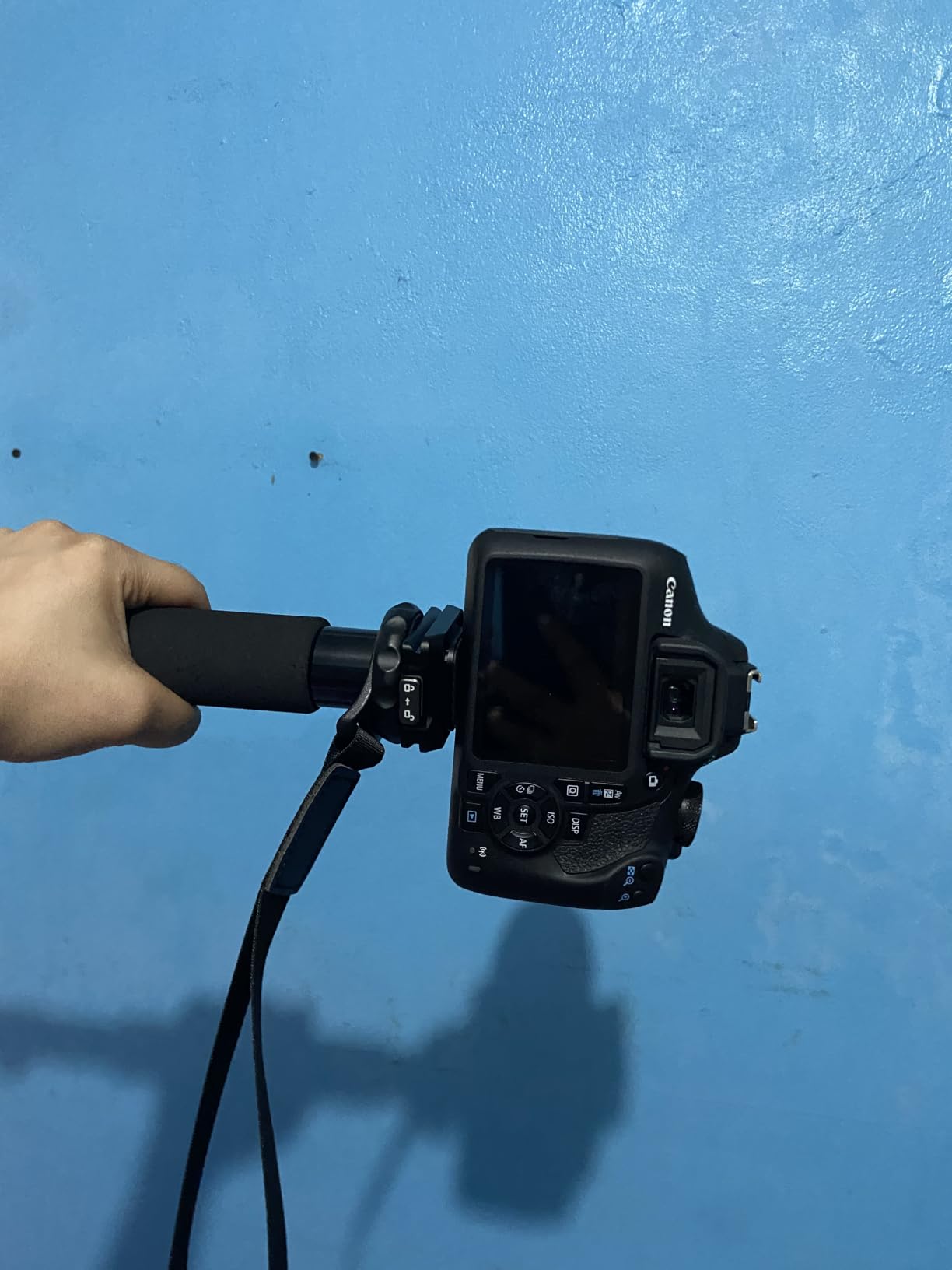
What the TB12 handles well on a trail
Compact and mirrorless bodies, up to about 5 kg of total kit, and any scenario where you want the pole to double as walking support. The five discrete height stops make repeat framing at a viewpoint fast.
It is also the easiest of the ten to explain to someone new. Unscrew the tip, the pole becomes a walking stick, and the same screw thread mounts a camera.
Where the TB12 runs out of road
An 11 lb rating rules out the heavy telephoto primes and long 600mm setups. Aluminum at this capacity is also simply heavier than an equivalent carbon pole, which you feel at hour four.
One owner reported the snap clasps being defeated with force, a rare complaint in 360 reviews but worth knowing if you plan to leave it strapped to a pack exterior.
3. IFOOTAGE Cobra 3 C180F-P – Best for Video and Fast Repositioning
IFOOTAGE Cobra 3 C180F-P Carbon Fiber Camera Monopod 71″
2.8 lb
Carbon fiber
17.6 lb vertical payload
5.9 to 71 inch working height
Pros
- Foot pedal locks and swivels without bending down
- 17.6 lb vertical payload on a light carbon frame
- Base converts to mini tripod or hiking stick
- Quick-release sleeve ejects the plate automatically
- 13.4 inch base with adjustable pan and tilt damping
Cons
- 27 inch collapsed length is long for a day pack
- Pedal lock and folding base add bulk and complexity
- Ball head is listed but the base does the swivel work
The Cobra 3 solves the problem every other pole on this list shares: how you change height when your hands are cold, wet or full of camera gear. Press the foot pedal and the leg locks release and the top swivels a full 360 degrees. You can reposition a heavy camera without bending down, which is the difference between shooting and walking away on a cold ridge.
It also carries one of the highest vertical payload ratings here at 17.6 lb, which makes it the pick when you want a big body with a 100-500mm or a 600mm attached and want to change height without bending down. The quick-release sleeve ejects the top plate the moment you press the sleeve, so swapping cameras takes seconds rather than the fiddly bolt-on process older plates demand.
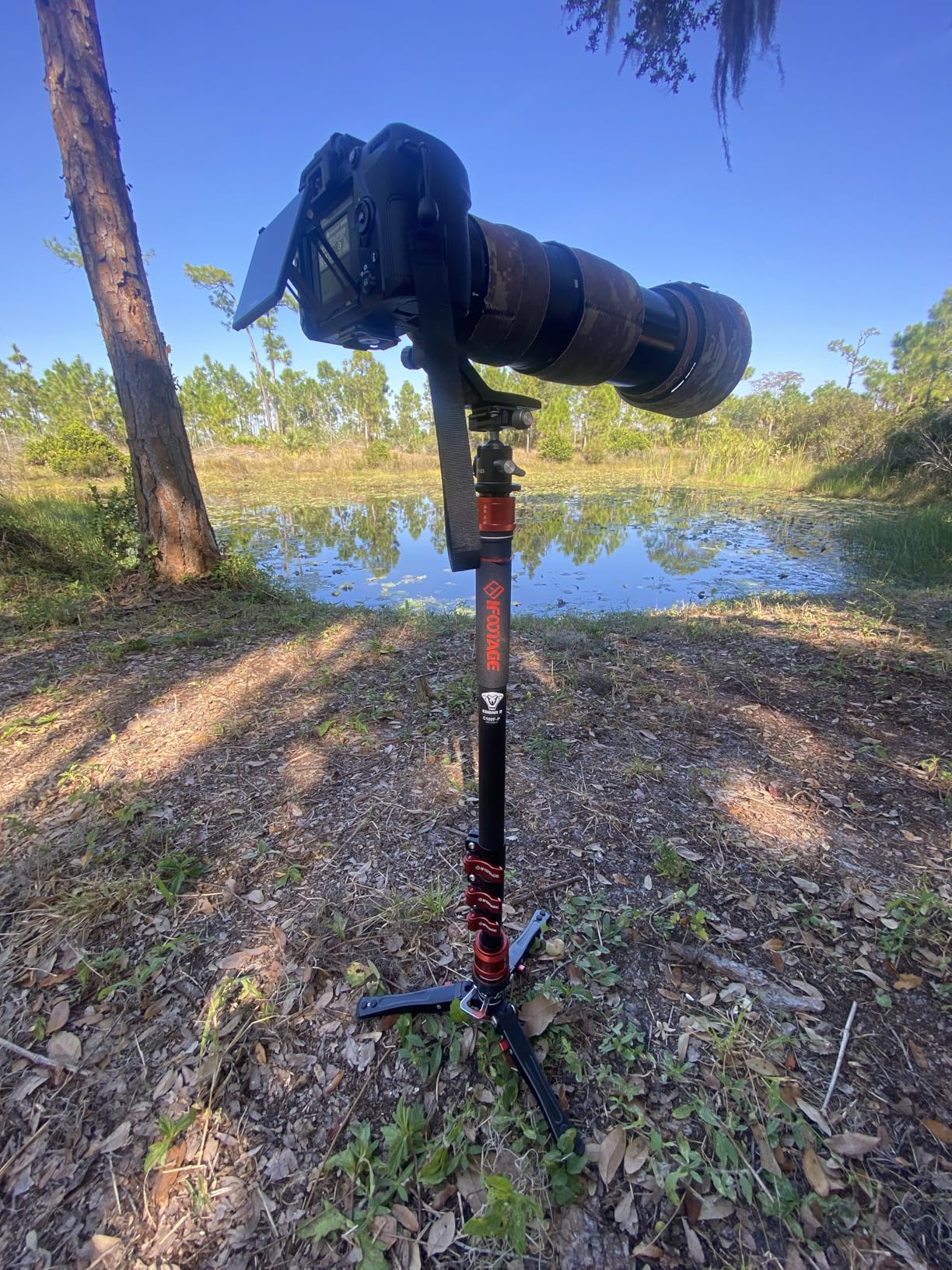
The three-in-one base is the other half of the appeal. Detach it and the pole collapses to a simple stabilizer extension, or leaves you a hiking stick; leave it on and the 13.4 inch spread stands on its own for long exposures and video. Adjustable damping smooths pans that would otherwise jerk on a plain pole.
The costs are size and complexity. It folds to 27 inches, only the Cayer CF34 packs longer, and the mechanism adds parts that a simple stick does not have. We would not choose it as a pure ultralight hiking pole.
When the pedal lock earns its bulk
Any day spent waiting for birds, tracking an animal across a valley or shooting video where you reposition constantly. The foot-operated release keeps your hands on the camera, and the 13.4 inch base gives you a freestanding platform when nothing is leaning nearby.
For panning video the damping adjustment matters more than the payload number. A pan that starts smooth and stops hard is worse than no head at all.
Where the Cobra 3 is the wrong tool
Overnight and multi-day backpacking, where 27 inches of pack length and 2.8 lb add up against a hard weight limit. The 12 month warranty is also the shortest we saw on a premium carbon model.
If your glass is modest, the 17.6 lb rating is headroom you will never use and the folded length is still a fact of life every time you open your pack.
4. Manfrotto 290 Carbon – Best for Cold Hands and Heavy Glass
Manfrotto 290 Carbon Fiber 4-Section Monopod (MM290C4US)
1.1 lb
4-section carbon fiber
22 lb safety payload
19.3 inch folded
Pros
- Only 1.1 lb with a 22 lb safety payload
- Four sections taper from 25.3mm to 14.7mm for stiffness
- Rubber leg warmers keep hands usable in cold weather
- Angled wrist strap is comfortable over long carries
- Two year manufacturer warranty and adjustable aluminum locks
Cons
- 59.4 inch max height is the shortest here
- No folding base so it cannot stand unattended
- Aluminum twist locks can be stiff in cold weather
The Manfrotto 290 is the sturdiest per gram in this roundup. One pound one ounce carrying a 22 lb safety payload, with a four-section taper from 25.3mm down to 14.7mm, means the thick lower sections resist the flex we saw on slimmer six-section poles. It is the one we trust with a long telephoto at dawn when the wind is up.
It is also the pick for cold mornings. Rubber leg warmers run most of the section length, so the sections you actually grab are not bare carbon. Carbon conducts cold straight into your fingers; the warmers break that path, and the angled wrist strap sits more comfortably over a long carry than a straight strap.
Adjustment is via aluminum twist locks rather than flip clamps, and the tension is adjustable at each collar. We found them firm without binding, but they did feel stiffer than a good aluminum lock on a cold morning, so break them in at home.
Manfrotto includes 6.35mm and 9.5mm adapters, which is one more piece of plastic in the bag but also means the pole can take accessories built for the wider standard.
Why the 290 holds a long lens steady
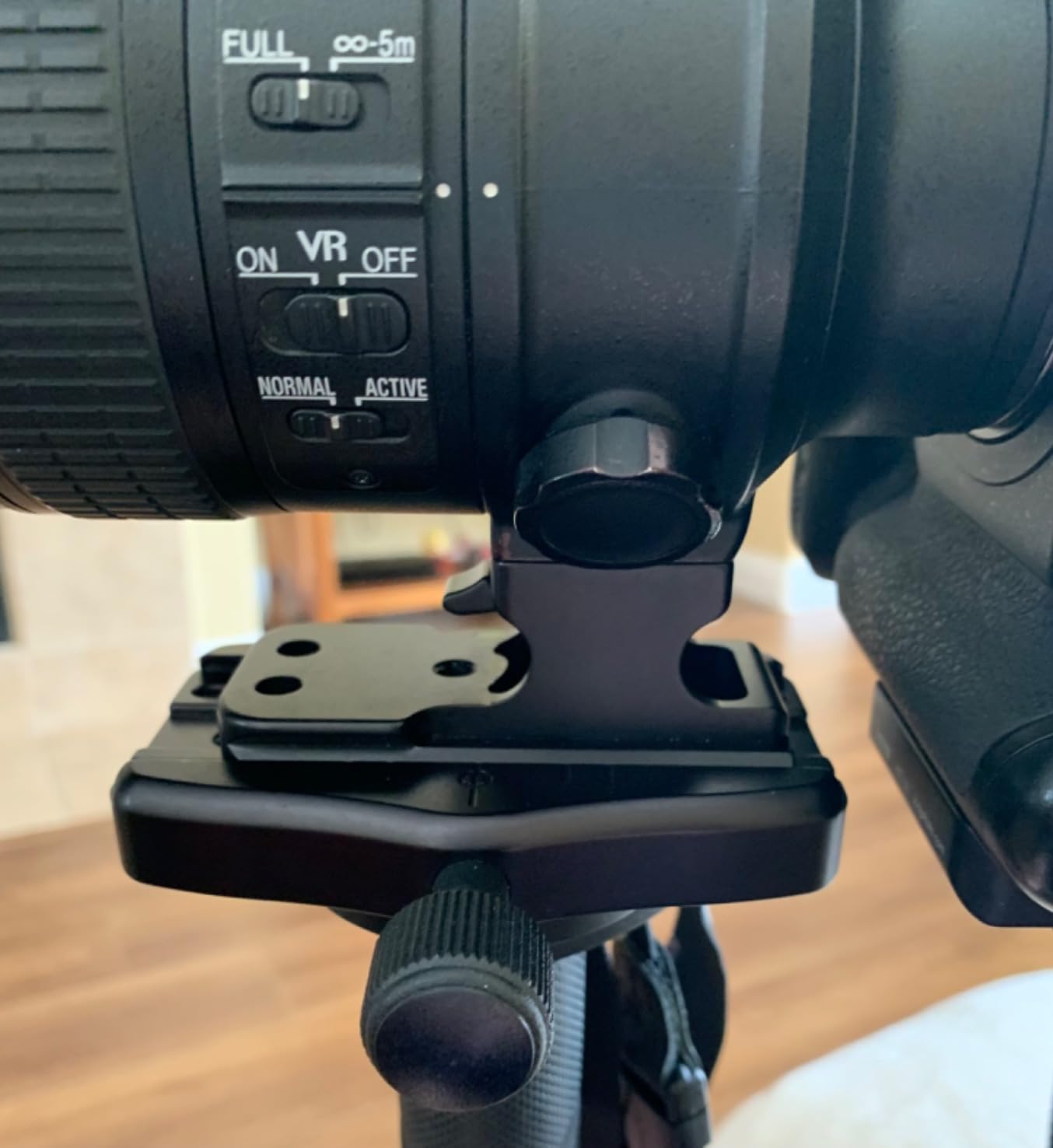
Tubing diameter is the deciding factor when a long lens is offset from the head by a collar, and its 25.3mm lower sections are the widest tubing here after the 1 inch Element MII. Hard pans produced very little visible camera movement compared with the six-section poles.
Rubber leg warmers are a small detail with an outsized effect at 4 degrees Celsius, and the angled strap means the pole does not dig into your palm on a downhill section.
Where the 290 falls short
Maximum height of 59.4 inches is the shortest of the ten. Taller photographers shooting wildlife level or slightly above will find themselves bent at the waist, which undoes the whole point.
There is no folding base, so it cannot stand alone at a viewpoint, and there is no ball head in the box. You mount to the lens collar or add your own head.
5. Manbily C-555L – Best Trekking-Pole Conversion
Manbily Camera Monopod, Carbon Fiber Portable Compact Lightweight Travel Monopod with Walking Stick Handle for DSLR Canon Nikon Sony Video Camcorder, 6 Sections up to 61 inch
0.93 lb
8-layer carbon fiber in 6 sections
Folds to 15.7 inches
15.4 lb rating
Pros
- Only 0.93 lb with a 15.4 lb payload
- Folds to 15.7 inches for a backpack or briefcase
- Supplied walking stick handle converts it to a trekking pole
- Rubber pad unscrews to reveal a metal spike for mixed ground
- Reversible 1/4 inch and 3/8 inch plate on a riveted aluminum platform
Cons
- Six twist locks slow setup compared with flip designs
- Supplied walking handle is drilled for the wrong end
- Included phone mount adds little value
The C-555L is the most complete trekking-pole conversion in the group because the handle is actually included in the box. Screw it on top and the pole becomes a two-piece walking aid; several owners report it feels sturdier than pricier aluminum alternatives. At 0.93 lb and folding to 15.7 inches it is a genuine dual-purpose trail tool rather than a camera accessory with a stick attached.
Eight-layer carbon fiber in 28mm gives it 15.4 lb of rated payload, which is more headroom than most of the ultralight poles here. The riveted aluminum platform and reversible 1/4 and 3/8 inch screw make it compatible with standard heads.
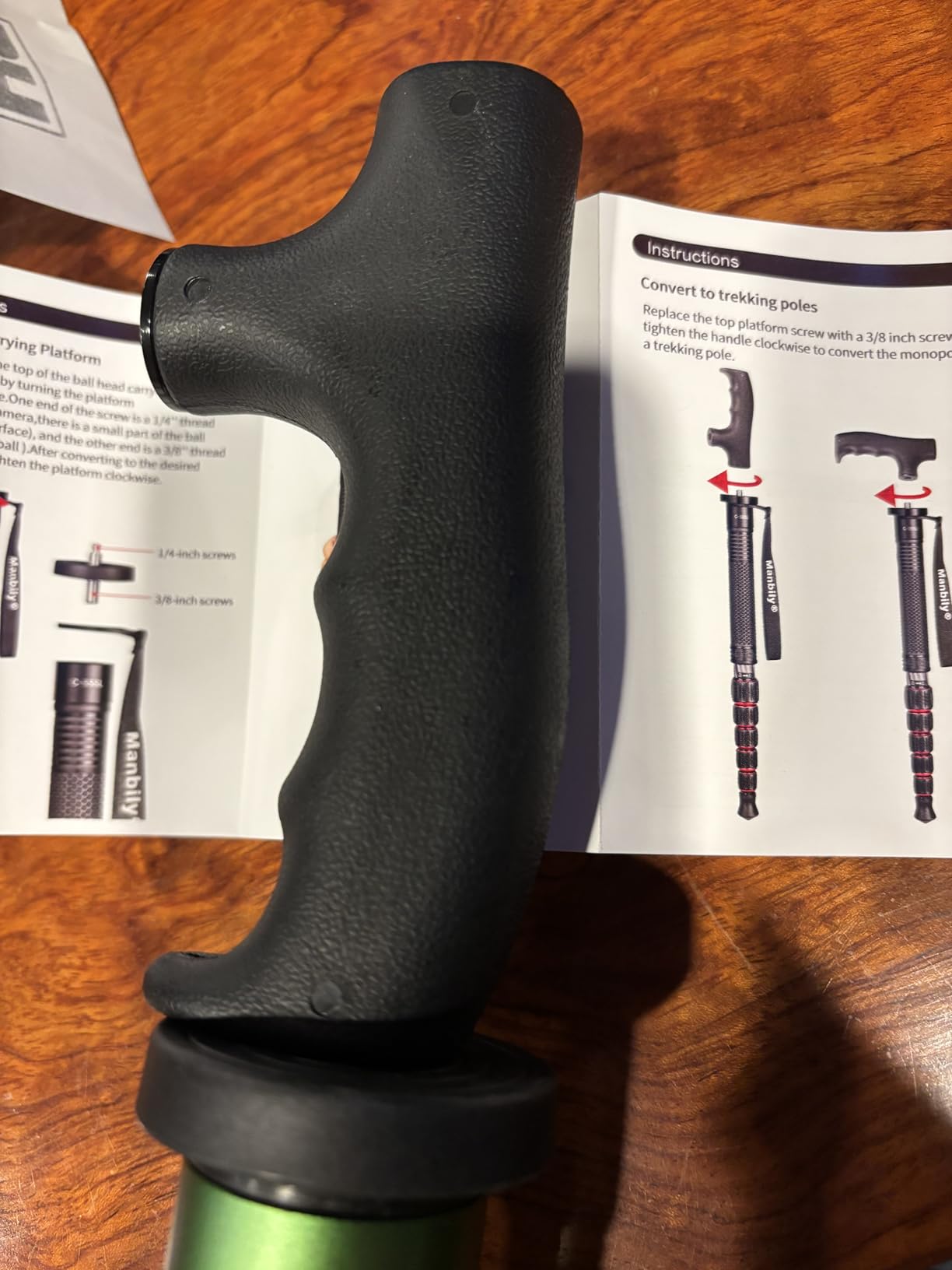
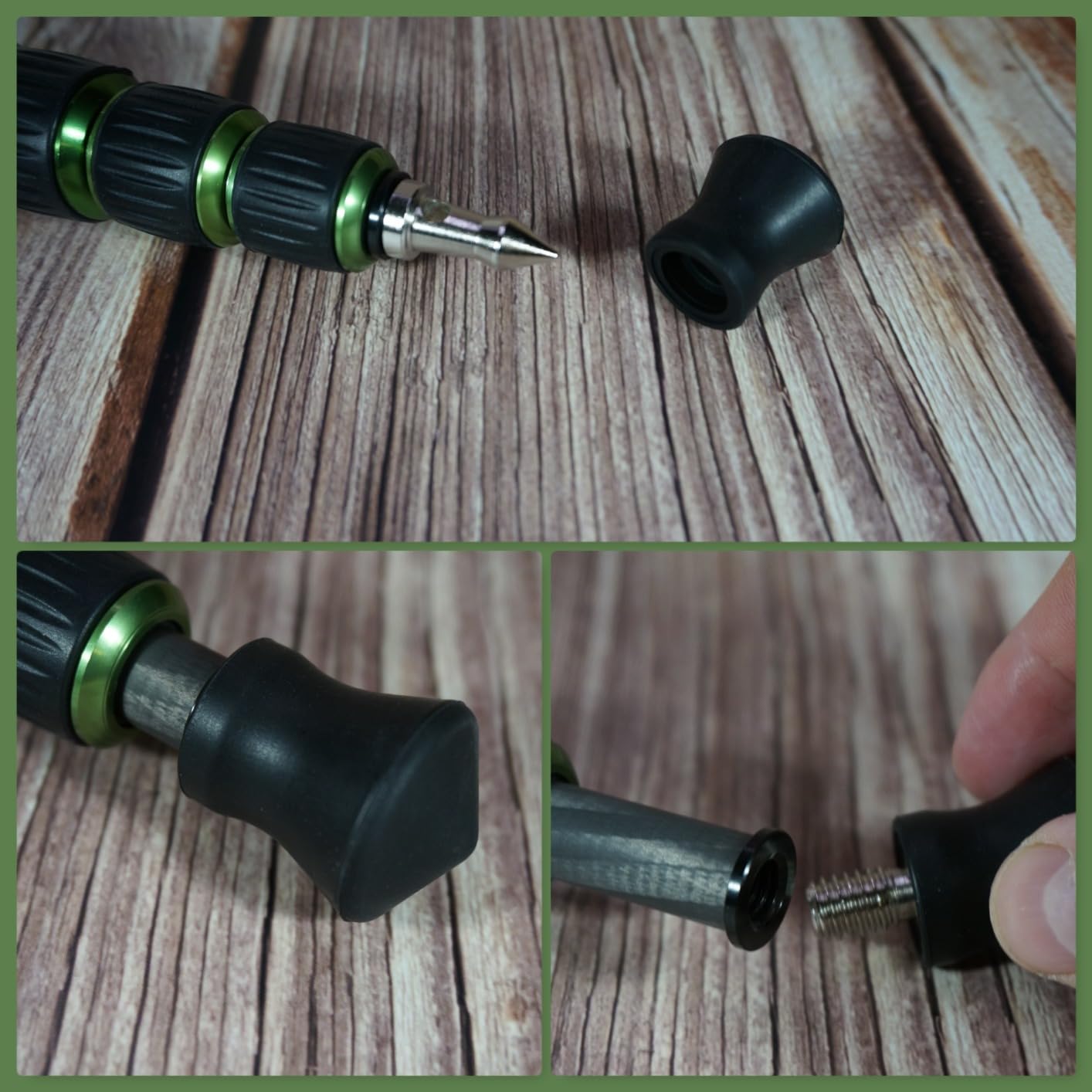
The rubber foot unscrews to expose a metal spike, so the same pole handles a paved path and soft trail ground. The textured grip plus removable wrist strap worked well in the rain, and manufacturer support replaced a defective unit for one reviewer who reported a slipping lower section.
Setup is the weak point. Six quarter-turn locks across six segments is the slowest configuration in this roundup, and it is slower still once the collars are cold. We would not use this pole when a subject is moving and light is fading.
When using the C-555L as a walking pole
The included handle fits on top with the grip horizontal or vertical, so it suits either a conventional trekking pole posture or a single-handed photo grip. On descents the spike is the part you will feel, and it bites well into wet soil.
One detail worth knowing: some owners report the supplied handle is drilled and tapped for the opposite end, which makes the walking position feel off. Check it before you rely on it on a long descent.
What the extra weight is buying
Six quarter turns on a cold morning is the trade for a genuinely useful walking aid. Anyone who does not care about pole mode should look at a four-section flip-lock design instead.
A few reviews also report a lower section slipping while carried collapsed, so collapse it fully and clip the strap when you stow it rather than relying on friction alone.
6. Cayer CF34 Carbon Fiber Monopod – Best With a Fluid Pan-Tilt Head
Cayer CF34 Carbon Fiber Monopod, 72″ Fluid Head with Folding Base for DSLR
4.1 lb
4-section carbon fiber
13.2 lb rating
28.3 to 72 inch range
Pros
- Fluid pan-tilt head gives smooth 360 panning and tilt
- Detachable mini tripod base turns it into a table tripod
- Extra quick release plate speeds camera swaps
- Flip lock tension adjustable with the supplied Y key
- Two year manufacturer warranty
Cons
- Heaviest monopod in the roundup at 4.1 lb
- 28.4 inch collapsed length is awkward to pack
- 28.3 inch minimum height blocks low-angle work
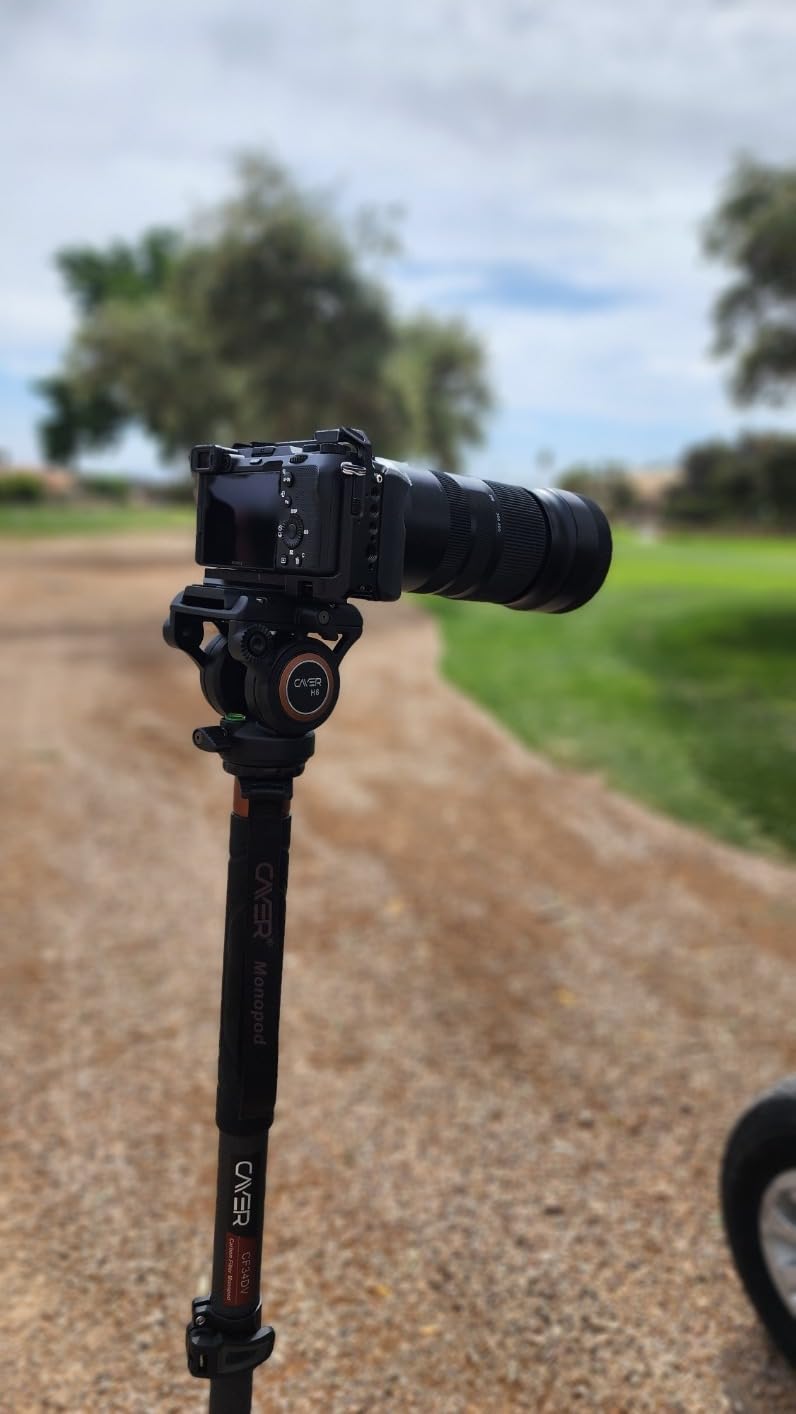
The CF34 is the one to buy if panning is part of your work. The included fluid head pans a full 360 degrees with +90 and -50 degrees of tilt on both 1/4 inch and 3/8 inch threads, and the damping feel is closer to a small video head than to the fixed plate most hiking poles ship with. Detach the mini tripod base and the same pole becomes a stable table for a rest stop.
Everything else about the package is generous: an extra quick release plate, a carry bag, a Y key for adjusting the flip lock tension, and a pivoting foot that swivels 360 degrees with a 90 degree drop-notch for low angles.
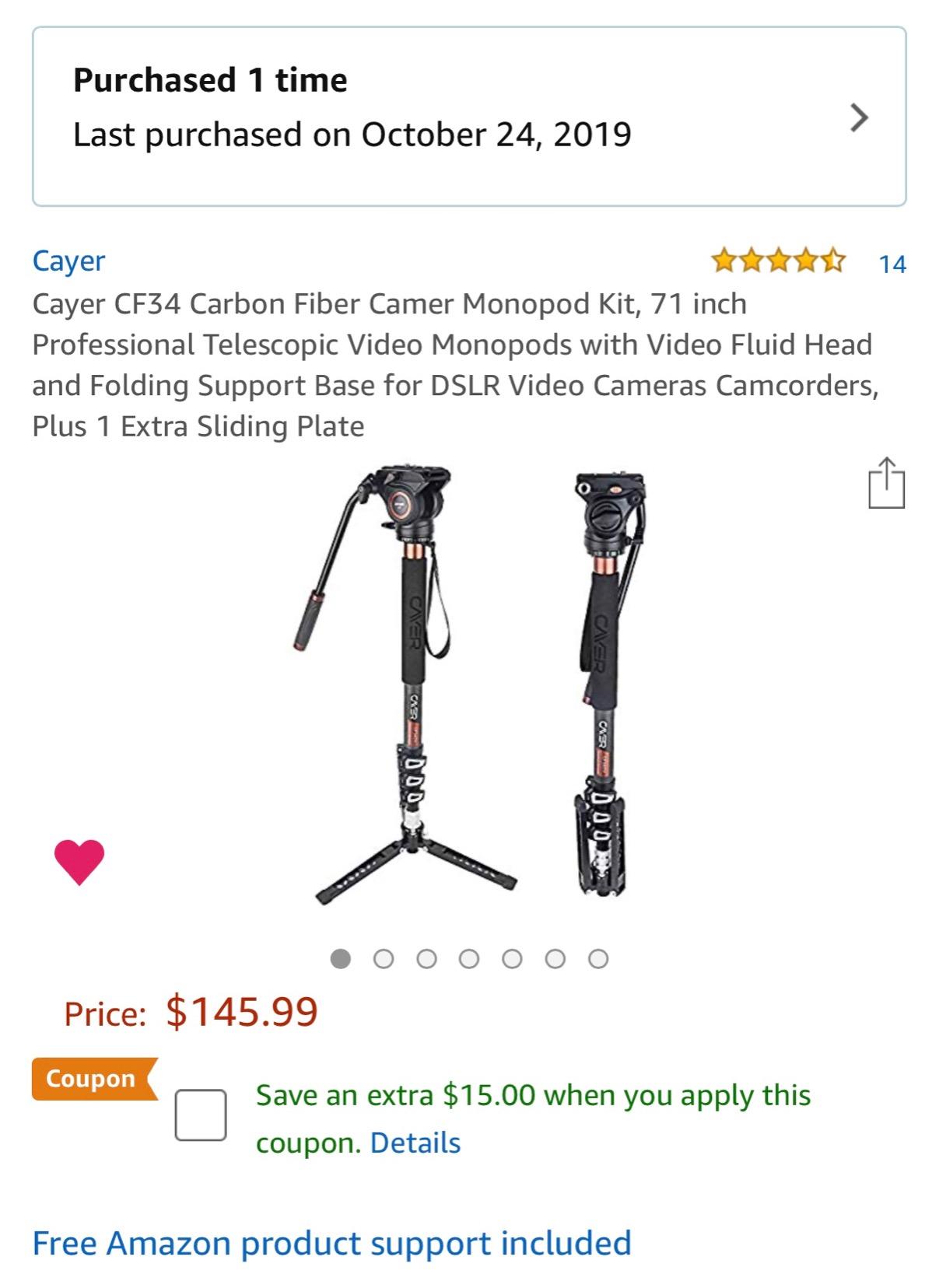
It is also the heaviest monopod we tested at 4.1 lb, which is close to the weight of a full travel tripod. For a day hike that is acceptable if you value the head and the base. For backpacking it is the wrong side of the trade.
The 28.4 inch collapsed length is the other issue. It will not fit the side pocket of a normal pack and it is awkward to strap to the outside of a smaller pack.
Where the fluid head pays off
Slow horizontal pans, following a bird in flight, video of moving water, and any shot where a fixed plate would fight you. The tilt range gets you to awkward creek-level and ground-level angles without moving the feet.
The mini tripod base is worth the weight on its own if you photograph at rest stops, because it lets you set the camera down and step back, which a plain pole cannot do.
Where the CF34 weighs you down
Multi-day trips, flights, and anyone who counts pack grams closely. Four pounds is a third of a typical day hike camera kit before you add a body or a lens.
The 28.3 inch minimum height also rules out true low-angle compositions without a separate head or an inverted section, which is a common request from trail photographers shooting water and rock.
7. Koolehaoda MP-286C – Best for Packing Small
Koolehaoda 62″ Camera Monopod 6 Section Compact Carbon Fiber Unipod
10-layer carbon fiber
6 sections
Folds to 15 inches
22 lb rating
Pros
- Very light for a 6-section carbon monopod
- Folds to 15 inches so it sits inside a camera bag
- 22 lb rating covers a body with long telephoto glass
- Metal spike and wrist strap make it usable as a trekking pole
- Reversible 1/4 and 3/8 inch plate plus a phone holder
Cons
- Twist locks are stiff until broken in
- No allen key included for the head screw
- Only a one year warranty and a basic pouch
The MP-286C solves the pack-length problem better than anything else here. Six sections of 10-layer carbon fiber fold down to 15 inches, so the pole lives inside your camera bag instead of hanging off the outside of your pack, and the listing quotes it at 650 g with 28mm maximum tube diameter.
Despite six segments it still carries a 22 lb rating, which is unusually generous for a pole this compact. The 3/8 inch thread at the bottom accepts a mini tripod base if you want freestanding shots later, and the whole pole doubles as an overhead boom or a walking stick on soft ground with the supplied spike.
Two things to plan for. The twist locks are described as sealed against dust and moisture, which is exactly what you want, but they are stiff when new and need breaking in before your first cold morning. And no allen key is included for the head screw that stops the mounting plate spinning, a small omission that will cost you a trip to a hardware store if you do not own one.
The carrying pouch is thin compared with the rest of the build. If you are the type who drops a pole into a lake, buy a proper bag.
How the MP-286C performs with long glass
Twenty-two pounds of rated load covers a full frame body with a long telephoto, which is the main reason we like a compact six-section pole. The 28mm maximum diameter is close to the Manfrotto 290, so flex stays modest under panning.
Carbon fiber micro-flex is real on this design: right after extending, the camera can rock for a second or two. Let it settle before the shot rather than triggering while the rig is still moving.
Where the MP-286C falls short
A one year warranty is the shortest here, and carbon fiber is harder to repair than aluminum when something cracks. Buyers who value longevity should weigh that against the weight saving.
The phone holder sounds useful and is not, in our view. Accessories that add bulk without adding a second job are the opposite of what a hiking pole should do.
8. Avella C324D Carbon Fiber Monopod – Best for Long Exposures and Rest Stops
Avella C324D Carbon Fiber 67 Inch Camera Monopod Professional Telescopic Video Monopods Base Tripod for Canon Nikon Sony Olympus Panasonic DSLR Camera
2 lb
4-section carbon fiber
Folds to 24 inches
13.2 lb rating
Pros
- Joint-highest rated at 4.7 stars in this roundup
- Only 2 lb with 13.2 lb of rated load
- Removable three-leg base lets it stand unsupported
- Four section carbon fiber with flip locks for fast setup
- Pivoting base swivels 360 degrees and tilts 90 degrees
- Six year warranty
Cons
- No fluid head so the base does not swivel independently
- 24 inch collapsed length is long for a day pack
- Folding base adds weight against a plain pole
The C324D ties for the highest rating in the roundup at 4.7 stars, and the reason is straightforward: at 2 lb it gives you 13.2 lb of rated load, four-section carbon fiber, flip locks that open and close one-handed, and a removable base that turns a single point into a stand. Professional users report putting it through mine sites, tarmac and factory work without complaint.
The pivoting base is the detail that separates it. It swivels 360 degrees and tilts 90 degrees in all directions, so you can swing between a horizontal and vertical frame by moving the base rather than the camera. The flip locks are tightened with the supplied Y-style key, which is faster than any twist lock we tested on a cold day.
For dawn long exposures, a self-timer and a three-leg base, this is a strong pick. You can set it down, frame it, and walk into frame for scale without a wall to lean against. The 6-year warranty is the longest in the group and matters for gear that lives in a car boot.
The missing fluid head is the trade. The base swivels as a whole unit, so a pan requires repositioning the feet rather than turning a damped head. That is fine for stills and awkward for video.
Why the removable base changes trail work
Set it down at a viewpoint and take your time with settings. Thread a wrist strap to a pack strap, or use the base as a stable platform for a 30 second exposure with the camera on a timer.
Removing the base drops it to a plain pole, which is useful when the ground is too uneven to trust a tripod spread.
Where the C324D is not the answer
Carry-on travel and fast hiking. At 24 inches folded it is among the longest here, and the flip locks and base add parts that have to be cleaned after mud.
If your work is video, read the FAQ on panning, because the base cannot damp a rotation the way a fluid head can.
9. Manfrotto Element MII – Best All-Round Aluminum Monopod
Manfrotto Element MII MMELMIIA5BK, Lightweight 5-Section Aluminium Travel Camera Monopod, with Wrist Strap, Rubber Grip, Twist Locks, Load up 15kg, for Compact Cameras, Mirrorless, DSLR, Black
1.1 lb
5-section aluminum
Folds to 16.9 inches
15 kg payload
Pros
- Only 0.5 kg with a 15 kg payload
- Folds to 43 cm for easy backpack carry
- Twist locks are firm and allow one-handed height changes
- Convertible 1/4 and 3/8 inch screw works with or without a head
- Wrist strap and rubber grip for all day carry
- Two year manufacturer warranty
Cons
- Lowest rated at 4.3 stars in the group
- No folding base so it cannot stand unattended
- No ball head included in the box
The Element MII is the safe mid-tier aluminum choice, and the 576 reviews behind it give you a good read on long-term behavior. It reaches 159 cm, folds to 43 cm and weighs 0.5 kg while carrying a 15 kg payload, which is a sound ratio for a mirrorless kit and mid-range zooms.
Twist locks are firm enough to change height with one gloved hand but not so tight that they fight you, and the convertible 1/4 and 3/8 inch screw means you can mount direct to the camera or add your own ball head. The wrist strap and rubber grip made long carries comfortable in our testing.
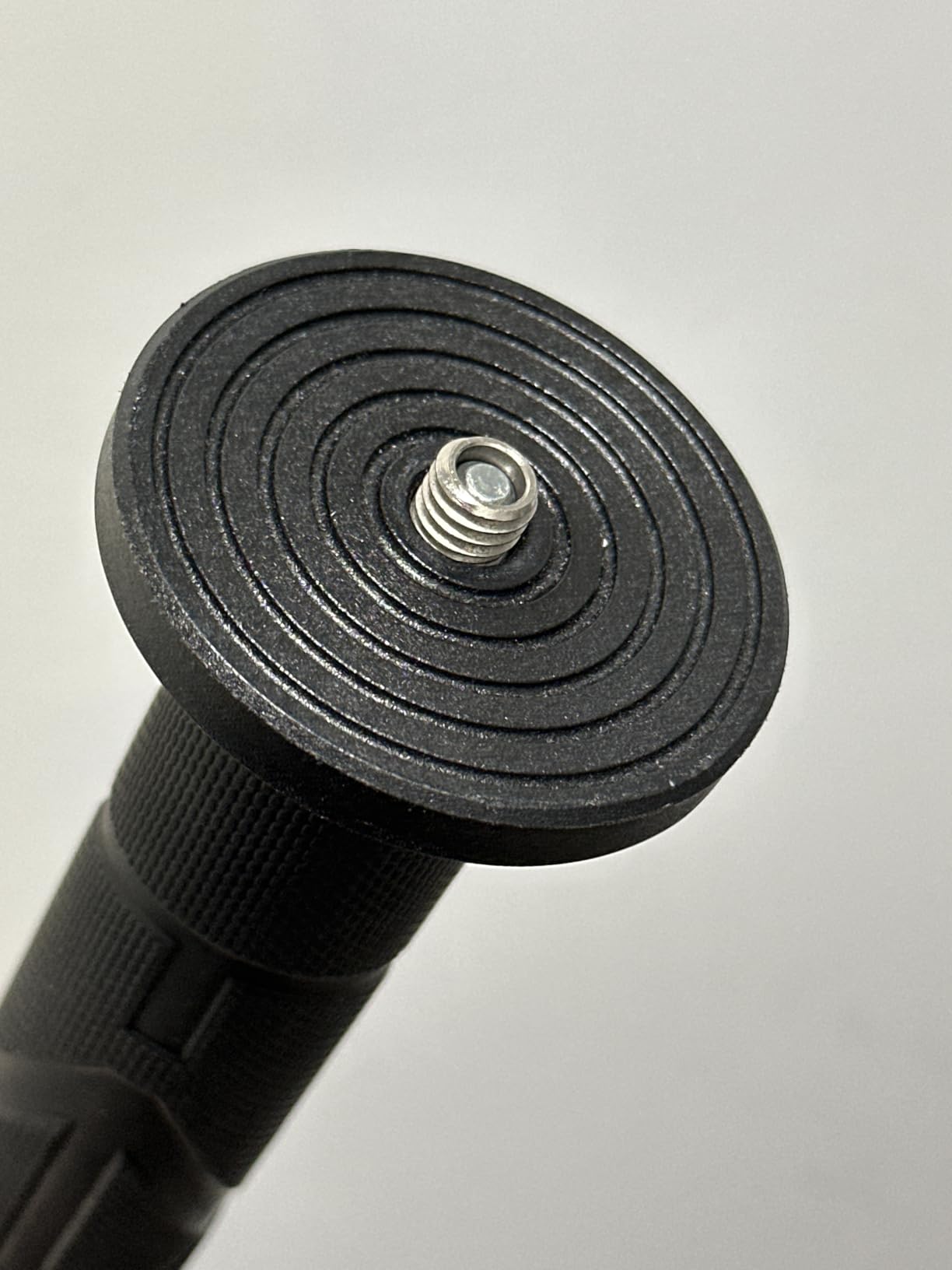
Its 4.3 star rating is the lowest in the roundup, and the reason shows up in the reviews: it has no head and no base, so you are comparing it to poles that ship with both. A 10 percent one-star share usually points at people who expected a complete kit.
Aluminum is also heavier per unit of strength than the carbon options. If you are comparing this to a carbon pole of similar payload, expect to carry roughly a third more.
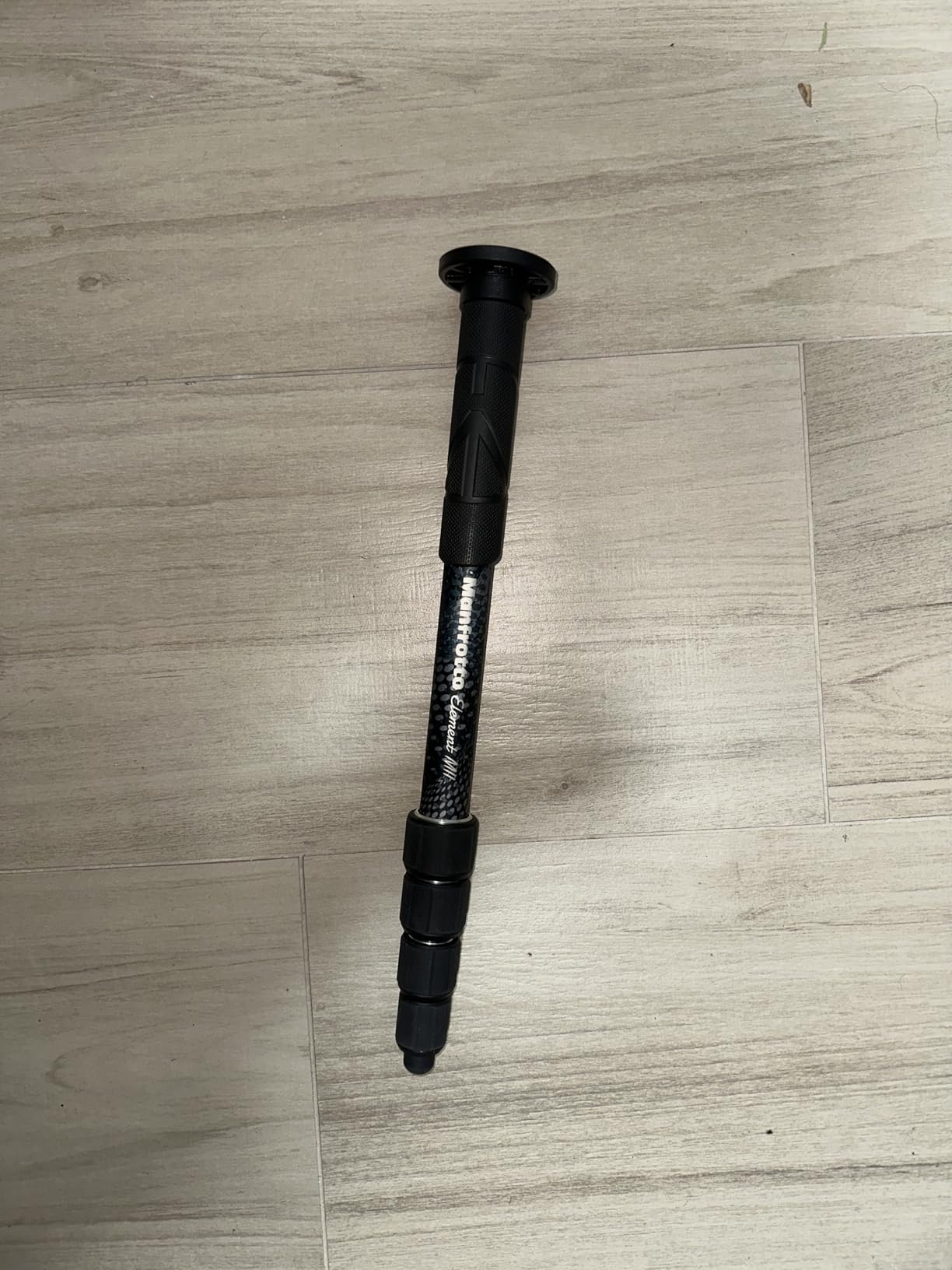
Where the Element MII makes sense
Hikers who want one dependable pole for a moderate kit and do not need to stand it up. The 159 cm reach suits most people, and the 43 cm packed length rides comfortably in a day pack side pocket.
It is also a sensible loaner or travel pole, since the build is simple with no mechanism that can fail in the cold.
Where it will let you down
It cannot stand on its own, and there is no head in the box. Forum owners commonly report replacing the bundled head on budget poles anyway, so plan to add one or mount to the lens collar.
If your glass is a 400mm or bigger, the 15 kg rating is less about capacity and more about stiffness at the head, where a fixed plate gives you no tilt control at all.
10. Amazon Basics 67-Inch Monopod – Best Budget Monopod
Amazon Basics 67-Inch Monopod for Camera, Extendable 4-Section, 6.6 lb Capacity, Rubber Foot, Carrying Bag, Black
12.8 oz
4-section aluminum
Folds to 21.4 inches
6.6 lb rating
Pros
- Light and simple at 12.8 oz
- Carrying bag included for pack storage
- Retractable spikes plus a non-skid rubber foot for mixed terrain
- Huge review base shows consistent satisfaction
- Cushion grip and adjustable wrist strap for long carry
Cons
- 6.6 lb limit is the lowest here
- Aluminum is heavy for the strength
- 21.4 inch collapsed length is long
- No head or folding base in the box
With more than ten thousand reviews, the Amazon Basics monopod is the most thoroughly tested stick in the roundup, and for a mirrorless body, a compact camera or a spotting scope it does the job without fuss. It weighs 12.8 oz, extends to 67 inches and includes a carry bag, which is the combination a beginner or a gift buyer actually needs.
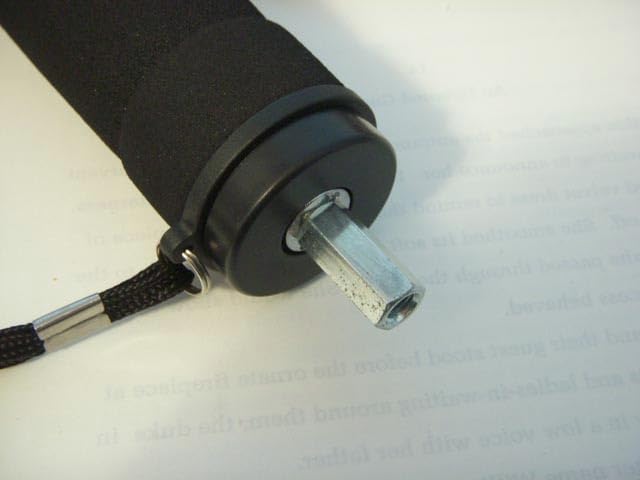
The retractable spikes and the non-skid rubber foot are genuinely useful on a trail where a single leg has to find purchase on rock, soil and boardwalk in the same hour. Adjusting between them took seconds, and the cushion grip plus wrist strap stayed comfortable over a full day.
The 6.6 lb rating is the limitation that matters. It comfortably takes a compact body with a short zoom or a scope, and it is the reason we would not hang a 200mm f/2 or any long telephoto from it. Heavy glass on a light pole is exactly the wobble combination that makes people give up on a monopod.
The 21.4 inch collapsed length is one of the longer poles here, and there is no head or folding base in the box. Treat it as a simple support stick, not a complete system.
What the Amazon Basics monopod is good for
Day hiking with a small kit, travel where a tripod is impossible, and long days spent carrying a spotting scope or a compact camera. The included bag means it does not rattle around loose in the bottom of a pack.
It is also the least risky place to start, because the review history is enormous and the failure modes are well documented.
Where it will frustrate you
Any telephoto work, any low-angle composition at 54.5 cm minimum height, and any plan to set the camera down. Reviewers who outgrew the load limit often bought a second, heavier pole rather than returning this one.
Because the 6.6 lb rating is the lowest here, check your lens weight before anything else if you are tempted by it.
How to Choose a Monopod for Hiking
Most buying guides start with load capacity. Start with your pack weight budget instead, because on a trail the marginal gram you add is paid back in comfort for every hour you carry it. Work through the eight criteria below in order and the right model narrows itself quickly.
Set your pack weight budget first
A camera kit for a day hike typically runs 4 to 6 lb including a body, one or two lenses and a battery or two. Add a monopod and you are deciding where that weight sits. Under one pound keeps the whole support system invisible in your pack; two pounds is noticeable by late afternoon; four pounds changes how you hike.
Do not forget the head. A ball head adds 6 to 10 oz, and that weight counts against your budget twice, once in the pack and once against the pole’s rated capacity. A 1.1 lb pole plus a ball head plus a wrist strap and lanyard lands near 1.5 lb, which is the realistic figure to plan around rather than the bare pole weight on a spec sheet.
Carbon fiber or aluminum on a trail
Carbon fiber runs roughly 30 to 40 percent lighter than aluminum at the same capacity, which is the whole argument. It also damps vibration differently: aluminum tends to ring and transmit mirror-induced shake, while carbon absorbs and settles. The cost is cold fingers, since carbon conducts cold straight into your palm, and a shorter warranty on many models.
Aluminum makes more sense when the pole doubles as a walking stick, when you are on a tight budget, and when you want a simple mechanism with no carbon to crack. If the pole is purely a camera support you carry all day, carbon wins on every spec that matters.
Leg locks for gloved, cold and wet hands
This is the number one hiking-specific failure mode and almost no competitor explains it. Twist locks are opened by a quarter turn per section, and they rely on friction between aluminum sleeves. That friction drops in wet conditions, and the collars can seize when water freezes inside them overnight. Flip clamps release in one motion, work through gloves, and are far more forgiving in rain.
The practical rule: if you hike in rain, snow or cold and you want one-hand operation, choose flip locks and accept the extra grams. If your trip is dry and your hands are bare, a good twist lock is lighter and cheaper to repair. Bring a small hex key either way, because a lock that slips mid-trail is a worse outcome than a few extra ounces.
Matching load capacity to the rig you actually carry
Add your body, lens, head, plate and any battery grip, then subtract roughly a quarter of the result to allow for off-vertical loading. A 22 lb rating is not 22 lb of usable load, because the moment a ball head tilts the camera off the vertical axis, the effective load on the leg rises and the top section flexes.
Here is the rule we use: a 3 lb body plus a 5 lb telephoto plus a 0.7 lb head is 8.7 lb, so look for a rating of at least 11 to 12 lb and check the top section diameter. A slim 1.97 inch upper tube with a big lens will rock even when the load number says it is fine. Wider lower sections, fewer sections and a 20 mm-plus top tube are the stiffness indicators that actually predict performance.
Packed length and section count
Target under 17 inches folded if the pole is going in a day pack, and under 16 inches if it has to live inside your camera bag. Anything over 24 inches starts riding on the outside of your pack, where it snags and swings. More sections means a shorter packed length, but each joint is a flex point and an extra failure surface, which is why six-section poles feel slightly spongier than four-section ones at the top.
Watch the minimum operating height too. Almost nobody lists it prominently, but it decides whether you can shoot a creek from knee level. Anything above 20 inches rules out low trail compositions without a separate head.
Feet, spikes and trekking-pole conversion
A rubber foot grips rock, boardwalk and root. A spike cuts into mud and soft soil. The models here that offer both, such as the ULANZI TB12, Manbily C-555L and Koolehaoda MP-286C, let you switch without a tool.
On using a monopod as a load-bearing hiking pole, be careful. A spike and a 22 mm tube are not a rated trekking pole, and collapsing a section under your body weight is a real injury risk on a descent. If you want genuine dual use, buy a pole sold for it with a supplied handle and a body-weight rating, and never plant it while the camera is mounted.
Monopod versus tripod: when each one wins
A monopod wins on a trail because it is one to two pounds lighter, one third of the volume, deploys in seconds without spreading legs on loose ground, and works as a walking aid. A tripod wins when you need it to stand unattended, when you need a level, vibration-free frame at low shutter speeds, or when you need to get underneath a subject.
The decision rule is simple: if you are walking more than 400 meters between setups, take the monopod. If you are staying put for an hour, take the tripod, or take a monopod with a detachable three-leg base like the Avella C324D and the Cayer CF34.
What to pack alongside your monopod
Keep the accessory list short, because every extra gram defeats the purpose. A small ball head if your pole has no head and you need tilt control, a wrist strap or carabiner loop so you are not hand-carrying the pole at rest stops, and a soft cloth to wipe grit from the locks before they seize.
Skip extra feet and duplicate spikes unless you need one specific terrain type, and rotate the lens hood to the opposite position so it stops acting as a lens shade on a narrow landscape frame. Our full wildlife and birding picks are covered in our guide to the best monopods for wildlife photography, and panning rigs are compared in best monopods for sports photography.
Frequently Asked Questions
Why use a monopod instead of a tripod?
A monopod is lighter, smaller and far quicker to deploy, which matters when you walk hundreds of meters between setups. It absorbs shutter shake and steadies long lenses through a lens collar. A tripod wins only when you need to leave the camera standing alone or need a fully level frame at very slow shutter speeds.
Should you put a ball head on a monopod?
Yes, unless you always shoot from eye level. A ball head gives you fast tilt control so you can frame a creek or a rock without moving the leg. Budget 6 to 10 oz for the head and subtract that from the pole’s rated capacity, since head weight counts against the load.
Can a monopod be used as a hiking pole?
Only if the manufacturer rates it for that use and supplies a proper handle. A spike and a thin tube are not a body-weight rated trekking pole, and collapsing a section while loaded can injure you on a descent. The ULANZI TB12 and Manbily C-555L both include a walking handle for genuine dual use.
What is the best monopod for birding?
The Manfrotto 290 Carbon is our pick for birding: 1.1 lb, 22 lb of rated payload, wide 25.3mm lower sections that resist flex, and rubber leg warmers for cold dawn hides. If you shoot in the cold with gloves, flip locks and a body-width grip beat raw weight.
Are monopods good for wildlife photography?
They are one of the best tools for it. A monopod takes the weight of a long telephoto off your hands, absorbs shutter-induced shake through the lens collar, and can be raised to track a moving subject. It cannot pan smoothly on its own, so add a ball or fluid head when panning is part of your work.
How much weight can a monopod support?
Use about 70 percent of the rated figure as your working limit. Add the body, lens, head and plate together, then subtract roughly a quarter for off-vertical loading, because a tilted ball head raises the effective load on the leg. Flex in the top section is the real limit, not the printed number.
Final Verdict: Which Hiking Monopod Should You Buy?
The SIRUI P-326 is the best monopod for hiking photographers overall. At 400 g, 15 inches folded and a 22 lb rating, it balances packed size, strength and review history better than anything else we carried, and it is the pole we would hand to someone building their first trail kit. If your hands run cold, the Manfrotto 290 Carbon with its rubber leg warmers and wide lower sections is the more stable choice, and if you need to free your hands entirely, the IFOOTAGE Cobra 3 C180F-P changes height with a foot pedal and takes the heaviest rig in the group.
Match the pole to the trip rather than the spec sheet. Compact four-section carbon for day hikes, six-section carbon when pack length is the constraint, aluminum with a walking handle if you want one tool to do two jobs, and skip the tripod entirely when you are moving more than 400 meters between frames. Whatever you choose, break in the locks at home before the first cold morning.
For more by application, read our roundup of the best camera monopods tested for wildlife, sports and video, and if you are still building your kit, our photography gift guide covers the accessories that pack down small.