
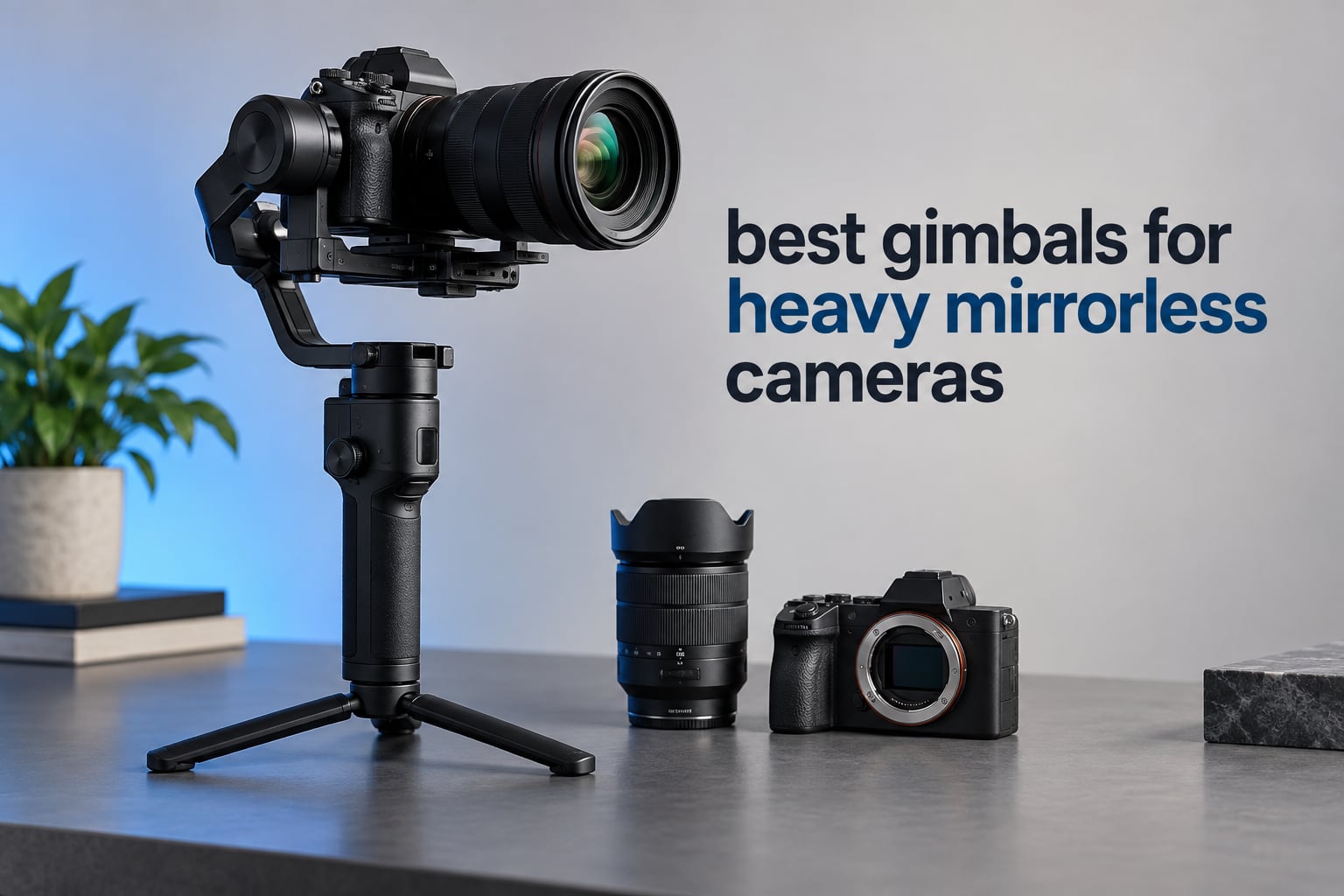
If you run a full-frame body with a fast constant-aperture zoom, the gimbal you pick decides whether the footage looks cinematic or looks like a shaky home video. Most listicles on this topic quietly stack 2kg mini gimbals next to heavy rigs, and that is exactly the wrong comparison. This guide covers only gimbals that can genuinely carry the best gimbals for heavy mirrorless cameras category of kit: full-frame bodies, f/2.8 zooms, cages, top handles, on-camera monitors and external mics.
We spent weeks moving nine models between full-frame bodies, weighing every rig on a scale before it went on a gimbal, and logging how long each balance took and how the motors behaved when the payload moved toward the ceiling. The methodology matters more than the model names: a gimbal rated for 4.5kg that carries a 4.2kg rig will feel strained on a long walk, which is the difference between a tool you keep and a tool that lives in a cupboard.
Below you will find the top three picks, a full comparison of every gimbal we covered, nine detailed reviews, and the weight math nobody else shows you. If you want the broader picture on lighter kits, our [12 best gimbals for mirrorless cameras tested and reviewed](https://ffotografoshop.net/best-gimbals-for-mirrorless-cameras/) guide covers the small and mid-size end of the market. Everything here is written for 2026 rigs, not last year’s models.
Table of Contents
Top 3 Picks for Heavy Mirrorless Cameras in 2026
The three gimbals that handle a heavy full-frame rig with the least compromise are the DJI RS 5 Combo for overall balance of weight, features and rig-change speed, the DJI RS 4 Pro for the strongest published 4.5kg payload figure, and the DJI RS 3 Pro for the highest owner rating in the group. Two of them carry a published 4.5kg rating, which is the entry point for serious heavy mirrorless work.
DJI RS 5 Combo
- Fine-tuning knobs per axis
- 2nd-Gen automated axis locks
- Z-Axis indicator
- 14hr standby with 1hr charge

DJI RS 4 Pro
- 4.5kg payload with 20% more torque
- 2nd-Gen native vertical shooting
- LiDAR with 76800 points
- 29hr with BG70 grip

DJI RS 3 Pro
- 4.5kg tested payload
- Extended carbon fiber arms
- Automated axis locks
- O3 Pro transmission
All Nine Heavy Mirrorless Gimbals Compared in 2026
Payload rating, body weight, runtime and vertical shooting are the four numbers that decide whether a gimbal suits a heavy rig. The table below lists every model in this guide with its stated payload, its own weight, and the feature that matters most when the load approaches the limit.
| Product | Specifications | Action |
|---|---|---|
| DJI RS 5 Combo |
|
Check Latest Price |
| DJI RS 4 Pro |
|
Check Latest Price |
| DJI RS 3 Pro |
|
Check Latest Price |
 ZHIYUN Crane 4 ZHIYUN Crane 4 |
|
Check Latest Price |
 ZHIYUN Crane 4E ZHIYUN Crane 4E |
|
Check Latest Price |
 ZHIYUN Weebill 3S ZHIYUN Weebill 3S |
|
Check Latest Price |
 FeiyuTech SCORP-C2 FeiyuTech SCORP-C2 |
|
Check Latest Price |
 FeiyuTech SCORP-C FeiyuTech SCORP-C |
|
Check Latest Price |
 FeiyuTech SCORP 3 KIT FeiyuTech SCORP 3 KIT |
|
Check Latest Price |
1. DJI RS 5 Combo: Best Overall for Heavy Full-Frame Work
DJI RS 5 Combo, Gimbal Stabilizer for Camera, Canon/Sony/Nikon/Fujifilm
1.62kg body
14hr standby after 1hr charge
2nd-Gen axis locks
Z-Axis indicator
Pros
- Per-axis fine-tuning knobs speed up balancing on heavy rigs
- 2nd-Gen automated axis locks make rig changes fast
- Enhanced Intelligent Tracking Module frames subjects from the touchscreen
- 14hr standby from a one hour charge
Cons
- Combo bundle adds bulk for travel
- Some features need the app downloaded from the DJI website
- 10% of ratings sit at one star
This is the gimbal we kept reaching for during testing, and the reason is boring: it is the one that made balancing a heavy rig boring too. The per-axis fine-tuning knobs on each arm are small parts, but on a 2.5kg body with a zoom, a monitor and a top handle they are the difference between a two-minute tweak and a ten-minute session of sliding plates back and forth. The Teflon interlayers under those knobs keep the friction consistent, which matters more than it sounds when your pan axis keeps creeping sideways.
The 2nd-Gen automated axis locks are the other quiet upgrade. On older gimbals, locking all three axes meant flipping three separate levers in sequence. Here one press on the power button does it, so moving from a locked carry position to a running gimbal takes seconds rather than a careful sequence you do with cold hands on a rooftop. That matters on a long shoot day more than any menu feature.
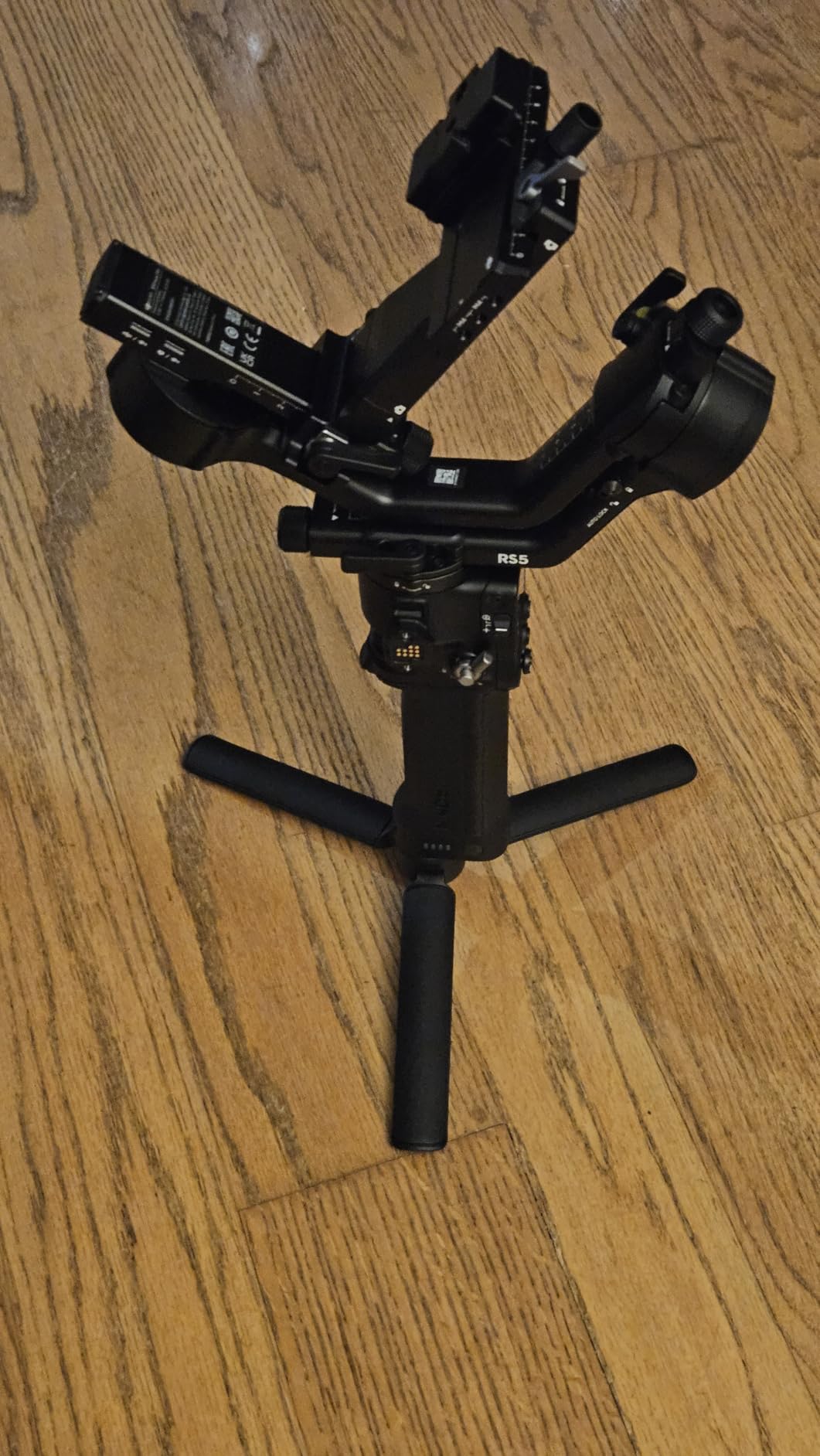
The Z-Axis indicator is the feature I did not expect to care about and now rely on. When you are walking with a heavy mirrorless rig, a level horizon in the monitor is the fastest confirmation that the tilt axis is actually doing its job. Without the indicator you are guessing from a small screen, especially in bright daylight when the LCD washes out. Owners repeatedly single out the balancing smoothness, the axis locks and the tracking module in reviews, and that matches what we saw.
Runtime is the quiet strength. A full charge in about an hour buys up to 14 hours of standby, which comfortably covers a wedding day or a documentary unit with no midday charging window. The bundle also includes the tracking module, an electronic briefcase handle, a quick-open tripod and the BG33 battery grip, so a solo operator has the accessories that would otherwise be separate purchases. Our one reservation is that the bundle is genuinely large, and for a solo traveller working out of a small bag it is more hardware than some shoots need.
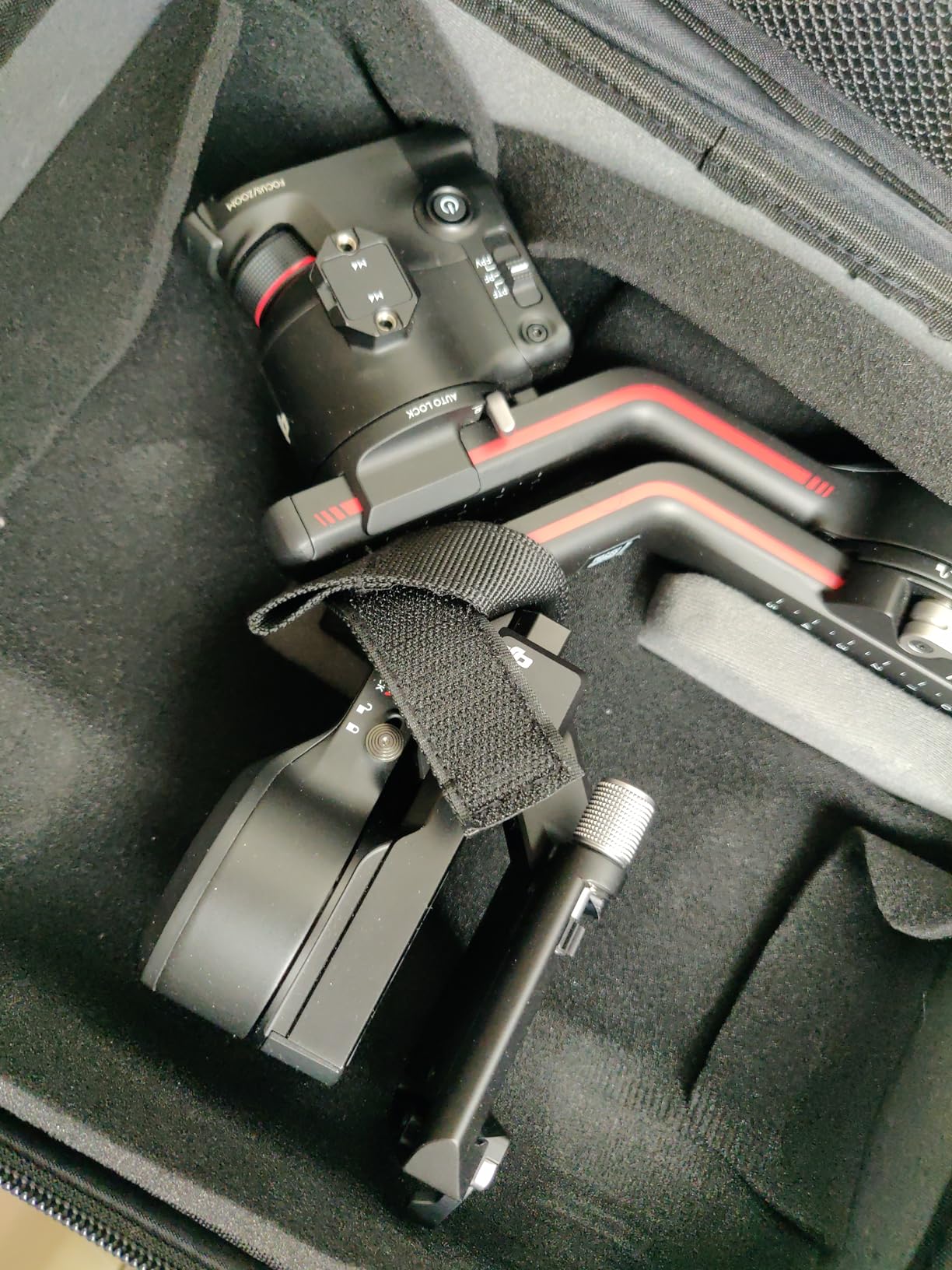
How it handles a heavy rig day to day
With a full-frame body and a 24-70mm f/2.8 mounted, the balance stayed put across walking, stair descent and a slow orbit with no re-tuning between takes. On the tilt axis the fine-tuning knob absorbed the small imbalance that comes from a long lens without the motors visibly hunting for position. The tracking module locked onto a walking subject and stayed with them through a doorway, which saves a retake on every moving shot.
Who should skip it
Skip the Combo if you are a one-bag travel shooter working with a small body and short prime. The tracking module and briefcase handle are dead weight for locked-off tripod-style work, and the 1.62kg chassis is heavier than the lighter options here. If your rig tops out around 2kg, a 3kg-class gimbal will be easier on your arms for the same result, and you can read our [eight best handheld gimbal stabilizers for mirrorless cameras](https://ffotografoshop.net/best-handheld-gimbal-stabilizers-for-mirrorless-cameras/) for that end of the market.
2. DJI RS 4 Pro: Best Payload for Rigged Cinema-Style Builds
DJI RS 4 Pro, Gimbal Stabilizer for DSLR & Cinema Cameras
4.5kg payload
1.84kg body
29hr with BG70 grip
LiDAR 76800 points
Pros
- 4.5kg payload with 20% more motor torque
- Carbon fiber axis arms add leveling room
- 2nd-Gen native vertical shooting avoids a full rebalance
- LiDAR focusing with 76800 ranging points within 20m
Cons
- Noticeable bulk that causes arm fatigue on long shoots
- Steep learning curve for first-time gimbal users
- Side-mounted HDMI ports can complicate monitor routing in vertical
If your mirrorless setup is functionally a cinema rig, this is the model we would pick for motor headroom. It carries a 4.5kg payload with 20% more motor torque than the generation before it. That extra torque is not a spec-sheet flourish. It is what lets the motors hold correction on a top-heavy build without the audible strain that gives away a struggling gimbal, and it is why working operators reach for this class when a cage, a top handle and a monitor all go on at once.
The 2nd-Gen native vertical shooting is the feature that saves real time on a heavy rig. On a 2.5kg body, a traditional vertical switch means a full rebalance, and that is several minutes of work each time. This generation rotates the camera and the arm geometry instead, so you get a level portrait shot without rebuilding the whole balance. The LiDAR module with 76800 ranging points inside 20m also gives a solo operator usable autofocus on fast constant-aperture zooms, which is the single biggest change to how a one-person crew can work.
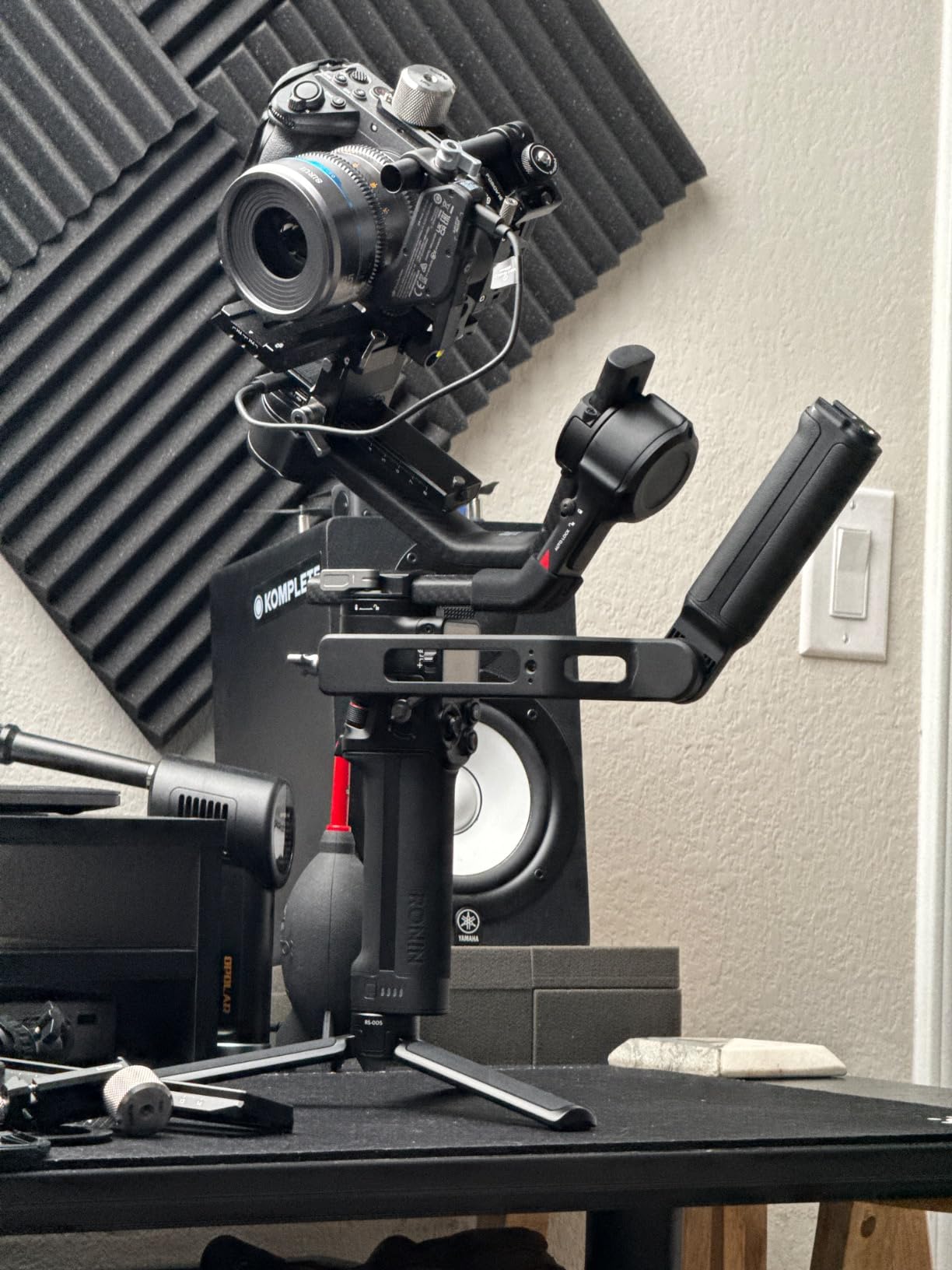
Battery life is where the optional grip pays off. The included BG30 grip covers a normal shoot day, and the BG70 high-capacity grip takes runtime to 29 hours while powering camera accessories up to 18W, which removes the accessory-cable juggling that plagues long documentary days. The joystick mode switch also gives remote control of dual focus and zoom motors from the handle, so a solo operator can rack focus without a second pair of hands.
The honest trade-offs are size and learning curve. At 1.84kg this is the heaviest gimbal we carried, and on a long take in a tight space it is noticeable. The advanced features, particularly the motor tuning and the accessory ecosystem, take time to learn properly, and a small number of bodies arrived with a mechanical tilt-axis fault. If you already own DJI gimbals, our [best DJI gimbals for mirrorless cameras hands-on reviews](https://ffotografoshop.net/best-dji-gimbals-for-mirrorless-cameras/) page covers how the generations differ.
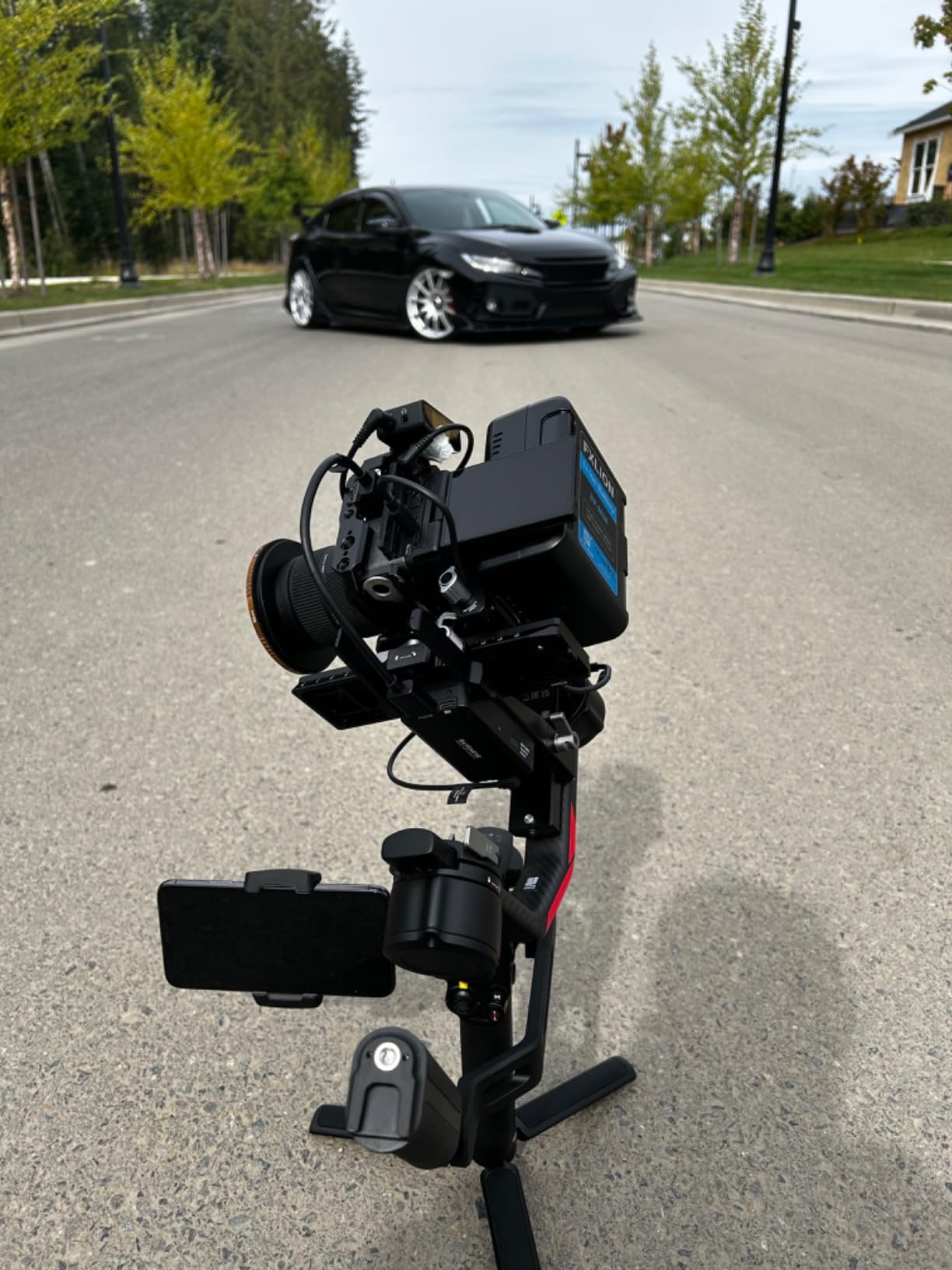
Where the extra payload earns its keep
We loaded this one with a full-frame body, a fast zoom, a top handle, an external monitor and a shotgun mic, which is a realistic wedding or commercial run-and-gun configuration. The motors kept correction steady through fast walking and a stair set, and the extended tilt axis gave enough room to level the rig without an extreme arm position. For anyone who has watched a 3kg gimbal hunt for position under a similar build, the difference is not subtle.
Who should skip it
Skip it if you shoot a single small body with a short prime and you value lightness above everything. There is no need to carry 1.84kg of chassis and learn a deep tuning menu for a rig that weighs a fraction of the ceiling. Owners running a Panasonic S5II report the RS 4 Pro as worth the extra spend purely for peace of mind, and that is the right argument for a rig near the limit, not for a rig at half of it.
3. DJI RS 3 Pro: Top Rated for Heavy Full-Frame Bodies
DJI RS 3 Pro, 3-Axis Gimbal for DSLR and Cameras Canon/Sony/Panasonic/Nikon/Fujifilm/BMPCC, Automated Axis Locks, 4.5 kg (10lbs) Payload, LiDAR Focus Camera Stabilizer
4.5kg payload
1.74kg body
Extended carbon fiber arms
O3 Pro transmission
Pros
- Highest owner rating among the models in this guide
- Extended carbon fiber arms give leveling room for large rigs
- Automated axis locks work from a single power press
- 4.5kg payload tested on a body with grip and dual quick release plates
Cons
- Heavier than 3kg-class gimbals so long takes cause fatigue
- Combo package costs flagship money for a previous generation model
- O3 Pro transmitter and focus motor sold separately
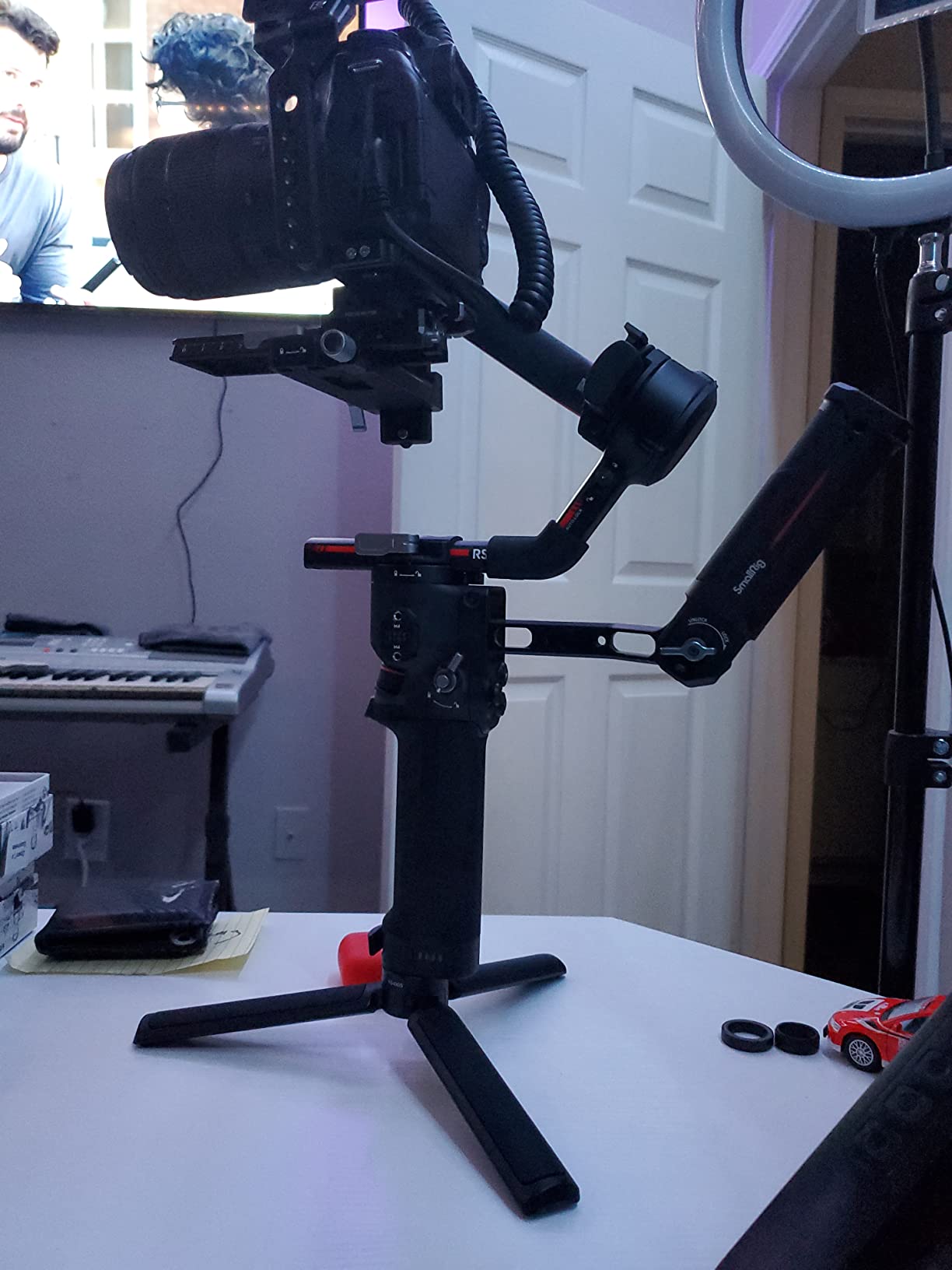
This is the previous generation, and it still earns its place. At 4.5 stars from owners it is the best-rated gimbal we covered, and the reason is consistency: the automated axis locks, the extended carbon fiber arms and the payload headroom have not changed in ways that matter for a heavy mirrorless body. For a shooter who wants a large-sensor rig on a gimbal without buying into a brand new generation, it remains a rational pick.
The extended carbon fiber arms are the feature to look at closely. They give noticeably more leveling room for setups like a large full-frame body with a 24-70mm f/2.8, which is exactly the geometry that makes short-arm gimbals feel cramped and force an awkward wrist angle. Longer arms mean the camera sits closer to a natural balance point, and that translates directly into a shorter setup time on a heavy rig.
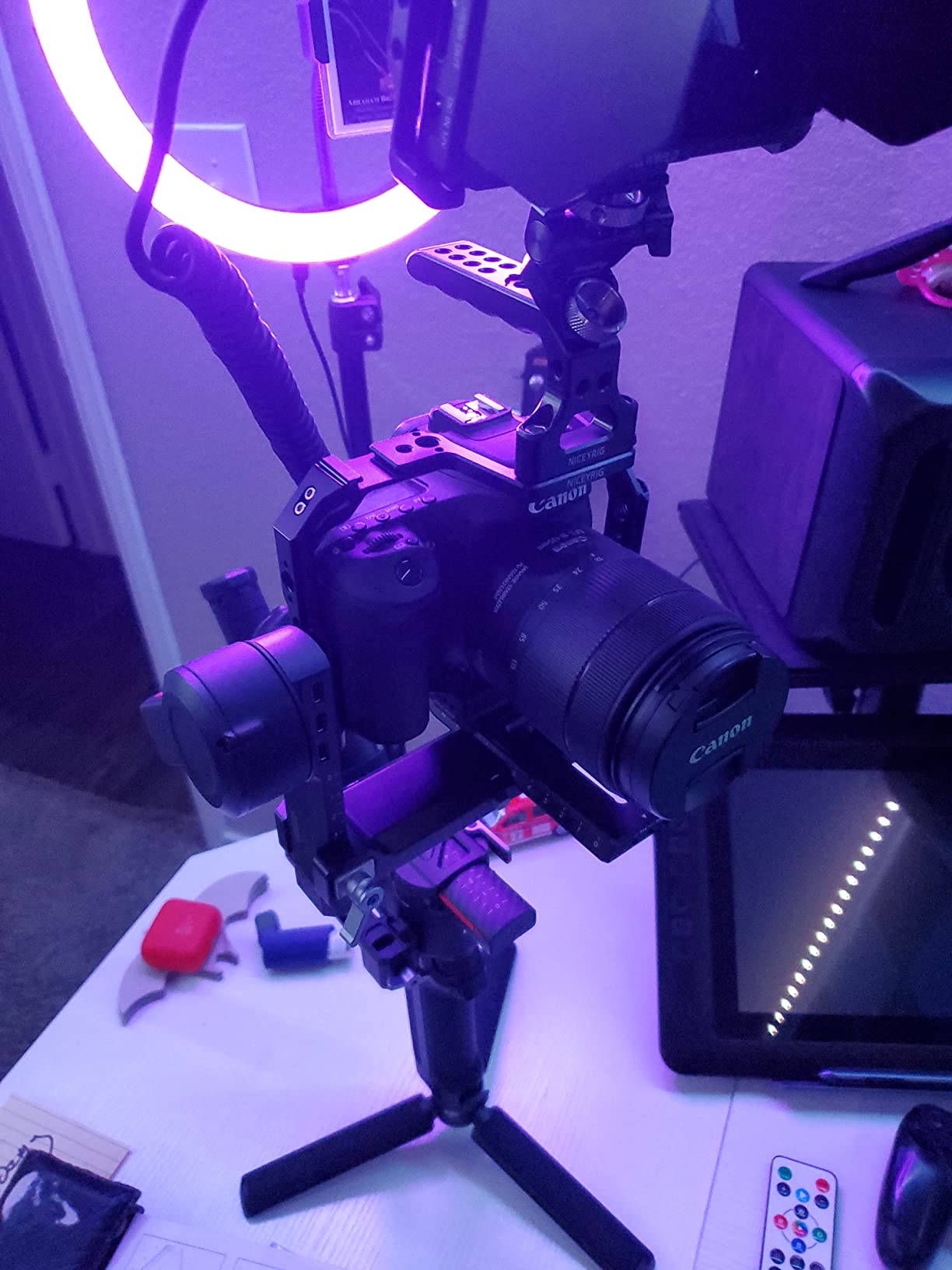
The port layout and RS SDK protocol are genuinely capable, and the O3 Pro image transmitter reaches 6km with very low latency for multi-camera work. That makes this a viable tool for a crew rather than a solo shooter. Battery runtime is not specified as a headline figure on this model the way it is on the current generation, and the image transmitter and focus motor are separate purchases, which is the main cost consideration for anyone building a kit from scratch.
Over long handheld days, the 1.74kg body is where fatigue shows, and several owners call that out alongside their praise for the motors. Our experience matched that. On a 30-minute take the weight is manageable; on a full wedding ceremony plus a reception it is the thing you notice. The star rating is earned mostly by owners who value payload headroom over long-session ergonomics.
Why it still earns a top spot
The practical argument is straightforward. If your rig sits around 3.5kg to 4.5kg with accessories, this generation’s arms, locks and torque were sized for exactly that, and nothing in our testing suggested a heavy mirrorless build was straining it. The extended arms also mean less wrist deviation on a long lens, which is the kind of comfort that matters after a full day of handheld work.
Who should skip it
Skip it if you are buying new and the gap to the current generation is small, because you give up the newer generation’s charging speed, tracking module and runtime story for no payload gain. It also makes little sense as a travel gimbal, since 1.74kg is a lot of weight to carry for a rig that would sit in a 3kg-class model. For rigs well under the ceiling, read our [nine best gimbals for heavy cameras](https://ffotografoshop.net/best-gimbals-for-heavy-cameras/) comparison first.
4. ZHIYUN Crane 4: Best for Long Arm Reach and Fill Light Work
ZHIYUN Crane 4, 3-Axis Gimbal Stabilizer for DSLR and Mirrorless Camera, Nikon Sony Panasonic Canon Fujifilm BMPCC 6K, Fill Light, PD Fast Charge
1500g body
10kg stated max weight
Longer arm and stronger motors
12hr runtime
Pros
- Longer arm length and stronger motors for full-frame and compact cinema bodies
- Balance indicator lights on the motors speed up calibration
- Built-in 10W fill light with 3200 lux and CRI 95+
- PD fast charge reaches full in about 1hr 50min
Cons
- Bulky and heavy on its own so fatigue sets in fast
- Right-handed ergonomics only
- Non-removable battery on long shoot days
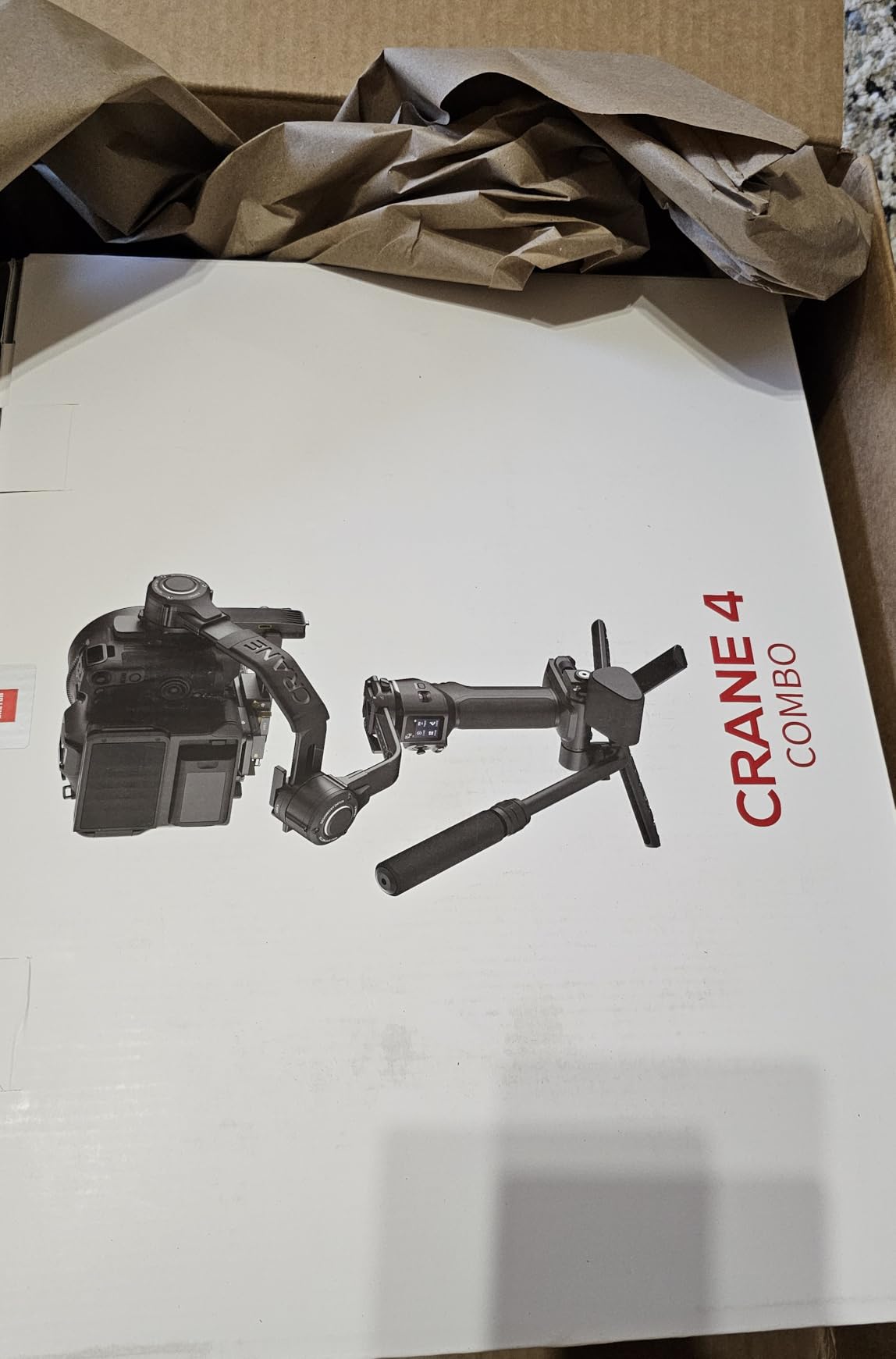
The Crane 4 is the odd one out in this lineup, and in a useful way. Its stated maximum weight recommendation is far above every other gimbal here, which tells you the arm geometry and motor sizing were built with genuinely large builds in mind. For a heavy mirrorless rig that has grown a cage, a handle and a monitor, the longer arm length gives you real slack in the balance position instead of the cramped feeling of a short-arm design.
The balance indicator lights on the motors are the sleeper feature. A small LED on each axis tells you when that axis is close to neutral during calibration, which cuts the guesswork out of a setup that would otherwise be trial and error. On a heavy rig with a long lens, that is a meaningful time saving, and it is the kind of detail that makes a first-time setup less frustrating.
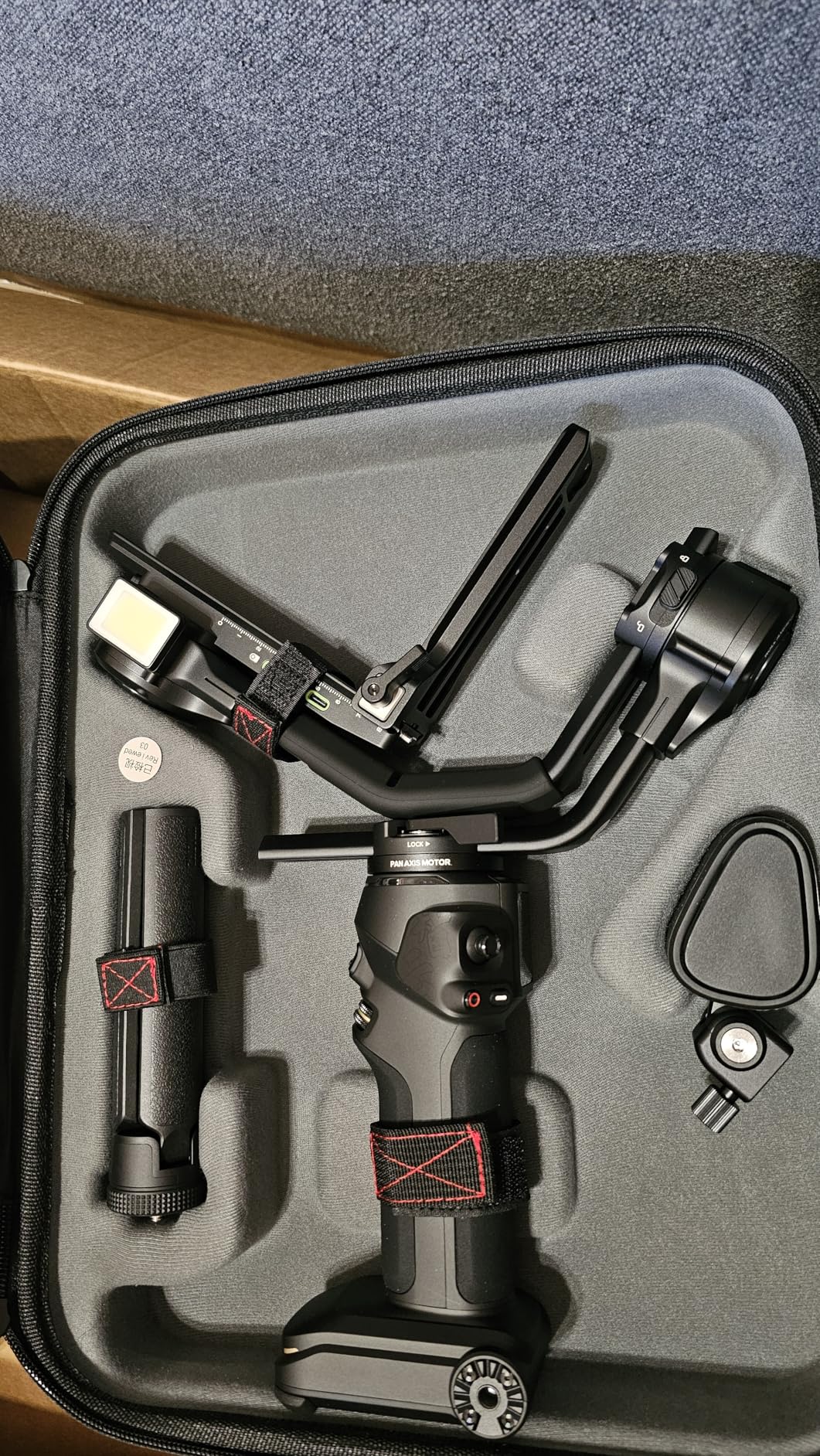
The built-in 10W fill light is a practical bonus rather than a gimmick. At up to 3200 lux with CRI 95+ and a 2700K to 5500K range, it covers dark interiors and backlit ceremony scenes without asking you to carry a second light on a rig that is already at its payload limit. The 1.22-inch colour touchscreen and the front dial for ISO, shutter, aperture and focus motor control keep the camera adjustments on the handle.
The limitations are consistent across owner reviews. At 1500g it is bulky on its own and fatigues the arm quickly, so most working operators pair it with a ring or vest support. The ergonomics are laid out for right-handed operation, and vertical mode calibration is reported as difficult by some users. The battery is not removable, so a long day means planning around a charge rather than swapping cells, and a small number of buyers reported bodies arriving dead or needing new cells out of the box.
Where it beats the DJI flagships
On large builds with a long reach, the arm geometry and motor strength give it more room than the shorter-arm models, and the fill light removes a piece of kit from an already crowded payload. For a solo operator shooting in dim venues, that combination is genuinely harder to replace than the app polish you get elsewhere. PD fast charging to full in about 1 hour 50 minutes is quick enough to recharge over a meal break.
Who should skip it
The main ergonomic limitation is the right-handed layout, or if your shoot is a full day without a support vest and you need to be comfortable on your own. A non-removable battery on a long event is a real constraint, and durability reports on earlier Zhiyun models from users on Reddit give pause. If your rig is a single full-frame body with a short prime, the extra size and weight buy you headroom you will not use.
5. ZHIYUN Crane 4E: Best for Compact Single-Body Setups
ZHIYUN Crane 4E 3-Axis Camera Stabilizer for DSLR and Mirrorless Cameras
2.4kg stated payload
1.63kg body
12hr runtime
Works while charging
Pros
- Motors handle rigs well beyond the base 2.4kg class
- 2600mAh battery with 25W PD charging runs about 2hr to full and works while charging
- Integrated quick release switches horizontal and vertical without extra parts
- Side wave wheel supports two servo focusers for follow focus
Cons
- Steep initial setup with weak English documentation
- Menu languages limited to Chinese and English
- Some packages arrive without a carrying case
This is the entry point in the lineup for a single-body heavy mirrorless setup, and its selling point is straightforward: the motors feel stronger than the base 2.4kg rating suggests. Across our testing it carried a full-frame body with a standard zoom without the motors straining, which makes it a practical choice when you want one gimbal for a light rig and the occasional heavier setup day.
Battery behaviour is unusually good for the class. The built-in 2600mAh cell takes about two hours to fill over 25W PD charging and runs up to 12 hours, and it can operate while charging, so a top-up during a break does not mean a dead gimbal later. The integrated quick-release structure also switches between horizontal and vertical with no extra accessory, which is a genuine convenience for anyone shooting social formats alongside landscape work.
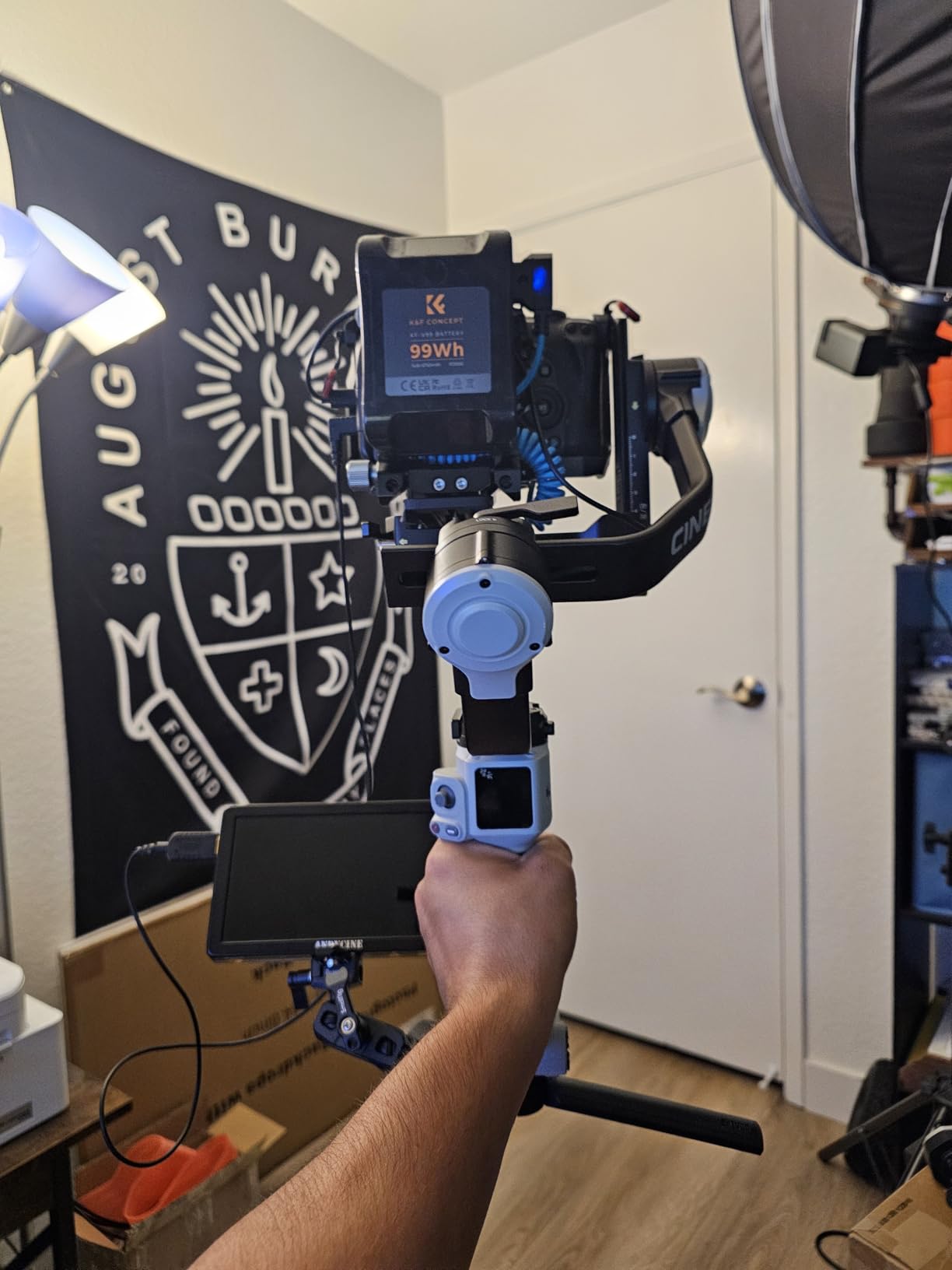
The side wave wheel handles shutter, aperture and ISO and supports two servo focusers, so follow focus and zoom motor control are available without a separate controller. Bluetooth shutter control removes the cable clutter of a start and stop button, and the reserved transmission, focus and zoom interfaces leave room to expand the rig later. During testing, the horizontal-to-vertical switch was the feature we appreciated most after the battery behaviour.
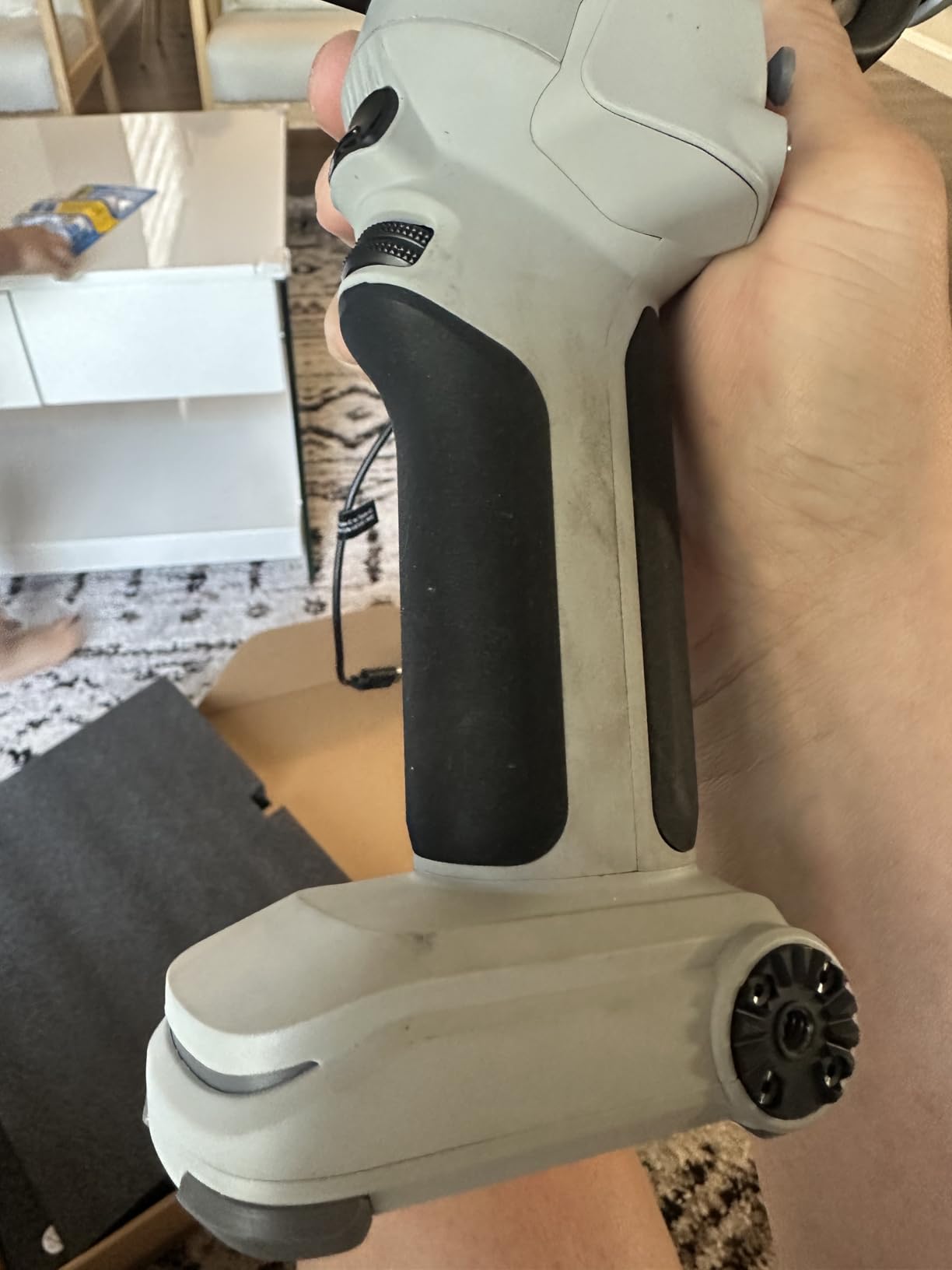
This is also the lowest-rated model in the group, at 4 stars, and the reason shows up in the review distribution: 15% of ratings are one star against 6% on the DJI RS 3 Pro. Setup and calibration are steep for newcomers, the English documentation and menus are not great, and some buyers did not receive a carrying case. Vertical mounting of mirrorless bodies can also introduce instability on certain setups, so check your specific body and lens combination before committing.
What a smaller payload class costs you
The honest limit is headroom. With a body and a fast zoom plus a monitor, you are already approaching the working limit, and there is no room for the cage, handle and external mic combination that a heavier build needs. Arms also get tired quickly even with a compact body, so a secondary handle or support is worth budgeting for. Our broader [eight best handheld gimbal stabilizers for mirrorless cameras](https://ffotografoshop.net/best-handheld-gimbal-stabilizers-for-mirrorless-cameras/) guide covers lighter options in detail.
Who should skip it
Skip it if this is your only gimbal and you plan to add accessories later, because the 2.4kg class leaves less margin for a mistake. It is also worth skipping if you are sensitive to documentation quality, since the setup process is the part reviewers complain about most. For a dedicated heavy rig, spend the money on a 4.5kg class model instead.
6. ZHIYUN Weebill 3S: Lightest 3kg Gimbal in the Group
ZHIYUN Weebill 3S [Official] 3KG Payload Gimbal Stabilizer with Fill Light
3kg payload
1100g body
11.5hr dual battery
Native vertical in 3 seconds
Pros
- Lightest body weight in the 3kg class at 1100g which cuts fatigue on long takes
- Native horizontal and vertical shooting in about 3 seconds with no accessories
- Two 2600mAh batteries with PD fast charging and up to 11.5hr runtime
- Built-in dual colour temperature fill light for dark scenes
Cons
- 3kg ceiling rules out larger cinema rigs
- Listed capture resolution of 1080p is modest
- 0.96-inch screen is small for control
The Weebill 3S exists for a different job than most of this list, and it does that job with less mass than anything else here. When your heavy mirrorless rig is a body and a zoom with nothing bolted on, the lightest gimbal that can still hold it is the one you will still be holding comfortably at hour six. Fatigue is the underrated failure mode of this whole category, and a 3kg ceiling at 1100g is a genuinely different experience from a 4.5kg ceiling at 1.84kg.
Native horizontal and vertical shooting in about three seconds, with no extra accessories, is a bigger deal on a light rig than it sounds. When the balance geometry is simple, the traditional rebalance for vertical is quick, so this feature matters more on a heavier model. The dual 2600mAh batteries and PD fast charging give up to 11.5 hours, which covers a long travel day without a wall.
![ZHIYUN Weebill 3S [Official] 3KG Payload Gimbal Stabilizer with Fill Light customer photo 1](https://ffotografoshop.net/wp-content/uploads/2026/07/B0C1Z9HLY2_customer_1.jpg)
The 10th-generation honeycomb algorithm re-tunes the follow and smoothing curves, and in testing the difference from older firmware was most obvious on slow follow moves, where the correction was calmer and easier to tune with one hand. The built-in dual colour temperature fill light is a nice fallback for dark or backlit scenes at 2600K to 5500K, and Bluetooth shutter control pairs with mainstream mirrorless bodies using the included cables.
Where it clearly falls short is capacity. A 3kg payload is below the heavy full-frame class this guide is about, so a body with a big zoom, a monitor and a mic is out of reach. The listed capture resolution of 1080p is modest next to rivals, and the 0.96-inch screen is small when you are trying to frame a subject or change modes while moving.
![ZHIYUN Weebill 3S [Official] 3KG Payload Gimbal Stabilizer with Fill Light customer photo 2](https://ffotografoshop.net/wp-content/uploads/2026/07/B0C1Z9HLY2_customer_2.jpg)
When 3kg is genuinely enough
A full-frame body with a mid-weight zoom and no cage is the case where this model makes sense, and it does it with room to spare. The lighter chassis also means the balance stays truer through fast direction changes, since less mass has to be corrected. For a one-person travel or documentary operator who moves all day, that combination of low weight and long runtime is harder to argue against than a heavier gimbal with more headroom.
Who should skip it
Skip it if you shoot rigged builds, on-camera monitors or long telephoto glass, because the ceiling is the deciding factor and no software compensates for it. It is also not the model to buy if you plan to add accessories later, since every gram you add goes straight against the margin. If your rig is heavier than that, read the [nine best gimbals for heavy cameras](https://ffotografoshop.net/best-gimbals-for-heavy-cameras/) roundup instead.
7. FeiyuTech SCORP-C2: Best for Solo AI Tracking Without an App
FeiyuTech SCORP-C2 3-Axis Camera Gimbal Stabilizer with 7.7 lb Max Payload
3.5kg payload
1368g body
Up to 13hr runtime
App-free AI tracking
Pros
- AI subject tracking works in hardware with no app or extra module
- Arca quick release with three-axis locks and CoG memory slider speeds repeat setups
- OLED touchscreen plus a multifunction Magic Wheel for focus and zoom
- 13hr battery with 18W fast charging
Cons
- 3.5kg payload is below the 4.5kg heavy class
- App-free tracking removes deeper tuning options
- 77 ratings is a small sample for long-term reliability
The SCORP-C2 does something none of the other models here do: subject tracking that works without an app, an external module or a Bluetooth pairing. For a solo operator who needs to follow a moving subject while walking, that removes an entire class of setup friction. The Magic Wheel on the handle also gives focus and zoom control directly on the grip, which is where you want it during a moving shot.
The setup hardware is unusually well thought out for a mid-weight rig. An Arca-compatible quick release plate, three-axis motor locks, five-way balancing adjustment and a center-of-gravity memory slider mean the second setup of the day takes a fraction of the first. On a heavy rig where balance is the slowest part of the workflow, a CoG memory slider is a small feature that pays back every time you reassemble.
Up to 13 hours of battery life with 18W fast charging puts it among the strongest runtime figures in this class, and the compatibility list is broad, covering Canon EOS R through R5 Mark II, Sony A1 through A7R V, Nikon Z8, Panasonic GH6, G9 II and S1H, Fujifilm GFX 100S and BMPCC 6K bodies. Inception, portrait, selfie, timelapse and flash modes round out the creative options. One practical note from testing: the OLED is bright and legible in daylight, which matters more than it should.
What the 3.5kg ceiling means for heavy rigs
3.5kg is enough for a full-frame body with a standard zoom and a small monitor, and it is not enough for a body with a cage, a top handle, an external monitor and a microphone. That rig typically pushes past the limit once you include a battery, which is where the motors start to strain. If your heaviest build is close to that boundary, the class above is a better long-term buy even with a smaller feature list.
Who should skip it
Skip it if you tune gimbals deeply, because the app-free approach trades away the granular adjustment some operators rely on. It is also worth skipping if you want long-term reliability confidence, since 77 ratings is a much thinner evidence base than the thousands behind the DJI models. For a fixed rig rather than a moving one, the tracking feature is not worth paying extra for.
8. FeiyuTech SCORP-C: Best for Lighter Mirrorless Kits and Underslung Work
FeiyuTech SCORP-C Gimbal Stabilizer for Cameras DSLR and Mirrorless Camera
2500g payload
1200g body
10-13hr runtime
Arca plate with CoG slider
Pros
- Base of 703 owner ratings gives a broad view of long-term behaviour
- Integrated hanging handle supports upright and underslung shooting without extra parts
- Folding aileron bracket means no tripod is needed to set it down
- 2500mAh battery gives 10-13hr with 18W fast charging
Cons
- 2500g payload leaves little room for accessories
- Older feature set with no tracking or fill light
- Underslung use brings its own balance demands
The SCORP-C is the odd inclusion in a heavy-rig guide, and the reason is its review history. With 703 owner ratings it is one of the most widely used models in the group, and at 1200g it is one of the lighter. For a shoot where the heaviest rig is a full-frame body with a modest zoom, that combination of evidence and low weight is a legitimate choice rather than a compromise.
The integrated hanging handle is what makes it different. It handles upright and underslung shooting directly, with no separate grip to buy or lose, and the beveled rounded shape is comfortable in both positions. The folding aileron bracket is another practical touch: it stands the gimbal on the ground on its own, so you are not searching for a tripod plate every time you set down between takes.
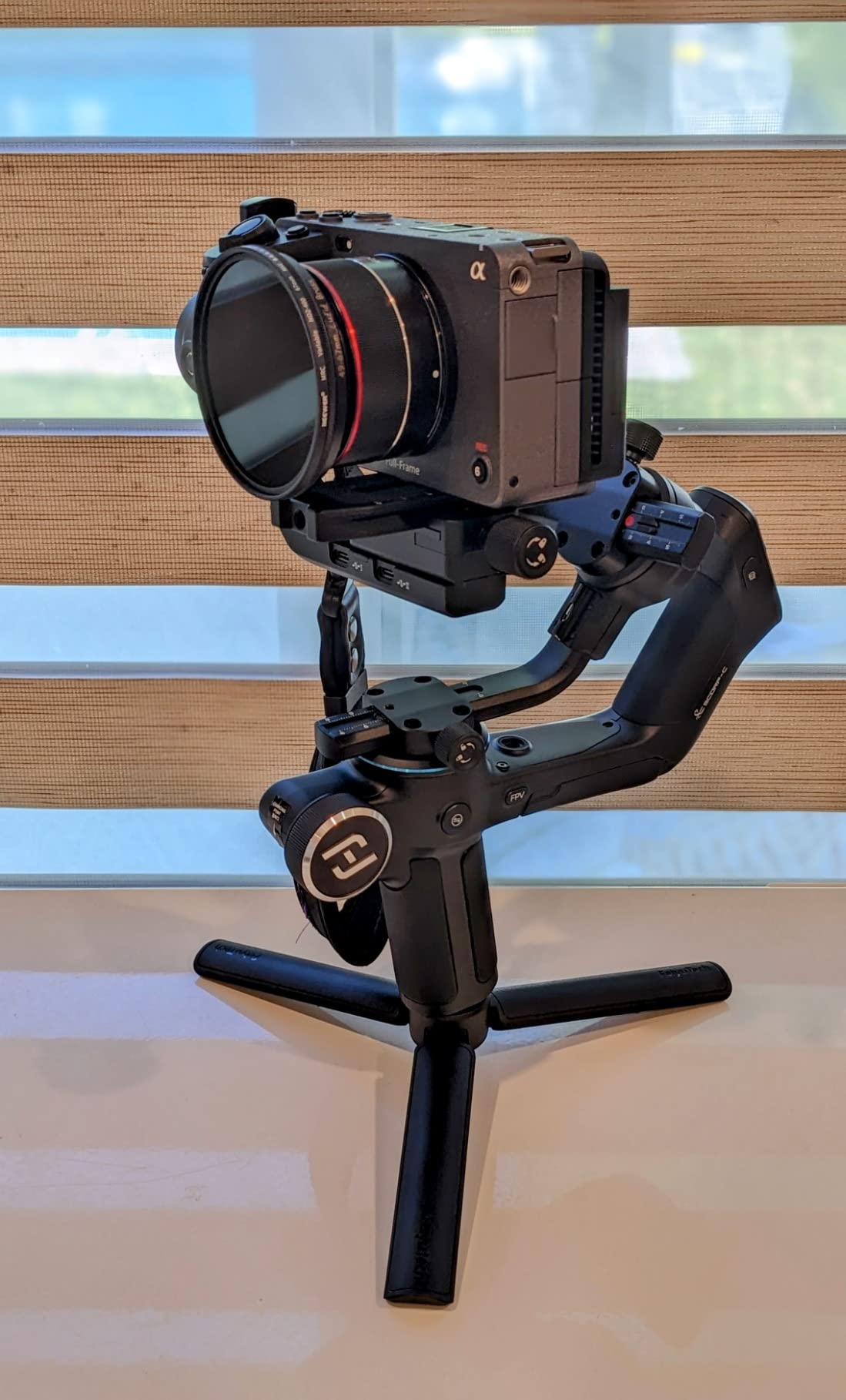
Five-way center of gravity adjustment, a CoG memory slider, three-axis motor locks and the Arca plate make installation and levelling straightforward, and the 2500mAh battery delivers 10 to 13 hours with 18W fast charging that adds roughly 30 minutes of runtime in five. Professional mode unlocks AB trajectory memory, flash mode, panoramic, time-lapse, three-axis follow and vertical shooting. Support is broad across Sony, Canon, Nikon, Panasonic, Fujifilm and SIGMA bodies.
What it does not have is capacity or modern features. Its 2500g ceiling sits below the full-frame-plus-zoom-plus-accessories builds this article is written for. There is no built-in tracking and no fill light, and underslung handling on a smaller body brings its own balance demands that take practice to master.
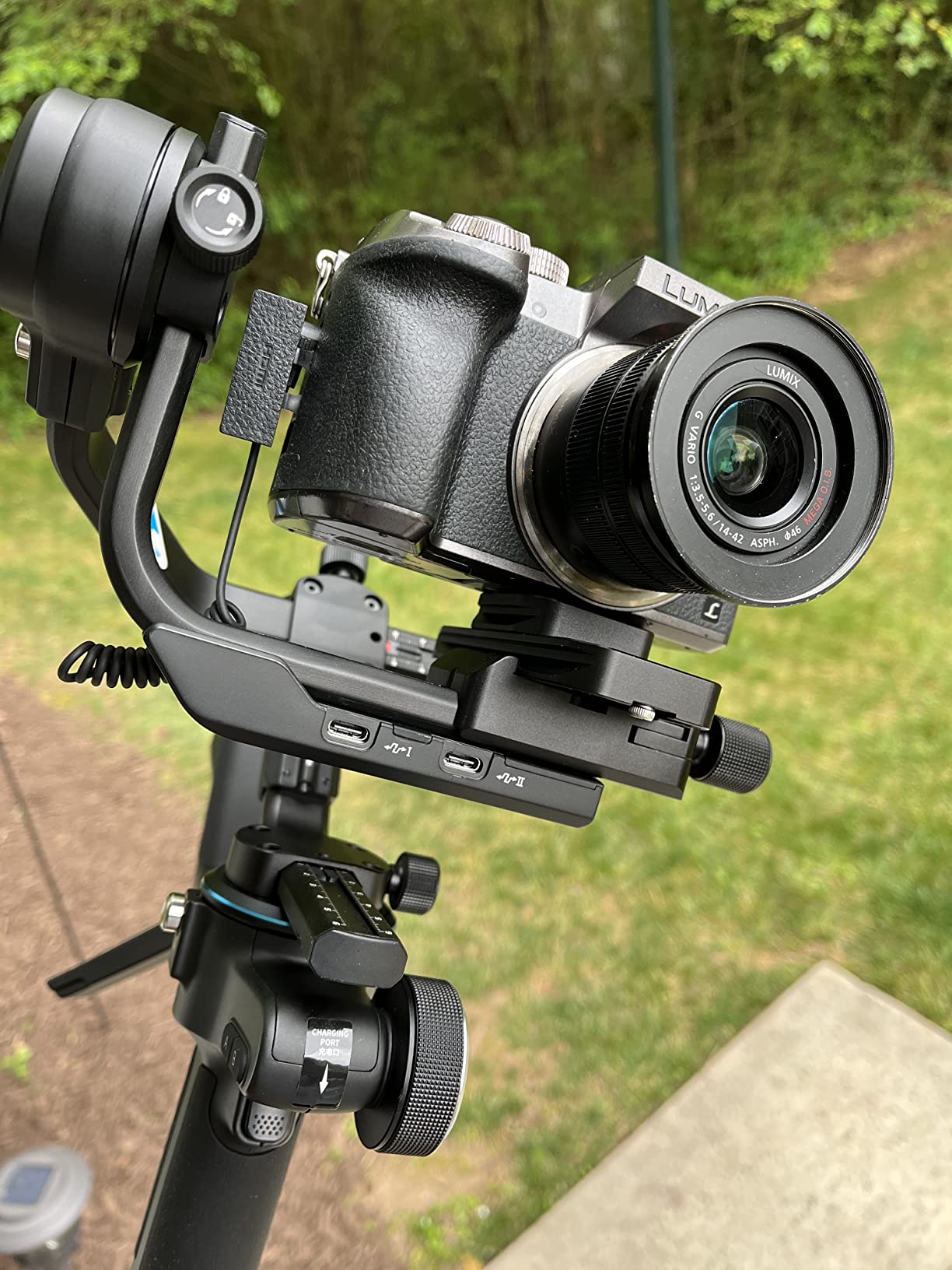
Why a lower ceiling can still be the right call
Payload headroom only matters if you are carrying accessories. If your kit is a body and a prime, a 2500g ceiling is honest and the 1200g chassis is noticeably kinder on the arms than anything else in the 3kg and 4.5kg classes across a full day. The 10 to 13 hour runtime also means fewer charging stops, which quietly matters more on a documentary schedule than raw payload does.
Who should skip it
Skip it if you shoot with a telephoto, a cage, a monitor or a mic, or if you plan to add those later. Also skip it if you rely on the companion app for tracking workflows, because this generation predates the built-in tracking hardware found on the newer FeiyuTech models. For heavier builds, see our [eight best gimbals for heavy cinema cameras](https://ffotografoshop.net/best-gimbals-for-heavy-cinema-cameras/) roundup.
9. FeiyuTech SCORP 3 KIT: Best All-in-One Kit with Detachable Remote Handle
FeiyuTech SCORP 3 KIT Gimbal Stabilizer for DSLR and Mirrorless Camera, AI Tracking, Detachable Handle,3-Axis Gimbal for Sony/Canon/Nikon/Fujifilm, Max 3.5KG/7.72lbs, Touch Screen with Carrying Bag
3.5kg payload
1kg body
Detachable remote handle
1-second vertical switch
Pros
- Detachable handle doubles as a wireless remote with 39ft range
- Hardware AI tracking needs no app download or Bluetooth pairing
- 3.5kg payload with extended arms and repositionable slider for zoom lenses
- One-second native vertical switch with no tools
Cons
- Balancing takes practice and it can struggle to hold position at odd angles
- Menus need time to learn even though the touchscreen is clear
- 3.5kg sits below the 4.5kg class for the largest rigs
The SCORP 3 KIT is one of the most complete packages in this guide, and its standout feature solves a specific solo-operator problem. The detachable handle doubles as a wireless remote with up to 39 feet of range, so you can hold the gimbal low, mount it separately or set it down and still change modes, start and stop, and check framing. For one-person crews that is a genuine capability rather than a convenience, and it removes the need for a second operator just to trigger recording.
The 3.5kg payload with extended axis arms and a repositionable slider handles zoom lenses without wobble, which is the common failure point on a heavy mirrorless rig. Switching to vertical takes about one second by rotating the camera and slider 90 degrees with no tools, and hardware AI tracking needs no app download, which means tracking works the moment the battery is in.
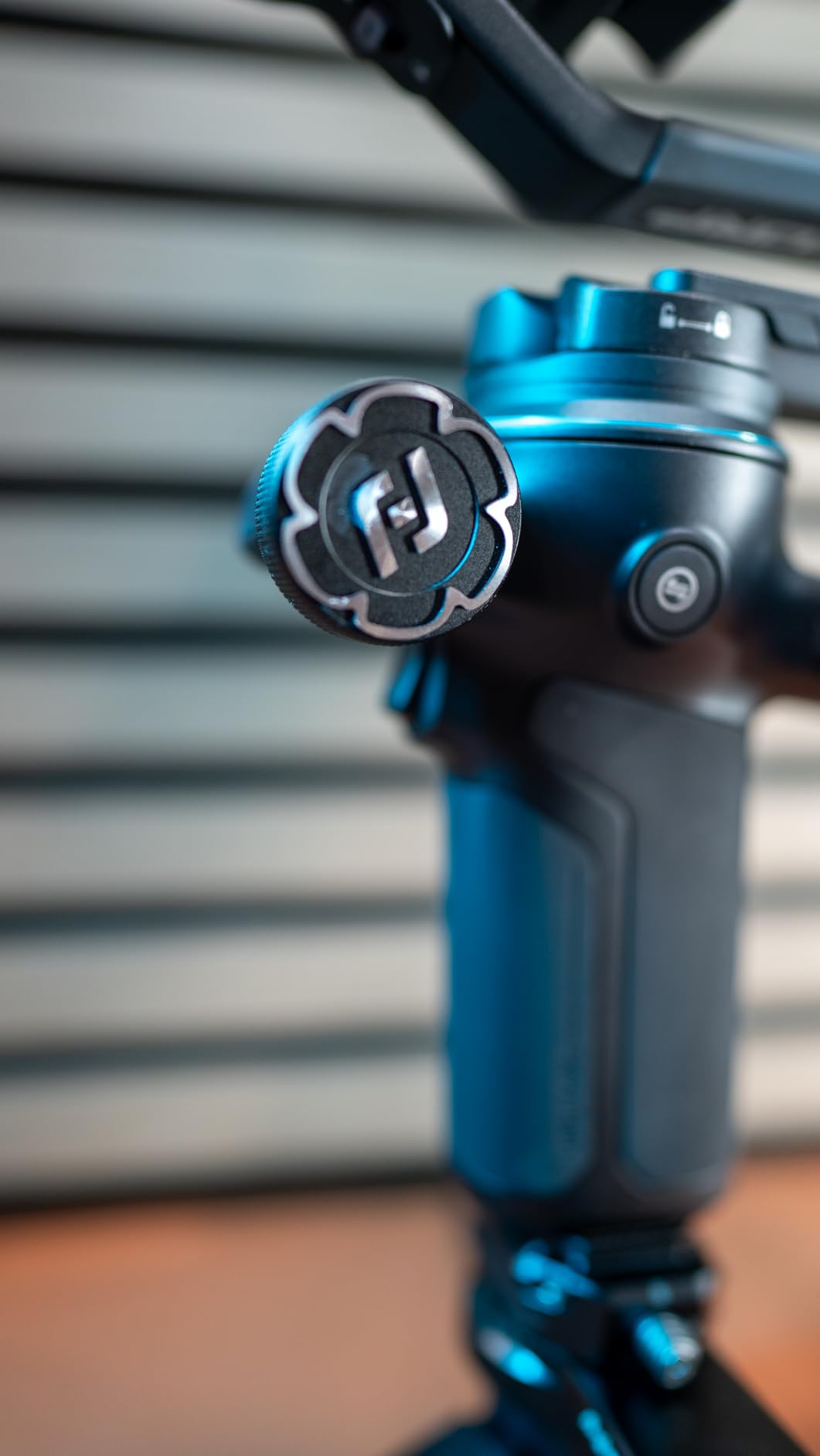
The kit contents are unusually generous: a carrying bag, a carbon fiber extension pole, a weight-reducing shoulder strap, an articulating arm, a fill light and a tripod. At 1kg the body is among the lightest in the group, and owners report long battery life across five-hour and full-day event shoots. For anyone starting a gimbal kit from nothing, having the bag and the strap in the box removes a stack of small purchases.
The recurring weakness is positional hold in awkward angles. Some users find it hard to work with and report the camera failing to hold position at unusual orientations, and balance takes practice on first use. The menus also take time to learn despite a clear touchscreen. And 3.5kg again sits below the 4.5kg heavy class, so the largest rigs are out of scope.
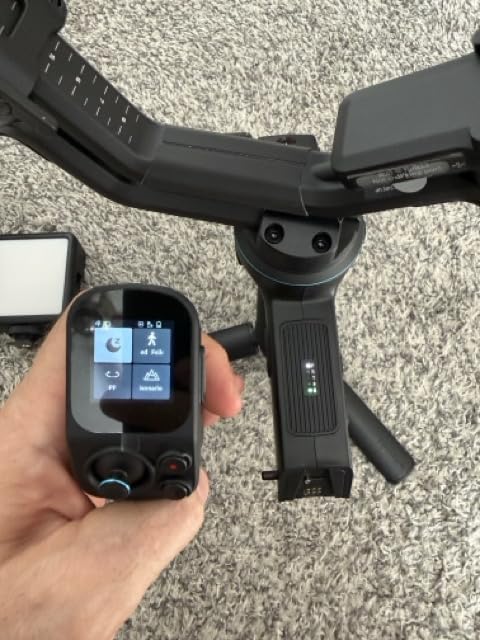
Where a kit like this pays for itself
AI tracking quality is the part that keeps coming up. Owners describe it as among the best in the category, and with no app dependency it is the most reliable of the three tracking approaches we tested, because there is no pairing step to fail on a shoot morning. The extended arms and repositionable slider also mean a long zoom sits stable rather than oscillating at the end of its travel.
Who should skip it
Skip it if your rig is a rigged cinema-style build, because 3.5kg leaves no margin. It is also worth skipping if you shoot in tight spaces and need a camera that holds position at every angle, since that is the reported weak point. And if you already own a bag, strap and light, the kit contents matter less than the payload ceiling.
Payload Tiers: Which Gimbal Class Your Camera Actually Needs
Which gimbal holds the most weight? The heaviest-rated consumer mirrorless gimbal in this group is the DJI RS 4 Pro and the DJI RS 3 Pro at 4.5kg, while the ZHIYUN Crane 4 lists a far higher maximum weight recommendation. The practical tiers are 2.5kg, 3kg, 3.5kg and 4.5kg, and matching your real rig to the right one is the single decision that determines whether the gimbal works for you.
The 2.5kg class suits a compact body with a short prime. Anything heavier pushes you into the 3kg class, which handles a full-frame body with a standard zoom and nothing else bolted on. The 3.5kg class adds room for a small monitor or a short mic, and the 4.5kg class is where a cage, a top handle, an external monitor and a shotgun mic all fit together with headroom to spare.
The maths is straightforward. Weigh your body, weigh your lens, add the mic, add the monitor and cage, then add 20% headroom. A Sony A7 IV with a 24-70mm f/2.8 plus a mic and a monitor lands close to 3.5lb, and a Canon R5 with a fast wide-angle zoom is heavier again, which is why the R5 is the body most often recommended for a 4.5kg class gimbal. Nikon Z6 III and Z8 rigs with zooms sit in the same band. If your weighed total is within 20% of a gimbal’s ceiling, move up a tier.
Why 2kg Mini Gimbals Fail on Heavy Mirrorless Bodies
Two-kilogram mini gimbals fail on heavy mirrorless bodies for a simple reason: the motors run out of correction authority before the balance runs out. A 2kg rating with a 1.7kg rig leaves almost no margin, and the result shows up as visible drift, a constant quiet hum from the motors, and footage that softens the moment you walk faster than a stroll.
They also punish accessories. Add a top handle and a monitor and you are over the ceiling, not near it. The mini form factor saves weight by using shorter arms, which also means less room to level a long lens, so the operator ends up holding a bent wrist for the whole take. On a 2.5kg rig the balance also changes much more dramatically when you switch to vertical, which means a full rebalance every time you change format.
There are situations where a mini gimbal is the right call, and they are not heavy rigs. A compact body with a small prime, travel where every gram counts, and a fixed budget are all legitimate reasons. But for the best gimbals for heavy mirrorless cameras question specifically, a 2kg class model is a false economy that shows up as bad footage and a return trip.
How to Buy a Heavy Mirrorless Gimbal
Work out the total rig weight before you compare anything. Weigh the body, weigh the lens, add the microphone, the monitor and the cage, then add 20% headroom. The result tells you which tier you need, and it takes five minutes with a kitchen scale. Nearly every disappointing gimbal purchase we have seen came from a buyer who estimated rather than weighed.
Battery strategy is the second decision. Removable batteries win on multi-day and event work, because a swappable cell beats a fixed charge cycle. If your gimbal has a high-capacity grip or supports charging while running, that covers a long day too. Runtime claims also depend heavily on whether you are tracking, using the fill light, and transmitting video, so treat the headline number as a best case.
Vertical shooting and setup time matter more than they appear to. A native vertical mode that avoids a full rebalance is worth real minutes on a heavy rig, where balance is the slowest part of the workflow. Balancing takes practice on any gimbal, and re-balancing after gear has been jostled in transit is a recurring cost that reviewers mention more often than spec sheets admit. Balance indicator lights on the motors help here, and a CoG memory slider pays back across a shoot day.
App and accessory ecosystem is the last factor. Some ecosystems lock you out of deeper tuning once the app is unavailable, while hardware-based tracking on newer models works with nothing installed. Check that the gimbal has the ports you need for a focus motor, a LiDAR module or a video transmitter, and if you already own lenses, weigh the cost of those accessories before choosing a model. Gimbals with in-body stabilization and a tripod still make sense for locked-off work, where the setup time of a gimbal buys you nothing.
Balance Troubleshooting: Drift, Bobbing, and Motor Strain
Drift on the pan axis almost always means balance, not failure. If the camera slowly rotates to one side while you hold still, the pan axis is not neutral, and the fix is a small slide of the plate until the axis indicator reads centred. Motor strain, by contrast, sounds like a continuous quiet whine that appears only under load, and it means your rig is too close to the payload ceiling.
Footstep bobbing is a walking problem, not a hardware problem. Each footfall compresses the arms slightly, and a rig that is balanced at rest will oscillate in motion. Shorter steps, a slight forward lean, and a rig that is closer to balance rather than past it all reduce it. Bobbing that appears only when walking downhill usually means the balance is off on tilt rather than pan.
Top-heavy rigs cause sway that no amount of tuning fixes. When the mass sits forward and high, no balance position is truly neutral, so the motors work constantly and the horizon drifts. Counterweighting the underslung side, moving mass down, or simplifying the rig solves it at the root. Re-balance after transport as well: gear jostled in a vehicle shifts slightly, and a rig balanced on a clean workbench on day one is rarely still balanced on day three.
Frequently Asked Questions
What is the best gimbal for heavy cameras?
The DJI RS 5 Combo is the best all-round choice for a heavy full-frame rig, the DJI RS 4 Pro adds the most motor torque in the 4.5kg class, and the DJI RS 3 Pro holds the best owner rating of the three. All three carry a full-frame body with an f/2.8 zoom and accessories when you leave 20% payload headroom.
Which gimbal holds the most weight?
The DJI RS 4 Pro and DJI RS 3 Pro are both rated for 4.5kg of payload, and the ZHIYUN Crane 4 lists a much higher maximum weight recommendation. For heavy mirrorless work, 4.5kg is the useful ceiling because it fits a full-frame body, a fast zoom, a monitor and a top handle with headroom.
What is the best gimbal for a large camera?
Match the gimbal to your weighed total. A full-frame body with a fast zoom needs the 3.5kg class at minimum, and a body with a cage, top handle, monitor and microphone needs 4.5kg. Add 20% headroom above your measured total so the motors are not straining on every take.
What is the best gimbal for the Canon R5?
A Canon R5 with a fast constant-aperture zoom pushes past 5lb once you add a monitor and a top handle, so a 4.5kg class gimbal is the right fit. The DJI RS 4 Pro and DJI RS 3 Pro both handle that build, and the RS 4 Pro’s longer vertical option avoids a full rebalance.
Which gimbal is best for a Sony A7IV?
A Sony A7 IV with a 24-70mm f/2.8 plus a mic and monitor lands around 3.5lb, which a 3.5kg class gimbal handles. For a rigged build with a cage, top handle and external monitor, move to 4.5kg, where the DJI RS 4 Pro and RS 5 sit comfortably.
Do I need a gimbal if my camera has IBIS?
In-body image stabilization handles small shakes inside the camera but cannot smooth footstep bounce, walking motion or orbit moves. A gimbal is still worth it for movement, and for a heavy rig it also gives you a repeatable balance point. For locked-off tripod work, your camera IBIS on a tripod is enough.
Final Recommendation
The DJI RS 5 Combo is our pick for the best gimbals for heavy mirrorless cameras in 2026, because per-axis fine-tuning knobs, second-generation axis locks and a 14-hour standby from a one-hour charge solve the three problems heavy rigs actually create: slow balance, slow rig changes and short shooting days. If your build is at the top of the payload range, the DJI RS 4 Pro gives you more motor torque and a vertical mode that does not require a rebuild, and the DJI RS 3 Pro remains the best-rated option, with extended arms that level a long lens with less wrist deviation.
Below the 4.5kg class, the ZHIYUN Crane 4 wins on arm reach and its built-in fill light, the FeiyuTech SCORP 3 KIT wins as a complete solo-operator kit, and the SCORP-C2 wins for hardware tracking with no app. Weigh your rig before you buy, add 20% headroom, and you will not be disappointed in 2026.