
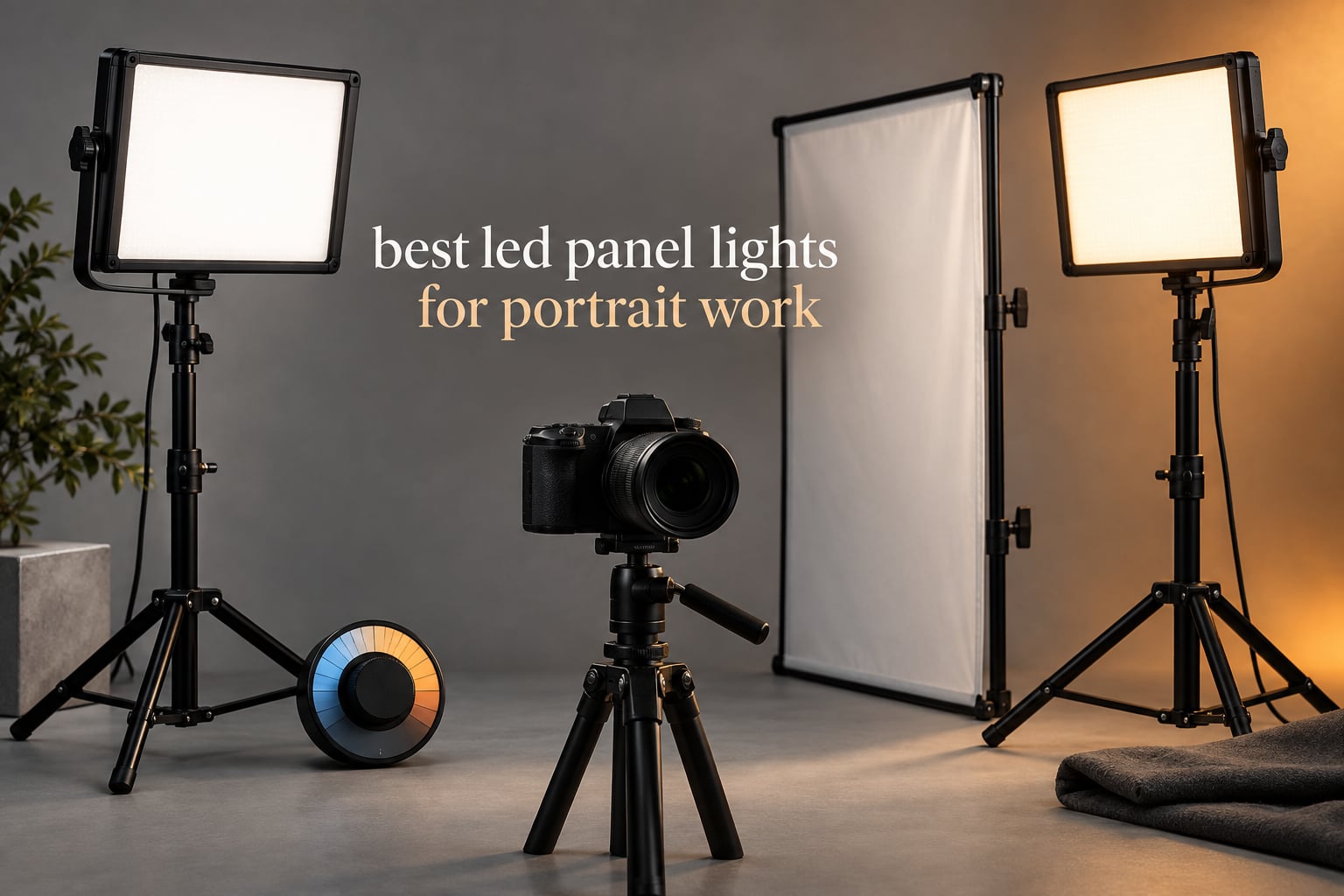
Short answer: the Neewer NL660 2-Pack is the best LED panel light for portrait work overall, the Neewer NL480 2-Pack is the best value two-light kit, and the NiceVeedi 15W 2-Pack is the cheapest credible way into continuous portrait lighting. All three give you two independent panels, which is the minimum that makes a portrait setup look deliberate rather than flat.
Panels are the easiest upgrade a portrait photographer can make, and the reason is not raw wattage. It is apparent source size. A wide panel held close to your subject wraps light around the face and softens every shadow it creates, and because the light is continuous you can read the shadow direction and the exposure in liveview before you ever press the shutter. That feedback loop is why so many working headshot shooters moved from strobes to panels for everything except frozen motion and long-throw high-end work.
We narrowed the field on five criteria: color accuracy for skin, usable output at real subject distances, panel size relative to how close you can place it, power options, and build quality that survives a car boot. We did not rank on RGB feature lists. For portraits, a wide bi-color range with high CRI and TLCI beats full-color capability every time, and that is the logic behind every pick below.
If you want the broader category covered, our guide to the best LED panel lights for photography goes deeper on product and tabletop work, and our picks for the best ring lights for portrait photographers cover the circular-light alternative.
Table of Contents
Top 3 Picks for Portrait Work in 2026

Neewer NL660 2-Pack
- 3300 lux at 1m
- CRI 96+
- Fanless aluminum housing
- 2 panels plus 2 stands and diffusers

Neewer NL480 2-Pack
- CRI 96+
- 3200K-5600K bi-color
- Flicker-free dimming
- 2 panels plus 2 stands and diffusers

NiceVeedi 15W 2-Pack
- CRI 97+
- 2800K/4800K/6500K presets
- 10 x 7.8 inch diffused panel
- USB-C powered
Best LED Panel Lights for Portrait Work (September 2026)
| Product | Specifications | Action |
|---|---|---|
| Neewer NL660 2-Pack Bi-Color Kit |
|
Check Latest Price |
| Neewer NL480 2-Pack Bi-Color Kit |
|
Check Latest Price |
| NiceVeedi 15W 2-Pack Studio Kit |
|
Check Latest Price |
 RaLeno 13 Inch Soft Panel RaLeno 13 Inch Soft Panel |
|
Check Latest Price |
 GVM 480 App-Control 2-Pack GVM 480 App-Control 2-Pack |
|
Check Latest Price |
 RaLeno 9 Inch Edge-Lit Panel RaLeno 9 Inch Edge-Lit Panel |
|
Check Latest Price |
 Neewer NL-116AI 9 Inch Panel Neewer NL-116AI 9 Inch Panel |
|
Check Latest Price |
 Godox LP600Bi 2-Pack Godox LP600Bi 2-Pack |
|
Check Latest Price |
 Aputure Amaran 200X-S Aputure Amaran 200X-S |
|
Check Latest Price |
1. Neewer NL660 2-Pack Bi-Color Kit – The All-Round Pick
NEEWER 2 Pack Bi Color 660 LED Video Light and Stand Kit, 3200-5600K
3300 lux at 1m, CRI 96+
3200K-5600K
Fanless aluminum body
2 lights, 2 stands, 2 barn doors
Pros
- CRI 96+ keeps skin tones natural
- Dual power options with an LCD status screen
- Fanless aluminum runs silent and cool
- Two stands and diffusers included
- Metal construction holds up over years
Cons
- Barn doors can hit the U bracket when tilted
- Small on-panel screens
- Color temperature knob has no numeric readout
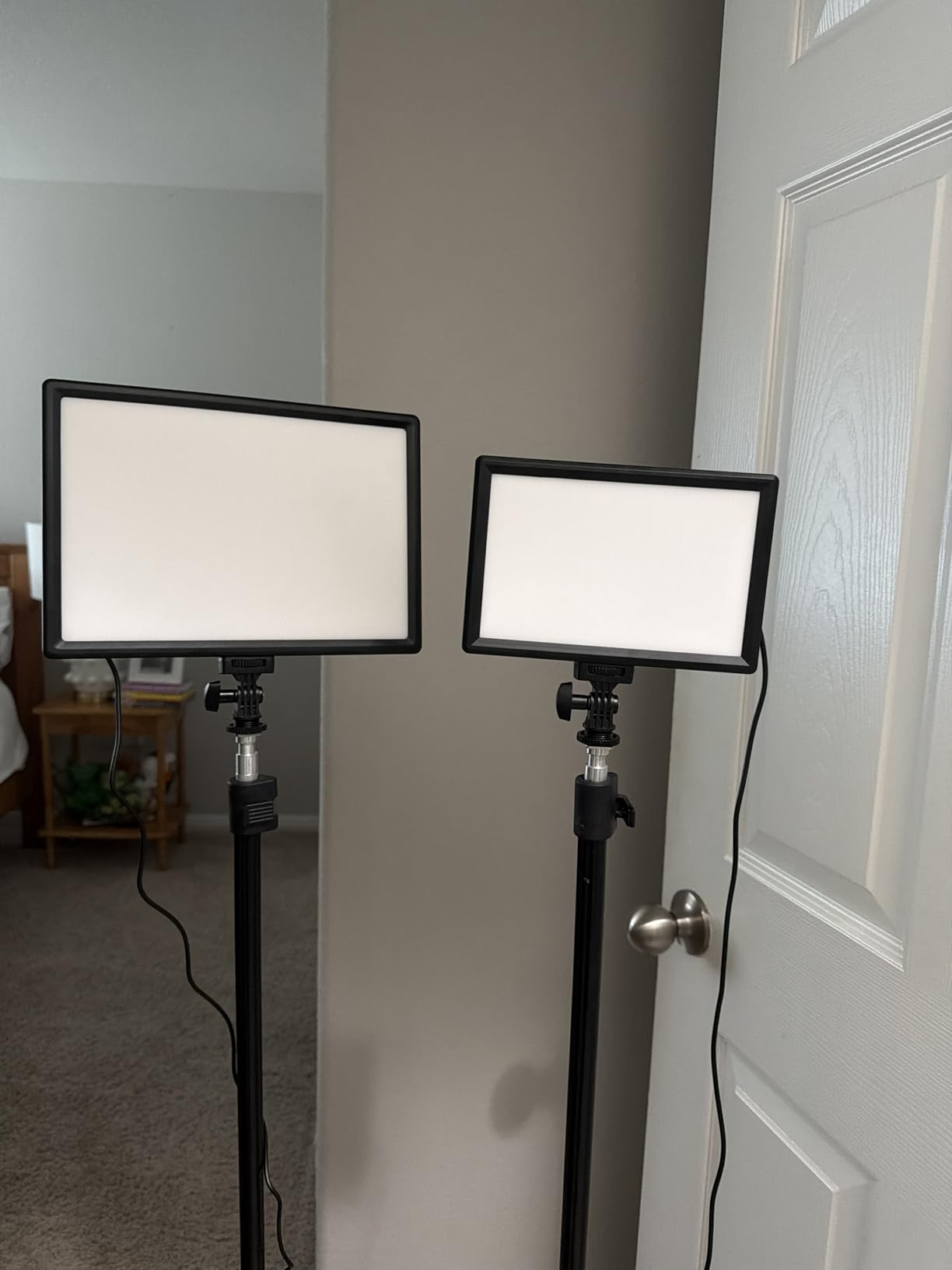
Our team has shot a lot of headshot sessions on 660 panels, and the reason they keep coming back is boring in the best way: nothing about them demands attention. You clamp one to a stand, dial in a Kelvin value on the rear screen, and the face lights evenly from a metre and a half away. Two of them angled at roughly 45 degrees give you a key and a fill that wrap the face and drop the shadow under the chin and nose almost completely.
The 3300 lux at one metre figure is honest and modest compared with the beefier panels later in this list, but at 96+ CRI the color quality is what actually matters for skin. A cinematographer friend who teaches lighting told us this kit was the first thing he recommended to students with a small studio and a tight budget, largely because the diffuser is genuinely good and the aluminum chassis dissipates heat without a fan.
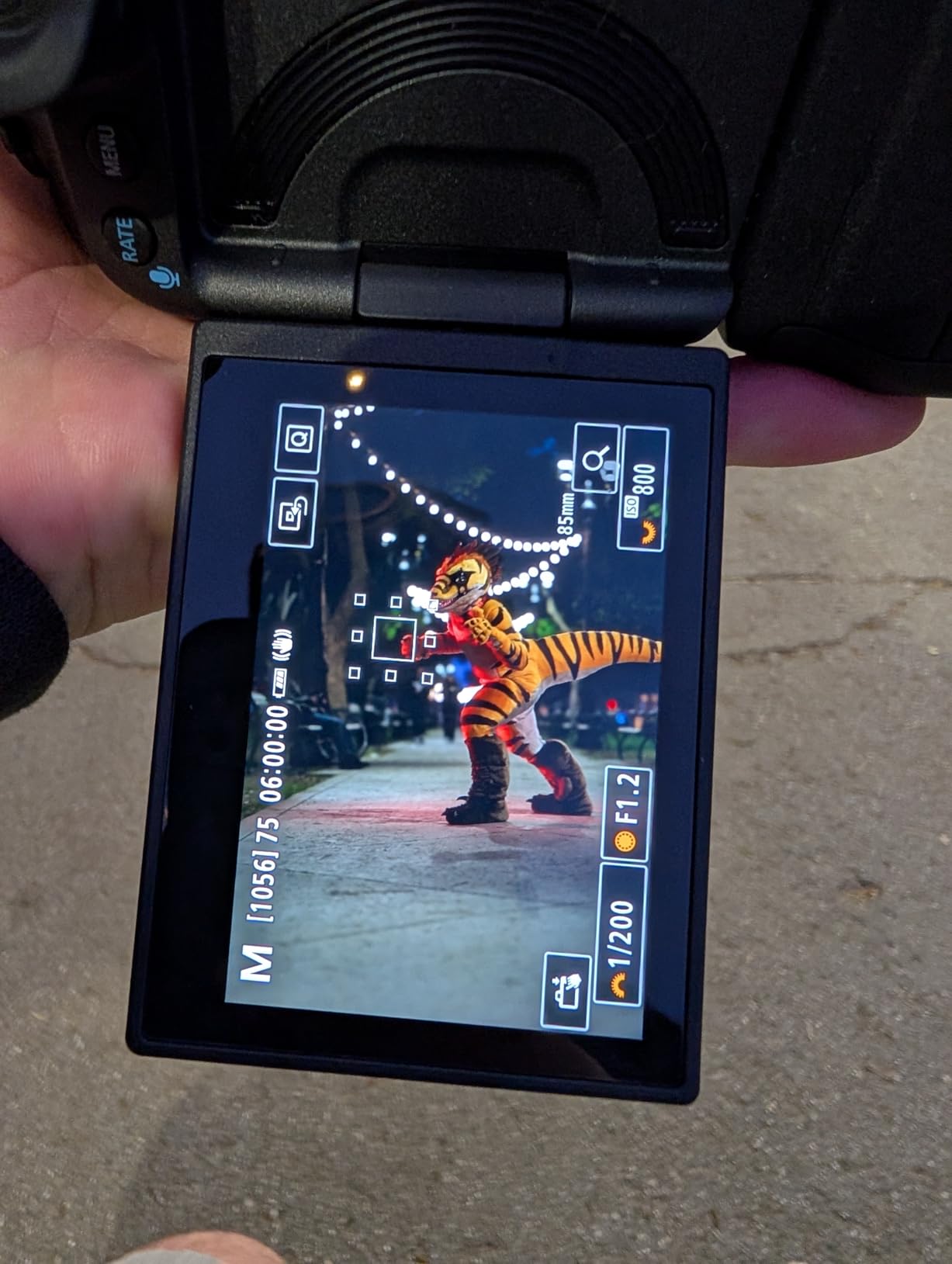
Two details tell you this is a working tool rather than a display item. The rear LCD shows brightness, color temperature and battery status at the same time, which means you can reproduce yesterday’s setup on today’s corporate client instead of guessing. And each panel runs from an AC adapter or an NP-F550 or NP-F970 battery, so a location shoot in a room with no outlets is a solved problem rather than a compromise.
The mechanical complaints in the reviews are real but minor. Barn doors can collide with the U bracket when the light is tilted steeply, and the control panel screen is small enough that you have to look closely. Several owners also note the stands are on the light side for heavier modifiers, so a proper C-stand pays you back quickly if you hang anything substantial.
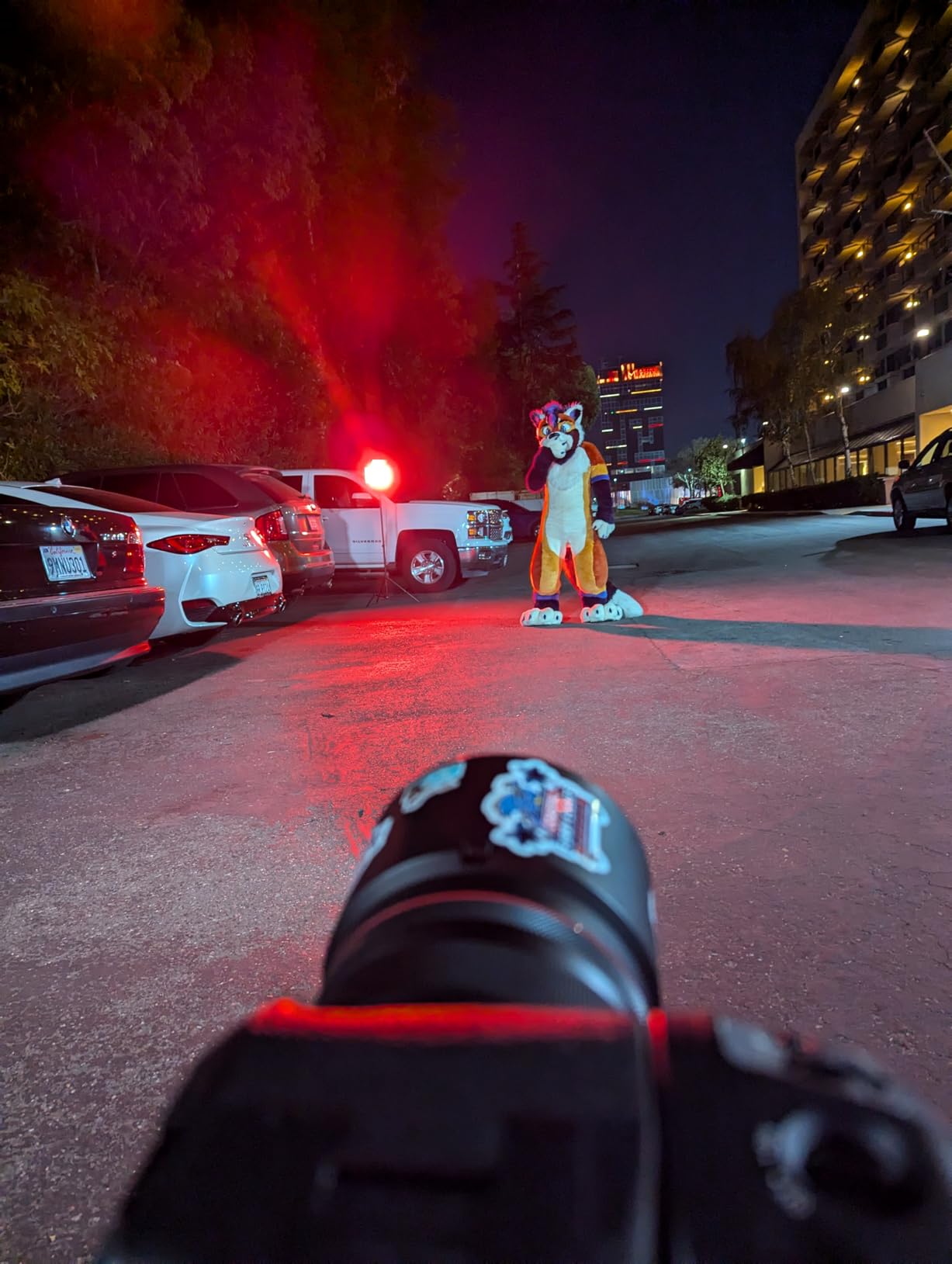
What you get that similar kits do not
Two full stands, two diffusers, two barn doors, two power adapters and padded carrying bags. For a home-studio shooter, that is the whole first session solved without a single extra purchase, which is where most kit-builder budgets quietly double.
The fanless design also means you can record audio in the same take without hunting for panel noise in your waveform. For hybrid shoots where the same setup covers stills and a short video cut, that alone removes an argument against panels.
Where it falls short
3300 lux at one metre is not enough to key a large room or to fight midday window light from across a space. At more than about two metres from the subject you will be pushing dimming, and pushing dimming on a bi-color panel is where color shift tends to show up first.
If your work is beauty or fashion close-ups shot far back, or if you need a panel to double as a background light, this is not the one. Read further down for the options that throw much harder.
2. Neewer NL480 2-Pack Kit – Best Value Two-Light Setup
Neewer 2 Packs Dimmable Bi Color 480 LED Video Light Kit, 3200~5600K CRI 96+ LED Panel with U Bracket, 75 inches Tripod Light Stand for YouTube Recording Studio Photography Streaming Key Lighting
480 LEDs per panel, CRI 96+
3200K-5600K bi-color
0-100% dimming
White diffuser and U bracket
Pros
- CRI 96+ with no washed-out color
- Flicker-free dimming end to end
- Diffuser softens shadows noticeably
- Compact and quick to assemble
- Strong output for the money
Cons
- Daylight mode measures nearer 5220K than 5600K
- Faint green cast that white balance corrects
- Short power brick cord
- No barn doors included
This is the kit we recommend to anyone starting out in portrait work, and the reason is the diffuser. Several reviewers compare it favorably to a standard 216 diffusion filter, which sounds like trivia until you put a face next to it. A hard panel light with no diffusion gives you a nose shadow and a hard chin edge; the same panel with a proper diffuser gives you a soft gradient across the cheek.
A cinematography instructor we spoke with instrumented this kit properly and measured roughly 320 foot-candles at three feet with one panel, and close to 480 with both, with genuinely flicker-free dimming across the range. For a two-light head-and-shoulders setup in a spare room, that is plenty of light to shoot at f/4 and still hold ISO low enough for clean skin.
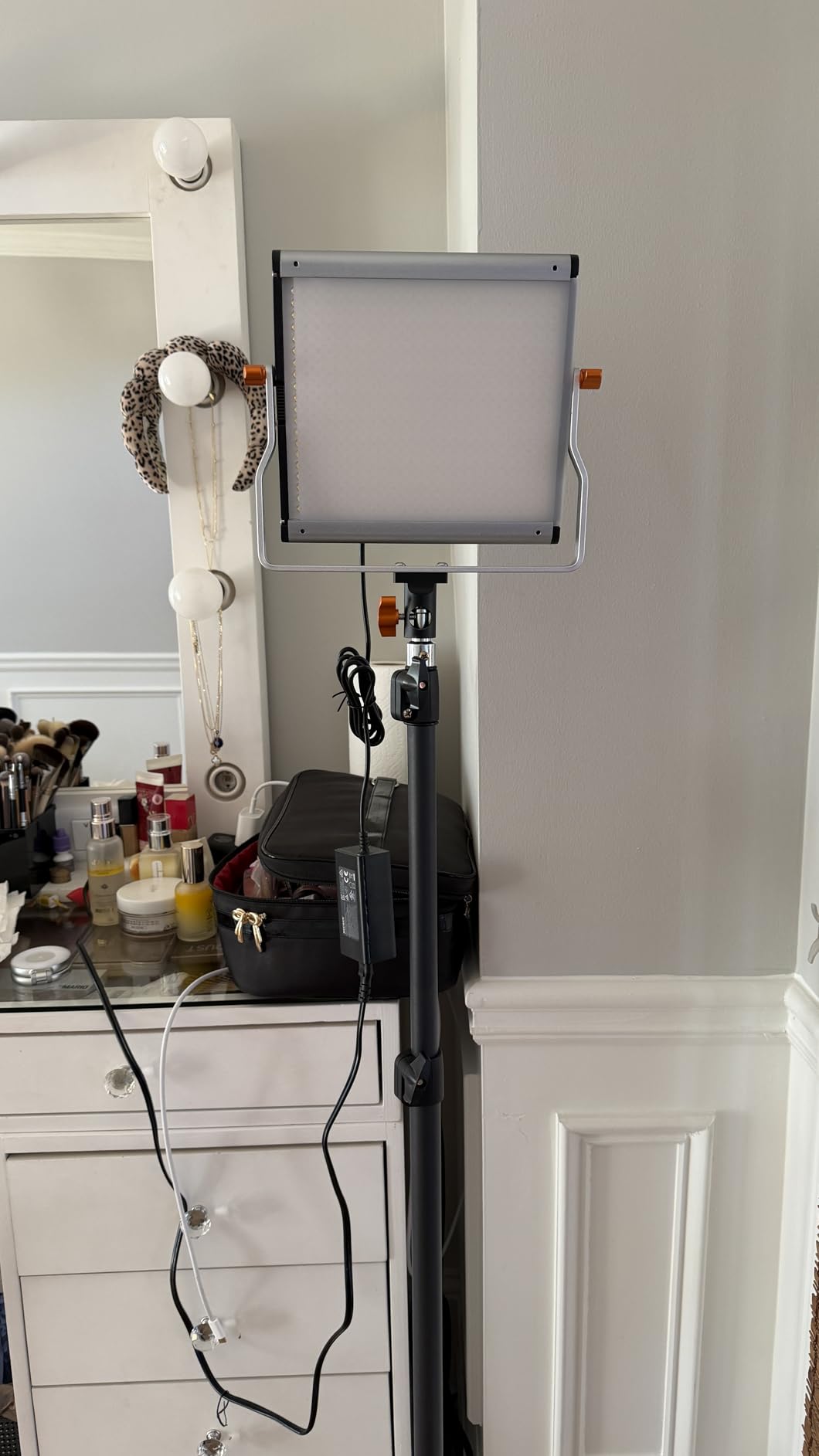
Two color points are worth knowing before you buy. The daylight setting measures closer to 5220K than the stated 5600K, so if you are matching a window, expect to add a filter or shoot a custom white balance. And reviewers mention a very slight green cast, which a white balance taken off a white card or grey card removes almost entirely.
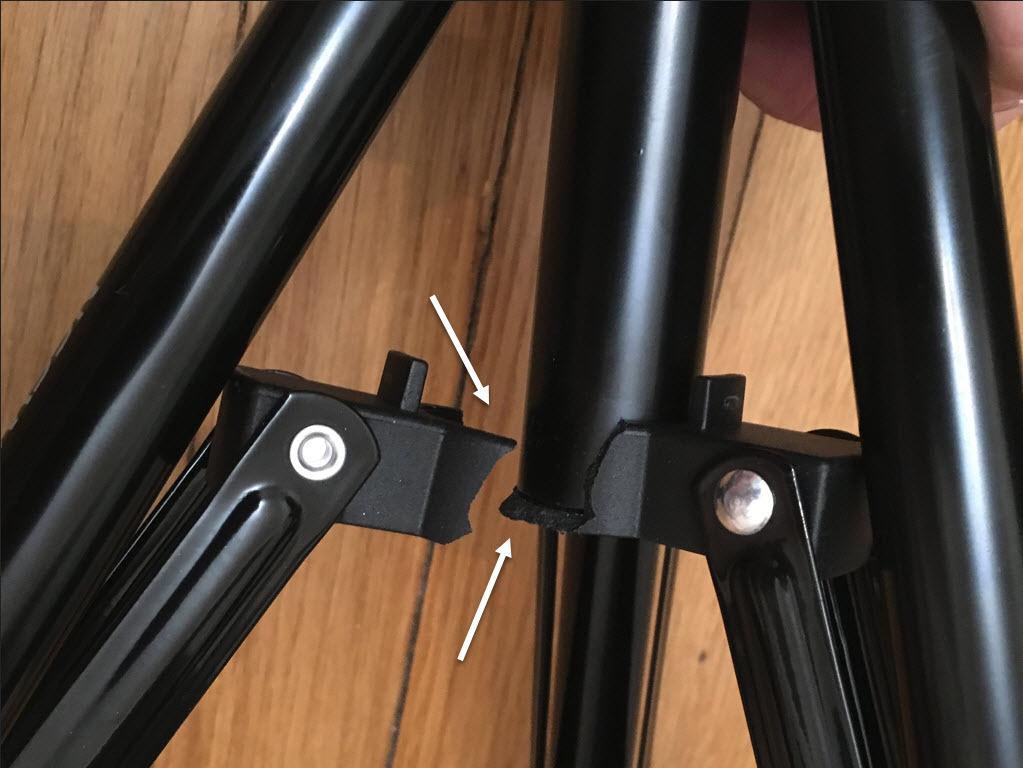
Physical complaints cluster around the power supply and the bracket. The cord from the power brick is short, so on a tall stand the brick dangles awkwardly, and the U-bracket adapters can strip their threads if you overtighten them. No barn doors come in the box, which means the beam is a little narrow until you add diffusion.
Why this one and not the cheaper kit
Each panel runs 28W with 240 warm and 240 cool emitters, which is a real step up from a 12W to 15W desktop panel. That difference is the gap between a fill light for interviews and a key light for a portrait, and it is the whole reason we treat this as the value pick rather than the entry pick.
NP-F battery compatibility also means the same panels work off-grid, which the smaller kits in this roundup cannot manage with their built-in cells alone.
Where it falls short
One panel alone is dim for anything larger than a bust shot, so plan on using the pair together. And the 5220K daylight reading means you should treat the panel as a tunable tool with a calibration step, not a set-and-forget daylight source.
Skip it if your only need is a single soft light for video calls, where a much smaller and cheaper panel will do the same job.
3. NiceVeedi 15W 2-Pack – The Budget Starter
2-Pack LED Video Light Kit, NiceVeedi Studio Light, 2800-6500K Dimmable Photography Lighting Kit with Tripod Stand&Phone Holder, 73″ Stream Light for Video Recording, Game Streaming, YouTube
356 LED beads, CRI 97+
Three color presets
10-100% dimming
10 inch diffused panel
Pros
- Largest owner base in the set
- CRI 97+ at a low wattage
- Two panels cut shadows on both sides
- Stable height-adjustable tripods
- Phone holders and carry bag included
Cons
- USB draw is high enough that many laptop ports fail
- No AC power supply in the kit
- Legs cannot be adjusted individually
- Occasional defective panels
With more than six thousand reviews, this is the most battle-tested kit in the roundup, and for a first portrait setup it does something the others do not: it puts two 10 x 7.8 inch panels with integrated diffusion on stands for less than most single lights cost. Lighting both sides of a face at 45 degrees is the single biggest upgrade in appearance a new portrait photographer can make, and this kit makes it affordable.
The headline spec is CRI 97+ from 356 LED beads, which is higher than several lights that cost several times more. The catch is control granularity. Instead of a continuous Kelvin dial you get three presets at 2800K, 4800K and 6500K, which is a real limitation when you are trying to match a mixed-temperature room.
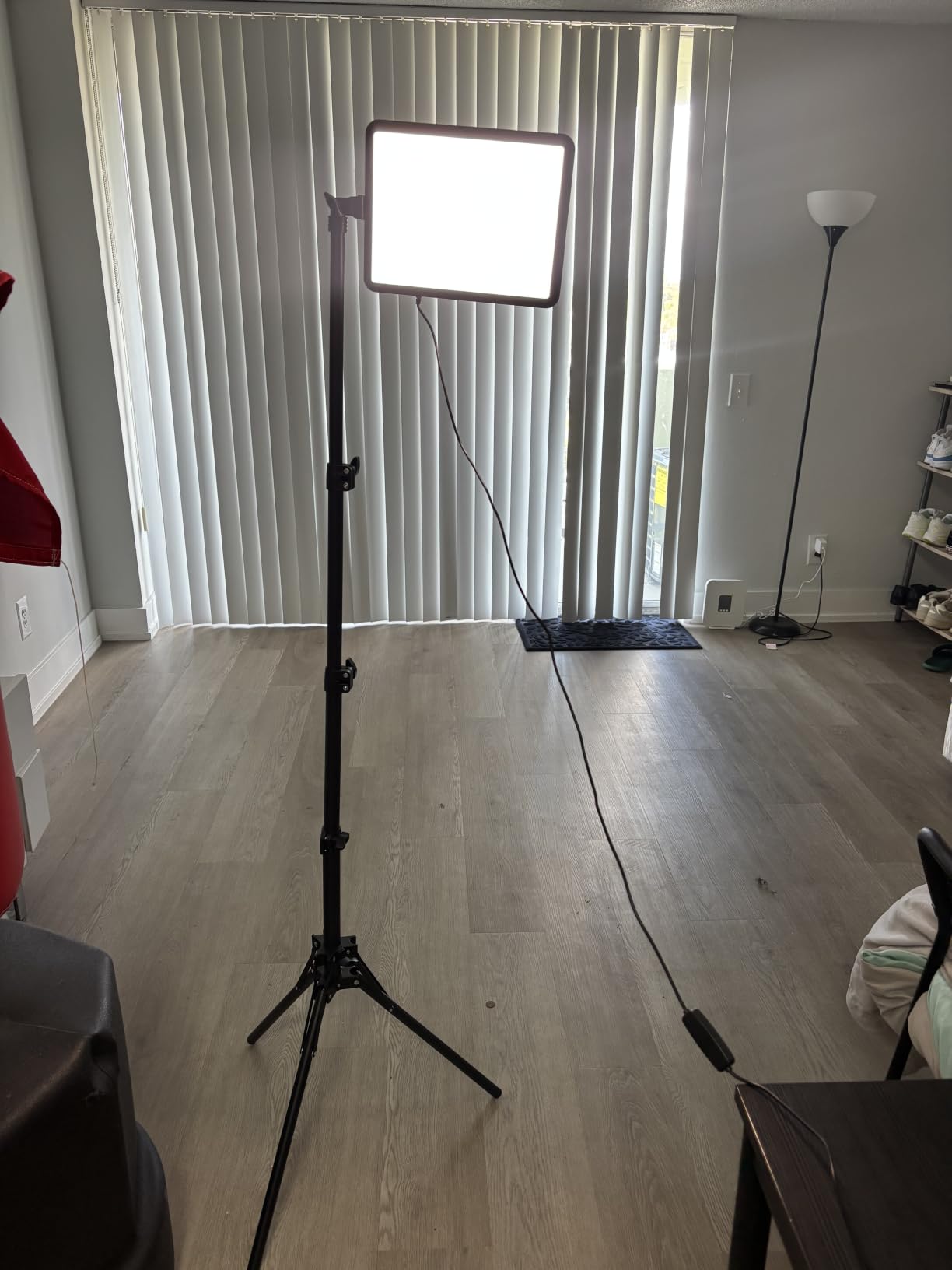
The dominant complaint is power, and it is worth understanding before you order. The panels draw enough current over USB that many laptop and monitor ports simply will not run them, and no wall charger is included in the kit. You need to plan on powering from a mains adapter or a power bank rather than assuming any USB port will do the job.
There is also a recurring theme of panels cutting out randomly within the first weeks, plus tripod legs that cannot be adjusted individually, which makes positioning between a desk and a wall awkward. The 4.3 average rating reflects those gripes honestly, and the phone holders and storage bag do soften the experience for streaming-focused buyers.
What this kit does better than expected
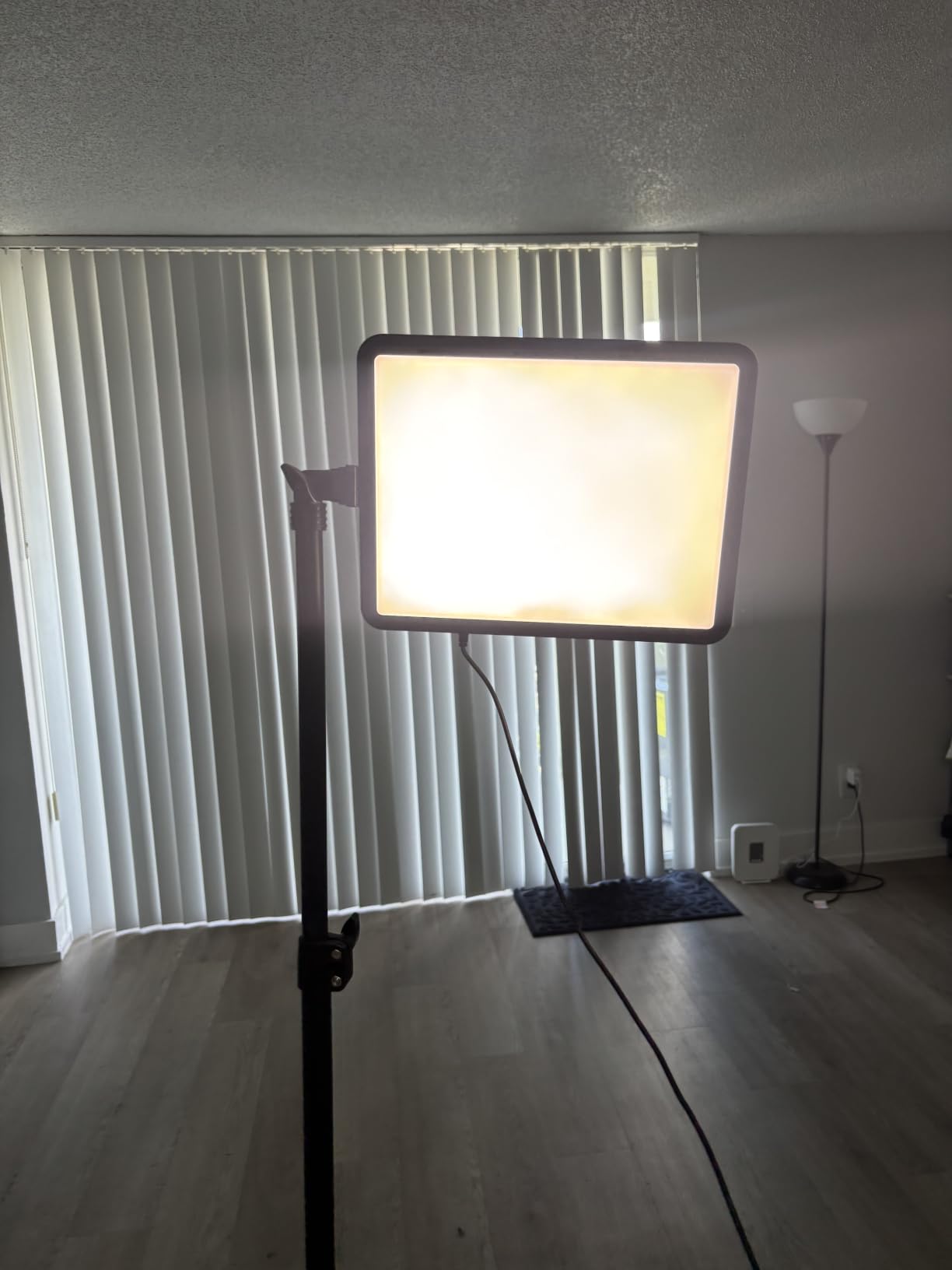
CRI 97+ is genuinely class-leading for a panel at this power level, and skin tones come out natural rather than the slightly chalky look cheap bi-color panels often produce. The thickened shell doubles as a diffuser, so you do not have a separate accessory to lose or leave in a case.
Lightweight at 3.7 pounds for the pair, it also moves between a home studio, a small office and a pop-up event without becoming a two-person carry.
Where it falls short
At 15W per panel this is fill and tabletop territory. Try to key a subject from three metres and you will end up dimming past the point where the picture looks right.
If you are shooting corporate headshots at volume and need repeatable Kelvin values, step up to the GVM or Neewer panels with digital readouts. This one is for your first hundred sessions, not your thousandth.
4. RaLeno 13-Inch Soft Panel – Best Cordless Soft Key
RALENO 13″ LED Video Soft Light Panel with Desk Stand
650 lux/m, 13 inch face
8000mAh battery, 90 min
CRI 95+, 2500K-6500K
One inch thick, 2.4 lb
Pros
- Even flat output with no hot spots
- Built-in battery removes cable clutter
- Accurate color around 5680K measured
- Thin enough to clamp on camera gear
- Runs while charging
Cons
- Proprietary wall adapter instead of USB-C
- Stepped rather than smooth dimming
- Plastic mounting screw can break
- Cannot fill a large room alone
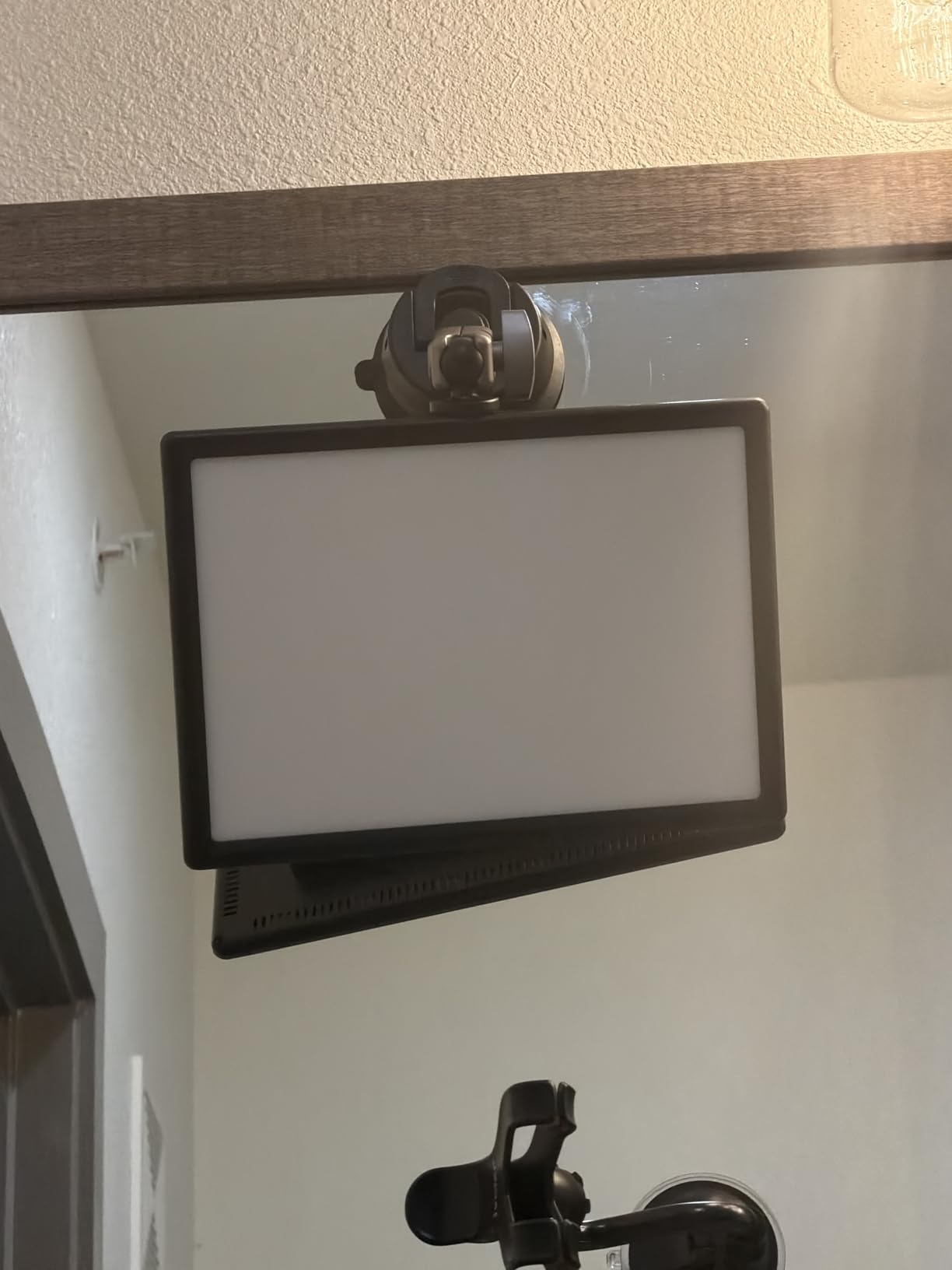
A 13 inch face at 650 lux per meter is a real step up in apparent source size, and that is the number that matters here. This is the panel you put close to your subject when you want the softest possible wrap on skin without adding a softbox to the budget. It is our pick for beauty and close-up work, and for anyone who shoots in rooms where cables are a trip hazard.
The built-in 8000mAh battery gives roughly 90 minutes at full power and runs while charging, so a half-day session is realistic if you top it up between setups. One veteran reviewer used it as an off-axis key for a convention interview and specifically credited the absence of cords, sandbags and rigging for how quickly the whole thing came together.
Color accuracy checks out. A photographer’s controlled test white balanced off the panel and measured about 5680K with a neutral card, which is close enough to daylight that matching a window is straightforward. Another test found a subject properly exposed at 50% brightness from one foot and about three-quarters of a stop under at full output from two feet, which tells you the panel behaves predictably as you move it.
Two practical limitations stand out. It uses a proprietary wall adapter rather than USB-C, so you own a second cable type, and the brightness control is stepped rather than continuously smooth, which makes fine exposure matching a little slower. The screw underneath the panel is plastic and can break if you put real pressure on it in vertical orientation, so treat it as a panel you support, not one that carries a modifier’s weight.
Why the thin profile changes setups
At one inch thick this fits into a laptop bag side pocket, which means you can carry a full soft key without a dedicated case. It also mounts to a standard 1/4 inch screw, so a clamp arm or a camera cage can turn it into an on-axis fill in seconds.
The 180-degree tilt and adjustable desk stand mean the same unit works as a desk key for a talking-head video and a head-and-shoulders key for a portrait without re-rigging anything.
Where it falls short
650 lux per meter will not light a large room on its own, and reviewers are clear about that. It is a close-range key, not a room-filler, so pair it with a bounce or a second panel for anything wider than a bust.
Buy a second wall adapter before your first location day. Carrying a proprietary charger as a single point of failure is an avoidable headache.
5. GVM 480 App-Control 2-Pack – Best for Remote Adjustment
GVM 2 Pack LED Video Lighting Kits with APP Control, Bi-Color Variable 2300K~6800K with Digital Display Brightness of 10~100% for Video Photography, CRI97+ TLCI97 Led Video Light Panel +Barndoor
480 LEDs per panel
2300K-6800K bi-color
CRI 97+ and TLCI 97+
Digital readout, app control
Pros
- Widest bi-color range in the set
- CRI 97+ and TLCI 97+ together
- Digital display gives repeatable values
- Soft low-heat output needs few modifiers
- Lightweight aluminum fits standard cases
Cons
- App setup is clunky with one network per panel
- App addresses one panel reliably at a time
- Too dim alone for outdoor or large rooms
- Batteries not included
The 2300K to 6800K range is wider than any other bi-color panel here, and that width is the point. Matching a warm domestic lamp or a cool north-facing window is just a dial turn, and the digital display means you can read the value and write it into your notes so the next session starts where this one finished.
This is also the only diffused kit in the roundup that publishes both CRI and TLCI at 97+, and TLCI is the number that better predicts how skin and saturated colors reproduce under continuous light. If you shoot fashion, beauty or anything with strong reds and oranges, that pairing is worth more to you than a longer feature list.
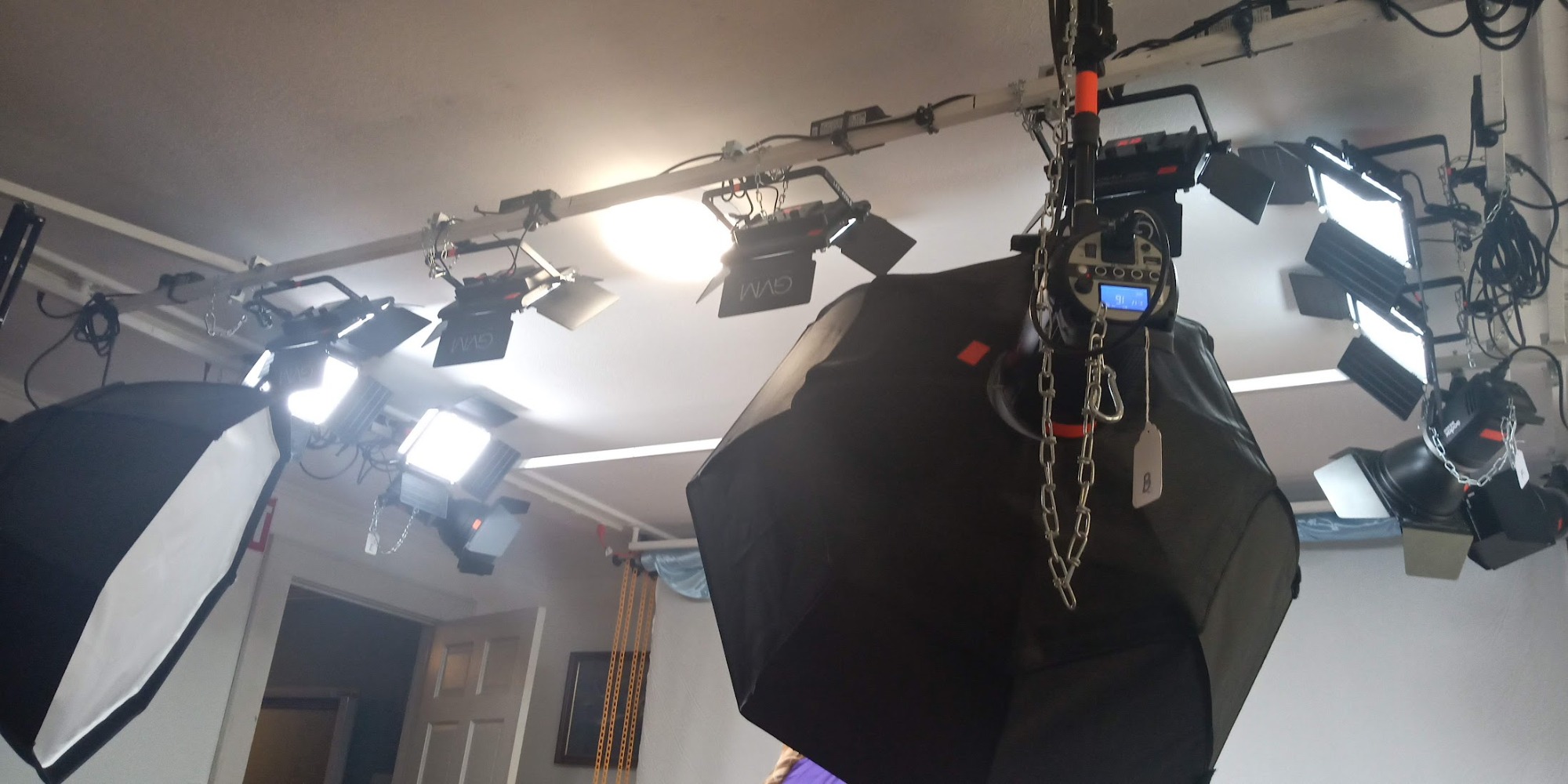
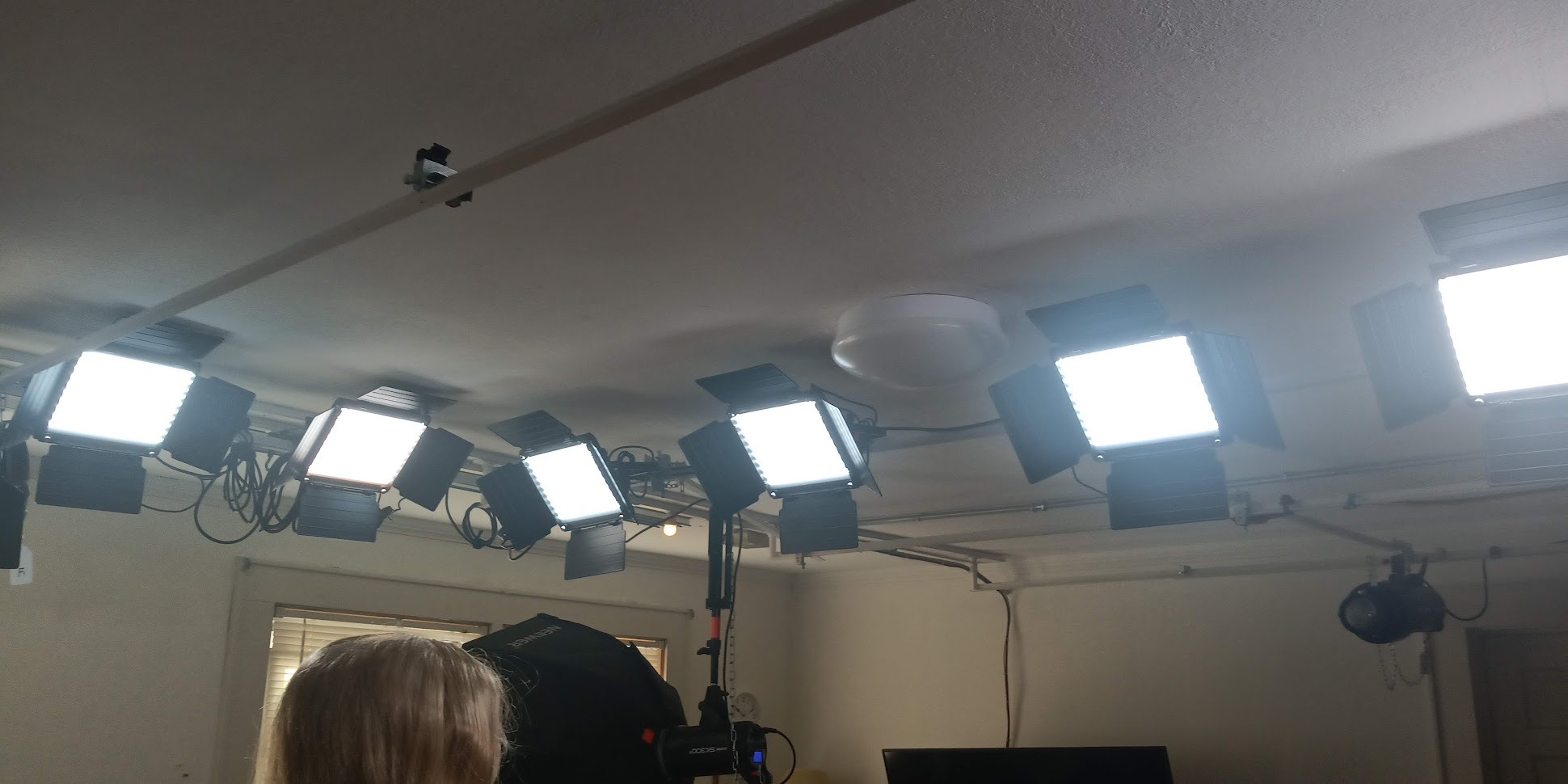
App control is genuinely useful when a panel is mounted on a ceiling or behind a scrim where the rear knobs are out of reach. The long-term owner we heard from runs seven of these and treats the app as a secondary convenience rather than the main interface, and that is the honest way to look at it.
The functional limit is output. At roughly 30W per panel, these are described across reviews as too dim for outdoor or large-room work unless several are combined, so think of the pair as a key and fill inside a room rather than a single light that carries a location shoot.
What you gain from TLCI 97+
CRI averages across a color check and rewards saturated reds, while TLCI is weighted toward skin tones and eye colors. When both read 97 or above, skin keeps its separation from the background and deeper reds in clothing do not go muddy when you dim down.
Combined with barn doors and soft filters in the box, this kit shapes its light without a single extra purchase, which is unusual at this level.
Where it falls short
Each panel broadcasts its own WiFi network, so you have to rename them individually, and the phone has to leave its own WiFi to control one. It also addresses a single panel reliably in practice, which makes multi-panel control frustrating for larger sets.
There is no battery included, and roughly 30W per panel limits you to indoor work at moderate subject distances.
6. RaLeno 9-Inch Panel – Budget Pick and On-Location Work
RALENO 9″ LED Video Light, 2500K-6500K Camera Light with Desk Stand
12W, 600 lux at 0.5m
Four-layer edge-lit diffusion
Built-in battery, 80 min
388 g, USB-C power
Pros
- Soft uniform glare-free edge-lit output
- Bright for 12W at 388 g
- Built-in battery accepts a power bank
- CRI 95+ with 1% step control
- Runs while charging
Cons
- Included ball head and cold shoe plate wobble
- Flickers near full output on low battery
- Charging takes a little over two hours
- Short included USB cable
- Plastic base can crack over time
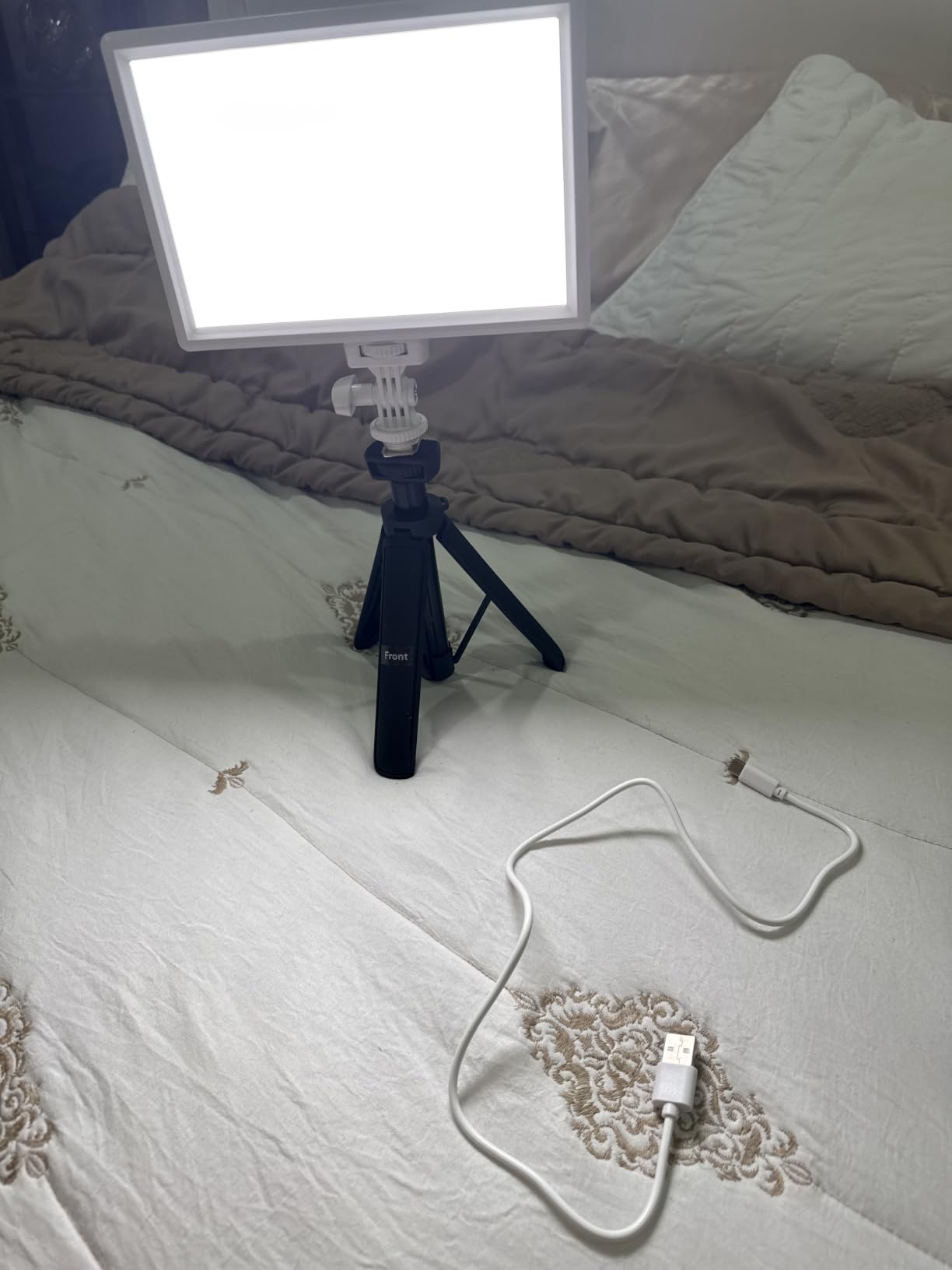
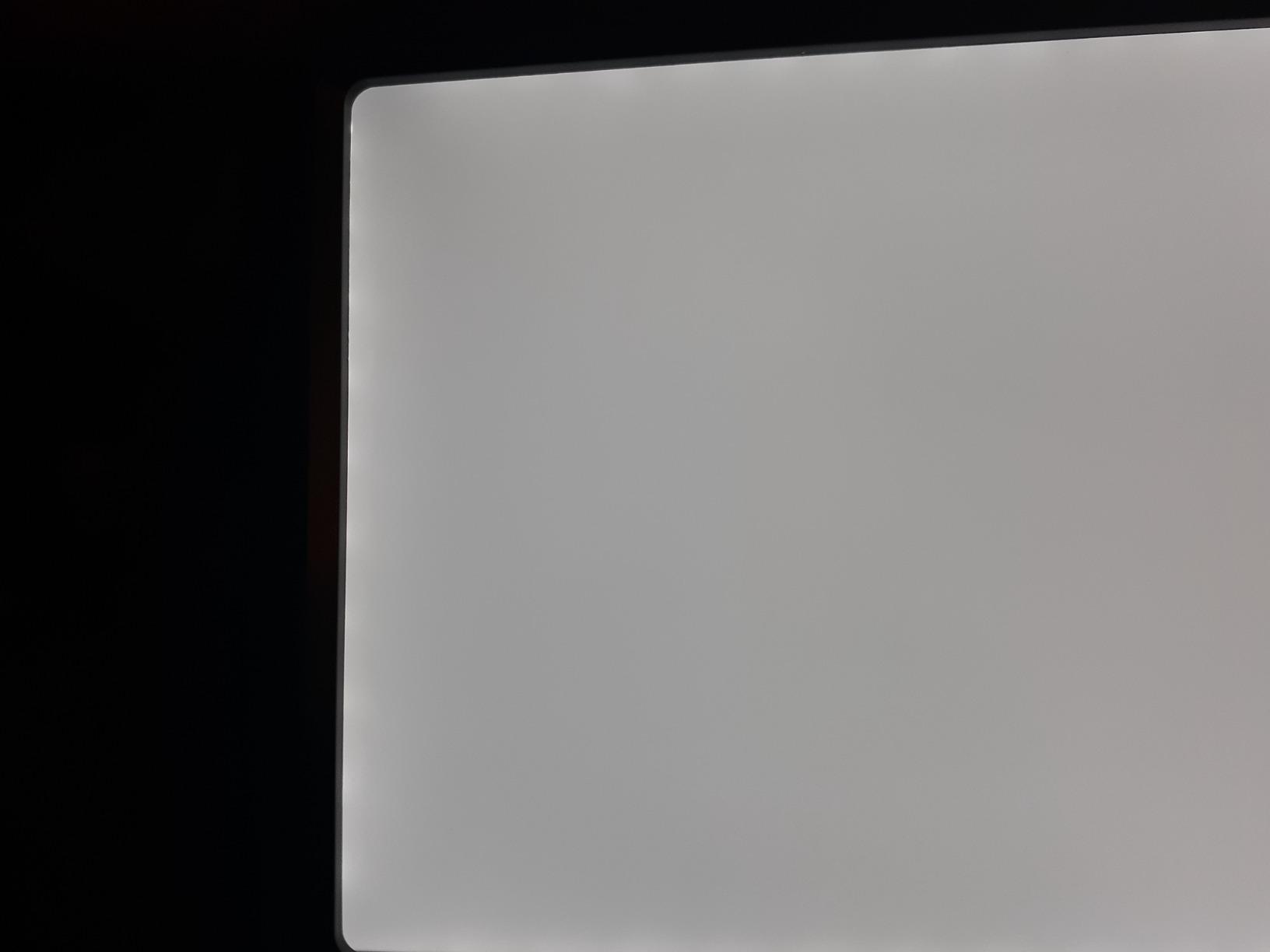
At 388 grams and one cable, this is the panel we put in a camera bag when the job is a portrait in someone’s kitchen rather than a studio. A photographer who reviewed it notes that it replaced two studio lights for him and ran for hours off a USB power bank with no heat buildup, and that claim tracks with what the spec sheet implies about the 12W draw.
The edge-lit design with four layers of diffusion produces soft, uniform, glare-free output, which matters more than raw brightness in a small room with a low ceiling. Both knobs step in 1% increments, so you can dial in a repeatable value rather than hunting for an approximate brightness.
Two things to know before you rely on it on a job. Reviewers report flicker at 95 to 100% output when the battery is low, so for stills keep some charge in reserve or shoot below the top of the range. And the included ball head and cold shoe plate are described as flimsy, meaning you may want a proper clamp or a small stand rather than trusting the supplied mount with anything heavy.
Smaller annoyances include a roughly 12 inch USB cable, charging that takes a little over two hours, and reports from some owners that the plastic base cracked at the mount over time, which limits the light to sitting on a static tripod.
Why battery support matters on location
The built-in cell can be extended with a USB power bank, which turns a ninety-minute problem into an all-day one. Combined with the ability to run while charging, it means you are never waiting on a wall outlet mid-session.
Cold shoe and standard mounts let it sit on the camera as a fill, on a clamp arm as an off-axis key, or on a desk stand for a talking head, without any adapter hunting.
Where it falls short
600 lux at 0.5 m drops off quickly with distance, so this is close-range and small-set light. A photographer reports full exposure at one foot and useful reach to about 10 feet on its own, which is the honest ceiling.
The wobbling included mount is the detail most likely to end up in your bag replaced. Budget a better head from the start if you are mounting off-camera.
7. Neewer NL-116AI 9-Inch Panel – Best for a Small Home Studio
NEEWER NL-116AI 9″ LED Video Light Panel, Camera Lighting with Desk Tripod
9 inch panel, 10W
600 lux at 0.5m, CRI 95+
3200K-5600K, 1% steps
4000mAh Type-C battery
Pros
- Bright and even for a 9 inch panel
- Fine 1% steps on brightness and color temperature
- Metal mini tripod feels premium
- Compact enough to travel with
- Runs fanless so audio stays clean
Cons
- 4000mAh battery is modest
- No carrying bag included
- 10W output limits it to fill and desk work
This is the answer to the question that keeps coming up in home-studio photography groups: what lights a head-and-shoulders portrait in a room that is not a studio. At 600 lux at half a metre, you can place it close, high and slightly forward, and it will read as a soft key on a seated subject in a small room with no strobe and no softbox.
Buyers routinely describe it as brighter than expected for a compact 9 inch unit, with natural color reproduction and a rear display clear enough to set repeatable values. That repeatability is what makes it viable for a series of corporate headshots, where every frame has to match the last one.
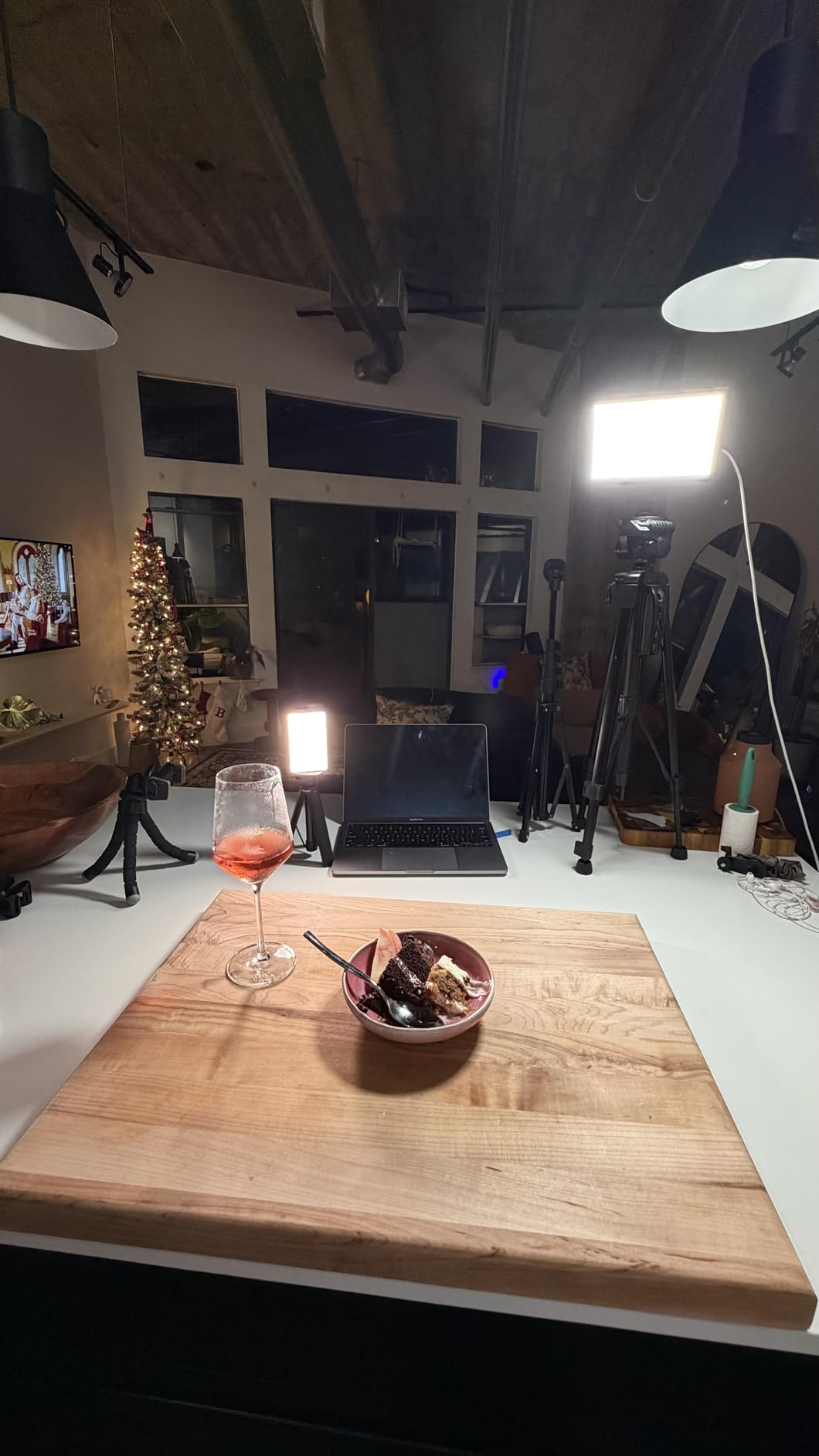
It also earns a place in product and tabletop work. Reviews specifically mention using it as a light-tent or lightbox fill, where the flat, even, non-glaring output through diffusion is exactly what you want. If your portraits include a laptop, a bottle or a watch on a table, the same panel does both jobs.
The limitation is the 4000mAh battery, which several owners note runs out sooner than they would like, giving roughly an hour and a half of runtime. The fanless design also means no audible noise in recorded audio, which matters if you are shooting video and stills in the same block of time.
What makes it suit a tight room
The all-metal mini tripod extends to 8.6 inches and feels notably sturdier than the plastic stands that usually come with kits this size, so it holds position on a desk without creeping. The 1/4 inch cold shoe adapter means it can also go straight onto a camera or cage as a fill.
At 3200K to 5600K in 1% steps, you can match a warm living room lamp closely enough to avoid a mixed-lighting color cast across the face.
Where it falls short
Ten watts is fill and desk-scale output. It will not key a room, and it will not compete with a window at midday, so treat it as a controlled indoor key at close distance.
No carrying bag is included, which is an odd omission for a panel marketed at travel shooters. Budget a padded sleeve.
8. Godox LP600Bi 2-Pack – Best for Raw Output
Godox LP600Bi Led Video Light Panel Light Kit with Barndoor & Carry Case
65W, 9020 lux at 0.5m
CRI and TLCI 96+
2800K-6500K, 0-100%
10.4 x 7.9 inch panel, 2.2 lb
Pros
- Output high enough to serve as a key
- CRI and TLCI 96+ for skin accuracy
- Wide 2800K-6500K range
- Barn doors plus stands and carry bag included
- Holds steady over long sessions
Cons
- Small review base limits long-term evidence
- Barn doors can concentrate output into a harsh hotspot
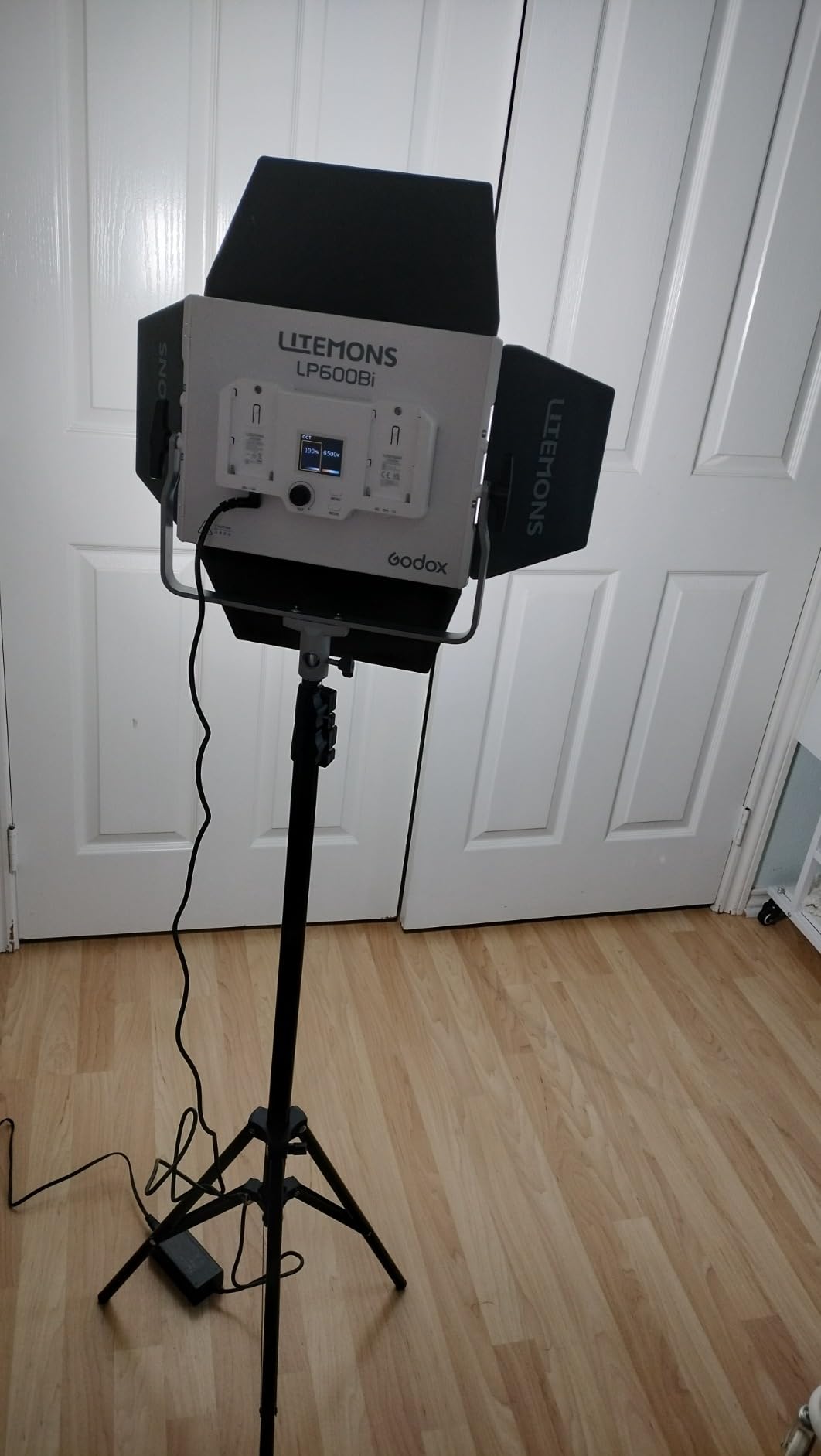
9020 lux at half a metre is the highest figure of any diffused panel in this roundup, and it changes what you can photograph. You can throw this light further from your subject and still hold exposure, which means you can create separation with distance instead of relying on a large face at close range. For a head-and-shoulders with visible background, that is the whole game.
Color accuracy is handled properly at CRI and TLCI 96+, and the 2800K to 6500K range covers warm interiors through daylight. The rear LCD reads out color temperature and brightness clearly, and buyers specifically call out that output holds steady through long takes with no brightness or color drift.
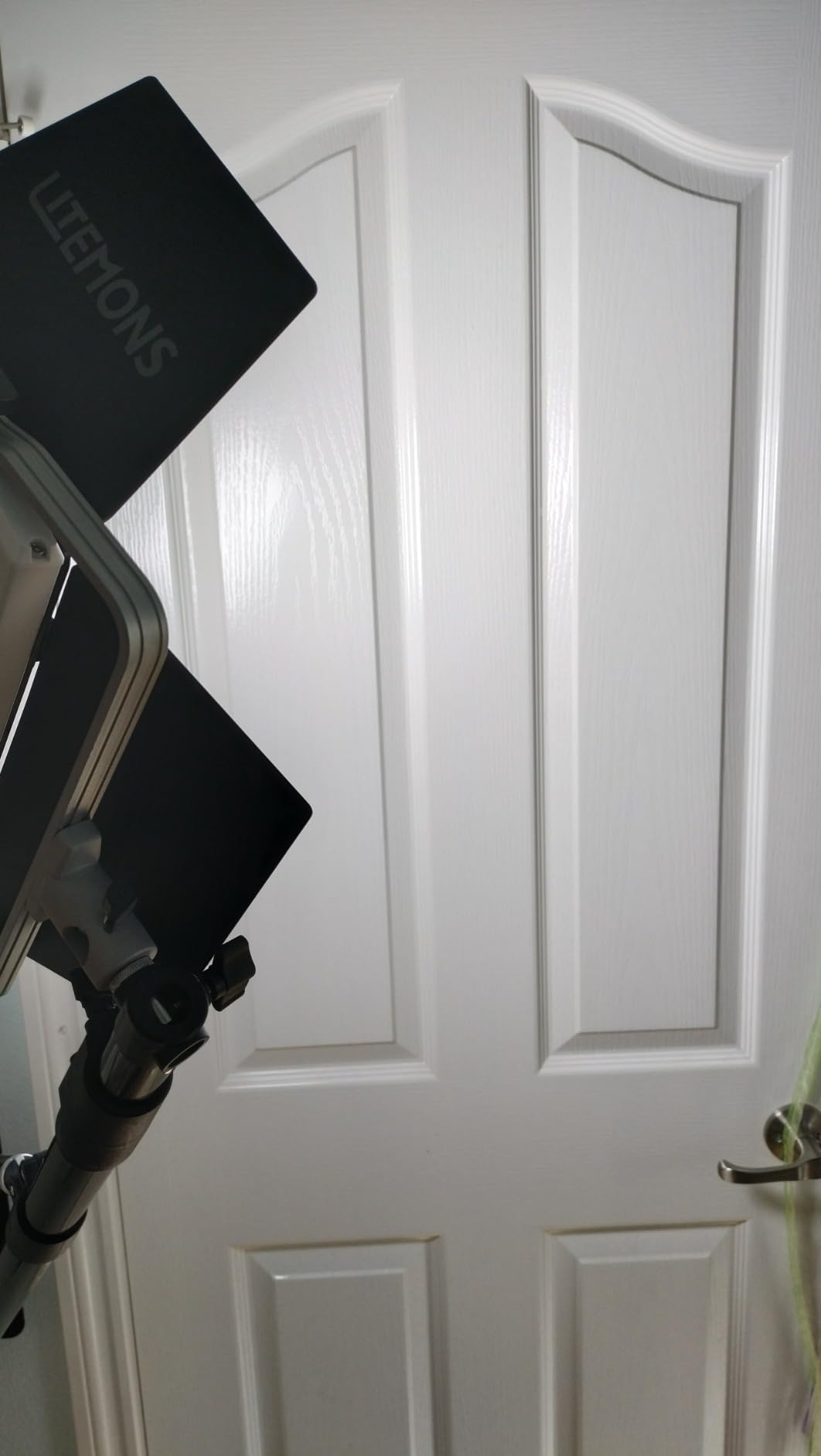
Two honest limitations. The review base is around 120 ratings, so there is not the long ownership history that some of the cheaper kits here have accumulated, and you are buying on specification plus a thin but consistent set of positive reports. Second, the included barn doors change the shape of the beam but can also concentrate output into a harsher hotspot if you close them too far, so use them for control rather than for raw punch.
At 2.2 pounds per light and 65W, this is also the panel that most rewards a stand and a softbox. Pair it with a grid or a diffusion frame and the raw output turns into genuinely commercial-looking head-and-shoulders light.
How to use the output properly
Because it reaches further, you can move it back and light the subject at an angle with the panel close to a flag or wall, using the barn doors to keep spill off the backdrop. That is the difference between a snapshot and a portrait with a controlled background.
The included two aluminum stands and carry bag mean the kit is genuinely portable as a two-light set, which matters more than the panel specs when you are moving between locations.
Where it falls short
Thin owner history is the main risk, and the hotspot behaviour of the barn doors needs a learning curve before they help rather than hurt. Neither is disqualifying, but both argue for a test shoot before committing a client session to it.
If you need modifier mounting flexibility beyond barn doors, the Bowens mount on our final pick opens far more options.
9. Aputure Amaran 200X-S – Best for Color Accuracy and Modifiers
Aputure Amaran 200X-S Cob Led Video Light Bicolor 2700K-6500K,250W,51600Lux1M,App Control,9 pre Programmed Lighting Effects,Ultra Silent Fan
250W COB, 51600 lux at 1m
CRI 95+, TLCI 98+
2700K-6500K bi-color
Bowens mount, silent fan
Pros
- TLCI 98+ is the highest skin-tone figure in the set
- Output strong enough to fill a room or key
- Bowens mount opens the widest modifier range
- Sidus Link mesh control over multiple fixtures
- Near-silent fan and 9 built-in effects
Cons
- Thinnest owner history of the higher-priced options here
- Hard specular beam needs a modifier for portraits
This is the only light in the roundup that reports the full modern color set: CRI 95+, TLCI 98+, TM-30 Rf 97 and Rg 101, plus SSI 89 in daylight and 90 in tungsten. A dual-blue LED chipset is credited for cleaner spectral reproduction, and for commercial portrait work where a client retouches a raw file, those are the numbers that keep skin from shifting in post.
At 51600 lux at one metre, it is not a panel at all in the physical sense, but it is a single continuous source that replaces a strobe in most portrait situations. The near-silent cooling fan means it will not contaminate audio in a hybrid shoot, and the Sidus Link app meshes across multiple fixtures rather than fighting you one network at a time.
Be clear about what it is not. This is a COB source, which is more specular and harder than a diffused panel, so for portrait work a modifier is effectively mandatory. The universal Bowens mount is a genuine advantage here rather than a limitation, because it opens Light Dome SE, Light Dome Mini II and Aputure Lantern options that no panel in this roundup can use.
The honest drawback is ownership history. With 150 ratings it has the thinnest review base among the higher-powered options here, so you are trusting a specification sheet and a small but consistently positive set of owner reports. Our own advice is to add a dome before the first paid session rather than after.
What the color numbers buy you
TM-30 Rf of 97 describes how faithfully the light renders colors across the spectrum, while Rg of 101 describes the average saturation. Together they tell you a garment will not shift hue between a lit and an unlit side of the same frame, which is the failure mode that forces retakers into expensive corrections.
SSI 89 in daylight and 90 in tungsten give you a realistic preview of tungsten-balanced footage, which matters if the same session produces both stills and video.
Where it falls short
It is the heaviest and least portable option here, and a bare COB beam is wrong for close-up portrait work until you add a softbox. Treat it as a studio key with modifier, not a grab-and-go panel.
If you shoot on location in small rooms and need something that fits in a bag, read back to the RaLeno 13 inch or the 9 inch RaLeno instead. This one earns its place by quality, not by versatility.
How to Choose an LED Panel for Portrait Work
Judge an LED panel on apparent source size first, brightness second, and features last. Nearly every buyer regret in this category comes from buying a bright light that was too small to soften, or a feature-rich panel that could not throw light far enough to place the subject apart from the background.
Apparent source size decides how soft the light is
A 13 inch panel placed two feet from a face reads as a much larger light than a 9 inch panel at the same distance. Softness comes from the ratio of the size of the source to its distance from the subject, and the fix for a hard panel is not more power, it is getting the panel closer or opening the beam.
This is why the 13 inch and 9 inch panels in this roundup outperform brighter lights in portrait work. If your room is small, apparent size is on your side automatically.
Lux at 1m is not your exposure
Lux figures are measured at a fixed distance and fall off roughly with the square of it. A panel rated at 3300 lux at one metre delivers about 825 lux at two metres and about 367 at three metres, which is why a spec sheet number feels so much brighter than the light in your studio.
For a head-and-shoulders at one and a half to two metres, anything in the several-hundred-lux-at-subject range is workable at f/4 and a modern sensor. Buy for the distance you will actually shoot at, not the number on the box.
CRI, TLCI and skin tones
CRI is a general average across a color check and can flatter a light by scoring well on saturated reds that never appear in skin. TLCI is weighted toward skin tones and eye colors, and SSI predicts skin response more closely still for video work.
For portraits, treat anything at CRI 95+ and TLCI 95+ as a safe floor. Every panel in this roundup clears that bar, which is why the differences between them show up in modifier mounting and app control rather than in color.
Bi-color versus full RGB
Portraits need accurate white, not accurate saturated colors. A wide bi-color range from roughly 2700K to 6800K plus high CRI and TLCI covers every realistic scenario from a tungsten living room to a north window. Full RGB earns its cost on product work, music video and gel-heavy sets.
Forum shoppers regularly report overpaying for full-color panels when all their work needs was accurate bi-color. If that describes you, spend the difference on a better modifier instead.
Flicker, PWM dimming and hybrid shoots
If you shoot video and stills with the same panel, flicker shows up as banding in motion and as brightness inconsistency between frames at high shutter speeds. Panels that specify flicker-free dimming across the range are the safe choice, and the review data on the Neewer NL480 specifically confirms flicker-free dimming end to end.
Also watch for battery-level flicker. The 9 inch RaLeno is reported to flicker near maximum output on a low battery, so leave headroom on a job that depends on it.
Power, batteries and mounting
Decide where you will shoot before you pick a power system. Panels with NP-F or V-mount plate options run on anything, panels with built-in cells are cable-free for about an hour, and USB-only panels are the least flexible because many laptop ports cannot supply the current.
On mounting, 1/4 inch screws are the portable standard, 5/8 inch baby pins accept most C-stands, and a Bowens mount is worth a premium if you want a real softbox ecosystem. Our guide to the best on-camera LED light models tested covers the mounting side in more depth.
Budget for the whole kit, not the panel
The panel is roughly half of what a usable portrait setup costs. Add a stand per light, a diffuser or softbox, sandbags for stands overhead, NP-F or USB-C batteries, and a spare power supply, and the real number climbs fast. A fanless aluminum panel also saves money over time because there is no fan bearing to replace and nothing to service inside.
Our other panel coverage, including the best RGB panel lights and the best on-camera LED lights, is worth a look if your work spans video as well as stills.
Panel Setups for Head and Shoulders, Clamshell and Hair Light
Two panels give you three dependable portrait arrangements, and all three work in a small room.
Head and shoulders, key plus fill
Place the key panel 45 degrees to one side and slightly above eye level, about a metre and a half from the subject. Place the fill panel opposite at the same height and a stop or two dimmer. The result is a soft wrap with a controlled shadow side that still has shape.
If you have one panel only, put it slightly off-axis and bounce the fill off a white wall. Never put a bare panel dead-on, which flattens the face completely.
Clamshell beauty setup
Angle one panel up and forward above the subject’s face and place a second below, pointing up, at a matching distance. Set the lower panel about a stop dimmer. Shadows under the eyes and nose disappear and skin texture flatters, which is why this arrangement dominates beauty and skincare work.
Keep the two panels roughly symmetrical in distance, or the forehead and chin will catch noticeably different light. This setup needs real output, which is where the Godox LP600Bi or the Amaran 200X-S earns its place over a 10W desk panel.
Rembrandt lighting on a single panel
Set the panel high and well off to one side, roughly 45 degrees, so it grazes the far side of the face. Lower the subject’s chin slightly. The small triangle of light under the far eye is the signature of this pattern, and a diffused panel gives it soft edges instead of the hard version a bare light produces.
Add a white bounce or a foam board on the shadow side to lift the detail just enough for a print.
Hair and rim separation
Place a panel behind the subject and above head height, aimed down at the back of the head and shoulders, and dim it well below key level. This separates the subject from the background and reads as separation rather than as a second light on the face.
It is the setup most often attempted with one panel and therefore most often done badly. Keep the rim light at at least half the brightness of your key, or it flattens the modelling you just built.
Frequently Asked Questions
What kind of lighting is best for portrait pictures?
A large, close, well-diffused continuous source gives the most flattering portraits, because apparent source size controls softness. A wide LED panel placed a metre or so from the subject wraps light around the face and softens every shadow. Strobe with a large softbox produces a similar look, but a panel lets you judge shadow direction and exposure in liveview before shooting.
Which company’s LED panel light is best?
For most portrait work, the Neewer NL660 2-Pack is the strongest all-round choice, with CRI 96+, a fanless aluminum chassis and two stands included. The Neewer NL480 2-Pack is the best value two-light kit, the NiceVeedi 15W 2-Pack is the lowest-cost credible entry, and the Aputure Amaran 200X-S has the best published color accuracy in the group.
What is the 3 lighting rule?
The three-point lighting rule is key, fill and back. The key light is the main and brightest source, placed about 45 degrees off axis. The fill light goes opposite at lower brightness to control shadow density. The back or hair light sits behind and above the subject to separate them from the background. LED panels map onto all three roles well, and two panels are enough if you control shadow with distance and flags.
What F stop should I use for portraits?
For portraits, f/4 to f/5.6 is the usual range with a continuous panel light, because wide apertures let a close panel fall off in brightness across the face. Shoot the lowest ISO your camera allows to preserve color depth, then adjust the panel’s dimmer rather than the shutter speed when you need more or less exposure.
How bright should an LED panel be for portrait work?
At a head-and-shoulders distance of one and a half to two metres, several hundred lux at the subject is enough for f/4 and a modern sensor. Manufacturers rate output at one metre, and lux falls off roughly with the square of distance, so a 3300 lux panel drops to about 825 lux at two metres. Buy for your shooting distance rather than the number on the box.
What CRI rating do I need for skin tones?
CRI 95 or higher is a sensible floor for portrait work. CRI alone can be flattering because it averages across a color check, so check TLCI as well, since it is weighted toward skin tones and eye colors. Panels in this roundup publish CRI 96+ or better, and the GVM and Amaran also publish TLCI figures.
Final Verdict for Portrait Lighting in 2026
The best LED panel lights for portrait work in 2026 come down to what you are shooting. Buy the Neewer NL660 2-Pack if you want the most dependable all-round two-light kit with a fanless chassis and no accessory shopping. Buy the Neewer NL480 2-Pack if budget matters but you still want CRI 96+ and flicker-free dimming. Buy the RaLeno 13 inch if you need genuine softness at close range with no cables at all.
Move up to the Godox LP600Bi when you need to light from further away and hold a background in the frame, and to the Aputure Amaran 200X-S when color accuracy is the thing a client or retoucher will notice. Set your white balance from a grey card on the day, get the panel close rather than far, and the rest of the portrait takes care of itself.