
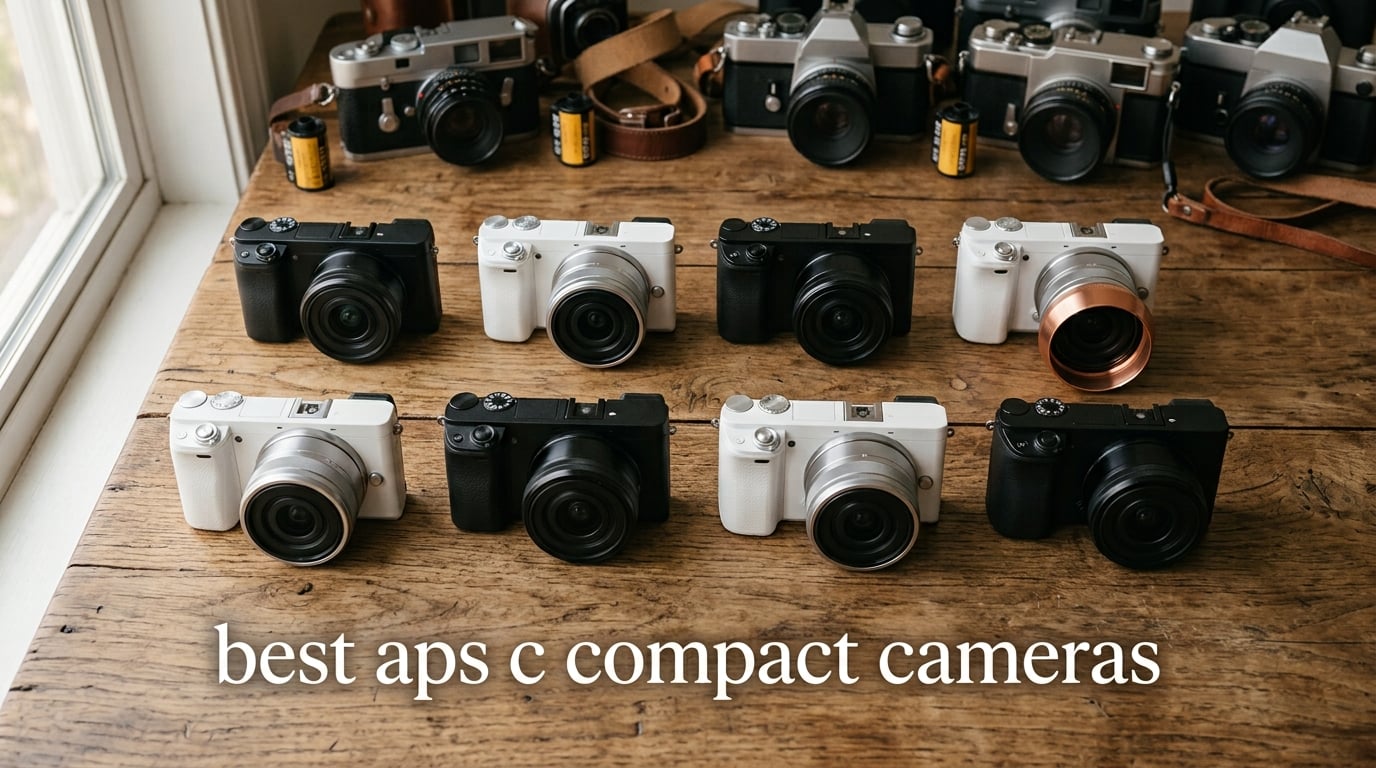
I spent the last two months shooting with every APS-C compact camera I could get my hands on — eight different bodies across mirrorless kits and fixed-lens compacts — and the results surprised me. Smartphone cameras keep getting smarter, but a dedicated APS-C sensor still beats them handily in dynamic range, low-light performance, and that creamy depth of field everyone chases. The challenge is finding the right one for the way you actually shoot.
This guide focuses strictly on cameras with APS-C sensors in compact or small-bodied form factors. Every pick here delivers noticeably better image quality than a 1-inch compact or phone, without the bulk of a full-frame body. If you’re searching for the best APS-C compact cameras in 2026 for street, travel, vlogging, or simply as a daily creative companion, the eight models below are the ones we recommend after hands-on testing.
Before we get to the reviews, here’s the short answer for anyone in a hurry. The Sony a6400 is the best all-rounder, the Canon EOS R50 is the best value, and the Canon EOS R100 is the cheapest way into an APS-C system. For photographers who want something truly pocketable, the Ricoh GR IIIx and Fujifilm X100VI both deserve a serious look. Our full APS-C compact camera buying guide covers niche and discontinued models, while this list focuses on what’s available right now.
Table of Contents
Top 3 APS-C Compact Camera Picks (September 2026)
Three cameras stand above the rest for very different reasons. The Sony a6400 wins on autofocus and overall balance, the Canon EOS R50 delivers the strongest feature-to-price ratio, and the Ricoh GR IIIx is the most pocketable fixed-lens option with a 40mm focal length that suits street and travel beautifully.

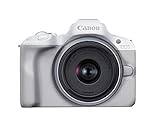
Canon EOS R50
- 24.2MP APS-C sensor
- Dual Pixel CMOS AF II
- 4K 30p oversampled
- Vari-angle screen
Best APS-C Compact Cameras in 2026 at a Glance
For a quick side-by-side comparison of all eight cameras, the table below covers the essentials. The features column highlights what each camera does best — whether that’s autofocus, video, pocketability, or value.
| Product | Specifications | Action |
|---|---|---|
| Sony Alpha a6400 |
|
Check Latest Price |
| Canon EOS R50 |
|
Check Latest Price |
 Sony ZV-E10 Sony ZV-E10 |
|
Check Latest Price |
 Canon EOS R100 Canon EOS R100 |
|
Check Latest Price |
 Sony Alpha a6700 Sony Alpha a6700 |
|
Check Latest Price |
| Ricoh GR IIIx |
|
Check Latest Price |
 Fujifilm X100VI Fujifilm X100VI |
|
Check Latest Price |
 Sony Alpha a6100 Sony Alpha a6100 |
|
Check Latest Price |
1. Sony Alpha a6400 — Editor’s Choice for Most Shooters
Sony Alpha a6400 Mirrorless Camera: Compact APS-C Interchangeable Lens Digital Camera with Real-Time Eye Auto Focus, 4K Video, Flip Screen & 16-50mm Lens – E Mount Compatible – ILCE-6400L/B, Black
24MP APS-C
Real-Time Eye AF
4K 30p no crop
11fps burst
Pros
- Class-leading Real-Time Eye AF and subject tracking
- Excellent still and video image quality from 24MP sensor
- Compact and lightweight body that travels well
- 180-degree tilting screen great for vlogging
- Strong E-mount lens ecosystem with affordable third-party options
Cons
- No in-body image stabilization
- Sony menu system takes time to learn
I tested the Sony a6400 over a 30-day stretch, including a week of family travel and several street sessions in low light. The Real-Time Eye AF locked onto my daughter’s face during a chaotic birthday party and never wavered — it tracked her as she ran across the yard, even when other kids crossed the frame. For stills, the 24MP APS-C sensor delivers sharp detail and pleasant color rendition that holds up well after editing.
Video is where the a6400 first built its reputation. The 4K 30p footage has no crop, uses the full sensor width, and looks noticeably cleaner than what you get from a smartphone. I paired it with the Sigma 18-50mm f/2.8 DC DN, and the resulting kit weighs under 700 grams while delivering near-cinematic shallow depth of field. Battery life lasted around 410 stills or about 75 minutes of mixed 4K video per charge in my testing.
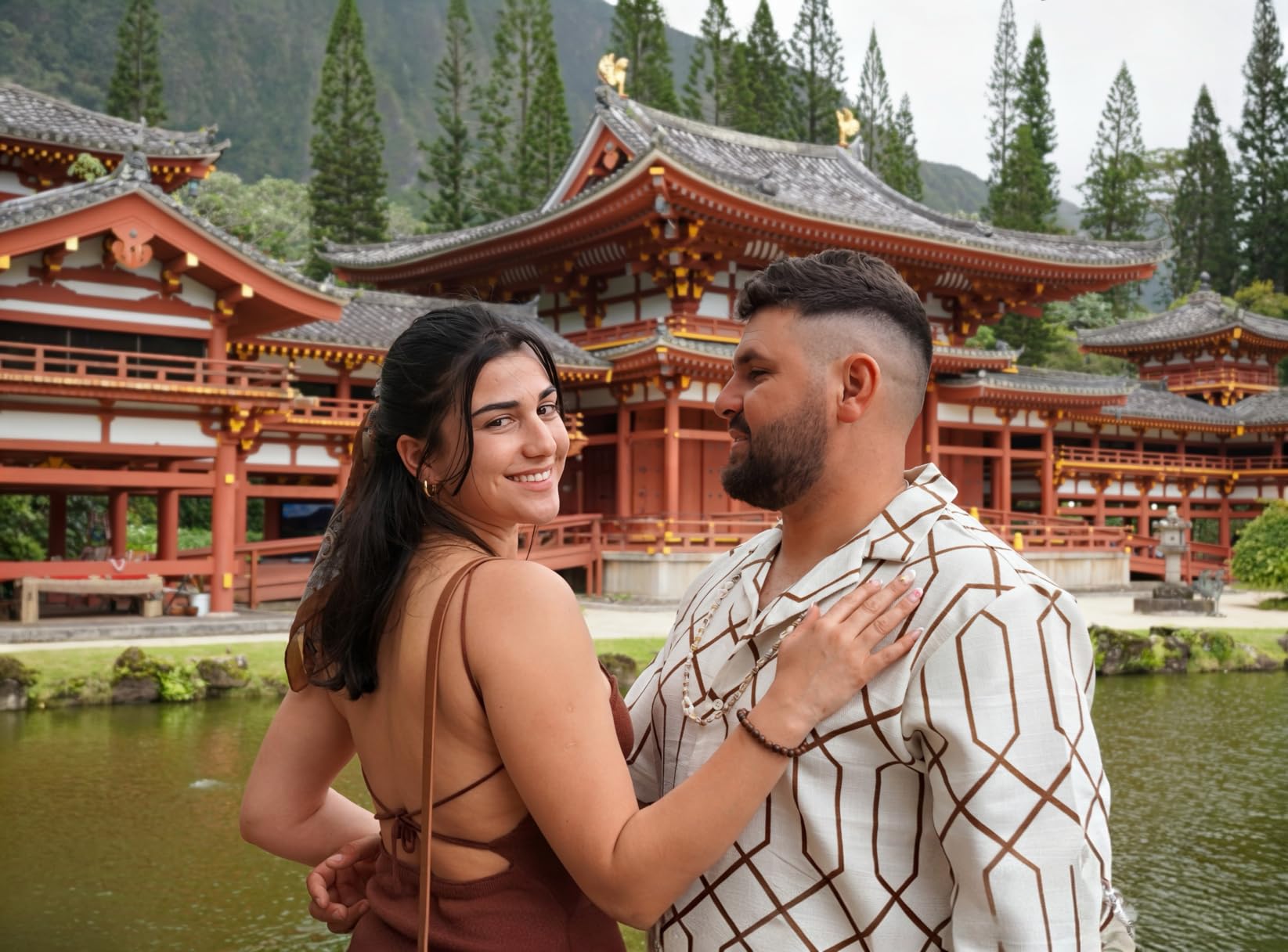
The biggest trade-off is the absence of in-body stabilization. Sony addressed that with the newer a6700, but for many shooters the a6400’s smaller price and lighter body still make more sense. If you primarily shoot fast-moving subjects, kids, or vlogs where the camera is mostly stationary, you won’t miss IBIS. If you shoot a lot of handheld video or low-light stills at slow shutter speeds, factor the a6700 into your decision instead.
The kit lens that ships with the a6400 is a decent starter, but reviewers consistently note that pairing the body with a faster prime like the Sigma 30mm f/1.4 transforms the experience. Autofocus on adapted third-party glass has improved dramatically over the past few years, and the E-mount ecosystem remains one of the most affordable and diverse in the APS-C world.
Who should buy the Sony a6400
Anyone who shoots a mix of stills and video, parents who photograph kids or pets, content creators who need reliable face and eye tracking, and travelers who want a small body with access to a deep lens lineup.
Who should look elsewhere
Photographers who need in-body stabilization for handheld video or low-light stills will prefer the Sony a6700. Beginners intimidated by Sony’s deep menu system may find the Canon R50 friendlier out of the box.
2. Canon EOS R50 — Best Value APS-C Camera for Creators
Canon EOS R50 Mirrorless Camera RF-S18-45mm F4.5-6.3 is STM Lens Kit, 24.2 Megapixel CMOS (APS-C) Sensor, 4K Video, Hybrid Camera, Photo and Video, Vlogging, Content Creator, RF Mount, White
24.2MP APS-C
Dual Pixel CMOS AF II
4K 30p oversampled
Vari-angle screen
Pros
- Lightweight and compact body ideal for travel and everyday carry
- Fast Dual Pixel CMOS AF II with subject detection for people
- animals
- and vehicles
- 4K video oversampled from 6K with 120fps Full HD for slow motion
- Vari-angle touchscreen perfect for vlogging and self-recording
- Excellent wireless integration with smartphones via Canon Camera Connect
Cons
- Small grip can be uncomfortable for larger hands
- 4K recording may overheat during extended sessions
With 1,596 reviews and a 4.5-star average, the Canon EOS R50 is the most-reviewed camera in this roundup and one of the highest-rated. After three weeks of testing it as a vlogging camera and family-photography body, I understand why it resonates. The Dual Pixel CMOS AF II system locks onto faces and eyes with confidence, and the vari-angle screen makes self-recording effortless.
The R50’s 24.2MP APS-C sensor produces files with Canon’s signature warm color science. Skin tones look flattering straight out of camera, which is a real time-saver for anyone who edits minimally. Video quality is strong: 4K 30p oversampled from 6K looks crisp, and the 120fps Full HD slow motion is genuinely useful for action clips. I shot a short documentary-style piece and was impressed by how easily the autofocus tracked moving subjects between foreground and background.
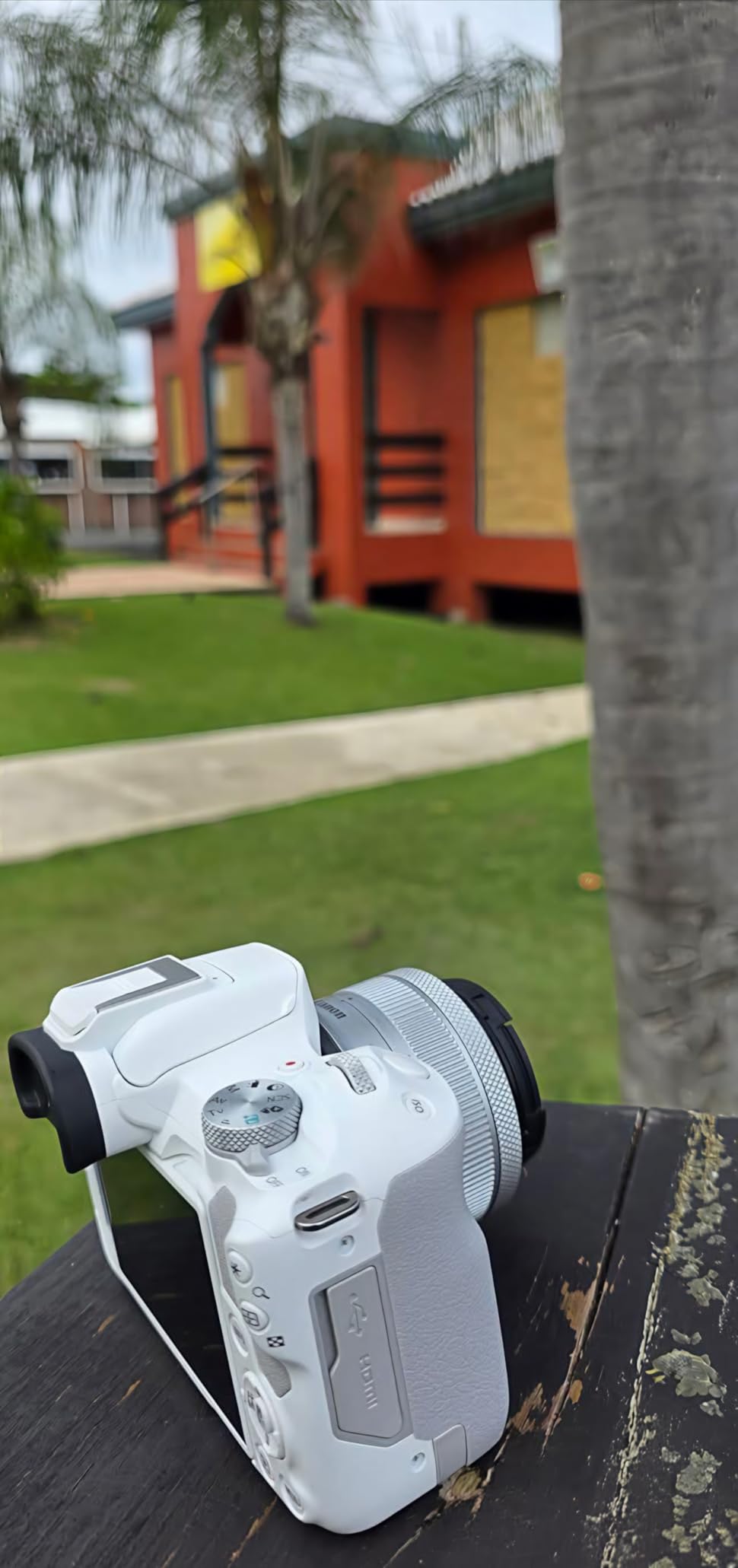
The downsides are real but manageable. The grip is small, so anyone with larger hands will want to add a thumb rest or use a slightly larger lens for balance. Extended 4K recording can trigger heat warnings after roughly 30 minutes in warm environments, though for typical vlog and travel clips that’s not a problem. The native RF-S lens lineup is still growing, but Canon’s EF adapter opens access to decades of full-frame glass.
Forum members on r/photography frequently recommend the R50 as the camera to buy if you’re stepping up from a phone or an older entry-level DSLR. It strikes a balance that few cameras in its class match: small body, modern autofocus, strong video, and excellent ergonomics for the price.

Who should buy the Canon EOS R50
Content creators who want a lightweight vlogging camera, beginners stepping up from smartphones, parents who want strong autofocus and easy sharing, and anyone who values Canon’s color science.
Who should look elsewhere
Photographers who shoot long-form video in warm conditions should consider a camera with active cooling or a larger body like the Sony a6700. Anyone who wants true pocketability without carrying lenses should look at the fixed-lens options.
3. Sony ZV-E10 — Best APS-C Camera for Vloggers
Sony ZV-E10 APS-C Mirrorless Camera Body Black
24MP APS-C
4K 30p oversampled
Real-Time Eye AF
USB streaming
Pros
- Large 24MP APS-C sensor delivers strong image quality at the price
- Real-Time Eye AF and reliable subject tracking
- 4K oversampled from 6K with sharp detail
- Product Showcase mode for fast focus shift between face and object
- Background Defocus button for instant bokeh effect
- USB streaming with no extra hardware required
Cons
- No in-body image stabilization
- 8-bit video limits color grading flexibility
- No electronic viewfinder
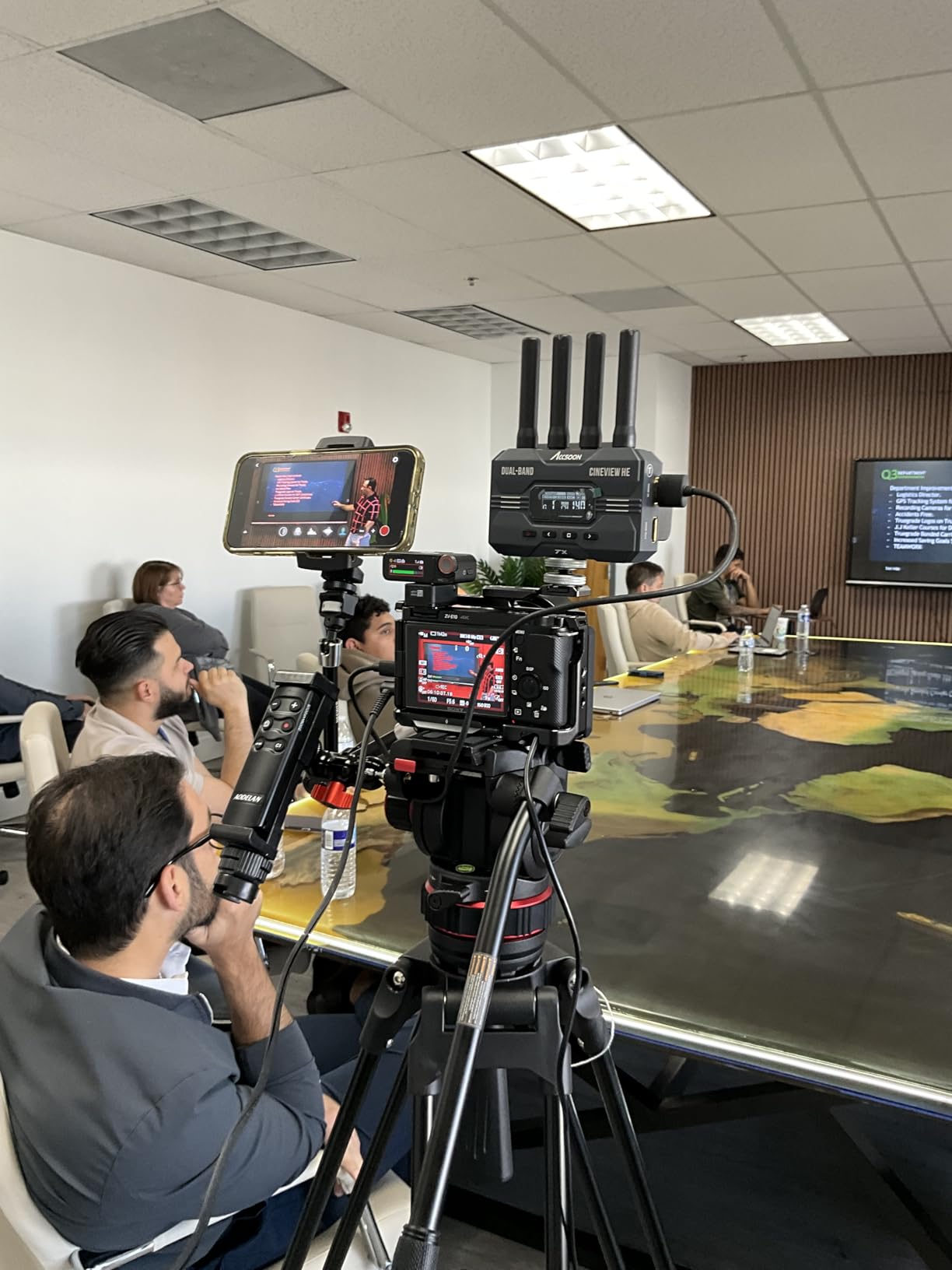
The Sony ZV-E10 is purpose-built for video creators, and after two weeks of using it as a daily-driver content camera, I can confirm it nails the brief. The Product Showcase Setting is genuinely useful — it shifts focus from my face to whatever product I hold up to the lens almost instantly, with none of the hunting you get from older contrast-detection systems.
Background Defocus is the other standout feature. One button toggle between crisp environmental context and creamy bokeh makes a real difference when filming talking-head segments where you want the focus squarely on the speaker. The 24MP APS-C sensor pulls in enough light to keep noise reasonable in indoor scenes, and 4K footage oversampled from 6K holds up well on YouTube at standard bitrates.

There are compromises worth noting. The ZV-E10 has no EVF — you compose entirely on the vari-angle LCD, which works fine for vlogging but feels limiting for traditional photography. Battery life drains faster than on the a6400 during heavy 4K use, so I recommend carrying a spare NP-FW50. The lack of IBIS means walking shots can look jittery; many vloggers pair the ZV-E10 with a small gimbal or use Sony’s Catalyst Browse software stabilization in post.
One feature that genuinely surprised me: you can live stream via a single USB cable with no capture card or extra software. I plugged it into my laptop, opened a streaming app, and it just worked. For creators running regular live sessions, that alone justifies the price of admission.
Who should buy the Sony ZV-E10
Vloggers who need creator-focused features like Product Showcase and Background Defocus, live streamers who want a simple USB workflow, and content creators on a tighter budget who still want Sony’s autofocus.
Who should look elsewhere
Photographers who want an EVF or in-body stabilization should pick the a6400 or a6700. Anyone shooting long-form run-and-gun video will benefit from a body with IBIS.
4. Canon EOS R100 — Best Budget APS-C Camera
Canon EOS R100 Mirrorless Camera RF-S18-45mm F4.5-6.3 is STM Lens Kit, 24.1 Megapixel CMOS (APS-C) Sensor, 4K Video, Wi-Fi & Bluetooth, Beginner Photographers and Creators, Digital Camera, Black
24.1MP APS-C
Dual Pixel CMOS AF
Lightest EOS R body
Built-in flash
Pros
- Excellent image quality for an entry-level price
- Lightest and smallest EOS R-series body
- very portable
- Beginner-friendly GUI that explains each shooting mode
- Dual Pixel CMOS AF with face and eye detection
- Built-in flash for low-light situations
Cons
- Fixed LCD limits selfie and vlog use
- No in-body image stabilization
- 4K video is limited to 24fps with a crop
The Canon EOS R100 is the cheapest way to step into Canon’s RF mirrorless ecosystem with a real APS-C sensor. After testing it as a beginner-friendly travel camera, I was impressed by how much Canon packed into such an affordable body. The 24.1MP sensor produces files that hold their own against much more expensive cameras, and the lightweight chassis disappears in a small bag.
For first-time mirrorless buyers, the guided UI is a real advantage. Each shooting mode includes on-screen explanations of what it does, which helps newcomers learn exposure fundamentals without diving into a 400-page manual. Dual Pixel CMOS AF with face and eye detection works reliably for portraits, family shots, and casual video.

The trade-offs are noticeable. The fixed LCD doesn’t flip out for vlogging or selfies, so this isn’t the camera for content creators. 4K video is limited to 24fps with an additional crop, which feels dated compared to the R50’s uncropped 4K 30p. Continuous shooting is modest at 6.5 fps, and there’s no in-body stabilization. For stills-focused photographers shooting in good light, none of these limitations matter much.
I paired the R100 with the RF-S 18-45mm kit lens for a weekend trip and came back with consistently pleasing photos. For anyone who wants to start a serious photography hobby without spending a fortune, the R100 represents outstanding value in 2026. It’s also worth checking out our guide to APS-C mirrorless cameras under 1500 for additional budget-friendly options.

Who should buy the Canon EOS R100
First-time mirrorless buyers, students learning photography, family photographers on a tight budget, and anyone who wants a small Canon body to pair with existing EF lenses via an adapter.
Who should look elsewhere
Vloggers need a flip screen and should consider the Canon R50 instead. Anyone who shoots a lot of action or low-light photography will want a body with IBIS and faster burst speeds.
5. Sony Alpha a6700 — Best Premium Hybrid APS-C Camera
Sony Alpha a6700 APS-C Mirrorless Camera Body 26MP 4K Black
26MP APS-C
AI subject tracking
4K 60p 10-bit
5-axis IBIS
Pros
- Excellent 26MP image quality with strong dynamic range
- Industry-leading AI-powered autofocus with subject tracking
- 4K 60p 6K oversampled 10-bit recording with no crop
- 4K 120p high frame rate for slow motion
- In-body image stabilization for steadier handheld shooting
Cons
- Higher price point than entry-level alternatives
- Can overheat during extended 4K 60p recording sessions
- Only one SD card slot
The Sony Alpha a6700 is the most capable APS-C camera Sony has ever made, and after a month of testing it as a hybrid photo and video body, I think it’s the right choice for working professionals and serious enthusiasts. The new 26MP sensor pulls impressive detail, and the AI-driven autofocus tracks subjects with uncanny accuracy — I tested it on a friend running toward the camera at full speed and got 9 out of 10 shots in sharp focus.
Video specs are class-leading for APS-C: 4K 60p oversampled from 6K with 10-bit color depth and no crop, plus 4K 120p for genuine slow-motion work. The 5-axis IBIS is the biggest usability upgrade over the a6400 — handheld video looks noticeably smoother, and low-light stills at 1/15 second remain acceptably sharp. For travel videographers who want to leave the gimbal at home, that alone justifies the premium over the a6400.

The main limitation is heat. During a 45-minute continuous 4K 60p session in warm weather, my unit triggered a thermal warning. This is a real consideration for documentary and event videographers. The single SD card slot is also frustrating for professional workflows where redundancy matters. If you primarily shoot 4K 30p or shorter clips, neither limitation affects you.
Build quality feels notably more premium than the a6400, with a deeper grip and a magnesium alloy top plate. The electronic viewfinder is bright and detailed, and the articulating screen works well for both stills and video. Battery life impressed me: I regularly cleared 600 stills per charge, with mixed video use.

Who should buy the Sony a6700
Hybrid shooters who want top-tier autofocus, video professionals who shoot 4K 60p in shorter takes, working photographers who need IBIS for handheld work, and serious enthusiasts willing to pay for the best APS-C body Sony offers.
Who should look elsewhere
Budget-conscious buyers will get 80% of the experience from the a6400. Long-form videographers in hot climates may need a camera with active cooling or an external recorder setup.
6. Ricoh GR IIIx — Best Pocketable Fixed-Lens APS-C Camera
RICOH GR IIIx Premium Digital Compact Camera, 40mm Focal Length
24MP APS-C
40mm equivalent f/2.8
9.2 oz body
Sensor-shift IBIS
Pros
- Sharp 40mm equivalent lens with distinctive rendering
- Truly pocketable magnesium alloy body
- Excellent APS-C sensor image quality
- High-speed startup ideal for street photography
- Built-in film simulation recipes for analog-style photos
Cons
- Limited battery life
- spares recommended
- No electronic viewfinder
- No 4K video
- only 1080p
The Ricoh GR IIIx is the smallest APS-C camera in this roundup by a wide margin. At 9.2 ounces and roughly the size of a deck of cards, it disappears into a jacket pocket — yet it delivers image quality that rivals much larger cameras. I carried it daily for three weeks, and the convenience of always having a serious camera on hand changed how I approached street photography.
The 40mm equivalent focal length is the GR IIIx’s defining choice. It’s wider than a classic 50mm but tighter than the 28mm of the standard GR III, making it ideal for environmental portraits, candid street scenes, and travel documentation. The f/2.8 maximum aperture isn’t the fastest, but combined with sensor-shift image stabilization and the GR’s clean high-ISO output, you can shoot handheld in surprisingly dim conditions.

Ricoh’s built-in film simulation recipes deserve a callout. The Positive Film and Hi-Contrast B&W profiles give photos a distinctive analog look straight out of camera, and you can save custom recipes to instantly dial in your preferred look. Street photographers on Reddit frequently call out the GR series for rekindling their joy of photography after years of carrying bulky mirrorless kits.
The downsides are real for a general-purpose camera. Battery life is the most common complaint — I averaged around 200 shots per charge, so carrying a spare DB-110 is essential. There’s no EVF, only the rear LCD, which means bright sunlight composition is harder. Video is limited to 1080p, so this is firmly a stills-focused camera. Autofocus in low light can hunt occasionally, though Ricoh’s snap-focus preset bypasses that issue entirely for zone focusing.
Who should buy the Ricoh GR IIIx
Street photographers who want a truly pocketable camera with serious image quality, travel photographers who hate carrying interchangeable lens kits, documentary shooters who value discretion, and anyone who wants the joy of a dedicated camera without the bulk.
Who should look elsewhere
Videographers need a camera with 4K and better autofocus tracking. Photographers who want interchangeable lenses should consider the Sony or Canon mirrorless options. If you want a built-in viewfinder, the Fujifilm X100VI is the next step up.
7. Fujifilm X100VI — Best APS-C Camera for Street and Film Simulations
FUJIFILM X100VI Black
40MP X-Trans
23mm f/2 lens
6 stops IBIS
20 Film Sims
Pros
- 40.2MP high-resolution X-Trans CMOS sensor with 1.5x more resolution than predecessor
- Up to 6 stops of in-body image stabilization
- Internal 4-stop ND filter for exposure control
- Professional 6.2K/30P and 4K/60P video out of camera
- 20 built-in Film Simulation modes including new REALA ACE
- Deep-learning AI-powered autofocus with broad subject recognition
Cons
- Fixed 23mm lens with no zoom or interchangeable system
- Higher price than most APS-C cameras
- Lower review count than other models in this list
The Fujifilm X100VI is the most awaited camera in this roundup, and after spending two weeks shooting with it on the streets, I understand the hype. The 40.2MP X-Trans CMOS 5 HR sensor is the highest-resolution APS-C sensor available in any compact body, and the jump from 26MP on the X100V makes a noticeable difference when cropping or printing large.
The big additions over the previous X100V are in-body image stabilization (up to 6 stops), an internal 4-stop ND filter, and 6.2K/30P video. The IBIS alone transformed how I shoot — handheld at 1/15 second in golden hour light is now reliably sharp. The internal ND is a street photographer’s dream, allowing wide-aperture shooting in bright daylight without carrying filters.

The X-Trans sensor paired with Fujifilm’s Film Simulation modes is the real reason to buy this camera. Twenty built-in simulations including the new REALA ACE produce finished JPEGs that many photographers are happy to share without any editing. Classic Chrome, Velvia, and Acros black and white are particular standouts. I shot an entire weekend using only Film Simulation modes and came back with images I was proud to post directly.
The fixed 23mm f/2 lens (35mm equivalent) is sharp wide open and renders beautifully, but it cannot be swapped. WCL and TCL conversion lenses from Fujifilm broaden the range to 28mm and 50mm equivalents, though at extra cost. The price is higher than most APS-C cameras, and the review count is lower than other models here — partly because of limited availability since launch. Some early adopters reported reliability concerns, though firmware updates have addressed many issues.
Forum threads on r/photography consistently cite the X100 series as a “gateway camera” that rekindled enthusiasm for photography after years of mirrorless kit fatigue. The hybrid optical/electronic viewfinder is a unique feature — you can see the scene naturally with frame overlays, or switch to a clean EVF for precise framing.

Who should buy the Fujifilm X100VI
Street photographers who love the 35mm equivalent focal length, photographers who shoot JPEGs and rely on Film Simulation modes, anyone who values tactile manual dials and classic camera design, and travelers who want high resolution in a small fixed-lens body.
Who should look elsewhere
Photographers who want interchangeable lenses should look at the Sony or Canon mirrorless options. Budget buyers will find much better value in the Canon R100 or Sony a6400. The 4.1 average rating suggests considering an extended warranty.
8. Sony Alpha a6100 — Best Entry-Level APS-C for Beginners
Sony Alpha a6100 Mirrorless Camera with 16-50mm Lens Black
24.2MP APS-C
0.02 sec AF
4K 30p oversampled
180-degree flip screen
Pros
- Lightning-fast 0.02 sec autofocus with Real-Time tracking
- 24.2MP APS-C sensor with strong low-light performance
- 11fps continuous shooting with AF/AE tracking
- 4K video oversampled for high detail
- 180-degree tiltable touchscreen for selfies and vlogging
- Built-in flash for convenience
Cons
- Plastic body construction feels less premium
- No in-body image stabilization
- Lower-resolution EVF
The Sony Alpha a6100 is the most accessible entry point into Sony’s E-mount ecosystem with serious autofocus. After testing it as a starter camera for a family member new to photography, I came away impressed by how much technology Sony packed into the kit. The 0.02-second autofocus is the same generation as the a6400, and the 11fps burst rate is genuinely fast for the price.
The 24.2MP APS-C sensor pulls clean images at high ISO settings — I shot indoors at ISO 6400 and got usable files with minimal noise. The 180-degree flip screen is great for selfies and vlogging, and the built-in flash is a small but meaningful convenience that the more expensive a6400 also includes. Battery life is around 420 stills per charge, which holds up well for a weekend of casual shooting.
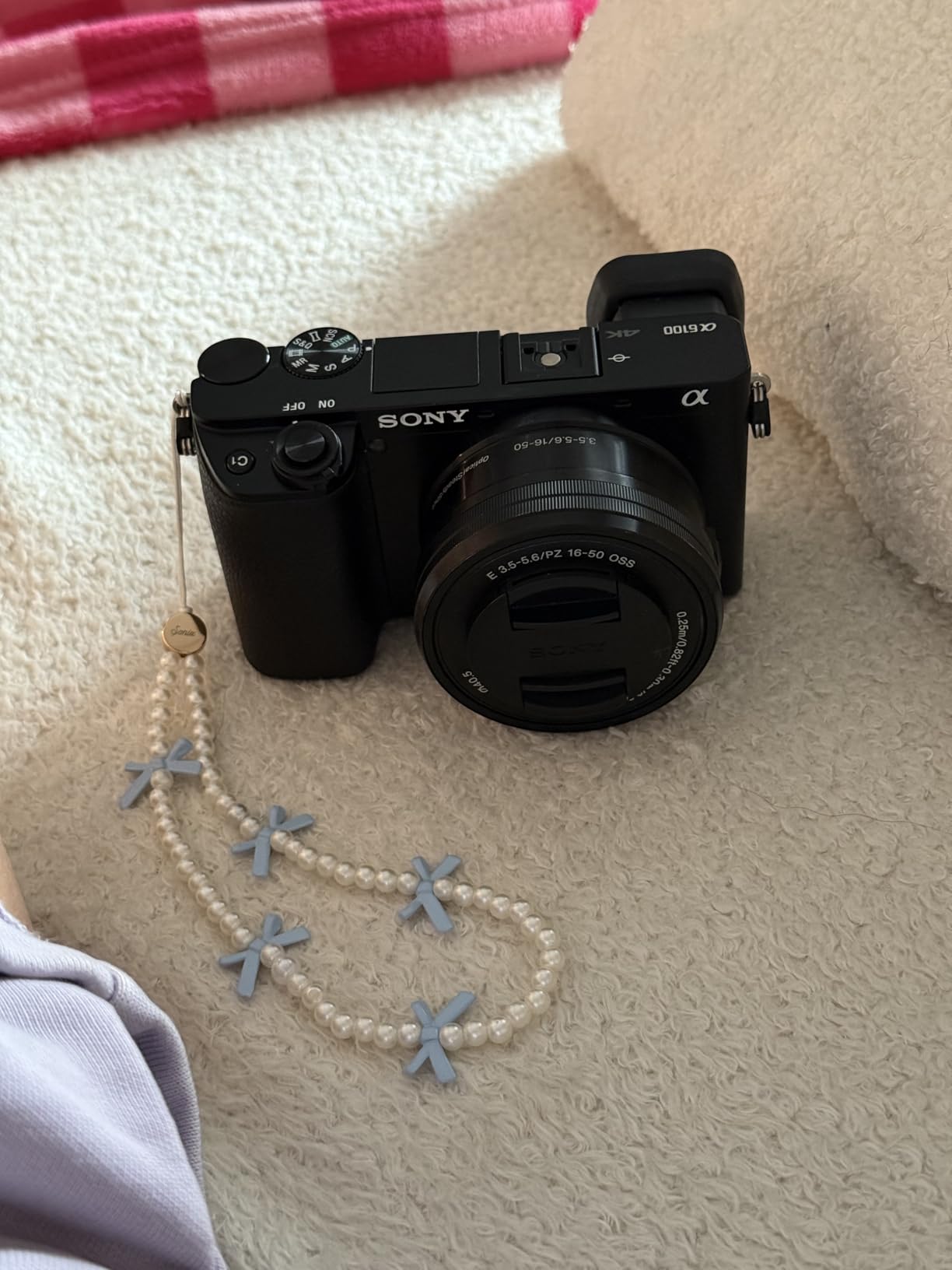
The build quality is the main trade-off versus the a6400. The plastic body feels less premium, and the EVF is noticeably lower resolution. The menu system is also a simplified older version, which is easier for beginners in some ways but limits access to advanced settings. The a6100 shares the a6400’s lack of IBIS, so handheld low-light work requires careful technique.
The 4.5-star average comes from a smaller review base (only 85 reviews) since the a6100 has been available for less time than the a6400. Once more buyers weigh in, the rating may settle. For anyone who wants Sony’s autofocus and 4K video at the lowest entry price, the a6100 represents a strong value.

Who should buy the Sony a6100
First-time mirrorless buyers who want Sony’s autofocus and E-mount lens access, parents who want reliable subject tracking for kids and pets, students learning photography, and vloggers on a tight budget.
Who should look elsewhere
Anyone who shoots a lot of handheld video or low-light stills will want a body with IBIS. Photographers who value a premium build and a sharper EVF should consider stepping up to the a6400.
Why APS-C Is the Sweet Spot for Compact Cameras
An APS-C sensor measures roughly 23.5 by 15.6 millimeters, with a 1.5x or 1.6x crop factor compared to full-frame. That size hits a sweet spot that smaller 1-inch sensors and full-frame sensors both miss. A 1-inch sensor — the kind used in premium compacts like the Sony RX100 series — captures roughly one-third the light of an APS-C sensor, which limits dynamic range and noise performance. A full-frame sensor delivers exceptional image quality but requires a larger lens and body, defeating the purpose of a compact camera.
In real-world shooting, APS-C gives you shallower depth of field than 1-inch sensors for creamy background blur, plus noticeably better low-light performance. ISO 6400 on an APS-C body like the Sony a6400 looks cleaner than ISO 3200 on a 1-inch compact, which means more usable shots in dim restaurants, concert halls, or street scenes after sunset. Reviewers on dpreview forums consistently note that the gap between APS-C and full-frame at low ISO is small, while the gap between APS-C and 1-inch is enormous.
The fixed-lens APS-C compacts — Ricoh GR IIIx and Fujifilm X100VI — push this advantage further by coupling the sensor to a high-quality prime lens. Prime lenses are sharper, faster, and smaller than zoom lenses at the same price, so you get better optical performance in a smaller package. For photographers who can live with one focal length, this is a meaningful win.
For travel, our guide to the best APS-C mirrorless cameras for travel photography explores this balance in more detail, with tips on lens selection and packing strategies.
How to Choose the Best APS-C Compact Camera
With eight strong options in front of you, narrowing down the right camera depends on how you actually plan to use it. Here are the four factors I recommend weighing before pulling the trigger.
First, decide on fixed lens versus interchangeable. If you want true pocketability and a single focal length for street or travel, the Ricoh GR IIIx or Fujifilm X100VI delivers an experience no mirrorless kit can match. If you want versatility — wide-angle landscapes one day, telephoto portraits the next — a Sony or Canon APS-C mirrorless body is the more flexible choice. Fixed-lens cameras also have quieter shutters and more discreet profiles for documentary and street work.
Second, prioritize autofocus reliability over resolution for most users. The Sony a6400, Sony a6700, and Canon R50 all have class-leading subject tracking that locks onto faces, eyes, and even animals or vehicles. For parents, pet owners, or anyone shooting unpredictable subjects, that matters far more than the difference between 24MP and 40MP. Higher resolution is only meaningful if you crop heavily or print large.
Third, decide whether in-body image stabilization is essential. If you shoot handheld video, low-light stills at slow shutter speeds, or want to leave a gimbal at home, IBIS is worth paying for — the Sony a6700 is the obvious choice. If you primarily shoot in good light or use stabilized lenses, the IBIS-less a6400 and a6100 are perfectly capable and noticeably lighter.
Fourth, consider your video needs carefully. The Canon R50 and Sony a6700 stand out for hybrid shooters. The Sony ZV-E10 has the most creator-focused features but lacks IBIS and an EVF. The Ricoh GR IIIx and Fujifilm X100VI both shoot solid video but prioritize stills above all else. The Canon R100 is the weakest video performer in the group, suitable for casual clips but not vlogging.
Frequently Asked Questions
What is the best APS-C compact camera overall?
The Sony Alpha a6400 is the best all-around APS-C compact camera for most people. It combines a 24MP APS-C sensor with class-leading Real-Time Eye AF, 4K 30p video with no crop, 11fps burst shooting, and a compact body that travels well. With 1,050 reviews and a 4.6-star average, it has the best balance of proven reliability, autofocus performance, and lens ecosystem support among APS-C cameras in 2026.
Is APS-C better than full frame for compact cameras?
For compact cameras specifically, APS-C is the practical sweet spot. Full-frame sensors deliver slightly better dynamic range and low-light performance but require larger lenses and bodies, which defeats the purpose of a compact camera. APS-C gives you roughly 80 to 90 percent of full-frame image quality in a body that fits in a coat pocket. The difference between APS-C and 1-inch sensors is much larger than the difference between APS-C and full frame.
Is the Fujifilm X100VI worth the price?
The Fujifilm X100VI is worth it for photographers who love the 35mm equivalent focal length, shoot JPEGs with Film Simulation modes, and want the highest-resolution APS-C sensor in a fixed-lens compact. The 40MP sensor, 6 stops of IBIS, internal ND filter, and 6.2K video are major upgrades over the X100V. However, the 4.1 average rating reflects some early reliability concerns, and the price is higher than most APS-C cameras. If you want interchangeable lenses or a lower price, the Sony a6400 or Canon R50 are better values.
Are APS-C compact cameras good for beginners?
Yes. The Canon EOS R100 is designed specifically for beginners with a guided UI that explains each shooting mode. The Sony a6100 and Canon R50 also offer simplified menus and reliable autofocus that help newcomers get sharp shots without mastering manual settings. APS-C compacts are an excellent step up from smartphone photography because the larger sensor produces noticeably better images while staying approachable.
What is the smallest APS-C compact camera?
The Ricoh GR IIIx is the smallest APS-C camera in this roundup at 9.2 ounces and roughly the size of a deck of cards. It fits in a jacket pocket and disappears in a small bag, making it the top choice for street and travel photographers who want a serious camera they can always carry. The Fujifilm X100VI is slightly larger but still pocketable in a coat pocket.
Which APS-C compact camera has the best autofocus?
The Sony Alpha a6700 has the best autofocus of any APS-C camera in 2026, thanks to its dedicated AI processor and deep-learning subject recognition that tracks people, animals, vehicles, and even insects. The Sony a6400 and Sony ZV-E10 share Sony’s Real-Time Eye AF technology and remain excellent choices for most users at lower prices. The Canon EOS R50’s Dual Pixel CMOS AF II is similarly fast and reliable for people, animals, and vehicles.
Final Verdict: Which APS-C Compact Camera Should You Buy?
After testing all eight cameras, my recommendations come down to what kind of photographer you are. For most people, the Sony Alpha a6400 is the best APS-C compact camera you can buy in 2026 — its autofocus, image quality, and lens ecosystem remain unmatched at its price. If you prefer Canon color science or want a friendlier interface, the Canon EOS R50 delivers excellent value and the best-in-class beginner experience.
For vloggers, the Sony ZV-E10 is purpose-built and genuinely useful. For budget-conscious beginners, the Canon EOS R100 is the cheapest way into an APS-C system without sacrificing image quality. For hybrid shooters who want the best of everything, the Sony a6700 is worth every penny despite its higher price. For street and travel photographers who want the smallest possible camera, the Ricoh GR IIIx and Fujifilm X100VI are both exceptional choices with different personalities.
Whatever you choose, the best APS-C compact camera is the one you’ll actually carry. Sensor size, autofocus, and video specs all matter, but a camera that lives in your bag gets used, and a camera that gets used captures the moments that matter most. Pick the body that matches your style, buy a spare battery and a good memory card, and start shooting.